EP2241140B1 - Erhaltung der batterie eines mobilen netzwerkgeräts - Google Patents
Erhaltung der batterie eines mobilen netzwerkgeräts Download PDFInfo
- Publication number
- EP2241140B1 EP2241140B1 EP08869450.0A EP08869450A EP2241140B1 EP 2241140 B1 EP2241140 B1 EP 2241140B1 EP 08869450 A EP08869450 A EP 08869450A EP 2241140 B1 EP2241140 B1 EP 2241140B1
- Authority
- EP
- European Patent Office
- Prior art keywords
- timer
- network
- mobile device
- communication association
- application
- Prior art date
- Legal status (The legal status is an assumption and is not a legal conclusion. Google has not performed a legal analysis and makes no representation as to the accuracy of the status listed.)
- Not-in-force
Links
Images



Classifications
-
- H—ELECTRICITY
- H04—ELECTRIC COMMUNICATION TECHNIQUE
- H04W—WIRELESS COMMUNICATION NETWORKS
- H04W52/00—Power management, e.g. Transmission Power Control [TPC] or power classes
- H04W52/02—Power saving arrangements
- H04W52/0209—Power saving arrangements in terminal devices
- H04W52/0225—Power saving arrangements in terminal devices using monitoring of external events, e.g. the presence of a signal
- H04W52/0229—Power saving arrangements in terminal devices using monitoring of external events, e.g. the presence of a signal where the received signal is a wanted signal
-
- H—ELECTRICITY
- H04—ELECTRIC COMMUNICATION TECHNIQUE
- H04W—WIRELESS COMMUNICATION NETWORKS
- H04W52/00—Power management, e.g. Transmission Power Control [TPC] or power classes
- H04W52/02—Power saving arrangements
-
- H—ELECTRICITY
- H04—ELECTRIC COMMUNICATION TECHNIQUE
- H04W—WIRELESS COMMUNICATION NETWORKS
- H04W76/00—Connection management
-
- Y—GENERAL TAGGING OF NEW TECHNOLOGICAL DEVELOPMENTS; GENERAL TAGGING OF CROSS-SECTIONAL TECHNOLOGIES SPANNING OVER SEVERAL SECTIONS OF THE IPC; TECHNICAL SUBJECTS COVERED BY FORMER USPC CROSS-REFERENCE ART COLLECTIONS [XRACs] AND DIGESTS
- Y02—TECHNOLOGIES OR APPLICATIONS FOR MITIGATION OR ADAPTATION AGAINST CLIMATE CHANGE
- Y02D—CLIMATE CHANGE MITIGATION TECHNOLOGIES IN INFORMATION AND COMMUNICATION TECHNOLOGIES [ICT], I.E. INFORMATION AND COMMUNICATION TECHNOLOGIES AIMING AT THE REDUCTION OF THEIR OWN ENERGY USE
- Y02D30/00—Reducing energy consumption in communication networks
- Y02D30/70—Reducing energy consumption in communication networks in wireless communication networks
Definitions
- the invention relates generally to mobile wireless devices and, more particularly, to a system and methods for extending the battery life in a network capable mobile device.
- network refers to those networks designed to use any one of the family of IEEE standards for wireless local area networks that extend the 802.3 (wired Ethernet) standard into the wireless domain.
- wireless mobile devices as a means for communicating via the Internet and local intranets is becoming ubiquitous.
- the popularity of such devices has increased in part because they may be used whenever and wherever one chooses, as long as there is a wireless access point with which to make the connection.
- a mobile device connected to a wireless network periodically communicates with it's local access point. This communication requires the periodic transmission of high power radio signals which, in turn, imposes a significant energy drain on the mobile device's battery. Such background activity leads to shortened battery life.
- Document US 2005/136993 discloses a a method of saving power and a radio terminal equipment arrangement comprising a cellular core unit and at least one peripheral unit.
- the peripheral unit comprises a control unit for controlling the functions of the peripheral unit, and a transceiver for sending a message for requesting cellular related information to the cellular core unit when an application requiring a cellular connection is activated by the peripheral unit.
- the cellular core unit is configured to send cellular related information to the peripheral unit when the message for requesting cellular related information has been received, and the control unit for controlling functions of the peripheral unit is configured to notify cellular related information in the peripheral unit based on the received cellular related information from the cellular core unit.
- a battery conservation method for a wireless network-capable device, a wireless network-capable mobile device, a program storage device and a program module as defined in independent claims 1, 10, 11 and 12, respectively. Further preferred embodiments are set forth in the dependent claims.
- the battery life of a network-capable wireless mobile device is extended by selectively terminating the device's communication link ("association") with a network and re-establishing the link as needed.
- the device's communication link may be terminated after a specified interval in which no user action results in an application that needs or uses the network communication link.
- Illustrative applications that can result in network access include, but are not limited to: Internet browser applications such as Internet Explorer, Safari, Firefox and Netscape; messaging applications such as Apple Inc.'s iChat, AOL Instant Messenger, Yahoo Messenger or any ICQ-like program; communication applications, such as Microsoft Outlook, Apple Inc.'s Mail, or other mail or messaging programs; virtual information monitor applications such as Apple Inc.'s Dashboard or other applications that employ GUI widgets to provide networked-sourced information to user; antivirus software such as that offered by Norton or McAfee; anti-spam software; spyware detection software or other system health software that require definitions from online sources.
- Internet browser applications such as Internet Explorer, Safari, Firefox and Netscape
- messaging applications such as Apple Inc.'s iChat, AOL Instant Messenger, Yahoo Messenger or any ICQ-like program
- communication applications such as Microsoft Outlook, Apple Inc.'s Mail, or other mail or messaging programs
- virtual information monitor applications such as Apple Inc.'s Dashboard or other applications that employ GUI widgets to provide networked-sourced information to
- the specified interval may be a preset fixed interval, a user-specified interval, an interval based on the device's network (or application) usage patterns or a combination of these approaches.
- the specified interval may be extended by temporarily pausing a timer used to account for the specified interval during a background process's utilization of the device's established communication link.
- a background process's use of the device's communication link may be made transparent to the mechanism used to selectively terminate the device's communication link.
- a system and method(s) in accordance with the invention disassociates a network-capable mobile device from its wireless access point after a specified period of time in the absence of action by the user that would indicate express network use was imminent. Association with the device's local access point is automatically re-established upon the need for network communication. While many embodiments of the invention rely on user actions to signal an imminent use of the network, some embodiments may interpret those signals from other software in the system and the indications may be interpreted to signal network use that is not necessarily imminent.
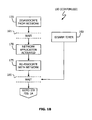
- FIG. 1A operational method 100 in accordance with one embodiment of the invention is illustrated.
- the device determines whether its wireless network capability is activated (block 110 ).
- Illustrative wireless - networks include, but are not limited to, those defined by the IEEE 802.11 family of standards. If the device's wireless network capability is not activated (the "No" prong of block 110 ), further processing in accordance with the invention is halted (block 115 ). If the device's wireless network capability is activated (the "Yes" prong of block 110 ), a further check is made to determine if at least one wireless network is available (block 120 ).
- a disassociation timer is started (block 135 ).
- non-network application refers to any application that does not need access to a network to function properly.
- the timer could also be activated when the last active network application is deactivated.
- Non-network applications include, but are not limited to, an address book or contact application, a calculator application, a non-network audio playback application, a drawing application, a photo application, a word processing/text editing application and a non-network calendar application.
- operation 100 continues to wait (block 140 ). If either the disassociation timer fires or the user selects/activates a network application (the "Yes" prong of block 145 ), a further check is made to determine which of these actions has occurred (block 150 ). If the disassociation timer fired (the "Yes" prong of block 150 ), operation 100 continues at block 155 in FIG. 1B . If the user selected/activated a network application (the "No" prong of block 150 ), operation 100 continues at block 160 in FIG. 1B .
- the device disassociates from the network (block 155 ) and waits (block 165 ) until the user navigates to, selects or activates a network application (block 170 ).
- “disassociate” means to terminate a communication link with a network.
- the device re-associates with the network (block 175 ) and waits (block 180 ) until the user once again selects/activates a non-network application whereafter operation 100 continues at block 130 .
- the device disarms the disassociation timer (block 160 ) and waits (block 180 ) until the user once again selects/activates a non-network application whereafter operation 100 continues at block 130 .
- the wireless mobile device includes applications that, as part of their normal operation, require access to a network.
- One illustrative application of this type is a mail application that has been set to automatically query for mail every 15, 30 or 60 minutes (or any specified interval).
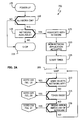
- operational method 200 is identical to operational method 100 through the acts of block 135 (see discussion above).
- an additional check must be made to account for an application needing background access to a network (hereinafter referred to as a "background" process).
- operation 200 waits (block 205 ) until the user navigates, selects or activates a network application (the "Yes" prong of block 210 ), the disassociation timer fires (the “Yes” prong of block 215 ) or a background process needs network access (the “Yes” prong of block 220 ).
- operation 200 continues at block 160 of FIG. 1B ; if the disassociation timer fires, operation 200 continues at block 225 of FIG. 2B ; and if a background process needs network access, operation 200 continues at block 230 of FIG. 2C .
- operation 200 continues at block 225 which, as shown, is substantially similar to the behavior specified in blocks 160-180 of FIG. 1B .
- a background process activates and is in need of network access (block 235 )
- the device associates with the network (block 240 )
- the background process performs whatever network operations it needs (block 245 ) and, thereafter, the device disassociates from the network (block 160 ).
- the device pauses the disassociation timer (block 230 ), the background process performs whatever network operations it needs (block 250 ), and the device resumes the disassociation timer (block 255 ), whereafter operation 200 continues at block 205 of FIG 2A .
- device 300 adapted to operate in accordance with the invention includes radio frequency (RF) transmit and receive circuitry 305 , antenna 310 (which may or may not, be visible to a user of device 300 ), user display element 315 , processor 320 , memory 325 and disassociation timer 330 .
- Processor 305 may be a single computer processor, a special purpose processor (e.g ., a digital signal processor), a plurality of processors coupled by a communications link or a custom designed state machine embodied in a hardware device such as an integrated circuit including, but not limited to, application specific integrated circuits or field programmable gate arrays.
- RF radio frequency
- Memory 325 may include non-volatile memory (for the retention of user preference information and device operating programs including, but not limited to, program modules for embodying power management operations in accordance with the invention) and volatile memory (for retention of run-time data including, but not limited to, display information). That is, acts in accordance with FIGS. 1 and 2 may be performed by processor 305 executing instructions organized into one or more program modules which are stored or retained in memory 325 .
- Disassociation timer 330 may be a hardware timer separate from processor 305 and memory 325 , a hardware timer incorporated within processor 305 or a software timer ( i.e ., storage associated with or incorporated into processor 305 or memory 325 ).
- disassociation timer 330 has been described in terms of a fixed time interval without mention of any specific interval. It will be recognized that the specific interval chosen will be dependent upon the environment and intended use of the mobile wireless device. For example, a device intended for short periods of use with extended periods of non-use may use a disassociation timer interval that is fairly short ( e.g ., 5-10 minutes). In contrast, a device designed for a larger number of uses with a relatively short time between each use may employ a longer disassociation timer interval ( e.g ., 30-45 minutes).
- the chosen disassociation interval may be user selectable. For example, while an initial disassociation interval may be set as a default, the user may be able to designate a different interval through a user preference application (e.g ., "short,” “long,” “10 minutes,” “30 minutes,” “1 hour,” ).
- the disassociation interval may be dynamically set based on actual network usage. In some embodiments of this type, actual network usage may be tracked so that an interval may be chosen or computed that optimizes battery usage for the precise pattern of use that the device is subjected to. In other embodiments of this type, network-capable application usage may be tracked so that an appropriate disassociation interval representative of the time between activations or use of these applications may be chosen. In yet other embodiments, a combination of these approaches may be chosen.
- the device may be re-associated with the network when an application executing on the device actually needs network access.
- the device may be re-associated with the network when it is "likely" that network access will be needed.
- An example of the latter approach is to re-associate whenever the user selects or activates a network-capable application (e.g ., a mail program) or enters a state from which a network-capable application could be launched ( e.g ., a "home screen” or "home page”).
- the former approach tends to minimize the amount of power consumed for network operations by limiting the time and power used to associate with a network.
- the drawback of course, is slower response for the user when they select an operation that actually requires network access as the user must then wait for network association to occur before their request may be processed or issued to the network.
- the latter approach tends to consume more power because network acquisition or association will be sought or maintained when it is not really needed.
- the benefit of course, is improved user responsiveness.
- a wireless mobile device may have a plurality of background applications or processes that need periodic network access.
- each background process may independently cause the device to temporarily suspend the disassociation timer while it accesses the network (see block 235-245 in FIG. 2B ).
- all background processes may be synchronized to a common interval so that the device is not randomly cycled to the network ( i.e ., briefly associated and then disassociated).
- network association patterns may be monitored and if background processes are cycling the device more than a specified amount, the device may be held associated to the network until an operational change in the background processes occurs ( i.e ., one or more background processes are terminated or for a specified period of time).
- the device may be kept associated with the network until an operational change in the background processes occurs.
Landscapes
- Engineering & Computer Science (AREA)
- Computer Networks & Wireless Communication (AREA)
- Signal Processing (AREA)
- Mobile Radio Communication Systems (AREA)
- Telephone Function (AREA)
- Telephonic Communication Services (AREA)
- Secondary Cells (AREA)
- Charge And Discharge Circuits For Batteries Or The Like (AREA)
Claims (12)
- Batterieerhaltungsverfahren (200) für eine drahtlose netzwerkfähige Vorrichtung (300), umfassend:Einrichten einer Kommunikationsverbindung mit einem verfügbaren Netzwerk (125);Auslösen eines Zeitnehmers in Reaktion auf ein spezifiziertes Anwendungsereignis (135);Deaktivieren des Zeitnehmers (160), falls eine Vordergrund-netzwerkfähige Anwendung auf der mobilen Vorrichtung aktiviert wird (210), bevor der Zeitnehmer abläuft;Pausieren des Zeitnehmers (230), um es einer auf der mobilen Vorrichtung ausgeführten Hintergrund-Anwendung zu erlauben, die eingerichtete Kommunikationsverbindung zu verwenden (250), und danach Fortsetzen des Zeitnehmers (255);und Beenden der Kommunikationsverbindung mit dem verfügbaren Netzwerk (155), falls der Zeitnehmer abläuft (215), bevor eine Vordergrund-netzwerkfähige Anwendung auf der mobilen Vorrichtung aktiviert wird (300).
- Verfahren nach Anspruch 1, wobei der Vorgang des Einrichtens einer Kommunikationsverbindung mit einem verfügbaren Netzwerk (125) ein Einrichten einer Kommunikationsverbindung mit einem Wi-Fi-Netzwerk umfasst.
- Verfahren nach Anspruch 1, wobei der Vorgang des Auslösens eines Zeitnehmers in Reaktion auf ein spezifiziertes Anwendungsereignis ein Auslösen eines Zeitnehmers (135) in Reaktion auf das Aktivieren einer Anwendung umfasst, die keinen Netzwerkzugang benötigt, um entwurfsgemäß zu funktionieren.
- Verfahren nach Anspruch 1, wobei der Vorgang des Auslösens eines Zeitnehmers in Reaktion auf ein spezifiziertes Anwendungsereignis ein Auslösen eines Zeitnehmers (135) in Reaktion auf das Deaktivieren einer letzten Netzwerkanwendung umfasst, die auf der mobilen Vorrichtung ausgeführt wird.
- Verfahren nach Anspruch 1, wobei der Vorgang des Auslösens eines Zeitnehmers (135) ein Auslösen eines Zeitnehmers umfasst, um nach einem vorbestimmten Intervall auszulaufen.
- Verfahren nach Anspruch 1, wobei der Vorgang des Auslösens eines Zeitnehmers (135) ein Auslösen eines Zeitnehmers umfasst, um nach einem Benutzer-wählbaren Zeitintervall auszulaufen.
- Verfahren nach Anspruch 1, wobei der Vorgang des Auslösens eines Zeitnehmers (135) ein Auslösen eines Zeitnehmers umfasst, um nach einem Zeitintervall auszulaufen, das von einer Verwendung netzwerkfähiger Anwendungen auf der mobilen Vorrichtung abhängt.
- Verfahren nach Anspruch 1, wobei der Vorgang des Auslösens des Zeitnehmers (160) ferner ein Deaktivieren des Zeitnehmers umfasst, falls mehr als eine festgelegte Anzahl von Hintergrund-Anwendungen, die auf der Vorrichtung ausgeführt werden, die eingerichtete Kommunikationsverbindung verwenden, während der Zeitnehmer aktiviert ist.
- Verfahren nach Anspruch 1, ferner umfassend:Einrichten einer temporären Kommunikationsverbindung mit dem verfügbaren Netzwerk (240) nach dem Vorgang des Beendens (155) in Reaktion auf eine auf der mobilen Vorrichtung ausgeführte Hintergrund-Anwendung (235);Erlauben, dass die Hintergrund-Anwendung die temporäre Kommunikationsverbindung verwendet (245); undBeenden der temporären Kommunikationsverbindung im Wesentlichen sofort, nachdem die Hintergrund-Anwendung die Verwendung der temporären Kommunikationsverbindung abschließt (155),wobei der Vorgang des Einrichtens der temporären Kommunikationsverbindung ausgeführt wird, ohne den Zeitnehmer neu zu starten.
- Drahtlose netzwerkfähige mobile Vorrichtung (300), umfassend:eine Schaltung (305), die eingerichtet ist zum Übertragen und Empfangen von Funksignalen an und von der mobilen Vorrichtung an eine drahtlose Netzzugangsvorrichtung;einen Prozessor (320), der operativ mit der Hochfrequenzschaltung (305) gekoppelt ist;einen Zeitnehmer (330), der operativ mit dem Prozessor (320) gekoppelt ist; undSpeicher (325), der operativ mit dem Prozessor (320) gekoppelt ist, beinhaltend Instruktionen, die durch den Prozessor (g2o) ausführbar sind zum Veranlassen der mobilen Vorrichtung (300) zum:Einrichten einer Kommunikationsverbindung mit einem verfügbaren Netzwerk (125);Auslösen eines Zeitnehmers in Reaktion auf ein spezifiziertes Anwendungsereignis (135);Deaktivieren des Zeitnehmers (160), falls eine Vordergrund-netzwerkfähige Anwendung auf der mobilen Vorrichtung aktiviert wird (210), bevor der Zeitnehmer abläuft;Pausieren des Zeitnehmers (230), um es einer auf der mobilen Vorrichtung ausgeführten Hintergrund-Anwendung zu erlauben, die eingerichtete Kommunikationsverbindung zu verwenden (250), und danach Fortsetzen des Zeitgebers (255);und Beenden der Kommunikationsverbindung mit dem verfügbaren Netzwerk (155), falls der Zeitnehmer abläuft (215), bevor eine Vordergrund-netzwerkfähige Anwendung auf der mobilen Vorrichtung aktiviert wird (300).
- Programmspeichervorrichtung, lesbar durch eine programmierbare Steuervorrichtung, umfassend darauf gespeicherte Instruktionen zum Veranlassen der programmierbaren Steuervorrichtung, das Batterieerhaltungsverfahren (200) auszuführen, umfassend:Einrichten einer Kommunikationsverbindung mit einem verfügbaren Netzwerk (125);Auslösen eines Zeitnehmers in Reaktion auf ein spezifiziertes Anwendungsereignis (135);Deaktivieren des Zeitnehmers (160), falls eine Vordergrund-netzwerkfähige Anwendung auf der mobilen Vorrichtung aktiviert wird (210), bevor der Zeitnehmer abläuft;Pausieren des Zeitnehmers (230), um es einer auf der mobilen Vorrichtung ausgeführten Hintergrund-Anwendung zu erlauben, die eingerichtete Kommunikationsverbindung zu verwenden (250), und danach Fortsetzen des Zeitgebers (255);und Beenden der Kommunikationsverbindung mit dem verfügbaren Netzwerk (155), falls der Zeitnehmer abläuft (215), bevor eine Vordergrund-netzwerkfähige Anwendung auf der mobilen Vorrichtung aktiviert wird (300).
- Programmmodul, umfassend Instruktionen zum Veranlassen einer programmierbaren Steuervorrichtung, das Batterieerhaltungsverfahren (200) auszuführen, umfassend:Einrichten einer Kommunikationsverbindung mit einem verfügbaren Netzwerk (125);Auslösen eines Zeitnehmers in Reaktion auf ein spezifiziertes Anwendungsereignis (135);Deaktivieren des Zeitnehmers (160), falls eine Vordergrund-netzwerkfähige Anwendung auf der mobilen Vorrichtung aktiviert wird (210), bevor der Zeitnehmer abläuft;Pausieren des Zeitnehmers (230), um es einer auf der mobilen Vorrichtung ausgeführten Hintergrund-Anwendung zu erlauben, die eingerichtete Kommunikationsverbindung zu verwenden (250), und danach Fortsetzen des Zeitgebers (255);und Beenden der Kommunikationsverbindung mit dem verfügbaren Netzwerk (155),falls der Zeitnehmer abläuft (215), bevor eine Vordergrund-netzwerkfähige Anwendung auf der mobilen Vorrichtung aktiviert wird (300).
Applications Claiming Priority (2)
| Application Number | Priority Date | Filing Date | Title |
|---|---|---|---|
| US12/013,297 US8059570B2 (en) | 2008-01-11 | 2008-01-11 | Mobile network device battery conservation system and methods |
| PCT/US2008/086802 WO2009088652A1 (en) | 2008-01-11 | 2008-12-15 | Mobile network device battery conservation system and methods |
Publications (2)
| Publication Number | Publication Date |
|---|---|
| EP2241140A1 EP2241140A1 (de) | 2010-10-20 |
| EP2241140B1 true EP2241140B1 (de) | 2015-10-21 |
Family
ID=40428228
Family Applications (1)
| Application Number | Title | Priority Date | Filing Date |
|---|---|---|---|
| EP08869450.0A Not-in-force EP2241140B1 (de) | 2008-01-11 | 2008-12-15 | Erhaltung der batterie eines mobilen netzwerkgeräts |
Country Status (6)
| Country | Link |
|---|---|
| US (2) | US8059570B2 (de) |
| EP (1) | EP2241140B1 (de) |
| JP (1) | JP5174186B2 (de) |
| KR (2) | KR101171533B1 (de) |
| CN (1) | CN101911790B (de) |
| WO (1) | WO2009088652A1 (de) |
Families Citing this family (31)
| Publication number | Priority date | Publication date | Assignee | Title |
|---|---|---|---|---|
| US8869066B2 (en) | 2006-07-06 | 2014-10-21 | Addthis, Llc | Generic content collection systems |
| US9009728B2 (en) * | 2007-03-06 | 2015-04-14 | Addthis, Inc. | Method and apparatus for widget and widget-container distribution control based on content rules |
| US8266274B2 (en) | 2007-03-06 | 2012-09-11 | Clearspring Technologies, Inc. | Method and apparatus for data processing |
| US8209378B2 (en) | 2007-10-04 | 2012-06-26 | Clearspring Technologies, Inc. | Methods and apparatus for widget sharing between content aggregation points |
| US8059570B2 (en) * | 2008-01-11 | 2011-11-15 | Apple Inc. | Mobile network device battery conservation system and methods |
| US20100100605A1 (en) * | 2008-09-15 | 2010-04-22 | Allen Stewart O | Methods and apparatus for management of inter-widget interactions |
| US8346203B2 (en) | 2009-08-14 | 2013-01-01 | Apple Inc. | Power management techniques for buffering and playback of audio broadcast data |
| US8706272B2 (en) * | 2009-08-14 | 2014-04-22 | Apple Inc. | Adaptive encoding and compression of audio broadcast data |
| JP5340084B2 (ja) * | 2009-08-31 | 2013-11-13 | 株式会社ソニー・コンピュータエンタテインメント | 無線通信端末、その制御方法、プログラム、及び情報記憶媒体 |
| US20110179303A1 (en) * | 2010-01-15 | 2011-07-21 | Microsoft Corporation | Persistent application activation and timer notifications |
| US20120149352A1 (en) | 2010-07-26 | 2012-06-14 | Ari Backholm | Context aware traffic management for resource conservation in a wireless network |
| US20120209413A1 (en) | 2011-02-14 | 2012-08-16 | Microsoft Corporation | Background Audio on Mobile Devices |
| JP5620438B2 (ja) * | 2012-05-18 | 2014-11-05 | 株式会社Nttドコモ | 携帯端末および通信制御方法 |
| US8813177B2 (en) | 2012-07-12 | 2014-08-19 | Microsoft Corporation | Background application management |
| JP6074190B2 (ja) * | 2012-08-10 | 2017-02-01 | 京セラ株式会社 | 端末装置および端末装置の制御方法 |
| US9386529B2 (en) | 2012-09-06 | 2016-07-05 | Schweitzer Engineering Laboratories, Inc. | Power management in a network of stationary battery powered control, automation, monitoring and protection devices |
| GB2514012B (en) * | 2012-10-09 | 2015-08-12 | Gos Networks Ltd | Method for the reduction of signalling traffic on mobile devices |
| US9246896B2 (en) | 2013-03-15 | 2016-01-26 | Canon Information And Imaging Solutions, Inc. | Registration of a security token |
| CN103294166B (zh) * | 2013-05-15 | 2016-03-30 | 小米科技有限责任公司 | 服务管理方法、装置和终端 |
| CN104244381B (zh) * | 2013-06-17 | 2018-06-05 | 华为终端(东莞)有限公司 | 唤醒控制方法、装置和终端设备 |
| US9730163B2 (en) | 2013-08-27 | 2017-08-08 | Life360, Inc. | Apparatus and method for conservation of battery power of mobile devices within a location-based group |
| KR102335217B1 (ko) | 2014-03-05 | 2021-12-03 | 삼성전자 주식회사 | 전류 또는 전력 소모량을 이용한 애플리케이션 프로세서의 구동 방법 및 모바일 장치 |
| CN103906208A (zh) * | 2014-03-28 | 2014-07-02 | 惠州Tcl移动通信有限公司 | 一种多模省电的多媒体传输方法及其系统 |
| CN105373419A (zh) | 2014-08-26 | 2016-03-02 | 阿里巴巴集团控股有限公司 | 一种后台应用的操作方法及装置 |
| US10903665B2 (en) | 2016-11-01 | 2021-01-26 | Microsoft Technology Licensing, Llc | Usage data based battery charge or discharge time determination |
| US10488905B2 (en) | 2016-11-16 | 2019-11-26 | Microsoft Technology Licensing, Llc | Dynamic energy storage device discharging |
| US11656666B2 (en) | 2016-11-16 | 2023-05-23 | Microsoft Technology Licensing, Llc | Dynamic power source selection, charging, and discharging |
| US10499337B1 (en) | 2017-04-10 | 2019-12-03 | Alarm.Com Incorporated | Tracking device battery conservation |
| US10725529B2 (en) | 2017-06-26 | 2020-07-28 | Microsoft Technology Licensing, Llc | Target based power management |
| US10459025B1 (en) | 2018-04-04 | 2019-10-29 | Schweitzer Engineering Laboratories, Inc. | System to reduce start-up times in line-mounted fault detectors |
| US11105834B2 (en) | 2019-09-19 | 2021-08-31 | Schweitzer Engineering Laboratories, Inc. | Line-powered current measurement device |
Family Cites Families (23)
| Publication number | Priority date | Publication date | Assignee | Title |
|---|---|---|---|---|
| GB2384946B (en) * | 2002-01-31 | 2005-11-09 | Samsung Electronics Co Ltd | Communications terminal |
| US7003331B2 (en) | 2002-06-26 | 2006-02-21 | Lenovo (Singapore) Pte. Ltd. | Apparatus, method and program to optimize battery life in a wireless device |
| JP2004164566A (ja) * | 2002-09-27 | 2004-06-10 | Casio Comput Co Ltd | 通信端末の電力制御装置及び通信端末の電力制御方法 |
| EP1568167A4 (de) * | 2002-11-15 | 2010-06-16 | Qualcomm Inc | Drahtloser zwischenverstärker für lokale netzwerke mit detektion |
| US7340615B2 (en) * | 2003-01-31 | 2008-03-04 | Microsoft Corporation | Method and apparatus for managing power in network interface modules |
| US20050136993A1 (en) * | 2003-12-23 | 2005-06-23 | Harri Lilja | Method of saving power, radio terminal equipment arrangement, cellular core unit, and peripheral unit |
| US7764981B2 (en) * | 2004-07-30 | 2010-07-27 | Nokia Corporation | System and method for managing a wireless connection to reduce power consumption of a mobile terminal |
| US7565562B2 (en) | 2004-09-03 | 2009-07-21 | Intel Corporation | Context based power management |
| US9001801B2 (en) | 2004-09-07 | 2015-04-07 | Broadcom Corporation | Method and system for low power mode management for complex Bluetooth devices |
| US7593727B2 (en) * | 2005-05-12 | 2009-09-22 | Research In Motion Limited | Method and apparatus for best service rescan scheduling for mobile device operating in an EVDO hybrid mode |
| EP1722581B1 (de) * | 2005-05-12 | 2007-07-25 | Research In Motion Limited | Verfahren und Vorrichtung zum Ablauf des Best-Service-Rescan für ein mobiles Kommunikationsgerät im EVDO Hybrid-Mode |
| US7668129B2 (en) * | 2006-03-30 | 2010-02-23 | Intel Corporation | Learning mechanism to configure power save parameters for automatic power save delivery |
| US8149746B2 (en) * | 2006-08-28 | 2012-04-03 | Intel Corporation | Battery level based configuration of a mobile station by a base station |
| CN102740425B (zh) * | 2006-09-14 | 2015-12-16 | 马维尔国际贸易有限公司 | 自组织网络功率节省系统和方法 |
| US7899018B2 (en) * | 2006-09-21 | 2011-03-01 | Qualcomm Incorporated | Automatic resignation from ad hoc network |
| US20080123575A1 (en) * | 2006-11-27 | 2008-05-29 | Nokia Corporation | Adaptive trigger frame generation in wireless networks |
| US8908581B2 (en) * | 2007-05-01 | 2014-12-09 | Qualcomm Incorporated | Extended microsleep for communications |
| US7848271B2 (en) * | 2007-06-26 | 2010-12-07 | Research In Motion Limited | System and method for conserving power for a wireless device while maintaining a connection to a network |
| US20090016251A1 (en) * | 2007-07-13 | 2009-01-15 | Gainspan, Inc. | Management method and system of low power consuming devices |
| ES2558744T3 (es) * | 2007-09-14 | 2016-02-08 | Blackberry Limited | Sistema y método para el tiempo de inicio de control de recepción discontinua |
| US8059570B2 (en) * | 2008-01-11 | 2011-11-15 | Apple Inc. | Mobile network device battery conservation system and methods |
| US8165581B2 (en) * | 2008-04-25 | 2012-04-24 | Microsoft Corporation | Selective channel scanning for networked devices |
| US20100067422A1 (en) * | 2008-09-12 | 2010-03-18 | Qualcomm Incorporated | Apparatus and methods for controlling a sleep mode in a wireless device |
-
2008
- 2008-01-11 US US12/013,297 patent/US8059570B2/en active Active
- 2008-12-15 JP JP2010542237A patent/JP5174186B2/ja not_active Expired - Fee Related
- 2008-12-15 KR KR1020107015304A patent/KR101171533B1/ko active Active
- 2008-12-15 KR KR1020127001418A patent/KR101248255B1/ko not_active Expired - Fee Related
- 2008-12-15 CN CN200880124498.5A patent/CN101911790B/zh not_active Expired - Fee Related
- 2008-12-15 EP EP08869450.0A patent/EP2241140B1/de not_active Not-in-force
- 2008-12-15 WO PCT/US2008/086802 patent/WO2009088652A1/en not_active Ceased
-
2011
- 2011-09-21 US US13/239,113 patent/US8599840B2/en not_active Expired - Fee Related
Also Published As
| Publication number | Publication date |
|---|---|
| KR20100101652A (ko) | 2010-09-17 |
| EP2241140A1 (de) | 2010-10-20 |
| US20090180412A1 (en) | 2009-07-16 |
| HK1149418A1 (en) | 2011-09-30 |
| KR101171533B1 (ko) | 2012-08-06 |
| CN101911790B (zh) | 2014-02-26 |
| US20120008538A1 (en) | 2012-01-12 |
| JP2011511516A (ja) | 2011-04-07 |
| KR101248255B1 (ko) | 2013-06-24 |
| CN101911790A (zh) | 2010-12-08 |
| KR20120011097A (ko) | 2012-02-06 |
| WO2009088652A1 (en) | 2009-07-16 |
| US8599840B2 (en) | 2013-12-03 |
| US8059570B2 (en) | 2011-11-15 |
| JP5174186B2 (ja) | 2013-04-03 |
Similar Documents
| Publication | Publication Date | Title |
|---|---|---|
| EP2241140B1 (de) | Erhaltung der batterie eines mobilen netzwerkgeräts | |
| JP5973594B2 (ja) | デバイス起動方法及び装置 | |
| CN114080065B (zh) | 非连续发送方法、信号发送处理方法及相关设备 | |
| CN114698071B (zh) | 能量提供方法、装置及通信设备 | |
| EP2684322B1 (de) | Verfahren zur verwaltung der ruhezustandsaktivität bei mobilgeräten | |
| CN103684495B (zh) | 一种电路装置和用于低功率模式管理的方法 | |
| US20050154933A1 (en) | System and method for wake on wireless lan | |
| EP2438787A2 (de) | Verfahren und vorrichtung für adaptives stromsparen in einer mobilen berechnungsvorrichtung | |
| JP2018515017A (ja) | 端末制御方法および装置、ならびに端末 | |
| TW201444392A (zh) | 訊務無通信計時器之動態調適 | |
| JP2006005577A (ja) | 無線lanの省電力方法 | |
| TW201943311A (zh) | 一種rrc狀態的控制方法及裝置、電腦存儲媒介 | |
| CN106412845A (zh) | 无线保真Wi-Fi设备的休眠方法及装置 | |
| CN105392187A (zh) | 一种即时通讯应用程序管理方法、装置及其移动终端 | |
| CN117714018A (zh) | 监听处理方法、装置、终端及网络侧设备 | |
| WO2024088160A1 (zh) | 延迟唤醒终端的指示方法、装置及设备 | |
| CN105684521B (zh) | 一种wifi接入点控制方法及wifi接入点 | |
| US8260374B2 (en) | Power saving operation of user equipment in a cellular communication system | |
| HK1149418B (en) | Mobile network device battery conservation | |
| JP2015149579A (ja) | 無線アクセスポイント装置、無線通信端末および無線通信システム | |
| CN108541048B (zh) | 蓝牙低能耗设备状态转换 | |
| CN117528600A (zh) | 寻呼异常处理方法、装置、电子设备及可读存储介质 | |
| WO2024217130A1 (zh) | 传输处理方法、装置、终端及网络侧设备 | |
| KR101363580B1 (ko) | 광대역 무선접속 통신시스템에서 전력 절감을 위한 장치 및방법 | |
| WO2023093629A1 (zh) | 终端行为控制方法、终端及网络侧设备 |
Legal Events
| Date | Code | Title | Description |
|---|---|---|---|
| PUAI | Public reference made under article 153(3) epc to a published international application that has entered the european phase |
Free format text: ORIGINAL CODE: 0009012 |
|
| 17P | Request for examination filed |
Effective date: 20100728 |
|
| AK | Designated contracting states |
Kind code of ref document: A1 Designated state(s): AT BE BG CH CY CZ DE DK EE ES FI FR GB GR HR HU IE IS IT LI LT LU LV MC MT NL NO PL PT RO SE SI SK TR |
|
| AX | Request for extension of the european patent |
Extension state: AL BA MK RS |
|
| DAX | Request for extension of the european patent (deleted) | ||
| REG | Reference to a national code |
Ref country code: HK Ref legal event code: DE Ref document number: 1149418 Country of ref document: HK |
|
| 17Q | First examination report despatched |
Effective date: 20120620 |
|
| GRAP | Despatch of communication of intention to grant a patent |
Free format text: ORIGINAL CODE: EPIDOSNIGR1 |
|
| INTG | Intention to grant announced |
Effective date: 20150430 |
|
| GRAS | Grant fee paid |
Free format text: ORIGINAL CODE: EPIDOSNIGR3 |
|
| GRAA | (expected) grant |
Free format text: ORIGINAL CODE: 0009210 |
|
| AK | Designated contracting states |
Kind code of ref document: B1 Designated state(s): AT BE BG CH CY CZ DE DK EE ES FI FR GB GR HR HU IE IS IT LI LT LU LV MC MT NL NO PL PT RO SE SI SK TR |
|
| REG | Reference to a national code |
Ref country code: GB Ref legal event code: FG4D Ref country code: NL Ref legal event code: MP Effective date: 20151021 |
|
| REG | Reference to a national code |
Ref country code: CH Ref legal event code: EP |
|
| REG | Reference to a national code |
Ref country code: AT Ref legal event code: REF Ref document number: 757350 Country of ref document: AT Kind code of ref document: T Effective date: 20151115 |
|
| REG | Reference to a national code |
Ref country code: IE Ref legal event code: FG4D |
|
| REG | Reference to a national code |
Ref country code: DE Ref legal event code: R096 Ref document number: 602008040834 Country of ref document: DE |
|
| REG | Reference to a national code |
Ref country code: LT Ref legal event code: MG4D |
|
| REG | Reference to a national code |
Ref country code: AT Ref legal event code: MK05 Ref document number: 757350 Country of ref document: AT Kind code of ref document: T Effective date: 20151021 |
|
| PG25 | Lapsed in a contracting state [announced via postgrant information from national office to epo] |
Ref country code: NO Free format text: LAPSE BECAUSE OF FAILURE TO SUBMIT A TRANSLATION OF THE DESCRIPTION OR TO PAY THE FEE WITHIN THE PRESCRIBED TIME-LIMIT Effective date: 20160121 Ref country code: IT Free format text: LAPSE BECAUSE OF FAILURE TO SUBMIT A TRANSLATION OF THE DESCRIPTION OR TO PAY THE FEE WITHIN THE PRESCRIBED TIME-LIMIT Effective date: 20151021 Ref country code: IS Free format text: LAPSE BECAUSE OF FAILURE TO SUBMIT A TRANSLATION OF THE DESCRIPTION OR TO PAY THE FEE WITHIN THE PRESCRIBED TIME-LIMIT Effective date: 20160221 Ref country code: LT Free format text: LAPSE BECAUSE OF FAILURE TO SUBMIT A TRANSLATION OF THE DESCRIPTION OR TO PAY THE FEE WITHIN THE PRESCRIBED TIME-LIMIT Effective date: 20151021 Ref country code: ES Free format text: LAPSE BECAUSE OF FAILURE TO SUBMIT A TRANSLATION OF THE DESCRIPTION OR TO PAY THE FEE WITHIN THE PRESCRIBED TIME-LIMIT Effective date: 20151021 Ref country code: HR Free format text: LAPSE BECAUSE OF FAILURE TO SUBMIT A TRANSLATION OF THE DESCRIPTION OR TO PAY THE FEE WITHIN THE PRESCRIBED TIME-LIMIT Effective date: 20151021 Ref country code: NL Free format text: LAPSE BECAUSE OF FAILURE TO SUBMIT A TRANSLATION OF THE DESCRIPTION OR TO PAY THE FEE WITHIN THE PRESCRIBED TIME-LIMIT Effective date: 20151021 |
|
| REG | Reference to a national code |
Ref country code: HK Ref legal event code: GR Ref document number: 1149418 Country of ref document: HK |
|
| PG25 | Lapsed in a contracting state [announced via postgrant information from national office to epo] |
Ref country code: PT Free format text: LAPSE BECAUSE OF FAILURE TO SUBMIT A TRANSLATION OF THE DESCRIPTION OR TO PAY THE FEE WITHIN THE PRESCRIBED TIME-LIMIT Effective date: 20160222 Ref country code: FI Free format text: LAPSE BECAUSE OF FAILURE TO SUBMIT A TRANSLATION OF THE DESCRIPTION OR TO PAY THE FEE WITHIN THE PRESCRIBED TIME-LIMIT Effective date: 20151021 Ref country code: BE Free format text: LAPSE BECAUSE OF NON-PAYMENT OF DUE FEES Effective date: 20151231 Ref country code: AT Free format text: LAPSE BECAUSE OF FAILURE TO SUBMIT A TRANSLATION OF THE DESCRIPTION OR TO PAY THE FEE WITHIN THE PRESCRIBED TIME-LIMIT Effective date: 20151021 Ref country code: PL Free format text: LAPSE BECAUSE OF FAILURE TO SUBMIT A TRANSLATION OF THE DESCRIPTION OR TO PAY THE FEE WITHIN THE PRESCRIBED TIME-LIMIT Effective date: 20151021 Ref country code: LV Free format text: LAPSE BECAUSE OF FAILURE TO SUBMIT A TRANSLATION OF THE DESCRIPTION OR TO PAY THE FEE WITHIN THE PRESCRIBED TIME-LIMIT Effective date: 20151021 Ref country code: GR Free format text: LAPSE BECAUSE OF FAILURE TO SUBMIT A TRANSLATION OF THE DESCRIPTION OR TO PAY THE FEE WITHIN THE PRESCRIBED TIME-LIMIT Effective date: 20160122 Ref country code: SE Free format text: LAPSE BECAUSE OF FAILURE TO SUBMIT A TRANSLATION OF THE DESCRIPTION OR TO PAY THE FEE WITHIN THE PRESCRIBED TIME-LIMIT Effective date: 20151021 |
|
| REG | Reference to a national code |
Ref country code: DE Ref legal event code: R097 Ref document number: 602008040834 Country of ref document: DE |
|
| PG25 | Lapsed in a contracting state [announced via postgrant information from national office to epo] |
Ref country code: CZ Free format text: LAPSE BECAUSE OF FAILURE TO SUBMIT A TRANSLATION OF THE DESCRIPTION OR TO PAY THE FEE WITHIN THE PRESCRIBED TIME-LIMIT Effective date: 20151021 Ref country code: MC Free format text: LAPSE BECAUSE OF FAILURE TO SUBMIT A TRANSLATION OF THE DESCRIPTION OR TO PAY THE FEE WITHIN THE PRESCRIBED TIME-LIMIT Effective date: 20151021 Ref country code: LU Free format text: LAPSE BECAUSE OF FAILURE TO SUBMIT A TRANSLATION OF THE DESCRIPTION OR TO PAY THE FEE WITHIN THE PRESCRIBED TIME-LIMIT Effective date: 20151215 |
|
| REG | Reference to a national code |
Ref country code: CH Ref legal event code: PL |
|
| PLBE | No opposition filed within time limit |
Free format text: ORIGINAL CODE: 0009261 |
|
| STAA | Information on the status of an ep patent application or granted ep patent |
Free format text: STATUS: NO OPPOSITION FILED WITHIN TIME LIMIT |
|
| PG25 | Lapsed in a contracting state [announced via postgrant information from national office to epo] |
Ref country code: DK Free format text: LAPSE BECAUSE OF FAILURE TO SUBMIT A TRANSLATION OF THE DESCRIPTION OR TO PAY THE FEE WITHIN THE PRESCRIBED TIME-LIMIT Effective date: 20151021 Ref country code: RO Free format text: LAPSE BECAUSE OF FAILURE TO SUBMIT A TRANSLATION OF THE DESCRIPTION OR TO PAY THE FEE WITHIN THE PRESCRIBED TIME-LIMIT Effective date: 20151021 Ref country code: EE Free format text: LAPSE BECAUSE OF FAILURE TO SUBMIT A TRANSLATION OF THE DESCRIPTION OR TO PAY THE FEE WITHIN THE PRESCRIBED TIME-LIMIT Effective date: 20151021 Ref country code: SK Free format text: LAPSE BECAUSE OF FAILURE TO SUBMIT A TRANSLATION OF THE DESCRIPTION OR TO PAY THE FEE WITHIN THE PRESCRIBED TIME-LIMIT Effective date: 20151021 |
|
| REG | Reference to a national code |
Ref country code: IE Ref legal event code: MM4A |
|
| 26N | No opposition filed |
Effective date: 20160722 |
|
| GBPC | Gb: european patent ceased through non-payment of renewal fee |
Effective date: 20160121 |
|
| REG | Reference to a national code |
Ref country code: FR Ref legal event code: ST Effective date: 20160831 |
|
| PG25 | Lapsed in a contracting state [announced via postgrant information from national office to epo] |
Ref country code: GB Free format text: LAPSE BECAUSE OF NON-PAYMENT OF DUE FEES Effective date: 20160121 Ref country code: IE Free format text: LAPSE BECAUSE OF NON-PAYMENT OF DUE FEES Effective date: 20151215 Ref country code: LI Free format text: LAPSE BECAUSE OF NON-PAYMENT OF DUE FEES Effective date: 20151231 Ref country code: CH Free format text: LAPSE BECAUSE OF NON-PAYMENT OF DUE FEES Effective date: 20151231 |
|
| PG25 | Lapsed in a contracting state [announced via postgrant information from national office to epo] |
Ref country code: FR Free format text: LAPSE BECAUSE OF NON-PAYMENT OF DUE FEES Effective date: 20151231 Ref country code: SI Free format text: LAPSE BECAUSE OF FAILURE TO SUBMIT A TRANSLATION OF THE DESCRIPTION OR TO PAY THE FEE WITHIN THE PRESCRIBED TIME-LIMIT Effective date: 20151021 |
|
| PG25 | Lapsed in a contracting state [announced via postgrant information from national office to epo] |
Ref country code: BE Free format text: LAPSE BECAUSE OF FAILURE TO SUBMIT A TRANSLATION OF THE DESCRIPTION OR TO PAY THE FEE WITHIN THE PRESCRIBED TIME-LIMIT Effective date: 20151021 |
|
| PG25 | Lapsed in a contracting state [announced via postgrant information from national office to epo] |
Ref country code: BG Free format text: LAPSE BECAUSE OF FAILURE TO SUBMIT A TRANSLATION OF THE DESCRIPTION OR TO PAY THE FEE WITHIN THE PRESCRIBED TIME-LIMIT Effective date: 20151021 Ref country code: HU Free format text: LAPSE BECAUSE OF FAILURE TO SUBMIT A TRANSLATION OF THE DESCRIPTION OR TO PAY THE FEE WITHIN THE PRESCRIBED TIME-LIMIT; INVALID AB INITIO Effective date: 20081215 |
|
| PG25 | Lapsed in a contracting state [announced via postgrant information from national office to epo] |
Ref country code: CY Free format text: LAPSE BECAUSE OF FAILURE TO SUBMIT A TRANSLATION OF THE DESCRIPTION OR TO PAY THE FEE WITHIN THE PRESCRIBED TIME-LIMIT Effective date: 20151021 |
|
| PG25 | Lapsed in a contracting state [announced via postgrant information from national office to epo] |
Ref country code: TR Free format text: LAPSE BECAUSE OF FAILURE TO SUBMIT A TRANSLATION OF THE DESCRIPTION OR TO PAY THE FEE WITHIN THE PRESCRIBED TIME-LIMIT Effective date: 20151021 Ref country code: MT Free format text: LAPSE BECAUSE OF FAILURE TO SUBMIT A TRANSLATION OF THE DESCRIPTION OR TO PAY THE FEE WITHIN THE PRESCRIBED TIME-LIMIT Effective date: 20151021 |
|
| P01 | Opt-out of the competence of the unified patent court (upc) registered |
Effective date: 20230523 |
|
| PGFP | Annual fee paid to national office [announced via postgrant information from national office to epo] |
Ref country code: DE Payment date: 20231017 Year of fee payment: 16 |
|
| REG | Reference to a national code |
Ref country code: DE Ref legal event code: R119 Ref document number: 602008040834 Country of ref document: DE |
|
| PG25 | Lapsed in a contracting state [announced via postgrant information from national office to epo] |
Ref country code: DE Free format text: LAPSE BECAUSE OF NON-PAYMENT OF DUE FEES Effective date: 20250701 |