EP2240632B1 - Gegenstand umfassend ein streckgewebe und ein verfahren zur herstellung eines solchen gegenstands - Google Patents
Gegenstand umfassend ein streckgewebe und ein verfahren zur herstellung eines solchen gegenstands Download PDFInfo
- Publication number
- EP2240632B1 EP2240632B1 EP09704416.8A EP09704416A EP2240632B1 EP 2240632 B1 EP2240632 B1 EP 2240632B1 EP 09704416 A EP09704416 A EP 09704416A EP 2240632 B1 EP2240632 B1 EP 2240632B1
- Authority
- EP
- European Patent Office
- Prior art keywords
- yarn
- fabric
- yarns
- core
- elastic
- Prior art date
- Legal status (The legal status is an assumption and is not a legal conclusion. Google has not performed a legal analysis and makes no representation as to the accuracy of the status listed.)
- Active
Links
Images





Classifications
-
- D—TEXTILES; PAPER
- D02—YARNS; MECHANICAL FINISHING OF YARNS OR ROPES; WARPING OR BEAMING
- D02G—CRIMPING OR CURLING FIBRES, FILAMENTS, THREADS, OR YARNS; YARNS OR THREADS
- D02G3/00—Yarns or threads, e.g. fancy yarns; Processes or apparatus for the production thereof, not otherwise provided for
- D02G3/22—Yarns or threads characterised by constructional features, e.g. blending, filament/fibre
- D02G3/32—Elastic yarns or threads ; Production of plied or cored yarns, one of which is elastic
- D02G3/328—Elastic yarns or threads ; Production of plied or cored yarns, one of which is elastic containing elastane
-
- D—TEXTILES; PAPER
- D03—WEAVING
- D03D—WOVEN FABRICS; METHODS OF WEAVING; LOOMS
- D03D13/00—Woven fabrics characterised by the special disposition of the warp or weft threads, e.g. with curved weft threads, with discontinuous warp threads, with diagonal warp or weft
- D03D13/004—Woven fabrics characterised by the special disposition of the warp or weft threads, e.g. with curved weft threads, with discontinuous warp threads, with diagonal warp or weft with weave pattern being non-standard or providing special effects
-
- D—TEXTILES; PAPER
- D03—WEAVING
- D03D—WOVEN FABRICS; METHODS OF WEAVING; LOOMS
- D03D15/00—Woven fabrics characterised by the material, structure or properties of the fibres, filaments, yarns, threads or other warp or weft elements used
- D03D15/20—Woven fabrics characterised by the material, structure or properties of the fibres, filaments, yarns, threads or other warp or weft elements used characterised by the material of the fibres or filaments constituting the yarns or threads
- D03D15/283—Woven fabrics characterised by the material, structure or properties of the fibres, filaments, yarns, threads or other warp or weft elements used characterised by the material of the fibres or filaments constituting the yarns or threads synthetic polymer-based, e.g. polyamide or polyester fibres
-
- D—TEXTILES; PAPER
- D03—WEAVING
- D03D—WOVEN FABRICS; METHODS OF WEAVING; LOOMS
- D03D15/00—Woven fabrics characterised by the material, structure or properties of the fibres, filaments, yarns, threads or other warp or weft elements used
- D03D15/20—Woven fabrics characterised by the material, structure or properties of the fibres, filaments, yarns, threads or other warp or weft elements used characterised by the material of the fibres or filaments constituting the yarns or threads
- D03D15/292—Conjugate, i.e. bi- or multicomponent, fibres or filaments
-
- D—TEXTILES; PAPER
- D03—WEAVING
- D03D—WOVEN FABRICS; METHODS OF WEAVING; LOOMS
- D03D15/00—Woven fabrics characterised by the material, structure or properties of the fibres, filaments, yarns, threads or other warp or weft elements used
- D03D15/40—Woven fabrics characterised by the material, structure or properties of the fibres, filaments, yarns, threads or other warp or weft elements used characterised by the structure of the yarns or threads
- D03D15/47—Woven fabrics characterised by the material, structure or properties of the fibres, filaments, yarns, threads or other warp or weft elements used characterised by the structure of the yarns or threads multicomponent, e.g. blended yarns or threads
-
- D—TEXTILES; PAPER
- D03—WEAVING
- D03D—WOVEN FABRICS; METHODS OF WEAVING; LOOMS
- D03D15/00—Woven fabrics characterised by the material, structure or properties of the fibres, filaments, yarns, threads or other warp or weft elements used
- D03D15/50—Woven fabrics characterised by the material, structure or properties of the fibres, filaments, yarns, threads or other warp or weft elements used characterised by the properties of the yarns or threads
- D03D15/56—Woven fabrics characterised by the material, structure or properties of the fibres, filaments, yarns, threads or other warp or weft elements used characterised by the properties of the yarns or threads elastic
-
- D—TEXTILES; PAPER
- D10—INDEXING SCHEME ASSOCIATED WITH SUBLASSES OF SECTION D, RELATING TO TEXTILES
- D10B—INDEXING SCHEME ASSOCIATED WITH SUBLASSES OF SECTION D, RELATING TO TEXTILES
- D10B2201/00—Cellulose-based fibres, e.g. vegetable fibres
- D10B2201/01—Natural vegetable fibres
-
- D—TEXTILES; PAPER
- D10—INDEXING SCHEME ASSOCIATED WITH SUBLASSES OF SECTION D, RELATING TO TEXTILES
- D10B—INDEXING SCHEME ASSOCIATED WITH SUBLASSES OF SECTION D, RELATING TO TEXTILES
- D10B2211/00—Protein-based fibres, e.g. animal fibres
- D10B2211/01—Natural animal fibres, e.g. keratin fibres
- D10B2211/04—Silk
-
- D—TEXTILES; PAPER
- D10—INDEXING SCHEME ASSOCIATED WITH SUBLASSES OF SECTION D, RELATING TO TEXTILES
- D10B—INDEXING SCHEME ASSOCIATED WITH SUBLASSES OF SECTION D, RELATING TO TEXTILES
- D10B2331/00—Fibres made from polymers obtained otherwise than by reactions only involving carbon-to-carbon unsaturated bonds, e.g. polycondensation products
- D10B2331/02—Fibres made from polymers obtained otherwise than by reactions only involving carbon-to-carbon unsaturated bonds, e.g. polycondensation products polyamides
-
- D—TEXTILES; PAPER
- D10—INDEXING SCHEME ASSOCIATED WITH SUBLASSES OF SECTION D, RELATING TO TEXTILES
- D10B—INDEXING SCHEME ASSOCIATED WITH SUBLASSES OF SECTION D, RELATING TO TEXTILES
- D10B2401/00—Physical properties
- D10B2401/06—Load-responsive characteristics
- D10B2401/061—Load-responsive characteristics elastic
-
- Y—GENERAL TAGGING OF NEW TECHNOLOGICAL DEVELOPMENTS; GENERAL TAGGING OF CROSS-SECTIONAL TECHNOLOGIES SPANNING OVER SEVERAL SECTIONS OF THE IPC; TECHNICAL SUBJECTS COVERED BY FORMER USPC CROSS-REFERENCE ART COLLECTIONS [XRACs] AND DIGESTS
- Y10—TECHNICAL SUBJECTS COVERED BY FORMER USPC
- Y10T—TECHNICAL SUBJECTS COVERED BY FORMER US CLASSIFICATION
- Y10T442/00—Fabric [woven, knitted, or nonwoven textile or cloth, etc.]
- Y10T442/30—Woven fabric [i.e., woven strand or strip material]
- Y10T442/3008—Woven fabric has an elastic quality
- Y10T442/3024—Including elastic strand or strip
Definitions
- This invention relates to the manufacture of woven fabrics with stretch in warp and/or weft direction. It specifically relates to fabrics and methods including a separated yarn system including an elastic core composite yarn system and a rigid base yarn system.
- Stretch woven fabrics or stretch wovens have been produced for many years. Fabric manufacturers generally know the importance of the right quality parameters to achieve fabrics acceptable to consumers. However, in these commercially available fabrics, the main body of the stretch fabric is formed by elastic composite yarn itself. Elastic yarn provides a double function: (1) the stretch yarn forms the base of the fabric to provide cover, aesthetic, and hand; and (2) the stretch yarn provides elasticity to provide stretch-recovery function. In many cases, the fabric appearance and performance are compromised by stretch function. Generally stretch fabrics have different appearance from rigid ones that do not include elastic yarns. Due to the inclusion of elastic yarn, many textile processes are difficult to conduct, such as indigo yarn dye for denim and package yarn dye for shirts. Also, textile production efficiency is reduced during processing elastic yarn. In most cases, extra contractive force exists within fabrics, resulting in poor fabric dimension stability. In order to provide such an elastic containing fabric with dimensional stability, heatsetting is a necessary process to control fabric shrinkage.
- relatively inelastic fibers such as polyester, cotton, nylon, rayon or wool.
- relatively inelastic fibers such as polyester, cotton, nylon, rayon or wool.
- United States Patent US 3,169,558 discloses a woven fabric with bare spandex in one direction and hard yarns in the other direction. However, the bare spandex must be draw twisted in a separate process, and spandex could be exposed on fabric surface.
- Great Britain Patent GB 15123273 discloses a warp-stretch woven fabric and process where pairs of warp yarns, each pair having a bare elastomer fibers and a secondary hard yarn, are passed in parallel and at different tensions through the same heald eyelet and dent. However, the spandex is also visible on the face and back of fabric.
- Japanese published Application 2002-013045 discloses a process used to manufacture a warp-stretch woven fabric using both composite and hard yarns in the warp.
- the composite yarn comprises polyurethane yarn wrapped with a synthetic multifilament hard yarn and then coated with size material.
- the construction of the composite is that of the composite yarns represented in FIG. 3 , before coating with size material.
- the composite yarn is used in the warp in various proportions to a separate synthetic multifilament hard yarn in order to achieve the desired properties of stretch in the warp direction.
- This composite yarn and method were developed to manufacture warp-stretch fabrics, and to avoid difficulties in the weaving of weft-stretch fabrics.
- the elastic yarns have the same size as hard yarn and exposed on the fabric surface.
- US patent 6,659,139 describes a way to reduce grin-through of bare elastomer in warp direction of twill fabric.
- the elastomers are used in bare form and elastomer slippage occurs after the garment is washed.
- the workable fabric structure window is narrow and the weaving efficiency is low.
- US3908711A describes a lightweight, narrow, elastic, waistband fabric comprising two sets of warp yarns.
- the warp yarns of one set are elastic core covered and the warp yarns of the other set are non-covered.
- the warp yarns are woven in a reverse leno weave with each elastic core covered yarn leno woven with a doup yarn.
- Adjacent elastic yarns are on opposite faces of the fabric and the elastic yarns along the longitudinal edges of the leno weave are on the same face of the fabric and are woven in a reverse leno with respect to each other.
- US3965943A describes a narrow elastic fabric for use as a waistband in an article of apparel comprising a set of warp yarns running in the direction of the length of the fabric woven with a set of monofilament filling yarns running in the direction of the width of the fabric.
- the warp set contains elastic yarns and continuous filament synthetic fiber texturized face yarns.
- the elastic yarns have a spandex core initially wrapped with a settable yarn. At least a portion of the continuous filament texturized face yarns are woven in a rib weave.
- the invention relates to an article including a woven fabric having warp yarns and weft yarns.
- Either warp yarn or weft yarn or both warp and weft yarns have two separate systems of yarns.
- the systems of yarns include a hard yarn forming the main body of fabric and a composite covered elastic yarn with an elastic fiber core wherein said hard yarns are inelastic relative to an elastic or elastomeric yarn, and wherein the fabric has an outer face side, a back side, and the fabric includes :
- One embodiment of the invention relates to an article including a woven fabric having warp yarns and weft yarns.
- Either warp yarn or weft yarn or both warp and weft yarns have two separate systems of yarns.
- the systems of yarns include a hard yarn forming the main body of fabric and a composite covered elastic yarn with an elastic fiber core wherein said hard yarns are inelastic relative to an elastic or elastomeric yarn, and; wherein the fabric has an outer face side, a back side, and the fabric includes:
- a method of making an article including: weaving a fabric having warp yarns and weft yarns. Either warp yarn or weft yarn or both warp and weft yarns have two separate systems of yarns.
- the systems of yarns include a hard yarn forming the main body of fabric and a composite covered elastic yarn with an elastic fiber core wherein said hard yarns are inelastic relative to an elastic or elastomeric yarn, and; wherein the fabric has an outer face side, a back side, and includes:
- Elastomeric fibers are commonly used to provide stretch and elastic recovery in woven fabrics and garments.
- "Elastomeric fibers” are either a continuous filament (optionally a coalesced multifilament) or a plurality of filaments, free of diluents, which have a break elongation in excess of 100% independent of any crimp.
- An elastomeric fiber when (1) stretched to twice its length; (2) held for one minute; and (3) released, retracts to less than 1.5 times its original length within one minute of being released.
- “elastomeric fibers” means at least one elastomeric fiber or filament. Such elastomeric fibers include but are not limited to rubber filament, biconstituent filament and elastoester, lastol, and spandex.
- the terms “elastomeric” and “elastic” are used interchangeably throughout the specification.
- “Spandex” is a manufactured filament in which the filament-forming substance is a long chain synthetic polymer comprised of at least 85% by weight of segmented polyurethane.
- “Elastoester” is a manufactured filament in which the fiber forming substance is a long chain synthetic polymer composed of at least 50% by weight of aliphatic polyether and at least 35% by weight of polyester.
- Body filament is a continuous filament comprising at least two polymers adhered to each other along the length of the filament, each polymer being in a different generic class, for example, an elastomeric polyetheramide core and a polyamide sheath with lobes or wings.
- Lastol is a fiber of cross-linked synthetic polymer, with low but significant crystallinity, composed of at least 95 percent by weight of ethylene and at least one other olefin unit. This fiber is elastic and substantially heat resistant.
- a “covered” elastomeric fiber is one surrounded by, twisted with, or intermingled with hard yarn.
- the covered yarn that comprises elastomeric fibers and hard yarns is also termed a "composite yarn" in the text of this specification.
- the hard-yarn covering serves to protect the elastomeric fibers from abrasion during weaving processes. Such abrasion can result in breaks in the elastomeric fiber with consequential process interruptions and undesired fabric non-uniformities. Further, the covering helps to stabilize the elastomeric fiber elastic behavior, so that the composite yarn elongation can be more uniformly controlled during weaving processes than would be possible with bare elastomeric fibers.
- the terms “elastic core yarn”, “elastic core end”, “core end” , “composite yarn”, “core yarn” and “composite elastic core yarn” are all used interchangeably throughout the specification.
- the composite yarns include: (a) single wrapping of the elastomer fibers with a hard yarn; (b) double wrapping of the elastomer fibers with a hard yarn; (c) continuously covering (i.e., core-spinning) an elastomer fiber with staple fibers, followed by twisting during winding; (d) intermingling and entangling elastomer and hard yarns with an air jet; and (e) twisting an elastomer fibers and hard yarns together.
- Grin-through is a term used to describe the exposure, in a fabric, of composite yarn to view. Grin-through can manifest itself as an undesirable glitter. If a choice must be made, low grin-through on the face side is more desirable than low grin-through on the back side.
- the stretch fabric of the some embodiments includes non-elastomeric base yarn warp ends (called base ends) and elastic core composite yarn warp ends (called core ends).
- base ends non-elastomeric base yarn warp ends
- core ends elastic core composite yarn warp ends
- a fabric with unexpectedly high stretch and recovery properties were achieved with comparatively low amounts of elastic fibers. This was accomplished by the use of a duo system of yarns in the warp.
- the fabric may include non-elastomeric base yarn weft ends and elastic core weft yarns.
- fabrics that include a covered composite yarn as the elastic core system. These composite elastic yarns are hidden inside the fabric by the adjacent hard yarns and are not visible on the fabric surface.
- a heat setting step is not required to provide the fabric with dimensional stability (i.e., the fabric edges are substantially free of edge curl and the fabric maintains the shape as woven without distortion caused by the retractive force of the elastic yarn).
- the bare spandex yarn (prior to covering to form the composite yarn) may be from about 11 dtex to about 444 dtex (denier- about 0.001 g/m (10D) to about 0.044 g/m (400D)), including 11dtex to about 180 dtex (denier 0.001 g/m (10D) to about 0.018 g/m (162D)).
- the spandex yarn is covered with one or more hard yarns, with yarn count from 6 to 120 Ne. During the covering process, the spandex yarn is drafted between 1.1X to 6X its original length.
- the elastomer fiber content with the core yarn is between about 0.1% to about 50%, including from about 0.5% to about 40%, and about 5% to about 30% based on the weight of the yarn.
- Elastomeric fiber content within the fabric may be from about 0.01% to about 5% by weight based on the total fabric weight, including from about 0.1% to about 3%.
- fabrics and a method for making a stretch fabric where various weave patterns can be applied including plain, poplin, twill, oxford, dobby, sateen, satin and combinations thereof.
- the elastic core yarn may be combined with the hard yarn during the weaving warping, beaming or sizing operations.
- the fabric finishing includes one or more steps selected from the group consisting of: scouring, bleaching, mercerization, dyeing, drying and compacting and any combination of such steps.
- the fabrics of some embodiments may have an elongation from about 10% to about 45% in the warp or/and weft direction.
- the fabrics may have shrinkage of about 10% or less after washing.
- the stretch woven fabric may have an excellent cotton hand feel.
- Garments may be prepared from the fabrics described herein.
- the hard base yarn included in some embodiments can be, for example, spun staple yarns, such as cotton, wool or linen, and the filaments. They also can be of mono component polyethylene terephthalate) and poly(trimethylene terephthalate) fiber, polycaprolactam fiber, poly(hexamethylene adipamide) fibers acrylic fibers, modacrylic, acetate fibers, rayon fibers, Nylon and combinations thereof.
- the content composite of composite core elastic yarn may be about 30% or less by weight based on the weight of the all warp yarns.
- an acceptable elastomeric fiber content in the warp may be about 2% or lower of total warp yarn weight, including from about 0.2% to about 2%, and about 1% or less of total fabric weight.
- an acceptable elastomeric fiber content in warp may be less than about 5% of total warp yarn weight, including from about 1% to about 5%, and less than 3% of total fabric weight.
- the amounts of elastic fiber that have been found to provide acceptable levels of stretch and recovery for the inventive fabrics of some embodiments are in contrast to those found in conventional fabrics.
- the elastomeric fiber content is normally higher than 2%.
- the elastomeric fiber content can be lower about 1%, and even about 0.2% or less, while still providing good stretch and recovery.
- One reason is that the weave pattern of core elastic yarn can be different from the weave patter of the base yarn. Therefore, the composite elastic core yarn power can be used more effectively.
- the yarn diameter of elastic core yarn is much smaller than base yarn; the elastic core yarn migrates into the center of fabric in relaxation steps during the finishing and dyeing process, allowing the elastomeric fiber to give stretch and recovery more effectively.
- a further contrast of conventional fabrics is that the composite yarns included in conventional fabrics are exposed on fabric surface, and the weaving pattern is the same as other surface yarns.
- the weft yarns include an elastic yarn
- they can include a second yarn (optionally a spun staple yarn), for example, in a pick-and pick or co-insertion construction.
- a second yarn optionally a spun staple yarn
- the amount of elastic yarn present in the weft may be from about 0.2% to about 5 % by weight of the weft yarns, including from about 0.2% to about 2%.
- the ratio of base (hard yarn) ends to core elastic ends may be from about 2:1 to about 8:1. Other acceptable rations of the base ends to core ends may be from about 4:1 to about 8:1 and about 4:1 to about 6:1. If the ratio is too low, the core ends can be excessively exposed to the surface of the fabric, resulting in undesirable visual and tactile aesthetics. When the ratio is too high, the fabric can have undesirably low stretch and recovery properties.
- the core ends float over no more than 6 picks on the face side of fabric, depending on the weaving pattern.
- the core ends may further not float over more than 5 picks or 4 picks to exclude the composite elastic yarn from having surface visibility.
- core ends may float over no more than 6 picks, no more than 5, 4, or 3 picks depending on the weaving pattern.
- Core end exposure count denotes the number of non-elastomeric (warp-direction) surface ends adjacent to each core end which are on the opposite side (weft-direction) of the pick yarn or continuous filament at a given pick, compared to the core end.
- the count can be for the face or the back of the fabric, depending on whether the core end is on the face or the back at the pick in question, and can have integral values of zero, one, or two.
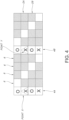
- surface ends are shown in a 212 twill pattern into which one core end has been woven.
- "H” 6 indicates a non-elastomeric ('hard') surface end
- "E” 4 indicates an elastic core end.
- EC 9 is an abbreviation for exposure count, "F" 8 for face side, and "B” 10 for back side.
- a filled (darkened) square indicates a non-elastomeric surface end passing over a pick
- an empty square indicates a non-elastomeric surface end passing under a pick
- an "X” indicates a core elastic end passing over a pick
- an "O” indicates a core elastic end passing under a pick.
- the yarns 2 in the weft direction are also indicated.
- the numbers under "EC” 9 indicate the core end exposure count for each pick.
- the core elastic end 7 is on the face side of the fabric, and one adjacent non-elastomeric surface end 6A is on the back side of the fabric, so the elastic core end face exposure count for that pick is one.
- the core elastic end is on the back, and both adjacent non-elastomeric surface ends are on the front, so the back exposure count is two.
- the core elastic end is on the face and one adjacent non-elastomeric surface end is on the back, so the core elastic end face exposure count for that pick is one.
- the composite core end is on the back as are both adjacent non-elastomeric surface ends, so the elastic core end back exposure count is zero.
- the fabric of some embodiments has an elastic core end face exposure count no higher than one in a pattern repeat, and desirably a face exposure count of zero in a pattern repeat.
- at least one adjacent hard yarn passes over the same pick when the composing yarn is on the outer face surface.
- Grin-through is further decreased when a composite end is on the face side and at least one adjacent non-elastomeric end floats over less than 2 picks on the face side.
- the face exposure count is two, grin-through of the core composite yarn on the face can be unacceptably high, especially when the core end floats over 2 or 3 picks.
- the fabric should have a core end back exposure count no higher than one.
- the weave structure in FIG. 3 with dismatch core end pattern can provide even better appearance on the fabric surface.
- Interweaving Point X is the cross weaving point between weft yarn 2A and elastic yarn 4A. In this point, the elastic yarn pushes the weft yarn toward back of fabric.
- Point Y where elastic core yarn 4B interweaves with weft yarn 2A, core elastic yarn pushes the weft yarn toward surface of the fabric. The result is for the whole weft yarn to be kept in the center of the fabric. There is no weft strip on fabric surface.
- core elastic yarns have same interlacing pattern along the weft yarn individually. But for weft yarn 2A in Point X, elastic yarn 4A pushes the weft yarn toward back of fabric, and in neighbor point (Point Y), Core elastic yarn 4B also pushes the weft yarn toward back of the fabric. Therefore, for whole weft yarn 2A, it will be toward the back of fabric. For an adjacent weft yarn 2B, it is pushed toward the surface of the fabric by elastic yarns 4A and 4B. So, there could be a weft strip on fabric surface.
- the composite core yarn can be present in any desired amount for example from about 5 to about 20 weight percent based on total fabric weight when no composite elastic yarn is present in the weft (i.e., when the composite yarn only present in the warp).
- the composite yarn may be present in greater amounts, for example, from about 10% to 40% by weight.
- the composite core yarn includes various composite yarn, such as single wrapping of the elastomer fibers with a hard yarn; double wrapping of the elastomer fibers with a hard yarn; continuously covering (i.e., core-spinning) an elastomer fiber with staple fibers, followed by twisting during winding; intermingling and entangling elastomer and hard yarns with an air jet; and twisting an elastomer fibers and hard yarns together.
- various composite yarn such as single wrapping of the elastomer fibers with a hard yarn; double wrapping of the elastomer fibers with a hard yarn; continuously covering (i.e., core-spinning) an elastomer fiber with staple fibers, followed by twisting during winding; intermingling and entangling elastomer and hard yarns with an air jet; and twisting an elastomer fibers and hard yarns together.
- the linear density of the composite yarn from which the fabric of some embodiments are prepared can range from about 0.002 g/m (15 denier) (16.5 dtex) to about 0.1 g/m (900 denier) (990 dtex), including from about 0.003 g/m (30 denier) to 0.033 g/m (300 denier) (33dtex to 330 dtex).
- the ratio of yarn denier between composite yarn and hard yarns is lower than 0.8, the fabric has no substantial grin-through. After the finishing process, core yarns migrate into the center of fabric, are invisible and untouchable.
- the composite yarn is combined together with base yarn during weaving operation.
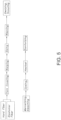
- FIG. 5 shows a conventional processing routine for stretch fabric.
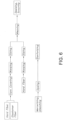
- the inventive processing routine for this invention is shown in FIG. 6 .
- the rigid warp and elastic warp beam are made separately.
- the weaving machines with double beam ability are necessary.
- the hard base yarn beam is located in the bottom on loom.
- the beam with elastic core yarn is put on the top.
- Both base and core yarns are fed from the beam and pass over a whip roll or rollers, which control yarn tension variations during weaving motions.
- the yarns are then directed through drop wires, heddles, and a read.
- Base yarn and core yarns can be in the same dent. All the warp yarns weaving alike in a designed repeat occupy a given harness.
- the reed establishes the width of the warp sheet and equal spacing of the yarn before weaving. It also is the mechanism used for pushing (beating-up) each inserted filling yarn (pick) into the body of fabric at the "fell of the cloth". The fell is the point where yarns become fabric. At this point, the base yarn, core warp yarn and weft are in fabric form and ready to be collected on a cloth roll.
- the core yarn and base yarn also can be combined together during a warping operation.
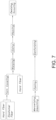
- the processing procedure is shown in FIG. 7 .
- Warping is the process of transferring multiple yarns from individual yarn package onto a single package assembly. Normally, yarns are collected in a sheet form where the yarns lie parallel to each other and in the same plane onto a beam, which is a cylindrical barrel with side flanges.
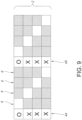
- the supply yarn packages are placed on spindles, which are located in a frame work called a creel. Core yarn and base yarn are put on the creel in certain position. Then they are pulled out and form a mixed sheet in required pattern. Finally, they are wound into beam together ( FIG. 8 ).
- the core yarn also can be mixed with hard yarn during slashing (sizing) process.
- the main purpose for sizing warp yarn is to encapsulate the yarn with a protective coating. This protective coating reduces yarn abrasion that takes place during the weaving operation. And reduces yarn hairiness preventing adjacent yarns from entangling with one another at the weaving machine.
- the core yarn is mixed with surface yarn within sizing machine. At the back end of the slasher range, the section beams from the beaming process are creeled. The yarn from each beam will be pulled over and combined with the yarns from the other beams to form multiple sheets of yarns, the number of sheets corresponding to the number of size boxes on the machine. In size box, the yarns are guided downward and submerged in the liquid size.
- the yarn sheet laves the size box via a set of squeeze rolls that helps controls the amount of penetration of the size into yarn. After this, the yarn and controls the amount of penetration of the size into they yarn. After this, the yarn pulled over steam heated, dry can or cylinders where drying takes place. At this point, the yarns are not totally dry, but are monitored to maintain required moisture. Most warp yarns have 4-14% size add-on (actual dry solids weight added to the original weight of the yarn). This depends on what type of warp yarn. Too much size cause yarn chaffing and excessive shedding of size particles at the weaving machine, and too little size causes excessive yarn abrasion resulting in dye streaks clinging, broken and entangled ends resulting in low weaving efficiencies.
- All yarns go through a set of stainless steel split rods, which help to separate them into individual sheets. This ensures that yarns from one sheet are adhering to yarns from another sheet.
- the warp yarn are collected into on single sheet and passed through a comb, which helps to separate individual yarns. This expansion type of comb is adjusted to the desired loom beam width. At this point, all the warp yarn, surface yarn and core yarn are wound onto the loom beam. Normally, several loom beams will be produced from a single set of section beams in the slasher creel.
- base yarn and elastic core yarn structures also can be used in the weft direction.
- base yarn and elastic core yarns may be inserted into fabrics as fill yarns. They can be introduced by single pick or double pick during one weft insertion. Air jet loom, rapier loom, projectile loom, water jet loom and shuttle loom can be used.
- FIG. 1 shows the structure. Because of lower crimp height of core yarn 4, and the lean of hard yarns 2 and 6 toward core yarn, core yarn is located at the center of fabric, basically covered by surface yarns 2 and 6 and invisible and untouchable.
- Dyeing and finishing process are important in producing a satisfactory fabric.
- the fabric can be finished in continuous range processes and the piece dye jet processes.
- Conventional equipment found in a continuous finishing plant and piece dye factories are usually adequate for processing.
- the normal finishing process sequences include preparation, dyeing and finishing.
- preparation and dyeing process including in singing, desizing, scouring, bleaching, mercerizing and dyeing, normal processing methods for elastic wovens are usually satisfactory.
- Finishing processing is a more critical step in producing satisfactory inventive fabrics with bi-stretch (i.e., fabrics that stretch in weft as well as warp direction). Finishing is conducted normally in a tenter frame.
- the main purposes of the finishing process in tenter frame are to pad and cure the softener, wrinkle resistant resin and to heatset the spandex.
- Heat setting "sets" spandex in an elongated form. This is also known as re-deniering, wherein a spandex of higher denier is drafted, or stretched, to a lower denier, and then heated to a sufficiently high temperature, for a sufficient time, to stabilize the spandex at the lower denier. Heat setting therefore means that the spandex permanently changes at a molecular level so that recovery tension in the stretched spandex is mostly relieved and the spandex becomes stable at a new and lower denier. Heat setting temperatures for spandex are generally in the range of 175°C to 200°C. Heat setting conditions for conventional spandex are for about 45 seconds or more at about 190°C.
- the fabric may have high shrinkage, excessive fabric weight, and excessive elongation, which may result in a negative experience for the consumer. Excessive shrinkage during the fabric finish process may result in crease marks on the fabric surface during processing and household washing. Creases that develop in this manner are frequently very difficult to remove by ironing.
- the new process may reduce heat damage to certain fibers (i. e. cotton) and thus may improve the handle of the finished fabric.
- the fabrics of some embodiments may be prepared in the absence of a heat setting step including where the fabrics will be prepared into garments.
- heat sensitive hard yarns can be used in the new process to make shirting, elastic, fabrics, thus increasing the possibilities for different and improved products.
- the shorter process has productivity benefits to the fabric manufacturer.
- composite yarns are used as core yarn.
- the composite core yarns are buried in the center of fabric without substantial grin-through. Therefore, composite yarn dyeing process could be eliminated. Only hard base yarn need to be dyed as desirable color.
- Elastic core yarn can be used with its natural color without dyeing.
- hard yarn can be used as rigid fiber in composite yarn.
- Such as cotton, wool, polyester filament and Nylon filament These hard yarns provide opportunity to add extra function into fabrics.
- polyester and nylon filament will increase the tenacity of cotton fabrics and improve the wrinkle resistant abilities.
- Cotton and wool yarn increase the moisture of synthetic fabrics.
- Special function yarns can also be introduced.
- COOLMAX ® fiber that helps absorb moisture from body and quick deliver to outside or conductible fiber that conducts the electricity may be used. Fibers with anti-biotic and microcapsules also can be used to provide the fabrics with body care, freshness and easy care properties.
- Fabrics are evaluated for % elongation under a specified load (i . e ., force) in the fabric stretch direction(s), which is the direction of the composite yarns ( i . e ., weft, warp, or weft and warp).
- a specified load i . e ., force
- Three samples of dimensions 60 cm ⁇ 6.5 cm were cut from the fabric. The long dimension (60 cm) corresponds to the stretch direction. The samples are partially unraveled to reduce the sample widths to 5.0 cm. The samples are then conditioned for at least 16 hours at 20°C +/- 2°C and 65% relatively humidity, +/- 2%.
- a first benchmark was made across the width of each sample, at 6.5 cm from a sample end.
- a second benchmark was made across the sample width at 50.0 cm from the first benchmark. The excess fabric from the second benchmark to the other end of the sample was used to form and stitch a loop into which a metal pin could be inserted. A notch was then cut into the loop so that weights could be attached to the metal pin.
- the above fabric elongation test must be completed before the growth test. Only the stretch direction of the fabric was tested. For two-way stretch fabric both directions were tested. Three samples, each 55.0 cm ⁇ 6.0 cm, were cut from the fabric. These were different samples from those used in the elongation test. The 55.0 cm direction should correspond to the stretch direction. The samples were partially unraveled to reduce the sample widths to 5.0 cm. The samples were conditioned at temperature and humidity as in the above elongation test. Two benchmarks exactly 50 cm apart were drawn across the width of the samples.
- % Growth L2 ⁇ 100 /L , where L2 was the increase in length between the sample benchmarks after relaxation and L was the original length between benchmarks. This % growth was measured for each sample and the results averaged to determine the growth number.
- Fabric shrinkage was measured after laundering.
- the fabric was first conditioned at temperature and humidity as in the elongation and growth tests. Two samples (60 cm ⁇ 60 cm) were then cut from the fabric. The samples were taken at least 15 cm away from the selvage. A box of four sides of 40 cm ⁇ 40 cm was marked on the fabric samples.
- the samples were laundered in a washing machine with the samples and a loading fabric.
- the total washing machine load was 2 kg of air-dried material, and not more than half the wash consisted of test samples.
- the laundry was gently washed at a water temperature of 40°C and spun.
- a detergent amount of 1g /l to 3 g/l was used, depending on water hardness.
- the samples were laid on a flat surface until dry, and then they were conditioned for 16 hours at 20°C +/- 2°C and 65% relative humidity +/- 2% rh.
- Fabric sample shrinkage was then measured in the warp and weft directions by measuring the distances between markings.
- 100% cotton open end spun yarn was used as warp yarn. They included two count yarns: 7.0 Ne OE yarn and 8.5 Ne OE yarn with irregular arrangement pattern. The yarns were indigo dyed in rope form before beaming. Then, they were sized and made the weaving beam.
- LYCRA ® spandex is available from INVISTA S.á r.L., Wichita, KS.
- Spandex 40D means 0.004 g/m (40 denier)
- 3.5X means the draft of the LYCRA ® imposed by the core spinning machine (machine draft).
- machine draft is the linear density of the spun yarn as measured by the English Cotton Count System. The rest of the items in Table 1 are clearly labeled.
- Each greige fabric in the examples was finished by a jiggle dye machine.
- Each woven fabric was pre-scoured with 3.0 weight % Lubit ® 64 (Sybron Inc.) at 49°C for 10 minutes. Afterwards it was de-sized with 6.0 weight % Synthazyme ® (Dooley Chemicals. LLC Inc.) and 2.0 weight % Merpol ® LFH (E. I. DuPont Co.) for 30 minutes at 71°C and then scoured with 3.0 weight % Lubit ® 64, 0.5 weight % Merpol ® LFH and 0.5 weight % trisodium phosphate at 82°C for 30 minutes. Fabric finishing was followed by dry in a tente frame at 160°C for 1 minute.
- the warp surface yarn was 7.0 Ne count and 8.4 Ne count mixed open end yarn.
- the warp yarn was indigo dyed before beaming.
- the core warp yarn is 100/2 Ne Siro core spun yarn with 0.004 g/m (40D) LYCRA ® spandex.
- the weft yarn was 12 Ne cotton with 0.006 g/m (55D) LYCRA ® core spun yarn.
- LYCRA ® draft is 3.6X.
- Loom speed was 500 picks per minute at a pick level 41 Picks per inch.
- Warp core yarn use 1 down and 3 up weave pattern. It uses a match pattern as well ( Figure 9 ). Table 2 summarizes the test results.
- This sample had the same fabric structure as in example 1. The only difference was the use of 2 up and 2 down weaving pattern for warp core elastic yarn.
- the warp surface yarn was 7.0 Ne count and 8.4 Ne count mixed open end yarn.
- the warp yarn was indigo dyed before beaming.
- the core warp yarn is 100/2 Ne Siro core spun yarn with 0.004 g/m (40D) LYCRA ® spandex.
- the weft yarn was 12 Ne cotton with 0.006 g/m (55D) LYCRA ® core spun yarn.
- the loom speed was 500 picks/minute at 41 picks per inch. Table 2 summarizes the test results. It is clear that this sample had good stretch (warp 12.3% ⁇ weft 25.7%). And 136 cm (53.3 inch) of width.
- the fabric also has low shrinkage. So a heatset process was not necessary for this sample. Without heatset, fabric appearance and handle were improved.
- Example 3 Bi-stretch denim with 111 core yarn pattern
- the warp surface yarn was 7.0 Ne count and 8.4 Ne count mixed open end yarn.
- the warp yarn was indigo dyed before beaming.
- the core warp yarn is 100/2 Ne Siro core spun yarn with 0.004 g/m (40D) LYCRA ® spandex.
- the weft yarn was 12 Ne of 100% cotton open end yarn. This weft yarn is rigid and inserted into fabric as weft yarn at 40 picks/inch on the loom. 3/1 twill weaving pattern for surface yarn. Without heat setting, the sample had 17% stretch and 3.1% growth in the warp direction. It is an ideal fabric for making warp stretch jean.
- the weft yarn was 0.033 g/m (300D)/68F Coolmax ® polyester filament with 0.004 g/m (40D) LYCRA ® spandex air covered yarn.
- the warp surface yarn was 7.0 Ne count and 8.4 Ne count mixed open end indigo yarn.
- the core warp yarn is 100/2 Ne Siro core spun yarn with 0.004 g/m (40D) LYCRA ® spandex.
- the weaving pattern is shown in FIG. 9 . Before weaving, the stretch weft yarn went through interlacing process. After weaving the greige fabric was finished in giggle dye machine.
- the warp and weft density of the cotton yarn was 77end/in ⁇ 55 picks/in, the basis weight was 522 g/m 2 (15.4 OZ /yd 2 ), and the elongation was 11.7 in warp and 16.5% in weft %.
- the Fabric had very low shrinkage:0.5 % in warp and 4.2 % in weft.
- the warp core elastic yarn is 0.017 g/m (1500) polyester/0.008 g/m (70D) LYCRA ® air covered yarn.
- the ratio of elastic core yarn vs. surface yarn is 1:8.
- the fabric has the same warp surface yarn and same fabric structure as in Example 1. 20 Ne cotton /0.008 g/m (70D) LYCRA ® core spun was used as weft yarn.
- the LYCRA ® was drafted 3.5X during covering process. Table 2 lists the fabric properties. The fabric made from such yarn exhibited low shrinkage, good stretch (12%X39.8%). No fabric heat setting was necessary.
- Example 7 Bi-stretch denim with 212 polyester/LYCRA ® air covered yarn
- This example had the same warp surface yarn and same fabric structure as Example 7, except 2/2 weave pattern for core elastic yarn. There is one end of core elastic yarn among every four surface yarn. 20 Ne cotton /0.008 g/m (70D) LYCRA ® core spun yarn is used as weft yarn. From Table I, we can the fabric properties.
- This sample had the same fabric structure as in example 8. The only difference was the use of 9.4Ne cotton/0.008 g/m (70D) LYCRA ® core spun as weft.
- the warp surface yarn was 7.0 Ne count and 8.4 Ne count mixed open end yarn.
- the warp yarn was indigo dyed before beaming.
- the core warp yarn is 0.008 g/m (70D) Nylon/0.004 g/m (40D) LYCRA ® single covered yarn.
- Table 2 summarizes the test results. It is clear that this sample had good stretch (warp 14.1% ⁇ weft 29.5%). And 159 cm (62.6 inch) of width. The fabric also has low shrinkage. So a heatset process was not necessary for this sample.
- Example 10 Bi-stretch denim with 111 core yarn pattern
- This fabric used the same warp and weft yarn as Example 9. Also, the weaving and finishing process were the same as Example 9, but its weave pattern for elastic core warp yarn was 2/2. Table 2 summarizes the test results. We can see that this sample had weight (488 g/m 2 (14.4 Oz/Y"2)), good stretch (warp 12.8% ⁇ Weft 24.3 %), and acceptable wash shrinkage (warp 4.4 %X weft 7.2 %). Again, a heatset process was not necessary for this sample.
- the warp surface yarn was 7.0 Ne count and 8.4 Ne count mixed open end yarn.
- the core warp yarn is 70 Ne single covered yarn with 0.004 g/m (40D) LYCRA ® spandex.
- the weft yarn was 14 Ne /0.008 g/m (70D) LYCRA ® core spun yarn. This weft yarn is inserted into fabric as weft yarn at 47 picks/inch on the loom. 3/1 twill weaving pattern for base yarn. Without heat setting, the sample had 13.5% stretch and 3.8% growth in the weft direction.
- Example 12 Stretch 212 Twill denim with grin-through
- the warp surface yarn was 7.0 Ne count and 8.4 Ne count mixed indigo open end yarn.
- the core warp yarn is 70 Ne single covered yarn with 0.004 g/m (40D) LYCRA ® spandex.
- the weave pattern for warp core yarn is 2/2 weave and match ( Fig 10 ): with different weave pattern in neighbored core yarn.
- the exposure index for this fabric is 2 for both surface and back of the fabric.
- the physical properties of this fabric is good (see Table 2), but there was grin-through of core elastic yarn on the fabric surface and back. Core elastic yarns are exposed and clearly show up on fabric surface.
- Example 13 Stretch 212 Twill denim with 6/2 core yarn exposed
- the warp surface yarn was 7.0 Ne count and 8.4 Ne count mixed indigo open end yarn.
- the core warp yarn is 70 Ne single covered yarn with 0.004 g/m (40D) LYCRA ® spandex.
- the weave pattern for warp core yarn is 6/2 weave ( Fig 11 ). It has a long float for core elastic yarn.
- the fabrics show wrinkle and crease after finishing.
- the exposure index for this fabric is 2 for both surface and back of the fabric.
- the physical properties of this fabric is also good (see Table 2), but there are grin-through of core elastic yarn on the fabric surface and back. Core elastic yarns are exposed and clearly show up on fabric surface.
Landscapes
- Engineering & Computer Science (AREA)
- Textile Engineering (AREA)
- Mechanical Engineering (AREA)
- Woven Fabrics (AREA)
Claims (20)
- Gegenstand, umfassend ein gewebtes Gewebe mit Kettgarnen (4,6) und Schussgarnen (2), wobei wenigstens eines von den Kettgarnen (4,6) und Schussgarnen (2) zwei getrennte Systeme von Garnen aufweist, wobei das System von Garnen ein hartes Garn (6) enthält, das den Gewebe-Hauptkörper bildet, und ein ummanteltes elastisches Verbundgarn (4) mit einem elastischen Faserkern, wobei die harten Garne unelastisch im Vergleich zu einem elastischen oder elastomeren Garn sind und wobei das Gewebe eine Außenseite und eine Rückseite aufweist; dadurch gekennzeichnet, dass das Gewebe aufweist:(a) eine Webstruktur, wobei das Verbundgarn (4) und wenigstens ein benachbartes hartes Garn (6) über den gleichen Schuss laufen, wenn sich das Verbundgarn (4) an der Außenfläche befindet.
- Gegenstand gemäß Anspruch 1, wobei das Gewebe ferner wenigstens eines aufweist von:(b) das Verhältnis des Denier-Werts des harten Garns (6) zu dem Denier-Wert des Verbundgarns (4) beträgt wenigstens 1:1; und(c) das Verbundgarn (4) flottiert über nicht mehr als 5 Schüsse an der Außenseite.
- Gegenstand gemäß Anspruch 2, wobei das Verhältnis des Denier-Werts des harten Garns (6) zu dem Denier-Wert des Verbundgarns (4) von 2:1 bis 10:1 beträgt.
- Gegenstand gemäß Anspruch 1 oder 2, wobei das Verhältnis von Garnenden des harten Garns zu dem Kerngarn von 2:1 bis 8:1 beträgt.
- Gegenstand gemäß Anspruch 1, wobei die Menge an in den Kettgarnen vorhandener elastischer Faser von 0,1 Gew.-% bis 5 Gew.-% der Kettgarne beträgt.
- Gegenstand gemäß Anspruch 5, wobei die Menge an in den Schussgarnen vorhandener elastischer Faser von 0,1 Gew.-% bis 5 Gew.-% der Schussgarne beträgt.
- Gegenstand gemäß Anspruch 1, wobei das elastische Garn Spandex ist.
- Gegenstand gemäß Anspruch 1, wobei das ummantelte elastische Verbundgarn (4) ausgewählt ist aus der Gruppe bestehend aus umsponnenem Garn, luftbedecktem Garn, einfach umhülltem Garn, doppelt umhülltem Garn und Kombinationen davon.
- Gegenstand gemäß Anspruch 1, wobei das harte Garn (6), das den Gewebe-Hauptkörper bildet, ausgewählt ist aus gesponnenem Stapelfasergarn, Filamentgarn und Kombinationen davon.
- Gegenstand gemäß Anspruch 1, wobei das harte Garn (6), das den Gewebe-Hauptkörper bildet, ausgewählt ist aus der Gruppe betsehend aus Wolle, Leinen, Seide, Polyester, Nylon, Olefin, Baumwolle und Kombinationen davon.
- Gegenstand gemäß Anspruch 1, wobei das Gewebe eine Webstruktur ausgewählt aus der Gruppe bestehend aus Leinwandbindung, Körperbindung, Satin und Kombinationen davon aufweist.
- Gegenstand gemäß Anspruch 11, wobei die Webstruktur des Gewebes für das harte Garn (6) und das Verbundgarn (4) verschieden ist.
- Gegenstand gemäß Anspruch 1, wobei das Gewebe eine Dehnung in der Kettrichtung von zwischen 10 und 45 % aufweist.
- Gegenstand gemäß Anspruch 1, wobei der elastische Faserkern einen Denier-Wert von 0,001 g/m (10D) bis 0,044 g/m (400D) aufweist.
- Gegenstand gemäß Anspruch 1, dadurch gekennzeichnet, dass das Gewebe aufweist:(b) das Verhältnis des Denier-Werts des harten Garns (6) zu dem Denier-Wert des Verbundgarns (4) beträgt wenigstens 1:1; und(c) das Verbundgarn (4) flottiert über nicht mehr als 5 Schüsse an der Außenseite.
- Verfahren zur Herstellung eines Gegenstands, umfassend:Weben eines Gewebes mit Kettgarnen (4,6) und Schussgarnen (2), wobei wenigstens eines von den Kettgarnen (4,6) und Schussgarnen (2) zwei getrennte Systeme von Garnen aufweist, wobei das System von Garnen ein hartes Garn (6) enthält, das den Gewebe-Hauptkörper bildet, und ein ummanteltes elastisches Verbundgarn (4) mit einem elastischen Faserkern, wobei die harten Garne unelastisch im Vergleich zu einem elastischen oder elastomeren Garn sind und wobei das Gewebe eine Außenseite und eine Rückseite aufweist;dadurch gekennzeichnet, dass das Gewebe aufweist:(a) eine Webstruktur, wobei das Verbundgarn (4) und wenigstens ein benachbartes hartes Garn (6) über den gleichen Schuss laufen, wenn sich das Verbundgarn (4) an der Außenfläche befindet;gegebenenfalls wobei das Gewebe ferner wenigstens eines aufweist von:(b) das Verhältnis des Denier-Werts des harten Garns (6) zu dem Denier-Wert des Verbundgarns (4) beträgt wenigstens 1:1; und(c) das Verbundgarn (4) flottiert über nicht mehr als 5 Schüsse an der Außenseite.
- Verfahren gemäß Anspruch 16, wobei das ummantelte elastische Verbundgarn (4) die Kombination eines harten Garns mit dem elastischen Faserkern aufweist, die bei einem Schärverfahren, einem Schlichteverfahren oder dem Webverfahren miteinander verbunden werden.
- Verfahren gemäß Anspruch 16, wobei das Gewebe durch ein Stückfärbe- oder einem kontinuierlichen Verfahren fertigbearbeitet wird.
- Verfahren gemäß Anspruch 16, wobei das Gewebe ohne ein Wärmebindeverfahren hergestellt wird.
- Gegenstand gemäß Anspruch 1 oder Verfahren gemäß Anspruch 16, wobei der Gegenstand ein Kleidungsstück ist.
Applications Claiming Priority (2)
| Application Number | Priority Date | Filing Date | Title |
|---|---|---|---|
| US12/020,165 US7762287B2 (en) | 2008-01-25 | 2008-01-25 | Stretch wovens with separated elastic yarn system |
| PCT/US2009/031376 WO2009094311A2 (en) | 2008-01-25 | 2009-01-19 | Stretch wovens with separated elastic yarn system |
Publications (4)
| Publication Number | Publication Date |
|---|---|
| EP2240632A2 EP2240632A2 (de) | 2010-10-20 |
| EP2240632A4 EP2240632A4 (de) | 2014-12-17 |
| EP2240632B1 true EP2240632B1 (de) | 2024-08-21 |
| EP2240632B8 EP2240632B8 (de) | 2024-10-02 |
Family
ID=40899707
Family Applications (1)
| Application Number | Title | Priority Date | Filing Date |
|---|---|---|---|
| EP09704416.8A Active EP2240632B8 (de) | 2008-01-25 | 2009-01-19 | Gegenstand umfassend ein streckgewebe und ein verfahren zur herstellung eines solchen gegenstands |
Country Status (9)
| Country | Link |
|---|---|
| US (1) | US7762287B2 (de) |
| EP (1) | EP2240632B8 (de) |
| JP (1) | JP5385305B2 (de) |
| KR (1) | KR101591536B1 (de) |
| CN (1) | CN101932761B (de) |
| BR (1) | BRPI0905702B1 (de) |
| ES (1) | ES2994971T3 (de) |
| TW (1) | TWI355432B (de) |
| WO (1) | WO2009094311A2 (de) |
Families Citing this family (51)
| Publication number | Priority date | Publication date | Assignee | Title |
|---|---|---|---|---|
| JP5204647B2 (ja) | 2005-05-04 | 2013-06-05 | アール アンド ディー コンセプツ アーゲー | 結合部材 |
| US20080289156A1 (en) * | 2007-05-25 | 2008-11-27 | Mitchell Lewis | Zipper construction |
| GB0814152D0 (en) * | 2008-08-01 | 2008-09-10 | Engineered Fibre Structures Lt | Sleeve for trans-dermal patches |
| US8230886B2 (en) * | 2010-02-05 | 2012-07-31 | Zhongshan Wei Li Textile Co., Ltd. | Sweatband and cap having the same |
| US10221506B2 (en) | 2010-02-26 | 2019-03-05 | Sanko Tekstil Isletmeleri San. Ve Tic. A.S. | Method of making woven fabric that performs like a knitted fabric |
| DE102010026609B3 (de) * | 2010-07-09 | 2011-11-17 | Lindauer Dornier Gesellschaft Mit Beschränkter Haftung | Verfahren und Vorrichtung zur Webmusterbildung bei Geweben mit Zusatzschusseffekten |
| DE102010034969B3 (de) | 2010-08-20 | 2011-11-03 | Lindauer Dornier Gesellschaft Mit Beschränkter Haftung | Webblatt und Webmaschine zur Webmusterbildung bei Geweben mit Zusatzmustereffekten |
| IT1404727B1 (it) * | 2010-10-30 | 2013-11-29 | Benelli | Filato elasticizzato, tessuto elasticizzato prodotto con detto filato elasticizzato e metodo per la produzione di detto filato |
| US20140308865A1 (en) * | 2011-12-13 | 2014-10-16 | E I Du Pont De Nemours And Company | Stretchable and dimensionally stable woven fabric made from polytrimethylene terephthalate based core spun yarns. |
| JP6203763B2 (ja) | 2012-03-01 | 2017-09-27 | シンセス・ゲーエムベーハーSynthes GmbH | 軟質コアを有する外科用縫合糸 |
| US9982372B2 (en) | 2012-03-30 | 2018-05-29 | INVISTA North America S.à.r.l. | Stretch wovens with a control yarn system |
| US9131790B2 (en) | 2013-08-15 | 2015-09-15 | Aavn, Inc. | Proliferated thread count of a woven textile by simultaneous insertion within a single pick insertion event of a loom apparatus multiple adjacent parallel yarns drawn from a multi-pick yarn package |
| CN102852003A (zh) * | 2012-09-26 | 2013-01-02 | 昆山市周市斐煌服饰厂 | 弹性面料的制造方法 |
| US10612174B2 (en) | 2012-11-07 | 2020-04-07 | Standard Textile Co., Inc. | Top cover with wash activated patterning |
| US20140123362A1 (en) * | 2012-11-07 | 2014-05-08 | Standard Textile Co., Inc. | Woven stretch fabric bath robe |
| EP3943650B1 (de) * | 2013-01-16 | 2024-02-28 | The LYCRA Company UK Limited | Elastische garne und stoffe mit mehreren elastischen garnen |
| PL2832905T3 (pl) * | 2013-07-30 | 2019-09-30 | Sanko Tekstil Isletmeleri San. Ve Tic. A.S. | Produkt odzieżowy o zmiennym wyglądzie, zastosowanie tkaniny do takiego produktu i sposób wytwarzania takiego produktu |
| PT2832907T (pt) * | 2013-07-31 | 2019-05-31 | Sanko Tekstil Isletmeleri San Ve Tic As | Tecido extensível tecido e método para a sua produção |
| US10808337B2 (en) | 2013-08-15 | 2020-10-20 | Arun Agarwal | Proliferated thread count of a woven textile by simultaneous insertion within a single pick insertion event of a loom apparatus multiple adjacent parallel yarns drawn from a multi-pick yarn package |
| US11168414B2 (en) | 2013-08-15 | 2021-11-09 | Arun Agarwal | Selective abrading of a surface of a woven textile fabric with proliferated thread count based on simultaneous insertion within a single pick insertion event of a loom apparatus multiple adjacent parallel yarns drawn from a multi-pick yarn package |
| US10443159B2 (en) | 2013-08-15 | 2019-10-15 | Arun Agarwal | Proliferated thread count of a woven textile by simultaneous insertion within a single pick insertion event of a loom apparatus multiple adjacent parallel yarns drawn from a multi-pick yarn package |
| KR200477140Y1 (ko) * | 2013-09-25 | 2015-05-12 | 김정호 | 에코천연밴드 |
| JP6275996B2 (ja) * | 2013-11-01 | 2018-02-07 | 株式会社ワコール | 伸縮性テープおよびそれを用いた衣類 |
| CN104727010A (zh) * | 2013-12-21 | 2015-06-24 | 江苏恒源丝绸集团有限公司 | 一种氨纶包芯纱复合面料 |
| US20160160406A1 (en) | 2014-05-29 | 2016-06-09 | Arun Agarwal | Production of high cotton number or low denier core spun yarn for weaving of reactive fabric and enhanced bedding |
| WO2015194046A1 (ja) * | 2014-06-20 | 2015-12-23 | 内野株式会社 | ガーゼ織物 |
| JP6877344B2 (ja) * | 2014-12-24 | 2021-05-26 | インヴィスタ テキスタイルズ(ユー.ケー.)リミテッド | 低融点繊維を含む容易にセット可能な伸長ファブリック |
| CN106795663B (zh) * | 2015-01-26 | 2019-02-12 | 日本毛织株式会社 | 防护织物及其制造方法 |
| US20160281275A1 (en) | 2015-03-26 | 2016-09-29 | Sanko Tekstil Isletmeleri San. Ve Tic. A.S. | Elastic fabric and process of preparation |
| ES3034766T3 (en) * | 2015-07-22 | 2025-08-22 | Sanko Tekstil Isletmeleri San Ve Tic As | Garment and process of preparation |
| WO2017020004A1 (en) | 2015-07-30 | 2017-02-02 | Mcclean Eldon | Shapewear garments |
| US11008676B2 (en) * | 2015-12-16 | 2021-05-18 | Edwards Lifesciences Corporation | Textured woven fabric for use in implantable bioprostheses |
| PL3231907T3 (pl) * | 2016-04-11 | 2022-06-06 | Calik Denim Tekstil San. Ve Tic. A.S. | Tkanina i sposób jej wytwarzania |
| US10337128B2 (en) * | 2017-08-31 | 2019-07-02 | Brrr! Inc. | Methods and compositions for cooling yarns and fabrics, and articles comprising same |
| DK180306B1 (da) * | 2018-04-11 | 2020-10-26 | V Guldmann As | Strop til løftesejl og fremgangsmåde til fremstilling af sådan strop samt anvendelse af sådan strop |
| WO2020033426A1 (en) * | 2018-08-10 | 2020-02-13 | Elizabeth Whelan | Multi-layer woven fabric article |
| CN108998875A (zh) * | 2018-08-20 | 2018-12-14 | 嘉兴市民华纺织有限公司 | 一种仿麻面料 |
| IT201800009805A1 (it) * | 2018-10-25 | 2020-04-25 | Candiani Spa | Filati elasticizzati a base di cotone per tessuti elasticizzati ad elevata compatibilita’ ambientale e realizzati con tecnica core-spun |
| US10557219B1 (en) * | 2018-12-28 | 2020-02-11 | Brrr! Inc. | Methods and compositions for cooling yarns and fabrics comprising a cellulosic fiber, and articles comprising same |
| US20220325446A1 (en) * | 2019-08-13 | 2022-10-13 | London Luxury Llc | Stretch towel |
| CN110760963B (zh) * | 2019-09-25 | 2020-12-29 | 武汉纺织大学 | 可改变织物结构的方法 |
| CN110747567B (zh) * | 2019-10-29 | 2021-08-27 | 常熟市云宇织造有限公司 | 一种弹性法兰绒面料 |
| US11591748B2 (en) | 2020-01-14 | 2023-02-28 | Shadow Works, Llc | Heat treated multilayer knitted textile of liquid crystal polymer fibers and modified polyacrylonitrile fibers, and process for making same |
| CN111676562A (zh) * | 2020-05-14 | 2020-09-18 | 东华大学 | 一种涤纶、氨纶混纺吸湿排汗高弹透气鱼鳞面料的制备 |
| KR20220004903A (ko) | 2020-07-03 | 2022-01-12 | 효성티앤씨 주식회사 | 저신도 탄성 섬유를 포함하는 코어스펀얀과 이를 적용한 제직물 |
| US20220195799A1 (en) * | 2020-12-22 | 2022-06-23 | Ashot Aroian | Reflective Rope Ladder |
| KR102539929B1 (ko) | 2021-07-14 | 2023-06-02 | 송수복 | 입체무늬를 포함하는 신발갑피 |
| JP7372718B1 (ja) * | 2023-04-25 | 2023-11-01 | 伊澤タオル株式会社 | タオル生地及びその製造方法 |
| FR3152028B1 (fr) * | 2023-08-09 | 2025-12-26 | Thuasne | Tissu bi-élastique à fils de chaîne parallèles, et procédé associé |
| KR102704036B1 (ko) * | 2023-11-16 | 2024-09-05 | 주식회사 나아나나 | 경량 기능성 데님 원단 |
| US20250354306A1 (en) * | 2024-05-16 | 2025-11-20 | Sachin JHUNJHUNWALA | Method for producing elastic bands with recycled materials |
Citations (2)
| Publication number | Priority date | Publication date | Assignee | Title |
|---|---|---|---|---|
| US3908711A (en) * | 1974-01-21 | 1975-09-30 | Johnson & Johnson | Narrow elastic waistband fabric and method of manufacturing the same |
| US3965943A (en) * | 1974-11-11 | 1976-06-29 | Johnson & Johnson | Narrow elastic fabric for use as waistband in articles of apparel |
Family Cites Families (33)
| Publication number | Priority date | Publication date | Assignee | Title |
|---|---|---|---|---|
| US3154111A (en) * | 1962-07-27 | 1964-10-27 | Kendall & Co | Textile fabric |
| US3169558A (en) | 1962-09-13 | 1965-02-16 | Du Pont | Elastic fabric and process for preparing same |
| US3315328A (en) * | 1963-08-05 | 1967-04-25 | Du Pont | Process for preparing fabrics |
| US3452411A (en) * | 1966-10-20 | 1969-07-01 | Ici Ltd | Woven stretch fabrics |
| US3788365A (en) * | 1971-05-26 | 1974-01-29 | Johnson & Johnson | Narrow elastic fabric for use as waistband in articles of apparel |
| US3813698A (en) * | 1971-05-26 | 1974-06-04 | Johnson & Johnson | Trousers having narrow elastic fabric waistband |
| IT966171B (it) * | 1971-10-04 | 1974-02-11 | Johnson & Johnson | Perfezionamento nei tessuti elasti ci a fasce per cinture e simili |
| US3860046A (en) * | 1973-01-02 | 1975-01-14 | Johnson & Johnson | Gossamer shoulder strap for brassieres |
| US3858622A (en) * | 1973-06-14 | 1975-01-07 | Johnson & Johnson | Narrow elastic fabric for apparel waistbands |
| US3920054A (en) * | 1974-05-29 | 1975-11-18 | Johnson & Johnson | Curvilinear waistband fabric |
| FR2286219A1 (fr) | 1974-09-27 | 1976-04-23 | Turdine Teintureries | Nouveau tissu elastique et procede pour le fabriquer |
| US3965944A (en) * | 1975-02-12 | 1976-06-29 | Johnson & Johnson | Lightweight narrow elastic fabric |
| GB1512327A (en) | 1976-10-07 | 1978-06-01 | Palmroth T | Means for cleaning a vehicle wind-screen wiper blade |
| JPS5482477A (en) * | 1977-12-09 | 1979-06-30 | Toray Industries | Special fabric and producing same |
| JPS60215835A (ja) * | 1984-04-07 | 1985-10-29 | 株式会社 サカシタ | コアヤ−ンの布地 |
| JPS62170509A (ja) * | 1986-01-20 | 1987-07-27 | Teijin Ltd | 伸縮性合成繊維糸条およびその製造方法 |
| JPH04333640A (ja) * | 1991-05-02 | 1992-11-20 | Toyobo Co Ltd | 特殊包帯用基布 |
| JPH0657581A (ja) | 1992-07-28 | 1994-03-01 | Asahi Kasei Textiles Ltd | 伸縮性の織物 |
| US5645924A (en) * | 1994-11-10 | 1997-07-08 | E. I. Du Pont De Nemours And Company | Elastic woven fabric |
| JPH09132839A (ja) | 1995-11-02 | 1997-05-20 | Asahi Chem Ind Co Ltd | ストレッチ織物 |
| US5694981A (en) * | 1996-08-26 | 1997-12-09 | Southern Mills, Inc. | Stretchable flame resistant garment |
| US5874372A (en) * | 1996-10-30 | 1999-02-23 | Toyo Boseki Kabushiki Kaisha | Highly stretchable fabrics and process for producing same |
| KR100257338B1 (ko) | 1997-08-25 | 2000-10-02 | 김윤 | 신축성이 우수한 양방향 신축성직물의 제조방법 |
| JP2002013045A (ja) | 2000-06-29 | 2002-01-18 | Toyobo Co Ltd | ストレッチ織物の製造方法 |
| US6782923B2 (en) * | 2001-11-13 | 2004-08-31 | Invista North America, S.A.R.L. | Weft-stretch woven fabric with high recovery |
| US6659139B2 (en) | 2002-01-18 | 2003-12-09 | E. I. Du Pont De Nemours And Company | Warp-stretch woven fabric and method for making same |
| JP4174714B2 (ja) * | 2003-01-08 | 2008-11-05 | 東洋紡績株式会社 | ストレッチ性ポリエステル系フィラメント織物及びその製造法及びそれを用いた衣料 |
| EP1599624B1 (de) * | 2003-03-05 | 2008-05-28 | INVISTA Technologies S.à.r.l. | Webstoff mit kettfadenstreckung und herstellungsverfahren dafür |
| CA2539780A1 (en) | 2003-10-22 | 2005-04-28 | Teijin Fibers Limited | Stretchable composite fabric and clothing product therefrom |
| US20050124245A1 (en) * | 2003-12-03 | 2005-06-09 | Tianyi Liao | Size-covered composite yarns and method for making same |
| US20070259583A1 (en) | 2004-11-10 | 2007-11-08 | Invista North America S.A R.L. | Elastic fabric including elastic fiber and hard yarn and methods for making |
| KR20070084132A (ko) * | 2004-11-10 | 2007-08-24 | 인비스타 테크놀러지스 에스.에이.알.엘 | 스판덱스 및 경질사를 포함하는 탄성 셔츠감 직물의 제조방법 |
| US7191803B2 (en) * | 2004-12-13 | 2007-03-20 | Woven Electronics Corporation | Elastic fabric with sinusoidally disposed wires |
-
2008
- 2008-01-25 US US12/020,165 patent/US7762287B2/en active Active
-
2009
- 2009-01-19 JP JP2010544376A patent/JP5385305B2/ja active Active
- 2009-01-19 BR BRPI0905702A patent/BRPI0905702B1/pt not_active IP Right Cessation
- 2009-01-19 WO PCT/US2009/031376 patent/WO2009094311A2/en not_active Ceased
- 2009-01-19 CN CN200980102912.7A patent/CN101932761B/zh not_active Expired - Fee Related
- 2009-01-19 ES ES09704416T patent/ES2994971T3/es active Active
- 2009-01-19 KR KR1020107018736A patent/KR101591536B1/ko not_active Expired - Fee Related
- 2009-01-19 EP EP09704416.8A patent/EP2240632B8/de active Active
- 2009-01-22 TW TW98102627A patent/TWI355432B/zh active
Patent Citations (2)
| Publication number | Priority date | Publication date | Assignee | Title |
|---|---|---|---|---|
| US3908711A (en) * | 1974-01-21 | 1975-09-30 | Johnson & Johnson | Narrow elastic waistband fabric and method of manufacturing the same |
| US3965943A (en) * | 1974-11-11 | 1976-06-29 | Johnson & Johnson | Narrow elastic fabric for use as waistband in articles of apparel |
Also Published As
| Publication number | Publication date |
|---|---|
| WO2009094311A3 (en) | 2009-09-17 |
| TWI355432B (en) | 2012-01-01 |
| EP2240632B8 (de) | 2024-10-02 |
| BRPI0905702B1 (pt) | 2019-01-29 |
| CN101932761A (zh) | 2010-12-29 |
| JP5385305B2 (ja) | 2014-01-08 |
| US7762287B2 (en) | 2010-07-27 |
| JP2011511888A (ja) | 2011-04-14 |
| TW201000704A (en) | 2010-01-01 |
| CN101932761B (zh) | 2015-06-17 |
| EP2240632A4 (de) | 2014-12-17 |
| BRPI0905702A2 (pt) | 2017-06-13 |
| WO2009094311A2 (en) | 2009-07-30 |
| US20090191777A1 (en) | 2009-07-30 |
| EP2240632A2 (de) | 2010-10-20 |
| KR101591536B1 (ko) | 2016-02-03 |
| KR20100119775A (ko) | 2010-11-10 |
| ES2994971T3 (en) | 2025-02-04 |
Similar Documents
| Publication | Publication Date | Title |
|---|---|---|
| US7762287B2 (en) | Stretch wovens with separated elastic yarn system | |
| EP2834400B1 (de) | Elastisches gewebe mit einem kontrollfadensystem | |
| EP1819856B1 (de) | Verfahren zur herstellung eines elastischen hemdgewebes aus spandex- und hartem garn | |
| EP2946032B1 (de) | Elastische garne und stoffe mit mehreren elastischen garnen | |
| EP1689920B1 (de) | Geschlichtete verbundgarne und verfahren zu deren herstellung | |
| US20070259583A1 (en) | Elastic fabric including elastic fiber and hard yarn and methods for making | |
| CN101307523A (zh) | 含有斯潘德克斯纤维和硬纱的伸展织物的制造方法 | |
| KR20080099548A (ko) | 스판덱스 및 경질사를 포함하는 탄성 직물의 제조 방법 | |
| JP2008280626A (ja) | スパンデックスおよび硬質糸を含む弾性布地の製造方法 | |
| EP1873285B1 (de) | Verfahren zur Herstellung elastischer Hemdengewebe mit Spandex und hartem Garn | |
| HK1111204B (en) | Method to make elastic shirting fabric comprising spandex and hard yarn |
Legal Events
| Date | Code | Title | Description |
|---|---|---|---|
| PUAI | Public reference made under article 153(3) epc to a published international application that has entered the european phase |
Free format text: ORIGINAL CODE: 0009012 |
|
| 17P | Request for examination filed |
Effective date: 20100721 |
|
| AK | Designated contracting states |
Kind code of ref document: A2 Designated state(s): AT BE BG CH CY CZ DE DK EE ES FI FR GB GR HR HU IE IS IT LI LT LU LV MC MK MT NL NO PL PT RO SE SI SK TR |
|
| AX | Request for extension of the european patent |
Extension state: AL BA RS |
|
| DAX | Request for extension of the european patent (deleted) | ||
| RAP1 | Party data changed (applicant data changed or rights of an application transferred) |
Owner name: INVISTA TECHNOLOGIES S.A.R.L. |
|
| A4 | Supplementary search report drawn up and despatched |
Effective date: 20141113 |
|
| RIC1 | Information provided on ipc code assigned before grant |
Ipc: D03D 15/00 20060101ALI20141107BHEP Ipc: D03D 15/04 20060101ALI20141107BHEP Ipc: D03D 15/08 20060101AFI20141107BHEP Ipc: D02G 3/32 20060101ALI20141107BHEP Ipc: D03D 13/00 20060101ALI20141107BHEP |
|
| STAA | Information on the status of an ep patent application or granted ep patent |
Free format text: STATUS: EXAMINATION IS IN PROGRESS |
|
| 17Q | First examination report despatched |
Effective date: 20210224 |
|
| REG | Reference to a national code |
Ref country code: DE Ref legal event code: R079 Ref document number: 602009065341 Country of ref document: DE Free format text: PREVIOUS MAIN CLASS: D03D0015080000 Ipc: D03D0015000000 Ref country code: DE Ref legal event code: R079 Free format text: PREVIOUS MAIN CLASS: D03D0015080000 Ipc: D03D0015000000 |
|
| RIC1 | Information provided on ipc code assigned before grant |
Ipc: D03D 15/292 20210101ALI20240124BHEP Ipc: D03D 15/56 20210101ALI20240124BHEP Ipc: D03D 15/47 20210101ALI20240124BHEP Ipc: D02G 3/32 20060101ALI20240124BHEP Ipc: D03D 13/00 20060101ALI20240124BHEP Ipc: D03D 15/00 20060101AFI20240124BHEP |
|
| GRAP | Despatch of communication of intention to grant a patent |
Free format text: ORIGINAL CODE: EPIDOSNIGR1 |
|
| STAA | Information on the status of an ep patent application or granted ep patent |
Free format text: STATUS: GRANT OF PATENT IS INTENDED |
|
| INTG | Intention to grant announced |
Effective date: 20240313 |
|
| GRAS | Grant fee paid |
Free format text: ORIGINAL CODE: EPIDOSNIGR3 |
|
| GRAA | (expected) grant |
Free format text: ORIGINAL CODE: 0009210 |
|
| STAA | Information on the status of an ep patent application or granted ep patent |
Free format text: STATUS: THE PATENT HAS BEEN GRANTED |
|
| AK | Designated contracting states |
Kind code of ref document: B1 Designated state(s): AT BE BG CH CY CZ DE DK EE ES FI FR GB GR HR HU IE IS IT LI LT LU LV MC MK MT NL NO PL PT RO SE SI SK TR |
|
| REG | Reference to a national code |
Ref country code: GB Ref legal event code: FG4D |
|
| REG | Reference to a national code |
Ref country code: DE Ref legal event code: R081 Ref document number: 602009065341 Country of ref document: DE Owner name: THE LYCRA COMPANY UK LIMITED, GB Free format text: FORMER OWNER: INVISTA TECHNOLOGIES S.A.R.L., ST. GALLEN, CH |
|
| REG | Reference to a national code |
Ref country code: CH Ref legal event code: EP |
|
| REG | Reference to a national code |
Ref country code: DE Ref legal event code: R082 Ref document number: 602009065341 Country of ref document: DE |
|
| REG | Reference to a national code |
Ref country code: DE Ref legal event code: R096 Ref document number: 602009065341 Country of ref document: DE |
|
| RAP2 | Party data changed (patent owner data changed or rights of a patent transferred) |
Owner name: THE LYCRA COMPANY UK LIMITED |
|
| REG | Reference to a national code |
Ref country code: IE Ref legal event code: FG4D |
|
| REG | Reference to a national code |
Ref country code: CH Ref legal event code: PK Free format text: BERICHTIGUNG B8 |
|
| REG | Reference to a national code |
Ref country code: LT Ref legal event code: MG9D |
|
| PG25 | Lapsed in a contracting state [announced via postgrant information from national office to epo] |
Ref country code: NO Free format text: LAPSE BECAUSE OF FAILURE TO SUBMIT A TRANSLATION OF THE DESCRIPTION OR TO PAY THE FEE WITHIN THE PRESCRIBED TIME-LIMIT Effective date: 20241121 |
|
| REG | Reference to a national code |
Ref country code: AT Ref legal event code: MK05 Ref document number: 1715560 Country of ref document: AT Kind code of ref document: T Effective date: 20240821 |
|
| PG25 | Lapsed in a contracting state [announced via postgrant information from national office to epo] |
Ref country code: FI Free format text: LAPSE BECAUSE OF FAILURE TO SUBMIT A TRANSLATION OF THE DESCRIPTION OR TO PAY THE FEE WITHIN THE PRESCRIBED TIME-LIMIT Effective date: 20240821 Ref country code: NL Free format text: LAPSE BECAUSE OF FAILURE TO SUBMIT A TRANSLATION OF THE DESCRIPTION OR TO PAY THE FEE WITHIN THE PRESCRIBED TIME-LIMIT Effective date: 20240821 Ref country code: PT Free format text: LAPSE BECAUSE OF FAILURE TO SUBMIT A TRANSLATION OF THE DESCRIPTION OR TO PAY THE FEE WITHIN THE PRESCRIBED TIME-LIMIT Effective date: 20241223 Ref country code: PL Free format text: LAPSE BECAUSE OF FAILURE TO SUBMIT A TRANSLATION OF THE DESCRIPTION OR TO PAY THE FEE WITHIN THE PRESCRIBED TIME-LIMIT Effective date: 20240821 Ref country code: GR Free format text: LAPSE BECAUSE OF FAILURE TO SUBMIT A TRANSLATION OF THE DESCRIPTION OR TO PAY THE FEE WITHIN THE PRESCRIBED TIME-LIMIT Effective date: 20241122 |
|
| PG25 | Lapsed in a contracting state [announced via postgrant information from national office to epo] |
Ref country code: BG Free format text: LAPSE BECAUSE OF FAILURE TO SUBMIT A TRANSLATION OF THE DESCRIPTION OR TO PAY THE FEE WITHIN THE PRESCRIBED TIME-LIMIT Effective date: 20240821 |
|
| PG25 | Lapsed in a contracting state [announced via postgrant information from national office to epo] |
Ref country code: LV Free format text: LAPSE BECAUSE OF FAILURE TO SUBMIT A TRANSLATION OF THE DESCRIPTION OR TO PAY THE FEE WITHIN THE PRESCRIBED TIME-LIMIT Effective date: 20240821 |
|
| PG25 | Lapsed in a contracting state [announced via postgrant information from national office to epo] |
Ref country code: AT Free format text: LAPSE BECAUSE OF FAILURE TO SUBMIT A TRANSLATION OF THE DESCRIPTION OR TO PAY THE FEE WITHIN THE PRESCRIBED TIME-LIMIT Effective date: 20240821 Ref country code: IS Free format text: LAPSE BECAUSE OF FAILURE TO SUBMIT A TRANSLATION OF THE DESCRIPTION OR TO PAY THE FEE WITHIN THE PRESCRIBED TIME-LIMIT Effective date: 20241221 |
|
| PG25 | Lapsed in a contracting state [announced via postgrant information from national office to epo] |
Ref country code: HR Free format text: LAPSE BECAUSE OF FAILURE TO SUBMIT A TRANSLATION OF THE DESCRIPTION OR TO PAY THE FEE WITHIN THE PRESCRIBED TIME-LIMIT Effective date: 20240821 |
|
| PG25 | Lapsed in a contracting state [announced via postgrant information from national office to epo] |
Ref country code: PT Free format text: LAPSE BECAUSE OF FAILURE TO SUBMIT A TRANSLATION OF THE DESCRIPTION OR TO PAY THE FEE WITHIN THE PRESCRIBED TIME-LIMIT Effective date: 20241223 Ref country code: PL Free format text: LAPSE BECAUSE OF FAILURE TO SUBMIT A TRANSLATION OF THE DESCRIPTION OR TO PAY THE FEE WITHIN THE PRESCRIBED TIME-LIMIT Effective date: 20240821 Ref country code: NO Free format text: LAPSE BECAUSE OF FAILURE TO SUBMIT A TRANSLATION OF THE DESCRIPTION OR TO PAY THE FEE WITHIN THE PRESCRIBED TIME-LIMIT Effective date: 20241121 Ref country code: NL Free format text: LAPSE BECAUSE OF FAILURE TO SUBMIT A TRANSLATION OF THE DESCRIPTION OR TO PAY THE FEE WITHIN THE PRESCRIBED TIME-LIMIT Effective date: 20240821 Ref country code: LV Free format text: LAPSE BECAUSE OF FAILURE TO SUBMIT A TRANSLATION OF THE DESCRIPTION OR TO PAY THE FEE WITHIN THE PRESCRIBED TIME-LIMIT Effective date: 20240821 Ref country code: IS Free format text: LAPSE BECAUSE OF FAILURE TO SUBMIT A TRANSLATION OF THE DESCRIPTION OR TO PAY THE FEE WITHIN THE PRESCRIBED TIME-LIMIT Effective date: 20241221 Ref country code: HR Free format text: LAPSE BECAUSE OF FAILURE TO SUBMIT A TRANSLATION OF THE DESCRIPTION OR TO PAY THE FEE WITHIN THE PRESCRIBED TIME-LIMIT Effective date: 20240821 Ref country code: GR Free format text: LAPSE BECAUSE OF FAILURE TO SUBMIT A TRANSLATION OF THE DESCRIPTION OR TO PAY THE FEE WITHIN THE PRESCRIBED TIME-LIMIT Effective date: 20241122 Ref country code: FI Free format text: LAPSE BECAUSE OF FAILURE TO SUBMIT A TRANSLATION OF THE DESCRIPTION OR TO PAY THE FEE WITHIN THE PRESCRIBED TIME-LIMIT Effective date: 20240821 Ref country code: BG Free format text: LAPSE BECAUSE OF FAILURE TO SUBMIT A TRANSLATION OF THE DESCRIPTION OR TO PAY THE FEE WITHIN THE PRESCRIBED TIME-LIMIT Effective date: 20240821 Ref country code: AT Free format text: LAPSE BECAUSE OF FAILURE TO SUBMIT A TRANSLATION OF THE DESCRIPTION OR TO PAY THE FEE WITHIN THE PRESCRIBED TIME-LIMIT Effective date: 20240821 |
|
| REG | Reference to a national code |
Ref country code: ES Ref legal event code: FG2A Ref document number: 2994971 Country of ref document: ES Kind code of ref document: T3 Effective date: 20250204 |
|
| PG25 | Lapsed in a contracting state [announced via postgrant information from national office to epo] |
Ref country code: RO Free format text: LAPSE BECAUSE OF FAILURE TO SUBMIT A TRANSLATION OF THE DESCRIPTION OR TO PAY THE FEE WITHIN THE PRESCRIBED TIME-LIMIT Effective date: 20240821 Ref country code: DK Free format text: LAPSE BECAUSE OF FAILURE TO SUBMIT A TRANSLATION OF THE DESCRIPTION OR TO PAY THE FEE WITHIN THE PRESCRIBED TIME-LIMIT Effective date: 20240821 |
|
| PG25 | Lapsed in a contracting state [announced via postgrant information from national office to epo] |
Ref country code: CZ Free format text: LAPSE BECAUSE OF FAILURE TO SUBMIT A TRANSLATION OF THE DESCRIPTION OR TO PAY THE FEE WITHIN THE PRESCRIBED TIME-LIMIT Effective date: 20240821 |
|
| PG25 | Lapsed in a contracting state [announced via postgrant information from national office to epo] |
Ref country code: SK Free format text: LAPSE BECAUSE OF FAILURE TO SUBMIT A TRANSLATION OF THE DESCRIPTION OR TO PAY THE FEE WITHIN THE PRESCRIBED TIME-LIMIT Effective date: 20240821 |
|
| REG | Reference to a national code |
Ref country code: DE Ref legal event code: R097 Ref document number: 602009065341 Country of ref document: DE |
|
| PLBE | No opposition filed within time limit |
Free format text: ORIGINAL CODE: 0009261 |
|
| STAA | Information on the status of an ep patent application or granted ep patent |
Free format text: STATUS: NO OPPOSITION FILED WITHIN TIME LIMIT |
|
| 26N | No opposition filed |
Effective date: 20250522 |
|
| REG | Reference to a national code |
Ref country code: CH Ref legal event code: PL |
|
| PG25 | Lapsed in a contracting state [announced via postgrant information from national office to epo] |
Ref country code: SE Free format text: LAPSE BECAUSE OF FAILURE TO SUBMIT A TRANSLATION OF THE DESCRIPTION OR TO PAY THE FEE WITHIN THE PRESCRIBED TIME-LIMIT Effective date: 20240821 |
|
| PG25 | Lapsed in a contracting state [announced via postgrant information from national office to epo] |
Ref country code: MC Free format text: LAPSE BECAUSE OF FAILURE TO SUBMIT A TRANSLATION OF THE DESCRIPTION OR TO PAY THE FEE WITHIN THE PRESCRIBED TIME-LIMIT Effective date: 20240821 Ref country code: LU Free format text: LAPSE BECAUSE OF NON-PAYMENT OF DUE FEES Effective date: 20250119 |
|
| PG25 | Lapsed in a contracting state [announced via postgrant information from national office to epo] |
Ref country code: BE Free format text: LAPSE BECAUSE OF NON-PAYMENT OF DUE FEES Effective date: 20250131 |
|
| PG25 | Lapsed in a contracting state [announced via postgrant information from national office to epo] |
Ref country code: CH Free format text: LAPSE BECAUSE OF NON-PAYMENT OF DUE FEES Effective date: 20250131 |
|
| REG | Reference to a national code |
Ref country code: BE Ref legal event code: MM Effective date: 20250131 |
|
| PGFP | Annual fee paid to national office [announced via postgrant information from national office to epo] |
Ref country code: GB Payment date: 20251204 Year of fee payment: 18 |
|
| PGFP | Annual fee paid to national office [announced via postgrant information from national office to epo] |
Ref country code: FR Payment date: 20251208 Year of fee payment: 18 |
|
| PG25 | Lapsed in a contracting state [announced via postgrant information from national office to epo] |
Ref country code: IE Free format text: LAPSE BECAUSE OF NON-PAYMENT OF DUE FEES Effective date: 20250119 |
|
| PGFP | Annual fee paid to national office [announced via postgrant information from national office to epo] |
Ref country code: ES Payment date: 20260209 Year of fee payment: 18 |
|
| PGFP | Annual fee paid to national office [announced via postgrant information from national office to epo] |
Ref country code: DE Payment date: 20251203 Year of fee payment: 18 |
|
| PGFP | Annual fee paid to national office [announced via postgrant information from national office to epo] |
Ref country code: IT Payment date: 20251219 Year of fee payment: 18 |
|
| PGFP | Annual fee paid to national office [announced via postgrant information from national office to epo] |
Ref country code: TR Payment date: 20260113 Year of fee payment: 18 |