EP2238985B2 - High concentration antibody-containing liquid formulation - Google Patents
High concentration antibody-containing liquid formulation Download PDFInfo
- Publication number
- EP2238985B2 EP2238985B2 EP08866971.8A EP08866971A EP2238985B2 EP 2238985 B2 EP2238985 B2 EP 2238985B2 EP 08866971 A EP08866971 A EP 08866971A EP 2238985 B2 EP2238985 B2 EP 2238985B2
- Authority
- EP
- European Patent Office
- Prior art keywords
- antibody
- arginine
- antibodies
- methionine
- formulation
- Prior art date
- Legal status (The legal status is an assumption and is not a legal conclusion. Google has not performed a legal analysis and makes no representation as to the accuracy of the status listed.)
- Active
Links
Images



Classifications
-
- C—CHEMISTRY; METALLURGY
- C07—ORGANIC CHEMISTRY
- C07K—PEPTIDES
- C07K16/00—Immunoglobulins [IG], e.g. monoclonal or polyclonal antibodies
- C07K16/18—Immunoglobulins [IG], e.g. monoclonal or polyclonal antibodies against material from animals or humans
- C07K16/28—Immunoglobulins [IG], e.g. monoclonal or polyclonal antibodies against material from animals or humans against receptors, cell surface antigens or cell surface determinants
- C07K16/2866—Immunoglobulins [IG], e.g. monoclonal or polyclonal antibodies against material from animals or humans against receptors, cell surface antigens or cell surface determinants against receptors for cytokines, lymphokines, interferons
-
- A—HUMAN NECESSITIES
- A61—MEDICAL OR VETERINARY SCIENCE; HYGIENE
- A61K—PREPARATIONS FOR MEDICAL, DENTAL OR TOILETRY PURPOSES
- A61K39/00—Medicinal preparations containing antigens or antibodies
-
- A—HUMAN NECESSITIES
- A61—MEDICAL OR VETERINARY SCIENCE; HYGIENE
- A61K—PREPARATIONS FOR MEDICAL, DENTAL OR TOILETRY PURPOSES
- A61K39/00—Medicinal preparations containing antigens or antibodies
- A61K39/395—Antibodies; Immunoglobulins; Immune serum, e.g. antilymphocytic serum
-
- A—HUMAN NECESSITIES
- A61—MEDICAL OR VETERINARY SCIENCE; HYGIENE
- A61K—PREPARATIONS FOR MEDICAL, DENTAL OR TOILETRY PURPOSES
- A61K39/00—Medicinal preparations containing antigens or antibodies
- A61K39/395—Antibodies; Immunoglobulins; Immune serum, e.g. antilymphocytic serum
- A61K39/39533—Antibodies; Immunoglobulins; Immune serum, e.g. antilymphocytic serum against materials from animals
- A61K39/3955—Antibodies; Immunoglobulins; Immune serum, e.g. antilymphocytic serum against materials from animals against proteinaceous materials, e.g. enzymes, hormones, lymphokines
-
- A—HUMAN NECESSITIES
- A61—MEDICAL OR VETERINARY SCIENCE; HYGIENE
- A61K—PREPARATIONS FOR MEDICAL, DENTAL OR TOILETRY PURPOSES
- A61K39/00—Medicinal preparations containing antigens or antibodies
- A61K39/395—Antibodies; Immunoglobulins; Immune serum, e.g. antilymphocytic serum
- A61K39/39591—Stabilisation, fragmentation
-
- A—HUMAN NECESSITIES
- A61—MEDICAL OR VETERINARY SCIENCE; HYGIENE
- A61K—PREPARATIONS FOR MEDICAL, DENTAL OR TOILETRY PURPOSES
- A61K47/00—Medicinal preparations characterised by the non-active ingredients used, e.g. carriers or inert additives; Targeting or modifying agents chemically bound to the active ingredient
- A61K47/06—Organic compounds, e.g. natural or synthetic hydrocarbons, polyolefins, mineral oil, petrolatum or ozokerite
- A61K47/16—Organic compounds, e.g. natural or synthetic hydrocarbons, polyolefins, mineral oil, petrolatum or ozokerite containing nitrogen, e.g. nitro-, nitroso-, azo-compounds, nitriles, cyanates
- A61K47/18—Amines; Amides; Ureas; Quaternary ammonium compounds; Amino acids; Oligopeptides having up to five amino acids
- A61K47/183—Amino acids, e.g. glycine, EDTA or aspartame
-
- A—HUMAN NECESSITIES
- A61—MEDICAL OR VETERINARY SCIENCE; HYGIENE
- A61K—PREPARATIONS FOR MEDICAL, DENTAL OR TOILETRY PURPOSES
- A61K47/00—Medicinal preparations characterised by the non-active ingredients used, e.g. carriers or inert additives; Targeting or modifying agents chemically bound to the active ingredient
- A61K47/06—Organic compounds, e.g. natural or synthetic hydrocarbons, polyolefins, mineral oil, petrolatum or ozokerite
- A61K47/20—Organic compounds, e.g. natural or synthetic hydrocarbons, polyolefins, mineral oil, petrolatum or ozokerite containing sulfur, e.g. dimethyl sulfoxide [DMSO], docusate, sodium lauryl sulfate or aminosulfonic acids
-
- A—HUMAN NECESSITIES
- A61—MEDICAL OR VETERINARY SCIENCE; HYGIENE
- A61K—PREPARATIONS FOR MEDICAL, DENTAL OR TOILETRY PURPOSES
- A61K47/00—Medicinal preparations characterised by the non-active ingredients used, e.g. carriers or inert additives; Targeting or modifying agents chemically bound to the active ingredient
- A61K47/06—Organic compounds, e.g. natural or synthetic hydrocarbons, polyolefins, mineral oil, petrolatum or ozokerite
- A61K47/26—Carbohydrates, e.g. sugar alcohols, amino sugars, nucleic acids, mono-, di- or oligo-saccharides; Derivatives thereof, e.g. polysorbates, sorbitan fatty acid esters or glycyrrhizin
-
- A—HUMAN NECESSITIES
- A61—MEDICAL OR VETERINARY SCIENCE; HYGIENE
- A61K—PREPARATIONS FOR MEDICAL, DENTAL OR TOILETRY PURPOSES
- A61K9/00—Medicinal preparations characterised by special physical form
- A61K9/0012—Galenical forms characterised by the site of application
- A61K9/0019—Injectable compositions; Intramuscular, intravenous, arterial, subcutaneous administration; Compositions to be administered through the skin in an invasive manner
-
- A—HUMAN NECESSITIES
- A61—MEDICAL OR VETERINARY SCIENCE; HYGIENE
- A61P—SPECIFIC THERAPEUTIC ACTIVITY OF CHEMICAL COMPOUNDS OR MEDICINAL PREPARATIONS
- A61P37/00—Drugs for immunological or allergic disorders
- A61P37/02—Immunomodulators
-
- A—HUMAN NECESSITIES
- A61—MEDICAL OR VETERINARY SCIENCE; HYGIENE
- A61P—SPECIFIC THERAPEUTIC ACTIVITY OF CHEMICAL COMPOUNDS OR MEDICINAL PREPARATIONS
- A61P43/00—Drugs for specific purposes, not provided for in groups A61P1/00-A61P41/00
-
- C—CHEMISTRY; METALLURGY
- C07—ORGANIC CHEMISTRY
- C07K—PEPTIDES
- C07K1/00—General methods for the preparation of peptides, i.e. processes for the organic chemical preparation of peptides or proteins of any length
- C07K1/14—Extraction; Separation; Purification
-
- A—HUMAN NECESSITIES
- A61—MEDICAL OR VETERINARY SCIENCE; HYGIENE
- A61K—PREPARATIONS FOR MEDICAL, DENTAL OR TOILETRY PURPOSES
- A61K39/00—Medicinal preparations containing antigens or antibodies
- A61K2039/505—Medicinal preparations containing antigens or antibodies comprising antibodies
-
- C—CHEMISTRY; METALLURGY
- C07—ORGANIC CHEMISTRY
- C07K—PEPTIDES
- C07K2317/00—Immunoglobulins specific features
- C07K2317/20—Immunoglobulins specific features characterized by taxonomic origin
- C07K2317/24—Immunoglobulins specific features characterized by taxonomic origin containing regions, domains or residues from different species, e.g. chimeric, humanized or veneered
-
- C—CHEMISTRY; METALLURGY
- C07—ORGANIC CHEMISTRY
- C07K—PEPTIDES
- C07K2317/00—Immunoglobulins specific features
- C07K2317/70—Immunoglobulins specific features characterized by effect upon binding to a cell or to an antigen
- C07K2317/76—Antagonist effect on antigen, e.g. neutralization or inhibition of binding
Definitions
- the present invention relates to an antibody-containing formulation, and particularly, to a stable liquid formulation containing a high concentration of an antibody.
- an antibody-containing formulation for subcutaneous injection, since a dose of an antibody per administration is large (about 100 mg to 200 mg) and an amount of an injection solution is generally limited in subcutaneous injection, it is necessary to increase a concentration of an antibody in a liquid to be administered.
- high concentration formulations are used, which are prepared by the lyophilization-concentration technique, in which a lyophilized formulation is reconstituted in water having a volume smaller than that before lyophilization.
- Solutions containing a high concentration of an antibody tend to form solutions having a high viscosity due to macromolecular properties of proteins, and due to the intermolecular interactions of proteins. Further, in cases where a protein is stored in a form of a solution having a high concentration, problematic degradation occurs, which includes a generation of insoluble and/or soluble aggregates; and it is necessary to prevent such degradation. Especially, in antibody formulations, associations are likely to be formed and insoluble aggregates are likely to be generated in a liquid state. In cases where a liquid formulation is stored for a long time, a problem exists in that a bioactivity of antibody molecules is lost due to deamidation of amino acid residues such as aspargine residues.
- An object of the present invention is to provide a high concentration antibody-containing liquid formulation, in which dimerization and deamidation during long-term storage are inhibited, and which is stable and suitable for use in subcutaneous administration.
- the present inventors conducted intensive study with a view to attaining the above object, and as a result, discovered that a stable high concentration antibody-containing liquid formulation can be provided by adding an amino acid, arginine or a salt thereof, as a stabilizer, to thereby complete the present invention.
- the present invention provides the following:
- a liquid formulation containing a high concentration of an antibody is provided, with which reformulation by concentration by lyophilization is not necessary, and hence does not require reconstitution.
- the antibody-containing liquid formulation according to the present invention can be stored in a liquid state for a long time. Since the antibody-containing liquid formulation according to the present invention can be produced by a process not including a lyophilization step, addition of a sugar or the like as a cryoprotective agent is not necessary.
- antibody-containing liquid formulation means a liquid formulation containing an antibody as an active component, which is prepared such that it can be administered to an animal such as human, and which is preferably produced by a process not including a lyophilization step.
- the antibody-containing liquid formulation according to the present invention is a liquid pharmaceutical formulation containing an antibody at a high concentration, which has an antibody concentration of 180 mg/mL. It should be noted that a liquid formulation containing antibody at a concentration of 120 mg/mL or higher, or preferably 150 mg/mL or higher, has not been developed for commercial use. Namely, the present invention allows for the first time to put to use a liquid formulation containing antibody at this high concentration.
- the highest concentration of antibody in the liquid formulation according to the present invention may be typically 300 mg/mL, preferably 250 mg/mL and more preferably 200 mg/mL. Therefore, the antibody-containing liquid formulation according to the present invention preferably has an antibody concentration of 180 mg/mL.
- the antibody to be used in the present invention is the humanized anti-IL6 receptor antibody MRA.
- a hybridoma producing a monoclonal antibody can be prepared as follows basically utilizing a known technique. That is, the hybridoma can be prepared by immunizing an animal with a desired antigen or cells expressing the desired antigen as a sensitizing antigen by a standard method; fusing the obtained immunocytes with known parent cells by a standard cell-fusion method; and screening a monoclonal antibody-producing cell (hybridoma) by a standard screening method. Preparation of a hybridoma can be carried out by, for example, the method according to the method by Milstein et al ( Kohler. G. and Milstein, C., Methods Enzymol. (1981) 73: 3-46 ). In cases where the immunogenicity of the antigen is low, the antigen can be bound to an antigenic macromolecule such as albumin, and the resulting conjugate can be used as an immunogen.
- Milstein et al Kohler. G. and Milstein, C., Methods Enzymol. (1981)
- Recombinant antibodies can be employed, which are prepared by the genetic recombination technique in which an antigen gene is cloned from a hybridoma, incorporating the gene into an appropriate vector, introducing the vector into a host, and making the host produce the antibody (see, for example, Carl, A. K. Borrebaeck, James, W. Larrick, THERAPEUTIC MONOCLONAL ANTIBODIES, Published in the United Kingdom by MACMILLAN PUBLISHERS LTD, 1990 ). More specifically, a cDNA encoding the variable region (V region) in the antibody is synthesized from the mRNA of a hybridoma using a reverse transcriptase.
- a DNA encoding the V region of the desired antibody is obtained, the DNA is then ligated to a DNA encoding the constant region (C region) of a desired antibody, and the resulting ligated DNA is introduced into an expression vector.
- a DNA encoding the V region of the antibody can be incorporated into an expression vector containing the DNA encoding the C region of the antibody.
- the DNA is incorporated into the expression vector such that the DNA is expressed under the control of an expression-controlling region such as enhancer or promoter.
- Host cells are then transformed with the resulting expression vector, and the antibody can be expressed by the host cells.
- recombinant antibodies artificially modified for the purpose of reducing the heteroantigenicity to human such as chimeric antibodies and humanized antibodies can be used.
- modified antibodies can be produced by known methods.
- a chimeric antibody is an antibody comprising variable regions in the heavy chain and light chain in an antibody of an animal other than human, such as mouse, and constant regions in the heavy chain and light chain in an antibody of human, and can be obtained by ligating a DNA encoding the variable region in the mouse antibody with a DNA encoding the constant region in the human antibody, incorporating the obtained DNA into an expression vector, introducing the expression vector into a host, and making the host produce the antibody.
- Humanized antibody is also called reshaped human antibody, and is obtained by transplanting the CDR (complementarity determining region) of, for example, a mouse antibody to the complementarity determining region of a human antibody.
- a standard genetic recombination technique for preparing the humanized antibody is also known. Specifically, a DNA designed such that the CDR of the mouse antibody and the framework region (FR) of the human antibody are ligated is synthesized by PCR method from several oligonucleotides prepared so as to have overlapping regions at their terminals. The obtained DNA is ligated to a DNA encoding the constant region of a human antibody, and the resulting DNA is introduced into an expression vector.
- the expression vector is introduced into a host, and the host is made to produce the humanized antibody (see EP 239400 A and WO 96102576 ).
- the FR of the human antibody to be ligated through CDR one of which complementarity determining region forms a good antigen-binding site is selected.
- an amino acid(s) in the complementarity determining region can be substituted so that the complementarity determining region of the reshaped human antibody forms an appropriate antigen-binding site ( Sato, K. et al., Cancer Res. (1993) 53, 851-856 ).
- a desired human antibody having a binding activity to a desired antigen can be obtained by sensitizing, in vitro, human lymphocytes with the desired antigen or with the cells expressing the desired antigen; fusing the sensitized lymphocytes with human myeloma cells, for example, U266 cells; and obtaining the antibody from the cells (see JP 1-59878 B ).
- the desired human antibody can also be obtained by immunizing a transgenic animal having all repertories of human antibody genes with the antigen (see WO 93/12227 , WO 92/03918 , WO 94/02602 , WO 94/25585 , WO 96134096 and WO 96/33735 ). Further, a technique by which a human antibody is obtained by panning using a human antibody library is also known. For example, a variable region of a human body is expressed in the form of a single chain antibody (scFv) on the surface of a phage by use of a phage display method, and the phage which binds to the antigen can be selected.
- scFv single chain antibody
- the DNA sequence coding for the variable region of the human antibody which binds to the antigen can be determined. If the DNA sequence of the scFv which binds to the antigen is determined, an appropriate expression vector containing the sequence is constructed, and the humanized antibody can be obtained.
- WO 92/01047 , WO 92/20791 , WO 93/06213 , WO 93/11236 , WO 93/19172 , WO 95/01438 and WO 95/15388 can be referred to.
- an antibody gene is once isolated, and the gene is introduced into an appropriate host so as to prepare the antibody
- appropriate combinations of the host and expression vector can be used.
- animal cells in cases where eukaryotic cells are used as the host, animal cells, plant cells and fungal cells can be used.
- eukaryotic cells include (1) mammalian cells, for example, CHO, COS, myeloma, BHK (baby hamster kidney), Hela and Vero; (2) amphibian cells, for example, Xenopus oocytes and (3) insect cells, for example, sf9, sf21 and Tn5.
- Known plant cells include cells originated from plants belonging to the genus Nicotiana , for example, Nicotiana tabacum , and the cells can be subjected to callus culture.
- Known fungal cells include the cells originated from yeasts, for example, those belonging to the genus Saccharomyces such as Saccharomyces cerevisiae ; and filamentous bacteria, for example, those belonging to the genus Aspergillus such as Aspergillus niger . Incases where prokaryotic cells are used, there are production systems using bacterial cells.
- Known bacterial cells include E. coli. cells and Bacillus subtilis cells. The antibody is obtained by introducing a desired antibody gene into these cells by transformation, and culturing the transformed cells in vitro .
- Antibodies in the form of antibody fragments, low molecular weight antibodies and modified antibodies can also be employed as the antibody in the present disclosure.
- the antibody fragments and low molecular weight antibodies include Fab, F(ab') 2 , Fv, and single chain Fv (scFv, sc(Fv) 2 and the like) having one or more specificities, prepared by ligating the Fvs in the H-chain and L-chain through an appropriate linker ( Huston, J. S. et al., Proc. Natl. Acad. Sci. U.S.A. (1988) 85, 5879-5883 ).
- an antibody is treated with papain or pepsin to generate antibody fragments, or a gene encoding these antibody fragments is constructed, and the gene is expressed in appropriate host cells after introducing the gene into an expression vector (see, for example, Co, M. S. et al., T. Immunol. (1994)152, 2968-2976 ; Better, M. and Horwitz, A. H., Methods Enzymol. (1989) 178,476-496 ; Pluckthun, A.and Skerra, A., Methods Enzymol. (1989) 178, 497-515 ; Lamoyi, E., Methods Enzymol, (1986) 121, 652-663 ; Rousseaux, J. et al., Methods Enzymol. (1986)121, 663-669 ; Bird, R. E. and Walker, B. W., Trends Biotechnol. (1991) 9, 132-137 .
- Antibodies bound to various molecules such as polyethylene glycol (PEG) can also be used as modified antibodies.
- the term "antibody” used in the present disclosure also includes these modified antibodies. These modified antibodies can be obtained by chemically modifying an obtained antibody. Methods for carrying out the modifications are established in the art.
- Examples of the antibody contained in the formulation according to the present invention include, but not limited to, anti-tissue factor antibodies, anti-IL-6 receptor antibodies, anti-IL-6 antibodies, HM1.24 antigen monoclonal antibodies, anti-parathyroid hormone-related peptide antibodies (anti-PTHrP antibodies), anti-glypican-3 antibodies, anti-ganglioside GM3 antibodies, anti-TPO receptor antagonist antibodies, factor VIII-substituting antibodies, anti-CD3 antibodies, anti-CD20 antibodies, anti-GPIIb/IIIa antibodies, anti-TNF antibodies, anti-CD25 antibodies, anti-EGFR antibodies, anti-Her2/neu antibodies, anti-RSV antibodies, anti-CD33 antibodies, anti-CD52 antibodies, anti-IgE antibodies, anti-CD11a antibodies, anti-VEGF antibodies, anti-VLA4 antibodies, anti-AXL antibodies, and so on.
- the reshaped human antibody used in the present invention is humanized anti-interleukin (IL-6) receptor antibodies (hPM-1 or MRA) (see WO 92-19759 ).
- the disclosure also refers to the use of humanized anti-HM1.24 antigen monoclonal antibodies (see WO 98.14580 ), humanized anti-parathyroid hormone-related peptide antibodies (anti-PTHrP antibodies) (see WO 98-13388 ), humanized anti-tissue factor antibodies (see WO 99-51743 ) and anti-glypican-3 humanized IgG1 k antibodies (see PCT/JP05/013103 ).
- anti-ganglioside GM3 recombinant human IgM antibodies see WO 05-05636 .
- anti-TPO receptor antagonist diabodies see WO02-33072
- anti-CD47 agonist diabodies see WO 01-66737
- the present inventors studied the effects of various additives by conducting heat acceleration tests and light acceleration tests. As a result, it was found that in solutions in which a high concentration of antibody was dissolved in a buffer solution containing the amino acid arginine, the amount of generated dimer was smaller than that in solutions to which arginine was not added. From these results, it was found that arginine is effective as a stabilizer for inhibiting dimerization.
- arginine as a stabilizer, a stable antibody formulation can be provided, in which dimerization of the antibody is reduced and deamidation of the antibody is prevented.
- an antibody-containing liquid formulations of the present invention additionally contains methionine in the solution, with a synergistic effect being obtained by use of arginine and methionine in combination. Therefore, an aspect of the present invention is characterized by adding arginine and methionine to a solution, whereby dimerization in particular, of the antibody molecules is inhibited in the resulting antibody-containing liquid formulation. Accordingly, an embodiment as a stable antibody-containing liquid formulation is characterized in that it contains an antibody, arginine and methionine in a buffer solution as defined in the claims.
- any of the arginine compound per se, derivatives thereof and salts thereof can be used. L-arginine and salts thereof are preferred.
- the methionine used in the present invention any of the methionine compound per se, derivatives thereof and salts thereof can be used. L-methionine and salts thereof are preferred.
- the antibody-containing liquid formulation according to the present invention contains arginine and methionine, wherein the arginine concentration is 100 mM and the methionine concentration is 30 mM.
- the buffer solution is prepared using 20 mM histidine as the buffering agent which is a substance for maintaining a pH of the solution.
- the pH of the formulation is 6.0.
- a buffering agent which can be used in the present disclosure is one which can adjust the pH in this range and which is pharmaceutically acceptable.
- Such a buffering agent is known by those skilled in the art, and examples thereof include inorganic salts such as phosphoric acid salts (sodium or potassium) and sodium hydrogen carbonate; organic acid salts such as citric acid salts (sodium or potassium), sodium acetate and sodium succinate; and acids such as phosphoric acid, carbonic acid, citric acid, succinic acid, malic acid and gluconic acid.
- Tris buffers such as MES, MOPS and HEPES, histidine (e.g., histidine hydrochloric acid salt) and glycine can also be used.
- the buffer is a histidine buffer.
- the concentration of the buffer solution is 20 mM.
- the "stable" high concentration antibody-containing liquid formulation according to the present invention significant change is not observed when it is stored at a refrigeration temperature (2 to 8°C) for at least 12 months, preferably for 2 years, and more preferably, for 3 years; or when it is stored at room temperature (22 to 28°C) for at least 3 months, preferably 6 months, and more preferably 1 year.
- sum amount of dimers and degradation products in the formulation when it is stored at 5°C for 2 years is 5.0% or lower, preferably 2% or lower, and more preferably 1.5% or lower; or sum amount of dimers and degradation products in the formulation when it is stored at 25°C for 6 months is 5.0% or lower, preferably 2% or lower, and more preferably 1.5% or lower.
- the formulation according to the present invention contains as surfactant 0.5 mg/ml polysorbate 80.
- surfactants include nonionic surfactants, for example, sorbitan fatty acid esters such as sorbitan monocaprylate, sorbitan monolaurate and sorbitan monopalmitate; glycerin fatty acid esters such as glycerol monocaprylate, glycerol monomyristate and glycerol monostearate; polyglycerol fatty acid esters such as decaglyceryl monostearate, decaglyceryl distearate and decaglyceryl monolinoleate; polyoxyethylene sorbitan fatty acid esters such as polyoxyethylene sorbitan monolaurate, polyoxyethylene sorbitan monooleate, polyoxyethylenesorbitan monostearate, polyoxyethylene sorbitan monopalmitate, polyoxyethylene sorbitan trioleate and polyoxyethylene sorbitan tristearate; polyoxyethylene sorbitol fatty acid esters such as polyoxyethylene sorbitol tetra
- Preferred surfactants are polyoxyethylene sorbitan fatty acid esters and polyoxyethylene polyoxypropylene alkyl ethers, and especially preferred are polysorbates 20, 21, 40, 60, 65, 80, 81 and 85, and Pluronic type surfactants, and most preferred are polysorbates 20 and 80, and Pluronic F-68 (Poloxamer 188).
- the amount of the surfactant(s) to be added to the antibody formulation according to the present invention is generally 0.0001 to 10% (w/v), preferably 0.001 to 5%, more preferably 0.005 to 3%.
- the formulation according to the present invention is preferably substantially composed of the following components:
- substantially composed of herein means that a component other than the components usually added to formulations is not contained, the components usually added to formulations being the optional additive components described below, such as suspending agents, solubilizing agents, isotonic agents, preservatives, adsorption inhibitors, diluents, vehicles, pH-adjusters, soothing agents, sulfur-containing reducing agents and antioxidants.
- additional other amino acid(s) e.g., tryptophan
- additional other amino acid(s) e.g., tryptophan
- tryptophan as an optional additional componant(s)
- the other amino acid(s) is tryptophan.
- tryptophan any of the tryptophan compound per se , derivatives thereof and salts thereof can be used. L-tryptophan and salts thereof are preferred.
- a suspending agent such as sodium sulfate, sodium sulfate, sodium sulfate, sodium sulfate, sodium sulfate, sodium sulfate, sodium sulfate, sodium sulfate, sodium sulfate, sodium sulfate, sodium sulfate, sodium sulfate, sodium sulfate, sodium sulfate, sodium sulfate, sodium bicarbonate, sodium bicarbonate, sodium sulfate, sodium sulfate, sodium sulfate, sodium sulfate, sodium sulfate, sodium sulfate, sodium sulfate, sodium sulfate, sodium sulfate, sodium sulfate, sodium sulfate, sodium sulfate, sodium sulfate, sodium sulfate, sodium sulfate, sodium sulfate, sodium sulfate, sodium sulfate, sodium sulf
- suspending agent examples include methyl cellulose, polysorbate 80, hydroxyethyl cellulose, gum arabic, powdered tragacanth, sodium carboxymethylcellulose and polyoxyethylene sorbitan monolaurate.
- solubilizing agent examples include, polyoxyethylene hydrogenated castor oil, polysorbate 80, nicotinamide, polyoxyethylene sorbitan monolaurate, macrogol and castor oil fatty acid ethyl ester.
- Examples of the isotonic agent include sodium chloride, potassium chloride and calcium chloride.
- preservative examples include methyl p -hydroxybenzoate, ethyl p -hydroxybenzoate, sorbic acid, phenol, cresol and chlorocresol
- adsorption inhibitor examples include human serum albumin, lecithin, dextran, ethyleneoxide-propylene oxide copolymer, hydroxypropylcellulose, methyl cellulose, polyoxyethylene hydrogenated castor oil and polyethylene glycol.
- sulfur-containing reducing agent examples include the compounds having a sulfhydryl group(s), such as N-acetylcysteine, N-acetyl homocysteine, thioctic acid, thiodiglycol, thioethanolamine, thioglycerol, thiosorbitol, thioglycolic acid and salts thereof, sodium thiosulfate, glutathione and C 1 -C 7 thioalkanes.
- a sulfhydryl group(s) such as N-acetylcysteine, N-acetyl homocysteine, thioctic acid, thiodiglycol, thioethanolamine, thioglycerol, thiosorbitol, thioglycolic acid and salts thereof, sodium thiosulfate, glutathione and C 1 -C 7 thioalkanes.
- antioxidants examples include erythorbic acid, dibutylhydroxytoluene, butylated hydroxyanisole, ⁇ -tocopherol, tocopherol acetate, L-ascorbic acid and salts thereof, L-ascorbyl palmitate, L-ascorbyl stearate, sodium hydrogen sulfite, sodium sulfite, triamyl gallate, propyl gallate, and chelating agents such as disodium ethylenediaminetetraacetate (EDTA), sodium pyrophosphate and sodium metaphosphate.
- EDTA disodium ethylenediaminetetraacetate
- the antibody-containing liquid formulation according to the present invention is usually administered through a parenteral route, for example, by injection (subcutaneous, intravenous, intramuscular injections or the like), percutaneous, transmucosal, transnasal or pulmonary administration, but it can also be administered orally.
- a parenteral route for example, by injection (subcutaneous, intravenous, intramuscular injections or the like), percutaneous, transmucosal, transnasal or pulmonary administration, but it can also be administered orally.
- the dose of antibody per administration is large (about 100 to 200 mg) while the amount of the injection solution is limited, so that the formulation according to the present invention is especially suited for subcutaneous injection.
- the osmotic pressure ratio of the antibody-containing liquid formulation according to the present invention is preferably about 0.5 to 4, more preferably about 0.7 to 2, and still more preferably about 1.
- the viscosity of the antibody-containing liquid formulation according to the present invention is preferably about 2 to 15 mPa ⁇ s, more preferably about 4 to 10 mPa ⁇ s. It should be noted that the viscosity described herein is measured by a rotation viscometer method using a cone-plate type viscometer, in accordance with 2.53 Viscosity Determination / General Tests, the Japanese Pharmacopoeia, 15th editi on.
- a stable liquid formulation can be obtained, in which dimerization and deamidation of the antibody during long-term storage are small, by adding to the formulation arginine alone, or arginine and methionine, or methionine alone.
- a method for inhibiting dimerization of antibody in antibody-containing liquid formulations comprising adding to the formulation arginine and methionine, wherein the formulation comprises 180 mg/ml antibody, wherein the arginine is added to the formulation in the amount of 100 mM, and the methionine in the amount of 30 mM, the formulation further comprising polysorbate 80 in the amount of 0.5 mg/ml, a histidine buffer solution with a concentration of 20 mM, and having a pH of 6.0, and wherein the antibody is humanized anti-IL-6 receptor antibody MRA.
- the humanized anti-IL-6 receptor antibody was the humanized antibody prepared in accordance with the method described in Reference Example 2 in JP 8-99902 A using the human elongation factor I ⁇ promoter described in Example 10 in WO 92/19759 . This antibody will occasionally be referred to as "MRA" in the tables in Examples.
- Liquid formulations containing anti-IL-6 receptor humanized antibody were evaluated for an influence on stabilization of the formulations obtained by use of a combination of arginine and methionine.
- evaluation samples numbered A1 to A9 were prepared. Prescriptions for the evaluation samples were as follows: [Table 1-1] [Prescriptions] Sample No. Antibody mg/mL Arg mM Met mM Polysorbate 80 mg/mL Histidine buffer mM pH A1 180 - - 0.5 20 6.0 A2 180 50 - 0.5 20 6.0 A3 180 100 - 0.5 20 6.0 A4 180 150 - 0.5 20 6.0 A5 180 200 - 0.5 20 6.0 A6 180 300 - 0.5 20 6.0 A7 180 100 10 0.5 20 6.0 A8 180 100 30 0.5 20 6.0 A9 190 100 50 0.5 20 6.0
- Samples A1 to A7 and A9 are comparative examples.
- each sample was subjected to a heat acceleration test (stored at 40°C for 3 months and at 25°C for 6 months, respectively).
- the purity of the antibody before and after the heat acceleration test was evaluated by gel permeation chromatography (SEC).
- SEC gel permeation chromatography
- the sample was used as the solution to be measured as it was.
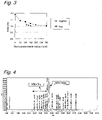
- the evaluation results obtained by the gel permeation chromatography (SEC) are shown in Table 1 and Figs. 2 and 3 .
- the amount of dimer in the samples (Sample Nos. A2 to A6) to which arginine was added, after the acceleration at 40°C for 3 months and at 25°C for 6 months, respectively, was smaller than that in the sample (Sample No. A1) to which arginine was not added; and accordingly, the inhibitory effect of arginine against dimerization was confirmed. It was also confirmed that the amount of dimer was reduced proportionally to the amount of the arginine added. On the other hand, the amount of dimer in the samples (Sample Nos.
- Liquid formulations containing anti-IL-6 receptor humanized antibody were evaluated for influence on the deamidation by arginine.
- each sample was subjected to a heat acceleration test (stored at 40°C for 3 months and at 25°C for 6 months, respectively).
- the purities of the antibody before and after the heat acceleration test were evaluated by ion-exchange chromatography (IEC).
- the analytical conditions were as follows:
- MRA Pre indicates the total of the peaks of the substances each eluted after a retention time shorter than that of the main component, and a plurality of degradation products, mainly deamidation products of humanized anti-IL-6 receptor antibody, was included. When the production amount of this Pre peak was small, inhibition of deamidation of the antibody is indicated.
- Total Area of All Peaks Grand Total of Total Area of MRA Pre Peaks + Peak Area of MRA Main + Peak Area of MAR Sub-1 + Peak Area of MAR Sub-2 + Peak Area of MAR Sub-3 + Peak Area of MAR R-1 + Total Area of 1Q H -MRA Peaks + Total Area of 2Q H -MRA Peaks + Peak Area of Others
- Amount of MRA Pre % Total Area of MRA Pre Peaks/Total Area of All Peaks ⁇ 100 A typical chromatography is shown in Fig. 4 .
- MRA Pre indicates the total of the peaks of the substances appearing earlier than that of the main component.
- liquid formulations containing anti-IL-6 receptor humanized antibody were evaluated for influence on stabilization of the formulations obtained by use of a combination of arginine and methionine.
- evaluation samples numbered A19 to A27 were prepared. Prescriptions for the evaluation samples were as follows: [Table 3-1] [Prescriptions] Sample No. Antibody mg/mL Arg mM Met mM Polysorbate 80 mg/mL Histidine buffer mM pH A19 180 - - 0.5 20 6.0 A20 180 50 - 0.5 20 6.0 A21 180 100 - 0.5 20 6.0 A22 180 150 - 0.5 20 6.0 A23 180 200 - 0.5 20 6.0 A24 180 300 - 0.5 20 6.0 A25 180 100 10 0.5 20 6.0 A26 180 100 30 0.5 20 6.0 A27 180 100 50 0.5 20 6.0 Samples A19 to A25 and A27 are comparative examples.
- each sample was subjected to a light acceleration test (total illuminance 1,200,000 lux and total near-ultraviolet radiation energy: 200 W ⁇ h/m 2 ).
- the purities of the antibody before and after the light acceleration test were evaluated by gel permeation chromatography (SEC) and ion exchange chromatography (IEC) as in Examples 1 and 2.
- the evaluation results by the gel permeation chromatography (SEC) are shown in Table 3 and Fig 7 .
- the amount of dimer in the samples (Sample Nos. A20 to A24) to which arginine was added, after the light acceleration test was smaller than that in the sample (Sample No. A19) to which arginine was not added; and accordingly, the inhibitory effect of arginine against dimerization was confirmed. It was also confirmed that the amount of dimer was reduced proportionally to an amount of arginine added. On the other hand, the amount of dimer in the samples (Sample Nos.
- the amount of Pre peak in the samples (Sample Nos. A20 to A24) to which arginine was added, after the light acceleration test was smaller than that in the sample (Sample No. A19) to which arginine was not added; and accordingly, the inhibitory effect of arginine against formation of Pre peak was confirmed. Further, it was confirmed that as the amount of arginine increases, the production amount of Pre peak decreases proportionately.
- the amount of dimer after the light acceleration test in the samples (Sample Nos. A25 to A27) to which methionine was further added to arginine (100 mM) was smaller than that in the sample (Sample No.
Landscapes
- Health & Medical Sciences (AREA)
- Chemical & Material Sciences (AREA)
- Life Sciences & Earth Sciences (AREA)
- Medicinal Chemistry (AREA)
- General Health & Medical Sciences (AREA)
- Public Health (AREA)
- Pharmacology & Pharmacy (AREA)
- Veterinary Medicine (AREA)
- Animal Behavior & Ethology (AREA)
- Epidemiology (AREA)
- Engineering & Computer Science (AREA)
- Immunology (AREA)
- Chemical Kinetics & Catalysis (AREA)
- General Chemical & Material Sciences (AREA)
- Organic Chemistry (AREA)
- Oil, Petroleum & Natural Gas (AREA)
- Bioinformatics & Cheminformatics (AREA)
- Microbiology (AREA)
- Mycology (AREA)
- Proteomics, Peptides & Aminoacids (AREA)
- Biochemistry (AREA)
- Molecular Biology (AREA)
- Biophysics (AREA)
- Genetics & Genomics (AREA)
- Endocrinology (AREA)
- Nuclear Medicine, Radiotherapy & Molecular Imaging (AREA)
- Analytical Chemistry (AREA)
- Dermatology (AREA)
- Medicines Containing Antibodies Or Antigens For Use As Internal Diagnostic Agents (AREA)
- Medicinal Preparation (AREA)
- Peptides Or Proteins (AREA)
Description
- The present invention relates to an antibody-containing formulation, and particularly, to a stable liquid formulation containing a high concentration of an antibody.
- In recent years, various antibody formulations have been developed and used in practice. Many such antibody formulations are used in intravenous injection. However, due to needs of a clinical site, there is an increasing demand for development of an antibody-containing formulation that can be administered as a self-injectable subcutaneous injection.
- In designing an antibody-containing formulation for subcutaneous injection, since a dose of an antibody per administration is large (about 100 mg to 200 mg) and an amount of an injection solution is generally limited in subcutaneous injection, it is necessary to increase a concentration of an antibody in a liquid to be administered. In view of this, in many cases, high concentration formulations are used, which are prepared by the lyophilization-concentration technique, in which a lyophilized formulation is reconstituted in water having a volume smaller than that before lyophilization. However, a strong demand exists for a liquid formulation which does not require reconstitution, and which is easy to handle. Although an increase in a viscosity of a formulation due to addition of a cryoprotective agent such as a sugar in the production process of the lyophilized formulation is not preferred for formulations for subcutaneous injection, it is surmised that this problem could be avoided if the formulation were a liquid formulation.
- Solutions containing a high concentration of an antibody tend to form solutions having a high viscosity due to macromolecular properties of proteins, and due to the intermolecular interactions of proteins. Further, in cases where a protein is stored in a form of a solution having a high concentration, problematic degradation occurs, which includes a generation of insoluble and/or soluble aggregates; and it is necessary to prevent such degradation. Especially, in antibody formulations, associations are likely to be formed and insoluble aggregates are likely to be generated in a liquid state. In cases where a liquid formulation is stored for a long time, a problem exists in that a bioactivity of antibody molecules is lost due to deamidation of amino acid residues such as aspargine residues.
- There have been proposed various ideas for providing a stabilized formulation, in which loss of an active component is small even after the formulation is stored for a long period of time. Such formulations are produced by dissolving an active component and various additives in a buffer solution. However, for liquid formulations containing a high concentration of an antibody, there does not yet exist a technology that is sufficient to prevent dimerization and deamidation.
WO 2004/091658 andUS 2004/0191243 disclose highly concentrated stable antibody formulations comprising e.g. arginine.WO 2007/074880 (see alsoEP 1977763 ) discloses antibody-containing lyophilized formulations comprising e.g. arginine to inhibit formation of dimers. - A need to provide a high concentration antibody-containing formulation exists, in which dimerization and deamidation during long-term storage are inhibited, and which is both stable and suitable for use in subcutaneous administration.
- An object of the present invention is to provide a high concentration antibody-containing liquid formulation, in which dimerization and deamidation during long-term storage are inhibited, and which is stable and suitable for use in subcutaneous administration.
- The present inventors conducted intensive study with a view to attaining the above object, and as a result, discovered that a stable high concentration antibody-containing liquid formulation can be provided by adding an amino acid, arginine or a salt thereof, as a stabilizer, to thereby complete the present invention.
- That is, the present invention provides the following:
- (1) A stable antibody-containing liquid formulation, characterized by comprising 180 mg/ml of the humanized anti-IL-6 receptor antibody MRA, 100 mM arginine and 30 mM methionine, 0.5 mg/
ml polysorbate 80, 20 mM histidine buffer solution, and having a pH of 6.0. - (2) A method for inhibiting dimerization of molecules of an antibody in a liquid formulation containing the antibody, comprising adding arginine and methionine to the liquid formulation, wherein the formulation comprises 180 mg/ml antibody, wherein the arginine is added to the formulation in the amount of 100 mM, and the methionine in the amount of 30 mM, the formulation further comprising polysorbate 80 in the amount of 0.5 mg/ml, a histidine buffer solution with a concentration of 20 mM, and having a pH of 6.0, and wherein the antibody is the humanized anti-IL-6 receptor antibody MRA.
- By the present invention, a liquid formulation containing a high concentration of an antibody is provided, with which reformulation by concentration by lyophilization is not necessary, and hence does not require reconstitution. The antibody-containing liquid formulation according to the present invention can be stored in a liquid state for a long time. Since the antibody-containing liquid formulation according to the present invention can be produced by a process not including a lyophilization step, addition of a sugar or the like as a cryoprotective agent is not necessary.
-
-
Fig. 1 shows a typical chromatogram of Example 1. -
Fig. 2 shows evaluation results of the gel permeation chromatography (SEC) in Example 1. -
Fig. 3 shows evaluation results of the gel permeation chromatography (SEC) in Example 1. -
Fig. 4 shows a typical chromatogram of Example 2. -
Fig. 5 shows evaluation results of the ion exchange chromatography (IEC) in Example 2. -
Fig. 6 shows evaluation results of the ion exchange chromatography (IEC) in Example 2. -
Fig. 7 shows evaluation results of the gel permeation chromatography (SEC) in Example 3. -
Fig. 8 shows evaluation results of the ion exchange chromatography (IEC) in Example 3. - The present invention will now be described in detail.
- In the present invention, "antibody-containing liquid formulation" means a liquid formulation containing an antibody as an active component, which is prepared such that it can be administered to an animal such as human, and which is preferably produced by a process not including a lyophilization step.
- The antibody-containing liquid formulation according to the present invention is a liquid pharmaceutical formulation containing an antibody at a high concentration, which has an antibody concentration of 180 mg/mL. It should be noted that a liquid formulation containing antibody at a concentration of 120 mg/mL or higher, or preferably 150 mg/mL or higher, has not been developed for commercial use. Namely, the present invention allows for the first time to put to use a liquid formulation containing antibody at this high concentration.
- Further, considering the manufacturing process, the highest concentration of antibody in the liquid formulation according to the present invention may be typically 300 mg/mL, preferably 250 mg/mL and more preferably 200 mg/mL. Therefore, the antibody-containing liquid formulation according to the present invention preferably has an antibody concentration of 180 mg/mL.
- The antibody to be used in the present invention is the humanized anti-IL6 receptor antibody MRA.
- The above-described antibody which can be used in the present invention can be prepared by methods well known to those skilled in the art.
- A hybridoma producing a monoclonal antibody can be prepared as follows basically utilizing a known technique. That is, the hybridoma can be prepared by immunizing an animal with a desired antigen or cells expressing the desired antigen as a sensitizing antigen by a standard method; fusing the obtained immunocytes with known parent cells by a standard cell-fusion method; and screening a monoclonal antibody-producing cell (hybridoma) by a standard screening method. Preparation of a hybridoma can be carried out by, for example, the method according to the method by Milstein et al (Kohler. G. and Milstein, C., Methods Enzymol. (1981) 73: 3-46). In cases where the immunogenicity of the antigen is low, the antigen can be bound to an antigenic macromolecule such as albumin, and the resulting conjugate can be used as an immunogen.
- Recombinant antibodies can be employed, which are prepared by the genetic recombination technique in which an antigen gene is cloned from a hybridoma, incorporating the gene into an appropriate vector, introducing the vector into a host, and making the host produce the antibody (see, for example, Carl, A. K. Borrebaeck, James, W. Larrick, THERAPEUTIC MONOCLONAL ANTIBODIES, Published in the United Kingdom by MACMILLAN PUBLISHERS LTD, 1990). More specifically, a cDNA encoding the variable region (V region) in the antibody is synthesized from the mRNA of a hybridoma using a reverse transcriptase. If a DNA encoding the V region of the desired antibody is obtained, the DNA is then ligated to a DNA encoding the constant region (C region) of a desired antibody, and the resulting ligated DNA is introduced into an expression vector. Alternatively, a DNA encoding the V region of the antibody can be incorporated into an expression vector containing the DNA encoding the C region of the antibody. The DNA is incorporated into the expression vector such that the DNA is expressed under the control of an expression-controlling region such as enhancer or promoter. Host cells are then transformed with the resulting expression vector, and the antibody can be expressed by the host cells.
- In the present disclosure, recombinant antibodies artificially modified for the purpose of reducing the heteroantigenicity to human, such as chimeric antibodies and humanized antibodies can be used. These modified antibodies can be produced by known methods. A chimeric antibody is an antibody comprising variable regions in the heavy chain and light chain in an antibody of an animal other than human, such as mouse, and constant regions in the heavy chain and light chain in an antibody of human, and can be obtained by ligating a DNA encoding the variable region in the mouse antibody with a DNA encoding the constant region in the human antibody, incorporating the obtained DNA into an expression vector, introducing the expression vector into a host, and making the host produce the antibody.
- Humanized antibody is also called reshaped human antibody, and is obtained by transplanting the CDR (complementarity determining region) of, for example, a mouse antibody to the complementarity determining region of a human antibody. A standard genetic recombination technique for preparing the humanized antibody is also known. Specifically, a DNA designed such that the CDR of the mouse antibody and the framework region (FR) of the human antibody are ligated is synthesized by PCR method from several oligonucleotides prepared so as to have overlapping regions at their terminals. The obtained DNA is ligated to a DNA encoding the constant region of a human antibody, and the resulting DNA is introduced into an expression vector. The expression vector is introduced into a host, and the host is made to produce the humanized antibody (see
EP 239400 A WO 96102576 - Methods for obtaining a human antibody are known in the art. For example, a desired human antibody having a binding activity to a desired antigen can be obtained by sensitizing, in vitro, human lymphocytes with the desired antigen or with the cells expressing the desired antigen; fusing the sensitized lymphocytes with human myeloma cells, for example, U266 cells; and obtaining the antibody from the cells (see
JP 1-59878 B WO 93/12227 WO 92/03918 WO 94/02602 WO 94/25585 WO 96134096 WO 96/33735
For example, a variable region of a human body is expressed in the form of a single chain antibody (scFv) on the surface of a phage by use of a phage display method, and the phage which binds to the antigen can be selected. By analyzing the gene of the selected phage, the DNA sequence coding for the variable region of the human antibody which binds to the antigen can be determined. If the DNA sequence of the scFv which binds to the antigen is determined, an appropriate expression vector containing the sequence is constructed, and the humanized antibody can be obtained. These methods are well known, andWO 92/01047 WO 92/20791 WO 93/06213 WO 93/11236 WO 93/19172 WO 95/01438 WO 95/15388 - In cases where an antibody gene is once isolated, and the gene is introduced into an appropriate host so as to prepare the antibody, appropriate combinations of the host and expression vector can be used. In cases where eukaryotic cells are used as the host, animal cells, plant cells and fungal cells can be used. Known animal cells include (1) mammalian cells, for example, CHO, COS, myeloma, BHK (baby hamster kidney), Hela and Vero; (2) amphibian cells, for example, Xenopus oocytes and (3) insect cells, for example, sf9, sf21 and Tn5. Known plant cells include cells originated from plants belonging to the genus Nicotiana, for example, Nicotiana tabacum, and the cells can be subjected to callus culture. Known fungal cells include the cells originated from yeasts, for example, those belonging to the genus Saccharomyces such as Saccharomyces cerevisiae; and filamentous bacteria, for example, those belonging to the genus Aspergillus such as Aspergillus niger. Incases where prokaryotic cells are used, there are production systems using bacterial cells. Known bacterial cells include E. coli. cells and Bacillus subtilis cells. The antibody is obtained by introducing a desired antibody gene into these cells by transformation, and culturing the transformed cells in vitro.
- Antibodies in the form of antibody fragments, low molecular weight antibodies and modified antibodies can also be employed as the antibody in the present disclosure. Examples of the antibody fragments and low molecular weight antibodies include Fab, F(ab')2, Fv, and single chain Fv (scFv, sc(Fv)2 and the like) having one or more specificities, prepared by ligating the Fvs in the H-chain and L-chain through an appropriate linker (Huston, J. S. et al., Proc. Natl. Acad. Sci. U.S.A. (1988) 85, 5879-5883). Specifically, an antibody is treated with papain or pepsin to generate antibody fragments, or a gene encoding these antibody fragments is constructed, and the gene is expressed in appropriate host cells after introducing the gene into an expression vector (see, for example, Co, M. S. et al., T. Immunol. (1994)152, 2968-2976 ; Better, M. and Horwitz, A. H., Methods Enzymol. (1989) 178,476-496; Pluckthun, A.and Skerra, A., Methods Enzymol. (1989) 178, 497-515; Lamoyi, E., Methods Enzymol, (1986) 121, 652-663 ; Rousseaux, J. et al., Methods Enzymol. (1986)121, 663-669 ; Bird, R. E. and Walker, B. W., Trends Biotechnol. (1991) 9, 132-137.
- Antibodies bound to various molecules such as polyethylene glycol (PEG) can also be used as modified antibodies. The term "antibody" used in the present disclosure also includes these modified antibodies. These modified antibodies can be obtained by chemically modifying an obtained antibody. Methods for carrying out the modifications are established in the art.
- Examples of the antibody contained in the formulation according to the present invention include, but not limited to, anti-tissue factor antibodies, anti-IL-6 receptor antibodies, anti-IL-6 antibodies, HM1.24 antigen monoclonal antibodies, anti-parathyroid hormone-related peptide antibodies (anti-PTHrP antibodies), anti-glypican-3 antibodies, anti-ganglioside GM3 antibodies, anti-TPO receptor antagonist antibodies, factor VIII-substituting antibodies, anti-CD3 antibodies, anti-CD20 antibodies, anti-GPIIb/IIIa antibodies, anti-TNF antibodies, anti-CD25 antibodies, anti-EGFR antibodies, anti-Her2/neu antibodies, anti-RSV antibodies, anti-CD33 antibodies, anti-CD52 antibodies, anti-IgE antibodies, anti-CD11a antibodies, anti-VEGF antibodies, anti-VLA4 antibodies, anti-AXL antibodies, and so on.
- The reshaped human antibody used in the present invention is humanized anti-interleukin (IL-6) receptor antibodies (hPM-1 or MRA) (see
WO 92-19759 WO 98.14580 WO 98-13388 WO 99-51743 PCT/JP05/013103 - As the human IgM antibodies, anti-ganglioside GM3 recombinant human IgM antibodies (see
WO 05-05636 - As the low molecular weight antibodies, anti-TPO receptor antagonist diabodies (see
WO02-33072 WO 01-66737 - To evaluate the shelf stability of the high concentration antibody-containing liquid formulation, the present inventors studied the effects of various additives by conducting heat acceleration tests and light acceleration tests. As a result, it was found that in solutions in which a high concentration of antibody was dissolved in a buffer solution containing the amino acid arginine, the amount of generated dimer was smaller than that in solutions to which arginine was not added. From these results, it was found that arginine is effective as a stabilizer for inhibiting dimerization. Further, in solutions in which a high concentration of antibody was dissolved in a buffer solution containing arginine and methionine, the inhibitory effect against dimerization was observed at a total concentration of arginine and methionine which is lower than the concentration of arginine alone needed for attaining the same inhibitory effect. From these results, it was found that a synergistic effect is obtained by the addition of arginine and methionine in combination. Further, it was found that deamidation of the antibody molecules is inhibited by the addition of arginine. These results are exemplified as test results obtained for a sample containing a humanized anti-IL-6 receptor antibody at a concentration of 180mg/ml.
- Thus, by adding arginine as a stabilizer, a stable antibody formulation can be provided, in which dimerization of the antibody is reduced and deamidation of the antibody is prevented.
- Further, as described above, an antibody-containing liquid formulations of the present invention additionally contains methionine in the solution, with a synergistic effect being obtained by use of arginine and methionine in combination. Therefore, an aspect of the present invention is characterized by adding arginine and methionine to a solution, whereby dimerization in particular, of the antibody molecules is inhibited in the resulting antibody-containing liquid formulation. Accordingly, an embodiment as a stable antibody-containing liquid formulation is characterized in that it contains an antibody, arginine and methionine in a buffer solution as defined in the claims.
- As the arginine used in the present invention, any of the arginine compound per se, derivatives thereof and salts thereof can be used. L-arginine and salts thereof are preferred. As the methionine used in the present invention, any of the methionine compound per se, derivatives thereof and salts thereof can be used. L-methionine and salts thereof are preferred.
- The antibody-containing liquid formulation according to the present invention contains arginine and methionine, wherein the arginine concentration is 100 mM and the methionine concentration is 30 mM.
- The buffer solution is prepared using 20 mM histidine as the buffering agent which is a substance for maintaining a pH of the solution.In a high concentration antibody-containing liquid formulation according to the present invention, the pH of the formulation is 6.0. A buffering agent which can be used in the present disclosure is one which can adjust the pH in this range and which is pharmaceutically acceptable. Such a buffering agent is known by those skilled in the art, and examples thereof include inorganic salts such as phosphoric acid salts (sodium or potassium) and sodium hydrogen carbonate; organic acid salts such as citric acid salts (sodium or potassium), sodium acetate and sodium succinate; and acids such as phosphoric acid, carbonic acid, citric acid, succinic acid, malic acid and gluconic acid. Further, Tris buffers, Good's buffers such as MES, MOPS and HEPES, histidine (e.g., histidine hydrochloric acid salt) and glycine can also be used. In the high concentration antibody-containing liquid formulation according to the present invention, the buffer is a histidine buffer. The concentration of the buffer solution is 20 mM.
- For the "stable" high concentration antibody-containing liquid formulation according to the present invention, significant change is not observed when it is stored at a refrigeration temperature (2 to 8°C) for at least 12 months, preferably for 2 years, and more preferably, for 3 years; or when it is stored at room temperature (22 to 28°C) for at least 3 months, preferably 6 months, and more preferably 1 year. For example, sum amount of dimers and degradation products in the formulation when it is stored at 5°C for 2 years is 5.0% or lower, preferably 2% or lower, and more preferably 1.5% or lower; or sum amount of dimers and degradation products in the formulation when it is stored at 25°C for 6 months is 5.0% or lower, preferably 2% or lower, and more preferably 1.5% or lower.
- The formulation according to the present invention contains as surfactant 0.5 mg/ml polysorbate 80.
- Typical examples of surfactants include nonionic surfactants, for example, sorbitan fatty acid esters such as sorbitan monocaprylate, sorbitan monolaurate and sorbitan monopalmitate; glycerin fatty acid esters such as glycerol monocaprylate, glycerol monomyristate and glycerol monostearate; polyglycerol fatty acid esters such as decaglyceryl monostearate, decaglyceryl distearate and decaglyceryl monolinoleate; polyoxyethylene sorbitan fatty acid esters such as polyoxyethylene sorbitan monolaurate, polyoxyethylene sorbitan monooleate, polyoxyethylenesorbitan monostearate, polyoxyethylene sorbitan monopalmitate, polyoxyethylene sorbitan trioleate and polyoxyethylene sorbitan tristearate; polyoxyethylene sorbitol fatty acid esters such as polyoxyethylene sorbitol tetrastearate and polyoxyethylene sorbitol tetra oleate; polyoxyethylene glycerin fatty acid esters such as polyoxyethylene glyceryl monostearate; polyethylene glycol fatty acid esters such as polyethylene glycol distearate; polyoxyethylene alkyl ethers such as polyoxyethylene lauryl ether; polyoxyethylene polyoxypropylene alkyl ethers such as polyoxyethylene polyoxypropylene glycol ether, polyoxyethylene polyoxypropylene propyl ether and polyoxyethylene polyoxypropylene cetyl ether; polyoxyethylene alkyl phenyl ethers such as polyoxyethylene nonylphenyl ether; polyoxyethylene hardened castor oils such as polyoxyethylene castor oil and polyoxyethylene hardened castor oil (polyoxyethylene hydrogenated castor oil); polyoxyethylene bees wax derivatives such as polyoxyethylene sorbitol bees wax; polyoxyethylene lanolin derivatives such as polyoxyethylene lanolin; surfactants having an HLB of 6 to 18 such as polyoxyethylene fatty acid amides, for example, polyoxyethylene octadecanamide; anionic surfactants, for example, alkyl sulfate salts having a C10-C18 alkyl group, such as sodium cetyl sulfate, sodium lauryl sulfate and sodium oleyl sulfate; polyoxyethylene alkyl ether sulfate salts in which the average number of moles of the added ethylene oxide units is 2 to 4 and the number of carbon atoms of the alkyl group is 10 to 18, such as polyoxyethylene sodium lauryl sulfate; alkyl sulfosuccinate salts having a C8-C18alkyl group, such as sodium lauryl sulfosuccinate; natural surfactants such as lecithin and glycerophospholiplds; sphingophospholipids such as sphingomyelin; and sucrose esters of C12-C18 fatty acids. These surfactants can be added to the formulation of the present invention individually, or two or more of these surfactants can be added in combination.
- Preferred surfactants are polyoxyethylene sorbitan fatty acid esters and polyoxyethylene polyoxypropylene alkyl ethers, and especially preferred are polysorbates 20, 21, 40, 60, 65, 80, 81 and 85, and Pluronic type surfactants, and most preferred are polysorbates 20 and 80, and Pluronic F-68 (Poloxamer 188).
- The amount of the surfactant(s) to be added to the antibody formulation according to the present invention is generally 0.0001 to 10% (w/v), preferably 0.001 to 5%, more preferably 0.005 to 3%.
- The formulation according to the present invention is preferably substantially composed of the following components:
- A) the humanized anti-IL-6 receptor antibody MRA;
- B) 100 mM arginine and 30 mM methionine, and additional other amino acid(s) (e.g., tryptophan) as an optional additional component(s);
- C) 20 mM histidine buffer solution; and
- D) 0.5 mg/ml polysorbate 80.
- The term "substantially composed of" herein means that a component other than the components usually added to formulations is not contained, the components usually added to formulations being the optional additive components described below, such as suspending agents, solubilizing agents, isotonic agents, preservatives, adsorption inhibitors, diluents, vehicles, pH-adjusters, soothing agents, sulfur-containing reducing agents and antioxidants.
- The above-described "B) 100 mM arginine and 30 mM methionine, and additional other amino acid(s) (e.g., tryptophan) as an optional additional componant(s)" is meant to include the cases where the formulation contains arginine and methionine and further include the cases where the formulation additionally contains other amino acid(s). Preferred example of the other amino acid(s) is tryptophan. As the tryptophan, any of the tryptophan compound per se, derivatives thereof and salts thereof can be used. L-tryptophan and salts thereof are preferred.
- As required, a suspending agent, solubilizing agent, isotonic agent, preservative, adsorption inhibitor, diluent, vehicle, pH-adjuster, soothing agent, sulfur-containing reducing agent, antioxidant and the like can be added to the formulation according to the present invention.
- Examples of the suspending agent include methyl cellulose, polysorbate 80, hydroxyethyl cellulose, gum arabic, powdered tragacanth, sodium carboxymethylcellulose and polyoxyethylene sorbitan monolaurate.
- Examples of the solubilizing agent include, polyoxyethylene hydrogenated castor oil, polysorbate 80, nicotinamide, polyoxyethylene sorbitan monolaurate, macrogol and castor oil fatty acid ethyl ester.
- Examples of the isotonic agent include sodium chloride, potassium chloride and calcium chloride.
- Examples of the preservative include methyl p-hydroxybenzoate, ethyl p-hydroxybenzoate, sorbic acid, phenol, cresol and chlorocresol
- Examples of the adsorption inhibitor include human serum albumin, lecithin, dextran, ethyleneoxide-propylene oxide copolymer, hydroxypropylcellulose, methyl cellulose, polyoxyethylene hydrogenated castor oil and polyethylene glycol.
- Examples of the sulfur-containing reducing agent include the compounds having a sulfhydryl group(s), such as N-acetylcysteine, N-acetyl homocysteine, thioctic acid, thiodiglycol, thioethanolamine, thioglycerol, thiosorbitol, thioglycolic acid and salts thereof, sodium thiosulfate, glutathione and C1-C7 thioalkanes.
- Examples of the antioxidant include erythorbic acid, dibutylhydroxytoluene, butylated hydroxyanisole, α-tocopherol, tocopherol acetate, L-ascorbic acid and salts thereof, L-ascorbyl palmitate, L-ascorbyl stearate, sodium hydrogen sulfite, sodium sulfite, triamyl gallate, propyl gallate, and chelating agents such as disodium ethylenediaminetetraacetate (EDTA), sodium pyrophosphate and sodium metaphosphate.
- The antibody-containing liquid formulation according to the present invention is usually administered through a parenteral route, for example, by injection (subcutaneous, intravenous, intramuscular injections or the like), percutaneous, transmucosal, transnasal or pulmonary administration, but it can also be administered orally. In subcutaneous injection, the dose of antibody per administration is large (about 100 to 200 mg) while the amount of the injection solution is limited, so that the formulation according to the present invention is especially suited for subcutaneous injection.
- The osmotic pressure ratio of the antibody-containing liquid formulation according to the present invention is preferably about 0.5 to 4, more preferably about 0.7 to 2, and still more preferably about 1.
- The viscosity of the antibody-containing liquid formulation according to the present invention is preferably about 2 to 15 mPa·s, more preferably about 4 to 10 mPa·s. It should be noted that the viscosity described herein is measured by a rotation viscometer method using a cone-plate type viscometer, in accordance with 2.53 Viscosity Determination / General Tests, the Japanese Pharmacopoeia, 15th edition.
- As can be seen from the results of the examples described below, a stable liquid formulation can be obtained, in which dimerization and deamidation of the antibody during long-term storage are small, by adding to the formulation arginine alone, or arginine and methionine, or methionine alone.
- As still another aspect of the present invention, a method for inhibiting dimerization of antibody in antibody-containing liquid formulations is provided, the method comprising adding to the formulation arginine and methionine, wherein the formulation comprises 180 mg/ml antibody, wherein the arginine is added to the formulation in the amount of 100 mM, and the methionine in the amount of 30 mM, the formulation further comprising polysorbate 80 in the amount of 0.5 mg/ml, a histidine buffer solution with a concentration of 20 mM, and having a pH of 6.0, and wherein the antibody is humanized anti-IL-6 receptor antibody MRA.
- The present invention will now be described in more detail by way of the examples given below. However, the scope of the present invention is not restricted thereto.
- The humanized anti-IL-6 receptor antibody was the humanized antibody prepared in accordance with the method described in Reference Example 2 in
JP 8-99902 A WO 92/19759 - Liquid formulations containing anti-IL-6 receptor humanized antibody were evaluated for an influence on stabilization of the formulations obtained by use of a combination of arginine and methionine.
- In this study, to evaluate the effects by the combination of arginine and methionine, evaluation samples numbered A1 to A9 were prepared. Prescriptions for the evaluation samples were as follows:
[Table 1-1] [Prescriptions] Sample No. Antibody mg/mL Arg mM Met mM Polysorbate 80 mg/mL Histidine buffer mM pH A1 180 - - 0.5 20 6.0 A2 180 50 - 0.5 20 6.0 A3 180 100 - 0.5 20 6.0 A4 180 150 - 0.5 20 6.0 A5 180 200 - 0.5 20 6.0 A6 180 300 - 0.5 20 6.0 A7 180 100 10 0.5 20 6.0 A8 180 100 30 0.5 20 6.0 A9 190 100 50 0.5 20 6.0 - Samples A1 to A7 and A9 are comparative examples.
- To evaluate stability of the liquid formulations, each sample was subjected to a heat acceleration test (stored at 40°C for 3 months and at 25°C for 6 months, respectively). The purity of the antibody before and after the heat acceleration test was evaluated by gel permeation chromatography (SEC). The analytical conditions were as follows:
- The sample was used as the solution to be measured as it was.
- One microliter of the solution to be measured was subjected to liquid chromatography, and the peak areas of the peaks of dimer, monomer and low molecular weight degradation products (LMW) were measured by an automatic analytical method, and the amounts thereof (%) were determined.
-
- Column: TSKgel G3000SWx1 7. 8 mm I. D. x 30 cm (TOSOH)
- Mobile Phase: phosphate buffer, pH 7.0 (50 mmol/L phosphate buffer, pH 7.0, containing 300 mmol/L of sodium chloride and 0.05% sodium azide)
- Amount of Injected Sample: about 180 µg in terms of humanized anti-IL-6 receptor antibody
- Flow Rate: 1 mL/min
- Detection Wavelength: 280 nm
-


Fig. 1 . - The evaluation results obtained by the gel permeation chromatography (SEC) are shown in Table 1 and
Figs. 2 and3 . As shown, the amount of dimer in the samples (Sample Nos. A2 to A6) to which arginine was added, after the acceleration at 40°C for 3 months and at 25°C for 6 months, respectively, was smaller than that in the sample (Sample No. A1) to which arginine was not added; and accordingly, the inhibitory effect of arginine against dimerization was confirmed. It was also confirmed that the amount of dimer was reduced proportionally to the amount of the arginine added. On the other hand, the amount of dimer in the samples (Sample Nos. A7 to A9) to which arginine (100 mM) and methionine were added, after the acceleration at 40°C for 3 months and at 25°C for 6 months, respectively, was smaller than that in the samples (Sample Nos. A3 and A4) containing 150 mM of arginine, which concentration was about the same as the total concentration of the stabilizers; and the amount of dimer was about the same as in the sample (Sample No. A6) having an arginine concentration of 300 mM. These results are considered to indicate that a synergistic effect in the inhibition of dimerization is obtained by combining arginine and methionine. - Influence of arginine and methionine on the amount of low molecular weight degradation products was not observed.
-
Table 1 40°C- 3months 25°C-6months Dimer (%) LMW (%) Dimer (%) LMW (%) A1 2.70 1.25 1.88 0.48 42 2.19 1.24 1.41 0.47 A3 2.00 1.34 1.33 0.49 A4 1.85 1.38 1.19 0.49 A5 1.62 1.37 1.09 0.49 A6 1.53 1.46 0.99 0.50 A7 1.58 1.29 1.11 0.45 A8 1.52 1.21 1.07 0.47 A9 1.48 1.32 1.03 0.47 - Liquid formulations containing anti-IL-6 receptor humanized antibody were evaluated for influence on the deamidation by arginine.
- In this study, evaluation samples numbered A10 to A15 and numbered A16 to A18, containing different amounts of arginine and methionine, respectively, were prepared. Prescriptions for the evaluation samples were as follows:
[Table 2-1] [Prescriptions] Sample No. Antibody mg/mL Arg mM Met mM Polysorbate 80 mg/mL Histidine buffer mM pH A10 180 - - 0.5 20 6.0 A11 180 50 - 0.5 20 6.0 A12 180 100 - 0.5 20 6.0 A13 180 150 - 0.5 20 6.0 A14 180 200 - 0.5 20 6.0 A15 180 300 - 0.5 20 6.0 A16 180 - 10 0.5 20 6.0 A17 180 - 30 0.5 20 6.0 A18 180 - 50 0.5 20 6.0 - To evaluate the stability of the liquid formulations, each sample was subjected to a heat acceleration test (stored at 40°C for 3 months and at 25°C for 6 months, respectively). The purities of the antibody before and after the heat acceleration test were evaluated by ion-exchange chromatography (IEC). The analytical conditions were as follows:
- To each sample, purified water was added to adjust the amount of the humanized anti-IL-6 receptor antibody to about 1 mg in 1 mL of the sample, and the resulting sample was used as the sample to be measured.
- Thirty microliters of the sample solution was subjected to liquid chromatography, and the peak areas of the peaks of MRA Pre, MRA Main, MRA Sub-1,MRA Sub-2, MRA R-1, 1Q(H)-MRA, 2Q(H)-MRA and other related substances (Others) were measured by an automatic analytical method, and the amounts thereof (%) were determined by an area percentage method.
- MRA Pre indicates the total of the peaks of the substances each eluted after a retention time shorter than that of the main component, and a plurality of degradation products, mainly deamidation products of humanized anti-IL-6 receptor antibody, was included. When the production amount of this Pre peak was small, inhibition of deamidation of the antibody is indicated.
-
- Column: ProPac WCX-10 4 x 250 mm (DIONEX)
- Mobile Phase: Solution A: 25 mmol/L MES buffer solution, pH 6.1
- Mobile Phase: Solution B: 25 mmol/L MES buffer solution, pH 6.1 (containing 250 mmol/L of sodium chloride)
- Amount of Injected Sample: about 30 µg in terms of humanized anti-IL-6 receptor antibody
- Flow Rate: 0.5 mL/min
- Detection Wavelength: 280 nm
-


Fig. 4 . MRA Pre indicates the total of the peaks of the substances appearing earlier than that of the main component. - Evaluation results of the ion-exchange chromatography are shown in Table 2 and
Figs. 5 and 6 . As shown, the amount of Pre peaks in the samples (Sample Nos. A11 to A15) to which arginine was added, after the acceleration at 40°C for 3 months and at 25°C for 6 months, respectively, was smaller than that in the sample (Sample No. A10) to which arginine was not added; and accordingly, the inhibitory effect of arginine against the generation of Pre peaks was confirmed. It was also confirmed that the amount of Pre peaks was reduced proportionally to an amount of arginine added. On the other hand, the amount of Pre peaks in the samples (Sample Nos. A16 to A18) to which methionine was added, after the acceleration at 40°C for 3 months and at 25°C for 6 months, respectively, was similar to the sample (Sample No. A10) to which arginine was not added; and accordingly, influence of the addition of methionine was not observed. -
Table 2 Pre peak (%) 40°C-3mohths 25°C-6months A10 56.2 32.3 A11 51.3 30.3 A12 50.7 29.3 A13 49.0 28.7 A14 47.8 28.5 A15 47.0 27.9 A16 55.7 31.2 A17 55.0 31.2 A18 55.3 31.4 - As in Example 1, liquid formulations containing anti-IL-6 receptor humanized antibody were evaluated for influence on stabilization of the formulations obtained by use of a combination of arginine and methionine.
- In this study, to evaluate effects of the combination of arginine and methionine, evaluation samples numbered A19 to A27 were prepared. Prescriptions for the evaluation samples were as follows:
[Table 3-1] [Prescriptions] Sample No. Antibody mg/mL Arg mM Met mM Polysorbate 80 mg/mL Histidine buffer mM pH A19 180 - - 0.5 20 6.0 A20 180 50 - 0.5 20 6.0 A21 180 100 - 0.5 20 6.0 A22 180 150 - 0.5 20 6.0 A23 180 200 - 0.5 20 6.0 A24 180 300 - 0.5 20 6.0 A25 180 100 10 0.5 20 6.0 A26 180 100 30 0.5 20 6.0 A27 180 100 50 0.5 20 6.0 - To evaluate the stability of the liquid formulations, each sample was subjected to a light acceleration test (total illuminance 1,200,000 lux and total near-ultraviolet radiation energy: 200 W·h/m2). The purities of the antibody before and after the light acceleration test were evaluated by gel permeation chromatography (SEC) and ion exchange chromatography (IEC) as in Examples 1 and 2.
- The evaluation results by the gel permeation chromatography (SEC) are shown in Table 3 and
Fig 7 . As shown, the amount of dimer in the samples (Sample Nos. A20 to A24) to which arginine was added, after the light acceleration test was smaller than that in the sample (Sample No. A19) to which arginine was not added; and accordingly, the inhibitory effect of arginine against dimerization was confirmed. It was also confirmed that the amount of dimer was reduced proportionally to an amount of arginine added. On the other hand, the amount of dimer in the samples (Sample Nos. A25 to A27) to which arginine (100 mM) and methionine were added, after the light acceleration test was smaller than that in the sample (Sample No. A22) containing 150 mM of arginine, which concentration was about the same as the total concentration of the stabilizers; and the amount of dimer was smaller than in the samples (Sample Nos. A23 and A24) having arginine concentrations of 200 mM and 300 mM, respectively. These results are thought to indicate that a synergistic effect in the inhibition of dimerization is obtained by combining arginine and methionine. - Influence of arginine and methionine on the amount of low molecular weight degradation products was not observed.
-
Table 3 1,200,000lux + 200 W -h/m2 Dimer (%) LMW (%) A19 6.95 0.22 A20 6.75 0.24 A21 5.78 0.21 A22 5.08 0.19 A23 4.73 0.18 A24 4.13 0.18 A25 5.27 0.19 1,200,000lux + 200W -h/m2 Dimer (%) LMW (%) A26 4.05 0.17 A27 3.84 0.16 - Next, the evaluation results by the ion exchange chromatography (IEC) are shown in Table 4 and
Fig 8 . - As shown, the amount of Pre peak in the samples (Sample Nos. A20 to A24) to which arginine was added, after the light acceleration test was smaller than that in the sample (Sample No. A19) to which arginine was not added; and accordingly, the inhibitory effect of arginine against formation of Pre peak was confirmed. Further, it was confirmed that as the amount of arginine increases, the production amount of Pre peak decreases proportionately. On the other hand, the amount of dimer after the light acceleration test in the samples (Sample Nos. A25 to A27) to which methionine was further added to arginine (100 mM) was smaller than that in the sample (Sample No. A22) containing 150 mM of arginine, which concentration was about the same as the total concentration of the stabilizers; and it was smaller than in the samples (Sample Nos. A23 and A24) having arginine concentrations of 200 mM and 300 mM, respectively. These results are thought to indicate that a synergistic effect in the inhibition of formation of Pre peak by the combination of arginine and methionine.
[Table 4] Pre peak (%) 1,200,000lux + 200 W · h/m2 A19 39.2 A20 38.6 A21 36.7 A22 35.7 A23 34.9 A24 34.9 A25 36.8 A26 35.0 A27 33.8
Claims (4)
- A stable antibody-containing liquid formulation comprising 180 mg/ml of the humanized anti-IL-6 receptor antibody MRA, 100 mM arginine and 30 mM methionine, 0.5 mg/ml polysorbate 80, 20 mM histidine buffer solution, and having a pH of 6.0.
- The formulation according to claim 1, wherein the dimerization of antibody molecules is inhibited.
- The formulation according to claim 1, wherein the deamidation of antibody molecules is inhibited.
- A method for inhibiting dimerization of molecules of an antibody in a liquid formulation containing the antibody, comprising adding arginine and methionine to the liquid formulation, wherein the formulation comprises 180 mg/ml antibody, wherein the arginine is added to the formulation in the amount of 100 mM, and the methionine in the amount of 30 mM, the formulation further comprising polysorbate 80 in the amount of 0.5 mg/ml, a histidine buffer solution with a concentration of 20 mM, and having a pH of 6.0, and wherein the antibody is the humanized anti-IL-6 receptor antibody MRA.
Priority Applications (4)
| Application Number | Priority Date | Filing Date | Title |
|---|---|---|---|
| PL08866971.8T PL2238985T5 (en) | 2007-12-27 | 2008-12-26 | High concentration antibody-containing liquid formulation |
| SI200830806T SI2238985T2 (en) | 2007-12-27 | 2008-12-26 | High concentration antibody-containing liquid formulation |
| HRP20120903TT HRP20120903T4 (en) | 2007-12-27 | 2008-12-26 | LIQUID FORMULATION CONTAINING A HIGH CONCENTRATION OF ANTIBODIES |
| CY20121101082T CY1113616T1 (en) | 2007-12-27 | 2012-11-13 | LIQUID COCLUSION CONTAINING HIGH CONCENTRATION |
Applications Claiming Priority (2)
| Application Number | Priority Date | Filing Date | Title |
|---|---|---|---|
| JP2007336310 | 2007-12-27 | ||
| PCT/JP2008/073798 WO2009084659A1 (en) | 2007-12-27 | 2008-12-26 | Solution preparation containing antibody at high concentration |
Publications (5)
| Publication Number | Publication Date |
|---|---|
| EP2238985A1 EP2238985A1 (en) | 2010-10-13 |
| EP2238985A4 EP2238985A4 (en) | 2011-01-12 |
| EP2238985B1 EP2238985B1 (en) | 2012-08-29 |
| EP2238985B9 EP2238985B9 (en) | 2012-12-26 |
| EP2238985B2 true EP2238985B2 (en) | 2022-07-27 |
Family
ID=40824372
Family Applications (1)
| Application Number | Title | Priority Date | Filing Date |
|---|---|---|---|
| EP08866971.8A Active EP2238985B2 (en) | 2007-12-27 | 2008-12-26 | High concentration antibody-containing liquid formulation |
Country Status (31)
| Country | Link |
|---|---|
| US (12) | US8568720B2 (en) |
| EP (1) | EP2238985B2 (en) |
| JP (9) | JP4937358B2 (en) |
| KR (1) | KR101083616B1 (en) |
| CN (2) | CN101883588B (en) |
| AR (3) | AR069969A1 (en) |
| AU (1) | AU2008344292B2 (en) |
| BR (1) | BRPI0818903B8 (en) |
| CA (1) | CA2708627C (en) |
| CL (1) | CL2008003910A1 (en) |
| CO (1) | CO6450630A2 (en) |
| CR (1) | CR11594A (en) |
| CY (1) | CY1113616T1 (en) |
| DK (1) | DK2238985T4 (en) |
| EC (1) | ECSP10010370A (en) |
| ES (1) | ES2389881T5 (en) |
| HR (1) | HRP20120903T4 (en) |
| IL (2) | IL206548A (en) |
| MA (1) | MA31934B1 (en) |
| MX (1) | MX2010004399A (en) |
| MY (1) | MY159450A (en) |
| NZ (1) | NZ586378A (en) |
| PE (1) | PE20091174A1 (en) |
| PL (1) | PL2238985T5 (en) |
| PT (1) | PT2238985E (en) |
| RU (2) | RU2497544C2 (en) |
| SG (1) | SG2013049325A (en) |
| SI (1) | SI2238985T2 (en) |
| TW (1) | TWI375566B (en) |
| UA (1) | UA104134C2 (en) |
| WO (1) | WO2009084659A1 (en) |
Families Citing this family (127)
| Publication number | Priority date | Publication date | Assignee | Title |
|---|---|---|---|---|
| AU736282B2 (en) | 1997-03-21 | 2001-07-26 | Chugai Seiyaku Kabushiki Kaisha | A preventive or therapeutic agent for sensitized T cell- mediated diseases comprising IL-6 antagonist as an active ingredient |
| UA80091C2 (en) | 2001-04-02 | 2007-08-27 | Chugai Pharmaceutical Co Ltd | Remedies for infant chronic arthritis-relating diseases and still's disease which contain an interleukin-6 (il-6) antagonist |
| WO2003068260A1 (en) | 2002-02-14 | 2003-08-21 | Chugai Seiyaku Kabushiki Kaisha | Antibody-containing solution pharmaceuticals |
| GB2401040A (en) | 2003-04-28 | 2004-11-03 | Chugai Pharmaceutical Co Ltd | Method for treating interleukin-6 related diseases |
| JPWO2005090405A1 (en) | 2004-03-24 | 2008-04-17 | 中外製薬株式会社 | Subtype of humanized antibody against interleukin-6 receptor |
| JO3000B1 (en) | 2004-10-20 | 2016-09-05 | Genentech Inc | Antibody Formulations. |
| TWI671403B (en) | 2005-03-31 | 2019-09-11 | 中外製藥股份有限公司 | Method for controlling controlled assembly of polypeptide |
| EP1977763A4 (en) * | 2005-12-28 | 2010-06-02 | Chugai Pharmaceutical Co Ltd | STABILIZER PREPARATION CONTAINING ANTIBODIES |
| WO2007114325A1 (en) | 2006-03-31 | 2007-10-11 | Chugai Seiyaku Kabushiki Kaisha | Antibody modification method for purifying bispecific antibody |
| IN2014DN10515A (en) | 2006-03-31 | 2015-08-21 | Chugai Pharmaceutical Co Ltd | |
| MX336725B (en) | 2007-09-26 | 2016-01-28 | Chugai Pharmaceutical Co Ltd | Method of modifying isoelectric point of antibody via amino acid substitution in cdr. |
| PE20091174A1 (en) * | 2007-12-27 | 2009-08-03 | Chugai Pharmaceutical Co Ltd | LIQUID FORMULATION WITH HIGH CONCENTRATION OF ANTIBODY CONTENT |
| JO3672B1 (en) | 2008-12-15 | 2020-08-27 | Regeneron Pharma | High Affinity Human Antibodies to PCSK9 |
| US9345661B2 (en) | 2009-07-31 | 2016-05-24 | Genentech, Inc. | Subcutaneous anti-HER2 antibody formulations and uses thereof |
| AR078161A1 (en) | 2009-09-11 | 2011-10-19 | Hoffmann La Roche | VERY CONCENTRATED PHARMACEUTICAL FORMULATIONS OF AN ANTIBODY ANTI CD20. USE OF THE FORMULATION. TREATMENT METHOD |
| EP4406615A3 (en) | 2009-10-26 | 2024-12-11 | F. Hoffmann-La Roche AG | Method for the production of a glycosylated immunoglobulin |
| SG181834A1 (en) * | 2009-12-21 | 2012-07-30 | Genentech Inc | Antibody formulation |
| AU2013202276B2 (en) * | 2009-12-21 | 2016-03-24 | Genentech, Inc. | Antibody formulation |
| JO3417B1 (en) | 2010-01-08 | 2019-10-20 | Regeneron Pharma | Stabilized formulations containing anti-interleukin-6 receptor (il-6r) antibodies |
| PL2624865T3 (en) * | 2010-10-06 | 2018-11-30 | Regeneron Pharmaceuticals, Inc. | Stabilized preparations containing anti-interleukin-4 receptor (IL-4R) antibodies |
| EP2638067A2 (en) | 2010-11-08 | 2013-09-18 | Genentech, Inc. | Subcutaneously administered anti-il-6 receptor antibody |
| JP6013915B2 (en) | 2010-11-17 | 2016-10-25 | 中外製薬株式会社 | Multispecific antigen-binding molecule having a function to replace the function of blood coagulation factor VIII |
| BR112013018740A2 (en) | 2011-01-28 | 2019-01-08 | Sanofi Sa | human antibodies to pcsk9 for use in treatment methods of specific groups of individuals |
| EP2508525A1 (en) | 2011-04-05 | 2012-10-10 | Bayer Pharma Aktiengesellschaft | Substituted 2,3-dihydroimidazo[1,2-c]quinazoline salts |
| BR112013025845A2 (en) * | 2011-04-07 | 2018-09-04 | Glaxosmithkline Llc | low viscosity formulations |
| EP2694100A4 (en) * | 2011-04-07 | 2014-10-01 | Glaxosmithkline Llc | Formulations with reduced viscosity |
| UY34105A (en) * | 2011-06-03 | 2012-07-31 | Lg Life Sciences Ltd | STABLE LIQUID FORMULATION OF ETANERCEPT |
| WO2013012022A1 (en) | 2011-07-19 | 2013-01-24 | 中外製薬株式会社 | Stable protein-containing preparation containing argininamide or analogous compound thereof |
| AR087305A1 (en) | 2011-07-28 | 2014-03-12 | Regeneron Pharma | STABILIZED FORMULATIONS CONTAINING ANTI-PCSK9 ANTIBODIES, PREPARATION METHOD AND KIT |
| CA2847302C (en) | 2011-09-01 | 2021-02-16 | Chugai Seiyaku Kabushiki Kaisha | Method for preparing a composition comprising highly concentrated antibodies by ultrafiltration |
| PE20191242A1 (en) | 2011-10-25 | 2019-09-16 | Prothena Biosciences Ltd | ANTIBODY FORMULATIONS AND METHODS |
| CN104023748B (en) | 2011-10-28 | 2018-03-02 | 诚信生物公司 | Protein Preparations Containing Amino Acids |
| JP2015509526A (en) | 2012-03-07 | 2015-03-30 | カディラ ヘルスケア リミティド | Pharmaceutical formulation |
| US9969794B2 (en) | 2012-05-10 | 2018-05-15 | Visterra, Inc. | HA binding agents |
| AU2013262611B2 (en) | 2012-05-18 | 2018-03-01 | Genentech, Inc. | High-concentration monoclonal antibody formulations |
| WO2014010586A1 (en) * | 2012-07-10 | 2014-01-16 | 武田薬品工業株式会社 | Pharmaceutical preparation for injection |
| US8883979B2 (en) | 2012-08-31 | 2014-11-11 | Bayer Healthcare Llc | Anti-prolactin receptor antibody formulations |
| AU2013312300A1 (en) | 2012-09-07 | 2015-04-16 | Coherus Biosciences, Inc. | Stable aqueous formulations of adalimumab |
| CN104870474B (en) | 2012-10-04 | 2019-03-12 | 诺沃姆德治疗公司 | Alternative pathway-specific antibodies for the treatment of hemolytic diseases |
| CN106421782A (en) * | 2012-10-25 | 2017-02-22 | 米迪缪尼有限公司 | Stable, low viscosity antibody formulation |
| UA117466C2 (en) | 2012-12-13 | 2018-08-10 | Мерк Шарп Енд Доме Корп. | STABLE COMPOSITION IN THE VIEW OF AN ANTIBODY ANTIBODY TO IL-23p19 |
| KR102248581B1 (en) | 2013-07-04 | 2021-05-06 | 에프. 호프만-라 로슈 아게 | Interference-suppressed immunoassay to detect anti-drug antibodies in serum samples |
| IL312865B2 (en) | 2013-09-11 | 2025-06-01 | Eagle Biologics Inc | Liquid protein formulations containing viscosity-reducing agents |
| SG10201803449VA (en) | 2013-09-27 | 2018-05-30 | Chugai Pharmaceutical Co Ltd | Method for producing polypeptide heteromultimer |
| TWI694836B (en) * | 2014-05-16 | 2020-06-01 | 英商葛蘭素史克智慧財產管理有限公司 | Antibody formulation |
| US11357857B2 (en) | 2014-06-20 | 2022-06-14 | Comera Life Sciences, Inc. | Excipient compounds for protein processing |
| US20160074515A1 (en) | 2014-06-20 | 2016-03-17 | Reform Biologics, Llc | Viscosity-reducing excipient compounds for protein formulations |
| US10478498B2 (en) | 2014-06-20 | 2019-11-19 | Reform Biologics, Llc | Excipient compounds for biopolymer formulations |
| JP7072384B2 (en) | 2014-09-15 | 2022-05-20 | ジェネンテック, インコーポレイテッド | Antibody preparation |
| TWI700300B (en) | 2014-09-26 | 2020-08-01 | 日商中外製藥股份有限公司 | Antibodies that neutralize substances with the function of FVIII coagulation factor (FVIII) |
| TWI701435B (en) | 2014-09-26 | 2020-08-11 | 日商中外製藥股份有限公司 | Method to determine the reactivity of FVIII |
| JP6716577B2 (en) | 2014-10-01 | 2020-07-01 | イーグル・バイオロジクス・インコーポレイテッドEagle Biologics, Inc. | Pharmaceutical preparations of polysaccharides and nucleic acids containing viscosity reducing substances |
| TWI761959B (en) | 2014-11-07 | 2022-04-21 | 瑞士商諾華公司 | Methods for treating ocular diseases |
| PL3224341T3 (en) | 2014-11-25 | 2021-11-08 | Corning Incorporated | Cell culture media extending materials and methods |
| AR103173A1 (en) | 2014-12-22 | 2017-04-19 | Novarits Ag | PHARMACEUTICAL PRODUCTS AND STABLE LIQUID COMPOSITIONS OF ANTIBODIES IL-17 |
| US20180000932A1 (en) * | 2014-12-31 | 2018-01-04 | Novelmed Therapeutics, Inc. | Formulation of aglycosylated therapeutic antibodies |
| AU2016218759B2 (en) | 2015-02-11 | 2021-11-25 | Gmax Biopharm Llc. | Stabilized solution preparation of pharmaceutical GLP-1R antibody fusion protein |
| AR103726A1 (en) | 2015-02-27 | 2017-05-31 | Merck Sharp & Dohme | HUMAN ANTI-PD-1 MONOCLONAL ANTIBODY CRYSTALS |
| JP7082484B2 (en) | 2015-04-01 | 2022-06-08 | 中外製薬株式会社 | Method for Producing Polypeptide Heterogeneous Multimer |
| JP2018523684A (en) | 2015-08-18 | 2018-08-23 | リジェネロン・ファーマシューティカルズ・インコーポレイテッドRegeneron Pharmaceuticals, Inc. | Anti-PCSK9 inhibitory antibody for treating hyperlipidemic patients undergoing lipoprotein apheresis |
| WO2017057644A1 (en) * | 2015-09-30 | 2017-04-06 | 持田製薬株式会社 | Liquid formulation containing high concentration of antibodies |
| US11229702B1 (en) | 2015-10-28 | 2022-01-25 | Coherus Biosciences, Inc. | High concentration formulations of adalimumab |
| MX2018007520A (en) * | 2015-12-18 | 2018-08-01 | Astellas Pharma Inc | Pharmaceutical composition containing anti-human tslp receptor antibody. |
| JP6954842B2 (en) | 2015-12-25 | 2021-10-27 | 中外製薬株式会社 | Antibodies with enhanced activity and methods for modifying them |
| CA3004288C (en) | 2015-12-28 | 2025-05-27 | Chugai Seiyaku Kabushiki Kaisha | Method for promoting efficiency of purification of fc region-containing polypeptide |
| WO2017147169A1 (en) | 2016-02-22 | 2017-08-31 | Ohio State Innovation Foundation | Chemoprevention using controlled-release formulations of anti-interleukin 6 agents, synthetic vitamin a analogues or metabolites, and estradiol metabolites |
| GB201603280D0 (en) | 2016-02-24 | 2016-04-13 | Ferring Bv | Stable liquid gonadotropin formulation |
| EP3419663A1 (en) * | 2016-02-24 | 2019-01-02 | Visterra, Inc. | Formulations of antibody molecules to influenza virus |
| US11071782B2 (en) | 2016-04-20 | 2021-07-27 | Coherus Biosciences, Inc. | Method of filling a container with no headspace |
| AU2017255077B2 (en) * | 2016-04-28 | 2024-05-16 | Chugai Seiyaku Kabushiki Kaisha | Antibody-containing preparation |
| TWI826351B (en) * | 2016-05-31 | 2023-12-21 | 大陸商鴻運華寧(杭州)生物醫藥有限公司 | R antibodies, their pharmaceutical compositions and uses |
| CN109661240B (en) | 2016-07-05 | 2022-11-29 | 赛诺菲 | Antibody formulations |
| AU2017303205B2 (en) | 2016-07-29 | 2024-08-01 | Chugai Seiyaku Kabushiki Kaisha | Bispecific antibody exhibiting increased alternative FVIII-cofactor-function activity |
| IL265144B2 (en) | 2016-09-06 | 2024-10-01 | Chugai Pharmaceutical Co Ltd | Methods for using a bispecific antibody that recognizes coagulation factor IX and/or activated coagulation factor IX and coagulation factor X and/or activated coagulation factor X |
| KR102546471B1 (en) * | 2016-09-27 | 2023-06-21 | 프레제니우스 카비 도이치란트 게엠베하 | liquid pharmaceutical composition |
| EP3964197A1 (en) | 2016-10-31 | 2022-03-09 | Fresenius Kabi Deutschland GmbH | Liquid pharmaceutical composition |
| US20200131251A1 (en) | 2016-12-23 | 2020-04-30 | Serum Institute Of India Private Limited | Improved methods for enhancing antibody productivity in mammalian cell culture and minimizing aggregation during downstream, formulation processes and stable antibody formulations obtained thereof |
| WO2018144773A1 (en) | 2017-02-01 | 2018-08-09 | Yale University | Treatment of diuretic resistance |
| GB201703063D0 (en) | 2017-02-24 | 2017-04-12 | Arecor Ltd | Stabilized antibody protein solutions |
| US11608357B2 (en) | 2018-08-28 | 2023-03-21 | Arecor Limited | Stabilized antibody protein solutions |
| TWI761453B (en) | 2017-03-01 | 2022-04-21 | 英商梅迪繆思有限公司 | Anti-rsv monoclonal antibody formulation |
| EP3372242A1 (en) | 2017-03-06 | 2018-09-12 | Ares Trading S.A. | Liquid pharmaceutical composition |
| EP3372241A1 (en) | 2017-03-06 | 2018-09-12 | Ares Trading S.A. | Liquid pharmaceutical composition |
| EP3596175A4 (en) | 2017-03-17 | 2021-01-13 | The Ohio State Innovation Foundation | NANOPARTICLE FOR THE DELIVERY OF CHEMOPREVENTIVE AGENTS |
| JPWO2018179138A1 (en) * | 2017-03-29 | 2020-02-06 | 持田製薬株式会社 | Antibody-containing liquid preparation |
| US20200093927A1 (en) | 2017-03-31 | 2020-03-26 | Meiji Seika Pharma Co., Ltd. | Aqueous formulation and in-syringe aqueous formulation, and antibody protein deaggregation agent and antibody protein deaggregation method |
| JOP20190260A1 (en) | 2017-05-02 | 2019-10-31 | Merck Sharp & Dohme | Stable formulations of programmed death receptor 1 (pd-1) antibodies and methods of use thereof |
| AU2018263868A1 (en) | 2017-05-02 | 2019-12-12 | Merck Sharp & Dohme Llc | Formulations of anti-LAG3 antibodies and co-formulations of anti-LAG3 antibodies and anti-PD-1 antibodies |
| CA3063324A1 (en) | 2017-05-16 | 2018-11-22 | Bhami's Research Laboratory, Pvt. Ltd. | High concentration protein formulations with reduced viscosity |
| BR112020003498A2 (en) * | 2017-08-22 | 2020-08-25 | Biogen Ma, Inc. | pharmaceutical compositions and dosage regimens that contain anti-alpha (v) beta (6) antibodies |
| EP4233901A3 (en) * | 2017-08-22 | 2023-09-06 | Biogen MA Inc. | Pharmaceutical compositions containing anti-beta amyloid antibodies |
| TW202423960A (en) | 2017-09-29 | 2024-06-16 | 日商中外製藥股份有限公司 | Multispecific antigen-binding molecule having blood coagulation factor VIII (FVIII) cofactor function-substituting activity, and pharmaceutical formulation containing said molecule as active ingredient |
| BR112020008393A2 (en) | 2017-11-01 | 2020-11-03 | Chugai Seiyaku Kabushiki Kaisha | variant and isoform of antibodies with reduced biological activity |
| MX2020005170A (en) | 2017-11-17 | 2020-10-16 | Amgen Inc | Vegfr-fc fusion protein formulations. |
| JP7395479B2 (en) | 2018-01-05 | 2023-12-11 | ノヴォ ノルディスク アー/エス | Methods of treating IL-6-mediated inflammation without immunosuppression |
| SG11202010684YA (en) | 2018-05-10 | 2020-11-27 | Regeneron Pharma | High concentration vegf receptor fusion protein containing formulations |
| ES3014697T3 (en) | 2018-07-19 | 2025-04-24 | Ichnos Sciences S A | Liquid antibody formulation |
| SG11202101980VA (en) | 2018-09-12 | 2021-03-30 | Silverback Therapeutics Inc | Methods and composition for the treatment of disease with immune stimulatory conjugates |
| JP7467438B2 (en) | 2018-10-18 | 2024-04-15 | メルク・シャープ・アンド・ドーム・エルエルシー | Anti-RSV antibody formulations and methods of use thereof |
| CN113015748B (en) | 2018-10-31 | 2025-12-12 | 默沙东有限责任公司 | Anti-human PD-1 antibody crystals and their usage |
| CN113316458B (en) | 2018-11-07 | 2024-08-02 | 默沙东有限责任公司 | Co-formulations of anti-LAG 3 antibodies and anti-PD-1 antibodies |
| BR112021017644A2 (en) * | 2019-03-11 | 2021-11-16 | Biogen Ma Inc | Pharmaceutical compositions containing anti-lingo-1 antibodies |
| WO2020201362A2 (en) | 2019-04-02 | 2020-10-08 | INSERM (Institut National de la Santé et de la Recherche Médicale) | Methods of predicting and preventing cancer in patients having premalignant lesions |
| US12024553B2 (en) * | 2019-04-30 | 2024-07-02 | Medimmune Limited | Dosage regimens for and compositions including anti-RSV antibodies |
| KR102169901B1 (en) * | 2019-05-17 | 2020-10-26 | 연세대학교 산학협력단 | Methods for providing information about responses to cancer immunotherapy using dna methylation and kits using the same |
| WO2020257407A1 (en) | 2019-06-19 | 2020-12-24 | Silverback Therapeutics, Inc. | Anti-mesothelin antibodies and immunoconjugates thereof |
| CN112618482A (en) * | 2019-09-24 | 2021-04-09 | 江苏恒瑞医药股份有限公司 | Novel protein formulations |
| EP4106819A1 (en) | 2020-02-21 | 2022-12-28 | Silverback Therapeutics, Inc. | Nectin-4 antibody conjugates and uses thereof |
| JP2023514721A (en) * | 2020-02-24 | 2023-04-07 | メディミューン,エルエルシー | Formulation of anti-endothelial lipase antibody |
| PH12022552172A1 (en) * | 2020-03-20 | 2023-12-11 | Eisai R&D Man Co Ltd | High concentration anti-aã protofibril antibody formulations and methods of use thereof |
| US20230125415A1 (en) | 2020-03-23 | 2023-04-27 | Genentech, Inc. | Biomarkers for predicting response to il-6 antagonist in covid-19 pneumonia |
| JP2023518815A (en) | 2020-03-23 | 2023-05-08 | ジェネンテック, インコーポレイテッド | Methods of treating pneumonia, including COVID-19 pneumonia, with an IL6 antagonist |
| US20230174656A1 (en) | 2020-03-23 | 2023-06-08 | Genentech, Inc. | Tocilizumab and remdesivir combination therapy for covid-19 pneumonia |
| CN115776879A (en) * | 2020-06-29 | 2023-03-10 | 韩兀生物制药股份有限公司 | anti-FCRN antibody formulations |
| IL299508A (en) | 2020-07-01 | 2023-02-01 | Ars Pharmaceuticals Inc | Name of the invention: antibody conjugates against ASGR1 and their uses |
| KR20220028972A (en) * | 2020-08-31 | 2022-03-08 | (주)셀트리온 | Stable Pharmaceutical Formulation |
| CN116685351A (en) | 2020-09-17 | 2023-09-01 | 基因泰克公司 | Results from EMPACTA: A Randomized, Double-Blind, Placebo-Controlled, Multicenter Study to Evaluate the Efficacy and Safety of Tocilizumab in Hospitalized Patients with COVID-19 Pneumonia |
| WO2022098750A1 (en) * | 2020-11-03 | 2022-05-12 | La Jolla Institute For Immunology | Hla class ii-restricted tcrs against the kras g12>v activating mutation |
| EP4323404A1 (en) * | 2021-04-16 | 2024-02-21 | Tiziana Life Sciences PLC | Subcutaneous administration of antibodies for the treatment of disease |
| KR102839225B1 (en) * | 2022-03-02 | 2025-07-29 | 노보 노르디스크 헬스 케어 악티엔게젤샤프트 | Methods of administering fviii mimetic bispecific antibodies once weekly |
| KR102868672B1 (en) * | 2022-03-02 | 2025-10-14 | 노보 노르디스크 헬스 케어 악티엔게젤샤프트 | Methods of administering fviii mimetic bispecific antibodies every second week |
| KR102839278B1 (en) * | 2022-03-02 | 2025-07-30 | 노보 노르디스크 헬스 케어 악티엔게젤샤프트 | Methods of administering fviii mimetic bispecific antibodies once monthly |
| AU2023367497A1 (en) * | 2022-10-26 | 2025-05-15 | Nihon Medi-Physics Co., Ltd. | Radioactive pharmaceutical composition |
| CN120548195A (en) | 2022-11-07 | 2025-08-26 | 上游生物公司 | Pharmaceutical compositions comprising anti-human TSLP receptor antibodies and methods of use thereof |
| US20240245779A1 (en) | 2023-01-25 | 2024-07-25 | Regeneron Pharmaceuticals, Inc. | Methods of modeling liquid protein composition stability |
| CN120752144A (en) | 2023-03-30 | 2025-10-03 | 三菱化学株式会社 | Ink jet recording method |
| WO2024261245A1 (en) * | 2023-06-23 | 2024-12-26 | Novo Nordisk Health Care Ag | Methods of administering fviii mimetic bispecific antibodies once every second month |
Citations (3)
| Publication number | Priority date | Publication date | Assignee | Title |
|---|---|---|---|---|
| WO2007109221A2 (en) † | 2006-03-20 | 2007-09-27 | Wyeth | Methods for reducing protein aggregation |
| WO2007124299A2 (en) † | 2006-04-21 | 2007-11-01 | Novartis Ag | Antagonist anti-cd40 antibody pharmaceutical compositions |
| EP2526963A1 (en) † | 2010-01-20 | 2012-11-28 | Chugai Seiyaku Kabushiki Kaisha | Solution preparation containing stabilized antibody |
Family Cites Families (123)
| Publication number | Priority date | Publication date | Assignee | Title |
|---|---|---|---|---|
| JPS55106216A (en) | 1979-02-09 | 1980-08-14 | Hitachi Chem Co Ltd | Preparation of amino resin |
| JPS58201994A (en) | 1982-05-21 | 1983-11-25 | Hideaki Hagiwara | Method for producing antigen-specific human immunoglobulin |
| GB8607679D0 (en) | 1986-03-27 | 1986-04-30 | Winter G P | Recombinant dna product |
| JPS63453A (en) | 1986-06-20 | 1988-01-05 | Tohoku Metal Ind Ltd | Oxidation resistant permanent magnet material and its production |
| US6428979B1 (en) * | 1988-01-22 | 2002-08-06 | Tadamitsu Kishimoto | Receptor protein for human B cell stimulatory factor-2 |
| US5670373A (en) * | 1988-01-22 | 1997-09-23 | Kishimoto; Tadamitsu | Antibody to human interleukin-6 receptor |
| US5171840A (en) * | 1988-01-22 | 1992-12-15 | Tadamitsu Kishimoto | Receptor protein for human B cell stimulatory factor-2 |
| US5158761A (en) * | 1989-04-05 | 1992-10-27 | Toko Yakuhin Kogyo Kabushiki Kaisha | Spray gel base and spray gel preparation using thereof |
| GB9015198D0 (en) | 1990-07-10 | 1990-08-29 | Brien Caroline J O | Binding substance |
| JPH06508511A (en) | 1990-07-10 | 1994-09-29 | ケンブリッジ アンティボディー テクノロジー リミティド | Method for producing specific binding pair members |
| ES2108048T3 (en) | 1990-08-29 | 1997-12-16 | Genpharm Int | PRODUCTION AND USE OF LOWER TRANSGENIC ANIMALS CAPABLE OF PRODUCING HETEROLOGICAL ANTIBODIES. |
| ES2134212T3 (en) * | 1991-04-25 | 1999-10-01 | Chugai Pharmaceutical Co Ltd | HUMAN ANTIBODY RECONSTITUTED AGAINST THE RECEIVER OF INTERLEUKIN 6 HUMAN. |
| ATE181571T1 (en) | 1991-09-23 | 1999-07-15 | Medical Res Council | METHODS FOR PRODUCING HUMANIZED ANTIBODIES |
| ATE463573T1 (en) | 1991-12-02 | 2010-04-15 | Medimmune Ltd | PRODUCTION OF AUTOANTIBODIES ON PHAGE SURFACES BASED ON ANTIBODIES SEGMENT LIBRARIES |
| EP0746609A4 (en) | 1991-12-17 | 1997-12-17 | Genpharm Int | Transgenic non-human animals capable of producing heterologous antibodies |
| EP0656941B1 (en) | 1992-03-24 | 2005-06-01 | Cambridge Antibody Technology Limited | Methods for producing members of specific binding pairs |
| JPH07509137A (en) | 1992-07-24 | 1995-10-12 | セル ジェネシス,インク. | Production of xenoantibodies |
| JPH08509612A (en) | 1993-04-26 | 1996-10-15 | ジェンファーム インターナショナル インコーポレイテッド | Transgenic non-human animal capable of producing heterologous antibody |
| GB9313509D0 (en) | 1993-06-30 | 1993-08-11 | Medical Res Council | Chemisynthetic libraries |
| US5888510A (en) * | 1993-07-21 | 1999-03-30 | Chugai Seiyaku Kabushiki Kaisha | Chronic rheumatoid arthritis therapy containing IL-6 antagonist as effective component |
| EP0731842A1 (en) | 1993-12-03 | 1996-09-18 | Medical Research Council | Recombinant binding proteins and peptides |
| US8017121B2 (en) * | 1994-06-30 | 2011-09-13 | Chugai Seiyaku Kabushika Kaisha | Chronic rheumatoid arthritis therapy containing IL-6 antagonist as effective component |
| KR100261941B1 (en) | 1994-07-13 | 2000-07-15 | 나가야마 오사무 | Reconstituted human antibody against human interleukin-8 |
| JP3630453B2 (en) | 1994-09-30 | 2005-03-16 | 中外製薬株式会社 | A therapeutic agent for immature myeloma cells comprising an IL-6 receptor antibody as an active ingredient |
| WO1996012503A1 (en) * | 1994-10-21 | 1996-05-02 | Chugai Seiyaku Kabushiki Kaisha | Remedy for diseases caused by il-6 production |
| JP4079461B2 (en) * | 1994-12-29 | 2008-04-23 | 中外製薬株式会社 | Action enhancer for antitumor agent comprising IL-6 antagonist |
| CA2211578C (en) * | 1995-02-13 | 2010-09-21 | Chugai Seiyaku Kabushiki Kaisha | Muscle protein proteolysis inhibiting agent containing il-6 receptor antibody |
| EP0822830B1 (en) | 1995-04-27 | 2008-04-02 | Amgen Fremont Inc. | Human anti-IL-8 antibodies, derived from immunized xenomice |
| CA2219486A1 (en) | 1995-04-28 | 1996-10-31 | Abgenix, Inc. | Human antibodies derived from immunized xenomice |
| DE69735888T2 (en) * | 1996-06-27 | 2006-11-02 | Chugai Seiyaku K.K. | MEDIUM AGAINST MYELOME, WHICH CAN BE USED WITH ANTITUMOROUS SUBSTANCES BASED ON NITROGEN FUEL GASES |
| SK40599A3 (en) | 1996-09-26 | 2000-06-12 | Chugai Pharmaceutical Co Ltd | Antibody against human parathormone related peptides |
| UA76934C2 (en) | 1996-10-04 | 2006-10-16 | Chugai Pharmaceutical Co Ltd | Reconstructed human anti-hm 1.24 antibody, coding dna, vector, host cell, method for production of reconstructed human antibody, pharmaceutical composition and drug for treating myeloma containing reconstructed human anti-hm 1.24 antibody |
| AU736282B2 (en) * | 1997-03-21 | 2001-07-26 | Chugai Seiyaku Kabushiki Kaisha | A preventive or therapeutic agent for sensitized T cell- mediated diseases comprising IL-6 antagonist as an active ingredient |
| US6991790B1 (en) | 1997-06-13 | 2006-01-31 | Genentech, Inc. | Antibody formulation |
| US20020187150A1 (en) * | 1997-08-15 | 2002-12-12 | Chugai Seiyaku Kabushiki Kaisha | Preventive and/or therapeutic agent for systemic lupus erythematosus comprising anti-IL-6 receptor antibody as an active ingredient |
| HU225539B1 (en) * | 1998-03-17 | 2007-02-28 | Chugai Pharmaceutical Co Ltd | Preventives or remedies for inflammatory intestinal diseases containing as the active ingredient antibody against il-6 receptor |
| AU752730B2 (en) | 1998-04-03 | 2002-09-26 | Chugai Seiyaku Kabushiki Kaisha | Humanized antibody against human tissue factor (TF) and process for constructing humanized antibody |
| US6537782B1 (en) * | 1998-06-01 | 2003-03-25 | Chugai Seiyaku Kabushiki Kaisha | Media for culturing animal cells and process for producing protein by using the same |
| US6406909B1 (en) * | 1998-07-10 | 2002-06-18 | Chugai Seiyaku Kabushiki Kaisha | Serum-free medium for culturing animal cells |
| WO2000010607A1 (en) | 1998-08-24 | 2000-03-02 | Chugai Seiyaku Kabushiki Kaisha | Preventives or remedies for pancreatitis containing il-6 antagonists as the active ingredient |
| JP2007204498A (en) * | 1999-03-01 | 2007-08-16 | Chugai Pharmaceut Co Ltd | Long-term stabilized preparation |
| JP2000247903A (en) * | 1999-03-01 | 2000-09-12 | Chugai Pharmaceut Co Ltd | Long-term stabilized preparation |
| US6914128B1 (en) * | 1999-03-25 | 2005-07-05 | Abbott Gmbh & Co. Kg | Human antibodies that bind human IL-12 and methods for producing |
| ATE464062T1 (en) | 1999-10-04 | 2010-04-15 | Novartis Vaccines & Diagnostic | STABILIZED LIQUID PHARMACEUTICAL COMPOSITION CONTAINING TFPI |
| AU2001236005A1 (en) * | 2000-02-29 | 2001-09-12 | Chugai Seiyaku Kabushiki Kaisha | Preparations stabilized over long time |
| TWI241345B (en) | 2000-03-10 | 2005-10-11 | Chugai Pharmaceutical Co Ltd | Apoptosis inducing polypeptide |
| AU2001278716A1 (en) | 2000-08-10 | 2002-02-25 | Chugai Seiyaku Kabushiki Kaisha | Method of inhibiting antibody-containing solution from coagulating or becoming turbid |
| US8632778B2 (en) * | 2000-08-11 | 2014-01-21 | Chugai Seiyaku Kabushiki Kaisha | Stabilized anti-interleukin-6 antibody-containing preparations |
| KR20030027077A (en) * | 2000-09-01 | 2003-04-03 | 쥬가이 세이야쿠 가부시키가이샤 | Solution preparations stabilized over long time |
| PT1324776E (en) | 2000-10-12 | 2009-12-23 | Genentech Inc | Reduced-viscosity concentrated protein formulations |
| US8703126B2 (en) | 2000-10-12 | 2014-04-22 | Genentech, Inc. | Reduced-viscosity concentrated protein formulations |
| WO2002033072A1 (en) | 2000-10-20 | 2002-04-25 | Chugai Seiyaku Kabushiki Kaisha | Degraded tpo agonist antibody |
| AU2002210952B2 (en) * | 2000-10-25 | 2007-01-11 | Chugai Seiyaku Kabushiki Kaisha | Preventives or remedies for psoriasis containing as the active ingredient IL-6 antagonist |
| AU2000279624A1 (en) * | 2000-10-27 | 2002-05-15 | Chugai Seiyaku Kabushiki Kaisha | Blooe vegf level-lowering agent containing il-6 antagonist as the active ingredient |
| JP4889187B2 (en) * | 2000-10-27 | 2012-03-07 | 中外製薬株式会社 | A blood MMP-3 concentration reducing agent comprising an IL-6 antagonist as an active ingredient |
| EP3088412B1 (en) * | 2001-03-09 | 2021-05-05 | Chugai Seiyaku Kabushiki Kaisha | Protein purification method |
| UA80091C2 (en) * | 2001-04-02 | 2007-08-27 | Chugai Pharmaceutical Co Ltd | Remedies for infant chronic arthritis-relating diseases and still's disease which contain an interleukin-6 (il-6) antagonist |
| WO2003009817A2 (en) * | 2001-07-25 | 2003-02-06 | Protein Design Labs, Inc. | Stable lyophilized pharmaceutical formulation of igg antibodies |
| IL161677A0 (en) * | 2001-11-08 | 2004-09-27 | Protein Design Labs | Stable liquid pharmaceutical formulation of igg antibodies |
| ES2436206T3 (en) * | 2001-11-14 | 2013-12-27 | Janssen Biotech, Inc. | Anti-il-6 antibodies, compositions, methods and uses |
| US20030138416A1 (en) * | 2001-12-03 | 2003-07-24 | Jesper Lau | Use of glucokinase activator in combination with a glucagon antagonist for treating type 2 diabetes |
| WO2003068260A1 (en) * | 2002-02-14 | 2003-08-21 | Chugai Seiyaku Kabushiki Kaisha | Antibody-containing solution pharmaceuticals |
| PL215168B1 (en) * | 2002-02-27 | 2013-10-31 | Immunex Corp | Polypeptide formulation |
| JP3822137B2 (en) | 2002-05-20 | 2006-09-13 | 中外製薬株式会社 | Additive for animal cell culture medium and method for producing protein using the same |
| US20040136992A1 (en) | 2002-08-28 | 2004-07-15 | Burton Paul B. J. | Compositions and method for treating cardiovascular disease |
| EP2261230B1 (en) * | 2002-09-11 | 2017-05-10 | Chugai Seiyaku Kabushiki Kaisha | Protein purification method |
| DE10255508A1 (en) | 2002-11-27 | 2004-06-17 | Forschungszentrum Jülich GmbH | Process for cultivating cells for the production of substances |
| AU2003293543A1 (en) * | 2002-12-13 | 2004-07-09 | Abgenix, Inc. | System and method for stabilizing antibodies with histidine |
| MXPA05008713A (en) * | 2003-02-24 | 2005-09-20 | Chugai Pharmaceutical Co Ltd | Remedy for spinal injury containing interleukin-6 antagonist. |
| US20050158303A1 (en) | 2003-04-04 | 2005-07-21 | Genentech, Inc. | Methods of treating IgE-mediated disorders comprising the administration of high concentration anti-IgE antibody formulations |
| HRP20050934B1 (en) * | 2003-04-04 | 2014-09-26 | Genentech, Inc. | FORMULATIONS WITH HIGH CONCENTRATION OF ANTIBODIES AND PROTEINS |
| GB2401040A (en) | 2003-04-28 | 2004-11-03 | Chugai Pharmaceutical Co Ltd | Method for treating interleukin-6 related diseases |
| TW200510532A (en) | 2003-07-15 | 2005-03-16 | Chugai Pharmaceutical Co Ltd | IgM production by transformed cell and method of quantifying the same |
| US20070134242A1 (en) * | 2003-10-17 | 2007-06-14 | Chugai Seiyaku Kabushiki Kaisha | Mesothelioma therapeutic agent |
| EP1532983A1 (en) * | 2003-11-18 | 2005-05-25 | ZLB Bioplasma AG | Immunoglobulin preparations having increased stability |
| DE10355251A1 (en) * | 2003-11-26 | 2005-06-23 | Merck Patent Gmbh | Water-based pharmaceutical preparation for treatment of tumors has active ingredient effective against receptor of endothelial growth factor receptor |
| US8617550B2 (en) * | 2003-12-19 | 2013-12-31 | Chugai Seiyaku Kabushiki Kaisha | Treatment of vasculitis with IL-6 antagonist |
| AR048210A1 (en) | 2003-12-19 | 2006-04-12 | Chugai Pharmaceutical Co Ltd | A PREVENTIVE AGENT FOR VASCULITIS. |
| US20070184050A1 (en) | 2003-12-25 | 2007-08-09 | Kirin Beer Kabushiki Kaisha | Stable water-based medicinal preparation containing antibody |
| CN1953768B (en) * | 2004-02-12 | 2010-10-13 | 默克专利有限公司 | Highly concentrated liquid formulations of anti-EGFR antibodies |
| WO2005089503A2 (en) * | 2004-03-19 | 2005-09-29 | Progenics Pharmaceuticals, Inc. | Cd4-igg2 formulations |
| JPWO2005090405A1 (en) | 2004-03-24 | 2008-04-17 | 中外製薬株式会社 | Subtype of humanized antibody against interleukin-6 receptor |
| AR048335A1 (en) * | 2004-03-24 | 2006-04-19 | Chugai Pharmaceutical Co Ltd | THERAPEUTIC AGENTS FOR INTERNAL EAR DISORDERS CONTAINING AN IL-6 ANTAGONIST AS AN ACTIVE INGREDIENT |
| WO2006023665A2 (en) * | 2004-08-17 | 2006-03-02 | Regeneron Pharmaceuticals, Inc. | Il-1 antagonist formulations |
| JO3000B1 (en) | 2004-10-20 | 2016-09-05 | Genentech Inc | Antibody Formulations. |
| DK1835022T3 (en) * | 2005-01-05 | 2015-02-23 | Chugai Pharmaceutical Co Ltd | CELL CULTIVATION PROCEDURE AND UTILIZATION OF THIS |
| KR20070107079A (en) * | 2005-01-28 | 2007-11-06 | 와이어쓰 | Stabilized Liquid Polypeptide Formulations |
| WO2006096461A2 (en) * | 2005-03-08 | 2006-09-14 | Pharmacia & Upjohn Company Llc | Composition comprising an antibody against macrophage colony-stimulating factor (m-csf) and a chelating agent |
| JP2009503105A (en) | 2005-08-03 | 2009-01-29 | イミュノジェン・インコーポレーテッド | Immune complex preparation |
| RU2446826C2 (en) * | 2005-10-14 | 2012-04-10 | Фукуока Юниверсити | Agents for suppressing transplanted island damage following island transplantation |
| JP5191235B2 (en) * | 2005-10-21 | 2013-05-08 | 中外製薬株式会社 | Heart disease treatment |
| AR057582A1 (en) * | 2005-11-15 | 2007-12-05 | Nat Hospital Organization | AGENTS TO DELETE INDUCTION OF CYTOTOXIC T LYMPHOCYTES |
| AR057941A1 (en) * | 2005-11-25 | 2007-12-26 | Univ Keio | THERAPEUTIC AGENTS FOR PROSTATE CANCER |
| EP1977763A4 (en) | 2005-12-28 | 2010-06-02 | Chugai Pharmaceutical Co Ltd | STABILIZER PREPARATION CONTAINING ANTIBODIES |
| AR059213A1 (en) * | 2006-01-27 | 2008-03-19 | Univ Keio | THERAPEUTIC AGENTS FOR DISEASES INVOLVING COROIDAL NEOVASCULARIZATION |
| AU2007212147A1 (en) * | 2006-02-03 | 2007-08-16 | Medimmune, Llc | Protein formulations |
| CN101371140B (en) | 2006-03-09 | 2013-11-13 | 弗·哈夫曼-拉罗切有限公司 | Determination of anti-drug antibodies |
| CA2648644C (en) * | 2006-04-07 | 2016-01-05 | Osaka University | Muscle regeneration promoter |
| JP5330829B2 (en) | 2006-08-04 | 2013-10-30 | 憲弘 西本 | Prediction method for treatment prognosis in patients with rheumatoid arthritis |
| JP2010095445A (en) | 2006-12-27 | 2010-04-30 | Tokyo Medical & Dental Univ | Therapeutic agent for inflammatory myopathy containing il-6 antagonist as active ingredient |
| EP2114451A2 (en) | 2007-01-09 | 2009-11-11 | Wyeth a Corporation of the State of Delaware | Anti-il-13 antibody formulations and uses thereof |
| KR101508019B1 (en) * | 2007-01-23 | 2015-04-06 | 고쿠리츠 다이가쿠 호우징 신슈 다이가쿠 | Chronic rejection inhibitor |
| WO2009014263A1 (en) * | 2007-07-26 | 2009-01-29 | Osaka University | Agent for treatment of ophthalmia containing interleukin-6 receptor inhibitor as active ingredient |
| WO2009041621A1 (en) * | 2007-09-26 | 2009-04-02 | Chugai Seiyaku Kabushiki Kaisha | Anti-il-6 receptor antibody |
| JP5264752B2 (en) * | 2007-10-02 | 2013-08-14 | 中外製薬株式会社 | Graft-versus-host disease therapeutic agent comprising an interleukin 6 receptor inhibitor as an active ingredient |
| JP2009092508A (en) | 2007-10-09 | 2009-04-30 | Norihiro Nishimoto | Prediction method for the effect of rheumatic agents |
| ES2407603T3 (en) * | 2007-12-15 | 2013-06-13 | F. Hoffmann-La Roche Ag | Distinction test |
| PE20091174A1 (en) | 2007-12-27 | 2009-08-03 | Chugai Pharmaceutical Co Ltd | LIQUID FORMULATION WITH HIGH CONCENTRATION OF ANTIBODY CONTENT |
| US10717781B2 (en) * | 2008-06-05 | 2020-07-21 | National Cancer Center | Neuroinvasion inhibitor |
| TWI440469B (en) | 2008-09-26 | 2014-06-11 | Chugai Pharmaceutical Co Ltd | Improved antibody molecules |
| TWI523661B (en) * | 2009-07-31 | 2016-03-01 | 前田慎 | Anti-IL-6 receptor antibody in the manufacture of inhibitors of metastatic inhibition of lung cancer metastasis to the liver |
| EP4406615A3 (en) * | 2009-10-26 | 2024-12-11 | F. Hoffmann-La Roche AG | Method for the production of a glycosylated immunoglobulin |
| WO2011128096A1 (en) * | 2010-04-16 | 2011-10-20 | Roche Diagnostics Gmbh | Polymorphism markers for predicting response to interleukin-6 receptor-inhibiting monoclonal antibody drug treatment |
| JP5904552B2 (en) | 2010-05-28 | 2016-04-13 | 国立研究開発法人国立がん研究センター | Pancreatic cancer treatment |
| EP4115906A1 (en) | 2010-05-28 | 2023-01-11 | Chugai Seiyaku Kabushiki Kaisha | Antitumor t cell response enhancer |
| EP2576824A2 (en) * | 2010-06-07 | 2013-04-10 | Roche Diagnostics GmbH | Gene expression markers for predicting response to interleukin-6 receptor-inhibiting monoclonal antibody drug treatment |
| EP2638067A2 (en) | 2010-11-08 | 2013-09-18 | Genentech, Inc. | Subcutaneously administered anti-il-6 receptor antibody |
| CA2847302C (en) | 2011-09-01 | 2021-02-16 | Chugai Seiyaku Kabushiki Kaisha | Method for preparing a composition comprising highly concentrated antibodies by ultrafiltration |
| KR102248581B1 (en) | 2013-07-04 | 2021-05-06 | 에프. 호프만-라 로슈 아게 | Interference-suppressed immunoassay to detect anti-drug antibodies in serum samples |
| US10349940B2 (en) | 2015-08-24 | 2019-07-16 | Ethicon Llc | Surgical stapler buttress applicator with state indicator |
| KR102546471B1 (en) | 2016-09-27 | 2023-06-21 | 프레제니우스 카비 도이치란트 게엠베하 | liquid pharmaceutical composition |
| EP3964197A1 (en) | 2016-10-31 | 2022-03-09 | Fresenius Kabi Deutschland GmbH | Liquid pharmaceutical composition |
| IL297354A (en) | 2017-11-30 | 2022-12-01 | Bio Thera Solutions Ltd | Liquid preparation of humanized antibody for treating il-6-related disease |
-
2008
- 2008-12-22 PE PE2008002174A patent/PE20091174A1/en active IP Right Grant
- 2008-12-23 AR ARP080105706A patent/AR069969A1/en not_active Application Discontinuation
- 2008-12-26 EP EP08866971.8A patent/EP2238985B2/en active Active
- 2008-12-26 KR KR1020107016322A patent/KR101083616B1/en active Active
- 2008-12-26 CN CN200880119066.5A patent/CN101883588B/en active Active
- 2008-12-26 WO PCT/JP2008/073798 patent/WO2009084659A1/en not_active Ceased
- 2008-12-26 JP JP2009548102A patent/JP4937358B2/en active Active
- 2008-12-26 CL CL2008003910A patent/CL2008003910A1/en unknown
- 2008-12-26 TW TW097151029A patent/TWI375566B/en active
- 2008-12-26 MX MX2010004399A patent/MX2010004399A/en active IP Right Grant
- 2008-12-26 CN CN201610505769.8A patent/CN106075434B/en active Active
- 2008-12-26 ES ES08866971T patent/ES2389881T5/en active Active
- 2008-12-26 PT PT08866971T patent/PT2238985E/en unknown
- 2008-12-26 DK DK08866971.8T patent/DK2238985T4/en active
- 2008-12-26 BR BRPI0818903A patent/BRPI0818903B8/en active IP Right Grant
- 2008-12-26 SG SG2013049325A patent/SG2013049325A/en unknown
- 2008-12-26 CA CA2708627A patent/CA2708627C/en active Active
- 2008-12-26 SI SI200830806T patent/SI2238985T2/en unknown
- 2008-12-26 RU RU2010131179/15A patent/RU2497544C2/en active
- 2008-12-26 UA UAA201009396A patent/UA104134C2/en unknown
- 2008-12-26 MY MYPI2010003035A patent/MY159450A/en unknown
- 2008-12-26 HR HRP20120903TT patent/HRP20120903T4/en unknown
- 2008-12-26 AU AU2008344292A patent/AU2008344292B2/en active Active
- 2008-12-26 PL PL08866971.8T patent/PL2238985T5/en unknown
- 2008-12-26 US US12/810,938 patent/US8568720B2/en active Active
- 2008-12-26 NZ NZ586378A patent/NZ586378A/en unknown
-
2010
- 2010-06-22 IL IL206548A patent/IL206548A/en active Protection Beyond IP Right Term
- 2010-06-25 MA MA32948A patent/MA31934B1/en unknown
- 2010-07-26 CR CR11594A patent/CR11594A/en unknown
- 2010-07-27 EC EC2010010370A patent/ECSP10010370A/en unknown
- 2010-07-27 CO CO10091445A patent/CO6450630A2/en not_active Application Discontinuation
-
2011
- 2011-11-25 JP JP2011257255A patent/JP5906067B2/en active Active
-
2012
- 2012-11-13 CY CY20121101082T patent/CY1113616T1/en unknown
-
2013
- 2013-08-12 RU RU2013137740A patent/RU2701181C2/en active
- 2013-09-03 US US14/017,013 patent/US20140005367A1/en not_active Abandoned
-
2015
- 2015-05-19 IL IL238896A patent/IL238896A/en active IP Right Grant
- 2015-11-13 JP JP2015223070A patent/JP6259436B2/en active Active
- 2015-12-09 US US14/963,414 patent/US20160090419A1/en not_active Abandoned
-
2017
- 2017-12-07 JP JP2017234971A patent/JP6567024B2/en active Active
-
2019
- 2019-04-22 US US16/390,197 patent/US11008394B2/en active Active
- 2019-07-30 JP JP2019139465A patent/JP2019206559A/en active Pending
-
2020
- 2020-09-30 AR ARP200102716A patent/AR122312A2/en not_active Application Discontinuation
-
2021
- 2021-04-27 US US17/242,199 patent/US11359026B2/en active Active
- 2021-07-01 JP JP2021109852A patent/JP7256234B2/en active Active
-
2022
- 2022-05-25 US US17/752,978 patent/US11584798B2/en active Active
-
2023
- 2023-01-25 JP JP2023009289A patent/JP7605869B2/en active Active
- 2023-01-31 US US18/162,368 patent/US11767363B2/en active Active
- 2023-06-15 US US18/335,789 patent/US20230340134A1/en not_active Abandoned
- 2023-09-13 AR ARP230102430A patent/AR130471A2/en not_active Application Discontinuation
-
2024
- 2024-05-07 US US18/656,957 patent/US20240317869A1/en not_active Abandoned
- 2024-07-23 US US18/780,956 patent/US20240376219A1/en not_active Abandoned
- 2024-08-01 US US18/792,080 patent/US20240392017A1/en not_active Abandoned
- 2024-12-12 JP JP2024217173A patent/JP7755720B2/en active Active
-
2025
- 2025-04-28 US US19/191,167 patent/US20250257144A1/en active Pending
- 2025-10-02 JP JP2025166391A patent/JP7825771B2/en active Active
Patent Citations (3)
| Publication number | Priority date | Publication date | Assignee | Title |
|---|---|---|---|---|
| WO2007109221A2 (en) † | 2006-03-20 | 2007-09-27 | Wyeth | Methods for reducing protein aggregation |
| WO2007124299A2 (en) † | 2006-04-21 | 2007-11-01 | Novartis Ag | Antagonist anti-cd40 antibody pharmaceutical compositions |
| EP2526963A1 (en) † | 2010-01-20 | 2012-11-28 | Chugai Seiyaku Kabushiki Kaisha | Solution preparation containing stabilized antibody |
Non-Patent Citations (7)
| Title |
|---|
| B.S. Chang and S. Hershenson p.1-25, and High Throughput Formulation (Chapter-8) R Nayar-and-M.G Marming p. 177-199 † |
| Carpenter and Manning (Ed.); Rational Design of Stable Protein Formulations (2002); Practical Approaches to Protein Formulation Development (Chapter 1) † |
| Chugai Pharmaceutical Co.. Ltd .Press.Release 24-05-2013 † |
| Daugherty and Mrsny; Formulation and delivery issues for monoclonal antibody therapeutics. Advanced Drug Delivery Reviews 58 (2006) 686-706 † |
| Declaration of Yoshimi Imaeda signed on 15.01.2014 † |
| Excerpt from Annex I: Summary Of Product Characteristics for "ReFacto AF" except page 2 (obtained from European Medicines Agency website http://ww.ema-europa.eu/ema/) Publication-date is unknown † |
| Lam XM et al., 1997.‘Antioxidants for prevention of Methionine oxidation in recombinant monoclonal antibody Her2. Journal of Pharmaceutical Sciences 86 (11): 1250-5. † |
Also Published As
Similar Documents
| Publication | Publication Date | Title |
|---|---|---|
| US11584798B2 (en) | High concentration antibody-containing liquid formulation | |
| RU2795116C2 (en) | Liquid composition containing high concentration antibody |
Legal Events
| Date | Code | Title | Description |
|---|---|---|---|
| PUAI | Public reference made under article 153(3) epc to a published international application that has entered the european phase |
Free format text: ORIGINAL CODE: 0009012 |
|
| 17P | Request for examination filed |
Effective date: 20100727 |
|
| AK | Designated contracting states |
Kind code of ref document: A1 Designated state(s): AT BE BG CH CY CZ DE DK EE ES FI FR GB GR HR HU IE IS IT LI LT LU LV MC MT NL NO PL PT RO SE SI SK TR |
|
| AX | Request for extension of the european patent |
Extension state: AL BA MK RS |
|
| A4 | Supplementary search report drawn up and despatched |
Effective date: 20101213 |
|
| RIC1 | Information provided on ipc code assigned before grant |
Ipc: A61P 43/00 20060101ALI20101207BHEP Ipc: A61K 47/18 20060101ALI20101207BHEP Ipc: A61K 9/08 20060101AFI20101207BHEP Ipc: A61K 39/395 20060101ALI20101207BHEP |
|
| DAX | Request for extension of the european patent (deleted) | ||
| GRAP | Despatch of communication of intention to grant a patent |
Free format text: ORIGINAL CODE: EPIDOSNIGR1 |
|
| GRAS | Grant fee paid |
Free format text: ORIGINAL CODE: EPIDOSNIGR3 |
|
| GRAA | (expected) grant |
Free format text: ORIGINAL CODE: 0009210 |
|
| AK | Designated contracting states |
Kind code of ref document: B1 Designated state(s): AT BE BG CH CY CZ DE DK EE ES FI FR GB GR HR HU IE IS IT LI LT LU LV MC MT NL NO PL PT RO SE SI SK TR |
|
| REG | Reference to a national code |
Ref country code: GB Ref legal event code: FG4D |
|
| REG | Reference to a national code |
Ref country code: CH Ref legal event code: EP Ref country code: CH Ref legal event code: NV Representative=s name: E. BLUM & CO. AG PATENT- UND MARKENANWAELTE VSP |
|
| REG | Reference to a national code |
Ref country code: AT Ref legal event code: REF Ref document number: 572653 Country of ref document: AT Kind code of ref document: T Effective date: 20120915 |
|
| REG | Reference to a national code |
Ref country code: IE Ref legal event code: FG4D |
|
| REG | Reference to a national code |
Ref country code: DE Ref legal event code: R096 Ref document number: 602008018481 Country of ref document: DE Effective date: 20121025 |
|
| REG | Reference to a national code |
Ref country code: ES Ref legal event code: FG2A Ref document number: 2389881 Country of ref document: ES Kind code of ref document: T3 Effective date: 20121102 |
|
| REG | Reference to a national code |
Ref country code: HR Ref legal event code: TUEP Ref document number: P20120903 Country of ref document: HR |
|
| REG | Reference to a national code |
Ref country code: RO Ref legal event code: EPE |
|
| REG | Reference to a national code |
Ref country code: DK Ref legal event code: T3 |
|
| REG | Reference to a national code |
Ref country code: NL Ref legal event code: T3 Ref country code: PT Ref legal event code: SC4A Free format text: AVAILABILITY OF NATIONAL TRANSLATION Effective date: 20121112 |
|
| REG | Reference to a national code |
Ref country code: SE Ref legal event code: TRGR |
|
| REG | Reference to a national code |
Ref country code: HR Ref legal event code: T1PR Ref document number: P20120903 Country of ref document: HR |
|
| REG | Reference to a national code |
Ref country code: NO Ref legal event code: T2 Effective date: 20120829 |
|
| PG25 | Lapsed in a contracting state [announced via postgrant information from national office to epo] |
Ref country code: IS Free format text: LAPSE BECAUSE OF FAILURE TO SUBMIT A TRANSLATION OF THE DESCRIPTION OR TO PAY THE FEE WITHIN THE PRESCRIBED TIME-LIMIT Effective date: 20121229 |
|
| REG | Reference to a national code |
Ref country code: EE Ref legal event code: FG4A Ref document number: E007285 Country of ref document: EE Effective date: 20121108 |
|
| REG | Reference to a national code |
Ref country code: GR Ref legal event code: EP Ref document number: 20120402588 Country of ref document: GR Effective date: 20130122 |
|
| REG | Reference to a national code |
Ref country code: PL Ref legal event code: T3 |
|
| REG | Reference to a national code |
Ref country code: SK Ref legal event code: T3 Ref document number: E 13282 Country of ref document: SK |
|
| PLBI | Opposition filed |
Free format text: ORIGINAL CODE: 0009260 |
|
| PLAB | Opposition data, opponent's data or that of the opponent's representative modified |
Free format text: ORIGINAL CODE: 0009299OPPO |
|
| 26 | Opposition filed |
Opponent name: GLAXO GROUP LIMITED Effective date: 20130529 |
|
| PLAX | Notice of opposition and request to file observation + time limit sent |
Free format text: ORIGINAL CODE: EPIDOSNOBS2 |
|
| R26 | Opposition filed (corrected) |
Opponent name: GLAXO GROUP LIMITED Effective date: 20130529 |
|
| REG | Reference to a national code |
Ref country code: HU Ref legal event code: AG4A Ref document number: E016009 Country of ref document: HU |
|
| REG | Reference to a national code |
Ref country code: DE Ref legal event code: R026 Ref document number: 602008018481 Country of ref document: DE Effective date: 20130529 |
|
| PLAF | Information modified related to communication of a notice of opposition and request to file observations + time limit |
Free format text: ORIGINAL CODE: EPIDOSCOBS2 |
|
| PLBB | Reply of patent proprietor to notice(s) of opposition received |
Free format text: ORIGINAL CODE: EPIDOSNOBS3 |
|
| TPAC | Observations filed by third parties |
Free format text: ORIGINAL CODE: EPIDOSNTIPA |
|
| PLAY | Examination report in opposition despatched + time limit |
Free format text: ORIGINAL CODE: EPIDOSNORE2 |
|
| PLBC | Reply to examination report in opposition received |
Free format text: ORIGINAL CODE: EPIDOSNORE3 |
|
| REG | Reference to a national code |
Ref country code: FR Ref legal event code: PLFP Year of fee payment: 8 |
|
| APBM | Appeal reference recorded |
Free format text: ORIGINAL CODE: EPIDOSNREFNO |
|
| APBP | Date of receipt of notice of appeal recorded |
Free format text: ORIGINAL CODE: EPIDOSNNOA2O |
|
| APAH | Appeal reference modified |
Free format text: ORIGINAL CODE: EPIDOSCREFNO |
|
| APBQ | Date of receipt of statement of grounds of appeal recorded |
Free format text: ORIGINAL CODE: EPIDOSNNOA3O |
|
| REG | Reference to a national code |
Ref country code: FR Ref legal event code: PLFP Year of fee payment: 9 |
|
| REG | Reference to a national code |
Ref country code: FR Ref legal event code: PLFP Year of fee payment: 10 |
|
| REG | Reference to a national code |
Ref country code: HR Ref legal event code: ODRP Ref document number: P20120903 Country of ref document: HR Payment date: 20181105 Year of fee payment: 11 |
|
| APBU | Appeal procedure closed |
Free format text: ORIGINAL CODE: EPIDOSNNOA9O |
|
| PLAY | Examination report in opposition despatched + time limit |
Free format text: ORIGINAL CODE: EPIDOSNORE2 |
|
| PLBC | Reply to examination report in opposition received |
Free format text: ORIGINAL CODE: EPIDOSNORE3 |
|
| PLAY | Examination report in opposition despatched + time limit |
Free format text: ORIGINAL CODE: EPIDOSNORE2 |
|
| PLBC | Reply to examination report in opposition received |
Free format text: ORIGINAL CODE: EPIDOSNORE3 |
|
| REG | Reference to a national code |
Ref country code: HR Ref legal event code: ODRP Ref document number: P20120903 Country of ref document: HR Payment date: 20191111 Year of fee payment: 12 |
|
| PGFP | Annual fee paid to national office [announced via postgrant information from national office to epo] |
Ref country code: GB Payment date: 20191223 Year of fee payment: 12 |
|
| PG25 | Lapsed in a contracting state [announced via postgrant information from national office to epo] |
Ref country code: MT Free format text: LAPSE BECAUSE OF NON-PAYMENT OF DUE FEES Effective date: 20181226 |
|
| REG | Reference to a national code |
Ref country code: HR Ref legal event code: ODRP Ref document number: P20120903 Country of ref document: HR Payment date: 20201106 Year of fee payment: 13 |
|
| GBPC | Gb: european patent ceased through non-payment of renewal fee |
Effective date: 20201226 |
|
| PG25 | Lapsed in a contracting state [announced via postgrant information from national office to epo] |
Ref country code: GB Free format text: LAPSE BECAUSE OF NON-PAYMENT OF DUE FEES Effective date: 20201226 |
|
| REG | Reference to a national code |
Ref country code: HR Ref legal event code: ODRP Ref document number: P20120903 Country of ref document: HR Payment date: 20211026 Year of fee payment: 14 |
|
| PUAH | Patent maintained in amended form |
Free format text: ORIGINAL CODE: 0009272 |
|
| STAA | Information on the status of an ep patent application or granted ep patent |
Free format text: STATUS: PATENT MAINTAINED AS AMENDED |
|
| 27A | Patent maintained in amended form |
Effective date: 20220727 |
|
| AK | Designated contracting states |
Kind code of ref document: B2 Designated state(s): AT BE BG CH CY CZ DE DK EE ES FI FR GB GR HR HU IE IS IT LI LT LU LV MC MT NL NO PL PT RO SE SI SK TR |
|
| REG | Reference to a national code |
Ref country code: DE Ref legal event code: R102 Ref document number: 602008018481 Country of ref document: DE |
|
| REG | Reference to a national code |
Ref country code: NL Ref legal event code: FP |
|
| REG | Reference to a national code |
Ref country code: HR Ref legal event code: T4IZ Ref document number: P20120903 Country of ref document: HR |
|
| REG | Reference to a national code |
Ref country code: NO Ref legal event code: TB2 |
|
| REG | Reference to a national code |
Ref country code: ES Ref legal event code: DC2A Ref document number: 2389881 Country of ref document: ES Kind code of ref document: T5 Effective date: 20221007 |
|
| REG | Reference to a national code |
Ref country code: DK Ref legal event code: T4 Effective date: 20221011 |
|
| REG | Reference to a national code |
Ref country code: SE Ref legal event code: RPEO |
|
| REG | Reference to a national code |
Ref country code: GR Ref legal event code: EP Ref document number: 20220401821 Country of ref document: GR Effective date: 20221010 |
|
| REG | Reference to a national code |
Ref country code: EE Ref legal event code: LD4A Ref document number: E007285 Country of ref document: EE |
|
| REG | Reference to a national code |
Ref country code: SK Ref legal event code: T5 Ref document number: E 13282 Country of ref document: SK |
|
| REG | Reference to a national code |
Ref country code: HR Ref legal event code: ODRP Ref document number: P20120903 Country of ref document: HR Payment date: 20221026 Year of fee payment: 15 |
|
| P01 | Opt-out of the competence of the unified patent court (upc) registered |
Effective date: 20230516 |
|
| REG | Reference to a national code |
Ref country code: HR Ref legal event code: ODRP Ref document number: P20120903 Country of ref document: HR Payment date: 20231025 Year of fee payment: 16 |
|
| REG | Reference to a national code |
Ref country code: HR Ref legal event code: ODRP Ref document number: P20120903 Country of ref document: HR Payment date: 20241031 Year of fee payment: 17 |
|
| PGFP | Annual fee paid to national office [announced via postgrant information from national office to epo] |
Ref country code: ES Payment date: 20250103 Year of fee payment: 17 |
|
| PGFP | Annual fee paid to national office [announced via postgrant information from national office to epo] |
Ref country code: CH Payment date: 20250101 Year of fee payment: 17 |
|
| PGFP | Annual fee paid to national office [announced via postgrant information from national office to epo] |
Ref country code: CY Payment date: 20241104 Year of fee payment: 17 |
|
| PGFP | Annual fee paid to national office [announced via postgrant information from national office to epo] |
Ref country code: PT Payment date: 20251027 Year of fee payment: 18 |
|
| PGFP | Annual fee paid to national office [announced via postgrant information from national office to epo] |
Ref country code: LU Payment date: 20251114 Year of fee payment: 18 Ref country code: NL Payment date: 20251119 Year of fee payment: 18 |
|
| REG | Reference to a national code |
Ref country code: AT Ref legal event code: UEP Ref document number: 572653 Country of ref document: AT Kind code of ref document: T Effective date: 20220727 |
|
| REG | Reference to a national code |
Ref country code: CH Ref legal event code: U11 Free format text: ST27 STATUS EVENT CODE: U-0-0-U10-U11 (AS PROVIDED BY THE NATIONAL OFFICE) Effective date: 20260101 |
|
| REG | Reference to a national code |
Ref country code: HR Ref legal event code: ODRP Ref document number: P20120903 Country of ref document: HR Payment date: 20251027 Year of fee payment: 18 |
|
| PGFP | Annual fee paid to national office [announced via postgrant information from national office to epo] |
Ref country code: DE Payment date: 20251126 Year of fee payment: 18 |
|
| PGFP | Annual fee paid to national office [announced via postgrant information from national office to epo] |
Ref country code: LT Payment date: 20251027 Year of fee payment: 18 |
|
| PGFP | Annual fee paid to national office [announced via postgrant information from national office to epo] |
Ref country code: NO Payment date: 20251219 Year of fee payment: 18 Ref country code: MC Payment date: 20251126 Year of fee payment: 18 |
|
| PGFP | Annual fee paid to national office [announced via postgrant information from national office to epo] |
Ref country code: AT Payment date: 20251113 Year of fee payment: 18 |
|
| PGFP | Annual fee paid to national office [announced via postgrant information from national office to epo] |
Ref country code: IT Payment date: 20251119 Year of fee payment: 18 Ref country code: FI Payment date: 20251216 Year of fee payment: 18 Ref country code: DK Payment date: 20251119 Year of fee payment: 18 |
|
| PGFP | Annual fee paid to national office [announced via postgrant information from national office to epo] |
Ref country code: HR Payment date: 20251027 Year of fee payment: 18 Ref country code: HU Payment date: 20251107 Year of fee payment: 18 Ref country code: FR Payment date: 20251120 Year of fee payment: 18 |
|
| PGFP | Annual fee paid to national office [announced via postgrant information from national office to epo] |
Ref country code: BE Payment date: 20251219 Year of fee payment: 18 Ref country code: GR Payment date: 20251229 Year of fee payment: 18 Ref country code: TR Payment date: 20251127 Year of fee payment: 18 |
|
| PGFP | Annual fee paid to national office [announced via postgrant information from national office to epo] |
Ref country code: SE Payment date: 20251119 Year of fee payment: 18 |
|
| PGFP | Annual fee paid to national office [announced via postgrant information from national office to epo] |
Ref country code: IE Payment date: 20251121 Year of fee payment: 18 Ref country code: CZ Payment date: 20251027 Year of fee payment: 18 |
|
| PGFP | Annual fee paid to national office [announced via postgrant information from national office to epo] |
Ref country code: MT Payment date: 20251027 Year of fee payment: 18 Ref country code: LV Payment date: 20251027 Year of fee payment: 18 |
|
| PGFP | Annual fee paid to national office [announced via postgrant information from national office to epo] |
Ref country code: PL Payment date: 20251027 Year of fee payment: 18 Ref country code: BG Payment date: 20251027 Year of fee payment: 18 |
|
| PGFP | Annual fee paid to national office [announced via postgrant information from national office to epo] |
Ref country code: EE Payment date: 20251028 Year of fee payment: 18 |
|
| PGFP | Annual fee paid to national office [announced via postgrant information from national office to epo] |
Ref country code: SK Payment date: 20251027 Year of fee payment: 18 Ref country code: RO Payment date: 20251105 Year of fee payment: 18 |
|
| PGFP | Annual fee paid to national office [announced via postgrant information from national office to epo] |
Ref country code: SI Payment date: 20251029 Year of fee payment: 18 |