EP2238112B1 - Derivate von 1,8-naphthalimid als szintillationsmittel, insbesondere zur unterscheidung zwischen schnellen neutronen und gammastrahlen - Google Patents
Derivate von 1,8-naphthalimid als szintillationsmittel, insbesondere zur unterscheidung zwischen schnellen neutronen und gammastrahlen Download PDFInfo
- Publication number
- EP2238112B1 EP2238112B1 EP09706632.8A EP09706632A EP2238112B1 EP 2238112 B1 EP2238112 B1 EP 2238112B1 EP 09706632 A EP09706632 A EP 09706632A EP 2238112 B1 EP2238112 B1 EP 2238112B1
- Authority
- EP
- European Patent Office
- Prior art keywords
- group
- saturated
- hydrocarbon group
- branched
- aryl
- Prior art date
- Legal status (The legal status is an assumption and is not a legal conclusion. Google has not performed a legal analysis and makes no representation as to the accuracy of the status listed.)
- Not-in-force
Links
- XJHABGPPCLHLLV-UHFFFAOYSA-N benzo[de]isoquinoline-1,3-dione Chemical class C1=CC(C(=O)NC2=O)=C3C2=CC=CC3=C1 XJHABGPPCLHLLV-UHFFFAOYSA-N 0.000 title claims description 64
- 239000007788 liquid Substances 0.000 claims description 55
- 229920006395 saturated elastomer Polymers 0.000 claims description 46
- 125000003118 aryl group Chemical group 0.000 claims description 35
- 125000001072 heteroaryl group Chemical group 0.000 claims description 33
- 239000003795 chemical substances by application Substances 0.000 claims description 22
- 125000004435 hydrogen atom Chemical group [H]* 0.000 claims description 22
- 239000007787 solid Substances 0.000 claims description 20
- -1 di(t-butyl)phenyl group Chemical group 0.000 claims description 19
- 125000004122 cyclic group Chemical group 0.000 claims description 16
- 239000002904 solvent Substances 0.000 claims description 16
- 229910052757 nitrogen Inorganic materials 0.000 claims description 8
- 150000003839 salts Chemical class 0.000 claims description 7
- 125000002252 acyl group Chemical group 0.000 claims description 6
- 125000003302 alkenyloxy group Chemical group 0.000 claims description 6
- 125000004414 alkyl thio group Chemical group 0.000 claims description 6
- 125000000623 heterocyclic group Chemical group 0.000 claims description 6
- 125000004433 nitrogen atom Chemical group N* 0.000 claims description 6
- 125000003545 alkoxy group Chemical group 0.000 claims description 5
- 125000004051 hexyl group Chemical group [H]C([H])([H])C([H])([H])C([H])([H])C([H])([H])C([H])([H])C([H])([H])* 0.000 claims description 4
- 239000011159 matrix material Substances 0.000 claims description 4
- 125000001183 hydrocarbyl group Chemical group 0.000 claims 14
- YXFVVABEGXRONW-UHFFFAOYSA-N Toluene Chemical compound CC1=CC=CC=C1 YXFVVABEGXRONW-UHFFFAOYSA-N 0.000 description 54
- XKRFYHLGVUSROY-UHFFFAOYSA-N Argon Chemical compound [Ar] XKRFYHLGVUSROY-UHFFFAOYSA-N 0.000 description 24
- KWYUFKZDYYNOTN-UHFFFAOYSA-M Potassium hydroxide Chemical compound [OH-].[K+] KWYUFKZDYYNOTN-UHFFFAOYSA-M 0.000 description 21
- 150000001875 compounds Chemical class 0.000 description 15
- 125000000753 cycloalkyl group Chemical group 0.000 description 14
- QVGXLLKOCUKJST-UHFFFAOYSA-N atomic oxygen Chemical compound [O] QVGXLLKOCUKJST-UHFFFAOYSA-N 0.000 description 13
- 230000015572 biosynthetic process Effects 0.000 description 13
- 150000002430 hydrocarbons Chemical class 0.000 description 13
- 229910052760 oxygen Inorganic materials 0.000 description 13
- 239000001301 oxygen Substances 0.000 description 13
- 238000003786 synthesis reaction Methods 0.000 description 13
- UHOVQNZJYSORNB-UHFFFAOYSA-N Benzene Chemical compound C1=CC=CC=C1 UHOVQNZJYSORNB-UHFFFAOYSA-N 0.000 description 12
- 229910052786 argon Inorganic materials 0.000 description 12
- 229940082150 encore Drugs 0.000 description 12
- 229930195733 hydrocarbon Natural products 0.000 description 12
- 239000004215 Carbon black (E152) Substances 0.000 description 11
- 125000003107 substituted aryl group Chemical group 0.000 description 11
- 239000000203 mixture Substances 0.000 description 10
- 239000000243 solution Substances 0.000 description 9
- 238000006243 chemical reaction Methods 0.000 description 8
- LFQSCWFLJHTTHZ-UHFFFAOYSA-N Ethanol Chemical compound CCO LFQSCWFLJHTTHZ-UHFFFAOYSA-N 0.000 description 7
- 229940126214 compound 3 Drugs 0.000 description 7
- WEVYAHXRMPXWCK-UHFFFAOYSA-N Acetonitrile Chemical compound CC#N WEVYAHXRMPXWCK-UHFFFAOYSA-N 0.000 description 6
- 125000004432 carbon atom Chemical group C* 0.000 description 6
- PCHJSUWPFVWCPO-UHFFFAOYSA-N gold Chemical compound [Au] PCHJSUWPFVWCPO-UHFFFAOYSA-N 0.000 description 6
- 239000010931 gold Substances 0.000 description 6
- 229910052737 gold Inorganic materials 0.000 description 6
- 238000000034 method Methods 0.000 description 6
- IJGRMHOSHXDMSA-UHFFFAOYSA-N Atomic nitrogen Chemical compound N#N IJGRMHOSHXDMSA-UHFFFAOYSA-N 0.000 description 5
- VYPSYNLAJGMNEJ-UHFFFAOYSA-N Silicium dioxide Chemical compound O=[Si]=O VYPSYNLAJGMNEJ-UHFFFAOYSA-N 0.000 description 5
- 230000005855 radiation Effects 0.000 description 5
- 238000010992 reflux Methods 0.000 description 5
- 239000000741 silica gel Substances 0.000 description 5
- 229910002027 silica gel Inorganic materials 0.000 description 5
- GWHJZXXIDMPWGX-UHFFFAOYSA-N 1,2,4-trimethylbenzene Chemical compound CC1=CC=C(C)C(C)=C1 GWHJZXXIDMPWGX-UHFFFAOYSA-N 0.000 description 4
- KWSHGRJUSUJPQD-UHFFFAOYSA-N 1-phenyl-4-propan-2-ylbenzene Chemical group C1=CC(C(C)C)=CC=C1C1=CC=CC=C1 KWSHGRJUSUJPQD-UHFFFAOYSA-N 0.000 description 4
- CSCPPACGZOOCGX-UHFFFAOYSA-N Acetone Chemical compound CC(C)=O CSCPPACGZOOCGX-UHFFFAOYSA-N 0.000 description 4
- URLKBWYHVLBVBO-UHFFFAOYSA-N Para-Xylene Chemical group CC1=CC=C(C)C=C1 URLKBWYHVLBVBO-UHFFFAOYSA-N 0.000 description 4
- 229940125904 compound 1 Drugs 0.000 description 4
- 125000005842 heteroatom Chemical group 0.000 description 4
- 238000004519 manufacturing process Methods 0.000 description 4
- 238000002844 melting Methods 0.000 description 4
- 230000008018 melting Effects 0.000 description 4
- AUHZEENZYGFFBQ-UHFFFAOYSA-N mesitylene Substances CC1=CC(C)=CC(C)=C1 AUHZEENZYGFFBQ-UHFFFAOYSA-N 0.000 description 4
- 125000001827 mesitylenyl group Chemical group [H]C1=C(C(*)=C(C([H])=C1C([H])([H])[H])C([H])([H])[H])C([H])([H])[H] 0.000 description 4
- QFLWZFQWSBQYPS-AWRAUJHKSA-N (3S)-3-[[(2S)-2-[[(2S)-2-[5-[(3aS,6aR)-2-oxo-1,3,3a,4,6,6a-hexahydrothieno[3,4-d]imidazol-4-yl]pentanoylamino]-3-methylbutanoyl]amino]-3-(4-hydroxyphenyl)propanoyl]amino]-4-[1-bis(4-chlorophenoxy)phosphorylbutylamino]-4-oxobutanoic acid Chemical compound CCCC(NC(=O)[C@H](CC(O)=O)NC(=O)[C@H](Cc1ccc(O)cc1)NC(=O)[C@@H](NC(=O)CCCCC1SC[C@@H]2NC(=O)N[C@H]12)C(C)C)P(=O)(Oc1ccc(Cl)cc1)Oc1ccc(Cl)cc1 QFLWZFQWSBQYPS-AWRAUJHKSA-N 0.000 description 3
- YMWUJEATGCHHMB-UHFFFAOYSA-N Dichloromethane Chemical compound ClCCl YMWUJEATGCHHMB-UHFFFAOYSA-N 0.000 description 3
- OKKJLVBELUTLKV-UHFFFAOYSA-N Methanol Chemical compound OC OKKJLVBELUTLKV-UHFFFAOYSA-N 0.000 description 3
- MASVCBBIUQRUKL-UHFFFAOYSA-N POPOP Chemical compound C=1N=C(C=2C=CC(=CC=2)C=2OC(=CN=2)C=2C=CC=CC=2)OC=1C1=CC=CC=C1 MASVCBBIUQRUKL-UHFFFAOYSA-N 0.000 description 3
- 125000000217 alkyl group Chemical group 0.000 description 3
- 239000002635 aromatic organic solvent Substances 0.000 description 3
- 238000004587 chromatography analysis Methods 0.000 description 3
- 239000002019 doping agent Substances 0.000 description 3
- 238000000921 elemental analysis Methods 0.000 description 3
- 239000007789 gas Substances 0.000 description 3
- IVSZLXZYQVIEFR-UHFFFAOYSA-N m-xylene Chemical group CC1=CC=CC(C)=C1 IVSZLXZYQVIEFR-UHFFFAOYSA-N 0.000 description 3
- 238000005259 measurement Methods 0.000 description 3
- 125000002950 monocyclic group Chemical group 0.000 description 3
- 125000003367 polycyclic group Chemical group 0.000 description 3
- 238000000926 separation method Methods 0.000 description 3
- XLYOFNOQVPJJNP-UHFFFAOYSA-N water Substances O XLYOFNOQVPJJNP-UHFFFAOYSA-N 0.000 description 3
- XJKSTNDFUHDPQJ-UHFFFAOYSA-N 1,4-diphenylbenzene Chemical group C1=CC=CC=C1C1=CC=C(C=2C=CC=CC=2)C=C1 XJKSTNDFUHDPQJ-UHFFFAOYSA-N 0.000 description 2
- KBPLFHHGFOOTCA-UHFFFAOYSA-N 1-Octanol Chemical compound CCCCCCCCO KBPLFHHGFOOTCA-UHFFFAOYSA-N 0.000 description 2
- WKBOTKDWSSQWDR-UHFFFAOYSA-N Bromine atom Chemical compound [Br] WKBOTKDWSSQWDR-UHFFFAOYSA-N 0.000 description 2
- UFHFLCQGNIYNRP-UHFFFAOYSA-N Hydrogen Chemical compound [H][H] UFHFLCQGNIYNRP-UHFFFAOYSA-N 0.000 description 2
- IMNFDUFMRHMDMM-UHFFFAOYSA-N N-Heptane Chemical compound CCCCCCC IMNFDUFMRHMDMM-UHFFFAOYSA-N 0.000 description 2
- CTQNGGLPUBDAKN-UHFFFAOYSA-N O-Xylene Chemical compound CC1=CC=CC=C1C CTQNGGLPUBDAKN-UHFFFAOYSA-N 0.000 description 2
- SMWDFEZZVXVKRB-UHFFFAOYSA-N Quinoline Chemical compound N1=CC=CC2=CC=CC=C21 SMWDFEZZVXVKRB-UHFFFAOYSA-N 0.000 description 2
- 238000000862 absorption spectrum Methods 0.000 description 2
- 150000008360 acrylonitriles Chemical class 0.000 description 2
- XXROGKLTLUQVRX-UHFFFAOYSA-N allyl alcohol Chemical compound OCC=C XXROGKLTLUQVRX-UHFFFAOYSA-N 0.000 description 2
- 238000007112 amidation reaction Methods 0.000 description 2
- MWPLVEDNUUSJAV-UHFFFAOYSA-N anthracene Chemical compound C1=CC=CC2=CC3=CC=CC=C3C=C21 MWPLVEDNUUSJAV-UHFFFAOYSA-N 0.000 description 2
- 125000004429 atom Chemical group 0.000 description 2
- 229910052799 carbon Inorganic materials 0.000 description 2
- 210000004027 cell Anatomy 0.000 description 2
- 229940125773 compound 10 Drugs 0.000 description 2
- 229940125782 compound 2 Drugs 0.000 description 2
- 230000007423 decrease Effects 0.000 description 2
- ZUOUZKKEUPVFJK-UHFFFAOYSA-N diphenyl Chemical compound C1=CC=CC=C1C1=CC=CC=C1 ZUOUZKKEUPVFJK-UHFFFAOYSA-N 0.000 description 2
- USIUVYZYUHIAEV-UHFFFAOYSA-N diphenyl ether Chemical compound C=1C=CC=CC=1OC1=CC=CC=C1 USIUVYZYUHIAEV-UHFFFAOYSA-N 0.000 description 2
- 239000006185 dispersion Substances 0.000 description 2
- KWKXNDCHNDYVRT-UHFFFAOYSA-N dodecylbenzene Chemical compound CCCCCCCCCCCCC1=CC=CC=C1 KWKXNDCHNDYVRT-UHFFFAOYSA-N 0.000 description 2
- 238000000295 emission spectrum Methods 0.000 description 2
- 238000005516 engineering process Methods 0.000 description 2
- DNJIEGIFACGWOD-UHFFFAOYSA-N ethanethiol Chemical compound CCS DNJIEGIFACGWOD-UHFFFAOYSA-N 0.000 description 2
- 239000000499 gel Substances 0.000 description 2
- 125000005843 halogen group Chemical group 0.000 description 2
- 239000001257 hydrogen Substances 0.000 description 2
- 229910052739 hydrogen Inorganic materials 0.000 description 2
- CBFCDTFDPHXCNY-UHFFFAOYSA-N icosane Chemical compound CCCCCCCCCCCCCCCCCCCC CBFCDTFDPHXCNY-UHFFFAOYSA-N 0.000 description 2
- 238000007689 inspection Methods 0.000 description 2
- 230000003993 interaction Effects 0.000 description 2
- 125000001449 isopropyl group Chemical group [H]C([H])([H])C([H])(*)C([H])([H])[H] 0.000 description 2
- ZLVXBBHTMQJRSX-VMGNSXQWSA-N jdtic Chemical compound C1([C@]2(C)CCN(C[C@@H]2C)C[C@H](C(C)C)NC(=O)[C@@H]2NCC3=CC(O)=CC=C3C2)=CC=CC(O)=C1 ZLVXBBHTMQJRSX-VMGNSXQWSA-N 0.000 description 2
- 239000000463 material Substances 0.000 description 2
- YDLYQMBWCWFRAI-UHFFFAOYSA-N n-Hexatriacontane Natural products CCCCCCCCCCCCCCCCCCCCCCCCCCCCCCCCCCCC YDLYQMBWCWFRAI-UHFFFAOYSA-N 0.000 description 2
- JXTPJDDICSTXJX-UHFFFAOYSA-N n-Triacontane Natural products CCCCCCCCCCCCCCCCCCCCCCCCCCCCCC JXTPJDDICSTXJX-UHFFFAOYSA-N 0.000 description 2
- 125000000449 nitro group Chemical group [O-][N+](*)=O 0.000 description 2
- 239000003960 organic solvent Substances 0.000 description 2
- 229930184652 p-Terphenyl Natural products 0.000 description 2
- 238000006068 polycondensation reaction Methods 0.000 description 2
- 229920000642 polymer Polymers 0.000 description 2
- 238000006116 polymerization reaction Methods 0.000 description 2
- 229920001296 polysiloxane Polymers 0.000 description 2
- 150000003254 radicals Chemical class 0.000 description 2
- 238000003860 storage Methods 0.000 description 2
- LGWZGBCKVDSYPH-UHFFFAOYSA-N triacontane Chemical compound [CH2]CCCCCCCCCCCCCCCCCCCCCCCCCCCCC LGWZGBCKVDSYPH-UHFFFAOYSA-N 0.000 description 2
- OLTHARGIAFTREU-UHFFFAOYSA-N triacontane Natural products CCCCCCCCCCCCCCCCCCCCC(C)CCCCCCCC OLTHARGIAFTREU-UHFFFAOYSA-N 0.000 description 2
- 239000008096 xylene Substances 0.000 description 2
- GJLPUBMCTFOXHD-UPHRSURJSA-N (11z)-1$l^{2},2$l^{2},3$l^{2},4$l^{2},5$l^{2},6$l^{2},7$l^{2},8$l^{2},9$l^{2},10$l^{2}-decaboracyclododec-11-ene Chemical compound [B]1[B][B][B][B][B]\C=C/[B][B][B][B]1 GJLPUBMCTFOXHD-UPHRSURJSA-N 0.000 description 1
- FKUONVSFQBBRTR-UHFFFAOYSA-N (4-bromonaphthalene-1-carbonyl) 4-bromonaphthalene-1-carboxylate Chemical compound C12=CC=CC=C2C(Br)=CC=C1C(=O)OC(=O)C1=CC=C(Br)C2=CC=CC=C12 FKUONVSFQBBRTR-UHFFFAOYSA-N 0.000 description 1
- 125000000008 (C1-C10) alkyl group Chemical group 0.000 description 1
- 0 *c(c1c(*)ccc(C(N2*)=O)c11)ccc1C2=O Chemical compound *c(c1c(*)ccc(C(N2*)=O)c11)ccc1C2=O 0.000 description 1
- IAUKWGFWINVWKS-UHFFFAOYSA-N 1,2-di(propan-2-yl)naphthalene Chemical compound C1=CC=CC2=C(C(C)C)C(C(C)C)=CC=C21 IAUKWGFWINVWKS-UHFFFAOYSA-N 0.000 description 1
- GNPWYHFXSMINJQ-UHFFFAOYSA-N 1,2-dimethyl-3-(1-phenylethyl)benzene Chemical group C=1C=CC(C)=C(C)C=1C(C)C1=CC=CC=C1 GNPWYHFXSMINJQ-UHFFFAOYSA-N 0.000 description 1
- HLOUDBQOEJSUPI-UHFFFAOYSA-N 1-ethenyl-2,3-dimethylbenzene Chemical class CC1=CC=CC(C=C)=C1C HLOUDBQOEJSUPI-UHFFFAOYSA-N 0.000 description 1
- CNRNYORZJGVOSY-UHFFFAOYSA-N 2,5-diphenyl-1,3-oxazole Chemical compound C=1N=C(C=2C=CC=CC=2)OC=1C1=CC=CC=C1 CNRNYORZJGVOSY-UHFFFAOYSA-N 0.000 description 1
- NUZVLYNISQOZOW-UHFFFAOYSA-N 2,5-ditert-butylaniline Chemical compound CC(C)(C)C1=CC=C(C(C)(C)C)C(N)=C1 NUZVLYNISQOZOW-UHFFFAOYSA-N 0.000 description 1
- ZOXJGFHDIHLPTG-UHFFFAOYSA-N Boron Chemical compound [B] ZOXJGFHDIHLPTG-UHFFFAOYSA-N 0.000 description 1
- 125000003860 C1-C20 alkoxy group Chemical group 0.000 description 1
- BXFTXILDYUPVFV-UHFFFAOYSA-N CC(C)(C)c1cc(N(C(c(cccc23)c2c2ccc3OC)=O)C2=O)c(C(C)(C)C)cc1 Chemical compound CC(C)(C)c1cc(N(C(c(cccc23)c2c2ccc3OC)=O)C2=O)c(C(C)(C)C)cc1 BXFTXILDYUPVFV-UHFFFAOYSA-N 0.000 description 1
- NCRIOMYXMMZCMD-UHFFFAOYSA-N CCCCN(C(c(c1c2cc3)cccc1c3OCC)=O)C2=O Chemical compound CCCCN(C(c(c1c2cc3)cccc1c3OCC)=O)C2=O NCRIOMYXMMZCMD-UHFFFAOYSA-N 0.000 description 1
- POMMOAJFQZFIRF-UHFFFAOYSA-N CCOc(c1cccc(C(N2c3c(C(C)(C)C)ccc(C(C)(C)C)c3)=O)c11)ccc1C2=O Chemical compound CCOc(c1cccc(C(N2c3c(C(C)(C)C)ccc(C(C)(C)C)c3)=O)c11)ccc1C2=O POMMOAJFQZFIRF-UHFFFAOYSA-N 0.000 description 1
- 229910052686 Californium Inorganic materials 0.000 description 1
- OKTJSMMVPCPJKN-UHFFFAOYSA-N Carbon Chemical compound [C] OKTJSMMVPCPJKN-UHFFFAOYSA-N 0.000 description 1
- GUTLYIVDDKVIGB-OUBTZVSYSA-N Cobalt-60 Chemical compound [60Co] GUTLYIVDDKVIGB-OUBTZVSYSA-N 0.000 description 1
- 101100536354 Drosophila melanogaster tant gene Proteins 0.000 description 1
- OAICVXFJPJFONN-UHFFFAOYSA-N Phosphorus Chemical compound [P] OAICVXFJPJFONN-UHFFFAOYSA-N 0.000 description 1
- 239000004793 Polystyrene Substances 0.000 description 1
- 229920000297 Rayon Polymers 0.000 description 1
- PJANXHGTPQOBST-VAWYXSNFSA-N Stilbene Natural products C=1C=CC=CC=1/C=C/C1=CC=CC=C1 PJANXHGTPQOBST-VAWYXSNFSA-N 0.000 description 1
- NINIDFKCEFEMDL-UHFFFAOYSA-N Sulfur Chemical compound [S] NINIDFKCEFEMDL-UHFFFAOYSA-N 0.000 description 1
- GWEVSGVZZGPLCZ-UHFFFAOYSA-N Titan oxide Chemical compound O=[Ti]=O GWEVSGVZZGPLCZ-UHFFFAOYSA-N 0.000 description 1
- 238000010521 absorption reaction Methods 0.000 description 1
- 150000003926 acrylamides Chemical class 0.000 description 1
- 150000001252 acrylic acid derivatives Chemical class 0.000 description 1
- 230000003679 aging effect Effects 0.000 description 1
- 150000001298 alcohols Chemical class 0.000 description 1
- 125000003342 alkenyl group Chemical group 0.000 description 1
- 125000000304 alkynyl group Chemical group 0.000 description 1
- 125000005336 allyloxy group Chemical group 0.000 description 1
- HSFWRNGVRCDJHI-UHFFFAOYSA-N alpha-acetylene Natural products C#C HSFWRNGVRCDJHI-UHFFFAOYSA-N 0.000 description 1
- 230000009435 amidation Effects 0.000 description 1
- 150000001412 amines Chemical class 0.000 description 1
- 150000003863 ammonium salts Chemical class 0.000 description 1
- 125000002178 anthracenyl group Chemical group C1(=CC=CC2=CC3=CC=CC=C3C=C12)* 0.000 description 1
- 239000008346 aqueous phase Substances 0.000 description 1
- 239000007864 aqueous solution Substances 0.000 description 1
- 125000001797 benzyl group Chemical group [H]C1=C([H])C([H])=C(C([H])=C1[H])C([H])([H])* 0.000 description 1
- 235000010290 biphenyl Nutrition 0.000 description 1
- 239000004305 biphenyl Substances 0.000 description 1
- 229910052796 boron Inorganic materials 0.000 description 1
- GDTBXPJZTBHREO-UHFFFAOYSA-N bromine Substances BrBr GDTBXPJZTBHREO-UHFFFAOYSA-N 0.000 description 1
- 229910052794 bromium Inorganic materials 0.000 description 1
- 230000005587 bubbling Effects 0.000 description 1
- HQABUPZFAYXKJW-UHFFFAOYSA-N butan-1-amine Chemical compound CCCCN HQABUPZFAYXKJW-UHFFFAOYSA-N 0.000 description 1
- 125000004369 butenyl group Chemical group C(=CCC)* 0.000 description 1
- 125000000484 butyl group Chemical group [H]C([*])([H])C([H])([H])C([H])([H])C([H])([H])[H] 0.000 description 1
- 125000000480 butynyl group Chemical group [*]C#CC([H])([H])C([H])([H])[H] 0.000 description 1
- HGLDOAKPQXAFKI-UHFFFAOYSA-N californium atom Chemical compound [Cf] HGLDOAKPQXAFKI-UHFFFAOYSA-N 0.000 description 1
- 238000012512 characterization method Methods 0.000 description 1
- 230000003750 conditioning effect Effects 0.000 description 1
- 229920001577 copolymer Polymers 0.000 description 1
- 125000001995 cyclobutyl group Chemical group [H]C1([H])C([H])([H])C([H])(*)C1([H])[H] 0.000 description 1
- 125000000113 cyclohexyl group Chemical group [H]C1([H])C([H])([H])C([H])([H])C([H])(*)C([H])([H])C1([H])[H] 0.000 description 1
- WVIIMZNLDWSIRH-UHFFFAOYSA-N cyclohexylcyclohexane Chemical group C1CCCCC1C1CCCCC1 WVIIMZNLDWSIRH-UHFFFAOYSA-N 0.000 description 1
- 125000000058 cyclopentadienyl group Chemical group C1(=CC=CC1)* 0.000 description 1
- 125000001511 cyclopentyl group Chemical group [H]C1([H])C([H])([H])C([H])([H])C([H])(*)C1([H])[H] 0.000 description 1
- 125000001559 cyclopropyl group Chemical group [H]C1([H])C([H])([H])C1([H])* 0.000 description 1
- 230000001066 destructive effect Effects 0.000 description 1
- 238000001514 detection method Methods 0.000 description 1
- 238000002059 diagnostic imaging Methods 0.000 description 1
- 125000000532 dioxanyl group Chemical group 0.000 description 1
- 238000009826 distribution Methods 0.000 description 1
- ZSWFCLXCOIISFI-UHFFFAOYSA-N endo-cyclopentadiene Natural products C1C=CC=C1 ZSWFCLXCOIISFI-UHFFFAOYSA-N 0.000 description 1
- 235000021183 entrée Nutrition 0.000 description 1
- 125000001495 ethyl group Chemical group [H]C([H])([H])C([H])([H])* 0.000 description 1
- 125000005469 ethylenyl group Chemical group 0.000 description 1
- 125000004705 ethylthio group Chemical group C(C)S* 0.000 description 1
- 125000002534 ethynyl group Chemical group [H]C#C* 0.000 description 1
- 238000011156 evaluation Methods 0.000 description 1
- 239000000945 filler Substances 0.000 description 1
- 239000007850 fluorescent dye Substances 0.000 description 1
- 125000002541 furyl group Chemical group 0.000 description 1
- 230000005251 gamma ray Effects 0.000 description 1
- 125000006038 hexenyl group Chemical group 0.000 description 1
- 125000005980 hexynyl group Chemical group 0.000 description 1
- 125000002883 imidazolyl group Chemical group 0.000 description 1
- 239000011261 inert gas Substances 0.000 description 1
- 150000002576 ketones Chemical class 0.000 description 1
- 239000004973 liquid crystal related substance Substances 0.000 description 1
- 125000002496 methyl group Chemical group [H]C([H])([H])* 0.000 description 1
- 125000004108 n-butyl group Chemical group [H]C([H])([H])C([H])([H])C([H])([H])C([H])([H])* 0.000 description 1
- 125000001624 naphthyl group Chemical group 0.000 description 1
- 125000001971 neopentyl group Chemical group [H]C([*])([H])C(C([H])([H])[H])(C([H])([H])[H])C([H])([H])[H] 0.000 description 1
- 230000005658 nuclear physics Effects 0.000 description 1
- 238000010534 nucleophilic substitution reaction Methods 0.000 description 1
- KZCOBXFFBQJQHH-UHFFFAOYSA-N octane-1-thiol Chemical compound CCCCCCCCS KZCOBXFFBQJQHH-UHFFFAOYSA-N 0.000 description 1
- 239000012074 organic phase Substances 0.000 description 1
- 125000002971 oxazolyl group Chemical group 0.000 description 1
- 125000004430 oxygen atom Chemical group O* 0.000 description 1
- 238000004806 packaging method and process Methods 0.000 description 1
- 239000003973 paint Substances 0.000 description 1
- 239000002245 particle Substances 0.000 description 1
- 125000002255 pentenyl group Chemical group C(=CCCC)* 0.000 description 1
- 125000001147 pentyl group Chemical group C(CCCC)* 0.000 description 1
- 125000005981 pentynyl group Chemical group 0.000 description 1
- 125000001997 phenyl group Chemical group [H]C1=C([H])C([H])=C(*)C([H])=C1[H] 0.000 description 1
- 229910052698 phosphorus Inorganic materials 0.000 description 1
- 239000011574 phosphorus Substances 0.000 description 1
- 230000000704 physical effect Effects 0.000 description 1
- 125000005936 piperidyl group Chemical group 0.000 description 1
- 229920000193 polymethacrylate Polymers 0.000 description 1
- 229920002223 polystyrene Polymers 0.000 description 1
- 239000002244 precipitate Substances 0.000 description 1
- 238000002360 preparation method Methods 0.000 description 1
- 150000003141 primary amines Chemical class 0.000 description 1
- HJWLCRVIBGQPNF-UHFFFAOYSA-N prop-2-enylbenzene Chemical class C=CCC1=CC=CC=C1 HJWLCRVIBGQPNF-UHFFFAOYSA-N 0.000 description 1
- 125000001436 propyl group Chemical group [H]C([*])([H])C([H])([H])C([H])([H])[H] 0.000 description 1
- 125000005470 propylenyl group Chemical group 0.000 description 1
- 125000002568 propynyl group Chemical group [*]C#CC([H])([H])[H] 0.000 description 1
- 230000004224 protection Effects 0.000 description 1
- 238000000746 purification Methods 0.000 description 1
- 238000011403 purification operation Methods 0.000 description 1
- 125000004309 pyranyl group Chemical group O1C(C=CC=C1)* 0.000 description 1
- 125000003373 pyrazinyl group Chemical group 0.000 description 1
- 125000003226 pyrazolyl group Chemical group 0.000 description 1
- 125000001725 pyrenyl group Chemical group 0.000 description 1
- 125000004076 pyridyl group Chemical group 0.000 description 1
- 125000000714 pyrimidinyl group Chemical group 0.000 description 1
- 125000000719 pyrrolidinyl group Chemical group 0.000 description 1
- 125000000168 pyrrolyl group Chemical group 0.000 description 1
- 238000010791 quenching Methods 0.000 description 1
- 230000000171 quenching effect Effects 0.000 description 1
- 125000002943 quinolinyl group Chemical group N1=C(C=CC2=CC=CC=C12)* 0.000 description 1
- 239000002901 radioactive waste Substances 0.000 description 1
- 230000001950 radioprotection Effects 0.000 description 1
- 230000001869 rapid Effects 0.000 description 1
- 239000002964 rayon Substances 0.000 description 1
- 239000011541 reaction mixture Substances 0.000 description 1
- 238000001953 recrystallisation Methods 0.000 description 1
- 230000000717 retained effect Effects 0.000 description 1
- 230000035945 sensitivity Effects 0.000 description 1
- 239000002689 soil Substances 0.000 description 1
- 238000001228 spectrum Methods 0.000 description 1
- PJANXHGTPQOBST-UHFFFAOYSA-N stilbene Chemical compound C=1C=CC=CC=1C=CC1=CC=CC=C1 PJANXHGTPQOBST-UHFFFAOYSA-N 0.000 description 1
- 235000021286 stilbenes Nutrition 0.000 description 1
- 238000006467 substitution reaction Methods 0.000 description 1
- 229910052717 sulfur Inorganic materials 0.000 description 1
- 239000011593 sulfur Substances 0.000 description 1
- 125000004434 sulfur atom Chemical group 0.000 description 1
- 239000004094 surface-active agent Substances 0.000 description 1
- 125000000999 tert-butyl group Chemical group [H]C([H])([H])C(*)(C([H])([H])[H])C([H])([H])[H] 0.000 description 1
- 150000003512 tertiary amines Chemical class 0.000 description 1
- 125000003718 tetrahydrofuranyl group Chemical group 0.000 description 1
- 125000003507 tetrahydrothiofenyl group Chemical group 0.000 description 1
- 125000000335 thiazolyl group Chemical group 0.000 description 1
- 125000001544 thienyl group Chemical group 0.000 description 1
- OGIDPMRJRNCKJF-UHFFFAOYSA-N titanium oxide Inorganic materials [Ti]=O OGIDPMRJRNCKJF-UHFFFAOYSA-N 0.000 description 1
- 125000001425 triazolyl group Chemical group 0.000 description 1
- WRECIMRULFAWHA-UHFFFAOYSA-N trimethyl borate Chemical compound COB(OC)OC WRECIMRULFAWHA-UHFFFAOYSA-N 0.000 description 1
- 229920006163 vinyl copolymer Polymers 0.000 description 1
- YZYKBQUWMPUVEN-UHFFFAOYSA-N zafuleptine Chemical compound OC(=O)CCCCCC(C(C)C)NCC1=CC=C(F)C=C1 YZYKBQUWMPUVEN-UHFFFAOYSA-N 0.000 description 1
Images


Classifications
-
- C—CHEMISTRY; METALLURGY
- C07—ORGANIC CHEMISTRY
- C07D—HETEROCYCLIC COMPOUNDS
- C07D221/00—Heterocyclic compounds containing six-membered rings having one nitrogen atom as the only ring hetero atom, not provided for by groups C07D211/00 - C07D219/00
- C07D221/02—Heterocyclic compounds containing six-membered rings having one nitrogen atom as the only ring hetero atom, not provided for by groups C07D211/00 - C07D219/00 condensed with carbocyclic rings or ring systems
- C07D221/04—Ortho- or peri-condensed ring systems
- C07D221/06—Ring systems of three rings
- C07D221/14—Aza-phenalenes, e.g. 1,8-naphthalimide
Definitions
- the invention relates to the use of 1,8-naphthalimide derivatives as scintillation agents and, more particularly, as agents for discriminating between fast neutrons and gamma rays.
- n / ⁇ discrimination is a method of differentiating the respective contributions of the interactions between fast neutrons and gamma rays with an organic scintillator.
- This discrimination is made possible by the difference in shape of the signal rendered by the scintillator during the radiation / material interaction.
- organic scintillators capable of discriminating fast neutrons from gamma rays: solid organic scintillators and liquid organic scintillators.
- Solid organic scintillators which are made from monocrystals, for example stilbene or anthracene, generally allow good n / ⁇ discrimination but the response depends on the angle of incidence of the particles. It is, moreover, difficult to prepare solid organic scintillators of large size because of the high manufacturing cost of such scintillators.
- Liquid organic scintillators which have the advantage of high availability and low manufacturing cost even in large volumes, consist of a complex mixture of several compounds.
- This mixture generally comprises one or more organic solvents and at least two fluorophores: a primary fluorophore whose role is to transform an electronic energy into detectable light and a secondary fluorophore called "wavelength shifter" which has the role of increasing the length of emission wave of the scintillator to increase its detection efficiency by the photodetectors.
- fluorophores a primary fluorophore whose role is to transform an electronic energy into detectable light
- wavelength shifter secondary fluorophore
- Other compounds may optionally be added such as surfactants, extractants or fillers for particular uses of the scintillator.
- liquid scintillators Due to the complexity of their composition, these liquid scintillators have poor aging properties and must therefore be packaged and stored under very strict conditions. They are, moreover, extremely sensitive to gases and, in particular, oxygen in the air likely to dissolve, hence the need to subject them frequently to bubbling inert gases (argon) to avoid quenching phenomena (decrease in fluorescence yield).
- argon bubbling inert gases
- the inventors have therefore set themselves the goal of providing new scintillation agents which, in addition to being capable of discriminating neutrons from gamma rays, make it possible to produce solid or liquid organic scintillators which, in general, are free from the disadvantages presented. by the solid and liquid organic scintillators used to date to achieve such discrimination.
- the inventors have set themselves the goal that these scintillation agents make it possible to produce liquid scintillators which, while having spectroscopic properties at least as interesting as those of liquid scintillators currently available, are stable enough to require no particular precautions. for their conditioning and storage, and are insensitive to the presence of dissolved gases and, in particular, dissolved oxygen.
- the inventors have indeed found that by substituting 1,8-naphthalimide at the 4-position and / or at the 5-position with a group R 1 and / or R 2 such as previously defined, one obtains fluorescent compounds which have spectroscopic properties such that it is possible to use them as scintillating agents and, in particular, as n / ⁇ discrimination agents, and to produce with these compounds organic liquid scintillators with a single fluorophore, which are both stable over time and insensitive to dissolved gases.
- linear or branched hydrocarbon group, saturated or unsaturated, C 1 -C 20 any alkyl, alkenyl or alkynyl group which comprises at least 1 carbon atom but not more than 20 carbon atoms.
- Such a group is, for example, methyl, ethyl, propyl, isopropyl, butyl, pentyl, neopentyl, hexyl, ethylenyl, propylenyl, butenyl, pentenyl, hexenyl, methylpentenyl, buta-1,3-dienyl, ethynyl, propynyl, butynyl, pentynyl, hexynyl, etc.
- saturated cyclic hydrocarbon group C 3 to C 10 means any group which is formed of a cycloalkyl or of several fused cycloalkyls and which comprises at least 3 carbon atoms but not more than 10 carbon atoms. Such a group is, for example, cyclopropyl, cyclobutyl, cyclopentyl, cyclohexyl, bicyclohexyl, bicyclodecyl, etc.
- saturated C 3 -C 10 heterocyclic group means a monocyclic or polycyclic group which comprises one or more heteroatoms and which comprises at least 3 carbon atoms but not more than 10 carbon atoms.
- Such a group is, for example, tetrahydrofuryl, tetrahydrothiophenyl, pyrrolidinyl, piperidyl, dioxanyl, etc.
- aryl groups examples include cyclopentadienyl, phenyl, benzyl, biphenyl, pyrenyl, naphthalenyl, phenantrenyl and anthracenyl, while as examples of heteroaryl, mention may be made of furanyl, pyrrolyl, thiophenyl, oxazolyl, pyrazolyl, thiazolyl, imidazolyl, triazolyl, pyridinyl, pyranyl, quinolinyl, pyrazinyl and pyrimidinyl groups.
- heteroatom means any atom other than carbon or hydrogen such as, for example, an oxygen atom, sulfur, nitrogen, phosphorus or boron, provided, however, that the heteroatoms likely to be involved in rings are oxygen, nitrogen or sulfur atoms.
- C 3 -C 10 saturated heterocyclic groups such as C 3 -C 10 monocyclic groups with 5 or 6 members.
- aryl or heteroaryl groups monocyclic 5 or 6 membered groups or polycyclic groups having not more than 3 rings and more preferably not more than 2 rings, 5 or 6 members each.
- the 1,8-naphthalimide derivative has a maximum emission wavelength of between 350 and 550 nm and, more preferably, between 380 and 470 nm.
- R 1 is C 1 -C 20 alkoxy, alkenyloxy or C 1 -C 20 alkylsulfanyl, and more preferably C 1 -C 10, such as, for example, methoxy, ethoxy, propoxy, butyloxy, pentoxy, octyloxy. vinyloxy, allyloxy, butenyloxy, hexenyloxy, methylsulfanyl, ethylsulfanyl, propylsulfanyl, butylsulfanyl, hexylsulfanyl or octylsulfanyl.
- R 3 represents a relatively large and hindered group from a steric point of view so as to optimize the signal-to-noise ratio. It is therefore preferred that R 3 represents a cyclic group, typically an aryl or heteroaryl group, substituted at the 2 and 5 positions with respect to the nitrogen atom of the naphthalimide ring by a branched C 3 -C 6 alkyl group. as, for example, an isopropyl or t-butyl group.
- a cyclic group of this type is, for example, the di-t-butylphenyl group.
- 1,8-naphthalimide derivatives having the R 3 radical a simple linear alkyl chain such as, for example, an n-butyl chain, have also proved to be of interest.
- the 1,8-naphthalimide derivative is chosen from derivatives 4, 5, 6, 7, 8, 9 and 12 shown below:
- derivative 4 is particularly preferred .
- the 1,8-naphthalimide derivative is capable of being used as a scintillation agent both in solid form, i.e. incorporated in a solid matrix, and in a form liquid, that is to say in solution in a solvent.
- Solvents in which the 1,8-naphthalimide derivative can be dissolved are mainly aromatic organic solvents such as, for example, xylene, benzene, toluene, mesitylene, pseudocumene or p- isopropylbiphenyl, and the like. mixtures, toluene being particularly preferred.
- aromatic organic solvents such as, for example, xylene, benzene, toluene, mesitylene, pseudocumene or p- isopropylbiphenyl, and the like. mixtures, toluene being particularly preferred.
- Other so-called safety solvents with a high flash point can also be envisaged, for example dodecylbenzene (LAB), (1-phenylethyl) -xylene (PXE) or else bis (1-methylethyl) naphthalene (DIN).
- LAB dodecylbenzene
- PXE (1-phenylethy
- non-aromatic organic solvents such as alcohols or ketones
- the derivative should be in the form of a salt, for example an ammonium salt, by virtue of the presence of a protonated tertiary amine group carried by any one of the radicals R 1. at R 3 .
- the concentration of the 1,8-naphthalimide derivative in the solvent is advantageously at least equal to 3 g / l.
- the concentration, which can be up to the saturation of the solvent derivative, is preferably between 8 and 12 g / l and is ideally 10 g / l.
- the 1,8-naphthalimide derivative can be used together with one or more borated dopants so that it can also detect thermal neutrons.
- doping agents are, for example, o-carborane, alkylborates such as trimethylborate.
- 1,8-naphthalimide derivative may be used together with one or more agents suitable for imparting to the matrix or solvent in which there is a better resistance to radiation.
- agents suitable for imparting to the matrix or solvent in which there is a better resistance to radiation is, for example, diphenyl ether.
- the 1,8-naphthalimide derivative preferably has a degree of microanalytical purity, that is to say greater than or equal to 99.5%.
- the 1,8-naphthalimide derivative has an emission wavelength of between 350 and 550 nm and, more preferably, between 380 and 470 nm.
- this derivative responds, preferably, to the general formula (I) in which R 1 represents a group -OR 'or -SR' where R 'is as previously defined, while R 2 represents an atom hydrogen.
- R 1 represents a C 1 to C 20 alkoxy, alkenyloxy or alkylsulfanyl group and, more preferably, a C 1 to C 10 alkyl group.
- R 3 preferably represents an aryl or heteroaryl group substituted at the 2-position and 5-position with respect to the nitrogen atom of the naphthalimide ring by a branched C 3 to C 6 alkyl group, advantageously a di-substituted group. t-butylphenyl.
- the 1,8-naphthalimide derivative is preferably chosen from the derivatives 4, 5, 6, 7, 8, 9 and 12 previously shown, the derivative 4 being, again, very particularly preferred.
- the solvent is preferably an aromatic organic solvent such as xylene, benzene, toluene, mesitylene, pseudo-cumene, dodecylbenzene or p-isopropylbiphenyl, or a mixture of such solvents, toluene being particularly preferred.
- aromatic organic solvent such as xylene, benzene, toluene, mesitylene, pseudo-cumene, dodecylbenzene or p-isopropylbiphenyl, or a mixture of such solvents, toluene being particularly preferred.
- the 1,8-naphthalimide derivative it is advantageously present at a concentration of at least equal to 3 g / l and preferably between 8 and 12 g / l, an ideal concentration being 10 g / l.
- the liquid scintillator may further comprise one or more borated doping agents, for example of the type mentioned above, and / or one or more agents capable of conferring on it a better resistance to radiation, of the type of those mentioned above.
- 1,8-naphthalimide derivatives which can be used as scintillation agents according to the invention, some are known as chemical compounds, while others have, to the Inventors' knowledge, never been described.
- the 1,8-naphthalimide derivative is preferably chosen from derivatives 4, 5, 6, 7, 8 and 9 previously represented, the derivative 4 being very particularly preferred.
- the 1,8-naphthalimide derivatives useful as scintillation agents according to the invention can be prepared by synthetic routes within the reach of those skilled in the art.
- the 1,8-naphthalimide derivative thus obtained is subjected to one or more purification operations, for example by chromatography on silica gel, to obtain a degree of microanalytical purity.
- the title compound which corresponds to the derivative 5 represented above, is synthesized according to a protocol identical to that described above for the synthesis of derivative 4 except that the reaction between compound 3 and potassium hydroxide takes place in refluxing methanol at 70 ° C. for 5 hours. After purification by chromatography on silica gel and then recrystallization from acetone, 166 of the derivative 5 is obtained in the form of a white solid (yield: 62%).
- the title compound which corresponds to the derivative 8 represented above, is synthesized according to a protocol identical to that described above for the synthesis of derivative 4, except that the reaction between compound 3 and potassium hydroxide takes place in refluxing ethanethiol at 60 ° C for 5 hours. 460 mg of the derivative 8 is thus obtained in the form of a yellow solid (Yield: 66%).
- the liquid scintillators according to the invention consist of the derivative 4 in solution at 10 g / l in m -xylene, toluene, mesitylene, benzene, p-xylene and p-isopropylbiphenyl, respectively, whereas organic scintillators commercial liquids are (1) a mixture of p-terphenyl and POPOP (1,4-di- (2- (5-phenyloxazolyl) benzene) in a ratio of 4 to 0.1 g / L in toluene; (2) BN 213; (3) Perkin Elmer's Ultima Gold® AB and (4) Bicron's BC-501A.
- the photomultiplier is a Photonis XP2020 model that operates at a voltage of 2 kV.
- the liquid scintillators are arranged in a (38 x 10 x 10) mm 3 tank and all the walls except that which is glued to the photomultiplier are covered with a titanium oxide paint.
- the electronic assembly line is the same with constant settings.
- the voltage of the photomultiplier is also kept constant, at constant gain and the distribution between slow window and fast window is also constant.
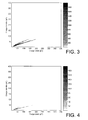
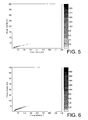
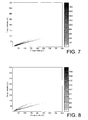
- a 48 kBq cobalt-60 source which emits only gamma to measure the light intensity produced by the scintillators, the rise time and the pulse descent time, and a 74 MBq (emitting neutrons and gamma) 252 californium source 252 to determine the merit figure M (FOM) which represents the ability of a liquid scintillator to separate the neutron lobe from that of the gamma, and angle ⁇ which is formed between these lobes.
- FOM merit figure M
- Merit figure M was calculated by a method improved from that described by Moszy ⁇ ski et al. in Nucl. Instrum. Methods Phys. Res. In 1994, 350, 226-234 , from the equation: Separation of peaks FWHM ⁇ + FWHM not in which FWHM represents the half-height width of the lobes.
- liquid scintillators consist respectively of derivative 5, derivative 8, derivative 9 and derivative 12 in solution at 10 g / L in toluene.
- the figure of merit M (FOM), the average of the figure of merit M taken in the values of total load between 50 and 100 pC ( ⁇ FOM>) and the angle ⁇ formed between the lobe of the neutrons and that of the gamma obtained for each of the liquid scintillators tested are shown in Table 3 below.
- Table 3 and these figures show that the liquid scintillator according to the invention retains its performances in terms of n / ⁇ discrimination when it is saturated with oxygen unlike commercial liquid organic scintillators for which it is possible to observe in particular that the angle ⁇ formed between the lobe of neutrons and that of gamma decreases by a factor close to 2 after oxygen saturation.
- liquid scintillator according to the invention does not require any special precautions for its packaging and storage. It can thus be stored under air and in daylight without its discrimination properties being affected, even after several months.
Landscapes
- Chemical & Material Sciences (AREA)
- Organic Chemistry (AREA)
- Organic Low-Molecular-Weight Compounds And Preparation Thereof (AREA)
Claims (24)
- Verwendung eines 1,8-Naphthalimid-Derivats, welches der folgenden allgemeinen Formel (I) entspricht:
 ● R1 eine Gruppe ist, ausgewählt aus:- den Gruppen -OR' und -SR', wobei R' eine lineare oder verzweigte, gesättigte oder ungesättigte C1 - C20 Kohlenwasserstoffgruppe, oder eine cyclische gesättigte C3 - C10 Kohlenwasserstoffgruppe, oder auch eine Aryl- oder Heteroarylgruppe, darstellt; und- den Gruppen -NR'R", wobei R' wie zuvor definiert ist, während R" entweder ein Wasserstoffatom, oder eine lineare oder verzweigte, gesättigte oder ungesättigte C1-C20 Kohlenwasserstoffgruppe, oder eine gesättigte cyclische C3 - C10 Kohlenwasserstoffgruppe, oder auch eine Aryl- oder Heteroarylgruppe darstellt;● R2 ein Wasserstoffatom oder Gruppe ist, die identisch oder unterschiedlich zu R1 ist, ausgewählt aus:- den Gruppen -OR' und -SR', wobei R' eine lineare oder verzweigte, gesättigte oder ungesättigte C1 - C20 Kohlenwasserstoffgruppe, oder eine cyclische gesättigte C3 - C10 Kohlenwasserstoffgruppe, oder auch eine Aryl- oder Heteroarylgruppe darstellt; und- den Gruppen -NR'R", wobei R' wie zuvor definiert ist, während R" entweder ein Wasserstoffatom, oder eine lineare oder verzweigte, gesättigte oder ungesättigte C1 - C20 Kohlenwasserstoffgruppe, oder eine gesättigte cyclische C3 - C10 Kohlenwasserstoffgruppe, oder auch eine Aryl- oder Heteroarylgruppe, darstellt; während● R3 :oder eines Salzes davon als Szintillationsmittel, um schnelle Neutronen von Gammastrahlen zu unterscheiden.- eine Acylgruppe, oder- eine lineare oder verzweigte, gesättigte oder ungesättigte C1 - C20 Kohlenwasserstoffgruppe, oder- eine gesättigte cyclische C3 - C10 Kohlenwasserstoffgruppe, oder- eine heterocyclische gesättigte C3 - C10 Gruppe, oder auch- eine Aryl- oder Heteroarylgruppe darstellt;
 - Verwendung nach Anspruch 1, wobei das 1,8-Naphthalimid-Derivat eine Emissionswellenlänge zwischen 350 und 550 nm und vorzugsweise zwischen 380 und 470 nm aufweist.
- Verwendung nach Anspruch 1 oder Anspruch 2, wobei das 1,8-Naphthalimid-Derivat der allgemeinen Formel (I) entspricht, wobei R1 eine -OR' oder -SR' Gruppe darstellt, wobei R' eine lineare oder verzweigte, gesättigte oder ungesättigte C1 - C20 Kohlenwasserstoffgruppe, oder eine cyclische gesättigte C3 - C10 Kohlenwasserstoffgruppe, oder auch eine Aryl- oder Heteroarylgruppe darstellt, während R2 ein Wasserstoffatom darstellt.
- Verwendung nach Anspruch 3, wobei das 1,8-Naphthalimid-Derivat der allgemeinen Formel (I) entspricht, wobei R1 eine C1 - C20, vorzugsweise eine C1 - C10 Alkoxy-, Alkenyloxy- oder Alkylsulfanylgruppe darstellt.
- Verwendung nach einem der vorhergehenden Ansprüche, wobei das 1,8-Naphthalimid-Derivat der allgemeinen Formel (I) entspricht, wobei R3 eine Aryl- oder Heteroarylgruppe darstellt, welche an Positionen 2 und 5 in Bezug auf das Stickstoffatom des Naphthalimidkerns durch eine verzweigte C3 - C6 Alkylgruppe substituiert ist.
- Verwendung nach Anspruch 5, wobei das 1,8-Naphthalimid-Derivat der allgemeinen Formel (I) entspricht, wobei R3 eine Di-t-butylphenylgruppe darstellt.
- Verwendung nach einem der vorhergehenden Ansprüche, wobei das 1,8-Naphthalimid-Derivat einer der folgenden spezifischen Formeln entspricht:


- Verwendung nach einem der vorhergehenden Ansprüche, wobei das 1,8-Naphthalimid-Derivat in eine feste Matrix eingebettet ist.
- Verwendung nach einem der Ansprüche 1 bis 7, wobei das 1,8-Naphthalimid-Derivat in einem Lösungsmittel gelöst ist.
- Verwendung nach Anspruch 9, wobei das 1,8-Naphthalimid-Derivat in dem Lösungsmittel in einer Konzentration von mindestens 3 g/L, und vorzugsweise, zwischen 8 und 12 g/L vorliegt.
- Flüssiges Szintillationsmittel umfassend ein 1,8-Naphthalimid-Derivat, welches der folgenden allgemeinen Formel (I) entspricht:
 ● R1 eine Gruppe darstellt, ausgewählt aus:- den Gruppen -OR' und -SR', wobei R' eine lineare oder verzweigte, gesättigte oder ungesättigte C1 - C20 Kohlenwasserstoffgruppe, oder eine cyclische gesättigte C3 - C10 Kohlenwasserstoffgruppe, oder auch eine Aryl- oder Heteroarylgruppe, darstellt; und- den Gruppen -NR'R", wobei R' wie zuvor definiert ist, während R" entweder ein Wasserstoffatom, oder eine lineare oder verzweigte, gesättigte oder ungesättigte C1 - C20 Kohlenwasserstoffgruppe, oder eine gesättigte cyclische C3 - C10 Kohlenwasserstoffgruppe, oder auch eine Aryl- oder Heteroarylgruppe darstellt;● R2 ein Wasserstoffatom oder eine Gruppe ist, die identisch oder unterschiedlich zu R1 ist, ausgewählt aus:- den Gruppen -OR' und -SR', wobei R' eine lineare oder verzweigte, gesättigte oder ungesättigte C1 - C20 Kohlenwasserstoffgruppe, oder eine cyclische gesättigte C3 - C10 Kohlenwasserstoffgruppe, oder auch eine Aryl- oder Heteroarylgruppe darstellt; und- den Gruppen -NR'R", wobei R' wie zuvor definiert ist, während R" entweder ein Wasserstoffatom, oder eine lineare oder verzweigte, gesättigte oder ungesättigte C1 - C20 Kohlenwasserstoffgruppe, oder eine gesättigte cyclische C3 - C10 Kohlenwasserstoffgruppe, oder auch eine Aryl- oder Heteroarylgruppe, darstellt; während● R3:- eine Acylgruppe, oder- eine lineare oder verzweigte, gesättigte oder ungesättigte C 1- C20 Kohlenwasserstoffgruppe, oder- eine gesättigte cyclische C3 - C10 Kohlenwasserstoffgruppe, oder- eine heterocyclische gesättigte C3-C10 Gruppe, oder auch- eine Aryl- oder Heteroarylgruppe darstellt;oder ein Salz davon, welches in einem Lösungsmittel gelöst ist.
 - Flüssiges Szintillationsmittel nach Anspruch 11, wobei das 1,8-Naphthalimid-Derivat eine Emissionswellenlänge zwischen 350 und 550 nm und vorzugsweise zwischen 380 und 470 nm aufweist.
- Flüssiges Szintillationsmittel nach Anspruch 11 oder Anspruch 12, wobei das 1,8-Naphthalimid-Derivat der allgemeinen Formel (I) entspricht, wobei, R1 eine -OR' oder -SR' Gruppe darstellt, wobei R' eine lineare oder verzweigte, gesättigte oder ungesättigte C1 - C20 Kohlenwasserstoffgruppe, oder eine cyclische gesättigte C3 - C10 Kohlenwasserstoffgruppe, oder auch eine Aryl- oder Heteroarylgruppe darstellt, während R2 ein Wasserstoffatom darstellt.
- Flüssiges Szintillationsmittel nach Anspruch 13, wobei das 1,8-Naphthalimid-Derivat der allgemeinen Formel (I) entspricht, wobei R1 eine C1 - C20, vorzugsweise eine C1 - C10 Alkoxy-, Alkenyloxy- oder Alkylsulfanylgruppe darstellt.
- Flüssiges Szintillationsmittel nach einem der Ansprüche 11 bis 14, wobei das 1,8-Naphthalimid-Derivat der allgemeinen Formel (I) entspricht, wobei R3 eine Aryl- oder Heteroarylgruppe darstellt, welche an Positionen 2 und 5 in Bezug auf das Stickstoffatom des Naphthalimidkerns durch eine verzweigte C3 - C6 Alkylgruppe substituiert ist.
- Flüssiges Szintillationsmittel nach Anspruch 15, wobei das 1,8-Naphthalimid-Derivat der allgemeinen Formel (I) entspricht, wobei R3 eine Di-t-butylphenylgruppe darstellt.
- Flüssiges Szintillationsmittel nach einem der Ansprüche 11 bis 16, wobei das 1,8-Naptalimid-Derivat eine der folgenden spezifischen Formeln entspricht:


- Flüssiges Szintillationsmittel nach einem der Ansprüche 11 bis 17, wobei das 1,8-Naphthalimid-Derivat in einer Konzentration von mindestens 3 g/L, und vorzugsweise zwischen 8 und 12 g/L vorliegt.
- 1,8-Naphthalimid-Derivat, welches der folgenden allgemeinen Formel (I) entspricht:
 ● R1 eine Gruppe darstellt, welche aus den Gruppen -OR' und -SR' ausgewählt ist, wobei R' eine lineare oder verzweigte, gesättigte oder ungesättigte C1 - C20 Kohlenwasserstoffgruppe, oder eine cyclische gesättigte C3 - C10 Kohlenwasserstoffgruppe, oder auch eine Aryl- oder Heteroarylgruppe, darstellt;● R2 ein Wasserstoffatom oder eine Gruppe ist, welche auch aus den Gruppe -OR' und -SR' ausgewählt ist, wobei R' eine lineare oder verzweigte, gesättigte oder ungesättigte C1 - C20 Kohlenwasserstoffgruppe, oder eine cyclische gesättigte C3 - C10 Kohlenwasserstoffgruppe, oder auch eine Aryl- oder Heteroarylgruppe darstellt; während● R3 eine Aryl- oder Heteroarylgruppe darstellt, welche an Positionen 2 und 5 in Bezug auf das Stickstoffatom des Naphthalimidkerns durch eine verzweigte C3 - C6 Alkylgruppe substituiert ist, und seine Salze.
 - 1,8-Naphthalimid-Derivat nach Anspruch 19, welches der allgemeinen Formel (I) entspricht, wobei R2 ein Wasserstoffatom darstellt.
- 1,8-Naphthalimid-Derivat nach Anspruch 19 oder Anspruch 20, welches der allgemeinen Formel (I) entspricht, wobei R1 eine C1 - C20, vorzugsweise eine C1 - C10 Alkoxy-, Alkenyloxy- oder Alkylsulfanylgruppe darstellt.
- 1,8-Naphthalimid-Derivat nach Anspruch 19, welches der allgemeinen Formel (I) entspricht, wobei R3 eine Di-t-butylphenylgruppe darstellt.
- 1,8-Naphthalimid-Derivat nach Anspruch 19 bis Anspruch 22, welches einer der folgenden spezifischen Formeln entspricht:


- 1,8-Naphthalimid-Derivat nach Anspruch 23, welches der folgenden spezifischen Formel entspricht:

Applications Claiming Priority (2)
| Application Number | Priority Date | Filing Date | Title |
|---|---|---|---|
| FR0850611A FR2927077B1 (fr) | 2008-01-31 | 2008-01-31 | Derives du 1,8-naphtalimide en tant qu'agents de scintillation notamment pour la discrimination entre les neutrons rapides et les rayons gamma |
| PCT/EP2009/050865 WO2009095376A1 (fr) | 2008-01-31 | 2009-01-27 | Derives du 1,8-naphtalimide en tant qu'agents de scintillation, notamment pour la discrimination entre les neutrons rapides et les rayons gamma |
Publications (2)
| Publication Number | Publication Date |
|---|---|
| EP2238112A1 EP2238112A1 (de) | 2010-10-13 |
| EP2238112B1 true EP2238112B1 (de) | 2013-07-31 |
Family
ID=39575613
Family Applications (1)
| Application Number | Title | Priority Date | Filing Date |
|---|---|---|---|
| EP09706632.8A Not-in-force EP2238112B1 (de) | 2008-01-31 | 2009-01-27 | Derivate von 1,8-naphthalimid als szintillationsmittel, insbesondere zur unterscheidung zwischen schnellen neutronen und gammastrahlen |
Country Status (4)
| Country | Link |
|---|---|
| US (1) | US8894881B2 (de) |
| EP (1) | EP2238112B1 (de) |
| FR (1) | FR2927077B1 (de) |
| WO (1) | WO2009095376A1 (de) |
Families Citing this family (11)
| Publication number | Priority date | Publication date | Assignee | Title |
|---|---|---|---|---|
| FR2969169B1 (fr) | 2010-12-21 | 2014-05-09 | Commissariat Energie Atomique | Scintillateur organique solide dope par un ou plusieurs elements chimiques |
| FR2983311B1 (fr) | 2011-11-25 | 2014-01-24 | Commissariat Energie Atomique | Procede de traitement de signal issu d'un scintillateur phoswich et detecteur a scintillation associe |
| CA2767658C (en) * | 2012-02-15 | 2019-07-02 | Atomic Energy Of Canada Limited | Boron-loaded liquid scintillator compositions and methods of preparation thereof |
| AU2013323198B2 (en) | 2012-09-28 | 2018-03-29 | Srinivasa R. Cheruku | Dihydro-6-azaphenalene derivatives for the treatment of CNS, oncological diseases and related disorders |
| CN104109126B (zh) * | 2014-06-30 | 2016-04-06 | 太原理工大学 | 一种用于检测肼的比率型荧光探针及其制备方法 |
| FR3030776B1 (fr) | 2014-12-22 | 2017-02-10 | Commissariat Energie Atomique | Scintillateur organique solide structure charge au plomb |
| FR3030777B1 (fr) | 2014-12-22 | 2017-02-10 | Commissariat Energie Atomique | Scintillateur organique solide structure charge au bismuth |
| CN106349219B (zh) * | 2016-08-24 | 2019-03-01 | 信阳师范学院 | 一种萘酰亚胺的有机凝胶化合物及其制备方法、凝胶及应用 |
| CN107652280A (zh) * | 2017-11-02 | 2018-02-02 | 台州学院 | 一类具有红色荧光的1,8‑萘酰亚胺化合物及其合成方法 |
| CN111286033B (zh) * | 2020-02-11 | 2022-02-18 | 合肥盖特环保技术有限责任公司 | 一种接枝聚硅烷类闪烁体及其制备方法 |
| CN111796320B (zh) * | 2020-07-07 | 2022-04-15 | 南华大学 | 一种基于1阶矩的数字中子伽马射线甄别方法 |
Family Cites Families (7)
| Publication number | Priority date | Publication date | Assignee | Title |
|---|---|---|---|---|
| GB1003083A (en) * | 1961-01-21 | 1965-09-02 | Toshiyasu Kasai | Novel 4-alkoxynaphthalimides |
| TW203675B (de) * | 1991-08-28 | 1993-04-11 | Mitsubishi Gas Chemical Co | |
| US6410505B1 (en) * | 1999-06-28 | 2002-06-25 | Microbiomed Corp. | Dimeric non-azo naphthalimides and uses for the same |
| UA36514C2 (uk) * | 1999-12-28 | 2003-12-15 | Інститут Монокристалів Науково-Технологічного Концерну "Інститут Монокристалів" Нан України | Спосіб одержання похідних піразолінілнафталевої кислоти |
| EP1725545A1 (de) * | 2004-03-09 | 2006-11-29 | L'oreal | Zusammensetzung, die eine optisch aktive monomere verbindung enthält, verfahren für die anwendung der zusammensetzung, monomere verbindung, diese enthaltendes polymer, und anwendung davon |
| IL172902A0 (en) * | 2005-12-29 | 2006-06-11 | Technion Res & Dev Foundation | Sensor for alkylating agents |
| JP5306681B2 (ja) * | 2007-03-30 | 2013-10-02 | 富士フイルム株式会社 | 重合性化合物、重合体、インク組成物、印刷物及びインクジェット記録方法 |
-
2008
- 2008-01-31 FR FR0850611A patent/FR2927077B1/fr not_active Expired - Fee Related
-
2009
- 2009-01-27 WO PCT/EP2009/050865 patent/WO2009095376A1/fr not_active Ceased
- 2009-01-27 US US12/864,777 patent/US8894881B2/en not_active Expired - Fee Related
- 2009-01-27 EP EP09706632.8A patent/EP2238112B1/de not_active Not-in-force
Also Published As
| Publication number | Publication date |
|---|---|
| US8894881B2 (en) | 2014-11-25 |
| FR2927077B1 (fr) | 2012-05-25 |
| EP2238112A1 (de) | 2010-10-13 |
| WO2009095376A1 (fr) | 2009-08-06 |
| FR2927077A1 (fr) | 2009-08-07 |
| US20100314556A1 (en) | 2010-12-16 |
Similar Documents
| Publication | Publication Date | Title |
|---|---|---|
| EP2238112B1 (de) | Derivate von 1,8-naphthalimid als szintillationsmittel, insbesondere zur unterscheidung zwischen schnellen neutronen und gammastrahlen | |
| Gusev et al. | Luminescent properties of Zn complexes based on tetradentate N2O2-donor pyrazolone schiff bases | |
| EP2313401B1 (de) | Polyzyklische moleküle, die zwischen neutronen- und gammastrahlung unterscheiden | |
| Iwase et al. | Synthesis and photophysical properties of new two-photon absorption chromophores containing a diacetylene moiety as the central π-bridge | |
| Tatarets et al. | Synthesis of novel squaraine dyes and their intermediates | |
| Shimizu et al. | Benzo [c, d] indole‐Containing Aza‐BODIPY Dyes: Asymmetrization‐Induced Solid‐State Emission and Aggregation‐Induced Emission Enhancement as New Properties of a Well‐Known Chromophore | |
| Munch et al. | Ethynyl‐Tolyl Extended 2‐(2′‐Hydroxyphenyl) benzoxazole Dyes: Solution and Solid‐state Excited‐State Intramolecular Proton Transfer (ESIPT) Emitters | |
| Gräf et al. | Synthesis of donor-substituted meso-phenyl and meso-ethynylphenyl BODIPYs with broad absorption | |
| WO2018038138A1 (ja) | 発光性粒子及び化合物 | |
| Bagui et al. | Synthesis and optical properties of perylene diimide derivatives with triphenylene-based dendrons linked at the bay positions through a conjugated ethynyl linkage | |
| Rao et al. | Synthesis of boron-dipyrromethene–ferrocene conjugates | |
| Xu et al. | Solid state emission enhancement of 9, 10-distyrylanthracene derivatives and amplified spontaneous emission from a large single crystal | |
| FR2989377A1 (fr) | Fluorophores organiques emettant a l'etat solide | |
| Grandl et al. | Electronic and structural properties of N→ B-ladder boranes with high electron affinity | |
| Nabasov et al. | Mono-and bis-phenoxy-substituted 3-(quinolin-2-ylmethylene) isoindolin-1-ones and their boron complexes. Synthesis, photophysical properties and conductivity of thin films | |
| Selby et al. | Chiroptical properties of indolenine squaraines with a stereogenic center at close proximity | |
| Adachi et al. | Insights into mechanistic interpretation of crystalline-state reddish phosphorescence of non-planar π-conjugated organoboron compounds | |
| Gautam et al. | Redox‐Switchable Cyan Fluorescence of a BODIPY Analog Inspired by Propentdyopent Pigments | |
| Kinashi et al. | Thermal stability of merocyanine form in spiropyran/silica composite film | |
| WO2012089969A1 (fr) | 1,2,4,5-tetrazines 3,6-fonctionnalisees, procede de preparation, compositions en comportant et utilisation a la detection de polluants organiques | |
| Ahmed | Photochromism of dihydroindolizines. Part II—Synthesis and photophysical properties of new photochromic IR‐sensitive photoswitchable substituted fluorene‐9′‐styrylquinolinedihydroindolizines | |
| Fukumoto et al. | Syntheses and photochromic properties of diaryl acenaphthylene derivatives | |
| Xu et al. | Thermally Activated Delayed Fluorescence and Room‐Temperature Phosphorescence in Materials with Imidazo‐pyrazine‐5, 6‐dicarbonitrile Acceptors | |
| Susumu et al. | Synthesis and photophysical properties of “center-to-edge” type phosphorus (V) porphyrin arrays | |
| Gabbutt et al. | The synthesis and properties of naphthopyran–boradiazaindacene conjugates |
Legal Events
| Date | Code | Title | Description |
|---|---|---|---|
| PUAI | Public reference made under article 153(3) epc to a published international application that has entered the european phase |
Free format text: ORIGINAL CODE: 0009012 |
|
| 17P | Request for examination filed |
Effective date: 20100727 |
|
| AK | Designated contracting states |
Kind code of ref document: A1 Designated state(s): AT BE BG CH CY CZ DE DK EE ES FI FR GB GR HR HU IE IS IT LI LT LU LV MC MK MT NL NO PL PT RO SE SI SK TR |
|
| AX | Request for extension of the european patent |
Extension state: AL BA RS |
|
| DAX | Request for extension of the european patent (deleted) | ||
| GRAP | Despatch of communication of intention to grant a patent |
Free format text: ORIGINAL CODE: EPIDOSNIGR1 |
|
| GRAS | Grant fee paid |
Free format text: ORIGINAL CODE: EPIDOSNIGR3 |
|
| GRAA | (expected) grant |
Free format text: ORIGINAL CODE: 0009210 |
|
| AK | Designated contracting states |
Kind code of ref document: B1 Designated state(s): AT BE BG CH CY CZ DE DK EE ES FI FR GB GR HR HU IE IS IT LI LT LU LV MC MK MT NL NO PL PT RO SE SI SK TR |
|
| REG | Reference to a national code |
Ref country code: GB Ref legal event code: FG4D Free format text: NOT ENGLISH Ref country code: CH Ref legal event code: EP |
|
| REG | Reference to a national code |
Ref country code: AT Ref legal event code: REF Ref document number: 624558 Country of ref document: AT Kind code of ref document: T Effective date: 20130815 |
|
| REG | Reference to a national code |
Ref country code: IE Ref legal event code: FG4D Free format text: LANGUAGE OF EP DOCUMENT: FRENCH |
|
| REG | Reference to a national code |
Ref country code: DE Ref legal event code: R096 Ref document number: 602009017599 Country of ref document: DE Effective date: 20130926 |
|
| REG | Reference to a national code |
Ref country code: AT Ref legal event code: MK05 Ref document number: 624558 Country of ref document: AT Kind code of ref document: T Effective date: 20130731 |
|
| REG | Reference to a national code |
Ref country code: NL Ref legal event code: VDEP Effective date: 20130731 |
|
| REG | Reference to a national code |
Ref country code: LT Ref legal event code: MG4D |
|
| PG25 | Lapsed in a contracting state [announced via postgrant information from national office to epo] |
Ref country code: CY Free format text: LAPSE BECAUSE OF FAILURE TO SUBMIT A TRANSLATION OF THE DESCRIPTION OR TO PAY THE FEE WITHIN THE PRESCRIBED TIME-LIMIT Effective date: 20130911 Ref country code: NO Free format text: LAPSE BECAUSE OF FAILURE TO SUBMIT A TRANSLATION OF THE DESCRIPTION OR TO PAY THE FEE WITHIN THE PRESCRIBED TIME-LIMIT Effective date: 20131031 Ref country code: LT Free format text: LAPSE BECAUSE OF FAILURE TO SUBMIT A TRANSLATION OF THE DESCRIPTION OR TO PAY THE FEE WITHIN THE PRESCRIBED TIME-LIMIT Effective date: 20130731 Ref country code: IS Free format text: LAPSE BECAUSE OF FAILURE TO SUBMIT A TRANSLATION OF THE DESCRIPTION OR TO PAY THE FEE WITHIN THE PRESCRIBED TIME-LIMIT Effective date: 20131130 Ref country code: SE Free format text: LAPSE BECAUSE OF FAILURE TO SUBMIT A TRANSLATION OF THE DESCRIPTION OR TO PAY THE FEE WITHIN THE PRESCRIBED TIME-LIMIT Effective date: 20130731 Ref country code: AT Free format text: LAPSE BECAUSE OF FAILURE TO SUBMIT A TRANSLATION OF THE DESCRIPTION OR TO PAY THE FEE WITHIN THE PRESCRIBED TIME-LIMIT Effective date: 20130731 Ref country code: PT Free format text: LAPSE BECAUSE OF FAILURE TO SUBMIT A TRANSLATION OF THE DESCRIPTION OR TO PAY THE FEE WITHIN THE PRESCRIBED TIME-LIMIT Effective date: 20131202 Ref country code: HR Free format text: LAPSE BECAUSE OF FAILURE TO SUBMIT A TRANSLATION OF THE DESCRIPTION OR TO PAY THE FEE WITHIN THE PRESCRIBED TIME-LIMIT Effective date: 20130731 |
|
| PG25 | Lapsed in a contracting state [announced via postgrant information from national office to epo] |
Ref country code: NL Free format text: LAPSE BECAUSE OF FAILURE TO SUBMIT A TRANSLATION OF THE DESCRIPTION OR TO PAY THE FEE WITHIN THE PRESCRIBED TIME-LIMIT Effective date: 20130731 Ref country code: GR Free format text: LAPSE BECAUSE OF FAILURE TO SUBMIT A TRANSLATION OF THE DESCRIPTION OR TO PAY THE FEE WITHIN THE PRESCRIBED TIME-LIMIT Effective date: 20131101 Ref country code: LV Free format text: LAPSE BECAUSE OF FAILURE TO SUBMIT A TRANSLATION OF THE DESCRIPTION OR TO PAY THE FEE WITHIN THE PRESCRIBED TIME-LIMIT Effective date: 20130731 Ref country code: SI Free format text: LAPSE BECAUSE OF FAILURE TO SUBMIT A TRANSLATION OF THE DESCRIPTION OR TO PAY THE FEE WITHIN THE PRESCRIBED TIME-LIMIT Effective date: 20130731 Ref country code: PL Free format text: LAPSE BECAUSE OF FAILURE TO SUBMIT A TRANSLATION OF THE DESCRIPTION OR TO PAY THE FEE WITHIN THE PRESCRIBED TIME-LIMIT Effective date: 20130731 Ref country code: FI Free format text: LAPSE BECAUSE OF FAILURE TO SUBMIT A TRANSLATION OF THE DESCRIPTION OR TO PAY THE FEE WITHIN THE PRESCRIBED TIME-LIMIT Effective date: 20130731 |
|
| PG25 | Lapsed in a contracting state [announced via postgrant information from national office to epo] |
Ref country code: CY Free format text: LAPSE BECAUSE OF FAILURE TO SUBMIT A TRANSLATION OF THE DESCRIPTION OR TO PAY THE FEE WITHIN THE PRESCRIBED TIME-LIMIT Effective date: 20130731 |
|
| PG25 | Lapsed in a contracting state [announced via postgrant information from national office to epo] |
Ref country code: CZ Free format text: LAPSE BECAUSE OF FAILURE TO SUBMIT A TRANSLATION OF THE DESCRIPTION OR TO PAY THE FEE WITHIN THE PRESCRIBED TIME-LIMIT Effective date: 20130731 Ref country code: RO Free format text: LAPSE BECAUSE OF FAILURE TO SUBMIT A TRANSLATION OF THE DESCRIPTION OR TO PAY THE FEE WITHIN THE PRESCRIBED TIME-LIMIT Effective date: 20130731 Ref country code: DK Free format text: LAPSE BECAUSE OF FAILURE TO SUBMIT A TRANSLATION OF THE DESCRIPTION OR TO PAY THE FEE WITHIN THE PRESCRIBED TIME-LIMIT Effective date: 20130731 Ref country code: EE Free format text: LAPSE BECAUSE OF FAILURE TO SUBMIT A TRANSLATION OF THE DESCRIPTION OR TO PAY THE FEE WITHIN THE PRESCRIBED TIME-LIMIT Effective date: 20130731 Ref country code: SK Free format text: LAPSE BECAUSE OF FAILURE TO SUBMIT A TRANSLATION OF THE DESCRIPTION OR TO PAY THE FEE WITHIN THE PRESCRIBED TIME-LIMIT Effective date: 20130731 |
|
| PG25 | Lapsed in a contracting state [announced via postgrant information from national office to epo] |
Ref country code: ES Free format text: LAPSE BECAUSE OF FAILURE TO SUBMIT A TRANSLATION OF THE DESCRIPTION OR TO PAY THE FEE WITHIN THE PRESCRIBED TIME-LIMIT Effective date: 20130731 Ref country code: IT Free format text: LAPSE BECAUSE OF FAILURE TO SUBMIT A TRANSLATION OF THE DESCRIPTION OR TO PAY THE FEE WITHIN THE PRESCRIBED TIME-LIMIT Effective date: 20130731 |
|
| PLBE | No opposition filed within time limit |
Free format text: ORIGINAL CODE: 0009261 |
|
| STAA | Information on the status of an ep patent application or granted ep patent |
Free format text: STATUS: NO OPPOSITION FILED WITHIN TIME LIMIT |
|
| 26N | No opposition filed |
Effective date: 20140502 |
|
| REG | Reference to a national code |
Ref country code: DE Ref legal event code: R097 Ref document number: 602009017599 Country of ref document: DE Effective date: 20140502 |
|
| PG25 | Lapsed in a contracting state [announced via postgrant information from national office to epo] |
Ref country code: LU Free format text: LAPSE BECAUSE OF FAILURE TO SUBMIT A TRANSLATION OF THE DESCRIPTION OR TO PAY THE FEE WITHIN THE PRESCRIBED TIME-LIMIT Effective date: 20140127 Ref country code: MC Free format text: LAPSE BECAUSE OF FAILURE TO SUBMIT A TRANSLATION OF THE DESCRIPTION OR TO PAY THE FEE WITHIN THE PRESCRIBED TIME-LIMIT Effective date: 20130731 |
|
| REG | Reference to a national code |
Ref country code: CH Ref legal event code: PL |
|
| PG25 | Lapsed in a contracting state [announced via postgrant information from national office to epo] |
Ref country code: LI Free format text: LAPSE BECAUSE OF NON-PAYMENT OF DUE FEES Effective date: 20140131 Ref country code: CH Free format text: LAPSE BECAUSE OF NON-PAYMENT OF DUE FEES Effective date: 20140131 |
|
| REG | Reference to a national code |
Ref country code: IE Ref legal event code: MM4A |
|
| PG25 | Lapsed in a contracting state [announced via postgrant information from national office to epo] |
Ref country code: IE Free format text: LAPSE BECAUSE OF NON-PAYMENT OF DUE FEES Effective date: 20140127 |
|
| REG | Reference to a national code |
Ref country code: FR Ref legal event code: PLFP Year of fee payment: 8 |
|
| PG25 | Lapsed in a contracting state [announced via postgrant information from national office to epo] |
Ref country code: MT Free format text: LAPSE BECAUSE OF FAILURE TO SUBMIT A TRANSLATION OF THE DESCRIPTION OR TO PAY THE FEE WITHIN THE PRESCRIBED TIME-LIMIT Effective date: 20130731 |
|
| PG25 | Lapsed in a contracting state [announced via postgrant information from national office to epo] |
Ref country code: BG Free format text: LAPSE BECAUSE OF FAILURE TO SUBMIT A TRANSLATION OF THE DESCRIPTION OR TO PAY THE FEE WITHIN THE PRESCRIBED TIME-LIMIT Effective date: 20130731 |
|
| PG25 | Lapsed in a contracting state [announced via postgrant information from national office to epo] |
Ref country code: TR Free format text: LAPSE BECAUSE OF FAILURE TO SUBMIT A TRANSLATION OF THE DESCRIPTION OR TO PAY THE FEE WITHIN THE PRESCRIBED TIME-LIMIT Effective date: 20130731 Ref country code: HU Free format text: LAPSE BECAUSE OF FAILURE TO SUBMIT A TRANSLATION OF THE DESCRIPTION OR TO PAY THE FEE WITHIN THE PRESCRIBED TIME-LIMIT; INVALID AB INITIO Effective date: 20090127 |
|
| REG | Reference to a national code |
Ref country code: FR Ref legal event code: PLFP Year of fee payment: 9 |
|
| REG | Reference to a national code |
Ref country code: FR Ref legal event code: PLFP Year of fee payment: 10 |
|
| PGFP | Annual fee paid to national office [announced via postgrant information from national office to epo] |
Ref country code: DE Payment date: 20180111 Year of fee payment: 10 |
|
| PG25 | Lapsed in a contracting state [announced via postgrant information from national office to epo] |
Ref country code: MK Free format text: LAPSE BECAUSE OF FAILURE TO SUBMIT A TRANSLATION OF THE DESCRIPTION OR TO PAY THE FEE WITHIN THE PRESCRIBED TIME-LIMIT Effective date: 20130731 |
|
| PGFP | Annual fee paid to national office [announced via postgrant information from national office to epo] |
Ref country code: GB Payment date: 20190118 Year of fee payment: 11 Ref country code: FR Payment date: 20190130 Year of fee payment: 11 |
|
| PGFP | Annual fee paid to national office [announced via postgrant information from national office to epo] |
Ref country code: BE Payment date: 20190125 Year of fee payment: 11 |
|
| REG | Reference to a national code |
Ref country code: DE Ref legal event code: R119 Ref document number: 602009017599 Country of ref document: DE |
|
| PG25 | Lapsed in a contracting state [announced via postgrant information from national office to epo] |
Ref country code: DE Free format text: LAPSE BECAUSE OF NON-PAYMENT OF DUE FEES Effective date: 20190801 |
|
| GBPC | Gb: european patent ceased through non-payment of renewal fee |
Effective date: 20200127 |
|
| REG | Reference to a national code |
Ref country code: BE Ref legal event code: MM Effective date: 20200131 |
|
| PG25 | Lapsed in a contracting state [announced via postgrant information from national office to epo] |
Ref country code: GB Free format text: LAPSE BECAUSE OF NON-PAYMENT OF DUE FEES Effective date: 20200127 Ref country code: FR Free format text: LAPSE BECAUSE OF NON-PAYMENT OF DUE FEES Effective date: 20200131 |
|
| PG25 | Lapsed in a contracting state [announced via postgrant information from national office to epo] |
Ref country code: BE Free format text: LAPSE BECAUSE OF NON-PAYMENT OF DUE FEES Effective date: 20200131 |