EP2235030B1 - Composé du type disaccharide, composition contenant un tel composé et procédé de fabrication d'un tel composé - Google Patents
Composé du type disaccharide, composition contenant un tel composé et procédé de fabrication d'un tel composé Download PDFInfo
- Publication number
- EP2235030B1 EP2235030B1 EP08872171.7A EP08872171A EP2235030B1 EP 2235030 B1 EP2235030 B1 EP 2235030B1 EP 08872171 A EP08872171 A EP 08872171A EP 2235030 B1 EP2235030 B1 EP 2235030B1
- Authority
- EP
- European Patent Office
- Prior art keywords
- group
- atom
- radical
- sulfonate
- chφ
- Prior art date
- Legal status (The legal status is an assumption and is not a legal conclusion. Google has not performed a legal analysis and makes no representation as to the accuracy of the status listed.)
- Active
Links
- 150000001875 compounds Chemical class 0.000 title claims description 67
- 239000000203 mixture Substances 0.000 title claims description 11
- 150000002016 disaccharides Chemical class 0.000 title claims description 7
- 238000004519 manufacturing process Methods 0.000 title description 2
- 125000004435 hydrogen atom Chemical group [H]* 0.000 claims description 57
- 125000004432 carbon atom Chemical group C* 0.000 claims description 48
- 125000004430 oxygen atom Chemical group O* 0.000 claims description 32
- 125000000217 alkyl group Chemical group 0.000 claims description 14
- 229910052799 carbon Inorganic materials 0.000 claims description 14
- 238000000034 method Methods 0.000 claims description 10
- 125000003903 2-propenyl group Chemical group [H]C([*])([H])C([H])=C([H])[H] 0.000 claims description 9
- 125000004434 sulfur atom Chemical group 0.000 claims description 9
- 229910052760 oxygen Inorganic materials 0.000 claims description 8
- 230000001012 protector Effects 0.000 claims description 7
- 229940125842 Chitinase inhibitor Drugs 0.000 claims description 6
- 239000003795 chemical substances by application Substances 0.000 claims description 4
- 239000002917 insecticide Substances 0.000 claims description 4
- 125000001436 propyl group Chemical group [H]C([*])([H])C([H])([H])C([H])([H])[H] 0.000 claims description 4
- 239000003814 drug Substances 0.000 claims description 2
- 230000000069 prophylactic effect Effects 0.000 claims description 2
- 125000001273 sulfonato group Chemical group [O-]S(*)(=O)=O 0.000 claims 20
- 125000001797 benzyl group Chemical group [H]C1=C([H])C([H])=C(C([H])=C1[H])C([H])([H])* 0.000 claims 14
- 125000002496 methyl group Chemical group [H]C([H])([H])* 0.000 claims 9
- 125000001997 phenyl group Chemical group [H]C1=C([H])C([H])=C(*)C([H])=C1[H] 0.000 claims 8
- 125000000852 azido group Chemical group *N=[N+]=[N-] 0.000 claims 5
- 125000003118 aryl group Chemical group 0.000 claims 4
- 150000003254 radicals Chemical class 0.000 description 88
- -1 radical sulfonate Chemical class 0.000 description 48
- 102000012286 Chitinases Human genes 0.000 description 33
- 108010022172 Chitinases Proteins 0.000 description 33
- YMWUJEATGCHHMB-UHFFFAOYSA-N Dichloromethane Chemical compound ClCCl YMWUJEATGCHHMB-UHFFFAOYSA-N 0.000 description 24
- 241001124076 Aphididae Species 0.000 description 23
- 101150053419 dps2 gene Proteins 0.000 description 21
- 125000004429 atom Chemical group 0.000 description 17
- ZMXDDKWLCZADIW-UHFFFAOYSA-N N,N-Dimethylformamide Chemical compound CN(C)C=O ZMXDDKWLCZADIW-UHFFFAOYSA-N 0.000 description 15
- SLRMQYXOBQWXCR-UHFFFAOYSA-N 2154-56-5 Chemical compound [CH2]C1=CC=CC=C1 SLRMQYXOBQWXCR-UHFFFAOYSA-N 0.000 description 14
- 241000238631 Hexapoda Species 0.000 description 13
- 230000000694 effects Effects 0.000 description 13
- 229920002101 Chitin Polymers 0.000 description 12
- OKKJLVBELUTLKV-UHFFFAOYSA-N Methanol Chemical compound OC OKKJLVBELUTLKV-UHFFFAOYSA-N 0.000 description 12
- YXFVVABEGXRONW-UHFFFAOYSA-N Toluene Chemical compound CC1=CC=CC=C1 YXFVVABEGXRONW-UHFFFAOYSA-N 0.000 description 12
- MDWNFWDBQGOKNZ-XYUDZHFQSA-N allosamidin Chemical group O([C@@H]1[C@@H](CO)O[C@H]([C@@H]([C@@H]1O)NC(C)=O)O[C@H]1[C@H](O)[C@H]2N=C(O[C@H]2[C@@H]1CO)N(C)C)[C@@H]1O[C@H](CO)[C@@H](O)[C@@H](O)[C@H]1NC(C)=O MDWNFWDBQGOKNZ-XYUDZHFQSA-N 0.000 description 12
- XKRFYHLGVUSROY-UHFFFAOYSA-N Argon Chemical compound [Ar] XKRFYHLGVUSROY-UHFFFAOYSA-N 0.000 description 10
- 230000002829 reductive effect Effects 0.000 description 10
- XEKOWRVHYACXOJ-UHFFFAOYSA-N Ethyl acetate Chemical compound CCOC(C)=O XEKOWRVHYACXOJ-UHFFFAOYSA-N 0.000 description 9
- 241000721714 Macrosiphum euphorbiae Species 0.000 description 9
- 238000006243 chemical reaction Methods 0.000 description 9
- 239000003480 eluent Substances 0.000 description 9
- WCYWZMWISLQXQU-UHFFFAOYSA-N methyl Chemical compound [CH3] WCYWZMWISLQXQU-UHFFFAOYSA-N 0.000 description 9
- 241000721621 Myzus persicae Species 0.000 description 8
- WYURNTSHIVDZCO-UHFFFAOYSA-N Tetrahydrofuran Chemical compound C1CCOC1 WYURNTSHIVDZCO-UHFFFAOYSA-N 0.000 description 8
- CIUQDSCDWFSTQR-UHFFFAOYSA-N [C]1=CC=CC=C1 Chemical compound [C]1=CC=CC=C1 CIUQDSCDWFSTQR-UHFFFAOYSA-N 0.000 description 8
- 230000015572 biosynthetic process Effects 0.000 description 8
- 230000035558 fertility Effects 0.000 description 8
- 239000003112 inhibitor Substances 0.000 description 8
- 238000002360 preparation method Methods 0.000 description 8
- 238000003786 synthesis reaction Methods 0.000 description 8
- 229920001661 Chitosan Polymers 0.000 description 7
- RMRFFCXPLWYOOY-UHFFFAOYSA-N allyl radical Chemical compound [CH2]C=C RMRFFCXPLWYOOY-UHFFFAOYSA-N 0.000 description 7
- 150000004676 glycans Chemical class 0.000 description 7
- 229920001282 polysaccharide Polymers 0.000 description 7
- 239000005017 polysaccharide Substances 0.000 description 7
- CSNNHWWHGAXBCP-UHFFFAOYSA-L Magnesium sulfate Chemical compound [Mg+2].[O-][S+2]([O-])([O-])[O-] CSNNHWWHGAXBCP-UHFFFAOYSA-L 0.000 description 6
- ZMANZCXQSJIPKH-UHFFFAOYSA-N Triethylamine Chemical compound CCN(CC)CC ZMANZCXQSJIPKH-UHFFFAOYSA-N 0.000 description 6
- 230000002401 inhibitory effect Effects 0.000 description 6
- 230000005764 inhibitory process Effects 0.000 description 6
- 230000001418 larval effect Effects 0.000 description 6
- 239000012429 reaction media Substances 0.000 description 6
- FPGGTKZVZWFYPV-UHFFFAOYSA-M tetrabutylammonium fluoride Chemical compound [F-].CCCC[N+](CCCC)(CCCC)CCCC FPGGTKZVZWFYPV-UHFFFAOYSA-M 0.000 description 6
- MDWNFWDBQGOKNZ-UHFFFAOYSA-N Allosamidin Natural products OCC1C2OC(N(C)C)=NC2C(O)C1OC(C(C1O)NC(C)=O)OC(CO)C1OC1OC(CO)C(O)C(O)C1NC(C)=O MDWNFWDBQGOKNZ-UHFFFAOYSA-N 0.000 description 5
- XDTMQSROBMDMFD-UHFFFAOYSA-N Cyclohexane Chemical compound C1CCCCC1 XDTMQSROBMDMFD-UHFFFAOYSA-N 0.000 description 5
- 102000004190 Enzymes Human genes 0.000 description 5
- 108090000790 Enzymes Proteins 0.000 description 5
- VYPSYNLAJGMNEJ-UHFFFAOYSA-N Silicium dioxide Chemical compound O=[Si]=O VYPSYNLAJGMNEJ-UHFFFAOYSA-N 0.000 description 5
- 230000000843 anti-fungal effect Effects 0.000 description 5
- 230000002824 aphicidal effect Effects 0.000 description 5
- 229910052786 argon Inorganic materials 0.000 description 5
- 230000000749 insecticidal effect Effects 0.000 description 5
- 239000002243 precursor Substances 0.000 description 5
- 230000008569 process Effects 0.000 description 5
- 241000894007 species Species 0.000 description 5
- DUAJIKVIRGATIW-UHFFFAOYSA-N trinitrogen(.) Chemical compound [N]=[N+]=[N-] DUAJIKVIRGATIW-UHFFFAOYSA-N 0.000 description 5
- VHYFNPMBLIVWCW-UHFFFAOYSA-N 4-Dimethylaminopyridine Chemical compound CN(C)C1=CC=NC=C1 VHYFNPMBLIVWCW-UHFFFAOYSA-N 0.000 description 4
- 0 C[C@@](*C(OC(C)=O)=C1OCc2ccccc2)OC(*)[C@]1O Chemical compound C[C@@](*C(OC(C)=O)=C1OCc2ccccc2)OC(*)[C@]1O 0.000 description 4
- 241000233866 Fungi Species 0.000 description 4
- FAPWRFPIFSIZLT-UHFFFAOYSA-M Sodium chloride Chemical compound [Na+].[Cl-] FAPWRFPIFSIZLT-UHFFFAOYSA-M 0.000 description 4
- 241000607479 Yersinia pestis Species 0.000 description 4
- 150000005840 aryl radicals Chemical class 0.000 description 4
- 239000000741 silica gel Substances 0.000 description 4
- 229910002027 silica gel Inorganic materials 0.000 description 4
- 239000000243 solution Substances 0.000 description 4
- 239000002904 solvent Substances 0.000 description 4
- 238000012360 testing method Methods 0.000 description 4
- YLQBMQCUIZJEEH-UHFFFAOYSA-N tetrahydrofuran Natural products C=1C=COC=1 YLQBMQCUIZJEEH-UHFFFAOYSA-N 0.000 description 4
- WEVYAHXRMPXWCK-UHFFFAOYSA-N Acetonitrile Chemical compound CC#N WEVYAHXRMPXWCK-UHFFFAOYSA-N 0.000 description 3
- 241000255925 Diptera Species 0.000 description 3
- OVRNDRQMDRJTHS-FMDGEEDCSA-N N-acetyl-beta-D-glucosamine Chemical compound CC(=O)N[C@H]1[C@H](O)O[C@H](CO)[C@@H](O)[C@@H]1O OVRNDRQMDRJTHS-FMDGEEDCSA-N 0.000 description 3
- 230000009471 action Effects 0.000 description 3
- 229940121375 antifungal agent Drugs 0.000 description 3
- 230000008859 change Effects 0.000 description 3
- 229940125898 compound 5 Drugs 0.000 description 3
- 230000002939 deleterious effect Effects 0.000 description 3
- 238000011161 development Methods 0.000 description 3
- 230000018109 developmental process Effects 0.000 description 3
- 230000007653 larval development Effects 0.000 description 3
- 229910052943 magnesium sulfate Inorganic materials 0.000 description 3
- 235000019341 magnesium sulphate Nutrition 0.000 description 3
- 150000002482 oligosaccharides Polymers 0.000 description 3
- 239000012074 organic phase Substances 0.000 description 3
- 125000006239 protecting group Chemical group 0.000 description 3
- 230000004083 survival effect Effects 0.000 description 3
- 241001600408 Aphis gossypii Species 0.000 description 2
- IJGRMHOSHXDMSA-UHFFFAOYSA-N Atomic nitrogen Chemical compound N#N IJGRMHOSHXDMSA-UHFFFAOYSA-N 0.000 description 2
- 241000894006 Bacteria Species 0.000 description 2
- WQZGKKKJIJFFOK-GASJEMHNSA-N Glucose Natural products OC[C@H]1OC(O)[C@H](O)[C@@H](O)[C@@H]1O WQZGKKKJIJFFOK-GASJEMHNSA-N 0.000 description 2
- 102000005744 Glycoside Hydrolases Human genes 0.000 description 2
- 108010031186 Glycoside Hydrolases Proteins 0.000 description 2
- 241001147381 Helicoverpa armigera Species 0.000 description 2
- 241001251909 Hyalopterus pruni Species 0.000 description 2
- UFHFLCQGNIYNRP-UHFFFAOYSA-N Hydrogen Chemical compound [H][H] UFHFLCQGNIYNRP-UHFFFAOYSA-N 0.000 description 2
- 241000168713 Metopolophium dirhodum Species 0.000 description 2
- JGFZNNIVVJXRND-UHFFFAOYSA-N N,N-Diisopropylethylamine (DIPEA) Chemical compound CCN(C(C)C)C(C)C JGFZNNIVVJXRND-UHFFFAOYSA-N 0.000 description 2
- OVRNDRQMDRJTHS-UHFFFAOYSA-N N-acelyl-D-glucosamine Natural products CC(=O)NC1C(O)OC(CO)C(O)C1O OVRNDRQMDRJTHS-UHFFFAOYSA-N 0.000 description 2
- MBLBDJOUHNCFQT-LXGUWJNJSA-N N-acetylglucosamine Natural products CC(=O)N[C@@H](C=O)[C@@H](O)[C@H](O)[C@H](O)CO MBLBDJOUHNCFQT-LXGUWJNJSA-N 0.000 description 2
- 241000224016 Plasmodium Species 0.000 description 2
- 241000500437 Plutella xylostella Species 0.000 description 2
- 241000125167 Rhopalosiphum padi Species 0.000 description 2
- 241000180219 Sitobion avenae Species 0.000 description 2
- UIIMBOGNXHQVGW-UHFFFAOYSA-M Sodium bicarbonate Chemical compound [Na+].OC([O-])=O UIIMBOGNXHQVGW-UHFFFAOYSA-M 0.000 description 2
- 241000256250 Spodoptera littoralis Species 0.000 description 2
- OCBFFGCSTGGPSQ-UHFFFAOYSA-N [CH2]CC Chemical compound [CH2]CC OCBFFGCSTGGPSQ-UHFFFAOYSA-N 0.000 description 2
- 238000000540 analysis of variance Methods 0.000 description 2
- 230000000844 anti-bacterial effect Effects 0.000 description 2
- 239000012298 atmosphere Substances 0.000 description 2
- 230000015556 catabolic process Effects 0.000 description 2
- 229940125782 compound 2 Drugs 0.000 description 2
- 238000006731 degradation reaction Methods 0.000 description 2
- 230000000855 fungicidal effect Effects 0.000 description 2
- 239000008103 glucose Substances 0.000 description 2
- 229910052739 hydrogen Inorganic materials 0.000 description 2
- 239000001257 hydrogen Substances 0.000 description 2
- 230000003993 interaction Effects 0.000 description 2
- 230000007246 mechanism Effects 0.000 description 2
- 238000012544 monitoring process Methods 0.000 description 2
- 229950006780 n-acetylglucosamine Drugs 0.000 description 2
- 244000045947 parasite Species 0.000 description 2
- 230000009467 reduction Effects 0.000 description 2
- 238000006722 reduction reaction Methods 0.000 description 2
- 238000005932 reductive alkylation reaction Methods 0.000 description 2
- 239000012047 saturated solution Substances 0.000 description 2
- 239000011780 sodium chloride Substances 0.000 description 2
- 238000003756 stirring Methods 0.000 description 2
- 239000000126 substance Substances 0.000 description 2
- 239000000758 substrate Substances 0.000 description 2
- BCNZYOJHNLTNEZ-UHFFFAOYSA-N tert-butyldimethylsilyl chloride Chemical compound CC(C)(C)[Si](C)(C)Cl BCNZYOJHNLTNEZ-UHFFFAOYSA-N 0.000 description 2
- XLYOFNOQVPJJNP-UHFFFAOYSA-N water Substances O XLYOFNOQVPJJNP-UHFFFAOYSA-N 0.000 description 2
- LBRJCAJLGAXDKP-UHFFFAOYSA-N 1-(benzenesulfinyl)piperidine Chemical compound C=1C=CC=CC=1S(=O)N1CCCCC1 LBRJCAJLGAXDKP-UHFFFAOYSA-N 0.000 description 1
- UPQQXPKAYZYUKO-UHFFFAOYSA-N 2,2,2-trichloroacetamide Chemical compound OC(=N)C(Cl)(Cl)Cl UPQQXPKAYZYUKO-UHFFFAOYSA-N 0.000 description 1
- HVHZEKKZMFRULH-UHFFFAOYSA-N 2,6-ditert-butyl-4-methylpyridine Chemical compound CC1=CC(C(C)(C)C)=NC(C(C)(C)C)=C1 HVHZEKKZMFRULH-UHFFFAOYSA-N 0.000 description 1
- KZMAWJRXKGLWGS-UHFFFAOYSA-N 2-chloro-n-[4-(4-methoxyphenyl)-1,3-thiazol-2-yl]-n-(3-methoxypropyl)acetamide Chemical compound S1C(N(C(=O)CCl)CCCOC)=NC(C=2C=CC(OC)=CC=2)=C1 KZMAWJRXKGLWGS-UHFFFAOYSA-N 0.000 description 1
- 241000256118 Aedes aegypti Species 0.000 description 1
- 102000009027 Albumins Human genes 0.000 description 1
- 108010088751 Albumins Proteins 0.000 description 1
- 229930192475 Amylostatin Natural products 0.000 description 1
- GKHCBYYBLTXYEV-UHFFFAOYSA-N Benzyl glucopyranoside Natural products OC1C(O)C(O)C(CO)OC1OCC1=CC=CC=C1 GKHCBYYBLTXYEV-UHFFFAOYSA-N 0.000 description 1
- 241000255789 Bombyx mori Species 0.000 description 1
- 241000123650 Botrytis cinerea Species 0.000 description 1
- 102000005575 Cellulases Human genes 0.000 description 1
- 108010084185 Cellulases Proteins 0.000 description 1
- 241000223205 Coccidioides immitis Species 0.000 description 1
- 241001464851 Entamoeba invadens Species 0.000 description 1
- 101710151841 Farnesyl pyrophosphate synthase 1 Proteins 0.000 description 1
- 102000004157 Hydrolases Human genes 0.000 description 1
- 108090000604 Hydrolases Proteins 0.000 description 1
- 241000012186 Litura Species 0.000 description 1
- 241000257166 Lucilia cuprina Species 0.000 description 1
- 241001344131 Magnaporthe grisea Species 0.000 description 1
- 241001465754 Metazoa Species 0.000 description 1
- 238000006751 Mitsunobu reaction Methods 0.000 description 1
- 241000721623 Myzus Species 0.000 description 1
- 241000244206 Nematoda Species 0.000 description 1
- 241000221961 Neurospora crassa Species 0.000 description 1
- 108091005804 Peptidases Proteins 0.000 description 1
- 241000223960 Plasmodium falciparum Species 0.000 description 1
- 101710184309 Probable sucrose-6-phosphate hydrolase Proteins 0.000 description 1
- 239000004365 Protease Substances 0.000 description 1
- 102100037486 Reverse transcriptase/ribonuclease H Human genes 0.000 description 1
- 229920005654 Sephadex Polymers 0.000 description 1
- 239000012507 Sephadex™ Substances 0.000 description 1
- 241000935922 Sphaeropsis Species 0.000 description 1
- 241000985245 Spodoptera litura Species 0.000 description 1
- 241000187392 Streptomyces griseus Species 0.000 description 1
- 102400000472 Sucrase Human genes 0.000 description 1
- 229930006000 Sucrose Natural products 0.000 description 1
- CZMRCDWAGMRECN-UGDNZRGBSA-N Sucrose Chemical compound O[C@H]1[C@H](O)[C@@H](CO)O[C@@]1(CO)O[C@@H]1[C@H](O)[C@@H](O)[C@H](O)[C@@H](CO)O1 CZMRCDWAGMRECN-UGDNZRGBSA-N 0.000 description 1
- 101710112652 Sucrose-6-phosphate hydrolase Proteins 0.000 description 1
- 241000333690 Tineola bisselliella Species 0.000 description 1
- 241000364021 Tulsa Species 0.000 description 1
- 230000002159 abnormal effect Effects 0.000 description 1
- 230000021736 acetylation Effects 0.000 description 1
- 238000006640 acetylation reaction Methods 0.000 description 1
- 239000002253 acid Substances 0.000 description 1
- 230000003213 activating effect Effects 0.000 description 1
- 230000004913 activation Effects 0.000 description 1
- MKJAYSJDHSEFRI-YMVPXFTJSA-N allosamizoline Chemical group O[C@H]1[C@@H](O)[C@H](CO)[C@@H]2OC(N(C)C)=N[C@@H]21 MKJAYSJDHSEFRI-YMVPXFTJSA-N 0.000 description 1
- 230000001580 bacterial effect Effects 0.000 description 1
- 230000008901 benefit Effects 0.000 description 1
- 230000003115 biocidal effect Effects 0.000 description 1
- 230000004071 biological effect Effects 0.000 description 1
- 150000001720 carbohydrates Chemical class 0.000 description 1
- 238000012512 characterization method Methods 0.000 description 1
- 239000007795 chemical reaction product Substances 0.000 description 1
- 230000001609 comparable effect Effects 0.000 description 1
- 230000006957 competitive inhibition Effects 0.000 description 1
- 229940125904 compound 1 Drugs 0.000 description 1
- 230000001086 cytosolic effect Effects 0.000 description 1
- 235000005911 diet Nutrition 0.000 description 1
- 230000037213 diet Effects 0.000 description 1
- 231100000673 dose–response relationship Toxicity 0.000 description 1
- 230000013020 embryo development Effects 0.000 description 1
- 230000002255 enzymatic effect Effects 0.000 description 1
- 238000002474 experimental method Methods 0.000 description 1
- 238000000556 factor analysis Methods 0.000 description 1
- 239000000706 filtrate Substances 0.000 description 1
- 230000037406 food intake Effects 0.000 description 1
- 235000012631 food intake Nutrition 0.000 description 1
- 238000004362 fungal culture Methods 0.000 description 1
- 244000053095 fungal pathogen Species 0.000 description 1
- 229930182830 galactose Natural products 0.000 description 1
- MSWZFWKMSRAUBD-IVMDWMLBSA-N glucosamine group Chemical group OC1[C@H](N)[C@@H](O)[C@H](O)[C@H](O1)CO MSWZFWKMSRAUBD-IVMDWMLBSA-N 0.000 description 1
- 238000006206 glycosylation reaction Methods 0.000 description 1
- 229930004094 glycosylphosphatidylinositol Natural products 0.000 description 1
- 208000037824 growth disorder Diseases 0.000 description 1
- 230000001939 inductive effect Effects 0.000 description 1
- 230000009545 invasion Effects 0.000 description 1
- 235000011073 invertase Nutrition 0.000 description 1
- 239000002949 juvenile hormone Substances 0.000 description 1
- 235000010335 lysozyme Nutrition 0.000 description 1
- 239000011777 magnesium Substances 0.000 description 1
- 201000004792 malaria Diseases 0.000 description 1
- 239000012528 membrane Substances 0.000 description 1
- 230000004060 metabolic process Effects 0.000 description 1
- 230000000813 microbial effect Effects 0.000 description 1
- 230000004048 modification Effects 0.000 description 1
- 238000012986 modification Methods 0.000 description 1
- 239000002808 molecular sieve Substances 0.000 description 1
- OVRNDRQMDRJTHS-IYWGXSQHSA-N n-[(3r,4s,5s,6r)-2,4,5-trihydroxy-6-(hydroxymethyl)oxan-3-yl]acetamide Chemical group CC(=O)N[C@H]1C(O)O[C@H](CO)[C@@H](O)[C@H]1O OVRNDRQMDRJTHS-IYWGXSQHSA-N 0.000 description 1
- 229910052757 nitrogen Inorganic materials 0.000 description 1
- 229920001542 oligosaccharide Polymers 0.000 description 1
- 230000008520 organization Effects 0.000 description 1
- 230000001151 other effect Effects 0.000 description 1
- 230000017448 oviposition Effects 0.000 description 1
- 230000036961 partial effect Effects 0.000 description 1
- 244000052769 pathogen Species 0.000 description 1
- 230000035699 permeability Effects 0.000 description 1
- 239000000546 pharmaceutical excipient Substances 0.000 description 1
- 125000005544 phthalimido group Chemical group 0.000 description 1
- 229920000642 polymer Polymers 0.000 description 1
- 230000003389 potentiating effect Effects 0.000 description 1
- 230000001681 protective effect Effects 0.000 description 1
- KOUKXHPPRFNWPP-UHFFFAOYSA-N pyrazine-2,5-dicarboxylic acid;hydrate Chemical compound O.OC(=O)C1=CN=C(C(O)=O)C=N1 KOUKXHPPRFNWPP-UHFFFAOYSA-N 0.000 description 1
- 238000007634 remodeling Methods 0.000 description 1
- 230000001850 reproductive effect Effects 0.000 description 1
- 238000011160 research Methods 0.000 description 1
- 239000011347 resin Substances 0.000 description 1
- 229920005989 resin Polymers 0.000 description 1
- 238000012216 screening Methods 0.000 description 1
- URGAHOPLAPQHLN-UHFFFAOYSA-N sodium aluminosilicate Chemical compound [Na+].[Al+3].[O-][Si]([O-])=O.[O-][Si]([O-])=O URGAHOPLAPQHLN-UHFFFAOYSA-N 0.000 description 1
- 235000017557 sodium bicarbonate Nutrition 0.000 description 1
- 229910000030 sodium bicarbonate Inorganic materials 0.000 description 1
- 238000001228 spectrum Methods 0.000 description 1
- 125000001424 substituent group Chemical group 0.000 description 1
- 238000006467 substitution reaction Methods 0.000 description 1
- 239000005720 sucrose Substances 0.000 description 1
- 229910052717 sulfur Inorganic materials 0.000 description 1
- 150000003463 sulfur Chemical class 0.000 description 1
- 125000000999 tert-butyl group Chemical group [H]C([H])([H])C(*)(C([H])([H])[H])C([H])([H])[H] 0.000 description 1
- DZLFLBLQUQXARW-UHFFFAOYSA-N tetrabutylammonium Chemical compound CCCC[N+](CCCC)(CCCC)CCCC DZLFLBLQUQXARW-UHFFFAOYSA-N 0.000 description 1
- 150000003573 thiols Chemical class 0.000 description 1
- 229940066528 trichloroacetate Drugs 0.000 description 1
- YNJBWRMUSHSURL-UHFFFAOYSA-N trichloroacetic acid Chemical compound OC(=O)C(Cl)(Cl)Cl YNJBWRMUSHSURL-UHFFFAOYSA-N 0.000 description 1
- ITMCEJHCFYSIIV-UHFFFAOYSA-M triflate Chemical compound [O-]S(=O)(=O)C(F)(F)F ITMCEJHCFYSIIV-UHFFFAOYSA-M 0.000 description 1
- WJKHJLXJJJATHN-UHFFFAOYSA-N triflic anhydride Chemical compound FC(F)(F)S(=O)(=O)OS(=O)(=O)C(F)(F)F WJKHJLXJJJATHN-UHFFFAOYSA-N 0.000 description 1
- UWSCPROMPSAQOL-UHFFFAOYSA-N trimethylazanium;sulfate Chemical class CN(C)C.CN(C)C.OS(O)(=O)=O UWSCPROMPSAQOL-UHFFFAOYSA-N 0.000 description 1
- 230000007279 water homeostasis Effects 0.000 description 1
Images
Classifications
-
- C—CHEMISTRY; METALLURGY
- C07—ORGANIC CHEMISTRY
- C07H—SUGARS; DERIVATIVES THEREOF; NUCLEOSIDES; NUCLEOTIDES; NUCLEIC ACIDS
- C07H13/00—Compounds containing saccharide radicals esterified by carbonic acid or derivatives thereof, or by organic acids, e.g. phosphonic acids
- C07H13/02—Compounds containing saccharide radicals esterified by carbonic acid or derivatives thereof, or by organic acids, e.g. phosphonic acids by carboxylic acids
- C07H13/04—Compounds containing saccharide radicals esterified by carbonic acid or derivatives thereof, or by organic acids, e.g. phosphonic acids by carboxylic acids having the esterifying carboxyl radicals attached to acyclic carbon atoms
-
- A—HUMAN NECESSITIES
- A61—MEDICAL OR VETERINARY SCIENCE; HYGIENE
- A61P—SPECIFIC THERAPEUTIC ACTIVITY OF CHEMICAL COMPOUNDS OR MEDICINAL PREPARATIONS
- A61P31/00—Antiinfectives, i.e. antibiotics, antiseptics, chemotherapeutics
- A61P31/04—Antibacterial agents
-
- A—HUMAN NECESSITIES
- A61—MEDICAL OR VETERINARY SCIENCE; HYGIENE
- A61P—SPECIFIC THERAPEUTIC ACTIVITY OF CHEMICAL COMPOUNDS OR MEDICINAL PREPARATIONS
- A61P31/00—Antiinfectives, i.e. antibiotics, antiseptics, chemotherapeutics
- A61P31/10—Antimycotics
-
- C—CHEMISTRY; METALLURGY
- C07—ORGANIC CHEMISTRY
- C07H—SUGARS; DERIVATIVES THEREOF; NUCLEOSIDES; NUCLEOTIDES; NUCLEIC ACIDS
- C07H15/00—Compounds containing hydrocarbon or substituted hydrocarbon radicals directly attached to hetero atoms of saccharide radicals
- C07H15/02—Acyclic radicals, not substituted by cyclic structures
- C07H15/04—Acyclic radicals, not substituted by cyclic structures attached to an oxygen atom of the saccharide radical
- C07H15/10—Acyclic radicals, not substituted by cyclic structures attached to an oxygen atom of the saccharide radical containing unsaturated carbon-to-carbon bonds
-
- C—CHEMISTRY; METALLURGY
- C07—ORGANIC CHEMISTRY
- C07H—SUGARS; DERIVATIVES THEREOF; NUCLEOSIDES; NUCLEOTIDES; NUCLEIC ACIDS
- C07H15/00—Compounds containing hydrocarbon or substituted hydrocarbon radicals directly attached to hetero atoms of saccharide radicals
- C07H15/02—Acyclic radicals, not substituted by cyclic structures
- C07H15/12—Acyclic radicals, not substituted by cyclic structures attached to a nitrogen atom of the saccharide radical
-
- C—CHEMISTRY; METALLURGY
- C07—ORGANIC CHEMISTRY
- C07H—SUGARS; DERIVATIVES THEREOF; NUCLEOSIDES; NUCLEOTIDES; NUCLEIC ACIDS
- C07H15/00—Compounds containing hydrocarbon or substituted hydrocarbon radicals directly attached to hetero atoms of saccharide radicals
- C07H15/18—Acyclic radicals, substituted by carbocyclic rings
-
- C—CHEMISTRY; METALLURGY
- C07—ORGANIC CHEMISTRY
- C07H—SUGARS; DERIVATIVES THEREOF; NUCLEOSIDES; NUCLEOTIDES; NUCLEIC ACIDS
- C07H3/00—Compounds containing only hydrogen atoms and saccharide radicals having only carbon, hydrogen, and oxygen atoms
- C07H3/04—Disaccharides
-
- C—CHEMISTRY; METALLURGY
- C07—ORGANIC CHEMISTRY
- C07H—SUGARS; DERIVATIVES THEREOF; NUCLEOSIDES; NUCLEOTIDES; NUCLEIC ACIDS
- C07H5/00—Compounds containing saccharide radicals in which the hetero bonds to oxygen have been replaced by the same number of hetero bonds to halogen, nitrogen, sulfur, selenium, or tellurium
- C07H5/04—Compounds containing saccharide radicals in which the hetero bonds to oxygen have been replaced by the same number of hetero bonds to halogen, nitrogen, sulfur, selenium, or tellurium to nitrogen
- C07H5/06—Aminosugars
Definitions
- the present invention relates to a compound of the disaccharide type, a process for obtaining such a compound and a composition containing such a compound.
- Chitin is a carbohydrate substance (N-acetylglucosamine polymer) which is present in large quantities in nature and forms, in particular, the outer skeleton of insects. Insects growing in successive moults, they secrete enzymes, called chitinases, which degrade chitin. These are these enzymes that allow them to moult and grow. There are several categories of chitinases. Chitinases are found in the organisms of insects, marine animals and certain plants or fungi. It is known that inhibition of chitinases blocks the growth of insects, in particular by preventing or curbing their moulting.
- oligo- or polysaccharides are very good candidates because of their mimicry with chitin. This is why several molecules have been tested on insects.
- Chitosan is a biodegradable polysaccharide obtained by N-de- acetylation of chitin. It is used for various biotechnological applications and its insecticidal properties are reported on Lepidoptera Spodoptera littoralis, Helicoverpa armigera and Plutella xylostella, but also on the aphids Aphis gossypii, Metopolophium dirhodum, Hyalopterus pruni, Rhopalosiphum padi, Sitobion avenae and Myzus persicae.
- chitinase inhibitor The most studied chitinase inhibitor is allosamidine, a pseudotrisaccharide described by Sakuda S, Isogai A, Matsumoto S and Suzuki A (1987), in the article “Search for microbial insect growth regulators. II. Allosamidin, a novel insect chitinase inhibitor "published in J Antibiot 40: 296-300 .
- the allosamidine molecule has a similar structure to that of chitin but is not hydrolyzable (see article by Bortone K, Monzingo AF, Ernst S and Robertus JD (2002), entitled "The structure of an allosamidin complex with the Coccidioides immitis chitinase defines a second acid residue substrate-assisted mechanism" and published in J Mol Biol 320: 293-302 ).
- allosamidine has a potent inhibitory activity against chitinases of insects and fungi (confers the article of Blattner R, Gerard P and Spindler-Barth M, entitled “Synthesis and biological activity of allosamidin and allosamidin derivatives” and published in Pestic Sci 50: 312-318 ).
- this compound has many deleterious molting effects in Lepidoptera Bombyx mori and Lucilia cuprina .
- moulting disruption is associated with stunting and high mortality rates as in the moth of Tineola bisselliella.
- Allosamidine also has multiple effects in the interaction between the malaria-causing plasmodium and its host, the Aedes aegypti mosquito .
- Plasmodium and mosquito chitinases are inhibited (see Tsai YL, Hayward RE, RC Langer, Fidock DA and Vinetz JM (2001), entitled “Disruption of Plasmodium falciparum markedly impure chitinase parasite invasion of mosquito midgut” and published in Infect Immun 69: 4048-4054 ), inducing changes in the organization, permeability and degradation of the peritrophic membrane (see Shahabuddin M, Toyoshima T, Aikawa M and Kaslow DC (1993), entitled “Transmission-blocking activity of a chitinase inhibitor and activation of malarial parasite chitinase by mosquito protease "and published in Proc Natl Acad Sci USA 90: 4266-4270 ).
- Oligo- and polysaccharides isolated from filtrates of mycelial fungus cultures, exhibit inhibitory activities against chitinases of Spodoptera litura but not against those of Streptomyces griseus.
- SPF-1 This polysaccharide named SPF-1 would consist of two residues N-acetylglucosamine, a glucose and a galactose. FPS-1 strongly inhibits S chitinase.
- Ferla et al. (Tetrahedron, 1999, vol 55, no 32 ,), Udodong et al. (J. Am.Chem.Soc.1993, vol 115 ), the patent document EP-A-0497313 , Houston et al. (J. Med Chem, 2004, vol 47, no 23 ) Kato et al. (Tetrahedron, 1995, vol 36, no 12 ,), Rao et al. (Chem and biol, 2005, vol 12, no.9 ) describe various methods of synthesis.
- the three abovementioned compounds have at least one N- acetylglucosamine residue, linked to a glucosamine unit by a ⁇ -1,4 glycosidic bond, which makes their structure close to that of chitin.
- An object of the present invention is to provide a novel family of compounds which exhibit chitinase inhibiting properties.
- the Applicant has also found that the presence of sulphonate radicals as substituent X2 and / or X3 and / or X4 and / or Y3 and / or Y5 makes it possible to accelerate the kinetics of the reaction of the compound of the invention with chitinases. As a result, the compound of the invention reacts faster with chitinases than chitin and thus replaces chitinase, inhibiting the effects of chitinases.
- the present invention also relates to a composition
- a composition comprising at least one compound according to the invention, used as a medicament, a prophylactic agent or a phytosanitary agent.
- the compounds of the invention exhibit antifungal and antibacterial properties.
- the compound (s) of the invention are mixed with an excipient or any other vector facilitating its use and its action.
- composition comprising at least one compound of the general formula (A) can be used as a chitinase inhibitor, which gives it properties as an insecticide, in particular.
- composition comprising at least one compound of the general formula (A) can be used as an insecticide.
- the composition when it is used as an insecticide, contains a concentration of said compound (s) of between 10 and 100 ⁇ g / ml, and preferably between 10 and 50 ⁇ g / ml.
- the O-protecting group may be a TBDMSO group which will be removed by reaction with dry tetrahydrofuran and tetrabutylammonium (TBAF).
- TBAF dry tetrahydrofuran and tetrabutylammonium
- the O-protecting group may also be a TBSO group.
- the glycosylation reaction between the compound of general formula (B) and the compound of general formula (C) may be optimized for obtaining the ⁇ disaccharide. There are many methods for doing this, whether by a change of reaction conditions, by a change of activating group of the anomeric position (trichloroacetimidate in acetonitrile), or by a change in the "protective" group, which is in this case the COR 3 group, on nitrogen (trichloroacetate, phthalimidate).
- DPS2 the compound according to the invention, the synthesis of which will be described below, is called DPS2.
- DPS2 the compound according to the invention, the synthesis of which will be described below, is called DPS2.
- the following description is concerned with this particular compound, but it is obvious that any other compound according to the invention has the same properties.
- This process describes the preparation of two new active molecules I and II (compounds 6 and 8) from known precursors.
- Molecule 1 has already been described [ Lindberg, Jan; Ohberg, Liselotte; Garegg, Per J .; Konradsson, Peter in "Efficient routes to glucosamine-myo-inositol derivatives, key building blocks in the synthesis of glycosylphosphatidylinositol anchor substances" Tetrahedron (2002), 58 (7), 1387-1398 ].
- Molecule 2 is new and was prepared from a known precursor, allyl 2-O-acetyl-3-O-benzyl-D-glucopyranoside [ Martin-Lomas, Manuel; Flores-Mosquera, Maria; Chiara, Jose Luis. "Attempted synthesis of type-A inositolphosphoglycan mediators - synthesis of a pseudo-hexasaccharide precursor" Eur. J.Org. Chem. (2000), (8), 1547-1562 ].
- the reaction medium is slowly warmed to 10 ° C. over a period of 12 hours.
- the reaction is then neutralized by adding methanol (10 mL), the whole is filtered on a celite cartridge and then concentrated under reduced pressure.
- the reaction medium is stirred under argon at room temperature over a period of 2 hours.
- the reaction is stopped by addition of N, N- diisopropylethylamine (1 mL), and the THF is evaporated under reduced pressure.
- the crude reaction product is then taken up in water (10 mL) and then extracted with dichloromethane (2 ⁇ 10 mL). The organic phase is dried over anhydrous magnesium sulphate (MgSO 4 ), filtered and evaporated under reduced pressure.
- a thiol precursor of the compound of the invention By simple modification of the compound of general formula (B), it is possible to synthesize a thiol precursor of the compound of the invention. This can be done by double substitution (via a triflate, for example, followed by a double inversion) or by a Mitsunobu reaction. This precursor will be glycosylated by the same donor to obtain the sulfur analog, more stable in biological medium vis-à-vis the enzymes.
- the neonates, aged less than 24 h, are then placed on an artificial medium containing concentrations ranging from 0 to 100 ⁇ g.mL -1 of the DPS2 compound, synthesized previously, according to a protocol described by Saguez J, Dubois F, Vincent C, Laberche JC, Sangwan-Norreel BS and Giordanengo P (2006), in the article entitled "Differential aphicidal effects of chitinase inhibitors on the polyphagous homopteran Myzus pensicae (Sulzer) "and published in Pest Manag Sci 62: 1150-1154 .
- r m intrinsic rate of population growth
- population doubling time A minimum of 50 aphids of each species are tested per treatment and individuals are monitored daily. The size of the aphids was measured one week after the start of the experiment, under a binocular loupe using a biometric eyepiece.
- the effects of DPS2 on larval survival are analyzed by a Pearson ⁇ 2 test.
- An analysis of variance was performed with the Statistica 5.5 software (StatSoft®, Tulsa, Oklahoma, USA) to test the effects of DPS2 on the demographics of aphids.
- Significantly altered parameters are then analyzed by a Fisher test (PLSD) at the significance level P ⁇ 0.05.
- the figure 1 represents the larval mortality of M. persicae and M. euphorbiae aphids reared on artificial media supplemented with sulphated disaccharide at concentrations ranging from 0 to 100 ⁇ g.mL -1 .
- the molting processes are affected when the concentration of DPS2 is between 50 and 100 ⁇ g.mL -1 , Thus, many aphids do not manage to finish their moulting and die before they can get out of their old cuticle.
- the size of the aphids is reduced in M. euphorbiae starting at 10 ⁇ g.mL -1 .
- the maximum aphicidal effects are obtained at the concentration of 50 ⁇ g.mL -1 .
- the effects are similar to the concentrations of 50 and 100 ⁇ g.mL -1 .
- the duration of the pre-reproductive period is also affected by DPS2 intake in the diet of aphids, since it is increased by about one day in M. persicae and two days at the highest concentrations in M. euphorbiae.
- Adult demographic parameters (fertility, oviposition period, daily fecundity, intrinsic rate of natural increase, and doubling time of populations) are also modified when aphids are fed on supplemented DPS2 medium, and the effects are marked for all concentrations.
- the daily fertility is reduced from 10 to 35% on media containing 10 to 100 ⁇ g.mL -1 of DPS2 and in a dose-dependent manner.
- the value of the intrinsic rate of increase of populations ( r m ) which takes into account the preceding parameters is also reduced in the two species of aphids, including for the lowest concentration of 1 ⁇ g.mL -1 .
- the doubling time of the populations which depends directly on the r m , it is significantly increased by approximately 1.5 to 2 days for the highest concentrations in M. persicae and close to 4 days in M. euphorbiae. All these results allow us to conclude that this oligosaccharide induces very marked aphicidal effects on the two species of aphids M. persicae and M. euphorbiae .
- DPS2 has deleterious effects on aphids by disrupting both larval development and reproduction processes. Some aphids die before they can fully moult. Surviving aphids also have a smaller size after a week of feeding, many of them do not produce offspring. However, the size of aphids is an important parameter in reproduction since small-sized aphids are generally less fertile. These differences in size could be at the origin of the absence or decrease of fertility. The absence of offspring and the reduction in fertility observed could also be due to the inhibition of chitinases necessary for the remodeling of integumentary structures during the embryonic development of aphids.
- the molecules of the invention may also have other effects on other target enzymes such as glucose hydrolases or glycosidases.
- polysaccharides are often described in the inhibition of endoglycosidases.
- amylostatin and bacterial liposaccharides respectively inhibit ⁇ -glucosidases and lysozymes.
- Chitinases belonging to the same enzymatic family as the sucrases involved in the degradation of sucrose and in osmoregulation processes a broader spectrum of action of the compounds of the invention can be envisaged.
- the compounds obtained according to the invention offer new perspectives in the development of alternative control methods against aphids, insects in general but also all organisms consisting of chitin or using chitinases for their development. Indeed, the properties Antibacterial, antifungal and insecticidal chitinase inhibitors and previously described compounds have often been reported. Chitosan has many properties including antifungal effects against the pathogenic fungi cultures, Botrytis cinerea and Pyricularia grisea.
- Insecticidal properties are also reported for Lepidoptera Spodoptera littoralis , Helicoverpa armigera and Plutella xylostella, as well as Aphis gossypii, Metopolophium dirhodum , Hyalopterus pruni , Rhopalosiphum padi, Sitobion avenae and Myzus persicae aphids (see Rabea EI, Bdawy MEI, Rogge TM, Stevens CV, Steurbaut W, Höfte Met Smagghe G (2006) titled “Enhancement of fungicidal and insecticidal activity by reductive alkylation of chitosan", published in Pest Manag Sci 62: 890-897 ).
- allosamidine and its derivatives are not limited to insects alone. Indeed, these inhibitors delay the encystment of amoebae (see the article of Villagomez-Castro JC, Calvo-Mendez C and Lopez-Romero E (1992), entitled “Chitinase activity in Entamoeba invadens encysting and its inhibition by allosamidin” and published in Mol Biochem Parasitol 52: 53-62 ) and inhibit the chitinases of nematodes and those of bacteria. Allosamidine also has antifungal properties (see article by MacNab R.
- the groups substituted on compounds of the invention may, according to their nature, modify the structure and the steric hindrance of the molecules of the invention and thus modify the nature and the strength of the interactions between the molecule of the invention and the enzyme.
- the molecules of the invention have aphicidal properties but have potentially antifungal and antibiotic effects. They can occupy a prominent place in IPM programs against pathogens and pests. Table I: Effects of DPS2 on the size of ⁇ i> M.
Landscapes
- Chemical & Material Sciences (AREA)
- Organic Chemistry (AREA)
- Health & Medical Sciences (AREA)
- Life Sciences & Earth Sciences (AREA)
- General Health & Medical Sciences (AREA)
- Biochemistry (AREA)
- Biotechnology (AREA)
- Engineering & Computer Science (AREA)
- Genetics & Genomics (AREA)
- Molecular Biology (AREA)
- General Chemical & Material Sciences (AREA)
- Communicable Diseases (AREA)
- Oncology (AREA)
- Chemical Kinetics & Catalysis (AREA)
- Crystallography & Structural Chemistry (AREA)
- Medicinal Chemistry (AREA)
- Nuclear Medicine, Radiotherapy & Molecular Imaging (AREA)
- Pharmacology & Pharmacy (AREA)
- Animal Behavior & Ethology (AREA)
- Public Health (AREA)
- Veterinary Medicine (AREA)
- Pharmaceuticals Containing Other Organic And Inorganic Compounds (AREA)
Description
- La présente invention concerne un composé du type disaccharide, un procédé d'obtention d'un tel composé ainsi qu'une composition contenant un tel composé.
- La chitine est une substance glucidique (polymère de N-acétylglucosamine) qui est présente en grande quantité dans la nature et forme, notamment, le squelette externe des insectes. Les insectes grandissant par mues successives, ils secrètent des enzymes, appelées chitinases, qui dégradent la chitine. Ces sont ces enzymes qui leur permettent de muer et de grandir. Il existe plusieurs catégories de chitinases. On trouve des chitinases dans les organismes des insectes, des animaux marins et chez certains végétaux ou champignons. On sait que l'inhibition des chitinases bloque la croissance des insectes, notamment, en empêchant ou freinant leurs mues.
- Parmi les molécules qui peuvent être considérées comme des inhibiteurs de chitinases, les oligo- ou polysaccharides sont de très bons candidats en raison de leur mimétisme avec la chitine. C'est pourquoi plusieurs molécules ont été testées sur les insectes.
- Le chitosan est un polysaccharide biodégradable, obtenu par N-dé acétylation de la chitine. Il est employé pour diverses applications biotechnologiques et ses propriétés insecticides sont rapportées sur les lépidoptères Spodoptera littoralis, Helicoverpa armigera et Plutella xylostella, mais aussi sur les pucerons Aphis gossypii, Metopolophium dirhodum, Hyalopterus pruni, Rhopalosiphum padi, Sitobion avenae et Myzus persicae. L'alimentation de ces insectes avec le chitosan induit un développement larvaire anormal, une inhibition de la prise alimentaire, des mues interrompues et surtout une augmentation de la mortalité (confère l'article de Rabea EI, Badawy MEI, Rogge TM, Stevens CV, Steurbaut W, Höfte M et Smagghe G (2006) « Enhancement of fungicidal and insecticidal activity by reductive alkylation of chitosan ». Pest Manag Sci 62: 890-897). Toutefois, les cibles et mécanismes d'actions de ce composé ne sont pas connus et le chitosan n'est pas rapporté comme étant un inhibiteur de chitinases. Cependant, l'origine et les homologies de structure de ce composé avec la chitine laissent supposer que le chitosan pourrait être un substrat des chitinases.
- L'inhibiteur de chitinases le plus étudié est l'allosamidine, un pseudotrisaccharide décrit par Sakuda S, Isogai A, Matsumoto S et Suzuki A (1987), dans l'article « Search for microbial insect growth regulators. II. Allosamidin, a novel insect chitinase inhibitor » publié dans J Antibiot 40: 296-300. Constituée de deux groupements N-acétylallosamine liés à une allosamizoline, la molécule d'allosamidine présente une structure analogue à celle de la chitine mais n'est pas hydrolysable (voir l'article de Bortone K, Monzingo AF, Ernst S et Robertus JD (2002), intitulé « The structure of an allosamidin complex with the Coccidioides immitis chitinase defines a role for a second acid residue in substrate-assisted mechanism » et publié dans J Mol Biol 320: 293-302). Isolé à partir de bactéries du genre Steptomyces, l'allosamidine exerce une puissante activité inhibitrice contre les chitinases d'insectes et de champignons (confère l'article de Blattner R, Gerard P et Spindler-Barth M, intitulé « Synthesis and biological activity of allosamidin and allosamidin derivatives » et publié dans Pestic Sci 50: 312-318). En agissant par inhibition compétitive, ce composé présente de nombreux effets délétères sur la mue chez le lépidoptère Bombyx mori et la mouche Lucilia cuprina. Généralement, la perturbation des mues s'accompagne de retards de croissance et de forts taux de mortalité comme chez la mite du vêtement Tineola bisselliella.
- L'allosamidine possède également des effets multiples dans l'interaction entre le plasmodium responsable du paludisme et son hôte, le moustique Aedes aegypti. Les chitinases du plasmodium et du moustique sont inhibées (voir l'article de Tsai YL, Hayward RE, Langer RC, Fidock DA et Vinetz JM (2001), intitulé « Disruption of Plasmodium falciparum chitinase markedly impairs parasite invasion of mosquito midgut » et publié dans Infect Immun 69: 4048-4054), induisant des modifications dans l'organisation, la perméabilité et la dégradation de la membrane péritrophique (voir l'article de Shahabuddin M, Toyoshima T, Aikawa M et Kaslow DC (1993), intitulé « Transmission-blocking activity of a chitinase inhibitor and activation of malarial parasite chitinase by mosquito protease » et publié dans Proc Natl Acad Sci USA 90: 4266-4270).
- Des ôligo- et polysaccharides, isolés à partir de filtrats de cultures de champignons mycéliens, présentent des activités inhibitrices contre des chitinases de Spodoptera litura mais pas contre celles de Streptomyces griseus. Parmi les polysaccharides isolés de ces cultures fongiques, l'un d'eux, a été isolé de la souche TNPT116-Cz de Sphaeropsis sp. Ce polysaccharide nommé FPS-1 serait composé de deux résidus N-acétylglucosamine, d'un glucose et d'un galactose. Le FPS-1 inhibe fortement la chitinase de S. litura avec un pouvoir inhibiteur comparable à celui de l'allosamidine (voir l'article de Nitoda T, Usuki H, Kurata A et Kanzaki H (2003) intitulé « Macromolecular insect chitinase inhibitors produced by fungi: screening and partial characterization » et publié dans J Pestic Sci 28:24-32).
- De plus, La Ferla et al. (Tetrahedron, 1999, vol. 55, no. 32,), Udodong et al. (J. Am. Chem. Soc.1993, vol. 115), le document de brevet
EP-A-0497313 , Houston et al. (J. Med. Chem., 2004, vol. 47, no. 23), Kato et al. (Tetrahedron, 1995, vol. 36, no. 12,), Rao et al. (Chem and biol, 2005, vol. 12, no.9) décrivent divers procédés de synthèse. - Les trois composés précités présentent au moins un résidu N-acétylglucosamine, lié à une unité glucosamine par une liaison β-1,4 glycosidique ce qui rend leur structure proche de celle de la chitine.
- Un but de la présente invention est de proposer une nouvelle famille de composés qui présentent des propriétés d'inhibition des chitinases.
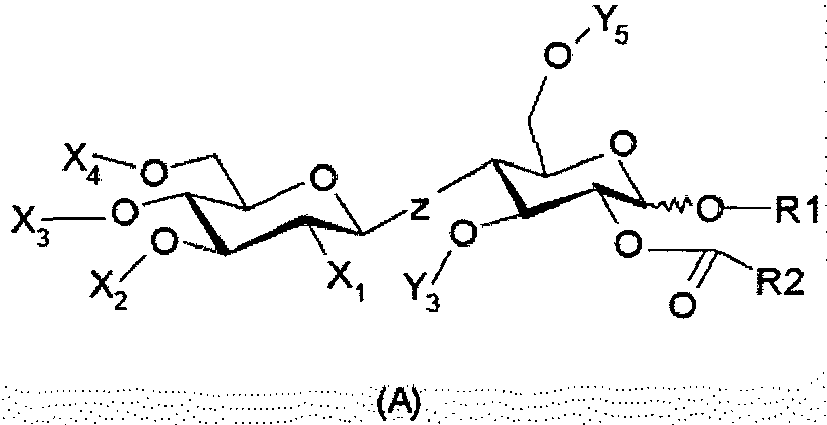
- Ce but est atteint au moyen d'un composé chimique du type disaccharide et présentant la formule générale (A) suivante :

- Z représente un atome O ou S en position β;
- X1 représente un radical azido ou un radical NHCOR3 dans lequel R3 est un radical alkyl ou aryle contenant de 1 à 5 atomes de carbone ;
- X2 représente un radical benzyle, un atome H ou un radical sulfonate ;
- X3 représente un radical -CH2ϕ , un radical -CHϕ formant un cycle avec l'atome d'oxygène en C(5), dans lesquels ϕ représente un radical phényle ; un atome H ou un radical sulfonate ;
- X4 représente un atome H, un radical sulfonate ou l'atome de carbone du radical - CHϕ représenté par X3;
- R1 représente un radical allyle contenant de 2 à 5 atomes de carbone ou un radical alkyl contenant de 1 à 5 atomes de carbone, la liaison OR1 étant en position α ou en β;
- R2 représente un radical alkyl contenant de 1 à 5 atomes de carbone ;
- Y3 représente un radical benzyle, un atome H ou un radical sulfonate ;
- Y5 représente un atome H ou un radical sulfonate.
- Lorsque Z représente un atome d'oxygène en position β, on retrouve bien l'analogie de structure avec la chitine. Lorsque Z représente un atome de soufre, le composé de formule générale (A) représente donc un S-disaccharide. Ce composé S-disaccharide, bien que présentant une structure plus éloignée de celle de la chitine, réagit néanmoins avec les chitinases et forme avec elles des liaisons plus stables.
- Par ailleurs, la Demanderesse a également constaté que la présence de radicaux sulfonate en tant que substituant X2 et/ou X3 et/ou X4 et/ouY3 et/ou Y5 permet d'accélérer la cinétique de la réaction du composé de l'invention avec les chitinases. De ce fait, le composé de l'invention réagit plus vite avec les chitinases que la chitine et se substitue donc à cette dernière, inhibant les effets de chitinases.
- Selon un mode de réalisation particulier, Z représente un atome O en position β;
- X1 représente un radical azido ;
- X2 représente un radical benzyle ;
- X3 représente un radical -CHϕ formant un cycle l'atome d'oxygène en C(5), dans lequel ϕ représente un radical phényle ;
- X4 représente l'atome de carbone du radical -CHϕ représenté par X3;
- R1 représente un radical allyle contenant de 2 à 5 atomes de carbone, la liaison OR1 étant en position α ou β;
- R2 représente un radical méthyle ;
- Y3 représente un radical benzyle ;
- Y5 représente un atome d'hydrogène.
- Selon un autre second mode de réalisation,
- Z représente un atome O en position β;
- X1 représente un radical NHCOR3 dans lequel R3 est un radical méthyle ;
- X2 représente un radical benzyle ;
- X3 représente un radical -CHϕ formant un cycle avec l'atome d'oxygène en C(5), dans lequel ϕ représente un radical phényle ;
- X4 représente l'atome de carbone du radical-CHϕ représenté par X3 ;
- R1 représente un radical allyle contenant de 2 à 5 atomes de carbone, la liaison OR1 étant en α ou en β;
- R2 représente un radical méthyle ;
- Y3 représente un radical benzyle ;
- Y5 représente un atome d'hydrogène.
- Selon un troisième mode de réalisation,
- Z représente un atome O en position β;
- X1 représente un radical NHCOR3 dans lequel R3 est un radical méthyle ;
- X2 représente un radical benzyle ;
- X3 représente un radical -CHϕ formant un cycle avec l'atome d'oxygène en C5, dans lesquels ϕ représente un radical phényle ;
- X4 représente l'atome de carbone du radical-CHϕ représenté par X3 ;
- R1 représente un radical allyle contenant de 2 à 5 atomes de carbone, la liaison OR1 étant en α ou en β;
- R2 représente un radical méthyle ;
- Y3 représente un radical benzyle ;
- Y5 représente un radical sulfonate.
- Selon un quatrième mode de réalisation,
- Z représente un atome O en position β;
- X1 représente un radical NHCOR3 dans lequel R3 est un radical méthyle ;
- X2 représente un atome H ;
- X3 représente un atome H ;
- X4 représente un atome H ;
- R1 représente un radical propyle, la liaison OR1 étant en α ou en β;
- R2 représente un radical méthyle ;
- Y3 représente un atome H ;
- Y5 représente un atome H.
- Selon un cinquième mode de réalisation,
- Z représente un atome O en position β;
- X1 représente un radical NHCOR3 dans lequel R3 est un radical méthyle ;
- X2 représente un atome H ;
- X3 représente un atome H ;
- X4 représente un atome H ;
- R1 représente un radical propyle, la liaison OR1 étant en position α ou β;
- R2 représente un radical méthyle ;
- Y3 représente un atome H ;
- Y5 représente un radical sulfonate.
- La présente invention concerne également une composition comprenant au moins un composé selon l'invention, utilisée en tant que médicament, agent prophylactique ou agent phytosanitaire.
- En effet, comme tous les inhibiteurs de chitinases, les composés de l'invention présentent des propriétés antifongiques et antibactériennes. Dans ce cas, le ou les composés de l'invention sont mélangés à un excipient ou à tout autre vecteur facilitant son utilisation et son action.
- La composition comprenant au moins un composé de formule générale (A) peut être utilisée en tant qu'inhibiteur de chitinases, ce qui lui confère des propriétés en tant qu'insecticide, notamment.
- Ainsi, la composition comprenant au moins un composé de formule générale (A) peut être utilisée en tant qu'insecticide.
- Avantageusement, la composition, lorsqu'elle est utilisée en tant qu'insecticide, contient une concentration dudit ou desdits composés comprise entre 10 et 100 µg/ml, et de préférence, entre 10 et 50 µg/ml.
- La présente invention concerne également un procédé de préparation d'un composé présentant la formule générale (A)
- X1 représente un radical azido ou un radical NHCOR3 dans lequel R3 est un radical alkyl ou aryle contenant de 1 à 5 atomes de carbone ;
- X2 représente un radical benzyle, un atome H ou un radical sulfonate ;
- X3 représente un radical -CH2ϕ, un radical -CHϕ formant un cycle avec l'atome d'oxygène en C(5), dans lesquels ϕ représente un radical phényle ; un atome H ou un radical sulfonate ;
- X4 représente un atome H, un radical sulfonate ou l'atome de carbone du radical - CHϕ représenté par X3;
- R1 représente un radical allyle contenant de 2 à 5 atomes de carbone ou un radical alkyl contenant de 1 à 5 atomes de carbone;
- R2 représente un radical alkyl contenant de 1 à 5 atomes de carbone ;
- Y3 représente un radical benzyle, un atome H ou un radical sulfonate ;
- Y5 représente un atome H ou un radical sulfonate.
- on fait réagir un composé de formule générale (B)

- X1 représente un radical azido ou un radical NHCOR3 dans lequel R3 est un radical alkyl ou aryle contenant de 1 à 5 atomes de carbone ;
- X2 représente un radical benzyle, un atome H ou un radical sulfonate ;
- X3 représente un radical -CH2ϕ , un radical -CHϕ formant un cycle avec l'atome d'oxygène en C(5), dans lesquels ϕ représente un radical phényle ; un atome H ou un radical sulfonate ;
- X4 représente un atome H, un radical sulfonate ou l'atome de carbone du radical - CHϕ représenté par X3;
- Ph représente un radical phényle ;
- avec un composé de formule générale (C)

- Z représente un atome O ou S ;
- R1 représente un radical allyle contenant de 2 à 5 atomes de carbone ;
- R2 représente un radical alkyl contenant de 1 à 5 atomes de carbone ;
- Y3 représente un radical benzyle, un atome d'hydrogène ou un radical sulfonate ;
- « Protecteur » représente un groupe protecteur ;
- pour obtenir un composé de formule générale (D)

- Z représente un atome O ou S en position β;
- X1 représente un radical azido ou un radical NHCOR3 dans lequel R3 est un radical alkyl ou aryle contenant de 1 à 5 atomes de carbone ;
- X2 représente un radical benzyle, un atome H ou un radical sulfonate ;
- X3 représente un radical -CH2ϕ ou un radical -CHϕ formant un cycle avec l'atome d'oxygène en C(5), dans lesquels ϕ représente un radical phényle ;
- X4 représente un atome d'hydrogène, un radical sulfonate ou l'atome de carbone du radical -CHϕ représenté par X3;
- R1 représente un radical allyle en α ou β et contenant de 2 à 5 atomes de carbone ; R2 représente un radical alkyl contenant de 1 à 5 atomes de carbone ;
- Y3 représente un radical benzyle, un atome d'hydrogène ou un radical sulfonate ;
- « Protecteur » représente un groupe protecteur ;
- on fait réagir ledit composé (D) présentant une liaison β(1, 4) glycosique de manière à substituer le groupement protecteur par un atome H ou un radical sulfonate pour obtenir ledit composé de formule générale (A).
- Le groupe O-protecteur peut être un groupe TBDMSO qui sera retiré par réaction avec du tétrahydrofurane sec et du tétrabutylammonium (TBAF). Le groupement O-protecteur peut également être un groupement TBSO.
- La réaction de glycosylation entre le composé de formule générale (B) et le composé de formule générale (C) peut être optimisée pour l'obtention du disaccharide β. Il existe de nombreuses méthodes pour le faire, que ce soit par un changement de conditions de réaction, par un changement de groupement activateur de la position anomère (trichloroacétimidate dans l'acétonitrile), ou par un changement du groupement « protecteur », qui est dans le cas présent le groupement COR3, sur l'azote (trichloroacétate, phthalimidate).
- Lorsque le groupement X1 est un groupement phthalimido, c'est-à-dire lorsque X1= N(CO)2Ph, on obtient exclusivement le disaccharide BETA.
- La présente invention, ses caractéristiques et les différents avantages qu'elle procure seront mieux compris à la lecture de la description qui suit d'un exemple de synthèse d'un composé selon l'invention, et de l'exposé des résultats obtenus lors de l'utilisation de ce composé sur des pucerons.
- Par souci de simplification, le composé selon l'invention dont la synthèse va être décrite ci-dessous est dénommé DPS2. La description qui suit s'intéresse à ce composé particulier, mais il est bien évident que tout autre composé selon l'invention présente les mêmes propriétés.
- Ce procédé décrit la préparation de deux nouvelles molécules actives I et II (composés 6 et 8) à partir de précurseurs connus.

- La molécule 1 a déjà été décrite [Lindberg, Jan; Ohberg, Liselotte; Garegg, Per J.; Konradsson, Peter dans "Efficient routes to glucosamine-myo-inositol derivatives, key building blocks in the synthesis of glycosylphosphatidylinositol anchor substances" Tetrahedron (2002), 58(7), 1387-1398].
- La molécule 2 est nouvelle et a été préparée à partir d'un précurseur connu, le 2-O-acétyl-3-O-benzyl-D-glucopyranoside d'allyle [Martin-Lomas, Manuel; Flores-Mosquera, Maria; Chiara, Jose Luis. « Attempted synthesis of type-A inositolphosphoglycan mediators - synthesis of a pseudo-hexasaccharide precursor »Eur. J.Org. Chem. (2000), (8), 1547-1562].

-

- Au 2-O-acétyl-3-O-benzyl-D-glucopyranoside d'allyle (9 g, 25,57 mmol) en solution dans du dichlorométhane sec (80 mL), on ajoute le chlorure de tert-butyldiméthylsilyle (TBDMSCl) (5,78 g, 38,3 mmol, 1,5 éq.), la 4-diméthylaminopyridine (DMAP) (150 mg, 1,27 mmol, 0,05 éq.) et enfin de la triéthylamine (TEA) (6 mL, 43,5 mmol, 1,7 éq.). Le milieu réactionnel est laissé sous agitation pendant 4 h à température ambiante, puis dilué avec du dichlorométhane (100 mL). La phase organique est lavée successivement avec une solution saturée d'hydrogénocarbonate de sodium (NaHCO3) (2 x 100 mL) et une solution saturée de chlorure de sodium (NaCl) (2 x 100 mL), séchée sur sulfate de magnésium anhydre (MgSO4), filtrée et concentrée sous vide. Le brut est ensuite chromatographié sur gel de silice avec comme éluant 20/80 AcOEt/cyclohexane pour conduire au composé 2 (10 g, 21,46 mmol, 84%).
Eluant du suivi de réaction par C.C.M. : 50/50 AcOEt/cyclohexane => Rf = 0.81 -

- A du dichlorométhane sec (2 mL) on additionne de la 1-(phénylsulfinyl)-pipéridine (BSP) (64 mg, 0,299 mmol, 1,3 éq.), de la 2, 6-tert-butyl-4-méthylpyridine (DTBMP) (62 mg, 0,299 mmol, 1,3 éq.) et du tamis moléculaire 4 Å (400 mg) le tout est agité à température ambiante sous atmosphère inerte (argon) pendant 30 minutes.
- Le milieu est ensuite refroidit à -60°C. On additionne ensuite de l'anhydride trifluorométhane sulfonique (Tf2O) (52 µL, 0,299 mmol, 1,3 éq.), suivi, 30 minutes après, de l'addition d'une solution du composé 1 (111 mg, 0,23 mmol) dans du dichlorométhane sec (2 mL) par canule. Le tout est laissé sous agitation a -60°C sous argon pendant 15 minutes. Enfin on additionne une solution du composé 2 (218 mg, 0,46 mmol, 2 éq.) dans du dichlorométhane sec (2 mL) là encore à l'aide d'une canule.
- Le milieu réactionnel est lentement réchauffé jusqu'à 10°C sur une période de 12 h. La réaction est ensuite neutralisée par addition de méthanol (10 mL), le tout est filtré sur cartouche de célite, puis concentré sous pression réduite. Le brut est ensuite chromatographié sur gel de silice avec comme éluant 1/99 AcOEt/toluène pour conduire au composé 3 alpha (27,4 mg, 0,033 mmol) et 2/98 AcOEt/toluène pour conduire au composé 3 bêta (74,8 Mg, 0,090 mmol).
Rendement : 60%
Eluant du suivi de réaction par C.C.M. : 20/80 AcOEt/toluène => Rf = 0.66 pour l'alpha, Rf = 0.60 pour le bêta. -

- Au composé 3 bêta (34,7 mg, 0,0417 mmol) sous argon, on additionne du tétrahydrofurane sec (THF) (2 mL). Le tout est agité et refroidit à 0°C à l'aide d'un bain de glace. On ajoute ensuite du fluorure de tétrabutylammonium (TBAF) (19,7 mg, 0,062 mmol, 1,5 éq.).
- Le milieu réactionnel est agité sous argon à température ambiante sur une période de 2h.
- La réaction est stoppée par addition de N,N-diisopropyléthylamine (1 mL), puis le THF est évaporé sous pression réduite. Le brut réactionnel et ensuite repris dans de l'eau (10 mL) puis est extrait avec du dichlorométhane (2 X 10 mL). La phase organique est séchée sur sulfate de magnésium anhydre (MgSO4), filtrée et évaporée sous pression réduite. Le brut est alors chromatographié sur gel de silice avec comme éluant 30/70 AcOEt/cyclohexane pour conduire au composé 4 (24,3 mg, 0,0338 mmol, 81%).
Eluant du suivi de réaction par C.C.M. : 10/90 AcOEt/toluène => Rf = 0.13. -

- Au composé 4 (26,5 mg, 0,0369 mmol) en solution dans du diméthyleformamide (DMF) (2 mL) on additionne de l'acide thioacétique (0,3 mL). Le tout est laissé sous agitation à température ambiante pendant 24h. Le solvant est évaporé sous pression réduite, puis le brut est dilué avec du dichlorométhane (10 mL). La phase organique est lavée avec de l'eau (2 x 10 mL), séchée sur sulfate de magnésium anhydre (MgSO4), filtrée et concentrée sous vide. Le brut est ensuite chromatographié sur gel de silice avec comme éluant 70/30 AcOEt/cyclohexane pour conduire au composé 5 (11,7 mg, 0,016 mmol, 43%).
Eluant du suivi de réaction par C.C.M. : 60/40 AcOEt/cyclohexane => Rf = 0.57 -

- 11,7 g (0,016 mmol) de composé 5 sont solubilisé dans 2 mL de MeOH et 2 mg de Pd(OH)2 (10% massique) sont ajoutés. Le milieu est ensuite placé sous hydrogène. Après 12h, le milieu réactionnel est filtré et le solvant est éliminé sous pression réduite pour conduire à 7,8 g (Rdt = quantitatif) de composé 6.
-

- A une solution de composé 5 (20 mg, 0,027 mmol) dans du diméthylformamide (DMF) (5 mL) on additionne des sels de sulfate de triméthylammonium (SO3Me3N) (75,9 mg, 0,545 mmol, 20 éq.). Le milieu réactionnel est placé sous agitation, sous atmosphère inerte (argon), à 55°C, pendant 18h.
- Le DMF est évaporé sous pression réduite et le brut est purifié à deux reprises sur résine de type séphadex avec comme éluant le mélange méthanol / dichlorométhane (1 :1, V : V). Les fractions contenant le composé sont réunies et le solvant évaporé. Rendement: quantitatif.
-

- 50 mg (0,062 mmol) de composé 7 sont solubilisés dans 5 mL de MeOH et 5 mg de Pd(OH)2 (10% massique) sont ajoutés. Le milieu est ensuite placé sous hydrogène. Après 48 h, le milieu réactionnel est filtré et le solvant est éliminé sous pression réduite pour conduire à 30 mg (rendement : quantitatif) de composé 8 (DPS2).
- Par simple modification du composé de formule générale (B), il est possible de synthétiser un précurseur thiol du composé de l'invention. Ceci peut se faire par double substitution (en passant par un triflate, par exemple, suivi d'une double inversion) ou par une réaction de Mitsunobu. Ce précurseur sera glycosylé par le même donneur permettant l'obtention de l'analogue soufré, plus stable en milieu biologique vis-à-vis des enzymes.
- Deux espèces de pucerons Myzus persicae (Sulzer) et Macrosiphum euphorbiae (Thomas) ont été utilisées pour cette étude. Des adultes ont été isolés et placés dans des cages de PVC sur milieu artificiel pendant une journée afin de synchroniser la descendance. Les néonates, âgés de moins de 24 h sont alors placés sur milieu artificiel contenant des concentrations variant de 0 à 100 µg.mL-1 du composé DPS2, synthétisé précédemment, selon un protocole décrit par Saguez J, Dubois F, Vincent C, Laberche JC, Sangwan-Norreel BS et Giordanengo P (2006), dans l'article intitulé « Differential aphicidal effects of chitinase inhibitors on the polyphagous homopteran Myzus pensicae (Sulzer) » et publié dans Pest Manag Sci 62: 1150-1154. Plusieurs paramètres démographiques sont relevés quotidiennement afin de déterminer la durée du développement larvaire, la mortalité larvaire et la fécondité et de calculer un paramètre synthétique, le rm (taux intrinsèque d'accroissement des populations) et le temps de doublement des populations. Un minimum de 50 pucerons de chaque espèce est testé par traitement et les individus sont suivis quotidiennement. La taille des pucerons a été mesurée une semaine après le début de l'expérience, sous loupe binoculaire à l'aide d'un oculaire biométrique. Les effets du DPS2 sur la survie larvaire sont analysés par un test du χ2 de Pearson. Une analyse de variance (ANOVA monofactorielle) a été réalisée avec le logiciel Statistica 5.5 (StatSoft®, Tulsa, Oklahoma, USA) pour tester les effets du DPS2 sur les paramètres démographiques des aphides. Les paramètres significativement altérés sont ensuite analysés par un test de Fisher (PLSD) au seuil de significativité P <0,05.
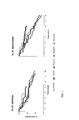
- La
figure 1 représente la mortalité larvaire des pucerons M. persicae et M. euphorbiae élevés sur milieux artificiels complémentés en disaccharide sulfaté à des concentrations variant de 0 à 100 µg.mL-1. - Les résultats montrent des effets délétères du DPS2 sur les deux espèces de pucerons, avec des effets plus marqués chez M. euphorbiae que sur M. persicae. Quelle que soit l'espèce de puceron, la survie larvaire est significativement affectée par cette molécule. On observe ainsi une réduction de la survie larvaire d'environ 35 à 40% aux concentrations de 10 à 100µg.mL-1 chez M. pensicae (χ2 = 89,19 dl=30 p<0,00 ; χ2 = 94,90 dl=30 p<0,00 ; χ2 = 77,82 dl=30 p<0,00) alors que chez M. euphorbiae, la mortalité larvaire atteint 49 à 53% aux concentrations respectives de 50 et 100 µg.mL-1 (χ2 = 108,06 dl=30 p<0,00 ; χ2 = 151,97 dl=30 p<0,00). De plus, de nombreux individus n'atteignent pas l'état adulte et meurent après un mois de traitement, sans avoir donné de descendance alors que sur un milieu témoin, l'ensemble des individus devient adulte en deux semaines.
- Les processus de mue sont affectés lorsque la concentration en DPS2 est comprise entre 50 et 100 µg.mL-1, Ainsi, de nombreux aphides n'arrivent pas à terminer leur mue et meurent avant même d'avoir pu s'extraire de leur ancienne cuticule. La taille des pucerons est réduite chez M. euphorbiae à partir de 10 µg.mL-1. Quel que soit le paramètre étudié et l'espèce de puceron considérée, les effets aphicides maximum sont obtenus dès la concentration de 50 µg.mL-1. Les effets sont similaires aux concentrations de 50 et 100 µg.mL-1.
- Dans les tableaux I, II et III qui suivent, les résultats sont exprimés sous la forme : moyenne ± écart-type. L'effet significatif (*) été testé par une analyse de variance monofactorielle (F) à P<0.05. Les valeurs de même rang suivies par une même lettre indiquent qu'il n'existe pas de différence significative d'après le test du PLSD de Fisher (P<0.05).
- La durée de la période pré-reproductive est également affectée par un apport en DPS2 dans l'alimentation des pucerons, puisqu'elle est augmentée d'environ une journée chez M. persicae et de deux jours aux plus fortes concentrations chez M. euphorbiae. Les paramètres démographiques des adultes (fécondité, période d'oviposition, fécondité journalière, taux intrinsèque d'accroissement naturel et temps de doublement des populations) sont également modifiés lorsque les pucerons sont alimentés sur un milieu complémenté en DPS2, et les effets sont marqués pour toutes les concentrations. Ainsi, la fécondité journalière est réduite de 10 à 35% sur les milieux contenant de 10 à 100 µg.mL-1 de DPS2 et de façon dose-dépendante. La valeur du taux intrinsèque d'accroissement des populations (rm ) qui tient compte des paramètres précédents est également réduite chez les deux espèces d'aphides, y compris pour la plus faible concentration de 1 µg.mL-1. Concernant le temps de doublement des populations, qui dépend directement du rm, il est significativement augmenté d'environ 1,5 à 2 jours pour les concentrations les plus élevées chez M. persicae et de près de 4 jours chez M. euphorbiae. L'ensemble de ces résultats nous permet donc de conclure que cet oligosaccharide induit des effets aphicides très marqués sur les deux espèces de pucerons M. persicae et M. euphorbiae.
- Le DPS2 présente des effets délétères sur pucerons en perturbant à la fois le développement larvaire et les processus de reproduction. Certains aphides meurent avant même d'avoir pu effectuer complètement leur mue. Les aphides survivants possèdent également une taille inférieure après une semaine d'alimentation plusieurs d'entre eux ne produisent pas de descendance. Or, la taille des pucerons est un paramètre important dans la reproduction puisque des pucerons de taille réduite sont généralement moins féconds. Ces différences de taille pourraient être à l'origine de l'absence ou de la diminution de fécondité. L'absence de descendance et la réduction de fécondité observées pourraient également être dues à l'inhibition des chitinases nécessaires au remodelage des structures tégumentaires lors du développement embryonnaire des pucerons.
- Bien qu'il ne soit pas possible, aujourd'hui, de confirmer que les chitinases sont les cibles de cette molécule, la Demanderesse estime, sans être pour autant liée à cette explication, que, puisque la molécule de DPS2 présente des homologies de structures avec la chitine et les inhibiteurs de chitinase d'origine polysaccharidique et qu'elle induit des effets comparables, on peut supposer que le DPS2 ainsi que tout autre composé de l'invention, se lie directement au site actif des chitinases d'insectes et qu'il exerce une fonction inhibitrice sur leur métabolisme.
- Les molécules de l'invention peuvent également avoir d'autres effets sur d'autres enzymes cibles telles que des glucose hydrolases ou des glycosidases. En effet, les polysaccharides sont souvent décrits dans l'inhibition d'endoglycosidases. Ainsi, les amylostatines et les liposaccharides bactériens inhibent respectivement les β-glucosidases et les lysozymes. Les chitinases appartenant à la même famille enzymatique que les sucrases, impliquées dans la dégradation du saccharose et dans les processus d'osmorégulation, on peut envisager un spectre d'action plus large des composés de l'invention.
- Les composés obtenus selon l'invention offrent de nouvelles perspectives dans le développement de méthodes de lutte alternatives contre les pucerons, les insectes en général mais aussi tous les organismes constitués de chitine ou utilisant des chitinases pour leur développement. En effet, les propriétés antibactériennes, antifongiques et insecticides des inhibiteurs de chitinases et des composés décrits précédemment ont souvent été rapportées. Le chitosan présente de multiples propriétés parmi lesquelles des effets antifongiques contre les champignons pathogènes des cultures, Botrytis cinerea et Pyricularia grisea. Des propriétés insecticides sont également rapportées sur les lépidoptères Spodoptera littoralis, Helicoverpa armigera et Plutella xylostella, mais aussi les pucerons Aphis gossypii, Metopolophium dirhodum, Hyalopterus pruni, Rhopalosiphum padi, Sitobion avenae et Myzus persicae (voir l'article de Rabea EI, Bdawy MEI, Rogge TM, Stevens CV, Steurbaut W, Höfte Met Smagghe G (2006) intitulé « enhancement of fungicidal and insecticidal activity by reductive alkylation of chitosan », publié dans Pest Manag Sci 62: 890-897). De même, les effets de l'allosamidine et de ses dérivés ne se limitent pas uniquement aux insectes. En effet, ces inhibiteurs retardent l'enkystement d'amibes (voir l'article de Villagomez-Castro JC, Calvo-Mendez C et Lopez-Romero E (1992), intitulé « Chitinase activity in encysting Entamoeba invadens and its inhibition by allosamidin » et publié dans Mol Biochem Parasitol 52: 53-62) et inhibent les chitinases de nématodes et celles de bactéries. L'allosamidine possède également des propriétés antifongiques (voir l'article de MacNab R. et Glover L.A. (1991) intitulé « inhibition of Neurospora crassa cytosolic chitinase by albumin », publié dans FEMS Microbiol Lett 82 : 79-82). Il est donc fort probable que la famille de composés de la présente invention présente les mêmes propriétés que les inhibiteurs de chitinases connus.
- L'ensemble de ces données souligne l'intérêt d'une stratégie anti-chitinase dans un contexte de phytoprotection. Les propriétés aphicides décrites avec le DPS2, confirment l'importance du mimétisme des composés saccharidiques dans la lutte contre les insectes et nous avons ouvert de nouvelles voies de recherches pour l'élaboration de nouveaux composés phytosanitaires.
- Les groupements substitués sur des composés de l'invention, peuvent selon leur nature, modifier la structure et l'encombrement stérique des molécules de l'invention et donc modifier la nature et la force des interactions entre la molécule de l'invention et l'enzyme. Les molécules de l'invention présentent des propriétés aphicides mais ont potentiellement des effets antifongiques et antibiotiques. Elles peuvent occuper une place de choix dans des programmes de lutte intégrée contre les pathogènes et ravageurs des cultures.
Tableau I : Effets du DPS2 sur la taille de M. euphorbiae alimenté sur milieu artificiel à des concentrations variant de 0 à 100 µg.mL-1 après 7 jours de traitement concentration en DPS2 (µg.mL-1) témoin 1 10 50 100 F P nombre de pucerons 37 33 33 32 33 taille des pucerons (mm) 2,3 ± 0,3a 2,2 ± 0,3a 2,1 ± 0,3b 1,8 ± 0,2bc 1,7 ± 0,2c 37,6 <0,00* Tableau II : Effets sur M. persicae alimentés sur un milieu artificiel à des concentrations en DPS2 variant de 0 à 100 µg.mL-1 Concentration en DPS2 (µg.mL-1) Témoin 1 10 50 100 F P Nombre de pucerons 54 50 39 37 38 Période préreproductive (jours) 10,6 ± 1,4a 11,6 ± 1,9b 10,9 ± 1,5a 11,1 ± 1,4a 11,9 ± 1,7b 4,5 <0,00* Fécondité journalière (larves.femelles-1.jour-1 1,07 ± 0,28a 0,99 ± 0,27a 0,91 ± 0,28b 0,74 ± 0,24bc 0,65 ± 0,11bc 20,9 <0,00* rm (femelles.femelles-1 .jours-1) 0,16 ± 0,05a 0,13 ± 0,04b 0,13 ± 0,03b 0,12 ± 0,03bc 0,11 ± 0,03c 11,2 <0,00* Temps de doublement de la population (jours) 4,4 ± 0,9a 5,6 ± 1,8b 5,4 ± 1,2b b 5,9 ± 1,6b b 6,5 ± 2,0a 10,9 <0,00* Tableau III : Effets sur M. euphorbiae alimentés sur un milieu artificiel à des concentrations variant de 0 à 100 µg.mL-1 Concentration en DPS2 (µg.mL-1) Témoin 1 10 50 100 F P Nombre de pucerons 52 50 37 31 28 Période préreproductive (jours) 11,6 ± 2,1a 11,3 ± 2,1a 12,1 ± 1,6a 13,4 ± 1,2b 13,5 ± 1,6b 10,8 <0,00* Fécondité journalière (larves.femelles-1 .jour-1 1,13 ± 0,36a 1,16 ± 0,36a 1,06 ± 0,34a 0,81 ± 0,20b 0,73 ± 0,22b 13,3 <0,00* rm (femelles.femelles-1.jours-1) 0,16 ± 0,05a 0,16 ± 0,04b 0,13 ± 0,03b 0,09 ± 0,03c 0,08 ± 0,03c 52,3 <0,00* Temps de doublement de la population (jours) 4,4 ± 0,9a 4,7 ± 1,0ab 5,5 ± 1,3b 8,1 ± 1,6c 6,5 ± 2,0c 58,8 <0,00*
Claims (11)
- Composé chimique du type disaccharide et présentant la formule générale (A) suivante :
 Z représente un atome O ou S en position β;X1 représente un radical azido ou un radical NHCOR3 dans lequel R3 est un radical alkyl ou aryle contenant de 1 à 5 atomes de carbone ;X2 représente un radical benzyle, un atome H ou un radical sulfonate ;X3 représente un radical -CH2ϕ, un radical -CHϕ formant un cycle avec l'atome d'oxygène en C(5), dans lesquels ϕ représente un radical phényle ; un atome H ou un radical sulfonate ;X4 représente un atome H, un radical sulfonate ou l'atome de carbone du radical - CHϕ représenté par X3;R1 représente un radical allyle contenant de 2 à 5 atomes de carbone ou un radical alkyl contenant de 1 à 5 atomes de carbone, la liaison OR1 étant en α ou en β;R2 représente un radical alkyl contenant de 1 à 5 atomes de carbone ;Y3 représente un radical benzyle, un atome H ou un radical sulfonate ;Y5 représente un atome H ou un radical sulfonate.
 - Composé chimique selon la revendication 1, caractérisé en ce que :Z représente un atome O en position β;X1 représente un radical azido ;X2 représente un radical benzyle ;X3 représente un radical -CHϕ formant un cycle l'atome d'oxygène en C(5), dans lequel ϕ représente un radical phényle ;X4 représente l'atome de carbone du radical -CHϕ représenté par X3;R1 représente un radical allyle contenant de 2 à 5 atomes de carbone, la liaison OR1 étant en position α ou β;R2 représente un radical méthyle ;Y3 représente un radical benzyle ;Y5 représente un atome d'hydrogène.
- Composé chimique selon la revendication 1, caractérisé en ce que :Z représente un atome O en position β;X1 représente un radical NHCOR3 dans lequel R3 est un radical méthyle ;X2 représente un radical benzyle ;X3 représente un radical -CHϕ formant un cycle avec l'atome d'oxygène en C(5),dans lequel ϕ représente un radical phényle ;X4 représente l'atome de carbone du radical-CHϕ représenté par X3 ;R1 représente un radical allyle contenant de 2 à 5 atomes de carbone, la liaisonOR1 étant en position α ou β;R2 représente un radical méthyle ;Y3 représente un radical benzyle ;Y5 représente un atome d'hydrogène.
- Composé chimique selon la revendication 1, caractérisé en ce que :Z représente un atome O en position β;X1 représente un radical NHCOR3 dans lequel R3 est un radical méthyle ;X2 représente un radical benzyle ;X3 représente un radical -CHϕ formant un cycle avec l'atome d'oxygène en G5,dans lesquels ϕ représente un radical phényle ;X4 représente l'atome de carbone du radical-CHϕ représenté par X3 ;R1 représente un radical allyle contenant de 2 à 5 atomes de carbone, la liaison OR1 étant en position α ou β;R2 représente un radical méthyle ;Y3 représente un radical benzyle ;Y5 représente un radical sulfonate.
- Composé chimique selon la revendication 1, caractérisé en ce que :Z représente un atome O en position β;X1 représente un radical NHCOR3 dans lequel R3 est un radical méthyle ;X2 représente un atome H ;X3 représente un atome H ;X4 représente un atome H ;R1 représente un radical propyle, la liaison OR1 étant en α ou en β ;R2 représente un radical méthyle ;Y3 représente un atome H ;Y5 représente un atome H.
- Composé chimique selon la revendication 1, caractérisé en ce que :Z représente un atome O en position β;X1 représente un radical NHCOR3 dans lequel R3 est un radical méthyle ;X2 représente un atome H ;X3 représente un atome H ;X4 représente un atome H ;R1 représente un radical propyle, la liaison OR1 étant en α ou en β ;R2 représente un radical méthyle ;Y3 représente un atome H ;Y5 représente un radical sulfonate.
- Composition comprenant au moins un composé selon l'une quelconque des revendications 1 à 6, utilisée en tant que médicament, agent prophylactique ou agent phytosanitaire.
- Composition comprenant au moins un composé selon l'une quelconque des revendications 1 à 6, utilisée en tant qu'inhibiteur de chitinases.
- Composition comprenant au moins un composé selon l'une quelconque des revendications 1 à 6, utilisée en tant qu'insecticide.
- Composition selon l'une quelconque des revendications 7 à 9, caractérisée en ce qu'elle contient une concentration dudit ou desdits composés comprise entre 10 et 100 µg/ml et de préférence, entre 10 et 50 µg/ml.
- Procédé de préparation d'un composé présentant la formule générale (A)
 X1 représente un radical azido ou un radical NHCOR3 dans lequel R3 est un radical alkyl ou aryle contenant de 1 à 5 atomes de carbone ;X2 représente un radical benzyle, un atome H ou un radical sulfonate ;X3 représente un radical -CH2ϕ, un radical -CHϕ formant un cycle avec l'atome d'oxygène en C(5), dans lesquels ϕ représente un radical phényle ; un atome H ou un radical sulfonate ;X4 représente un atome H, un radical sulfonate ou l'atome de carbone du radical - CHϕ représenté par X3;R1 représente un radical allyle contenant de 2 à 5 atomes de carbone ou un radical alkyl contenant de 1 à 5 atomes de carbone;R2 représente un radical alkyl contenant de 1 à 5 atomes de carbone ;Y3 représente un radical benzyle, un atome H ou un radical sulfonate ;Y5 représente un atome H ou un radical sulfonate.
selon lequel :- on fait réagir un composé de formule générale (B)dans laquelle X1 représente un radical azido ou un radical NHCOR3 dans lequel R3 est un radical alkyl ou aryle contenant de 1 à 5 atomes de carbone ;X2 représente un radical benzyle, un atome H ou un radical sulfonate ;X3 représente un radical -CH2ϕ, un radical -CHϕ formant un cycle avec l'atome d'oxygène en C(5), dans lesquels ϕ représente un radical phényle ; un atome H ou un radical sulfonate ;X4 représente un atome H, un radical sulfonate ou l'atome de carbone du radical - CHϕ représenté par X3;Ph représente un radical phényle ;avec un composé de formule générale (C)
 Z représente un atome O ou S ;R1 représente un radical allyle contenant de 2 à 5 atomes de carbone ;R2 représente un radical alkyl contenant de 1 à 5 atomes de carbone ;Y3 représente un radical benzyle, un atome d'hydrogène ou un radical sulfonate ; Protecteur représente un groupe protecteur ;pour obtenir un composé de formule générale (D)
 Z représente un atome O ou S en position β;X1 représente un radical azido ou un radical NHCOR3 dans lequel R3 est un radical alkyl ou aryle contenant de 1 à 5 atomes de carbone ;X2 représente un radical benzyle, un atome H ou un radical sulfonate ;X3 représente un radical -CH2ϕ ou un radical -CHϕ formant un cycle avec l'atome d'oxygène en C(5), dans lesquels ϕ représente un radical phényle ;X4 représente un atome d'hydrogène, un radical sulfonate ou l'atome de carbone du radical -CHϕ représenté par X3;R1 représente un radical allyle en α ou β et contenant de 2 à 5 atomes de carbone ;R2 représente un radical alkyl contenant de 1 à 5 atomes de carbone ;Y3 représente un radical benzyle, un atome d'hydrogène ou un radical sulfonate ; Protecteur représente un groupe protecteur ;- on fait réagir ledit composé (D) présentant une liaison β(1, 4) glycosique de manière à substituer le groupement protecteur par un atome H ou un radical sulfonate pour obtenir ledit composé de formule générale (A).
Applications Claiming Priority (2)
| Application Number | Priority Date | Filing Date | Title |
|---|---|---|---|
| FR0708313A FR2924117B1 (fr) | 2007-11-28 | 2007-11-28 | Compose du type disaccharide, composition contenant un tel compose et procede de fabrication d'un tel compose |
| PCT/FR2008/001653 WO2009098400A1 (fr) | 2007-11-28 | 2008-11-27 | Composé du type disaccharide, composition contenant un tel composé et procédé de fabrication d'un tel composé |
Publications (2)
| Publication Number | Publication Date |
|---|---|
| EP2235030A1 EP2235030A1 (fr) | 2010-10-06 |
| EP2235030B1 true EP2235030B1 (fr) | 2015-08-12 |
Family
ID=39636873
Family Applications (1)
| Application Number | Title | Priority Date | Filing Date |
|---|---|---|---|
| EP08872171.7A Active EP2235030B1 (fr) | 2007-11-28 | 2008-11-27 | Composé du type disaccharide, composition contenant un tel composé et procédé de fabrication d'un tel composé |
Country Status (3)
| Country | Link |
|---|---|
| EP (1) | EP2235030B1 (fr) |
| FR (1) | FR2924117B1 (fr) |
| WO (1) | WO2009098400A1 (fr) |
Families Citing this family (1)
| Publication number | Priority date | Publication date | Assignee | Title |
|---|---|---|---|---|
| FR3118415A1 (fr) | 2020-12-30 | 2022-07-01 | Universite De Picardie Jules Verne | Composition pharmaceutique contenant en tant qu’ingrédient actif au moins un composé de type disaccharide capable d’augmenter la production de calcium des cellules pré-ostéoblastiques –kit et composés associés |
Family Cites Families (1)
| Publication number | Priority date | Publication date | Assignee | Title |
|---|---|---|---|---|
| JP3063930B2 (ja) * | 1991-01-31 | 2000-07-12 | 味の素株式会社 | アロサミジン化合物及びその製造法 |
-
2007
- 2007-11-28 FR FR0708313A patent/FR2924117B1/fr not_active Expired - Fee Related
-
2008
- 2008-11-27 EP EP08872171.7A patent/EP2235030B1/fr active Active
- 2008-11-27 WO PCT/FR2008/001653 patent/WO2009098400A1/fr not_active Ceased
Also Published As
| Publication number | Publication date |
|---|---|
| EP2235030A1 (fr) | 2010-10-06 |
| WO2009098400A1 (fr) | 2009-08-13 |
| FR2924117B1 (fr) | 2009-12-11 |
| FR2924117A1 (fr) | 2009-05-29 |
Similar Documents
| Publication | Publication Date | Title |
|---|---|---|
| CN1043768C (zh) | 阿凡曼菌素衍生物、其制备方法及应用以及含有该衍生物的药物组合物 | |
| Tanaka et al. | Agroactive compounds of microbial origin | |
| US6210665B1 (en) | Bacillus mycoides strain for controlling insects | |
| Asano et al. | Trehalase inhibitors, validoxylamine A and related compounds as insecticides | |
| JP4666861B2 (ja) | 有害生物防除性マクロライド | |
| CA2405950C (fr) | Souche de streptomyces a activite insecticide et son utilisation comme insecticide | |
| JPS6110589A (ja) | 新規化合物、その製法およびその用途 | |
| FR2570390A1 (fr) | Nouveaux composes antibiotiques et procede de preparation | |
| SK13062001A3 (sk) | Biologicky čistá kultúra, prostriedok, izolovaný metabolit, supernatant, čiastočne vyčistená frakcia, vo vode rozpustná látka, spôsob produkcie fungicídneho supernatantu, spôsob čiastočného vyčistenia supernatantu, spôsob zvýšenia insekticídnej aktivity | |
| PL155723B1 (en) | Pesticide in particular against insects, nematodes and mites | |
| CN1531543A (zh) | 21-丁烯基与有关多杀菌素的合成衍生物 | |
| EP2235030A1 (fr) | Composé du type disaccharide, composition contenant un tel composé et procédé de fabrication d'un tel composé | |
| JP2719785B2 (ja) | ミルベマイシン誘導体の微生物利用による製造方法 | |
| CA2408453A1 (fr) | Derives de l'uridine comme antibiotiques | |
| EP0395106B1 (fr) | Déméthylallosamidine et procédé pour sa production | |
| US6605598B1 (en) | Chemically synthesized sugar esters for the control of soft-bodied arthropods | |
| TW487559B (en) | A83543 compounds, their preparation process and their uses | |
| LU504744B1 (en) | Method to improve a plant's growth, development and resistance to (a)biotic stress | |
| EP3021669B1 (fr) | Nouveaux composes dérivés de la solanidine | |
| LU504742B1 (en) | Method to improve a plant's growth, development and resistance to (a)biotic stress | |
| LU504743B1 (en) | Method to improve a plant's growth, development and resistance to (a)biotic stress | |
| DE69310721T2 (de) | Zuckerderivate von makroliden | |
| JPH03201993A (ja) | マクロライド抗生物質 | |
| AU2024296530A1 (en) | Method to improve a plant's growth, development and resistance to (a)biotic stress | |
| Cipolla | Trehalose mimetics as inhibitors of trehalose processing enzymes |
Legal Events
| Date | Code | Title | Description |
|---|---|---|---|
| PUAI | Public reference made under article 153(3) epc to a published international application that has entered the european phase |
Free format text: ORIGINAL CODE: 0009012 |
|
| 17P | Request for examination filed |
Effective date: 20100628 |
|
| AK | Designated contracting states |
Kind code of ref document: A1 Designated state(s): AT BE BG CH CY CZ DE DK EE ES FI FR GB GR HR HU IE IS IT LI LT LU LV MC MT NL NO PL PT RO SE SI SK TR |
|
| AX | Request for extension of the european patent |
Extension state: AL BA MK RS |
|
| DAX | Request for extension of the european patent (deleted) | ||
| 17Q | First examination report despatched |
Effective date: 20140428 |
|
| REG | Reference to a national code |
Ref country code: DE Ref legal event code: R079 Ref document number: 602008039594 Country of ref document: DE Free format text: PREVIOUS MAIN CLASS: C07H0005060000 Ipc: C07H0003040000 |
|
| GRAP | Despatch of communication of intention to grant a patent |
Free format text: ORIGINAL CODE: EPIDOSNIGR1 |
|
| INTG | Intention to grant announced |
Effective date: 20150313 |
|
| RIC1 | Information provided on ipc code assigned before grant |
Ipc: C07H 3/04 20060101AFI20150227BHEP Ipc: A61K 31/7016 20060101ALI20150227BHEP Ipc: C07H 15/18 20060101ALI20150227BHEP |
|
| GRAS | Grant fee paid |
Free format text: ORIGINAL CODE: EPIDOSNIGR3 |
|
| GRAA | (expected) grant |
Free format text: ORIGINAL CODE: 0009210 |
|
| AK | Designated contracting states |
Kind code of ref document: B1 Designated state(s): AT BE BG CH CY CZ DE DK EE ES FI FR GB GR HR HU IE IS IT LI LT LU LV MC MT NL NO PL PT RO SE SI SK TR |
|
| REG | Reference to a national code |
Ref country code: GB Ref legal event code: FG4D Free format text: NOT ENGLISH |
|
| REG | Reference to a national code |
Ref country code: CH Ref legal event code: EP |
|
| REG | Reference to a national code |
Ref country code: AT Ref legal event code: REF Ref document number: 742056 Country of ref document: AT Kind code of ref document: T Effective date: 20150815 |
|
| REG | Reference to a national code |
Ref country code: IE Ref legal event code: FG4D Free format text: LANGUAGE OF EP DOCUMENT: FRENCH |
|
| REG | Reference to a national code |
Ref country code: DE Ref legal event code: R096 Ref document number: 602008039594 Country of ref document: DE |
|
| REG | Reference to a national code |
Ref country code: FR Ref legal event code: PLFP Year of fee payment: 8 |
|
| REG | Reference to a national code |
Ref country code: LT Ref legal event code: MG4D |
|
| REG | Reference to a national code |
Ref country code: AT Ref legal event code: MK05 Ref document number: 742056 Country of ref document: AT Kind code of ref document: T Effective date: 20150812 |
|
| REG | Reference to a national code |
Ref country code: NL Ref legal event code: MP Effective date: 20150812 |
|
| PG25 | Lapsed in a contracting state [announced via postgrant information from national office to epo] |
Ref country code: NO Free format text: LAPSE BECAUSE OF FAILURE TO SUBMIT A TRANSLATION OF THE DESCRIPTION OR TO PAY THE FEE WITHIN THE PRESCRIBED TIME-LIMIT Effective date: 20151112 Ref country code: GR Free format text: LAPSE BECAUSE OF FAILURE TO SUBMIT A TRANSLATION OF THE DESCRIPTION OR TO PAY THE FEE WITHIN THE PRESCRIBED TIME-LIMIT Effective date: 20151113 Ref country code: FI Free format text: LAPSE BECAUSE OF FAILURE TO SUBMIT A TRANSLATION OF THE DESCRIPTION OR TO PAY THE FEE WITHIN THE PRESCRIBED TIME-LIMIT Effective date: 20150812 Ref country code: LT Free format text: LAPSE BECAUSE OF FAILURE TO SUBMIT A TRANSLATION OF THE DESCRIPTION OR TO PAY THE FEE WITHIN THE PRESCRIBED TIME-LIMIT Effective date: 20150812 Ref country code: LV Free format text: LAPSE BECAUSE OF FAILURE TO SUBMIT A TRANSLATION OF THE DESCRIPTION OR TO PAY THE FEE WITHIN THE PRESCRIBED TIME-LIMIT Effective date: 20150812 |
|
| PG25 | Lapsed in a contracting state [announced via postgrant information from national office to epo] |
Ref country code: SE Free format text: LAPSE BECAUSE OF FAILURE TO SUBMIT A TRANSLATION OF THE DESCRIPTION OR TO PAY THE FEE WITHIN THE PRESCRIBED TIME-LIMIT Effective date: 20150812 Ref country code: ES Free format text: LAPSE BECAUSE OF FAILURE TO SUBMIT A TRANSLATION OF THE DESCRIPTION OR TO PAY THE FEE WITHIN THE PRESCRIBED TIME-LIMIT Effective date: 20150812 Ref country code: PL Free format text: LAPSE BECAUSE OF FAILURE TO SUBMIT A TRANSLATION OF THE DESCRIPTION OR TO PAY THE FEE WITHIN THE PRESCRIBED TIME-LIMIT Effective date: 20150812 Ref country code: IS Free format text: LAPSE BECAUSE OF FAILURE TO SUBMIT A TRANSLATION OF THE DESCRIPTION OR TO PAY THE FEE WITHIN THE PRESCRIBED TIME-LIMIT Effective date: 20151212 Ref country code: HR Free format text: LAPSE BECAUSE OF FAILURE TO SUBMIT A TRANSLATION OF THE DESCRIPTION OR TO PAY THE FEE WITHIN THE PRESCRIBED TIME-LIMIT Effective date: 20150812 Ref country code: AT Free format text: LAPSE BECAUSE OF FAILURE TO SUBMIT A TRANSLATION OF THE DESCRIPTION OR TO PAY THE FEE WITHIN THE PRESCRIBED TIME-LIMIT Effective date: 20150812 Ref country code: PT Free format text: LAPSE BECAUSE OF FAILURE TO SUBMIT A TRANSLATION OF THE DESCRIPTION OR TO PAY THE FEE WITHIN THE PRESCRIBED TIME-LIMIT Effective date: 20151214 |
|
| PG25 | Lapsed in a contracting state [announced via postgrant information from national office to epo] |
Ref country code: NL Free format text: LAPSE BECAUSE OF FAILURE TO SUBMIT A TRANSLATION OF THE DESCRIPTION OR TO PAY THE FEE WITHIN THE PRESCRIBED TIME-LIMIT Effective date: 20150812 |
|
| PG25 | Lapsed in a contracting state [announced via postgrant information from national office to epo] |
Ref country code: EE Free format text: LAPSE BECAUSE OF FAILURE TO SUBMIT A TRANSLATION OF THE DESCRIPTION OR TO PAY THE FEE WITHIN THE PRESCRIBED TIME-LIMIT Effective date: 20150812 Ref country code: CZ Free format text: LAPSE BECAUSE OF FAILURE TO SUBMIT A TRANSLATION OF THE DESCRIPTION OR TO PAY THE FEE WITHIN THE PRESCRIBED TIME-LIMIT Effective date: 20150812 Ref country code: SK Free format text: LAPSE BECAUSE OF FAILURE TO SUBMIT A TRANSLATION OF THE DESCRIPTION OR TO PAY THE FEE WITHIN THE PRESCRIBED TIME-LIMIT Effective date: 20150812 Ref country code: IT Free format text: LAPSE BECAUSE OF FAILURE TO SUBMIT A TRANSLATION OF THE DESCRIPTION OR TO PAY THE FEE WITHIN THE PRESCRIBED TIME-LIMIT Effective date: 20150812 Ref country code: DK Free format text: LAPSE BECAUSE OF FAILURE TO SUBMIT A TRANSLATION OF THE DESCRIPTION OR TO PAY THE FEE WITHIN THE PRESCRIBED TIME-LIMIT Effective date: 20150812 |
|
| REG | Reference to a national code |
Ref country code: DE Ref legal event code: R097 Ref document number: 602008039594 Country of ref document: DE |
|
| PG25 | Lapsed in a contracting state [announced via postgrant information from national office to epo] |
Ref country code: RO Free format text: LAPSE BECAUSE OF FAILURE TO SUBMIT A TRANSLATION OF THE DESCRIPTION OR TO PAY THE FEE WITHIN THE PRESCRIBED TIME-LIMIT Effective date: 20150812 |
|
| PLBE | No opposition filed within time limit |
Free format text: ORIGINAL CODE: 0009261 |
|
| STAA | Information on the status of an ep patent application or granted ep patent |
Free format text: STATUS: NO OPPOSITION FILED WITHIN TIME LIMIT |
|
| PG25 | Lapsed in a contracting state [announced via postgrant information from national office to epo] |
Ref country code: LU Free format text: LAPSE BECAUSE OF FAILURE TO SUBMIT A TRANSLATION OF THE DESCRIPTION OR TO PAY THE FEE WITHIN THE PRESCRIBED TIME-LIMIT Effective date: 20151127 Ref country code: MC Free format text: LAPSE BECAUSE OF FAILURE TO SUBMIT A TRANSLATION OF THE DESCRIPTION OR TO PAY THE FEE WITHIN THE PRESCRIBED TIME-LIMIT Effective date: 20150812 |
|
| 26N | No opposition filed |
Effective date: 20160513 |
|
| REG | Reference to a national code |
Ref country code: IE Ref legal event code: MM4A |
|
| PG25 | Lapsed in a contracting state [announced via postgrant information from national office to epo] |
Ref country code: SI Free format text: LAPSE BECAUSE OF FAILURE TO SUBMIT A TRANSLATION OF THE DESCRIPTION OR TO PAY THE FEE WITHIN THE PRESCRIBED TIME-LIMIT Effective date: 20150812 |
|
| PG25 | Lapsed in a contracting state [announced via postgrant information from national office to epo] |
Ref country code: IE Free format text: LAPSE BECAUSE OF NON-PAYMENT OF DUE FEES Effective date: 20151127 |
|
| REG | Reference to a national code |
Ref country code: FR Ref legal event code: PLFP Year of fee payment: 9 |
|
| PG25 | Lapsed in a contracting state [announced via postgrant information from national office to epo] |
Ref country code: HU Free format text: LAPSE BECAUSE OF FAILURE TO SUBMIT A TRANSLATION OF THE DESCRIPTION OR TO PAY THE FEE WITHIN THE PRESCRIBED TIME-LIMIT; INVALID AB INITIO Effective date: 20081127 Ref country code: BG Free format text: LAPSE BECAUSE OF FAILURE TO SUBMIT A TRANSLATION OF THE DESCRIPTION OR TO PAY THE FEE WITHIN THE PRESCRIBED TIME-LIMIT Effective date: 20150812 |
|
| PG25 | Lapsed in a contracting state [announced via postgrant information from national office to epo] |
Ref country code: CY Free format text: LAPSE BECAUSE OF FAILURE TO SUBMIT A TRANSLATION OF THE DESCRIPTION OR TO PAY THE FEE WITHIN THE PRESCRIBED TIME-LIMIT Effective date: 20150812 |
|
| PG25 | Lapsed in a contracting state [announced via postgrant information from national office to epo] |
Ref country code: BE Free format text: LAPSE BECAUSE OF NON-PAYMENT OF DUE FEES Effective date: 20151130 |
|
| PG25 | Lapsed in a contracting state [announced via postgrant information from national office to epo] |
Ref country code: TR Free format text: LAPSE BECAUSE OF FAILURE TO SUBMIT A TRANSLATION OF THE DESCRIPTION OR TO PAY THE FEE WITHIN THE PRESCRIBED TIME-LIMIT Effective date: 20150812 Ref country code: MT Free format text: LAPSE BECAUSE OF FAILURE TO SUBMIT A TRANSLATION OF THE DESCRIPTION OR TO PAY THE FEE WITHIN THE PRESCRIBED TIME-LIMIT Effective date: 20150812 |
|
| REG | Reference to a national code |
Ref country code: FR Ref legal event code: PLFP Year of fee payment: 10 |
|
| PGFP | Annual fee paid to national office [announced via postgrant information from national office to epo] |
Ref country code: DE Payment date: 20241119 Year of fee payment: 17 |
|
| PGFP | Annual fee paid to national office [announced via postgrant information from national office to epo] |
Ref country code: GB Payment date: 20241121 Year of fee payment: 17 |
|
| PGFP | Annual fee paid to national office [announced via postgrant information from national office to epo] |
Ref country code: FR Payment date: 20241120 Year of fee payment: 17 |
|
| PGFP | Annual fee paid to national office [announced via postgrant information from national office to epo] |
Ref country code: CH Payment date: 20241201 Year of fee payment: 17 |