EP2232938B1 - Flexible mac superframe structure and beaconing method - Google Patents
Flexible mac superframe structure and beaconing method Download PDFInfo
- Publication number
- EP2232938B1 EP2232938B1 EP08855846A EP08855846A EP2232938B1 EP 2232938 B1 EP2232938 B1 EP 2232938B1 EP 08855846 A EP08855846 A EP 08855846A EP 08855846 A EP08855846 A EP 08855846A EP 2232938 B1 EP2232938 B1 EP 2232938B1
- Authority
- EP
- European Patent Office
- Prior art keywords
- beacon
- period
- subnet
- centralized
- mac
- Prior art date
- Legal status (The legal status is an assumption and is not a legal conclusion. Google has not performed a legal analysis and makes no representation as to the accuracy of the status listed.)
- Active
Links
Images
Classifications
-
- H—ELECTRICITY
- H04—ELECTRIC COMMUNICATION TECHNIQUE
- H04W—WIRELESS COMMUNICATION NETWORKS
- H04W74/00—Wireless channel access
- H04W74/02—Hybrid access
-
- H—ELECTRICITY
- H04—ELECTRIC COMMUNICATION TECHNIQUE
- H04L—TRANSMISSION OF DIGITAL INFORMATION, e.g. TELEGRAPHIC COMMUNICATION
- H04L9/00—Cryptographic mechanisms or cryptographic arrangements for secret or secure communications; Network security protocols
- H04L9/40—Network security protocols
-
- H—ELECTRICITY
- H04—ELECTRIC COMMUNICATION TECHNIQUE
- H04W—WIRELESS COMMUNICATION NETWORKS
- H04W28/00—Network traffic management; Network resource management
- H04W28/02—Traffic management, e.g. flow control or congestion control
- H04W28/06—Optimizing the usage of the radio link, e.g. header compression, information sizing, discarding information
Definitions
- This invention generally relates to wireless radio systems, devices for use in such systems, a communication method in such systems, and more particularly to an improved recurring MAC superframe structure and beaconing method for radio networks.
- the MAC protocol in one form is designed for operation in the 2.4 GHz ISM band with a frequency hopping radio. Any system that uses this band in the US must comply with the FCC rules. Additionally, if the band is unlicensed, the system must also be able to operate in the presence of other ISM band radio systems, and interference sources, e.g. microwave ovens.
- the MAC protocol as known in one form is a hybrid protocol which combines both TDMA and CSMA/CA access mechanisms.
- Hybrid MAC protocols can offer features which ensure good performance under a wide range of conditions.
- the MAC protocol in one form uses a superframe, which incorporates two contention-free periods (CFPs) and a contention period.
- the start of the superframe is the point at which a station begins to hop to a new channel and ends immediately before the station starts to hop to the next channel.
- the duration of the superframe is fixed and is the same as the dwell or hop period.
- the access mechanism used during each CFP is TDMA, whilst the access mechanism used during the contention period is CSMA/CA.
- Each of the contention free periods is divided into a number of pairs of fixed length slots, two per voice connection.
- the first slot in each pair may be used to transmit voice data from the Control Point to a node (downlink) and the second is used to transmit voice data from a node to the Control Point (uplink).
- MAC protocols in the context of the present invention can be categorized into two types: distributed and centralized.
- Distributed MAC protocols such as the WiMedia MAC
- centralized MAC protocols are desirable, for example, to support the scenario with a high density of devices and to support improved QoS guarantee.
- each type of protocol has its advantages in some particular application scenarios, but may be sub-optimal in other cases. Therefore a flexible MAC protocol that operates in different modes and supports scenarios that require distinct features would be able to support a wider range of applications, and therefore would have a much higher market.
- current MAC protocols can only support either centralized operation or distributed operation, primarily due to the limitations of existing MAC superframe structure and related operations.
- Distributed MAC protocols such as IEEE 802.11 DCF (Distributed Coordinated Function) and 802.11e EDCA (Enhanced distributed Channel Access), have salient features for supporting P2P (peer-to-peer) applications scenarios. They support direct link setup, avoid point of failure and facilitate flexible multi-hop channel sharing. However, it is not straightforward to support QoS strict real-time applications, minimize energy consumption and address the hidden terminal problem under the context of distributed approaches.
- the WiMedia MAC provides a distributed beaconing protocol and a distributed reservation protocol (DRP) to address such problems. But the beaconing protocol requires each device to own a beacon slot in each beacon period and send a beacon in every superframe, which leads to scalability problems due to the overhead of beacon slots in every superframe. In other words, to support high node density applications becomes very difficult due to the increasing overhead of the beacon slots with the increase of the node density.
- point coordinated or centralized MAC protocols such as IEEE 802.11e HCCA mode (HCF controlled channel access, where HCF stands for Hybrid Coordination Function) are better to support QoS, high-density applications, and energy-saving.
- Centralized MAC protocols provide deterministic channel access controlled by a coordinator (access point or cluster-head) device, which improves channel usage efficiency and enables more efficient energy-saving schemes.
- the centralized architecture cannot really enable direct P2P link setup, nor avoid a single point of failure and support flexible multi-hop channel sharing.
- a beacon is transmitted immediately after the hop. This Beacon is used to maintain network synchronization, control the format of the superframe and manage when each node should transmit and receive data.
- the CFP (contention Free Period) at the end of the superframe is used for the initial transmission of the voice data, whilst the CFP at the start of the superframe is used for the optional retransmission of any data which was not received or was incorrectly received.
- the dwell period is fixed at 20ms to provide acceptable performance with respect to latency.
- the length of the dwell period also means that each voice data message contains 20 ms of ADPCM data (640 bits), equivalent to an extended DECT B-field and 48 bits of control data, equivalent to the DECT A-field.
- each packet transmitted includes the necessary MAC and PHY headers.
- the MAC can provide either 4 voice connections with a large enough CFP at the start of the frame to enable all the voice data to be retransmitted, or a larger number of connections (e.g. 6), but in this case the CFP at the start of the frame is only large enough for the retransmission of data from two connections.
- the CFP in which initial transmission occurs and the CFP in which retransmission occurs are separated by a frequency hop, giving frequency diversity which is particularly important given the environment in which the protocol will operate.
- the service slot is used by voice nodes to communicate with the Control Point.
- Each voice data packet transmitted by a node includes in the packet header a piggyback acknowledgement of the last voice data message received by the node. i.e. in the uplink packet, the voice node acknowledges the downlink packet sent by the control point.
- This system allows the control point to determine prior to a hop which voice data transmissions were lost, to determine the retransmissions required, and advertise these retransmissions in the Beacon at the start of the next superframe.
- Each voice data packet can only be retransmitted once.
- the time between the two CFPs, the contention period, is used for data transmissions using a CSMA/CA protocol similar to that specified in the 802.11 standard [802.11].
- MAC uses a slotted contention scheme, acknowledgement and retransmission of data messages and a fragmentation scheme to improve performance.
- the CSMA/CA period occupies the whole of the superframe, with the exception of the space required for the hop and Beacon, maximizing data throughput.
- the data nodes can create an ad-hoc network in which control of the network is distributed between all the nodes.
- beacon in management: The primary function of the Beacon is to enable all nodes to synchronize to the hopping pattern of the network.
- the Beacon transmitted by the Control Point is also used to manage the network during the contention free periods.
- the Control Point Beacon can include a list of active voice connections (and therefore slot assignments), retransmission slot assignments for the current superframe, connection status information and paging information.
- Control Point performs "connection packing" to eliminate unused slots and maximize the contention period and therefore maximize data throughout.
- each node schedules the transmission of an ad-hoc beacon during each dwell period.
- a node uses its address to determine when it should send an ad-hoc beacon preventing collision of ad-hoc beacons from different nodes. If a node receives messages from two different nodes before it is due to transmit its own beacon, then it cancels transmission of the beacon.
- the service slot is used by voice nodes to send management messages to a Control Point, e.g., to request a connection from the Control Point. Since there is only one service slot it is possible for two nodes to transmit at the same time and for their transmissions to collide.
- Each management message is explicitly acknowledged by the Control Point in the CPB, and if there is no acknowledgement a node performs a random backoff across a number dwell periods before re-sending the message. When closing a connection, the node transmits a management in its voice slot.
- This invention presents a new MAC superframe structure and a set of related operations, which are the corner stones of a MAC protocol for flexible wireless systems.
- the unified MAC protocol enabled by this invention could support flexible operation in either distributed mode or centralized mode, and support seamless transition from one mode to another adaptively.
- the invention in one form could allow a distributed network and a centralized network to co-exist harmoniously, as well as multiple centralized networks.
- the IEEE 802.11 standard and its 802.11e amendment do support both distributed operation (mandatory) and point-coordinated operation (optional) modes, the two modes require totally different MAC structure and operations. Therefore, the transition from one to another can not be seamless in 802.11 networks. In most cases, a device only operates in one mode, for example, the mandatory distributed mode. Co-existence is also an open problem in 802.11 networks, since QoS can not be fully guaranteed in a point-coordinated network, if it co-exists with a distributed or another centralized network.
- EP 1 530 325 A1 describes a technique for managing a shared transmission medium.
- a SuperFrame comprises a first time period corresponding to a contention free access scheme which includes a Time Frame (TF) having at least one synchronous Frame Time Interval (FTI), and a second time period corresponding to a contention access scheme.
- the IEEE Standard 802.11TM-2007 presents a MAC functional description, which includes a distributed coordination function (DCF), a point coordination function (PCF), and a hybrid coordination function (HCF).
- DCF distributed coordination function
- PCF point coordination function
- HCF hybrid coordination function
- WO 2007/106042 A1 describes a distributed wireless medium access control protocol that partitions medium access time into equal sized slots. A predetermined number of slots form a superframe. A beaconing device designates one of these slots as its beacon medium access slot for broadcasting a beacon frame to other devices in wireless range.
- the protocol includes a beacon frame collision detection and resolution procedure, and a procedure for reserving access time for communication between devices.
- the present invention in one form proposes a new flexible MAC structure that harmoniously supports multiple operation modes and enables a seamless transition between operation modes.
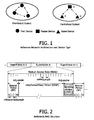
- a flexible wireless system in accordance with the invention supports both centralized and distributed modes of MAC protocols, and uses a new MAC superframe structure which comprises: a new recurring MAC superframe including a beacon period; a data/sense/sleep period for data selective communication, sleep and channel sensing for detecting primary users in cognitive systems; and a signaling window used for exchanging network entry messages and channel reservation requests.
- the flexible wireless system expediently includes beacon operation, a peer beacon device in distributed mode and a master beacon device in centralized mode which are used to selectively participate in the beacon operation, as well as a slave beacon device associated with the master device.
- the system may include controlled channel access for the beacon period, wherein the channel access is reservation based.
- the signaling window may be located at the end of the MAC superframe structure.
- a Subnet is defined as a collection (or group) of devices which are under the management of one entity (e.g., network administrator) and share a common MAC protocol. If the medium access in the subnet is controlled by a single device, a subnet is defined as a Centralized Subnet. On the other hand, if the medium access in the subnet is coordinated in the distributed manner, a subnet is defined as a Distributed Subnet. As illustrated in FIG 1 , as applied in the present invention, there are three basic types of devices.
- a device in a distributed subnet is called a Peer Device; the subnet coordinator in a centralized subnet is called a Master Device; and, a device other than subnet coordinator in the centralized subnet is called a Slave Device.
- a device can only operate as one of the three types, i.e., a device can either be a Master, Slave or Peer device.
- two subnets as are referred to Neighboring Subnets if the two subnets share the same channel and at least one active device from the first subnet is in the transmission range of the second subnet.
- All the devices should keep awake during beacon period and signaling window in order to capture all the control/management information which may be relevant to every device.
- a device may exchange data, monitor one or more channels (needed in cognitive networks), or go to sleep mode during Data/Sense/Sleep period.
- a device is treated as a beaconing device if it owns a beacon slot in a beacon period BP and regularly transmits beacons.
- BP beacon period
- a beaconing device Different from WiMedia, not every device is required to be a beaconing device, which allows the flexibility and scalability. Whether a device should become a beaconing device for purposes of this invention will depend on the following considerations:
- a slave device is normally a non-beaconing device, which does not own a beacon slot in the beacon period. But in certain scenarios, a slave device could be a beaconing device, e.g., to enable co-existence and reduce a hidden terminal problem.
- beaconing backbone across the connected subnets.
- those devices in a coordination role or in real-time and intensive transmission can easily guarantee control information (including bandwidth reservation information) reliably and timely delivered, thus improving QoS support and system reliability.
- BPST Beacon Period Start Time
- superframe number The BP starting time and superframe number are initiated by the first device establishing the beacon period, which could be a master device or a peer device.
- the merging of BPST and superframe structure is necessary if two disconnected subnets become connected.
- Beacon period (BP) operation The channel access method for beacon period is reservation based, specifically TDMA based. Beacon period is divided into multiple equal beacon slots, numbered from zero and increased one by one. The starting time of the Superframe is equivalent to the starting time of the first beacon slot. Each beaconing device owns one beacon slot, sends a beacon in its own beacon slot and listens to other beacon slots. This is similar as WiMedia.
- a new beaconing device should preferably select the smallest available beacon slot in the BP as its own beacon slot. For example, if a device is the very first device which initiates BP, it should choose beacon slot zero as its own beacon slot number. A beaconing device should regularly send a beacon in its own beacon slot.
- a beaconing device should use the beacon to advertise its own superframe number, device type (illustrated in Table 1), subnet ID (which could be a name string, e.g., configured by subnet owner), the SW length, in addition to what is defined in WiMedia standard for example, Beacon Period Occupancy IE (BPOIE, which includes BP length), DRP Availability IE, PCA Availability IE, Traffic Indication Map (TIM) IE, Identification IE.
- BPOIE Beacon Period Occupancy IE
- TIM Traffic Indication Map
- Beacon period length is adjustable between minimum BP length (BP min , e.g. one beacon slot) and maximal BP length (BP max ).
- BP min minimum BP length
- BP max maximal BP length
- the beacon period is of the minimum length by default.
- the beacon period may be extended.
- the beacon period may be downsized and the beacon slots may be shifted to lower numbered slots.
- BP extension is to ensure that each beaconing device be aware of the BP adjustment request and confirm such adjustment request. For example, every beaconing device should confirm/update/advertise such BP adjustment in its beacon.
- a signaling window is an adjustable time window that is used for exchanging control or management information, for example, network entry messages, channel reservation requests and traffic indication.
- a signaling window is preferably placed at the end of a Superframe. However, it may be positioned in another location, e.g., after BP, according to system preference.
- Any device may use the signaling window to send control/management information on demand. Different from beacon period, the whole signaling window is shared by all the devices depending on the opportunity; thus improving channel efficiency for signaling.
- the advantages of using a reserved signaling window instead of other randomly available MAS in DSSP to exchange control information are energy-saving and reliability. For example, a device can go to sleep mode during DSSP without missing control message. Although a device can still use any available MAS in DSSP for exchanging control information, it may require all the intended receivers to keep awake during DSSP, which reduces energy efficiency.
- MASs in DSSP may not be available during "peak data traffic time", which could cause intolerable delay to critical control messages, such as channel-switch-messages to protect primary users in cognitive radio systems.
- Signaling window duration is adjustable between minimum SW length (SW min) and maximal SW length (SW max) .
- Any beaconing device in the network may ask to extend the current signaling window if the signaling window becomes overloaded. Many ways can be used to judge whether the signaling window is overloaded, such as observing collision probability, channel utilization ratio and measurement reports from other devices. If the signaling window gets overloaded, a beaconing device may include an information element in its beacon to request such SW extension. Every beaconing device receiving such request should extend the SW accordingly.
- the channel access method for signaling window is contention based. Slotted aloha or back-off based carrier sensing medium access (CSMA) could be used for the contention. For slotted aloha method, based on the fact that the maximal signaling message length is much less than the maximum length of a regular Medium Access Slot (MAS), the signaling slot length should be smaller than the regular MAS slot length.
- CSMA carrier sensing medium access
- the use policy of medium access slots (MAS) in DSSP should follow either Reservation Access or Prioritized Contention Access (PCA) or Group-PCA.
- the reservation access and PCA can be applied to both distributed subnet and centralized subnet.
- the Group-PCA is applied to the centralized subnet only.
- the use policy is published by beaconing devices and it can be updated on a Superframe-basis.
- a beaconing device should always publish its own view of use policy for every MAS in DSSP. Accordingly, a master device should announce all the reservation related with itself as well as its associated slave devices.
- a medium access slot marked as reservation can be accessed preferably only by the reservation owner.
- a medium access slot marked as PCA available is open to all the devices in the network.
- the Group-PCA is also proposed, which is only open to a specific subnet, for example a master device and its slave devices.
- the master device should make reservation, label the owner suitably and mark the reserved MASs as Group-PCA.
- the master device may have higher priority than slave devices to access medium, e.g., to send Poll messages.
- the proposed invention could serve as a basis for future WiMedia UWB standard, IEEE 802.11, Cognitive wireless networks, and IEEE 802.15 wireless systems, but the implementation is not limited thereto.
Landscapes
- Engineering & Computer Science (AREA)
- Computer Networks & Wireless Communication (AREA)
- Signal Processing (AREA)
- Computer Security & Cryptography (AREA)
- Mobile Radio Communication Systems (AREA)
- Small-Scale Networks (AREA)
Applications Claiming Priority (2)
| Application Number | Priority Date | Filing Date | Title |
|---|---|---|---|
| US1207007P | 2007-12-07 | 2007-12-07 | |
| PCT/IB2008/055128 WO2009072089A1 (en) | 2007-12-07 | 2008-12-05 | Flexible mac superframe structure and beaconing method |
Publications (2)
| Publication Number | Publication Date |
|---|---|
| EP2232938A1 EP2232938A1 (en) | 2010-09-29 |
| EP2232938B1 true EP2232938B1 (en) | 2012-08-08 |
Family
ID=40462841
Family Applications (1)
| Application Number | Title | Priority Date | Filing Date |
|---|---|---|---|
| EP08855846A Active EP2232938B1 (en) | 2007-12-07 | 2008-12-05 | Flexible mac superframe structure and beaconing method |
Country Status (8)
| Country | Link |
|---|---|
| US (1) | US8467357B2 (enExample) |
| EP (1) | EP2232938B1 (enExample) |
| JP (1) | JP5479356B2 (enExample) |
| KR (1) | KR101549415B1 (enExample) |
| CN (1) | CN101889469B (enExample) |
| ES (1) | ES2391920T3 (enExample) |
| TW (1) | TWI482456B (enExample) |
| WO (1) | WO2009072089A1 (enExample) |
Cited By (1)
| Publication number | Priority date | Publication date | Assignee | Title |
|---|---|---|---|---|
| US11469844B2 (en) | 2017-12-27 | 2022-10-11 | Huawei Technologies Co., Ltd. | Method and apparatus for transmitting service flow based on flexible ethernet FlexE |
Families Citing this family (55)
| Publication number | Priority date | Publication date | Assignee | Title |
|---|---|---|---|---|
| US8254922B2 (en) | 2006-10-16 | 2012-08-28 | Stmicroelectronics, Inc. | Zero delay frequency switching with dynamic frequency hopping for cognitive radio based dynamic spectrum access network systems |
| US8494546B2 (en) | 2006-10-16 | 2013-07-23 | Stmicroelectronics, Inc. | Method of inter-system communications dynamic spectrum access network systems-logical control connections |
| US7869400B2 (en) * | 2006-10-16 | 2011-01-11 | Stmicroelectronics, Inc. | Method of inter-system coexistence and spectrum sharing for dynamic spectrum access networks-on-demand spectrum contention |
| US20080130592A1 (en) * | 2006-12-04 | 2008-06-05 | Electronics And Telecommunications Research Institute | Apparatus and method for managing medium access slot in wireless personal area network |
| US8780882B2 (en) * | 2008-01-16 | 2014-07-15 | Stmicroelectronics, Inc. | On-demand spectrum contention for inter-cell spectrum sharing in cognitive radio networks |
| US8824432B2 (en) * | 2008-01-16 | 2014-09-02 | Stmicroelectronics, Inc. | Beaconing period framing for efficient multi-channel inter-cell communications in cognitive radio networks |
| US8248989B2 (en) * | 2008-11-05 | 2012-08-21 | Electronics And Telecommunications Research Institute | Wireless network system using cyclic frame |
| KR101255228B1 (ko) * | 2008-11-11 | 2013-04-16 | 한국전자통신연구원 | 무선 애드-혹 네트워크에서 분산채널호핑방법 |
| US20100142463A1 (en) * | 2008-12-05 | 2010-06-10 | Stmicroelectronics, Inc. | Frame-based on-demand spectrum contention protocol-messaging method |
| CN102265698B (zh) | 2008-12-23 | 2014-12-24 | 皇家飞利浦电子股份有限公司 | 灵活的无线网络中的信道预留 |
| KR101588038B1 (ko) * | 2008-12-23 | 2016-01-25 | 코닌클리케 필립스 엔.브이. | 인지 무선 네트워크들에서의 동기화를 위한 방법 및 장치 |
| US20100165916A1 (en) * | 2008-12-31 | 2010-07-01 | Chunjie Duan | Wireless Star Network with Standby Central Node |
| US8194576B2 (en) * | 2009-03-27 | 2012-06-05 | Research In Motion Limited | Wireless access point methods and apparatus using dynamically-activated service intervals |
| JP5237450B2 (ja) * | 2009-06-16 | 2013-07-17 | 株式会社東芝 | 通信装置 |
| KR101580325B1 (ko) * | 2009-07-01 | 2015-12-23 | 삼성전자주식회사 | 피코넷 마스터 노드 온/오프 스케줄링을 위한 프레임 구조 및 그 방법 |
| US9107221B2 (en) * | 2009-09-25 | 2015-08-11 | Intel Corporation | Configurable contention-based period in mmWave wireless systems |
| US20110143665A1 (en) * | 2009-12-15 | 2011-06-16 | Carlos Cordeiro | Method and apparatus for multiple access for directional wireless networks |
| US8953633B2 (en) * | 2010-02-22 | 2015-02-10 | Samsung Electronics Co., Ltd. | Methods and device of managing resources in a wireless communication network |
| US8509105B2 (en) | 2010-06-23 | 2013-08-13 | Nokia Corporation | Method and apparatus for device-to-device network coordination |
| KR101843189B1 (ko) * | 2010-09-03 | 2018-03-28 | 한국전자통신연구원 | 광대역 무선통신 시스템의 통신 장치에서 통신 채널 선택 방법 및 그 장치 |
| CN102026099B (zh) * | 2010-11-16 | 2013-04-17 | 西安电子科技大学 | 无线体域网中自适应低时延媒体接入控制方法 |
| KR101234251B1 (ko) * | 2011-07-15 | 2013-02-18 | 세종대학교산학협력단 | 슈퍼프레임 구조를 이용한 동적 채널 할당 방법 및 이를 이용한 통신 장치 |
| US9198195B2 (en) * | 2011-08-05 | 2015-11-24 | Qualcomm Incorporated | Method and apparatus for improving coexistence of synchronous and asynchronous nodes in a synchronous MAC system |
| WO2013036092A2 (ko) * | 2011-09-09 | 2013-03-14 | 엘지전자 주식회사 | Wi-fi(wireless fidelity) p2p(peer to peer) 통신을 위한 방법 및 이를 위한 장치 |
| EP2767101A4 (en) * | 2011-10-11 | 2015-06-03 | Xg Technology Inc | COGNITIVE COGNITIVE MOBILE AD HOC NETWORK WITH TIME DIVISION DUPLEX |
| US9185726B2 (en) * | 2012-01-09 | 2015-11-10 | Qualcomm Incorporated | System and method of communication using distributed channel access parameters |
| KR101949800B1 (ko) | 2012-01-16 | 2019-02-19 | 삼성전자주식회사 | 동적 프로토콜을 재구성하기 위하여 슈퍼 프레임을 사용하는 통신 장치 및 동적 프로토콜을 재구성하기 위한 센서 노드 및 허브 장치의 메시지 교환 방법 |
| CN102857327B (zh) * | 2012-04-16 | 2014-12-03 | 华为技术有限公司 | 一种数据传输方法和装置 |
| US9313738B2 (en) * | 2012-06-11 | 2016-04-12 | Broadcom Corporation | Methods for efficient power management in 60 GHz devices |
| WO2014001602A1 (en) * | 2012-06-28 | 2014-01-03 | Nokia Corporation | Controlling transmissions in communication network |
| US11026170B2 (en) | 2012-08-01 | 2021-06-01 | Texas Instruments Incorporated | Beacon scheduling for wireless networks |
| CN103118435B (zh) | 2012-12-11 | 2015-11-25 | 华为技术有限公司 | 一种节点调度方法、设备及系统 |
| US9749974B2 (en) * | 2013-01-16 | 2017-08-29 | Intel IP Corporation | Methods and arrangements for frame transmissions |
| EP3522676B1 (en) * | 2013-07-12 | 2023-09-20 | InterDigital Patent Holdings, Inc. | Peer-to-peer communications enhancements |
| KR102164060B1 (ko) * | 2013-07-17 | 2020-10-12 | 한국전자통신연구원 | 피어 인식 통신 네트워크의 운용 방법 |
| CN103747006A (zh) * | 2014-01-20 | 2014-04-23 | 沈阳化工大学 | 一种无线控制网络的媒介访问控制方法 |
| US9166648B2 (en) * | 2014-02-21 | 2015-10-20 | Landis+Gyr Innovations, Inc. | System and method for time adjustment in a time synchronized channel hopping network |
| US9762496B2 (en) * | 2014-02-25 | 2017-09-12 | Qualcomm Incorporated | Slotted message access protocol for powerline communication networks |
| US9319848B2 (en) | 2014-05-02 | 2016-04-19 | Macmillan New Ventures, LLC | Audience response communication system with long beacon |
| JP6403556B2 (ja) * | 2014-12-03 | 2018-10-10 | 三菱電機株式会社 | ゲートウェイ装置、スマートメータおよび無線メッシュネットワーク |
| CN105072699B (zh) * | 2015-07-20 | 2019-01-01 | 深圳市远望谷信息技术股份有限公司 | 主从设备中快速分配多个从设备接入时隙的方法及装置 |
| US20170127439A1 (en) * | 2015-10-29 | 2017-05-04 | Qualcomm Incorporated | Collision Handling in Multi-Subscription Wireless Communication Devices |
| KR101798421B1 (ko) | 2016-07-26 | 2017-11-16 | 한국해양과학기술원 | 시간분할채널접속 방식에서 노드 고유 id를 이용한 전송채널슬롯 결정방법 |
| US10212658B2 (en) * | 2016-09-30 | 2019-02-19 | Kinetic Technologies | Systems and methods for managing communication between devices |
| US10757484B2 (en) | 2017-01-05 | 2020-08-25 | Kinetic Technologies | Systems and methods for pulse-based communication |
| EP3956683A1 (en) | 2019-04-19 | 2022-02-23 | Be Spoon | Ultra-wideband location systems and methods |
| US11329842B2 (en) * | 2020-02-07 | 2022-05-10 | Ademco Inc. | Dynamic superframe slotting |
| US12621043B2 (en) | 2021-01-07 | 2026-05-05 | Resideo Llc | Repeater for enrollment extension |
| US11582746B2 (en) | 2021-04-01 | 2023-02-14 | Ademco Inc. | Dynamic, multi-frequency superframe slotting |
| US11658736B2 (en) | 2021-07-13 | 2023-05-23 | Ademco Inc. | Keypad with repeater mode |
| CN113747582B (zh) * | 2021-08-18 | 2024-04-05 | 珠海中慧微电子有限公司 | 信标时隙区的配置方法、装置、存储介质及节点 |
| JP7620926B2 (ja) * | 2022-02-02 | 2025-01-24 | パナソニックIpマネジメント株式会社 | 制御装置、インターホンシステム、制御方法、プログラム、共同玄関装置 |
| EP4591595A1 (en) | 2022-09-22 | 2025-07-30 | Resideo LLC | Superframe extension mode |
| CN116684504B (zh) * | 2023-05-26 | 2025-12-12 | 北京和利时系统工程有限公司 | 数据传输方法、无线网络监测系统以及共享数据帧结构 |
| CN119584296A (zh) * | 2024-11-22 | 2025-03-07 | 海能达通信股份有限公司 | Tdma制式的无线通信方法及相关装置 |
Family Cites Families (10)
| Publication number | Priority date | Publication date | Assignee | Title |
|---|---|---|---|---|
| DE60212890T2 (de) | 2001-02-21 | 2006-11-16 | Nippon Telegraph And Telephone Corp. | Mehrstrecken-Paket-Funk-Kommunikationssystem |
| US7957356B2 (en) * | 2002-05-13 | 2011-06-07 | Misomino Chi Acquisitions L.L.C. | Scalable media access control for multi-hop high bandwidth communications |
| EP1530325B1 (en) | 2003-11-06 | 2007-04-04 | Mitsubishi Denki Kabushiki Kaisha | Method and device for managing a shared transmission medium |
| KR101138900B1 (ko) | 2004-02-06 | 2012-05-16 | 코닌클리즈케 필립스 일렉트로닉스 엔.브이. | 장치의 비코닝 프로토콜에 대한 방법과 슬롯형 비코닝 장치 |
| JP5085316B2 (ja) | 2004-03-24 | 2012-11-28 | コーニンクレッカ フィリップス エレクトロニクス エヌ ヴィ | アドホックネットワークに対する分散ビーコン期間 |
| US7890116B2 (en) * | 2004-05-05 | 2011-02-15 | Nokia Corporation | Adaptive beacon period in a distributed network |
| US7496081B2 (en) * | 2004-05-05 | 2009-02-24 | Nokia Corporation | Adaptive beacon period in a distributed network |
| US8027288B2 (en) * | 2005-04-22 | 2011-09-27 | Nokia Corporation | Reducing beacon slot acquisition time in distributed media access control network |
| US7312703B2 (en) * | 2005-10-20 | 2007-12-25 | Hoogenboom Christopher L | Initialization of a sensor for monitoring the structural integrity of a building |
| JP4806721B2 (ja) * | 2006-03-15 | 2011-11-02 | パナソニック株式会社 | アドホックネットワークのための分散型無線メディアアクセス制御プロトコル |
-
2008
- 2008-12-04 TW TW097147174A patent/TWI482456B/zh active
- 2008-12-05 KR KR1020107014829A patent/KR101549415B1/ko active Active
- 2008-12-05 CN CN200880119571XA patent/CN101889469B/zh active Active
- 2008-12-05 US US12/746,279 patent/US8467357B2/en active Active
- 2008-12-05 EP EP08855846A patent/EP2232938B1/en active Active
- 2008-12-05 ES ES08855846T patent/ES2391920T3/es active Active
- 2008-12-05 JP JP2010536578A patent/JP5479356B2/ja active Active
- 2008-12-05 WO PCT/IB2008/055128 patent/WO2009072089A1/en not_active Ceased
Cited By (1)
| Publication number | Priority date | Publication date | Assignee | Title |
|---|---|---|---|---|
| US11469844B2 (en) | 2017-12-27 | 2022-10-11 | Huawei Technologies Co., Ltd. | Method and apparatus for transmitting service flow based on flexible ethernet FlexE |
Also Published As
| Publication number | Publication date |
|---|---|
| CN101889469A (zh) | 2010-11-17 |
| JP2011507326A (ja) | 2011-03-03 |
| ES2391920T3 (es) | 2012-12-03 |
| WO2009072089A1 (en) | 2009-06-11 |
| EP2232938A1 (en) | 2010-09-29 |
| JP5479356B2 (ja) | 2014-04-23 |
| TWI482456B (zh) | 2015-04-21 |
| US20100260085A1 (en) | 2010-10-14 |
| US8467357B2 (en) | 2013-06-18 |
| CN101889469B (zh) | 2013-12-25 |
| TW200935822A (en) | 2009-08-16 |
| KR101549415B1 (ko) | 2015-09-02 |
| KR20100097723A (ko) | 2010-09-03 |
Similar Documents
| Publication | Publication Date | Title |
|---|---|---|
| US8467357B2 (en) | Flexible MAC superframe structure and beaconing method | |
| US7885244B2 (en) | Hybrid multiple access method and system in wireless networks with extended content free access period | |
| US7924766B2 (en) | Hybrid multiple access method and system in wireless networks | |
| CN101171813B (zh) | 无线网格网络的分布式媒体访问协议 | |
| JP4581996B2 (ja) | 無線通信システム、無線通信装置及び無線通信方法、並びにコンピュータプログラム | |
| US8724557B2 (en) | Sensor network medium access control (MAC) system for multihop communication | |
| US7193986B2 (en) | Wireless network medium access control protocol | |
| CN1665208B (zh) | 无线通信系统、无线通信设备、无线通信方法 | |
| JP4672674B2 (ja) | アドホックネットワーク用のビーコンプロトコル | |
| US9351301B2 (en) | Maintenance of time slot usage indicators and self-organizing networking | |
| US7639661B2 (en) | Radio communication system, radio communication apparatus, radio communication method, and computer program | |
| US20060013177A1 (en) | Wireless communication system, wireless communication apparatus, wireless communication method, and computer program | |
| US20080100494A1 (en) | Wireless communication system, wireless communication apparatus, wireless communication method, and computer program | |
| CN101421981A (zh) | 用于自组织网络的分布式无线媒体接入控制协议 | |
| JP2004350168A (ja) | 無線通信装置及び無線通信方法、並びにコンピュータ・プログラム | |
| JP2007129772A (ja) | 無線通信システム | |
| EP2974497A2 (en) | Cocktail party: side conversations and talking over in wireless mesh networks | |
| CN106912110B (zh) | 一种单发多收空口资源分配方法 | |
| EP1986373B1 (en) | Method and system for accessing channel in wireless network of nodes |
Legal Events
| Date | Code | Title | Description |
|---|---|---|---|
| PUAI | Public reference made under article 153(3) epc to a published international application that has entered the european phase |
Free format text: ORIGINAL CODE: 0009012 |
|
| 17P | Request for examination filed |
Effective date: 20100707 |
|
| AK | Designated contracting states |
Kind code of ref document: A1 Designated state(s): AT BE BG CH CY CZ DE DK EE ES FI FR GB GR HR HU IE IS IT LI LT LU LV MC MT NL NO PL PT RO SE SI SK TR |
|
| AX | Request for extension of the european patent |
Extension state: AL BA MK RS |
|
| DAX | Request for extension of the european patent (deleted) | ||
| 17Q | First examination report despatched |
Effective date: 20110330 |
|
| GRAP | Despatch of communication of intention to grant a patent |
Free format text: ORIGINAL CODE: EPIDOSNIGR1 |
|
| GRAS | Grant fee paid |
Free format text: ORIGINAL CODE: EPIDOSNIGR3 |
|
| GRAA | (expected) grant |
Free format text: ORIGINAL CODE: 0009210 |
|
| AK | Designated contracting states |
Kind code of ref document: B1 Designated state(s): AT BE BG CH CY CZ DE DK EE ES FI FR GB GR HR HU IE IS IT LI LT LU LV MC MT NL NO PL PT RO SE SI SK TR |
|
| REG | Reference to a national code |
Ref country code: GB Ref legal event code: FG4D |
|
| REG | Reference to a national code |
Ref country code: CH Ref legal event code: EP Ref country code: AT Ref legal event code: REF Ref document number: 570292 Country of ref document: AT Kind code of ref document: T Effective date: 20120815 |
|
| REG | Reference to a national code |
Ref country code: IE Ref legal event code: FG4D |
|
| REG | Reference to a national code |
Ref country code: DE Ref legal event code: R096 Ref document number: 602008017905 Country of ref document: DE Effective date: 20121004 |
|
| REG | Reference to a national code |
Ref country code: ES Ref legal event code: FG2A Ref document number: 2391920 Country of ref document: ES Kind code of ref document: T3 Effective date: 20121203 |
|
| REG | Reference to a national code |
Ref country code: NL Ref legal event code: VDEP Effective date: 20120808 |
|
| REG | Reference to a national code |
Ref country code: AT Ref legal event code: MK05 Ref document number: 570292 Country of ref document: AT Kind code of ref document: T Effective date: 20120808 |
|
| REG | Reference to a national code |
Ref country code: LT Ref legal event code: MG4D Effective date: 20120808 |
|
| PG25 | Lapsed in a contracting state [announced via postgrant information from national office to epo] |
Ref country code: CY Free format text: LAPSE BECAUSE OF FAILURE TO SUBMIT A TRANSLATION OF THE DESCRIPTION OR TO PAY THE FEE WITHIN THE PRESCRIBED TIME-LIMIT Effective date: 20120808 Ref country code: IS Free format text: LAPSE BECAUSE OF FAILURE TO SUBMIT A TRANSLATION OF THE DESCRIPTION OR TO PAY THE FEE WITHIN THE PRESCRIBED TIME-LIMIT Effective date: 20121208 Ref country code: NO Free format text: LAPSE BECAUSE OF FAILURE TO SUBMIT A TRANSLATION OF THE DESCRIPTION OR TO PAY THE FEE WITHIN THE PRESCRIBED TIME-LIMIT Effective date: 20121108 Ref country code: AT Free format text: LAPSE BECAUSE OF FAILURE TO SUBMIT A TRANSLATION OF THE DESCRIPTION OR TO PAY THE FEE WITHIN THE PRESCRIBED TIME-LIMIT Effective date: 20120808 Ref country code: LT Free format text: LAPSE BECAUSE OF FAILURE TO SUBMIT A TRANSLATION OF THE DESCRIPTION OR TO PAY THE FEE WITHIN THE PRESCRIBED TIME-LIMIT Effective date: 20120808 Ref country code: HR Free format text: LAPSE BECAUSE OF FAILURE TO SUBMIT A TRANSLATION OF THE DESCRIPTION OR TO PAY THE FEE WITHIN THE PRESCRIBED TIME-LIMIT Effective date: 20120808 Ref country code: FI Free format text: LAPSE BECAUSE OF FAILURE TO SUBMIT A TRANSLATION OF THE DESCRIPTION OR TO PAY THE FEE WITHIN THE PRESCRIBED TIME-LIMIT Effective date: 20120808 |
|
| PG25 | Lapsed in a contracting state [announced via postgrant information from national office to epo] |
Ref country code: PL Free format text: LAPSE BECAUSE OF FAILURE TO SUBMIT A TRANSLATION OF THE DESCRIPTION OR TO PAY THE FEE WITHIN THE PRESCRIBED TIME-LIMIT Effective date: 20120808 Ref country code: LV Free format text: LAPSE BECAUSE OF FAILURE TO SUBMIT A TRANSLATION OF THE DESCRIPTION OR TO PAY THE FEE WITHIN THE PRESCRIBED TIME-LIMIT Effective date: 20120808 Ref country code: BE Free format text: LAPSE BECAUSE OF FAILURE TO SUBMIT A TRANSLATION OF THE DESCRIPTION OR TO PAY THE FEE WITHIN THE PRESCRIBED TIME-LIMIT Effective date: 20120808 Ref country code: SE Free format text: LAPSE BECAUSE OF FAILURE TO SUBMIT A TRANSLATION OF THE DESCRIPTION OR TO PAY THE FEE WITHIN THE PRESCRIBED TIME-LIMIT Effective date: 20120808 Ref country code: SI Free format text: LAPSE BECAUSE OF FAILURE TO SUBMIT A TRANSLATION OF THE DESCRIPTION OR TO PAY THE FEE WITHIN THE PRESCRIBED TIME-LIMIT Effective date: 20120808 Ref country code: PT Free format text: LAPSE BECAUSE OF FAILURE TO SUBMIT A TRANSLATION OF THE DESCRIPTION OR TO PAY THE FEE WITHIN THE PRESCRIBED TIME-LIMIT Effective date: 20121210 Ref country code: GR Free format text: LAPSE BECAUSE OF FAILURE TO SUBMIT A TRANSLATION OF THE DESCRIPTION OR TO PAY THE FEE WITHIN THE PRESCRIBED TIME-LIMIT Effective date: 20121109 |
|
| PG25 | Lapsed in a contracting state [announced via postgrant information from national office to epo] |
Ref country code: NL Free format text: LAPSE BECAUSE OF FAILURE TO SUBMIT A TRANSLATION OF THE DESCRIPTION OR TO PAY THE FEE WITHIN THE PRESCRIBED TIME-LIMIT Effective date: 20120808 |
|
| PG25 | Lapsed in a contracting state [announced via postgrant information from national office to epo] |
Ref country code: DK Free format text: LAPSE BECAUSE OF FAILURE TO SUBMIT A TRANSLATION OF THE DESCRIPTION OR TO PAY THE FEE WITHIN THE PRESCRIBED TIME-LIMIT Effective date: 20120808 Ref country code: CZ Free format text: LAPSE BECAUSE OF FAILURE TO SUBMIT A TRANSLATION OF THE DESCRIPTION OR TO PAY THE FEE WITHIN THE PRESCRIBED TIME-LIMIT Effective date: 20120808 Ref country code: EE Free format text: LAPSE BECAUSE OF FAILURE TO SUBMIT A TRANSLATION OF THE DESCRIPTION OR TO PAY THE FEE WITHIN THE PRESCRIBED TIME-LIMIT Effective date: 20120808 Ref country code: RO Free format text: LAPSE BECAUSE OF FAILURE TO SUBMIT A TRANSLATION OF THE DESCRIPTION OR TO PAY THE FEE WITHIN THE PRESCRIBED TIME-LIMIT Effective date: 20120808 |
|
| PG25 | Lapsed in a contracting state [announced via postgrant information from national office to epo] |
Ref country code: SK Free format text: LAPSE BECAUSE OF FAILURE TO SUBMIT A TRANSLATION OF THE DESCRIPTION OR TO PAY THE FEE WITHIN THE PRESCRIBED TIME-LIMIT Effective date: 20120808 |
|
| PLBE | No opposition filed within time limit |
Free format text: ORIGINAL CODE: 0009261 |
|
| STAA | Information on the status of an ep patent application or granted ep patent |
Free format text: STATUS: NO OPPOSITION FILED WITHIN TIME LIMIT |
|
| 26N | No opposition filed |
Effective date: 20130510 |
|
| PG25 | Lapsed in a contracting state [announced via postgrant information from national office to epo] |
Ref country code: BG Free format text: LAPSE BECAUSE OF FAILURE TO SUBMIT A TRANSLATION OF THE DESCRIPTION OR TO PAY THE FEE WITHIN THE PRESCRIBED TIME-LIMIT Effective date: 20121108 Ref country code: MC Free format text: LAPSE BECAUSE OF NON-PAYMENT OF DUE FEES Effective date: 20121231 |
|
| REG | Reference to a national code |
Ref country code: CH Ref legal event code: PL |
|
| REG | Reference to a national code |
Ref country code: DE Ref legal event code: R097 Ref document number: 602008017905 Country of ref document: DE Effective date: 20130510 |
|
| REG | Reference to a national code |
Ref country code: IE Ref legal event code: MM4A |
|
| PG25 | Lapsed in a contracting state [announced via postgrant information from national office to epo] |
Ref country code: CH Free format text: LAPSE BECAUSE OF NON-PAYMENT OF DUE FEES Effective date: 20121231 Ref country code: LI Free format text: LAPSE BECAUSE OF NON-PAYMENT OF DUE FEES Effective date: 20121231 Ref country code: IE Free format text: LAPSE BECAUSE OF NON-PAYMENT OF DUE FEES Effective date: 20121205 |
|
| PG25 | Lapsed in a contracting state [announced via postgrant information from national office to epo] |
Ref country code: MT Free format text: LAPSE BECAUSE OF FAILURE TO SUBMIT A TRANSLATION OF THE DESCRIPTION OR TO PAY THE FEE WITHIN THE PRESCRIBED TIME-LIMIT Effective date: 20120808 |
|
| REG | Reference to a national code |
Ref country code: DE Ref legal event code: R082 Ref document number: 602008017905 Country of ref document: DE Representative=s name: MEISSNER, BOLTE & PARTNER GBR, DE |
|
| REG | Reference to a national code |
Ref country code: ES Ref legal event code: PC2A Owner name: KONINKLIJKE PHILIPS N.V. Effective date: 20140402 |
|
| PG25 | Lapsed in a contracting state [announced via postgrant information from national office to epo] |
Ref country code: TR Free format text: LAPSE BECAUSE OF FAILURE TO SUBMIT A TRANSLATION OF THE DESCRIPTION OR TO PAY THE FEE WITHIN THE PRESCRIBED TIME-LIMIT Effective date: 20120808 |
|
| REG | Reference to a national code |
Ref country code: DE Ref legal event code: R082 Ref document number: 602008017905 Country of ref document: DE Representative=s name: MEISSNER BOLTE PATENTANWAELTE RECHTSANWAELTE P, DE Effective date: 20140328 Ref country code: DE Ref legal event code: R082 Ref document number: 602008017905 Country of ref document: DE Representative=s name: MEISSNER, BOLTE & PARTNER GBR, DE Effective date: 20140328 Ref country code: DE Ref legal event code: R081 Ref document number: 602008017905 Country of ref document: DE Owner name: KONINKLIJKE PHILIPS N.V., NL Free format text: FORMER OWNER: KONINKLIJKE PHILIPS ELECTRONICS N.V., EINDHOVEN, NL Effective date: 20140328 |
|
| PG25 | Lapsed in a contracting state [announced via postgrant information from national office to epo] |
Ref country code: LU Free format text: LAPSE BECAUSE OF NON-PAYMENT OF DUE FEES Effective date: 20121205 |
|
| PG25 | Lapsed in a contracting state [announced via postgrant information from national office to epo] |
Ref country code: HU Free format text: LAPSE BECAUSE OF FAILURE TO SUBMIT A TRANSLATION OF THE DESCRIPTION OR TO PAY THE FEE WITHIN THE PRESCRIBED TIME-LIMIT Effective date: 20081205 |
|
| REG | Reference to a national code |
Ref country code: FR Ref legal event code: CA Effective date: 20141126 Ref country code: FR Ref legal event code: CD Owner name: KONINKLIJKE PHILIPS ELECTRONICS N.V., NL Effective date: 20141126 |
|
| REG | Reference to a national code |
Ref country code: FR Ref legal event code: PLFP Year of fee payment: 8 |
|
| REG | Reference to a national code |
Ref country code: FR Ref legal event code: PLFP Year of fee payment: 9 |
|
| REG | Reference to a national code |
Ref country code: FR Ref legal event code: PLFP Year of fee payment: 10 |
|
| PGFP | Annual fee paid to national office [announced via postgrant information from national office to epo] |
Ref country code: GB Payment date: 20251223 Year of fee payment: 18 |
|
| PGFP | Annual fee paid to national office [announced via postgrant information from national office to epo] |
Ref country code: IT Payment date: 20251217 Year of fee payment: 18 |
|
| PGFP | Annual fee paid to national office [announced via postgrant information from national office to epo] |
Ref country code: FR Payment date: 20251222 Year of fee payment: 18 |
|
| PGFP | Annual fee paid to national office [announced via postgrant information from national office to epo] |
Ref country code: ES Payment date: 20260122 Year of fee payment: 18 |
|
| PGFP | Annual fee paid to national office [announced via postgrant information from national office to epo] |
Ref country code: DE Payment date: 20251229 Year of fee payment: 18 |