EP2230643B1 - Bildprozessor und bildverarbeitungsverfahren - Google Patents
Bildprozessor und bildverarbeitungsverfahren Download PDFInfo
- Publication number
- EP2230643B1 EP2230643B1 EP09817066.5A EP09817066A EP2230643B1 EP 2230643 B1 EP2230643 B1 EP 2230643B1 EP 09817066 A EP09817066 A EP 09817066A EP 2230643 B1 EP2230643 B1 EP 2230643B1
- Authority
- EP
- European Patent Office
- Prior art keywords
- image
- virtual space
- region
- color
- advertisement
- Prior art date
- Legal status (The legal status is an assumption and is not a legal conclusion. Google has not performed a legal analysis and makes no representation as to the accuracy of the status listed.)
- Active
Links
Images





Classifications
-
- A—HUMAN NECESSITIES
- A63—SPORTS; GAMES; AMUSEMENTS
- A63F—CARD, BOARD, OR ROULETTE GAMES; INDOOR GAMES USING SMALL MOVING PLAYING BODIES; VIDEO GAMES; GAMES NOT OTHERWISE PROVIDED FOR
- A63F13/00—Video games, i.e. games using an electronically generated display having two or more dimensions
- A63F13/60—Generating or modifying game content before or while executing the game program, e.g. authoring tools specially adapted for game development or game-integrated level editor
- A63F13/61—Generating or modifying game content before or while executing the game program, e.g. authoring tools specially adapted for game development or game-integrated level editor using advertising information
-
- A—HUMAN NECESSITIES
- A63—SPORTS; GAMES; AMUSEMENTS
- A63F—CARD, BOARD, OR ROULETTE GAMES; INDOOR GAMES USING SMALL MOVING PLAYING BODIES; VIDEO GAMES; GAMES NOT OTHERWISE PROVIDED FOR
- A63F13/00—Video games, i.e. games using an electronically generated display having two or more dimensions
- A63F13/50—Controlling the output signals based on the game progress
- A63F13/52—Controlling the output signals based on the game progress involving aspects of the displayed game scene
-
- G—PHYSICS
- G06—COMPUTING OR CALCULATING; COUNTING
- G06Q—INFORMATION AND COMMUNICATION TECHNOLOGY [ICT] SPECIALLY ADAPTED FOR ADMINISTRATIVE, COMMERCIAL, FINANCIAL, MANAGERIAL OR SUPERVISORY PURPOSES; SYSTEMS OR METHODS SPECIALLY ADAPTED FOR ADMINISTRATIVE, COMMERCIAL, FINANCIAL, MANAGERIAL OR SUPERVISORY PURPOSES, NOT OTHERWISE PROVIDED FOR
- G06Q30/00—Commerce
- G06Q30/02—Marketing; Price estimation or determination; Fundraising
- G06Q30/0241—Advertisements
- G06Q30/0242—Determining effectiveness of advertisements
-
- G—PHYSICS
- G06—COMPUTING OR CALCULATING; COUNTING
- G06T—IMAGE DATA PROCESSING OR GENERATION, IN GENERAL
- G06T7/00—Image analysis
- G06T7/10—Segmentation; Edge detection
- G06T7/11—Region-based segmentation
-
- A—HUMAN NECESSITIES
- A63—SPORTS; GAMES; AMUSEMENTS
- A63F—CARD, BOARD, OR ROULETTE GAMES; INDOOR GAMES USING SMALL MOVING PLAYING BODIES; VIDEO GAMES; GAMES NOT OTHERWISE PROVIDED FOR
- A63F2300/00—Features of games using an electronically generated display having two or more dimensions, e.g. on a television screen, showing representations related to the game
- A63F2300/20—Features of games using an electronically generated display having two or more dimensions, e.g. on a television screen, showing representations related to the game characterised by details of the game platform
- A63F2300/203—Image generating hardware
-
- A—HUMAN NECESSITIES
- A63—SPORTS; GAMES; AMUSEMENTS
- A63F—CARD, BOARD, OR ROULETTE GAMES; INDOOR GAMES USING SMALL MOVING PLAYING BODIES; VIDEO GAMES; GAMES NOT OTHERWISE PROVIDED FOR
- A63F2300/00—Features of games using an electronically generated display having two or more dimensions, e.g. on a television screen, showing representations related to the game
- A63F2300/50—Features of games using an electronically generated display having two or more dimensions, e.g. on a television screen, showing representations related to the game characterized by details of game servers
- A63F2300/51—Server architecture
- A63F2300/513—Server architecture server hierarchy, e.g. local, regional, national or dedicated for different tasks, e.g. authenticating, billing
-
- A—HUMAN NECESSITIES
- A63—SPORTS; GAMES; AMUSEMENTS
- A63F—CARD, BOARD, OR ROULETTE GAMES; INDOOR GAMES USING SMALL MOVING PLAYING BODIES; VIDEO GAMES; GAMES NOT OTHERWISE PROVIDED FOR
- A63F2300/00—Features of games using an electronically generated display having two or more dimensions, e.g. on a television screen, showing representations related to the game
- A63F2300/50—Features of games using an electronically generated display having two or more dimensions, e.g. on a television screen, showing representations related to the game characterized by details of game servers
- A63F2300/53—Features of games using an electronically generated display having two or more dimensions, e.g. on a television screen, showing representations related to the game characterized by details of game servers details of basic data processing
- A63F2300/535—Features of games using an electronically generated display having two or more dimensions, e.g. on a television screen, showing representations related to the game characterized by details of game servers details of basic data processing for monitoring, e.g. of user parameters, terminal parameters, application parameters, network parameters
-
- A—HUMAN NECESSITIES
- A63—SPORTS; GAMES; AMUSEMENTS
- A63F—CARD, BOARD, OR ROULETTE GAMES; INDOOR GAMES USING SMALL MOVING PLAYING BODIES; VIDEO GAMES; GAMES NOT OTHERWISE PROVIDED FOR
- A63F2300/00—Features of games using an electronically generated display having two or more dimensions, e.g. on a television screen, showing representations related to the game
- A63F2300/50—Features of games using an electronically generated display having two or more dimensions, e.g. on a television screen, showing representations related to the game characterized by details of game servers
- A63F2300/55—Details of game data or player data management
- A63F2300/5506—Details of game data or player data management using advertisements
-
- A—HUMAN NECESSITIES
- A63—SPORTS; GAMES; AMUSEMENTS
- A63F—CARD, BOARD, OR ROULETTE GAMES; INDOOR GAMES USING SMALL MOVING PLAYING BODIES; VIDEO GAMES; GAMES NOT OTHERWISE PROVIDED FOR
- A63F2300/00—Features of games using an electronically generated display having two or more dimensions, e.g. on a television screen, showing representations related to the game
- A63F2300/50—Features of games using an electronically generated display having two or more dimensions, e.g. on a television screen, showing representations related to the game characterized by details of game servers
- A63F2300/55—Details of game data or player data management
- A63F2300/5513—Details of game data or player data management involving billing
-
- A—HUMAN NECESSITIES
- A63—SPORTS; GAMES; AMUSEMENTS
- A63F—CARD, BOARD, OR ROULETTE GAMES; INDOOR GAMES USING SMALL MOVING PLAYING BODIES; VIDEO GAMES; GAMES NOT OTHERWISE PROVIDED FOR
- A63F2300/00—Features of games using an electronically generated display having two or more dimensions, e.g. on a television screen, showing representations related to the game
- A63F2300/60—Methods for processing data by generating or executing the game program
- A63F2300/66—Methods for processing data by generating or executing the game program for rendering three dimensional images
- A63F2300/6692—Methods for processing data by generating or executing the game program for rendering three dimensional images using special effects, generally involving post-processing, e.g. blooming
-
- G—PHYSICS
- G06—COMPUTING OR CALCULATING; COUNTING
- G06T—IMAGE DATA PROCESSING OR GENERATION, IN GENERAL
- G06T2207/00—Indexing scheme for image analysis or image enhancement
- G06T2207/10—Image acquisition modality
- G06T2207/10024—Color image
Definitions
- This invention generally relates to data processing technology, and more particularly, to technology for processing an image of the virtual space of games or the like.
- Some applications of games or the like change the appearance of a virtual space according to the viewpoint that is set by a user and change the display status of objects in the virtual space.
- the cost increases with the method of comparing the reference images with the images of a virtual space, in which a determination of whether the object exists is made. For example, it is necessary to prepare in advance a lot of images for reference that correspond to a variety of display statuses of the object. Further, a lot of comparison processing is required.
- a main purpose of the present invention is to provide technology for easily detecting a specific object in an image of a virtual space where the display status of the space changes according to the view point set by a user.
- an image processing apparatus for extracting a region is defined by claim 1.
- a method and a program for extracting a region are defined by claim 6 and 7, respectively.
- the present invention enables the detection of a specific object in the images of a virtual space where the display status of the space changes according to the viewpoint established by a user.
- a suggestion is made for technology for inspecting the application of a game that displays a virtual space, such as an urban area, or the like (hereinafter referred to as a "game application,” as appropriate).
- the display status of the virtual space changes according to the viewpoint setting that is established by a user.
- the viewpoint setting that is established by a user.
- the appearance of, for example, the shapes or the like of an object in the virtual space changes as seen from the user.
- objects that display advertisements hereinafter referred to as merely “advertisement" of products or services are assumed.
- a game application has information on what is displayed and where in the virtual space it is displayed. Therefore, even in case the display status of the virtual space changes according to the viewpoint set by the user, the size (hereinafter referred to as "advertisement exposure size,” as appropriate) of an area where an advertisement is displayed and exposed so as to be visible to a user in the virtual space can be calculated.
- a function for calculating the advertisement exposure size in a game application is hereinafter referred to as an “advertisement exposure calculating function.”
- the present inventor has thought of specifying the advertisement displaying area while utilizing an image of the virtual space output by the game application, finding the advertisement exposure size thereof, and checking both the advertisement exposure size thereof and the advertisement exposure size output from the advertisement exposure calculating function. This enables to verify the consistency of the advertisement exposure size output from the advertisement exposure calculating function of the game application without referring to the execution status of the game application.
- the first method is a check by a human inspector with his/her own eyes.
- the second method is matching the image of the virtual space and a number of reference images that record an advertisement displaying region in a variety of display statuses.
- the former method imposes a heavy burden on the inspector.
- a part of a billboard is sometimes hidden by a block and not displayed, which makes the identification, by image matching, of the advertisement displaying area difficult.
- the present inventor has further thought of a method for specifying an advertisement displaying area using an image of a virtual space, where a color that is not used in the virtual space is set for the advertisement displaying areas in advance.
- this method by color-filtering the images of the virtual space, the advertisement displaying areas can be specified with ease without depending on the display status of the advertisement displaying areas.
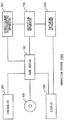
- Fig. 1 shows the structure of an inspection system according to an embodiment of the present invention.
- the inspection system 1000 comprises a game device 100, an advertisement distributing apparatus 500, a capturing apparatus 600, and an inspection apparatus 700. These apparatuses are mutually connected via a commonly-known communication means, such as a LAN, a WAN, the Internet, or the like.
- the game device 100 is read out from a recording medium 400 and is executed.
- the game device 100 is assumed to be executing a game application unless expressly noted.
- the game device 100 displays the images of a virtual space on the display 300. Further, the game device 100 displays an advertisement on a predetermined area (herein after referred to as "advertisement region,” as appropriate) of a sign, a billboard, or the like in the virtual space. The game device 100 calculates an index (hereinafter, referred to as a "first index,” as appropriate) relating to the amount of exposure of the advertisement in the virtual space and notifies the inspection apparatus 700 thereof.
- a first index an index
- the game device 100 detects the user's manipulation of the controller 200, changes the viewpoint of the user in the virtual space according to the user's manipulation, and changes the display status of the virtual space according to the change of the viewpoint.
- the display status of an advertisement displayed in the virtual space is also changed. For example, assume the user's viewpoint is changed from the status where the user fully faces the advertisement to a status where the user's line of sight is parallel to the advertisement. Then the display status of the advertisement also changes from a status where the advertisement is displayed full face with a large size to a status where the advertisement is displayed on the left or the right side with a relatively small size. A description on the detailed structure of the game device 100 will be given later.
- the advertisement distributing apparatus 500 retains data of advertisements to be displayed in the game device 100 and provides the game device 100 with the data on advertisements in response to a request from the game device 100. Further, the advertisement distributing apparatus 500 receives an image (hereinafter referred to as "advertisement inspection image,” as appropriate) of the advertisement for inspection, performed by the inspection apparatus 700, and stores the data. When inspecting the game application, the advertisement inspection image is provided to the game device 100.
- the capturing apparatus 600 captures an image of the virtual space displayed on the display 300 and generates moving image data that records the screen image of the virtual space.
- the capturing apparatus 600 provides the moving image data to the inspection apparatus 700.
- the inspection apparatus 700 executes the inspection of the game application recorded on the recording medium 400.
- the consistency of the advertisement exposure calculating function which is one of the functions of the game application and is executed in the game device 100, is inspected in particular.
- the inspection apparatus 700 calculates an index (hereinafter, referred to as a "second index," as appropriate) relating to the amount of exposure of the advertisement, while using the degree of visibility for users as a basis.
- the inspection apparatus 700 then verifies the consistency of the advertisement exposure calculating function of the game application by cross-checking the first index and the second index. A description on the detailed structure of the inspection apparatus 700 will be given later.
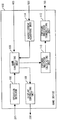
- Fig. 2 is a block diagram showing the functional structure of the game device 100 of Fig. 1 .
- the game device 100 is provided with an operation detector 102, an advertisement acquiring unit 104, a game controlling unit 106, a display controlling unit 108, an exposure indicator calculating unit 110, and an exposure indicator transmitting unit 112.
- Fig. 2 depicts functional blocks implemented by the cooperation of hardware and software. Therefore, it will be obvious to those skilled in the art that the functional blocks may be implemented in a variety of manners by a combination of hardware and software.
- the operation detector 102 detects the user's manipulation of the controller 200 and notifies the game controlling unit 106 of the details of the manipulation.
- the advertisement acquiring unit 104 acquires, from the advertisement distributing apparatus 500, the data on an advertisement to be displayed on the advertisement region in the virtual space.
- the game controlling unit 106 executes a variety of calculation processes in the game application that are read out from the recording medium 400. More specifically, the game controlling unit 106 determines the colors to be displayed on the respective pixels of the display 300 in order to display an image of the virtual space on the display 300 and notifies the display controlling unit 108, accordingly. The display controlling unit 108 allows the respective pixels on the display 300 to display the colors instructed by the game controlling unit 106.
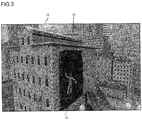
- Fig. 3 shows a screen image of the virtual space.
- the game controlling unit 106 acquires the data on an advertisement from the advertisement distributing apparatus 500 and allows the display controlling unit 108 to display on the advertisement region 12 the data on the advertisement.
- a block 14 is an object, for example, a character, a building, tree, or the like, that prohibits the advertisement region 12 from being displayed on the virtual space screen 10.
- Figure 2 will now again be referred to.
- the exposure indicator calculating unit 110 acquires from the game controlling unit 106 data (hereinafter, referred to as "actual display data," as appropriate) indicating what is displayed for each of the pixels of every screen image generated by the game controlling unit 106, i.e., each frame.
- the actual display data is, in other words, data indicating which object is displayed on which pixel. In the present embodiment, it is assumed that one frame is generated for every sixtieth of a second (1/60 second).
- the exposure indicator calculating unit 110 calculates the first index based on the actual display data.
- the exposure indicator transmitting unit 112 transmits the first index calculated by the exposure indicator calculating unit 110 to the inspection apparatus 700.
- the exposure indicator calculating unit 110 calculates a screen occupancy rate and a valid display rate, which both indicate the actual display record of the advertisement in accordance with the actual display data.
- the data chronologically indicating the screen occupancy rate and the valid display rate for the respective frame (hereinafter referred to as "basic indices,” as appropriate) is calculated.
- the screen occupancy rate is a ratio of the area of the displayed advertisement region 12 visible to the user compared to the whole virtual space screen 10.
- the exposure indicator calculating unit 110 calculates, for example, the ratio of the number of pixels on which the displayed advertisement region 12 is visible to the user compared to the number of whole pixels of the whole virtual space screen 10.
- the valid display rate is a ratio of the area of the displayed advertisement region 12 visible to the user compared to the whole advertisement region 12.
- the exposure indicator calculating unit 110 calculates, for example, the ratio of the number of pixels on which the displayed advertisement region 12 is visible to the user compared to the number of pixels of the whole advertisement region 12.
- being "visible to the user" means that the advertisement region 12 is displayed without running off the edge of the virtual space screen 10 or without being blocked by a block 14, etc.
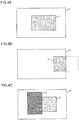
- Fig. 4 shows the relationship between the virtual space screen 10 and the advertisement region 12. An explanation will be given here on a concrete calculated value of the screen occupancy rate and the valid display rate while referring to Fig. 4.
- Fig. 4A shows the status where a whole advertisement region 12 is displayed on a virtual space screen 10 that occupies 25 percent of the screen. In this case, the exposure indicator calculating unit 110 calculates and determines the screen occupancy rate as 25 percent and the valid display rate as 100 percent.
- Fig. 4B shows the status where 50 percent of the advertisement region 12 is displayed on the virtual space screen 10. In this case, the exposure indicator calculating unit 110 calculates and determines the screen occupancy rate as 12.5 percent and the valid display rate as 50 percent.
- Fig. 4C shows the status where 40 percent of the advertisement region 12 is obstructed by a block 14 in the virtual space screen 10. In this case, the exposure indicator calculating unit 110 calculates and determines the screen occupancy rate as 15 percent and the valid display rate as 60 percent.
- the exposure indicator calculating unit 110 calculates the first index based on the basic indices. More specifically, the degree of exposure, which indicates the size of the exposed advertisements in the virtual space during a predetermined period is categorized into three categories, namely, "large”, “medium”, and “small”, and then the number of times that it may respectively fall under these categories is calculated as the first index.
- the first index that is eventually calculated is, for example, data indicating "large: once, medium: twice, small: seven times.”
- Fig. 5 shows an example of the conditions for determining the first index.
- the "evaluation basis” field in Fig. 5 indicates the data items that are used to determine the degree of exposure.
- the “criterion” field indicates the value of evaluation basis that is used as the threshold value.
- the exposure indicator calculating unit 110 specifies 180 frames included in the basic indices that are consecutive in a temporal sequence and whose screen occupancy rate is more than 0. If the screen occupancy rate is more than or equal to 25 percent and the valid display rate is more than or equal to 50 percent for any of the 180 frames, the number falling into the category under which the degree of exposure is "large” is incremented by one.
- the exposure indicator calculating unit 110 executes the specification process for the following 180 frames.
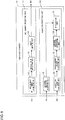
- Fig. 6 is a block diagram showing the functional structure of the inspection apparatus 700 of Fig. 1 .
- the inspection apparatus 700 is provided with a preliminary processing unit 710 and an inspection processing unit 720.
- the preliminary processing unit 710 generates an advertisement image for the inspection as a preliminary preparation for the calculation of the second index by the inspection processing unit 720.
- the inspection processing unit 720 cross-checks the first index calculated by using the advertisement inspection image in the game device 100 and the second index calculated based on the screen image of the virtual space that includes the advertisement inspection image.
- the preliminary processing unit 710 includes a preliminary image acquiring unit 712, an unused color specifying unit 714, and an image mapping unit 716.
- the preliminary image acquiring unit 712 acquires from the capturing apparatus 600 the moving image data of the virtual space displayed on the display 300. Then the preliminary image acquiring unit 712 extracts still image data for each frame from the moving image data as a preliminary image.
- the capturing apparatus 600 captures a screen image in the acquisition phase for acquiring the preliminary image
- colors that do not later hinder the process of specifying unused color performed by the unused color specifying unit 714, which will be described later, are set for the advertisement region 12 in the virtual space.
- an advertisement (hereinafter, referred to as "dummy advertisement”) is set using colors that are not determined to be of the color used in the virtual space screen 10.
- the advertisement distributing apparatus 500 may provide the game device 100 with a dummy advertisement where black is set as the non-prohibiting color described above.
- the unused color specifying unit 714 specifies a color that is not used in the virtual space provided by the game application.
- Fig. 7 shows a distribution of colors used in the virtual space.
- the vertical axis indicates the distribution of the hue
- the horizontal axis indicates the distribution of the saturation.
- the unused color specifying unit 714 specifies colors used in each of the plurality of preliminary images extracted by the preliminary image acquiring unit 712, and sets the area corresponding to the color as a used region 20.
- the unused color specifying unit 714 determines a first inspection color range 25 and a second inspection color range 27 in the unused region 22, which indicates the area other than the used region 20.
- the first inspection color range 25 and second inspection color range 27 are a group of colors having certain attributes where hue and saturation are in a predetermined range. In this process, the first inspection color range 25 and second inspection color range 27 are preferably determined so that their hues are laid side-by-side, as shown in Fig.7 .
- the unused color specifying unit 714 determines one of the colors included in the first inspection color range 25, typically a median color, with regard to the hue and saturation in the first inspection color range 25 and determines the color to be the first inspection color 24. In a similar manner, the unused color specifying unit 714 determines the second inspection color 26 from the colors included in the second inspection color range 27. As will be described later, each color included in the first inspection color range 25 is identified to be of the same color as the first inspection color 24, and each color included in the second inspection color range 27 is identified to be of the same color as the second inspection color 26 in the inspection processing unit 720.
- the size of the first inspection color range 25 and second inspection color range 27 may be set based on company knowledge or by experiment, performed by the present system. Fig. 6 will now again be referred to.
- the image mapping unit 716 uses the first inspection color 24 and the second inspection color 26 specified by the unused color specifying unit 714 and generates an advertisement inspection image.
- the image mapping unit 716 transmits the generated advertisement inspection image to the advertisement distributing apparatus 500 and allows the advertisement distributing apparatus 500 to provide the game device 100 with the advertisement inspection image when inspecting the game application.
- Fig. 8 shows a typical advertisement inspection image.
- the image mapping unit 716 generates an advertisement inspection image 28 where patches rendered by either the first inspection color 24 or the second inspection color 26 are disposed alternately, that is, the patches are disposed so as to form a checkered pattern.
- the image mapping unit 716 calculates the number of intersecting points formed by the boundaries of patches in the advertisement inspection image 28 and stores the number into a predetermined storage device. For example, the number of intersecting points is calculated as forty-nine for the advertisement inspection image 28 shown in Fig. 8 . Fig. 6 will now again be referred to.
- the inspection processing unit 720 includes an exposure indicator acquiring unit 722, an inspection image acquiring unit 724, an advertisement region extracting unit 726, an exposure indicator calculating unit 728, and a verification unit 730.
- the exposure indicator acquiring unit 722 acquires the first index transmitted from the game device 100.
- the inspection image acquiring unit 724 acquires from the capturing apparatus 600 a moving image that records screen images of the virtual space where the advertisement inspection image is set. Then, from this moving image, the inspection image acquiring unit 724 extracts still image data for respective frames as inspection images.
- Fig. 9 shows an inspection image. In the inspection image 30 of Fig. 9 , an advertisement inspection image 28 is set on the advertisement region 12, and a part of the advertisement inspection image 28 is not visible because of a block 14. Fig. 6 will now again be referred to.
- the advertisement region extracting unit 726 extracts an advertisement region that is displayed to be visible to a user by color-filtering the inspection image acquired by the inspection image acquiring unit 724 and then generates an image indicating that advertisement region (hereinafter referred to as "advertisement extract image," as appropriate).
- advertisement extract image an image indicating that advertisement region
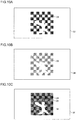
- Figs. 10A, 10B and 10C show a method for generating the advertisement extract image in the inspection image 30.
- the advertisement region extracting unit 726 first generates an image by extracting the pixels whose pixel value in the inspection image 30 indicates the first inspection color range 25.
- Fig. 10A shows the first extract image 32.
- the advertisement region extracting unit 726 generates an image by extracting the pixels whose pixel value in the inspection image 30 indicates the second inspection color range 27.
- Fig. 10B shows the second extract image 34.
- the advertisement region extracting unit 726 combines the first extract image 32 and the second extract image 34 and generates an advertisement extract image, accordingly.
- Fig. 10C indicates the advertisement extract image 36, where the first extract image 32 and the second extract image 34 are combined. In Fig. 10C , an area where the block 14 is to be displayed is excluded from the advertisement extract image 36.
- the exposure indicator calculating unit 728 calculates the second index based on the advertisement extract image 36 generated by the advertisement region extracting unit 726. More specifically, pixels that first have pixel values indicating the color of the first inspection color range 25 or the second inspection color range 27 are specified as the advertisement region pixels.
- the advertisement region extracting unit 726 calculates the screen occupancy rate as the ratio of the number of the advertisement region pixels to the number of pixels of the whole advertisement extract image 36.
- the exposure indicator calculating unit 728 specifies a part, where pixels having the pixel values of the color of the first inspection color range 25, shifts to the pixels having the pixel values of the color of the second inspection color range 27 among the specified advertisement region pixels as the boundary of patches. Then the exposure indicator calculating unit 728 specifies the intersections formed by the boundaries of patches and counts the number thereof.
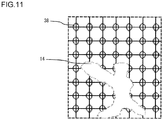
- Fig. 11 schematically shows the boundary of patches in the advertisement extract image 36.
- forty intersections 38 existing in the advertisement extract image 36 that is, those not being hidden by the block 14, are counted.
- the exposure indicator calculating unit 728 refers to a predetermined storage device and acquires the total number of intersecting points of the advertisement inspection image 28, which is calculated by the image mapping unit 716 beforehand. Then, the valid display rate is calculated as the ratio of the number of intersecting points existing in the advertisement extract image 36 to the total number of the intersecting points. In the case shown in Fig. 11 , the total number of intersecting points is forty-nine, and the number of intersections 38 in the advertisement extract image is forty. Therefore, the valid display rate is calculated to be 81.6 percent.
- the exposure indicator calculating unit 728 calculates the second index based on the screen occupancy rate and the valid display rate.
- the format of the second index is similar to that of the first index, which is described above.
- the method for calculating the second index based on the screen occupancy rate and the valid display rate is also similar to that of the first index.
- the condition same as that for determining the first index which is shown in Fig. 5 , is also applicable to the calculation of the second index.
- the conditions for determining the first index may be adjusted appropriately when applied as the conditions for determining second index, based on the knowledge of a company or an experiment performed by the present system.
- Fig. 6 will now again be referred to.
- the verification unit 730 cross-checks the first index acquired by the exposure indicator acquiring unit 722 and the second index calculated at the exposure indicator calculating unit 728. If the first index and the second index are identical or if the difference between them falls within a predetermined range, the verification unit 730 determines that the exposure indicator calculating unit 110 of the game device 100 functions properly. In other words, the verification unit 730 determines that the advertisement exposure calculating function of the game application loaded to the game device 100 is implemented properly.
- the predetermined range mentioned above an appropriate range may be set based on the knowledge of a company or an experiment performed by the present system, etc.
- the verification unit 730 stores the results of the determination into a predetermined storage device as appropriate or notifies a predetermined external device of the results of the determination, as appropriate. For example, the determination result may be displayed on a display (not shown) of the inspection apparatus 700 or may be given as a notice to the PC terminal of the inspector.
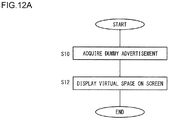
- Fig. 12A is a flowchart showing the operation of the game device 100 at the preparation stage for the inspection.
- the advertisement acquiring unit 104 acquires a dummy advertisement from the advertisement distributing apparatus 500 (S10). While controlling the game, the game controlling unit 106 allows, via the display controlling unit 108, the display 300 to display a virtual space where the dummy advertisement is displayed on the advertisement region (S12). In this process, the capturing apparatus 600 acquires the moving image data of the virtual space displayed on the display 300.
- Fig 12B is a flowchart showing the operation of the inspection apparatus 700 at the preparation stage for inspection.
- the preliminary image acquiring unit 712 acquires the moving image data of the virtual space where the dummy advertisement is displayed on the advertisement region from the capturing apparatus 600 and acquires a plurality of preliminary images on a frame by frame basis from the moving image data (S20).
- the unused color specifying unit 714 specifies colors used in the plurality of preliminary images, respectively, and then determines colors to be used for advertisement inspection image, the colors being included in the unused colors in the virtual space (S22).
- the image mapping unit 716 sets the advertisement inspection image by using the determined colors (S24) and transmits the advertisement inspection image to the advertisement distributing apparatus 500 (S26).
- Fig 13A is a flowchart showing the operation of the game device 100 at the execution stage of the inspection.
- the advertisement acquiring unit 104 acquires the advertisement inspection image from the advertisement distributing apparatus 500 (S30). While controlling the game, the game controlling unit 106 allows, via the display controlling unit 108, the display 300 to display a virtual space where the advertisement inspection image is displayed on the advertisement region (S32). During this process, the capturing apparatus 600 acquires the moving image data of the virtual space displayed on the display 300.
- the exposure indicator calculating unit 110 calculates, based on actual display data acquired from the game controlling unit 106, the advertisement occupancy rate and the valid display rate for each frame. Then based on those, the exposure indicator calculating unit 110 calculates the first index (S34).
- the exposure indicator transmitting unit 112 transmits the calculated first index to the inspection apparatus 700 (S36).
- Fig 13B is a flowchart showing the operation of the inspection apparatus 700 at the execution stage of the inspection.
- the exposure indicator acquiring unit 722 acquires the first index calculated in the game device 100 (S40).
- the inspection image acquiring unit 724 acquires the moving image data of the virtual space where the advertisement inspection image is displayed on the advertisement region from the capturing apparatus 600 and acquires a plurality of preliminary images on a frame by frame basis from the moving image data (S42).
- the advertisement region extracting unit 726 generates the advertisement extract image from respective images for inspection by utilizing color-filtering (S44).
- the exposure indicator calculating unit 728 calculates the advertisement occupancy rate and the valid display rate for each advertisement extract image and then calculates the second index according to those rates (S46).
- the verification unit 730 verifies the consistency of the advertisement exposure calculating function of the game application that operates on the game device 100 by cross-checking the first index and the second index (S48).
- the inspection apparatus 700 By the inspection apparatus 700, according to the present embodiment, the first index calculated in the game device 100 that operates a game application to be inspected and the second index calculated based on the actual images of the virtual space are cross-checked. This enables one to verify the consistency of the advertisement exposure calculating function of the game application without referring to the execution status of the game application even if the display status of advertisements in the virtual space varies according to the viewpoint set by a user.
- an advertisement inspection image that uses the inspection colors that are not used in the virtual space is mapped on the advertisement region in the virtual space when the game application is inspected. This enables one to specify the displayed advertisement region that is visible to a user easily and speedily by utilizing color-filtering even if the display status of advertisements in the virtual space varies according to the viewpoint set by a user.
- a displayed advertisement region that is visible to a user is specified, and the advertisement extract image is generated, while the inspection color that is set for the advertisement inspection image and the colors having similar color attributes with that of the inspection color are identified as a same color.
- Some game application sets a display effect, such as a far-away landscape, in the virtual space displayed opaquely, etc.
- the color of the advertisement inspection image set for an advertisement space in the virtual space may be changed when the virtual space is displayed on the screen. Setting a range of colors that are identified as the inspection color helps to appropriately identify the displayed advertisement region that is visible to a user, even in case such display effects are applied.
- the advertisement images are set as a checkered pattern formed by patches rendered with one of the two inspection colors.
- the valid display rate is calculated as the ratio of the number of intersecting points formed by the boundaries of patches in the advertisement extract image to the number of the intersecting points formed by the boundaries of patches in the advertisement inspection image.
- the shape of the advertisement inspection image constantly varies, and a part of the image may not be displayed because of a block or the like.
- the valid display rate similar to the valid display rate calculated in the game device 100 can be calculated by the inspection apparatus 700 based on the inspection image, even in case where the display status of the advertisement inspection image varies constantly.
- the inspection apparatus 700 colors having adjacent attributes are adopted as the range of the two inspection colors, which are used as standards when extracting an advertisement extract image from an inspection image.
- the color of the advertisement inspection image is sometimes changed depending on the setting of the display effect. If the attributes of colors belonging to first inspection color range and the second inspection color range differ widely, sometimes it may be difficult to specify to which area a color that is generated as a result of setting the display effect and that has attributes positioned between the first inspection color range and the second inspection color range belongs.
- the first inspection color range and the second inspection color range can be distinguished easily. Therefore, the boundaries of the patches can be specified precisely. Further, the intersections formed by the boundaries of the patches can be specified precisely.
- the first inspection color range 25 is set as a group of colors that are identified to be of the same color as the first inspection color 24, and the second inspection color range 27 is set as a group of colors that are identified to be of the same color as the second inspection color 26.
- the first inspection color range 25 and second inspection color range 27 may not be set. In this case, color filtering is performed only for one color, and thus the processing thereof becomes faster and easier. Particularly, this embodiment is preferable in case the color of the advertisement inspection image is not changed, for example, because the display effect is not used in the virtual space, etc.
- a simple checkered pattern is shown as a disposition pattern of patches used for the advertisement inspection image in the embodiment, other variations of the pattern may be adopted for disposition of patches on the advertisement inspection image. For example, on a part of the advertisement region that is assumed to be important, patches may be disposed so that the intersections are disposed with a higher concentration in that part compared to other parts.
- two colors are set as inspection colors to be set on the advertisement inspection image in the embodiment, only one color may be set in a variation. Particularly, this embodiment is preferable in case the valid display rate is not necessary as the basis for evaluating the second index. In yet another variation, more than two colors may be set as the inspection colors. This enables one to distinguish respective intersections, which allows one to adjust the valid display rate depending on which intersection is displayed even if the number of intersections remains the same. For example, if the intersections exist in the center part of the advertisement inspection image in the displayed screen, a higher effective display rate may be calculated as compare to the case where the intersections exist in the end part of the advertisement inspection image.
- the first index and the second index that are calculated depending on the screen occupancy rate and the valid display rate are cross-checked.
- the screen occupancy rate and the valid display rate calculated in the game device 100 and the screen occupancy rate and the valid display rate calculated in the inspection apparatus 700 may be directly compared.
- the screen occupancy rates and the valid display rates that are calculated for identical screen display times or for an identical frame ID relating to the virtual space screen 10 may be compared, respectively.
- the advertisement region extracting unit 726 extracts the displayed advertisement region visible to a user by color-filtering an image of the virtual space acquired on frame by frame basis (hereinafter referred to as a "frame unit image") by the inspection image acquiring unit 724.
- the inspection apparatus 700 may further comprise an image adjusting unit operative to synthesize a plurality of frame unit images acquired by the inspection image acquiring unit 724 according to a predetermined criterion and to generate a new image, which is a synthesis of a plurality of frame unit images, as an inspection image.
- the advertisement region extracting unit 726 color-filters the inspection image generated in the image adjusting unit and extracts an advertisement region.
- the image adjusting unit may specify pixel values of corresponding pixels for respective frame unit images that are to be synthesized, may calculate an average pixel value, which is the average of those pixel values, and may set the average pixel value as the pixel value for that pixel in the inspection image.
- the corresponding pixels may be pixels displayed at the same location on the display 300.
- the range of the pixel values may be stored in advance, and if a pixel value deviates from the range, that pixel may be excluded from the pixels to be synthesized, for example, from the pixels to be averaged.
- the frame unit images are synthesized and thus the number of the inspection images are reduced, images to be processed during a later processing, for example, the color-filtering process, the advertisement extract image generation process, or the exposure index calculation process, are reduced. This reduces the quantity of system resources that are necessary for the inspection, and fast inspection is realized.
- the synthesis of a plurality of frame unit images reduces the influence of the display effect, which makes it easier to properly extract the advertisement region.
- an explanation on the inspection apparatus 700 which inspects the advertisement exposure calculating function of a game application, has been given.
- the scope of the technological idea of the present invention is not limited to an inspection apparatus.
- an image using a color that is not used in the virtual space where display status changes according to a viewpoint set by a user is set on the region where the object to be detected is to be displayed. Then the existence of an object is detected by color-filtering the image of the virtual space that is actually displayed.
- this technological idea is applicable not only to inspection apparatuses but also to entire image processing apparatuses. For example, in this image processing apparatus, after an object to be detected is detected, a predetermined post processing may be executed according to the position or the size in the virtual space of the object to be detected.
- the present invention is applicable to an image processing apparatus for extracting a region where a specific object is to be displayed, the region being included in images of a virtual space.
Landscapes
- Engineering & Computer Science (AREA)
- Business, Economics & Management (AREA)
- Multimedia (AREA)
- Development Economics (AREA)
- Finance (AREA)
- Theoretical Computer Science (AREA)
- Physics & Mathematics (AREA)
- Accounting & Taxation (AREA)
- Strategic Management (AREA)
- General Physics & Mathematics (AREA)
- Entrepreneurship & Innovation (AREA)
- Game Theory and Decision Science (AREA)
- Computer Vision & Pattern Recognition (AREA)
- Economics (AREA)
- Marketing (AREA)
- General Business, Economics & Management (AREA)
- Image Generation (AREA)
- Management, Administration, Business Operations System, And Electronic Commerce (AREA)
- Processing Or Creating Images (AREA)
Claims (7)
- Bildverarbeitungsvorrichtung (700) zum Extrahieren eines Bereichs zum Anzeigen eines vorbestimmten Objekts aus einem Bild eines virtuellen Raums, umfassend:eine Bildabbildungseinheit (716), die zum Erzeugen eines Bildes betreibbar ist, das eine nicht in dem virtuellen Raum verwendete Farbe verwendet, wobei das Aussehen des vorbestimmten Objekts aus der Sicht eines Benutzers gemäß einem Betrachtungspunkt des Benutzers variiert, zur Anzeige in einem Bereich, in dem das vorbestimmte Objekt in dem virtuellen Raum anzuzeigen ist,eine Bilderfassungseinheit (724), die dazu betreibbar ist, ein bewegtes Bild zu erfassen, das Bildschirmbilder des virtuellen Raums aufzeichnet, die tatsächlich auf einem Bildschirm auf einer Einzelframebasis angezeigt werden, und Standbilder für entsprechende Frames des bewegten Bildes als Prüfbilder extrahiert; undeine Bereichsextraktionseinheit (726), die dazu betreibbar ist, durch Farbfiltern eines erfassten Prüfbildes des virtuellen Raums einen Bereich, der mit der im virtuellen Raum nicht verwendeten Farbe gerendert ist, als einen für den Benutzer sichtbaren Bereich zum Anzeigen des vorbestimmten Objekts zu extrahieren.
- Bildverarbeitungsvorrichtung (700) nach Anspruch 1, wobei
die Bereichsextraktionseinheit (726) auch den Bereich extrahiert, der mit Pixeln mit einer Farbe in einem Farbumfang gerendert ist, der die Farbe enthält, die nicht in dem virtuellen Raum als den für den Benutzer sichtbaren Bereich zum Anzeigen des Objekts verwendet wird. - Bildverarbeitungsvorrichtung (700) nach Anspruch 1 oder 2, ferner umfassend:eine Expositionsindikator-Schätzungseinheit (728); wobeidie Bildabbildungseinheit (716) eine Vielzahl von Farbumfängen festlegt, die nicht im virtuellen Raum verwendet werden, und ein Bild abbildet, das in eine Vielzahl von Patches mit Pixeln unterteilt ist, die mit den jeweiligen Farbumfängen auf dem Bereich zum Anzeigen des vorbestimmten Objekts im virtuellen Raum gerendert sind;die Bereichsextraktionseinheit (726) einen Bereich extrahiert, der mindestens in einer der Vielzahl von nicht verwendeten Farbumfängen als der für den Benutzer sichtbare Bereich zum Anzeigen des vorbestimmten Objekts gerendert ist; unddie Expositionsindikator-Schätzungseinheit (728) als Grenzen von Patches, die in dem extrahierten Bereich zum Anzeigen des vorbestimmten Objekts vorhanden sind, Teile unter dem Bereich festlegt, in dem Pixel mit Pixelwerten eines ersten der Farbumfänge zu Pixeln mit Pixelwerten eines zweiten der Farbumfänge wechseln, und das Verhältnis des für den Benutzer sichtbaren Bereichs für das Anzeigen des vorbestimmten Objekts zum gesamten Bereich für das Anzeigen des Objekts durch Zählen der Anzahl der durch die Grenzen der Patches gebildeten Schnittpunkte schätzt.
- Bildverarbeitungsvorrichtung (700) nach Anspruch 3, wobei
die Bildabbildungseinheit (716) eine Vielzahl von Farben festlegt, die nicht in dem virtuellen Raum verwendet werden, und wobei die Attribute, die sich auf deren Farben beziehen, in einem Bereich voneinander liegen, und ein Bild abbildet, das in eine Vielzahl von Patches unterteilt ist, die mit den jeweiligen Farben auf dem Bereich zum Anzeigen des vorbestimmten Objekts in dem virtuellen Raum gerendert sind. - Bildverarbeitungsvorrichtung (700) nach einem der Ansprüche 1 bis 4, ferner umfassend:eine Bildeinstelleinheit, die dazu betreibbar ist, ein neues Bild durch Zusammenfügen einer Vielzahl von Bildern des virtuellen Raums, die für jedes Frame durch die Bilderfassungseinheit erfasst wurden, nach einem vorbestimmten Standard zu erzeugen, wobeidie Bereichsextraktionseinheit (726) den für den Benutzer sichtbaren Bereich zum Anzeigen des vorbestimmten Objekts durch Farbfiltern des von der Bildeinstelleinheit erzeugten neuen Bildes extrahiert.
- Verfahren zum Extrahieren eines Bereichs zum Anzeigen eines vorbestimmten Objekts aus einem Bild eines virtuellen Raums, umfassend:Erzeugen eines Bildes, das eine nicht in dem virtuellen Raum verwendete Farbe verwendet, wobei das Aussehen des vorbestimmten Objekts aus der Sicht eines Benutzers gemäß einem Betrachtungspunkt des Benutzers variiert, zur Anzeige in einem Bereich, in dem das vorbestimmte Objekt in dem virtuellen Raum anzuzeigen ist,Erfassen eines bewegten Bildes, das Bildschirmbilder des virtuellen Raums aufzeichnet, die tatsächlich auf einem Bildschirm auf einer Einzelframebasis angezeigt werden, und Extrahieren von Standbildern für entsprechende Frames des bewegten Bildes als Prüfbilder; undExtrahieren durch Farbfiltern eines erfassten Prüfbildes des virtuellen Raums eines mit der im virtuellen Raum nicht verwendeten Farbe gerenderten Bereichs als einen für den Benutzer sichtbaren Bereich zum Anzeigen des vorgegebenen Objekts.
- Programm zum Extrahieren eines Bereichs zum Anzeigen eines vorbestimmten Objekts aus einem Bild eines virtuellen Raums, umfassend:ein Erzeugungsmodul, das zum Erzeugen eines Bildes betreibbar ist, das eine nicht in dem virtuellen Raum verwendete Farbe verwendet, wobei das Aussehen des vorbestimmten Objekts aus der Sicht eines Benutzers gemäß einem Betrachtungspunkt des Benutzers variiert, zur Anzeige in einem Bereich, in dem das vorbestimmte Objekt in dem virtuellen Raum anzuzeigen ist,ein Erfassungsmodul, das dazu betreibbar ist, ein bewegtes Bild zu erfassen, das Bildschirmbilder des virtuellen Raums aufzeichnet, die tatsächlich auf einem Bildschirm auf einer Einzelframebasis angezeigt werden, und Standbilder für entsprechende Frames des bewegten Bildes als Prüfbilder zu extrahieren; undein Extraktionsmodul, das dazu betreibbar ist, durch Farbfiltern eines erfassten Prüfbildes des virtuellen Raums den mit der im virtuellen Raum nicht verwendeten Farbe gerenderten Bereich als einen für den Benutzer sichtbaren Bereich zum Anzeigen des vorgegebenen Objekts zu extrahieren.
Applications Claiming Priority (2)
| Application Number | Priority Date | Filing Date | Title |
|---|---|---|---|
| JP2008321842A JP4848001B2 (ja) | 2008-12-18 | 2008-12-18 | 画像処理装置および画像処理方法 |
| PCT/JP2009/003279 WO2010070778A1 (ja) | 2008-12-18 | 2009-07-13 | 画像処理装置および画像処理方法 |
Publications (3)
| Publication Number | Publication Date |
|---|---|
| EP2230643A1 EP2230643A1 (de) | 2010-09-22 |
| EP2230643A4 EP2230643A4 (de) | 2013-11-06 |
| EP2230643B1 true EP2230643B1 (de) | 2019-10-02 |
Family
ID=42268465
Family Applications (1)
| Application Number | Title | Priority Date | Filing Date |
|---|---|---|---|
| EP09817066.5A Active EP2230643B1 (de) | 2008-12-18 | 2009-07-13 | Bildprozessor und bildverarbeitungsverfahren |
Country Status (4)
| Country | Link |
|---|---|
| US (1) | US8624914B2 (de) |
| EP (1) | EP2230643B1 (de) |
| JP (1) | JP4848001B2 (de) |
| WO (1) | WO2010070778A1 (de) |
Families Citing this family (13)
| Publication number | Priority date | Publication date | Assignee | Title |
|---|---|---|---|---|
| JP4930607B2 (ja) * | 2010-02-04 | 2012-05-16 | カシオ計算機株式会社 | 画像処理装置、及び、画像処理プログラム |
| JP2011188083A (ja) * | 2010-03-05 | 2011-09-22 | Sony Corp | 情報処理装置、情報処理方法、プログラム、及び光学顕微鏡を搭載した撮像装置 |
| CN102571633B (zh) * | 2012-01-09 | 2016-03-30 | 华为技术有限公司 | 展示用户状态的方法、展示终端以及服务器 |
| US20150186341A1 (en) * | 2013-12-26 | 2015-07-02 | Joao Redol | Automated unobtrusive scene sensitive information dynamic insertion into web-page image |
| US10037552B1 (en) * | 2014-09-18 | 2018-07-31 | Pathmatics, Inc. | Systems and methods for discovery and tracking of obscured web-based advertisements |
| US10366404B2 (en) | 2015-09-10 | 2019-07-30 | The Nielsen Company (Us), Llc | Methods and apparatus to group advertisements by advertisement campaign |
| US10664867B2 (en) * | 2016-06-28 | 2020-05-26 | Optimera, Llc | Digital content delivery based on measured viewability of a displayed content insertion field |
| JP6864593B2 (ja) * | 2017-09-27 | 2021-04-28 | 株式会社Nttドコモ | 情報処理装置 |
| CN110675310B (zh) * | 2019-07-02 | 2020-10-02 | 北京达佳互联信息技术有限公司 | 视频处理方法、装置、电子设备及存储介质 |
| JP6956829B1 (ja) * | 2020-06-09 | 2021-11-02 | 株式会社電通 | 広告表示システム |
| JP7254112B2 (ja) * | 2021-03-19 | 2023-04-07 | 本田技研工業株式会社 | 仮想体験提供装置、仮想体験提供方法、及びプログラム |
| CN114816629B (zh) * | 2022-04-15 | 2024-03-22 | 网易(杭州)网络有限公司 | 绘制显示对象的方法、装置、存储介质及电子装置 |
| JP7341575B1 (ja) | 2023-03-31 | 2023-09-11 | 株式会社Hikky | 情報処理システム、広告閲覧検知方法及びプログラム |
Family Cites Families (12)
| Publication number | Priority date | Publication date | Assignee | Title |
|---|---|---|---|---|
| WO1999019828A1 (en) * | 1997-10-15 | 1999-04-22 | Electric Planet, Inc. | Method and apparatus for performing a clean background subtraction |
| WO2001061456A2 (en) * | 2000-02-14 | 2001-08-23 | Geophoenix, Inc. | Methods and apparatus for viewing information in virtual space |
| JP3278436B1 (ja) * | 2001-06-29 | 2002-04-30 | コナミ株式会社 | 家庭用ゲーム等のゲーム広告課金システム、プログラム及びゲーム広告課金制御方法 |
| JP4401728B2 (ja) * | 2003-09-30 | 2010-01-20 | キヤノン株式会社 | 複合現実空間画像生成方法及び複合現実感システム |
| CA2603743C (en) * | 2005-04-05 | 2018-01-16 | Google Inc. | Method and system supporting audited reporting of advertising impressions from video games |
| US8717423B2 (en) * | 2005-05-09 | 2014-05-06 | Zspace, Inc. | Modifying perspective of stereoscopic images based on changes in user viewpoint |
| US8629885B2 (en) | 2005-12-01 | 2014-01-14 | Exent Technologies, Ltd. | System, method and computer program product for dynamically identifying, selecting and extracting graphical and media objects in frames or scenes rendered by a software application |
| JP4847203B2 (ja) * | 2006-04-27 | 2011-12-28 | キヤノン株式会社 | 情報処理方法、情報処理装置 |
| JP4409545B2 (ja) | 2006-07-06 | 2010-02-03 | 株式会社ソニー・コンピュータエンタテインメント | 三次元位置特定装置および方法、奥行位置特定装置 |
| WO2008127705A1 (en) * | 2007-04-12 | 2008-10-23 | Iga Worldwide, Inc. | Impression tracking |
| KR101141087B1 (ko) * | 2007-09-14 | 2012-07-12 | 인텔렉츄얼 벤처스 홀딩 67 엘엘씨 | 제스처-기반 사용자 상호작용의 프로세싱 |
| JP5232619B2 (ja) * | 2008-12-18 | 2013-07-10 | 株式会社ソニー・コンピュータエンタテインメント | 検査装置および検査方法 |
-
2008
- 2008-12-18 JP JP2008321842A patent/JP4848001B2/ja not_active Expired - Fee Related
-
2009
- 2009-07-13 EP EP09817066.5A patent/EP2230643B1/de active Active
- 2009-07-13 WO PCT/JP2009/003279 patent/WO2010070778A1/ja not_active Ceased
- 2009-07-13 US US12/744,702 patent/US8624914B2/en active Active
Non-Patent Citations (1)
| Title |
|---|
| None * |
Also Published As
| Publication number | Publication date |
|---|---|
| EP2230643A1 (de) | 2010-09-22 |
| US8624914B2 (en) | 2014-01-07 |
| EP2230643A4 (de) | 2013-11-06 |
| JP2010146228A (ja) | 2010-07-01 |
| WO2010070778A1 (ja) | 2010-06-24 |
| US20110316869A1 (en) | 2011-12-29 |
| JP4848001B2 (ja) | 2011-12-28 |
Similar Documents
| Publication | Publication Date | Title |
|---|---|---|
| US8624914B2 (en) | Image processing apparatus and image processing method | |
| US8760470B2 (en) | Mixed reality presentation system | |
| US10049283B2 (en) | Stay condition analyzing apparatus, stay condition analyzing system, and stay condition analyzing method | |
| CN107515825B (zh) | 流畅度测试方法和装置、存储介质、终端 | |
| US9030463B2 (en) | Inspecting apparatus and method for inspection | |
| US20100313214A1 (en) | Display system, system for measuring display effect, display method, method for measuring display effect, and recording medium | |
| EP2848003B1 (de) | Verfahren und vorrichtung zur erfassung der geometrie von spiegelnden objektes auf der basis eines tiefensensors | |
| US20100295924A1 (en) | Information processing apparatus and calibration processing method | |
| CN111228821B (zh) | 智能检测穿墙外挂方法、装置、设备及其存储介质 | |
| US20220383476A1 (en) | Apparatus and method for evaluating a quality of image capture of a scene | |
| Böhm | Multi-image fusion for occlusion-free façade texturing | |
| JP2014006586A (ja) | 情報処理装置及びその制御方法、コンピュータプログラム | |
| CN107451976B (zh) | 一种图像处理方法及装置 | |
| CN102118595A (zh) | 输出设备、输出方法和程序 | |
| CN104954627B (zh) | 一种信息处理方法及电子设备 | |
| CN104282013B (zh) | 一种用于前景目标检测的图像处理方法及装置 | |
| CN114466182A (zh) | 帧率检测方法、装置、计算机设备、存储介质和产品 | |
| US20090245584A1 (en) | Image processing apparatus, image processing method, and program | |
| CN120338881B (zh) | 一种基于大数据的营销风控系统 | |
| KR20240026222A (ko) | 이미지 생성 | |
| CN109599051A (zh) | 一种显示屏的色度调整方法 | |
| CN104965915B (zh) | 一种用户访问行为数据的处理方法和系统 | |
| JP2024145810A (ja) | 表示制御プログラム、方法、及び装置 | |
| CN119034201B (zh) | 基于光线投射的游戏内广告可见性追踪方法 | |
| EP4379663A1 (de) | Bildverarbeitungssystem, steuerungsverfahren und programm |
Legal Events
| Date | Code | Title | Description |
|---|---|---|---|
| PUAI | Public reference made under article 153(3) epc to a published international application that has entered the european phase |
Free format text: ORIGINAL CODE: 0009012 |
|
| 17P | Request for examination filed |
Effective date: 20100331 |
|
| AK | Designated contracting states |
Kind code of ref document: A1 Designated state(s): AT BE BG CH CY CZ DE DK EE ES FI FR GB GR HR HU IE IS IT LI LT LU LV MC MK MT NL NO PL PT RO SE SI SK SM TR |
|
| AX | Request for extension of the european patent |
Extension state: AL BA RS |
|
| DAX | Request for extension of the european patent (deleted) | ||
| RAP1 | Party data changed (applicant data changed or rights of an application transferred) |
Owner name: SONY COMPUTER ENTERTAINMENT INCORPORATED |
|
| RAP1 | Party data changed (applicant data changed or rights of an application transferred) |
Owner name: SONY COMPUTER ENTERTAINMENT INC. |
|
| A4 | Supplementary search report drawn up and despatched |
Effective date: 20131009 |
|
| RIC1 | Information provided on ipc code assigned before grant |
Ipc: A63F 13/12 20060101ALI20130927BHEP Ipc: G06T 13/00 20110101AFI20130927BHEP Ipc: G06Q 30/02 20120101ALI20130927BHEP Ipc: A63F 13/00 20060101ALI20130927BHEP Ipc: G06T 7/00 20060101ALI20130927BHEP Ipc: A63F 13/10 20060101ALI20130927BHEP |
|
| RAP1 | Party data changed (applicant data changed or rights of an application transferred) |
Owner name: SONY INTERACTIVE ENTERTAINMENT INC. |
|
| 17Q | First examination report despatched |
Effective date: 20160624 |
|
| RAP1 | Party data changed (applicant data changed or rights of an application transferred) |
Owner name: SONY INTERACTIVE ENTERTAINMENT INC. |
|
| REG | Reference to a national code |
Ref country code: DE Ref legal event code: R079 Ref document number: 602009060025 Country of ref document: DE Free format text: PREVIOUS MAIN CLASS: G06T0013000000 Ipc: A63F0013610000 |
|
| GRAP | Despatch of communication of intention to grant a patent |
Free format text: ORIGINAL CODE: EPIDOSNIGR1 |
|
| STAA | Information on the status of an ep patent application or granted ep patent |
Free format text: STATUS: GRANT OF PATENT IS INTENDED |
|
| RIC1 | Information provided on ipc code assigned before grant |
Ipc: A63F 13/61 20140101AFI20190329BHEP |
|
| INTG | Intention to grant announced |
Effective date: 20190426 |
|
| GRAS | Grant fee paid |
Free format text: ORIGINAL CODE: EPIDOSNIGR3 |
|
| GRAA | (expected) grant |
Free format text: ORIGINAL CODE: 0009210 |
|
| STAA | Information on the status of an ep patent application or granted ep patent |
Free format text: STATUS: THE PATENT HAS BEEN GRANTED |
|
| AK | Designated contracting states |
Kind code of ref document: B1 Designated state(s): AT BE BG CH CY CZ DE DK EE ES FI FR GB GR HR HU IE IS IT LI LT LU LV MC MK MT NL NO PL PT RO SE SI SK SM TR |
|
| REG | Reference to a national code |
Ref country code: GB Ref legal event code: FG4D |
|
| REG | Reference to a national code |
Ref country code: CH Ref legal event code: EP Ref country code: AT Ref legal event code: REF Ref document number: 1185562 Country of ref document: AT Kind code of ref document: T Effective date: 20191015 |
|
| REG | Reference to a national code |
Ref country code: DE Ref legal event code: R096 Ref document number: 602009060025 Country of ref document: DE |
|
| REG | Reference to a national code |
Ref country code: IE Ref legal event code: FG4D |
|
| REG | Reference to a national code |
Ref country code: NL Ref legal event code: MP Effective date: 20191002 |
|
| REG | Reference to a national code |
Ref country code: LT Ref legal event code: MG4D |
|
| REG | Reference to a national code |
Ref country code: AT Ref legal event code: MK05 Ref document number: 1185562 Country of ref document: AT Kind code of ref document: T Effective date: 20191002 |
|
| PG25 | Lapsed in a contracting state [announced via postgrant information from national office to epo] |
Ref country code: FI Free format text: LAPSE BECAUSE OF FAILURE TO SUBMIT A TRANSLATION OF THE DESCRIPTION OR TO PAY THE FEE WITHIN THE PRESCRIBED TIME-LIMIT Effective date: 20191002 Ref country code: PT Free format text: LAPSE BECAUSE OF FAILURE TO SUBMIT A TRANSLATION OF THE DESCRIPTION OR TO PAY THE FEE WITHIN THE PRESCRIBED TIME-LIMIT Effective date: 20200203 Ref country code: NL Free format text: LAPSE BECAUSE OF FAILURE TO SUBMIT A TRANSLATION OF THE DESCRIPTION OR TO PAY THE FEE WITHIN THE PRESCRIBED TIME-LIMIT Effective date: 20191002 Ref country code: AT Free format text: LAPSE BECAUSE OF FAILURE TO SUBMIT A TRANSLATION OF THE DESCRIPTION OR TO PAY THE FEE WITHIN THE PRESCRIBED TIME-LIMIT Effective date: 20191002 Ref country code: SE Free format text: LAPSE BECAUSE OF FAILURE TO SUBMIT A TRANSLATION OF THE DESCRIPTION OR TO PAY THE FEE WITHIN THE PRESCRIBED TIME-LIMIT Effective date: 20191002 Ref country code: LV Free format text: LAPSE BECAUSE OF FAILURE TO SUBMIT A TRANSLATION OF THE DESCRIPTION OR TO PAY THE FEE WITHIN THE PRESCRIBED TIME-LIMIT Effective date: 20191002 Ref country code: LT Free format text: LAPSE BECAUSE OF FAILURE TO SUBMIT A TRANSLATION OF THE DESCRIPTION OR TO PAY THE FEE WITHIN THE PRESCRIBED TIME-LIMIT Effective date: 20191002 Ref country code: ES Free format text: LAPSE BECAUSE OF FAILURE TO SUBMIT A TRANSLATION OF THE DESCRIPTION OR TO PAY THE FEE WITHIN THE PRESCRIBED TIME-LIMIT Effective date: 20191002 Ref country code: BG Free format text: LAPSE BECAUSE OF FAILURE TO SUBMIT A TRANSLATION OF THE DESCRIPTION OR TO PAY THE FEE WITHIN THE PRESCRIBED TIME-LIMIT Effective date: 20200102 Ref country code: GR Free format text: LAPSE BECAUSE OF FAILURE TO SUBMIT A TRANSLATION OF THE DESCRIPTION OR TO PAY THE FEE WITHIN THE PRESCRIBED TIME-LIMIT Effective date: 20200103 Ref country code: PL Free format text: LAPSE BECAUSE OF FAILURE TO SUBMIT A TRANSLATION OF THE DESCRIPTION OR TO PAY THE FEE WITHIN THE PRESCRIBED TIME-LIMIT Effective date: 20191002 Ref country code: NO Free format text: LAPSE BECAUSE OF FAILURE TO SUBMIT A TRANSLATION OF THE DESCRIPTION OR TO PAY THE FEE WITHIN THE PRESCRIBED TIME-LIMIT Effective date: 20200102 |
|
| PG25 | Lapsed in a contracting state [announced via postgrant information from national office to epo] |
Ref country code: HR Free format text: LAPSE BECAUSE OF FAILURE TO SUBMIT A TRANSLATION OF THE DESCRIPTION OR TO PAY THE FEE WITHIN THE PRESCRIBED TIME-LIMIT Effective date: 20191002 Ref country code: CZ Free format text: LAPSE BECAUSE OF FAILURE TO SUBMIT A TRANSLATION OF THE DESCRIPTION OR TO PAY THE FEE WITHIN THE PRESCRIBED TIME-LIMIT Effective date: 20191002 Ref country code: IS Free format text: LAPSE BECAUSE OF FAILURE TO SUBMIT A TRANSLATION OF THE DESCRIPTION OR TO PAY THE FEE WITHIN THE PRESCRIBED TIME-LIMIT Effective date: 20200224 |
|
| REG | Reference to a national code |
Ref country code: DE Ref legal event code: R097 Ref document number: 602009060025 Country of ref document: DE |
|
| PG2D | Information on lapse in contracting state deleted |
Ref country code: IS |
|
| PG25 | Lapsed in a contracting state [announced via postgrant information from national office to epo] |
Ref country code: EE Free format text: LAPSE BECAUSE OF FAILURE TO SUBMIT A TRANSLATION OF THE DESCRIPTION OR TO PAY THE FEE WITHIN THE PRESCRIBED TIME-LIMIT Effective date: 20191002 Ref country code: RO Free format text: LAPSE BECAUSE OF FAILURE TO SUBMIT A TRANSLATION OF THE DESCRIPTION OR TO PAY THE FEE WITHIN THE PRESCRIBED TIME-LIMIT Effective date: 20191002 Ref country code: DK Free format text: LAPSE BECAUSE OF FAILURE TO SUBMIT A TRANSLATION OF THE DESCRIPTION OR TO PAY THE FEE WITHIN THE PRESCRIBED TIME-LIMIT Effective date: 20191002 Ref country code: IS Free format text: LAPSE BECAUSE OF FAILURE TO SUBMIT A TRANSLATION OF THE DESCRIPTION OR TO PAY THE FEE WITHIN THE PRESCRIBED TIME-LIMIT Effective date: 20200202 |
|
| PLBE | No opposition filed within time limit |
Free format text: ORIGINAL CODE: 0009261 |
|
| STAA | Information on the status of an ep patent application or granted ep patent |
Free format text: STATUS: NO OPPOSITION FILED WITHIN TIME LIMIT |
|
| PG25 | Lapsed in a contracting state [announced via postgrant information from national office to epo] |
Ref country code: SK Free format text: LAPSE BECAUSE OF FAILURE TO SUBMIT A TRANSLATION OF THE DESCRIPTION OR TO PAY THE FEE WITHIN THE PRESCRIBED TIME-LIMIT Effective date: 20191002 Ref country code: SM Free format text: LAPSE BECAUSE OF FAILURE TO SUBMIT A TRANSLATION OF THE DESCRIPTION OR TO PAY THE FEE WITHIN THE PRESCRIBED TIME-LIMIT Effective date: 20191002 Ref country code: IT Free format text: LAPSE BECAUSE OF FAILURE TO SUBMIT A TRANSLATION OF THE DESCRIPTION OR TO PAY THE FEE WITHIN THE PRESCRIBED TIME-LIMIT Effective date: 20191002 |
|
| 26N | No opposition filed |
Effective date: 20200703 |
|
| PG25 | Lapsed in a contracting state [announced via postgrant information from national office to epo] |
Ref country code: SI Free format text: LAPSE BECAUSE OF FAILURE TO SUBMIT A TRANSLATION OF THE DESCRIPTION OR TO PAY THE FEE WITHIN THE PRESCRIBED TIME-LIMIT Effective date: 20191002 |
|
| PG25 | Lapsed in a contracting state [announced via postgrant information from national office to epo] |
Ref country code: MC Free format text: LAPSE BECAUSE OF FAILURE TO SUBMIT A TRANSLATION OF THE DESCRIPTION OR TO PAY THE FEE WITHIN THE PRESCRIBED TIME-LIMIT Effective date: 20191002 |
|
| REG | Reference to a national code |
Ref country code: CH Ref legal event code: PL |
|
| REG | Reference to a national code |
Ref country code: BE Ref legal event code: MM Effective date: 20200731 |
|
| PG25 | Lapsed in a contracting state [announced via postgrant information from national office to epo] |
Ref country code: CH Free format text: LAPSE BECAUSE OF NON-PAYMENT OF DUE FEES Effective date: 20200731 Ref country code: LI Free format text: LAPSE BECAUSE OF NON-PAYMENT OF DUE FEES Effective date: 20200731 Ref country code: LU Free format text: LAPSE BECAUSE OF NON-PAYMENT OF DUE FEES Effective date: 20200713 |
|
| PG25 | Lapsed in a contracting state [announced via postgrant information from national office to epo] |
Ref country code: BE Free format text: LAPSE BECAUSE OF NON-PAYMENT OF DUE FEES Effective date: 20200731 |
|
| PG25 | Lapsed in a contracting state [announced via postgrant information from national office to epo] |
Ref country code: IE Free format text: LAPSE BECAUSE OF NON-PAYMENT OF DUE FEES Effective date: 20200713 |
|
| PG25 | Lapsed in a contracting state [announced via postgrant information from national office to epo] |
Ref country code: TR Free format text: LAPSE BECAUSE OF FAILURE TO SUBMIT A TRANSLATION OF THE DESCRIPTION OR TO PAY THE FEE WITHIN THE PRESCRIBED TIME-LIMIT Effective date: 20191002 Ref country code: MT Free format text: LAPSE BECAUSE OF FAILURE TO SUBMIT A TRANSLATION OF THE DESCRIPTION OR TO PAY THE FEE WITHIN THE PRESCRIBED TIME-LIMIT Effective date: 20191002 Ref country code: CY Free format text: LAPSE BECAUSE OF FAILURE TO SUBMIT A TRANSLATION OF THE DESCRIPTION OR TO PAY THE FEE WITHIN THE PRESCRIBED TIME-LIMIT Effective date: 20191002 |
|
| PG25 | Lapsed in a contracting state [announced via postgrant information from national office to epo] |
Ref country code: MK Free format text: LAPSE BECAUSE OF FAILURE TO SUBMIT A TRANSLATION OF THE DESCRIPTION OR TO PAY THE FEE WITHIN THE PRESCRIBED TIME-LIMIT Effective date: 20191002 |
|
| P01 | Opt-out of the competence of the unified patent court (upc) registered |
Effective date: 20230519 |
|
| PGFP | Annual fee paid to national office [announced via postgrant information from national office to epo] |
Ref country code: GB Payment date: 20240620 Year of fee payment: 16 |
|
| PGFP | Annual fee paid to national office [announced via postgrant information from national office to epo] |
Ref country code: FR Payment date: 20240619 Year of fee payment: 16 |
|
| PGFP | Annual fee paid to national office [announced via postgrant information from national office to epo] |
Ref country code: DE Payment date: 20240619 Year of fee payment: 16 |
|
| REG | Reference to a national code |
Ref country code: DE Ref legal event code: R119 Ref document number: 602009060025 Country of ref document: DE |
|
| GBPC | Gb: european patent ceased through non-payment of renewal fee |
Effective date: 20250713 |
|
| PG25 | Lapsed in a contracting state [announced via postgrant information from national office to epo] |
Ref country code: GB Free format text: LAPSE BECAUSE OF NON-PAYMENT OF DUE FEES Effective date: 20250713 |
|
| PG25 | Lapsed in a contracting state [announced via postgrant information from national office to epo] |
Ref country code: DE Free format text: LAPSE BECAUSE OF NON-PAYMENT OF DUE FEES Effective date: 20260203 |
|
| PG25 | Lapsed in a contracting state [announced via postgrant information from national office to epo] |
Ref country code: FR Free format text: LAPSE BECAUSE OF NON-PAYMENT OF DUE FEES Effective date: 20250731 |