EP2223114B1 - Calibrator for immunoassays - Google Patents
Calibrator for immunoassays Download PDFInfo
- Publication number
- EP2223114B1 EP2223114B1 EP08865264.9A EP08865264A EP2223114B1 EP 2223114 B1 EP2223114 B1 EP 2223114B1 EP 08865264 A EP08865264 A EP 08865264A EP 2223114 B1 EP2223114 B1 EP 2223114B1
- Authority
- EP
- European Patent Office
- Prior art keywords
- fluid
- autoantibodies
- antigen
- calibrator
- calibration
- Prior art date
- Legal status (The legal status is an assumption and is not a legal conclusion. Google has not performed a legal analysis and makes no representation as to the accuracy of the status listed.)
- Not-in-force
Links
Images















Classifications
-
- G—PHYSICS
- G01—MEASURING; TESTING
- G01N—INVESTIGATING OR ANALYSING MATERIALS BY DETERMINING THEIR CHEMICAL OR PHYSICAL PROPERTIES
- G01N33/00—Investigating or analysing materials by specific methods not covered by groups G01N1/00 - G01N31/00
- G01N33/48—Biological material, e.g. blood, urine; Haemocytometers
- G01N33/50—Chemical analysis of biological material, e.g. blood, urine; Testing involving biospecific ligand binding methods; Immunological testing
- G01N33/53—Immunoassay; Biospecific binding assay; Materials therefor
- G01N33/574—Immunoassay; Biospecific binding assay; Materials therefor for cancer
- G01N33/57484—Immunoassay; Biospecific binding assay; Materials therefor for cancer involving compounds serving as markers for tumor, cancer, neoplasia, e.g. cellular determinants, receptors, heat shock/stress proteins, A-protein, oligosaccharides, metabolites
- G01N33/57488—Immunoassay; Biospecific binding assay; Materials therefor for cancer involving compounds serving as markers for tumor, cancer, neoplasia, e.g. cellular determinants, receptors, heat shock/stress proteins, A-protein, oligosaccharides, metabolites involving compounds identifable in body fluids
-
- G—PHYSICS
- G01—MEASURING; TESTING
- G01N—INVESTIGATING OR ANALYSING MATERIALS BY DETERMINING THEIR CHEMICAL OR PHYSICAL PROPERTIES
- G01N33/00—Investigating or analysing materials by specific methods not covered by groups G01N1/00 - G01N31/00
- G01N33/48—Biological material, e.g. blood, urine; Haemocytometers
- G01N33/50—Chemical analysis of biological material, e.g. blood, urine; Testing involving biospecific ligand binding methods; Immunological testing
- G01N33/53—Immunoassay; Biospecific binding assay; Materials therefor
- G01N33/564—Immunoassay; Biospecific binding assay; Materials therefor for pre-existing immune complex or autoimmune disease, i.e. systemic lupus erythematosus, rheumatoid arthritis, multiple sclerosis, rheumatoid factors or complement components C1-C9
-
- G—PHYSICS
- G01—MEASURING; TESTING
- G01N—INVESTIGATING OR ANALYSING MATERIALS BY DETERMINING THEIR CHEMICAL OR PHYSICAL PROPERTIES
- G01N33/00—Investigating or analysing materials by specific methods not covered by groups G01N1/00 - G01N31/00
- G01N33/48—Biological material, e.g. blood, urine; Haemocytometers
- G01N33/50—Chemical analysis of biological material, e.g. blood, urine; Testing involving biospecific ligand binding methods; Immunological testing
- G01N33/53—Immunoassay; Biospecific binding assay; Materials therefor
- G01N33/531—Production of immunochemical test materials
-
- G—PHYSICS
- G01—MEASURING; TESTING
- G01N—INVESTIGATING OR ANALYSING MATERIALS BY DETERMINING THEIR CHEMICAL OR PHYSICAL PROPERTIES
- G01N33/00—Investigating or analysing materials by specific methods not covered by groups G01N1/00 - G01N31/00
- G01N33/48—Biological material, e.g. blood, urine; Haemocytometers
- G01N33/50—Chemical analysis of biological material, e.g. blood, urine; Testing involving biospecific ligand binding methods; Immunological testing
- G01N33/53—Immunoassay; Biospecific binding assay; Materials therefor
- G01N33/574—Immunoassay; Biospecific binding assay; Materials therefor for cancer
-
- G—PHYSICS
- G01—MEASURING; TESTING
- G01N—INVESTIGATING OR ANALYSING MATERIALS BY DETERMINING THEIR CHEMICAL OR PHYSICAL PROPERTIES
- G01N33/00—Investigating or analysing materials by specific methods not covered by groups G01N1/00 - G01N31/00
- G01N33/48—Biological material, e.g. blood, urine; Haemocytometers
- G01N33/50—Chemical analysis of biological material, e.g. blood, urine; Testing involving biospecific ligand binding methods; Immunological testing
- G01N33/58—Chemical analysis of biological material, e.g. blood, urine; Testing involving biospecific ligand binding methods; Immunological testing involving labelled substances
-
- G—PHYSICS
- G01—MEASURING; TESTING
- G01N—INVESTIGATING OR ANALYSING MATERIALS BY DETERMINING THEIR CHEMICAL OR PHYSICAL PROPERTIES
- G01N33/00—Investigating or analysing materials by specific methods not covered by groups G01N1/00 - G01N31/00
- G01N33/48—Biological material, e.g. blood, urine; Haemocytometers
- G01N33/50—Chemical analysis of biological material, e.g. blood, urine; Testing involving biospecific ligand binding methods; Immunological testing
- G01N33/96—Chemical analysis of biological material, e.g. blood, urine; Testing involving biospecific ligand binding methods; Immunological testing involving blood or serum control standard
-
- G—PHYSICS
- G01—MEASURING; TESTING
- G01N—INVESTIGATING OR ANALYSING MATERIALS BY DETERMINING THEIR CHEMICAL OR PHYSICAL PROPERTIES
- G01N2496/00—Reference solutions for assays of biological material
-
- G—PHYSICS
- G01—MEASURING; TESTING
- G01N—INVESTIGATING OR ANALYSING MATERIALS BY DETERMINING THEIR CHEMICAL OR PHYSICAL PROPERTIES
- G01N2496/00—Reference solutions for assays of biological material
- G01N2496/05—Reference solutions for assays of biological material containing blood cells or plasma
Definitions
- the invention generally relates to the field of immunoassays.
- the invention relates to use of a calibrator material to calibrate immunoassays for autoantibodies.
- Day to day variation is inherent in any immunoassay. This variation can be due to a number of varying factors including ambient conditions, ageing of the measuring instrument or reagents, batch changes in reagents and biological variation. In longitudinal studies when one needs to compare a test result on one day with another measured on a different day, it is necessary to be able to adjust for this variation. Calibration of the assay makes this possible and can also alert the operator to problems with the output or day to day drift in the instrument.
- calibrating an immunoassay designed to measure an antigen in serum is relatively straight forward, since recombinant or synthetic forms of the antigen can often be produced and easily quantified. Hence a highly characterised and clearly defined calibrator material can be made available.
- the inventors therefore had to seek a new source of calibration material which would provide a long term source of calibration both in terms of having sufficient volume and also its ability to be stored for a prolonged period of time.
- the invention relates to use of a calibrator material comprising mammalian, and especially human, bodily fluid to calibrate an immunoassay for detection of autoantibodies, wherein said calibrator material comprises a drainage fluid, exudate or transudate.
- the calibrator material comprises human bodily fluid.
- the calibrator material comprises a drainage fluid, exudate or transudate.
- This material preferably does not contain any blood products selected from the group consisting of serum, whole blood and plasma.
- the calibrator material comprises bodily fluid collected from one or more subjects with cancer.
- the calibration material comprises bodily fluid collected from a body cavity or space in which a tumour is or was present or with which a tumour is or was associated.
- the calibration material may comprise pleural fluid or ascites fluid collected from one or more human cancer patients.
- the calibration material contains native human autoantibodies immunologically specific for a tumour marker protein and the immunoassay to be calibrated is an immunoassay for detection of native human autoantibodies immunologically specific for a tumour marker protein.
- the invention provides a method of calibrating an immunoassay for detection of autoantibodies which comprises:
- the calibrator material comprises human bodily fluid.
- the calibrator material comprises a drainage fluid, exudate or transudate.
- This material preferably does not contain any blood products selected from the group consisting of serum, whole blood and plasma.
- the calibrator material comprises bodily fluid collected from one or more subjects with cancer.
- the calibration material comprises bodily fluid collected from a body cavity or space in which a tumour is or was present or with which a tumour is or was associated.
- the calibrator material comprises mammalian, and in particular human, bodily fluid collected from a body cavity or space in which a tumour is or was present or with which a tumour is or was associated.
- the calibration material may comprise pleural fluid or ascites fluid collected from one or more human cancer patients.
- the calibration material contains native human autoantibodies immunologically specific for a tumour marker protein and the immunoassay to be calibrated is an immunoassay for detection of native human autoantibodies immunologically specific for a tumour marker protein.
- the invention provides a method of calibrating an immunoassay for detection of anti-tumour marker autoantibodies which comprises:
- the invention provides an immunoassay kit for detection of autoantibodies, said kit comprising a set of calibration standards for use in calibrating an immunoassay for detection of autoantibodies, wherein each calibration standard in said set comprises a different dilution of a mammalian bodily fluid, said mammalian bodily fluid being known to contain native human autoantibodies, and wherein the mammalian bodily fluid is a drainage fluid, exudate or transudate, and an immunoassay reagent comprising an antigen immunologically specific for said autoantibodies.
- the mammalian bodily fluid is a human bodily fluid.
- the mammalian bodily fluid does not comprise any blood products selected from the group consisting of serum, whole blood and plasma.
- the mammalian bodily fluid is a drainage fluid, exudate or transudate.
- the mammalian bodily fluid is fluid collected from one or more subjects with cancer.
- the mammalian bodily fluid is bodily fluid collected from a body cavity or space in which a tumour is or was present or with which a tumour is or was associated.
- the mammalian bodily fluid comprises pleural fluid collected from one or more subjects with cancer, such as human cancer patients.
- the mammalian bodily fluid comprises ascites fluid collected from one or more subjects with cancer, such as human cancer patients.
- the present invention relates to use of a calibration material comprising a mammalian, and in particular a human, bodily fluid to calibrate an immunoassay for detection of autoantibodies, and in particular human autoantibodies, wherein the calibrator material comprises a drainage fluid, exudate or transudate.
- the calibration material used herein may comprise human bodily fluid as a source of "native human autoantibodies", meaning autoantibodies which have been produced in a human host as a result of natural immunological processes.
- this calibration material does not comprise non-human antibodies or any human or humanised antibodies produced exogenously by laboratory techniques, e.g. monoclonal antibodies derived from cultured immune cells.
- the calibration material may comprise any human or other mammalian bodily fluid which is a drainage fluid, exudate or transudate which is known to contain autoantibodies of the appropriate immunological specificity, i.e. the calibrator must comprise a mammalian (e.g. a human) bodily fluid which is a known positive for the autoantibody to be detected in the immunoassay.
- the calibrator fluid contains autoantibodies which exhibit comparable immunological specificity to the autoantibodies which it is desired to detect using the immunoassay.
- An advantage of the calibration material of the invention is that it contains native human autoantibodies of substantially equivalent immunological specificity to native autoantibodies found in human serum, in terms of binding to the antigen used as a reagent in the immunoassay it is intended to calibrate.
- test samples can be defined as samples removed from subjects to be tested for the presence of autoantibodies, wherein the autoantibody status of the patient is unknown prior to testing of the sample.
- the calibration material may simply consist of the human bodily fluid in the form in which it is isolated from the human body (e.g. "neat" pleural or ascites fluid) or the bodily fluid may be admixed or diluted with other components to form a calibration material prior to use.
- a dilution series of the fluid in a suitable buffer is prepared to provide a set of calibration standards.
- Suitable dilution buffers for preparation of the calibration standards include, for example, a high salt buffer of PBS + 0.5M NaCl + 0.1% casein + 0.1% Tween 20 (referred to in the examples as HSBT) or PBS containing 1% BSA.
- the invention therefore contemplates use of calibrator materials which consist of a mammalian (e.g.
- calibrators consist of human pleural fluid or human ascites fluid, which may be obtained from one or more human cancer patients, admixed with HSBT. Alternatively, normal serum could be used as a calibrator diluent. It is also contemplated to concentrate the bodily fluid or (semi) purify the antibodies and then dilute this material to provide calibration standards. Additional components may be added to the calibration material, for example to improve stability during long term storage.
- Samples of calibration material diluted in appropriate dilution buffer may be dispensed in aliquots and stored prior to use.
- ready-diluted aliquots of calibration material may be stored frozen at -20oC or -80°C and thawed prior to use.
- the inventors have shown that pleural and ascites fluids are stable to storage at -20oC and can be stored frozen for extended periods without loss of autoantibody reactivity.
- Pre-dilution and aliquotting of calibration standards prior to long term frozen storage is convenient and avoids reproducibility errors and numerous freeze-thaw cycles.
- the calibrator material comprises bodily fluids which are drainage fluids, exudates or transudates, and includes such materials produced during or as a result of disease.
- the bodily fluid may be selected from: pleural effusion, ascites, hydrocoele, wound drainage fluid, inflammatory or non-inflammatory synovial fluid, seroma, nipple aspirate fluid, pericardial effusion, bile, pancreatic secretions, etc.
- the fluid may be obtained from a human subject or from a non-human mammalian subject, including for example dogs and non-human primates.
- the calibration material may comprise bodily fluid isolated from a body cavity or space in which a tumour is or was present or with which a tumour is or was associated.
- body cavity or space includes any body cavity or space, whether it be a natural cavity or a space or cavity arising as a result of diseases or medical intervention including collapsed or former cavities.
- the fluid is derived from such a cavity or space in which a tumour is or was present or with which a tumour is or was associated.
- the "bodily fluid derived from a body cavity” will be a tumour-induced body fluid, meaning a body fluid which is produced during the disease process, for example in response to or as a consequence of the presence of tumour cells.
- exemplary "body cavity” fluids are ascites, pleural effusion, seroma, hydrocoele and wound drainage fluid.
- fluids derived from a body cavity or space do not include blood products derived from the systemic circulation, such as whole blood, serum or plasma.
- Pleural fluid and ascites fluid are particularly useful sources of calibration material for use according to the invention since they are typically obtained in large volume and removed from patients as part of the therapeutic strategy. This fluid, which would otherwise be discarded, is a valuable source of calibration material.
- human "body cavity" fluids such as pleural fluid and ascites are suitable calibration materials for immunoassays for detection of autoantibodies in human serum, since these fluids contain autoantibodies which are comparable to those present in human serum, both in terms of immunological specificity of binding to antigen and also antibody isotype. The latter is important since it enables the same detection system to be used for autoantibodies in the calibration material and autoantibodies of equivalent antigen binding specificity present in patient serum test samples.
- the calibration material may comprise bodily fluid, and more specifically "body cavity” fluid such as pleural fluid or ascites fluid, collected from one or more cancer patients.
- body cavity fluid such as pleural fluid or ascites fluid
- the term "cancer patient” includes an individual previously diagnosed as having cancer, including but not limited to colon cancer, ovarian cancer, lung cancer, liver cancer, pancreatic cancer, oesophageal cancer, gastric cancer, renal cancer, bladder cancer, endometrial cancer, lymphoma and leukaemia or breast cancer.
- the fluid may be taken from a single patient or fluids obtained from two or more patients may be pooled together. Fluid samples may be pooled from two or more patients having the same or different stages of the same or different types of cancers. It is also contemplated to pool different types of bodily fluids from a single or multiple cancer patients.
- a calibration material prepared from bodily fluid taken from cancer patient(s) with a particular type of cancer may be used to assist in the diagnosis of the same types of cancers or different types of cancers in other individuals.
- native human autoantibodies specific for tumour marker proteins are present in pleural fluids taken from patients with colon cancer, ovarian cancer, lung cancer, liver cancer, pancreatic cancer and breast cancer.
- such fluids can be used to calibrate immunoassays to test for autoantibodies of equivalent immunological specificity in test samples from patients with other types of cancer, e.g. immunoassays for autoantibodies in breast cancer serum can be calibrated using calibration material comprising pleural fluid (and other body cavity fluids) from patient(s) with colon cancer, ovarian cancer, lung cancer, liver cancer, or pancreatic cancer.
- a stock of calibration material prepared from a patient diagnosed with cancer may be used to calibrate an immunoassay carried out at a later date to assess the immune status of the same patient or a different patient, for example to monitor disease progression and/or to assess the effectiveness of a course of anti-cancer treatment in that patient.
- the calibration material of the invention can be used to calibrate immunoassays for detection of autoantibodies carried out according to known methods.
- the immunoassay may take the form of a direct, sandwich or competitive ELISA, but other assay methodologies are also within the scope of the invention.
- General features of immunoassays for detection of human anti-tumour marker autoantibodies are described in WO 99/58978 and WO 2006/126008 .
- the calibrator material provided by this invention can be used to calibrate the assays described in WO 99/58978 and WO 2006/126008 .
- the calibration material described herein, and immunoassay kits comprising sets of calibration standards comprising this calibration material can be used to calibrate an immunoassay for any type of autoantibody which serves as a marker of disease state or disease susceptibility, wherein the disease in question has the potential to produce/induce formation of a bodily fluid of the type described herein, comprising autoantibodies of comparable immunological specificity to the autoantibodies which serve as the disease marker.
- Examples of diseases which are typically associated with the production of bodily fluids containing autoantibodies include cancers of the types listed herein.
- bodily fluids obtained from cancer patients and in particular "body cavity fluids" such as pleural fluid, ascites fluid, hydrocoele, seroma, wound drainage fluid etc., provide a useful source of positive calibration material containing autoantibodies specific for tumour-markers.
- This calibration material can therefore be used to calibrate immunoassays for detection of cancer or early neoplastic disease in patient test samples (e.g. patient serum samples of unknown autoantibody status).
- Such assays for detection of anti-tumour marker autoantibodies in patient test samples
- the invention is not limited to the use of cancer-derived fluids, nor indeed to the detection of autoantibodies to tumour-markers, although this is an important embodiment.
- Another group of diseases associated with the production of bodily fluids (other than serum, whole blood or plasma) containing autoantibodies characteristic of the disease are the benign autoimmune diseases.
- the invention therefore contemplates use of bodily fluids obtained from mammalian (e.g. human) subjects with benign autoimmune disease as calibration materials for immunoassays for detection of autoantibodies which are markers of the autoimmune disease.
- autoimmune diseases include rheumatoid arthritis (RA), systemic lupus erythematous (SLE), primary biliary cirrhosis (PBC), autoimmune thyroiditis (e.g. Hashimoto's thyroiditis), autoimmune gastritis (e.g. pernicious anaemia), autoimmune adrenalitis (e.g. Addison's disease), autoimmune hypoparathyroidism, autoimmune diabetes (e.g. Type 1 diabetes) or myasthenia gravis.
- RA rheumatoid arthritis
- SLE systemic lupus erythematous
- PBC primary biliary cirrhosis
- autoimmune thyroiditis e.g. Hashimoto's thyroiditis
- autoimmune gastritis e.g. pernicious anaemia
- autoimmune adrenalitis e.g. Addison's disease
- autoimmune hypoparathyroidism e.g. Type 1 diabetes
- the calibrator material may comprise or consist of an exudate associated with the disease process, typically a fluid accumulating in a joint, such as inflammatory synovial fluid isolated from the knee of a patient with RA.
- the calibrator material may comprise or consist of ascites fluid obtained from patients with SLE (see Lacconi et al. Internet Journal of Radiology, ISSN: 1528-8404 ).
- ascites fluids or indeed other body cavity fluids such as pleural effusions are associated with the presence of a tumour.
- the calibrator material may comprise or consist of ascites fluid obtained from biliary cirrhosis patients.
- Immunoassays for example ELISA, radioimmunoassays and the like, are well known to those skilled in the art (see Immunoassay, E. Diamandis and T. Christopoulus, Academic Press, Inc., San Diego, CA, 1996).
- Immunoassays for the detection of antibodies having a particular immunological specificity e.g. autoantibodies having immunological reactivity with a given antigen, such as a tumour marker protein
- a reagent comprising an antigen which exhibits specific immunological reactivity with the antibody under test.
- this reagent may be immobilised on a solid support.
- a test sample to be tested for the presence of the antibody is brought into contact with the reagent and if antibodies of the required immunological reactivity are present in the test sample they will immunologically react with the reagent to form autoantibody-reagent complexes which may then be detected or quantitatively measured.
- Such immunoassays are typically calibrated by carrying out parallel assays using the same reagents used to detect (auto)antibodies in the test sample, but replacing the test sample with one or more calibration standards, which are samples of calibration material known to contain (auto)antibodies of the appropriate immunological specificity.
- the preferred calibration method using the calibration material of the invention utilises a set of calibration standards, typically serial dilutions of the calibration material of the invention, which are tested against one or more known concentrations of antigen.
- a typical "sandwich" ELISA the antigen having specificity for the autoantibodies under test is immobilised on a solid surface (e.g. the wells of a standard microtiter assay plate, or the surface of a microbead) and a sample of calibrator (or test sample to be tested for the presence of autoantibodies) is brought into contact with the immobilised antigen.
- Autoantibodies of the desired specificity present in the calibrator material will bind to the immobilised antigen.
- the bound autoantibody/antigen complexes may then be detected using any suitable method.
- the invention therefore provides a method of calibrating an immunoassay for detection of autoantibodies which comprises:
- a labelled secondary anti-human immunoglobulin antibody which specifically recognises an epitope common to one or more classes of human immunoglobulins, is used to detect the autoantibody/antigen complexes.
- the secondary antibody will be anti-IgG or anti-IgM.
- the secondary antibody is usually labelled with a detectable marker, typically an enzyme marker such as, for example, peroxidase or alkaline phosphatase, allowing quantitative detection by the addition of a substrate for the enzyme which generates a detectable product, for example a coloured, chemiluminescent or fluorescent product.
- a detectable marker typically an enzyme marker such as, for example, peroxidase or alkaline phosphatase
- the concentration of antigen used in step (a) is selected to give a broad dynamic range in terms of the binding measurements obtained in step (b), in order to provide calibration for a wide range of autoantibody measurements. This is a particularly important consideration in relation to immunoassays for detection of anti-tumour marker autoantibodies, which by definition are polyclonal and exhibit patient-to-patient variation in terms of the strength of antigen/autoantibody binding as well as the absolute amount of autoantibody present.
- the concentration of antigen used will typically be greater than 20nM, and more particularly be in the range of from 20nM to 180nM, or in the range of from 50nM to 160nM.
- dilutions of the calibration material may be tested as are needed to construct a broad calibration curve in part (c).
- at least 6 separate dilutions of the calibration material will be tested at each antigen concentration used, but this number is not intended to be limiting.
- a preferred use of the calibration material described herein is as a calibrator for immunoassays for detection of native human autoantibodies immunologically specific for human tumour markers, these autoantibodies typically being cancer-associated.
- Tumour markers are often found to be altered forms of wild-type proteins expressed by "normal" cells, in which case the alteration may be a change in primary amino acid sequence, a change in secondary, tertiary or quaternary structure or a change in post-translational modification, for example, abnormal glycosylation.
- wild-type proteins which are up-regulated or over-expressed in tumour cells may also be tumour markers.
- tumour marker protein Differences between a wild type protein expressed by "normal” cells and a corresponding tumour marker protein may, in some instances, lead to the tumour marker protein being recognised by an individual's immune system as "non-self” and thus eliciting an immune response in that individual.
- This may be a humoral (i.e B cell-mediated) immune response leading to the production of autoantibodies immunologically specific to the tumour marker protein.
- Autoantibodies are naturally occurring antibodies directed to an antigen which an individual's immune system recognises as foreign even though that antigen actually originated in the individual. They may be present in the circulation as circulating free autoantibodies or in the form of circulating immune complexes consisting of autoantibodies bound to their target tumour marker protein.
- cancer-associated anti-tumour marker autoantibodies refers to autoantibodies which are characteristic of the cancer disease state, and which are directed against epitopes present on forms of tumour marker proteins which are preferentially expressed in the cancer disease state.
- the tumour marker antigens used to detect anti-tumour marker autoantibodies comprise recombinant tumour marker proteins (expressed in bacterial, insect, yeast or mammalian cells) or chemically synthesised tumour marker antigens, which may comprise substantially whole tumour marker proteins, or fragments thereof, such as short peptide antigens.
- Other potential sources of tumour-associated proteins for use as the basis of immunoassay reagents for the detection of anti-tumour auto-antibodies include cultured tumour cells (and the spent media used for their growth), tumour tissue, and serum from individuals with neoplasia, or other bodily fluids from one or more cancer patients (as described in WO 2004/044590 ).
- the calibration material described herein may be used to calibrate immunoassays for detection of a wide range of anti-tumour marker autoantibodies against different tumour markers, irrespective of the nature of the antigen used in such assays.
- a key feature of the calibration material used in this invention is that it contains autoantibodies which closely resemble those present in cancer patient test samples (e.g, cancer patient serum) in terms of antigen binding specificity.
- This calibration material may be used with recombinant tumour marker antigens, synthetic peptide tumour marker antigens or purified tumour marker native antigens.
- the invention is not intended to be limited with respect to the target of the immunoassay, i.e. the specificity of the target autoantibody which it is intended to detect.
- the calibration material described herein can be used to calibrate an immunoassay for any autoantibody present in the calibration material itself.
- a single calibration material may contain a number of different autoantibodies of different immunological specificity and so the same material may be used to calibrate a number of different assays.
- samples of human pleural effusion have been shown in the current examples to contain autoantibodies to a range of tumour markers, including p53, c-myc, ECD-6 (HER2/neu extracellular fragment), NY-ESO1, BRCA2, PSA and Annexin X1-A.
- a calibration material which can be used in order to quantitate the amount of tagged protein bound to a solid surface, such as the wells of a microtiter plate, due to the presence in the calibration material of native autoantibodies immunologically specific to a peptide tag component of the "tagged" protein, such as for example a histidine tag or biotin tag. It has been observed that certain samples of pleural fluid isolated from cancer patients contain antibodies immunologically specific for histidine and/or biotin tags attached to recombinant tumour marker antigens.
- pleural fluids can therefore be used to provide a generic quantitative ELISA for recombinant proteins bearing histidine and/or biotin tags which utilises a native human antibody specific for the tag, in combination with a labelled anti-human secondary antibody.
- This method provides certain advantages over the use of murine monoclonal antibodies to quantitate tagged antigen bound to a solid support in the overall context of immunoassays for anti-tumour marker autoantibodies, since it uses the same reporter system as that used to measure native human autoantibodies specific for the tumour marker antigen itself.
- an assay to quantitate the amount of tagged recombinant tumour marker antigen bound to the plate using calibration material containing native autoantibodies to the histidine or biotin tag portion of the antigen and in parallel run a set of calibration standards for binding of the same tagged recombinant antigen to native anti-tumour marker autoantibodies and use the same reporter system for both assays.
- a method of quantitating the amount of protein bound to a solid surface, wherein said protein comprises a tag comprising: contacting the solid surface to be tested for the presence of said protein with a reagent material comprising a human bodily fluid, wherein said bodily fluid is known to contain a native human antibody immunologically specific for the tag, and measuring the amount of specific binding between the native human antibody and the tag, thereby quantitating the amount of said protein present on the surface.
- the term "tag” refers to chemical moiety attached to the protein which is not present in any naturally expressed form of the protein.
- the tag can be a polypeptide, in which case the tag consists of a sequence of amino acids which is non-contiguous with the amino acid sequence of any naturally expressed form of the protein.
- the protein to be quantitated on the solid surface is typically a recombinantly expressed protein.
- tags commonly attached to recombinantly expressed proteins include biotin tags and histidine tags.
- biotin tags and histidine tags As illustrated in the accompanying examples, about 10% of the human population contain native human antibodies which are immunologically specific for biotin. Human individuals with native antibodies specific for histidine tags can also be identified within the normal human population.
- Pleural and ascites fluids were collected from cancer patients under informed consent using standard protocols. Typically fluids were collected by insertion of a drain into the chest cavity or peritoneal cavity under local anaesthetic. The drain might be inserted with or without image-guided control (eg Ultrasound) depending on local protocols and the practice of the treating clinician.
- image-guided control eg Ultrasound
- the bag/container should be collected either when full or on a daily basis whichever is sooner.
- tumour marker antigens were prepared by recombinant expression, following analogous methods to those described in WO 99/58978 .
- cDNAs encoding the marker antigens of interest were cloned into the pET21 vector (Invitrogen) which has been modified to encode a biotin tag and a 6xhistidine tag to aid in purification of the expressed protein.
- the resulting clones were grown in a suitable bacterial host cell (in inclusion bodies), the bacteria lysed and denatured and the expressed antigens recovered via Nickel chelate affinity columns (Hi-trap, commercially available from Amersham, following manufacturer's protocol).
- the expressed antigens were renatured by dialysis in appropriate buffer and the yield of expressed protein assessed by SDS-PAGE, western blot and ELISA and quantitated prior to storage.
- the negative control VOL is empty vector (i.e. no cloned cDNA) which still includes the His and biotin tag sequences.
- GenBank accession numbers for a number of marker cDNAs are as follows:
- Monoclonal antibodies were investigated as potential calibrator materials in autoantibody assays (data not shown). Although reproducible dilution responses could be produced, these could not be used as calibrator curves. It was considered that this was an inefficient calibration system because the monoclonal antibodies were murine in origin and therefore required a different secondary antibody reporter system to that used to detect human autoantibodies in serum. Thus with this approach one is effectively using two different measuring systems and day to day variation due to the secondary antibody system can not be detected or calibrated for by the mouse monoclonal system. In addition, the monoclonal response is so specific that it can not effectively mimic the polyclonal response exhibited by human autoantibodies. This may explain why monoclonal antibodies are not used as calibrator materials in benign autoimmune diseases such as systemic lupus erythamatosis and rheumatoid arthritis.
- Patient fluids were screened in a standard autoantibody assay at a 1 in 100 dilution (in HSBT) to determine those that contained autoantibodies against a selected antigen (Table 1).
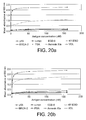
- Figure 1 a & b show examples of inhibition of binding of the autoantibodies in two different pleural fluids to two different antigens by their pre-incubation with that antigen in solution.
- the selected antigens measure autoantibodies which are specific for that particular tumour associated antigen.
- Table 1 Screening of pleural fluids for autoantibodies against seven different tumour associated antigens. Levels of measured autoantibody are arbitrarily designated low, intermediate or high. Numer of fluids in each calibrator group P53 C-myc ECD6 NYESO BRCA2 PSA Annexin Xla low 61 53 62 59 61 21 26 Intermediate 1 9 1 1 2 5 3 High 3 3 2 5 2 5 2
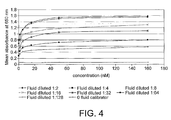
- Figure 4 is an example of a result generated by this assay format using pleural fluid as the calibration material.
- Example 4 Antigen and VOL at a static concentration and fluids titrated
- the following is an example of an assay plan to calibrate anti-tumour marker autoantibody assays.
- 96 well microtitre plates were coated at both 160nM and 50nM levels of antigen (Annexin Xla, PSA, p53, ECD6, BRCA2, NYESO, and c-myc) and the negative control protein, VOL as displayed in Table 4.
- the antigens were allowed to adsorb to the plate for at least 48 hours at 4oC. After this time the plate was washed and blocked for 90 min with HSBT. During blocking incubation the calibrator dilutions and control sera (diluted 1:100 in HSBT) were prepared.
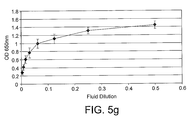
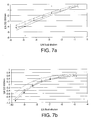
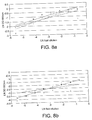
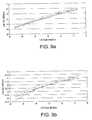
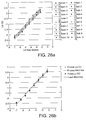
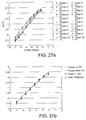
- the calibrator fluid and control sera were added to the empty plate as shown in Table 5 and incubated for 90 min. The remainder of the assay was performed as described in materials and methods. Antigen titration curves were constructed using mean values of triplicates for each calibrator. The log of the calibrator fluid dilution and the log of the mean optical density were plotted in a graph and used to plot a 4 parameter logistic curve to fit the data. This curve was then used to extrapolate the equivalent calibrator fluid dilution value from the log optical density values of the control serum.
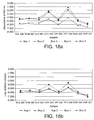
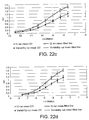
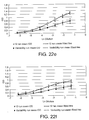
- Control samples were run on the same plate as the calibrator curves to investigate whether by using the pleural calibration curve to extrapolate back to a log dilution value, we could correct for day to day variation observed in the control samples.
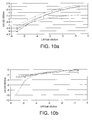
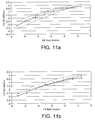
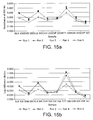
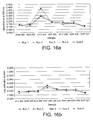
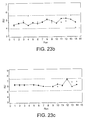
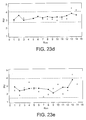
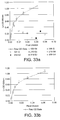
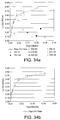
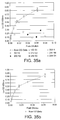
- the data showing the variation in raw OD values compared with the values extrapolated from the calibrator curves is shown in Figures 13-19 . It can be seen from these figures that for most antigens, extrapolation from the log/log plot of the calibration line improves the day to day reproducibility of the measurement of autoantibody levels in serum.
- Example 7 Comparison of serum with pleural fluids as calibrator materials
- Assays to measure autoantibodies in autoimmune diseases have used serum or plasma as calibrator materials. Drainage fluids have a number of advantages over blood products. They are available in very large volumes, are stable under storage at low temperatures for long periods of time and can therefore be used to provide reproducible calibrator materials for many assays. The collection of a large volume at a single timepoint has potentially important advantages over multiple sequential collection of much smaller volumes of serum. Firstly, metastatic disease is an incurable condition and patients will all eventually die of their disease making sequential blood sampling very difficult and eventually impossible. Secondly, the titre of autoantibodies might change with time and so sequential blood samples might not be comparable. Thirdly, with antigenic drift the humoral immune response might change to another immuno-dominant antigen(s).
- Example 8 Use of pleural fluids to calibrate assays in the clinical laboratory setting
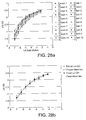
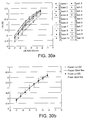
- Calibrator fluids specific for each of the antigens in the panel shown in Figure 3 were serially diluted over the appropriate range and added to the plate above as shown in the example. These plates were assayed according to the standard protocol.
- Plates were coated with antigen as in Table 7 and used to assay a number of different serum samples that had previously been shown to have antigen-specific autoantibody levels. Assays were performed according to the standard protocol. Table 7: Format of plates used to assay serum samples to test the performance of the calibration system under clinical laboratory conditions.
- the assays described above were performed twice per day (morning and afternoon) for 6 days over a 2-week time span (runs 1 to 12).
- Example 10 Calibration Using Fluids Derived from Patients with Cancers Other Than Breast Cancer
- tumour associated antigens and the autoantibodies they elicit are not tumour type specific. Therefore it is possible that fluids derived from patients with lung cancer for example, could be used to calibrate autoantibody assays for the early diagnosis of breast cancer and vice versa.
- fluids derived from patients with lung cancer for example, could be used to calibrate autoantibody assays for the early diagnosis of breast cancer and vice versa.
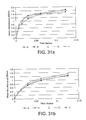
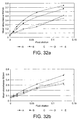
- pleural fluids taken from patients with colon, ovarian, lung, liver and pancreatic cancer were screened against a panel of tumour associated antigens. Once positivity had been established, calibration dilution curves were prepared and tested against the antigens. The experiment was repeated 5 times on separate days to assess reproducibility.
- VOL is a recombinant peptide cloned and expressed in exactly the same manner as the antigens but just consisting of a biotin tag sequence and a his-tag. Therefore the human antibodies within these fluids must be binding to one or both of these tags. Since the tags are also present on all of the recombinant tumour associated antigens, the fluid could be used to quantitate the amount of protein adsorbed to the wells of the plate. Table 6 shows the ratio of signal at 50nM to signal at 160nM for VOL at each concentration.
- Non-specific binding is a problem inherent in any serological immuno-assay due to the high concentrations of immunoglobulins present in serum which tend to bind non-specifically to the plastic of the plate or the coating antigen.
- Non-specific binding signals vary from serum sample to serum sample but can be so high that they mask the specific reaction of the analyte.
- Example 13 Use of ascites fluids as a calibrator material
- ascites fluids were effective as an analogous calibration system to that used in the previous examples. These assays were performed on plates coated with antigen at 160nM and 50nM. Antigens were allowed to adsorb to the plate for a minimum of 48 hours, after this time the plate was washed and blocked for 90 min with HSBT. During the blocking incubation a set of multiple patient ascites fluid calibrator titrations were prepared in tubes. Following removal of the blocking buffer, these were added to the empty plate and incubated for 90 min. The remainder of the assay was performed as described in Materials and Methods.
Landscapes
- Health & Medical Sciences (AREA)
- Life Sciences & Earth Sciences (AREA)
- Immunology (AREA)
- Engineering & Computer Science (AREA)
- Hematology (AREA)
- Molecular Biology (AREA)
- Chemical & Material Sciences (AREA)
- Biomedical Technology (AREA)
- Urology & Nephrology (AREA)
- Cell Biology (AREA)
- Food Science & Technology (AREA)
- General Health & Medical Sciences (AREA)
- Biotechnology (AREA)
- Pathology (AREA)
- General Physics & Mathematics (AREA)
- Medicinal Chemistry (AREA)
- Physics & Mathematics (AREA)
- Analytical Chemistry (AREA)
- Biochemistry (AREA)
- Microbiology (AREA)
- Hospice & Palliative Care (AREA)
- Oncology (AREA)
- Rehabilitation Therapy (AREA)
- Rheumatology (AREA)
- Peptides Or Proteins (AREA)
- Investigating Or Analysing Biological Materials (AREA)
- Analysing Materials By The Use Of Radiation (AREA)
- Medicines Containing Antibodies Or Antigens For Use As Internal Diagnostic Agents (AREA)
- Investigating Or Analysing Materials By Optical Means (AREA)
Priority Applications (2)
| Application Number | Priority Date | Filing Date | Title |
|---|---|---|---|
| SI200831684A SI2223114T1 (sl) | 2007-12-24 | 2008-12-23 | Kalibrator za imunoteste |
| HRP20161109TT HRP20161109T1 (hr) | 2007-12-24 | 2008-12-23 | Kalibrator za imunoispitivanja |
Applications Claiming Priority (3)
| Application Number | Priority Date | Filing Date | Title |
|---|---|---|---|
| GBGB0725239.8A GB0725239D0 (en) | 2007-12-24 | 2007-12-24 | Calibrator for autoantibody assay |
| US1668907P | 2007-12-26 | 2007-12-26 | |
| PCT/GB2008/004260 WO2009081165A1 (en) | 2007-12-24 | 2008-12-23 | Calibrator for immunoassays |
Publications (2)
| Publication Number | Publication Date |
|---|---|
| EP2223114A1 EP2223114A1 (en) | 2010-09-01 |
| EP2223114B1 true EP2223114B1 (en) | 2016-08-17 |
Family
ID=39092384
Family Applications (1)
| Application Number | Title | Priority Date | Filing Date |
|---|---|---|---|
| EP08865264.9A Not-in-force EP2223114B1 (en) | 2007-12-24 | 2008-12-23 | Calibrator for immunoassays |
Country Status (17)
| Country | Link |
|---|---|
| US (3) | US20090176319A1 (enExample) |
| EP (1) | EP2223114B1 (enExample) |
| JP (1) | JP5594776B2 (enExample) |
| CN (1) | CN101952723B (enExample) |
| AU (1) | AU2008339624B2 (enExample) |
| BR (1) | BRPI0821397B1 (enExample) |
| CA (1) | CA2707025C (enExample) |
| CY (1) | CY1118253T1 (enExample) |
| DK (1) | DK2223114T3 (enExample) |
| ES (1) | ES2588731T3 (enExample) |
| GB (1) | GB0725239D0 (enExample) |
| HR (1) | HRP20161109T1 (enExample) |
| IL (1) | IL205733A (enExample) |
| PT (1) | PT2223114T (enExample) |
| SG (1) | SG186684A1 (enExample) |
| SI (1) | SI2223114T1 (enExample) |
| WO (1) | WO2009081165A1 (enExample) |
Families Citing this family (15)
| Publication number | Priority date | Publication date | Assignee | Title |
|---|---|---|---|---|
| GB9810040D0 (en) * | 1998-05-11 | 1998-07-08 | Univ Nottingham | Blood borne tumour markers |
| GB9827228D0 (en) * | 1998-12-10 | 1999-02-03 | Univ Nottingham | Cancer detection method and reagents |
| US20030232399A1 (en) * | 2000-06-14 | 2003-12-18 | Robertson John Forsyth Russell | Cancer detection methods and reagents |
| GB2424070B (en) * | 2002-11-14 | 2007-06-27 | Univ Nottingham | Methods for preparing tumour marker proteins |
| US7858323B2 (en) | 2004-06-09 | 2010-12-28 | The Regents Of The University Of Michigan | Phage microarray profiling of the humoral response to disease |
| NZ563466A (en) | 2005-05-27 | 2009-12-24 | Oncimmune Ltd | Improved immunoassay methods |
| GB2426581A (en) * | 2005-05-27 | 2006-11-29 | Univ Nottingham | Immunoassay methods |
| WO2007136025A1 (ja) * | 2006-05-19 | 2007-11-29 | Bml, Inc. | 感染症の検出方法 |
| CN101632020B (zh) | 2006-09-13 | 2013-11-27 | 昂西免疫有限公司 | 改进的免疫测定方法 |
| GB0725239D0 (en) * | 2007-12-24 | 2008-02-06 | Oncimmune Ltd | Calibrator for autoantibody assay |
| WO2011116209A2 (en) | 2010-03-17 | 2011-09-22 | The Regents Of The University Of Michigan | Using phage epitopes to profile the immune response |
| US11662564B2 (en) | 2017-06-15 | 2023-05-30 | Shenzhen Prs Limited | Paraffin shield coating for microscope slide |
| WO2018228577A1 (en) * | 2017-06-15 | 2018-12-20 | Sunstone Scientific Limited. | Method for ihc antigen imaging scale extrapolation |
| US12313834B2 (en) | 2017-06-15 | 2025-05-27 | Shenzhen Prs Limited | Paraffin shield coating for microscope slide |
| BR102021003012A2 (pt) | 2020-02-19 | 2021-11-30 | Univ Berlin Charite | Métodos para o diagnóstico de infecção por sars-cov-2, kit e usos |
Family Cites Families (53)
| Publication number | Priority date | Publication date | Assignee | Title |
|---|---|---|---|---|
| US4241044A (en) * | 1978-12-28 | 1980-12-23 | Abbott Laboratories | Method of diagnosing cancer by detecting elevated anti-T antibody activity |
| JPS60192263A (ja) * | 1984-03-13 | 1985-09-30 | Teijin Ltd | 免疫複合体測定用標準物質及びそれを用いた免疫複合体の測定法 |
| NZ211453A (en) * | 1984-03-22 | 1989-01-06 | Biotechnology Research Enterpr | Aryl azides, their preparation and use in the detection, localisation and isolation of polynucleotides |
| US4937185A (en) * | 1987-07-31 | 1990-06-26 | The Ohio State University Research Foundation | Detection of circulating antibodies to a cancer marker protein |
| US7282345B1 (en) * | 1989-08-04 | 2007-10-16 | Schering Ag | C-erbB-2 external domain: GP75 |
| US5110911A (en) * | 1989-11-02 | 1992-05-05 | Biomira, Inc. | Human tumor-associated thomsen-friedenreich antigen |
| US5157020A (en) * | 1990-05-24 | 1992-10-20 | Research Corporation Tech., Inc. | Synthetic senescent cell antigen |
| DE4120412C1 (enExample) * | 1991-06-20 | 1993-01-07 | Henning Berlin Gmbh Chemie- Und Pharmawerk, 1000 Berlin, De | |
| JPH067191A (ja) * | 1991-09-26 | 1994-01-18 | Konica Corp | モノクローナル抗体、それを産生するハイブリド−マ、その対応抗原及びそれを用いた測定方法 |
| US6322989B1 (en) * | 1991-11-25 | 2001-11-27 | Yoreh Biotechnologies, Ltd. | Whole blood/mitogen assay for the early detection of a subject with ovarian or breast cancer and kit |
| US6280962B1 (en) * | 1991-11-25 | 2001-08-28 | Yoreh Biotechnologies Ltd. | Whole blood/mitogen assay for the early detection of a subject with cancer and kit |
| ATE408012T1 (de) * | 1991-12-02 | 2008-09-15 | Medical Res Council | Herstellung von autoantikörpern auf phagenoberflächen ausgehend von antikörpersegmentbibliotheken |
| EP0625909A4 (en) * | 1992-02-12 | 1997-03-05 | Robert Perper | Autoantibody assay and usage in the control of human disease. |
| WO1993021529A1 (en) * | 1992-04-14 | 1993-10-28 | Duke University | Method of detecting tumors containing complexes of p53 and hsp70 |
| US5801005A (en) * | 1993-03-17 | 1998-09-01 | University Of Washington | Immune reactivity to HER-2/neu protein for diagnosis of malignancies in which the HER-2/neu oncogene is associated |
| US5763164A (en) * | 1993-04-16 | 1998-06-09 | Northwestern University | Immunogenic cancer proteins and peptides and methods of use |
| US5747268A (en) * | 1993-04-22 | 1998-05-05 | Dade International Inc. | Tumor marker control |
| US5744144A (en) * | 1993-07-30 | 1998-04-28 | University Of Pittsburgh University Patent Committee Policy And Procedures | Synthetic multiple tandem repeat mucin and mucin-like peptides, and uses thereof |
| US5721105A (en) * | 1994-02-20 | 1998-02-24 | B.R.A.H.M.S. Diagnostica Gmbh | Method for the immunological determination of proteins and kit for carrying out the method |
| US5789655A (en) * | 1994-05-13 | 1998-08-04 | The Regents Of The University Of California | Transgenic animals expressing artificial epitope-tagged proteins |
| US5561049A (en) * | 1994-09-21 | 1996-10-01 | Behringwerke Ag | Method for detecting antibodies |
| US5876728A (en) * | 1995-02-15 | 1999-03-02 | Howard David Kass | Natural composition extracted from plants used in the treatment of cancer |
| US5723343A (en) * | 1995-08-28 | 1998-03-03 | University Of Florida | Autoantibodies in patients with acquired hypoparathyroidism and assay method therefor |
| JP3472048B2 (ja) * | 1995-10-09 | 2003-12-02 | 鐘淵化学工業株式会社 | 自己免疫疾患の診断薬 |
| WO1998006746A2 (en) * | 1996-08-16 | 1998-02-19 | The Johns Hopkins University School Of Medicine | Melanoma cell lines expressing shared immunodominant melanoma antigens and methods of using same |
| US6306636B1 (en) * | 1997-09-19 | 2001-10-23 | Arch Development Corporation | Nucleic acid segments encoding wheat acetyl-CoA carboxylase |
| DE19805815C1 (de) * | 1998-02-13 | 1999-11-11 | Ansgar W Lohse | Diagnostikum zum Erkennen der autoimmunen Hepatitis |
| US6388062B1 (en) * | 1998-05-08 | 2002-05-14 | The Wistar Institute Of Anatomy And Biology | Modified p53 tetramerization domains having hydrophobic amino acid substitutions |
| GB9810040D0 (en) * | 1998-05-11 | 1998-07-08 | Univ Nottingham | Blood borne tumour markers |
| JP3268494B2 (ja) * | 1998-10-01 | 2002-03-25 | 俊成 広畑 | 全身性エリテマトーデス病態診断剤 |
| US6387639B1 (en) * | 1998-11-10 | 2002-05-14 | Sloan-Kettering Institute For Cancer Research | Ma family polypeptides and anti-Ma antibodies |
| GB9827228D0 (en) * | 1998-12-10 | 1999-02-03 | Univ Nottingham | Cancer detection method and reagents |
| US7807810B2 (en) * | 1999-04-08 | 2010-10-05 | The Ohio State University Research Foundation | Nucleic acids encoding the major outer membrane protein of the causative agent of human granulocytic ehrlichiosis and peptides encoded thereby |
| US6645465B2 (en) * | 1999-08-06 | 2003-11-11 | Michigan, University Of The Regents | Annexin proteins and autoantibodies as serum markers for cancer |
| DE19939575C1 (de) * | 1999-08-20 | 2001-08-02 | Orgentec Diagnostika Gmbh | Verfahren zur Diagnose von Sjögren-Syndrom |
| US20020064801A1 (en) * | 1999-12-01 | 2002-05-30 | Ryan Jeffrey R. | Novel and practical serological assay for the clinical diagnosis of leishmaniasis |
| US6667160B2 (en) * | 2000-03-15 | 2003-12-23 | Kenneth D. Fine | Method for diagnosing immunologic food sensitivity |
| AU4465001A (en) * | 2000-03-30 | 2001-10-15 | Nippon Kayaku Kabushiki Kaisha | Method of examining cancer by assaying autoantibody against mdm2 and reagent therefor |
| US20030232399A1 (en) * | 2000-06-14 | 2003-12-18 | Robertson John Forsyth Russell | Cancer detection methods and reagents |
| US20030138860A1 (en) * | 2000-06-14 | 2003-07-24 | Robertson John Forsyth Russell | Cancer detection methods and reagents |
| WO2003073101A2 (en) * | 2001-06-21 | 2003-09-04 | New York University | Mycobacterial proteins as early antigens for serodiagnosis and vaccines |
| US20030049692A1 (en) * | 2002-09-16 | 2003-03-13 | Norman Latov | Detection of anti-glycolipid antibodies by latex agglutination assay |
| GB2424070B (en) * | 2002-11-14 | 2007-06-27 | Univ Nottingham | Methods for preparing tumour marker proteins |
| WO2004063226A2 (en) * | 2002-12-27 | 2004-07-29 | Applied Research Systems Ars Holding N.V. | Novel fibrillin-like polypeptides |
| JP2005352771A (ja) * | 2004-06-10 | 2005-12-22 | Hitachi Software Eng Co Ltd | 発現プロファイルによるパターン認識システム |
| US20060141547A1 (en) * | 2004-11-16 | 2006-06-29 | Das Hasi R | Novel diagnostic marker, a diagnostic kit and a method for diagnosis of rheumatoid arthritis |
| GB2426581A (en) * | 2005-05-27 | 2006-11-29 | Univ Nottingham | Immunoassay methods |
| EP1789435B1 (en) * | 2005-09-12 | 2010-02-24 | Industry Foundation of Chonnam National University | A method for production of mature natural killer cell |
| TWI304443B (en) * | 2005-12-30 | 2008-12-21 | Nat Health Research Institutes | Alpha-enolase specific antibody and method of use |
| CN101632020B (zh) * | 2006-09-13 | 2013-11-27 | 昂西免疫有限公司 | 改进的免疫测定方法 |
| AU2007297310B2 (en) * | 2006-09-13 | 2013-11-07 | Oncimmune Limited | Improved immunoassay methods |
| GB0725239D0 (en) * | 2007-12-24 | 2008-02-06 | Oncimmune Ltd | Calibrator for autoantibody assay |
| GB201411060D0 (en) * | 2014-06-20 | 2014-08-06 | Oncimmune Ltd | Improved immunoassay method |
-
2007
- 2007-12-24 GB GBGB0725239.8A patent/GB0725239D0/en not_active Ceased
-
2008
- 2008-12-23 BR BRPI0821397A patent/BRPI0821397B1/pt not_active IP Right Cessation
- 2008-12-23 PT PT88652649T patent/PT2223114T/pt unknown
- 2008-12-23 DK DK08865264.9T patent/DK2223114T3/en active
- 2008-12-23 JP JP2010538909A patent/JP5594776B2/ja not_active Expired - Fee Related
- 2008-12-23 SG SG2012095006A patent/SG186684A1/en unknown
- 2008-12-23 AU AU2008339624A patent/AU2008339624B2/en not_active Ceased
- 2008-12-23 US US12/343,047 patent/US20090176319A1/en not_active Abandoned
- 2008-12-23 CN CN200880122385.1A patent/CN101952723B/zh not_active Expired - Fee Related
- 2008-12-23 ES ES08865264.9T patent/ES2588731T3/es active Active
- 2008-12-23 CA CA2707025A patent/CA2707025C/en active Active
- 2008-12-23 SI SI200831684A patent/SI2223114T1/sl unknown
- 2008-12-23 HR HRP20161109TT patent/HRP20161109T1/hr unknown
- 2008-12-23 EP EP08865264.9A patent/EP2223114B1/en not_active Not-in-force
- 2008-12-23 WO PCT/GB2008/004260 patent/WO2009081165A1/en not_active Ceased
-
2010
- 2010-05-13 IL IL205733A patent/IL205733A/en active IP Right Grant
-
2016
- 2016-09-23 US US15/274,012 patent/US20170074884A1/en not_active Abandoned
- 2016-11-17 CY CY20161101189T patent/CY1118253T1/el unknown
-
2020
- 2020-11-19 US US16/952,473 patent/US20210318320A1/en not_active Abandoned
Non-Patent Citations (1)
| Title |
|---|
| N G RAINOV ET AL: "ABSCENCE OF P53 AUTOANTIBODIES IN SERA FROM GLIOMA PATIENTS", CLIN. CANCER RES., vol. 1, 1 July 1995 (1995-07-01), pages 775 - 781, XP055212836 * |
Also Published As
| Publication number | Publication date |
|---|---|
| DK2223114T3 (en) | 2016-10-24 |
| HRP20161109T1 (hr) | 2016-11-04 |
| GB0725239D0 (en) | 2008-02-06 |
| AU2008339624B2 (en) | 2014-11-20 |
| AU2008339624A1 (en) | 2009-07-02 |
| HK1152380A1 (zh) | 2012-02-24 |
| US20090176319A1 (en) | 2009-07-09 |
| CA2707025A1 (en) | 2009-07-02 |
| BRPI0821397A2 (pt) | 2017-05-23 |
| JP2011508197A (ja) | 2011-03-10 |
| SI2223114T1 (sl) | 2016-11-30 |
| WO2009081165A1 (en) | 2009-07-02 |
| ES2588731T3 (es) | 2016-11-04 |
| CA2707025C (en) | 2020-08-25 |
| PT2223114T (pt) | 2016-09-29 |
| IL205733A (en) | 2014-09-30 |
| SG186684A1 (en) | 2013-01-30 |
| JP5594776B2 (ja) | 2014-09-24 |
| EP2223114A1 (en) | 2010-09-01 |
| CY1118253T1 (el) | 2017-06-28 |
| US20210318320A1 (en) | 2021-10-14 |
| US20170074884A1 (en) | 2017-03-16 |
| CN101952723A (zh) | 2011-01-19 |
| CN101952723B (zh) | 2016-05-11 |
| IL205733A0 (en) | 2010-11-30 |
| BRPI0821397B1 (pt) | 2018-10-09 |
Similar Documents
| Publication | Publication Date | Title |
|---|---|---|
| EP2223114B1 (en) | Calibrator for immunoassays | |
| US20060094069A1 (en) | Tumour marker proteins and uses thereof | |
| US10126312B2 (en) | Diagnostic method for urinary tract infection | |
| Takeshita et al. | Alteration of matrix metalloproteinase-3 O-glycan structure as a biomarker for disease activity of rheumatoid arthritis | |
| CN111579772A (zh) | 基于免疫磁珠法的检测试剂及其制备方法、试剂盒以及检测方法 | |
| CN109307766A (zh) | 胃蛋白酶原ⅰ检测试剂盒 | |
| CN108093648B (zh) | 簇集蛋白同种型的特异性检测 | |
| CN111337663A (zh) | 一种角蛋白ck19-2g2检测试剂盒及其使用方法 | |
| EP2535715B1 (en) | METHOD FOR MEASURING IMMUNITY OF COMPLEX OF Ku86 AND AUTOANTIBODY THEREOF, KIT USED THEREFOR, AND METHOD FOR DETERMINING CANCER USING SAME | |
| CN117434276A (zh) | 一种thsd7a抗体检测试剂盒及其用途 | |
| Willis et al. | Solid phase immunoassay for the detection of anticardiolipin antibodies | |
| Ciftci et al. | Comparison of novel and familiar commercial kits for detection of C-reactive protein levels | |
| JP2023533815A (ja) | 肺癌における自己抗体を検出するための抗原の組合せの使用 | |
| HK1152380B (en) | Calibrator for immunoassays | |
| Willis et al. | Solid phase immunoassay for the detection of anti-β2 glycoprotein I antibodies | |
| Herries et al. | Brain biomarkers: follow-up of RNA expression discovery approach: CSF assays for neurogranin, SNAP-25, and VILIP-1 | |
| CN120405151B (zh) | 一种磷酸化Tau-231蛋白化学发光检测试剂盒、抗体可变区及其制备方法 | |
| EP4501958A1 (en) | Hrg measuring method using anti-hrg monoclonal antibodies | |
| GB2600701A (en) | Antibody assay | |
| JP2011257147A (ja) | データ収集方法、キット及び腫瘍マーカー | |
| JP2014240772A (ja) | Ku70に対する自己抗体の免疫測定方法、それに用いるキットおよびそれを用いた癌判定方法 | |
| JP2011107064A (ja) | クラスリン重鎖に対する自己抗体の免疫測定方法、それに用いるキット、及びそれを用いた癌判定方法 |
Legal Events
| Date | Code | Title | Description |
|---|---|---|---|
| PUAI | Public reference made under article 153(3) epc to a published international application that has entered the european phase |
Free format text: ORIGINAL CODE: 0009012 |
|
| 17P | Request for examination filed |
Effective date: 20100527 |
|
| AK | Designated contracting states |
Kind code of ref document: A1 Designated state(s): AT BE BG CH CY CZ DE DK EE ES FI FR GB GR HR HU IE IS IT LI LT LU LV MC MT NL NO PL PT RO SE SI SK TR |
|
| AX | Request for extension of the european patent |
Extension state: AL BA MK RS |
|
| DAX | Request for extension of the european patent (deleted) | ||
| 17Q | First examination report despatched |
Effective date: 20140218 |
|
| 17Q | First examination report despatched |
Effective date: 20140227 |
|
| GRAP | Despatch of communication of intention to grant a patent |
Free format text: ORIGINAL CODE: EPIDOSNIGR1 |
|
| INTG | Intention to grant announced |
Effective date: 20151014 |
|
| INTG | Intention to grant announced |
Effective date: 20160302 |
|
| GRAS | Grant fee paid |
Free format text: ORIGINAL CODE: EPIDOSNIGR3 |
|
| GRAA | (expected) grant |
Free format text: ORIGINAL CODE: 0009210 |
|
| AK | Designated contracting states |
Kind code of ref document: B1 Designated state(s): AT BE BG CH CY CZ DE DK EE ES FI FR GB GR HR HU IE IS IT LI LT LU LV MC MT NL NO PL PT RO SE SI SK TR |
|
| REG | Reference to a national code |
Ref country code: GB Ref legal event code: FG4D |
|
| REG | Reference to a national code |
Ref country code: HR Ref legal event code: TUEP Ref document number: P20161109 Country of ref document: HR |
|
| REG | Reference to a national code |
Ref country code: CH Ref legal event code: EP Ref country code: CH Ref legal event code: NV Representative=s name: KIRKER AND CIE S.A., CH |
|
| REG | Reference to a national code |
Ref country code: IE Ref legal event code: FG4D |
|
| REG | Reference to a national code |
Ref country code: NL Ref legal event code: FP |
|
| REG | Reference to a national code |
Ref country code: AT Ref legal event code: REF Ref document number: 821571 Country of ref document: AT Kind code of ref document: T Effective date: 20160915 |
|
| REG | Reference to a national code |
Ref country code: DE Ref legal event code: R096 Ref document number: 602008045790 Country of ref document: DE Ref country code: PT Ref legal event code: SC4A Ref document number: 2223114 Country of ref document: PT Date of ref document: 20160929 Kind code of ref document: T Free format text: AVAILABILITY OF NATIONAL TRANSLATION Effective date: 20160922 |
|
| REG | Reference to a national code |
Ref country code: RO Ref legal event code: EPE |
|
| REG | Reference to a national code |
Ref country code: DK Ref legal event code: T3 Effective date: 20161020 |
|
| REG | Reference to a national code |
Ref country code: HR Ref legal event code: T1PR Ref document number: P20161109 Country of ref document: HR Ref country code: ES Ref legal event code: FG2A Ref document number: 2588731 Country of ref document: ES Kind code of ref document: T3 Effective date: 20161104 |
|
| REG | Reference to a national code |
Ref country code: SE Ref legal event code: TRGR |
|
| REG | Reference to a national code |
Ref country code: FR Ref legal event code: PLFP Year of fee payment: 9 |
|
| PG25 | Lapsed in a contracting state [announced via postgrant information from national office to epo] |
Ref country code: NO Free format text: LAPSE BECAUSE OF FAILURE TO SUBMIT A TRANSLATION OF THE DESCRIPTION OR TO PAY THE FEE WITHIN THE PRESCRIBED TIME-LIMIT Effective date: 20161117 |
|
| PG25 | Lapsed in a contracting state [announced via postgrant information from national office to epo] |
Ref country code: PL Free format text: LAPSE BECAUSE OF FAILURE TO SUBMIT A TRANSLATION OF THE DESCRIPTION OR TO PAY THE FEE WITHIN THE PRESCRIBED TIME-LIMIT Effective date: 20160817 |
|
| REG | Reference to a national code |
Ref country code: GR Ref legal event code: EP Ref document number: 20160402505 Country of ref document: GR Effective date: 20170117 |
|
| PG25 | Lapsed in a contracting state [announced via postgrant information from national office to epo] |
Ref country code: EE Free format text: LAPSE BECAUSE OF FAILURE TO SUBMIT A TRANSLATION OF THE DESCRIPTION OR TO PAY THE FEE WITHIN THE PRESCRIBED TIME-LIMIT Effective date: 20160817 |
|
| REG | Reference to a national code |
Ref country code: DE Ref legal event code: R097 Ref document number: 602008045790 Country of ref document: DE |
|
| PG25 | Lapsed in a contracting state [announced via postgrant information from national office to epo] |
Ref country code: CZ Free format text: LAPSE BECAUSE OF FAILURE TO SUBMIT A TRANSLATION OF THE DESCRIPTION OR TO PAY THE FEE WITHIN THE PRESCRIBED TIME-LIMIT Effective date: 20160817 Ref country code: SK Free format text: LAPSE BECAUSE OF FAILURE TO SUBMIT A TRANSLATION OF THE DESCRIPTION OR TO PAY THE FEE WITHIN THE PRESCRIBED TIME-LIMIT Effective date: 20160817 |
|
| PLBE | No opposition filed within time limit |
Free format text: ORIGINAL CODE: 0009261 |
|
| STAA | Information on the status of an ep patent application or granted ep patent |
Free format text: STATUS: NO OPPOSITION FILED WITHIN TIME LIMIT |
|
| 26N | No opposition filed |
Effective date: 20170518 |
|
| REG | Reference to a national code |
Ref country code: FR Ref legal event code: PLFP Year of fee payment: 10 |
|
| PG25 | Lapsed in a contracting state [announced via postgrant information from national office to epo] |
Ref country code: HU Free format text: LAPSE BECAUSE OF FAILURE TO SUBMIT A TRANSLATION OF THE DESCRIPTION OR TO PAY THE FEE WITHIN THE PRESCRIBED TIME-LIMIT; INVALID AB INITIO Effective date: 20081223 |
|
| PG25 | Lapsed in a contracting state [announced via postgrant information from national office to epo] |
Ref country code: TR Free format text: LAPSE BECAUSE OF FAILURE TO SUBMIT A TRANSLATION OF THE DESCRIPTION OR TO PAY THE FEE WITHIN THE PRESCRIBED TIME-LIMIT Effective date: 20160817 Ref country code: IS Free format text: LAPSE BECAUSE OF FAILURE TO SUBMIT A TRANSLATION OF THE DESCRIPTION OR TO PAY THE FEE WITHIN THE PRESCRIBED TIME-LIMIT Effective date: 20160817 |
|
| PG25 | Lapsed in a contracting state [announced via postgrant information from national office to epo] |
Ref country code: MT Free format text: LAPSE BECAUSE OF NON-PAYMENT OF DUE FEES Effective date: 20161223 |
|
| REG | Reference to a national code |
Ref country code: AT Ref legal event code: UEP Ref document number: 821571 Country of ref document: AT Kind code of ref document: T Effective date: 20160817 |
|
| REG | Reference to a national code |
Ref country code: HR Ref legal event code: ODRP Ref document number: P20161109 Country of ref document: HR Payment date: 20181123 Year of fee payment: 11 |
|
| REG | Reference to a national code |
Ref country code: HR Ref legal event code: ODRP Ref document number: P20161109 Country of ref document: HR Payment date: 20191125 Year of fee payment: 12 |
|
| REG | Reference to a national code |
Ref country code: HR Ref legal event code: ODRP Ref document number: P20161109 Country of ref document: HR Payment date: 20201125 Year of fee payment: 13 |
|
| REG | Reference to a national code |
Ref country code: HR Ref legal event code: ODRP Ref document number: P20161109 Country of ref document: HR Payment date: 20211124 Year of fee payment: 14 |
|
| PGFP | Annual fee paid to national office [announced via postgrant information from national office to epo] |
Ref country code: SE Payment date: 20211217 Year of fee payment: 14 Ref country code: PT Payment date: 20211129 Year of fee payment: 14 Ref country code: DE Payment date: 20211222 Year of fee payment: 14 Ref country code: BG Payment date: 20211222 Year of fee payment: 14 Ref country code: AT Payment date: 20211222 Year of fee payment: 14 Ref country code: LU Payment date: 20211220 Year of fee payment: 14 Ref country code: MC Payment date: 20211216 Year of fee payment: 14 Ref country code: IE Payment date: 20211217 Year of fee payment: 14 Ref country code: HR Payment date: 20211124 Year of fee payment: 14 Ref country code: LT Payment date: 20211119 Year of fee payment: 14 Ref country code: GB Payment date: 20211220 Year of fee payment: 14 Ref country code: FI Payment date: 20211220 Year of fee payment: 14 Ref country code: DK Payment date: 20211217 Year of fee payment: 14 Ref country code: FR Payment date: 20211215 Year of fee payment: 14 |
|
| PGFP | Annual fee paid to national office [announced via postgrant information from national office to epo] |
Ref country code: SI Payment date: 20211203 Year of fee payment: 14 Ref country code: LV Payment date: 20211221 Year of fee payment: 14 Ref country code: IT Payment date: 20211217 Year of fee payment: 14 Ref country code: GR Payment date: 20211223 Year of fee payment: 14 Ref country code: CH Payment date: 20211217 Year of fee payment: 14 Ref country code: BE Payment date: 20211220 Year of fee payment: 14 |
|
| PGFP | Annual fee paid to national office [announced via postgrant information from national office to epo] |
Ref country code: NL Payment date: 20211220 Year of fee payment: 14 |
|
| PGFP | Annual fee paid to national office [announced via postgrant information from national office to epo] |
Ref country code: ES Payment date: 20220105 Year of fee payment: 14 Ref country code: CY Payment date: 20211220 Year of fee payment: 14 |
|
| PGFP | Annual fee paid to national office [announced via postgrant information from national office to epo] |
Ref country code: RO Payment date: 20221207 Year of fee payment: 15 |
|
| REG | Reference to a national code |
Ref country code: DE Ref legal event code: R119 Ref document number: 602008045790 Country of ref document: DE |
|
| REG | Reference to a national code |
Ref country code: HR Ref legal event code: PBON Ref document number: P20161109 Country of ref document: HR Effective date: 20221223 |
|
| REG | Reference to a national code |
Ref country code: LT Ref legal event code: MM4D Effective date: 20221223 |
|
| REG | Reference to a national code |
Ref country code: DK Ref legal event code: EBP Effective date: 20221231 |
|
| PG25 | Lapsed in a contracting state [announced via postgrant information from national office to epo] |
Ref country code: PT Free format text: LAPSE BECAUSE OF NON-PAYMENT OF DUE FEES Effective date: 20230623 Ref country code: LV Free format text: LAPSE BECAUSE OF NON-PAYMENT OF DUE FEES Effective date: 20221223 Ref country code: CY Free format text: LAPSE BECAUSE OF NON-PAYMENT OF DUE FEES Effective date: 20221223 |
|
| REG | Reference to a national code |
Ref country code: CH Ref legal event code: PL |
|
| REG | Reference to a national code |
Ref country code: SE Ref legal event code: EUG |
|
| REG | Reference to a national code |
Ref country code: NL Ref legal event code: MM Effective date: 20230101 |
|
| REG | Reference to a national code |
Ref country code: AT Ref legal event code: MM01 Ref document number: 821571 Country of ref document: AT Kind code of ref document: T Effective date: 20221223 |
|
| GBPC | Gb: european patent ceased through non-payment of renewal fee |
Effective date: 20221223 |
|
| REG | Reference to a national code |
Ref country code: BE Ref legal event code: MM Effective date: 20221231 |
|
| PG25 | Lapsed in a contracting state [announced via postgrant information from national office to epo] |
Ref country code: LU Free format text: LAPSE BECAUSE OF NON-PAYMENT OF DUE FEES Effective date: 20221223 |
|
| PG25 | Lapsed in a contracting state [announced via postgrant information from national office to epo] |
Ref country code: NL Free format text: LAPSE BECAUSE OF NON-PAYMENT OF DUE FEES Effective date: 20230101 |
|
| REG | Reference to a national code |
Ref country code: SI Ref legal event code: KO00 Effective date: 20230810 |
|
| PG25 | Lapsed in a contracting state [announced via postgrant information from national office to epo] |
Ref country code: SE Free format text: LAPSE BECAUSE OF NON-PAYMENT OF DUE FEES Effective date: 20221224 Ref country code: LI Free format text: LAPSE BECAUSE OF NON-PAYMENT OF DUE FEES Effective date: 20221231 Ref country code: IE Free format text: LAPSE BECAUSE OF NON-PAYMENT OF DUE FEES Effective date: 20221223 Ref country code: GB Free format text: LAPSE BECAUSE OF NON-PAYMENT OF DUE FEES Effective date: 20221223 Ref country code: DE Free format text: LAPSE BECAUSE OF NON-PAYMENT OF DUE FEES Effective date: 20230701 Ref country code: CH Free format text: LAPSE BECAUSE OF NON-PAYMENT OF DUE FEES Effective date: 20221231 Ref country code: AT Free format text: LAPSE BECAUSE OF NON-PAYMENT OF DUE FEES Effective date: 20221223 |
|
| PG25 | Lapsed in a contracting state [announced via postgrant information from national office to epo] |
Ref country code: SI Free format text: LAPSE BECAUSE OF NON-PAYMENT OF DUE FEES Effective date: 20221224 Ref country code: LT Free format text: LAPSE BECAUSE OF NON-PAYMENT OF DUE FEES Effective date: 20221223 Ref country code: HR Free format text: LAPSE BECAUSE OF NON-PAYMENT OF DUE FEES Effective date: 20221223 Ref country code: GR Free format text: LAPSE BECAUSE OF NON-PAYMENT OF DUE FEES Effective date: 20230705 Ref country code: FR Free format text: LAPSE BECAUSE OF NON-PAYMENT OF DUE FEES Effective date: 20221231 Ref country code: BE Free format text: LAPSE BECAUSE OF NON-PAYMENT OF DUE FEES Effective date: 20221231 |
|
| PG25 | Lapsed in a contracting state [announced via postgrant information from national office to epo] |
Ref country code: RO Free format text: LAPSE BECAUSE OF NON-PAYMENT OF DUE FEES Effective date: 20221223 Ref country code: IT Free format text: LAPSE BECAUSE OF NON-PAYMENT OF DUE FEES Effective date: 20221223 Ref country code: DK Free format text: LAPSE BECAUSE OF NON-PAYMENT OF DUE FEES Effective date: 20221231 |
|
| REG | Reference to a national code |
Ref country code: ES Ref legal event code: FD2A Effective date: 20240201 |
|
| PG25 | Lapsed in a contracting state [announced via postgrant information from national office to epo] |
Ref country code: ES Free format text: LAPSE BECAUSE OF NON-PAYMENT OF DUE FEES Effective date: 20221224 |
|
| PG25 | Lapsed in a contracting state [announced via postgrant information from national office to epo] |
Ref country code: FI Free format text: LAPSE BECAUSE OF NON-PAYMENT OF DUE FEES Effective date: 20221223 Ref country code: ES Free format text: LAPSE BECAUSE OF NON-PAYMENT OF DUE FEES Effective date: 20221224 |
|
| PG25 | Lapsed in a contracting state [announced via postgrant information from national office to epo] |
Ref country code: MC Free format text: LAPSE BECAUSE OF NON-PAYMENT OF DUE FEES Effective date: 20230103 |
|
| PG25 | Lapsed in a contracting state [announced via postgrant information from national office to epo] |
Ref country code: MC Free format text: LAPSE BECAUSE OF NON-PAYMENT OF DUE FEES Effective date: 20230103 |
|
| PG25 | Lapsed in a contracting state [announced via postgrant information from national office to epo] |
Ref country code: BG Free format text: LAPSE BECAUSE OF NON-PAYMENT OF DUE FEES Effective date: 20221223 |