EP2218712A1 - Combination of anti-angiogenic substance and anti-tumor platinum complex - Google Patents
Combination of anti-angiogenic substance and anti-tumor platinum complex Download PDFInfo
- Publication number
- EP2218712A1 EP2218712A1 EP08846814A EP08846814A EP2218712A1 EP 2218712 A1 EP2218712 A1 EP 2218712A1 EP 08846814 A EP08846814 A EP 08846814A EP 08846814 A EP08846814 A EP 08846814A EP 2218712 A1 EP2218712 A1 EP 2218712A1
- Authority
- EP
- European Patent Office
- Prior art keywords
- group
- optionally substituted
- quinolinecarboxamide
- methoxy
- chloro
- Prior art date
- Legal status (The legal status is an assumption and is not a legal conclusion. Google has not performed a legal analysis and makes no representation as to the accuracy of the status listed.)
- Granted
Links
Images


Classifications
-
- C—CHEMISTRY; METALLURGY
- C07—ORGANIC CHEMISTRY
- C07D—HETEROCYCLIC COMPOUNDS
- C07D215/00—Heterocyclic compounds containing quinoline or hydrogenated quinoline ring systems
- C07D215/02—Heterocyclic compounds containing quinoline or hydrogenated quinoline ring systems having no bond between the ring nitrogen atom and a non-ring member or having only hydrogen atoms or carbon atoms directly attached to the ring nitrogen atom
- C07D215/16—Heterocyclic compounds containing quinoline or hydrogenated quinoline ring systems having no bond between the ring nitrogen atom and a non-ring member or having only hydrogen atoms or carbon atoms directly attached to the ring nitrogen atom with hetero atoms or with carbon atoms having three bonds to hetero atoms with at the most one bond to halogen, e.g. ester or nitrile radicals, directly attached to ring carbon atoms
- C07D215/48—Carbon atoms having three bonds to hetero atoms with at the most one bond to halogen
-
- A—HUMAN NECESSITIES
- A61—MEDICAL OR VETERINARY SCIENCE; HYGIENE
- A61P—SPECIFIC THERAPEUTIC ACTIVITY OF CHEMICAL COMPOUNDS OR MEDICINAL PREPARATIONS
- A61P35/00—Antineoplastic agents
Definitions
- the present invention relates to a pharmaceutical composition and a kit comprising a compound represented by General Formula (I), a pharmacologically acceptable salt thereof or a solvate thereof (hereinafter, also referred to as the "compound of the invention") used in combination with an anti-tumor platinum complex, to a method for treating cancer characterized by administering an effective amount of the pharmaceutical composition to a patient, to use of a compound of the invention for producing the pharmaceutical composition, and to a compound of the invention for the pharmaceutical composition, etc..
- a pharmaceutical composition and a kit comprising a compound represented by General Formula (I), a pharmacologically acceptable salt thereof or a solvate thereof (hereinafter, also referred to as the "compound of the invention”) used in combination with an anti-tumor platinum complex, to a method for treating cancer characterized by administering an effective amount of the pharmaceutical composition to a patient, to use of a compound of the invention for producing the pharmaceutical composition, and to a compound of the invention for the pharmaceutical composition, etc.
- chemotherapeutic agents for cancer examples include alkylating agents such as cyclophosphamide, antimetabolites such as methotrexate and fluorouracil, antibiotics such as adriamycin, mitomycin and bleomycin, plant-derived agents such as paclitaxel, vincristine and etoposide and metal complexes such as a platinum formulation. None of them, however, have satisfactory anti-tumor effect and thus there has been a strong need for development of a novel anti-tumor agent.
- Formulations comprising an anti-tumor platinum complex as an active element are known as platinum formulations.
- anti-tumor platinum complexes include cisplatin, carboplatin, nedaplatin, zeniplatin, enloplatin, lobaplatin, ormaplatin, loboplatin, sebriplatin, oxaliplatin, miboplatin and spiroplatin.
- platinum formulations have been approved and developed for application to testicular tumor, bladder cancer, renal pelvic/ureteral tumor, prostate cancer, ovarian cancer, head and neck cancer, non-small-cell lung cancer, esophageal cancer, cervical cancer, neuroblastoma, gastric cancer, osteosarcoma, small cell lung cancer, malignant lymphoma, hepatocellular carcinoma or the like.
- combination therapy for various cancers has also been approved or developed by combining a platinum formulation including an anti-tumor platinum complex with various drugs, for example, with paclitaxel for non-small-cell lung cancer and with gemcitabine for non-small-cell lung cancer.
- the present invention was achieved regarding the circumstances described above and the problems to be solved by the invention are to find a pharmaceutical composition and a kit that show excellent anti-tumor effect and a method for treating cancer.
- an angiogenesis inhibitory substance such as 4-(3-chloro-4-(cyclopropylaminocarbonyl)aminophenoxy)-7-methoxy-6-quinolinecarboxamide shows excellent anti-tumor effect when combined with an anti-tumor platinum complex.
- the present invention relates to the followings.
- R 1 represents a group represented by Formula -V 1 -V 2 -V 3 (wherein, V 1 represents an optionally substituted C 1-6 alkylene group; V 2 represents a single bond, an oxygen atom, a sulfur atom, a carbonyl group, a sulfinyl group, a sulfonyl group, a group represented by Formula -CONR 6 -, a group represented by Formula -SO 2 NR 6 -, a group represented by Formula -NR 6 SO 2 -, a group represented by Formula -NR 6 CO- or a group represented by Formula -NR 6 - (wherein, R 6 represents a hydrogen atom, an optionally substituted C 1-6 alkyl group or an optionally substituted C 3-8 cycloalkyl group); V 3 represents a hydrogen atom, an optionally substituted C 1-6 alkyl
- the anti-tumor platinum complex is, for example, cisplatin, carboplatin, nedaplatin, zeniplatin, enloplatin, lobaplatin, ormaplatin, loboplatin, sebriplatin, oxaliplatin, miboplatin or spiroplatin
- the present invention preferably relates to the followings.
- the present invention provides a pharmaceutical composition and a kit that exhibit excellent anti-tumor effect.
- the present invention provides a pharmaceutical composition and a kit comprising a compound represented by General Formula (I), a pharmacologically acceptable salt thereof or a solvate thereof in combination with an anti-tumor platinum complex.
- the pharmaceutical composition and the kit of the invention can be used for the treatment of cancer.
- halogen atom refers to a fluorine atom, a chlorine atom, a bromine atom or an iodine atom.
- halogen atom Preferable examples include a fluorine atom and a chlorine atom.
- C 1-6 alkyl group refers to a linear or branched alkyl group with a carbon number of 1-6, specific examples including a methyl group, an ethyl group, a 1-propyl group (n-propyl group), a 2-propyl group (i-propyl group), a 2-methyl-1-propyl group (i-butyl group), a 2-methyl-2-propyl group (t-butyl group), a 1-butyl group (n-butyl group), a 2-butyl group (s-butyl group), a 1-pentyl group, a 2-pentyl group, a 3-pentyl group, a 2-methyl-1-butyl group, a 3-methyl-1-butyl group, a 2-methyl-2-butyl group, a 3-methyl-2-butyl group, a 2,2-dimethyl-1-propyl group, a 1-hexyl group, a 2-hexyl group,
- C 1-6 alkyl group examples include a methyl group, an ethyl group, a 1-propyl group, a 2-propyl group, a 2-methyl-1-propyl group, a 2-methyl-2-propyl group, a 1-butyl group and a 2-butyl group.
- a "C 1-6 alkylene group” refers to a divalent group derived from a "C 1-6 alkyl group” defined above by removing any one hydrogen atom therefrom, specific examples including a methylene group, a 1,2-ethylene group, a 1,1-ethylene group, a 1,3-propylene group, a tetramethylene group, a pentamethylene group and a hexamethylene group.
- C 2-6 alkenyl group refers to a linear or branched alkenyl group having one double bond and a carbon number of 2-6, specific examples including an ethenyl group (vinyl group), a 1-propenyl group, a 2-propenyl group (allyl group), a 1-butenyl group, a 2-butenyl group, a 3-butenyl group, a pentenyl group and a hexenyl group.
- C 2-6 alkynyl group refers to a linear or branched alkynyl group having one triple bond and a carbon number of 2-6, specific examples including an ethinyl group, a 1-propynyl group, a 2-propynyl group, a 1-butynyl group, a 2-butynyl group, a 3-butynyl group, a pentynyl group and a hexynyl group.
- a "C 3-8 cycloalkyl group” refers to a monocyclic or bicyclic saturated aliphatic hydrocarbon group with a carbon number of 3-8, specific examples including a cyclopropyl group, a cyclobutyl group, a cyclopentyl group, a cyclohexyl group, a cycloheptyl group, a cyclooctyl group, a bicyclo[2. 1. 0]pentyl group, a bicyclo[3. 1. 0]hexyl group, a bicyclo[2. 1. 1]hexyl group, a bicyclo[4. 1. 0]heptyl group, a bicyclo[2. 2.
- a "C 3-8 cycloalkyl group” include a cyclopropyl group, a cyclobutyl group and a cyclopentyl group.
- a "C 6-10 aryl group” refers to an aromatic hydrocarbon cyclic group with a carbon number of 6-10, specific examples including a phenyl group, a 1-naphthyl group, a 2-naphthyl group, an indenyl group and an azulenyl group.
- a preferable example of a "C 6-10 aryl group” includes a phenyl group.
- heteroatom refers to a nitrogen atom, an oxygen atom or a sulfur atom.
- a "5-10-membered heteroaryl group” refers to an aromatic cyclic group having 5-10 atoms forming the ring and 1-5 heteroatoms included in the atoms forming the ring, specific examples including a furyl group, a thienyl group, a pyrrolyl group, an imidazolyl group, a triazolyl group, a tetrazolyl group, a thiazolyl group, a pyrazolyl group, an oxazolyl group, an isoxazolyl group, an isothiazolyl group, a furazanyl group, a thiadiazolyl group, an oxadiazolyl group, a pyridyl group, a pyrazinyl group, a pyridazinyl group, a pyrimidinyl group, a triazinyl group, a purinyl group, a pteridinyl group,
- a "5-10-membered heteroaryl group” include a furyl group, a thienyl group, a pyrrolyl group, an imidazolyl group, a thiazolyl group, a pyrazolyl group, an oxazolyl group, an isoxazolyl group, an isothiazolyl group, a pyridyl group and a pyrimidinyl group.
- a "3-10-membered nonaromatic heterocyclic group” include an aziridinyl group, an azetidinyl group, a pyrrolidinyl group, a piperidinyl group, an azepanyl group, a piperazinyl group, a diazepanyl group, a morpholinyl group, a thiomorpholinyl group, a 1,1-dioxothiomorpholinyl group, a tetrahydrofuryl group and a tetrahydropyranyl group.
- a "C 1-6 alkoxy group” refers to a group in which an oxygen atom is bound to the terminal of a "C 1-6 alkyl group” defined above, specific examples including a methoxy group, an ethoxy group, a 1-propoxy group (n-propoxy group), a 2-propoxy group (i-propoxy group), a 2-methyl-1-propoxy group (i-butoxy group), a 2-methyl-2-propoxy group (t-butoxy group), a 1-butoxy group (n-butoxy group), a 2-butoxy group (s-butoxy group), a 1-pentyloxy group, a 2-pentyloxy group, a 3-pentyloxy group, a 2-methyl-1-butoxy group, a 3-methyl-1-butoxy group, a 2-methyl-2-butoxy group, a 3-methyl-2-butoxy group, a 2,2-dimethyl-1-propoxy group, a 1-hexyloxy group, a 2-hexyloxy group, a 3-
- C 1-6 alkoxy group examples include a methoxy group, an ethoxy group, a 1-propoxy group, a 2-propoxy group, a 2-methyl-1-propoxy group, a 2-methyl-2-propoxy group, a 1-butoxy group and a 2-butoxy group.
- a "C 1-6 alkylthio group” refers to a group in which a sulfur atom is bound to the terminal of a "C 1-6 alkyl group” defined above, specific examples including a methylthio group, an ethylthio group, a 1-propylthio group (n-propylthio group), a 2-propylthio group (i-propylthio group), a 2-methyl-1-propylthio group (i-butylthio group), a 2-methyl-2-propylthio group (t-butylthio group), a 1-butylthio group (n-butylthio group), a 2-butylthio group (s-butylthio group), a 1-pentylthio group, a 2-pentylthio group, a 3-pentylthio group, a 2-methyl-1-butylthio group, a 3-methyl-1-butylthio group, a 2-methylthio group,
- C 1-6 alkylthio group examples include a methylthio group, an ethylthio group, a 1-propylthio group (n-propylthio group), a 2-propylthio group (i-propylthio group), a 2-methyl-1-propylthio group (i-butylthio group), a 2-methyl-2-propylthio group (t-butylthio group), a 1-butylthio group (n-butylthio group) and a 2-butylthio group (s-butylthio group).
- a "C 3-8 cycloalkoxy group” refers to a group in which an oxygen atom is bound to the terminal of a "C 3-8 cycloalkyl group” defined above, specific examples including a cyclopropoxy group, a cyclobutoxy group, a cyclopentyloxy group, a cyclohexyloxy group, a cycloheptyloxy group, a cyclooctyloxy group, a bicyclo[2. 1. 0]pentyloxy group, a bicyclo[3. 1. 0]hexyloxy group, a bicyclo[2. 1. 1]hexyloxy group, a bicyclo[4. 1.
- a bicyclo[2. 2. 1]heptyloxy group (norbomyloxy group), a bicyclo[3.3. 0]octyloxy group, a bicyclo[3. 2. 1]octyloxy group and a bicyclo[2. 2. 2]octyloxy group.
- Preferable examples of a "C 3-8 cycloalkoxy group" include a cyclopropoxy group, a cyclobutoxy group and a cyclopentyloxy group.
- a "mono-C 1-6 alkylamino group” refers to a group in which one hydrogen atom in an amino group is substituted with a "C 1-6 alkyl group” defined above, specific examples including a methylamino group, an ethylamino group, a 1-propylamino group (n-propylamino group), a 2-propylamino group (i-propylamino group), a 2-methyl-1-propylamino group (i-butylamino group), a 2-methyl-2-propylamino group (t-butylamino group), a 1-butylamino group (n-butylamino group), a 2-butylamino group (s-butylamino group), a 1-pentylamino group, a 2-pentylamino group, a 3-pentylamino group, a 2-methyl-1-butylamino group, a 3-methyl-1-butylamino group
- a "di-C 1-6 alkylamino group” refers to a group in which two hydrogen atoms in an amino group are substituted with identical or different "C 1-6 alkyl groups" defined above, specific examples including a N,N-dimethylamino group, a N,N-diethylamino group, a N,N-di-n-propylamino group, a N,N-di-i-propylamino group, a N,N-di-n-butylamino group, a N,N-di-i-butylamino group, a N,N-di-s-butylamino group, a N,N-di-t-butylamino group, a N-ethyl-N-methylamino group, a N-n-propyl-N-methylamino group, a N-i-propyl-N-methylamino group, a N-n-n-methyla
- a "C 2-7 acyl group” refers to a carbonyl group bound with a "C 1-6 alkyl group” defined above, specific examples including an acetyl group, a propionyl group, an isopropionyl group, a butyryl group, an isobutyryl group, a valeryl group, an isovaleryl group and a pivaloyl group.
- a "C 2-7 alkoxycarbonyl group” refers to a carbonyl group bound with a "C 1-6 alkoxy group” defined above, specific examples including a methoxycarbonyl group, an ethoxycarbonyl group, a 1-propyloxycarbonyl group, a 2-propyloxycarbonyl group, a 2-methyl-2-propoxy group and a 2-methyl-2-propoxycarbonyl group.
- That may have a substituent (optionally substituted) means “that may have one or more substituents in any combination at substitutable positions", and specific examples of the substituent include a halogen atom, a hydroxyl group, a thiol group, a nitro group, a cyano group, a formyl group, a carboxyl group, an amino group, a silyl group, a methanesulfonyl group, a C 1-6 alkyl group, a C 2-6 alkenyl group, a C 2-6 alkynyl group, a C 3-8 cycloalkyl group, a C 6-10 aryl group, a 5-10-membered heteroaryl group, a 3-10-membered nonaromatic heterocyclic group, a C 1-6 alkoxy group, a C 1-6 alkylthio group, a C 3-8 cycloalkoxy group, a mono-C 1-6 alkylamino group
- the C 1-6 alkyl group, the C 2-6 alkenyl group, the C 2-6 alkynyl group, the C 3-8 cycloalkyl group, the C 6-10 aryl group, the 5-10-membered heteroaryl group, the 3-10-membered nonaromatic heterocyclic group, the C 1-6 alkoxy group, the C 1-6 alkylthio group, the C 3-8 cycloalkoxy group, the mono-C 1-6 alkylamino group, the di-C 1-6 alkylamino group, the C 2-7 acyl group and the C 2-7 alkoxycarbonyl group may each independently have 1-3 groups selected from the group consisting of the following substituent groups.
- R 1 represents a group represented by Formula -V 1 -V 2 -V 3 (wherein, V 1 represents an optionally substituted C 1-6 alkylene group; V 2 represents a single bond, an oxygen atom, a sulfur atom, a carbonyl group, a sulfinyl group, a sulfonyl group, a group represented by Formula -CONR 6 -, a group represented by Formula -SO 2 NR 6 -, a group represented by Formula -NR 6 SO 2 -, a group represented by Formula -NR 6 CO- or a group represented by Formula -NR 6 - (wherein, R 6 represents a hydrogen atom, an optionally substituted C 1-6 alkyl group or an optionally substituted C 3-8 cycloalkyl group); V 3 represents a hydrogen atom, an optionally substituted C 1-6 alkyl group, an optionally substituted C 2-6 alkenyl group, an optionally substituted C 2-6 alkynyl group, an optional
- R 1 includes a C 1-6 alkyl group provided that R 1 may have a substituent selected from a 3-10-membered nonaromatic heterocyclic group, a hydroxyl group, a C 1-6 alkoxy group, an amino group, a mono-C 1-6 alkylamino group and a di-C 1-6 alkylamino group which may have a C 1-6 alkyl group.
- R 1 include a methyl group and a group represented by any one of the following formulae (wherein, R a3 represents a methyl group; R a1 represents a hydrogen atom or a hydroxyl group; R a2 represents a methoxy group, an ethoxy group, a 1-pyrrolidinyl group, a 1-piperidinyl group, a 4-morpholinyl group, a dimethylamino group or a diethylamino group). Still more preferable examples of R 1 include a methyl group and a 2-methoxyethyl group.
- R 2 represents a cyano group, an optionally substituted C 1-6 alkoxy group, a carboxyl group, an optionally substituted C 2-7 alkoxycarbonyl group or a group represented by Formula -CONV a11 V a12 (wherein, V a11 represents a hydrogen atom, an optionally substituted C 1-6 alkyl group, an optionally substituted C 2-6 alkenyl group, an optionally substituted C 2-6 alkynyl group, an optionally substituted C 3-8 cycloalkyl group, an optionally substituted C 6-10 aryl group, an optionally substituted 5-10-membered heteroaryl group or an optionally substituted 3-10-membered nonaromatic heterocyclic group; V a12 represents a hydrogen atom, an optionally substituted C 1-6 alkyl group, an optionally substituted C 2-6 alkenyl group, an optionally substituted C 2-6 alkynyl group, an optionally substituted C 3-8 cycloalkyl group,
- R 2 include a cyano group or a group represented by Formula -CONV a11 V a12 (wherein, V a11 and V a12 have the same meaning as defined above). More preferable examples of R 2 include a cyano group or a group represented by Formula -CONHV a16 (wherein, V a16 represents a hydrogen atom, a C 1-6 alkyl group, a C 3-8 cycloalkyl group, a C 1-6 alkoxy group or a C 3-8 cycloalkoxy group, provided that V a16 may have a substituent selected from a halogen atom, a cyano group, a hydroxyl group and a C 1-6 alkoxy group).
- R 2 includes a group represented by Formula - CONHV a17 (wherein, V a17 represents a hydrogen atom, a C 1-6 alkyl group or a C 1-6 alkoxy group).
- the most preferable example of R 2 includes a group represented by Formula - CONHV a18 (wherein, V a18 represents a hydrogen atom, a methyl group or a methoxy group).
- Y 1 represents a group represented by the following formula (wherein, R 7 and R 8 each independently represent a hydrogen atom, a halogen atom, a cyano group, a nitro group, an amino group, an optionally substituted C 1-6 alkyl group, an optionally substituted C 3-8 cycloalkyl group, an optionally substituted C 1-6 alkoxy group, an optionally substituted C 1-6 alkylthio group, a formyl group, an optionally substituted C 2-7 acyl group, an optionally substituted C 2-7 alkoxycarbonyl group or a group represented by Formula -CONV d1 V d2 (wherein, V d1 and V d2 each independently represent a hydrogen atom or an optionally substituted C 1-6 alkyl group); W 1 and W 2 each independently represent an optionally substituted carbon atom or nitrogen atom).
- a preferable example of Y 1 includes a group represented by the following formula (wherein, R 71 represents a hydrogen atom or a halogen atom).
- R 3 and R 4 each independently represent a hydrogen atom, an optionally substituted C 1-6 alkyl group, an optionally substituted C 2-6 alkenyl group, an optionally substituted C 2-6 alkynyl group, an optionally substituted C 3-8 cycloalkyl group, an optionally substituted C 2-7 acyl group or an optionally substituted C 2-7 alkoxycarbonyl group.
- a preferable example of R 3 and R 4 includes a hydrogen atom.
- R 5 represents a hydrogen atom, an optionally substituted C 1-6 alkyl group, an optionally substituted C 2-6 alkenyl group, an optionally substituted C 2-6 alkynyl group, an optionally substituted C 3-8 cycloalkyl group, an optionally substituted C 6-10 aryl group, an optionally substituted 5-10-membered heteroaryl group or an optionally substituted 3-10-membered nonaromatic heterocyclic group.
- R 5 include a hydrogen atom, a C 1-6 alkyl group, a C 3-8 cycloalkyl group and a C 6-10 aryl group (provided that R 5 may have a substituent selected from a halogen atom and a methanesulfonyl group). More preferable examples of R 5 include a methyl group, an ethyl group and a cyclopropyl group.
- a still more preferable example of the compound represented by General Formula (I) includes 4-(3-chloro-4-(cyclopropylaminocarbonyl)aminophenoxy)-7-methoxy-6-quinolinecarboxamide (see Formula (II)).
- the most preferable example of the compound represented by General Formula (I), a pharmacologically acceptable salt thereof or a solvate thereof includes methanesulfonate of 4-(3-chloro-4-(cyclopropylaminocarbonyl)aminophenoxy)-7-methoxy-6-quinolinecarboxamide.
- a compound represented by General formula (I) may be produced by a known method such as methods described in International Publication Nos. 02/32872 ( WO02/32872 ) and 2005/063713 ( WO2005/063713 ).
- an anti-tumor platinum complex (a platinum complex having anti-tumor effect) is, for example, cisplatin, carboplatin, nedaplatin, zeniplatin, enloplatin, lobaplatin, ormaplatin, loboplatin, sebriplatin, oxaliplatin, miboplatin or spiroplatin, preferably cisplatin or carboplatin, and particularly preferably carboplatin.
- These anti-tumor platinum complexes may be produced according to a known method. These anti-tumor platinum complexes are also available by purchasing commercially-available products.
- cisplatin is commercially available under the trade names of Randa (Registered Trademark) from Nippon Kayaku Co., Ltd., Platosin (Registered Trademark) from Pfizer Japan Inc., Cisplamerck (Registered Trademark) from Merck Japan and Briplatin (Registered Trademark) from Bristol-Myers Squibb.
- Carboplatin is commercially available under the trade names of Paraplatin (Registered Trademark) from Bristol-Myers Squibb and Carbomerck (Registered Trademark) from Merck Japan.
- Nedaplatin is commercially available under a trade name of Aqupla (Registered Trademark) from Shionogi & Co., Ltd.
- Oxaliplatin is commercially available under the trade names of Elplat (Registered Trademark) or Eloxatin (Registered Trademark) from Yakult Honsha, Co., Ltd.
- Miboplatin is commercially available as miboplatin hydrochloride or under a trade name of Lobaplatin (Registered Trademark) from Chugai Pharmaceutical Co., Ltd.
- the compound represented by General Formula (I), and/or the anti-tumor platinum complex may form a pharmacologically acceptable salt with acid or base.
- the compound of the invention comprises these pharmacologically acceptable salts.
- salts formed with acids include inorganic acid salts such as hydrochloride salts, hydrobromate salts, sulfate salts and phosphate salts, and organic acid salts such as formic acid, acetic acid, lactic acid, succinic acid, fumaric acid, maleic acid, citric acid, tartaric acid, stearic acid, benzoic acid, methanesulfonic acid, benzenesulfonic acid, p-toluenesulfonic acid and trifluoroacetic acid.
- salts formed with bases include alkali metal salts such as sodium salt and potassium salt, alkaline earth metal salts such as calcium salt and magnesium salt, organic base salts such as trimethylamine, triethylamine, pyridine, picoline, dicyclohexylamine, N, N'-dibenzyl ethylenediamine, arginine and lysine and ammonium salts.
- alkali metal salts such as sodium salt and potassium salt
- alkaline earth metal salts such as calcium salt and magnesium salt
- organic base salts such as trimethylamine, triethylamine, pyridine, picoline, dicyclohexylamine, N, N'-dibenzyl ethylenediamine, arginine and lysine and ammonium salts.
- the compound represented by General Formula (I) and/or an anti-tumor platinum complex also comprise, if any, a solvate or an optical isomer thereof.
- solvates include hydrates and nonhydrates, preferably hydrates.
- solvents include water, alcohols (for example, methanol, ethanol and n-propanol) and dimethylformamide.
- the compound of the invention and/or an anti-tumor platinum complex may be crystalline or amorphous. If a crystalline polymorph is present, it may exist as one type of any crystalline or mixture thereof.
- the compound of the invention and/or an anti-tumor platinum complex also comprises compounds that generate the compound of the invention and/or an anti-tumor platinum complex by undergoing metabolism such as oxidation, reduction and hydrolysis in vivo.
- the present invention relates to a pharmaceutical composition, a kit, a method for treating cancer and the like, characterized in that a compound represented by General Formula (I), a pharmacologically acceptable salt thereof or a solvate thereof (compound of the invention) is combined with an anti-tumor platinum complex.
- a compound represented by General Formula (I) a pharmacologically acceptable salt thereof or a solvate thereof (compound of the invention) is combined with an anti-tumor platinum complex.
- the term “combination” refers to a combination of compounds for combination use, and includes both modes where separate substances are used in combination upon administration or where they are provided as a mixture (compounding agent).
- “combination use” does not only refer to exactly the same administration timing of the compound of the invention and an anti-tumor platinum complex. As long as the compound of the invention and the anti-tumor platinum complex are administered during a single administration schedule, both simultaneous and separate administrations thereof can be referred to as "combination use". When they are administered separately, the anti-tumor platinum complex may be administered after the compound of the invention. Alternatively, the compound of the invention may be administered after the anti-tumor platinum complex.
- a pharmaceutical composition and/or a kit of the invention is useful as a pharmaceutical composition and/or a kit for treating cancer.
- a pharmaceutical composition and/or a kit of the invention may be used as a therapeutic agent for cancer.
- a therapeutic agent for cancer comprises those that contain an anti-tumor drug, a drug for improving prognosis of cancer, a drug for preventing cancer recurrence, and an antimetastatic drug or the like.
- an anti-tumor drug can be used.
- the effect of cancer treatment can be confirmed by observation of X-ray pictures, CT or the like, histopathologic diagnosis by biopsy, tumor marker value or the like.
- a pharmaceutical composition and/or a kit of the invention may be administered to mammals (e.g., human, rat, rabbit, sheep, pig, cattle, cat, dog or monkey).
- mammals e.g., human, rat, rabbit, sheep, pig, cattle, cat, dog or monkey.
- types of cancers targeted by the therapeutic agent for cancer include, but not limited to, brain tumors (including hypophysial adenoma and glioma), head and neck cancer, cervical cancer, jaw cancer, maxillary cancer, submandibular gland cancer, oral cancers (including tongue cancer, mouth floor cancer, gingival cancer, buccal mucosa cancer and hard palate cancer), salivary gland cancer, sublingual gland cancer, parotid gland cancer, nasal cavity cancer, paranasal sinus cancers (including maxillary sinus cancer, frontal sinus cancer, ethmoid sinus cancer and sphenoid sinus cancer), pharyngeal cancers (including supraglottic cancer, glottic cancer and subglottic
- the pharmaceutical composition and/or the kit of the invention may be administered orally or parenterally.
- the dosage of the compound of the invention differs depending on the degree of the symptom, age, sex, weight and sensitivity difference of the patient, administration mode, administration period, administration interval, nature, prescription and type of the pharmaceutical formulation and the type of the active ingredient.
- the dosage is 0.1-1000 mg/day, preferably 0.5-100 mg/day and more preferably 1-30 mg/day for an adult (weight 60 kg), which may be administered usually once to three times a day.
- An anti-tumor platinum complex may be administered according to known clinical practice.
- the dosage and dosing schedule may be altered according to a specific symptom or all symptoms of the patient's disease.
- the dosage may appropriately be reduced according to age, symptoms or incidence of side effects.
- an anti-tumor platinum complex may usually, but not limited, be administered for 10-2000 mg/m 2 /day, preferably 50-1000 mg/m 2 /day and more preferably 100-500 mg/m 2 /day for an adult, which may be administered usually once to three times a day.
- the dosage needs to be reduced if undue toxicity occurs in the patient.
- the dosage and dosing schedule may be altered when one or more additional chemotherapeutic agents are used in addition to the combination therapy of the invention.
- the dosing schedule may be determined by the physician in charge of the treatment of the specific patient.
- the amount of the compound of the invention used is not particularly limited, and differs depending on the individual combination with the anti-tumor platinum complex.
- the amount of the compound of the invention is about 0.0001-10000 times (weight ratio), more preferably about 0.001-1000 times (weight ratio) of the amount of the anti-tumor platinum complex.
- the dosage of the compound of the invention is not particularly limited and may be administered, for example, for 0.1-1000 mg/day, preferably 0.5-100 mg/day and more preferably 1-30 mg/day for an adult (60 kg) and cisplatin may be administered for 10-2000 mg/m 2 /day, preferably 50-1000 mg/m 2 /day and more preferably 100-500 mg/m 2 /day for an adult (60 kg) while the dosage of the compound of the invention is set to about 0.0001-10000 times (weight ratio), more preferably about 0.001-1000 times (weight ratio) of that of cisplatin.
- the dosage of the compound of the invention is not particularly limited and may be administered, for example, for 0.1-1000 mg/day, preferably 0.5-100 mg/day and more preferably 1-30 mg/day for an adult (60 kg) and carboplatin may be administered for 10-2000 mg/m 2 /day, preferably 50-1000 mg/m 2 /day and more preferably 100-500 mg/m 2 /day for an adult (60 kg) while the dosage of the compound of the invention is set to about 0.0001-10000 times (weight ratio), more preferably about 0.001-1000 times (weight ratio) of that of carboplatin.
- the pharmaceutical composition of the invention may be made into a solid oral formulation, an injection or the like.
- the compound of the invention and the anti-tumor platinum complex included in the kit of the invention may each be made into a solid oral formulation, an injection or the like.
- the form of the formulation included in the kit of the invention is not particularly limited as long as it contains the compound of the invention and/or the anti-tumor platinum complex.
- the principal agent may be added with an excipient, and if necessary, a binder, a disintegrant, a lubricant, a colorant, a flavoring agent or the like, and then made into a tablet, a coated tablet, granule, subtle granule, powder, a capsule or the like according to a conventional method.
- excipients used include lactose, cornstarch, sucrose, glucose, sorbit, crystalline cellulose and silicon dioxide;
- examples of binders used include polyvinyl alcohol, ethyl cellulose methyl cellulose, gum arabic, hydroxypropyl cellulose and hydroxypropylmethyl cellulose;
- examples of lubricants include magnesium stearate, talc and silica;
- examples of colorants include those that are allowed to be added to pharmaceutical preparations;
- flavoring agents include cocoa powder, menthol, aromatic acid, peppermint oil, camphor and cinnamon powder.
- these tablets and granule may be coated appropriately with sugar coating, gelatin coating or else.
- the principal agent may be added with a pH adjuster, a buffer, a suspending agent, a solubilizing aid, a stabilizer, an isotonizing agent, a preservative or the like, and may be made into an injectable form for an intravenous, subcutaneous or intramuscular injection by a conventional technique. In this case, if necessary, it may be prepared into a lyophilized form by a conventional technique.
- suspending agents may include methyl cellulose, Polysorbate 80, hydroxyethyl cellulose, gum arabic, powdered tragacanth, sodium carboxy methyl cellulose and polyoxyethylene sorbitan monolaurate.
- solubilizing aids may include polyoxyethylene hydrogenated castor oil, Polysorbate 80, nicotine acid amide, polyoxyethylene sorbitan monolaurate, macrogol, and ethyl ester of castor oil fatty acid.
- stabilizers may include sodium sulfite and sodium metasulfite; and examples of preservatives may include methyl paraoxybenzoate, ethyl paraoxybenzoate, sorbic acid, phenol, cresol and chlorocresol.
- the compound of the invention or a formulation containing the compound of the invention may be mixed with a formulation containing the anti-tumor platinum complex, or they may be kept separately and packed together.
- the order of administrations of the above formulations is not particularly limited, and they may be administered simultaneously or one after the other.
- the pharmaceutical composition and/or the kit of the invention can also comprise a packaging container, an instruction, a package insert or the like.
- the packaging container, the instruction, the package insert or the like may be printed with description of a combination for using the substances in combination, and description of usage and dose for using separate substances in combination upon administration or for use of them as a mixture.
- the usage and dose may be described by referring to the related description above.
- the kit of the invention may comprise: (a) at least one selected from the group consisting of a packaging container, an instruction and a package insert describing combination use of the compound of the invention with the anti-tumor platinum complex; and (b) a pharmaceutical composition comprising the compound of the invention.
- This kit is useful for treating cancer.
- the pharmaceutical composition comprising the compound of the invention is useful for treating cancer.
- the packaging container, the instruction, the package insert of the like may be printed with description for using the compounds in combination, and description of usage and dose for using separate substances in combination upon administration or for use of them as a mixture. The usage and dose may be described by referring to the related description above.
- the present invention also comprises use of a compound of the invention for producing a pharmaceutical composition in combination with an anti-tumor platinum complex.
- the pharmaceutical composition is useful for treating cancer.
- the present invention also comprises a compound of the invention for a pharmaceutical composition in combination with an anti-tumor platinum complex.
- the pharmaceutical composition is useful for treating cancer.
- the present invention also comprises a compound of the invention for preventing or treating cancer in combination with an anti-tumor platinum complex.
- the route and the method for administering the compound of the invention and the anti-tumor platinum complex are not particularly limited but reference may be made to the description of the pharmaceutical composition and/or kit of the invention above.
- the present invention also comprises a method for preventing or treating cancer comprising simultaneously or separately administering effective amounts of a compound of the invention and an anti-tumor platinum complex to a patient.
- a method for preventing or treating cancer comprising simultaneously or separately administering effective amounts of a compound of the invention and an anti-tumor platinum complex to a patient.
- the route and the method for administering the compound of the invention and the anti-tumor platinum complex are not particularly limited but reference may be made to the description of the pharmaceutical composition and/or kit of the invention above.
- the present invention also comprises a pharmaceutical composition
- a pharmaceutical composition comprising a compound of the invention which is simultaneously or separately administered with an anti-tumor platinum complex to a patient.
- the route and the method for administering the compound of the invention and the anti-tumor platinum complex are not particularly limited but reference may be made to the description of the pharmaceutical composition and/or kit of the invention above.
- Example 1 Combination use of E7080 and cisplatin in subcutaneous transplanted models (in vivo) of non-small-cell lung cancer cell line (A549)
- Human non-small-cell lung cancer cell line A549 (purchased from Dainippon Sumitomo Pharma Co., Ltd) was cultured in RPMI1640 (containing 10% FBS) in a 5% carbon dioxide gas incubator at 37°C to about 80% confluence, and then the cells were collected with trypsin-EDTA.
- a 1 x 10 8 cells/mL suspension was prepared with a phosphate buffer, which was further added with matrigel matrix (purchased from Becton, Dickinson and Co.) to give a 5 x 10 7 cells/mL suspension, and each 0.2 mL of the resulting cell suspension was subcutaneously transplanted to a nude mouse at the side of its body.
- E7080 4-(3-chloro-4-(cyclopropylaminocarbonyl)aminophenoxy)-7-methoxy-6-quinolinecarboxamide
- Synergistic effect was determined to be present in the combination group when a statistically significant (p ⁇ 0.05) interaction was observed in two-way ANOVA analysis. In addition, even if synergistic effect was not observed, additive effect was determined to be present when higher anti-tumor effect than that obtained upon administration of E7080 or cisplatin alone was observed.
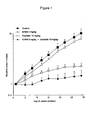
- E7080 showed additive or synergistic effect when used in combination with cisplatin, and their combination use showed a superior anti-tumor effect as compared with those obtained with E7080 or cisplatin alone (Tables 1, 2 and 3, and Figures 1 , 2 and 3 ).
- Tables 1, 2 and 3 show anti-tumor effects obtained by the use of E7080 alone, the use of cisplatin alone and the combination use of E7080 and cisplatin in subcutaneous transplanted A549 models.
- the first day of administration was considered Day 1.
- the combination of E7080 and cisplatin can provide a pharmaceutical composition and a kit that show a remarkable anti-tumor activity, which may be used for treating cancer.
- Example 2 Combination use of E7080 and carboplatin in subcutaneous transplanted models ( in vivo ) of non-small-cell lung cancer cell line (A549)
- Human non-small-cell lung cancer cell line A549 (purchased from Dainippon Sumitomo Pharma Co., Ltd) was cultured in RPMI1640 (containing 10% FBS) in a 5% carbon dioxide gas incubator at 37°C to about 80% confluence, and then the cells were collected with trypsin-EDTA.
- a 1 x 10 8 cells/mL suspension was prepared with a phosphate buffer, which was further added with matrigel matrix (purchased from Becton, Dickinson and Co.) to give a 5 x 10 7 cells/mL suspension, and each 0.2 mL of the resulting cell suspension was subcutaneously transplanted to a nude mouse at the side of its body.
- Synergistic effect was determined to be present in the combination group when a statistically significant (p ⁇ 0.05) interaction was observed in two-way ANOVA analysis. In addition, even if synergistic effect was not observed, additive effect was determined to be present when higher anti-tumor effect than that obtained upon administration of E7080 or carboplatin alone was observed.
- E7080 showed additive or synergistic effect when used in combination with carboplatin, and their combination use showed a superior anti-tumor effect as compared with those obtained with E7080 or carboplatin alone (Tables 4 and 5, and Figures 4 and 5 ).
- Tables 4 and 5 show anti-tumor effects obtained by the use of E7080 alone, the use of carboplatin alone and the combination use of E7080 and carboplatin in subcutaneous transplanted A549 models.
- the first day of administration was considered Day 1.
- the combination of E7080 and carboplatin can provide a pharmaceutical composition and a kit that show a remarkable anti-tumor activity, which may be used for treating cancer.
- crystal (C) of methanesulfonate of 4-(3-chloro-4-(cyclopropylaminocarbonyl)aminophenoxy)-7-methoxy-6-quinolinecarboxamide (hereinafter, also referred to as "crystal (C)", which was produced according to the method described in Example 7 of W02005/063713 ) and 192g of light anhydrous silicic acid (antigelling agent sold under the trade name of AEROSIL (Registered Trademark) 200, Nippon Aerosil Co., Ltd.) were mixed with 20L Super Mixer, and then 1236g of D-mannitol (excipient, Towa-Kasei Co., Ltd.), 720g of crystalline cellulose (excipient sold under the trade name of Avicel PH101, Asahi Kasei Corporation) and 72g of hydroxypropylcellulose (binder sold under the trade name of HPC-L, Nippon Soda Co., Ltd.) were
- a suitable amount of anhydrous ethanol was added to obtain a granulated body containing crystal (C).
- This granulated body was dried in a rack dryer (60°C), and then size-regulated using PowerMILL to obtain granules.
- 120g of croscarmellose sodium (disintegrant sold under the trade name of Ac-Di-Sol, FMC International Inc.) and 36g of sodium stearyl fumarate (lubricant, JRS Pharma LP) were placed and mixed together in a 20L tumbler mixer, and molded with a tablet machine to obtain tablets with a total mass of 100 mg per tablet.
- the tablets were coated using aqueous 10% Opadry yellow (OPADRY 03F42069 YELLOW, Colorcon Japan) solution as a coating solution with a tablet coating machine, thereby obtaining coated tablets with a total mass of 105 mg per tablet.
- aqueous 10% Opadry yellow OPDRY 03F42069 YELLOW, Colorcon Japan
- a suitable amount of anhydrous ethanol was added to obtain a granulated body containing crystal (C).
- This granulated body was dried in a rack dryer (60°C), and then size-regulated using PowerMILL to obtain granules.
- 120g of croscarmellose sodium (disintegrant sold under the trade name of Ac-Di-Sol, FMC International Inc.) and 36g of sodium stearyl fumarate (lubricant, JRS Pharma LP) were placed and mixed together in a 20L tumbler mixer, and molded with a tablet machine to obtain tablets with a total mass of 400 mg per tablet.
- the tablets were coated using aqueous 10% Opadry yellow (OPADRY 03F42069 YELLOW, Colorcon Japan) solution as a coating solution with a tablet coating machine, thereby obtaining coated tablets with a total mass of 411 mg per tablet.
- aqueous 10% Opadry yellow OPDRY 03F42069 YELLOW, Colorcon Japan
- a suitable amount of anhydrous ethanol was added to obtain a granulated body containing crystal (C).
- This granulated body was dried in a rack dryer (60°C), and then granulated using PowerMILL to obtain granules.
- 10g of croscarmellose sodium (disintegrant sold under the trade name of Ac-Di-Sol, FMC International Inc.) and 1.5g of sodium stearyl fumarate (lubricant, JRS Pharma LP) were mixed and molded with a tablet machine to obtain tablets with a total mass of 400 mg per tablet.
- the present invention provides a pharmaceutical composition and a kit that exhibit excellent anti-tumor effect.
- the present invention provides a pharmaceutical composition and/or a kit comprising a compound represented by General Formula (I), a pharmacologically acceptable salt thereof or a solvate thereof in combination with an anti-tumor platinum complex, which can be used for the treatment of cancer.
- a pharmaceutical composition and/or a kit comprising a compound represented by General Formula (I), a pharmacologically acceptable salt thereof or a solvate thereof in combination with an anti-tumor platinum complex, which can be used for the treatment of cancer.
Landscapes
- Chemical & Material Sciences (AREA)
- Organic Chemistry (AREA)
- Health & Medical Sciences (AREA)
- Life Sciences & Earth Sciences (AREA)
- General Chemical & Material Sciences (AREA)
- Medicinal Chemistry (AREA)
- Nuclear Medicine, Radiotherapy & Molecular Imaging (AREA)
- Pharmacology & Pharmacy (AREA)
- Chemical Kinetics & Catalysis (AREA)
- Animal Behavior & Ethology (AREA)
- General Health & Medical Sciences (AREA)
- Public Health (AREA)
- Veterinary Medicine (AREA)
- Pharmaceuticals Containing Other Organic And Inorganic Compounds (AREA)
- Acyclic And Carbocyclic Compounds In Medicinal Compositions (AREA)
- Quinoline Compounds (AREA)
Abstract
Description
- The present invention relates to a pharmaceutical composition and a kit comprising a compound represented by General Formula (I), a pharmacologically acceptable salt thereof or a solvate thereof (hereinafter, also referred to as the "compound of the invention") used in combination with an anti-tumor platinum complex, to a method for treating cancer characterized by administering an effective amount of the pharmaceutical composition to a patient, to use of a compound of the invention for producing the pharmaceutical composition, and to a compound of the invention for the pharmaceutical composition, etc..
- Examples of substances conventionally used as chemotherapeutic agents for cancer include alkylating agents such as cyclophosphamide, antimetabolites such as methotrexate and fluorouracil, antibiotics such as adriamycin, mitomycin and bleomycin, plant-derived agents such as paclitaxel, vincristine and etoposide and metal complexes such as a platinum formulation. None of them, however, have satisfactory anti-tumor effect and thus there has been a strong need for development of a novel anti-tumor agent.
- Formulations comprising an anti-tumor platinum complex as an active element are known as platinum formulations. Examples of such anti-tumor platinum complexes include cisplatin, carboplatin, nedaplatin, zeniplatin, enloplatin, lobaplatin, ormaplatin, loboplatin, sebriplatin, oxaliplatin, miboplatin and spiroplatin. Such platinum formulations have been approved and developed for application to testicular tumor, bladder cancer, renal pelvic/ureteral tumor, prostate cancer, ovarian cancer, head and neck cancer, non-small-cell lung cancer, esophageal cancer, cervical cancer, neuroblastoma, gastric cancer, osteosarcoma, small cell lung cancer, malignant lymphoma, hepatocellular carcinoma or the like. In addition, combination therapy for various cancers has also been approved or developed by combining a platinum formulation including an anti-tumor platinum complex with various drugs, for example, with paclitaxel for non-small-cell lung cancer and with gemcitabine for non-small-cell lung cancer.
In a test by Abratt et al., a median survival period obtained with combined use of vinorelbine and carboplatin was 8.6 months while a median survival period obtained with combined use of vinorelbine and gemcitabine was 11.5 months. These results showed that combination therapy without a platinum formulation was better than combination therapy with a platinum formulation. That is to say that even if a platinum formulation has anti-tumor effect, the effect is not necessarily enhanced by simply combining with other drugs, and that selection of drugs for anti-tumor effect enhancement is yet unobvious (Non-patent references 1-9) - Furthermore, 4-(3-chloro-4-(cyclopropylaminocarbonyl)aminophenoxy)-7-methoxy-6-quinolinecarboxamide is known as a VEGF receptor kinase inhibitory substance (Patent References 1-2).
- However, there is no report as to whether or not pharmaceutical compositions comprising these substances in combination have any anti-tumor effect.
- [Patent Reference 1] International Publication No.
W02002/32872 - [Patent Reference 2] International Publication No.
WO2005/063713 - [Non-Patent Reference 1] Paclitaxel + carboplatin: Paclitaxel plus carboplatin in advanced non-small-cell lung cancer: a phase II trial (J. Clin Oncol., 14(7), 2054-2060, 1996)
- [Non-Patent Reference 2] Paclitaxel + cisplatin: Phase III comparative study of high-dose cisplatin versus a combination of paclitaxel and cisplatin in patients with advanced non-small-cell lung cancer. (J. Clin Oncol., 18(19), 3390-3399, 2000)
- [Non-Patent Reference 3] Vinorelbine + cisplatin: Randomized trial comparing cisplatin with cisplatin plus vinorelbine in the treatment of advanced non-small-cell lung cancer: a Southwest Oncology Group study. (J. Clin Oncol., 16(7), 2459-65, 1998)
- [Non-Patent Reference 4] Gemcitabine + cisplatin: Phase III trial of gemcitabine plus cisplatin versus cisplatin alone in patients with locally advanced or metastatic non-small-cell lung cancer. (J. Clin Oncol., 18(1)), 122-130, 2000)
- [Non-Patent Reference 5] Gemcitabine + carboplatin: Phase II study of gemcitabine and carboplatin in patients with advanced non-small-cell lung cancer. (Cancer Chemother Pharmacol., 60 (4), 601-607, 2007)
- [Non-Patent Reference 6] CPT-11 (Irinotecan) + cisplatin: A phase II study of irinotecan plus cisplatin for patients with advanced stage IIIB or IV NSCLC previously treated with nonplatinum-based chemotherapy. (Cancer, 107(4), 799-805, 2006)
- [Non-Patent Reference 7] J. Clin Oncol. 24(3):419-430, 2006
- [Non-Patent Reference 8] Other: Randomized phase III study of cisplatin plus irinotecan versus carboplatin plus paclitaxel, cisplatin plus gemcitabine, and cisplatin plus vinorelbine for advanced non-small-cell lung cancer: Four-Arm Cooperative Study in Japan. (Ann Oncol., 18(2), 317-323, 2006)
- [Non-Patent Reference 9] Lung Cancer 2005, Vol. 49, No2, pp. 233-240
- The present invention was achieved regarding the circumstances described above and the problems to be solved by the invention are to find a pharmaceutical composition and a kit that show excellent anti-tumor effect and a method for treating cancer.
- In order to solve the above-mentioned problems, the present inventors have gone through keen research and found that an angiogenesis inhibitory substance such as 4-(3-chloro-4-(cyclopropylaminocarbonyl)aminophenoxy)-7-methoxy-6-quinolinecarboxamide shows excellent anti-tumor effect when combined with an anti-tumor platinum complex.
- Thus, the present invention relates to the followings.
- (1) A pharmaceutical composition comprising a compound represented by General Formula (I), a pharmacologically acceptable salt thereof or a solvate thereof in combination with an anti-tumor platinum complex.
- (2) A kit comprising:
- (a) at least one selected from the group consisting of a packaging container, an instruction and a package insert describing use of a compound represented by General Formula (I), a pharmacologically acceptable salt thereof or a solvate thereof in combination with an anti-tumor platinum complex; and
- (b) a pharmaceutical composition comprising a compound represented by General Formula (I), a pharmacologically acceptable salt thereof or a solvate thereof.
- (3) A kit characterized by comprising a set of a formulation containing a compound represented by General Formula (I), a pharmacologically acceptable salt thereof or a solvate thereof and a formulation containing an anti-tumor platinum complex.
- (4) A pharmaceutical composition comprising a compound represented by General Formula (I), a pharmacologically acceptable salt thereof or a solvate thereof that is simultaneously or separately administered to a patient with an anti-tumor platinum complex.
- (5) A method for treating cancer characterized by simultaneously or separately administering effective amounts of a compound represented by General Formula (I), a pharmacologically acceptable salt thereof or a solvate thereof and an anti-tumor platinum complex to a patient.
- (6) Use of a compound represented by General Formula (I), a pharmacologically acceptable salt thereof or a solvate thereof for producing a pharmaceutical composition in combination with an anti-tumor platinum complex.
- (7) A compound represented by General Formula (I), a pharmacologically acceptable salt thereof or a solvate thereof for a pharmaceutical composition in combination with an anti-tumor platinum complex.
- The compound represented by General Formula (I), a pharmacologically acceptable salt thereof or a solvate thereof is as follows:

R2 represents a cyano group, an optionally substituted C1-6 alkoxy group, a carboxyl group, an optionally substituted C2-7 alkoxycarbonyl group or a group represented by Formula -CONVa11Va12 (wherein, Va11 represents a hydrogen atom, an optionally substituted C1-6 alkyl group, an optionally substituted C2-6 alkenyl group, an optionally substituted C2-6 alkynyl group, an optionally substituted C3-8 cycloalkyl group, an optionally substituted C6-10 aryl group, an optionally substituted 5-10-membered heteroaryl group or an optionally substituted 3-10-membered nonaromatic heterocyclic group; Va12 represents a hydrogen atom, an optionally substituted C1-6 alkyl group, an optionally substituted C2-6 alkenyl group, an optionally substituted C2-6 alkynyl group, an optionally substituted C3-8 cycloalkyl group, an optionally substituted C6-10 aryl group, an optionally substituted 5-10-membered heteroaryl group, an optionally substituted 3-10-membered nonaromatic heterocyclic group, a hydroxyl group, an optionally substituted C1-6 alkoxy group or an optionally substituted C3-8 cycloalkoxy group);
Y1 represents a group represented by either one of the following formulae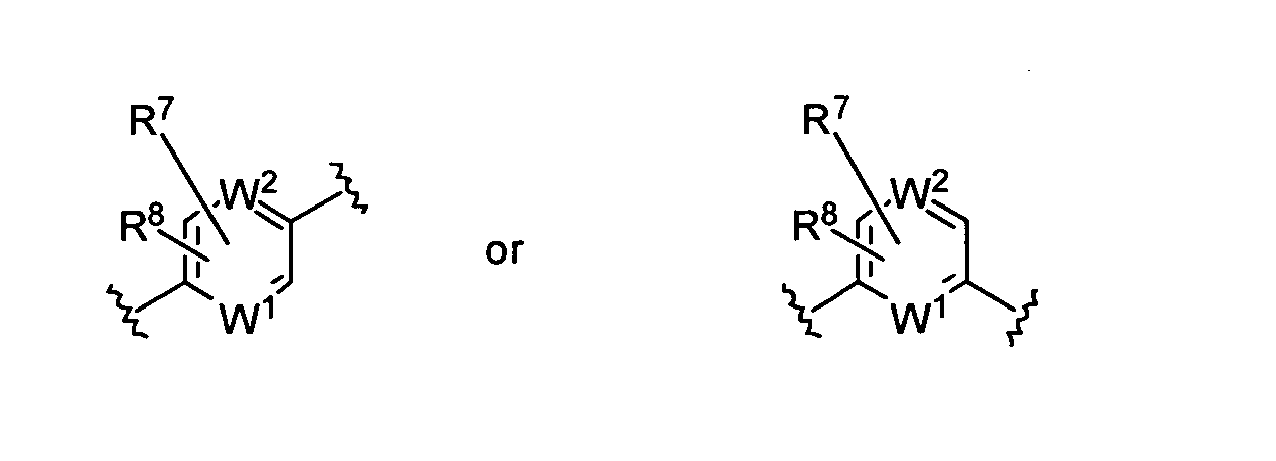
W1 and W2 each independently represent an optionally substituted carbon atom or nitrogen atom);
R3 and R4 each independently represent a hydrogen atom, an optionally substituted C1-6 alkyl group, an optionally substituted C2-6 alkenyl group, an optionally substituted C2-6 alkynyl group, an optionally substituted C3-8 cycloalkyl group, an optionally substituted C2-7 acyl group or an optionally substituted C2-7 alkoxycarbonyl group; and
R5 represents a hydrogen atom, an optionally substituted C1-6 alkyl group, an optionally substituted C2-6 alkenyl group, an optionally substituted C2-6 alkynyl group, an optionally substituted C3-8 cycloalkyl group, an optionally substituted C6-10 aryl group, an optionally substituted 5-10-membered heteroaryl group or an optionally substituted 3-10-membered nonaromatic heterocyclic group],
a pharmacologically acceptable salt thereof or a solvate thereof. - The anti-tumor platinum complex is, for example, cisplatin, carboplatin, nedaplatin, zeniplatin, enloplatin, lobaplatin, ormaplatin, loboplatin, sebriplatin, oxaliplatin, miboplatin or spiroplatin
- Furthermore, the present invention preferably relates to the followings.
- (8) A pharmaceutical composition comprising 4-(3-chloro-4-(cyclopropylaminocarbonyl)aminophenoxy)-7-methoxy-6-quinolinecarboxamide, a pharmacologically acceptable salt thereof or a solvate thereof in combination with cisplatin or carboplatin.
- (9) A kit comprising:
- (a) at least one selected from the group consisting of a packaging container, an instruction and a package insert describing use of 4-(3-chloro-4-(cyclopropylaminocarbonyl)aminophenoxy)-7-methoxy-6-quinolinecarboxamide, a pharmacologically acceptable salt thereof or a solvate thereof in combination with cisplatin or carboplatin; and
- (b) a pharmaceutical composition comprising 4-(3-chloro-4-(cyclopropylaminocarbonyl)aminophenoxy)-7-methoxy-6-quinolinecarboxamide, a pharmacologically acceptable salt thereof or a solvate thereof.
- (10) A kit characterized by comprising a set of a formulation containing 4-(3-chloro-4-(cyclopropylaminocarbonyl)aminophenoxy)-7-methoxy-6-quinolinecarboxamide, a pharmacologically acceptable salt thereof or a solvate thereof and a formulation containing cisplatin or carboplatin.
- (11) A pharmaceutical composition comprising 4-(3-chloro-4-(cyclopropylaminocarbonyl)aminophenoxy)-7-methoxy-6-quinolinecarboxamide, a pharmacologically acceptable salt thereof or a solvate thereof that is simultaneously or separately administered to a patient with cisplatin or carboplatin.
- (12) A method for treating cancer characterized by simultaneously or separately administering effective amounts of 4-(3-chloro-4-(cyclopropylaminocarbonyl)aminophenoxy)-7-methoxy-6-quinolinecarboxamide, a pharmacologically acceptable salt thereof or a solvate thereof, and cisplatin or carboplatin to a patient.
- (13) Use of 4-(3-chloro-4-(cyclopropylaminocarbonyl)aminophenoxy)-7-methoxy-6-quinolinecarboxamide, a pharmacologically acceptable salt thereof or a solvate thereof for producing a pharmaceutical composition in combination with cisplatin or carboplatin.
- (14) 4-(3-Chloro-4-(cyclopropylaminocarbonyl)aminophenoxy)-7-methoxy-6-quinolinecarboxamide, a pharmacologically acceptable salt thereof or a solvate thereof for a pharmaceutical composition in combination with cisplatin or carboplatin.
- The present invention provides a pharmaceutical composition and a kit that exhibit excellent anti-tumor effect. Specifically, the present invention provides a pharmaceutical composition and a kit comprising a compound represented by General Formula (I), a pharmacologically acceptable salt thereof or a solvate thereof in combination with an anti-tumor platinum complex. The pharmaceutical composition and the kit of the invention can be used for the treatment of cancer.
-
-
Figure 1 shows the effect of combination use of E7080 and cisplatin on subcutaneous transplanted (in vivo) models of non-small-cell lung cancer cell lines (A549). InFigure 1 , E7080 represents 4-(3-chloro-4-(cyclopropylaminocarbonyl)aminophenoxy)-7-methoxy-6-quinolinecarboxamide. -
Figure 2 shows the effect of combination use of E7080 and cisplatin on subcutaneous transplanted (in vivo) models of non-small-cell lung cancer cell lines (A549). InFigure 2 , E7080 represents 4-(3-chloro-4-(cyclopropylaminocarbonyl)aminophenoxy)-7-methoxy-6-quinolinecarboxamide. -
Figure 3 shows the effect of combination use of E7080 and cisplatin on subcutaneous transplanted (in vivo) models of non-small-cell lung cancer cell lines (A549). InFigure 3 , E7080 represents 4-(3-chloro-4-(cyclopropylaminocarbonyl)aminophenoxy)-7-methoxy-6-quinolinecarboxamide. -
Figure 4 shows the effect of combination use of E7080 and carboplatin on subcutaneous transplanted (in vivo) models of non-small-cell lung cancer cell lines (A549). InFigure 4 , E7080 represents 4-(3-chloro-4-(cyclopropylaminocarbonyl)aminophenoxy)-7-methoxy-6-quinolinecarboxamide. -
Figure 5 shows the effect of combination use of E7080 and carboplatin on subcutaneous transplanted (in vivo) models of non-small-cell lung cancer cell lines (A549). InFigure 5 , E7080 represents 4-(3-chloro-4-(cyclopropylaminocarbonyl)aminophenoxy)-7-methoxy-6-quinolinecarboxamide. - Hereinafter, embodiments of the present invention will be described. The following embodiments are examples provided for illustrating the present invention, and the present invention is not intended to be limited thereto. The present invention may be carried out in various embodiments without departing from the spirit of the invention. The publications, laid-open patent publications, patent publications and other patent documents cited herein are entirely incorporated herein by reference. The present specification incorporates the content of the specification of
U.S. provisional application No. 60/986,641 (filed on 9 November, 2007 - As used herein, a "halogen atom" refers to a fluorine atom, a chlorine atom, a bromine atom or an iodine atom.
Preferable examples of a "halogen atom" include a fluorine atom and a chlorine atom. - As used herein, a "C1-6 alkyl group" refers to a linear or branched alkyl group with a carbon number of 1-6, specific examples including a methyl group, an ethyl group, a 1-propyl group (n-propyl group), a 2-propyl group (i-propyl group), a 2-methyl-1-propyl group (i-butyl group), a 2-methyl-2-propyl group (t-butyl group), a 1-butyl group (n-butyl group), a 2-butyl group (s-butyl group), a 1-pentyl group, a 2-pentyl group, a 3-pentyl group, a 2-methyl-1-butyl group, a 3-methyl-1-butyl group, a 2-methyl-2-butyl group, a 3-methyl-2-butyl group, a 2,2-dimethyl-1-propyl group, a 1-hexyl group, a 2-hexyl group, a 3-hexyl group, a 2-methyl-1-pentyl group, a 3-methyl-1-pentyl group, a 4-methyl-1-pentyl group, a 2-methyl-2-pentyl group, a 3-methyl-2-pentyl group, a 4-methyl-2-pentyl group, a 2-methyl-3-pentyl group, a 3-methyl-3-pentyl group, a 2,3-dimethyl-1-butyl group, a 3,3-dimethyl-1-butyl group, a 2,2-dimethyl-1-butyl group, a 2-ethyl-1-butyl group, a 3,3-dimethyl-2-butyl group and a 2,3-dimethyl-2-butyl group.
Preferable examples of a "C1-6 alkyl group" include a methyl group, an ethyl group, a 1-propyl group, a 2-propyl group, a 2-methyl-1-propyl group, a 2-methyl-2-propyl group, a 1-butyl group and a 2-butyl group. - As used herein, a "C1-6 alkylene group" refers to a divalent group derived from a "C1-6 alkyl group" defined above by removing any one hydrogen atom therefrom, specific examples including a methylene group, a 1,2-ethylene group, a 1,1-ethylene group, a 1,3-propylene group, a tetramethylene group, a pentamethylene group and a hexamethylene group.
- As used herein, a "C2-6 alkenyl group" refers to a linear or branched alkenyl group having one double bond and a carbon number of 2-6, specific examples including an ethenyl group (vinyl group), a 1-propenyl group, a 2-propenyl group (allyl group), a 1-butenyl group, a 2-butenyl group, a 3-butenyl group, a pentenyl group and a hexenyl group.
- As used herein, a "C2-6 alkynyl group" refers to a linear or branched alkynyl group having one triple bond and a carbon number of 2-6, specific examples including an ethinyl group, a 1-propynyl group, a 2-propynyl group, a 1-butynyl group, a 2-butynyl group, a 3-butynyl group, a pentynyl group and a hexynyl group.
- As used herein, a "C3-8 cycloalkyl group" refers to a monocyclic or bicyclic saturated aliphatic hydrocarbon group with a carbon number of 3-8, specific examples including a cyclopropyl group, a cyclobutyl group, a cyclopentyl group, a cyclohexyl group, a cycloheptyl group, a cyclooctyl group, a bicyclo[2. 1. 0]pentyl group, a bicyclo[3. 1. 0]hexyl group, a bicyclo[2. 1. 1]hexyl group, a bicyclo[4. 1. 0]heptyl group, a bicyclo[2. 2. 1]heptyl group (norbornyl group), a bicyclo[3. 3. 0]octyl group, a bicyclo[3. 2. 1]octyl group and a bicyclo[2. 2. 2]octyl group.
Preferable examples of a "C3-8 cycloalkyl group" include a cyclopropyl group, a cyclobutyl group and a cyclopentyl group. - As used herein, a "C6-10 aryl group" refers to an aromatic hydrocarbon cyclic group with a carbon number of 6-10, specific examples including a phenyl group, a 1-naphthyl group, a 2-naphthyl group, an indenyl group and an azulenyl group.
A preferable example of a "C6-10 aryl group" includes a phenyl group. - As used herein, a "heteroatom" refers to a nitrogen atom, an oxygen atom or a sulfur atom.
- As used herein, a "5-10-membered heteroaryl group" refers to an aromatic cyclic group having 5-10 atoms forming the ring and 1-5 heteroatoms included in the atoms forming the ring, specific examples including a furyl group, a thienyl group, a pyrrolyl group, an imidazolyl group, a triazolyl group, a tetrazolyl group, a thiazolyl group, a pyrazolyl group, an oxazolyl group, an isoxazolyl group, an isothiazolyl group, a furazanyl group, a thiadiazolyl group, an oxadiazolyl group, a pyridyl group, a pyrazinyl group, a pyridazinyl group, a pyrimidinyl group, a triazinyl group, a purinyl group, a pteridinyl group, a quinolyl group, an isoquinolyl group, a naphthiridinyl group, a quinoxalinyl group, a cinnolinyl group, a quinazolinyl group, a phthalazinyl group, an imidazopyridyl group, an imidazothiazolyl group, an imidazoxazolyl group, a benzothiazolyl group, a benzoxazolyl group, a benzimidazolyl group, an indolyl group, an isoindolyl group, an indazolyl group, a pyrrolopyridyl group, a thienopyridyl group, a furopyridyl group, a benzothiadiazolyl group, a benzoxadiazolyl group, a pyridopyrimidinyl group, a benzofuryl group, a benzothienyl group and a thienofuryl group.
- Preferable examples of a "5-10-membered heteroaryl group" include a furyl group, a thienyl group, a pyrrolyl group, an imidazolyl group, a thiazolyl group, a pyrazolyl group, an oxazolyl group, an isoxazolyl group, an isothiazolyl group, a pyridyl group and a pyrimidinyl group.
- As used herein, a "3-10-membered nonaromatic heterocyclic group":
- (a) has 3-10 atoms forming the ring;
- (b) has 1-2 heteroatoms included in the atoms forming the ring;
- (c) may include 1-2 double bonds in the ring;
- (d) may include 1-3 carbonyl groups, sulfinyl groups or sulfonyl groups in the ring; and
- (e) refers to a nonaromatic monocyclic or bicyclic group, where when a nitrogen atom is included in the atoms forming the ring, the nitrogen atom may have a bond.
- Preferable examples of a "3-10-membered nonaromatic heterocyclic group" include an aziridinyl group, an azetidinyl group, a pyrrolidinyl group, a piperidinyl group, an azepanyl group, a piperazinyl group, a diazepanyl group, a morpholinyl group, a thiomorpholinyl group, a 1,1-dioxothiomorpholinyl group, a tetrahydrofuryl group and a tetrahydropyranyl group.
- As used herein, a "C1-6 alkoxy group" refers to a group in which an oxygen atom is bound to the terminal of a "C1-6 alkyl group" defined above, specific examples including a methoxy group, an ethoxy group, a 1-propoxy group (n-propoxy group), a 2-propoxy group (i-propoxy group), a 2-methyl-1-propoxy group (i-butoxy group), a 2-methyl-2-propoxy group (t-butoxy group), a 1-butoxy group (n-butoxy group), a 2-butoxy group (s-butoxy group), a 1-pentyloxy group, a 2-pentyloxy group, a 3-pentyloxy group, a 2-methyl-1-butoxy group, a 3-methyl-1-butoxy group, a 2-methyl-2-butoxy group, a 3-methyl-2-butoxy group, a 2,2-dimethyl-1-propoxy group, a 1-hexyloxy group, a 2-hexyloxy group, a 3-hexyloxy group, a 2-methyl-1-pentyloxy group, a 3-methyl-1-pentyloxy group, a 4-methyl-1-pentyloxy group, a 2-methyl-2-pentyloxy group, a 3-methyl-2-pentyloxy group, a 4-methyl-2-pentyloxy group, a 2-methyl-3-pentyloxy group, a 3-methyl-3-pentyloxy group, a 2,3-dimethyl-1-butoxy group, a 3,3-dimethyl-1-butoxy group, a 2,2-dimethyl-1-butoxy group, a 2-ethyl-1-butoxy group, a 3,3-dimethyl-2-butoxy group and a 2,3-dimethyl-2-butoxy group.
Preferable examples of a "C1-6 alkoxy group" include a methoxy group, an ethoxy group, a 1-propoxy group, a 2-propoxy group, a 2-methyl-1-propoxy group, a 2-methyl-2-propoxy group, a 1-butoxy group and a 2-butoxy group. - As used herein, a "C1-6 alkylthio group" refers to a group in which a sulfur atom is bound to the terminal of a "C1-6 alkyl group" defined above, specific examples including a methylthio group, an ethylthio group, a 1-propylthio group (n-propylthio group), a 2-propylthio group (i-propylthio group), a 2-methyl-1-propylthio group (i-butylthio group), a 2-methyl-2-propylthio group (t-butylthio group), a 1-butylthio group (n-butylthio group), a 2-butylthio group (s-butylthio group), a 1-pentylthio group, a 2-pentylthio group, a 3-pentylthio group, a 2-methyl-1-butylthio group, a 3-methyl-1-butylthio group, a 2-methyl-2-butylthio group, a 3-methyl-2-butylthio group, a 2,2-dimethyl-1-propylthio group, a 1-hexylthio group, a 2-hexylthio group, a 3-hexylthio group, a 2-methyl-1-pentylthio group, a 3-methyl-1-pentylthio group, a 4-methyl-1-pentylthio group, a 2-methyl-2-pentylthio group, a 3-methyl-2-pentylthio group, a 4-methyl-2-pentylthio group, a 2-methyl-3-pentylthio group, a 3-methyl-3-pentylthio group, a 2,3-dimethyl-1-butylthio group, a 3,3-dimethyl-1-butylthio group, a 2,2-dimethyl-1-butylthio group, a 2-ethyl-1-butylthio group, a 3,3-dimethyl-2-butylthio group and a 2,3-dimethyl-2-butylthio group.
Preferable examples of a "C1-6 alkylthio group" include a methylthio group, an ethylthio group, a 1-propylthio group (n-propylthio group), a 2-propylthio group (i-propylthio group), a 2-methyl-1-propylthio group (i-butylthio group), a 2-methyl-2-propylthio group (t-butylthio group), a 1-butylthio group (n-butylthio group) and a 2-butylthio group (s-butylthio group). - As used herein, a "C3-8 cycloalkoxy group" refers to a group in which an oxygen atom is bound to the terminal of a "C3-8 cycloalkyl group" defined above, specific examples including a cyclopropoxy group, a cyclobutoxy group, a cyclopentyloxy group, a cyclohexyloxy group, a cycloheptyloxy group, a cyclooctyloxy group, a bicyclo[2. 1. 0]pentyloxy group, a bicyclo[3. 1. 0]hexyloxy group, a bicyclo[2. 1. 1]hexyloxy group, a bicyclo[4. 1. 0]heptyloxy group, a bicyclo[2. 2. 1]heptyloxy group (norbomyloxy group), a bicyclo[3.3. 0]octyloxy group, a bicyclo[3. 2. 1]octyloxy group and a bicyclo[2. 2. 2]octyloxy group.
Preferable examples of a "C3-8 cycloalkoxy group" include a cyclopropoxy group, a cyclobutoxy group and a cyclopentyloxy group. - As used herein, a "mono-C1-6 alkylamino group" refers to a group in which one hydrogen atom in an amino group is substituted with a "C1-6 alkyl group" defined above, specific examples including a methylamino group, an ethylamino group, a 1-propylamino group (n-propylamino group), a 2-propylamino group (i-propylamino group), a 2-methyl-1-propylamino group (i-butylamino group), a 2-methyl-2-propylamino group (t-butylamino group), a 1-butylamino group (n-butylamino group), a 2-butylamino group (s-butylamino group), a 1-pentylamino group, a 2-pentylamino group, a 3-pentylamino group, a 2-methyl-1-butylamino group, a 3-methyl-1-butylamino group, a 2-methyl-2-butylamino group, a 3-methyl-2-butylamino group, a 2,2-dimethyl-1-propylamino group, a 1-hexylamino group, a 2-hexylamino group, a 3-hexylamino group, a 2-methyl-1-pentylamino group, a 3-methyl-1-pentylamino group, a 4-methyl-1-pentylamino group, a 2-methyl-2-pentylamino group, a 3-methyl-2-pentylamino group, a 4-methyl-2-pentylamino group, a 2-methyl-3-pentylamino group, a 3-methyl-3-pentylamino group, a 2,3-dimethyl-1-butylamino group, a 3,3-dimethyl-1-butylamino group, a 2,2-dimethyl-1-butylamino group, a 2-ethyl-1-butylamino group, a 3,3-dimethyl-2-butylamino group and a 2,3-dimethyl-2-butylamino group.
- As used herein, a "di-C1-6 alkylamino group" refers to a group in which two hydrogen atoms in an amino group are substituted with identical or different "C1-6 alkyl groups" defined above, specific examples including a N,N-dimethylamino group, a N,N-diethylamino group, a N,N-di-n-propylamino group, a N,N-di-i-propylamino group, a N,N-di-n-butylamino group, a N,N-di-i-butylamino group, a N,N-di-s-butylamino group, a N,N-di-t-butylamino group, a N-ethyl-N-methylamino group, a N-n-propyl-N-methylamino group, a N-i-propyl-N-methylamino group, a N-n-butyl-N-methylamino group, a N-i-butyl-N-methylamino group, a N-s-butyl-N-methylamino group and a N-t-butyl-N-methylamino group.
- As used herein, a "C2-7 acyl group" refers to a carbonyl group bound with a "C1-6 alkyl group" defined above, specific examples including an acetyl group, a propionyl group, an isopropionyl group, a butyryl group, an isobutyryl group, a valeryl group, an isovaleryl group and a pivaloyl group.
- As used herein, a "C2-7 alkoxycarbonyl group" refers to a carbonyl group bound with a "C1-6 alkoxy group" defined above, specific examples including a methoxycarbonyl group, an ethoxycarbonyl group, a 1-propyloxycarbonyl group, a 2-propyloxycarbonyl group, a 2-methyl-2-propoxy group and a 2-methyl-2-propoxycarbonyl group.
- As used herein, "that may have a substituent (optionally substituted)" means "that may have one or more substituents in any combination at substitutable positions", and specific examples of the substituent include a halogen atom, a hydroxyl group, a thiol group, a nitro group, a cyano group, a formyl group, a carboxyl group, an amino group, a silyl group, a methanesulfonyl group, a C1-6 alkyl group, a C2-6 alkenyl group, a C2-6 alkynyl group, a C3-8 cycloalkyl group, a C6-10 aryl group, a 5-10-membered heteroaryl group, a 3-10-membered nonaromatic heterocyclic group, a C1-6 alkoxy group, a C1-6 alkylthio group, a C3-8 cycloalkoxy group, a mono-C1-6 alkylamino group, a di-C1-6 alkylamino group, a C2-7 acyl group and a C2-7 alkoxycarbonyl group. In this case, the C1-6 alkyl group, the C2-6 alkenyl group, the C2-6 alkynyl group, the C3-8 cycloalkyl group, the C6-10 aryl group, the 5-10-membered heteroaryl group, the 3-10-membered nonaromatic heterocyclic group, the C1-6 alkoxy group, the C1-6 alkylthio group, the C3-8 cycloalkoxy group, the mono-C1-6 alkylamino group, the di-C1-6 alkylamino group, the C2-7 acyl group and the C2-7 alkoxycarbonyl group may each independently have 1-3 groups selected from the group consisting of the following substituent groups.
- A halogen atom, a hydroxyl group, a thiol group, a nitro group, a cyano group, a C1-6 alkyl group, a C3-8 cycloalkyl group, a C2-6 alkenyl group, a C2-6 alkynyl group, a C6-10 aryl group, a 5-10-membered heteroaryl group, a 3-10-membered nonaromatic heterocyclic group, a C1-6 alkoxy group and a C1-6 alkylthio group.
- According to the present invention, a compound represented by General Formula (I) is as follows.

- R1 represents a group represented by Formula -V1-V2-V3 (wherein, V1 represents an optionally substituted C1-6 alkylene group; V2 represents a single bond, an oxygen atom, a sulfur atom, a carbonyl group, a sulfinyl group, a sulfonyl group, a group represented by Formula -CONR6-, a group represented by Formula -SO2NR6-, a group represented by Formula -NR6SO2-, a group represented by Formula -NR6CO- or a group represented by Formula -NR6- (wherein, R6 represents a hydrogen atom, an optionally substituted C1-6 alkyl group or an optionally substituted C3-8 cycloalkyl group); V3 represents a hydrogen atom, an optionally substituted C1-6 alkyl group, an optionally substituted C2-6 alkenyl group, an optionally substituted C2-6 alkynyl group, an optionally substituted C3-8 cycloalkyl group, an optionally substituted C6-10 aryl group, an optionally substituted 5-10-membered heteroaryl group or an optionally substituted 3-10-membered nonaromatic heterocyclic group).
- A preferable example of R1 includes a C1-6 alkyl group provided that R1 may have a substituent selected from a 3-10-membered nonaromatic heterocyclic group, a hydroxyl group, a C1-6 alkoxy group, an amino group, a mono-C1-6 alkylamino group and a di-C1-6 alkylamino group which may have a C1-6 alkyl group.
More preferable examples of R1 include a methyl group and a group represented by any one of the following formulae
Still more preferable examples of R1 include a methyl group and a 2-methoxyethyl group. - R2 represents a cyano group, an optionally substituted C1-6 alkoxy group, a carboxyl group, an optionally substituted C2-7 alkoxycarbonyl group or a group represented by Formula -CONVa11Va12 (wherein, Va11 represents a hydrogen atom, an optionally substituted C1-6 alkyl group, an optionally substituted C2-6 alkenyl group, an optionally substituted C2-6 alkynyl group, an optionally substituted C3-8 cycloalkyl group, an optionally substituted C6-10 aryl group, an optionally substituted 5-10-membered heteroaryl group or an optionally substituted 3-10-membered nonaromatic heterocyclic group; Va12 represents a hydrogen atom, an optionally substituted C1-6 alkyl group, an optionally substituted C2-6 alkenyl group, an optionally substituted C2-6 alkynyl group, an optionally substituted C3-8 cycloalkyl group, an optionally substituted C6-10 aryl group, an optionally substituted 5-10-membered heteroaryl group, an optionally substituted 3-10-membered nonaromatic heterocyclic group, a hydroxyl group, an optionally substituted C1-6 alkoxy group or an optionally substituted C3-8 cycloalkoxy group).
- Preferable examples of R2 include a cyano group or a group represented by Formula -CONVa11Va12 (wherein, Va11 and Va12 have the same meaning as defined above).
More preferable examples of R2 include a cyano group or a group represented by Formula -CONHVa16 (wherein, Va16 represents a hydrogen atom, a C1-6 alkyl group, a C3-8 cycloalkyl group, a C1-6 alkoxy group or a C3-8 cycloalkoxy group, provided that Va16 may have a substituent selected from a halogen atom, a cyano group, a hydroxyl group and a C1-6 alkoxy group).
A still more preferable example of R2 includes a group represented by Formula - CONHVa17 (wherein, Va17 represents a hydrogen atom, a C1-6 alkyl group or a C1-6 alkoxy group).
The most preferable example of R2 includes a group represented by Formula - CONHVa18 (wherein, Va18 represents a hydrogen atom, a methyl group or a methoxy group). - Y1 represents a group represented by the following formula

W1 and W2 each independently represent an optionally substituted carbon atom or nitrogen atom). - A preferable example of Y1 includes a group represented by the following formula

- R3 and R4 each independently represent a hydrogen atom, an optionally substituted C1-6 alkyl group, an optionally substituted C2-6 alkenyl group, an optionally substituted C2-6 alkynyl group, an optionally substituted C3-8 cycloalkyl group, an optionally substituted C2-7 acyl group or an optionally substituted C2-7 alkoxycarbonyl group.
A preferable example of R3 and R4 includes a hydrogen atom. - R5 represents a hydrogen atom, an optionally substituted C1-6 alkyl group, an optionally substituted C2-6 alkenyl group, an optionally substituted C2-6 alkynyl group, an optionally substituted C3-8 cycloalkyl group, an optionally substituted C6-10 aryl group, an optionally substituted 5-10-membered heteroaryl group or an optionally substituted 3-10-membered nonaromatic heterocyclic group.
Preferable examples of R5 include a hydrogen atom, a C1-6 alkyl group, a C3-8 cycloalkyl group and a C6-10 aryl group (provided that R5 may have a substituent selected from a halogen atom and a methanesulfonyl group).
More preferable examples of R5 include a methyl group, an ethyl group and a cyclopropyl group. - Moreover, preferable examples of the compound represented by General Formula (I) include:
- N-(4-(6-cyano-7-(2-methoxyethoxy)-4-quinolyl)oxy-2-fluorophenyl)-N'-(4-fluorophenyl)urea;
- N-(2-chloro-4-((6-cyano-7-((1-methyl-4-piperidyl)methoxy)-4-quinolyl)oxy)phenyl)-N'-cyclopropylurea;
- N-(4-((6-cyano-7-(((2R)-3-(diethylamino)-2-hydroxypropyl)oxy)-4-quinolyl)oxy)phenyl)-N'-(4-fluorophenyl)urea;
- N-(4-((6-cyano-7-(((2R)-2-hydroxy-3-(1-pyrrolidino)propyl)oxy)-4-quinolyl)oxy)phenyl)-N'-(4-fluorophenyl)urea;
- 4-(3-chloro-4-(cyclopropylaminocarbonyl)aminophenoxy)-7-methoxy-6-quinolinecarboxamide;
- 4-(3-chloro-4-(cyclopropylaminocarbonyl)aminophenoxy)-7-(2-methoxyethoxy)-6-quinolinecarboxamide;
- N6-cyclopropyl-4-(3-chloro-4-(((cyclopropylamino)carbonyl)amino)phenoxy)-7-methoxy-6-quinolinecarboxamide;
- N6-(2-methoxyethyl)-4-(3-chloro-4-(((cyclopropylamino)carbonyl)amino)phenoxy)-7-methoxy-6-quinolinecarboxamide;
- N6-(2-fluoroethyl)-4-(3-chloro-4-(((cyclopropylamino)carbonyl)amino)phenoxy)-7-methoxy-6-quinolinecarboxamide;
- N6-methoxy-4-(3-chloro-4-(((cyclopropylamino)carbonyl)amino)phenoxy)-7-methoxy-6-quinolinecarboxamide;
- N6-methyl-4-(3-chloro-4-(((cyclopropylamino)carbonyl)amino)phenoxy)-7-methoxy-6-quinolinecarboxamide;
- N6-ethyl-4-(3-chloro-4-(((cyclopropylamino)carbonyl)amino)phenoxy)-7-methoxy-6-quinolinecarboxamide;
- 4-(3-fluoro-4-(cyclopropylaminocarbonyl)aminophenoxy)-7-(2-methoxyethoxy)-6-quinolinecarboxamide;
- 4-(3-chloro-4-(cyclopropylaminocarbonyl)aminophenoxy)-7-(2-hydroxyethoxy)-6-quinolinecarboxamide;
- 4-(3-chloro-4-(cyclopropylaminocarbonyl)aminophenoxy)-7-((2S)-2,3-dihydroxypropyl)oxy-6-quinolinecarboxamide;
- 4-(3-chloro-4-(methylaminocarbonyl)aminophenoxy)-7-methoxy-6-quinolinecarboxamide;
- 4-(3-chloro-4-(ethylaminocarbonyl)aminophenoxy)-7-methoxy-6-quinolinecarboxamide;
- N6-methoxy-4-(3-chloro-4-(((ethylamino)carbonyl)amino)phenoxy)-7-methoxy-6-quinolinecarboxamide;
- 4-(3-chloro-4-(cyclopropylaminocarbonyl)aminophenoxy)-7-(2-ethoxyethoxy)-6-quinolinecarboxamide;
- 4-(4-((cyclopropylamino)carbonyl)aminophenoxy)-7-(2-methoxyethoxy)-6-quinolinecarboxamide;
- N-(2-fluoro-4-((6-carbamoyl-7-methoxy-4-quinolyl)oxy)phenyl)-N'-cyclopropylurea;
- N6-(2-hydroxyethyl)-4-(3-chloro-4-(((cyclopropylamino)carbonyl)amino)phenoxy)-7-methoxy-6-quinolinecarboxamide;
- 4-(3-chloro-4-(1-propylaminocarbonyl)aminophenoxy)-7-methoxy-6-quinolinecarboxamide;
- 4-(3-chloro-4-(cis-2-fluoro-cyclopropylaminocarbonyl)aminophenoxy)-7-methoxy-6-quinolinecarboxamide;
- N6-methyl-4-(3-chloro-4-(((cyclopropylamino)carbonyl)amino)phenoxy)-7-(2-methoxyethoxy)-6-quinolinecarboxamide;
- N6-methyl-4-(3-chloro-4-(((ethylamino)carbonyl)amino)phenoxy)-7-methoxy-6-quinolinecarboxamide;
- 4-(3-chloro-4-(cyclopropylaminocarbonyl)aminophenoxy)-7-(2-(4-morpholino)ethoxy)-6-quinolinecarboxamide;
- 4-(3-chloro-4-(2-fluoroethylaminocarbonyl)aminophenoxy)-7-methoxy-6-quinolinecarboxamide;
- N6-((2R)tetrahydro-2-furanylmethyl)-4-(3-chloro-4-(((methylamino)carbonyl)amino)phenoxy)-7-methoxy-6-quinolinecarboxamide;
- 4-(3-fluoro-4-(ethylaminocarbonyl)aminophenoxy)-7-methoxy-6-quinolinecarboxamide;
- 4-(3-chloro-4-(((cyclopropylamino)carbonyl)amino)phenoxy)-7-((2R)-2-hydroxy-3-(1-pyrrolidino)propoxy)-6-quinolinecarboxamide;
- N6-methyl-4-(3-chloro-4-(((methylamino)carbonyl)amino)phenoxy)-7-((2R)-3-diethylamino-2-hydroxypropoxy)-6-quinolinecarboxamide;
- N6-methyl-4-(3-chloro-4-(((ethylamino)carbonyl)amino)phenoxy)-7-((2R)-3-diethylamino-2-hydroxypropoxy)-6-quinolinecarboxamide;
- N6-methyl-4-(3-chloro-4-(((methylamino)carbonyl)amino)phenoxy)-7-((2R)-2-hydroxy-3-(1-pyrrolidino)propoxy)-6-quinolinecarboxamide;
- N6-methyl-4-(3-chloro-4-(((ethylamino)carbonyl)amino)phenoxy)-7-((2R)-2-hydroxy-3-(1-pyrrolidino)propoxy)-6-quinolinecarboxamide;
- N6-methyl-4-(3-chloro-4-(((methylamino)carbonyl)amino)phenoxy)-7-((1-methyl-4-piperidyl)methoxy)-6-quinolinecarboxamide;
- N6-methyl-4-(3-chloro-4-(((ethylamino)carbonyl)amino)phenoxy)-7-((1-methyl-4-piperidyl)methoxy)-6-quinolinecarboxamide;
- N-(4-(6-cyano-7-(2-methoxyethoxy)-4-quinolyl)oxy-2-fluorophenyl)-N'-cyclopropylurea;
- N-(4-(6-cyano-7-(3-(4-morpholino)propoxy)-4-quinolyl)oxyphenyl)-N'-(3-(methylsulfonyl)phenyl)urea;
- 4-(4-((cyclopropylamino)carbonyl)aminophenoxy)-7-methoxy-6-quinolinecarboxamide;
- 4-(3-fluoro-4-((2-fluoroethylamino)carbonyl)aminophenoxy)-7-methoxy-6-quinolinecarboxamide;
- N6-(2-ethoxyethyl)-4-(3-chloro-4-(((methylamino)carbonyl)amino)phenoxy)-7-methoxy-6-quinolinecarboxamide;
- 4-(4-(3-ethylureido)-3-fluoro-phenoxy)-7-methoxyquinoline-6-carboxylic acid (2-cyanoethyl)amide; and
- N-(4-(6-(2-cyanoethyl)carbamoyl-7-methoxy-4-quinolyl)oxy-2-fluorophenyl)-N'-cyclopropylurea.
- More preferable examples of the compound represented by General Formula (I) include:
- 4-(3-chloro-4-(cyclopropylaminocarbonyl)aminophenoxy)-7-methoxy-6-quinolinecarboxamide;
- 4-(3-chloro-4-(ethylaminocarbonyl)aminophenoxy)-7-methoxy-6-quinolinecarboxamide;
- N6-methoxy-4-(3-chloro-4-(((cyclopropylamino)carbonyl)amino)phenoxy)-7-methoxy-6-quinolinecarboxamide;
- 4-(3-chloro-4-(methylaminocarbonyl)aminophenoxy)-7-methoxy-6-quinolinecarboxamide; and
- N6-methoxy-4-(3-chloro-4-(((ethylamino)carbonyl)amino)phenoxy)-7-methoxy-6-quinolinecarboxamide.
- A still more preferable example of the compound represented by General Formula (I) includes 4-(3-chloro-4-(cyclopropylaminocarbonyl)aminophenoxy)-7-methoxy-6-quinolinecarboxamide (see Formula (II)).

- The most preferable example of the compound represented by General Formula (I), a pharmacologically acceptable salt thereof or a solvate thereof includes methanesulfonate of 4-(3-chloro-4-(cyclopropylaminocarbonyl)aminophenoxy)-7-methoxy-6-quinolinecarboxamide.
- A compound represented by General formula (I) may be produced by a known method such as methods described in International Publication Nos.
02/32872 WO02/32872 2005/063713 (WO2005/063713 ). - According to the present invention, an anti-tumor platinum complex (a platinum complex having anti-tumor effect) is, for example, cisplatin, carboplatin, nedaplatin, zeniplatin, enloplatin, lobaplatin, ormaplatin, loboplatin, sebriplatin, oxaliplatin, miboplatin or spiroplatin, preferably cisplatin or carboplatin, and particularly preferably carboplatin.
These anti-tumor platinum complexes may be produced according to a known method.
These anti-tumor platinum complexes are also available by purchasing commercially-available products. For example, cisplatin is commercially available under the trade names of Randa (Registered Trademark) from Nippon Kayaku Co., Ltd., Platosin (Registered Trademark) from Pfizer Japan Inc., Cisplamerck (Registered Trademark) from Merck Japan and Briplatin (Registered Trademark) from Bristol-Myers Squibb. Carboplatin is commercially available under the trade names of Paraplatin (Registered Trademark) from Bristol-Myers Squibb and Carbomerck (Registered Trademark) from Merck Japan. Nedaplatin is commercially available under a trade name of Aqupla (Registered Trademark) from Shionogi & Co., Ltd. Oxaliplatin is commercially available under the trade names of Elplat (Registered Trademark) or Eloxatin (Registered Trademark) from Yakult Honsha, Co., Ltd. Miboplatin is commercially available as miboplatin hydrochloride or under a trade name of Lobaplatin (Registered Trademark) from Chugai Pharmaceutical Co., Ltd. - According to the present invention, the compound represented by General Formula (I), and/or the anti-tumor platinum complex may form a pharmacologically acceptable salt with acid or base. The compound of the invention comprises these pharmacologically acceptable salts. Examples of salts formed with acids include inorganic acid salts such as hydrochloride salts, hydrobromate salts, sulfate salts and phosphate salts, and organic acid salts such as formic acid, acetic acid, lactic acid, succinic acid, fumaric acid, maleic acid, citric acid, tartaric acid, stearic acid, benzoic acid, methanesulfonic acid, benzenesulfonic acid, p-toluenesulfonic acid and trifluoroacetic acid. Examples of salts formed with bases include alkali metal salts such as sodium salt and potassium salt, alkaline earth metal salts such as calcium salt and magnesium salt, organic base salts such as trimethylamine, triethylamine, pyridine, picoline, dicyclohexylamine, N, N'-dibenzyl ethylenediamine, arginine and lysine and ammonium salts.
- Furthermore, according to the present invention, the compound represented by General Formula (I) and/or an anti-tumor platinum complex also comprise, if any, a solvate or an optical isomer thereof. Examples of solvates include hydrates and nonhydrates, preferably hydrates. Examples of solvents include water, alcohols (for example, methanol, ethanol and n-propanol) and dimethylformamide.
Moreover, according to the present invention, the compound of the invention and/or an anti-tumor platinum complex may be crystalline or amorphous. If a crystalline polymorph is present, it may exist as one type of any crystalline or mixture thereof. - According to the present invention, the compound of the invention and/or an anti-tumor platinum complex also comprises compounds that generate the compound of the invention and/or an anti-tumor platinum complex by undergoing metabolism such as oxidation, reduction and hydrolysis in vivo.
- The present invention relates to a pharmaceutical composition, a kit, a method for treating cancer and the like, characterized in that a compound represented by General Formula (I), a pharmacologically acceptable salt thereof or a solvate thereof (compound of the invention) is combined with an anti-tumor platinum complex.
- According to the present invention, the term "combination" refers to a combination of compounds for combination use, and includes both modes where separate substances are used in combination upon administration or where they are provided as a mixture (compounding agent). According to the present invention, "combination use" does not only refer to exactly the same administration timing of the compound of the invention and an anti-tumor platinum complex. As long as the compound of the invention and the anti-tumor platinum complex are administered during a single administration schedule, both simultaneous and separate administrations thereof can be referred to as "combination use". When they are administered separately, the anti-tumor platinum complex may be administered after the compound of the invention. Alternatively, the compound of the invention may be administered after the anti-tumor platinum complex.
- A pharmaceutical composition and/or a kit of the invention is useful as a pharmaceutical composition and/or a kit for treating cancer.
A pharmaceutical composition and/or a kit of the invention may be used as a therapeutic agent for cancer.
According to the present invention, a therapeutic agent for cancer comprises those that contain an anti-tumor drug, a drug for improving prognosis of cancer, a drug for preventing cancer recurrence, and an antimetastatic drug or the like. Pleferably, an anti-tumor drug can be used.
The effect of cancer treatment can be confirmed by observation of X-ray pictures, CT or the like, histopathologic diagnosis by biopsy, tumor marker value or the like. - A pharmaceutical composition and/or a kit of the invention may be administered to mammals (e.g., human, rat, rabbit, sheep, pig, cattle, cat, dog or monkey).
Examples of the types of cancers targeted by the therapeutic agent for cancer include, but not limited to, brain tumors (including hypophysial adenoma and glioma), head and neck cancer, cervical cancer, jaw cancer, maxillary cancer, submandibular gland cancer, oral cancers (including tongue cancer, mouth floor cancer, gingival cancer, buccal mucosa cancer and hard palate cancer), salivary gland cancer, sublingual gland cancer, parotid gland cancer, nasal cavity cancer, paranasal sinus cancers (including maxillary sinus cancer, frontal sinus cancer, ethmoid sinus cancer and sphenoid sinus cancer), pharyngeal cancers (including supraglottic cancer, glottic cancer and subglottic cancer), esophageal cancer, lung cancers (including bronchogenic cancer, non-small-cell lung cancers (including lung adenocarcinoma, squamous cell carcinoma and large cell lung cancer), small cell lung cancers (including oat cell (lymphoid) and intermediate cell types) and mixed small/large cell lung cancers), breast cancer, pancreas cancers (including pancreatic duct cancer), gastric cancers (including scirrhous gastric cancer and undifferentiated gastric cancer), biliary tract cancers (including bile duct cancer and gallbladder cancer), small intestinal or duodenal cancer, colorectal cancers (including colon cancer, rectal cancer, cecal cancer, sigmoid colon cancer, ascending colon cancer, transverse colon cancer and descending colon cancer), bladder cancer, renal cancers (including renal cell cancer), hepatic cancers (including hepatocellular cancer and intrahepatic bile duct cancer), prostate cancer, uterine cancers (including uterine cervix cancer and uterine body cancer), ovarian cancer, thyroid gland cancer, pharyngeal cancers (including nasopharyngeal cancer, oropharyngeal cancer and hypopharyngeal cancer), sarcomas (e.g., osteosarcoma, chondrosarcoma, Kaposi's sarcoma, myosarcoma, angiosarcoma, fibrosarcoma, etc.), malignant lymphomas (including Hodgkin's lymphoma and non-Hodgkin's lymphoma), leukemias (e.g., chronic myelocytic leukemia (CML), acute myelocytic leukemia (AML), chronic lymphocytic leukemia (CLL), acute lymphocytic leukemia (ALL), lymphoma, multiple myeloma (MM) and myelodysplastic syndrome), skin cancers (basal cell cancer, squamous cell carcinoma, malignant melanoma, mycosis fungoides, Sezary's syndrome, solar keratosis, Bowen's disease and Paget's disease) and melanoma. - The pharmaceutical composition and/or the kit of the invention may be administered orally or parenterally. Upon use of the pharmaceutical composition and/or the kit of the invention, the dosage of the compound of the invention, differs depending on the degree of the symptom, age, sex, weight and sensitivity difference of the patient, administration mode, administration period, administration interval, nature, prescription and type of the pharmaceutical formulation and the type of the active ingredient. Usually, but without limitation, the dosage is 0.1-1000 mg/day, preferably 0.5-100 mg/day and more preferably 1-30 mg/day for an adult (weight 60 kg), which may be administered usually once to three times a day.
- An anti-tumor platinum complex may be administered according to known clinical practice. The dosage and dosing schedule may be altered according to a specific symptom or all symptoms of the patient's disease. The dosage may appropriately be reduced according to age, symptoms or incidence of side effects. Upon use of the pharmaceutical composition and/or the kit of the invention, an anti-tumor platinum complex may usually, but not limited, be administered for 10-2000 mg/m2/day, preferably 50-1000 mg/m2/day and more preferably 100-500 mg/m2/day for an adult, which may be administered usually once to three times a day. The dosage needs to be reduced if undue toxicity occurs in the patient. The dosage and dosing schedule may be altered when one or more additional chemotherapeutic agents are used in addition to the combination therapy of the invention. The dosing schedule may be determined by the physician in charge of the treatment of the specific patient.
- The amount of the compound of the invention used is not particularly limited, and differs depending on the individual combination with the anti-tumor platinum complex. For example, the amount of the compound of the invention is about 0.0001-10000 times (weight ratio), more preferably about 0.001-1000 times (weight ratio) of the amount of the anti-tumor platinum complex.
- More specifically, when the compound of the invention is combined with cisplatin, the dosage of the compound of the invention is not particularly limited and may be administered, for example, for 0.1-1000 mg/day, preferably 0.5-100 mg/day and more preferably 1-30 mg/day for an adult (60 kg) and cisplatin may be administered for 10-2000 mg/m2/day, preferably 50-1000 mg/m2/day and more preferably 100-500 mg/m2/day for an adult (60 kg) while the dosage of the compound of the invention is set to about 0.0001-10000 times (weight ratio), more preferably about 0.001-1000 times (weight ratio) of that of cisplatin.
- Furthermore, when the compound of the invention is combined with carboplatin, the dosage of the compound of the invention is not particularly limited and may be administered, for example, for 0.1-1000 mg/day, preferably 0.5-100 mg/day and more preferably 1-30 mg/day for an adult (60 kg) and carboplatin may be administered for 10-2000 mg/m2/day, preferably 50-1000 mg/m2/day and more preferably 100-500 mg/m2/day for an adult (60 kg) while the dosage of the compound of the invention is set to about 0.0001-10000 times (weight ratio), more preferably about 0.001-1000 times (weight ratio) of that of carboplatin.
- The pharmaceutical composition of the invention may be made into a solid oral formulation, an injection or the like.
Furthermore, the compound of the invention and the anti-tumor platinum complex included in the kit of the invention may each be made into a solid oral formulation, an injection or the like.
The form of the formulation included in the kit of the invention is not particularly limited as long as it contains the compound of the invention and/or the anti-tumor platinum complex. - In order to prepare a solid oral formulation, the principal agent may be added with an excipient, and if necessary, a binder, a disintegrant, a lubricant, a colorant, a flavoring agent or the like, and then made into a tablet, a coated tablet, granule, subtle granule, powder, a capsule or the like according to a conventional method.
Examples of excipients used include lactose, cornstarch, sucrose, glucose, sorbit, crystalline cellulose and silicon dioxide; examples of binders used include polyvinyl alcohol, ethyl cellulose methyl cellulose, gum arabic, hydroxypropyl cellulose and hydroxypropylmethyl cellulose; examples of lubricants include magnesium stearate, talc and silica; examples of colorants include those that are allowed to be added to pharmaceutical preparations; examples of flavoring agents include cocoa powder, menthol, aromatic acid, peppermint oil, camphor and cinnamon powder. Of course, if necessary, these tablets and granule may be coated appropriately with sugar coating, gelatin coating or else. - When an injection is to be prepared, if necessary, the principal agent may be added with a pH adjuster, a buffer, a suspending agent, a solubilizing aid, a stabilizer, an isotonizing agent, a preservative or the like, and may be made into an injectable form for an intravenous, subcutaneous or intramuscular injection by a conventional technique. In this case, if necessary, it may be prepared into a lyophilized form by a conventional technique.
Examples of suspending agents may include methyl cellulose, Polysorbate 80, hydroxyethyl cellulose, gum arabic, powdered tragacanth, sodium carboxy methyl cellulose and polyoxyethylene sorbitan monolaurate.
Examples of solubilizing aids may include polyoxyethylene hydrogenated castor oil, Polysorbate 80, nicotine acid amide, polyoxyethylene sorbitan monolaurate, macrogol, and ethyl ester of castor oil fatty acid.
Examples of stabilizers may include sodium sulfite and sodium metasulfite; and examples of preservatives may include methyl paraoxybenzoate, ethyl paraoxybenzoate, sorbic acid, phenol, cresol and chlorocresol. - In the kit of the invention, the compound of the invention or a formulation containing the compound of the invention may be mixed with a formulation containing the anti-tumor platinum complex, or they may be kept separately and packed together. The order of administrations of the above formulations is not particularly limited, and they may be administered simultaneously or one after the other.
- In addition to the compound of the invention and the anti-tumor platinum complex, the pharmaceutical composition and/or the kit of the invention can also comprise a packaging container, an instruction, a package insert or the like. The packaging container, the instruction, the package insert or the like may be printed with description of a combination for using the substances in combination, and description of usage and dose for using separate substances in combination upon administration or for use of them as a mixture. The usage and dose may be described by referring to the related description above.
- The kit of the invention may comprise: (a) at least one selected from the group consisting of a packaging container, an instruction and a package insert describing combination use of the compound of the invention with the anti-tumor platinum complex; and (b) a pharmaceutical composition comprising the compound of the invention. This kit is useful for treating cancer. The pharmaceutical composition comprising the compound of the invention is useful for treating cancer. The packaging container, the instruction, the package insert of the like may be printed with description for using the compounds in combination, and description of usage and dose for using separate substances in combination upon administration or for use of them as a mixture. The usage and dose may be described by referring to the related description above.
- The present invention also comprises use of a compound of the invention for producing a pharmaceutical composition in combination with an anti-tumor platinum complex. According to the use of the invention, the pharmaceutical composition is useful for treating cancer.
The present invention also comprises a compound of the invention for a pharmaceutical composition in combination with an anti-tumor platinum complex. The pharmaceutical composition is useful for treating cancer. The present invention also comprises a compound of the invention for preventing or treating cancer in combination with an anti-tumor platinum complex. The route and the method for administering the compound of the invention and the anti-tumor platinum complex are not particularly limited but reference may be made to the description of the pharmaceutical composition and/or kit of the invention above. - The present invention also comprises a method for preventing or treating cancer comprising simultaneously or separately administering effective amounts of a compound of the invention and an anti-tumor platinum complex to a patient. According to the method of the invention for preventing or treating cancer, the route and the method for administering the compound of the invention and the anti-tumor platinum complex are not particularly limited but reference may be made to the description of the pharmaceutical composition and/or kit of the invention above.
- The present invention also comprises a pharmaceutical composition comprising a compound of the invention which is simultaneously or separately administered with an anti-tumor platinum complex to a patient. For the pharmaceutical composition of the invention, the route and the method for administering the compound of the invention and the anti-tumor platinum complex are not particularly limited but reference may be made to the description of the pharmaceutical composition and/or kit of the invention above.
- Hereinafter, the present invention will be illustrated by way of specific examples, although the invention should not be limited thereto.
- Human non-small-cell lung cancer cell line A549 (purchased from Dainippon Sumitomo Pharma Co., Ltd) was cultured in RPMI1640 (containing 10% FBS) in a 5% carbon dioxide gas incubator at 37°C to about 80% confluence, and then the cells were collected with trypsin-EDTA. A 1 x 10⁸ cells/mL suspension was prepared with a phosphate buffer, which was further added with matrigel matrix (purchased from Becton, Dickinson and Co.) to give a 5 x 10⁷ cells/mL suspension, and each 0.2 mL of the resulting cell suspension was subcutaneously transplanted to a nude mouse at the side of its body. Eleven days after the transplantation, 4-(3-chloro-4-(cyclopropylaminocarbonyl)aminophenoxy)-7-methoxy-6-quinolinecarboxamide (hereinafter, also referred to as "E7080") was orally administered for 3, 10 or 30 mg/kg, once a day for four weeks, while 10 mg/kg of cisplatin was administered into the tail vein once a day. The major and minor axes of tumors were measured with Digimatic caliper (Mitsutoyo Corporation), and tumor volumes and relative tumor volumes were calculated according to the following formulae:


Synergistic effect was determined to be present in the combination group when a statistically significant (p < 0.05) interaction was observed in two-way ANOVA analysis. In addition, even if synergistic effect was not observed, additive effect was determined to be present when higher anti-tumor effect than that obtained upon administration of E7080 or cisplatin alone was observed. - As a result, E7080 showed additive or synergistic effect when used in combination with cisplatin, and their combination use showed a superior anti-tumor effect as compared with those obtained with E7080 or cisplatin alone (Tables 1, 2 and 3, and
Figures 1 ,2 and3 ). -
Table 1 Administered compound Relative tumor volume on Day 29 Average ± standard deviation Two-way ANOVA Control (untreated) 10.07 ± 2.22 E7080 3 mg/kg2.24 ± 0.34 Cisplatin 10 mg/kg7.99 ± 0.88 E7080 3 mg/kg +Cisplatin 10 mg/kg1.45 ± 0.41 p=0.142 Additive effect Table 2 Administered compound Relative tumor volume on Day 29 Average ± standard deviation Two-way ANOVA Control (untreated) 10.07 ± 2.22 E7080 10 mg/kg1.81 ± 0.29 Cisplatin 10 mg/kg7.99 ± 0.88 E7080 10 mg/kg +Cisplatin 10 mg/kg0.81 ± 0.28 p=0.00205 Synergistic effect Table 3 Administered compound Relative tumor volume on Day 29 Average ± standard deviation Two-way ANOVA Control (untreated) 10.07 ± 2.22 E7080 30 mg/kg1.20 ± 0.21 Cisplatin 10 mg/kg7.99 ± 0.88 E7080 30 mg/kg +Cisplatin 10 mg/kg0.65 ± 0.17 p=0.0272 Synergistic effect - Tables 1, 2 and 3 show anti-tumor effects obtained by the use of E7080 alone, the use of cisplatin alone and the combination use of E7080 and cisplatin in subcutaneous transplanted A549 models. The first day of administration was considered
Day 1.
According to the obtained results, the combination of E7080 and cisplatin can provide a pharmaceutical composition and a kit that show a remarkable anti-tumor activity, which may be used for treating cancer. - Human non-small-cell lung cancer cell line A549 (purchased from Dainippon Sumitomo Pharma Co., Ltd) was cultured in RPMI1640 (containing 10% FBS) in a 5% carbon dioxide gas incubator at 37°C to about 80% confluence, and then the cells were collected with trypsin-EDTA. A 1 x 10⁸ cells/mL suspension was prepared with a phosphate buffer, which was further added with matrigel matrix (purchased from Becton, Dickinson and Co.) to give a 5 x 10⁷ cells/mL suspension, and each 0.2 mL of the resulting cell suspension was subcutaneously transplanted to a nude mouse at the side of its body. Eleven days after the transplantation, 4-(3-chloro-4-(cyclopropylaminocarbonyl)aminophenoxy)-7-methoxy-6-quinolinecarboxamide (E7080) was orally administered for 3 or 10 mg/kg, once a day for four weeks, while 100 mg/kg of carboplatin was administered into the tail vein on the first day. The major and minor axes of tumors were measured with Digimatic caliper (Mitsutoyo Corporation), and tumor volumes and relative tumor volumes were calculated according to the following formulae:


Synergistic effect was determined to be present in the combination group when a statistically significant (p < 0.05) interaction was observed in two-way ANOVA analysis. In addition, even if synergistic effect was not observed, additive effect was determined to be present when higher anti-tumor effect than that obtained upon administration of E7080 or carboplatin alone was observed. - As a result, E7080 showed additive or synergistic effect when used in combination with carboplatin, and their combination use showed a superior anti-tumor effect as compared with those obtained with E7080 or carboplatin alone (Tables 4 and 5, and
Figures 4 and5 ). -
Table 4 Administered compound Relative tumor volume on Day 29 Average ± standard deviation Two-way ANOVA Control (untreated) 10.07 ± 2.22 E7080 3 mg/kg2.24 ± 0.34 Carboplatin 100 mg/kg7.87 ± 1.05 E7080 3 mg/kg +Carboplatin 100 mg/kg1.59 ± 0.25 p=0.417 Additive effect Table 5 Administered compound Relative tumor volume on Day 29 Average ± standard deviation Two-way ANOVA Control (untreated) 10.07 ± 2.22 E7080 10 mg/kg1.81 ± 0.29 Carboplatin 100 mg/kg7.87 ± 1.05 E7080 10 mg/kg +Carboplatin 100 mg/kg0.68 ± 0.23 p=0.000715 Synergistic effect - Tables 4 and 5 show anti-tumor effects obtained by the use of E7080 alone, the use of carboplatin alone and the combination use of E7080 and carboplatin in subcutaneous transplanted A549 models. The first day of administration was considered
Day 1.
According to the obtained results, the combination of E7080 and carboplatin can provide a pharmaceutical composition and a kit that show a remarkable anti-tumor activity, which may be used for treating cancer. - Hereinafter, a method for producing a formulation of one of the compounds represented by General Formula (I), i.e., 4-(3-chloro-4-(cyclopropylaminocarbonyl)aminophenoxy)-7-methoxy-6-quinolinecarboxamide, will be described as a reference example.
- 24g of crystal (C) of methanesulfonate of 4-(3-chloro-4-(cyclopropylaminocarbonyl)aminophenoxy)-7-methoxy-6-quinolinecarboxamide (hereinafter, also referred to as "crystal (C)", which was produced according to the method described in Example 7 of
W02005/063713 ) and 192g of light anhydrous silicic acid (antigelling agent sold under the trade name of AEROSIL (Registered Trademark) 200, Nippon Aerosil Co., Ltd.) were mixed with 20L Super Mixer, and then 1236g of D-mannitol (excipient, Towa-Kasei Co., Ltd.), 720g of crystalline cellulose (excipient sold under the trade name of Avicel PH101, Asahi Kasei Corporation) and 72g of hydroxypropylcellulose (binder sold under the trade name of HPC-L, Nippon Soda Co., Ltd.) were further added and mixed together. Subsequently, a suitable amount of anhydrous ethanol was added to obtain a granulated body containing crystal (C). This granulated body was dried in a rack dryer (60°C), and then size-regulated using PowerMILL to obtain granules. Together with the granules, 120g of croscarmellose sodium (disintegrant sold under the trade name of Ac-Di-Sol, FMC International Inc.) and 36g of sodium stearyl fumarate (lubricant, JRS Pharma LP) were placed and mixed together in a 20L tumbler mixer, and molded with a tablet machine to obtain tablets with a total mass of 100 mg per tablet. Furthermore, the tablets were coated using aqueous 10% Opadry yellow (OPADRY 03F42069 YELLOW, Colorcon Japan) solution as a coating solution with a tablet coating machine, thereby obtaining coated tablets with a total mass of 105 mg per tablet. - Sixty grams of crystal (C) and 192g of light anhydrous silicic acid (antigelling agent sold under the trade name of AEROSIL (Registered Trademark) 200, Nippon Aerosil Co., Ltd.) were mixed with 20L Super Mixer, and then 1200g of D-mannitol (excipient, Towa-Kasei Co., Ltd.), 720g of crystalline cellulose (excipient sold under the trade name of Avicel PH101, Asahi Kasei Corporation) and 72g of hydroxypropylcellulose (binder sold under the trade name of HPC-L, Nippon Soda Co., Ltd.) were further added and mixed together. Subsequently, a suitable amount of anhydrous ethanol was added to obtain a granulated body containing crystal (C). This granulated body was dried in a rack dryer (60°C), and then size-regulated using PowerMILL to obtain granules. Together with the granules, 120g of croscarmellose sodium (disintegrant sold under the trade name of Ac-Di-Sol, FMC International Inc.) and 36g of sodium stearyl fumarate (lubricant, JRS Pharma LP) were placed and mixed together in a 20L tumbler mixer, and molded with a tablet machine to obtain tablets with a total mass of 400 mg per tablet. Furthermore, the tablets were coated using aqueous 10% Opadry yellow (OPADRY 03F42069 YELLOW, Colorcon Japan) solution as a coating solution with a tablet coating machine, thereby obtaining coated tablets with a total mass of 411 mg per tablet.
- 31.4g of crystal (C) and 4g of light anhydrous silicic acid (antigelling agent sold under the trade name of AEROSIL (Registered Trademark) 200, Nippon Aerosil Co., Ltd.) were mixed with 1L Super Mixer, and then 40.1g of anhydrous calcium hydrogen phosphate (excipient, Kyowa Chemical Industry Co., Ltd.), 10g of low substituted hydroxypropylcellulose (binder sold under the trade name of L-HPC (LH-21), Shin-Etsu Chemical Co., Ltd.) and 3g of hydroxypropylcellulose (binder sold under the trade name of HPC-L, Nippon Soda Co., Ltd.) were further added and mixed together. Subsequently, a suitable amount of anhydrous ethanol was added to obtain a granulated body containing crystal (C). This granulated body was dried in a rack dryer (60°C), and then granulated using PowerMILL to obtain granules. Together with the granules, 10g of croscarmellose sodium (disintegrant sold under the trade name of Ac-Di-Sol, FMC International Inc.) and 1.5g of sodium stearyl fumarate (lubricant, JRS Pharma LP) were mixed and molded with a tablet machine to obtain tablets with a total mass of 400 mg per tablet.
- According to the present invention, there is provided a pharmaceutical composition and a kit that exhibit excellent anti-tumor effect. Specifically, the present invention provides a pharmaceutical composition and/or a kit comprising a compound represented by General Formula (I), a pharmacologically acceptable salt thereof or a solvate thereof in combination with an anti-tumor platinum complex, which can be used for the treatment of cancer.
Claims (96)
- A pharmaceutical composition comprising a combination of:(i) a compound represented by General Formula (I) below, a pharmacologically acceptable salt thereof or a solvate thereof: and(ii) an anti-tumor platinum complex:

R2 represents a cyano group, an optionally substituted C1-6 alkoxy group, a carboxyl group, an optionally substituted C2-7 alkoxycarbonyl group or a group represented by Formula -CONVa11Va12 (wherein, Va11 represents a hydrogen atom, an optionally substituted C1-6 alkyl group, an optionally substituted C2-6 alkenyl group, an optionally substituted C2-6 alkynyl group, an optionally substituted C3-8 cycloalkyl group, an optionally substituted C6-10 aryl group, an optionally substituted 5-10-membered heteroaryl group or an optionally substituted 3-10-membered nonaromatic heterocyclic group; Va12 represents a hydrogen atom, an optionally substituted C1-6 alkyl group, an optionally substituted C2-6 alkenyl group, an optionally substituted C2-6 alkynyl group, an optionally substituted C3-8 cycloalkyl group, an optionally substituted C6-10 aryl group, an optionally substituted 5-10-membered heteroaryl group, an optionally substituted 3-10-membered nonaromatic heterocyclic group, a hydroxyl group, an optionally substituted C1-6 alkoxy group or an optionally substituted C3-8 cycloalkoxy group);
Y1 represents a group represented by either one of the following formulae
W1 and W2 each independently represent an optionally substituted carbon atom or nitrogen atom);
R3 and R4 each independently represent a hydrogen atom, an optionally substituted C1-6 alkyl group, an optionally substituted C2-6 alkenyl group, an optionally substituted C2-6 alkynyl group, an optionally substituted C3-8 cycloalkyl group, an optionally substituted C2-7 acyl group or an optionally substituted C2-7 alkoxycarbonyl group; and
R5 represents a hydrogen atom, an optionally substituted C1-6 alkyl group, an optionally substituted C2-6 alkenyl group, an optionally substituted C2-6 alkynyl group, an optionally substituted C3-8 cycloalkyl group, an optionally substituted C6-10 aryl group, an optionally substituted 5-10-membered heteroaryl group or an optionally substituted 3-10-membered nonaromatic heterocyclic group]. - The pharmaceutical composition according to Claim 1, wherein R1 is a C1-6 alkyl group (provided that R1 may have at least one substituent selected from the group consisting of a 3-10-membered nonaromatic heterocyclic group, a hydroxyl group, a C1-6 alkoxy group, an amino group, a mono-C1-6 alkylamino group and a di-C1-6 alkylamino group which may have a C1-6 alkyl group).
- The pharmaceutical composition according to Claim 1, wherein R1 is a methyl group or a group represented by any one of the following formulae

- The pharmaceutical composition according to Claim 1, wherein R1 is a methyl group or a 2-methoxyethyl group.
- The pharmaceutical composition according to Claim 1, wherein R2 is a cyano group or a group represented by Formula -CONVa11Va12 (wherein, Va11 represents a hydrogen atom, an optionally substituted C1-6 alkyl group, an optionally substituted C2-6 alkenyl group, an optionally substituted C2-6 alkynyl group, an optionally substituted C3-8 cycloalkyl group, an optionally substituted C6-10 aryl group, an optionally substituted 5-10-membered heteroaryl group or an optionally substituted 3-10-membered nonaromatic heterocyclic group; Va12 represents a hydrogen atom, an optionally substituted C1-6 alkyl group, an optionally substituted C2-6 alkenyl group, an optionally substituted C2-6 alkynyl group, an optionally substituted C3-8 cycloalkyl group, an optionally substituted C6-10 aryl group, an optionally substituted 5-10-membered heteroaryl group, an optionally substituted 3-10-membered nonaromatic heterocyclic group, a hydroxyl group, an optionally substituted C1-6 alkoxy group or an optionally substituted C3-8 cycloalkoxy group).
- The pharmaceutical composition according to Claim 1, wherein R2 is a cyano group or a group represented by Formula -CONHVa16 (wherein, Va16 represents a hydrogen atom, a C1-6 alkyl group, a C3-8 cycloalkyl group, a C1-6 alkoxy group or a C3-8 cycloalkoxy group, provided that Va16 may have at least one substituent selected from the group consisting of a halogen atom, a cyano group, a hydroxyl group and a C1-6 alkoxy group).
- The pharmaceutical composition according to Claim 1, wherein R2 is a group represented by Formula -CONHVa17 (wherein, Va17 represents a hydrogen atom, a C1-6 alkyl group or a C1-6 alkoxy group).
- The pharmaceutical composition according to Claim 1, wherein R2 is a group represented by Formula -CONHVa18 (wherein, Va18 represents a hydrogen atom, a methyl group or a methoxy group).
- The pharmaceutical composition according to Claim 1, wherein Y1 is a group represented by the following formula

- The pharmaceutical composition according to Claim 1, wherein R3 and R4 are hydrogen atoms.
- The pharmaceutical composition according to Claim 1, wherein R5 is a hydrogen atom, a C1-6 alkyl group, a C3-8 cycloalkyl group or a C6-10 aryl group (provided that R5 may have at least one substituent selected from the group consisting of a halogen atom and a methanesulfonyl group).
- The pharmaceutical composition according to Claim 1, wherein R5 is a methyl group, an ethyl group or a cyclopropyl group.
- The pharmaceutical composition according to Claim 1, wherein the compound represented by General Formula (I), a pharmacologically acceptable salt thereof or a solvate thereof is at least one compound selected from the group consisting of:N-(4-(6-cyano-7-(2-methoxyethoxy)-4-quinolyl)oxy-2-fluorophenyl)-N'-(4-fluorophenyl)urea;N-(2-chloro-4-((6-cyano-7-((1-methyl-4-piperidyl)methoxy)-4-quinolyl)oxy)phenyl)-N'-cyclopropylurea;N-(4-((6-cyano-7-(((2R)-3-(diethylamino)-2-hydroxypropyl)oxy)-4-quinolyl)oxy)phenyl)-N'-(4-fluorophenyl)urea;N-(4-((6-cyano-7-(((2R)-2-hydroxy-3-(1-pyrrolidino)propyl)oxy)-4-quinolyl)oxy)phenyl)-N'-(4-fluorophenyl)urea;4-(3-chloro-4-(cyclopropylaminocarbonyl)aminophenoxy)-7-methoxy-6-quinolinecarboxamide;4-(3-chloro-4-(cyclopropylaminocarbonyl)aminophenoxy)-7-(2-methoxyethoxy)-6-quinolinecarboxamide;N6-cyclopropyl-4-(3-chloro-4-(((cyclopropylamino)carbonyl)amino)phenoxy)-7-methoxy-6-quinolinecarboxamide;N6-(2-methoxyethyl)-4-(3-chloro-4-(((cyclopropylamino)carbonyl)amino)phenoxy)-7-methoxy-6-quinolinecarboxamide;N6-(2-fluoroethyl)-4-(3-chloro-4-(((cyclopropylamino)carbonyl)amino)phenoxy)-7-methoxy-6-quinolinecarboxamide;N6-methoxy-4-(3-chloro-4-(((cyclopropylamino)carbonyl)amino)phenoxy)-7-methoxy-6-quinolinecarboxamide;N6-methyl-4-(3-chloro-4-(((cyclopropylamino)carbonyl)amino)phenoxy)-7-methoxy-6-quinolinecarboxamide;N6-ethyl-4-(3-chloro-4-(((cyclopropylamino)carbonyl)amino)phenoxy)-7-methoxy-6-quinolinecarboxamide;4-(3-fluoro-4-(cyclopropylaminocarbonyl)aminophenoxy)-7-(2-methoxyethoxy)-6-quinolinecarboxamide;4-(3-chloro-4-(cyclopropylaminocarbonyl)aminophenoxy)-7-(2-hydroxyethoxy)-6-quinolinecarboxamide;4-(3-chloro-4-(cyclopropylaminocarbonyl)aminophenoxy)-7-((2S)-2,3-dihydroxypropyl)oxy-6-quinolinecarboxamide;4-(3-chloro-4-(methylaminocarbonyl)aminophenoxy)-7-methoxy-6-quinolinecarboxamide;4-(3-chloro-4-(ethylaminocarbonyl)aminophenoxy)-7-methoxy-6-quinolinecarboxamide;N6-methoxy-4-(3-chloro-4-(((ethylamino)carbonyl)amino)phenoxy)-7-methoxy-6-quinolinecarboxamide;4-(3-chloro-4-(cyclopropylaminocarbonyl)aminophenoxy)-7-(2-ethoxyethoxy)-6-quinolinecarboxamide;4-(4-((cyclopropylamino)carbonyl)aminophenoxy)-7-(2-methoxyethoxy)-6-quinolinecarboxamide;N-(2-fluoro-4-((6-carbamoyl-7-methoxy-4-quinolyl)oxy)phenyl)-N' - cyclopropylurea;N6-(2-hydroxyethyl)-4-(3-chloro-4-(((cyclopropylamino)carbonyl)amino)phenoxy)-7-methoxy-6-quinolinecarboxamide;4-(3-chloro-4-(1-propylaminocarbonyl)aminophenoxy)-7-methoxy-6-quinolinecarboxamide;4-(3-chloro-4-(cis-2-fluoro-cyclopropylaminocarbonyl)aminophenoxy)-7-methoxy-6-quinolinecarboxamide;N6-methyl-4-(3-chloro-4-(((cyclopropylamino)carbonyl)amino)phenoxy)-7-(2-methoxyethoxy)-6-quinolinecarboxamide;N6-methyl-4-(3-chloro-4-(((ethylamino)carbonyl)amino)phenoxy)-7-methoxy-6-quinolinecarboxamide;4-(3-chloro-4-(cyclopropylaminocarbonyl)aminophenoxy)-7-(2-(4-morpholino)ethoxy)-6-quinolinecarboxamide;4-(3-chloro-4-(2-fluoroethylaminocarbonyl)aminophenoxy)-7-methoxy-6-quinolinecarboxamide;N6-((2R)tetrahydro-2-furanylmethyl)-4-(3-chloro-4-(((methylamino)carbonyl)amino)phenoxy)-7-methoxy-6-quinolinecarboxamide;4-(3-fluoro-4-(ethylaminocarbonyl)aminophenoxy)-7-methoxy-6-quinolinecarboxamide;4-(3-chloro-4-(((cyclopropylamino)carbonyl)amino)phenoxy)-7-((2R)-2-hydroxy-3-(1-pyrrolidino)propoxy)-6-quinolinecarboxamide;N6-methyl-4-(3-chloro-4-(((methylamino)carbonyl)amino)phenoxy)-7-((2R)-3-diethylamino-2-hydroxypropoxy)-6-quinolinecarboxamide;N6-methyl-4-(3-chloro-4-(((ethylamino)carbonyl)amino)phenoxy)-7-((2R)-3-diethylamino-2-hydroxypropoxy)-6-quinolinecarboxamide;N6-methyl-4-(3-chloro-4-(((methylamino)carbonyl)amino)phenoxy)-7-((2R)-2-hydroxy-3-(1-pyrrolidino)propoxy)-6-quinolinecarboxamide;N6-methyl-4-(3-chloro-4-(((ethylamino)carbonyl)amino)phenoxy)-7-((2R)-2-hydroxy-3-(1-pyrrolidino)propoxy)-6-quinolinecarboxamide;N6-methyl-4-(3-chloro-4-(((methylamino)carbonyl)amino)phenoxy)-7-((1-methyl-4-piperidyl)methoxy)-6-quinolinecarboxamide;N6-methyl-4-(3-chloro-4-(((ethylamino)carbonyl)amino)phenoxy)-7-((1-methyl-4-piperidyl)methoxy)-6-quinolinecarboxamide;N-(4-(6-cyano-7-(2-methoxyethoxy)-4-quinolyl)oxy-2-fluorophenyl)-N'-cyclopropylurea;N-(4-(6-cyano-7-(3-(4-morpholino)propoxy)-4-quinolyl)oxyphenyl)-N'-(3-(methylsulfonyl)phenyl)urea;4-(4-((cyclopropylamino)carbonyl)aminophenoxy)-7-methoxy-6-quinolinecarboxamide;4-(3-fluoro-4-((2-fluoroethylamino)carbonyl)aminophenoxy)-7-methoxy-6-quinolinecarboxamide;N6-(2-ethoxyethyl)-4-(3-chloro-4-(((methylamino)carbonyl)amino)phenoxy)-7-methoxy-6-quinolinecarboxamide;4-(4-(3-ethylureido)-3-fluoro-phenoxy)-7-methoxyquinoline-6-carboxylic acid (2-cyanoethyl)amide; andN-(4-(6-(2-cyanoethyl)carbamoyl-7-methoxy-4-quinolyl)oxy-2-fluorophenyl)-N'-cyclopropylurea,a pharmacologically acceptable salt thereof or a solvate thereof.
- The pharmaceutical composition according to Claim 1, wherein the compound represented by General Formula (I), a pharmacologically acceptable salt thereof or a solvate thereof is at least one compound selected from the group consisting of:4-(3-chloro-4-(cyclopropylaminocarbonyl)aminophenoxy)-7-methoxy-6-quinolinecarboxamide;4-(3-chloro-4-(ethylaminocarbonyl)aminophenoxy)-7-methoxy-6-quinolinecarboxamide;N6-methoxy-4-(3-chloro-4-(((cyclopropylamino)carbonyl)amino)phenoxy)-7-methoxy-6-quinolinecarboxamide;4-(3-chloro-4-(methylaminocarbonyl)aminophenoxy)-7-methoxy-6-quinolinecarboxamide; andN6-methoxy-4-(3-chloro-4-(((ethylamino)carbonyl)amino)phenoxy)-7-methoxy-6-quinolinecarboxamide,a pharmacologically acceptable salt thereof or a solvate thereof.
- The pharmaceutical composition according to Claim 1, wherein the compound represented by General Formula (I), a pharmacologically acceptable salt thereof or a solvate thereof is 4-(3-chloro-4-(cyclopropylaminocarbonyl)aminophenoxy)-7-methoxy-6-quinolinecarboxamide, a pharmacologically acceptable salt thereof or a solvate thereof.
- The pharmaceutical composition according to Claim 1, wherein the compound represented by General Formula (I), a pharmacologically acceptable salt thereof or a solvate thereof is methanesulfonate of 4-(3-chloro-4-(cyclopropylaminocarbonyl)aminophenoxy)-7-methoxy-6-quinolinecarboxamide.
- The pharmaceutical composition according to Claim 1, wherein the anti-tumor platinum complex is cisplatin, carboplatin, nedaplatin, zeniplatin, enloplatin, lobaplatin, ormaplatin, loboplatin, sebriplatin, oxaliplatin, miboplatin or spiroplatin.
- The pharmaceutical composition according to Claim 1, wherein the anti-tumor platinum complex is cisplatin or carboplatin.
- The pharmaceutical composition according to any one of Claims 1-18, wherein it is a pharmaceutical composition for treating cancer.
- A kit comprising:(a) at least one selected from the group consisting of a packaging container, an instruction and a package insert describing use of a compound represented by General Formula (I) below, a pharmacologically acceptable salt thereof or a solvate thereof in combination with an anti-tumor platinum complex; and(b) a pharmaceutical composition comprising a compound represented by General Formula (I) below, a pharmacologically acceptable salt thereof or a solvate thereof:


R2 represents a cyano group, an optionally substituted C1-6 alkoxy group, a carboxyl group, an optionally substituted C2-7 alkoxycarbonyl group or a group represented by Formula -CONVa11Va12 (wherein, Va11 represents a hydrogen atom, an optionally substituted C1-6 alkyl group, an optionally substituted C2-6 alkenyl group, an optionally substituted C2-6 alkynyl group, an optionally substituted C3-8 cycloalkyl group, an optionally substituted C6-10 aryl group, an optionally substituted 5-10-membered heteroaryl group or an optionally substituted 3-10-membered nonaromatic heterocyclic group; Va12 represents a hydrogen atom, an optionally substituted C1-6 alkyl group, an optionally substituted C2-6 alkenyl group, an optionally substituted C2-6 alkynyl group, an optionally substituted C3-8 cycloalkyl group, an optionally substituted C6-10 aryl group, an optionally substituted 5-10-membered heteroaryl group, an optionally substituted 3-10-membered nonaromatic heterocyclic group, a hydroxyl group, an optionally substituted C1-6 alkoxy group or an optionally substituted C3-8 cycloalkoxy group);
Y1 represents a group represented by either one of the following formulae
W1 and W2 each independently represent an optionally substituted carbon atom or nitrogen atom);
R3 and R4 each independently represent a hydrogen atom, an optionally substituted C1-6 alkyl group, an optionally substituted C2-6 alkenyl group, an optionally substituted C2-6 alkynyl group, an optionally substituted C3-8 cycloalkyl group, an optionally substituted C2-7 acyl group or an optionally substituted C2-7 alkoxycarbonyl group; and
R5 represents a hydrogen atom, an optionally substituted C1-6 alkyl group, an optionally substituted C2-6 alkenyl group, an optionally substituted C2-6 alkynyl group, an optionally substituted C3-8 cycloalkyl group, an optionally substituted C6-10 aryl group, an optionally substituted 5-10-membered heteroaryl group or an optionally substituted 3-10-membered nonaromatic heterocyclic group]. - The kit according to Claim 20, wherein R1 is a C1-6 alkyl group (provided that R1 may have at least one substituent selected from the group consisting of a 3-10-membered nonaromatic heterocyclic group, a hydroxyl group, a C1-6 alkoxy group, an amino group, a mono-C1-6 alkylamino group and a di-C1-6 alkylamino group which may have a C1-6 alkyl group).
- The kit according to Claim 20, wherein R1 is a methyl group or a group represented by any one of the following formulae

- The kit according to Claim 20, wherein R1 is a methyl group or a 2-methoxyethyl group.
- The kit according to Claim 20, wherein R2 is a cyano group or a group represented by Formula -CONVa11Va12 (wherein, Va11 represents a hydrogen atom, an optionally substituted C1-6 alkyl group, an optionally substituted C2-6 alkenyl group, an optionally substituted C2-6 alkynyl group, an optionally substituted C3-8 cycloalkyl group, an optionally substituted C6-10 aryl group, an optionally substituted 5-10-membered heteroaryl group or an optionally substituted 3-10-membered nonaromatic heterocyclic group; Va12 represents a hydrogen atom, an optionally substituted C1-6 alkyl group, an optionally substituted C2-6 alkenyl group, an optionally substituted C2-6 alkynyl group, an optionally substituted C3-8 cycloalkyl group, an optionally substituted C6-10 aryl group, an optionally substituted 5-10-membered heteroaryl group, an optionally substituted 3-10-membered nonaromatic heterocyclic group, a hydroxyl group, an optionally substituted C1-6 alkoxy group or an optionally substituted C3-8 cycloalkoxy group).
- The kit according to Claim 20, wherein R2 is a cyano group or a group represented by Formula -CONHVa16 (wherein, Va16 represents a hydrogen atom, a C1-6 alkyl group, a C3-8 cycloalkyl group, a C1-6 alkoxy group or a C3-8 cycloalkoxy group, provided that Va16 may have at least one substituent selected from the group consisting of a halogen atom, a cyano group, a hydroxyl group and a C1-6 alkoxy group).
- The kit according to Claim 20, wherein R2 is a group represented by Formula - CONHVa17 (wherein, Va17 represents a hydrogen atom, a C1-6 alkyl group or a C1-6 alkoxy group).
- The kit according to Claim 20, wherein R2 is a group represented by Formula - CONHVa18 (wherein, Va18 represents a hydrogen atom, a methyl group or a methoxy group).
- The kit according to Claim 20, wherein Y1 is a group represented by the following formula

- The kit according to Claim 20, wherein R3 and R4 are hydrogen atoms.
- The kit according to Claim 20, wherein R5 is a hydrogen atom, a C1-6 alkyl group, a C3-8 cycloalkyl group or a C6-10 aryl group (provided that R5 may have at least one substituent selected from the group consisting of a halogen atom and a methanesulfonyl group).
- The kit according to Claim 20, wherein R5 is a methyl group, an ethyl group or a cyclopropyl group.
- The kit according to Claim 20, wherein the compound represented by General Formula (I), a pharmacologically acceptable salt thereof or a solvate thereof is at least one compound selected from the group consisting of:N-(4-(6-cyano-7-(2-methoxyethoxy)-4-quinolyl)oxy-2-fluorophenyl)-N'-(4-fluorophenyl)urea;N-(2-chloro-4-((6-cyano-7-((1-methyl-4-piperidyl)methoxy)-4-quinolyl)oxy)phenyl)-N'-cyclopropylurea;N-(4-((6-cyano-7-(((2R)-3-(diethylamino)-2-hydroxypropyl)oxy)-4-quinolyl)oxy)phenyl)-N'-(4-fluorophenyl)urea;N-(4-((6-cyano-7-(((2R)-2-hydroxy-3-(1-pyrrolidino)propyl)oxy)-4-quinolyl)oxy)phenyl)-N' -(4-fluorophenyl)urea;4-(3-chloro-4-(cyclopropylaminocarbonyl)aminophenoxy)-7-methoxy-6-quinolinecarboxamide;4-(3-chloro-4-(cyclopropylaminocarbonyl)aminophenoxy)-7-(2-methoxyethoxy)-6-quinolinecarboxamide;N6-cyclopropyl-4-(3-chloro-4-(((cyclopropylamino)carbonyl)amino)phenoxy)-7-methoxy-6-quinolinecarboxamide;N6-(2-methoxyethyl)-4-(3-chloro-4-(((cyclopropylamino)carbonyl)amino)phenoxy)-7-methoxy-6-quinolinecarboxamide;N6-(2-fluoroethyl)-4-(3-chloro-4-(((cyclopropylamino)carbonyl)amino)phenoxy)-7-methoxy-6-quinolinecarboxamide;N6-methoxy-4-(3-chloro-4-(((cyclopropylamino)carbonyl)amino)phenoxy)-7-methoxy-6-quinolinecarboxamide;N6-methyl-4-(3-chloro-4-(((cyclopropylamino)carbonyl)amino)phenoxy)-7-methoxy-6-quinolinecarboxamide;N6-ethyl-4-(3-chloro-4-(((cyclopropylamino)carbonyl)amino)phenoxy)-7-methoxy-6-quinolinecarboxamide;4-(3-fluoro-4-(cyclopropylaminocarbonyl)aminophenoxy)-7-(2-methoxyethoxy)-6-quinolinecarboxamide;4-(3-chloro-4-(cyclopropylaminocarbonyl)aminophenoxy)-7-(2-hydroxyethoxy)-6-quinolinecarboxamide;4-(3-chloro-4-(cyclopropylaminocarbonyl)aminophenoxy)-7-((2S)-2,3-dihydroxypropyl)oxy-6-quinolinecarboxamide;4-(3-chloro-4-(methylaminocarbonyl)aminophenoxy)-7-methoxy-6-quinolinecarboxamide;4-(3-chloro-4-(ethylaminocarbonyl)aminophenoxy)-7-methoxy-6-quinolinecarboxamide;N6-methoxy-4-(3-chloro-4-(((ethylamino)carbonyl)amino)phenoxy)-7-methoxy-6-quinolinecarboxamide;4-(3-chloro-4-(cyclopropylaminocarbonyl)aminophenoxy)-7-(2-ethoxyethoxy)-6-quinolinecarboxamide;4-(4-((cyclopropylamino)carbonyl)aminophenoxy)-7-(2-methoxyethoxy)-6-quinolinecarboxamide;N-(2-fluoro-4-((6-carbamoyl-7-methoxy-4-quinolyl)oxy)phenyl)-N'-cyclopropylurea;N6-(2-hydroxyethyl)-4-(3-chloro-4-(((cyclopropylamino)carbonyl)amino)phenoxy)-7-methoxy-6-quinolinecarboxamide;4-(3-chloro-4-(1-propylaminocarbonyl)aminophenoxy)-7-methoxy-6-quinolinecarboxamide;4-(3-chloro-4-(cis-2-fluoro-cyclopropylaminocarbonyl)aminophenoxy)-7-methoxy-6-quinolinecarboxamide;N6-methyl-4-(3-chloro-4-(((cyclopropylamino)carbonyl)amino)phenoxy)-7-(2-methoxyethoxy)-6-quinolinecarboxamide;N6-methyl-4-(3-chloro-4-(((ethylamino)carbonyl)amino)phenoxy)-7-methoxy-6-quinolinecarboxamide;4-(3-chloro-4-(cyclopropylaminocarbonyl)aminophenoxy)-7-(2-(4-morpholino)ethoxy)-6-quinolinecarboxamide;4-(3-chloro-4-(2-fluoroethylaminocarbonyl)aminophenoxy)-7-methoxy-6-quinolinecarboxamide;N6-((2R)tetrahydro-2-furanylmethyl)-4-(3-chloro-4-(((methylamino)carbonyl)amino)phenoxy)-7-methoxy-6-quinolinecarboxamide;4-(3-fluoro-4-(ethylaminocarbonyl)aminophenoxy)-7-methoxy-6-quinolinecarboxamide;4-(3-chloro-4-(((cyclopropylamino)carbonyl)amino)phenoxy)-7-((2R)-2-hydroxy-3-(1-pyrrolidino)propoxy)-6-quinolinecarboxamide;N6-methyl-4-(3-chloro-4-(((methylamino)carbonyl)amino)phenoxy)-7-((2R)-3-diethylamino-2-hydroxypropoxy)-6-quinolinecarboxamide;N6-methyl-4-(3-chloro-4-(((ethylamino)carbonyl)amino)phenoxy)-7-((2R)-3-diethylamino-2-hydroxypropoxy)-6-quinolinecarboxamide;N6-methyl-4-(3-chloro-4-(((methylamino)carbonyl)amino)phenoxy)-7-((2R)-2-hydroxy-3-(1-pyrrolidino)propoxy)-6-quinolinecarboxamide;N6-methyl-4-(3-chloro-4-(((ethylamino)carbonyl)amino)phenoxy)-7-((2R)-2-hydroxy-3-(1-pyrrolidino)propoxy)-6-quinolinecarboxamide;N6-methyl-4-(3-chloro-4-(((methylamino)carbonyl)amino)phenoxy)-7-((1-methyl-4-piperidyl)methoxy)-6-quinolinecarboxamide;N6-methyl-4-(3-chloro-4-(((ethylamino)carbonyl)amino)phenoxy)-7-((l-methyl-4-piperidyl)methoxy)-6-quinolinecarboxamide;N-(4-(6-cyano-7-(2-methoxyethoxy)-4-quinolyl)oxy-2-fluorophenyl)-N'-cyclopropylurea;N-(4-(6-cyano-7-(3-(4-morpholino)propoxy)-4-quinolyl)oxyphenyl)-N'-(3-(methylsulfonyl)phenyl)urea;4-(4-((cyclopropylamino)carbonyl)aminophenoxy)-7-methoxy-6-quinolinecarboxamide;4-(3-fluoro-4-((2-fluoroethylamino)carbonyl)aminophenoxy)-7-methoxy-6-quinolinecarboxamide;N6-(2-ethoxyethyl)-4-(3-chloro-4-(((methylamino)carbonyl)amino)phenoxy)-7-methoxy-6-quinolinecarboxamide;4-(4-(3-ethylureido)-3-fluoro-phenoxy)-7-methoxyquinoline-6-carboxylic acid (2-cyanoethyl)amide; andN-(4-(6-(2-cyanoethyl)carbamoyl-7-methoxy-4-quinolyl)oxy-2-fluorophenyl)-N'-cyclopropylurea,a pharmacologically acceptable salt thereof or a solvate thereof.
- The kit according to Claim 20, wherein the compound represented by General Formula (I), a pharmacologically acceptable salt thereof or a solvate thereof is at least one compound selected from the group consisting of:4-(3-chloro-4-(cyclopropylaminocarbonyl)aminophenoxy)-7-methoxy-6-quinolinecarboxamide;4-(3-chloro-4-(ethylaminocarbonyl)aminophenoxy)-7-methoxy-6-quinolinecarboxamide;N6-methoxy-4-(3-chloro-4-(((cyclopropylamino)carbonyl)amino)phenoxy)-7-methoxy-6-quinolinecarboxamide;4-(3-chloro-4-(methylaminocarbonyl)aminophenoxy)-7-methoxy-6-quinolinecarboxamide; andN6-methoxy-4-(3-chloro-4-(((ethylamino)carbonyl)amino)phenoxy)-7-methoxy-6-quinolinecarboxamide,a pharmacologically acceptable salt thereof or a solvate thereof.
- The kit according to Claim 20, wherein the compound represented by General Formula (I), a pharmacologically acceptable salt thereof or a solvate thereof is 4-(3-chloro-4-(cyclopropylaminocarbonyl)aminophenoxy)-7-methoxy-6-quinolinecarboxamide, a pharmacologically acceptable salt thereof or a solvate thereof.
- The kit according to Claim 20, wherein the compound represented by General Formula (I), a pharmacologically acceptable salt thereof or a solvate thereof is methanesulfonate of 4-(3-chloro-4-(cyclopropylaminocarbonyl)aminophenoxy)-7-methoxy-6-quinolinecarboxamide.
- The kit according to Claim 20, wherein the anti-tumor platinum complex is cisplatin, carboplatin, nedaplatin, zeniplatin, enloplatin, lobaplatin, ormaplatin, loboplatin, sebriplatin, oxaliplatin, miboplatin or spiroplatin.
- The kit according to Claim 20, wherein the anti-tumor platinum complex is cisplatin or carboplatin.
- The kit according to any one of Claims 20-37, wherein it is a kit for treating cancer.
- A kit characterized by comprising a set of:(I) a formulation containing a compound represented by General Formula (I) below, a pharmacologically acceptable salt thereof or a solvate thereof; and(II) a formulation containing an anti-tumor platinum complex:

R2 represents a cyano group, an optionally substituted C1-6 alkoxy group, a carboxyl group, an optionally substituted C2-7 alkoxycarbonyl group or a group represented by Formula -CONVa11Va12 (wherein, Va11 represents a hydrogen atom, an optionally substituted C1-6 alkyl group, an optionally substituted C2-6 alkenyl group, an optionally substituted C2-6 alkynyl group, an optionally substituted C3-8 cycloalkyl group, an optionally substituted C6-10 aryl group, an optionally substituted 5-10-membered heteroaryl group or an optionally substituted 3-10-membered nonaromatic heterocyclic group; Va12 represents a hydrogen atom, an optionally substituted C1-6 alkyl group, an optionally substituted C2-6 alkenyl group, an optionally substituted C2-6 alkynyl group, an optionally substituted C3-8 cycloalkyl group, an optionally substituted C6-10 aryl group, an optionally substituted 5-10-membered heteroaryl group, an optionally substituted 3-10-membered nonaromatic heterocyclic group, a hydroxyl group, an optionally substituted C1-6 alkoxy group or an optionally substituted C3-8 cycloalkoxy group);
Y1 represents a group represented by either one of the following formulae
W1 and W2 each independently represent an optionally substituted carbon atom or nitrogen atom);
R3 and R4 each independently represent a hydrogen atom, an optionally substituted C1-6 alkyl group, an optionally substituted C2-6 alkenyl group, an optionally substituted C2-6 alkynyl group, an optionally substituted C3-8 cycloalkyl group, an optionally substituted C2-7 acyl group or an optionally substituted C2-7 alkoxycarbonyl group; and
R5 represents a hydrogen atom, an optionally substituted C1-6 alkyl group, an optionally substituted C2-6 alkenyl group, an optionally substituted C2-6 alkynyl group, an optionally substituted C3-8 cycloalkyl group, an optionally substituted C6-10 aryl group, an optionally substituted 5-10-membered heteroaryl group or an optionally substituted 3-10-membered nonaromatic heterocyclic group]. - The kit according to Claim 39, wherein R1 is a C1-6 alkyl group (provided that R1 may have at least one substituent selected from the group consisting of a 3-10-membered nonaromatic heterocyclic group, a hydroxyl group, a C1-6 alkoxy group, an amino group, a mono-C1-6 alkylamino group and a di-C1-6 alkylamino group which may have a C1-6 alkyl group).
- The kit according to Claim 39, wherein R1 is a methyl group or a group represented by any one of the following formulae

- The kit according to Claim 39, wherein R1 is a methyl group or a 2-methoxyethyl group.
- The kit according to Claim 39, wherein R2 is a cyano group or a group represented by Formula -CONVa11Va12 (wherein, Va11 represents a hydrogen atom, an optionally substituted C1-6 alkyl group, an optionally substituted C2-6 alkenyl group, an optionally substituted C2-6 alkynyl group, an optionally substituted C3-8 cycloalkyl group, an optionally substituted C6-1 aryl group, an optionally substituted 5-10-membered heteroaryl group or an optionally substituted 3-10-membered nonaromatic heterocyclic group; Va12 represents a hydrogen atom, an optionally substituted C1-6 alkyl group, an optionally substituted C2-6 alkenyl group, an optionally substituted C2-6 alkynyl group, an optionally substituted C3-8 cycloalkyl group, an optionally substituted C6-10 aryl group, an optionally substituted 5-10-membered heteroaryl group, an optionally substituted 3-10-membered nonaromatic heterocyclic group, a hydroxyl group, an optionally substituted C1-6 alkoxy group or an optionally substituted C3-8 cycloalkoxy group).
- The kit according to Claim 39, wherein R2 is a cyano group or a group represented by Formula -CONHVa16 (wherein, Va16 represents a hydrogen atom, a C1-6 alkyl group, a C3-8 cycloalkyl group, a C1-6 alkoxy group or a C3-8 cycloalkoxy group, provided that Va16 may have at least one substituent selected from the group consisting of a halogen atom, a cyano group, a hydroxyl group and a C1-6 alkoxy group).
- The kit according to Claim 39, wherein R2 is a group represented by Formula - CONHVa17 (wherein, Va17 represents a hydrogen atom, a C1-6 alkyl group or a C1-6 alkoxy group).
- The kit according to Claim 39, wherein R2 is a group represented by Formula - CONHVa18 (wherein, Va18 represents a hydrogen atom, a methyl group or a methoxy group).
- The kit according to Claim 39, wherein Y1 is a group represented by the following formula

- The kit according to Claim 39, wherein R3 and R4 are hydrogen atoms.
- The kit according to Claim 39, wherein R5 is a hydrogen atom, a C1-6 alkyl group, a C3-8 cycloalkyl group or a C6-10 aryl group (provided that R5 may have at least one substituent selected from the group consisting of a halogen atom and a methanesulfonyl group).
- The kit according to Claim 39, wherein R5 is a methyl group, an ethyl group or a cyclopropyl group.
- The kit according to Claim 39, wherein the compound represented by General Formula (I), a pharmacologically acceptable salt thereof or a solvate thereof is at least one compound selected from the group consisting of:N-(4-(6-cyano-7-(2-methoxyethoxy)-4-quinolyl)oxy-2-fluorophenyl)-N'-(4-fluorophenyl)urea;N-(2-chloro-4-((6-cyano-7-((1-methyl-4-piperidyl)methoxy)-4-quinolyl)oxy)phenyl)-N'-cyclopropylurea;N-(4-((6-cyano-7-(((2R)-3-(diethylamino)-2-hydroxypropyl)oxy)-4-quinolyl)oxy)phenyl)-N'-(4-fluorophenyl)urea;N-(4-((6-cyano-7-(((2R)-2-hydroxy-3-(1-pyrrolidino)propyl)oxy)-4-quinolyl)oxy)phenyl)-N'-(4-fluorophenyl)urea;4-(3-chloro-4-(cyclopropylaminocarbonyl)aminophenoxy)-7-methoxy-6-quinolinecarboxamide;4-(3-chloro-4-(cyclopropylaminocarbonyl)aminophenoxy)-7-(2-methoxyethoxy)-6-quinolinecarboxamide;N6-cyclopropyl-4-(3-chloro-4-(((cyclopropylamino)carbonyl)amino)phenoxy)-7-methoxy-6-quinolinecarboxamide;N6-(2-methoxyethyl)-4-(3-chloro-4-(((cyclopropylamino)carbonyl)amino)phenoxy)-7-methoxy-6-quinolinecarboxamide;N6-(2-fluoroethyl)-4-(3-chloro-4-(((cyclopropylamino)carbonyl)amino)phenoxy)-7-methoxy-6-quinolinecarboxamide;N6-methoxy-4-(3-chloro-4-(((cyclopropylamino)carbonyl)amino)phenoxy)-7-methoxy-6-quinolinecarboxamide;N6-methyl-4-(3-chloro-4-(((cyclopropylamino)carbonyl)amino)phenoxy)-7-methoxy-6-quinolinecarboxamide;N6-ethyl-4-(3-chloro-4-(((cyclopropylamino)carbonyl)amino)phenoxy)-7-methoxy-6-quinolinecarboxamide;4-(3-fluoro-4-(cyclopropylaminocarbonyl)aminophenoxy)-7-(2-methoxyethoxy)-6-quinolinecarboxamide;4-(3-chloro-4-(cyclopropylaminocarbonyl)aminophenoxy)-7-(2-hydroxyethoxy)-6-quinolinecarboxamide;4-(3-chloro-4-(cyclopropylaminocarbonyl)aminophenoxy)-7-((2S)-2,3-dihydroxypropyl)oxy-6-quinolinecarboxamide;4-(3-chloro-4-(methylaminocarbonyl)aminophenoxy)-7-methoxy-6-quinolinecarboxamide;4-(3-chloro-4-(ethylaminocarbonyl)aminophenoxy)-7-methoxy-6-quinolinecarboxamide;N6-methoxy-4-(3-chloro-4-(((ethylamino)carbonyl)amino)phenoxy)-7-methoxy-6-quinolinecarboxamide;4-(3-chloro-4-(cyclopropylaminocarbonyl)aminophenoxy)-7-(2-ethoxyethoxy)-6-quinolinecarboxamide;4-(4-((cyclopropylamino)carbonyl)aminophenoxy)-7-(2-methoxyethoxy)-6-quinolinecarboxamide;N-(2-fluoro-4-((6-carbamoyl-7-methoxy-4-quinolyl)oxy)phenyl)-N'-cyclopropylurea;N6-(2-hydroxyethyl)-4-(3-chloro-4-(((cyclopropylamino)carbonyl)amino)phenoxy)-7-methoxy-6-quinolinecarboxamide;4-(3-chloro-4-(1-propylaminocarbonyl)aminophenoxy)-7-methoxy-6-quinolinecarboxamide;4-(3-chloro-4-(cis-2-fluoro-cyclopropylaminocarbonyl)aminophenoxy)-7-methoxy-6-quinolinecarboxamide;N6-methyl-4-(3-chloro-4-(((cyclopropylamino)carbonyl)amino)phenoxy)-7-(2-methoxyethoxy)-6-quinolinecarboxamide;N6-methyl-4-(3-chloro-4-(((ethylamino)carbonyl)amino)phenoxy)-7-methoxy-6-quinolinecarboxamide;4-(3-chloro-4-(cyclopropylaminocarbonyl)aminophenoxy)-7-(2-(4-morpholino)ethoxy)-6-quinolinecarboxamide;4-(3-chloro-4-(2-fluoroethylaminocarbonyl)aminophenoxy)-7-methoxy-6-quinolinecarboxamide;N6-((2R)tetrahydro-2-furanylmethyl)-4-(3-chloro-4-(((methylamino)carbonyl)amino)phenoxy)-7-methoxy-6-quinolinecarboxamide;4-(3-fluoro-4-(ethylaminocarbonyl)aminophenoxy)-7-methoxy-6-quinolinecarboxamide;4-(3-chloro-4-(((cyclopropylamino)carbonyl)amino)phenoxy)-7-((2R)-2-hydroxy-3-(1-pyrrolidino)propoxy)-6-quinolinecarboxamide;N6-methyl-4-(3-chloro-4-(((methylamino)carbonyl)amino)phenoxy)-7-((2R)-3-diethylamino-2-hydroxypropoxy)-6-quinolinecarboxamide;N6-methyl-4-(3-chloro-4-(((ethylamino)carbonyl)amino)phenoxy)-7-((2R)-3-diethylamino-2-hydroxypropoxy)-6-quinolinecarboxamide;N6-methyl-4-(3-chloro-4-(((methylamino)carbonyl)amino)phenoxy)-7-((2R)-2-hydroxy-3-(1-pyrrolidino)propoxy)-6-quinolinecarboxamide;N6-methyl-4-(3-chloro-4-(((ethylamino)carbonyl)amino)phenoxy)-7-((2R)-2-hydroxy-3-(1-pyrrolidino)propoxy)-6-quinolinecarboxamide;N6-methyl-4-(3-chloro-4-(((methylamino)carbonyl)amino)phenoxy)-7-((1-methyl-4-piperidyl)methoxy)-6-quinolinecarboxamide;N6-methyl-4-(3-chloro-4-(((ethylamino)carbonyl)amino)phenoxy)-7-((1-methyl-4-piperidyl)methoxy)-6-quinolinecarboxamide;N-(4-(6-cyano-7-(2-methoxyethoxy)-4-quinolyl)oxy-2-fluorophenyl)-N'-cyclopropylurea;N-(4-(6-cyano-7-(3-(4-morpholino)propoxy)-4-quinolyl)oxyphenyl)-N'-(3-(methylsulfonyl)phenyl)urea;4-(4-((cyclopropylamino)carbonyl)aminophenoxy)-7-methoxy-6-quinolinecarboxamide;4-(3-fluoro-4-((2-fluoroethylamino)carbonyl)aminophenoxy)-7-methoxy-6-quinolinecarboxamide;N6-(2-ethoxyethyl)-4-(3-chloro-4-(((methylamino)carbonyl)amino)phenoxy)-7-methoxy-6-quinolinecarboxamide;4-(4-(3-ethylureido)-3-fluoro-phenoxy)-7-methoxyquinoline-6-carboxylic acid (2-cyanoethyl)amide; andN-(4-(6-(2-cyanoethyl)carbamoyl-7-methoxy-4-quinolyl)oxy-2-fluorophenyl)-N'-cyclopropylurea,a pharmacologically acceptable salt thereof or a solvate thereof.
- The kit according to Claim 39, wherein the compound represented by General Formula (I), a pharmacologically acceptable salt thereof or a solvate thereof is at least one compound selected from the group consisting of:4-(3-chloro-4-(cyclopropylaminocarbonyl)aminophenoxy)-7-methoxy-6-quinolinecarboxamide;4-(3-chloro-4-(ethylaminocarbonyl)aminophenoxy)-7-methoxy-6-quinolinecarboxamide;N6-methoxy-4-(3-chloro-4-(((cyclopropylamino)carbonyl)amino)phenoxy)-7-methoxy-6-quinolinecarboxamide;4-(3-chloro-4-(methylaminocarbonyl)aminophenoxy)-7-methoxy-6-quinolinecarboxamide; andN6-methoxy-4-(3-chloro-4-(((ethylamino)carbonyl)amino)phenoxy)-7-methoxy-6-quinolinecarboxamide,a pharmacologically acceptable salt thereof or a solvate thereof.
- The kit according to Claim 39, wherein the compound represented by General Formula (I), a pharmacologically acceptable salt thereof or a solvate thereof is 4-(3-chloro-4-(cyclopropylaminocarbonyl)aminophenoxy)-7-methoxy-6-quinolinecarboxamide, a pharmacologically acceptable salt thereof or a solvate thereof.
- The kit according to Claim 39, wherein the compound represented by General Formula (I), a pharmacologically acceptable salt thereof or a solvate thereof is methanesulfonate of 4-(3-chloro-4-(cyclopropylaminocarbonyl)aminophenoxy)-7-methoxy-6-quinolinecarboxamide.
- The kit according to Claim 39, wherein the anti-tumor platinum complex is cisplatin, carboplatin, nedaplatin, zeniplatin, enloplatin, lobaplatin, ormaplatin, loboplatin, sebriplatin, oxaliplatin, miboplatin or spiroplatin.
- The kit according to Claim 39, wherein the anti-tumor platinum complex is cisplatin or carboplatin.
- The kit according to any one of Claims 39-56, wherein it is a kit for treating cancer.
- A pharmaceutical composition comprising a compound represented by General Formula (I) below, a pharmacologically acceptable salt thereof or a solvate thereof that is simultaneously or separately administered to a patient with an anti-tumor platinum complex:

R2 represents a cyano group, an optionally substituted C1-6 alkoxy group, a carboxyl group, an optionally substituted C2-7 alkoxycarbonyl group or a group represented by Formula -CONVa11Va12 (wherein, Va11 represents a hydrogen atom, an optionally substituted C1-6 alkyl group, an optionally substituted C2-6 alkenyl group, an optionally substituted C2-6 alkynyl group, an optionally substituted C3-8 cycloalkyl group, an optionally substituted C6-10 aryl group, an optionally substituted 5-10-membered heteroaryl group or an optionally substituted 3-10-membered nonaromatic heterocyclic group; Va12 represents a hydrogen atom, an optionally substituted C1-6 alkyl group, an optionally substituted C2-6 alkenyl group, an optionally substituted C2-6 alkynyl group, an optionally substituted C3-8 cycloalkyl group, an optionally substituted C6-10 aryl group, an optionally substituted 5-10-membered heteroaryl group, an optionally substituted 3-10-membered nonaromatic heterocyclic group, a hydroxyl group, an optionally substituted C1-6 alkoxy group or an optionally substituted C3-8 cycloalkoxy group);
Y1 represents a group represented by either one of the following formulae
W1 and W2 each independently represent an optionally substituted carbon atom or nitrogen atom);
R3 and R4 each independently represent a hydrogen atom, an optionally substituted C1-6 alkyl group, an optionally substituted C2-6 alkenyl group, an optionally substituted C2-6 alkynyl group, an optionally substituted C3-8 cycloalkyl group, an optionally substituted C2-7 acyl group or an optionally substituted C2-7 alkoxycarbonyl group; and
R5 represents a hydrogen atom, an optionally substituted C1-6 alkyl group, an optionally substituted C2-6 alkenyl group, an optionally substituted C2-6 alkynyl group, an optionally substituted C3-8 cycloalkyl group, an optionally substituted C6-10 aryl group, an optionally substituted 5-10-membered heteroaryl group or an optionally substituted 3-10-membered nonaromatic heterocyclic group]. - The pharmaceutical composition according to Claim 58, wherein R1 is a C1-6 alkyl group (provided that R1 may have at least one substituent selected from the group consisting of a 3-10-membered nonaromatic heterocyclic group, a hydroxyl group, a C1-6 alkoxy group, an amino group, a mono-C1-6 alkylamino group and a di-C1-6 alkylamino group which may have a C1-6 alkyl group).
- The pharmaceutical composition according to Claim 58, wherein R1 is a methyl group or a group represented by any one of the following formulae

- The pharmaceutical composition according to Claim 58, wherein R1 is a methyl group or a 2-methoxyethyl group.
- The pharmaceutical composition according to Claim 58, wherein R2 is a cyano group or a group represented by Formula -CONVa11Va12 (wherein, Va11 represents a hydrogen atom, an optionally substituted C1-6 alkyl group, an optionally substituted C2-6 alkenyl group, an optionally substituted C2-6 alkynyl group, an optionally substituted C3-8 cycloalkyl group, an optionally substituted C6-10 aryl group, an optionally substituted 5-10-membered heteroaryl group or an optionally substituted 3-10-membered nonaromatic heterocyclic group; Va12 represents a hydrogen atom, an optionally substituted C1-6 alkyl group, an optionally substituted C2-6 alkenyl group, an optionally substituted C2-6 alkynyl group, an optionally substituted C3-8 cycloalkyl group, an optionally substituted C6-10 aryl group, an optionally substituted 5-10-membered heteroaryl group, an optionally substituted 3-10-membered nonaromatic heterocyclic group, a hydroxyl group, an optionally substituted C1-6 alkoxy group or an optionally substituted C3-8 cycloalkoxy group).
- The pharmaceutical composition according to Claim 58, wherein R2 is a cyano group or a group represented by Formula -CONHVa16 (wherein, Va16 represents a hydrogen atom, a C1-6 alkyl group, a C3-8 cycloalkyl group, a C1-6 alkoxy group or a C3-8 cycloalkoxy group, provided that Va16 may have at least one substituent selected from the group consisting of a halogen atom, a cyano group, a hydroxyl group and a C1-6 alkoxy group).
- The pharmaceutical composition according to Claim 58, wherein R2 is a group represented by Formula -CONHVa17 (wherein, Va17 represents a hydrogen atom, a C1-6 alkyl group or a C1-6 alkoxy group).
- The pharmaceutical composition according to Claim 58, wherein R2 is a group represented by Formula -CONHVa18 (wherein, Va18 represents a hydrogen atom, a methyl group or a methoxy group).
- The pharmaceutical composition according to Claim 58, wherein Y1 is a group represented by the following formula

- The pharmaceutical composition according to Claim 58, wherein R3 and R4 are hydrogen atoms.
- The pharmaceutical composition according to Claim 58, wherein R5 is a hydrogen atom, a C1-6 alkyl group, a C3-8 cycloalkyl group or a C6-10 aryl group (provided that R5 may have at least one substituent selected from the group consisting of a halogen atom and a methanesulfonyl group).
- The pharmaceutical composition according to Claim 58, wherein R5 is a methyl group, an ethyl group or a cyclopropyl group.
- The pharmaceutical composition according to Claim 58, wherein the compound represented by General Formula (I), a pharmacologically acceptable salt thereof or a solvate thereof is at least one compound selected from the group consisting of:N-(4-(6-cyano-7-(2-methoxyethoxy)-4-quinolyl)oxy-2-fluorophenyl)-N'-(4-fluorophenyl)urea;N-(2-chloro-4-((6-cyano-7-((1-methyl-4-piperidyl)methoxy)-4-quinolyl)oxy)phenyl)-N'-cyclopropylurea;N-(4-((6-cyano-7-(((2R)-3-(diethylamino)-2-hydroxypropyl)oxy)-4-quinolyl)oxy)phenyl)-N'-(4-fluorophenyl)urea;N-(4-((6-cyano-7-(((2R)-2-hydroxy-3-(1-pyrrolidino)propyl)oxy)-4-quinolyl)oxy)phenyl)-N'-(4-fluorophenyl)urea;4-(3-chloro-4-(cyclopropylaminocarbonyl)aminophenoxy)-7-methoxy-6-quinolinecarboxamide;4-(3-chloro-4-(cyclopropylaminocarbonyl)aminophenoxy)-7-(2-methoxyethoxy)-6-quinolinecarboxamide;N6-cyclopropyl-4-(3-chloro-4-(((cyclopropylamino)carbonyl)amino)phenoxy)-7-methoxy-6-quinolinecarboxamide;N6-(2-methoxyethyl)-4-(3-chloro-4-(((cyclopropylamino)carbonyl)amino)phenoxy)-7-methoxy-6-quinolinecarboxamide;N6-(2-fluoroethyl)-4-(3-chloro-4-(((cyclopropylamino)carbonyl)amino)phenoxy)-7-methoxy-6-quinolinecarboxamide;N6-methoxy-4-(3-chloro-4-(((cyclopropylamino)carbonyl)amino)phenoxy)-7-methoxy-6-quinolinecarboxamide;N6-methyl-4-(3-chloro-4-(((cyclopropylamino)carbonyl)amino)phenoxy)-7-methoxy-6-quinolinecarboxamide;N6-ethyl-4-(3-chloro-4-(((cyclopropylamino)carbonyl)amino)phenoxy)-7-methoxy-6-quinolinecarboxamide;4-(3-fluoro-4-(cyclopropylaminocarbonyl)aminophenoxy)-7-(2-methoxyethoxy)-6-quinolinecarboxamide;4-(3-chloro-4-(cyclopropylaminocarbonyl)aminophenoxy)-7-(2-hydroxyethoxy)-6-quinolinecarboxamide;4-(3-chloro-4-(cyclopropylaminocarbonyl)aminophenoxy)-7-((2S)-2,3-dihydroxypropyl)oxy-6-quinolinecarboxamide;4-(3-chloro-4-(methylaminocarbonyl)aminophenoxy)-7-methoxy-6-quinolinecarboxamide;4-(3-chloro-4-(ethylaminocarbonyl)aminophenoxy)-7-methoxy-6-quinolinecarboxamide;N6-methoxy-4-(3-chloro-4-(((ethylamino)carbonyl)amino)phenoxy)-7-methoxy-6-quinolinecarboxamide;4-(3-chloro-4-(cyclopropylaminocarbonyl)aminophenoxy)-7-(2-ethoxyethoxy)-6-quinolinecarboxamide;4-(4-((cyclopropylamino)carbonyl)aminophenoxy)-7-(2-methoxyethoxy)-6-quinolinecarboxamide;N-(2-fluoro-4-((6-carbamoyl-7-methoxy-4-quinolyl)oxy)phenyl)-N'-cyclopropylurea;N6-(2-hydroxyethyl)-4-(3-chloro-4-(((cyclopropylamino)carbonyl)amino)phenoxy)-7-methoxy-6-quinolinecarboxamide;4-(3-chloro-4-(1-propylaminocarbonyl)aminophenoxy)-7-methoxy-6-quinolinecarboxamide;4-(3-chloro-4-(cis-2-fluoro-cyclopropylaminocarbonyl)aminophenoxy)-7-methoxy-6-quinolinecarboxamide;N6-methyl-4-(3-chloro-4-(((cyclopropylamino)carbonyl)amino)phenoxy)-7-(2-methoxyethoxy)-6-quinolinecarboxamide;N6-methyl-4-(3-chloro-4-(((ethylamino)carbonyl)amino)phenoxy)-7-methoxy-6-quinolinecarboxamide;4-(3-chloro-4-(cyclopropylaminocarbonyl)aminophenoxy)-7-(2-(4-morpholino)ethoxy)-6-quinolinecarboxamide;4-(3-chloro-4-(2-fluoroethylaminocarbonyl)aminophenoxy)-7-methoxy-6-quinolinecarboxamide;N6-((2R)tetrahydro-2-furanylmethyl)-4-(3-chloro-4-(((methylamino)carbonyl)amino)phenoxy)-7-methoxy-6-quinolinecarboxamide;4-(3-fluoro-4-(ethylaminocarbonyl)aminophenoxy)-7-methoxy-6-quinolinecarboxamide;4-(3-chloro-4-(((cyclopropylamino)carbonyl)amino)phenoxy)-7-((2R)-2-hydroxy-3-(1-pyrrolidino)propoxy)-6-quinolinecarboxamide;N6-methyl-4-(3-chloro-4-(((methylamino)carbonyl)amino)phenoxy)-7-((2R)-3-diethylamino-2-hydroxypropoxy)-6-quinolinecarboxamide;N6-methyl-4-(3-chloro-4-(((ethylamino)carbonyl)amino)phenoxy)-7-((2R)-3-diethylamino-2-hydroxypropoxy)-6-quinolinecarboxamide;N6-methyl-4-(3-chloro-4-(((methylamino)carbonyl)amino)phenoxy)-7-((2R)-2-hydroxy-3-(1-pyrrolidino)propoxy)-6-quinolinecarboxamide;N6-methyl-4-(3-chloro-4-(((ethylamino)carbonyl)amino)phenoxy)-7-((2R)-2-hydroxy-3-(1-pyrrolidino)propoxy)-6-quinolinecarboxamide;N6-methyl-4-(3-chloro-4-(((methylamino)carbonyl)amino)phenoxy)-7-((1-methyl-4-piperidyl)methoxy)-6-quinolinecarboxamide;N6-methyl-4-(3-chloro-4-(((ethylamino)carbonyl)amino)phenoxy)-7-((1-methyl-4-piperidyl)methoxy)-6-quinolinecarboxamide;N-(4-(6-cyano-7-(2-methoxyethoxy)-4-quinolyl)oxy-2-fluorophenyl)-N'-cyclopropylurea;N-(4-(6-cyano-7-(3-(4-morpholino)propoxy)-4-quinolyl)oxyphenyl)-N'-(3-(methylsulfonyl)phenyl)urea;4-(4-((cyclopropylamino)carbonyl)aminophenoxy)-7-methoxy-6-quinolinecarboxamide;4-(3-fluoro-4-((2-fluoroethylamino)carbonyl)aminophenoxy)-7-methoxy-6-quinolinecarboxamide;N6-(2-ethoxyethyl)-4-(3-chloro-4-(((methylamino)carbonyl)amino)phenoxy)-7-methoxy-6-quinolinecarboxamide;4-(4-(3-ethylureido)-3-fluoro-phenoxy)-7-methoxyquinoline-6-carboxylic acid (2-cyanoethyl)amide; andN-(4-(6-(2-cyanoethyl)carbamoyl-7-methoxy-4-quinolyl)oxy-2-fluorophenyl)-N'-cyclopropylurea,a pharmacologically acceptable salt thereof or a solvate thereof.
- The pharmaceutical composition according to Claim 58, wherein the compound represented by General Formula (I), a pharmacologically acceptable salt thereof or a solvate thereof is at least one compound selected from the group consisting of:4-(3-chloro-4-(cyclopropylaminocarbonyl)aminophenoxy)-7-methoxy-6-quinolinecarboxamide;4-(3-chloro-4-(ethylaminocarbonyl)aminophenoxy)-7-methoxy-6-quinolinecarboxamide;N6-methoxy-4-(3-chloro-4-(((cyclopropylamino)carbonyl)amino)phenoxy)-7-methoxy-6-quinolinecarboxamide;4-(3-chloro-4-(methylaminocarbonyl)aminophenoxy)-7-methoxy-6-quinolinecarboxamide; andN6-methoxy-4-(3-chloro-4-(((ethylamino)carbonyl)amino)phenoxy)-7-methoxy-6-quinolinecarboxamide,a pharmacologically acceptable salt thereof or a solvate thereof.
- The pharmaceutical composition according to Claim 58, wherein the compound represented by General Formula (I), a pharmacologically acceptable salt thereof or a solvate thereof is 4-(3-chloro-4-(cyclopropylaminocarbonyl)aminophenoxy)-7-methoxy-6-quinolinecarboxamide, a pharmacologically acceptable salt thereof or a solvate thereof.
- The pharmaceutical composition according to Claim 58, wherein the compound represented by General Formula (I), a pharmacologically acceptable salt thereof or a solvate thereof is methanesulfonate of 4-(3-chloro-4-(cyclopropylaminocarbonyl)aminophenoxy)-7-methoxy-6-quinolinecarboxamide.
- The pharmaceutical composition according to Claim 58, wherein the anti-tumor platinum complex is cisplatin, carboplatin, nedaplatin, zeniplatin, enloplatin, lobaplatin, ormaplatin, loboplatin, sebriplatin, oxaliplatin, miboplatin or spiroplatin.
- The pharmaceutical composition according to Claim 58, wherein the anti-tumor platinum complex is cisplatin or carboplatin.
- The pharmaceutical composition according to any one of Claims 58-75, wherein it is a pharmaceutical composition for treating cancer.
- A method for treating cancer characterized by simultaneously or separately administering effective amounts of (i) a compound represented by General Formula (I) below, a pharmacologically acceptable salt thereof or a solvate thereof, and (ii) an anti-tumor platinum complex to a patient:

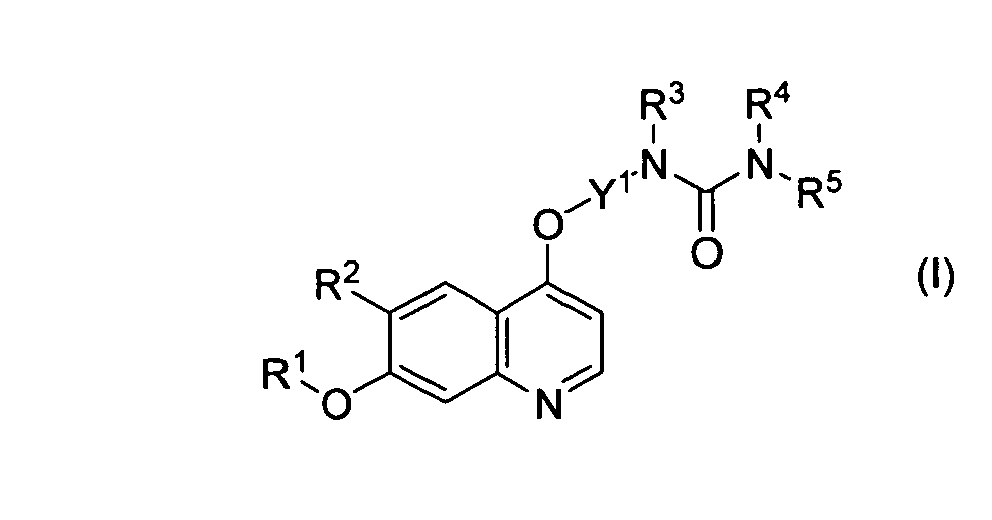
R2 represents a cyano group, an optionally substituted C1-6 alkoxy group, a carboxyl group, an optionally substituted C2-7 alkoxycarbonyl group or a group represented by Formula -CONVa11Va12 (wherein, Va11 represents a hydrogen atom, an optionally substituted C1-6 alkyl group, an optionally substituted C2-6 alkenyl group, an optionally substituted C2-6 alkynyl group, an optionally substituted C3-8 cycloalkyl group, an optionally substituted C6-10 aryl group, an optionally substituted 5-10-membered heteroaryl group or an optionally substituted 3-10-membered nonaromatic heterocyclic group; Va12 represents a hydrogen atom, an optionally substituted C1-6 alkyl group, an optionally substituted C2-6 alkenyl group, an optionally substituted C2-6 alkynyl group, an optionally substituted C3-8 cycloalkyl group, an optionally substituted C6-10 aryl group, an optionally substituted 5-10-membered heteroaryl group, an optionally substituted 3-10-membered nonaromatic heterocyclic group, a hydroxyl group, an optionally substituted C1-6 alkoxy group or an optionally substituted C3-8 cycloalkoxy group);
Y1 represents a group represented by either one of the following formulae
W1 and W2 each independently represent an optionally substituted carbon atom or nitrogen atom);
R3 and R4 each independently represent a hydrogen atom, an optionally substituted C1-6 alkyl group, an optionally substituted C2-6 alkenyl group, an optionally substituted C2-6 alkynyl group, an optionally substituted C3-8 cycloalkyl group, an optionally substituted C2-7 acyl group or an optionally substituted C2-7 alkoxycarbonyl group; and
R5 represents a hydrogen atom, an optionally substituted C1-6 alkyl group, an optionally substituted C2-6 alkenyl group, an optionally substituted C2-6 alkynyl group, an optionally substituted C3-8 cycloalkyl group, an optionally substituted C6-10 aryl group, an optionally substituted 5-10-membered heteroaryl group or an optionally substituted 3-10-membered nonaromatic heterocyclic group]. - The method for treating cancer according to Claim 77, wherein R1 is a C1-6 alkyl group (provided that R1 may have at least one substituent selected from the group consisting of a 3-10-membered nonaromatic heterocyclic group, a hydroxyl group, a C1-6 alkoxy group, an amino group, a mono-C1-6 alkylamino group and a di-C1-6 alkylamino group which may have a C1-6 alkyl group).
- The method for treating cancer according to Claim 77, wherein R1 is a methyl group or a group represented by any one of the following formulae

- The method for treating cancer according to Claim 77, wherein R1 is a methyl group or a 2-methoxyethyl group.
- The method for treating cancer according to Claim 77, wherein R2 is a cyano group or a group represented by Formula -CONVa11Va12 (wherein, Va11 represents a hydrogen atom, an optionally substituted C1-6 alkyl group, an optionally substituted C2-6 alkenyl group, an optionally substituted C2-6 alkynyl group, an optionally substituted C3-8 cycloalkyl group, an optionally substituted C6-10 aryl group, an optionally substituted 5-10-membered heteroaryl group or an optionally substituted 3-10-membered nonaromatic heterocyclic group; Va12 represents a hydrogen atom, an optionally substituted C1-6 alkyl group, an optionally substituted C2-6 alkenyl group, an optionally substituted C2-6 alkynyl group, an optionally substituted C3-8 cycloalkyl group, an optionally substituted C6-10 aryl group, an optionally substituted 5-10-membered heteroaryl group, an optionally substituted 3-10-membered nonaromatic heterocyclic group, a hydroxyl group, an optionally substituted C1-6 alkoxy group or an optionally substituted C3-8 cycloalkoxy group).
- The method for treating cancer according to Claim 77, wherein R2 is a cyano group or a group represented by Formula -CONHVa16 (wherein, Va16 represents a hydrogen atom, a C1-6 alkyl group, a C3-8 cycloalkyl group, a C1-6 alkoxy group or a C3-8 cycloalkoxy group, provided that Va16 may have at least one substituent selected from the group consisting of the a halogen atom, a cyano group, a hydroxyl group and a C1-6 alkoxy group).
- The method for treating cancer according to Claim 77, wherein R2 is a group represented by Formula -CONHVa17 (wherein, Va17 represents a hydrogen atom, a C1-6 alkyl group or a C1-6 alkoxy group).
- The method for treating cancer according to Claim 77, wherein R2 is a group represented by Formula -CONHVa18 (wherein, Va18 represents a hydrogen atom, a methyl group or a methoxy group).
- The method for treating cancer according to Claim 77, wherein Y1 is a group represented by the following formula

- The method for treating cancer according to Claim 77, wherein R3 and R4 are hydrogen atoms.
- The method for treating cancer according to Claim 77, wherein R5 is a hydrogen atom, a C1-6 alkyl group, a C3-8 cycloalkyl group or a C6-10 aryl group (provided that R5 may have at least one substituent selected from the group consisting of a halogen atom and a methanesulfonyl group).
- The method for treating cancer according to Claim 77, wherein R5 is a methyl group, an ethyl group or a cyclopropyl group.
- The method for treating cancer according to Claim 77, wherein the compound represented by General Formula (I), a pharmacologically acceptable salt thereof or a solvate thereof is at least one compound selected from the group consisting of:N-(4-(6-cyano-7-(2-methoxyethoxy)-4-quinolyl)oxy-2-fluorophenyl)-N'-(4-fluorophenyl)urea;N-(2-chloro-4-((6-cyano-7-((1-methyl-4-piperidyl)methoxy)-4-quinolyl)oxy)phenyl)-N'-cyclopropylurea;N-(4-((6-cyano-7-(((2R)-3-(diethylamino)-2-hydroxypropyl)oxy)-4-quinolyl)oxy)phenyl)-N'-(4-fluorophenyl)urea;N-(4-((6-cyano-7-(((2R)-2-hydroxy-3-(1-pyrrolidino)propyl)oxy)-4-quinolyl)oxy)phenyl)-N'-(4-fluorophenyl)urea;4-(3-chloro-4-(cyclopropylaminocarbonyl)aminophenoxy)-7-methoxy-6-quinolinecarboxamide;4-(3-chloro-4-(cyclopropylaminocarbonyl)aminophenoxy)-7-(2-methoxyethoxy)-6-quinolinecarboxamide;N6-cyclopropyl-4-(3-chloro-4-(((cyclopropylamino)carbonyl)amino)phenoxy)-7-methoxy-6-quinolinecarboxamide;N6-(2-methoxyethyl)-4-(3-chloro-4-(((cyclopropylamino)carbonyl)amino)phenoxy)-7-methoxy-6-quinolinecarboxamide;N6-(2-fluoroethyl)-4-(3-chloro-4-(((cyclopropylamino)carbonyl)amino)phenoxy)-7-methoxy-6-quinolinecarboxamide;N6-methoxy-4-(3-chloro-4-(((cyclopropylamino)carbonyl)amino)phenoxy)-7-methoxy-6-quinolinecarboxamide;N6-methyl-4-(3-chloro-4-(((cyclopropylamino)carbonyl)amino)phenoxy)-7-methoxy-6-quinolinecarboxamide;N6-ethyl-4-(3-chloro-4-(((cyclopropylamino)carbonyl)amino)phenoxy)-7-methoxy-6-quinolinecarboxamide;4-(3-fluoro-4-(cyclopropylaminocarbonyl)aminophenoxy)-7-(2-methoxyethoxy)-6-quinolinecarboxamide;4-(3-chloro-4-(cyclopropylaminocarbonyl)aminophenoxy)-7-(2-hydroxyethoxy)-6-quinolinecarboxamide;4-(3-chloro-4-(cyclopropylaminocarbonyl)aminophenoxy)-7-((2S)-2,3-dihydroxypropyl)oxy-6-quinolinecarboxamide;4-(3-chloro-4-(methylaminocarbonyl)aminophenoxy)-7-methoxy-6-quinolinecarboxamide;4-(3-chloro-4-(ethylaminocarbonyl)aminophenoxy)-7-methoxy-6-quinolinecarboxamide;N6-methoxy-4-(3-chloro-4-(((ethylamino)carbonyl)amino)phenoxy)-7-methoxy-6-quinolinecarboxamide;4-(3-chloro-4-(cyclopropylaminocarbonyl)aminophenoxy)-7-(2-ethoxyethoxy)-6-quinolinecarboxamide;4-(4-((cyclopropylamino)carbonyl)aminophenoxy)-7-(2-methoxyethoxy)-6-quinolinecarboxamide;N-(2-fluoro-4-((6-carbamoyl-7-methoxy-4-quinolyl)oxy)phenyl)-N'-cyclopropylurea;N6-(2-hydroxyethyl)-4-(3-chloro-4-(((cyclopropylamino)carbonyl)amino)phenoxy)-7-methoxy-6-quinolinecarboxamide;4-(3-chloro-4-(1-propylaminocarbonyl)aminophenoxy)-7-methoxy-6-quinolinecarboxamide;4-(3-chloro-4-(cis-2-fluoro-cyclopropylaminocarbonyl)aminophenoxy)-7-methoxy-6-quinolinecarboxamide;N6-methyl-4-(3-chloro-4-(((cyclopropylamino)carbonyl)amino)phenoxy)-7-(2-methoxyethoxy)-6-quinolinecarboxamide;N6-methyl-4-(3-chloro-4-(((ethylamino)carbonyl)amino)phenoxy)-7-methoxy-6-quinolinecarboxamide;4-(3-chloro-4-(cyclopropylaminocarbonyl)aminophenoxy)-7-(2-(4-morpholino)ethoxy)-6-quinolinecarboxamide;4-(3-chloro-4-(2-fluoroethylaminocarbonyl)aminophenoxy)-7-methoxy-6-quinolinecarboxamide;N6-((2R)tetrahydro-2-furanylmethyl)-4-(3-chloro-4-(((methylamino)carbonyl)amino)phenoxy)-7-methoxy-6-quinolinecarboxamide;4-(3-fluoro-4-(ethylaminocarbonyl)aminophenoxy)-7-methoxy-6-quinolinecarboxamide;4-(3-chloro-4-(((cyclopropylamino)carbonyl)amino)phenoxy)-7-((2R)-2-hydroxy-3-(1-pyrrolidino)propoxy)-6-quinolinecarboxamide;N6-methyl-4-(3-chloro-4-(((methylamino)carbonyl)amino)phenoxy)-7-((2R)-3-diethylamino-2-hydroxypropoxy)-6-quinolinecarboxamide;N6-methyl-4-(3-chloro-4-(((ethylamino)carbonyl)amino)phenoxy)-7-((2R)-3-diethylamino-2-hydroxypropoxy)-6-quinolinecarboxamide;N6-methyl-4-(3-chloro-4-(((methylamino)carbonyl)amino)phenoxy)-7-((2R)-2-hydroxy-3-(1-pyrrolidmo)propoxy)-6-qumolinecarboxamide;N6-methyl-4-(3-chloro-4-(((ethylamino)carbonyl)amino)phenoxy)-7-((2R)-2-hydroxy-3-(1-pyrrolidino)propoxy)-6-quinolinecarboxamide;N6-methyl-4-(3-chloro-4-(((methylamino)carbonyl)amino)phenoxy)-7-((1-methyl-4-piperidyl)methoxy)-6-quinolinecarboxamide;N6-methyl-4-(3-chloro-4-(((ethylamino)carbonyl)amino)phenoxy)-7-((1-methyl-4-piperidyl)methoxy)-6-quinolinecarboxamide;N-(4-(6-cyano-7-(2-methoxyethoxy)-4-quinolyl)oxy-2-fluorophenyl)-N'-cyclopropylurea;N-(4-(6-cyano-7-(3-(4-morpholino)propoxy)-4-quinolyl)oxyphenyl)-N'-(3-(methylsulfonyl)phenyl)urea;4-(4-((cyclopropylamino)carbonyl)aminophenoxy)-7-methoxy-6-quinolinecarboxamide;4-(3-fluoro-4-((2-fluoroethylamino)carbonyl)aminophenoxy)-7-methoxy-6-quinolinecarboxamide;N6-(2-ethoxyethyl)-4-(3-chloro-4-(((methylamino)carbonyl)amino)phenoxy)-7-methoxy-6-quinolinecarboxamide;4-(4-(3-ethylureido)-3-fluoro-phenoxy)-7-methoxyquinoline-6-carboxylic acid (2-cyanoethyl)amide; andN-(4-(6-(2-cyanoethyl)carbamoyl-7-methoxy-4-quinolyl)oxy-2-fluorophenyl)-N'-cyclopropylurea,a pharmacologically acceptable salt thereof or a solvate thereof.
- The method for treating cancer according to Claim 77, wherein the compound represented by General Formula (I), a pharmacologically acceptable salt thereof or a solvate thereof is at least one compound selected from the group consisting of:4-(3-chloro-4-(cyclopropylaminocarbonyl)aminophenoxy)-7-methoxy-6-quinolinecarboxamide;4-(3-chloro-4-(ethylaminocarbonyl)aminophenoxy)-7-methoxy-6-quinolinecarboxamide;N6-methoxy-4-(3-chloro-4-(((cyclopropylamino)carbonyl)amino)phenoxy)-7-methoxy-6-quinolinecarboxamide;4-(3-chloro-4-(methylaminocarbonyl)aminophenoxy)-7-methoxy-6-quinolinecarboxamide; andN6-methoxy-4-(3-chloro-4-(((ethylamino)carbonyl)amino)phenoxy)-7-methoxy-6-quinolinecarboxamide,a pharmacologically acceptable salt thereof or a solvate thereof.
- The method for treating cancer according to Claim 77, wherein the compound represented by General Formula (I), a pharmacologically acceptable salt thereof or a solvate thereof is 4-(3-chloro-4-(cyclopropylaminocarbonyl)aminophenoxy)-7-methoxy-6-quinolinecarboxamide, a pharmacologically acceptable salt thereof or a solvate thereof.
- The method for treating cancer according to Claim 77, wherein the compound represented by General Formula (I), a pharmacologically acceptable salt thereof or a solvate thereof is methanesulfonate of 4-(3-chloro-4-(cyclopropylaminocarbonyl)aminophenoxy)-7-methoxy-6-quinolinecarboxamide.
- The method for treating cancer according to Claim 77, wherein the anti-tumor platinum complex is cisplatin, carboplatin, nedaplatin, zeniplatin, enloplatin, lobaplatin, ormaplatin, loboplatin, sebriplatin, oxaliplatin, miboplatin or spiroplatin.
- The method for treating cancer according to Claim 77, wherein the anti-tumor platinum complex is cisplatin or carboplatin.
- Use of a compound represented by General Formula (I) below, a pharmacologically acceptable salt thereof or a solvate thereof for producing a pharmaceutical composition in combination with an anti-tumor platinum complex:

R2 represents a cyano group, an optionally substituted C1-6 alkoxy group, a carboxyl group, an optionally substituted C2-7 alkoxycarbonyl group or a group represented by Formula -CONVa11Va12 (wherein, Va11 represents a hydrogen atom, an optionally substituted C1-6 alkyl group, an optionally substituted C2-6 alkenyl group, an optionally substituted C2-6 alkynyl group, an optionally substituted C3-8 cycloalkyl group, an optionally substituted C6-10 aryl group, an optionally substituted 5-10-membered heteroaryl group or an optionally substituted 3-10-membered nonaromatic heterocyclic group; Va12 represents a hydrogen atom, an optionally substituted C1-6 alkyl group, an optionally substituted C2-6 alkenyl group, an optionally substituted C2-6 alkynyl group, an optionally substituted C3-8 cycloalkyl group, an optionally substituted C6-10 aryl group, an optionally substituted 5-10-membered heteroaryl group, an optionally substituted 3-10-membered nonaromatic heterocyclic group, a hydroxyl group, an optionally substituted C1-6 alkoxy group or an optionally substituted C3-8 cycloalkoxy group);
Y1 represents a group represented by either one of the following formulae
W1 and W2 each independently represent an optionally substituted carbon atom or nitrogen atom);
R3 and R4 each independently represent a hydrogen atom, an optionally substituted C1-6 alkyl group, an optionally substituted C2-6 alkenyl group, an optionally substituted C2-6 alkynyl group, an optionally substituted C3-8 cycloalkyl group, an optionally substituted C2-7 acyl group or an optionally substituted C2-7 alkoxycarbonyl group; and R5 represents a hydrogen atom, an optionally substituted C1-6 alkyl group, an optionally substituted C2-6 alkenyl group, an optionally substituted C2-6 alkynyl group, an optionally substituted C3-8 cycloalkyl group, an optionally substituted C6-10 aryl group, an optionally substituted 5-10-membered heteroaryl group or an optionally substituted 3-10-membered nonaromatic heterocyclic group]. - A compound represented by General Formula (I) below, a pharmacologically acceptable salt thereof or a solvate thereof for a pharmaceutical composition in combination with an anti-tumor platinum complex:
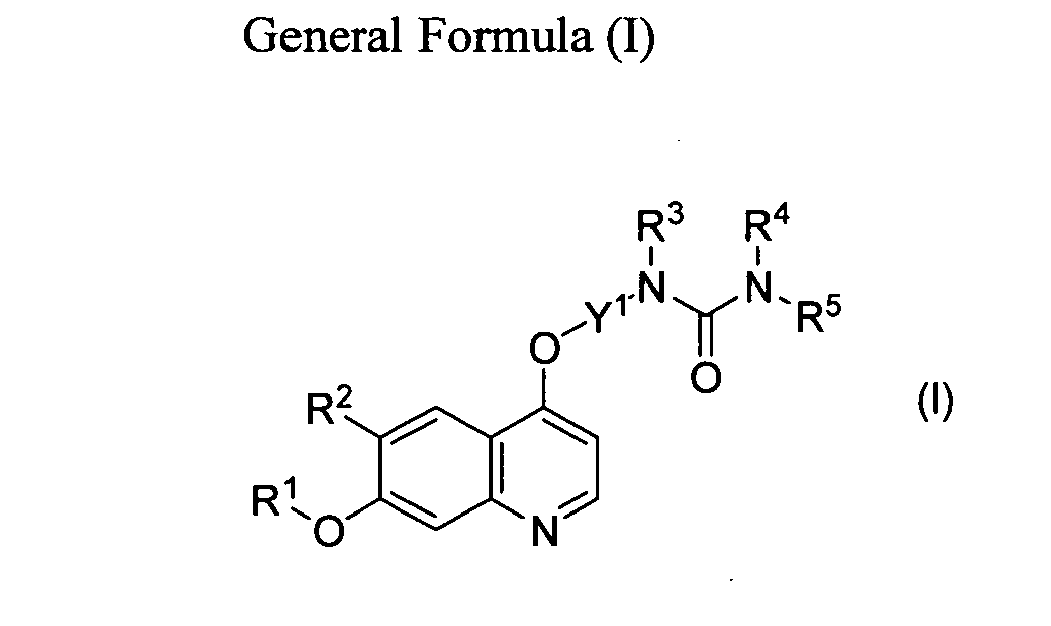
R2 represents a cyano group, an optionally substituted C1-6 alkoxy group, a carboxyl group, an optionally substituted C2-7 alkoxycarbonyl group or a group represented by Formula -CONVa11Va12 (wherein, Va11 represents a hydrogen atom, an optionally substituted C1-6 alkyl group, an optionally substituted C2-6 alkenyl group, an optionally substituted C2-6 alkynyl group, an optionally substituted C3-8 cycloalkyl group, an optionally substituted C6-10 aryl group, an optionally substituted 5-10-membered heteroaryl group or an optionally substituted 3-10-membered nonaromatic heterocyclic group; Va12 represents a hydrogen atom, an optionally substituted C1-6 alkyl group, an optionally substituted C2-6 alkenyl group, an optionally substituted C2-6 alkynyl group, an optionally substituted C3-8 cycloalkyl group, an optionally substituted C6-10 aryl group, an optionally substituted 5-10-membered heteroaryl group, an optionally substituted 3-10-membered nonaromatic heterocyclic group, a hydroxyl group, an optionally substituted C1-6 alkoxy group or an optionally substituted C3-8 cycloalkoxy group);
Y1 represents a group represented by either one of the following formulae
W1 and W2 each independently represent an optionally substituted carbon atom or nitrogen atom);
R3 and R4 each independently represent a hydrogen atom, an optionally substituted C1-6 alkyl group, an optionally substituted C2-6 alkenyl group, an optionally substituted C2-6 alkynyl group, an optionally substituted C3-8 cycloalkyl group, an optionally substituted C2-7 acyl group or an optionally substituted C2-7 alkoxycarbonyl group; and
R5 represents a hydrogen atom, an optionally substituted C1-6 alkyl group, an optionally substituted C2-6 alkenyl group, an optionally substituted C2-6 alkynyl group, an optionally substituted C3-8 cycloalkyl group, an optionally substituted C6-10 aryl group, an optionally substituted 5-10-membered heteroaryl group or an optionally substituted 3-10-membered nonaromatic heterocyclic group].
Applications Claiming Priority (2)
| Application Number | Priority Date | Filing Date | Title |
|---|---|---|---|
| US98664107P | 2007-11-09 | 2007-11-09 | |
| PCT/JP2008/070321 WO2009060945A1 (en) | 2007-11-09 | 2008-11-07 | Combination of anti-angiogenic substance and anti-tumor platinum complex |
Publications (3)
| Publication Number | Publication Date |
|---|---|
| EP2218712A1 true EP2218712A1 (en) | 2010-08-18 |
| EP2218712A4 EP2218712A4 (en) | 2012-07-18 |
| EP2218712B1 EP2218712B1 (en) | 2015-07-01 |
Family
ID=40625831
Family Applications (1)
| Application Number | Title | Priority Date | Filing Date |
|---|---|---|---|
| EP08846814.5A Active EP2218712B1 (en) | 2007-11-09 | 2008-11-07 | Combination of anti-angiogenic substance and anti-tumor platinum complex |
Country Status (9)
| Country | Link |
|---|---|
| US (1) | US8952035B2 (en) |
| EP (1) | EP2218712B1 (en) |
| JP (1) | JP5638244B2 (en) |
| KR (1) | KR101513326B1 (en) |
| CN (1) | CN101848895B (en) |
| AU (1) | AU2008325608B2 (en) |
| CA (1) | CA2704000C (en) |
| IL (1) | IL205512A (en) |
| WO (1) | WO2009060945A1 (en) |
Cited By (15)
| Publication number | Priority date | Publication date | Assignee | Title |
|---|---|---|---|---|
| EP2119707A4 (en) * | 2007-01-29 | 2012-07-18 | Eisai R&D Man Co Ltd | Composition for treatment of undifferentiated-type of gastric cancer |
| US8372981B2 (en) | 2000-10-20 | 2013-02-12 | Eisai R&D Management Co., Ltd. | Nitrogen-containing aromatic derivatives |
| US8815241B2 (en) | 2005-11-07 | 2014-08-26 | Eisai R&D Management Co., Ltd. | Use of combination of anti-angiogenic substance and c-kit kinase inhibitor |
| US8969344B2 (en) | 2005-08-02 | 2015-03-03 | Eisai R&D Management Co., Ltd. | Method for assay on the effect of vascularization inhibitor |
| US8969379B2 (en) | 2004-09-17 | 2015-03-03 | Eisai R&D Management Co., Ltd. | Pharmaceutical compositions of 4-(3-chloro-4-(cyclopropylaminocarbonyl)aminophenoxy)-7=methoxy-6-quinolinecarboxide |
| US9945862B2 (en) | 2011-06-03 | 2018-04-17 | Eisai R&D Management Co., Ltd. | Biomarkers for predicting and assessing responsiveness of thyroid and kidney cancer subjects to lenvatinib compounds |
| US10259791B2 (en) | 2014-08-28 | 2019-04-16 | Eisai R&D Management Co., Ltd. | High-purity quinoline derivative and method for manufacturing same |
| US10517861B2 (en) | 2013-05-14 | 2019-12-31 | Eisai R&D Management Co., Ltd. | Biomarkers for predicting and assessing responsiveness of endometrial cancer subjects to lenvatinib compounds |
| US11090386B2 (en) | 2015-02-25 | 2021-08-17 | Eisai R&D Management Co., Ltd. | Method for suppressing bitterness of quinoline derivative |
| US11369623B2 (en) | 2015-06-16 | 2022-06-28 | Prism Pharma Co., Ltd. | Anticancer combination of a CBP/catenin inhibitor and an immune checkpoint inhibitor |
| US11547705B2 (en) | 2015-03-04 | 2023-01-10 | Merck Sharp & Dohme Llc | Combination of a PD-1 antagonist and a VEGF-R/FGFR/RET tyrosine kinase inhibitor for treating cancer |
| US12220398B2 (en) | 2015-08-20 | 2025-02-11 | Eisai R&D Management Co., Ltd. | Tumor therapeutic agent |
| US12226409B2 (en) | 2017-05-16 | 2025-02-18 | Eisai R&D Management Co., Ltd. | Treatment of hepatocellular carcinoma |
| US12303505B2 (en) | 2017-02-08 | 2025-05-20 | Eisai R&D Management Co., Ltd. | Tumor-treating pharmaceutical composition |
| US12508313B2 (en) | 2009-08-19 | 2025-12-30 | Eisai R&D Management Co., Ltd. | Quinoline derivative-containing pharmaceutical composition |
Families Citing this family (12)
| Publication number | Priority date | Publication date | Assignee | Title |
|---|---|---|---|---|
| WO2007015569A1 (en) * | 2005-08-01 | 2007-02-08 | Eisai R & D Management Co., Ltd. | Method for prediction of the efficacy of vascularization inhibitor |
| WO2007136103A1 (en) | 2006-05-18 | 2007-11-29 | Eisai R & D Management Co., Ltd. | Antitumor agent for thyroid cancer |
| KR101472600B1 (en) | 2006-08-28 | 2014-12-15 | 에자이 알앤드디 매니지먼트 가부시키가이샤 | Antitumor agent for undifferentiated gastric cancer |
| CN101848895B (en) | 2007-11-09 | 2013-10-23 | 卫材R&D管理有限公司 | Combined use of angiogenesis inhibitory substance and antitumor platinum complex |
| CA2802644C (en) * | 2010-06-25 | 2017-02-21 | Eisai R & D Management Co., Ltd. | Antitumor agent using compounds having kinase inhibitory effect in combination |
| SG192273A1 (en) | 2011-03-29 | 2013-09-30 | Eisai R&D Man Co Ltd | Method for producing phenoxypyridine derivative |
| EP2700403B1 (en) | 2011-04-18 | 2015-11-25 | Eisai R&D Management Co., Ltd. | Therapeutic agent for tumor |
| WO2012164954A1 (en) * | 2011-06-01 | 2012-12-06 | 株式会社ツムラ | Method for evaluating similarity of aggregated data, similarity evaluation program, and similarity evaluation device |
| AU2013364953A1 (en) | 2012-12-21 | 2015-04-30 | Eisai R&D Management Co., Ltd. | Amorphous form of quinoline derivative, and method for producing same |
| AU2014299699B2 (en) | 2013-06-26 | 2019-10-10 | Eisai R&D Management Co., Ltd. | Use of eribulin and lenvatinib as combination therapy for treatment of cancer |
| MA51570A (en) | 2018-01-10 | 2020-11-18 | Eisai R&D Man Co Ltd | POLYTHERAPIES FOR THE TREATMENT OF HEPATOCELLULAR CARCINOMA |
| CN113679720B (en) * | 2020-05-19 | 2024-09-27 | 苏中药业集团股份有限公司 | Pharmaceutical composition of substituted butenamide combined with platinum compound and application thereof |
Family Cites Families (214)
| Publication number | Priority date | Publication date | Assignee | Title |
|---|---|---|---|---|
| CU22545A1 (en) | 1994-11-18 | 1999-03-31 | Centro Inmunologia Molecular | OBTAINING A CHEMICAL AND HUMANIZED ANTIBODY AGAINST THE RECEPTOR OF THE EPIDERMAL GROWTH FACTOR FOR DIAGNOSTIC AND THERAPEUTIC USE |
| JPS6328427Y2 (en) | 1979-06-28 | 1988-08-01 | ||
| JPS5944869U (en) | 1982-09-17 | 1984-03-24 | 近畿アルミニユ−ム工業株式会社 | Hinge with plate spacing correction tool |
| US4526988A (en) | 1983-03-10 | 1985-07-02 | Eli Lilly And Company | Difluoro antivirals and intermediate therefor |
| EP0154434B1 (en) | 1984-02-17 | 1993-01-27 | Genentech, Inc. | Human transforming growth factor and precursor or fragment thereof, cells, dna, vectors and methods for their production, compositions and products containing them, and related antibodies and diagnostic methods |
| US4582789A (en) | 1984-03-21 | 1986-04-15 | Cetus Corporation | Process for labeling nucleic acids using psoralen derivatives |
| US4563417A (en) | 1984-08-31 | 1986-01-07 | Miles Laboratories, Inc. | Nucleic acid hybridization assay employing antibodies to intercalation complexes |
| DE3474040D1 (en) | 1984-11-22 | 1988-10-20 | Holsten Brauerei Ag | Beer and process for its preparation |
| DE3587500T2 (en) | 1984-12-04 | 1993-12-16 | Lilly Co Eli | Tumor treatment in mammals. |
| JPS62168137A (en) | 1985-12-20 | 1987-07-24 | Fuji Photo Film Co Ltd | Silver halide color photographic sensitive material and its processing method |
| CA1339136C (en) | 1987-07-01 | 1997-07-29 | Sailesh Amilal Varia | Amorphous form of aztreonam |
| AU4128089A (en) | 1988-09-15 | 1990-03-22 | Rorer International (Overseas) Inc. | Monoclonal antibodies specific to human epidermal growth factor receptor and therapeutic methods employing same |
| US5143854A (en) | 1989-06-07 | 1992-09-01 | Affymax Technologies N.V. | Large scale photolithographic solid phase synthesis of polypeptides and receptor binding screening thereof |
| US4983615A (en) | 1989-06-28 | 1991-01-08 | Hoechst-Roussel Pharmaceuticals Inc. | Heteroarylamino- and heteroaryloxypyridinamine compounds which are useful in treating skin disorders |
| US5180818A (en) | 1990-03-21 | 1993-01-19 | The University Of Colorado Foundation, Inc. | Site specific cleavage of single-stranded dna |
| US5210015A (en) | 1990-08-06 | 1993-05-11 | Hoffman-La Roche Inc. | Homogeneous assay system using the nuclease activity of a nucleic acid polymerase |
| WO1992010588A1 (en) | 1990-12-06 | 1992-06-25 | Affymax Technologies N.V. | Sequencing by hybridization of a target nucleic acid to a matrix of defined oligonucleotides |
| GB9105677D0 (en) | 1991-03-19 | 1991-05-01 | Ici Plc | Heterocyclic compounds |
| US5367057A (en) | 1991-04-02 | 1994-11-22 | The Trustees Of Princeton University | Tyrosine kinase receptor flk-2 and fragments thereof |
| CA2102780C (en) | 1991-05-10 | 2007-01-09 | Alfred P. Spada | Bis mono-and bicyclic aryl and heteroaryl compounds which inhibit egf and/or pdgf receptor tyrosine kinase |
| US5710158A (en) | 1991-05-10 | 1998-01-20 | Rhone-Poulenc Rorer Pharmaceuticals Inc. | Aryl and heteroaryl quinazoline compounds which inhibit EGF and/or PDGF receptor tyrosine kinase |
| US5721237A (en) | 1991-05-10 | 1998-02-24 | Rhone-Poulenc Rorer Pharmaceuticals Inc. | Protein tyrosine kinase aryl and heteroaryl quinazoline compounds having selective inhibition of HER-2 autophosphorylation properties |
| JPH04341454A (en) | 1991-05-16 | 1992-11-27 | Canon Inc | seat storage device |
| US5750376A (en) | 1991-07-08 | 1998-05-12 | Neurospheres Holdings Ltd. | In vitro growth and proliferation of genetically modified multipotent neural stem cells and their progeny |
| WO1993024627A1 (en) | 1992-06-03 | 1993-12-09 | Case Western Reserve University | Bandage for continuous application of biologicals |
| GB9221220D0 (en) | 1992-10-09 | 1992-11-25 | Sandoz Ag | Organic componds |
| JPH06153952A (en) | 1992-11-26 | 1994-06-03 | Nobuaki Tamamaki | Method for pretreatment for carrying out amplifying and labeling of unknown double-stranded dna molecule in trace amount |
| GB9323290D0 (en) | 1992-12-10 | 1994-01-05 | Zeneca Ltd | Quinazoline derivatives |
| US6027880A (en) | 1995-08-02 | 2000-02-22 | Affymetrix, Inc. | Arrays of nucleic acid probes and methods of using the same for detecting cystic fibrosis |
| US6156501A (en) | 1993-10-26 | 2000-12-05 | Affymetrix, Inc. | Arrays of modified nucleic acid probes and methods of use |
| JPH07176103A (en) | 1993-12-20 | 1995-07-14 | Canon Inc | Magneto-optical recording / reproducing system, magnetic head and magneto-optical recording medium used therefor |
| GB9326136D0 (en) | 1993-12-22 | 1994-02-23 | Erba Carlo Spa | Biologically active 3-substituted oxindole derivatives useful as anti-angiogenic agents |
| IL112249A (en) | 1994-01-25 | 2001-11-25 | Warner Lambert Co | Pharmaceutical compositions containing di and tricyclic pyrimidine derivatives for inhibiting tyrosine kinases of the epidermal growth factor receptor family and some new such compounds |
| US6811779B2 (en) | 1994-02-10 | 2004-11-02 | Imclone Systems Incorporated | Methods for reducing tumor growth with VEGF receptor antibody combined with radiation and chemotherapy |
| JP3660391B2 (en) | 1994-05-27 | 2005-06-15 | 株式会社東芝 | Manufacturing method of semiconductor device |
| JPH0848078A (en) | 1994-08-05 | 1996-02-20 | Nippon Paper Ind Co Ltd | Heat-sensitive recorder |
| GB9510757D0 (en) | 1994-09-19 | 1995-07-19 | Wellcome Found | Therapeuticaly active compounds |
| US5656454A (en) | 1994-10-04 | 1997-08-12 | President And Fellows Of Harvard College | Endothelial cell-specific enhancer |
| JP3207058B2 (en) | 1994-11-07 | 2001-09-10 | 財団法人国際超電導産業技術研究センター | Superconductor thin film and method of manufacturing the same |
| IL115256A0 (en) | 1994-11-14 | 1995-12-31 | Warner Lambert Co | 6-Aryl pyrido (2,3-d) pyrimidines and naphthyridines and their use |
| JPH08176138A (en) | 1994-12-19 | 1996-07-09 | Mercian Corp | Isocoumarin derivative |
| US5948438A (en) | 1995-01-09 | 1999-09-07 | Edward Mendell Co., Inc. | Pharmaceutical formulations having improved disintegration and/or absorptivity |
| US5658374A (en) | 1995-02-28 | 1997-08-19 | Buckman Laboratories International, Inc. | Aqueous lecithin-based release aids and methods of using the same |
| US5624937A (en) | 1995-03-02 | 1997-04-29 | Eli Lilly And Company | Chemical compounds as inhibitors of amyloid beta protein production |
| DE69536015D1 (en) | 1995-03-30 | 2009-12-10 | Pfizer Prod Inc | Quinazolinone derivatives |
| GB9508538D0 (en) | 1995-04-27 | 1995-06-14 | Zeneca Ltd | Quinazoline derivatives |
| US5880141A (en) | 1995-06-07 | 1999-03-09 | Sugen, Inc. | Benzylidene-Z-indoline compounds for the treatment of disease |
| EP0831829B1 (en) | 1995-06-07 | 2003-08-20 | Pfizer Inc. | Heterocyclic ring-fused pyrimidine derivatives |
| JPH0923885A (en) | 1995-07-12 | 1997-01-28 | Dai Ichi Seiyaku Co Ltd | Gene expression library and its production |
| GB9514265D0 (en) | 1995-07-13 | 1995-09-13 | Wellcome Found | Hetrocyclic compounds |
| GB9520822D0 (en) | 1995-10-11 | 1995-12-13 | Wellcome Found | Therapeutically active compounds |
| AR004010A1 (en) | 1995-10-11 | 1998-09-30 | Glaxo Group Ltd | HETERO CYCLIC COMPOUNDS |
| US6346398B1 (en) | 1995-10-26 | 2002-02-12 | Ribozyme Pharmaceuticals, Inc. | Method and reagent for the treatment of diseases or conditions related to levels of vascular endothelial growth factor receptor |
| WO1997017329A1 (en) | 1995-11-07 | 1997-05-15 | Kirin Beer Kabushiki Kaisha | Quinoline derivatives and quinazoline derivatives inhibiting autophosphorylation of growth factor receptor originating in platelet and pharmaceutical compositions containing the same |
| US5849759A (en) | 1995-12-08 | 1998-12-15 | Berlex Laboratories, Inc. | Naphthyl-substituted benzimidazole derivatives as anti-coagulants |
| GB9604361D0 (en) | 1996-02-29 | 1996-05-01 | Pharmacia Spa | 4-Substituted pyrrolopyrimidine compounds as tyrosine kinase inhibitors |
| JPH09234074A (en) | 1996-03-04 | 1997-09-09 | Sumitomo Electric Ind Ltd | Adapter double-stranded DNA and DNA amplification method using the same |
| NZ332173A (en) | 1996-04-17 | 2000-06-23 | Du Pont Pharm Co | N-(amidinophenyl)-n'-(subst.)-3h-2,4-benzodiazepin-3-one derivatives as factor xa inhibitors |
| AU3568897A (en) | 1996-06-07 | 1998-01-05 | Eos Biotechnology, Inc. | Immobilised linear oligonucleotide arrays |
| CA2258093A1 (en) | 1996-06-28 | 1998-01-08 | Mark E. Duggan | Fibrinogen receptor antagonists |
| HRP970371A2 (en) | 1996-07-13 | 1998-08-31 | Kathryn Jane Smith | Heterocyclic compounds |
| EA199900021A1 (en) | 1996-07-13 | 1999-08-26 | Глаксо, Груп Лимитед | BICYCLIC HETEROAROMATIC COMPOUNDS AS PROTEINTHYROSINKINASE INHIBITORS |
| DE69716916T2 (en) | 1996-07-13 | 2003-07-03 | Glaxo Group Ltd., Greenford | CONDENSED HETEROCYCLIC COMPOUNDS AS PROTEIN KINASE INHIBITORS |
| AU733551B2 (en) | 1996-09-25 | 2001-05-17 | Astrazeneca Ab | Qinoline derivatives inhibiting the effect of growth factors such as VEGF |
| EP0930305B1 (en) | 1996-09-30 | 2003-05-14 | Nihon Nohyaku Co., Ltd. | 1,2,3-thiadiazole derivatives and salts thereof, disease controlling agents for agricultural and horticultural use, and method for the use thereof |
| EP0837063A1 (en) | 1996-10-17 | 1998-04-22 | Pfizer Inc. | 4-Aminoquinazoline derivatives |
| CA2272705C (en) | 1996-11-27 | 2003-03-18 | Pfizer Inc. | Fused bicyclic pyrimidine derivatives |
| JP2001511131A (en) | 1997-01-29 | 2001-08-07 | イーライ・リリー・アンド・カンパニー | Treatment of premenstrual discomfort |
| CO4950519A1 (en) | 1997-02-13 | 2000-09-01 | Novartis Ag | PHTHALAZINES, PHARMACEUTICAL PREPARATIONS THAT UNDERSTAND THEM AND THE PROCESS FOR THEIR PREPARATION |
| JP4495257B2 (en) | 1997-02-19 | 2010-06-30 | バーレツクス ラボラトリーズ インコーポレーテツド | N-heterocyclic derivatives as NOS inhibitors |
| US6090556A (en) | 1997-04-07 | 2000-07-18 | Japan Science & Technology Corporation | Method for quantitatively determining the expression of a gene |
| WO1998050346A2 (en) | 1997-04-18 | 1998-11-12 | Smithkline Beecham Plc | Acetamide and urea derivatives, process for their preparation and their use in the treatment of cns disorders |
| AU7585498A (en) | 1997-05-23 | 1998-12-11 | Bayer Corporation | Inhibition of p38 kinase activity by aryl ureas |
| US6093742A (en) | 1997-06-27 | 2000-07-25 | Vertex Pharmaceuticals, Inc. | Inhibitors of p38 |
| WO1999001738A2 (en) | 1997-06-30 | 1999-01-14 | University Of Maryland, Baltimore | Heparin binding-epidermal growth factor in the diagnosis of interstitial cystitis |
| JP3765918B2 (en) | 1997-11-10 | 2006-04-12 | パイオニア株式会社 | Light emitting display and driving method thereof |
| JP4194678B2 (en) | 1997-11-28 | 2008-12-10 | キリンファーマ株式会社 | Quinoline derivative and pharmaceutical composition containing the same |
| WO1999032110A1 (en) | 1997-12-22 | 1999-07-01 | Bayer Corporation | INHIBITION OF p38 KINASE ACTIVITY USING ARYL AND HETEROARYL SUBSTITUTED HETEROCYCLIC UREAS |
| ES2154253T3 (en) | 1997-12-22 | 2012-01-27 | Bayer Healthcare Llc | INHIBITION OF THE ACTIVITY OF P38 CINASA USING REPLACED HETEROCYCLIC UREAS. |
| EP1049664B1 (en) | 1997-12-22 | 2005-03-16 | Bayer Pharmaceuticals Corporation | Inhibition of raf kinase using symmetrical and unsymmetrical substituted diphenyl ureas |
| HUP0101704A3 (en) | 1997-12-22 | 2002-12-28 | Bayer Corp Pittsburgh | Kinease substituted heterocyclic ureas with raf inhibition activity and pharmaceutical compositions containing them |
| GB9800575D0 (en) | 1998-01-12 | 1998-03-11 | Glaxo Group Ltd | Heterocyclic compounds |
| RS49779B (en) | 1998-01-12 | 2008-06-05 | Glaxo Group Limited, | BICYCLIC HETEROAROMATIC COMPOUNDS AS PROTEIN TYROSINE KINASE INHIBITORS |
| PL343007A1 (en) | 1998-02-25 | 2001-07-30 | Genetics Inst | Inhibitors of phospholipase enzymes |
| JPH11322596A (en) * | 1998-05-12 | 1999-11-24 | Shionogi & Co Ltd | Anticancer agent containing platinum complex and cyclic phosphate amide |
| UA60365C2 (en) | 1998-06-04 | 2003-10-15 | Пфайзер Продактс Інк. | Isothiazole derivatives, a method for preparing thereof, a pharmaceutical composition and a method for treatment of hyperproliferative disease of mammal |
| ES2188254T3 (en) | 1998-11-19 | 2003-06-16 | Warner Lambert Co | N- (4- (3-CHLORO-4-FLUORO-PHENYLAMINE) -7- (3-MORFOLIN-4-IL-PROPOXI) -QUIN AZOLIN-6-IL) -ACRILAMADA, AN IRREVERSIBLE THYROSINE KINASE INHIBITOR. |
| EP1140840B1 (en) | 1999-01-13 | 2006-03-22 | Bayer Pharmaceuticals Corp. | -g(v)-carboxyaryl substituted diphenyl ureas as raf kinase inhibitors |
| UA73492C2 (en) | 1999-01-19 | 2005-08-15 | Aromatic heterocyclic compounds as antiinflammatory agents | |
| CA2361057C (en) | 1999-01-22 | 2010-04-06 | Kazuo Kubo | Quinoline derivatives and quinazoline derivatives |
| UA71945C2 (en) | 1999-01-27 | 2005-01-17 | Pfizer Prod Inc | Substituted bicyclic derivatives being used as anticancer agents |
| JP3270834B2 (en) | 1999-01-27 | 2002-04-02 | ファイザー・プロダクツ・インク | Heteroaromatic bicyclic derivatives useful as anticancer agents |
| BRPI0017548B8 (en) | 1999-02-10 | 2023-05-02 | Astrazeneca Ab | COMPOUND |
| GB9904103D0 (en) | 1999-02-24 | 1999-04-14 | Zeneca Ltd | Quinoline derivatives |
| JP2000328080A (en) | 1999-03-12 | 2000-11-28 | Shin Etsu Chem Co Ltd | Low friction treatment for seat belts |
| RS49836B (en) | 1999-03-31 | 2008-08-07 | Pfizer Products Inc., | PROCEDURES AND INTERMEDIATES FOR OBTAINING ANTI-CANCIN UNITS |
| IL145941A (en) | 1999-04-28 | 2007-08-19 | Univ Texas | Compositions and methods for cancer treatment by selectively inhibiting vegf |
| AU4778500A (en) | 1999-05-20 | 2000-12-12 | Takeda Chemical Industries Ltd. | Composition containing ascorbic acid salt |
| PE20010306A1 (en) | 1999-07-02 | 2001-03-29 | Agouron Pharma | INDAZOLE COMPOUNDS AND PHARMACEUTICAL COMPOSITIONS CONTAINING THEM USEFUL FOR THE INHIBITION OF PROTEIN KINASE |
| US6534535B1 (en) | 1999-08-12 | 2003-03-18 | Millennium Pharmaceuticals, Inc. | Inhibitors of factor Xa |
| CO5200835A1 (en) | 1999-09-28 | 2002-09-27 | Bayer Corp | PIRIDINES AND REPLACED PIRIDACINES WITH ANGIOGENESIS INHIBITION ACTIVITY |
| US6762180B1 (en) | 1999-10-13 | 2004-07-13 | Boehringer Ingelheim Pharma Kg | Substituted indolines which inhibit receptor tyrosine kinases |
| UA75054C2 (en) | 1999-10-13 | 2006-03-15 | Бьорінгер Інгельхайм Фарма Гмбх & Ко. Кг | Substituted in position 6 indolinones, producing and use thereof as medicament |
| JP2001131071A (en) | 1999-10-29 | 2001-05-15 | Meiji Seika Kaisha Ltd | Amorphous substance and medical composition containing amorphous substance |
| CA2389751A1 (en) | 1999-11-01 | 2001-05-10 | Curagen Corporation | Differentially expressed genes involved in angiogenesis, the polypeptides encoded thereby, and methods of using the same |
| US20080241835A1 (en) | 1999-11-01 | 2008-10-02 | Genentech, Inc. | Differentially expressed genes involved in angiogenesis, the polypeptides encoded thereby, and methods of using the same |
| MXPA02004879A (en) | 1999-11-16 | 2002-08-30 | Boehringer Ingelheim Pharma | Urea derivatives as anti inflammatory agents. |
| UA75055C2 (en) | 1999-11-30 | 2006-03-15 | Пфайзер Продактс Інк. | Benzoimidazole derivatives being used as antiproliferative agent, pharmaceutical composition based thereon |
| JP5004392B2 (en) | 1999-12-22 | 2012-08-22 | スージェン, インク. | Method for regulating c-kit tyrosine protein kinase function using indolinone compounds |
| US7135466B2 (en) | 1999-12-24 | 2006-11-14 | Kirin Beer Kabushiki Kaisha | Quinoline and quinazoline derivatives and drugs containing the same |
| ES2238335T3 (en) | 1999-12-24 | 2005-09-01 | Kyowa Hakko Kogyo Co., Ltd. | CONDENSED PURINE DERIVATIVES. |
| AR034118A1 (en) | 2000-02-15 | 2004-02-04 | Sugen Inc | COMPOUNDS OF 2-INDOLINONES REPLACED WITH PROTEINQUINASE INHIBITING PIRROLS; YOUR PHARMACEUTICAL AND INTERMEDIARY SYNTHESIS COMPOSITIONS |
| JP3657203B2 (en) | 2000-04-21 | 2005-06-08 | エーザイ株式会社 | Copper chlorophyllin salt-containing liquid composition |
| WO2001096390A2 (en) | 2000-06-09 | 2001-12-20 | Corixa Corporation | Compositions and methods for the therapy and diagnosis of colon cancer |
| WO2002016348A1 (en) | 2000-08-09 | 2002-02-28 | Astrazeneca Ab | Antiangiogenic bicyclic derivatives |
| EP1415987B1 (en) | 2000-10-20 | 2007-02-28 | Eisai R&D Management Co., Ltd. | Nitrogenous aromatic ring compounds as anti cancer agents |
| TWI283575B (en) | 2000-10-31 | 2007-07-11 | Eisai Co Ltd | Medicinal compositions for concomitant use as anticancer agent |
| AU2002223684A1 (en) | 2000-11-22 | 2002-06-03 | Novartis Pharma Gmbh | Combination comprising an agent decreasing vegf activity and an agent decreasing egf activity |
| AU2002232439A1 (en) | 2000-11-29 | 2002-06-11 | Glaxo Group Limited | Benzimidazole derivatives useful as tie-2 and/or vegfr-2 inhibitors |
| WO2002070751A1 (en) | 2001-03-02 | 2002-09-12 | University Of Pittsburgh Of The Commonwealth System Of Higher Education | Pcr method |
| AU2002254152A1 (en) | 2001-03-08 | 2002-09-24 | Millennium Pharmaceuticals | (homo) piperazine substituted quinolines for inhibiting the phosphorylation of kinases |
| CN1309421C (en) | 2001-04-06 | 2007-04-11 | 惠氏公司 | Antineoplastic combinations |
| EP1379545A2 (en) | 2001-04-19 | 2004-01-14 | Gesellschaft für biotechnologische Forschung mbH (GBF) | Method for producing stable, regeneratable antibody arrays |
| DE60208364T2 (en) | 2001-04-27 | 2006-09-28 | Kirin Beer K.K. | CHINOLINE DERIVATIVES WITH AN AZOLYL GROUP AND CHINAZOLINE DERIVATIVES |
| JP3602513B2 (en) | 2001-04-27 | 2004-12-15 | 麒麟麦酒株式会社 | Quinoline derivatives and quinazoline derivatives having an azolyl group |
| JP2003026576A (en) | 2001-05-09 | 2003-01-29 | Eisai Co Ltd | Medicine having improved taste |
| US6812341B1 (en) | 2001-05-11 | 2004-11-02 | Ambion, Inc. | High efficiency mRNA isolation methods and compositions |
| BR0209647A (en) | 2001-05-16 | 2004-07-27 | Novartis Ag | A combination comprising n- {5- [4- (4-methyl-piperazine-methyl) -benzoylamido] -2-methyl-phenyl} -4- (3-pyridyl) -2-pyrimidine-amine and a chemotherapeutic agent |
| CA2454538A1 (en) | 2001-06-22 | 2003-01-03 | Kirin Beer Kabushiki Kaisha | Quinoline derivatives and quinazoline derivatives capable of inhibiting autophosphorylation of hepatocyte growth factor receptors, and pharmaceutical composition comprising the same |
| US20030013208A1 (en) | 2001-07-13 | 2003-01-16 | Milagen, Inc. | Information enhanced antibody arrays |
| GB0117144D0 (en) | 2001-07-13 | 2001-09-05 | Glaxo Group Ltd | Process |
| GB0119467D0 (en) | 2001-08-09 | 2001-10-03 | Smithkline Beecham Plc | Novel compound |
| US7063946B2 (en) | 2001-09-10 | 2006-06-20 | Meso Scale Technologies, Llc. | Methods, reagents, kits and apparatus for protein function analysis |
| CA2460845A1 (en) | 2001-09-20 | 2003-03-27 | Ab Science | Use of potent, selective and non toxic c-kit inhibitors for treating interstitial cystitis |
| AU2002338807A1 (en) | 2001-09-27 | 2003-04-14 | Novartis Ag | Use of c-kit inhibitors for the treatment of myeloma |
| US20030225152A1 (en) | 2001-09-27 | 2003-12-04 | Andrews Steven W. | 3-(Arylamino)methylene-1, 3-dihydro-2h-indol-2-ones as kinase inhibitors |
| EP1435959A2 (en) | 2001-10-09 | 2004-07-14 | University of Cincinnati | Inhibitors of the egf receptor for the treatment of thyroid cancer |
| WO2003033472A1 (en) | 2001-10-17 | 2003-04-24 | Kirin Beer Kabushiki Kaisha | Quinoline or quinazoline derivatives inhibiting auto- phosphorylation of fibroblast growth factor receptors |
| IL161921A0 (en) | 2001-11-27 | 2005-11-20 | Wyeth Corp | 3-Cyanoquinolines as inhibitors of egf-r and her2 kinases |
| GB0201508D0 (en) | 2002-01-23 | 2002-03-13 | Novartis Ag | Organic compounds |
| JP4542783B2 (en) | 2002-03-05 | 2010-09-15 | エーザイ・アール・アンド・ディー・マネジメント株式会社 | Antitumor agent comprising a combination of a sulfonamide-containing heterocyclic compound and an angiogenesis inhibitor |
| EP1488239A2 (en) | 2002-03-20 | 2004-12-22 | Dana-Farber Cancer Institute, Inc. | Methods and compositions for the identification, assessment, and therapy of small cell lung cancer |
| US7598258B2 (en) | 2002-05-01 | 2009-10-06 | Kirin Beer Kabushiki Kaisha | Quinoline derivatives and quinazoline derivatives inhibiting autophosphorylation of macrophage colony stimulating factor receptor |
| UA77303C2 (en) | 2002-06-14 | 2006-11-15 | Pfizer | Derivatives of thienopyridines substituted by benzocondensed heteroarylamide useful as therapeutic agents, pharmaceutical compositions and methods for their use |
| AU2003251968A1 (en) | 2002-07-16 | 2004-02-02 | Children's Medical Center Corporation | A method for the modulation of angiogenesis |
| US7252976B2 (en) | 2002-08-28 | 2007-08-07 | Board Of Regents The University Of Texas System | Quantitative RT-PCR to AC133 to diagnose cancer and monitor angiogenic activity in a cell sample |
| WO2004020434A1 (en) | 2002-08-30 | 2004-03-11 | Eisai Co., Ltd. | Azaarene derivatives |
| JP2006504745A (en) | 2002-10-09 | 2006-02-09 | コーザン バイオサイエンシス インコーポレイテッド | Epo D and 5-FU / gemcitabine |
| GB0223380D0 (en) | 2002-10-09 | 2002-11-13 | Astrazeneca Ab | Combination therapy |
| EP1552833B1 (en) | 2002-10-16 | 2016-12-28 | Takeda Pharmaceutical Company Limited | Process for producing an amorphous optically active isomer of lansoprazole |
| JP4749660B2 (en) | 2002-10-16 | 2011-08-17 | 武田薬品工業株式会社 | Stable solid formulation |
| EP1566379A4 (en) | 2002-10-29 | 2005-11-09 | Kirin Brewery | QUINOLINE AND QUINAZOLINE DERIVATIVES INHIBITING THE AUTOPHOSPHORYLATION OF FLT3 AND MEDICAL COMPOSITIONS CONTAINING SAME |
| DE10250711A1 (en) | 2002-10-31 | 2004-05-19 | Degussa Ag | Pharmaceutical and cosmetic preparations |
| AU2003276453A1 (en) | 2002-11-06 | 2004-06-07 | Cyclacel Limited | Pharmaceutical composition comprising a cdk inhibitor and gemcitabine |
| GB0226434D0 (en) | 2002-11-13 | 2002-12-18 | Astrazeneca Ab | Combination product |
| AR042042A1 (en) | 2002-11-15 | 2005-06-08 | Sugen Inc | COMBINED ADMINISTRATION OF AN INDOLINONE WITH A CHEMOTHERAPEUTIC AGENT FOR CELL PROLIFERATION DISORDERS |
| CA2511970C (en) | 2003-01-14 | 2012-06-26 | Cytokinetics, Inc. | Urea derivatives useful in the treatment of heart failure |
| BRPI0408005A (en) | 2003-03-05 | 2006-02-14 | Celgene Corp | compound, pharmaceutical composition, methods for inhibiting angiogenesis, pde4 activity in a cell and cancer cell proliferation, for inhibiting or reducing tubulin polymerization or tubulin stability in a cell, to treat or ameliorate an inflammatory disorder, a cancer and a central nervous system disorder and to target, block or destroy tumor vasculature function and tumor vessel endothelium |
| EP1604665B1 (en) | 2003-03-10 | 2011-05-11 | Eisai R&D Management Co., Ltd. | C-kit kinase inhibitor |
| WO2004080966A1 (en) | 2003-03-14 | 2004-09-23 | Ono Pharmaceutical Co., Ltd. | Nitrogen-containing heterocyclic derivatives and drugs containing the same as the active ingredient |
| KR20050108389A (en) | 2003-03-14 | 2005-11-16 | 다이쇼 세이야꾸 가부시끼가이샤 | Monoclonal antibody and hybridoma producing the same |
| WO2004101526A1 (en) | 2003-04-22 | 2004-11-25 | Eisai Co., Ltd. | Polymorphous crystal of 4-(3-chloro-4-(cyclopropylaminocarbonyl)aminophenoxy)-7-methoxy-6-qunolinecarboxamide and method for preparation thereof |
| JP2005008534A (en) | 2003-06-17 | 2005-01-13 | Soc De Conseils De Recherches & D'applications Scientifiques (Scras) | Anticancer agent and cancer treatment method |
| US20060167027A1 (en) | 2003-07-10 | 2006-07-27 | Wedge Stephen R | Use of the quinazoline derivative zd6474 combined with platinum compounds and optionally ionising radiation in the treatment of diseases associated with angiogenesis and/or increased vascular permeability |
| CA2535242A1 (en) | 2003-08-15 | 2005-02-24 | Ab Science | Use of c-kit inhibitors for treating type ii diabetes |
| US7485658B2 (en) | 2003-08-21 | 2009-02-03 | Osi Pharmaceuticals, Inc. | N-substituted pyrazolyl-amidyl-benzimidazolyl c-Kit inhibitors |
| WO2005021537A1 (en) | 2003-08-21 | 2005-03-10 | Osi Pharmaceuticals, Inc. | N-substituted pyrazolyl-amidyl-benzimidazolyl c-kit inhibitors |
| WO2005021531A1 (en) | 2003-08-21 | 2005-03-10 | Osi Pharmaceuticals, Inc. | N-substituted benzimidazolyl c-kit inhibitors |
| US20080085902A1 (en) | 2003-09-23 | 2008-04-10 | Guido Bold | Combination Of A Vegf Receptor Inhibitor Or With A Chemotherapeutic Agent |
| CA2744997A1 (en) | 2003-09-26 | 2005-04-07 | Exelixis, Inc. | C-met modulators and method of use |
| WO2005044788A1 (en) | 2003-11-11 | 2005-05-19 | Eisai Co., Ltd. | Urea derivative and process for producing the same |
| TW200529849A (en) | 2003-11-28 | 2005-09-16 | Novartis Ag | Diaryl urea derivatives in the treatment of protein kinase dependent diseases |
| WO2005056764A2 (en) | 2003-12-05 | 2005-06-23 | Compound Therapeutics, Inc. | Inhibitors of type 2 vascular endothelial growth factor receptors |
| KR100839554B1 (en) * | 2003-12-25 | 2008-06-20 | 에자이 알앤드디 매니지먼트 가부시키가이샤 | Determination of salts of 4- (3-chloro-4- (cyclopropylaminocarbonyl) aminophenoxy) -7-methoxy-6-quinolinecarboxamide or solvates thereof and preparation method thereof |
| EP1719762B1 (en) | 2004-02-27 | 2012-06-27 | Eisai R&D Management Co., Ltd. | Novel pyridine derivative and pyrimidine derivative (1) |
| KR20050091462A (en) | 2004-03-12 | 2005-09-15 | 한국과학기술연구원 | Furopyrimidine compound and ddr2 tyrosine kinase activity inhibitor comprising the same |
| KR100986945B1 (en) | 2004-06-03 | 2010-10-12 | 에프. 호프만-라 로슈 아게 | Treatment with gemcitabine and EVF-inhibitors |
| EP1797877A4 (en) | 2004-09-13 | 2010-12-15 | Eisai Co Ltd | Joint use of sulfonamide based compound with angiogenesis inhibitor |
| US8772269B2 (en) | 2004-09-13 | 2014-07-08 | Eisai R&D Management Co., Ltd. | Use of sulfonamide-including compounds in combination with angiogenesis inhibitors |
| ATE428421T1 (en) | 2004-09-17 | 2009-05-15 | Eisai R&D Man Co Ltd | MEDICAL COMPOSITION WITH IMPROVED STABILITY AND REDUCED GELING PROPERTIES |
| US20060079494A1 (en) | 2004-09-27 | 2006-04-13 | Santi Daniel V | Specific kinase inhibitors |
| CA2586420A1 (en) | 2004-11-22 | 2007-04-12 | King Pharmaceuticals Research & Development, Inc. | Enhancing treatment of cancer and hif-1 mediated disoders with adenosine a3 receptor antagonists |
| JP2008523072A (en) | 2004-12-07 | 2008-07-03 | ルーカス ファーマシューティカルズ, インコーポレイテッド | Inhibitors of protein kinases |
| JPWO2006090930A1 (en) | 2005-02-28 | 2008-07-24 | エーザイ・アール・アンド・ディー・マネジメント株式会社 | New combination of sulfonamide compounds |
| WO2006090931A1 (en) * | 2005-02-28 | 2006-08-31 | Eisai R & D Management Co., Ltd. | Novel concomitant use of sulfonamide compound with anti-cancer agent |
| AU2006260148B9 (en) | 2005-06-23 | 2009-09-17 | Eisai R&D Managment Co., Ltd. | Amorphous salt of 4-(3-chloro-4-(cyclopropylaminocarbonyl)aminophenoxy)- 7-methoxy-6-quinolinecarboxamide and process for producing the same |
| US7550483B2 (en) | 2005-06-23 | 2009-06-23 | Eisai R&D Management Co., Ltd. | Amorphous salt of 4-(3-chloro-4-(cyclopropylaminocarbonyl)aminophenoxy)-7-methoxy-6-quinolinecarboxamide and process for preparing the same |
| WO2007000347A2 (en) * | 2005-06-29 | 2007-01-04 | Roselli, Patrizia | Agonistic and antagonistic peptide mimetics of the vegf alpha-helix binding region for use in therapy |
| JP2009502960A (en) | 2005-07-27 | 2009-01-29 | ザ・ボード・オブ・リージェンツ・オブ・ザ・ユニバーシティ・オブ・テキサス・システム | Combination comprising gemcitabine and tyrosine kinase inhibitor for the treatment of pancreatic cancer |
| WO2007015569A1 (en) | 2005-08-01 | 2007-02-08 | Eisai R & D Management Co., Ltd. | Method for prediction of the efficacy of vascularization inhibitor |
| EP1925676A4 (en) | 2005-08-02 | 2010-11-10 | Eisai R&D Man Co Ltd | METHOD FOR ANALYZING THE EFFECT OF A VASCULARIZATION INHIBITOR |
| PL1889836T3 (en) | 2005-08-24 | 2013-10-31 | Eisai R&D Man Co Ltd | Novel pyridine derivative and pyrimidine derivative (3) |
| CN101316590B (en) | 2005-11-07 | 2011-08-03 | 卫材R&D管理有限公司 | combined use of angiogenesis inhibitor and c-kit kinase inhibitor |
| WO2007061127A1 (en) | 2005-11-22 | 2007-05-31 | Eisai R & D Management Co., Ltd. | Anti-tumor agent for multiple myeloma |
| AR059066A1 (en) | 2006-01-27 | 2008-03-12 | Amgen Inc | COMBINATIONS OF THE ANGIOPOYETINE INHIBITOR -2 (ANG2) AND THE VASCULAR ENDOTELIAL GROWTH FACTOR INHIBITOR (VEGF) |
| KR100728926B1 (en) | 2006-03-20 | 2007-06-15 | 삼성전자주식회사 | Portable electronic device with three axis hinge structure |
| WO2007136103A1 (en) | 2006-05-18 | 2007-11-29 | Eisai R & D Management Co., Ltd. | Antitumor agent for thyroid cancer |
| CN101454311B (en) | 2006-08-23 | 2013-03-27 | 卫材R&D管理有限公司 | Salts of phenoxypyridine derivatives and their crystals and their preparation methods |
| KR101472600B1 (en) | 2006-08-28 | 2014-12-15 | 에자이 알앤드디 매니지먼트 가부시키가이샤 | Antitumor agent for undifferentiated gastric cancer |
| KR20090108086A (en) | 2007-01-19 | 2009-10-14 | 에자이 알앤드디 매니지먼트 가부시키가이샤 | Pancreatic cancer treatment composition |
| EP2119707B1 (en) | 2007-01-29 | 2015-01-14 | Eisai R&D Management Co., Ltd. | Composition for treatment of undifferentiated-type of gastric cancer |
| CA2680161A1 (en) | 2007-03-05 | 2008-09-12 | Kyowa Hakko Kirin Co., Ltd. | Pharmaceutical composition |
| EP2133095A4 (en) | 2007-03-05 | 2012-09-26 | Kyowa Hakko Kirin Co Ltd | Pharmaceutical composition |
| PE20090368A1 (en) | 2007-06-19 | 2009-04-28 | Boehringer Ingelheim Int | ANTI-IGF ANTIBODIES |
| CN101848895B (en) | 2007-11-09 | 2013-10-23 | 卫材R&D管理有限公司 | Combined use of angiogenesis inhibitory substance and antitumor platinum complex |
| JP2009132660A (en) | 2007-11-30 | 2009-06-18 | Eisai R & D Management Co Ltd | Composition for treating esophageal cancer |
| US20100324087A1 (en) | 2008-01-29 | 2010-12-23 | Eisai R&D Management Co., Ltd. | Combined use of angiogenesis inhibitor and taxane |
| EP2259844A4 (en) | 2008-03-05 | 2012-02-01 | Vicus Therapeutics Llc | COMPOSITIONS AND METHODS FOR MUCOSITIS AND ONCOLOGY THERAPIES |
| AU2009246263B2 (en) | 2008-05-14 | 2014-08-21 | Amgen Inc. | Combinations VEGF(R) inhibitors and hepatocyte growth factor (c-Met) inhibitors for the treatment of cancer |
| BR112012003592B8 (en) | 2009-08-19 | 2021-05-25 | Eisai R&D Man Co Ltd | pharmaceutical composition containing quinoline derivative |
| EP2467491A4 (en) | 2009-08-21 | 2014-04-02 | Sinai School Medicine | METHODS OF USING CD44 FUSION PROTEINS TO TREAT CANCER |
| RU2568258C2 (en) | 2011-02-28 | 2015-11-20 | Саншайн Лейк Фарма Ко., Лтд | Substituted quinoline compounds and methods of their application |
| EP2741784B1 (en) | 2011-03-02 | 2017-05-17 | Board Of Regents, The University Of Texas System | Tusc2 therapies |
| WO2012122444A1 (en) | 2011-03-10 | 2012-09-13 | Provectus Pharmaceuticals, Inc. | Combination of local and systemic immunomodulative therapies for enhanced treatment of cancer |
-
2008
- 2008-11-07 CN CN2008801150117A patent/CN101848895B/en active Active
- 2008-11-07 EP EP08846814.5A patent/EP2218712B1/en active Active
- 2008-11-07 WO PCT/JP2008/070321 patent/WO2009060945A1/en not_active Ceased
- 2008-11-07 US US12/741,682 patent/US8952035B2/en active Active
- 2008-11-07 JP JP2009540099A patent/JP5638244B2/en active Active
- 2008-11-07 AU AU2008325608A patent/AU2008325608B2/en active Active
- 2008-11-07 CA CA2704000A patent/CA2704000C/en active Active
- 2008-11-07 KR KR1020107011023A patent/KR101513326B1/en active Active
-
2010
- 2010-05-03 IL IL205512A patent/IL205512A/en active IP Right Grant
Cited By (21)
| Publication number | Priority date | Publication date | Assignee | Title |
|---|---|---|---|---|
| US8372981B2 (en) | 2000-10-20 | 2013-02-12 | Eisai R&D Management Co., Ltd. | Nitrogen-containing aromatic derivatives |
| US8969379B2 (en) | 2004-09-17 | 2015-03-03 | Eisai R&D Management Co., Ltd. | Pharmaceutical compositions of 4-(3-chloro-4-(cyclopropylaminocarbonyl)aminophenoxy)-7=methoxy-6-quinolinecarboxide |
| US8969344B2 (en) | 2005-08-02 | 2015-03-03 | Eisai R&D Management Co., Ltd. | Method for assay on the effect of vascularization inhibitor |
| US8815241B2 (en) | 2005-11-07 | 2014-08-26 | Eisai R&D Management Co., Ltd. | Use of combination of anti-angiogenic substance and c-kit kinase inhibitor |
| EP2119707A4 (en) * | 2007-01-29 | 2012-07-18 | Eisai R&D Man Co Ltd | Composition for treatment of undifferentiated-type of gastric cancer |
| US8962655B2 (en) | 2007-01-29 | 2015-02-24 | Eisai R&D Management Co., Ltd. | Composition for treatment of undifferentiated gastric cancer |
| US12508313B2 (en) | 2009-08-19 | 2025-12-30 | Eisai R&D Management Co., Ltd. | Quinoline derivative-containing pharmaceutical composition |
| US11598776B2 (en) | 2011-06-03 | 2023-03-07 | Eisai R&D Management Co., Ltd. | Biomarkers for predicting and assessing responsiveness of thyroid and kidney cancer subjects to lenvatinib compounds |
| US9945862B2 (en) | 2011-06-03 | 2018-04-17 | Eisai R&D Management Co., Ltd. | Biomarkers for predicting and assessing responsiveness of thyroid and kidney cancer subjects to lenvatinib compounds |
| US10517861B2 (en) | 2013-05-14 | 2019-12-31 | Eisai R&D Management Co., Ltd. | Biomarkers for predicting and assessing responsiveness of endometrial cancer subjects to lenvatinib compounds |
| US10259791B2 (en) | 2014-08-28 | 2019-04-16 | Eisai R&D Management Co., Ltd. | High-purity quinoline derivative and method for manufacturing same |
| US10822307B2 (en) | 2014-08-28 | 2020-11-03 | Eisai R&D Management Co., Ltd. | High-purity quinoline derivative and method for manufacturing same |
| US11186547B2 (en) | 2014-08-28 | 2021-11-30 | Eisai R&D Management Co., Ltd. | High-purity quinoline derivative and method for manufacturing same |
| US10407393B2 (en) | 2014-08-28 | 2019-09-10 | Eisai R&D Management Co., Ltd. | High-purity quinoline derivative and method for manufacturing same |
| US11090386B2 (en) | 2015-02-25 | 2021-08-17 | Eisai R&D Management Co., Ltd. | Method for suppressing bitterness of quinoline derivative |
| US11547705B2 (en) | 2015-03-04 | 2023-01-10 | Merck Sharp & Dohme Llc | Combination of a PD-1 antagonist and a VEGF-R/FGFR/RET tyrosine kinase inhibitor for treating cancer |
| US12083112B2 (en) | 2015-03-04 | 2024-09-10 | Eisai R&D Management Co., Ltd. | Combination of a PD-1 antagonist and a VEGFR/FGFR/RET tyrosine kinase inhibitor for treating cancer |
| US11369623B2 (en) | 2015-06-16 | 2022-06-28 | Prism Pharma Co., Ltd. | Anticancer combination of a CBP/catenin inhibitor and an immune checkpoint inhibitor |
| US12220398B2 (en) | 2015-08-20 | 2025-02-11 | Eisai R&D Management Co., Ltd. | Tumor therapeutic agent |
| US12303505B2 (en) | 2017-02-08 | 2025-05-20 | Eisai R&D Management Co., Ltd. | Tumor-treating pharmaceutical composition |
| US12226409B2 (en) | 2017-05-16 | 2025-02-18 | Eisai R&D Management Co., Ltd. | Treatment of hepatocellular carcinoma |
Also Published As
| Publication number | Publication date |
|---|---|
| EP2218712A4 (en) | 2012-07-18 |
| CN101848895A (en) | 2010-09-29 |
| JP5638244B2 (en) | 2014-12-10 |
| IL205512A0 (en) | 2010-12-30 |
| IL205512A (en) | 2015-05-31 |
| CA2704000A1 (en) | 2009-05-14 |
| CN101848895B (en) | 2013-10-23 |
| AU2008325608B2 (en) | 2013-03-14 |
| WO2009060945A1 (en) | 2009-05-14 |
| US8952035B2 (en) | 2015-02-10 |
| JPWO2009060945A1 (en) | 2011-03-24 |
| KR101513326B1 (en) | 2015-04-17 |
| US20100239688A1 (en) | 2010-09-23 |
| CA2704000C (en) | 2016-12-13 |
| AU2008325608A1 (en) | 2009-05-14 |
| EP2218712B1 (en) | 2015-07-01 |
| KR20100090690A (en) | 2010-08-16 |
Similar Documents
| Publication | Publication Date | Title |
|---|---|---|
| US8952035B2 (en) | Combination of anti-angiogenic substance and anti-tumor platinum complex | |
| AU2009210098B2 (en) | Combined use of angiogenesis inhibitor and taxane | |
| EP2116246A1 (en) | Composition for treatment of pancreatic cancer | |
| CN101316590B (en) | combined use of angiogenesis inhibitor and c-kit kinase inhibitor | |
| JP5319306B2 (en) | Composition for treatment of undifferentiated gastric cancer | |
| KR100531969B1 (en) | Substituted 3-cyano quinolines, pharmaceutical compositions containing the same and a process for the preparation thereof | |
| EP2700403B1 (en) | Therapeutic agent for tumor | |
| CN104706637A (en) | Antitumor agent for thyroid cancer | |
| EP2044939A1 (en) | Therapeutic agent for liver fibrosis | |
| KR20190122764A (en) | Antitumor Effect Enhancers Using Pyrazolo [3,4-d] pyrimidine Compounds |
Legal Events
| Date | Code | Title | Description |
|---|---|---|---|
| PUAI | Public reference made under article 153(3) epc to a published international application that has entered the european phase |
Free format text: ORIGINAL CODE: 0009012 |
|
| 17P | Request for examination filed |
Effective date: 20100607 |
|
| AK | Designated contracting states |
Kind code of ref document: A1 Designated state(s): AT BE BG CH CY CZ DE DK EE ES FI FR GB GR HR HU IE IS IT LI LT LU LV MC MT NL NO PL PT RO SE SI SK TR |
|
| AX | Request for extension of the european patent |
Extension state: AL BA MK RS |
|
| A4 | Supplementary search report drawn up and despatched |
Effective date: 20120618 |
|
| RIC1 | Information provided on ipc code assigned before grant |
Ipc: A61P 35/00 20060101ALI20120608BHEP Ipc: A61K 31/282 20060101ALI20120608BHEP Ipc: A61K 31/47 20060101ALI20120608BHEP Ipc: C07D 215/48 20060101AFI20120608BHEP |
|
| 17Q | First examination report despatched |
Effective date: 20130416 |
|
| GRAP | Despatch of communication of intention to grant a patent |
Free format text: ORIGINAL CODE: EPIDOSNIGR1 |
|
| RIC1 | Information provided on ipc code assigned before grant |
Ipc: A61K 31/47 20060101ALI20141210BHEP Ipc: C07D 215/48 20060101AFI20141210BHEP Ipc: A61P 35/00 20060101ALI20141210BHEP Ipc: A61K 45/06 20060101ALI20141210BHEP Ipc: A61K 31/282 20060101ALI20141210BHEP |
|
| INTG | Intention to grant announced |
Effective date: 20150108 |
|
| GRAS | Grant fee paid |
Free format text: ORIGINAL CODE: EPIDOSNIGR3 |
|
| GRAA | (expected) grant |
Free format text: ORIGINAL CODE: 0009210 |
|
| AK | Designated contracting states |
Kind code of ref document: B1 Designated state(s): AT BE BG CH CY CZ DE DK EE ES FI FR GB GR HR HU IE IS IT LI LT LU LV MC MT NL NO PL PT RO SE SI SK TR |
|
| AX | Request for extension of the european patent |
Extension state: AL BA MK RS |
|
| REG | Reference to a national code |
Ref country code: GB Ref legal event code: FG4D |
|
| REG | Reference to a national code |
Ref country code: AT Ref legal event code: REF Ref document number: 733883 Country of ref document: AT Kind code of ref document: T Effective date: 20150715 Ref country code: CH Ref legal event code: EP |
|
| REG | Reference to a national code |
Ref country code: IE Ref legal event code: FG4D |
|
| REG | Reference to a national code |
Ref country code: DE Ref legal event code: R096 Ref document number: 602008038825 Country of ref document: DE |
|
| REG | Reference to a national code |
Ref country code: AT Ref legal event code: MK05 Ref document number: 733883 Country of ref document: AT Kind code of ref document: T Effective date: 20150701 |
|
| REG | Reference to a national code |
Ref country code: FR Ref legal event code: PLFP Year of fee payment: 8 |
|
| REG | Reference to a national code |
Ref country code: NL Ref legal event code: MP Effective date: 20150701 |
|
| REG | Reference to a national code |
Ref country code: LT Ref legal event code: MG4D |
|
| PG25 | Lapsed in a contracting state [announced via postgrant information from national office to epo] |
Ref country code: LT Free format text: LAPSE BECAUSE OF FAILURE TO SUBMIT A TRANSLATION OF THE DESCRIPTION OR TO PAY THE FEE WITHIN THE PRESCRIBED TIME-LIMIT Effective date: 20150701 Ref country code: NO Free format text: LAPSE BECAUSE OF FAILURE TO SUBMIT A TRANSLATION OF THE DESCRIPTION OR TO PAY THE FEE WITHIN THE PRESCRIBED TIME-LIMIT Effective date: 20151001 Ref country code: GR Free format text: LAPSE BECAUSE OF FAILURE TO SUBMIT A TRANSLATION OF THE DESCRIPTION OR TO PAY THE FEE WITHIN THE PRESCRIBED TIME-LIMIT Effective date: 20151002 Ref country code: LV Free format text: LAPSE BECAUSE OF FAILURE TO SUBMIT A TRANSLATION OF THE DESCRIPTION OR TO PAY THE FEE WITHIN THE PRESCRIBED TIME-LIMIT Effective date: 20150701 Ref country code: FI Free format text: LAPSE BECAUSE OF FAILURE TO SUBMIT A TRANSLATION OF THE DESCRIPTION OR TO PAY THE FEE WITHIN THE PRESCRIBED TIME-LIMIT Effective date: 20150701 |
|
| PG25 | Lapsed in a contracting state [announced via postgrant information from national office to epo] |
Ref country code: ES Free format text: LAPSE BECAUSE OF FAILURE TO SUBMIT A TRANSLATION OF THE DESCRIPTION OR TO PAY THE FEE WITHIN THE PRESCRIBED TIME-LIMIT Effective date: 20150701 Ref country code: IS Free format text: LAPSE BECAUSE OF FAILURE TO SUBMIT A TRANSLATION OF THE DESCRIPTION OR TO PAY THE FEE WITHIN THE PRESCRIBED TIME-LIMIT Effective date: 20151101 Ref country code: AT Free format text: LAPSE BECAUSE OF FAILURE TO SUBMIT A TRANSLATION OF THE DESCRIPTION OR TO PAY THE FEE WITHIN THE PRESCRIBED TIME-LIMIT Effective date: 20150701 Ref country code: PL Free format text: LAPSE BECAUSE OF FAILURE TO SUBMIT A TRANSLATION OF THE DESCRIPTION OR TO PAY THE FEE WITHIN THE PRESCRIBED TIME-LIMIT Effective date: 20150701 Ref country code: SE Free format text: LAPSE BECAUSE OF FAILURE TO SUBMIT A TRANSLATION OF THE DESCRIPTION OR TO PAY THE FEE WITHIN THE PRESCRIBED TIME-LIMIT Effective date: 20150701 Ref country code: PT Free format text: LAPSE BECAUSE OF FAILURE TO SUBMIT A TRANSLATION OF THE DESCRIPTION OR TO PAY THE FEE WITHIN THE PRESCRIBED TIME-LIMIT Effective date: 20151102 Ref country code: HR Free format text: LAPSE BECAUSE OF FAILURE TO SUBMIT A TRANSLATION OF THE DESCRIPTION OR TO PAY THE FEE WITHIN THE PRESCRIBED TIME-LIMIT Effective date: 20150701 |
|
| REG | Reference to a national code |
Ref country code: DE Ref legal event code: R026 Ref document number: 602008038825 Country of ref document: DE |
|
| PLBI | Opposition filed |
Free format text: ORIGINAL CODE: 0009260 |
|
| PG25 | Lapsed in a contracting state [announced via postgrant information from national office to epo] |
Ref country code: SK Free format text: LAPSE BECAUSE OF FAILURE TO SUBMIT A TRANSLATION OF THE DESCRIPTION OR TO PAY THE FEE WITHIN THE PRESCRIBED TIME-LIMIT Effective date: 20150701 Ref country code: CZ Free format text: LAPSE BECAUSE OF FAILURE TO SUBMIT A TRANSLATION OF THE DESCRIPTION OR TO PAY THE FEE WITHIN THE PRESCRIBED TIME-LIMIT Effective date: 20150701 Ref country code: EE Free format text: LAPSE BECAUSE OF FAILURE TO SUBMIT A TRANSLATION OF THE DESCRIPTION OR TO PAY THE FEE WITHIN THE PRESCRIBED TIME-LIMIT Effective date: 20150701 Ref country code: DK Free format text: LAPSE BECAUSE OF FAILURE TO SUBMIT A TRANSLATION OF THE DESCRIPTION OR TO PAY THE FEE WITHIN THE PRESCRIBED TIME-LIMIT Effective date: 20150701 Ref country code: IT Free format text: LAPSE BECAUSE OF FAILURE TO SUBMIT A TRANSLATION OF THE DESCRIPTION OR TO PAY THE FEE WITHIN THE PRESCRIBED TIME-LIMIT Effective date: 20150701 |
|
| PLAX | Notice of opposition and request to file observation + time limit sent |
Free format text: ORIGINAL CODE: EPIDOSNOBS2 |
|
| 26 | Opposition filed |
Opponent name: GENERICS (U.K.) LIMITED (TRADING AS MYLAN) Effective date: 20160401 |
|
| PG25 | Lapsed in a contracting state [announced via postgrant information from national office to epo] |
Ref country code: RO Free format text: LAPSE BECAUSE OF FAILURE TO SUBMIT A TRANSLATION OF THE DESCRIPTION OR TO PAY THE FEE WITHIN THE PRESCRIBED TIME-LIMIT Effective date: 20150701 |
|
| PG25 | Lapsed in a contracting state [announced via postgrant information from national office to epo] |
Ref country code: MC Free format text: LAPSE BECAUSE OF FAILURE TO SUBMIT A TRANSLATION OF THE DESCRIPTION OR TO PAY THE FEE WITHIN THE PRESCRIBED TIME-LIMIT Effective date: 20150701 Ref country code: LU Free format text: LAPSE BECAUSE OF FAILURE TO SUBMIT A TRANSLATION OF THE DESCRIPTION OR TO PAY THE FEE WITHIN THE PRESCRIBED TIME-LIMIT Effective date: 20151107 |
|
| PLAF | Information modified related to communication of a notice of opposition and request to file observations + time limit |
Free format text: ORIGINAL CODE: EPIDOSCOBS2 |
|
| REG | Reference to a national code |
Ref country code: IE Ref legal event code: MM4A |
|
| PG25 | Lapsed in a contracting state [announced via postgrant information from national office to epo] |
Ref country code: SI Free format text: LAPSE BECAUSE OF FAILURE TO SUBMIT A TRANSLATION OF THE DESCRIPTION OR TO PAY THE FEE WITHIN THE PRESCRIBED TIME-LIMIT Effective date: 20150701 |
|
| PLBB | Reply of patent proprietor to notice(s) of opposition received |
Free format text: ORIGINAL CODE: EPIDOSNOBS3 |
|
| PG25 | Lapsed in a contracting state [announced via postgrant information from national office to epo] |
Ref country code: IE Free format text: LAPSE BECAUSE OF NON-PAYMENT OF DUE FEES Effective date: 20151107 |
|
| REG | Reference to a national code |
Ref country code: FR Ref legal event code: PLFP Year of fee payment: 9 |
|
| PG25 | Lapsed in a contracting state [announced via postgrant information from national office to epo] |
Ref country code: BE Free format text: LAPSE BECAUSE OF FAILURE TO SUBMIT A TRANSLATION OF THE DESCRIPTION OR TO PAY THE FEE WITHIN THE PRESCRIBED TIME-LIMIT Effective date: 20150701 |
|
| PG25 | Lapsed in a contracting state [announced via postgrant information from national office to epo] |
Ref country code: BG Free format text: LAPSE BECAUSE OF FAILURE TO SUBMIT A TRANSLATION OF THE DESCRIPTION OR TO PAY THE FEE WITHIN THE PRESCRIBED TIME-LIMIT Effective date: 20150701 Ref country code: HU Free format text: LAPSE BECAUSE OF FAILURE TO SUBMIT A TRANSLATION OF THE DESCRIPTION OR TO PAY THE FEE WITHIN THE PRESCRIBED TIME-LIMIT; INVALID AB INITIO Effective date: 20081107 |
|
| APBM | Appeal reference recorded |
Free format text: ORIGINAL CODE: EPIDOSNREFNO |
|
| APBP | Date of receipt of notice of appeal recorded |
Free format text: ORIGINAL CODE: EPIDOSNNOA2O |
|
| PG25 | Lapsed in a contracting state [announced via postgrant information from national office to epo] |
Ref country code: NL Free format text: LAPSE BECAUSE OF FAILURE TO SUBMIT A TRANSLATION OF THE DESCRIPTION OR TO PAY THE FEE WITHIN THE PRESCRIBED TIME-LIMIT Effective date: 20150701 Ref country code: CY Free format text: LAPSE BECAUSE OF FAILURE TO SUBMIT A TRANSLATION OF THE DESCRIPTION OR TO PAY THE FEE WITHIN THE PRESCRIBED TIME-LIMIT Effective date: 20150701 |
|
| APAH | Appeal reference modified |
Free format text: ORIGINAL CODE: EPIDOSCREFNO |
|
| PG25 | Lapsed in a contracting state [announced via postgrant information from national office to epo] |
Ref country code: TR Free format text: LAPSE BECAUSE OF FAILURE TO SUBMIT A TRANSLATION OF THE DESCRIPTION OR TO PAY THE FEE WITHIN THE PRESCRIBED TIME-LIMIT Effective date: 20150701 Ref country code: MT Free format text: LAPSE BECAUSE OF FAILURE TO SUBMIT A TRANSLATION OF THE DESCRIPTION OR TO PAY THE FEE WITHIN THE PRESCRIBED TIME-LIMIT Effective date: 20150701 |
|
| APBQ | Date of receipt of statement of grounds of appeal recorded |
Free format text: ORIGINAL CODE: EPIDOSNNOA3O |
|
| REG | Reference to a national code |
Ref country code: FR Ref legal event code: PLFP Year of fee payment: 10 |
|
| PGFP | Annual fee paid to national office [announced via postgrant information from national office to epo] |
Ref country code: DE Payment date: 20171121 Year of fee payment: 10 Ref country code: FR Payment date: 20171121 Year of fee payment: 10 |
|
| PGFP | Annual fee paid to national office [announced via postgrant information from national office to epo] |
Ref country code: CH Payment date: 20171120 Year of fee payment: 10 Ref country code: GB Payment date: 20171123 Year of fee payment: 10 |
|
| APAH | Appeal reference modified |
Free format text: ORIGINAL CODE: EPIDOSCREFNO |
|
| REG | Reference to a national code |
Ref country code: DE Ref legal event code: R119 Ref document number: 602008038825 Country of ref document: DE |
|
| REG | Reference to a national code |
Ref country code: CH Ref legal event code: PL |
|
| GBPC | Gb: european patent ceased through non-payment of renewal fee |
Effective date: 20181107 |
|
| PG25 | Lapsed in a contracting state [announced via postgrant information from national office to epo] |
Ref country code: LI Free format text: LAPSE BECAUSE OF NON-PAYMENT OF DUE FEES Effective date: 20181130 Ref country code: CH Free format text: LAPSE BECAUSE OF NON-PAYMENT OF DUE FEES Effective date: 20181130 |
|
| PG25 | Lapsed in a contracting state [announced via postgrant information from national office to epo] |
Ref country code: FR Free format text: LAPSE BECAUSE OF NON-PAYMENT OF DUE FEES Effective date: 20181130 Ref country code: DE Free format text: LAPSE BECAUSE OF NON-PAYMENT OF DUE FEES Effective date: 20190601 |
|
| PG25 | Lapsed in a contracting state [announced via postgrant information from national office to epo] |
Ref country code: GB Free format text: LAPSE BECAUSE OF NON-PAYMENT OF DUE FEES Effective date: 20181107 |
|
| APBU | Appeal procedure closed |
Free format text: ORIGINAL CODE: EPIDOSNNOA9O |
|
| APBC | Information on closure of appeal procedure deleted |
Free format text: ORIGINAL CODE: EPIDOSDNOA9O |
|
| APBU | Appeal procedure closed |
Free format text: ORIGINAL CODE: EPIDOSNNOA9O |
|
| APBC | Information on closure of appeal procedure deleted |
Free format text: ORIGINAL CODE: EPIDOSDNOA9O |
|
| APBU | Appeal procedure closed |
Free format text: ORIGINAL CODE: EPIDOSNNOA9O |
|
| PLBD | Termination of opposition procedure: decision despatched |
Free format text: ORIGINAL CODE: EPIDOSNOPC1 |
|
| REG | Reference to a national code |
Ref country code: DE Ref legal event code: R100 Ref document number: 602008038825 Country of ref document: DE |
|
| PLBM | Termination of opposition procedure: date of legal effect published |
Free format text: ORIGINAL CODE: 0009276 |
|
| STAA | Information on the status of an ep patent application or granted ep patent |
Free format text: STATUS: OPPOSITION PROCEDURE CLOSED |
|
| 27C | Opposition proceedings terminated |
Effective date: 20200712 |