EP2215864B1 - Verfahren zum Anmelden eines Mobilteils an eine Basisstation und funkgesteuertes Kommunikationssystem mit einem solchen Verfahren - Google Patents
Verfahren zum Anmelden eines Mobilteils an eine Basisstation und funkgesteuertes Kommunikationssystem mit einem solchen Verfahren Download PDFInfo
- Publication number
- EP2215864B1 EP2215864B1 EP08845566A EP08845566A EP2215864B1 EP 2215864 B1 EP2215864 B1 EP 2215864B1 EP 08845566 A EP08845566 A EP 08845566A EP 08845566 A EP08845566 A EP 08845566A EP 2215864 B1 EP2215864 B1 EP 2215864B1
- Authority
- EP
- European Patent Office
- Prior art keywords
- base station
- authorization information
- mobile part
- registration procedure
- radio
- Prior art date
- Legal status (The legal status is an assumption and is not a legal conclusion. Google has not performed a legal analysis and makes no representation as to the accuracy of the status listed.)
- Not-in-force
Links
Images
Classifications
-
- H—ELECTRICITY
- H04—ELECTRIC COMMUNICATION TECHNIQUE
- H04L—TRANSMISSION OF DIGITAL INFORMATION, e.g. TELEGRAPHIC COMMUNICATION
- H04L63/00—Network architectures or network communication protocols for network security
- H04L63/08—Network architectures or network communication protocols for network security for authentication of entities
- H04L63/083—Network architectures or network communication protocols for network security for authentication of entities using passwords
-
- H—ELECTRICITY
- H04—ELECTRIC COMMUNICATION TECHNIQUE
- H04W—WIRELESS COMMUNICATION NETWORKS
- H04W12/00—Security arrangements; Authentication; Protecting privacy or anonymity
- H04W12/06—Authentication
- H04W12/068—Authentication using credential vaults, e.g. password manager applications or one time password [OTP] applications
-
- H—ELECTRICITY
- H04—ELECTRIC COMMUNICATION TECHNIQUE
- H04W—WIRELESS COMMUNICATION NETWORKS
- H04W12/00—Security arrangements; Authentication; Protecting privacy or anonymity
- H04W12/08—Access security
Definitions
- the invention relates to a method for registering a handset to a base station according to the preamble of claim 1.
- the invention further relates to a method based on such a radio-controlled communication system according to the preamble of claim 8.
- Radio controlled communication systems such as e.g. DECT or WLAN communication systems include a base station and at least one handset as a subscriber to the system in question.
- the handset is used and / or the base station is used by a customer or user.
- the subscribers or the mobile parts must, since there is no direct wire connection to the associated base station, connected via a so-called registration procedure with the base station or logged on to the base station.
- a so-called registration procedure with the base station or logged on to the base station.
- the problem is intensified by the fact that the manually or automatically started for the registration of a handset to an associated base station logon procedure is designed in such a way that it completely aborts the login procedure after a wrongly entered PIN number. The login procedure must then be restarted.
- the devices are delivered with a pre-registered status, for example.
- Another approach is to realize an automatic login, which is activated when a handset is placed in the base station, for example.
- Such a method is realized for example in so-called Gigaset communication systems. If the handset is placed there in the charging base of the base station, the automatic registration procedure is run through, so that the handset is registered at the base station, without the need for a user to enter a PIN number.
- an automatic login could also be started, for example, when the handset is placed in its own charging cradle or when the handset is switched on and is not logged on to any base station.
- the document DE 42 36 778 A1 discloses a method for combining transmit / receive devices of a cordless communication system into a communicable entity. By a supplementary message to the mobile station and a legitimization word from the mobile station is avoided that the transmitting / receiving devices are arbitrarily sixteenschliessbar.
- the first part of the object is achieved by a method for registering a handset to a base station having the method specified in the characterizing part of claim 1 method steps.
- the second part of the object is achieved by a radio-controlled communication system having the features specified in the characterizing part of claim 8.
- the handset automatically transmits a default authorization information that is decisive for the radio-controlled communication system to the base station. Furthermore, in a subsequent method step, the correctness of the transmitted authorization information is recognized by the base station during the check for correctness of the transmitted authorization information as long as a reference authorization information used in the check for correctness has not yet been changed.
- the reference authorization information means the authorization information stored in the base station, which corresponds to the default authorization information of the system when the device is put into operation and which can be changed by a customer or a user.
- the transmitted authorization information is checked by the base station for the presence of the default authorization information if the base station detects the incorrectness of the transmitted authorization information.
- the base station switches to a login status which allows a further transmission of authorization information by the mobile unit. In this case, after receiving such authorization information, the base station again switches to the same method step in which the base station checks the authorization information for correctness.
- the base station aborts the login procedure
- the base station and a handset registered at the base station are equipped to carry out the method according to the invention in such a way that correspondingly designed technical means are available.
- the registration procedure is simplified, in which the handset automatically starts a first login attempt with the fixed base PIN number. Is this base PIN number still valid, for example because of a If the customer concerned has not yet changed it, as experience has shown in most communication systems concerned, the registration procedure for this handset can be completed immediately. The customer in question does not need to enter a PIN at all.
- the base station recognizes on the basis of the so-called default PIN number that this logon attempt is an automatic logon attempt of the handset and not a wrong input by a user. The base station then allows in this case immediately a second logon attempt, in which the user or customer concerned must now manually enter the correct PIN number.
- the advantage of the presented solution is that the user who has not changed the default PIN number of the system does not have to enter a PIN number when registering the handset to the base station.
- the registration is possible without having to enter a PIN number.
- the base station recognizes the automatic login attempt based on the base PIN number and does not evaluate it as a failed attempt, but instead allows the user a new, manual login attempt immediately without interrupting the ongoing login procedure becomes.
- the authorization information is entered by the user.
- the user thus has the concrete opportunity to successfully complete the registration procedure.
- the base station aborts the registration procedure after a predetermined number of repetitive loop passes, so that there is no infinite looping in the registration procedure.
- a repetitive loop through in the login procedure may occur if the base PIN number is entered manually on the second login attempt by the user.
- the registration procedure for registering a handset to an associated base station in the base station is automatically started when the handset is placed in the loading trough of an associated base station.
- the registration procedure for registering a handset to an associated base station in the handset is started automatically when the handset is placed in the loading trough of an associated base station, or when the handset is turned on and is still logged on to any base station.
- the respective automatic start of the login procedure substantially simplifies the handling of the user because he does not have to take any manual measures to start the login procedure.
- the handset identifies the automatically transmitted authorization information as automatically transmitted authorization information by transmitting an additional Information, it is ensured that the base station is known that it is the transmitted authorization information is an automatically transmitted authorization information.
- the handset may then be prevented from operating according to the claimed method if the base station is not able to operate in a corresponding manner.
- an advantageous refinement of the invention consists in the fact that the respectively correspondingly designed technical means are formed by discrete components which interact with one another in terms of electronics and telecommunications and operate at least partially programmatically.
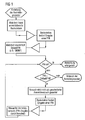
- the registration procedure is initiated by the occurrence of a pre-defined event.
- a pre-defined event This can be, for example, the setting of the handset in the loading trough of the base station. It could also be a manually generated event.
- the mobile unit After initiating the registration procedure, the mobile unit finds a ready-to-register base station.
- the base station then requests the input of a PIN number. This can also be done implicitly.
- the mobile unit automatically transmits a permanently set base PIN number, the so-called default PIN number, stored therein to the base station.
- the base station checks the correctness of the transmitted PIN number.
- the base station checks the PIN number to determine whether the transmitted PIN number is the so-called default PIN number.
- the login procedure is aborted. A new application is then only possible if the login procedure is restarted completely.
- the login attempt is deemed not to have failed and the login procedure is not aborted. Instead, calls the base station manual input of a PIN number by the user.
- This manually entered PIN number is then checked again for correctness by the base station.
- the login attempt is deemed not to have failed and the login procedure is not aborted. Instead, the base station requests manual input of a PIN number by the user.
- the number of allowed repetitions is fixed. In a specific case, this number can be one.
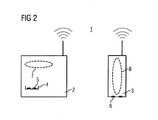
- a radio-controlled communication system 1 which comprises a base station 2 and at least one single mobile part 3.
- the handset 3 is at the base station 2 according to the in connection with the FIG. 1 filed registration procedure.
- the base station 2 has a charging trough 4 with corresponding electrical charging pins 5.
- the handset 3 has to the loading pins 5 of the base station 2 corresponding Schmidtpins 6.
- the registration procedure is according to the present embodiment according to FIG. 2 initiated by the handset 3 has been set in the loading tray 4 of the base station 2 sometime, so that the charging pins 5 of the charging tray 4 of the base station 2 and the charging pins 6 of the mobile part 3 contacted each other.
- the base station 2 and the mobile part 3 each have correspondingly designed technical means 7 for the base station 2 or 8 for the mobile part 3.
- the respectively correspondingly designed technical means 7 and 8 are formed by discrete components which cooperate with each other in terms of electrical and telecommunications technology and operate at least partially programmatically.
Landscapes
- Engineering & Computer Science (AREA)
- Computer Security & Cryptography (AREA)
- Computer Networks & Wireless Communication (AREA)
- Signal Processing (AREA)
- Computer Hardware Design (AREA)
- Computing Systems (AREA)
- General Engineering & Computer Science (AREA)
- Mobile Radio Communication Systems (AREA)
- Telephone Function (AREA)
- Transceivers (AREA)
Description
- Die Erfindung betrifft ein Verfahren zum Anmelden eines Mobilteils an eine Basisstation gemäß dem Oberbegriff des Anspruchs 1. Die Erfindung betrifft weiter basierend auf einem solchen Verfahren ein funkgesteuertes Kommunikationssystem gemäß dem Oberbegriff des Anspruchs 8.
- Funkgesteuerte Kommunikationssysteme wie z.B. DECT- oder WLAN-Kommunikationssysteme umfassen eine Basisstation sowie mindestens ein Mobilteil als ein Teilnehmer an dem betreffenden System. Das Mobilteil wird und/oder die Basisstation wird von einem Kunden oder Benutzer benutzt.
- Die Teilnehmer beziehungsweise die Mobilteile müssen, da keine direkte Drahtverbindung zur zugehörigen Basisstation besteht, über eine sogenannte Anmeldeprozedur mit der Basisstation verbunden beziehungsweise an der Basisstation angemeldet werden. Um unberechtigte Anmeldungen zum Beispiel von in nachbarschaftlichen Wohnungen befindlichen Mobilteilen zu verhindern, ist die Eingabe einer PIN-Nummer als Beispiel einer allgemeinen Authorisierungs-Information notwendig.
- Soweit nachfolgend von einer PIN-Nummer gesprochen wird, ist darunter stets eine allgemeine Autorisierungs-Information zu verstehen. Sie könnte also auch ein anderes Aussehen als eine konkrete PIN-Nummer haben.
- Marktuntersuchungen haben jedoch gezeigt, dass viele Benutzer mit der Eingabe der korrekten PIN-Nummer überfordert sind und die Geräte, Basisstation und/oder Mobilteil, wieder zurück zum Händler bringen.
- Das Problem wird dadurch intensiviert, dass die für das Anmelden eines Mobilteils an einer zugehörigen Basisstation manuell oder automatisch gestartete Anmeldeprozedur in der Weise ausgelegt ist, dass sie nach einer falsch eingegebenen PIN-Nummer die Anmeldeprozedur komplett abbricht. Die Anmeldeprozedur muss dann ganz neu wieder eingeleitet werden.
- Damit ein Benutzer eines obigen funkgesteuerten Kommunikationssystems zurechtkommt, werden die Geräte zum Beispiel mit einem vorangemeldeten Status ausgeliefert.
- Ein anderer Ansatz ist, eine automatische Anmeldung zu realisieren, die dann aktiviert wird, wenn ein Mobilteil zum Beispiel in die Basisstation eingestellt wird.
- Eine solche Methode ist beispielsweise bei sogenannten Gigaset-Kommunikationssystemen realisiert. Wird dort das Mobilteil in die Lademulde der Basisstation eingestellt, wird die automatische Anmeldeprozedur durchlaufen, so dass das Mobilteil an der Basisstation angemeldet wird, ohne dass dafür die Eingabe einer PIN-Nummer durch einen Benutzer erforderlich ist.
- Eine automatische Anmeldung könnte aber beispielsweise auch dann gestartet werden, wenn das Mobilteil in eine eigene Ladeschale eingestellt wird oder wenn das Mobilteil eingeschaltet wird und noch an keiner Basisstation angemeldet ist.
- Diese Mechanismen greifen allerdings nicht, wenn ein bestehendes System-durch den Zukauf eines zusätzlichen Mobilteils erweitert wird oder wenn die Basisstation nicht über eine Lademulde verfügt.
- Bekannt ist weiter, dass viele funkgesteuerte Kommunikationssysteme eine fest eingestellte Basis-PIN-Nummer, eine sogenannte Default-PIN-Nummer, haben. Ein Beispiel für eine solche Default-PIN-Nummer ist die PIN-Nummer: 0000.
- Auch hier sei erwähnt, dass unter Default-PIN-Nummer nur ein Beispiel für allgemein gesehen eine Default-Authorisierungs-Information zu sehen ist.
- Das Dokument
DE 42 36 778 A1 offenbart ein Verfahren zum Zusammenschluss von Sende-/Empfangseinrichtungen eines Schnurlos-Kommunikationssystems zu einer kommunikationsfähigen Einheit. Durch eine Ergänzungsmeldung an die Mobilstation und ein Legitimationswort von der Mobilstation wird vermieden, dass die Sende-/Empfangseinrichtungen beliebig zusammenschliessbar sind. - Um die Überforderung von Benutzern bei der Anmeldung eines Mobilteils an eine zugehörige Basisstation weiter zu reduzieren, ist es Aufgabe der Erfindung, ausgehend von einem Verfahren der eingangs genannten ein solches Verfahren weiter zu vereinfachen.
- Außerdem ist es im gleichen Zusammenhang Aufgabe der Erfindung ausgehend von einem funkgesteuerten Kommunikationssystem der eingangs genannten Art ein solches funkgesteuertes Kommunikationssystem in der Weise zu verbessern, dass die Überforderung eines Benutzers bei der Anmeldung eines Mobilteils an eine zugehörige Basisstation weiter reduziert ist.
- Der erste Teil der gestellten Aufgabe wird erfindungsgemäß durch ein Verfahren zum Anmelden eines Mobilteils an eine Basisstation gelöst, das die im kennzeichnenden Teil des Anspruchs 1 angegebenen Verfahrensschritte aufweist.
- Der zweite Teil der gestellten Aufgabe wird erfindungsgemäß durch ein funkgesteuertes Kommunikationssystem gelöst, das die im kennzeichnenden Teil des Anspruchs 8 angegebenen Merkmale aufweist.
- Danach wird ein Verfahren beansprucht mit mehreren Verfahrensschritten. Dabei wird durch das Mobilteil automatisch eine für das funkgesteuerte Kommunikationssystem maßgebende Default-Authorisierungs-Information an die Basisstation übermittelt. Weiter wird in einem nachfolgenden Verfahrensschritt durch die Basisstation bei der Prüfung auf Korrektheit der übermittelten Authorisierungs-Information die Korrektheit der übermittelten Authorisierungs-Information erkannt, solange eine bei der Prüfung auf Korrektheit herangezogene Referenz-Authorisierungs-Information noch nicht geändert wurde.
- Mit der Referenz-Authorisierungs-Information ist die in der Basisstation gespeicherte Authorisierungs-Information gemeint, die bei Inbetriebnahme des Geräts mit der Default-Authorisierungs-Information des Systems übereinstimmt und die von einem Kunden beziehungsweise einem Benutzer verändert werden kann.
- Es wird durch die Basisstation die übermittelte Authorisierungs-Information auf das Vorliegen der Default-Authorisierungs-Information überprüft, wenn die Basisstation die Inkorrektheit der übermittelten Authorisierungs-Information erkennt.
- Wird hier das Vorliegen der Default-Authorisierungs-Information erkannt, schaltet die Basisstation in einen Anmeldestatus, der eine weitere Übermittlung von Authorisierungs-Informationen durch das Mobilteil zulässt. Dabei schaltet die Basisstation nach Erhalt einer solchen Authorisierungs-Information sich jeweils wieder in den gleichen Verfahrensschritt, in dem die Basisstation die Authorisierungs-Information auf Korrektheit überprüft.
- Wird dagegen das nicht Vorliegen der Default-Authorisierungs-Information erkannt, bricht die Basisstation die Anmeldeprozedur ab
- Bezüglich des erfindungsgemäßen funkgesteuerten Kommunikationssystems sind die Basisstation und ein an der Basisstation angemeldetes Mobilteil für die Durchführung des erfindungsgemäßen Verfahrens in der Weise ausgestattet, dass jeweils entsprechend ausgebildete technische Mittel vorhanden sind.
- Mit den erfindungsgemäßen Verfahrensschritten und den vorhandenen technischen Mitteln in der Basisstation und einem betreffenden Mobilteil wird die Anmeldeprozedur vereinfacht, in dem das Mobilteil automatisch einen ersten Anmeldeversuch mit der fest eingestellten Basis-PIN-Nummer startet. Ist diese Basis-PIN-Nummer noch gültig, zum Beispiel weil ein betreffender Kunde sie noch nicht geändert hat, was nach der Erfahrung bei den meisten betreffenden Kommunikationssystemen der Fall ist, kann die Anmeldeprozedur für dieses Mobilteil sofort vollständig abgeschlossen werden. Der betreffende Kunde braucht überhaupt keine PIN-Nummer einzugeben.
- Falls die PIN-Nummer jedoch nicht mehr gültig ist, weil zum Beispiel ein betreffender Kunde sie bereits verändert hat, scheitert der erste automatische Anmeldeversuch. Die Basisstation erkennt aber anhand der sogenannten Default-PIN-Nummer, dass es sich bei diesem Anmeldeversuch um einen automatischen Anmeldeversuch des Mobilteils und nicht um eine Falscheingabe durch einen Benutzer handelt. Die Basisstation erlaubt dann in diesem Fall unmittelbar einen zweiten Anmeldeversuch, bei dem der betreffende Benutzer beziehungsweise Kunde jetzt manuell die richtige PIN-Nummer eingeben muss.
- Dieser zweite Anmeldeversuch wird, wie gesagt, automatisch eingeleitet, ohne dass also die Basisstation oder das Mobilteil erneut anmeldebereit gemacht werden müssen. Die Anmeldeprozedur ist deshalb auch aus diesem Grund vereinfacht.
- Der Vorteil der vorgestellten Lösung besteht nochmals gesagt also darin, dass der Benutzer, der die Default-PIN-Nummer des Systems nicht verändert hat, bei der Anmeldung des Mobilteils an der Basisstation keine PIN-Nummer eingeben muss. Somit ist für eine Vielzahl der Kunden die Anmeldung möglich, ohne dass sie eine PIN-Nummer eingeben müssen. Wurde die Basis-PIN-Nummer bereits verändert, erkennt die Basisstation anhand der Basis-PIN-Nummer den automatischen Anmeldeversuch und wertet diesen nicht als Fehlversuch, sondern erlaubt stattdessen dem Benutzer unmittelbar danach einen neuen, manuellen Anmeldeversuch, ohne dass die laufende Anmeldeprozedur dabei unterbrochen wird.
- Vorteilhafte Ausgestaltungen der Erfindung sind Gegenstand von Unteransprüchen.
- Danach wird für eine weitere Übermittlung der Authorisierungs-Information die Authorisierungs-Information vom Benutzer eingegeben. Der Benutzer hat damit die konkrete Möglichkeit, die Anmeldeprozedur erfolgreich abzuschließen.
- Bei einer anderen vorteilhaften Ausgestaltung der Erfindung bricht die Basisstation die Anmeldeprozedur nach einer vorgegebenen Anzahl von sich wiederholenden Schleifendurchläufen ab, so dass es zu keiner unendlichen Schleifenbildung bei der Anmeldeprozedur kommt.
- Ein sich wiederholender Schleifendurchlauf in der Anmeldeprozedur kann gegebenenfalls auftreten, wenn beim zweiten Anmeldeversuch durch den Benutzer die Basis-PIN-Nummer manuell eingegeben wird.
- Bei einer anderen vorteilhaften Ausgestaltung der Erfindung wird die Anmeldeprozedur zur Anmeldung eines Mobilteils an eine zugehörige Basisstation in der Basisstation automatisch gestartet, wenn das Mobilteil in die Lademulde einer zugehörigen Basisstation gestellt wird.
- Bei einer weiteren vorteilhaften Ausgestaltung der Erfindung wird die Anmeldeprozedur zur Anmeldung eines Mobilteils an eine zugehörige Basisstation in dem Mobilteil automatisch gestartet, wenn das Mobilteil in die Lademulde einer zugehörigen Basisstation gestellt wird, oder wenn das Mobilteil eingeschaltet wird und noch an keiner Basisstation angemeldet ist.
- Der jeweilige automatische Start der Anmeldeprozedur vereinfacht die Handhabung des Benutzers wesentlich, weil er für den Start der Anmeldeprozedur keinerlei manuelle Maßnahmen ergreifen muss.
- Kennzeichnet das Mobilteil die automatisch übermittelte Authorisierungs-Information als automatisch übermittelte Authorisierungs-Information durch Übermittlung einer zusätzlichen Information, ist sichergestellt, dass der Basisstation bekannt ist, dass es sich bei der übermittelten Authorisierungs-Information um eine automatisch übermittelte Authorisierungs-Information handelt.
- Entsprechendes gilt für das Mobilteil, wenn die Basisstation dem Mobilteil vor der Übermittlung der Authorisierungs-Information bekannt gibt, dass es das Verfahren nach einem der Ansprüche 1 bis 6 unterstützt. Das Mobilteil kann dann daran gehindert werden, dass es nach dem beanspruchten Verfahren arbeitet, wenn die Basisstation gar nicht in der Lage ist, in entsprechender Weise zu arbeiten.
- Bezüglich eines konkreten funkgesteuerten Kommunikationssystems besteht eine vorteilhafte Ausgestaltung der Erfindung darin, dass die jeweils entsprechend ausgebildeten technischen Mittel durch diskrete Bauelemente gebildet sind, die elektro- und nachrichtentechnisch miteinander zusammenwirken und wenigstens zum Teil programmgesteuert arbeiten.
- Mit einer solchen Merkmalskombination lässt sich ein gewünschtes funkgesteuertes Kommunikationssystem mit kleinsten Abmessungen aufbauen.
- Nachfolgend wird ein Ausführungsbeispiel der Erfindung anhand einer Zeichnung näher erläutert. Darin zeigen:
- Figur 1
- ein prinzipielles Ablaufdiagram des erfindungsgemä- ßen Verfahrens, und
- Figur 2
- ein prinzipielles erfindungsgemäßes funkgesteuertes Kommunikationssystem.
- Gemäß der
Figur 1 erfolgt zunächst die Einleitung der Anmeldeprozedur durch Auftritt eines vorfestgelegten Ereignisses. Dieses kann beispielsweise das Einstellen des Mobilteils in die Lademulde der Basisstation sein. Es könnte aber auch ein manuell erzeugtes Ereignis sein. - Nach dem Einleiten der Anmeldeprozedur findet das Mobilteil eine anmeldebereite Basisstation vor.
- Die Basisstation fordert dann die Eingabe einer PIN-Nummer an. Dies kann auch implizit erfolgen.
- Handelt es sich bei der Einleitung der Anmeldeprozedur um eine automatische Einleitung der Anmeldeprozedur, übermittelt das Mobilteil automatisch eine darin eingespeicherte, fest eingestellte Basis-PIN-Nummer, die sogenannte Default-PIN-Nummer, an die Basisstation.
- Handelt es sich um eine manuelle Einleitung der Anmeldeprozedur durch einen Benutzer, könnte auch eine manuell eingegebene PIN-Nummer an dieser Stelle übermittelt werden, was aber im Ablaufdiagramm nicht näher dargestellt ist, weil es nicht Teil der erfindungsgemäßen Maßnahmen ist.
- Unabhängig davon, wie die PIN-Nummer generiert worden ist oder ob sie gültig ist oder nicht, prüft die Basisstation die Korrektheit der übermittelten PIN-Nummer.
- Wird die übermittelte PIN-Nummer als korrekt erkannt, war die Anmeldung erfolgreich und die Anmeldeprozedur wird beendet.
- Wird die übermittelte PIN-Nummer als nicht korrekt erkannt, erfolgt durch die Basisstation die Überprüfung der PIN-Nummer daraufhin, ob die übermittelte PIN-Nummer die sogenannte Default-PIN-Nummer ist.
- Handelt es sich nicht um die sogenannte Default-PIN-Nummer, wird die Anmeldeprozedur abgebrochen. Eine Neuanmeldung ist dann nur noch möglich, wenn die Anmeldeprozedur gänzlich von Neuem gestartet wird.
- Handelt es sich jedoch um die sogenannte Default-PIN-Nummer, wird der Anmeldeversuch als nicht gescheitert angesehen und die Anmeldeprozedur wird nicht abgebrochen. Stattdessen fordert die Basisstation die manuelle Eingabe einer PIN-Nummer durch den Benutzer.
- Diese manuell eingegebene PIN-Nummer wird dann durch die Basisstation wieder auf Korrektheit überprüft.
- Wird die manuell eingegebene PIN-Nummer als korrekt erkannt, ist der Anmeldeversuch erfolgreich.
- Wird die manuell eingegebene PIN-Nummer als nicht korrekt erkannt, wird wieder geprüft, ob es sich bei der manuell eingegebenen PIN-Nummer um die sogenannte Default-PIN-Nummer handelt.
- Handelt es sich hier nicht um die sogenannte Default-PIN-Nummer, wird die Anmeldeprozedur abgebrochen. Eine Neuanmeldung ist dann nur noch möglich, wenn die Anmeldeprozedur gänzlich von Neuem gestartet wird.
- Handelt es sich jedoch um die sogenannte Default-PIN-Nummer, wird der Anmeldeversuch als nicht gescheitert angesehen und die Anmeldeprozedur wird nicht abgebrochen. Stattdessen fordert die Basisstation die manuelle Eingabe einer PIN-Nummer durch den Benutzer.
- Der Vorgang wiederholt sich dann, wie vorhin schon beschrieben.
- In einer vorteilhaften Ausgestaltung der erfindungsgemäßen Anmeldeprozedur, die in der
Figur 1 nicht näher dargestellt ist, ist die Anzahl erlaubter Wiederholungen festgelegt. In einem konkreten Anwendungsfall kann diese Anzahl eins sein. - In der
Figur 2 ist ein erfindungsgemäßes funkgesteuertes Kommunikationssystem 1 gezeigt, das eine Basisstation 2 und wenigstens ein einziges Mobilteil 3 umfasst. - Das Mobilteil 3 ist dabei an der Basisstation 2 gemäß der im Zusammenhang mit der
Figur 1 beschriebenen Anmeldeprozedur angemeldet. - Die Basisstation 2 weist eine Lademulde 4 mit entsprechenden elektrischen Ladepins 5 auf.
- Das Mobilteil 3 weist zu den Ladepins 5 der Basisstation 2 entsprechende Gegenladepins 6 auf.
- Die Anmeldeprozedur, mit deren Hilfe das Mobilteil 3 an der Basisstation 2 angemeldet ist, ist gemäß dem vorliegenden Ausführungsbeispiel nach
Figur 2 dadurch initiiert, dass das Mobilteil 3 in die Lademulde 4 der Basisstation 2 irgendwann einmal eingestellt worden ist, so dass sich die Ladepins 5 der Lademulde 4 der Basisstation 2 und die Ladepins 6 des Mobilteils 3 gegenseitig kontaktierten. - Zur Durchführung der besagten Anmeldeprozedur weisen die Basisstation 2 und das Mobilteil 3 jeweils entsprechend ausgebildete technische Mittel 7 für die Basisstation 2 beziehungsweise 8 für das Mobilteil 3 auf.
- Dabei sind gemäß dem vorliegenden Ausführungsbeispiel die jeweils entsprechend ausgebildeten technischen Mittel 7 beziehungsweise 8 durch diskrete Bauelemente gebildet, die elektro- und nachrichtentechnisch miteinander zusammenwirken und wenigstens zum Teil programmgesteuert arbeiten.
Claims (9)
- Verfahren zum Anmelden eines Mobilteils an eine Basisstation zum Bilden eines funkgesteuerten Kommunikationssystems miteinander, aufweisend Verfahrensschritte einer automatisch oder manuell gestarteten Anmeldeprozedur, in der zunächst das Mobilteil eine anmeldebereite Basisstation sucht, in der daraufhin von Seiten des Mobilteils eine Authorisierungs-Information an die anmeldebereite Basisstation übermittelt wird, in der dann die Basisstation die übermittelte Authorisierungs-Information auf Korrektheit überprüft, und in der bei einem Erkennen einer korrekten Authorisierungs-Information durch die anmeldebereite Basisstation die Anmeldeprozedur für das Mobilteil erfolgreich abgeschlossen wird, dadurch gekennzeichnet,- dass das Mobilteil (3) automatisch eine für das funkgesteuerte Kommunikationssystem (1) maßgebende Default-Authorisierungs-Information an die Basisstation (2) übermittelt,- dass die Basisstation (2) bei der Prüfung auf Korrektheit der übermittelten Authorisierungs-Information die Korrektheit der übermittelten Authorisierungs-Information erkennt, solange eine bei der Prüfung auf Korrektheit herangezogene Referenz-Authorisierungs-Information noch nicht geändert wurde,- dass die Basisstation (2) die übermittelte Authorisierungs-Information auf das Vorliegen der Default-Authorisierungs-Information überprüft, wenn die Basisstation (2) die Inkorrektheit der übermittelten Authorisierungs-Information erkennt,- dass bei Vorliegen dann der Default-Authorisierungs-Information die Basisstation (2) in einen Anmeldestatus schaltet, der eine weitere Übermittlung von Authorisierungs-Informationen durch das Mobilteil zulässt und nach Erhalt einer solchen Authorisierungs-Information sich wieder in den gleichen Verfahrensschritt schaltet, in dem die Basisstation (2) die Authorisierungs-Information auf Korrektheit überprüft,- und dass bei nicht Vorliegen dann der Default-Authorisierungs-Information die Basisstation (2) die Anmeldeprozedur abbricht.
- Verfahren nach Anspruch 1,
dadurch gekennzeichnet,
dass für eine weitere Übermittlung der Authorisierungs-Information die Authorisierungs-Information vom Benutzer eingegeben wird. - Verfahren nach Anspruch 1 oder 2,
dadurch gekennzeichnet,
dass die Basisstation (2) die Anmeldeprozedur nach einer vorgegebenen Anzahl von sich wiederholenden Schleifendurchläufe abbricht. - Verfahren nach einem der Ansprüche 1 bis 3,
dadurch gekennzeichnet,
dass die Anmeldeprozedur zur Anmeldung eines Mobilteils (3) an eine zugehörige Basisstation (2) in der Basisstation (2) automatisch gestartet wird, wenn das Mobilteil (3) in die Lademulde (4) einer zugehörigen Basisstation (2) gestellt wird. - Verfahren nach einem der Ansprüche 1 bis 3,
dadurch gekennzeichnet,
dass die Anmeldeprozedur zur Anmeldung eines Mobilteils (3) an eine zugehörige Basisstation (2) in dem Mobilteil (3) automatisch gestartet wird, wenn das Mobilteil (3) in die Lademulde (4) einer zugehörigen Basisstation (2) gestellt wird, oder wenn das Mobilteil (3) eingeschaltet wird und noch an keiner Basisstation (2) angemeldet ist. - Verfahren nach einem der Ansprüche 1 bis 5,
dadurch gekennzeichnet,
dass das Mobilteil (3) die automatisch übermittelte Authorisierungs-Information durch Übermittlung einer zusätzlichen Information als automatisch übermittelte Authorisierungs-Information kennzeichnet. - Verfahren nach einem der Ansprüche 1 bis 6,
dadurch gekennzeichnet,
dass die Basisstation (2) dem Mobilteil (3) vor der Übermittlung der Authorisierungs-Information bekannt gibt, dass es das Verfahren nach einem der Ansprüche 1 bis 6 unterstützt. - Funkgesteuertes Kommunikationssystem, umfassend eine Basisstation und wenigstens ein einziges, an der Basisstation angemeldetes Mobilteil,
dadurch gekennzeichnet,
dass die Basisstation (2) und ein an der Basisstation (2) angemeldetes Mobilteil (3) für die Durchführung des Verfahrens nach Anspruch 1, 2 oder 3 jeweils entsprechend ausgebildete technische Mittel (7; 8) aufweisen. - Funkgesteuertes Kommunikationssystem nach Anspruch 8,
dadurch gekennzeichnet,
dass die jeweils entsprechend ausgebildeten technischen Mittel (7; 8) durch diskrete Bauelemente gebildet sind, die elektro- und nachrichtentechnisch miteinander zusammenwirken und wenigstens zum Teil programmgesteuert arbeiten.
Applications Claiming Priority (2)
| Application Number | Priority Date | Filing Date | Title |
|---|---|---|---|
| DE102007000613A DE102007000613A1 (de) | 2007-10-31 | 2007-10-31 | Verfahren zum Anmelden eines Mobilteils an eine Basisstation und funkgesteuertes Kommunikationssystem basierend auf einem solchen Verfahren |
| PCT/EP2008/064505 WO2009056512A1 (de) | 2007-10-31 | 2008-10-27 | Verfahren zum anmelden eines mobilteils an eine basisstation und funkgesteuertes kommunikationssystem mit einem solchen verfahren |
Publications (2)
| Publication Number | Publication Date |
|---|---|
| EP2215864A1 EP2215864A1 (de) | 2010-08-11 |
| EP2215864B1 true EP2215864B1 (de) | 2011-08-31 |
Family
ID=40291113
Family Applications (1)
| Application Number | Title | Priority Date | Filing Date |
|---|---|---|---|
| EP08845566A Not-in-force EP2215864B1 (de) | 2007-10-31 | 2008-10-27 | Verfahren zum Anmelden eines Mobilteils an eine Basisstation und funkgesteuertes Kommunikationssystem mit einem solchen Verfahren |
Country Status (13)
| Country | Link |
|---|---|
| US (1) | US8634806B2 (de) |
| EP (1) | EP2215864B1 (de) |
| CN (1) | CN101919279B (de) |
| AT (1) | ATE523046T1 (de) |
| AU (1) | AU2008317727B2 (de) |
| BR (1) | BRPI0818148B1 (de) |
| CA (1) | CA2702629C (de) |
| DE (1) | DE102007000613A1 (de) |
| ES (1) | ES2370124T3 (de) |
| MX (1) | MX2010004369A (de) |
| RU (1) | RU2439813C1 (de) |
| WO (1) | WO2009056512A1 (de) |
| ZA (1) | ZA201002939B (de) |
Family Cites Families (12)
| Publication number | Priority date | Publication date | Assignee | Title |
|---|---|---|---|---|
| DE4236778A1 (de) | 1992-10-30 | 1994-05-05 | Siemens Ag | Verfahren zum Zusammenschluß von Sende-/Empfangseinrichtungen eines Schnurlos-Kommunikationssystems zu einer kommunikationsfähigen Einheit |
| JPH07235981A (ja) * | 1993-12-28 | 1995-09-05 | Casio Comput Co Ltd | コードレス電話システム及びコードレス電話システムにおける子機増設方法 |
| SE515750C2 (sv) * | 1994-01-28 | 2001-10-08 | Telia Ab | Anordning vid telesystem |
| US5794141A (en) * | 1994-02-24 | 1998-08-11 | Gte Mobile Comm Servinc | Multi-mode communication network with handset-assisted cordless base station activation |
| DE19620198C2 (de) * | 1996-05-20 | 1998-02-26 | Siemens Ag | Verfahren zum Ankoppeln von Telekommunikationsendgeräten an ein hybrides Telekommunikationssystem, insbesondere ein RNT-spezifisches Telekommunikationssystem |
| DE19643658C1 (de) * | 1996-10-22 | 1998-03-26 | Siemens Ag | Verfahren zum Steuern des Anmeldens von Schnurlos-Mobilteilen bei Schnurlos-Basisstationen universeller Mobil-Telekommunikationssysteme, insbesondere von DECT-Mobilteilen bei DECT-Basisstationen CAP-spezifischer Telekommunikationssysteme |
| US6832082B1 (en) * | 1997-12-12 | 2004-12-14 | Thomson Licensing S.A. | Initialization of handsets in a multi-line wireless phone system for secure communications |
| EP1093695B1 (de) * | 1997-12-12 | 2009-05-13 | Thomson Licensing | Initialisierung eines handapparat für ein sicheres schnurloses telefonsystem mit mehreren leitungen |
| DE10106209A1 (de) * | 2001-02-10 | 2002-08-29 | Tenovis Gmbh & Co Kg | Verfahren und Vorrichtung zum erstmaligen Einbuchen eines DECT/GAP-Handsets oder eines -Systemterminals in eine DECT-Telekommunikationsanlage |
| GB0307853D0 (en) * | 2003-04-04 | 2003-05-14 | Nokia Corp | Registrations in a communication system |
| EP1665748B1 (de) | 2003-09-17 | 2013-05-15 | Gigaset Communications GmbH | Verfahren und telekommunikationssystem mit drahtloser telekommunikation zwischen einem mobilteil und einer basisstation zum registrieren eines mobilteils |
| DE102005009504B3 (de) * | 2005-03-02 | 2006-03-09 | Fraunhofer-Gesellschaft zur Förderung der angewandten Forschung e.V. | Mobilteil und Basisstation für ein Kommunikationsprotokoll mit einer Normal-Anmeldung und einer Ad-hoc-Anmeldung |
-
2007
- 2007-10-31 DE DE102007000613A patent/DE102007000613A1/de not_active Withdrawn
-
2008
- 2008-10-27 RU RU2010120167/08A patent/RU2439813C1/ru active
- 2008-10-27 ES ES08845566T patent/ES2370124T3/es active Active
- 2008-10-27 EP EP08845566A patent/EP2215864B1/de not_active Not-in-force
- 2008-10-27 CA CA2702629A patent/CA2702629C/en active Active
- 2008-10-27 AU AU2008317727A patent/AU2008317727B2/en not_active Ceased
- 2008-10-27 AT AT08845566T patent/ATE523046T1/de active
- 2008-10-27 US US12/740,324 patent/US8634806B2/en active Active
- 2008-10-27 CN CN200880114536.9A patent/CN101919279B/zh not_active Expired - Fee Related
- 2008-10-27 MX MX2010004369A patent/MX2010004369A/es active IP Right Grant
- 2008-10-27 WO PCT/EP2008/064505 patent/WO2009056512A1/de not_active Ceased
- 2008-10-27 BR BRPI0818148-9A patent/BRPI0818148B1/pt not_active IP Right Cessation
-
2010
- 2010-04-28 ZA ZA2010/02939A patent/ZA201002939B/en unknown
Also Published As
| Publication number | Publication date |
|---|---|
| ES2370124T3 (es) | 2011-12-12 |
| CN101919279A (zh) | 2010-12-15 |
| HK1152187A1 (en) | 2012-02-17 |
| BRPI0818148A2 (pt) | 2015-03-31 |
| US8634806B2 (en) | 2014-01-21 |
| CA2702629C (en) | 2013-07-02 |
| US20100255814A1 (en) | 2010-10-07 |
| MX2010004369A (es) | 2010-10-04 |
| AU2008317727B2 (en) | 2012-04-05 |
| BRPI0818148B1 (pt) | 2020-09-15 |
| CA2702629A1 (en) | 2009-05-07 |
| EP2215864A1 (de) | 2010-08-11 |
| RU2439813C1 (ru) | 2012-01-10 |
| CN101919279B (zh) | 2014-07-02 |
| ATE523046T1 (de) | 2011-09-15 |
| WO2009056512A1 (de) | 2009-05-07 |
| ZA201002939B (en) | 2011-02-23 |
| AU2008317727A1 (en) | 2009-05-07 |
| DE102007000613A1 (de) | 2009-05-28 |
Similar Documents
| Publication | Publication Date | Title |
|---|---|---|
| EP2235978B1 (de) | Verfahren zur verwaltung der autorisierung von mobiltelefonen mit und ohne sim-karte | |
| DE69839101T2 (de) | Verfahren für eine sichere Trennprozedur in einem Mobilfunknetz | |
| DE69630100T2 (de) | Teilnehmeraktivierungssystem für zellulares Netzwerk | |
| DE102007006847A1 (de) | Digitales Verfahren und Anordnung zur Authentifizierung eines Nutzers eines Telekommunikations- bzw. Datennetzes | |
| DE60036850T2 (de) | Verfahren zur automatischen Anmeldung zwischen einer Mobilfunkstation und einer Basisstation in einem Telekommunikationsnetz und Systeme zur Durchführung dieser Verfahren | |
| EP1058467A2 (de) | Verfahren zum Betrieb von zwei SIM-Karten in ein Mobiltelefon | |
| EP2779722A2 (de) | Verfahren zum Personalisieren eines Sicherheitsmuduls eines Tele-kommunikations-Endgerätes | |
| EP2632104A1 (de) | Verfahren und Telekommunikationssystem zur Anmeldung eines Nutzers an einem gesicherten personalisierten IPTV-Dienst | |
| EP1075161B1 (de) | Verfahren und Vorrichtungen zur Zugangskontrolle eines Benutzers eines Benutzerrechners zu einem Zugangsrechner | |
| EP2103080B1 (de) | Überprüfung von authentisierungsfunktionen | |
| EP3452946B1 (de) | Verfahren zur erstmaligen inbetriebnahme eines nicht vollständig personalisierten sicheren elements | |
| EP2356609B1 (de) | Verfahren und vorrichtung zum zuordnen eines tragbaren datenträgers, insbesondere einer chipkarte, zu einem endgerät | |
| WO1998009256A1 (de) | Verfahren zur vorbereitung der durchführung einer chipkarten-applikation und vorrichtungen zur durchführung dieses verfahrens | |
| EP1516499B1 (de) | Verfahren und vorrichtung zum aufbau einer kommunikationsverbindung zwischen einer zentrale und einem endgerät | |
| EP2215864A1 (de) | Verfahren zum anmelden eines mobilteils an eine basisstation und funkgesteuertes kommunikationssystem mit einem solchen verfahren | |
| DE60122989T2 (de) | Verfahren und Vorrichtung zur Datenkommunication | |
| EP2952029A1 (de) | Verfahren zum zugriff auf einen dienst eines servers über eine applikation eines endgeräts | |
| DE102018209190A1 (de) | Verfahren zum Zuordnen eines bestimmten Kraftfahrzeugs zu einem Benutzerkonto eines bestimmten Benutzers und Kraftfahrzeug | |
| EP2482573A2 (de) | Verfahren zum Konfigurieren eines Kommunikationsgerätes sowie Kommunikationsgerät | |
| DE102021200810B3 (de) | Verfahren zum Betreiben einer Kommunikationsanordnung in einem Fahrzeug und Kommunikationsanordnung für ein Fahrzeug | |
| DE102021005920A1 (de) | Verfahren zum Zurücksetzen zumindest einer SIM-Karte eines Mobilendgeräts | |
| WO2004064363A1 (de) | Verfahren zum ablehnen von ankommenden anrufen abhängig von der rufnummerüberprüfung, die auf der sim-karte ausgeführt wird | |
| DE102024108995B3 (de) | Verfahren zum einrichten eines benutzergerätes sowie selbiges nebst computerprogramm, computerlesbarem datenträger und einrichtungsanordnung dafür | |
| DE102022001848B3 (de) | Verfahren zum nutzerbezogenen Einrichten eines Endgerätes | |
| WO2014202200A1 (de) | Verfahren zur nutzung eines weiteren verbindungskanals zur übertragung von daten |
Legal Events
| Date | Code | Title | Description |
|---|---|---|---|
| PUAI | Public reference made under article 153(3) epc to a published international application that has entered the european phase |
Free format text: ORIGINAL CODE: 0009012 |
|
| 17P | Request for examination filed |
Effective date: 20100528 |
|
| AK | Designated contracting states |
Kind code of ref document: A1 Designated state(s): AT BE BG CH CY CZ DE DK EE ES FI FR GB GR HR HU IE IS IT LI LT LU LV MC MT NL NO PL PT RO SE SI SK TR |
|
| AX | Request for extension of the european patent |
Extension state: AL BA MK RS |
|
| RIN1 | Information on inventor provided before grant (corrected) |
Inventor name: TOEBBEN, WILFRIED |
|
| DAX | Request for extension of the european patent (deleted) | ||
| GRAP | Despatch of communication of intention to grant a patent |
Free format text: ORIGINAL CODE: EPIDOSNIGR1 |
|
| RTI1 | Title (correction) |
Free format text: METHOD FOR REGISTERING A MOBILE PART AT A BASE STATION AND RADIO-CONTROLLED COMMUNICATION SYSTEM HAVING SUCH A METHOD |
|
| GRAS | Grant fee paid |
Free format text: ORIGINAL CODE: EPIDOSNIGR3 |
|
| GRAA | (expected) grant |
Free format text: ORIGINAL CODE: 0009210 |
|
| AK | Designated contracting states |
Kind code of ref document: B1 Designated state(s): AT BE BG CH CY CZ DE DK EE ES FI FR GB GR HR HU IE IS IT LI LT LU LV MC MT NL NO PL PT RO SE SI SK TR |
|
| REG | Reference to a national code |
Ref country code: CH Ref legal event code: EP Ref country code: GB Ref legal event code: FG4D Free format text: NOT ENGLISH |
|
| REG | Reference to a national code |
Ref country code: IE Ref legal event code: FG4D Free format text: LANGUAGE OF EP DOCUMENT: GERMAN |
|
| REG | Reference to a national code |
Ref country code: DE Ref legal event code: R096 Ref document number: 502008004718 Country of ref document: DE Effective date: 20111027 |
|
| REG | Reference to a national code |
Ref country code: ES Ref legal event code: FG2A Ref document number: 2370124 Country of ref document: ES Kind code of ref document: T3 Effective date: 20111212 |
|
| REG | Reference to a national code |
Ref country code: NL Ref legal event code: T3 |
|
| LTIE | Lt: invalidation of european patent or patent extension |
Effective date: 20110831 |
|
| PG25 | Lapsed in a contracting state [announced via postgrant information from national office to epo] |
Ref country code: LT Free format text: LAPSE BECAUSE OF FAILURE TO SUBMIT A TRANSLATION OF THE DESCRIPTION OR TO PAY THE FEE WITHIN THE PRESCRIBED TIME-LIMIT Effective date: 20110831 Ref country code: SE Free format text: LAPSE BECAUSE OF FAILURE TO SUBMIT A TRANSLATION OF THE DESCRIPTION OR TO PAY THE FEE WITHIN THE PRESCRIBED TIME-LIMIT Effective date: 20110831 Ref country code: NO Free format text: LAPSE BECAUSE OF FAILURE TO SUBMIT A TRANSLATION OF THE DESCRIPTION OR TO PAY THE FEE WITHIN THE PRESCRIBED TIME-LIMIT Effective date: 20111130 Ref country code: FI Free format text: LAPSE BECAUSE OF FAILURE TO SUBMIT A TRANSLATION OF THE DESCRIPTION OR TO PAY THE FEE WITHIN THE PRESCRIBED TIME-LIMIT Effective date: 20110831 Ref country code: HR Free format text: LAPSE BECAUSE OF FAILURE TO SUBMIT A TRANSLATION OF THE DESCRIPTION OR TO PAY THE FEE WITHIN THE PRESCRIBED TIME-LIMIT Effective date: 20110831 Ref country code: IS Free format text: LAPSE BECAUSE OF FAILURE TO SUBMIT A TRANSLATION OF THE DESCRIPTION OR TO PAY THE FEE WITHIN THE PRESCRIBED TIME-LIMIT Effective date: 20111231 |
|
| PG25 | Lapsed in a contracting state [announced via postgrant information from national office to epo] |
Ref country code: CY Free format text: LAPSE BECAUSE OF FAILURE TO SUBMIT A TRANSLATION OF THE DESCRIPTION OR TO PAY THE FEE WITHIN THE PRESCRIBED TIME-LIMIT Effective date: 20110831 Ref country code: LV Free format text: LAPSE BECAUSE OF FAILURE TO SUBMIT A TRANSLATION OF THE DESCRIPTION OR TO PAY THE FEE WITHIN THE PRESCRIBED TIME-LIMIT Effective date: 20110831 Ref country code: GR Free format text: LAPSE BECAUSE OF FAILURE TO SUBMIT A TRANSLATION OF THE DESCRIPTION OR TO PAY THE FEE WITHIN THE PRESCRIBED TIME-LIMIT Effective date: 20111201 Ref country code: SI Free format text: LAPSE BECAUSE OF FAILURE TO SUBMIT A TRANSLATION OF THE DESCRIPTION OR TO PAY THE FEE WITHIN THE PRESCRIBED TIME-LIMIT Effective date: 20110831 |
|
| REG | Reference to a national code |
Ref country code: IE Ref legal event code: FD4D |
|
| BERE | Be: lapsed |
Owner name: GIGASET COMMUNICATIONS G.M.B.H. Effective date: 20111031 |
|
| PG25 | Lapsed in a contracting state [announced via postgrant information from national office to epo] |
Ref country code: SK Free format text: LAPSE BECAUSE OF FAILURE TO SUBMIT A TRANSLATION OF THE DESCRIPTION OR TO PAY THE FEE WITHIN THE PRESCRIBED TIME-LIMIT Effective date: 20110831 Ref country code: IE Free format text: LAPSE BECAUSE OF FAILURE TO SUBMIT A TRANSLATION OF THE DESCRIPTION OR TO PAY THE FEE WITHIN THE PRESCRIBED TIME-LIMIT Effective date: 20110831 Ref country code: CZ Free format text: LAPSE BECAUSE OF FAILURE TO SUBMIT A TRANSLATION OF THE DESCRIPTION OR TO PAY THE FEE WITHIN THE PRESCRIBED TIME-LIMIT Effective date: 20110831 |
|
| PG25 | Lapsed in a contracting state [announced via postgrant information from national office to epo] |
Ref country code: RO Free format text: LAPSE BECAUSE OF FAILURE TO SUBMIT A TRANSLATION OF THE DESCRIPTION OR TO PAY THE FEE WITHIN THE PRESCRIBED TIME-LIMIT Effective date: 20110831 Ref country code: MC Free format text: LAPSE BECAUSE OF NON-PAYMENT OF DUE FEES Effective date: 20111031 Ref country code: IT Free format text: LAPSE BECAUSE OF FAILURE TO SUBMIT A TRANSLATION OF THE DESCRIPTION OR TO PAY THE FEE WITHIN THE PRESCRIBED TIME-LIMIT Effective date: 20110831 Ref country code: EE Free format text: LAPSE BECAUSE OF FAILURE TO SUBMIT A TRANSLATION OF THE DESCRIPTION OR TO PAY THE FEE WITHIN THE PRESCRIBED TIME-LIMIT Effective date: 20110831 Ref country code: PT Free format text: LAPSE BECAUSE OF FAILURE TO SUBMIT A TRANSLATION OF THE DESCRIPTION OR TO PAY THE FEE WITHIN THE PRESCRIBED TIME-LIMIT Effective date: 20120102 Ref country code: PL Free format text: LAPSE BECAUSE OF FAILURE TO SUBMIT A TRANSLATION OF THE DESCRIPTION OR TO PAY THE FEE WITHIN THE PRESCRIBED TIME-LIMIT Effective date: 20110831 |
|
| PG25 | Lapsed in a contracting state [announced via postgrant information from national office to epo] |
Ref country code: DK Free format text: LAPSE BECAUSE OF FAILURE TO SUBMIT A TRANSLATION OF THE DESCRIPTION OR TO PAY THE FEE WITHIN THE PRESCRIBED TIME-LIMIT Effective date: 20110831 |
|
| PLBE | No opposition filed within time limit |
Free format text: ORIGINAL CODE: 0009261 |
|
| STAA | Information on the status of an ep patent application or granted ep patent |
Free format text: STATUS: NO OPPOSITION FILED WITHIN TIME LIMIT |
|
| PG25 | Lapsed in a contracting state [announced via postgrant information from national office to epo] |
Ref country code: BE Free format text: LAPSE BECAUSE OF NON-PAYMENT OF DUE FEES Effective date: 20111031 |
|
| 26N | No opposition filed |
Effective date: 20120601 |
|
| REG | Reference to a national code |
Ref country code: DE Ref legal event code: R097 Ref document number: 502008004718 Country of ref document: DE Effective date: 20120601 |
|
| PG25 | Lapsed in a contracting state [announced via postgrant information from national office to epo] |
Ref country code: MT Free format text: LAPSE BECAUSE OF FAILURE TO SUBMIT A TRANSLATION OF THE DESCRIPTION OR TO PAY THE FEE WITHIN THE PRESCRIBED TIME-LIMIT Effective date: 20110831 |
|
| PG25 | Lapsed in a contracting state [announced via postgrant information from national office to epo] |
Ref country code: LU Free format text: LAPSE BECAUSE OF NON-PAYMENT OF DUE FEES Effective date: 20111027 |
|
| REG | Reference to a national code |
Ref country code: CH Ref legal event code: PL |
|
| PG25 | Lapsed in a contracting state [announced via postgrant information from national office to epo] |
Ref country code: BG Free format text: LAPSE BECAUSE OF FAILURE TO SUBMIT A TRANSLATION OF THE DESCRIPTION OR TO PAY THE FEE WITHIN THE PRESCRIBED TIME-LIMIT Effective date: 20111130 |
|
| PG25 | Lapsed in a contracting state [announced via postgrant information from national office to epo] |
Ref country code: CH Free format text: LAPSE BECAUSE OF NON-PAYMENT OF DUE FEES Effective date: 20121031 Ref country code: LI Free format text: LAPSE BECAUSE OF NON-PAYMENT OF DUE FEES Effective date: 20121031 |
|
| PG25 | Lapsed in a contracting state [announced via postgrant information from national office to epo] |
Ref country code: TR Free format text: LAPSE BECAUSE OF FAILURE TO SUBMIT A TRANSLATION OF THE DESCRIPTION OR TO PAY THE FEE WITHIN THE PRESCRIBED TIME-LIMIT Effective date: 20110831 |
|
| PG25 | Lapsed in a contracting state [announced via postgrant information from national office to epo] |
Ref country code: HU Free format text: LAPSE BECAUSE OF FAILURE TO SUBMIT A TRANSLATION OF THE DESCRIPTION OR TO PAY THE FEE WITHIN THE PRESCRIBED TIME-LIMIT Effective date: 20110831 |
|
| REG | Reference to a national code |
Ref country code: AT Ref legal event code: MM01 Ref document number: 523046 Country of ref document: AT Kind code of ref document: T Effective date: 20131027 |
|
| PG25 | Lapsed in a contracting state [announced via postgrant information from national office to epo] |
Ref country code: AT Free format text: LAPSE BECAUSE OF NON-PAYMENT OF DUE FEES Effective date: 20131027 |
|
| REG | Reference to a national code |
Ref country code: DE Ref legal event code: R082 Ref document number: 502008004718 Country of ref document: DE Representative=s name: MICHALSKI HUETTERMANN & PARTNER PATENTANWAELTE, DE Ref country code: DE Ref legal event code: R081 Ref document number: 502008004718 Country of ref document: DE Owner name: GIGASET COMMUNICATIONS GMBH, DE Free format text: FORMER OWNER: GIGASET COMMUNICATIONS GMBH, 81379 MUENCHEN, DE |
|
| REG | Reference to a national code |
Ref country code: FR Ref legal event code: PLFP Year of fee payment: 8 |
|
| REG | Reference to a national code |
Ref country code: FR Ref legal event code: PLFP Year of fee payment: 9 |
|
| REG | Reference to a national code |
Ref country code: FR Ref legal event code: PLFP Year of fee payment: 10 |
|
| REG | Reference to a national code |
Ref country code: FR Ref legal event code: PLFP Year of fee payment: 11 |
|
| PGFP | Annual fee paid to national office [announced via postgrant information from national office to epo] |
Ref country code: NL Payment date: 20231019 Year of fee payment: 16 |
|
| PGFP | Annual fee paid to national office [announced via postgrant information from national office to epo] |
Ref country code: GB Payment date: 20231020 Year of fee payment: 16 |
|
| PGFP | Annual fee paid to national office [announced via postgrant information from national office to epo] |
Ref country code: ES Payment date: 20231222 Year of fee payment: 16 |
|
| PGFP | Annual fee paid to national office [announced via postgrant information from national office to epo] |
Ref country code: FR Payment date: 20231024 Year of fee payment: 16 Ref country code: DE Payment date: 20231020 Year of fee payment: 16 |
|
| REG | Reference to a national code |
Ref country code: DE Ref legal event code: R119 Ref document number: 502008004718 Country of ref document: DE |
|
| REG | Reference to a national code |
Ref country code: NL Ref legal event code: MM Effective date: 20241101 |
|
| GBPC | Gb: european patent ceased through non-payment of renewal fee |
Effective date: 20241027 |
|
| PG25 | Lapsed in a contracting state [announced via postgrant information from national office to epo] |
Ref country code: DE Free format text: LAPSE BECAUSE OF NON-PAYMENT OF DUE FEES Effective date: 20250501 |
|
| PG25 | Lapsed in a contracting state [announced via postgrant information from national office to epo] |
Ref country code: GB Free format text: LAPSE BECAUSE OF NON-PAYMENT OF DUE FEES Effective date: 20241027 |
|
| PG25 | Lapsed in a contracting state [announced via postgrant information from national office to epo] |
Ref country code: NL Free format text: LAPSE BECAUSE OF NON-PAYMENT OF DUE FEES Effective date: 20241101 |
|
| PG25 | Lapsed in a contracting state [announced via postgrant information from national office to epo] |
Ref country code: FR Free format text: LAPSE BECAUSE OF NON-PAYMENT OF DUE FEES Effective date: 20241031 |
|
| REG | Reference to a national code |
Ref country code: ES Ref legal event code: FD2A Effective date: 20251203 |
|
| PG25 | Lapsed in a contracting state [announced via postgrant information from national office to epo] |
Ref country code: ES Free format text: LAPSE BECAUSE OF NON-PAYMENT OF DUE FEES Effective date: 20241028 |