EP2214634B1 - External preparations for mosturizing the skin containing litsea polyantha - Google Patents
External preparations for mosturizing the skin containing litsea polyantha Download PDFInfo
- Publication number
- EP2214634B1 EP2214634B1 EP20080848952 EP08848952A EP2214634B1 EP 2214634 B1 EP2214634 B1 EP 2214634B1 EP 20080848952 EP20080848952 EP 20080848952 EP 08848952 A EP08848952 A EP 08848952A EP 2214634 B1 EP2214634 B1 EP 2214634B1
- Authority
- EP
- European Patent Office
- Prior art keywords
- skin
- litsea
- soluble fraction
- lipid
- cream
- Prior art date
- Legal status (The legal status is an assumption and is not a legal conclusion. Google has not performed a legal analysis and makes no representation as to the accuracy of the status listed.)
- Not-in-force
Links
Images




Classifications
-
- A—HUMAN NECESSITIES
- A61—MEDICAL OR VETERINARY SCIENCE; HYGIENE
- A61K—PREPARATIONS FOR MEDICAL, DENTAL OR TOILETRY PURPOSES
- A61K36/00—Medicinal preparations of undetermined constitution containing material from algae, lichens, fungi or plants, or derivatives thereof, e.g. traditional herbal medicines
- A61K36/18—Magnoliophyta (angiosperms)
- A61K36/185—Magnoliopsida (dicotyledons)
- A61K36/54—Lauraceae (Laurel family), e.g. cinnamon or sassafras
-
- A—HUMAN NECESSITIES
- A61—MEDICAL OR VETERINARY SCIENCE; HYGIENE
- A61K—PREPARATIONS FOR MEDICAL, DENTAL OR TOILETRY PURPOSES
- A61K8/00—Cosmetics or similar toiletry preparations
- A61K8/02—Cosmetics or similar toiletry preparations characterised by special physical form
- A61K8/0212—Face masks
-
- A—HUMAN NECESSITIES
- A61—MEDICAL OR VETERINARY SCIENCE; HYGIENE
- A61K—PREPARATIONS FOR MEDICAL, DENTAL OR TOILETRY PURPOSES
- A61K8/00—Cosmetics or similar toiletry preparations
- A61K8/02—Cosmetics or similar toiletry preparations characterised by special physical form
- A61K8/04—Dispersions; Emulsions
- A61K8/06—Emulsions
-
- A—HUMAN NECESSITIES
- A61—MEDICAL OR VETERINARY SCIENCE; HYGIENE
- A61K—PREPARATIONS FOR MEDICAL, DENTAL OR TOILETRY PURPOSES
- A61K8/00—Cosmetics or similar toiletry preparations
- A61K8/18—Cosmetics or similar toiletry preparations characterised by the composition
- A61K8/96—Cosmetics or similar toiletry preparations characterised by the composition containing materials, or derivatives thereof of undetermined constitution
- A61K8/97—Cosmetics or similar toiletry preparations characterised by the composition containing materials, or derivatives thereof of undetermined constitution from algae, fungi, lichens or plants; from derivatives thereof
- A61K8/9783—Angiosperms [Magnoliophyta]
- A61K8/9789—Magnoliopsida [dicotyledons]
-
- A—HUMAN NECESSITIES
- A61—MEDICAL OR VETERINARY SCIENCE; HYGIENE
- A61P—SPECIFIC THERAPEUTIC ACTIVITY OF CHEMICAL COMPOUNDS OR MEDICINAL PREPARATIONS
- A61P17/00—Drugs for dermatological disorders
-
- A—HUMAN NECESSITIES
- A61—MEDICAL OR VETERINARY SCIENCE; HYGIENE
- A61P—SPECIFIC THERAPEUTIC ACTIVITY OF CHEMICAL COMPOUNDS OR MEDICINAL PREPARATIONS
- A61P17/00—Drugs for dermatological disorders
- A61P17/16—Emollients or protectives, e.g. against radiation
-
- A—HUMAN NECESSITIES
- A61—MEDICAL OR VETERINARY SCIENCE; HYGIENE
- A61P—SPECIFIC THERAPEUTIC ACTIVITY OF CHEMICAL COMPOUNDS OR MEDICINAL PREPARATIONS
- A61P25/00—Drugs for disorders of the nervous system
-
- A—HUMAN NECESSITIES
- A61—MEDICAL OR VETERINARY SCIENCE; HYGIENE
- A61P—SPECIFIC THERAPEUTIC ACTIVITY OF CHEMICAL COMPOUNDS OR MEDICINAL PREPARATIONS
- A61P9/00—Drugs for disorders of the cardiovascular system
-
- A—HUMAN NECESSITIES
- A61—MEDICAL OR VETERINARY SCIENCE; HYGIENE
- A61Q—SPECIFIC USE OF COSMETICS OR SIMILAR TOILETRY PREPARATIONS
- A61Q19/00—Preparations for care of the skin
-
- A—HUMAN NECESSITIES
- A61—MEDICAL OR VETERINARY SCIENCE; HYGIENE
- A61Q—SPECIFIC USE OF COSMETICS OR SIMILAR TOILETRY PREPARATIONS
- A61Q19/00—Preparations for care of the skin
- A61Q19/10—Washing or bathing preparations
-
- A—HUMAN NECESSITIES
- A61—MEDICAL OR VETERINARY SCIENCE; HYGIENE
- A61Q—SPECIFIC USE OF COSMETICS OR SIMILAR TOILETRY PREPARATIONS
- A61Q5/00—Preparations for care of the hair
-
- A—HUMAN NECESSITIES
- A61—MEDICAL OR VETERINARY SCIENCE; HYGIENE
- A61Q—SPECIFIC USE OF COSMETICS OR SIMILAR TOILETRY PREPARATIONS
- A61Q5/00—Preparations for care of the hair
- A61Q5/06—Preparations for styling the hair, e.g. by temporary shaping or colouring
Definitions
- the present invention relates to a skin moisturizer and a blood circulation promoter.
- the present invention further relates to external preparations for the skin comprising the skin moisturizer or the blood circulation promoter and thus having excellent moisturizing effects or blood circulation-promoting effects.
- the water content of the horny layer of the skin is closely connected with the condition of the skin. To maintain healthy bare skin, an appropriate amount of water needs to be retained in the horny layer.
- natural moisturizing factors greatly contribute to the water retention of the horny layer (see Non-patent Document 1).
- amino acids which are the main components of NMF, are considered to be deeply involved in the water retention of the horny layer.
- the amount of amino acids in the horny layer decreases with age or is reduced due to the external environment, which results in reduced water retention function of the horny layer (see Non-Patent Documents 2 and 3). This reduction in the water retention function of the horny layer is one of the factors that cause wrinkles to be formed because of reduced skin moisture and reduced elasticity with age.
- moisturizers such as glycerin, propylene glycol, sorbit, trehalose, 1,3-butylene glycol, hyaluronic acid, and sodium salts thereof
- TEWL transepidermal water loss
- Urea is one of the components of NMF, and is widely used as a moisturizer.
- “hydrogen bonding" is considered to retain water in the horny layer and prevent the skin from drying.
- Patent Documents 1 to 6 There have been various natural product-derived components proposed for use as moisturizers, such as plant extracts and bacteria cell extracts (see, for example, Patent Documents 1 to 6). Patent Documents 1 to 6 specifically describe that extracts of banyan and plants of the families Cunoniaceae, Welwitschiaceae, Hydrophyllaceae and Fouquieriaceae are effective as moisturizers and bacteria cell activators.
- Patent Document 7 describes that extracts of plants belonging to the genus Blechnum of the family Blechnaceae of the order Filicales and plants belonging the genus Polystichum of the family Dryopteridaceae have cell-activating properties and are effective as antioxidants.
- an object of the present invention is to find a natural-product component having excellent moisturizing effects and a natural-product component capable of promoting blood flow to activate cells, and provide a skin moisturizer and a blood circulation promoter each utilizing such an excellent component. Another object is to provide external preparations for the skin utilizing the moisturizing effects of the skin moisturizer and the blood circulation-promoting effects (blood flow-enhancing effect) of the blood circulation promoter.
- the present inventors conducted extensive research, and found that Litsea polyantha has excellent skin-moisturizing effects and blood circulation-promoting effects. As a result of this research, the inventors confirmed that pulverized leaves or a lipid-soluble fraction of a leaf extract of Litsea polyantha can be used as an active ingredient of external preparations for the skin that have moisturizing effects and blood circulation-promoting effects. The present invention has been accomplished, based on this finding.
- the present invention provides the following items:
- the present invention can provide a skin moisturizer having excellent moisturizing effects, and provide a blood circulation promoter having blood flow-promoting effects.
- the skin moisturizer can be effectively used as a moisturizing component of external preparations for the skin that have moisturizing effects (such as cosmetics and external pharmaceuticals), particularly cosmetics.
- the blood circulation promoter can be used as a blood circulation-promoting component of external preparations for the skin that have blood flow-promoting effects (such as external pharmaceuticals and cosmetics).
- the present invention can provide external preparations for the skin (such as cosmetics and external pharmaceuticals) containing the above skin moisturizer as an active ingredient and thus having excellent moisturizing effects. Further, the present invention can provide external preparations for the skin (such as cosmetics and external pharmaceuticals) containing the above blood circulation promoter as an active ingredient and thus promoting blood flow in the face, head, limbs or the whole body to prevent and ameliorate disorders (such as skin dullness, age spots, wrinkles, hair loss, and thinning hair due to reduced metabolism) and pathologic conditions (such as suffering from sensitivity to cold due to poor circulation, stiff shoulders associated with poor circulation, congestion, bedsores, Raynaud's disease, and economy-class syndrome), all caused by blood circulation disorders.
- disorders such as skin dullness, age spots, wrinkles, hair loss, and thinning hair due to reduced metabolism
- pathologic conditions such as suffering from sensitivity to cold due to poor circulation, stiff shoulders associated with poor circulation, congestion, bedsores, Raynaud's disease, and economy-class syndrome
- pulverized leaves or a lipid-soluble fraction of a leaf extract of Litsea polyantha is/are used.
- any plant that belongs to the genus Litsea of the family Lauraceae can be used for a skin moisturizer, a blood circulation promoter or an external preparation.
- Specific examples thereof include Litsea acuminata, Litsea lancifolia (Sieb. et Zucc.) F. Vills., Litsea japonica, Litsea calicaris, Litsea cubeba, Litsea ichangensis, Litsea citrata, Litsea polyantha, and the like.
- Litsea polyantha is used according to the present invention.
- any portion of the above plants can be used for a skin moisturizer, a blood circulation promoter or an external preparation.
- the whole plant or a part of the plant (such as leaves, flowers, seeds, roots, stems, and buds) may be used.
- the leaves, roots, stems, barks, and seeds are preferable from the viewpoint of the ease of availability.
- using the leaves or seeds, particularly leaves, is preferable from the viewpoint of efficacy.
- processed products include crushed products, pulverized products, juices, and extracts of the whole plant or a part of the plant.
- crushed products or pulverized products may be used as is or after being dried.
- the whole plant or a part of the plant may be subjected to solvent extraction.
- the whole plant or a part of the plant is preferably subjected to extraction after processing such as slicing and pulverization.
- the extraction may be performed by immersion in an extractant or by supercritical fluid extraction or subcritical fluid extraction. Stirring or homogenization in the extractant may be performed to enhance extraction efficiency.
- the extraction temperature is not particularly limited. For example, a temperature in the range of about 5°C to a temperature not higher than the boiling point of the extractant may be used.
- the extraction time may vary according to the type of extractant and the extraction temperature used. The extraction time is usually about 1 hour to about 14 days.
- extractants include water; lower alcohols such as methanol, ethanol, propanol, and isopropanol; polyhydric alcohols such as 1,3-butylene glycol, propylene glycol, and dipropylene glycol, and glycerin; ethers such as ethyl ether, and propyl ether; esters such as butyl acetate, and ethyl acetate; ketones such as acetone, and ethyl methyl ketone; chloroform, dichloromethane, and like organic solvents.
- organic solvents that are capable of extracting a lipid-soluble fraction from the leaves of Litsea polyantha are preferably used.
- the extractants may be used singly or as a mixture of two or more thereof.
- solvent mixtures include a mixture of chloroform with methanol or ethanol.
- supercritical fluids or subcritical fluids such as carbon dioxide, ethylene, propylene, ethanol, methanol, and ammonia may be used.
- the thus obtained solvent extract of a plant of the genus Litsea may be used for a skin moisturizer, a blood circulation promoter or an external preparation as it is, or the extract may further be concentrated or dried, dissolved again in a nonpolar solvent, and used.
- the leaf extract may be subjected to purification, such as decolorization, deodorization, and desalting, or fractionated by column chromatography, etc., and the obtained fraction may be used for the invention.
- the lipid-soluble fraction of a leaf extract of Litsea polyantha may be lyophilized, and dissolved when used.
- the pulverized leaves or a lipid-soluble fraction of a leaf extract of Litsea polyantha has excellent moisturizing effects as shown in Experiment 1 below, and therefore can be used as an active ingredient of skin moisturizers, particularly skin moisturizers in an epidermally administrable form. More specifically, the present invention can provide a skin moisturizer in an epidermally administrable form containing pulverized leaves or a lipid-soluble fraction of a leaf extract of Litsea polyantha as an active ingredient.
- the proportion of pulverized leaves or a lipid-soluble fraction of a leaf extract of Litsea polyantha in the skin moisturizer of the invention is not particularly limited, as long as the obtained skin moisturizer has moisturizing effects.
- the proportion can be appropriately selected from the range of 0.1 to 100 wt.%, preferably 1 to 100 wt.%, and more preferably 2.5 to 100 wt.%, based on the total weight.
- the form of the moisturizer is not particularly limited, as long as the moisturizer is epidermally administrable.
- Examples of such forms include liquids, emulsions, creams, ointments, gels, aerosols, and patches such as packs.
- the skin moisturizer of the invention can be used as an active ingredient of external preparations for the skin having moisturizing effects.
- an external preparation for the skin contains the skin moisturizer as an essential ingredient and may further contain other components usually contained in external preparations for the skin (such as drugs, quasi drugs, skin cosmetics, hair cosmetics, washes).
- components include surfactants (such as emulsifiers), oily components, alcohols, solubilizers, thickeners, antioxidants, chelating agents, pH adjusters, Flavoring agents, coloring matter, UV absorbers, UV-scattering agents, vitamins, amino acids, and preservatives.
- moisturizers may be incorporated as long as the effects of the present invention are not impaired.
- Any moisturizer may be used, and examples of usable moisturizers include polyhydric alcohols, such as glycerol, propylene glycol, 1,3-butylene glycol, sorbitol, polyglycerols, polyethylene glycol, and dipropylene glycol; NMF components such as amino acids, sodium lactate, and sodium pyrrolidone carboxylate; and water-soluble high polymers, such as hyaluronic acid, collagen, mucopolysaccharides, and chondroitin sulfate.
- polyhydric alcohols such as glycerol, propylene glycol, 1,3-butylene glycol, sorbitol, polyglycerols, polyethylene glycol, and dipropylene glycol
- NMF components such as amino acids, sodium lactate, and sodium pyrrolidone carboxylate
- water-soluble high polymers such as hyaluronic acid
- the proportion of the skin moisturizer of the invention in the external preparation for the skin is not particularly limited, as long as the obtained external preparation for the skin has moisturizing effects attributable to the skin moisturizer of the invention.
- the proportion can be appropriately selected from the range of 0.1 to 100 wt.%, preferably 1 to 100 wt.%, and more preferably 2.5 to 100 wt.%, based on the dry weight of the plant of the genus Litsea.
- the form of the external preparation for the skin is not particularly limited.
- Examples of such forms include lotions (liquids, dispersions), emulsions, creams, ointments, aerosols, foams, patches such as poultices and packs, external pharmaceuticals, skin cosmetics, scalp cosmetics, and hair cosmetics (such as hair growth stimulants, hair conditioners), and washes (such as body washes, hair washes, and facial washes).
- the pulverized leaves or a lipid-soluble fraction of a leaf extract of Litsea polyantha has excellent blood circulation-promoting effects as shown in Experiment Example 2 below, and therefore can be used as an active ingredient of blood circulation promoters that have blood flow-promoting effects. More specifically, the present invention can provide a blood circulation promoter in an epidermally administrable form containing pulverized leaves or a lipid-soluble fraction of a leaf extract of Litsea polyantha as an active ingredient.
- the proportion of pulverized leaves or a lipid-soluble fraction of a leaf extract of Litsea polyantha in the blood circulation promoter of the invention is not particularly limited, as long as the obtained blood circulation promoter has blood flow-promoting effects.
- the proportion can be appropriately selected from the range of 0.1 to 100 wt.%, preferably 1 to 100 wt.%, and more preferably 2.5 to 100 wt.%, based on the total weight.
- the form of the blood circulation promoter is not particularly limited, as long as the promoter is epidermally administrable.
- examples of such forms include liquids, emulsions, creams, ointments, gels, aerosols, and patches such as packs.
- the blood circulation promoter of the invention can also be used as an active ingredient of external preparations for the skin that have blood flow-promoting effects.
- an external preparation for the skin contains the blood circulation promoter as an essential ingredient, and optionally contains other components usually contained in external preparations for the skin (such as drugs, quasi drugs, skin cosmetics, scalp cosmetics, and washes).
- components include surfactants (such as emulsifiers), oily components, alcohols, solubilizers, thickeners, antioxidants, chelating agents, pH adjusters, Flavoring agents, coloring matters, UV absorbers, UV-scattering agents, vitamins, amino acids, and preservatives.
- blood circulation promoters may be incorporated, as long as the effects of the invention are not impaired. Any blood circulation promoter may be used, and examples of promoters that can be incorporated include capsicum tincture, ⁇ -orizanol, and the like.
- the proportion of the blood circulation promoter of the invention in the external preparation for the skin is not particularly limited, as long as the obtained external preparation for the skin has blood circulation-promoting effects attributable to the blood circulation promoter of the invention.
- the proportion can be appropriately selected from the range of 0.1 to 100 wt.%, preferably 1 to 100 wt.%, and more preferably 2.5 to 100 wt.%, based on the dry weight of the leaves of Litsea polyantha.
- the form of the external preparation for the skin is not particularly limited.
- Examples of such forms include lotions (liquids, dispersions), emulsions, creams, ointments, aerosols, foams, patches such as poultices, and packs, external pharmaceuticals, skin cosmetics, scalp cosmetics, and hair cosmetics (such as hair growth stimulants and hair conditioners), and washes (such as body washes, hair washes and facial washes).
- the external skin preparation which contains the blood flow promoter of the invention as an active ingredient, can promote blood flow in the face, head, limbs or the whole body to thereby prevent or ameliorate disorders (such as skin dullness, age spots, wrinkles, hair loss, and thinning hair due to reduced metabolism) and pathologic conditions (such as suffering from sensitivity to cold due to poor circulation, stiff shoulders associated with poor circulation, congestion, bedsores, Raynaud's disease, and economy-class syndrome), all caused by blood circulation disorders.
- disorders such as skin dullness, age spots, wrinkles, hair loss, and thinning hair due to reduced metabolism
- pathologic conditions such as suffering from sensitivity to cold due to poor circulation, stiff shoulders associated with poor circulation, congestion, bedsores, Raynaud's disease, and economy-class syndrome
- Urea was dissolved in an equal amount of water, and the resulting solution was mixed with a base cream (ingredients: dipropylene glycol, cetanol, 1,3-butylene glycol, stearyl alcohol, glyceryl stearate, stearic acid, polyethylene glycol-75, steareth-20, ceteth-20, jojoba oil, hydrogenated polyisobutene, ethoxydiglycol behenate, phenoxyethanol, ethylparaben, and methylparaben) to prepare a cream containing 10 wt.% of urea (a urea-containing cream).
- a base cream comprisingredients: dipropylene glycol, cetanol, 1,3-butylene glycol, stearyl alcohol, glyceryl stearate, stearic acid, polyethylene glycol-75, steareth-20, ceteth-20, jojoba oil, hydrogenated polyisobutene, e
- mice Male Wister rats housed under a constant cycle of 12 hours of light (lights on from 7:00 to 19:00 at 80 lux) and 12 hours of darkness (19:00 to 7:00) for 1 week (body weight: 250 to 300 g) were used as experimental subjects (non-human subjects). Before the experiment, food ("MF" type; product of Oriental Yeast) and water were freely available to the rats.
- the measurement of electrical activity in the cutaneous arterial sympathetic nerve was performed by hooking up efferent branch of cutaneous arterial sympathetic nerve fibers of each rat with a pair of silver-wire electrodes under a stereoscopic microscope. To prevent drying, the electrodes were immersed in a mixture of liquid paraffin and a mixure of warm vaseline. The obtained electrical activity in the nerve was amplified with a differential amplifier and monitored using an oscilloscope. To detect nerve activity in the cutaneous arterial sympathetic nerve, noise signals were separated by a window discriminator, and converted to spike signals.
- the obtained spike signals were counted, based on the number of spikes per 5 seconds, using a rate meter, then subjected to A/D (analog/digital) conversion, and recorded on a personal computer (see FIG. 1 ).
- the electrical activity was recorded for 60 minutes (see FIG. 2B ).
- FIG. 2 shows the results.
- FIG. 2 (A) shows the measurement data
- FIG. 2 (B) is a graph of the measurement data plotted with the data measured before application of the cream being defined as 100%.
- the upper row of FIG. 2 (A) shows the measurement data from the rat to which the base cream (control) was applied (shown as - ⁇ - in FIG. 2 (B) ).
- the lower row of FIG. 2 (A) shows the measurement data from the rat to which the urea-containing cream was applied (shown as - ⁇ - in FIG. 2 (B) ).
- FIG. 2 (A) and (B) clearly show that when the base cream (control) was applied to the tail of the rat, activity (electrical activity) in the cutaneous arterial sympathetic nerve hardly changed compared to the activity measured before application of the base cream; in contrast, when the urea-containing cream was applied to the tail of the rat, activity in the cutaneous arterial sympathetic nerve was significantly reduced.
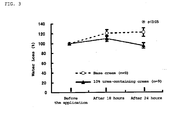
- Figure 3 shows the results. The results are expressed as the relative transepidermal water loss (%) measured 18 hours and 24 hours after application, with the transepidermal water loss before application being defined as 100%.
- the experimental results confirmed that the application of a cream containing 10% of urea known as a moisturizer (urea-containing cream) to the skin reduces the transepidermal water loss (Experiment (II)) and concurrently reduces activity (electrical activity) in the cutaneous arterial sympathetic nerve.
- the results show that there is a correlation between the moisturizing effect on the skin and activity (electrical activity) in the cutaneous arterial sympathetic nerve, so that by measuring the activity (electrical activity) in the cutaneous arterial sympathetic nerves and using the reduction of such activity as an index, the moisturizing effects of test substances on the skin can be evaluated.
- a lipid-soluble fraction and a water-soluble fraction obtained in the methods described below were used as the solvent extracts.
- Each of the Lipid-soluble fraction and the water-soluble fraction was mixed with 2 g each of the base cream, and used as test samples (a lipid-soluble fraction sample and a water-soluble fraction sample).
- FIG. 7 shows the results.
- the solid line (- ⁇ -) shows the results obtained when the Litsea-containing cream was applied
- the dashed line (-- ⁇ --) shows the results obtained when the base cream was applied.
- Embodiments of external preparations for skin of the present invention are described below.
- the lipid-soluble fraction of Litsea leaves obtained in Experimental Example 2 was used as the "processed product of a plant of the genus Litsea".
- Processed Product of a Plant of the Genus Litsea 2.5 Production Process Mix water-phase Components 1 to 6 and heat and dissolve the mixture at 75°C. Mix oil-phase Components 7 to 14 and heat and dissolve the mixture at 75°C. Add the oil-phase Components to the water-phase Components. After the mixture is preliminarily emulsified, uniformly emulsify the mixture using a homomixer. After the emulsification, start cooling and add Component 15 at 50°C. After the mixture is cooled to 40°C, add Component 16 and uniformly mix.
- Carboxyvinyl Polymer 0.5 (wt.%) 2. Purified Water 86.7 3. Sodium Hydroxide (aqueous 10 wt.% solution) 0.5 4. Ethanol 10.0 5. Methyl para-Hydroxybenzoate 0.1 6. Flavoring agent 0.1 7. Processed Product of a Plant of the Genus Litsea 2.0 8. Polyoxyethylene (60E.O.) Hydrogenated Castor Oil 0.1 Production Process: Add Component 1 to Component 2 and uniformly stir the mixture. Add Component 3 and uniformly stir the mixture. Add Component 5, which has been dissolved in Component 4 beforehand. After the mixture is uniformly stirred, add Components 6 to 8, which have been mixed beforehand. Uniformly stir and mix the mixture.
- Squalane 81.0 (wt.%) 2. Polyoxyethylene Glyceryl Isostearate 15.0 3. Purified Water 3.0 4. Processed Product of a Plant of the Genus Litsea 1.0 Production Process: Uniformly dissolve Component 1 in Component 2. Add Components 3 and 4 sequentially and uniformly mix.
- Stearic Acid 16.0 (wit.%) 2. Myristic Acid 16.0 3. Lipid-soluble Glyceryl Monostearate 2.0 4. Glycerol 20.0 5. Sodium Hydroxide 7.5 6. Palm Oil Fatty Acid Amide Propylbetaine 1.0 7. Purified Water 36.5 8. Processed Product of a Plant of the Genus Litsea 1.0 Production Process: Heat and dissolve oil-phase Components 1 to 4 at 80°C. Heat and dissolve water-phase Components 5 to 7 at 80°C. Uniformly mix and stir the oil-phase components and the water-phase components. Start cooling. Add Component 8 at 40°C and uniformly mix.
- Flavoring agent 0.3 (wt.%) 2. Processed Product of a Plant of the Genus Litsea 1.0 3. Sodium Bicarbonate 50.0 4. Sodium Sulfate 48.7 Production Process: Uniformly mix Components 1 to 4.
Landscapes
- Health & Medical Sciences (AREA)
- Life Sciences & Earth Sciences (AREA)
- Veterinary Medicine (AREA)
- Public Health (AREA)
- General Health & Medical Sciences (AREA)
- Animal Behavior & Ethology (AREA)
- Epidemiology (AREA)
- Natural Medicines & Medicinal Plants (AREA)
- Engineering & Computer Science (AREA)
- Chemical & Material Sciences (AREA)
- Dermatology (AREA)
- Medicinal Chemistry (AREA)
- Pharmacology & Pharmacy (AREA)
- Birds (AREA)
- Biotechnology (AREA)
- Microbiology (AREA)
- Bioinformatics & Cheminformatics (AREA)
- Nuclear Medicine, Radiotherapy & Molecular Imaging (AREA)
- Mycology (AREA)
- Botany (AREA)
- General Chemical & Material Sciences (AREA)
- Organic Chemistry (AREA)
- Chemical Kinetics & Catalysis (AREA)
- Dispersion Chemistry (AREA)
- Alternative & Traditional Medicine (AREA)
- Medical Informatics (AREA)
- Toxicology (AREA)
- Heart & Thoracic Surgery (AREA)
- Neurosurgery (AREA)
- Cardiology (AREA)
- Neurology (AREA)
- Biomedical Technology (AREA)
- Cosmetics (AREA)
- Medicines Containing Plant Substances (AREA)
Description
- The present invention relates to a skin moisturizer and a blood circulation promoter. The present invention further relates to external preparations for the skin comprising the skin moisturizer or the blood circulation promoter and thus having excellent moisturizing effects or blood circulation-promoting effects.
- The water content of the horny layer of the skin is closely connected with the condition of the skin. To maintain healthy bare skin, an appropriate amount of water needs to be retained in the horny layer. It is known that natural moisturizing factors (NMF) greatly contribute to the water retention of the horny layer (see Non-patent Document 1). In particular, amino acids, which are the main components of NMF, are considered to be deeply involved in the water retention of the horny layer. However, it has been reported that the amount of amino acids in the horny layer decreases with age or is reduced due to the external environment, which results in reduced water retention function of the horny layer (see Non-Patent
Documents 2 and 3). This reduction in the water retention function of the horny layer is one of the factors that cause wrinkles to be formed because of reduced skin moisture and reduced elasticity with age. - To improve such water retention function and enhance the moisture retention of the skin, various types of moisturizers (such as glycerin, propylene glycol, sorbit, trehalose, 1,3-butylene glycol, hyaluronic acid, and sodium salts thereof) have been developed, and made commercially available. By application to the skin, such moisturizers inhibit transepidermal water loss (TEWL) and retain the water content of the skin, thus providing skin moisturizing effects. Urea is one of the components of NMF, and is widely used as a moisturizer. As part of the moisturizing mechanism of urea in the horny layer, "hydrogen bonding" is considered to retain water in the horny layer and prevent the skin from drying.
- There have been various natural product-derived components proposed for use as moisturizers, such as plant extracts and bacteria cell extracts (see, for example,
Patent Documents 1 to 6).Patent Documents 1 to 6 specifically describe that extracts of banyan and plants of the families Cunoniaceae, Welwitschiaceae, Hydrophyllaceae and Fouquieriaceae are effective as moisturizers and bacteria cell activators. -
Patent Document 7 describes that extracts of plants belonging to the genus Blechnum of the family Blechnaceae of the order Filicales and plants belonging the genus Polystichum of the family Dryopteridaceae have cell-activating properties and are effective as antioxidants. - Non-Patent Document 1: Tetsuji Hirao, "Current NMF Research", Fragrance J., 17 (2000)
- Non-Patent Document 2: Yoshiyuki Kono, "Utility of Skin-Moisturizing and Rough Skin-Preventing Cosmetics, and the Development of Products", J. Soc. Cosmet. Chem. Japan 36 (4) (2002)
- Non-Patent Document 3: Hitoshi Masaki et al., "Keratin Moisture and Aging", Fragrance J., 8 (1993)
- Patent Document 1: Japanese Unexamined Patent Publication No.
1996-208427 - Patent Document 2: Japanese Unexamined Patent Publication No.
2007-238455 - Patent Document 3: Japanese Unexamined Patent Publication No.
2007-246489 - Patent Document 4: Japanese Unexamined Patent Publication No.
2007-246490 - Patent Document 5: Japanese Unexamined Patent Publication No.
2007-246491 - Patent Document 6: Japanese Unexamined Patent Publication No.
2007-246492 - Patent Document 7: Japanese Unexamined Patent Publication No.
2003-321377 - Many attempts have been made to utilize plant extracts as moisturizers or cell activators, as described above. However, such moisturizers and cell activators do not have sufficient effects, and are far from being completely satisfactory. Thus, an object of the present invention is to find a natural-product component having excellent moisturizing effects and a natural-product component capable of promoting blood flow to activate cells, and provide a skin moisturizer and a blood circulation promoter each utilizing such an excellent component. Another object is to provide external preparations for the skin utilizing the moisturizing effects of the skin moisturizer and the blood circulation-promoting effects (blood flow-enhancing effect) of the blood circulation promoter.
- To achieve the above objects, the present inventors conducted extensive research, and found that Litsea polyantha has excellent skin-moisturizing effects and blood circulation-promoting effects. As a result of this research, the inventors confirmed that pulverized leaves or a lipid-soluble fraction of a leaf extract of Litsea polyantha can be used as an active ingredient of external preparations for the skin that have moisturizing effects and blood circulation-promoting effects. The present invention has been accomplished, based on this finding.
- Thus, the present invention provides the following items:
- (I) Skin Moisturizer
- (I-1) A skin moisturizer comprising, as an active ingredient, pulverized leaves or a lipid-soluble fraction of a leaf extract of Litsea polyantha in an amount effective to reduce the sympathetic nerve activity of a cutaneous artery.
- (II) Blood Circulation Promoter
- (II-1) A blood circulation promoter comprising, as an active ingredient, pulverized leaves or a lipid-soluble fraction of a leaf extract of Litsea polyantha in an amount effective to reduce the sympathetic nerve activity of a cutaneous artery.
- (III) External Skin Preparation
- (III-1) An external preparation for the skin comprising, as an active ingredient, pulverized leaves or a lipid-soluble fraction of a leaf extract of Litsea polyantha in an amount effective to reduce the sympathetic nerve activity of a cutaneous artery.
- (III-6) An external preparation for the skin containing a skin moisturizer described in (I-1) or a blood circulation promoter described in (II-1) in an amount effective to reduce the sympathetic nerve activity of a cutaneous artery.
- The present invention can provide a skin moisturizer having excellent moisturizing effects, and provide a blood circulation promoter having blood flow-promoting effects. The skin moisturizer can be effectively used as a moisturizing component of external preparations for the skin that have moisturizing effects (such as cosmetics and external pharmaceuticals), particularly cosmetics. The blood circulation promoter can be used as a blood circulation-promoting component of external preparations for the skin that have blood flow-promoting effects (such as external pharmaceuticals and cosmetics).
- The present invention can provide external preparations for the skin (such as cosmetics and external pharmaceuticals) containing the above skin moisturizer as an active ingredient and thus having excellent moisturizing effects. Further, the present invention can provide external preparations for the skin (such as cosmetics and external pharmaceuticals) containing the above blood circulation promoter as an active ingredient and thus promoting blood flow in the face, head, limbs or the whole body to prevent and ameliorate disorders (such as skin dullness, age spots, wrinkles, hair loss, and thinning hair due to reduced metabolism) and pathologic conditions (such as suffering from sensitivity to cold due to poor circulation, stiff shoulders associated with poor circulation, congestion, bedsores, Raynaud's disease, and economy-class syndrome), all caused by blood circulation disorders.
- According to the present invention, pulverized leaves or a lipid-soluble fraction of a leaf extract of Litsea polyantha is/are used. Generally, any plant that belongs to the genus Litsea of the family Lauraceae can be used for a skin moisturizer, a blood circulation promoter or an external preparation. Specific examples thereof include Litsea acuminata, Litsea lancifolia (Sieb. et Zucc.) F. Vills., Litsea japonica, Litsea calicaris, Litsea cubeba, Litsea ichangensis, Litsea citrata, Litsea polyantha, and the like. Litsea polyantha is used according to the present invention.
- Generally, any portion of the above plants can be used for a skin moisturizer, a blood circulation promoter or an external preparation. The whole plant or a part of the plant (such as leaves, flowers, seeds, roots, stems, and buds) may be used. Generally, the leaves, roots, stems, barks, and seeds are preferable from the viewpoint of the ease of availability. Generally using the leaves or seeds, particularly leaves, is preferable from the viewpoint of efficacy.
- General examples of the processed products include crushed products, pulverized products, juices, and extracts of the whole plant or a part of the plant. Generally, such crushed products or pulverized products may be used as is or after being dried.
- The whole plant or a part of the plant, as is or after being dried, may be subjected to solvent extraction. Generally, considering extraction efficiency, the whole plant or a part of the plant is preferably subjected to extraction after processing such as slicing and pulverization. The extraction may be performed by immersion in an extractant or by supercritical fluid extraction or subcritical fluid extraction. Stirring or homogenization in the extractant may be performed to enhance extraction efficiency. The extraction temperature is not particularly limited. For example, a temperature in the range of about 5°C to a temperature not higher than the boiling point of the extractant may be used. The extraction time may vary according to the type of extractant and the extraction temperature used. The extraction time is usually about 1 hour to about 14 days.
- General examples of extractants include water; lower alcohols such as methanol, ethanol, propanol, and isopropanol; polyhydric alcohols such as 1,3-butylene glycol, propylene glycol, and dipropylene glycol, and glycerin; ethers such as ethyl ether, and propyl ether; esters such as butyl acetate, and ethyl acetate; ketones such as acetone, and ethyl methyl ketone; chloroform, dichloromethane, and like organic solvents. According to the present invention, organic solvents that are capable of extracting a lipid-soluble fraction from the leaves of Litsea polyantha are preferably used. The extractants may be used singly or as a mixture of two or more thereof. Examples of such solvent mixtures include a mixture of chloroform with methanol or ethanol. One or more kinds of supercritical fluids or subcritical fluids such as carbon dioxide, ethylene, propylene, ethanol, methanol, and ammonia may be used.
- Generally, the thus obtained solvent extract of a plant of the genus Litsea may be used for a skin moisturizer, a blood circulation promoter or an external preparation as it is, or the extract may further be concentrated or dried, dissolved again in a nonpolar solvent, and used. As long as the effects of the present invention are not impaired, the leaf extract may be subjected to purification, such as decolorization, deodorization, and desalting, or fractionated by column chromatography, etc., and the obtained fraction may be used for the invention. The lipid-soluble fraction of a leaf extract of Litsea polyantha may be lyophilized, and dissolved when used.
- The pulverized leaves or a lipid-soluble fraction of a leaf extract of Litsea polyantha has excellent moisturizing effects as shown in
Experiment 1 below, and therefore can be used as an active ingredient of skin moisturizers, particularly skin moisturizers in an epidermally administrable form. More specifically, the present invention can provide a skin moisturizer in an epidermally administrable form containing pulverized leaves or a lipid-soluble fraction of a leaf extract of Litsea polyantha as an active ingredient. - The proportion of pulverized leaves or a lipid-soluble fraction of a leaf extract of Litsea polyantha in the skin moisturizer of the invention is not particularly limited, as long as the obtained skin moisturizer has moisturizing effects. The proportion can be appropriately selected from the range of 0.1 to 100 wt.%, preferably 1 to 100 wt.%, and more preferably 2.5 to 100 wt.%, based on the total weight.
- The form of the moisturizer is not particularly limited, as long as the moisturizer is epidermally administrable. Examples of such forms include liquids, emulsions, creams, ointments, gels, aerosols, and patches such as packs.
- The skin moisturizer of the invention can be used as an active ingredient of external preparations for the skin having moisturizing effects. Such an external preparation for the skin contains the skin moisturizer as an essential ingredient and may further contain other components usually contained in external preparations for the skin (such as drugs, quasi drugs, skin cosmetics, hair cosmetics, washes). Examples of such components include surfactants (such as emulsifiers), oily components, alcohols, solubilizers, thickeners, antioxidants, chelating agents, pH adjusters, Flavoring agents, coloring matter, UV absorbers, UV-scattering agents, vitamins, amino acids, and preservatives.
- Other moisturizers may be incorporated as long as the effects of the present invention are not impaired. Any moisturizer may be used, and examples of usable moisturizers include polyhydric alcohols, such as glycerol, propylene glycol, 1,3-butylene glycol, sorbitol, polyglycerols, polyethylene glycol, and dipropylene glycol; NMF components such as amino acids, sodium lactate, and sodium pyrrolidone carboxylate; and water-soluble high polymers, such as hyaluronic acid, collagen, mucopolysaccharides, and chondroitin sulfate.
- The proportion of the skin moisturizer of the invention in the external preparation for the skin is not particularly limited, as long as the obtained external preparation for the skin has moisturizing effects attributable to the skin moisturizer of the invention. In general, the proportion can be appropriately selected from the range of 0.1 to 100 wt.%, preferably 1 to 100 wt.%, and more preferably 2.5 to 100 wt.%, based on the dry weight of the plant of the genus Litsea.
- The form of the external preparation for the skin is not particularly limited. Examples of such forms include lotions (liquids, dispersions), emulsions, creams, ointments, aerosols, foams, patches such as poultices and packs, external pharmaceuticals, skin cosmetics, scalp cosmetics, and hair cosmetics (such as hair growth stimulants, hair conditioners), and washes (such as body washes, hair washes, and facial washes).
- The pulverized leaves or a lipid-soluble fraction of a leaf extract of Litsea polyantha has excellent blood circulation-promoting effects as shown in Experiment Example 2 below, and therefore can be used as an active ingredient of blood circulation promoters that have blood flow-promoting effects. More specifically, the present invention can provide a blood circulation promoter in an epidermally administrable form containing pulverized leaves or a lipid-soluble fraction of a leaf extract of Litsea polyantha as an active ingredient.
- The proportion of pulverized leaves or a lipid-soluble fraction of a leaf extract of Litsea polyantha in the blood circulation promoter of the invention is not particularly limited, as long as the obtained blood circulation promoter has blood flow-promoting effects. The proportion can be appropriately selected from the range of 0.1 to 100 wt.%, preferably 1 to 100 wt.%, and more preferably 2.5 to 100 wt.%, based on the total weight.
- The form of the blood circulation promoter is not particularly limited, as long as the promoter is epidermally administrable. Examples of such forms include liquids, emulsions, creams, ointments, gels, aerosols, and patches such as packs.
- The blood circulation promoter of the invention can also be used as an active ingredient of external preparations for the skin that have blood flow-promoting effects. Such an external preparation for the skin contains the blood circulation promoter as an essential ingredient, and optionally contains other components usually contained in external preparations for the skin (such as drugs, quasi drugs, skin cosmetics, scalp cosmetics, and washes). Examples of such components include surfactants (such as emulsifiers), oily components, alcohols, solubilizers, thickeners, antioxidants, chelating agents, pH adjusters, Flavoring agents, coloring matters, UV absorbers, UV-scattering agents, vitamins, amino acids, and preservatives.
- Other blood circulation promoters may be incorporated, as long as the effects of the invention are not impaired. Any blood circulation promoter may be used, and examples of promoters that can be incorporated include capsicum tincture, γ-orizanol, and the like.
- The proportion of the blood circulation promoter of the invention in the external preparation for the skin is not particularly limited, as long as the obtained external preparation for the skin has blood circulation-promoting effects attributable to the blood circulation promoter of the invention. In general, the proportion can be appropriately selected from the range of 0.1 to 100 wt.%, preferably 1 to 100 wt.%, and more preferably 2.5 to 100 wt.%, based on the dry weight of the leaves of Litsea polyantha.
- The form of the external preparation for the skin is not particularly limited. Examples of such forms include lotions (liquids, dispersions), emulsions, creams, ointments, aerosols, foams, patches such as poultices, and packs, external pharmaceuticals, skin cosmetics, scalp cosmetics, and hair cosmetics (such as hair growth stimulants and hair conditioners), and washes (such as body washes, hair washes and facial washes). The external skin preparation, which contains the blood flow promoter of the invention as an active ingredient, can promote blood flow in the face, head, limbs or the whole body to thereby prevent or ameliorate disorders (such as skin dullness, age spots, wrinkles, hair loss, and thinning hair due to reduced metabolism) and pathologic conditions (such as suffering from sensitivity to cold due to poor circulation, stiff shoulders associated with poor circulation, congestion, bedsores, Raynaud's disease, and economy-class syndrome), all caused by blood circulation disorders.
- The following Experimental Examples serve to illustrate the invention in more detail, without limiting the scope of the invention. In the Examples, all percentages are by weight unless otherwise specified.
- Urea was dissolved in an equal amount of water, and the resulting solution was mixed with a base cream (ingredients: dipropylene glycol, cetanol, 1,3-butylene glycol, stearyl alcohol, glyceryl stearate, stearic acid, polyethylene glycol-75, steareth-20, ceteth-20, jojoba oil, hydrogenated polyisobutene, ethoxydiglycol behenate, phenoxyethanol, ethylparaben, and methylparaben) to prepare a cream containing 10 wt.% of urea (a urea-containing cream).
- Male Wister rats housed under a constant cycle of 12 hours of light (lights on from 7:00 to 19:00 at 80 lux) and 12 hours of darkness (19:00 to 7:00) for 1 week (body weight: 250 to 300 g) were used as experimental subjects (non-human subjects). Before the experiment, food ("MF" type; product of Oriental Yeast) and water were freely available to the rats.
- To prevent the effect of smell stimulus on the sympathetic nerve, every day, starting from five days before the experiment, a 1% aqueous zinc sulfate solution was applied to the nasal mucosa of each experimental subject under pentobarbital anesthesia (30mg/kg) and allowed to stand for 10 minutes for anosmia treatment (Kolunie JM. Stern JM: Horm Behav 1995, 29:492-518).
- After the rats were subjected to fasting for 6 hours, 2 g of the urea-containing cream or the base cream as a control was applied to the tail of each rat under urethane anesthesia (with an aqueous solution of urethane being intraperitoneally administered in an amount of 1 g/kg of body weight). The changes in nerve activity (electrical activity) of the efferent branches of the cutaneous arterial sympathetic nerves were measured for 60 minutes, immediately after application.
- More specifically, the measurement of electrical activity in the cutaneous arterial sympathetic nerve (efferent branch) was performed by hooking up efferent branch of cutaneous arterial sympathetic nerve fibers of each rat with a pair of silver-wire electrodes under a stereoscopic microscope. To prevent drying, the electrodes were immersed in a mixture of liquid paraffin and a mixure of warm vaseline. The obtained electrical activity in the nerve was amplified with a differential amplifier and monitored using an oscilloscope. To detect nerve activity in the cutaneous arterial sympathetic nerve, noise signals were separated by a window discriminator, and converted to spike signals. The obtained spike signals were counted, based on the number of spikes per 5 seconds, using a rate meter, then subjected to A/D (analog/digital) conversion, and recorded on a personal computer (see
FIG. 1 ). The electrical activity was recorded for 60 minutes (seeFIG. 2B ). -
FIG. 2 shows the results.FIG. 2 (A) shows the measurement data, andFIG. 2 (B) is a graph of the measurement data plotted with the data measured before application of the cream being defined as 100%. The upper row ofFIG. 2 (A) shows the measurement data from the rat to which the base cream (control) was applied (shown as -■- inFIG. 2 (B) ). The lower row ofFIG. 2 (A) shows the measurement data from the rat to which the urea-containing cream was applied (shown as -●- inFIG. 2 (B) ). -
FIG. 2 (A) and (B) clearly show that when the base cream (control) was applied to the tail of the rat, activity (electrical activity) in the cutaneous arterial sympathetic nerve hardly changed compared to the activity measured before application of the base cream; in contrast, when the urea-containing cream was applied to the tail of the rat, activity in the cutaneous arterial sympathetic nerve was significantly reduced. - The above results show that application of a 10% urea-containing cream to the skin reduces activity in the sympathetic nerve that controls the cutaneous artery. In contrast, when the base cream was applied to the tail of rat (control rat), no substantial change was observed in the nerve activity (electrical activity) of the skin sympathetic nerve, compared to the activity before application of the cream, and such a reduction as seen in the test rat was not observed.
- 160 mg of the 10% urea-containing cream prepared in Reference Experimental Example (I) was applied to a skin area of 2 x 6 cm (12 cm2) on the left side of the back of male HWY (Hairless Wistar Yagi) rats weighing about 250 g, without using anesthesia, whereas 160 mg of a base cream as a control was applied to a skin area of 2 x 6 cm (12 cm2) on the right side of the back of the same. Eighteen hours and twenty-four hours after application, a portable evaporimeter ("VapoMeter", product of Delfin Technologies Ltd) was pressed against each skin area thus treated to measure the transepidermal water loss (TEWL).
-
Figure 3 shows the results. The results are expressed as the relative transepidermal water loss (%) measured 18 hours and 24 hours after application, with the transepidermal water loss before application being defined as 100%. - The experimental results confirmed that the application of a cream containing 10% of urea known as a moisturizer (urea-containing cream) to the skin reduces the transepidermal water loss (Experiment (II)) and concurrently reduces activity (electrical activity) in the cutaneous arterial sympathetic nerve. The results show that there is a correlation between the moisturizing effect on the skin and activity (electrical activity) in the cutaneous arterial sympathetic nerve, so that by measuring the activity (electrical activity) in the cutaneous arterial sympathetic nerves and using the reduction of such activity as an index, the moisturizing effects of test substances on the skin can be evaluated.
- The electrical activity in cutaneous arterial sympathetic nerves (efferent branches) and the transepidermal water loss were measured according to the methods described in (I) and (II) of the Reference Experimental Examples, using as test samples pulverized leaves and solvent extracts of the leaves of Litsea polyantha (hereinafter simply referred to as "Litsea"), that is a plant belonging to the genus Litsea of the family Lauraceae.
- Two grams each of a base cream (ingredients: dipropylene glycol, cetyl alcohol, 1,3-butylene glycol, stearyl alcohol, glyceryl stearate, stearic acid, polyethylene glycol-75, steareth-20, ceteth-20, Jojoba oil, hydrogenated polyisobutene, ethoxydiglycol behenate, phenoxyethanol, ethylparaben, and methylparaben) was mixed with each of the pulverized leaves of Litsea and the solvent extracts of the leaves of Litsea to prepare creams containing Litsea (Litsea-containing creams) as test samples.
- A lipid-soluble fraction and a water-soluble fraction obtained in the methods described below were used as the solvent extracts.
-
- (a) Lipid-soluble fraction: 1 ml of water, 2.5 ml of methanol, and 1.25 ml of chloroform were added to 50 mg of Litsea leaves. After the mixture was allowed to stand at room temperature for 10 minutes, 1.25 ml of chloroform was added, and the mixture was fully stirred in a vortex. Further, 1.25 ml of water was added thereto (to achieve a final water:methanol:chloroform ratio of 0.9:1:1). After the mixture was centrifuged, the lower chloroform layer was collected and air dried on a Petri dish. The contents of the Petri dish were dissolved in 0.5 ml of chloroform and used as the lipid-soluble fraction.
- (b) Water-soluble Fraction: The upper water layer (about 3 ml) obtained by centrifugation was evaporated to dryness using a centrifugal concentrator ("CC-101", product of Tomy Seiko Co., Ltd.). The resulting product was dissolved in 0.5 ml of water and used as the water-soluble fraction.
- Each of the Lipid-soluble fraction and the water-soluble fraction was mixed with 2 g each of the base cream, and used as test samples (a lipid-soluble fraction sample and a water-soluble fraction sample).
-
- (2-1)
FIG. 4 shows the results of measurement of the electrical activity in the cutaneous arterial sympathetic nerve obtained when Litsea-containing creams containing pulverized leaves of Litsea (20 to 50 mg/2 g) were applied to the skin.FIG. 5 shows the results of measurement transepidermal water loss obtained when a Litsea-containing cream (50 mg/2 g, a cream containing 2.5% pulverized leaves of Litsea) was applied to the skin.FIG. 4 (A) shows the measured data, andFIG. 4 (B) is a graph of the measured data with the value measured before application of the cream being defined as 100%. InFIG. 5 , the solid line (-●-) shows the results in the rats to which the base cream (control) was applied, and the dashed line (--Δ--) shows the results in the rats to which the Litsea-containing cream was applied.
These results clearly show that when the base cream (control) was applied to the tails of the rats, the activity (electrical activity) in the cutaneous arterial sympathetic nerve hardly changed, compared to that before application of the base cream; in contrast, when the Listea-containing cream was applied to the tails of the rats, the activity of the cutaneous arterial sympathetic nerve was significantly reduced. The application of the Litsea-containing cream to the skin reduced the activity of the sympathetic nerves that control the cutaneous arteries (FIG. 4 ) and concurrently reduced the transepidermal water loss (FIG. 5 ). In contrast, no inhibition of transepidermal water loss was observed in the rats (control group) to which the base cream was applied.
The results show that Litsea, which is a plant belonging to the genus Litsea of the family Lauraceae, has an effect of inhibiting water loss from the skin and thereby enhancing the moisture retention of the skin (moisturizing effect). - (2-2)
FIG. 6 shows the results of measurement of the electrical activity in the cutaneous arterial sympathetic nerves obtained by applying Litsea-containing creams (water-soluble fraction sample and Lipid-soluble fraction sample) containing the extracts (water-soluble fraction and lipid-soluble fraction) of the leaves of Litsea prepared according to the method described in the section of Preparation of Test Samples. InFIG. 6 , the solid line (-●-) shows the results for the water-soluble fraction of the leaves of Litsea, whereas the dashed line (--●--) shows the results for the lipid-soluble fraction of the leaves of Litsea.FIG. 6 (A) shows the measured data, andFIG. 6 (B) is a graph of the measured data with the value measured before application of the cream being defined as 100%. - These results clearly show that when the cream containing the lipid-soluble fraction of Litsea was applied to the tails of the rats, the activity in the cutaneous arterial sympathetic nerve was reduced; in contrast, the application of the water-soluble fraction of Litsea did not reduce the activity (electrical activity) in the cutaneous arterial sympathetic nerve. These results suggest that the lipid-soluble fraction of Litsea is a fraction with skin-water retention activity, and the fraction contains an active ingredient for producing moisturizing effects.
- Two grams of the Litsea-containing cream containing pulverized leaves of Litsea (50 mg/2 g)(see Experiment Example 1) or the base cream (control) was applied to the tails and hairless portions of male Wistar rats (body weight: about 350 g). A tip of a laser blood flowmeter ("ADVANCE LASER FLOWMETER ALF21", product of Advance) was attached to a fixed point of the stem of the tail using surgical tape, and the blood flow was measured. The values measured in terms of ml/min/100 g of the tissue were expressed as percentages, with the measured value before the cream application being defined as 100%. The absolute values, that are the 0 min values, were in the range of 3 to 5 ml/min/100 g of the tissue.
-
FIG. 7 shows the results. InFIG. 7 , the solid line (-□-) shows the results obtained when the Litsea-containing cream was applied, and the dashed line (--●--) shows the results obtained when the base cream was applied. These results show that the epidermal administration of the Litsea-containing cream promotes blood flow in the skin. - Cutaneous arteries are controlled by the sympathetic nerve, and noradrenaline emitted from sympathetic nerve endings constricts cutaneous blood vessels via α1 and α2 adrenergic receptors (W. F. Ganon, Review of Medical Physiology, Lange Medical Books, pp. 227, 2005). In contrast, there is no report disclosing that the cutaneous arteries are controlled by parasympathetic nerves. Thus, if the sympathetic nerve activity that controls a cutaneous artery is reduced, the cutaneous blood vessel is expanded so that blood flow increases. The results obtained in Experimental Examples 1 and 2 exactly reflect this biological reaction. More specifically, the results show that Litsea is capable of reducing cutaneous sympathetic nerve activity and, thus, has blood flow-increasing (blood circulation-promoting) effects. It is considered that the moisturizing effects of Litsea demonstrated in Experiment Example 1 were achieved because increased blood flow increased the supply of oxygen and nutrients to skin cells.
- Embodiments of external preparations for skin of the present invention are described below. The lipid-soluble fraction of Litsea leaves obtained in Experimental Example 2 was used as the "processed product of a plant of the genus Litsea".
-
1. Squalane 10.0 (wt.%) 2. Methylphenylpolysiloxane 4.0 3. Hydrogenated Palm Kernel Oil 0.5 4. Hydrogenated Soybean Phospholipid 0.1 5. Polyoxyethylene Sorbitan Monostearate (20E.O.) 1.3 6. Sorbitan Monostearate 1.0 7. Glycerol 4.0 8. Methyl para-Hydroxybenzoate 0.1 9. Carboxyvinyl polymer 0.15 10. Purified Water 56.35 11. Arginine (1 wt.% aqueous solution) 20.0 12. Processed Product of a Plant of the Genus Litsea 2.5 phase Components 1 to 6 at 80°C. Heat and dissolve water-phase Components 7 to 10 at 80°C. Add the oil-phase Components to the water-phase Components, while stirring. Uniformly emulsify the mixture using a homogenizer. Start cooling after the emulsification. Add Components 11 and 12 sequentially and mix uniformly. -
1. Ethanol 15.00 (wt.%) 2. Polyoxyethylene (40E.O.) Hydrogenated Castor Oil 0.30 3. Flavoring agent 0.10 4. Purified Water 80.88 5. Citric Acid 0.02 6. Sodium Citrate 0.10 7. Glycerol 1.00 8. Hydroxyethylcellulose 0.10 9. Processed Product of a Plant of the Genus Litsea 2.50 Components Component 1. After the dissolution, addComponents 4 to 8 sequentially. After the mixture is fully stirred, addComponent 9 and uniformly mix. -
1. Squalane 10.0 (wt.%) 2. Stearic Acid 2.0 3. Hydrogenated Palm Kernel Oil 0.5 4. Hydrogenated Soybean Phospholipid 0.1 5. Cetyl Alcohol 3.6 6. Lipid-soluble Glyceryl Monostearate 2.0 7. Glycerol 10.0 8. Methyl para-Hydroxybenzoate 0.1 9. Arginine (aqueous 20 wt.% solution) 15.0 10. Purified Water 39.2 11. Carboxyvinyl Polymer (aqueous 1 wt.% solution) 15.0 12. Processed Product of a Plant of the Genus Litsea 2.5 phase Components 7 to 10 at 80°C. Add the oil-phase Components to the water-phase Components, while stirring. Uniformly emulsify the mixture using a homogenizer. After the emulsification, add Component 11 and start cooling. Add Component 12 at 40°C and uniformly mix. -
1. Purified Water 25.95 (wt.%) 2. Glycerol 10.0 3. Sucrose Fatty Acid Ester 1.3 4. Carboxyvinyl Polymer (aqueous 1 wt.% solution) 17.5 5. Sodium Alginate (aqueous 1 wt.% solution) 15.0 6. Polyglyceryl Monolaurate 1.0 7. Macadamia Nut Oil Fatty Acid Phytosteryl 3.0 8. Di(phytosteryl-2-octyldodecyl) N-lauroyl-L-glutamate 2.0 9. Hardened Palm Oil 2.0 10. Squalane (derived from Olive) 1.0 11. Behenyl Alcohol 0.75 12. Beeswax 1.0 13. Jojoba Oil 1.0 14. 1,3-butylene Glycol 14.0 15. L-Arginine (aqueous 10 wt.% solution) 2.0 16. Processed Product of a Plant of the Genus Litsea 2.5 phase Components 1 to 6 and heat and dissolve the mixture at 75°C. Mix oil-phase Components 7 to 14 and heat and dissolve the mixture at 75°C. Add the oil-phase Components to the water-phase Components. After the mixture is preliminarily emulsified, uniformly emulsify the mixture using a homomixer. After the emulsification, start cooling and addComponent 15 at 50°C. After the mixture is cooled to 40°C, add Component 16 and uniformly mix. -
1. Carboxyvinyl Polymer 0.5 (wt.%) 2. Purified Water 86.7 3. Sodium Hydroxide (aqueous 10 wt.% solution) 0.5 4. Ethanol 10.0 5. Methyl para-Hydroxybenzoate 0.1 6. Flavoring agent 0.1 7. Processed Product of a Plant of the Genus Litsea 2.0 8. Polyoxyethylene (60E.O.) Hydrogenated Castor Oil 0.1 Add Component 1 toComponent 2 and uniformly stir the mixture. AddComponent 3 and uniformly stir the mixture. AddComponent 5, which has been dissolved inComponent 4 beforehand. After the mixture is uniformly stirred, addComponents 6 to 8, which have been mixed beforehand. Uniformly stir and mix the mixture. -
1. Squalane 81.0 (wt.%) 2. Polyoxyethylene Glyceryl Isostearate 15.0 3. Purified Water 3.0 4. Processed Product of a Plant of the Genus Litsea 1.0 Component 1 inComponent 2. AddComponents -
1. Stearic Acid 16.0 (wit.%) 2. Myristic Acid 16.0 3. Lipid-soluble Glyceryl Monostearate 2.0 4. Glycerol 20.0 5. Sodium Hydroxide 7.5 6. Palm Oil Fatty Acid Amide Propylbetaine 1.0 7. Purified Water 36.5 8. Processed Product of a Plant of the Genus Litsea 1.0 phase Components 1 to 4 at 80°C. Heat and dissolve water-phase Components 5 to 7 at 80°C. Uniformly mix and stir the oil-phase components and the water-phase components. Start cooling. AddComponent 8 at 40°C and uniformly mix. -
1. Liquid Paraffin 30.0 (wt.%) 2. Microcrystalline Wax 2.0 3. Vaseline 5.0 4. Diglycerol Oleate 5.0 5. Sodium Chloride 1.3 6. Potassium Chloride 0.1 7. Propylene Glycol 3.0 8. 1,3-Butylene Glycol 5.0 9. Methyl para-Hydroxybenzoate 0.1 10. Processed Product of a Plant of the Genus Litsea 2.5 11. Purified Water 45.9 12. Flavoring agent 0.1 Components Component 4, which has been heated to 50°C. After the mixture is fully mixed, uniformly disperse the mixture inComponents 1 to 3, which have been heated and dissolved at 70°C. While stirring, add to thisdispersion Components 7 to 10, which have been heated and dissolved in the rest of Component 11 at 70°C. Emulsify the mixture using a homomixer. Start cooling after the emulsification. Add Component 12 at 40°C and uniformly mix. -
1. Purified Water 63.9 (wt.%) 2. Polyvinyl Alcohol 12.0 3. Ethanol 17.0 4. Glycerol 5.0 5. Polyethylene Glycol (Average Molecular Weight: 1000) 2.0 6. Processed Product of Litsea Genus Plant 0.1 Mix Components Component 1, which has been heated to 80°C. After the mixture is uniformly dissolved, addComponents Components -
1. Flavoring agent 0.3 (wt.%) 2. Processed Product of a Plant of the Genus Litsea 1.0 3. Sodium Bicarbonate 50.0 4. Sodium Sulfate 48.7 Components 1 to 4. -
1. Stearic Acid 3.0 (wt.%) 2. Microcrystalline Wax 2.0 3. Cetyl Alcohol 3.0 4. Highly Polymerized Methyl Polysiloxane 2.0 5. Methyl Polysiloxane 5.0 6. Poly(oxyethylene-oxypropylene)methylpolysiloxane Copolymer 1.0 7. Methyl para-Hydroxybenzoate ' 0.1 8. 1,3-Butylene Glycol 7.5 9. Arginine 0.7 10. Purified Water 74.6 11. Processed Product of a Plant of the Genus Litsea 1.0 12. Flavoring agent 0.1 phase Components 1 to 6 and heat and dissolve the mixture at 75°C. Mix water-phase Components 7 to 10 and heat and dissolve the mixture at 75°C. Add the oil-phase components to the water-phase components. Emulsify the mixture using a homomixer. Start cooling after the emulsification. Add Components 11 and 12 at 40°C and uniformly mix. -
1. Ethanol 50.0 (wt.%) 2. Purified Water 48.9 3. Processed Product of a Plant of the Genus Litsea 1.0 4. Flavoring agent 0.1 Components 1 to 4. -
-
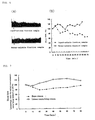
FIG. 1 is a schematic diagram of the process of measuring electrical activity in a cutaneous arterial sympathetic nerve used in the present invention. The diagram shows an example in which epidermal application to the tail is used as the administration method and an efferent branch of the cutaneous arterial sympathetic nerve of the tail is used as the site of the measurement of electrical activity. -
FIG. 2 (A) shows changes over time (the measured data) of the activity (electrical activity) in the efferent branch of the cutaneous arterial sympathetic nerve, when the base cream (upper column) or the urea-containing cream (lower column) was applied to the skin.FIG. 2 (B) is a graph of the measured data (Experimental Example 1), with the electrical activity in the cutaneous arterial sympathetic nerve being plotted on the ordinate, and the electrical activity before application of each cream being defined as 100%. -
FIG. 3 shows the water loss (%), when the base cream (-○-) or the urea-containing cream (-▲-) was applied to the back of hairless rats. The water loss (%) was expressed in terms of percentage, with the water loss before application of each cream being defined as 100% (the same applied hereinafter). -
FIG. 4 shows the results of the measurement of electrical activity in the cutaneous arterial sympathetic nerve, when a cream containing pulverized leaves of Litsea (20 to 50 mg/2 g) was applied.FIG. 4 (A) shows the measurement data, andFIG. 4 (B) is a graph of the measurement data, with the electrical activity of the cutaneous arterial sympathetic nerve being plotted on the ordinate, and the electrical activity before application of each cream being defined as 100% (Experimental Example 1). -
FIG. 5 shows the water loss (%) when the base cream (-●-) or the cream containing pulverized leaves of Litsea (-△-) (50 mg/2 g) was applied to the back of hairless rats (Experimental Example 1). -
FIG. 6 shows the results of the measurement of electrical activity in the cutaneous arterial sympathetic nerves, when the cream containing a water-soluble fraction of Litsea leaves or the cream containing a lipid-soluble fraction of Litsea leaves was applied.FIG. 6 (A) shows the measurement data, andFIG. 6 (B) shows a graph of the measurement data with the electrical activity of the cutaneous arterial sympathetic nerve being plotted on the ordinate, and the electrical activity before application of each cream being defined as 100% (Experimental Example 1). -
FIG. 7 shows changes in the skin blood flow, when 2 g each of the cream containing pulverized leaves of Litsea (50 mg/2 g) and the base cream (control) were applied to the skin. The blood flow (ml/min /100 g of the tissue) was plotted on the ordinate, and expressed in terms of percentage, with the initial measurement value being defined as 100%.
Claims (6)
- A skin moisturizer comprising pulverized leaves or a lipid-soluble fraction of a leaf extract of Litsea polyantha in an amount effective to reduce the sympathetic nerve activity of a cutaneous artery.
- A blood circulation promoter comprising pulverized leaves or a lipid-soluble fraction of a leaf extract of Litsea polyantha in an amount effective to reduce the sympathetic nerve activity of a cutaneous artery.
- An external preparation for the skin comprising pulverized leaves or a lipid-soluble fraction of a leaf extract of Litsea polyantha in an amount effective to reduce the sympathetic nerve activity of a cutaneous artery.
- An external preparation for the skin containing a skin moisturizer described in claim 1 or a blood circulation promoter described in claim 2 in an amount effective to reduce the sympathetic nerve activity of a cutaneous artery.
- Use of pulverized leaves or a lipid-soluble fraction of a leaf extract of Litsea polyantha in production of a skin moisturizer.
- Use of pulverized leaves or a lipid-soluble fraction of a leaf extract of Litsea polyantha in production of an external skin preparation for promoting blood flow in the face, head, limbs or the whole body.
Applications Claiming Priority (2)
| Application Number | Priority Date | Filing Date | Title |
|---|---|---|---|
| JP2007297334 | 2007-11-15 | ||
| PCT/JP2008/071064 WO2009064023A1 (en) | 2007-11-15 | 2008-11-13 | Skin moisturizer, blood circulation promoter, and external preparations for the skin containing the skin moisturizer and the blood circulation promoter |
Publications (4)
| Publication Number | Publication Date |
|---|---|
| EP2214634A1 EP2214634A1 (en) | 2010-08-11 |
| EP2214634A4 EP2214634A4 (en) | 2012-10-31 |
| EP2214634B1 true EP2214634B1 (en) | 2014-04-30 |
| EP2214634B8 EP2214634B8 (en) | 2015-06-03 |
Family
ID=40638861
Family Applications (1)
| Application Number | Title | Priority Date | Filing Date |
|---|---|---|---|
| EP08848952.1A Not-in-force EP2214634B8 (en) | 2007-11-15 | 2008-11-13 | External preparations for moisturizing the skin containing litsea polyantha |
Country Status (7)
| Country | Link |
|---|---|
| US (1) | US20100255123A1 (en) |
| EP (1) | EP2214634B8 (en) |
| JP (1) | JP5504389B2 (en) |
| AU (1) | AU2008321719B2 (en) |
| CA (1) | CA2706557A1 (en) |
| SG (1) | SG186003A1 (en) |
| WO (1) | WO2009064023A1 (en) |
Families Citing this family (9)
| Publication number | Priority date | Publication date | Assignee | Title |
|---|---|---|---|---|
| US8846592B2 (en) * | 2010-10-14 | 2014-09-30 | Conopco, Inc. | Stable liquid cleansing compositions comprising critical window of hydrogenated triglyceride oils |
| US8722604B2 (en) | 2010-10-14 | 2014-05-13 | Conopco, Inc. | Stable liquid cleansing compositions comprising critical window of partially hydrogenated triglyceride oil of defined iodine value |
| WO2013134543A1 (en) | 2012-03-08 | 2013-09-12 | Medtronic Ardian Luxembourg Sarl | Immune system neuromodulation and associated systems and methods |
| JP6067292B2 (en) * | 2012-03-19 | 2017-01-25 | サッポロビール株式会社 | Serotonin secretion promoter |
| DE102013204683A1 (en) * | 2013-03-18 | 2014-09-18 | Beiersdorf Ag | Hairstyling emulsion |
| US20190069949A1 (en) | 2014-12-03 | 2019-03-07 | Metavention, Inc. | Systems and methods for modulatng nerves or other tissue |
| US10524859B2 (en) | 2016-06-07 | 2020-01-07 | Metavention, Inc. | Therapeutic tissue modulation devices and methods |
| KR102331023B1 (en) * | 2020-03-06 | 2021-11-26 | 주식회사 더가든오브내추럴솔루션 | Extract of L. japonica juss leaves and chemical compounds therefrom and cosmetic composition consisting of the same for anti-oxidation and anti-anti-inflammation |
| JP7675979B2 (en) | 2020-04-28 | 2025-05-14 | 公益財団法人高知県牧野記念財団 | Lipolysis promoter, and skin external composition and bath agent composition containing the lipolysis promoter |
Family Cites Families (12)
| Publication number | Priority date | Publication date | Assignee | Title |
|---|---|---|---|---|
| US4883365A (en) * | 1987-05-07 | 1989-11-28 | Monzyk Bruce F | Device for measuring subsurface temperatures of liquid bodies, useful for determining optimum fishing locations |
| JPH0987197A (en) * | 1995-07-13 | 1997-03-31 | Shiseido Co Ltd | Tyrosinase inhibitor |
| JP2000044467A (en) * | 1998-07-31 | 2000-02-15 | Lion Corp | Blood flow enhancer |
| JP2000256142A (en) * | 1999-03-03 | 2000-09-19 | Shiseido Co Ltd | 5alpha-reductase-inhibiting composition |
| JP4229305B2 (en) * | 1999-07-16 | 2009-02-25 | 株式会社マンダム | Hair restorer composition |
| JP2001226218A (en) * | 2000-02-17 | 2001-08-21 | Ichimaru Pharcos Co Ltd | Cosmetic composition containing plant steam distilled water |
| FR2827169B1 (en) * | 2001-07-10 | 2004-07-09 | Fiabila | HARDENER FOR NAILS |
| JP2003327992A (en) * | 2002-05-08 | 2003-11-19 | Yoshiko Yamamoto | Essential oil composition and patch |
| US20050113268A1 (en) * | 2003-11-26 | 2005-05-26 | Landa Peter A. | Increased moisturization efficacy using hydroxyalkylurea |
| JP2006265141A (en) * | 2005-03-23 | 2006-10-05 | Shiseido Co Ltd | Skin-whitening agent |
| US20070243155A1 (en) * | 2006-04-18 | 2007-10-18 | Pierre Bottiglieri | Skin care method and products |
| WO2008143145A1 (en) * | 2007-05-15 | 2008-11-27 | Anbas Corporation | Skin-moisturizing effect evaluation method, and screening method for moisturizing substance by using the evaluation method |
-
2008
- 2008-11-13 EP EP08848952.1A patent/EP2214634B8/en not_active Not-in-force
- 2008-11-13 CA CA2706557A patent/CA2706557A1/en not_active Abandoned
- 2008-11-13 WO PCT/JP2008/071064 patent/WO2009064023A1/en not_active Ceased
- 2008-11-13 US US12/743,000 patent/US20100255123A1/en not_active Abandoned
- 2008-11-13 SG SG2012084109A patent/SG186003A1/en unknown
- 2008-11-13 AU AU2008321719A patent/AU2008321719B2/en not_active Ceased
- 2008-11-17 JP JP2008293685A patent/JP5504389B2/en active Active
Also Published As
| Publication number | Publication date |
|---|---|
| JP5504389B2 (en) | 2014-05-28 |
| CA2706557A1 (en) | 2009-05-22 |
| WO2009064023A8 (en) | 2009-07-16 |
| EP2214634A4 (en) | 2012-10-31 |
| SG186003A1 (en) | 2012-12-28 |
| AU2008321719A1 (en) | 2009-05-22 |
| EP2214634A1 (en) | 2010-08-11 |
| WO2009064023A1 (en) | 2009-05-22 |
| EP2214634B8 (en) | 2015-06-03 |
| US20100255123A1 (en) | 2010-10-07 |
| AU2008321719B2 (en) | 2014-06-05 |
| JP2009137951A (en) | 2009-06-25 |
Similar Documents
| Publication | Publication Date | Title |
|---|---|---|
| AU2008321719B2 (en) | Skin moisturizer, blood circulation promoter, and external preparations for the skin containing the skin moisturizer and the blood circulation promoter | |
| WO2021017846A1 (en) | Enhanced anti-aging cosmetic composition | |
| CN109106677B (en) | A kind of composition with whitening function and application thereof | |
| JP2010504299A (en) | Cosmetic use of active agents that stimulate matriptase expression | |
| JP2000191498A (en) | Collagen production facilitative agent and preparation for external use for skin | |
| WO2021017835A1 (en) | Enhanced whitening cosmetic composition | |
| CN112315843A (en) | Whitening and freckle removing essence and preparation method thereof | |
| WO2021017877A1 (en) | Whitening cosmetic composition | |
| JP2002173413A (en) | Cosmetics | |
| CN102123765A (en) | Skin lightening composition comprising CO2 extract | |
| CN110012660B (en) | Leaf extract of Elaeagnus umbellata plant for reducing pigmentation of skin and/or skin appendages | |
| JP2009209063A (en) | Skin preparation for external use, or skin cosmetic | |
| JP2007262012A (en) | Hyaluronic acid production promoter, skin external preparation containing the hyaluronic acid production promoter, cosmetic, quasi drug, chapped skin ameliorating agent, and wrinkle ameliorating agent | |
| CN105193694A (en) | Skin care product with whitening and freckle-removing functions | |
| KR101154772B1 (en) | Cosmetic composition containing the zizyphus jujuba fruit extract and walnut extract for moisturizing effect on the skin | |
| JP4201091B1 (en) | Moisturizer, anti-aging agent, antioxidant and external preparation for skin | |
| JPH107581A (en) | Arginase activity promoter | |
| JP2005029494A (en) | Melanocyte growth inhibitor and cosmetics containing the same | |
| KR102333132B1 (en) | Cosmetic Composition containing Frangipani Oil or Fermented Frangipani Oil | |
| JP2002284648A (en) | Hair restorer composition | |
| JP5171752B2 (en) | Topical skin preparation | |
| JPH11228438A (en) | Preparation for external use for skin | |
| JP5312733B2 (en) | Moisturizer, cell activator, antioxidant, protease activity promoter, anti-aging agent, whitening agent, anti-inflammatory agent, neutral fat accumulation inhibitor | |
| JP2006069939A (en) | Moisturizer, cell activator, whitening agent, and collagenase inhibitor | |
| JP7741060B2 (en) | Novel cosmetic uses of Epilobium angustifolium extract |
Legal Events
| Date | Code | Title | Description |
|---|---|---|---|
| PUAI | Public reference made under article 153(3) epc to a published international application that has entered the european phase |
Free format text: ORIGINAL CODE: 0009012 |
|
| 17P | Request for examination filed |
Effective date: 20100527 |
|
| AK | Designated contracting states |
Kind code of ref document: A1 Designated state(s): AT BE BG CH CY CZ DE DK EE ES FI FR GB GR HR HU IE IS IT LI LT LU LV MC MT NL NO PL PT RO SE SI SK TR |
|
| AX | Request for extension of the european patent |
Extension state: AL BA MK RS |
|
| DAX | Request for extension of the european patent (deleted) | ||
| A4 | Supplementary search report drawn up and despatched |
Effective date: 20121002 |
|
| RIC1 | Information provided on ipc code assigned before grant |
Ipc: A61Q 19/00 20060101ALI20120921BHEP Ipc: A61K 8/02 20060101ALI20120921BHEP Ipc: A61K 8/97 20060101AFI20120921BHEP Ipc: A61Q 19/10 20060101ALI20120921BHEP Ipc: A61P 17/16 20060101ALI20120921BHEP Ipc: A61P 9/00 20060101ALI20120921BHEP Ipc: A61K 8/06 20060101ALI20120921BHEP Ipc: A61Q 5/06 20060101ALI20120921BHEP Ipc: A61K 36/54 20060101ALI20120921BHEP Ipc: A61Q 5/00 20060101ALI20120921BHEP |
|
| 17Q | First examination report despatched |
Effective date: 20130531 |
|
| GRAP | Despatch of communication of intention to grant a patent |
Free format text: ORIGINAL CODE: EPIDOSNIGR1 |
|
| INTG | Intention to grant announced |
Effective date: 20131111 |
|
| GRAS | Grant fee paid |
Free format text: ORIGINAL CODE: EPIDOSNIGR3 |
|
| GRAA | (expected) grant |
Free format text: ORIGINAL CODE: 0009210 |
|
| AK | Designated contracting states |
Kind code of ref document: B1 Designated state(s): AT BE BG CH CY CZ DE DK EE ES FI FR GB GR HR HU IE IS IT LI LT LU LV MC MT NL NO PL PT RO SE SI SK TR |
|
| REG | Reference to a national code |
Ref country code: GB Ref legal event code: FG4D Ref country code: CH Ref legal event code: EP |
|
| REG | Reference to a national code |
Ref country code: AT Ref legal event code: REF Ref document number: 664610 Country of ref document: AT Kind code of ref document: T Effective date: 20140515 |
|
| REG | Reference to a national code |
Ref country code: IE Ref legal event code: FG4D |
|
| REG | Reference to a national code |
Ref country code: NL Ref legal event code: T3 |
|
| REG | Reference to a national code |
Ref country code: DE Ref legal event code: R096 Ref document number: 602008031920 Country of ref document: DE Effective date: 20140612 |
|
| REG | Reference to a national code |
Ref country code: CH Ref legal event code: NV Representative=s name: SERVOPATENT GMBH, CH |
|
| REG | Reference to a national code |
Ref country code: GB Ref legal event code: S117 Free format text: REQUEST FILED; REQUEST FOR CORRECTION UNDER SECTION 117 FILED ON 21 JULY 2014 |
|
| REG | Reference to a national code |
Ref country code: LT Ref legal event code: MG4D |
|
| REG | Reference to a national code |
Ref country code: GB Ref legal event code: S117 Free format text: CORRECTIONS ALLOWED; REQUEST FOR CORRECTION UNDER SECTION 117 FILED ON 21 JULY 2014 ALLOWED ON 17 SEPTEMBER 2014. |
|
| PG25 | Lapsed in a contracting state [announced via postgrant information from national office to epo] |
Ref country code: CY Free format text: LAPSE BECAUSE OF FAILURE TO SUBMIT A TRANSLATION OF THE DESCRIPTION OR TO PAY THE FEE WITHIN THE PRESCRIBED TIME-LIMIT Effective date: 20140430 Ref country code: NO Free format text: LAPSE BECAUSE OF FAILURE TO SUBMIT A TRANSLATION OF THE DESCRIPTION OR TO PAY THE FEE WITHIN THE PRESCRIBED TIME-LIMIT Effective date: 20140730 Ref country code: LT Free format text: LAPSE BECAUSE OF FAILURE TO SUBMIT A TRANSLATION OF THE DESCRIPTION OR TO PAY THE FEE WITHIN THE PRESCRIBED TIME-LIMIT Effective date: 20140430 Ref country code: IS Free format text: LAPSE BECAUSE OF FAILURE TO SUBMIT A TRANSLATION OF THE DESCRIPTION OR TO PAY THE FEE WITHIN THE PRESCRIBED TIME-LIMIT Effective date: 20140830 Ref country code: BG Free format text: LAPSE BECAUSE OF FAILURE TO SUBMIT A TRANSLATION OF THE DESCRIPTION OR TO PAY THE FEE WITHIN THE PRESCRIBED TIME-LIMIT Effective date: 20140730 Ref country code: FI Free format text: LAPSE BECAUSE OF FAILURE TO SUBMIT A TRANSLATION OF THE DESCRIPTION OR TO PAY THE FEE WITHIN THE PRESCRIBED TIME-LIMIT Effective date: 20140430 Ref country code: GR Free format text: LAPSE BECAUSE OF FAILURE TO SUBMIT A TRANSLATION OF THE DESCRIPTION OR TO PAY THE FEE WITHIN THE PRESCRIBED TIME-LIMIT Effective date: 20140731 |
|
| PG25 | Lapsed in a contracting state [announced via postgrant information from national office to epo] |
Ref country code: HR Free format text: LAPSE BECAUSE OF FAILURE TO SUBMIT A TRANSLATION OF THE DESCRIPTION OR TO PAY THE FEE WITHIN THE PRESCRIBED TIME-LIMIT Effective date: 20140430 Ref country code: LV Free format text: LAPSE BECAUSE OF FAILURE TO SUBMIT A TRANSLATION OF THE DESCRIPTION OR TO PAY THE FEE WITHIN THE PRESCRIBED TIME-LIMIT Effective date: 20140430 Ref country code: PL Free format text: LAPSE BECAUSE OF FAILURE TO SUBMIT A TRANSLATION OF THE DESCRIPTION OR TO PAY THE FEE WITHIN THE PRESCRIBED TIME-LIMIT Effective date: 20140430 Ref country code: ES Free format text: LAPSE BECAUSE OF FAILURE TO SUBMIT A TRANSLATION OF THE DESCRIPTION OR TO PAY THE FEE WITHIN THE PRESCRIBED TIME-LIMIT Effective date: 20140430 Ref country code: SE Free format text: LAPSE BECAUSE OF FAILURE TO SUBMIT A TRANSLATION OF THE DESCRIPTION OR TO PAY THE FEE WITHIN THE PRESCRIBED TIME-LIMIT Effective date: 20140430 |
|
| PG25 | Lapsed in a contracting state [announced via postgrant information from national office to epo] |
Ref country code: PT Free format text: LAPSE BECAUSE OF FAILURE TO SUBMIT A TRANSLATION OF THE DESCRIPTION OR TO PAY THE FEE WITHIN THE PRESCRIBED TIME-LIMIT Effective date: 20140901 |
|
| PGFP | Annual fee paid to national office [announced via postgrant information from national office to epo] |
Ref country code: LU Payment date: 20141121 Year of fee payment: 7 |
|
| PG25 | Lapsed in a contracting state [announced via postgrant information from national office to epo] |
Ref country code: SK Free format text: LAPSE BECAUSE OF FAILURE TO SUBMIT A TRANSLATION OF THE DESCRIPTION OR TO PAY THE FEE WITHIN THE PRESCRIBED TIME-LIMIT Effective date: 20140430 Ref country code: DK Free format text: LAPSE BECAUSE OF FAILURE TO SUBMIT A TRANSLATION OF THE DESCRIPTION OR TO PAY THE FEE WITHIN THE PRESCRIBED TIME-LIMIT Effective date: 20140430 Ref country code: RO Free format text: LAPSE BECAUSE OF FAILURE TO SUBMIT A TRANSLATION OF THE DESCRIPTION OR TO PAY THE FEE WITHIN THE PRESCRIBED TIME-LIMIT Effective date: 20140430 Ref country code: EE Free format text: LAPSE BECAUSE OF FAILURE TO SUBMIT A TRANSLATION OF THE DESCRIPTION OR TO PAY THE FEE WITHIN THE PRESCRIBED TIME-LIMIT Effective date: 20140430 Ref country code: CZ Free format text: LAPSE BECAUSE OF FAILURE TO SUBMIT A TRANSLATION OF THE DESCRIPTION OR TO PAY THE FEE WITHIN THE PRESCRIBED TIME-LIMIT Effective date: 20140430 |
|
| PGFP | Annual fee paid to national office [announced via postgrant information from national office to epo] |
Ref country code: DE Payment date: 20141126 Year of fee payment: 7 Ref country code: GB Payment date: 20141203 Year of fee payment: 7 Ref country code: CH Payment date: 20141113 Year of fee payment: 7 Ref country code: IE Payment date: 20141126 Year of fee payment: 7 |
|
| REG | Reference to a national code |
Ref country code: DE Ref legal event code: R097 Ref document number: 602008031920 Country of ref document: DE |
|
| PGFP | Annual fee paid to national office [announced via postgrant information from national office to epo] |
Ref country code: AT Payment date: 20141127 Year of fee payment: 7 Ref country code: NL Payment date: 20141129 Year of fee payment: 7 Ref country code: FR Payment date: 20141128 Year of fee payment: 7 |
|
| PLBE | No opposition filed within time limit |
Free format text: ORIGINAL CODE: 0009261 |
|
| STAA | Information on the status of an ep patent application or granted ep patent |
Free format text: STATUS: NO OPPOSITION FILED WITHIN TIME LIMIT |
|
| PGFP | Annual fee paid to national office [announced via postgrant information from national office to epo] |
Ref country code: IT Payment date: 20141128 Year of fee payment: 7 |
|
| 26N | No opposition filed |
Effective date: 20150202 |
|
| REG | Reference to a national code |
Ref country code: DE Ref legal event code: R097 Ref document number: 602008031920 Country of ref document: DE Effective date: 20150202 |
|
| PG25 | Lapsed in a contracting state [announced via postgrant information from national office to epo] |
Ref country code: MC Free format text: LAPSE BECAUSE OF FAILURE TO SUBMIT A TRANSLATION OF THE DESCRIPTION OR TO PAY THE FEE WITHIN THE PRESCRIBED TIME-LIMIT Effective date: 20140430 |
|
| PGFP | Annual fee paid to national office [announced via postgrant information from national office to epo] |
Ref country code: BE Payment date: 20141127 Year of fee payment: 7 |
|
| PG25 | Lapsed in a contracting state [announced via postgrant information from national office to epo] |
Ref country code: SI Free format text: LAPSE BECAUSE OF FAILURE TO SUBMIT A TRANSLATION OF THE DESCRIPTION OR TO PAY THE FEE WITHIN THE PRESCRIBED TIME-LIMIT Effective date: 20140430 |
|
| REG | Reference to a national code |
Ref country code: DE Ref legal event code: R119 Ref document number: 602008031920 Country of ref document: DE |
|
| PG25 | Lapsed in a contracting state [announced via postgrant information from national office to epo] |
Ref country code: LU Free format text: LAPSE BECAUSE OF NON-PAYMENT OF DUE FEES Effective date: 20151113 |
|
| REG | Reference to a national code |
Ref country code: CH Ref legal event code: PL |
|
| REG | Reference to a national code |
Ref country code: AT Ref legal event code: MM01 Ref document number: 664610 Country of ref document: AT Kind code of ref document: T Effective date: 20151113 |
|
| GBPC | Gb: european patent ceased through non-payment of renewal fee |
Effective date: 20151113 |
|
| PG25 | Lapsed in a contracting state [announced via postgrant information from national office to epo] |
Ref country code: TR Free format text: LAPSE BECAUSE OF FAILURE TO SUBMIT A TRANSLATION OF THE DESCRIPTION OR TO PAY THE FEE WITHIN THE PRESCRIBED TIME-LIMIT Effective date: 20140430 Ref country code: MT Free format text: LAPSE BECAUSE OF FAILURE TO SUBMIT A TRANSLATION OF THE DESCRIPTION OR TO PAY THE FEE WITHIN THE PRESCRIBED TIME-LIMIT Effective date: 20140430 Ref country code: HU Free format text: LAPSE BECAUSE OF FAILURE TO SUBMIT A TRANSLATION OF THE DESCRIPTION OR TO PAY THE FEE WITHIN THE PRESCRIBED TIME-LIMIT; INVALID AB INITIO Effective date: 20081113 Ref country code: IT Free format text: LAPSE BECAUSE OF NON-PAYMENT OF DUE FEES Effective date: 20151113 Ref country code: LI Free format text: LAPSE BECAUSE OF NON-PAYMENT OF DUE FEES Effective date: 20151130 Ref country code: CH Free format text: LAPSE BECAUSE OF NON-PAYMENT OF DUE FEES Effective date: 20151130 |
|
| REG | Reference to a national code |
Ref country code: NL Ref legal event code: MM Effective date: 20151201 |
|
| REG | Reference to a national code |
Ref country code: IE Ref legal event code: MM4A |
|
| REG | Reference to a national code |
Ref country code: FR Ref legal event code: ST Effective date: 20160729 |
|
| PG25 | Lapsed in a contracting state [announced via postgrant information from national office to epo] |
Ref country code: AT Free format text: LAPSE BECAUSE OF NON-PAYMENT OF DUE FEES Effective date: 20151113 |
|
| PG25 | Lapsed in a contracting state [announced via postgrant information from national office to epo] |
Ref country code: NL Free format text: LAPSE BECAUSE OF NON-PAYMENT OF DUE FEES Effective date: 20151201 |
|
| PG25 | Lapsed in a contracting state [announced via postgrant information from national office to epo] |
Ref country code: IE Free format text: LAPSE BECAUSE OF NON-PAYMENT OF DUE FEES Effective date: 20151113 Ref country code: DE Free format text: LAPSE BECAUSE OF NON-PAYMENT OF DUE FEES Effective date: 20160601 Ref country code: GB Free format text: LAPSE BECAUSE OF NON-PAYMENT OF DUE FEES Effective date: 20151113 |
|
| PG25 | Lapsed in a contracting state [announced via postgrant information from national office to epo] |
Ref country code: FR Free format text: LAPSE BECAUSE OF NON-PAYMENT OF DUE FEES Effective date: 20151130 |
|
| PG25 | Lapsed in a contracting state [announced via postgrant information from national office to epo] |
Ref country code: BE Free format text: LAPSE BECAUSE OF NON-PAYMENT OF DUE FEES Effective date: 20151130 |