EP2210106B1 - Verwendung von nanostrukturierten Oberflächen und Verfahren zum Anreichern oder Isolieren von zellulären Subpopulationen - Google Patents
Verwendung von nanostrukturierten Oberflächen und Verfahren zum Anreichern oder Isolieren von zellulären Subpopulationen Download PDFInfo
- Publication number
- EP2210106B1 EP2210106B1 EP08849463A EP08849463A EP2210106B1 EP 2210106 B1 EP2210106 B1 EP 2210106B1 EP 08849463 A EP08849463 A EP 08849463A EP 08849463 A EP08849463 A EP 08849463A EP 2210106 B1 EP2210106 B1 EP 2210106B1
- Authority
- EP
- European Patent Office
- Prior art keywords
- cells
- cellular subpopulations
- plasma
- enriching
- subpopulations
- Prior art date
- Legal status (The legal status is an assumption and is not a legal conclusion. Google has not performed a legal analysis and makes no representation as to the accuracy of the status listed.)
- Not-in-force
Links
Images


Classifications
-
- G—PHYSICS
- G01—MEASURING; TESTING
- G01N—INVESTIGATING OR ANALYSING MATERIALS BY DETERMINING THEIR CHEMICAL OR PHYSICAL PROPERTIES
- G01N33/00—Investigating or analysing materials by specific methods not covered by groups G01N1/00 - G01N31/00
- G01N33/48—Biological material, e.g. blood, urine; Haemocytometers
- G01N33/50—Chemical analysis of biological material, e.g. blood, urine; Testing involving biospecific ligand binding methods; Immunological testing
- G01N33/53—Immunoassay; Biospecific binding assay; Materials therefor
- G01N33/575—Immunoassay; Biospecific binding assay; Materials therefor for cancer
- G01N33/57505—Immunoassay; Biospecific binding assay; Materials therefor for cancer of the blood, e.g. leukaemia
-
- B—PERFORMING OPERATIONS; TRANSPORTING
- B82—NANOTECHNOLOGY
- B82Y—SPECIFIC USES OR APPLICATIONS OF NANOSTRUCTURES; MEASUREMENT OR ANALYSIS OF NANOSTRUCTURES; MANUFACTURE OR TREATMENT OF NANOSTRUCTURES
- B82Y30/00—Nanotechnology for materials or surface science, e.g. nanocomposites
-
- G—PHYSICS
- G01—MEASURING; TESTING
- G01N—INVESTIGATING OR ANALYSING MATERIALS BY DETERMINING THEIR CHEMICAL OR PHYSICAL PROPERTIES
- G01N33/00—Investigating or analysing materials by specific methods not covered by groups G01N1/00 - G01N31/00
- G01N33/48—Biological material, e.g. blood, urine; Haemocytometers
- G01N33/50—Chemical analysis of biological material, e.g. blood, urine; Testing involving biospecific ligand binding methods; Immunological testing
- G01N33/53—Immunoassay; Biospecific binding assay; Materials therefor
- G01N33/569—Immunoassay; Biospecific binding assay; Materials therefor for microorganisms, e.g. protozoa, bacteria, viruses
- G01N33/56966—Animal cells
Definitions
- the invention relates to the use of nanostructured surfaces. It also relates to a method for enriching or isolating cellular subpopulations.
- fluorescent antibodies can also be used in conjunction with a fluorescence-associated cell sorter (FACS).
- FACS fluorescence-associated cell sorter
- the object of the invention is to provide a simple, versatile and specific method for enriching or isolating cellular subpopulations from a complex mixture.
- nanostructured surfaces for the isolation and enrichment of cellular subpopulations from a complex mixture is known, for example, from the document " Label-Free, Microfluidic Separation of Human Breast Carcinoma and Epithelial Cells by Adhesion Difference "(Kwon et al., Transducers and Eurosensors 2007 , conference proceedings). Enrichment of the cells is achieved using a nanostructured surface in a microfluidic system with the surface consisting of 50 nm columns of PDMS on a glass surface.
- such nanostructured surfaces consist of one-dimensional nanowires, as described in US Pat DE 10 2006 013 484 A1 are described.
- the nanowires consist of a metallic core and are encased with a ceramic shell and are particularly suitable for enriching or isolating cellular subpopulations from a complex mixture.
- the cellular subpopulations are certain human or veterinary cells and that the complex mixture is plasma.
- An embodiment of the invention is that the plasma is human plasma.
- a preferred embodiment of the invention is that the selectively adsorbed blood cells are not intrinsically adherent cells, in particular Jurkat cells.
- non-intrinsically adherent cells those cells that normally live in suspension. Culturing such cells on a substrate is usually very problematic.
- Also within the scope of the invention is a method of enriching or isolating cellular subpopulations whereby the cellular subpopulations accumulate on nanostructured surfaces.
- the nanostructured surfaces are constructed of one-dimensional nanowires, consisting of a metallic core and coated with a ceramic shell, as in the DE 10 2006 013 484 A1 are described. On these structures, cells adhere selectively, thus accumulating.
- the cellular subpopulations are certain blood cells and that the complex mixture is plasma.
- Belonging to the invention is that the plasma is human plasma.
- the cellular subpopulations are not intrinsically adherent cells, in particular Jurkat cells.
- Round watch glasses (Menzel glasses, Germany, No. CB00120RA1, 12 mm diameter, 0.13-0.16 mm thickness, Lot No. 4710486) were used.
- Watch glasses coated with sterile poly-lysine (BD Biosciences, 352085) and watch glasses not coated therewith are used, the former being only washed. In addition, cells without cultured glasses were cultured directly in the 24-plate cell culture plate.
- the cells were placed in 1 ml of serum containing cell culture medium at a suitable density (typically 4-8 x 10 4 cells per well) and cultured at 37 ° C with 5% CO 2 and 100% humidity.
- a suitable density typically 4-8 x 10 4 cells per well
- the cells were cultured for up to 72 h and inspected daily using a light microscope. Subsequently, non-adherent cells were washed away by rinsing the wells and watchglasses twice with 1000 ⁇ l PBS. The remaining adherent cells were fixed by adding 500 ⁇ l of 100% ethanol (5 min, RT). After removing the ethanol, the nuclei were removed by adding 500 ⁇ l Hoechst 33342 (Invitrogen, 0.1% in PBS). Microscopic images were taken using a fluorescence microscope.
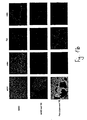
- Fluorescence microscopy images according to Fig. 1a and 1b show that the intensity of the fluorescence is slightly lower in the case of the Al / AlO x coated watch glasses, since the coating absorbs light. Nevertheless, it is obvious that non-intrinsically adherent cells, such as Jurkat cells, accumulate significantly better on the Al / AlO x -coated watch glasses than on the other substrates and, as found in further experiments, over longer periods of time (more than 72 hours) ) survive fully functional. In view of the fact that these cells can also be removed live (and thus can be further cultivated or processed), a cyclic accumulation of even the smallest amounts of such cells on this substrate can take place. In addition, the cell distribution uniform and not too dense, so that the cell morphology in the context of, for example, a microscopic examination is well observable, whereby a staging is possible.
- the EDX recording ( Fig. 2 ) of the nanocrystalline surface of the invention shows that it contains no significant amounts of carbon and thus is to be regarded as an inorganic substrate.
Landscapes
- Health & Medical Sciences (AREA)
- Life Sciences & Earth Sciences (AREA)
- Engineering & Computer Science (AREA)
- Chemical & Material Sciences (AREA)
- Immunology (AREA)
- Hematology (AREA)
- Molecular Biology (AREA)
- Biomedical Technology (AREA)
- Urology & Nephrology (AREA)
- Physics & Mathematics (AREA)
- Cell Biology (AREA)
- General Physics & Mathematics (AREA)
- Nanotechnology (AREA)
- Food Science & Technology (AREA)
- Medicinal Chemistry (AREA)
- Biotechnology (AREA)
- Analytical Chemistry (AREA)
- Biochemistry (AREA)
- General Health & Medical Sciences (AREA)
- Pathology (AREA)
- Microbiology (AREA)
- Composite Materials (AREA)
- Materials Engineering (AREA)
- Crystallography & Structural Chemistry (AREA)
- Condensed Matter Physics & Semiconductors (AREA)
- Zoology (AREA)
- Tropical Medicine & Parasitology (AREA)
- Virology (AREA)
- Apparatus Associated With Microorganisms And Enzymes (AREA)
- Micro-Organisms Or Cultivation Processes Thereof (AREA)
Description
- Die Erfindung betrifft die Verwendung von nanostrukturierten Oberflächen. Sie betrifft ebenfalls ein Verfahren zum Anreichern oder Isolieren von zellulären Subpopulationen.
- Das Anreichern oder Isolieren von zellulären Subpopulationen aus einer komplexen Mischung (z.B. T-Zellen aus Blut) ist ein bedeutender Schritt bei der voranalytischen Probenzubereitung. Es erfolgt derzeit unter Verwendung von Antikörpern, die gegen ein bestimmtes Oberflächenprotein gerichtet sind und magnetischen Partikeln, um die gebundenen Zellen aus der Probe zu entefernen, was jedoch mit folgenden Nachteilen verbunden ist:
- Die interessierenden Zellen müssen ein spezifisches Oberflächenprotein ausdrücken.
- Ein Antikörper gegen dieses Protein muß zur Verfügung stehen.
- Die Aufbewahrung der Antikörper ist problematisch.
- Antikörper sind teuer.
- Beim Binden des Antikörpers an das Oberflächenprotein kann die Zellphysiologie verändert werden.
- Statt der magnetpartikelbasierten Isolierung können auch fluoreszierende Antikörper in Verbindung mit einem FACS (fluorescence associated cell sorter, fluoreszenzbasierter Zellsortierer) verwendet werden. Auch hier stellt sich das Problem der Kosten und zudem das der komplexen apparativen Mittel.
- Weiter können physikalische Parameter, wie beispielsweise die Zelldichte (HEXAL Oncoquick, http://wwww.hexal-gentech.com/products/man e.pdf) oder die Zellgröße ( Am. J. Pathol, 2000, (1), 156, 5 7-63 , Isolation by Size of Epithelial Tumor Cells, Giovanna Vona et. al.) verwendet werden. Da jedoch nicht jeder Zelltyp charakteristische physikalische Parameter aufweist, ist dies nur möglich, wenn die interessierenden Zellen charakteristische physikalische Parameter aufweisen.
- Aufgabe der Erfindung ist es, ein einfaches, vielseitig verwendbares und spezifisches Verfahren zum Anreichern oder Isolieren von zellulären Subpopulationen aus einer komplexen Mischung zu schaffen.
- Die Verwendung von nanostrukturierten Oberflächen zur Isolierung und Anreicherung von zellulären Subpopulationen aus einer komplexen Mischung ist beispielsweise aus der Druckschrift " Label-Free, Microfluidic Separation of Human Breast Carcinoma and Epithelial Cells by Adhesion Difference" (Kwon et al., Transducers and Eurosensors 2007, conference proceedings) bekannt. Die Anreicherung der Zellen wird mit Hilfe einer nanostrukturierten Oberfläche in einem mikrofluiden System erzielt, wobei die Oberfläche aus 50 nm großen Säulen aus PDMS auf einer Glasoberfläche besteht.
- Es hat sich im Rahmen der Erfindung überraschend gezeigt, dass auf Oberflächen bestehend aus eindimensionaler Nanodrähter ist beispielsweise bestimmte zelluläre Subpopulationen selektiv und in bisher nicht bekannter Effizienz deutlich besser als andere Substrate anhaften.
- In einer besonders bevorzugten Ausführungsform bestehen solche nanostrukturierten Oberflächen aus eindimensionalen Nanodrähten, wie sie in der
DE 10 2006 013 484 A1 beschrieben sind. Hierbei bestehen die Nanodrähte aus einem metallischen Kern und sind ummantelt mit einer keramischen Hülle und eignen sich in besonderer Weise zum Anreichern oder Isolieren von zellulären Subpopulationen aus einer komplexen Mischung erreicht. - Es liegt im Rahmen der Erfindung, dass die verzweigten Nanostrukturen eindimensionale Kompositstrukturen mit zwei Dimensionen im Submikrometerbereich sind und diese Kompositstrukturen aus dem Kern eines Materials, insbesondere Metall, und einer Hülle eines anderen Materials, insbesondere aus Keramik, aufgebaut sind und durch thermolytische Zersetzung von Verbindungen der allgemeinen Struktur El(OR)H2,
- in der El die Elemente Al, Ga, In und Tl bedeutet und
- R für ein Alkyl (C3-C10) oder ein Cycloalkyl (C5-C8) steht,
- Es liegt im Rahmen der Erfindung, dass die zellulären Subpopulationen bestimmte humane oder veterinäre Zellen sind und dass die komplexe Mischung Plasma ist.
- Eine Ausbildung der Erfindung besteht darin, dass das Plasma Humanplasma ist.
- Eine bevorzugte Ausbildung der Erfindung besteht darin, dass die selektiv adsorbierten Blutzellen nicht intrinsisch anhaftende Zellen, insbesondere Jurkatzellen sind.
- Unter nicht intrinsich anhaftenden Zellen werden solche Zellen verstanden, die normalerweise in einer Suspension leben. Das Kultivieren solcher Zellen auf einem Substrat ist in der Regel sehr problematisch.
- Im Rahmen der Erfindung liegt auch ein Verfahren zum Anreichern oder Isolieren von zellulären Subpopulationen, wobei die zellulären Subpopulationen sich an nanostrukturierten Oberflächen anreichern.
- In einer besonders bevorzugten Ausführungsform sind die nanostrukturierten Oberflächen aus eindimensionalen Nanodrähten aufgebaut, bestehend aus einem metallischen Kern und ummantelt mit einer keramischen Hülle, wie sie in der
DE 10 2006 013 484 A1 beschrieben sind. Auf diesen Strukturen adhärieren Zellen selektiv, reichern sich somit an. - Es liegt im Rahmen der Erfindung, dass die zellulären Subpopulationen bestimmte Blutzellen sind und dass die komplexe Mischung Plasma ist.
- Zur Erfindung gehörig ist, dass das Plasma Humanplasma ist.
- Schließlich ist es erfindungsgemäß vorgesehen, dass die zellulären Subpopulationen nicht intrinsisch anhaftende Zellen, insbesondere Jurkatzellen sind.
- Nachfolgend wird die Erfindung näher anhand von Versuchen in nicht einschränkender Weise erläutert. Die Versuchsergebnisse sind in den Figuren dargestellt.
- Es zeigen
- Fig. 1a und Fig. lb
- Fluoreszenzmikroskopie-Aufnahmen von verschiedenen Zellkulturen auf verschiedenen Substraten sowie nach Trypsination,
- Fig. 2
- eine EDX-Aufnahme der nanokristallinen Oberfläche gemäß der Erfindung.
- Beobachtet wurde das Wachstum von eukaryotischen Zellen auf Uhrgläsern, die mit eindimensionalen Kompositstrukturen im Submikrometerbereich beschichtet sind und die einen Kern eines Materials und eine Hülle eines anderen Materials aufweisen
- Es wurden runde Uhrgläser (Menzel-Gläser, Deutschland, No. CB00120RA1, 12 mm Durchmesser, 0,13-0,16 mm Stärke, Los Nr. 4710486) verwendet.
- Ein Teil dieser Uhrgläser wurden mit einer eindimensionalen Kompositstruktur gemäß der
DE 10 2006 013 484 A1 auf Al/Al2O3-Basis beschichtet. - Um Verunreinigungen zu entfernen, wurden sowohl die beschichteten als auch die nicht beschichteten Uhrgläser wie folgt behandelt:
- Die Uhrgläser werden (gegebenenfalls mit der beschichteten Seite nach oben) in die Vertiefungen einer Zellkulturplatte mit 24 Plätzen eingebracht
- Es werden 500 µl 70%iger Ethanol zugegeben und 5 min in den Uhrgläsern belassen
- Es wird 3 mal mit je 500 µl sterilem Wasser gespült
- Es wird 3 mal mit je 500 µl sterilem PBS (phosphatgepufferter Salzlösung) gespült
- Es werden mit sterilem Poly-Lysin (BD Biosciences, 352085) beschichtete Uhrgläser und nicht hiermit beschichtete Uhrgläser verwendet, wobei erstere nur gewaschen wurden. Zusätzlich wurden Zellen ohne Uhrgläser direkt in der 24-plätzigen Zellkulturplatte kultiviert.
- Die Zellen wurden in 1 ml Serum, das Zellkulturmedium enthält, in geeigneter Dichte (typischerweise 4-8 • 104 Zellen pro Vertiefung) aufgegeben und bei 37°C mit 5% CO2 und 100% Luftfeuchtigkeit kultiviert.
- Die Zellen wurden bis zu 72 h kultiviert und täglich mittels eines Lichtmikroskops inspiziert. Anschließend wurden nichtanhaftende Zellen weggewaschen, indem die Vertiefungen und Uhrgläser zweimal mit 1000 µl PBS gespült wurden. Die verbleibenden anhaftenden Zellen wurden durch Zugabe von 500 µl 100%igem Ethanol (5 min, RT) fixiert. Nach dem Entfernen des Ethanols wurden die Zellkerne durch Zugabe von 500 µl Hoechst 33342 (Invitrogen, 0,1% in PBS) gefärbt. Mikroskopische Aufnahmen wurden unter Verwendung eines Fluoreszenzmikroskops gefertigt.
- Es wurde die folgende Versuchsreihe durchgeführt:
- In diesem Versuch wurden (07D.0031 pp38; CK) wurden Jurkat- (humane T-Zell Linie in Suspension), Raji Zellen (humane Macrophagenzellinie in Suspension), K562- (humane B-Zell Linie in Suspension) und MCF7-Zellen (adhärente humane Brustkrebszelllinie) auf Uhrgläsern aus Kunststoff (Bezeichnung in Fig. la: Plastik), auf mit Poly-L-Lysin beschichteten Uhrgläsern (Bezeichnung in Fig. la und 1b: Poly-L-Lysin), auf Uhrgläsern aus Glas sowie auf mit Al/Al2O3-beschichteten (Bezeichnung in
Fig. 1b : Al/AlO) Uhrgläsern und kultiviert. - Nach 24h wurden die Zellen abgewaschen und die Zellkerne gefärbt, ohne dass die Zellen mit Ethanol fixiert wurden. Mikroskopische Aufnahmen wurden vorgenommen und die Zellen wurden durch Zugabe einer Trypsin/EDTA-Lösung (Bezeichnung in
Fig. 1b : nach T/E) (Invitrogen) gelöst. Nach Waschen mit PBS wurden die verbleibenden Zellen erneut photographiert. In diesem Versuch wurde die erhöhte Haftung von Jurkatzellen (als Beispiel nicht intrinsich adhärenter Zellen) auf der Al/AlOx-Beschichtung beobachtet. Die anhaftenden Zellen konnten lebend von den Beschichtung durch Trypsination abgelöst werden, was auf eine proteingestützten Haftungsmechanismus hinweist. - Die Fluoreszenzmikroskopie-Aufnahmen gemäß den
Fig. 1a und1b zeigen, daß die Intensität der Fluoreszenz bei den mit Al/AlOx beschichteten Uhrgläsern etwas geringer ist, da die Beschichtung Licht absorbiert. Dennoch ist es offensichtlich, daß auch nicht intrinsisch anhaftende Zellen, wie Jurkatzellen, sich auf den mit Al/AlOx beschichteten Uhrgläsern deutlich besser als auf den anderen Substraten anreichern und, wie in weiteren Versuchen festgestellt, auch über längere Zeiträume (mehr als 72 h) voll funktionsfähig überleben. Aufgnmd der Tatsache, daß sich diese Zellen auch lebend ablösen lassen (und somit weiter kultiviert bzw. verarbeitet werden können), kann eine zyklische Anreicherung auch geringster Mengen solcher Zellen auf diesem Substrat erfolgen. Darüber hinaus ist die Zellverteilung gleichmäßig und nicht zu dicht, so daß die Zellmorphologie im Rahmen beispielsweise einer mikroskopischen Untersuchung gut beobachtbar ist, womit eine Stadienbestimmung möglich ist. - Das Anhaften und das Wachstum von intrinsisch adhärenten Zelllinien wie MCF7 wird durch die Al/AlOx-Beschichtung nicht gestört.
- Die EDX-Aufnahme (
Fig. 2 ) der erfindungsgemäßen nanokristallinen Oberfläche zeigt, daß diese keine signifikanten Mengen an Kohlenstoff enthält und somit als anorganisches Substrat anzusehen ist.
Claims (6)
- Verwendung von nanostrukturierten Oberflächen zur Isolierung und/oder Anreicherung von zellulären Subpopulationen aus einer komplexen Mischung, wobei die zellulären Subpopulationen nicht intrinsisch anhaftende Zellen sind, wobei die nanostrukturierten Oberflächen aus eindimensionalen Nanodrähten aufgebaut sind, bestehend aus einem metallischen Kern und ummantelt mit einer keramischen Hülle, wobei der Nanodraht zwei Dimensionen im Submikrometerbereich besitzt und durch thermolytische Zersetzung von Verbindungen der allgemeinen Struktur El(OR)H2, in der El für die Elemente Al, Ga, In und Tl und R für ein Alkyl (C3-C10) oder ein Cycloalkyl (C5-C8) steht, hergestellt ist.
- Verwendung gemäß Anspruch 1, dadurch gekennzeichnet, daß die zellulären Subpopulationen bestimmte Blutzellen sind und dass die komplexe Mischung Plasma ist.
- Verwendung gemäß Anspruch 2, dadurch gekennzeichnet, dass das Plasma Humanplasma ist.
- Verfahren zum Anreichern oder Isolieren von zellulären Subpopulationen, dadurch gekennzeichnet, daß die zellulären Subpopulationen sich an nanostrukturierten Oberflächen anreichern, wobei die zellulären Subpopulationen nicht intrinsisch anhaftende Zellen sind und wobei die nanostrukturierten Oberflächen aus eindimensionalen Nanodrähten aufgebaut sind, bestehend aus einem metallischen Kern und ummantelt mit einer keramischen Hülle, wobei der Nanodraht zwei Dimensionen im Submikrometerbereich besitzt und durch thermolytische Zersetzung von Verbindungen der allgemeinen Struktur El(OR)H2, in der El für die Elemente Al, Ga, In und Tl und R für ein Alkyl (C3-C10) oder ein Cycloalkyl (C5-C8) steht, hergestellt werden.
- Verfahren gemäß Anspruch 4, dadurch gekennzeichnet, dass die zellulären Subpopulationen bestimmte Blutzellen sind und dass die komplexe Mischung Plasma ist.
- Verfahren gemäß Anspruch 5, dadurch gekennzeichnet, dass das Plasma Humanplasma ist.
Applications Claiming Priority (2)
| Application Number | Priority Date | Filing Date | Title |
|---|---|---|---|
| DE102007054691A DE102007054691A1 (de) | 2007-11-14 | 2007-11-14 | Verwendung von nanostrukturierten Oberflächen und Verfahren zum Anreichern oder Isolieren von zellulären Subpopulationen |
| PCT/DE2008/001825 WO2009062470A1 (de) | 2007-11-14 | 2008-11-07 | Verwendung von nanostrukturierten oberflächen und verfahren zum anreichern oder isolieren von zellulären subpopulationen |
Publications (2)
| Publication Number | Publication Date |
|---|---|
| EP2210106A1 EP2210106A1 (de) | 2010-07-28 |
| EP2210106B1 true EP2210106B1 (de) | 2012-09-19 |
Family
ID=40474883
Family Applications (1)
| Application Number | Title | Priority Date | Filing Date |
|---|---|---|---|
| EP08849463A Not-in-force EP2210106B1 (de) | 2007-11-14 | 2008-11-07 | Verwendung von nanostrukturierten Oberflächen und Verfahren zum Anreichern oder Isolieren von zellulären Subpopulationen |
Country Status (4)
| Country | Link |
|---|---|
| US (1) | US8796018B2 (de) |
| EP (1) | EP2210106B1 (de) |
| DE (1) | DE102007054691A1 (de) |
| WO (1) | WO2009062470A1 (de) |
Family Cites Families (11)
| Publication number | Priority date | Publication date | Assignee | Title |
|---|---|---|---|---|
| KR20090049095A (ko) * | 2000-12-11 | 2009-05-15 | 프레지던트 앤드 펠로우즈 오브 하버드 칼리지 | 나노센서 |
| US20060014212A1 (en) * | 2002-05-10 | 2006-01-19 | Epitome Biosystems, Inc. | Proteome epitope tags and methods of use thereof in protein modification analysis |
| EP1549785A2 (de) * | 2002-09-20 | 2005-07-06 | The Ohio State University Research Foundation | Detektion von eine biologische bedrohung darstellenden mitteln |
| CA2500392C (en) * | 2002-09-27 | 2012-11-27 | The General Hospital Corporation | Microfluidic device for cell separation and uses thereof |
| CN1867392B (zh) * | 2003-03-07 | 2010-06-09 | 塞尔顿技术公司 | 使用纳米材料纯化流体 |
| EP1654529A4 (de) * | 2003-07-08 | 2006-12-20 | Univ Johns Hopkins | Verfahren und magnetisches mikroarraysystem zum fangen und manipulieren von zellen |
| DE102004043908A1 (de) * | 2004-09-10 | 2006-03-30 | GRÄTER, Stefan | Oberflächenstrukturierte polymere Substrate und ihre Herstellung |
| US7695956B2 (en) * | 2006-01-12 | 2010-04-13 | Biocept, Inc. | Device for cell separation and analysis and method of using |
| DE102006013484A1 (de) | 2006-03-23 | 2007-09-27 | Leibniz-Institut Für Neue Materialien Gemeinnützige Gmbh | Metallische Nanodrähte mit einer Hülle aus Oxid und Herstellungsverfahren derselben |
| FR2905708B1 (fr) * | 2006-09-07 | 2008-12-05 | Commissariat Energie Atomique | Substrat de culture pourvu d'un revetement en silicone oxydee |
| WO2008119066A1 (en) * | 2007-03-28 | 2008-10-02 | The Regents Of The University Of California | Single-sided lateral-field and phototransistor-based optoelectronic tweezers |
-
2007
- 2007-11-14 DE DE102007054691A patent/DE102007054691A1/de not_active Withdrawn
-
2008
- 2008-11-07 WO PCT/DE2008/001825 patent/WO2009062470A1/de not_active Ceased
- 2008-11-07 EP EP08849463A patent/EP2210106B1/de not_active Not-in-force
- 2008-11-07 US US12/734,632 patent/US8796018B2/en not_active Expired - Fee Related
Also Published As
| Publication number | Publication date |
|---|---|
| WO2009062470A1 (de) | 2009-05-22 |
| US8796018B2 (en) | 2014-08-05 |
| EP2210106A1 (de) | 2010-07-28 |
| DE102007054691A1 (de) | 2009-05-20 |
| US20110014698A1 (en) | 2011-01-20 |
Similar Documents
| Publication | Publication Date | Title |
|---|---|---|
| EP1420888B1 (de) | System zur separation von magnetisch anziehbaren partikeln | |
| Bengalli et al. | Characterization of microparticles derived from waste plastics and their bio‐interaction with human lung A549 cells | |
| Park et al. | Non-destructive electron microscopy imaging and analysis of biological samples with graphene coating | |
| DE112013004463B4 (de) | Verfahren zur Unterscheidung des Differenzierungsgrades von pluripotenten Stammzellen | |
| DE60210485T2 (de) | Verfahren zur bestimmung des vorhandenseins von bakterien, die gegen zell-lysierende antibiotika resistent sind | |
| DE102015004114A1 (de) | Oberflächenverstärkendes plasmonisches Substrat | |
| DE10143757A1 (de) | Methode zur Darstellung von Merkmalen in Geweben | |
| DE202011005278U1 (de) | Objektträger | |
| WO2003008934A1 (de) | Objektträger zum dissezieren und verfahren zur herstellung des objektträgers | |
| DE102009032428A1 (de) | Anordnung, Substrat und Verfahren für eine Präparation einer Zellprobe | |
| DE102013020391A1 (de) | Markierter Schichtaufbau, Verfahren zu dessen Herstellung und Verwendung desselben | |
| WO2009062470A1 (de) | Verwendung von nanostrukturierten oberflächen und verfahren zum anreichern oder isolieren von zellulären subpopulationen | |
| DE602004007429T2 (de) | Verfahren zur Zellselektion | |
| EP2872618B1 (de) | Verfahren zur kontrollierten bewegung von motilen zellen in flüssigen oder gasförmigen medien | |
| DE19818425A1 (de) | Vorrichtung zur Handhabung von Proben für die membrangestützte Mikrodissektion | |
| Guglielmi et al. | Restoration of a textile artefact: a comparison of cleaning procedures applied to a historical tapestry from the quirinale palace (Rome) | |
| DE202008014487U1 (de) | Petrischale für Zellkultivierung und Mikroskopie | |
| EP1412480B1 (de) | Verfahren zur verhinderung der adhäsion von partikeln | |
| DE102009039869B4 (de) | Gelträger zur Durchführung des COMET-Assays mit Automatisierungsmöglichkeit im Roboter-gestützten Analysebetrieb zur Realisierung eines Hochdurchsatz-Verfahrens | |
| DE10343442A1 (de) | Verfahren zum quantitativen Nachweis von Kontaminanten in komplexen Zellgemischen | |
| EP3338093B1 (de) | Bakterien-schnelltest | |
| DE20111939U1 (de) | Mikroskopiereinrichtung und Objektträger zur Mikrodissektion | |
| Völkl | From Single Cells to Microtissues: Using Advanced Culture Techniques to Create a Better Understanding of Microplastic Toxicity | |
| Maeda | The presence and location of sporopollenin in fruiting bodies of the cellular slime moulds | |
| Bakhchova | Advanced technologies and applications based on Polydimethylsiloxane (PDMS) |
Legal Events
| Date | Code | Title | Description |
|---|---|---|---|
| PUAI | Public reference made under article 153(3) epc to a published international application that has entered the european phase |
Free format text: ORIGINAL CODE: 0009012 |
|
| 17P | Request for examination filed |
Effective date: 20100426 |
|
| AK | Designated contracting states |
Kind code of ref document: A1 Designated state(s): AT BE BG CH CY CZ DE DK EE ES FI FR GB GR HR HU IE IS IT LI LT LU LV MC MT NL NO PL PT RO SE SI SK TR |
|
| AX | Request for extension of the european patent |
Extension state: AL BA MK RS |
|
| DAX | Request for extension of the european patent (deleted) | ||
| REG | Reference to a national code |
Ref country code: DE Ref legal event code: R079 Ref document number: 502008008235 Country of ref document: DE Free format text: PREVIOUS MAIN CLASS: G01N0033569000 Ipc: A61K0035280000 |
|
| GRAP | Despatch of communication of intention to grant a patent |
Free format text: ORIGINAL CODE: EPIDOSNIGR1 |
|
| RIC1 | Information provided on ipc code assigned before grant |
Ipc: A61K 35/28 20060101AFI20120223BHEP Ipc: G01N 33/569 20060101ALI20120223BHEP Ipc: G01N 33/574 20060101ALI20120223BHEP Ipc: B82Y 30/00 20110101ALI20120223BHEP |
|
| RTI1 | Title (correction) |
Free format text: USE OF NANOPATTERNED SURFACES AND METHOD FOR ENRICHING OR ISOLATING CELLULAR SUBPOPULATIONS |
|
| GRAS | Grant fee paid |
Free format text: ORIGINAL CODE: EPIDOSNIGR3 |
|
| GRAA | (expected) grant |
Free format text: ORIGINAL CODE: 0009210 |
|
| AK | Designated contracting states |
Kind code of ref document: B1 Designated state(s): AT BE BG CH CY CZ DE DK EE ES FI FR GB GR HR HU IE IS IT LI LT LU LV MC MT NL NO PL PT RO SE SI SK TR |
|
| REG | Reference to a national code |
Ref country code: GB Ref legal event code: FG4D Free format text: NOT ENGLISH |
|
| REG | Reference to a national code |
Ref country code: CH Ref legal event code: EP |
|
| REG | Reference to a national code |
Ref country code: IE Ref legal event code: FG4D Free format text: LANGUAGE OF EP DOCUMENT: GERMAN |
|
| REG | Reference to a national code |
Ref country code: AT Ref legal event code: REF Ref document number: 575644 Country of ref document: AT Kind code of ref document: T Effective date: 20121015 |
|
| REG | Reference to a national code |
Ref country code: DE Ref legal event code: R096 Ref document number: 502008008235 Country of ref document: DE Effective date: 20121115 |
|
| PG25 | Lapsed in a contracting state [announced via postgrant information from national office to epo] |
Ref country code: FI Free format text: LAPSE BECAUSE OF FAILURE TO SUBMIT A TRANSLATION OF THE DESCRIPTION OR TO PAY THE FEE WITHIN THE PRESCRIBED TIME-LIMIT Effective date: 20120919 Ref country code: HR Free format text: LAPSE BECAUSE OF FAILURE TO SUBMIT A TRANSLATION OF THE DESCRIPTION OR TO PAY THE FEE WITHIN THE PRESCRIBED TIME-LIMIT Effective date: 20120919 Ref country code: LT Free format text: LAPSE BECAUSE OF FAILURE TO SUBMIT A TRANSLATION OF THE DESCRIPTION OR TO PAY THE FEE WITHIN THE PRESCRIBED TIME-LIMIT Effective date: 20120919 Ref country code: CY Free format text: LAPSE BECAUSE OF FAILURE TO SUBMIT A TRANSLATION OF THE DESCRIPTION OR TO PAY THE FEE WITHIN THE PRESCRIBED TIME-LIMIT Effective date: 20120919 Ref country code: NO Free format text: LAPSE BECAUSE OF FAILURE TO SUBMIT A TRANSLATION OF THE DESCRIPTION OR TO PAY THE FEE WITHIN THE PRESCRIBED TIME-LIMIT Effective date: 20121219 |
|
| REG | Reference to a national code |
Ref country code: NL Ref legal event code: VDEP Effective date: 20120919 |
|
| REG | Reference to a national code |
Ref country code: LT Ref legal event code: MG4D Effective date: 20120919 |
|
| PG25 | Lapsed in a contracting state [announced via postgrant information from national office to epo] |
Ref country code: SE Free format text: LAPSE BECAUSE OF FAILURE TO SUBMIT A TRANSLATION OF THE DESCRIPTION OR TO PAY THE FEE WITHIN THE PRESCRIBED TIME-LIMIT Effective date: 20120919 Ref country code: LV Free format text: LAPSE BECAUSE OF FAILURE TO SUBMIT A TRANSLATION OF THE DESCRIPTION OR TO PAY THE FEE WITHIN THE PRESCRIBED TIME-LIMIT Effective date: 20120919 Ref country code: GR Free format text: LAPSE BECAUSE OF FAILURE TO SUBMIT A TRANSLATION OF THE DESCRIPTION OR TO PAY THE FEE WITHIN THE PRESCRIBED TIME-LIMIT Effective date: 20121220 Ref country code: SI Free format text: LAPSE BECAUSE OF FAILURE TO SUBMIT A TRANSLATION OF THE DESCRIPTION OR TO PAY THE FEE WITHIN THE PRESCRIBED TIME-LIMIT Effective date: 20120919 |
|
| PG25 | Lapsed in a contracting state [announced via postgrant information from national office to epo] |
Ref country code: RO Free format text: LAPSE BECAUSE OF FAILURE TO SUBMIT A TRANSLATION OF THE DESCRIPTION OR TO PAY THE FEE WITHIN THE PRESCRIBED TIME-LIMIT Effective date: 20120919 Ref country code: EE Free format text: LAPSE BECAUSE OF FAILURE TO SUBMIT A TRANSLATION OF THE DESCRIPTION OR TO PAY THE FEE WITHIN THE PRESCRIBED TIME-LIMIT Effective date: 20120919 Ref country code: IS Free format text: LAPSE BECAUSE OF FAILURE TO SUBMIT A TRANSLATION OF THE DESCRIPTION OR TO PAY THE FEE WITHIN THE PRESCRIBED TIME-LIMIT Effective date: 20130119 Ref country code: ES Free format text: LAPSE BECAUSE OF FAILURE TO SUBMIT A TRANSLATION OF THE DESCRIPTION OR TO PAY THE FEE WITHIN THE PRESCRIBED TIME-LIMIT Effective date: 20121230 Ref country code: NL Free format text: LAPSE BECAUSE OF FAILURE TO SUBMIT A TRANSLATION OF THE DESCRIPTION OR TO PAY THE FEE WITHIN THE PRESCRIBED TIME-LIMIT Effective date: 20120919 Ref country code: CZ Free format text: LAPSE BECAUSE OF FAILURE TO SUBMIT A TRANSLATION OF THE DESCRIPTION OR TO PAY THE FEE WITHIN THE PRESCRIBED TIME-LIMIT Effective date: 20120919 |
|
| BERE | Be: lapsed |
Owner name: LEIBNIZ-INSTITUT FUR NEUE MATERIALIEN GEMEINNUTZI Effective date: 20121130 |
|
| PG25 | Lapsed in a contracting state [announced via postgrant information from national office to epo] |
Ref country code: SK Free format text: LAPSE BECAUSE OF FAILURE TO SUBMIT A TRANSLATION OF THE DESCRIPTION OR TO PAY THE FEE WITHIN THE PRESCRIBED TIME-LIMIT Effective date: 20120919 Ref country code: PL Free format text: LAPSE BECAUSE OF FAILURE TO SUBMIT A TRANSLATION OF THE DESCRIPTION OR TO PAY THE FEE WITHIN THE PRESCRIBED TIME-LIMIT Effective date: 20120919 Ref country code: PT Free format text: LAPSE BECAUSE OF FAILURE TO SUBMIT A TRANSLATION OF THE DESCRIPTION OR TO PAY THE FEE WITHIN THE PRESCRIBED TIME-LIMIT Effective date: 20130121 |
|
| REG | Reference to a national code |
Ref country code: CH Ref legal event code: PL |
|
| PLBE | No opposition filed within time limit |
Free format text: ORIGINAL CODE: 0009261 |
|
| STAA | Information on the status of an ep patent application or granted ep patent |
Free format text: STATUS: NO OPPOSITION FILED WITHIN TIME LIMIT |
|
| PG25 | Lapsed in a contracting state [announced via postgrant information from national office to epo] |
Ref country code: BG Free format text: LAPSE BECAUSE OF FAILURE TO SUBMIT A TRANSLATION OF THE DESCRIPTION OR TO PAY THE FEE WITHIN THE PRESCRIBED TIME-LIMIT Effective date: 20121219 Ref country code: DK Free format text: LAPSE BECAUSE OF FAILURE TO SUBMIT A TRANSLATION OF THE DESCRIPTION OR TO PAY THE FEE WITHIN THE PRESCRIBED TIME-LIMIT Effective date: 20120919 Ref country code: CH Free format text: LAPSE BECAUSE OF NON-PAYMENT OF DUE FEES Effective date: 20121130 Ref country code: LI Free format text: LAPSE BECAUSE OF NON-PAYMENT OF DUE FEES Effective date: 20121130 |
|
| REG | Reference to a national code |
Ref country code: IE Ref legal event code: MM4A |
|
| 26N | No opposition filed |
Effective date: 20130620 |
|
| PG25 | Lapsed in a contracting state [announced via postgrant information from national office to epo] |
Ref country code: BE Free format text: LAPSE BECAUSE OF NON-PAYMENT OF DUE FEES Effective date: 20121130 |
|
| REG | Reference to a national code |
Ref country code: DE Ref legal event code: R097 Ref document number: 502008008235 Country of ref document: DE Effective date: 20130620 |
|
| PG25 | Lapsed in a contracting state [announced via postgrant information from national office to epo] |
Ref country code: IE Free format text: LAPSE BECAUSE OF NON-PAYMENT OF DUE FEES Effective date: 20121107 |
|
| PG25 | Lapsed in a contracting state [announced via postgrant information from national office to epo] |
Ref country code: MT Free format text: LAPSE BECAUSE OF FAILURE TO SUBMIT A TRANSLATION OF THE DESCRIPTION OR TO PAY THE FEE WITHIN THE PRESCRIBED TIME-LIMIT Effective date: 20120919 |
|
| PG25 | Lapsed in a contracting state [announced via postgrant information from national office to epo] |
Ref country code: TR Free format text: LAPSE BECAUSE OF FAILURE TO SUBMIT A TRANSLATION OF THE DESCRIPTION OR TO PAY THE FEE WITHIN THE PRESCRIBED TIME-LIMIT Effective date: 20120919 Ref country code: MC Free format text: LAPSE BECAUSE OF NON-PAYMENT OF DUE FEES Effective date: 20121130 |
|
| PG25 | Lapsed in a contracting state [announced via postgrant information from national office to epo] |
Ref country code: LU Free format text: LAPSE BECAUSE OF NON-PAYMENT OF DUE FEES Effective date: 20121107 |
|
| PG25 | Lapsed in a contracting state [announced via postgrant information from national office to epo] |
Ref country code: HU Free format text: LAPSE BECAUSE OF FAILURE TO SUBMIT A TRANSLATION OF THE DESCRIPTION OR TO PAY THE FEE WITHIN THE PRESCRIBED TIME-LIMIT Effective date: 20081107 |
|
| REG | Reference to a national code |
Ref country code: AT Ref legal event code: MM01 Ref document number: 575644 Country of ref document: AT Kind code of ref document: T Effective date: 20131107 |
|
| PGFP | Annual fee paid to national office [announced via postgrant information from national office to epo] |
Ref country code: GB Payment date: 20141120 Year of fee payment: 7 Ref country code: DE Payment date: 20141120 Year of fee payment: 7 |
|
| PG25 | Lapsed in a contracting state [announced via postgrant information from national office to epo] |
Ref country code: AT Free format text: LAPSE BECAUSE OF NON-PAYMENT OF DUE FEES Effective date: 20131107 |
|
| PGFP | Annual fee paid to national office [announced via postgrant information from national office to epo] |
Ref country code: FR Payment date: 20141118 Year of fee payment: 7 |
|
| PGFP | Annual fee paid to national office [announced via postgrant information from national office to epo] |
Ref country code: IT Payment date: 20141125 Year of fee payment: 7 |
|
| REG | Reference to a national code |
Ref country code: DE Ref legal event code: R119 Ref document number: 502008008235 Country of ref document: DE |
|
| GBPC | Gb: european patent ceased through non-payment of renewal fee |
Effective date: 20151107 |
|
| PG25 | Lapsed in a contracting state [announced via postgrant information from national office to epo] |
Ref country code: IT Free format text: LAPSE BECAUSE OF NON-PAYMENT OF DUE FEES Effective date: 20151107 |
|
| REG | Reference to a national code |
Ref country code: FR Ref legal event code: ST Effective date: 20160729 |
|
| PG25 | Lapsed in a contracting state [announced via postgrant information from national office to epo] |
Ref country code: GB Free format text: LAPSE BECAUSE OF NON-PAYMENT OF DUE FEES Effective date: 20151107 Ref country code: DE Free format text: LAPSE BECAUSE OF NON-PAYMENT OF DUE FEES Effective date: 20160601 |
|
| PG25 | Lapsed in a contracting state [announced via postgrant information from national office to epo] |
Ref country code: FR Free format text: LAPSE BECAUSE OF NON-PAYMENT OF DUE FEES Effective date: 20151130 |