EP2206294B1 - Speicherpuffersystem und verfahren zum betrieb eines speicherpuffersystems für schnellen datenaustausch - Google Patents
Speicherpuffersystem und verfahren zum betrieb eines speicherpuffersystems für schnellen datenaustausch Download PDFInfo
- Publication number
- EP2206294B1 EP2206294B1 EP08804222.1A EP08804222A EP2206294B1 EP 2206294 B1 EP2206294 B1 EP 2206294B1 EP 08804222 A EP08804222 A EP 08804222A EP 2206294 B1 EP2206294 B1 EP 2206294B1
- Authority
- EP
- European Patent Office
- Prior art keywords
- send
- data
- ring buffer
- memory
- pointer
- Prior art date
- Legal status (The legal status is an assumption and is not a legal conclusion. Google has not performed a legal analysis and makes no representation as to the accuracy of the status listed.)
- Not-in-force
Links
Images




Classifications
-
- H—ELECTRICITY
- H04—ELECTRIC COMMUNICATION TECHNIQUE
- H04L—TRANSMISSION OF DIGITAL INFORMATION, e.g. TELEGRAPHIC COMMUNICATION
- H04L1/00—Arrangements for detecting or preventing errors in the information received
- H04L1/12—Arrangements for detecting or preventing errors in the information received by using return channel
- H04L1/16—Arrangements for detecting or preventing errors in the information received by using return channel in which the return channel carries supervisory signals, e.g. repetition request signals
- H04L1/18—Automatic repetition systems, e.g. Van Duuren systems
- H04L1/1867—Arrangements specially adapted for the transmitter end
- H04L1/1874—Buffer management
-
- H—ELECTRICITY
- H04—ELECTRIC COMMUNICATION TECHNIQUE
- H04L—TRANSMISSION OF DIGITAL INFORMATION, e.g. TELEGRAPHIC COMMUNICATION
- H04L1/00—Arrangements for detecting or preventing errors in the information received
- H04L1/12—Arrangements for detecting or preventing errors in the information received by using return channel
- H04L1/16—Arrangements for detecting or preventing errors in the information received by using return channel in which the return channel carries supervisory signals, e.g. repetition request signals
- H04L1/18—Automatic repetition systems, e.g. Van Duuren systems
- H04L1/1829—Arrangements specially adapted for the receiver end
- H04L1/1835—Buffer management
-
- H—ELECTRICITY
- H04—ELECTRIC COMMUNICATION TECHNIQUE
- H04L—TRANSMISSION OF DIGITAL INFORMATION, e.g. TELEGRAPHIC COMMUNICATION
- H04L47/00—Traffic control in data switching networks
- H04L47/50—Queue scheduling
- H04L47/62—Queue scheduling characterised by scheduling criteria
- H04L47/6245—Modifications to standard FIFO or LIFO
-
- H—ELECTRICITY
- H04—ELECTRIC COMMUNICATION TECHNIQUE
- H04L—TRANSMISSION OF DIGITAL INFORMATION, e.g. TELEGRAPHIC COMMUNICATION
- H04L49/00—Packet switching elements
- H04L49/90—Buffering arrangements
-
- H—ELECTRICITY
- H04—ELECTRIC COMMUNICATION TECHNIQUE
- H04L—TRANSMISSION OF DIGITAL INFORMATION, e.g. TELEGRAPHIC COMMUNICATION
- H04L49/00—Packet switching elements
- H04L49/90—Buffering arrangements
- H04L49/901—Buffering arrangements using storage descriptor, e.g. read or write pointers
-
- H—ELECTRICITY
- H04—ELECTRIC COMMUNICATION TECHNIQUE
- H04L—TRANSMISSION OF DIGITAL INFORMATION, e.g. TELEGRAPHIC COMMUNICATION
- H04L49/00—Packet switching elements
- H04L49/90—Buffering arrangements
- H04L49/9031—Wraparound memory, e.g. overrun or underrun detection
-
- H—ELECTRICITY
- H04—ELECTRIC COMMUNICATION TECHNIQUE
- H04L—TRANSMISSION OF DIGITAL INFORMATION, e.g. TELEGRAPHIC COMMUNICATION
- H04L49/00—Packet switching elements
- H04L49/90—Buffering arrangements
- H04L49/9047—Buffering arrangements including multiple buffers, e.g. buffer pools
-
- G—PHYSICS
- G06—COMPUTING OR CALCULATING; COUNTING
- G06F—ELECTRIC DIGITAL DATA PROCESSING
- G06F2205/00—Indexing scheme relating to group G06F5/00; Methods or arrangements for data conversion without changing the order or content of the data handled
- G06F2205/06—Indexing scheme relating to groups G06F5/06 - G06F5/16
- G06F2205/062—Allowing rewriting or rereading data to or from the buffer
-
- G—PHYSICS
- G06—COMPUTING OR CALCULATING; COUNTING
- G06F—ELECTRIC DIGITAL DATA PROCESSING
- G06F5/00—Methods or arrangements for data conversion without changing the order or content of the data handled
- G06F5/06—Methods or arrangements for data conversion without changing the order or content of the data handled for changing the speed of data flow, i.e. speed regularising or timing, e.g. delay lines, FIFO buffers; over- or underrun control therefor
- G06F5/10—Methods or arrangements for data conversion without changing the order or content of the data handled for changing the speed of data flow, i.e. speed regularising or timing, e.g. delay lines, FIFO buffers; over- or underrun control therefor having a sequence of storage locations each being individually accessible for both enqueue and dequeue operations, e.g. using random access memory
- G06F5/12—Means for monitoring the fill level; Means for resolving contention, i.e. conflicts between simultaneous enqueue and dequeue operations
Definitions
- the invention relates to a memory buffer system and a method for operating a memory buffer system for fast data exchange in a multi-thread environment.
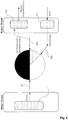
- Fig. 1 shows a block diagram of a common data transport protocol implementation.
- an application starts data communication over a network system, it needs at least one thread for sending (send handler 2), one thread for receiving (receive handler 3) and an application thread 1 (API-thread) that transports data between the user application and a protocol stack.
- the send handler 2 is used to send data packets and control information to the network system. As soon as packet loss is detected, the send handler 2 retransmits lost packets.
- a send buffer 4 temporarily stores unacknowledged data, till an acknowledgment is delivered to the sender thread.
- Receive handler 3 receives data from the network system and stores them into a receive buffer 5. In case of a packet loss detection, the receive handler 3 informs the send handler 2, so it can send a control packet with loss data information to the sender thread of the communication pair. Since different tasks according to Fig. 1 access shared data structures, those accesses must be synchronized. Conventionally, such synchronization is implemented by mutexes or semaphores.
- send handler 2 and the receive handler 3 are function components
- the send buffer 4 and the receive buffer 5 may be referred to as data components.
- the API-thread 1 When the API-thread 1 has to write data into the send buffer 4, it applies a mutex or a semaphore to block the simultaneously reading access from the send handler 2. If the send handler 2 tries to read data from the send buffer 4 for sending, it also applies a mutex or semaphore to prevent a simultaneous access attempt from the API-thread.
- the access from receive handler 3 to receive buffer 5 is similar to that of the send handler 2.
- a method and device for managing a data buffer that stores packets for transmission.
- the data buffer is managed as a FIFO circular queue.
- Three sequence numbers index a pointer array addressing the buffer. These sequence numbers correspond to the tail of the queue, the point in the queue from which the next packet is to be transmitted and the head of the queue, corresponding to the last packet acknowledged as correctly received plus one.
- the sequence number corresponding to the next packet to be transmitted is reset to the head of the queue.
- FIFO queues are known which enable multiple accesses to data stored therein.
- a release pointer points to a queue location containing previously read data until a release signal is asserted that changes the release pointer while a read pointer is used to read data from the queue.
- the repeat signal allows the read pointer to reread previously read data. Asserting the repeat signal sets the read pointer to the value of the release pointer. Once data is no longer needed, the release signal is asserted, causing the release pointer to be incremented with the read pointer thereby freeing memory locations.
- FIFO queues may comprise multiple release pointers, multiple release and multiple repeat signals.
- FIFO queues may also comprise a switch signal, which causes the read pointer to switch values with a release pointer.
- FIFO queues may comprise multiple read pointers and an input signal for determining which read pointer is used.
- a data transfer control device and electronic equipment that are capable of reducing processing overheads, thus enabling high-speed data transfer within a compact hardware configuration are known.
- an internal RAM capable of storing packets in a randomly accessible manner is provided between a link core and a CPU in a data transfer control device conforming to the IEEE 1394 standard.
- the RAM storage area is divided into a header area, a data area, and a CPU work area, and the header and data areas are divided into areas for reception and transmission.
- Tags are used to write the header of a receive packet to the header area and the data thereof to the data area.
- Pointers are provided for controlling the size of each area in RAM variably, and the size of each area can be varied dynamically after power is switched on.
- Each area has a ring buffer structure. The size of area storing the header or data of one packet is fixed.
- the present invention proposes to use an interconnected system of different kinds of memory buffers, implemented as asynchronous read/write ring buffers.
- the ring buffers are organized in a way, in which data can be stored into the ring buffer or fetched from the ring buffer essentially avoiding synchronization means like mutexes or semaphores.
- one mutex may still be used within a receive ring buffer in case of a transmission of irregular packets, the occurrence of irregular packets can, however, be kept rarely.
- the term of irregular packets implies a presumption, that mostly, data are transmitted in constant-size chunks, so called regular packets. Only in cases of some exceptions, data packets, smaller than regular packets are transmitted over the network. Such short packets are called irregular packets, i.e. when there are not enough data to assemble a regular packet.
- Fig. 2 a schematic representation of a basic ARWRB buffer management system.
- a send memory ring buffer (SRB) 100 a send token ring buffer (STRB) 101 and a receive memory ring buffer (RRB) 102
- SRB send memory ring buffer
- STRB send token ring buffer
- RRB receive memory ring buffer
- Necessary memory space for the SRB 100, the STRB 101 and the RRB 102 is preferably allocated at the initialization phase of the transmission system. So, during ring buffer operation, no buffer growth or shrinking should be performed. Besides a main application thread 1, in which API calls can be processed, one sending and one receiving threads are also started during the initialization phase. When a receive handler 103 of a data sender receives a data acknowledgement, it releases the corresponding space of buffer within the SRB 100. It also deletes the corresponding token from the STRB 101. The send handler 104, besides, records all transmitted packet information within the STRB 101. So, in case of packet retransmission, the sender thread (send handler 104) can directly refer to the buffer address, associated with retransmitted sequence number.
- a reader thread of the SRB 100 can access the SRB 100 without requesting system calls, e.g. mutex, to stop a writer thread (API-thread 1) which tries to write simultaneously data into the SRB 100, or vice versa.
- API-thread 1 a writer thread which tries to write simultaneously data into the SRB 100, or vice versa.
- the data processing within the RRB 102 is basically similar to the processing within the SRB 100.
- the receive handler 103 can write received data simultaneously to the RRB 102 while the API-thread tries to read data from it. However, in case of the occurrence of an irregular data packet, some special synchronization means between the API-thread send and the receive handler 103 are necessary.
- the API send call blocks when the SRB 100 has not enough space, to store data from the send call and respectively, the API receive call blocks, when no data are stored within the RRB 102 while the receive call is raised.
- FIG. 3 to 9 further details are described.
- a proposed implementation buffer is described in an object-oriented semantics. It can be implemented in hardware, embedded software or as an application layer process.
- Fig. 3 to 9 the same features are referred to by the same reference numerals used in Fig. 2 .
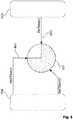
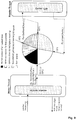
- Fig. 3 shows a schematic representation of methods which can be implemented in the send memory ring buffer (SRB) 100.
- the SRB 100 is accessed through three pointers - a read pointer (SRB-RP) 300, write pointer (SRB-WP) 301 and filled pointer (SRB-FP) 302, which indicate access points to the SRB 100.
- SRB-RP read pointer
- SRB-WP write pointer
- SRB-FP filled pointer
- a non-synchronized access to the SRB 100 is only possible, when just one writer thread (API-thread) writes into the SRB 100 and at most one reader thread (send handler 104) reads from it. This condition is not fulfilled in the described scenario, since besides the send handler 104 the receive handler 103 also accesses the SRB 100.
- the SRB-RP 300 can only be moved by the send handler 104 (reader thread) for data (re-)transmission, and the SRB-FP 302 can only be moved by the receive handler (another reader thread) on condition that the transmitted packet is acknowledged by remote side application. That's why there is no collision between the SRB-RP 300 and SRB-FP 302, so thread synchronization is not needed.
- the SRB 100 on the sender side has four major methods to meet the needs for data temporal storage into ring buffer, for packet sending, for packet loss handling, and for releasing acknowledged data.
- Fig. 4 shows a schematic representation of an interaction of the methods depicted in Fig. 3 with reader and writer threads.
- the Store()- method in writer thread is used to store data temporarily into the SRB 100 and move the SRB-WP 301 correspondingly.
- the GetNextChunk() - method is used to get the read position and the number of stored bytes from the reader thread (send handler). The RP is moved ahead as appropriated.
- GetPrevChunk() - method is called to give the reader thread (send handler) the read position of the corresponding data packet and the length of the respective data chunk.
- ACK acknowledgement
- another reader thread (receive handler) calls the FreeChunk() -method to move the FP in SRB.
- the STRB has to be used while using GetNextChunk()-, GetPrevChunk()- and FreeChunk() -methods.
- Fig. 5 shows a schematic representation of three methods which can be implemented in the send token ring buffer (STRB) 101.
- Fig. 6 shows a schematic representation of an interaction of the methods depicted in Fig. 5 .
- the send handler 104 fetches data from the SRB 100 in order to send it over the network
- the STRB 101 is used to record the corresponding buffer positions and packet sizes in conjunction with the particular sequence number.
- the send handler 104 can quickly resolve corresponding information of the puffer position of the lost data from the STRB 101 in order to retransmit the data.
- the STRB 101 has only a STRB-FP 800 and a STRB-WP 801, not a RP:
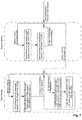
- Fig. 7 shows a schematic representation of an interaction of the SRB- and STRB-methods within the receive handler 103 and the send handler 104.
- AddToken()- method is called to record corresponding packet information within the STRB 101.
- the receive handler 103 processes it and calls DelToken()- method to move the STRB-FP 800 of the STRB 101 correspondingly; if DelToken() successfully implemented, the FreeChunk()- method is called to release acknowledged data from the SRB 100.
- the receive handler 103 passes only the sequence number to the send handler 104, so the send handler 104 calls GetToken()- method to get corresponding packet information from the STRB 101 in order to call the GetPrevChunk()- method to retransmit it.
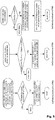
- FIG. 8 shows a schematic representation of five methods which can be implemented in the receive memory ring buffer (RRB) 102.
- Fig. 9 shows a schematic representation of an interaction of the methods depicted in Fig. 8 .
- the RRB 102 is used in order to receive data and store them at the right position.
- the basic functionality of the RRB 102 is similar to those of the SRB 100. However, it must be extended by some more means, since packet loss and the corresponding retransmission always has to be taken into account.
- pointers RP, WP, and FP which are referred to as RP1, WP1, and FP1
- additional pointers namely RP2 and WP2
- the RRB 102 provides five major methods to provide receiver buffer operations. Prerequisites for the RRB 102 methods:
- GetNextWritePos() returns the position, at which next data packet should be stored. This could be an in-order and consecutive data packet, but also could be an incoming retransmitted packet.
- MoveWritePos() is called to move the WP1.
- MoveWritePos() has to test if this is a retransmitted one packet, in which case it has to also test whether any irregular packets cause a hole in reserved buffer space and update irregular map if a hole does exist.
- RP2 is also moved equal to WP1 by MoveWritePos(). But if the recently received data packet is stored consecutive into RRB after packet loss, only the WP2 should be moved equal to WP1 by MoveWritePos() to mark the currently received packet with largest sequence number.
- RcvStore() is used to insert the corresponding lost information into loss map.
- the RcvGetNextChunk()- method is used by the API-Thread in order to fetch received data.
- the RP1 is moved, when data are fetched.
- RcvFreeChunk()- method is called by API-thread to move FP after successful return from RcvGetNextChunk(), in order to free this space for further data packet reception.
Landscapes
- Engineering & Computer Science (AREA)
- Computer Networks & Wireless Communication (AREA)
- Signal Processing (AREA)
- Information Transfer Systems (AREA)
- Communication Control (AREA)
Claims (8)
- Ein Memory Buffer Managementsystem, das mit einem Computernetzwerksystem unter Verwendung eines Netzwerkdatentransportprotokolls verknüpfbar ist, das für einen paketierten Datentransport in dem Computernetzwerksystem vorgesehen ist, wobei das Memory Buffer Managementsystem Folgendes umfasst:- einen Thread-implementierten Send Handler (104), einen Thread-implementierten Receive Handler (103) und einen API-Thread (1) zum Empfangen von Daten von und Weiterleiten von Daten an eine Benutzeranwendung,- einen Send Memory Ringbuffer (100), der konfiguriert ist, um Daten von der Benutzeranwendung in dem API-Thread (1) zu empfangen und die Sendedaten über den Thread-implementierten Send Handler (104) zu senden,- einen Receiving Memory Ringbuffer (102), der so konfiguriert ist, dass er empfangene Daten über den Thread-implementierten Receive Handler (103) empfängt und diese empfangenen Daten an die Benutzeranwendung im API-Thread (1) weiterleitet, und- einen Send Token Ringbuffer (101), der konfiguriert ist, um den Zugriff auf die Sendedaten für den Send Handler (104) und den Receive Handler (103) zu verwalten und um Datenpaketinformationen über im Send Memory Ringbuffer (100) gespeicherte Datenpakete zu protokollieren,wobei der Send Memory Ringbuffer (100) Folgendes umfasst:- einen Read Pointer (300), der so konfiguriert ist, dass er auf den Anfang eines belegten Speicherbereichs zeigt, der mit durch den Send Handler (104) lesbaren gespeicherten Daten belegt ist, wobei der Read Pointer (300) nur durch den Send Handler (104) vorwärts bewegt werden kann,- einen Write Pointer (301), der so konfiguriert ist, dass er auf den Anfang eines noch freien Speicherbereichs zeigt, der in dem API-Thread (1) zu speichernde Daten empfangen kann, wobei der Write Pointer (301) nur durch den API-Thread (1) bewegt werden kann, und- einen Filled Pointer (302), der so konfiguriert ist, dass er auf den Anfang eines Speicherbereichs zeigt, der zumindest teilweise mit noch nicht bestätigten und daher noch nicht zum erneuten Schreiben freigegebenen Daten im Send Memory Ringbuffer (100) gefüllt ist, wobei der Filled Pointer (302) nur vom Receive Handler (103) bewegt werden kann,wobei sich der belegte Speicherbereich im Send Memory Ringbuffer (100) zwischen dem Read Pointer (300) und dem Write Pointer (301) befindet, wobei der noch freie Speicherbereich zwischen dem Write Pointer (301) und dem Filled Pointer (302) liegt und wobei der zumindest teilweise gefüllte Speicherbereich zwischen dem Filled Pointer (302) und dem Read Pointer (301) liegt,
wobei der Send Token Ringbuffer (101) Folgendes umfasst:- einen Filled Pointer (800), der so konfiguriert ist, dass er auf die aktuelle freigegebene Position zeigt, die zum Schreiben in den Send Token Ringbuffer (101) freigegeben ist, wobei der Filled Pointer (800) nur durch den Receive Handler (103) bewegt werden kann, nachdem eine Bestätigung für das Datenpaket, dessen Information an der aktuellen freigegebenen Position gespeichert ist, empfangen wurde, und- einen Write Pointer (801), der so konfiguriert ist, dass er auf den Anfang eines noch freien Speicherbereichs im Send Token Ringbuffer (101) zeigt, der die Datenpaketinformationen über den Send Handler (104) empfangen kann, wobei der Write Pointer (801) nur vom Send Handler (104) bewegt werden kann,wobei der Receiving Memory Ringbuffer (102) Folgendes umfasst:- einen ersten Read Pointer (RP1), der so konfiguriert ist, dass er auf den Anfang eines belegten Speicherbereichs zeigt, der von gespeicherten Daten belegt ist, die von dem API-Thread (1) gelesen werden können,- einen ersten Write Pointer (WP1), der so konfiguriert ist, dass er auf die aktuelle Schreibposition zeigt und rückwärts bewegt wird, um erneut übertragene Datenpakete zu speichern, wobei der Write Pointer (WP1) nur durch den Receive Handler (103) bewegt werden kann,- einen Filled Pointer (FP1), der so konfiguriert ist, dass er auf den Anfang eines Speicherbereichs zeigt, der zumindest teilweise mit gespeicherten Daten gefüllt ist, die noch nicht zum erneuten Schreiben in den Receiving Memory Ringbuffer (102) freigegeben wurden, wobei der Filled Pointer (FP1) nur vom API-Thread (1) verschoben werden kann- einen zweiten Read Pointer (RP2), der auf die Position des letzten ordnungsgemäß und fortlaufend empfangenen Datenpakets zeigt und damit die obere Grenze der aufeinanderfolgend empfangenen Datenpakete zum Lesen markiert und der nur durch den Receive Handler (103) bewegt werden kann, und- einen zweiten Write Pointer (WP2), der so konfiguriert ist, dass er auf den Anfang eines noch freien Speicherbereichs im Receiving Memory Ringbuffer (102) zeigt, der über den Receive Handler (103) zu speichernde Daten empfangen kann, wobei der zweite Write Pointer (WP2) nur durch den Receive Handler (103) bewegt werden kann und niemals rückwärts bewegt wird, so dass er die Position eines empfangenen Datenpakets mit der momentan größten Sequenznummer kennzeichnet. - Memory Buffer Managementsystem nach Anspruch 1, wobei der Read Pointer (300) des Send Memory Ringbuffers (100) so konfiguriert ist, dass er entsprechend der Menge der aus dem belegten Speicherbereich gelesenen Daten vorwärts bewegt wird.
- Memory Buffer Managementsystem nach Anspruch 1 oder 2, wobei der write Pointer (301) des Send Memory Ringbuffers (100) so konfiguriert ist, dass er entsprechend der Menge der in den freien Speicherbereich des Send Memory Ringbuffers (100) geschrieben Daten vorwärts bewegt wird.
- Memory Buffer Managementsystem nach mindestens einem der vorhergehenden Ansprüche, wobei der Send Token Ringbuffer (101) so konfiguriert ist, dass er dem Send Handler (104) Datenpaket-Neuübertragungs-Informationen für eine Datenpaket-Neuübertragung bereit stellt.
- Memory Buffer Managementsystem nach mindestens einem der vorhergehenden Ansprüche, wobei der Send Memory Ringbuffer (100), der Receiving Memory Ringbuffer (102) und der Send Token Ringbuffer (101) durch eine der folgende Gruppe an Implementierungen umgesetzt sind: Embedded Software Implementierung und Prozessimplementierung auf Anwendungsebene.
- Verfahren zum Betreiben eines Memory Buffer Managementsystems in einer Multithread-Umgebung zum Verwalten des Datenaustauschs zwischen einer auf einem Computer implementierten Benutzeranwendung, die mit einem Computernetzwerksystem unter Verwendung eines für einen paketierten Datentransport vorgesehenen Netzwerkdaten-Transportprotokolls verknüpfbar ist, wobei das Verfahren die folgenden Schritte umfasst:- Empfangen von Sendedaten der Benutzeranwendung in einem Send Memory Ringbuffer (100) und Übermitteln der Sendedaten über einen Thread-implementierten Send Handler (104)des Memory Buffer Managementsystems,- Empfangen von Empfangsdaten in einem Receiving Memory Ringbuffer (102) über einen Thread-implementierten Receive Handler (103) des Memory Buffer Managementsystems und Weiterleiten der Empfangsdaten an die Benutzeranwendung, und- Aufzeichnen von Datenpaketinformationen in einem Send Token Ringbuffer (101) über im Send Memory Ringbuffer (100) gespeicherte Datenpakete zur Verwaltung des Zugriffs auf die Sendedaten für den Send Handler (104) und den Receive Handler (103), undwobei der Send Memory Ringbuffer (100) die folgende Gruppe von Pointern implementiert:- einen Read Pointer (300), der auf den Anfang eines belegten Speicherbereichs zeigt, der von durch den Send Handler (104) lesbaren gespeicherten Daten belegt ist, wobei der Read Pointer (300) nur durch den Send Handler (104)vorwärts bewegt werden kann,- einen Write Pointer (301), der auf den Anfang eines noch freien Speicherbereichs im Send Memory Ringbuffer (100) zeigt, der in einem API-Thread (1) des Memory Buffer Managementsystems zu speichernde Daten empfangen kann und dem Empfang von Daten von bzw. die Weiterleitung von Daten an die Benutzeranwendung dient, wobei der Write Pointer (301) nur durch den API-Thread (1) bewegt werden kann, und- ein Filled Pointer (302), der auf den Anfang eines Speicherbereichs zeigt, der zumindest teilweise mit gespeicherten Daten gefüllt ist, die noch nicht bestätigt wurden und daher noch nicht zum erneuten Schreiben in den Send Memory Ringbuffer (100) freigegeben wurden, wobei der Filled Pointer (302) nur durch den Receive Handler (103) bewegt werden kann, wobei der Send Token Ringbuffer (101) die folgende Gruppe von Pointern implementiert:- einen Filled Pointer (800), der so konfiguriert ist, dass er auf die aktuelle freigegebene Position im Send Token Ringbuffer (101) zeigt, wobei der Filled Pointer (800) nur durch den Receive Handler (103) bewegt werden kann, nachdem er eine Bestätigung für das Datenpaket empfangen hat, dessen Information an der aktuellen freigegebenen Position gespeichert ist, und- einen Write Pointer (801), der so konfiguriert ist, dass er auf den Anfang eines noch freien Speicherbereichs im Send Token Ringbuffer (101) zeigt, der Datenpaketinformationen von über den Send Handler (104) zu speichernden Daten empfangen kann, wobei der Write Pointer (801) nur durch den Send Handler (104) bewegt werden kann,wobei der Receiving Memory Ringbuffer (102) die folgende Gruppe von Pointern implementiert:- einen ersten Read Pointer (RP1), der auf den Anfang eines belegten Speicherbereichs zeigt, der von gespeicherten Daten belegt ist, die von dem API-Thread (1) gelesen werden können,- einen ersten Write Pointer (WP1), der auf die aktuelle Schreibposition zeigt und rückwärts bewegt wird, um erneut übertragene Datenpakete zu speichern, wobei der Write Pointer (WP1) nur durch den Receive Handler (103) bewegt werden kann,- einen Filled Pointer (FP1), der auf den Anfang eines Speicherbereichs zeigt, der zumindest teilweise mit gespeicherten Daten gefüllt ist, die noch nicht zum erneuten Schreiben in den Receiving Memory Ringbuffer (102) freigegeben wurden, wobei der Filled Pointer (FP1) nur vom API-Thread (1) verschoben werden kann- einen zweiten Read Pointer (RP2), der auf die Position des letzten ordnungsgemäß und fortlaufend empfangenen Datenpakets zeigt und damit die obere Grenze der aufeinanderfolgend empfangenen Datenpakete zum Lesen markiert und der nur durch den Receive Handler (103) bewegt werden kann, und- einen zweiten Write Pointer (WP2), der auf den Anfang eines noch freien Speicherbereichs im Receiving Memory Ringbuffer (102) zeigt, der über den Receive Handler (103) zu speichernde Daten empfangen kann, wobei der zweite Write Pointer (WP2) nur durch den Receive Handler (103) bewegt werden kann und niemals rückwärts bewegt wird, so dass er die Position eines empfangenen Datenpakets mit der momentan größten Sequenznummer kennzeichnet.
- Verfahren nach Anspruch 6, einen Schritt zur Vorwärtsbewegung des Read Pointers (300) des Send Memory Ringbuffers (100) um eine Menge von Lesedaten beschreibend, die aus dem belegten Speicherbereich gelesen werden.
- Verfahren nach Anspruch 6 oder 7, einen Schritt zur Vorwärtsbewegung des Write Pointers (301) des Send Memory Ringbuffers (100) um eine Menge geschriebener Daten beschreibend, die in den noch freien Speicherbereich im Send Memory Ringbuffer geschrieben werden (100).
Priority Applications (1)
| Application Number | Priority Date | Filing Date | Title |
|---|---|---|---|
| EP08804222.1A EP2206294B1 (de) | 2007-10-02 | 2008-09-15 | Speicherpuffersystem und verfahren zum betrieb eines speicherpuffersystems für schnellen datenaustausch |
Applications Claiming Priority (3)
| Application Number | Priority Date | Filing Date | Title |
|---|---|---|---|
| EP07117776A EP2045973A1 (de) | 2007-10-02 | 2007-10-02 | Speicherpuffersystem und Verfahren zum Betreiben eines Speicherpuffersystems für schnellen Datenaustausch |
| PCT/EP2008/062263 WO2009043712A1 (en) | 2007-10-02 | 2008-09-15 | A memory buffer system and a method for operating a memory buffer system for fast data exchange |
| EP08804222.1A EP2206294B1 (de) | 2007-10-02 | 2008-09-15 | Speicherpuffersystem und verfahren zum betrieb eines speicherpuffersystems für schnellen datenaustausch |
Publications (2)
| Publication Number | Publication Date |
|---|---|
| EP2206294A1 EP2206294A1 (de) | 2010-07-14 |
| EP2206294B1 true EP2206294B1 (de) | 2018-05-16 |
Family
ID=39198421
Family Applications (2)
| Application Number | Title | Priority Date | Filing Date |
|---|---|---|---|
| EP07117776A Withdrawn EP2045973A1 (de) | 2007-10-02 | 2007-10-02 | Speicherpuffersystem und Verfahren zum Betreiben eines Speicherpuffersystems für schnellen Datenaustausch |
| EP08804222.1A Not-in-force EP2206294B1 (de) | 2007-10-02 | 2008-09-15 | Speicherpuffersystem und verfahren zum betrieb eines speicherpuffersystems für schnellen datenaustausch |
Family Applications Before (1)
| Application Number | Title | Priority Date | Filing Date |
|---|---|---|---|
| EP07117776A Withdrawn EP2045973A1 (de) | 2007-10-02 | 2007-10-02 | Speicherpuffersystem und Verfahren zum Betreiben eines Speicherpuffersystems für schnellen Datenaustausch |
Country Status (2)
| Country | Link |
|---|---|
| EP (2) | EP2045973A1 (de) |
| WO (1) | WO2009043712A1 (de) |
Cited By (1)
| Publication number | Priority date | Publication date | Assignee | Title |
|---|---|---|---|---|
| DE102020213584A1 (de) | 2020-10-29 | 2022-05-05 | Robert Bosch Gesellschaft mit beschränkter Haftung | Verfahren zur Übertragung von Paketen eines Kommunikationsprotokolls |
Families Citing this family (6)
| Publication number | Priority date | Publication date | Assignee | Title |
|---|---|---|---|---|
| EP2461525B1 (de) * | 2010-12-03 | 2013-09-25 | MIMOON GmbH | Verfahren und Vorrichtung zum Ausrichten von Datenrahmen in einem Sende-/Empfangsgerät |
| CN104769901B (zh) * | 2013-01-04 | 2019-08-02 | 马维尔国际贸易有限公司 | 用于通信的方法、电信装置以及用于处理信号的芯片组 |
| CN103581611A (zh) * | 2013-11-19 | 2014-02-12 | 北京兆维电子(集团)有限责任公司 | 基于路由服务器音视频录制的实现方法及路由服务器 |
| EP3304785B1 (de) | 2015-05-30 | 2020-08-05 | Hochschule Anhalt | Verfahren zum betreiben eines an einer senderstation implementierten speicherpuffersystems zum schnellen datentransport über ein kommunikationsnetz, entsprechend angepasste vorrichtung zur durchführung des verfahrens, computerprogrammprodukt und computerprogramm |
| US10198397B2 (en) * | 2016-11-18 | 2019-02-05 | Microsoft Technology Licensing, Llc | Flow control in remote direct memory access data communications with mirroring of ring buffers |
| CN111131081B (zh) * | 2019-12-31 | 2022-12-23 | 武汉绿色网络信息服务有限责任公司 | 一种支持多进程的高性能单向传输的方法和装置 |
Family Cites Families (8)
| Publication number | Priority date | Publication date | Assignee | Title |
|---|---|---|---|---|
| JP2703417B2 (ja) * | 1991-04-05 | 1998-01-26 | 富士通株式会社 | 受信バッファ |
| US5860119A (en) * | 1996-11-25 | 1999-01-12 | Vlsi Technology, Inc. | Data-packet fifo buffer system with end-of-packet flags |
| US6172927B1 (en) * | 1997-04-01 | 2001-01-09 | Ramtron International Corporation | First-in, first-out integrated circuit memory device incorporating a retransmit function |
| JP3543649B2 (ja) * | 1998-10-27 | 2004-07-14 | セイコーエプソン株式会社 | データ転送制御装置及び電子機器 |
| US6538467B2 (en) * | 2001-08-20 | 2003-03-25 | Micron Technology, Inc. | Multi-access FIFO queue |
| GB2392062A (en) * | 2002-05-24 | 2004-02-18 | Zarlink Semiconductor Ltd | Method of organising data packets in a buffer |
| US7269172B2 (en) * | 2003-01-07 | 2007-09-11 | Sun Microsystems, Inc. | Method and device for managing transmit buffers |
| US20060050722A1 (en) * | 2004-09-03 | 2006-03-09 | James Bury | Interface circuitry for a receive ring buffer of an as fabric end node device |
-
2007
- 2007-10-02 EP EP07117776A patent/EP2045973A1/de not_active Withdrawn
-
2008
- 2008-09-15 WO PCT/EP2008/062263 patent/WO2009043712A1/en not_active Ceased
- 2008-09-15 EP EP08804222.1A patent/EP2206294B1/de not_active Not-in-force
Non-Patent Citations (1)
| Title |
|---|
| None * |
Cited By (2)
| Publication number | Priority date | Publication date | Assignee | Title |
|---|---|---|---|---|
| DE102020213584A1 (de) | 2020-10-29 | 2022-05-05 | Robert Bosch Gesellschaft mit beschränkter Haftung | Verfahren zur Übertragung von Paketen eines Kommunikationsprotokolls |
| US11704259B2 (en) | 2020-10-29 | 2023-07-18 | Robert Bosch Gmbh | Method for transferring packets of a communication protocol |
Also Published As
| Publication number | Publication date |
|---|---|
| WO2009043712A1 (en) | 2009-04-09 |
| EP2045973A1 (de) | 2009-04-08 |
| EP2206294A1 (de) | 2010-07-14 |
Similar Documents
| Publication | Publication Date | Title |
|---|---|---|
| US20240106736A1 (en) | System and method for facilitating efficient packet forwarding using a message state table in a network interface controller (nic) | |
| US6735647B2 (en) | Data reordering mechanism for high performance networks | |
| CN112084136B (zh) | 队列缓存管理方法、系统、存储介质、计算机设备及应用 | |
| US6067300A (en) | Method and apparatus for optimizing the transfer of data packets between local area networks | |
| US8131881B2 (en) | Completion coalescing by TCP receiver | |
| EP2045973A1 (de) | Speicherpuffersystem und Verfahren zum Betreiben eines Speicherpuffersystems für schnellen Datenaustausch | |
| US20030051076A1 (en) | Methods and system for pre-fetching descriptors | |
| US6941391B2 (en) | Fencepost descriptor caching mechanism and method therefor | |
| JPH10222477A (ja) | コンピュータ・システム間でデータ構造を転送する方法 | |
| US6366968B1 (en) | Physical write packets processing when posted write error queue is full, with posted write error queue storing physical write requests when posted write packet fails | |
| US8223788B1 (en) | Method and system for queuing descriptors | |
| CN112559436B (zh) | 一种rdma通信设备的上下文访问方法及系统 | |
| US20080263171A1 (en) | Peripheral device that DMAS the same data to different locations in a computer | |
| JP2015188215A (ja) | リトライバッファ及びリトライバッファを用いてリトライ動作を実行する方法 | |
| US7113516B1 (en) | Transmit buffer with dynamic size queues | |
| CN113572582A (zh) | 数据发送、重传控制方法及系统、存储介质及电子设备 | |
| CN106656425A (zh) | 光纤通道中固定帧长度的一种高效差错重传与存取机制 | |
| US5878226A (en) | System for processing early arrival messages within a multinode asynchronous data communications system | |
| US7788437B2 (en) | Computer system with network interface retransmit | |
| US20050286527A1 (en) | TCP segment re-ordering in a high-speed TOE device | |
| US7822051B1 (en) | Method and system for transmitting packets | |
| CN107241409A (zh) | 用于lte中rlc与相邻层的数据传输方法 | |
| US20050129014A1 (en) | Packet forwarding system capable of transferring packets fast through interfaces by reading out information beforehand for packet forwarding and method thereof | |
| US7636313B2 (en) | Use of internal buffer to reduce acknowledgement related delays in acknowledgement-based reliable communication protocols | |
| US7929536B2 (en) | Buffer management for communication protocols |
Legal Events
| Date | Code | Title | Description |
|---|---|---|---|
| PUAI | Public reference made under article 153(3) epc to a published international application that has entered the european phase |
Free format text: ORIGINAL CODE: 0009012 |
|
| 17P | Request for examination filed |
Effective date: 20100331 |
|
| AK | Designated contracting states |
Kind code of ref document: A1 Designated state(s): AT BE BG CH CY CZ DE DK EE ES FI FR GB GR HR HU IE IS IT LI LT LU LV MC MT NL NO PL PT RO SE SI SK TR |
|
| AX | Request for extension of the european patent |
Extension state: AL BA MK RS |
|
| RAP1 | Party data changed (applicant data changed or rights of an application transferred) |
Owner name: TIXEL GMBH |
|
| DAX | Request for extension of the european patent (deleted) | ||
| 17Q | First examination report despatched |
Effective date: 20120228 |
|
| REG | Reference to a national code |
Ref country code: DE Ref legal event code: R079 Ref document number: 602008055288 Country of ref document: DE Free format text: PREVIOUS MAIN CLASS: H04L0012560000 Ipc: H04L0012540000 |
|
| RIC1 | Information provided on ipc code assigned before grant |
Ipc: H04L 12/879 20130101ALI20171010BHEP Ipc: H04L 12/861 20130101ALI20171010BHEP Ipc: H04L 12/54 20130101AFI20171010BHEP Ipc: G06F 5/12 20060101ALI20171010BHEP Ipc: H04L 1/18 20060101ALI20171010BHEP Ipc: H04L 12/863 20130101ALI20171010BHEP |
|
| GRAP | Despatch of communication of intention to grant a patent |
Free format text: ORIGINAL CODE: EPIDOSNIGR1 |
|
| INTG | Intention to grant announced |
Effective date: 20171129 |
|
| RIN1 | Information on inventor provided before grant (corrected) |
Inventor name: SIEMENS, EDUARD Inventor name: QIU, XIAOPENG |
|
| GRAS | Grant fee paid |
Free format text: ORIGINAL CODE: EPIDOSNIGR3 |
|
| GRAA | (expected) grant |
Free format text: ORIGINAL CODE: 0009210 |
|
| AK | Designated contracting states |
Kind code of ref document: B1 Designated state(s): AT BE BG CH CY CZ DE DK EE ES FI FR GB GR HR HU IE IS IT LI LT LU LV MC MT NL NO PL PT RO SE SI SK TR |
|
| REG | Reference to a national code |
Ref country code: GB Ref legal event code: FG4D |
|
| REG | Reference to a national code |
Ref country code: DE Ref legal event code: R084 Ref document number: 602008055288 Country of ref document: DE |
|
| REG | Reference to a national code |
Ref country code: CH Ref legal event code: EP |
|
| REG | Reference to a national code |
Ref country code: IE Ref legal event code: FG4D |
|
| REG | Reference to a national code |
Ref country code: DE Ref legal event code: R096 Ref document number: 602008055288 Country of ref document: DE |
|
| REG | Reference to a national code |
Ref country code: AT Ref legal event code: REF Ref document number: 1000528 Country of ref document: AT Kind code of ref document: T Effective date: 20180615 |
|
| REG | Reference to a national code |
Ref country code: GB Ref legal event code: 746 Effective date: 20180531 |
|
| REG | Reference to a national code |
Ref country code: NL Ref legal event code: MP Effective date: 20180516 |
|
| REG | Reference to a national code |
Ref country code: LT Ref legal event code: MG4D |
|
| PG25 | Lapsed in a contracting state [announced via postgrant information from national office to epo] |
Ref country code: FI Free format text: LAPSE BECAUSE OF FAILURE TO SUBMIT A TRANSLATION OF THE DESCRIPTION OR TO PAY THE FEE WITHIN THE PRESCRIBED TIME-LIMIT Effective date: 20180516 Ref country code: NO Free format text: LAPSE BECAUSE OF FAILURE TO SUBMIT A TRANSLATION OF THE DESCRIPTION OR TO PAY THE FEE WITHIN THE PRESCRIBED TIME-LIMIT Effective date: 20180816 Ref country code: SE Free format text: LAPSE BECAUSE OF FAILURE TO SUBMIT A TRANSLATION OF THE DESCRIPTION OR TO PAY THE FEE WITHIN THE PRESCRIBED TIME-LIMIT Effective date: 20180516 Ref country code: LT Free format text: LAPSE BECAUSE OF FAILURE TO SUBMIT A TRANSLATION OF THE DESCRIPTION OR TO PAY THE FEE WITHIN THE PRESCRIBED TIME-LIMIT Effective date: 20180516 Ref country code: BG Free format text: LAPSE BECAUSE OF FAILURE TO SUBMIT A TRANSLATION OF THE DESCRIPTION OR TO PAY THE FEE WITHIN THE PRESCRIBED TIME-LIMIT Effective date: 20180816 Ref country code: ES Free format text: LAPSE BECAUSE OF FAILURE TO SUBMIT A TRANSLATION OF THE DESCRIPTION OR TO PAY THE FEE WITHIN THE PRESCRIBED TIME-LIMIT Effective date: 20180516 |
|
| PG25 | Lapsed in a contracting state [announced via postgrant information from national office to epo] |
Ref country code: GR Free format text: LAPSE BECAUSE OF FAILURE TO SUBMIT A TRANSLATION OF THE DESCRIPTION OR TO PAY THE FEE WITHIN THE PRESCRIBED TIME-LIMIT Effective date: 20180817 Ref country code: HR Free format text: LAPSE BECAUSE OF FAILURE TO SUBMIT A TRANSLATION OF THE DESCRIPTION OR TO PAY THE FEE WITHIN THE PRESCRIBED TIME-LIMIT Effective date: 20180516 Ref country code: NL Free format text: LAPSE BECAUSE OF FAILURE TO SUBMIT A TRANSLATION OF THE DESCRIPTION OR TO PAY THE FEE WITHIN THE PRESCRIBED TIME-LIMIT Effective date: 20180516 Ref country code: LV Free format text: LAPSE BECAUSE OF FAILURE TO SUBMIT A TRANSLATION OF THE DESCRIPTION OR TO PAY THE FEE WITHIN THE PRESCRIBED TIME-LIMIT Effective date: 20180516 |
|
| REG | Reference to a national code |
Ref country code: AT Ref legal event code: MK05 Ref document number: 1000528 Country of ref document: AT Kind code of ref document: T Effective date: 20180516 |
|
| PG25 | Lapsed in a contracting state [announced via postgrant information from national office to epo] |
Ref country code: SK Free format text: LAPSE BECAUSE OF FAILURE TO SUBMIT A TRANSLATION OF THE DESCRIPTION OR TO PAY THE FEE WITHIN THE PRESCRIBED TIME-LIMIT Effective date: 20180516 Ref country code: CZ Free format text: LAPSE BECAUSE OF FAILURE TO SUBMIT A TRANSLATION OF THE DESCRIPTION OR TO PAY THE FEE WITHIN THE PRESCRIBED TIME-LIMIT Effective date: 20180516 Ref country code: RO Free format text: LAPSE BECAUSE OF FAILURE TO SUBMIT A TRANSLATION OF THE DESCRIPTION OR TO PAY THE FEE WITHIN THE PRESCRIBED TIME-LIMIT Effective date: 20180516 Ref country code: EE Free format text: LAPSE BECAUSE OF FAILURE TO SUBMIT A TRANSLATION OF THE DESCRIPTION OR TO PAY THE FEE WITHIN THE PRESCRIBED TIME-LIMIT Effective date: 20180516 Ref country code: DK Free format text: LAPSE BECAUSE OF FAILURE TO SUBMIT A TRANSLATION OF THE DESCRIPTION OR TO PAY THE FEE WITHIN THE PRESCRIBED TIME-LIMIT Effective date: 20180516 Ref country code: AT Free format text: LAPSE BECAUSE OF FAILURE TO SUBMIT A TRANSLATION OF THE DESCRIPTION OR TO PAY THE FEE WITHIN THE PRESCRIBED TIME-LIMIT Effective date: 20180516 Ref country code: PL Free format text: LAPSE BECAUSE OF FAILURE TO SUBMIT A TRANSLATION OF THE DESCRIPTION OR TO PAY THE FEE WITHIN THE PRESCRIBED TIME-LIMIT Effective date: 20180516 |
|
| REG | Reference to a national code |
Ref country code: DE Ref legal event code: R097 Ref document number: 602008055288 Country of ref document: DE |
|
| PG25 | Lapsed in a contracting state [announced via postgrant information from national office to epo] |
Ref country code: IT Free format text: LAPSE BECAUSE OF FAILURE TO SUBMIT A TRANSLATION OF THE DESCRIPTION OR TO PAY THE FEE WITHIN THE PRESCRIBED TIME-LIMIT Effective date: 20180516 |
|
| PLBE | No opposition filed within time limit |
Free format text: ORIGINAL CODE: 0009261 |
|
| STAA | Information on the status of an ep patent application or granted ep patent |
Free format text: STATUS: NO OPPOSITION FILED WITHIN TIME LIMIT |
|
| 26N | No opposition filed |
Effective date: 20190219 |
|
| PG25 | Lapsed in a contracting state [announced via postgrant information from national office to epo] |
Ref country code: MC Free format text: LAPSE BECAUSE OF FAILURE TO SUBMIT A TRANSLATION OF THE DESCRIPTION OR TO PAY THE FEE WITHIN THE PRESCRIBED TIME-LIMIT Effective date: 20180516 |
|
| REG | Reference to a national code |
Ref country code: CH Ref legal event code: PL |
|
| PG25 | Lapsed in a contracting state [announced via postgrant information from national office to epo] |
Ref country code: SI Free format text: LAPSE BECAUSE OF FAILURE TO SUBMIT A TRANSLATION OF THE DESCRIPTION OR TO PAY THE FEE WITHIN THE PRESCRIBED TIME-LIMIT Effective date: 20180516 |
|
| REG | Reference to a national code |
Ref country code: BE Ref legal event code: MM Effective date: 20180930 |
|
| REG | Reference to a national code |
Ref country code: IE Ref legal event code: MM4A |
|
| PG25 | Lapsed in a contracting state [announced via postgrant information from national office to epo] |
Ref country code: LU Free format text: LAPSE BECAUSE OF NON-PAYMENT OF DUE FEES Effective date: 20180915 |
|
| PG25 | Lapsed in a contracting state [announced via postgrant information from national office to epo] |
Ref country code: IE Free format text: LAPSE BECAUSE OF NON-PAYMENT OF DUE FEES Effective date: 20180915 |
|
| PG25 | Lapsed in a contracting state [announced via postgrant information from national office to epo] |
Ref country code: CH Free format text: LAPSE BECAUSE OF NON-PAYMENT OF DUE FEES Effective date: 20180930 Ref country code: BE Free format text: LAPSE BECAUSE OF NON-PAYMENT OF DUE FEES Effective date: 20180930 Ref country code: LI Free format text: LAPSE BECAUSE OF NON-PAYMENT OF DUE FEES Effective date: 20180930 |
|
| PG25 | Lapsed in a contracting state [announced via postgrant information from national office to epo] |
Ref country code: MT Free format text: LAPSE BECAUSE OF NON-PAYMENT OF DUE FEES Effective date: 20180915 |
|
| PG25 | Lapsed in a contracting state [announced via postgrant information from national office to epo] |
Ref country code: TR Free format text: LAPSE BECAUSE OF FAILURE TO SUBMIT A TRANSLATION OF THE DESCRIPTION OR TO PAY THE FEE WITHIN THE PRESCRIBED TIME-LIMIT Effective date: 20180516 |
|
| PG25 | Lapsed in a contracting state [announced via postgrant information from national office to epo] |
Ref country code: PT Free format text: LAPSE BECAUSE OF FAILURE TO SUBMIT A TRANSLATION OF THE DESCRIPTION OR TO PAY THE FEE WITHIN THE PRESCRIBED TIME-LIMIT Effective date: 20180516 Ref country code: HU Free format text: LAPSE BECAUSE OF FAILURE TO SUBMIT A TRANSLATION OF THE DESCRIPTION OR TO PAY THE FEE WITHIN THE PRESCRIBED TIME-LIMIT; INVALID AB INITIO Effective date: 20080915 |
|
| PG25 | Lapsed in a contracting state [announced via postgrant information from national office to epo] |
Ref country code: CY Free format text: LAPSE BECAUSE OF FAILURE TO SUBMIT A TRANSLATION OF THE DESCRIPTION OR TO PAY THE FEE WITHIN THE PRESCRIBED TIME-LIMIT Effective date: 20180516 |
|
| PG25 | Lapsed in a contracting state [announced via postgrant information from national office to epo] |
Ref country code: IS Free format text: LAPSE BECAUSE OF FAILURE TO SUBMIT A TRANSLATION OF THE DESCRIPTION OR TO PAY THE FEE WITHIN THE PRESCRIBED TIME-LIMIT Effective date: 20180916 |
|
| PGFP | Annual fee paid to national office [announced via postgrant information from national office to epo] |
Ref country code: GB Payment date: 20220905 Year of fee payment: 15 Ref country code: DE Payment date: 20220905 Year of fee payment: 15 |
|
| PGFP | Annual fee paid to national office [announced via postgrant information from national office to epo] |
Ref country code: FR Payment date: 20220905 Year of fee payment: 15 |
|
| REG | Reference to a national code |
Ref country code: DE Ref legal event code: R119 Ref document number: 602008055288 Country of ref document: DE |
|
| GBPC | Gb: european patent ceased through non-payment of renewal fee |
Effective date: 20230915 |
|
| PG25 | Lapsed in a contracting state [announced via postgrant information from national office to epo] |
Ref country code: GB Free format text: LAPSE BECAUSE OF NON-PAYMENT OF DUE FEES Effective date: 20230915 |
|
| PG25 | Lapsed in a contracting state [announced via postgrant information from national office to epo] |
Ref country code: GB Free format text: LAPSE BECAUSE OF NON-PAYMENT OF DUE FEES Effective date: 20230915 Ref country code: FR Free format text: LAPSE BECAUSE OF NON-PAYMENT OF DUE FEES Effective date: 20230930 Ref country code: DE Free format text: LAPSE BECAUSE OF NON-PAYMENT OF DUE FEES Effective date: 20240403 |