EP3304785B1 - Verfahren zum betreiben eines an einer senderstation implementierten speicherpuffersystems zum schnellen datentransport über ein kommunikationsnetz, entsprechend angepasste vorrichtung zur durchführung des verfahrens, computerprogrammprodukt und computerprogramm - Google Patents
Verfahren zum betreiben eines an einer senderstation implementierten speicherpuffersystems zum schnellen datentransport über ein kommunikationsnetz, entsprechend angepasste vorrichtung zur durchführung des verfahrens, computerprogrammprodukt und computerprogramm Download PDFInfo
- Publication number
- EP3304785B1 EP3304785B1 EP15727883.9A EP15727883A EP3304785B1 EP 3304785 B1 EP3304785 B1 EP 3304785B1 EP 15727883 A EP15727883 A EP 15727883A EP 3304785 B1 EP3304785 B1 EP 3304785B1
- Authority
- EP
- European Patent Office
- Prior art keywords
- data
- meta
- multipoint
- packet
- receiver
- Prior art date
- Legal status (The legal status is an assumption and is not a legal conclusion. Google has not performed a legal analysis and makes no representation as to the accuracy of the status listed.)
- Not-in-force
Links
Images
Classifications
-
- H—ELECTRICITY
- H04—ELECTRIC COMMUNICATION TECHNIQUE
- H04L—TRANSMISSION OF DIGITAL INFORMATION, e.g. TELEGRAPHIC COMMUNICATION
- H04L49/00—Packet switching elements
- H04L49/90—Buffering arrangements
- H04L49/901—Buffering arrangements using storage descriptor, e.g. read or write pointers
-
- H—ELECTRICITY
- H04—ELECTRIC COMMUNICATION TECHNIQUE
- H04L—TRANSMISSION OF DIGITAL INFORMATION, e.g. TELEGRAPHIC COMMUNICATION
- H04L1/00—Arrangements for detecting or preventing errors in the information received
- H04L1/12—Arrangements for detecting or preventing errors in the information received by using return channel
- H04L1/16—Arrangements for detecting or preventing errors in the information received by using return channel in which the return channel carries supervisory signals, e.g. repetition request signals
- H04L1/18—Automatic repetition systems, e.g. Van Duuren systems
- H04L1/1867—Arrangements specially adapted for the transmitter end
- H04L1/1874—Buffer management
-
- H—ELECTRICITY
- H04—ELECTRIC COMMUNICATION TECHNIQUE
- H04L—TRANSMISSION OF DIGITAL INFORMATION, e.g. TELEGRAPHIC COMMUNICATION
- H04L1/00—Arrangements for detecting or preventing errors in the information received
- H04L1/08—Arrangements for detecting or preventing errors in the information received by repeating transmission, e.g. Verdan system
-
- H—ELECTRICITY
- H04—ELECTRIC COMMUNICATION TECHNIQUE
- H04L—TRANSMISSION OF DIGITAL INFORMATION, e.g. TELEGRAPHIC COMMUNICATION
- H04L1/00—Arrangements for detecting or preventing errors in the information received
- H04L1/12—Arrangements for detecting or preventing errors in the information received by using return channel
- H04L1/16—Arrangements for detecting or preventing errors in the information received by using return channel in which the return channel carries supervisory signals, e.g. repetition request signals
- H04L1/1607—Details of the supervisory signal
-
- H—ELECTRICITY
- H04—ELECTRIC COMMUNICATION TECHNIQUE
- H04L—TRANSMISSION OF DIGITAL INFORMATION, e.g. TELEGRAPHIC COMMUNICATION
- H04L43/00—Arrangements for monitoring or testing data switching networks
- H04L43/08—Monitoring or testing based on specific metrics, e.g. QoS, energy consumption or environmental parameters
- H04L43/0823—Errors, e.g. transmission errors
- H04L43/0829—Packet loss
- H04L43/0841—Round trip packet loss
-
- H—ELECTRICITY
- H04—ELECTRIC COMMUNICATION TECHNIQUE
- H04L—TRANSMISSION OF DIGITAL INFORMATION, e.g. TELEGRAPHIC COMMUNICATION
- H04L1/00—Arrangements for detecting or preventing errors in the information received
- H04L2001/0092—Error control systems characterised by the topology of the transmission link
- H04L2001/0093—Point-to-multipoint
-
- H—ELECTRICITY
- H04—ELECTRIC COMMUNICATION TECHNIQUE
- H04L—TRANSMISSION OF DIGITAL INFORMATION, e.g. TELEGRAPHIC COMMUNICATION
- H04L43/00—Arrangements for monitoring or testing data switching networks
- H04L43/08—Monitoring or testing based on specific metrics, e.g. QoS, energy consumption or environmental parameters
- H04L43/0852—Delays
- H04L43/0864—Round trip delays
-
- H—ELECTRICITY
- H04—ELECTRIC COMMUNICATION TECHNIQUE
- H04L—TRANSMISSION OF DIGITAL INFORMATION, e.g. TELEGRAPHIC COMMUNICATION
- H04L43/00—Arrangements for monitoring or testing data switching networks
- H04L43/16—Threshold monitoring
Definitions
- the invention relates to a method for operating a memory buffer system for the fast data transport over a communication network with a reliable transport protocol working in a point-to-multipoint data transfer mode in a multi-thread environment.
- a reliable transport protocol working in a point-to-multipoint data transfer mode in a multi-thread environment.
- the data packets are positively acknowledged by the receiving station and optionally negatively acknowledged.
- the invention also relates to a correspondingly adapted apparatus for performing the method and a correspondingly adapted computer program product.
- an application when it starts data communication over a network system, it needs at least one thread for sending data (send handler), one thread for receiving of signaling data (receive handler) and an application thread (API-thread) that transports data between the user application and a communication protocol stack.
- the send handler is used to send data packets and control information to the network system. As soon as packet loss is detected, the send handler retransmits lost packets.
- a send buffer temporarily stores unacknowledged data, till an acknowledgment is delivered to the sender thread.
- the task of the receive handler is receiving data from the network system and storing them into a receive buffer.
- the receive handler informs the send handler, so it will send a control packet with loss data information to the sender thread of the communication pair. Since different tasks access shared data structures, those accesses must be synchronized. Conventionally, such synchronization is implemented by mutexes or semaphores.
- send handler and the receive handler are function components
- the send buffer and the receive buffer may be referred to as data components.
- the API-thread When the API-thread has to write data into the send buffer, it applies a mutex or a semaphore to block the simultaneously reading access from the send handler. If the send handler tries to read data from the send buffer for sending, it also applies a mutex or semaphore to prevent a simultaneous access attempt from the API-thread.
- the access from receive handler to receive buffer is similar to that of the send handler. Further details on the interplay of send handler-thread; receive handler-thread and API-thread are presented in WO 2009/043712 A1 where it is referred to the explanation of the background of the invention and Fig. 1 in particular.
- a semaphore is basically the same thing as a mutex, it is referred to mutex only in the following knowing that in replacement of a mutex a semaphore may be used as an alternative. What a mutex does is e.g. explained on a corresponding Wikipedia entry. There, it is found the following definition: In short, it is the requirement of mutual exclusion. In computer science, mutual exclusion refers to the requirement of ensuring that no two concurrent processes are in their critical section at the same time; it is a basic requirement in concurrency control, to prevent race conditions.
- a critical section refers to a period when the process accesses a shared resource, such as shared memory.
- meta storage a structured computer memory is meant, which stores important entity-related information.
- entity here it is understood a sent IP packet (Internet Protocol).
- IP packet Internet Protocol
- the structure of such a meta storage which is used in this invention is designed to be used in reliable multi-Gigabit data transport protocols, working preferably in a point to multipoint fashion.
- reliable data transport protocol which is used in the high speed data communication field, in particular over Internet is the UDT protocol, which is capable to provide a 10 Gigabit point-to-point data transmission over Internet links and features a congestion/flow control technique.
- UDT stands for UDP-based data transfer protocol and is primarily made for the implementation in the transport protocols which are suitable for the use in high-speed networks with data rates in the range of 10 Gbit/s. It was a pioneering technique in the the industry of the high-speed data transport. The invention may however also be used in connection with the Transmission Control Protocol (TCP), but only in case of a significant protocol core adaptation due to the nature of the TCP protocol.
- TCP Transmission Control Protocol
- ACKs be it in its general form or in the selective form SACK, and NACKs from one receiving station in case of point-to-point communication or from more than one receiving station in case of a point-to-multipoint communication and for processing of them.
- WO 2009/043712 A1 describes a memory buffer model for a data transport system, which is designed to work in a point-to-point mode.
- WO 03/069836 A1 it is known a method of transmitting data packets over network from a sending station to a plurality of receiving stations in a multicast communication mode. This method involves receiving acknowledgment messages from each of the plurality of receivers. The method also involves a step of combining each received acknowledgment message with a data structure in which information for each transmitted packet is recorded. Retransmission is performed for a packet for which it is indicated in the data structure that a receiver in the plurality of receivers has not yet acknowledged receipt of the data packet.
- Having a point-to-multipoint data transfer system means on the networking level a necessity for a more complex ARQ management scheme (at the sender site) than in case of the point-to-point mode, where a decision on buffer clean-up can be taken instantly upon reception of a confirmation for a certain data packet in the form of an ACK packet.
- a variant of the Automatic Repeat Request Protocol ARQ is also used in the Transmission Control Protocol to ensure reliable transmission of data
- data can be removed from the application memory only in case if each of the plurality of receivers has confirmed the successful reception of the sent data packets. That means that normally a vector of state information is recorded per sent data packet with state information for each multipoint receiver. To make it worse, the number of receivers could become smaller during the course of data transmission.
- the order of accessing the buffer however is fixed in order that race conditions are avoided. That means that wait states may occur, which subjectively reduce the network communication stack performance.
- the problem is solved by the invention by means of a method for operating a memory buffer system implemented at a sender station for the fast data transport over a communication network with a reliable transport protocol according to the claim 1 and a corresponding adapted apparatus according to claim 12 and a computer program product according to claim 13.
- a novel meta-storage in-memory organization is provided, which enables that concurrent memory accesses could be guaranteed without using locks, such as mutexes or semaphores.
- the particular kind of meta-storage organization with an ActiveCellsBeginDescr-descriptor pointing to the beginning of the cell range in the meta-storage buffer containing the meta-data for data packets which are on their journey through the network but for which not all the acknowledge messages have been received back and with an ActiveCellsEndDescr-descriptor pointing at the end of the cell range for travelling data packets helps to make sure that no locking techniques are required. These pointers will be consulted each time the two threads want to add or remove cells to or from the meta-storage buffer, such that race conditions are avoided.
- the mask information is implemented in the form of a binary mask. First, it is sufficient to register the ACK state for each receiver in a binary information item and second it can be evaluated very quickly.
- the receiver servicing thread a step of checking whether an acknowledgment message from the multipoint receivers is missing for the corresponding data packet, thereby checking if the receiver from which an acknowledgement message is missing is in an inactive state, wherein in case the missing acknowledgment message is not from an inactive receiver, declaring the data packet to be a candidate for retransmission over the communication network to the multipoint receivers.
- the sending thread will perform the retransmission to the receiver from which the ACK message is missing in unicast form such that the data packet finally will also be acknowledged by that receiver and the packet and its meta-data can be removed from the buffers.
- the mask information of the corresponding cell in the meta storage buffer is compared with a protocol object list in which it is recorded if any one of the multipoint receivers is inactive in the current data transfer session. This way it can be avoided to wait too long for an acknowledgment from an inactive receiver which will never come. This measure therefore makes it possible to flexibly handle acknowledgment messages even if one of the multipoint receivers leaves the network which could happen in any case.
- Another idea of the invention concerns the implementation of an enhanced ACK ARQ loss report process.
- the checking whether an acknowledgment message is missing comprises comparing the amount of occupied cells in the meta-storage buffer (50) with a threshold value (LRST) and taking further action in the step of checking only if the amount of occupied cells in the meta-storage buffer (50) exceeds the threshold value (LRST).
- LRST threshold value
- the use of this threshold value makes the checking operation very efficient since it suppresses unneeded operation for the case that the amount of cells in the meta-storage buffer are not existing long enough that such that the corresponding ACK packets are already expected to have been received back in a normal operation of the network communication protocol.
- the threshold value is estimated at the beginning of a data transfer session such that its value is adapted to the real network characteristics of the data transfer session.
- An accurate algorithm for estimating the threshold value is proposed in the claims 10 to 11. This algorithm measures the actual round trip times RTT for the data transmissions from the sender to the multipoint receivers at the beginning and therefore relies on the real network characteristics.
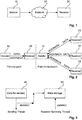
- network node 10 and network node 20 are connected to a wide area network WAN 30 and communicate via data packets, for example in an Internet environment with the reliable TCP/IP protocol.
- TCP here stands for the connection oriented Transmission Control Protocol and IP is the Internet Protocol.
- a reliable transport protocol such as TCP/IP
- the two basic communication modes are possible, point-to-point and point-to-multipoint.
- Fig. 2 illustrates the two modes schematically where on the left side the point-to-point communication is depicted and on the right side the point-to-multipoint communication. Since multiple receiving stations are involved in the point-to-multipoint communication mode, it is required that a positive acknowledge message needs to be received back from each of the multipoint receiving stations before a data packet can be removed from the sending buffer. It may be that a packet is lost on the transfer path and thus after a timeout set in the TCP protocol such missing packet needs to be retransmitted to the receiving station. That's why the TCP protocol is considered to be a reliable transport protocol. It is obvious that the handling of ACK/NACK messages is subjectively complicated in the point-to-multipoint mode.
- the packet sending thread is a thread which gets data from a data pool implemented as a send buffer 40 in the form of a circular buffer, also called Token buffer, assembles it into a data packet, creates an entry about this data packet at the meta-storage buffer 50 and sends it.
- the receiver servicing thread 90 in turn waits for a packet confirmation and removes the entry from meta-storage buffer 50 as well as the data from the "data for sending" memory area of the sending buffer 40.
- the meta-storage buffer 50 will be organized in form of a circular buffer with enhanced functionality on the matter of each update operation management.
- a "descriptor" will be used for that purpose, which represents the position of a certain cell at the meta-storage buffer 50.
- Meta-storage buffer 50 is to be organized in form of a circular (ring) buffer, which consists of a sufficient amount of cells plus some safety margin such that overflow is avoided.
- ring circular
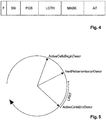
- the format of a meta-storage buffer cell is depicted in Fig. 4 .
- a cell comprises fields for the following information items:
- MetaStorageSize SendBufferSize MaxPayloadSize + CorrectionCoef
- SendBufferSize is the size of the data pool in bytes which are to be sent in one session
- MaxPayloadSize is a maximum allowed size of the packet payload in bytes within the session; this value is normally derived from the maximum transmission unit value MTU by deducting all the packet headers which are encapsulated in the Ethernet packet;
- CorrectionCoef is a safety gap to avoid a storage overflow - this value could vary, depending on the use case. Such an overflow may theoretically appear if the sending station 10 will start to generate an enormous amount of packets with a size less than the MaxPayloadSize.
- meta-storage structure which consists of so many cells as calculated in the MetaStorageSize parameter.
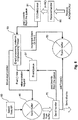
- the cells are of the pre-defined type and for managing the meta-storage three independent descriptors are used, which are at the places depicted in Fig. 5 .
- these descriptors can be implemented in the form of pointers which point to the respective cell in the buffer.
- a new cell is to be filled with certain meta-data, and the working area, in such case, begins at the ActiveCellsEndDescr-descriptor and ends at the ActiveCellsBeginDescr-descriptor. It is noted that the direction in which the cell number increases is also indicated in Fig. 5 .
- the ActiveCellsEndDescr-descriptor will be shifted when a new cell is filled. For the case a packet has been positively acknowledged, the corresponding cell in the meta-storage buffer will be removed which simply will be done by shifting the ActiveCellBeginDescr-descriptor. This is the basic principle of how meta-storage is protected in case of two concurrent update calls because areas, which are subject for concurrent update calls are strictly isolated from each other and a race condition will never appear when the Begin-descriptor is always checked before a new cell is filled.
- each cell filling implies that the new cell will be filled outside of the interval [ActiveCellBeginDescr; ActiveCellEndDescr] - the interval, where the multipleIncrement()-method is allowed to work. This method will be explained below. Moreover, in the process of cell filling first the cell will be filled and only when it is filled, the ActiveCellEndDescr-descriptor will be moved to the next position. Here, the shifting of the ActiveCellsEndDescr-descriptor will be performed by the sending thread 70 and the shifting of the ActiveCellBeginDescr-descriptor as well as the NextRetramsissionDescr-descriptor will be performed by the receiver servicing thread 90. The difference to the point-to-point approach is in the particular logics, which moves the ActiveCellsBeginDescr-descriptor (removes data). This will be evident from the detailed description of the multipleIncre-ment()-method which follows.
- the sending buffer 40 has the same reference number as in Fig. 3 .
- the meta-storage 50 from Fig. 3 is implemented in the form of a circular Token buffer which likewise has the same reference number 50. Different threads working in the frame-work are depicted with different colors.
- There is a Send()fromAPI-thread which fills the sending buffer 40 with data to be sent.
- the data sections which flow into the sending buffer 40 come from an streaming application, e.g. a video streaming application. There are plenty of video player software solutions on the market, e.g. the VLC player.
- This thread is responsible for the sending of packets to the multipoint receiver group. It basically takes the data from the send buffer 40 assembles it into a data packet, creates an entry about this data packet at the Token buffer 50 by adding a Token to the buffer and sends the packet over the network. Thus it can do two sorts of actions with the Token buffer 50:
- a receiving thread 80 is also active in the sending station 10. It will deal with the ACK/NACK messages coming back from the receiving stations 21, 22, 23. This thread 80 is pushing the received packets into a CCDataQueue 81.
- the queue is needed for buffering the ACK and NACK packets before being handled with the event processing thread 90. It is a lock-free FIFO queue.
- lock-free means, that the element can be pushed and popped without needing mutexes or semaphores.
- the received packets await handling by the event processing thread 90.
- the event processing thread 90 corresponds to the receiver servicing thread which is depicted in Fig. 3 .
- the event processing thread 90 is responsible for processing of ACK/NACK messages queued in the CCDataQueue 81.
- This counter may be hold in the protocol software stack and counts the amount of unique acknowledgements for the certain packet.
- the term counter may be a bit misleading here, since in the disclosed embodiment the binary mask fulfills the job of the token counter pretty well. So incrementing the counter here is equivalent to updating the mask information in the meta storage cell.
- the packet can be deleted from the send buffer 40 and the token in the token buffer 50 may be freed, too. It is needed when all of the multipoint receivers 21, 22, 23 have acknowledged the packet and the meta-data for this packet is in the cell to which the ActiveCellBeginDescr-descriptor points.
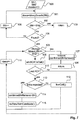
- the logics of the multipleIncrement()-method is illustrated in the flow chart shown in Fig. 7 .
- the program starts in step 100.
- Three parameters are handed over upon call-up of this thread 90.
- receiverId - an internal identifier number of the recipient from which the ACK message is coming which is to be handled by the thread 90.
- each ARQ message contains a sequence number or a range of it, it reports as received or lost. It is considered here an ACK ARQ message - a positive acknowledgement of the received packet, because this is the only condition to make a decision about a packet removal.
- the proposed algorithm relies on the fact that each receiver at the session has its own internal protocol-wide ID number, which is not an IP address but an internal unique identifier (constant in time) of each receiver inside the data transmission session (just an unsigned integer). In one embodiment a 32 bit unsigned integer number is used and considered to be sufficient for that purpose. This is one example, other examples are possible. If e.g. in another embodiment a globally unique ID number is used, then a 64 bit unsigned integer number can be used for that purpose.
- the multipleIncrement()-method gets the following data in step 100 to start working:
- step 101 the flow chart in Fig. 7 .
- step 102 it is checked if the end of the sequence number range SN2 has been reached. If yes, the handling of the ACK ARQ message is completed and the method ends with a return to the event processing thread 90 in step 103.
- step 104 Whether the search has found the cell with the binary search is checked in step 104. If not, the sequence number SN is incremented in step 105 and the program returns to step 101. If a cell for the respective sequence number and receiverID has been found in checking step 104 (it could be that it will not be found in the whole search range or just for part of it, in case of the occurrence of the duplication of an ACK message), the present ACK event has to be added to the mentioned binary mask MASK of that cell in step 109. Such an ACK duplication may occur in two cases:
- step 110 it will be checked if that was the last ACK which needs to be entered for this receiver or if more ACKs are awaited. The check will be performed by reading the mask of the cell and the mask has to be compared with one, which is stored at the global protocol objects-list of the receivers, which are active now. This object is preferably stored in a heap of the protocol stack runtime as well as other components. In that mask a receiver is signaled to be active in the session if any ACK/NACK message from that receiver has been received in the session. Therefore, if only some of the ACK messages are missing from that receiver the state in the global protocol object list will not be set to "0".
- the protocol objects-list is an independent object maintained and controlled by the Send Handler thread. In practice, it means that the Send Handler may initiate a receiver disconnection. And in the method for the receiver disconnection, there is one step which is cleaning-up the protocol objects-list. If both masks are found to be equal in step 110, it was the last ACK for the packet and the packet may be considered as a candidate for a packet removal. The checking of the masks equality is done in step 110 using the XOR (exclusive OR) operator. The result of that operation is entered in the following table for an example: Cell's binary mask Current active receivers mask Result (boolean) Action 10110 10111 1 keep active 10111 10111 0 remove
- the decision to perform a packet removal from send buffer 40 in this embodiment will be made based on the fact, whether the ACK message was expected for the SN number or not. This is checked in step 112. This is done by comparing the first sequence number SN1 of the acknowledged range with the expected one, which is tracked in the token buffer 50. The detailed process how to determine if a packet is expected or not will be explained hereinafter in detail when the ARQ loss report algorithm will be described. If the acknowledged packet was not expected, the cell will be marked as free in step 113, but the ActiveCellsBeginDescr-descriptor will not be moved yet. Those cells marked as free will be handled at step 115, when the method finally gets an expected sequence number.
- the algorithm will skip all the previously confirmed cells and set a new remove candidate to the position of the expected sequence number. And as soon, as a whole SN range is traversed, the Active-CellsBeginDescr will be moved a corresponding plurality of positions forward in the step 107. And this is one of the key features - independent on the token buffer state and the SN number range, the ActiveCellsBeginDescr-descriptor will be moved only ones per multipleInrement()-method call.
- step 111 the SN number will be incremented and it will be checked in step 106 if the incremented SN number is equal to SN2+1. If not, the cell for that incremented sequence number will be searched in step 106. For this search there is no need to perform a binary search since that cell should be pretty close to the first found cell due to the data transmission nature. The entry of the ACK event for the receiver into the mask of the found cell will likewise be entered as before.
- step 106 When all the ACKs for this receiver have been entered into the cell masks in this way after the loop has run through multiple times, the check in step 106 finally branches to step 107 in which the packet removal for all confirmed cells is performed.
- the ActiveCellsBeginDescr is moved several times for the confirmed removals registered in the list of confirmed removals and in addition these cells in the Token buffer 50 will be set to the "Free" state in the flag field F.
- the multipleIn-crement()-method returns to the event processing thread 90 in step 108.
- the remove call to the send buffer 40 will be initiated either one or zero times during processing of an ACK event. So, the ActiveCellsBeginDescr-descriptor can only be moved by the event processing thread 90, while the ActiveCellsEndDescr-descriptor can only be moved by the sending thread 70, which creates and send packets.
- LRST Liss Report Silence Threshold
- Fig. 5 illustrates an example LRST value and which range it covers in the meta-storage buffer 50 beginning from the ActiveCellsEndDescr-descriptor. This meta-storage parameter is to be obtained at the very beginning of the data transfer session through the following procedure:
- an LRST value of 50 % of the packets in fly is a sort of balance point for both high and low data rates.
- this LRST parameter is a subject for a deep algorithm tuning for each particular case and may significantly move protocol performance forward by a faster stack operation.
- the LRST value will be used in step 112 of Fig. 6 for checking if the data packet was expected or not.
- getACKLosses()-method must be performed in between the processing of two consecutive ARQ messages by the thread. This way the data consistency at the meta-storage 50 can be guaranteed.
- the logics of the sending thread 70 is much easier. On the token creation, it just tries to update the nearest cell in a "FREE" status. If it is available, everything is ok. If not, an update method will return an error code.
- the event processing thread 90 Upon getting a retransmission request from the event processing thread 90, it will look the existing token up and retrieve the needed information about the packet to be retransmitted (position in buffer and payload size). If the token is found, it will return "0", if not, an error code will be returned.
Landscapes
- Engineering & Computer Science (AREA)
- Computer Networks & Wireless Communication (AREA)
- Signal Processing (AREA)
- Environmental & Geological Engineering (AREA)
- Data Exchanges In Wide-Area Networks (AREA)
- Computer And Data Communications (AREA)
Claims (14)
- Verfahren zum Betreiben eines Speicherpuffersystems, das bei einer Senderstation (10) implementiert ist, welche mit einem Kommunikationsnetzwerk (30) für den schnellen Datentransport über das Kommunikationsnetzwerk (30) aufweisend ein verlässliches Transportprotokoll, das in einem Punkt-zu-Mehrpunkt Datentransfermodus funktioniert, verbunden werden kann, wobei das Speicherpuffersystem einen Sendepuffer (40) umfasst, der Datenzellen umfasst, in denen Dateneinheiten gespeichert sind, die dafür bereit sind, über das Kommunikationsnetzwerk (30) gesendet zu werden, und in denen die Dateneinheiten gespeichert sind, die über das Kommunikationsnetzwerk (30) mit korrespondierenden Datenpaketen gesendet wurden, aber nicht vollständig durch die Empfangsstationen (21, 22, 23) des Punkt-zu-Mehrpunkt Datenkommunikationsmodus bestätigt wurden, wobei das Speicherpuffersystem ferner einen Meta-Speicherpuffer (50) umfasst, der Zellen umfasst, in denen die Meta-Daten in Form von protokollabhängigen Parametern für die Datenpakete gespeichert sind, die über das Kommunikationsnetzwerk (30) gesendet wurden, aber nicht vollständig bestätigt sind, wobei:- ein Sende-Thread (70), der für das Senden von Datenpaketen an eine Mehrpunkt-Empfängergruppe verantwortlich ist, die Metadaten für ein gesendetes Datenpaket in eine nächste freie Zelle des Meta-Speicherpuffers (50) einfügt, wodurch ein erster Deskriptor, ActiveCellsEndDescr, der auf das Ende des Bereichs der belegten Zellen in dem Meta-Speicher (50) zeigt, nach vorne verschoben wird;- ein Empfänger-Servicing-Thread (90), der für das Einfügen von Meta-Daten in den Meta-Speicherpuffer (50) verantwortlich ist, eine Zelle aus dem Bereich von belegten Zellen in dem Meta-Speicherpuffer (50) entfernt, in dem Fall, dass festgestellt wird, dass das entsprechende Datenpaket von allen aktiven Empfängern (21, 22, 23) in dem Punkt-zu-Mehrpunkt Kommunikationsmodus vollständig bestätigt wurde, wodurch ein zweiter Descriptor, ActiveCellsBeginDescr, der auf den Anfang des Bereichs von belegten Zellen in dem Meta-Speicher (50) zeigt, nach vorne verschoben wird, und in dem Empfänger-Servicing-Thread (90) geprüft wird, ob eine Bestätigungsnachricht von den Mehrpunkt-Empfängern (21, 22, 23) für das entsprechende Datenpaket fehlt und dadurch geprüft wird, ob der Empfänger, von dem eine Bestätigungsnachricht fehlt, in einem inaktiven Zustand ist, wobei in dem Fall, dass die fehlende Bestätigungsnachricht nicht von einem inaktiven Empfänger stammt, das Datenpaket zu einem Kandidaten für eine erneute Übertragung über das Kommunikationsnetzwerk (30) für mindestens den Mehrpunkt-Empfänger (21, 22, 23) erklärt wird, von dem die Bestätigungsnachricht fehlt.
- Verfahren nach Anspruch 1, wobei die belegten Zellen in dem Meta-Speicherpuffer (50) ein Feld, MASK, mit Maskeninformationen umfassen, die für jede der Empfangsstationen (21, 22, 23) einer Datenübertragungssitzung in dem Punkt-zu-Mehrpunkt-Modus den Zustand widerspiegen, ob eine Bestätigungsnachricht von der jeweiligen Empfangsstation (21, 22, 23) für das entsprechende Datenpaket, das über das Kommunikationsnetzwerk (30) gesendet wird, zurückempfangen wurde oder nicht.
- Verfahren nach Anspruch 2, umfassend das Aktualisieren der Maskeninformationen in der belegten Zelle für das entsprechende gesendete Datenpaket durch den Empfänger-Servicing-Thread (90) nach dem Empfang einer Bestätigungsnachricht von einer Empfangsstation (21, 22, 23).
- Verfahren nach einem der Ansprüche 2 oder 3, wobei der Empfänger-Servicing-Thread (90) das Prüfen der Einträge in dem Feld MASK mit Maskeninformationen umfasst, wodurch die Zelle als in dem Entfernungsvorgang entfernbar erklärt wird, wenn die Maskeninformationen widerspiegeln, dass die Bestätigungsnachrichten für das entsprechende Datenpaket von allen aktiven Empfängern (21, 22, 23), die an dem Punkt-zu-Mehrpunkt-Kommunikationsmodus beteiligt sind, empfangen worden sind.
- Verfahren nach einem der Ansprüche 2 bis 4, wobei die Maskeninformationen, MASK, in Form einer binären Maske mit einem binären Informationselement für jede der beteiligten Empfangsstationen (21, 22, 23) in dem Punkt-zu-Mehrpunkt-Kommunikationsmodus implementiert sind.
- Verfahren nach einem der vorhergehenden Ansprüche, wobei das Prüfen auf einen inaktiven Empfänger das Vergleichen der Maskeninformationen der entsprechenden Zelle in dem Meta-Speicherpuffer (50) mit einer Protokollobjektliste umfasst, in der sie aufgezeichnet sind, wenn einer der Mehrpunkt-Empfänger (21, 22, 23) in der aktuellen Datenübertragungssitzung inaktiv ist.
- Verfahren nach einem der vorhergehenden Ansprüche, wobei das Prüfen, ob Bestätigungsmeldungen fehlen, das Vergleichen der Menge der belegten Zellen in dem Meta-Speicherpuffer (50) mit einem Schwellenwert, LRST, und das Ergreifen weiterer Maßnahmen in dem Schritt des Prüfens nur dann umfasst, wenn die Menge der belegten Zellen in dem Meta-Speicherpuffer (50) den Schwellenwert, LRST, überschreitet.
- Verfahren nach Anspruch 7, wobei der Schwellenwert, LRST, zu Beginn einer Datenübertragungssitzung geschätzt wird.
- Verfahren nach Anspruch 8, wobei das Schätzen des Schwellenwertes, LRST, umfasst:- Messen der Hin- und Rücklaufzeitwerte RTT in Millisekunden zwischen der Sendestation (10) und einer der Mehrpunkt-Empfangsstationen (21, 22, 23)- Auswählen des höchsten in dem vorherigen Schritt gemessenen RTT-Wertes für die Hin- und Rücklaufzeit;- Berechnen des Schwellenwertes LRST gemäß der Formel:
 • Datenrate - die maximale Sende-Datenrate in Mbit/S ist• Paketgröße - die maximale Paketgröße in Bytes ist• RTT - der höchste gemessene RTT-Wert in ms ist, der in dem vorherigen Schritt ausgewählt wurde,• B - ein Korrekturkoeffizient ist.
 - Verfahren nach Anspruch 9, wobei der Korrekturkoeffizient B gemäß der folgenden Formel berechnet wird:

- Verfahren nach einem der vorhergehenden Ansprüche, welches das Beibehalten eines dritten Deskriptors, NextRetransmissionDescr, umfasst, der auf die nächste am meisten erwartete Position einer Zelle zeigt, welche die Metadaten des in dem Sendepuffer (40) gespeicherten Datenpakets enthält, von dem erwartet wird, dass es bei der nächsten Wiederübertragungsanforderung erneut übertragen wird.
- Vorrichtung zum Durchführen des Verfahrens nach einem der vorhergehenden Ansprüche.
- Computerprogrammprodukt mit darauf gespeichertem Programmcode, der bei Ausführen in einem Computersystem das Verfahren nach einem der Ansprüche 1 bis 11 ausführt.
- Computerprogramm, das ausführbaren Programmcode umfasst, der bei Ausführen in einem Computersystem das Verfahren nach einem der Ansprüche 1 bis 11 ausführt.
Applications Claiming Priority (1)
| Application Number | Priority Date | Filing Date | Title |
|---|---|---|---|
| PCT/EP2015/025029 WO2016192744A1 (en) | 2015-05-30 | 2015-05-30 | Method for operating a memory buffer system implemented at a sender station for the fast data transport over a communication network, correspondingly adapted apparatus to perform the method, computer program product, and computer program |
Publications (2)
| Publication Number | Publication Date |
|---|---|
| EP3304785A1 EP3304785A1 (de) | 2018-04-11 |
| EP3304785B1 true EP3304785B1 (de) | 2020-08-05 |
Family
ID=53373390
Family Applications (1)
| Application Number | Title | Priority Date | Filing Date |
|---|---|---|---|
| EP15727883.9A Not-in-force EP3304785B1 (de) | 2015-05-30 | 2015-05-30 | Verfahren zum betreiben eines an einer senderstation implementierten speicherpuffersystems zum schnellen datentransport über ein kommunikationsnetz, entsprechend angepasste vorrichtung zur durchführung des verfahrens, computerprogrammprodukt und computerprogramm |
Country Status (5)
| Country | Link |
|---|---|
| US (1) | US10419369B2 (de) |
| EP (1) | EP3304785B1 (de) |
| CA (1) | CA2985674C (de) |
| HK (1) | HK1248034A1 (de) |
| WO (1) | WO2016192744A1 (de) |
Families Citing this family (4)
| Publication number | Priority date | Publication date | Assignee | Title |
|---|---|---|---|---|
| US10303437B2 (en) * | 2016-11-08 | 2019-05-28 | Ca, Inc. | Synchronizing multi-threaded servicing of a server event buffer |
| CA3092671A1 (en) * | 2018-02-23 | 2019-08-29 | aCon A/S | Method for allocating parcels and a system therefore |
| CA3178887A1 (en) * | 2020-05-15 | 2021-11-18 | Google Llc | Thread over internet protocol |
| CN113435605B (zh) * | 2021-06-25 | 2023-06-09 | 烽火通信科技股份有限公司 | 一种基于网络数据池的ai动态注入的控制方法和装置 |
Family Cites Families (3)
| Publication number | Priority date | Publication date | Assignee | Title |
|---|---|---|---|---|
| GB2385499A (en) * | 2002-02-18 | 2003-08-20 | Venation Ltd | Network transport protocol |
| EP2045973A1 (de) | 2007-10-02 | 2009-04-08 | Deutsche Thomson OHG | Speicherpuffersystem und Verfahren zum Betreiben eines Speicherpuffersystems für schnellen Datenaustausch |
| US8478890B2 (en) * | 2011-07-15 | 2013-07-02 | Damaka, Inc. | System and method for reliable virtual bi-directional data stream communications with single socket point-to-multipoint capability |
-
2015
- 2015-05-30 EP EP15727883.9A patent/EP3304785B1/de not_active Not-in-force
- 2015-05-30 US US15/576,099 patent/US10419369B2/en active Active
- 2015-05-30 HK HK18107023.6A patent/HK1248034A1/zh unknown
- 2015-05-30 CA CA2985674A patent/CA2985674C/en active Active
- 2015-05-30 WO PCT/EP2015/025029 patent/WO2016192744A1/en not_active Ceased
Non-Patent Citations (1)
| Title |
|---|
| None * |
Also Published As
| Publication number | Publication date |
|---|---|
| HK1248034A1 (zh) | 2018-10-05 |
| WO2016192744A1 (en) | 2016-12-08 |
| CA2985674C (en) | 2024-01-16 |
| EP3304785A1 (de) | 2018-04-11 |
| US10419369B2 (en) | 2019-09-17 |
| US20180131639A1 (en) | 2018-05-10 |
| CA2985674A1 (en) | 2016-12-08 |
Similar Documents
| Publication | Publication Date | Title |
|---|---|---|
| US11934340B2 (en) | Multi-path RDMA transmission | |
| US6337852B1 (en) | Flow control system using control information of a message for initiating retransmission of data portion when buffer is available | |
| US10430374B2 (en) | Selective acknowledgement of RDMA packets | |
| US9888048B1 (en) | Supporting millions of parallel light weight data streams in a distributed system | |
| KR100850254B1 (ko) | 순서가 어긋난 RDMA Send 메시지들의 전달에관련한 기입 연산들 수의 감소 | |
| US5961659A (en) | Independent simultaneous queueing of message descriptors | |
| US5951706A (en) | Method of independent simultaneous queueing of message descriptors | |
| US12132800B2 (en) | Reliable transport protocol and hardware architecture for datacenter networking | |
| US11283719B2 (en) | Content addressable memory (CAM) based hardware architecture for datacenter networking | |
| US10419369B2 (en) | Method for operating a memory buffer system implemented at a sender station for the fast data transport over a communication network, correspondingly adapted apparatus to perform the method, computer program product, and computer program | |
| CN109067506A (zh) | 一种基于多滑动窗口并发的轻量级异步消息实现方法 | |
| CN121217677B (zh) | 一种rdma报文发送方法及装置 | |
| EP2206294B1 (de) | Speicherpuffersystem und verfahren zum betrieb eines speicherpuffersystems für schnellen datenaustausch | |
| CN111970092A (zh) | 一种支持可靠性调节的多协议冗余网络异步通信方法 | |
| US10701170B2 (en) | Multicasting method in distributed cache environment, and distributed cache server using the same | |
| US20050078605A1 (en) | Managing message arrival to ensure proper matching of unordered messages | |
| US8418017B2 (en) | Adaptive acknowledgment mechanism for network communication | |
| US9794183B2 (en) | Interconnect flow control | |
| JP5761193B2 (ja) | 通信装置、通信システム、パケット再送制御方法およびパケット再送制御プログラム | |
| CN119363675B (zh) | 一种丢包处理方法、网关及装置 | |
| US12381664B2 (en) | Method and apparatus of reporting automatic repeat request status in a communication system | |
| US12443657B2 (en) | High bandwidth content addressable memory (CAM) based hardware architecture for datacenter networking | |
| CN120546829A (zh) | 一种基于rdma ud模式的可靠数据传输方法 | |
| CN117135125A (zh) | 一种网络延时状态下的消息处理方法、系统、设备及介质 | |
| Kasture | Improving performance of SMTP relay servers: an in-kernel approach |
Legal Events
| Date | Code | Title | Description |
|---|---|---|---|
| STAA | Information on the status of an ep patent application or granted ep patent |
Free format text: STATUS: THE INTERNATIONAL PUBLICATION HAS BEEN MADE |
|
| PUAI | Public reference made under article 153(3) epc to a published international application that has entered the european phase |
Free format text: ORIGINAL CODE: 0009012 |
|
| STAA | Information on the status of an ep patent application or granted ep patent |
Free format text: STATUS: REQUEST FOR EXAMINATION WAS MADE |
|
| 17P | Request for examination filed |
Effective date: 20171215 |
|
| AK | Designated contracting states |
Kind code of ref document: A1 Designated state(s): AL AT BE BG CH CY CZ DE DK EE ES FI FR GB GR HR HU IE IS IT LI LT LU LV MC MK MT NL NO PL PT RO RS SE SI SK SM TR |
|
| AX | Request for extension of the european patent |
Extension state: BA ME |
|
| DAV | Request for validation of the european patent (deleted) | ||
| DAX | Request for extension of the european patent (deleted) | ||
| REG | Reference to a national code |
Ref country code: HK Ref legal event code: DE Ref document number: 1248034 Country of ref document: HK |
|
| GRAP | Despatch of communication of intention to grant a patent |
Free format text: ORIGINAL CODE: EPIDOSNIGR1 |
|
| STAA | Information on the status of an ep patent application or granted ep patent |
Free format text: STATUS: GRANT OF PATENT IS INTENDED |
|
| INTG | Intention to grant announced |
Effective date: 20200320 |
|
| GRAS | Grant fee paid |
Free format text: ORIGINAL CODE: EPIDOSNIGR3 |
|
| GRAA | (expected) grant |
Free format text: ORIGINAL CODE: 0009210 |
|
| STAA | Information on the status of an ep patent application or granted ep patent |
Free format text: STATUS: THE PATENT HAS BEEN GRANTED |
|
| AK | Designated contracting states |
Kind code of ref document: B1 Designated state(s): AL AT BE BG CH CY CZ DE DK EE ES FI FR GB GR HR HU IE IS IT LI LT LU LV MC MK MT NL NO PL PT RO RS SE SI SK SM TR |
|
| REG | Reference to a national code |
Ref country code: GB Ref legal event code: FG4D |
|
| REG | Reference to a national code |
Ref country code: CH Ref legal event code: EP |
|
| REG | Reference to a national code |
Ref country code: AT Ref legal event code: REF Ref document number: 1300224 Country of ref document: AT Kind code of ref document: T Effective date: 20200815 |
|
| REG | Reference to a national code |
Ref country code: DE Ref legal event code: R096 Ref document number: 602015056889 Country of ref document: DE |
|
| REG | Reference to a national code |
Ref country code: IE Ref legal event code: FG4D |
|
| REG | Reference to a national code |
Ref country code: NL Ref legal event code: FP |
|
| REG | Reference to a national code |
Ref country code: LT Ref legal event code: MG4D |
|
| REG | Reference to a national code |
Ref country code: AT Ref legal event code: MK05 Ref document number: 1300224 Country of ref document: AT Kind code of ref document: T Effective date: 20200805 |
|
| PG25 | Lapsed in a contracting state [announced via postgrant information from national office to epo] |
Ref country code: LT Free format text: LAPSE BECAUSE OF FAILURE TO SUBMIT A TRANSLATION OF THE DESCRIPTION OR TO PAY THE FEE WITHIN THE PRESCRIBED TIME-LIMIT Effective date: 20200805 Ref country code: AT Free format text: LAPSE BECAUSE OF FAILURE TO SUBMIT A TRANSLATION OF THE DESCRIPTION OR TO PAY THE FEE WITHIN THE PRESCRIBED TIME-LIMIT Effective date: 20200805 Ref country code: HR Free format text: LAPSE BECAUSE OF FAILURE TO SUBMIT A TRANSLATION OF THE DESCRIPTION OR TO PAY THE FEE WITHIN THE PRESCRIBED TIME-LIMIT Effective date: 20200805 Ref country code: GR Free format text: LAPSE BECAUSE OF FAILURE TO SUBMIT A TRANSLATION OF THE DESCRIPTION OR TO PAY THE FEE WITHIN THE PRESCRIBED TIME-LIMIT Effective date: 20201106 Ref country code: NO Free format text: LAPSE BECAUSE OF FAILURE TO SUBMIT A TRANSLATION OF THE DESCRIPTION OR TO PAY THE FEE WITHIN THE PRESCRIBED TIME-LIMIT Effective date: 20201105 Ref country code: ES Free format text: LAPSE BECAUSE OF FAILURE TO SUBMIT A TRANSLATION OF THE DESCRIPTION OR TO PAY THE FEE WITHIN THE PRESCRIBED TIME-LIMIT Effective date: 20200805 Ref country code: BG Free format text: LAPSE BECAUSE OF FAILURE TO SUBMIT A TRANSLATION OF THE DESCRIPTION OR TO PAY THE FEE WITHIN THE PRESCRIBED TIME-LIMIT Effective date: 20201105 Ref country code: FI Free format text: LAPSE BECAUSE OF FAILURE TO SUBMIT A TRANSLATION OF THE DESCRIPTION OR TO PAY THE FEE WITHIN THE PRESCRIBED TIME-LIMIT Effective date: 20200805 Ref country code: PT Free format text: LAPSE BECAUSE OF FAILURE TO SUBMIT A TRANSLATION OF THE DESCRIPTION OR TO PAY THE FEE WITHIN THE PRESCRIBED TIME-LIMIT Effective date: 20201207 Ref country code: SE Free format text: LAPSE BECAUSE OF FAILURE TO SUBMIT A TRANSLATION OF THE DESCRIPTION OR TO PAY THE FEE WITHIN THE PRESCRIBED TIME-LIMIT Effective date: 20200805 |
|
| PG25 | Lapsed in a contracting state [announced via postgrant information from national office to epo] |
Ref country code: LV Free format text: LAPSE BECAUSE OF FAILURE TO SUBMIT A TRANSLATION OF THE DESCRIPTION OR TO PAY THE FEE WITHIN THE PRESCRIBED TIME-LIMIT Effective date: 20200805 Ref country code: PL Free format text: LAPSE BECAUSE OF FAILURE TO SUBMIT A TRANSLATION OF THE DESCRIPTION OR TO PAY THE FEE WITHIN THE PRESCRIBED TIME-LIMIT Effective date: 20200805 Ref country code: RS Free format text: LAPSE BECAUSE OF FAILURE TO SUBMIT A TRANSLATION OF THE DESCRIPTION OR TO PAY THE FEE WITHIN THE PRESCRIBED TIME-LIMIT Effective date: 20200805 Ref country code: IS Free format text: LAPSE BECAUSE OF FAILURE TO SUBMIT A TRANSLATION OF THE DESCRIPTION OR TO PAY THE FEE WITHIN THE PRESCRIBED TIME-LIMIT Effective date: 20201205 |
|
| PG25 | Lapsed in a contracting state [announced via postgrant information from national office to epo] |
Ref country code: EE Free format text: LAPSE BECAUSE OF FAILURE TO SUBMIT A TRANSLATION OF THE DESCRIPTION OR TO PAY THE FEE WITHIN THE PRESCRIBED TIME-LIMIT Effective date: 20200805 Ref country code: SM Free format text: LAPSE BECAUSE OF FAILURE TO SUBMIT A TRANSLATION OF THE DESCRIPTION OR TO PAY THE FEE WITHIN THE PRESCRIBED TIME-LIMIT Effective date: 20200805 Ref country code: RO Free format text: LAPSE BECAUSE OF FAILURE TO SUBMIT A TRANSLATION OF THE DESCRIPTION OR TO PAY THE FEE WITHIN THE PRESCRIBED TIME-LIMIT Effective date: 20200805 Ref country code: DK Free format text: LAPSE BECAUSE OF FAILURE TO SUBMIT A TRANSLATION OF THE DESCRIPTION OR TO PAY THE FEE WITHIN THE PRESCRIBED TIME-LIMIT Effective date: 20200805 Ref country code: CZ Free format text: LAPSE BECAUSE OF FAILURE TO SUBMIT A TRANSLATION OF THE DESCRIPTION OR TO PAY THE FEE WITHIN THE PRESCRIBED TIME-LIMIT Effective date: 20200805 |
|
| REG | Reference to a national code |
Ref country code: DE Ref legal event code: R097 Ref document number: 602015056889 Country of ref document: DE |
|
| PG25 | Lapsed in a contracting state [announced via postgrant information from national office to epo] |
Ref country code: AL Free format text: LAPSE BECAUSE OF FAILURE TO SUBMIT A TRANSLATION OF THE DESCRIPTION OR TO PAY THE FEE WITHIN THE PRESCRIBED TIME-LIMIT Effective date: 20200805 |
|
| PLBE | No opposition filed within time limit |
Free format text: ORIGINAL CODE: 0009261 |
|
| STAA | Information on the status of an ep patent application or granted ep patent |
Free format text: STATUS: NO OPPOSITION FILED WITHIN TIME LIMIT |
|
| PG25 | Lapsed in a contracting state [announced via postgrant information from national office to epo] |
Ref country code: SK Free format text: LAPSE BECAUSE OF FAILURE TO SUBMIT A TRANSLATION OF THE DESCRIPTION OR TO PAY THE FEE WITHIN THE PRESCRIBED TIME-LIMIT Effective date: 20200805 |
|
| 26N | No opposition filed |
Effective date: 20210507 |
|
| PG25 | Lapsed in a contracting state [announced via postgrant information from national office to epo] |
Ref country code: IT Free format text: LAPSE BECAUSE OF FAILURE TO SUBMIT A TRANSLATION OF THE DESCRIPTION OR TO PAY THE FEE WITHIN THE PRESCRIBED TIME-LIMIT Effective date: 20200805 |
|
| PG25 | Lapsed in a contracting state [announced via postgrant information from national office to epo] |
Ref country code: SI Free format text: LAPSE BECAUSE OF FAILURE TO SUBMIT A TRANSLATION OF THE DESCRIPTION OR TO PAY THE FEE WITHIN THE PRESCRIBED TIME-LIMIT Effective date: 20200805 |
|
| REG | Reference to a national code |
Ref country code: CH Ref legal event code: PL |
|
| PG25 | Lapsed in a contracting state [announced via postgrant information from national office to epo] |
Ref country code: CH Free format text: LAPSE BECAUSE OF NON-PAYMENT OF DUE FEES Effective date: 20210531 Ref country code: MC Free format text: LAPSE BECAUSE OF FAILURE TO SUBMIT A TRANSLATION OF THE DESCRIPTION OR TO PAY THE FEE WITHIN THE PRESCRIBED TIME-LIMIT Effective date: 20200805 Ref country code: LU Free format text: LAPSE BECAUSE OF NON-PAYMENT OF DUE FEES Effective date: 20210530 Ref country code: LI Free format text: LAPSE BECAUSE OF NON-PAYMENT OF DUE FEES Effective date: 20210531 |
|
| REG | Reference to a national code |
Ref country code: BE Ref legal event code: MM Effective date: 20210531 |
|
| PG25 | Lapsed in a contracting state [announced via postgrant information from national office to epo] |
Ref country code: IE Free format text: LAPSE BECAUSE OF NON-PAYMENT OF DUE FEES Effective date: 20210530 |
|
| PG25 | Lapsed in a contracting state [announced via postgrant information from national office to epo] |
Ref country code: BE Free format text: LAPSE BECAUSE OF NON-PAYMENT OF DUE FEES Effective date: 20210531 |
|
| REG | Reference to a national code |
Ref country code: DE Ref legal event code: R081 Ref document number: 602015056889 Country of ref document: DE Owner name: DEXOR TECHNOLOGY GMBH, DE Free format text: FORMER OWNER: HOCHSCHULE ANHALT, 06366 KOETHEN, DE |
|
| PG25 | Lapsed in a contracting state [announced via postgrant information from national office to epo] |
Ref country code: CY Free format text: LAPSE BECAUSE OF FAILURE TO SUBMIT A TRANSLATION OF THE DESCRIPTION OR TO PAY THE FEE WITHIN THE PRESCRIBED TIME-LIMIT Effective date: 20200805 |
|
| PG25 | Lapsed in a contracting state [announced via postgrant information from national office to epo] |
Ref country code: HU Free format text: LAPSE BECAUSE OF FAILURE TO SUBMIT A TRANSLATION OF THE DESCRIPTION OR TO PAY THE FEE WITHIN THE PRESCRIBED TIME-LIMIT; INVALID AB INITIO Effective date: 20150530 |
|
| PG25 | Lapsed in a contracting state [announced via postgrant information from national office to epo] |
Ref country code: MK Free format text: LAPSE BECAUSE OF FAILURE TO SUBMIT A TRANSLATION OF THE DESCRIPTION OR TO PAY THE FEE WITHIN THE PRESCRIBED TIME-LIMIT Effective date: 20200805 |
|
| PGFP | Annual fee paid to national office [announced via postgrant information from national office to epo] |
Ref country code: NL Payment date: 20240524 Year of fee payment: 10 |
|
| PGFP | Annual fee paid to national office [announced via postgrant information from national office to epo] |
Ref country code: GB Payment date: 20240529 Year of fee payment: 10 |
|
| PGFP | Annual fee paid to national office [announced via postgrant information from national office to epo] |
Ref country code: DE Payment date: 20240609 Year of fee payment: 10 |
|
| PGFP | Annual fee paid to national office [announced via postgrant information from national office to epo] |
Ref country code: FR Payment date: 20240529 Year of fee payment: 10 |
|
| PG25 | Lapsed in a contracting state [announced via postgrant information from national office to epo] |
Ref country code: MT Free format text: LAPSE BECAUSE OF FAILURE TO SUBMIT A TRANSLATION OF THE DESCRIPTION OR TO PAY THE FEE WITHIN THE PRESCRIBED TIME-LIMIT Effective date: 20200805 |
|
| REG | Reference to a national code |
Ref country code: HK Ref legal event code: WD Ref document number: 1248034 Country of ref document: HK |
|
| REG | Reference to a national code |
Ref country code: DE Ref legal event code: R119 Ref document number: 602015056889 Country of ref document: DE |
|
| PG25 | Lapsed in a contracting state [announced via postgrant information from national office to epo] |
Ref country code: TR Free format text: LAPSE BECAUSE OF FAILURE TO SUBMIT A TRANSLATION OF THE DESCRIPTION OR TO PAY THE FEE WITHIN THE PRESCRIBED TIME-LIMIT Effective date: 20200805 |
|
| REG | Reference to a national code |
Ref country code: NL Ref legal event code: MM Effective date: 20250601 |
|
| GBPC | Gb: european patent ceased through non-payment of renewal fee |
Effective date: 20250530 |
|
| PG25 | Lapsed in a contracting state [announced via postgrant information from national office to epo] |
Ref country code: NL Free format text: LAPSE BECAUSE OF NON-PAYMENT OF DUE FEES Effective date: 20250601 |
|
| PG25 | Lapsed in a contracting state [announced via postgrant information from national office to epo] |
Ref country code: GB Free format text: LAPSE BECAUSE OF NON-PAYMENT OF DUE FEES Effective date: 20250530 |
|
| PG25 | Lapsed in a contracting state [announced via postgrant information from national office to epo] |
Ref country code: DE Free format text: LAPSE BECAUSE OF NON-PAYMENT OF DUE FEES Effective date: 20251202 |
|
| PG25 | Lapsed in a contracting state [announced via postgrant information from national office to epo] |
Ref country code: FR Free format text: LAPSE BECAUSE OF NON-PAYMENT OF DUE FEES Effective date: 20250531 |