EP2204821A1 - Tape member or sheet member, and method of producing tape member or sheet member - Google Patents
Tape member or sheet member, and method of producing tape member or sheet member Download PDFInfo
- Publication number
- EP2204821A1 EP2204821A1 EP10154344A EP10154344A EP2204821A1 EP 2204821 A1 EP2204821 A1 EP 2204821A1 EP 10154344 A EP10154344 A EP 10154344A EP 10154344 A EP10154344 A EP 10154344A EP 2204821 A1 EP2204821 A1 EP 2204821A1
- Authority
- EP
- European Patent Office
- Prior art keywords
- paper
- mica
- mixed
- obtaining
- particles
- Prior art date
- Legal status (The legal status is an assumption and is not a legal conclusion. Google has not performed a legal analysis and makes no representation as to the accuracy of the status listed.)
- Withdrawn
Links
- 238000000034 method Methods 0.000 title claims abstract description 57
- 239000002245 particle Substances 0.000 claims abstract description 63
- 239000011230 binding agent Substances 0.000 claims abstract description 57
- 239000000463 material Substances 0.000 claims abstract description 29
- XLYOFNOQVPJJNP-UHFFFAOYSA-N water Substances O XLYOFNOQVPJJNP-UHFFFAOYSA-N 0.000 claims description 55
- 238000002156 mixing Methods 0.000 claims description 39
- 239000000243 solution Substances 0.000 claims description 39
- 238000001035 drying Methods 0.000 claims description 33
- 239000002002 slurry Substances 0.000 claims description 33
- 239000011259 mixed solution Substances 0.000 claims description 21
- 239000002904 solvent Substances 0.000 claims description 21
- 238000001914 filtration Methods 0.000 claims description 18
- 150000004703 alkoxides Chemical class 0.000 claims description 9
- 239000003054 catalyst Substances 0.000 claims description 9
- 229910052751 metal Inorganic materials 0.000 claims description 9
- 239000002184 metal Substances 0.000 claims description 9
- 239000010445 mica Substances 0.000 abstract description 138
- 229910052618 mica group Inorganic materials 0.000 abstract description 138
- PNEYBMLMFCGWSK-UHFFFAOYSA-N aluminium oxide Inorganic materials [O-2].[O-2].[O-2].[Al+3].[Al+3] PNEYBMLMFCGWSK-UHFFFAOYSA-N 0.000 description 50
- 229920005989 resin Polymers 0.000 description 23
- 239000011347 resin Substances 0.000 description 23
- 238000004519 manufacturing process Methods 0.000 description 20
- 229910052582 BN Inorganic materials 0.000 description 17
- PZNSFCLAULLKQX-UHFFFAOYSA-N Boron nitride Chemical compound N#B PZNSFCLAULLKQX-UHFFFAOYSA-N 0.000 description 17
- 239000012153 distilled water Substances 0.000 description 16
- ZWEHNKRNPOVVGH-UHFFFAOYSA-N 2-Butanone Chemical compound CCC(C)=O ZWEHNKRNPOVVGH-UHFFFAOYSA-N 0.000 description 15
- LFQSCWFLJHTTHZ-UHFFFAOYSA-N Ethanol Chemical compound CCO LFQSCWFLJHTTHZ-UHFFFAOYSA-N 0.000 description 14
- 239000003822 epoxy resin Substances 0.000 description 12
- 229920000647 polyepoxide Polymers 0.000 description 12
- 239000000126 substance Substances 0.000 description 10
- VYPSYNLAJGMNEJ-UHFFFAOYSA-N Silicium dioxide Chemical compound O=[Si]=O VYPSYNLAJGMNEJ-UHFFFAOYSA-N 0.000 description 9
- 239000004744 fabric Substances 0.000 description 9
- 239000010419 fine particle Substances 0.000 description 9
- 239000011521 glass Substances 0.000 description 9
- VEXZGXHMUGYJMC-UHFFFAOYSA-N Hydrochloric acid Chemical compound Cl VEXZGXHMUGYJMC-UHFFFAOYSA-N 0.000 description 8
- IISBACLAFKSPIT-UHFFFAOYSA-N bisphenol A Chemical compound C=1C=C(O)C=CC=1C(C)(C)C1=CC=C(O)C=C1 IISBACLAFKSPIT-UHFFFAOYSA-N 0.000 description 8
- 239000004020 conductor Substances 0.000 description 8
- 238000005470 impregnation Methods 0.000 description 8
- 239000006229 carbon black Substances 0.000 description 7
- 239000003795 chemical substances by application Substances 0.000 description 7
- -1 polyethylene terephthalate Polymers 0.000 description 7
- 230000000052 comparative effect Effects 0.000 description 6
- 238000003756 stirring Methods 0.000 description 6
- KFZMGEQAYNKOFK-UHFFFAOYSA-N Isopropanol Chemical compound CC(C)O KFZMGEQAYNKOFK-UHFFFAOYSA-N 0.000 description 5
- BOTDANWDWHJENH-UHFFFAOYSA-N Tetraethyl orthosilicate Chemical compound CCO[Si](OCC)(OCC)OCC BOTDANWDWHJENH-UHFFFAOYSA-N 0.000 description 5
- 235000019441 ethanol Nutrition 0.000 description 5
- 239000000203 mixture Substances 0.000 description 5
- 238000005096 rolling process Methods 0.000 description 5
- 238000003980 solgel method Methods 0.000 description 5
- 229920001187 thermosetting polymer Polymers 0.000 description 5
- 229920003169 water-soluble polymer Polymers 0.000 description 5
- TXHIDIHEXDFONW-UHFFFAOYSA-N benzene;propan-2-one Chemical compound CC(C)=O.C1=CC=CC=C1 TXHIDIHEXDFONW-UHFFFAOYSA-N 0.000 description 4
- 238000001816 cooling Methods 0.000 description 4
- 239000006185 dispersion Substances 0.000 description 4
- 230000000694 effects Effects 0.000 description 4
- 229920000642 polymer Polymers 0.000 description 4
- QTBSBXVTEAMEQO-UHFFFAOYSA-N Acetic acid Chemical compound CC(O)=O QTBSBXVTEAMEQO-UHFFFAOYSA-N 0.000 description 3
- XEEYBQQBJWHFJM-UHFFFAOYSA-N Iron Chemical group [Fe] XEEYBQQBJWHFJM-UHFFFAOYSA-N 0.000 description 3
- NTIZESTWPVYFNL-UHFFFAOYSA-N Methyl isobutyl ketone Chemical compound CC(C)CC(C)=O NTIZESTWPVYFNL-UHFFFAOYSA-N 0.000 description 3
- HEMHJVSKTPXQMS-UHFFFAOYSA-M Sodium hydroxide Chemical compound [OH-].[Na+] HEMHJVSKTPXQMS-UHFFFAOYSA-M 0.000 description 3
- YXFVVABEGXRONW-UHFFFAOYSA-N Toluene Chemical compound CC1=CC=CC=C1 YXFVVABEGXRONW-UHFFFAOYSA-N 0.000 description 3
- 229920001971 elastomer Polymers 0.000 description 3
- 239000000806 elastomer Substances 0.000 description 3
- 238000009413 insulation Methods 0.000 description 3
- 239000000377 silicon dioxide Substances 0.000 description 3
- 229920005992 thermoplastic resin Polymers 0.000 description 3
- 229910001021 Ferroalloy Inorganic materials 0.000 description 2
- UIHCLUNTQKBZGK-UHFFFAOYSA-N Methyl isobutyl ketone Natural products CCC(C)C(C)=O UIHCLUNTQKBZGK-UHFFFAOYSA-N 0.000 description 2
- LRHPLDYGYMQRHN-UHFFFAOYSA-N N-Butanol Chemical compound CCCCO LRHPLDYGYMQRHN-UHFFFAOYSA-N 0.000 description 2
- 239000002202 Polyethylene glycol Substances 0.000 description 2
- 150000008065 acid anhydrides Chemical class 0.000 description 2
- 229910052782 aluminium Inorganic materials 0.000 description 2
- XAGFODPZIPBFFR-UHFFFAOYSA-N aluminium Chemical compound [Al] XAGFODPZIPBFFR-UHFFFAOYSA-N 0.000 description 2
- 150000001412 amines Chemical class 0.000 description 2
- WTEOIRVLGSZEPR-UHFFFAOYSA-N boron trifluoride Chemical compound FB(F)F WTEOIRVLGSZEPR-UHFFFAOYSA-N 0.000 description 2
- 229910052799 carbon Inorganic materials 0.000 description 2
- 238000007796 conventional method Methods 0.000 description 2
- 230000005684 electric field Effects 0.000 description 2
- 229910052809 inorganic oxide Inorganic materials 0.000 description 2
- 239000012774 insulation material Substances 0.000 description 2
- 239000012212 insulator Substances 0.000 description 2
- 229920000620 organic polymer Polymers 0.000 description 2
- 229920001223 polyethylene glycol Polymers 0.000 description 2
- 229920001296 polysiloxane Polymers 0.000 description 2
- 125000004805 propylene group Chemical group [H]C([H])([H])C([H])([*:1])C([H])([H])[*:2] 0.000 description 2
- 230000003578 releasing effect Effects 0.000 description 2
- 229910002027 silica gel Inorganic materials 0.000 description 2
- 239000000741 silica gel Substances 0.000 description 2
- VHUUQVKOLVNVRT-UHFFFAOYSA-N Ammonium hydroxide Chemical compound [NH4+].[OH-] VHUUQVKOLVNVRT-UHFFFAOYSA-N 0.000 description 1
- 229910015900 BF3 Inorganic materials 0.000 description 1
- ZOXJGFHDIHLPTG-BJUDXGSMSA-N Boron-10 Chemical compound [10B] ZOXJGFHDIHLPTG-BJUDXGSMSA-N 0.000 description 1
- OKTJSMMVPCPJKN-UHFFFAOYSA-N Carbon Chemical compound [C] OKTJSMMVPCPJKN-UHFFFAOYSA-N 0.000 description 1
- RYGMFSIKBFXOCR-UHFFFAOYSA-N Copper Chemical compound [Cu] RYGMFSIKBFXOCR-UHFFFAOYSA-N 0.000 description 1
- 229920000784 Nomex Polymers 0.000 description 1
- CTQNGGLPUBDAKN-UHFFFAOYSA-N O-Xylene Chemical compound CC1=CC=CC=C1C CTQNGGLPUBDAKN-UHFFFAOYSA-N 0.000 description 1
- 239000004743 Polypropylene Substances 0.000 description 1
- 239000004372 Polyvinyl alcohol Substances 0.000 description 1
- 229910052581 Si3N4 Inorganic materials 0.000 description 1
- 239000006087 Silane Coupling Agent Substances 0.000 description 1
- GWEVSGVZZGPLCZ-UHFFFAOYSA-N Titan oxide Chemical compound O=[Ti]=O GWEVSGVZZGPLCZ-UHFFFAOYSA-N 0.000 description 1
- 238000005411 Van der Waals force Methods 0.000 description 1
- 239000002253 acid Substances 0.000 description 1
- 239000003513 alkali Substances 0.000 description 1
- 235000011114 ammonium hydroxide Nutrition 0.000 description 1
- 230000015572 biosynthetic process Effects 0.000 description 1
- 239000007767 bonding agent Substances 0.000 description 1
- 238000013329 compounding Methods 0.000 description 1
- 229910052802 copper Inorganic materials 0.000 description 1
- 239000010949 copper Substances 0.000 description 1
- PMHQVHHXPFUNSP-UHFFFAOYSA-M copper(1+);methylsulfanylmethane;bromide Chemical compound Br[Cu].CSC PMHQVHHXPFUNSP-UHFFFAOYSA-M 0.000 description 1
- 238000005336 cracking Methods 0.000 description 1
- 238000005520 cutting process Methods 0.000 description 1
- 239000010432 diamond Substances 0.000 description 1
- 229910003460 diamond Inorganic materials 0.000 description 1
- 239000003989 dielectric material Substances 0.000 description 1
- 238000007865 diluting Methods 0.000 description 1
- 239000004205 dimethyl polysiloxane Substances 0.000 description 1
- 125000003700 epoxy group Chemical group 0.000 description 1
- 239000012467 final product Substances 0.000 description 1
- 239000011888 foil Substances 0.000 description 1
- BLBBMBKUUHYSMI-UHFFFAOYSA-N furan-2,3,4,5-tetrol Chemical compound OC=1OC(O)=C(O)C=1O BLBBMBKUUHYSMI-UHFFFAOYSA-N 0.000 description 1
- 239000011810 insulating material Substances 0.000 description 1
- 229910052742 iron Inorganic materials 0.000 description 1
- 238000004898 kneading Methods 0.000 description 1
- 239000004850 liquid epoxy resins (LERs) Substances 0.000 description 1
- 239000000314 lubricant Substances 0.000 description 1
- 239000000395 magnesium oxide Substances 0.000 description 1
- CPLXHLVBOLITMK-UHFFFAOYSA-N magnesium oxide Inorganic materials [Mg]=O CPLXHLVBOLITMK-UHFFFAOYSA-N 0.000 description 1
- AXZKOIWUVFPNLO-UHFFFAOYSA-N magnesium;oxygen(2-) Chemical compound [O-2].[Mg+2] AXZKOIWUVFPNLO-UHFFFAOYSA-N 0.000 description 1
- 238000005259 measurement Methods 0.000 description 1
- 239000004763 nomex Substances 0.000 description 1
- 229920000435 poly(dimethylsiloxane) Polymers 0.000 description 1
- 229920002037 poly(vinyl butyral) polymer Polymers 0.000 description 1
- 229920000728 polyester Polymers 0.000 description 1
- 229920000139 polyethylene terephthalate Polymers 0.000 description 1
- 239000005020 polyethylene terephthalate Substances 0.000 description 1
- 229920006254 polymer film Polymers 0.000 description 1
- 229920001155 polypropylene Polymers 0.000 description 1
- 229920002451 polyvinyl alcohol Polymers 0.000 description 1
- 239000000843 powder Substances 0.000 description 1
- HQVNEWCFYHHQES-UHFFFAOYSA-N silicon nitride Chemical compound N12[Si]34N5[Si]62N3[Si]51N64 HQVNEWCFYHHQES-UHFFFAOYSA-N 0.000 description 1
- 229910052814 silicon oxide Inorganic materials 0.000 description 1
- 229920002379 silicone rubber Polymers 0.000 description 1
- 239000004945 silicone rubber Substances 0.000 description 1
- 239000007787 solid Substances 0.000 description 1
- OGIDPMRJRNCKJF-UHFFFAOYSA-N titanium oxide Inorganic materials [Ti]=O OGIDPMRJRNCKJF-UHFFFAOYSA-N 0.000 description 1
- 239000008096 xylene Substances 0.000 description 1
Images






Classifications
-
- H—ELECTRICITY
- H02—GENERATION; CONVERSION OR DISTRIBUTION OF ELECTRIC POWER
- H02K—DYNAMO-ELECTRIC MACHINES
- H02K3/00—Details of windings
- H02K3/32—Windings characterised by the shape, form or construction of the insulation
- H02K3/34—Windings characterised by the shape, form or construction of the insulation between conductors or between conductor and core, e.g. slot insulation
- H02K3/345—Windings characterised by the shape, form or construction of the insulation between conductors or between conductor and core, e.g. slot insulation between conductor and core, e.g. slot insulation
-
- H—ELECTRICITY
- H01—ELECTRIC ELEMENTS
- H01B—CABLES; CONDUCTORS; INSULATORS; SELECTION OF MATERIALS FOR THEIR CONDUCTIVE, INSULATING OR DIELECTRIC PROPERTIES
- H01B3/00—Insulators or insulating bodies characterised by the insulating materials; Selection of materials for their insulating or dielectric properties
- H01B3/02—Insulators or insulating bodies characterised by the insulating materials; Selection of materials for their insulating or dielectric properties mainly consisting of inorganic substances
- H01B3/04—Insulators or insulating bodies characterised by the insulating materials; Selection of materials for their insulating or dielectric properties mainly consisting of inorganic substances mica
-
- H—ELECTRICITY
- H02—GENERATION; CONVERSION OR DISTRIBUTION OF ELECTRIC POWER
- H02K—DYNAMO-ELECTRIC MACHINES
- H02K3/00—Details of windings
- H02K3/30—Windings characterised by the insulating material
-
- Y—GENERAL TAGGING OF NEW TECHNOLOGICAL DEVELOPMENTS; GENERAL TAGGING OF CROSS-SECTIONAL TECHNOLOGIES SPANNING OVER SEVERAL SECTIONS OF THE IPC; TECHNICAL SUBJECTS COVERED BY FORMER USPC CROSS-REFERENCE ART COLLECTIONS [XRACs] AND DIGESTS
- Y10—TECHNICAL SUBJECTS COVERED BY FORMER USPC
- Y10T—TECHNICAL SUBJECTS COVERED BY FORMER US CLASSIFICATION
- Y10T428/00—Stock material or miscellaneous articles
- Y10T428/25—Web or sheet containing structurally defined element or component and including a second component containing structurally defined particles
-
- Y—GENERAL TAGGING OF NEW TECHNOLOGICAL DEVELOPMENTS; GENERAL TAGGING OF CROSS-SECTIONAL TECHNOLOGIES SPANNING OVER SEVERAL SECTIONS OF THE IPC; TECHNICAL SUBJECTS COVERED BY FORMER USPC CROSS-REFERENCE ART COLLECTIONS [XRACs] AND DIGESTS
- Y10—TECHNICAL SUBJECTS COVERED BY FORMER USPC
- Y10T—TECHNICAL SUBJECTS COVERED BY FORMER US CLASSIFICATION
- Y10T428/00—Stock material or miscellaneous articles
- Y10T428/25—Web or sheet containing structurally defined element or component and including a second component containing structurally defined particles
- Y10T428/251—Mica
-
- Y—GENERAL TAGGING OF NEW TECHNOLOGICAL DEVELOPMENTS; GENERAL TAGGING OF CROSS-SECTIONAL TECHNOLOGIES SPANNING OVER SEVERAL SECTIONS OF THE IPC; TECHNICAL SUBJECTS COVERED BY FORMER USPC CROSS-REFERENCE ART COLLECTIONS [XRACs] AND DIGESTS
- Y10—TECHNICAL SUBJECTS COVERED BY FORMER USPC
- Y10T—TECHNICAL SUBJECTS COVERED BY FORMER US CLASSIFICATION
- Y10T428/00—Stock material or miscellaneous articles
- Y10T428/25—Web or sheet containing structurally defined element or component and including a second component containing structurally defined particles
- Y10T428/256—Heavy metal or aluminum or compound thereof
-
- Y—GENERAL TAGGING OF NEW TECHNOLOGICAL DEVELOPMENTS; GENERAL TAGGING OF CROSS-SECTIONAL TECHNOLOGIES SPANNING OVER SEVERAL SECTIONS OF THE IPC; TECHNICAL SUBJECTS COVERED BY FORMER USPC CROSS-REFERENCE ART COLLECTIONS [XRACs] AND DIGESTS
- Y10—TECHNICAL SUBJECTS COVERED BY FORMER USPC
- Y10T—TECHNICAL SUBJECTS COVERED BY FORMER US CLASSIFICATION
- Y10T428/00—Stock material or miscellaneous articles
- Y10T428/25—Web or sheet containing structurally defined element or component and including a second component containing structurally defined particles
- Y10T428/256—Heavy metal or aluminum or compound thereof
- Y10T428/257—Iron oxide or aluminum oxide
-
- Y—GENERAL TAGGING OF NEW TECHNOLOGICAL DEVELOPMENTS; GENERAL TAGGING OF CROSS-SECTIONAL TECHNOLOGIES SPANNING OVER SEVERAL SECTIONS OF THE IPC; TECHNICAL SUBJECTS COVERED BY FORMER USPC CROSS-REFERENCE ART COLLECTIONS [XRACs] AND DIGESTS
- Y10—TECHNICAL SUBJECTS COVERED BY FORMER USPC
- Y10T—TECHNICAL SUBJECTS COVERED BY FORMER US CLASSIFICATION
- Y10T428/00—Stock material or miscellaneous articles
- Y10T428/25—Web or sheet containing structurally defined element or component and including a second component containing structurally defined particles
- Y10T428/258—Alkali metal or alkaline earth metal or compound thereof
-
- Y—GENERAL TAGGING OF NEW TECHNOLOGICAL DEVELOPMENTS; GENERAL TAGGING OF CROSS-SECTIONAL TECHNOLOGIES SPANNING OVER SEVERAL SECTIONS OF THE IPC; TECHNICAL SUBJECTS COVERED BY FORMER USPC CROSS-REFERENCE ART COLLECTIONS [XRACs] AND DIGESTS
- Y10—TECHNICAL SUBJECTS COVERED BY FORMER USPC
- Y10T—TECHNICAL SUBJECTS COVERED BY FORMER US CLASSIFICATION
- Y10T428/00—Stock material or miscellaneous articles
- Y10T428/25—Web or sheet containing structurally defined element or component and including a second component containing structurally defined particles
- Y10T428/259—Silicic material
Definitions
- the present invention relates to a tape member or a sheet member to be used for electromagnetic coils, electromagnetic appliances, or the like and a method of producing a tape member or a sheet member.
- Electromagnetic appliances can be made highly efficient, compact, and economical by improving a cooling property of an electromagnetic coil.
- As a method of improving the cooling property of an electromagnetic coil it is desired for an electric insulation material that is to be used in the periphery of the electromagnetic coil to be highly thermally conductive. So far, a highly heat conductive mica-based sheet-like body having a lining material containing inorganic powder has been disclosed (reference to Patent Document 1). However, according to this method, since the mica layer does not show sufficient heat conduction, the heat conductivity of an insulating layer is insufficient in the case of production of an electromagnetic coil.
- An object of the present invention is to provide a highly heat conductive tape member or sheet member and a method for easily producing a highly heat conductive tape member or sheet member.
- a mica tape member or mica sheet member comprising a mica-containing layer and a lining material, wherein the mica-containing layer contains scaly particles, particles having a heat conductivity of 0.5 W/mK or higher and a size of 1 ⁇ m or smaller, and a binder.
- a method of producing a tape member or sheet member comprising:
- a method of producing a tape member or sheet member comprising:
- a method of producing a tape member or sheet member comprising:
- a method of producing a tape member or sheet member comprising:
- a method of producing a tape member or sheet member comprising:
- a method of producing a tape member or sheet member comprising:
- FIG. 1 shows a cross-sectional view of a mica tape member or a mica sheet member of the present invention.
- the mica tape member or the mica sheet member comprises a layer containing mica and a lining material, and the mica-containing layer consists of scaly particles 1, particles 2 having a heat conductivity of 0.5 W/mK or higher and a size of 1 ⁇ m or smaller (hereinafter, referred to as heat conductive particles), and a binder 3.
- the scaly particles 1 contain at least one of mica and boron nitride.
- the heat conductive particles 2 contain at least one of boron nitride, alumina, silicon nitride, magnesium oxide, carbon, aluminum nitride, silicon oxide (silica), artificial diamond, and titanium oxide.
- the lining material 6 may be a glass cloth or a polymer film such as a polyester, polyethylene terephthalate, and Nomex (trade name).
- Boron nitride (HP-1CAW, manufactured by Mizushima Ferroalloy Co., Ltd.) was employed as the scaly particles 1
- an isopropylene elastomer which is one example of water-soluble polymers, ( Septon 2007, manufactured by Kuraray Co., Ltd. ) was used as the binder 3
- the elastomer was compounded with boron nitride, and carbon black ( Asahi Thermal, manufactured by Asahi Carbon Co., Ltd. ) with an average particle diameter of 90 nm as the heat conductive particles 2 was added.
- the volume of boron nitride to be added was kept constant, that is, 0.6 times the total volume of boron nitride and the isopropylene type elastomer.
- the heat conductivity is increased in proportion to the addition amount of carbon black, as shown in FIG. 2 .
- the heat conductivity is in the range from 0.25 to 0.5 (N/mK) and in the case only boron nitride is added, addition of carbon black just like this case, a heat conductivity approximately 4 times as high can be obtained. It is believed that the carbon black particles exist among boron nitride particles, and that the elastic modulus of the resin among the boron nitride particles is increased, and consequently, the flow of heat among the boron nitride particles is improved to result in improvement of the heat conduction property.
- FIG. 3 shows the case in which alumina with a size of 70 nm is added in place of carbon black as the heat conductive particles 2.
- the heat conductivity is found further improved as compared to the case of adding carbon black.
- PCT/JP03/08564 which the applicant of this invention disclosed. In such a manner, a high heat conductivity can be obtained by compounding mica flakes and alumina particles.
- mica paper having sufficiently high strength to handle it was obtained.
- the mica tape or the mica sheet comprising the mica layer and the lining material obtained in such a manner since the mica layer contained scaly particles, particles having a heat conductivity of 0.5 (W/mK) or higher, and a binder, highly heat conductive electromagnetic coils and electromagnetic appliances having high heat conductivity that can easily be manufactured could be produced.
- boron nitride is used in place of the mica layer as the scaly particles, since boron nitride has a heat conduction property several ten times as high as that of the mica layer, a very high heat conductivity can be obtained.
- the dielectric constant of alumina is as high as 7
- the electric field in the surface of an insulating material is strengthened if it is used as an electric insulator. Accordingly, the electric property (dielectric loss) is deteriorated at the time of high voltage application.
- the dielectric constant of boron nitride is 4, which is approximately the same as that of mica and thus the electric property is not deteriorated.
- boron nitride in place of mica or use of mica together with boron nitride makes it possible to provide highly heat conductive electromagnetic coils and electromagnetic appliances having high heat conductivity that can be manufactured easily.
- the heat conductivity of the heat conductive particles is limited to 0.5 (W/mK), because it is important for the heat conductive particles to have a higher heat conductivity than the bonding agent to be a binder.
- polyethylene glycol was used as the binder, and water-solubility is important and it is clear that the same effect can be obtained even in the case of using other water-soluble polymers. If the binder is water-soluble, there is no need to change the steps of a conventional production method and thus such a binder is convenient.
- a tape member or sheet member of Example 2 of the invention was obtained by using a thermoplastic resin or a thermosetting resin as a binder.
- the water-soluble polymer was used as the binder.
- a conventional method of producing a mica tape member or sheet member since no water-soluble polymer is used, it results in a cost hike. To solve such a problem, the following mica paper was obtained.
- mica was used as the scaly particles 1, and the particles were stirred and mixed in distilled water 10 (S1) and the obtained solution was filtered (S2), after which the resulting paper filter was dried at 25°C for 24 hours (S3) to obtain mica paper 14.
- a methyl isobutyl ketone slurry 11 of alumina with a size of 40 (nm) (alumina MIBK slurry) was used in place of a water slurry of alumina used in Example 1, and 20 (g) of liquid epoxy resin 12 (CY 225, manufactured by Ciba Specialty Chemicals Inc.) and 16 (g) of an acid anhydride curing agent 13 (HY 925, manufactured by Ciba Specialty Chemicals Inc.) were mixed and stirred with 1000 (ml) of the methyl isobutyl ketone slurry of alumina with a size of 40 (nm) (S4) to obtain uncured resin.
- the uncured thermosetting resin was impregnated with the mica paper 14 obtained as described above (S5) and dried and cured at 150°C for 24 hours (S6) to obtain alumina fine particle-mixed mica paper 15.
- thermosetting resin as a binder
- thermoplastic resin may be used in place of the thermosetting resin
- the mica paper produced in the above-mentioned manner had sufficient strength to enable easy handling.
- use of a thermoplastic resin or a thermosetting resin as a binder makes it possible to provide highly heat conductive electromagnetic coils and electromagnetic appliances having high heat conductivity that can be easily manufactured.
- Examples 1 and 2 are techniques for holding nano-alumina with a size of 40 (nm) with the polymer type binders, and although the techniques improve the heat conduction, the heat conductivity of a polymer is at highest 0.5 (W/mK) or so and thus it is limited.
- a substance precipitated or synthesized by a sol-gel method and containing an organic type resin was used as a binder in Example 3.
- a metal alkoxide e.g., 10 (ml) of tetraethoxysilane 16 (for example, manufactured by High Purity Chemistry)
- a water-based alumina slurry 18 obtained by mixing 15 (wt%) of alumina with a size of 40 (nm) in 20 (ml) of distilled water 17, and 10 (ml) of ethanol 19 were put in a beaker and stirred and mixed for 20 minutes by a stirrer (S7).
- a catalyst for example, 1 (ml) of hydrochloric acid (2N hydrochloric acid) 20 mixed with distilled water 21 was dropwise added to the obtained slurry mixture under stirring condition and the resulting mixture was stirred for 10 minutes to obtain a sol solution 22.
- a dispersion obtained by dispersing the mica flakes 23 in distilled water 24 was filtered and left at a normal temperature and normal pressure for 12 hours (S8) to obtain mica paper 25, onto which the above-described sol solution 22 was dropped under a predetermined condition (S9), and the resulting paper was left at a normal temperature and normal pressure for 12 hours (S10) to obtain alumina particle-mixed mica paper 26.
- the above-mentioned binder was dropwise added so as to control the binder at a ratio of 10 (ml) to 600 (cm 2 ) to the mica paper.
- the mica paper 26 obtained in such a manner had sufficiently high strength to handle it.
- Example 3 was 0.36 (W/mK). Accordingly, in comparison of the heat conductivities between Comparative Example and Example 3, the heat conductivity of Example 3 is about 1.55 times as high as that of the Comparative Example, and thus has a high heat conductivity.
- Example 3 Beside the catalyst used in Example 3, an acid such as acetic acid and a boron trifluoride solution or an alkali such as ammonia water, sodium hydroxide water, and an amine may be used in the same manner.
- Table 1 Comparative Example Example 3 Example 4 Mica adhesion ratio 120 g/m 2 120 g/m 2 120 g/m 2 Alumina fine particles None 5 parts to 100 parts of mica None Binder None Inorganic binder Inorganic binder Heat conductivity 0.23 M/mK 0.36 W/mK 0.32 W/mK
- Example 3 a technique of adding alumina with a size of 40 (nm) in the inorganic binder was described.
- the tape member or sheet member i.e., the final product
- Example 4 is a method of using no alumina fine particles. That is, the same steps were carried out in this Example as Example 3, except that although a water slurry 18 of nano-alumina particles of 40 (nm) was used in the technique of Example 3, no water slurry 18 was used.
- the heat conductivity of the mica plate obtained in this Example was 0.32 (W/mK).
- the results of Example 4 are also shown in Table 1. As compared with Comparative Example, a heat conductivity about 1.3 times as high was obtained.
- Example 4 The heat conductivity in Example 4 was measured by the acetone-benzene method, as in Example 2.
- the heat conductivities of the following Examples 3 to 12 were also measured by the acetone-benzene method.
- Example 3 or 4 a technique of using silica gel produced by the sol-gel method as a binder was described. Since the inorganic binder was used for the mica paper produced by the method, the mica paper was inferior in flexibility. A mica tape produced by sticking the mica paper and a glass cloth to each other and then slitting the obtained laminate was rolled around a coil of an electromagnetic appliance (e.g. a generator or a motor) to form an insulating layer. If the tape is inferior in flexibility, the mica paper is cracked at the time of rolling and may lower the electric insulation property.
- an electromagnetic appliance e.g. a generator or a motor
- a tape-like material obtained by cutting the mica paper in a width of 25 (mm) was rolled on a square rod having a width of 25 (mm) and a thickness of 5 (mm) to test occurrence of the tape disconnection.
- the adhesion ratio of mica was 120 (g/cm 2 )
- tape disconnection did not occur, however in the sample with the adhesion ratio of 240 (g/cm 2 )
- the tape was disconnected. This is supposedly attributed to the fact that the silica gel is an inorganic binder and has low elongation property.
- a solution obtained by diluting un-cured bisphenol A type epoxy resin with methyl ethyl ketone was applied to the mica paper obtained by the sol-gel method.
- the bisphenol A type epoxy resin 12 (CY 225, manufactured by Ciba Specialty Chemicals Inc.), an acid anhydride curing agent 13 (HY 925, manufactured by Ciba Specialty Chemicals Inc.), and methyl ethyl ketone 27 (methyl ethyl ketone, manufactured by Wako Pure Chemical Industries, Ltd.) were mixed, and the mixture was dropwise added from an upper side to impregnate the alumina fine particle-mixed mica paper 26 with the mixture (S11) and the resulting mica paper was heated at 150°C for 5 hours for curing the resin to obtain alumina fine particle-mixed mica paper 29 provided with flexibility.
- This Example is a case of using a substance having a structure of an inorganic oxide precipitated or synthesized by the sol-gel method and chemically bonded with polymer chains as a binder.
- the flexibility was obtained by using an organic binder and/or impregnating the mica paper with the reins.
- it was required to apply and dry the organic binder after the inorganic binder was synthesized and dried, and thus this method took a long time for the production process. Therefore, it is effective to use a binder having a structure of an inorganic oxide produced by the sol-gel method and chemically bonded with polymer chains, as shown in FIG. 7 .
- the mica paper 39 produced in such a manner contained inorganic fine particles, and since the inorganic fine particles and the organic component were chemically bonded, the mica paper exhibited high heat conductivity and flexibility.
- Table 2 shows the test results relevant to the rolling property of the respective Examples shown in Example 1 to Example 5.
- the rolling property means the probability of tape rupture when each tape cut in a width of 25 (mm) is rolled around an aluminum bar of 5 ⁇ 25. It is made clear that a foil is formed by using the binder and the rolling property is improved in all of the methods except Example 2.
- Example 1 Example 2
- Example 3 Example 4
- Mica adhesion ratio 240 g/m 2 120 g/m 2 240 g/m 2 240 g/m 2 240 g/m 2 240 g/m 2 240 g/m 2 Alumina (40 nm) 12 g/m 2 6 g/m 2 12 g/m 2 12 g/m 2 12 g/m 2 12 g/m 2 12 g/m 2 Binder None Inorganic binder Inorganic binder Inorganic binder + solvent Inorganic binder + resin Organic-inorganic hybrid Possibility of paper production Impossible Possible Possible Possible Possible Possible Probability of cracking - 0 3/4 0 0 0 0
- Example 6 a silicone type resin was used as the organic polymer chains, which was as effective as using an expoxy resin.
- mica paper was produced in the same manner as described above by using a solution B obtained by stirring 30 (ml) of tetraethoxysilane 30, 10 (ml) of a silane coupling agent A 187, 5 (ml) of distilled water, and 10 (ml) of ethanol in a 200 (ml) beaker for 10 minutes and dropwise titrating 0.6 (ml) of diethyleneamine, mica paper without tape disconnection could be produced. This is supposedly attributed to the fact that the epoxy group of A 187 is bonded with the amine to form organic polymer chains, and thus the flexibility is assured.
- Example 7 a substance having continuous voids 4 was used as the binder 3.
- the mica tape was used to compose an insulating layer by being rolled around a coil of an electromagnetic appliance (e.g. a generator or a motor).
- a vacuum pressurizing impregnation method is available as the layer formation method. This is a method involving rolling the mica tape around the coil conductor, immersing the coil conductor in a resin for impregnation, applying successive vacuum/pressunzation of the impregnated coil conductor, and then curing the resin in a drier. In this case, it is required to increase the electric insulation property for the coil by sufficiently impregnating the mica tape with the resin, and thus easy impregnation of the mica tape with the resin is very important.
- the method of producing a tape member or sheet member of Example 8 was carried out, as shown in FIG. 9 , by stirring and mixing (dispersing) scaly particles, e.g. mica flakes 40, 15 (wt%) of a water slurry 18 containing alumina with a size of 40 (nm) and having heat conductivity of 0.5 (W/mK) or higher, and a binder 42 in a medium, e.g. distilled water 43 (S17); filtering the dispersion (S18); and successively carrying out drying at 25°C for 24 hours (S19) to obtain an alumina fine particle-mixed mica sheet 44.
- scaly particles e.g. mica flakes 40, 15 (wt%)
- a binder 42 in a medium, e.g. distilled water 43 (S17); filtering the disper
- an alumina fine particle-mixed mica sheet 48 was obtained by sticking a lining material such as a glass cloth 45 to the above-mentioned mica paper 44 by using an epoxy resin 46 and a curing agent 47 (S20), and successively drying the resulting mica sheet at 130°C for 10 minutes (S21).
- steps of producing a mica paper or mica sheet carried out conventionally will be described with reference to FIG. 10 .
- the mica flakes 40 and distilled water 43 were mixed and stirred (S17), the mixture was filtered (S18), and the mica flakes remaining on the filter paper was dried at 25°C for 24 hours (S19) to obtain the mica paper 49.
- a lining material such as a glass cloth 45
- an epoxy resin 46 and a curing agent 47 S20
- Example 8 is a production method without considerably changing production steps conventionally performed, as shown in FIG. 10 , but only further adding 15 (wt%) of the water slurry 18 containing alumina with a size of 40 (nm) and having a heat conductivity of 0.5 (W/mK) or higher, and the binder 42. Accordingly, the method is excellent in lowering the production cost.
- Example 8 The above-mentioned production method of Example 8 is applicable as a production method for Examples 1 to 4.
- the method of producing a tape member or sheet member of Example 9 was carried out, as shown in FIG. 11 , by stirring and mixing (dispersing) mica flakes 40 and 15 (wt%) of a water slurry 18 containing alumina with a size of 40 (nm) and having a heat conductivity of 0.5 (W/mK) or higher in a medium, e.g. distilled water 43 (S17); filtering the dispersion (S18); successively carrying out drying at 25°C for 24 hours (S19); and thereafter, carrying out impregnation with a binder 42 and again drying at 25°C for 24 hours (S19a) to obtain an alumina fine particle-mixed mica sheet 44.
- a medium e.g. distilled water 43
- an alumina fine particle-mixed mica sheet 48 was obtained by sticking a lining material such as a glass cloth 45 to the above-mentioned mica paper 44 by using an epoxy resin 46 and a curing agent 47 (S20) and successively drying the resulting mica sheet at 130°C for 10 minutes (S21).
- this method is environment-friendly and economical in terms of the material cost.
- the production process described as Example 8 is excellent in production of the tape member or sheet member without increasing the number of process steps, the binder 42 is discharged much in vain in the filtration step of the production method shown in FIG. 9 .
- the production method shown in FIG. 11 since the impregnation with the binder 42 is carried out before the final drying step after filtration and drying steps in the mica paper production, the loss of the binder 42 can be suppressed, and, as a result, the method can be environment-friendly and economical in terms of the material cost.
- the method of producing a tape member or sheet member of Example 10 was carried out, as shown in FIG. 12 , by stirring and mixing (mixing and dispersing) scaly particles such as mica flakes 40 in a medium, e.g. distilled water 43 (S17); filtering the dispersion (S18); and successively carrying out drying at 25°C for 24 hours (S19) to obtain intermediate paper.
- a medium e.g. distilled water 43 (S17)
- S18 filtering the dispersion
- S19 successively carrying out drying at 25°C for 24 hours
- a binder 42 and 15 (wt%) of a water slurry 18 containing alumina with a size of 40 (nm) and having a heat conductivity of 0.5 (W/mK) or higher were stirred and mixed (mixed and dispersed) (S19b), the above-mentioned intermediate paper was impregnated with the obtained alumina fine particle slurry and again dried at 25°C for 24 hours (S19a) to obtain an alumina fine particle-mixed mica paper 44.
- a mica sheet 48 was obtained by sticking a lining material, such as a glass cloth 45, to the above-mentioned mica paper 44 by using an epoxy resin 46 and a curing agent 47 (S20) and successively drying the resulting mica sheet at 130°C for 10 minutes (S21).
- Example 10 is effective, as described below.
- the particles having a heat conductivity of 0.5 (W/mK) or higher were much discharged in vain in the filtration step.
- the loss of the binder 42 and alumina fine particles 42 can be lessened and as a result, the method can be environment-friendly and economical in terms of the material cost.
- Example 11 was carried out as follows, as shown in FIG. 13 : a metal alkoxide, e.g. tetraethoxysilane 16, water, e.g. distilled water 17, and a solvent, e.g. ethanol 19 were mixed to obtain a mixed solution, after which, as a catalyst, 1 (ml) of 2N hydrochloric acid 20 and distilled water 21 were dropwise added to the obtained mixed solution and stirred for 10 minutes to obtain a sol solution 22.
- mica flakes 23 were stirred and mixed (dispersed and mixed) in water, e.g. distilled water 24 and filtered and successively dried at a normal temperature and normal pressure for 12 hours (S8) to obtain intermediate mica paper 25.
- the intermediate mica paper 25 was impregnated with the above obtained sol solution 22 by dropwise addition (S9) and dried at a normal temperature and normal pressure for 12 hours (S10) to obtain an inorganic binder-mixed paper, e.g. silica gel-mixed mica paper 49.
- an inorganic binder-mixed paper e.g. silica gel-mixed mica paper 49.
- a mica sheet e.g. a silica gel-mixed mica sheet 50 was obtained by sticking a lining material such as a glass cloth 45 to the above-mentioned mica paper 26 by using an epoxy resin 46 and a curing agent 47 (S20) and successively drying the resulting mica sheet at 130°C for 10 minutes (S21).
- Example 12 was carried out, as shown in FIG. 14 , by obtaining a mixed solution by mixing a metal alkoxide, e.g. tetraethoxysilane 16, water, e.g. distilled water 17, a slurry, e.g. a water slurry 18, obtained by mixing particles having heat conductivity of 0.5 (W/mK) or higher and a size of 1 ⁇ m or smaller in water or a solvent, and a solvent, e.g. ethanol 19 and then carrying out the same steps as the above described Example 11.
- a metal alkoxide e.g. tetraethoxysilane 16
- water e.g. distilled water 17
- a slurry e.g. a water slurry 18 obtained by mixing particles having heat conductivity of 0.5 (W/mK) or higher and a size of 1 ⁇ m or smaller in water or a solvent
- a solvent e.g. ethanol 19
- FIG. 15 is an explanatory drawing for an example of a conductor 5 of an electromagnetic coil using the sheet member or tape member obtained by one of the production methods of Examples 1 to 7.
- the sheet member or tape member obtained by one of the production methods of Examples 1 to 7 is a member excellent in the heat conduction property and flexibility. Further, it is provided with a high heat conduction property by impregnating the glass cloth, which is the lining material, with highly heat conductive boron nitride (HP-6, manufactured by Mizushima Ferroalloy Co., Ltd.).
- the electromagnetic coil produced in such a manner was excellent in the heat releasing property.
- a disk with a diameter of 35 mm and a thickness of 2 mm was cut out from the insulating layer 6 and subjected to heat conductivity measurement by the acetone-benzene method to find the heat conductivity to be 0.8 W/mK.
- the heat conductivity of the main insulating layer formed by the conventional method was about 0.22 W/mK.
- FIG. 16 is an explanatory cross-sectional drawing for an example of use of the sheet member or tape member obtained by the production method of Example 8 for an insulator of a generator.
- the generator manufactured in this manner was excellent in the coil cooling property and thus the temperature increase of the coil was suppressed.
- the coil excellent in the heat releasing property and obtained in Example 13 was inserted into an iron core, electric current was applied, and the coil temperature increase was measured.
- the coil temperature was suppressed to about 10 (K) as compared with that of a conventional mica tape and thus it was found that the coil had a very efficient cooling capability. That is, since electric current density can be increased for a coil with the same shape and size, the weight of copper and iron can be reduced.
- the invention is applicable to electromagnetic coils, electromagnetic appliances, power generators and the like.
Landscapes
- Engineering & Computer Science (AREA)
- Power Engineering (AREA)
- Chemical & Material Sciences (AREA)
- Inorganic Chemistry (AREA)
- Insulating Bodies (AREA)
- Paper (AREA)
- Laminated Bodies (AREA)
- Inorganic Insulating Materials (AREA)
Abstract
The invention aims to provide a highly heat conductive tape member or sheet member and a method for easily producing a highly heat conductive tape member or sheet member. The mica tape member or mica sheet member of the invention includes a mica-containing layer and a lining material, and the mica-containing layer contains scaly particles, particles having a heat conductivity of 0.5 W/mK or higher and a size of 1 µm or smaller, and a binder.
Description
- The present invention relates to a tape member or a sheet member to be used for electromagnetic coils, electromagnetic appliances, or the like and a method of producing a tape member or a sheet member.
- Electromagnetic appliances can be made highly efficient, compact, and economical by improving a cooling property of an electromagnetic coil. As a method of improving the cooling property of an electromagnetic coil, it is desired for an electric insulation material that is to be used in the periphery of the electromagnetic coil to be highly thermally conductive. So far, a highly heat conductive mica-based sheet-like body having a lining material containing inorganic powder has been disclosed (reference to Patent Document 1). However, according to this method, since the mica layer does not show sufficient heat conduction, the heat conductivity of an insulating layer is insufficient in the case of production of an electromagnetic coil.
- Also, a method of improving the heat conductivity of a resin by using a crystalline epoxy resin as the resin is published (reference to Patent Document 2). However, the resin is difficult to handle because it is solid at a normal temperature.
- Further, a method of using a scaly and highly heat conductive material and mica is published (reference to Patent Document 3). However, in this method, unless the scaly and highly heat conductive material has a sufficiently high aspect ratio, mica paper cannot be produced and, although scaly alumina is employed as an example of a material having a high aspect ratio, which is the ratio of the diameter and the thickness, alumina has a high dielectric constant and thus is not preferable for an electric insulation material.
- Patent Document 1: Jpn. Pat. Appln. KOKAI Publication No.
2002-93257 - Patent Document 2: Jpn. Pat. Appln. KOKAI Publication No.
11-323162 - Patent Document 3: Jpn. Pat. Appln. KOKAI Publication No.
2000-58314 - An object of the present invention is to provide a highly heat conductive tape member or sheet member and a method for easily producing a highly heat conductive tape member or sheet member.
- According to the present invention corresponding to claim 1, a mica tape member or mica sheet member comprising a mica-containing layer and a lining material,
wherein the mica-containing layer contains scaly particles, particles having a heat conductivity of 0.5 W/mK or higher and a size of 1 µm or smaller, and a binder. - According to the present invention corresponding to claim 8, a method of producing a tape member or sheet member comprising:
- a first step of obtaining a mixed solution by mixing scaly particles, a slurry obtained by mixing particles having a heat conductivity of 0.5 W/mK or higher and a size of 1 µm or smaller in water or a solvent, and a binder in a medium;
- a second step of obtaining fine particle-mixed paper consisting of the scaly particles and the particles having a heat conductivity of 0.5 W/mK or higher and a size of 1 µm or smaller by filtering and drying the mixed solution obtained in the first step; and
- a third step of sticking the fine particle-mixed paper obtained in the second step and a lining material.
- According to the present invention corresponding to
claim 9, a method of producing a tape member or sheet member comprising: - a first step of obtaining a mixed solution by mixing scaly particles and a slurry obtained by mixing particles having a heat conductivity of 0.5 W/mK or higher and a size of 1 µm or smaller in water or a solvent in water;
- a second step of filtering and drying the mixed solution obtained in the first step for obtaining intermediate paper, impregnating the obtained intermediate paper with a binder and drying for obtaining fine particle-mixed paper consisting of the scaly particles and the particles having a heat conductivity of 0.5 W/mK or higher and a size of 1 µm or smaller; and
- a third step of sticking the fine particle-mixed paper obtained in the second step and a lining material.
- According to the present invention corresponding to claim 10, a method of producing a tape member or sheet member comprising:
- a first step of obtaining a slurry solution by mixing a binder with a slurry obtained by mixing particles having a heat conductivity of 0.5 W/mK or higher and a size of 1 µm or smaller in water or a solvent;
- a second step of obtaining a scaly particle-containing slurry by mixing scaly particles with water or a solvent;
- a third step of obtaining intermediate paper by filtering and drying the scaly particle-containing slurry obtained in the second step;
- a fourth step of obtaining fine particle-mixed paper consisting of the scaly particles and the particles having a heat conductivity of 0.5 W/mE or higher and a size of 1 µm or smaller by impregnating the intermediate paper obtained in the third step with the slurry solution obtained in the first step and successively drying the slurry solution; and
- a fifth step of sticking the fine particle-mixed paper obtained in the fourth step and a lining material.
- According to the present invention corresponding to
claim 11, a method of producing a tape member or sheet member comprising: - a first step of obtaining a mixed solution by mixing a metal alkoxide, water, and a solvent;
- a second step of obtaining a sol solution by mixing a catalyst with the mixed solution obtained in the first step;
- a third step of obtaining intermediate paper by filtering and drying a solution obtained by mixing scaly particles and water;
- a fourth step of obtaining fine particle-mixed paper by impregnating the paper obtained in the third step with the sol solution obtained in the second step and drying the paper; and
- a fifth step of sticking the fine particle-mixed paper obtained in the fourth step and a lining material.
- According to the present invention corresponding to claim 12, a method of producing a tape member or sheet member comprising:
- a first step of obtaining a mixed solution by mixing a metal alkoxide, water, a slurry obtained by mixing particles having a heat conductivity of 0.5 W/mK or higher and a size of 1 µm or smaller in water or a solvent, and a solvent;
- a second step of obtaining a sol solution by mixing a catalyst with the mixed solution obtained in the first step;
- a third step of obtaining intermediate paper by filtering and drying a solution obtained by mixing scaly particles and water;
- a fourth step of obtaining fine particle-mixed paper by impregnating the paper obtained in the third step with the sol solution obtained in the second step and drying the paper; and
- a fifth step of sticking the fine particle-mixed paper obtained in the fourth step and a lining material.
- According to the present invention corresponding to
claim 13, a method of producing a tape member or sheet member comprising: - a first step of obtaining a mixed solution by mixing a metal alkoxide, water, and a solvent having a heat conductivity of 0.5 W/mK or higher;
- a second step of obtaining a sol solution by mixing a catalyst with the mixed solution obtained in the first step;
- a third step of obtaining intermediate paper by filtering and drying a solution obtained by mixing scaly particles and water;
- a fourth step of obtaining fine particle-mixed paper by impregnating the paper obtained in the third step with the sol solution obtained in the second step and drying the paper; and
- a fifth step of sticking the fine particle-mixed paper obtained in the fourth step and a lining material.
-
-
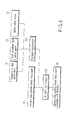
FIG. 1 is a cross-sectional view of a sheet member or a tape member for explaining Example 1 of the invention; -
FIG. 2 is a drawing showing the dependency of heat conductivity of the sheet member or the tape member shown inFIG. 1 on carbon black content; -
FIG. 3 is a drawing showing the dependency of heat conductivity of the sheet member or the tape member shown inFIG. 1 on alumina content; -
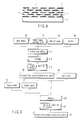
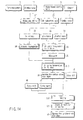
FIG. 4 is a flow chart describing a method of producing alumina fine particle-mixed mica paper of Example 2 of the invention; -
FIG. 5 is a flow chart describing a method of producing alumina fine particle-mixed mica paper of Example 3 of the invention; -
FIG. 6 is a flow chart describing a method of producing alumina fine particle-mixed mica paper of Example 4 of the invention; -
FIG. 7 is a flow chart describing a method of producing organic-inorganic hybrid mica paper of Example 5 of the invention; -
FIG. 8 is a cross-sectional view of a sheet member or a tape member for explaining Example 7 of the invention; -
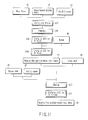
FIG. 9 is a flow chart describing a method of producing alumina fine particle-mixed mica sheet of Example 8 of the invention; -
FIG. 10 is a flow chart describing a method of producing a conventional mica sheet; -
FIG. 11 is a flow chart describing a method of producing alumina fine particle-mixed mica sheet of Example 9 of the invention; -
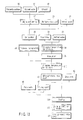
FIG. 12 is a flow chart describing a method of producing alumina fine particle-mixed mica sheet of Example 10 of the invention; -
FIG. 13 is a flow chart describing a method of producing alumina fine particle-mixed mica sheet of Example 11 of the invention; -
FIG. 14 is a flow chart describing a method of producing alumina fine particle-mixed mica sheet of Example 12 of the invention; -
FIG. 15 is a cross-sectional view of a portion of a coil of a generator for explaining Example 13 of the invention; and -
FIG. 16 is a cross-sectional view of a portion of a coil of a generator for explaining Example 14 of the invention. -
FIG. 1 shows a cross-sectional view of a mica tape member or a mica sheet member of the present invention. The mica tape member or the mica sheet member comprises a layer containing mica and a lining material, and the mica-containing layer consists ofscaly particles 1,particles 2 having a heat conductivity of 0.5 W/mK or higher and a size of 1 µm or smaller (hereinafter, referred to as heat conductive particles), and abinder 3. - The
scaly particles 1 contain at least one of mica and boron nitride. - The heat
conductive particles 2 contain at least one of boron nitride, alumina, silicon nitride, magnesium oxide, carbon, aluminum nitride, silicon oxide (silica), artificial diamond, and titanium oxide. - Further, the
lining material 6 may be a glass cloth or a polymer film such as a polyester, polyethylene terephthalate, and Nomex (trade name). - Boron nitride (HP-1CAW, manufactured by Mizushima Ferroalloy Co., Ltd.) was employed as the
scaly particles 1, an isopropylene elastomer, which is one example of water-soluble polymers, (Septon 2007, manufactured by Kuraray Co., Ltd.) was used as thebinder 3, the elastomer was compounded with boron nitride, and carbon black (Asahi Thermal, manufactured by Asahi Carbon Co., Ltd.) with an average particle diameter of 90 nm as the heatconductive particles 2 was added. In this case, the volume of boron nitride to be added was kept constant, that is, 0.6 times the total volume of boron nitride and the isopropylene type elastomer. - With such constitution, the heat conductivity is increased in proportion to the addition amount of carbon black, as shown in
FIG. 2 . On the other hand, in the case of the resin mixed with nothing, the heat conductivity is in the range from 0.25 to 0.5 (N/mK) and in the case only boron nitride is added, addition of carbon black just like this case, a heat conductivity approximately 4 times as high can be obtained. It is believed that the carbon black particles exist among boron nitride particles, and that the elastic modulus of the resin among the boron nitride particles is increased, and consequently, the flow of heat among the boron nitride particles is improved to result in improvement of the heat conduction property. -
FIG. 3 shows the case in which alumina with a size of 70 nm is added in place of carbon black as the heatconductive particles 2. In this case, the heat conductivity is found further improved as compared to the case of adding carbon black. This result is described inPCT/JP03/08564 - Accordingly, 3 (g) of mica flakes and 1 (g) of a water slurry (manufactured by C.I.E.) containing 15 (wt%) of alumina with a size of 40 (nm) were mixed and stirred (for electric field breakage) in 2000 (ml) of distilled water and the resulting solution was poured onto filter paper for filtering water, after which the filter paper was left and dried at 25°C for 24 hours to obtain mica paper in which mica flakes and fine alumina were compounded. However, such fine alumina-compounded mica paper was so inferior in the strength as to be torn if touched and thus was hard to handle. It is believed that the existence of the fine particles among mica flakes weakens the bonding force owing to the van der Waals force among mica flakes.
- To strengthen the bonding force, polyethylene glycol, a water-soluble polymer, was dissolved in 2000 (ml) of distilled water to 1 (phr) of mica flakes and then fine alumina-compounded mica paper was obtained in the same manner as described above. As a result, mica paper having sufficiently high strength to handle it was obtained. In the mica tape or the mica sheet comprising the mica layer and the lining material obtained in such a manner, since the mica layer contained scaly particles, particles having a heat conductivity of 0.5 (W/mK) or higher, and a binder, highly heat conductive electromagnetic coils and electromagnetic appliances having high heat conductivity that can easily be manufactured could be produced.
- Herein, if boron nitride is used in place of the mica layer as the scaly particles, since boron nitride has a heat conduction property several ten times as high as that of the mica layer, a very high heat conductivity can be obtained. Although those using scaly alumina have been proposed before, since the dielectric constant of alumina is as high as 7, the electric field in the surface of an insulating material is strengthened if it is used as an electric insulator. Accordingly, the electric property (dielectric loss) is deteriorated at the time of high voltage application. On the other hand, the dielectric constant of boron nitride is 4, which is approximately the same as that of mica and thus the electric property is not deteriorated.
- As described, use of boron nitride in place of mica or use of mica together with boron nitride makes it possible to provide highly heat conductive electromagnetic coils and electromagnetic appliances having high heat conductivity that can be manufactured easily.
- The heat conductivity of the heat conductive particles is limited to 0.5 (W/mK), because it is important for the heat conductive particles to have a higher heat conductivity than the bonding agent to be a binder. In this case, polyethylene glycol was used as the binder, and water-solubility is important and it is clear that the same effect can be obtained even in the case of using other water-soluble polymers. If the binder is water-soluble, there is no need to change the steps of a conventional production method and thus such a binder is convenient.
- A tape member or sheet member of Example 2 of the invention was obtained by using a thermoplastic resin or a thermosetting resin as a binder. In Example 1, the water-soluble polymer was used as the binder. In a conventional method of producing a mica tape member or sheet member, since no water-soluble polymer is used, it results in a cost hike. To solve such a problem, the following mica paper was obtained.
- As shown in
FIG. 4 , mica was used as thescaly particles 1, and the particles were stirred and mixed in distilled water 10 (S1) and the obtained solution was filtered (S2), after which the resulting paper filter was dried at 25°C for 24 hours (S3) to obtainmica paper 14. On the other hand, a methylisobutyl ketone slurry 11 of alumina with a size of 40 (nm) (alumina MIBK slurry) was used in place of a water slurry of alumina used in Example 1, and 20 (g) of liquid epoxy resin 12 (CY 225, manufactured by Ciba Specialty Chemicals Inc.) and 16 (g) of an acid anhydride curing agent 13 (HY 925, manufactured by Ciba Specialty Chemicals Inc.) were mixed and stirred with 1000 (ml) of the methyl isobutyl ketone slurry of alumina with a size of 40 (nm) (S4) to obtain uncured resin. The uncured thermosetting resin was impregnated with themica paper 14 obtained as described above (S5) and dried and cured at 150°C for 24 hours (S6) to obtain alumina fine particle-mixed mica paper 15. - The above-mentioned Example is an example of using the thermosetting resin as a binder, but a thermoplastic resin may be used in place of the thermosetting resin.
- The mica paper produced in the above-mentioned manner had sufficient strength to enable easy handling. As previously described, with respect to the tape or sheet member, use of a thermoplastic resin or a thermosetting resin as a binder makes it possible to provide highly heat conductive electromagnetic coils and electromagnetic appliances having high heat conductivity that can be easily manufactured.
- The techniques described in Examples 1 and 2 are techniques for holding nano-alumina with a size of 40 (nm) with the polymer type binders, and although the techniques improve the heat conduction, the heat conductivity of a polymer is at highest 0.5 (W/mK) or so and thus it is limited.
- Therefore, a substance precipitated or synthesized by a sol-gel method and containing an organic type resin was used as a binder in Example 3. Specifically, as shown in
FIG. 5 , a metal alkoxide, e.g., 10 (ml) of tetraethoxysilane 16 (for example, manufactured by High Purity Chemistry), a water-basedalumina slurry 18 obtained by mixing 15 (wt%) of alumina with a size of 40 (nm) in 20 (ml) of distilledwater 17, and 10 (ml) ofethanol 19 were put in a beaker and stirred and mixed for 20 minutes by a stirrer (S7). After that, a catalyst, for example, 1 (ml) of hydrochloric acid (2N hydrochloric acid) 20 mixed with distilledwater 21 was dropwise added to the obtained slurry mixture under stirring condition and the resulting mixture was stirred for 10 minutes to obtain asol solution 22. A dispersion obtained by dispersing themica flakes 23 in distilledwater 24 was filtered and left at a normal temperature and normal pressure for 12 hours (S8) to obtainmica paper 25, onto which the above-describedsol solution 22 was dropped under a predetermined condition (S9), and the resulting paper was left at a normal temperature and normal pressure for 12 hours (S10) to obtain alumina particle-mixed mica paper 26. - The above-mentioned binder was dropwise added so as to control the binder at a ratio of 10 (ml) to 600 (cm2) to the mica paper. The
mica paper 26 obtained in such a manner had sufficiently high strength to handle it. - Twenty four sheets of
mica paper 26 obtained in such a manner were laminated and impregnated with a bisphenol A type epoxy resin in vacuum and cured to produce a mica plate. The curing was carried out under a temperature condition of 150°C for 10 hours. The thickness of the mica plate was controlled to be 2 mm. The heat conductivity of the mica plate produced in such a manner was measured at 62°C by an acetone-benzene method to find it was 0.36 (W/mK). For comparison, twenty four sheets of mica paper containing neither alumina particles nor the binder were laminated and impregnated with the epoxy resin in vacuum and cured to produce a mica plate as shown in Comparative Example of Table 1 and the heat conductivity of the mica plate was 0.23 (W/mK). On the other hand, the heat conductivity of Example 3 was 0.36 (W/mK). Accordingly, in comparison of the heat conductivities between Comparative Example and Example 3, the heat conductivity of Example 3 is about 1.55 times as high as that of the Comparative Example, and thus has a high heat conductivity. - In this case, it is supposed that the existence of the fine alumina among mica flakes surrounded with the inorganic binder increases the thermal contact among the mica flakes.
- Beside the catalyst used in Example 3, an acid such as acetic acid and a boron trifluoride solution or an alkali such as ammonia water, sodium hydroxide water, and an amine may be used in the same manner.
Table 1 Comparative Example Example 3 Example 4 Mica adhesion ratio 120 g/m2 120 g/m2 120 g/m2 Alumina fine particles None 5 parts to 100 parts of mica None Binder None Inorganic binder Inorganic binder Heat conductivity 0.23 M/mK 0.36 W/mK 0.32 W/mK - In Example 3, a technique of adding alumina with a size of 40 (nm) in the inorganic binder was described. However, since the cost of the alumina fine particles is high, the tape member or sheet member, i.e., the final product, may become expensive in the case of this technique. Therefore, Example 4 is a method of using no alumina fine particles. That is, the same steps were carried out in this Example as Example 3, except that although a
water slurry 18 of nano-alumina particles of 40 (nm) was used in the technique of Example 3, nowater slurry 18 was used. The heat conductivity of the mica plate obtained in this Example was 0.32 (W/mK). The results of Example 4 are also shown in Table 1. As compared with Comparative Example, a heat conductivity about 1.3 times as high was obtained. - The heat conductivity in Example 4 was measured by the acetone-benzene method, as in Example 2. The heat conductivities of the following Examples 3 to 12 were also measured by the acetone-benzene method.
- In the above-mentioned Example 3 or 4, a technique of using silica gel produced by the sol-gel method as a binder was described. Since the inorganic binder was used for the mica paper produced by the method, the mica paper was inferior in flexibility. A mica tape produced by sticking the mica paper and a glass cloth to each other and then slitting the obtained laminate was rolled around a coil of an electromagnetic appliance (e.g. a generator or a motor) to form an insulating layer. If the tape is inferior in flexibility, the mica paper is cracked at the time of rolling and may lower the electric insulation property. Therefore, a tape-like material obtained by cutting the mica paper in a width of 25 (mm) was rolled on a square rod having a width of 25 (mm) and a thickness of 5 (mm) to test occurrence of the tape disconnection. In the case where the adhesion ratio of mica was 120 (g/cm2), tape disconnection did not occur, however in the sample with the adhesion ratio of 240 (g/cm2), the tape was disconnected. This is supposedly attributed to the fact that the silica gel is an inorganic binder and has low elongation property.
- Therefore, a solution obtained by diluting un-cured bisphenol A type epoxy resin with methyl ethyl ketone was applied to the mica paper obtained by the sol-gel method. Specifically, as shown in
FIG. 6 , the bisphenol A type epoxy resin 12 (CY 225, manufactured by Ciba Specialty Chemicals Inc.), an acid anhydride curing agent 13 (HY 925, manufactured by Ciba Specialty Chemicals Inc.), and methyl ethyl ketone 27 (methyl ethyl ketone, manufactured by Wako Pure Chemical Industries, Ltd.) were mixed, and the mixture was dropwise added from an upper side to impregnate the alumina fine particle-mixed mica paper 26 with the mixture (S11) and the resulting mica paper was heated at 150°C for 5 hours for curing the resin to obtain alumina fine particle-mixed mica paper 29 provided with flexibility. - When the
mica paper 29 obtained in such a manner was cut in a 25 (mm) width and rolled around the above-mentioned rod square, tape disconnection did not occur. This is supposedly attributed to the fact that the use of the organic resin as the binder guarantees flexibility. It is obvious that besides epoxy resin, silicone rubber, polyvinyl alcohol, and polyvinyl butyral may provide a similar effect. When 4 (ml) of methyl ethyl ketone was dropwise titrated to 600 (cm2) of the tape of the mica paper which was produced by using the inorganic binder of 240 (g/cm2) adhesion and which was disconnected and the mica paper was dried at a normal temperature and normal pressure for 5 hours, flexible mica paper was obtained. Although the reason is not clear, it is supposedly attributed to the fact that the solvent or the resin enter between the mica flakes and act as a lubricant. - Although the effect of
methyl ethyl ketone 27 was confirmed, it is clear that other solvents such as ethyl alcohol, butyl alcohol, isopropanol, toluene, and xylene may cause similar effects. - This Example is a case of using a substance having a structure of an inorganic oxide precipitated or synthesized by the sol-gel method and chemically bonded with polymer chains as a binder. In the above-mentioned Example 3, in addition to the inorganic binder, the flexibility was obtained by using an organic binder and/or impregnating the mica paper with the reins. However, it was required to apply and dry the organic binder after the inorganic binder was synthesized and dried, and thus this method took a long time for the production process. Therefore, it is effective to use a binder having a structure of an inorganic oxide produced by the sol-gel method and chemically bonded with polymer chains, as shown in
FIG. 7 . Accordingly, 30 (ml) of tetraethoxysilane 30 (manufactured by High Purity Chemistry), 20 (ml) of polydimethylsiloxane 31 (XF 3095, manufactured by Toshiba Silicone Co., Ltd.), 15 (ml) of isopropyl alcohol 32 (Wako Pure Chemical Industries, Ltd.), and 10 (ml) of tetrahydroxyfuran 33 (manufactured by BASF) were put in a 200 ml beaker and stirred at a normal temperature and normal pressure by a stirrer for 2 hours to obtain a solution A 34 (S13). Under condition of stirring, 10 (ml) of 2N hydrochloric acid 35 and 30 (ml) of distilledwater 36 were dropwise added to the above-mentionedsolution A 34. The obtained solution was heated at 70°C for 48 hours in a closed round bottom flask to obtain a solution B 37 (S14). Similarly to the case of the inorganic binder of Example 3, thesolution B 37 was dropwise titrated to impregnate themica paper 38 with the solution (S15) and then the resulting mica paper was heated at 300 (°C) for 24 hours to obtain organic-inorganic hybrid mica paper 39 (S16). - Since the
mica paper 39 produced in such a manner contained inorganic fine particles, and since the inorganic fine particles and the organic component were chemically bonded, the mica paper exhibited high heat conductivity and flexibility. - Table 2 shows the test results relevant to the rolling property of the respective Examples shown in Example 1 to Example 5. Herein, the rolling property means the probability of tape rupture when each tape cut in a width of 25 (mm) is rolled around an aluminum bar of 5 × 25. It is made clear that a foil is formed by using the binder and the rolling property is improved in all of the methods except Example 2.
Table 2 Comparative Example 1 Example 1 Example 2 Example 3 Example 4 Example 5 Mica adhesion ratio 240 g/m2 120 g/m2 240 g/m2 240 g/m2 240 g/m2 240 g/m2 Alumina (40 nm) 12 g/m2 6 g/m2 12 g/m2 12 g/m2 12 g/m2 12 g/m2 Binder None Inorganic binder Inorganic binder Inorganic binder + solvent Inorganic binder + resin Organic-inorganic hybrid Possibility of paper production Impossible Possible Possible Possible Possible Possible Probability of cracking - 0 3/4 0 0 0 - In Example 6, a silicone type resin was used as the organic polymer chains, which was as effective as using an expoxy resin. In the case where mica paper was produced in the same manner as described above by using a solution B obtained by stirring 30 (ml) of
tetraethoxysilane 30, 10 (ml) of a silane coupling agent A 187, 5 (ml) of distilled water, and 10 (ml) of ethanol in a 200 (ml) beaker for 10 minutes and dropwise titrating 0.6 (ml) of diethyleneamine, mica paper without tape disconnection could be produced. This is supposedly attributed to the fact that the epoxy group of A 187 is bonded with the amine to form organic polymer chains, and thus the flexibility is assured. - In Example 7, as shown in
FIG. 8 , a substance havingcontinuous voids 4 was used as thebinder 3. The mica tape was used to compose an insulating layer by being rolled around a coil of an electromagnetic appliance (e.g. a generator or a motor). A vacuum pressurizing impregnation method is available as the layer formation method. This is a method involving rolling the mica tape around the coil conductor, immersing the coil conductor in a resin for impregnation, applying successive vacuum/pressunzation of the impregnated coil conductor, and then curing the resin in a drier. In this case, it is required to increase the electric insulation property for the coil by sufficiently impregnating the mica tape with the resin, and thus easy impregnation of the mica tape with the resin is very important. - As shown in
FIG. 8 , use of a substance havingcontinuous voids 4 as thebinder 4 aids the impregnation. With this configuration, an insulator having a high electric insulation property and heat conduction property can be formed. - The method of producing a tape member or sheet member of Example 8 was carried out, as shown in
FIG. 9 , by stirring and mixing (dispersing) scaly particles,e.g. mica flakes 40, 15 (wt%) of awater slurry 18 containing alumina with a size of 40 (nm) and having heat conductivity of 0.5 (W/mK) or higher, and abinder 42 in a medium, e.g. distilled water 43 (S17); filtering the dispersion (S18); and successively carrying out drying at 25°C for 24 hours (S19) to obtain an alumina fine particle-mixed mica sheet 44. After that, an alumina fine particle-mixed mica sheet 48 was obtained by sticking a lining material such as aglass cloth 45 to the above-mentionedmica paper 44 by using anepoxy resin 46 and a curing agent 47 (S20), and successively drying the resulting mica sheet at 130°C for 10 minutes (S21). - Herein, steps of producing a mica paper or mica sheet carried out conventionally will be described with reference to
FIG. 10 . Themica flakes 40 and distilledwater 43 were mixed and stirred (S17), the mixture was filtered (S18), and the mica flakes remaining on the filter paper was dried at 25°C for 24 hours (S19) to obtain themica paper 49. After that, by sticking a lining material such as aglass cloth 45 to the above-mentionedmica paper 49 by using anepoxy resin 46 and a curing agent 47 (S20) and successively drying the resulting mica sheet at 130°C for 10 minutes (S21), amica sheet 50 was obtained. - The above-mentioned Example 8 is a production method without considerably changing production steps conventionally performed, as shown in
FIG. 10 , but only further adding 15 (wt%) of thewater slurry 18 containing alumina with a size of 40 (nm) and having a heat conductivity of 0.5 (W/mK) or higher, and thebinder 42. Accordingly, the method is excellent in lowering the production cost. - The above-mentioned production method of Example 8 is applicable as a production method for Examples 1 to 4.
- The method of producing a tape member or sheet member of Example 9 was carried out, as shown in
FIG. 11 , by stirring and mixing (dispersing)mica flakes 40 and 15 (wt%) of awater slurry 18 containing alumina with a size of 40 (nm) and having a heat conductivity of 0.5 (W/mK) or higher in a medium, e.g. distilled water 43 (S17); filtering the dispersion (S18); successively carrying out drying at 25°C for 24 hours (S19); and thereafter, carrying out impregnation with abinder 42 and again drying at 25°C for 24 hours (S19a) to obtain an alumina fine particle-mixed mica sheet 44. After that, an alumina fine particle-mixed mica sheet 48 was obtained by sticking a lining material such as aglass cloth 45 to the above-mentionedmica paper 44 by using anepoxy resin 46 and a curing agent 47 (S20) and successively drying the resulting mica sheet at 130°C for 10 minutes (S21). - According to the production method of Example 9, this method is environment-friendly and economical in terms of the material cost. Although the production process described as Example 8 is excellent in production of the tape member or sheet member without increasing the number of process steps, the
binder 42 is discharged much in vain in the filtration step of the production method shown inFIG. 9 . On the other hand, in the case of the production method shown inFIG. 11 , since the impregnation with thebinder 42 is carried out before the final drying step after filtration and drying steps in the mica paper production, the loss of thebinder 42 can be suppressed, and, as a result, the method can be environment-friendly and economical in terms of the material cost. - The method of producing a tape member or sheet member of Example 10 was carried out, as shown in
FIG. 12 , by stirring and mixing (mixing and dispersing) scaly particles such asmica flakes 40 in a medium, e.g. distilled water 43 (S17); filtering the dispersion (S18); and successively carrying out drying at 25°C for 24 hours (S19) to obtain intermediate paper. - On the other hand, a
binder 42 and 15 (wt%) of awater slurry 18 containing alumina with a size of 40 (nm) and having a heat conductivity of 0.5 (W/mK) or higher were stirred and mixed (mixed and dispersed) (S19b), the above-mentioned intermediate paper was impregnated with the obtained alumina fine particle slurry and again dried at 25°C for 24 hours (S19a) to obtain an alumina fine particle-mixed mica paper 44. After that, amica sheet 48 was obtained by sticking a lining material, such as aglass cloth 45, to the above-mentionedmica paper 44 by using anepoxy resin 46 and a curing agent 47 (S20) and successively drying the resulting mica sheet at 130°C for 10 minutes (S21). - The above-mentioned Example 10 is effective, as described below. In the case of the production methods of the above-mentioned Examples 8 and 9, the particles having a heat conductivity of 0.5 (W/mK) or higher were much discharged in vain in the filtration step. On the other hand, in the method shown in
FIG. 12 , since impregnation of themica paper 44 with the alumina fine particles 41 having a heat conductivity of 0.5 (W/mK) or higher and thebinder 42 was carried out later, the loss of thebinder 42 andalumina fine particles 42 can be lessened and as a result, the method can be environment-friendly and economical in terms of the material cost. - Example 11 was carried out as follows, as shown in
FIG. 13 : a metal alkoxide,e.g. tetraethoxysilane 16, water, e.g. distilledwater 17, and a solvent,e.g. ethanol 19 were mixed to obtain a mixed solution, after which, as a catalyst, 1 (ml) of 2Nhydrochloric acid 20 and distilledwater 21 were dropwise added to the obtained mixed solution and stirred for 10 minutes to obtain asol solution 22. On the other hand,mica flakes 23 were stirred and mixed (dispersed and mixed) in water, e.g. distilledwater 24 and filtered and successively dried at a normal temperature and normal pressure for 12 hours (S8) to obtainintermediate mica paper 25. Theintermediate mica paper 25 was impregnated with the above obtainedsol solution 22 by dropwise addition (S9) and dried at a normal temperature and normal pressure for 12 hours (S10) to obtain an inorganic binder-mixed paper, e.g. silica gel-mixed mica paper 49. After that, as in Example 11, a mica sheet, e.g. a silica gel-mixed mica sheet 50 was obtained by sticking a lining material such as aglass cloth 45 to the above-mentionedmica paper 26 by using anepoxy resin 46 and a curing agent 47 (S20) and successively drying the resulting mica sheet at 130°C for 10 minutes (S21). - This Example is effective similarly as described above.
- Example 12 was carried out, as shown in
FIG. 14 , by obtaining a mixed solution by mixing a metal alkoxide,e.g. tetraethoxysilane 16, water, e.g. distilledwater 17, a slurry, e.g. awater slurry 18, obtained by mixing particles having heat conductivity of 0.5 (W/mK) or higher and a size of 1 µm or smaller in water or a solvent, and a solvent,e.g. ethanol 19 and then carrying out the same steps as the above described Example 11. -
FIG. 15 is an explanatory drawing for an example of aconductor 5 of an electromagnetic coil using the sheet member or tape member obtained by one of the production methods of Examples 1 to 7. The sheet member or tape member obtained by one of the production methods of Examples 1 to 7 is a member excellent in the heat conduction property and flexibility. Further, it is provided with a high heat conduction property by impregnating the glass cloth, which is the lining material, with highly heat conductive boron nitride (HP-6, manufactured by Mizushima Ferroalloy Co., Ltd.). - A mica tape obtained by applying a resin, which was obtained by kneading Septon 2007, 60 (% by volume) of boron nitride, and 10 (% by volume) of alumina with a size of 70 (nm), to the glass cloth, the lining material of the mica paper having high heat conductivity obtained in Example 3, was cut into 30 mm width, the cut mica tape was rolled around a coil conductor, a release type tape of polypropylene was rolled thereon, and vacuum impregnation with bisphenol A type epoxy resin was carried out. The resulting coil conductor was taken out and a supporting plate made of aluminum was attached to the four faces of the coil and a thermally shrinkable tube was put around the coil. The resulting coil body was dried for curing at 150°C for 10 hours in a drying apparatus to obtain a coil.
- The electromagnetic coil produced in such a manner was excellent in the heat releasing property. A disk with a diameter of 35 mm and a thickness of 2 mm was cut out from the insulating
layer 6 and subjected to heat conductivity measurement by the acetone-benzene method to find the heat conductivity to be 0.8 W/mK. The heat conductivity of the main insulating layer formed by the conventional method was about 0.22 W/mK. -
FIG. 16 is an explanatory cross-sectional drawing for an example of use of the sheet member or tape member obtained by the production method of Example 8 for an insulator of a generator. The generator manufactured in this manner was excellent in the coil cooling property and thus the temperature increase of the coil was suppressed. The coil excellent in the heat releasing property and obtained in Example 13 was inserted into an iron core, electric current was applied, and the coil temperature increase was measured. As a result, in the coil produced in this Example, the coil temperature was suppressed to about 10 (K) as compared with that of a conventional mica tape and thus it was found that the coil had a very efficient cooling capability. That is, since electric current density can be increased for a coil with the same shape and size, the weight of copper and iron can be reduced. - Also, a highly efficient generator could be obtained by using the sheet member or tape member obtained by the production method described in Example 9.
- The invention is applicable to electromagnetic coils, electromagnetic appliances, power generators and the like.
Claims (5)
- A method of producing a tape member or sheet member comprising:a first step of obtaining a mixed solution by mixing scaly particles and a slurry obtained by mixing particles having a heat conductivity of 0.5 W/mK or higher and a size of 1 µm or smaller in water or a solvent in water;a second step of filtering and drying the mixed solution obtained in the first step for obtaining intermediate paper, impregnating the obtained intermediate paper with a binder and drying for obtaining fine particle-mixed paper consisting of the scaly particles and the particles having a heat conductivity of 0.5 W/mK or higher and a size of 1 µm or smaller; anda third step of sticking the fine particle-mixed paper obtained in the second step and a lining material.
- A method of producing a tape member or sheet member comprising:a first step of obtaining a slurry solution by mixing a binder with a slurry obtained by mixing particles having a heat conductivity of 0.5 W/mK or higher and a size of 1 µm or smaller in water or a solvent;a second step of obtaining a scaly particle-containing slurry by mixing scaly particles with water or a solvent;a third step of obtaining intermediate paper by filtering and drying the scaly particle-containing slurry obtained in the second step;a fourth step of obtaining fine particle-mixed paper consisting of the scaly particles and the particles having a heat conductivity of 0.5 W/mK or higher and a size of 1 µm or smaller by impregnating the intermediate paper obtained in the third step with the slurry solution obtained in the first step and successively drying the slurry solution; anda fifth step of sticking the fine particle-mixed paper obtained in the fourth step and a lining material.
- A method of producing a tape member or sheet member comprising:a first step of obtaining a mixed solution by mixing a metal alkoxide, water, and a solvent;a second step of obtaining a sol solution by mixing a catalyst with the mixed solution obtained in the first step;a third step of obtaining intermediate paper by filtering and drying a solution obtained by mixing scaly particles and water;a fourth step of obtaining fine particle-mixed paper by impregnating the paper obtained in the third step with the sol solution obtained in the second step and drying the paper; anda fifth step of sticking the fine particle-mixed paper obtained in the fourth step and a lining material.
- A method of producing a tape member or sheet member comprising:a first step of obtaining a mixed solution by mixing a metal alkoxide, water, a slurry obtained by mixing particles having a heat conductivity of 0.5 W/mK or higher and a size of 1 µm or smaller in water or a solvent, and a solvent;a second step of obtaining a sol solution by mixing a catalyst with the mixed solution obtained in the first step;a third step of obtaining intermediate paper by filtering and drying a solution obtained by mixing scaly particles and water;a fourth step of obtaining fine particle-mixed paper by impregnating the paper obtained in the third step with the sol solution obtained in the second step and drying the paper; anda fifth step of sticking the fine particle-mixed paper obtained in the fourth step and a lining material.
- A method of producing a tape member or sheet member comprising:a first step of obtaining a mixed solution by mixing a metal alkoxide, water, and a solvent having a heat conductivity of 0.5 W/mK or higher;a second step of obtaining a sol solution by mixing a catalyst with the mixed solution obtained in the first step;a third step of obtaining intermediate paper by filtering and drying a solution obtained by mixing scaly particles and water;a fourth step of obtaining fine particle-mixed paper by impregnating the paper obtained in the third step with the sol solution obtained in the second step and drying the paper; anda fifth step of sticking the fine particle-mixed paper obtained in the fourth step and a lining material.
Applications Claiming Priority (2)
| Application Number | Priority Date | Filing Date | Title |
|---|---|---|---|
| JP2004008270A JP4599063B2 (en) | 2004-01-15 | 2004-01-15 | Coil winding insulation tape |
| EP05703716A EP1727160B1 (en) | 2004-01-15 | 2005-01-17 | Tape member, sheet member and method for producing tape member or sheet member |
Related Parent Applications (1)
| Application Number | Title | Priority Date | Filing Date |
|---|---|---|---|
| EP05703716.0 Division | 2005-01-17 |
Publications (1)
| Publication Number | Publication Date |
|---|---|
| EP2204821A1 true EP2204821A1 (en) | 2010-07-07 |
Family
ID=34792219
Family Applications (2)
| Application Number | Title | Priority Date | Filing Date |
|---|---|---|---|
| EP05703716A Expired - Lifetime EP1727160B1 (en) | 2004-01-15 | 2005-01-17 | Tape member, sheet member and method for producing tape member or sheet member |
| EP10154344A Withdrawn EP2204821A1 (en) | 2004-01-15 | 2005-01-17 | Tape member or sheet member, and method of producing tape member or sheet member |
Family Applications Before (1)
| Application Number | Title | Priority Date | Filing Date |
|---|---|---|---|
| EP05703716A Expired - Lifetime EP1727160B1 (en) | 2004-01-15 | 2005-01-17 | Tape member, sheet member and method for producing tape member or sheet member |
Country Status (6)
| Country | Link |
|---|---|
| US (1) | US7425366B2 (en) |
| EP (2) | EP1727160B1 (en) |
| JP (1) | JP4599063B2 (en) |
| CN (1) | CN1910704B (en) |
| DE (1) | DE602005023283D1 (en) |
| WO (1) | WO2005069312A1 (en) |
Families Citing this family (46)
| Publication number | Priority date | Publication date | Assignee | Title |
|---|---|---|---|---|
| US7781063B2 (en) | 2003-07-11 | 2010-08-24 | Siemens Energy, Inc. | High thermal conductivity materials with grafted surface functional groups |
| US7033670B2 (en) | 2003-07-11 | 2006-04-25 | Siemens Power Generation, Inc. | LCT-epoxy polymers with HTC-oligomers and method for making the same |
| US20050274774A1 (en) | 2004-06-15 | 2005-12-15 | Smith James D | Insulation paper with high thermal conductivity materials |
| US20050277721A1 (en) | 2004-06-15 | 2005-12-15 | Siemens Westinghouse Power Corporation | High thermal conductivity materials aligned within resins |
| US8216672B2 (en) | 2004-06-15 | 2012-07-10 | Siemens Energy, Inc. | Structured resin systems with high thermal conductivity fillers |
| US7776392B2 (en) * | 2005-04-15 | 2010-08-17 | Siemens Energy, Inc. | Composite insulation tape with loaded HTC materials |
| US7592045B2 (en) | 2004-06-15 | 2009-09-22 | Siemens Energy, Inc. | Seeding of HTC fillers to form dendritic structures |
| US7553781B2 (en) | 2004-06-15 | 2009-06-30 | Siemens Energy, Inc. | Fabrics with high thermal conductivity coatings |
| US7553438B2 (en) | 2004-06-15 | 2009-06-30 | Siemens Energy, Inc. | Compression of resin impregnated insulating tapes |
| US20080050580A1 (en) * | 2004-06-15 | 2008-02-28 | Stevens Gary C | High Thermal Conductivity Mica Paper Tape |
| US7651963B2 (en) * | 2005-04-15 | 2010-01-26 | Siemens Energy, Inc. | Patterning on surface with high thermal conductivity materials |
| US7846853B2 (en) | 2005-04-15 | 2010-12-07 | Siemens Energy, Inc. | Multi-layered platelet structure |
| US7655295B2 (en) | 2005-06-14 | 2010-02-02 | Siemens Energy, Inc. | Mix of grafted and non-grafted particles in a resin |
| US20070026221A1 (en) * | 2005-06-14 | 2007-02-01 | Siemens Power Generation, Inc. | Morphological forms of fillers for electrical insulation |
| US7851059B2 (en) | 2005-06-14 | 2010-12-14 | Siemens Energy, Inc. | Nano and meso shell-core control of physical properties and performance of electrically insulating composites |
| US8357433B2 (en) | 2005-06-14 | 2013-01-22 | Siemens Energy, Inc. | Polymer brushes |
| US7781057B2 (en) | 2005-06-14 | 2010-08-24 | Siemens Energy, Inc. | Seeding resins for enhancing the crystallinity of polymeric substructures |
| US7955661B2 (en) | 2005-06-14 | 2011-06-07 | Siemens Energy, Inc. | Treatment of micropores in mica materials |
| US7547847B2 (en) | 2006-09-19 | 2009-06-16 | Siemens Energy, Inc. | High thermal conductivity dielectric tape |
| US7655868B2 (en) * | 2008-01-08 | 2010-02-02 | General Electric Company | Stator bar components with high thermal conductivity |
| US20090174279A1 (en) * | 2008-01-08 | 2009-07-09 | General Electric Company | Stator Bar Components with High Thermal Conductivity Resins, Varnishes, and Putties |
| JP4788799B2 (en) * | 2009-04-24 | 2011-10-05 | パナソニック電工株式会社 | Thermosetting resin composition, prepreg, composite laminate, metal foil-clad laminate, circuit board, and circuit board for LED mounting |
| JP4645726B2 (en) * | 2008-05-19 | 2011-03-09 | パナソニック電工株式会社 | Laminated board, prepreg, metal foil clad laminated board, circuit board, and circuit board for LED mounting |
| WO2010036745A2 (en) * | 2008-09-23 | 2010-04-01 | Aerovironment, Inc. | Motor air flow cooling |
| US20120017990A1 (en) * | 2010-07-21 | 2012-01-26 | E. I. Du Pont De Nemours And Company | Phyllosilicate composites containing mica |
| US8563125B2 (en) * | 2010-07-21 | 2013-10-22 | E I Du Pont De Nemours And Company | Phyllosilicate composites containing MICA |
| US8449972B2 (en) * | 2010-07-21 | 2013-05-28 | E I Du Pont De Nemours And Company | Phyllosilicate composites containing mica |
| DE202010014889U1 (en) * | 2010-10-29 | 2011-02-10 | Abb Ag | Isolation material precursor and insulation material |
| US8568855B2 (en) * | 2011-06-08 | 2013-10-29 | Siemens Energy, Inc. | Insulation materials having apertures formed therein |
| JP6236007B2 (en) * | 2011-10-14 | 2017-11-22 | メルク パテント ゲゼルシャフト ミット ベシュレンクテル ハフツングMerck Patent Gesellschaft mit beschraenkter Haftung | Thermally conductive self-supporting sheet |
| WO2014109167A1 (en) * | 2013-01-10 | 2014-07-17 | 三菱電機株式会社 | Insulation tape, method for producing same and stator coil |
| DE102013201053A1 (en) * | 2013-01-23 | 2014-07-24 | Siemens Aktiengesellschaft | Isolation arrangement for a high voltage machine |
| CN103400665B (en) * | 2013-08-05 | 2016-09-28 | 桂林理工大学 | A kind of nanometer strengthens the many adhesive-contented mica tapes of high heat conduction and application thereof |
| JP6094683B2 (en) | 2013-10-09 | 2017-03-15 | 日立化成株式会社 | Prepreg mica tape and coil using the same |
| CN103757977B (en) * | 2014-01-02 | 2016-06-08 | 雅安兴美云母工业有限责任公司 | A kind of inorganic particle mica paper and its production and use |
| JP6058169B2 (en) | 2014-01-29 | 2017-01-11 | 三菱電機株式会社 | Insulating tape and manufacturing method thereof, stator coil and manufacturing method thereof, and rotating electric machine |
| EP2930720A1 (en) * | 2014-04-08 | 2015-10-14 | Alstom Technology Ltd | A conductor bar for an electric machine |
| US9059616B1 (en) * | 2014-08-20 | 2015-06-16 | Dantam K. Rao | Insulation system for a stator bar with low partial discharge |
| WO2016104141A1 (en) * | 2014-12-22 | 2016-06-30 | 三菱電機株式会社 | Insulating tape and method for manufacturing same, stator coil and method for manufacturing same, and generator |
| JP6028267B2 (en) * | 2015-03-05 | 2016-11-16 | 株式会社明電舎 | Coil for rotating electrical machine |
| JP6754746B2 (en) * | 2017-10-31 | 2020-09-16 | ニチアス株式会社 | Sealing material |
| WO2019115428A1 (en) | 2017-12-12 | 2019-06-20 | Merck Patent Gmbh | Process for the production of a thermally conductive tape |
| WO2019115427A1 (en) | 2017-12-12 | 2019-06-20 | Merck Patent Gmbh | Process for the production of a thermally conductive tape |
| CN110258171B (en) * | 2019-07-01 | 2020-10-09 | 湖北平安电工材料有限公司 | Preparation method of high-thermal-conductivity mica paper |
| CN112553947A (en) * | 2020-12-02 | 2021-03-26 | 通城县云水云母科技有限公司 | High-heat-conductivity and high-strength mica paper and production method thereof |
| CN117209205A (en) * | 2023-09-14 | 2023-12-12 | 北京倚天凌云科技股份有限公司 | A kind of preparation method of pouring mica board |
Citations (6)
| Publication number | Priority date | Publication date | Assignee | Title |
|---|---|---|---|---|
| DE2142571B1 (en) * | 1971-08-20 | 1972-06-08 | Siemens Ag | INSULATING TAPE FOR THE PRODUCTION OF AN INSULATING SLEEVE FOR ELECTRIC CONDUCTORS IMPREGNATED WITH A HEAT-CURING EPOXY RESIN-ACID ANHYDRIDE HARDER MIXTURE |
| JPS6130041A (en) * | 1984-07-20 | 1986-02-12 | Nec Corp | Semiconductor device assembling apparatus |
| JPS61142614A (en) * | 1985-11-28 | 1986-06-30 | 株式会社東芝 | Prepreg mica tape |
| JPS63144163A (en) * | 1986-12-05 | 1988-06-16 | 吉沢 正男 | Congregated mica sheet and manufacture |
| JPH0586596A (en) * | 1991-09-25 | 1993-04-06 | Nippon Sheet Glass Co Ltd | Flake-like inorganic substance-mixed paper |
| US6190775B1 (en) * | 2000-02-24 | 2001-02-20 | Siemens Westinghouse Power Corporation | Enhanced dielectric strength mica tapes |
Family Cites Families (21)
| Publication number | Priority date | Publication date | Assignee | Title |
|---|---|---|---|---|
| JPS5553802A (en) | 1978-10-17 | 1980-04-19 | Japan Mica Ind | Resin impregnated lumped mica basic material sheet and method of manufacturing same |
| JPS5991603A (en) * | 1982-11-16 | 1984-05-26 | 株式会社明電舎 | Thermal conductive electrically insulating material and method of producing same |
| JPS6130041U (en) * | 1984-07-27 | 1986-02-22 | 株式会社岡部マイカ工業所 | heat dissipation insulation sheet |
| US5441682A (en) * | 1984-11-02 | 1995-08-15 | The Boeing Company | Method of forming a ceramic composite |
| SE455246B (en) * | 1986-10-22 | 1988-06-27 | Asea Ab | MANUFACTURER FOR SAVING IN A STATOR OR ROTOR IN AN ELECTRIC MACHINE AND MANUFACTURING A MANUFACTURING |
| JPH0337907A (en) * | 1989-07-03 | 1991-02-19 | Nippon Rika Kogyosho:Kk | Composite mica insulating thin-film |
| JPH0689298B2 (en) * | 1990-06-26 | 1994-11-09 | 株式会社中戸研究所 | Heat-resistant and insulating varnish composition and method for forming coating film using the same |
| JPH06217484A (en) * | 1993-01-19 | 1994-08-05 | Toshiba Corp | Insulated coil |
| JP3010982B2 (en) * | 1993-07-16 | 2000-02-21 | 信越化学工業株式会社 | Insulation heat dissipation sheet |
| US6359232B1 (en) * | 1996-12-19 | 2002-03-19 | General Electric Company | Electrical insulating material and stator bar formed therewith |
| JPH1166964A (en) * | 1997-08-19 | 1999-03-09 | Oji Paper Co Ltd | Fire resistant insulation tape |
| JPH11323162A (en) | 1998-03-19 | 1999-11-26 | Hitachi Ltd | Insulating composition |
| JP2002521804A (en) * | 1998-07-27 | 2002-07-16 | モトローラ・インコーポレイテッド | Field emission display having adhesively mounted spacers and mounting method |
| JP2000058314A (en) | 1998-08-03 | 2000-02-25 | Hitachi Ltd | High thermal conductive coil, insulating sheet and method of manufacturing the same |
| JP2000294061A (en) * | 1999-04-05 | 2000-10-20 | Hitachi Ltd | Insulation and electric winding |
| EP1220240B1 (en) * | 1999-08-27 | 2009-11-25 | Hitachi, Ltd. | Insulating material, electric winding, and method of manufacture thereof |
| JP3879054B2 (en) | 2000-09-13 | 2007-02-07 | 株式会社日本マイカ製作所 | Mica base sheet and insulation coil |
| JP3576119B2 (en) * | 2001-04-27 | 2004-10-13 | 株式会社東芝 | Coil for rotating electric machine and my car tape used for insulation of this coil |
| JP2003321658A (en) * | 2002-04-30 | 2003-11-14 | Dainippon Ink & Chem Inc | Flame retardant heat conductive electrical insulating adhesive sheet |
| CN1324615C (en) * | 2002-07-04 | 2007-07-04 | 株式会社东芝 | Insulating member with high thermal conductivity, manufacturing method thereof, and electromagnetic coil |
| JP4104410B2 (en) * | 2002-09-27 | 2008-06-18 | エスケー化研株式会社 | Thermoreversible color-decoloring powder |
-
2004
- 2004-01-15 JP JP2004008270A patent/JP4599063B2/en not_active Expired - Fee Related
-
2005
- 2005-01-17 EP EP05703716A patent/EP1727160B1/en not_active Expired - Lifetime
- 2005-01-17 CN CN2005800023394A patent/CN1910704B/en not_active Expired - Fee Related
- 2005-01-17 WO PCT/JP2005/000479 patent/WO2005069312A1/en not_active Ceased
- 2005-01-17 DE DE602005023283T patent/DE602005023283D1/en not_active Expired - Lifetime
- 2005-01-17 EP EP10154344A patent/EP2204821A1/en not_active Withdrawn
-
2006
- 2006-07-14 US US11/486,217 patent/US7425366B2/en not_active Expired - Fee Related
Patent Citations (7)
| Publication number | Priority date | Publication date | Assignee | Title |
|---|---|---|---|---|
| DE2142571B1 (en) * | 1971-08-20 | 1972-06-08 | Siemens Ag | INSULATING TAPE FOR THE PRODUCTION OF AN INSULATING SLEEVE FOR ELECTRIC CONDUCTORS IMPREGNATED WITH A HEAT-CURING EPOXY RESIN-ACID ANHYDRIDE HARDER MIXTURE |
| JPS6130041A (en) * | 1984-07-20 | 1986-02-12 | Nec Corp | Semiconductor device assembling apparatus |
| JPS61142614A (en) * | 1985-11-28 | 1986-06-30 | 株式会社東芝 | Prepreg mica tape |
| JPS63144163A (en) * | 1986-12-05 | 1988-06-16 | 吉沢 正男 | Congregated mica sheet and manufacture |
| JPH0586596A (en) * | 1991-09-25 | 1993-04-06 | Nippon Sheet Glass Co Ltd | Flake-like inorganic substance-mixed paper |
| US6190775B1 (en) * | 2000-02-24 | 2001-02-20 | Siemens Westinghouse Power Corporation | Enhanced dielectric strength mica tapes |
| WO2001063624A1 (en) * | 2000-02-24 | 2001-08-30 | Siemens Westinghouse Power Corporation | Enhanced dielectric strength mica tapes |
Also Published As
| Publication number | Publication date |
|---|---|
| DE602005023283D1 (en) | 2010-10-14 |
| CN1910704B (en) | 2010-07-21 |
| EP1727160B1 (en) | 2010-09-01 |
| WO2005069312A1 (en) | 2005-07-28 |
| EP1727160A4 (en) | 2007-04-18 |
| JP2005199562A (en) | 2005-07-28 |
| EP1727160A1 (en) | 2006-11-29 |
| US20060258791A1 (en) | 2006-11-16 |
| CN1910704A (en) | 2007-02-07 |
| JP4599063B2 (en) | 2010-12-15 |
| US7425366B2 (en) | 2008-09-16 |
Similar Documents
| Publication | Publication Date | Title |
|---|---|---|
| EP1727160B1 (en) | Tape member, sheet member and method for producing tape member or sheet member | |
| EP1530223B1 (en) | High thermal conductivity insulating member and its manufacturing method, electromagnetic coil, and electromagnetic device | |
| EP1220240B1 (en) | Insulating material, electric winding, and method of manufacture thereof | |
| JP5574395B2 (en) | Composite material and manufacturing method thereof | |
| EP1486997B1 (en) | Manufacturing method of coil insulation | |
| US4537804A (en) | Corona-resistant wire enamel compositions and conductors insulated therewith | |
| CN107614620B (en) | Resin composition, resin sheet, prepreg, insulator, cured resin sheet, and heat dissipation member | |
| JP6058169B2 (en) | Insulating tape and manufacturing method thereof, stator coil and manufacturing method thereof, and rotating electric machine | |
| EP2945169B1 (en) | Insulation tape, method for producing same and stator coil | |
| KR20140099352A (en) | Insulating wire having partial discharge resistance and high partial discharge inception voltage | |
| CN114600567A (en) | Heat sink and method of making the same | |
| CN116987388B (en) | A thermally conductive silicone cloth with low contact thermal resistance and its preparation method | |
| CN1152275A (en) | Film excellent in corona resistance and insulated wires, windings and motors using the film as insulating material | |
| TW201641614A (en) | Composite of layered inorganic compound and organic compound and production method thereof, separated layered inorganic compound and production method thereof, insulating resin compound, resin sheet, insulator, hardened resin sheet | |
| US20190144706A1 (en) | Insulating film | |
| KR102357814B1 (en) | insulating film | |
| JP2012244861A (en) | Insulation coil | |
| CN107466269A (en) | inorganic electrically insulating material | |
| KR20160035552A (en) | Surface-modified boron nitride, composition having the same dispersed within, and wire coated with the composition | |
| CN110998751A (en) | Thermally conductive, electrically insulating fillers for crimped wires | |
| JP6132041B2 (en) | Resin composition, and resin sheet, prepreg, laminate, metal substrate and printed wiring board using the same | |
| KR102582104B1 (en) | Structure of transformer winding with high thermal conductivity insulating resin composition applied and manufacturing method thereof | |
| JP2010166809A (en) | Rotating electrical machine | |
| WO2008000104A1 (en) | Nano-composite dielectrics | |
| JP5813918B2 (en) | Composition for coating electrical conductors and method for preparing such a composition |
Legal Events
| Date | Code | Title | Description |
|---|---|---|---|
| PUAI | Public reference made under article 153(3) epc to a published international application that has entered the european phase |
Free format text: ORIGINAL CODE: 0009012 |
|
| 17P | Request for examination filed |
Effective date: 20100226 |
|
| AC | Divisional application: reference to earlier application |
Ref document number: 1727160 Country of ref document: EP Kind code of ref document: P |
|
| AK | Designated contracting states |
Kind code of ref document: A1 Designated state(s): CH DE FR LI SE |
|
| STAA | Information on the status of an ep patent application or granted ep patent |
Free format text: STATUS: THE APPLICATION IS DEEMED TO BE WITHDRAWN |
|
| 18D | Application deemed to be withdrawn |
Effective date: 20110108 |