EP2180652B1 - Verfahren und System zur Medieninformationsübertragung - Google Patents
Verfahren und System zur Medieninformationsübertragung Download PDFInfo
- Publication number
- EP2180652B1 EP2180652B1 EP08167077.0A EP08167077A EP2180652B1 EP 2180652 B1 EP2180652 B1 EP 2180652B1 EP 08167077 A EP08167077 A EP 08167077A EP 2180652 B1 EP2180652 B1 EP 2180652B1
- Authority
- EP
- European Patent Office
- Prior art keywords
- media
- terminal equipment
- media data
- data
- session
- Prior art date
- Legal status (The legal status is an assumption and is not a legal conclusion. Google has not performed a legal analysis and makes no representation as to the accuracy of the status listed.)
- Not-in-force
Links
- 238000000034 method Methods 0.000 title claims description 17
- 230000000007 visual effect Effects 0.000 claims description 33
- 238000004891 communication Methods 0.000 description 10
- 238000004590 computer program Methods 0.000 description 6
- 230000015654 memory Effects 0.000 description 5
- 238000012546 transfer Methods 0.000 description 4
- 230000006978 adaptation Effects 0.000 description 3
- 238000010586 diagram Methods 0.000 description 3
- 238000012545 processing Methods 0.000 description 3
- 230000005540 biological transmission Effects 0.000 description 2
- 230000001934 delay Effects 0.000 description 2
- 230000006870 function Effects 0.000 description 2
- 230000002452 interceptive effect Effects 0.000 description 2
- 238000010295 mobile communication Methods 0.000 description 2
- 238000002604 ultrasonography Methods 0.000 description 2
- 230000004075 alteration Effects 0.000 description 1
- 230000008901 benefit Effects 0.000 description 1
- 230000001010 compromised effect Effects 0.000 description 1
- 230000001419 dependent effect Effects 0.000 description 1
- 238000013461 design Methods 0.000 description 1
- 238000005516 engineering process Methods 0.000 description 1
- 230000014509 gene expression Effects 0.000 description 1
- 238000012986 modification Methods 0.000 description 1
- 230000004048 modification Effects 0.000 description 1
- 230000009467 reduction Effects 0.000 description 1
- 230000003936 working memory Effects 0.000 description 1
Images
Classifications
-
- H—ELECTRICITY
- H04—ELECTRIC COMMUNICATION TECHNIQUE
- H04N—PICTORIAL COMMUNICATION, e.g. TELEVISION
- H04N21/00—Selective content distribution, e.g. interactive television or video on demand [VOD]
- H04N21/40—Client devices specifically adapted for the reception of or interaction with content, e.g. set-top-box [STB]; Operations thereof
- H04N21/43—Processing of content or additional data, e.g. demultiplexing additional data from a digital video stream; Elementary client operations, e.g. monitoring of home network or synchronising decoder's clock; Client middleware
- H04N21/431—Generation of visual interfaces for content selection or interaction; Content or additional data rendering
-
- H—ELECTRICITY
- H04—ELECTRIC COMMUNICATION TECHNIQUE
- H04L—TRANSMISSION OF DIGITAL INFORMATION, e.g. TELEGRAPHIC COMMUNICATION
- H04L65/00—Network arrangements, protocols or services for supporting real-time applications in data packet communication
- H04L65/1066—Session management
- H04L65/1083—In-session procedures
-
- H—ELECTRICITY
- H04—ELECTRIC COMMUNICATION TECHNIQUE
- H04L—TRANSMISSION OF DIGITAL INFORMATION, e.g. TELEGRAPHIC COMMUNICATION
- H04L65/00—Network arrangements, protocols or services for supporting real-time applications in data packet communication
- H04L65/1066—Session management
- H04L65/1083—In-session procedures
- H04L65/1094—Inter-user-equipment sessions transfer or sharing
-
- H—ELECTRICITY
- H04—ELECTRIC COMMUNICATION TECHNIQUE
- H04L—TRANSMISSION OF DIGITAL INFORMATION, e.g. TELEGRAPHIC COMMUNICATION
- H04L65/00—Network arrangements, protocols or services for supporting real-time applications in data packet communication
- H04L65/60—Network streaming of media packets
- H04L65/61—Network streaming of media packets for supporting one-way streaming services, e.g. Internet radio
- H04L65/612—Network streaming of media packets for supporting one-way streaming services, e.g. Internet radio for unicast
-
- H—ELECTRICITY
- H04—ELECTRIC COMMUNICATION TECHNIQUE
- H04L—TRANSMISSION OF DIGITAL INFORMATION, e.g. TELEGRAPHIC COMMUNICATION
- H04L65/00—Network arrangements, protocols or services for supporting real-time applications in data packet communication
- H04L65/60—Network streaming of media packets
- H04L65/75—Media network packet handling
- H04L65/756—Media network packet handling adapting media to device capabilities
-
- H—ELECTRICITY
- H04—ELECTRIC COMMUNICATION TECHNIQUE
- H04L—TRANSMISSION OF DIGITAL INFORMATION, e.g. TELEGRAPHIC COMMUNICATION
- H04L65/00—Network arrangements, protocols or services for supporting real-time applications in data packet communication
- H04L65/80—Responding to QoS
-
- H—ELECTRICITY
- H04—ELECTRIC COMMUNICATION TECHNIQUE
- H04L—TRANSMISSION OF DIGITAL INFORMATION, e.g. TELEGRAPHIC COMMUNICATION
- H04L67/00—Network arrangements or protocols for supporting network services or applications
- H04L67/14—Session management
-
- H—ELECTRICITY
- H04—ELECTRIC COMMUNICATION TECHNIQUE
- H04L—TRANSMISSION OF DIGITAL INFORMATION, e.g. TELEGRAPHIC COMMUNICATION
- H04L67/00—Network arrangements or protocols for supporting network services or applications
- H04L67/14—Session management
- H04L67/148—Migration or transfer of sessions
-
- H—ELECTRICITY
- H04—ELECTRIC COMMUNICATION TECHNIQUE
- H04L—TRANSMISSION OF DIGITAL INFORMATION, e.g. TELEGRAPHIC COMMUNICATION
- H04L67/00—Network arrangements or protocols for supporting network services or applications
- H04L67/50—Network services
- H04L67/56—Provisioning of proxy services
-
- H—ELECTRICITY
- H04—ELECTRIC COMMUNICATION TECHNIQUE
- H04N—PICTORIAL COMMUNICATION, e.g. TELEVISION
- H04N21/00—Selective content distribution, e.g. interactive television or video on demand [VOD]
- H04N21/40—Client devices specifically adapted for the reception of or interaction with content, e.g. set-top-box [STB]; Operations thereof
- H04N21/41—Structure of client; Structure of client peripherals
- H04N21/4104—Peripherals receiving signals from specially adapted client devices
- H04N21/4126—The peripheral being portable, e.g. PDAs or mobile phones
- H04N21/41265—The peripheral being portable, e.g. PDAs or mobile phones having a remote control device for bidirectional communication between the remote control device and client device
-
- H—ELECTRICITY
- H04—ELECTRIC COMMUNICATION TECHNIQUE
- H04N—PICTORIAL COMMUNICATION, e.g. TELEVISION
- H04N21/00—Selective content distribution, e.g. interactive television or video on demand [VOD]
- H04N21/40—Client devices specifically adapted for the reception of or interaction with content, e.g. set-top-box [STB]; Operations thereof
- H04N21/43—Processing of content or additional data, e.g. demultiplexing additional data from a digital video stream; Elementary client operations, e.g. monitoring of home network or synchronising decoder's clock; Client middleware
- H04N21/438—Interfacing the downstream path of the transmission network originating from a server, e.g. retrieving encoded video stream packets from an IP network
- H04N21/4383—Accessing a communication channel
-
- H—ELECTRICITY
- H04—ELECTRIC COMMUNICATION TECHNIQUE
- H04N—PICTORIAL COMMUNICATION, e.g. TELEVISION
- H04N21/00—Selective content distribution, e.g. interactive television or video on demand [VOD]
- H04N21/40—Client devices specifically adapted for the reception of or interaction with content, e.g. set-top-box [STB]; Operations thereof
- H04N21/47—End-user applications
- H04N21/488—Data services, e.g. news ticker
Definitions
- the invention relates to transferring media information.
- multimedia data comprising e.g. video and/or audio data
- multimedia data comprising e.g. video and/or audio data
- television and radio channels or video-on-demand programmes can be watched and listened to by not only conventional TV and radio sets but also by other kind of terminal equipment, such as mobile devices, e.g. mobile phones or PDA (Personal Digital Assistant) devices.
- mobile devices e.g. mobile phones or PDA (Personal Digital Assistant) devices.
- PDA Personal Digital Assistant
- a user In case a user is e.g. watching a TV programme at home but then needs to leave for work or school, for example, the user can continue the TV programme watching session with mobile terminal equipment that has support for DVB-H (Digital Video Broadcasting - Handheld) or some other mobile TV solution.
- DVB-H Digital Video Broadcasting - Handheld
- the switchover can be done manually.
- the user can manually navigate with his/her mobile device and find the same video feed.
- VOD Video-On-Demand
- the user has also to fast-forward to the time position he/she wants to continue the programme watching session.
- Such a manual switchover performed entirely by the user may be troublesome and time-consuming.
- the user has to know the media session, e.g. a TV channel, VOD programme or game, in question and also be able to locate where it is available in a suitable format for the mobile device or other terminal equipment, which may have different requirements for the format of the media than the terminal equipment that the user used in the first place.
- Document WO 2007/107982 discloses a solution for session handover between terminals.
- the document provides a solution in which two user terminals communicate with each other via short-range communication and transfer information about a remote session in order to enable a handover of the remote session from one user terminal to another.
- the communication is carried out by Bluetooth communication, infrared communication or ultrasound communication between the user terminals.
- a possible drawback related to the disclosed solution is that in a case where several users wish to switch a session e.g. from a public screen to their own mobile devices essentially simultaneously, a communication channel(s) typically related to such Bluetooth, infrared or ultrasound communication may become congested.
- Document WO 2005/109829 discloses a method for seamlessly transferring the execution of a software application from a first device to a second device. Also in this solution the first and the second device communicate with each other by way of mutual near-field communication.
- the object of the invention is thus to provide a method and an apparatus implementing the method such that the above problem can be solved or at least alleviated. This is achieved by a method and a system which are characterized by what is stated in independent claims 1 and 10. The preferred embodiments of the invention are disclosed in the dependent claims.
- the invention is based on the idea of using a visual identifier, such as a barcode, associated with the media session for the transmission of information enabling a media session to be transferred or copied into one or more terminal devices from the original terminal device in which the media session was originally presented.
- a visual identifier such as a barcode
- the method and apparatus of the invention have an advantage that, since a visual identifier is used for transferring of information associated with the media session, it does not establish an actual communication channel between the terminal devices. Thus, there is no danger of such a communication channel(s) to become congested if several terminal devices wish to transfer the information simultaneously.
- the use of such a visual identifier enables the receiving party of the transferred information associated with the media session to remain anonymous to the providing party of the information, since the receiving party needs merely to read the visual identifier and no two-way connection needs to be established between the two parties, in which the anonymity and privacy of the receiving party might be compromised.
- the invention may be applied to various systems in which various media data is delivered to users of terminal equipment capable of receiving and presenting media data.
- Such media data includes, for example, live and still video data, audio data and text data among with possibly needed control data.
- the term 'media session' should be understood broadly to refer to sessions involving transfer of media data, either one-way or two-way, between two or more parties.
- Media sessions may be interactive, such as playing sessions of games, or relate to various broadcast programmes in the form of watching sessions of digital or analogue TV channels or programmes or VOD (Video-On-Demand) programmes.
- Media sessions can further include various call sessions, such as phone or video calls or videoconferences, without limiting the invention to these examples.
- Various systems employed in delivering media contents to users progress constantly, and consequently, the invention may need additional alterations in the future. All terms and expressions should therefore be interpreted in a broad sense, because their intention is only to illustrate, not to restrict, the invention.
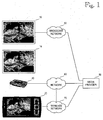
- FIG. 1 shows an example of a system to which the invention may be applied. It is to be noted that, for the sake of clarity, the figure only shows those components that are relevant to the understanding of the invention.
- the system of Figure 1 comprises three pieces of terminal equipment: two TV sets 10 and one mobile device 20.
- the TV sets 10 may be digital, such as DVB-T, DVB-C or DVB-S (Digital Video Broadcasting - Terrestrial, - Cable or - Satellite) capable, devices or analogue TV devices.
- one of the TV sets 10 is directly connected to a broadcast network 50, such as a terrestrial, cable or satellite TV broadcast network, via which it receives the media data from a media provider 80.
- the media provider 80 may be e.g.
- the other TV set 10 is connected to an IP network 60, such as the Internet, via an IPTV (Internet Protocol Television) set-top box (decoder or encoder/decoder), which enables the TV set 10 to receive and present media data from an IPTV service.
- IPTV Internet Protocol Television
- the functionality of the IPTV set-top box 40 and TV set 10 could also be integrated into a single device.
- IPTV-capable receiving equipment could also be comprised of a personal computer system or a similar device.
- the mobile device 20 may be a mobile phone, a PDA device or a portable computer, a notebook computer or a personal computer with a wireless LAN (Local -Area Network) adapter, for example.
- the mobile device 20 may be e.g. a DVB-H (Digital Video Broadcasting - Handheld) capable device.
- the mobile device 20 is connected to a wireless network 70 via a wireless connection.
- the wireless network 70 may be any wireless access network, such as WLAN (Wireless Local Area Network), WiMAX, GPRS (General Packet Radio Service) network, GSM (Global System for Mobile Communications) network or a third generation mobile communication system, such as UMTS (Universal Mobile Telecommunications System), or a combination thereof.
- the mobile device 20 may receive media data related to a media session via the wireless network 70 directly connected to the media provider 80 or alternatively via the wireless network 70 connected to the IP network 60 which, in turn, is connected to the media provider 80, for example. It should be noted, however, that the above examples only illustrate exemplary ways of providing media sessions but do not in any way restrict the implementation of the invention.
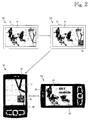
- FIG. 2 shows a diagram according to one possible embodiment.
- first terminal equipment 10 is receiving and presenting media data related to a media session.
- the terminal equipment 10 may present e.g. video data on a video screen 11, and/or audio data.
- information associated with the media session is to be transferred to another set of terminal equipment. According to an embodiment, this is accomplished such that in phase 102 the first terminal equipment 10 displays a visual identifier 30, such as a barcode, associated with the media session, and in phase 103 second terminal equipment 20 reads said visual identifier 30 displayed by the first terminal equipment 10. After reading the visual identifier 30, the second terminal 20 starts to receive and present at least part of the media data related to the media session on the basis of the transferred information, i.e.
- the second terminal equipment 20 may present e.g. video data on a video screen 21, and/or audio data.
- said receiving and presenting of the at least part of the media data related to the media session also include a situation in which the playback of the media data is in a pause state, i.e. the playback is temporarily paused.
- the concept of receiving and presenting media information not only includes an active play state but also a pause state of the playback. This enables the user, for instance, to delay the start of the play state of the playback, of the media data related to the media session by keeping the playback in the pause state until the user can start to follow the media session.
- the first terminal equipment 10 may either continue the media session or stop it.
- the transfer of information associated with the media session may be initiated by the user of the first and/or second user equipment, or it may take place automatically according to certain predetermined rules or conditions, for example.
- the first terminal equipment 10 is e.g. a TV set or a corresponding device, it may have a dedicated control button in the device itself and/or in its remote control device (not shown in the figures) such that a push of the button by the user makes the visual identifier 30 visible on the screen 11 of the terminal equipment 10.
- the visual identifier could be shown either at certain time intervals or continuously on the screen 11 of the terminal equipment.
- the user of the mobile device 20 could easily read the visual identifier 30 from a screen in a public space and thus copy the media session into his/hers mobile device in order to continue to follow the media session with the mobile device.
- the terminal equipment 10 and 20 may be any kind of terminal equipment such that the first terminal equipment is able to display a visual identifier 30 associated with the media session and the second terminal equipment is able to read the visual identifier 30 displayed by the first terminal equipment 10.
- the first terminal equipment may display the visual identifier on a TV screen 11, for example, or it may have another screen or display or even a dedicated display or corresponding means for displaying the visual identifier 30.
- the second terminal equipment 20 may have a camera 22 or a special scanning device such as a barcode reader, either integrated into the equipment or as a separate unit connected to the equipment, or corresponding means for reading the visual identifier 30 displayed by the first terminal equipment 10.
- the mobile device may be configured to automatically start the media session indicated by the read barcode.
- the second terminal equipment 20 may receive said at least part of the media data from a different source or from the same source as the first terminal equipment 10.
- the media session is not necessarily bound to a certain media source.
- the first media equipment is a TV set and the second terminal equipment 20 is a mobile device, they might receive the same media content, such as a video programme, from different media sources because the mobile equipment might need to receive the media data in another format than the TV set.
- the format of said at least part of the media data to be received by the second terminal equipment 20 is adapted to requirements of media data reception properties and/or media data reproduction properties of the second terminal equipment.
- the term format of the media data may define, for example, the encoding format of the media data, the resolution of the media data and/or the data rate of the media data.
- Such an adaptation of the media data may be performed by the media provider 80 or by some other system element in the transmission path between the media provider 80 and the terminal equipment.
- the broadcast network 50, the IP network 60 or the wireless network 70, or a network element thereof could perform any necessary adaptation of the media data, such as a reduction of a data rate of a video stream to be more suitable for a mobile device.
- the receiving terminal equipment 10 or 20 may perform the adaptation of the received media data, for example a reseating of video data.
- the media data related to a media session comprises at least video data and/or audio data.
- the second terminal equipment 20 when the media data received by the first terminal equipment 10 comprises at least video data and audio data, the second terminal equipment 20 only receives and presents the audio data part of the media data.
- the second terminal equipment 20 receives and presents the same media data as the first terminal equipment but only presents the audio data part of the media data.
- the visual identifier 30 associated with the media session identifies the media session or the media data and/or the source of the media data related to the media session.
- the visual identifier could identify e.g. a TV/video programme or a TV channel, or provide a URL (Uniform Resource Locator) address or an IP (Internet Protocol) address to the source of the media data related to the media session.
- the visual identifier 30 associated with the media session further identifies a time position of the media data. For example, if the media session is a VOD programme, the visual identifier 30 associated with the media session preferably also contains information about the current time position of the programme i.e. indicates the programme time point currently shown by the first terminal equipment, from which the information associated with the media session is to be transferred to the second terminal equipment.
- the visual identifier 30 may be in the form of a barcode or comprise more than one barcodes.
- the barcode(s) may be either a regular linear barcode (1 D barcode) or a so-called 2D barcode as shown in Figure 2 . Any barcode type capable of conveying the necessary information may be used in connection with the present invention. Also other kind of visual identifiers may be used.
- a user has an IPTV set-top box equipped with a barcode (or other visual identifier) encoding software and/or hardware and a capability to bring up the resulting barcode(s) to a screen connected to the set-top box.
- This functionality might be initiated by a press of a separate key in a remote control of the device or as a function in a menu structure of the device.
- the set-top box preferably checks whether there is a special mobile version available of the programme currently being received and displayed by the set-top box. If a mobile version exists, the set-top box preferably encodes an URL address representing that video stream as a barcode.
- the set-top box preferably encodes an URL of the current broadcast stream or it can encode an URL pointing to a resource, which tells the user that no suitable mobile video is available.
- the information about the available streams may be provisioned to the set-top box either in a continuous manner or the set-top box may ask for information from a backend system.
- the user can then read the barcode with his/her mobile device. As soon as the barcode has been read, the mobile device preferably opens the resource pointed by the URL in an appropriate viewer client within the mobile device.
- the information is preferably also encoded to the barcode.
- This information can be encoded as a separate URL parameter, for example.
- the mobile device may open the resource pointed by the URL from the right time position and the user can continue to watch the stream from the correct position. The user can naturally also pause the VOD clip or save it as a bookmark and continue to watch later from the correct position.
- the invention is also suitable to be used in public locations. For example, there could be big screens in e.g. train and bus stations, showing some live-TV programme or VOD material, or both. While waiting for the bus or the train, the user could watch such a programme. If the bus or the train arrives before the programme has ended, the user could continue to watch the show with his/her mobile phone. The same programme might also be shown on several screens simultaneously. The needed barcode could be shown on all of the screens all the time. But it might also be the case that only the screens that are near the user could contain the visual identifier.
- a mobile device In case a mobile device is used as an audio source for a separate video screen e.g. in public spaces, the implementation might require some additional delays to be added to an IPTV broadcast.
- the latencies are usually longer in mobile TV than in IPTV.
- the capability of synchronizing the video from IPTV and audio from mobile TV requires that, when the video is being shown, the mobile device is ready to play the audio. If no extra delays are added, the audio will lag behind and lip-sync might be missing. This synchronization in the form of adding delay could be implemented, for example, in the terminal equipment reproducing the IPTV broadcast.
- Such a computer or digital signal processing equipment preferably comprises at least a working memory (RAM) providing storage area for arithmetical operations and a central processing unit (CPU), such as a general-purpose digital signal processor.
- the CPU may comprise a set of registers, an arithmetic logic unit, and a control unit.
- the control unit is controlled by a sequence of program instructions transferred to the CPU from the RAM.
- the control unit may contain a number of microinstructions for basic operations. The implementation of the microinstructions may vary depending on the CPU design.
- the program instructions may be coded by a programming language, which may be a high-level programming language, such as C, Java, etc., or a low-level programming language, such as a machine language, or an assembler.
- the computer may also have an operating system, which may provide system services to a computer program written with the program instructions.
- the computer or other apparatus implementing the invention further preferably comprises suitable input means for receiving data, and output means for outputting data. It is also possible to use a specific integrated circuit or circuits, or discrete electric components and devices for implementing the functionality according to any one of the embodiments.
- such software can be provided as a computer program product comprising computer program code which, when run on a computer, causes the computer or corresponding arrangement to perform the functionality according to the invention as described abode.
- a computer program code may be stored on a computer readable medium, suck as suitable memory means, e.g. a flash memory or a disc memory from which it is loadable to the unit or units executing the program code.
- suitable memory means e.g. a flash memory or a disc memory from which it is loadable to the unit or units executing the program code.
- a computer program code implementing the invention may be loaded to the unit or units executing the computer program code via a suitable data network, for example, and it may replace or update a possibly existing program code.
- Any apparatus such as terminal equipment, may be implemented as a single unit or as two or more separate units that are configured to implement the functionality of the various embodiments.
- the term 'unit' refers generally to a physical or logical entity, such as a physical device or a part thereof or a software routine.
Landscapes
- Engineering & Computer Science (AREA)
- Multimedia (AREA)
- Signal Processing (AREA)
- Computer Networks & Wireless Communication (AREA)
- Business, Economics & Management (AREA)
- General Business, Economics & Management (AREA)
- Two-Way Televisions, Distribution Of Moving Picture Or The Like (AREA)
Claims (11)
- Verfahren zur Übertragung von Medieninformationen, wobei das Verfahren Folgendes umfasst:Empfangen und Präsentieren (101) von Mediendaten, die mit einer Mediensitzung zusammenhängen, durch eine erste Endeinrichtung (10, 40),Übertragen von der Mediensitzung zugeordneten Information von der ersten Endeinrichtung (10, 40) an eine zweite Endeinrichtung (20), undBeginnen, zumindest einen Teil der mit der Mediensitzung zusammenhängenden Mediendaten durch die zweite Endeinrichtung (20) auf Basis der übertragenen Information zu empfangen und zu präsentieren (104), dadurch gekennzeichnet,dass das Übertragen der der Mediensitzung zugeordneten Information umfasst:Anzeigen (102) eines mit der Mediensitzung verknüpften visuellen Erkennungszeichens (30) durch die erste Endeinrichtung (10, 40) undLesen (103) des besagten visuellen Erkennungszeichens, das von der ersten Endeinrichtung angezeigt wird, durch die zweite Endeinrichtung (20).
- Verfahren nach Anspruch 1, gekennzeichnet durch Empfangen des besagten zumindest einen Teils der Mediendaten durch die zweite Endeinrichtung (20) von einer anderen Quelle oder von derselben Quelle wie die erste Endeinrichtung (10, 40).
- Verfahren nach Anspruch 1 oder 2, gekennzeichnet dadurch, dass das Format des besagten zumindest einen Teils der Mediendaten, der durch die zweite Endeinrichtung (20) empfangen werden soll, an Anforderungen von Mediendaten-Empfangseigenschaften und/oder Mediendaten-Wiedergabeeigenschaften der zweiten Endeinrichtung angepasst ist.
- Verfahren nach Anspruch 3, gekennzeichnet dadurch, dass das Format der Mediendaten das Codierungsformat der Mediendaten, die Auflösung der Mediendaten und/oder die Datenrate der Mediendaten definiert.
- Verfahren nach einem der Ansprüche 1 bis 4, gekennzeichnet dadurch, dass die Mediendaten zumindest Videodaten und/oder Audiodaten umfassen.
- Verfahren nach Anspruch 5, gekennzeichnet dadurch, dass die durch die erste Endeinrichtung (10, 40) empfangenen Mediendaten zumindest Videodaten und/oder Audiodaten umfassen, wobei die zweite Endeinrichtung (20) den Audiodaten-Teil der Mediendaten empfängt und präsentiert, oder nur präsentiert.
- Verfahren nach einem der Ansprüche 1 bis 6, gekennzeichnet dadurch, dass das mit der Mediensitzung verknüpfte visuelle Erkennungszeichen (30) die Mediensitzung oder die Mediendaten, und/oder die Quelle der mit der Mediensitzung zusammenhängenden Mediendaten identifiziert.
- Verfahren nach Anspruch 7, gekennzeichnet dadurch, dass das der Mediensitzung zugeordnete visuelle Erkennungszeichen (30) ferner eine zeitliche Position der Mediendaten identifiziert.
- Verfahren nach einem der Ansprüche 1 bis 8, gekennzeichnet dadurch, dass das visuelle Erkennungszeichen zumindest einen Strichcode umfasst (30).
- System zur Übertragung von Medieninformationen, wobei das System Folgendes umfasst:eine erste Endeinrichtung (10, 40), welche zum Empfangen und Präsentieren von mit einer Mediensitzung zusammenhängenden Mediendaten, sowie zum Bereitstellen von der Mediensitzung zugeordneter Information eingerichtet ist; undeine zweite Endeinrichtung (20), welche zum Empfangen der von der ersten Endeinrichtung bereitgestellten, der Mediensitzung zugeordneten Information und zum Empfangen und Präsentieren zumindest eines Teils der mit der Mediensitzung zusammenhängenden Mediendaten auf der Basis der empfangenen Information eingerichtet ist, gekennzeichnet dadurch, dass die erste Endeinrichtung (10, 40) zum Bereitstellen der Information, die der Mediensitzung zugeordnet ist, durch Anzeigen eines der Mediensitzung zugeordneten visuellen Erkennungszeichens (30) eingerichtet ist, und die zweite Endeinrichtung (20) zum Empfangen der Information, die der Mediensitzung zugeordnet ist, durch Lesen des besagten, von der ersten Endeinrichtung angezeigten visuellen Erkennungszeichens eingerichtet ist.
- System nach Anspruch 10, gekennzeichnet dadurch, dass das visuelle Erkennungszeichen zumindest einen Strichcode umfasst (30).
Priority Applications (2)
| Application Number | Priority Date | Filing Date | Title |
|---|---|---|---|
| EP08167077.0A EP2180652B1 (de) | 2008-10-21 | 2008-10-21 | Verfahren und System zur Medieninformationsübertragung |
| DK08167077.0T DK2180652T3 (en) | 2008-10-21 | 2008-10-21 | Method and system for transmitting media information |
Applications Claiming Priority (1)
| Application Number | Priority Date | Filing Date | Title |
|---|---|---|---|
| EP08167077.0A EP2180652B1 (de) | 2008-10-21 | 2008-10-21 | Verfahren und System zur Medieninformationsübertragung |
Publications (2)
| Publication Number | Publication Date |
|---|---|
| EP2180652A1 EP2180652A1 (de) | 2010-04-28 |
| EP2180652B1 true EP2180652B1 (de) | 2016-09-28 |
Family
ID=40450855
Family Applications (1)
| Application Number | Title | Priority Date | Filing Date |
|---|---|---|---|
| EP08167077.0A Not-in-force EP2180652B1 (de) | 2008-10-21 | 2008-10-21 | Verfahren und System zur Medieninformationsübertragung |
Country Status (2)
| Country | Link |
|---|---|
| EP (1) | EP2180652B1 (de) |
| DK (1) | DK2180652T3 (de) |
Families Citing this family (13)
| Publication number | Priority date | Publication date | Assignee | Title |
|---|---|---|---|---|
| US8560583B2 (en) | 2010-04-01 | 2013-10-15 | Sony Computer Entertainment Inc. | Media fingerprinting for social networking |
| US9264785B2 (en) | 2010-04-01 | 2016-02-16 | Sony Computer Entertainment Inc. | Media fingerprinting for content determination and retrieval |
| US8730354B2 (en) | 2010-07-13 | 2014-05-20 | Sony Computer Entertainment Inc | Overlay video content on a mobile device |
| US9832441B2 (en) | 2010-07-13 | 2017-11-28 | Sony Interactive Entertainment Inc. | Supplemental content on a mobile device |
| US9143699B2 (en) | 2010-07-13 | 2015-09-22 | Sony Computer Entertainment Inc. | Overlay non-video content on a mobile device |
| US9159165B2 (en) | 2010-07-13 | 2015-10-13 | Sony Computer Entertainment Inc. | Position-dependent gaming, 3-D controller, and handheld as a remote |
| US9814977B2 (en) * | 2010-07-13 | 2017-11-14 | Sony Interactive Entertainment Inc. | Supplemental video content on a mobile device |
| JP5937510B2 (ja) * | 2010-11-25 | 2016-06-22 | パナソニック インテレクチュアル プロパティ コーポレーション オブ アメリカPanasonic Intellectual Property Corporation of America | 通信機器 |
| EP2645671A1 (de) | 2012-03-30 | 2013-10-02 | Koninklijke KPN N.V. | Umschalten des Abspielens von Informationsinhalten zwischen Endbenutzergeräten |
| US9351328B2 (en) | 2012-10-25 | 2016-05-24 | Telefonaktiebolaget Lm Ericsson (Publ) | Method for transferring a communication session between devices |
| CN104636124A (zh) * | 2013-11-12 | 2015-05-20 | 华为技术有限公司 | 一种内容互动呈现方法、装置、系统及终端 |
| EP2884781A1 (de) * | 2013-12-12 | 2015-06-17 | Siemens Aktiengesellschaft | Computervorrichtung zur Übertragung einer Sitzung in einer webbasierten Anwendung an eine Computervorrichtung |
| CN108874822A (zh) * | 2017-05-12 | 2018-11-23 | 宝马股份公司 | 用于切换数字媒体呈现的移动设备、交通工具和方法 |
Family Cites Families (4)
| Publication number | Priority date | Publication date | Assignee | Title |
|---|---|---|---|---|
| US6068188A (en) * | 1993-11-24 | 2000-05-30 | Metrologic Instruments, Inc. | System and method for composing menus of URL-encoded bar code symbols while using internet browser program |
| EP1330098A1 (de) * | 2002-01-21 | 2003-07-23 | BRITISH TELECOMMUNICATIONS public limited company | Verfahren und Kommunikationssystem für die Übergabe von Web-Sitzungen |
| WO2005109829A1 (en) * | 2004-05-06 | 2005-11-17 | Koninklijke Philips Electronics N.V. | Method device and program for seamlessly transferring the execution of a software application from a first to a second device |
| WO2007107982A1 (en) | 2006-03-17 | 2007-09-27 | Sandisk Il Ltd | Session handover between terminals |
-
2008
- 2008-10-21 EP EP08167077.0A patent/EP2180652B1/de not_active Not-in-force
- 2008-10-21 DK DK08167077.0T patent/DK2180652T3/en active
Also Published As
| Publication number | Publication date |
|---|---|
| EP2180652A1 (de) | 2010-04-28 |
| DK2180652T3 (en) | 2017-01-16 |
Similar Documents
| Publication | Publication Date | Title |
|---|---|---|
| EP2180652B1 (de) | Verfahren und System zur Medieninformationsübertragung | |
| US9363548B2 (en) | System and method for providing a personal broadcasting service using a mobile communication terminal | |
| US8074244B2 (en) | Receiving apparatus and method | |
| KR101036737B1 (ko) | 모바일 장치로 줌잉 피처를 제공하는 방법 및 줌잉 피처를 제공하는 모바일 장치 | |
| US20090328099A1 (en) | Broadcast system with a local electronic service guide generation | |
| JP2004538726A (ja) | Mpeg‐4に基づくマルチメディア・システム、そのシステムのためのサービス・プロバイダ、およびコンテンツに基づく遠隔通信装置 | |
| CN103096128A (zh) | 一种实现视频互动的方法、服务器、终端及系统 | |
| JP2012130046A (ja) | 携帯型移動通信装置への効率的なストリーム配信によるコンテンツ配信 | |
| US7551918B2 (en) | Mobile device control of mobile television broadcast signals to multiple destinations | |
| JP5696914B1 (ja) | 送信装置および送信方法 | |
| US20070099560A1 (en) | Mobile device control of mobile television broadcast signals to alternate destinations | |
| KR20210076133A (ko) | 네이티브 방송사 애플리케이션을 포함하는 수신기 디바이스 | |
| WO2010016129A1 (ja) | データ放送システム、データ放送サーバ、およびデータ放送プログラム | |
| US9769415B1 (en) | Bandwidth optimized channel surfing and interface thereof | |
| JPH11266405A (ja) | 放送受信機 | |
| JP7479639B2 (ja) | 情報通信端末装置及び該装置における表示制御方法 | |
| CN111327932A (zh) | 电视盒子、电视节目处理方法、装置和存储介质 | |
| EP1841104A1 (de) | Drahtloses Kommunikationsgerät und Betriebsverfahren dafür | |
| JP2024099992A (ja) | 受信装置およびプログラム | |
| JP2021114666A (ja) | 情報通信端末装置及び該装置における表示制御方法 | |
| Ramaley | Live Streaming at Scale: Is Your Video on Cue? | |
| KR20200087547A (ko) | 광고 컨텐츠 제공 서버, 그것을 갖는 개인화 광고 제공 시스템 및 그것의 동작 방법 |
Legal Events
| Date | Code | Title | Description |
|---|---|---|---|
| PUAI | Public reference made under article 153(3) epc to a published international application that has entered the european phase |
Free format text: ORIGINAL CODE: 0009012 |
|
| AK | Designated contracting states |
Kind code of ref document: A1 Designated state(s): AT BE BG CH CY CZ DE DK EE ES FI FR GB GR HR HU IE IS IT LI LT LU LV MC MT NL NO PL PT RO SE SI SK TR |
|
| AX | Request for extension of the european patent |
Extension state: AL BA MK RS |
|
| 17P | Request for examination filed |
Effective date: 20100616 |
|
| AKX | Designation fees paid |
Designated state(s): AT BE BG CH CY CZ DE DK EE ES FI FR GB GR HR HU IE IS IT LI LT LU LV MC MT NL NO PL PT RO SE SI SK TR |
|
| GRAP | Despatch of communication of intention to grant a patent |
Free format text: ORIGINAL CODE: EPIDOSNIGR1 |
|
| INTG | Intention to grant announced |
Effective date: 20160420 |
|
| GRAS | Grant fee paid |
Free format text: ORIGINAL CODE: EPIDOSNIGR3 |
|
| GRAA | (expected) grant |
Free format text: ORIGINAL CODE: 0009210 |
|
| RAP1 | Party data changed (applicant data changed or rights of an application transferred) |
Owner name: TELIA COMPANY AB |
|
| AK | Designated contracting states |
Kind code of ref document: B1 Designated state(s): AT BE BG CH CY CZ DE DK EE ES FI FR GB GR HR HU IE IS IT LI LT LU LV MC MT NL NO PL PT RO SE SI SK TR |
|
| REG | Reference to a national code |
Ref country code: GB Ref legal event code: FG4D |
|
| REG | Reference to a national code |
Ref country code: CH Ref legal event code: EP |
|
| REG | Reference to a national code |
Ref country code: AT Ref legal event code: REF Ref document number: 833584 Country of ref document: AT Kind code of ref document: T Effective date: 20161015 |
|
| REG | Reference to a national code |
Ref country code: IE Ref legal event code: FG4D |
|
| REG | Reference to a national code |
Ref country code: DE Ref legal event code: R096 Ref document number: 602008046473 Country of ref document: DE |
|
| REG | Reference to a national code |
Ref country code: FR Ref legal event code: PLFP Year of fee payment: 9 |
|
| REG | Reference to a national code |
Ref country code: NL Ref legal event code: FP |
|
| REG | Reference to a national code |
Ref country code: SE Ref legal event code: TRGR |
|
| REG | Reference to a national code |
Ref country code: DK Ref legal event code: T3 Effective date: 20170110 |
|
| REG | Reference to a national code |
Ref country code: LT Ref legal event code: MG4D |
|
| PG25 | Lapsed in a contracting state [announced via postgrant information from national office to epo] |
Ref country code: LT Free format text: LAPSE BECAUSE OF FAILURE TO SUBMIT A TRANSLATION OF THE DESCRIPTION OR TO PAY THE FEE WITHIN THE PRESCRIBED TIME-LIMIT Effective date: 20160928 Ref country code: HR Free format text: LAPSE BECAUSE OF FAILURE TO SUBMIT A TRANSLATION OF THE DESCRIPTION OR TO PAY THE FEE WITHIN THE PRESCRIBED TIME-LIMIT Effective date: 20160928 |
|
| REG | Reference to a national code |
Ref country code: NO Ref legal event code: T2 Effective date: 20160928 |
|
| REG | Reference to a national code |
Ref country code: AT Ref legal event code: MK05 Ref document number: 833584 Country of ref document: AT Kind code of ref document: T Effective date: 20160928 |
|
| PG25 | Lapsed in a contracting state [announced via postgrant information from national office to epo] |
Ref country code: BE Free format text: LAPSE BECAUSE OF NON-PAYMENT OF DUE FEES Effective date: 20161031 Ref country code: LV Free format text: LAPSE BECAUSE OF FAILURE TO SUBMIT A TRANSLATION OF THE DESCRIPTION OR TO PAY THE FEE WITHIN THE PRESCRIBED TIME-LIMIT Effective date: 20160928 Ref country code: GR Free format text: LAPSE BECAUSE OF FAILURE TO SUBMIT A TRANSLATION OF THE DESCRIPTION OR TO PAY THE FEE WITHIN THE PRESCRIBED TIME-LIMIT Effective date: 20161229 |
|
| PG25 | Lapsed in a contracting state [announced via postgrant information from national office to epo] |
Ref country code: RO Free format text: LAPSE BECAUSE OF FAILURE TO SUBMIT A TRANSLATION OF THE DESCRIPTION OR TO PAY THE FEE WITHIN THE PRESCRIBED TIME-LIMIT Effective date: 20160928 Ref country code: EE Free format text: LAPSE BECAUSE OF FAILURE TO SUBMIT A TRANSLATION OF THE DESCRIPTION OR TO PAY THE FEE WITHIN THE PRESCRIBED TIME-LIMIT Effective date: 20160928 |
|
| PG25 | Lapsed in a contracting state [announced via postgrant information from national office to epo] |
Ref country code: PT Free format text: LAPSE BECAUSE OF FAILURE TO SUBMIT A TRANSLATION OF THE DESCRIPTION OR TO PAY THE FEE WITHIN THE PRESCRIBED TIME-LIMIT Effective date: 20170130 Ref country code: SK Free format text: LAPSE BECAUSE OF FAILURE TO SUBMIT A TRANSLATION OF THE DESCRIPTION OR TO PAY THE FEE WITHIN THE PRESCRIBED TIME-LIMIT Effective date: 20160928 Ref country code: AT Free format text: LAPSE BECAUSE OF FAILURE TO SUBMIT A TRANSLATION OF THE DESCRIPTION OR TO PAY THE FEE WITHIN THE PRESCRIBED TIME-LIMIT Effective date: 20160928 Ref country code: PL Free format text: LAPSE BECAUSE OF FAILURE TO SUBMIT A TRANSLATION OF THE DESCRIPTION OR TO PAY THE FEE WITHIN THE PRESCRIBED TIME-LIMIT Effective date: 20160928 Ref country code: BE Free format text: LAPSE BECAUSE OF FAILURE TO SUBMIT A TRANSLATION OF THE DESCRIPTION OR TO PAY THE FEE WITHIN THE PRESCRIBED TIME-LIMIT Effective date: 20160928 Ref country code: ES Free format text: LAPSE BECAUSE OF FAILURE TO SUBMIT A TRANSLATION OF THE DESCRIPTION OR TO PAY THE FEE WITHIN THE PRESCRIBED TIME-LIMIT Effective date: 20160928 Ref country code: BG Free format text: LAPSE BECAUSE OF FAILURE TO SUBMIT A TRANSLATION OF THE DESCRIPTION OR TO PAY THE FEE WITHIN THE PRESCRIBED TIME-LIMIT Effective date: 20161228 Ref country code: CZ Free format text: LAPSE BECAUSE OF FAILURE TO SUBMIT A TRANSLATION OF THE DESCRIPTION OR TO PAY THE FEE WITHIN THE PRESCRIBED TIME-LIMIT Effective date: 20160928 Ref country code: IS Free format text: LAPSE BECAUSE OF FAILURE TO SUBMIT A TRANSLATION OF THE DESCRIPTION OR TO PAY THE FEE WITHIN THE PRESCRIBED TIME-LIMIT Effective date: 20170128 |
|
| REG | Reference to a national code |
Ref country code: CH Ref legal event code: PL |
|
| REG | Reference to a national code |
Ref country code: DE Ref legal event code: R097 Ref document number: 602008046473 Country of ref document: DE |
|
| PG25 | Lapsed in a contracting state [announced via postgrant information from national office to epo] |
Ref country code: IT Free format text: LAPSE BECAUSE OF FAILURE TO SUBMIT A TRANSLATION OF THE DESCRIPTION OR TO PAY THE FEE WITHIN THE PRESCRIBED TIME-LIMIT Effective date: 20160928 |
|
| REG | Reference to a national code |
Ref country code: IE Ref legal event code: MM4A |
|
| PG25 | Lapsed in a contracting state [announced via postgrant information from national office to epo] |
Ref country code: CH Free format text: LAPSE BECAUSE OF NON-PAYMENT OF DUE FEES Effective date: 20161031 Ref country code: LI Free format text: LAPSE BECAUSE OF NON-PAYMENT OF DUE FEES Effective date: 20161031 |
|
| PLBE | No opposition filed within time limit |
Free format text: ORIGINAL CODE: 0009261 |
|
| STAA | Information on the status of an ep patent application or granted ep patent |
Free format text: STATUS: NO OPPOSITION FILED WITHIN TIME LIMIT |
|
| PG25 | Lapsed in a contracting state [announced via postgrant information from national office to epo] |
Ref country code: LU Free format text: LAPSE BECAUSE OF NON-PAYMENT OF DUE FEES Effective date: 20161021 |
|
| 26N | No opposition filed |
Effective date: 20170629 |
|
| REG | Reference to a national code |
Ref country code: FR Ref legal event code: PLFP Year of fee payment: 10 |
|
| PG25 | Lapsed in a contracting state [announced via postgrant information from national office to epo] |
Ref country code: IE Free format text: LAPSE BECAUSE OF NON-PAYMENT OF DUE FEES Effective date: 20161021 Ref country code: SI Free format text: LAPSE BECAUSE OF FAILURE TO SUBMIT A TRANSLATION OF THE DESCRIPTION OR TO PAY THE FEE WITHIN THE PRESCRIBED TIME-LIMIT Effective date: 20160928 |
|
| PG25 | Lapsed in a contracting state [announced via postgrant information from national office to epo] |
Ref country code: HU Free format text: LAPSE BECAUSE OF FAILURE TO SUBMIT A TRANSLATION OF THE DESCRIPTION OR TO PAY THE FEE WITHIN THE PRESCRIBED TIME-LIMIT; INVALID AB INITIO Effective date: 20081021 Ref country code: CY Free format text: LAPSE BECAUSE OF FAILURE TO SUBMIT A TRANSLATION OF THE DESCRIPTION OR TO PAY THE FEE WITHIN THE PRESCRIBED TIME-LIMIT Effective date: 20160928 |
|
| PG25 | Lapsed in a contracting state [announced via postgrant information from national office to epo] |
Ref country code: MC Free format text: LAPSE BECAUSE OF FAILURE TO SUBMIT A TRANSLATION OF THE DESCRIPTION OR TO PAY THE FEE WITHIN THE PRESCRIBED TIME-LIMIT Effective date: 20160928 Ref country code: MT Free format text: LAPSE BECAUSE OF NON-PAYMENT OF DUE FEES Effective date: 20161031 Ref country code: TR Free format text: LAPSE BECAUSE OF FAILURE TO SUBMIT A TRANSLATION OF THE DESCRIPTION OR TO PAY THE FEE WITHIN THE PRESCRIBED TIME-LIMIT Effective date: 20160928 |
|
| REG | Reference to a national code |
Ref country code: FR Ref legal event code: PLFP Year of fee payment: 11 |
|
| PGFP | Annual fee paid to national office [announced via postgrant information from national office to epo] |
Ref country code: NL Payment date: 20201028 Year of fee payment: 13 |
|
| PGFP | Annual fee paid to national office [announced via postgrant information from national office to epo] |
Ref country code: DK Payment date: 20201026 Year of fee payment: 13 Ref country code: NO Payment date: 20201026 Year of fee payment: 13 |
|
| REG | Reference to a national code |
Ref country code: DE Ref legal event code: R079 Ref document number: 602008046473 Country of ref document: DE Free format text: PREVIOUS MAIN CLASS: H04L0029060000 Ipc: H04L0065000000 |
|
| PGFP | Annual fee paid to national office [announced via postgrant information from national office to epo] |
Ref country code: GB Payment date: 20211022 Year of fee payment: 14 Ref country code: FI Payment date: 20211021 Year of fee payment: 14 Ref country code: SE Payment date: 20211020 Year of fee payment: 14 Ref country code: DE Payment date: 20211020 Year of fee payment: 14 |
|
| PGFP | Annual fee paid to national office [announced via postgrant information from national office to epo] |
Ref country code: FR Payment date: 20211022 Year of fee payment: 14 |
|
| REG | Reference to a national code |
Ref country code: NO Ref legal event code: MMEP Ref country code: DK Ref legal event code: EBP Effective date: 20211031 |
|
| REG | Reference to a national code |
Ref country code: NL Ref legal event code: MM Effective date: 20211101 |
|
| PG25 | Lapsed in a contracting state [announced via postgrant information from national office to epo] |
Ref country code: NO Free format text: LAPSE BECAUSE OF NON-PAYMENT OF DUE FEES Effective date: 20211031 Ref country code: NL Free format text: LAPSE BECAUSE OF NON-PAYMENT OF DUE FEES Effective date: 20211101 |
|
| PG25 | Lapsed in a contracting state [announced via postgrant information from national office to epo] |
Ref country code: DK Free format text: LAPSE BECAUSE OF NON-PAYMENT OF DUE FEES Effective date: 20211031 |
|
| REG | Reference to a national code |
Ref country code: DE Ref legal event code: R119 Ref document number: 602008046473 Country of ref document: DE |
|
| REG | Reference to a national code |
Ref country code: SE Ref legal event code: EUG |
|
| GBPC | Gb: european patent ceased through non-payment of renewal fee |
Effective date: 20221021 |
|
| PG25 | Lapsed in a contracting state [announced via postgrant information from national office to epo] |
Ref country code: FR Free format text: LAPSE BECAUSE OF NON-PAYMENT OF DUE FEES Effective date: 20221031 Ref country code: DE Free format text: LAPSE BECAUSE OF NON-PAYMENT OF DUE FEES Effective date: 20230503 |
|
| PG25 | Lapsed in a contracting state [announced via postgrant information from national office to epo] |
Ref country code: SE Free format text: LAPSE BECAUSE OF NON-PAYMENT OF DUE FEES Effective date: 20221022 |
|
| PG25 | Lapsed in a contracting state [announced via postgrant information from national office to epo] |
Ref country code: GB Free format text: LAPSE BECAUSE OF NON-PAYMENT OF DUE FEES Effective date: 20221021 |
|
| PG25 | Lapsed in a contracting state [announced via postgrant information from national office to epo] |
Ref country code: FI Free format text: LAPSE BECAUSE OF NON-PAYMENT OF DUE FEES Effective date: 20221021 |