EP2178371B1 - Heterocyclische modulatoren der cannabinoidrezeptoren - Google Patents
Heterocyclische modulatoren der cannabinoidrezeptoren Download PDFInfo
- Publication number
- EP2178371B1 EP2178371B1 EP08781801.9A EP08781801A EP2178371B1 EP 2178371 B1 EP2178371 B1 EP 2178371B1 EP 08781801 A EP08781801 A EP 08781801A EP 2178371 B1 EP2178371 B1 EP 2178371B1
- Authority
- EP
- European Patent Office
- Prior art keywords
- mmol
- compound
- methyl
- group
- dihydro
- Prior art date
- Legal status (The legal status is an assumption and is not a legal conclusion. Google has not performed a legal analysis and makes no representation as to the accuracy of the status listed.)
- Active
Links
- 0 O=C(c1ccc(C(Cc2ccccc2)(COCC(CC2)CCN2C(c2*c(OC[C@]3Cc4ccccc4)*3cc2)=O)CO2)c2c1)N1CCCCC1 Chemical compound O=C(c1ccc(C(Cc2ccccc2)(COCC(CC2)CCN2C(c2*c(OC[C@]3Cc4ccccc4)*3cc2)=O)CO2)c2c1)N1CCCCC1 0.000 description 2
- MVSVGVIGTQMZOA-UHFFFAOYSA-N CC(CN1CCOCC1)(COc1c2)c1ccc2C(N(CC1)CCC1C(CC1)CCC1OCC1(C)c(ccc(C(N2CCCCC2)=O)c2)c2OC1)=O Chemical compound CC(CN1CCOCC1)(COc1c2)c1ccc2C(N(CC1)CCC1C(CC1)CCC1OCC1(C)c(ccc(C(N2CCCCC2)=O)c2)c2OC1)=O MVSVGVIGTQMZOA-UHFFFAOYSA-N 0.000 description 1
- KIHKCSLTKROHIT-UHFFFAOYSA-N CC(Cc1ccc(C(CC2)CCN2C(c2ccc(C(C)(Cc3cccc4c3cccc4)CO3)c3c2)=O)cc1)(COc1c2)c1ccc2C(N1CCCCC1)=O Chemical compound CC(Cc1ccc(C(CC2)CCN2C(c2ccc(C(C)(Cc3cccc4c3cccc4)CO3)c3c2)=O)cc1)(COc1c2)c1ccc2C(N1CCCCC1)=O KIHKCSLTKROHIT-UHFFFAOYSA-N 0.000 description 1
- WWSQPWSGYXNMRJ-UHFFFAOYSA-N CC1(CSc(cc2)ccc2/[O]=C(\c2cc(OCC3(Cc4ccccc4)COc4ccccc4)c3cc2)/N2CCCCC2)c(ccc(C(N2CCCCC2)=O)c2)c2OC1 Chemical compound CC1(CSc(cc2)ccc2/[O]=C(\c2cc(OCC3(Cc4ccccc4)COc4ccccc4)c3cc2)/N2CCCCC2)c(ccc(C(N2CCCCC2)=O)c2)c2OC1 WWSQPWSGYXNMRJ-UHFFFAOYSA-N 0.000 description 1
- BAXHQVTWHKSLQH-UHFFFAOYSA-N CC1(Cc(cc2)ccc2Cl)c(ccc(C(N2CCCCC2)=O)c2)c2OC1 Chemical compound CC1(Cc(cc2)ccc2Cl)c(ccc(C(N2CCCCC2)=O)c2)c2OC1 BAXHQVTWHKSLQH-UHFFFAOYSA-N 0.000 description 1
- WNSHRPOVQBEMHI-UHFFFAOYSA-N CC1(Cc2cc3ccccc3cc2)c(ccc(C(N2CCCCC2)=O)c2)c2OC1 Chemical compound CC1(Cc2cc3ccccc3cc2)c(ccc(C(N2CCCCC2)=O)c2)c2OC1 WNSHRPOVQBEMHI-UHFFFAOYSA-N 0.000 description 1
- WPZQELRBVIFGKQ-FNORWQNLSA-N CCC/C=C/CC1(C)c(ccc(C(N2CCCCC2)=O)c2)c2OC1 Chemical compound CCC/C=C/CC1(C)c(ccc(C(N2CCCCC2)=O)c2)c2OC1 WPZQELRBVIFGKQ-FNORWQNLSA-N 0.000 description 1
- IZGOZESRMWCAMQ-UHFFFAOYSA-N CCCCSCC1(C)c(ccc(C(N2CCCCC2)=O)c2)c2OC1 Chemical compound CCCCSCC1(C)c(ccc(C(N2CCCCC2)=O)c2)c2OC1 IZGOZESRMWCAMQ-UHFFFAOYSA-N 0.000 description 1
- FMRUDTMLUNXACA-UHFFFAOYSA-N O=C(c1ccc(C(Cc2ccccc2)(COCC(CC2)CCN2C(c2cc(OCC3Cc4ccccc4)c3cc2)=O)CO2)c2c1)N1CCCCC1 Chemical compound O=C(c1ccc(C(Cc2ccccc2)(COCC(CC2)CCN2C(c2cc(OCC3Cc4ccccc4)c3cc2)=O)CO2)c2c1)N1CCCCC1 FMRUDTMLUNXACA-UHFFFAOYSA-N 0.000 description 1
Images









Classifications
-
- C—CHEMISTRY; METALLURGY
- C07—ORGANIC CHEMISTRY
- C07D—HETEROCYCLIC COMPOUNDS
- C07D307/00—Heterocyclic compounds containing five-membered rings having one oxygen atom as the only ring hetero atom
- C07D307/77—Heterocyclic compounds containing five-membered rings having one oxygen atom as the only ring hetero atom ortho- or peri-condensed with carbocyclic rings or ring systems
- C07D307/78—Benzo [b] furans; Hydrogenated benzo [b] furans
- C07D307/79—Benzo [b] furans; Hydrogenated benzo [b] furans with only hydrogen atoms, hydrocarbon or substituted hydrocarbon radicals, directly attached to carbon atoms of the hetero ring
-
- A—HUMAN NECESSITIES
- A61—MEDICAL OR VETERINARY SCIENCE; HYGIENE
- A61K—PREPARATIONS FOR MEDICAL, DENTAL OR TOILETRY PURPOSES
- A61K31/00—Medicinal preparations containing organic active ingredients
- A61K31/33—Heterocyclic compounds
- A61K31/335—Heterocyclic compounds having oxygen as the only ring hetero atom, e.g. fungichromin
- A61K31/34—Heterocyclic compounds having oxygen as the only ring hetero atom, e.g. fungichromin having five-membered rings with one oxygen as the only ring hetero atom, e.g. isosorbide
- A61K31/343—Heterocyclic compounds having oxygen as the only ring hetero atom, e.g. fungichromin having five-membered rings with one oxygen as the only ring hetero atom, e.g. isosorbide condensed with a carbocyclic ring, e.g. coumaran, bufuralol, befunolol, clobenfurol, amiodarone
-
- A—HUMAN NECESSITIES
- A61—MEDICAL OR VETERINARY SCIENCE; HYGIENE
- A61K—PREPARATIONS FOR MEDICAL, DENTAL OR TOILETRY PURPOSES
- A61K31/00—Medicinal preparations containing organic active ingredients
- A61K31/33—Heterocyclic compounds
- A61K31/395—Heterocyclic compounds having nitrogen as a ring hetero atom, e.g. guanethidine or rifamycins
- A61K31/40—Heterocyclic compounds having nitrogen as a ring hetero atom, e.g. guanethidine or rifamycins having five-membered rings with one nitrogen as the only ring hetero atom, e.g. sulpiride, succinimide, tolmetin, buflomedil
- A61K31/403—Heterocyclic compounds having nitrogen as a ring hetero atom, e.g. guanethidine or rifamycins having five-membered rings with one nitrogen as the only ring hetero atom, e.g. sulpiride, succinimide, tolmetin, buflomedil condensed with carbocyclic rings, e.g. carbazole
-
- A—HUMAN NECESSITIES
- A61—MEDICAL OR VETERINARY SCIENCE; HYGIENE
- A61K—PREPARATIONS FOR MEDICAL, DENTAL OR TOILETRY PURPOSES
- A61K31/00—Medicinal preparations containing organic active ingredients
- A61K31/33—Heterocyclic compounds
- A61K31/395—Heterocyclic compounds having nitrogen as a ring hetero atom, e.g. guanethidine or rifamycins
- A61K31/435—Heterocyclic compounds having nitrogen as a ring hetero atom, e.g. guanethidine or rifamycins having six-membered rings with one nitrogen as the only ring hetero atom
- A61K31/44—Non condensed pyridines; Hydrogenated derivatives thereof
- A61K31/445—Non condensed piperidines, e.g. piperocaine
- A61K31/4523—Non condensed piperidines, e.g. piperocaine containing further heterocyclic ring systems
- A61K31/4525—Non condensed piperidines, e.g. piperocaine containing further heterocyclic ring systems containing a five-membered ring with oxygen as a ring hetero atom
-
- A—HUMAN NECESSITIES
- A61—MEDICAL OR VETERINARY SCIENCE; HYGIENE
- A61P—SPECIFIC THERAPEUTIC ACTIVITY OF CHEMICAL COMPOUNDS OR MEDICINAL PREPARATIONS
- A61P25/00—Drugs for disorders of the nervous system
-
- A—HUMAN NECESSITIES
- A61—MEDICAL OR VETERINARY SCIENCE; HYGIENE
- A61P—SPECIFIC THERAPEUTIC ACTIVITY OF CHEMICAL COMPOUNDS OR MEDICINAL PREPARATIONS
- A61P25/00—Drugs for disorders of the nervous system
- A61P25/04—Centrally acting analgesics, e.g. opioids
-
- A—HUMAN NECESSITIES
- A61—MEDICAL OR VETERINARY SCIENCE; HYGIENE
- A61P—SPECIFIC THERAPEUTIC ACTIVITY OF CHEMICAL COMPOUNDS OR MEDICINAL PREPARATIONS
- A61P25/00—Drugs for disorders of the nervous system
- A61P25/30—Drugs for disorders of the nervous system for treating abuse or dependence
-
- A—HUMAN NECESSITIES
- A61—MEDICAL OR VETERINARY SCIENCE; HYGIENE
- A61P—SPECIFIC THERAPEUTIC ACTIVITY OF CHEMICAL COMPOUNDS OR MEDICINAL PREPARATIONS
- A61P29/00—Non-central analgesic, antipyretic or antiinflammatory agents, e.g. antirheumatic agents; Non-steroidal antiinflammatory drugs [NSAID]
-
- A—HUMAN NECESSITIES
- A61—MEDICAL OR VETERINARY SCIENCE; HYGIENE
- A61P—SPECIFIC THERAPEUTIC ACTIVITY OF CHEMICAL COMPOUNDS OR MEDICINAL PREPARATIONS
- A61P43/00—Drugs for specific purposes, not provided for in groups A61P1/00-A61P41/00
-
- C—CHEMISTRY; METALLURGY
- C07—ORGANIC CHEMISTRY
- C07D—HETEROCYCLIC COMPOUNDS
- C07D209/00—Heterocyclic compounds containing five-membered rings, condensed with other rings, with one nitrogen atom as the only ring hetero atom
- C07D209/02—Heterocyclic compounds containing five-membered rings, condensed with other rings, with one nitrogen atom as the only ring hetero atom condensed with one carbocyclic ring
- C07D209/04—Indoles; Hydrogenated indoles
- C07D209/08—Indoles; Hydrogenated indoles with only hydrogen atoms or radicals containing only hydrogen and carbon atoms, directly attached to carbon atoms of the hetero ring
-
- C—CHEMISTRY; METALLURGY
- C07—ORGANIC CHEMISTRY
- C07D—HETEROCYCLIC COMPOUNDS
- C07D209/00—Heterocyclic compounds containing five-membered rings, condensed with other rings, with one nitrogen atom as the only ring hetero atom
- C07D209/02—Heterocyclic compounds containing five-membered rings, condensed with other rings, with one nitrogen atom as the only ring hetero atom condensed with one carbocyclic ring
- C07D209/04—Indoles; Hydrogenated indoles
- C07D209/10—Indoles; Hydrogenated indoles with substituted hydrocarbon radicals attached to carbon atoms of the hetero ring
- C07D209/14—Radicals substituted by nitrogen atoms, not forming part of a nitro radical
-
- C—CHEMISTRY; METALLURGY
- C07—ORGANIC CHEMISTRY
- C07D—HETEROCYCLIC COMPOUNDS
- C07D209/00—Heterocyclic compounds containing five-membered rings, condensed with other rings, with one nitrogen atom as the only ring hetero atom
- C07D209/02—Heterocyclic compounds containing five-membered rings, condensed with other rings, with one nitrogen atom as the only ring hetero atom condensed with one carbocyclic ring
- C07D209/04—Indoles; Hydrogenated indoles
- C07D209/30—Indoles; Hydrogenated indoles with hetero atoms or with carbon atoms having three bonds to hetero atoms with at the most one bond to halogen, directly attached to carbon atoms of the hetero ring
- C07D209/32—Oxygen atoms
- C07D209/34—Oxygen atoms in position 2
-
- C—CHEMISTRY; METALLURGY
- C07—ORGANIC CHEMISTRY
- C07D—HETEROCYCLIC COMPOUNDS
- C07D307/00—Heterocyclic compounds containing five-membered rings having one oxygen atom as the only ring hetero atom
- C07D307/77—Heterocyclic compounds containing five-membered rings having one oxygen atom as the only ring hetero atom ortho- or peri-condensed with carbocyclic rings or ring systems
- C07D307/78—Benzo [b] furans; Hydrogenated benzo [b] furans
- C07D307/79—Benzo [b] furans; Hydrogenated benzo [b] furans with only hydrogen atoms, hydrocarbon or substituted hydrocarbon radicals, directly attached to carbon atoms of the hetero ring
- C07D307/80—Radicals substituted by oxygen atoms
-
- C—CHEMISTRY; METALLURGY
- C07—ORGANIC CHEMISTRY
- C07D—HETEROCYCLIC COMPOUNDS
- C07D307/00—Heterocyclic compounds containing five-membered rings having one oxygen atom as the only ring hetero atom
- C07D307/77—Heterocyclic compounds containing five-membered rings having one oxygen atom as the only ring hetero atom ortho- or peri-condensed with carbocyclic rings or ring systems
- C07D307/78—Benzo [b] furans; Hydrogenated benzo [b] furans
- C07D307/79—Benzo [b] furans; Hydrogenated benzo [b] furans with only hydrogen atoms, hydrocarbon or substituted hydrocarbon radicals, directly attached to carbon atoms of the hetero ring
- C07D307/81—Radicals substituted by nitrogen atoms not forming part of a nitro radical
-
- C—CHEMISTRY; METALLURGY
- C07—ORGANIC CHEMISTRY
- C07D—HETEROCYCLIC COMPOUNDS
- C07D407/00—Heterocyclic compounds containing two or more hetero rings, at least one ring having oxygen atoms as the only ring hetero atoms, not provided for by group C07D405/00
- C07D407/02—Heterocyclic compounds containing two or more hetero rings, at least one ring having oxygen atoms as the only ring hetero atoms, not provided for by group C07D405/00 containing two hetero rings
- C07D407/12—Heterocyclic compounds containing two or more hetero rings, at least one ring having oxygen atoms as the only ring hetero atoms, not provided for by group C07D405/00 containing two hetero rings linked by a chain containing hetero atoms as chain links
Definitions
- the present invention is directed to new heterocyclic compounds and their application as pharmaceuticals for the treatment and prevention of neuropathic pain.
- the compounds may be useful in methods of modulating cannabinoid receptor activity in human or animal subject for the treatment of diseases.
- CB1 and CB2 are two cannabinoid receptors that belong to the GPCR family and have very different functions and distribution. While no x-ray structure is available for these receptors, various models have been described on the basis of the x-ray structure of rhodopsin, a GPCR belonging protein responsible of the light sensitivity in vision. Matsuda LA, Lolait SJ, Brownstein MJ, Young AC, Bonner TI, Structure of a Cannabinoid Receptor and Functional Expression of the Cloned cDNA, Nature 1990, 346:561-4 .
- CB1 is abundantly expressed in the central nervous system and is most dense in the basal ganglia, cerebellum, hippocampus, and cortex and in the peripheral nervous system, it is expressed in such sites as the testis, eye, urinary bladder, and adipocytes.
- CB2 is mainly expressed in the immune tissues, in cells such as those in the thymus, marrow, spleen, pancreas, and in glioma and skin tumor cells. It was recently demonstrated that CB2 receptors and their gene transcripts are widely distributed in the brain.
- a third cannabinoid receptor seems to be present as some chemical analogues exhibit cannabinoid biological activity without activating CB 1 and CB2. Di Marzo V, Bifulco M, De Petrocellis L, The Endocannabinoid system and Its Therapeutic Exploitation, Nat Rev Drug Discov 2004, 3:771-84 .
- Novel heterocyclic compounds and pharmaceutical compositions that modulate CB1 and CB2 have been found, together with methods of synthesizing the compounds and use of the compounds as medicament for the treatment and prevention of neuropathic pain, a cannabinoid receptor-mediated disease, in a patient.
- a class of heterocyclic compounds, useful in treating cannobinoid receptor mediated disorders and conditions, is presented and defined by a structure represented by the formula
- Heterocyclic compounds presented herein possess useful cannabinoid receptor modulating activity, and may be used in the treatment or prophylaxis of a disease or condition in which a cannabinoid receptor plays an active role.
- pharmaceutical compositions comprising one or more the compounds together with a pharmaceutically acceptable carrier, as well as methods of making and using the compounds and compositions.
- Methods for modulating cannabinoid receptors with heterocyclic compounds are also described.
- Methods for treating a cannabinoid receptor-mediated disorder such as neuropathic pain or addiction in a patient in need of such treatment comprising administering to said patient a therapeutically effective amount of a heterocyclic compound or composition presented herein.
- the use of compounds disclosed herein can be used in the manufacture of a medicament for the treatment of a disease or condition ameliorated by the modulation of cannabinoid receptors.
- a compound of the present invention as a medicament for the treatment and prevention of neuropathic pain is provided.
- Figures 1A and 1B show functional activity data of the compound of Example 2.
- Figures 2A and 2B show functional activity data of the compound of Example 3.
- Figures 3A and 3B show functional activity data of the compound of Example 5.
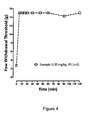
- Figure 4 shows paw withdrawal threshold versus time for IP administered compound of Example 3.
- Figure 5 shows paw withdrawal threshold versus time for IT administered coumpond of Example 3.
- Figure 6 shows reversal of allodynia as a function time with with IP administered comound of Example 3 and IP administered morphine.
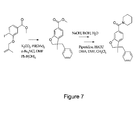
- Figure 7 shows the synthetic steps of making the compound of Example 3 as used in in vitro and in vivo biological studies.
- Figures 8A and 8B show the characterization of CP55,940 ( Fig. 8A ) and the compound of Example 3 ( Fig. 8B ) in recombinant human CB1 and CB2 GTP ⁇ [ 35 S] assay systems. Levels of receptor activation are calculated and are expressed as a percentage relative to the response of 1 ⁇ M CP55,940.
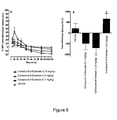
- A The time course of percent maximal possible effect (%MPE) and
- B the area under the curve (AUC) of 1.0, 3.0, and 10 mg/kg of the compound of Example 3 and the vehicle.
- # P ⁇ 0.01 as compared to the vehicle.
- * P ⁇ 0.001 as compared to 1.0 or 3.0 mg/kg of the compound of Example 3 and to the vehicle.
- + P ⁇ 0.05 as compared to 1.0 mg/kg of the compound of Example 3 and the vehicle.
- Each point represents the mean ⁇ s.e. mean.
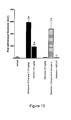
- Figure 10A depicts the development of tactile allodynia after spinal nerve ligation.
- Figure 10B depicts development of tactile allodynia after i.p. administration of paclitaxel for 4 days. Each point represents the mean ⁇ s.e. mean.
- Compound of Example 3 increases in the withdrawal threshold of the nerve-injured paw in a dose-dependent manner.
- Figure 11A shows the time course of 5.0, 10, and 15 mg/kg of the compound of Example 3.
- Figure 11B shows the area under the curve (AUC).
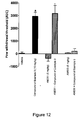
- the compound of Example 3 (10 mg/kg i.p.) significantly attenuated tactile allodynia threshold that that of a CB2-selective agonist AM1241 (15 mg/kg i.p.).
- Administration of the opioid antagonist naloxone (10 mg/kg i.p.) per se did not affect paw withdrawal threshold.
- Example 3 did not affect the antiallodynic effects of the compound of Example 3 (Noloxone+ the compound of Example 3). Reversal of the antiallodynic effects of 15 mg/kg of AM251 i.p. by pretreatment with 10 mg/kg naloxone i.p. * P ⁇ 0.001 as compared to vehicle and AM1241. + P ⁇ 0.001 as compared to vehicle, naloxone, and naloxone+AM1241 groups. # P ⁇ 0.01 as compared to vehicle and naloxone+AM1241 groups.
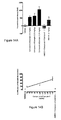
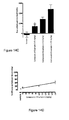
- Figure 14A shows the compound of Example 3 suppressed paclitaxel-evoked thermal hyperalgesia in a dose-dependent manner.
- pretreatment with 5 mg/kg AM630 i.p. followed 15 min later by 15 mg/kg of the compound of Example 3 i.p. reversed the anti-hyperalgesic effects of the compound of Example 3 ( P ⁇ 0.001).
- Figure 14C shows the compound of Example 3 dose-dependently attenuated tactile allodynia in this model.
- Figure 14D shows an increase in the %MPE withdrawal threshold AUC with an ED 50 of 24 mg/kg i.p. * P ⁇ 0.05 or less as compared to 5 mg/kg, 10 mg/kg, and 15 mg/kg the compound of Example 3 groups. + P ⁇ 0.05 or less as compared 15 mg/kg the compound of Example 3 group. ** P ⁇ 0.05 or less as compared to 10 mg/kg, and 15 mg/kg the compound of Example 3 groups.
- Figure 15 shows after the administration of the compound of Example 3 with the start of paclitaxel administration for 14 days [four days concomitant with the administration of paclitaxel and continued for further 10 days] resulted in prevention of paclitaxel-induced neuropathy in 100% of rats.
- Administration of paclitaxel alone of 4 days resulted in development of neuropathy in 100 percent of rats.
- the compound of Example 3 for four days only resulted in short-lived prevention of paclitaxel-induced neuropathy. Melatonin did not provide any protection against neuropathy in this model.
- Figure 17 shows the effects of the compound of Example 3 on Paclitaxel-induced neuropathy in rats (right paw). Peripheral neurophathy started to develop within a few days of paclitaxel administration, but was prevented by administration of the compound of Example 3.
- Figure 18 illustrates paclitaxel-induced peripheral neuropathy in rats.
- the peripheral neuropathy started to develop within a few days of paclitaxel administration and reached a plateau by the 10th day.
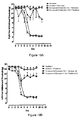
- Figures 19A and 19B show the effects of the compound of Example 3 on paclitaxel-induced neuropathy in rats.
- Group 1 of the rats received paclitaxel for four days, as did the rats in Figure 18 .
- groups 2 to 4 0.25 mL of the compound of Example 3 or the vehicle, a mixture of NMP, propylene glycol, and chromophore ELP (25%,25%,10%) in sterile water were administered 30 min prior to the administration of paclitaxel.
- Groups 2 and 4 continued to receive either the vehicle (group 2) or the compound of Example 3 (group 4) daily for 11 more days.
- Paw withdrawal thresholds were determined daily in both hind paws of each animal using calibrated von Frey monofilaments according to an up-down procedure.
- Novel compounds presented are compounds or pharmaceutically acceptable salts thereof having a structure represented by the formula selected from the group comprising: These compounds correspond to the following formulae: Formula VI: or a salt. thereof, wherein:
- acyl refers to a carbonyl attached to an alkenyl, alkyl, aryl, cycloalkyl, heteroaryl, heterocyclyl, or any other moiety were the atom attached to the carbonyl is carbon.
- An “acetyl” group refers to a -C(O)CH 3 group.
- An “alkylcarbonyl” or “alkanoyl” group refers to an alkyl group attached to the parent molecular moiety through a carbonyl group. Examples of such groups include methylcarbonyl and ethylcarbonyl. Examples of acyl groups include formyl, alkanoyl and aroyl.
- alkenyl refers to a straight-chain or branched-chain hydrocarbon radical having one or more double bonds and containing from 2 to 20, preferably 2 to 6, carbon atoms.
- suitable alkenyl radicals include ethenyl, propenyl, 2-methylpropenyl, 1,4-butadienyl and the like.
- alkoxy refers to an alkyl ether radical, wherein the term alkyl is as defined below.
- suitable alkyl ether radicals include methoxy, ethoxy, n-propoxy, isopropoxy, n-butoxy, iso-butoxy, sec-butoxy, tert-butoxy, and the like.
- alkyl refers to a straight-chain or branched-chain alkyl radical containing from 1 to and including 20, preferably 1 to 10, and more preferably 1 to 6, carbon atoms. Alkyl groups may be optionally substituted as defined herein. Examples of alkyl radicals include methyl, ethyl, n-propyl, isopropyl, n-butyl, isobutyl, sec-butyl, tert-butyl, pentyl, iso-amyl, hexyl, octyl, noyl and the like.
- alkylene as used herein, alone or in combination, refers to a saturated aliphatic group derived from a straight or branched chain saturated hydrocarbon attached at two or more positions, such as methylene (-CH 2 -).
- alkylamino refers to an alkyl group attached to the parent molecular moiety through an amino group. Suitable alkylamino groups may be mono- or dialkylated, forming groups such as, for example, N-methylamino, N-ethylamino, N,N-dimethylamino, N,N-ethylmethylamino and the like.
- alkylidene refers to an alkenyl group in which one carbon atom of the carbon-carbon double bond belongs to the moiety to which the alkenyl group is attached.
- alkylthio refers to an alkyl thioether (R-S-) radical wherein the term alkyl is as defined above and wherein the sulfur may be singly or doubly oxidized.
- suitable alkyl thioether radicals include methylthio, ethylthio, n-propylthio, isopropylthio, n-butylthio, iso-butylthio, sec-butylthio, tert-butylthio, methanesulfonyl, ethanesulfinyl, and the like.
- alkynyl refers to a straight-chain or branched chain hydrocarbon radical having one or more triple bonds and containing from 2 to 20, preferably from 2 to 6, more preferably from 2 to 4, carbon atoms.
- Alkynylene refers to a carbon-carbon triple bond attached at two positions such as ethynylene (-C:::C-, -C ⁇ C-).
- alkynyl radicals include ethynyl, propynyl, hydroxypropynyl, butyn-1-yl, butyn-2-yl, pentyn-1-yl, 3-methylbutyn-1-yl, hexyn-2-yl, and the like.
- acylamino as used herein, alone or in combination, embraces an acyl group attached to the parent moiety through an amino group.
- An example of an “acylamino” group is acetylamino (CH 3 C(O)NH-).
- amino refers to NRR , wherein R and R are independently selected from the group consisting of hydrogen, alkyl, acyl, heteroalkyl, aryl, cycloalkyl, heteroaryl, and heterocycloalkyl, any of which may themselves be optionally substituted.
- aryl as used herein, alone or in combination, means a carbocyclic aromatic system containing one, two or three rings wherein such rings may be attached together in a pendent manner or may be fused.
- aryl embraces aromatic radicals such as benzyl, phenyl, naphthyl, anthracenyl, phenanthryl, indanyl, indenyl, annulenyl, azulenyl, tetrahydronaphthyl, and biphenyl.
- arylalkenyl or “aralkenyl,” as used herein, alone or in combination, refers to an aryl group attached to the parent molecular moiety through an alkenyl group.
- arylalkoxy or “aralkoxy,” as used herein, alone or in combination, refers to an aryl group attached to the parent molecular moiety through an alkoxy group.
- arylalkyl or “aralkyl,” as used herein, alone or in combination, refers to an aryl group attached to the parent molecular moiety through an alkyl group.
- arylalkynyl or “aralkynyl,” as used herein, alone or in combination, refers to an aryl group attached to the parent molecular moiety through an alkynyl group.
- arylalkanoyl or “aralkanoyl” or “aroyl,”as used herein, alone or in combination, refers to an acyl radical derived from an aryl-substituted alkanecarboxylic acid such as benzoyl, napthoyl, phenylacetyl, 3-phenylpropionyl (hydrocinnamoyl), 4-phenylbutyryl, (2-naphthyl)acetyl, 4-chlorohydrocinnamoyl, and the like.
- aryloxy refers to an aryl group attached to the parent molecular moiety through an oxy.
- alkyl radicals understood to mean a linear optionally branched and optionally fluorinated radical.
- alkyl radicals having from 6 to 12 carbon atoms are 2-Methyl-pentan-2-yl, 3,3-Dimethyl-butan-1-yl, hexyl, heptyl, octyl, nonyl, decyl, dodecyl.
- Alkyl radicals containing from 1 to 3 carbon atoms, are linear or branched radicals containing, respectively, from 1 to 3.
- the alkyl radicals containing from 1 to 3 carbon atoms are methyl, ethyl, n-propyl, or 2-propyl radicals.
- alkoxyl radical is understood to mean a radical containing from 1 to 3 carbon atoms, such as methoxyl, ethoxyl, propyloxyl or isopropyloxyl radicals.
- aryl radical means a phenyl or a naphthyl radical, eventually mono- or disubstituted with at least one halogen, an alkyl containing from 1 to 3 carbon atoms, an alkoxyl, an aryl radical, a nitro function, a polyether radical, a heteroaryl radical, a benzoyl radical, an alkyl ester group, a carboxylic acid, a hydroxyl optionally protected with an acetyl or benzoyl group, or an amino function optionally protected with an acetyl or benzoyl group or optionally substituted with at least one alkyl containing from 1 to 12 carbon atoms.
- heteroaryl means an aryl radical interrupted with one or more hetero atoms, such as a thiophenyl, thiazolyl or imidazolyl radical, optionally substituted with at least one halogen, an alkyl containing from 1 to 3 carbon atoms, an alkoxyl, an aryl radical, a nitro function, a polyether radical, a heteroaryl radical, a benzoyl radical, an alkyl ester group, a carboxylic acid, a hydroxyl optionally protected with an acetyl or benzoyl group, or an amino function optionally protected with an acetyl or benzoyl group or optionally substituted with at least one alkyl containing from 1 to 6 carbon atoms.
- polyether radical means a polyether radical containing from 2 to 6 carbon atoms interrupted with at least one oxygen atom, such as methoxymethoxy, ethoxymethoxy or methoxyethoxymethoxy radicals.
- halogen atom includes, but is not limited to, fluorine, chlorine or bromine atom.
- carbamate refers to an ester of carbamic acid (-NHCOO-) which may be attached to the parent molecular moiety from either the nitrogen or acid end, and which may be optionally substituted as defined herein.
- O-carbamyl refers to a -OC(O)NRR', group-with R and R' as defined herein.
- N-carbamyl as used herein, alone or in combination, refers to a ROC(O)NR'- group, with R and R' as defined herein.
- carbonyl when alone includes formyl [-C(O)H] and in combination is a -C(O)- group.
- Carboxy refers to -C(O)OH or the corresponding “carboxylate” anion, such as is in a carboxylic acid salt.
- An "O-carboxy” group refers to a RC(O)O- group, where R is as defined herein.
- a “C-carboxy” group refers to a -C(O)OR groups where R is as defined herein.
- cyano as used herein, alone or in combination, refers to -CN.
- cycloalkyl or, alternatively, “carbocycle,”as used herein, alone or in combination, refers to a saturated or partially saturated monocyclic, bicyclic or tricyclic alkyl radical wherein each cyclic moiety contains from 3 to 12, preferably five to seven, carbon atom ring members and which may optionally be a benzo fused ring system which is optionally substituted as defined herein.
- cycloalkyl radicals examples include cyclopropyl, cyclobutyl, cyclopentyl, cyclohexyl, cycloheptyl, octahydronaphthyl, 2,3-dihydro-1H-indenyl, adamantyl and the like.
- "Bicyclic” and “tricyclic” as used herein are intended to include both fused ring systems, such as decahydonapthalene, octahydronapthalene as well as the multicyclic (multicentered) saturated or partially unsaturated type.
- the latter type of isomer is exemplified in general by, bicyclo[1,1,1]pentane, camphor, adamantane, and bicyclo[3,2,1]octane.
- esters refers to a carboxy group bridging two moieties linked at carbon atoms.
- ether refers to an oxy group bridging two moieties linked at carbon atoms.
- halo or halogen, as used herein, alone or in combination, refers to fluorine, chlorine, bromine, or iodine.
- haloalkoxy refers to a haloalkyl group attached to the parent molecular moiety through an oxygen atom.
- haloalkyl refers to an alkyl radical having the meaning as defined above wherein one or more hydrogens are replaced with a halogen. Specifically embraced are monohaloalkyl, dihaloalkyl and polyhaloalkyl radicals.
- a monohaloalkyl radical for one example, may have an iodo, bromo, chloro or fluoro atom within the radical.
- Dihalo and polyhaloalkyl radicals may have two or more of the same halo atoms or a combination of different halo radicals.
- haloalkyl radicals include fluoromethyl, difluoromethyl, trifluoromethyl, chloromethyl, dichloromethyl, trichloromethyl, pentafluoroethyl, heptafluoropropyl, difluorochloromethyl, dichlorofluoromethyl, difluoroethyl, difluoropropyl, dichloroethyl and dichloropropyl.
- Haloalkylene refers to a haloalkyl group attached at two or more positions. Examples include fluoromethylene (-CFH-), difluoromethylene (-CF 2 -), chloromethylene (-CHCl-) and the like.
- heteroalkyl refers to a stable straight or branched chain, or cyclic hydrocarbon radical, or combinations thereof, fully saturated or containing from 1 to 3 degrees of unsaturation, consisting of the stated number of carbon atoms and from one to three heteroatoms selected from the group consisting of O, N, and S, and wherein the nitrogen and sulfur atoms may optionally be oxidized and the nitrogen heteroatom may optionally be quatemized.
- the heteroatom(s) O, N and S may be placed at any interior position of the heteroalkyl group. Up to two heteroatoms may be consecutive, such as, for example, -CH 2 -NH-OCH 3 .
- heteroaryl refers to 3 to 7 membered, preferably 5 to 7 membered, unsaturated heteromonocyclic rings, or fused polycyclic rings in which at least one of the fused rings is unsaturated, wherein at least one atom is selected from the group consisting of O, S, and N.
- the term also embraces fused polycyclic groups wherein heterocyclic radicals are fused with aryl radicals, wherein heteroaryl radicals are fused with other heteroaryl radicals, or wherein heteroaryl radicals are fused with cycloalkyl radicals.
- heteroaryl groups include pyrrolyl, pyrrolinyl, imidazolyl, pyrazolyl, pyridyl, pyrimidinyl, pyrazinyl, pyridazinyl, triazolyl, pyranyl, furyl, thienyl, oxazolyl, isoxazolyl, oxadiazolyl, thiazolyl, thiadiazolyl, isothiazolyl, indolyl, isoindolyl, indolizinyl, benzimidazolyl, quinolyl, isoquinolyl, quinoxalinyl, quinazolinyl, indazolyl, benzotriazolyl, benzodioxolyl, benzopyranyl, benzoxazolyl, benzoxadiazolyl, benzothiazolyl, benzothiadiazolyl, benzofuryl, benzothienyl, chromonyl,
- Exemplary tricyclic heterocyclic groups include carbazolyl, benzidolyl, phenanthrolinyl, dibenzofuranyl, acridinyl, phenanthridinyl, xanthenyl and the like.
- heterocycloalkyl and, interchangeably, “heterocyclyl,” as used herein, alone or in combination, each refer to a saturated, partially unsaturated, or fully unsaturated monocyclic, bicyclic, or tricyclic heterocyclic radical containing at least one, preferably 1 to 4, and more preferably 1 to 2 heteroatoms as ring members, wherein each said heteroatom may be independently selected from the group consisting of nitrogen, oxygen, and sulfur, and wherein there are preferably 3 to 8 ring members in each ring, more preferably 3 to 7 ring members in each ring, and most preferably 5 to 6 ring members in each ring.
- Heterocycloalkyl and “heterocyclyl” are intended to include sulfones, sulfoxides, N-oxides of tertiary nitrogen ring members, and carbocyclic fused and benzo fused ring systems; additionally, both terms also include systems where a heterocycle ring is fused to an aryl group, as defined herein, or an additional heterocycle group.
- Heterocyclyl groups are exemplified by aziridinyl, azetidinyl, 1,3-benzodioxolyl, dihydroisoindolyl, dihydroisoquinolinyl, dihydrocinnolinyl, dihydrobenzodioxinyl, dihydro[1,3]oxazolo[4,5-b]pyridinyl, benzothiazolyl, dihydroindolyl, dihy-dropyridinyl, 1,3-dioxanyl, 1,4-dioxanyl, 1,3-dioxolanyl, isoindolinyl, morpholinyl, piperazinyl, pyrrolidinyl, tetrahydropyridinyl, piperidinyl, thiomorpholinyl, and the like.
- the heterocyclyl groups may be optionally substituted unless specifically prohibited.
- hydrazinyl as used herein, alone or in combination, refers to two amino groups joined by a single bond, i.e., N-N-.
- hydroxyalkyl refers to a hydroxy group attached to the parent molecular moiety through an alkyl group.
- the phrase "in the main chain” refers to the longest contiguous or adjacent chain of carbon atoms starting at the point of attachment of a group to the compounds of this invention.
- isocyanato refers to a -NCO group.
- isothiocyanato refers to a -NCS group.
- linear chain of atoms refers to the longest straight chain of atoms independently selected from carbon, nitrogen, oxygen and sulfur.
- lower means containing from 1 to and including 6 carbon atoms.
- mercaptyl as used herein, alone or in combination, refers to an RS- group, where R is as defined herein.
- nitro refers to NO 2 .
- perhaloalkoxy refers to an alkoxy group where all of the hydrogen atoms are replaced by halogen atoms.
- perhaloalkyl refers to an alkyl group where all of the hydrogen atoms are replaced by halogen atoms.
- sulfonate refers the -SO 3 H group and its anion as the sulfonic acid is used in salt formation.
- sulfonyl as used herein, alone or in combination, refers to -S(O) 2 -.
- thia and thio refer to a -S- group or an ether wherein the oxygen is replaced with sulfur.
- the oxidized derivatives of the thio group namely sulfinyl and sulfonyl, are included in the definition of thia and thio.
- thiol as used herein, alone or in combination, refers to an -SH group.
- thiocarbonyl when alone includes thioformyl - C(S)H and in combination is a -C(S)- group.
- N-thiocarbamyl refers to an ROC(S)NR'- group, with R and R'as defined herein.
- O-thiocarbamyl refers to a -OC(S)NRR', group with R and R'as defined herein.
- thiocyanato refers to a -CNS group.
- trihalomethanesulfonamido refers to a X 3 CS(O) 2 NR- group with X is a halogen and R as defined herein.
- trihalomethanesulfonyl refers to a X 3 CS(O) 2 - group where X is a halogen.
- trihalomethoxy refers to a X 3 CO- group where X is a halogen.
- trimethysilyl as used herein, alone or in combination, refers to a silicone group substituted at its three free valences with groups as listed herein under the definition of substituted amino. Examples include trimethysilyl, tert-butyldimethylsilyl, triphenylsilyl and the like.
- any definition herein may be used in combination with any other definition to describe a composite structural group.
- the trailing element of any such definition is that which attaches to the parent moiety.
- the composite group alkylamido would represent an alkyl group attached to the parent molecule through an amido group
- the term alkoxyalkyl would represent an alkoxy group attached to the parent molecule through an alkyl group.
- the term "optionally substituted” means the anteceding group may be substituted or unsubstituted.
- the substituents of an "optionally substituted” group may include, without limitation, one or more substituents independently selected from the following groups or a particular designated set of groups, alone or in combination: lower alkyl, lower alkenyl, lower alkynyl, lower alkanoyl, lower heteroalkyl, lower heterocycloalkyl, lower haloalkyl, lower haloalkenyl, lower haloalkynyl, lower perhaloalkyl, lower perhaloalkoxy, lower cycloalkyl, phenyl, aryl, aryloxy, lower alkoxy, lower haloalkoxy, oxo, lower acyloxy, carbonyl, carboxyl, lower alkylcarbonyl, lower carboxyester, lower carboxamido, cyano, hydrogen, halogen, hydroxy, amino, lower alkylamino
- Two substituents may be joined together to form a fused five-, six-, or seven-menbered carbocyclic or heterocyclic ring consisting of zero to three heteroatoms, for example forming methylenedioxy or ethylenedioxy.
- An optionally substituted group may be unsubstituted (e.g., -CH 2 CH 3 ), fully substituted (e.g., -CF 2 CF 3 ), monosubstituted (e.g.,-CH 2 CH 2 F) or substituted at a level anywhere in-between fully substituted and monosubstituted (e.g., -CH 2 CF 3 ).
- aryl, heterocyclyl, R, etc. occur more than one time in a formula or generic structure, its definition at each occurrence is independent of the definition at every other occurrence.
- certain groups may be attached to a parent molecule or may occupy a position in a chain of elements from either end as written.
- an unsymmetrical group such as -C(O)N(R)- may be attached to the parent moiety at either the carbon or the nitrogen.
- Individual stereoisomers of compounds can be prepared synthetically from commercially available starting materials which contain chiral centers or by preparation of mixtures of enantiomeric products followed by separation such as conversion to a mixture of diastereomers followed by separation or recrystallization, chromatographic techniques, direct separation of enantiomers on chiral chromatographic columns, or any other appropriate method known in the art.
- Starting compounds of particular stereochemistry are either commercially available or can be made and resolved by techniques known in the art.
- the compounds of the present invention may exist as geometric isomers.
- the present invention includes all cis, trans, syn, anti,
- compounds may exist as tautomers; all tautomeric isomers are provided by this invention.
- the compounds of the present invention can exist in unsolvated as well as solvated forms with pharmaceutically acceptable solvents such as water, ethanol, and the like. In general, the solvated forms are considered equivalent to the unsolvated forms for the purposes of the present invention.
- Optical isomers are compounds with the same molecular formula but differ in the way they rotate plane polarized light.
- the first optical isomer are compounds that are mirror images of one another but cannot be superimposed on each other. These isomers are called “enantiomers”.
- the second optical isomers are molecules that are not mirror images but each molecule rotates plane polarized light and are considered optically active. Such molecules are called “diastereoisomers”.
- Diasteroisomers differ not only in the way they rotate plane polarized light, but also their physical properties.
- the term "optical isomer” comprises more particularly the enantiomers and the diastereoisomers, in pure form or in the form of a mixture.
- bonds refers to a covalent linkage between two atoms, or two moieties when the atoms joined by the bond are considered to be part of larger substructure.
- a bond may be single, double, or triple unless otherwise specified.
- a dashed line between two atoms in a drawing of a molecule indicates that an additional bond may be present or absent at that position.
- combination therapy means the administration of two or more therapeutic agents to treat a therapeutic condition or disorder described in the present disclosure. Such administration encompasses co-administration of these therapeutic agents in a substantially simultaneous manner, such as in a single capsule having a fixed ratio of active ingredients or in multiple, separate capsules for each active ingredient. In addition, such administration also encompasses use of each type of therapeutic agent in a sequential manner. In either case, the treatment regimen will provide beneficial effects of the drug combination in treating the conditions or disorders described herein.
- Cannabinoid receptor modulator is used herein to refer to a compound that exhibits an EC 50 or IC 50 with respect to a cannabinoid receptor activity of no more than about 100 ⁇ M and more typically not more than about 50 ⁇ M, as measured in the cannabinoid receptor assay described generally herein below.
- EC 50 is that concentration of modulator which activates the activity of a cannabinoid receptor to half-maximal level.
- IC 50 is that concentration of modulator which reduces the activity of a cannabinoid receptor to half-maximal level. This test will be done during the exemplification period.
- modulator reflects any chemical compound that will act as full agonist, partial agonist, inverse agonist or as an antagonist at any known or yet to be discovered/identified cannabinoid receptor.
- Compounds described herein have been discovered to exhibit modulatory activity against cannabinoid receptors and exhibit an EC 50 or IC 50 with respect to a cannabinoid receptor of no more than about 10 ⁇ M, more preferably, no more than about 5 ⁇ M, even more preferably not more than about 1 ⁇ M, and most preferably, not more than about 200 nM, as measured in the assays described herein.
- terapéuticaally effective is intended to qualify the amount of active ingredients used in the treatment of a disease or disorder. This amount will achieve the goal of reducing or eliminating the said disease or disorder.
- terapéuticaally acceptable refers to those compounds (or salts, tautomers, zwitterionic forms, etc.) which are suitable for use in contact with the tissues of patients without undue toxicity, irritation, and allergic response, are commensurate with a reasonable benefit/risk ratio, and are effective for their intended use.
- patient means all mammals including humans. Examples of patients include humans, cows, dogs, cats, goats, sheep, pigs, and rabbits. Preferably, the patient is a human.
- the compounds of the present invention can exist as therapeutically acceptable salts.
- the present invention includes compounds listed above in the form of salts, in particular acid addition salts. Suitable salts include those formed with both organic and inorganic acids. Such acid addition salts will normally be pharmaceutically acceptable. However, salts of non-pharmaceutically acceptable salts may be of utility in the preparation and purification of the compound in question. Basic addition salts may also be formed and be pharmaceutically acceptable.
- Salts for a more complete discussion of the preparation and selection of salts, refer to Stahl, P. Heinrich, Pharmaceutical Salts: Properties, Selection, and Use, Wiley-VCHA, Zurich, Switzerland, 2002 .
- terapéuticaally acceptable salt represents salts or zwitterionic forms of the compounds of the present invention which are water or oil-soluble or dispersible and therapeutically acceptable as defined herein.
- the salts can be prepared during the final isolation and purification of the compounds or separately by reacting the appropriate compound in the form of the free base with a suitable acid.
- Representative acid addition salts include acetate, adipate, alginate, L-ascorbate, aspartate, benzoate, benzenesulfonate (besylate), bisulfate, butyrate, camphorate, camphorsulfonate, citrate, digluconate, formate, fumarate, gentisate, glutarate, glycerophosphate, glycolate, hemisulfate, heptanoate, hexanoate, hippurate, hydrochloride, hydrobromide, hydroiodide, 2-hydroxyethansulfonate (isethionate), lactate, maleate, malonate, DL-mandelate, mesitylenesulfonate, methanesulfonate, naphthylenesulfonate, nicotinate, 2-naphthalenesulfonate, oxalate, pamoate, pectinate, persulfate, 3-phenyl
- basic groups in the compounds of the present invention can be quaternized with methyl, ethyl, propyl, and butyl chlorides, bromides, and iodides; dimethyl, diethyl, dibutyl, and diamyl sulfates; decyl, lauryl, myristyl, and steryl chlorides, bromides, and iodides; and benzyl and phenethyl bromides.
- acids which can be employed to form therapeutically acceptable addition salts include inorganic acids such as hydrochloric, hydrobromic, sulfuric, and phosphoric, and organic acids such as oxalic, maleic, succinic, and citric. Salts can also be formed by coordination of the compounds with an alkali metal or alkaline earth ion.
- the present invention contemplates sodium, potassium, magnesium, and calcium salts of the compounds of the compounds of the present invention and the like.
- Basic addition salts can be prepared during the final isolation and purification of the compounds by reaction of a carboxy group with a suitable base such as the hydroxide, carbonate, or bicarbonate of a metal cation or with ammonia or an organic primary, secondary, or tertiary amine.
- a suitable base such as the hydroxide, carbonate, or bicarbonate of a metal cation or with ammonia or an organic primary, secondary, or tertiary amine.
- the cations of therapeutically acceptable salts include lithium, sodium, potassium, calcium, magnesium, and aluminum, as well as nontoxic quaternary amine cations such as ammonium, tetramethylammonium, tetraethylammonium, methylamine, dimethylamine, trimethylamine, triethylamine, diethylamine, ethylamine, tributylamine, pyridine, N,N -dimethylaniline, N -methylpiperidine, N -methylmorpholine, dicyclohexylamine, procaine, dibenzylamine, N,N -dibenzylphenethylamine, 1-ephenamine, and N,N '-dibenzylethylenediamine.
- Other representative organic amines useful for the formation of base addition salts include ethylenediamine, ethanolamine, diethanolamine, piperidine, and piperazine.
- a salt of a compound can be made by reacting the appropriate compound in the form of the free base with the appropriate acid.
- the novel compounds described in this patent could be prepared in a form of pharmaceutically acceptable salts that will be prepared from nontoxic inorganic or organic bases including but not limited to aluminum, ammonium, calcium, copper, ferric, ferrous, lithium, magnesium, manganic salts, manganous, potassium, sodium, zinc, and the like.
- Salts derived from pharmaceutically acceptable organic non-toxic bases include salts of primary, secondary, and tertiary amines, substituted amines including naturally occuning substituted amines, cyclic amines, and basic ion exchange resins, such as argmine, betaine, caffeine, choline, ethylamine, 2-diethylaminoethano, 1,2-dimethylaminoethanol, ethanolamine, ethylenediamine, N-ethyl-morpholine, N-ethylpiperidine, glucamine, glucosamine, histidine, hydrabamine, isopropylamine, lysine, methylglucamine, morpholine, piperazine, piperidine, polyamine resins, procaine, purines, theobromine, triethylamine, trimethylamine, trishydroxylmethyl amino methane, tripropyl amine, and tromethamine.
- basic ion exchange resins such as
- salts could be prepared in a form of pharmaceutically acceptable salts that will be prepared from nontoxic inorganic or organic acids including but not limited to hydrochloric, hydrobromic, phosphoric, sulfuric, tartaric, citric, acetic, fumaric, alkylsulphonic, naphthalenesulphonic, para -toluenesulphonic, camphoric acids, benzenesulfonic, benzoic, camphorsulfonic, citric, ethanesulfonic, gluconic, glutamic, isethonic, lactic, maleic, malic, mandelic, methanesulfonic, mucic, nitric, pamoic, pantothenic, phosphoric, and succinic.
- nontoxic inorganic or organic acids including but not limited to hydrochloric, hydrobromic, phosphoric, sulfuric, tartaric, citric, acetic, fumaric, alkylsulphonic, naphthalenesulphonic,
- the compounds of the subject invention may be administered as the raw chemical, it is also possible to present them as a pharmaceutical formulation. Accordingly, they may be provided as a pharmaceutical formulation comprising a compound or a pharmaceutically acceptable salt, ester, prodrug or solvate thereof, together with one or more pharmaceutically acceptable carriers thereof and optionally one or more other therapeutic ingredients.
- the carrier(s) must be "acceptable” in the sense of being compatible with the other ingredients of the formulation and not deleterious to the recipient thereof. Proper formulation is dependent upon the route of administration chosen. Any of the well-known techniques, carriers, and excipients may be used as suitable and as understood in the art; e.g ., in Remington's Pharmaceutical Sciences.
- compositions comprising the compounds of the present invention may be manufactured in a manner that is itself known, e.g. , by means of conventional mixing, dissolving, granulating, dragee-making, levigating, emulsifying, encapsulating, entrapping or compression processes.
- the formulations include those suitable for oral, parenteral (including subcutaneous, intradermal, intramuscular, intravenous, intraarticular, and intramedullary), intraperitoneal, transmucosal, transdermal, rectal and topical (including dermal, buccal, sublingual and intraocular) administration although the most suitable route may depend upon for example the condition and disorder of the recipient.
- the formulations may conveniently be presented in unit dosage form and may be prepared by any of the methods well known in the art of pharmacy. All methods include the step of bringing into association a compound of the subject invention or a pharmaceutically acceptable salt, ester, prodrug or solvate thereof ("active ingredient”) with the carrier which constitutes one or more accessory ingredients.
- active ingredient a pharmaceutically acceptable salt, ester, prodrug or solvate thereof
- the formulations are prepared by uniformly and intimately bringing into association the active ingredient with liquid carriers or finely divided solid carriers or both and then, if necessary, shaping the product into the desired formulation.
- Formulations comprising the compounds of the present invention suitable for oral administration may be presented as discrete units such as capsules, cachets or tablets each containing a predetermined amount of the active ingredient; as a powder or granules; as a solution or a suspension in an aqueous liquid or a non-aqueous liquid; or as an oil-in-water liquid emulsion or a water-in-oil liquid emulsion.
- the active ingredient may also be presented as a bolus, electuary or paste.
- compositions which can be used orally include tablets, push-fit capsules made of gelatin, as well as soft, sealed capsules made of gelatin and a plasticizer, such as glycerol or sorbitol. Tablets may be made by compression or molding, optionally with one or more accessory ingredients. Compressed tablets may be prepared by compressing in a suitable machine the active ingredient in a free-flowing form such as a powder or granules, optionally mixed with binders, inert diluents, or lubricating, surface active or dispersing agents. Molded tablets may be made by molding in a suitable machine a mixture of the powdered compound moistened with an inert liquid diluent.
- the tablets may optionally be coated or scored and may be formulated so as to provide slow or controlled release of the active ingredient therein. All formulations for oral administration should be in dosages suitable for such administration.
- the push-fit capsules can contain the active ingredients in admixture with filler such as lactose, binders such as starches, and/or lubricants such as talc or magnesium stearate and, optionally, stabilizers.
- the active compounds may be dissolved or suspended in suitable liquids, such as fatty oils, liquid paraffin, or liquid polyethylene glycols.
- stabilizers may be added.
- Dragee cores are provided with suitable coatings.
- concentrated sugar solutions may be used, which may optionally contain gum arabic, talc, polyvinyl pyrrolidone, carbopol gel, polyethylene glycol, and/or titanium dioxide, lacquer solutions, and suitable organic solvents or solvent mixtures.
- Dyestuffs or pigments may be added to the tablets or dragee coatings for identification or to characterize different combinations of active compound doses.
- One example of a formulation appropriate for administration through an oral route comprises 0.60 g of the compound of Example 16, 10.00 g of NMP, 64.40 g of LABRAFIL ® M1944 CS, and 25.00 g of LABRASOL ® .
- the compounds may be formulated for parenteral administration by injection, e.g ., by bolus injection or continuous infusion.
- Formulations for injection may be presented in unit dosage form, e.g ., in ampoules or in multi-dose containers, with an added preservative.
- the compositions may take such forms as suspensions, solutions or emulsions in oily or aqueous vehicles, and may contain formulatory agents such as suspending, stabilizing and/or dispersing agents.
- the formulations may be presented in unit-dose or multi-dose containers, for example sealed ampoules and vials, and may be stored in powder form or in a freeze-dried (lyophilized) condition requiring only the addition of the sterile liquid carrier, for example, saline or sterile pyrogen-free water, immediately prior to use.
- sterile liquid carrier for example, saline or sterile pyrogen-free water
- Extemporaneous injection solutions and suspensions may be prepared from sterile powders, granules and tablets of the kind previously described.
- Formulations for parenteral administration include aqueous and non-aqueous (oily) sterile injection solutions of the active compounds which may contain antioxidants, buffers, bacteriostats and solutes which render the formulation isotonic with the blood of the intended recipient; and aqueous and non-aqueous sterile suspensions which may include suspending agents and thickening agents.
- Suitable lipophilic solvents or vehicles include fatty oils such as sesame oil, or synthetic fatty acid esters, such as ethyl oleate or triglycerides, or liposomes.
- Aqueous injection suspensions may contain substances which increase the viscosity of the suspension, such as sodium carboxymethyl cellulose, sorbitol, or dextran.
- the suspension may also contain suitable stabilizers or agents which increase the solubility of the compounds to allow for the preparation of highly concentrated solutions.
- One example of a formulation appropriate for administration through a parenteral route comprises 1.00 g of the compound of Example 3, 30.00 g of NMP, 30.00 g of propylene glycol, 10.00 g of CREMOPHOR ® ELP, 10.00 g of EtOH (95%), and 19.00 g of saline solution.
- the compounds may also be formulated as a depot preparation. Such long acting formulations may be administered by implantation (for example subcutaneously or intramuscularly) or by intramuscular injection.
- the compounds may be formulated with suitable polymeric or hydrophobic materials (for example as an emulsion in an acceptable oil) or ion exchange resins, or as sparingly soluble derivatives, for example, as a sparingly soluble salt.
- compositions may take the form of tablets, lozenges, pastilles, or gels formulated in conventional manner.
- Such compositions may comprise the active ingredient in a flavored basis such as sucrose and acacia or tragacanth.
- the compounds may also be formulated in rectal compositions such as suppositories or retention enemas, e.g ., containing conventional suppository bases such as cocoa butter, polyethylene glycol, or other glycerides.
- Compounds of the present invention may be administered topically, that is by non-systemic administration. This includes the application of a compound of the present invention externally to the epidermis or the buccal cavity and the instillation of such a compound into the ear, eye and nose, such that the compound does not significantly enter the blood stream.
- systemic administration refers to oral, intravenous, intraperitoneal and intramuscular administration.
- Formulations suitable for topical administration include solid, liquid or semiliquid preparations suitable for penetration through the skin to the site of inflammation such as gels, liniments, lotions, creams, ointments or pastes, and drops suitable for administration to the eye, ear or nose.
- the active ingredient may comprise, for topical administration, from 0.001% to 10% w/w, for instance from 1% to 2% by weight of the formulation. It may however comprise as much as 10% w/w but preferably will comprise less than 5% w/w, more preferably from 0.01 % to 1 % w/w of the formulation.
- the pharmaceutical composition comprising the compounds according to the invention is more particularly intended for treating the skin and mucous membranes and may be in the form of liquid or semi liquid such as ointments, creams or in the form of solid such as powders. It may also be in the form of suspensions such as polymeric microspheres or polymer patches and hydrogels allowing a controlled release.
- This topical composition may be in anhydrous form, in aqueous form or in the form of an emulsion.
- the compounds are used topically at a concentration generally of between 0.001 % and 10% by weight and preferably between 0.01% and 1% by weight, relative to the total weight of the composition.
- One example of a formulation appropriate for administration through a topical route comprises 3.00 g of the compound of Example 13, 35.00 g of NMP, 25.00 g of LABRASOL ® , 15.00 g of oleic acid, 12.00 g of COMPRITOL ® 888 ATO, and 10.00 g of EtOH.
- the compounds according to the invention are conveniently delivered from an insufflator, nebulizer pressurized packs or other convenient means of delivering an aerosol spray.
- Pressurized packs may comprise a suitable propellant such as dichlorodifluoromethane, trichlorofluoromethane, dichlorotetrafluoroethane, carbon dioxide or other suitable gas.
- the dosage unit may be determined by providing a valve to deliver a metered amount.
- the compounds according to the invention may take the form of a dry powder composition, for example a powder mix of the compound and a suitable powder base such as lactose or starch.
- the powder composition may be presented in unit dosage form, in for example, capsules, cartridges, gelatin or blister packs from which the powder may be administered with the aid of an inhalator or insufflator.
- Preferred unit dosage formulations are those containing an effective dose, as herein below recited, or an appropriate fraction thereof, of the active ingredient.
- formulations comprising the compounds of this invention may include other agents conventional in the art having regard to the type of formulation in question, for example those suitable for oral administration may include flavoring agents.
- the compounds of the invention may be administered orally or via injection at a dose of from 0.1 to 500 mg/kg per day.
- the dose range for adult humans is generally from 5 mg to 2 g/day.
- Tablets or other forms of presentation provided in discrete units may conveniently contain an amount of compound of the invention which is effective at such dosage or as a multiple of the same, for instance, units containing 5 mg to 500 mg, usually around 10 mg to 200 mg.
- Certain compounds according to the invention can be administered at a daily dose of about 0.001 mg/kg to 100 mg/kg of body weight, in 1 to 3 dosage intakes. Further, certain compounds can be used systemically, at a concentration generally of between 0.001 % and 10% by weight and preferably between 0.01 % and 1 % by weight, relative to the weight of the composition.
- the amount of active ingredient that may be combined with the carrier materials to produce a single dosage form will vary depending upon the host treated and the particular mode of administration.
- the compounds of the subject invention can be administered in various modes, e.g . orally, topically, or by injection.
- the precise amount of compound administered to a patient will be the responsibility of the attendant physician.
- the specific dose level for any particular patient will depend upon a variety of factors including the activity of the specific compound employed, the age, body weight, general health, sex, diets, time of administration, route of administration, rate of excretion, drug combination, the precise disorder being treated, and the severity of the indication or condition being treated.
- the route of administration may vary depending on the condition and its severity.
- the heterocyclic compounds described herein or a pharmaceutically acceptable salt, ester, or prodrug thereof in combination with another therapeutic agent.
- another therapeutic agent such as a pharmaceutically acceptable salt, ester, or prodrug thereof.
- the therapeutic effectiveness of one of the compounds described herein may be enhanced by administration of an adjuvant (i.e., by itself the adjuvant may only have minimal therapeutic benefit, but in combination with another therapeutic agent, the overall therapeutic benefit to the patient is enhanced).
- the benefit of experienced by a patient may be increased by administering one of the compounds described herein with another therapeutic agent (which also includes a therapeutic regimen) that also has therapeutic benefit.
- another therapeutic agent which also includes a therapeutic regimen
- increased therapeutic benefit may result by also providing the patient with another therapeutic agent for pain.
- the overall benefit experienced by the patient may simply be additive of the two therapeutic agents or the patient may experience a synergistic benefit.
- combination therapies include use of the compounds of the invention together with inert or active compounds, or other drugs including wetting agents, flavour enhancers, preserving agents, stabilizers, humidity regulators, pH regulators, osmotic pressure modifiers, emulsifiers, UV-A and UV-B screening agents, antioxidants, depigmenting agents such as hydroquinone or kojic acid, emollients, moisturizers, for instance glycerol, PEG 400, or urea, antiseborrhoeic or antiacne agents, such as benzoyl peroxide, antibiotics, for instance erythromycin and tetracyclines, antifungal agents such as ketoconazole, agents for promoting regrowth of the hair, for instance Minoxidil (2,4-diamino-6-pipendinopyrimidine 3-oxide), non-steroidal antiinflammatory agents, carotenoids, and especially p-carotene, antipsoriatic agents such as
- anticonvulsant agents include, and are not limited to, topiramate, analogs of topiramate, carbamazepine, valproic acid, lamotrigine, gabapentin, phenytoin and the like and mixtures or pharmaceutically acceptable salts thereof. Needless to say, a person skilled in the art will take care to select the other compound(s) to be added to these compositions such that the advantageous properties intrinsically associated with the heterocyclic compound are
- the multiple therapeutic agents may be administered in any order or even simultaneously. If simultaneously, the multiple therapeutic agents may be provided in a single, unified form, or in multiple forms (by way of example only, either as a single pill or as two separate pills). One of the therapeutic agents may be given in multiple doses, or both may be given as multiple doses. If not simultaneous, the timing between the multiple doses may be any duration of time ranging from a few minutes to four weeks.
- methods for treating cannabinoid receptor-mediated disorders in a human or animal subject in need of such treatment comprising the step of administering to a subject in need thereof an amount of a heterocyclic compound effective to reduce or prevent a disorder in combination with at least one additional agent for the treatment of said disorder that is known in the art.
- compositions having at least one novel heterocyclic compound described herein can be administered in combination with one or more additional agents for the treatment of cannabinoid-mediated disorders.
- Heterocyclic compounds described herein can be used alone or in combination with other agents and compounds in the treatment of neuropathic pain, addiction (including nicotine, cocaine, opioids, hashish, marijuana, alcohol dependence, food), cancer (including melanoma, lymphomas, and gliomas), inflammation including autoimmune inflammation, cardiovascular disease, liver fibrosis, obesity, osteoporosis and other bone disease.
- addiction including nicotine, cocaine, opioids, hashish, marijuana, alcohol dependence, food
- cancer including melanoma, lymphomas, and gliomas
- inflammation including autoimmune inflammation, cardiovascular disease, liver fibrosis, obesity, osteoporosis and other bone disease.
- Additional indications for use of the compounds disclosed herein include acne, psoriasis, allergic contact dermatitis, anxiety, spasticity and tremor, bladder dysfunctions, prevention of miscarriage and ectopic pregnancy, Tourette's, Parkinson's disease, stroke, glaucoma and other diseases of the eye including intraocular pressure, diarrhea and nausea.
- Each such treatment described above includes the step of administering to a subject in need thereof a therapeutic effective amount of the heterocyclic compound described herein to reduce or prevent such disease or indication.
- the compounds and formulations comprising the compounds of the present invention are also useful for veterinary treatment of companion animals, exotic animals and farm animals, including mammals, rodents, and the like. More preferred animals include horses, dogs, and cats. These heterocyclic compounds are also helpful in neuronal growth and development.
- the compounds described herein may be used alone or in combination with another agent or compound in methods for treating, ameliorating or preventing a syndrome, disorder or disease in which cannabinoid receptor is involved, including, but not limited to, ocular complaint such as glaucoma, pain, controlling appetite, regulating metabolism, diabetes, social and mood disorders, seizure-related disorders, substance abuse disorders, learning, cognition and/or memory disorders, bowel disorders, gastrointestinal disorders, respiratory disorders, locomotor activity disorders, movement disorders, immune disorders or inflammation disorders, and controlling organ contraction and muscle spasm.
- ocular complaint such as glaucoma, pain, controlling appetite, regulating metabolism, diabetes, social and mood disorders, seizure-related disorders, substance abuse disorders, learning, cognition and/or memory disorders, bowel disorders, gastrointestinal disorders, respiratory disorders, locomotor activity disorders, movement disorders, immune disorders or inflammation disorders, and controlling organ contraction and muscle spasm.
- Cannabinoid preparations have been used for medicinal and recreational purposes for many centuries.
- Cannabinoids are present in the hemp Cannabis sativa L. Identification of the main active ingredient, tetrahydrocannabinol ( ⁇ 9-THC) has been done in 1964.
- the endocannabinoid system was elucidated in the early 1990's.
- two receptors belonging to the GPCR family CB1 and CB2 five endogenous lipid ligands and the enzymes involved in their syntheses and metabolism have been identified.
- Matsuda LA, Lolait SJ, Brownstein MJ, Young AC, Bonner TI Structure Of A Cannabinoid Receptor And Functional Expression of The Cloned Cdna, Nature 1990, 346:561-4 .
- CB1 is abundantly expressed in the central nervous system with highest density level in the basal ganglia, cerebellum, hippocampus and cortex as well as in the peripheral nervous system such as testis, eye, urinary bladder and adipocyte.
- CB2 is mainly expressed in the immune tissues and cells such as the thymus, marrow, spleen, pancreas and in glioma and skin tumor cells.
- CB2 receptors and their gene transcripts have been recently demonstrated as widely distributed in the brain.
- the multifocal expression of CB2 immunoreactivity in brain suggests that CB2 receptors play a role in the brain and may be involved in depression and substance abuse. See e.g., Onaivi ES, Ishiguro H, Gong J-P, Patel S, Perchuk A, Meozzi PA, Myers L, Mora Z, Tagliaferro P, Gardner E, Brusco A, Akinshola BE, Liu Q-R, Hope B, Iwasaki S, Arinami T, Teasenfitz L, Uhl GR, Discovery of the Presence and Functional Expression of Cannabinoid CB2 Receptors in Brain, Ann NY Acad Sci 2006, 1074:514-536 ; Berghuis P, Rajnicek AM, Morozov YM, Ross RA, Mulder J, Urban GM, Monory K, Marsicano G, Matteoli M, Canty A, Irving
- CB1/CB2 receptors Modulators of CB1/CB2 receptors have been used in different clinical or preclinical studies. Steffens S, Veillard NR, Arnaud C, Pelli G, Burger F, Staub C, Zimmer A, Frossard J-L, Mach F, Low Dose Oral Cannabinoid Therapy Reduces Progression of Atherosclerosis in Mice, Nature 2005, 434:782-786 .
- CB1 agonists have been used for treatment of nausea, Tourette's, Parkinson's disease, glaucoma, cancer, diarrhoea, and stroke. Guzman M, Cannabinoids: Potential Anticancer Agents, Nature Reviews Cancer 2003, 3:745-755 .
- CB2 agonists have been used for treatment pain, gliomas, lymphomas, and inflammation.
- CB1 antagonists have been used for treatment obesity and addiction.
- the CB1 antagonist SR141716A reduces food intake in mice.
- CB1 cannabinoid antagonists have been cited to treat drug addiction. Maldonado R, Valverde O, Berrendero F, Involvement Of The Endocannabinoid System In Drug Addiction, Trends Neurosci 2006, 29:225-32 .
- Cannabinoids attenuate deep tissue hyperalgesia produced by both cancer and inflammatory conditions. Kehl LJ, Hamamoto DT, Wacnik PW, Croft DL, Norsted BD, Wilcox GL, Simone DA, A Cannabinoid Agonist Differentially Attenuates Deep Tissue Hyperalgesia In Animal Models Of Cancer And Inflammatory Muscle Pain, Pain 2003, 103:175-86 . Cannabinoids also have a good potential for the treatment osteoporosis and other bone diseases.
- cannabinoids inhibit keratinocyte proliferation, and therefore support a potential role for cannabinoids in the treatment of psoriasis.
- Wilkinson JD, Williamson EM Cannabinoids Inhibit Human Keratinocyte Proliferation Through A Non-CB1/CB2 Mechanism And Have A Potential Therapeutic Value In The Treatment Of Psoriasis, J Dermatol Sci 2007, 45:87-92 .
- Cannabinoid receptors have also been described as novel targets for the treatment of melanoma.
- Blazquez C Carracedo A, Barrado L, Real PJ, Fernandez-Luna JL, Velasco G, Malumbres M, Guzman M, Cannabinoid Receptors As Novel Targets For The Treatment Of Melanoma, Faseb J 2006, 20:2633-5 .
- a base such as cesium carbonate or sodium hydride, for example, to provide the phenolic ether b.
- the phenolic ether is subjected to a transition metal (such as nickel or palladium) catalyzed cyclization in the presence of a hydride donor such as ammonium formate or an organometallic derivatives in order to obtain the cyclized 2,3-dihydrobenzofuran (or indole) product c.
- a transition metal such as nickel or palladium
- the reaction mixture was stirred at ambient temperature for 18 h.
- the reaction medium is acidified by adding a 1.2 M hydrochloric acid solution and extracted with ethyl acetate.
- the organic phase is washed with water, dried (MgSO 4 ), and concentrated to give the amide which is purified by flash chromatography (AcOEt/heptane: 4/6).
- the column was chosen too small and a bigger column was chosen (AcOEt/heptane: 4/6) to afford 22 mg of the desired amid as a pale yellow solid (16%).
- the reaction mixture was stirred at ambient temperature for 18 h.
- the reaction medium is acidified by adding a 1.2 M hydrochloric acid solution and extracted with ethyl acetate.
- the organic phase is washed with water, dried (MgSO 4 ), and concentrated to give the amide which is purified by flash chromatography (AcOEt/heptane: 4/6) to afford 70 mg of a white solid (yield: 67%).
- the reaction mixture was stirred at ambient temperature for 18 h.
- the reaction medium is acidified by adding a 1.2 M hydrochloric acid solution and extracted with ethyl acetate.
- the organic phase is washed with water, dried (MgSO 4 ), and concentrated to give the amide which is purified by flash chromatography (AcOEt/heptane: 4/6) to afford 50 mg of a white solid (yield: 50%).
- the mixture was acidified by 4M aqueous HCl. A product crystallized and was filtered off to afford 1.1 g. Ethyl acetate (250 mL) was added, and the layers were separated. The organic layer was washed with brine (240 mL), water and then dried over MgSO 4 . After evaporation of the solvent, 4.3 g of a white powder was obtained. The aqueous phase was acidified to pH 1. Ethyl acetate (250 mL) was added, and the layers were separated. The organic layer was washed with brine (240 mL), water and then dried over MgSO 4 . After evaporation of the solvent, 8.22 g of a white powder was obtained.
- the reaction mixture was stirred at ambient temperature for 18 h.
- the reaction medium is acidified by adding a 1.2 M hydrochloric acid solution and extracted with ethyl acetate.
- the organic phase is washed with water, dried (MgSO 4 ), and concentrated to give the amide which is purified by flash chromatography (AcOEt/heptane: 3/7) to afford 10 mg (10%) of a slightly brown solid.
- the mixture was acidified by 4M aqueous HCl. A product crystallized and was filtered off to afford 1.1 g. Ethyl acetate (250 mL) was added, and the layers were separated. The organic layer was washed with brine (240 mL), water and then dried over MgSO 4 . After evaporation of the solvent, 4.3 g of a white powder was obtained. The aqueous phase was acidified to pH 1. Ethyl acetate (250 mL) was added, and the layers were separated. The organic layer was washed with brine (240 mL), water and then dried over MgSO 4 . After evaporation of the solvent, 8.22 g of a white powder was obtained.
- the reaction mixture was stirred at ambient temperature for 18 h.
- the reaction medium is acidified by adding a 1.2 M hydrochloric acid solution and extracted with ethyl acetate.
- the organic phase is washed with water, dried (MgSO 4 ), and concentrated to give the amide as a white solid.
- the solid was washed with a mixture of heptane and dichloromethane 9/1 to afford 38 mg of a white solid (Yield: 48%).
- the filtrate was concentrated and the white solid obtained was washed with a mixture of heptane and dichloromethane (9/1) to afford 13 mg of a white solid.
- the reaction mixture was stirred at ambient temperature for 18 h.
- the reaction medium is acidified by adding a 1.2 M hydrochloric acid solution and extracted with ethyl acetate.
- the organic phase is washed with water, dried (MgSO 4 ), and concentrated to give the amide which is purified by flash chromatography (AcOEt/heptane: 4/6) to afford 54 mg (71.5 %) of the desired amide as a colorless oil.
- Example 6 In a manner similar to that of Example 6, by reacting 3-Benzyl-3-methyl-2,3-dihydro-benzofuran-6-carboxylic acid (60 mg, 0.225 mmol) previously obtained in Example 1(C), neopentylamine (0.25 mmol) in dichloromethane (2 mL) and DMF (1 mL), O-(7-Azabenzotriazol-1-yl)-N,N,N',N'-tetramethyluronium hexafluorophosphate (HATU) (94 mg, 0.25 mmol) and a solution of N,N-diisopropylethylamine (44 mg, 59 ⁇ L, 0.34 mmol) in DMF (1mL) expected derivative was obtained as an colorless oil.
- HATU O-(7-Azabenzotriazol-1-yl)-N,N,N',N'-tetramethyluronium hexafluorophosphate
- Example 6 In a manner similar to that of Example 6, by reacting 3-Benzyl-3-methyl-2,3-dihydro-benzofuran-6-carboxylic acid (60 mg, 0.225 mmol) previously obtained in Example 1(C), 4-(Aminomethyl)tetrahydropyran (0.25 mmol) in dichloromethane (2 mL) and DMF (1 mL), O-(7-Azabenzotriazol-1-yl)-N,N,N',N'-tetramethyluronium hexafluorophosphate (HATU) (94 mg, 0.25 mmol) and a solution of N,N-diisopropylethylamine (44 mg, 59 ⁇ L, 0.34 mmol) in DMF (1mL) expected derivative was obtained as an colorless oil.
- HATU O-(7-Azabenzotriazol-1-yl)-N,N,N',N'-tetramethyluronium hex
- Example 6 In a manner similar to that of Example 6, by reacting 3-Benzyl-3-methyl-2,3-dihydro-benzofuran-6-carboxylic acid (60 mg, 0.225 mmol) previously obtained in Example 1(C), Morpholine (0.25 mmol) in dichloromethane (2 mL) and DMF (1 mL), O-(7-Azabenzotriazol-1-yl)-N,N,N',N'-tetramethyluronium hexafluorophosphate (HATU) (94 mg, 0.25 mmol) and a solution of N,N-diisopropylethylamine (44 mg, 59 ⁇ L, 0.34 mmol) in DMF (1mL) expected derivative was obtained as an colorless oil.
- HATU O-(7-Azabenzotriazol-1-yl)-N,N,N',N'-tetramethyluronium hexafluorophosphate
- Example 6 In a manner similar to that of Example 6, by reacting 3-Benzyl-3-methyl-2,3-dihydro-benzofuran-6-carboxylic acid (60 mg, 0.225 mmol) previously obtained in Example 1(C), N-tert-Butylmethylamine (0.25 mmol) in dichloromethane (2 mL) and DMF (1 mL), O-(7-Azabenzotriazol-1-yl)-N,N,N',N'-tetramethyluronium hexafluorophosphate (HATU) (94 mg, 0.25 mmol) and a solution of N,N-diisopropylethylamine (44 mg, 59 ⁇ L, 0.34 mmol) in DMF (1mL) expected derivative was obtained as an colorless oil.
- HATU O-(7-Azabenzotriazol-1-yl)-N,N,N',N'-tetramethyluronium hexafluoro
- Example 6 In a manner similar to that of Example 6, by reacting 3-Benzyl-3-methyl-2,3-dihydro-benzofuran-6-carboxylic acid (60 mg, 0.225 mmol) previously obtained in Example 1(C), (S)-(+)-3,3-Dimethyl-2-butylamine (0.25 mmol) in dichloromethane (2 mL) and DMF (1 mL), O-(7-Azabenzotriazol-1-yl)-N,N,N',N'-tetramethyluronium hexafluorophosphate (HATU) (94 mg, 0.25 mmol) and a solution of N,N-diisopropylethylamine (44 mg, 59 ⁇ L, 0.34 mmol) in DMF (1mL) expected derivative was obtained as an colorless oil.
- HATU O-(7-Azabenzotriazol-1-yl)-N,N,N',N'-tetramethyl
- Example 6 In a manner similar to that of Example 6, by reacting 3-Benzyl-3-methyl-2,3-dihydro-benzofuran-6-carboxylic acid (60 mg, 0.225 mmol) previously obtained in Example 1(C), (R)-(-)-3,3-Dimethyl-2-butylamine (0.25 mmol) in dichloromethane (2 mL) and DMF (1 mL), O-(7-Azabenzotriazol-1-yl)-N,N,N',N'-tetramethyluronium hexafluorophosphate (HATU) (94 mg, 0.25 mmol) and a solution of N,N-diisopropylethylamine (44 mg, 59 ⁇ L, 0.34 mmol) in DMF (1mL) expected derivative was obtained as an colorless oil.
- HATU O-(7-Azabenzotriazol-1-yl)-N,N,N',N'-tetramethyl
- Example 6 In a manner similar to that of Example 6, by reacting 3-(4-Chloro-benzyl)-3-methyl-2,3-dihydro-benzofuran-6-carboxylic acid (0.225 mmol) previously obtained in Example 13(B), Piperidine (0.25 mmol) in dichloromethane (2 mL) and DMF (1 mL), O-(7-Azabenzotriazol-1-yl)-N,N,N',N'-tetramethyluronium hexafluorophosphate (HATU) (94 mg, 0.25 mmol) and a solution of N,N-diisopropylethylamine (44 mg, 59 ⁇ L, 0.34 mmol) in DMF (1mL) expected derivative was obtained as an colorless oil.
- HATU O-(7-Azabenzotriazol-1-yl)-N,N,N',N'-tetramethyluronium hexafluorophosphate
- Example 15 In a manner similar to that of Example 6, by reacting 3-Methyl-3-naphthalen-2-ylmethyl-2,3-dihydro-benzofuran-6-carboxylic acid (0.225 mmol) previously obtained in Example 15(B), Piperidine (0.25 mmol) in dichloromethane (2 mL) and DMF (1 mL), O-(7-Azabenzotriazol-1-yl)-N,N,N',N'-tetramethyluronium hexafluorophosphate (HATU) (94 mg, 0.25 mmol) and a solution of N,N-diisopropylethylamine (44 mg, 59 ⁇ L, 0.34 mmol) in DMF (1mL) expected derivative was obtained as an colorless oil.
- HATU O-(7-Azabenzotriazol-1-yl)-N,N,N',N'-tetramethyluronium hexafluorophosphat
- Example 16 In a manner similar to that of Example 6, by reacting 3-((E)-Hex-2-enyl)-3-methyl-2,3-dihydro-benzofuran-6-carboxylic acid (0.225 mmol) previously obtained in Example 16(B), Piperidine (0.25 mmol) in dichloromethane (2 mL) and DMF (1 mL), O-(7-Azabenzotriazol-1-yl)-N,N,N',N'-tetramethyluronium hexafluorophosphate (HATU) (94 mg, 0.25 mmol) and a solution of N,N-diisopropylethylamine (44 mg, 59 ⁇ L, 0.34 mmol) in DMF (1mL) expected derivative was obtained as an colorless oil.
- HATU O-(7-Azabenzotriazol-1-yl)-N,N,N',N'-tetramethyluronium hexafluoro
- Example 16(B) In a manner similar to that of Example 6, by reacting 3-((E)-Hex-2-enyl)-3-methyl-2,3-dihydro-benzofuran-6-carboxylic acid (0.225 mmol) previously obtained in Example 16(B), cyclohexylamine (0.25 mmol) in dichloromethane (2 mL) and DMF (1 mL), O-(7-Azabenzotriazol-1-yl)-N,N,N',N'-tetramethyluronium hexafluorophosphate (HATU) (94 mg, 0.25 mmol) and a solution of N,N-diisopropylethylamine (44 mg, 59 ⁇ L, 0.34 nnmol) in DMF (1mL) expected derivative was obtained as an colorless oil.
- HATU O-(7-Azabenzotriazol-1-yl)-N,N,N',N'-tetramethylur
- Example 14 In a manner similar to that of Example 6, by reacting 3-Methyl-3-naphthalen-1-ylmethyl-2,3-dihydro-benzofuran-6-carboxylic acid (0.225 mmol) previously obtained in Example 14(B), cyclohexylamine (0.25 mmol) in dichloromethane (2 mL) and DMF (1 mL), O-(7-Azabenzotriazol-1-yl)-N,N,N',N'-tetramethyluronium hexafluorophosphate (HATU) (94 mg, 0.25 mmol) and a solution of N,N-diisopropylethylamine (44 mg, 59 ⁇ L, 0.34 mmol) in DMF (1mL) expected derivative was obtained as an colorless oil.
- HATU O-(7-Azabenzotriazol-1-yl)-N,N,N',N'-tetramethyluronium hex
- the reaction mixture was stirred at ambient temperature for 24 h.
- the reaction medium was acidified by adding a 1.2 M hydrochloric acid solution and extracted with ethyl acetate.
- the organic phase was washed with water, dried (MgSO 4 ), and concentrated to give the amide which was purified by flash chromatography (AcOEt/heptane: 5/5).
- Example 19(A) 4-Iodo-3-(2-methyl-acryloylamino)-benzoic acid methyl ester (1.37 mmol) obtained in Example 19(A), in DMF (20 mL), potassium carbonate (379 mg, 2.74 mmol), tetrabutylammonium chloride (380 mg, 1.37 mmol), palladium acetate (25.6 mg, 0.136 mmol) and Phenylboronic acid (200 mg, 1.64 mmol), expected derivative was obtained as an colorless oil after purification by flash chromatography (AcOEt/heptane: 4/6).
- Example 19(B) 3-Benzyl-3-methyl-2-oxo-2,3-dihydro-1H-indole-6-carboxylic acid methyl ester (1.06 mmol) obtained in Example 19(B), sodium hydroxide (260 mg, 6.5 mmol), ethanol (10ml) and water (1ml) in tetrahydrofuran (10 ml), expected derivative was obtained as a white solid.
- Example 20(B) In a manner similar to that of Example 1(B), by reacting 1-(4-iodo-3- ⁇ [2-(methoxymethyl)prop-2-enyl]oxy ⁇ benzoyl)piperidine (0.4 mmol) obtained in Example 20(B), in DMF (6 mL), potassium carbonate (111 mg, 0.8 mmol), tetrabutylammonium chloride (111 mg, 0.4 mmol), palladium acetate (7 mg, 0.38 mmol) and Phenylboronic acid (60 mg, 0.5 mmol), expected derivative was obtained as an colorless oil after purification by flash chromatography (AcOEt/heptane: 4/6).
- Additional compounds include:
- Additional compounds include:
- Cell membrane homogenates (25 ⁇ g protein) were incubated for 120 min at 37°C with 0.5 nM [ 3 H]CP 55940 (the reference standard [Rinaldi-Carmona, 1996 #1320]) in the absence or presence of the test compound in a buffer containing 50 mM Tris HCl (pH 7.4), 5 mM MgCl2, 2.5 mM EDTA, and 0.3% bovine serum albumin (BSA).
- BSA bovine serum albumin
- the samples were filtered rapidly under vacuum through glass fiber filters (GF/B; Packard) presoaked with 0.3% PEI and rinsed several times with ice-cold buffer containing 50 mM Tris HCl (pH 7.4) and 0.5% BSA using a 96-sample cell harvester (Unifilter; Packard).
- the filters were dried then counted for radioactivity in a scintillation counter (Topcount; Packard) using a scintillation cocktail (Microscint 0; Packard). The results were expressed as a percentage of the inhibition of the control radioligand-specific binding.
- the reference standard compounds were tested in each experiment at several concentrations to obtain a competition curve from which its IC 50 was calculated.
- the samples were filtered rapidly under vacuum through glass fiber filters (GF/B; Packard) presoaked with 0.3% PEI and rinsed several times with ice-cold buffer containing 50 mM Tris HCl (pH 7.4) and 0.5% BSA using a 96-sample cell harvester (Unifilter; Packard).
- the filters were dried then counted for radioactivity in a scintillation counter (Topcount; Packard) using a scintillation cocktail (Microscint 0; Packard). The results were expressed as a percentage of the inhibition of the control radioligand-specific binding.
- the reference standard compounds were tested in each experiment at several concentrations to obtain a competition curve from which its IC50 was calculated.
- a dose response curve was generated at eight concentrations in duplicate on CB 1 and CB2 in light of reference agonists.
- the reference agonists for cannabinoid receptors was CP55,940. See Figures 1A, 1B , 2A, 2B , 3A and 3B .
- Membranes (CB1, ES-110-MG or CB2, ES-111-MG) were mixed with GDP (volume:volume) and incubated for at least 15 min on ice.
- GTP ⁇ [ 35 S] were mixed with the beads (volume:volume) just before starting the reaction.
- the following reagents were successively added in the wells of an Optiplate: 50 ⁇ l of ligand, 20 ⁇ l of the membranes:GDP mix, 10 ⁇ l of assay buffer for agonist testing and 20 ⁇ l of the GTP ⁇ [ 35 S]: beads mix.
- the plates were covered with a topseal, shaken on an orbital shaker for 2 min, and then incubated between 30 to 60 min. at room temperature. Then the plates were centrifuged for 10 min at 2000 rpm, incubated at room temperature between 1 to 4 hours and counted for 1 min with a PerkinElmer TopCount reader.
- Intrathecal catheters (PE-10 tubing) was inserted into the rats while they were anesthetized with isoflurane, as described by Yaksh and Rudy. Yaksh TL, Rudy TA. Chronic catheterization of the spinal subarachnoid space. Physiology & Behavior 1976;17:1031-6 . A midline incision was made on the back of the neck. The muscle was freed at the attachment to the skull exposing the cisternal membrane. The membrane was opened with a stab blade and an 8.5 cm polyethylene (PE-10) catheter was then inserted through the cisternal opening, and passed carefully and caudally into the intrathecal space at the L1-L3 spinal segments. The end of the catheter was tunneled through the subcutaneous space over the frontal bones, flushed with 10 ⁇ l saline, and then plugged with a short length of wire. Animal testing was performed 5-7 days after intrathecal catheter placement.
- the mechanical paw withdrawal threshold was measured with a series of von Frey hairs (range 0.4 - 15 g). Rats were placed in elevated Perspex enclosures (28cm x 15 cm x 18cm) with wire mesh bases and given 15 - 20 min to acclimatize to the testing environment. Rats will be allowed to acclimatize for 30 min in a clear plastic cage with a wire mesh bottom. The calibrated von Frey filament fibers wereapplied to the hindpaw briefly for 6 seconds to determine the paw withdrawal threshold before and after drug injection (intraperitoneally or intrathecally).
- Example 3 The compound of Example 3 was prepared in dimethyl sulfoxide (DMSO). Results
- IP administration of 30 mg/kg in 0.5 ml of the compound fo Example 3 as shown in Figure 4 produced an increase in mechanical paw withdrawal threshold.
- the peak effect for both drugs was noted within 5 min following IP administration.
- the high threshold (15 g) was maintained beyond the 2-h observation period for the compound of Example 3.
- IP Intraperitoneal
- the compound of Example 3 is a very potent analgesic in the neuropathic pain animal model when administered IP.
- the compound of Example 3 appears to be a longer-acting compound.
- AM630 and AM251 were purchased from Tocris Bioscience (Ellisville, MI, USA).
- AM1241 and naloxone were purchased from Sigma-Aldrich Corp. (St. Louis, MO, USA).
- WIN 55,212-2, AM1241, paclitaxel, and all chemicals used for synthesis of the compound of Example 3 were purchased from Sigma-Aldrich, St. Louis, MO.
- Example 3 The compound of Example 3 was synthesized as shown in Figure 7 . Briefly, the 3-hydroxy-4-iodo-benzoic acid was obtained by iodination (NaI, NaOCl, NaOH, MeOH, 80% yield) of meta-hydroxybenzoic acid. The corresponding methyl benzoate was obtained by esterification (MeOH, H 2 SO 4 The phenol derivative was then coupled with 3-bromo-2-methyl-propene using potassium carbonate in methylethylketone in 98% yield. The resulting compound was submitted to a Pd-catalyzed tandem cyclization/Suzuki-coupling reaction to afford the corresponding heterocyclic in 95% yield.
- Example 3 The compound of Example 3 was screened in a competitive binding experiment using membranes of Chinese hamster ovarian cells (CHO-K) expressing selectively the human CB1 receptor, at different concentrations, in duplicate.
- CHO-K Chinese hamster ovarian cells
- the competition binding experiment was performed in 96 well plates (Masterblock ® , Catalogue number 786201, Greiner Bio-One) containing binding buffer (50 mM Tris pH 7.4, 2.5mM EDTA, 0.5% protease free BSA, saponine 10 ⁇ g/ml), recombinant membrane extracts (2 ⁇ g protein/well) and 1 nM [ 3 H] SR141716A (GE Healthcare, TRK1028, 42 Ci/mmol, diluted in binding buffer).
- binding buffer 50 mM Tris pH 7.4, 2.5mM EDTA, 0.5% protease free BSA, saponine 10 ⁇ g/ml
- recombinant membrane extracts 2 ⁇ g protein/well
- 1 nM [ 3 H] SR141716A GE Healthcare, TRK1028, 42 Ci/mmol
- SR141716A is determined by liquid scintillation counting.
- IC 50 were determined by non-linear regression using one site competition equation.
- Example 3 The compound of Example 3 was screened in a competitive binding experiment using membranes of Chinese hamster ovarian cells (CHO-K1) expressing selectively the human CB2 receptor, at different concentrations, in duplicate. Mukherjee, S., et al., Species Comparison and Pharmacological Characterization of Rat and Human CB2 Cannabinoid Receptors, Eur J Pharmacol, 2004, 505:1-9 .
- the competition binding experiment was performed in 96 well plates (Masterblock ® , Catalogue number 786201, Greiner Bio-One) containing binding buffer (50 mM Tris pH 7.4, 2.5mM EDTA, 0.5% protease free BSA), recombinant membrane extracts (0.25 ⁇ g protein/well) and 1 nM [ 3 H]CP 55,940 (Perkin Elmer, NEX-1051, 161 Ci/mmol, diluted in binding buffer).
- binding buffer 50 mM Tris pH 7.4, 2.5mM EDTA, 0.5% protease free BSA
- recombinant membrane extracts (0.25 ⁇ g protein/well
- 1 nM [ 3 H]CP 55,940 Perkin Elmer, NEX-1051, 161 Ci/mmol, diluted in binding buffer.
- Non-specific binding is determined in the presence of 10 ⁇ M CP55940 (Tocris, Bioscience, Ellisville, MI, USA).
- the sample is incubated in a final volume of 0.1 ml for 60 min at 30°C and then filtered on GF/B Unifilter microplate (Perkin Elmer, Catalogue number 6005177) presoaked in 0.5% PEI for 2 hrs at room temperature. Filters are washed six times with 4 ml of cold buffer (50 mM Tris pH 7.4, 2.5mM EDTA, 0.5% protease free BSA) and bound [ 3 H]CP55940 is determined by liquid scintillation counting. IC 50 were determined by non-linear regression using one site competition equation.
- Ki inhibition constants
- GTP ⁇ [ 35 S] assay in CHO membrane extracts expressing recombinant hCB1 (human CB1) receptors or h CB2 (human CB2) receptors.
- the assay relies on the binding of GTP ⁇ [ 35 S], a radiolabeled nonhydrolyzable GTP analogue, to the G protein upon binding of an agonist of the G-protein-coupled receptor.
- agonists stimulate GTP ⁇ [ 35 S] binding whereas neutral antagonist have no effect and inverse agonists decrease GTP ⁇ [ 35 S] basal binding.
- the compound of Example 3 was solubilized in 100% DMSO at a concentration of 10 mM within 4 hours of the first testing session (master solution). A predilution for the dose response curve was performed in 100% DMSO and then diluted 100 fold in assay buffer at a concentration 2 fold higher than the concentration to be tested. The compound of Example 3 was tested for agonist and antagonist activities at eight concentrations in duplicate: 10, 3, 1, 0.3, 0.1, 0.03, 0.01 and 0.001 ⁇ M with CP55,940 (Tocris, Bioscience, Ellisville, MI, USA) as reference agonist. For GTP ⁇ S membranes were mixed with GDP diluted in assay buffer to give 30 ⁇ M solution (volume:volume) and incubated for at least 15 min on ice.
- GTP ⁇ [ 35 S] (GE Healthcare, Catalogue number SJ1308) were mixed with the beads (PVT-WGA (GE Healthcare, RPNQ001)), diluted in assay buffer at 50 mg/ml (0.5mg/10 ⁇ l) (volume:volume) just before starting the reaction.
- the following reagents were successively added in the wells of an Optiplate (Perkin Elmer): 50 ⁇ l of ligand or the reference antagonist (AM251), 20 ⁇ l of the membranes:GDP mix, 10 ⁇ l of reference agonist (CP55,940) at historical EC 80 (30 nM), and 20 ⁇ l of the GTP ⁇ [ 35 S]:beads mix.
- Example 3 The compound of Example 3 was tested for agonist activity at the rat CB1 (rCB1) and rCB2 receptors, at eight concentrations, in duplicate: 10, 3, 1, 0.3, 0.1, 0.03, 0.01 and 0.001 ⁇ M.
- Recombinant cells grown to mid-log phase in culture media without antibiotics were detached with PBS containing 5 mM EDTA, centrifuged and resuspended in assay buffer at a concentration of 16.6 x 10⁵ cells/ml.
- the test was performed in 96 well plates. For testing, 12 ⁇ l of cells (2 x 10 3 cells/well) were mixed with 12 ⁇ l of agonist at increasing concentrations.
- cAMP concentrations were estimated, according to the manufacturer specification, with the HTRF kit from Cis-Bio International (Catalogue number 62AM2PEB).
- Prophylactic antibiotic (norfloxacin 5 mg/kg subcutaneously) and analgesic (buprenorphine, 0.2-0.5 mg/kg, or morphine, 2.5 mg/kg, given subcutaneously) were administered once daily for 3 days. All the experiments were conducted 10-14 days after spinal nerve ligation.
- mice received daily i.p. injections of either vehicle or 1.0 mg/kg paclitaxel daily for four consecutive days for a final cumulative dose of 4 mg/kg; using an injection volume of 1 ml/kg.
- Polomano, R.C., et al. A Painful Peripheral Neuropathy in the Rat Produced by the Chemotherapeutic Drug, Paclitaxel, Pain, 2001, 94:293-304 .
- the vehicle used in our experiments was the same vehicle used clinically for paclitaxel injections and is composed of a mixture of 10% saline and Cremophor EL ® and ethylene oxide. Baseline responses to mechanical stimulation of the hindpaw (see below) were established on day zero and continued daily until the development of neuropathy was confirmed.
- Rats were placed in a compartment with a wire mesh bottom and allowed to acclimate for a minimum of 30 min before testing. Mechanical sensitivity was assessed using a series of Von Frey filaments with logarithmic incremental stiffness (0.41, 0.70, 1.20, 2.00, 3.63, 5.50, 8.50, and 15.1 g) (Stoelting, Wood Dale, IL) as previously described, and 50% probability withdrawal thresholds were calculated with the up-down method. Chaplan, S.R., et al., Quantitative Assessment of Tactile Allodynia in the Rat Paw, J. Neurosci. Methods, 1994, 53:55-63 ; Dixon, W., The Up-and-Down Method for Small Samples, J. Am. Stat.
- naive rats received 1.0, 3.0, or 10 mg/kg of the compound of Example 3 i.p.
- the automated open-field chamber (Med Associates ENV-515 Test Environment, St. Albans, VT) 43.2 x 43.2 x 30.5 cm (L x W x H) equipped with three pairs of 16 infrared arrays that continually monitored the animal's movement was used to determine potential CNS effects of the compound of Example 3, WIN55212-2, and haloperidol in na ⁇ ve rats. Rats were individually tested 15 min after i.p. drug administration. The infrared beams were set 2.5 cm apart horizontally and at a height of 3 cm above the floor, with the rearing array set at 12 cm from the floor. The area in the box was divided into 4 equal quadrants (zones), with data collected within each quadrant and across quadrants (zone entries).
- An ambulatory movement was defined as a motion of at least 5 cm and was coded by quadrant. Vertical movements were counted when the rat moved vertically a minimum of 12 cm from the floor. Zone entries were defined as an entry into a zone (from another zone). Entry into a zone was counted when the rat was far enough into the zone to break 2 sets of photoelectric beams for the new zone beams during an ambulatory movement.
- the EC 50 value of the compound of Example 3 in GTP ⁇ [ 35 S] functional assays was 128 ⁇ 32 nM at h CB2 with an E max of 88%.
- the compound of Example 3 did not result in any agonistic or antagonistic activities at h CB1 receptors.
- cAMP activation assays the compound of Example 3 had an EC 50 of 21.7 ⁇ 7.9 nM at r CB2 receptors.
- the compound of Example 3 did not exhibit any activity at r CB1 receptors. See Table 6 immediately below. Table 6.
- GTP ⁇ [ 35 S] Functional and cAMP Activation Assays Ligands Agonist EC 50 (mean ⁇ s.e.
- the receptor specificity of the compound of Example 3 was investigated in SNL model using receptor-selective antagonists ( Figure 12 ).
- Pretreatment with AM630 (5 mg/kg i.p.), a CB2 receptor-selective antagonist, significantly reversed antiallodynic effects induced by i.p. administration of 10 mg/kg the compound of Example 3 (P ⁇ 0.001).
- AM630 5 mg/kg i.p.
- a CB2 receptor-selective antagonist significantly reversed antiallodynic effects induced by i.p. administration of 10 mg/kg the compound of Example 3 (P ⁇ 0.001).
- Hosohata, Y., et al. AM630 Antagonism of Cannabinoid-Stimulated [35S] GTP Gamma S Binding in the Mouse Brain, Eur. J.
- the antinociceptive effects AM1241 have been shown to be dependent on ⁇ -endorphin and ⁇ -opioid receptor system and were blocked by the administration of naloxone or antiserum to ⁇ -endorphin.
- CB2 Cannabinoid Receptor Subtype 2
- CB2 agonist is able to suppress neuropathic nociception induced by a chemotherapeutic agent.
- Prevention of the development of this peripheral neuropathy by pre or co-administration of a CB2 modulator (or any other drug) with a chemotherapeutic agent is provided herein.
- Paclitaxel is an antineoplastic drug used in cancer chemotherapy. Paclitaxel is used to treat patients with lung, ovarian, breast, head and neck cancer, and advanced forms of Kaposi's sarcoma. Neuropathic pain is one of the side effects associated with the use of paclitaxel. Mielke, S., et al., Peripheral neuropathy: a persisting challenge in paclitaxel-based regimes, Eur J Cancer, 2006, 42:24-30 . Neuropathic pain, a debilitating condition characterized by severe, persistent pain that is refractory to traditional analgesia. This side effect is also associated with the use of other antineoplastic agents such as vinca alkaloids (e.g.
- Chemotherapy-induced neuropathic pain is dose dependent; the mechanism of which might be accompanied by morphological to primary afferent.
- CB2 has emerged as a new target for the treatment of neuropathic pain with an added advantage of lacking the psychotropic side effects that are normally seen with the use of the CB1 agonists.
- Peripheral nerve injury induces CB2 protein expression in rat sensory neurons. Wotherspoon, G., Peripheral nerve injury induces cannabinoid receptor 2 protein expression in rat sensory neurons, Neuroscience, 2005, 135:235-45 .
- CB2 mRNA is expressed in dorsal root ganglia (DRG) of neuropathic rats and is up-regulated in the spinal cord of neuropathic rats. CB2 mRNA expression was also shown in cultured spinal cord microglia and are upregulated in reactive microglia.
- DDG dorsal root ganglia
- CB2 agonists are neuroprotective and are emerging as a target for treating demyelinating diseases such as multiple sclerosis.
- demyelinating diseases such as multiple sclerosis.
- treatment with a selective CB2 agonist JWH-015 not only switched microglial cells morphology toward normal in the spinal cord of Theiler's murine encephalomyelitis virus-infected mice, but also significantly improved the neurological recovery and remyelination process.
- Cannabinoids abrogated major histocompatibility complex class II antigen expression, and decreased the number of CD4-infiltrating T cells.
- This protective mechanism of CB2 agonists has been attributed to reduction in the release of inflammatory cytokines or reactive oxygen species and/or increase in the production of protective molecules such as TGFa or anti-inflammatory cytokines such as IL-10.
- CB2 agonists produce a dose-dependent reduction in mechano-allodynia and mechano-hyperalgesia in paclitaxel-treated rats, and the duration of effect is dependent on the duration of action of the CB2 agonist studied.
- a non-specific cannabinoid agonist with both CB1 and CB2 activities was able to prevent mechanical allodynia induced by cisplatinum.
- Vera, G., et al., WIN 55,212-2 prevents mechanical allodynia but not alterations in feeding behaviour induced by chronic cisplatin in the rat, Life Sci, 2007, 81:468-79 .
- Provided herein is a treatment that prevents the development of chemotherapy induced-peripheral neuropathy.
- Administration of the compound of Example 3, a novel CB2 selective agonist prevented the development of neuropathic pain induced by paclitaxel.
- paclitaxel can produce the rat model of paclitaxel-induced neuropathy.
- a mixture of saline and CREMOPHOR ® ELP 10% was used as vehicle for paclitaxel. It was injected at a concentration of 1.0 mg/kg intraperitoneally to the chemotherapy-treated group of rats on 4 consecutive days for a final cumulative dose of 4 mg/kg to 18 rats.
- Paw withdrawal thresholds were determined daily in both hind paws of each animal using calibrated von Frey monofilaments according to an up-down procedure. A series of von Frey filaments with exponentially incremental degrees of stiffness (0.4, 0.7, 1.2, 2.0, 3.6, 5.5, 8.5, and 15.1 g) was used to measure the 50% threshold for both hindpaw withdrawal in awake, unrestrained rats. Chaplan, S.R., Quantitative assessment of tactile allodynia in the rat paw, Journal of Neuroscience Methods, 1994, 53:55-63 .
- Paw withdrawal thresholds were determined daily in both hind paws of each animal using calibrated von Frey monofilaments according to an up-down procedure as described immediately above in subpart (A) titled "Paclitaxel-induced Neuropathy.” The results are shown in Figure 17 .
- Figures 19A and 19B show results from an experiment in which three groups of rats were administered 0.25 mL of the compound of Example 3 or the vehicle, a mixture of NMP, propylene glycol, chromophore ELP (25%,25%,10%) in sterile water 30 min prior to the administration of paclitaxel. Two of the three experimental groups continued to receive either the vehicle or the compound of Example 3 daily for 11 more days.
- Paw withdrawal thresholds were determined daily in both hind paws of each animal using calibrated von Frey monofilaments according to an up-down procedure as described immediately above in subpart (A) titled "Paclitaxel-induced Neuropathy.”
- a fourth group of rats received paclitaxel for four days, as described immediately above in subpart (A) titled “Paclitaxel-induced Neuropathy.”
- FIGs 19A and 19B continued administration of 15 mg/kg the compound of Example 3 intraperitoneally (IP) daily completely prevented the development of paclitaxel-evoked mechano-allodynia.
- Administration of 15 mg/kg of the compound of Example 3 for 4 days only did not prevent but significantly prevented the severity of paclitaxel-evoked mechano-allodynia.
- Tactile allodynia was developed in 100% of rats 10 days after the start of paclitaxel administration as demonstrated by a reduction in paw withdrawal threshold to mechanical stimulation to 2.9 ⁇ 0.19 g and 2.8 ⁇ 0.15 g for the right and left paws, respectively using Von Frey filaments ( Figure 10B ).
- the compound of Example 3 suppressed paclitaxel-evoked thermal hyperalgesia ( Figures 14A and 14B ) and mechanical allodynia ( Figures 14C and 14D ) relative to treatment with vehicle in a dose-dependent manner. This suppression was maximal at 20 min.
- the calculated ED 50 of the compound of Example 3 for suppressing thermal hyperalgesia at 20 min was 13.5 mg/kg i.p.
- Example 3 dose-dependently attenuated tactile allodynia in this model, which is seen as an increase in the %MPE withdrawal threshold AUC ( Figure 14C ) with an ED 50 of 24 mg/kg i.p. ( Figure 14D ).
Landscapes
- Chemical & Material Sciences (AREA)
- Organic Chemistry (AREA)
- Health & Medical Sciences (AREA)
- General Health & Medical Sciences (AREA)
- Veterinary Medicine (AREA)
- Public Health (AREA)
- Medicinal Chemistry (AREA)
- Animal Behavior & Ethology (AREA)
- Life Sciences & Earth Sciences (AREA)
- Pharmacology & Pharmacy (AREA)
- Epidemiology (AREA)
- Nuclear Medicine, Radiotherapy & Molecular Imaging (AREA)
- General Chemical & Material Sciences (AREA)
- Chemical Kinetics & Catalysis (AREA)
- Bioinformatics & Cheminformatics (AREA)
- Engineering & Computer Science (AREA)
- Neurosurgery (AREA)
- Neurology (AREA)
- Biomedical Technology (AREA)
- Pain & Pain Management (AREA)
- Rheumatology (AREA)
- Addiction (AREA)
- Psychiatry (AREA)
- Pharmaceuticals Containing Other Organic And Inorganic Compounds (AREA)
- Furan Compounds (AREA)
- Plural Heterocyclic Compounds (AREA)
Claims (2)
- Verbindung oder pharmazeutisch verträgliches Salz davon mit einer Struktur der Formel, ausgewählt aus der Gruppe, umfassend:
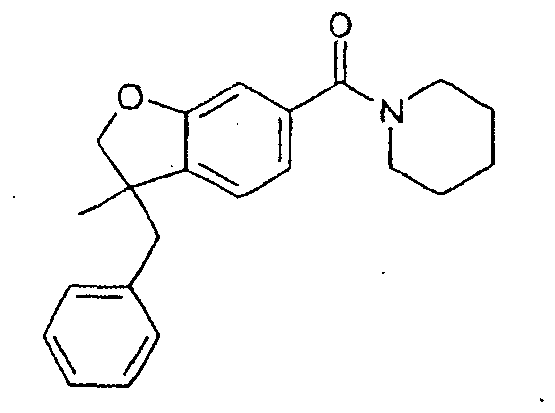

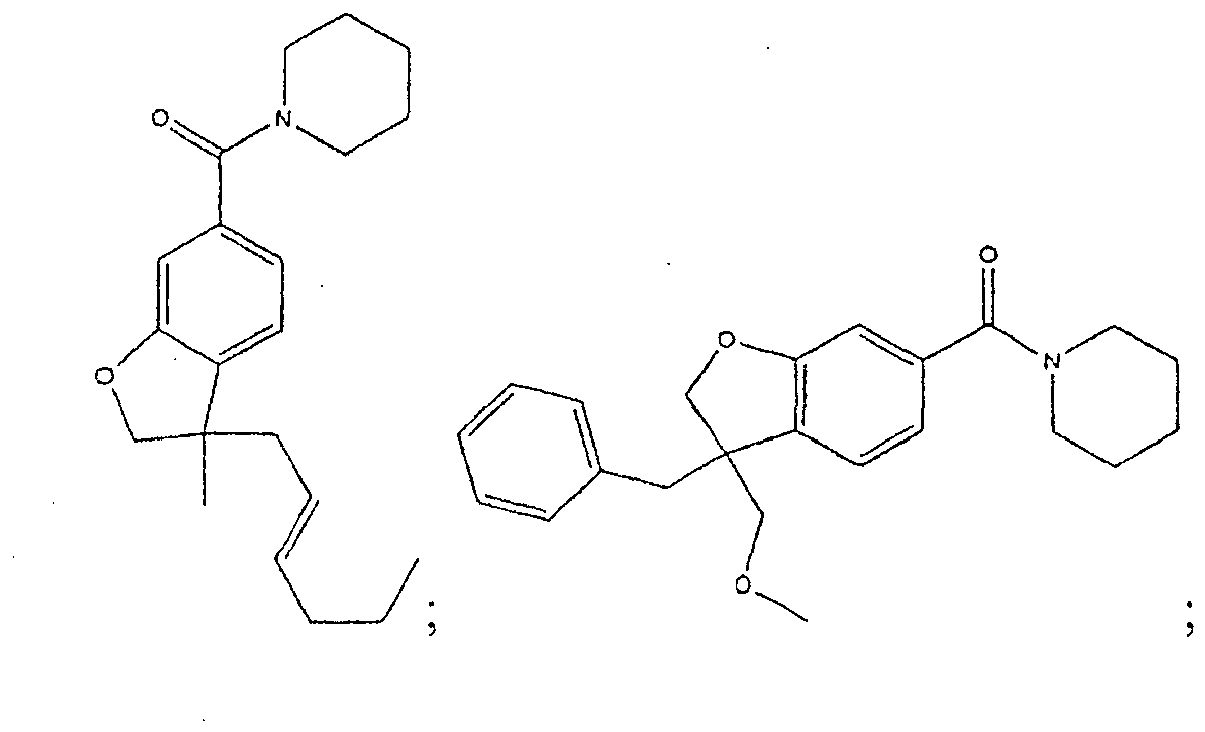


- Verbindung nach Anspruch 1 als Medikament zur Behandlung und Prophylaxe von neuropathischem Schmerz.
Applications Claiming Priority (3)
| Application Number | Priority Date | Filing Date | Title |
|---|---|---|---|
| US94953607P | 2007-07-13 | 2007-07-13 | |
| US3632108P | 2008-03-13 | 2008-03-13 | |
| PCT/US2008/069977 WO2009012221A1 (en) | 2007-07-13 | 2008-07-14 | Heterocyclic modulators of cannabinoid receptors |
Publications (3)
| Publication Number | Publication Date |
|---|---|
| EP2178371A1 EP2178371A1 (de) | 2010-04-28 |
| EP2178371A4 EP2178371A4 (de) | 2012-01-25 |
| EP2178371B1 true EP2178371B1 (de) | 2014-01-01 |
Family
ID=40260023
Family Applications (1)
| Application Number | Title | Priority Date | Filing Date |
|---|---|---|---|
| EP08781801.9A Active EP2178371B1 (de) | 2007-07-13 | 2008-07-14 | Heterocyclische modulatoren der cannabinoidrezeptoren |
Country Status (5)
| Country | Link |
|---|---|
| US (1) | US8440832B2 (de) |
| EP (1) | EP2178371B1 (de) |
| JP (1) | JP5453258B2 (de) |
| CN (1) | CN101801187B (de) |
| WO (1) | WO2009012221A1 (de) |
Families Citing this family (10)
| Publication number | Priority date | Publication date | Assignee | Title |
|---|---|---|---|---|
| EP2127673A4 (de) * | 2007-03-09 | 2010-05-05 | Univ Kyoto | Pharmazeutisches mittel zur prävention und behandlung von hauterkrankungen durch beschleunigte keratinisierung |
| FR2965478B1 (fr) * | 2010-10-05 | 2015-04-24 | Oreal | Utilisation d'anandamide pour lutter contre la secheresse cutanee |
| WO2012137645A1 (ja) * | 2011-04-07 | 2012-10-11 | 旭化成ファーマ株式会社 | 抗癌剤に起因する異痛症の予防及び/又は治療剤 |
| CN102250048B (zh) * | 2011-06-03 | 2013-06-05 | 浙江工业大学 | 2-苯硒基甲基-2,3-二氢苯并呋喃及其制备与应用 |
| PL2857037T3 (pl) | 2012-05-31 | 2019-12-31 | Kinki University | Środek do leczenia profilaktycznego i/lub terapeutycznego obwodowego bólu neuropatycznego wywoływanego przez środek przeciwnowotworowy |
| US10835521B2 (en) | 2012-07-13 | 2020-11-17 | The Cleveland Clinic Foundation | Neuroprotective CB2 receptor agonists |
| WO2018030550A1 (en) | 2016-08-09 | 2018-02-15 | Takeda Pharmaceutical Company Limited | Heterocyclic compounds with an ror(gamma)t modulating activity |
| US10526318B2 (en) | 2018-01-05 | 2020-01-07 | The Cleveland Clinic Foundation | Oral cannabinoid receptor modulator formulations |
| CN112839669A (zh) * | 2018-09-28 | 2021-05-25 | 旭化成制药株式会社 | 用于减轻由抗恶性肿瘤剂引起的末梢神经障碍的症状和/或抑制其发病的药物 |
| US11497795B2 (en) | 2018-09-28 | 2022-11-15 | Asahi Kasei Pharma Corporation | Medicament for mitigating conditions and/or suppressing onset of peripheral neuropathy induced by anti-malignant tumor agent |
Family Cites Families (14)
| Publication number | Priority date | Publication date | Assignee | Title |
|---|---|---|---|---|
| US3551456A (en) * | 1968-04-18 | 1970-12-29 | Universal Oil Prod Co | Acetyl derivatives of substituted chromans and coumarans |
| JPS5520788A (en) * | 1978-07-29 | 1980-02-14 | Fisons Ltd | 2*33dihydroo55cyanobenzofuran compound*its manufacture andherbicide composition containing it |
| EP0007719A3 (de) * | 1978-07-29 | 1980-05-14 | Fbc Limited | Cyanbenzofuran-Derivate, Verfahren zu ihrer Herstellung und ihre Verwendung in herbiziden Zusammensetzungen;Cyanobenzen-, Benzodioxepin-, Benzodioxaphosphepin- und Benzodioxathiepin-Derivate |
| US5684002A (en) * | 1994-09-07 | 1997-11-04 | The Procter & Gamble Company | Dihydorbenzofuran and related compounds useful as anti-inflammatory agents |
| FR2744452B1 (fr) | 1996-02-06 | 1998-03-06 | Cird Galderma | Composes biaryles heterocycliques, compositions pharmaceutiques et cosmetiques les contenant et utilisations |
| FR2750426B1 (fr) | 1996-06-28 | 1998-08-07 | Cird Galderma | Nouveaux composes biaryles heterocycliques et leur utilisation en medecine humaine ou veterinaire ainsi qu'en cosmetique |
| FR2756561B1 (fr) | 1996-12-04 | 1999-01-08 | Cird Galderma | Composes heteroaryles, compositions pharmaceutiques et cosmetiques les contenant et utilisations |
| AU2002352706A1 (en) * | 2001-11-15 | 2003-06-10 | Maxia Pharmaceuticals, Inc. | N-substituted heterocycles for the treatment of hypercholesteremia, dyslipidemia and other metabolic disorders, cancer, and other diseases |
| SI1637527T1 (sl) * | 2003-06-26 | 2013-07-31 | Takeda Pharmaceutical Company Limited | Modulator kanabinoidnega receptorja |
| JP2005162657A (ja) * | 2003-12-02 | 2005-06-23 | Takeda Chem Ind Ltd | カンナビノイド受容体調節剤 |
| US7807707B2 (en) | 2005-03-12 | 2010-10-05 | Conopco Inc. | Hair and/or scalp care compositions incorporating amino-oxo-indole-ylidene compounds |
| WO2007075896A2 (en) * | 2005-12-22 | 2007-07-05 | Kemia, Inc. | Heterocyclic cytokine inhibitors |
| WO2007146712A2 (en) * | 2006-06-09 | 2007-12-21 | Kemia, Inc. | Therapy using cytokine inhibitors |
| AU2007305016B2 (en) * | 2006-10-02 | 2011-11-03 | Novartis Ag | Compounds and compositions as protein kinase inhibitors |
-
2008
- 2008-07-14 WO PCT/US2008/069977 patent/WO2009012221A1/en not_active Ceased
- 2008-07-14 EP EP08781801.9A patent/EP2178371B1/de active Active
- 2008-07-14 CN CN200880107208.6A patent/CN101801187B/zh active Active
- 2008-07-14 JP JP2010517100A patent/JP5453258B2/ja active Active
- 2008-07-14 US US12/668,840 patent/US8440832B2/en active Active
Also Published As
| Publication number | Publication date |
|---|---|
| US20100204220A1 (en) | 2010-08-12 |
| US8440832B2 (en) | 2013-05-14 |
| CN101801187B (zh) | 2014-07-23 |
| JP2010533724A (ja) | 2010-10-28 |
| CN101801187A (zh) | 2010-08-11 |
| WO2009012221A1 (en) | 2009-01-22 |
| EP2178371A1 (de) | 2010-04-28 |
| JP5453258B2 (ja) | 2014-03-26 |
| EP2178371A4 (de) | 2012-01-25 |
Similar Documents
| Publication | Publication Date | Title |
|---|---|---|
| EP2178371B1 (de) | Heterocyclische modulatoren der cannabinoidrezeptoren | |
| US9339486B2 (en) | Heterocyclic modulators of cannabinoid receptors | |
| DE60218037T2 (de) | Neue indolderivate mit affinität zum 5-ht6-rezeptor | |
| US20110312992A1 (en) | Inhibitors of C-Kit and Uses Thereof | |
| KR102615828B1 (ko) | Mct4 의 헤테로시클릭 저해제 | |
| US20170096426A1 (en) | Novel Tricyclic Modulators of Cannabinoid Receptors | |
| CA2657093A1 (en) | Bicyclic heteroaryl inhibitors of pde4 | |
| JP2007016011A (ja) | 抗酸化活性を有する新規な含窒素ヘテロ環化合物、及び該化合物を含有する抗酸化薬 | |
| WO2009032754A2 (en) | Heterocyclodiazepine cannabinoid receptor modulators for treatment of disease | |
| US8309595B2 (en) | Hydrazone modulators of cannabinoid receptors | |
| US20180200225A1 (en) | Hydrazone modulators of cannabinoid receptors | |
| KR20190094187A (ko) | 축합 고리기 아자시클로부틸 트리아졸 유도체, 이의 제조 방법 및 의약에서의 이의 용도 | |
| WO2022237782A1 (zh) | 酰胺衍生物及其应用 | |
| AU2019205955B2 (en) | Oral cannabinoid receptor modulator formulations | |
| RU2771875C2 (ru) | Гетероциклические ингибиторы МСТ4 | |
| HK40117469A (en) | Heterocyclic inhibitors of mct4 | |
| AU2023342126A1 (en) | Negative allosteric modulators of metabotropic glutamate receptor 2 | |
| EA011280B1 (ru) | Пиперазиновые производные алкилоксиндолов |
Legal Events
| Date | Code | Title | Description |
|---|---|---|---|
| PUAI | Public reference made under article 153(3) epc to a published international application that has entered the european phase |
Free format text: ORIGINAL CODE: 0009012 |
|
| 17P | Request for examination filed |
Effective date: 20100212 |
|
| AK | Designated contracting states |
Kind code of ref document: A1 Designated state(s): AT BE BG CH CY CZ DE DK EE ES FI FR GB GR HR HU IE IS IT LI LT LU LV MC MT NL NO PL PT RO SE SI SK TR |
|
| AX | Request for extension of the european patent |
Extension state: AL BA MK RS |
|
| DAX | Request for extension of the european patent (deleted) | ||
| REG | Reference to a national code |
Ref country code: DE Ref legal event code: R079 Ref document number: 602008029656 Country of ref document: DE Free format text: PREVIOUS MAIN CLASS: A01N0043080000 Ipc: C07D0209080000 |
|
| A4 | Supplementary search report drawn up and despatched |
Effective date: 20111223 |
|
| RIC1 | Information provided on ipc code assigned before grant |
Ipc: C07D 209/08 20060101AFI20111219BHEP Ipc: C07D 307/81 20060101ALI20111219BHEP Ipc: A61K 31/351 20060101ALI20111219BHEP Ipc: C07D 407/12 20060101ALI20111219BHEP Ipc: C07D 307/80 20060101ALI20111219BHEP Ipc: A61K 31/343 20060101ALI20111219BHEP Ipc: A61K 31/403 20060101ALI20111219BHEP Ipc: C07D 209/14 20060101ALI20111219BHEP Ipc: A61P 29/00 20060101ALI20111219BHEP Ipc: A61K 31/404 20060101ALI20111219BHEP Ipc: C07D 209/34 20060101ALI20111219BHEP Ipc: A61K 31/4525 20060101ALI20111219BHEP Ipc: A61K 31/5377 20060101ALI20111219BHEP Ipc: C07D 307/79 20060101ALI20111219BHEP |
|
| 17Q | First examination report despatched |
Effective date: 20121213 |
|
| GRAP | Despatch of communication of intention to grant a patent |
Free format text: ORIGINAL CODE: EPIDOSNIGR1 |
|
| INTG | Intention to grant announced |
Effective date: 20130724 |
|
| GRAS | Grant fee paid |
Free format text: ORIGINAL CODE: EPIDOSNIGR3 |
|
| GRAA | (expected) grant |
Free format text: ORIGINAL CODE: 0009210 |
|
| AK | Designated contracting states |
Kind code of ref document: B1 Designated state(s): AT BE BG CH CY CZ DE DK EE ES FI FR GB GR HR HU IE IS IT LI LT LU LV MC MT NL NO PL PT RO SE SI SK TR |
|
| REG | Reference to a national code |
Ref country code: GB Ref legal event code: FG4D |
|
| REG | Reference to a national code |
Ref country code: CH Ref legal event code: EP |
|
| REG | Reference to a national code |
Ref country code: IE Ref legal event code: FG4D |
|
| REG | Reference to a national code |
Ref country code: DE Ref legal event code: R096 Ref document number: 602008029656 Country of ref document: DE Effective date: 20140213 |
|
| REG | Reference to a national code |
Ref country code: AT Ref legal event code: REF Ref document number: 647538 Country of ref document: AT Kind code of ref document: T Effective date: 20140215 |
|
| REG | Reference to a national code |
Ref country code: NL Ref legal event code: VDEP Effective date: 20140101 |
|
| REG | Reference to a national code |
Ref country code: AT Ref legal event code: MK05 Ref document number: 647538 Country of ref document: AT Kind code of ref document: T Effective date: 20140101 |
|
| REG | Reference to a national code |
Ref country code: LT Ref legal event code: MG4D |
|
| PG25 | Lapsed in a contracting state [announced via postgrant information from national office to epo] |
Ref country code: IS Free format text: LAPSE BECAUSE OF FAILURE TO SUBMIT A TRANSLATION OF THE DESCRIPTION OR TO PAY THE FEE WITHIN THE PRESCRIBED TIME-LIMIT Effective date: 20140501 Ref country code: LT Free format text: LAPSE BECAUSE OF FAILURE TO SUBMIT A TRANSLATION OF THE DESCRIPTION OR TO PAY THE FEE WITHIN THE PRESCRIBED TIME-LIMIT Effective date: 20140101 |
|
| PG25 | Lapsed in a contracting state [announced via postgrant information from national office to epo] |
Ref country code: FI Free format text: LAPSE BECAUSE OF FAILURE TO SUBMIT A TRANSLATION OF THE DESCRIPTION OR TO PAY THE FEE WITHIN THE PRESCRIBED TIME-LIMIT Effective date: 20140101 Ref country code: PT Free format text: LAPSE BECAUSE OF FAILURE TO SUBMIT A TRANSLATION OF THE DESCRIPTION OR TO PAY THE FEE WITHIN THE PRESCRIBED TIME-LIMIT Effective date: 20140502 Ref country code: SE Free format text: LAPSE BECAUSE OF FAILURE TO SUBMIT A TRANSLATION OF THE DESCRIPTION OR TO PAY THE FEE WITHIN THE PRESCRIBED TIME-LIMIT Effective date: 20140101 Ref country code: NL Free format text: LAPSE BECAUSE OF FAILURE TO SUBMIT A TRANSLATION OF THE DESCRIPTION OR TO PAY THE FEE WITHIN THE PRESCRIBED TIME-LIMIT Effective date: 20140101 Ref country code: AT Free format text: LAPSE BECAUSE OF FAILURE TO SUBMIT A TRANSLATION OF THE DESCRIPTION OR TO PAY THE FEE WITHIN THE PRESCRIBED TIME-LIMIT Effective date: 20140101 Ref country code: ES Free format text: LAPSE BECAUSE OF FAILURE TO SUBMIT A TRANSLATION OF THE DESCRIPTION OR TO PAY THE FEE WITHIN THE PRESCRIBED TIME-LIMIT Effective date: 20140101 Ref country code: CY Free format text: LAPSE BECAUSE OF FAILURE TO SUBMIT A TRANSLATION OF THE DESCRIPTION OR TO PAY THE FEE WITHIN THE PRESCRIBED TIME-LIMIT Effective date: 20140101 |
|
| PG25 | Lapsed in a contracting state [announced via postgrant information from national office to epo] |
Ref country code: HR Free format text: LAPSE BECAUSE OF FAILURE TO SUBMIT A TRANSLATION OF THE DESCRIPTION OR TO PAY THE FEE WITHIN THE PRESCRIBED TIME-LIMIT Effective date: 20140101 Ref country code: LV Free format text: LAPSE BECAUSE OF FAILURE TO SUBMIT A TRANSLATION OF THE DESCRIPTION OR TO PAY THE FEE WITHIN THE PRESCRIBED TIME-LIMIT Effective date: 20140101 Ref country code: BE Free format text: LAPSE BECAUSE OF FAILURE TO SUBMIT A TRANSLATION OF THE DESCRIPTION OR TO PAY THE FEE WITHIN THE PRESCRIBED TIME-LIMIT Effective date: 20140101 |
|
| REG | Reference to a national code |
Ref country code: DE Ref legal event code: R097 Ref document number: 602008029656 Country of ref document: DE |
|
| PG25 | Lapsed in a contracting state [announced via postgrant information from national office to epo] |
Ref country code: DK Free format text: LAPSE BECAUSE OF FAILURE TO SUBMIT A TRANSLATION OF THE DESCRIPTION OR TO PAY THE FEE WITHIN THE PRESCRIBED TIME-LIMIT Effective date: 20140101 Ref country code: CZ Free format text: LAPSE BECAUSE OF FAILURE TO SUBMIT A TRANSLATION OF THE DESCRIPTION OR TO PAY THE FEE WITHIN THE PRESCRIBED TIME-LIMIT Effective date: 20140101 Ref country code: RO Free format text: LAPSE BECAUSE OF FAILURE TO SUBMIT A TRANSLATION OF THE DESCRIPTION OR TO PAY THE FEE WITHIN THE PRESCRIBED TIME-LIMIT Effective date: 20140101 Ref country code: EE Free format text: LAPSE BECAUSE OF FAILURE TO SUBMIT A TRANSLATION OF THE DESCRIPTION OR TO PAY THE FEE WITHIN THE PRESCRIBED TIME-LIMIT Effective date: 20140101 |
|
| PLBE | No opposition filed within time limit |
Free format text: ORIGINAL CODE: 0009261 |
|
| STAA | Information on the status of an ep patent application or granted ep patent |
Free format text: STATUS: NO OPPOSITION FILED WITHIN TIME LIMIT |
|
| PG25 | Lapsed in a contracting state [announced via postgrant information from national office to epo] |
Ref country code: PL Free format text: LAPSE BECAUSE OF FAILURE TO SUBMIT A TRANSLATION OF THE DESCRIPTION OR TO PAY THE FEE WITHIN THE PRESCRIBED TIME-LIMIT Effective date: 20140101 Ref country code: SK Free format text: LAPSE BECAUSE OF FAILURE TO SUBMIT A TRANSLATION OF THE DESCRIPTION OR TO PAY THE FEE WITHIN THE PRESCRIBED TIME-LIMIT Effective date: 20140101 |
|
| 26N | No opposition filed |
Effective date: 20141002 |
|
| REG | Reference to a national code |
Ref country code: DE Ref legal event code: R097 Ref document number: 602008029656 Country of ref document: DE Effective date: 20141002 |
|
| PG25 | Lapsed in a contracting state [announced via postgrant information from national office to epo] |
Ref country code: LU Free format text: LAPSE BECAUSE OF FAILURE TO SUBMIT A TRANSLATION OF THE DESCRIPTION OR TO PAY THE FEE WITHIN THE PRESCRIBED TIME-LIMIT Effective date: 20140714 |
|
| REG | Reference to a national code |
Ref country code: CH Ref legal event code: PL |
|
| REG | Reference to a national code |
Ref country code: IE Ref legal event code: MM4A |
|
| PG25 | Lapsed in a contracting state [announced via postgrant information from national office to epo] |
Ref country code: LI Free format text: LAPSE BECAUSE OF NON-PAYMENT OF DUE FEES Effective date: 20140731 Ref country code: CH Free format text: LAPSE BECAUSE OF NON-PAYMENT OF DUE FEES Effective date: 20140731 |
|
| PG25 | Lapsed in a contracting state [announced via postgrant information from national office to epo] |
Ref country code: SI Free format text: LAPSE BECAUSE OF FAILURE TO SUBMIT A TRANSLATION OF THE DESCRIPTION OR TO PAY THE FEE WITHIN THE PRESCRIBED TIME-LIMIT Effective date: 20140101 |
|
| PG25 | Lapsed in a contracting state [announced via postgrant information from national office to epo] |
Ref country code: IE Free format text: LAPSE BECAUSE OF NON-PAYMENT OF DUE FEES Effective date: 20140714 |
|
| REG | Reference to a national code |
Ref country code: FR Ref legal event code: PLFP Year of fee payment: 8 |
|
| PG25 | Lapsed in a contracting state [announced via postgrant information from national office to epo] |
Ref country code: MC Free format text: LAPSE BECAUSE OF FAILURE TO SUBMIT A TRANSLATION OF THE DESCRIPTION OR TO PAY THE FEE WITHIN THE PRESCRIBED TIME-LIMIT Effective date: 20140101 Ref country code: NO Free format text: LAPSE BECAUSE OF FAILURE TO SUBMIT A TRANSLATION OF THE DESCRIPTION OR TO PAY THE FEE WITHIN THE PRESCRIBED TIME-LIMIT Effective date: 20140401 |
|
| PG25 | Lapsed in a contracting state [announced via postgrant information from national office to epo] |
Ref country code: BG Free format text: LAPSE BECAUSE OF FAILURE TO SUBMIT A TRANSLATION OF THE DESCRIPTION OR TO PAY THE FEE WITHIN THE PRESCRIBED TIME-LIMIT Effective date: 20140101 |
|
| PG25 | Lapsed in a contracting state [announced via postgrant information from national office to epo] |
Ref country code: MT Free format text: LAPSE BECAUSE OF FAILURE TO SUBMIT A TRANSLATION OF THE DESCRIPTION OR TO PAY THE FEE WITHIN THE PRESCRIBED TIME-LIMIT Effective date: 20140101 Ref country code: IT Free format text: LAPSE BECAUSE OF FAILURE TO SUBMIT A TRANSLATION OF THE DESCRIPTION OR TO PAY THE FEE WITHIN THE PRESCRIBED TIME-LIMIT Effective date: 20140101 Ref country code: GR Free format text: LAPSE BECAUSE OF FAILURE TO SUBMIT A TRANSLATION OF THE DESCRIPTION OR TO PAY THE FEE WITHIN THE PRESCRIBED TIME-LIMIT Effective date: 20140402 |
|
| REG | Reference to a national code |
Ref country code: FR Ref legal event code: PLFP Year of fee payment: 9 |
|
| PG25 | Lapsed in a contracting state [announced via postgrant information from national office to epo] |
Ref country code: TR Free format text: LAPSE BECAUSE OF FAILURE TO SUBMIT A TRANSLATION OF THE DESCRIPTION OR TO PAY THE FEE WITHIN THE PRESCRIBED TIME-LIMIT Effective date: 20140101 Ref country code: HU Free format text: LAPSE BECAUSE OF FAILURE TO SUBMIT A TRANSLATION OF THE DESCRIPTION OR TO PAY THE FEE WITHIN THE PRESCRIBED TIME-LIMIT; INVALID AB INITIO Effective date: 20080714 |
|
| REG | Reference to a national code |
Ref country code: FR Ref legal event code: PLFP Year of fee payment: 10 |
|
| REG | Reference to a national code |
Ref country code: FR Ref legal event code: PLFP Year of fee payment: 11 |
|
| PGFP | Annual fee paid to national office [announced via postgrant information from national office to epo] |
Ref country code: DE Payment date: 20250722 Year of fee payment: 18 |
|
| PGFP | Annual fee paid to national office [announced via postgrant information from national office to epo] |
Ref country code: GB Payment date: 20250714 Year of fee payment: 18 |
|
| PGFP | Annual fee paid to national office [announced via postgrant information from national office to epo] |
Ref country code: FR Payment date: 20250723 Year of fee payment: 18 |