EP2175877B1 - Verwendung mutierter antithrombine zur behandlung oder verhinderung von gerinnungserkrankungen - Google Patents
Verwendung mutierter antithrombine zur behandlung oder verhinderung von gerinnungserkrankungen Download PDFInfo
- Publication number
- EP2175877B1 EP2175877B1 EP08786266A EP08786266A EP2175877B1 EP 2175877 B1 EP2175877 B1 EP 2175877B1 EP 08786266 A EP08786266 A EP 08786266A EP 08786266 A EP08786266 A EP 08786266A EP 2175877 B1 EP2175877 B1 EP 2175877B1
- Authority
- EP
- European Patent Office
- Prior art keywords
- amino acid
- antithrombin
- seq
- mutated
- sequence
- Prior art date
- Legal status (The legal status is an assumption and is not a legal conclusion. Google has not performed a legal analysis and makes no representation as to the accuracy of the status listed.)
- Not-in-force
Links
- 239000004019 antithrombin Substances 0.000 title claims abstract description 438
- 206010053567 Coagulopathies Diseases 0.000 title claims abstract description 12
- 208000015294 blood coagulation disease Diseases 0.000 title claims abstract description 12
- 230000009852 coagulant defect Effects 0.000 title claims abstract description 12
- 239000003146 anticoagulant agent Substances 0.000 claims abstract description 76
- 229940127219 anticoagulant drug Drugs 0.000 claims abstract description 76
- 230000000694 effects Effects 0.000 claims abstract description 58
- 230000007170 pathology Effects 0.000 claims abstract description 18
- 230000002265 prevention Effects 0.000 claims abstract description 15
- 230000014508 negative regulation of coagulation Effects 0.000 claims abstract description 14
- 238000002360 preparation method Methods 0.000 claims abstract description 14
- 229940079593 drug Drugs 0.000 claims abstract description 13
- 239000003814 drug Substances 0.000 claims abstract description 13
- 150000001413 amino acids Chemical class 0.000 claims description 165
- 229960002897 heparin Drugs 0.000 claims description 67
- 229920000669 heparin Polymers 0.000 claims description 67
- ZDXPYRJPNDTMRX-VKHMYHEASA-N L-glutamine Chemical compound OC(=O)[C@@H](N)CCC(N)=O ZDXPYRJPNDTMRX-VKHMYHEASA-N 0.000 claims description 64
- 230000035772 mutation Effects 0.000 claims description 58
- 238000006467 substitution reaction Methods 0.000 claims description 57
- 238000012217 deletion Methods 0.000 claims description 49
- 230000037430 deletion Effects 0.000 claims description 49
- 230000007812 deficiency Effects 0.000 claims description 41
- 108010074860 Factor Xa Proteins 0.000 claims description 36
- ZDXPYRJPNDTMRX-UHFFFAOYSA-N glutamine Natural products OC(=O)C(N)CCC(N)=O ZDXPYRJPNDTMRX-UHFFFAOYSA-N 0.000 claims description 34
- 230000002401 inhibitory effect Effects 0.000 claims description 34
- KANJSNBRCNMZMV-ABRZTLGGSA-N fondaparinux Chemical compound O[C@@H]1[C@@H](NS(O)(=O)=O)[C@@H](OC)O[C@H](COS(O)(=O)=O)[C@H]1O[C@H]1[C@H](OS(O)(=O)=O)[C@@H](O)[C@H](O[C@@H]2[C@@H]([C@@H](OS(O)(=O)=O)[C@H](O[C@H]3[C@@H]([C@@H](O)[C@H](O[C@@H]4[C@@H]([C@@H](O)[C@H](O)[C@@H](COS(O)(=O)=O)O4)NS(O)(=O)=O)[C@H](O3)C(O)=O)O)[C@@H](COS(O)(=O)=O)O2)NS(O)(=O)=O)[C@H](C(O)=O)O1 KANJSNBRCNMZMV-ABRZTLGGSA-N 0.000 claims description 27
- 229960001318 fondaparinux Drugs 0.000 claims description 27
- 238000001727 in vivo Methods 0.000 claims description 24
- 238000003780 insertion Methods 0.000 claims description 23
- 230000037431 insertion Effects 0.000 claims description 23
- 239000000047 product Substances 0.000 claims description 23
- 108090000190 Thrombin Proteins 0.000 claims description 18
- 229960004072 thrombin Drugs 0.000 claims description 18
- 230000005856 abnormality Effects 0.000 claims description 16
- ONIBWKKTOPOVIA-UHFFFAOYSA-N Proline Natural products OC(=O)C1CCCN1 ONIBWKKTOPOVIA-UHFFFAOYSA-N 0.000 claims description 14
- 208000007536 Thrombosis Diseases 0.000 claims description 13
- 230000013595 glycosylation Effects 0.000 claims description 13
- 238000006206 glycosylation reaction Methods 0.000 claims description 13
- HNDVDQJCIGZPNO-UHFFFAOYSA-N histidine Natural products OC(=O)C(N)CC1=CN=CN1 HNDVDQJCIGZPNO-UHFFFAOYSA-N 0.000 claims description 12
- 230000015271 coagulation Effects 0.000 claims description 11
- 238000005345 coagulation Methods 0.000 claims description 11
- 208000009190 disseminated intravascular coagulation Diseases 0.000 claims description 11
- 208000031169 hemorrhagic disease Diseases 0.000 claims description 11
- 102100026735 Coagulation factor VIII Human genes 0.000 claims description 10
- 101000911390 Homo sapiens Coagulation factor VIII Proteins 0.000 claims description 10
- 108010076504 Protein Sorting Signals Proteins 0.000 claims description 9
- 206010002388 Angina unstable Diseases 0.000 claims description 6
- 208000010378 Pulmonary Embolism Diseases 0.000 claims description 6
- 208000006011 Stroke Diseases 0.000 claims description 6
- 208000007814 Unstable Angina Diseases 0.000 claims description 6
- 238000010494 dissociation reaction Methods 0.000 claims description 6
- 230000005593 dissociations Effects 0.000 claims description 6
- 201000004332 intermediate coronary syndrome Diseases 0.000 claims description 6
- 229940127215 low-molecular weight heparin Drugs 0.000 claims description 6
- FWMNVWWHGCHHJJ-SKKKGAJSSA-N 4-amino-1-[(2r)-6-amino-2-[[(2r)-2-[[(2r)-2-[[(2r)-2-amino-3-phenylpropanoyl]amino]-3-phenylpropanoyl]amino]-4-methylpentanoyl]amino]hexanoyl]piperidine-4-carboxylic acid Chemical compound C([C@H](C(=O)N[C@H](CC(C)C)C(=O)N[C@H](CCCCN)C(=O)N1CCC(N)(CC1)C(O)=O)NC(=O)[C@H](N)CC=1C=CC=CC=1)C1=CC=CC=C1 FWMNVWWHGCHHJJ-SKKKGAJSSA-N 0.000 claims description 5
- 108010039209 Blood Coagulation Factors Proteins 0.000 claims description 5
- 102000015081 Blood Coagulation Factors Human genes 0.000 claims description 5
- 102100022641 Coagulation factor IX Human genes 0.000 claims description 5
- 206010051055 Deep vein thrombosis Diseases 0.000 claims description 5
- 201000003542 Factor VIII deficiency Diseases 0.000 claims description 5
- 208000009292 Hemophilia A Diseases 0.000 claims description 5
- 206010047249 Venous thrombosis Diseases 0.000 claims description 5
- 239000003114 blood coagulation factor Substances 0.000 claims description 5
- 230000020764 fibrinolysis Effects 0.000 claims description 5
- 208000009429 hemophilia B Diseases 0.000 claims description 5
- 230000002107 myocardial effect Effects 0.000 claims description 5
- 229920001499 Heparinoid Polymers 0.000 claims description 4
- 150000001875 compounds Chemical class 0.000 claims description 4
- 229960004776 danaparoid sodium Drugs 0.000 claims description 4
- 239000002554 heparinoid Substances 0.000 claims description 4
- 229940025770 heparinoids Drugs 0.000 claims description 4
- MVPQUSQUURLQKF-MCPDASDXSA-E nonasodium;(2s,3s,4s,5r,6r)-6-[(2r,3r,4s,5r,6r)-6-[(2r,3s,4s,5r,6r)-2-carboxylato-4,5-dimethoxy-6-[(2r,3r,4s,5r,6s)-6-methoxy-4,5-disulfonatooxy-2-(sulfonatooxymethyl)oxan-3-yl]oxyoxan-3-yl]oxy-4,5-disulfonatooxy-2-(sulfonatooxymethyl)oxan-3-yl]oxy-4,5-di Chemical compound [Na+].[Na+].[Na+].[Na+].[Na+].[Na+].[Na+].[Na+].[Na+].[O-]S(=O)(=O)O[C@@H]1[C@@H](OS([O-])(=O)=O)[C@@H](OC)O[C@H](COS([O-])(=O)=O)[C@H]1O[C@H]1[C@H](OC)[C@@H](OC)[C@H](O[C@@H]2[C@@H]([C@@H](OS([O-])(=O)=O)[C@H](O[C@H]3[C@@H]([C@@H](OC)[C@H](O[C@@H]4[C@@H]([C@@H](OC)[C@H](OC)[C@@H](COS([O-])(=O)=O)O4)OC)[C@H](O3)C([O-])=O)OC)[C@@H](COS([O-])(=O)=O)O2)OS([O-])(=O)=O)[C@H](C([O-])=O)O1 MVPQUSQUURLQKF-MCPDASDXSA-E 0.000 claims description 4
- 239000013066 combination product Substances 0.000 claims description 2
- 229940127555 combination product Drugs 0.000 claims description 2
- 125000003275 alpha amino acid group Chemical group 0.000 claims 77
- 210000002381 plasma Anatomy 0.000 description 93
- 241000282414 Homo sapiens Species 0.000 description 67
- HTTJABKRGRZYRN-UHFFFAOYSA-N Heparin Chemical compound OC1C(NC(=O)C)C(O)OC(COS(O)(=O)=O)C1OC1C(OS(O)(=O)=O)C(O)C(OC2C(C(OS(O)(=O)=O)C(OC3C(C(O)C(O)C(O3)C(O)=O)OS(O)(=O)=O)C(CO)O2)NS(O)(=O)=O)C(C(O)=O)O1 HTTJABKRGRZYRN-UHFFFAOYSA-N 0.000 description 54
- 108020004414 DNA Proteins 0.000 description 37
- FAPWRFPIFSIZLT-UHFFFAOYSA-M Sodium chloride Chemical compound [Na+].[Cl-] FAPWRFPIFSIZLT-UHFFFAOYSA-M 0.000 description 26
- 238000003556 assay Methods 0.000 description 18
- 239000002299 complementary DNA Substances 0.000 description 18
- 230000007423 decrease Effects 0.000 description 17
- 239000000729 antidote Substances 0.000 description 14
- 230000014509 gene expression Effects 0.000 description 14
- 238000000034 method Methods 0.000 description 14
- 239000000758 substrate Substances 0.000 description 14
- 239000013598 vector Substances 0.000 description 14
- 210000004027 cell Anatomy 0.000 description 13
- 239000011780 sodium chloride Substances 0.000 description 13
- 238000002835 absorbance Methods 0.000 description 12
- 230000002441 reversible effect Effects 0.000 description 12
- 241000699670 Mus sp. Species 0.000 description 11
- 108091005804 Peptidases Proteins 0.000 description 11
- 102000035195 Peptidases Human genes 0.000 description 11
- 238000003776 cleavage reaction Methods 0.000 description 11
- 230000007017 scission Effects 0.000 description 11
- 230000005764 inhibitory process Effects 0.000 description 10
- 239000012634 fragment Substances 0.000 description 9
- 230000007062 hydrolysis Effects 0.000 description 9
- 238000006460 hydrolysis reaction Methods 0.000 description 9
- 238000012360 testing method Methods 0.000 description 9
- 208000032843 Hemorrhage Diseases 0.000 description 8
- 239000004365 Protease Substances 0.000 description 8
- 230000001858 anti-Xa Effects 0.000 description 8
- 241000699666 Mus <mouse, genus> Species 0.000 description 7
- 239000000872 buffer Substances 0.000 description 7
- 238000002474 experimental method Methods 0.000 description 7
- 238000000338 in vitro Methods 0.000 description 7
- 239000003112 inhibitor Substances 0.000 description 7
- 239000000203 mixture Substances 0.000 description 7
- XEKSTYNIJLDDAZ-JASSWCPGSA-D decasodium;(2s,3s,4r,5r,6r)-6-[(2r,3r,4r,5r,6r)-6-[(2r,3s,4s,5r,6r)-2-carboxylato-4-hydroxy-6-[(2r,3s,4r,5r,6s)-4-hydroxy-6-methoxy-5-(sulfonatoamino)-2-(sulfonatooxymethyl)oxan-3-yl]oxy-5-sulfonatooxyoxan-3-yl]oxy-5-(sulfonatoamino)-4-sulfonatooxy-2-(sul Chemical compound [Na+].[Na+].[Na+].[Na+].[Na+].[Na+].[Na+].[Na+].[Na+].[Na+].O[C@@H]1[C@@H](NS([O-])(=O)=O)[C@@H](OC)O[C@H](COS([O-])(=O)=O)[C@H]1O[C@H]1[C@H](OS([O-])(=O)=O)[C@@H](O)[C@H](O[C@@H]2[C@@H]([C@@H](OS([O-])(=O)=O)[C@H](O[C@H]3[C@@H]([C@@H](O)[C@H](O[C@@H]4[C@@H]([C@@H](O)[C@H](O)[C@@H](COS([O-])(=O)=O)O4)NS([O-])(=O)=O)[C@H](O3)C([O-])=O)O)[C@@H](COS([O-])(=O)=O)O2)NS([O-])(=O)=O)[C@H](C([O-])=O)O1 XEKSTYNIJLDDAZ-JASSWCPGSA-D 0.000 description 6
- 238000011533 pre-incubation Methods 0.000 description 6
- 239000004475 Arginine Substances 0.000 description 5
- 239000011543 agarose gel Substances 0.000 description 5
- 229940075522 antidotes Drugs 0.000 description 5
- ODKSFYDXXFIFQN-UHFFFAOYSA-N arginine Natural products OC(=O)C(N)CCCNC(N)=N ODKSFYDXXFIFQN-UHFFFAOYSA-N 0.000 description 5
- 229940104697 arixtra Drugs 0.000 description 5
- 210000004369 blood Anatomy 0.000 description 5
- 239000008280 blood Substances 0.000 description 5
- 239000003593 chromogenic compound Substances 0.000 description 5
- 238000011534 incubation Methods 0.000 description 5
- 239000013612 plasmid Substances 0.000 description 5
- 230000028327 secretion Effects 0.000 description 5
- 230000001225 therapeutic effect Effects 0.000 description 5
- 241001465754 Metazoa Species 0.000 description 4
- 229910019142 PO4 Inorganic materials 0.000 description 4
- 241000700159 Rattus Species 0.000 description 4
- 239000007983 Tris buffer Substances 0.000 description 4
- 230000002429 anti-coagulating effect Effects 0.000 description 4
- 238000012512 characterization method Methods 0.000 description 4
- 230000029087 digestion Effects 0.000 description 4
- 210000002889 endothelial cell Anatomy 0.000 description 4
- NBIIXXVUZAFLBC-UHFFFAOYSA-K phosphate Chemical compound [O-]P([O-])([O-])=O NBIIXXVUZAFLBC-UHFFFAOYSA-K 0.000 description 4
- 239000010452 phosphate Substances 0.000 description 4
- 235000019419 proteases Nutrition 0.000 description 4
- 239000013605 shuttle vector Substances 0.000 description 4
- UCSJYZPVAKXKNQ-HZYVHMACSA-N streptomycin Chemical compound CN[C@H]1[C@H](O)[C@@H](O)[C@H](CO)O[C@H]1O[C@@H]1[C@](C=O)(O)[C@H](C)O[C@H]1O[C@@H]1[C@@H](NC(N)=N)[C@H](O)[C@@H](NC(N)=N)[C@H](O)[C@H]1O UCSJYZPVAKXKNQ-HZYVHMACSA-N 0.000 description 4
- 238000001890 transfection Methods 0.000 description 4
- LENZDBCJOHFCAS-UHFFFAOYSA-N tris Chemical compound OCC(N)(CO)CO LENZDBCJOHFCAS-UHFFFAOYSA-N 0.000 description 4
- 102000004190 Enzymes Human genes 0.000 description 3
- 108090000790 Enzymes Proteins 0.000 description 3
- 229920000209 Hexadimethrine bromide Polymers 0.000 description 3
- 241001494479 Pecora Species 0.000 description 3
- MTCFGRXMJLQNBG-UHFFFAOYSA-N Serine Natural products OCC(N)C(O)=O MTCFGRXMJLQNBG-UHFFFAOYSA-N 0.000 description 3
- 230000002785 anti-thrombosis Effects 0.000 description 3
- 208000034158 bleeding Diseases 0.000 description 3
- 230000000740 bleeding effect Effects 0.000 description 3
- 238000006243 chemical reaction Methods 0.000 description 3
- 239000003636 conditioned culture medium Substances 0.000 description 3
- 230000003247 decreasing effect Effects 0.000 description 3
- 238000001962 electrophoresis Methods 0.000 description 3
- 229940088598 enzyme Drugs 0.000 description 3
- 239000013604 expression vector Substances 0.000 description 3
- WQPDUTSPKFMPDP-OUMQNGNKSA-N hirudin Chemical compound C([C@@H](C(=O)N[C@@H](CCC(O)=O)C(=O)N[C@@H](CCC(O)=O)C(=O)N[C@@H]([C@@H](C)CC)C(=O)N1[C@@H](CCC1)C(=O)N[C@@H](CCC(O)=O)C(=O)N[C@@H](CCC(O)=O)C(=O)N[C@@H](CC=1C=CC(OS(O)(=O)=O)=CC=1)C(=O)N[C@@H](CC(C)C)C(=O)N[C@@H](CCC(N)=O)C(O)=O)NC(=O)[C@H](CC(O)=O)NC(=O)CNC(=O)[C@H](CC(O)=O)NC(=O)[C@H](CC(N)=O)NC(=O)[C@H](CC=1NC=NC=1)NC(=O)[C@H](CO)NC(=O)[C@H](CCC(N)=O)NC(=O)[C@H]1N(CCC1)C(=O)[C@H](CCCCN)NC(=O)[C@H]1N(CCC1)C(=O)[C@@H](NC(=O)CNC(=O)[C@H](CCC(O)=O)NC(=O)CNC(=O)[C@@H](NC(=O)[C@@H](NC(=O)[C@H]1NC(=O)[C@H](CCC(N)=O)NC(=O)[C@H](CC(N)=O)NC(=O)[C@H](CCCCN)NC(=O)[C@H](CCC(O)=O)NC(=O)CNC(=O)[C@H](CC(O)=O)NC(=O)[C@H](CO)NC(=O)CNC(=O)[C@H](CC(C)C)NC(=O)[C@H]([C@@H](C)CC)NC(=O)[C@@H]2CSSC[C@@H](C(=O)N[C@@H](CCC(O)=O)C(=O)NCC(=O)N[C@@H](CO)C(=O)N[C@@H](CC(N)=O)C(=O)N[C@H](C(=O)N[C@H](C(NCC(=O)N[C@@H](CCC(N)=O)C(=O)NCC(=O)N[C@@H](CC(N)=O)C(=O)N[C@@H](CCCCN)C(=O)N2)=O)CSSC1)C(C)C)NC(=O)[C@H](CC(C)C)NC(=O)[C@H]1NC(=O)[C@H](CC(C)C)NC(=O)[C@H](CC(N)=O)NC(=O)[C@H](CCC(N)=O)NC(=O)CNC(=O)[C@H](CO)NC(=O)[C@H](CCC(O)=O)NC(=O)[C@H]([C@@H](C)O)NC(=O)[C@@H](NC(=O)[C@H](CC(O)=O)NC(=O)[C@@H](NC(=O)[C@H](CC=2C=CC(O)=CC=2)NC(=O)[C@@H](NC(=O)[C@@H](N)C(C)C)C(C)C)[C@@H](C)O)CSSC1)C(C)C)[C@@H](C)O)[C@@H](C)O)C1=CC=CC=C1 WQPDUTSPKFMPDP-OUMQNGNKSA-N 0.000 description 3
- 230000001939 inductive effect Effects 0.000 description 3
- 230000003993 interaction Effects 0.000 description 3
- 238000010253 intravenous injection Methods 0.000 description 3
- 210000003292 kidney cell Anatomy 0.000 description 3
- 238000005259 measurement Methods 0.000 description 3
- 231100000219 mutagenic Toxicity 0.000 description 3
- 230000003505 mutagenic effect Effects 0.000 description 3
- 239000008363 phosphate buffer Substances 0.000 description 3
- 230000036470 plasma concentration Effects 0.000 description 3
- 235000019833 protease Nutrition 0.000 description 3
- 108090000623 proteins and genes Proteins 0.000 description 3
- 238000005215 recombination Methods 0.000 description 3
- 230000006798 recombination Effects 0.000 description 3
- 238000009738 saturating Methods 0.000 description 3
- 230000010473 stable expression Effects 0.000 description 3
- 238000010254 subcutaneous injection Methods 0.000 description 3
- 239000007929 subcutaneous injection Substances 0.000 description 3
- 230000014616 translation Effects 0.000 description 3
- 238000001262 western blot Methods 0.000 description 3
- 108020004705 Codon Proteins 0.000 description 2
- 241000699800 Cricetinae Species 0.000 description 2
- KCXVZYZYPLLWCC-UHFFFAOYSA-N EDTA Chemical compound OC(=O)CN(CC(O)=O)CCN(CC(O)=O)CC(O)=O KCXVZYZYPLLWCC-UHFFFAOYSA-N 0.000 description 2
- 108010042407 Endonucleases Proteins 0.000 description 2
- 102000004533 Endonucleases Human genes 0.000 description 2
- 241000206602 Eukaryota Species 0.000 description 2
- 108010079356 FIIa Proteins 0.000 description 2
- 108010029144 Factor IIa Proteins 0.000 description 2
- 229920002683 Glycosaminoglycan Polymers 0.000 description 2
- 108010007267 Hirudins Proteins 0.000 description 2
- 102000007625 Hirudins Human genes 0.000 description 2
- 101000757319 Homo sapiens Antithrombin-III Proteins 0.000 description 2
- 229930182816 L-glutamine Natural products 0.000 description 2
- 241001529936 Murinae Species 0.000 description 2
- 108091028043 Nucleic acid sequence Proteins 0.000 description 2
- 229930182555 Penicillin Natural products 0.000 description 2
- JGSARLDLIJGVTE-MBNYWOFBSA-N Penicillin G Chemical compound N([C@H]1[C@H]2SC([C@@H](N2C1=O)C(O)=O)(C)C)C(=O)CC1=CC=CC=C1 JGSARLDLIJGVTE-MBNYWOFBSA-N 0.000 description 2
- 108010022999 Serine Proteases Proteins 0.000 description 2
- 102000012479 Serine Proteases Human genes 0.000 description 2
- 229940122388 Thrombin inhibitor Drugs 0.000 description 2
- 239000004480 active ingredient Substances 0.000 description 2
- 238000004458 analytical method Methods 0.000 description 2
- 230000015572 biosynthetic process Effects 0.000 description 2
- 230000023555 blood coagulation Effects 0.000 description 2
- 210000004204 blood vessel Anatomy 0.000 description 2
- 239000006143 cell culture medium Substances 0.000 description 2
- 230000009918 complex formation Effects 0.000 description 2
- 238000011437 continuous method Methods 0.000 description 2
- 238000000502 dialysis Methods 0.000 description 2
- 210000003038 endothelium Anatomy 0.000 description 2
- 239000000499 gel Substances 0.000 description 2
- 239000002628 heparin derivative Substances 0.000 description 2
- 229940006607 hirudin Drugs 0.000 description 2
- 230000001965 increasing effect Effects 0.000 description 2
- NOESYZHRGYRDHS-UHFFFAOYSA-N insulin Chemical compound N1C(=O)C(NC(=O)C(CCC(N)=O)NC(=O)C(CCC(O)=O)NC(=O)C(C(C)C)NC(=O)C(NC(=O)CN)C(C)CC)CSSCC(C(NC(CO)C(=O)NC(CC(C)C)C(=O)NC(CC=2C=CC(O)=CC=2)C(=O)NC(CCC(N)=O)C(=O)NC(CC(C)C)C(=O)NC(CCC(O)=O)C(=O)NC(CC(N)=O)C(=O)NC(CC=2C=CC(O)=CC=2)C(=O)NC(CSSCC(NC(=O)C(C(C)C)NC(=O)C(CC(C)C)NC(=O)C(CC=2C=CC(O)=CC=2)NC(=O)C(CC(C)C)NC(=O)C(C)NC(=O)C(CCC(O)=O)NC(=O)C(C(C)C)NC(=O)C(CC(C)C)NC(=O)C(CC=2NC=NC=2)NC(=O)C(CO)NC(=O)CNC2=O)C(=O)NCC(=O)NC(CCC(O)=O)C(=O)NC(CCCNC(N)=N)C(=O)NCC(=O)NC(CC=3C=CC=CC=3)C(=O)NC(CC=3C=CC=CC=3)C(=O)NC(CC=3C=CC(O)=CC=3)C(=O)NC(C(C)O)C(=O)N3C(CCC3)C(=O)NC(CCCCN)C(=O)NC(C)C(O)=O)C(=O)NC(CC(N)=O)C(O)=O)=O)NC(=O)C(C(C)CC)NC(=O)C(CO)NC(=O)C(C(C)O)NC(=O)C1CSSCC2NC(=O)C(CC(C)C)NC(=O)C(NC(=O)C(CCC(N)=O)NC(=O)C(CC(N)=O)NC(=O)C(NC(=O)C(N)CC=1C=CC=CC=1)C(C)C)CC1=CN=CN1 NOESYZHRGYRDHS-UHFFFAOYSA-N 0.000 description 2
- 238000012417 linear regression Methods 0.000 description 2
- 239000003055 low molecular weight heparin Substances 0.000 description 2
- 239000002609 medium Substances 0.000 description 2
- 238000012544 monitoring process Methods 0.000 description 2
- 238000002703 mutagenesis Methods 0.000 description 2
- 231100000350 mutagenesis Toxicity 0.000 description 2
- 238000006386 neutralization reaction Methods 0.000 description 2
- 239000002773 nucleotide Substances 0.000 description 2
- 125000003729 nucleotide group Chemical group 0.000 description 2
- 229940049954 penicillin Drugs 0.000 description 2
- 239000008194 pharmaceutical composition Substances 0.000 description 2
- 230000003389 potentiating effect Effects 0.000 description 2
- 102000004169 proteins and genes Human genes 0.000 description 2
- 239000012429 reaction media Substances 0.000 description 2
- 150000003839 salts Chemical class 0.000 description 2
- 238000012163 sequencing technique Methods 0.000 description 2
- 238000002741 site-directed mutagenesis Methods 0.000 description 2
- 238000010186 staining Methods 0.000 description 2
- 229960005322 streptomycin Drugs 0.000 description 2
- 239000003868 thrombin inhibitor Substances 0.000 description 2
- 210000003462 vein Anatomy 0.000 description 2
- 208000004043 venous thromboembolism Diseases 0.000 description 2
- YDMBNDUHUNWWRP-VJBWXMMDSA-N (2s)-1-[(2r)-2-amino-3-phenylpropanoyl]-n-[(2s)-5-(diaminomethylideneamino)-1-(4-nitroanilino)-1-oxopentan-2-yl]piperidine-2-carboxamide Chemical compound C([C@@H](N)C(=O)N1[C@@H](CCCC1)C(=O)N[C@@H](CCCN=C(N)N)C(=O)NC=1C=CC(=CC=1)[N+]([O-])=O)C1=CC=CC=C1 YDMBNDUHUNWWRP-VJBWXMMDSA-N 0.000 description 1
- JKMHFZQWWAIEOD-UHFFFAOYSA-N 2-[4-(2-hydroxyethyl)piperazin-1-yl]ethanesulfonic acid Chemical compound OCC[NH+]1CCN(CCS([O-])(=O)=O)CC1 JKMHFZQWWAIEOD-UHFFFAOYSA-N 0.000 description 1
- 108010055961 AGGCCT-specific type II deoxyribonucleases Proteins 0.000 description 1
- RZVAJINKPMORJF-UHFFFAOYSA-N Acetaminophen Chemical compound CC(=O)NC1=CC=C(O)C=C1 RZVAJINKPMORJF-UHFFFAOYSA-N 0.000 description 1
- HRPVXLWXLXDGHG-UHFFFAOYSA-N Acrylamide Chemical compound NC(=O)C=C HRPVXLWXLXDGHG-UHFFFAOYSA-N 0.000 description 1
- 206010002199 Anaphylactic shock Diseases 0.000 description 1
- 102000004411 Antithrombin III Human genes 0.000 description 1
- 108090000935 Antithrombin III Proteins 0.000 description 1
- DCXYFEDJOCDNAF-UHFFFAOYSA-N Asparagine Chemical class OC(=O)C(N)CC(N)=O DCXYFEDJOCDNAF-UHFFFAOYSA-N 0.000 description 1
- 241000283690 Bos taurus Species 0.000 description 1
- 108091003079 Bovine Serum Albumin Proteins 0.000 description 1
- 108010031540 CCGCGG-specific type II deoxyribonucleases Proteins 0.000 description 1
- 206010008190 Cerebrovascular accident Diseases 0.000 description 1
- 102100023804 Coagulation factor VII Human genes 0.000 description 1
- 108020004635 Complementary DNA Proteins 0.000 description 1
- 108091035707 Consensus sequence Proteins 0.000 description 1
- 238000001712 DNA sequencing Methods 0.000 description 1
- 238000002965 ELISA Methods 0.000 description 1
- 238000008157 ELISA kit Methods 0.000 description 1
- 208000005189 Embolism Diseases 0.000 description 1
- 208000037487 Endotoxemia Diseases 0.000 description 1
- 241000283074 Equus asinus Species 0.000 description 1
- 108010023321 Factor VII Proteins 0.000 description 1
- 229940123583 Factor Xa inhibitor Drugs 0.000 description 1
- 102000003886 Glycoproteins Human genes 0.000 description 1
- 108090000288 Glycoproteins Proteins 0.000 description 1
- 206010018852 Haematoma Diseases 0.000 description 1
- 206010020608 Hypercoagulation Diseases 0.000 description 1
- 238000012404 In vitro experiment Methods 0.000 description 1
- 206010061216 Infarction Diseases 0.000 description 1
- 102100023915 Insulin Human genes 0.000 description 1
- 108090001061 Insulin Proteins 0.000 description 1
- 102000004889 Interleukin-6 Human genes 0.000 description 1
- 108090001005 Interleukin-6 Proteins 0.000 description 1
- 241000242362 Kordia Species 0.000 description 1
- QIVBCDIJIAJPQS-VIFPVBQESA-N L-tryptophane Chemical compound C1=CC=C2C(C[C@H](N)C(O)=O)=CNC2=C1 QIVBCDIJIAJPQS-VIFPVBQESA-N 0.000 description 1
- 108010080798 N(alpha)-(2-naphthylsulfonylglycyl)-4-amidinophenylalanine piperidide Proteins 0.000 description 1
- 229920002594 Polyethylene Glycol 8000 Polymers 0.000 description 1
- 238000012181 QIAquick gel extraction kit Methods 0.000 description 1
- 108010039286 S 2238 Proteins 0.000 description 1
- BUGBHKTXTAQXES-UHFFFAOYSA-N Selenium Chemical compound [Se] BUGBHKTXTAQXES-UHFFFAOYSA-N 0.000 description 1
- 229920002684 Sepharose Polymers 0.000 description 1
- 102000008847 Serpin Human genes 0.000 description 1
- 108050000761 Serpin Proteins 0.000 description 1
- 102000004338 Transferrin Human genes 0.000 description 1
- 108090000901 Transferrin Proteins 0.000 description 1
- QIVBCDIJIAJPQS-UHFFFAOYSA-N Tryptophan Natural products C1=CC=C2C(CC(N)C(O)=O)=CNC2=C1 QIVBCDIJIAJPQS-UHFFFAOYSA-N 0.000 description 1
- 238000010521 absorption reaction Methods 0.000 description 1
- 230000001133 acceleration Effects 0.000 description 1
- 230000002411 adverse Effects 0.000 description 1
- 238000001261 affinity purification Methods 0.000 description 1
- 230000003281 allosteric effect Effects 0.000 description 1
- 230000003321 amplification Effects 0.000 description 1
- 208000003455 anaphylaxis Diseases 0.000 description 1
- 229960005348 antithrombin iii Drugs 0.000 description 1
- 150000001483 arginine derivatives Chemical class 0.000 description 1
- PXXJHWLDUBFPOL-UHFFFAOYSA-N benzamidine Chemical compound NC(=N)C1=CC=CC=C1 PXXJHWLDUBFPOL-UHFFFAOYSA-N 0.000 description 1
- 108010050063 beta-naphthylsulfonyl-R-(d-Pip)-Ada-Abu-DYEPIPEEA-(Cha)-(d-Glu)-OH-AcOH Proteins 0.000 description 1
- 230000001588 bifunctional effect Effects 0.000 description 1
- 230000004071 biological effect Effects 0.000 description 1
- 230000017531 blood circulation Effects 0.000 description 1
- 229940098773 bovine serum albumin Drugs 0.000 description 1
- 239000001506 calcium phosphate Substances 0.000 description 1
- 229960001714 calcium phosphate Drugs 0.000 description 1
- 229910000389 calcium phosphate Inorganic materials 0.000 description 1
- 235000011010 calcium phosphates Nutrition 0.000 description 1
- 238000011088 calibration curve Methods 0.000 description 1
- 230000000747 cardiac effect Effects 0.000 description 1
- 230000003197 catalytic effect Effects 0.000 description 1
- 238000005119 centrifugation Methods 0.000 description 1
- 208000026106 cerebrovascular disease Diseases 0.000 description 1
- 238000013373 clone screening Methods 0.000 description 1
- 239000000701 coagulant Substances 0.000 description 1
- 230000002860 competitive effect Effects 0.000 description 1
- 230000000295 complement effect Effects 0.000 description 1
- 238000011109 contamination Methods 0.000 description 1
- NKLPQNGYXWVELD-UHFFFAOYSA-M coomassie brilliant blue Chemical compound [Na+].C1=CC(OCC)=CC=C1NC1=CC=C(C(=C2C=CC(C=C2)=[N+](CC)CC=2C=C(C=CC=2)S([O-])(=O)=O)C=2C=CC(=CC=2)N(CC)CC=2C=C(C=CC=2)S([O-])(=O)=O)C=C1 NKLPQNGYXWVELD-UHFFFAOYSA-M 0.000 description 1
- 239000013078 crystal Substances 0.000 description 1
- 230000006378 damage Effects 0.000 description 1
- 230000007547 defect Effects 0.000 description 1
- 238000011033 desalting Methods 0.000 description 1
- 208000037265 diseases, disorders, signs and symptoms Diseases 0.000 description 1
- 208000035475 disorder Diseases 0.000 description 1
- 231100000673 dose–response relationship Toxicity 0.000 description 1
- 238000010828 elution Methods 0.000 description 1
- 238000005516 engineering process Methods 0.000 description 1
- 210000003527 eukaryotic cell Anatomy 0.000 description 1
- 238000010228 ex vivo assay Methods 0.000 description 1
- 230000005284 excitation Effects 0.000 description 1
- 229940012413 factor vii Drugs 0.000 description 1
- 239000003527 fibrinolytic agent Substances 0.000 description 1
- 239000012467 final product Substances 0.000 description 1
- 239000012909 foetal bovine serum Substances 0.000 description 1
- 238000002825 functional assay Methods 0.000 description 1
- 239000001963 growth medium Substances 0.000 description 1
- 208000011316 hemodynamic instability Diseases 0.000 description 1
- 230000002008 hemorrhagic effect Effects 0.000 description 1
- 230000023597 hemostasis Effects 0.000 description 1
- 238000002744 homologous recombination Methods 0.000 description 1
- 230000006801 homologous recombination Effects 0.000 description 1
- 102000052834 human SERPINC1 Human genes 0.000 description 1
- 229960004336 human antithrombin iii Drugs 0.000 description 1
- 238000000099 in vitro assay Methods 0.000 description 1
- 230000002779 inactivation Effects 0.000 description 1
- 230000007574 infarction Effects 0.000 description 1
- 238000002347 injection Methods 0.000 description 1
- 239000007924 injection Substances 0.000 description 1
- 229940125396 insulin Drugs 0.000 description 1
- 229940100601 interleukin-6 Drugs 0.000 description 1
- 238000005342 ion exchange Methods 0.000 description 1
- 238000004255 ion exchange chromatography Methods 0.000 description 1
- 238000003367 kinetic assay Methods 0.000 description 1
- 210000004185 liver Anatomy 0.000 description 1
- 238000004519 manufacturing process Methods 0.000 description 1
- 239000000463 material Substances 0.000 description 1
- 230000001404 mediated effect Effects 0.000 description 1
- 108020004999 messenger RNA Proteins 0.000 description 1
- 210000004088 microvessel Anatomy 0.000 description 1
- 230000003278 mimic effect Effects 0.000 description 1
- 238000002156 mixing Methods 0.000 description 1
- 238000010369 molecular cloning Methods 0.000 description 1
- 238000010172 mouse model Methods 0.000 description 1
- 229940126619 mouse monoclonal antibody Drugs 0.000 description 1
- 208000010125 myocardial infarction Diseases 0.000 description 1
- ZIUHHBKFKCYYJD-UHFFFAOYSA-N n,n'-methylenebisacrylamide Chemical compound C=CC(=O)NCNC(=O)C=C ZIUHHBKFKCYYJD-UHFFFAOYSA-N 0.000 description 1
- 238000003199 nucleic acid amplification method Methods 0.000 description 1
- 102000054765 polymorphisms of proteins Human genes 0.000 description 1
- 238000012545 processing Methods 0.000 description 1
- 238000001742 protein purification Methods 0.000 description 1
- 238000011552 rat model Methods 0.000 description 1
- 230000002829 reductive effect Effects 0.000 description 1
- 238000011160 research Methods 0.000 description 1
- 229910052711 selenium Inorganic materials 0.000 description 1
- 239000011669 selenium Substances 0.000 description 1
- 239000003001 serine protease inhibitor Substances 0.000 description 1
- 230000011664 signaling Effects 0.000 description 1
- 239000001509 sodium citrate Substances 0.000 description 1
- 238000002415 sodium dodecyl sulfate polyacrylamide gel electrophoresis Methods 0.000 description 1
- 239000000243 solution Substances 0.000 description 1
- 230000002269 spontaneous effect Effects 0.000 description 1
- 239000000126 substance Substances 0.000 description 1
- 229960000103 thrombolytic agent Drugs 0.000 description 1
- 201000005665 thrombophilia Diseases 0.000 description 1
- 238000000954 titration curve Methods 0.000 description 1
- 239000012581 transferrin Substances 0.000 description 1
- QORWJWZARLRLPR-UHFFFAOYSA-H tricalcium bis(phosphate) Chemical compound [Ca+2].[Ca+2].[Ca+2].[O-]P([O-])([O-])=O.[O-]P([O-])([O-])=O QORWJWZARLRLPR-UHFFFAOYSA-H 0.000 description 1
- HRXKRNGNAMMEHJ-UHFFFAOYSA-K trisodium citrate Chemical compound [Na+].[Na+].[Na+].[O-]C(=O)CC(O)(CC([O-])=O)C([O-])=O HRXKRNGNAMMEHJ-UHFFFAOYSA-K 0.000 description 1
- 229940038773 trisodium citrate Drugs 0.000 description 1
- 210000003606 umbilical vein Anatomy 0.000 description 1
Images


Classifications
-
- C—CHEMISTRY; METALLURGY
- C07—ORGANIC CHEMISTRY
- C07K—PEPTIDES
- C07K14/00—Peptides having more than 20 amino acids; Gastrins; Somatostatins; Melanotropins; Derivatives thereof
- C07K14/81—Protease inhibitors
- C07K14/8107—Endopeptidase (E.C. 3.4.21-99) inhibitors
- C07K14/811—Serine protease (E.C. 3.4.21) inhibitors
- C07K14/8121—Serpins
- C07K14/8128—Antithrombin III
-
- A—HUMAN NECESSITIES
- A61—MEDICAL OR VETERINARY SCIENCE; HYGIENE
- A61K—PREPARATIONS FOR MEDICAL, DENTAL OR TOILETRY PURPOSES
- A61K38/00—Medicinal preparations containing peptides
- A61K38/16—Peptides having more than 20 amino acids; Gastrins; Somatostatins; Melanotropins; Derivatives thereof
- A61K38/17—Peptides having more than 20 amino acids; Gastrins; Somatostatins; Melanotropins; Derivatives thereof from animals; from humans
- A61K38/36—Blood coagulation or fibrinolysis factors
-
- A—HUMAN NECESSITIES
- A61—MEDICAL OR VETERINARY SCIENCE; HYGIENE
- A61P—SPECIFIC THERAPEUTIC ACTIVITY OF CHEMICAL COMPOUNDS OR MEDICINAL PREPARATIONS
- A61P43/00—Drugs for specific purposes, not provided for in groups A61P1/00-A61P41/00
-
- A—HUMAN NECESSITIES
- A61—MEDICAL OR VETERINARY SCIENCE; HYGIENE
- A61P—SPECIFIC THERAPEUTIC ACTIVITY OF CHEMICAL COMPOUNDS OR MEDICINAL PREPARATIONS
- A61P7/00—Drugs for disorders of the blood or the extracellular fluid
- A61P7/02—Antithrombotic agents; Anticoagulants; Platelet aggregation inhibitors
-
- A—HUMAN NECESSITIES
- A61—MEDICAL OR VETERINARY SCIENCE; HYGIENE
- A61P—SPECIFIC THERAPEUTIC ACTIVITY OF CHEMICAL COMPOUNDS OR MEDICINAL PREPARATIONS
- A61P7/00—Drugs for disorders of the blood or the extracellular fluid
- A61P7/04—Antihaemorrhagics; Procoagulants; Haemostatic agents; Antifibrinolytic agents
-
- A—HUMAN NECESSITIES
- A61—MEDICAL OR VETERINARY SCIENCE; HYGIENE
- A61P—SPECIFIC THERAPEUTIC ACTIVITY OF CHEMICAL COMPOUNDS OR MEDICINAL PREPARATIONS
- A61P9/00—Drugs for disorders of the cardiovascular system
- A61P9/10—Drugs for disorders of the cardiovascular system for treating ischaemic or atherosclerotic diseases, e.g. antianginal drugs, coronary vasodilators, drugs for myocardial infarction, retinopathy, cerebrovascula insufficiency, renal arteriosclerosis
-
- A—HUMAN NECESSITIES
- A61—MEDICAL OR VETERINARY SCIENCE; HYGIENE
- A61K—PREPARATIONS FOR MEDICAL, DENTAL OR TOILETRY PURPOSES
- A61K38/00—Medicinal preparations containing peptides
-
- C—CHEMISTRY; METALLURGY
- C07—ORGANIC CHEMISTRY
- C07K—PEPTIDES
- C07K14/00—Peptides having more than 20 amino acids; Gastrins; Somatostatins; Melanotropins; Derivatives thereof
- C07K14/435—Peptides having more than 20 amino acids; Gastrins; Somatostatins; Melanotropins; Derivatives thereof from animals; from humans
- C07K14/745—Blood coagulation or fibrinolysis factors
Definitions
- the present invention relates to the use of mutated antithrombins for treating or preventing coagulation disorders.
- Antithrombin plays an essential role in maintaining the fluidity of blood. Blood coagulation is mediated by a series of serine proteases. Antithrombin is a potent inhibitor of Factors VIIa IXa, Xa, XIa, XIIa and IIa (thrombin). The physiological importance of antithrombin in preventing excessive coagulation is revealed by studies of individuals whose antithrombin levels are decreased due to heredity or acquired deficiency. Such persons are prone spontaneous thrombosis and the associated risks of disseminated intravascular coagulation, cardiac infarction, cerebrovascular accident and pulmonary embolism.
- anticoagulants heparins, pentasaccharide Fondaparinux Arixtra® and pentasaccharide derivatives
- heparins pentasaccharide Fondaparinux Arixtra® and pentasaccharide derivatives
- pentasaccharide derivatives prevent the formation of clots and the extension of existing clots within the blood and thus, is useful in the clinical prevention and management of venous thromboembolic disease.
- the anticoagulant effect of antithrombin is enhanced by heparins and derivatives, in particular pentasaccharide, which greatly increases the rate of inhibitor-protease complex formation.
- Heparin or the pentasaccharide is used as an anticoagulant in several clinical applications such as for treatment of various thrombotic diseases, unstable angina, and thrombosis prophylaxy in medical/surgical patients, for thrombosis management related to extracorporeal circulatory assistance or dialysis devices, for treatment of myocardial infarction (primarily and adjunctively with various thrombolytic agents).
- thrombosis management related to extracorporeal circulatory assistance or dialysis devices
- myocardial infarction primarily and adjunctively with various thrombolytic agents.
- the use of heparin can lead to undesired complications and in particular to hemorrhages. In somes cases, this is due to the fact that the dosage of administered heparin is not appropriate, which might result in a limitation of the successful clinical use of heparin.
- the only antidote available for heparin neutralisation is protamin.
- protamin cannot neutralize the pentasaccharide ( Giangrande PL. Fondaparinux (Arixtra): a new anticoagulant. Int J Clin Pract 2002; 56: 615-617 ), and is associated with various side effects (hemodynamic instability, anaphylactic shock and bleeding risk linked to an anticoagulant activity of protamin in case of overdosing), and in particular the administration of important doses of protamin increases the hemorrhage.
- Thrombosis Research 90 suggests that "the interactions between thrombin and the inhibitors in vivo are different from those in vitro ".
- One of the aims of the inventions is to provide safe and suitable antidotes to heparin and to the pentasaccharide.
- One of the aims of the inventions is to provide suitable antidotes to heparin and to the pentasaccharide, able to neutralize heparin and pentasaccharide, easy to use and devoid of side effects. This is achieved through the use of appropriate mutated antithrombins.
- the present invention relates to the use of a mutated antithrombin having substantially no activity, in particular no anticoagulant activity, possibly in association with an anticoagulant, for the preparation of a drug intended for the prevention or treatment of pathologies linked to or associated with coagulation disorders.
- the term « mutated antithrombin » designates a human antithrombin comprising at least a substitution, insertion and/or deletion of one or more amino acids within its amino acid sequence.
- the said mutated antithrombins can be prepared according to the method described in the experimental part I/.
- the human antithrombin sequence is described in Olds R.J., Lane D.A., Chowdhury V., De Stefano V., Leone G.
- the human antithrombin sequence of the invention is an Homo sapiens serpin peptidase inhibitor, clade C (antithrombin), member 1 (SERPINC 1), mRNA. Accession NM 000488, Version NM 000488.2, GI:50541941. There are many references which describe said DNA sequence (with signal peptide) but they are not absolutely identical because of the many natural polymorphisms of antithrombin which generally do not change the properties of the antithrombin.
- the human aminosequence of antithrombin presents two forms: a "short form” (SEQ ID NO: 2) which does not comprise a signal peptide and a “long form” (SEQ ID NO: 26) which includes a signal peptide.
- the signal peptide comprises 32 amino acids and is necessary for antithrombin secretion. It is removed during antithrombin processing and the plasma antithrombin circulates as the « short form Erasmus
- the mutated antithrombins amino acid sequences represented by SEQ ID NO: 2, 4, 6, 8, 10, 12, 14, 16, 18, 20, 22 and 24, do not comprise the signal peptide and the mutated antithrombins amino acid sequences, represented, by SEQ ID NO: 26, 28, 30, 32, 34, 36, 38, 40, 42, 44, 46 et 48, include the signal peptide.
- the mutated antithrombin of the invention can be used in association or not with an anticoagulant.
- the present invention relates to the use of a mutated antithrombin, in association with an anticoagulant, for the preparation of a drug intended for the treatment or prevention of hemorrhagic disorders and related pathologies, resulting from side effects of said anticoagulant.
- heparin and in particular the pentasaccharide of heparin is effective for prevention and treatment of thromboembolic events, but would require dose adjustment. If the dosage of administrated heparin is not appropriate, heparin can cause serious adverse effects, in particular hemorrhage.
- a mutated antithrombin such as described above, allows to neutralize in particular heparin or the pentasaccharide and to prevent and/or treat hemorrhage.
- hemorrhagic disorders and related pathologies resulting from side effects of said anticoagulant » designates bleeding complications. Bleeding side effects ranged in severity from local hematomas to major hemorrhagic events including death.
- the present invention relates to the use of the above mentioned mutated antithrombin, wherein said mutated antithrombin has the ability to bind to the anticoagulant and to shift, in particular in vivo , the binding between plasma antithrombin and said anticoagulant.
- the expression « mutated antithrombin has the ability to bind to the anticoagulant » designates a mutated antithrombin which binding affinity for the anticoagulant is similar or higher than that of plasma antithrombin for the anticoagulant.
- a test for the determination of the binding between the mutated antithrombin and the anticoagulant is for instance the measure of the intrinsic fluorescence of the mutated antithrombin in the absence or in the presence of increasing concentration of anticoagulant ( Meagher, Beechem, Olson and Gettins JBC 1998, 23283-232 ).
- the term « to shift in vivo the binding » corresponds to a competition between plasma antithrombin and mutated antithrombin for the anticoagulant binding.
- a test for the determination of the shift of the binding by mutated antithrombins is for instance the measure of the plasma antithrombin anti factor Xa inhibitory activity in a plasma containing the anticoagulant.
- plasma antithrombin corresponds to an endogenous glycoprotein produced by the liver.
- the alpha-antithrombin is the dominant form in blood plasma.
- the physiological target proteases of plasma antithrombin are those of the intrinsic coagulation system, namely the actived forms of factor VII, (VIIa), Xa, IXa, VIIa, XIa, XIIa and the thrombin.
- Proteases inactivation results as a consequence of the trapping the protease in an equimolar covalent complex with plasma antithrombin in which the active site of the protease enzyme is inaccessible to its usual substrat. It is known that plasma antithrombin has a high affinity for heparin and that inhibition rates on thrombin and factor Xa can be accelerated up to 10 000 fold in the presence of heparin.
- the present invention relates to the use of the above-mentioned mutated antithrombin in association with a mutant of antithrombin, the amino acid sequence of which differs from that of said mutated antithrombin, wherein said mutated antithrombin has the ability to shift, in particular in vivo , the binding between plasma antithrombin and said anticoagulant and the ability to shift, in particular in vivo , the binding between said mutant of antithrombin and said anticoagulant.
- mutant of antithrombin designates all the variants of antithrombin with increased anticoagulant activity and which are different from endogenous mutants of antithrombin.
- amino acid sequence of which differs from that of said mutated antithrombin designates that there is at least one amino acid which is different, by its nature, or its presence or absence, when comparing the sequence of the mutated antithrombin of the invention and the sequence of the mutant of antithrombin.
- the present invention relates to the use of the above-mentioned mutated antithrombin, wherein said mutated antithrombin has substantially lost factor Xa inhibitory activity and thrombin (IIa) inhibitory activity.
- the present invention relates to the use of the above-mentioned mutated antithrombin, wherein said mutated antithrombin has substantially lost its inhibitory activity of serine proteases involved in the blood coagulation.
- factor Xa inhibitory activity » designates the ability of antithrombin to interact with factor Xa and to irreversibly trap and inactivate this enzyme.
- thrombin inhibitory activity » designates the ability of antithrombin to interact with thrombin and to irreversibly trap and inactivate this enzyme.
- a test for the determination of the loss of the thrombin inhibitory activity is for instance an assay performed in vitro , in which thrombin is incubated with an excess of the tested mutated antithrombins in the presence or absence of pentasaccharide and in the presence of a given concentration of chromogenic substrate S2238.
- thrombin When mutated antithrombin exhibits thrombin inhibitory activity, absorbance at 405 nm resulting from S2238 cleavage increases according to a first-order exponential as a function of time.
- absorbance at 405 nm follows a linear increase during the period of the assay.
- a test for the determination of the loss of the FXa inhibitory activity is for instance an assay performed in vitro , in which thrombin is incubated with an excess of the tested mutated antithrombin in the presence or absence of pentasaccharide and in the presence of a given concentration of chromogenic substrate S2765.
- thrombin When mutated antithrombin exhibits FXa inhibitory activity, absorbance at 405 nm resulting from S2765 cleavage increases according to a first-order exponential as a function of time.
- absorbance at 405 nm follows a linear increase during the period of the assay.
- the use of the mutated antithrombin of the present invention is characterized in that the value of the dissociation equilibrium constant (Kd) of the complex resulting from the binding of said mutated antithrombin with said anticoagulant, at a given ionic strength, in particular at physiological ionic strength, is similar or lower than the value of the Kd of the complex between plasma antithrombin and said anticoagulant.
- the corresponding dissociation equilibrium constant (Kd) is measured according to the method described by monitoring the change in intrinsic protein fluorescence upon binding of heparin ( Meagher, Beechem, Olson and Gettins JBC 1998, 23283-23289 ).
- Heparin (or pentasaccharide) binding to antithrombin is assessed by titrating fixed level of antithrombin with heparin and monitoring the tryptophan fluorescence increase signaling heparin binding. Excitation and emission wavelengths 280 and 340 nm respectivelly are used and titration curves are fitted to the quadratic equilibrium binding equation to obtain the Kd ( Olson ST, Björk I and Shore JD, 1993, Methods enzymol., 222, 525-560 ).
- the dissociation equilibrium constant (Kd) of the complex, resulting from the binding of plasma antithrombin with said anticoagulant is measured using the same method, with purified plasma antithrombin.
- the expression « a given ionic strength, in particular at physiological ionic strength » designates an ionic strength corresponding to 150 mM NaCl (according to the Vidal dictionary, injectable sodium chloride solution should be at 0.9%, corresponding to 154 mM).
- the expression « is similar or lower than » designates a Kd which is between 5 fold higher to 500 fold lower, more particularly 2 to 50 fold lower to the Kd determined for plasma antithrombin, in our experimental conditions.
- the mutated antithrombin of the invention can be active even if the Kd is 5 fold higher than that of the plasma antithrombin provided that the corresponding doses required to shift the binding between plasma antithrombin and said anticoagulant are therapeutically compatible.
- the use of the mutated antithrombin of the present invention is characterized in that the value of the Kd of the complex resulting from the binding of said mutated antithrombin with said anticoagulant, at a given ionic strength, in particular at physiological ionic strength, is similar or lower than the value of the Kd of the complex between said mutant of antithrombin and said anticoagulant.
- the Kd value of the complex between mutant of antithrombin and said anticoagulant is estimated according to the same procedure above-mentioned.
- said anticoagulant is chosen among heparins, heparins derivatives, in particular unfractionned heparins, low molecular weight heparins, the anticoagulant pentasaccharide (Fondaparinux), (Org31540/SR90107, Arixtra®) and its derivatives (Idraparinux: SANORG 34006), and heparinoids (Danaparoid sodium ORG 10172).
- anticoagulants which can be used are pentasaccharide with anti-Xa activity, pentasaccharide with anti-Xa activity and anti-IIa activity ( Chritian Noti and Peter Seeberger, Chemistry and biology.
- the pathologies linked to or associated with coagulation disorders are among arterial or venous thrombotic disorders such as pulmonary embolism, deep vein thrombosis, myocardial infraction, unstable angina, stroke, disseminated intravascular coagulation and among hemorrhagic disorders such as FVIII deficiency (hemophilia A), FIX deficiency (hemophilia B), FVII deficiency, FX deficiency, FXI deficiency, FII deficiency, vWF deficiency, acquired antibodies against these coagulation factors, fibrinolysis abnormalities, platelets abnormalities, disseminated intravascular coagulation and any pathology associated with a combination of these deficiencies or abnormalities.
- hemorrhagic disorders such as FVIII deficiency (hemophilia A), FIX deficiency (hemophilia B), FVII deficiency, FX deficiency, FXI deficiency, FI
- the mutated antithrombin of the invention can be used for the preparation of a drug intended for the prevention or treatment of thrombotic disorders such as pulmonary embolism, deep vein thrombosis, myocardial infraction, unstable angina, stroke, disseminated intravascular coagulation.
- thrombotic disorders such as pulmonary embolism, deep vein thrombosis, myocardial infraction, unstable angina, stroke, disseminated intravascular coagulation.
- the present invention relates to the use of the above defined mutated antithrombin, wherein said mutated antithrombin comprises at least one mutation within the region from the amino acid at position 380 to the amino acid at position 400, particularly within the region from the amino acid at position 380 to the amino acid at position 397, particularly within the region from the amino acid at position 390 to the amino acid at position 394, in particular at position 393, the amino acid numbering referring to the antithrombin amino acid sequence represented by SEQ ID NO: 2, said mutation being a substitution, insertion or deletion.
- the region from the amino acid at position 380 to the amino acid at position 400 is generally named "reactive center loop" (RCL).
- residues in the RCL are numbered according to their positions relative to the scissile P1-P1' bond (non-primed numbers towards the N-terminus and primed numbers towards the C-terminus of the serpin).
- the region stretching from P14 to P4' is complementary to the active site of its target protease.
- residues from P4 to P1' directelly interact within protase catalytic groove.
- residu P1 (393) is crucial for protease inhibition.
- the mutated antithrombins of the invention can comprise others mutations, outside of the region from the amino acid at position 380 to the amino acid at position 400, provided there is no change in the above-mentioned properties of the mutated antithrombins.
- the present invention relates to the use of the mutated antithrombin of the invention, wherein said mutated antithrombin further comprises at least one mutation at the glycosylation sites at the amino acid at position 96, 135, 155 or 192, in particular at position 135.
- Glysosylation sites are necessary for antithrombin secretion when antithrombin is expressed in eukaryotic cells. However, removing one site does not impair antithrombin secretion while increases heparin binding. Indeed, glycosylation chains are involved in antithrombin-heparin binding.
- the present invention relates to the use such as defined above, of a mutated antithrombin, wherein said mutated antithrombin is an amino acid sequence selected from the group consisting of:
- the present invention relates to the use such as defined above, of a mutated antithrombin, wherein said mutated antithrombin is an amino acid sequence selected from the group consisting of:
- the present invention relates to the use of the above-mentioned mutated antithrombin, wherein said mutated antithrombin comprises at least one mutation within the region from the amino acid at position 412 to the amino acid at position 432, particularly within the region from the amino acid at position 412 to the amino acid at position 429, particularly within the region from the amino acid at position 422 to the amino acid at position 426, in particular at position 425, the amino acid numbering referring to the antithrombin amino acid sequence comprising the signal peptide, represented by SEQ ID NO: 26, said mutation being a substitution, insertion or deletion.
- the mutated antithrombins of the invention can comprise others mutations, outside of the region from the amino acid at position 412 to the amino acid at position 432, provided there is no change in the above-mentioned properties of the mutated antithrombins.
- the present invention relates to the use of the above-mentioned mutated antithrombin, wherein said mutated antithrombin further comprises at least one mutation at the glycosylation sites at the amino acid at position 128, 167, 187 or 224, in particular at position 167.
- the present invention relates to the use of the above-mentioned mutated antithrombin, wherein said mutated antithrombin is an amino acid sequence selected from the group consisting of:
- the present invention relates to the use of the above-mentioned mutated antithrombin, wherein said mutated antithrombin is an amino acid sequence selected from the group consisting of:
- the present, invention also rotates to a product comprising at least one mutated antithrombin having substantially no activity, in particular no anticoagulant activity, and at least one compound, in particular anticoagulant, as a combination product for a separate or sequential use in the prevention or treatment of hemorrhagic disorders and related pathologies resulting from side effects of said anticoagulant.
- the expression « for a separate or sequential use » designates the use of the mutated antithromin between 5 minutes to 7 days after the last said anticoagulant administration, in particular 5 minutes to 72 hours.
- the present invention relates to the above-mentioned product, wherein said mutated antithrombin has the ability to bind to the anticoagulant and to shift, in particular in vivo , the binding between plasma antithrombin and said anticoagulant.
- the present invention relates to the above-mentioned product, wherein said mutated antithrombin has the ability to shift, in particular in vivo , the binding between plasma antithrombin and said anticoagulant and the ability to shift, in particular in vivo , the binding between said mutant of antithrombin and said anticoagulant.
- the present invention relates to the above-mentioned product, wherein said mutated antithrombin has substantially lost factor Xa inhibitory activity and thrombin inhibitory activity.
- the product according to the present invention is characterized in that the value of the dissociation equilibrium constant (Kd) of the complex resulting from the binding of said mutated antithrombin with said anticoagulant, at a given ionic strength, in particular at physiological ionic strength, is similar or lower than the value of the Kd of the complex between plasma antithrombin and said anticoagulant.
- Kd dissociation equilibrium constant
- the product according to the present invention is characterized in that the value of the Kd of the complex resulting from the binding of said mutated antithrombin with said anticoagulant, at a given ionic strength, in particular at physiological ionic strength, is similar or lower than the value of the Kd of the complex between said mutant of antithrombin and said anticoagulant.
- said anticoagulant is chosen among heparins, heparins derivatives, in particular unfractionned heparins, low molecular weight heparins, the anticoagulant pentasaccharide, (Fondaparinux), and its derivatives (Idraparinux: SANORG 34006), and heparinoids (Danaparoid sodium ORG 10172).
- said coagulation disorders are among arterial or venous thrombotic disorders such as pulmonary embolism, deep vein thrombosis, myocardial infraction, unstable angina, stroke, disseminated intravascular coagulation and among hemorrhagic disorders such as FVIII deficiency (hemophilia A), FIX deficiency (hemophilia B), FVII deficiency, FX deficiency, FXI deficiency, FII deficiency, vWF deficiency, acquired antibodies against these coagulation factors, fibrinolysis abnormalities, platelets abnormalities, disseminated intravascular coagulation and any pathology associated with a combination of these deficiencies or abnormalities.
- hemorrhagic disorders such as FVIII deficiency (hemophilia A), FIX deficiency (hemophilia B), FVII deficiency, FX deficiency, FXI deficiency, FII deficiency, v
- the present invention relates to the product such as defined above, wherein said mutated antithrombin comprises at least one mutation within the region from the amino acid at position 380 to the amino acid at position 400, particularly within the region from the amino acid at position 380 to the amino acid at position 397, particularly at least one mutation within the region from the amino acid at position 390 to the amino acid at position 394, in particular at position 393, the amino acid numbering referring to the antithrombin III amino acid sequence represented by SEQ ID NO: 2, said mutation being a substitution, insertion or deletion.
- the present invention relates to the product such as defined above, wherein said mutated antithrombin further comprises at least one mutation at the glycosylation sites at the amino acid at position 96, 135, 155 or 192, in particular at position 135.
- the present invention relates to the product such as defined above, wherein said mutated antithrombin is an amino acid sequence selected from the group consisting of:
- the present invention relates to the product such as defined above, wherein said mutated antithrombin is an amino acid sequence selected from the group consisting of:
- the present invention relates to the product such as defined above, wherein said mutated antithrombin is chosen from the group consisting of:
- the present invention relates to the product such as defined above, wherein said mutated antithrombin is chosen from the group consisting of:
- the present invention also relates to the use of a mutated antithrombin having substantially no anticoagulant activity, without anticoagulant, for the preparation of a drug intended for the prevention or treatment of pathologies linked to or associated with coagulation disorders.
- the mutated antithrombin of the invention can be used for the preparation of a drug intended for the prevention or treatment of hemorrhagic disorders such as FVIII deficiency (hemophilia A), FIX deficiency (hemophilia B), FVII deficiency, FX deficiency, FXI deficiency, FII deficiency, vWF deficiency, acquired antibodies against these coagulation factors, fibrinolysis abnormalities, platelets abnormalities, disseminated intravascular coagulation and any pathology associated with a combination of these deficiencies or abnormalities.
- the present invention relates to the use such as defined above, of a mutated antithrombin having substantially no anticoagulant activity, without anticoagulant, for the preparation of a drug intended for the prevention or treatment of hemorrhagic disorders.
- the present invention also relates to a mutated antithrombin, which contains at least an amino acid insertion between the amino acid at position 393 and the amino acid at position 394, in the sequence of antithrombin represented by SEQ ID NO:2, in particular an insertion of a Proline (Pro), and in particular mutated antithrombin represented by SEQ ID NO: 6.
- the present invention also relates to a mutated antithrombin, which contains at least an amino acid insertion between the amino acid at position 425 and the amino acid at position 426, in the sequence of antithrombin represented by SEQ ID NO:26, in particular an insertion of a Proline (Pro), and in particular mutated antithrombin represented by SEQ ID NO: 30.
- the present invention also relates to a mutated antithrombin, which contains at least an amino acid deletion of the amino acid at position 393, in the sequence of antithrombin represented by SEQ ID NO:2, in particular mutated antithrombin represented by SEQ ID NO: 8.
- the present invention also relates to a mutated antithrombin, which contains at least an amino acid deletion of the amino acid at position 425, in the sequence of antithrombin represented by SEQ ID NO:26, in particular mutated antithrombin represented by SEQ ID NO: 32.
- the present invention also relates to a mutated antithrombin, which contains at least an amino acid deletion of the amino acid at position 394, in the sequence of antithrombin represented by SEQ ID NO:2, in particular mutated antithrombin represented by SEQ ID NO: 10.
- the present invention also relates to a mutated antithrombin, which contains at least an amino acid deletion of the amino acid at position 426, in the sequence of antithrombin represented by SEQ ID NO:26, in particular mutated antithrombin represented by SEQ ID NO: 34.
- the present invention also relates to a mutated antithrombin, which contains at least two mutations:
- the present invention also relates to a mutated antithrombin, which contains at least two mutations:
- the present invention also relates to a nucleotide sequence encoding a mutated antithrombin as defined above, in particular nucleotide sequences chosen in the group consisting of SEQ ID NO: 5, 7, 9, 13, 15, 17, 19, 21, 23, 29, 31, 33, 37, 39, 41, 43, 47.
- the present invention also relates to a pharmaceutical composition
- a pharmaceutical composition comprising as active ingredient a mutated antithrombin as defined above, in combination with a pharmaceutical acceptable vehicle, in particular a mutated antithrombin of SEQ ID NO: 6, 8, 10, 14, 16, 18, 21, 22, 24, 30, 32, 34, 38, 40, 42, 44, 46, 48.
- the present invention also relates to a pharmaceutical composition, comprising as active ingredient a mutated antithrombin, of SEQ ID NO:4, 12, 28 or 36 in combination with a pharmaceutical acceptable vehicle.
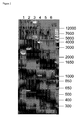
- Figure 1 preparation of shuttle vector carrying full length antithrombin cDNA.
- pENTR vector containing truncated AT cDNA (lane 1 and 2), pCMV6 vector containing full length AT cDNA (lane 3 and 4) or shuttle vector pENTR-AT (lane 5 and 6) are loaded on 1% agarose gel before (lane 1, 3, 5) or after (lane 2, 4, 6) complete digestion by both SacII and StuI.
- Molecular weight standard sizes are inducated on the left hand of the figure and expressed in base pair (bp).
- SacII/StuI digestion of pCMV6 vector containing full length AT cDNA releases a 1182 bp band corresponding to full length AT cDNA cloned into pENTR vector isolated from SacII/StuI digestion of pENTR vector containing truncated AT cDNA. After ligation of these two fragments the final product is effectively recircularized and shows the expected profile for pENTR-AT after SacII/StuI digestion.
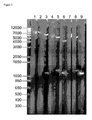
- Figure 3 Clone screening for secretion of recombinant AT in cell culture media.
- Recombinant wild type antithrombin migrate at the same level than control antithrombin purified from plasma (lane 15, 150 ng/lane) and expression level is estimated around 2 mg/L according to band intensity measurement.
- clone 4 is choosen for expansion into cell factory, since the level of expression seems to be slightly higher than the others.
- Mutant AT-N135Q and AT-N135Q-Pro394 migrate just below control antithrombin purified from plasma (lane 15) confirming the loss of a glycosylation site due to substitution N 135Q.
- the stable expression clones selected for large scale protein production are clones 1 for both AT-N135Q and AT-N135Q-Pro394.
- Figure 4 Integrity and purity of recombinant antithrombin.
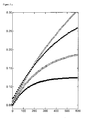
- Figure 5 Anti-factor Xa activity of plasmatic or mutated antithrombins at saturating pentasaccharide concentration.
- FIG. 5 a Plasma AT (black square (or black rectangle): 80nM, hollow square : 40nM, Black circle : 20 nM, hollow circle : 10 nM) is tested for its ability to inhibit chromogenic substrate S2765 (200 ⁇ M) hydrolysis by FXa (1 nM) in the presence of pentasaccharide (1 ⁇ M or 1,73 mg/L) in continuous assay. Time expressed in second is plotted in abscissa; absorbence at 405 nm is plotted in ordinate.
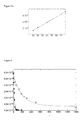
- Figure 5b Figure 5a substrate hydrolysis curves are fitted using equation 3 to determine the kinetic rate constante (k). This constant k is thus plotted as the function of AT concentration and fitted using equation 4 to determine inhibition rate constant kon.
- the plasma antithrombin concentration (nM) is plotted in abscissa; the kinetic rate constante (k) expressed in s -1 is plotted in ordinate.
- AT-N135Q-R393H and AT-N135Q-Pro394 are tested for their ability to inhibit FXa activity in discontinuous assay.
- AT-N135Q-R393H black square : 200 nM
- AT-N135Q-Pro394 hollow square : 2,5 ⁇ M
- FXa pentasaccharide
- FXa residual activity is measured by adding 190 ⁇ l of S2765 (200 ⁇ M) to 10 ⁇ l of previous mixture.
- Initial rate of substrate hydrolysis is then plotted as the fuction of incubation time with inhibitor and curves are fitted with equation 1 to determine kon (gray lines).
- Time expressed in minute is plotted in abscissa; substrate hydrolysis rate expressed in OD/s -1 is plotted in ordinate.
- AT-N135Q-R393H and AT-N135Q-Pro394 are tested in Rotachrom® heparin assay to establish residual pentassacharide activity.
- Mutated antithrombins in a 1/1, 2/1 and 4/1 ratio compared to plasma antithrombin are added to human plasma pool over-dosed with pentasaccharide (concentration of 3 ⁇ g/ml).
- Bars 1, 3, 5 and 7 represent results with AT-N135Q-R393H and Bars 2, 4, 6 and 8 represent results with AT-N135Q-Pro394.
- Bars 1 and 2 are control bars without mutated antithrombin.
- Bars 3 and 4 represent mutated antitrombin ratio 1/1 to plasma antithrombin.
- Bars 5 and 6 represent mutated antitrombin ratio 2/1 to plasma antithrombin.
- Bars 7 and 8 represent mutated antitrombin ratio 4/1 to plasma antithrombin.
- FIG. 8 AT can compete with plasma AT for pensaccharide binding when incubated on HUVEC surface.
- AT-N135Q-R393H and AT-N135Q-Pro394 are tested in Rotachrom® heparin assay to establish residual pentassacharide activity.
- Mutated antithrombins in a 1/1, 2/1 and 4/1 ratio compared to plasma antithrombin are added to human plasma pool over-dosed with pentasaccharide (concentration of 3 ⁇ g/ml) and incubated on HUVEC surface.
- Bars 1, 3, 5 and 7 represent results with AT-N135Q-R393H and Bars 2, 4, 6 and 8 represent results with AT-N135Q-Pro394.
- Bars 1 and 2 are control bars without mutated antithrombin.
- Bars 3 and 4 represent mutated antitrombin ratio 1/1 to plasma antithrombin.
- Bars 5 and 6 represent mutated antitrombin ratio 2/1 to plasma antithrombin.
- Bars 7 and 8 represent mutated antitrombin ratio 4/1 to plasma antithrombin.
- mutations within the reactive center loop region from the amino acid 380 to amino acid 400
- mutations within an exosite region remote from the loop accessible for proteinase interaction Chuang YJ, Swanson R, Raja SM, Olson ST. Heparin enhances the specificity of antithrombin for thrombin and factor Xa independent of the reactive center loop sequence.
- the antithrombin cDNA sequence initially cloned into pENTR vector (Invitrogen, HORF clone reference IOH14497) is found to be truncated and has to be replaced by the full length antithrombin sequence, cloned into pCMV6 (Origene, reference TC110831).
- the plasmid pCMV6 containing full length antithrombin cDNA is digested by both SacII and StuI endonucleases. The 1182 base pairs fragment is isolated on 1% agarose gel and purified using the QIAquick Gel Extraction Kit.
- This 1182 base pairs fragment corresponding to the SacII-StuI fragment of antithrombin cDNA, is ligated into pENTR vector (2760 bp) also linearized by SacII and StuI and recover as described above. Result of this cassette exchange is verified by electrophoresis on 1% agarose gel ( figure 1 ) and sequencing.
- the resulting plasmid pENTR carrying cDNA encoding for wild type antithrombin (pENTR-ATwt) is used as a template for further mutagenesis by PCR using the QuickChange II Site-Directed Mutagenesis Kit according to the manufacturer recommendations (Stratagene).
- the wild type antithrombin has the same amino acid sequence as the plasma antithrombin but is produced under a recombinant form.
- Mutagenic primers (table 1) are used to introduce a codon for Glutamine in place of codon for Arginine 135 for production of plasmid pENTR-AT-N135Q.
- HEK-293 modified human embryonic kidney cells
- BHK-21 baby hamster kidney cells
- Cells are grown in "Dulbeco's Modified Eagle's Medium/F-12" containing 2 mM L-Glutamine, 100 U/ml penicillin, 100 ⁇ g/ml Streptomycin and 5 % foetal bovine serum (Invitrogen) and approximately 10 6 cells are transfected with 20 ⁇ g of DNA by calcium-phosphate coprecpitation ( Sambrook et al. Molecular cloning: A laboratory manual, 2nd edition, page 16.33 ).
- the stable expression cell lines are selected by G418 (during clones selection, G418 concentration is 0,8 mg/ml in cell culture media and then decreased to 0,4 mg/ml to maintain selection pressur during clones amplification) and screened for antithrombin secretion by ELISA, using mouse monoclonal antibody anti antithrombin as capture antibody and Horse Radish Peroxydase conjugate sheep polyclonal antibody anti antithrombin as detecting antibody (BioAssayTM ELISA Kit (EUROMEDEX). The integrity of secreted antithrombin is established by western blotting using sheep monoclonal antibody anti antithrombin and Horse Radish Peroxydase conjugate donkey polyclonal antibody anti sheep (The Binding Site, UK) ( figure 3 ).
- a single stable expression clone is expanded into "cell factories nunclon" (Nunc) and large scale protein production is conducted with 300 ⁇ l/cm 2 , (as recommended by manufacturer, the minimum volume suitable for a 6320 cm 2 culture area cell factory is 2 liters) of « Dulbeco's Modified Eagle's Medium/F-12" containing 2 mM L-Glutamine, 100 U/ml penicillin, 100 ⁇ g/ml Streptomycin and 5 ⁇ g/ml Insulin/Transferrin/Selenium (Invitrogen). Conditioned media, harvested daily, are centrifuged for 15 min at 3000g at 4°C, treated with 5 mM benzamidine, 5 mM EDTA and stored at -20°C.
- Conditioned media are thawed, pooled, salt concentration adjusted to 0.4 M NaCl and then applied on an heparin immobilized column (Hitrap Heparin 5ml or Heparin-sepharose CL6B 50 ml, GE Biological) equilibrated with 10 mM Tris, or with 20 mM phosphate buffer, 0.4 M NaCl and 0.1 mM EDTA, pH 7.4.
- the bound proteins are eluted in the same buffer with a gradient from 0.4 M to 2 M NaCl.
- the fractions eluted from 0.8 M NaCl and more contained only wild type antithrombin or mutated antithrombins with high heparin affinity.
- Mutated antithrombins carrying substitution of asparagin 135 by a glutamin are eluted from affinity column at higher ionic strength than wild type antithrombin, confirming that destruction of glycosylation site at position 135 increases affinity of antithrombin for heparin (about 90% of mutanted antithrombin carrying substitution N135Q is eluted between 1 and 1,4 M NaCl compared to wild type antithrombin which 90% is eluted between 0,8 and 1,2 M NaCl).
- the collected fractions are pooled and the salt concentration is decreased either by over night dialysis against 10 mM Tris, or 20 mM phosphate, and 0.1 M NaCl, pH 7.4 at 4°C or applied on an HiPrep 26/10 desalting column equilibrated with 10 mM Tris, or 20 mM phosphate, and 0.1 M NaCl, pH 7.4.
- the antithrombin is then concentrated by ion exchange chromatography using a "Resource Q" 1ml column (GE, Biological) equilibrated with 10 mM Tris, or 20 mM phosphate, and 0.1 M NaCl, pH 7.4 and eluted in the same buffer with a NaCl gradient from 0.1 mM to 0.5 M or 20 mM to 0.5 M.
- GE Resource Q
- Biological equilibrated with 10 mM Tris, or 20 mM phosphate, and 0.1 M NaCl, pH 7.4 and eluted in the same buffer with a NaCl gradient from 0.1 mM to 0.5 M or 20 mM to 0.5 M.
- the kinetic assays for antithrombin inhibition of factor Xa are performed in 'kinetic' buffer (Hepes, 20 mM phosphate, pH 7,4, 0,15 M NaCl, 0,1 % PEG 8000 and 1 mg/ml bovine serum albumin) in pseudo first order conditions.
- factor Xa is incubated with an excess of tested antithrombins (corresponding to plasma antithrombin, or wild type antithrombin or mutated antithrombins and varying in each assay realized) in the presence or absence of pentasaccharide (Fondaparinux sodique, Arixtra®, GlaxoSmithKline) and the factor Xa residual activity is measured as a function of time.
- pentasaccharide is added in excess in the reaction media so that every tested antithrombin is bound to the pentasaccharide.
- polybrene is added in order to neutralize any sulfated glycosaminoglycan that may be present in the reaction media.
- the residual factor Xa activity is measured as the increase in absorbance at 405 nm resulting from cleavage of the chromogenic substrate (S2765 or S2222, Chromogenix) using a microplate reader (Dynatech MR 5000). The analysis of the data is performed using the GraphPad Prism version 3 software. Absorbance recording is continuous or discontinuous according to the expected inhibition rate constant (kon).
- the inhibition rate constant (kon) is the second order rate constante given in M -1 .s -1 which define the velocity of stable complex formation between protease and antithrombin (higher is the kon value, faster will the complex be established).
- the expected kon is lower than 10 4 M -1 .s -1 the discontinuous method is used.
- Factor Xa (0,02 to 1 ⁇ M, or 0,1 to 1 ⁇ M) is incubated with tested antithrombins (0,2 to 10 ⁇ M, or 1 to 10 ⁇ M) in the presence of pentasaccharide (10 to 100 ⁇ M) or polybrene (100 ⁇ g/ml) in a final volume of 10 ⁇ l for 10 seconds to 5 hours, or 10 seconds to 24 hours. At the end of this incubation period, 190 ⁇ l of kinetic buffer containing 200 ⁇ M substrate is added and absorbance at 405 nm is recorded.
- the kinetic rate constant (k) is estimated by fitting the substrate hydrolysis initial rate curve to equation (1) using non-linear regression with v0 and v ⁇ being the substrate hydrolysis rate at time to or too respectively.
- vt v ⁇ 0 + v ⁇ . exp - k . t
- the inhibition rate constant (kon) is calculated from the rate constant (k) using equation (2) where AT is the tested antithrombin concentration.
- k AT . kon When the expected kon is higher than 10 4 M -1 .s -1 the continuous method is used.
- the tested antithrombin (0,01 to 1 ⁇ M, or 0,1 to 1 ⁇ M) is incubated with the substrate (200 ⁇ M) in the presence of pentasaccharide or polybrene in a fmal volume of 100 ⁇ L, or 190 ⁇ l, and the reaction is started by addition of 100 ⁇ L, or 10 ⁇ L, of factor Xa (2 nM or 10 nM).
- the rate constant (k) is obtained by fitting the substrate hydrolysis curve to equation (3) or (3') using non-linear regression analysis where A0 is the absorbance at t0, and vi and vs are respectively the initial and final rates of substrate hydrolysis in the absence of tested antithrombin.
- a ⁇ 405 A ⁇ 0 + vi .
- Equation (3') is also used, particulary in presence of plasma.
- a ⁇ 405 A ⁇ 0 + vs * t + vi - vs * 1 - exp - k . t / k .
- the inhibition rate constant (kon) is calculated from the kinetic constant (k) using equation (4) that takes into account the competitive effect of the substrate, with S being the initial substrate concentration, Km, the Michaelis constant for factor Xa-substrate interaction, AT the tested antithrombin concentration.
- k kon / 1 + S / Km .
- AT Mutated antithrombins and wild type AT inhibitory activity are measured in the same conditions and compared with plasma AT inhibitory activity.
- inhibition rate constant (kon) of plasma AT for factor Xa in the presence of saturating amount of pentassacharide is estimated using continuous method ( figure 5 a and 5 b).
- a value of 2.52 ⁇ 10 5 M -1 .s -1 is found which is comparable to published values ( Olson ST, Björk I, Sheffer R, Craig PA, Shore JD, Choay J., J Biol Chem. 1992 Jun 25; 267 (18) : 12528-38 , "Role of the antithrombin-binding pentasaccharide in heparin acceleration of antithrombin-proteinase reactions.
- AT-N135Q-R393H and AT-N135Q-Pro394 are found to be slow factor Xa inhibitors, even in the presence of saturating pentassacharide concentration.
- discontinuous method was performed to evaluate kon values for factor Xa inhibition by AT-N135Q-R393H and AT-N135Q-Pro394 in the presence of pentasaccharide ( figure 6 ).
- AT-N135Q-R393H anticoagulant activity is largely reduced whereas AT-N135Q-Pro394 is almost devoided of anti-factor Xa activity.
- AT-N135Q-R393H and AT-N135Q-Pro394 kon values are estimated at 4415 M -1 .s -1 and 33 M -1 .s -1 , respectively, which is 95 times and at least 7600 times lower than plasma AT.
- Anti factor Xa inhibitory activity of mutated antithrombins AT-R393H, AT-Pro394, AT- ⁇ R393-S394, AT- ⁇ R393, AT- ⁇ S394, AT-N135Q-R393H, AT-N135Q-Pro394, AT-N135Q- ⁇ R393-S394, AT-N135Q- ⁇ R393, AT-N135Q- ⁇ S394 is measured in pentasaccharide containing plasma.
- the plasma concentrations of pentasaccharides are defined on the basis on those measured in patients treated by the pentasaccharide under the conditions of a regular (curative) use of this molecule or in patients presenting an overdose of this drug, knowing that the optimal equilibrium concentration is 1,20-1,26 mg/L and the minimal equilibrium concentration is 0,46-0,62 mg/L during a curative pentasaccharide treatment (monograph, Arixtra®).
- the anti factor Xa assay is performed using the Rotachrom® heparin method (Stago) adaptated for absorbance reading on a microplate reader (Dynatech MR 5000), or a STA analyser (Stago).
- the procedure consists in mixing 30 ⁇ l of pentasaccharide containing plasma sample diluted four times in kinetic buffer, with 75 ⁇ l of chromogenic substrate (1 mM, provided in Rotachrom® heparin kit). After 4 min incubation, 75 ⁇ l of bovine factor Xa (24 nM, Rotachrom® heparin kit) is added to the plasma-substrate mixture.
- the factor Xa activity is measured a 405 nm absorbance increase, resulting from cleavage of the chromogenic substrate, using a microplate reader (Dynatech MR 5000).
- the rate constant (k) proportional to anti-factor Xa activity, is obtained by fitting the substrate hydrolysis curve to equation (3) or (3').
- the assay is calibrated in citrated (0,105 M) normal human plasma containing pentasaccharide concentrations ranging from 0 to 3 mg/L.
- a standard curve is generated and anti-factor Xa activity is expressed as mg of pentasaccharide per liter of plasma.
- the mutated antithrombin (0-0,6 g/L, preferably 0,15-0,6 g/L, final concentration, in kinetic buffer) is pre-incubated with an equal volume of pentasaccharide (0-3 mg/L, preferably 1-3 mg/L) containing plasma samples, during 30 min at 37°C.
- the mutated antithrombin concentration range from one to four times that of the plasma antithrombin level, which is compatible with a therapeutic use of antithrombin.
- very high doses of mutated antithrombin, with a 5 fold increase in plasma antithrombin level have already been used during clinical trials without side effects ( Leitner JM, Firbas C, Mayr FB, Reiter RA, Steinlechner B, Jilma B., Recombinant human antithrombin inhibits thrombin formation and interleukin 6 release in human endotoxemia. Clin Pharmacol Ther. 2006 Jan;79(1):23-34 ).
- Anti factor Xa inhibitory activity is then evaluated as previously described.
- Rotachrom® heparin method is used to test anti-factor Xa activity in plasma pre-incubated with mutated antithrombin (0-0,6 g/L, preferably 0,15-0,6 g/L in kinetic buffer), during 30 min at 37°C on human umbilical vein endothelial cells (HUVEC) in culture.
- mutated antithrombin 0-0,6 g/L, preferably 0,15-0,6 g/L in kinetic buffer
- HUVEC human umbilical vein endothelial cells
- the mutated antithrombins compete with plasma antithrombin for pentasaccharide binding and are able to decrease significantly the plasma anti-Xa activity.
- addition of AT-R393H, AT-Pro394, AT- ⁇ R393-S394, AT- ⁇ R393, AT- ⁇ S394, AT-N135Q-R393H, AT-N135Q-Pro394, AT-N135Q- ⁇ R393-S394, AT-N135Q- ⁇ R393, AT-N135Q- ⁇ S394 produces a significant decrease in anti-Xa activity of a pentasaccharide contained in plasma sample.
- AT-N135Q-R393H and AT-N135Q-Pro394 are tested in Rotachrom® heparin assay for their ability to restore factor Xa activity.
- optimal pentasaccharide concentration ranges between 1.2 and 1.26 ⁇ g/mL in plasma.
- pentasaccharide is added to human plasma pool at concentration of 3 ⁇ g/ml.
- Rotachrom® heparin assay is then performed by incubation of plasma over-dosed with pentasaccharide in the presence of mutated antithrombin in a ratio 1/1, 2/1, and 4/1 compared to plasma antithrombin concentration (i.e. 0.15, 0.3, 0.6 g/l).
- anti-factor Xa activity is proportional to the amount of pentasaccharide bound natural antithrombin present in tested plasma, which amount is directly proportional to pentasaccharide concentration in plasma.
- effect of mutated antithrombin is expressed as a virtual decrease in pentasaccharide concentration that corresponds indeed to decrease in pentasaccharide bound natural antithrombin concentration ( figure 7 ).
- AT-N135Q-R393H or AT-N135Q-Pro394 at concentration equal to plasmatic antithrombin concentration is able to significantly decrease anti-factor Xa activity to a level comparable to curative pentasaccharide treatment (from 3 ⁇ g/mL to virtually 1.04 ⁇ g or 1.16 ⁇ g/mL, respectively).
- AT-Pro394 is tested in Rotachrom® heparin assay for its ability to restore factor Xa activity.
- AT-Pro394 treatment is performed under the same conditions as for AT-N135Q-R393H and AT-N135Q-Pro394 when mimicking a pentasaccharide over-dosing.
- AT-Pro394 at concentration equal to plasmatic antithrombin concentration is able to significantly decrease anti-factor Xa activity.
- virtual pentasaccharide concentration decreases to a level comparable to curative pentasaccharide treatment.
- AT-N135Q-R393H decreases anti-factor Xa activity from 3 ⁇ g/mL of pentasaccharide to virtually 1.66, 0.91 and 0.26 ⁇ g/mL respectively (compared to 1.04, 0.49 and 0.29 ⁇ g/mL in the absence of endothelial cell during pre-incubation).
- AT-N135Q-Pro394 decreases anti-factor Xa activity from 3 ⁇ g/mL of pentasaccharide to virtually 1.69, 0.94 and 0.27 ⁇ g/mL, respectively (compared to 1.16, 0.59 and 0.36 ⁇ g/mL in the absence of endothelial cell during pre-incubation).
- human mutated antithrombins compete with murine antithrombin for their binding to the pentasaccharide.
- preliminary in vitro assays are performed to determine the human mutated antithrombin concentration necessary to compete with the murine antithrombin present in mouse plasma supplemented with Fondaparinux.
- mutated antithrombins compete with plasma antithrombin for pentasaccharide binding and are able to decrease significantly the plasma anti-Xa activity.
- addition of AT-R393H, AT-Pro394, AT- ⁇ R393-S394, AT- ⁇ R393, AT- ⁇ S394, AT-N135Q-R393H, AT-N135Q-Pro394, AT-N135Q- ⁇ R393-S394, AT-N135Q- ⁇ R393, AT-N135Q- ⁇ S394 produces a significant decrease in anti-Xa activity of a pentasaccharide contained in mouse plasma.
- mutated antithrombins compete with plasma antithrombin for pentasaccharide binding in human plasma and in mouse plasma.
- the amount of human mutated antithrombins required to compete with mouse antithrombins is equal or more important.
- the efficiency of the mutated antithrombins AT-R393H, AT-Pro394, AT- ⁇ R393-S394, AT- ⁇ R393, AT- ⁇ S394, AT-N135Q-R393H, AT-N135Q-Pro394, AT-N135Q- ⁇ R393-S394, AT-N135Q- ⁇ R393, AT-N135Q- ⁇ S394 as antidotes is evaluated in a murine model.
- mice Animals (mice CF, males adults; or swiss mice, female adults (JANVIER)) are anesthetized using a protocol that does not modify the coagulation parameters, and in accordance with the European guidelines for animal experimentation.
- the different drugs to be tested (fondaparinux, low molecular weight heparin, full length heparin and the mutated antithrombins) are administrated by intra-venous injection in the caudal vein to avoid the variability encountered when administration is performed subcutaneously.
- Heparin derivatives (fondaparinux, low molecular weight heparin and full length heparin) could also be administrated sub cutaneously.
- the blood is collected by punction in cave vein into tubes containing 0.105 mol/L trisodium citrate (1:10). Platelet-poor plasma is obtained by centrifugation at 2300g for 10 minutes at 12°C and stored at -80°C until use.
- fondaparinux has a maximal antithrombotic activity at doses of 100 nmol/kg (or 0,17 mg/kg). Using this dose, the Cmax is 1.2 ⁇ 0.8 nmol/ml (or 2.1 ⁇ 1.4 mg/L). To induce an overdose, a 3 fold doses (300 nmol/kg, or 0.52 mg/kg) is tested. At this dose, the fondaparinux plasma concentration is about 3.5 to 4 nmol/ml (or 6 to 7 mg/L).
- Anti-Xa activity is determined to ensure that an overdose is obtained.
- Anti FXa activity measurements is performed as previously described using a Stachrom heparin® kit on a STA (Stago, France) or a Rotachrom heparin® kit with procedure adapted for measurement in microplate reader (Dynatech MR 5000).
- a calibration curve with pentasaccharide is performed, allowing the expression of the results in nmol/ml (or in mg/L) of plasma.
- fondaparinux has a Tmax of 5 min after intra-venous injection of 100 nmol/kg (or 0,17 mg/kg), or 30 min after subcutaneous injection of 100 nmol/kg (or 0,17 mg/kg).
- the antidote mutated antithrombins
- the mutated antithrombin time course is studied by measuring the plasma anti-Xa activity 5 min, 10 min, 20 min and 40 min after the antidote administration.
- a dose response curve is performed in vivo to determine the dose of antidote necessary to obtain a decrease in Fondaparinux plasma concentration within the therapeutic range around 1.2 mnol/ml (or 2 mg/L), or around 0,7 nmol/ml (or 1.2 mg/L).
- mutated antithrombins (AT-R393H, AT-Pro394, AT- ⁇ R393-S394, AT- ⁇ R393, AT- ⁇ S394, AT-N135Q-R393H, AT-Nl35Q-Pro394, AT-N135Q- ⁇ R393-S394, AT-N135Q- ⁇ R393 or AT-N135Q- ⁇ S394), result in a significant decrease of the plasma anti FXa activity in mice treated with pentasaccharide.
Landscapes
- Health & Medical Sciences (AREA)
- Chemical & Material Sciences (AREA)
- Life Sciences & Earth Sciences (AREA)
- Organic Chemistry (AREA)
- General Health & Medical Sciences (AREA)
- Medicinal Chemistry (AREA)
- Bioinformatics & Cheminformatics (AREA)
- Engineering & Computer Science (AREA)
- Veterinary Medicine (AREA)
- Public Health (AREA)
- Pharmacology & Pharmacy (AREA)
- Animal Behavior & Ethology (AREA)
- General Chemical & Material Sciences (AREA)
- Nuclear Medicine, Radiotherapy & Molecular Imaging (AREA)
- Chemical Kinetics & Catalysis (AREA)
- Hematology (AREA)
- Gastroenterology & Hepatology (AREA)
- Proteomics, Peptides & Aminoacids (AREA)
- Biochemistry (AREA)
- Molecular Biology (AREA)
- Genetics & Genomics (AREA)
- Diabetes (AREA)
- Biophysics (AREA)
- Zoology (AREA)
- Epidemiology (AREA)
- Immunology (AREA)
- Cardiology (AREA)
- Heart & Thoracic Surgery (AREA)
- Vascular Medicine (AREA)
- Urology & Nephrology (AREA)
- Medicines That Contain Protein Lipid Enzymes And Other Medicines (AREA)
- Pharmaceuticals Containing Other Organic And Inorganic Compounds (AREA)
- Peptides Or Proteins (AREA)
Claims (26)
- Verwendung eines mutierten Antithrombin, das seine Fähigkeit, die Koagulation zu hemmen im Wesentlichen verloren hat, insbesondere keine antikoagulante Aktivität aufweist, möglicherweise in Verbindung mit einem Antikoagulans, wobei das mutierte Antithrombin im Wesentlichen die Faktor Xa hemmende Aktivität und die Thrombin hemmende Aktivität verloren hat, zur Herstellung eines Medikaments, das zur Vorbeugung und Behandlung von Krankheitszuständen vorgesehen ist, die mit Koagulationserkrankungen verbunden sind oder einhergehen.
- Verwendung eines mutierten Antithrombins nach Anspruch 1 in Verbindung mit einem Antikoagulans zur Herstellung eines Medikaments zur Behandlung oder Vorbeugung von hämorrhagischen Erkrankungen und verwandten Krankheitszuständen, die von Nebenwirkungen des Antikoagulans herrühren.
- Verwendung nach Anspruch 1 oder 2, wobei das mutierte Antithrombin die Fähigkeit aufweist, das Antikoagulans zu binden und die Bindung zwischen Plasmaantithrombin und dem Antikoagulans, insbesondere in vivo, zu verändern.
- Verwendung eines mutierten Antithrombins nach einem der Ansprüche 2 oder 3 in Verbindung mit einer Antithrombinmutante, deren Aminosäuresequenz sich von jener des mutierten Antithrombins unterscheidet, wobei das mutierte Antithrombin die Fähigkeit aufweist, insbesondere in vivo, die Bindung zwischen Plasmaantithrombin und dem Antikoagulans zu verändern sowie die Fähigkeit, insbesondere in vivo, die Bindung zwischen der Antithrombinmutante und dem Antikoagulans zu verändern.
- Verwendung nach einem der Ansprüche 2 bis 4, wobei der Wert der Dissoziationsgleichgewichtskonstante (Kd) des Komplexes, der von der Bindung des mutierten Antithrombins mit dem Antikoagulans herrührt, bei einer gegebenen Ionenstärke, insbesondere bei physiologischer Ionenstärke ähnlich oder niedriger ist als der Kd Wert des Komplexes zwischen Plasmaantithrombin und dem Antikoagulans.
- Verwendung nach Anspruch 4 oder 5, wobei der Kd Wert des Komplexes, der von der Bindung des mutierten Antithrombin mit dem Antikoagulans herrührt, bei einer gegebenen Ionenstärke, insbesondere bei physiologischer Ionenstärke ähnlich oder niedriger ist als der Kd Wert des Komplexes zwischen der Antithrombinmutante und dem Antikoagulans.
- Verwendung nach einem der Ansprüche 1 bis 6, wobei das Antikoagulans ausgewählt ist aus Heparinen, Heparinderivaten, insbesondere unfraktionierten Heparinen, Heparinen mit niedrigem Molekulargewicht, dem Antikoagulans Pentasaccharid (Fondaparinux) und dessen Derivaten (Idraparinux: SANORG 34006) sowie Heparinoiden (Danaparoid-Natrium ORG 10172).
- Verwendung nach einem der Ansprüche 1 bis 7, wobei die mit den Koagulationserkrankungen verbundenen oder einhergehenden Krankheitszustände unter arteriellen oder venösen thrombotischen Erkrankungen sind, wie etwa Lungenembolie, tiefe Venenthrombose, Herzinfarkt, instabile Angina, Schlaganfall, disseminierte intravaskuläre Koagulation sowie unter hämorrhagischen Erkrankungen wie etwa FVIII Mangel (Hämophilie A), FIX Mangel (Hämophilie B), FVII Mangel, FX Mangel, FXI Mangel, FII Mangel, vWF Mangel, gegen diese Koagulationsfaktoren erworbenen Antikörper, Abnormalitäten der Fibrinolyse, Abnormalitäten der Blutplättchen, disseminierte intravaskuläre Koagulation und jeder beliebiger Krankheitszustand, der mit einer Kombination dieser Mängel oder Abnormalitäten verbunden ist.
- Verwendung nach einem der Ansprüche 1 bis 8, wobei das mutierte Antithrombin mindestens eine Mutation innerhalb der Region von der Aminosäure an Position 380 bis zu der Aminosäure an Position 400 aufweist, insbesondere innerhalb der Region von der Aminosäure an Position 380 bis zu der Aminosäure an Position 397, insbesondere innerhalb der Region von der Aminosäure an Position 390 bis zu der Aminosäure an Position 394, insbesondere an Position 393, wobei sich die Nummerierung der Aminosäure auf die durch SEQ ID NO:2 repräsentierte Antithrombin Aminosäuresequenz bezieht, wobei die Mutation eine Substitution, Insertion oder Deletion ist.
- Verwendung nach Anspruch 9, wobei das mutierte Antithrombin ferner mindestens eine Mutation an den Glykosylierungsstellen der Aminosäuren an Position 96, 135, 155 oder 192, insbesondere an Position 135 umfasst.
- Verwendung nach Anspruch 9 oder 10, wobei das mutierte Antithrombin eine Aminosäuresequenz ist, die ausgewählt ist aus der Gruppe bestehend aus:- SEQ ID NO:4, wobei diese Aminosäuresequenz in der durch SEQ ID NO:2 repräsentieren Sequenz von Antithrombin die Substitution der Aminosäure an Position 393 durch ein Histidin (His) umfasst, oder- SEQ ID NO:6, wobei diese Aminosäuresequenz in der durch SEQ ID NO:2 repräsentierten Sequenz von Antithrombin die Insertion eines Prolins (Pro) zwischen der Aminosäure an Position 393 und der Aminosäure an Position 394 umfasst, oder- SEQ ID NO:8, wobei diese Aminosäuresequenz in der durch SEQ ID NO:2 repräsentierten Sequenz von Antithrombin die Deletion der Aminosäure an Position 393 umfasst, oder- SEQ ID NO:10, wobei diese Aminosäuresequenz in der durch SEQ ID NO:2 repräsentierten Sequenz von Antithrombin die Deletion der Aminosäure an Position 394 umfasst.
- Verwendung nach Anspruch 9 oder 10, wobei das mutierte Antithrombin eine Aminosäuresequenz ist, die ausgewählt ist aus der Gruppe bestehend aus:- SEQ ID NO:14, wobei diese Aminosäuresequenz in der durch SEQ ID NO:2 repräsentierten Sequenz von Antithrombin die Substitution der Aminosäure an Position 393 durch ein Histidin (His) und die Substitution der Aminosäure an Position 135 durch ein Glutamin (Gln) umfasst, oder- SEQ ID NO:16, wobei diese Aminosäuresequenz in der durch SEQ ID NO:2 repräsentierten Sequenz von Antithrombin die Insertion eines Prolins (Pro) zwischen der Aminosäure an Position 393 und der Aminosäure an Position 394 und die Substitution der Aminosäure an Position 135 durch ein Glutamin (Gln) umfasst, oder- SEQ ID NO:18, wobei diese Aminosäuresequenz in der durch SEQ ID NO:2 repräsentierten Sequenz von Antithrombin die Deletion der Aminosäure an Position 393 und an Position 394 umfasst, oder- SEQ ID NO:20, wobei diese Aminosäuresequenz in der durch SEQ ID NO:2 repräsentierten Sequenz von Antithrombin die Deletion der Aminosäure an Position 393 und die Substitution der Aminosäure an Position 135 durch ein Glutamin (Gln) umfasst, oder- SEQ ID NO:22, wobei diese Aminosäuresequenz in der durch SEQ ID NO:2 repräsentierten Sequenz von Antithrombin die Deletion der Aminosäure an Position 394 und die Substitution der Aminosäure an Position 135 durch ein Glutamin (Gln) umfasst, oder- SEQ ID NO:24, wobei diese Aminosäuresequenz in der durch SEQ ID NO:2 repräsentierten Sequenz von Antithrombin die Deletion der Aminosäure an Position 393 und an Position 394 und die Substitution der Aminosäure an Position 135 durch ein Glutamin (Gln) umfasst.
- Verwendung nach einem der Ansprüche 1 bis 8, wobei das mutierte Antithrombin mindestens eine Mutation innerhalb der Region von der Aminosäure an Position 412 bis zu der Aminosäure an Position 432 aufweist, insbesondere innerhalb der Region von der Aminosäure an Position 412 bis zu der Aminosäure an Position 429, insbesondere innerhalb der Region von der Aminosäure an Position 422 bis zu der Aminosäure an Position 426, insbesondere an Position 425, wobei sich die Nummerierung der Aminosäure auf die durch SEQ ID NO:26 repräsentierte Antithrombin Aminosäuresequenz bezieht, welche das Signalpeptid umfasst, wobei die Mutation eine Substitution, Insertion oder Deletion ist.
- Verwendung nach Anspruch 13, wobei das mutierte Antithrombin ferner mindestens eine Mutation an den Glykosylierungsstellen der Aminosäuren an Position 128, 167, 187 oder 224, insbesondere an Position 167 umfasst.
- Verwendung nach Anspruch 13 oder 14, wobei das mutierte Antithrombin eine Aminosäuresequenz ist, die ausgewählt ist aus der Gruppe bestehend aus:- SEQ ID NO:28, wobei diese Aminosäuresequenz in der durch SEQ ID NO:26 repräsentierten Sequenz von Antithrombin die Substitution der Aminosäure an Position 425 durch ein Histidin (His) umfasst, oder- SEQ ID NO:30, wobei diese Aminosäuresequenz in der durch SEQ ID NO:26 repräsentierten Sequenz von Antithrombin die Insertion eines Prolins (Pro) zwischen der Aminosäure an Position 425 und der Aminosäure an Position 426 umfasst, oder- SEQ ID NO:32, wobei diese Aminosäuresequenz in der durch SEQ ID NO:26 repräsentierten Sequenz von Antithrombin die Deletion der Aminosäure an Position 425 umfasst, oder- SEQ ID NO:34, wobei diese Aminosäuresequenz in der durch SEQ ID NO:26 repräsentierten Sequenz von Antithrombin die Deletion der Aminosäure an Position 426 umfasst.
- Verwendung nach Anspruch 13 oder 14, wobei das mutierte Antithrombin eine Aminosäuresequenz ist, die ausgewählt ist aus der Gruppe bestehend aus:- SEQ ID NO:38, wobei diese Aminosäuresequenz in der durch SEQ ID NO:26 repräsentierten Sequenz von Antithrombin die Substitution der Aminosäure an Position 425 durch ein Histidin (His) und die Substitution der Aminosäure an Position 167 durch ein Glutamin (Gln) umfasst, oder- SEQ ID NO:40, wobei diese Aminosäuresequenz in der durch SEQ ID NO:26 repräsentierten Sequenz von Antithrombin die Insertion eines Prolins (Pro) zwischen der Aminosäure an Position 425 und der Aminosäure an Position 426 und die Substitution der Aminosäure an Position 167 durch ein Glutamin (Gln) umfasst, oder- SEQ ID NO:42, wobei diese Aminosäuresequenz in der durch SEQ ID NO:26 repräsentierten Sequenz von Antithrombin die Deletion der Aminosäure an Position 425 und an Position 426 umfasst, oder- SEQ ID NO:44, wobei diese Aminosäuresequenz in der durch SEQ ID NO:26 repräsentierten Sequenz von Antithrombin die Deletion der Aminosäure an Position 425 und die Substitution der Aminosäure an Position 167 durch ein Glutamin (Gln) umfasst, oder- SEQ ID NO:46, wobei diese Aminosäuresequenz in der durch SEQ ID NO:26 repräsentierten Sequenz von Antithrombin die Deletion der Aminosäure an Position 426 und die Substitution der Aminosäure an Position 167 durch ein Glutamin (Gln) umfasst, oder- SEQ ID NO:48, wobei diese Aminosäuresequenz in der durch SEQ ID NO:26 repräsentierten Sequenz von Antithrombin die Deletion der Aminosäure an Position 425 und an Position 426 und die Substitution der Aminosäure an Position 167 durch ein Glutamin (Gln) umfasst.
- Produkt, das umfasst- mindestens ein mutiertes Antithrombin, das im Wesentlichen seine Fähigkeit verloren hat, die Koagulation zu hemmen, insbesondere keine antikoagulante Aktivität aufweist, wobei das mutierte Antithrombin die Faktor Xa hemmende Aktivität und die Thrombin hemmende Aktivität verloren hat und- mindestens eine, insbesondere antikoagulante Verbindung als Kombinationsprodukt zu einer getrennten oder zeitlichen Verwendung bei der Vorbeugung oder Behandlung von hämorrhagischen Erkrankungen und verwandten Krankheitszuständen, die von Nebenwirkungen des Antikoagulans herrühren.
- Produkt nach Anspruch 17, wobei das mutierte Antithrombin die Fähigkeit aufweist, das Antikoagulans zu binden und die Bindung zwischen Plasmaantithrombin und dem Antikoagulans, insbesondere in vivo, zu verändern.
- Produkt nach Anspruch 17 oder 18, wobei der Wert der Dissoziationsgleichgewichtskonstante (Kd) des Komplexes, der von der Bindung des mutierten Antithrombins mit dem Antikoagulans herrührt, bei einer gegebenen Ionenstärke, insbesondere bei physiologischer Ionenstärke ähnlich oder niedriger ist als der Kd Wert des Komplexes zwischen Plasmaantithrombin und dem Antikoagulans.
- Produkt nach einem der Ansprüche 17 bis 19, wobei das Antikoagulans ausgewählt ist aus Heparinen, Heparinderivaten, insbesondere unfraktionierten Heparinen, Heparinen mit niedrigem Molekulargewicht, dem Antikoagulans Pentasaccharid (Fondaparinux) und dessen Derivaten (Idraparinux: SANORG 34006) sowie Heparinoiden (Danaparoid-Natrium ORG 10172).
- Produkt nach einem der Ansprüche 17 bis 20, wobei die Koagulationserkrankungen unter arteriellen oder venösen thrombotischen Erkrankungen sind, wie etwa Lungenembolie, tiefe Venenthrombose, Herzinfarkt, instabile Angina, Schlaganfall, disseminierte intravaskuläre Koagulation sowie unter den hämorrhagischen Erkrankungen wie etwa FVIII Mangel (Hämophilie A), FIX Mangel (Hämophilie B), FVII Mangel, FX Mangel, FXI Mangel, FII Mangel, vWF Mangel, gegen diese Koagulationsfaktoren erworbene Antikörper, Abnormalitäten der Fibrinolyse, Abnormalitäten der Blutplättchen, disseminierte intravaskuläre Koagulation und jeder beliebiger Krankheitszustand, der mit einer Kombination dieser Mängel oder Abnormalitäten verbunden ist.
- Produkt nach den Ansprüchen 17 bis 21, wobei das mutierte Antithrombin eine Aminosäuresequenz ist, die ausgewählt ist aus der Gruppe bestehend aus:- SEQ ID NO:4,- SEQ ID NO:6,- SEQ ID NO:8 oder- SEQ ID NO:10.
- Produkt nach den Ansprüchen 17 bis 21, wobei das mutierte Antithrombin eine Aminosäuresequenz ist, die ausgewählt ist aus der Gruppe bestehend aus:- SEQ ID NO:14,- SEQ ID NO:16,- SEQ ID NO:18,- SEQ ID NO:20,- SEQ ID NO:22 oder- SEQ ID NO:24.
- Produkt nach den Ansprüchen 17 bis 21, wobei das mutierte Antithrombin eine Aminosäuresequenz ist, die ausgewählt ist aus der Gruppe bestehend aus:- SEQ ID NO:28,- SEQ ID NO:30,- SEQ ID NO:32 oder- SEQ ID NO:34.
- Produkt nach den Ansprüchen 17 bis 21, wobei das mutierte Antithrombin eine Aminosäuresequenz ist, die ausgewählt ist aus der Gruppe bestehend aus:- SEQ ID NO:38,- SEQ ID NO:40,- SEQ ID NO:42,- SEQ ID NO:44,- SEQ ID NO:46 oder- SEQ ID NO:48.
- Verwendung eines mutierten Antithrombins, das seine Fähigkeit die Koagulation zu hemmen im Wesentlichen verloren hat, insbesondere keine antikoagulante Aktivität aufweist, ohne Antikoagulans, wobei das mutierte Antithrombin im Wesentlichen die Faktor Xa hemmende Aktivität und die Thrombin hemmende Aktivität verloren hat, zur Herstellung eines Medikaments, das zur Vorbeugung und Behandlung von Krankheitszuständen vorgesehen ist, die mit Koagulationserkrankungen verbunden sind oder einhergehen.
Priority Applications (1)
| Application Number | Priority Date | Filing Date | Title |
|---|---|---|---|
| EP08786266A EP2175877B1 (de) | 2007-07-20 | 2008-07-18 | Verwendung mutierter antithrombine zur behandlung oder verhinderung von gerinnungserkrankungen |
Applications Claiming Priority (3)
| Application Number | Priority Date | Filing Date | Title |
|---|---|---|---|
| EP07290913 | 2007-07-20 | ||
| EP08786266A EP2175877B1 (de) | 2007-07-20 | 2008-07-18 | Verwendung mutierter antithrombine zur behandlung oder verhinderung von gerinnungserkrankungen |
| PCT/EP2008/059486 WO2009013251A1 (en) | 2007-07-20 | 2008-07-18 | Use of mutated antithrombins for treating or preventing coagulation disorders |
Publications (2)
| Publication Number | Publication Date |
|---|---|
| EP2175877A1 EP2175877A1 (de) | 2010-04-21 |
| EP2175877B1 true EP2175877B1 (de) | 2012-01-04 |
Family
ID=39111552
Family Applications (1)
| Application Number | Title | Priority Date | Filing Date |
|---|---|---|---|
| EP08786266A Not-in-force EP2175877B1 (de) | 2007-07-20 | 2008-07-18 | Verwendung mutierter antithrombine zur behandlung oder verhinderung von gerinnungserkrankungen |
Country Status (7)
| Country | Link |
|---|---|
| US (1) | US8741844B2 (de) |
| EP (1) | EP2175877B1 (de) |
| JP (1) | JP2010533684A (de) |
| AT (1) | ATE539764T1 (de) |
| CA (1) | CA2694047C (de) |
| DK (1) | DK2175877T3 (de) |
| WO (1) | WO2009013251A1 (de) |
Cited By (1)
| Publication number | Priority date | Publication date | Assignee | Title |
|---|---|---|---|---|
| WO2024256742A1 (es) | 2023-06-15 | 2024-12-19 | Fundación Para La Formación E Investigación Sanitarias De La Región De Murcia | Antídoto |
Families Citing this family (7)
| Publication number | Priority date | Publication date | Assignee | Title |
|---|---|---|---|---|
| WO2010081878A1 (en) * | 2009-01-16 | 2010-07-22 | Universite Paris-Sud Xi | Mutated antithrombins, a process for preparing the same and their use as drugs |
| US20140356377A1 (en) * | 2011-08-25 | 2014-12-04 | Umc Utrecht Holding B.V. | Compounds for use in boosting coagulation |
| US9127274B2 (en) * | 2012-04-26 | 2015-09-08 | Alnylam Pharmaceuticals, Inc. | Serpinc1 iRNA compositions and methods of use thereof |
| US9593166B2 (en) | 2013-03-14 | 2017-03-14 | Bayer Healthcare Llc | Monoclonal antibodies against antithrombin β |
| GB201322091D0 (en) | 2013-12-13 | 2014-01-29 | Cambridge Entpr Ltd | Modified serpins for the treatment of bleeding disorders |
| EP3904519A1 (de) | 2014-10-30 | 2021-11-03 | Genzyme Corporation | Polynukleotidwirkstoffe mit abzielung auf serpinc1 (at3) und verfahren zur verwendung davon |
| SG11201804729RA (en) | 2015-12-07 | 2018-07-30 | Genzyme Corp | Methods and compositions for treating a serpinc1-associated disorder |
Family Cites Families (5)
| Publication number | Priority date | Publication date | Assignee | Title |
|---|---|---|---|---|
| DE3901917A1 (de) * | 1989-01-24 | 1990-07-26 | Behringwerke Ag | Mutanten von humanem antithrombin iii |
| JP3479539B2 (ja) * | 1992-04-10 | 2003-12-15 | エーザイ株式会社 | ヒトアンチトロンビンiii変異体 |
| JPH0971600A (ja) * | 1995-09-06 | 1997-03-18 | Eisai Co Ltd | ヒトアンチトロンビンiii 変異体 |
| AU782069B2 (en) * | 1999-05-13 | 2005-06-30 | Gtc Biotherapeutics, Inc. | Transgenically produced antithrombin III and mutants thereof |
| US20060198836A1 (en) * | 2003-07-17 | 2006-09-07 | Smithkline Beecham Corporation | Method of treating hit patients with argatroban |
-
2008
- 2008-07-18 DK DK08786266.0T patent/DK2175877T3/da active
- 2008-07-18 US US12/669,855 patent/US8741844B2/en not_active Expired - Fee Related
- 2008-07-18 JP JP2010516522A patent/JP2010533684A/ja active Pending
- 2008-07-18 EP EP08786266A patent/EP2175877B1/de not_active Not-in-force
- 2008-07-18 AT AT08786266T patent/ATE539764T1/de active
- 2008-07-18 CA CA2694047A patent/CA2694047C/en not_active Expired - Fee Related
- 2008-07-18 WO PCT/EP2008/059486 patent/WO2009013251A1/en not_active Ceased
Cited By (1)
| Publication number | Priority date | Publication date | Assignee | Title |
|---|---|---|---|---|
| WO2024256742A1 (es) | 2023-06-15 | 2024-12-19 | Fundación Para La Formación E Investigación Sanitarias De La Región De Murcia | Antídoto |
Also Published As
| Publication number | Publication date |
|---|---|
| ATE539764T1 (de) | 2012-01-15 |
| US20100298224A1 (en) | 2010-11-25 |
| JP2010533684A (ja) | 2010-10-28 |
| CA2694047A1 (en) | 2009-01-29 |
| EP2175877A1 (de) | 2010-04-21 |
| US8741844B2 (en) | 2014-06-03 |
| CA2694047C (en) | 2018-01-30 |
| WO2009013251A1 (en) | 2009-01-29 |
| DK2175877T3 (da) | 2012-04-16 |
Similar Documents
| Publication | Publication Date | Title |
|---|---|---|
| US8741844B2 (en) | Use of mutated antithrombins for treating or preventing coagulation disorders | |
| Zhou et al. | Formation of the antithrombin heterodimer in vivo and the onset of thrombosis | |
| KR102186924B1 (ko) | 출혈 장애를 치료하기 위한 변형된 세르핀 | |
| US5726147A (en) | Human mutant tissue factor compositions useful as tissue factor antagonists | |
| Hovinga et al. | Coagulation factor XII Locarno: the functional defect is caused by the amino acid substitution Arg 353--> Pro leading to loss of a kallikrein cleavage site | |
| WIJNEN et al. | Characterization of mini-protein S, a recombinant variant of protein S that lacks the sex hormone binding globulin-like domain | |
| Griffin | Control of coagulation reactions | |
| US8822654B2 (en) | Mutated antithrombins, a process for preparing the same and their use as drugs | |
| Olson et al. | Role of protein conformational changes, surface approximation and protein cofactors in heparin-accelerated antithrombin-proteinase reactions | |
| US20090298779A1 (en) | Peptides which Modulate Blood Coagulation and Methods of Use Thereof | |
| Lindo et al. | Antithrombin‐TRI (Ala 382 to Thr) causing severe thromboembolic tendency undergoes the S‐to‐R transition and is associated with a plasma‐inactive high‐molecular‐weight complex of aggregated antithrombin | |
| EP2123670A1 (de) | Koagulationshemmendes Polypeptid | |
| JP2001501803A (ja) | 改変された活性を有するハイブリッド第▲viii▼因子 | |
| Mushunje et al. | Antithrombin ‘DREUX’(Lys114Glu): a variant with complete loss of heparin affinity | |
| Sheffield et al. | The M358R variant of α1-proteinase inhibitor inhibits coagulation factor VIIa | |
| WO1991004276A1 (en) | Isolated, physiologically active human thrombomodulin polypeptide | |
| JP2012529445A (ja) | 線溶亢進を伴う凝固障害の処置 | |
| Côté | Studies of structure-function relationships in two human coagulation proteins: factor XII and prothrombin | |
| Drohan et al. | Recombinant Technology in Hemostasis and Thrombosis | |
| dela Cruz | Antithrombin III residue tyrosine-131 serves as a molecular switch during heparin-mediated conformational activation of its anticoagulant activity | |
| Olson et al. | Division of Biochemical Research, Henry Ford Hospital, Detroit, MI 48202, USA and Department of Veterinary Medical Chemistry, Swedish University of Agricultural Sciences, S-751 23 Uppsala, Sweden | |
| Hoekema | Properties of factor V in the pro-and anticoagulant pathways of blood coagulation | |
| JPWO1991004276A1 (ja) | 単離された生理的に活性なヒトトロンボモジュリンポリペプチド | |
| HK1229344A1 (en) | Modified serpins for the treatment of bleeding disorders | |
| HK1229344B (en) | Modified serpins for the treatment of bleeding disorders |
Legal Events
| Date | Code | Title | Description |
|---|---|---|---|
| PUAI | Public reference made under article 153(3) epc to a published international application that has entered the european phase |
Free format text: ORIGINAL CODE: 0009012 |
|
| 17P | Request for examination filed |
Effective date: 20100119 |
|
| AK | Designated contracting states |
Kind code of ref document: A1 Designated state(s): AT BE BG CH CY CZ DE DK EE ES FI FR GB GR HR HU IE IS IT LI LT LU LV MC MT NL NO PL PT RO SE SI SK TR |
|
| AX | Request for extension of the european patent |
Extension state: AL BA MK RS |
|
| 17Q | First examination report despatched |
Effective date: 20100427 |
|
| DAX | Request for extension of the european patent (deleted) | ||
| GRAP | Despatch of communication of intention to grant a patent |
Free format text: ORIGINAL CODE: EPIDOSNIGR1 |
|
| GRAS | Grant fee paid |
Free format text: ORIGINAL CODE: EPIDOSNIGR3 |
|
| GRAA | (expected) grant |
Free format text: ORIGINAL CODE: 0009210 |
|
| AK | Designated contracting states |
Kind code of ref document: B1 Designated state(s): AT BE BG CH CY CZ DE DK EE ES FI FR GB GR HR HU IE IS IT LI LT LU LV MC MT NL NO PL PT RO SE SI SK TR |
|
| REG | Reference to a national code |
Ref country code: GB Ref legal event code: FG4D |
|
| REG | Reference to a national code |
Ref country code: CH Ref legal event code: EP |
|
| REG | Reference to a national code |
Ref country code: AT Ref legal event code: REF Ref document number: 539764 Country of ref document: AT Kind code of ref document: T Effective date: 20120115 |
|
| REG | Reference to a national code |
Ref country code: IE Ref legal event code: FG4D |
|
| REG | Reference to a national code |
Ref country code: DE Ref legal event code: R096 Ref document number: 602008012512 Country of ref document: DE Effective date: 20120308 |
|
| REG | Reference to a national code |
Ref country code: NL Ref legal event code: T3 |
|
| REG | Reference to a national code |
Ref country code: DK Ref legal event code: T3 |
|
| PG25 | Lapsed in a contracting state [announced via postgrant information from national office to epo] |
Ref country code: SI Free format text: LAPSE BECAUSE OF FAILURE TO SUBMIT A TRANSLATION OF THE DESCRIPTION OR TO PAY THE FEE WITHIN THE PRESCRIBED TIME-LIMIT Effective date: 20120104 |
|
| LTIE | Lt: invalidation of european patent or patent extension |
Effective date: 20120104 |
|
| PG25 | Lapsed in a contracting state [announced via postgrant information from national office to epo] |
Ref country code: LT Free format text: LAPSE BECAUSE OF FAILURE TO SUBMIT A TRANSLATION OF THE DESCRIPTION OR TO PAY THE FEE WITHIN THE PRESCRIBED TIME-LIMIT Effective date: 20120104 Ref country code: IS Free format text: LAPSE BECAUSE OF FAILURE TO SUBMIT A TRANSLATION OF THE DESCRIPTION OR TO PAY THE FEE WITHIN THE PRESCRIBED TIME-LIMIT Effective date: 20120504 Ref country code: HR Free format text: LAPSE BECAUSE OF FAILURE TO SUBMIT A TRANSLATION OF THE DESCRIPTION OR TO PAY THE FEE WITHIN THE PRESCRIBED TIME-LIMIT Effective date: 20120104 Ref country code: BE Free format text: LAPSE BECAUSE OF FAILURE TO SUBMIT A TRANSLATION OF THE DESCRIPTION OR TO PAY THE FEE WITHIN THE PRESCRIBED TIME-LIMIT Effective date: 20120104 Ref country code: NO Free format text: LAPSE BECAUSE OF FAILURE TO SUBMIT A TRANSLATION OF THE DESCRIPTION OR TO PAY THE FEE WITHIN THE PRESCRIBED TIME-LIMIT Effective date: 20120404 Ref country code: BG Free format text: LAPSE BECAUSE OF FAILURE TO SUBMIT A TRANSLATION OF THE DESCRIPTION OR TO PAY THE FEE WITHIN THE PRESCRIBED TIME-LIMIT Effective date: 20120404 |
|
| PG25 | Lapsed in a contracting state [announced via postgrant information from national office to epo] |
Ref country code: LV Free format text: LAPSE BECAUSE OF FAILURE TO SUBMIT A TRANSLATION OF THE DESCRIPTION OR TO PAY THE FEE WITHIN THE PRESCRIBED TIME-LIMIT Effective date: 20120104 Ref country code: FI Free format text: LAPSE BECAUSE OF FAILURE TO SUBMIT A TRANSLATION OF THE DESCRIPTION OR TO PAY THE FEE WITHIN THE PRESCRIBED TIME-LIMIT Effective date: 20120104 Ref country code: GR Free format text: LAPSE BECAUSE OF FAILURE TO SUBMIT A TRANSLATION OF THE DESCRIPTION OR TO PAY THE FEE WITHIN THE PRESCRIBED TIME-LIMIT Effective date: 20120405 Ref country code: PT Free format text: LAPSE BECAUSE OF FAILURE TO SUBMIT A TRANSLATION OF THE DESCRIPTION OR TO PAY THE FEE WITHIN THE PRESCRIBED TIME-LIMIT Effective date: 20120504 Ref country code: PL Free format text: LAPSE BECAUSE OF FAILURE TO SUBMIT A TRANSLATION OF THE DESCRIPTION OR TO PAY THE FEE WITHIN THE PRESCRIBED TIME-LIMIT Effective date: 20120104 |
|
| REG | Reference to a national code |
Ref country code: AT Ref legal event code: MK05 Ref document number: 539764 Country of ref document: AT Kind code of ref document: T Effective date: 20120104 |
|
| PG25 | Lapsed in a contracting state [announced via postgrant information from national office to epo] |
Ref country code: CY Free format text: LAPSE BECAUSE OF FAILURE TO SUBMIT A TRANSLATION OF THE DESCRIPTION OR TO PAY THE FEE WITHIN THE PRESCRIBED TIME-LIMIT Effective date: 20120104 |
|
| PG25 | Lapsed in a contracting state [announced via postgrant information from national office to epo] |
Ref country code: EE Free format text: LAPSE BECAUSE OF FAILURE TO SUBMIT A TRANSLATION OF THE DESCRIPTION OR TO PAY THE FEE WITHIN THE PRESCRIBED TIME-LIMIT Effective date: 20120104 Ref country code: SE Free format text: LAPSE BECAUSE OF FAILURE TO SUBMIT A TRANSLATION OF THE DESCRIPTION OR TO PAY THE FEE WITHIN THE PRESCRIBED TIME-LIMIT Effective date: 20120104 Ref country code: RO Free format text: LAPSE BECAUSE OF FAILURE TO SUBMIT A TRANSLATION OF THE DESCRIPTION OR TO PAY THE FEE WITHIN THE PRESCRIBED TIME-LIMIT Effective date: 20120104 Ref country code: CZ Free format text: LAPSE BECAUSE OF FAILURE TO SUBMIT A TRANSLATION OF THE DESCRIPTION OR TO PAY THE FEE WITHIN THE PRESCRIBED TIME-LIMIT Effective date: 20120104 |
|
| PLBE | No opposition filed within time limit |
Free format text: ORIGINAL CODE: 0009261 |
|
| STAA | Information on the status of an ep patent application or granted ep patent |
Free format text: STATUS: NO OPPOSITION FILED WITHIN TIME LIMIT |
|
| PG25 | Lapsed in a contracting state [announced via postgrant information from national office to epo] |
Ref country code: IT Free format text: LAPSE BECAUSE OF FAILURE TO SUBMIT A TRANSLATION OF THE DESCRIPTION OR TO PAY THE FEE WITHIN THE PRESCRIBED TIME-LIMIT Effective date: 20120104 Ref country code: SK Free format text: LAPSE BECAUSE OF FAILURE TO SUBMIT A TRANSLATION OF THE DESCRIPTION OR TO PAY THE FEE WITHIN THE PRESCRIBED TIME-LIMIT Effective date: 20120104 |
|
| 26N | No opposition filed |
Effective date: 20121005 |
|
| PG25 | Lapsed in a contracting state [announced via postgrant information from national office to epo] |
Ref country code: AT Free format text: LAPSE BECAUSE OF FAILURE TO SUBMIT A TRANSLATION OF THE DESCRIPTION OR TO PAY THE FEE WITHIN THE PRESCRIBED TIME-LIMIT Effective date: 20120104 |
|
| REG | Reference to a national code |
Ref country code: DE Ref legal event code: R097 Ref document number: 602008012512 Country of ref document: DE Effective date: 20121005 |
|
| PG25 | Lapsed in a contracting state [announced via postgrant information from national office to epo] |
Ref country code: MC Free format text: LAPSE BECAUSE OF NON-PAYMENT OF DUE FEES Effective date: 20120731 |
|
| PG25 | Lapsed in a contracting state [announced via postgrant information from national office to epo] |
Ref country code: ES Free format text: LAPSE BECAUSE OF FAILURE TO SUBMIT A TRANSLATION OF THE DESCRIPTION OR TO PAY THE FEE WITHIN THE PRESCRIBED TIME-LIMIT Effective date: 20120415 |
|
| REG | Reference to a national code |
Ref country code: IE Ref legal event code: MM4A |
|
| PG25 | Lapsed in a contracting state [announced via postgrant information from national office to epo] |
Ref country code: IE Free format text: LAPSE BECAUSE OF NON-PAYMENT OF DUE FEES Effective date: 20120718 Ref country code: MT Free format text: LAPSE BECAUSE OF FAILURE TO SUBMIT A TRANSLATION OF THE DESCRIPTION OR TO PAY THE FEE WITHIN THE PRESCRIBED TIME-LIMIT Effective date: 20120104 |
|
| PG25 | Lapsed in a contracting state [announced via postgrant information from national office to epo] |
Ref country code: TR Free format text: LAPSE BECAUSE OF FAILURE TO SUBMIT A TRANSLATION OF THE DESCRIPTION OR TO PAY THE FEE WITHIN THE PRESCRIBED TIME-LIMIT Effective date: 20120104 |
|
| PG25 | Lapsed in a contracting state [announced via postgrant information from national office to epo] |
Ref country code: LU Free format text: LAPSE BECAUSE OF NON-PAYMENT OF DUE FEES Effective date: 20120718 |
|
| PG25 | Lapsed in a contracting state [announced via postgrant information from national office to epo] |
Ref country code: HU Free format text: LAPSE BECAUSE OF FAILURE TO SUBMIT A TRANSLATION OF THE DESCRIPTION OR TO PAY THE FEE WITHIN THE PRESCRIBED TIME-LIMIT Effective date: 20080718 |
|
| REG | Reference to a national code |
Ref country code: CH Ref legal event code: NV Representative=s name: ABREMA AGENCE BREVET ET MARQUES, GANGUILLET, CH |
|
| REG | Reference to a national code |
Ref country code: FR Ref legal event code: PLFP Year of fee payment: 9 |
|
| REG | Reference to a national code |
Ref country code: FR Ref legal event code: PLFP Year of fee payment: 10 |
|
| REG | Reference to a national code |
Ref country code: FR Ref legal event code: PLFP Year of fee payment: 11 |
|
| REG | Reference to a national code |
Ref country code: CH Ref legal event code: PFUS Owner name: UNIVERSITE PARIS-SUD XI, FR Free format text: FORMER OWNER: UNIVERSITE PARIS-SUD XI, FR |
|
| PGFP | Annual fee paid to national office [announced via postgrant information from national office to epo] |
Ref country code: GB Payment date: 20210527 Year of fee payment: 14 |
|
| PGFP | Annual fee paid to national office [announced via postgrant information from national office to epo] |
Ref country code: NL Payment date: 20210721 Year of fee payment: 14 |
|
| PGFP | Annual fee paid to national office [announced via postgrant information from national office to epo] |
Ref country code: FR Payment date: 20210722 Year of fee payment: 14 |
|
| PGFP | Annual fee paid to national office [announced via postgrant information from national office to epo] |
Ref country code: DK Payment date: 20210716 Year of fee payment: 14 Ref country code: CH Payment date: 20210803 Year of fee payment: 14 Ref country code: DE Payment date: 20210531 Year of fee payment: 14 |
|
| REG | Reference to a national code |
Ref country code: GB Ref legal event code: 732E Free format text: REGISTERED BETWEEN 20211104 AND 20211110 |
|
| REG | Reference to a national code |
Ref country code: NL Ref legal event code: PD Owner name: UNIVERSITE PARIS-SACLAY; FR Free format text: DETAILS ASSIGNMENT: CHANGE OF OWNER(S), MERGE; FORMER OWNER NAME: UNIVERSITE PARIS-SUD XI Effective date: 20211112 |
|
| REG | Reference to a national code |
Ref country code: DE Ref legal event code: R081 Ref document number: 602008012512 Country of ref document: DE Owner name: UNIVERSITE PARIS-SACLAY, FR Free format text: FORMER OWNER: UNIVERSITE PARIS-SUD 11, ORSAY, FR |
|
| REG | Reference to a national code |
Ref country code: DE Ref legal event code: R119 Ref document number: 602008012512 Country of ref document: DE |
|
| REG | Reference to a national code |
Ref country code: DK Ref legal event code: EBP Effective date: 20220731 |
|
| REG | Reference to a national code |
Ref country code: CH Ref legal event code: PL |
|
| REG | Reference to a national code |
Ref country code: NL Ref legal event code: MM Effective date: 20220801 |
|
| GBPC | Gb: european patent ceased through non-payment of renewal fee |
Effective date: 20220718 |
|
| PG25 | Lapsed in a contracting state [announced via postgrant information from national office to epo] |
Ref country code: LI Free format text: LAPSE BECAUSE OF NON-PAYMENT OF DUE FEES Effective date: 20220731 Ref country code: FR Free format text: LAPSE BECAUSE OF NON-PAYMENT OF DUE FEES Effective date: 20220731 Ref country code: CH Free format text: LAPSE BECAUSE OF NON-PAYMENT OF DUE FEES Effective date: 20220731 |
|
| PG25 | Lapsed in a contracting state [announced via postgrant information from national office to epo] |
Ref country code: GB Free format text: LAPSE BECAUSE OF NON-PAYMENT OF DUE FEES Effective date: 20220718 Ref country code: DE Free format text: LAPSE BECAUSE OF NON-PAYMENT OF DUE FEES Effective date: 20230201 |
|
| PG25 | Lapsed in a contracting state [announced via postgrant information from national office to epo] |
Ref country code: NL Free format text: LAPSE BECAUSE OF NON-PAYMENT OF DUE FEES Effective date: 20220801 |
|
| PG25 | Lapsed in a contracting state [announced via postgrant information from national office to epo] |
Ref country code: DK Free format text: LAPSE BECAUSE OF NON-PAYMENT OF DUE FEES Effective date: 20220731 |