EP2161340A2 - Optimisierter T-DNA Transfer und entsprechende Vektoren - Google Patents
Optimisierter T-DNA Transfer und entsprechende Vektoren Download PDFInfo
- Publication number
- EP2161340A2 EP2161340A2 EP09172985A EP09172985A EP2161340A2 EP 2161340 A2 EP2161340 A2 EP 2161340A2 EP 09172985 A EP09172985 A EP 09172985A EP 09172985 A EP09172985 A EP 09172985A EP 2161340 A2 EP2161340 A2 EP 2161340A2
- Authority
- EP
- European Patent Office
- Prior art keywords
- dna
- vector
- border
- transformation
- sequences
- Prior art date
- Legal status (The legal status is an assumption and is not a legal conclusion. Google has not performed a legal analysis and makes no representation as to the accuracy of the status listed.)
- Withdrawn
Links
- 239000013598 vector Substances 0.000 title claims abstract description 398
- 238000012546 transfer Methods 0.000 title description 69
- 230000006798 recombination Effects 0.000 claims abstract description 78
- 238000005215 recombination Methods 0.000 claims abstract description 78
- 238000000034 method Methods 0.000 claims abstract description 64
- 230000009261 transgenic effect Effects 0.000 claims abstract description 43
- 230000009466 transformation Effects 0.000 claims description 126
- 241000589158 Agrobacterium Species 0.000 claims description 63
- 230000010354 integration Effects 0.000 claims description 58
- 108090000623 proteins and genes Proteins 0.000 claims description 56
- 230000004048 modification Effects 0.000 claims description 48
- 238000012986 modification Methods 0.000 claims description 48
- 210000004027 cell Anatomy 0.000 claims description 33
- 210000003527 eukaryotic cell Anatomy 0.000 claims description 29
- 238000011144 upstream manufacturing Methods 0.000 claims description 25
- 230000001404 mediated effect Effects 0.000 claims description 23
- 102000004169 proteins and genes Human genes 0.000 claims description 22
- 238000001415 gene therapy Methods 0.000 claims description 20
- 230000001965 increasing effect Effects 0.000 claims description 13
- 238000004519 manufacturing process Methods 0.000 claims description 13
- 240000004808 Saccharomyces cerevisiae Species 0.000 claims description 12
- 238000011426 transformation method Methods 0.000 claims description 12
- 241000233866 Fungi Species 0.000 claims description 10
- 230000004075 alteration Effects 0.000 claims description 4
- 230000002708 enhancing effect Effects 0.000 claims description 4
- 241000206602 Eukaryota Species 0.000 abstract description 7
- 230000008030 elimination Effects 0.000 abstract description 4
- 238000003379 elimination reaction Methods 0.000 abstract description 4
- 241000196324 Embryophyta Species 0.000 description 121
- 108020004414 DNA Proteins 0.000 description 83
- 239000013612 plasmid Substances 0.000 description 46
- 108010091086 Recombinases Proteins 0.000 description 41
- 239000012634 fragment Substances 0.000 description 37
- 108091028043 Nucleic acid sequence Proteins 0.000 description 28
- 102000018120 Recombinases Human genes 0.000 description 22
- 238000001723 curing Methods 0.000 description 19
- 108010052160 Site-specific recombinase Proteins 0.000 description 17
- 102000053602 DNA Human genes 0.000 description 16
- 108010020764 Transposases Proteins 0.000 description 16
- 230000014509 gene expression Effects 0.000 description 16
- 239000003550 marker Substances 0.000 description 15
- 244000061176 Nicotiana tabacum Species 0.000 description 14
- 102000008579 Transposases Human genes 0.000 description 14
- 238000004458 analytical method Methods 0.000 description 13
- 210000004940 nucleus Anatomy 0.000 description 11
- 238000012545 processing Methods 0.000 description 11
- 235000002637 Nicotiana tabacum Nutrition 0.000 description 9
- 108091034117 Oligonucleotide Proteins 0.000 description 9
- 235000014680 Saccharomyces cerevisiae Nutrition 0.000 description 9
- 238000006243 chemical reaction Methods 0.000 description 9
- 241000219194 Arabidopsis Species 0.000 description 8
- JLCPHMBAVCMARE-UHFFFAOYSA-N [3-[[3-[[3-[[3-[[3-[[3-[[3-[[3-[[3-[[3-[[3-[[5-(2-amino-6-oxo-1H-purin-9-yl)-3-[[3-[[3-[[3-[[3-[[3-[[5-(2-amino-6-oxo-1H-purin-9-yl)-3-[[5-(2-amino-6-oxo-1H-purin-9-yl)-3-hydroxyoxolan-2-yl]methoxy-hydroxyphosphoryl]oxyoxolan-2-yl]methoxy-hydroxyphosphoryl]oxy-5-(5-methyl-2,4-dioxopyrimidin-1-yl)oxolan-2-yl]methoxy-hydroxyphosphoryl]oxy-5-(6-aminopurin-9-yl)oxolan-2-yl]methoxy-hydroxyphosphoryl]oxy-5-(6-aminopurin-9-yl)oxolan-2-yl]methoxy-hydroxyphosphoryl]oxy-5-(6-aminopurin-9-yl)oxolan-2-yl]methoxy-hydroxyphosphoryl]oxy-5-(6-aminopurin-9-yl)oxolan-2-yl]methoxy-hydroxyphosphoryl]oxyoxolan-2-yl]methoxy-hydroxyphosphoryl]oxy-5-(5-methyl-2,4-dioxopyrimidin-1-yl)oxolan-2-yl]methoxy-hydroxyphosphoryl]oxy-5-(4-amino-2-oxopyrimidin-1-yl)oxolan-2-yl]methoxy-hydroxyphosphoryl]oxy-5-(5-methyl-2,4-dioxopyrimidin-1-yl)oxolan-2-yl]methoxy-hydroxyphosphoryl]oxy-5-(5-methyl-2,4-dioxopyrimidin-1-yl)oxolan-2-yl]methoxy-hydroxyphosphoryl]oxy-5-(6-aminopurin-9-yl)oxolan-2-yl]methoxy-hydroxyphosphoryl]oxy-5-(6-aminopurin-9-yl)oxolan-2-yl]methoxy-hydroxyphosphoryl]oxy-5-(4-amino-2-oxopyrimidin-1-yl)oxolan-2-yl]methoxy-hydroxyphosphoryl]oxy-5-(4-amino-2-oxopyrimidin-1-yl)oxolan-2-yl]methoxy-hydroxyphosphoryl]oxy-5-(4-amino-2-oxopyrimidin-1-yl)oxolan-2-yl]methoxy-hydroxyphosphoryl]oxy-5-(6-aminopurin-9-yl)oxolan-2-yl]methoxy-hydroxyphosphoryl]oxy-5-(4-amino-2-oxopyrimidin-1-yl)oxolan-2-yl]methyl [5-(6-aminopurin-9-yl)-2-(hydroxymethyl)oxolan-3-yl] hydrogen phosphate Polymers Cc1cn(C2CC(OP(O)(=O)OCC3OC(CC3OP(O)(=O)OCC3OC(CC3O)n3cnc4c3nc(N)[nH]c4=O)n3cnc4c3nc(N)[nH]c4=O)C(COP(O)(=O)OC3CC(OC3COP(O)(=O)OC3CC(OC3COP(O)(=O)OC3CC(OC3COP(O)(=O)OC3CC(OC3COP(O)(=O)OC3CC(OC3COP(O)(=O)OC3CC(OC3COP(O)(=O)OC3CC(OC3COP(O)(=O)OC3CC(OC3COP(O)(=O)OC3CC(OC3COP(O)(=O)OC3CC(OC3COP(O)(=O)OC3CC(OC3COP(O)(=O)OC3CC(OC3COP(O)(=O)OC3CC(OC3COP(O)(=O)OC3CC(OC3COP(O)(=O)OC3CC(OC3COP(O)(=O)OC3CC(OC3COP(O)(=O)OC3CC(OC3CO)n3cnc4c(N)ncnc34)n3ccc(N)nc3=O)n3cnc4c(N)ncnc34)n3ccc(N)nc3=O)n3ccc(N)nc3=O)n3ccc(N)nc3=O)n3cnc4c(N)ncnc34)n3cnc4c(N)ncnc34)n3cc(C)c(=O)[nH]c3=O)n3cc(C)c(=O)[nH]c3=O)n3ccc(N)nc3=O)n3cc(C)c(=O)[nH]c3=O)n3cnc4c3nc(N)[nH]c4=O)n3cnc4c(N)ncnc34)n3cnc4c(N)ncnc34)n3cnc4c(N)ncnc34)n3cnc4c(N)ncnc34)O2)c(=O)[nH]c1=O JLCPHMBAVCMARE-UHFFFAOYSA-N 0.000 description 8
- 230000000977 initiatory effect Effects 0.000 description 8
- 239000000523 sample Substances 0.000 description 8
- 241000588724 Escherichia coli Species 0.000 description 7
- 238000013459 approach Methods 0.000 description 7
- 230000008901 benefit Effects 0.000 description 7
- 230000000295 complement effect Effects 0.000 description 7
- 230000007246 mechanism Effects 0.000 description 7
- 239000013603 viral vector Substances 0.000 description 7
- 241000589155 Agrobacterium tumefaciens Species 0.000 description 6
- 108010043121 Green Fluorescent Proteins Proteins 0.000 description 6
- 102000004144 Green Fluorescent Proteins Human genes 0.000 description 6
- 101100484788 Hypocrea virens (strain Gv29-8 / FGSC 10586) virD gene Proteins 0.000 description 6
- 238000002474 experimental method Methods 0.000 description 6
- 239000005090 green fluorescent protein Substances 0.000 description 6
- 230000010076 replication Effects 0.000 description 6
- IMXSCCDUAFEIOE-RITPCOANSA-N D-octopine Chemical compound [O-]C(=O)[C@@H](C)[NH2+][C@H](C([O-])=O)CCCNC(N)=[NH2+] IMXSCCDUAFEIOE-RITPCOANSA-N 0.000 description 5
- 230000009471 action Effects 0.000 description 5
- 238000000137 annealing Methods 0.000 description 5
- 230000003993 interaction Effects 0.000 description 5
- 239000002773 nucleotide Substances 0.000 description 5
- 125000003729 nucleotide group Chemical group 0.000 description 5
- 108091026890 Coding region Proteins 0.000 description 4
- 108020004705 Codon Proteins 0.000 description 4
- IMXSCCDUAFEIOE-UHFFFAOYSA-N D-Octopin Natural products OC(=O)C(C)NC(C(O)=O)CCCN=C(N)N IMXSCCDUAFEIOE-UHFFFAOYSA-N 0.000 description 4
- 102000004190 Enzymes Human genes 0.000 description 4
- 108090000790 Enzymes Proteins 0.000 description 4
- OJOBTAOGJIWAGB-UHFFFAOYSA-N acetosyringone Chemical compound COC1=CC(C(C)=O)=CC(OC)=C1O OJOBTAOGJIWAGB-UHFFFAOYSA-N 0.000 description 4
- 230000003321 amplification Effects 0.000 description 4
- 210000004102 animal cell Anatomy 0.000 description 4
- 230000001580 bacterial effect Effects 0.000 description 4
- 230000003247 decreasing effect Effects 0.000 description 4
- 238000012217 deletion Methods 0.000 description 4
- 230000037430 deletion Effects 0.000 description 4
- 238000013461 design Methods 0.000 description 4
- 230000009977 dual effect Effects 0.000 description 4
- 238000009396 hybridization Methods 0.000 description 4
- 238000010348 incorporation Methods 0.000 description 4
- 238000000520 microinjection Methods 0.000 description 4
- 238000003199 nucleic acid amplification method Methods 0.000 description 4
- 230000008569 process Effects 0.000 description 4
- 210000001938 protoplast Anatomy 0.000 description 4
- 241000894006 Bacteria Species 0.000 description 3
- 230000004543 DNA replication Effects 0.000 description 3
- 108010025815 Kanamycin Kinase Proteins 0.000 description 3
- 241001482237 Pica Species 0.000 description 3
- 108091023040 Transcription factor Proteins 0.000 description 3
- 102000040945 Transcription factor Human genes 0.000 description 3
- 230000015572 biosynthetic process Effects 0.000 description 3
- 230000015556 catabolic process Effects 0.000 description 3
- 238000005520 cutting process Methods 0.000 description 3
- 238000006731 degradation reaction Methods 0.000 description 3
- 238000001514 detection method Methods 0.000 description 3
- 230000002068 genetic effect Effects 0.000 description 3
- 230000001976 improved effect Effects 0.000 description 3
- 230000001939 inductive effect Effects 0.000 description 3
- 239000006919 modified lb Substances 0.000 description 3
- 108010058731 nopaline synthase Proteins 0.000 description 3
- 239000002245 particle Substances 0.000 description 3
- 230000001105 regulatory effect Effects 0.000 description 3
- 238000005204 segregation Methods 0.000 description 3
- 210000001519 tissue Anatomy 0.000 description 3
- 108091032973 (ribonucleotides)n+m Proteins 0.000 description 2
- 241000589156 Agrobacterium rhizogenes Species 0.000 description 2
- 235000006008 Brassica napus var napus Nutrition 0.000 description 2
- 240000007124 Brassica oleracea Species 0.000 description 2
- 235000003899 Brassica oleracea var acephala Nutrition 0.000 description 2
- 235000011299 Brassica oleracea var botrytis Nutrition 0.000 description 2
- 235000012905 Brassica oleracea var viridis Nutrition 0.000 description 2
- 240000003259 Brassica oleracea var. botrytis Species 0.000 description 2
- 241000701489 Cauliflower mosaic virus Species 0.000 description 2
- 102000052510 DNA-Binding Proteins Human genes 0.000 description 2
- 108700020911 DNA-Binding Proteins Proteins 0.000 description 2
- 102000004163 DNA-directed RNA polymerases Human genes 0.000 description 2
- 108090000626 DNA-directed RNA polymerases Proteins 0.000 description 2
- 241000702191 Escherichia virus P1 Species 0.000 description 2
- 108091029865 Exogenous DNA Proteins 0.000 description 2
- 102100039556 Galectin-4 Human genes 0.000 description 2
- 102000053187 Glucuronidase Human genes 0.000 description 2
- 108010060309 Glucuronidase Proteins 0.000 description 2
- 102100036263 Glutamyl-tRNA(Gln) amidotransferase subunit C, mitochondrial Human genes 0.000 description 2
- 101000608765 Homo sapiens Galectin-4 Proteins 0.000 description 2
- 101001001786 Homo sapiens Glutamyl-tRNA(Gln) amidotransferase subunit C, mitochondrial Proteins 0.000 description 2
- 108091092195 Intron Proteins 0.000 description 2
- 241000134253 Lanka Species 0.000 description 2
- 108700026244 Open Reading Frames Proteins 0.000 description 2
- 238000012408 PCR amplification Methods 0.000 description 2
- 238000010222 PCR analysis Methods 0.000 description 2
- 240000007377 Petunia x hybrida Species 0.000 description 2
- 244000061456 Solanum tuberosum Species 0.000 description 2
- 235000002595 Solanum tuberosum Nutrition 0.000 description 2
- 108010006785 Taq Polymerase Proteins 0.000 description 2
- 108700019146 Transgenes Proteins 0.000 description 2
- 240000008042 Zea mays Species 0.000 description 2
- 235000002017 Zea mays subsp mays Nutrition 0.000 description 2
- 241000235033 Zygosaccharomyces rouxii Species 0.000 description 2
- 230000004913 activation Effects 0.000 description 2
- 239000003795 chemical substances by application Substances 0.000 description 2
- 230000002759 chromosomal effect Effects 0.000 description 2
- 238000010367 cloning Methods 0.000 description 2
- 150000001875 compounds Chemical class 0.000 description 2
- 238000010276 construction Methods 0.000 description 2
- 244000038559 crop plants Species 0.000 description 2
- 230000010154 cross-pollination Effects 0.000 description 2
- 230000001419 dependent effect Effects 0.000 description 2
- 238000011161 development Methods 0.000 description 2
- 230000018109 developmental process Effects 0.000 description 2
- 230000029087 digestion Effects 0.000 description 2
- 238000006073 displacement reaction Methods 0.000 description 2
- 235000013399 edible fruits Nutrition 0.000 description 2
- 230000000694 effects Effects 0.000 description 2
- 238000004520 electroporation Methods 0.000 description 2
- 238000002744 homologous recombination Methods 0.000 description 2
- 230000006801 homologous recombination Effects 0.000 description 2
- 230000009191 jumping Effects 0.000 description 2
- 210000004962 mammalian cell Anatomy 0.000 description 2
- 230000001293 nucleolytic effect Effects 0.000 description 2
- 238000005457 optimization Methods 0.000 description 2
- 238000003753 real-time PCR Methods 0.000 description 2
- 108091008146 restriction endonucleases Proteins 0.000 description 2
- 238000005096 rolling process Methods 0.000 description 2
- 230000001568 sexual effect Effects 0.000 description 2
- 239000000243 solution Substances 0.000 description 2
- 230000001131 transforming effect Effects 0.000 description 2
- 230000010474 transient expression Effects 0.000 description 2
- 239000003643 water by type Substances 0.000 description 2
- 239000002023 wood Substances 0.000 description 2
- 240000004507 Abelmoschus esculentus Species 0.000 description 1
- 241000218642 Abies Species 0.000 description 1
- 244000291564 Allium cepa Species 0.000 description 1
- 235000002732 Allium cepa var. cepa Nutrition 0.000 description 1
- 240000002234 Allium sativum Species 0.000 description 1
- 240000007087 Apium graveolens Species 0.000 description 1
- 235000015849 Apium graveolens Dulce Group Nutrition 0.000 description 1
- 235000010591 Appio Nutrition 0.000 description 1
- 241000219195 Arabidopsis thaliana Species 0.000 description 1
- 244000003416 Asparagus officinalis Species 0.000 description 1
- 235000005340 Asparagus officinalis Nutrition 0.000 description 1
- 241000228212 Aspergillus Species 0.000 description 1
- 235000007319 Avena orientalis Nutrition 0.000 description 1
- 244000075850 Avena orientalis Species 0.000 description 1
- 241000219310 Beta vulgaris subsp. vulgaris Species 0.000 description 1
- 241000167854 Bourreria succulenta Species 0.000 description 1
- 235000014698 Brassica juncea var multisecta Nutrition 0.000 description 1
- 240000002791 Brassica napus Species 0.000 description 1
- 240000000385 Brassica napus var. napus Species 0.000 description 1
- 235000011301 Brassica oleracea var capitata Nutrition 0.000 description 1
- 235000004221 Brassica oleracea var gemmifera Nutrition 0.000 description 1
- 235000017647 Brassica oleracea var italica Nutrition 0.000 description 1
- 235000001169 Brassica oleracea var oleracea Nutrition 0.000 description 1
- 244000064816 Brassica oleracea var. acephala Species 0.000 description 1
- 244000308368 Brassica oleracea var. gemmifera Species 0.000 description 1
- 235000006618 Brassica rapa subsp oleifera Nutrition 0.000 description 1
- 235000004977 Brassica sinapistrum Nutrition 0.000 description 1
- 235000002566 Capsicum Nutrition 0.000 description 1
- 235000007542 Cichorium intybus Nutrition 0.000 description 1
- 244000298479 Cichorium intybus Species 0.000 description 1
- 108020004638 Circular DNA Proteins 0.000 description 1
- 108700010070 Codon Usage Proteins 0.000 description 1
- 229920000742 Cotton Polymers 0.000 description 1
- 235000009854 Cucurbita moschata Nutrition 0.000 description 1
- 240000001980 Cucurbita pepo Species 0.000 description 1
- 235000009852 Cucurbita pepo Nutrition 0.000 description 1
- 244000019459 Cynara cardunculus Species 0.000 description 1
- 235000019106 Cynara scolymus Nutrition 0.000 description 1
- LMKYZBGVKHTLTN-NKWVEPMBSA-N D-nopaline Chemical compound NC(=N)NCCC[C@@H](C(O)=O)N[C@@H](C(O)=O)CCC(O)=O LMKYZBGVKHTLTN-NKWVEPMBSA-N 0.000 description 1
- 108010066133 D-octopine dehydrogenase Proteins 0.000 description 1
- 230000007018 DNA scission Effects 0.000 description 1
- 244000000626 Daucus carota Species 0.000 description 1
- 235000002767 Daucus carota Nutrition 0.000 description 1
- 101100364969 Dictyostelium discoideum scai gene Proteins 0.000 description 1
- 235000014466 Douglas bleu Nutrition 0.000 description 1
- 241000255581 Drosophila <fruit fly, genus> Species 0.000 description 1
- 108010042407 Endonucleases Proteins 0.000 description 1
- 102000004533 Endonucleases Human genes 0.000 description 1
- 101000610723 Escherichia coli Protein TraJ Proteins 0.000 description 1
- 241000702189 Escherichia virus Mu Species 0.000 description 1
- 108700039887 Essential Genes Proteins 0.000 description 1
- 108091092566 Extrachromosomal DNA Proteins 0.000 description 1
- 108010046276 FLP recombinase Proteins 0.000 description 1
- 241000192125 Firmicutes Species 0.000 description 1
- 108010014458 Gin recombinase Proteins 0.000 description 1
- 235000010469 Glycine max Nutrition 0.000 description 1
- 244000068988 Glycine max Species 0.000 description 1
- 244000020551 Helianthus annuus Species 0.000 description 1
- 235000003222 Helianthus annuus Nutrition 0.000 description 1
- 235000007340 Hordeum vulgare Nutrition 0.000 description 1
- 240000005979 Hordeum vulgare Species 0.000 description 1
- 102000012330 Integrases Human genes 0.000 description 1
- 108010061833 Integrases Proteins 0.000 description 1
- 108010054278 Lac Repressors Proteins 0.000 description 1
- 235000014647 Lens culinaris subsp culinaris Nutrition 0.000 description 1
- 244000043158 Lens esculenta Species 0.000 description 1
- 235000004431 Linum usitatissimum Nutrition 0.000 description 1
- 240000006240 Linum usitatissimum Species 0.000 description 1
- 235000007688 Lycopersicon esculentum Nutrition 0.000 description 1
- 235000011430 Malus pumila Nutrition 0.000 description 1
- 244000070406 Malus silvestris Species 0.000 description 1
- 235000015103 Malus silvestris Nutrition 0.000 description 1
- 240000003183 Manihot esculenta Species 0.000 description 1
- 235000016735 Manihot esculenta subsp esculenta Nutrition 0.000 description 1
- 108010006519 Molecular Chaperones Proteins 0.000 description 1
- 102000005431 Molecular Chaperones Human genes 0.000 description 1
- 241000713869 Moloney murine leukemia virus Species 0.000 description 1
- 101100364971 Mus musculus Scai gene Proteins 0.000 description 1
- 240000005561 Musa balbisiana Species 0.000 description 1
- 235000018290 Musa x paradisiaca Nutrition 0.000 description 1
- 206010028980 Neoplasm Diseases 0.000 description 1
- 101710147059 Nicking endonuclease Proteins 0.000 description 1
- 240000007594 Oryza sativa Species 0.000 description 1
- 235000007164 Oryza sativa Nutrition 0.000 description 1
- 239000006002 Pepper Substances 0.000 description 1
- 235000010627 Phaseolus vulgaris Nutrition 0.000 description 1
- 244000046052 Phaseolus vulgaris Species 0.000 description 1
- 241000218657 Picea Species 0.000 description 1
- 235000016761 Piper aduncum Nutrition 0.000 description 1
- 240000003889 Piper guineense Species 0.000 description 1
- 235000017804 Piper guineense Nutrition 0.000 description 1
- 235000008184 Piper nigrum Nutrition 0.000 description 1
- 241000219000 Populus Species 0.000 description 1
- 235000009827 Prunus armeniaca Nutrition 0.000 description 1
- 244000018633 Prunus armeniaca Species 0.000 description 1
- 240000001416 Pseudotsuga menziesii Species 0.000 description 1
- 235000005386 Pseudotsuga menziesii var menziesii Nutrition 0.000 description 1
- 235000014443 Pyrus communis Nutrition 0.000 description 1
- 240000001987 Pyrus communis Species 0.000 description 1
- 241000219492 Quercus Species 0.000 description 1
- 235000016976 Quercus macrolepis Nutrition 0.000 description 1
- 108020004511 Recombinant DNA Proteins 0.000 description 1
- 108091081062 Repeated sequence (DNA) Proteins 0.000 description 1
- 241000589180 Rhizobium Species 0.000 description 1
- 240000000111 Saccharum officinarum Species 0.000 description 1
- 235000007201 Saccharum officinarum Nutrition 0.000 description 1
- 241000209056 Secale Species 0.000 description 1
- 235000007238 Secale cereale Nutrition 0.000 description 1
- 241000607768 Shigella Species 0.000 description 1
- 101001010097 Shigella phage SfV Bactoprenol-linked glucose translocase Proteins 0.000 description 1
- 108020004682 Single-Stranded DNA Proteins 0.000 description 1
- 240000003768 Solanum lycopersicum Species 0.000 description 1
- 240000003829 Sorghum propinquum Species 0.000 description 1
- 235000011684 Sorghum saccharatum Nutrition 0.000 description 1
- 238000002105 Southern blotting Methods 0.000 description 1
- 235000021536 Sugar beet Nutrition 0.000 description 1
- 101710183280 Topoisomerase Proteins 0.000 description 1
- 101710132316 Transactivation protein Proteins 0.000 description 1
- 235000021307 Triticum Nutrition 0.000 description 1
- 244000098338 Triticum aestivum Species 0.000 description 1
- 101710117021 Tyrosine-protein phosphatase YopH Proteins 0.000 description 1
- 206010046865 Vaccinia virus infection Diseases 0.000 description 1
- 241000219094 Vitaceae Species 0.000 description 1
- 241000269370 Xenopus <genus> Species 0.000 description 1
- 235000005824 Zea mays ssp. parviglumis Nutrition 0.000 description 1
- 235000016383 Zea mays subsp huehuetenangensis Nutrition 0.000 description 1
- 230000003213 activating effect Effects 0.000 description 1
- 238000001042 affinity chromatography Methods 0.000 description 1
- 230000004931 aggregating effect Effects 0.000 description 1
- 150000001413 amino acids Chemical class 0.000 description 1
- 230000000692 anti-sense effect Effects 0.000 description 1
- 235000016520 artichoke thistle Nutrition 0.000 description 1
- 238000003556 assay Methods 0.000 description 1
- 230000004888 barrier function Effects 0.000 description 1
- 230000003115 biocidal effect Effects 0.000 description 1
- 210000003855 cell nucleus Anatomy 0.000 description 1
- 230000008859 change Effects 0.000 description 1
- 238000012512 characterization method Methods 0.000 description 1
- 235000019693 cherries Nutrition 0.000 description 1
- 239000000470 constituent Substances 0.000 description 1
- 235000005822 corn Nutrition 0.000 description 1
- 238000009402 cross-breeding Methods 0.000 description 1
- 210000000805 cytoplasm Anatomy 0.000 description 1
- 231100000433 cytotoxic Toxicity 0.000 description 1
- 230000001472 cytotoxic effect Effects 0.000 description 1
- 238000004925 denaturation Methods 0.000 description 1
- 230000036425 denaturation Effects 0.000 description 1
- 239000000539 dimer Substances 0.000 description 1
- 201000010099 disease Diseases 0.000 description 1
- 208000037265 diseases, disorders, signs and symptoms Diseases 0.000 description 1
- 238000009826 distribution Methods 0.000 description 1
- 239000003814 drug Substances 0.000 description 1
- 210000002257 embryonic structure Anatomy 0.000 description 1
- 230000001036 exonucleolytic effect Effects 0.000 description 1
- 238000011049 filling Methods 0.000 description 1
- 239000004459 forage Substances 0.000 description 1
- 235000004611 garlic Nutrition 0.000 description 1
- 238000012239 gene modification Methods 0.000 description 1
- 230000005017 genetic modification Effects 0.000 description 1
- 235000013617 genetically modified food Nutrition 0.000 description 1
- 235000021021 grapes Nutrition 0.000 description 1
- 235000021384 green leafy vegetables Nutrition 0.000 description 1
- 239000000122 growth hormone Substances 0.000 description 1
- 239000001963 growth medium Substances 0.000 description 1
- 238000003898 horticulture Methods 0.000 description 1
- 108010002685 hygromycin-B kinase Proteins 0.000 description 1
- 230000008676 import Effects 0.000 description 1
- 230000006872 improvement Effects 0.000 description 1
- 238000000338 in vitro Methods 0.000 description 1
- 238000011534 incubation Methods 0.000 description 1
- 208000015181 infectious disease Diseases 0.000 description 1
- 230000008595 infiltration Effects 0.000 description 1
- 238000001764 infiltration Methods 0.000 description 1
- 238000002347 injection Methods 0.000 description 1
- 239000007924 injection Substances 0.000 description 1
- 238000003780 insertion Methods 0.000 description 1
- 230000037431 insertion Effects 0.000 description 1
- 230000003834 intracellular effect Effects 0.000 description 1
- 238000002372 labelling Methods 0.000 description 1
- 235000021374 legumes Nutrition 0.000 description 1
- 235000009973 maize Nutrition 0.000 description 1
- 239000000463 material Substances 0.000 description 1
- 239000002609 medium Substances 0.000 description 1
- 239000000203 mixture Substances 0.000 description 1
- 108091005573 modified proteins Proteins 0.000 description 1
- 102000035118 modified proteins Human genes 0.000 description 1
- 230000030648 nucleus localization Effects 0.000 description 1
- 210000000287 oocyte Anatomy 0.000 description 1
- 210000000056 organ Anatomy 0.000 description 1
- 239000002304 perfume Substances 0.000 description 1
- 150000002989 phenols Chemical class 0.000 description 1
- 230000008635 plant growth Effects 0.000 description 1
- 239000013641 positive control Substances 0.000 description 1
- 230000001737 promoting effect Effects 0.000 description 1
- 230000002285 radioactive effect Effects 0.000 description 1
- 230000008929 regeneration Effects 0.000 description 1
- 238000011069 regeneration method Methods 0.000 description 1
- 230000001177 retroviral effect Effects 0.000 description 1
- 238000010839 reverse transcription Methods 0.000 description 1
- 235000009566 rice Nutrition 0.000 description 1
- 102200111112 rs397514590 Human genes 0.000 description 1
- 238000012216 screening Methods 0.000 description 1
- 244000000000 soil microbiome Species 0.000 description 1
- 239000007787 solid Substances 0.000 description 1
- 230000000392 somatic effect Effects 0.000 description 1
- 235000020354 squash Nutrition 0.000 description 1
- 239000007858 starting material Substances 0.000 description 1
- 239000000758 substrate Substances 0.000 description 1
- 208000011580 syndromic disease Diseases 0.000 description 1
- 238000003786 synthesis reaction Methods 0.000 description 1
- 230000008685 targeting Effects 0.000 description 1
- 229930101283 tetracycline Natural products 0.000 description 1
- OFVLGDICTFRJMM-WESIUVDSSA-N tetracycline Chemical compound C1=CC=C2[C@](O)(C)[C@H]3C[C@H]4[C@H](N(C)C)C(O)=C(C(N)=O)C(=O)[C@@]4(O)C(O)=C3C(=O)C2=C1O OFVLGDICTFRJMM-WESIUVDSSA-N 0.000 description 1
- 231100000167 toxic agent Toxicity 0.000 description 1
- 241001515965 unidentified phage Species 0.000 description 1
- 208000007089 vaccinia Diseases 0.000 description 1
- 230000017260 vegetative to reproductive phase transition of meristem Effects 0.000 description 1
- 101150007883 virD1 gene Proteins 0.000 description 1
- 101150079413 virD2 gene Proteins 0.000 description 1
- 230000001018 virulence Effects 0.000 description 1
Images



Classifications
-
- C—CHEMISTRY; METALLURGY
- C12—BIOCHEMISTRY; BEER; SPIRITS; WINE; VINEGAR; MICROBIOLOGY; ENZYMOLOGY; MUTATION OR GENETIC ENGINEERING
- C12N—MICROORGANISMS OR ENZYMES; COMPOSITIONS THEREOF; PROPAGATING, PRESERVING, OR MAINTAINING MICROORGANISMS; MUTATION OR GENETIC ENGINEERING; CULTURE MEDIA
- C12N15/00—Mutation or genetic engineering; DNA or RNA concerning genetic engineering, vectors, e.g. plasmids, or their isolation, preparation or purification; Use of hosts therefor
- C12N15/09—Recombinant DNA-technology
- C12N15/63—Introduction of foreign genetic material using vectors; Vectors; Use of hosts therefor; Regulation of expression
- C12N15/79—Vectors or expression systems specially adapted for eukaryotic hosts
- C12N15/82—Vectors or expression systems specially adapted for eukaryotic hosts for plant cells, e.g. plant artificial chromosomes (PACs)
- C12N15/8201—Methods for introducing genetic material into plant cells, e.g. DNA, RNA, stable or transient incorporation, tissue culture methods adapted for transformation
- C12N15/8213—Targeted insertion of genes into the plant genome by homologous recombination
-
- C—CHEMISTRY; METALLURGY
- C12—BIOCHEMISTRY; BEER; SPIRITS; WINE; VINEGAR; MICROBIOLOGY; ENZYMOLOGY; MUTATION OR GENETIC ENGINEERING
- C12N—MICROORGANISMS OR ENZYMES; COMPOSITIONS THEREOF; PROPAGATING, PRESERVING, OR MAINTAINING MICROORGANISMS; MUTATION OR GENETIC ENGINEERING; CULTURE MEDIA
- C12N15/00—Mutation or genetic engineering; DNA or RNA concerning genetic engineering, vectors, e.g. plasmids, or their isolation, preparation or purification; Use of hosts therefor
- C12N15/09—Recombinant DNA-technology
- C12N15/63—Introduction of foreign genetic material using vectors; Vectors; Use of hosts therefor; Regulation of expression
- C12N15/79—Vectors or expression systems specially adapted for eukaryotic hosts
- C12N15/82—Vectors or expression systems specially adapted for eukaryotic hosts for plant cells, e.g. plant artificial chromosomes (PACs)
- C12N15/8201—Methods for introducing genetic material into plant cells, e.g. DNA, RNA, stable or transient incorporation, tissue culture methods adapted for transformation
-
- C—CHEMISTRY; METALLURGY
- C12—BIOCHEMISTRY; BEER; SPIRITS; WINE; VINEGAR; MICROBIOLOGY; ENZYMOLOGY; MUTATION OR GENETIC ENGINEERING
- C12N—MICROORGANISMS OR ENZYMES; COMPOSITIONS THEREOF; PROPAGATING, PRESERVING, OR MAINTAINING MICROORGANISMS; MUTATION OR GENETIC ENGINEERING; CULTURE MEDIA
- C12N15/00—Mutation or genetic engineering; DNA or RNA concerning genetic engineering, vectors, e.g. plasmids, or their isolation, preparation or purification; Use of hosts therefor
- C12N15/09—Recombinant DNA-technology
- C12N15/63—Introduction of foreign genetic material using vectors; Vectors; Use of hosts therefor; Regulation of expression
- C12N15/79—Vectors or expression systems specially adapted for eukaryotic hosts
- C12N15/82—Vectors or expression systems specially adapted for eukaryotic hosts for plant cells, e.g. plant artificial chromosomes (PACs)
- C12N15/8201—Methods for introducing genetic material into plant cells, e.g. DNA, RNA, stable or transient incorporation, tissue culture methods adapted for transformation
- C12N15/8202—Methods for introducing genetic material into plant cells, e.g. DNA, RNA, stable or transient incorporation, tissue culture methods adapted for transformation by biological means, e.g. cell mediated or natural vector
- C12N15/8205—Agrobacterium mediated transformation
-
- C—CHEMISTRY; METALLURGY
- C12—BIOCHEMISTRY; BEER; SPIRITS; WINE; VINEGAR; MICROBIOLOGY; ENZYMOLOGY; MUTATION OR GENETIC ENGINEERING
- C12N—MICROORGANISMS OR ENZYMES; COMPOSITIONS THEREOF; PROPAGATING, PRESERVING, OR MAINTAINING MICROORGANISMS; MUTATION OR GENETIC ENGINEERING; CULTURE MEDIA
- C12N2800/00—Nucleic acids vectors
- C12N2800/30—Vector systems comprising sequences for excision in presence of a recombinase, e.g. loxP or FRT
-
- C—CHEMISTRY; METALLURGY
- C12—BIOCHEMISTRY; BEER; SPIRITS; WINE; VINEGAR; MICROBIOLOGY; ENZYMOLOGY; MUTATION OR GENETIC ENGINEERING
- C12N—MICROORGANISMS OR ENZYMES; COMPOSITIONS THEREOF; PROPAGATING, PRESERVING, OR MAINTAINING MICROORGANISMS; MUTATION OR GENETIC ENGINEERING; CULTURE MEDIA
- C12N2810/00—Vectors comprising a targeting moiety
- C12N2810/50—Vectors comprising as targeting moiety peptide derived from defined protein
- C12N2810/65—Vectors comprising as targeting moiety peptide derived from defined protein from plants
Definitions
- the present invention relates to the field of molecular biology. More particularly, it describes methods for the incorporation of foreign DNA into the genome of eukaryotic cells such as plant cells.
- the specifics of the current invention lie in the design of the border repeats flanking Agrobacterially transferred T-DNA such that read-through through the left T-DNA border is significantly decreased and/or that integrated vector backbone DNA can easily be removed. Thus, the frequency of obtaining transgenic eukaryotic cells containing only the T-DNA is increased.
- Agrobacterium is not only used to transform plants but also to transform yeast, moulds and filamentous fungi (Bundock et al. 1995, de Groot et al. 1998, Gouka et al. 1999, WO98/45455 ). It has furthermore been shown that components of the T-DNA production and transfer machinery of Agrobacterium are useful for import of DNA into nuclei of mammalian cells, opening perspectives for use of these components in gene therapy (Ziemienowicz et al. 1999). Agrobacterium transfers into a eukaryotic cell nucleus any DNA located on the T-DNA.
- This T-DNA is part of the wild-type Ti- (in case of Agrobacterium tumefaciens ) or Ri-plasmid (in case of A. rhizogenes ).
- Wild-type T-DNA carries the genes causing, after integration in the plant genome, crown gall tumors or the hairy root syndrome in case of infection with A. tumefaciens or A. rhizogenes, respectively.
- vir genes virulence genes which are activated by plant phenolic compounds. Products of the vir genes are responsible for the transfer of the T-DNA into the eukaryotic genome. For transformation purposes, the T-DNA is disarmed (i.e.
- vir genes are supplied either in trans on a helper plasmid (the T-DNA encompassing heterologous gene(s) is then located on a second binary plant transformation vector) or in cis in case of a co-integrate plant transformation vector.
- the heterologous genes of interest are cloned in between the two T-DNA 22 bp (in case of octopine Ti plasmids) or 25 bp (in case of nopaline Ti plasmids) imperfect border core sequences constituting to the right border (RB) and the left border (LB), that are the only in cis elements necessary to direct T-DNA processing.
- the border core sequences in RB and LB are organized as imperfect repeats.
- VirD1 and VirD2 proteins produce a single-stranded nick between the third and fourth base in the bottom strand of each border repeat (Yanofsky et al. 1986). Increased levels of VirD1 and VirD2 enhance the production of T-DNA complexes inside Agrobacterium and result in an increased plant transformation efficiency (Wang et al. 1990).
- Vector backbone integration is apparently independent of the type of Agrobacterium strain used for plant transformation (Kononov et al. 1997).
- the inventors have previously analyzed different series of transformants for the presence of vector backbone sequences by using specific PCR reactions and DNA gel blot analysis.
- Three different transformation methods in two different plant species were evaluated, namely Arabidopsis thaliana root and leaf transformation and Nicotiana tabacum protoplast and leaf transformation.
- the influence of the replicon type, the ColE1 and pVS1 replicons was evaluated. The results showed that neither the plant species nor the explant type used for transformation, the replicon type or the selection have a major influence on the frequency with which integration of vector sequences occurred.
- vector backbone integration As a consequence of Agrobacterium -mediated transformation.
- regulatory authorities are demanding that transgenic plants to be released on the common marketplace are free of vector backbone sequences.
- Such backbone sequences can carry bacterial origins of replications, bacterial antibiotic resistance genes and possibly a number of other (foreign) genes.
- the same rigorous concerns will also be expressed by consumers who are becoming increasingly aware of such potential hazards associated with plant biotechnology.
- Vector backbone integration is also likely to interfere with T-DNA tagging experiments. Tags can be considerably longer than expected (Martineau et al. 1994) and vector backbone integration might also be the explanation for the fact that in a large percentage of T-DNA tagged Arabidopsis plants the T-DNA is not co-segregating with a mutant phenotype (Errampali et al. 1991, Feldmann 1991, Koncz et al. 1992, Van Lijsebettens et al. 1991).
- the current invention describes a solution to the technical problem of undesired vector backbone integration and provides advantages over existing methods.
- the invention describes transformation vectors comprising a T-DNA with flanking T-DNA borders.
- the T-DNA vectors are characterized in that they are modified such that they allow genetic transformation of a eukaryotic cell only with the T-DNA and not with vector backbone sequences. This is accomplished either by preventing transfer of vector backbone sequences to the genome of a eukaryotic cell or by curing of vector backbone sequences transferred to the genome of a eukaryotic cell.
- Said modified T-DNA vectors allow for an efficient processing of the left border by the nicking complex involving at least VirD1 and VirD2 or allow for excision of transferred vector backbone sequences.
- a first embodiment of the invention comprises optimized T-DNA vectors including a modification of the T-DNA right border comprising a single right border core sequence flanked by a right border outer region and/or a modification, including multiplication, of the left T-DNA border designed as:
- said recombination sites are located adjacent to and downstream and/or upstream of the left- and/or right border core sequences or are separated from the left- and/or right border core sequences by a sequence of at least 10-20 bp in length optionally carrying stop codons in the three reading frames and in both directions.
- said recombination sites are either site-specific recombination sites arranged as direct repeats or transposon border sequences arranged as inverted repeats and said recombinase gene is either a site-specific recombinase gene or a transposase gene, respectively.
- transformation vectors in which any of said modifications as defined in (a) to (j), is applied, or are applied in combination.
- These transformation vectors comprise vectors used in Agrobacterium-mediated transformation including octopine-type binary transformation vectors, nopaline-type binary transformation vectors, co-integrate type transformation vectors, super-binary type transformation vectors, Ri-derived transformation vectors as well as T-DNA carrying vectors used in agrolistic transformation or gene therapy.
- the current invention comprises a method for obtaining transgenic eukaryotic cells transformed only with the T-DNA by preventing transfer of vector backbone sequences using said optimized transformation vectors containing any of said modifications (a) to (j).
- a method for obtaining transgenic eukaryotic cells transformed only with the T-DNA by enabling curing of said transformed cells containing vector backbone sequences using said optimized transformation vectors containing said DNA sequence of (f) or (g) in combination with the supply of a site-specific recombinase or transposase, or of said DNA sequences (h), (i), or (j) eventually in combination with the supply of a site-specific recombinase or a transposase.
- curing is meant the removal of transformation vector backbone sequences possibly originating from said vector without abolishing the T-DNA transformation event.
- Also part of the invention is a method for obtaining transgenic plants, yeasts, moulds or filamentous fungi which do not contain vector backbone sequences by transforming plants, yeasts, moulds or filamentous fungi with a transformation vector modified according to the invention and/or implying a method of the invention.
- the invention further comprises a method for increasing the production by Agrobacterium of the nicking complex at least involving VirD1 and VirD2.
- Said nicking complex components are encoded by the virD -operon (octopine-type or nopaline-type) of which at least one extra copy is integrated in chromosomal and/or extrachromosomal DNA entities contained and maintained within an Agrobacterium strain.
- said method can be applied alone or in conjunction with transformation vectors containing modified T-DNA borders.
- Hosts containing said transformation vectors modified according to the present invention like bacteria, preferably Agrobacterium tumefaciens also constitute to the invention.
- Also comprising the invention are any combinations of the site-specific recombination system or transposase-mediated recombination system of the current invention to cure integration of vector backbone sequences with the same or any other site-specific recombination system or transposase-mediated recombination system used for any other purpose.
- Transgenic yeasts, moulds or filamentous fungi obtainable by an Agrobacterium-mediated transformation method as defined above also constitute the present invention.
- Agrobacterium -mediated transformation or agrolistic transformation of plants, yeast, moulds or filamentous fungi is based on the transfer of part of the transformation vector sequences, called the T-DNA, to the nucleus and on integration of said T-DNA in the genome of said eukaryote.
- Agrobacterium ' is meant a member of the Agrobacteriaceae , more preferably Agrobacterium or Rhizobacterium and most preferably Agrobacterium tumefaciens .
- T-DNA' or transferred DNA
- T-DNA strand production is the result of a DNA-processing event initiated by a site-specific nick in a double-stranded molecule.
- the substrate is a supercoiled circular DNA molecule and the nicking protein recognizes a short sequence, cleaves at a conserved site (conserved nick site positions and consensus region located 3' of the nick), and attaches covalently to the 5' end of the nicked strand.
- DNA-processing systems that belong to this family include, besides the formation of T-DNA in and transfer of the T-DNA into the eukaryotic cell by Agrobacterium , (1) the initiation of conjugative DNA replication and subsequent transfer of plasmids of Gram-negative bacteria, (2) the initiation of plus-strand synthesis during rolling circle replication of ⁇ X174-related phage, and (3) the initiation of rolling circle replication in certain plasmids of Gram-positive bacteria (Waters and Guiney 1993).
- the DNA processing event is catalyzed by an oligoprotein relaxosome complex.
- One of the proteins in this complex, the relaxase is the key enzyme catalyzing the site- and strand-specific DNA cleavage (Pansegrau and Lanka 1996).
- the relaxase covalently binds to the 5' terminus of the DNA to be transferred and is not able to produce a second nick necessary for transfer of a single copy of the DNA. It is thought that at least a relaxase dimer is required for single copy DNA transfer (Pansegrau and Lanka 1996).
- VirD1 is a type I topoisomerase without sequence specificity (Ghai and Das 1989).
- the VirD2 protein is, also on the basis of sequence homology, the relaxase of Agrobacterium and acts as the nicking endonuclease (Pansegrau et al. 1994). During the nicking process, VirD2 gets covalently attached to both 5' ends of the processed T-DNA at the right border and to the rest of the T-DNA plasmid at the left border (Durrenberger et al. 1989, Young and Nester 1988). Both T-DNA left and right borders are recognized by VirD1 and
- VirD2 Strong interactions between VirD1 and VirD2 and amongst VirD2 proteins have been demonstrated and it was suggested that T-DNA strand displacement (by DNA replication) is terminated by producing a second nick depending on VirD2-VirD2 interaction. This implies that separate relaxosome complexes including at least VirD1 and VirD2 might be involved in processing each of the two T-DNA borders (Relic et al. 1998).
- 'T-DNA borders', 'T-DNA border region', or 'border region' are meant either right T-DNA border (RB) also referred to as 'right border' or left T-DNA border (LB) also referred to as 'left border'.
- RB right T-DNA border
- LB left T-DNA border
- Such a border comprises a core sequence flanked by a border inner region as part of the T-DNA flanking the border and/or a border outer region as part of the vector backbone flanking the border.
- the core sequences comprise 22 bp in case of octopine-type vectors and 25 bp in case of nopaline-type vectors.
- the core sequences in the right border region and left border region form imperfect repeats. Border core sequences are indispensable for recognition and processing by the Agrobacterium nicking complex consisting of at least VirD1 and
- Core sequences flanking a T-DNA are sufficient to promote transfer of said T-DNA. However, efficiency of transformation using transformation vectors carrying said T-DNA solely flanked by said core sequences is low. Border inner and outer regions are known to modulate efficiency of T-DNA transfer (Wang et al. 1987). One element enhancing T-DNA transfer has been characterized and resides in the right border outer region and is called overdrive (Peralta et al. 1986, van Haaren et al. 1987). Core sequences are as follows (inn: part of T-DNA sequence; out: part of vector backbone sequence; core sequences indicated in bold and underlined capitals; Gielen et al. 1984, 1999):
- 'integral border region is meant a naturally occurring T-DNA border comprising the border core sequence and both the border inner and outer regions.
- 'T-DNA transformation vector' or 'T-DNA vector' is meant any vector encompassing a T-DNA sequence flanked by a right and left T-DNA border consisting of at least the right and left border core sequences, respectively, and used for transformation of any eukaryotic cell.
- 'vector backbone sequence' or 'vector backbone sequences' is meant all DNA of a T-DNA containing vector that lies outside of the T-DNA borders and, more specifically, outside the nicking sites of the border core imperfect repeats.
- 'vector' is meant a transformation vector or T-DNA vector stably maintained in a bacterial culture, e.g. an Escherichia coli culture or an Agrobacterium culture.
- the current invention includes constructs of optimized T-DNA vectors such that vector backbone integration in the genome of a eukaryotic cell is minimized or absent or such that curing of vector backbone sequences integrated in a eukaryotic cell is possible.
- Said vectors, any derivative thereof or any vector utilizing any of the modifications or any combination of modifications of the present invention can then be used as starting material for cloning of the DNA sequences of interest between the two border repeats and for subsequent applications such as transformation of e.g. a crop plant, a yeast or fungus and such as gene therapy.
- T-DNA vector designed either to decrease or abolish transfer of vector backbone sequences to the genome of a eukaryotic cell or to allow curing of vector backbone sequences transferred to the genome of a eukaryotic cell.
- Vector backbone transfer can also be the consequence of recognition of the LB as a starting point for DNA transfer and continued copying at the RB up to the LB (van der Graaff et al. 1996). It is therefore important to identify LB elements involved in the efficient nicking at the LB core repeat. Thus, e.g. partial or complete deletion of the left border region inner and/or outer regions could put the left border core repeat in a context enhancing its affinity for and recognition by VirD1 and VirD2. A striking observation with respect to this comes from analysis of left (and right) border sequences of the transformation vectors used in experiments described in Examples 2 and 3.
- LB read-through and partial vector backbone transfer occurs much more frequently when plants are transformed with Hsb T-DNA vectors when compared to plant transformation with the K T-DNA vector.
- this lower percentage of AT-residues considerably attenuates the nicking activity of the LB-bound relaxosome including at least VirD1 and VirD2.
- the DNA replication machinery effecting the T-DNA strand displacement would, at relatively high frequencies, be able to displace the relaxosome from the LB before the nick has been realized.
- An increased frequency of read-through at the LB would be the consequence of such a process.
- the percentage of AT-residues of the 10-100 bp (or preferably 20-100 bp) proximal to the LB and part of the T-DNA is a candidate element of the LB determining the efficiency of nicking at the LB core repeat.
- the percentage of AT-residues of said LB proximal region is to be sufficiently high, i.e. at least about 60-85%, more preferably at least about 64-80%.
- the proximal 100 bp outside of the T-DNA RB core repeat contains a similar percentage of AT-residues as the proximal 100 bp inside of the T-DNA LB core repeat, i.e.
- the first modified T-DNA vector construct for preventing vector backbone transfer described supra includes an intra-T-DNA LB proximal region enriched in A- and T-residues. Such an approach will, however, not be practicable for all T-DNA constructs.
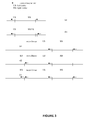
- Figure 2 a number of additional optimized T-DNA vector constructs are schematically drawn. Results of plant transformation with the first of the constructs of Figure 2 are included in the present invention (see Examples 1-3).
- the other constructs underlie several approaches to obtain optimized T-DNA vectors. The optimizations reside in modifications of the left border design aimed at increasing the efficiency of LB nicking and resulting in vector backbone integration in the genome of a eukaryotic cell that is highly minimized or absent.
- the RB region is constant, i.e. it comprises the right border outer region but the right border inner region is deleted.
- Said right border region contains the 25 bp RB core sequence and the upstream 146 bp of the right border outer region derived from pTiAch5 (Gielen et al. 1984).
- This outer region contains the overdrive sequence.
- the LB regions in said exemplary optimized T-DNA vectors are generally derived from octopine-type Ti plasmids and all contain a natural left border core sequence. Nopaline-type T-DNA borders are usually derived from Ti-plasmids such as pTiC58 (Gielen et al. 1999). More details about exemplary border regions used in exemplary optimized T-DNA vectors of the invention are described in Figure 2 and Example 4.
- a first embodiment of the invention comprises optimized T-DNA vectors as exemplified in Figure 2 and including a modification of the T-DNA right border comprising a single right border core sequence flanked by a right border outer region and/or a modification, including multiplication, of the left T-DNA border designed as:
- 'downstream' and 'upstream' are meant any sequences located 5' and 3', respectively, of any other sequence.
- the T-DNA strand is taken which is starting at its 5' end at the RB and terminating at its 3' end at the LB.
- T-DNA transformation vectors are also subject of the present invention.
- the current invention also embodies incorporation of any of said modified left borders in any T-DNA vector comprising binary transformation vectors, super-binary transformation vectors, co-integrate transformation vectors, Ri-derived transformation vectors as well as in T-DNA carrying vectors used in agrolistic transformation or gene therapy.
- T-DNA transformation vector comprising:
- replication of the binary transformation vector in Agrobacterium is dependent on the presence of a separate helper plasmid.
- the binary vector pGreen and the helper plasmid pSoup form an example of such a system as described in e.g. Hellens et al. (2000), Plant Mol. Biol. 42, 819-832, or as available on the internet site http://www.pgreen.ac.uk .
- the T-DNA borders of a binary transformation vector can be derived from octopine-type or nopaline-type Ti plasmids or from both.
- the T-DNA of a binary vector is only transferred to a eukaryotic cell in conjunction with a helper plasmid.
- 'helper plasmid' is meant a plasmid that is stably maintained in Agrobacterium and is at least carrying the set of vir genes necessary for enabling transfer of the T-DNA.
- Said set of vir genes can be derived from either octopine-type or nopaline-type Ti plasmids or from both.
- 'super-binary transformation vector' is meant a binary transformation vector additionally carrying in the vector backbone region a vir region of the Ti plasmid pTiBo542 of the super-virulent A. tumefaciens strain A281 ( EP0604662 , EP0687730 ).
- Super-binary transformation vectors are used in conjunction with a helper plasmid.
- T-DNA vector at least comprising:
- the T-DNA borders and said set of vir genes of a said T-DNA vector can be derived from either octopine-type or nopaline-type Ti plasmids or from both.
- 'Ri-derived plant transformation vector' is meant a binary transformation vector in which the T-DNA borders are derived from a Ti plasmid and said binary transformation vector being used in conjunction with a 'helper' Ri-plasmid carrying the necessary set of vir genes.
- 'agrolistic transformation' or 'agrolistic transfer' is meant here a transformation method combining features of Agrobacterium -mediated transformation and of biolistic DNA delivery.
- a T-DNA containing target plasmid is co-delivered with DNA/RNA enabling in planta production of VirD1 and VirD2 with or without VirE2 (Hansen and Chilton 1996; Hansen et al. 1997; WO97/12046 ).
- T-DNA transfer legitimately starts at the right T-DNA border but does not stop at the left T-DNA border and is followed by continued copying of vector backbone sequences. This mechanism is known as left border read-through.
- DNA transfer is illegitimately initiated at the left T-DNA border with continued copying till the left T-DNA border is reached again. Irrespective of which mechanism prevails, analysis of transgenic plants indicates that many of them have the complete vector backbone sequences integrated into their genome.
- the present invention further describes an approach to cure transformed cells containing vector backbone sequences by recombination involving a recombinase and recombination sites.
- curing of transformed cells is obtained by a recombination event as the method for removing the illegitimately integrated vector backbone sequences.
- transformed cells are obtained which retain the T-DNA in their genome.
- the curing method of the current invention rescues T-DNA containing transgenic cells which previously carried illegitimately integrated vector backbone sequences. Transformation efficiencies are thus hardly affected.
- 'recombination event' is meant either a site-specific recombination event or a recombination event effected by transposon 'jumping'.
- 'recombinase' is meant either a site-specific recombinase or a transposase.
- 'recombination site is meant either site-specific recombination sites or transposon border sequences.
- site specific recombination event is meant an event catalyzed by a system generally consisting of three elements: a pair of DNA sequences (the site-specific recombination sequences or sites) and a specific enzyme (the site-specific recombinase).
- the site-specific recombinase catalyzes a recombination reaction only between two site-specific recombination sequences depending on the orientation of the site-specific recombination sequences. Sequences intervening between two site-specific recombination sites will be inverted in the presence of the site-specific recombinase when the site-specific recombination sequences are oriented in opposite directions relative to one another (i.e.
- any intervening sequences will be deleted upon interaction with the site-specific recombinase.
- the site-specific recombination sequences are present as direct repeats at both ends of vector backbone sequences integrated into a eukaryotic genome, such integration of said sequences can subsequently be removed by interaction of the site-specific recombination sequences with the corresponding site specific recombinase.
- a number of different site specific recombinase systems can be used including but not limited to the Cre/lox system of bacteriophage P1, the FLP/FRT system of yeast, the Gin recombinase of phage Mu, the Pin recombinase of E. coli , the PinB, PinD and PinF from Shigella , and the R/RS system of Zygosaccharomyces rouxii.
- Recombinases generally are integrases, resolvases or flippases. Also dual-specific recombinases can be used in conjunction with direct or indirect repeats of two different site-specific recombination sites corresponding to the dual-specific recombinase ( WO99/25840 ).
- the preferred site-specific recombinase systems are the bacteriophage P1 Cre/lox and the yeast FLP/FRT and the Z. rouxii R/RS systems.
- a recombinase (Cre, FLP or R, respectively) interact specifically with its respective site-specific recombination sequence (lox, FRT or RS respectively) to invert or excise the intervening sequences.
- the site-specific recombination sequences for each of these two systems are relatively short (34 bp for lox and 47 bp for FRT).
- Site-specific recombination systems have many applications in plant molecular biology including methods for control of homologous recombination (e.g. US5527695 ), for targeted insertion, gene stacking, etc. ( WO99/25821 ) and for resolution of complex T-DNA integration patterns or for excision of a selectable marker ( WO99/23202 ). In these applications the site-specific recombination sites are typically part of the DNA integrated in the eukaryotic genome as T-DNA or via homologous recombination, and thus are not present in the vector backbone sequence.
- the gene encoding the site specific recombinase may be located elsewhere.
- the recombinase gene could already be present in the eukaryote's DNA or could be supplied by a later introduced DNA fragment either introduced directly into cells, through crossing or through cross-pollination.
- a substantially purified recombinase protein could be introduced directly into the eukaryotic cell, e.g. by micro-injection or particle bombardment.
- the site-specific recombinase coding region will be operably linked to regulatory sequences enabling expression of the site-specific recombinase in the eukaryotic cell.
- site-specific recombination sites are introduced in the T-DNA vector such that they lie outside the T-DNA but allow transferred vector backbone sequences or parts thereof possibly originating from said T-DNA vector to be excised post-transformationally by the action of a site-specific recombinase.
- 'recombination event effected by transposon jumping' or 'transposase-mediated recombination' is meant a recombination event catalyzed by a system consisting of three elements: a pair of DNA sequences (the transposon border sequences) and a specific enzyme (the transposase).
- the transposase catalyzes a recombination reaction only between two transposon border sequences which are arranged as inverted repeats.
- transposon/transposase systems can be used including but not limited to the Ds/Ac system, the Spm system and the Mu system. These systems originate from corn but it has been shown that at least the Ds/Ac and the Spm system also function in other plants (Fedoroff et al. 1993, Schlappi et al. 1993, Van Sluys et al. 1987). Preferred are the Ds- and the Spm-type transposons which are delineated by 11 bp- and 13 bp- border sequences, respectively.
- transposon border sequences must be linked to the ends of the DNA to be excised, the gene encoding the transposase may be located elsewhere.
- the recombinase gene could already be present in the eukaryote's DNA or could be supplied by a later introduced DNA fragment either introduced directly into cells, through crossing or through cross-pollination.
- a substantially purified transposase protein could be introduced directly into cells, e.g. by microinjection or by particle bombardment.
- transposon border sequences are introduced in the T-DNA vector such that they lie outside the T-DNA and transform the vector backbone or part thereof into a transposon-like entity that can move by the action of a transposase.
- transposons and thus in the current invention the vector backbone or part thereof, often reintegrate at another locus of the host's genome, segregation of the progeny of the hosts in which the transposase was allowed to act might be necessary to separate transformed hosts containing only the T-DNA and transformed hosts containing only the vector backbone or part thereof.
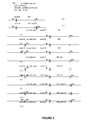
- Another embodiment of the invention comprises optimized T-DNA transformation vectors with additional DNA sequences outside the T-DNA border core repeats as exemplified in Figure 3 and enabling post-transformational removal of integrated vector backbone sequences.
- Said additional DNA sequences modify, including multiply, the T-DNA border regions or parts thereof and comprise:
- said recombination sites are located adjacent to and downstream and/or upstream of the left- and/or right border core sequences or are separated from the left- and/or right border core sequences by a sequence of at least 10-20 bp in length optionally carrying stop codons in the three reading frames and in both directions.
- said recombination sites are either site-specific recombination sites arranged as direct repeats or transposon border sequences arranged as inverted repeats and said recombinase gene is either a site-specific recombinase gene or a transposase gene, respectively.
- said modification (g) of the T-DNA vector has the advantage that read-through at the first LB core sequence can be halted at the second LB core sequence, thus preventing duplication of the T-DNA fragment. Inserted vector backbone sequences are subsequently removed by the action of an appropriate recombinase.
- said modification (h) introduces in a T-DNA vector a recombinase gene sequence downstream of the left border core sequence to allow for resolving the integrated vector backbone sequence possibly originating from said T-DNA vector at the recombination sites introduced in said modified T-DNA borders.
- transformants having integrated vector backbone sequences can be rescued after curing, i.e. after removal of the vector backbone sequences flanked by the recombination sites introduced in said modified T-DNA borders.
- the recombinase gene is excised.
- Said modifications (i) further change the design of the left border region, i.e. an additional copy of a left border region is added. Both copies are, however, not arranged in tandem as described supra in the first approach to prevent vector backbone integration, but are separated by the recombinase gene and the border core sequences are occurring in their broader border context. Said modifications (i) are thus to be considered as a modification of the T-DNA vector construct described supra in which the single LB region contains a tandem arrangement of the LB core sequence.
- the presence of a second copy of a left T-DNA border region has the advantage that illegitimate DNA transfer starting at or read-through at the first left border core sequence can be halted at the second left border core sequence.
- vector backbone sequence is transferred to the eukaryotic nucleus.
- this vector backbone region is flanked by recombination sites, it can easily be removed by means of action of a recombinase. Illegitimate DNA transfer starting at or read-through at the second copy of the left border core sequence can, however, still occur.
- said modification (j) further adds a pair of recombination sites downstream of the second copy of the left border core sequence and upstream of the single right border region.
- Integrated vector backbone sequences can again be easily removed by action of a recombinase at the recombination sites.
- the recombinase will not be supplied by the T-DNA transformation vector backbone. It must thus be supplied from elsewhere, e.g. through sexual crossing with a plant already containing the recombinase gene in it's genome.
- any of said modifications (f), (g), (h), (i) or (j) is also applicable to cure transgenic cells from vector backbone sequences integrated into the genome of a eukaryote independently of the T-DNA, i.e. not physically linked to the T-DNA.
- T-DNA transformation vectors containing said DNA sequences of (f) or (g) in combination with the supply of a recombinase, or using said T-DNA transformation vectors containing said DNA sequences (h), (i) or (j) for curing of transformed cells containing backbone sequences of said vector backbone sequences optionally in combination with the supply of a recombinase.
- Site-specific recombinases or transposases introduced into the host's genome for enabling recombination can subsequently be removed by segregation of the progeny of the transformed host in which recombination was allowed to occur. Segregation of said progeny also is a way to separate transformed hosts containing only the T-DNA and transformed hosts containing only the vector backbone or part thereof.
- the current invention further embodies incorporation of any of said additional DNA sequences in any T-DNA vector comprising binary transformation vectors, super-binary transformation vectors, co-integrate transformation vectors, Ri-derived transformation vectors as well as in T-DNA carrying vectors used in agrolistic transformation or gene therapy.
- the recombinase gene is supplied to the transgenic plants containing a vector backbone sequence flanked by recombination sites by sexual crossing with a plant containing the recombinase gene in it's genome.
- Said recombinase can be operably linked to either a constitutive or an inducible promoter.
- the recombinase gene can alternatively be under the control of single subunit bacteriophage RNA polymerase specific promoters, such as a T7 or a T3 specific promoter, provided that the host cells also comprise the corresponding RNA polymerase in an active form.
- Yet another alternative method for expression of the recombinase consists of operably linking the recombinase open reading frame with an upstream activating sequence fired by a transactivating transcription factor such as GAL4 or derivatives ( US5801027 , WO97/30164 , WO98/59062 ) or the Lac repressor ( EP0823480 ), provided that the host cell is supplied in an appropriate way with the transcription factor.
- a transactivating transcription factor such as GAL4 or derivatives ( US5801027 , WO97/30164 , WO98/59062 ) or the Lac repressor ( EP0823480 )
- the recombinase gene is supplied on the transformation vector backbone and the promoter of said recombinase gene preferably is an inducible promoter.
- promoters are known to those familiar with the art and include e.g. a heat-shock responsive promoter, a glucocorticoid-inducible promoter or a promoter inducible by another chemical compound (e.g. as disclosed in EP0332104 and WO90/08826 ).
- expression of the recombinase gene in bacterial hosts is prohibited by including (an) intron sequence(s) in the coding region of said recombinase gene.
- VirD1 and VirD2 have also been integrated in a method for improved integration of exogenous DNA delivered to eukaryotic cells by means of transforming said eukaryotic cell with chimeric virD1 and/or virD2 genes ( WO97/12046 ). It has, however, so far not been demonstrated that increased production of VirD1 and/or VirD2 can prevent integration of vector backbone sequences.
- vector backbone sequence integration is prevented by enhancing the efficiency of the nicking at the left border core sequence of a T-DNA vector by increasing the production of the T-DNA nicking complex involving at least endonucleases VirD1 and VirD2.
- additional copies of the octopine-type virD locus are integrated either into the genome of Agrobacterium and/or into a helper plasmid and/or into a binary transformation vector and/or into a superbinary transformation vector and/or into a co-integrate transformation vector and/or a Ri-derived plant transformation vector.
- additional copies of the nopaline-type virD locus can be supplied as said.
- the current invention thus presents three methods either to prevent or to cure integration of transformation vector backbone sequences and using:
- Preferred combinations of the inventive methods (1) or (2) with inventive method (3) consist of a transformation vector carrying a modified LB region containing a tandem arrangement of the LB core sequence or multiple copies of the LB region and the enhanced production of VirD1 and VirD2 by Agrobacterium. It can indeed be expected that the tandem of LB core sequences or the multiple copies of the LB region titrate the VirD1 and VirD2 proteins available in an Agrobacterium strain normally used for transformation. As a result, these proteins would no longer be available for establishing the nick at the single RB core sequence.
- Another embodiment of the invention thus comprises the use of any of said methods and/or T-DNA vector modifications to prevent or to cure transformation vector backbone integration either separately or in any combination.
- Preferred combinations are those in which enhanced levels of VirD proteins produced by Agrobacterium are allowed to act on T-DNA vectors harboring multiple copies of the LB core sequence or multiple copies of the LB regions.
- any of said methods and/or T-DNA vector modifications to prevent or to cure vector backbone integration can be combined with any other method preventing or curing vector backbone integration.
- Such methods and T-DNA vector modifications include the addition of genes or DNA sequences downstream of the left border, e.g. as disclosed in WO99/01563 .
- Such genes/DNA sequences include genes encoding cytotoxic compounds, antisense housekeeping genes, sequences prohibiting unwinding of the DNA behind the left border region, e.g. sequences with high GC content or vir box sequences interacting with DNA-binding proteins.
- Another embodiment of the invention thus comprises the use of any of the methods and/or T-DNA vector modifications of the current invention to prevent or to cure integration of transformation vector backbone sequences in combination with any other method and/or T-DNA transformation vector modification to prevent or to cure transformation vector backbone integration.
- any of the methods and/or T-DNA vector modifications of the current invention to cure integration of transformation vector backbone sequences can be combined with any other method and/or T-DNA vector modification using or incorporating any recombination systems, e.g. to excise selectable markers active in plants.
- Said curing method can indeed be combined with e.g. excision of a selectable marker by flanking the exemplary selectable marker either with the same or with different recombination sites as those flanking the vector backbone sequence.
- the vector backbone sequence can also be flanked by two different site-specific recombination sites and curing can be performed by a dual-specific recombinase with specificities corresponding to the site-specific recombination sites used.
- a further embodiment of the current invention thus comprises the use of the methods and/or T-DNA vector modifications of the current invention to cure integration of transformation vector backbone sequences in combination with methods and/or T-DNA vector modifications using or incorporating any recombination system for purposes other than curing of vector backbone sequence integration.
- Another embodiment of the current invention comprises curing of integrated transformation vector backbone sequences implying modification of the T-DNA borders by adding any pair of mutually different site-specific recombination sites and used in conjunction with an at least dual-specific recombinase with specificities at least corresponding to the site-specific recombination sites used.
- any of said T-DNA vector constructs according to the invention is mobilized to an Agrobacterium strain.
- the resulting strains also constitute to the invention.
- any of said T-DNA vectors according to the invention is used in an Agrobacterium -mediated or agrolistic transformation, such transformation methods being known to the one skilled in the art.
- Said T-DNA vectors according to the invention can be used to transform several plant tissues comprising roots, protoplasts, leaves etc. of different monocotyledonous and dicotyledonous plant species such as, but not limited to, Arabidopsis, tobacco, petunia, tomato, potato, beans, rice and wheat.
- it can be any monocotyledonous or dicotyledonous plant, preferbly belonging to a plant species of interest in agriculture, wood culture, horticulture or to a plant species applied in the production of pharmaceuticals, biochemicals, antibodies or perfumes.
- Such plants include crop plants, root plants, oil-producing plants, wood-producing plants, agricultured plants, fruit-producing plants, fodder or forage legumes, annen plants or horticultured plants.
- Such plants further include apricot, artichoke, asparagus, apple, banana, barley, broccoli, Brussels sprouts, cabbage, canola, carrot, cassava, cauliflower, celery, cherry, chicory, collard greens, cotton, Douglas fir, fir ( Abies and Picea species), flax, garlic, grapes, kale, lentil, maize, oak, oats, oilseed rape, okra, onion, pear, pepper, poplar, rye, sorghum, soybean, squash, sugar beet, sugar cane, sunflower.
- Said T-DNA vectors according to the invention can also be used in combination with the flower dip plant transformation method (Clough and Bent 1998) or with the in planta apical shoot transformation procedure ( WO99/14348 ).
- Said T-DNA vectors according to the invention can also be used to transform other eukaryotic cells including yeast, moulds and filamentous fungi and their conidia, hyphae or protoplasts derived thereof.
- Agrobacterium -mediated transformation of said other eukaryotic cells is known to those skilled in the art (e.g. WO98/45455 ).
- a key characteristic of the eukaryotic cells transformed via Agrobacterium -mediated transfer or agrolistic transfer of any of the T-DNA transformation vectors of the invention is a significantly decreased frequency of integrated vector backbone sequences without greatly affecting the frequency of integration of T-DNA sequences.
- a preferred embodiment of the invention comprises transgenic plant cells obtained by any method of Agrobacterium -mediated transfer or agrolistic transfer of any of the T-DNA transformation vectors of the invention. Also comprised are the transgenic plants obtained or regenerated by any method after any method of Agrobacterium -mediated transfer or agrolistic transfer of any of the T-DNA transformation vectors of the invention. Such plants are characterized in that they contain T-DNA sequences, but not vector backbone sequences, in their genome. Further comprised are the offspring of said transgenic plants as well as cells, protoplasts, calli, tissues, organs, seed, fruit, pollen, egg cells, zygotes, zygotic or somatic embyros derived thereof or derived from said transgenic plant cells.
- T-DNA carrying vectors according to the present invention in gene therapy can be explained as follows. It has been described that in vitro reconstituted complexes consisting of VirD2-ssDNA-VirE2 are able to transfer the ssDNA intactly into mammalian nuclei (Ziemienowicz et al. 1999).
- Vir D2 protects ssDNA against exonucleolytic degradation because it is covalently linked to the 5' end of the ssDNA (Durrenberger et al. 1989, Young and Nester 1988) and, by means of two nuclear localization sequences (NLSs), targets the ssDNA to the plant cell nucleus (Narasimhulu et al. 1996, Rossi et al. 1993, Shurvinton et al. 1992). VirD2 furthermore contains an 'omega' domain important for efficient integration of the T-DNA in the host genome (Narasimhulu et al. 1996, Mysore et al. 1998, Tinland et al. 1995).
- VirD2 The NLSs of VirD2 have been shown to be active in animal cells including human HeLa cells, Drosophila embryos and Xenopus oocytes (Guralnick et al. 1996, Ziemienowicz et al. 1999).
- VirD1 remains localized in the cytoplasm of mammalian cells but can be imported into the nucleus via a piggy-back mechanism involving VirD2 (Ziemienowicz et al. 1999).
- VirE2 protects ssDNA against (endo)nucleolytic degradation and preserves integrity of the T-DNA (Gelvin 1998b, Rossi et al. 1996).
- the VirE2 protein is furthermore actively involved in targeting the T-DNA to the plant nucleus (Gelvin 1998b).
- the NLSs of VirE2 may be plant specific but repositioning of a single amino acid within the VirE2 NLSs targets these modified proteins to the nuclei of animal cells (Guralnick et al. 1996).
- VirE2 proteins interact amongst themselves but interaction of VirE1 with VirE2 is much stronger and VirE1 inhibits VirE2 self-interaction. In Agrobacterium cells, VirE1 prevents VirE2 from aggregating. VirE1 thus seems to function as a molecular chaperone of VirE2 (Deng et al. 1999).
- Vir proteins make them ideal candidates for their application in gene therapy experiments as indicated by Ziemienowicz et al. (1999).
- One of the main problems in gene therapy indeed consists of the difficulty of DNA-delivery across the intracellular barriers including nucleolytic degradation and nuclear uptake.
- Viral vectors are one of the major vehicles used by scientists in gene therapy to get a DNA sequence expressed in the proper host. Retroviral vectors (including HIV and MMLV) are employed in 63% of the gene therapy protocols approved by the Recombinant DNA Advisory Committee (a division of the NIH) whereas adenoviral vectors are used in 16% of such protocols. Other viral vectors include those based on AAV, HSV and Vaccinia . Viral vectors form an area of continual new development in gene therapy.
- VirE2 (and eventually VirE1) are incorporated in a viral vector in such a way (i.e. including adapted codon usage and appropriate regulatory sequences) that they can be expressed in animal cells, preferably transiently, as preferably without integration of said vir -genes in the host's genome.
- a T-DNA containing the gene of interest for gene therapy purposes is present in the same viral vector or is co-delivered on a separate viral vector or another type of viral vector, said T-DNA could be then efficiently transferred to the genome in nuclei of animal cells.
- a strict requirement for approval of such a gene therapy strategy would, however, be that only the T-DNA, and not any other external DNA is transferred to the nucleus.
- T-DNA carrying vectors modified according to any of the modifications or any combination of modifications of the current invention and being used for gene therapy purposes are included in the present invention.
- T-DNA vectors according to the current invention and comprising modified LBs resulting in highly efficient nicking at this LB can be utilized as a source of e.g. VirD2 - ss-T-DNA - VirE2 complexes that can be used in other gene therapy techniques including microinjection, electroporation, carrier mediated delivery and ballistic DNA injection.
- Said complexes could be enriched from e.g. an acetosyringone-induced Agrobacterium culture or a culture of E. coli expressing at least the VirD1, VirD2 and VirE2 proteins by means of e.g. affinity chromatography using an antibody recognizing the VirD2 protein.
- Plasmids pK2L610 ('K' T-DNA vector; De Buck et al. 1998), pSingle gus ('Ksb1' T-DNA vector; see below) and pHSB610 ('Hsb' T-DNA vector; De Buck et al. 1999) were used for plant transformation.
- the vector psingle gus ('Ksb1') is similar to the vector pHSB610 ('Hsb') but the Pnos-hpt-3'nos fragment of pHSB61 0 ('Hsb') is exchanged for a Pnos-nptII-3'nos cassette in pSingle gus ('Ksb1').
- the K and Ksb1 vectors contain the neomycin phosphotransferase II gene ( nptII ) and the Hsb vector contains the hygromycin phosphotransferase gene ( hpt ).
- nptII neomycin phosphotransferase II gene
- hpt hygromycin phosphotransferase gene
- Transgenic plants were regenerated on media containing the appropriate plant growth hormones and the appropriate selective agent.
- 18 transgenic A. thaliana plants co-transformed with the K and Hsb T-DNA vectors were obtained.
- 36 N. tabacum plants transformed with the Ksb T-DNA vector were obtained.
- 26 N. tabacum plants transformed with the Ksb T-DNA vector were obtained.
- DNA was isolated from leaf material of N. tabacum as described by Jones et al. (1985) and from A. thaliana according to De Neve et al. (1997).
- DNA 100 ng was incubated with 500 ng of each primer in 1x Taq polymerase incubation buffer (Roche Diagnostics, Brussels, Belgium). Two and a half units of Taq polymerase were added to a final volume of 100 ⁇ L. Samples were heated to 94°C for 5 min before PCR. Denaturation was at 94°C for 1 min.
- the primer combinations were chosen so that the presence of at least 100 bp ('RB100' and 'LB100' in Tables 1 and 2) or at least 1000 bp ('LB1000' and 'RB1000' in Tables 1 and 2) of vector backbone results in a diagnostic PCR fragment of known size.
- a PCR reaction was performed on each DNA with two primers specific for the chromosomal A. tumefaciens gene picA (Yusibov et al. 1994).
- the series 1 A. thaliana plants contains 18 transgenic plants co-transformed with the K and the Hsb T-DNA vectors.
- the K vector contains borders in the natural octopine context with inner and outer border regions of 150 bp and 255 (RB) - 300 (LB) bp, respectively, whereas the Hsb vector contains only the outer border regions.
- Screening for the integration of vector backbone sequences was revealed that vector sequences from the K and Hsb T-DNAs were found in 33% (6/18) and in 61% (11/18) of the transgenic plants, respectively. Only in one transformant the vector sequences were not linked to the T-DNA.
- the series 2 tobacco plants contains 36 transgenic plants transformed with a Ksb vector.
- This vector contains also RB and LB without inner border regions and is therefore comparable to the Hsb vector.
- vector sequences were found; these were linked to the LB (8/19) only, to the right T-DNA end (1/19) only, or to both ends (10/19).
- DNA gel blot analysis was performed essentially according to Maniatis et al. (1982) on approximately 0.6 ⁇ g genomic DNA.
- the restriction sites used ( KpnI-SacI ) are indicated in Figure 5A .
- the vector sequence of the K plasmid was used after restriction with KpnI and SacI .
- the non-radioactive "Gene images” random prime labelling module and the “Gene images” CDP Star detection module (Amersham, Aylesburg, UK) were used for the hybridization and the detection, respectively.
- Exemplary optimized binary T-DNA vectors with modifications of the types indicated in Figure 2 were constructed as follows.
- all optimized binary T-DNA vectors described in this example are derived from pTHW136.
- the binary vector pTHW136 contains octopine-type right and left border core sequences forming an imperfect repeat, each flanked by octopine-type border outer regions originating from pTi15955 (224 bp in the case of the RB outer region and 268 bp in the case of the LB outer region).
- pTi15955 224 bp in the case of the RB outer region and 268 bp in the case of the LB outer region.
- GUS-intron expression cassette 35S promoter-GUS open reading frame interrupted by an intron-35S terminator
- a nptII selectable marker gene nos promoter- nptII open reading frame-ocs terminator.
- the GUS-intron expression cassette was removed from pTHW136 by digestion with Xbal and
- the nptII selectable marker gene was removed from p0130 by digestion with Bam HI and subsequent religation of the compatible vector overhangs.
- This procedure yielded a binary T-DNA vector denominated as pCDVIB.
- the vector pCDVIB thus contains an octopine-type LB region spanning a core sequence flanked by a border outer region and thus is a construct of the B-type as indicated in Figure 2 .
- oligonucleotides prmCDVIB1F and prmCDVIB1R, were designed with the following sequences: -prmCDVIB1F: 5'(1) CATGG AGCGGC GGCAGGATATATTCAATTGTAA ATGGCTAGCGGC GGCAGG ATATATTCAATTGTAA ATGGCTG(84)3' (SEQ ID NO 5); partial Nco I-site in bold and double underlined, left border core sequences in italics and single underlined, 3' end G residue part of a Bam HI-site; and -prmCDVIB1R 5'(1 ) GATCC AGCCAT TTACAATTGAATATATCCTGCC GCCGCTAGCCAT TTACAATT GAATATATCCTGCCGCC GCTC(84)3' (SEQ ID NO 6); partial Bam HI-site in bold and double underlined, left border core sequences in italics and single
- the oligonucleotides prmCDVIB1F and prmCDVIB1R are complementary over a distance of 80 nucleotides and yield, after annealing, a dsDNA fragment with at its 5' (relative to prmCDVIB1F) a 5' Nco I overhang ('CATG') and at its 3' (relative to prmCDVIB1F) a 5' Bam HI overhang ('GATC').
- Said dsDNA fragment furthermore contains a tandem of two octopine-type LB core sequences corresponding to nucleotides 12-33 and 46-67 of prmCDVIB1F.
- Both LB core sequences are extended upstream and downstream by a further 6 basepairs originating from the natural LB of pTi15955 and identical as in pTiAch5 (Gielen et al. 1984).
- the repeats in the tandem of LB core sequences are thus separated by 12 bp.
- Said dsDNA fragment with the tandemly arranged LB core sequences was inserted upstream of and adjacent to the LB core sequence of p0130 digested with NcoI and BamHI, yielding pCDVIB1.
- pCDVIB1 thus contains an octopine-type left border region spanning a LB outer region and three tandemly arranged LB core sequences.
- -prmCDVIB2F 5'(1) CATGG CCGGGAAATCTACATGGATCAGCAATGAGTATGATGGTCAATATGGA GAAAAAGAAAGAGTAATTACCAATTTTTTTTCAATTCAAAAATGTAGATGTCCG(116) 3' (SEQ ID NO 7); partial Nco I-site in bold and double underlined, 3' end G residue part of a Bam HI-site; and -pCDVIB2R: 5'(1) GATCC GGACATCTACATTTTTGAATTGAAAAAAAATTGGTAATTACTCTTTCTT TTTCTCCATATTGACCATCATACTCATTGCTGATCCATGTAGATTTCCCGGC(116)3' (SEQ ID NO 8); partial Bam HI-site in bold and double underlined, 3' end C residue
- the oligonucleotides prmCDVIB2F and prmCDVIB2R are complementary over a distance of 112 nucleotides and yield, after annealing, a dsDNA fragment with at its 5' (relative to prmCDVIB1F) a 5' Nco I overhang ('CATG') and at its 3' (relative to prmCDVIB1F) a 5' Bam HI overhang ('GATC').
- Said dsDNA fragment furthermore contains a 112 bp inner region of pTi15955. This fragment was inserted upstream of and adjacent to the LB core sequence of p0130 digested with Nco I and Bam HI, yielding pCDVIB2.
- PCDVIB2 thus contains an octopine-type LB region spanning a LB core sequence embedded in LB outer and inner regions.
- T-DNA vector construct was made with a modified LB combining features of E-and F-type constructs indicated in Figure 2 .
- An integral nopaline-type LB region was obtained as a 331 bp Bc /I- Eco RI fragment of binary T-DNA vector pPZP200. This fragment spans nopaline-type LB outer region, LB core sequence and LB inner region originating from pTiC58 (Gielen et al. 1999).
- Said nopaline-type LB region was inserted upstream of and adjacent to the octopine-type LB region of pCDVIB2 (containing tandemly repeated octopine-type LB core sequences) digested with Bam HI (located at the 3' of the LB core sequence tandem, relative to prmCDVIB2F) and Eco RI, yielding pCDVIB3.
- PCDVIB3 thus contains a LB region spanning a copy of an integral octopine-type LB region with three tandemly arranged core sequences and a copy of an integral nopaline-type LB region.
- All described exemplary T-DNA vectors with a modified LB region i.e. pCDVIB, pCDVIB1, pCDVIB2 and pCDVIB3 serve as a starting point to insert gene(s) of interest and/or selectable marker gene(s) in between RB and LB of said T-DNA vectors.
- neomycin phosphotransferase ( nptII ) selectable marker gene under control of the nopaline synthase ( nos ) promoter (P nos-nptII- 3' ocs ) and the ⁇ -glucuronidase ( gus ) expression cassette under control of the 35S cauliflower mosaic virus promoter (P35S- gus -3' nos ) were inserted between the RB and LB of said T-DNA vectors.
- the nptII-gus cassette was derived from the pXD610 plasmid (De Loose et al ., 1995) as an Eco RI- Age I fragment. This fragment was inserted into the Sa /I/ Eco RI sites of pCDVIB; pCDVIB1; pCDVIB2 and pCDVIB3. To obtain compatible sticky ends, two adaptor oligonucleotides between the open Age I- and Sa /I-site were used with the following sequences: * Napod3:
- the oligonucleotides Napod3 and Napod4 are complementary over a distance of 8 nucleotides and yield, after annealing, a dsDNA fragment with at its 5' (relative to Napod3) a 5' Age I overhang ('CCGG') and at its 3' (relative to Napod3) a Sa /I overhang ('TCGA').
- the obtained vectors were called pCDVIB+gusnpt, pCDVIB1+gusnpt, pCDVIB2+gusnpt, pCDVIB3+gusnpt.
- Exemplary optimized binary T-DNA vectors of the types indicated in Figure 3 are constructed as follows.
- the optimized binary T-DNA vector is derived from pCDVIB (see Example 4).
- One strategy to introduce recombination sites comprises:
- Agrobacterium strains containing any T-DNA vector can be induced for production of ssT-DNA strands by adding acetosyringone at a concentration of 100 ⁇ M to the culture medium (Durrenberger et al. 1989).
- the production of ssT-DNA strands can be analyzed using either one of the following methods (see included figure for schematic overview).
- GFP green fluorescent protein
- the constructs outlined in Example 6 and containing an additional GFP expression cassette downstream of the left border are used in a transient expression assay for assessment of vector backbone transfer to plant cells.
- Arabidopsis root fragments are transformed with Agrobacterium (De Buck et al. 1999, Valvekens et al. 1988) containing a T-DNA vector modified according to the invention.
- Agrobacterium De Buck et al. 1999, Valvekens et al. 1988
- roots are assessed first for transient expression of the GFP followed by assessment of transiently expressed GUS.
- the level of GFP expression is low or zero in the case of a T-DNA vector from which the left border is processed with high efficiency.
- the levels of GUS activities are, however, constant.
- Plants e.g. Arabidopsis
- Example 1 Plants (e.g. Arabidopsis) are transformed (see Example 1) with the exemplary T-DNA vector of Example 5 containing the FRT recombination sites.
- Regenerated plants are tested for vector backbone integration according to any of the methods described in Examples 2-3 or 6-7 and transgenic plants containing the T-DNA and vector backbone in their genome are selected.
- one set of selected transgenic plants are cross-pollinated with pollen derived from another transgenic plant constitutively expressing the FLP site-specific recombinase while a second set of selected transgenic plants are cross-pollinated with pollen derived from a wild-type plant.
- Seeds are collected and sown on medium containing a selective agent.
- Surviving plants (due to the selectable marker in the T-DNA) of both crossings are analyzed again for the presence of T-DNA and for the presence of vector backbone.
- the vector backbone sequences are removed.
- the vector backbone sequences are still present.
- the sequences of the octopine-type and nopaline-type virD loci are known (Yanofsky et al. 1986, Jayaswal et al. 1987; and Wang et al. 1990, respectively). Specific primers are designed enabling PCR amplification of the complete virD loci. These loci are subsequently subcloned in a plasmid carrying the P15a replicon (Chang and Cohen 1987) and a tetracyclin resistance marker derived from pAlter (Promega). The plasmids are subsequently mobilized to Agrobacterium containing a T-DNA vector. Transfer of vector backbone sequences by said Agrobacterium strains is analyzed according to any of the methods described in Examples 2, 3, 5 or 6.
- Plants are transformed with the T-DNA vectors described in Figure 2 .
- Total DNA is prepared and three primer sets are synthesized to perform different PCR reactions.
- the first primer set amplifies an internal T-DNA fragment, adjacent to the left border repeat (PCR fragment 1).
- the second primer set amplifies a T-DNA/vector fragment spanning the T-DNA left border region and the vector region adjacent to the left border repeat (PCR fragment 2).
- the third primer set amplifies a vector fragment adjacent to the left border repeat (PCR fragment 3).
- PCR fragment 3 Dependent on whether the vector transfer results from readthrough at the left border or initiation at the left border, different PCR fragments are amplified. When only PCR fragment 1 is present, the T-DNA transfer started at the right border and stopped at the left border and no vector DNA was transferred.
- PCR fragments 1,2 and 3 When PCR fragments 1,2 and 3 are present, the T-DNA transfer started at the right border but didn't stop at the left border. When PCR fragments 1 and 3 are present but not fragment 2, the vector transfer started at the left border, independently of T-DNA transfer from the right border. Performing these different PCR reactions for approximately 50 transformants thus yields the frequency of readthrough at the left border and the frequency of initiation at the left border repeat. The frequency of readthrough and initiation of vector transfer is determined for the different T-DNA vectors with the left border repeat in different contexts. Table 1. Presence (+) or absence (-) of vector sequences linked to the LB and RB of the T-DNA in the transgenic A. thaliana plants co-transformed with both K and Hsb T-DNA vectors.
Landscapes
- Health & Medical Sciences (AREA)
- Life Sciences & Earth Sciences (AREA)
- Genetics & Genomics (AREA)
- Engineering & Computer Science (AREA)
- Biomedical Technology (AREA)
- Biotechnology (AREA)
- General Engineering & Computer Science (AREA)
- Organic Chemistry (AREA)
- Chemical & Material Sciences (AREA)
- Zoology (AREA)
- Wood Science & Technology (AREA)
- Bioinformatics & Cheminformatics (AREA)
- Molecular Biology (AREA)
- Plant Pathology (AREA)
- Microbiology (AREA)
- Biophysics (AREA)
- Physics & Mathematics (AREA)
- Biochemistry (AREA)
- General Health & Medical Sciences (AREA)
- Cell Biology (AREA)
- Micro-Organisms Or Cultivation Processes Thereof (AREA)
- Breeding Of Plants And Reproduction By Means Of Culturing (AREA)
- Measuring Or Testing Involving Enzymes Or Micro-Organisms (AREA)
Priority Applications (1)
| Application Number | Priority Date | Filing Date | Title |
|---|---|---|---|
| EP09172985A EP2161340A3 (de) | 1999-12-16 | 2000-12-13 | Optimisierter T-DNA Transfer und entsprechende Vektoren |
Applications Claiming Priority (5)
| Application Number | Priority Date | Filing Date | Title |
|---|---|---|---|
| EP99870264 | 1999-12-16 | ||
| US19575800P | 2000-04-10 | 2000-04-10 | |
| EP09172985A EP2161340A3 (de) | 1999-12-16 | 2000-12-13 | Optimisierter T-DNA Transfer und entsprechende Vektoren |
| EP07001861A EP1780284B1 (de) | 1999-12-16 | 2000-12-13 | Optimisierter T-DNA Transfer und entsprechende Vektoren |
| EP00992065A EP1238090B1 (de) | 1999-12-16 | 2000-12-13 | Optimierter t-dna transfer und entsprechende vektoren |
Related Parent Applications (2)
| Application Number | Title | Priority Date | Filing Date |
|---|---|---|---|
| EP00992065.3 Division | 2000-12-13 | ||
| EP07001861.9 Division | 2007-01-29 |
Publications (2)
| Publication Number | Publication Date |
|---|---|
| EP2161340A2 true EP2161340A2 (de) | 2010-03-10 |
| EP2161340A3 EP2161340A3 (de) | 2010-09-22 |
Family
ID=26153867
Family Applications (3)
| Application Number | Title | Priority Date | Filing Date |
|---|---|---|---|
| EP09172985A Withdrawn EP2161340A3 (de) | 1999-12-16 | 2000-12-13 | Optimisierter T-DNA Transfer und entsprechende Vektoren |
| EP00992065A Expired - Lifetime EP1238090B1 (de) | 1999-12-16 | 2000-12-13 | Optimierter t-dna transfer und entsprechende vektoren |
| EP07001861A Expired - Lifetime EP1780284B1 (de) | 1999-12-16 | 2000-12-13 | Optimisierter T-DNA Transfer und entsprechende Vektoren |
Family Applications After (2)
| Application Number | Title | Priority Date | Filing Date |
|---|---|---|---|
| EP00992065A Expired - Lifetime EP1238090B1 (de) | 1999-12-16 | 2000-12-13 | Optimierter t-dna transfer und entsprechende vektoren |
| EP07001861A Expired - Lifetime EP1780284B1 (de) | 1999-12-16 | 2000-12-13 | Optimisierter T-DNA Transfer und entsprechende Vektoren |
Country Status (9)
| Country | Link |
|---|---|
| US (2) | US7749751B2 (de) |
| EP (3) | EP2161340A3 (de) |
| JP (1) | JP4080746B2 (de) |
| AT (2) | ATE361986T1 (de) |
| AU (1) | AU782327C (de) |
| CA (1) | CA2394840A1 (de) |
| DE (2) | DE60034808T2 (de) |
| ES (2) | ES2284555T3 (de) |
| WO (1) | WO2001044482A2 (de) |
Families Citing this family (16)
| Publication number | Priority date | Publication date | Assignee | Title |
|---|---|---|---|---|
| US6586661B1 (en) | 1997-06-12 | 2003-07-01 | North Carolina State University | Regulation of quinolate phosphoribosyl transferase expression by transformation with a tobacco quinolate phosphoribosyl transferase nucleic acid |
| AU2001277520B2 (en) | 2000-06-28 | 2006-08-03 | Sungene Gmbh & Co. Kgaa | Binary vectors for improved transformation of plant systems |
| US6911541B2 (en) | 2000-08-30 | 2005-06-28 | North Carolina State University | Promoter fragment that is recognized by the product of the tobacco Nic gene |
| WO2002038588A2 (en) | 2000-11-07 | 2002-05-16 | North Carolina State University | Putrescine-n-methyltransferase promoter |
| EA200400013A1 (ru) | 2001-06-08 | 2004-06-24 | Вектор Тобакко Лтд. | Модификация содержания никотина и нитрозамина в табаке |
| AU2003230693B2 (en) | 2002-03-20 | 2010-09-30 | J.R. Simplot Company | Refined plant transformation |
| JP2005521400A (ja) | 2002-03-29 | 2005-07-21 | シンジェンタ パーティシペーションズ アクチェンゲゼルシャフト | 植物におけるラムダインテグラーゼ媒介型組換え |
| US7575917B2 (en) | 2003-04-09 | 2009-08-18 | Monsanto Technology Llc | DNA constructs and methods to enhance the production of commercially viable transgenic plants |
| US7935862B2 (en) * | 2003-12-02 | 2011-05-03 | Syngenta Participations Ag | Targeted integration and stacking of DNA through homologous recombination |
| US20060041956A1 (en) * | 2004-04-06 | 2006-02-23 | Pioneer Hi-Bred International, Inc. | Vectors for plant transformation and methods of use |
| CA2848168C (en) | 2006-07-19 | 2017-09-26 | Monsanto Technology Llc | Use of multiple transformation enhancer sequences to improve plant transformation efficiency |
| EP1949785A1 (de) * | 2007-01-26 | 2008-07-30 | Coöperatie AVEBE U.A. | Verwendung von R-Genen als Selektionsmarker bei der Pflanzentransformation und Verwendung von Cisgenen bei der Pflanzentransformation |
| EP2300617B1 (de) | 2008-07-16 | 2016-03-23 | Monsanto Technology LLC | Verfahren und vektoren zur herstellung transgener pflanzen |
| EP2859122B1 (de) * | 2012-06-12 | 2018-08-15 | Syngenta Participations AG | Verfahren und zusammensetzungen zur bestimmung des vektorgerüstes in einer nukleinsäureprobe |
| CN105002209A (zh) * | 2015-08-15 | 2015-10-28 | 石河子大学 | 一种提高棉花转基因效率的方法 |
| CN111269930A (zh) * | 2020-02-14 | 2020-06-12 | 江南大学 | 一种检测丝状真菌转化体系遗传稳定性的方法 |
Citations (16)
| Publication number | Priority date | Publication date | Assignee | Title |
|---|---|---|---|---|
| EP0332104A2 (de) | 1988-03-08 | 1989-09-13 | Ciba-Geigy Ag | Chemisch regulierte Sequenzen und Gene, und ihre Verwendungen |
| WO1990008826A1 (en) | 1989-01-26 | 1990-08-09 | Imperial Chemical Industries Plc | Gene switch |
| EP0604662A1 (de) | 1992-07-07 | 1994-07-06 | Japan Tobacco Inc. | Verfahren zur transformation einer monokotyledon pflanze |
| EP0687730A1 (de) | 1993-12-08 | 1995-12-20 | Japan Tobacco Inc. | Verfahren zur transformation von pflanzen und ein vektor dafür |
| US5527695A (en) | 1993-01-29 | 1996-06-18 | Purdue Research Foundation | Controlled modification of eukaryotic genomes |
| WO1997012046A1 (en) | 1995-09-25 | 1997-04-03 | Novartis Ag | Improved integration of exogenous dna delivered to eukaryotic cells |
| WO1997030164A1 (en) | 1996-02-14 | 1997-08-21 | British Technology Group Limited | Improvements in or relating to gene expression |
| EP0823480A1 (de) | 1996-08-06 | 1998-02-11 | Max-Planck-Gesellschaft zur Förderung der Wissenschaften e.V. | Kontrollierte Genexpression in Pflanzen |
| US5801027A (en) | 1995-02-08 | 1998-09-01 | University Of Warwick | Method of using transactivation proteins to control gene expression in transgenic plants |
| WO1998045455A1 (en) | 1997-04-07 | 1998-10-15 | Unilever N.V. | Agrobacterium mediated transformation of moulds, in particular those belonging to the genus aspergillus |
| WO1998059062A1 (en) | 1997-06-24 | 1998-12-30 | E.I. Du Pont De Nemours And Company | Specific gene activation by chimeric gal4 transcription factors in stable transgenic plants |
| WO1999001563A1 (en) | 1997-06-30 | 1999-01-14 | Mogen International N.V. | Plasmids for plant transformation and method for using the same |
| WO1999014348A1 (en) | 1997-09-12 | 1999-03-25 | Performance Plants, Inc. | In planta transformation of plants |
| WO1999023202A1 (en) | 1997-10-31 | 1999-05-14 | The United States Of America, As Represented By The Secretary Of Agriculture | Resolution of complex integration patterns to obtain single copy transgenes |
| WO1999025821A1 (en) | 1997-11-18 | 1999-05-27 | Pioneer Hi-Bred International, Inc. | Compositions and methods for genetic modification of plants |
| WO1999025840A1 (en) | 1997-11-18 | 1999-05-27 | Pioneer Hi-Bred International, Inc. | A novel method for the integration of foreign dna into eukaryoticgenomes |
Family Cites Families (2)
| Publication number | Priority date | Publication date | Assignee | Title |
|---|---|---|---|---|
| EP1034286B1 (de) | 1997-11-18 | 2010-01-06 | Pioneer Hi-Bred International, Inc. | Mobilisierung eines viralen genoms aus t-dna durch ortsspezifische rekombinationssysteme |
| CN1249246C (zh) | 1999-09-30 | 2006-04-05 | 日本烟草产业株式会社 | 植物转化载体 |
-
2000
- 2000-12-13 EP EP09172985A patent/EP2161340A3/de not_active Withdrawn
- 2000-12-13 EP EP00992065A patent/EP1238090B1/de not_active Expired - Lifetime
- 2000-12-13 AU AU40478/01A patent/AU782327C/en not_active Ceased
- 2000-12-13 AT AT00992065T patent/ATE361986T1/de not_active IP Right Cessation
- 2000-12-13 WO PCT/EP2000/012683 patent/WO2001044482A2/en not_active Ceased
- 2000-12-13 CA CA002394840A patent/CA2394840A1/en not_active Abandoned
- 2000-12-13 EP EP07001861A patent/EP1780284B1/de not_active Expired - Lifetime
- 2000-12-13 ES ES00992065T patent/ES2284555T3/es not_active Expired - Lifetime
- 2000-12-13 ES ES07001861T patent/ES2335614T3/es not_active Expired - Lifetime
- 2000-12-13 DE DE60034808T patent/DE60034808T2/de not_active Expired - Lifetime
- 2000-12-13 US US10/168,072 patent/US7749751B2/en not_active Expired - Fee Related
- 2000-12-13 AT AT07001861T patent/ATE447036T1/de not_active IP Right Cessation
- 2000-12-13 DE DE60043244T patent/DE60043244D1/de not_active Expired - Lifetime
- 2000-12-13 JP JP2001545559A patent/JP4080746B2/ja not_active Expired - Fee Related
-
2010
- 2010-05-19 US US12/783,059 patent/US20100229260A1/en not_active Abandoned
Patent Citations (16)
| Publication number | Priority date | Publication date | Assignee | Title |
|---|---|---|---|---|
| EP0332104A2 (de) | 1988-03-08 | 1989-09-13 | Ciba-Geigy Ag | Chemisch regulierte Sequenzen und Gene, und ihre Verwendungen |
| WO1990008826A1 (en) | 1989-01-26 | 1990-08-09 | Imperial Chemical Industries Plc | Gene switch |
| EP0604662A1 (de) | 1992-07-07 | 1994-07-06 | Japan Tobacco Inc. | Verfahren zur transformation einer monokotyledon pflanze |
| US5527695A (en) | 1993-01-29 | 1996-06-18 | Purdue Research Foundation | Controlled modification of eukaryotic genomes |
| EP0687730A1 (de) | 1993-12-08 | 1995-12-20 | Japan Tobacco Inc. | Verfahren zur transformation von pflanzen und ein vektor dafür |
| US5801027A (en) | 1995-02-08 | 1998-09-01 | University Of Warwick | Method of using transactivation proteins to control gene expression in transgenic plants |
| WO1997012046A1 (en) | 1995-09-25 | 1997-04-03 | Novartis Ag | Improved integration of exogenous dna delivered to eukaryotic cells |
| WO1997030164A1 (en) | 1996-02-14 | 1997-08-21 | British Technology Group Limited | Improvements in or relating to gene expression |
| EP0823480A1 (de) | 1996-08-06 | 1998-02-11 | Max-Planck-Gesellschaft zur Förderung der Wissenschaften e.V. | Kontrollierte Genexpression in Pflanzen |
| WO1998045455A1 (en) | 1997-04-07 | 1998-10-15 | Unilever N.V. | Agrobacterium mediated transformation of moulds, in particular those belonging to the genus aspergillus |
| WO1998059062A1 (en) | 1997-06-24 | 1998-12-30 | E.I. Du Pont De Nemours And Company | Specific gene activation by chimeric gal4 transcription factors in stable transgenic plants |
| WO1999001563A1 (en) | 1997-06-30 | 1999-01-14 | Mogen International N.V. | Plasmids for plant transformation and method for using the same |
| WO1999014348A1 (en) | 1997-09-12 | 1999-03-25 | Performance Plants, Inc. | In planta transformation of plants |
| WO1999023202A1 (en) | 1997-10-31 | 1999-05-14 | The United States Of America, As Represented By The Secretary Of Agriculture | Resolution of complex integration patterns to obtain single copy transgenes |
| WO1999025821A1 (en) | 1997-11-18 | 1999-05-27 | Pioneer Hi-Bred International, Inc. | Compositions and methods for genetic modification of plants |
| WO1999025840A1 (en) | 1997-11-18 | 1999-05-27 | Pioneer Hi-Bred International, Inc. | A novel method for the integration of foreign dna into eukaryoticgenomes |
Non-Patent Citations (73)
Also Published As
| Publication number | Publication date |
|---|---|
| ES2335614T3 (es) | 2010-03-30 |
| ES2284555T3 (es) | 2007-11-16 |
| JP2003520581A (ja) | 2003-07-08 |
| EP1238090A2 (de) | 2002-09-11 |
| US20030140376A1 (en) | 2003-07-24 |
| EP1238090B1 (de) | 2007-05-09 |
| AU4047801A (en) | 2001-06-25 |
| ATE361986T1 (de) | 2007-06-15 |
| DE60043244D1 (de) | 2009-12-10 |
| EP1780284B1 (de) | 2009-10-28 |
| ATE447036T1 (de) | 2009-11-15 |
| EP1780284A1 (de) | 2007-05-02 |
| AU782327C (en) | 2006-09-14 |
| US20080047035A9 (en) | 2008-02-21 |
| US7749751B2 (en) | 2010-07-06 |
| US20100229260A1 (en) | 2010-09-09 |
| CA2394840A1 (en) | 2001-06-21 |
| DE60034808D1 (de) | 2007-06-21 |
| EP2161340A3 (de) | 2010-09-22 |
| JP4080746B2 (ja) | 2008-04-23 |
| DE60034808T2 (de) | 2008-01-31 |
| WO2001044482A3 (en) | 2002-01-31 |
| WO2001044482A2 (en) | 2001-06-21 |
| AU782327B2 (en) | 2005-07-21 |
Similar Documents
| Publication | Publication Date | Title |
|---|---|---|
| US20100229260A1 (en) | Optimized t-dna transfer and vectors therefor | |
| Gheysen et al. | Agrobacterium-mediated plant transformation: a scientifically intriguing story with significant applications | |
| EP1034286B1 (de) | Mobilisierung eines viralen genoms aus t-dna durch ortsspezifische rekombinationssysteme | |
| Sugita et al. | Effective selection system for generating marker-free transgenic plants independent of sexual crossing | |
| Gelvin | Agrobacterium-mediated plant transformation: the biology behind the “gene-jockeying” tool | |
| Hood et al. | New Agrobacterium helper plasmids for gene transfer to plants | |
| KR100477413B1 (ko) | 진핵세포로 전달된 외래 dna의 개선된 통합방법 | |
| Ritchie et al. | Agrobacterium tumefaciens-mediated expression of gusA in maize tissues | |
| Smith et al. | Superfluous transgene integration in plants | |
| Endo et al. | A new GST-MAT vector containing both ipt and iaaM/H genes can produce marker-free transgenic tobacco plants with high frequency | |
| Lindsey | Transgenic plant research | |
| AU2010202818A1 (en) | Removal of plastid sequences by transiently expressed site-specific recombinases | |
| Gheysen¹ et al. | Intriguing Story with Significant Applications | |
| Torney et al. | II. 3 Maize | |
| Gelvin | T-DNA Binary Vectors and Systems | |
| Komori et al. | Current state and perspective of binary vectors and superbinary vectors | |
| Oltmanns et al. | Generation of" backbone" free, low transgene copy plants by launching T-DNA from the Agrobacterium chromosome | |
| Komori et al. | Transformation vectors and expression of foreign genes in higher plants |
Legal Events
| Date | Code | Title | Description |
|---|---|---|---|
| PUAI | Public reference made under article 153(3) epc to a published international application that has entered the european phase |
Free format text: ORIGINAL CODE: 0009012 |
|
| AC | Divisional application: reference to earlier application |
Ref document number: 1780284 Country of ref document: EP Kind code of ref document: P Ref document number: 1238090 Country of ref document: EP Kind code of ref document: P |
|
| AK | Designated contracting states |
Kind code of ref document: A2 Designated state(s): AT BE CH CY DE DK ES FI FR GB GR IE IT LI LU MC NL PT SE TR |
|
| PUAL | Search report despatched |
Free format text: ORIGINAL CODE: 0009013 |
|
| AK | Designated contracting states |
Kind code of ref document: A3 Designated state(s): AT BE CH CY DE DK ES FI FR GB GR IE IT LI LU MC NL PT SE TR |
|
| 17P | Request for examination filed |
Effective date: 20110322 |
|
| STAA | Information on the status of an ep patent application or granted ep patent |
Free format text: STATUS: THE APPLICATION IS DEEMED TO BE WITHDRAWN |
|
| 18D | Application deemed to be withdrawn |
Effective date: 20110323 |