EP2132549B1 - Alkyl amines improve detection of components of formaldehyde-fixed biological samples - Google Patents
Alkyl amines improve detection of components of formaldehyde-fixed biological samples Download PDFInfo
- Publication number
- EP2132549B1 EP2132549B1 EP08734758.9A EP08734758A EP2132549B1 EP 2132549 B1 EP2132549 B1 EP 2132549B1 EP 08734758 A EP08734758 A EP 08734758A EP 2132549 B1 EP2132549 B1 EP 2132549B1
- Authority
- EP
- European Patent Office
- Prior art keywords
- sample
- alkyl amine
- cross
- components
- nucleic acid
- Prior art date
- Legal status (The legal status is an assumption and is not a legal conclusion. Google has not performed a legal analysis and makes no representation as to the accuracy of the status listed.)
- Active
Links
Images





Classifications
-
- G—PHYSICS
- G01—MEASURING; TESTING
- G01N—INVESTIGATING OR ANALYSING MATERIALS BY DETERMINING THEIR CHEMICAL OR PHYSICAL PROPERTIES
- G01N1/00—Sampling; Preparing specimens for investigation
- G01N1/28—Preparing specimens for investigation including physical details of (bio-)chemical methods covered elsewhere, e.g. G01N33/50, C12Q
- G01N1/30—Staining; Impregnating ; Fixation; Dehydration; Multistep processes for preparing samples of tissue, cell or nucleic acid material and the like for analysis
-
- C—CHEMISTRY; METALLURGY
- C12—BIOCHEMISTRY; BEER; SPIRITS; WINE; VINEGAR; MICROBIOLOGY; ENZYMOLOGY; MUTATION OR GENETIC ENGINEERING
- C12Q—MEASURING OR TESTING PROCESSES INVOLVING ENZYMES, NUCLEIC ACIDS OR MICROORGANISMS; COMPOSITIONS OR TEST PAPERS THEREFOR; PROCESSES OF PREPARING SUCH COMPOSITIONS; CONDITION-RESPONSIVE CONTROL IN MICROBIOLOGICAL OR ENZYMOLOGICAL PROCESSES
- C12Q1/00—Measuring or testing processes involving enzymes, nucleic acids or microorganisms; Compositions therefor; Processes of preparing such compositions
- C12Q1/68—Measuring or testing processes involving enzymes, nucleic acids or microorganisms; Compositions therefor; Processes of preparing such compositions involving nucleic acids
- C12Q1/6806—Preparing nucleic acids for analysis, e.g. for polymerase chain reaction [PCR] assay
Definitions
- PCR polymerase chain reaction
- Cross-linking of nucleic acids to cellular components by the action of formaldehyde thus presents challenges to the detection of various cellular components, including detection of nucleic acids and proteins. Such methods are described in WO 9404906 , US 20040029184 or WO 2006 066039 which address these challenges. While some have described ways of improving amplification of nucleic acids from formaldehyde cross-linked samples, the improvements generally involve merely degrading protein in the sample or providing detergents that do not generally change the covalent bonds forming the cross-links. The present invention addresses this and other problems.
- the present invention provides methods for analyzing one or more components of a formaldehyde cross-linked biological sample.
- the methods comprise contacting the sample with a sufficient amount of an alkyl amine to release at least a portion of the cross-linked component, thereby improving the accessibility of the one or more components for analysis.
- the biological sample is a tissue sample from an animal.
- the amount of alkyl amine is between 0.01% (about 2 mM) and 5% (about 800 mM).
- sample and alkyl amine are heated for a period of time.
- the methods further comprise detecting the component.
- the alkyl amine is substantially removed from the sample prior to the detecting step. In some embodiments, the concentration of alkyl amine is reduced to less than about 0.5% (about 80 mM) (e.g., less than about 0.2% or 0.1%) prior to the detecting step.
- the detecting step comprises quantifying the component.
- the component is a nucleic acid.
- the nucleic acid is DNA.
- the component is RNA.
- the methods further comprise detecting the nucleic acid.
- the detecting step comprises amplifying the nucleic acid.
- the nucleic acid component is contacted to a probe under conditions to allow for formation of the probe and nucleic acid, and detecting the presence of the duplex.
- the probe is linked to a solid support.
- the amplifying step comprises the polymerase chain reaction.
- the component is protein.
- the methods further comprise detecting the protein.
- the detecting step comprises mass spectrometry or electrophoresis.
- the mass spectrometry comprises matrix-assisted laser desorption/ionization (MALDI).
- the sample is embedded in paraffin prior to the contacting step.
- the alkyl amine is selected from the group consisting of ethylenediamine, ethanolamine, and propylamine.
- the portion of the component that is available for analysis is increased at least about two-fold compared to the portion accessible for analysis if the contacting step is not performed. In some embodiments, the portion of the component that is available for analysis is increased at least about ten-fold compared to the portion accessible for analysis if the contacting step is not performed.
- the methods further comprise contacting the sample with a protease to degrade the protein in the sample, thereby rendering the nucleic acids more available for analysis.
- the present invention also provides a kit for improving the availability of one or more components of a formaldehyde cross-linked biological sample.
- the kit comprises an alkyl amine; and means for removal of the alkyl amine from a biological sample, e.g., a protease or a reagent or device.
- the kit comprises a reagent or device for removal of the alkyl amine from a biological sample.
- the device is a column for purification of nucleic acids.
- the kit comprises a protease.
- the protease is proteinase K.
- the kit further comprises nucleotides and/or a thermostable polymerase.
- the thermostable polymerase is Taq polymerase.
- the present invention also provides reaction mixtures.
- the reaction mixtures comprise a formaldehyde cross-linked biological sample; and a sufficient amount of an alkyl amine to release at least a portion of the cross-linked component.
- the amount of alkyl amine is between 0.01% and 5%.
- the alkyl amine is selected from the group consisting of ethylenediamine, ethanolamine, and propylamine.
- the biological sample is a tissue sample from an animal.
- a “formaldehyde cross-linked biological sample” refers to a biological sample that has been treated with formaldehyde such that cross-linking is formed between a nitrogen in a protein to other nitrogen-containing proteins and/or nucleic acids.
- a biological sample will typically contain cells.
- the biological sample can be, for example, a tissue sample from an animal. Many formaldehyde-treated samples are stored by embedding them in paraffin.
- alkyl amine refers to a straight or branched, saturated or unsaturated, molecule having 1-10 or more carbon atoms and one or more amino groups.
- the alkyl portion of the alkyl amine can be methyl, ethyl, propyl, butyl, pentyl, hexyl, iso-propyl, iso-butyl, sec-butyl, tert-butyl, etc.
- the amino groups can be primary or secondary.
- the alkyl amine can be further substituted with no more than two (i.e., 0, 1, or 2) substituents including, but not limited to, one or more hydroxy groups.
- Alkyl amines useful in the present invention include, but are not limited to, ethyl amine, propyl amine, isopropyl amine, ethylene diamine and ethanolamine.
- alkyl amines are useful in the present invention.
- detecting the component refers to determining at least the presence or absence of the component and can include further quantification or other characterization of the component or part of the component.
- a “component" of a biological sample refers to a class of molecules (e.g., proteins, nucleic acids, etc.) or a specific target such as a specific protein or nucleic acid sequence that one wishes to detect.
- nucleic acid refers to polymers of deoxyribonucleotides (containing 2-deoxy-D-ribose) (i.e., DNA), polyribonucleotides (containing D-ribose) (i.e., RNA), and any other N-glycoside analogs of a purine or pyrimidine base, or modified purine or pyrimidine bases.
- to release at least a portion of the cross-linked component refers to altering the covalent bonds forming a cross-linkage between two components (e.g., a nucleic acid and a protein) of the biological sample such that the two components are no longer linked by a covalent bond.
- the phrase encompasses, but is not limited to, a complete reversal of the cross-linking process.
- the phrase "accessibility for analysis” as used herein refers to the ability of a detection method to determine the presence or absence and/or quantity of a particular target molecule. For example, numerous detection methods are at least partly inhibited from detecting protein or nucleic acids in a formaldehyde cross-linked biological sample and thus certain cross-linked components are not "accessible” for detection. Once cross-linking is released by treatment with an alkyl amine, an increased amount (e.g., at least about 10% more and typically at least about 2-fold more, or sometimes about at least 10 or 100-fold more) of the component can be detected and quantified.
- an increased amount e.g., at least about 10% more and typically at least about 2-fold more, or sometimes about at least 10 or 100-fold more
- formaldehyde results in the cross-linkage of nucleic acids to primary amines, notably amino acids such as lysine and arginine in proteins.
- primary amines notably amino acids such as lysine and arginine in proteins.
- the present invention provides methods of reversing the cross-linking, thereby rendering more of the biological components accessible for detection.
- Reversal of the cross-linking in formaldehyde-treated samples is achieved by contacting the samples with a sufficient amount of an alkyl amine to release the cross-linking reaction.
- An exemplary reversal of cross-linking is depicted in Figure1 (showing in this case nucleic acids cross-linked by formaldehyde to lysine, and the subsequent reversal of the reaction with an alkyl amine).
- cross-linked samples are contacted with an alkyl amine, cross-linking of nucleic acids and proteins is reduced or eliminated, thereby allowing for improved detection of these components.
- the present invention provides for methods of rendering formaldehyde cross-linked components of a biological sample more accessible for detection by contacting the sample with an alkyl amine.
- the quantity of alkyl amine used to render the components more accessible can vary and will depend in part on the specific alkyl amine used, the component to be detected, and the detection method to be used as different detection methods have different sensitivities and so may require more or less of the component to be accessible.
- the amount of a component rendered accessible to a particular detection method will be the entire amount of the component in the sample. However, generally, the amount of component rendered accessible for detection will be less than the entire quantity of the component in the sample.
- a sufficient amount of alkyl amine is used under conditions to render at least about two times the amount of the component accessible for detection as would be accessible (using the same detection method) if the sample was not treated with the alkyl amine. In some embodiments, a sufficient amount of alkyl amine is used under conditions to render at least about 5, 10, 20, 100 times the amount of the component accessible for detection as would be accessible (using the same detection method) if the sample was not treated with the alkyl amine.
- the concentration of alkyl amine used to release the cross-linking of the sample is between about 0.01% and about 5% (or more), e.g., between about 0.01% and about 1%, between about 0.05% and about 2%, about 0.05% and about 1%, and about 0.1 and about 1%.
- Alkyl amine treatment is effective at ambient (e.g., between 20-40 or 50°C) temperature and thus does not necessarily require a heating step to release cross-linkages. This can be particularly useful when detecting components that are relatively labile, such as RNA. Nevertheless, higher temperature (e.g., 80-100°C, 90-100°C, 90-99°C, etc.) may further improve the accessibility of nucleic acids or proteins for detection.
- the amount of time the alkyl amine is incubated with the sample will affect the amount of the components rendered accessible for detection.
- the samples can be incubated with the alkyl amine for at least about 5, 10, 20, 30, 60, 120 minutes or more. While a longer time of incubation may increase the amount of component that is released from cross-linking, this may need to be balanced with how labile a particular component may be. For example, it may be desirable to use a shorter incubation time when a labile component such as RNA is to be detected. On the other hand, a less labile component, such as protein or DNA, can be exposed to a longer incubation without harming the component.
- the selected alkyl amine will generally be capable of releasing the components from the formaldehyde-induced cross linkages and reverting the components (e.g., nucleic acids and/or protein) to substantially the same component as existed prior to the formaldehyde cross-linking.
- the cross-linking reaction is believed to be a reversible process that proceeds by reaction of formaldehyde and a first amine to form a hemiaminal, followed by dehydration to afford an imine. The imine reacts with a second amine to afford the product aminal.
- the process reverts to the starting materials by reaction of the imine with water instead of a second amine. It is believe the alkyl amine of the present invention releases the components from the formaldehyde-induced cross linkages by acting as a competitive reactant in the formation of the imine and the aminal. When the cross-linkages release as part of the equilibrium process, the imine intermediate and the formaldehyde react with the alkyl amine, thereby releasing the components from the formaldehyde-induced cross linkages. Generally, any alkyl amine with a primary amine (and sometime a secondary amine) will be effective.
- alkyl amine various substitutions to the alkyl amine are possible without substantially affecting the ability of the amine to reverse the cross-linking or creating other reactive moieties that would react with sample components, as long as such substitutions do not substantially interfere with the ability of the amine function to react.
- ethanolamine is effective in reversing cross-linkages.
- Ethylenediamine is also effective, though it will be recognized that other diamines will similarly be effective in the methods of the invention.
- shorter alkyl chains e.g., having 1, 2, 3, 4, 5 carbons
- longer carbon chains may also be used.
- the tissue samples will be derived from animal tissues.
- the samples will be embedded in paraffin.
- the samples can be formalin fixed paraffin embedded tissue (FFPET).
- FFFPET formalin fixed paraffin embedded tissue
- the samples have been obtained from an animal (e.g., a human) and then stored in a formaldehyde-containing solution to stabilize the sample prior to analysis, thereby cross-linking the nucleic acids and/or protein in the sample.
- a cervical or other gynecological swab e.g., for detection of sexually transmitted disease
- a solution containing formaldehyde e.g., formaldehyde
- the cross-linking can be subsequently reversed using an alkyl amine according to the methods of the invention.
- sample components accessible to detection
- additional purification or other steps may be included in the methods of the invention.
- a nucleic acid component of the sample is to be detected, it can be helpful to treat the sample (e.g., before or following alkyl amine treatment) with a protease, or otherwise degrade the protein in the sample.
- a protease is proteinase K, though it will be appreciated that various other proteases could be substituted.
- the inventors have found it helpful to purify the nucleic acids in the sample from other components of the sample as well as from the alkyl amine by using a reagent or device such as a spin column to purify nucleic acids from other parts of the sample.
- a reagent or device such as a spin column to purify nucleic acids from other parts of the sample.
- An exemplary device is a silica-based spin column with affinity for nucleic acids (such as the QiaquickTM spin column from Qiagen, Valencia, CA), though of course other purification methods may also be used to remove the alkyl amine.
- the amine can be chemically neutralized so as to no longer be capable of significant interference with detection of a particular component.
- any detection method may be used in combination with the alkyl amine treatment described above to detect a component of the previously cross-linked sample.
- exemplary components of the sample for which cross-linking interferes with detection include nucleic acids and proteins. Detection of components can involve simply determining the presence or absence of a particular component or part (e.g., a particular protein or nucleic acid sequence) of the component. Alternatively, detection can involve quantification of the component and/or characterization of the component. Characterization can include, for instance, peptide or nucleic acid sequencing and/or determination of post-transcriptional or translational modifications, including, e.g., glycosylation, phosphorylation, etc.
- RNA or RNA can be detected. Detection can include quantification of a particular sequence or RNA, and/or characterization of a nucleic acid, for example, by nucleotide sequencing or sequence-specific hybridization techniques (e.g., such as those used to detect single nucleotide polymorphisms (SNPs) and the like).
- SNPs single nucleotide polymorphisms
- amplification methods to amplify a particular nucleic acid to assist in detection of nucleic acids.
- Any type of amplification method may be used, including exponential amplification methods, linear amplifications, thermo cycling or isothermal methods, etc.
- Suitable amplification methods include, but are not limited to, the polymerase chain reaction (PCR) ( Principles and Applications for DNA Amplification (ed. H. A. Erlich, Freeman Press, NY, N.Y., 1992 ); PCR Protocols: A Guide to Methods and Applications (eds.
- thermostable enzyme isolated from Thermus aquaticus is described in U.S. Pat. No. 4,889,818 and a method for using it in conventional PCR is described in Saiki et al., 1988, Science 239:487-91 .
- Another representative thermostable enzyme includes Thermus species Z05 DNA polymerase. See, e.g., U.S. Patent No. 5,674,738 .
- real-time PCR or other quantitative amplification techniques can be used to quantify a particular nucleic acid sequence.
- Methods of quantitative amplification are disclosed in, e.g., U.S. Patent Nos. 6,180,349 ; 6,033,854 ; and 5,972,602 , as well as in, e.g., Gibson et al., Genome Research 6:995-1001 (1996 ); DeGraves, et al., Biotechniques 34(1):106-10, 112-5 (2003 ); Deiman B, et al., Mol Biotechnol. 20(2):163-79 (2002 ).
- RT-PCR reverse transcription reactions
- nucleic acids can be isolated from a sample and hybridized to a probe.
- the probe will be linked to a solid support (e.g., a microarray).
- Protein components of a sample can also be detected following treatment with an alkyl amine. Any of a variety of protein detection and characterization methods may be employed according to the method of the present invention.
- An exemplary protein detection method is mass spectrometry.
- Exemplary mass spectrometry methods include, but are not limited to, electrospray ionization and matrix-assisted laser desorption/ionization (MALDI), including MALDI time of flight (MALDI-TOF) methods. See, e.g., Karas, M.; Hillencamp, F. Anal. Chem. 60:2301 1988 ); Beavis, R. C. Org. Mass Spec. 27:653 (1992 ); Creel, H. S. Trends Poly. Sci. 1(11):336 (1993 ).
- MALDI matrix-assisted laser desorption/ionization
- MALDI-TOF MALDI time of flight
- Electrophoresis methods include two-dimensional electrophoresis methods. The methods can optionally include subsequent western blot detection of proteins with antibodies.
- kits useful for employing the above-described methods of the invention can comprise one or more of the reagents described herein.
- the kits can include written (paper) or electronic instructions for their use.
- kits of the invention will include an alkyl amine with at least one additional reagent for detection or improving detection of a nucleic acid or protein.
- the kits comprise an alkyl amine and a protease (including but not limited to proteinase K) for degrading protein and rendering nucleic acids even more accessible to detection.
- Other reagents for detection or improving detection of a nucleic acid or protein include, e.g., reagents useful for amplifications.
- a typical polymerase chain reaction can include, without limitation, as reagents upstream and downstream primers, at least one template, deoxyribonucleoside triphosphates (including dATP, dCTP, dGTP, TTP, dUTP), a polymerase enzyme, buffers, metal cations and salts.
- a kit for an RT-PCR reaction can also include a reverse transcriptase and/or primers.
- one or more polynucleotide probes are employed to hybridize to the desired target.
- the probes are typically labeled with a detectable label, e.g., a fluorescent label.
- An exemplary probe is a TaqmanTM probe, though it will be appreciated that other types of probes can be used to monitor a target in a quantitative amplifctaion reaction.
- a nucleic acid sequence-based amplification (NASBA) reaction can include primers, reverse transcriptase, RNase H, and a DNA polymerase.
- a transcription-mediated amplification (TMA) reaction can include primers, reverse transcriptase, and an RNA polymerase.
- An strand displacement amplification (SDA) reaction can include a modified nucleotide and a restriction endonuclease.
- Certain amplification reactions can also include deoxyUridine N-Glycosylase (UNG) as an ancillary amplification reagent (e.g ., Amperase ® , Roche Molecular Sciences, Alameda, CA) ( see, Kleiboeker, Virol J (2005) 11:29 ).
- UNG deoxyUridine N-Glycosylase
- reagents for detection or improving detection of a nucleic acid or protein include, e.g., reagents or devices for purifying proteins or nucleic acids, for example as described herein.
- the present invention also provides reaction mixtures.
- An exemplary reaction mixture will comprise a formaldehyde-fixed sample, optionally including paraffin, and an alkyl amine as described herein.
- the reaction mixtures can include the concentrations of alkyl amine that are described above. Further, the reaction mixtures are optionally at the temperatures recited above. Reaction mixtures can optionally further include a protease (e.g., proteinase K).
- This example illustrates reversal of cross-linking chemistry of nucleic acids with alkyl amines.
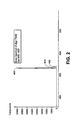
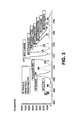
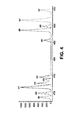
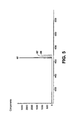
- the MS data suggests that the products in the reaction mixture consist of oligonucleotides cross-linked with lysine via a methylene bridge and also oligonucleotide-formaline adducts. After 24 hours, all oligonucleotides detected appeared to be cross-linked in the reaction mixture. The excess formalin and lysine were separated from the reaction mixture prior to the ethylenediamine treatment. To this reaction mixture (400 ⁇ l) was added ethylenediamine (100 ⁇ l, 2.0 M) and incubated at room temperature for 1.0 hour. The LC-MS analysis of the sample confirms quantitative reversal of cross-linking chemistry regenerating starting oligonucleotide from all cross-linked adducts. Results of LC-MS analysis at various steps in this procedure are illustrated in Figures 2-5 .
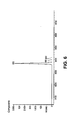
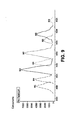
- FIG. 6-11 A further example of cross-linkage reversal is illustrated in Figures 6-11 , this time using a synthetic RNA molecule as an example.
- Step 5 Proteinase K Inactivation Step
- Step 6 Centrifugation Steps to remove debris
- centrifuge the lysate for an additional 15 minutes 20,817 rcf (eg. Eppendorf 5417C, 14,000 rpm). Transfer the lysate to a new labeled 1.5 mL tube.
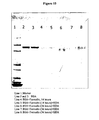
- This example illustrates reversal of cross-linking chemistry of protein-protein with ethylenediamine.
- BSA bovine serum albumin
- Lane 5 incubation of protein-protein cross-linked product with ethylenediamine at room temperature for 1 hour
- Lane 5 incubation of protein-protein cross-linked product with ethylenediamine at room temperature for 1 hour
- Lane 5 incubation of protein-protein cross-linked product with ethylenediamine at room temperature for 1 hour
- the cross-linking time in formalin is extended, the cross-linking is incompletely reversed (lanes 6-8 of Figure 15 ).
Landscapes
- Chemical & Material Sciences (AREA)
- Life Sciences & Earth Sciences (AREA)
- Organic Chemistry (AREA)
- Health & Medical Sciences (AREA)
- Analytical Chemistry (AREA)
- Engineering & Computer Science (AREA)
- Zoology (AREA)
- Wood Science & Technology (AREA)
- Proteomics, Peptides & Aminoacids (AREA)
- Molecular Biology (AREA)
- Physics & Mathematics (AREA)
- General Health & Medical Sciences (AREA)
- Immunology (AREA)
- Biochemistry (AREA)
- General Engineering & Computer Science (AREA)
- Chemical Kinetics & Catalysis (AREA)
- Biophysics (AREA)
- Bioinformatics & Cheminformatics (AREA)
- Biotechnology (AREA)
- Microbiology (AREA)
- Genetics & Genomics (AREA)
- Biomedical Technology (AREA)
- General Physics & Mathematics (AREA)
- Pathology (AREA)
- Measuring Or Testing Involving Enzymes Or Micro-Organisms (AREA)
- Investigating Or Analysing Biological Materials (AREA)
Applications Claiming Priority (3)
| Application Number | Priority Date | Filing Date | Title |
|---|---|---|---|
| US92093907P | 2007-03-30 | 2007-03-30 | |
| US95472107P | 2007-08-08 | 2007-08-08 | |
| PCT/EP2008/002356 WO2008119488A1 (en) | 2007-03-30 | 2008-03-26 | Alkyl amines improve detection of components of formaldehyde-fixed biological samples |
Publications (2)
| Publication Number | Publication Date |
|---|---|
| EP2132549A1 EP2132549A1 (en) | 2009-12-16 |
| EP2132549B1 true EP2132549B1 (en) | 2013-09-11 |
Family
ID=39570687
Family Applications (1)
| Application Number | Title | Priority Date | Filing Date |
|---|---|---|---|
| EP08734758.9A Active EP2132549B1 (en) | 2007-03-30 | 2008-03-26 | Alkyl amines improve detection of components of formaldehyde-fixed biological samples |
Country Status (8)
| Country | Link |
|---|---|
| US (2) | US8652775B2 (https=) |
| EP (1) | EP2132549B1 (https=) |
| JP (2) | JP2010522544A (https=) |
| CN (1) | CN105441549A (https=) |
| CA (1) | CA2681584C (https=) |
| ES (1) | ES2436023T3 (https=) |
| HK (1) | HK1223128A1 (https=) |
| WO (1) | WO2008119488A1 (https=) |
Families Citing this family (14)
| Publication number | Priority date | Publication date | Assignee | Title |
|---|---|---|---|---|
| US8420801B2 (en) * | 2010-01-08 | 2013-04-16 | Roche Molecular Systems, Inc. | Recovery of nucleic acids from magnetic glass particles |
| US10787701B2 (en) | 2010-04-05 | 2020-09-29 | Prognosys Biosciences, Inc. | Spatially encoded biological assays |
| US9416356B2 (en) * | 2013-03-15 | 2016-08-16 | Abbott Molecular Inc. | Compositions and methods for nucleic acid extraction |
| US9771572B2 (en) | 2014-02-28 | 2017-09-26 | Gen-Probe Incorporated | Method of isolating nucleic acid from specimens in liquid-based cytology preservatives containing formaldehyde |
| US9771571B2 (en) | 2014-02-28 | 2017-09-26 | Gen-Probe Incorporated | Method of isolating nucleic acid from specimens in liquid-based cytology preservatives containing formaldehyde |
| CN111484992B (zh) * | 2014-02-28 | 2024-04-02 | 简·探针公司 | 从含有甲醛的液基细胞学防腐剂中的样本分离核酸的方法 |
| US20170283860A1 (en) * | 2014-09-16 | 2017-10-05 | The Board Of Trustees Of The Leland Stanford Junio University | Methods and compositions for the removal of aldehyde adducts and crosslinks from biomolecules |
| WO2017200350A1 (ko) | 2016-05-20 | 2017-11-23 | 엘지전자 주식회사 | 로봇 청소기 |
| EP3459419B1 (en) | 2016-05-20 | 2022-10-26 | LG Electronics Inc. | Robot cleaner |
| GB201704823D0 (en) * | 2017-03-27 | 2017-05-10 | Univ Leicester | Methods and kits for determining binding sites |
| US10995104B2 (en) | 2017-05-30 | 2021-05-04 | Roche Molecular System, Inc. | Catalysts for reversing formaldehyde adducts and crosslinks |
| CN115135984B (zh) * | 2019-12-23 | 2025-12-23 | 10X基因组学有限公司 | 可逆固定试剂及其使用方法 |
| EP4705736A1 (en) * | 2023-05-04 | 2026-03-11 | Promega Corporation | Compositions and methods for decrosslinking biological samples |
| US20240369459A1 (en) * | 2023-05-04 | 2024-11-07 | Promega Corporation | Methods and compositions for decrosslinking biological samples |
Family Cites Families (14)
| Publication number | Priority date | Publication date | Assignee | Title |
|---|---|---|---|---|
| ATE88761T1 (de) * | 1986-01-10 | 1993-05-15 | Amoco Corp | Kompetitiver homogener test. |
| US7150982B2 (en) * | 1991-09-09 | 2006-12-19 | Third Wave Technologies, Inc. | RNA detection assays |
| US5977343A (en) * | 1992-05-14 | 1999-11-02 | Ribozyme Pharmaceuticals, Inc. | Synthesis, deprotection, analysis and purification of RNA and ribozymes |
| EP0607422B1 (en) * | 1992-08-12 | 2002-03-13 | Biogenex Laboratories | Enhancement of immunochemical staining in aldehyde-fixed tissues |
| US6649368B1 (en) * | 1997-10-24 | 2003-11-18 | Cell Marque Corporation | Composition and method for treating tissue samples |
| US20040038264A1 (en) * | 2002-05-14 | 2004-02-26 | Souza Glauco R. | Fractal dimension analysis of nanoparticle aggregates using angle dependent light scattering for the detection and characterization of nucleic acids and proteins |
| US7653212B2 (en) | 2006-05-19 | 2010-01-26 | Universal Electronics Inc. | System and method for using image data in connection with configuring a universal controlling device |
| US20040029184A1 (en) * | 2002-08-09 | 2004-02-12 | Pickcell Laboratories B.V. | Method for antigen retrieval and submersion fluid compositions for use therein |
| US20050032146A1 (en) | 2003-08-07 | 2005-02-10 | Herr John C. | Tssk4: a human testis specific serine/threonine kinase |
| US7318925B2 (en) * | 2003-08-08 | 2008-01-15 | Amgen Fremont, Inc. | Methods of use for antibodies against parathyroid hormone |
| JP2006124154A (ja) * | 2004-09-29 | 2006-05-18 | Toshiba Tec Corp | 用紙後処理装置 |
| WO2006066039A2 (en) * | 2004-12-17 | 2006-06-22 | Kram Brian H | High temperature tissue conditioning with low volatility solutions and applications |
| DE102005060738A1 (de) | 2005-12-16 | 2007-06-21 | Qiagen Gmbh | Verfahren zur Extraktion von Biomolekülen aus fixierten Geweben |
| EP1911844A1 (en) * | 2006-10-10 | 2008-04-16 | Qiagen GmbH | Methods and kit for isolating nucleic acids |
-
2008
- 2008-03-26 CN CN201510970816.1A patent/CN105441549A/zh active Pending
- 2008-03-26 WO PCT/EP2008/002356 patent/WO2008119488A1/en not_active Ceased
- 2008-03-26 ES ES08734758T patent/ES2436023T3/es active Active
- 2008-03-26 JP JP2010500132A patent/JP2010522544A/ja not_active Ceased
- 2008-03-26 EP EP08734758.9A patent/EP2132549B1/en active Active
- 2008-03-26 CA CA2681584A patent/CA2681584C/en active Active
- 2008-03-28 US US12/079,694 patent/US8652775B2/en active Active
-
2013
- 2013-06-27 JP JP2013135281A patent/JP5792769B2/ja active Active
- 2013-12-23 US US14/139,837 patent/US9400235B2/en active Active
-
2016
- 2016-09-26 HK HK16111253.1A patent/HK1223128A1/zh unknown
Also Published As
| Publication number | Publication date |
|---|---|
| JP2010522544A (ja) | 2010-07-08 |
| US20140120547A1 (en) | 2014-05-01 |
| EP2132549A1 (en) | 2009-12-16 |
| CN105441549A (zh) | 2016-03-30 |
| US9400235B2 (en) | 2016-07-26 |
| WO2008119488A1 (en) | 2008-10-09 |
| US8652775B2 (en) | 2014-02-18 |
| ES2436023T3 (es) | 2013-12-26 |
| CA2681584A1 (en) | 2008-10-09 |
| HK1223128A1 (zh) | 2017-07-21 |
| JP5792769B2 (ja) | 2015-10-14 |
| JP2013200317A (ja) | 2013-10-03 |
| CA2681584C (en) | 2013-10-22 |
| US20090081661A1 (en) | 2009-03-26 |
Similar Documents
| Publication | Publication Date | Title |
|---|---|---|
| EP2132549B1 (en) | Alkyl amines improve detection of components of formaldehyde-fixed biological samples | |
| CN116157519A (zh) | 经磺化dna的纯化 | |
| US20140186821A1 (en) | Noninterfering Multipurpose Compositions for Collecting, Transporting and Storing Biological Samples | |
| AU2023201136B2 (en) | Compositions and methods for detecting C1orf43 nucleic acid | |
| CN111406118B (zh) | 呼吸道合胞病毒种属的切口产生和延伸扩增反应(near) | |
| JP6637100B2 (ja) | ホルムアルデヒドを含有する液体系細胞診用保存剤中検体から核酸を単離する方法 | |
| EP3033432A1 (en) | Compositions and methods for multiplex analysis of nras and braf nucleic acids | |
| US10995104B2 (en) | Catalysts for reversing formaldehyde adducts and crosslinks | |
| CN101657711A (zh) | 烷基胺改进甲醛固定的生物样品组分的检测 | |
| WO2003070986A1 (en) | Removal of nucleic acid contaminants | |
| HK1139735A (en) | Alkyl amines improve detection of components of formaldehyde-fixed biological samples | |
| JP4418450B2 (ja) | 生物学的dnaの検出 | |
| US20080199857A1 (en) | Method of increasing specificity of nucleic acid hybridization using zwitterionic compound | |
| TW202204635A (zh) | 銀色葡萄球菌之檢測用之引子組及探針 | |
| Stanta et al. | Quantitative RT-PCR from fixed paraffin-embedded tissues by capillary electrophoresis | |
| EP1762629B1 (en) | Detection of biological DNA | |
| AU2003205424B2 (en) | Removal of nucleic acid contaminants | |
| JP2007515181A (ja) | 核酸検出のための固相支持体 | |
| HK40025966A (en) | Nicking and extension amplification reaction (near) of respiratory syncytial virus species | |
| JP2008200052A (ja) | 核酸合成法 |
Legal Events
| Date | Code | Title | Description |
|---|---|---|---|
| PUAI | Public reference made under article 153(3) epc to a published international application that has entered the european phase |
Free format text: ORIGINAL CODE: 0009012 |
|
| 17P | Request for examination filed |
Effective date: 20091030 |
|
| AK | Designated contracting states |
Kind code of ref document: A1 Designated state(s): AT BE BG CH CY CZ DE DK EE ES FI FR GB GR HR HU IE IS IT LI LT LU LV MC MT NL NO PL PT RO SE SI SK TR |
|
| 17Q | First examination report despatched |
Effective date: 20100305 |
|
| DAX | Request for extension of the european patent (deleted) | ||
| GRAP | Despatch of communication of intention to grant a patent |
Free format text: ORIGINAL CODE: EPIDOSNIGR1 |
|
| INTG | Intention to grant announced |
Effective date: 20130417 |
|
| GRAS | Grant fee paid |
Free format text: ORIGINAL CODE: EPIDOSNIGR3 |
|
| GRAA | (expected) grant |
Free format text: ORIGINAL CODE: 0009210 |
|
| AK | Designated contracting states |
Kind code of ref document: B1 Designated state(s): AT BE BG CH CY CZ DE DK EE ES FI FR GB GR HR HU IE IS IT LI LT LU LV MC MT NL NO PL PT RO SE SI SK TR |
|
| REG | Reference to a national code |
Ref country code: GB Ref legal event code: FG4D |
|
| REG | Reference to a national code |
Ref country code: CH Ref legal event code: EP |
|
| REG | Reference to a national code |
Ref country code: AT Ref legal event code: REF Ref document number: 631900 Country of ref document: AT Kind code of ref document: T Effective date: 20130915 |
|
| REG | Reference to a national code |
Ref country code: IE Ref legal event code: FG4D |
|
| REG | Reference to a national code |
Ref country code: DE Ref legal event code: R096 Ref document number: 602008027479 Country of ref document: DE Effective date: 20131107 |
|
| REG | Reference to a national code |
Ref country code: ES Ref legal event code: FG2A Ref document number: 2436023 Country of ref document: ES Kind code of ref document: T3 Effective date: 20131226 |
|
| PG25 | Lapsed in a contracting state [announced via postgrant information from national office to epo] |
Ref country code: LT Free format text: LAPSE BECAUSE OF FAILURE TO SUBMIT A TRANSLATION OF THE DESCRIPTION OR TO PAY THE FEE WITHIN THE PRESCRIBED TIME-LIMIT Effective date: 20130911 Ref country code: CY Free format text: LAPSE BECAUSE OF FAILURE TO SUBMIT A TRANSLATION OF THE DESCRIPTION OR TO PAY THE FEE WITHIN THE PRESCRIBED TIME-LIMIT Effective date: 20130814 Ref country code: HR Free format text: LAPSE BECAUSE OF FAILURE TO SUBMIT A TRANSLATION OF THE DESCRIPTION OR TO PAY THE FEE WITHIN THE PRESCRIBED TIME-LIMIT Effective date: 20130911 Ref country code: NO Free format text: LAPSE BECAUSE OF FAILURE TO SUBMIT A TRANSLATION OF THE DESCRIPTION OR TO PAY THE FEE WITHIN THE PRESCRIBED TIME-LIMIT Effective date: 20131211 Ref country code: SE Free format text: LAPSE BECAUSE OF FAILURE TO SUBMIT A TRANSLATION OF THE DESCRIPTION OR TO PAY THE FEE WITHIN THE PRESCRIBED TIME-LIMIT Effective date: 20130911 |
|
| REG | Reference to a national code |
Ref country code: NL Ref legal event code: VDEP Effective date: 20130911 |
|
| REG | Reference to a national code |
Ref country code: AT Ref legal event code: MK05 Ref document number: 631900 Country of ref document: AT Kind code of ref document: T Effective date: 20130911 |
|
| REG | Reference to a national code |
Ref country code: LT Ref legal event code: MG4D |
|
| PG25 | Lapsed in a contracting state [announced via postgrant information from national office to epo] |
Ref country code: FI Free format text: LAPSE BECAUSE OF FAILURE TO SUBMIT A TRANSLATION OF THE DESCRIPTION OR TO PAY THE FEE WITHIN THE PRESCRIBED TIME-LIMIT Effective date: 20130911 Ref country code: GR Free format text: LAPSE BECAUSE OF FAILURE TO SUBMIT A TRANSLATION OF THE DESCRIPTION OR TO PAY THE FEE WITHIN THE PRESCRIBED TIME-LIMIT Effective date: 20131212 Ref country code: LV Free format text: LAPSE BECAUSE OF FAILURE TO SUBMIT A TRANSLATION OF THE DESCRIPTION OR TO PAY THE FEE WITHIN THE PRESCRIBED TIME-LIMIT Effective date: 20130911 |
|
| PG25 | Lapsed in a contracting state [announced via postgrant information from national office to epo] |
Ref country code: CY Free format text: LAPSE BECAUSE OF FAILURE TO SUBMIT A TRANSLATION OF THE DESCRIPTION OR TO PAY THE FEE WITHIN THE PRESCRIBED TIME-LIMIT Effective date: 20130911 Ref country code: BE Free format text: LAPSE BECAUSE OF FAILURE TO SUBMIT A TRANSLATION OF THE DESCRIPTION OR TO PAY THE FEE WITHIN THE PRESCRIBED TIME-LIMIT Effective date: 20130911 |
|
| PG25 | Lapsed in a contracting state [announced via postgrant information from national office to epo] |
Ref country code: EE Free format text: LAPSE BECAUSE OF FAILURE TO SUBMIT A TRANSLATION OF THE DESCRIPTION OR TO PAY THE FEE WITHIN THE PRESCRIBED TIME-LIMIT Effective date: 20130911 Ref country code: IS Free format text: LAPSE BECAUSE OF FAILURE TO SUBMIT A TRANSLATION OF THE DESCRIPTION OR TO PAY THE FEE WITHIN THE PRESCRIBED TIME-LIMIT Effective date: 20140111 Ref country code: CZ Free format text: LAPSE BECAUSE OF FAILURE TO SUBMIT A TRANSLATION OF THE DESCRIPTION OR TO PAY THE FEE WITHIN THE PRESCRIBED TIME-LIMIT Effective date: 20130911 Ref country code: SK Free format text: LAPSE BECAUSE OF FAILURE TO SUBMIT A TRANSLATION OF THE DESCRIPTION OR TO PAY THE FEE WITHIN THE PRESCRIBED TIME-LIMIT Effective date: 20130911 Ref country code: RO Free format text: LAPSE BECAUSE OF FAILURE TO SUBMIT A TRANSLATION OF THE DESCRIPTION OR TO PAY THE FEE WITHIN THE PRESCRIBED TIME-LIMIT Effective date: 20130911 Ref country code: NL Free format text: LAPSE BECAUSE OF FAILURE TO SUBMIT A TRANSLATION OF THE DESCRIPTION OR TO PAY THE FEE WITHIN THE PRESCRIBED TIME-LIMIT Effective date: 20130911 |
|
| PG25 | Lapsed in a contracting state [announced via postgrant information from national office to epo] |
Ref country code: PL Free format text: LAPSE BECAUSE OF FAILURE TO SUBMIT A TRANSLATION OF THE DESCRIPTION OR TO PAY THE FEE WITHIN THE PRESCRIBED TIME-LIMIT Effective date: 20130911 Ref country code: AT Free format text: LAPSE BECAUSE OF FAILURE TO SUBMIT A TRANSLATION OF THE DESCRIPTION OR TO PAY THE FEE WITHIN THE PRESCRIBED TIME-LIMIT Effective date: 20130911 |
|
| REG | Reference to a national code |
Ref country code: DE Ref legal event code: R097 Ref document number: 602008027479 Country of ref document: DE |
|
| PG25 | Lapsed in a contracting state [announced via postgrant information from national office to epo] |
Ref country code: PT Free format text: LAPSE BECAUSE OF FAILURE TO SUBMIT A TRANSLATION OF THE DESCRIPTION OR TO PAY THE FEE WITHIN THE PRESCRIBED TIME-LIMIT Effective date: 20140113 |
|
| PLBE | No opposition filed within time limit |
Free format text: ORIGINAL CODE: 0009261 |
|
| STAA | Information on the status of an ep patent application or granted ep patent |
Free format text: STATUS: NO OPPOSITION FILED WITHIN TIME LIMIT |
|
| 26N | No opposition filed |
Effective date: 20140612 |
|
| REG | Reference to a national code |
Ref country code: DE Ref legal event code: R097 Ref document number: 602008027479 Country of ref document: DE Effective date: 20140612 |
|
| PG25 | Lapsed in a contracting state [announced via postgrant information from national office to epo] |
Ref country code: DK Free format text: LAPSE BECAUSE OF FAILURE TO SUBMIT A TRANSLATION OF THE DESCRIPTION OR TO PAY THE FEE WITHIN THE PRESCRIBED TIME-LIMIT Effective date: 20130911 |
|
| PG25 | Lapsed in a contracting state [announced via postgrant information from national office to epo] |
Ref country code: LU Free format text: LAPSE BECAUSE OF FAILURE TO SUBMIT A TRANSLATION OF THE DESCRIPTION OR TO PAY THE FEE WITHIN THE PRESCRIBED TIME-LIMIT Effective date: 20140326 |
|
| REG | Reference to a national code |
Ref country code: IE Ref legal event code: MM4A |
|
| PG25 | Lapsed in a contracting state [announced via postgrant information from national office to epo] |
Ref country code: IE Free format text: LAPSE BECAUSE OF NON-PAYMENT OF DUE FEES Effective date: 20140326 |
|
| PG25 | Lapsed in a contracting state [announced via postgrant information from national office to epo] |
Ref country code: SI Free format text: LAPSE BECAUSE OF FAILURE TO SUBMIT A TRANSLATION OF THE DESCRIPTION OR TO PAY THE FEE WITHIN THE PRESCRIBED TIME-LIMIT Effective date: 20130911 |
|
| REG | Reference to a national code |
Ref country code: FR Ref legal event code: PLFP Year of fee payment: 9 |
|
| PG25 | Lapsed in a contracting state [announced via postgrant information from national office to epo] |
Ref country code: MT Free format text: LAPSE BECAUSE OF FAILURE TO SUBMIT A TRANSLATION OF THE DESCRIPTION OR TO PAY THE FEE WITHIN THE PRESCRIBED TIME-LIMIT Effective date: 20130911 |
|
| PG25 | Lapsed in a contracting state [announced via postgrant information from national office to epo] |
Ref country code: BG Free format text: LAPSE BECAUSE OF FAILURE TO SUBMIT A TRANSLATION OF THE DESCRIPTION OR TO PAY THE FEE WITHIN THE PRESCRIBED TIME-LIMIT Effective date: 20130911 Ref country code: MC Free format text: LAPSE BECAUSE OF FAILURE TO SUBMIT A TRANSLATION OF THE DESCRIPTION OR TO PAY THE FEE WITHIN THE PRESCRIBED TIME-LIMIT Effective date: 20130911 |
|
| PG25 | Lapsed in a contracting state [announced via postgrant information from national office to epo] |
Ref country code: HU Free format text: LAPSE BECAUSE OF FAILURE TO SUBMIT A TRANSLATION OF THE DESCRIPTION OR TO PAY THE FEE WITHIN THE PRESCRIBED TIME-LIMIT; INVALID AB INITIO Effective date: 20080326 Ref country code: TR Free format text: LAPSE BECAUSE OF FAILURE TO SUBMIT A TRANSLATION OF THE DESCRIPTION OR TO PAY THE FEE WITHIN THE PRESCRIBED TIME-LIMIT Effective date: 20130911 |
|
| REG | Reference to a national code |
Ref country code: FR Ref legal event code: PLFP Year of fee payment: 10 |
|
| REG | Reference to a national code |
Ref country code: FR Ref legal event code: PLFP Year of fee payment: 11 |
|
| PGFP | Annual fee paid to national office [announced via postgrant information from national office to epo] |
Ref country code: ES Payment date: 20250401 Year of fee payment: 18 |
|
| PGFP | Annual fee paid to national office [announced via postgrant information from national office to epo] |
Ref country code: CH Payment date: 20250401 Year of fee payment: 18 |
|
| REG | Reference to a national code |
Ref country code: CH Ref legal event code: U11 Free format text: ST27 STATUS EVENT CODE: U-0-0-U10-U11 (AS PROVIDED BY THE NATIONAL OFFICE) Effective date: 20260401 |
|
| PGFP | Annual fee paid to national office [announced via postgrant information from national office to epo] |
Ref country code: GB Payment date: 20260220 Year of fee payment: 19 |
|
| PGFP | Annual fee paid to national office [announced via postgrant information from national office to epo] |
Ref country code: DE Payment date: 20260219 Year of fee payment: 19 |
|
| PGFP | Annual fee paid to national office [announced via postgrant information from national office to epo] |
Ref country code: IT Payment date: 20260219 Year of fee payment: 19 |
|
| PGFP | Annual fee paid to national office [announced via postgrant information from national office to epo] |
Ref country code: FR Payment date: 20260219 Year of fee payment: 19 |