EP2119707A1 - Composition for treatment of undifferentiated-type of gastric cancer - Google Patents
Composition for treatment of undifferentiated-type of gastric cancer Download PDFInfo
- Publication number
- EP2119707A1 EP2119707A1 EP08704376A EP08704376A EP2119707A1 EP 2119707 A1 EP2119707 A1 EP 2119707A1 EP 08704376 A EP08704376 A EP 08704376A EP 08704376 A EP08704376 A EP 08704376A EP 2119707 A1 EP2119707 A1 EP 2119707A1
- Authority
- EP
- European Patent Office
- Prior art keywords
- group
- optionally substituted
- represented
- formula
- hydrogen atom
- Prior art date
- Legal status (The legal status is an assumption and is not a legal conclusion. Google has not performed a legal analysis and makes no representation as to the accuracy of the status listed.)
- Granted
Links
- 0 C*CC1CCN(C)CC1 Chemical compound C*CC1CCN(C)CC1 0.000 description 5
Images


Classifications
-
- C—CHEMISTRY; METALLURGY
- C07—ORGANIC CHEMISTRY
- C07D—HETEROCYCLIC COMPOUNDS
- C07D215/00—Heterocyclic compounds containing quinoline or hydrogenated quinoline ring systems
-
- C—CHEMISTRY; METALLURGY
- C07—ORGANIC CHEMISTRY
- C07D—HETEROCYCLIC COMPOUNDS
- C07D215/00—Heterocyclic compounds containing quinoline or hydrogenated quinoline ring systems
- C07D215/02—Heterocyclic compounds containing quinoline or hydrogenated quinoline ring systems having no bond between the ring nitrogen atom and a non-ring member or having only hydrogen atoms or carbon atoms directly attached to the ring nitrogen atom
- C07D215/16—Heterocyclic compounds containing quinoline or hydrogenated quinoline ring systems having no bond between the ring nitrogen atom and a non-ring member or having only hydrogen atoms or carbon atoms directly attached to the ring nitrogen atom with hetero atoms or with carbon atoms having three bonds to hetero atoms with at the most one bond to halogen, e.g. ester or nitrile radicals, directly attached to ring carbon atoms
- C07D215/20—Oxygen atoms
- C07D215/22—Oxygen atoms attached in position 2 or 4
-
- A—HUMAN NECESSITIES
- A61—MEDICAL OR VETERINARY SCIENCE; HYGIENE
- A61K—PREPARATIONS FOR MEDICAL, DENTAL OR TOILETRY PURPOSES
- A61K31/00—Medicinal preparations containing organic active ingredients
- A61K31/33—Heterocyclic compounds
- A61K31/335—Heterocyclic compounds having oxygen as the only ring hetero atom, e.g. fungichromin
- A61K31/337—Heterocyclic compounds having oxygen as the only ring hetero atom, e.g. fungichromin having four-membered rings, e.g. taxol
-
- A—HUMAN NECESSITIES
- A61—MEDICAL OR VETERINARY SCIENCE; HYGIENE
- A61P—SPECIFIC THERAPEUTIC ACTIVITY OF CHEMICAL COMPOUNDS OR MEDICINAL PREPARATIONS
- A61P35/00—Antineoplastic agents
-
- A—HUMAN NECESSITIES
- A61—MEDICAL OR VETERINARY SCIENCE; HYGIENE
- A61P—SPECIFIC THERAPEUTIC ACTIVITY OF CHEMICAL COMPOUNDS OR MEDICINAL PREPARATIONS
- A61P43/00—Drugs for specific purposes, not provided for in groups A61P1/00-A61P41/00
Definitions
- the present invention relates to a therapeutic agent, a kit and a therapeutic method for undifferentiated gastric cancer.
- the therapeutic agent comprises a combination of a substance having the activity of inhibiting the kinase activity of a fibroblast growth factor receptor 2 (hereinafter also referred to as "FGFR2”) and a therapeutic substance for gastric cancer or a FGFR2 inhibitor different from the former FGFR2 inhibitor.
- the substance having such inhibitory activity is hereinafter also referred to as a "FGFR2 inhibitor”.
- the present invention relates to use of a FGFR2 inhibitor for producing the therapeutic agent and to a FGFR2 inhibitor for the therapeutic agent.
- the present invention relates to a pharmaceutical composition and a kit comprising a combination of a FGFR2 inhibitor for administration to a living organism comprising at least one selected from the group consisting of a cell overexpressing FGFR2 and a cell expressing mutant FGFR2 and a therapeutic substance for gastric cancer or a FGFR2 inhibitor different from the former FGFR2 inhibitor, to a therapeutic method for a disease characterized by administering effective dosages of a FGFR2 inhibitor and a therapeutic substance for gastric cancer or a FGFR2 inhibitor different from the former FGFR2 inhibitor to the living organism, to use of a FGFR2 inhibitor for producing the pharmaceutical composition and to a FGFR2 inhibitor for the pharmaceutical composition.
- Gastric cancer is one of the major cancers that cause death. Gastric cancers are histopathologically classified into differentiated gastric cancers and undifferentiated gastric cancers, where the latter includes poorly differentiated adenocarcinoma, signet-ring cell carcinoma, mucinous carcinoma and the like.
- undifferentiated gastric cancer cancer cells are likely to diffuse and also likely to develop fibrosis that leads to scirrhous gastric cancer. Undifferentiated gastric cancer is commonly observed in young people, and is known to cause invasive proliferation and metastasis, indicating a poor prognosis (1) .
- FGFR2 (also referred to as "K-sam”) is amplified in diffuse-type gastric cancer, namely, undifferentiated gastric cancer and is known to be involved in malignant alteration of cancer (1,2) .
- FGFR2 gene is reported to be amplified in 33% of patients with undifferentiated gastric cancer (2) , and FGFR2 is reported to be positive in about 50% of patients with undifferentiated gastric cancer (1) .
- FGFR2 gene induces transformation ofNIH3T3 cell, and the transformed cell is reported to show tumorigenicity in nude mice (3) . Furthermore, FGFR2 truncated at C-terminal is reported to have a strong transformation activity and predominantly expressed in undifferentiated gastric cancer cell line (1,3) . For example, FGFR2 having residues downstream from tyrosine at 769 deleted is reported to have a high transformation activity (3) .
- FGFR2 gene is amplified in poorly differentiated gastric cancer, particularly scirrhous gastric cancer, while FGFR2 protein having C-terminal (including tyrosine residues 780, 784 and 813) deleted is specifically expressed in scirrhous gastric cancer (4) .
- Amplification of activated FGFR2 is reported to cause tumor growth in scirrhous gastric cancer (4) .
- Examples of conventionally-used chemotherapeutic substances for gastric cancer include 5-fluorouracil analogs and paclitaxel analogs. None of them, however, have satisfactory anti-tumor effect and thus there has been a strong need for development of a novel anti-tumor agent.
- a FGFR2 inhibitor diphenylamine derivative
- a FGFR2 inhibitor 4-[(4-fluoro-2-methylindol-5-yl)oxy]-6-methoxy-7-[3-(pyrrolidin-1-yl)propoxy]quinazoline, is suggested to be effective on gastric cancer overexpressing K-sam (6) .
- FGFR2 inhibitor is suggested to show antiproliferative action and anti-tumor effect on undifferentiated gastric cancers, preferably poorly differentiated adenocarcinoma, signet-ring cell carcinoma, mucinous carcinoma and scirrhous gastric cancer.
- the present invention was achieved regarding the circumstances described above and the problems to be solved by the invention are to provide a therapeutic agent, a kit and a therapeutic method for undifferentiated gastric cancer, and to provide a pharmaceutical composition, a kit and a therapeutic method which are more effective on a living organism comprising at least one selected from the group consisting of a cell overexpressing FGFR2 and a cell expressing mutant FGFR2.
- a compound represented by General formula (I), a pharmacologically acceptable salt thereof or a solvate thereof has a FGFR2 inhibitory activity.
- the inventors also found that a compound represented by General formula (I), a pharmacologically acceptable salt thereof or a solvate thereof is more effective on undifferentiated gastric cancer.
- a compound represented by General formula (I), a pharmacologically acceptable salt thereof or a solvate thereof is more effective on a living organism comprising at least one selected from the group consisting of a cell overexpressing FGFR2 and a cell expressing mutant FGFR2.
- a compound represented by General formula (I), a pharmacologically acceptable salt thereof or a solvate thereof has a superior anti-tumor effect when used in combination with a therapeutic substance for gastric cancer as compared with that obtained with the therapeutic substance for gastric cancer alone in subcutaneous transplanted (xenograft) models ( in vivo ) of human scirrhous gastric cancer cell lines.
- a FGFR2 inhibitor for example, a compound represented by General formula (I), a pharmacologically acceptable salt thereof or a solvate thereof appears to show an excellent anti-tumor effect when used in combination with a therapeutic substance for gastric cancer and thus found that a combination of a FGFR2 inhibitor and a therapeutic substance for gastric cancer may be used as an effective therapeutic agent and kit for undifferentiated gastric cancer, and for undifferentiated gastric cancer.
- the present invention relates to the followings.
- the present invention relates to the followings.
- a compound represented by General Formula (I), a pharmacologically acceptable salt thereof or a solvate thereof is as follows.
- the therapeutic substance for gastric cancer may be at least one selected from the group consisting of irinotecan, paclitaxel, carboquone, nimustine, 5-fluorouracil, tegafur, UFT, doxifluridine, carmofur, S-1, doxorubicin (Adriamycin), mitomycin C, aclarubicin, pirarubicin, epirubicin, docetaxel and cis-platinum (Cisplastin).
- a preferable therapeutic substance for gastric cancer is irinotecan, 5-fluorouracil or paclitaxel.
- the FGFR2 inhibitor may comprise, for example, a compound that is not comprised in compounds represented by General Formula (I), and may include at least one compound selected from the group consisting of:
- the present invention provides a therapeutic agent, a kit and a therapeutic method for undifferentiated gastric cancer that show an excellent anti-tumor activity, use of a FGFR2 inhibitor for producing the therapeutic agent and a FGFR2 inhibitor for the therapeutic agent.
- a therapeutic agent a kit and a therapeutic method for undifferentiated gastric cancer that show an excellent anti-tumor activity and that can be used for treating undifferentiated gastric cancer by combining:
- the present invention also provides a pharmaceutical composition and a kit for administration to a living organism comprising at least one selected from the group consisting of a cell overexpressing FGFR2 and a cell expressing mutant FGFR2, a method for treating a disease of the living organism, use of a FGFR2 inhibitor for producing the pharmaceutical composition and a FGFR2 inhibitor for the pharmaceutical composition.
- a pharmaceutical composition, a kit and a therapeutic method for the living organism which show an excellent anti-tumor activity and that can be used for treating a disease by combining:
- FGFR2 comprises a polypeptide including an amino acid sequence identical or substantially identical to the amino acid sequence represented by SEQ ID NO:2 (GenBank Accession No:NM_022970) or to the amino acids 22-822 of the amino acid sequence represented by SEQ ID NO:2.
- the polypeptide including the amino acid sequence represented by SEQ ID NO:2 is coded, for example, by a polynucleotide including the base sequence represented by SEQ ID NO:1.
- processing of the polypeptide comprising the amino acid sequence represented by SEQ ID NO:2 yields a mature form.
- amino acids 22-822 amino acids 22-822
- SEQ ID NO:2 amino acids 22-822
- the phrase "having substantially the same activity as FGFR2" means that at least one of the intracellular signals caused by ligand (e.g., FGF) binding is identical to one of the signals of a protein having the amino acid sequence (amino acids 22-822) represented by SEQ ID NO:2, and that the activation level of the intracellular signal is comparable to that of the protein having the amino acid sequence (amino acids 22-822) represented by SEQ ID NO:2.
- ligand e.g., FGF
- the term "comparable” means, for example, that the activation level of the intracellular signal caused by ligand (e.g., FGF) binding is at least 10%, preferably at least 30% of the activation level of the intracellular signal of a protein having the amino acid sequence (amino acids 22-822) represented by SEQ ID NO:2, which can be referred to as substantially the same activity.
- ligand e.g., FGF
- intracellular signals caused by ligand binding include: FGFR2 phosphorylation; Raf, MEK, ERK1 and ERK2 phosphorylation owing to FGFR2 phosphorylation; phosphorylation of phosphatidylinositol 3 kinase; Akt phosphorylation; phosphorylation of phospholipase-C- ⁇ ; increase in inositol 1,4,5-trisphosphate (IP3); and increase in diacylglycerol (DAG).
- FGFR2 phosphorylation Raf, MEK, ERK1 and ERK2 phosphorylation owing to FGFR2 phosphorylation
- phosphorylation of phosphatidylinositol 3 kinase Akt phosphorylation
- phospholipase-C- ⁇ increase in inositol 1,4,5-trisphosphate (IP3)
- IP3 inositol 1,4,5-trisphosphate
- DAG diacyl
- the activity of an intracellular signal caused by ligand binding can be measured by a conventional method such as immunoprecipitation method and western blotting.
- amino acids 22-822 Examples of amino acid sequences having one or more (e.g., one or a few) amino acids deleted, substituted or added, or mutated by a combination thereof in the amino acid sequence (amino acids 22-822) represented by SEQ ID NO:2 include:
- deletion of an amino acid refers to a mutation where one or more amino acid residues in the sequence are deleted, including deletion of amino acid residues from the end of the amino acid sequence and deletion in the middle of the amino acid sequence.
- addition of an amino acid refers to a mutation where one or more amino acid residues are added to the sequence, including addition of amino acid residues to the end of the amino acid sequence and addition in the middle of the amino acid sequence. Addition in the middle of the sequence may also be referred to as "insertion".
- substitution refers to a mutation where one or more amino acid residues in the sequence are substituted with different types of amino acid residues.
- conservative substitution is preferable in order to retain the function of a protein.
- Conservative substitution means to alter a sequence to code an amino acid having similar property to the original amino acid.
- amino acids can be classified, for example, into nonpolar amino acids (Ala, Ile, Leu, Met, Phe, Pro, Trp, Val), uncharged amino acids (Asn, Cys, Gln, Gly, Ser, Thr, Tyr), acidic amino acids (Asp, Glu), basic amino acids (Arg, His, Lys), neutral amino acids (Ala, Asn, Cys, Gln, Gly, Ile, Leu, Met, Phe, Pro, Ser, Thr, Trp, Tyr, Val), aliphatic amino acids (Ala, Gly), branched amino acids (Ile, Leu, Val), hydroxyamino acids (Ser, Thr), amide amino acids (Gln, Asn), sulfur-containing amino acids (Cys, Met), aromatic amino acids (His, Phe, Trp, Tyr), heterocyclic amino acids (His, Trp), imino acids (Pro, 4Hyp) and the like.
- nonpolar amino acids Al, Ile, Leu, Met,
- substitution for example, between nonpolar amino acids or between uncharged amino acids, is preferable, among which, substitutions between Ala, Val, Leu and Ile, between Ser and Thr, between Asp and Glu, between Asn and GIn, between Lys and Arg, and between Phe and Tyr are favorable as substitution that retains the property of the protein.
- substitutions between Ala, Val, Leu and Ile, between Ser and Thr, between Asp and Glu, between Asn and GIn, between Lys and Arg, and between Phe and Tyr are favorable as substitution that retains the property of the protein.
- polypeptide having substantially the same amino acid sequence as the amino acid sequence (amino acids 22-822) represented by SEQ ID NO:2 includes a polypeptide encoded by a polynucleotide that hybridizes with a polynucleotide having a base sequence complementary to the base sequence represented by SEQ ID NO:1 under stringent conditions, and having substantially the same activity as FGFR2 as described above.
- polynucleotides that hybridize under stringent conditions include polynucleotides including base sequences having at least 90% or higher, preferably 95% or higher, more preferably 97% or higher, more preferably 98% or higher, or still more preferably 99% or higher identity with the base sequence represented by SEQ ID NO:1 when calculated using homology search software such as FASTA, BLAST, Smith-Waterman [Meth. Enzym., 164, 765 (1988 )] with default (initial setting) parameters.
- homology search software such as FASTA, BLAST, Smith-Waterman [Meth. Enzym., 164, 765 (1988 )] with default (initial setting) parameters.
- Examples of such stringent conditions include “2 x SSC, 0.1% SDS, 50°C”, “2 x SSC, 0.1% SDS, 42°C,” and “1 x SSC, 0.1% SDS, 37°C”, and for higher stringent conditions “2 x SSC, 0.1% SDS, 65°C,” “0.5 x SSC, 0.1% SDS, 42°C,” and “0.2 x SSC, 0.1% SDS, 65°C”.
- Hybridization can be carried out according to a known method. When a commercially available library is used, hybridization may be carried out according to the method described in the attached instruction.
- polynucleotides that hybridize with a polynucleotide having a base sequence complementary to the base sequence represented by SEQ ID NO:1 under stringent conditions include polynucleotides comprising a base sequence having 90% or higher, preferably 95% or higher and more preferably 98% or higher identity with the base sequence represented by SEQ ID NO:1.
- polynucleotides that hybridize with a polynucleotide having a base sequence complementary to the base sequence represented by SEQ ID NO:1 under stringent conditions include base sequences having one or more (e.g., one or several) nucleic acids mutated, for example, deleted, substituted or added in the base sequence represented by SEQ ID NO:1.
- polynucleotides that hybridize with a polynucleotide having a base sequence complementary to the base sequence represented by SEQ ID NO:1 under stringent conditions include:
- identity also referred to as “homology” of an amino acid sequence is used to indicate the degree of consistency of amino acid residues between the sequences to be compared.
- identity In order to calculate identity of a given amino acid sequence to an amino acid sequence to be compared, the presence of gaps and the property of the amino acids are considered ( Wilbur, Natl. Acad. Sci. U.S.A. 80:726-730 (1983 )).
- BLAST Altschul: J. Mol. Biol. 215:403-410 (1990 )
- FASTA Peasron: Methods in Enzymology 183:63-69 (1990 )
- the "identity" value may be any value as long as it is obtained by using a homology search program known to those skilled in the art.
- the default (initial setting) parameters can be used in homology algorithm BLAST (Basic local alignment search tool) http://www.ncbi.nlm.nih.gov/BLAST/ of the National Center for Biotechnology Information (NCBI).
- FGFR2 comprises mutant FGFR2 described below.
- a cell overexpressing FGFR2 comprises, for example, a cell expressing FGFR2 for a significant amount as compared to a normal cell.
- a cell overexpressing FGFR2 comprises, for example, a cell expressing FGFR2 for at least 1.5 times higher, preferably at least 2 times higher, more preferably at least 3 times higher, still more preferably at least 4 times higher than a normal cell.
- a "normal cell” refers to, for example, cells other than cancer (e.g., undifferentiated gastric cancer) cells.
- a cell overexpressing FGFR2 is preferably undifferentiated gastric cancer cell, more preferably at least one cell selected from the group consisting of poorly differentiated adenocarcinoma, signet-ring cell carcinoma, mucinous carcinoma and scirrhous gastric cancer.
- An expression level of FGFR2 may be analyzed, for example, by measuring the protein and/or the mRNA of FGFR2 expressed in the cell.
- Protein can be measured, for example, by an immunochemical method (e.g., immunohistochemistry method, immunoprecipitation, western blotting, flow cytometry, ELISA, RIA, etc.), mass spectrometry or the like, preferably an immunochemical method, particularly preferably flow cytometry. These methods may be carried out according to conventional techniques.
- an immunochemical method e.g., immunohistochemistry method, immunoprecipitation, western blotting, flow cytometry, ELISA, RIA, etc.
- mass spectrometry preferably an immunochemical method, particularly preferably flow cytometry.
- mRNA can be measured, for example, by a method such as in situ hybridization, northern blot analysis, DNA microarray, RT-PCR, quantitative RT-PCR or the like, preferably RT-PCR or quantitative RT-PCR. These methods may be carried out according to conventional techniques.
- mutant FGFR2 comprises polypeptides comprising an amino acid sequence having one or a few amino acids deleted, substituted or added, or mutated by a combination thereof in a wild-type FGFR2 amino acid sequence such as the amino acid sequence (amino acids 22-822) represented by SEQ ID NO:2.
- the mutant FGFR2 comprises polypeptides comprising an amino acid sequence having one or a few amino acids deleted, substituted or added, or mutated by a combination thereof in a wild-type FGFR2 amino acid sequence such as the amino acid sequence (amino acids 22-822) represented by SEQ ID NO:2, and having substantially the same activity as FGFR2.
- a cell expressing mutant FGFR2 comprises cells expressing the above-mentioned polypeptides.
- mutant FGFR2 examples include polypeptides comprising an amino acid sequence where serine at position 267 of the amino acid sequence (amino acids 22-822) represented by SEQ ID NO:2 is substituted by other amino acid, preferably proline ( Cancer Research. 61, 3541-3543, 2001 ).
- mutant FGFR2 include polypeptides comprising a mutation site where a few amino acids at C-terminal are deleted in an amino acid sequence of wild-type FGFR2 such as amino acids 22-822 of the amino acid sequence represented by SEQ ID NO:2.
- mutant FGFR2 include polypeptides comprising an amino acid sequence where amino acids downstream from at least position 813, preferably at least position 784, more preferably at least position 780, and still more preferably at least position 769 are deleted from the amino acid sequence (amino acids 22-822) represented by SEQ ID NO:2.
- mutant FGFR2 is activating mutant FGFR2.
- Activating mutant FGFR2 refers to mutant FGFR2 that causes autophosphorylation in a ligand-independent manner and that activates intracellular signals.
- the presence or the absence of FGFR2 mutation can be determined by analyzing the gene sequence of FGFR2 or the sequence of the transcript, i.e., mRNA, of FGFR2.
- An example of the method for analyzing a sequence includes dideoxynucleotide chain termination technique ( Sanger et al., (1977) Proc. Natl. Acad. Sci. USA 74:5463 ).
- a sequence can also be analyzed by employing an appropriate DNA sequencer.
- FGFR2 mutation can be analyzed, for example, by in situ hybridization, northern blot analysis, DNA microarray, RT-PCR, SSCP-PCR (Single-Strand Conformation Polymorphism-PCR) or the like. These methods may be carried out according to conventional techniques.
- the presence or the absence of FGFR2 mutation can be analyzed, for example, by an immunochemical method (e.g., an immunohistochemistry method, immunoprecipitation, western blotting, flow cytometry, ELISA, RIA, etc.). These methods may be carried out according to conventional techniques.
- an immunochemical method e.g., an immunohistochemistry method, immunoprecipitation, western blotting, flow cytometry, ELISA, RIA, etc.
- a cell expressing mutant FGFR2 is preferably an undifferentiated gastric cancer cell, more preferably at least one cell selected from the group consisting of poorly differentiated adenocarcinoma, signet-ring cell carcinoma, mucinous carcinoma and a scirrhous gastric cancer.
- halogen atom refers to a fluorine atom, a chlorine atom, a bromine atom or an iodine atom.
- halogen atom examples include a fluorine atom and a chlorine atom.
- C 1-6 alkyl group refers to a linear or branched alkyl group with a carbon number of 1-6, specific examples including a methyl group, an ethyl group, a 1-propyl group (n-propyl group), a 2-propyl group (i-propyl group), a 2-methyl-1-propyl group (i-butyl group), a 2-methyl-2-propyl group (t-butyl group), a 1-butyl group (n-butyl group), a 2-butyl group (s-butyl group), a 1-pentyl group, a 2-pentyl group, a 3-pentyl group, a 2-methyl-1-butyl group, a 3-methyl-1-butyl group, a 2-methyl-2-butyl group, a 3-methyl-2-butyl group, a 2,2-dimethyl-1-propyl group, a 1-hexyl group, a 2-hexyl group, a
- C 1-6 alkyl group examples include a methyl group, an ethyl group, a 1-propyl group, a 2-propyl group, a 2-methyl-1-propyl group, a 2-methyl-2-propyl group, a 1-butyl group and a 2-butyl group.
- C 1-6 alkylene group refers to a divalent group derived from a "C 1-6 alkyl group” defined above by removing any one hydrogen atom therefrom, specific examples including a methylene group, a 1,2-ethylene group, a 1,1-ethylene group, a 1,3-propylene group, a tetramethylene group, a pentamethylene group and a hexamethylene group.
- C 2-6 alkenyl group refers to a linear or branched alkenyl group having one double bond and a carbon number of 2-6, specific examples including an ethenyl group (vinyl group), a 1-propenyl group, a 2-propenyl group (allyl group), a 1-butenyl group, a 2-butenyl group, a 3-butenyl group, a pentenyl group and a hexenyl group.
- C 2-6 alkynyl group refers to a linear or branched alkynyl group having one triple bond and a carbon number of 2-6, specific examples including an ethinyl group, a 1-propynyl group, a 2-propynyl group, a 1-butynyl group, a 2-butynyl group, a 3-butynyl group, a pentynyl group and a hexynyl group.
- a "C 3-8 cycloalkyl group” refers to a monocyclic or bicyclic saturated aliphatic hydrocarbon group with a carbon number of 3-8, specific examples including a cyclopropyl group, a cyclobutyl group, a cyclopentyl group, a cyclohexyl group, a cycloheptyl group, a cyclooctyl group, a bicyclo[2. 1. 0]pentyl group, a bicyclo[3. 1. 0]hexyl group, a bicyclo[2. 1. 1]hexyl group, a bicyclo[4. 1. 0]heptyl group, a bicyclo[2. 2.
- a "C 3-8 cycloalkyl group” include a cyclopropyl group, a cyclobutyl group and a cyclopentyl group.
- C 6-10 aryl group refers to an aromatic hydrocarbon cyclic group with a carbon number of 6-10, specific examples including a phenyl group, a 1-naphthyl group, a 2-naphthyl group, an indenyl group and an azulenyl group.
- a preferable example of a"C 6-10 aryl group" includes a phenyl group.
- heteroatom refers to a nitrogen atom, an oxygen atom or a sulfur atom.
- a "5-10-membered heteroaryl group” refers to an aromatic cyclic group having 5-10 atoms forming the ring and 1-5 heteroatoms included in the atoms forming the ring, specific examples including a furyl group, a thienyl group, a pyrrolyl group, an imidazolyl group, a triazolyl group, a tetrazolyl group, a thiazolyl group, a pyrazolyl group, an oxazolyl group, an isoxazolyl group, an isothiazolyl group, a furazanyl group, a thiadiazolyl group, an oxadiazolyl group, a pyridyl group, a pyrazinyl group, a pyridazinyl group, a pyrimidinyl group, a triazinyl group, a purinyl group, a pteridinyl group, a
- a "5-10-membered heteroaryl group” include a furyl group, a thienyl group, a pyrrolyl group, an imidazolyl group, a thiazolyl group, a pyrazolyl group, an oxazolyl group, an isoxazolyl group, an isothiazolyl group, a pyridyl group and a pyrimidinyl group.
- Specific examples include an aziridinyl group, an azetidinyl group, a pyrrolidinyl group, a piperidinyl group, an azepanyl group, an azocanyl group, a piperazinyl group, a diazepanyl group, a diazocanyl group, a diazabicyclo[2. 2.
- a "3-10-membered nonaromatic heterocyclic group” include an aziridinyl group, an azetidinyl group, a pyrrolidinyl group, a piperidinyl group, an azepanyl group, a piperazinyl group, a diazepanyl group, a morpholinyl group, a thiomorpholinyl group, a 1,1-dioxothiomorpholinyl group, a tetrahydrofuryl group and a tetrahydropyranyl group.
- a "C 1-6 alkoxy group” refers to a group in which an oxygen atom is bound to the terminal of a "C 1-6 alkyl group” defined above, specific examples including a methoxy group, an ethoxy group, a 1-propoxy group (n-propoxy group), a 2-propoxy group (i-propoxy group), a 2-methyl-1-propoxy group (i-butoxy group), a 2-methyl-2-propoxy group (t-butoxy group), a 1-butoxy group (n-butoxy group), a 2-butoxy group (s-butoxy group), a 1-pentyloxy group, a 2-pentyloxy group, a 3-pentyloxy group, a 2-methyl-1-butoxy group, a 3-methyl-1-butoxy group, a 2-methyl-2-butoxy group, a 3-methyl-2-butoxy group, a 2,2-dimethyl-1-propoxy group, a 1-hexyloxy group, a 2-hexyloxy group, a 3-hexyl
- Preferable examples of a"C 1-6 alkoxy group" include a methoxy group, an ethoxy group, a 1-propoxy group, a 2-propoxy group, a 2-methyl-1-propoxy group, a 2-methyl-2-propoxy group, a 1-butoxy group and a 2-butoxy group.
- C 1-6 alkylthio group refers to a group in which a sulfur atom is bound to the terminal of a"C 1-6 alkyl group" defined above, specific examples including a methylthio group, an ethylthio group, a 1-propylthio group (n-propylthio group), a 2-propylthio group (i-propylthio group), a 2-methyl-1-propylthio group (i-butylthio group), a 2-methyl-2-propylthio group (t-butylthio group), a 1-butylthio group (n-butylthio group), a 2-butylthio group (s-butylthio group), a 1-pentylthio group, a 2-pentylthio group, a 3-pentylthio group, a 2-methyl-1-butylthio group, a 3-methyl-1-butylthio group, a 2-methyl-2-
- C 1-6 alkylthio group examples include a methylthio group, an ethylthio group, a 1-propylthio group (n-propylthio group), a 2-propylthio group (i-propylthio group), a 2-methyl-1-propylthio group (i-butylthio group), a 2-methyl-2-propylthio group (t-butylthio group), a 1-butylthio group (n-butylthio group) and a 2-butylthio group (s-butylthio group).
- a "C 3-8 cycloalkoxy group” refers to a group in which an oxygen atom is bound to the terminal of a "C 3-8 cycloalkyl group” defined above, specific examples including a cyclopropoxy group, a cyclobutoxy group, a cyclopentyloxy group, a cyclohexyloxy group, a cycloheptyloxy group, a cyclooctyloxy group, a bicyclo[2. 1. 0]pentyloxy group, a bicyclo[3. 1. 0]hexyloxy group, a bicyclo[2. 1. 1]hexyloxy group, a bicyclo[4. 1.
- a "C 3-8 cycloalkoxy group” include a cyclopropoxy group, a cyclobutoxy group and a cyclopentyloxy group.
- a "mono-C 1-6 alkylamino group” refers to a group in which a hydrogen atom in an amino group is substituted with a "C 1-6 alkyl group” defined above, specific examples including a methylamino group, an ethylamino group, a 1-propylamino group (n-propylamino group), a 2-propylamino group (i-propylamino group), a 2-methyl-1-propylamino group (i-butylamino group), a 2-methyl-2-propylamino group (t-butylamino group), a 1-butylamino group (n-butylamino group), a 2-butylamino group (s-butylamino group), a 1-pentylamino group, a 2-pentylamino group, a 3-pentylamino group, a 2-methyl-1-butylamino group, a 3-methyl-1-butylamino group,
- a "di-C 1-6 alkylamino group” refers to a group in which two hydrogen atoms in an amino group are substituted with an identical or different "C 1-6 alkyl group” defined above, specific examples including a N,N-dimethylamino group, a N,N-diethylamino group, a N,N-di-n-propylamino group, a N,N-di-i-propylamino group, a N,N-di-n-butylamino group, a N,N-di-i-butylamino group, a N,N-di-s-butylamino group, a N,N-di-t-butylamino group, a N-ethyl-N-methylamino group, a N-n-propyl-N-methylamino group, a N-i-propyl-N-methylamino group, a N-n-but
- a "C 2-7 acyl group” refers to a carbonyl group bound with a "C 1-6 alkyl group” defined above, specific examples including an acetyl group, a propionyl group, an isopropionyl group, a butyryl group, an isobutyryl group, a valeryl group, an isovaleryl group and a pivaloyl group.
- a "C 2-7 alkoxycarbonyl group” refers to a carbonyl group bound with a "C 1-6 alkoxy group” defined above, specific examples including a methoxycarbonyl group, an ethoxycarbonyl group, a 1-propyloxycarbonyl group, a 2-propyloxycarbonyl group and a 2-methyl-2-propoxycarbonyl group.
- That may have a substituent means “that may have one or more substituents in any combination at substitutable positions”, specific examples of substituents including a halogen atom, a hydroxyl group, a thiol group, a nitro group, a cyano group, a formyl group, a carboxyl group, an amino group, a silyl group, a methanesulfonyl group, a C 1-6 alkyl group, a C 2-6 alkenyl group, a C 2-6 alkynyl group, a C 3-8 cycloalkyl group, a C 6-10 aryl group, a 5-10-membered heteroaryl group, a 3-10-membered nonaromatic heterocyclic group, a C 1-6 alkoxy group, a C 1-6 alkylthio group, a C 3-8 cycloalkoxy group, a mono-C 1-6 alkylamino group, a di-C 1-6 al
- the C 1-6 alkyl group, the C 2-6 alkenyl group, the C 2-6 alkynyl group, the C 3-8 cycloalkyl group, the C 6-10 aryl group, the 5-10-membered heteroaryl group, the 3-10-membered nonaromatic heterocyclic group, the C 1-6 alkoxy group, the C 1-6 alkylthio group, the C 3-8 cycloalkoxy group, the mono-C 1-6 alkylamino group, the di-C 1-6 alkylamino group, the C 2-7 acyl group and the C 2-7 alkoxycarbonyl group may each independently have 1-3 groups selected from the group consisting of the following substituent groups.
- an example of a FGFR2 inhibitor includes a compound represented by General formula (I).
- FGFR2 inhibitor I FGFR2 inhibitor I
- R 1 represents a group represented by Formula -V 1 -V 2 -V 3 (wherein, V 1 represents an optionally substituted C 1-6 alkylene group; V 2 represents a single bond, an oxygen atom, a sulfur atom, a carbonyl group, a sulfinyl group, a sulfonyl group, a group represented by Formula -CONR 6 -, a group represented by Formula -SO 2 NR 6 -, a group represented by Formula -NR 6 SO 2 -, a group represented by Formula -NR 6 CO- or a group represented by Formula -NR 6 - (wherein, R 6 represents a hydrogen atom, an optionally substituted C 1-6 alkyl group or an optionally substituted C 3-8 cycloalkyl group); V 3 represents a hydrogen atom, an optionally substituted C 1-6 alkyl group, an optionally substituted C 2-6 alkenyl group, an optionally substituted C 2-6 alkynyl group, an optional
- R 1 includes a C 1-6 alkyl group provided that R 1 may have a substituent selected from a 3-10-membered nonaromatic heterocyclic group, a hydroxyl group, a C 1-6 alkoxy group, an amino group, a mono-C 1-6 alkylamino group and a di-C 1-6 alkylamino group which may have a C 1-6 alkyl group.
- R 1 include a methyl group and a group represented by any one of the following formulae (wherein, R a3 represents a methyl group; R a1 represents a hydrogen atom or a hydroxyl group; R a2 represents a methoxy group, an ethoxy group, a 1-pyrrolidinyl group, a 1-piperidinyl group, a 4-morpholinyl group, a dimethylamino group or a diethylamino group).
- R 1 include a methyl group and a 2-methoxyethyl group.
- R 2 represents a cyano group, an optionally substituted C 1-6 alkoxy group, a carboxyl group, an optionally substituted C 2-7 alkoxycarbonyl group or a group represented by Formula -CONV a11 V a12 (wherein, V a11 represents a hydrogen atom, an optionally substituted C 1-6 alkyl group, an optionally substituted C 2-6 alkenyl group, an optionally substituted C 2-6 alkynyl group, an optionally substituted C 3-8 cycloalkyl group, an optionally substituted C 6-10 aryl group, an optionally substituted 5-10-membered heteroaryl group or an optionally substituted 3-10-membered nonaromatic heterocyclic group; V a12 represents a hydrogen atom, an optionally substituted C 1-6 alkyl group, an optionally substituted C 2-6 alkenyl group, an optionally substituted C 2-6 alkynyl group, an optionally substituted C 3-8 cycloalkyl group,
- R 2 include a cyano group or a group represented by Formula -CONV a11 V a12 (wherein, V a11 and V a12 have the same meaning as defined above).
- R 2 More preferable examples of R 2 include a cyano group or a group represented by Formula -CONHV a16 (wherein, V a16 represents a hydrogen atom, a C 1-6 alkyl group, a C 3-8 cycloalkyl group, a C 1-6 alkoxy group or a C 3-8 cycloalkoxy group, provided that V a16 may have a substituent selected from a halogen atom, a cyano group, a hydroxyl group and a C 1-6 alkoxy group).
- R 2 includes a group represented by Formula-CONHV a17 (wherein, V a17 represents a hydrogen atom, a C 1-6 alkyl group or a C 1-6 alkoxy group).
- R 2 includes a group represented by Formula-CONHV a18 (wherein, V a18 represents a hydrogen atom, a methyl group or a methoxy group).
- Y 1 represents a group represented by the following formula (wherein, R 7 and R 8 each independently represent a hydrogen atom, a halogen atom, a cyano group, a nitro group, an amino group, an optionally substituted C 1-6 alkyl group, an optionally substituted C 3-8 cycloalkyl group, an optionally substituted C 1-6 alkoxy group, an optionally substituted C 1-6 alkylthio group, a formyl group, an optionally substituted C 2-7 acyl group, an optionally substituted C 2-7 alkoxycarbonyl group or a group represented by Formula -CONV d1 V d2 (wherein, V d1 and V d2 each independently represent a hydrogen atom or an optionally substituted C 1-6 alkyl group);
- W 1 and W 2 each independently represent an optionally substituted carbon atom or nitrogen atom).
- a preferable example of Y 1 includes a group represented by the following formula (wherein, R 71 represents a hydrogen atom or a halogen atom).
- R 3 and R 4 each independently represent a hydrogen atom, an optionally substituted C 1-6 alkyl group, an optionally substituted C 2-6 alkenyl group, an optionally substituted C 2-6 alkynyl group, an optionally substituted C 3-8 cycloalkyl group, an optionally substituted C 2-7 acyl group or an optionally substituted C 2-7 alkoxycarbonyl group.
- R 3 and R 4 includes a hydrogen atom.
- R 5 represents a hydrogen atom, an optionally substituted C 1-6 alkyl group, an optionally substituted C 2-6 alkenyl group, an optionally substituted C 2-6 alkynyl group, an optionally substituted C 3-8 cycloalkyl group, an optionally substituted C 6-10 aryl group, an optionally substituted 5-10-membered heteroaryl group or an optionally substituted 3-10-membered nonaromatic heterocyclic group.
- R 5 include a hydrogen atom, an optionally substituted C 1-6 alkyl group, an optionally substituted C 2-6 alkenyl group, an optionally substituted C 2-6 alkynyl group, an optionally substituted C 3-8 cycloalkyl group, an optionally substituted C 6-10 aryl group and an optionally substituted 3-10-membered nonaromatic heterocyclic group.
- R 5 include a hydrogen atom, a C 1-6 alkyl group, a C 3-8 cycloalkyl group and a C 6-10 aryl group (provided that R 5 may have at least one substituent selected from the group consisting of a halogen atom and a methanesulfonyl group).
- R 5 More preferable examples of R 5 include a methyl group, an ethyl group and a cyclopropyl group.
- a still more preferable example of the compound represented by General Formula (I) includes 4-(3-chloro-4-(cyclopropylaminocarbonyl)aminophenoxy)-7-methoxy-6-quinolinecarboxamide (see Formula (II)).
- the most preferable example of the FGFR2 inhibitor I includes methanesulfonate of 4-(3-chloro-4-(cyclopropylaminocarbonyl)aminophenoxy)-7-methoxy-6-quinolinecarboxamide.
- a compound represented by General formula (I) may be produced by a known method such as methods described in International Publications Nos. 02/32872 ( WO02/32872 ) and 2005/063713 ( WO2005/063713 ).
- FGFR2 inhibitor according to the present invention may not be a compound represented by General Formula (I) above (hereinafter, also referred to as a "FGFR2 inhibitor II") as long as it has an activity of inhibiting the kinase activity of FGFR2.
- FGFR2 inhibitors II include:
- a FGFR2 inhibitor may form a pharmacologically acceptable salt with acid or base.
- the FGFR2 inhibitor of the invention also comprises such pharmacologically acceptable salts.
- salts formed with acids include inorganic acid salts such as hydrochloride salts, hydrobromate salts, sulfate salts and phosphate salts, and organic acid salts such as formic acid, acetic acid, lactic acid, succinic acid, fumaric acid, maleic acid, citric acid, tartaric acid, stearic acid, benzoic acid, methanesulfonic acid, benzenesulfonic acid, p-toluenesulfonic acid and trifluoroacetic acid.
- salts formed with bases include alkali metal salts such as sodium salt and potassium salt, alkaline earth metal salts such as calcium salt and magnesium salt, organic base salts such as trimethylamine, triethylamine, pyridine, picoline, dicyclohexylamine, N, N'-dibenzyl ethylenediamine, arginine and lysine and ammonium salts.
- alkali metal salts such as sodium salt and potassium salt
- alkaline earth metal salts such as calcium salt and magnesium salt
- organic base salts such as trimethylamine, triethylamine, pyridine, picoline, dicyclohexylamine, N, N'-dibenzyl ethylenediamine, arginine and lysine and ammonium salts.
- the FGFR2 inhibitor may exist as a solvate or an optical isomer.
- the FGFR2 inhibitor comprises such solvates and optical isomers.
- solvates include hydrates and nonhydrates, preferably hydrates.
- solvents include water, alcohols (for example, methanol, ethanol and n-propanol) and dimethylformamide.
- the FGFR2 inhibitor may be crystalline or amorphous. If a crystalline polymorph exists, it may exist as one type of any crystalline or mixture thereof.
- the FGFR2 inhibitor also comprises their metabolites generated by undergoing metabolism such as oxidation, reduction, hydrolysis and conjugation in vivo.
- the FGFR2 inhibitor also comprises compounds that generate the FGFR2 inhibitor by undergoing metabolism such as oxidation, reduction and hydrolysis in vivo.
- the FGFR2 inhibitor of the invention is a substance that has an activity of inhibiting the FGFR2 kinase activity (hereinafter, also referred to as an "FGFR2 inhibitory activity").
- an “FGFR2 kinase activity” refers to an activity of FGFR2 to phosphorylate a tyrosine residue of own protein or other protein.
- Examples of methods for determining a FGFR2 inhibitory activity of the FGFR2 inhibitor include cell free kinase assay, western blotting, cell growth assay and viability assay.
- Examples of the cell growth assay include tritium thymidine uptake method, MTT method, XTT method (cell counting kit-8 (Dojindo Laboratories)), AlamarBlue technique, Neutral Red technique, BrdU technique, Ki67 staining and PCNA staining.
- Examples of the viability assay include TUNNEL staining, Caspase-3 cleavage detection and PARP cleavage detection. These methods may be carried out according to conventional techniques ( Blood. 2005, 105, 2941-2948 ., Molecular Cancer Therapeutics. 2005, 4, 787-798 ).
- the FGFR2 inhibitory activity can be determined by cell free kinase assay.
- FGFR2 can be prepared by a gene-engineering technique according to a conventional method.
- human recombinant GST fusion protein, human recombinant histidine-tag fusion protein or the like may be expressed in an insect cell ( Spondoptea frugiperda 9 (Sf9)).
- the expressed recombinant protein can be purified by affinity chromatography (e.g., GSH-agarose (Sigma) or Ni-NTH-agarose (Qiagen)). The purity and identification of the protein can be confirmed by SDS-PAGE, silver staining and western blotting using an antibody specific to FGFR2.
- the cell free kinase assay may be carried out as follows.
- a test substance e.g., 96-well, 384-well, etc.
- a test substance e.g., 5-10 mU of FGFR2 recombinant protein and 0.1 mg/ml Poly(Glu, Tyr) 4:1 may be added.
- MgATP is added to initiate reaction.
- 25 ⁇ l of this mixture may contain 8 mM MOPS (pH 7.0), 0.2 mM EDTA, 2.5 mM MnCl 2 , 10 mM Mg acetate and the like.
- ATP used in this case may be labeled with a radioisotope such as [ ⁇ - 32 P]-ATP and [ ⁇ - 33 P]-ATP.
- the reaction may be terminated by adding 5 ⁇ L of 3% phosphoric acid following incubation for a given period of time.
- Each well may be subjected to an appropriate washing procedure.
- a FGFR2 inhibitory activity can be assessed by determining the amount of ATP incorporation.
- the amount of ATP incorporation can be assessed by determination of the radioactivity captured on the plate with a scintillation counter.
- a certain amount of the reaction solution may be spotted onto a filter to measure the radioactivity thereof with a scintillation counter. The filter may be subjected to an appropriate washing procedure.
- the FGFR2 inhibitory activity of the compound can be assessed by this method.
- a therapeutic substance for gastric cancer is not particularly limited as long as it is a substance used for treating gastric cancer, a substance whose therapeutic use is suitable for gastric cancer or a substance having anti-tumor action against gastric cancer.
- the therapeutic substance for gastric cancer of the invention may be a therapeutic drug for gastric cancer obtained by formulating the compound as an active ingredient.
- examples of therapeutic substances for gastric cancer include carboquone, nimustine, 5-fluorouracil analogs (e.g., 5-fluorouracil, tegafur, UFT, doxifluridine and carmofur, S-1), doxorubicin (adriamycin), mitomycin C, aclarubicin, pirarubicin, epirubicin, irinotecan, paclitaxel analogs (e.g., docetaxel and paclitaxel), cis-platinum (Cisplatin)), preferably 5-fluorouracil, S-1, irinotecan, docetaxel, paclitaxel or cis-platinum, more preferably, irinotecan, 5-fluorouracil or paclitaxel.
- Therapeutic substances for gastric cancer may be produced according to a known method or they may be purchased.
- Nimustine or nimustine hydrochloride is available by purchasing Nidran (Registered Trademark) (Sankyo).
- 5-Fluorouracil is available by purchasing 5-FU (Kyowa Hakko).
- UFT refers to a combinational agent of tegafur and uracil. UFT is available by purchasing UFT (Registered Trademark) (Taiho Pharmaceutical Co., Ltd.).
- Doxifluridine is available by purchasing Furtulon (Registered Trademark) (Chugai Pharmaceutical Co., Ltd.).
- Carmofur is available by purchasing Mifurol (Registered Trademark) (Schering).
- S-1 refers to a combinational agent of tegafur, gemeracil and oteracil potassium. S-1 is available by purchasing TS-1 (Registered Trademark) (Taiho Pharmaceutical Co., Ltd.).
- Doxorubicin (adriamycin) or doxorubicin hydrochloride is available by purchasing Adriacin (Registered Trademark) (Kyowa Hakko).
- Mitomycin C is available by purchasing mitomycin (Kyowa Hakko).
- Aclarubicin or aclarubicin hydrochloride is available by purchasing Aclacinon (Registered Trademark) (Astellas Inc.).
- Pirarubicin or pirarubicin hydrochloride is available by purchasing Pinorubin (Registered Trademark) (Nippon Kayaku Co., Ltd.) or Therarubicin (Registered Trademark) (Meiji Seika Kaisya, Ltd.).
- Epirubicin or epirubicin hydrochloride is available by purchasing Farmorubicin (Registered Trademark) (Kyowa Hakko) or Epirubicin (Registered Trademark) (Nippon Kayaku Co., Ltd.).
- Irinotecan or irinotecan hydrochloride is available by purchasing Campto (Registered Trademark) (Yakult). It is also available by purchasing Topotecin (Registered Trademark) (Daiichi Seiyaku).
- Docetaxel or docetaxel hydrate is available by purchasing Taxoere (Registered Trademark) (Sanofi-aventis).
- Paclitaxel is available by purchasing Taxol (Registered Trademark) (Bristol-Myers Squibb Company) or by purchasing Paclitaxel (Nippon Kayaku Co., Ltd.) or Paclitaxel (Calbiochem).
- Cis-platinum (Cisplatin) is available by purchasing Randa (Registered Trademark) (Nippon Kayaku Co., Ltd.) or Briplatin (Registered Trademark) (Bristol-Myers Squibb Company).
- a FGFR2 inhibitor of the present invention has an anti-tumor action against undifferentiated gastric cancer, it is also comprised in the therapeutic substances for gastric cancer.
- the therapeutic substance for gastric cancer is preferably a FGFR2 inhibitor I or II, and more preferably a FGFR inhibitor II.
- the therapeutic substance for gastric cancer may form a pharmacologically acceptable salt with acid or base.
- the therapeutic substance for gastric cancer according to the invention also comprises such pharmacologically acceptable salts.
- salts formed with acids include inorganic acid salts such as hydrochloride salts, hydrobromate salts, sulfate salts and phosphate salts, and organic acid salts such as formic acid, acetic acid, lactic acid, succinic acid, fumaric acid, maleic acid, citric acid, tartaric acid, stearic acid, benzoic acid, methanesulfonic acid, benzenesulfonic acid, p-toluenesulfonic acid and trifluoroacetic acid.
- salts formed with bases include alkali metal salts such as sodium salt and potassium salt, alkaline earth metal salts such as calcium salt and magnesium salt, organic base salts such as trimethylamine, triethylamine, pyridine, picoline, dicyclohexylamine, N, N'-dibenzyl ethylenediamine, arginine and lysine, and ammonium salts.
- alkali metal salts such as sodium salt and potassium salt
- alkaline earth metal salts such as calcium salt and magnesium salt
- organic base salts such as trimethylamine, triethylamine, pyridine, picoline, dicyclohexylamine, N, N'-dibenzyl ethylenediamine, arginine and lysine, and ammonium salts.
- the therapeutic substance for gastric cancer may exist as a solvate or an optical isomer.
- the therapeutic substance for gastric cancer comprises such solvates and optical isomers.
- solvates include hydrates and nonhydrates, preferably hydrates.
- solvents include water, alcohols (for example, methanol, ethanol and n-propanol) and dimethylformamide.
- the therapeutic substance for gastric cancer may be crystalline or amorphous. If a crystalline polymorph exists, it may exist as one type of any crystalline forms or mixture thereof.
- the therapeutic substance for gastric cancer also comprises their metabolites generated by undergoing metabolism such as oxidation, reduction, hydrolysis and conjugation in vivo.
- the therapeutic substance for gastric cancer also comprises compounds that generate the therapeutic substance for gastric cancer by undergoing metabolism such as oxidation, reduction and hydrolysis in vivo.
- the present invention is characterized in that a FGFR2 inhibitor is combined with a therapeutic substance for gastric cancer.
- the present invention relates to a therapeutic agent, a kit and a therapeutic method for undifferentiated gastric cancer characterized in that the followings are combined: (i) a FGFR2 inhibitor I and a therapeutic substance for gastric cancer; (ii) a FGFR2 inhibitor I and a FGFR2 inhibitor II; or (iii) a FGFR2 inhibitor II and a therapeutic substance for gastric cancer.
- the therapeutic agent of the invention is used for a living organism comprising at least one selected from the group consisting of a cell overexpressing FGFR2 and a cell expressing mutant FGFR2.
- undifferentiated gastric cancer comprises poorly differentiated adenocarcinoma, signet-ring cell carcinoma and mucinous carcinoma (Japanese Classification of Gastric Carcinoma "Igan-Toriatsukai Kiyaku"(13th ed.)).
- undifferentiated gastric cancer cancer cells are likely to diffuse and likely to develop fibrosis that leads to scirrhous gastric cancer.
- the therapeutic agent of the invention is effective against at least one gastric cancer selected from the group consisting of poorly differentiated adenocarcinoma, signet-ring cell carcinoma, mucinous carcinoma and scirrhous gastric cancer.
- the therapeutic agent of the invention may be administered to a mammal (e.g., human, rat, rabbit, sheep, pig, bovine, cat, dog, monkey, etc.).
- a mammal e.g., human, rat, rabbit, sheep, pig, bovine, cat, dog, monkey, etc.
- the pharmaceutical composition of the invention comprises a FGFR2 inhibitor and a therapeutic substance for gastric cancer, specifically, (i) a FGFR2 inhibitor I and a therapeutic substance for gastric cancer; (ii) a FGFR2 inhibitor I and a FGFR2 inhibitor II; or (iii) a FGFR2 inhibitor II and a therapeutic substance for gastric cancer, which is administered to a living organism comprising at least one selected from the group consisting of a cell overexpressing FGFR2 and a cell expressing mutant FGFR2.
- the pharmaceutical composition of the invention may be used as a therapeutic agent for a disease characterized by comprising at least one selected from the group consisting of a cell overexpressing FGFR2 and a cell expressing mutant FGFR2.
- a disease includes undifferentiated gastric cancer.
- the pharmaceutical composition of the invention may be administered to a living organism, i.e., a mammal (e.g., human, rat, rabbit, sheep, pig, bovine, cat, dog, monkey, etc.).
- a living organism e.g., human, rat, rabbit, sheep, pig, bovine, cat, dog, monkey, etc.
- These living organisms of the present invention may comprise either a cell overexpressing FGFR2 or a cell expressing mutant FGFR2, or both of them.
- treatment comprises relieving symptoms of the disease, retarding progression of the disease, eliminating symptoms of the disease, improving prognosis of the disease and preventing recurrence of the disease.
- a therapeutic agent for cancer also comprises anti-tumor agents, agents for suppressing cancer metastasis, agents for improving cancer prognosis, agents for preventing of cancer recurrence and the like.
- the effect of treatment may be confirmed by observation of an x-ray picture, CT or the like, by histopathological diagnosis by biopsy or according to tumor marker values.
- a FGFR2 inhibitor is as described in "1. FGFR2 inhibitor".
- the FGFR2 inhibitor of the invention is, for example, a FGFR2 inhibitor I such as a compound represented by General Formula (I), more preferably, 4-(3-chloro-4-(cyclopropylaminocarbonyl)aminophenoxy)-7-methoxy-6-quinolinecarboxamide, and more preferably methanesulfonate of 4-(3-chloro-4-(cyclopropylaminocarbonyl)aminophenoxy)-7-methoxy-6-quinolinecarboxamide.
- General Formula (I) a compound represented by General Formula (I)
- the FGFR2 inhibitor of the invention is a FGFR2 inhibitor II, a substance that shows FGFR2 inhibitory activity and is not comprised in compounds represented by General Formula (I), which is preferably SU11248, BAY43-9006, AG013736 or KRN951.
- General Formula (I) which is preferably SU11248, BAY43-9006, AG013736 or KRN951.
- a therapeutic substance for gastric cancer is as described in "2.
- Therapeutic substance for gastric cancer is preferably irinotecan, 5-fuorouraci or paclitaxel. Since a FGFR2 inhibitor has an anti-tumor activity against undifferentiated gastric cancer, it may be included in a therapeutic substance for gastric cancer.
- the phrase "in combination” refers to a combination of compounds for combination use, and includes both modes where separate substances are used in combination upon administration or where they are provided as a mixture.
- the therapeutic agent of the invention is also provided in a form of a therapeutic agent for undifferentiated gastric cancer comprising a FGFR2 inhibitor I for administration to a patient in combination with a therapeutic substance for gastric cancer or a FGFR2 inhibitor II. Furthermore, the therapeutic agent of the invention is also provided in a form of a therapeutic agent for treating undifferentiated gastric cancer comprising a FGFR2 inhibitor II or in a form of a therapeutic agent for treating gastric cancer comprising a therapeutic substance for gastric cancer, for administration to a patient in combination with a therapeutic substance for gastric cancer or a FGFR2 inhibitor II.
- a pharmaceutical composition of the invention is also provided in a form of a pharmaceutical composition comprising a FGFR2 inhibitor I for administration to a patient in combination with a therapeutic substance for gastric cancer or a FGFR2 inhibitor II, for administration to a living organism comprising at least one selected from the group consisting of a cell overexpressing FGFR2 and a cell expressing mutant FGFR2.
- the pharmaceutical composition of the invention is also provided in a form of a pharmaceutical composition comprising a FGFR2 inhibitor II or a therapeutic substance for gastric cancer for administration to a patient in combination with a therapeutic substance for gastric cancer or a FGFR2 inhibitor II, for administration to the above-mentioned living organism.
- a FGFR2 inhibitor I and a therapeutic substance for gastric cancer or a FGFR2 inhibitor II, or a FGFR2 inhibitor II and a therapeutic substance for gastric cancer may be administered simultaneously or separately.
- the term "simultaneously” means that they are administered at the same timing in a single administration schedule and does not necessarily mean that they are administered at exactly the same moment.
- the term “separately” means that they are administered at different timings in a single administration schedule.
- the kit of the present invention is characterized by comprising a set of a formulation comprising a FGFR2 inhibitor I and a formulation comprising a therapeutic substance for gastric cancer or a FGFR2 inhibitor II.
- the kit of the present invention is characterized by comprising a set of a formulation comprising a FGFR2 inhibitor II and a formulation comprising a therapeutic substance for gastric cancer.
- the form of the formulations comprised in the kit of the invention is not particularly limited as long as they contain the substances mentioned above.
- the kit of the invention is useful as a kit for treating undifferentiated gastric cancer.
- formulations in the kit of the invention may be mixed together, or they may be kept separately and packed together. These formulations may be administered simultaneously or one after the other.
- the therapeutic agent, the pharmaceutical composition, the kit or the method for treating undifferentiated gastric cancer of the invention may further include one or more other anti-tumor agents in combination.
- anti-tumor agents are not particularly limited as long as they have an anticancer activity.
- the therapeutic agent, the pharmaceutical composition or the kit of the invention may be administered either orally or parenterally.
- the given dose of the FGFR2 inhibitor differs depending on the degree of the symptom, age, sex, weight and sensitivity difference of the patient, administration mode, administration period, administration interval, nature, prescription and type of the pharmaceutical formation and the type of the active ingredient.
- the dose is 0.1-1000 mg/day, preferably 0.5-100 mg/day and more preferably 1-30 mg/day for an adult (weight 60 kg), which may be usually administered once to three times a day.
- the given dose of the therapeutic substance for gastric cancer is usually, but without limitation, 0.1-6000 mg/day, preferably 10-4000 mg/day and more preferably 50-2000 mg/day for an adult (weight 60 kg), which may be usually administered once to three times a day.
- the amount of the FGFR2 inhibitor I used is not particularly limited, and differs depending on the individual combination with a therapeutic substance for gastric cancer or a FGFR2 inhibitor II.
- the amount of the FGFR2 inhibitor I is about 0.01-100 times (weight ratio), more preferably about 0.1-10 times (weight ratio) the amount of the therapeutic substance for gastric cancer or the FGFR2 inhibitor II.
- the amount of the FGFR2 inhibitor II used is not particularly limited, and differs depending on the combination with a therapeutic substance for gastric cancer.
- the amount of the FGFR2 inhibitor II is about 0.01-100 times (weight ratio), more preferably about 0.1-10 times (weight ratio) the amount of the therapeutic substance for gastric cancer.
- compositions or the therapeutic agent of the invention may be used directly, they are generally made into formulations while mixing with appropriate additives.
- a FGFR2 inhibitor or a therapeutic substance for gastric cancer contained in the kit of the invention may be made into a formulation while mixing with appropriate additives.
- additives examples include excipients, binders, lubricants, disintegrants, colorants, flavoring agents, emulsifiers, surfactants, solubilizing agents, suspending agents, tonicity agents, buffers, antiseptic agents, antioxidant agents, stabilizers, absorption promoters and the like that are generally used for medicine. If required, they may be used in combination. Examples of such additive are mentioned below.
- Excipients lactose, sucrose, glucose, cornstarch, mannitol, sorbitol, starch, alpha-starch, dextrin, crystalline cellulose, light anhydrous silicic acid, aluminum silicate, calcium silicate, magnesium aluminometasilicate and calcium hydrogen phosphate.
- Binders for example, polyvinyl alcohol, methyl cellulose, ethyl cellulose, gum arabic, tragacanth, gelatin, shellack, hydroxypropyl methylcellulose, hydroxypropylcellulose, carboxymethylcellulose sodium, polyvinylpyrrolidone and macrogol.
- Lubricants magnesium stearate, calcium stearate, sodium stearyl fumarate, talc, polyethyleneglycol and colloid silica.
- Disintegrants crystalline cellulose, agar, gelatin, calcium carbonate, sodium hydrogen carbonate, calcium citrate, dextrin, pectin, low substituted hydroxypropylcellulose, carboxymethylcellulose, carboxymethylcellulose calcium, croscarmellose sodium, carboxymethyl starch and carboxymethyl starch sodium.
- Colorants ferric oxide, yellow ferric oxide, carmine, caramel, beta-carotene, titanium oxide, talc, riboflavin sodium phosphate, yellow aluminum lake and the like that are approved as additives in drugs.
- Flavoring agents cocoa powder, menthol, aromatic acid, peppermint oil, camphor and cinnamon powder.
- Emulsifiers and surfactants stearyltriethanolamine, sodium lauryl sulfate, laurylaminopropionate, lecithin, glycerine monostearate, sucrose fatty acid ester and glycerine fatty acid ester.
- Solubilizing agents polyethyleneglycol, propylene glycol, benzyl benzoate, ethanol, cholesterol, triethanolamine, sodium carbonate, sodium citrate, Polysorbate 80 and nicotine acid amide.
- Suspending agents for example, in addition to the surfactants mentioned above, hydrophilic polymers such as polyvinyl alcohol, polyvinylpyrrolidone, methylcellulose, hydroxymethylcellulose, hydroxyethylcellulose, hydroxypropylcellulose and the like.
- Tonicity agents glucose, sodium chloride, mannitol and sorbitol.
- Buffers buffers such as phosphate, acetate, carbonate, citrate and the like.
- Antiseptic agents methylparaben, propylparaben, chlorobutanol, benzyl alcohol, phenethyl alcohol, dehydroacetic acid and sorbic acid.
- Antioxidant agents hydrosulfate, ascorbic acid and alpha-tocopherol.
- Stabilizers those generally used for medicine.
- Absorption promoters those generally used for medicine. If required, components such as vitamins and amino acids may be blended.
- formulations examples include oral formulations such as tablets, powder, granule, fine granule, capsule, syrup, lozenge and inhaler; external formulations such as suppository, ointment, eye ointment, poultice strip, eye-drops, nasal drops, eardrops, skin patch and lotion; and injectable formulations.
- the oral formulations mentioned above may be formulated by appropriately combining the additives mentioned above. If necessary, surface of these formulations may be coated.
- the external formulations mentioned above may be formulated by appropriately combining the additives mentioned above, particularly excipients, binders, flavoring agents, emulsifiers, surfactants, solubilizing agents, suspending agent, tonicity agents, antiseptic agents, antioxidant agents, stabilizers and absorption promoters.
- the injectable formulations mentioned above may be formulated by appropriately combining the additives mentioned above, particularly emulsifiers, surfactants, solubilizing agents, suspending agents, tonicity agents, buffers, antiseptic agents, antioxidant agents, stabilizers and absorption promoters.
- the injectable formulations may be used through means such as infusion, intramuscular injection, subcutaneous injection, intradermal injection and intravenous injection.
- the therapeutic agent, the pharmaceutical composition or the kit of the invention can also comprise a packaging container, an instruction, a package insert or the like in addition to the FGFR2 inhibitor and/or the therapeutic substance for gastric cancer mentioned above.
- the packaging container, the instruction, the package insert or the like may be printed with description of a combination for using the compounds in combination, and description of usage and dose for using separate substances in combination upon administration or for use of them as a mixture. The usage and dose may be described by referring to the description above.
- the kit of the invention may comprise: (a) at least one selected from the group consisting of a packaging container, an instruction and a package insert describing combination use of a FGFR2 inhibitor I with a therapeutic substance for gastric cancer or a FGFR2 inhibitor II; and (b) a therapeutic agent for undifferentiated gastric cancer comprising the FGFR2 inhibitor I.
- the kit of the invention may comprise: (a)' at least one selected from the group consisting of a packaging container, an instruction and a package insert describing combination use of a FGFR2 inhibitor II with a therapeutic substance for gastric cancer; and (b)' a therapeutic agent for undifferentiated gastric cancer comprising the FGFR2 inhibitor II or a therapeutic agent for treating gastric cancer comprising the therapeutic substance for gastric cancer.
- the kit of the invention may comprise: (a) above; and (b)" a pharmaceutical composition comprising a FGFR2 inhibitor I for administration to a living organism comprising at least one selected from the group consisting of a cell overexpressing FGFR2 and a cell expressing mutant FGFR2.
- the kit of the invention may comprise: (a)' above; and (b)'" a pharmaceutical composition comprising a FGFR2 inhibitor II or a therapeutic substance for gastric cancer for administration to the above-mentioned living organism.
- kits are useful for treating undifferentiated gastric cancer.
- the packaging container, the instruction, the package insert of the like may be printed with description for using the substances in combination, and description of usage and dose for using separate substances in combination upon administration or for use of them as a mixture.
- the usage and dose may be determined by referring to the descriptions of the therapeutic agent, the pharmaceutical composition and the kit above.
- the present invention also comprises a method for treating undifferentiated gastric cancer characterized by administering effective dosages of a FGFR2 inhibitor I and a therapeutic substance for gastric cancer or a FGFR2 inhibitor II to a patient.
- the present invention also comprises a method for treating undifferentiated gastric cancer characterized by administering effective dosages of a FGFR2 inhibitor II and a therapeutic substance for gastric cancer to a patient.
- the present invention comprises a method for treating a disease characterized by administering effective dosages of a FGFR2 inhibitor I and a therapeutic substance for gastric cancer or a FGFR2 inhibitor II to a living organism comprising at least one selected from the group consisting of a cell overexpressing FGFR2 and a cell expressing mutant FGFR2.
- the present invention also comprises a method for treating a disease characterized by administering effective dosages of a FGFR2 inhibitor II and a therapeutic substance for gastric cancer to the living organism.
- the disease is preferably undifferentiated gastric cancer.
- the route and the method for administering the FGFR2 inhibitor are not particularly limited but reference may be made to the description of the pharmaceutical composition or the therapeutic agent of the invention above.
- the present invention comprises use of a FGFR2 inhibitor I for producing a therapeutic agent for undifferentiated gastric cancer in combination with a therapeutic substance for gastric cancer or a FGFR2 inhibitor II.
- the present invention also comprises use of a FGFR2 inhibitor II or a therapeutic substance for gastric cancer for producing a therapeutic agent for undifferentiated gastric cancer in combination with a therapeutic substance for gastric cancer or a FGFR2 inhibitor II.
- the present invention comprises use of a FGFR2 inhibitor I for producing a pharmaceutical composition in combination with a therapeutic substance for gastric cancer or a FGFR2 inhibitor II for administration to a living organism comprising at least one selected from the group consisting of a cell overexpressing FGFR2 and a cell expressing mutant FGFR2.
- the present invention also comprises use of a FGFR2 inhibitor II or a therapeutic substance for gastric cancer for producing a pharmaceutical composition in combination with a therapeutic substance for gastric cancer or a FGFR2 inhibitor II for administration to the above-mentioned living organism.
- the pharmaceutical composition is useful as a therapeutic agent for undifferentiated gastric cancer.
- the present invention comprises a FGFR2 inhibitor I for a therapeutic agent for undifferentiated gastric cancer in combination with a therapeutic substance for gastric cancer or a FGFR2 inhibitor II.
- the present invention also comprises a FGFR2 inhibitor II or a therapeutic substance for gastric cancer for a therapeutic agent for undifferentiated gastric cancer in combination with a therapeutic substance for gastric cancer or a FGFR2 inhibitor II.
- the present invention comprises a FGFR2 inhibitor I for a pharmaceutical composition in combination with a therapeutic substance for gastric cancer or a FGFR inhibitor II for administration to a living organism comprising at least one selected from the group consisting of a cell overexpressing FGFR2 and a cell expressing mutant FGFR2.
- the present invention also comprises a FGFR2 inhibitor II or a therapeutic substance for gastric cancer for a pharmaceutical composition in combination with a therapeutic substance for gastric cancer or a FGFR2 inhibitor II for administration to the above-mentioned living organism.
- the pharmaceutical composition is useful as a therapeutic agent for undifferentiated gastric cancer.
- Example 1 Combination use of the compound of the invention and irinotecan hydrochloride in subcutaneous transplanted (xenograft) models (in vivo) of human scirrhous gastric cancer cell line (HSC-39)
- Human scirrhous gastric cancer cell line HSC-39 (purchased from Immuno-Biological Laboratories Co,. Ltd.) was cultured in RPMI1640 (containing 10% FBS) in a 5% carbon dioxide gas incubator at 37°C to about 80% confluence, and then the cells were collected with trypsin-EDTA.
- a 5 x 10 7 cells/mL suspension was prepared with a phosphate buffer, and each 0.1 mL of the resulting cell suspension was subcutaneously transplanted to nude mice at the side of their bodies.
- Tables 1, 2 and 3 show anti-tumor effects obtained by the administration of 4-(3-chloro-4-(cyclopropylaminocarbonyl)aminophenoxy)-7-methoxy-6-quinolinecarboxamide (Compound A in Tables 1, 2 and 3) alone, the administration of irinotecan hydrochloride alone and the combination use of 4-(3-chloro-4-(cyclopropylaminocarbonyl)aminophenoxy)-7-methoxy-6-quinolinecarboxamide and irinotecan hydrochloride in HSC-39 subcutaneous transplanted (xenograft) models. The first day of administration was considered Day 1.
- the combination of 4-(3-chloro-4-(cyclopropylaminocarbonyl)aminophenoxy)-7-methoxy-6-quinolinecarboxamide and irinotecan hydrochloride can provide a pharmaceutical composition and a kit that show a remarkable anti-tumor activity, which may be used for treating cancer.
- Example 2 Combination use of the compound of the invention and 5-fluorouracil in subcutaneous transplanted (xenograft) models ( in vivo ) of human scirrhous gastric cancer cell line (HSC-39)
- Human scirrhous gastric cancer cell line HSC-39 (purchased from Immuno-Biological Laboratories Co., Ltd.) was cultured in RPMI1640 (containing 10% FBS) in a 5% carbon dioxide gas incubator at 37°C to about 80% confluence, and then the cells were collected with trypsin-EDTA.
- a 5 x 10 7 cells/mL suspension was prepared with a phosphate buffer, and each 0.1 mL of the resulting cell suspension was subcutaneously transplanted to nude mice at the side of their bodies.
- Tables 4, 5 and 6 show anti-tumor effects obtained by the administration of 4-(3-chloro-4-(cyclopropylaminocarbonyl)aminophenoxy)-7-methoxy-6-quinolinecarboxamide (Compound A in Tables 4, 5 and 6) alone, the administration of 5-fluorouracil alone and the combination use of 4-(3-chloro-4-(cyclopropylaminocarbonyl)aminophenoxy)-7-methoxy-6-quinolinecarboxamide and 5-fluorouracil in HSC-39 subcutaneous transplanted (xenograft) models. The first day of administration was considered Day 1.
- the combination of 4-(3-chloro-4-(cyclopropylaminocarbonyl)aminophenoxy)-7-methoxy-6-quinolinecarboxamide and 5-fluorouracil can provide a pharmaceutical composition and a kit that show a remarkable anti-tumor activity, which may be used for treating cancer.
- Example 3 Combination use of the compound of the invention and paclitaxel in subcutaneous transplanted (xenograft) models (in vivo) of human scirrhous gastric cancer cell line (HSC-39)
- Human scirrhous gastric cancer cell line HSC-39 (purchased from Immuno-Biological Laboratories Co., Ltd.) was cultured in RPMI1640 (containing 10% FBS) in a 5% carbon dioxide gas incubator at 37°C to about 80% confluence, and then the cells were collected with trypsin-EDTA.
- a 5 x 10 7 cells/mL suspension was prepared with a phosphate buffer, and each 0.1 mL of the resulting cell suspension was subcutaneously transplanted to nude mice at the side of their bodies.
- Tables 7, 8 and 9 show anti-tumor effects obtained by the administration of 4-(3-chloro-4-(cyclopropylaminocarbonyl)aminophenoxy)-7-methoxy-6-quinolinecarboxamide (Compound A in Tables 7, 8 and 9) alone, the administration of paclitaxel alone and the combination use of 4-(3-chloro-4-(cyclopropylaminocarbonyl)aminophenoxy)-7-methoxy-6-quinolinecarboxamide and paclitaxel in HSC-39 subcutaneous transplanted (xenograft) models. The first day of administration was considered Day 1.
- the combination of 4-(3-chloro-4-(cyclopropylaminocarbonyl)aminophenoxy)-7-methoxy-6-quinolinecarboxamide and paclitaxel can provide a pharmaceutical composition and a kit that show a remarkable anti-tumor activity, which may be used for treating cancer.
- FGFR2 inhibitor preferably 4-(3-chloro-4-(cyclopropylaminocarbonyl)aminophenoxy)-7-methoxy-6-quinolinecarboxamide, was found to show an excellent anti-tumor activity when used in combination with a therapeutic substance for gastric cancer, preferably irinotecan, 5-fluorouracil or paclitaxel.
- a therapeutic agent a kit and a therapeutic method for undifferentiated gastric cancer that show an excellent anti-tumor activity, use of a FGFR2 inhibitor for producing said therapeutic agent, and a FGFR2 inhibitor for said therapeutic agent.
- a therapeutic agent More particularly, there is provided a therapeutic agent, a kit and a therapeutic method for undifferentiated gastric cancer that show an excellent anti-tumor activity and that can be used for treating undifferentiated gastric cancer by combining:
- the present invention also provides a pharmaceutical composition and a kit for administration to a living organism comprising at least one selected from the group consisting of a cell overexpressing FGFR2 and a cell expressing mutant FGFR2, a method for treating a disease of said living organism, use of a FGFR2 inhibitor for producing said pharmaceutical composition and a FGFR2 inhibitor for said pharmaceutical composition.
- a pharmaceutical composition, a kit and a therapeutic method for said living organism that show an excellent anti-tumor activity and that can be used for treating a disease by combining:
Landscapes
- Chemical & Material Sciences (AREA)
- Organic Chemistry (AREA)
- Health & Medical Sciences (AREA)
- General Health & Medical Sciences (AREA)
- Life Sciences & Earth Sciences (AREA)
- Veterinary Medicine (AREA)
- Public Health (AREA)
- Medicinal Chemistry (AREA)
- Animal Behavior & Ethology (AREA)
- Pharmacology & Pharmacy (AREA)
- Nuclear Medicine, Radiotherapy & Molecular Imaging (AREA)
- General Chemical & Material Sciences (AREA)
- Chemical Kinetics & Catalysis (AREA)
- Bioinformatics & Cheminformatics (AREA)
- Engineering & Computer Science (AREA)
- Epidemiology (AREA)
- Pharmaceuticals Containing Other Organic And Inorganic Compounds (AREA)
- Quinoline Compounds (AREA)
Abstract
Description
- The present invention relates to a therapeutic agent, a kit and a therapeutic method for undifferentiated gastric cancer. The therapeutic agent comprises a combination of a substance having the activity of inhibiting the kinase activity of a fibroblast growth factor receptor 2 (hereinafter also referred to as "FGFR2") and a therapeutic substance for gastric cancer or a FGFR2 inhibitor different from the former FGFR2 inhibitor. The substance having such inhibitory activity is hereinafter also referred to as a "FGFR2 inhibitor". The present invention relates to use of a FGFR2 inhibitor for producing the therapeutic agent and to a FGFR2 inhibitor for the therapeutic agent.
- In addition, the present invention relates to a pharmaceutical composition and a kit comprising a combination of a FGFR2 inhibitor for administration to a living organism comprising at least one selected from the group consisting of a cell overexpressing FGFR2 and a cell expressing mutant FGFR2 and a therapeutic substance for gastric cancer or a FGFR2 inhibitor different from the former FGFR2 inhibitor, to a therapeutic method for a disease characterized by administering effective dosages of a FGFR2 inhibitor and a therapeutic substance for gastric cancer or a FGFR2 inhibitor different from the former FGFR2 inhibitor to the living organism, to use of a FGFR2 inhibitor for producing the pharmaceutical composition and to a FGFR2 inhibitor for the pharmaceutical composition.
- Gastric cancer is one of the major cancers that cause death. Gastric cancers are histopathologically classified into differentiated gastric cancers and undifferentiated gastric cancers, where the latter includes poorly differentiated adenocarcinoma, signet-ring cell carcinoma, mucinous carcinoma and the like.
- In the case of undifferentiated gastric cancer, cancer cells are likely to diffuse and also likely to develop fibrosis that leads to scirrhous gastric cancer. Undifferentiated gastric cancer is commonly observed in young people, and is known to cause invasive proliferation and metastasis, indicating a poor prognosis(1).
- FGFR2 (also referred to as "K-sam") is amplified in diffuse-type gastric cancer, namely, undifferentiated gastric cancer and is known to be involved in malignant alteration of cancer(1,2). FGFR2 gene is reported to be amplified in 33% of patients with undifferentiated gastric cancer(2), and FGFR2 is reported to be positive in about 50% of patients with undifferentiated gastric cancer(1).
- FGFR2 gene induces transformation ofNIH3T3 cell, and the transformed cell is reported to show tumorigenicity in nude mice(3). Furthermore, FGFR2 truncated at C-terminal is reported to have a strong transformation activity and predominantly expressed in undifferentiated gastric cancer cell line(1,3). For example, FGFR2 having residues downstream from tyrosine at 769 deleted is reported to have a high transformation activity(3).
- It is also reported that FGFR2 gene is amplified in poorly differentiated gastric cancer, particularly scirrhous gastric cancer, while FGFR2 protein having C-terminal (including tyrosine residues 780, 784 and 813) deleted is specifically expressed in scirrhous gastric cancer(4). Amplification of activated FGFR2 is reported to cause tumor growth in scirrhous gastric cancer(4).
- Examples of conventionally-used chemotherapeutic substances for gastric cancer include 5-fluorouracil analogs and paclitaxel analogs. None of them, however, have satisfactory anti-tumor effect and thus there has been a strong need for development of a novel anti-tumor agent.
- A FGFR2 inhibitor, diphenylamine derivative, is recently reported to dose-dependently suppress cell growth of a human scirrhous gastric cell line and show anti-tumor effect on a subcutaneous transplanted (xenograft) model of human scirrhous gastric cell line(5).
- A FGFR2 inhibitor, 4-[(4-fluoro-2-methylindol-5-yl)oxy]-6-methoxy-7-[3-(pyrrolidin-1-yl)propoxy]quinazoline, is suggested to be effective on gastric cancer overexpressing K-sam(6).
- Accordingly, a FGFR2 inhibitor is suggested to show antiproliferative action and anti-tumor effect on undifferentiated gastric cancers, preferably poorly differentiated adenocarcinoma, signet-ring cell carcinoma, mucinous carcinoma and scirrhous gastric cancer.
- Here, a compound represented by General Formula (I) is known as an antiangiogenic substance(7-9). However, there is no report that the compound represented by General Formula (I) has a FGFR2 inhibitory activity.
- Moreover, there has been no report as to whether a combination of these compounds will bring any effect.
-
- (1) Clinical Cancer Research. 2(8), 1373-1381, 1996.
- (2) Journal of Cancer Research and Clinical Oncology. 127, 207-216, 2001.
- (3) Cancer Research. 54, 3237-3241, 1994.
- (4) Cancer Research. 59(24), 6080-6086, 1999.
- (5) Bioorganic and Medicinal Chemistry Letters. 14(4), 875-879, 2004.
- (6) Proceeding of the American Association for Cancer Research. 47, 890, 2006.
- (7) International Publication No.
WO02/32872 - (8) International Publication No.
WO2004/080462 - (9) International Publication No.
WO2005/06371 - The present invention was achieved regarding the circumstances described above and the problems to be solved by the invention are to provide a therapeutic agent, a kit and a therapeutic method for undifferentiated gastric cancer, and to provide a pharmaceutical composition, a kit and a therapeutic method which are more effective on a living organism comprising at least one selected from the group consisting of a cell overexpressing FGFR2 and a cell expressing mutant FGFR2.
- In order to solve the above problems, the inventors have gone through keen examination, as a result of which the inventors found that a compound represented by General formula (I), a pharmacologically acceptable salt thereof or a solvate thereof has a FGFR2 inhibitory activity. The inventors also found that a compound represented by General formula (I), a pharmacologically acceptable salt thereof or a solvate thereof is more effective on undifferentiated gastric cancer. Furthermore, the inventors found that a compound represented by General formula (I), a pharmacologically acceptable salt thereof or a solvate thereof is more effective on a living organism comprising at least one selected from the group consisting of a cell overexpressing FGFR2 and a cell expressing mutant FGFR2. As a result of further research based on these findings, the inventors found that a compound represented by General formula (I), a pharmacologically acceptable salt thereof or a solvate thereof has a superior anti-tumor effect when used in combination with a therapeutic substance for gastric cancer as compared with that obtained with the therapeutic substance for gastric cancer alone in subcutaneous transplanted (xenograft) models (in vivo) of human scirrhous gastric cancer cell lines. Hence, a FGFR2 inhibitor, for example, a compound represented by General formula (I), a pharmacologically acceptable salt thereof or a solvate thereof appears to show an excellent anti-tumor effect when used in combination with a therapeutic substance for gastric cancer and thus found that a combination of a FGFR2 inhibitor and a therapeutic substance for gastric cancer may be used as an effective therapeutic agent and kit for undifferentiated gastric cancer, and for undifferentiated gastric cancer.
- Thus, the present invention relates to the followings.
- (1) A therapeutic agent for undifferentiated gastric cancer comprising a compound represented by General Formula (I), a pharmacologically acceptable salt thereof or a solvate thereof in combination with a therapeutic substance for gastric cancer or a FGFR2 inhibitor.
- (2) A pharmaceutical composition for administration to a living organism comprising at least one selected from the group consisting of a cell overexpressing FGFR2 and a cell expressing mutant FGFR2, the pharmaceutical composition comprising a compound represented by General Formula (I), a pharmacologically acceptable salt thereof or a solvate thereof in combination with a therapeutic substance for gastric cancer or a FGFR2 inhibitor.
- (3) A method for treating undifferentiated gastric cancer, characterized by administering effective dosages of a compound represented by General Formula (I), a pharmacologically acceptable salt thereof or a solvate thereof and a therapeutic substance for gastric cancer or a FGFR2 inhibitor to a living organism.
- (4) A method for treating a disease, characterized by administering effective dosages of a compound represented by General Formula (I), a pharmacologically acceptable salt thereof or a solvate thereof and a therapeutic substance for gastric cancer or a FGFR2 inhibitor to a living organism comprising at least one selected from the group consisting of a cell overexpressing FGFR2 and a cell expressing mutant FGFR2.
- (5) Use of a compound represented by General Formula (I), a pharmacologically acceptable salt thereof or a solvate thereof for producing a therapeutic agent for undifferentiated gastric cancer in combination with a therapeutic substance for gastric cancer or a FGFR2 inhibitor.
- (6) Use of a compound represented by General Formula (I), a pharmacologically acceptable salt thereof or a solvate thereof for producing a pharmaceutical composition in combination with a therapeutic substance for gastric cancer or a FGFR2 inhibitor for administration to a living organism comprising at least one selected from the group consisting of a cell overexpressing FGFR2 and a cell expressing mutant FGFR2.
- (7) A compound represented by General Formula (I), a pharmacologically acceptable salt thereof or a solvate thereof for treating undifferentiated gastric cancer in combination with a therapeutic substance for gastric cancer or a FGFR2 inhibitor.
- (8) A compound represented by General Formula (I), a pharmacologically acceptable salt thereof or a solvate thereof for administration in combination with a therapeutic substance for gastric cancer or a FGFR2 inhibitor to a living organism comprising at least one selected from the group consisting of a cell overexpressing FGFR2 and a cell expressing mutant FGFR2.
- (9) A kit comprising:
- (a) at least one selected from the group consisting of a packaging container, an instruction and a package insert describing use of a compound represented by General Formula (I), a pharmacologically acceptable salt thereof or a solvate thereof in combination with a therapeutic substance for gastric cancer or a FGFR2 inhibitor; and
- (b) a therapeutic agent for undifferentiated gastric cancer comprising a compound represented by General Formula (I), a pharmacologically acceptable salt thereof or a solvate thereof.
- (10) A kit comprising:
- (a) at least one selected from the group consisting of a packaging container, an instruction and a package insert describing use of a compound represented by General Formula (I), a pharmacologically acceptable salt thereof or a solvate thereof in combination with a therapeutic substance for gastric cancer or a FGFR2 inhibitor; and
- (b) a pharmaceutical composition comprising a compound represented by General Formula (I), a pharmacologically acceptable salt thereof or a solvate thereof for administration to a living organism comprising at least one selected from the group consisting of a cell overexpressing FGFR2 and a cell expressing mutant FGFR2.
- (11) A kit characterized by a set of a therapeutic agent for undifferentiated gastric cancer comprising a compound represented by General Formula (I), a pharmacologically acceptable salt thereof or a solvate thereof and a formulation comprising a therapeutic substance for gastric cancer or a FGFR2 inhibitor.
- (12) A kit used for administration to a living organism comprising at least one selected from the group consisting of a cell overexpressing FGFR2 and a cell expressing mutant FGFR2, the kit characterized by a set of a formulation comprising a compound represented by General Formula (I), a pharmacologically acceptable salt thereof or a solvate thereof and a formulation comprising a therapeutic substance for gastric cancer or a FGFR2 inhibitor.
- (13) A therapeutic agent for undifferentiated gastric cancer comprising a compound represented by General Formula (I), a pharmacologically acceptable salt thereof or a solvate thereof, characterized by administration to a living organism with a therapeutic substance for gastric cancer or a FGFR2 inhibitor.
- (14) A pharmaceutical composition for administration to a living organism comprising at least one selected from the group consisting of a cell overexpressing FGFR2 and a cell expressing mutant FGFR2, the pharmaceutical composition comprising a compound represented by General Formula (I), a pharmacologically acceptable salt thereof or a solvate thereof, characterized by administration to the living organism with a therapeutic substance for gastric cancer or a FGFR2 inhibitor.
Furthermore, the present invention preferably relates to the followings. - (15) A therapeutic agent for undifferentiated gastric cancer comprising 4-(3-chloro-4-(cyclopropylaminocarbonyl)aminophenoxy)-7-methoxy-6-quinolinecarboxamide, a pharmacologically acceptable salt thereof or a solvate thereof in combination with a therapeutic substance for gastric cancer or a FGFR2 inhibitor.
- (16) A pharmaceutical composition for administration to a living organism comprising at least one selected from the group consisting of a cell overexpressing FGFR2 and a cell expressing mutant FGFR2, the pharmaceutical composition comprising 4-(3-chloro-4-(cyclopropylaminocarbonyl)aminophenoxy)-7-methoxy-6-quinolinecarboxamide, a pharmacologically acceptable salt thereof or a solvate thereof in combination with a therapeutic substance for gastric cancer or a FGFR2 inhibitor.
- (17) A method for treating undifferentiated gastric cancer, characterized by administering effective dosages of 4-(3-chloro-4-(cyclopropylaminocarbonyl)aminophenoxy)-7-methoxy-6-quinolinecarboxamide, a pharmacologically acceptable salt thereof or a solvate thereof and a therapeutic substance for gastric cancer or a FGFR2 inhibitor to a living organism.
- (18) A method for treating a disease, characterized by administering effective dosages of 4-(3-chloro-4-(cyclopropylaminocarbonyl)aminophenoxy)-7-methoxy-6-quinolinecarboxamide, a pharmacologically acceptable salt thereof or a solvate thereof and a therapeutic substance for gastric cancer or a FGFR2 inhibitor to a living organism comprising at least one selected from the group consisting of a cell overexpressing FGFR2 and a cell expressing mutant FGFR2.
- (19) Use of 4-(3-chloro-4-(cyclopropylaminocarbonyl)aminophenoxy)-7-methoxy-6-quinolinecarboxamide, a pharmacologically acceptable salt thereof or a solvate thereof for producing a therapeutic agent for undifferentiated gastric cancer in combination with a therapeutic substance for gastric cancer or a FGFR2 inhibitor.
- (20) Use of 4-(3-chloro-4-(cyclopropylaminocarbonyl)aminophenoxy)-7-methoxy-6-quinolinecarboxamide, a pharmacologically acceptable salt thereof or a solvate thereof for producing a pharmaceutical composition in combination with a therapeutic substance for gastric cancer or a FGFR2 inhibitor for administration to a living organism comprising at least one selected from the group consisting of a cell overexpressing FGFR2 and a cell expressing mutant FGFR2.
- (21) 4-(3-Chloro-4-(cyclopropylaminocarbonyl)aminophenoxy)-7-methoxy-6-quinolinecarboxamide, a pharmacologically acceptable salt thereof or a solvate thereof for treating undifferentiated gastric cancer in combination with a therapeutic substance for gastric cancer or a FGFR2 inhibitor.
- (22) 4-(3-Chloro-4-(cyclopropylaminocarbonyl)aminophenoxy)-7-methoxy-6-quinolinecarboxamide, a pharmacologically acceptable salt thereof or a solvate thereof for administration in combination with a therapeutic substance for gastric cancer or a FGFR2 inhibitor to a living organism comprising at least one selected from the group consisting of a cell overexpressing FGFR2 and a cell expressing mutant FGFR2.
- (23) A kit comprising:
- (a) at least one selected from the group consisting of a packaging container, an instruction and a package insert describing use of 4-(3-chloro-4-(cyclopropylaminocarbonyl)aminophenoxy)-7-methoxy-6-quinolinecarboxamide, a pharmacologically acceptable salt thereof or a solvate thereof in combination with a therapeutic substance for gastric cancer or a FGFR2 inhibitor; and
- (b) a therapeutic agent for undifferentiated gastric cancer comprising 4-(3-chloro-4-(cyclopropylaminocarbonyl)aminophenoxy)-7-methoxy-6-quinolinecarboxamide, a pharmacologically acceptable salt thereof or a solvate thereof.
- (24) A kit comprising:
- (a) at least one selected from the group consisting of a packaging container, an instruction and a package insert describing use of 4-(3-chloro-4-(cyclopropylaminocarbonyl)aminophenoxy)-7-methoxy-6-quinolinecarboxamide, a pharmacologically acceptable salt thereof or a solvate thereof in combination with a therapeutic substance for gastric cancer or a FGFR2 inhibitor; and
- (b) a pharmaceutical composition comprising 4-(3-chloro-4-(cyclopropylaminocarbonyl)aminophenoxy)-7-methoxy-6-quinolinecarboxamide, a pharmacologically acceptable salt thereof or a solvate thereof for administration to a living organism comprising at least one selected from the group consisting of a cell overexpressing FGFR2 and a cell expressing mutant FGFR2.
- (25) A kit characterized by a set of a therapeutic agent for undifferentiated gastric cancer comprising 4-(3-chloro-4-(cyclopropylaminocarbonyl)aminophenoxy)-7-methoxy-6-quinolinecarboxamide, a pharmacologically acceptable salt thereof or a solvate thereof and a formulation comprising a therapeutic substance for gastric cancer or a FGFR2 inhibitor.
- (26) A kit used for administration to a living organism comprising at least one selected from the group consisting of a cell overexpressing FGFR2 and a cell expressing mutant FGFR2, the kit characterized by a set of a formulation comprising 4-(3-chloro-4-(cyclopropylaminocarbonyl)aminophenoxy)-7-methoxy-6-quinolinecarboxamide, a pharmacologically acceptable salt thereof or a solvate thereof and a formulation comprising a therapeutic substance for gastric cancer or a FGFR2 inhibitor.
- (27) A therapeutic agent for undifferentiated gastric cancer comprising 4-(3-chloro-4-(cyclopropylaminocarbonyl)aminophenoxy)-7-methoxy-6-quinolinecarboxamide, a pharmacologically acceptable salt thereof or a solvate thereof, characterized by administration to a living organism with a therapeutic substance for gastric cancer or a FGFR2 inhibitor.
- (28) A pharmaceutical composition for administration to a living organism comprising at least one selected from the group consisting of a cell overexpressing FGFR2 and a cell expressing mutant FGFR2, the pharmaceutical composition comprising 4-(3-chloro-4-(cyclopropylaminocarbonyl)aminophenoxy)-7-methoxy-6-quinolinecarboxamide, a pharmacologically acceptable salt thereof or a solvate thereof, characterized by administration to the living organism with a therapeutic substance for gastric cancer or a FGFR2 inhibitor.
The present invention also relates to the followings. - (29) A therapeutic agent for undifferentiated gastric cancer comprising a FGFR2 inhibitor in combination with a therapeutic substance for gastric cancer.
- (30) A pharmaceutical composition for administration to a living organism comprising at least one selected from the group consisting of a cell overexpressing FGFR2 and a cell expressing mutant FGFR2, the pharmaceutical composition comprising a FGFR2 inhibitor in combination with a therapeutic substance for gastric cancer.
- (31) A method for treating undifferentiated gastric cancer, characterized by administering effective dosages of a FGFR2 inhibitor and a therapeutic substance for gastric cancer to a living organism.
- (32) A method for treating a disease, characterized by administering effective dosages of a FGFR2 inhibitor and a therapeutic substance for gastric cancer to a living organism comprising at least one selected from the group consisting of a cell overexpressing FGFR2 and a cell expressing mutant FGFR2.
- (33) Use of a FGFR2 inhibitor or a therapeutic substance for gastric cancer for producing a therapeutic agent for undifferentiated gastric cancer in combination with a therapeutic substance for gastric cancer or a FGFR2 inhibitor.
- (34) Use of a FGFR2 inhibitor or a therapeutic substance for gastric cancer for producing a pharmaceutical composition in combination with a therapeutic substance for gastric cancer or a FGFR2 inhibitor for administration to a living organism comprising at least one selected from the group consisting of a cell overexpressing FGFR2 and a cell expressing mutant FGFR2.
- (35) A FGFR2 inhibitor or a therapeutic substance for gastric cancer for treating undifferentiated gastric cancer in combination with a therapeutic substance for gastric cancer or a FGFR2 inhibitor.
- (36) A FGFR2 inhibitor or a therapeutic substance for gastric cancer for administration in combination with a therapeutic substance for gastric cancer or a FGFR2 inhibitor to a living organism comprising at least one selected from the group consisting of a cell overexpressing FGFR2 and a cell expressing mutant FGFR2.
- (37) A kit comprising:
- (a) at least one selected from the group consisting of a packaging container, an instruction and a package insert describing combination use of a FGFR2 inhibitor and a therapeutic substance for gastric cancer; and
- (b) a therapeutic agent for undifferentiated gastric cancer comprising a FGFR2 inhibitor or a therapeutic agent for gastric cancer comprising a therapeutic substance for gastric cancer.
- (38) A kit comprising:
- (a) at least one selected from the group consisting of a packaging container, an instruction and a package insert describing combination use of a FGFR2 inhibitor and a therapeutic substance for gastric cancer; and
- (b) a pharmaceutical composition comprising a FGFR2 inhibitor or a therapeutic substance for gastric cancer for administration to a living organism comprising at least one selected from the group consisting of a cell overexpressing FGFR2 and a cell expressing mutant FGFR2.
- (39) A kit characterized by a set of a therapeutic agent for undifferentiated gastric cancer comprising a FGFR2 inhibitor and a formulation comprising a therapeutic substance for gastric cancer.
- (40) A kit used for administration to a living organism comprising at least one selected from the group consisting of a cell overexpressing FGFR2 and a cell expressing mutant FGFR2, the kit characterized by a set of a formulation comprising a FGFR2 inhibitor and a formulation comprising a therapeutic substance for gastric cancer.
- (41) A therapeutic agent for undifferentiated gastric cancer comprising a FGFR2 inhibitor or a therapeutic agent for gastric cancer comprising a therapeutic substance for gastric cancer, characterized by administration to a living organism with a therapeutic substance for gastric cancer or a FGFR2 inhibitor.
- (42) A pharmaceutical composition for administration to a living organism comprising at least one selected from the group consisting of a cell overexpressing FGFR2 and a cell expressing mutant FGFR2, the pharmaceutical composition comprising a FGFR2 inhibitor or a therapeutic substance for gastric cancer characterized by administration to the living organism with a therapeutic substance for gastric cancer or a FGFR2 inhibitor.
- More specifically, the present invention relates to the followings.
- [1] A therapeutic agent for undifferentiated gastric cancer comprising a compound represented by General Formula (I) below, a pharmacologically acceptable salt thereof or a solvate thereof in combination with a therapeutic substance for gastric cancer or a FGFR2 inhibitor:

R2 represents a cyano group, an optionally substituted C1-6 alkoxy group, a carboxyl group, an optionally substituted C2-7 alkoxycarbonyl group or a group represented by Formula -CONVa11Va12 (wherein, Va11 represents a hydrogen atom, an optionally substituted C1-6 alkyl group, an optionally substituted C2-6 alkenyl group, an optionally substituted C2-6 alkynyl group, an optionally substituted C3-8 cycloalkyl group, an optionally substituted C6-10 aryl group, an optionally substituted 5-10-membered heteroaryl group or an optionally substituted 3-10-membered nonaromatic heterocyclic group; Va12 represents a hydrogen atom, an optionally substituted C1-6 alkyl group, an optionally substituted C2-6 alkenyl group, an optionally substituted C2-6 alkynyl group, an optionally substituted C3-8 cycloalkyl group, an optionally substituted C6-10 aryl group, an optionally substituted 5-10-membered heteroaryl group, an optionally substituted 3-10-membered nonaromatic heterocyclic group, a hydroxyl group, an optionally substituted C1-6 alkoxy group or an optionally substituted C3-8 cycloalkoxy group);
Y1 represents a group represented by either one of the following formulae
W1 and W2 each independently represent an optionally substituted carbon atom or nitrogen atom);
R3 and R4 each independently represent a hydrogen atom, an optionally substituted C1-6 alkyl group, an optionally substituted C2-6 alkenyl group, an optionally substituted C2-6 alkynyl group, an optionally substituted C3-8 cycloalkyl group, an optionally substituted C2-7 acyl group or an optionally substituted C2-7 alkoxycarbonyl group; and
R5 represents a hydrogen atom, an optionally substituted C1-6 alkyl group, an optionally substituted C2-6 alkenyl group, an optionally substituted C2-6 alkynyl group, an optionally substituted C3-8 cycloalkyl group, an optionally substituted C6-10 aryl group, an optionally substituted 5-10-membered heteroaryl group or an optionally substituted 3-10-membered nonaromatic heterocyclic group]. - [2] A therapeutic agent according to [1], wherein R1 is a C1-6 alkyl group (provided that R1 may have at least one substituent selected from the group consisting of a 3-10-membered nonaromatic heterocyclic group, a hydroxyl group, a C1-6 alkoxy group, an amino group, a mono-C1-6 alkylamino group and a di-C1-6 alkylamino group which may have a C1-6 alkyl group).
- [3] A therapeutic agent according to [1], wherein R1 is a methyl group or a group represented by any one of the following formulae

- [4] A therapeutic agent according to [1], wherein R1 is a methyl group or a 2-methoxyethyl group.
- [5] A therapeutic agent according to [1], wherein R2 is a cyano group or a group represented by Formula -CONVa11Va12 (wherein, Va11 represents a hydrogen atom, an optionally substituted C1-6 alkyl group, an optionally substituted C2-6 alkenyl group, an optionally substituted C2-6 alkynyl group, an optionally substituted C3-8 cycloalkyl group, an optionally substituted C6-10 aryl group, an optionally substituted 5-10-membered heteroaryl group or an optionally substituted 3-10-membered nonaromatic heterocyclic group; Va12 represents a hydrogen atom, an optionally substituted C1-6 alkyl group, an optionally substituted C2-6 alkenyl group, an optionally substituted C2-6 alkynyl group, an optionally substituted C3-8 cycloalkyl group, an optionally substituted C6-10 aryl group, an optionally substituted 5-10-membered heteroaryl group, an optionally substituted 3-10-membered nonaromatic heterocyclic group, a hydroxyl group, an optionally substituted C1-6 alkoxy group or an optionally substituted C3-8 cycloalkoxy group).
- [6] A therapeutic agent according to [1], wherein R2 is a cyano group or a group represented by Formula -CONHVa16 (wherein, Va16 represents a hydrogen atom, a C1-6 alkyl group, a C3-8 cycloalkyl group, a C1-6 alkoxy group or a C3-8 cycloalkoxy group, provided that Va16 may have at least one substituent selected from the group consisting of a halogen atom, a cyano group, a hydroxyl group and a C1-6 alkoxy group).
- [7] A therapeutic agent according to [1], wherein R2 is a group represented by Formula -CONHVa17 (wherein, Va17 represents a hydrogen atom, a C1-6 alkyl group or a C1-6 alkoxy group).
- [8] A therapeutic agent according to [1], wherein R2 is a group represented by Formula -CONHVa18 (wherein, Va18 represents a hydrogen atom, a methyl group or a methoxy group).
- [9] A therapeutic agent according to [1], wherein Y1 is a group represented by the following formula

- [10] A therapeutic agent according to [1], wherein R3 and R4 are hydrogen atoms.
- [11] A therapeutic agent according to [1], wherein R5 is a hydrogen atom, a C1-6 alkyl group, a C3-8 cycloalkyl group or a C6-10 aryl group (provided that R5 may have at least one substituent selected from the group consisting of a halogen atom and a methanesulfonyl group).
- [12] A therapeutic agent according to [1], wherein R5 is a methyl group, an ethyl group or a cyclopropyl group.
- [13] A therapeutic agent according to [1], wherein the compound represented by General Formula (I), a pharmacologically acceptable salt thereof or a solvate thereof is at least one compound selected from the group consisting of:
- N-(4-(6-cyano-7-(2-methoxyethoxy)-4-quinolyl)oxy-2-fluorophenyl)-N'-(4-fluorophenyl)urea;
- N-(2-chloro-4-((6-cyano-7-((1-methyl-4-piperidyl)methoxy)-4-quinolyl)oxy)phenyl)-N'-cyclopropyl urea;
- N-(4-((6-cyano-7-(((2R)-3-(diethylamino)-2-hydroxypropyl)oxy)-4-quinolyl)oxy)phenyl)-N'-(4-fluorophenyl)urea;
- N-(4-((6-cyano-7-(((2R)-2-hydroxy-3-(1-pyrrolidino)propyl)oxy)-4-quinolyl)oxy)phenyl)-N'-(4-fluorophenyl)urea;
- 4-(3-chloro-4-(cyclopropylaminocarbonyl)aminophenoxy)-7-methoxy-6-quinolinecarboxamide;
- 4-(3-chloro-4-(cyclopropylaminocarbonyl)aminophenoxy)-7-(2-methoxyethoxy)-6-quinolinecarboxamide;
- N6-cyclopropyl-4-(3-chloro-4-(((cyclopropylamino)carbonyl)amino)phenoxy)-7-methoxy-6-quinolinecarboxamide;
- N6-(2-methoxyethyl)-4-(3-chloro-4-(((cyclopropylamino)carbonyl)amino)phenoxy)-7-methoxy-6-quinolinecarboxamide;
- N6-(2-fluoroethyl)-4-(3-chloro-4-(((cyclopropylamino)carbonyl)amino)phenoxy)-7-methoxy-6-quinolinecarboxamide;
- N6-methoxy-4-(3-chloro-4-(((cyclopropylamino)carbonyl)amino)phenoxy)-7-methoxy-6-quinolinecarboxamide;
- N6-methyl-4-(3-chloro-4-(((cyclopropylamino)carbonyl)amino)phenoxy)-7-methoxy-6-quinolinecarboxamide;
- N6-ethyl-4-(3-chloro-4-(((cyclopropylamino)carbonyl)amino)phenoxy)-7-methoxy-6-quinolinecarboxamide;
- 4-(3-fluoro-4-(cyclopropylaminocarbonyl)aminophenoxy)-7-(2-methoxyethoxy)-6-quinolinecarboxamide;
- 4-(3-chloro-4-(cyclopropylaminocarbonyl)aminophenoxy)-7-(2-hydroxyethoxy)-6-quinolinecarboxamide;
- 4-(3-chloro-4-(cyclopropylaminocarbonyl)aminophenoxy)-7-((2S)-2,3-dihydroxypropyl)oxy-6-quinolinecarboxamide;
- 4-(3-chloro-4-(methylaminocarbonyl)aminophenoxy)-7-methoxy-6-quinolinecarboxamide;
- 4-(3-chloro-4-(ethylaminocarbonyl)aminophenoxy)-7-methoxy-6-quinolinecarboxamide;
- N6-methoxy-4-(3-chloro-4-(((ethylamino)carbonyl)amino)phenoxy)-7-methoxy-6-quinolinecarboxamide;
- 4-(3-chloro-4-(cyclopropylaminocarbonyl)aminophenoxy)-7-(2-ethoxyethoxy)-6-quinolinecarboxamide;
- 4-(4-((cyclopropylamino)carbonyl)aminophenoxy)-7-(2-methoxyethoxy)-6-quinolinecarboxamide;
- N-(2-fluoro-4-((6-carbamoyl-7-methoxy-4-quinolyl)oxy)phenyl)-N'-cyclopropyl urea;
- N6-(2-hydroxyethyl)-4-(3-chloro-4-(((cyclopropylamino)carbonyl)amino)phenoxy)-7-methoxy-6-quinolinecarboxamide;
- 4-(3-chloro-4-(1-propylaminocarbonyl)aminophenoxy)-7-methoxy-6-quinolinecarboxamide;
- 4-(3-chloro-4-(cis-2-fluoro-cyclopropylaminocarbonyl)aminophenoxy)-7-methoxy-6-quinolinecarboxamide;
- N6-methyl-4-(3-chloro-4-(((cyclopropylamino)carbonyl)amino)phenoxy)-7-(2-methoxyethoxy)-6-quinolinecarboxamide;
- N6-methyl-4-(3-chloro-4-(((ethylamino)carbonyl)amino)phenoxy)-7-methoxy-6-quinolinecarboxamide;
- 4-(3-chloro-4-(cyclopropylaminocarbonyl)aminophenoxy)-7-(2-(4-morpholino)ethoxy)-6-quinolinecarboxamide;
- 4-(3-chloro-4-(2-fluoroethylaminocarbonyl)aminophenoxy)-7-methoxy-6-quinolinecarboxamide;
- N6-((2R)tetrahydro-2-furanylmethyl)-4-(3-chloro-4-(((methylamino)carbonyl)amino)phenoxy)-7-methoxy-6-quinolinecarboxamide;
- 4-(3-fluoro-4-(ethylaminocarbonyl)aminophenoxy)-7-methoxy-6-quinolinecarboxamide;
- 4-(3-chloro-4-(((cyclopropylamino)carbonyl)amino)phenoxy)-7-((2R)-2-hydroxy-3-(1-pyrrolidino)propoxy)-6-quinolinecarboxamide;
- N6-methyl-4-(3-chloro-4-(((methylamino)carbonyl)amino)phenoxy)-7-((2R)-3-diethylamino-2-hydroxypropoxy)-6-quinolinecarboxamide;
- N6-methyl-4-(3-chloro-4-(((ethylamino)carbonyl)amino)phenoxy)-7-((2R)-3-diethylamino-2-hydroxypropoxy)-6-quinolinecarboxamide;
- N6-methyl-4-(3-chloro-4-(((methylamino)carbonyl)amino)phenoxy)-7-((2R)-2-hydroxy-3-(1-pyrrolidino)propoxy)-6-quinolinecarboxamide;
- N6-methyl-4-(3-chloro-4-(((ethylamino)carbonyl)amino)phenoxy)-7-((2R)-2-hydroxy-3-(1-pyrrolidino)propoxy)-6-quinolinecarboxamide;
- N6-methyl-4-(3-chloro-4-(((methylamino)carbonyl)amino)phenoxy)-7-((1-methyl-4-piperidyl)methoxy)-6-quinolinecarboxamide;
- N6-methyl-4-(3-chloro-4-(((ethylamino)carbonyl)amino)phenoxy)-7-((1-methyl-4-piperidyl)methoxy)-6-quinolinecarboxamide;
- N-(4-(6-cyano-7-(2-methoxyethoxy)-4-quinolyl)oxy-2-fluorophenyl)-N'-cyclopropyl urea;
- N-(4-(6-cyano-7-(3-(4-morpholino)propoxy)-4-quinolyl)oxyphenyl)-N'-(3-(methylsulfonyl)phenyl)urea;
- 4-(4-((cyclopropylamino)carbonyl)aminophenoxy)-7-methoxy-6-quinolinecarboxamide;
- 4-(3-fluoro-4-((2-fluoroethylamino)carbonyl)aminophenoxy)-7-methoxy-6-quinolinecarboxamide;
- N6-(2-ethoxyethyl)-4-(3-chloro-4-(((methylamino)carbonyl)amino)phenoxy)-7-methoxy-6-quinolinecarboxamide;
- 4-(4-(3-ethylureido)-3-fluoro-phenoxy)-7-methoxyquinoline-6-carboxylic acid (2-cyanoethyl)amide; and
- N-(4-(6-(2-cyanoethyl)carbamoyl-7-methoxy-4-quinolyl)oxy-2-fluorophenyl)-N'-cyclopropyl urea,
- [14] A therapeutic agent according to [1], wherein the compound represented by General Formula (I), a pharmacologically acceptable salt thereof or a solvate thereof is at least one compound selected from the group consisting of:
- 4-(3-chloro-4-(cyclopropylaminocarbonyl)aminophenoxy)-7-methoxy-6-quinolinecarboxamide;
- 4-(3-chloro-4-(ethylaminocarbonyl)aminophenoxy)-7-methoxy-6-quinolinecarboxamide;
- N6-methoxy-4-(3-chloro-4-(((cyclopropylamino)carbonyl)amino)phenoxy)-7-methoxy-6-quinolinecarboxamide;
- 4-(3-chloro-4-(methylaminocarbonyl)aminophenoxy)-7-methoxy-6-quinolinecarboxamide; and
- N6-methoxy-4-(3-chloro-4-(((ethylamino)carbonyl)amino)phenoxy)-7-methoxy-6-quinolinecarboxamide,
- [15] A therapeutic agent according to [1], wherein the compound represented by General Formula (I), a pharmacologically acceptable salt thereof or a solvate thereof is 4-(3-chloro-4-(cyclopropylaminocarbonyl)aminophenoxy)-7-methoxy-6-quinolinecarboxamide, a pharmacologically acceptable salt thereof or a solvate thereof.
- [16] A therapeutic agent according to [1], wherein the compound represented by General Formula (I), a pharmacologically acceptable salt thereof or a solvate thereof is methanesulfonate of 4-(3-chloro-4-(cyclopropylaminocarbonyl)aminophenoxy)-7-methoxy-6-quinolinecarboxamide.
- [17] A therapeutic agent according to any one of [1] to [16], wherein the therapeutic substance for gastric cancer is at least one selected from the group consisting of irinotecan, paclitaxel, carboquone, nimustine, 5-fluorouracil, tegafur, UFT, doxifluridine, carmofur, S-1, doxorubicin, mitomycin C, aclarubicin, pirarubicin, epirubicin, docetaxel and cis-platinum.
- [18] A therapeutic agent according to any one of [1] to [16], wherein the therapeutic substance for gastric cancer is irinotecan, 5-fluorouracil or paclitaxel.
- [19] A therapeutic agent according to any one of [1] to [16], wherein the FGFR2 inhibitor is at least one compound selected from the group consisting of:
- N-(3-trifluoromethyl-4-chlorophenyl)-N'-(4-(2-methylcarbamoylpyridine-4-yl)oxyphenyl)urea;
- 6-[2-(methylcarbamoyl)phenylsulfanyl]-3-E-[2-(pyridine-2-yl)ethenyl]indazole;
- 5-(5-fluoro-2-oxo-1,2-dihydroindole-3-ylidenemethyl)-2,4-dimethyl-1H-pyrrole-3-carboxylic acid(2-diethylaminoethyl)amide; and
- N-{2-chloro-4-[(6,7-dimethoxy-4-quinolyl)oxy]phenyl}-N'-(5-methyl-3-isoxazolyl)urea,
- [20] A therapeutic agent according to [1], wherein the undifferentiated gastric cancer comprises at least one selected from the group consisting of a cell overexpressing FGFR2 and a cell expressing mutant FGFR2.
- [21] A therapeutic agent according to [20], wherein the mutant FGFR2 comprises a mutation site where amino acids downstream from at least position 813 are deleted in the amino acid sequence 22-822 among the amino acid sequence represented by SEQ ID NO:2.
- [22] A therapeutic agent according to [1], wherein the undifferentiated gastric cancer is at least one gastric cancer selected from the group consisting of poorly differentiated adenocarcinoma, signet-ring cell carcinoma, mucinous carcinoma and scirrhous gastric cancer.
- [23] A pharmaceutical composition for administration to a living organism comprising at least one selected from the group consisting of a cell overexpressing FGFR2 and a cell expressing mutant FGFR2, the pharmaceutical composition comprising a compound represented by General Formula (I) below, a pharmacologically acceptable salt thereof or a solvate thereof in combination with a therapeutic substance for gastric cancer or a FGFR2 inhibitor:

R2 represents a cyano group, an optionally substituted C1-6 alkoxy group, a carboxyl group, an optionally substituted C2-7 alkoxycarbonyl group or a group represented by Formula -CONVa11Va12 (wherein, Va11 represents a hydrogen atom, an optionally substituted C1-6 alkyl group, an optionally substituted C2-6 alkenyl group, an optionally substituted C2-6 alkynyl group, an optionally substituted C3-8 cycloalkyl group, an optionally substituted C6-10 aryl group, an optionally substituted 5-10-membered heteroaryl group or an optionally substituted 3-10-membered nonaromatic heterocyclic group; Va12 represents a hydrogen atom, an optionally substituted C1-6 alkyl group, an optionally substituted C2-6 alkenyl group, an optionally substituted C2-6 alkynyl group, an optionally substituted C3-8 cycloalkyl group, an optionally substituted C6-10 aryl group, an optionally substituted 5-10-membered heteroaryl group, an optionally substituted 3-10-membered nonaromatic heterocyclic group, a hydroxyl group, an optionally substituted C1-6 alkoxy group or an optionally substituted C3-8 cycloalkoxy group);
Y1 represents a group represented by either one of the following formulae
W1 and W2 each independently represent an optionally substituted carbon atom or nitrogen atom);
R3 and R4 each independently represent a hydrogen atom, an optionally substituted C1-6 alkyl group, an optionally substituted C2-6 alkenyl group, an optionally substituted C2-6 alkynyl group, an optionally substituted C3-8 cycloalkyl group, an optionally substituted C2-7 acyl group or an optionally substituted C2-7 alkoxycarbonyl group; and
R5 represents a hydrogen atom, an optionally substituted C1-6 alkyl group, an optionally substituted C2-6 alkenyl group, an optionally substituted C2-6 alkynyl group, an optionally substituted C3-8 cycloalkyl group, an optionally substituted C6-10 aryl group, an optionally substituted 5-10-membered heteroaryl group or an optionally substituted 3-10-membered nonaromatic heterocyclic group]. - [24] A pharmaceutical composition according to [23], wherein R1 is a C1-6 alkyl group (provided that R1 may have at least one substituent selected from the group consisting of a 3-10-membered nonaromatic heterocyclic group, a hydroxyl group, a C1-6 alkoxy group, an amino group, a mono-C1-6 alkylamino group and a di-C1-6 alkylamino group which may have a C1-6 alkyl group).
- [25] A pharmaceutical composition according to [23], wherein R1 is a methyl group or a group represented by any one of the following formulae

- [26] A pharmaceutical composition according to [23], wherein R1 is a methyl group or a 2-methoxyethyl group.
- [27] A pharmaceutical composition according to [23], wherein R2 is a cyano group or a group represented by Formula -CONVa11Va12 (wherein, Va11 represents a hydrogen atom, an optionally substituted C1-6 alkyl group, an optionally substituted C2-6 alkenyl group, an optionally substituted C2-6 alkynyl group, an optionally substituted C3-8 cycloalkyl group, an optionally substituted C6-10 aryl group, an optionally substituted 5-10-membered heteroaryl group or an optionally substituted 3-10-membered nonaromatic heterocyclic group; Va12 represents a hydrogen atom, an optionally substituted C1-6 alkyl group, an optionally substituted C2-6 alkenyl group, an optionally substituted C2-6 alkynyl group, an optionally substituted C3-8 cycloalkyl group, an optionally substituted C6-10 aryl group, an optionally substituted 5-10-membered heteroaryl group, an optionally substituted 3-10-membered nonaromatic heterocyclic group, a hydroxyl group, an optionally substituted C1-6 alkoxy group or an optionally substituted C3-8 cycloalkoxy group).
- [28] A pharmaceutical composition according to [23], wherein R2 is a cyano group or a group represented by Formula -CONHVa16 (wherein, Va16 represents a hydrogen atom, a C1-6 alkyl group, a C3-8 cycloalkyl group, a C1-6 alkoxy group or a C3-8 cycloalkoxy group, provided that Va16 may have at least one substituent selected from the group consisting of a halogen atom, a cyano group, a hydroxyl group and a C1-6 alkoxy group).
- [29] A pharmaceutical composition according to [23], wherein R2 is a group represented by Formula -CONHVa17 (wherein, Va17 represents a hydrogen atom, a C1-6 alkyl group or a C1-6 alkoxy group).
- [30] A pharmaceutical composition according to [23], wherein R2 is a group represented by Formula -CONHVa18 (wherein, Va18 represents a hydrogen atom, a methyl group or a methoxy group).
- [31] A pharmaceutical composition according to [23], wherein Y1 is a group represented by the following formula

- [32] A pharmaceutical composition according to [23], wherein R3 and R4 are hydrogen atoms.
- [33] A pharmaceutical composition according to [23], wherein R5 is a hydrogen atom, a C1-6 alkyl group, a C3-8 cycloalkyl group or a C6-10 aryl group (provided that R5 may have at least one substituent selected from the group consisting of a halogen atom and a methanesulfonyl group).
- [34] A pharmaceutical composition according to [23], wherein R5 is a methyl group, an ethyl group or a cyclopropyl group.
- [35] A pharmaceutical composition according to [23], wherein the compound represented by General Formula (I), a pharmacologically acceptable salt thereof or a solvate thereof is at least one compound selected from the group consisting of:
- N-(4-(6-cyano-7-(2-methoxyethoxy)-4-quinolyl)oxy-2-fluorophenyl)-N'-(4-fluorophenyl)urea;
- N-(2-chloro-4-((6-cyano-7-((1-methyl-4-piperidyl)methoxy)-4-quinolyl)oxy)phenyl)-N'-cyclopropyl urea;
- N-(4-((6-cyano-7-(((2R)-3-(diethylamino)-2-hydroxypropyl)oxy)-4-quinolyl)oxy)phenyl)-N'-(4-fluorophenyl)urea;
- N-(4-((6-cyano-7-(((2R)-2-hydroxy-3-(1-pyrrolidino)propyl)oxy)-4-quinolyl)oxy)phenyl)-N'-(4-fluorophenyl)urea;
- 4-(3-chloro-4-(cyclopropylaminocarbonyl)aminophenoxy)-7-methoxy-6-quinolinecarboxamide;
- 4-(3-chloro-4-(cyclopropylaminocarbonyl)aminophenoxy)-7-(2-methoxyethoxy)-6-quinolinecarboxamide;
- N6-cyclopropyl-4-(3-chloro-4-(((cyclopropylamino)carbonyl)amino)phenoxy)-7-methoxy-6-quinolinecarboxamide;
- N6-(2-methoxyethyl)-4-(3-chloro-4-(((cyclopropylamino)carbonyl)amino)phenoxy)-7-methoxy-6-quinolinecarboxamide;
- N6-(2-fluoroethyl)-4-(3-chloro-4-(((cyclopropylamino)carbonyl)amino)phenoxy)-7-methoxy-6-quinolinecarboxamide;
- N6-methoxy-4-(3-chloro-4-(((cyclopropylamino)carbonyl)amino)phenoxy)-7-methoxy-6-quinolinecarboxamide;
- N6-methyl-4-(3-chloro-4-(((cyclopropylamino)carbonyl)amino)phenoxy)-7-methoxy-6-quinolinecarboxamide;
- N6-ethyl-4-(3-chloro-4-(((cyclopropylamino)carbonyl)amino)phenoxy)-7-methoxy-6-quinolinecarboxamide;
- 4-(3-fluoro-4-(cyclopropylaminocarbonyl)aminophenoxy)-7-(2-methoxyethoxy)-6-quinolinecarboxamide;
- 4-(3-chloro-4-(cyclopropylaminocarbonyl)aminophenoxy)-7-(2-hydroxyethoxy)-6-quinolinecarboxamide;
- 4-(3-chloro-4-(cyclopropylaminocarbonyl)aminophenoxy)-7-((2S)-2,3-dihydroxypropyl)oxy-6-quinolinecarboxamide;
- 4-(3-chloro-4-(methylaminocarbonyl)aminophenoxy)-7-methoxy-6-quinolinecarboxamide;
- 4-(3-chloro-4-(ethylaminocarbonyl)aminophenoxy)-7-methoxy-6-quinolinecarboxamide;
- N6-methoxy-4-(3-chloro-4-(((ethylamino)carbonyl)amino)phenoxy)-7-methoxy-6-quinolinecarboxamide;
- 4-(3-chloro-4-(cyclopropylaminocarbonyl)aminophenoxy)-7-(2-ethoxyethoxy)-6-quinolinecarboxamide;
- 4-(4-((cyclopropylamino)carbonyl)aminophenoxy)-7-(2-methoxyethoxy)-6-quinolinecarboxamide;
- N-(2-fluoro-4-((6-carbamoyl-7-methoxy-4-quinolyl)oxy)phenyl)-N'-cyclopropyl urea;
- N6-(2-hydroxyethyl)-4-(3-chloro-4-(((cyclopropylamino)carbonyl)amino)phenoxy)-7-methoxy-6-quinolinecarboxamide;
- 4-(3-chloro-4-(1-propylaminocarbonyl)aminophenoxy)-7-methoxy-6-quinolinecarboxamide;
- 4-(3-chloro-4-(cis-2-fluoro-cyclopropylaminocarbonyl)aminophenoxy)-7-methoxy-6-quinolinecarboxamide;
- N6-methyl-4-(3-chloro-4-(((cyclopropylamino)carbonyl)amino)phenoxy)-7-(2-methoxyethoxy)-6-quinolinecarboxamide;
- N6-methyl-4-(3-chloro-4-(((ethylamino)carbonyl)amino)phenoxy)-7-methoxy-6-quinolinecarboxamide;
- 4-(3-chloro-4-(cyclopropylaminocarbonyl)aminophenoxy)-7-(2-(4-morpholino)ethoxy)-6-quinolinecarboxamide;
- 4-(3-chloro-4-(2-fluoroethylaminocarbonyl)aminophenoxy)-7-methoxy-6-quinolinecarboxamide;
- N6-((2R)tetrahydro-2-furanylmethyl)-4-(3-chloro-4-(((methylamino)carbonyl)amino)phenoxy)-7-methoxy-6-quinolinecarboxamide;
- 4-(3-fluoro-4-(ethylaminocarbonyl)aminophenoxy)-7-methoxy-6-quinolinecarboxamide;
- 4-(3-chloro-4-(((cyclopropylamino)carbonyl)amino)phenoxy)-7-((2R)-2-hydroxy-3-(1-pyrrolidino)propoxy)-6-quinolinecarboxamide;
- N6-methyl-4-(3-chloro-4-(((methylamino)carbonyl)amino)phenoxy)-7-((2R)-3-diethylamino-2-hydroxypropoxy)-6-quinolinecarboxamide;
- N6-methyl-4-(3-chloro-4-(((ethylamino)carbonyl)amino)phenoxy)-7-((2R)-3-diethylamino-2-hydroxypropoxy)-6-quinolinecarboxamide;
- N6-methyl-4-(3-chloro-4-(((methylamino)carbonyl)amino)phenoxy)-7-((2R)-2-hydroxy-3-(1-pyrrolidino)propoxy)-6-quinolinecarboxamide;
- N6-methyl-4-(3-chloro-4-(((ethylamino)carbonyl)amino)phenoxy)-7-((2R)-2-hydroxy-3-(1-pyrrolidino)propoxy)-6-quinolinecarboxamide;
- N6-methyl-4-(3-chloro-4-(((methylamino)carbonyl)amino)phenoxy)-7-((1-methyl-4-piperidyl)methoxy)-6-quinolinecarboxamide;
- N6-methyl-4-(3-chloro-4-(((ethylamino)carbonyl)amino)phenoxy)-7-((1-methyl-4-piperidyl)methoxy)-6-quinolinecarboxamide;
- N-(4-(6-cyano-7-(2-methoxyethoxy)-4-quinolyl)oxy-2-fluorophenyl)-N'-cyclopropyl urea;
- N-(4-(6-cyano-7-(3-(4-morpholino)propoxy)-4-quinolyl)oxyphenyl)-N'-(3-(methylsulfonyl)phenyl)urea;
- 4-(4-((cyclopropylamino)carbonyl)aminophenoxy)-7-methoxy-6-quinolinecarboxamide;
- 4-(3-fluoro-4-((2-fluoroethylamino)carbonyl)aminophenoxy)-7-methoxy-6-quinolinecarboxamide;
- N6-(2-ethoxyethyl)-4-(3-chloro-4-(((methylamino)carbonyl)amino)phenoxy)-7-methoxy-6-quinolinecarboxamide;
- 4-(4-(3-ethylureido)-3-fluoro-phenoxy)-7-methoxyquinoline-6-carboxylic acid (2-cyanoethyl)amide; and
- N-(4-(6-(2-cyanoethyl)carbamoyl-7-methoxy-4-quinolyl)oxy-2-fluorophenyl)-N'-cyclopropyl urea,
- [36] A pharmaceutical composition according to [23], wherein the compound represented by General Formula (I), a pharmacologically acceptable salt thereof or a solvate thereof is at least one compound selected from the group consisting of:
- 4-(3-chloro-4-(cyclopropylaminocarbonyl)aminophenoxy)-7-methoxy-6-quinolinecarboxamide;
- 4-(3-chloro-4-(ethylaminocarbonyl)aminophenoxy)-7-methoxy-6-quinolinecarboxamide;
- N6-methoxy-4-(3-chloro-4-(((cyclopropylamino)carbonyl)amino)phenoxy)-7-methoxy-6-quinolinecarboxamide;
- 4-(3-chloro-4-(methylaminocarbonyl)aminophenoxy)-7-methoxy-6-quinolinecarboxamide; and
- N6-methoxy-4-(3-chloro-4-(((ethylamino)carbonyl)amino)phenoxy)-7-methoxy-6-quinolinecarboxamide,
- [37] A pharmaceutical composition according to [23], wherein the compound represented by General Formula (I), a pharmacologically acceptable salt thereof or a solvate thereof is 4-(3-chloro-4-(cyclopropylaminocarbonyl)aminophenoxy)-7-methoxy-6-quinolinecarboxamide, a pharmacologically acceptable salt thereof or a solvate thereof.
- [38] A pharmaceutical composition according to [23], wherein the compound represented by General Formula (I), a pharmacologically acceptable salt thereof or a solvate thereof is methanesulfonate of 4-(3-chloro-4-(cyclopropylaminocarbonyl)aminophenoxy)-7-methoxy-6-quinolinecarboxamide.
- [39] A pharmaceutical composition according to any one of [23] to [38], wherein the therapeutic substance for gastric cancer is at least one selected from the group consisting of irinotecan, paclitaxel, carboquone, nimustine, 5-fluorouracil, tegafur, UFT, doxifluridine, carmofur, S-1, doxorubicin, mitomycin C, aclarubicin, pirarubicin, epirubicin, docetaxel and cis-platinum.
- [40] A pharmaceutical composition according to any one of [23] to [38], wherein the therapeutic substance for gastric cancer is irinotecan, 5-fluorouracil or paclitaxel.
- [41] A pharmaceutical composition according to any one of [23] to [38], wherein the FGFR2 inhibitor is at least one compound selected from the group consisting of:
- N-(3-trifluoromethyl-4-chlorophenyl)-N'-(4-(2-methylcarbamoylpyridine-4-yl)oxyphenyl)urea;
- 6-[2-(methylcarbamoyl)phenylsulfanyl]-3-E-[2-(pyridine-2-yl)ethenyl]indazole;
- 5-(5-fluoro-2-oxo-1,2-dihydroindole-3-ylidenemethyl)-2,4-dimethyl-1H-pyrrole-3-carboxylic acid(2-diethylaminoethyl)amide; and
- N-{2-chloro-4-[(6,7-dimethoxy-4-quinolyl)oxy]phenyl}-N'-(5-methyl-3-isoxazolyl)urea,
- [42] A pharmaceutical composition according to [23], wherein the mutant FGFR2 comprises a mutation site where amino acids downstream from at least position 813 are deleted in the amino acid sequence 22-822 among the amino acid sequence represented by SEQ ID NO:2.
- [43] A pharmaceutical composition according to [23], wherein the living organism is a patient suffering from undifferentiated gastric cancer.
- [44] A pharmaceutical composition according to [43], wherein the undifferentiated gastric cancer is at least one gastric cancer selected from the group consisting of poorly differentiated adenocarcinoma, signet-ring cell carcinoma, mucinous carcinoma and scirrhous gastric cancer.
- [45] A method for treating undifferentiated gastric cancer, characterized by administering effective dosages of a compound represented by General Formula (I) below, a pharmacologically acceptable salt thereof or a solvate thereof and a therapeutic substance for gastric cancer or a FGFR2 inhibitor to a living organism:

R2 represents a cyano group, an optionally substituted C1-6 alkoxy group, a carboxyl group, an optionally substituted C2-7 alkoxycarbonyl group or a group represented by Formula -CONVa11Va12 (wherein, Va11 represents a hydrogen atom, an optionally substituted C1-6 alkyl group, an optionally substituted C2-6 alkenyl group, an optionally substituted C2-6 alkynyl group, an optionally substituted C3-8 cycloalkyl group, an optionally substituted C6-10 aryl group, an optionally substituted 5-10-membered heteroaryl group or an optionally substituted 3-10-membered nonaromatic heterocyclic group; Va12 represents a hydrogen atom, an optionally substituted C1-6 alkyl group, an optionally substituted C2-6 alkenyl group, an optionally substituted C2-6 alkynyl group, an optionally substituted C3-8 cycloalkyl group, an optionally substituted C6-10 aryl group, an optionally substituted 5-10-membered heteroaryl group, an optionally substituted 3-10-membered nonaromatic heterocyclic group, a hydroxyl group, an optionally substituted C1-6 alkoxy group or an optionally substituted C3-8 cycloalkoxy group);
Y1 represents a group represented by either one of the following formulae
W1 and W2 each independently represent an optionally substituted carbon atom or nitrogen atom);
R3 and R4 each independently represent a hydrogen atom, an optionally substituted C1-6 alkyl group, an optionally substituted C2-6 alkenyl group, an optionally substituted C2-6 alkynyl group, an optionally substituted C3-8 cycloalkyl group, an optionally substituted C2-7 acyl group or an optionally substituted C2-7 alkoxycarbonyl group; and
R5 represents a hydrogen atom, an optionally substituted C1-6 alkyl group, an optionally substituted C2-6 alkenyl group, an optionally substituted C2-6 alkynyl group, an optionally substituted C3-8 cycloalkyl group, an optionally substituted C6-10 aryl group, an optionally substituted 5-10-membered heteroaryl group or an optionally substituted 3-10-membered nonaromatic heterocyclic group]. - [46] A therapeutic method according to [45], wherein R1 is a C1-6 alkyl group (provided that R1 may have at least one substituent selected from the group consisting of a 3-10-membered nonaromatic heterocyclic group, a hydroxyl group, a C1-6 alkoxy group, an amino group, a mono-C1-6 alkylamino group and a di-C1-6 alkylamino group which may have a C1-6 alkyl group).
- [47] A therapeutic method according to [45], wherein R1 is a methyl group or a group represented by any one of the following formulae

- [48] A therapeutic method according to [45], wherein R1 is a methyl group or a 2-methoxyethyl group.
- [49] A therapeutic method according to [45], wherein R2 is a cyano group or a group represented by Formula -CONVa11Va12 (wherein, Va11 represents a hydrogen atom, an optionally substituted C1-6 alkyl group, an optionally substituted C2-6 alkenyl group, an optionally substituted C2-6 alkynyl group, an optionally substituted C3-8 cycloalkyl group, an optionally substituted C6-10 aryl group, an optionally substituted 5-10-membered heteroaryl group or an optionally substituted 3-10-membered nonaromatic heterocyclic group; Va12 represents a hydrogen atom, an optionally substituted C1-6 alkyl group, an optionally substituted C2-6 alkenyl group, an optionally substituted C2-6 alkynyl group, an optionally substituted C3-8 cycloalkyl group, an optionally substituted C6-10 aryl group, an optionally substituted 5-10-membered heteroaryl group, an optionally substituted 3-10-membered nonaromatic heterocyclic group, a hydroxyl group, an optionally substituted C1-6 alkoxy group or an optionally substituted C3-8 cycloalkoxy group).
- [50] A therapeutic method according to [45], wherein R2 is a cyano group or a group represented by Formula -CONHVa16 (wherein, Va16 represents a hydrogen atom, a C1-6 alkyl group, a C3-8 cycloalkyl group, a C1-6 alkoxy group or a C3-8 cycloalkoxy group, provided that Va16 may have at least one substituent selected from the group consisting of a halogen atom, a cyano group, a hydroxyl group and a C1-6 alkoxy group).
- [51] A therapeutic method according to [45], wherein R2 is a group represented by Formula -CONHVa17 (wherein, Va17 represents a hydrogen atom, a C1-6 alkyl group or a C1-6 alkoxy group).
- [52] A therapeutic method according to [45], wherein R2 is a group represented by Formula -CONHVa18 (wherein, Va18 represents a hydrogen atom, a methyl group or a methoxy group).
- [53] A therapeutic method according to [45], wherein Y1 is a group represented by the following formula

- [54] A therapeutic method according to [45], wherein R3 and R4 are hydrogen atoms.
- [55] A therapeutic method according to [45], wherein R5 is a hydrogen atom, a C1-6 alkyl group, a C3-8 cycloalkyl group or a C6-10 aryl group (provided that R5 may have at least one substituent selected from the group consisting of a halogen atom and a methanesulfonyl group).
- [56] A therapeutic method according to [45], wherein R5 is a methyl group, an ethyl group or a cyclopropyl group.
- [57] A therapeutic method according to [45], wherein the compound represented by General Formula (I), a pharmacologically acceptable salt thereof or a solvate thereof is at least one compound selected from the group consisting of:
- N-(4-(6-cyano-7-(2-methoxyethoxy)-4-quinolyl)oxy-2-fluorophenyl)-N'-(4-fluorophenyl)urea;
- N-(2-chloro-4-((6-cyano-7-((1-methyl-4-piperidyl)methoxy)-4-quinolyl)oxy)phenyl)-N'-cyclopropyl urea;
- N-(4-((6-cyano-7-(((2R)-3-(diethylamino)-2-hydroxypropyl)oxy)-4-quinolyl)oxy)phenyl)-N'-(4-fluorophenyl)urea;
- N-(4-((6-cyano-7-(((2R)-2-hydroxy-3-(1-pyrrolidino)propyl)oxy)-4-quinolyl)oxy)phenyl)-N' -(4-fluorophenyl)urea;
- 4-(3-chloro-4-(cyclopropylaminocarbonyl)aminophenoxy)-7-methoxy-6-quinolinecarboxamide;
- 4-(3-chloro-4-(cyclopropylaminocarbonyl)aminophenoxy)-7-(2-methoxyethoxy)-6-quinolinecarboxamide;
- N6-cyclopropyl-4-(3-chloro-4-(((cyclopropylamino)carbonyl)amino)phenoxy)-7-methoxy-6-quinolinecarboxamide;
- N6-(2-methoxyethyl)-4-(3-chloro-4-(((cyclopropylamino)carbonyl)amino)phenoxy)-7-methoxy-6-quinolinecarboxamide;
- N6-(2-fluoroethyl)-4-(3-chloro-4-(((cyclopropylamino)carbonyl)amino)phenoxy)-7-methoxy-6-quinolinecarboxamide;
- N6-methoxy-4-(3-chloro-4-(((cyclopropylamino)carbonyl)amino)phenoxy)-7-methoxy-6-quinolinecarboxamide;
- N6-methyl-4-(3-chloro-4-(((cyclopropylamino)carbonyl)amino)phenoxy)-7-methoxy-6-quinolinecarboxamide;
- N6-ethyl-4-(3-chloro-4-(((cyclopropylamino)carbonyl)amino)phenoxy)-7-methoxy-6-quinolinecarboxamide;
- 4-(3-fluoro-4-(cyclopropylaminocarbonyl)aminophenoxy)-7-(2-methoxyethoxy)-6-quinolinecarboxamide;
- 4-(3-chloro-4-(cyclopropylaminocarbonyl)aminophenoxy)-7-(2-hydroxyethoxy)-6-quinolinecarboxamide;
- 4-(3-chloro-4-(cyclopropylaminocarbonyl)aminophenoxy)-7-((2S)-2,3-dihydroxypropyl)oxy-6-quinolinecarboxamide;
- 4-(3-chloro-4-(methylaminocarbonyl)aminophenoxy)-7-methoxy-6-quinolinecarboxamide;
- 4-(3-chloro-4-(ethylaminocarbonyl)aminophenoxy)-7-methoxy-6-quinolinecarboxamide;
- N6-methoxy-4-(3-chloro-4-(((ethylamino)carbonyl)amino)phenoxy)-7-methoxy-6-quinolinecarboxamide;
- 4-(3-chloro-4-(cyclopropylaminocarbonyl)aminophenoxy)-7-(2-ethoxyethoxy)-6-quinolinecarboxamide;
- 4-(4-((cyclopropylamino)carbonyl)aminophenoxy)-7-(2-methoxyethoxy)-6-quinolinecarboxamide;
- N-(2-fluoro-4-((6-carbamoyl-7-methoxy-4-quinolyl)oxy)phenyl)-N'-cyclopropyl urea;
- N6-(2-hydroxyethyl)-4-(3-chloro-4-(((cyclopropylamino)carbonyl)amino)phenoxy)-7-methoxy-6-quinolinecarboxamide;
- 4-(3-chloro-4-(1-propylaminocarbonyl)aminophenoxy)-7-methoxy-6-quinolinecarboxamide;
- 4-(3-chloro-4-(cis-2-fluoro-cyclopropylaminocarbonyl)aminophenoxy)-7-methoxy-6-quinolinecarboxamide;
- N6-methyl-4-(3-chloro-4-(((cyclopropylamino)carbonyl)amino)phenoxy)-7-(2-methoxyethoxy)-6-quinolinecarboxamide;
- N6-methyl-4-(3-chloro-4-(((ethylamino)carbonyl)amino)phenoxy)-7-methoxy-6-quinolinecarboxamide;
- 4-(3-chloro-4-(cyclopropylaminocarbonyl)aminophenoxy)-7-(2-(4-morpholino)ethoxy)-6-quinolinecarboxamide;
- 4-(3-chloro-4-(2-fluoroethylaminocarbonyl)aminophenoxy)-7-methoxy-6-quinolinecarboxamide;
- N6-((2R)tetrahydro-2-furanylmethyl)-4-(3-chloro-4-(((methylamino)carbonyl)amino)phenoxy)-7-methoxy-6-quinolinecarboxamide;
- 4-(3-fluoro-4-(ethylaminocarbonyl)aminophenoxy)-7-methoxy-6-quinolinecarboxamide;
- 4-(3-chloro-4-(((cyclopropylamino)carbonyl)amino)phenoxy)-7-((2R)-2-hydroxy-3-(1-pyrrolidino)propoxy)-6-quinolinecarboxamide;
- N6-methyl-4-(3-chloro-4-(((methylamino)carbonyl)amino)phenoxy)-7-((2R)-3-diethylamino-2-hydroxypropoxy)-6-quinolinecarboxamide;
- N6-methyl-4-(3-chloro-4-(((ethylamino)carbonyl)amino)phenoxy)-7-((2R)-3-diethylamino-2-hydroxypropoxy)-6-quinolinecarboxamide;
- N6-methyl-4-(3-chloro-4-(((methylamino)carbonyl)amino)phenoxy)-7-((2R)-2-hydroxy-3-(1-pyrrolidino)propoxy)-6-quinolinecarboxamide;
- N6-methyl-4-(3-chloro-4-(((ethylamino)carbonyl)amino)phenoxy)-7-((2R)-2-hydroxy-3-(1-pyrrolidino)propoxy)-6-quinolinecarboxamide;
- N6-methyl-4-(3-chloro-4-(((methylamino)carbonyl)amino)phenoxy)-7-((1-methyl-4-piperidyl)methoxy)-6-quinolinecarboxamide;
- N6-methyl-4-(3-chloro-4-(((ethylamino)carbonyl)amino)phenoxy)-7-((1-methyl-4-piperidyl)methoxy)-6-quinolinecarboxamide;
- N-(4-(6-cyano-7-(2-methoxyethoxy)-4-quinolyl)oxy-2-fluorophenyl)-N'-cyclopropyl urea;
- N-(4-(6-cyano-7-(3-(4-morpholino)propoxy)-4-quinolyl)oxyphenyl)-N'-(3-(methylsulfonyl)phenyl)urea;
- 4-(4-((cyclopropylamino)carbonyl)aminophenoxy)-7-methoxy-6-quinolinecarboxamide;
- 4-(3-fluoro-4-((2-fluoroethylamino)carbonyl)aminophenoxy)-7-methoxy-6-quinolinecarboxamide;
- N6-(2-ethoxyethyl)-4-(3-chloro-4-(((methylamino)carbonyl)amino)phenoxy)-7-methoxy-6-quinolinecarboxamide;
- 4-(4-(3-ethylureido)-3-fluoro-phenoxy)-7-methoxyquinoline-6-carboxylic acid (2-cyanoethyl)amide; and
- N-(4-(6-(2-cyanoethyl)carbamoyl-7-methoxy-4-quinolyl)oxy-2-fluorophenyl)-N'-cyclopropyl urea,
- [58] A therapeutic method according to [45], wherein the compound represented by General Formula (I), a pharmacologically acceptable salt thereof or a solvate thereof is at least one compound selected from the group consisting of:
- 4-(3-chloro-4-(cyclopropylaminocarbonyl)aminophenoxy)-7-methoxy-6-quinolinecarboxamide;
- 4-(3-chloro-4-(ethylaminocarbonyl)aminophenoxy)-7-methoxy-6-quinolinecarboxamide;
- N6-methoxy-4-(3-chloro-4-(((cyclopropylamino)carbonyl)amino)phenoxy)-7-methoxy-6-quinolinecarboxamide;
- 4-(3-chloro-4-(methylaminocarbonyl)aminophenoxy)-7-methoxy-6-quinolinecarboxamide; and
- N6-methoxy-4-(3-chloro-4-(((ethylamino)carbonyl)amino)phenoxy)-7-methoxy-6-quinolinecarboxamide,
- [59] A therapeutic method according to [45], wherein the compound represented by General Formula (I), a pharmacologically acceptable salt thereof or a solvate thereof is 4-(3-chloro-4-(cyclopropylaminocarbonyl)aminophenoxy)-7-methoxy-6-quinolinecarboxamide, a pharmacologically acceptable salt thereof or a solvate thereof.
- [60] A therapeutic method according to [45], wherein the compound represented by General Formula (I), a pharmacologically acceptable salt thereof or a solvate thereof is methanesulfonate of 4-(3-chloro-4-(cyclopropylaminocarbonyl)aminophenoxy)-7-methoxy-6-quinolinecarboxamide.
- [61] A therapeutic method according to any one of [45] to [60], wherein the therapeutic substance for gastric cancer is at least one selected from the group consisting of irinotecan, paclitaxel, carboquone, nimustine, 5-fluorouracil, tegafur, UFT, doxifluridine, carmofur, S-1, doxorubicin, mitomycin C, aclarubicin, pirarubicin, epirubicin, docetaxel and cis-platinum.
- [62] A therapeutic method according to any one of [45] to [60], wherein the therapeutic substance for gastric cancer is irinotecan, 5-fluorouracil or paclitaxel.
- [63] A therapeutic method according to any one of [45] to [60], wherein the FGFR2 inhibitor is at least one compound selected from the group consisting of:
- N-(3-trifluoromethyl-4-chlorophenyl)-N'-(4-(2-methylcarbamoylpyridine-4-yl)oxyphenyl)urea;
- 6-[2-(methylcarbamoyl)phenylsulfanyl]-3-E-[2-(pyridine-2-yl)ethenyl]indazole;
- 5-(5-fluoro-2-oxo-1,2-dihydroindole-3-ylidenemethyl)-2,4-dimethyl-1H-pyrrole-3-carboxylic acid(2-diethylaminoethyl)amide; and
- N-{2-chloro-4-[(6,7-dimethoxy-4-quinolyl)oxy]phenyl}-N'-(5-methyl-3-isoxazolyl)urea,
a pharmacologically acceptable salt thereof or a solvate thereof.
- [64] A therapeutic method according to [45], wherein the mutant FGFR2 comprises a mutation site where amino acids downstream from at least position 813 are deleted in the amino acid sequence 22-822 among the amino acid sequence represented by SEQ ID NO:2.
- [65] A therapeutic method according to [45], wherein the living organism is a patient suffering from undifferentiated gastric cancer.
- [66] A therapeutic method according to [65], wherein the undifferentiated gastric cancer is at least one gastric cancer selected from the group consisting of poorly differentiated adenocarcinoma, signet-ring cell carcinoma, mucinous carcinoma and scirrhous gastric cancer.
- [67] A method for treating a disease, characterized by administering effective dosages of a compound represented by General Formula (I) below, a pharmacologically acceptable salt thereof or a solvate thereof and a therapeutic substance for gastric cancer or a FGFR2 inhibitor to a living organism comprising at least one selected from the group consisting of a cell overexpressing FGFR2 and a cell expressing mutant FGFR2:

R2 represents a cyano group, an optionally substituted C1-6 alkoxy group, a carboxyl group, an optionally substituted C2-7 alkoxycarbonyl group or a group represented by Formula -CONVa11Va12 (wherein, Va11 represents a hydrogen atom, an optionally substituted C1-6 alkyl group, an optionally substituted C2-6 alkenyl group, an optionally substituted C2-6 alkynyl group, an optionally substituted C3-8 cycloalkyl group, an optionally substituted C6-10 aryl group, an optionally substituted 5-10-membered heteroaryl group or an optionally substituted 3-10-membered nonaromatic heterocyclic group; Va12 represents a hydrogen atom, an optionally substituted C1-6 alkyl group, an optionally substituted C2-6 alkenyl group, an optionally substituted C2-6 alkynyl group, an optionally substituted C3-8 cycloalkyl group, an optionally substituted C6-10 aryl group, an optionally substituted 5-10-membered heteroaryl group, an optionally substituted 3-10-membered nonaromatic heterocyclic group, a hydroxyl group, an optionally substituted C1-6 alkoxy group or an optionally substituted C3-8 cycloalkoxy group);
Y1 represents a group represented by either one of the following formulae
W1 and W2 each independently represent an optionally substituted carbon atom or nitrogen atom);
R3 and R4 each independently represent a hydrogen atom, an optionally substituted C1-6 alkyl group, an optionally substituted C2-6 alkenyl group, an optionally substituted C2-6 alkynyl group, an optionally substituted C3-8 cycloalkyl group, an optionally substituted C2-7 acyl group or an optionally substituted C2-7 alkoxycarbonyl group; and
R5 represents a hydrogen atom, an optionally substituted C1-6 alkyl group, an optionally substituted C2-6 alkenyl group, an optionally substituted C2-6 alkynyl group, an optionally substituted C3-8 cycloalkyl group, an optionally substituted C6-10 aryl group, an optionally substituted 5-10-membered heteroaryl group or an optionally substituted 3-10-membered nonaromatic heterocyclic group]. - [68] A therapeutic method according to [67], wherein R1 is a C1-6 alkyl group (provided that R1 may have at least one substituent selected from the group consisting of a 3-10-membered nonaromatic heterocyclic group, a hydroxyl group, a C1-6 alkoxy group, an amino group, a mono-C1-6 alkylamino group and a di-C1-6 alkylamino group which may have a C1-6 alkyl group).
- [69] A therapeutic method according to [67], wherein R1 is a methyl group or a group represented by any one of the following formulae

- [70] A therapeutic method according to [67], wherein R1 is a methyl group or a 2-methoxyethyl group.
- [71] A therapeutic method according to [67], wherein R2 is a cyano group or a group represented by Formula -CONVa11Va12 (wherein, Va11 represents a hydrogen atom, an optionally substituted C1-6 alkyl group, an optionally substituted C2-6 alkenyl group, an optionally substituted C2-6 alkynyl group, an optionally substituted C3-8 cycloalkyl group, an optionally substituted C6-10 aryl group, an optionally substituted 5-10-membered heteroaryl group or an optionally substituted 3-10-membered nonaromatic heterocyclic group; Va12 represents a hydrogen atom, an optionally substituted C1-6 alkyl group, an optionally substituted C2-6 alkenyl group, an optionally substituted C2-6 alkynyl group, an optionally substituted C3-8 cycloalkyl group, an optionally substituted C6-10 aryl group, an optionally substituted 5-10-membered heteroaryl group, an optionally substituted 3-10-membered nonaromatic heterocyclic group, a hydroxyl group, an optionally substituted C1-6 alkoxy group or an optionally substituted C3-8 cycloalkoxy group).
- [72] A therapeutic method according to [67], wherein R2 is a cyano group or a group represented by Formula -CONHVa16 (wherein, Va16 represents a hydrogen atom, a C1-6 alkyl group, a C3-8 cycloalkyl group, a C1-6 alkoxy group or a C3-8 cycloalkoxy group, provided that Va16 may have at least one substituent selected from the group consisting of a halogen atom, a cyano group, a hydroxyl group and a C1-6 alkoxy group).
- [73] A therapeutic method according to [67], wherein R2 is a group represented by Formula -CONHVa17 (wherein, Va17 represents a hydrogen atom, a C1-6 alkyl group or a C1-6 alkoxy group).
- [74] A therapeutic method according to [67], wherein R2 is a group represented by Formula -CONHVa18 (wherein, Va18 represents a hydrogen atom, a methyl group or a methoxy group).
- [75] A therapeutic method according to [67], wherein Y1 is a group represented by the following formula

- [76] A therapeutic method according to [67], wherein R3 and R4 are hydrogen atoms.
- [77] A therapeutic method according to [67], wherein R5 is a hydrogen atom, a C1-6 alkyl group, a C3-8 cycloalkyl group or a C6-10 aryl group (provided that R5 may have at least one substituent selected from the group consisting of a halogen atom and a methanesulfonyl group).
- [78] A therapeutic method according to [67], wherein R5 is a methyl group, an ethyl group or a cyclopropyl group.
- [79] A therapeutic method according to [67], wherein the compound represented by General Formula (I), a pharmacologically acceptable salt thereof or a solvate thereof is at least one compound selected from the group consisting of:
- N-(4-(6-cyano-7-(2-methoxyethoxy)-4-quinolyl)oxy-2-fluorophenyl)-N'-(4-fluorophenyl)urea;
- N-(2-chloro-4-((6-cyano-7-((1-methyl-4-piperidyl)methoxy)-4-quinolyl)oxy)phenyl)-N'-cyclopropyl urea;
- N-(4-((6-cyano-7-(((2R)-3-(diethylamino)-2-hydroxypropyl)oxy)-4-quinolyl)oxy)phenyl)-N'-(4-fluorophenyl)urea;
- N-(4-((6-cyano-7-(((2R)-2-hydroxy-3-(1-pyrrolidino)propyl)oxy)-4-quinolyl)oxy)phenyl)-N'-(4-fluorophenyl)urea;
- 4-(3-chloro-4-(cyclopropylaminocarbonyl)aminophenoxy)-7-methoxy-6-quinolinecarboxamide;
- 4-(3-chloro-4-(cyclopropylaminocarbonyl)aminophenoxy)-7-(2-methoxyethoxy)-6-quinolinecarboxamide;
- N6-cyclopropyl-4-(3-chloro-4-(((cyclopropylamino)carbonyl)amino)phenoxy)-7-methoxy-6-quinolinecarboxamide;
- N6-(2-methoxyethyl)-4-(3-chloro-4-(((cyclopropylamino)carbonyl)amino)phenoxy)-7-methoxy-6-quinolinecarboxamide;
- N6-(2-fluoroethyl)-4-(3-chloro-4-(((cyclopropylamino)carbonyl)amino)phenoxy)-7-methoxy-6-quinolinecarboxamide;
- N6-methoxy-4-(3-chloro-4-(((cyclopropylamino)carbonyl)amino)phenoxy)-7-methoxy-6-quinolinecarboxamide;
- N6-methyl-4-(3-chloro-4-(((cyclopropylamino)carbonyl)amino)phenoxy)-7-methoxy-6-quinolinecarboxamide;
- N6-ethyl-4-(3-chloro-4-(((cyclopropylamino)carbonyl)amino)phenoxy)-7-methoxy-6-quinolinecarboxamide;
- 4-(3-fluoro-4-(cyclopropylaminocarbonyl)aminophenoxy)-7-(2-methoxyethoxy)-6-quinolinecarboxamide;
- 4-(3-chloro-4-(cyclopropylaminocarbonyl)aminophenoxy)-7-(2-hydroxyethoxy)-6-quinolinecarboxamide;
- 4-(3-chloro-4-(cyclopropylaminocarbonyl)aminophenoxy)-7-((2S)-2,3-dihydroxypropyl)oxy-6-quinolinecarboxamide;
- 4-(3-chloro-4-(methylaminocarbonyl)aminophenoxy)-7-methoxy-6-quinolinecarboxamide;
- 4-(3-chloro-4-(ethylaminocarbonyl)aminophenoxy)-7-methoxy-6-quinolinecarboxamide;
- N6-methoxy-4-(3-chloro-4-(((ethylamino)carbonyl)amino)phenoxy)-7-methoxy-6-quinolinecarboxamide;
- 4-(3-chloro-4-(cyclopropylaminocarbonyl)aminophenoxy)-7-(2-ethoxyethoxy)-6-quinolinecarboxamide;
- 4-(4-((cyclopropylamino)carbonyl)aminophenoxy)-7-(2-methoxyethoxy)-6-quinolinecarboxamide;
- N-(2-fluoro-4-((6-carbamoyl-7-methoxy-4-quinolyl)oxy)phenyl)-N'-cyclopropyl urea;
- N6-(2-hydroxyethyl)-4-(3-chloro-4-(((cyclopropylamino)carbonyl)amino)phenoxy)-7-methoxy-6-quinolinecarboxamide;
- 4-(3-chloro-4-(1-propylaminocarbonyl)aminophenoxy)-7-methoxy-6-quinolinecarboxamide;
- 4-(3-chloro-4-(cis-2-fluoro-cyclopropylaminocarbonyl)aminophenoxy)-7-methoxy-6-quinolinecarboxamide;
- N6-methyl-4-(3-chloro-4-(((cyclopropylamino)carbonyl)amino)phenoxy)-7-(2-methoxyethoxy)-6-quinolinecarboxamide;
- N6-methyl-4-(3-chloro-4-(((ethylamino)carbonyl)amino)phenoxy)-7-methoxy-6-quinolinecarboxamide;
- 4-(3-chloro-4-(cyclopropylaminocarbonyl)aminophenoxy)-7-(2-(4-morpholino)ethoxy)-6-quinolinecarboxamide;
- 4-(3-chloro-4-(2-fluoroethylaminocarbonyl)aminophenoxy)-7-methoxy-6-quinolinecarboxamide;
- N6-((2R)tetrahydro-2-furanylmethyl)-4-(3-chloro-4-(((methylamino)carbonyl)amino)phenoxy)-7-methoxy-6-quinolinecarboxamide;
- 4-(3-fluoro-4-(ethylaminocarbonyl)aminophenoxy)-7-methoxy-6-quinolinecarboxamide;
- 4-(3-chloro-4-(((cyclopropylamino)carbonyl)amino)phenoxy)-7-((2R)-2-hydroxy-3-(1-pyrrolidino)propoxy)-6-quinolinecarboxamide;
- N6-methyl-4-(3-chloro-4-(((methylamino)carbonyl)amino)phenoxy)-7-((2R)-3-diethylamino-2-hydroxypropoxy)-6-quinolinecarboxamide;
- N6-methyl-4-(3-chloro-4-(((ethylamino)carbonyl)amino)phenoxy)-7-((2R)-3-diethylamino-2-hydroxypropoxy)-6-quinolinecarboxamide;
- N6-methyl-4-(3-chloro-4-(((methylamino)carbonyl)amino)phenoxy)-7-((2R)-2-hydroxy-3-(1-pyrrolidino)propoxy)-6-quinolinecarboxamide;
- N6-methyl-4-(3-chloro-4-(((ethylamino)carbonyl)amino)phenoxy)-7-((2R)-2-hydroxy-3-(1-pyrrolidino)propoxy)-6-quinolinecarboxamide;
- N6-methyl-4-(3-chloro-4-(((methylamino)carbonyl)amino)phenoxy)-7-(( 1-methyl-4-piperidyl)methoxy)-6-quinolinecarboxamide;
- N6-methyl-4-(3-chloro-4-(((ethylamino)carbonyl)amino)phenoxy)-7-((1-methyl-4-piperidyl)methoxy)-6-quinolinecarboxamide;
- N-(4-(6-cyano-7-(2-methoxyethoxy)-4-quinolyl)oxy-2-fluorophenyl)-N'-cyclopropyl urea;
- N-(4-(6-cyano-7-(3-(4-morpholino)propoxy)-4-quinolyl)oxyphenyl)-N'-(3-(methylsulfonyl)phenyl)urea;
- 4-(4-((cyclopropylamino)carbonyl)aminophenoxy)-7-methoxy-6-quinolinecarboxamide;
- 4-(3-fluoro-4-((2-fluoroethylamino)carbonyl)aminophenoxy)-7-methoxy-6-quinolinecarboxamide;
- N6-(2-ethoxyethyl)-4-(3-chloro-4-(((methylamino)carbonyl)amino)phenoxy)-7-methoxy-6-quinolinecarboxamide;
- 4-(4-(3-ethylureido)-3-fluoro-phenoxy)-7-methoxyquinoline-6-carboxylic acid (2-cyanoethyl)amide; and N-(4-(6-(2-cyanoethyl)carbamoyl-7-methoxy-4-quinolyl)oxy-2-fluorophenyl)-N'-cyclopropyl urea,
- [80] A therapeutic method according to [67], wherein the compound represented by General Formula (I), a pharmacologically acceptable salt thereof or a solvate thereof is at least one compound selected from the group consisting of:
- 4-(3-chloro-4-(cyclopropylaminocarbonyl)aminophenoxy)-7-methoxy-6-quinolinecarboxamide;
- 4-(3-chloro-4-(ethylaminocarbonyl)aminophenoxy)-7-methoxy-6-quinolinecarboxamide;
- N6-methoxy-4-(3-chloro-4-(((cyclopropylamino)carbonyl)amino)phenoxy)-7-methoxy-6-quinolinecarboxamide;
- 4-(3-chloro-4-(methylaminocarbonyl)aminophenoxy)-7-methoxy-6-quinolinecarboxamide; and
- N6-methoxy-4-(3-chloro-4-(((ethylamino)carbonyl)amino)phenoxy)-7-methoxy-6-quinolinecarboxamide,
- [81] A therapeutic method according to [67], wherein the compound represented by General Formula (I), a pharmacologically acceptable salt thereof or a solvate thereof is 4-(3-chloro-4-(cyclopropylaminocarbonyl)aminophenoxy)-7-methoxy-6-quinolinecarboxamide, a pharmacologically acceptable salt thereof or a solvate thereof.
- [82] A therapeutic method according to [67], wherein the compound represented by General Formula (I), a pharmacologically acceptable salt thereof or a solvate thereof is methanesulfonate of 4-(3-chloro-4-(cyclopropylaminocarbonyl)aminophenoxy)-7-methoxy-6-quinolinecarboxamide.
- [83] A therapeutic method according to any one of [67] to [82], wherein the therapeutic substance for gastric cancer is at least one selected from the group consisting of irinotecan, paclitaxel, carboquone, nimustine, 5-fluorouracil, tegafur, UFT, doxifluridine, carmofur, S-1, doxorubicin, mitomycin C, aclarubicin, pirarubicin, epirubicin, docetaxel and cis-platinum.
- [84] A therapeutic method according to any one of [67] to [82], wherein the therapeutic substance for gastric cancer is irinotecan, 5-fluorouracil or paclitaxel.
- [85] A therapeutic method according to any one of [67] to [82], wherein the FGFR2 inhibitor is at least one compound selected from the group consisting of:
- N-(3-trifluoromethyl-4-chlorophenyl)-N'-(4-(2-methylcarbamoylpyridine-4-yl)oxyphenyl)urea;
- 6-[2-(methylcarbamoyl)phenylsulfanyl]-3-E-[2-(pyridine-2-yl)ethenyl]indazole;
- 5-(5-fluoro-2-oxo-1,2-dihydroindole-3-ylidenemethyl)-2,4-dimethyl-1H-pyrrole-3-carboxylic acid(2-diethylaminoethyl)amide; and
- N-{2-chloro-4-[(6,7-dimethoxy-4-quinolyl)oxy]phenyl}-N'-(5-methyl-3-isoxazolyl)urea,
- [86] A therapeutic method according to [67], wherein the mutant FGFR2 comprises a mutation site where amino acids downstream from at least position 813 are deleted in the amino acid sequence 22-822 among the amino acid sequence represented by SEQ ID NO:2.
- [87] A therapeutic method according to [67], wherein the living organism is a patient suffering from undifferentiated gastric cancer.
- [88] A therapeutic method according to [87], wherein the undifferentiated gastric cancer is at least one gastric cancer selected from the group consisting of poorly differentiated adenocarcinoma, signet-ring cell carcinoma, mucinous carcinoma and scirrhous gastric cancer.
- [89] Use of a compound represented by General Formula (I) below, a pharmacologically acceptable salt thereof or a solvate thereof for producing a therapeutic agent for undifferentiated gastric cancer in combination with a therapeutic substance for gastric cancer or a FGFR2 inhibitor:

R2 represents a cyano group, an optionally substituted C1-6 alkoxy group, a carboxyl group, an optionally substituted C2-7 alkoxycarbonyl group or a group represented by Formula -CONVa11Va12 (wherein, Va11 represents a hydrogen atom, an optionally substituted C1-6 alkyl group, an optionally substituted C2-6 alkenyl group, an optionally substituted C2-6 alkynyl group, an optionally substituted C3-8 cycloalkyl group, an optionally substituted C6-10 aryl group, an optionally substituted 5-10-membered heteroaryl group or an optionally substituted 3-10-membered nonaromatic heterocyclic group; Va12 represents a hydrogen atom, an optionally substituted C1-6 alkyl group, an optionally substituted C2-6 alkenyl group, an optionally substituted C2-6 alkynyl group, an optionally substituted C3-8 cycloalkyl group, an optionally substituted C6-10 aryl group, an optionally substituted 5-10-membered heteroaryl group, an optionally substituted 3-10-membered nonaromatic heterocyclic group, a hydroxyl group, an optionally substituted C1-6 alkoxy group or an optionally substituted C3-8 cycloalkoxy group);
Y1 represents a group represented by either one of the following formulae
W1 and W2 each independently represent an optionally substituted carbon atom or nitrogen atom);
R3 and R4 each independently represent a hydrogen atom, an optionally substituted C1-6 alkyl group, an optionally substituted C2-6 alkenyl group, an optionally substituted C2-6 alkynyl group, an optionally substituted C3-8 cycloalkyl group, an optionally substituted C2-7 acyl group or an optionally substituted C2-7 alkoxycarbonyl group; and
R5 represents a hydrogen atom, an optionally substituted C1-6 alkyl group, an optionally substituted C2-6 alkenyl group, an optionally substituted C2-6 alkynyl group, an optionally substituted C3-8 cycloalkyl group, an optionally substituted C6-10 aryl group, an optionally substituted 5-10-membered heteroaryl group or an optionally substituted 3-10-membered nonaromatic heterocyclic group]. - [90] Use according to [89], wherein R1 is a C1-6 alkyl group (provided that R1 may have at least one substituent selected from the group consisting of a 3-10-membered nonaromatic heterocyclic group, a hydroxyl group, a C1-6 alkoxy group, an amino group, a mono-C1-6 alkylamino group and a di-C1-6 alkylamino group which may have a C1-6 alkyl group).
- [91] Use according to [89], wherein R1 is a methyl group or a group represented by any one of the following formulae

- [92] Use according to [89], wherein R1 is a methyl group or a 2-methoxyethyl group.
- [93] Use according to [89], wherein R2 is a cyano group or a group represented by Formula -CONVa11Va12 (wherein, Va11 represents a hydrogen atom, an optionally substituted C1-6 alkyl group, an optionally substituted C2-6 alkenyl group, an optionally substituted C2-6 alkynyl group, an optionally substituted C3-8 cycloalkyl group, an optionally substituted C6-10 aryl group, an optionally substituted 5-10-membered heteroaryl group or an optionally substituted 3-10-membered nonaromatic heterocyclic group; Va12 represents a hydrogen atom, an optionally substituted C1-6 alkyl group, an optionally substituted C2-6 alkenyl group, an optionally substituted C2-6 alkynyl group, an optionally substituted C3-8 cycloalkyl group, an optionally substituted C6-10 aryl group, an optionally substituted 5-10-membered heteroaryl group, an optionally substituted 3-10-membered nonaromatic heterocyclic group, a hydroxyl group, an optionally substituted C1-6 alkoxy group or an optionally substituted C3-8 cycloalkoxy group).
- [94] Use according to [89], wherein R2 is a cyano group or a group represented by Formula -CONHVa16 (wherein, Va16 represents a hydrogen atom, a C1-6 alkyl group, a C3-8 cycloalkyl group, a C1-6 alkoxy group or a C3-8 cycloalkoxy group, provided that Va16 may have at least one substituent selected from the group consisting of a halogen atom, a cyano group, a hydroxyl group and a C1-6 alkoxy group).
- [95] Use according to [89], wherein R2 is a group represented by Formula - CONHVa17 (wherein, Va17 represents a hydrogen atom, a C1-6 alkyl group or a C1-6 alkoxy group).
- [96] Use according to [89], wherein R2 is a group represented by Formula - CONHVa18 (wherein, Va18 represents a hydrogen atom, a methyl group or a methoxy group).
- [97] Use according to [89], wherein Y1 is a group represented by the following formula

- [98] Use according to [89], wherein R3 and R4 are hydrogen atoms.
- [99] Use according to [89], wherein R5 is a hydrogen atom, a C1-6 alkyl group, a C3-8 cycloalkyl group or a C6-10 aryl group (provided that R5 may have at least one substituent selected from the group consisting of a halogen atom and a methanesulfonyl group).
- [100] Use according to [89], wherein R5 is a methyl group, an ethyl group or a cyclopropyl group.
- [101] Use according to [89], wherein the compound represented by General Formula (I), a pharmacologically acceptable salt thereof or a solvate thereof is at least one compound selected from the group consisting of:
- N-(4-(6-cyano-7-(2-methoxyethoxy)-4-quinolyl)oxy-2-fluorophenyl)-N'-(4-fluorophenyl)urea;
- N-(2-chloro-4-((6-cyano-7-((1-methyl-4-piperidyl)methoxy)-4-quinolyl)oxy)phenyl)-N'-cyclopropyl urea;
- N-(4-((6-cyano-7-(((2R)-3-(diethylamino)-2-hydroxypropyl)oxy)-4-quinolyl)oxy)phenyl)-N'-(4-fluorophenyl)urea;
- N-(4-((6-cyano-7-(((2R)-2-hydroxy-3-(1-pyrrolidino)propyl)oxy)-4-quinolyl)oxy)phenyl)-N'-(4-fluorophenyl)urea;
- 4-(3-chloro-4-(cyclopropylaminocarbonyl)aminophenoxy)-7-methoxy-6-quinolinecarboxamide;
- 4-(3-chloro-4-(cyclopropylaminocarbonyl)aminophenoxy)-7-(2-methoxyethoxy)-6-quinolinecarboxamide;
- N6-cyclopropyl-4-(3-chloro-4-(((cyclopropylamino)carbonyl)amino)phenoxy)-7-methoxy-6-quinolinecarboxamide;
- N6-(2-methoxyethyl)-4-(3-chloro-4-(((cyclopropylamino)carbonyl)amino)phenoxy)-7-methoxy-6-quinolinecarboxamide;
- N6-(2-fluoroethyl)-4-(3-chloro-4-(((cyclopropylamino)carbonyl)amino)phenoxy)-7-methoxy-6-quinolinecarboxamide;
- N6-methoxy-4-(3-chloro-4-(((cyclopropylamino)carbonyl)amino)phenoxy)-7-methoxy-6-quinolinecarboxamide;
- N6-methyl-4-(3-chloro-4-(((cyclopropylamino)carbonyl)amino)phenoxy)-7-methoxy-6-quinolinecarboxamide;
- N6-ethyl-4-(3-chloro-4-(((cyclopropylamino)carbonyl)amino)phenoxy)-7-methoxy-6-quinolinecarboxamide;
- 4-(3-fluoro-4-(cyclopropylaminocarbonyl)aminophenoxy)-7-(2-methoxyethoxy)-6-quinolinecarboxamide;
- 4-(3-chloro-4-(cyclopropylaminocarbonyl)aminophenoxy)-7-(2-hydroxyethoxy)-6-quinolinecarboxamide;
- 4-(3-chloro-4-(cyclopropylaminocarbonyl)aminophenoxy)-7-((2S)-2,3-dihydroxypropyl)oxy-6-quinolinecarboxamide;
- 4-(3-chloro-4-(methylaminocarbonyl)aminophenoxy)-7-methoxy-6-quinolinecarboxamide;
- 4-(3-chloro-4-(ethylaminocarbonyl)aminophenoxy)-7-methoxy-6-quinolinecarboxamide;
- N6-methoxy-4-(3-chloro-4-(((ethylamino)carbonyl)amino)phenoxy)-7-methoxy-6-quinolinecarboxamide;
- 4-(3-chloro-4-(cyclopropylaminocarbonyl)aminophenoxy)-7-(2-ethoxyethoxy)-6-quinolinecarboxamide;
- 4-(4-((cyclopropylamino)carbonyl)aminophenoxy)-7-(2-methoxyethoxy)-6-quinolinecarboxamide;
- N-(2-fluoro-4-((6-carbamoyl-7-methoxy-4-quinolyl)oxy)phenyl)-N'-cyclopropyl urea;
- N6-(2-hydroxyethyl)-4-(3-chloro-4-(((cyclopropylamino)carbonyl)amino)phenoxy)-7-methoxy-6-quinolinecarboxamide;
- 4-(3-chloro-4-(1-propylaminocarbonyl)aminophenoxy)-7-methoxy-6-quinolinecarboxamide;
- 4-(3-chloro-4-(cis-2-fluoro-cyclopropylaminocarbonyl)aminophenoxy)-7-methoxy-6-quinolinecarboxamide;
- N6-methyl-4-(3-chloro-4-(((cyclopropylamino)carbonyl)amino)phenoxy)-7-(2-methoxyethoxy)-6-quinolinecarboxamide;
- N6-methyl-4-(3-chloro-4-(((ethylamino)carbonyl)amino)phenoxy)-7-methoxy-6-quinolinecarboxamide;
- 4-(3-chloro-4-(cyclopropylaminocarbonyl)aminophenoxy)-7-(2-(4-morpholino)ethoxy)-6-quinolinecarboxamide;
- 4-(3-chloro-4-(2-fluoroethylaminocarbonyl)aminophenoxy)-7-methoxy-6-quinolinecarboxamide;
- N6-((2R)tetrahydro-2-furanylmethyl)-4-(3-chloro-4-(((methylamino)carbonyl)amino)phenoxy)-7-methoxy-6-quinolinecarboxamide;
- 4-(3-fluoro-4-(ethylaminocarbonyl)aminophenoxy)-7-methoxy-6-quinolinecarboxamide;
- 4-(3-chloro-4-(((cyclopropylamino)carbonyl)amino)phenoxy)-7-((2R)-2-hydroxy-3-(1-pyrrolidino)propoxy)-6-quinolinecarboxamide;
- N6-methyl-4-(3-chloro-4-(((methylamino)carbonyl)amino)phenoxy)-7-((2R)-3-diethylamino-2-hydroxypropoxy)-6-quinolinecarboxamide;
- N6-methyl-4-(3-chloro-4-(((ethylamino)carbonyl)amino)phenoxy)-7-((2R)-3-diethylamino-2-hydroxypropoxy)-6-quinolinecarboxamide;
- N6-methyl-4-(3-chloro-4-(((methylamino)carbonyl)amino)phenoxy)-7-((2R)-2-hydroxy-3-(1-pyrrolidino)propoxy)-6-quinolinecarboxamide;
- N6-methyl-4-(3-chloro-4-(((ethylamino)carbonyl)amino)phenoxy)-7-((2R)-2-hydroxy-3-(1-pyrrolidino)propoxy)-6-quinolinecarboxamide;
- N6-methyl-4-(3-chloro-4-(((methylamino)carbonyl)amino)phenoxy)-7-((1-methyl-4-piperidyl)methoxy)-6-quinolinecarboxamide;
- N6-methyl-4-(3-chloro-4-(((ethylamino)carbonyl)amino)phenoxy)-7-((1-methyl-4-piperidyl)methoxy)-6-quinolinecarboxamide;
- N-(4-(6-cyano-7-(2-methoxyethoxy)-4-quinolyl)oxy-2-fluorophenyl)-N'-cyclopropyl urea;
- N-(4-(6-cyano-7-(3-(4-morpholino)propoxy)-4-quinolyl)oxyphenyl)-N'-(3-(methylsulfonyl)phenyl)urea;
- 4-(4-((cyclopropylamino)carbonyl)aminophenoxy)-7-methoxy-6-quinolinecarboxamide;
- 4-(3-fluoro-4-((2-fluoroethylamino)carbonyl)aminophenoxy)-7-methoxy-6-quinolinecarboxamide;
- N6-(2-ethoxyethyl)-4-(3-chloro-4-(((methylamino)carbonyl)amino)phenoxy)-7-methoxy-6-quinolinecarboxamide;
- 4-(4-(3-ethylureido)-3-fluoro-phenoxy)-7-methoxyquinoline-6-carboxylic acid (2-cyanoethyl)amide; and
- N-(4-(6-(2-cyanoethyl)carbamoyl-7-methoxy-4-quinolyl)oxy-2-fluorophenyl)-N'-cyclopropyl urea,
- [102] Use according to [89], wherein the compound represented by General Formula (I), a pharmacologically acceptable salt thereof or a solvate thereof is at least one compound selected from the group consisting of:
- 4-(3-chloro-4-(cyclopropylaminocarbonyl)aminophenoxy)-7-methoxy-6-quinolinecarboxamide;
- 4-(3-chloro-4-(ethylaminocarbonyl)aminophenoxy)-7-methoxy-6-quinolinecarboxamide;
- N6-methoxy-4-(3-chloro-4-(((cyclopropylamino)carbonyl)amino)phenoxy)-7-methoxy-6-quinolinecarboxamide;
- 4-(3-chloro-4-(methylaminocarbonyl)aminophenoxy)-7-methoxy-6-quinolinecarboxamide; and
- N6-methoxy-4-(3-chloro-4-(((ethylamino)carbonyl)amino)phenoxy)-7-methoxy-6-quinolinecarboxamide,
- [103] Use according to [89], wherein the compound represented by General Formula (I), a pharmacologically acceptable salt thereof or a solvate thereof is 4-(3-chloro-4-(cyclopropylaminocarbonyl)aminophenoxy)-7-methoxy-6-quinolinecarboxamide, a pharmacologically acceptable salt thereof or a solvate thereof.
- [104] Use according to [89], wherein the compound represented by General Formula (I), a pharmacologically acceptable salt thereof or a solvate thereof is methanesulfonate of 4-(3-chloro-4-(cyclopropylaminocarbonyl)aminophenoxy)-7-methoxy-6-quinolinecarboxamide.
- [105] Use according to any one of [89] to [104], wherein the therapeutic substance for gastric cancer is at least one selected from the group consisting of irinotecan, paclitaxel, carboquone, nimustine, 5-fluorouracil, tegafur, UFT, doxifluridine, carmofur, S-1, doxorubicin, mitomycin C, aclarubicin, pirarubicin, epirubicin, docetaxel and cis-platinum.
- [106] Use according to any one of [89] to [104], wherein the therapeutic substance for gastric cancer is irinotecan, 5-fluorouracil or paclitaxel.
- [107] Use according to any one of [89] to [104], wherein the FGFR2 inhibitor is at least one compound selected from the group consisting of:
- N-(3-trifluoromethyl-4-chlorophenyl)-N'-(4-(2-methylcarbamoylpyridine-4-yl)oxyphenyl)urea;
- 6-[2-(methylcarbamoyl)phenylsulfanyl]-3-E-[2-(pyridine-2-yl)ethenyl]indazole;
- 5-(5-fluoro-2-oxo-1,2-dihydroindole-3-ylidenemethyl)-2,4-dimethyl-1H-pyrrole-3-carboxylic acid(2-diethylaminoethyl)amide; and
- N-{2-chloro-4-[(6,7-dimethoxy-4-quinolyl)oxy]phenyl}-N'-(5-methyl-3-isoxazolyl)urea,
- [108] Use according to [89], wherein the undifferentiated gastric cancer comprises at least one selected from the group consisting of a cell overexpressing FGFR2 and a cell expressing mutant FGFR2.
- [109] Use according to [108], wherein the mutant FGFR2 comprises a mutation site where amino acids downstream from at least position 813 are deleted in the amino acid sequence 22-822 among the amino acid sequence represented by SEQ ID NO:2.
- [110] Use according to [89], wherein the undifferentiated gastric cancer is at least one gastric cancer selected from the group consisting of poorly differentiated adenocarcinoma, signet-ring cell carcinoma, mucinous carcinoma and scirrhous gastric cancer.
- [111] Use of a compound represented by General Formula (I) below, a pharmacologically acceptable salt thereof or a solvate thereof for producing a pharmaceutical composition in combination with a therapeutic substance for gastric cancer or a FGFR2 inhibitor for administration to a living organism comprising at least one selected from the group consisting of a cell overexpressing FGFR2 and a cell expressing mutant FGFR2:

R2 represents a cyano group, an optionally substituted C1-6 alkoxy group, a carboxyl group, an optionally substituted C2-7 alkoxycarbonyl group or a group represented by Formula -CONVa11Va12 (wherein, Va11 represents a hydrogen atom, an optionally substituted C1-6 alkyl group, an optionally substituted C2-6 alkenyl group, an optionally substituted C2-6 alkynyl group, an optionally substituted C3-8 cycloalkyl group, an optionally substituted C6-10 aryl group, an optionally substituted 5-10-membered heteroaryl group or an optionally substituted 3-10-membered nonaromatic heterocyclic group; Va12 represents a hydrogen atom, an optionally substituted C1-6 alkyl group, an optionally substituted C2-6 alkenyl group, an optionally substituted C2-6 alkynyl group, an optionally substituted C3-8 cycloalkyl group, an optionally substituted C6-10 aryl group, an optionally substituted 5-10-membered heteroaryl group, an optionally substituted 3-10-membered nonaromatic heterocyclic group, a hydroxyl group, an optionally substituted C1-6 alkoxy group or an optionally substituted C3-8 cycloalkoxy group);
Y1 represents a group represented by either one of the following formulae
W1 and W2 each independently represent an optionally substituted carbon atom or nitrogen atom);
R3 and R4 each independently represent a hydrogen atom, an optionally substituted C1-6 alkyl group, an optionally substituted C2-6 alkenyl group, an optionally substituted C2-6 alkynyl group, an optionally substituted C3-8 cycloalkyl group, an optionally substituted C2-7 acyl group or an optionally substituted C2-7 alkoxycarbonyl group; and
R5 represents a hydrogen atom, an optionally substituted C1-6 alkyl group, an optionally substituted C2-6 alkenyl group, an optionally substituted C2-6 alkynyl group, an optionally substituted C3-8 cycloalkyl group, an optionally substituted C6-10 aryl group, an optionally substituted 5-10-membered heteroaryl group or an optionally substituted 3-10-membered nonaromatic heterocyclic group]. - [112] Use according to [111], wherein R1 is a C1-6 alkyl group (provided that R1 may have at least one substituent selected from the group consisting of a 3-10-membered nonaromatic heterocyclic group, a hydroxyl group, a C1-6 alkoxy group, an amino group, a mono-C1-6 alkylamino group and a di-C1-6 alkylamino group which may have a C1-6 alkyl group).
- [113] Use according to [111], wherein R1 is a methyl group or a group represented by any one of the following formulae

- [114] Use according to [111], wherein R1 is a methyl group or a 2-methoxyethyl group.
- [115] Use according to [111], wherein R2 is a cyano group or a group represented by Formula -CONVa11Va12 (wherein, Va11 represents a hydrogen atom, an optionally substituted C1-6 alkyl group, an optionally substituted C2-6 alkenyl group, an optionally substituted C2-6 alkynyl group, an optionally substituted C3-8 cycloalkyl group, an optionally substituted C6-10 aryl group, an optionally substituted 5-10-membered heteroaryl group or an optionally substituted 3-10-membered nonaromatic heterocyclic group; Va12 represents a hydrogen atom, an optionally substituted C1-6 alkyl group, an optionally substituted C2-6 alkenyl group, an optionally substituted C2-6 alkynyl group, an optionally substituted C3-8 cycloalkyl group, an optionally substituted C6-10 aryl group, an optionally substituted 5-10-membered heteroaryl group, an optionally substituted 3-10-membered nonaromatic heterocyclic group, a hydroxyl group, an optionally substituted C1-6 alkoxy group or an optionally substituted C3-8 cycloalkoxy group).
- [116] Use according to [111], wherein R2 is a cyano group or a group represented by Formula -CONHVa16 (wherein, Va16 represents a hydrogen atom, a C1-6 alkyl group, a C3-8 cycloalkyl group, a C1-6 alkoxy group or a C3-8 cycloalkoxy group, provided that Va16 may have at least one substituent selected from the group consisting of a halogen atom, a cyano group, a hydroxyl group and a C1-6 alkoxy group).
- [117] Use according to [111], wherein R2 is a group represented by Formula - CONHVa17 (wherein, Va17 represents a hydrogen atom, a C1-6 alkyl group or a C1-6 alkoxy group).
- [118] Use according to [111], wherein R2 is a group represented by Formula - CONHVa18 (wherein, Va18 represents a hydrogen atom, a methyl group or a methoxy group).
- [119] Use according to [111], wherein Y1 is a group represented by the following formula

- [120] Use according to [111], wherein R3 and R4 are hydrogen atoms.
- [121] Use according to [111], wherein R5 is a hydrogen atom, a C1-6 alkyl group, a C3-8 cycloalkyl group or a C6-10 aryl group (provided that R5 may have at least one substituent selected from the group consisting of a halogen atom and a methanesulfonyl group).
- [122] Use according to [111], wherein R5 is a methyl group, an ethyl group or a cyclopropyl group.
- [123] Use according to [111], wherein the compound represented by General Formula (I), a pharmacologically acceptable salt thereof or a solvate thereof is at least one compound selected from the group consisting of:
- N-(4-(6-cyano-7-(2-methoxyethoxy)-4-quinolyl)oxy-2-fluorophenyl)-N'-(4-fluorophenyl)urea;
- N-(2-chloro-4-((6-cyano-7-((1-methyl-4-piperidyl)methoxy)-4-quinolyl)oxy)phenyl)-N'-cyclopropyl urea;
- N-(4-((6-cyano-7-(((2R)-3-(diethylamino)-2-hydroxypropyl)oxy)-4-quinolyl)oxy)phenyl)-N'-(4-fluorophenyl)urea;
- N-(4-((6-cyano-7-(((2R)-2-hydroxy-3-(1-pyrrolidino)propyl)oxy)-4-quinolyl)oxy)phenyl)-N'-(4-fluorophenyl)urea;
- 4-(3-chloro-4-(cyclopropylaminocarbonyl)aminophenoxy)-7-methoxy-6-quinolinecarboxamide;
- 4-(3-chloro-4-(cyclopropylaminocarbonyl)aminophenoxy)-7-(2-methoxyethoxy)-6-quinolinecarboxamide;
- N6-cyclopropyl-4-(3-chloro-4-(((cyclopropylamino)carbonyl)amino)phenoxy)-7-methoxy-6-quinolinecarboxamide;
- N6-(2-methoxyethyl)-4-(3-chloro-4-(((cyclopropylamino)carbonyl)amino)phenoxy)-7-methoxy-6-quinolinecarboxamide;
- N6-(2-fluoroethyl)-4-(3-chloro-4-(((cyclopropylamino)carbonyl)amino)phenoxy)-7-methoxy-6-quinolinecarboxamide;
- N6-methoxy-4-(3-chloro-4-(((cyclopropylamino)carbonyl)amino)phenoxy)-7-methoxy-6-quinolinecarboxamide;
- N6-methyl-4-(3-chloro-4-(((cyclopropylamino)carbonyl)amino)phenoxy)-7-methoxy-6-quinolinecarboxamide;
- N6-ethyl-4-(3-chloro-4-(((cyclopropylamino)carbonyl)amino)phenoxy)-7-methoxy-6-quinolinecarboxamide;
- 4-(3-fluoro-4-(cyclopropylaminocarbonyl)aminophenoxy)-7-(2-methoxyethoxy)-6-quinolinecarboxamide;
- 4-(3-chloro-4-(cyclopropylaminocarbonyl)aminophenoxy)-7-(2-hydroxyethoxy)-6-quinolinecarboxamide;
- 4-(3-chloro-4-(cyclopropylaminocarbonyl)aminophenoxy)-7-((2S)-2,3-dihydroxypropyl)oxy-6-quinolinecarboxamide;
- 4-(3-chloro-4-(methylaminocarbonyl)aminophenoxy)-7-methoxy-6-quinolinecarboxamide;
- 4-(3-chloro-4-(ethylaminocarbonyl)aminophenoxy)-7-methoxy-6-quinolinecarboxamide;
- N6-methoxy-4-(3-chloro-4-(((ethylamino)carbonyl)amino)phenoxy)-7-methoxy-6-quinolinecarboxamide;
- 4-(3-chloro-4-(cyclopropylaminocarbonyl)aminophenoxy)-7-(2-ethoxyethoxy)-6-quinolinecarboxamide;
- 4-(4-((cyclopropylamino)carbonyl)aminophenoxy)-7-(2-methoxyethoxy)-6-quinolinecarboxamide;
- N-(2-fluoro-4-((6-carbamoyl-7-methoxy-4-quinolyl)oxy)phenyl)-N'-cyclopropyl urea;
- N6-(2-hydroxyethyl)-4-(3-chloro-4-(((cyclopropylamino)carbonyl)amino)phenoxy)-7-methoxy-6-quinolinecarboxamide;
- 4-(3-chloro-4-(1-propylaminocarbonyl)aminophenoxy)-7-methoxy-6-quinolinecarboxamide;
- 4-(3-chloro-4-(cis-2-fluoro-cyclopropylaminocarbonyl)aminophenoxy)-7-methoxy-6-quinolinecarboxamide;
- N6-methyl-4-(3-chloro-4-(((cyclopropylamino)carbonyl)amino)phenoxy)-7-(2-methoxyethoxy)-6-quinolinecarboxamide;
- N6-methyl-4-(3-chloro-4-(((ethylamino)carbonyl)amino)phenoxy)-7-methoxy-6-quinolinecarboxamide;
- 4-(3-chloro-4-(cyclopropylaminocarbonyl)aminophenoxy)-7-(2-(4-morpholino)ethoxy)-6-quinolinecarboxamide;
- 4-(3-chloro-4-(2-fluoroethylaminocarbonyl)aminophenoxy)-7-methoxy-6-quinolinecarboxamide;
- N6-((2R)tetrahydro-2-furanylmethyl)-4-(3-chloro-4-(((methylamino)carbonyl)amino)phenoxy)-7-methoxy-6-quinolinecarboxamide;
- 4-(3-fluoro-4-(ethylaminocarbonyl)aminophenoxy)-7-methoxy-6-quinolinecarboxamide;
- 4-(3-chloro-4-(((cyclopropylamino)carbonyl)amino)phenoxy)-7-((2R)-2-hydroxy-3-(1-pyrrolidino)propoxy)-6-quinolinecarboxamide;
- N6-methyl-4-(3-chloro-4-(((methylamino)carbonyl)amino)phenoxy)-7-((2R)-3-diethylamino-2-hydroxypropoxy)-6-quinolinecarboxamide;
- N6-methyl-4-(3-chloro-4-(((ethylamino)carbonyl)amino)phenoxy)-7-((2R)-3-diethylamino-2-hydroxypropoxy)-6-quinolinecarboxamide;
- N6-methyl-4-(3-chloro-4-(((methylamino)carbonyl)amino)phenoxy)-7-((2R)-2-hydroxy-3-(1-pyrrolidino)propoxy)-6-quinolinecarboxamide;
- N6-methyl-4-(3-chloro-4-(((ethylamino)carbonyl)amino)phenoxy)-7-((2R)-2-hydroxy-3-(1-pyrrolidino)propoxy)-6-quinolinecarboxamide;
- N6-methyl-4-(3-chloro-4-(((methylamino)carbonyl)amino)phenoxy)-7-((1-methyl-4-piperidyl)methoxy)-6-quinolinecarboxamide;
- N6-methyl-4-(3-chloro-4-(((ethylamino)carbonyl)amino)phenoxy)-7-((1-methyl-4-piperidyl)methoxy)-6-quinolinecarboxamide;
- N-(4-(6-cyano-7-(2-methoxyethoxy)-4-quinolyl)oxy-2-fluorophenyl)-N'-cyclopropyl urea;
- N-(4-(6-cyano-7-(3-(4-morpholino)propoxy)-4-quinolyl)oxyphenyl)-N'-(3-(methylsulfonyl)phenyl)urea;
- 4-(4-((cyclopropylamino)carbonyl)aminophenoxy)-7-methoxy-6-quinolinecarboxamide;
- 4-(3-fluoro-4-((2-fluoroethylamino)carbonyl)aminophenoxy)-7-methoxy-6-quinolinecarboxamide;
- N6-(2-ethoxyethyl)-4-(3-chloro-4-(((methylamino)carbonyl)amino)phenoxy)-7-methoxy-6-quinolinecarboxamide;
- 4-(4-(3-ethylureido)-3-fluoro-phenoxy)-7-methoxyquinoline-6-carboxylic acid (2-cyanoethyl)amide; and
- N-(4-(6-(2-cyanoethyl)carbamoyl-7-methoxy-4-quinolyl)oxy-2-fluorophenyl)-N'-cyclopropyl urea,
- [124] Use according to [111], wherein the compound represented by General Formula (I), a pharmacologically acceptable salt thereof or a solvate thereof is at least one compound selected from the group consisting of:
- 4-(3-chloro-4-(cyclopropylaminocarbonyl)aminophenoxy)-7-methoxy-6-quinolinecarboxamide;
- 4-(3-chloro-4-(ethylaminocarbonyl)aminophenoxy)-7-methoxy-6-quinolinecarboxamide;
- N6-methoxy-4-(3-chloro-4-(((cyclopropylamino)carbonyl)amino)phenoxy)-7-methoxy-6-quinolinecarboxamide;
- 4-(3-chloro-4-(methylaminocarbonyl)aminophenoxy)-7-methoxy-6-quinolinecarboxamide; and
- N6-methoxy-4-(3-chloro-4-(((ethylamino)carbonyl)amino)phenoxy)-7-methoxy-6-quinolinecarboxamide,
- [125] Use according to [111], wherein the compound represented by General Formula (I), a pharmacologically acceptable salt thereof or a solvate thereof is 4-(3-chloro-4-(cyclopropylaminocarbonyl)aminophenoxy)-7-methoxy-6-quinolinecarboxamide, a pharmacologically acceptable salt thereof or a solvate thereof.
- [126] Use according to [111], wherein the compound represented by General Formula (I), a pharmacologically acceptable salt thereof or a solvate thereof is methanesulfonate of 4-(3-chloro-4-(cyclopropylaminocarbonyl)aminophenoxy)-7-methoxy-6-quinolinecarboxamide.
- [127] Use according to any one of [111] to [116], wherein the therapeutic substance for gastric cancer is at least one selected from the group consisting of irinotecan, paclitaxel, carboquone, nimustine, 5-fluorouracil, tegafur, UFT, doxifluridine, carmofur, S-1, doxorubicin, mitomycin C, aclarubicin, pirarubicin, epirubicin, docetaxel and cis-platinum.
- [128] Use according to any one of [111] to [116], wherein the therapeutic substance for gastric cancer is irinotecan, 5-fluorouracil or paclitaxel.
- [129] Use according to any one of [111] to [116], wherein the FGFR2 inhibitor is at least one compound selected from the group consisting of:
- N-(3-trifluoromethyl-4-chlorophenyl)-N'-(4-(2-methylcarbamoylpyridine-4-yl)oxyphenyl)urea;
- 6-[2-(methylcarbamoyl)phenylsulfanyl]-3-E-[2-(pyridine-2-yl)ethenyl]indazole;
- 5-(5-fluoro-2-oxo-1,2-dihydroindole-3-ylidenemethyl)-2,4-dimethyl-1H-pyrrole-3-carboxylic acid(2-diethylaminoethyl)amide; and
- N-{2-chloro-4-[(6,7-dimethoxy-4-quinolyl)oxy]phenyl}-N'-(5-methyl-3-isoxazolyl)urea,
- [130] Use according to [111], wherein the undifferentiated gastric cancer comprises at least one selected from the group consisting of a cell overexpressing FGFR2 and a cell expressing mutant FGFR2.
- [131] Use according to [130], wherein the mutant FGFR2 comprises a mutation site where amino acids downstream from at least position 813 are deleted in the amino acid sequence 22-822 among the amino acid sequence represented by SEQ ID NO:2.
- [132] Use according to [111], wherein the undifferentiated gastric cancer is at least one gastric cancer selected from the group consisting of poorly differentiated adenocarcinoma, signet-ring cell carcinoma, mucinous carcinoma and scirrhous gastric cancer.
- [133] A compound represented by General Formula (I) below, a pharmacologically acceptable salt thereof or a solvate thereof for treating undifferentiated gastric cancer in combination with a therapeutic substance for gastric cancer or a FGFR2 inhibitor:


R2 represents a cyano group, an optionally substituted C1-6 alkoxy group, a carboxyl group, an optionally substituted C2-7 alkoxycarbonyl group or a group represented by Formula -CONVa11Va12 (wherein, Va11 represents a hydrogen atom, an optionally substituted C1-6 alkyl group, an optionally substituted C2-6 alkenyl group, an optionally substituted C2-6 alkynyl group, an optionally substituted C3-8 cycloalkyl group, an optionally substituted C6-10 aryl group, an optionally substituted 5-10-membered heteroaryl group or an optionally substituted 3-10-membered nonaromatic heterocyclic group; Va12 represents a hydrogen atom, an optionally substituted C1-6 alkyl group, an optionally substituted C2-6 alkenyl group, an optionally substituted C2-6 alkynyl group, an optionally substituted C3-8 cycloalkyl group, an optionally substituted C6-10 aryl group, an optionally substituted 5-10-membered heteroaryl group, an optionally substituted 3-10-membered nonaromatic heterocyclic group, a hydroxyl group, an optionally substituted C1-6 alkoxy group or an optionally substituted C3-8 cycloalkoxy group);
Y1 represents a group represented by either one of the following formulae
W1 and W2 each independently represent an optionally substituted carbon atom or nitrogen atom);
R3 and R4 each independently represent a hydrogen atom, an optionally substituted C1-6 alkyl group, an optionally substituted C2-6 alkenyl group, an optionally substituted C2-6 alkynyl group, an optionally substituted C3-8 cycloalkyl group, an optionally substituted C2-7 acyl group or an optionally substituted C2-7 alkoxycarbonyl group; and
R5 represents a hydrogen atom, an optionally substituted C1-6 alkyl group, an optionally substituted C2-6 alkenyl group, an optionally substituted C2-6 alkynyl group, an optionally substituted C3-8 cycloalkyl group, an optionally substituted C6-10 aryl group, an optionally substituted 5-10-membered heteroaryl group or an optionally substituted 3-10-membered nonaromatic heterocyclic group]. - [134] A compound according to [133], a pharmacologically acceptable salt thereof or a solvate thereof, wherein R1 is a C1-6 alkyl group (provided that R1 may have at least one substituent selected from the group consisting of a 3-10-membered nonaromatic heterocyclic group, a hydroxyl group, a C1-6 alkoxy group, an amino group, a mono-C1-6 alkylamino group and a di-C1-6 alkylamino group which may have a C1-6 alkyl group).
- [135] A compound according to [133], a pharmacologically acceptable salt thereof or a solvate thereof, wherein R1 is a methyl group or a group represented by any one of the following formulae

- [136] A compound according to [133], a pharmacologically acceptable salt thereof or a solvate thereof, wherein R1 is a methyl group or a 2-methoxyethyl group.
- [137] A compound according to [133], a pharmacologically acceptable salt thereof or a solvate thereof, wherein R2 is a cyano group or a group represented by Formula - CONVa11Va12 (wherein, Va11 represents a hydrogen atom, an optionally substituted C1-6 alkyl group, an optionally substituted C2-6 alkenyl group, an optionally substituted C2-6 alkynyl group, an optionally substituted C3-8 cycloalkyl group, an optionally substituted C6-10 aryl group, an optionally substituted 5-10-membered heteroaryl group or an optionally substituted 3-10-membered nonaromatic heterocyclic group; Va12 represents a hydrogen atom, an optionally substituted C1-6 alkyl group, an optionally substituted C2-6 alkenyl group, an optionally substituted C2-6 alkynyl group, an optionally substituted C3-8 cycloalkyl group, an optionally substituted C6-10 aryl group, an optionally substituted 5-10-membered heteroaryl group, an optionally substituted 3-10-membered nonaromatic heterocyclic group, a hydroxyl group, an optionally substituted C1-6 alkoxy group or an optionally substituted C3-8 cycloalkoxy group).
- [138] A compound according to [133], a pharmacologically acceptable salt thereof or a solvate thereof, wherein R2 is a cyano group or a group represented by Formula - CONHVa16 (wherein, Va16 represents a hydrogen atom, a C1-6 alkyl group, a C3-8 cycloalkyl group, a C1-6 alkoxy group or a C3-8 cycloalkoxy group, provided that Va16 may have at least one substituent selected from the group consisting of a halogen atom, a cyano group, a hydroxyl group and a C1-6 alkoxy group).
- [139] A compound according to [133], a pharmacologically acceptable salt thereof or a solvate thereof, wherein R2 is a group represented by Formula -CONHVa17 (wherein, Va17 represents a hydrogen atom, a C1-6 alkyl group or a C1-6 alkoxy group).
- [140] A compound according to [133], a pharmacologically acceptable salt thereof or a solvate thereof, wherein R2 is a group represented by Formula -CONHVa18 (wherein, Va18 represents a hydrogen atom, a methyl group or a methoxy group).
- [141] A compound according to [133], a pharmacologically acceptable salt thereof or a solvate thereof, wherein Y1 is a group represented by the following formula

- [142] A compound according to [133], a pharmacologically acceptable salt thereof or a solvate thereof, wherein R3 and R4 are hydrogen atoms.
- [143] A compound according to [133], a pharmacologically acceptable salt thereof or a solvate thereof, wherein R5 is a hydrogen atom, a C1-6 alkyl group, a C3-8 cycloalkyl group or a C6-10 aryl group (provided that R5 may have at least one substituent selected from the group consisting of a halogen atom and a methanesulfonyl group).
- [144] A compound according to [133], a pharmacologically acceptable salt thereof or a solvate thereof, wherein R5 is a methyl group, an ethyl group or a cyclopropyl group.
- [145] A compound according to [133], a pharmacologically acceptable salt thereof or a solvate thereof, wherein the compound represented by General Formula (I), a pharmacologically acceptable salt thereof or a solvate thereof is at least one compound selected from the group consisting of:
- N-(4-(6-cyano-7-(2-methoxyethoxy)-4-quinolyl)oxy-2-fluorophenyl)-N'-(4-fluorophenyl)urea;
- N-(2-chloro-4-((6-cyano-7-((1-methyl-4-piperidyl)methoxy)-4-quinolyl)oxy)phenyl)-N'-cyclopropyl urea;
- N-(4-((6-cyano-7-(((2R)-3-(diethylamino)-2-hydroxypropyl)oxy)-4-quinolyl)oxy)phenyl)-N'-(4-fluorophenyl)urea;
- N-(4-((6-cyano-7-(((2R)-2-hydroxy-3-(1-pyrrolidino)propyl)oxy)-4-quinolyl)oxy)phenyl)-N'-(4-fluorophenyl)urea;
- 4-(3-chloro-4-(cyclopropylaminocarbonyl)aminophenoxy)-7-methoxy-6-quinolinecarboxamide;
- 4-(3-chloro-4-(cyclopropylaminocarbonyl)aminophenoxy)-7-(2-methoxyethoxy)-6-quinolinecarboxamide;
- N6-cyclopropyl-4-(3-chloro-4-(((cyclopropylamino)carbonyl)amino)phenoxy)-7-methoxy-6-quinolinecarboxamide;
- N6-(2-methoxyethyl)-4-(3-chloro-4-(((cyclopropylamino)carbonyl)amino)phenoxy)-7-methoxy-6-quinolinecarboxamide;
- N6-(2-fluoroethyl)-4-(3-chloro-4-(((cyclopropylamino)carbonyl)amino)phenoxy)-7-methoxy-6-quinolinecarboxamide;
- N6-methoxy-4-(3-chloro-4-(((cyclopropylamino)carbonyl)amino)phenoxy)-7-methoxy-6-quinolinecarboxamide;
- N6-methyl-4-(3-chloro-4-(((cyclopropylamino)carbonyl)amino)phenoxy)-7-methoxy-6-quinolinecarboxamide;
- N6-ethyl-4-(3-chloro-4-(((cyclopropylamino)carbonyl)amino)phenoxy)-7-methoxy-6-quinolinecarboxamide;
- 4-(3-fluoro-4-(cyclopropylaminocarbonyl)aminophenoxy)-7-(2-methoxyethoxy)-6-quinolinecarboxamide;
- 4-(3-chloro-4-(cyclopropylaminocarbonyl)aminophenoxy)-7-(2-hydroxyethoxy)-6-quinolinecarboxamide;
- 4-(3-chloro-4-(cyclopropylaminocarbonyl)aminophenoxy)-7-((2S)-2,3-dihydroxypropyl)oxy-6-quinolinecarboxamide;
- 4-(3-chloro-4-(methylaminocarbonyl)aminophenoxy)-7-methoxy-6-quinolinecarboxamide;
- 4-(3-chloro-4-(ethylaminocarbonyl)aminophenoxy)-7-methoxy-6-quinolinecarboxamide;
- N6-methoxy-4-(3-chloro-4-(((ethylamino)carbonyl)amino)phenoxy)-7-methoxy-6-quinolinecarboxamide;
- 4-(3-chloro-4-(cyclopropylaminocarbonyl)aminophenoxy)-7-(2-ethoxyethoxy)-6-quinolinecarboxamide;
- 4-(4-((cyclopropylamino)carbonyl)aminophenoxy)-7-(2-methoxyethoxy)-6-quinolinecarboxamide;
- N-(2-fluoro-4-((6-carbamoyl-7-methoxy-4-quinolyl)oxy)phenyl)-N'-cyclopropyl urea;
- N6-(2-hydroxyethyl)-4-(3-chloro-4-(((cyclopropylamino)carbonyl)amino)phenoxy)-7-methoxy-6-quinolinecarboxamide;
- 4-(3-chloro-4-(1-propylaminocarbonyl)aminophenoxy)-7-methoxy-6-quinolinecarboxamide;
- 4-(3-chloro-4-(cis-2-fluoro-cyclopropylaminocarbonyl)aminophenoxy)-7-methoxy-6-quinolinecarboxamide;
- N6-methyl-4-(3-chloro-4-(((cyclopropylamino)carbonyl)amino)phenoxy)-7-(2-methoxyethoxy)-6-quinolinecarboxamide;
- N6-methyl-4-(3-chloro-4-(((ethylamino)carbonyl)amino)phenoxy)-7-methoxy-6-quinolinecarboxamide;
- 4-(3-chloro-4-(cyclopropylaminocarbonyl)aminophenoxy)-7-(2-(4-morpholino)ethoxy)-6-quinolinecarboxamide;
- 4-(3-chloro-4-(2-fluoroethylaminocarbonyl)aminophenoxy)-7-methoxy-6-quinolinecarboxamide;
- N6-((2R)tetrahydro-2-furanylmethyl)-4-(3-chloro-4-(((methylamino)carbonyl)amino)phenoxy)-7-methoxy-6-quinolinecarboxamide;
- 4-(3-fluoro-4-(ethylaminocarbonyl)aminophenoxy)-7-methoxy-6-quinolinecarboxamide;
- 4-(3-chloro-4-(((cyclopropylamino)carbonyl)amino)phenoxy)-7-((2R)-2-hydroxy-3-(1-pyrrolidino)propoxy)-6-quinolinecarboxamide;
- N6-methyl-4-(3-chloro-4-(((methylamino)carbonyl)amino)phenoxy)-7-((2R)-3-diethylamino-2-hydroxypropoxy)-6-quinolinecarboxamide;
- N6-methyl-4-(3-chloro-4-(((ethylamino)carbonyl)amino)phenoxy)-7-((2R)-3-diethylamino-2-hydroxypropoxy)-6-quinolinecarboxamide;
- N6-methyl-4-(3-chloro-4-(((methylamino)carbonyl)amino)phenoxy)-7-((2R)-2-hydroxy-3-(1-pyrrolidino)propoxy)-6-quinolinecarboxamide;
- N6-methyl-4-(3-chloro-4-(((ethylamino)carbonyl)amino)phenoxy)-7-((2R)-2-hydroxy-3-(1-pyrrolidino)propoxy)-6-quinolinecarboxamide;
- N6-methyl-4-(3-chloro-4-(((methylamino)carbonyl)amino)phenoxy)-7-((1-methyl-4-piperidyl)methoxy)-6-quinolinecarboxamide;
- N6-methyl-4-(3-chloro-4-(((ethylamino)carbonyl)amino)phenoxy)-7-((1-methyl-4-piperidyl)methoxy)-6-quinolinecarboxamide;
- N-(4-(6-cyano-7-(2-methoxyethoxy)-4-quinolyl)oxy-2-fluorophenyl)-N'-cyclopropyl urea;
- N-(4-(6-cyano-7-(3-(4-morpholino)propoxy)-4-quinolyl)oxyphenyl)-N'-(3-(methylsulfonyl)phenyl)urea;
- 4-(4-((cyclopropylamino)carbonyl)aminophenoxy)-7-methoxy-6-quinolinecarboxamide;
- 4-(3-fluoro-4-((2-fluoroethylamino)carbonyl)aminophenoxy)-7-methoxy-6-quinolinecarboxamide;
- N6-(2-ethoxyethyl)-4-(3-chloro-4-(((methylamino)carbonyl)amino)phenoxy)-7-methoxy-6-quinolinecarboxamide;
- 4-(4-(3-ethylureido)-3-fluoro-phenoxy)-7-methoxyquinoline-6-carboxylic acid (2-cyanoethyl)amide; and
- N-(4-(6-(2-cyanoethyl)carbamoyl-7-methoxy-4-quinolyl)oxy-2-fluorophenyl)-N'-cyclopropyl urea,
- [146] A compound according to [133], a pharmacologically acceptable salt thereof or a solvate thereof, wherein the compound represented by General Formula (I), a pharmacologically acceptable salt thereof or a solvate thereof is at least one compound selected from the group consisting of:
- 4-(3-chloro-4-(cyclopropylaminocarbonyl)aminophenoxy)-7-methoxy-6-quinolinecarboxamide;
- 4-(3-chloro-4-(ethylaminocarbonyl)aminophenoxy)-7-methoxy-6-quinolinecarboxamide;
- N6-methoxy-4-(3-chloro-4-(((cyclopropylamino)carbonyl)amino)phenoxy)-7-methoxy-6-quinolinecarboxamide;
- 4-(3-chloro-4-(methylaminocarbonyl)aminophenoxy)-7-methoxy-6-quinolinecarboxamide; and
- N6-methoxy-4-(3-chloro-4-(((ethylamino)carbonyl)amino)phenoxy)-7-methoxy-6-quinolinecarboxamide,
a pharmacologically acceptable salt thereof or a solvate thereof.
- [147] A compound according to [133], a pharmacologically acceptable salt thereof or a solvate thereof, wherein the compound represented by General Formula (I), a pharmacologically acceptable salt thereof or a solvate thereof is 4-(3-chloro-4-(cyclopropylaminocarbonyl)aminophenoxy)-7-methoxy-6-quinolinecarboxamide, a pharmacologically acceptable salt thereof or a solvate thereof.
- [148] A compound according to [133], a pharmacologically acceptable salt thereof or a solvate thereof, wherein the compound represented by General Formula (I), a pharmacologically acceptable salt thereof or a solvate thereof is methanesulfonate of 4-(3-chloro-4-(cyclopropylaminocarbonyl)aminophenoxy)-7-methoxy-6-quinolinecarboxamide.
- [149] A compound according to any one of [133] to [148], a pharmacologically acceptable salt thereof or a solvate thereof, wherein the therapeutic substance for gastric cancer is at least one selected from the group consisting of irinotecan, paclitaxel, carboquone, nimustine, 5-fluorouracil, tegafur, UFT, doxifluridine, carmofur, S-1, doxorubicin, mitomycin C, aclarubicin, pirarubicin, epirubicin, docetaxel and cis-platinum.
- [150] A compound according to any one of [133] to [148], a pharmacologically acceptable salt thereof or a solvate thereof, wherein the therapeutic substance for gastric cancer is irinotecan, 5-fluorouracil or paclitaxel.
- [151] A compound according to any one of [133] to [148], a pharmacologically acceptable salt thereof or a solvate thereof, wherein the FGFR2 inhibitor is at least one compound selected from the group consisting of:
- N-(3-trifluoromethyl-4-chlorophenyl)-N'-(4-(2-methylcarbamoylpyridine-4-yl)oxyphenyl)urea;
- 6-[2-(methylcarbamoyl)phenylsulfanyl]-3-E-[2-(pyridine-2-yl)ethenyl]indazole;
- 5-(5-fluoro-2-oxo-1,2-dihydroindole-3-ylidenemethyl)-2,4-dimethyl-1H-pyrrole-3-carboxylic acid(2-diethylaminoethyl)amide; and
- N-{2-chloro-4-[(6,7-dimethoxy-4-quinolyl)oxy]phenyl}-N'-(5-methyl-3-isoxazolyl)urea,
- [152] A compound according to [133], a pharmacologically acceptable salt thereof or a solvate thereof, wherein the undifferentiated gastric cancer comprises at least one selected from the group consisting of a cell overexpressing FGFR2 and a cell expressing mutant FGFR2.
- [153] A compound according to [152], a pharmacologically acceptable salt thereof or a solvate thereof, wherein the mutant FGFR2 comprises a mutation site where amino acids downstream from at least position 813 are deleted in the amino acid sequence 22-822 among the amino acid sequence represented by SEQ ID NO:2.
- [154] A compound according to [133], a pharmacologically acceptable salt thereof or a solvate thereof, wherein the undifferentiated gastric cancer is at least one gastric cancer selected from the group consisting of poorly differentiated adenocarcinoma, signet-ring cell carcinoma, mucinous carcinoma and scirrhous gastric cancer.
- [155] A compound represented by General Formula (I) below, a pharmacologically acceptable salt thereof or a solvate thereof for administration in combination with a therapeutic substance for gastric cancer or a FGFR2 inhibitor to a living organism comprising at least one selected from the group consisting of a cell overexpressing FGFR2 and a cell expressing mutant FGFR2:


R2 represents a cyano group, an optionally substituted C1-6 alkoxy group, a carboxyl group, an optionally substituted C2-7 alkoxycarbonyl group or a group represented by Formula -CONVa11Va12 (wherein, Va11 represents a hydrogen atom, an optionally substituted C1-6 alkyl group, an optionally substituted C2-6 alkenyl group, an optionally substituted C2-6 alkynyl group, an optionally substituted C3-8 cycloalkyl group, an optionally substituted C6-10 aryl group, an optionally substituted 5-10-membered heteroaryl group or an optionally substituted 3-10-membered nonaromatic heterocyclic group; Va12 represents a hydrogen atom, an optionally substituted C1-6 alkyl group, an optionally substituted C2-6 alkenyl group, an optionally substituted C2-6 alkynyl group, an optionally substituted C3-8 cycloalkyl group, an optionally substituted C6-10 aryl group, an optionally substituted 5-10-membered heteroaryl group, an optionally substituted 3-10-membered nonaromatic heterocyclic group, a hydroxyl group, an optionally substituted C1-6 alkoxy group or an optionally substituted C3-8 cycloalkoxy group);
Y1 represents a group represented by either one of the following formulae
W1 and W2 each independently represent an optionally substituted carbon atom or nitrogen atom);
R3 and R4 each independently represent a hydrogen atom, an optionally substituted C1-6 alkyl group, an optionally substituted C2-6 alkenyl group, an optionally substituted C2-6 alkynyl group, an optionally substituted C3-8 cycloalkyl group, an optionally substituted C2-7 acyl group or an optionally substituted C2-7 alkoxycarbonyl group; and
R5 represents a hydrogen atom, an optionally substituted C1-6 alkyl group, an optionally substituted C2-6 alkenyl group, an optionally substituted C2-6 alkynyl group, an optionally substituted C3-8 cycloalkyl group, an optionally substituted C6-10 aryl group, an optionally substituted 5-10-membered heteroaryl group or an optionally substituted 3-10-membered nonaromatic heterocyclic group]. - [156] A compound according to [155], a pharmacologically acceptable salt thereof or a solvate thereof, wherein R1 is a C1-6 alkyl group (provided that R1 may have at least one substituent selected from the group consisting of a 3-10-membered nonaromatic heterocyclic group, a hydroxyl group, a C1-6 alkoxy group, an amino group, a mono-C1-6 alkylamino group and a di-C1-6 alkylamino group which may have a C1-6 alkyl group).
- [157] A compound according to [155], a pharmacologically acceptable salt thereof or a solvate thereof, wherein R1 is a methyl group or a group represented by any one of the following formulae

- [158] A compound according to [155], a pharmacologically acceptable salt thereof or a solvate thereof, wherein R1 is a methyl group or a 2-methoxyethyl group.
- [159] A compound according to [155], a pharmacologically acceptable salt thereof or a solvate thereof, wherein R2 is a cyano group or a group represented by Formula - CONVa11Va12 (wherein, Va11 represents a hydrogen atom, an optionally substituted C1-6 alkyl group, an optionally substituted C2-6 alkenyl group, an optionally substituted C2-6 alkynyl group, an optionally substituted C3-8 cycloalkyl group, an optionally substituted C6-10 aryl group, an optionally substituted 5-10-membered heteroaryl group or an optionally substituted 3-10-membered nonaromatic heterocyclic group; Va12 represents a hydrogen atom, an optionally substituted C1-6 alkyl group, an optionally substituted C2-6 alkenyl group, an optionally substituted C2-6 alkynyl group, an optionally substituted C3-8 cycloalkyl group, an optionally substituted C6-10 aryl group, an optionally substituted 5-10-membered heteroaryl group, an optionally substituted 3-10-membered nonaromatic heterocyclic group, a hydroxyl group, an optionally substituted C1-6 alkoxy group or an optionally substituted C3-8 cycloalkoxy group).
- [160] A compound according to [155], a pharmacologically acceptable salt thereof or a solvate thereof, wherein R2 is a cyano group or a group represented by Formula - CONHVa16 (wherein, Va16 represents a hydrogen atom, a C1-6 alkyl group, a C3-8 cycloalkyl group, a C1-6 alkoxy group or a C3-8 cycloalkoxy group, provided that Va16 may have at least one substituent selected from the group consisting of a halogen atom, a cyano group, a hydroxyl group and a C1-6 alkoxy group).
- [161] A compound according to [155], a pharmacologically acceptable salt thereof or a solvate thereof, wherein R2 is a group represented by Formula -CONHVa17 (wherein, Va17 represents a hydrogen atom, a C1-6 alkyl group or a C1-6 alkoxy group).
- [162] A compound according to [155], a pharmacologically acceptable salt thereof or a solvate thereof, wherein R2 is a group represented by Formula -CONHVa18 (wherein, Va18 represents a hydrogen atom, a methyl group or a methoxy group).
- [163] A compound according to [155], a pharmacologically acceptable salt thereof or a solvate thereof, wherein Y1 is a group represented by the following formula

- [164] A compound according to [155], a pharmacologically acceptable salt thereof or a solvate thereof, wherein R3 and R4 are hydrogen atoms.
- [165] A compound according to [155], a pharmacologically acceptable salt thereof or a solvate thereof, wherein R5 is a hydrogen atom, a C1-6 alkyl group, a C3-8 cycloalkyl group or a C6-10 aryl group (provided that R5 may have at least one substituent selected from the group consisting of a halogen atom and a methanesulfonyl group).
- [166] A compound according to [155], a pharmacologically acceptable salt thereof or a solvate thereof, wherein R5 is a methyl group, an ethyl group or a cyclopropyl group.
- [167] A compound according to [155], a pharmacologically acceptable salt thereof or a solvate thereof, wherein the compound represented by General Formula (I), a pharmacologically acceptable salt thereof or a solvate thereof is at least one compound selected from the group consisting of:
- N-(4-(6-cyano-7-(2-methoxyethoxy)-4-quinolyl)oxy-2-fluorophenyl)-N'-(4-fluorophenyl)urea;
- N-(2-chloro-4-((6-cyano-7-((1-methyl-4-piperidyl)methoxy)-4-quinolyl)oxy)phenyl)-N'-cyclopropyl urea;
- N-(4-((6-cyano-7-(((2R)-3-(diethylamino)-2-hydroxypropyl)oxy)-4-quinolyl)oxy)phenyl)-N'-(4-fluorophenyl)urea;
- N-(4-((6-cyano-7-(((2R)-2-hydroxy-3-(1-pyrrolidino)propyl)oxy)-4-quinolyl)oxy)phenyl)-N'-(4-fluorophenyl)urea;
- 4-(3-chloro-4-(cyclopropylaminocarbonyl)aminophenoxy)-7-methoxy-6-quinolinecarboxamide;
- 4-(3-chloro-4-(cyclopropylaminocarbonyl)aminophenoxy)-7-(2-methoxyethoxy)-6-quinolinecarboxamide;
- N6-cyclopropyl-4-(3-chloro-4-(((cyclopropylamino)carbonyl)amino)phenoxy)-7-methoxy-6-quinolinecarboxamide;
- N6-(2-methoxyethyl)-4-(3-chloro-4-(((cyclopropylamino)carbonyl)amino)phenoxy)-7-methoxy-6-quinolinecarboxamide;
- N6-(2-fluoroethyl)-4-(3-chloro-4-(((cyclopropylamino)carbonyl)amino)phenoxy)-7-methoxy-6-quinolinecarboxamide;
- N6-methoxy-4-(3-chloro-4-(((cyclopropylamino)carbonyl)amino)phenoxy)-7-methoxy-6-quinolinecarboxamide;
- N6-methyl-4-(3-chloro-4-(((cyclopropylamino)carbonyl)amino)phenoxy)-7-methoxy-6-quinolinecarboxamide;
- N6-ethyl-4-(3-chloro-4-(((cyclopropylamino)carbonyl)amino)phenoxy)-7-methoxy-6-quinolinecarboxamide;
- 4-(3-fluoro-4-(cyclopropylaminocarbonyl)aminophenoxy)-7-(2-methoxyethoxy)-6-quinolinecarboxamide;
- 4-(3-chloro-4-(cyclopropylaminocarbonyl)aminophenoxy)-7-(2-hydroxyethoxy)-6-quinolinecarboxamide;
- 4-(3-chloro-4-(cyclopropylaminocarbonyl)aminophenoxy)-7-((2S)-2,3-dihydroxypropyl)oxy-6-quinolinecarboxamide;
- 4-(3-chloro-4-(methylaminocarbonyl)aminophenoxy)-7-methoxy-6-quinolinecarboxamide;
- 4-(3-chloro-4-(ethylaminocarbonyl)aminophenoxy)-7-methoxy-6-quinolinecarboxamide;
- N6-methoxy-4-(3-chloro-4-(((ethylamino)carbonyl)amino)phenoxy)-7-methoxy-6-quinolinecarboxamide;
- 4-(3-chloro-4-(cyclopropylaminocarbonyl)aminophenoxy)-7-(2-ethoxyethoxy)-6-quinolinecarboxamide;
- 4-(4-((cyclopropylamino)carbonyl)aminophenoxy)-7-(2-methoxyethoxy)-6-quinolinecarboxamide;
- N-(2-fluoro-4-((6-carbamoyl-7-methoxy-4-quinolyl)oxy)phenyl)-N'-cyclopropyl urea;
- N6-(2-hydroxyethyl)-4-(3-chloro-4-(((cyclopropylamino)carbonyl)amino)phenoxy)-7-methoxy-6-quinolinecarboxamide;
- 4-(3-chloro-4-(1-propylaminocarbonyl)aminophenoxy)-7-methoxy-6-quinolinecarboxamide;
- 4-(3-chloro-4-(cis-2-fluoro-cyclopropylaminocarbonyl)aminophenoxy)-7-methoxy-6-quinolinecarboxamide;
- N6-methyl-4-(3-chloro-4-(((cyclopropylamino)carbonyl)amino)phenoxy)-7-(2-methoxyethoxy)-6-quinolinecarboxamide;
- N6-methyl-4-(3-chloro-4-(((ethylamino)carbonyl)amino)phenoxy)-7-methoxy-6-quinolinecarboxamide;
- 4-(3-chloro-4-(cyclopropylaminocarbonyl)aminophenoxy)-7-(2-(4-morpholino)ethoxy)-6-quinolinecarboxamide;
- 4-(3-chloro-4-(2-fluoroethylaminocarbonyl)aminophenoxy)-7-methoxy-6-quinolinecarboxamide;
- N6-((2R)tetrahydro-2-furanylmethyl)-4-(3-chloro-4-(((methylamino)carbonyl)amino)phenoxy)-7-methoxy-6-quinolinecarboxamide;
- 4-(3-fluoro-4-(ethylaminocarbonyl)aminophenoxy)-7-methoxy-6-quinolinecarboxamide;
- 4-(3-chloro-4-(((cyclopropylamino)carbonyl)amino)phenoxy)-7-((2R)-2-hydroxy-3-(1-pyrrolidino)propoxy)-6-quinolinecarboxamide;
- N6-methyl-4-(3-chloro-4-(((methylamino)carbonyl)amino)phenoxy)-7-((2R)-3-diethylamino-2-hydroxypropoxy)-6-quinolinecarboxamide;
- N6-methyl-4-(3-chloro-4-(((ethylamino)carbonyl)amino)phenoxy)-7-((2R)-3-diethylamino-2-hydroxypropoxy)-6-quinolinecarboxamide;
- N6-methyl-4-(3-chloro-4-(((methylamino)carbonyl)amino)phenoxy)-7-((2R)-2-hydroxy-3-(1-pyrrolidino)propoxy)-6-quinolinecarboxamide;
- N6-methyl-4-(3-chloro-4-(((ethylamino)carbonyl)amino)phenoxy)-7-((2R)-2-hydroxy-3-(1-pyrrolidino)propoxy)-6-quinolinecarboxamide;
- N6-methyl-4-(3-chloro-4-(((methylamino)carbonyl)amino)phenoxy)-7-((1-methyl-4-piperidyl)methoxy)-6-quinolinecarboxamide;
- N6-methyl-4-(3-chloro-4-(((ethylamino)carbonyl)amino)phenoxy)-7-((1-methyl-4-piperidyl)methoxy)-6-quinolinecarboxamide;
- N-(4-(6-cyano-7-(2-methoxyethoxy)-4-quinolyl)oxy-2-fluorophenyl)-N'-cyclopropyl urea;
- N-(4-(6-cyano-7-(3-(4-morpholino)propoxy)-4-quinolyl)oxyphenyl)-N'-(3-(methylsulfonyl)phenyl)urea;
- 4-(4-((cyclopropylamino)carbonyl)aminophenoxy)-7-methoxy-6-quinolinecarboxamide;
- 4-(3-fluoro-4-((2-fluoroethylamino)carbonyl)aminophenoxy)-7-methoxy-6-quinolinecarboxamide;
- N6-(2-ethoxyethyl)-4-(3-chloro-4-(((methylamino)carbonyl)amino)phenoxy)-7-methoxy-6-quinolinecarboxamide;
- 4-(4-(3-ethylureido)-3-fluoro-phenoxy)-7-methoxyquinoline-6-carboxylic acid (2-cyanoethyl)amide; and
- N-(4-(6-(2-cyanoethyl)carbamoyl-7-methoxy-4-quinolyl)oxy-2-fluorophenyl)-N'-cyclopropyl urea,
- [168] A compound according to [155], a pharmacologically acceptable salt thereof or a solvate thereof, wherein the compound represented by General Formula (I), a pharmacologically acceptable salt thereof or a solvate thereof is at least one compound selected from the group consisting of:
- 4-(3-chloro-4-(cyclopropylaminocarbonyl)aminophenoxy)-7-methoxy-6-quinolinecarboxamide;
- 4-(3-chloro-4-(ethylaminocarbonyl)aminophenoxy)-7-methoxy-6-quinolinecarboxamide;
- N6-methoxy-4-(3-chloro-4-(((cyclopropylamino)carbonyl)amino)phenoxy)-7-methoxy-6-quinolinecarboxamide;
- 4-(3-chloro-4-(methylaminocarbonyl)aminophenoxy)-7-methoxy-6-quinolinecarboxamide; and
- N6-methoxy-4-(3-chloro-4-(((ethylamino)carbonyl)amino)phenoxy)-7-methoxy-6-quinolinecarboxamide,
- [169] A compound according to [155], a pharmacologically acceptable salt thereof or a solvate thereof, wherein the compound represented by General Formula (I), a pharmacologically acceptable salt thereof or a solvate thereof is 4-(3-chloro-4-(cyclopropylaminocarbonyl)aminophenoxy)-7-methoxy-6-quinolinecarboxamide, a pharmacologically acceptable salt thereof or a solvate thereof.
- [170] A compound according to [155], a pharmacologically acceptable salt thereof or a solvate thereof, wherein the compound represented by General Formula (I), a pharmacologically acceptable salt thereof or a solvate thereof is methanesulfonate of 4-(3-chloro-4-(cyclopropylaminocarbonyl)aminophenoxy)-7-methoxy-6-quinolinecarboxamide.
- [171] A compound according to any one of [155] to [170], a pharmacologically acceptable salt thereof or a solvate thereof, wherein the therapeutic substance for gastric cancer is at least one selected from the group consisting of irinotecan, paclitaxel, carboquone, nimustine, 5-fluorouracil, tegafur, UFT, doxifluridine, carmofur, S-1, doxorubicin, mitomycin C, aclarubicin, pirarubicin, epirubicin, docetaxel and cis-platinum.
- [172] A compound according to any one of [155] to [170], a pharmacologically acceptable salt thereof or a solvate thereof, wherein the therapeutic substance for gastric cancer is irinotecan, 5-fluorouracil or paclitaxel.
- [173] A compound according to any one of [155] to [170], a pharmacologically acceptable salt thereof or a solvate thereof, wherein the FGFR2 inhibitor is at least one compound selected from the group consisting of:
- N-(3-trifluoromethyl-4-chlorophenyl)-N'-(4-(2-methylcarbamoylpyridine-4-yl)oxyphenyl)urea;
- 6-[2-(methylcarbamoyl)phenylsulfanyl]-3-E-[2-(pyridine-2-yl)ethenyl]indazole;
- 5-(5-fluoro-2-oxo-1,2-dihydroindole-3-ylidenemethyl)-2,4-dimethyl-1H-pyrrole-3-carboxylic acid(2-diethylaminoethyl)amide; and
- N-{2-chloro-4-[(6,7-dimethoxy-4-quinolyl)oxy]phenyl}-N'-(5-methyl-3-isoxazolyl)urea,
- [174] A compound according to [155], a pharmacologically acceptable salt thereof or a solvate thereof, wherein the undifferentiated gastric cancer comprises at least one selected from the group consisting of a cell overexpressing FGFR2 and a cell expressing mutant FGFR2.
- [175] A compound according to [174], a pharmacologically acceptable salt thereof or a solvate thereof, wherein the mutant FGFR2 comprises a mutation site where amino acids downstream from at least position 813 are deleted in the amino acid sequence 22-822 among the amino acid sequence represented by SEQ ID NO:2.
- [176] A compound according to [155], a pharmacologically acceptable salt thereof or a solvate thereof, wherein the undifferentiated gastric cancer is at least one gastric cancer selected from the group consisting of poorly differentiated adenocarcinoma, signet-ring cell carcinoma, mucinous carcinoma and scirrhous gastric cancer.
- [177] A kit comprising:
- (a) at least one selected from the group consisting of a packaging container, an instruction and a package insert describing use of a compound represented by General Formula (I), a pharmacologically acceptable salt thereof or a solvate thereof in combination with a therapeutic substance for gastric cancer or a FGFR2 inhibitor; and
- (b) a therapeutic agent for undifferentiated gastric cancer comprising a compound represented by General Formula (I), a pharmacologically acceptable salt thereof or a solvate thereof:

R2 represents a cyano group, an optionally substituted C1-6 alkoxy group, a carboxyl group, an optionally substituted C2-7 alkoxycarbonyl group or a group represented by Formula -CONVa11Va12 (wherein, Va11 represents a hydrogen atom, an optionally substituted C1-6 alkyl group, an optionally substituted C2-6 alkenyl group, an optionally substituted C2-6 alkynyl group, an optionally substituted C3-8 cycloalkyl group, an optionally substituted C6-10 aryl group, an optionally substituted 5-10-membered heteroaryl group or an optionally substituted 3-10-membered nonaromatic heterocyclic group; Va12 represents a hydrogen atom, an optionally substituted C1-6 alkyl group, an optionally substituted C2-6 alkenyl group, an optionally substituted C2-6 alkynyl group, an optionally substituted C3-8 cycloalkyl group, an optionally substituted C6-10 aryl group, an optionally substituted 5-10-membered heteroaryl group, an optionally substituted 3-10-membered nonaromatic heterocyclic group, a hydroxyl group, an optionally substituted C1-6 alkoxy group or an optionally substituted C3-8 cycloalkoxy group);
Y1 represents a group represented by either one of the following formulae
W1 and W2 each independently represent an optionally substituted carbon atom or nitrogen atom);
R3 and R4 each independently represent a hydrogen atom, an optionally substituted C1-6 alkyl group, an optionally substituted C2-6 alkenyl group, an optionally substituted C2-6 alkynyl group, an optionally substituted C3-8 cycloalkyl group, an optionally substituted C2-7 acyl group or an optionally substituted C2-7 alkoxycarbonyl group; and
R5 represents a hydrogen atom, an optionally substituted C1-6 alkyl group, an optionally substituted C2-6 alkenyl group, an optionally substituted C2-6 alkynyl group, an optionally substituted C3-8 cycloalkyl group, an optionally substituted C6-10 aryl group, an optionally substituted 5-10-membered heteroaryl group or an optionally substituted 3-10-membered nonaromatic heterocyclic group].
- [178] A kit comprising:
- (a) at least one selected from the group consisting of a packaging container, an instruction and a package insert describing use of a compound represented by General Formula (I), a pharmacologically acceptable salt thereof or a solvate thereof in combination with a therapeutic substance for gastric cancer or a FGFR2 inhibitor; and
- (b) a pharmaceutical composition comprising a compound represented by General Formula (I), a pharmacologically acceptable salt thereof or a solvate thereof for administration to a living organism comprising at least one selected from the group consisting of a cell overexpressing FGFR2 and a cell expressing mutant FGFR2:


R2 represents a cyano group, an optionally substituted C1-6 alkoxy group, a carboxyl group, an optionally substituted C2-7 alkoxycarbonyl group or a group represented by Formula -CONVa11Va12 (wherein, Va11 represents a hydrogen atom, an optionally substituted C1-6 alkyl group, an optionally substituted C2-6 alkenyl group, an optionally substituted C2-6 alkynyl group, an optionally substituted C3-8 cycloalkyl group, an optionally substituted C6-10 aryl group, an optionally substituted 5-10-membered heteroaryl group or an optionally substituted 3-10-membered nonaromatic heterocyclic group; Va12 represents a hydrogen atom, an optionally substituted C1-6 alkyl group, an optionally substituted C2-6 alkenyl group, an optionally substituted C2-6 alkynyl group, an optionally substituted C3-8 cycloalkyl group, an optionally substituted C6-10 aryl group, an optionally substituted 5-10-membered heteroaryl group, an optionally substituted 3-10-membered nonaromatic heterocyclic group, a hydroxyl group, an optionally substituted C1-6 alkoxy group or an optionally substituted C3-8 cycloalkoxy group);
Y1 represents a group represented by either one of the following formulae
W1 and W2 each independently represent an optionally substituted carbon atom or nitrogen atom);
R3 and R4 each independently represent a hydrogen atom, an optionally substituted C1-6 alkyl group, an optionally substituted C2-6 alkenyl group, an optionally substituted C2-6 alkynyl group, an optionally substituted C3-8 cycloalkyl group, an optionally substituted C2-7 acyl group or an optionally substituted C2-7 alkoxycarbonyl group; and
R5 represents a hydrogen atom, an optionally substituted C1-6 alkyl group, an optionally substituted C2-6 alkenyl group, an optionally substituted C2-6 alkynyl group, an optionally substituted C3-8 cycloalkyl group, an optionally substituted C6-10 aryl group, an optionally substituted 5-10-membered heteroaryl group or an optionally substituted 3-10-membered nonaromatic heterocyclic group].
- [179] A kit characterized by a set of a therapeutic agent for undifferentiated gastric cancer comprising a compound represented by General Formula (I), a pharmacologically acceptable salt thereof or a solvate thereof and a formulation comprising a therapeutic substance for gastric cancer or a FGFR2 inhibitor:
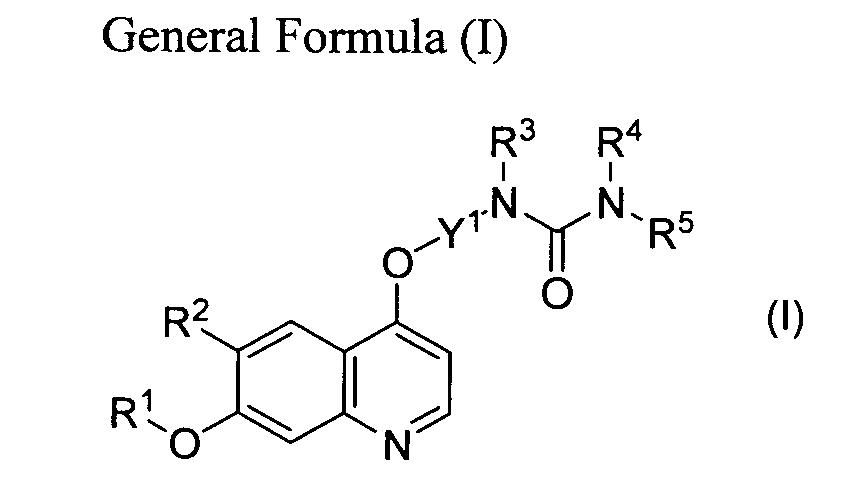
R2 represents a cyano group, an optionally substituted C1-6 alkoxy group, a carboxyl group, an optionally substituted C2-7 alkoxycarbonyl group or a group represented by Formula -CONVa11Va12 (wherein, Va11 represents a hydrogen atom, an optionally substituted C1-6 alkyl group, an optionally substituted C2-6 alkenyl group, an optionally substituted C2-6 alkynyl group, an optionally substituted C3-8 cycloalkyl group, an optionally substituted C6-10 aryl group, an optionally substituted 5-10-membered heteroaryl group or an optionally substituted 3-10-membered nonaromatic heterocyclic group; Va12 represents a hydrogen atom, an optionally substituted C1-6 alkyl group, an optionally substituted C2-6 alkenyl group, an optionally substituted C2-6 alkynyl group, an optionally substituted C3-8 cycloalkyl group, an optionally substituted C6-10 aryl group, an optionally substituted 5-10-membered heteroaryl group, an optionally substituted 3-10-membered nonaromatic heterocyclic group, a hydroxyl group, an optionally substituted C1-6 alkoxy group or an optionally substituted C3-8 cycloalkoxy group);
Y1 represents a group represented by either one of the following formulae
C2-7 acyl group, an optionally substituted C2-7 alkoxycarbonyl group or a group represented by Formula -CONVd1Vd2 (wherein, Vd1 and Vd2 each independently represent a hydrogen atom or an optionally substituted C1-6 alkyl group);
W1 and W2 each independently represent an optionally substituted carbon atom or nitrogen atom);
R3 and R4 each independently represent a hydrogen atom, an optionally substituted C1-6 alkyl group, an optionally substituted C2-6 alkenyl group, an optionally substituted C2-6 alkynyl group, an optionally substituted C3-8 cycloalkyl group, an optionally substituted C2-7 acyl group or an optionally substituted C2-7 alkoxycarbonyl group; and
R5 represents a hydrogen atom, an optionally substituted C1-6 alkyl group, an optionally substituted C2-6 alkenyl group, an optionally substituted C2-6 alkynyl group, an optionally substituted C3-8 cycloalkyl group, an optionally substituted C6-10 aryl group, an optionally substituted 5-10-membered heteroaryl group or an optionally substituted 3-10-membered nonaromatic heterocyclic group]. - [180] A kit used for administration to a living organism comprising at least one selected from the group consisting of a cell overexpressing FGFR2 and a cell expressing mutant FGFR2, the kit characterized by a set of a formulation comprising a compound represented by General Formula (I), a pharmacologically acceptable salt thereof or a solvate thereof and a formulation comprising a therapeutic substance for gastric cancer or a FGFR2 inhibitor:

R2 represents a cyano group, an optionally substituted C1-6 alkoxy group, a carboxyl group, an optionally substituted C2-7 alkoxycarbonyl group or a group represented by Formula -CONVa11Va12 (wherein, Va11 represents a hydrogen atom, an optionally substituted C1-6 alkyl group, an optionally substituted C2-6 alkenyl group, an optionally substituted C2-6 alkynyl group, an optionally substituted C3-8 cycloalkyl group, an optionally substituted C6-10 aryl group, an optionally substituted 5-10-membered heteroaryl group or an optionally substituted 3-10-membered nonaromatic heterocyclic group; Va12 represents a hydrogen atom, an optionally substituted C1-6 alkyl group, an optionally substituted C2-6 alkenyl group, an optionally substituted C2-6 alkynyl group, an optionally substituted C3-8 cycloalkyl group, an optionally substituted C6-10 aryl group, an optionally substituted 5-10-membered heteroaryl group, an optionally substituted 3-10-membered nonaromatic heterocyclic group, a hydroxyl group, an optionally substituted C1-6 alkoxy group or an optionally substituted C3-8 cycloalkoxy group);
Y1 represents a group represented by either one of the following formulae
W1 and W2 each independently represent an optionally substituted carbon atom or nitrogen atom);
R3 and R4 each independently represent a hydrogen atom, an optionally substituted C1-6 alkyl group, an optionally substituted C2-6 alkenyl group, an optionally substituted C2-6 alkynyl group, an optionally substituted C3-8 cycloalkyl group, an optionally substituted C2-7 acyl group or an optionally substituted C2-7 alkoxycarbonyl group; and
R5 represents a hydrogen atom, an optionally substituted C1-6 alkyl group, an optionally substituted C2-6 alkenyl group, an optionally substituted C2-6 alkynyl group, an optionally substituted C3-8 cycloalkyl group, an optionally substituted C6-10 aryl group, an optionally substituted 5-10-membered heteroaryl group or an optionally substituted 3-10-membered nonaromatic heterocyclic group]. - [181] A therapeutic agent for undifferentiated gastric cancer comprising a compound represented by General Formula (I), a pharmacologically acceptable salt thereof or a solvate thereof characterized by administration to a living organism with a therapeutic substance for gastric cancer or a FGFR2 inhibitor:

R2 represents a cyano group, an optionally substituted C1-6 alkoxy group, a carboxyl group, an optionally substituted C2-7 alkoxycarbonyl group or a group represented by Formula -CONVa11Va12 (wherein, Va11 represents a hydrogen atom, an optionally substituted C1-6 alkyl group, an optionally substituted C2-6 alkenyl group, an optionally substituted C2-6 alkynyl group, an optionally substituted C3-8 cycloalkyl group, an optionally substituted C6-10 aryl group, an optionally substituted 5-10-membered heteroaryl group or an optionally substituted 3-10-membered nonaromatic heterocyclic group; Va12 represents a hydrogen atom, an optionally substituted C1-6 alkyl group, an optionally substituted C2-6 alkenyl group, an optionally substituted C2-6 alkynyl group, an optionally substituted C3-8 cycloalkyl group, an optionally substituted C6-10 aryl group, an optionally substituted 5-10-membered heteroaryl group, an optionally substituted 3-10-membered nonaromatic heterocyclic group, a hydroxyl group, an optionally substituted C1-6 alkoxy group or an optionally substituted C3-8 cycloalkoxy group);
Y1 represents a group represented by either one of the following formulae
W1 and W2 each independently represent an optionally substituted carbon atom or nitrogen atom);
R3 and R4 each independently represent a hydrogen atom, an optionally substituted C1-6 alkyl group, an optionally substituted C2-6 alkenyl group, an optionally substituted C2-6 alkynyl group, an optionally substituted C3-8 cycloalkyl group, an optionally substituted C2-7 acyl group or an optionally substituted C2-7 alkoxycarbonyl group; and
R5 represents a hydrogen atom, an optionally substituted C1-6 alkyl group, an optionally substituted C2-6 alkenyl group, an optionally substituted C2-6 alkynyl group, an optionally substituted C3-8 cycloalkyl group, an optionally substituted C6-10 aryl group, an optionally substituted 5-10-membered heteroaryl group or an optionally substituted 3-10-membered nonaromatic heterocyclic group]. - [182] A pharmaceutical composition for administration to a living organism comprising at least one selected from the group consisting of a cell overexpressing FGFR2 and a cell expressing mutant FGFR2, the pharmaceutical composition comprising a compound represented by General Formula (I), a pharmacologically acceptable salt thereof or a solvate thereof characterized by administration to the living organism with a therapeutic substance for gastric cancer or a FGFR2 inhibitor:

R2 represents a cyano group, an optionally substituted C1-6 alkoxy group, a carboxyl group, an optionally substituted C2-7 alkoxycarbonyl group or a group represented by Formula -CONVa11Va12 (wherein, Va11 represents a hydrogen atom, an optionally substituted C1-6 alkyl group, an optionally substituted C2-6 alkenyl group, an optionally substituted C2-6 alkynyl group, an optionally substituted C3-8 cycloalkyl group, an optionally substituted C6-10 aryl group, an optionally substituted 5-10-membered heteroaryl group or an optionally substituted 3-10-membered nonaromatic heterocyclic group; Va12 represents a hydrogen atom, an optionally substituted C1-6 alkyl group, an optionally substituted C2-6 alkenyl group, an optionally substituted C2-6 alkynyl group, an optionally substituted C3-8 cycloalkyl group, an optionally substituted C6-10 aryl group, an optionally substituted 5-10-membered heteroaryl group, an optionally substituted 3-10-membered nonaromatic heterocyclic group, a hydroxyl group, an optionally substituted C1-6 alkoxy group or an optionally substituted C3-8 cycloalkoxy group);
Y1 represents a group represented by either one of the following formulae
W1 and W2 each independently represent an optionally substituted carbon atom or nitrogen atom);
R3 and R4 each independently represent a hydrogen atom, an optionally substituted C1-6 alkyl group, an optionally substituted C2-6 alkenyl group, an optionally substituted C2-6 alkynyl group, an optionally substituted C3-8 cycloalkyl group, an optionally substituted C2-7 acyl group or an optionally substituted C2-7 alkoxycarbonyl group; and
R5 represents a hydrogen atom, an optionally substituted C1-6 alkyl group, an optionally substituted C2-6 alkenyl group, an optionally substituted C2-6 alkynyl group, an optionally substituted C3-8 cycloalkyl group, an optionally substituted C6-10 aryl group, an optionally substituted 5-10-membered heteroaryl group or an optionally substituted 3-10-membered nonaromatic heterocyclic group]. - According to (1) to (42) and [1] to [182] above, a compound represented by General Formula (I), a pharmacologically acceptable salt thereof or a solvate thereof is as follows. A compound represented by:

R2 represents a cyano group, an optionally substituted C1-6 alkoxy group, a carboxyl group, an optionally substituted C2-7 alkoxycarbonyl group or a group represented by Formula -CONVa11Va12 (wherein, Va11 represents a hydrogen atom, an optionally substituted C1-6 alkyl group, an optionally substituted C2-6 alkenyl group, an optionally substituted C2-6 alkynyl group, an optionally substituted C3-8 cycloalkyl group, an optionally substituted C6-10 aryl group, an optionally substituted 5-10-membered heteroaryl group or an optionally substituted 3-10-membered nonaromatic heterocyclic group; Va12 represents a hydrogen atom, an optionally substituted C1-6 alkyl group, an optionally substituted C2-6 alkenyl group, an optionally substituted C2-6 alkynyl group, an optionally substituted C3-8 cycloalkyl group, an optionally substituted C6-10 aryl group, an optionally substituted 5-10-membered heteroaryl group, an optionally substituted 3-10-membered nonaromatic heterocyclic group, a hydroxyl group, an optionally substituted C1-6 alkoxy group or an optionally substituted C3-8 cycloalkoxy group);
Y1 represents a group represented by either one of the following formulae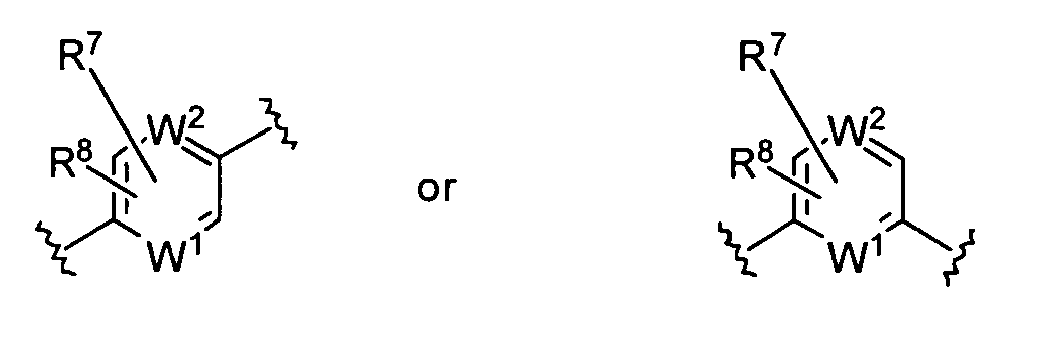
W1 and W2 each independently represent an optionally substituted carbon atom or nitrogen atom);
R3 and R4 each independently represent a hydrogen atom, an optionally substituted C1-6 alkyl group, an optionally substituted C2-6 alkenyl group, an optionally substituted C2-6 alkynyl group, an optionally substituted C3-8 cycloalkyl group, an optionally substituted C2-7 acyl group or an optionally substituted C2-7 alkoxycarbonyl group; and
R5 represents a hydrogen atom, an optionally substituted C1-6 alkyl group, an optionally substituted C2-6 alkenyl group, an optionally substituted C2-6 alkynyl group, an optionally substituted C3-8 cycloalkyl group, an optionally substituted C6-10 aryl group, an optionally substituted 5-10-membered heteroaryl group or an optionally substituted 3-10-membered nonaromatic heterocyclic group],
a pharmacologically acceptable salt thereof or a solvate thereof. - Furthermore, according to (1) to (42) above, the therapeutic substance for gastric cancer may be at least one selected from the group consisting of irinotecan, paclitaxel, carboquone, nimustine, 5-fluorouracil, tegafur, UFT, doxifluridine, carmofur, S-1, doxorubicin (Adriamycin), mitomycin C, aclarubicin, pirarubicin, epirubicin, docetaxel and cis-platinum (Cisplastin). A preferable therapeutic substance for gastric cancer is irinotecan, 5-fluorouracil or paclitaxel.
- Moreover, according to (1) to (42) above, the FGFR2 inhibitor may comprise, for example, a compound that is not comprised in compounds represented by General Formula (I), and may include at least one compound selected from the group consisting of:
- N-(3-trifluoromethyl-4-chlorophenyl)-N'-(4-(2-methylcarbamoylpyridine-4-yl)oxyphenyl)urea (BAY 43-9006);
- 6-[2-(methylcarbamoyl)phenylsulfanyl]-3-E-[2-(pyridine-2-yl)ethenyl]indazole (AG013736);
- 5-(5-fluoro-2-oxo-1,2-dihydroindole-3-ylidenemethyl)-2,4-dimethyl-1H-pyrrole-3-carboxylic acid(2-diethylaminoethyl)amide (SU11248); and
- N-{2-chloro-4-[(6,7-dimethoxy-4-quinolyl)oxy]phenyl}-N'-(5-methyl-3-isoxazolyl)urea (KRN951),
- The present invention provides a therapeutic agent, a kit and a therapeutic method for undifferentiated gastric cancer that show an excellent anti-tumor activity, use of a FGFR2 inhibitor for producing the therapeutic agent and a FGFR2 inhibitor for the therapeutic agent.
- More specifically, there is provided a therapeutic agent, a kit and a therapeutic method for undifferentiated gastric cancer that show an excellent anti-tumor activity and that can be used for treating undifferentiated gastric cancer by combining:
- (i) a FGFR2 inhibitor such as a compound represented by General Formula (I) and a therapeutic substance for gastric cancer;
- (ii) a FGFR2 inhibitor such as a compound represented by General Formula (I) and a FGFR2 inhibitor that is not comprised in the compounds represented by General Formula (I); or
- (iii) a FGFR2 inhibitor such as a FGFR2 inhibitor that is not comprised in the compounds represented by General Formula (I) and a therapeutic substance for gastric cancer.
- The present invention also provides a pharmaceutical composition and a kit for administration to a living organism comprising at least one selected from the group consisting of a cell overexpressing FGFR2 and a cell expressing mutant FGFR2, a method for treating a disease of the living organism, use of a FGFR2 inhibitor for producing the pharmaceutical composition and a FGFR2 inhibitor for the pharmaceutical composition.
- More specifically, there is provided a pharmaceutical composition, a kit and a therapeutic method for the living organism, which show an excellent anti-tumor activity and that can be used for treating a disease by combining:
- (i) a FGFR2 inhibitor such as a compound represented by General Formula (I) and a therapeutic substance for gastric cancer;
- (ii) a FGFR2 inhibitor such as a compound represented by General Formula (I) and a FGFR2 inhibitor that is not comprised in the compounds represented by General Formula (I); or
- (iii) a FGFR2 inhibitor such as a FGFR2 inhibitor that is not comprised in the compounds represented by General Formula (I) and a therapeutic substance for gastric cancer.
-
-
Figure 1 shows the effect of combination use of 4-(3-chloro-4-(cyclopropylaminocarbonyl)aminophenoxy)-7-methoxy-6-quinolinecarboxamide (Compound A) (3 mg/kg) and irinotecan hydrochloride (100 mg/kg) on suppression of tumor growth in subcutaneous transplanted (xenograft) models (in vivo) of human scirrhous gastric cancer cell line (HSC-39). -
Figure 2 shows the effect of combination use of 4-(3-chloro-4-(cyclopropylaminocarbonyl)aminophenoxy)-7-methoxy-6-quinolinecarboxamide (Compound A) (10 mg/kg) and irinotecan hydrochloride (100 mg/kg) on suppression of tumor growth in subcutaneous transplanted (xenograft) models (in vivo) of human scirrhous gastric cancer cell line (HSC-39). -
Figure 3 shows the effect of combination use of 4-(3-chloro-4-(cyclopropylaminocarbonyl)aminophenoxy)-7-methoxy-6-quinolinecarboxamide (Compound A) (30 mg/kg) and irinotecan hydrochloride (100 mg/kg) on suppression of tumor growth in subcutaneous transplanted (xenograft) models (in vivo) of human scirrhous gastric cancer cell line (HSC-39). -
Figure 4 shows the effect of combination use of 4-(3-chloro-4-(cyclopropylaminocarbonyl)aminophenoxy)-7-methoxy-6-quinolinecarboxamide (Compound A) (3 mg/kg) and 5-fluorouracil (50 mg/kg) on suppression of tumor growth in subcutaneous transplanted (xenograft) models (in vivo) of human scirrhous gastric cancer cell line (HSC-39). -
Figure 5 shows the effect of combination use of 4-(3-chloro-4-(cyclopropylaminocarbonyl)aminophenoxy)-7-methoxy-6-quinolinecarboxamide (Compound A) (10 mg/kg) and 5-fluorouracil (50 mg/kg) on suppression of tumor growth in subcutaneous transplanted (xenograft) models (in vivo) of human scirrhous gastric cancer cell line (HSC-39). -
Figure 6 shows the effect of combination use of 4-(3-chloro-4-(cyclopropylaminocarbonyl)aminophenoxy)-7-methoxy-6-quinolinecarboxamide (Compound A) (30 mg/kg) and 5-fluorouracil (50 mg/kg) on suppression of tumor growth in subcutaneous transplanted (xenograft) models (in vivo) of human scirrhous gastric cancer cell line (HSC-39). -
Figure 7 shows the effect of combination use of 4-(3-chloro-4-(cyclopropylaminocarbonyl)aminophenoxy)-7-methoxy-6-quinolinecarboxamide (Compound A) (3 mg/kg) and paclitaxel (14 mg/kg) on suppression of tumor growth in subcutaneous transplanted (xenograft) models (in vivo) of human scirrhous gastric cancer cell line (HSC-39). -
Figure 8 shows the effect of combination use of 4-(3-chloro-4-(cyclopropylaminocarbonyl)aminophenoxy)-7-methoxy-6-quinolinecarboxamide (Compound A) (10 mg/kg) and paclitaxel (14 mg/kg) on suppression of tumor growth in subcutaneous transplanted (xenograft) models (in vivo) of human scirrhous gastric cancer cell line (HSC-39). -
Figure 9 shows the effect of combination use of 4-(3-chloro-4-(cyclopropylaminocarbonyl)aminophenoxy)-7-methoxy-6-quinolinecarboxamide (Compound A) (30 mg/kg) and paclitaxel (14 mg/kg) on suppression of tumor growth in subcutaneous transplanted (xenograft) models (in vivo) of human scirrhous gastric cancer cell line (HSC-39). - Hereinafter, embodiments of the present invention will be described. The following embodiments are examples provided for illustrating the present invention, and the present invention is not intended to be limited thereto. The present invention may be carried out in various embodiments without departing from the spirit of the invention.
- The publications, laid-open patent publications, patent publications and other patent documents cited herein are incorporated herein by reference. The present specification incorporates the disclosure of
U.S. provisional application No. 60/887,006 (filed on 29 January, 2007 - According to the present invention, FGFR2 comprises a polypeptide including an amino acid sequence identical or substantially identical to the amino acid sequence represented by SEQ ID NO:2 (GenBank Accession No:NM_022970) or to the amino acids 22-822 of the amino acid sequence represented by SEQ ID NO:2. The polypeptide including the amino acid sequence represented by SEQ ID NO:2 is coded, for example, by a polynucleotide including the base sequence represented by SEQ ID NO:1. Usually, processing of the polypeptide comprising the amino acid sequence represented by SEQ ID NO:2 yields a mature form.
- Examples of a polypeptide having an amino acid sequence substantially identical to the amino acid sequence (amino acids 22-822) represented by SEQ ID NO:2 include those selected from the group consisting of (a) to (d) below:
- (a) a polypeptide comprising the amino acid sequence (amino acids 22-822) represented by SEQ ID NO:2;
- (b) a polypeptide comprising an amino acid sequence having one or more (e.g., one or a few) amino acids deleted, substituted or added, or mutated by a combination thereof in the amino acid sequence (amino acids 22-822) represented by SEQ ID NO:2, and having substantially the same activity as FGFR2;
- (c) a polypeptide encoded by a polynucleotide that hybridizes with a polynucleotide having a base sequence complementary to the base sequence represented by SEQ ID NO:1 under stringent conditions, and having substantially the same activity as FGFR2; and
- (d) a polypeptide having an amino acid sequence having 90% or higher, preferably about 95% or higher and more preferably about 98% or higher identity (also referred to as "homology") to the amino acid sequence (amino acids 22-822) represented by SEQ ID NO:2, and having substantially the same activity as FGFR2.
- Herein, the phrase "having substantially the same activity as FGFR2" means that at least one of the intracellular signals caused by ligand (e.g., FGF) binding is identical to one of the signals of a protein having the amino acid sequence (amino acids 22-822) represented by SEQ ID NO:2, and that the activation level of the intracellular signal is comparable to that of the protein having the amino acid sequence (amino acids 22-822) represented by SEQ ID NO:2. Furthermore, the term "comparable" means, for example, that the activation level of the intracellular signal caused by ligand (e.g., FGF) binding is at least 10%, preferably at least 30% of the activation level of the intracellular signal of a protein having the amino acid sequence (amino acids 22-822) represented by SEQ ID NO:2, which can be referred to as substantially the same activity. Examples of intracellular signals caused by ligand binding include: FGFR2 phosphorylation; Raf, MEK, ERK1 and ERK2 phosphorylation owing to FGFR2 phosphorylation; phosphorylation of
phosphatidylinositol 3 kinase; Akt phosphorylation; phosphorylation of phospholipase-C-γ; increase ininositol 1,4,5-trisphosphate (IP3); and increase in diacylglycerol (DAG). - The activity of an intracellular signal caused by ligand binding can be measured by a conventional method such as immunoprecipitation method and western blotting.
- Examples of amino acid sequences having one or more (e.g., one or a few) amino acids deleted, substituted or added, or mutated by a combination thereof in the amino acid sequence (amino acids 22-822) represented by SEQ ID NO:2 include:
- (i) an amino acid sequence having 1-9 (e.g., 1-5, preferably 1-3, more preferably 1-2 and still more preferably one) amino acids deleted from the amino acid sequence (amino acids 22-822) represented by SEQ ID NO:2;
- (ii) an amino acid sequence having 1-9 (e.g., 1-5, preferably 1-3, more preferably 1-2 and still more preferably one) amino acids added to the amino acid sequence (amino acids 22-822) represented by SEQ ID NO:2;
- (iii) an amino acid sequence having 1-9 (e.g., 1-5, preferably 1-3, more preferably 1-2 and still more preferably one) amino acids substituted with other amino acids in the amino acid sequence (amino acids 22-822) represented by SEQ ID NO:2; and
- (iv) an amino acid sequence mutated by a combination of (i) to (iii) above.
- As used herein, "deletion" of an amino acid refers to a mutation where one or more amino acid residues in the sequence are deleted, including deletion of amino acid residues from the end of the amino acid sequence and deletion in the middle of the amino acid sequence.
- As used herein, "addition" of an amino acid refers to a mutation where one or more amino acid residues are added to the sequence, including addition of amino acid residues to the end of the amino acid sequence and addition in the middle of the amino acid sequence. Addition in the middle of the sequence may also be referred to as "insertion".
- As used herein, "substitution" of an amino acid refers to a mutation where one or more amino acid residues in the sequence are substituted with different types of amino acid residues. When the amino acid sequence of FGFR2 is modified by such substitution, conservative substitution is preferable in order to retain the function of a protein. Conservative substitution means to alter a sequence to code an amino acid having similar property to the original amino acid. The property of amino acids can be classified, for example, into nonpolar amino acids (Ala, Ile, Leu, Met, Phe, Pro, Trp, Val), uncharged amino acids (Asn, Cys, Gln, Gly, Ser, Thr, Tyr), acidic amino acids (Asp, Glu), basic amino acids (Arg, His, Lys), neutral amino acids (Ala, Asn, Cys, Gln, Gly, Ile, Leu, Met, Phe, Pro, Ser, Thr, Trp, Tyr, Val), aliphatic amino acids (Ala, Gly), branched amino acids (Ile, Leu, Val), hydroxyamino acids (Ser, Thr), amide amino acids (Gln, Asn), sulfur-containing amino acids (Cys, Met), aromatic amino acids (His, Phe, Trp, Tyr), heterocyclic amino acids (His, Trp), imino acids (Pro, 4Hyp) and the like.
- Thus, substitution, for example, between nonpolar amino acids or between uncharged amino acids, is preferable, among which, substitutions between Ala, Val, Leu and Ile, between Ser and Thr, between Asp and Glu, between Asn and GIn, between Lys and Arg, and between Phe and Tyr are favorable as substitution that retains the property of the protein. There is no limitation as to the number and the site of the amino acid to be mutated.
- An example of a polypeptide having substantially the same amino acid sequence as the amino acid sequence (amino acids 22-822) represented by SEQ ID NO:2 includes a polypeptide encoded by a polynucleotide that hybridizes with a polynucleotide having a base sequence complementary to the base sequence represented by SEQ ID NO:1 under stringent conditions, and having substantially the same activity as FGFR2 as described above.
- Herein, specific examples of polynucleotides that hybridize under stringent conditions include polynucleotides including base sequences having at least 90% or higher, preferably 95% or higher, more preferably 97% or higher, more preferably 98% or higher, or still more preferably 99% or higher identity with the base sequence represented by SEQ ID NO:1 when calculated using homology search software such as FASTA, BLAST, Smith-Waterman [Meth. Enzym., 164, 765 (1988)] with default (initial setting) parameters. Examples of such stringent conditions include "2 x SSC, 0.1% SDS, 50°C", "2 x SSC, 0.1% SDS, 42°C," and "1 x SSC, 0.1% SDS, 37°C", and for higher stringent conditions "2 x SSC, 0.1% SDS, 65°C," "0.5 x SSC, 0.1% SDS, 42°C," and "0.2 x SSC, 0.1% SDS, 65°C".
- Hybridization can be carried out according to a known method. When a commercially available library is used, hybridization may be carried out according to the method described in the attached instruction.
- Examples of polynucleotides that hybridize with a polynucleotide having a base sequence complementary to the base sequence represented by SEQ ID NO:1 under stringent conditions include polynucleotides comprising a base sequence having 90% or higher, preferably 95% or higher and more preferably 98% or higher identity with the base sequence represented by SEQ ID NO:1.
- Examples of polynucleotides that hybridize with a polynucleotide having a base sequence complementary to the base sequence represented by SEQ ID NO:1 under stringent conditions include base sequences having one or more (e.g., one or several) nucleic acids mutated, for example, deleted, substituted or added in the base sequence represented by SEQ ID NO:1.
- Examples of polynucleotides that hybridize with a polynucleotide having a base sequence complementary to the base sequence represented by SEQ ID NO:1 under stringent conditions include:
- (i) a base sequence having 1-9 (e.g., 1-5, preferably 1-3, more preferably 1-2 and still more preferably one) nucleic acids deleted from the base sequence represented by SEQ ID NO:1;
- (ii) a base sequence having 1-9 (e.g., 1-5, preferably 1-3, more preferably 1-2 and still more preferably one) nucleic acids added to the base sequence represented by SEQ ID NO:1;
- (iii) a base sequence having 1-9 (e.g., 1-5, preferably 1-3, more preferably 1-2 and still more preferably one) nucleic acids substituted with other nucleic acids in the base sequence represented by SEQ ID NO:1; and
- (iv) a base sequence mutated by a combination of (i) to (iii) above.
- Herein, the term "identity" (also referred to as "homology") of an amino acid sequence is used to indicate the degree of consistency of amino acid residues between the sequences to be compared. In order to calculate identity of a given amino acid sequence to an amino acid sequence to be compared, the presence of gaps and the property of the amino acids are considered (Wilbur, Natl. Acad. Sci. U.S.A. 80:726-730 (1983)). For the calculation of identity, a commercially available software BLAST (Altschul: J. Mol. Biol. 215:403-410 (1990)), FASTA (Peasron: Methods in Enzymology 183:63-69 (1990)) or the like can be used.
- The "identity" value may be any value as long as it is obtained by using a homology search program known to those skilled in the art. For example, for such calculation, the default (initial setting) parameters can be used in homology algorithm BLAST (Basic local alignment search tool) http://www.ncbi.nlm.nih.gov/BLAST/ of the National Center for Biotechnology Information (NCBI).
- According to the present invention, FGFR2 comprises mutant FGFR2 described below.
- According to the present invention, a cell overexpressing FGFR2 comprises, for example, a cell expressing FGFR2 for a significant amount as compared to a normal cell. In addition, according to the present invention, a cell overexpressing FGFR2 comprises, for example, a cell expressing FGFR2 for at least 1.5 times higher, preferably at least 2 times higher, more preferably at least 3 times higher, still more preferably at least 4 times higher than a normal cell. Herein, according to the invention, a "normal cell" refers to, for example, cells other than cancer (e.g., undifferentiated gastric cancer) cells.
- According to the present invention, a cell overexpressing FGFR2 is preferably undifferentiated gastric cancer cell, more preferably at least one cell selected from the group consisting of poorly differentiated adenocarcinoma, signet-ring cell carcinoma, mucinous carcinoma and scirrhous gastric cancer.
- An expression level of FGFR2 may be analyzed, for example, by measuring the protein and/or the mRNA of FGFR2 expressed in the cell.
- Protein can be measured, for example, by an immunochemical method (e.g., immunohistochemistry method, immunoprecipitation, western blotting, flow cytometry, ELISA, RIA, etc.), mass spectrometry or the like, preferably an immunochemical method, particularly preferably flow cytometry. These methods may be carried out according to conventional techniques.
- On the other hand, mRNA can be measured, for example, by a method such as in situ hybridization, northern blot analysis, DNA microarray, RT-PCR, quantitative RT-PCR or the like, preferably RT-PCR or quantitative RT-PCR. These methods may be carried out according to conventional techniques.
- According to the present invention, mutant FGFR2 comprises polypeptides comprising an amino acid sequence having one or a few amino acids deleted, substituted or added, or mutated by a combination thereof in a wild-type FGFR2 amino acid sequence such as the amino acid sequence (amino acids 22-822) represented by SEQ ID NO:2. Preferably, the mutant FGFR2 comprises polypeptides comprising an amino acid sequence having one or a few amino acids deleted, substituted or added, or mutated by a combination thereof in a wild-type FGFR2 amino acid sequence such as the amino acid sequence (amino acids 22-822) represented by SEQ ID NO:2, and having substantially the same activity as FGFR2. According to the present invention, a cell expressing mutant FGFR2 comprises cells expressing the above-mentioned polypeptides.
- Examples of mutant FGFR2 include polypeptides comprising an amino acid sequence where serine at position 267 of the amino acid sequence (amino acids 22-822) represented by SEQ ID NO:2 is substituted by other amino acid, preferably proline (Cancer Research. 61, 3541-3543, 2001).
- In addition, examples of mutant FGFR2 include polypeptides comprising a mutation site where a few amino acids at C-terminal are deleted in an amino acid sequence of wild-type FGFR2 such as amino acids 22-822 of the amino acid sequence represented by SEQ ID NO:2. Examples of mutant FGFR2 include polypeptides comprising an amino acid sequence where amino acids downstream from at least position 813, preferably at least position 784, more preferably at least position 780, and still more preferably at least position 769 are deleted from the amino acid sequence (amino acids 22-822) represented by SEQ ID NO:2.
- Preferably, mutant FGFR2 is activating mutant FGFR2. Activating mutant FGFR2 refers to mutant FGFR2 that causes autophosphorylation in a ligand-independent manner and that activates intracellular signals.
- The presence or the absence of FGFR2 mutation can be determined by analyzing the gene sequence of FGFR2 or the sequence of the transcript, i.e., mRNA, of FGFR2. An example of the method for analyzing a sequence includes dideoxynucleotide chain termination technique (Sanger et al., (1977) Proc. Natl. Acad. Sci. USA 74:5463). A sequence can also be analyzed by employing an appropriate DNA sequencer.
- Furthermore, the presence or the absence of FGFR2 mutation can be analyzed, for example, by in situ hybridization, northern blot analysis, DNA microarray, RT-PCR, SSCP-PCR (Single-Strand Conformation Polymorphism-PCR) or the like. These methods may be carried out according to conventional techniques.
- The presence or the absence of FGFR2 mutation can be analyzed, for example, by an immunochemical method (e.g., an immunohistochemistry method, immunoprecipitation, western blotting, flow cytometry, ELISA, RIA, etc.). These methods may be carried out according to conventional techniques.
- According to the present invention, a cell expressing mutant FGFR2 is preferably an undifferentiated gastric cancer cell, more preferably at least one cell selected from the group consisting of poorly differentiated adenocarcinoma, signet-ring cell carcinoma, mucinous carcinoma and a scirrhous gastric cancer.
- Herein, a "halogen atom" refers to a fluorine atom, a chlorine atom, a bromine atom or an iodine atom.
- Preferable examples of a "halogen atom" include a fluorine atom and a chlorine atom.
- Herein, a "C1-6 alkyl group" refers to a linear or branched alkyl group with a carbon number of 1-6, specific examples including a methyl group, an ethyl group, a 1-propyl group (n-propyl group), a 2-propyl group (i-propyl group), a 2-methyl-1-propyl group (i-butyl group), a 2-methyl-2-propyl group (t-butyl group), a 1-butyl group (n-butyl group), a 2-butyl group (s-butyl group), a 1-pentyl group, a 2-pentyl group, a 3-pentyl group, a 2-methyl-1-butyl group, a 3-methyl-1-butyl group, a 2-methyl-2-butyl group, a 3-methyl-2-butyl group, a 2,2-dimethyl-1-propyl group, a 1-hexyl group, a 2-hexyl group, a 3-hexyl group, a 2-methyl-1-pentyl group, a 3-methyl-1-pentyl group, a 4-methyl-1-pentyl group, a 2-methyl-2-pentyl group, a 3-methyl-2-pentyl group, a 4-methyl-2-pentyl group, a 2-methyl-3-pentyl group, a 3-methyl-3-pentyl group, a 2,3-dimethyl-1-butyl group, a 3,3-dimethyl-1-butyl group, a 2,2-dimethyl-1-butyl group, a 2-ethyl-1-butyl group, a 3,3-dimethyl-2-butyl group and a 2,3-dimethyl-2-butyl group.
- Preferable examples of a "C1-6 alkyl group" include a methyl group, an ethyl group, a 1-propyl group, a 2-propyl group, a 2-methyl-1-propyl group, a 2-methyl-2-propyl group, a 1-butyl group and a 2-butyl group.
- Herein, a "C1-6 alkylene group" refers to a divalent group derived from a "C1-6 alkyl group" defined above by removing any one hydrogen atom therefrom, specific examples including a methylene group, a 1,2-ethylene group, a 1,1-ethylene group, a 1,3-propylene group, a tetramethylene group, a pentamethylene group and a hexamethylene group.
- Herein, a "C2-6 alkenyl group" refers to a linear or branched alkenyl group having one double bond and a carbon number of 2-6, specific examples including an ethenyl group (vinyl group), a 1-propenyl group, a 2-propenyl group (allyl group), a 1-butenyl group, a 2-butenyl group, a 3-butenyl group, a pentenyl group and a hexenyl group.
- Herein, a "C2-6 alkynyl group" refers to a linear or branched alkynyl group having one triple bond and a carbon number of 2-6, specific examples including an ethinyl group, a 1-propynyl group, a 2-propynyl group, a 1-butynyl group, a 2-butynyl group, a 3-butynyl group, a pentynyl group and a hexynyl group.
- Herein, a "C3-8 cycloalkyl group" refers to a monocyclic or bicyclic saturated aliphatic hydrocarbon group with a carbon number of 3-8, specific examples including a cyclopropyl group, a cyclobutyl group, a cyclopentyl group, a cyclohexyl group, a cycloheptyl group, a cyclooctyl group, a bicyclo[2. 1. 0]pentyl group, a bicyclo[3. 1. 0]hexyl group, a bicyclo[2. 1. 1]hexyl group, a bicyclo[4. 1. 0]heptyl group, a bicyclo[2. 2. 1]heptyl group (norbornyl group), a bicyclo[3. 3. 0]octyl group, a bicyclo[3. 2. 1]octyl group and a bicyclo[2. 2. 2]octyl group.
- Preferable examples of a "C3-8 cycloalkyl group" include a cyclopropyl group, a cyclobutyl group and a cyclopentyl group.
- Herein, a "C6-10 aryl group" refers to an aromatic hydrocarbon cyclic group with a carbon number of 6-10, specific examples including a phenyl group, a 1-naphthyl group, a 2-naphthyl group, an indenyl group and an azulenyl group.
- A preferable example of a"C6-10 aryl group" includes a phenyl group.
- Herein, a "heteroatom" refers to a nitrogen atom, an oxygen atom or a sulfur atom.
- Herein, a "5-10-membered heteroaryl group" refers to an aromatic cyclic group having 5-10 atoms forming the ring and 1-5 heteroatoms included in the atoms forming the ring, specific examples including a furyl group, a thienyl group, a pyrrolyl group, an imidazolyl group, a triazolyl group, a tetrazolyl group, a thiazolyl group, a pyrazolyl group, an oxazolyl group, an isoxazolyl group, an isothiazolyl group, a furazanyl group, a thiadiazolyl group, an oxadiazolyl group, a pyridyl group, a pyrazinyl group, a pyridazinyl group, a pyrimidinyl group, a triazinyl group, a purinyl group, a pteridinyl group, a quinolyl group, an isoquinolyl group, a naphthiridinyl group, a quinoxalinyl group, a cinnolinyl group, a quinazolinyl group, a phthalazinyl group, an imidazopyridyl group, an imidazothiazolyl group, an imidazoxazolyl group, a benzothiazolyl group, a benzoxazolyl group, a benzimidazolyl group, an indolyl group, an isoindolyl group, an indazolyl group, a pyrrolopyridyl group, a thienopyridyl group, a furopyridyl group, a benzothiadiazolyl group, a benzoxadiazolyl group, a pyridopyrimidinyl group, a benzofuryl group, a benzothienyl group and a thienofuryl group.
- Preferable examples of a "5-10-membered heteroaryl group" include a furyl group, a thienyl group, a pyrrolyl group, an imidazolyl group, a thiazolyl group, a pyrazolyl group, an oxazolyl group, an isoxazolyl group, an isothiazolyl group, a pyridyl group and a pyrimidinyl group.
- Herein, a "3-10-membered nonaromatic heterocyclic group":
- (a) has 3-10 atoms forming the ring;
- (b) has 1-2 heteroatoms included in the atoms forming the ring;
- (c) may include 1-2 double bonds in the ring;
- (d) may include 1-3 carbonyl groups, sulfinyl groups or sulfonyl groups in the ring; and
- (e) is a nonaromatic monocyclic or bicyclic group where when a nitrogen atom is included in the atoms forming the ring, the nitrogen atom may have a chemical bond.
- Specific examples include an aziridinyl group, an azetidinyl group, a pyrrolidinyl group, a piperidinyl group, an azepanyl group, an azocanyl group, a piperazinyl group, a diazepanyl group, a diazocanyl group, a diazabicyclo[2. 2. 1]heptyl group, a morpholinyl group, a thiomorpholinyl group, a 1,1-dioxothiomorpholinyl group, an oxiranyl group, an oxetanyl group, a tetrahydrofuryl group, a dioxoranyl group, a tetrahydropyranyl group, a dioxanyl group, a tetrahydrothienyl group, a tetrahydrothiopyranyl group, an oxazolidinyl group and a thiazolidinyl group.
- Preferable examples of a "3-10-membered nonaromatic heterocyclic group" include an aziridinyl group, an azetidinyl group, a pyrrolidinyl group, a piperidinyl group, an azepanyl group, a piperazinyl group, a diazepanyl group, a morpholinyl group, a thiomorpholinyl group, a 1,1-dioxothiomorpholinyl group, a tetrahydrofuryl group and a tetrahydropyranyl group.
- Herein, a "C1-6 alkoxy group" refers to a group in which an oxygen atom is bound to the terminal of a "C1-6 alkyl group" defined above, specific examples including a methoxy group, an ethoxy group, a 1-propoxy group (n-propoxy group), a 2-propoxy group (i-propoxy group), a 2-methyl-1-propoxy group (i-butoxy group), a 2-methyl-2-propoxy group (t-butoxy group), a 1-butoxy group (n-butoxy group), a 2-butoxy group (s-butoxy group), a 1-pentyloxy group, a 2-pentyloxy group, a 3-pentyloxy group, a 2-methyl-1-butoxy group, a 3-methyl-1-butoxy group, a 2-methyl-2-butoxy group, a 3-methyl-2-butoxy group, a 2,2-dimethyl-1-propoxy group, a 1-hexyloxy group, a 2-hexyloxy group, a 3-hexyloxy group, a 2-methyl-1-pentyloxy group, a 3-methyl-1-pentyloxy group, a 4-methyl-1-pentyloxy group, a 2-methyl-2-pentyloxy group, a 3-methyl-2-pentyloxy group, a 4-methyl-2-pentyloxy group, a 2-methyl-3-pentyloxy group, a 3-methyl-3-pentyloxy group, a 2,3-dimethyl-1-butoxy group, a 3,3-dimethyl-1-butoxy group, a 2,2-dimethyl-1-butoxy group, a 2-ethyl-1-butoxy group, a 3,3-dimethyl-2-butoxy group and a 2,3-dimethyl-2-butoxy group.
- Preferable examples of a"C1-6 alkoxy group" include a methoxy group, an ethoxy group, a 1-propoxy group, a 2-propoxy group, a 2-methyl-1-propoxy group, a 2-methyl-2-propoxy group, a 1-butoxy group and a 2-butoxy group.
- Herein, a "C1-6 alkylthio group" refers to a group in which a sulfur atom is bound to the terminal of a"C1-6 alkyl group" defined above, specific examples including a methylthio group, an ethylthio group, a 1-propylthio group (n-propylthio group), a 2-propylthio group (i-propylthio group), a 2-methyl-1-propylthio group (i-butylthio group), a 2-methyl-2-propylthio group (t-butylthio group), a 1-butylthio group (n-butylthio group), a 2-butylthio group (s-butylthio group), a 1-pentylthio group, a 2-pentylthio group, a 3-pentylthio group, a 2-methyl-1-butylthio group, a 3-methyl-1-butylthio group, a 2-methyl-2-butylthio group, a 3-methyl-2-butylthio group, a 2,2-dimethyl-1-propylthio group, a 1-hexylthio group, a 2-hexylthio group, a 3-hexylthio group, a 2-methyl-1-pentylthio group, a 3-methyl-1-pentylthio group, a 4-methyl-1-pentylthio group, a 2-methyl-2-pentylthio group, a 3-methyl-2-pentylthio group, a 4-methyl-2-pentylthio group, a 2-methyl-3-pentylthio group, a 3-methyl-3-pentylthio group, a 2,3-dimethyl-1-butylthio group, a 3,3-dimethyl-1-butylthio group, a 2,2-dimethyl-1-butylthio group, a 2-ethyl-1-butylthio group, a 3,3-dimethyl-2-butylthio group and a 2,3-dimethyl-2-butylthio group.
- Preferable examples of a "C1-6 alkylthio group" include a methylthio group, an ethylthio group, a 1-propylthio group (n-propylthio group), a 2-propylthio group (i-propylthio group), a 2-methyl-1-propylthio group (i-butylthio group), a 2-methyl-2-propylthio group (t-butylthio group), a 1-butylthio group (n-butylthio group) and a 2-butylthio group (s-butylthio group).
- Herein, a "C3-8 cycloalkoxy group" refers to a group in which an oxygen atom is bound to the terminal of a "C3-8 cycloalkyl group" defined above, specific examples including a cyclopropoxy group, a cyclobutoxy group, a cyclopentyloxy group, a cyclohexyloxy group, a cycloheptyloxy group, a cyclooctyloxy group, a bicyclo[2. 1. 0]pentyloxy group, a bicyclo[3. 1. 0]hexyloxy group, a bicyclo[2. 1. 1]hexyloxy group, a bicyclo[4. 1. 0]heptyloxy group, a bicyclo[2. 2. 1]heptyloxy group (norbornyloxy group), a bicyclo[3. 3. 0]octyloxy group, a bicyclo[3. 2. 1]octyloxy group and a bicyclo[2. 2. 2]octyloxy group.
- Preferable examples of a "C3-8 cycloalkoxy group" include a cyclopropoxy group, a cyclobutoxy group and a cyclopentyloxy group.
- Herein, a "mono-C1-6 alkylamino group" refers to a group in which a hydrogen atom in an amino group is substituted with a "C1-6 alkyl group" defined above, specific examples including a methylamino group, an ethylamino group, a 1-propylamino group (n-propylamino group), a 2-propylamino group (i-propylamino group), a 2-methyl-1-propylamino group (i-butylamino group), a 2-methyl-2-propylamino group (t-butylamino group), a 1-butylamino group (n-butylamino group), a 2-butylamino group (s-butylamino group), a 1-pentylamino group, a 2-pentylamino group, a 3-pentylamino group, a 2-methyl-1-butylamino group, a 3-methyl-1-butylamino group, a 2-methyl-2-butylamino group, a 3-methyl-2-butylamino group, a 2,2-dimethyl-1-propylamino group, a 1-hexylamino group, a 2-hexylamino group, a 3-hexylamino group, a 2-methyl-1-pentylamino group, a 3-methyl-1-pentylamino group, a 4-methyl-1-pentylamino group, a 2-methyl-2-pentylamino group, a 3-methyl-2-pentylamino group, a 4-methyl-2-pentylamino group, a 2-methyl-3-pentylamino group, a 3-methyl-3-pentylamino group, a 2,3-dimethyl-1-butylamino group, a 3,3-dimethyl-1-butylamino group, a 2,2-dimethyl-1-butylamino group, a 2-ethyl-1-butylamino group, a 3,3-dimethyl-2-butylamino group and a 2,3-dimethyl-2-butylamino group.
- Herein, a "di-C1-6 alkylamino group" refers to a group in which two hydrogen atoms in an amino group are substituted with an identical or different "C1-6 alkyl group" defined above, specific examples including a N,N-dimethylamino group, a N,N-diethylamino group, a N,N-di-n-propylamino group, a N,N-di-i-propylamino group, a N,N-di-n-butylamino group, a N,N-di-i-butylamino group, a N,N-di-s-butylamino group, a N,N-di-t-butylamino group, a N-ethyl-N-methylamino group, a N-n-propyl-N-methylamino group, a N-i-propyl-N-methylamino group, a N-n-butyl-N-methylamino group, a N-i-butyl-N-methylamino group, a N-s-butyl-N-methylamino group and a N-t-butyl-N-methylamino group.
- Herein, a "C2-7 acyl group" refers to a carbonyl group bound with a "C1-6 alkyl group" defined above, specific examples including an acetyl group, a propionyl group, an isopropionyl group, a butyryl group, an isobutyryl group, a valeryl group, an isovaleryl group and a pivaloyl group.
- Herein, a "C2-7 alkoxycarbonyl group" refers to a carbonyl group bound with a "C1-6 alkoxy group" defined above, specific examples including a methoxycarbonyl group, an ethoxycarbonyl group, a 1-propyloxycarbonyl group, a 2-propyloxycarbonyl group and a 2-methyl-2-propoxycarbonyl group.
- Herein, "that may have a substituent" means "that may have one or more substituents in any combination at substitutable positions", specific examples of substituents including a halogen atom, a hydroxyl group, a thiol group, a nitro group, a cyano group, a formyl group, a carboxyl group, an amino group, a silyl group, a methanesulfonyl group, a C1-6 alkyl group, a C2-6 alkenyl group, a C2-6 alkynyl group, a C3-8 cycloalkyl group, a C6-10 aryl group, a 5-10-membered heteroaryl group, a 3-10-membered nonaromatic heterocyclic group, a C1-6 alkoxy group, a C1-6 alkylthio group, a C3-8 cycloalkoxy group, a mono-C1-6 alkylamino group, a di-C1-6 alkylamino group, a C2-7 acyl group and a C2-7 alkoxycarbonyl group. In this case, the C1-6 alkyl group, the C2-6 alkenyl group, the C2-6 alkynyl group, the C3-8 cycloalkyl group, the C6-10 aryl group, the 5-10-membered heteroaryl group, the 3-10-membered nonaromatic heterocyclic group, the C1-6 alkoxy group, the C1-6 alkylthio group, the C3-8 cycloalkoxy group, the mono-C1-6 alkylamino group, the di-C1-6 alkylamino group, the C2-7 acyl group and the C2-7 alkoxycarbonyl group may each independently have 1-3 groups selected from the group consisting of the following substituent groups.
- A halogen atom, a hydroxyl group, a thiol group, a nitro group, a cyano group, a C1-6 alkyl group, a C3-8 cycloalkyl group, a C2-6 alkenyl group, a C2-6 alkynyl group, a C6-10 aryl group, a 5-10-membered heteroaryl group, a 3-10-membered nonaromatic heterocyclic group, a C1-6 alkoxy group and a C1-6 alkylthio group.
- According to the present invention, an example of a FGFR2 inhibitor includes a compound represented by General formula (I).

- Hereinafter, a compound represented by General Formula (I) may also be referred to as a "FGFR2 inhibitor I".
- R1 represents a group represented by Formula -V1-V2-V3 (wherein, V1 represents an optionally substituted C1-6 alkylene group; V2 represents a single bond, an oxygen atom, a sulfur atom, a carbonyl group, a sulfinyl group, a sulfonyl group, a group represented by Formula -CONR6-, a group represented by Formula -SO2NR6-, a group represented by Formula -NR6SO2-, a group represented by Formula -NR6CO- or a group represented by Formula -NR6- (wherein, R6 represents a hydrogen atom, an optionally substituted C1-6 alkyl group or an optionally substituted C3-8 cycloalkyl group); V3 represents a hydrogen atom, an optionally substituted C1-6 alkyl group, an optionally substituted C2-6 alkenyl group, an optionally substituted C2-6 alkynyl group, an optionally substituted C3-8 cycloalkyl group, an optionally substituted C6-10 aryl group, an optionally substituted 5-10-membered heteroaryl group or an optionally substituted 3-10-membered nonaromatic heterocyclic group).
- A preferable example of R1 includes a C1-6 alkyl group provided that R1 may have a substituent selected from a 3-10-membered nonaromatic heterocyclic group, a hydroxyl group, a C1-6 alkoxy group, an amino group, a mono-C1-6 alkylamino group and a di-C1-6 alkylamino group which may have a C1-6alkyl group.
- More preferable examples of R1 include a methyl group and a group represented by any one of the following formulae

- Still more preferable examples of R1 include a methyl group and a 2-methoxyethyl group.
- R2 represents a cyano group, an optionally substituted C1-6 alkoxy group, a carboxyl group, an optionally substituted C2-7 alkoxycarbonyl group or a group represented by Formula -CONVa11Va12 (wherein, Va11 represents a hydrogen atom, an optionally substituted C1-6 alkyl group, an optionally substituted C2-6 alkenyl group, an optionally substituted C2-6 alkynyl group, an optionally substituted C3-8 cycloalkyl group, an optionally substituted C6-10 aryl group, an optionally substituted 5-10-membered heteroaryl group or an optionally substituted 3-10-membered nonaromatic heterocyclic group; Va12 represents a hydrogen atom, an optionally substituted C1-6 alkyl group, an optionally substituted C2-6 alkenyl group, an optionally substituted C2-6 alkynyl group, an optionally substituted C3-8 cycloalkyl group, an optionally substituted C6-10 aryl group, an optionally substituted 5-10-membered heteroaryl group, an optionally substituted 3-10-membered nonaromatic heterocyclic group, a hydroxyl group, an optionally substituted C1-6 alkoxy group or an optionally substituted C3-8 cycloalkoxy group).
- Preferable examples of R2 include a cyano group or a group represented by Formula -CONVa11Va12 (wherein, Va11 and Va12 have the same meaning as defined above).
- More preferable examples of R2 include a cyano group or a group represented by Formula -CONHVa16 (wherein, Va16 represents a hydrogen atom, a C1-6 alkyl group, a C3-8 cycloalkyl group, a C1-6 alkoxy group or a C3-8 cycloalkoxy group, provided that Va16 may have a substituent selected from a halogen atom, a cyano group, a hydroxyl group and a C1-6 alkoxy group).
- A still more preferable example of R2 includes a group represented by Formula-CONHVa17 (wherein, Va17 represents a hydrogen atom, a C1-6 alkyl group or a C1-6 alkoxy group).
- The most preferable example of R2 includes a group represented by Formula-CONHVa18 (wherein, Va18 represents a hydrogen atom, a methyl group or a methoxy group).
- Y1 represents a group represented by the following formula

- W1 and W2 each independently represent an optionally substituted carbon atom or nitrogen atom).
- A preferable example of Y1 includes a group represented by the following formula

- R3 and R4 each independently represent a hydrogen atom, an optionally substituted C1-6 alkyl group, an optionally substituted C2-6 alkenyl group, an optionally substituted C2-6 alkynyl group, an optionally substituted C3-8 cycloalkyl group, an optionally substituted C2-7 acyl group or an optionally substituted C2-7 alkoxycarbonyl group.
- A preferable example of R3 and R4 includes a hydrogen atom.
- R5 represents a hydrogen atom, an optionally substituted C1-6 alkyl group, an optionally substituted C2-6 alkenyl group, an optionally substituted C2-6 alkynyl group, an optionally substituted C3-8 cycloalkyl group, an optionally substituted C6-10 aryl group, an optionally substituted 5-10-membered heteroaryl group or an optionally substituted 3-10-membered nonaromatic heterocyclic group.
- Preferable examples of R5 include a hydrogen atom, an optionally substituted C1-6 alkyl group, an optionally substituted C2-6 alkenyl group, an optionally substituted C2-6 alkynyl group, an optionally substituted C3-8 cycloalkyl group, an optionally substituted C6-10 aryl group and an optionally substituted 3-10-membered nonaromatic heterocyclic group.
- More preferable examples of R5 include a hydrogen atom, a C1-6 alkyl group, a C3-8 cycloalkyl group and a C6-10 aryl group (provided that R5 may have at least one substituent selected from the group consisting of a halogen atom and a methanesulfonyl group).
- More preferable examples of R5 include a methyl group, an ethyl group and a cyclopropyl group.
- Furthermore, preferable examples of the compound represented by General Formula (I) include:
- N-(4-(6-cyano-7-(2-methoxyethoxy)-4-quinolyl)oxy-2-fluorophenyl)-N'-(4-fluorophenyl)urea;
- N-(2-chloro-4-((6-cyano-7-((1-methyl-4-piperidyl)methoxy)-4-quinolyl)oxy)phenyl)-N'-cyclopropyl urea;
- N-(4-((6-cyano-7-(((2R)-3-(diethylamino)-2-hydroxypropyl)oxy)-4-quinolyl)oxy)phenyl)-N'-(4-fluorophenyl)urea;
- N-(4-((6-cyano-7-(((2R)-2-hydroxy-3-(1-pyrrolidino)propyl)oxy)-4-quinolyl)oxy)phenyl)-N'-(4-fluorophenyl)urea;
- 4-(3-chloro-4-(cyclopropylaminocarbonyl)aminophenoxy)-7-methoxy-6-quinolinecarboxamide;
- 4-(3-chloro-4-(cyclopropylaminocarbonyl)aminophenoxy)-7-(2-methoxyethoxy)-6-quinolinecarboxamide;
- N6-cyclopropyl-4-(3-chloro-4-(((cyclopropylamino)carbonyl)amino)phenoxy)-7-methoxy-6-quinolinecarboxamide;
- N6-(2-methoxyethyl)-4-(3-chloro-4-(((cyclopropylamino)carbonyl)amino)phenoxy)-7-methoxy-6-quinolinecarboxamide;
- N6-(2-fluoroethyl)-4-(3-chloro-4-(((cyclopropylamino)carbonyl)amino)phenoxy)-7-methoxy-6-quinolinecarboxamide;
- N6-methoxy-4-(3-chloro-4-(((cyclopropylamino)carbonyl)amino)phenoxy)-7-methoxy-6-quinolinecarboxamide;
- N6-methyl-4-(3-chloro-4-(((cyclopropylamino)carbonyl)amino)phenoxy)-7-methoxy-6-quinolinecarboxamide;
- N6-ethyl-4-(3-chloro-4-(((cyclopropylamino)carbonyl)amino)phenoxy)-7-methoxy-6-quinolinecarboxamide;
- 4-(3-fluoro-4-(cyclopropylaminocarbonyl)aminophenoxy)-7-(2-methoxyethoxy)-6-quinolinecarboxamide;
- 4-(3-chloro-4-(cyclopropylaminocarbonyl)aminophenoxy)-7-(2-hydroxyethoxy)-6-quinolinecarboxamide;
- 4-(3-chloro-4-(cyclopropylaminocarbonyl)aminophenoxy)-7-((2S)-2,3-dihydroxypropyl)oxy-6-quinolinecarboxamide;
- 4-(3-chloro-4-(methylaminocarbonyl)aminophenoxy)-7-methoxy-6-quinolinecarboxamide;
- 4-(3-chloro-4-(ethylaminocarbonyl)aminophenoxy)-7-methoxy-6-quinolinecarboxamide;
- N6-methoxy-4-(3-chloro-4-(((ethylamino)carbonyl)amino)phenoxy)-7-methoxy-6-quinolinecarboxamide;
- 4-(3-chloro-4-(cyclopropylaminocarbonyl)aminophenoxy)-7-(2-ethoxyethoxy)-6-quinolinecarboxamide;
- 4-(4-((cyclopropylamino)carbonyl)aminophenoxy)-7-(2-methoxyethoxy)-6-quinolinecarboxamide;
- N-(2-fluoro-4-((6-carbamoyl-7-methoxy-4-quinolyl)oxy)phenyl)-N'-cyclopropyl urea;
- N6-(2-hydroxyethyl)-4-(3-chloro-4-(((cyclopropylamino)carbonyl)amino)phenoxy)-7-methoxy-6-quinolinecarboxamide;
- 4-(3-chloro-4-(1-propylaminocarbonyl)aminophenoxy)-7-methoxy-6-quinolinecarboxamide;
- 4-(3-chloro-4-(cis-2-fluoro-cyclopropylaminocarbonyl)aminophenoxy)-7-methoxy-6-quinolinecarboxamide;
- N6-methyl-4-(3-chloro-4-(((cyclopropylamino)carbonyl)amino)phenoxy)-7-(2-methoxyethoxy)-6-quinolinecarboxamide;
- N6-methyl-4-(3-chloro-4-(((ethylamino)carbonyl)amino)phenoxy)-7-methoxy-6-quinolinecarboxamide;
- 4-(3-chloro-4-(cyclopropylaminocarbonyl)aminophenoxy)-7-(2-(4-morpholino)ethoxy)-6-quinolinecarboxamide;
- 4-(3-chloro-4-(2-fluoroethylaminocarbonyl)aminophenoxy)-7-methoxy-6-quinolinecarboxamide;
- N6-((2R)tetrahydro-2-furanylmethyl)-4-(3-chloro-4-(((methylamino)carbonyl)amino)phenoxy)-7-methoxy-6-quinolinecarboxamide;
- 4-(3-fluoro-4-(ethylaminocarbonyl)aminophenoxy)-7-methoxy-6-quinolinecarboxamide;
- 4-(3-chloro-4-(((cyclopropylamino)carbonyl)amino)phenoxy)-7-((2R)-2-hydroxy-3-(1-pyrrolidino)propoxy)-6-quinolinecarboxamide;
- N6-methyl-4-(3-chloro-4-(((methylamino)carbonyl)amino)phenoxy)-7-((2R)-3-diethylamino-2-hydroxypropoxy)-6-quinolinecarboxamide;
- N6-methyl-4-(3-chloro-4-(((ethylamino)carbonyl)amino)phenoxy)-7-((2R)-3-diethylamino-2-hydroxypropoxy)-6-quinolinecarboxamide;
- N6-methyl-4-(3-chloro-4-(((methylamino)carbonyl)amino)phenoxy)-7-((2R)-2-hydroxy-3-(1-pyrrolidino)propoxy)-6-quinolinecarboxamide;
- N6-methyl-4-(3-chloro-4-(((ethylamino)carbonyl)amino)phenoxy)-7-((2R)-2-hydroxy-3-(1-pyrrolidino)propoxy)-6-quinolinecarboxamide;
- N6-methyl-4-(3-chloro-4-(((methylamino)carbonyl)amino)phenoxy)-7-((1-methyl-4-piperidyl)methoxy)-6-quinolinecarboxamide;
- N6-methyl-4-(3-chloro-4-(((ethylamino)carbonyl)amino)phenoxy)-7-((1-methyl-4-piperidyl)methoxy)-6-quinolinecarboxamide;
- N-(4-(6-cyano-7-(2-methoxyethoxy)-4-quinolyl)oxy-2-fluorophenyl)-N'-cyclopropyl urea;
- N-(4-(6-cyano-7-(3-(4-morpholino)propoxy)-4-quinolyl)oxyphenyl)-N'-(3-(methylsulfonyl)phenyl)urea;
- 4-(4-((cyclopropylamino)carbonyl)aminophenoxy)-7-methoxy-6-quinolinecarboxamide;
- 4-(3-fluoro-4-((2-fluoroethylamino)carbonyl)aminophenoxy)-7-methoxy-6-quinolinecarboxamide;
- N6-(2-ethoxyethyl)-4-(3-chloro-4-(((methylamino)carbonyl)amino)phenoxy)-7-methoxy-6-quinolinecarboxamide;
- 4-(4-(3-ethylureido)-3-fluoro-phenoxy)-7-methoxyquinoline-6-carboxylic acid (2-cyanoethyl)amide; and
- N-(4-(6-(2-cyanoethyl)carbamoyl-7-methoxy-4-quinolyl)oxy-2-fluorophenyl)-N'-cyclopropyl urea.
- More preferable examples of the compound represented by General Formula (I) include:
- 4-(3-chloro-4-(cyclopropylaminocarbonyl)aminophenoxy)-7-methoxy-6-quinolinecarboxamide;
- 4-(3-chloro-4-(ethylaminocarbonyl)aminophenoxy)-7-methoxy-6-quinolinecarboxamide;
- N6-methoxy-4-(3-chloro-4-(((cyclopropylamino)carbonyl)amino)phenoxy)-7-methoxy-6-quinolinecarboxamide;
- 4-(3-chloro-4-(methylaminocarbonyl)aminophenoxy)-7-methoxy-6-quinolinecarboxamide; and
- N6-methoxy-4-(3-chloro-4-(((ethylamino)carbonyl)amino)phenoxy)-7-methoxy-6-quinolinecarboxamide.
- A still more preferable example of the compound represented by General Formula (I) includes 4-(3-chloro-4-(cyclopropylaminocarbonyl)aminophenoxy)-7-methoxy-6-quinolinecarboxamide (see Formula (II)).
- The most preferable example of the FGFR2 inhibitor I includes methanesulfonate of 4-(3-chloro-4-(cyclopropylaminocarbonyl)aminophenoxy)-7-methoxy-6-quinolinecarboxamide.

- A compound represented by General formula (I) may be produced by a known method such as methods described in International Publications Nos.
02/32872 WO02/32872 2005/063713 (WO2005/063713 ). - In addition, a FGFR2 inhibitor according to the present invention may not be a compound represented by General Formula (I) above (hereinafter, also referred to as a "FGFR2 inhibitor II") as long as it has an activity of inhibiting the kinase activity of FGFR2. Examples of FGFR2 inhibitors II include:
- 5-(5-fluoro-2-oxo-1,2-dihydroindole-3-ylidenemethyl)-2,4-dimethyl-1 H-pyrrole-3-carboxylic acid (2-diethylaminoethyl)amide (hereinafter, also referred to as "SU11248"; Journal of Medicinal Chemistry., 46:1116-9, 2003,
WO01/060814 
- N- (3-trifluoromethyl-4-chlorophenyl)- N'-(4-(2-methylcarbamoylpyridine-4-yl)oxyphenyl)urea (hereinafter, also referred to as "BAY 43-9006" or "sorafenib";
WO00/42012 
- 6-[2-(methylcarbamoyl)phenylsulfanyl]-3-E-[2-(pyridine-2-yl)ethenyl]indazole (hereinafter, also referred to as "AG013736";
WO01/002369 
- N-{2-chloro-4-[(6,7-dimethoxy-4-quinolyl)oxy]phenyl}-N'-(5-methyl-3-isoxazolyl)urea (hereinafter, also referred to as "KRN951";
WO02/088110 
- SU11248, BAY 43-9006, AG013736 and KRN951 may be produced by a known method such as methods described in respective publications mentioned above.
- According to the present invention, a FGFR2 inhibitor may form a pharmacologically acceptable salt with acid or base. The FGFR2 inhibitor of the invention also comprises such pharmacologically acceptable salts. Examples of salts formed with acids include inorganic acid salts such as hydrochloride salts, hydrobromate salts, sulfate salts and phosphate salts, and organic acid salts such as formic acid, acetic acid, lactic acid, succinic acid, fumaric acid, maleic acid, citric acid, tartaric acid, stearic acid, benzoic acid, methanesulfonic acid, benzenesulfonic acid, p-toluenesulfonic acid and trifluoroacetic acid. Examples of salts formed with bases include alkali metal salts such as sodium salt and potassium salt, alkaline earth metal salts such as calcium salt and magnesium salt, organic base salts such as trimethylamine, triethylamine, pyridine, picoline, dicyclohexylamine, N, N'-dibenzyl ethylenediamine, arginine and lysine and ammonium salts.
- Furthermore, according to the present invention, the FGFR2 inhibitor may exist as a solvate or an optical isomer. According to the present invention, the FGFR2 inhibitor comprises such solvates and optical isomers. Examples of solvates include hydrates and nonhydrates, preferably hydrates. Examples of solvents include water, alcohols (for example, methanol, ethanol and n-propanol) and dimethylformamide.
- Moreover, according to the present invention, the FGFR2 inhibitor may be crystalline or amorphous. If a crystalline polymorph exists, it may exist as one type of any crystalline or mixture thereof.
- According to the present invention, the FGFR2 inhibitor also comprises their metabolites generated by undergoing metabolism such as oxidation, reduction, hydrolysis and conjugation in vivo. According to the present invention, the FGFR2 inhibitor also comprises compounds that generate the FGFR2 inhibitor by undergoing metabolism such as oxidation, reduction and hydrolysis in vivo.
- Preferably, the FGFR2 inhibitor of the invention is a substance that has an activity of inhibiting the FGFR2 kinase activity (hereinafter, also referred to as an "FGFR2 inhibitory activity"). Herein, an "FGFR2 kinase activity" refers to an activity of FGFR2 to phosphorylate a tyrosine residue of own protein or other protein.
- Examples of methods for determining a FGFR2 inhibitory activity of the FGFR2 inhibitor include cell free kinase assay, western blotting, cell growth assay and viability assay. Examples of the cell growth assay include tritium thymidine uptake method, MTT method, XTT method (cell counting kit-8 (Dojindo Laboratories)), AlamarBlue technique, Neutral Red technique, BrdU technique, Ki67 staining and PCNA staining. Examples of the viability assay include TUNNEL staining, Caspase-3 cleavage detection and PARP cleavage detection. These methods may be carried out according to conventional techniques (Blood. 2005, 105, 2941-2948., Molecular Cancer Therapeutics. 2005, 4, 787-798).
- Hereinafter, an exemplary method for determining a FGFR2 inhibitory activity will be described.
- The FGFR2 inhibitory activity can be determined by cell free kinase assay.
- FGFR2 can be prepared by a gene-engineering technique according to a conventional method. For example, according to the method of Baculovirus Expression System, human recombinant GST fusion protein, human recombinant histidine-tag fusion protein or the like may be expressed in an insect cell (Spondoptea frugiperda 9 (Sf9)). Furthermore, the expressed recombinant protein can be purified by affinity chromatography (e.g., GSH-agarose (Sigma) or Ni-NTH-agarose (Qiagen)). The purity and identification of the protein can be confirmed by SDS-PAGE, silver staining and western blotting using an antibody specific to FGFR2.
- The cell free kinase assay may be carried out as follows.
- First, to each well of a plate (e.g., 96-well, 384-well, etc.), 25 µl of a solution containing an ATP solution, a test substance, 5-10 mU of FGFR2 recombinant protein and 0.1 mg/ml Poly(Glu, Tyr)4:1 may be added. To this mixture, MgATP is added to initiate reaction.
- 25 µl of this mixture may contain 8 mM MOPS (pH 7.0), 0.2 mM EDTA, 2.5 mM MnCl2, 10 mM Mg acetate and the like. ATP used in this case may be labeled with a radioisotope such as [γ-32P]-ATP and [γ-33P]-ATP.
- The reaction may be terminated by adding 5 µL of 3% phosphoric acid following incubation for a given period of time.
- Each well may be subjected to an appropriate washing procedure.
- A FGFR2 inhibitory activity can be assessed by determining the amount of ATP incorporation. When a radioactive isotope-labeled ATP mentioned above is used, the amount of ATP incorporation can be assessed by determination of the radioactivity captured on the plate with a scintillation counter. Alternatively, a certain amount of the reaction solution may be spotted onto a filter to measure the radioactivity thereof with a scintillation counter. The filter may be subjected to an appropriate washing procedure.
- The FGFR2 inhibitory activity of the compound can be assessed by this method.
- According to the present invention, a therapeutic substance for gastric cancer is not particularly limited as long as it is a substance used for treating gastric cancer, a substance whose therapeutic use is suitable for gastric cancer or a substance having anti-tumor action against gastric cancer. In addition, the therapeutic substance for gastric cancer of the invention may be a therapeutic drug for gastric cancer obtained by formulating the compound as an active ingredient.
- According to the present invention, examples of therapeutic substances for gastric cancer include carboquone, nimustine, 5-fluorouracil analogs (e.g., 5-fluorouracil, tegafur, UFT, doxifluridine and carmofur, S-1), doxorubicin (adriamycin), mitomycin C, aclarubicin, pirarubicin, epirubicin, irinotecan, paclitaxel analogs (e.g., docetaxel and paclitaxel), cis-platinum (Cisplatin)), preferably 5-fluorouracil, S-1, irinotecan, docetaxel, paclitaxel or cis-platinum, more preferably, irinotecan, 5-fluorouracil or paclitaxel. Therapeutic substances for gastric cancer may be produced according to a known method or they may be purchased.
- Carboquone is available by purchasing Esquinon (Registered Trademark) (Sankyo).
- Nimustine or nimustine hydrochloride is available by purchasing Nidran (Registered Trademark) (Sankyo).
- 5-Fluorouracil is available by purchasing 5-FU (Kyowa Hakko).
- Tegafur is available by purchasing Futraful (Registered Trademark) (Taiho Pharmaceutical Co., Ltd.).
- UFT refers to a combinational agent of tegafur and uracil. UFT is available by purchasing UFT (Registered Trademark) (Taiho Pharmaceutical Co., Ltd.).
- Doxifluridine is available by purchasing Furtulon (Registered Trademark) (Chugai Pharmaceutical Co., Ltd.).
- Carmofur is available by purchasing Mifurol (Registered Trademark) (Schering).
- S-1 refers to a combinational agent of tegafur, gemeracil and oteracil potassium. S-1 is available by purchasing TS-1 (Registered Trademark) (Taiho Pharmaceutical Co., Ltd.).
- Doxorubicin (adriamycin) or doxorubicin hydrochloride is available by purchasing Adriacin (Registered Trademark) (Kyowa Hakko).
- Mitomycin C is available by purchasing mitomycin (Kyowa Hakko).
- Aclarubicin or aclarubicin hydrochloride is available by purchasing Aclacinon (Registered Trademark) (Astellas Inc.).
- Pirarubicin or pirarubicin hydrochloride is available by purchasing Pinorubin (Registered Trademark) (Nippon Kayaku Co., Ltd.) or Therarubicin (Registered Trademark) (Meiji Seika Kaisya, Ltd.).
- Epirubicin or epirubicin hydrochloride is available by purchasing Farmorubicin (Registered Trademark) (Kyowa Hakko) or Epirubicin (Registered Trademark) (Nippon Kayaku Co., Ltd.).
- Irinotecan or irinotecan hydrochloride is available by purchasing Campto (Registered Trademark) (Yakult). It is also available by purchasing Topotecin (Registered Trademark) (Daiichi Seiyaku).
- Docetaxel or docetaxel hydrate is available by purchasing Taxoere (Registered Trademark) (Sanofi-aventis).
- Paclitaxel is available by purchasing Taxol (Registered Trademark) (Bristol-Myers Squibb Company) or by purchasing Paclitaxel (Nippon Kayaku Co., Ltd.) or Paclitaxel (Calbiochem).
- Cis-platinum (Cisplatin) is available by purchasing Randa (Registered Trademark) (Nippon Kayaku Co., Ltd.) or Briplatin (Registered Trademark) (Bristol-Myers Squibb Company).
- Since a FGFR2 inhibitor of the present invention has an anti-tumor action against undifferentiated gastric cancer, it is also comprised in the therapeutic substances for gastric cancer. In this case, the therapeutic substance for gastric cancer is preferably a FGFR2 inhibitor I or II, and more preferably a FGFR inhibitor II.
- According to the present invention, the therapeutic substance for gastric cancer may form a pharmacologically acceptable salt with acid or base. The therapeutic substance for gastric cancer according to the invention also comprises such pharmacologically acceptable salts. Examples of salts formed with acids include inorganic acid salts such as hydrochloride salts, hydrobromate salts, sulfate salts and phosphate salts, and organic acid salts such as formic acid, acetic acid, lactic acid, succinic acid, fumaric acid, maleic acid, citric acid, tartaric acid, stearic acid, benzoic acid, methanesulfonic acid, benzenesulfonic acid, p-toluenesulfonic acid and trifluoroacetic acid. Examples of salts formed with bases include alkali metal salts such as sodium salt and potassium salt, alkaline earth metal salts such as calcium salt and magnesium salt, organic base salts such as trimethylamine, triethylamine, pyridine, picoline, dicyclohexylamine, N, N'-dibenzyl ethylenediamine, arginine and lysine, and ammonium salts.
- Furthermore, according to the present invention, the therapeutic substance for gastric cancer may exist as a solvate or an optical isomer. According to the present invention, the therapeutic substance for gastric cancer comprises such solvates and optical isomers. Examples of solvates include hydrates and nonhydrates, preferably hydrates. Examples of solvents include water, alcohols (for example, methanol, ethanol and n-propanol) and dimethylformamide.
- Moreover, according to the present invention, the therapeutic substance for gastric cancer may be crystalline or amorphous. If a crystalline polymorph exists, it may exist as one type of any crystalline forms or mixture thereof.
- According to the present invention, the therapeutic substance for gastric cancer also comprises their metabolites generated by undergoing metabolism such as oxidation, reduction, hydrolysis and conjugation in vivo. According to the present invention, the therapeutic substance for gastric cancer also comprises compounds that generate the therapeutic substance for gastric cancer by undergoing metabolism such as oxidation, reduction and hydrolysis in vivo.
- The present invention is characterized in that a FGFR2 inhibitor is combined with a therapeutic substance for gastric cancer. Specifically, the present invention relates to a therapeutic agent, a kit and a therapeutic method for undifferentiated gastric cancer characterized in that the followings are combined: (i) a FGFR2 inhibitor I and a therapeutic substance for gastric cancer; (ii) a FGFR2 inhibitor I and a FGFR2 inhibitor II; or (iii) a FGFR2 inhibitor II and a therapeutic substance for gastric cancer. Preferably, the therapeutic agent of the invention is used for a living organism comprising at least one selected from the group consisting of a cell overexpressing FGFR2 and a cell expressing mutant FGFR2.
- Herein, undifferentiated gastric cancer comprises poorly differentiated adenocarcinoma, signet-ring cell carcinoma and mucinous carcinoma (Japanese Classification of Gastric Carcinoma "Igan-Toriatsukai Kiyaku"(13th ed.)). In the case of undifferentiated gastric cancer, cancer cells are likely to diffuse and likely to develop fibrosis that leads to scirrhous gastric cancer. Thus, the therapeutic agent of the invention is effective against at least one gastric cancer selected from the group consisting of poorly differentiated adenocarcinoma, signet-ring cell carcinoma, mucinous carcinoma and scirrhous gastric cancer.
- The therapeutic agent of the invention may be administered to a mammal (e.g., human, rat, rabbit, sheep, pig, bovine, cat, dog, monkey, etc.).
- The pharmaceutical composition of the invention comprises a FGFR2 inhibitor and a therapeutic substance for gastric cancer, specifically, (i) a FGFR2 inhibitor I and a therapeutic substance for gastric cancer; (ii) a FGFR2 inhibitor I and a FGFR2 inhibitor II; or (iii) a FGFR2 inhibitor II and a therapeutic substance for gastric cancer, which is administered to a living organism comprising at least one selected from the group consisting of a cell overexpressing FGFR2 and a cell expressing mutant FGFR2.
- The pharmaceutical composition of the invention may be used as a therapeutic agent for a disease characterized by comprising at least one selected from the group consisting of a cell overexpressing FGFR2 and a cell expressing mutant FGFR2. An example of such a disease includes undifferentiated gastric cancer.
- The pharmaceutical composition of the invention may be administered to a living organism, i.e., a mammal (e.g., human, rat, rabbit, sheep, pig, bovine, cat, dog, monkey, etc.). These living organisms of the present invention may comprise either a cell overexpressing FGFR2 or a cell expressing mutant FGFR2, or both of them.
- According to the present invention, treatment comprises relieving symptoms of the disease, retarding progression of the disease, eliminating symptoms of the disease, improving prognosis of the disease and preventing recurrence of the disease.
- According to the present invention, a therapeutic agent for cancer also comprises anti-tumor agents, agents for suppressing cancer metastasis, agents for improving cancer prognosis, agents for preventing of cancer recurrence and the like.
- The effect of treatment may be confirmed by observation of an x-ray picture, CT or the like, by histopathological diagnosis by biopsy or according to tumor marker values.
- According to the present invention, a FGFR2 inhibitor is as described in "1. FGFR2 inhibitor". The FGFR2 inhibitor of the invention is, for example, a FGFR2 inhibitor I such as a compound represented by General Formula (I), more preferably, 4-(3-chloro-4-(cyclopropylaminocarbonyl)aminophenoxy)-7-methoxy-6-quinolinecarboxamide, and more preferably methanesulfonate of 4-(3-chloro-4-(cyclopropylaminocarbonyl)aminophenoxy)-7-methoxy-6-quinolinecarboxamide.
- On the other hand, the FGFR2 inhibitor of the invention is a FGFR2 inhibitor II, a substance that shows FGFR2 inhibitory activity and is not comprised in compounds represented by General Formula (I), which is preferably SU11248, BAY43-9006, AG013736 or KRN951.
- According to the present invention, a therapeutic substance for gastric cancer is as described in "2. Therapeutic substance for gastric cancer", and it is preferably irinotecan, 5-fuorouraci or paclitaxel. Since a FGFR2 inhibitor has an anti-tumor activity against undifferentiated gastric cancer, it may be included in a therapeutic substance for gastric cancer.
- Preferable embodiments of combinations of FGFR2 inhibitors and therapeutic substances for gastric cancer according to the present invention are described below.
- (1) According to the present invention, when a FGFR2 inhibitor is a compound represented by General Formula (I), a pharmacologically acceptable salt thereof or a solvate thereof (a FGFR2 inhibitor I), it is preferably used in combination with a therapeutic substance for gastric cancer described in "2. Therapeutic substance for gastric cancer" above.
- (2) According to the present invention, when a FGFR2 inhibitor is a compound represented by General Formula (I), a pharmacologically acceptable salt thereof or a solvate thereof (a FGFR2 inhibitor I), it is preferably used in combination with a FGFR2 inhibitor that is not comprised in compounds represented by General Formula (I) (FGFR2 inhibitors II) such as SU11248, BAY43-9006, AG013736, KRN951 or the like.
- (3) According to the present invention, when a FGFR2 inhibitor is a FGFR2 inhibitor that is not comprised in compounds represented by General Formula (I) (FGFR2 inhibitors II), it is preferably used in combination with a therapeutic substance for gastric cancer described in "2. Therapeutic substance for gastric cancer" above.
- According to the present invention, the phrase "in combination" refers to a combination of compounds for combination use, and includes both modes where separate substances are used in combination upon administration or where they are provided as a mixture.
- The therapeutic agent of the invention is also provided in a form of a therapeutic agent for undifferentiated gastric cancer comprising a FGFR2 inhibitor I for administration to a patient in combination with a therapeutic substance for gastric cancer or a FGFR2 inhibitor II. Furthermore, the therapeutic agent of the invention is also provided in a form of a therapeutic agent for treating undifferentiated gastric cancer comprising a FGFR2 inhibitor II or in a form of a therapeutic agent for treating gastric cancer comprising a therapeutic substance for gastric cancer, for administration to a patient in combination with a therapeutic substance for gastric cancer or a FGFR2 inhibitor II.
- Moreover, a pharmaceutical composition of the invention is also provided in a form of a pharmaceutical composition comprising a FGFR2 inhibitor I for administration to a patient in combination with a therapeutic substance for gastric cancer or a FGFR2 inhibitor II, for administration to a living organism comprising at least one selected from the group consisting of a cell overexpressing FGFR2 and a cell expressing mutant FGFR2. The pharmaceutical composition of the invention is also provided in a form of a pharmaceutical composition comprising a FGFR2 inhibitor II or a therapeutic substance for gastric cancer for administration to a patient in combination with a therapeutic substance for gastric cancer or a FGFR2 inhibitor II, for administration to the above-mentioned living organism.
- A FGFR2 inhibitor I and a therapeutic substance for gastric cancer or a FGFR2 inhibitor II, or a FGFR2 inhibitor II and a therapeutic substance for gastric cancer may be administered simultaneously or separately. The term "simultaneously" means that they are administered at the same timing in a single administration schedule and does not necessarily mean that they are administered at exactly the same moment. The term "separately" means that they are administered at different timings in a single administration schedule.
- The kit of the present invention is characterized by comprising a set of a formulation comprising a FGFR2 inhibitor I and a formulation comprising a therapeutic substance for gastric cancer or a FGFR2 inhibitor II. In addition, the kit of the present invention is characterized by comprising a set of a formulation comprising a FGFR2 inhibitor II and a formulation comprising a therapeutic substance for gastric cancer. The form of the formulations comprised in the kit of the invention is not particularly limited as long as they contain the substances mentioned above. The kit of the invention is useful as a kit for treating undifferentiated gastric cancer.
- The formulations in the kit of the invention may be mixed together, or they may be kept separately and packed together. These formulations may be administered simultaneously or one after the other.
- The therapeutic agent, the pharmaceutical composition, the kit or the method for treating undifferentiated gastric cancer of the invention may further include one or more other anti-tumor agents in combination. Such anti-tumor agents are not particularly limited as long as they have an anticancer activity.
- The therapeutic agent, the pharmaceutical composition or the kit of the invention may be administered either orally or parenterally.
- Upon use of the therapeutic agent, the pharmaceutical composition or the kit of the invention, the given dose of the FGFR2 inhibitor differs depending on the degree of the symptom, age, sex, weight and sensitivity difference of the patient, administration mode, administration period, administration interval, nature, prescription and type of the pharmaceutical formation and the type of the active ingredient. Usually, but without limitation, the dose is 0.1-1000 mg/day, preferably 0.5-100 mg/day and more preferably 1-30 mg/day for an adult (weight 60 kg), which may be usually administered once to three times a day.
- Upon use of the therapeutic agent, the pharmaceutical composition or the kit of the invention, the given dose of the therapeutic substance for gastric cancer is usually, but without limitation, 0.1-6000 mg/day, preferably 10-4000 mg/day and more preferably 50-2000 mg/day for an adult (weight 60 kg), which may be usually administered once to three times a day.
- The amount of the FGFR2 inhibitor I used is not particularly limited, and differs depending on the individual combination with a therapeutic substance for gastric cancer or a FGFR2 inhibitor II. For example, the amount of the FGFR2 inhibitor I is about 0.01-100 times (weight ratio), more preferably about 0.1-10 times (weight ratio) the amount of the therapeutic substance for gastric cancer or the FGFR2 inhibitor II.
- Similarly, the amount of the FGFR2 inhibitor II used is not particularly limited, and differs depending on the combination with a therapeutic substance for gastric cancer. For example, the amount of the FGFR2 inhibitor II is about 0.01-100 times (weight ratio), more preferably about 0.1-10 times (weight ratio) the amount of the therapeutic substance for gastric cancer.
- Although the pharmaceutical composition or the therapeutic agent of the invention may be used directly, they are generally made into formulations while mixing with appropriate additives.
- A FGFR2 inhibitor or a therapeutic substance for gastric cancer contained in the kit of the invention may be made into a formulation while mixing with appropriate additives.
- Examples of such additives include excipients, binders, lubricants, disintegrants, colorants, flavoring agents, emulsifiers, surfactants, solubilizing agents, suspending agents, tonicity agents, buffers, antiseptic agents, antioxidant agents, stabilizers, absorption promoters and the like that are generally used for medicine. If required, they may be used in combination. Examples of such additive are mentioned below.
- Excipients: lactose, sucrose, glucose, cornstarch, mannitol, sorbitol, starch, alpha-starch, dextrin, crystalline cellulose, light anhydrous silicic acid, aluminum silicate, calcium silicate, magnesium aluminometasilicate and calcium hydrogen phosphate.
- Binders: for example, polyvinyl alcohol, methyl cellulose, ethyl cellulose, gum arabic, tragacanth, gelatin, shellack, hydroxypropyl methylcellulose, hydroxypropylcellulose, carboxymethylcellulose sodium, polyvinylpyrrolidone and macrogol.
- Lubricants: magnesium stearate, calcium stearate, sodium stearyl fumarate, talc, polyethyleneglycol and colloid silica.
- Disintegrants: crystalline cellulose, agar, gelatin, calcium carbonate, sodium hydrogen carbonate, calcium citrate, dextrin, pectin, low substituted hydroxypropylcellulose, carboxymethylcellulose, carboxymethylcellulose calcium, croscarmellose sodium, carboxymethyl starch and carboxymethyl starch sodium.
- Colorants: ferric oxide, yellow ferric oxide, carmine, caramel, beta-carotene, titanium oxide, talc, riboflavin sodium phosphate, yellow aluminum lake and the like that are approved as additives in drugs.
- Flavoring agents: cocoa powder, menthol, aromatic acid, peppermint oil, camphor and cinnamon powder.
- Emulsifiers and surfactants: stearyltriethanolamine, sodium lauryl sulfate, laurylaminopropionate, lecithin, glycerine monostearate, sucrose fatty acid ester and glycerine fatty acid ester.
- Solubilizing agents: polyethyleneglycol, propylene glycol, benzyl benzoate, ethanol, cholesterol, triethanolamine, sodium carbonate, sodium citrate, Polysorbate 80 and nicotine acid amide.
- Suspending agents: for example, in addition to the surfactants mentioned above, hydrophilic polymers such as polyvinyl alcohol, polyvinylpyrrolidone, methylcellulose, hydroxymethylcellulose, hydroxyethylcellulose, hydroxypropylcellulose and the like.
- Tonicity agents: glucose, sodium chloride, mannitol and sorbitol. Buffers: buffers such as phosphate, acetate, carbonate, citrate and the like.
- Antiseptic agents: methylparaben, propylparaben, chlorobutanol, benzyl alcohol, phenethyl alcohol, dehydroacetic acid and sorbic acid.
- Antioxidant agents: hydrosulfate, ascorbic acid and alpha-tocopherol.
- Stabilizers: those generally used for medicine.
- Absorption promoters: those generally used for medicine. If required, components such as vitamins and amino acids may be blended.
- Examples of the above-mentioned formulations include oral formulations such as tablets, powder, granule, fine granule, capsule, syrup, lozenge and inhaler; external formulations such as suppository, ointment, eye ointment, poultice strip, eye-drops, nasal drops, eardrops, skin patch and lotion; and injectable formulations.
- The oral formulations mentioned above may be formulated by appropriately combining the additives mentioned above. If necessary, surface of these formulations may be coated.
- The external formulations mentioned above may be formulated by appropriately combining the additives mentioned above, particularly excipients, binders, flavoring agents, emulsifiers, surfactants, solubilizing agents, suspending agent, tonicity agents, antiseptic agents, antioxidant agents, stabilizers and absorption promoters.
- The injectable formulations mentioned above may be formulated by appropriately combining the additives mentioned above, particularly emulsifiers, surfactants, solubilizing agents, suspending agents, tonicity agents, buffers, antiseptic agents, antioxidant agents, stabilizers and absorption promoters. The injectable formulations may be used through means such as infusion, intramuscular injection, subcutaneous injection, intradermal injection and intravenous injection.
- The therapeutic agent, the pharmaceutical composition or the kit of the invention can also comprise a packaging container, an instruction, a package insert or the like in addition to the FGFR2 inhibitor and/or the therapeutic substance for gastric cancer mentioned above. The packaging container, the instruction, the package insert or the like may be printed with description of a combination for using the compounds in combination, and description of usage and dose for using separate substances in combination upon administration or for use of them as a mixture. The usage and dose may be described by referring to the description above.
- The kit of the invention may comprise: (a) at least one selected from the group consisting of a packaging container, an instruction and a package insert describing combination use of a FGFR2 inhibitor I with a therapeutic substance for gastric cancer or a FGFR2 inhibitor II; and (b) a therapeutic agent for undifferentiated gastric cancer comprising the FGFR2 inhibitor I. Moreover, the kit of the invention may comprise: (a)' at least one selected from the group consisting of a packaging container, an instruction and a package insert describing combination use of a FGFR2 inhibitor II with a therapeutic substance for gastric cancer; and (b)' a therapeutic agent for undifferentiated gastric cancer comprising the FGFR2 inhibitor II or a therapeutic agent for treating gastric cancer comprising the therapeutic substance for gastric cancer.
- The kit of the invention may comprise: (a) above; and (b)" a pharmaceutical composition comprising a FGFR2 inhibitor I for administration to a living organism comprising at least one selected from the group consisting of a cell overexpressing FGFR2 and a cell expressing mutant FGFR2. In addition, the kit of the invention may comprise: (a)' above; and (b)'" a pharmaceutical composition comprising a FGFR2 inhibitor II or a therapeutic substance for gastric cancer for administration to the above-mentioned living organism.
- These kits are useful for treating undifferentiated gastric cancer. The packaging container, the instruction, the package insert of the like may be printed with description for using the substances in combination, and description of usage and dose for using separate substances in combination upon administration or for use of them as a mixture. The usage and dose may be determined by referring to the descriptions of the therapeutic agent, the pharmaceutical composition and the kit above.
- The present invention also comprises a method for treating undifferentiated gastric cancer characterized by administering effective dosages of a FGFR2 inhibitor I and a therapeutic substance for gastric cancer or a FGFR2 inhibitor II to a patient. The present invention also comprises a method for treating undifferentiated gastric cancer characterized by administering effective dosages of a FGFR2 inhibitor II and a therapeutic substance for gastric cancer to a patient.
- Furthermore, the present invention comprises a method for treating a disease characterized by administering effective dosages of a FGFR2 inhibitor I and a therapeutic substance for gastric cancer or a FGFR2 inhibitor II to a living organism comprising at least one selected from the group consisting of a cell overexpressing FGFR2 and a cell expressing mutant FGFR2. The present invention also comprises a method for treating a disease characterized by administering effective dosages of a FGFR2 inhibitor II and a therapeutic substance for gastric cancer to the living organism. According to the present invention, the disease is preferably undifferentiated gastric cancer.
- According to the therapeutic method of the invention, the route and the method for administering the FGFR2 inhibitor are not particularly limited but reference may be made to the description of the pharmaceutical composition or the therapeutic agent of the invention above.
- The present invention comprises use of a FGFR2 inhibitor I for producing a therapeutic agent for undifferentiated gastric cancer in combination with a therapeutic substance for gastric cancer or a FGFR2 inhibitor II. The present invention also comprises use of a FGFR2 inhibitor II or a therapeutic substance for gastric cancer for producing a therapeutic agent for undifferentiated gastric cancer in combination with a therapeutic substance for gastric cancer or a FGFR2 inhibitor II.
- In addition, the present invention comprises use of a FGFR2 inhibitor I for producing a pharmaceutical composition in combination with a therapeutic substance for gastric cancer or a FGFR2 inhibitor II for administration to a living organism comprising at least one selected from the group consisting of a cell overexpressing FGFR2 and a cell expressing mutant FGFR2. The present invention also comprises use of a FGFR2 inhibitor II or a therapeutic substance for gastric cancer for producing a pharmaceutical composition in combination with a therapeutic substance for gastric cancer or a FGFR2 inhibitor II for administration to the above-mentioned living organism. According to the use of the invention, the pharmaceutical composition is useful as a therapeutic agent for undifferentiated gastric cancer.
- The present invention comprises a FGFR2 inhibitor I for a therapeutic agent for undifferentiated gastric cancer in combination with a therapeutic substance for gastric cancer or a FGFR2 inhibitor II. The present invention also comprises a FGFR2 inhibitor II or a therapeutic substance for gastric cancer for a therapeutic agent for undifferentiated gastric cancer in combination with a therapeutic substance for gastric cancer or a FGFR2 inhibitor II.
- Moreover, the present invention comprises a FGFR2 inhibitor I for a pharmaceutical composition in combination with a therapeutic substance for gastric cancer or a FGFR inhibitor II for administration to a living organism comprising at least one selected from the group consisting of a cell overexpressing FGFR2 and a cell expressing mutant FGFR2. The present invention also comprises a FGFR2 inhibitor II or a therapeutic substance for gastric cancer for a pharmaceutical composition in combination with a therapeutic substance for gastric cancer or a FGFR2 inhibitor II for administration to the above-mentioned living organism. According to the present invention, the pharmaceutical composition is useful as a therapeutic agent for undifferentiated gastric cancer.
- Hereinafter, the present invention will be illustrated by way of specific examples, although the invention should not be limited thereto.
- Human scirrhous gastric cancer cell line HSC-39 (purchased from Immuno-Biological Laboratories Co,. Ltd.) was cultured in RPMI1640 (containing 10% FBS) in a 5% carbon dioxide gas incubator at 37°C to about 80% confluence, and then the cells were collected with trypsin-EDTA. A 5 x 10⁷ cells/mL suspension was prepared with a phosphate buffer, and each 0.1 mL of the resulting cell suspension was subcutaneously transplanted to nude mice at the side of their bodies.
- Twelve days after the transplantation, 4-(3-chloro-4-(cyclopropylaminocarbonyl)aminophenoxy)-7-methoxy-6-quinolinecarboxamide (3, 10 or 30 mg/kg, once a day for four weeks, oral) and irinotecan hydrochloride (Daiichi Seiyaku) (100 mg/kg, every four days for three times, intravenous) were administered alone or in combination. The major and minor axes of tumors were measured with Digimatic caliper (Mitsutoyo Corporation), and tumor volumes and relative tumor volumes were calculated according to the following formulae:


- If statistically significant interaction was observed in the combination use group by two-way ANOVA, a synergistic effect was considered to exist.
- As a result, 4-(3-chloro-4-(cyclopropylaminocarbonyl)aminophenoxy)-7-methoxy-6-quinolinecarboxamide (Compound A) showed an additive effect when used in combination with irinotecan hydrochloride, and their combination use showed a superior anti-tumor effect as compared with those obtained with 4-(3-chloro-4-(cyclopropylaminocarbonyl)aminophenoxy)-7-methoxy-6-quinolinecarboxamide or irinotecan hydrochloride alone (Tables 1, 2 and 3, and
Figures 1 ,2 and3 ). In addition, combination use of 4-(3-chloro-4-(cyclopropylaminocarbonyl)aminophenoxy)-7-methoxy-6-quinolinecarboxamide and irinotecan hydrochloride also showed a remarkable anti-tumor effect that cannot be seen with irinotecan hydrochloride alone (Tables 1, 2 and 3, andFigures 1 ,2 and3 ).Table 1 Administered compound Relative tumor volume on Day 29 Average ± standard deviation Two-way ANOVA Control (untreated) 9.36 ± 2.97 Compound A 3 mg/kg4.29 ± 1.51 Irinotecan hydrochloride 100 mg/kg 1.65 ± 0.51 Compound A 3 mg/kg + Irinotecan hydrochloride 100 mg/kg0.97 ± 0.25 p=0.320
Additive effectTable 2 Administered compound Relative tumor volume on Day 29 Average ± standard deviation Two-way ANOVA Control (untreated) 9.36 ± 2.97 Compound A 10 mg/kg2.93 ± 1.55 Irinotecan hydrochloride 100 mg/kg 1.65 ± 0.51 Compound A 10 mg/kg + Irinotecan hydrochloride 100 mg/kg0.72 ± 0.11 p=0.170
Additive effectTable 3 Administered compound Relative tumor volume on Day 29 Average ± standard deviation Two-way ANOVA Control (untreated) 9.36 ± 2.97 Compound A 30 mg/kg1.76 ± 0.92 Irinotecan hydrochloride 100 mg/kg 1.65 ± 0.51 Compound A 30 mg/kg + Irinotecan hydrochloride 100 mg/kg0.51 ± 0.11 p=0.0760
Additive effect - Tables 1, 2 and 3 show anti-tumor effects obtained by the administration of 4-(3-chloro-4-(cyclopropylaminocarbonyl)aminophenoxy)-7-methoxy-6-quinolinecarboxamide (Compound A in Tables 1, 2 and 3) alone, the administration of irinotecan hydrochloride alone and the combination use of 4-(3-chloro-4-(cyclopropylaminocarbonyl)aminophenoxy)-7-methoxy-6-quinolinecarboxamide and irinotecan hydrochloride in HSC-39 subcutaneous transplanted (xenograft) models. The first day of administration was considered
Day 1. - According to the obtained results, the combination of 4-(3-chloro-4-(cyclopropylaminocarbonyl)aminophenoxy)-7-methoxy-6-quinolinecarboxamide and irinotecan hydrochloride can provide a pharmaceutical composition and a kit that show a remarkable anti-tumor activity, which may be used for treating cancer.
- Human scirrhous gastric cancer cell line HSC-39 (purchased from Immuno-Biological Laboratories Co., Ltd.) was cultured in RPMI1640 (containing 10% FBS) in a 5% carbon dioxide gas incubator at 37°C to about 80% confluence, and then the cells were collected with trypsin-EDTA. A 5 x 10⁷ cells/mL suspension was prepared with a phosphate buffer, and each 0.1 mL of the resulting cell suspension was subcutaneously transplanted to nude mice at the side of their bodies.
- Thirteen days after the transplantation, 4-(3-chloro-4-(cyclopropylaminocarbonyl)aminophenoxy)-7-methoxy-6-quinolinecarboxamide (3, 10 or 30 mg/kg, once a day for four weeks, oral) and 5-fluorouracil (Kyowa Hakko) (50 mg/kg, every four days for three times, intravenous) were administered alone or in combination. The major and minor axes of tumors were measured with Digimatic caliper (Mitsutoyo Corporation), and tumor volumes and relative tumor volumes were calculated according to the following formulae:


- If statistically significant interaction was observed in the combination use group by two-way ANOVA, a synergistic effect was considered to exist.
- As a result, 4-(3-chloro-4-(cyclopropylaminocarbonyl)aminophenoxy)-7-methoxy-6-quinolinecarboxamide (Compound A) shouwed an additive effect when used in combination with 5-fluorouracil, and their combination use showed a superior anti-tumor effect as compared with those obtained with 4-(3-chloro-4-(cyclopropylaminocarbonyl)aminophenoxy)-7-methoxy-6-quinolinecarboxamide or 5-fluorouracil alone (Tables 4, 5 and 6, and
Figures 4 ,5 and6 ). In addition, combination use of 4-(3-chloro-4-(cyclopropylaminocarbonyl)aminophenoxy)-7-methoxy-6-quinolinecarboxamide and 5-fluorouracil also showed a remarkable anti-tumor effect that cannot be seen with 5-fluorouracil alone (Tables 4, 5 and 6, andFigures 4 ,5 and6 ).Table 4 Administered compound Relative tumor volume on Day 29 Average ± standard deviation Two-way ANOVA Control (untreated) 9.90 ± 3.12 Compound A 3 mg/kg4.16 ± 1.28 5- Fluorouracil 50 mg/kg5.16 ± 1.37 Compound A 3 mg/kg + 5-Fluorouracil 50 mg/kg3.02 ± 0.55 p=0.150
Additive effectTable 5 Administered compound Relative tumor volume on Day 29 Average ± standard deviation Two-way ANOVA Control (untreated) 9.90 ± 3.12 Compound A 10 mg/kg3.73 ± 1.21 5- Fluorouracil 50 mg/kg5.16 ± 1.37 Compound A 10 mg/kg + 5-Fluorouracil 50 mg/kg2.44 ± 0.70 p=0.413
Additive effectTable 6 Administered compound Relative tumor volume on Day 29 Average ± standard deviation Two-way ANOVA Control (untreated) 9.90 ± 3.12 Compound A 30 mg/kg2.72 ± 1.33 5- Fluorouracil 50 mg/kg5.16 ± 1.37 Compound A 30 mg/kg + 5-Fluorouracil 50 mg/kg1.43 ± 0.44 p=0.887
Additive effect - Tables 4, 5 and 6 show anti-tumor effects obtained by the administration of 4-(3-chloro-4-(cyclopropylaminocarbonyl)aminophenoxy)-7-methoxy-6-quinolinecarboxamide (Compound A in Tables 4, 5 and 6) alone, the administration of 5-fluorouracil alone and the combination use of 4-(3-chloro-4-(cyclopropylaminocarbonyl)aminophenoxy)-7-methoxy-6-quinolinecarboxamide and 5-fluorouracil in HSC-39 subcutaneous transplanted (xenograft) models. The first day of administration was considered
Day 1. - According to the obtained results, the combination of 4-(3-chloro-4-(cyclopropylaminocarbonyl)aminophenoxy)-7-methoxy-6-quinolinecarboxamide and 5-fluorouracil can provide a pharmaceutical composition and a kit that show a remarkable anti-tumor activity, which may be used for treating cancer.
- Human scirrhous gastric cancer cell line HSC-39 (purchased from Immuno-Biological Laboratories Co., Ltd.) was cultured in RPMI1640 (containing 10% FBS) in a 5% carbon dioxide gas incubator at 37°C to about 80% confluence, and then the cells were collected with trypsin-EDTA. A 5 x 10⁷ cells/mL suspension was prepared with a phosphate buffer, and each 0.1 mL of the resulting cell suspension was subcutaneously transplanted to nude mice at the side of their bodies.
- Eleven days after the transplantation, 4-(3-chloro-4-(cyclopropylaminocarbonyl)aminophenoxy)-7-methoxy-6-quinolinecarboxamide (3, 10 or 30 mg/kg, once a day for four weeks, oral) and paclitaxel (Calbiochem) (14 mg/kg, once a day for five days, intravenous) were administered alone or in combination. The major and minor axes of tumors were measured with Digimatic caliper (Mitsutoyo Corporation), and tumor volumes and relative tumor volumes were calculated according to the following formulae:


- If statistically significant interaction was observed in the combination use group by two-way ANOVA, a synergistic effect was considered to exist.
- As a result, 4-(3-chloro-4-(cyclopropylaminocarbonyl)aminophenoxy)-7-methoxy-6-quinolinecarboxamide (Compound A) showed an additive effect when used in combination with paclitaxel, and their combination use showed a superior anti-tumor effect as compared with those obtained with 4-(3-chloro-4-(cyclopropylaminocarbonyl)aminophenoxy)-7-methoxy-6-quinolinecarboxamide or paclitaxel alone (Tables 7, 8 and 9, and
Figures 7 ,8 and9 ). In addition, combination use of 4-(3-chloro-4-(cyclopropylaminocarbonyl)aminophenoxy)-7-methoxy-6-quinolinecarboxamide and paclitaxel also showed a remarkable anti-tumor effect that cannot be seen with paclitaxel alone (Tables 7, 8 and 9, andFigures 7 ,8 and9 ).Table 7 Administered compound Relative tumor volume on Day 29 Average ± standard deviation Two-way ANOVA Control (untreated) 10.75 ± 4.94 Compound A 3 mg/kg3.79 ± 1.43 Paclitaxel 14 mg/kg4.26 ± 2.06 Compound A 3 mg/kg +Paclitaxel 14 mg/kg1.54 ± 0.72 p=0.929
Additive effectTable 8 Administered compound Relative tumor volume on Day 29 Average ± standard deviation Two-way ANOVA Control (untreated) 10.75 ± 4.94 Compound A 10 mg/kg3.27 ± 1.26 Paclitaxel 14 mg/kg4.26 ± 2.06 Compound A 10 mg/kg +Paclitaxel 14 mg/kg1.21 ± 0.42 p=0.918
Additive effectTable 9 Administered compound Relative tumor volume on Day 29 Average ± standard deviation Two-way ANOVA Control (untreated) 10.75 ± 4.94 Compound A 30 mg/kg1.69 ± 0.72 Paclitaxel 14 mg/kg4.26 ± 2.06 Compound A 30 mg/kg +Paclitaxel 14 mg/kg0.52 ± 0.13 p=0.555
Additive effect - Tables 7, 8 and 9 show anti-tumor effects obtained by the administration of 4-(3-chloro-4-(cyclopropylaminocarbonyl)aminophenoxy)-7-methoxy-6-quinolinecarboxamide (Compound A in Tables 7, 8 and 9) alone, the administration of paclitaxel alone and the combination use of 4-(3-chloro-4-(cyclopropylaminocarbonyl)aminophenoxy)-7-methoxy-6-quinolinecarboxamide and paclitaxel in HSC-39 subcutaneous transplanted (xenograft) models. The first day of administration was considered
Day 1. - According to the obtained results, the combination of 4-(3-chloro-4-(cyclopropylaminocarbonyl)aminophenoxy)-7-methoxy-6-quinolinecarboxamide and paclitaxel can provide a pharmaceutical composition and a kit that show a remarkable anti-tumor activity, which may be used for treating cancer.
- According to the results from these examples, a FGFR2 inhibitor, preferably 4-(3-chloro-4-(cyclopropylaminocarbonyl)aminophenoxy)-7-methoxy-6-quinolinecarboxamide, was found to show an excellent anti-tumor activity when used in combination with a therapeutic substance for gastric cancer, preferably irinotecan, 5-fluorouracil or paclitaxel.
- According to the present invention, there is provided a therapeutic agent, a kit and a therapeutic method for undifferentiated gastric cancer that show an excellent anti-tumor activity, use of a FGFR2 inhibitor for producing said therapeutic agent, and a FGFR2 inhibitor for said therapeutic agent.
- More particularly, there is provided a therapeutic agent, a kit and a therapeutic method for undifferentiated gastric cancer that show an excellent anti-tumor activity and that can be used for treating undifferentiated gastric cancer by combining:
- (i) a FGFR2 inhibitor such as a compound represented by General Formula (I) and a therapeutic drug for gastric cancer;
- (ii) a FGFR2 inhibitor such as a compound represented by General Formula (I) and a FGFR2 inhibitor that is not comprised in the compounds represented by General Formula (I); or
- (iii) a FGFR2 inhibitor such as a FGFR2 inhibitor that is not comprised in the compounds represented by General Formula (I) and a therapeutic drug for gastric cancer.
- The present invention also provides a pharmaceutical composition and a kit for administration to a living organism comprising at least one selected from the group consisting of a cell overexpressing FGFR2 and a cell expressing mutant FGFR2, a method for treating a disease of said living organism, use of a FGFR2 inhibitor for producing said pharmaceutical composition and a FGFR2 inhibitor for said pharmaceutical composition.
- More specifically, there is provided a pharmaceutical composition, a kit and a therapeutic method for said living organism that show an excellent anti-tumor activity and that can be used for treating a disease by combining:
- (i) a FGFR2 inhibitor such as a compound represented by General Formula (I) and a therapeutic drug for gastric cancer;
- (ii) a FGFR2 inhibitor such as a compound represented by General Formula (I) and a FGFR2 inhibitor that is not comprised in the compounds represented by General Formula (I); or
- (iii) a FGFR2 inhibitor such as a FGFR2 inhibitor that is not comprised in the compounds represented by General Formula (I) and a therapeutic drug for gastric cancer.


Claims (86)
- A therapeutic agent for undifferentiated gastric cancer comprising a compound represented by General Formula (I) below, a pharmacologically acceptable salt thereof or a solvate thereof in combination with a therapeutic substance for gastric cancer or a FGFR2 inhibitor:

R2 represents a cyano group, an optionally substituted C1-6 alkoxy group, a carboxyl group, an optionally substituted C2-7 alkoxycarbonyl group or a group represented by Formula -CONVa11Va12 (wherein, Va11 represents a hydrogen atom, an optionally substituted C1-6 alkyl group, an optionally substituted C2-6 alkenyl group, an optionally substituted C2-6 alkynyl group, an optionally substituted C3-8 cycloalkyl group, an optionally substituted C6-10 aryl group, an optionally substituted 5-10-membered heteroaryl group or an optionally substituted 3-10-membered nonaromatic heterocyclic group; Va12 represents a hydrogen atom, an optionally substituted C1-6 alkyl group, an optionally substituted C2-6 alkenyl group, an optionally substituted C2-6 alkynyl group, an optionally substituted C3-8 cycloalkyl group, an optionally substituted C6-10 aryl group, an optionally substituted 5-10-membered heteroaryl group, an optionally substituted 3-10-membered nonaromatic heterocyclic group, a hydroxyl group, an optionally substituted C1-6 alkoxy group or an optionally substituted C3-8 cycloalkoxy group);
Y1 represents a group represented by either one of the following formulae
W1 and W2 each independently represent an optionally substituted carbon atom or nitrogen atom);
R3 and R4 each independently represent a hydrogen atom, an optionally substituted C1-6 alkyl group, an optionally substituted C2-6 alkenyl group, an optionally substituted C2-6 alkynyl group, an optionally substituted C3-8 cycloalkyl group, an optionally substituted C2-7 acyl group or an optionally substituted C2-7 alkoxycarbonyl group; and
R5 represents a hydrogen atom, an optionally substituted C1-6 alkyl group, an optionally substituted C2-6 alkenyl group, an optionally substituted C2-6 alkynyl group, an optionally substituted C3-8 cycloalkyl group, an optionally substituted C6-10 aryl group, an optionally substituted 5-10-membered heteroaryl group or an optionally substituted 3-10-membered nonaromatic heterocyclic group]. - The therapeutic agent according to Claim 1, wherein the compound represented by General Formula (I), a pharmacologically acceptable salt thereof or a solvate thereof is at least one compound selected from the group consisting of:4-(3-chloro-4-(cyclopropylaminocarbonyl)aminophenoxy)-7-methoxy-6-quinolinecarboxamide;4-(3-chloro-4-(ethylaminocarbonyl)aminophenoxy)-7-methoxy-6-quinolinecarboxamide;N6-methoxy-4-(3-chloro-4-(((cyclopropylamino)carbonyl)amino)phenoxy)-7-methoxy-6-quinolinecarboxamide;4-(3-chloro-4-(methylaminocarbonyl)aminophenoxy)-7-methoxy-6-quinolinecarboxamide; andN6-methoxy-4-(3-chloro-4-(((ethylamino)carbonyl)amino)phenoxy)-7-methoxy-6-quinolinecarboxamide,a pharmacologically acceptable salt thereof or a solvate thereof.
- The therapeutic agent according to Claim 1, wherein the compound represented by General Formula (I), a pharmacologically acceptable salt thereof or a solvate thereof is 4-(3-chloro-4-(cyclopropylaminocarbonyl)aminophenoxy)-7-methoxy-6-quinolinecarboxamide, a pharmacologically acceptable salt thereof or a solvate thereof.
- The therapeutic agent according to Claim 1, wherein the compound represented by General Formula (I), a pharmacologically acceptable salt thereof or a solvate thereof is methanesulfonate of 4-(3-chloro-4-(cyclopropylaminocarbonyl)aminophenoxy)-7-methoxy-6-quinolinecarboxamide.
- The therapeutic agent according to any one of Claims 1 to 4, wherein the therapeutic substance for gastric cancer is at least one selected from the group consisting of irinotecan, paclitaxel, carboquone, nimustine, 5-fluorouracil, tegafur, UFT, doxifluridine, carmofur, S-1, doxorubicin, mitomycin C, aclarubicin, pirarubicin, epirubicin, docetaxel and cis-platinum.
- The therapeutic agent according to any one of Claims 1 to 4, wherein the therapeutic substance for gastric cancer is irinotecan, 5-fluorouracil or paclitaxel.
- The therapeutic agent according to any one of Claims 1 to 4, wherein the FGFR2 inhibitor is at least one compound selected from the group consisting of:N-(3-trifluoromethyl-4-chlorophenyl)-N'-(4-(2-methylcarbamoylpyridine-4-yl)oxyphenyl)urea;6-[2-(methylcarbamoyl)phenylsulfanyl]-3-E-[2-(pyridine-2-yl)ethenyl]indazole;5-(5-fluoro-2-oxo-1,2-dihydroindole-3-ylidenemethyl)-2,4-dimethyl-1H-pyrrole-3-carboxylic acid(2-diethylaminoethyl)amide; andN-{2-chloro-4-[(6,7-dimethoxy-4-quinolyl)oxy]phenyl}-N'-(5-methyl-3-isoxazolyl)urea,a pharmacologically acceptable salt thereof or a solvate thereof.
- The therapeutic agent according to Claim 1, wherein the undifferentiated gastric cancer comprises at least one selected from the group consisting of a cell overexpressing FGFR2 and a cell expressing mutant FGFR2.
- The therapeutic agent according to Claim 8, wherein the mutant FGFR2 comprises a mutation site where amino acids downstream from at least position 813 are deleted in the amino acid sequence 22-822 among the amino acid sequence represented by SEQ ID NO:2.
- The therapeutic agent according to Claim 1, wherein the undifferentiated gastric cancer is at least one gastric cancer selected from the group consisting of poorly differentiated adenocarcinoma, signet-ring cell carcinoma, mucinous carcinoma and scirrhous gastric cancer.
- A pharmaceutical composition for administration to a living organism comprising at least one selected from the group consisting of a cell overexpressing FGFR2 and a cell expressing mutant FGFR2, the pharmaceutical composition comprising a compound represented by General Formula (I) below, a pharmacologically acceptable salt thereof or a solvate thereof in combination with a therapeutic substance for gastric cancer or a FGFR2 inhibitor:

R2 represents a cyano group, an optionally substituted C1-6 alkoxy group, a carboxyl group, an optionally substituted C2-7 alkoxycarbonyl group or a group represented by Formula -CONVa11Va12 (wherein, Va11 represents a hydrogen atom, an optionally substituted C1-6 alkyl group, an optionally substituted C2-6 alkenyl group, an optionally substituted C2-6 alkynyl group, an optionally substituted C3-8 cycloalkyl group, an optionally substituted C6-10 aryl group, an optionally substituted 5-10-membered heteroaryl group or an optionally substituted 3-10-membered nonaromatic heterocyclic group; Va12 represents a hydrogen atom, an optionally substituted C1-6 alkyl group, an optionally substituted C2-6 alkenyl group, an optionally substituted C2-6 alkynyl group, an optionally substituted C3-8 cycloalkyl group, an optionally substituted C6-10 aryl group, an optionally substituted 5-10-membered heteroaryl group, an optionally substituted 3-10-membered nonaromatic heterocyclic group, a hydroxyl group, an optionally substituted C1-6 alkoxy group or an optionally substituted C3-8 cycloalkoxy group);
Y1 represents a group represented by either one of the following formulae
W1 and W2 each independently represent an optionally substituted carbon atom or nitrogen atom);
R3 and R4 each independently represent a hydrogen atom, an optionally substituted C1-6 alkyl group, an optionally substituted C2-6 alkenyl group, an optionally substituted C2-6 alkynyl group, an optionally substituted C3-8 cycloalkyl group, an optionally substituted C2-7 acyl group or an optionally substituted C2-7 alkoxycarbonyl group; and
R5 represents a hydrogen atom, an optionally substituted C1-6 alkyl group, an optionally substituted C2-6 alkenyl group, an optionally substituted C2-6 alkynyl group, an optionally substituted C3-8 cycloalkyl group, an optionally substituted C6-10 aryl group, an optionally substituted 5-10-membered heteroaryl group or an optionally substituted 3-10-membered nonaromatic heterocyclic group]. - The pharmaceutical composition according to Claim 11, wherein the compound represented by General Formula (I), a pharmacologically acceptable salt thereof or a solvate thereof is at least one compound selected from the group consisting of:4-(3-chloro-4-(cyclopropylaminocarbonyl)aminophenoxy)-7-methoxy-6-quinolinecarboxamide;4-(3-chloro-4-(ethylaminocarbonyl)aminophenoxy)-7-methoxy-6-quinolinecarboxamide;N6-methoxy-4-(3-chloro-4-(((cyclopropylamino)carbonyl)amino)phenoxy)-7-methoxy-6-quinolinecarboxamide;4-(3-chloro-4-(methylaminocarbonyl)aminophenoxy)-7-methoxy-6-quinolinecarboxamide; andN6-methoxy-4-(3-chloro-4-(((ethylamino)carbonyl)amino)phenoxy)-7-methoxy-6-quinolinecarboxamide,a pharmacologically acceptable salt thereof or a solvate thereof.
- The pharmaceutical composition according to Claim 11, wherein the compound represented by General Formula (I), a pharmacologically acceptable salt thereof or a solvate thereof is 4-(3-chloro-4-(cyclopropylaminocarbonyl)aminophenoxy)-7-methoxy-6-quinolinecarboxamide, a pharmacologically acceptable salt thereof or a solvate thereof.
- The pharmaceutical composition according to Claim 11, wherein the compound represented by General Formula (I), a pharmacologically acceptable salt thereof or a solvate thereof is methanesulfonate of 4-(3-chloro-4-(cyclopropylaminocarbonyl)aminophenoxy)-7-methoxy-6-quinolinecarboxamide.
- The pharmaceutical composition according to any one of Claims 11 to 14, wherein the therapeutic substance for gastric cancer is at least one selected from the group consisting of irinotecan, paclitaxel, carboquone, nimustine, 5-fluorouracil, tegafur, UFT, doxifluridine, carmofur, S-1, doxorubicin, mitomycin C, aclarubicin, pirarubicin, epirubicin, docetaxel and cis-platinum.
- The pharmaceutical composition according to any one of Claims 11 to 14, wherein the therapeutic substance for gastric cancer is irinotecan, 5-fluorouracil or paclitaxel.
- The pharmaceutical composition according to any one of Claims 11 to 14, wherein the FGFR2 inhibitor is at least one compound selected from the group consisting of:N-(3-trifluoromethyl-4-chlorophenyl)-N'-(4-(2-methylcarbamoylpyridine-4-yl)oxyphenyl)urea;6-[2-(methylcarbamoyl)phenylsulfanyl]-3-E-[2-(pyridine-2-yl)ethenyl]indazole;5-(5-fluoro-2-oxo-1,2-dihydroindole-3-ylidenemethyl)-2,4-dimethyl-1H-pyrrole-3-carboxylic acid(2-diethylaminoethyl)amide; andN-{2-chloro-4-[(6,7-dimethoxy-4-quinolyl)oxy]phenyl}-N'-(5-methyl-3-isoxazolyl)urea,a pharmacologically acceptable salt thereof or a solvate thereof.
- The pharmaceutical composition according to Claim 11, wherein the mutant FGFR2 comprises a mutation site where amino acids downstream from at least position 813 are deleted in the amino acid sequence 22-822 among the amino acid sequence represented by SEQ ID NO:2.
- The pharmaceutical composition according to Claim 11, wherein the living organism is a patient suffering from undifferentiated gastric cancer.
- The pharmaceutical composition according to Claim 19, wherein the undifferentiated gastric cancer is at least one gastric cancer selected from the group consisting of poorly differentiated adenocarcinoma, signet-ring cell carcinoma, mucinous carcinoma and scirrhous gastric cancer.
- A method for treating undifferentiated gastric cancer, characterized by administering effective dosages of a compound represented by General Formula (I) below, a pharmacologically acceptable salt thereof or a solvate thereof and a therapeutic substance for gastric cancer or a FGFR2 inhibitor to a living organism:

R2 represents a cyano group, an optionally substituted C1-6 alkoxy group, a carboxyl group, an optionally substituted C2-7 alkoxycarbonyl group or a group represented by Formula -CONVa11Va12 (wherein, Va11 represents a hydrogen atom, an optionally substituted C1-6 alkyl group, an optionally substituted C2-6 alkenyl group, an optionally substituted C2-6 alkynyl group, an optionally substituted C3-8 cycloalkyl group, an optionally substituted C6-10 aryl group, an optionally substituted 5-10-membered heteroaryl group or an optionally substituted 3-10-membered nonaromatic heterocyclic group; Va12 represents a hydrogen atom, an optionally substituted C1-6 alkyl group, an optionally substituted C2-6 alkenyl group, an optionally substituted C2-6 alkynyl group, an optionally substituted C3-8 cycloalkyl group, an optionally substituted C6-10 aryl group, an optionally substituted 5-10-membered heteroaryl group, an optionally substituted 3-10-membered nonaromatic heterocyclic group, a hydroxyl group, an optionally substituted C1-6 alkoxy group or an optionally substituted C3-8 cycloalkoxy group);
Y1 represents a group represented by either one of the following formulae
W1 and W2 each independently represent an optionally substituted carbon atom or nitrogen atom);
R3 and R4 each independently represent a hydrogen atom, an optionally substituted C1-6 alkyl group, an optionally substituted C2-6 alkenyl group, an optionally substituted C2-6 alkynyl group, an optionally substituted C3-8 cycloalkyl group, an optionally substituted C2-7 acyl group or an optionally substituted C2-7 alkoxycarbonyl group; and
R5 represents a hydrogen atom, an optionally substituted C1-6 alkyl group, an optionally substituted C2-6 alkenyl group, an optionally substituted C2-6 alkynyl group, an optionally substituted C3-8 cycloalkyl group, an optionally substituted C6-10 aryl group, an optionally substituted 5-10-membered heteroaryl group or an optionally substituted 3-10-membered nonaromatic heterocyclic group]. - The therapeutic method according to Claim 21, wherein the compound represented by General Formula (I), a pharmacologically acceptable salt thereof or a solvate thereof is at least one compound selected from the group consisting of:4-(3-chloro-4-(cyclopropylaminocarbonyl)aminophenoxy)-7-methoxy-6-quinolinecarboxamide;4-(3-chloro-4-(ethylaminocarbonyl)aminophenoxy)-7-methoxy-6-quinolinecarboxamide;N6-methoxy-4-(3-chloro-4-(((cyclopropylamino)carbonyl)amino)phenoxy)-7-methoxy-6-quinolinecarboxamide;4-(3-chloro-4-(methylaminocarbonyl)aminophenoxy)-7-methoxy-6-quinolinecarboxamide; andN6-methoxy-4-(3-chloro-4-(((ethylamino)carbonyl)amino)phenoxy)-7-methoxy-6-quinolinecarboxamide,a pharmacologically acceptable salt thereof or a solvate thereof.
- The therapeutic method according to Claim 21, wherein the compound represented by General Formula (I), a pharmacologically acceptable salt thereof or a solvate thereof is 4-(3-chloro-4-(cyclopropylaminocarbonyl)aminophenoxy)-7-methoxy-6-quinolinecarboxamide, a pharmacologically acceptable salt thereof or a solvate thereof.
- The therapeutic method according to Claim 21, wherein the compound represented by General Formula (I), a pharmacologically acceptable salt thereof or a solvate thereof is methanesulfonate of 4-(3-chloro-4-(cyclopropylaminocarbonyl)aminophenoxy)-7-methoxy-6-quinolinecarboxamide.
- The therapeutic method according to any one of Claims 21 to 24, wherein the therapeutic substance for gastric cancer is at least one selected from the group consisting of irinotecan, paclitaxel, carboquone, nimustine, 5-fluorouracil, tegafur, UFT, doxifluridine, carmofur, S-1, doxorubicin, mitomycin C, aclarubicin, pirarubicin, epirubicin, docetaxel and cis-platinum.
- The therapeutic method according to any one of Claims 21 to 24, wherein the therapeutic substance for gastric cancer is irinotecan, 5-fluorouracil or paclitaxel.
- The therapeutic method according to any one of Claims 21 to 24, wherein the FGFR2 inhibitor is at least one compound selected from the group consisting of:N-(3-trifluoromethyl-4-chlorophenyl)-N'-(4-(2-methylcarbamoylpyridine-4-yl)oxyphenyl)urea;6-[2-(methylcarbamoyl)phenylsulfanyl]-3-E-[2-(pyridine-2-yl)ethenyl]indazole;5-(5-fluoro-2-oxo-1,2-dihydroindole-3-ylidenemethyl)-2,4-dimethyl-1H-pyrrole-3-carboxylic acid(2-diethylaminoethyl)amide; andN-{2-chloro-4-[(6,7-dimethoxy-4-quinolyl)oxy]phenyl}-N'-(5-methyl-3-isoxazolyl)urea,a pharmacologically acceptable salt thereof or a solvate thereof.
- The therapeutic method according to Claim 21, wherein the mutant FGFR2 comprises a mutation site where amino acids downstream from at least position 813 are deleted in the amino acid sequence 22-822 among the amino acid sequence represented by SEQ ID NO:2.
- The therapeutic method according to Claim 21, wherein the living organism is a patient suffering from undifferentiated gastric cancer.
- The therapeutic method according to Claim 29, wherein the undifferentiated gastric cancer is at least one gastric cancer selected from the group consisting of poorly differentiated adenocarcinoma, signet-ring cell carcinoma, mucinous carcinoma and scirrhous gastric cancer.
- A method for treating a disease, characterized by administering effective dosages of a compound represented by General Formula (I) below, a pharmacologically acceptable salt thereof or a solvate thereof and a therapeutic substance for gastric cancer or a FGFR2 inhibitor to a living organism comprising at least one selected from the group consisting of a cell overexpressing FGFR2 and a cell expressing mutant FGFR2:
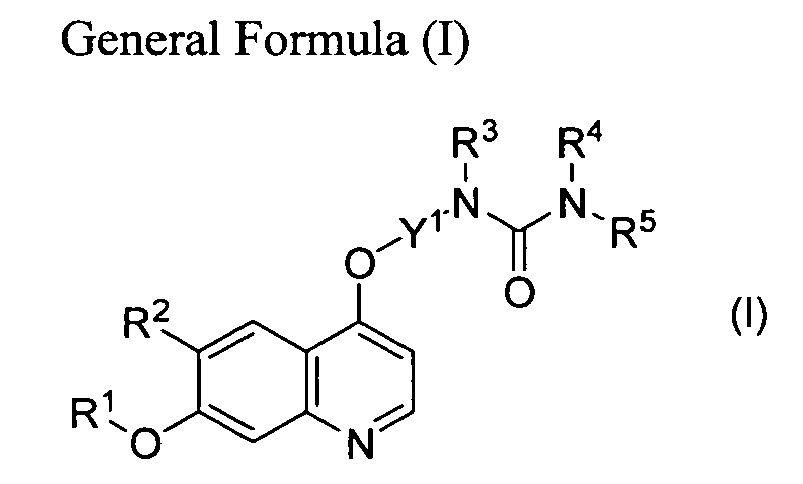
R2 represents a cyano group, an optionally substituted C1-6 alkoxy group, a carboxyl group, an optionally substituted C2-7 alkoxycarbonyl group or a group represented by Formula -CONVa11Va12 (wherein, Va11 represents a hydrogen atom, an optionally substituted C1-6 alkyl group, an optionally substituted C2-6 alkenyl group, an optionally substituted C2-6 alkynyl group, an optionally substituted C3-8 cycloalkyl group, an optionally substituted C6-10 aryl group, an optionally substituted 5-10-membered heteroaryl group or an optionally substituted 3-10-membered nonaromatic heterocyclic group; Va12 represents a hydrogen atom, an optionally substituted C1-6 alkyl group, an optionally substituted C2-6 alkenyl group, an optionally substituted C2-6 alkynyl group, an optionally substituted C3-8 cycloalkyl group, an optionally substituted C6-10 aryl group, an optionally substituted 5-10-membered heteroaryl group, an optionally substituted 3-10-membered nonaromatic heterocyclic group, a hydroxyl group, an optionally substituted C1-6 alkoxy group or an optionally substituted C3-8 cycloalkoxy group);
Y1 represents a group represented by either one of the following formulae
W1 and W2 each independently represent an optionally substituted carbon atom or nitrogen atom);
R3 and R4 each independently represent a hydrogen atom, an optionally substituted C1-6 alkyl group, an optionally substituted C2-6 alkenyl group, an optionally substituted C2-6 alkynyl group, an optionally substituted C3-8 cycloalkyl group, an optionally substituted C2-7 acyl group or an optionally substituted C2-7 alkoxycarbonyl group; and
R5 represents a hydrogen atom, an optionally substituted C1-6 alkyl group, an optionally substituted C2-6 alkenyl group, an optionally substituted C2-6 alkynyl group, an optionally substituted C3-8 cycloalkyl group, an optionally substituted C6-10 aryl group, an optionally substituted 5-10-membered heteroaryl group or an optionally substituted 3-10-membered nonaromatic heterocyclic group]. - The therapeutic method according to Claim 31, wherein the compound represented by General Formula (I), a pharmacologically acceptable salt thereof or a solvate thereof is at least one compound selected from the group consisting of:4-(3-chloro-4-(cyclopropylaminocarbonyl)aminophenoxy)-7-methoxy-6-quinolinecarboxamide;4-(3-chloro-4-(ethylaminocarbonyl)aminophenoxy)-7-methoxy-6-quinolinecarboxamide;N6-methoxy-4-(3-chloro-4-(((cyclopropylamino)carbonyl)amino)phenoxy)-7-methoxy-6-quinolinecarboxamide;4-(3-chloro-4-(methylaminocarbonyl)aminophenoxy)-7-methoxy-6-quinolinecarboxamide; andN6-methoxy-4-(3-chloro-4-(((ethylamino)carbonyl)amino)phenoxy)-7-methoxy-6-quinolinecarboxamide,a pharmacologically acceptable salt thereof or a solvate thereof.
- The therapeutic method according to Claim 31, wherein the compound represented by General Formula (I), a pharmacologically acceptable salt thereof or a solvate thereof is 4-(3-chloro-4-(cyclopropylaminocarbonyl)aminophenoxy)-7-methoxy-6-quinolinecarboxamide, a pharmacologically acceptable salt thereof or a solvate thereof.
- The therapeutic method according to Claim 31, wherein the compound represented by General Formula (I), a pharmacologically acceptable salt thereof or a solvate thereof is methanesulfonate of 4-(3-chloro-4-(cyclopropylaminocarbonyl)aminophenoxy)-7-methoxy-6-quinolinecarboxamide.
- The therapeutic method according to any one of Claims 31 to 34, wherein the therapeutic substance for gastric cancer is at least one selected from the group consisting of irinotecan, paclitaxel, carboquone, nimustine, 5-fluorouracil, tegafur, UFT, doxifluridine, carmofur, S-1, doxorubicin, mitomycin C, aclarubicin, pirarubicin, epirubicin, docetaxel and cis-platinum.
- The therapeutic method according to any one of Claims 31 to 34, wherein the therapeutic substance for gastric cancer is irinotecan, 5-fluorouracil or paclitaxel.
- The therapeutic method according to any one of Claims 31 to 34, wherein the FGFR2 inhibitor is at least one compound selected from the group consisting of:N-(3-trifluoromethyl-4-chlorophenyl)-N'-(4-(2-methylcarbamoylpyridine-4-yl)oxyphenyl)urea;6-[2-(methylcarbamoyl)phenylsulfanyl]-3-E-[2-(pyridine-2-yl)ethenyl]indazole;5-(5-fluoro-2-oxo-1,2-dihydroindole-3-ylidenemethyl)-2,4-dimethyl-1H-pyrrole-3-carboxylic acid(2-diethylaminoethyl)amide; andN-{2-chloro-4-[(6,7-dimethoxy-4-quinolyl)oxy]phenyl}-N'-(5-methyl-3-isoxazolyl)urea,a pharmacologically acceptable salt thereof or a solvate thereof.
- The therapeutic method according to Claim 31, wherein the undifferentiated gastric cancer comprises at least one selected from the group consisting of a cell overexpressing FGFR2 and a cell expressing mutant FGFR2.
- The therapeutic method according to Claim 38, wherein the mutant FGFR2 comprises a mutation site where amino acids downstream from at least position 813 are deleted in the amino acid sequence 22-822 among the amino acid sequence represented by SEQ ID NO:2.
- The therapeutic method according to Claim 31, wherein the undifferentiated gastric cancer is at least one gastric cancer selected from the group consisting of poorly differentiated adenocarcinoma, signet-ring cell carcinoma, mucinous carcinoma and scirrhous gastric cancer.
- Use of a compound represented by General Formula (I) below, a pharmacologically acceptable salt thereof or a solvate thereof for producing a therapeutic agent for undifferentiated gastric cancer in combination with a therapeutic substance for gastric cancer or a FGFR2 inhibitor:

R2 represents a cyano group, an optionally substituted C1-6 alkoxy group, a carboxyl group, an optionally substituted C2-7 alkoxycarbonyl group or a group represented by Formula -CONVa11Va12 (wherein, Va11 represents a hydrogen atom, an optionally substituted C1-6 alkyl group, an optionally substituted C2-6 alkenyl group, an optionally substituted C2-6 alkynyl group, an optionally substituted C3-8 cycloalkyl group, an optionally substituted C6-10 aryl group, an optionally substituted 5-10-membered heteroaryl group or an optionally substituted 3-10-membered nonaromatic heterocyclic group; Va12 represents a hydrogen atom, an optionally substituted C1-6 alkyl group, an optionally substituted C2-6 alkenyl group, an optionally substituted C2-6 alkynyl group, an optionally substituted C3-8 cycloalkyl group, an optionally substituted C6-10 aryl group, an optionally substituted 5-10-membered heteroaryl group, an optionally substituted 3-10-membered nonaromatic heterocyclic group, a hydroxyl group, an optionally substituted C1-6 alkoxy group or an optionally substituted C3-8 cycloalkoxy group);
Y1 represents a group represented by either one of the following formulae
W1 and W2 each independently represent an optionally substituted carbon atom or nitrogen atom);
R3 and R4 each independently represent a hydrogen atom, an optionally substituted C1-6 alkyl group, an optionally substituted C2-6 alkenyl group, an optionally substituted C2-6 alkynyl group, an optionally substituted C3-8 cycloalkyl group, an optionally substituted C2-7 acyl group or an optionally substituted C2-7 alkoxycarbonyl group; and
R5 represents a hydrogen atom, an optionally substituted C1-6 alkyl group, an optionally substituted C2-6 alkenyl group, an optionally substituted C2-6 alkynyl group, an optionally substituted C3-8 cycloalkyl group, an optionally substituted C6-10 aryl group, an optionally substituted 5-10-membered heteroaryl group or an optionally substituted 3-10-membered nonaromatic heterocyclic group]. - Use according to Claim 41, wherein the compound represented by General Formula (I), a pharmacologically acceptable salt thereof or a solvate thereof is at least one compound selected from the group consisting of:4-(3-chloro-4-(cyclopropylaminocarbonyl)aminophenoxy)-7-methoxy-6-quinolinecarboxamide;4-(3-chloro-4-(ethylaminocarbonyl)aminophenoxy)-7-methoxy-6-quinolinecarboxamide;N6-methoxy-4-(3-chloro-4-(((cyclopropylamino)carbonyl)amino)phenoxy)-7-methoxy-6-quinolinecarboxamide;4-(3-chloro-4-(methylaminocarbonyl)aminophenoxy)-7-methoxy-6-quinolinecarboxamide; andN6-methoxy-4-(3-chloro-4-(((ethylamino)carbonyl)amino)phenoxy)-7-methoxy-6-quinolinecarboxamide,a pharmacologically acceptable salt thereof or a solvate thereof.
- Use according to Claim 41, wherein the compound represented by General Formula (I), a pharmacologically acceptable salt thereof or a solvate thereof is 4-(3-chloro-4-(cyclopropylaminocarbonyl)aminophenoxy)-7-methoxy-6-quinolinecarboxamide, a pharmacologically acceptable salt thereof or a solvate thereof.
- Use according to Claim 41, wherein the compound represented by General Formula (I), a pharmacologically acceptable salt thereof or a solvate thereof is methanesulfonate of 4-(3-chloro-4-(cyclopropylaminocarbonyl)aminophenoxy)-7-methoxy-6-quinolinecarboxamide.
- Use according to any one of Claims 41 to 44, wherein the therapeutic substance for gastric cancer is at least one selected from the group consisting of irinotecan, paclitaxel, carboquone, nimustine, 5-fluorouracil, tegafur, UFT, doxifluridine, carmofur, S-1, doxorubicin, mitomycin C, aclarubicin, pirarubicin, epirubicin, docetaxel and cis-platinum.
- Use according to any one of Claims 41 to 44, wherein the therapeutic substance for gastric cancer is irinotecan, 5-fluorouracil or paclitaxel.
- Use according to any one of Claims 41 to 44, wherein the FGFR2 inhibitor is at least one compound selected from the group consisting of:N-(3-trifluoromethyl-4-chlorophenyl)-N'-(4-(2-methylcarbamoylpyridine-4-yl)oxyphenyl)urea;6-[2-(methylcarbamoyl)phenylsulfanyl]-3-E-[2-(pyridine-2-yl)ethenyl]indazole;5-(5-fluoro-2-oxo-1,2-dihydroindole-3-ylidenemethyl)-2,4-dimethyl-1H-pyrrole-3-carboxylic acid(2-diethylaminoethyl)amide; andN-{2-chloro-4-[(6,7-dimethoxy-4-quinolyl)oxy]phenyl}-N'-(5-methyl-3-isoxazolyl)urea,a pharmacologically acceptable salt thereof or a solvate thereof.
- Use according to Claim 41, wherein the undifferentiated gastric cancer comprises at least one selected from the group consisting of a cell overexpressing FGFR2 and a cell expressing mutant FGFR2.
- Use according to Claim 48, wherein the mutant FGFR2 comprises a mutation site where amino acids downstream from at least position 813 are deleted in the amino acid sequence 22-822 among the amino acid sequence represented by SEQ ID NO:2.
- Use according to Claim 41, wherein the undifferentiated gastric cancer is at least one gastric cancer selected from the group consisting of poorly differentiated adenocarcinoma, signet-ring cell carcinoma, mucinous carcinoma and scirrhous gastric cancer.
- Use of a compound represented by General Formula (I) below, a pharmacologically acceptable salt thereof or a solvate thereof for producing a pharmaceutical composition in combination with a therapeutic substance for gastric cancer or a FGFR2 inhibitor for administration to a living organism comprising at least one selected from the group consisting of a cell overexpressing FGFR2 and a cell expressing mutant FGFR2:

R2 represents a cyano group, an optionally substituted C1-6 alkoxy group, a carboxyl group, an optionally substituted C2-7 alkoxycarbonyl group or a group represented by Formula -CONVa11Va12 (wherein, Va11 represents a hydrogen atom, an optionally substituted C1-6 alkyl group, an optionally substituted C2-6 alkenyl group, an optionally substituted C2-6 alkynyl group, an optionally substituted C3-8 cycloalkyl group, an optionally substituted C6-10 aryl group, an optionally substituted 5-10-membered heteroaryl group or an optionally substituted 3-10-membered nonaromatic heterocyclic group; Va12 represents a hydrogen atom, an optionally substituted C1-6 alkyl group, an optionally substituted C2-6 alkenyl group, an optionally substituted C2-6 alkynyl group, an optionally substituted C3-8 cycloalkyl group, an optionally substituted C6-10 aryl group, an optionally substituted 5-10-membered heteroaryl group, an optionally substituted 3-10-membered nonaromatic heterocyclic group, a hydroxyl group, an optionally substituted C1-6 alkoxy group or an optionally substituted C3-8 cycloalkoxy group);
Y1 represents a group represented by either one of the following formulae
W1 and W2 each independently represent an optionally substituted carbon atom or nitrogen atom);
R3 and R4 each independently represent a hydrogen atom, an optionally substituted C1-6 alkyl group, an optionally substituted C2-6 alkenyl group, an optionally substituted C2-6 alkynyl group, an optionally substituted C3-8 cycloalkyl group, an optionally substituted C2-7 acyl group or an optionally substituted C2-7 alkoxycarbonyl group; and
R5 represents a hydrogen atom, an optionally substituted C1-6 alkyl group, an optionally substituted C2-6 alkenyl group, an optionally substituted C2-6 alkynyl group, an optionally substituted C3-8 cycloalkyl group, an optionally substituted C6-10 aryl group, an optionally substituted 5-10-membered heteroaryl group or an optionally substituted 3-10-membered nonaromatic heterocyclic group]. - Use according to Claim 51, wherein the compound represented by General Formula (I), a pharmacologically acceptable salt thereof or a solvate thereof is at least one compound selected from the group consisting of:4-(3-chloro-4-(cyclopropylaminocarbonyl)aminophenoxy)-7-methoxy-6-quinolinecarboxamide;4-(3-chloro-4-(ethylaminocarbonyl)aminophenoxy)-7-methoxy-6-quinolinecarboxamide;N6-methoxy-4-(3-chloro-4-(((cyclopropylamino)carbonyl)amino)phenoxy)-7-methoxy-6-quinolinecarboxamide;4-(3-chloro-4-(methylaminocarbonyl)aminophenoxy)-7-methoxy-6-quinolinecarboxamide; andN6-methoxy-4-(3-chloro-4-(((ethylamino)carbonyl)amino)phenoxy)-7-methoxy-6-quinolinecarboxamide,a pharmacologically acceptable salt thereof or a solvate thereof.
- Use according to Claim 51, wherein the compound represented by General Formula (I), a pharmacologically acceptable salt thereof or a solvate thereof is 4-(3-chloro-4-(cyclopropylaminocarbonyl)aminophenoxy)-7-methoxy-6-quinolinecarboxamide, a pharmacologically acceptable salt thereof or a solvate thereof.
- Use according to Claim 51, wherein the compound represented by General Formula (I), a pharmacologically acceptable salt thereof or a solvate thereof is methanesulfonate of 4-(3-chloro-4-(cyclopropylaminocarbonyl)aminophenoxy)-7-methoxy-6-quinolinecarboxamide.
- Use according to any one of Claims 51 to 54, wherein the therapeutic substance for gastric cancer is at least one selected from the group consisting of irinotecan, paclitaxel, carboquone, nimustine, 5-fluorouracil, tegafur, UFT, doxifluridine, carmofur, S-1, doxorubicin, mitomycin C, aclarubicin, pirarubicin, epirubicin, docetaxel and cis-platinum.
- Use according to any one of Claims 51 to 54, wherein the therapeutic substance for gastric cancer is irinotecan, 5-fluorouracil or paclitaxel.
- Use according to any one of Claims 51 to 54, wherein the FGFR2 inhibitor is at least one compound selected from the group consisting of:N-(3-trifluoromethyl-4-chlorophenyl)-N'-(4-(2-methylcarbamoylpyridine-4-yl)oxyphenyl)urea;6-[2-(methylcarbamoyl)phenylsulfanyl]-3-E-[2-(pyridine-2-yl)ethenyl]indazole;5-(5-fluoro-2-oxo-1,2-dihydroindole-3-ylidenemethyl)-2,4-dimethyl-1H-pyrrole-3-carboxylic acid(2-diethylaminoethyl)amide; andN-{2-chloro-4-[(6,7-dimethoxy-4-quinolyl)oxy]phenyl}-N'-(5-methyl-3-isoxazolyl)urea,a pharmacologically acceptable salt thereof or a solvate thereof.
- Use according to Claim 51, wherein the undifferentiated gastric cancer comprises at least one selected from the group consisting of a cell overexpressing FGFR2 and a cell expressing mutant FGFR2.
- Use according to Claim 58, wherein the mutant FGFR2 comprises a mutation site where amino acids downstream from at least position 813 are deleted in the amino acid sequence 22-822 among the amino acid sequence represented by SEQ ID NO:2.
- Use according to Claim 51, wherein the undifferentiated gastric cancer is at least one gastric cancer selected from the group consisting of poorly differentiated adenocarcinoma, signet-ring cell carcinoma, mucinous carcinoma and scirrhous gastric cancer.
- A compound represented by General Formula (I) below, a pharmacologically acceptable salt thereof or a solvate thereof for treating undifferentiated gastric cancer in combination with a therapeutic substance for gastric cancer or a FGFR2 inhibitor:

R2 represents a cyano group, an optionally substituted C1-6 alkoxy group, a carboxyl group, an optionally substituted C2-7 alkoxycarbonyl group or a group represented by Formula -CONVa11Va12 (wherein, Va11 represents a hydrogen atom, an optionally substituted C1-6 alkyl group, an optionally substituted C2-6 alkenyl group, an optionally substituted C2-6 alkynyl group, an optionally substituted C3-8 cycloalkyl group, an optionally substituted C6-10 aryl group, an optionally substituted 5-10-membered heteroaryl group or an optionally substituted 3-10-membered nonaromatic heterocyclic group; Va12 represents a hydrogen atom, an optionally substituted C1-6 alkyl group, an optionally substituted C2-6 alkenyl group, an optionally substituted C2-6 alkynyl group, an optionally substituted C3-8 cycloalkyl group, an optionally substituted C6-10 aryl group, an optionally substituted 5-10-membered heteroaryl group, an optionally substituted 3-10-membered nonaromatic heterocyclic group, a hydroxyl group, an optionally substituted C1-6 alkoxy group or an optionally substituted C3-8 cycloalkoxy group);
Y1 represents a group represented by either one of the following formulae
W1 and W2 each independently represent an optionally substituted carbon atom or nitrogen atom);
R3 and R4 each independently represent a hydrogen atom, an optionally substituted C1-6 alkyl group, an optionally substituted C2-6 alkenyl group, an optionally substituted C2-6 alkynyl group, an optionally substituted C3-8 cycloalkyl group, an optionally substituted C2-7 acyl group or an optionally substituted C2-7 alkoxycarbonyl group; and
R5 represents a hydrogen atom, an optionally substituted C1-6 alkyl group, an optionally substituted C2-6 alkenyl group, an optionally substituted C2-6 alkynyl group, an optionally substituted C3-8 cycloalkyl group, an optionally substituted C6-10 aryl group, an optionally substituted 5-10-membered heteroaryl group or an optionally substituted 3-10-membered nonaromatic heterocyclic group]. - The compound according to Claim 61, a pharmacologically acceptable salt thereof or a solvate thereof, wherein the compound represented by General Formula (I), a pharmacologically acceptable salt thereof or a solvate thereof is at least one compound selected from the group consisting of:4-(3-chloro-4-(cyclopropylaminocarbonyl)aminophenoxy)-7-methoxy-6-quinolinecarboxamide;4-(3-chloro-4-(ethylaminocarbonyl)aminophenoxy)-7-methoxy-6-quinolinecarboxamide;N6-methoxy-4-(3-chloro-4-(((cyclopropylamino)carbonyl)amino)phenoxy)-7-methoxy-6-quinolinecarboxamide;4-(3-chloro-4-(methylaminocarbonyl)aminophenoxy)-7-methoxy-6-quinolinecarboxamide; andN6-methoxy-4-(3-chloro-4-(((ethylamino)carbonyl)amino)phenoxy)-7-methoxy-6-quinolinecarboxamide,a pharmacologically acceptable salt thereof or a solvate thereof.
- The compound according to Claim 61, a pharmacologically acceptable salt thereof or a solvate thereof, wherein the compound represented by General Formula (I), a pharmacologically acceptable salt thereof or a solvate thereof is 4-(3-chloro-4-(cyclopropylaminocarbonyl)aminophenoxy)-7-methoxy-6-quinolinecarboxamide, a pharmacologically acceptable salt thereof or a solvate thereof.
- The compound according to Claim 61, a pharmacologically acceptable salt thereof or a solvate thereof, wherein the compound represented by General Formula (I), a pharmacologically acceptable salt thereof or a solvate thereof is methanesulfonate of 4-(3-chloro-4-(cyclopropylaminocarbonyl)aminophenoxy)-7-methoxy-6-quinolinecarboxamide.
- The compound according to any one of Claims 61 to 64, a pharmacologically acceptable salt thereof or a solvate thereof, wherein the therapeutic substance for gastric cancer is at least one selected from the group consisting of irinotecan, paclitaxel, carboquone, nimustine, 5-fluorouracil, tegafur, UFT, doxifluridine, carmofur, S-1, doxorubicin, mitomycin C, aclarubicin, pirarubicin, epirubicin, docetaxel and cis-platinum.
- The compound according to any one of Claims 61 to 64, a pharmacologically acceptable salt thereof or a solvate thereof, wherein the therapeutic substance for gastric cancer is irinotecan, 5-fluorouracil or paclitaxel.
- The compound according to any one of Claims 61 to 64, a pharmacologically acceptable salt thereof or a solvate thereof, wherein the FGFR2 inhibitor is at least one compound selected from the group consisting of:N-(3-trifluoromethyl-4-chlorophenyl)-N'-(4-(2-methylcarbamoylpyridine-4-yl)oxyphenyl)urea;6-[2-(methylcarbamoyl)phenylsulfanyl]-3-E-[2-(pyridine-2-yl)ethenyl]indazole;5-(5-fluoro-2-oxo-1,2-dihydroindole-3-ylidenemethyl)-2,4-dimethyl-1H-pyrrole-3-carboxylic acid(2-diethylaminoethyl)amide; andN-{2-chloro-4-[(6,7-dimethoxy-4-quinolyl)oxy]phenyl}-N'-(5-methyl-3-isoxazolyl)urea,a pharmacologically acceptable salt thereof or a solvate thereof.
- The compound according to Claim 61, a pharmacologically acceptable salt thereof or a solvate thereof, wherein the undifferentiated gastric cancer comprises at least one selected from the group consisting of a cell overexpressing FGFR2 and a cell expressing mutant FGFR2.
- The compound according to Claim 68, a pharmacologically acceptable salt thereof or a solvate thereof, wherein the mutant FGFR2 comprises a mutation site where amino acids downstream from at least position 813 are deleted in the amino acid sequence 22-822 among the amino acid sequence represented by SEQ ID NO:2.
- The compound according to Claim 61, a pharmacologically acceptable salt thereof or a solvate thereof, wherein the undifferentiated gastric cancer is at least one gastric cancer selected from the group consisting of poorly differentiated adenocarcinoma, signet-ring cell carcinoma, mucinous carcinoma and scirrhous gastric cancer.
- A compound represented by General Formula (I) below, a pharmacologically acceptable salt thereof or a solvate thereof for administration in combination with a therapeutic substance for gastric cancer or a FGFR2 inhibitor to a living organism comprising at least one selected from the group consisting of a cell overexpressing FGFR2 and a cell expressing mutant FGFR2:


R2 represents a cyano group, an optionally substituted C1-6 alkoxy group, a carboxyl group, an optionally substituted C2-7 alkoxycarbonyl group or a group represented by Formula -CONVa11Va12 (wherein, Va11 represents a hydrogen atom, an optionally substituted C1-6 alkyl group, an optionally substituted C2-6 alkenyl group, an optionally substituted C2-6 alkynyl group, an optionally substituted C3-8 cycloalkyl group, an optionally substituted C6-10 aryl group, an optionally substituted 5-10-membered heteroaryl group or an optionally substituted 3-10-membered nonaromatic heterocyclic group; Va12 represents a hydrogen atom, an optionally substituted C1-6 alkyl group, an optionally substituted C2-6 alkenyl group, an optionally substituted C2-6 alkynyl group, an optionally substituted C3-8 cycloalkyl group, an optionally substituted C6-10 aryl group, an optionally substituted 5-10-membered heteroaryl group, an optionally substituted 3-10-membered nonaromatic heterocyclic group, a hydroxyl group, an optionally substituted C1-6 alkoxy group or an optionally substituted C3-8 cycloalkoxy group);
Y1 represents a group represented by either one of the following formulae
W1 and W2 each independently represent an optionally substituted carbon atom or nitrogen atom);
R3 and R4 each independently represent a hydrogen atom, an optionally substituted C1-6 alkyl group, an optionally substituted C2-6 alkenyl group, an optionally substituted C2-6 alkynyl group, an optionally substituted C3-8 cycloalkyl group, an optionally substituted C2-7 acyl group or an optionally substituted C2-7 alkoxycarbonyl group; and
R5 represents a hydrogen atom, an optionally substituted C1-6 alkyl group, an optionally substituted C2-6 alkenyl group, an optionally substituted C2-6 alkynyl group, an optionally substituted C3-8 cycloalkyl group, an optionally substituted C6-10 aryl group, an optionally substituted 5-10-membered heteroaryl group or an optionally substituted 3-10-membered nonaromatic heterocyclic group]. - The compound according to Claim 71, a pharmacologically acceptable salt thereof or a solvate thereof, wherein the compound represented by General Formula (I), a pharmacologically acceptable salt thereof or a solvate thereof is at least one compound selected from the group consisting of:4-(3-chloro-4-(cyclopropylaminocarbonyl)aminophenoxy)-7-methoxy-6-quinolinecarboxamide;4-(3-chloro-4-(ethylaminocarbonyl)aminophenoxy)-7-methoxy-6-quinolinecarboxamide;N6-methoxy-4-(3-chloro-4-(((cyclopropylamino)carbonyl)amino)phenoxy)-7-methoxy-6-quinolinecarboxamide;4-(3-chloro-4-(methylaminocarbonyl)aminophenoxy)-7-methoxy-6-quinolinecarboxamide; andN6-methoxy-4-(3-chloro-4-(((ethylamino)carbonyl)amino)phenoxy)-7-methoxy-6-quinolinecarboxamide,a pharmacologically acceptable salt thereof or a solvate thereof.
- The compound according to Claim 71, a pharmacologically acceptable salt thereof or a solvate thereof, wherein the compound represented by General Formula (I), a pharmacologically acceptable salt thereof or a solvate thereof is 4-(3-chloro-4-(cyclopropylaminocarbonyl)aminophenoxy)-7-methoxy-6-quinolinecarboxamide, a pharmacologically acceptable salt thereof or a solvate thereof.
- The compound according to Claim 71, a pharmacologically acceptable salt thereof or a solvate thereof, wherein the compound represented by General Formula (I), a pharmacologically acceptable salt thereof or a solvate thereof is methanesulfonate of 4-(3-chloro-4-(cyclopropylaminocarbonyl)aminophenoxy)-7-methoxy-6-quinolinecarboxamide.
- The compound according to any one of Claims 71 to 74, a pharmacologically acceptable salt thereof or a solvate thereof, wherein the therapeutic substance for gastric cancer is at least one selected from the group consisting of irinotecan, paclitaxel, carboquone, nimustine, 5-fluorouracil, tegafur, UFT, doxifluridine, carmofur, S-1, doxorubicin, mitomycin C, aclarubicin, pirarubicin, epirubicin, docetaxel and cis-platinum.
- The compound according to any one of Claims 71 to 74, a pharmacologically acceptable salt thereof or a solvate thereof, wherein the therapeutic substance for gastric cancer is irinotecan, 5-fluorouracil or paclitaxel.
- The compound according to any one of Claims 71 to 74, a pharmacologically acceptable salt thereof or a solvate thereof, wherein the FGFR2 inhibitor is at least one compound selected from the group consisting of:N-(3-trifluoromethyl-4-chlorophenyl)-N' -(4-(2-methylcarbamoylpyridine-4-yl)oxyphenyl)urea;6-[2-(methylcarbamoyl)phenylsulfanyl]-3-E-[2-(pyridine-2-yl)ethenyl]indazole;5-(5-fluoro-2-oxo-1,2-dihydroindole-3-ylidenemethyl)-2,4-dimethyl-1H-pyrrole-3-carboxylic acid(2-diethylaminoethyl)amide; andN-{2-chloro-4-[(6,7-dimethoxy-4-quinolyl)oxy]phenyl}-N'-(5-methyl-3-isoxazolyl)urea,a pharmacologically acceptable salt thereof or a solvate thereof.
- The compound according to Claim 71, a pharmacologically acceptable salt thereof or a solvate thereof, wherein the undifferentiated gastric cancer comprises at least one selected from the group consisting of a cell overexpressing FGFR2 and a cell expressing mutant FGFR2.
- The compound according to Claim 78, a pharmacologically acceptable salt thereof or a solvate thereof, wherein the mutant FGFR2 comprises a mutation site where amino acids downstream from at least position 813 are deleted in the amino acid sequence 22-822 among the amino acid sequence represented by SEQ ID NO:2.
- The compound according to Claim 71, a pharmacologically acceptable salt thereof or a solvate thereof, wherein the undifferentiated gastric cancer is at least one gastric cancer selected from the group consisting of poorly differentiated adenocarcinoma, signet-ring cell carcinoma, mucinous carcinoma and scirrhous gastric cancer.
- A kit comprising:(a) at least one selected from the group consisting of a packaging container, an instruction and a package insert describing use of a compound represented by General Formula (I), a pharmacologically acceptable salt thereof or a solvate thereof in combination with a therapeutic substance for gastric cancer or a FGFR2 inhibitor; and(b) a therapeutic agent for undifferentiated gastric cancer comprising a compound represented by General Formula (I), a pharmacologically acceptable salt thereof or a solvate thereof:


R2 represents a cyano group, an optionally substituted C1-6 alkoxy group, a carboxyl group, an optionally substituted C2-7 alkoxycarbonyl group or a group represented by Formula -CONVa11Va12 (wherein, Va11 represents a hydrogen atom, an optionally substituted C1-6 alkyl group, an optionally substituted C2-6 alkenyl group, an optionally substituted C2-6 alkynyl group, an optionally substituted C3-8 cycloalkyl group, an optionally substituted C6-10 aryl group, an optionally substituted 5-10-membered heteroaryl group or an optionally substituted 3-10-membered nonaromatic heterocyclic group; Va12 represents a hydrogen atom, an optionally substituted C1-6 alkyl group, an optionally substituted C2-6 alkenyl group, an optionally substituted C2-6 alkynyl group, an optionally substituted C3-8 cycloalkyl group, an optionally substituted C6-10 aryl group, an optionally substituted 5-10-membered heteroaryl group, an optionally substituted 3-10-membered nonaromatic heterocyclic group, a hydroxyl group, an optionally substituted C1-6 alkoxy group or an optionally substituted C3-8 cycloalkoxy group);
Y1 represents a group represented by either one of the following formulae
W1 and W2 each independently represent an optionally substituted carbon atom or nitrogen atom);
R3 and R4 each independently represent a hydrogen atom, an optionally substituted C1-6 alkyl group, an optionally substituted C2-6 alkenyl group, an optionally substituted C2-6 alkynyl group, an optionally substituted C3-8 cycloalkyl group, an optionally substituted C2-7 acyl group or an optionally substituted C2-7 alkoxycarbonyl group; and
R5 represents a hydrogen atom, an optionally substituted C1-6 alkyl group, an optionally substituted C2-6 alkenyl group, an optionally substituted C2-6 alkynyl group, an optionally substituted C3-8 cycloalkyl group, an optionally substituted C6-10 aryl group, an optionally substituted 5-10-membered heteroaryl group or an optionally substituted 3-10-membered nonaromatic heterocyclic group]. - A kit comprising:(a) at least one selected from the group consisting of a packaging container, an instruction and a package insert describing use of a compound represented by General Formula (I), a pharmacologically acceptable salt thereof or a solvate thereof in combination with a therapeutic substance for gastric cancer or a FGFR2 inhibitor; and(b) a pharmaceutical composition comprising a compound represented by General Formula (I), a pharmacologically acceptable salt thereof or a solvate thereof for administration to a living organism comprising at least one selected from the group consisting of a cell overexpressing FGFR2 and a cell expressing mutant FGFR2:


R2 represents a cyano group, an optionally substituted C1-6 alkoxy group, a carboxyl group, an optionally substituted C2-7 alkoxycarbonyl group or a group represented by Formula -CONVa11Va12 (wherein, Va11 represents a hydrogen atom, an optionally substituted C1-6 alkyl group, an optionally substituted C2-6 alkenyl group, an optionally substituted C2-6 alkynyl group, an optionally substituted C3-8 cycloalkyl group, an optionally substituted C6-10 aryl group, an optionally substituted 5-10-membered heteroaryl group or an optionally substituted 3-10-membered nonaromatic heterocyclic group; Va12 represents a hydrogen atom, an optionally substituted C1-6 alkyl group, an optionally substituted C2-6 alkenyl group, an optionally substituted C2-6 alkynyl group, an optionally substituted C3-8 cycloalkyl group, an optionally substituted C6-10 aryl group, an optionally substituted 5-10-membered heteroaryl group, an optionally substituted 3-10-membered nonaromatic heterocyclic group, a hydroxyl group, an optionally substituted C1-6 alkoxy group or an optionally substituted C3-8 cycloalkoxy group);
Y1 represents a group represented by either one of the following formulae
W1 and W2 each independently represent an optionally substituted carbon atom or nitrogen atom);
R3 and R4 each independently represent a hydrogen atom, an optionally substituted C1-6 alkyl group, an optionally substituted C2-6 alkenyl group, an optionally substituted C2-6 alkynyl group, an optionally substituted C3-8 cycloalkyl group, an optionally substituted C2-7 acyl group or an optionally substituted C2-7 alkoxycarbonyl group; and
R5 represents a hydrogen atom, an optionally substituted C1-6 alkyl group, an optionally substituted C2-6 alkenyl group, an optionally substituted C2-6 alkynyl group, an optionally substituted C3-8 cycloalkyl group, an optionally substituted C6-10 aryl group, an optionally substituted 5-10-membered heteroaryl group or an optionally substituted 3-10-membered nonaromatic heterocyclic group]. - A kit characterized by a set of a therapeutic agent for undifferentiated gastric cancer comprising a compound represented by General Formula (I), a pharmacologically acceptable salt thereof or a solvate thereof and a formulation comprising a therapeutic substance for gastric cancer or a FGFR2 inhibitor:
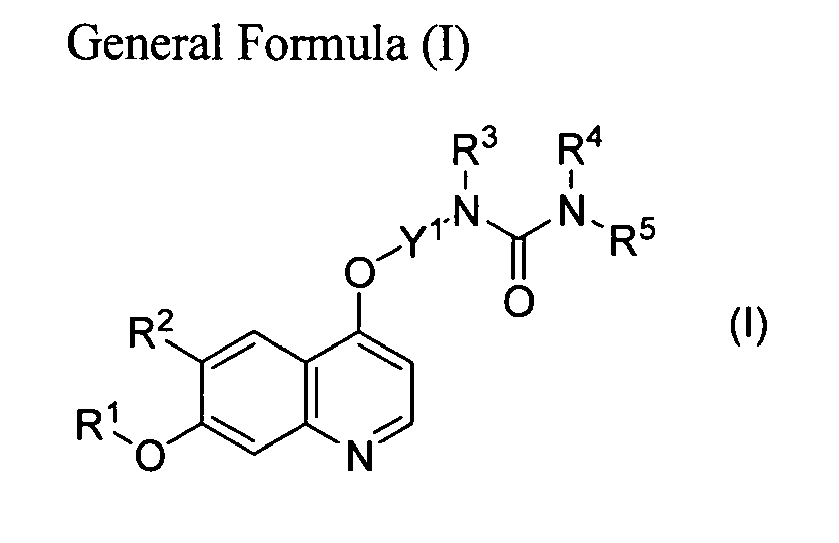
R2 represents a cyano group, an optionally substituted C1-6 alkoxy group, a carboxyl group, an optionally substituted C2-7 alkoxycarbonyl group or a group represented by Formula -CONVa11Va12 (wherein, Va11 represents a hydrogen atom, an optionally substituted C1-6 alkyl group, an optionally substituted C2-6 alkenyl group, an optionally substituted C2-6 alkynyl group, an optionally substituted C3-8 cycloalkyl group, an optionally substituted C6-10 aryl group, an optionally substituted 5-10-membered heteroaryl group or an optionally substituted 3-10-membered nonaromatic heterocyclic group; Va12 represents a hydrogen atom, an optionally substituted C1-6 alkyl group, an optionally substituted C2-6 alkenyl group, an optionally substituted C2-6 alkynyl group, an optionally substituted C3-8 cycloalkyl group, an optionally substituted C6-10 aryl group, an optionally substituted 5-10-membered heteroaryl group, an optionally substituted 3-10-membered nonaromatic heterocyclic group, a hydroxyl group, an optionally substituted C1-6 alkoxy group or an optionally substituted C3-8 cycloalkoxy group);
Y1 represents a group represented by either one of the following formulae
W1 and W2 each independently represent an optionally substituted carbon atom or nitrogen atom);
R3 and R4 each independently represent a hydrogen atom, an optionally substituted C1-6 alkyl group, an optionally substituted C2-6 alkenyl group, an optionally substituted C2-6 alkynyl group, an optionally substituted C3-8 cycloalkyl group, an optionally substituted C2-7 acyl group or an optionally substituted C2-7 alkoxycarbonyl group; and
R5 represents a hydrogen atom, an optionally substituted C1-6 alkyl group, an optionally substituted C2-6 alkenyl group, an optionally substituted C2-6 alkynyl group, an optionally substituted C3-8 cycloalkyl group, an optionally substituted C6-10 aryl group, an optionally substituted 5-10-membered heteroaryl group or an optionally substituted 3-10-membered nonaromatic heterocyclic group]. - A kit used for administration to a living organism comprising at least one selected from the group consisting of a cell overexpressing FGFR2 and a cell expressing mutant FGFR2, the kit characterized by a set of a formulation comprising a compound represented by General Formula (I), a pharmacologically acceptable salt thereof or a solvate thereof and a formulation comprising a therapeutic substance for gastric cancer or a FGFR2 inhibitor:

R2 represents a cyano group, an optionally substituted C1-6 alkoxy group, a carboxyl group, an optionally substituted C2-7 alkoxycarbonyl group or a group represented by Formula -CONVa11Va12 (wherein, Va11 represents a hydrogen atom, an optionally substituted C1-6 alkyl group, an optionally substituted C2-6 alkenyl group, an optionally substituted C2-6 alkynyl group, an optionally substituted C3-8 cycloalkyl group, an optionally substituted C6-10 aryl group, an optionally substituted 5-10-membered heteroaryl group or an optionally substituted 3-10-membered nonaromatic heterocyclic group; Va12 represents a hydrogen atom, an optionally substituted C1-6 alkyl group, an optionally substituted C2-6 alkenyl group, an optionally substituted C2-6 alkynyl group, an optionally substituted C3-8 cycloalkyl group, an optionally substituted C6-10 aryl group, an optionally substituted 5-10-membered heteroaryl group, an optionally substituted 3-10-membered nonaromatic heterocyclic group, a hydroxyl group, an optionally substituted C1-6 alkoxy group or an optionally substituted C3-8 cycloalkoxy group);
Y1 represents a group represented by either one of the following formulae
W1 and W2 each independently represent an optionally substituted carbon atom or nitrogen atom);
R3 and R4 each independently represent a hydrogen atom, an optionally substituted C1-6 alkyl group, an optionally substituted C2-6 alkenyl group, an optionally substituted C2-6 alkynyl group, an optionally substituted C3-8 cycloalkyl group, an optionally substituted C2-7 acyl group or an optionally substituted C2-7 alkoxycarbonyl group; and
R5 represents a hydrogen atom, an optionally substituted C1-6 alkyl group, an optionally substituted C2-6 alkenyl group, an optionally substituted C2-6 alkynyl group, an optionally substituted C3-8 cycloalkyl group, an optionally substituted C6-10 aryl group, an optionally substituted 5-10-membered heteroaryl group or an optionally substituted 3-10-membered nonaromatic heterocyclic group]. - A therapeutic agent for undifferentiated gastric cancer comprising a compound represented by General Formula (I), a pharmacologically acceptable salt thereof or a solvate thereof characterized by administration to a living organism with a therapeutic substance for gastric cancer or a FGFR2 inhibitor:

R2 represents a cyano group, an optionally substituted C1-6 alkoxy group, a carboxyl group, an optionally substituted C2-7 alkoxycarbonyl group or a group represented by Formula -CONVa11Va12 (wherein, Va11 represents a hydrogen atom, an optionally substituted C1-6 alkyl group, an optionally substituted C2-6 alkenyl group, an optionally substituted C2-6 alkynyl group, an optionally substituted C3-8 cycloalkyl group, an optionally substituted C6-10 aryl group, an optionally substituted 5-10-membered heteroaryl group or an optionally substituted 3-10-membered nonaromatic heterocyclic group; Va12 represents a hydrogen atom, an optionally substituted C1-6 alkyl group, an optionally substituted C2-6 alkenyl group, an optionally substituted C2-6 alkynyl group, an optionally substituted C3-8 cycloalkyl group, an optionally substituted C6-10 aryl group, an optionally substituted 5-10-membered heteroaryl group, an optionally substituted 3-10-membered nonaromatic heterocyclic group, a hydroxyl group, an optionally substituted C1-6 alkoxy group or an optionally substituted C3-8 cycloalkoxy group);
Y1 represents a group represented by either one of the following formulae
W1 and W2 each independently represent an optionally substituted carbon atom or nitrogen atom);
R3 and R4 each independently represent a hydrogen atom, an optionally substituted C1-6 alkyl group, an optionally substituted C2-6 alkenyl group, an optionally substituted C2-6 alkynyl group, an optionally substituted C3-8 cycloalkyl group, an optionally substituted C2-7 acyl group or an optionally substituted C2-7 alkoxycarbonyl group; and
R5 represents a hydrogen atom, an optionally substituted C1-6 alkyl group, an optionally substituted C2-6 alkenyl group, an optionally substituted C2-6 alkynyl group, an optionally substituted C3-8 cycloalkyl group, an optionally substituted C6-10 aryl group, an optionally substituted 5-10-membered heteroaryl group or an optionally substituted 3-10-membered nonaromatic heterocyclic group]. - A pharmaceutical composition for administration to a living organism comprising at least one selected from the group consisting of a cell overexpressing FGFR2 and a cell expressing mutant FGFR2, the pharmaceutical composition comprising a compound represented by General Formula (I), a pharmacologically acceptable salt thereof or a solvate thereof characterized by administration to the living organism with a therapeutic substance for gastric cancer or a FGFR2 inhibitor:

R2 represents a cyano group, an optionally substituted C1-6 alkoxy group, a carboxyl group, an optionally substituted C2-7 alkoxycarbonyl group or a group represented by Formula -CONVa11Va12 (wherein, Va11 represents a hydrogen atom, an optionally substituted C1-6 alkyl group, an optionally substituted C2-6 alkenyl group, an optionally substituted C2-6 alkynyl group, an optionally substituted C3-8 cycloalkyl group, an optionally substituted C6-10 aryl group, an optionally substituted 5-10-membered heteroaryl group or an optionally substituted 3-10-membered nonaromatic heterocyclic group; Va12 represents a hydrogen atom, an optionally substituted C1-6 alkyl group, an optionally substituted C2-6 alkenyl group, an optionally substituted C2-6 alkynyl group, an optionally substituted C3-8 cycloalkyl group, an optionally substituted C6-10 aryl group, an optionally substituted 5-10-membered heteroaryl group, an optionally substituted 3-10-membered nonaromatic heterocyclic group, a hydroxyl group, an optionally substituted C1-6 alkoxy group or an optionally substituted C3-8 cycloalkoxy group);
Y1 represents a group represented by either one of the following formulae
W1 and W2 each independently represent an optionally substituted carbon atom or nitrogen atom);
R3 and R4 each independently represent a hydrogen atom, an optionally substituted C1-6 alkyl group, an optionally substituted C2-6 alkenyl group, an optionally substituted C2-6 alkynyl group, an optionally substituted C3-8 cycloalkyl group, an optionally substituted C2-7 acyl group or an optionally substituted C2-7 alkoxycarbonyl group; and
R5 represents a hydrogen atom, an optionally substituted C1-6 alkyl group, an optionally substituted C2-6 alkenyl group, an optionally substituted C2-6 alkynyl group, an optionally substituted C3-8 cycloalkyl group, an optionally substituted C6-10 aryl group, an optionally substituted 5-10-membered heteroaryl group or an optionally substituted 3-10-membered nonaromatic heterocyclic group].
Applications Claiming Priority (2)
| Application Number | Priority Date | Filing Date | Title |
|---|---|---|---|
| US88700607P | 2007-01-29 | 2007-01-29 | |
| PCT/JP2008/051697 WO2008093855A1 (en) | 2007-01-29 | 2008-01-28 | Composition for treatment of undifferentiated-type of gastric cancer |
Publications (3)
| Publication Number | Publication Date |
|---|---|
| EP2119707A1 true EP2119707A1 (en) | 2009-11-18 |
| EP2119707A4 EP2119707A4 (en) | 2012-07-18 |
| EP2119707B1 EP2119707B1 (en) | 2015-01-14 |
Family
ID=39674157
Family Applications (1)
| Application Number | Title | Priority Date | Filing Date |
|---|---|---|---|
| EP08704376.6A Active EP2119707B1 (en) | 2007-01-29 | 2008-01-28 | Composition for treatment of undifferentiated-type of gastric cancer |
Country Status (9)
| Country | Link |
|---|---|
| US (1) | US8962655B2 (en) |
| EP (1) | EP2119707B1 (en) |
| JP (1) | JP5319306B2 (en) |
| KR (1) | KR101445892B1 (en) |
| CN (1) | CN101600694A (en) |
| AU (1) | AU2008211952B2 (en) |
| CA (1) | CA2676796C (en) |
| IL (1) | IL200090A (en) |
| WO (1) | WO2008093855A1 (en) |
Cited By (17)
| Publication number | Priority date | Publication date | Assignee | Title |
|---|---|---|---|---|
| EP2065372A4 (en) * | 2006-08-28 | 2011-02-16 | Eisai R&D Man Co Ltd | ANTITUMOR AGENT FOR NON-DIFFERENTIATED GASTRIC CANCER |
| US8058474B2 (en) | 2003-11-11 | 2011-11-15 | Eisai R&D Management Co., Ltd. | Urea derivative and process for preparing the same |
| EP2218712A4 (en) * | 2007-11-09 | 2012-07-18 | Eisai R&D Man Co Ltd | Combination of anti-angiogenic substance and anti-tumor platinum complex |
| US8372981B2 (en) | 2000-10-20 | 2013-02-12 | Eisai R&D Management Co., Ltd. | Nitrogen-containing aromatic derivatives |
| US8815241B2 (en) | 2005-11-07 | 2014-08-26 | Eisai R&D Management Co., Ltd. | Use of combination of anti-angiogenic substance and c-kit kinase inhibitor |
| EP2594566A4 (en) * | 2010-07-16 | 2014-10-01 | Kyowa Hakko Kirin Co Ltd | Nitrogenated aromatic heterocyclic ring derivative |
| US8969379B2 (en) | 2004-09-17 | 2015-03-03 | Eisai R&D Management Co., Ltd. | Pharmaceutical compositions of 4-(3-chloro-4-(cyclopropylaminocarbonyl)aminophenoxy)-7=methoxy-6-quinolinecarboxide |
| US9945862B2 (en) | 2011-06-03 | 2018-04-17 | Eisai R&D Management Co., Ltd. | Biomarkers for predicting and assessing responsiveness of thyroid and kidney cancer subjects to lenvatinib compounds |
| US10259791B2 (en) | 2014-08-28 | 2019-04-16 | Eisai R&D Management Co., Ltd. | High-purity quinoline derivative and method for manufacturing same |
| US10517861B2 (en) | 2013-05-14 | 2019-12-31 | Eisai R&D Management Co., Ltd. | Biomarkers for predicting and assessing responsiveness of endometrial cancer subjects to lenvatinib compounds |
| US11090386B2 (en) | 2015-02-25 | 2021-08-17 | Eisai R&D Management Co., Ltd. | Method for suppressing bitterness of quinoline derivative |
| US11369623B2 (en) | 2015-06-16 | 2022-06-28 | Prism Pharma Co., Ltd. | Anticancer combination of a CBP/catenin inhibitor and an immune checkpoint inhibitor |
| US11547705B2 (en) | 2015-03-04 | 2023-01-10 | Merck Sharp & Dohme Llc | Combination of a PD-1 antagonist and a VEGF-R/FGFR/RET tyrosine kinase inhibitor for treating cancer |
| US12220398B2 (en) | 2015-08-20 | 2025-02-11 | Eisai R&D Management Co., Ltd. | Tumor therapeutic agent |
| US12226409B2 (en) | 2017-05-16 | 2025-02-18 | Eisai R&D Management Co., Ltd. | Treatment of hepatocellular carcinoma |
| US12303505B2 (en) | 2017-02-08 | 2025-05-20 | Eisai R&D Management Co., Ltd. | Tumor-treating pharmaceutical composition |
| US12508313B2 (en) | 2009-08-19 | 2025-12-30 | Eisai R&D Management Co., Ltd. | Quinoline derivative-containing pharmaceutical composition |
Families Citing this family (17)
| Publication number | Priority date | Publication date | Assignee | Title |
|---|---|---|---|---|
| WO2007015569A1 (en) * | 2005-08-01 | 2007-02-08 | Eisai R & D Management Co., Ltd. | Method for prediction of the efficacy of vascularization inhibitor |
| EP1925676A4 (en) | 2005-08-02 | 2010-11-10 | Eisai R&D Man Co Ltd | METHOD FOR ANALYZING THE EFFECT OF A VASCULARIZATION INHIBITOR |
| EP1938842A4 (en) * | 2005-09-01 | 2013-01-09 | Eisai R&D Man Co Ltd | Method for preparation of pharmaceutical composition having improved disintegradability |
| WO2007136103A1 (en) | 2006-05-18 | 2007-11-29 | Eisai R & D Management Co., Ltd. | Antitumor agent for thyroid cancer |
| EP2119707B1 (en) | 2007-01-29 | 2015-01-14 | Eisai R&D Management Co., Ltd. | Composition for treatment of undifferentiated-type of gastric cancer |
| US20100324087A1 (en) * | 2008-01-29 | 2010-12-23 | Eisai R&D Management Co., Ltd. | Combined use of angiogenesis inhibitor and taxane |
| CA2802644C (en) | 2010-06-25 | 2017-02-21 | Eisai R & D Management Co., Ltd. | Antitumor agent using compounds having kinase inhibitory effect in combination |
| WO2012008564A1 (en) * | 2010-07-16 | 2012-01-19 | 協和発酵キリン株式会社 | Nitrogenated aromatic heterocyclic ring derivative |
| EP2700403B1 (en) | 2011-04-18 | 2015-11-25 | Eisai R&D Management Co., Ltd. | Therapeutic agent for tumor |
| AU2013364953A1 (en) | 2012-12-21 | 2015-04-30 | Eisai R&D Management Co., Ltd. | Amorphous form of quinoline derivative, and method for producing same |
| AU2014299699B2 (en) | 2013-06-26 | 2019-10-10 | Eisai R&D Management Co., Ltd. | Use of eribulin and lenvatinib as combination therapy for treatment of cancer |
| CN108026588A (en) * | 2015-07-24 | 2018-05-11 | 德彪药业国际股份公司 | FGFR is expressed and the sensitiveness to FGFR inhibitor |
| US11883404B2 (en) | 2016-03-04 | 2024-01-30 | Taiho Pharmaceuticals Co., Ltd. | Preparation and composition for treatment of malignant tumors |
| EP3424505A4 (en) * | 2016-03-04 | 2019-10-16 | Taiho Pharmaceutical Co., Ltd. | PREPARATION AND COMPOSITION FOR TREATING MALIGNANT TUMORS |
| KR102074559B1 (en) * | 2017-10-31 | 2020-02-06 | 사회복지법인 삼성생명공익재단 | Biomarker for diagnosis of anticancer drug resistance of gastric cancer and use thereof |
| EP4470621A3 (en) | 2018-03-19 | 2025-05-07 | Taiho Pharmaceutical Co., Ltd. | Use of sodium alkyl sulfate |
| CN115215799B (en) * | 2022-08-12 | 2024-05-31 | 上海爱博医药科技有限公司 | Urea multi-target tyrosine kinase inhibitor and multiple medical applications thereof |
Family Cites Families (217)
| Publication number | Priority date | Publication date | Assignee | Title |
|---|---|---|---|---|
| SU11248A1 (en) | 1927-03-29 | 1929-09-30 | В.С. Григорьев | Anthracene cleaning method |
| CU22545A1 (en) | 1994-11-18 | 1999-03-31 | Centro Inmunologia Molecular | OBTAINING A CHEMICAL AND HUMANIZED ANTIBODY AGAINST THE RECEPTOR OF THE EPIDERMAL GROWTH FACTOR FOR DIAGNOSTIC AND THERAPEUTIC USE |
| JPS6328427Y2 (en) | 1979-06-28 | 1988-08-01 | ||
| JPS5944869U (en) | 1982-09-17 | 1984-03-24 | 近畿アルミニユ−ム工業株式会社 | Hinge with plate spacing correction tool |
| US4526988A (en) | 1983-03-10 | 1985-07-02 | Eli Lilly And Company | Difluoro antivirals and intermediate therefor |
| EP0154434B1 (en) | 1984-02-17 | 1993-01-27 | Genentech, Inc. | Human transforming growth factor and precursor or fragment thereof, cells, dna, vectors and methods for their production, compositions and products containing them, and related antibodies and diagnostic methods |
| US4582789A (en) | 1984-03-21 | 1986-04-15 | Cetus Corporation | Process for labeling nucleic acids using psoralen derivatives |
| US4563417A (en) | 1984-08-31 | 1986-01-07 | Miles Laboratories, Inc. | Nucleic acid hybridization assay employing antibodies to intercalation complexes |
| DE3474040D1 (en) | 1984-11-22 | 1988-10-20 | Holsten Brauerei Ag | Beer and process for its preparation |
| DE3587500T2 (en) | 1984-12-04 | 1993-12-16 | Lilly Co Eli | Tumor treatment in mammals. |
| JPS62168137A (en) | 1985-12-20 | 1987-07-24 | Fuji Photo Film Co Ltd | Silver halide color photographic sensitive material and its processing method |
| CA1339136C (en) | 1987-07-01 | 1997-07-29 | Sailesh Amilal Varia | Amorphous form of aztreonam |
| AU4128089A (en) | 1988-09-15 | 1990-03-22 | Rorer International (Overseas) Inc. | Monoclonal antibodies specific to human epidermal growth factor receptor and therapeutic methods employing same |
| US5143854A (en) | 1989-06-07 | 1992-09-01 | Affymax Technologies N.V. | Large scale photolithographic solid phase synthesis of polypeptides and receptor binding screening thereof |
| US4983615A (en) | 1989-06-28 | 1991-01-08 | Hoechst-Roussel Pharmaceuticals Inc. | Heteroarylamino- and heteroaryloxypyridinamine compounds which are useful in treating skin disorders |
| US5180818A (en) | 1990-03-21 | 1993-01-19 | The University Of Colorado Foundation, Inc. | Site specific cleavage of single-stranded dna |
| US5210015A (en) | 1990-08-06 | 1993-05-11 | Hoffman-La Roche Inc. | Homogeneous assay system using the nuclease activity of a nucleic acid polymerase |
| WO1992010588A1 (en) | 1990-12-06 | 1992-06-25 | Affymax Technologies N.V. | Sequencing by hybridization of a target nucleic acid to a matrix of defined oligonucleotides |
| GB9105677D0 (en) | 1991-03-19 | 1991-05-01 | Ici Plc | Heterocyclic compounds |
| US5367057A (en) | 1991-04-02 | 1994-11-22 | The Trustees Of Princeton University | Tyrosine kinase receptor flk-2 and fragments thereof |
| CA2102780C (en) | 1991-05-10 | 2007-01-09 | Alfred P. Spada | Bis mono-and bicyclic aryl and heteroaryl compounds which inhibit egf and/or pdgf receptor tyrosine kinase |
| US5721237A (en) | 1991-05-10 | 1998-02-24 | Rhone-Poulenc Rorer Pharmaceuticals Inc. | Protein tyrosine kinase aryl and heteroaryl quinazoline compounds having selective inhibition of HER-2 autophosphorylation properties |
| US5710158A (en) | 1991-05-10 | 1998-01-20 | Rhone-Poulenc Rorer Pharmaceuticals Inc. | Aryl and heteroaryl quinazoline compounds which inhibit EGF and/or PDGF receptor tyrosine kinase |
| JPH04341454A (en) | 1991-05-16 | 1992-11-27 | Canon Inc | seat storage device |
| US5750376A (en) | 1991-07-08 | 1998-05-12 | Neurospheres Holdings Ltd. | In vitro growth and proliferation of genetically modified multipotent neural stem cells and their progeny |
| WO1993024627A1 (en) | 1992-06-03 | 1993-12-09 | Case Western Reserve University | Bandage for continuous application of biologicals |
| GB9221220D0 (en) | 1992-10-09 | 1992-11-25 | Sandoz Ag | Organic componds |
| JPH06153952A (en) | 1992-11-26 | 1994-06-03 | Nobuaki Tamamaki | Method for pretreatment for carrying out amplifying and labeling of unknown double-stranded dna molecule in trace amount |
| GB9323290D0 (en) | 1992-12-10 | 1994-01-05 | Zeneca Ltd | Quinazoline derivatives |
| US6027880A (en) | 1995-08-02 | 2000-02-22 | Affymetrix, Inc. | Arrays of nucleic acid probes and methods of using the same for detecting cystic fibrosis |
| US6156501A (en) | 1993-10-26 | 2000-12-05 | Affymetrix, Inc. | Arrays of modified nucleic acid probes and methods of use |
| JPH07176103A (en) | 1993-12-20 | 1995-07-14 | Canon Inc | Magneto-optical recording / reproducing system, magnetic head and magneto-optical recording medium used therefor |
| GB9326136D0 (en) | 1993-12-22 | 1994-02-23 | Erba Carlo Spa | Biologically active 3-substituted oxindole derivatives useful as anti-angiogenic agents |
| IL112249A (en) | 1994-01-25 | 2001-11-25 | Warner Lambert Co | Pharmaceutical compositions containing di and tricyclic pyrimidine derivatives for inhibiting tyrosine kinases of the epidermal growth factor receptor family and some new such compounds |
| US6811779B2 (en) | 1994-02-10 | 2004-11-02 | Imclone Systems Incorporated | Methods for reducing tumor growth with VEGF receptor antibody combined with radiation and chemotherapy |
| JP3660391B2 (en) | 1994-05-27 | 2005-06-15 | 株式会社東芝 | Manufacturing method of semiconductor device |
| JPH0848078A (en) | 1994-08-05 | 1996-02-20 | Nippon Paper Ind Co Ltd | Heat-sensitive recorder |
| GB9510757D0 (en) | 1994-09-19 | 1995-07-19 | Wellcome Found | Therapeuticaly active compounds |
| US5656454A (en) | 1994-10-04 | 1997-08-12 | President And Fellows Of Harvard College | Endothelial cell-specific enhancer |
| JP3207058B2 (en) | 1994-11-07 | 2001-09-10 | 財団法人国際超電導産業技術研究センター | Superconductor thin film and method of manufacturing the same |
| IL115256A0 (en) | 1994-11-14 | 1995-12-31 | Warner Lambert Co | 6-Aryl pyrido (2,3-d) pyrimidines and naphthyridines and their use |
| JPH08176138A (en) | 1994-12-19 | 1996-07-09 | Mercian Corp | Isocoumarin derivative |
| US5948438A (en) | 1995-01-09 | 1999-09-07 | Edward Mendell Co., Inc. | Pharmaceutical formulations having improved disintegration and/or absorptivity |
| US5658374A (en) | 1995-02-28 | 1997-08-19 | Buckman Laboratories International, Inc. | Aqueous lecithin-based release aids and methods of using the same |
| US5624937A (en) | 1995-03-02 | 1997-04-29 | Eli Lilly And Company | Chemical compounds as inhibitors of amyloid beta protein production |
| DE69536015D1 (en) | 1995-03-30 | 2009-12-10 | Pfizer Prod Inc | Quinazolinone derivatives |
| GB9508538D0 (en) | 1995-04-27 | 1995-06-14 | Zeneca Ltd | Quinazoline derivatives |
| US5880141A (en) | 1995-06-07 | 1999-03-09 | Sugen, Inc. | Benzylidene-Z-indoline compounds for the treatment of disease |
| EP0831829B1 (en) | 1995-06-07 | 2003-08-20 | Pfizer Inc. | Heterocyclic ring-fused pyrimidine derivatives |
| JPH0923885A (en) | 1995-07-12 | 1997-01-28 | Dai Ichi Seiyaku Co Ltd | Gene expression library and its production |
| GB9514265D0 (en) | 1995-07-13 | 1995-09-13 | Wellcome Found | Hetrocyclic compounds |
| GB9520822D0 (en) | 1995-10-11 | 1995-12-13 | Wellcome Found | Therapeutically active compounds |
| AR004010A1 (en) | 1995-10-11 | 1998-09-30 | Glaxo Group Ltd | HETERO CYCLIC COMPOUNDS |
| US6346398B1 (en) | 1995-10-26 | 2002-02-12 | Ribozyme Pharmaceuticals, Inc. | Method and reagent for the treatment of diseases or conditions related to levels of vascular endothelial growth factor receptor |
| WO1997017329A1 (en) | 1995-11-07 | 1997-05-15 | Kirin Beer Kabushiki Kaisha | Quinoline derivatives and quinazoline derivatives inhibiting autophosphorylation of growth factor receptor originating in platelet and pharmaceutical compositions containing the same |
| US5849759A (en) | 1995-12-08 | 1998-12-15 | Berlex Laboratories, Inc. | Naphthyl-substituted benzimidazole derivatives as anti-coagulants |
| GB9604361D0 (en) | 1996-02-29 | 1996-05-01 | Pharmacia Spa | 4-Substituted pyrrolopyrimidine compounds as tyrosine kinase inhibitors |
| JPH09234074A (en) | 1996-03-04 | 1997-09-09 | Sumitomo Electric Ind Ltd | Adapter double-stranded DNA and DNA amplification method using the same |
| NZ332173A (en) | 1996-04-17 | 2000-06-23 | Du Pont Pharm Co | N-(amidinophenyl)-n'-(subst.)-3h-2,4-benzodiazepin-3-one derivatives as factor xa inhibitors |
| AU3568897A (en) | 1996-06-07 | 1998-01-05 | Eos Biotechnology, Inc. | Immobilised linear oligonucleotide arrays |
| CA2258093A1 (en) | 1996-06-28 | 1998-01-08 | Mark E. Duggan | Fibrinogen receptor antagonists |
| HRP970371A2 (en) | 1996-07-13 | 1998-08-31 | Kathryn Jane Smith | Heterocyclic compounds |
| EA199900021A1 (en) | 1996-07-13 | 1999-08-26 | Глаксо, Груп Лимитед | BICYCLIC HETEROAROMATIC COMPOUNDS AS PROTEINTHYROSINKINASE INHIBITORS |
| DE69716916T2 (en) | 1996-07-13 | 2003-07-03 | Glaxo Group Ltd., Greenford | CONDENSED HETEROCYCLIC COMPOUNDS AS PROTEIN KINASE INHIBITORS |
| AU733551B2 (en) | 1996-09-25 | 2001-05-17 | Astrazeneca Ab | Qinoline derivatives inhibiting the effect of growth factors such as VEGF |
| EP0930305B1 (en) | 1996-09-30 | 2003-05-14 | Nihon Nohyaku Co., Ltd. | 1,2,3-thiadiazole derivatives and salts thereof, disease controlling agents for agricultural and horticultural use, and method for the use thereof |
| EP0837063A1 (en) | 1996-10-17 | 1998-04-22 | Pfizer Inc. | 4-Aminoquinazoline derivatives |
| CA2272705C (en) | 1996-11-27 | 2003-03-18 | Pfizer Inc. | Fused bicyclic pyrimidine derivatives |
| JP2001511131A (en) | 1997-01-29 | 2001-08-07 | イーライ・リリー・アンド・カンパニー | Treatment of premenstrual discomfort |
| CO4950519A1 (en) | 1997-02-13 | 2000-09-01 | Novartis Ag | PHTHALAZINES, PHARMACEUTICAL PREPARATIONS THAT UNDERSTAND THEM AND THE PROCESS FOR THEIR PREPARATION |
| JP3040486U (en) | 1997-02-13 | 1997-08-19 | 有限会社ザップ | Fishing jacket |
| JP4495257B2 (en) | 1997-02-19 | 2010-06-30 | バーレツクス ラボラトリーズ インコーポレーテツド | N-heterocyclic derivatives as NOS inhibitors |
| US6090556A (en) | 1997-04-07 | 2000-07-18 | Japan Science & Technology Corporation | Method for quantitatively determining the expression of a gene |
| WO1998050346A2 (en) | 1997-04-18 | 1998-11-12 | Smithkline Beecham Plc | Acetamide and urea derivatives, process for their preparation and their use in the treatment of cns disorders |
| AU7585498A (en) | 1997-05-23 | 1998-12-11 | Bayer Corporation | Inhibition of p38 kinase activity by aryl ureas |
| US6093742A (en) | 1997-06-27 | 2000-07-25 | Vertex Pharmaceuticals, Inc. | Inhibitors of p38 |
| WO1999001738A2 (en) | 1997-06-30 | 1999-01-14 | University Of Maryland, Baltimore | Heparin binding-epidermal growth factor in the diagnosis of interstitial cystitis |
| JP3765918B2 (en) | 1997-11-10 | 2006-04-12 | パイオニア株式会社 | Light emitting display and driving method thereof |
| JP4194678B2 (en) | 1997-11-28 | 2008-12-10 | キリンファーマ株式会社 | Quinoline derivative and pharmaceutical composition containing the same |
| ES2154253T3 (en) | 1997-12-22 | 2012-01-27 | Bayer Healthcare Llc | INHIBITION OF THE ACTIVITY OF P38 CINASA USING REPLACED HETEROCYCLIC UREAS. |
| HUP0101704A3 (en) | 1997-12-22 | 2002-12-28 | Bayer Corp Pittsburgh | Kinease substituted heterocyclic ureas with raf inhibition activity and pharmaceutical compositions containing them |
| WO1999032110A1 (en) | 1997-12-22 | 1999-07-01 | Bayer Corporation | INHIBITION OF p38 KINASE ACTIVITY USING ARYL AND HETEROARYL SUBSTITUTED HETEROCYCLIC UREAS |
| EP1049664B1 (en) | 1997-12-22 | 2005-03-16 | Bayer Pharmaceuticals Corporation | Inhibition of raf kinase using symmetrical and unsymmetrical substituted diphenyl ureas |
| RS49779B (en) | 1998-01-12 | 2008-06-05 | Glaxo Group Limited, | BICYCLIC HETEROAROMATIC COMPOUNDS AS PROTEIN TYROSINE KINASE INHIBITORS |
| GB9800575D0 (en) | 1998-01-12 | 1998-03-11 | Glaxo Group Ltd | Heterocyclic compounds |
| PL343007A1 (en) | 1998-02-25 | 2001-07-30 | Genetics Inst | Inhibitors of phospholipase enzymes |
| JPH11322596A (en) | 1998-05-12 | 1999-11-24 | Shionogi & Co Ltd | Anticancer agent containing platinum complex and cyclic phosphate amide |
| UA60365C2 (en) | 1998-06-04 | 2003-10-15 | Пфайзер Продактс Інк. | Isothiazole derivatives, a method for preparing thereof, a pharmaceutical composition and a method for treatment of hyperproliferative disease of mammal |
| ES2188254T3 (en) | 1998-11-19 | 2003-06-16 | Warner Lambert Co | N- (4- (3-CHLORO-4-FLUORO-PHENYLAMINE) -7- (3-MORFOLIN-4-IL-PROPOXI) -QUIN AZOLIN-6-IL) -ACRILAMADA, AN IRREVERSIBLE THYROSINE KINASE INHIBITOR. |
| EP1140840B1 (en) | 1999-01-13 | 2006-03-22 | Bayer Pharmaceuticals Corp. | -g(v)-carboxyaryl substituted diphenyl ureas as raf kinase inhibitors |
| UA73492C2 (en) | 1999-01-19 | 2005-08-15 | Aromatic heterocyclic compounds as antiinflammatory agents | |
| CA2361057C (en) | 1999-01-22 | 2010-04-06 | Kazuo Kubo | Quinoline derivatives and quinazoline derivatives |
| JP3270834B2 (en) | 1999-01-27 | 2002-04-02 | ファイザー・プロダクツ・インク | Heteroaromatic bicyclic derivatives useful as anticancer agents |
| UA71945C2 (en) | 1999-01-27 | 2005-01-17 | Pfizer Prod Inc | Substituted bicyclic derivatives being used as anticancer agents |
| BRPI0017548B8 (en) | 1999-02-10 | 2023-05-02 | Astrazeneca Ab | COMPOUND |
| GB9904103D0 (en) | 1999-02-24 | 1999-04-14 | Zeneca Ltd | Quinoline derivatives |
| JP2000328080A (en) | 1999-03-12 | 2000-11-28 | Shin Etsu Chem Co Ltd | Low friction treatment for seat belts |
| RS49836B (en) | 1999-03-31 | 2008-08-07 | Pfizer Products Inc., | PROCEDURES AND INTERMEDIATES FOR OBTAINING ANTI-CANCIN UNITS |
| IL145941A (en) | 1999-04-28 | 2007-08-19 | Univ Texas | Compositions and methods for cancer treatment by selectively inhibiting vegf |
| AU4778500A (en) | 1999-05-20 | 2000-12-12 | Takeda Chemical Industries Ltd. | Composition containing ascorbic acid salt |
| PE20010306A1 (en) | 1999-07-02 | 2001-03-29 | Agouron Pharma | INDAZOLE COMPOUNDS AND PHARMACEUTICAL COMPOSITIONS CONTAINING THEM USEFUL FOR THE INHIBITION OF PROTEIN KINASE |
| US6534535B1 (en) | 1999-08-12 | 2003-03-18 | Millennium Pharmaceuticals, Inc. | Inhibitors of factor Xa |
| CO5200835A1 (en) | 1999-09-28 | 2002-09-27 | Bayer Corp | PIRIDINES AND REPLACED PIRIDACINES WITH ANGIOGENESIS INHIBITION ACTIVITY |
| US6762180B1 (en) | 1999-10-13 | 2004-07-13 | Boehringer Ingelheim Pharma Kg | Substituted indolines which inhibit receptor tyrosine kinases |
| UA75054C2 (en) | 1999-10-13 | 2006-03-15 | Бьорінгер Інгельхайм Фарма Гмбх & Ко. Кг | Substituted in position 6 indolinones, producing and use thereof as medicament |
| JP2001131071A (en) | 1999-10-29 | 2001-05-15 | Meiji Seika Kaisha Ltd | Amorphous substance and medical composition containing amorphous substance |
| CA2389751A1 (en) | 1999-11-01 | 2001-05-10 | Curagen Corporation | Differentially expressed genes involved in angiogenesis, the polypeptides encoded thereby, and methods of using the same |
| US20080241835A1 (en) | 1999-11-01 | 2008-10-02 | Genentech, Inc. | Differentially expressed genes involved in angiogenesis, the polypeptides encoded thereby, and methods of using the same |
| MXPA02004879A (en) | 1999-11-16 | 2002-08-30 | Boehringer Ingelheim Pharma | Urea derivatives as anti inflammatory agents. |
| UA75055C2 (en) | 1999-11-30 | 2006-03-15 | Пфайзер Продактс Інк. | Benzoimidazole derivatives being used as antiproliferative agent, pharmaceutical composition based thereon |
| JP5004392B2 (en) | 1999-12-22 | 2012-08-22 | スージェン, インク. | Method for regulating c-kit tyrosine protein kinase function using indolinone compounds |
| ES2238335T3 (en) | 1999-12-24 | 2005-09-01 | Kyowa Hakko Kogyo Co., Ltd. | CONDENSED PURINE DERIVATIVES. |
| US7135466B2 (en) | 1999-12-24 | 2006-11-14 | Kirin Beer Kabushiki Kaisha | Quinoline and quinazoline derivatives and drugs containing the same |
| AR034118A1 (en) | 2000-02-15 | 2004-02-04 | Sugen Inc | COMPOUNDS OF 2-INDOLINONES REPLACED WITH PROTEINQUINASE INHIBITING PIRROLS; YOUR PHARMACEUTICAL AND INTERMEDIARY SYNTHESIS COMPOSITIONS |
| JP3657203B2 (en) | 2000-04-21 | 2005-06-08 | エーザイ株式会社 | Copper chlorophyllin salt-containing liquid composition |
| WO2001096390A2 (en) | 2000-06-09 | 2001-12-20 | Corixa Corporation | Compositions and methods for the therapy and diagnosis of colon cancer |
| WO2002016348A1 (en) | 2000-08-09 | 2002-02-28 | Astrazeneca Ab | Antiangiogenic bicyclic derivatives |
| EP1415987B1 (en) | 2000-10-20 | 2007-02-28 | Eisai R&D Management Co., Ltd. | Nitrogenous aromatic ring compounds as anti cancer agents |
| TWI283575B (en) | 2000-10-31 | 2007-07-11 | Eisai Co Ltd | Medicinal compositions for concomitant use as anticancer agent |
| AU2002223684A1 (en) | 2000-11-22 | 2002-06-03 | Novartis Pharma Gmbh | Combination comprising an agent decreasing vegf activity and an agent decreasing egf activity |
| AU2002232439A1 (en) | 2000-11-29 | 2002-06-11 | Glaxo Group Limited | Benzimidazole derivatives useful as tie-2 and/or vegfr-2 inhibitors |
| WO2002070751A1 (en) | 2001-03-02 | 2002-09-12 | University Of Pittsburgh Of The Commonwealth System Of Higher Education | Pcr method |
| AU2002254152A1 (en) | 2001-03-08 | 2002-09-24 | Millennium Pharmaceuticals | (homo) piperazine substituted quinolines for inhibiting the phosphorylation of kinases |
| CN1309421C (en) | 2001-04-06 | 2007-04-11 | 惠氏公司 | Antineoplastic combinations |
| EP1379545A2 (en) | 2001-04-19 | 2004-01-14 | Gesellschaft für biotechnologische Forschung mbH (GBF) | Method for producing stable, regeneratable antibody arrays |
| JP3602513B2 (en) | 2001-04-27 | 2004-12-15 | 麒麟麦酒株式会社 | Quinoline derivatives and quinazoline derivatives having an azolyl group |
| DE60208364T2 (en) | 2001-04-27 | 2006-09-28 | Kirin Beer K.K. | CHINOLINE DERIVATIVES WITH AN AZOLYL GROUP AND CHINAZOLINE DERIVATIVES |
| JP2003026576A (en) | 2001-05-09 | 2003-01-29 | Eisai Co Ltd | Medicine having improved taste |
| US6812341B1 (en) | 2001-05-11 | 2004-11-02 | Ambion, Inc. | High efficiency mRNA isolation methods and compositions |
| BR0209647A (en) | 2001-05-16 | 2004-07-27 | Novartis Ag | A combination comprising n- {5- [4- (4-methyl-piperazine-methyl) -benzoylamido] -2-methyl-phenyl} -4- (3-pyridyl) -2-pyrimidine-amine and a chemotherapeutic agent |
| CA2454538A1 (en) | 2001-06-22 | 2003-01-03 | Kirin Beer Kabushiki Kaisha | Quinoline derivatives and quinazoline derivatives capable of inhibiting autophosphorylation of hepatocyte growth factor receptors, and pharmaceutical composition comprising the same |
| GB0117144D0 (en) | 2001-07-13 | 2001-09-05 | Glaxo Group Ltd | Process |
| US20030013208A1 (en) | 2001-07-13 | 2003-01-16 | Milagen, Inc. | Information enhanced antibody arrays |
| GB0119467D0 (en) | 2001-08-09 | 2001-10-03 | Smithkline Beecham Plc | Novel compound |
| US7063946B2 (en) | 2001-09-10 | 2006-06-20 | Meso Scale Technologies, Llc. | Methods, reagents, kits and apparatus for protein function analysis |
| CA2460845A1 (en) | 2001-09-20 | 2003-03-27 | Ab Science | Use of potent, selective and non toxic c-kit inhibitors for treating interstitial cystitis |
| AU2002338807A1 (en) | 2001-09-27 | 2003-04-14 | Novartis Ag | Use of c-kit inhibitors for the treatment of myeloma |
| US20030225152A1 (en) | 2001-09-27 | 2003-12-04 | Andrews Steven W. | 3-(Arylamino)methylene-1, 3-dihydro-2h-indol-2-ones as kinase inhibitors |
| EP1435959A2 (en) | 2001-10-09 | 2004-07-14 | University of Cincinnati | Inhibitors of the egf receptor for the treatment of thyroid cancer |
| WO2003033472A1 (en) * | 2001-10-17 | 2003-04-24 | Kirin Beer Kabushiki Kaisha | Quinoline or quinazoline derivatives inhibiting auto- phosphorylation of fibroblast growth factor receptors |
| IL161921A0 (en) | 2001-11-27 | 2005-11-20 | Wyeth Corp | 3-Cyanoquinolines as inhibitors of egf-r and her2 kinases |
| GB0201508D0 (en) | 2002-01-23 | 2002-03-13 | Novartis Ag | Organic compounds |
| JP4542783B2 (en) | 2002-03-05 | 2010-09-15 | エーザイ・アール・アンド・ディー・マネジメント株式会社 | Antitumor agent comprising a combination of a sulfonamide-containing heterocyclic compound and an angiogenesis inhibitor |
| EP1488239A2 (en) | 2002-03-20 | 2004-12-22 | Dana-Farber Cancer Institute, Inc. | Methods and compositions for the identification, assessment, and therapy of small cell lung cancer |
| US7598258B2 (en) | 2002-05-01 | 2009-10-06 | Kirin Beer Kabushiki Kaisha | Quinoline derivatives and quinazoline derivatives inhibiting autophosphorylation of macrophage colony stimulating factor receptor |
| UA77303C2 (en) | 2002-06-14 | 2006-11-15 | Pfizer | Derivatives of thienopyridines substituted by benzocondensed heteroarylamide useful as therapeutic agents, pharmaceutical compositions and methods for their use |
| AU2003251968A1 (en) | 2002-07-16 | 2004-02-02 | Children's Medical Center Corporation | A method for the modulation of angiogenesis |
| US7252976B2 (en) | 2002-08-28 | 2007-08-07 | Board Of Regents The University Of Texas System | Quantitative RT-PCR to AC133 to diagnose cancer and monitor angiogenic activity in a cell sample |
| WO2004020434A1 (en) | 2002-08-30 | 2004-03-11 | Eisai Co., Ltd. | Azaarene derivatives |
| JP2006504745A (en) | 2002-10-09 | 2006-02-09 | コーザン バイオサイエンシス インコーポレイテッド | Epo D and 5-FU / gemcitabine |
| GB0223380D0 (en) | 2002-10-09 | 2002-11-13 | Astrazeneca Ab | Combination therapy |
| EP1552833B1 (en) | 2002-10-16 | 2016-12-28 | Takeda Pharmaceutical Company Limited | Process for producing an amorphous optically active isomer of lansoprazole |
| JP4749660B2 (en) | 2002-10-16 | 2011-08-17 | 武田薬品工業株式会社 | Stable solid formulation |
| EP1566379A4 (en) | 2002-10-29 | 2005-11-09 | Kirin Brewery | QUINOLINE AND QUINAZOLINE DERIVATIVES INHIBITING THE AUTOPHOSPHORYLATION OF FLT3 AND MEDICAL COMPOSITIONS CONTAINING SAME |
| DE10250711A1 (en) | 2002-10-31 | 2004-05-19 | Degussa Ag | Pharmaceutical and cosmetic preparations |
| AU2003276453A1 (en) | 2002-11-06 | 2004-06-07 | Cyclacel Limited | Pharmaceutical composition comprising a cdk inhibitor and gemcitabine |
| GB0226434D0 (en) | 2002-11-13 | 2002-12-18 | Astrazeneca Ab | Combination product |
| AR042042A1 (en) | 2002-11-15 | 2005-06-08 | Sugen Inc | COMBINED ADMINISTRATION OF AN INDOLINONE WITH A CHEMOTHERAPEUTIC AGENT FOR CELL PROLIFERATION DISORDERS |
| CA2511970C (en) | 2003-01-14 | 2012-06-26 | Cytokinetics, Inc. | Urea derivatives useful in the treatment of heart failure |
| BRPI0408005A (en) | 2003-03-05 | 2006-02-14 | Celgene Corp | compound, pharmaceutical composition, methods for inhibiting angiogenesis, pde4 activity in a cell and cancer cell proliferation, for inhibiting or reducing tubulin polymerization or tubulin stability in a cell, to treat or ameliorate an inflammatory disorder, a cancer and a central nervous system disorder and to target, block or destroy tumor vasculature function and tumor vessel endothelium |
| EP1604665B1 (en) | 2003-03-10 | 2011-05-11 | Eisai R&D Management Co., Ltd. | C-kit kinase inhibitor |
| WO2004080966A1 (en) | 2003-03-14 | 2004-09-23 | Ono Pharmaceutical Co., Ltd. | Nitrogen-containing heterocyclic derivatives and drugs containing the same as the active ingredient |
| KR20050108389A (en) | 2003-03-14 | 2005-11-16 | 다이쇼 세이야꾸 가부시끼가이샤 | Monoclonal antibody and hybridoma producing the same |
| JP4300847B2 (en) | 2003-04-01 | 2009-07-22 | Jsr株式会社 | Photosensitive resin film and cured film comprising the same |
| WO2004101526A1 (en) | 2003-04-22 | 2004-11-25 | Eisai Co., Ltd. | Polymorphous crystal of 4-(3-chloro-4-(cyclopropylaminocarbonyl)aminophenoxy)-7-methoxy-6-qunolinecarboxamide and method for preparation thereof |
| JP2005008534A (en) | 2003-06-17 | 2005-01-13 | Soc De Conseils De Recherches & D'applications Scientifiques (Scras) | Anticancer agent and cancer treatment method |
| US20060167027A1 (en) | 2003-07-10 | 2006-07-27 | Wedge Stephen R | Use of the quinazoline derivative zd6474 combined with platinum compounds and optionally ionising radiation in the treatment of diseases associated with angiogenesis and/or increased vascular permeability |
| TWI248947B (en) * | 2003-07-21 | 2006-02-11 | Ind Tech Res Inst | Biodegradable copolymer, and polymeric micelle composition containing the copolymer |
| CA2535242A1 (en) | 2003-08-15 | 2005-02-24 | Ab Science | Use of c-kit inhibitors for treating type ii diabetes |
| US7485658B2 (en) | 2003-08-21 | 2009-02-03 | Osi Pharmaceuticals, Inc. | N-substituted pyrazolyl-amidyl-benzimidazolyl c-Kit inhibitors |
| WO2005021531A1 (en) | 2003-08-21 | 2005-03-10 | Osi Pharmaceuticals, Inc. | N-substituted benzimidazolyl c-kit inhibitors |
| WO2005021537A1 (en) | 2003-08-21 | 2005-03-10 | Osi Pharmaceuticals, Inc. | N-substituted pyrazolyl-amidyl-benzimidazolyl c-kit inhibitors |
| US20080085902A1 (en) | 2003-09-23 | 2008-04-10 | Guido Bold | Combination Of A Vegf Receptor Inhibitor Or With A Chemotherapeutic Agent |
| CA2744997A1 (en) | 2003-09-26 | 2005-04-07 | Exelixis, Inc. | C-met modulators and method of use |
| WO2005044788A1 (en) | 2003-11-11 | 2005-05-19 | Eisai Co., Ltd. | Urea derivative and process for producing the same |
| TW200529849A (en) | 2003-11-28 | 2005-09-16 | Novartis Ag | Diaryl urea derivatives in the treatment of protein kinase dependent diseases |
| WO2005056764A2 (en) | 2003-12-05 | 2005-06-23 | Compound Therapeutics, Inc. | Inhibitors of type 2 vascular endothelial growth factor receptors |
| KR100839554B1 (en) | 2003-12-25 | 2008-06-20 | 에자이 알앤드디 매니지먼트 가부시키가이샤 | Determination of salts of 4- (3-chloro-4- (cyclopropylaminocarbonyl) aminophenoxy) -7-methoxy-6-quinolinecarboxamide or solvates thereof and preparation method thereof |
| EP1719762B1 (en) | 2004-02-27 | 2012-06-27 | Eisai R&D Management Co., Ltd. | Novel pyridine derivative and pyrimidine derivative (1) |
| KR20050091462A (en) | 2004-03-12 | 2005-09-15 | 한국과학기술연구원 | Furopyrimidine compound and ddr2 tyrosine kinase activity inhibitor comprising the same |
| KR100986945B1 (en) | 2004-06-03 | 2010-10-12 | 에프. 호프만-라 로슈 아게 | Treatment with gemcitabine and EVF-inhibitors |
| US8772269B2 (en) | 2004-09-13 | 2014-07-08 | Eisai R&D Management Co., Ltd. | Use of sulfonamide-including compounds in combination with angiogenesis inhibitors |
| EP1797877A4 (en) | 2004-09-13 | 2010-12-15 | Eisai Co Ltd | Joint use of sulfonamide based compound with angiogenesis inhibitor |
| ATE428421T1 (en) | 2004-09-17 | 2009-05-15 | Eisai R&D Man Co Ltd | MEDICAL COMPOSITION WITH IMPROVED STABILITY AND REDUCED GELING PROPERTIES |
| US20060079494A1 (en) | 2004-09-27 | 2006-04-13 | Santi Daniel V | Specific kinase inhibitors |
| CA2586420A1 (en) | 2004-11-22 | 2007-04-12 | King Pharmaceuticals Research & Development, Inc. | Enhancing treatment of cancer and hif-1 mediated disoders with adenosine a3 receptor antagonists |
| JP2008523072A (en) | 2004-12-07 | 2008-07-03 | ルーカス ファーマシューティカルズ, インコーポレイテッド | Inhibitors of protein kinases |
| JPWO2006090930A1 (en) | 2005-02-28 | 2008-07-24 | エーザイ・アール・アンド・ディー・マネジメント株式会社 | New combination of sulfonamide compounds |
| WO2006090931A1 (en) | 2005-02-28 | 2006-08-31 | Eisai R & D Management Co., Ltd. | Novel concomitant use of sulfonamide compound with anti-cancer agent |
| AU2006260148B9 (en) | 2005-06-23 | 2009-09-17 | Eisai R&D Managment Co., Ltd. | Amorphous salt of 4-(3-chloro-4-(cyclopropylaminocarbonyl)aminophenoxy)- 7-methoxy-6-quinolinecarboxamide and process for producing the same |
| US7550483B2 (en) | 2005-06-23 | 2009-06-23 | Eisai R&D Management Co., Ltd. | Amorphous salt of 4-(3-chloro-4-(cyclopropylaminocarbonyl)aminophenoxy)-7-methoxy-6-quinolinecarboxamide and process for preparing the same |
| WO2007000347A2 (en) | 2005-06-29 | 2007-01-04 | Roselli, Patrizia | Agonistic and antagonistic peptide mimetics of the vegf alpha-helix binding region for use in therapy |
| JP2009502960A (en) | 2005-07-27 | 2009-01-29 | ザ・ボード・オブ・リージェンツ・オブ・ザ・ユニバーシティ・オブ・テキサス・システム | Combination comprising gemcitabine and tyrosine kinase inhibitor for the treatment of pancreatic cancer |
| WO2007015569A1 (en) | 2005-08-01 | 2007-02-08 | Eisai R & D Management Co., Ltd. | Method for prediction of the efficacy of vascularization inhibitor |
| EP1925676A4 (en) | 2005-08-02 | 2010-11-10 | Eisai R&D Man Co Ltd | METHOD FOR ANALYZING THE EFFECT OF A VASCULARIZATION INHIBITOR |
| PL1889836T3 (en) | 2005-08-24 | 2013-10-31 | Eisai R&D Man Co Ltd | Novel pyridine derivative and pyrimidine derivative (3) |
| CN101316590B (en) | 2005-11-07 | 2011-08-03 | 卫材R&D管理有限公司 | combined use of angiogenesis inhibitor and c-kit kinase inhibitor |
| WO2007061127A1 (en) | 2005-11-22 | 2007-05-31 | Eisai R & D Management Co., Ltd. | Anti-tumor agent for multiple myeloma |
| AR059066A1 (en) | 2006-01-27 | 2008-03-12 | Amgen Inc | COMBINATIONS OF THE ANGIOPOYETINE INHIBITOR -2 (ANG2) AND THE VASCULAR ENDOTELIAL GROWTH FACTOR INHIBITOR (VEGF) |
| KR100728926B1 (en) | 2006-03-20 | 2007-06-15 | 삼성전자주식회사 | Portable electronic device with three axis hinge structure |
| WO2007136103A1 (en) | 2006-05-18 | 2007-11-29 | Eisai R & D Management Co., Ltd. | Antitumor agent for thyroid cancer |
| CN101454311B (en) | 2006-08-23 | 2013-03-27 | 卫材R&D管理有限公司 | Salts of phenoxypyridine derivatives and their crystals and their preparation methods |
| KR101472600B1 (en) | 2006-08-28 | 2014-12-15 | 에자이 알앤드디 매니지먼트 가부시키가이샤 | Antitumor agent for undifferentiated gastric cancer |
| KR20090108086A (en) | 2007-01-19 | 2009-10-14 | 에자이 알앤드디 매니지먼트 가부시키가이샤 | Pancreatic cancer treatment composition |
| EP2119707B1 (en) | 2007-01-29 | 2015-01-14 | Eisai R&D Management Co., Ltd. | Composition for treatment of undifferentiated-type of gastric cancer |
| CA2680161A1 (en) | 2007-03-05 | 2008-09-12 | Kyowa Hakko Kirin Co., Ltd. | Pharmaceutical composition |
| EP2133095A4 (en) | 2007-03-05 | 2012-09-26 | Kyowa Hakko Kirin Co Ltd | Pharmaceutical composition |
| CN101848895B (en) * | 2007-11-09 | 2013-10-23 | 卫材R&D管理有限公司 | Combined use of angiogenesis inhibitory substance and antitumor platinum complex |
| JP2009132660A (en) | 2007-11-30 | 2009-06-18 | Eisai R & D Management Co Ltd | Composition for treating esophageal cancer |
| US20100324087A1 (en) | 2008-01-29 | 2010-12-23 | Eisai R&D Management Co., Ltd. | Combined use of angiogenesis inhibitor and taxane |
| EP2259844A4 (en) | 2008-03-05 | 2012-02-01 | Vicus Therapeutics Llc | COMPOSITIONS AND METHODS FOR MUCOSITIS AND ONCOLOGY THERAPIES |
| AU2009246263B2 (en) | 2008-05-14 | 2014-08-21 | Amgen Inc. | Combinations VEGF(R) inhibitors and hepatocyte growth factor (c-Met) inhibitors for the treatment of cancer |
| BR112012003592B8 (en) | 2009-08-19 | 2021-05-25 | Eisai R&D Man Co Ltd | pharmaceutical composition containing quinoline derivative |
| EP2467491A4 (en) | 2009-08-21 | 2014-04-02 | Sinai School Medicine | METHODS OF USING CD44 FUSION PROTEINS TO TREAT CANCER |
| RU2568258C2 (en) | 2011-02-28 | 2015-11-20 | Саншайн Лейк Фарма Ко., Лтд | Substituted quinoline compounds and methods of their application |
| EP2741784B1 (en) | 2011-03-02 | 2017-05-17 | Board Of Regents, The University Of Texas System | Tusc2 therapies |
| WO2012122444A1 (en) | 2011-03-10 | 2012-09-13 | Provectus Pharmaceuticals, Inc. | Combination of local and systemic immunomodulative therapies for enhanced treatment of cancer |
-
2008
- 2008-01-28 EP EP08704376.6A patent/EP2119707B1/en active Active
- 2008-01-28 AU AU2008211952A patent/AU2008211952B2/en not_active Ceased
- 2008-01-28 CA CA2676796A patent/CA2676796C/en not_active Expired - Fee Related
- 2008-01-28 US US12/524,754 patent/US8962655B2/en not_active Expired - Fee Related
- 2008-01-28 JP JP2008556208A patent/JP5319306B2/en not_active Expired - Fee Related
- 2008-01-28 WO PCT/JP2008/051697 patent/WO2008093855A1/en not_active Ceased
- 2008-01-28 KR KR1020097017694A patent/KR101445892B1/en not_active Expired - Fee Related
- 2008-01-28 CN CNA2008800033366A patent/CN101600694A/en active Pending
-
2009
- 2009-07-27 IL IL200090A patent/IL200090A/en active IP Right Grant
Cited By (23)
| Publication number | Priority date | Publication date | Assignee | Title |
|---|---|---|---|---|
| US8372981B2 (en) | 2000-10-20 | 2013-02-12 | Eisai R&D Management Co., Ltd. | Nitrogen-containing aromatic derivatives |
| US8058474B2 (en) | 2003-11-11 | 2011-11-15 | Eisai R&D Management Co., Ltd. | Urea derivative and process for preparing the same |
| US8969379B2 (en) | 2004-09-17 | 2015-03-03 | Eisai R&D Management Co., Ltd. | Pharmaceutical compositions of 4-(3-chloro-4-(cyclopropylaminocarbonyl)aminophenoxy)-7=methoxy-6-quinolinecarboxide |
| US8815241B2 (en) | 2005-11-07 | 2014-08-26 | Eisai R&D Management Co., Ltd. | Use of combination of anti-angiogenic substance and c-kit kinase inhibitor |
| US8865737B2 (en) | 2006-08-28 | 2014-10-21 | Eisai R&D Management Co., Ltd. | Antitumor agent for undifferentiated gastric cancer |
| EP2065372A4 (en) * | 2006-08-28 | 2011-02-16 | Eisai R&D Man Co Ltd | ANTITUMOR AGENT FOR NON-DIFFERENTIATED GASTRIC CANCER |
| EP2218712A4 (en) * | 2007-11-09 | 2012-07-18 | Eisai R&D Man Co Ltd | Combination of anti-angiogenic substance and anti-tumor platinum complex |
| US12508313B2 (en) | 2009-08-19 | 2025-12-30 | Eisai R&D Management Co., Ltd. | Quinoline derivative-containing pharmaceutical composition |
| EP2594566A4 (en) * | 2010-07-16 | 2014-10-01 | Kyowa Hakko Kirin Co Ltd | Nitrogenated aromatic heterocyclic ring derivative |
| US11598776B2 (en) | 2011-06-03 | 2023-03-07 | Eisai R&D Management Co., Ltd. | Biomarkers for predicting and assessing responsiveness of thyroid and kidney cancer subjects to lenvatinib compounds |
| US9945862B2 (en) | 2011-06-03 | 2018-04-17 | Eisai R&D Management Co., Ltd. | Biomarkers for predicting and assessing responsiveness of thyroid and kidney cancer subjects to lenvatinib compounds |
| US10517861B2 (en) | 2013-05-14 | 2019-12-31 | Eisai R&D Management Co., Ltd. | Biomarkers for predicting and assessing responsiveness of endometrial cancer subjects to lenvatinib compounds |
| US10407393B2 (en) | 2014-08-28 | 2019-09-10 | Eisai R&D Management Co., Ltd. | High-purity quinoline derivative and method for manufacturing same |
| US11186547B2 (en) | 2014-08-28 | 2021-11-30 | Eisai R&D Management Co., Ltd. | High-purity quinoline derivative and method for manufacturing same |
| US10822307B2 (en) | 2014-08-28 | 2020-11-03 | Eisai R&D Management Co., Ltd. | High-purity quinoline derivative and method for manufacturing same |
| US10259791B2 (en) | 2014-08-28 | 2019-04-16 | Eisai R&D Management Co., Ltd. | High-purity quinoline derivative and method for manufacturing same |
| US11090386B2 (en) | 2015-02-25 | 2021-08-17 | Eisai R&D Management Co., Ltd. | Method for suppressing bitterness of quinoline derivative |
| US11547705B2 (en) | 2015-03-04 | 2023-01-10 | Merck Sharp & Dohme Llc | Combination of a PD-1 antagonist and a VEGF-R/FGFR/RET tyrosine kinase inhibitor for treating cancer |
| US12083112B2 (en) | 2015-03-04 | 2024-09-10 | Eisai R&D Management Co., Ltd. | Combination of a PD-1 antagonist and a VEGFR/FGFR/RET tyrosine kinase inhibitor for treating cancer |
| US11369623B2 (en) | 2015-06-16 | 2022-06-28 | Prism Pharma Co., Ltd. | Anticancer combination of a CBP/catenin inhibitor and an immune checkpoint inhibitor |
| US12220398B2 (en) | 2015-08-20 | 2025-02-11 | Eisai R&D Management Co., Ltd. | Tumor therapeutic agent |
| US12303505B2 (en) | 2017-02-08 | 2025-05-20 | Eisai R&D Management Co., Ltd. | Tumor-treating pharmaceutical composition |
| US12226409B2 (en) | 2017-05-16 | 2025-02-18 | Eisai R&D Management Co., Ltd. | Treatment of hepatocellular carcinoma |
Also Published As
| Publication number | Publication date |
|---|---|
| WO2008093855A1 (en) | 2008-08-07 |
| CA2676796C (en) | 2016-02-23 |
| US8962655B2 (en) | 2015-02-24 |
| AU2008211952A1 (en) | 2008-08-07 |
| EP2119707B1 (en) | 2015-01-14 |
| KR20090108100A (en) | 2009-10-14 |
| JPWO2008093855A1 (en) | 2010-05-20 |
| CA2676796A1 (en) | 2008-08-07 |
| IL200090A (en) | 2014-02-27 |
| JP5319306B2 (en) | 2013-10-16 |
| EP2119707A4 (en) | 2012-07-18 |
| CN101600694A (en) | 2009-12-09 |
| KR101445892B1 (en) | 2014-09-29 |
| AU2008211952B2 (en) | 2012-07-19 |
| US20100048620A1 (en) | 2010-02-25 |
| IL200090A0 (en) | 2010-04-15 |
Similar Documents
| Publication | Publication Date | Title |
|---|---|---|
| US8962655B2 (en) | Composition for treatment of undifferentiated gastric cancer | |
| EP2065372B1 (en) | Antitumor agent for undifferentiated gastric cancer | |
| AU2007252506B2 (en) | Antitumor agent for thyroid cancer | |
| US20090247576A1 (en) | Anti-tumor agent for multiple myeloma | |
| US8952035B2 (en) | Combination of anti-angiogenic substance and anti-tumor platinum complex | |
| AU2009210098B2 (en) | Combined use of angiogenesis inhibitor and taxane | |
| KR20090108086A (en) | Pancreatic cancer treatment composition | |
| EP2044939A1 (en) | Therapeutic agent for liver fibrosis | |
| JPWO2007061130A1 (en) | Antitumor agent for multiple myeloma |
Legal Events
| Date | Code | Title | Description |
|---|---|---|---|
| PUAI | Public reference made under article 153(3) epc to a published international application that has entered the european phase |
Free format text: ORIGINAL CODE: 0009012 |
|
| 17P | Request for examination filed |
Effective date: 20090826 |
|
| AK | Designated contracting states |
Kind code of ref document: A1 Designated state(s): AT BE BG CH CY CZ DE DK EE ES FI FR GB GR HR HU IE IS IT LI LT LU LV MC MT NL NO PL PT RO SE SI SK TR |
|
| AX | Request for extension of the european patent |
Extension state: AL BA MK RS |
|
| A4 | Supplementary search report drawn up and despatched |
Effective date: 20120614 |
|
| RIC1 | Information provided on ipc code assigned before grant |
Ipc: A61K 31/513 20060101ALI20120608BHEP Ipc: A61K 31/47 20060101ALI20120608BHEP Ipc: A61K 31/4709 20060101ALI20120608BHEP Ipc: A61K 31/337 20060101ALI20120608BHEP Ipc: A61P 43/00 20060101ALI20120608BHEP Ipc: A61K 31/4439 20060101ALI20120608BHEP Ipc: A61K 31/403 20060101ALI20120608BHEP Ipc: A61P 35/00 20060101ALI20120608BHEP Ipc: A61K 31/4545 20060101ALI20120608BHEP Ipc: C07D 215/22 20060101AFI20120608BHEP |
|
| 17Q | First examination report despatched |
Effective date: 20140224 |
|
| RIC1 | Information provided on ipc code assigned before grant |
Ipc: A61K 31/4545 20060101ALI20140527BHEP Ipc: A61K 31/4709 20060101ALI20140527BHEP Ipc: A61P 35/00 20060101ALI20140527BHEP Ipc: A61K 31/4745 20060101ALI20140527BHEP Ipc: A61K 31/47 20060101ALI20140527BHEP Ipc: A61P 43/00 20060101ALI20140527BHEP Ipc: A61K 31/337 20060101ALI20140527BHEP Ipc: A61K 31/403 20060101ALI20140527BHEP Ipc: A61K 31/4439 20060101ALI20140527BHEP Ipc: C07D 215/22 20060101AFI20140527BHEP Ipc: A61K 31/513 20060101ALI20140527BHEP |
|
| GRAP | Despatch of communication of intention to grant a patent |
Free format text: ORIGINAL CODE: EPIDOSNIGR1 |
|
| GRAJ | Information related to disapproval of communication of intention to grant by the applicant or resumption of examination proceedings by the epo deleted |
Free format text: ORIGINAL CODE: EPIDOSDIGR1 |
|
| INTG | Intention to grant announced |
Effective date: 20140714 |
|
| GRAP | Despatch of communication of intention to grant a patent |
Free format text: ORIGINAL CODE: EPIDOSNIGR1 |
|
| INTG | Intention to grant announced |
Effective date: 20140815 |
|
| INTG | Intention to grant announced |
Effective date: 20140819 |
|
| GRAS | Grant fee paid |
Free format text: ORIGINAL CODE: EPIDOSNIGR3 |
|
| GRAA | (expected) grant |
Free format text: ORIGINAL CODE: 0009210 |
|
| AK | Designated contracting states |
Kind code of ref document: B1 Designated state(s): AT BE BG CH CY CZ DE DK EE ES FI FR GB GR HR HU IE IS IT LI LT LU LV MC MT NL NO PL PT RO SE SI SK TR |
|
| AX | Request for extension of the european patent |
Extension state: AL BA MK RS |
|
| REG | Reference to a national code |
Ref country code: GB Ref legal event code: FG4D |
|
| REG | Reference to a national code |
Ref country code: CH Ref legal event code: EP |
|
| REG | Reference to a national code |
Ref country code: IE Ref legal event code: FG4D |
|
| REG | Reference to a national code |
Ref country code: AT Ref legal event code: REF Ref document number: 706975 Country of ref document: AT Kind code of ref document: T Effective date: 20150215 |
|
| REG | Reference to a national code |
Ref country code: DE Ref legal event code: R096 Ref document number: 602008036343 Country of ref document: DE Effective date: 20150305 |
|
| REG | Reference to a national code |
Ref country code: NL Ref legal event code: VDEP Effective date: 20150114 |
|
| REG | Reference to a national code |
Ref country code: AT Ref legal event code: MK05 Ref document number: 706975 Country of ref document: AT Kind code of ref document: T Effective date: 20150114 |
|
| REG | Reference to a national code |
Ref country code: LT Ref legal event code: MG4D |
|
| PG25 | Lapsed in a contracting state [announced via postgrant information from national office to epo] |
Ref country code: BE Free format text: LAPSE BECAUSE OF NON-PAYMENT OF DUE FEES Effective date: 20150131 |
|
| PG25 | Lapsed in a contracting state [announced via postgrant information from national office to epo] |
Ref country code: SE Free format text: LAPSE BECAUSE OF FAILURE TO SUBMIT A TRANSLATION OF THE DESCRIPTION OR TO PAY THE FEE WITHIN THE PRESCRIBED TIME-LIMIT Effective date: 20150114 Ref country code: NO Free format text: LAPSE BECAUSE OF FAILURE TO SUBMIT A TRANSLATION OF THE DESCRIPTION OR TO PAY THE FEE WITHIN THE PRESCRIBED TIME-LIMIT Effective date: 20150414 Ref country code: LT Free format text: LAPSE BECAUSE OF FAILURE TO SUBMIT A TRANSLATION OF THE DESCRIPTION OR TO PAY THE FEE WITHIN THE PRESCRIBED TIME-LIMIT Effective date: 20150114 Ref country code: FI Free format text: LAPSE BECAUSE OF FAILURE TO SUBMIT A TRANSLATION OF THE DESCRIPTION OR TO PAY THE FEE WITHIN THE PRESCRIBED TIME-LIMIT Effective date: 20150114 Ref country code: BG Free format text: LAPSE BECAUSE OF FAILURE TO SUBMIT A TRANSLATION OF THE DESCRIPTION OR TO PAY THE FEE WITHIN THE PRESCRIBED TIME-LIMIT Effective date: 20150414 Ref country code: ES Free format text: LAPSE BECAUSE OF FAILURE TO SUBMIT A TRANSLATION OF THE DESCRIPTION OR TO PAY THE FEE WITHIN THE PRESCRIBED TIME-LIMIT Effective date: 20150114 Ref country code: HR Free format text: LAPSE BECAUSE OF FAILURE TO SUBMIT A TRANSLATION OF THE DESCRIPTION OR TO PAY THE FEE WITHIN THE PRESCRIBED TIME-LIMIT Effective date: 20150114 |
|
| PG25 | Lapsed in a contracting state [announced via postgrant information from national office to epo] |
Ref country code: NL Free format text: LAPSE BECAUSE OF FAILURE TO SUBMIT A TRANSLATION OF THE DESCRIPTION OR TO PAY THE FEE WITHIN THE PRESCRIBED TIME-LIMIT Effective date: 20150114 Ref country code: IS Free format text: LAPSE BECAUSE OF FAILURE TO SUBMIT A TRANSLATION OF THE DESCRIPTION OR TO PAY THE FEE WITHIN THE PRESCRIBED TIME-LIMIT Effective date: 20150514 Ref country code: AT Free format text: LAPSE BECAUSE OF FAILURE TO SUBMIT A TRANSLATION OF THE DESCRIPTION OR TO PAY THE FEE WITHIN THE PRESCRIBED TIME-LIMIT Effective date: 20150114 Ref country code: GR Free format text: LAPSE BECAUSE OF FAILURE TO SUBMIT A TRANSLATION OF THE DESCRIPTION OR TO PAY THE FEE WITHIN THE PRESCRIBED TIME-LIMIT Effective date: 20150415 Ref country code: PL Free format text: LAPSE BECAUSE OF FAILURE TO SUBMIT A TRANSLATION OF THE DESCRIPTION OR TO PAY THE FEE WITHIN THE PRESCRIBED TIME-LIMIT Effective date: 20150114 Ref country code: LV Free format text: LAPSE BECAUSE OF FAILURE TO SUBMIT A TRANSLATION OF THE DESCRIPTION OR TO PAY THE FEE WITHIN THE PRESCRIBED TIME-LIMIT Effective date: 20150114 |
|
| REG | Reference to a national code |
Ref country code: DE Ref legal event code: R097 Ref document number: 602008036343 Country of ref document: DE |
|
| PG25 | Lapsed in a contracting state [announced via postgrant information from national office to epo] |
Ref country code: MC Free format text: LAPSE BECAUSE OF FAILURE TO SUBMIT A TRANSLATION OF THE DESCRIPTION OR TO PAY THE FEE WITHIN THE PRESCRIBED TIME-LIMIT Effective date: 20150114 Ref country code: DK Free format text: LAPSE BECAUSE OF FAILURE TO SUBMIT A TRANSLATION OF THE DESCRIPTION OR TO PAY THE FEE WITHIN THE PRESCRIBED TIME-LIMIT Effective date: 20150114 Ref country code: CZ Free format text: LAPSE BECAUSE OF FAILURE TO SUBMIT A TRANSLATION OF THE DESCRIPTION OR TO PAY THE FEE WITHIN THE PRESCRIBED TIME-LIMIT Effective date: 20150114 Ref country code: RO Free format text: LAPSE BECAUSE OF FAILURE TO SUBMIT A TRANSLATION OF THE DESCRIPTION OR TO PAY THE FEE WITHIN THE PRESCRIBED TIME-LIMIT Effective date: 20150114 Ref country code: SK Free format text: LAPSE BECAUSE OF FAILURE TO SUBMIT A TRANSLATION OF THE DESCRIPTION OR TO PAY THE FEE WITHIN THE PRESCRIBED TIME-LIMIT Effective date: 20150114 Ref country code: EE Free format text: LAPSE BECAUSE OF FAILURE TO SUBMIT A TRANSLATION OF THE DESCRIPTION OR TO PAY THE FEE WITHIN THE PRESCRIBED TIME-LIMIT Effective date: 20150114 |
|
| REG | Reference to a national code |
Ref country code: IE Ref legal event code: MM4A |
|
| PLBE | No opposition filed within time limit |
Free format text: ORIGINAL CODE: 0009261 |
|
| STAA | Information on the status of an ep patent application or granted ep patent |
Free format text: STATUS: NO OPPOSITION FILED WITHIN TIME LIMIT |
|
| 26N | No opposition filed |
Effective date: 20151015 |
|
| PG25 | Lapsed in a contracting state [announced via postgrant information from national office to epo] |
Ref country code: IT Free format text: LAPSE BECAUSE OF FAILURE TO SUBMIT A TRANSLATION OF THE DESCRIPTION OR TO PAY THE FEE WITHIN THE PRESCRIBED TIME-LIMIT Effective date: 20150114 |
|
| REG | Reference to a national code |
Ref country code: FR Ref legal event code: PLFP Year of fee payment: 9 |
|
| PG25 | Lapsed in a contracting state [announced via postgrant information from national office to epo] |
Ref country code: IE Free format text: LAPSE BECAUSE OF NON-PAYMENT OF DUE FEES Effective date: 20150128 |
|
| PG25 | Lapsed in a contracting state [announced via postgrant information from national office to epo] |
Ref country code: SI Free format text: LAPSE BECAUSE OF FAILURE TO SUBMIT A TRANSLATION OF THE DESCRIPTION OR TO PAY THE FEE WITHIN THE PRESCRIBED TIME-LIMIT Effective date: 20150114 |
|
| PG25 | Lapsed in a contracting state [announced via postgrant information from national office to epo] |
Ref country code: BE Free format text: LAPSE BECAUSE OF FAILURE TO SUBMIT A TRANSLATION OF THE DESCRIPTION OR TO PAY THE FEE WITHIN THE PRESCRIBED TIME-LIMIT Effective date: 20150114 |
|
| PG25 | Lapsed in a contracting state [announced via postgrant information from national office to epo] |
Ref country code: MT Free format text: LAPSE BECAUSE OF FAILURE TO SUBMIT A TRANSLATION OF THE DESCRIPTION OR TO PAY THE FEE WITHIN THE PRESCRIBED TIME-LIMIT Effective date: 20150114 |
|
| REG | Reference to a national code |
Ref country code: FR Ref legal event code: PLFP Year of fee payment: 10 |
|
| PG25 | Lapsed in a contracting state [announced via postgrant information from national office to epo] |
Ref country code: HU Free format text: LAPSE BECAUSE OF FAILURE TO SUBMIT A TRANSLATION OF THE DESCRIPTION OR TO PAY THE FEE WITHIN THE PRESCRIBED TIME-LIMIT; INVALID AB INITIO Effective date: 20080128 |
|
| PG25 | Lapsed in a contracting state [announced via postgrant information from national office to epo] |
Ref country code: CY Free format text: LAPSE BECAUSE OF FAILURE TO SUBMIT A TRANSLATION OF THE DESCRIPTION OR TO PAY THE FEE WITHIN THE PRESCRIBED TIME-LIMIT Effective date: 20150114 |
|
| PG25 | Lapsed in a contracting state [announced via postgrant information from national office to epo] |
Ref country code: PT Free format text: LAPSE BECAUSE OF FAILURE TO SUBMIT A TRANSLATION OF THE DESCRIPTION OR TO PAY THE FEE WITHIN THE PRESCRIBED TIME-LIMIT Effective date: 20150514 |
|
| PG25 | Lapsed in a contracting state [announced via postgrant information from national office to epo] |
Ref country code: TR Free format text: LAPSE BECAUSE OF FAILURE TO SUBMIT A TRANSLATION OF THE DESCRIPTION OR TO PAY THE FEE WITHIN THE PRESCRIBED TIME-LIMIT Effective date: 20150114 |
|
| PG25 | Lapsed in a contracting state [announced via postgrant information from national office to epo] |
Ref country code: LU Free format text: LAPSE BECAUSE OF NON-PAYMENT OF DUE FEES Effective date: 20150128 |
|
| REG | Reference to a national code |
Ref country code: FR Ref legal event code: PLFP Year of fee payment: 11 |
|
| PGFP | Annual fee paid to national office [announced via postgrant information from national office to epo] |
Ref country code: DE Payment date: 20200121 Year of fee payment: 13 Ref country code: GB Payment date: 20200124 Year of fee payment: 13 |
|
| PGFP | Annual fee paid to national office [announced via postgrant information from national office to epo] |
Ref country code: CH Payment date: 20200121 Year of fee payment: 13 |
|
| PGFP | Annual fee paid to national office [announced via postgrant information from national office to epo] |
Ref country code: FR Payment date: 20200121 Year of fee payment: 13 |
|
| REG | Reference to a national code |
Ref country code: DE Ref legal event code: R119 Ref document number: 602008036343 Country of ref document: DE |
|
| REG | Reference to a national code |
Ref country code: CH Ref legal event code: PL |
|
| GBPC | Gb: european patent ceased through non-payment of renewal fee |
Effective date: 20210128 |
|
| PG25 | Lapsed in a contracting state [announced via postgrant information from national office to epo] |
Ref country code: FR Free format text: LAPSE BECAUSE OF NON-PAYMENT OF DUE FEES Effective date: 20210131 |
|
| PG25 | Lapsed in a contracting state [announced via postgrant information from national office to epo] |
Ref country code: LI Free format text: LAPSE BECAUSE OF NON-PAYMENT OF DUE FEES Effective date: 20210131 Ref country code: GB Free format text: LAPSE BECAUSE OF NON-PAYMENT OF DUE FEES Effective date: 20210128 Ref country code: DE Free format text: LAPSE BECAUSE OF NON-PAYMENT OF DUE FEES Effective date: 20210803 Ref country code: CH Free format text: LAPSE BECAUSE OF NON-PAYMENT OF DUE FEES Effective date: 20210131 |