EP2115498B1 - Verfahren zur wettervorhersage unter verwendung von atmosphärischem wassergehalt - Google Patents
Verfahren zur wettervorhersage unter verwendung von atmosphärischem wassergehalt Download PDFInfo
- Publication number
- EP2115498B1 EP2115498B1 EP07869617.6A EP07869617A EP2115498B1 EP 2115498 B1 EP2115498 B1 EP 2115498B1 EP 07869617 A EP07869617 A EP 07869617A EP 2115498 B1 EP2115498 B1 EP 2115498B1
- Authority
- EP
- European Patent Office
- Prior art keywords
- air
- aircraft
- temperature
- pressure
- data
- Prior art date
- Legal status (The legal status is an assumption and is not a legal conclusion. Google has not performed a legal analysis and makes no representation as to the accuracy of the status listed.)
- Active
Links
Images


Classifications
-
- G—PHYSICS
- G01—MEASURING; TESTING
- G01W—METEOROLOGY
- G01W1/00—Meteorology
- G01W1/08—Adaptations of balloons, missiles, or aircraft for meteorological purposes; Radiosondes
-
- G—PHYSICS
- G01—MEASURING; TESTING
- G01N—INVESTIGATING OR ANALYSING MATERIALS BY DETERMINING THEIR CHEMICAL OR PHYSICAL PROPERTIES
- G01N25/00—Investigating or analyzing materials by the use of thermal means
- G01N25/56—Investigating or analyzing materials by the use of thermal means by investigating moisture content
- G01N25/58—Investigating or analyzing materials by the use of thermal means by investigating moisture content by measuring changes of properties of the material due to heat, cold or expansion
-
- G—PHYSICS
- G01—MEASURING; TESTING
- G01W—METEOROLOGY
- G01W1/00—Meteorology
- G01W1/10—Devices for predicting weather conditions
Definitions
- This disclosure relates generally to methods for measuring atmospheric conditions and more particularly, to methods for collecting atmospheric weather data using an aircraft.
- Radiosonde data have high quality, but have relatively poor spatial and temporal resolution.
- the radiosonde an expendable balloon-borne instrument package that relays temperature, humidity, and pressure data to a ground receiver by radio signals, is the traditional cornerstone of the worldwide operational weather analysis and prediction system through deployments twice daily at several hundred sites around the world.
- the twice daily radiosonde deployments are primarily over land and are sparsely distributed due to cost considerations. No above-ground measurements are available during intervals between launches or at locations far from radiosonde launch points. For these reasons, radiosonde data is too costly and localized to support high resolution global meteorology,
- ACARS Aeronautical Communications Addressing and Reporting System
- DIAL Differential Absorption Lidar
- Raman Lidar systems are used to provide wind and water vapor profiles in remote areas.
- DIAL Differential Absorption Lidar
- Raman Lidar systems are not economic to install and maintain, they do not penetrate cloud cover, and the lasers used are highly energized and are therefore not eye-safe.
- Water vapor radiometers are instruments that measure microwave energy emitted by the atmosphere to estimate zenithal integrated water vapor.
- Integrated water vapor is a measure of the depth of liquid water that would result if a column of water vapor were condensed into liquid water.
- Zenithal integrated water vapor also known as Precipitable Water Vapor (PWV)
- IWV is the integrated water vapor in a vertical column directly overhead an Earth-based measuring device.
- Earth-based upward-looking water vapor radiometers estimate PWV by measuring radiative brightness temperatures against the cold background of space.
- upward-looking water vapor radiometers must be "tuned” to local conditions using independently obtained PWV data, and although they generally exhibit good temporal resolution in relatively clear atmospheric conditions, they provide only localized PWV over land. Further, unless properly equipped, upward-looking radiometers are virtually useless in rain.
- satellite-based, downward-looking radiometers perform well over water and consistent temperature land masses by viewing microwave emissions from the atmosphere and underlying Earth's surface. Although downward-looking radiometers generally exhibit good spatial resolution they exhibit poor temporal resolution and perform poorly over most land masses. In either case, water vapor radiometers as a whole are not practical for global scale meteorology due to their cost, limited view, and performance characteristics.
- FTIR Fourier Transform Infrared Radiometer
- Unmanned Air Vehicles provide high resolution data in regions inaccessible to other systems discussed above.
- unmanned aircraft are too costly for continuous global sensing, they lack adequate spatial and temporal resolution, and are typically only justified in specialized research applications.
- TAMDAR Tropospheric Airborne Meteorological Data Reporting
- Satellite data are unreliable because it is difficult for satellites to correctly resolve the altitude profile of moisture, especially when clouds are present.
- TAMDAR uses humidity sensors mounted on the outside of small, regional airliners. These sensors continuously measure humidity and temperature as the aircraft ascend and descend through the troposphere. This provides better spatial and temporal resolution than radiosondes. Though this approach has been shown to be technically effective for improved weather forecasts in the northeastem US, the additional weight and drag and the need for FAA certification of each type of sensor package on each type of aircraft makes this solution costly, which has limited the expansion of existing systems to other regions.
- EP 1717553 A2 discloses methods and systems for monitoring atmospheric conditions to predict turbulence and thus optimising the flight paths of aircraft.
- the disclosed system comprises atmospheric sensors mounted about an aircraft which provide atmospheric information which is used to alter predetermined flight paths.
- the present invention provides a method of measuring atmospheric water content according to claim 1.
- the method comprises determining a ratio of specific heats of a volume of air in a gas turbine engine based on a first pressure and a first temperature at a first location in the gas turbine engine and a second pressure and a second temperature at second location in the gas turbine engine, wherein the first pressure, the first temperature, the second pressure and the second temperature are measured directly or are derived by computing the respective parameter from other measured parameters; and determining a water content (408) of the volume of air using the ratio of specific heats of the volume of air.
- FIG. 1 is a block diagram of an exemplary embodiment of a system 100 for collecting weather related data and monitoring the performance of gas turbine engines 102, 104 mounted on an aircraft 106.
- two engines 102 and 104 are shown in FIG. 1 , it should be noted that aircraft 106 could have additional engines mounted thereon. Accordingly, data collection for such additional engines would be accomplished in a manner substantially similar to that for engines 102 and 104. Therefore, only engines 102 and 104 and the associated equipment will be described herein.
- the system 100 is described in connection with an aircraft only by way of example. In addition to aeronautical applications, the present disclosure is applicable to other applications of gas turbine engines, including marine and industrial applications.
- System 100 includes an electronic engine controller (EEC) 108, such as a full authority digital engine control (FADEC), although other controllers can be used, associated with each engine 102, 104 and an onboard aircraft data storage device 110.
- EEC electronic engine controller
- FADEC full authority digital engine control
- Conventional engine data sensors 112 and aircraft data sensors 114 are provided to sense selected data parameters related to the operation and performance of engines 102, 104 and/or aircraft 106.
- the engine data sensors 112 and aircraft data sensors 114 can comprise any group of sensors that monitor data parameters of interest.
- engine parameters typically include exhaust gas temperature, oil temperature, component temperatures such as high pressure turbine shroud temperature, engine fuel flow, core speed, an engine inlet pressure (P0) and an engine inlet temperature (T12) measured upstream of the fan at the engine inlet, and a compressor discharge temperature (T3) and a compressor discharge pressure (P3) measured downstream of the engine high pressure compressor, a turbine exhaust pressure, fan speed, and other engine parameters.
- Each ECU 108 receives signals from corresponding engine data sensors 112 and the aircraft data sensors 114 as is known in the art. In response to these and other inputs, ECUs 108 generate command signals to operate engine actuators, such as hydro-mechanical units (not shown) that meter the flow of fuel to respective engines 102, 104. Each ECU 108 also outputs data signals to aircraft data storage device 110.
- Aircraft data storage device 110 which can be any conventional device such as a flight data recorder, quick access recorder, or any other type of in-flight data storage device, has a relatively large data storage capacity for storing the data signals. Aircraft data storage device 110 could also contain processing capability to analyze data in-flight and only send the necessary maintenance messages to an aircraft centralized maintenance computer (not shown). Aircraft data storage device 110 also receives signals from aircraft data sensors 114.
- System 100 includes an algorithm that processes the data signals for monitoring engine performance characteristics.
- the monitoring algorithm can be implemented in a number of ways.
- the monitoring algorithm could be implemented on the ECUs 108 wherein the data signals are processed as they are received by the ECUs 108.
- the monitoring algorithm could be implemented on aircraft data storage device 110. In this case, the data signals would be processed after being transferred to aircraft data storage device 110.
- a ground station computer 116 such as personal or workstation computer. The data signals stored in aircraft data storage device 110 during a flight are downloaded to ground station computer 116 for processing.
- This transfer can be accomplished after the flight via a communications link 118 including use of a removable computer-readable medium, such as a floppy disk, CD-ROM or other optical medium, magnetic tape or the like, or a multimode communication link that may include a wireless portion. It is also possible to remotely transmit the data signals directly to ground station computer 116 during flight operations for real-time processing. The signals may also be sent to other vehicles and/or facilities such as other aircraft 120, ships 122, and satellites 124 via link 118. Additionally, each of aircraft 120, ships 122, and satellites 124 may communicate between each other using separate communication links 126.
- a communications link 118 including use of a removable computer-readable medium, such as a floppy disk, CD-ROM or other optical medium, magnetic tape or the like, or a multimode communication link that may include a wireless portion. It is also possible to remotely transmit the data signals directly to ground station computer 116 during flight operations for real-time processing. The signals may also be sent to other vehicles and/or facilities such as other aircraft 120, ships
- a continuous and contemporaneous relaying of atmospheric information between aircraft 106, ground station computer 116, other aircraft 120, satellites 124 and ships 122, or other ocean-based vessels or structures constitutes in part an atmospheric data network accessible to a plurality of users world-wide.
- the monitoring algorithm can be stored on one unit, for example, ECU 108, aircraft data storage device 110, or ground station computer 116 and accessed from there, or alternatively, it could be accessed from a removable computer-readable medium inserted into the appropriate drive of the unit.
- the monitoring algorithm could also be accessed via the Internet or another computer network.
- the term "computer-readable medium” refers generally to any medium from which stored data can be read by a computer or similar unit. This includes not only removable media such as the aforementioned floppy disk and CD-ROM, but also non-removable media such as a hard disk or integrated circuit memory device in each ECU 108, aircraft data storage device 110, or ground station computer 116.
- ground station computer 116 examples include international weather services, National Oceanic and Atmospheric Administration (NOAA), national military weather services, international military weather services such as NATO and other alliances, the national weather service, and other commercial users of weather information.
- NOAA National Oceanic and Atmospheric Administration
- national military weather services such as NATO and other alliances
- national weather service and other commercial users of weather information.
- sensors 112 collect atmospheric information from at least one of engines 102, 104 and begin processing the data by, for example, transferring the data in whole or in part to ground station computer 116, other aircraft 120, satellites 124 and ships 122 to determine the atmospheric humidity conditions surrounding aircraft 106.
- ground station computer 116 By time and location stamping the atmospheric information at a plurality of positions along the various flight paths of the aircraft that are a part of system 100 a humidity profile of a large portion of the atmosphere can be determined.
- Aircraft 106 may preprocess at least a portion of the atmospheric information and may store the information on board or may transmit the information in real-time to be used by ground station computer 116, other aircraft 120, satellites 124, and ships 122.
- the algorithm includes the capability of continuously determining atmospheric weather parameters by using one or more of engines 102 and 104 as a sensor to derive atmospheric weather parameter values from existing aircraft engine collected data.
- engines 102 and/or 104 are used as a humidity sensor to determine an amount of atmospheric water vapor content entering the engine and therefore the amount of atmospheric water vapor content in the air surrounding aircraft 106.
- pressure (P) and temperature (T) measurements taken from the turbine engine's inlet and compressor stages are used to determine atmospheric water vapor content.
- the determined water content value and a time and location at which the measurements were made are transmitted to, for example, ground station computer 116 for assimilating humidity measurements into weather forecasts.
- FIG. 2 is cross-sectional view of a gas turbine engine 102 in accordance with an exemplary embodiment of the present disclosure.
- Engine 102 includes a fan assembly 202 including a containment 204 and a plurality of fan blades 206.
- Outlet guide vanes (OGV) 208 extend between aft fan case 210 and an inner casing 211.
- a fan frame 212 radially supports aft fan case 210.
- a four stage orthogonal booster 214 co-rotates with fan blades 206.
- a variable bypass valve (VBV) extends between fan struts 216.
- Engine 102 includes an engine inlet pressure sensor (P0) and an engine inlet temperature sensor (T12) that measure respective engine process parameters upstream of the fan at the engine inlet, and a compressor inlet temperature (CIT) probe T25 and a compressor inlet pressure port P25 located upstream from a high pressure compressor 218.
- P0 engine inlet pressure sensor
- T12 engine inlet temperature sensor
- CIT compressor inlet temperature
- a rear frame 231 of compressor 218 includes a combustor 230 and an igniter plug 232 with a fuel nozzle 234 and an outlet guide vane (OGV) 236. It includes a vent seal 238 and 4R/A/O seal 240 and 4R bearing 242 and 4B bearing 244. Rear frame 231 also includes a 5R bearing 246 and 5R/A/O seal 248, a diffuser 250 and pressure balance seal 252. Compressor rear frame 231 also includes a turbine stage 1 nozzle 254. A compressor discharge temperature (T3) sensor and a compressor discharge pressure (P3) port provide access to conditions at the compressor discharge.
- Engine 102 includes a high pressure turbine 260 and a low pressure turbine 262 that includes a 360° case 264, aerodynamic struts 266 that remove swirl from the exit gas and a turbine rear frame 268 formed as a one piece casting.
- the compressed air that is discharged from booster 214 is channeled through compressor 218 wherein the airflow is further compressed and delivered to combustor 230.
- Hot products of combustion (not shown) from combustor 230 are utilized to drive turbines 260 and 262, and turbine 262 is utilized to drive fan assembly 202 and booster 214 by way of a shaft 270.
- engine 102 Many of the components of engine 102 are monitored by process sensors and structural force sensors that generate signals during various flight modes including initial take-off, level flight and landing. Such signals are relayed via the EEC 108 an on-ground maintenance crew and/or separate remote engine data control center having its own processor.
- engine inlet pressure (P0) and an engine inlet temperature (T12), compressor discharge temperature (T3) sensor and a compressor discharge pressure (P3) are also used for estimating atmospheric water content.
- P0 engine inlet pressure
- T12 engine inlet temperature
- T3 compressor discharge temperature
- P3 compressor discharge pressure
- P3 compressor discharge pressure
- methods of various embodiments of the present disclosure use the equations of isentropic compression to compute a ratio of specific heats, a term which is known to those skilled in the art to mean the ratio of c P (specific heat at constant pressure) to c V (specific heat at constant volume).
- the methods then use the ratio of specific heats to determine the water content of the air for example, by using a look-up table.
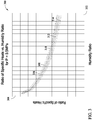
- Figure 3 is a graph 300 of a humidity ratio versus a ratio of specific heats that may be used with system 100 (shown in Figure 1 ).
- Graph 300 includes an x-axis 302 graduated in units of humidity ratio and a y-axis 304 graduated in units of a ratio of specific heats.
- Graph 300 includes a first trace 306 illustrating a relationship between humidity ratio and a ratio of specific heats at a temperature of approximately 180°C and a pressure of 0.5MPa.
- a second trace 308 illustrates a relationship between humidity ratio and a ratio of specific heats at a temperature of approximately 200°C and a pressure of 0.5MPa.
- a third trace 310 illustrates a relationship between humidity ratio and a ratio of specific heats at a temperature of approximately 240°C and a pressure of 0.5MPa.
- a forth trace 312 illustrates a relationship between humidity ratio and a ratio of specific heats at a temperature of approximately 280°C and a pressure of 0.5MPa, and a fifth trace 314 illustrates a relationship between humidity ratio and a ratio of specific heats at a temperature of approximately 320°C and a pressure of 0.5MPa.
- engine 102 operates using a Brayton cycle wherein the compression stage is isentropic.
- Equation (1) a relationship between humidity and the ratio of specific heats may be applied to determine humidity from measurements of pressure and temperature.
- ⁇ ln P 2 / P 1 ln P 2 / P 1 - ln T 2 / T 1
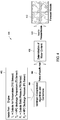
- Figure 4 is a data flow diagram 400 for determining water content in air using measured parameters from a gas turbine engine.
- a process receives inputs 402 of measured parameters of air temperature and static pressure of the ambient air surrounding for example, the gas turbine engine.
- the inputs for ambient air temperature and pressure are available from measured parameters from the existing T12 temperature sensor and the P0 pressure sensor, in the exemplary embodiment. In instances where these particular parameters are not measured directly, they may be derived by computing the parameter from other measured parameters.
- the process also receives inputs 402 of measured parameters of air temperature and static pressure of the compressed air exiting for example, high pressure compressor 218.
- Such parameters are also measured using existing engine performance sensors, T3 and P3, respectively. By using existing engine performance sensors, new additional sensors are not required to be added to the aircraft and are not mounted in the airstream surrounding the aircraft contributing to additional aircraft drag.
- T12, P0, T3, and P3 are used in the equations of isentropic compression 404 described above to determine a ratio of specific heats 406 and humidity ratio at the representative pressure and temperature.
- the processor in the EEC may perform such calculation or the T12, P0, T3, and P3 may be transmitted to a second processor for a determination of the ratio of specific heats and/or humidity ratio.
- a water content of the air surrounding aircraft 100 is determined 408 in real-time and transmitted to a weather facility where the determined water content is input 410 into weather prediction algorithms to generate forecast models 412 of future weather patterns.
- the computations described above can be performed in any of several places: within the Electronic Engine Controller, within another computing device aboard the aircraft, or in a computing device outside the aircraft that receives sensor data transmitted to aircraft 100.
- the sensor data may be stored aboard the aircraft along with time and location data from the aircraft navigation system so it can be retrieved and used to compute water content after the aircraft lands.
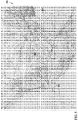
- FIG 5 is a map 500 of the United States 502 illustrating exemplary aircraft routes 504 between various airports 506 which can be used as collection points for weather data in accordance with system 100 (shown in Figure 1 ).
- Such routes 504 represent the potential data collection coverage for determining water content of the air.
- commercial aircraft enable water content to be continuously measured at low cost along ascents, descents, and routes 504 of flight in the United States 502 and similarly, worldwide. Aircraft traverse such routes multiple times during a given time period increasing the collection of water content data by several orders of magnitude compared to current balloon soundings.
- Improved water content measurements can substantially improve weather forecasts, with particular improvement for predicting the onset of severe storms driven by convective weather such as those driven by heat released by gas-liquid phase changes in moist air.
- Various embodiments of the present disclosure facilitates real-time and near-real time measurements of water content of the air that are useful for weather forecast models, particularly over the oceans and land masses where few sensors are currently available.
- Various aircraft operators such as airlines, federal or other national agencies, research institutions, foreign military alliances, and national military air forces benefit from accurate water forecasts for their operation.
- inaccurate weather forecasts can lead vessels into unsafe conditions or cause them to take inefficient routes.
Landscapes
- Environmental & Geological Engineering (AREA)
- Engineering & Computer Science (AREA)
- Life Sciences & Earth Sciences (AREA)
- Atmospheric Sciences (AREA)
- Biodiversity & Conservation Biology (AREA)
- Ecology (AREA)
- Environmental Sciences (AREA)
- Analytical Chemistry (AREA)
- Immunology (AREA)
- Chemical & Material Sciences (AREA)
- Physics & Mathematics (AREA)
- Biochemistry (AREA)
- General Health & Medical Sciences (AREA)
- General Physics & Mathematics (AREA)
- Health & Medical Sciences (AREA)
- Pathology (AREA)
- Aviation & Aerospace Engineering (AREA)
- Arrangements For Transmission Of Measured Signals (AREA)
- Combined Controls Of Internal Combustion Engines (AREA)
- Testing Or Calibration Of Command Recording Devices (AREA)
- Investigating Or Analyzing Materials Using Thermal Means (AREA)
Claims (4)
- Verfahren zur Messung von atmosphärischem Wassergehalt (400), umfassend:Bestimmen eines Verhältnisses spezifischer Wärmen (406) eines Luftvolumens in einem Gasturbinentriebwerk (102, 104) auf der Basis eines ersten Drucks und einer ersten Temperatur an einem ersten Ort in dem Gasturbinentriebwerk und eines zweiten Drucks und einer zweiten Temperatur an einem zweiten Ort in dem Gasturbinentriebwerk;wobei der erste Druck, die erste Temperatur, der zweite Druck und die zweite Temperatur direkt gemessen werden oder durch Berechnen des jeweiligen Parameters aus anderen gemessenen Parametern abgeleitet werden; undBestimmen eines Wassergehalts (408) des Luftvolumens unter Verwendung des Verhältnisses spezifischer Wärmen des Luftvolumens.
- Verfahren nach Anspruch 1, wobei das Bestimmen eines Verhältnisses spezifischer Wärmen eines Luftvolumens Messen einer ersten Lufttemperatur und eines ersten Luftdrucks an dem ersten Ort umfasst.
- Verfahren nach Anspruch 2, wobei das Bestimmen eines Verhältnisses spezifischer Wärmen eines Luftvolumens Messen einer zweiten Lufttemperatur und eines zweiten Luftdrucks an dem zweiten Ort umfasst.
- Verfahren nach Anspruch 1, wobei das Bestimmen eines atmosphärischen Wassergehalts aus dem Verhältnis spezifischer Wärmen Verwendung einer Nachschlagetabelle umfasst.
Priority Applications (1)
| Application Number | Priority Date | Filing Date | Title |
|---|---|---|---|
| EP15202553.2A EP3032290B1 (de) | 2007-01-30 | 2007-12-20 | Verfahren und vorrichtung zur vorhersage von wetter mit atmosphärischem, an bord eines flugzeugs gemessenem wassergehalt |
Applications Claiming Priority (2)
| Application Number | Priority Date | Filing Date | Title |
|---|---|---|---|
| US11/668,956 US7698927B2 (en) | 2007-01-30 | 2007-01-30 | Methods and systems for measuring atmospheric water content |
| PCT/US2007/088302 WO2008094363A1 (en) | 2007-01-30 | 2007-12-20 | Method and system for forescating weather using atmospheric water measured onboard an aircraft |
Related Child Applications (2)
| Application Number | Title | Priority Date | Filing Date |
|---|---|---|---|
| EP15202553.2A Division-Into EP3032290B1 (de) | 2007-01-30 | 2007-12-20 | Verfahren und vorrichtung zur vorhersage von wetter mit atmosphärischem, an bord eines flugzeugs gemessenem wassergehalt |
| EP15202553.2A Division EP3032290B1 (de) | 2007-01-30 | 2007-12-20 | Verfahren und vorrichtung zur vorhersage von wetter mit atmosphärischem, an bord eines flugzeugs gemessenem wassergehalt |
Publications (2)
| Publication Number | Publication Date |
|---|---|
| EP2115498A1 EP2115498A1 (de) | 2009-11-11 |
| EP2115498B1 true EP2115498B1 (de) | 2016-03-09 |
Family
ID=39400486
Family Applications (2)
| Application Number | Title | Priority Date | Filing Date |
|---|---|---|---|
| EP15202553.2A Active EP3032290B1 (de) | 2007-01-30 | 2007-12-20 | Verfahren und vorrichtung zur vorhersage von wetter mit atmosphärischem, an bord eines flugzeugs gemessenem wassergehalt |
| EP07869617.6A Active EP2115498B1 (de) | 2007-01-30 | 2007-12-20 | Verfahren zur wettervorhersage unter verwendung von atmosphärischem wassergehalt |
Family Applications Before (1)
| Application Number | Title | Priority Date | Filing Date |
|---|---|---|---|
| EP15202553.2A Active EP3032290B1 (de) | 2007-01-30 | 2007-12-20 | Verfahren und vorrichtung zur vorhersage von wetter mit atmosphärischem, an bord eines flugzeugs gemessenem wassergehalt |
Country Status (5)
| Country | Link |
|---|---|
| US (3) | US7698927B2 (de) |
| EP (2) | EP3032290B1 (de) |
| JP (2) | JP5208969B2 (de) |
| CA (1) | CA2673818C (de) |
| WO (1) | WO2008094363A1 (de) |
Families Citing this family (26)
| Publication number | Priority date | Publication date | Assignee | Title |
|---|---|---|---|---|
| DE102007008296A1 (de) * | 2007-02-16 | 2008-08-21 | Alstom Technology Ltd. | Verfahren zur automatischen Regelung einer oder mehrerer Feuerungstemperaturen einer Gasturbinenanlage und Verfahren zur Bestimmung des Wassergehalts im Abgas einer Gasturbinenanlage |
| US8437893B2 (en) * | 2007-03-16 | 2013-05-07 | The Boeing Company | Determining current meteorological conditions specific to an aircraft |
| GB0710162D0 (en) * | 2007-05-26 | 2007-07-04 | Rolls Royce Plc | Method and apparatus for suppressing aeroengine contrails |
| US8013738B2 (en) | 2007-10-04 | 2011-09-06 | Kd Secure, Llc | Hierarchical storage manager (HSM) for intelligent storage of large volumes of data |
| US7382244B1 (en) | 2007-10-04 | 2008-06-03 | Kd Secure | Video surveillance, storage, and alerting system having network management, hierarchical data storage, video tip processing, and vehicle plate analysis |
| US7872603B2 (en) * | 2008-09-04 | 2011-01-18 | The Boeing Company | Method and apparatus for making airborne radar horizon measurements to measure atmospheric refractivity profiles |
| US8314730B1 (en) | 2010-12-14 | 2012-11-20 | The Boeing Company | Collection of meteorological data by vehicles |
| US8839663B2 (en) * | 2012-01-03 | 2014-09-23 | General Electric Company | Working fluid sensor system for power generation system |
| US20140026999A1 (en) * | 2012-07-25 | 2014-01-30 | Solar Turbines Incorporated | Exhaust diffuser for a gas turbine engine having curved and offset struts |
| US8787904B1 (en) * | 2013-03-12 | 2014-07-22 | Smartsky Networks LLC | Aircraft based wireless communication system |
| WO2014174340A1 (en) * | 2013-04-22 | 2014-10-30 | Chad Klippert | Aircraft flight data monitoring and reporting system and use thereof |
| US9302782B2 (en) | 2014-08-18 | 2016-04-05 | Sunlight Photonics Inc. | Methods and apparatus for a distributed airborne wireless communications fleet |
| US11968022B2 (en) | 2014-08-18 | 2024-04-23 | Sunlight Aerospace Inc. | Distributed airborne wireless communication services |
| US9596020B2 (en) | 2014-08-18 | 2017-03-14 | Sunlight Photonics Inc. | Methods for providing distributed airborne wireless communications |
| US9083425B1 (en) * | 2014-08-18 | 2015-07-14 | Sunlight Photonics Inc. | Distributed airborne wireless networks |
| KR101660865B1 (ko) * | 2015-06-30 | 2016-09-28 | 대한민국 | 기상 센서를 이용한 기상 관측 장치 |
| US10470114B2 (en) * | 2016-06-30 | 2019-11-05 | General Electric Company | Wireless network selection |
| US10071820B2 (en) * | 2016-09-19 | 2018-09-11 | Pratt & Whitney Canada Corp. | Inclement weather detection for aircraft engines |
| RU181160U1 (ru) * | 2017-12-08 | 2018-07-05 | Федеральное государственное бюджетное учреждение науки Институт оптики атмосферы им. В.Е. Зуева Сибирского отделения Российской академии наук (ИОА СО РАН) | Лидар для зондирования озона в верхней тропосфере - нижней стратосфере |
| EP3726324B1 (de) | 2019-04-17 | 2023-03-01 | Raytheon Technologies Corporation | Kommunikationsgateway für gasturbinenmotoren mit internen sensoren |
| EP3726323B1 (de) | 2019-04-17 | 2023-03-08 | Raytheon Technologies Corporation | Kommunikationsgateway für gasturbinenmotoren mit integrierten antennen |
| US11913643B2 (en) * | 2019-04-17 | 2024-02-27 | Rtx Corporation | Engine wireless sensor system with energy harvesting |
| GB2584499C (en) * | 2019-06-28 | 2021-10-20 | Satavia Ltd | System and method for generating an aircraft flight trajectory |
| CN112632473B (zh) * | 2021-03-09 | 2021-05-25 | 长江空间信息技术工程有限公司(武汉) | 一种融合地基和空基gnss大气可降水量的计算方法 |
| CN114386860B (zh) * | 2022-01-14 | 2022-11-29 | 西安理工大学 | 一种区域大气降水格局指标的确定方法 |
| US12215634B1 (en) * | 2023-11-21 | 2025-02-04 | General Electric Company | Turbine engine including a steam system |
Family Cites Families (26)
| Publication number | Priority date | Publication date | Assignee | Title |
|---|---|---|---|---|
| US3083528A (en) | 1959-05-12 | 1963-04-02 | Raytheon Co | Microwave engines |
| US3369361A (en) * | 1966-03-07 | 1968-02-20 | Gale M. Craig | Gas turbine power plant with sub-atmospheric spray-cooled turbine discharge into exhaust compressor |
| US3825211A (en) | 1972-06-19 | 1974-07-23 | Phaser Telepropulsion Inc | Laser rocket |
| US3818700A (en) | 1972-10-20 | 1974-06-25 | Avco Corp | Ram jet powered by a laser beam |
| US4028942A (en) * | 1976-01-19 | 1977-06-14 | Gardiner Frank J | Hygrometer |
| US4036012A (en) | 1976-02-18 | 1977-07-19 | The United States Of America As Represented By The Secretary Of The Army | Laser powered rocket engine using a gasdynamic window |
| US4614405A (en) | 1982-09-28 | 1986-09-30 | The Boeing Company | Wide angle laser window |
| EP0118284B1 (de) * | 1983-03-02 | 1988-01-13 | Cosworth Engineering Limited | Brennkraftmaschine |
| JP2692341B2 (ja) * | 1990-06-07 | 1997-12-17 | トヨタ自動車株式会社 | 二軸式ガスタービン機関 |
| US5542247A (en) | 1994-06-24 | 1996-08-06 | Lockheed Corporation | Apparatus powered using laser supplied energy |
| US6563452B1 (en) * | 1998-07-06 | 2003-05-13 | Honeywell International Inc. | Apparatus and method for determining wind profiles and for predicting clear air turbulence |
| JP4517259B2 (ja) * | 2000-06-20 | 2010-08-04 | 株式会社Ihi | ガスタービンに設けられた熱電対の断線検出方法 |
| JP2003161504A (ja) * | 2001-11-26 | 2003-06-06 | Osaka Gas Co Ltd | 処理装置 |
| JP3679065B2 (ja) * | 2002-03-29 | 2005-08-03 | 株式会社ユー・ドム | 大気中のガス濃度測定装置 |
| US7175136B2 (en) * | 2003-04-16 | 2007-02-13 | The Boeing Company | Method and apparatus for detecting conditions conducive to ice formation |
| US6943699B2 (en) * | 2003-07-23 | 2005-09-13 | Harris Corporation | Wireless engine monitoring system |
| US7069147B2 (en) * | 2004-05-28 | 2006-06-27 | Honeywell International Inc. | Airborne based monitoring |
| US6937937B1 (en) * | 2004-05-28 | 2005-08-30 | Honeywell International Inc. | Airborne based monitoring |
| US6977608B1 (en) * | 2004-12-15 | 2005-12-20 | Rockwell Collins | Atmospheric data aggregation and forecasting system |
| US20060155432A1 (en) * | 2005-01-07 | 2006-07-13 | United Technologies Corporation | Methods and systems for monitoring atmospheric conditions, predicting turbulent atmospheric conditions and optimizing flight paths of aircraft |
| US20060168090A1 (en) * | 2005-01-07 | 2006-07-27 | United Technologies Corporation | Remote integrated subsystems in an aircraft or the like |
| US7213566B1 (en) * | 2006-08-10 | 2007-05-08 | Ford Global Technologies, Llc | Engine system and method of control |
| US7448359B2 (en) * | 2006-08-10 | 2008-11-11 | Ford Global Technologies, Llc | Multi-mode internal combustion engine |
| US20080197238A1 (en) | 2007-02-15 | 2008-08-21 | Young Kun Bae | Photonic laser-based propulsion having an active intracavity thrust amplification system |
| RU2398717C1 (ru) | 2009-01-13 | 2010-09-10 | Александр Олегович Майборода | Способ доставки грузов в космос и система его осуществления |
| US20130061571A1 (en) | 2011-09-14 | 2013-03-14 | Robert Van Burdine | Laser propelled flight vehicle |
-
2007
- 2007-01-30 US US11/668,956 patent/US7698927B2/en active Active
- 2007-12-20 EP EP15202553.2A patent/EP3032290B1/de active Active
- 2007-12-20 JP JP2009548243A patent/JP5208969B2/ja active Active
- 2007-12-20 EP EP07869617.6A patent/EP2115498B1/de active Active
- 2007-12-20 CA CA2673818A patent/CA2673818C/en active Active
- 2007-12-20 WO PCT/US2007/088302 patent/WO2008094363A1/en not_active Ceased
-
2010
- 2010-03-05 US US12/718,519 patent/US8051701B2/en active Active
-
2011
- 2011-09-23 US US13/243,003 patent/US8813541B1/en active Active
-
2012
- 2012-09-21 JP JP2012208352A patent/JP5782417B2/ja active Active
Also Published As
| Publication number | Publication date |
|---|---|
| JP2010517053A (ja) | 2010-05-20 |
| JP2013040950A (ja) | 2013-02-28 |
| CA2673818C (en) | 2018-03-06 |
| US8051701B2 (en) | 2011-11-08 |
| WO2008094363A1 (en) | 2008-08-07 |
| US7698927B2 (en) | 2010-04-20 |
| EP3032290A1 (de) | 2016-06-15 |
| JP5208969B2 (ja) | 2013-06-12 |
| JP5782417B2 (ja) | 2015-09-24 |
| US20080178659A1 (en) | 2008-07-31 |
| EP3032290B1 (de) | 2019-06-26 |
| US20100154512A1 (en) | 2010-06-24 |
| US8813541B1 (en) | 2014-08-26 |
| EP2115498A1 (de) | 2009-11-11 |
| CA2673818A1 (en) | 2008-08-07 |
Similar Documents
| Publication | Publication Date | Title |
|---|---|---|
| EP2115498B1 (de) | Verfahren zur wettervorhersage unter verwendung von atmosphärischem wassergehalt | |
| Sausen et al. | A Diagnostic Study of the Global Distribution of Contrails Part I: Present Day Climateast | |
| Isaac et al. | Recent Canadian research on aircraft in-flight icing | |
| US9002660B2 (en) | Device and method for determining and indicating climate-relevant effects of a contrail produced by an airplane | |
| Giez et al. | Static pressure from aircraft trailing-cone measurements and numerical weather-prediction analysis | |
| Bärfuss et al. | Drone-based meteorological observations up to the tropopause–a concept study | |
| Bouchard et al. | Relationship between airborne electrical and total water content measurements in ice clouds | |
| Califf et al. | Use of a turbofan engine to measure ice crystal cloud concentration in-flight | |
| Esposito et al. | Cloud calibration update of the CIRA icing wind tunnel | |
| Rodríguez-Sanz et al. | Total air temperature anomalies as a metric for detecting high-altitude ice crystal events: Development of a failure indicator heuristic | |
| Ryerson | Remote Sensing of In-Flight Icing Conditions Operational, Meteorological, and Technological Considerations | |
| Christensen et al. | Evaluation of ECMWF ERA-40 temperature and wind in the lower tropical stratosphere since 1988 from past long-duration balloon measurements | |
| Moninger et al. | 4.2 AUTOMATED WEATHER REPORTS FROM AIRCRAFT: TAMDAR AND THE US AMDAR FLEET | |
| Bernstein et al. | The embraer-170 and-190 natural icing flight campaigns: keys to success | |
| Gao et al. | Variational bias correction of TAMDAR temperature observations in the WRF data assimilation system | |
| Aberson et al. | Aircraft observations of tropical cyclones | |
| Yıldız et al. | İklim değişikliğinin sıcaklık yükselişine etkileri ve motor performansının değerlendirilmesi | |
| Schumann et al. | Use of Numerical Weather Prediction Analysis for Testing Pressure Altitude Measurements on Aircraft-An Application Example | |
| Ackerman et al. | Assessing Midwest cloud characteristics for weather modification | |
| Shull | A Validation Study of the Air Force Weather Agency (AFWA) JETRAX Contrail Forecast Algorithm. | |
| Ryerson | Aircraft icing remote sensing | |
| Avery et al. | Cloud Sampling with Small UAS | |
| Bailey | Anisa N. Haghighi1, Ryan D. Nolin1, Gary D. Pundsack2, Nick Craine2, Aliaksei Stratsilatau3, and | |
| Schwarz | EU Project SENS4ICE Hybrid Ice Detection Architectures Demonstration Results | |
| Hamilton et al. | Flight tests of the turbulence prediction and warning system (TPAWS) |
Legal Events
| Date | Code | Title | Description |
|---|---|---|---|
| PUAI | Public reference made under article 153(3) epc to a published international application that has entered the european phase |
Free format text: ORIGINAL CODE: 0009012 |
|
| 17P | Request for examination filed |
Effective date: 20090828 |
|
| AK | Designated contracting states |
Kind code of ref document: A1 Designated state(s): AT BE BG CH CY CZ DE DK EE ES FI FR GB GR HU IE IS IT LI LT LU LV MC MT NL PL PT RO SE SI SK TR |
|
| 17Q | First examination report despatched |
Effective date: 20091216 |
|
| DAX | Request for extension of the european patent (deleted) | ||
| GRAP | Despatch of communication of intention to grant a patent |
Free format text: ORIGINAL CODE: EPIDOSNIGR1 |
|
| INTG | Intention to grant announced |
Effective date: 20150313 |
|
| GRAP | Despatch of communication of intention to grant a patent |
Free format text: ORIGINAL CODE: EPIDOSNIGR1 |
|
| INTG | Intention to grant announced |
Effective date: 20150918 |
|
| GRAS | Grant fee paid |
Free format text: ORIGINAL CODE: EPIDOSNIGR3 |
|
| GRAA | (expected) grant |
Free format text: ORIGINAL CODE: 0009210 |
|
| AK | Designated contracting states |
Kind code of ref document: B1 Designated state(s): AT BE BG CH CY CZ DE DK EE ES FI FR GB GR HU IE IS IT LI LT LU LV MC MT NL PL PT RO SE SI SK TR |
|
| REG | Reference to a national code |
Ref country code: GB Ref legal event code: FG4D |
|
| REG | Reference to a national code |
Ref country code: AT Ref legal event code: REF Ref document number: 779920 Country of ref document: AT Kind code of ref document: T Effective date: 20160315 Ref country code: CH Ref legal event code: EP |
|
| REG | Reference to a national code |
Ref country code: IE Ref legal event code: FG4D |
|
| REG | Reference to a national code |
Ref country code: DE Ref legal event code: R096 Ref document number: 602007045247 Country of ref document: DE |
|
| REG | Reference to a national code |
Ref country code: LT Ref legal event code: MG4D |
|
| REG | Reference to a national code |
Ref country code: NL Ref legal event code: MP Effective date: 20160309 |
|
| PG25 | Lapsed in a contracting state [announced via postgrant information from national office to epo] |
Ref country code: ES Free format text: LAPSE BECAUSE OF FAILURE TO SUBMIT A TRANSLATION OF THE DESCRIPTION OR TO PAY THE FEE WITHIN THE PRESCRIBED TIME-LIMIT Effective date: 20160309 Ref country code: FI Free format text: LAPSE BECAUSE OF FAILURE TO SUBMIT A TRANSLATION OF THE DESCRIPTION OR TO PAY THE FEE WITHIN THE PRESCRIBED TIME-LIMIT Effective date: 20160309 Ref country code: GR Free format text: LAPSE BECAUSE OF FAILURE TO SUBMIT A TRANSLATION OF THE DESCRIPTION OR TO PAY THE FEE WITHIN THE PRESCRIBED TIME-LIMIT Effective date: 20160610 |
|
| REG | Reference to a national code |
Ref country code: AT Ref legal event code: MK05 Ref document number: 779920 Country of ref document: AT Kind code of ref document: T Effective date: 20160309 |
|
| PG25 | Lapsed in a contracting state [announced via postgrant information from national office to epo] |
Ref country code: SE Free format text: LAPSE BECAUSE OF FAILURE TO SUBMIT A TRANSLATION OF THE DESCRIPTION OR TO PAY THE FEE WITHIN THE PRESCRIBED TIME-LIMIT Effective date: 20160309 Ref country code: LT Free format text: LAPSE BECAUSE OF FAILURE TO SUBMIT A TRANSLATION OF THE DESCRIPTION OR TO PAY THE FEE WITHIN THE PRESCRIBED TIME-LIMIT Effective date: 20160309 Ref country code: NL Free format text: LAPSE BECAUSE OF FAILURE TO SUBMIT A TRANSLATION OF THE DESCRIPTION OR TO PAY THE FEE WITHIN THE PRESCRIBED TIME-LIMIT Effective date: 20160309 Ref country code: PL Free format text: LAPSE BECAUSE OF FAILURE TO SUBMIT A TRANSLATION OF THE DESCRIPTION OR TO PAY THE FEE WITHIN THE PRESCRIBED TIME-LIMIT Effective date: 20160309 Ref country code: LV Free format text: LAPSE BECAUSE OF FAILURE TO SUBMIT A TRANSLATION OF THE DESCRIPTION OR TO PAY THE FEE WITHIN THE PRESCRIBED TIME-LIMIT Effective date: 20160309 |
|
| PG25 | Lapsed in a contracting state [announced via postgrant information from national office to epo] |
Ref country code: IS Free format text: LAPSE BECAUSE OF FAILURE TO SUBMIT A TRANSLATION OF THE DESCRIPTION OR TO PAY THE FEE WITHIN THE PRESCRIBED TIME-LIMIT Effective date: 20160709 Ref country code: EE Free format text: LAPSE BECAUSE OF FAILURE TO SUBMIT A TRANSLATION OF THE DESCRIPTION OR TO PAY THE FEE WITHIN THE PRESCRIBED TIME-LIMIT Effective date: 20160309 |
|
| PG25 | Lapsed in a contracting state [announced via postgrant information from national office to epo] |
Ref country code: PT Free format text: LAPSE BECAUSE OF FAILURE TO SUBMIT A TRANSLATION OF THE DESCRIPTION OR TO PAY THE FEE WITHIN THE PRESCRIBED TIME-LIMIT Effective date: 20160711 Ref country code: AT Free format text: LAPSE BECAUSE OF FAILURE TO SUBMIT A TRANSLATION OF THE DESCRIPTION OR TO PAY THE FEE WITHIN THE PRESCRIBED TIME-LIMIT Effective date: 20160309 Ref country code: RO Free format text: LAPSE BECAUSE OF FAILURE TO SUBMIT A TRANSLATION OF THE DESCRIPTION OR TO PAY THE FEE WITHIN THE PRESCRIBED TIME-LIMIT Effective date: 20160309 Ref country code: CZ Free format text: LAPSE BECAUSE OF FAILURE TO SUBMIT A TRANSLATION OF THE DESCRIPTION OR TO PAY THE FEE WITHIN THE PRESCRIBED TIME-LIMIT Effective date: 20160309 Ref country code: SK Free format text: LAPSE BECAUSE OF FAILURE TO SUBMIT A TRANSLATION OF THE DESCRIPTION OR TO PAY THE FEE WITHIN THE PRESCRIBED TIME-LIMIT Effective date: 20160309 |
|
| REG | Reference to a national code |
Ref country code: DE Ref legal event code: R097 Ref document number: 602007045247 Country of ref document: DE |
|
| REG | Reference to a national code |
Ref country code: FR Ref legal event code: PLFP Year of fee payment: 10 |
|
| PG25 | Lapsed in a contracting state [announced via postgrant information from national office to epo] |
Ref country code: IT Free format text: LAPSE BECAUSE OF FAILURE TO SUBMIT A TRANSLATION OF THE DESCRIPTION OR TO PAY THE FEE WITHIN THE PRESCRIBED TIME-LIMIT Effective date: 20160309 Ref country code: BE Free format text: LAPSE BECAUSE OF FAILURE TO SUBMIT A TRANSLATION OF THE DESCRIPTION OR TO PAY THE FEE WITHIN THE PRESCRIBED TIME-LIMIT Effective date: 20160309 |
|
| PLBE | No opposition filed within time limit |
Free format text: ORIGINAL CODE: 0009261 |
|
| STAA | Information on the status of an ep patent application or granted ep patent |
Free format text: STATUS: NO OPPOSITION FILED WITHIN TIME LIMIT |
|
| PG25 | Lapsed in a contracting state [announced via postgrant information from national office to epo] |
Ref country code: DK Free format text: LAPSE BECAUSE OF FAILURE TO SUBMIT A TRANSLATION OF THE DESCRIPTION OR TO PAY THE FEE WITHIN THE PRESCRIBED TIME-LIMIT Effective date: 20160309 |
|
| 26N | No opposition filed |
Effective date: 20161212 |
|
| PG25 | Lapsed in a contracting state [announced via postgrant information from national office to epo] |
Ref country code: BG Free format text: LAPSE BECAUSE OF FAILURE TO SUBMIT A TRANSLATION OF THE DESCRIPTION OR TO PAY THE FEE WITHIN THE PRESCRIBED TIME-LIMIT Effective date: 20160609 |
|
| PG25 | Lapsed in a contracting state [announced via postgrant information from national office to epo] |
Ref country code: SI Free format text: LAPSE BECAUSE OF FAILURE TO SUBMIT A TRANSLATION OF THE DESCRIPTION OR TO PAY THE FEE WITHIN THE PRESCRIBED TIME-LIMIT Effective date: 20160309 |
|
| REG | Reference to a national code |
Ref country code: CH Ref legal event code: PL |
|
| PG25 | Lapsed in a contracting state [announced via postgrant information from national office to epo] |
Ref country code: MC Free format text: LAPSE BECAUSE OF FAILURE TO SUBMIT A TRANSLATION OF THE DESCRIPTION OR TO PAY THE FEE WITHIN THE PRESCRIBED TIME-LIMIT Effective date: 20160309 |
|
| REG | Reference to a national code |
Ref country code: IE Ref legal event code: MM4A |
|
| PG25 | Lapsed in a contracting state [announced via postgrant information from national office to epo] |
Ref country code: LU Free format text: LAPSE BECAUSE OF NON-PAYMENT OF DUE FEES Effective date: 20161220 Ref country code: CH Free format text: LAPSE BECAUSE OF NON-PAYMENT OF DUE FEES Effective date: 20161231 Ref country code: LI Free format text: LAPSE BECAUSE OF NON-PAYMENT OF DUE FEES Effective date: 20161231 |
|
| PG25 | Lapsed in a contracting state [announced via postgrant information from national office to epo] |
Ref country code: IE Free format text: LAPSE BECAUSE OF NON-PAYMENT OF DUE FEES Effective date: 20161220 |
|
| REG | Reference to a national code |
Ref country code: FR Ref legal event code: PLFP Year of fee payment: 11 |
|
| PG25 | Lapsed in a contracting state [announced via postgrant information from national office to epo] |
Ref country code: HU Free format text: LAPSE BECAUSE OF FAILURE TO SUBMIT A TRANSLATION OF THE DESCRIPTION OR TO PAY THE FEE WITHIN THE PRESCRIBED TIME-LIMIT; INVALID AB INITIO Effective date: 20071220 Ref country code: CY Free format text: LAPSE BECAUSE OF FAILURE TO SUBMIT A TRANSLATION OF THE DESCRIPTION OR TO PAY THE FEE WITHIN THE PRESCRIBED TIME-LIMIT Effective date: 20160309 |
|
| PG25 | Lapsed in a contracting state [announced via postgrant information from national office to epo] |
Ref country code: TR Free format text: LAPSE BECAUSE OF FAILURE TO SUBMIT A TRANSLATION OF THE DESCRIPTION OR TO PAY THE FEE WITHIN THE PRESCRIBED TIME-LIMIT Effective date: 20160309 |
|
| PG25 | Lapsed in a contracting state [announced via postgrant information from national office to epo] |
Ref country code: MT Free format text: LAPSE BECAUSE OF NON-PAYMENT OF DUE FEES Effective date: 20161220 |
|
| P01 | Opt-out of the competence of the unified patent court (upc) registered |
Effective date: 20230516 |
|
| PGFP | Annual fee paid to national office [announced via postgrant information from national office to epo] |
Ref country code: DE Payment date: 20241227 Year of fee payment: 18 |
|
| PGFP | Annual fee paid to national office [announced via postgrant information from national office to epo] |
Ref country code: GB Payment date: 20251229 Year of fee payment: 19 |
|
| PGFP | Annual fee paid to national office [announced via postgrant information from national office to epo] |
Ref country code: FR Payment date: 20251226 Year of fee payment: 19 |