EP2107378A1 - Automatic analyzing device, ordering management system, and ordering management method - Google Patents
Automatic analyzing device, ordering management system, and ordering management method Download PDFInfo
- Publication number
- EP2107378A1 EP2107378A1 EP08703660A EP08703660A EP2107378A1 EP 2107378 A1 EP2107378 A1 EP 2107378A1 EP 08703660 A EP08703660 A EP 08703660A EP 08703660 A EP08703660 A EP 08703660A EP 2107378 A1 EP2107378 A1 EP 2107378A1
- Authority
- EP
- European Patent Office
- Prior art keywords
- reagent
- analysis
- usage
- unit
- remaining
- Prior art date
- Legal status (The legal status is an assumption and is not a legal conclusion. Google has not performed a legal analysis and makes no representation as to the accuracy of the status listed.)
- Withdrawn
Links
Images








Classifications
-
- G—PHYSICS
- G01—MEASURING; TESTING
- G01N—INVESTIGATING OR ANALYSING MATERIALS BY DETERMINING THEIR CHEMICAL OR PHYSICAL PROPERTIES
- G01N35/00—Automatic analysis not limited to methods or materials provided for in any single one of groups G01N1/00 - G01N33/00; Handling materials therefor
- G01N35/00584—Control arrangements for automatic analysers
- G01N35/00594—Quality control, including calibration or testing of components of the analyser
- G01N35/00613—Quality control
- G01N35/00623—Quality control of instruments
-
- G—PHYSICS
- G01—MEASURING; TESTING
- G01N—INVESTIGATING OR ANALYSING MATERIALS BY DETERMINING THEIR CHEMICAL OR PHYSICAL PROPERTIES
- G01N35/00—Automatic analysis not limited to methods or materials provided for in any single one of groups G01N1/00 - G01N33/00; Handling materials therefor
- G01N35/00584—Control arrangements for automatic analysers
- G01N35/00594—Quality control, including calibration or testing of components of the analyser
- G01N35/00613—Quality control
- G01N35/00663—Quality control of consumables
-
- G—PHYSICS
- G06—COMPUTING OR CALCULATING; COUNTING
- G06Q—INFORMATION AND COMMUNICATION TECHNOLOGY [ICT] SPECIALLY ADAPTED FOR ADMINISTRATIVE, COMMERCIAL, FINANCIAL, MANAGERIAL OR SUPERVISORY PURPOSES; SYSTEMS OR METHODS SPECIALLY ADAPTED FOR ADMINISTRATIVE, COMMERCIAL, FINANCIAL, MANAGERIAL OR SUPERVISORY PURPOSES, NOT OTHERWISE PROVIDED FOR
- G06Q10/00—Administration; Management
- G06Q10/08—Logistics, e.g. warehousing, loading or distribution; Inventory or stock management
- G06Q10/087—Inventory or stock management, e.g. order filling, procurement or balancing against orders
-
- G—PHYSICS
- G06—COMPUTING OR CALCULATING; COUNTING
- G06Q—INFORMATION AND COMMUNICATION TECHNOLOGY [ICT] SPECIALLY ADAPTED FOR ADMINISTRATIVE, COMMERCIAL, FINANCIAL, MANAGERIAL OR SUPERVISORY PURPOSES; SYSTEMS OR METHODS SPECIALLY ADAPTED FOR ADMINISTRATIVE, COMMERCIAL, FINANCIAL, MANAGERIAL OR SUPERVISORY PURPOSES, NOT OTHERWISE PROVIDED FOR
- G06Q10/00—Administration; Management
- G06Q10/08—Logistics, e.g. warehousing, loading or distribution; Inventory or stock management
- G06Q10/087—Inventory or stock management, e.g. order filling, procurement or balancing against orders
- G06Q10/0872—Inventory or stock management, e.g. order filling, procurement or balancing against orders using inventory planning
- G06Q10/08726—Inventory or stock management, e.g. order filling, procurement or balancing against orders using inventory planning for replenishment processing, procedures, or recommendations using forecasting or optimisation
-
- G—PHYSICS
- G06—COMPUTING OR CALCULATING; COUNTING
- G06Q—INFORMATION AND COMMUNICATION TECHNOLOGY [ICT] SPECIALLY ADAPTED FOR ADMINISTRATIVE, COMMERCIAL, FINANCIAL, MANAGERIAL OR SUPERVISORY PURPOSES; SYSTEMS OR METHODS SPECIALLY ADAPTED FOR ADMINISTRATIVE, COMMERCIAL, FINANCIAL, MANAGERIAL OR SUPERVISORY PURPOSES, NOT OTHERWISE PROVIDED FOR
- G06Q10/00—Administration; Management
- G06Q10/08—Logistics, e.g. warehousing, loading or distribution; Inventory or stock management
- G06Q10/087—Inventory or stock management, e.g. order filling, procurement or balancing against orders
- G06Q10/0877—Inventory or stock management, e.g. order filling, procurement or balancing against orders by inventory control or reporting using inventory tracking or counting
-
- G—PHYSICS
- G01—MEASURING; TESTING
- G01N—INVESTIGATING OR ANALYSING MATERIALS BY DETERMINING THEIR CHEMICAL OR PHYSICAL PROPERTIES
- G01N35/00—Automatic analysis not limited to methods or materials provided for in any single one of groups G01N1/00 - G01N33/00; Handling materials therefor
- G01N35/00584—Control arrangements for automatic analysers
- G01N35/00594—Quality control, including calibration or testing of components of the analyser
- G01N35/00613—Quality control
- G01N35/00623—Quality control of instruments
- G01N2035/00633—Quality control of instruments logging process history of individual samples
Definitions
- the present invention relates to an automatic analyzer that performs analysis such as biochemical analysis and immunological tests in an automatic manner, an order management system, and an order management method.
- An automatic analyzer is a widely known apparatus that performs analysis such as biochemical analysis in an automatic manner.
- Such an automatic analyzer includes a specimen supplying unit, an analyzing unit, and a data processing unit.
- the specimen supplying unit successively supplies racks with sampling tubes.
- the analyzing unit includes a reaction tank and a cool reagent-container.
- the cool reagent-container houses reagent bottles containing reagents that react with the specimen.
- the cuvette wheel houses cuvettes (reaction vessels) and is used to dispense a reagent from a reagent bottle and a specimen from a sampling tube.
- the absorbance of a test liquid obtained by reaction in a cuvette is measured by, for example, the measurement optical system.
- the data processing unit obtains an analysis result by using the measured absorbance. If a reagent runs short before the analysis is complete, it is necessary to stop the analysis and replace the corresponding reagent bottle for restocking that reagent (for example, see Patent Document 1).
- Patent Document 1 Japanese Patent Application Laid-open No. 2005-37171
- the present invention has been made in view of the above problems in the conventional technology and it is an object of the present invention to provide an automatic analyzer, an order management system, and an order management method by which an estimated reagent remaining quantity is calculated based on an actual reagent usage quantity for an analyzing period that is comparable to an analyzing period of upcoming analysis and accordingly an order for reagents is placed. That enables optimal order management and inventory management of the reagent according to the usage quantity, reduces the time consumed in performing order management or inventory management, and reduces the efforts needed to be taken by the operator.
- an automatic analyzer for analyzing a specimen by assaying a test liquid containing a predetermined quantity of a reagent dispensed according to an analysis item from a reagent bottle and a predetermined quantity of the specimen.
- the automatic analyzer includes an analysis history storing unit that stores therein history information of an analysis period, a specimen count, and an analysis item of analysis performed in past; a usage quantity estimating unit that estimates, based on the history information of an analysis period corresponding to a period required for upcoming analysis, a usage quantity of the reagent for the upcoming analysis by calculating a product of a usage quantity of a reagent specified in an analysis item in the history information and a specimen count in the analysis period; a current-remaining-quantity calculating unit that calculates a current reagent remaining quantity; an upcoming-remaining-quantity calculating unit that calculates a post-upcoming-analysis reagent remaining quantity by subtracting the usage quantity of the reagent estimated by the usage quantity estimating unit from the current reagent remaining quantity calculated by the current-remaining-quantity calculating unit; and a reagent ordering unit that manages the reagent remaining quantity, the reagent ordering unit placing an order for the reagent to a reagent supplying
- the automatic analyzer is connected to a host apparatus performing reagent ordering and is for analyzing a specimen by assaying a test liquid containing a predetermined quantity of a reagent dispensed according to an analysis item from a reagent bottle and a predetermined quantity of the specimen.
- the automatic analyzer includes an analysis history storing unit that stores therein history information of an analysis period, a specimen count, and an analysis item of analysis performed in past; a usage quantity estimating unit that estimates, based on the history information of an analysis period corresponding to a period required for upcoming analysis, a usage quantity of the reagent for the upcoming analysis by calculating a product of a usage quantity of a reagent specified in an analysis item in the history information and a specimen count in the analysis period; a current-remaining-quantity calculating unit that calculates a current reagent remaining quantity; an upcoming-remaining-quantity calculating unit that calculates a post-upcoming-analysis reagent remaining quantity by subtracting the usage quantity of the reagent estimated by the usage estimating unit from the current reagent remaining quantity calculated by the current-remaining-quantity calculating unit; and a notifying unit that notifies the host apparatus of the reagent remaining quantity calculated by the upcoming-remaining-quantity calculating unit, the host apparatus managing the
- the automatic analyzer further includes an information reading unit that reads a reagent usage quantity of stocked reagent.
- the current-remaining-quantity calculating unit calculates a current reagent remaining quantity that includes the reagent usage quantity read by the information reading unit.
- the automatic analyzer is for analyzing a specimen by assaying a test liquid containing a predetermined quantity of a reagent dispensed according to an analysis item from a reagent bottle and a predetermined quantity of the specimen.
- the automatic analyzer includes an analysis history storing unit that stores therein history information of an analysis period, a specimen count, and an analysis item of analysis performed in past and any one of usage conditions including a usage quantity, a usage time, and a usage count of a material used in the analysis performed in past; a usage quantity estimating unit that estimates, based on the history information of an analysis period corresponding to a period required for upcoming analysis, a usage condition of the material for the upcoming analysis by adding, for each material, a usage condition of the material specified in an analysis item in the history information; an adding unit that performs, for each material, cumulative addition of a usage condition of the material including the usage condition of the material estimated by the usage quantity estimating unit; and a material ordering unit that manages the usage condition of the material, the material ordering unit instructing issuing of a warning notice and placing an order for the material to a material supplying source if the usage condition of the material cumulatively added by the adding unit reaches a usage limit condition for the material.
- the automatic analyzer is connected to a host apparatus performing reagent ordering and is for analyzing a specimen by assaying a test liquid containing a predetermined quantity of a reagent dispensed according to an analysis item from a reagent bottle and a predetermined quantity of the specimen.
- the automatic analyzer includes an analysis history storing unit that stores therein history information of an analysis period, a specimen count, and an analysis item of analysis performed in past and any one of usage conditions including a usage quantity, a usage time, and a usage count of a material used in the analysis performed in past; a usage estimating unit that estimates, based on the history information of an analysis period corresponding to a period required for upcoming analysis, a usage condition of the material for the upcoming analysis by adding, for each material, a usage condition of the material specified in an analysis item in the history information; an adding unit that performs, for each material, cumulative addition of a usage condition of the material including the usage condition of the material estimated by the usage quantity estimating unit; and a notifying unit that notifies the host apparatus of the usage condition of the material added by the adding unit, the host apparatus managing the usage condition of the material.
- the material includes at least one of a detergent liquid, a lamp, a Ferista tube, and a syringe
- the analysis history storing unit stores therein any one of a usage quantity of the detergent liquid, a usage time of the lamp, a usage count of the Ferista tube, and a usage count of the syringe in association with an analysis period, a specimen count, and an analysis item of the analysis performed in past.
- a communication network is made up of an automatic analyzer for analyzing a specimen by assaying a test liquid containing a predetermined quantity of a reagent dispensed according to an analysis item from a reagent bottle and a predetermined quantity of the specimen and a managing device connected to the automatic analyzer and functioning as a reagent supplying source, the order management system performing reagent ordering from the automatic analyzer to the reagent supplying source.
- the automatic analyzer includes an analysis history storing unit that stores therein history information of an analysis period, a specimen count, and an analysis item of analysis performed in past; a usage quantity estimating unit that estimates, based on the history information of an analysis period corresponding to a period required for upcoming analysis, a usage quantity of the reagent for the upcoming analysis by calculating a product of a usage quantity of a reagent specified in an analysis item in the history information and a specimen count in the analysis period; a current-remaining-quantity calculating unit that calculates a current reagent remaining quantity; an upcoming-remaining-quantity calculating unit that calculates a post-upcoming-analysis reagent remaining quantity by subtracting the usage quantity of the reagent estimated by the usage quantity estimating unit from the current reagent remaining quantity calculated by the current-remaining-quantity calculating unit; and a reagent ordering unit that manages the remaining quantity, the reagent ordering unit placing an order for the reagent to a reagent supplying source if
- a communication network is made up of a plurality of automatic analyzers for analyzing a specimen by assaying a test liquid containing a predetermined quantity of a reagent dispensed according to an analysis item from a reagent bottle and a predetermined quantity of the specimen and a managing device connected to the automatic analyzer via a host apparatus and functioning as a reagent supplying source, the order management system performing reagent ordering from the respective automatic analyzers to the reagent supplying source.
- Each of the automatic analyzers includes an analysis history storing unit that stores therein history information of an analysis period, a specimen count, and an analysis item of analysis performed in past; a usage quantity estimating unit that estimates, based on the history information of an analysis period corresponding to a period required for upcoming analysis, a usage quantity of the reagent for the upcoming analysis by calculating a product of a usage quantity of a reagent specified in an analysis item in the history information and a specimen count in the analysis period; a current-remaining-quantity calculating unit that calculates a current reagent remaining quantity; an upcoming-remaining-quantity calculating unit that calculates a post-upcoming-analysis reagent remaining quantity by subtracting the usage quantity of the reagent estimated by the usage estimating unit from the current reagent remaining quantity calculated by the current-remaining-quantity calculating unit; and a notifying unit that notifies the host apparatus of the reagent remaining quantity calculated by the upcoming-remaining-quantity calculating unit.
- the host apparatus includes an overall reagent-remaining-quantity estimating unit that calculates an overall estimated reagent remaining quantity by adding the reagent remaining quantities notified by the respective automatic analyzers; and a reagent ordering unit that manages the remaining quantity of the reagent, and determines necessity of reagent ordering, the reagent ordering unit placing an order for the reagent to a reagent supplying source if determining that the reagent ordering is necessary.
- the managing device includes a reagent-order receiving unit that receives an order for the reagent.
- each of the automatic analyzers further includes an information reading unit that reads a reagent quantity of stocked reagent, and the current-remaining-quantity calculating unit calculates a current reagent remaining quantity that includes the reagent quantity of the reagent read by the information reading unit.
- a communication network is made of an automatic analyzer for analyzing a specimen by assaying a test liquid containing a predetermined quantity of a reagent dispensed according to an analysis item from a reagent bottle and a predetermined quantity of the specimen and a managing device connected to the automatic analyzer and functioning as a material supplying source, the managing device performing reagent ordering from the automatic analyzer to the material supplying source.
- the automatic analyzer includes an analysis history storing unit that stores therein history information of an analysis period, a specimen count, and an analysis item of analysis performed in past and any one of usage conditions including a usage quantity, a usage time, and a usage count of a material used in the analysis performed in past; a usage estimating unit that estimates, based on the history information of an analysis period corresponding to a period required for upcoming analysis, a usage condition of the material for the upcoming analysis by adding, for each material, a usage condition of the material specified in an analysis item in the history information; an adding unit that performs, for each material, cumulative addition of a usage condition of the material including the usage condition of the material estimated by the usage quantity estimating unit; and a material ordering unit that manages the usage condition for the material, the material ordering unit instructing issuing of a warning notice and placing an order for the material to a material supplying source if the usage condition of the material cumulatively added by the adding unit reaches a usage limit condition for the material.
- the managing device includes a material-order
- a communication network is made up of a plurality of automatic analyzers for analyzing a specimen by assaying a test liquid containing a predetermined quantity of a reagent dispensed according to an analysis item from a reagent bottle and a predetermined quantity of the specimen and a managing device connected to the automatic analyzers via a host apparatus and functioning as a material supplying source, the order management system performing material ordering from the respective automatic analyzers to the material supplying source.
- Each of the automatic analyzers includes an analysis history storing unit that stores therein history information of an analysis period, a specimen count, and an analysis item of analysis performed in past and any one of usage conditions including a usage quantity, a usage time, and a usage count of a material used in the analysis performed in past; a usage estimating unit that estimates, based on the history information of an analysis period corresponding to a period required for upcoming analysis, a usage condition of the material for the upcoming analysis by adding, for each material, a usage condition of the material specified in an analysis item in the history information; an adding unit that performs, for each material, cumulative addition of a usage condition of the material including the usage condition of the material estimated by the usage quantity estimating unit; and a notifying unit that notifies the host apparatus of the usage condition of the material added by the adding unit, the host apparatus managing the usage condition of the material.
- the host apparatus includes an overall cumulative addition performing unit that calculates an overall cumulative usage condition by adding the usage conditions of the material notified by the respective automatic analyzers; a warning unit that issues a warning notice if the usage condition of the material added by the overall cumulative addition performing unit reaches a usage limit condition for the material; and a material ordering unit that that manages the usage condition of the material, the material ordering unit placing an order for the material to a material supplying source if the usage condition of the material added by the overall cumulative addition performing unit reaches a usage limit condition for the material.
- the managing device includes a material-order receiving unit that receives an order for the material.
- an order management method includes a making-up step in which a communication network is made up of an automatic analyzer for analyzing a specimen by assaying a test liquid containing a predetermined quantity of a reagent dispensed according to an analysis item from a reagent bottle and a predetermined quantity of the specimen and a managing device connected to the automatic analyzer and functioning as a reagent supplying source; an analysis history storing step in which the automatic analyzer stores history information of an analysis period, a specimen count, and an analysis item of analysis performed in past; a usage quantity estimating step in which the automatic analyzer estimates, based on the history information of an analysis period corresponding to a period required for upcoming analysis, a usage quantity of the reagent for the upcoming analysis by calculating a product of a usage quantity of a reagent specified in an analysis item in the history information and a specimen count in the analysis period; a current-remaining-quantity calculating step in which the
- the order management method includes a making-up step in which a plurality of automatic analyzers for analyzing a specimen by assaying a test liquid containing a predetermined quantity of a reagent dispensed according to an analysis item from a reagent bottle and a predetermined quantity of the specimen are connected to a host apparatus for performing reagent ordering, and a communication network is made up between the host apparatus and a managing device functioning as a reagent supplying source; an analysis history storing step in which each of the automatic analyzers stores history information of an analysis period, a specimen count, and an analysis item of analysis performed in past; a usage quantity estimating step in which each of the automatic analyzers estimates, based on the history information of an analysis period corresponding to a period required for upcoming analysis, a usage quantity of the reagent for the upcoming analysis by calculating a product of a usage quantity of a reagent specified in an analysis item in the history information and a specimen count in the analysis period;
- the order management method further includes an information reading step in which each of the automatic analyzers reads a reagent quantity of stocked reagent.
- the current-remaining-quantity calculating step includes calculating a current reagent remaining quantity that includes the reagent quantity of the reagent read.
- the order management method includes a making-up step in which a plurality of automatic analyzers for analyzing a specimen by assaying a test liquid containing a predetermined quantity of a reagent dispensed according to an analysis item from a reagent bottle and a predetermined quantity of the specimen are connected to a host apparatus for performing material ordering, and a communication network is made up between the host apparatus and a managing device functioning as a reagent supplying source; an analysis history storing step in which each of the automatic analyzers stores history information of an analysis period, a specimen count, and an analysis item of analysis performed in past and any one of usage conditions including a usage quantity, a usage time, and a usage count of a material used in the analysis performed in past; a usage quantity estimating step in which each of the automatic analyzers estimates, based on the history information of an analysis period corresponding to a period required for upcoming analysis, a usage condition of the material for the upcoming analysis by adding, for each material,
- the order management system includes a making-up step in which a plurality of automatic analyzers for analyzing a specimen by assaying a test liquid containing a predetermined quantity of a reagent dispensed according to an analysis item from a reagent bottle and a predetermined quantity of the specimen are connected to a host apparatus for performing material ordering, and a communication network is made up between the host apparatus and a managing device functioning as a material supplying source; an analysis history storing step in which each of the automatic analyzers stores history information of an analysis period, a specimen count, and an analysis item of analysis performed in past and any one of usage conditions including a usage quantity, a usage time, and a usage count of a material used in the analysis performed in past; a usage condition estimating step in which each of the automatic analyzers estimates, based on the history information of an analysis period corresponding to a period required for upcoming analysis, a usage condition of the material for the upcoming analysis by adding, for each material, a
- history information of an analysis period, a specimen count, and an analysis item of analysis performed in past is stored. Based on the history information of an analysis period corresponding to a period required for upcoming analysis, the product of a usage quantity of a reagent specified in an analysis item in the history information and a specimen count in the analysis period is calculated to estimate a usage quantity of the reagent for the upcoming analysis, and a current reagent remaining quantity is also calculated.
- the management of the reagent remaining quantity is performed in such a way that a post-upcoming-analysis reagent remaining quantity is calculated by subtracting the usage quantity of the reagent estimated by the automatic analyzer from the reagent remaining quantity, and an order for reagents is placed if the post-upcoming-analysis reagent remaining quantity is a positive value. That allows optimal order management and inventory management for reagents according to the usage quantity. As a result, it becomes possible to reduce the time consumed in performing order management or inventory management and further reduce the efforts needed to be taken by the operator.
- history information of an analysis period, a specimen count, and an analysis item of analysis performed in past and any one of usage conditions including a usage quantity, a usage time, and a usage count of a material used in the analysis performed in past is stored.
- a usage condition of the material specified in an analysis item in the history information is added for each material to estimate a usage condition of the material for the upcoming analysis.
- usage conditions of the material including the estimated usage condition of the material are cumulatively added.
- the management of the usage condition for the material is performed in such a way that a warning notice is issued and an order for the material to a material supplying source is placed. That allows optimal order management and inventory management for materials according to the usage quantity. As a result, it becomes possible to reduce the time consumed in performing order management or inventory management and further reduce the efforts needed to be taken by the operator.
- the automatic analyzer according to an embodiment of the present invention is applicable to an automatic analyzer that performs analysis such as biochemical analysis and immunological tests in an automatic manner.
- an automatic analyzer that performs analysis such as biochemical analysis and immunological tests in an automatic manner.
- the description is given with reference to a biochemical analyzer that is used in, for example, clinical examination.
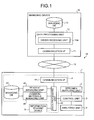
- FIG. 1 is a configuration diagram for explaining a schematic configuration of an order management system according to the first embodiment of the present invention.
- FIG. 2 is a front view of the configuration of the automatic analyzer according to the first embodiment of the present invention.
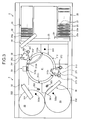
- FIG. 3 is a plan view of a configuration of a specimen supplying unit and an analyzing unit.
- FIG. 4 is a conceptual perspective diagram of the configuration of the specimen supplying unit and the analyzing unit.
- FIG. 5 is a schematic diagram of a configuration of a specimen dispensing unit according to the first embodiment of the present invention.
- FIG. 6 is a block diagram of the configuration of the automatic analyzer according to the first embodiment of the present invention.
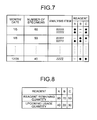
- FIG. 7 shows a makeup of reagent history information stored in a managing database.
- FIG. 8 shows a makeup of reagent-remaining-quantity information stored in the managing database.
- FIG. 9 shows a makeup of material history information stored in the managing database.
- FIG. 10 shows a makeup of common-materials usage information stored in the managing database.
- an automatic analyzer 1 that performs specimen analysis is connected to a managing device 10 that functions as a reagent supplying source via a public line network 15 to form, for example, a communication network of IPsec (IPsec network) 16.
- IPsec IPsec network
- the security function of the IPsec is used to enable communication of encrypted data at the time of reagent ordering between the automatic analyzer 1 and the managing device 10.
- the automatic analyzer 1 includes a specimen supplying unit 2, an analyzing unit 3, a data processing device 4, a control unit 5, and an information reading device 6.
- the specimen supplying unit 2 can successively supply racks 20 each with sampling tubes 21 (e.g., blood collecting tubes) to the analyzing unit 3.
- the racks 20 can each store ten sampling tubes 21 and allow 150 specimens to be set in the specimen supplying unit 2.
- Each sampling tube 21 contains a collected specimen (e.g., blood sample).
- a barcode label (not shown) used for specimen identification is applied on the face of the sampling tube 21.
- the barcode label shows information regarding the specimen.
- a detergent tank 8 containing a detergent liquid that can be withdrawn into a syringe to clean the cuvettes.
- the specimen supplying unit 2 includes a rack supplying conveyer 22, a rack transporting conveyer 23, and a rack collecting conveyer 24.
- the rack supplying conveyer 22 includes a plurality of L-shaped attachments 22a disposed orthogonal to a rack transporting direction.
- the racks 20 can be disposed between the attachments 22a. As a result, the racks 20 get lined up on the rack supplying conveyer 22, are supported by the attachments 22a and thus are prevented from falling.
- the rack transporting conveyer 23 is made up of a conveyer that transports each rack 20 to a specimen supplying position.
- the rack transporting conveyer 23 can transport the racks 20 in an intermittent manner and transport the sampling tubes 21 in each rack 20 to the specimen supplying position in a successive manner.
- a barcode reader 25 is disposed at the upstream side in the rack transporting direction of the rack transporting conveyer 23, and can obtain the information of the specimen contained in the sampling tube 21 to be transported to the specimen supplying position.
- the rack collecting conveyer 24 includes, in an identical manner to the rack supplying conveyer 22, a plurality of L-shaped attachments 24a disposed orthogonal to a rack transporting direction.
- the racks 20 transported by the rack transporting conveyer 23 get disposed between the attachments 24a for collection.
- the collected racks 20 get lined up on the rack collecting conveyer 24, are supported by the attachments 24a and thus are prevented from falling.
- the analyzing unit 3 includes a reaction tank 31, a first cool reagent-container 32, and a second cool reagent-container 33.
- the reaction tank 31 is disposed in the substantially central portion of the analyzing unit 3.
- the reaction tank 31 includes a warming unit (not shown) and a temperature sensor (not shown) and is covered by a disk-like lid 312.
- the reaction tank 31 functions as a constant-temperature oven in which the internal temperature is maintained substantially equal to the human body temperature (in the vicinity of 37°C).
- the reaction tank 31 includes a cuvette wheel 313 and a measurement optical system 314 that can be used to obtain an analysis result from the absorbance of a test liquid (a mixed liquid of the reagent and the specimen).
- the cuvette wheel 313 is a circular ring-like member that can rotate in an intermittent manner.
- housing recesses 313a are arranged equidistantly along the circumferential direction (hereinafter, the equal distance is referred to as one pitch).
- optical measurement windows 313b that pass through the housing recesses 313a and that are used to guide a light beam from the outside of the cuvette wheel 313 to the inside thereof.
- cuvettes C reaction vessels called cuvettes (hereinafter, "cuvettes C”) are housed.
- Each cuvette C is a transparent and rectangular tube-like vessel having an opening on the top. A light beam from the outside of the cuvette wheel 313 passes through the cuvettes C and is guided to the inside of the cuvette wheel 313.
- a light source 314a that emits light in the radially inward direction of the cuvette wheel 313.
- An optical measurement sensor 314b is so disposed that it lies in alignment to the line linking the light source 314a and a target cuvette for analysis.
- the light source 314a emits light for analyzing the test liquid obtained by reaction of the reagent and the specimen in a cuvette C.
- the optical measurement sensor 314b performs optical measurement of the parallel light that has passed through the test liquid in a cuvette C and through the corresponding optical measurement windows 313b.
- the light source 314a and the optical measurement sensor 314b are a part of the measurement optical system 314.
- the measurement optical system 314 includes a collimation lens 314c that is disposed at a position on the outside of the cuvette wheel 313, a filter (not shown) that is disposed at a position on the inside of the cuvette wheel 313, and a light-source operation detecting unit 314d that detects the operation of the light source 314a.
- the collimation lens 314c gathers the light emitted by the light source 314a into parallel light.
- the filter is an optical filter that selects light of a particular wavelength absorbable by the test liquid. The filter to be disposed is determined in advanced for each measurement item.
- the light-source operation detecting unit 314d is disposed near the light source 314a and, during the period when light emitted by the light source 314a is being detected, continuously outputs an electric signal of a predetermined level.
- the control unit 5 includes, for example, a timer that counts the time for which the electric signal is being output. Thus, the control unit 5 uses the timer to detect the operating time of the light source 314a.
- the cuvette wheel 313 rotates for (1 circle - 1 pitch)/4 (hereinafter, "one cycle") in 4.5 seconds in the counterclockwise direction and, upon completing four cycles in 18 seconds, completes rotation of (1 circle - 1 pitch).
- one cycle (1 circle - 1 pitch
- the cuvettes C move by one pitch in the clockwise direction after every four cycles.
- the position that is adjacent to the specimen supplying position is a first specimen dispensing position.
- the position substantially opposite to the first specimen dispensing position is a first reagent dispensing position.
- the position that lies in the clockwise direction from the first specimen dispensing position and that substantially splits the distance between the first specimen dispensing position and the first reagent dispensing position is a second reagent dispensing position.
- the position that lies in the counterclockwise direction from the first specimen dispensing position and that substantially splits the distance between the first specimen dispensing position and the first reagent dispensing position is a second specimen dispensing position.
- the position adjacent to the second reagent dispensing position in the counterclockwise direction is a first stirring position.
- the position adjacent to the second reagent dispensing position in the clockwise direction is a second stirring position.
- the position adjacent to the second specimen dispensing position in the counterclockwise direction is a cleaning/drying position.
- the lid 312 covering the reaction tank 31 has a first specimen dispensing hole 312a, a second specimen dispensing hole 312b, a first reagent dispensing hole 312c, a second reagent dispensing hole 312d, a first stirring hole (not shown), a second stirring hole 312f, and a cleaning hole 312g formed corresponding to the first specimen dispensing position, the second specimen dispensing position, the first reagent dispensing position, the second reagent dispensing position, the first stirring position, the second stirring position, and the cleaning/drying position, respectively.
- the first cool reagent-container 32 and the second cool reagent-container 33 are disposed on the left side of the reaction tank 31.
- the first cool reagent-container 32 and the second cool reagent-container 33 include a cooling unit (not shown) and a temperature sensor (not shown) and are covered by disk-like lids 322 and 332, respectively.
- the first cool reagent-container 32 and the second cool reagent-container 33 function as cool containers in which the internal temperature is maintained below a predetermined temperature.
- each of the first cool reagent-container 32 and the second cool reagent-container 33 includes a turntable (not shown).
- the turntable can rotate in an intermittent manner.
- a plurality of dividers is disposed on the top face of the turntable.
- the dividers extend radially outward from the center of the turntable and are detachable with a single touch.
- each turntable houses a plurality of reagent bottles B that are kept open.
- Each reagent bottle B contains a predetermined reagent corresponding to a test item.
- a barcode label (not shown) for reagent identification is applied on the outer face of each reagent bottle B.
- the barcode label shows information of the corresponding reagent in an encoded form.
- the reagent information includes, for example, the reagent type, the manufacturing lot number, the calibration value, the calibration curve, the expiration date, and the reagent quantity. Meanwhile, a barcode label is also applied to the outer packaging containing the reagent bottles B.
- the first cool reagent-container 32 and the second cool reagent-container 33 include barcode readers 323 and 333, respectively, that read the barcode labels of the reagent bottles B and obtain the information regarding the reagents filled in the reagent bottles B.
- the turntables it is possible for the turntables to transfer an arbitrary reagent bottle B at an arbitrary timing to corresponding reagent supplying positions.
- the lid 322 covering the first cool reagent-container 32 has a first reagent hole 322a and the lid 332 covering the second cool reagent-container 33 has a second reagent hole 332a at the corresponding reagent supplying position.
- the analyzing unit 3 includes a specimen dispensing unit 34, a first reagent dispensing unit 35, and a second reagent dispensing unit 36.
- the specimen dispensing unit 34 dispenses a predetermined quantity of a specimen from the sampling tube 21 that has been transferred to the specimen supplying position to a cuvette C. As shown in FIG.
- the specimen dispensing unit 34 includes a thin tube-like probe 342 made of a conductive material such as a metal, a probe transferring unit 342b that transfers the probe 342 by making it to move up and down in vertical direction or rotate in horizontal direction, an electrode 51 that contains a fluid sample Sp and that is disposed near the cuvettes C, a fluid level sensor 342c that detects the fluid level of the sample Sp by detecting the change in the capacitance between the probe 342 and the electrode 51, a pressure sensor 342a that detects the change in pressure occurring inside the probe 342 when an end portion of the probe 342 comes in contact with the fluid level of the sample Sp, a piston driving unit 342f that piston-drives a syringe 342e, a usage count detecting unit 342g that detects the usage count of the syringe 342e, and the control unit 5 that is equipped with, for example, a CPU (central processing unit) to control the operations of the specimen dispensing unit 34.
- a CPU central
- An arm 341 is disposed to be movable in a rotational manner and movable up and down in vertical direction between the specimen supplying position and the first specimen dispensing position and between the specimen supplying position and the second specimen dispensing position.
- the probe 342 is used for specimen suction and is connected to the syringe 342e via a replaceable Ferista tube 342d.
- the syringe 342e sucks in a cleaning liquid Lq from a cleaning tank 342j through a Ferista tube 342i such that the probe 342 can be cleaned from inside.
- the fluid level sensor 342c detects the fluid level of a specimen filled in the sampling tube 21 by monitoring the capacitance when the arm 341 makes downward movement.
- the probe 342 is connected to the pressure sensor 342a that verifies whether a predetermined quantity of the specimen has been sucked in. For that verification, the pressure sensor 342a monitors the change in pressure during the suction process (see FIG. 5 ). Verification of specimen suction is possible by using the facts that absence of the sampling tube 21 causes the pressure to fall below the pressure during specimen suction and clogging of the probe 342 causes the pressure to rise above the pressure during specimen suction. Meanwhile, on the trajectory that links the specimen supplying position and the first specimen dispensing position is disposed a cleaning unit 343 (see FIG. 3 ). Cleaning water is supplied to the cleaning unit 343 from the cleaning tank 342j for cleaning the probe 342.
- the usage count detecting unit 342g detects driving of the syringe 342e by the piston driving unit 342f and, for example, outputs an electric signal each time there is reciprocating piston motion.
- the control unit 5 imports the electric signal and counts the time for which the electric signal is output to detect the usage count of the Ferista tube 342d and the syringe 342e.
- Each of the first reagent dispensing unit 35 and the second reagent dispensing unit 36 dispenses a predetermined quantity of a reagent from a reagent bottle B that has been transferred to the corresponding reagent supplying position to a cuvette C.
- the first reagent dispensing unit 35 includes an arm 351 and a probe 352; while the second reagent dispensing unit 36 includes an arm 361 and a probe 362.
- Each of the arms 351 and 361 is movable in a rotational manner and movable up and down in vertical direction between the corresponding reagent supplying position and the corresponding reagent dispensing position.
- the probes 352 and 362 are used for reagent suction and to detect the fluid level of the reagents filled in the reagent bottles B by monitoring the capacitance when the arms 351 and 361 make downward movement.
- Each of the probes 352 and 362 includes a suction verification unit that verifies whether a predetermined quantity of the reagent has been sucked in.
- the suction verification units are a pressure sensor 352a in the probe 352 and a pressure sensor 362a in the probe 362 (see FIG. 6 ) that monitor the change in pressure during reagent suction.
- Verification of reagent suction is possible by using the facts that, when the reagent runs short, the pressure falls below the pressure during reagent suction and, when the probe 352 or the probe 362 gets clogged, the pressure rises above the pressure during reagent suction. Meanwhile, on the trajectories that link the reagent supplying positions and the reagent dispensing positions are disposed cleaning units 353 and 363 (see FIG. 3 ). Cleaning water is supplied to the cleaning units 353 and 363 from cleaning tanks (not shown) for cleaning the probes 352 and 362, respectively.
- the analyzing unit 3 further includes a first stirring unit 37 and a second stirring unit 38 that stir the mixed liquid (specimen and reagent) in a cuvette C that has been transferred to the first stirring position and the second stirring position, respectively, to drive the reaction.
- the first stirring unit 37 includes a rotating arm 371 and a stir bar 372, while the second stirring unit 38 includes a rotating arm 381 and a stir bar 382.
- the rotating arms 371 and 381 can rotate (revolve) and move up and down in vertical direction and have a substantial triangular shape in planar view.
- the stir bars 372 and 382 are disposed near the apex of the rotating arms 371 and 381, respectively, and are rotatable (autorotatable) independent of the rotating arms 371 and 381, respectively.
- the cleaning units 373 and 383 receive cleaning liquid from the detergent tank 8 shown in FIG. 2 and cleaning water from a cleaning tank (not shown) for cleaning the stir bars 372 and 382, respectively.
- the analyzing unit 3 further includes a cleaning/drying unit 39 that can move up and down in vertical direction for every four cycles, i.e., for each rotation of (1 circle - 1 pitch) of the cuvette wheel 313.
- the cleaning/drying unit 39 includes a plurality of nozzles 391 that are of different types such as suction nozzles for sucking in the analyzed specimen from the cuvettes, cleaning nozzles for supplying a detergent liquid or a cleaning liquid to the cuvettes, suction nozzles for sucking in the cleaning liquid from the cuvettes, and air nozzles for supplying compressed air to the cuvettes.
- the cleaning/drying unit 39 includes a cleaning count detecting sensor 39a for detecting the cleaning count and outputs an electric signal to the control unit 5 each time cleaning is performed. The control unit 5 imports and counts the electric signal to detect the cleaning count.
- All constituent elements in the specimen supplying unit 2 and the analyzing unit 3 are connected to the control unit 5 that can perform block control by using, for example, a microcomputer.
- the control unit 5 controls the operations of each constituent element in the automatic analyzer 1 and also controls the analyzing unit 3 such that the analyzing process is regulated when the manufacturing lot or the expiration date of a reagent is outside the setting range.
- the DPR 4 includes a data processing unit 40 that performs data processing, a managing database 43 (analysis history storing unit) that is used to store history information, a communication interface 44, a reagent managing unit 45 that performs reagent order management, and a common-materials managing unit 46 that performs material order management.
- the data processing unit 40 includes a usage quantity estimating unit 40a (usage quantity estimating means), a current-remaining-quantity calculating unit 40b (current-remaining-quantity calculating means), an upcoming-remaining-quantity calculating unit 40c (upcoming remaining quantity calculating means), a material usage estimating unit 40d (usage condition estimating means), a cumulative addition performing unit 40e (adding means), an input unit 41, and an output unit 42.
- the data processing unit 40 processes a variety of data obtained by the control unit 5 and input from the input unit 41.
- the input unit 41 is, for example, a keyboard or a mouse that can be used to input a variety of information such as the specimen count and the test items.
- the test items can be input on an individual basis or as a part of a broad classification such as standard test items and extensive test items.
- the input unit 41 is connected to the information reading device 6 (described later).
- the output unit 42 is, for example, a display panel or a printer that can be used to output a variety of information such as the details of analysis including analysis results or warning notices.
- the output unit 42 is connected to a notifying device 7 (described later).
- the data processing unit 40 is connected to the managing database 43, the communication interface 44, the reagent managing unit 45, and the common-materials managing unit 46.
- the managing database 43 is used to store reagent history information 43a that is the history information of reagents used in past analysis, reagent remaining quantity 43b that is the information of the current remaining quantity of each reagent, material history information 43c that is the history information of materials used in past analysis, common-materials usage information 43d that is the information of the current usage status of each material, and common-materials usage limit information 43e that indicates the usage limit for each material.
- the information in the reagent remaining quantity 43b indicates the type and the remaining quantity of reagents specified for each analysis item.
- the reagent history information 43a includes, as shown in FIG. 7 , the specimen count and the analysis items corresponding to each date. Thus, for example, it is possible to refer to the specimen count and the analysis items used on the same date of the previous year or refer to reagents A to C specified for a particular test item.
- the information on the remaining quantity of reagents includes the current remaining quantity of each of the reagents A to C (reagent remaining quantity) and the quantity of the reagents A to C to be used in the upcoming analysis (upcoming usage quantity).
- the reagent remaining quantity is a value calculated by the current-remaining-quantity calculating unit 40b and the upcoming usage quantity is the actual reagent usage quantity estimated by the usage quantity estimating unit 40a.
- the material history information 43c includes, as shown in FIG. 9 , the specimen count, the analysis items, the detergent liquid usage quantity for each analysis item, the lamp (light source) operating time, the Ferista tube usage count, and the syringe usage count. In an identical manner to the reagent history information 43a, the material history information 43c can also be used to refer to the specimen count and the analysis items used on, for example, the same date of the previous year.
- the common-materials usage information 43d includes, as shown in FIG. 10 , a cumulative usage value for each material in previous tests and a current usage value for each material.
- the cumulative addition performing unit 40e adds the current usage value to the cumulative usage value.
- the cumulative usage value is reset.
- the history information can include information of the specimen count and the analysis items corresponding to dates, include referable information of the specimen count and the analysis items of the previous day, or include referable information of the specimen count and the analysis items per day in a particular season.
- the managing database 43 additionally includes a variety of data such as information on reagents necessary for analysis (including stock information (described later) read by the information reading device 6), data of estimated remaining reagent quantity, and data of purchase orders.
- the communication interface 44 performs data communication with the managing device 10, which functions as the reagent supplying source, via the IPsec network 16.
- the communication interface 44 encrypts purchase orders generated in a reagent ordering program (described later) and sends the encrypted purchase orders to the managing device 10 functioning as the reagent supplying source.
- the reagent managing unit 45 includes a reagent ordering unit 45a (reagent ordering means) that performs order management of reagents assessed by the data processing unit 40.
- a reagent ordering unit 45a (reagent ordering means) that performs order management of reagents assessed by the data processing unit 40.
- the reagent managing unit 45 instructs the notifying device 7 to issue a warning notice and instructs the communication interface 44 to, for example, perform communication for reagent ordering to the reagent supplying source.
- the common-materials managing unit 46 includes a material ordering unit 46a that performs order management of each material assessed by the data processing unit 40.
- the common-materials managing unit 46 instructs the notifying device 7 to issue a warning notice and instructs the communication interface 44 to, for example, perform communication for reagent ordering to the reagent supplying source.
- the information reading device (information reading means) 6 is detachably attached to the data processing unit 40 via the input unit 41.
- the information reading device 6 is, for example, a barcode reader that reads a barcode label applied to the outer packaging of stocked reagents and obtains information regarding the reagents filled in the reagent bottles. The obtained information is output to the data processing unit 40. Subsequently, the data processing unit 40 stores the information on the stocked reagent quantity as stock information (inventory information) in the managing database 43.
- stock information inventory information
- the data processing unit 40 performs a dispatch entry for that empty reagent bottle from the stored inventory information.
- the information reading device 6 also reads the barcode label applied on the outer packaging of stocked materials and stores the read information as stock information (inventory information) in the managing database 43.
- the usage quantity estimating unit 40a includes a program for usage quantity estimation and estimates the reagent usage quantity in upcoming analysis for each reagent by referring to the history information. More particularly, the history information of an analyzing period corresponding to the analyzing period of the upcoming analysis is obtained. For example, for the analyzing period (date) of the upcoming analysis, the reagent types are obtained from the analysis item in the corresponding analyzing period (same date of the previous year). Moreover, the past record of the reagent usage quantity is obtained by multiplying the specimen count used on that date of the previous year by their one-time dispensed quantity.
- the analyzing period corresponding to the analyzing period of the upcoming analysis is set to be the previous day, then the actual reagent usage quantity of the previous day can be obtained from the specimen count and the analysis item of the previous day.
- the history information to be referred to is set as, for example, days in a particular season, then the actual reagent usage quantity of each day in that season can be obtained from the specimen count and the analysis items per day.
- the history information to be referred to is set as, for example, weeks or months in a particular season, then the actual reagent usage quantity of each week or each month in that season can be obtained from the specimen count and the analysis items per week or per month.
- the current-remaining-quantity calculating unit 40b includes a program for calculating the current remaining quantity of reagents (reagent remaining quantity). That process includes an operation to calculate the reagent remaining quantity for each reagent bottle B by subtracting the reagent quantity used in analysis from the reagent quantity filled in the reagent bottle B and an operation to calculate the overall reagent remaining quantity of identical-type reagents. In the operation to calculate the reagent remaining quantity for each reagent bottle B, the reagent quantity filled in a reagent bottle B is the quantity read by the barcode readers 323 and 333 from the barcode label applied on the outer face of that reagent bottle B.
- the reagent quantity of each reagent used in analysis can be calculated by multiplying the reagent quantity specified for each analysis item by the number of times for which analysis is performed. Thus, in this operation, the obtained data can be used to calculate the reagent remaining quantity for each reagent bottle B. Moreover, for each time the analysis is performed, the used reagent quantity is subjected to serial addition. Along with that, the reagent remaining quantity is also subjected to serial addition. The reagent remaining quantity provides a guideline for reagent restocking in the first cool reagent-container 32 and the second cool reagent-container 33. The reagent remaining quantity is displayed on the display panel, which functions as a display unit, for operator confirmation. Meanwhile, as described above, the data of the reagent remaining quantity is stored in the managing database 43.
- the automatic analyzer 1 includes a reagent storage container (not shown) and a reagent restocking device (not shown).
- the reagent storage container can be used to store the reagent bottles B containing the reagents to be restocked.
- the information reading device 6 reads the information regarding the reagents and then the reagents are once stored in the reagent storage container.
- the reagent restocking device collects empty reagent bottles B from the first cool reagent-container 32 and the second cool reagent-container 33 and restocks the first cool reagent-container 32 and the second cool reagent-container 33 with new reagent bottles B.
- the reagent remaining quantity in each reagent bottle B and reagent replacement information indicating the replacement of reagent bottles is used.
- the reagent quantity in the replaced reagent bottles (quantity read by the barcode readers 323 and 333) is subtracted from the reagent quantity of the reagents read by the information reading device 6 and then the reagent remaining quantity in the reagent bottles is added to obtain the overall reagent remaining quantity of each reagent.
- the overall reagent remaining quantity provides a guideline for reagent ordering performed by the automatic analyzer 1.
- the overall reagent remaining quantity can be displayed on the display panel, which functions as a display unit, for operator confirmation.
- the data of the overall reagent remaining quantity is also stored in the managing database 43.
- the upcoming-remaining-quantity calculating unit 40c includes a program for calculating a post-upcoming-analysis reagent remaining quantity and calculates the post-upcoming-analysis reagent remaining quantity (estimated reagent remaining quantity) by subtracting the current overall reagent remaining quantity calculated by the current-remaining-quantity calculating unit 40b from the reagent usage quantity of each reagent estimated by the usage quantity estimating unit 40a.
- the reagent usage quantity is larger than the overall reagent remaining quantity, the value of the estimated reagent remaining quantity becomes positive; and when the reagent usage quantity is smaller than the overall reagent remaining quantity, the value of the estimated reagent remaining quantity becomes negative.
- the estimated reagent remaining quantity is used by the reagent ordering unit 45a to determine whether it is necessary to place an order for the reagent.
- the material usage estimating unit 40d estimates, based on the history information of an analyzing period corresponding to the analyzing period of the upcoming analysis, the usage conditions for materials to be used in the upcoming analysis by performing addition of the usage conditions for each material specified in the analysis items in the history information. More particularly, for example, for the analyzing period (month and day) of the upcoming analysis, a material usage condition such as a detergent usage quantity is obtained from the analysis items in the corresponding analyzing period (from the same month and day of the previous year to the next same month and day) and the usage conditions of same materials in those analyzing periods are added to obtain the past record of the usage condition for each material.
- a material usage condition such as a detergent usage quantity
- the cumulative addition performing unit 40e performs cumulative addition of the material usage conditions including the material usage conditions estimated by the material usage estimating unit 40d. That is, the cumulative addition performing unit 40e performs cumulative addition with respect to the previously accumulated material usage condition to calculate a cumulative usage value for each material. For example, the cumulative addition performing unit 40e adds a current usage value "1,2 ml" to an accumulated value "5 l" of the detergent usage quantity as shown in FIG. 10 .
- the reagent ordering unit 45a in the reagent managing unit 45 includes a reagent ordering program to perform reagent ordering and determines whether it is necessary to place an order for a reagent.
- the necessity of reagent ordering is determined based on the estimated reagent remaining quantity that is obtained by subtracting the overall reagent remaining quantity from the reagent usage quantity. When the value of the estimated reagent remaining quantity is negative, it is determined that placing an order for the reagent is not necessary; and when the value of the estimated reagent remaining quantity is positive, it is determined that placing an order for the reagent is necessary.
- the reagent ordering unit 45a displays the estimated reagent remaining quantity (post-upcoming-analysis reagent remaining quantity) for each reagent on the display panel, which functions as a display unit, for operator confirmation. For example, in the display of the reagent remaining quantity per day, the time limit for reagent ordering on that day can be displayed. Similarly, in the display of the reagent remaining quantity per week, a day of that week can be displayed as the deadline for reagent ordering. Moreover, in the display of the reagent remaining quantity per month, a date in that month can be displayed as the deadline for reagent ordering. Meanwhile, the data of the estimated reagent remaining quantity is also stored in the managing database 43.
- the reagent ordering unit 45a places an order for that reagent to the reagent supplying source based on the estimated reagent remaining quantity (post-upcoming-analysis reagent remaining quantity) calculated by the upcoming-remaining-quantity calculating unit 40c.
- the reagent ordering program in the reagent ordering unit 45a can be written in such a way that the data processing unit 40 automatically generates a purchase order without operator instructions based on the data of purchase order stored in the managing database 43.
- the reagent ordering program can be written in such a way that the operator is able to selectively instruct purchase order generation by using the input unit 41 such as the mouse.
- the generated purchase order includes information such as reagent type, manufacturing lot number currently in use, ordering quantity, delivery deadline, and calibrator lot number.
- the reagent ordering program can be written in such a way that the time of reagent ordering is notified and the data processing unit 40 automatically generates a purchase order without operator instructions or can be written in such a way that the purchase order is generated according to the operator instructions.
- the material ordering unit 46a in the common-materials managing unit 46 includes a material ordering program to perform material ordering and determines whether it is necessary to place an order for a material.
- the necessity of material ordering is determined based on an estimated value that is obtained by the material ordering unit 46a by subtracting the usage limit condition from the material usage condition. When the estimated value is negative, it is determined that placing an order for the material is not necessary; while when the estimated value is positive, it is determined that placing an order for the material is necessary.
- the material ordering unit 46a displays a post-upcoming-analysis estimated value for each material on the display panel, which functions as a display unit in the notifying device 7, for operator confirmation.
- the material ordering unit 46a places an order for that material to a material supplying source based on the estimated value obtained by subtracting the usage limit condition from the material usage condition.
- the data processing unit 40 is connected to the optical measurement sensor 314b via the control unit 5. Based on the light intensity (absorbance) measured by the optical measurement sensor 314b, the data processing unit 40 analyzes, for example, the constituent concentration of the specimen. More particularly, the data processing unit 40 analyzes the constituent concentration of the specimen by using the absorbance of the test liquid obtained by reaction of the reagent and the specimen in a cuvette C. The optical measurement sensor 314b can measure in advance the light intensity of a blank sample and use it as the absorbance for comparison. The analysis result can be output to the output unit 42.
- the managing device 10 that functions as the reagent supplying source includes a communication interface 11, a data processing unit 12, and a managing database 13.
- the communication interface 11 performs data communication with the automatic analyzer 1 via the IPsec network 16 and receives an encrypted purchase order generated in the automatic analyzer 1.
- the data processing unit 12 includes an order receiving unit 12a that functions as an order receiving means and processes the data received by the communication interface 11. In an identical manner to the data processing unit 40, the data processing unit 12 also includes an input unit (not shown) and an output unit (not shown).
- the order receiving unit 12a includes an order receiving program for receiving an order placed for a reagent or a material.
- the order receiving unit 12a receives an order placed for a reagent or a material from the automatic analyzer functioning as the orderer apparatus via the IPsec network 16 and makes sure that the ordered reagent or material is delivered on the specified delivery deadline.
- the order receiving program can be written in such a way that the data processing unit 12 automatically generates an invoice list without operator instructions based on the received data of purchase order.
- the order receiving program can be written in such a way that the operator is able to selectively instruct invoice list generation by using the input unit such as the mouse.
- the generated invoice list includes information such as reagent type or material type, manufacturing lot number currently in use, ordering quantity, and delivery deadline, and calibrator lot number if a reagent is ordered.
- the managing database 13 is used to store the invoice list generated by the data processing unit 12 and a client list of each automatic analyzer functioning as the orderer apparatus.
- the client list includes information such as address, name, telephone number, and e-mail address of the clients and wholesale prices of reagents or materials.
- the managing database 13 is also used to store a variety of other data such as an information deciphering program for deciphering the encrypted information and data for verifying an automatic analyzer functioning as the orderer apparatus.
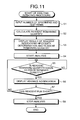
- FIG. 11 is a flowchart for explaining an analysis initiating procedure in the automatic analyzer 1 according to the first embodiment of the present invention.
- FIG. 12 is a flowchart for explaining an analysis resuming procedure in the automatic analyzer 1 according to the first embodiment of the present invention.
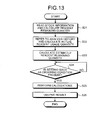
- FIG. 13 is a flowchart for explaining an operation of calculating the reagent remaining quantity in the automatic analyzer 1 according to the first embodiment of the present invention.
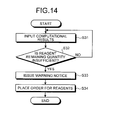
- FIG. 14 is a flowchart for explaining an operation of reagent ordering performed by the reagent managing unit 45 according to the first embodiment of the present invention.
- FIG. 11 is a flowchart for explaining an analysis initiating procedure in the automatic analyzer 1 according to the first embodiment of the present invention.
- FIG. 12 is a flowchart for explaining an analysis resuming procedure in the automatic analyzer 1 according to the first embodiment of the present invention.
- FIG. 13 is a flowchart for explaining an operation of calculating the reagent remaining quantity in the automatic analyzer 1 according to the first embodiment of the
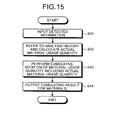
- FIG. 15 is a flowchart for explaining an operation of calculating the material usage condition in the automatic analyzer 1 according to the first embodiment of the present invention.
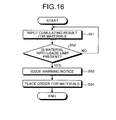
- FIG. 16 is a flowchart for explaining an operation of material ordering performed by the common-materials managing unit 46 according to the first embodiment of the present invention.
- the analysis initiating procedure includes, for example, input of the specimen count and the test items.
- the data processing unit 40 calculates the reagent remaining quantity in the reagent bottles B stored in the first cool reagent-container 32 and the second cool reagent-container 33 (Step S2).
- the data processing unit 40 determines whether any of the reagents needs to be restocked (Step S3) and displays the result of reagent restocking necessity determination and the reagent remaining quantity on the display panel for operator confirmation (Step S3).
- the automatic analyzer 1 starts the analysis (Step S4).
- the specimen supplying unit 2 supplies a specimen to the analyzing unit 3. More particularly, the rack supplying conveyer 22 supplies the rack 20 to the rack transporting conveyer 23 that in turn transports the rack 20 to the specimen supplying position.
- reagents from the first cool reagent-container 32 and the second cool reagent-container 33 and the specimen from the specimen supplying unit 2 are dispensed to a cuvette C, and the reaction of that mixed liquid is subjected to optical measurement for analysis. The details of these operations are given below.
- a reagent bottle B containing a reagent corresponding to the analysis item is transferred to the reagent supplying position.
- the first reagent dispensing unit 35 sucks in a first reagent from the reagent bottle B and dispenses it to a cuvette C positioned at the first reagent dispensing position.
- the cleaning unit 353 then cleans the probe 352 that has been used in the dispensing operation.
- the specimen dispensing unit 34 sucks in the specimen from the sampling tube 21 that has been transported to the specimen supplying position and dispenses it to the cuvette C positioned at the specimen dispensing position.
- the cleaning unit 343 then cleans the probe 342 that has been used in the dispensing operation.
- the cuvette C containing the specimen and the first reagent moves from the dispensing position of the first reagent by one pitch in the clockwise direction. Consequently, the first reagent can be dispensed to the cuvette C that lies counterclockwisely adjacent to the cuvette C containing the specimen and the first reagent.
- the first stirring unit 37 stirs the first reagent and the specimen filled in the cuvette C.
- the cleaning unit 373 then cleans the stir bar 372 that has been used in stirring.
- a second reagent can be dispensed to that cuvette C. Because, a normal analysis does not require dispensing of the second reagent, it is dispensed only as necessary.
- a reagent bottle B containing a reagent corresponding to the analysis item is transferred to the reagent supplying position in the second cool reagent-container 33.
- the second reagent dispensing unit 36 sucks in the second reagent from the reagent bottle B and dispenses it to the cuvette C positioned at the second reagent dispensing position.
- the cleaning unit 363 then cleans the probe 362 that has been used the dispensing operation.
- the second stirring unit 38 can perform stirring of the mixed liquid in the cuvette C. If the second reagent is not dispensed to the cuvette C, then the second stirring unit 38 need not perform stirring.
- the optical measurement sensor 314b When each cuvette C containing the stirred test liquid of the reagents and the specimen crosses the measurement optical system 314, the optical measurement sensor 314b performs optical measurement. Based on the light intensity (absorbance) optically measured by the optical measurement sensor 314b, the data processing unit 40 analyzes the constituent concentration of the corresponding specimen.
- the cuvette C containing that test liquid moves to the cleaning/drying position.
- the cleaning/drying unit 39 then sucks in and destroys the test liquid, cleans the inside of the cuvette C with the cleaning water supplied from the cleaning tank, and dries the cuvette C with the compressed air.
- the first reagent dispensing unit 35 again dispenses the first reagent to the cleaned cuvette C for upcoming analysis.
- Step S5 When a reagent remaining quantity equals a predetermined reagent quantity after the analysis process has started (Yes at Step S5), an advance notification of the necessity to restock the corresponding reagent is displayed on the display panel (Step S6). On the other hand, if the reagent remaining quantity is yet to equal the predetermined reagent quantity (No at Step S5), advance notification is delayed until the reagent remaining quantity equals the predetermined reagent quantity.
- Step S7 if the reagent runs short (Yes at Step S7), that is, if suction verifying means of the first reagent dispensing unit 35 and the second reagent dispensing unit 36 cannot verify suction of a predetermined reagent quantity, then the analysis is stopped (Step S8). On the other hand, unless the reagent runs short (No at Step S7), analysis is continued until the reagent remaining quantity equals the predetermined reagent quantity.
- the reagent restocking device collects empty reagent bottles B from the first cool reagent-container 32 and the second cool reagent-container 33 and restocks the first cool reagent-container 32 and the second cool reagent-container 33 with new reagent bottles B from the reagent storage container.
- the barcode readers 323 and 333 in the first cool reagent-container 32 and the second cool reagent-container 33 respectively, read the barcode labels applied on the reagent bottles B and the data processing unit 40 obtains information regarding the restocked reagents via the control unit 5.
- the analysis resuming procedure includes, for example, calibration determination. If deemed necessary (Yes at Step S11), calibration determination and QC determination is performed (Step S12). If the result of calibration determination and QC determination is normal (Yes at Step S13), the analysis is resumed (Step S15), On the other hand, if the result of at least one of calibration determination and QC determination is not normal (No at Step S13), the analysis is terminated (Step S14) and the notification of termination is displayed on the display panel. Meanwhile, if calibration determination and QC determination is not deemed necessary (No at Step S11), the analysis is resumed directly (Step S15).
- a case in which calibration determination and QC determination is necessary is when the manufacturing lot number of a pre-restocking reagent is different than the manufacturing lot number of a post-restocking reagent. If the manufacturing lot number of the pre-restocking reagent is same as the manufacturing lot number of the post-restocking reagent, then there is no need to perform calibration determination and QC determination.
- the reagent remaining quantity is calculated by subtracting the reagent quantity used in analysis from the reagent quantity filled in the reagent bottles B. Moreover, a projected reagent quantity is calculated by multiplying the reagent quantity used in analysis by a number of times for which analysis is scheduled. The reagent remaining quantity and the projected reagent quantity are compared to determine whether reagent restocking is necessary. If it is determined that reagent restocking is necessary, it is notified on the display panel thereby enabling the operator to prepare for reagent restocking.
- displaying the reagent remaining quantity on the display unit allows the operator to weigh the timing of reagent restocking with the reagent remaining quantity as a guideline.
- the reagent bottles B containing that particular reagent can be stored in the reagent storage container. That reduces the analysis downtime in the automatic analyzer thereby enabling to resume the analysis in a short time.
- the information reading device 6 in the automatic analyzer 1 reads, at the time of stocking, the barcode label applied on the outer packaging containing the reagent bottles B and outputs the read information to the data processing unit 40.
- the data processing unit 40 obtains the stock information of the restocked reagents.
- the data processing unit 40 imports the reagent replacement information indicating that the reagents stored in the first cool reagent-container 32 and the second cool reagent-container 33 had run short due to their use in analysis and the empty reagent bottles have been replaced by new reagent bottles or imports the data of the reagent remaining quantity calculated as explained with reference to FIG. 10 . Then, the current-remaining-quantity calculating unit 40b uses that information to calculate the overall reagent remaining quantity of each identical-type reagent (Step S21). Meanwhile, while the stock information is being read, the manufacturing lot number of a reagent having, for example, an early expiration date can be displayed on the display unit for operator confirmation such that the operator is encouraged to use that particular reagent on a priority basis.
- the usage quantity estimating unit 40a refers to the analysis history to obtain the specimen count and the analysis items on the same date of the previous year (corresponding to the date of upcoming analysis) and calculates the actual reagent usage quantity (Step S22).
- the upcoming-remaining-quantity calculating unit 40c calculates the estimated reagent remaining quantity of each identical-type reagent (Step S23).
- the upcoming-remaining-quantity calculating unit 40c looks for settings such as an ordering condition, a delivery deadline, and a usage condition.
- Step S24 the upcoming-remaining-quantity calculating unit 40c performs calculations based on those settings (Step S25) and outputs the result to a display of the data processing device 4 (Step S26). On the other hand, if such settings are not present (No at Step S24), the upcoming-remaining-quantity calculating unit 40c waits until, for example, an ordering condition is set.
- the reagent ordering unit 45a receives computational results from the data processing unit 40 (Step S31) and determines whether it is necessary to place an order for each reagent and whether there is insufficiency in any reagent remaining quantity (Step S32). If no insufficiency is found in any reagent remaining quantity (No at Step S32), the reagent ordering unit 45a waits for the input of subsequent computational results.
- the reagent ordering unit 45a instructs the notifying device 7 to issue a warning notice (Step S33) and outputs the result of reagent ordering necessity determination and the estimated reagent remaining quantity regarding each identical-type reagent to the display of the data processing device 4 for operator confirmation. Subsequently, the reagent ordering unit 45a generates a purchase order for reagents, establishes a connection with the managing device 10 that functions as a reagent supplying source via the IPsec network 16, and places an order for reagents to the managing device 10 (Step S34).
- the material usage estimating unit 40d receives the detected information on the light-source operating time, the detergent liquid usage quantity, the Ferista tube usage count, and the syringe usage count from the control unit 5 (Step S41), refers to the analysis history to obtain the specimen count and the analysis items on the same date of the previous year (corresponding to the date of upcoming analysis), and calculates actual material usage quantity (Step S42). Then, the cumulative addition performing unit 40e performs cumulative addition of material usage quantity including the actual material usage quantity for each material (Step S43) and outputs a cumulating result for materials to the display of the data processing device 4 (Step S44).
- the material ordering unit 46a receives the cumulating result for materials from the cumulative addition performing unit 40e (Step S51) and determines whether it is necessary to place an order for each material and whether there is any material with a usage limit (Step S52). If no material with a usage limit is found (No at Step S52), the material ordering unit 46a waits for the input of subsequent cumulating result for materials.
- the material ordering unit 46a instructs the notifying device 7 to issue a warning notice (Step S53) and outputs the result of material ordering necessity determination and the estimated remaining usage quantity up to the usage limit for each material to the display of the data processing device 4 for operator confirmation. Subsequently, the material ordering unit 46a generates a purchase order for materials, establishes a connection with the managing device 10 that also functions as a material supplying source (identical to functioning as a reagent supplying source according to the first embodiment) via the IPsec network 16, and places an order for materials to the managing device 10 (Step S54).
- a material supplying source identical to functioning as a reagent supplying source according to the first embodiment
- the managing device 10 is disposed at a reagent manufacturer that supplies the reagents.
- the communication interface 11 of the managing device 10 validates the client, establishes an IPsec connection for data communication, and receives a purchase order from the automatic analyzer of the client (Step S61).
- the order receiving unit 12a of the data processing unit 12 verifies the details in the received purchase order (Step S62).
- the order receiving unit 12a requests retransmission of the purchase order; while if the details are found to be sufficient, the order receiving unit 12a accepts the received purchase order and registers the details thereof in the managing database 13 (Step S63) and performs deadline management for the reagent (or the material) to be shipped (Step S64).
- a managing device is disposed to perform management of the ordered reagents or materials. That enables the reagent supplying source to prepare for the shipment according to the order details and promptly ship the reagents by the delivery deadline.
- the reagent remaining quantity is calculated by subtracting the reagent quantity used in analysis from the reagent quantity of the reagent.
- the actual reagent usage quantity for a period corresponding to the period of upcoming analysis is calculated by using the history information. Then, the actual reagent usage quantity and the reagent remaining quantity are compared to calculate the estimated reagent remaining quantity that is used in determining whether it is necessary to place an order for a reagent. That allows order management and inventory management for reagents according to the used quantity in an optimal manner. As a result, it becomes possible to reduce the time consumed in performing order management or inventory management and further reduce the efforts needed to be taken by the operator.
- the actual material usage quantity for a period corresponding to the period of upcoming analysis is added to the cumulative usage value of material usage to determine whether it is necessary to place an order for a material. That enables to reduce the time consumed in performing order management or inventory management of materials and further reduce the efforts needed to be taken by the operator.
- an information reading unit is disposed to read the reagent quantity filled in reagent bottles. That allows optimal inventory checking of reagents while reducing the time consumed and the efforts needed to be taken by the operator.
- the current remaining quantity of each reagent is calculated by subtracting the reagent quantity used in analysis from the overall reagent quantity.
- the reagent usage quantity on the same date of the previous year (actual reagent usage quantity) and the reagent remaining quantity are compared to determine whether it is necessary to place an order for a reagent. If it is determined that reagent restocking is necessary, it is notified on a display panel thereby enabling the operator to prepare for reagent restocking.
- the estimated reagent remaining quantity calculated by an upcoming-remaining-quantity calculating unit is displayed on the display panel. That allows weighing of the timing of reagent restocking with the estimated reagent remaining quantity as a guideline.
- the settings for reagent ordering and material ordering can be performed in such a way that the data processing unit 40 automatically sends a purchase order without operator instructions by establishing an online connection with the managing device 10, which functions as the reagent supplying source, for communication via a communication network or in such a way that the operator is able to selectively send a purchase order.
- the managing device 10 which functions as the reagent supplying source
- communication via online connection creates a possibility, for example, of entrusting a reagent supplying source with reagent supply based on an agreement between the reagent supplying source and the user of an automatic analyzer. That reduces the task of inventory management needed to be performed at the user side.
- past record of reagent usage quantity or material usage values can be used to estimate the reagent usage quantity or the material usage values required for the period of upcoming analysis. That makes it possible to store only the minimum quantity of reagents and materials and thus reduce the storage space to the minimum.
- the first embodiment it is possible to notify the operator of information regarding the expiration date of reagents. That allows the operator to use the reagent with an early expiration date on a priority basis and enhance efficient use of the reagents.
- the reagent supplying source is able to promptly receive the information on the reagent usage status at the user side having an automatic analyzer. That enables the reagent supplying source to ship the ordered reagents in a timely manner and reduce distribution costs.
- order management is described for reagents as well as materials such as detergent liquid, lamps, Ferista tubes, and syringes.
- present invention is not limited to the above description and can be implemented in an identical manner to perform order management for, for example, probes or stir bars.
- FIG. 18 is a. configuration diagram for explaining a schematic configuration of an order management system according to a second embodiment of the present invention.
- a plurality of automatic analyzers 1a to 1c that perform specimen analysis are connected to a host apparatus 50 functioning as a controller.
- the host apparatus 50 is in turn connected to the managing device 10, which functions as the reagent supplying source, via the public line network 15 to form the IPsec network 16.
- Each of the automatic analyzers 1a to 1c as well as the managing device 10 functioning as the reagent supplying source has a substantially identical structure to that shown in FIG. 1 and FIG. 6 , except that the data processing unit 40 in each of the automatic analyzers 1a to 1c includes, as a substitute to a reagent ordering unit, a notifying unit for notifying a host computer of the data of estimated reagent remaining quantity calculated by the upcoming-remaining-quantity calculating unit 40c.
- the upcoming-remaining-quantity calculating unit 40c compares the actual reagent usage quantity and the overall reagent remaining quantity to calculate the estimated reagent remaining quantity and the cumulative addition performing unit 40e calculates the cumulative usage value for each material.
- the calculated data of estimated reagent remaining quantity, the data of reagent quantity, and the data of cumulative usage value for materials are sent to the host apparatus 50 via a communication line.
- each of the automatic analyzers 1a to 1c also sends reagent replacement information that indicates replacement of reagent bottles to the host apparatus 50.
- the host apparatus 50 performs inventory management of the reagents and materials used by the plurality of automatic analyzers 1a to 1c and places an order for a reagent or a material to the managing device 10, which functions as the reagent supplying source or the material supplying source, as necessary.
- the host apparatus 50 includes an input-output interface 51, a data processing unit 52, a managing database 55, a reagent managing unit 56, a common-materials managing unit 57, and a communication interface 58.
- the input-output interface 51 performs data communication with the automatic analyzers 1a to 1c via the communication line and receives the data of estimated reagent remaining quantity and the data of cumulative usage value for materials from each of the automatic analyzers 1a to 1c.
- the data processing unit 52 includes an input unit 53 and an output unit 54, and processes data received by the input-output interface 51 and data input from the input unit 53.
- the input unit 53 is, for example, a keyboard or a mouse that can be used to input a variety of information such as the specimen count and the test items.
- the input unit 53 is connected to the information reading device 6 (described later).
- the output unit 54 is, for example, a display panel or a printer that can be used to output a variety of information such as the details of analysis including analysis results or warning notices.
- the output unit 54 is connected to the notifying device 7.
- the reagent managing unit 56 and the common-materials managing unit 57 are connected to the data processing unit 52 and the managing database 55, and can perform block control.
- the reagent managing unit 56 and the common-materials managing unit 57 can use, for example, a microcomputer to control the operations of the constituent elements of the host apparatus 50.
- the reagent managing unit 56 outputs the data of reagent remaining quantity or the data of estimated reagent remaining quantity, which is received from the each of the automatic analyzers 1a to 1c via the input-output interface 51, to the data processing unit 52.
- the common-materials managing unit 57 outputs the result of overall cumulative addition, which is received from the each of the automatic analyzers 1a to 1c via the input-output interface 51, to the data processing unit 52. Furthermore, the reagent managing unit 56 and the common-materials managing unit 57 send inventory information (described later) obtained from the data processing unit 52 to each of the automatic analyzers 1a to 1c via the input-output interface 51.
- the data processing unit 52 includes an overall reagent-remaining-quantity estimating unit 52a, an overall cumulative addition performing unit 52b, the input unit 53, and the output unit 54.
- the data processing unit 52 processes a variety of data obtained by the control unit 56 and a variety of data input from the input unit 53.
- the overall reagent-remaining-quantity estimating unit 52a adds the reagent remaining quantity received from each of the automatic analyzers 1a to 1c to calculate an overall reagent remaining quantity.
- the overall cumulative addition performing unit 52b adds the cumulating result of material usage quantity including actual material usage quantity received from each of the automatic analyzers 1a to 1c to calculate an overall cumulating result (overall cumulative usage values).
- the input unit 53 is, for example, a mouse or a keyboard that can be used to input a variety of information such as the specimen count and the test items.
- the test items can be input on an individual basis or as a part of a broad classification such as standard test items and extensive test items.
- the input unit 53 is connected to the information reading device 6.
- the output unit 54 is, for example, a display panel or a printer that can be used to output a variety of information such as the details of analysis including analysis results or warning notices.
- the data processing unit 52 is connected to the managing database 55 and the communication interface 58.
- the managing database 55 is used to store information of reagents or materials necessary in analysis (stock information and dispatch information read by the information reading device 6) as well as the data of reagent remaining quantity, estimated reagent remaining quantity, cumulative usage values, and purchase orders obtained from each of the automatic analyzers 1a to 1c.
- the communication interface 58 performs data communication with the managing device 10, which functions as the reagent supplying source, via the IPsec network 16, and encrypts purchase orders generated in a reagent ordering unit 56a (described later) and a material ordering unit 57a (described later) and sends the encrypted purchase orders to the managing device 10.
- the information reading device (information reading means) 6 is detachably attached to the data processing unit 52 via the input unit 53.
- the information reading device 6 is, for example, a barcode reader that reads a barcode label applied to the outer packaging of stocked reagents and obtains information regarding the reagents filled in the reagent bottles. The obtained information is output to the data processing unit 52. Subsequently, the data processing unit 52 stores the information on the stocked reagent quantity as stock information (inventory information) in the managing database 55.
- the data processing unit 52 performs an entry of the dispatch information (dispatch entry) indicating that the empty reagent bottle is dispatched from the reagent inventory.
- the overall reagent-remaining-quantity estimating unit 52a calculates adds the estimated reagent remaining quantity for each reagent in each of the automatic analyzers 1a to 1c to calculate the overall estimated reagent remaining quantity.
- the reagent usage quantity is larger than the overall reagent remaining quantity, the value of the estimated reagent remaining quantity becomes positive; and when the reagent usage quantity is smaller than the overall reagent remaining quantity, the value of the estimated reagent remaining quantity becomes negative.
- the overall estimated reagent remaining quantity is used by the reagent ordering unit 56a in the reagent managing unit 56 to determine whether it is necessary to place an order for a reagent.
- the reagent ordering unit 56a includes a reagent ordering program to perform reagent ordering and determines, in an identical manner to the reagent ordering unit 45a described in the first embodiment, whether it is necessary to place an order for a reagent.
- the necessity of reagent ordering is determined based on the overall estimated reagent remaining quantity. When the value of the overall estimated reagent remaining quantity is negative, it is determined that placing an order for the reagent is not necessary; and when the value of the overall estimated reagent remaining quantity is positive, it is determined that placing an order for the reagent is necessary.
- the reagent ordering unit 56a places an order for that reagent to the reagent supplying source based on a post-upcoming-analysis estimated reagent remaining quantity calculated by the upcoming-remaining-quantity calculating unit 40c.
- the material ordering unit 57a includes a material ordering program to perform material ordering and determines, in an identical manner to the material ordering unit 46a described in the first embodiment, whether it is necessary to place an order for a material.
- the necessity of material ordering is determined based on an estimated value that is obtained by the material ordering unit 46a by subtracting the usage limit condition from the material usage condition. When the estimated value is negative, it is determined that placing an order for the material is not necessary; while when the estimated value is positive, it is determined that placing an order for the material is necessary.
- the material ordering unit 46a places an order for that material to a material supplying source based on the estimated value obtained by subtracting the usage limit condition from the material usage condition.
- FIG. 19 is a flowchart for explaining an order managing procedure in the host apparatus 50 according to the second embodiment of the present invention.
- the data processing unit 52 in the host apparatus 50 obtains the stock information of received reagents (Step S81).
- Each of the automatic analyzers 1a to 1c send the data of estimated reagent remaining quantity calculated by the corresponding upcoming-remaining-quantity calculating unit 40c.
- the host apparatus 50 receives the data of estimated reagent remaining quantity (Step S82)
- the overall reagent-remaining-quantity estimating unit 52a performs addition of all the estimated reagent remaining quantity (Step S83), outputs the addition result (Step S84), and displays it on a display.
- the reagent ordering unit 56a uses the addition result to determine whether it is necessary to place an order for a reagent, and outputs the result of reagent ordering necessity determination and the estimated reagent remaining quantity regarding each identical-type reagent to the display for operator confirmation.
- the reagent ordering unit 56a generates a purchase order for reagents, establishes a connection with the managing device 10 functioning as the reagent supplying source via the IPsec network 16, and places an order for reagents to the managing device 10 (Step S34).
- the host apparatus 50 imports the reagent replacement information indicating that empty reagent bottles used in analysis have been replaced by new reagent bottles or imports the data of current reagent remaining quantity from each of the automatic analyzers 1a to 1c.
- the host apparatus 50 it is also possible for the host apparatus 50 to use the imported information in calculating the overall estimated reagent remaining quantity of each identical-type reagent.
- the managing device 10 manages, as described with reference to FIG. 17 , the reagent order details received from the host apparatus 50. That enables the reagent supplying source to prepare for the shipment according to the order details and promptly ship the reagents by the delivery deadline.
- the material order management is also performed in a similar manner to the reagent order management.
- the overall cumulative addition performing unit 52b adds each cumulating result of material usage quantity to calculate the overall cumulating result and outputs the overall cumulating result to the material ordering unit 57a.
- the material ordering unit 57a uses the overall cumulating result to determine whether it is necessary to place an order for a material, and outputs the result of material ordering necessity determination and the remaining usage value up to the usage limit to the display for operator confirmation.
- each of the plurality of automatic analyzers calculates the estimated reagent remaining quantity by subtracting the reagent remaining quantity from the reagent usage quantity.
- the host apparatus obtains the data of estimated reagent remaining quantity and calculates the overall estimated reagent remaining quantity by adding all of the estimated reagent remaining quantity to determine whether it is necessary to place an order for a reagent. That allows order management and inventory management for reagents according to the used quantity in a collective and optimal manner. As a result, it becomes possible to reduce the time consumed in performing order management or inventory management and further reduce the efforts needed to be taken by the operator.
- the host apparatus performs cumulative addition of all cumulating results of material usage quantity to calculate an overall cumulating result of all materials and uses the overall cumulating result in determining whether it is necessary to place an order for a reagent. That allows order management and inventory management for materials used according to material usage values (usage quantity, usage period, usage count, etc.) by a plurality of automatic analyzers in a collective and optimal manner. As a result, it becomes possible to reduce the time consumed in performing order management or inventory management for materials and further reduce the efforts needed to be taken by the operator.
- an information reading device that reads the reagent quantity filled in reagent bottles is connected to the host apparatus. That allows inventory checking of reagents in a collective and optimal manner while reducing the time consumed and the efforts needed to be taken by the operator.
- the current remaining quantity of each reagent is calculated in such a way that the reagent quantity used in analysis is subtracted from the overall reagent quantity.
- the reagent usage quantity on the same date of the previous year (actual reagent usage quantity) and the reagent remaining quantity are compared to determine whether it is necessary to place an order for a reagent. If it is determined that reagent restocking is necessary, it is notified on a display panel thereby enabling the operator to prepare for reagent restocking.
- the overall estimated reagent remaining quantity calculated by an overall reagent-remaining-quantity estimating unit is displayed on the display panel. That allows weighing of the timing of reagent restocking with the estimated reagent remaining quantity as a guideline.
- the settings for reagent ordering can be performed in such a way that the data processing unit 52 automatically sends a purchase order without operator instructions by establishing an online connection with the managing device 10, which functions as the reagent supplying source, for communication via a communication network or in such a way that the operator is able to selectively send a purchase order.
- the managing device 10 which functions as the reagent supplying source
- communication via online connection creates a possibility, for example, of entrusting a reagent supplying source with reagent supply based on an agreement between the reagent supplying source and the user of the host apparatus. That reduces the task of inventory management needed to be performed at the user side.
- past record of reagent usage quantity in each automatic analyzer can be used to estimate the reagent usage quantity required for the period of upcoming analysis. That makes it possible to store only the minimum quantity of reagents and thus reduce the storage space to the minimum.
- the second embodiment it is possible to notify the operator of information regarding the expiration date of reagents. That allows the operator to use the reagent with an early expiration date on a priority basis and enhance efficient use of the reagents.
- the reagent supplying source is able to promptly receive the information on the reagent usage status at the user side having automatic analyzers. That enables the reagent supplying source to ship the ordered reagents in a timely manner and reduce distribution costs.
- the reagent quantity filled in a reagent bottle can be divided by the reagent quantity required in analysis to calculate an analyzable count and subtract an actual analysis count from the analyzable count to calculate an analyzable count remainder. Then, for example, the analysis count on the same date of the previous year (actual analysis count) and the analyzable count remainder can be compared to determine whether it is necessary to place an order for a reagent. Subsequently, if it is determined that placing an order for a reagent is necessary, an order for a reagent is sent to a managing device. In this case too, it is possible to achieve the advantage identical to that achieved in the second embodiment.
- an automatic analyzer, an order management system, and an order management method according to the present invention is suitable in performing order management and inventory management of reagents according to the usage quantity in an optimal manner, reducing the time consumed in performing order management or inventory management, and reducing the efforts needed to be taken by the operator because an order for reagents is placed according to an estimated reagent remaining quantity calculated based on an actual reagent usage quantity for an analyzing period that is comparable to an analyzing period of upcoming analysis.
Landscapes
- Engineering & Computer Science (AREA)
- Quality & Reliability (AREA)
- Business, Economics & Management (AREA)
- Physics & Mathematics (AREA)
- General Physics & Mathematics (AREA)
- Economics (AREA)
- General Health & Medical Sciences (AREA)
- Biochemistry (AREA)
- Analytical Chemistry (AREA)
- Chemical & Material Sciences (AREA)
- Immunology (AREA)
- Life Sciences & Earth Sciences (AREA)
- Health & Medical Sciences (AREA)
- Pathology (AREA)
- Entrepreneurship & Innovation (AREA)
- General Business, Economics & Management (AREA)
- Theoretical Computer Science (AREA)
- Tourism & Hospitality (AREA)
- Strategic Management (AREA)
- Operations Research (AREA)
- Marketing (AREA)
- Human Resources & Organizations (AREA)
- Development Economics (AREA)
- Finance (AREA)
- Accounting & Taxation (AREA)
- Automatic Analysis And Handling Materials Therefor (AREA)
Abstract
An automatic analyzer, an order management system and an order management method includes a managing database (43) that stores therein history information of an analysis period, a specimen count, and an analysis item of analysis performed in past, a usage quantity estimating unit (40a) that, based on the history information of an analysis period corresponding to a period required for upcoming analysis, calculates a product of a usage quantity of a reagent specified in an analysis item in the history information and a specimen count in the analysis period to estimate a usage quantity of the reagent for the upcoming analysis, a current-remaining-quantity calculating unit (40b) that calculates a reagent remaining quantity at the present time, an upcoming-remaining-quantity calculating unit (40c) that calculates a post-upcoming-analysis reagent remaining quantity by subtracting the usage quantity of the reagent estimated by the usage quantity estimating unit from the reagent remaining quantity at the present time calculated by the current-remaining-quantity calculating unit, and a reagent ordering unit (45a) that performs remaining quantity supervision for the reagent and, if the reagent remaining quantity calculated by the upcoming-remaining-quantity calculating unit is a positive value, places an order for the reagent to a reagent supplying source.
Description
- The present invention relates to an automatic analyzer that performs analysis such as biochemical analysis and immunological tests in an automatic manner, an order management system, and an order management method.
- An automatic analyzer is a widely known apparatus that performs analysis such as biochemical analysis in an automatic manner. Such an automatic analyzer includes a specimen supplying unit, an analyzing unit, and a data processing unit. The specimen supplying unit successively supplies racks with sampling tubes. The analyzing unit includes a reaction tank and a cool reagent-container. In the reaction tank, a cuvette wheel and a measurement optical system are disposed. The cool reagent-container houses reagent bottles containing reagents that react with the specimen. The cuvette wheel houses cuvettes (reaction vessels) and is used to dispense a reagent from a reagent bottle and a specimen from a sampling tube. Moreover, the absorbance of a test liquid obtained by reaction in a cuvette (absorbance of a mixed liquid of a reagent and a specimen) is measured by, for example, the measurement optical system. The data processing unit obtains an analysis result by using the measured absorbance. If a reagent runs short before the analysis is complete, it is necessary to stop the analysis and replace the corresponding reagent bottle for restocking that reagent (for example, see Patent Document 1).
- Patent Document 1: Japanese Patent Application Laid-open No.
2005-37171 - However, inventory quantity management or ordering time management regarding reagents is a cumbersome task that, conventionally, has been performed manually by an operator as necessary. That requires increased time and efforts.
- The present invention has been made in view of the above problems in the conventional technology and it is an object of the present invention to provide an automatic analyzer, an order management system, and an order management method by which an estimated reagent remaining quantity is calculated based on an actual reagent usage quantity for an analyzing period that is comparable to an analyzing period of upcoming analysis and accordingly an order for reagents is placed. That enables optimal order management and inventory management of the reagent according to the usage quantity, reduces the time consumed in performing order management or inventory management, and reduces the efforts needed to be taken by the operator.
- To solve the problems as described and achieve the object, an automatic analyzer according to the present invention is for analyzing a specimen by assaying a test liquid containing a predetermined quantity of a reagent dispensed according to an analysis item from a reagent bottle and a predetermined quantity of the specimen. The automatic analyzer includes an analysis history storing unit that stores therein history information of an analysis period, a specimen count, and an analysis item of analysis performed in past; a usage quantity estimating unit that estimates, based on the history information of an analysis period corresponding to a period required for upcoming analysis, a usage quantity of the reagent for the upcoming analysis by calculating a product of a usage quantity of a reagent specified in an analysis item in the history information and a specimen count in the analysis period; a current-remaining-quantity calculating unit that calculates a current reagent remaining quantity; an upcoming-remaining-quantity calculating unit that calculates a post-upcoming-analysis reagent remaining quantity by subtracting the usage quantity of the reagent estimated by the usage quantity estimating unit from the current reagent remaining quantity calculated by the current-remaining-quantity calculating unit; and a reagent ordering unit that manages the reagent remaining quantity, the reagent ordering unit placing an order for the reagent to a reagent supplying source if the reagent remaining quantity calculated by the upcoming-remaining-quantity calculating unit is a positive value.
- In the automatic analyzer according to the present invention, the automatic analyzer is connected to a host apparatus performing reagent ordering and is for analyzing a specimen by assaying a test liquid containing a predetermined quantity of a reagent dispensed according to an analysis item from a reagent bottle and a predetermined quantity of the specimen. The automatic analyzer includes an analysis history storing unit that stores therein history information of an analysis period, a specimen count, and an analysis item of analysis performed in past; a usage quantity estimating unit that estimates, based on the history information of an analysis period corresponding to a period required for upcoming analysis, a usage quantity of the reagent for the upcoming analysis by calculating a product of a usage quantity of a reagent specified in an analysis item in the history information and a specimen count in the analysis period; a current-remaining-quantity calculating unit that calculates a current reagent remaining quantity; an upcoming-remaining-quantity calculating unit that calculates a post-upcoming-analysis reagent remaining quantity by subtracting the usage quantity of the reagent estimated by the usage estimating unit from the current reagent remaining quantity calculated by the current-remaining-quantity calculating unit; and a notifying unit that notifies the host apparatus of the reagent remaining quantity calculated by the upcoming-remaining-quantity calculating unit, the host apparatus managing the reagent remaining quantity.
- In the automatic analyzer according to the present invention, the automatic analyzer further includes an information reading unit that reads a reagent usage quantity of stocked reagent. The current-remaining-quantity calculating unit calculates a current reagent remaining quantity that includes the reagent usage quantity read by the information reading unit.
- In the automatic analyzer according to the present invention, the automatic analyzer is for analyzing a specimen by assaying a test liquid containing a predetermined quantity of a reagent dispensed according to an analysis item from a reagent bottle and a predetermined quantity of the specimen. The automatic analyzer includes an analysis history storing unit that stores therein history information of an analysis period, a specimen count, and an analysis item of analysis performed in past and any one of usage conditions including a usage quantity, a usage time, and a usage count of a material used in the analysis performed in past; a usage quantity estimating unit that estimates, based on the history information of an analysis period corresponding to a period required for upcoming analysis, a usage condition of the material for the upcoming analysis by adding, for each material, a usage condition of the material specified in an analysis item in the history information; an adding unit that performs, for each material, cumulative addition of a usage condition of the material including the usage condition of the material estimated by the usage quantity estimating unit; and a material ordering unit that manages the usage condition of the material, the material ordering unit instructing issuing of a warning notice and placing an order for the material to a material supplying source if the usage condition of the material cumulatively added by the adding unit reaches a usage limit condition for the material.
- In the automatic analyzer according to the present invention, the automatic analyzer is connected to a host apparatus performing reagent ordering and is for analyzing a specimen by assaying a test liquid containing a predetermined quantity of a reagent dispensed according to an analysis item from a reagent bottle and a predetermined quantity of the specimen. The automatic analyzer includes an analysis history storing unit that stores therein history information of an analysis period, a specimen count, and an analysis item of analysis performed in past and any one of usage conditions including a usage quantity, a usage time, and a usage count of a material used in the analysis performed in past; a usage estimating unit that estimates, based on the history information of an analysis period corresponding to a period required for upcoming analysis, a usage condition of the material for the upcoming analysis by adding, for each material, a usage condition of the material specified in an analysis item in the history information; an adding unit that performs, for each material, cumulative addition of a usage condition of the material including the usage condition of the material estimated by the usage quantity estimating unit; and a notifying unit that notifies the host apparatus of the usage condition of the material added by the adding unit, the host apparatus managing the usage condition of the material.
- In the automatic analyzer according to the present invention, the material includes at least one of a detergent liquid, a lamp, a Ferista tube, and a syringe, and the analysis history storing unit stores therein any one of a usage quantity of the detergent liquid, a usage time of the lamp, a usage count of the Ferista tube, and a usage count of the syringe in association with an analysis period, a specimen count, and an analysis item of the analysis performed in past.
- To solve the problems as described above and achieve the object, in an order management system according to the present invention, a communication network is made up of an automatic analyzer for analyzing a specimen by assaying a test liquid containing a predetermined quantity of a reagent dispensed according to an analysis item from a reagent bottle and a predetermined quantity of the specimen and a managing device connected to the automatic analyzer and functioning as a reagent supplying source, the order management system performing reagent ordering from the automatic analyzer to the reagent supplying source. The automatic analyzer includes an analysis history storing unit that stores therein history information of an analysis period, a specimen count, and an analysis item of analysis performed in past; a usage quantity estimating unit that estimates, based on the history information of an analysis period corresponding to a period required for upcoming analysis, a usage quantity of the reagent for the upcoming analysis by calculating a product of a usage quantity of a reagent specified in an analysis item in the history information and a specimen count in the analysis period; a current-remaining-quantity calculating unit that calculates a current reagent remaining quantity; an upcoming-remaining-quantity calculating unit that calculates a post-upcoming-analysis reagent remaining quantity by subtracting the usage quantity of the reagent estimated by the usage quantity estimating unit from the current reagent remaining quantity calculated by the current-remaining-quantity calculating unit; and a reagent ordering unit that manages the remaining quantity, the reagent ordering unit placing an order for the reagent to a reagent supplying source if the reagent remaining quantity calculated by the upcoming-remaining-quantity calculating unit is a positive value, and the managing device includes a reagent-order receiving unit that receives an order for the reagent from the automatic analyzer.
- In the order management system according to the present invention, a communication network is made up of a plurality of automatic analyzers for analyzing a specimen by assaying a test liquid containing a predetermined quantity of a reagent dispensed according to an analysis item from a reagent bottle and a predetermined quantity of the specimen and a managing device connected to the automatic analyzer via a host apparatus and functioning as a reagent supplying source, the order management system performing reagent ordering from the respective automatic analyzers to the reagent supplying source. Each of the automatic analyzers includes an analysis history storing unit that stores therein history information of an analysis period, a specimen count, and an analysis item of analysis performed in past; a usage quantity estimating unit that estimates, based on the history information of an analysis period corresponding to a period required for upcoming analysis, a usage quantity of the reagent for the upcoming analysis by calculating a product of a usage quantity of a reagent specified in an analysis item in the history information and a specimen count in the analysis period; a current-remaining-quantity calculating unit that calculates a current reagent remaining quantity; an upcoming-remaining-quantity calculating unit that calculates a post-upcoming-analysis reagent remaining quantity by subtracting the usage quantity of the reagent estimated by the usage estimating unit from the current reagent remaining quantity calculated by the current-remaining-quantity calculating unit; and a notifying unit that notifies the host apparatus of the reagent remaining quantity calculated by the upcoming-remaining-quantity calculating unit. The host apparatus includes an overall reagent-remaining-quantity estimating unit that calculates an overall estimated reagent remaining quantity by adding the reagent remaining quantities notified by the respective automatic analyzers; and a reagent ordering unit that manages the remaining quantity of the reagent, and determines necessity of reagent ordering, the reagent ordering unit placing an order for the reagent to a reagent supplying source if determining that the reagent ordering is necessary. The managing device includes a reagent-order receiving unit that receives an order for the reagent.
- In the order management system according to the present invention, each of the automatic analyzers further includes an information reading unit that reads a reagent quantity of stocked reagent, and the current-remaining-quantity calculating unit calculates a current reagent remaining quantity that includes the reagent quantity of the reagent read by the information reading unit.
- In the order management system according to the present invention, a communication network is made of an automatic analyzer for analyzing a specimen by assaying a test liquid containing a predetermined quantity of a reagent dispensed according to an analysis item from a reagent bottle and a predetermined quantity of the specimen and a managing device connected to the automatic analyzer and functioning as a material supplying source, the managing device performing reagent ordering from the automatic analyzer to the material supplying source. The automatic analyzer includes an analysis history storing unit that stores therein history information of an analysis period, a specimen count, and an analysis item of analysis performed in past and any one of usage conditions including a usage quantity, a usage time, and a usage count of a material used in the analysis performed in past; a usage estimating unit that estimates, based on the history information of an analysis period corresponding to a period required for upcoming analysis, a usage condition of the material for the upcoming analysis by adding, for each material, a usage condition of the material specified in an analysis item in the history information; an adding unit that performs, for each material, cumulative addition of a usage condition of the material including the usage condition of the material estimated by the usage quantity estimating unit; and a material ordering unit that manages the usage condition for the material, the material ordering unit instructing issuing of a warning notice and placing an order for the material to a material supplying source if the usage condition of the material cumulatively added by the adding unit reaches a usage limit condition for the material. The managing device includes a material-order receiving unit that receives an order for the material from the automatic analyzer.
- In the order management system according to the present invention, a communication network is made up of a plurality of automatic analyzers for analyzing a specimen by assaying a test liquid containing a predetermined quantity of a reagent dispensed according to an analysis item from a reagent bottle and a predetermined quantity of the specimen and a managing device connected to the automatic analyzers via a host apparatus and functioning as a material supplying source, the order management system performing material ordering from the respective automatic analyzers to the material supplying source. Each of the automatic analyzers includes an analysis history storing unit that stores therein history information of an analysis period, a specimen count, and an analysis item of analysis performed in past and any one of usage conditions including a usage quantity, a usage time, and a usage count of a material used in the analysis performed in past; a usage estimating unit that estimates, based on the history information of an analysis period corresponding to a period required for upcoming analysis, a usage condition of the material for the upcoming analysis by adding, for each material, a usage condition of the material specified in an analysis item in the history information; an adding unit that performs, for each material, cumulative addition of a usage condition of the material including the usage condition of the material estimated by the usage quantity estimating unit; and a notifying unit that notifies the host apparatus of the usage condition of the material added by the adding unit, the host apparatus managing the usage condition of the material. The host apparatus includes an overall cumulative addition performing unit that calculates an overall cumulative usage condition by adding the usage conditions of the material notified by the respective automatic analyzers; a warning unit that issues a warning notice if the usage condition of the material added by the overall cumulative addition performing unit reaches a usage limit condition for the material; and a material ordering unit that that manages the usage condition of the material, the material ordering unit placing an order for the material to a material supplying source if the usage condition of the material added by the overall cumulative addition performing unit reaches a usage limit condition for the material. The managing device includes a material-order receiving unit that receives an order for the material.
- To solve the problems as described above and achieve the object, an order management method according to the present invention includes a making-up step in which a communication network is made up of an automatic analyzer for analyzing a specimen by assaying a test liquid containing a predetermined quantity of a reagent dispensed according to an analysis item from a reagent bottle and a predetermined quantity of the specimen and a managing device connected to the automatic analyzer and functioning as a reagent supplying source; an analysis history storing step in which the automatic analyzer stores history information of an analysis period, a specimen count, and an analysis item of analysis performed in past; a usage quantity estimating step in which the automatic analyzer estimates, based on the history information of an analysis period corresponding to a period required for upcoming analysis, a usage quantity of the reagent for the upcoming analysis by calculating a product of a usage quantity of a reagent specified in an analysis item in the history information and a specimen count in the analysis period; a current-remaining-quantity calculating step in which the automatic analyzer calculates a current reagent remaining quantity; an upcoming-remaining-quantity calculating step in which the automatic analyzer calculates a post-upcoming-analysis reagent remaining quantity by subtracting the usage quantity of the reagent estimated in the usage quantity estimating step from the current reagent remaining quantity calculated in the current-remaining-quantity calculating step; a reagent ordering step in which the automatic analyzer manages the remaining quantity of the reagent, and the automatic analyzer places an order for the reagent to a reagent supplying source if the reagent remaining quantity calculated in the upcoming-remaining-quantity calculating step is a positive value; and a receiving step in the managing device that includes receiving an order for the reagent from the automatic analyzer.
- In the order management method according to the present invention, the order management method includes a making-up step in which a plurality of automatic analyzers for analyzing a specimen by assaying a test liquid containing a predetermined quantity of a reagent dispensed according to an analysis item from a reagent bottle and a predetermined quantity of the specimen are connected to a host apparatus for performing reagent ordering, and a communication network is made up between the host apparatus and a managing device functioning as a reagent supplying source; an analysis history storing step in which each of the automatic analyzers stores history information of an analysis period, a specimen count, and an analysis item of analysis performed in past; a usage quantity estimating step in which each of the automatic analyzers estimates, based on the history information of an analysis period corresponding to a period required for upcoming analysis, a usage quantity of the reagent for the upcoming analysis by calculating a product of a usage quantity of a reagent specified in an analysis item in the history information and a specimen count in the analysis period; a current-remaining-quantity calculating step in which each of the automatic analyzers calculates a current reagent remaining quantity; an upcoming-remaining-quantity calculating step in which each of the automatic analyzers calculates a post-upcoming-analysis reagent remaining quantity by subtracting the usage quantity of the reagent estimated in the usage quantity estimating step from the current reagent remaining quantity calculated in the current-remaining-quantity calculating step; a notifying step in which each of the automatic analyzers notifies the host apparatus of the reagent remaining quantity calculated in the upcoming-remaining-quantity calculating step; a reagent ordering step in which the host apparatus manages the reagent quantity, and the host apparatus calculates an overall remaining quantity by adding the reagent remaining quantities notified by the respective automatic analyzers if the overall remaining quantity is a positive value; and an order receiving step in which the managing device receives an order for the reagent from the host apparatus.
- In the order management method according to the present invention, the order management method further includes an information reading step in which each of the automatic analyzers reads a reagent quantity of stocked reagent. The current-remaining-quantity calculating step includes calculating a current reagent remaining quantity that includes the reagent quantity of the reagent read.
- In the order management method according to the present invention, the order management method includes a making-up step in which a plurality of automatic analyzers for analyzing a specimen by assaying a test liquid containing a predetermined quantity of a reagent dispensed according to an analysis item from a reagent bottle and a predetermined quantity of the specimen are connected to a host apparatus for performing material ordering, and a communication network is made up between the host apparatus and a managing device functioning as a reagent supplying source; an analysis history storing step in which each of the automatic analyzers stores history information of an analysis period, a specimen count, and an analysis item of analysis performed in past and any one of usage conditions including a usage quantity, a usage time, and a usage count of a material used in the analysis performed in past; a usage quantity estimating step in which each of the automatic analyzers estimates, based on the history information of an analysis period corresponding to a period required for upcoming analysis, a usage condition of the material for the upcoming analysis by adding, for each material, a usage condition of the material specified in an analysis item in the history information; an adding step in which each of the automatic analyzers performs, for each material, cumulative addition of a usage condition of the material including the usage condition of the material estimated by the usage quantity estimating unit; a warning step in which each of the automatic analyzers issues a warning notice if the usage condition of the material added in the adding step reaches a usage limit condition for the material; and a material ordering step in which the usage condition of the material is managed, a warning notice is issued and an order for the material to a material supplying source is placed if the usage condition of the material cumulatively added by the adding unit reaches a usage limit condition for the material.
- In the order management method according to the present invention, the order management system includes a making-up step in which a plurality of automatic analyzers for analyzing a specimen by assaying a test liquid containing a predetermined quantity of a reagent dispensed according to an analysis item from a reagent bottle and a predetermined quantity of the specimen are connected to a host apparatus for performing material ordering, and a communication network is made up between the host apparatus and a managing device functioning as a material supplying source; an analysis history storing step in which each of the automatic analyzers stores history information of an analysis period, a specimen count, and an analysis item of analysis performed in past and any one of usage conditions including a usage quantity, a usage time, and a usage count of a material used in the analysis performed in past; a usage condition estimating step in which each of the automatic analyzers estimates, based on the history information of an analysis period corresponding to a period required for upcoming analysis, a usage condition of the material for the upcoming analysis by adding, for each material, a usage condition of the material specified in an analysis item in the history information; an adding step in which each of the automatic analyzers performs, for each material, cumulative addition of a usage condition of the material including the usage condition of the material estimated in the usage condition estimating step; and a notifying step in which each of the automatic analyzers notifies the host apparatus of the usage condition of the material added in the adding step, the host apparatus managing the usage condition of the material.
- In an automatic analyzer, an order management system, and an order management method according to the present invention, history information of an analysis period, a specimen count, and an analysis item of analysis performed in past is stored. Based on the history information of an analysis period corresponding to a period required for upcoming analysis, the product of a usage quantity of a reagent specified in an analysis item in the history information and a specimen count in the analysis period is calculated to estimate a usage quantity of the reagent for the upcoming analysis, and a current reagent remaining quantity is also calculated. The management of the reagent remaining quantity is performed in such a way that a post-upcoming-analysis reagent remaining quantity is calculated by subtracting the usage quantity of the reagent estimated by the automatic analyzer from the reagent remaining quantity, and an order for reagents is placed if the post-upcoming-analysis reagent remaining quantity is a positive value. That allows optimal order management and inventory management for reagents according to the usage quantity. As a result, it becomes possible to reduce the time consumed in performing order management or inventory management and further reduce the efforts needed to be taken by the operator.
- Moreover, in the automatic analyzer, the order management system, and the order management method according to the present invention, history information of an analysis period, a specimen count, and an analysis item of analysis performed in past and any one of usage conditions including a usage quantity, a usage time, and a usage count of a material used in the analysis performed in past is stored. Based on the history information of an analysis period corresponding to a period required for upcoming analysis, a usage condition of the material specified in an analysis item in the history information is added for each material to estimate a usage condition of the material for the upcoming analysis. Then, for each material, usage conditions of the material including the estimated usage condition of the material are cumulatively added. If the usage condition of the material obtained by addition by the automatic analyzer reaches a usage limit condition for the material, the management of the usage condition for the material is performed in such a way that a warning notice is issued and an order for the material to a material supplying source is placed. That allows optimal order management and inventory management for materials according to the usage quantity. As a result, it becomes possible to reduce the time consumed in performing order management or inventory management and further reduce the efforts needed to be taken by the operator.
-
-
FIG. 1 is a configuration diagram for explaining a schematic configuration of an order management system according to a first embodiment of the present invention. -
FIG. 2 is a front view of a configuration of an automatic analyzer according to the first embodiment of the present invention. -
FIG. 3 is a plan view of a configuration of a specimen supplying unit and an analyzing unit. -
FIG. 4 is a conceptual perspective diagram of the configuration of the specimen supplying unit and the analyzing unit. -
FIG. 5 is a schematic diagram of a configuration of a specimen dispensing unit according to the first embodiment of the present invention. -
FIG. 6 is a block diagram of the configuration of the automatic analyzer according to the first embodiment of the present invention. -
FIG. 7 shows a makeup of reagent history information stored in a managing database. -
FIG. 8 shows a makeup of reagent-remaining-quantity information stored in the managing database. -
FIG. 9 shows a makeup of material history information stored in the managing database. -
FIG. 10 shows a makeup of common-materials usage information stored in the managing database. -
FIG. 11 is a flowchart for explaining an analysis initiating procedure in the automatic analyzer according to the first embodiment of the present invention. -
FIG. 12 is a flowchart for explaining an analysis resuming procedure in the automatic analyzer according to the first embodiment of the present invention. -
FIG. 13 is a flowchart for explaining an operation of calculating reagent remaining quantity in the automatic analyzer according to the first embodiment of the present invention. -
FIG. 14 is a flowchart for explaining an operation of reagent ordering performed by a reagent managing unit according to the first embodiment of the present invention. -
FIG. 15 is a flowchart for explaining an operation of calculating material usage condition in the automatic analyzer according to the first embodiment of the present invention. -
FIG. 16 is a flowchart for explaining an operation of material ordering performed by a common-materials managing unit according to the first embodiment of the present invention. -
FIG. 17 is a flowchart for explaining an order reception managing procedure performed by a managing device according to the first embodiment of the present invention. -
FIG. 18 is a configuration diagram for explaining a schematic configuration of an order management system according to a second embodiment of the present invention. -
FIG. 19 is a flowchart for explaining an order managing procedure in a host apparatus according to the second embodiment of the present invention. -
- 1, 1a to 1c Automatic analyzer
- 2 Specimen supplying unit
- 3 Analyzing unit
- 4 Data processing device
- 5, 56 Control unit
- 6 Information reading device
- 7 Notifying device
- 8 Detergent tank
- 10 Managing device
- 11, 44, 57 Communication interface
- 12, 40, 52 Data processing unit
- 12a Order receiving unit
- 13, 43, 55 Managing database
- 15 Public line network
- 16 IPsec network
- 31 Reaction tank
- 313 Cuvette wheel
- 32 First cool reagent-container
- 323 Barcode reader
- 33 Second cool reagent-container
- 333 Barcode reader
- 34 Specimen dispensing unit
- 342a Pressure sensor
- 342e Syringe
- 342c Fluid level sensor
- 342d Ferista tube
- 342g Usage count detecting unit
- 35 First reagent dispensing unit
- 352a Pressure sensor
- 36 Second reagent dispensing unit
- 362a Pressure sensor
- 39 Cleaning/drying unit
- 39a Cleaning count detecting sensor
- 40a Usage quantity estimating unit
- 40b Current-remaining-quantity calculating unit
- 40c Upcoming-remaining-quantity calculating unit
- 40d Material usage estimating unit
- 40e Cumulative addition performing unit
- 43a Reagent history information
- 43b Reagent remaining quantity
- 43c Material history information
- 45 Reagent managing unit
- 45a Reagent ordering unit
- 46, 57 Common-materials managing unit
- 46a, 57a Material ordering unit
- 50 Host apparatus
- 52a Overall reagent-remaining-quantity estimating unit
- 52b Overall cumulative addition performing unit
- B Reagent bottle
- C Cuvette
- Exemplary embodiments for an automatic analyzer, an order management system, and an order management method according to the present invention will be described below in detail with reference to the accompanying drawings. The present invention is not limited to the embodiments.
- The automatic analyzer according to an embodiment of the present invention is applicable to an automatic analyzer that performs analysis such as biochemical analysis and immunological tests in an automatic manner. Herein, the description is given with reference to a biochemical analyzer that is used in, for example, clinical examination.
- A configuration of an automatic analyzer according to a first embodiment of the present invention is described below with reference to
FIGS. 1 to 10 .FIG. 1 is a configuration diagram for explaining a schematic configuration of an order management system according to the first embodiment of the present invention.FIG. 2 is a front view of the configuration of the automatic analyzer according to the first embodiment of the present invention.FIG. 3 is a plan view of a configuration of a specimen supplying unit and an analyzing unit.FIG. 4 is a conceptual perspective diagram of the configuration of the specimen supplying unit and the analyzing unit.FIG. 5 is a schematic diagram of a configuration of a specimen dispensing unit according to the first embodiment of the present invention.FIG. 6 is a block diagram of the configuration of the automatic analyzer according to the first embodiment of the present invention.FIG. 7 shows a makeup of reagent history information stored in a managing database.FIG. 8 shows a makeup of reagent-remaining-quantity information stored in the managing database.FIG. 9 shows a makeup of material history information stored in the managing database.FIG. 10 shows a makeup of common-materials usage information stored in the managing database. - In the order management system according to the first embodiment as shown in
FIG. 1 , anautomatic analyzer 1 that performs specimen analysis is connected to a managingdevice 10 that functions as a reagent supplying source via apublic line network 15 to form, for example, a communication network of IPsec (IPsec network) 16. The security function of the IPsec is used to enable communication of encrypted data at the time of reagent ordering between theautomatic analyzer 1 and the managingdevice 10. - As shown in
FIG. 1 , theautomatic analyzer 1 includes aspecimen supplying unit 2, an analyzingunit 3, adata processing device 4, acontrol unit 5, and aninformation reading device 6. As shown inFIG. 2 , thespecimen supplying unit 2 can successively supplyracks 20 each with sampling tubes 21 (e.g., blood collecting tubes) to the analyzingunit 3. Theracks 20 according to the first embodiment can each store tensampling tubes 21 and allow 150 specimens to be set in thespecimen supplying unit 2. Eachsampling tube 21 contains a collected specimen (e.g., blood sample). A barcode label (not shown) used for specimen identification is applied on the face of thesampling tube 21. The barcode label shows information regarding the specimen. Meanwhile, in a housing unit in the bottom portion of the analyzingunit 3 is disposed adetergent tank 8 containing a detergent liquid that can be withdrawn into a syringe to clean the cuvettes. - As shown in
FIG. 3 , thespecimen supplying unit 2 includes arack supplying conveyer 22, arack transporting conveyer 23, and arack collecting conveyer 24. Therack supplying conveyer 22 includes a plurality of L-shapedattachments 22a disposed orthogonal to a rack transporting direction. Theracks 20 can be disposed between theattachments 22a. As a result, theracks 20 get lined up on therack supplying conveyer 22, are supported by theattachments 22a and thus are prevented from falling. - As shown in
FIG. 3 , therack transporting conveyer 23 is made up of a conveyer that transports eachrack 20 to a specimen supplying position. Therack transporting conveyer 23 can transport theracks 20 in an intermittent manner and transport thesampling tubes 21 in eachrack 20 to the specimen supplying position in a successive manner. Abarcode reader 25 is disposed at the upstream side in the rack transporting direction of therack transporting conveyer 23, and can obtain the information of the specimen contained in thesampling tube 21 to be transported to the specimen supplying position. - As shown in
FIG. 3 , therack collecting conveyer 24 includes, in an identical manner to therack supplying conveyer 22, a plurality of L-shapedattachments 24a disposed orthogonal to a rack transporting direction. Theracks 20 transported by therack transporting conveyer 23 get disposed between theattachments 24a for collection. The collected racks 20 get lined up on therack collecting conveyer 24, are supported by theattachments 24a and thus are prevented from falling. - As shown in
FIGS. 3 and4 , the analyzingunit 3 includes areaction tank 31, a first cool reagent-container 32, and a second cool reagent-container 33. Thereaction tank 31 is disposed in the substantially central portion of the analyzingunit 3. Moreover, thereaction tank 31 includes a warming unit (not shown) and a temperature sensor (not shown) and is covered by a disk-like lid 312. Thereaction tank 31 functions as a constant-temperature oven in which the internal temperature is maintained substantially equal to the human body temperature (in the vicinity of 37°C). Furthermore, as shown inFIG. 4 , thereaction tank 31 includes acuvette wheel 313 and a measurementoptical system 314 that can be used to obtain an analysis result from the absorbance of a test liquid (a mixed liquid of the reagent and the specimen). - The
cuvette wheel 313 is a circular ring-like member that can rotate in an intermittent manner. On the substantially central portion in the radially outward direction of thecuvette wheel 313,housing recesses 313a are arranged equidistantly along the circumferential direction (hereinafter, the equal distance is referred to as one pitch). Moreover, on the inner surface and the outer surface of thecuvette wheel 313 are createdoptical measurement windows 313b that pass through thehousing recesses 313a and that are used to guide a light beam from the outside of thecuvette wheel 313 to the inside thereof. In thehousing recesses 313a, reaction vessels called cuvettes (hereinafter, "cuvettes C") are housed. Each cuvette C is a transparent and rectangular tube-like vessel having an opening on the top. A light beam from the outside of thecuvette wheel 313 passes through the cuvettes C and is guided to the inside of thecuvette wheel 313. - At a position on the outside of the
cuvette wheel 313 is disposed alight source 314a that emits light in the radially inward direction of thecuvette wheel 313. Anoptical measurement sensor 314b is so disposed that it lies in alignment to the line linking thelight source 314a and a target cuvette for analysis. Thelight source 314a emits light for analyzing the test liquid obtained by reaction of the reagent and the specimen in a cuvette C. Theoptical measurement sensor 314b performs optical measurement of the parallel light that has passed through the test liquid in a cuvette C and through the correspondingoptical measurement windows 313b. Thelight source 314a and theoptical measurement sensor 314b are a part of the measurementoptical system 314. - Apart from the
light source 314a and theoptical measurement sensor 314b, the measurementoptical system 314 includes acollimation lens 314c that is disposed at a position on the outside of thecuvette wheel 313, a filter (not shown) that is disposed at a position on the inside of thecuvette wheel 313, and a light-sourceoperation detecting unit 314d that detects the operation of thelight source 314a. Thecollimation lens 314c gathers the light emitted by thelight source 314a into parallel light. The filter is an optical filter that selects light of a particular wavelength absorbable by the test liquid. The filter to be disposed is determined in advanced for each measurement item. The light-sourceoperation detecting unit 314d is disposed near thelight source 314a and, during the period when light emitted by thelight source 314a is being detected, continuously outputs an electric signal of a predetermined level. Thecontrol unit 5 includes, for example, a timer that counts the time for which the electric signal is being output. Thus, thecontrol unit 5 uses the timer to detect the operating time of thelight source 314a. - The
cuvette wheel 313 rotates for (1 circle - 1 pitch)/4 (hereinafter, "one cycle") in 4.5 seconds in the counterclockwise direction and, upon completing four cycles in 18 seconds, completes rotation of (1 circle - 1 pitch). As a result, the cuvettes C move by one pitch in the clockwise direction after every four cycles. - On the
cuvette wheel 313, the position that is adjacent to the specimen supplying position is a first specimen dispensing position. The position substantially opposite to the first specimen dispensing position is a first reagent dispensing position. The position that lies in the clockwise direction from the first specimen dispensing position and that substantially splits the distance between the first specimen dispensing position and the first reagent dispensing position is a second reagent dispensing position. The position that lies in the counterclockwise direction from the first specimen dispensing position and that substantially splits the distance between the first specimen dispensing position and the first reagent dispensing position is a second specimen dispensing position. The position adjacent to the second reagent dispensing position in the counterclockwise direction is a first stirring position. The position adjacent to the second reagent dispensing position in the clockwise direction is a second stirring position. The position adjacent to the second specimen dispensing position in the counterclockwise direction is a cleaning/drying position. - As shown in
FIG. 3 , thelid 312 covering thereaction tank 31 has a firstspecimen dispensing hole 312a, a secondspecimen dispensing hole 312b, a firstreagent dispensing hole 312c, a secondreagent dispensing hole 312d, a first stirring hole (not shown), asecond stirring hole 312f, and acleaning hole 312g formed corresponding to the first specimen dispensing position, the second specimen dispensing position, the first reagent dispensing position, the second reagent dispensing position, the first stirring position, the second stirring position, and the cleaning/drying position, respectively. - As shown in
FIG. 4 , the first cool reagent-container 32 and the second cool reagent-container 33 are disposed on the left side of thereaction tank 31. The first cool reagent-container 32 and the second cool reagent-container 33 include a cooling unit (not shown) and a temperature sensor (not shown) and are covered by disk-like lids container 32 and the second cool reagent-container 33 function as cool containers in which the internal temperature is maintained below a predetermined temperature. Moreover, each of the first cool reagent-container 32 and the second cool reagent-container 33 includes a turntable (not shown). - The turntable can rotate in an intermittent manner. A plurality of dividers is disposed on the top face of the turntable. The dividers extend radially outward from the center of the turntable and are detachable with a single touch. Thus, it is possible to define the turntable having arbitrary regions.
- As shown in
FIG. 4 , each turntable houses a plurality of reagent bottles B that are kept open. Each reagent bottle B contains a predetermined reagent corresponding to a test item. A barcode label (not shown) for reagent identification is applied on the outer face of each reagent bottle B. The barcode label shows information of the corresponding reagent in an encoded form. The reagent information includes, for example, the reagent type, the manufacturing lot number, the calibration value, the calibration curve, the expiration date, and the reagent quantity. Meanwhile, a barcode label is also applied to the outer packaging containing the reagent bottles B. - The first cool reagent-
container 32 and the second cool reagent-container 33 includebarcode readers - As shown in
FIG. 3 , thelid 322 covering the first cool reagent-container 32 has afirst reagent hole 322a and thelid 332 covering the second cool reagent-container 33 has asecond reagent hole 332a at the corresponding reagent supplying position. - The analyzing
unit 3 includes aspecimen dispensing unit 34, a firstreagent dispensing unit 35, and a secondreagent dispensing unit 36. Thespecimen dispensing unit 34 dispenses a predetermined quantity of a specimen from thesampling tube 21 that has been transferred to the specimen supplying position to a cuvette C. As shown inFIG. 5 , thespecimen dispensing unit 34 includes a thin tube-like probe 342 made of a conductive material such as a metal, aprobe transferring unit 342b that transfers theprobe 342 by making it to move up and down in vertical direction or rotate in horizontal direction, anelectrode 51 that contains a fluid sample Sp and that is disposed near the cuvettes C, afluid level sensor 342c that detects the fluid level of the sample Sp by detecting the change in the capacitance between theprobe 342 and theelectrode 51, apressure sensor 342a that detects the change in pressure occurring inside theprobe 342 when an end portion of theprobe 342 comes in contact with the fluid level of the sample Sp, apiston driving unit 342f that piston-drives asyringe 342e, a usagecount detecting unit 342g that detects the usage count of thesyringe 342e, and thecontrol unit 5 that is equipped with, for example, a CPU (central processing unit) to control the operations of thespecimen dispensing unit 34. - An
arm 341 is disposed to be movable in a rotational manner and movable up and down in vertical direction between the specimen supplying position and the first specimen dispensing position and between the specimen supplying position and the second specimen dispensing position. Theprobe 342 is used for specimen suction and is connected to thesyringe 342e via areplaceable Ferista tube 342d. Thesyringe 342e sucks in a cleaning liquid Lq from acleaning tank 342j through aFerista tube 342i such that theprobe 342 can be cleaned from inside. Thefluid level sensor 342c detects the fluid level of a specimen filled in thesampling tube 21 by monitoring the capacitance when thearm 341 makes downward movement. - The
probe 342 is connected to thepressure sensor 342a that verifies whether a predetermined quantity of the specimen has been sucked in. For that verification, thepressure sensor 342a monitors the change in pressure during the suction process (seeFIG. 5 ). Verification of specimen suction is possible by using the facts that absence of thesampling tube 21 causes the pressure to fall below the pressure during specimen suction and clogging of theprobe 342 causes the pressure to rise above the pressure during specimen suction. Meanwhile, on the trajectory that links the specimen supplying position and the first specimen dispensing position is disposed a cleaning unit 343 (seeFIG. 3 ). Cleaning water is supplied to thecleaning unit 343 from thecleaning tank 342j for cleaning theprobe 342. The usagecount detecting unit 342g detects driving of thesyringe 342e by thepiston driving unit 342f and, for example, outputs an electric signal each time there is reciprocating piston motion. Thecontrol unit 5 imports the electric signal and counts the time for which the electric signal is output to detect the usage count of theFerista tube 342d and thesyringe 342e. - Each of the first
reagent dispensing unit 35 and the secondreagent dispensing unit 36 dispenses a predetermined quantity of a reagent from a reagent bottle B that has been transferred to the corresponding reagent supplying position to a cuvette C. In an identical manner to thespecimen dispensing unit 34, the firstreagent dispensing unit 35 includes anarm 351 and aprobe 352; while the secondreagent dispensing unit 36 includes anarm 361 and aprobe 362. Each of thearms probes arms probes pressure sensor 352a in theprobe 352 and apressure sensor 362a in the probe 362 (seeFIG. 6 ) that monitor the change in pressure during reagent suction. Verification of reagent suction is possible by using the facts that, when the reagent runs short, the pressure falls below the pressure during reagent suction and, when theprobe 352 or theprobe 362 gets clogged, the pressure rises above the pressure during reagent suction. Meanwhile, on the trajectories that link the reagent supplying positions and the reagent dispensing positions are disposed cleaningunits 353 and 363 (seeFIG. 3 ). Cleaning water is supplied to the cleaningunits probes - The analyzing
unit 3 further includes afirst stirring unit 37 and asecond stirring unit 38 that stir the mixed liquid (specimen and reagent) in a cuvette C that has been transferred to the first stirring position and the second stirring position, respectively, to drive the reaction. Thefirst stirring unit 37 includes arotating arm 371 and astir bar 372, while thesecond stirring unit 38 includes arotating arm 381 and astir bar 382. The rotatingarms arms arms units FIG. 3 ). The cleaningunits detergent tank 8 shown inFIG. 2 and cleaning water from a cleaning tank (not shown) for cleaning the stir bars 372 and 382, respectively. - The analyzing
unit 3 further includes a cleaning/dryingunit 39 that can move up and down in vertical direction for every four cycles, i.e., for each rotation of (1 circle - 1 pitch) of thecuvette wheel 313. The cleaning/dryingunit 39 includes a plurality ofnozzles 391 that are of different types such as suction nozzles for sucking in the analyzed specimen from the cuvettes, cleaning nozzles for supplying a detergent liquid or a cleaning liquid to the cuvettes, suction nozzles for sucking in the cleaning liquid from the cuvettes, and air nozzles for supplying compressed air to the cuvettes. Moreover, the cleaning/dryingunit 39 includes a cleaningcount detecting sensor 39a for detecting the cleaning count and outputs an electric signal to thecontrol unit 5 each time cleaning is performed. Thecontrol unit 5 imports and counts the electric signal to detect the cleaning count. - All constituent elements in the
specimen supplying unit 2 and the analyzingunit 3 are connected to thecontrol unit 5 that can perform block control by using, for example, a microcomputer. Thecontrol unit 5 controls the operations of each constituent element in theautomatic analyzer 1 and also controls the analyzingunit 3 such that the analyzing process is regulated when the manufacturing lot or the expiration date of a reagent is outside the setting range. - As shown in
FIG. 6 , the data processing device 4 (hereinafter, "DPR 4") is connected to thecontrol unit 5. TheDPR 4 includes adata processing unit 40 that performs data processing, a managing database 43 (analysis history storing unit) that is used to store history information, acommunication interface 44, areagent managing unit 45 that performs reagent order management, and a common-materials managing unit 46 that performs material order management. Thedata processing unit 40 includes a usagequantity estimating unit 40a (usage quantity estimating means), a current-remaining-quantity calculating unit 40b (current-remaining-quantity calculating means), an upcoming-remaining-quantity calculating unit 40c (upcoming remaining quantity calculating means), a materialusage estimating unit 40d (usage condition estimating means), a cumulativeaddition performing unit 40e (adding means), aninput unit 41, and anoutput unit 42. Thedata processing unit 40 processes a variety of data obtained by thecontrol unit 5 and input from theinput unit 41. Theinput unit 41 is, for example, a keyboard or a mouse that can be used to input a variety of information such as the specimen count and the test items. The test items can be input on an individual basis or as a part of a broad classification such as standard test items and extensive test items. Meanwhile, theinput unit 41 is connected to the information reading device 6 (described later). Theoutput unit 42 is, for example, a display panel or a printer that can be used to output a variety of information such as the details of analysis including analysis results or warning notices. Moreover, theoutput unit 42 is connected to a notifying device 7 (described later). - The
data processing unit 40 is connected to the managingdatabase 43, thecommunication interface 44, thereagent managing unit 45, and the common-materials managing unit 46. The managingdatabase 43 is used to storereagent history information 43a that is the history information of reagents used in past analysis,reagent remaining quantity 43b that is the information of the current remaining quantity of each reagent,material history information 43c that is the history information of materials used in past analysis, common-materials usage information 43d that is the information of the current usage status of each material, and common-materials usage limitinformation 43e that indicates the usage limit for each material. - The information in the
reagent remaining quantity 43b indicates the type and the remaining quantity of reagents specified for each analysis item. Thereagent history information 43a includes, as shown inFIG. 7 , the specimen count and the analysis items corresponding to each date. Thus, for example, it is possible to refer to the specimen count and the analysis items used on the same date of the previous year or refer to reagents A to C specified for a particular test item. As shown inFIG. 8 , the information on the remaining quantity of reagents includes the current remaining quantity of each of the reagents A to C (reagent remaining quantity) and the quantity of the reagents A to C to be used in the upcoming analysis (upcoming usage quantity). The reagent remaining quantity is a value calculated by the current-remaining-quantity calculating unit 40b and the upcoming usage quantity is the actual reagent usage quantity estimated by the usagequantity estimating unit 40a. Thematerial history information 43c includes, as shown inFIG. 9 , the specimen count, the analysis items, the detergent liquid usage quantity for each analysis item, the lamp (light source) operating time, the Ferista tube usage count, and the syringe usage count. In an identical manner to thereagent history information 43a, thematerial history information 43c can also be used to refer to the specimen count and the analysis items used on, for example, the same date of the previous year. - For a single testing of a single specimen, the detergent liquid usage quantity is about 0.01 ml and the lamp operating time is about three minutes. The common-
materials usage information 43d includes, as shown inFIG. 10 , a cumulative usage value for each material in previous tests and a current usage value for each material. When the current testing (e.g., testing for one day) is complete the cumulativeaddition performing unit 40e adds the current usage value to the cumulative usage value. When a material is newly received and when theinformation reading device 6 reads the information of the newly received material, the cumulative usage value is reset. Meanwhile, the history information can include information of the specimen count and the analysis items corresponding to dates, include referable information of the specimen count and the analysis items of the previous day, or include referable information of the specimen count and the analysis items per day in a particular season. The managingdatabase 43 additionally includes a variety of data such as information on reagents necessary for analysis (including stock information (described later) read by the information reading device 6), data of estimated remaining reagent quantity, and data of purchase orders. - As shown in
FIG. 1 , thecommunication interface 44 performs data communication with the managingdevice 10, which functions as the reagent supplying source, via theIPsec network 16. Thecommunication interface 44 encrypts purchase orders generated in a reagent ordering program (described later) and sends the encrypted purchase orders to the managingdevice 10 functioning as the reagent supplying source. - The
reagent managing unit 45 includes areagent ordering unit 45a (reagent ordering means) that performs order management of reagents assessed by thedata processing unit 40. When the value of the estimated remaining reagent quantity calculated by the upcoming-remaining-quantity calculating unit 40c becomes negative, i.e., when the reagent usage quantity is less than the overall reagent remaining quantity, thereagent managing unit 45 instructs the notifyingdevice 7 to issue a warning notice and instructs thecommunication interface 44 to, for example, perform communication for reagent ordering to the reagent supplying source. The common-materials managing unit 46 includes amaterial ordering unit 46a that performs order management of each material assessed by thedata processing unit 40. When the cumulative usage value obtained by the cumulativeaddition performing unit 40e exceeds a predetermined threshold value of a usage limit condition (detergent liquid usage quantity, lamp operating time, Ferista tube usage count, and syringe usage count), the common-materials managing unit 46 instructs the notifyingdevice 7 to issue a warning notice and instructs thecommunication interface 44 to, for example, perform communication for reagent ordering to the reagent supplying source. - The information reading device (information reading means) 6 is detachably attached to the
data processing unit 40 via theinput unit 41. Theinformation reading device 6 is, for example, a barcode reader that reads a barcode label applied to the outer packaging of stocked reagents and obtains information regarding the reagents filled in the reagent bottles. The obtained information is output to thedata processing unit 40. Subsequently, thedata processing unit 40 stores the information on the stocked reagent quantity as stock information (inventory information) in the managingdatabase 43. During analysis in theautomatic analyzer 1, when a reagent bottle is determined to be empty, it is replaced with a new reagent bottle and that information is obtained. Then, thedata processing unit 40 performs a dispatch entry for that empty reagent bottle from the stored inventory information. Theinformation reading device 6 also reads the barcode label applied on the outer packaging of stocked materials and stores the read information as stock information (inventory information) in the managingdatabase 43. - Given below is the description of each constituent element of the
data processing unit 40. The usagequantity estimating unit 40a includes a program for usage quantity estimation and estimates the reagent usage quantity in upcoming analysis for each reagent by referring to the history information. More particularly, the history information of an analyzing period corresponding to the analyzing period of the upcoming analysis is obtained. For example, for the analyzing period (date) of the upcoming analysis, the reagent types are obtained from the analysis item in the corresponding analyzing period (same date of the previous year). Moreover, the past record of the reagent usage quantity is obtained by multiplying the specimen count used on that date of the previous year by their one-time dispensed quantity. In this way, it is possible to obtain the actual reagent usage quantity of each reagent on the same date of the previous year. Meanwhile, if the analyzing period corresponding to the analyzing period of the upcoming analysis is set to be the previous day, then the actual reagent usage quantity of the previous day can be obtained from the specimen count and the analysis item of the previous day. Moreover, if the history information to be referred to is set as, for example, days in a particular season, then the actual reagent usage quantity of each day in that season can be obtained from the specimen count and the analysis items per day. Similarly, if the history information to be referred to is set as, for example, weeks or months in a particular season, then the actual reagent usage quantity of each week or each month in that season can be obtained from the specimen count and the analysis items per week or per month. - The current-remaining-
quantity calculating unit 40b includes a program for calculating the current remaining quantity of reagents (reagent remaining quantity). That process includes an operation to calculate the reagent remaining quantity for each reagent bottle B by subtracting the reagent quantity used in analysis from the reagent quantity filled in the reagent bottle B and an operation to calculate the overall reagent remaining quantity of identical-type reagents. In the operation to calculate the reagent remaining quantity for each reagent bottle B, the reagent quantity filled in a reagent bottle B is the quantity read by thebarcode readers container 32 and the second cool reagent-container 33. The reagent remaining quantity is displayed on the display panel, which functions as a display unit, for operator confirmation. Meanwhile, as described above, the data of the reagent remaining quantity is stored in the managingdatabase 43. - In the operation to calculate the overall reagent remaining quantity of identical-type reagents, the initial value read at the time of stocking by the
information reading device 6 from the barcode label applied on the outer packaging is used in calculating the overall reagent remaining quantity of the identical-type reagents. Herein, identical-type reagents indicate, for example, the reagents having the same type and manufacturing lot number. Theautomatic analyzer 1 includes a reagent storage container (not shown) and a reagent restocking device (not shown). The reagent storage container can be used to store the reagent bottles B containing the reagents to be restocked. When reagents are received in stock, theinformation reading device 6 reads the information regarding the reagents and then the reagents are once stored in the reagent storage container. The reagent restocking device collects empty reagent bottles B from the first cool reagent-container 32 and the second cool reagent-container 33 and restocks the first cool reagent-container 32 and the second cool reagent-container 33 with new reagent bottles B. In the calculation of the overall reagent remaining quantity, the reagent remaining quantity in each reagent bottle B and reagent replacement information indicating the replacement of reagent bottles is used. That is, in the operation to calculate the overall reagent remaining quantity, the reagent quantity in the replaced reagent bottles (quantity read by thebarcode readers 323 and 333) is subtracted from the reagent quantity of the reagents read by theinformation reading device 6 and then the reagent remaining quantity in the reagent bottles is added to obtain the overall reagent remaining quantity of each reagent. The overall reagent remaining quantity provides a guideline for reagent ordering performed by theautomatic analyzer 1. The overall reagent remaining quantity can be displayed on the display panel, which functions as a display unit, for operator confirmation. Moreover, as described above, the data of the overall reagent remaining quantity is also stored in the managingdatabase 43. - The upcoming-remaining-
quantity calculating unit 40c includes a program for calculating a post-upcoming-analysis reagent remaining quantity and calculates the post-upcoming-analysis reagent remaining quantity (estimated reagent remaining quantity) by subtracting the current overall reagent remaining quantity calculated by the current-remaining-quantity calculating unit 40b from the reagent usage quantity of each reagent estimated by the usagequantity estimating unit 40a. Herein, when the reagent usage quantity is larger than the overall reagent remaining quantity, the value of the estimated reagent remaining quantity becomes positive; and when the reagent usage quantity is smaller than the overall reagent remaining quantity, the value of the estimated reagent remaining quantity becomes negative. The estimated reagent remaining quantity is used by thereagent ordering unit 45a to determine whether it is necessary to place an order for the reagent. - The material
usage estimating unit 40d estimates, based on the history information of an analyzing period corresponding to the analyzing period of the upcoming analysis, the usage conditions for materials to be used in the upcoming analysis by performing addition of the usage conditions for each material specified in the analysis items in the history information. More particularly, for example, for the analyzing period (month and day) of the upcoming analysis, a material usage condition such as a detergent usage quantity is obtained from the analysis items in the corresponding analyzing period (from the same month and day of the previous year to the next same month and day) and the usage conditions of same materials in those analyzing periods are added to obtain the past record of the usage condition for each material. - The cumulative
addition performing unit 40e performs cumulative addition of the material usage conditions including the material usage conditions estimated by the materialusage estimating unit 40d. That is, the cumulativeaddition performing unit 40e performs cumulative addition with respect to the previously accumulated material usage condition to calculate a cumulative usage value for each material. For example, the cumulativeaddition performing unit 40e adds a current usage value "1,2 ml" to an accumulated value "5 l" of the detergent usage quantity as shown inFIG. 10 . - The
reagent ordering unit 45a in thereagent managing unit 45 includes a reagent ordering program to perform reagent ordering and determines whether it is necessary to place an order for a reagent. The necessity of reagent ordering is determined based on the estimated reagent remaining quantity that is obtained by subtracting the overall reagent remaining quantity from the reagent usage quantity. When the value of the estimated reagent remaining quantity is negative, it is determined that placing an order for the reagent is not necessary; and when the value of the estimated reagent remaining quantity is positive, it is determined that placing an order for the reagent is necessary. Thereagent ordering unit 45a displays the estimated reagent remaining quantity (post-upcoming-analysis reagent remaining quantity) for each reagent on the display panel, which functions as a display unit, for operator confirmation. For example, in the display of the reagent remaining quantity per day, the time limit for reagent ordering on that day can be displayed. Similarly, in the display of the reagent remaining quantity per week, a day of that week can be displayed as the deadline for reagent ordering. Moreover, in the display of the reagent remaining quantity per month, a date in that month can be displayed as the deadline for reagent ordering. Meanwhile, the data of the estimated reagent remaining quantity is also stored in the managingdatabase 43. - When it is determined that placing an order for a reagent is necessary, the
reagent ordering unit 45a places an order for that reagent to the reagent supplying source based on the estimated reagent remaining quantity (post-upcoming-analysis reagent remaining quantity) calculated by the upcoming-remaining-quantity calculating unit 40c. The reagent ordering program in thereagent ordering unit 45a can be written in such a way that thedata processing unit 40 automatically generates a purchase order without operator instructions based on the data of purchase order stored in the managingdatabase 43. Alternatively, the reagent ordering program can be written in such a way that the operator is able to selectively instruct purchase order generation by using theinput unit 41 such as the mouse. The generated purchase order includes information such as reagent type, manufacturing lot number currently in use, ordering quantity, delivery deadline, and calibrator lot number. Meanwhile, the reagent ordering program can be written in such a way that the time of reagent ordering is notified and thedata processing unit 40 automatically generates a purchase order without operator instructions or can be written in such a way that the purchase order is generated according to the operator instructions. - The
material ordering unit 46a in the common-materials managing unit 46 includes a material ordering program to perform material ordering and determines whether it is necessary to place an order for a material. The necessity of material ordering is determined based on an estimated value that is obtained by thematerial ordering unit 46a by subtracting the usage limit condition from the material usage condition. When the estimated value is negative, it is determined that placing an order for the material is not necessary; while when the estimated value is positive, it is determined that placing an order for the material is necessary. Thematerial ordering unit 46a displays a post-upcoming-analysis estimated value for each material on the display panel, which functions as a display unit in the notifyingdevice 7, for operator confirmation. - When it is determined that placing an order for a material is necessary, the
material ordering unit 46a places an order for that material to a material supplying source based on the estimated value obtained by subtracting the usage limit condition from the material usage condition. - Meanwhile, the
data processing unit 40 is connected to theoptical measurement sensor 314b via thecontrol unit 5. Based on the light intensity (absorbance) measured by theoptical measurement sensor 314b, thedata processing unit 40 analyzes, for example, the constituent concentration of the specimen. More particularly, thedata processing unit 40 analyzes the constituent concentration of the specimen by using the absorbance of the test liquid obtained by reaction of the reagent and the specimen in a cuvette C. Theoptical measurement sensor 314b can measure in advance the light intensity of a blank sample and use it as the absorbance for comparison. The analysis result can be output to theoutput unit 42. - As shown in
FIG. 1 , the managingdevice 10 that functions as the reagent supplying source includes acommunication interface 11, adata processing unit 12, and a managingdatabase 13. Thecommunication interface 11 performs data communication with theautomatic analyzer 1 via theIPsec network 16 and receives an encrypted purchase order generated in theautomatic analyzer 1. Thedata processing unit 12 includes anorder receiving unit 12a that functions as an order receiving means and processes the data received by thecommunication interface 11. In an identical manner to thedata processing unit 40, thedata processing unit 12 also includes an input unit (not shown) and an output unit (not shown). - The
order receiving unit 12a includes an order receiving program for receiving an order placed for a reagent or a material. Thus, theorder receiving unit 12a receives an order placed for a reagent or a material from the automatic analyzer functioning as the orderer apparatus via theIPsec network 16 and makes sure that the ordered reagent or material is delivered on the specified delivery deadline. The order receiving program can be written in such a way that thedata processing unit 12 automatically generates an invoice list without operator instructions based on the received data of purchase order. Alternatively, the order receiving program can be written in such a way that the operator is able to selectively instruct invoice list generation by using the input unit such as the mouse. The generated invoice list includes information such as reagent type or material type, manufacturing lot number currently in use, ordering quantity, and delivery deadline, and calibrator lot number if a reagent is ordered. - The managing
database 13 is used to store the invoice list generated by thedata processing unit 12 and a client list of each automatic analyzer functioning as the orderer apparatus. The client list includes information such as address, name, telephone number, and e-mail address of the clients and wholesale prices of reagents or materials. In addition, the managingdatabase 13 is also used to store a variety of other data such as an information deciphering program for deciphering the encrypted information and data for verifying an automatic analyzer functioning as the orderer apparatus. - Given below is the description of operations in the
automatic analyzer 1 according to the first embodiment with reference toFIGS. 11 to 16 .FIG. 11 is a flowchart for explaining an analysis initiating procedure in theautomatic analyzer 1 according to the first embodiment of the present invention.FIG. 12 is a flowchart for explaining an analysis resuming procedure in theautomatic analyzer 1 according to the first embodiment of the present invention.FIG. 13 is a flowchart for explaining an operation of calculating the reagent remaining quantity in theautomatic analyzer 1 according to the first embodiment of the present invention.FIG. 14 is a flowchart for explaining an operation of reagent ordering performed by thereagent managing unit 45 according to the first embodiment of the present invention.FIG. 15 is a flowchart for explaining an operation of calculating the material usage condition in theautomatic analyzer 1 according to the first embodiment of the present invention.
FIG. 16 is a flowchart for explaining an operation of material ordering performed by the common-materials managing unit 46 according to the first embodiment of the present invention. - First, analysis is initiated by performing an analysis initiating procedure explained with reference to
FIG. 11 . The analysis initiating procedure includes, for example, input of the specimen count and the test items. When the specimen count and the test items are input from theinput unit 41 of the data processing unit 40 (Step S1), thedata processing unit 40 calculates the reagent remaining quantity in the reagent bottles B stored in the first cool reagent-container 32 and the second cool reagent-container 33 (Step S2). Subsequently, thedata processing unit 40 determines whether any of the reagents needs to be restocked (Step S3) and displays the result of reagent restocking necessity determination and the reagent remaining quantity on the display panel for operator confirmation (Step S3). Then, theautomatic analyzer 1 starts the analysis (Step S4). - Once the analysis starts, the
specimen supplying unit 2 supplies a specimen to the analyzingunit 3. More particularly, therack supplying conveyer 22 supplies therack 20 to therack transporting conveyer 23 that in turn transports therack 20 to the specimen supplying position. - In the analyzing
unit 3, reagents from the first cool reagent-container 32 and the second cool reagent-container 33 and the specimen from thespecimen supplying unit 2 are dispensed to a cuvette C, and the reaction of that mixed liquid is subjected to optical measurement for analysis. The details of these operations are given below. - First, in the first cool reagent-
container 32, a reagent bottle B containing a reagent corresponding to the analysis item is transferred to the reagent supplying position. Subsequently, the firstreagent dispensing unit 35 sucks in a first reagent from the reagent bottle B and dispenses it to a cuvette C positioned at the first reagent dispensing position. Thecleaning unit 353 then cleans theprobe 352 that has been used in the dispensing operation. - When the
cuvette wheel 313 rotates and the cuvette C containing the first reagent moves to the specimen dispensing position, thespecimen dispensing unit 34 sucks in the specimen from thesampling tube 21 that has been transported to the specimen supplying position and dispenses it to the cuvette C positioned at the specimen dispensing position. Thecleaning unit 343 then cleans theprobe 342 that has been used in the dispensing operation. - When the
cuvette wheel 313 rotates for four cycles, the cuvette C containing the specimen and the first reagent moves from the dispensing position of the first reagent by one pitch in the clockwise direction. Consequently, the first reagent can be dispensed to the cuvette C that lies counterclockwisely adjacent to the cuvette C containing the specimen and the first reagent. - Subsequently, when the
cuvette wheel 313 rotates and the cuvette C containing the specimen and the first reagent moves to the first stirring position, thefirst stirring unit 37 stirs the first reagent and the specimen filled in the cuvette C. Thecleaning unit 373 then cleans thestir bar 372 that has been used in stirring. - When the
cuvette wheel 313 rotates and the cuvette C containing the stirred mixed liquid moves to the second reagent dispensing position, a second reagent can be dispensed to that cuvette C. Because, a normal analysis does not require dispensing of the second reagent, it is dispensed only as necessary. Consider a case of dispensing the second reagent to the cuvette C. Then, in an identical manner to the dispensing of the first reagent, a reagent bottle B containing a reagent corresponding to the analysis item is transferred to the reagent supplying position in the second cool reagent-container 33. Subsequently, the secondreagent dispensing unit 36 sucks in the second reagent from the reagent bottle B and dispenses it to the cuvette C positioned at the second reagent dispensing position. Thecleaning unit 363 then cleans theprobe 362 that has been used the dispensing operation. - When the
cuvette wheel 313 rotates and the cuvette C containing the mixed liquid and the second reagent moves to the second stirring position, thesecond stirring unit 38 can perform stirring of the mixed liquid in the cuvette C. If the second reagent is not dispensed to the cuvette C, then thesecond stirring unit 38 need not perform stirring. - When each cuvette C containing the stirred test liquid of the reagents and the specimen crosses the measurement
optical system 314, theoptical measurement sensor 314b performs optical measurement. Based on the light intensity (absorbance) optically measured by theoptical measurement sensor 314b, thedata processing unit 40 analyzes the constituent concentration of the corresponding specimen. - After completion of the optical measurement of a test liquid, the cuvette C containing that test liquid moves to the cleaning/drying position. The cleaning/drying
unit 39 then sucks in and destroys the test liquid, cleans the inside of the cuvette C with the cleaning water supplied from the cleaning tank, and dries the cuvette C with the compressed air. Then, the firstreagent dispensing unit 35 again dispenses the first reagent to the cleaned cuvette C for upcoming analysis. - When a reagent remaining quantity equals a predetermined reagent quantity after the analysis process has started (Yes at Step S5), an advance notification of the necessity to restock the corresponding reagent is displayed on the display panel (Step S6). On the other hand, if the reagent remaining quantity is yet to equal the predetermined reagent quantity (No at Step S5), advance notification is delayed until the reagent remaining quantity equals the predetermined reagent quantity.
- Subsequently, if the reagent runs short (Yes at Step S7), that is, if suction verifying means of the first
reagent dispensing unit 35 and the secondreagent dispensing unit 36 cannot verify suction of a predetermined reagent quantity, then the analysis is stopped (Step S8). On the other hand, unless the reagent runs short (No at Step S7), analysis is continued until the reagent remaining quantity equals the predetermined reagent quantity. - The reagent restocking device collects empty reagent bottles B from the first cool reagent-
container 32 and the second cool reagent-container 33 and restocks the first cool reagent-container 32 and the second cool reagent-container 33 with new reagent bottles B from the reagent storage container. Thebarcode readers container 32 and the second cool reagent-container 33, respectively, read the barcode labels applied on the reagent bottles B and thedata processing unit 40 obtains information regarding the restocked reagents via thecontrol unit 5. - Subsequently, analysis is resumed by performing an analysis resuming procedure explained with reference to
FIG. 12 . The analysis resuming procedure includes, for example, calibration determination. If deemed necessary (Yes at Step S11), calibration determination and QC determination is performed (Step S12). If the result of calibration determination and QC determination is normal (Yes at Step S13), the analysis is resumed (Step S15), On the other hand, if the result of at least one of calibration determination and QC determination is not normal (No at Step S13), the analysis is terminated (Step S14) and the notification of termination is displayed on the display panel. Meanwhile, if calibration determination and QC determination is not deemed necessary (No at Step S11), the analysis is resumed directly (Step S15). - A case in which calibration determination and QC determination is necessary is when the manufacturing lot number of a pre-restocking reagent is different than the manufacturing lot number of a post-restocking reagent. If the manufacturing lot number of the pre-restocking reagent is same as the manufacturing lot number of the post-restocking reagent, then there is no need to perform calibration determination and QC determination.
- In the abovementioned
automatic analyzer 1 according to the first embodiment, the reagent remaining quantity is calculated by subtracting the reagent quantity used in analysis from the reagent quantity filled in the reagent bottles B. Moreover, a projected reagent quantity is calculated by multiplying the reagent quantity used in analysis by a number of times for which analysis is scheduled. The reagent remaining quantity and the projected reagent quantity are compared to determine whether reagent restocking is necessary. If it is determined that reagent restocking is necessary, it is notified on the display panel thereby enabling the operator to prepare for reagent restocking. - Moreover, displaying the reagent remaining quantity on the display unit allows the operator to weigh the timing of reagent restocking with the reagent remaining quantity as a guideline.
- Thus, as described above, if a reagent in need of restocking is notified, then the reagent bottles B containing that particular reagent can be stored in the reagent storage container. That reduces the analysis downtime in the automatic analyzer thereby enabling to resume the analysis in a short time.
- Given below is the description about calculating the reagent remaining quantity in the
automatic analyzer 1 according to the first embodiment. As explained with reference toFIG. 13 , theinformation reading device 6 in theautomatic analyzer 1 reads, at the time of stocking, the barcode label applied on the outer packaging containing the reagent bottles B and outputs the read information to thedata processing unit 40. Thus, thedata processing unit 40 obtains the stock information of the restocked reagents. Moreover, thedata processing unit 40 imports the reagent replacement information indicating that the reagents stored in the first cool reagent-container 32 and the second cool reagent-container 33 had run short due to their use in analysis and the empty reagent bottles have been replaced by new reagent bottles or imports the data of the reagent remaining quantity calculated as explained with reference toFIG. 10 . Then, the current-remaining-quantity calculating unit 40b uses that information to calculate the overall reagent remaining quantity of each identical-type reagent (Step S21). Meanwhile, while the stock information is being read, the manufacturing lot number of a reagent having, for example, an early expiration date can be displayed on the display unit for operator confirmation such that the operator is encouraged to use that particular reagent on a priority basis. - Subsequently, the usage
quantity estimating unit 40a refers to the analysis history to obtain the specimen count and the analysis items on the same date of the previous year (corresponding to the date of upcoming analysis) and calculates the actual reagent usage quantity (Step S22). The upcoming-remaining-quantity calculating unit 40c calculates the estimated reagent remaining quantity of each identical-type reagent (Step S23). Moreover, the upcoming-remaining-quantity calculating unit 40c looks for settings such as an ordering condition, a delivery deadline, and a usage condition. If such settings are present (Yes at Step S24), the upcoming-remaining-quantity calculating unit 40c performs calculations based on those settings (Step S25) and outputs the result to a display of the data processing device 4 (Step S26). On the other hand, if such settings are not present (No at Step S24), the upcoming-remaining-quantity calculating unit 40c waits until, for example, an ordering condition is set. - Given below is the description with reference to
FIG. 14 of the reagent ordering operation performed by thereagent ordering unit 45a in thereagent managing unit 45. Thereagent ordering unit 45a receives computational results from the data processing unit 40 (Step S31) and determines whether it is necessary to place an order for each reagent and whether there is insufficiency in any reagent remaining quantity (Step S32). If no insufficiency is found in any reagent remaining quantity (No at Step S32), thereagent ordering unit 45a waits for the input of subsequent computational results. On the other hand, if insufficiency is found in the reagent remaining quantity (Yes at Step S32), thereagent ordering unit 45a instructs the notifyingdevice 7 to issue a warning notice (Step S33) and outputs the result of reagent ordering necessity determination and the estimated reagent remaining quantity regarding each identical-type reagent to the display of thedata processing device 4 for operator confirmation. Subsequently, thereagent ordering unit 45a generates a purchase order for reagents, establishes a connection with the managingdevice 10 that functions as a reagent supplying source via theIPsec network 16, and places an order for reagents to the managing device 10 (Step S34). - Given below is the description about the operation of calculating material usage conditions in the
automatic analyzer 1 according to the first embodiment of the present invention. With reference toFIG. 15 , the materialusage estimating unit 40d receives the detected information on the light-source operating time, the detergent liquid usage quantity, the Ferista tube usage count, and the syringe usage count from the control unit 5 (Step S41), refers to the analysis history to obtain the specimen count and the analysis items on the same date of the previous year (corresponding to the date of upcoming analysis), and calculates actual material usage quantity (Step S42). Then, the cumulativeaddition performing unit 40e performs cumulative addition of material usage quantity including the actual material usage quantity for each material (Step S43) and outputs a cumulating result for materials to the display of the data processing device 4 (Step S44). - Given below is the description with reference to
FIG. 16 of the material ordering operation performed by thematerial ordering unit 46a in the common-materials managing unit 46. Thematerial ordering unit 46a receives the cumulating result for materials from the cumulativeaddition performing unit 40e (Step S51) and determines whether it is necessary to place an order for each material and whether there is any material with a usage limit (Step S52). If no material with a usage limit is found (No at Step S52), thematerial ordering unit 46a waits for the input of subsequent cumulating result for materials. On the other hand, if a material with a usage limit is found (Yes at Step S52), thematerial ordering unit 46a instructs the notifyingdevice 7 to issue a warning notice (Step S53) and outputs the result of material ordering necessity determination and the estimated remaining usage quantity up to the usage limit for each material to the display of thedata processing device 4 for operator confirmation. Subsequently, thematerial ordering unit 46a generates a purchase order for materials, establishes a connection with the managingdevice 10 that also functions as a material supplying source (identical to functioning as a reagent supplying source according to the first embodiment) via theIPsec network 16, and places an order for materials to the managing device 10 (Step S54). - Given below is the description with reference to
FIG. 17 of an order reception managing procedure performed by the managingdevice 10 according to the first embodiment of the present invention. The managingdevice 10 is disposed at a reagent manufacturer that supplies the reagents. When there is a connection request from theautomatic analyzer 1, thecommunication interface 11 of the managingdevice 10 validates the client, establishes an IPsec connection for data communication, and receives a purchase order from the automatic analyzer of the client (Step S61). Theorder receiving unit 12a of thedata processing unit 12 verifies the details in the received purchase order (Step S62). If the details are found to be insufficient, then theorder receiving unit 12a requests retransmission of the purchase order; while if the details are found to be sufficient, theorder receiving unit 12a accepts the received purchase order and registers the details thereof in the managing database 13 (Step S63) and performs deadline management for the reagent (or the material) to be shipped (Step S64). - Thus, at the reagent supplying source, a managing device is disposed to perform management of the ordered reagents or materials. That enables the reagent supplying source to prepare for the shipment according to the order details and promptly ship the reagents by the delivery deadline.
- According to the first embodiment, the reagent remaining quantity is calculated by subtracting the reagent quantity used in analysis from the reagent quantity of the reagent. The actual reagent usage quantity for a period corresponding to the period of upcoming analysis is calculated by using the history information. Then, the actual reagent usage quantity and the reagent remaining quantity are compared to calculate the estimated reagent remaining quantity that is used in determining whether it is necessary to place an order for a reagent. That allows order management and inventory management for reagents according to the used quantity in an optimal manner. As a result, it becomes possible to reduce the time consumed in performing order management or inventory management and further reduce the efforts needed to be taken by the operator.
- Moreover, according to the first embodiment, the actual material usage quantity for a period corresponding to the period of upcoming analysis is added to the cumulative usage value of material usage to determine whether it is necessary to place an order for a material. That enables to reduce the time consumed in performing order management or inventory management of materials and further reduce the efforts needed to be taken by the operator.
- Furthermore, according to the first embodiment, an information reading unit is disposed to read the reagent quantity filled in reagent bottles. That allows optimal inventory checking of reagents while reducing the time consumed and the efforts needed to be taken by the operator.
- Moreover, according to the first embodiment, the current remaining quantity of each reagent is calculated by subtracting the reagent quantity used in analysis from the overall reagent quantity. In addition, the reagent usage quantity on the same date of the previous year (actual reagent usage quantity) and the reagent remaining quantity are compared to determine whether it is necessary to place an order for a reagent. If it is determined that reagent restocking is necessary, it is notified on a display panel thereby enabling the operator to prepare for reagent restocking.
- Furthermore, according to the first embodiment, the estimated reagent remaining quantity calculated by an upcoming-remaining-quantity calculating unit is displayed on the display panel. That allows weighing of the timing of reagent restocking with the estimated reagent remaining quantity as a guideline.
- Moreover, according to the first embodiment, the settings for reagent ordering and material ordering can be performed in such a way that the
data processing unit 40 automatically sends a purchase order without operator instructions by establishing an online connection with the managingdevice 10, which functions as the reagent supplying source, for communication via a communication network or in such a way that the operator is able to selectively send a purchase order. As a result, it is possible to provide enhanced apparatus versatility and system versatility. Furthermore, according to the first embodiment, communication via online connection creates a possibility, for example, of entrusting a reagent supplying source with reagent supply based on an agreement between the reagent supplying source and the user of an automatic analyzer. That reduces the task of inventory management needed to be performed at the user side. - Moreover, according to the first embodiment, past record of reagent usage quantity or material usage values (usage quantity, usage period, usage count, etc.) can be used to estimate the reagent usage quantity or the material usage values required for the period of upcoming analysis. That makes it possible to store only the minimum quantity of reagents and materials and thus reduce the storage space to the minimum.
- Furthermore; according to the first embodiment, it is possible to notify the operator of information regarding the expiration date of reagents. That allows the operator to use the reagent with an early expiration date on a priority basis and enhance efficient use of the reagents.
- Moreover, according to the first embodiment, the reagent supplying source is able to promptly receive the information on the reagent usage status at the user side having an automatic analyzer. That enables the reagent supplying source to ship the ordered reagents in a timely manner and reduce distribution costs.
- Meanwhile, in the abovementioned automatic analyzer, order management is described for reagents as well as materials such as detergent liquid, lamps, Ferista tubes, and syringes. However, the present invention is not limited to the above description and can be implemented in an identical manner to perform order management for, for example, probes or stir bars.
-
FIG. 18 is a. configuration diagram for explaining a schematic configuration of an order management system according to a second embodiment of the present invention. In the order management system according to the second embodiment as shown inFIG. 18 , a plurality ofautomatic analyzers 1a to 1c that perform specimen analysis are connected to ahost apparatus 50 functioning as a controller. Thehost apparatus 50 is in turn connected to the managingdevice 10, which functions as the reagent supplying source, via thepublic line network 15 to form theIPsec network 16. - Each of the
automatic analyzers 1a to 1c as well as the managingdevice 10 functioning as the reagent supplying source has a substantially identical structure to that shown inFIG. 1 andFIG. 6 , except that thedata processing unit 40 in each of theautomatic analyzers 1a to 1c includes, as a substitute to a reagent ordering unit, a notifying unit for notifying a host computer of the data of estimated reagent remaining quantity calculated by the upcoming-remaining-quantity calculating unit 40c. That is, in thedata processing unit 40 in each of theautomatic analyzers 1a to 1c, the upcoming-remaining-quantity calculating unit 40c compares the actual reagent usage quantity and the overall reagent remaining quantity to calculate the estimated reagent remaining quantity and the cumulativeaddition performing unit 40e calculates the cumulative usage value for each material. - The calculated data of estimated reagent remaining quantity, the data of reagent quantity, and the data of cumulative usage value for materials are sent to the
host apparatus 50 via a communication line. Moreover, each of theautomatic analyzers 1a to 1c also sends reagent replacement information that indicates replacement of reagent bottles to thehost apparatus 50. - The
host apparatus 50 performs inventory management of the reagents and materials used by the plurality ofautomatic analyzers 1a to 1c and places an order for a reagent or a material to the managingdevice 10, which functions as the reagent supplying source or the material supplying source, as necessary. As shown inFIG. 18 , thehost apparatus 50 includes an input-output interface 51, adata processing unit 52, a managingdatabase 55, areagent managing unit 56, a common-materials managing unit 57, and acommunication interface 58. - The input-
output interface 51 performs data communication with theautomatic analyzers 1a to 1c via the communication line and receives the data of estimated reagent remaining quantity and the data of cumulative usage value for materials from each of theautomatic analyzers 1a to 1c. Thedata processing unit 52 includes aninput unit 53 and anoutput unit 54, and processes data received by the input-output interface 51 and data input from theinput unit 53. Theinput unit 53 is, for example, a keyboard or a mouse that can be used to input a variety of information such as the specimen count and the test items. In addition, theinput unit 53 is connected to the information reading device 6 (described later). Theoutput unit 54 is, for example, a display panel or a printer that can be used to output a variety of information such as the details of analysis including analysis results or warning notices. Moreover, theoutput unit 54 is connected to the notifyingdevice 7. - The
reagent managing unit 56 and the common-materials managing unit 57 are connected to thedata processing unit 52 and the managingdatabase 55, and can perform block control. Thereagent managing unit 56 and the common-materials managing unit 57 can use, for example, a microcomputer to control the operations of the constituent elements of thehost apparatus 50. Moreover, thereagent managing unit 56 outputs the data of reagent remaining quantity or the data of estimated reagent remaining quantity, which is received from the each of theautomatic analyzers 1a to 1c via the input-output interface 51, to thedata processing unit 52. The common-materials managing unit 57 outputs the result of overall cumulative addition, which is received from the each of theautomatic analyzers 1a to 1c via the input-output interface 51, to thedata processing unit 52. Furthermore, thereagent managing unit 56 and the common-materials managing unit 57 send inventory information (described later) obtained from thedata processing unit 52 to each of theautomatic analyzers 1a to 1c via the input-output interface 51. - The
data processing unit 52 includes an overall reagent-remaining-quantity estimating unit 52a, an overall cumulativeaddition performing unit 52b, theinput unit 53, and theoutput unit 54. Thedata processing unit 52 processes a variety of data obtained by thecontrol unit 56 and a variety of data input from theinput unit 53. The overall reagent-remaining-quantity estimating unit 52a adds the reagent remaining quantity received from each of theautomatic analyzers 1a to 1c to calculate an overall reagent remaining quantity. The overall cumulativeaddition performing unit 52b adds the cumulating result of material usage quantity including actual material usage quantity received from each of theautomatic analyzers 1a to 1c to calculate an overall cumulating result (overall cumulative usage values). Theinput unit 53 is, for example, a mouse or a keyboard that can be used to input a variety of information such as the specimen count and the test items. The test items can be input on an individual basis or as a part of a broad classification such as standard test items and extensive test items. Meanwhile, theinput unit 53 is connected to theinformation reading device 6. Theoutput unit 54 is, for example, a display panel or a printer that can be used to output a variety of information such as the details of analysis including analysis results or warning notices. - The
data processing unit 52 is connected to the managingdatabase 55 and thecommunication interface 58. The managingdatabase 55 is used to store information of reagents or materials necessary in analysis (stock information and dispatch information read by the information reading device 6) as well as the data of reagent remaining quantity, estimated reagent remaining quantity, cumulative usage values, and purchase orders obtained from each of theautomatic analyzers 1a to 1c. - The
communication interface 58 performs data communication with the managingdevice 10, which functions as the reagent supplying source, via theIPsec network 16, and encrypts purchase orders generated in areagent ordering unit 56a (described later) and amaterial ordering unit 57a (described later) and sends the encrypted purchase orders to the managingdevice 10. - The information reading device (information reading means) 6 is detachably attached to the
data processing unit 52 via theinput unit 53. Theinformation reading device 6 is, for example, a barcode reader that reads a barcode label applied to the outer packaging of stocked reagents and obtains information regarding the reagents filled in the reagent bottles. The obtained information is output to thedata processing unit 52. Subsequently, thedata processing unit 52 stores the information on the stocked reagent quantity as stock information (inventory information) in the managingdatabase 55. During analysis in eachautomatic analyzer 1, when a reagent bottle is determined to be empty, it is replaced with a new reagent bottle and that information is obtained. Then, thedata processing unit 52 performs an entry of the dispatch information (dispatch entry) indicating that the empty reagent bottle is dispatched from the reagent inventory. - Given below is the description of constituent elements of the
data processing unit 52 and thereagent managing unit 56. The overall reagent-remaining-quantity estimating unit 52a calculates adds the estimated reagent remaining quantity for each reagent in each of theautomatic analyzers 1a to 1c to calculate the overall estimated reagent remaining quantity. Herein, when the reagent usage quantity is larger than the overall reagent remaining quantity, the value of the estimated reagent remaining quantity becomes positive; and when the reagent usage quantity is smaller than the overall reagent remaining quantity, the value of the estimated reagent remaining quantity becomes negative. The overall estimated reagent remaining quantity is used by thereagent ordering unit 56a in thereagent managing unit 56 to determine whether it is necessary to place an order for a reagent. - The
reagent ordering unit 56a includes a reagent ordering program to perform reagent ordering and determines, in an identical manner to thereagent ordering unit 45a described in the first embodiment, whether it is necessary to place an order for a reagent. The necessity of reagent ordering is determined based on the overall estimated reagent remaining quantity. When the value of the overall estimated reagent remaining quantity is negative, it is determined that placing an order for the reagent is not necessary; and when the value of the overall estimated reagent remaining quantity is positive, it is determined that placing an order for the reagent is necessary. When it is determined that placing an order for a reagent is necessary, thereagent ordering unit 56a places an order for that reagent to the reagent supplying source based on a post-upcoming-analysis estimated reagent remaining quantity calculated by the upcoming-remaining-quantity calculating unit 40c. - The
material ordering unit 57a includes a material ordering program to perform material ordering and determines, in an identical manner to thematerial ordering unit 46a described in the first embodiment, whether it is necessary to place an order for a material. The necessity of material ordering is determined based on an estimated value that is obtained by thematerial ordering unit 46a by subtracting the usage limit condition from the material usage condition. When the estimated value is negative, it is determined that placing an order for the material is not necessary; while when the estimated value is positive, it is determined that placing an order for the material is necessary. When it is determined that placing an order for a material is necessary, thematerial ordering unit 46a places an order for that material to a material supplying source based on the estimated value obtained by subtracting the usage limit condition from the material usage condition. - Given below is the description of an ordering operation performed by the
host apparatus 50.FIG. 19 is a flowchart for explaining an order managing procedure in thehost apparatus 50 according to the second embodiment of the present invention. With reference toFIG. 19 , when theinformation reading device 6 reads, at the time of stocking, the barcode label applied on the outer packaging containing the reagent bottles B and outputs the read information to thedata processing unit 52, thedata processing unit 52 in thehost apparatus 50 obtains the stock information of received reagents (Step S81). - Each of the
automatic analyzers 1a to 1c send the data of estimated reagent remaining quantity calculated by the corresponding upcoming-remaining-quantity calculating unit 40c. When thehost apparatus 50 receives the data of estimated reagent remaining quantity (Step S82), the overall reagent-remaining-quantity estimating unit 52a performs addition of all the estimated reagent remaining quantity (Step S83), outputs the addition result (Step S84), and displays it on a display. Thereagent ordering unit 56a uses the addition result to determine whether it is necessary to place an order for a reagent, and outputs the result of reagent ordering necessity determination and the estimated reagent remaining quantity regarding each identical-type reagent to the display for operator confirmation. Subsequently, thereagent ordering unit 56a generates a purchase order for reagents, establishes a connection with the managingdevice 10 functioning as the reagent supplying source via theIPsec network 16, and places an order for reagents to the managing device 10 (Step S34). In addition to the estimated reagent remaining quantity, thehost apparatus 50 imports the reagent replacement information indicating that empty reagent bottles used in analysis have been replaced by new reagent bottles or imports the data of current reagent remaining quantity from each of theautomatic analyzers 1a to 1c. Thus, it is also possible for thehost apparatus 50 to use the imported information in calculating the overall estimated reagent remaining quantity of each identical-type reagent. - At the reagent supplying source, the managing
device 10 manages, as described with reference toFIG. 17 , the reagent order details received from thehost apparatus 50. That enables the reagent supplying source to prepare for the shipment according to the order details and promptly ship the reagents by the delivery deadline. - The material order management is also performed in a similar manner to the reagent order management. For that, the overall cumulative
addition performing unit 52b adds each cumulating result of material usage quantity to calculate the overall cumulating result and outputs the overall cumulating result to thematerial ordering unit 57a. Subsequently, thematerial ordering unit 57a uses the overall cumulating result to determine whether it is necessary to place an order for a material, and outputs the result of material ordering necessity determination and the remaining usage value up to the usage limit to the display for operator confirmation. - According to the second embodiment, each of the plurality of automatic analyzers calculates the estimated reagent remaining quantity by subtracting the reagent remaining quantity from the reagent usage quantity. The host apparatus obtains the data of estimated reagent remaining quantity and calculates the overall estimated reagent remaining quantity by adding all of the estimated reagent remaining quantity to determine whether it is necessary to place an order for a reagent. That allows order management and inventory management for reagents according to the used quantity in a collective and optimal manner. As a result, it becomes possible to reduce the time consumed in performing order management or inventory management and further reduce the efforts needed to be taken by the operator.
- Moreover, according to the second embodiment, the host apparatus performs cumulative addition of all cumulating results of material usage quantity to calculate an overall cumulating result of all materials and uses the overall cumulating result in determining whether it is necessary to place an order for a reagent. That allows order management and inventory management for materials used according to material usage values (usage quantity, usage period, usage count, etc.) by a plurality of automatic analyzers in a collective and optimal manner. As a result, it becomes possible to reduce the time consumed in performing order management or inventory management for materials and further reduce the efforts needed to be taken by the operator.
- Furthermore, according to the second embodiment, an information reading device that reads the reagent quantity filled in reagent bottles is connected to the host apparatus. That allows inventory checking of reagents in a collective and optimal manner while reducing the time consumed and the efforts needed to be taken by the operator.
- Moreover, according to the second embodiment, the current remaining quantity of each reagent is calculated in such a way that the reagent quantity used in analysis is subtracted from the overall reagent quantity. In addition, the reagent usage quantity on the same date of the previous year (actual reagent usage quantity) and the reagent remaining quantity are compared to determine whether it is necessary to place an order for a reagent. If it is determined that reagent restocking is necessary, it is notified on a display panel thereby enabling the operator to prepare for reagent restocking.
- Furthermore, according to the second embodiment, the overall estimated reagent remaining quantity calculated by an overall reagent-remaining-quantity estimating unit is displayed on the display panel. That allows weighing of the timing of reagent restocking with the estimated reagent remaining quantity as a guideline.
- Moreover, according to the second embodiment, the settings for reagent ordering can be performed in such a way that the
data processing unit 52 automatically sends a purchase order without operator instructions by establishing an online connection with the managingdevice 10, which functions as the reagent supplying source, for communication via a communication network or in such a way that the operator is able to selectively send a purchase order. As a result, it is possible to provide enhanced apparatus versatility and system versatility. Furthermore, according to the second embodiment, communication via online connection creates a possibility, for example, of entrusting a reagent supplying source with reagent supply based on an agreement between the reagent supplying source and the user of the host apparatus. That reduces the task of inventory management needed to be performed at the user side. - Moreover, according to the second embodiment, past record of reagent usage quantity in each automatic analyzer can be used to estimate the reagent usage quantity required for the period of upcoming analysis. That makes it possible to store only the minimum quantity of reagents and thus reduce the storage space to the minimum.
- Furthermore, according to the second embodiment, it is possible to notify the operator of information regarding the expiration date of reagents. That allows the operator to use the reagent with an early expiration date on a priority basis and enhance efficient use of the reagents.
- Moreover, according to the second embodiment, the reagent supplying source is able to promptly receive the information on the reagent usage status at the user side having automatic analyzers. That enables the reagent supplying source to ship the ordered reagents in a timely manner and reduce distribution costs.
- Meanwhile, in the present invention, it is also possible to have a configuration in which, for example, the reagent quantity filled in a reagent bottle can be divided by the reagent quantity required in analysis to calculate an analyzable count and subtract an actual analysis count from the analyzable count to calculate an analyzable count remainder. Then, for example, the analysis count on the same date of the previous year (actual analysis count) and the analyzable count remainder can be compared to determine whether it is necessary to place an order for a reagent. Subsequently, if it is determined that placing an order for a reagent is necessary, an order for a reagent is sent to a managing device. In this case too, it is possible to achieve the advantage identical to that achieved in the second embodiment.
- In this way, an automatic analyzer, an order management system, and an order management method according to the present invention is suitable in performing order management and inventory management of reagents according to the usage quantity in an optimal manner, reducing the time consumed in performing order management or inventory management, and reducing the efforts needed to be taken by the operator because an order for reagents is placed according to an estimated reagent remaining quantity calculated based on an actual reagent usage quantity for an analyzing period that is comparable to an analyzing period of upcoming analysis.
Claims (16)
- An automatic analyzer for analyzing a specimen by assaying a test liquid containing a predetermined quantity of a reagent dispensed according to an analysis item from a reagent bottle and a predetermined quantity of the specimen, the automatic analyzer comprising:an analysis history storing unit that stores therein history information of an analysis period, a specimen count, and an analysis item of analysis performed in past;a usage quantity estimating unit that estimates, based on the history information of an analysis period corresponding to a period required for upcoming analysis, a usage quantity of the reagent for the upcoming analysis by calculating a product of a usage quantity of a reagent specified in an analysis item in the history information and a specimen count in the analysis period;a current-remaining-quantity calculating unit that calculates a current reagent remaining quantity;an upcoming-remaining-quantity calculating unit that calculates a post-upcoming-analysis reagent remaining quantity by subtracting the usage quantity of the reagent estimated by the usage quantity estimating unit from the current reagent remaining quantity calculated by the current-remaining-quantity calculating unit; anda reagent ordering unit that manages the reagent remaining quantity, the reagent ordering unit placing an order for the reagent to a reagent supplying source if the reagent remaining quantity calculated by the upcoming-remaining-quantity calculating unit is a positive value.
- An automatic analyzer, connected to a host apparatus performing reagent ordering, for analyzing a specimen by assaying a test liquid containing a predetermined quantity of a reagent dispensed according to an analysis item from a reagent bottle and a predetermined quantity of the specimen, the automatic analyzer comprising:an analysis history storing unit that stores therein history information of an analysis period, a specimen count, and an analysis item of analysis performed in past;a usage quantity estimating unit that estimates, based on the history information of an analysis period corresponding to a period required for upcoming analysis, a usage quantity of the reagent for the upcoming analysis by calculating a product of a usage quantity of a reagent specified in an analysis item in the history information and a specimen count in the analysis period;a current-remaining-quantity calculating unit that calculates a current reagent remaining quantity;an upcoming-remaining-quantity calculating unit that calculates a post-upcoming-analysis reagent remaining quantity by subtracting the usage quantity of the reagent estimated by the usage estimating unit from the current reagent remaining quantity calculated by the current-remaining-quantity calculating unit; anda notifying unit that notifies the host apparatus of the reagent remaining quantity calculated by the upcoming-remaining-quantity calculating unit, the host apparatus managing the reagent remaining quantity.
- The automatic analyzer according to claim 1 or 2, further comprising an information reading unit that reads a reagent usage quantity of stocked reagent, wherein
the current-remaining-quantity calculating unit calculates a current reagent remaining quantity that includes the reagent usage quantity read by the information reading unit. - An automatic analyzer for analyzing a specimen by assaying a test liquid containing a predetermined quantity of a reagent dispensed according to an analysis item from a reagent bottle and a predetermined quantity of the specimen, the automatic analyzer comprising:an analysis history storing unit that stores therein history information of an analysis period, a specimen count, and an analysis item of analysis performed in past and any one of usage conditions including a usage quantity, a usage time, and a usage count of a material used in the analysis performed in past;a usage quantity estimating unit that estimates, based on the history information of an analysis period corresponding to a period required for upcoming analysis, a usage condition of the material for the upcoming analysis by adding, for each material, a usage condition of the material specified in an analysis item in the history information;an adding unit that performs, for each material, cumulative addition of a usage condition of the material including the usage condition of the material estimated by the usage quantity estimating unit; anda material ordering unit that manages the usage condition of the material, the material ordering unit instructing issuing of a warning notice and placing an order for the material to a material supplying source if the usage condition of the material cumulatively added by the adding unit reaches a usage limit condition for the material.
- An automatic analyzer, connected to a host apparatus performing reagent ordering, for analyzing a specimen by assaying a test liquid containing a predetermined quantity of a reagent dispensed according to an analysis item from a reagent bottle and a predetermined quantity of the specimen, the automatic analyzer comprising:an analysis history storing unit that stores therein history information of an analysis period, a specimen count, and an analysis item of analysis performed in past and any one of usage conditions including a usage quantity, a usage time, and a usage count of a material used in the analysis performed in past;a usage estimating unit that estimates, based on the history information of an analysis period corresponding to a period required for upcoming analysis, a usage condition of the material for the upcoming analysis by adding, for each material, a usage condition of the material specified in an analysis item in the history-information;an adding unit that performs, for each material, cumulative addition of a usage condition of the material including the usage condition of the material estimated by the usage quantity estimating unit; anda notifying unit that notifies the host apparatus of the usage condition of the material added by the adding unit, the host apparatus managing the usage condition of the material.
- The automatic analyzer according to claim 4 or 5, wherein
the material includes at least one of a detergent liquid, a lamp, a Ferista tube, and a syringe, and
the analysis history storing unit stores therein any one of a usage quantity of the detergent liquid, a usage time of the lamp, a usage count of the Ferista tube, and a usage count of the syringe in association with an analysis period, a specimen count, and an analysis item of the analysis performed in past. - An order management system in which a communication network is made up of an automatic analyzer for analyzing a specimen by assaying a test liquid containing a predetermined quantity of a reagent dispensed according to an analysis item from a reagent bottle and a predetermined quantity of the specimen and a managing device connected to the automatic analyzer and functioning as a reagent supplying source, the order management system performing reagent ordering from the automatic analyzer to the reagent supplying source, wherein
the automatic analyzer includes
an analysis history storing unit that stores therein history information of an analysis period, a specimen count, and an analysis item of analysis performed in past;
a usage quantity estimating unit that estimates, based on the history information of an analysis period corresponding to a period required for upcoming analysis, a usage quantity of the reagent for the upcoming analysis by calculating a product of a usage quantity of a reagent specified in an analysis item in the history information and a specimen count in the analysis period;
a current-remaining-quantity calculating unit that calculates a current reagent remaining quantity;
an upcoming-remaining-quantity calculating unit that calculates a post-upcoming-analysis reagent remaining quantity by subtracting the usage quantity of the reagent estimated by the usage quantity estimating unit from the current reagent remaining quantity calculated by the current-remaining-quantity calculating unit; and
a reagent ordering unit that manages the remaining quantity, the reagent ordering unit placing an order for the reagent to a reagent supplying source if the reagent remaining quantity calculated by the upcoming-remaining-quantity calculating unit is a positive value, and
the managing device includes a reagent-order receiving unit that receives an order for the reagent from the automatic analyzer. - An order management system in which a communication network is made up of a plurality of automatic analyzers for analyzing a specimen by assaying a test liquid containing a predetermined quantity of a reagent dispensed according to an analysis item from a reagent bottle and a predetermined quantity of the specimen and a managing device connected to the automatic analyzer via a host apparatus and functioning as a reagent supplying source, the order management system performing reagent ordering from the respective automatic analyzers to the reagent supplying source, wherein
each of the automatic analyzers includes
an analysis history storing unit that stores therein history information of an analysis period, a specimen count, and an analysis item of analysis performed in past;
a usage quantity estimating unit that estimates, based on the history information of an analysis period corresponding to a period required for upcoming analysis, a usage quantity of the reagent for the upcoming analysis by calculating a product of a usage quantity of a reagent specified in an analysis item in the history information and a specimen count in the analysis period;
a current-remaining-quantity calculating unit that calculates a current reagent remaining quantity;
an upcoming-remaining-quantity calculating unit that calculates a post-upcoming-analysis reagent remaining quantity by subtracting the usage quantity of the reagent estimated by the usage estimating unit from the current reagent remaining quantity calculated by the current-remaining-quantity calculating unit; and
a notifying unit that notifies the host apparatus of the reagent remaining quantity calculated by the upcoming-remaining-quantity calculating unit,
the host apparatus includes
an overall reagent-remaining-quantity estimating unit that calculates an overall estimated reagent remaining quantity by adding the reagent remaining quantities notified by the respective automatic analyzers; and
a reagent ordering unit that manages the remaining quantity of the reagent, and determines necessity of reagent ordering, the reagent ordering unit placing an order for the reagent to a reagent supplying source if determining that the reagent ordering is necessary, and
the managing device includes a reagent-order receiving unit that receives an order for the reagent. - The order management system according to claim 7 or 8, wherein
each of the automatic analyzers further includes an information reading unit that reads a reagent quantity of stocked reagent, and
the current-remaining-quantity calculating unit calculates a current reagent remaining quantity that includes the reagent quantity of the reagent read by the information reading unit. - An order management system in which a communication network is made of an automatic analyzer for analyzing a specimen by assaying a test liquid containing a predetermined quantity of a reagent dispensed according to an analysis item from a reagent bottle and a predetermined quantity of the specimen and a managing device connected to the automatic analyzer and functioning as a material supplying source, the managing device performing reagent ordering from the automatic analyzer to the material supplying source, wherein
the automatic analyzer includes
an analysis history storing unit that stores therein history information of an analysis period, a specimen count, and an analysis item of analysis performed in past and any one of usage conditions including a usage quantity, a usage time, and a usage count of a material used in the analysis performed in past;
a usage estimating unit that estimates, based on the history information of an analysis period corresponding to a period required for upcoming analysis, a usage condition of the material for the upcoming analysis by adding, for each material, a usage condition of the material specified in an analysis item in the history information;
an adding unit that performs, for each material, cumulative addition of a usage condition of the material including the usage condition of the material estimated by the usage quantity estimating unit; and
a material ordering unit that manages the usage condition for the material, the material ordering unit instructing issuing of a warning notice and placing an order for the material to a material supplying source if the usage condition of the material cumulatively added by the adding unit reaches a usage limit condition for the material, and
the managing device includes a material-order receiving unit that receives an order for the material from the automatic analyzer. - An order management system in which a communication network is made up of a plurality of automatic analyzers for analyzing a specimen by assaying a test liquid containing a predetermined quantity of a reagent dispensed according to an analysis item from a reagent bottle and a predetermined quantity of the specimen and a managing device connected to the automatic analyzers via a host apparatus and functioning as a material supplying source, the order management system performing material ordering from the respective automatic analyzers to the material supplying source, wherein
each of the automatic analyzers includes
an analysis history storing unit that stores therein history information of an analysis period, a specimen count, and an analysis item of analysis performed in past and any one of usage conditions including a usage quantity, a usage time, and a usage count of a material used in the analysis performed in past;
a usage estimating unit that estimates, based on the history information of an analysis period corresponding to a period required for upcoming analysis, a usage condition of the material for the upcoming analysis by adding, for each material, a usage condition of the material specified in an analysis item in the history information;
an adding unit that performs, for each material, cumulative addition of a usage condition of the material including the usage condition of the material estimated by the usage quantity estimating unit; and
a notifying unit that notifies the host apparatus of the usage condition of the material added by the adding unit, the host apparatus managing the usage condition of the material,
the host apparatus includes
an overall cumulative addition performing unit that calculates an overall cumulative usage condition by adding the usage conditions of the material notified by the respective automatic analyzers;
a warning unit that issues a warning notice if the usage condition of the material added by the overall cumulative addition performing unit reaches a usage limit condition for the material; and
a material ordering unit that that manages the usage condition of the material, the material ordering unit placing an order for the material to a material supplying source if the usage condition of the material added by the overall cumulative addition performing unit reaches a usage limit condition for the material, and
the managing device includes a material-order receiving unit that receives an order for the material. - An order management method comprising:a making-up step in which a communication network is made up of an automatic analyzer for analyzing a specimen by assaying a test liquid containing a predetermined quantity of a reagent dispensed according to an analysis item from a reagent bottle and a predetermined quantity of the specimen and a managing device connected to the automatic analyzer and functioning as a reagent supplying source;
an analysis history storing step in which the automatic analyzer stores history information of an analysis period, a specimen count, and an analysis item of analysis performed in past;a usage quantity estimating step in which the automatic analyzer estimates, based on the history information of an analysis period corresponding to a period required for upcoming analysis, a usage quantity of the reagent for the upcoming analysis by calculating a product of a usage quantity of a reagent specified in an analysis item in the history information and a specimen count in the analysis period;a current-remaining-quantity calculating step in which the automatic analyzer calculates a current reagent remaining quantity;an upcoming-remaining-quantity calculating step in which the automatic analyzer calculates a post-upcoming-analysis reagent remaining quantity by subtracting the usage quantity of the reagent estimated in the usage quantity estimating step from the current reagent remaining quantity calculated in the current-remaining-quantity calculating step;a reagent ordering step in which the automatic analyzer manages the remaining quantity of the reagent, and the automatic analyzer places an order for the reagent to a reagent supplying source if the reagent remaining quantity calculated in the upcoming-remaining-quantity calculating step is a positive value; anda receiving step in the managing device that includes receiving an order for the reagent from the automatic analyzer. - An order management method comprising:a making-up step in which a plurality of automatic analyzers for analyzing a specimen by assaying a test liquid containing a predetermined quantity of a reagent dispensed according to an analysis item from a reagent bottle and a predetermined quantity of the specimen are connected to a host apparatus for performing reagent ordering, and a communication network is made up between the host apparatus and a managing device functioning as a reagent supplying source;an analysis history storing step in which each of the automatic analyzers stores history information of an analysis period, a specimen count, and an analysis item of analysis performed in past;a usage quantity estimating step in which each of the automatic analyzers estimates, based on the history information of an analysis period corresponding to a period required for upcoming analysis, a usage quantity of the reagent for the upcoming analysis by calculating a product of a usage quantity of a reagent specified in an analysis item in the history information and a specimen count in the analysis period;a current-remaining-quantity calculating step in which each of the automatic analyzers calculates a current reagent remaining quantity;an upcoming-remaining-quantity calculating step in which each of the automatic analyzers calculates a post-upcoming-analysis reagent remaining quantity by subtracting the usage quantity of the reagent estimated in the usage quantity estimating step from the current reagent remaining quantity calculated in the current-remaining-quantity calculating step;a notifying step in which each of the automatic analyzers notifies the host apparatus of the reagent remaining quantity calculated in the upcoming-remaining-quantity calculating step;a reagent ordering step in which the host apparatus manages the reagent quantity, and the host apparatus calculates an overall remaining quantity by adding the reagent remaining quantities notified by the respective automatic analyzers if the overall remaining quantity is a positive value; andan order receiving step in which the managing device receives an order for the reagent from the host apparatus.
- The order management method according to claim 12 or 13, further comprising an information reading step in which each of the automatic analyzers reads a reagent quantity of stocked reagent, wherein
the current-remaining-quantity calculating step includes calculating a current reagent remaining quantity that includes the reagent quantity of the reagent read. - An order management system comprising:a making-up step in which a plurality of automatic analyzers for analyzing a specimen by assaying a test liquid containing a predetermined quantity of a reagent dispensed according to an analysis item from a reagent bottle and a predetermined quantity of the specimen are connected to a host apparatus for performing material ordering, and a communication network is made up between the host apparatus and a managing device functioning as a reagent supplying source;an analysis history storing step in which each of the automatic analyzers stores history information of an analysis period, a specimen count, and an analysis item of analysis performed in past and any one of usage conditions including a usage quantity, a usage time, and a usage count of a material used in the analysis performed in past;a usage quantity estimating step in which each of the automatic analyzers estimates, based on the history information of an analysis period corresponding to a period required for upcoming analysis, a usage condition of the material for the upcoming analysis by adding, for each material, a usage condition of the material specified in an analysis item in the history information;an adding step in which each of the automatic analyzers performs, for each material, cumulative addition of a usage condition of the material including the usage condition of the material estimated by the usage quantity estimating unit;a warning step in which each of the automatic analyzers issues a warning notice if the usage condition of the material added in the adding step reaches a usage limit condition for the material; anda material ordering step in which the usage condition of the material is managed, a warning notice is issued and an order for the material to a material supplying source is placed if the usage condition of the material cumulatively added by the adding unit reaches a usage limit condition for the material.
- An order management system comprising:a making-up step in which a plurality of automatic analyzers for analyzing a specimen by assaying a test liquid containing a predetermined quantity of a reagent dispensed according to an analysis item from a reagent bottle and a predetermined quantity of the specimen are connected to a host apparatus for performing material ordering, and a communication network is made up between the host apparatus and a managing device functioning as a material supplying source;an analysis history storing step in which each of the automatic analyzers stores history information of an analysis period, a specimen count, and an analysis item of analysis performed in past and any one of usage conditions including a usage quantity, a usage time, and a usage count of a material used in the analysis performed in past;a usage condition estimating step in which each of the automatic analyzers estimates, based on the history information of an analysis period corresponding to a period required for upcoming analysis, a usage condition of the material for the upcoming analysis by adding, for each material, a usage condition of the material specified in an analysis item in the history information;an adding step in which each of the automatic analyzers performs, for each material, cumulative addition of a usage condition of the material including the usage condition of the material estimated in the usage condition estimating step; anda notifying step in which each of the automatic analyzers notifies the host apparatus of the usage condition of the material added in the adding step, the host apparatus managing the usage condition of the material.
Applications Claiming Priority (2)
| Application Number | Priority Date | Filing Date | Title |
|---|---|---|---|
| JP2007015188A JP2008180640A (en) | 2007-01-25 | 2007-01-25 | Automatic analyzer, order management system, and order management method |
| PCT/JP2008/050816 WO2008090888A1 (en) | 2007-01-25 | 2008-01-22 | Automatic analyzing device, ordering management system, and ordering management method |
Publications (1)
| Publication Number | Publication Date |
|---|---|
| EP2107378A1 true EP2107378A1 (en) | 2009-10-07 |
Family
ID=39644463
Family Applications (1)
| Application Number | Title | Priority Date | Filing Date |
|---|---|---|---|
| EP08703660A Withdrawn EP2107378A1 (en) | 2007-01-25 | 2008-01-22 | Automatic analyzing device, ordering management system, and ordering management method |
Country Status (5)
| Country | Link |
|---|---|
| US (1) | US20090281930A1 (en) |
| EP (1) | EP2107378A1 (en) |
| JP (1) | JP2008180640A (en) |
| CN (1) | CN101589310A (en) |
| WO (1) | WO2008090888A1 (en) |
Cited By (4)
| Publication number | Priority date | Publication date | Assignee | Title |
|---|---|---|---|---|
| US20120294763A1 (en) * | 2008-10-31 | 2012-11-22 | Sysmex Corporation | Specimen analyzing apparatus and specimen analyzing method |
| EP2528026A1 (en) * | 2011-05-21 | 2012-11-28 | William G. Ginster II | System and method of inventory management |
| EP2221622B1 (en) * | 2009-02-17 | 2021-10-20 | Sysmex Corporation | Sample analyzer, sample analyzing method and computer program product |
| CN115222318A (en) * | 2021-04-21 | 2022-10-21 | 深圳迈瑞生物医疗电子股份有限公司 | Reagent management system |
Families Citing this family (41)
| Publication number | Priority date | Publication date | Assignee | Title |
|---|---|---|---|---|
| EP2037281B1 (en) * | 2007-09-13 | 2018-10-10 | Sysmex Corporation | Sample analyzer |
| JP2010216876A (en) * | 2009-03-13 | 2010-09-30 | Beckman Coulter Inc | Analyzer and dispensing probe washing method |
| US8318499B2 (en) * | 2009-06-17 | 2012-11-27 | Abbott Laboratories | System for managing inventories of reagents |
| US10837974B2 (en) | 2010-03-30 | 2020-11-17 | Sysmex Corporation | System, apparatus and method for auto-replenishment and monitoring of a medical instrument |
| JP5670129B2 (en) * | 2010-09-10 | 2015-02-18 | シスメックス株式会社 | Sample processing apparatus and sample processing method |
| WO2012077536A1 (en) * | 2010-12-08 | 2012-06-14 | 株式会社日立ハイテクノロジーズ | Automatic analytical apparatus |
| US8932543B2 (en) * | 2011-09-21 | 2015-01-13 | Sakura Finetek U.S.A., Inc. | Automated staining system and reaction chamber |
| JP5805486B2 (en) * | 2011-09-30 | 2015-11-04 | シスメックス株式会社 | Sample analyzer |
| JP5860680B2 (en) * | 2011-11-22 | 2016-02-16 | 日立アロカメディカル株式会社 | Liquid medicine dispensing device |
| WO2013103119A1 (en) * | 2012-01-05 | 2013-07-11 | 株式会社日立ハイテクノロジーズ | Automatic analysis device and reagent processing method in automatic analysis device |
| JP6054642B2 (en) * | 2012-06-05 | 2016-12-27 | 株式会社日立ハイテクノロジーズ | Automatic analyzer |
| JP5978036B2 (en) * | 2012-07-18 | 2016-08-24 | 株式会社日立ハイテクノロジーズ | Automatic analyzer |
| CN105474019A (en) | 2013-07-26 | 2016-04-06 | 积水医疗株式会社 | Reagent supply device |
| JP6316670B2 (en) * | 2014-06-17 | 2018-04-25 | キヤノンメディカルシステムズ株式会社 | Clinical laboratory equipment |
| WO2016130962A1 (en) | 2015-02-13 | 2016-08-18 | Abbott Laboratories | Automated storage modules for diagnostic analyzer liquids and related systems and methods |
| CN107250806B (en) * | 2015-03-02 | 2019-09-17 | 株式会社日立高新技术 | Automatic analysing apparatus |
| JP6476022B2 (en) * | 2015-03-13 | 2019-02-27 | 株式会社日立ハイテクノロジーズ | Automatic analyzer |
| JP6231172B2 (en) * | 2016-07-25 | 2017-11-15 | 株式会社日立ハイテクノロジーズ | Management method of substances discharged from automatic analyzers |
| JP6948158B2 (en) * | 2017-05-29 | 2021-10-13 | シスメックス株式会社 | Sample processing equipment and sample processing method |
| US10424006B2 (en) * | 2017-07-05 | 2019-09-24 | Accenture Global Solutions Limited | Automatic ordering of products |
| JP6857570B2 (en) * | 2017-07-28 | 2021-04-14 | 日本電子株式会社 | Container storage unit and automatic analyzer |
| JP6879871B2 (en) * | 2017-09-07 | 2021-06-02 | 株式会社日立ハイテク | Automatic analyzer |
| EP3749944A4 (en) * | 2018-02-06 | 2021-04-21 | Siemens Healthcare Diagnostics, Inc. | APPARATUS AND PREDICTIVE PROCEDURES FOR INVENTORY CONTROL |
| CN110346588A (en) * | 2018-04-04 | 2019-10-18 | 深圳市帝迈生物技术有限公司 | A kind of reagent consumption modification method, reagent liquid injection system and blood analyser |
| WO2019211365A1 (en) * | 2018-05-04 | 2019-11-07 | Radiometer Medical Aps | Point-of-care medical analyzer consumable availability prediction |
| CN112055816A (en) * | 2018-05-10 | 2020-12-08 | 深圳迈瑞生物医疗电子股份有限公司 | Sample analyzer, reagent loading control method, and storage medium |
| US12571810B2 (en) * | 2018-08-07 | 2026-03-10 | Shimadzu Corporation | Fluid remaining amount management device, analysis system, fluid remaining amount management method and non-transitory readable medium storing fluid remaining amount management program |
| CN111415055A (en) * | 2019-01-08 | 2020-07-14 | 深圳迎凯生物科技有限公司 | Consumable allowance updating method and device, computer equipment and storage medium |
| CN112986591B (en) * | 2019-12-13 | 2024-04-02 | 深圳迈瑞生物医疗电子股份有限公司 | Sample analysis system and statistical method of analysis capability thereof |
| CN113128652A (en) * | 2019-12-31 | 2021-07-16 | 科美诊断技术股份有限公司 | Method and device for displaying remaining parts of reagent |
| JP2021135261A (en) * | 2020-02-28 | 2021-09-13 | キヤノンメディカルシステムズ株式会社 | Reagent management device and regent management system |
| CN113640532B (en) * | 2020-05-11 | 2025-08-08 | 深圳迈瑞生物医疗电子股份有限公司 | A cleaning fluid dosage prediction method and sample analyzer |
| CN111755095A (en) * | 2020-05-13 | 2020-10-09 | 江苏人先医疗科技有限公司 | Medicine storage device management method and related device |
| WO2022009463A1 (en) * | 2020-07-07 | 2022-01-13 | 株式会社日立ハイテク | Automated analyzer and automated analyzer maintenance method |
| US11531963B2 (en) | 2020-10-09 | 2022-12-20 | Alan Dumitras | Resource consumption systems |
| WO2022104311A1 (en) | 2020-11-13 | 2022-05-19 | Siemens Healthcare Diagnostics Inc. | Computationally-efficient load planning systems and methods of diagnostic laboratories |
| CN114544997A (en) * | 2020-11-25 | 2022-05-27 | 深圳迈瑞生物医疗电子股份有限公司 | Method for prompting consumable material loading capacity in sample analyzer and sample analyzer |
| JP7831052B2 (en) * | 2022-03-22 | 2026-03-17 | 東ソー株式会社 | automatic analyzer |
| CN115291639B (en) * | 2022-08-17 | 2025-09-16 | 中科美菱低温科技股份有限公司 | Liquid amount determining method, liquid amount determining device, electronic equipment and storage medium |
| CN116092273A (en) * | 2023-01-31 | 2023-05-09 | 左点实业(湖北)有限公司 | A method and device for detecting the remaining time of use |
| CN120612049A (en) * | 2025-08-01 | 2025-09-09 | 碳金智瑞(天津)科技有限公司 | Automated reagent storage management method |
Family Cites Families (8)
| Publication number | Priority date | Publication date | Assignee | Title |
|---|---|---|---|---|
| EP1156434B1 (en) * | 2000-05-16 | 2003-02-12 | F.Hoffmann-La Roche Ag | Device and method for automating the resource and operating material management of an analysis instrument |
| JP3800011B2 (en) * | 2001-02-02 | 2006-07-19 | 株式会社日立製作所 | Reagent management method and management apparatus used in analyzer |
| JP2003085423A (en) * | 2001-09-12 | 2003-03-20 | Olympus Optical Co Ltd | Customer inventory management system |
| JP3772125B2 (en) * | 2002-03-20 | 2006-05-10 | オリンパス株式会社 | Analysis system accuracy control method |
| JP3610345B2 (en) * | 2002-04-24 | 2005-01-12 | オリンパス株式会社 | Analysis equipment |
| US7606678B2 (en) * | 2002-11-26 | 2009-10-20 | Intercat Equipment, Inc. | Method for monitoring a FCC catalyst injection system |
| JP4033060B2 (en) | 2003-07-17 | 2008-01-16 | 株式会社日立ハイテクノロジーズ | Automatic analyzer |
| US20080046387A1 (en) * | 2006-07-23 | 2008-02-21 | Rajeev Gopal | System and method for policy based control of local electrical energy generation and use |
-
2007
- 2007-01-25 JP JP2007015188A patent/JP2008180640A/en active Pending
-
2008
- 2008-01-22 CN CN200880003135.6A patent/CN101589310A/en active Pending
- 2008-01-22 WO PCT/JP2008/050816 patent/WO2008090888A1/en not_active Ceased
- 2008-01-22 EP EP08703660A patent/EP2107378A1/en not_active Withdrawn
-
2009
- 2009-07-21 US US12/506,555 patent/US20090281930A1/en not_active Abandoned
Non-Patent Citations (1)
| Title |
|---|
| See references of WO2008090888A1 * |
Cited By (8)
| Publication number | Priority date | Publication date | Assignee | Title |
|---|---|---|---|---|
| US20120294763A1 (en) * | 2008-10-31 | 2012-11-22 | Sysmex Corporation | Specimen analyzing apparatus and specimen analyzing method |
| US9068956B2 (en) * | 2008-10-31 | 2015-06-30 | Sysmex Corporation | Specimen analyzing apparatus and specimen analyzing method |
| EP2221622B1 (en) * | 2009-02-17 | 2021-10-20 | Sysmex Corporation | Sample analyzer, sample analyzing method and computer program product |
| EP2528026A1 (en) * | 2011-05-21 | 2012-11-28 | William G. Ginster II | System and method of inventory management |
| US9818079B2 (en) | 2011-05-21 | 2017-11-14 | Ortho-Clinical Diagnostics, Inc. | System and method of inventory management |
| US10621544B2 (en) | 2011-05-21 | 2020-04-14 | Ortho-Clinical Diagnostics, Inc. | System and method of inventory management |
| CN115222318A (en) * | 2021-04-21 | 2022-10-21 | 深圳迈瑞生物医疗电子股份有限公司 | Reagent management system |
| EP4080435A1 (en) * | 2021-04-21 | 2022-10-26 | Shenzhen Mindray Bio-Medical Electronics Co., Ltd. | Reagent management system |
Also Published As
| Publication number | Publication date |
|---|---|
| JP2008180640A (en) | 2008-08-07 |
| CN101589310A (en) | 2009-11-25 |
| WO2008090888A1 (en) | 2008-07-31 |
| US20090281930A1 (en) | 2009-11-12 |
Similar Documents
| Publication | Publication Date | Title |
|---|---|---|
| US20090281930A1 (en) | Automatic analyzer, order management system, and order management method | |
| JP7035130B2 (en) | Automatic analyzer | |
| JP4110101B2 (en) | Automatic analyzer | |
| EP1873530B1 (en) | Sample analyzer | |
| JP4434357B2 (en) | Automatic analyzer | |
| JP6161909B2 (en) | Automatic analyzer | |
| JP7038734B2 (en) | Automatic analyzer | |
| US20100210019A1 (en) | Sample analyzer, sample analyzing method, and computer program product | |
| JP7075923B2 (en) | Automatic analyzer | |
| JP2013217741A (en) | Automatic analyzer | |
| US11537968B2 (en) | Predictive inventory control including scheduling and performing bio-fluid tests out of order based on reagent inventory expiration | |
| JP6991363B2 (en) | Automatic analyzer | |
| JP2020060559A (en) | Laboratory consumables management system | |
| JP5535047B2 (en) | Automatic analyzer | |
| US10031147B2 (en) | Automatic analyzer and maintenance supporting system | |
| JP4068772B2 (en) | Automatic analyzer | |
| US20230135106A1 (en) | Automatic Analyzer | |
| JP2007303937A (en) | Autoanalyzer | |
| JP7478237B2 (en) | Automated Analysis Equipment | |
| JP2011007719A (en) | Automatic analyzer | |
| JPS6188158A (en) | Automatic analysis instrument | |
| JP2007303884A (en) | Autoanalyzer | |
| EP3702788B1 (en) | Sample analyzer and sample analysis method | |
| US20260043819A1 (en) | Automatic analyzer and control method thereof | |
| US20240125810A1 (en) | Automatic analysis system and sample distribution method |
Legal Events
| Date | Code | Title | Description |
|---|---|---|---|
| PUAI | Public reference made under article 153(3) epc to a published international application that has entered the european phase |
Free format text: ORIGINAL CODE: 0009012 |
|
| 17P | Request for examination filed |
Effective date: 20090709 |
|
| AK | Designated contracting states |
Kind code of ref document: A1 Designated state(s): AT BE BG CH CY CZ DE DK EE ES FI FR GB GR HR HU IE IS IT LI LT LU LV MC MT NL NO PL PT RO SE SI SK TR |
|
| DAX | Request for extension of the european patent (deleted) | ||
| RAP1 | Party data changed (applicant data changed or rights of an application transferred) |
Owner name: BECKMAN COULTER, INC. |
|
| RAP1 | Party data changed (applicant data changed or rights of an application transferred) |
Owner name: BECKMAN COULTER, INC. |
|
| STAA | Information on the status of an ep patent application or granted ep patent |
Free format text: STATUS: THE APPLICATION IS DEEMED TO BE WITHDRAWN |
|
| 18D | Application deemed to be withdrawn |
Effective date: 20130801 |