EP2098305A1 - Procédé pour déposer une couche fluorée à partir d'un monomère précurseur - Google Patents
Procédé pour déposer une couche fluorée à partir d'un monomère précurseur Download PDFInfo
- Publication number
- EP2098305A1 EP2098305A1 EP08152409A EP08152409A EP2098305A1 EP 2098305 A1 EP2098305 A1 EP 2098305A1 EP 08152409 A EP08152409 A EP 08152409A EP 08152409 A EP08152409 A EP 08152409A EP 2098305 A1 EP2098305 A1 EP 2098305A1
- Authority
- EP
- European Patent Office
- Prior art keywords
- plasma
- fluorinated compound
- fluorinated
- process according
- pressure
- Prior art date
- Legal status (The legal status is an assumption and is not a legal conclusion. Google has not performed a legal analysis and makes no representation as to the accuracy of the status listed.)
- Withdrawn
Links
- 238000000034 method Methods 0.000 title claims abstract description 20
- 238000000151 deposition Methods 0.000 title claims abstract description 9
- 239000000178 monomer Substances 0.000 title description 11
- 239000002243 precursor Substances 0.000 title description 2
- 150000001875 compounds Chemical class 0.000 claims abstract description 16
- 239000000758 substrate Substances 0.000 claims abstract description 9
- 239000012159 carrier gas Chemical class 0.000 claims abstract description 8
- 238000009835 boiling Methods 0.000 claims abstract description 3
- 239000008246 gaseous mixture Substances 0.000 claims abstract description 3
- 229920000915 polyvinyl chloride Polymers 0.000 claims description 22
- 239000004800 polyvinyl chloride Substances 0.000 claims description 22
- 229960004624 perflexane Drugs 0.000 claims description 15
- ZJIJAJXFLBMLCK-UHFFFAOYSA-N perfluorohexane Chemical group FC(F)(F)C(F)(F)C(F)(F)C(F)(F)C(F)(F)C(F)(F)F ZJIJAJXFLBMLCK-UHFFFAOYSA-N 0.000 claims description 15
- 230000008569 process Effects 0.000 claims description 9
- 238000002347 injection Methods 0.000 claims description 3
- 239000007924 injection Substances 0.000 claims description 3
- 229920000642 polymer Polymers 0.000 claims description 3
- 230000001105 regulatory effect Effects 0.000 claims description 3
- 230000001276 controlling effect Effects 0.000 claims description 2
- XKRFYHLGVUSROY-UHFFFAOYSA-N Argon Chemical compound [Ar] XKRFYHLGVUSROY-UHFFFAOYSA-N 0.000 description 35
- 210000002381 plasma Anatomy 0.000 description 25
- 229910052786 argon Inorganic materials 0.000 description 17
- 239000010410 layer Substances 0.000 description 10
- 239000000203 mixture Substances 0.000 description 7
- 238000009832 plasma treatment Methods 0.000 description 5
- 235000010599 Verbascum thapsus Nutrition 0.000 description 4
- 230000004888 barrier function Effects 0.000 description 4
- 230000008021 deposition Effects 0.000 description 4
- 239000007789 gas Substances 0.000 description 4
- 238000000623 plasma-assisted chemical vapour deposition Methods 0.000 description 4
- CSCPPACGZOOCGX-UHFFFAOYSA-N Acetone Chemical compound CC(C)=O CSCPPACGZOOCGX-UHFFFAOYSA-N 0.000 description 3
- OKTJSMMVPCPJKN-UHFFFAOYSA-N Carbon Chemical compound [C] OKTJSMMVPCPJKN-UHFFFAOYSA-N 0.000 description 3
- OKKJLVBELUTLKV-UHFFFAOYSA-N Methanol Chemical compound OC OKKJLVBELUTLKV-UHFFFAOYSA-N 0.000 description 3
- 229910052799 carbon Inorganic materials 0.000 description 3
- 239000007788 liquid Substances 0.000 description 3
- RZVAJINKPMORJF-UHFFFAOYSA-N Acetaminophen Chemical compound CC(=O)NC1=CC=C(O)C=C1 RZVAJINKPMORJF-UHFFFAOYSA-N 0.000 description 2
- KRHYYFGTRYWZRS-UHFFFAOYSA-M Fluoride anion Chemical compound [F-] KRHYYFGTRYWZRS-UHFFFAOYSA-M 0.000 description 2
- PXGOKWXKJXAPGV-UHFFFAOYSA-N Fluorine Chemical compound FF PXGOKWXKJXAPGV-UHFFFAOYSA-N 0.000 description 2
- NHTMVDHEPJAVLT-UHFFFAOYSA-N Isooctane Chemical compound CC(C)CC(C)(C)C NHTMVDHEPJAVLT-UHFFFAOYSA-N 0.000 description 2
- 244000178289 Verbascum thapsus Species 0.000 description 2
- 238000000026 X-ray photoelectron spectrum Methods 0.000 description 2
- 230000032683 aging Effects 0.000 description 2
- PNEYBMLMFCGWSK-UHFFFAOYSA-N aluminium oxide Inorganic materials [O-2].[O-2].[O-2].[Al+3].[Al+3] PNEYBMLMFCGWSK-UHFFFAOYSA-N 0.000 description 2
- 230000008901 benefit Effects 0.000 description 2
- JVSWJIKNEAIKJW-UHFFFAOYSA-N dimethyl-hexane Natural products CCCCCC(C)C JVSWJIKNEAIKJW-UHFFFAOYSA-N 0.000 description 2
- 229910052731 fluorine Inorganic materials 0.000 description 2
- 239000011737 fluorine Substances 0.000 description 2
- 239000011521 glass Substances 0.000 description 2
- 230000002209 hydrophobic effect Effects 0.000 description 2
- -1 polytetrafluoroethylene Polymers 0.000 description 2
- 229920001343 polytetrafluoroethylene Polymers 0.000 description 2
- 239000004810 polytetrafluoroethylene Substances 0.000 description 2
- 239000005297 pyrex Substances 0.000 description 2
- XLYOFNOQVPJJNP-UHFFFAOYSA-N water Substances O XLYOFNOQVPJJNP-UHFFFAOYSA-N 0.000 description 2
- CURLTUGMZLYLDI-UHFFFAOYSA-N Carbon dioxide Chemical compound O=C=O CURLTUGMZLYLDI-UHFFFAOYSA-N 0.000 description 1
- UFHFLCQGNIYNRP-UHFFFAOYSA-N Hydrogen Chemical compound [H][H] UFHFLCQGNIYNRP-UHFFFAOYSA-N 0.000 description 1
- 229910000831 Steel Inorganic materials 0.000 description 1
- 241001639412 Verres Species 0.000 description 1
- 238000004833 X-ray photoelectron spectroscopy Methods 0.000 description 1
- 230000000181 anti-adherent effect Effects 0.000 description 1
- 230000003373 anti-fouling effect Effects 0.000 description 1
- QVGXLLKOCUKJST-UHFFFAOYSA-N atomic oxygen Chemical compound [O] QVGXLLKOCUKJST-UHFFFAOYSA-N 0.000 description 1
- 235000011089 carbon dioxide Nutrition 0.000 description 1
- 239000004568 cement Substances 0.000 description 1
- 239000000919 ceramic Substances 0.000 description 1
- 230000005495 cold plasma Effects 0.000 description 1
- 239000004811 fluoropolymer Substances 0.000 description 1
- 229920002313 fluoropolymer Polymers 0.000 description 1
- 230000004907 flux Effects 0.000 description 1
- 239000001257 hydrogen Substances 0.000 description 1
- 229910052739 hydrogen Inorganic materials 0.000 description 1
- 230000005661 hydrophobic surface Effects 0.000 description 1
- 230000014759 maintenance of location Effects 0.000 description 1
- 239000002184 metal Substances 0.000 description 1
- 229910044991 metal oxide Inorganic materials 0.000 description 1
- 150000004706 metal oxides Chemical class 0.000 description 1
- 238000012986 modification Methods 0.000 description 1
- 230000004048 modification Effects 0.000 description 1
- 239000001301 oxygen Substances 0.000 description 1
- 229910052760 oxygen Inorganic materials 0.000 description 1
- 239000003973 paint Substances 0.000 description 1
- 239000013047 polymeric layer Substances 0.000 description 1
- 238000006116 polymerization reaction Methods 0.000 description 1
- 102000004169 proteins and genes Human genes 0.000 description 1
- 108090000623 proteins and genes Proteins 0.000 description 1
- 238000001228 spectrum Methods 0.000 description 1
- 239000010959 steel Substances 0.000 description 1
Images
Classifications
-
- B—PERFORMING OPERATIONS; TRANSPORTING
- B05—SPRAYING OR ATOMISING IN GENERAL; APPLYING FLUENT MATERIALS TO SURFACES, IN GENERAL
- B05D—PROCESSES FOR APPLYING FLUENT MATERIALS TO SURFACES, IN GENERAL
- B05D1/00—Processes for applying liquids or other fluent materials
- B05D1/62—Plasma-deposition of organic layers
-
- B—PERFORMING OPERATIONS; TRANSPORTING
- B05—SPRAYING OR ATOMISING IN GENERAL; APPLYING FLUENT MATERIALS TO SURFACES, IN GENERAL
- B05D—PROCESSES FOR APPLYING FLUENT MATERIALS TO SURFACES, IN GENERAL
- B05D5/00—Processes for applying liquids or other fluent materials to surfaces to obtain special surface effects, finishes or structures
- B05D5/08—Processes for applying liquids or other fluent materials to surfaces to obtain special surface effects, finishes or structures to obtain an anti-friction or anti-adhesive surface
- B05D5/083—Processes for applying liquids or other fluent materials to surfaces to obtain special surface effects, finishes or structures to obtain an anti-friction or anti-adhesive surface involving the use of fluoropolymers
Definitions
- the invention relates to the deposition of thin layers of hydrophobic compounds on the surface of a substrate.
- the type of plasma used differs according to the studies, but the principle remains the same: the precursor is activated in the discharge, at low pressure, and a plasma polymerization, gas phase or at the interface, instead.
- the main limitation in these techniques lies in the fact that they necessarily take place at a reduced pressure (under vacuum).
- a Another limitation in most of these techniques is the need to use extremely reactive gases, and therefore dangerous to transport, store, and handle. These gases are also highly greenhouse-generating and their use is regulated by the Kyoto Protocol. These constraints help to limit fluoride layer deposition to high value-added products.
- the present invention is intended primarily to avoid the disadvantages of existing methods. In particular, it tries to avoid the need to operate under reduced pressure. It also aims to allow the use of liquid monomers, easier to handle than gaseous monomers and often less toxicologically and environmentally controversial.
- the present invention relates to a method for depositing a fluorinated layer on a substrate, comprising injecting a gaseous mixture comprising a fluorinated compound and a carrier gas into a discharge or post-discharge zone of an atmospheric plasma at a pressure between 0.8 and 1.2 bar, characterized in that said fluorinated compound has a boiling point at a pressure of 1 bar greater than 25 ° C.
- the fluorinated compound is a perfluoroalkane and, more particularly, perfluorohexane.
- the vapor pressure of said fluorinated compound at ambient temperature is between 1 mbar and 1 bar.
- the partial pressure of said fluorinated compound in said carrier gas is regulated by controlling the temperature of a bath of said fluorinated compound in which the carrier gas is injected before injection into the plasma.
- the substrate comprises a polymer, in particular PVC.
- the present invention discloses a method of depositing a fluorinated polymeric layer by plasma pressure-operating technology. It makes it possible to deposit a fluoropolymer layer via a fluorinated compound that is injected into the plasma, or into the post-discharge zone thereof.
- the monomer is a liquid at room temperature (25 ° C.), perfluorohexane, and is carried off into the plasma via a carrier gas, argon.
- the plasma is generated in a dielectric barrier discharge, the sample to be treated being placed inside the discharge, or at the immediate exit thereof (post-discharge).
- the present invention also has the advantage of making it possible to treat any surface as long as the geometry of the discharge is suitable, and has the advantage of proceeding in a single step, simple and fast.
- the substrate consists of a PVC (polyvinyl chloride) film, without this being limiting, it being understood by those skilled in the art that this technology is immediately transferable to all types of substrate. .
- PVC polyvinyl chloride
- Example 2 shows a perfluorohexane deposition on PVC made in a dielectric barrier discharge under the following conditions.
- the sample is fixed on the inside of the outer electrode of a cylindrical dielectric barrier discharge.
- the "hot" electrode, to which the voltage is applied, is the internal electrode, covered with a bucket of alumina.
- the fluorinated monomer is fed to the discharge as in Example 1.
- a 1 minute treatment at a voltage of 3000 V and a frequency of 20 kHz is applied thereafter.
- the contact angles measured before treatment, after treatment with argon, and after treatment with the argon / monomer mixture are shown in Table 2.
- the contact angle of the PTFE (polytetrafluoroethylene) of the literature varies. between 102 ° and 130 °.
- Table 2 Sample Contact angle Untreated PVC 82 ° PVC treated with argon plasma 22 ° PVC treated with argon plasma / perfluorohexane 114 ° PVC treated with argon plasma / perfluorohexane after 1 week of aging 112 ° Angle of contact of water on PVC before and after plasma treatment.
- Example 2 The unambiguous presence of a fluorinated layer on the surface of the PVC film is proved by X-ray photoelectron spectroscopy.
- the process can be applied to all cold atmospheric plasmas, whatever the mode of injection of the energy (not only the DBD, but the RF, the microwaves, ).
- the process can be applied to all surfaces to be covered by a fluoride layer: glass, steel, polymer, ceramic, paint, metal, metal oxide, mixed, gel.
- the method makes it possible to generate a fluorinated layer from any gaseous or liquid fluorinated monomer at ambient temperature.
- a hydrophobic layer may be deposited only if the starting monomer does not contain oxygen or hydrogen.
Landscapes
- Physics & Mathematics (AREA)
- Engineering & Computer Science (AREA)
- Plasma & Fusion (AREA)
- Physical Vapour Deposition (AREA)
- Chemical Vapour Deposition (AREA)
Abstract
Procédé pour déposer une couche fluorée sur un substrat, comprenant l'injection d'un mélange gazeux comprenant un composé fluoré et un gaz porteur dans une zone de décharge ou de post-décharge d'un plasma atmosphérique à une pression comprise entre 0,8 et 1,2 bar, dans lequel ledit composé fluoré a une température d'ébullition à une pression de 1 bar supérieure à 25°C.
Description
- L'invention concerne le dépôt de couches minces de composés hydrophobes à la surface d'un substrat.
- Les modifications de surfaces afin de leur conférer de nouvelles propriétés sont choses courantes. Dans cette approche, afin de rendre des surfaces antiadhésives (y compris aux protéines), antisalissantes ou encore (ultra)hydrophobes, il est commun de déposer à la surface de celles-ci une couche composée, en tout ou en partie, de molécules fluorées. Ces procédés sont actuellement réalisés principalement par la technique de PACVD (plasma assisted chemical vapour deposition) ou PECVD (plasma enhanced chemical vapour deposition). La technique habituelle consiste à injecter dans un réacteur plasma, fonctionnant à basse pression, un monomère fluoré gazeux (CF4 étant le plus simple, mais de nombreuses variantes existent, comme C2F6, C3F8, C4F8, des fluoroalkylsilanes, etc....). Le type de plasma utilisé (RF, micro-onde, ...) diffère selon les études, mais le principe reste le même : le précurseur est activé dans la décharge, à basse pression, et une polymérisation par plasma, en phase gazeuse ou à l'interface, à lieu. La limitation principale dans ces techniques tient dans le fait qu'elles ont impérativement lieu à une pression réduite (sous vide). Une autre limitation dans la plupart de ces techniques est la nécessité d'utiliser des gaz extrêmement réactifs, et donc dangereux à transporter, stocker, et manipuler. Ces gaz sont aussi fortement générateurs d'effets de serre et leur utilisation est réglementée par le protocole de Kyoto. Ces contraintes contribuent à limiter les dépôts de couches fluorées aux produits à haute valeur ajoutée.
-
-
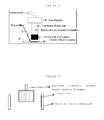
Figure 1 : Vue générale d'un système de dépôt par plasma atmosphérique -
Figure 2 : Vue en coupe d'un système de dépôt cylindrique. -
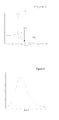
Figure 3 : Spectres XPS de l'échantillon traité dans l'exemple 2 -
Figure 4 : Détail du spectre XPS de l'échantillon traité dans l'exemple 2, pic du carbone - La présente invention a pour but premier d'éviter les inconvénients des procédés existants. Elle tente en particulier d'éviter la nécessité d'opérer à pression réduite. Elle a également pour but de permettre l'utilisation de monomères liquides, plus faciles à manipuler que les monomères gazeux et souvent moins controversés sur le plan toxicologique et environemental.
- La présente invention concerne un procédé pour déposer une couche fluorée sur un substrat, comprenant l'injection d'un mélange gazeux comportant un composé fluoré et un gaz porteur dans une zone de décharge ou de post-décharge d'un plasma atmosphérique à une pression comprise entre 0,8 et 1,2 bar, caractérisé en ce que ledit composé fluoré a une température d'ébullition à une pression de 1 bar supérieure à 25°C.
- Dans un mode particulier de réalisation de l'invention le composé fluoré est un perfluoroalkane, et, plus particulièrement, du perfluorohexane.
- Préférablement, la tension de vapeur dudit composé fluoré à température ambiante est comprise entre 1 mbar et 1 bar.
- Dans un mode préféré de réalisation de la présente invention, la pression partielle dudit composé fluoré dans ledit gaz porteur est régulée par contrôle de la température d'un bain dudit composé fluoré dans lequel le gaz porteur est injecté avant injection dans le plasma.
- Dans un mode particulier de réalisation de l'invention, le substrat comporte un polymère, en particulier du PVC.
- La présente invention divulgue un procédé de dépôt d'une couche polymérique fluorée par une technologie plasma opérant à pression. Elle permet de déposer une couche de polymère fluoré par l'intermédiaire d'un composé fluoré qui est injecté dans le plasma, ou dans la zone de post-décharge de celui-ci. Dans l'exemple choisi, le monomère est un liquide à température ambiante (25°C), le perfluorohexane, et est emporté dans le plasma par l'intermédiaire d'un gaz porteur, l'argon. Dans le cas présent, le plasma est généré dans une décharge à barrière diélectrique, l'échantillon à traiter étant placé à l'intérieur de la décharge, ou à la sortie immédiate de celle-ci (post-décharge).
- La présente invention a en outre l'avantage de permettre de traiter toute surface pour autant que la géométrie de la décharge soit adaptée, et a l'avantage de procéder en une seule étape, simple et rapide.
- Dans les exemples ci-après, le substrat est constitué d'un film de PVC (polychlorure de vinyle), sans que cela soit limitatif, étant entendu pour l'homme de l'art que cette technologie est immédiatement transposable à tous types de substrat.
- L'exemple 1 présente un dépôt de perfluorohexane sur PVC réalisé en post-décharge dans les conditions suivantes :
- Un film de PVC de 4 cm sur 4 cm, de la marque Solvay est découpé, nettoyé au méthanol et à l'isooctane et placé à la sortie (à 0.05 cm) d'une torche à plasma froid (
figure 1 ) (Décharge à barrière diélectrique) fonctionnant à pression atmosphérique. Le monomère fluoré (perfluorohexane) est placé dans un bulleur en verre (pyrex) plongé dans un vase Dewar contenant un mélange d'acétone et carboglace. La température du mélange, et donc du monomère est d'environ - 80 °C. Un flux d'argon est alors envoyé dans le bulleur, moyennant une surpression de 1,375 bar au départ. Le mélange argon/perfluorohexane gazeux est emporté jusqu'à l'intérieur de la torche. Un plasma est initié à une tension de 3200 volts et une fréquence de 16 kHz pendant 1 minute. - L'exemple 2 présente un dépôt de perfluorohexane sur PVC réalisé dans une décharge à barrière diélectrique dans les conditions suivantes L'échantillon est fixé sur l'intérieur de l'électrode externe d'une décharge à barrière diélectrique cylindrique. L'électrode « chaude », celle à laquelle est appliquée la tension, est l'électrode interne, recouverte d'un godet d'alumine. Un ciment d'alumine assure l'étanchéité (
figure 2 ).
Le monomère fluoré est apporté dans la décharge comme dans l'exemple 1. Un traitement de 1 minute à une tension de 3000 V et une fréquence de 20 kHz est appliqué par la suite.
Les angles de contact mesurés avant traitement, après traitement à l'argon, et après traitement avec le mélange argon/monomère sont repris dans le tableau 2. A titre de comparaison, l'angle de contact du PTFE (polytétrafluoroéthylène) de la littérature varie entre 102° et 130°.Tableau 2 : Echantillon Angle de contact PVC non traité 82° PVC traité par plasma argon 22° PVC traité par plasma argon/perfluorohexane 114° PVC traité par plasma argon/perfluorohexane après 1 semaine de vieillissement 112° Angle de contact de l'eau sur le PVC avant et après traitement plasma. Exemple 2 figure 3 ) reprennent un full survey et un grossissement de la zone du carbone. La présence de fluor de groupes CF2 est clairement identifiée via le pic du fluor situé à 689 eV et la position du pic du carbone, 291,5 eV (figure 3 ).
La stabilité de la couche déposée est attestée par la conservation de la valeur de l'angle de contact après vieillissement (dans l'air) pendant une semaine (tableau 2). - Le procédé peut s'appliquer à tous les plasmas atmosphériques froids, quel que soit le mode d'injection de l'énergie (pas seulement les DBD, mais les RF, les microondes,...).
- Le procédé peut s'appliquer à toutes les surfaces devant être recouvertes par une couche fluorée : verre, acier, polymère, céramique, peinture, métal, oxyde métallique, mixte, gel.
- Le procédé permet de générer une couche fluorée à partir de tout monomère fluoré gazeux ou liquide à température ambiante.
- Une couche hydrophobe pourra être déposée uniquement si le monomère de départ ne contient pas d'oxygène, ni d'hydrogène.
Le tableau 1 montre l'angle de contact de l'échantillon avant traitement plasma, après un traitement plasma argon, et après un traitement plasma Argon/perfluorohexane.
| Echantillon | Angle de contact |
| PVC non traité | 82° |
| PVC traité par plasma argon | 40° |
| PVC traité par plasma argon/perfluorohexane | 89° |
| Angle de contact de l'eau sur le PVC avant et après traitement plasma. Exemple 1 |
Claims (7)
- Procédé pour déposer une couche fluorée sur un substrat, comprenant l'injection d'un mélange gazeux comprenant un composé fluoré et un gaz porteur dans une zone de décharge ou de post-décharge d'un plasma atmosphérique à une pression comprise entre 0,8 et 1,2 bar, dans lequel ledit composé fluoré a une température d'ébullition à une pression de 1 bar supérieure à 25°C.
- Procédé selon la revendication 1 caractérisé en ce que le composé fluoré est un perfluoroalkane.
- Procédé selon la revendication 2 caractérisé en ce que le perfluoroalkane est du perfluorohexane.
- Procédé selon l'une quelconque des revendications précédentes caractérisé en ce que la tension de vapeur dudit composé fluoré à température ambiante est comprise entre 1 mbar et 1 bar.
- Procédé selon l'une quelconque des revendications précédentes caractérisé en ce que la pression partielle dudit composé fluoré dans ledit gaz porteur est régulée par contrôle de la température d'un bain dudit composé fluoré dans lequel le gaz porteur est injecté avant injection dans le plasma.
- Procédé selon l'une quelconque des revendications précédentes caractérisé en ce que le substrat comprend un polymère.
- Procédé selon la revendication 8 caractérisé en ce que le substrat comprend du polychlorure de vinyle.
Priority Applications (7)
| Application Number | Priority Date | Filing Date | Title |
|---|---|---|---|
| EP08152409A EP2098305A1 (fr) | 2008-03-06 | 2008-03-06 | Procédé pour déposer une couche fluorée à partir d'un monomère précurseur |
| CA2698629A CA2698629A1 (fr) | 2007-09-06 | 2008-09-05 | Procede pour deposer une couche fluoree a partir d'un monomere precurseur |
| JP2010523519A JP2010538161A (ja) | 2007-09-06 | 2008-09-05 | 前駆体モノマーからフッ素化層を付着するための方法 |
| US12/676,692 US20110014395A1 (en) | 2007-09-06 | 2008-09-05 | Method for depositing a fluorinated layer from a precursor monomer |
| CN200880110572A CN101821020A (zh) | 2007-09-06 | 2008-09-05 | 由前体单体沉积氟化层的方法 |
| EP08803783A EP2192997A2 (fr) | 2007-09-06 | 2008-09-05 | Procédé pour déposer une couche fluorée à partir d'un monomère précurseur |
| PCT/EP2008/061814 WO2009030763A2 (fr) | 2007-09-06 | 2008-09-05 | Procédé pour déposer une couche fluorée à partir d'un monomère précurseur |
Applications Claiming Priority (1)
| Application Number | Priority Date | Filing Date | Title |
|---|---|---|---|
| EP08152409A EP2098305A1 (fr) | 2008-03-06 | 2008-03-06 | Procédé pour déposer une couche fluorée à partir d'un monomère précurseur |
Publications (1)
| Publication Number | Publication Date |
|---|---|
| EP2098305A1 true EP2098305A1 (fr) | 2009-09-09 |
Family
ID=39671407
Family Applications (1)
| Application Number | Title | Priority Date | Filing Date |
|---|---|---|---|
| EP08152409A Withdrawn EP2098305A1 (fr) | 2007-09-06 | 2008-03-06 | Procédé pour déposer une couche fluorée à partir d'un monomère précurseur |
Country Status (1)
| Country | Link |
|---|---|
| EP (1) | EP2098305A1 (fr) |
Citations (5)
| Publication number | Priority date | Publication date | Assignee | Title |
|---|---|---|---|---|
| US20040247886A1 (en) * | 2003-06-06 | 2004-12-09 | Konica Minolta Holdings, Inc. | Thin film forming method and thin film forming substance |
| US20070093076A1 (en) * | 1999-02-01 | 2007-04-26 | Sigma Laboratories Of Arizona, Llc. | Electromagnetic treatment in atmospheric-plasma coating process |
| WO2007083121A1 (fr) * | 2006-01-20 | 2007-07-26 | P2I Ltd | Nouveaux produits |
| US20070172666A1 (en) * | 2006-01-24 | 2007-07-26 | Denes Ferencz S | RF plasma-enhanced deposition of fluorinated films |
| FR2902422A1 (fr) * | 2006-06-16 | 2007-12-21 | Saint Gobain | Procede de depot par plasma atmopherique d'un revetement hydrophobe/oleophobe a durabilite amelioree |
-
2008
- 2008-03-06 EP EP08152409A patent/EP2098305A1/fr not_active Withdrawn
Patent Citations (5)
| Publication number | Priority date | Publication date | Assignee | Title |
|---|---|---|---|---|
| US20070093076A1 (en) * | 1999-02-01 | 2007-04-26 | Sigma Laboratories Of Arizona, Llc. | Electromagnetic treatment in atmospheric-plasma coating process |
| US20040247886A1 (en) * | 2003-06-06 | 2004-12-09 | Konica Minolta Holdings, Inc. | Thin film forming method and thin film forming substance |
| WO2007083121A1 (fr) * | 2006-01-20 | 2007-07-26 | P2I Ltd | Nouveaux produits |
| US20070172666A1 (en) * | 2006-01-24 | 2007-07-26 | Denes Ferencz S | RF plasma-enhanced deposition of fluorinated films |
| FR2902422A1 (fr) * | 2006-06-16 | 2007-12-21 | Saint Gobain | Procede de depot par plasma atmopherique d'un revetement hydrophobe/oleophobe a durabilite amelioree |
Similar Documents
| Publication | Publication Date | Title |
|---|---|---|
| US20240337023A1 (en) | Articles coated with a fluoro-annealed film | |
| Vandencasteele et al. | XPS and contact angle study of N2 and O2 plasma‐modified PTFE, PVDF and PVF surfaces | |
| USRE38760E1 (en) | Controlled etching of oxides via gas phase reactions | |
| JP5491170B2 (ja) | エッチング方法 | |
| TW200402458A (en) | Method for etching high dielectric constant materials and for cleaning deposition chambers for high dielectric constant materials | |
| CN1725442A (zh) | 氮化钛去除方法 | |
| JP5962124B2 (ja) | 酸化膜の形成方法 | |
| JP2006041523A (ja) | フッ素利用率を増大させる方法 | |
| KR102802427B1 (ko) | 마그네슘 플루오라이드 영역이 형성된 금속체 | |
| FR2594119A1 (fr) | Installation pour l'infiltration chimique en phase vapeur d'un materiau refractaire autre que le carbone | |
| Hubert et al. | Plasma polymerization of C4Cl6 and C2H2Cl4 at atmospheric pressure | |
| US6261974B1 (en) | Growth method of a polymer film | |
| FR2727322A1 (fr) | Procede pour la sublimation d'un materiau solide et dispositif pour la mise en oeuvre du procede | |
| JPS62278264A (ja) | 支持体上にダイアモンド類似炭素皮膜を析出するためのプラズマ補助化学蒸気輸送方法 | |
| WO2009030763A2 (fr) | Procédé pour déposer une couche fluorée à partir d'un monomère précurseur | |
| KR100851791B1 (ko) | 가스 제조 설비, 가스 공급 용기, 및 전자 장치 제조용가스 | |
| US12057320B2 (en) | Hydrogen peroxide plasma etch of ashable hard mask | |
| US10563300B2 (en) | Method for separating a carbon structure from a seed structure | |
| EP3911779A1 (fr) | Procede et dispositif de traitement pour le depot d'un revetement a effet barriere | |
| JP2000323467A (ja) | 遠隔プラズマ放電室を有する半導体処理装置 | |
| EP1737998A2 (fr) | Procede a chambre separee pour l'elimination des depots de surface | |
| US7485580B2 (en) | Method for removing organic electroluminescent residues from a substrate | |
| US12570816B2 (en) | Hydrogen peroxide plasma surface modification | |
| US20100273326A1 (en) | Method for purifying unsaturated fluorocarbon compound, method for forming fluorocarbon film, and method for producing semiconductor device | |
| JP7621378B2 (ja) | フッ化イットリウム膜及びフッ化イットリウム膜の調製方法並びに使用方法 |
Legal Events
| Date | Code | Title | Description |
|---|---|---|---|
| PUAI | Public reference made under article 153(3) epc to a published international application that has entered the european phase |
Free format text: ORIGINAL CODE: 0009012 |
|
| AK | Designated contracting states |
Kind code of ref document: A1 Designated state(s): AT BE BG CH CY CZ DE DK EE ES FI FR GB GR HR HU IE IS IT LI LT LU LV MC MT NL NO PL PT RO SE SI SK TR |
|
| AX | Request for extension of the european patent |
Extension state: AL BA MK RS |
|
| AKX | Designation fees paid | ||
| REG | Reference to a national code |
Ref country code: DE Ref legal event code: 8566 |
|
| STAA | Information on the status of an ep patent application or granted ep patent |
Free format text: STATUS: THE APPLICATION IS DEEMED TO BE WITHDRAWN |
|
| 18D | Application deemed to be withdrawn |
Effective date: 20100310 |