EP2091312B2 - Anreihbares Elektronikgehäuse mit Stift- oder Buchsenleisten - Google Patents
Anreihbares Elektronikgehäuse mit Stift- oder Buchsenleisten Download PDFInfo
- Publication number
- EP2091312B2 EP2091312B2 EP09150924.0A EP09150924A EP2091312B2 EP 2091312 B2 EP2091312 B2 EP 2091312B2 EP 09150924 A EP09150924 A EP 09150924A EP 2091312 B2 EP2091312 B2 EP 2091312B2
- Authority
- EP
- European Patent Office
- Prior art keywords
- unlocking
- pin
- housing
- pin strip
- strip
- Prior art date
- Legal status (The legal status is an assumption and is not a legal conclusion. Google has not performed a legal analysis and makes no representation as to the accuracy of the status listed.)
- Active
Links
Images



Classifications
-
- H—ELECTRICITY
- H01—ELECTRIC ELEMENTS
- H01R—ELECTRICALLY-CONDUCTIVE CONNECTIONS; STRUCTURAL ASSOCIATIONS OF A PLURALITY OF MUTUALLY-INSULATED ELECTRICAL CONNECTING ELEMENTS; COUPLING DEVICES; CURRENT COLLECTORS
- H01R13/00—Details of coupling devices of the kinds covered by groups H01R12/70 or H01R24/00 - H01R33/00
- H01R13/62—Means for facilitating engagement or disengagement of coupling parts or for holding them in engagement
- H01R13/629—Additional means for facilitating engagement or disengagement of coupling parts, e.g. aligning or guiding means, levers, gas pressure electrical locking indicators, manufacturing tolerances
- H01R13/62933—Comprising exclusively pivoting lever
-
- H—ELECTRICITY
- H01—ELECTRIC ELEMENTS
- H01R—ELECTRICALLY-CONDUCTIVE CONNECTIONS; STRUCTURAL ASSOCIATIONS OF A PLURALITY OF MUTUALLY-INSULATED ELECTRICAL CONNECTING ELEMENTS; COUPLING DEVICES; CURRENT COLLECTORS
- H01R9/00—Structural associations of a plurality of mutually-insulated electrical connecting elements, e.g. terminal strips or terminal blocks; Terminals or binding posts mounted upon a base or in a case; Bases therefor
- H01R9/22—Bases, e.g. strip, block, panel
- H01R9/24—Terminal blocks
- H01R9/26—Clip-on terminal blocks for side-by-side rail- or strip-mounting
- H01R9/2625—Clip-on terminal blocks for side-by-side rail- or strip-mounting with built-in electrical component
-
- H—ELECTRICITY
- H05—ELECTRIC TECHNIQUES NOT OTHERWISE PROVIDED FOR
- H05K—PRINTED CIRCUITS; CASINGS OR CONSTRUCTIONAL DETAILS OF ELECTRIC APPARATUS; MANUFACTURE OF ASSEMBLAGES OF ELECTRICAL COMPONENTS
- H05K7/00—Constructional details common to different types of electric apparatus
- H05K7/14—Mounting supporting structure in casing or on frame or rack
- H05K7/1462—Mounting supporting structure in casing or on frame or rack for programmable logic controllers [PLC] for automation or industrial process control
- H05K7/1468—Mechanical features of input/output (I/O) modules
- H05K7/1469—Terminal blocks for connecting sensors
Definitions
- the invention relates to a stackable housing arrangement according to claim 1 with a housing, in particular electronics housing.
- Such a housing is of the generic type EP 1 083 637 A known.
- the DE 10 2004 002 737 A1 relates to a release mechanism for a latched plug or socket part of an electrical connector, in particular a plug module from the base terminal of a field bus for the parallel wiring of actuators and sensors.
- at least one pivotally mounted lever is arranged transversely to the direction of pull of the plug module on at least one longitudinal recess of the plug module and is designed as an eccentric at one end.
- the electronics housing is designed as a module that can be snapped onto a mounting rail, the installation conditions are generally quite narrow.
- the object of the invention is to solve this problem with simple constructive means.
- the unlocking device supports the detachment of the plug connection between the plug and the socket strip in a simple manner. Unlocking is thus to be understood as at least supporting the separation of the two elements of the pin strip and socket strip from one another. It advantageously does not enlarge the overall width of the actual housing, in particular the electronics housing, in the direction of attachment, so that it is excellently suited for use on terminal block-type housings.
- Only one or more pin headers and / or socket headers can be arranged on the electronics housing.
- One of the unlocking devices is preferably assigned to each such terminal strip.
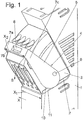
- Figure 1 shows a portion of an electronics housing 1, which preferably has a terminal-like structure in a manner not shown and is designed for snapping onto a mounting rail, not shown here.
- the direction of installation on the mounting rail is in Figure 1 indicated by the direction of arrow X.
- the housing has an X1 width.
- the installation space in the direction X is relatively short, for example the electronics housing 1 can have a width X1 of only a few millimeters.
- At least one pin strip 2 is arranged or formed on the electronics housing 1, which can be firmly connected to the electronics housing 1 or even in one piece with the housing, which surrounds the contact pins (not shown here).
- a socket strip 3 is plugged onto the pin strip 2, which can be placed essentially vertically or slightly obliquely to the vertical (relative to the mounting rail) from above onto the pin strip 2 and can preferably be latched to it and detachable from it in the opposite direction.
- an unlocking device 4 is arranged on the socket strip 3, which is designed here as a pivotable unlocking bracket 5, which is articulated on opposite sides of the socket strip 2 with the socket strip 2 on axes of rotation 6.
- the unlocking bracket 5 essentially has a U-shape with a base leg 7a and two side legs 7b, 7c.
- the unlocking bracket 5 engages around the socket strip 3 from above, the base leg 7a being arranged essentially above (relative to the support rail) of the socket strip 3 and here being pivotable in the direction of the arrow S in the direction of the support rail.
- the base leg 7a preferably has an actuating contour 8 for attaching a tool, which here is designed as a slot for attaching a screwdriver 9. A manual actuation on an attachment of the bracket or the like would also be conceivable (not shown here).
- the two longitudinal legs 7b, 7c aligned parallel to one another are in turn preferably parallel to the main outer surfaces 8a, 8b of the electronics housing, which are located in the row direction (or against the row direction) X.
- the socket strip with the unlocking device and the unlocking bracket 5 advantageously has a width X2 in the direction of attachment which is at least not greater or even smaller than the grid width X1 of the electronics housing in the direction of attachment. In this way, the unlocking device does not increase the overall width of the electronics housing in the direction X.
- unlocking bracket 5 is aligned with the main outer walls of the electronics housing 1 in the direction of the row.
- this unlocking contour 10 which has an eccentrically extending contour relative to the pivot axes 6, this unlocking contour 10 being located on a support surface 11 of the electronics housing (or alternatively the pin strip, not shown here ) supports. It is particularly preferred if the unlocking contour 10 is supported on the electronics housing 1.
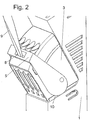
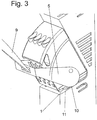
- the unlocking bracket 5 is now pivoted downward about the pivot axes 6 using a screwdriver 12, so that the unlocking contour 10, the distance from the pivot axis 6 of which increases with the pivoting of the unlocking bracket into the release position (here downward), the socket strip 3 from the pin header 2, since the unlocking contour 10 is supported on the support surface 11 in the manner of an abutment.
- a slot 12 on the unlocking bracket 5 which slot has an arc shape and is designed to interact with a pin 13 on the pin header 1 or on the electronics housing 1.
- the slot is open at one end and extends essentially perpendicular to the plug-in direction in which the socket strip is attached and detached.
- the unlocking bracket 5 is moved into its lower position in this illustration - the unlocking position - so that the socket strip 3 can be plugged onto the pin strip 2 and locked there.
Landscapes
- Engineering & Computer Science (AREA)
- Automation & Control Theory (AREA)
- Microelectronics & Electronic Packaging (AREA)
- Details Of Connecting Devices For Male And Female Coupling (AREA)
- Connector Housings Or Holding Contact Members (AREA)
- Casings For Electric Apparatus (AREA)
Description
- Die Erfindung betrifft eine anreihbare Gehäuseanordnung nach Anspruch 1 mit einem Gehäuse, insbesondere Elektronikgehäuse.
- Ein solches Gehäuse ist aus der gattungsgemäßen
EP 1 083 637 A bekannt. DieDE 10 2004 002 737 A1 betrifft einen Lösemechanismus für ein verrastetes Stecker- bzw. Buchsenteil eines elektrischen Steckverbinders, insbesondere eines Steckermoduls aus der Basisklemme eines Feldbusses für die parallele Verdrahtung von Aktoren und Sensoren. Dabei ist an mindestens einer längsseitigen Ausnehmung des Steckermoduls mindestens ein schwenkbar gelagerter Hebel quer zur Ziehrichtung des Steckermoduls angeordnet, der an einem Ende als Exzenter ausgebildet ist. - Es ist bekannt, an Elektronikgehäusen eine oder mehrere Stiftleisten und/oder Buchsenleisten anzuordnen, die mit einer korrespondierenden Buchsenleiste bzw. Stiftleiste zusammensteckbar sind.
- Insbesondere bei einer Auslegung der Elektronikgehäuse als auf eine Tragschiene rastbarer Baustein sind die Einbauverhältnisse in der Regel recht beengt.
- In diesem Fall ist es wie beim Stand der Technik oftmals relativ mühsam, einmal miteinander verbundene Stift- und Buchsenleisten wieder voneinander zu lösen.
- Die Erfindung hat die Aufgabe, dieses Problem mit einfachen konstruktiven Mitteln zu beheben.
- Die Erfindung erreicht dieses Ziel durch den Gegenstand des Anspruchs 1.
- Die Entriegelungsvorrichtung unterstützt in einfacher Weise das Lösen der Steckverbindung zwischen der Steck- und der Buchsenleiste. Unter einem Entriegeln ist damit zumindest ein Unterstützen des Trennens der beiden Elemente Stiftleiste und Buchsenleiste voneinander zu verstehen. Sie vergrößert fern in vorteilhafter Weise nicht die Baubreite des eigentlichen Gehäuses, insbesondere des Elektronikgehäuses in Anreihrichtung, so dass sie sich hervorragend zum Einsatz an reihenklemmenartigen Gehäusen eignet.
- Es können an dem Elektronikgehäuse nur eine oder auch mehrere Stiftleisten und/oder Buchsenleisten angeordnet sein. Dabei wird vorzugsweise jeder derartigen Anschlussleiste eine der Entriegelungsvorrichtungen zugeordnet.
- Mit der vorteilhaften Ausgestaltung des Anspruchs 3 ist es darüber hinaus möglich im montierten Zustand, z.B. in rauer Umgebung an einer Maschine o.dgl., auch nach längerem Einsatz einen sicheren Zusammenhalt der Stift- und Buchsenleiste bzw. elektrischen Kontakte sicherzustellen.
- Vorteilhafte Ausgestaltungen der Erfindung sind den Unteransprüchen zu entnehmen.
- Nachfolgend wird die Erfindung unter Bezug auf die Zeichnungen anhand von Ausführungsbeispielen näher beschrieben. Es zeigt:
- Figur 1
- einen Teilbereich eines Elektronikgehäuses mit einer Stiftleiste, auf das eine Buchsenleiste mit einer Entriegelungsvorrichtung aufgesteckt ist;
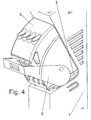
- Figur 2 bis 4
- in aufeinanderfolgenden Schritten das Lösen bzw. Entriegeln der Buchsenleiste von dem Elektronikgehäuse mit der Stiftleiste nach
Figur 1 ; - Figur 5
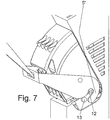
- eine Teilbereich eines weiteren Elektronikgehäuses mit einer Stiftleiste, auf das eine Buchsenleiste mit einer kombinierten Ent- und Verriegelungsvorrichtung aufgesteckt ist; und
- Figur 6 bis 8
- in aufeinanderfolgenden Schritten das Lösen bzw. Entriegeln der Buchsenleiste von dem Elektronikgehäuse mit der Stiftleiste nach
Figur 5 . -
Figur 1 zeigt einen Teilbereich eines Elektronikgehäuses 1, welches vorzugsweise in nicht dargestellter Art einen reihenklemmenartigen Aufbau aufweist und zum Aufrasten auf eine hier nicht dargestellte Tragschiene ausgelegt ist. - Die Anreihrichtung auf der Tragschiene ist in
Figur 1 durch die Richtung des Pfeils X angedeutet. In dieser Richtung hat das Gehäuse eine Baubreite X1. In der Regel ist der Einbauraum in Richtung X relativ kurz, so kann das Elektronikgehäuse 1 beispielsweise eine Breite X1 von nur wenigen Millimetern aufweisen. - An dem Elektronikgehäuse 1 ist wenigstens eine Stiftleiste 2 angeordnet oder ausgebildet, die mit dem Elektronikgehäuse 1 fest verbunden oder sogar hinsichtlich ihres eigenen Gehäuses, welche die Kontaktstifte (hier nicht zu erkennen) umgibt, einstückig mit diesem ausgebildet sein kann.
- Auf die Stiftleiste 2 ist eine Buchsenleiste 3 angesteckt, die im Wesentlichen vertikal bzw. leicht schräg zur Vertikalen (relativ zur Tragschiene) von oben auf die Stiftleiste 2 aufsetzbar und vorzugsweise an dieser verrastbar und in entgegengesetzter Richtung von dieser lösbar ist.
- Zum Lösen der Buchsenleiste 3 von der Stiftleiste 2 ist an der Buchsenleiste 3 eine Entriegelungsvorrichtung 4 angeordnet, die hier als schwenkbarer Entriegelungsbügel 5 ausgebildet ist, der an gegenüberliegenden Seiten der Buchsenleiste 2 mit der Buchsenleiste 2 an Drehachsen 6 gelenkig verbunden ist.
- Der Entriegelungsbügel 5 weist im Wesentlichen eine U-Form mit einem Grundschenkel 7a und zwei Seitenschenkeln 7b, 7c auf. Der Entriegelungsbügel 5 umgreift die Buchsenleiste 3 von oben her, wobei der Grundschenkel 7a im wesentlichen oberhalb (relativ zur Tragschiene) der Buchsenleiste 3 angeordnet ist und hier in Richtung der Tragschiene in Richtung des Pfeils S verschwenkbar ist. Der Grundschenkel 7a weist vorzugsweise eine Betätigungskontur 8 zum Ansetzen eines Werkzeugs auf, die hier als Schlitz zum Ansetzen eines Schraubendrehers 9 ausgebildet ist. Eine manuelle Betätigung an einem Ansatz des Bügels oder dgl. wäre ebenfalls denkbar (hier nicht dargestellt).
- Die beiden zueinander parallel ausgerichteten Längsschenkel 7b, 7c sind wiederum vorzugsweise parallel zu den in Anreihrichtung (bzw. gegen die Anreihrichtung) X liegenden Hauptaußenflächen 8a, 8b des Elektronikgehäuses angeordnet. Dabei weist die Buchsenleiste mit der Entriegelungsvorrichtung und dem Entriegelungsbügel 5 vorteilhaft in Anreihrichtung eine Breite X2 auf, die zumindest nicht größer oder sogar kleiner ist als die Rasterbreite X1 des Elektronikgehäuses in Anreihrichtung. Derart wird durch die Entriegelungsvorrichtung die gesamte Baubreite des Elektronikgehäuses in Anreihrichtung X nicht vergrößert.
- Es ist vorteilhaft, wenn der Entriegelungsbügel 5 mit den Hauptaußenwänden des Elektronikgehäuses 1 in Anreihrichtung fluchtet.
- Im Bereich der beiden Längsschenkel 7, 8 des Entriegelungsbügels ist dieser mit einer Entriegelungskontur 10 versehen, die relativ zu den Schwenkachsen 6 eine exzentrisch verlaufende Kontur aufweist, wobei sich diese Entriegelungskontur 10 auf einer Auflagefläche 11 des Elektronikgehäuses (oder alternativ der Stiftleiste, hier nicht dargestellt) abstützt. Besonders bevorzugt ist es, wenn sich die Entriegelungskontur 10 an dem Elektronikgehäuse 1 abstützt.
- Zum Entriegeln wird nunmehr mit einem Schraubendreher 12 der Entriegelungsbügel 5 nach unten um die Schwenkachsen 6 verschwenkt, so dass die Entriegelungskontur 10, deren Abstand zur Schwenkachse 6 mit zunehmendem Schwenken des Entriegelungsbügels in die Lösestellung (hier nach unten hin) größer wird, die Buchsenleiste 3 von der Stiftleiste 2 anhebt, da sich die Entriegelungskontur 10 auf der Auflagefläche 11 widerlagerartig abstützt.
- Damit wird das Lösen der Buchsenleiste 3 von der Stiftleiste 2 bzw. das Entriegeln von der Stiftleiste 2 unterstützt, vorzugsweise bis in eine Stellung, in welcher die Buchsenleiste 3 sich in einer nicht kontaktierten Stellung befindet und aus der Position der
Figur 4 nach dem Abnehmen des Schraubendrehers vom Elektronikgehäuse 1 bzw. der Stiftleiste 2 abgenommen werden kann. - Nach
Figur 5 ist es vorgesehen, am Entriegelungsbügel 5 zusätzlich einen Schlitz 12 auszubilden, der eine Bogenform hat und der dazu ausgelegt ist, mit einem Zapfen 13 an der Stiftleiste 1 oder am Elektronikgehäuse 1 zusammenzuwirken. Der Schlitz ist an einem Ende offen und erstreckt sich im Wesentlichen senkrecht zur Steckrichtung, in welcher die Buchsenleiste aufgesteckt und gelöst wird. - Zum Aufsetzen der Buchsenleiste 3 auf die Stiftleiste 1 wird der Entriegelungsbügel 5 in seine in dieser Darstellung untere Position bewegt - die Entriegelungsposition -, so dass die Buchsenleiste 3 auf die Stiftleiste 2 aufsteckbar und dort verrastbar ist.
- Sodann wird der Entriegelungsbügel 5 von Hand oder mit einem Schraubendreher in die Stellung der
Figur 5 verschwenkt, so dass der Zapfen 13 in den Schlitz 12 eingreift (es ist vorzugsweise auf beiden Seiten der Buchsenleiste in Anreihrichtung betrachtet je einer der Zapfen vorgesehen). - Hierdurch wird eine Verriegelungsfunktion realisiert, da es nicht möglich ist, die Buchsenleiste 3 nach oben hin von der Stiftleiste 2 abzuziehen, da die obere Kante des Schlitzes dies verhindert. Ein Verrasten des Zapfens 13 in einer Aufweitung des Schlitzes oder dgl. ist optional denkbar (hier nicht dargestellt)...
- Entriegelt wird diese Anordnung wiederum nach Art der
Figur 2 und3 , nämlich dadurch, dass mit Hilfe eines Schraubendrehers 12 der Entriegelungs- und Verriegelungsbügel 5' nach unten verschwenkt wird, was einerseits die Verriegelung löst, da der Zapfen 13 außer Eingriff mit dem Schlitz 12 gelangt (Figur 7 ) und was zusätzlich eine Lösehilfe bedeutet, wenn der Entriegelungsbügel 5 wiederum nach Art derFig. 1 derart gestaltet ist, dass er exzentrisch relativ zu der/den Schwenkachsen 6 mit einer Entriegelungskontur 10 ein Anheben der Buchsenleiste 3 von der Steckerleiste 2 beim Bewegen des Bügels bewirkt. - Anzumerken ist, dass bei einer Anordnung der Buchsenleiste am Elektronikgehäuse und einer hierauf aufrastbaren Stiftleiste die Anordnung des Entriegelungsbügels an der Stiftleiste vorgesehen sein kann, wobei die Funktion entsprechend umgekehrt wird.
-
- Elektronikgehäuse
- 1
- Stiftleiste
- 2
- Buchsen leiste
- 3
- Entriegelungsvorrichtung
- 4
- Entriegelungsbügel
- 5, 5'
- Schwenkachsen
- 6
- Grundschenkel
- 7a
- Längsschenkel
- 7b, c
- Betätigungskontur
- 8
- Schraubendreher
- 9
- Entriegelungskontur
- 10
- Auflagefläche
- 11
- Schlitz
- 12
- Zapfen
- 13
- Baubreite
- X1, X2
- Anreihrichtung
- X
- Pfeil
- S
Claims (4)
- Anreihbare Gehäuseanordnung, insbesondere Elektronikgehäuseanordnung, mit einem Gehäuse, insbesondere einem Elektronikgehäuse (1), wobei das Gehäuse mit wenigstens einer oder mehreren Stiftleisten und/oder Buchsenleisten versehen ist, wobei das Gehäuse in Anreihrichtung eine Baubreite (X1) aufweist, und mit jeweils auf die wenigstens eine Stiftleiste (2) oder Buchsenleiste (3) aufsteckbarer korrespondierender Buchsenleiste (3) oder Stiftleiste (2) der Gehäuseanordnung, wobei eine an der aufsteckbaren korrespondierenden Buchsenleiste oder Stiftleiste (3, 2) angeordnete Entriegelungsvorrichtung (4) zum Entriegeln der Buchsenleiste (3) von der Stiftleiste (2) vorgesehen ist, wobei die gesamte Baubreite (X2) der korrespondierenden Stiftleiste (2) oder der korrespondierenden Buchsenleiste (3) mit der Entriegelungsvorrichtung (4) nicht größer ist als die Baubreite (X1) des Gehäuses, insbesondere des Elektronikgehäuses (1), in Anreihrichtung ist, wobei die Entriegelungsvorrichtung (4) als schwenkbarer Entriegelungsbügel (5) ausgebildet ist, der an gegenüberliegenden Seiten der korrespondierenden Buchsenleiste (2) oder der korrespondierenden Stiftleiste (3) an Schwenkachsen (6) mit dieser gelenkig verbunden ist, wobei der Entriegelungsbügel (5) mit einer relativ zu den Schwenkachsen (6) exzentrisch verlaufenden Entriegelungskontur (10) versehen ist, die sich beim Entriegeln auf einer Auflagefläche (11) des Gehäuses oder der Stiftleiste widerlagerartig abstützt, und wobei der Entriegelungsbügel (5) mit dem Elektronikgehäuse (1) in Anreihrichtung fluchtet und wobei der Entriegelungsbügel (5) eine U-Form mit einem Grundschenkel (7a) und zwei Seitenschenkeln (7b, 7c) aufweist.
- Elektronikgehäuse nach Anspruch 1, wobei der Entriegelungsbügel (5) die Buchsenleiste (3) umgreift und dass der Grundschenkel (7a) eine Betätigungskontur (8) aufweist.
- Elektronikgehäuse nach einem der vorstehenden Ansprüche, wobei die Entriegelungsvorrichtung (4) mit einer Verriegelungseinrichtung nach Art einer baulichen Einheit kombiniert ist.
- Elektronikgehäuse nach einem der vorstehenden Ansprüche, wobei der Entriegelungsbügel (5) wenigstens einen Schlitz (12) aufweist, der dazu ausgelegt ist, verriegelnd mit einem Zapfen (13) an der Stiftleiste (1) oder am Elektronikgehäuse zusammenzuwirken.
Applications Claiming Priority (1)
| Application Number | Priority Date | Filing Date | Title |
|---|---|---|---|
| DE202008002111U DE202008002111U1 (de) | 2008-02-14 | 2008-02-14 | Anreihbares Elektronikgehäuse mit Stift- oder Buchsenleisten |
Publications (4)
| Publication Number | Publication Date |
|---|---|
| EP2091312A2 EP2091312A2 (de) | 2009-08-19 |
| EP2091312A3 EP2091312A3 (de) | 2010-07-21 |
| EP2091312B1 EP2091312B1 (de) | 2017-03-22 |
| EP2091312B2 true EP2091312B2 (de) | 2020-06-10 |
Family
ID=40637015
Family Applications (1)
| Application Number | Title | Priority Date | Filing Date |
|---|---|---|---|
| EP09150924.0A Active EP2091312B2 (de) | 2008-02-14 | 2009-01-20 | Anreihbares Elektronikgehäuse mit Stift- oder Buchsenleisten |
Country Status (7)
| Country | Link |
|---|---|
| US (1) | US7736161B2 (de) |
| EP (1) | EP2091312B2 (de) |
| JP (2) | JP2009193959A (de) |
| CN (1) | CN101521336A (de) |
| DE (1) | DE202008002111U1 (de) |
| DK (1) | DK2091312T4 (de) |
| ES (1) | ES2628510T5 (de) |
Families Citing this family (11)
| Publication number | Priority date | Publication date | Assignee | Title |
|---|---|---|---|---|
| EP2639895A1 (de) * | 2012-03-16 | 2013-09-18 | EATON Industries Manufacturing GmbH | Elektrischer Steckerhalterausgang |
| DE202012101639U1 (de) * | 2012-05-03 | 2013-08-06 | Weidmüller Interface GmbH & Co. KG | Durchführungsgehäuse |
| DE102012105509B4 (de) | 2012-06-25 | 2018-04-05 | Wago Verwaltungsgesellschaft Mbh | Elektronikgerätegehäuse |
| DE202012104581U1 (de) * | 2012-11-26 | 2014-02-27 | Weidmüller Interface GmbH & Co. KG | Anordnung aus zwei miteinander verriegelbaren, insbesondere elektrischen, Baugruppen |
| DE202014100115U1 (de) * | 2013-01-15 | 2014-04-16 | Weidmüller Interface GmbH & Co. KG | Anordnung mit einem Modul und einer Elektronikanordnung |
| US20150031232A1 (en) * | 2013-07-24 | 2015-01-29 | International Business Machines Corporation | Electronic component latch |
| DE102014115252A1 (de) * | 2014-10-20 | 2016-04-21 | Phoenix Contact Gmbh & Co. Kg | Elektrisches Steckverbinderpaar |
| JP2018018584A (ja) * | 2016-07-25 | 2018-02-01 | 住友電装株式会社 | コネクタ |
| JP2018018583A (ja) * | 2016-07-25 | 2018-02-01 | 住友電装株式会社 | コネクタ |
| JP6268620B1 (ja) * | 2016-09-16 | 2018-01-31 | 住友電装株式会社 | レバー式コネクタ |
| CN114727897B (zh) * | 2019-11-15 | 2023-12-26 | 利纳克有限公司 | 控制单元 |
Citations (4)
| Publication number | Priority date | Publication date | Assignee | Title |
|---|---|---|---|---|
| DE19737479A1 (de) † | 1997-08-28 | 1999-03-04 | Michael Dipl Ing Katzenberger | Werkzeug zum Herausziehen eines mehrpoligen elektronischen Bauelements (IC) aus einer Steckfassung |
| US6056582A (en) † | 1997-07-01 | 2000-05-02 | Yazaki Corporation | Lever fitting connector |
| DE102004002737A1 (de) † | 2004-01-20 | 2005-08-11 | Wago Verwaltungsgesellschaft Mbh | Lösemechanismus |
| EP1592092A1 (de) † | 2004-04-28 | 2005-11-02 | Tyco Electronics AMP K.K. | Hebelsteckverbinder |
Family Cites Families (9)
| Publication number | Priority date | Publication date | Assignee | Title |
|---|---|---|---|---|
| JPH07114951A (ja) * | 1993-10-18 | 1995-05-02 | Amp Japan Ltd | レバー式コネクタ |
| CN1092711C (zh) * | 1996-12-02 | 2002-10-16 | 花王株式会社 | 表面活性剂组合物 |
| JP2001076811A (ja) * | 1999-09-09 | 2001-03-23 | Sumitomo Wiring Syst Ltd | レバー式コネクタ |
| US20010034165A1 (en) * | 2000-03-10 | 2001-10-25 | Landis John M. | Terminal block connector |
| JP3603760B2 (ja) * | 2000-08-11 | 2004-12-22 | 住友電装株式会社 | レバー式コネクタ |
| JP3964146B2 (ja) * | 2001-03-22 | 2007-08-22 | 矢崎総業株式会社 | レバー嵌合式コネクタ |
| JP3952877B2 (ja) * | 2002-06-24 | 2007-08-01 | 松下電工株式会社 | リレー端子台 |
| DE10236397A1 (de) * | 2002-08-08 | 2004-02-26 | Wieland Electric Gmbh | Elektrisches Anschlusselement und Vorrichtung, insbesondere Schaltgerät mit einem solchen Anschlusselement |
| DE102005027824B4 (de) * | 2005-06-15 | 2013-09-12 | Eaton Industries Gmbh | Elektrische Schaltvorrichtung mit Steckvorrichtung |
-
2008
- 2008-02-14 DE DE202008002111U patent/DE202008002111U1/de not_active Expired - Lifetime
-
2009
- 2009-01-20 ES ES09150924T patent/ES2628510T5/es active Active
- 2009-01-20 EP EP09150924.0A patent/EP2091312B2/de active Active
- 2009-01-20 DK DK09150924.0T patent/DK2091312T4/da active
- 2009-01-27 JP JP2009015277A patent/JP2009193959A/ja active Pending
- 2009-02-09 US US12/322,889 patent/US7736161B2/en active Active
- 2009-02-13 CN CN200910007449A patent/CN101521336A/zh active Pending
-
2013
- 2013-12-06 JP JP2013252964A patent/JP2014089967A/ja active Pending
Patent Citations (4)
| Publication number | Priority date | Publication date | Assignee | Title |
|---|---|---|---|---|
| US6056582A (en) † | 1997-07-01 | 2000-05-02 | Yazaki Corporation | Lever fitting connector |
| DE19737479A1 (de) † | 1997-08-28 | 1999-03-04 | Michael Dipl Ing Katzenberger | Werkzeug zum Herausziehen eines mehrpoligen elektronischen Bauelements (IC) aus einer Steckfassung |
| DE102004002737A1 (de) † | 2004-01-20 | 2005-08-11 | Wago Verwaltungsgesellschaft Mbh | Lösemechanismus |
| EP1592092A1 (de) † | 2004-04-28 | 2005-11-02 | Tyco Electronics AMP K.K. | Hebelsteckverbinder |
Also Published As
| Publication number | Publication date |
|---|---|
| ES2628510T5 (es) | 2021-03-04 |
| DK2091312T3 (en) | 2017-07-10 |
| US20090209122A1 (en) | 2009-08-20 |
| JP2014089967A (ja) | 2014-05-15 |
| DE202008002111U1 (de) | 2009-06-25 |
| US7736161B2 (en) | 2010-06-15 |
| DK2091312T4 (da) | 2020-08-31 |
| ES2628510T3 (es) | 2017-08-03 |
| CN101521336A (zh) | 2009-09-02 |
| EP2091312A2 (de) | 2009-08-19 |
| EP2091312B1 (de) | 2017-03-22 |
| JP2009193959A (ja) | 2009-08-27 |
| EP2091312A3 (de) | 2010-07-21 |
Similar Documents
| Publication | Publication Date | Title |
|---|---|---|
| EP2091312B1 (de) | Anreihbares Elektronikgehäuse mit Stift- oder Buchsenleisten | |
| EP2339701B1 (de) | Leiterplattensteckverbinder mit Verriegelungsvorrichtung | |
| EP1667286B1 (de) | Vorrichtung zur leitenden Verbindung zweier Anschlüsse mit Stromschienen | |
| EP2091108B2 (de) | Steckverbindung mit einer Kodiervorrichtung | |
| DE102012017429B4 (de) | Prüfklemmenblock und Baugruppe aus einer Befestigungsklemme und einem Befestigungsteil | |
| EP3586404B1 (de) | Federkraftanschluss und rundsteckverbinder mit einer vielzahl von federkraftanschlüssen | |
| WO2012022621A1 (de) | Tragschienen- und modulverrastung | |
| EP3021421B1 (de) | Anschlussvorrichtung für mehrleiterkabel | |
| WO2013050239A1 (de) | Anschlussvorrichtung zum anschluss eines leiterendes | |
| DE102007041406A1 (de) | Verriegelungseinrichtung für ein Gehäuse zur Aufnahme eines Einsteckmoduls | |
| WO2014023532A1 (de) | Anschlussmodul | |
| EP1742315B1 (de) | Modulgehäuse zum Aufrasten auf einer Tragschiene | |
| EP1191643B1 (de) | Gehäuse für ein elektronisches Gerät | |
| DE102006054647B4 (de) | Elektrische Steckverbinderkupplung | |
| EP0086954B1 (de) | Werkzeug zum Herausziehen eines Elektronikeinschubes aus einem Haltegestell | |
| EP2425497B1 (de) | Befestigungsvorrichtung zum befestigen eines anschlusssteckers an einem grundgehäuse | |
| EP1520330B1 (de) | Träger für modulgehäuse | |
| EP2432089B1 (de) | Gerätekombination zum Schutz vor Überspannungen | |
| EP1715547B1 (de) | Busmodulsystem mit Verbindungsbrücke für einen internen Busleiter | |
| EP3210261B1 (de) | Elektronikbaugruppe | |
| EP2264470B1 (de) | Anschlusssystem für Stromzähler | |
| DE102005016760B4 (de) | Anordnung elektrischer bzw. elektronischer Geräte | |
| EP3627639B1 (de) | Schiebeelement für einen einhänge- und rastmechanismus | |
| EP1628046B1 (de) | Schaltvorrichtung für ein Kraftfahrzeuggetriebe | |
| DE102006027014B4 (de) | Steckerwanne |
Legal Events
| Date | Code | Title | Description |
|---|---|---|---|
| PUAI | Public reference made under article 153(3) epc to a published international application that has entered the european phase |
Free format text: ORIGINAL CODE: 0009012 |
|
| AK | Designated contracting states |
Kind code of ref document: A2 Designated state(s): AT BE BG CH CY CZ DE DK EE ES FI FR GB GR HR HU IE IS IT LI LT LU LV MC MK MT NL NO PL PT RO SE SI SK TR |
|
| AX | Request for extension of the european patent |
Extension state: AL BA RS |
|
| PUAL | Search report despatched |
Free format text: ORIGINAL CODE: 0009013 |
|
| AK | Designated contracting states |
Kind code of ref document: A3 Designated state(s): AT BE BG CH CY CZ DE DK EE ES FI FR GB GR HR HU IE IS IT LI LT LU LV MC MK MT NL NO PL PT RO SE SI SK TR |
|
| AX | Request for extension of the european patent |
Extension state: AL BA RS |
|
| RIC1 | Information provided on ipc code assigned before grant |
Ipc: H05K 7/14 20060101ALI20100615BHEP Ipc: H05K 5/00 20060101AFI20090525BHEP Ipc: H01R 13/514 20060101ALI20100615BHEP Ipc: H01R 9/26 20060101ALI20100615BHEP Ipc: H01R 13/629 20060101ALI20100615BHEP |
|
| 17P | Request for examination filed |
Effective date: 20101122 |
|
| AKX | Designation fees paid |
Designated state(s): AT BE BG CH CY CZ DE DK EE ES FI FR GB GR HR HU IE IS IT LI LT LU LV MC MK MT NL NO PL PT RO SE SI SK TR |
|
| 17Q | First examination report despatched |
Effective date: 20130729 |
|
| GRAP | Despatch of communication of intention to grant a patent |
Free format text: ORIGINAL CODE: EPIDOSNIGR1 |
|
| INTG | Intention to grant announced |
Effective date: 20160928 |
|
| GRAJ | Information related to disapproval of communication of intention to grant by the applicant or resumption of examination proceedings by the epo deleted |
Free format text: ORIGINAL CODE: EPIDOSDIGR1 |
|
| GRAS | Grant fee paid |
Free format text: ORIGINAL CODE: EPIDOSNIGR3 |
|
| GRAP | Despatch of communication of intention to grant a patent |
Free format text: ORIGINAL CODE: EPIDOSNIGR1 |
|
| GRAA | (expected) grant |
Free format text: ORIGINAL CODE: 0009210 |
|
| INTC | Intention to grant announced (deleted) | ||
| INTG | Intention to grant announced |
Effective date: 20170206 |
|
| AK | Designated contracting states |
Kind code of ref document: B1 Designated state(s): AT BE BG CH CY CZ DE DK EE ES FI FR GB GR HR HU IE IS IT LI LT LU LV MC MK MT NL NO PL PT RO SE SI SK TR |
|
| REG | Reference to a national code |
Ref country code: GB Ref legal event code: FG4D Free format text: NOT ENGLISH |
|
| REG | Reference to a national code |
Ref country code: CH Ref legal event code: EP |
|
| REG | Reference to a national code |
Ref country code: AT Ref legal event code: REF Ref document number: 878885 Country of ref document: AT Kind code of ref document: T Effective date: 20170415 |
|
| REG | Reference to a national code |
Ref country code: IE Ref legal event code: FG4D Free format text: LANGUAGE OF EP DOCUMENT: GERMAN |
|
| REG | Reference to a national code |
Ref country code: DE Ref legal event code: R096 Ref document number: 502009013779 Country of ref document: DE |
|
| REG | Reference to a national code |
Ref country code: DK Ref legal event code: T3 Effective date: 20170704 |
|
| REG | Reference to a national code |
Ref country code: NL Ref legal event code: MP Effective date: 20170322 |
|
| PG25 | Lapsed in a contracting state [announced via postgrant information from national office to epo] |
Ref country code: GR Free format text: LAPSE BECAUSE OF FAILURE TO SUBMIT A TRANSLATION OF THE DESCRIPTION OR TO PAY THE FEE WITHIN THE PRESCRIBED TIME-LIMIT Effective date: 20170623 Ref country code: LT Free format text: LAPSE BECAUSE OF FAILURE TO SUBMIT A TRANSLATION OF THE DESCRIPTION OR TO PAY THE FEE WITHIN THE PRESCRIBED TIME-LIMIT Effective date: 20170322 Ref country code: FI Free format text: LAPSE BECAUSE OF FAILURE TO SUBMIT A TRANSLATION OF THE DESCRIPTION OR TO PAY THE FEE WITHIN THE PRESCRIBED TIME-LIMIT Effective date: 20170322 Ref country code: HR Free format text: LAPSE BECAUSE OF FAILURE TO SUBMIT A TRANSLATION OF THE DESCRIPTION OR TO PAY THE FEE WITHIN THE PRESCRIBED TIME-LIMIT Effective date: 20170322 Ref country code: NO Free format text: LAPSE BECAUSE OF FAILURE TO SUBMIT A TRANSLATION OF THE DESCRIPTION OR TO PAY THE FEE WITHIN THE PRESCRIBED TIME-LIMIT Effective date: 20170622 |
|
| REG | Reference to a national code |
Ref country code: ES Ref legal event code: FG2A Ref document number: 2628510 Country of ref document: ES Kind code of ref document: T3 Effective date: 20170803 |
|
| REG | Reference to a national code |
Ref country code: LT Ref legal event code: MG4D |
|
| PG25 | Lapsed in a contracting state [announced via postgrant information from national office to epo] |
Ref country code: SE Free format text: LAPSE BECAUSE OF FAILURE TO SUBMIT A TRANSLATION OF THE DESCRIPTION OR TO PAY THE FEE WITHIN THE PRESCRIBED TIME-LIMIT Effective date: 20170322 Ref country code: LV Free format text: LAPSE BECAUSE OF FAILURE TO SUBMIT A TRANSLATION OF THE DESCRIPTION OR TO PAY THE FEE WITHIN THE PRESCRIBED TIME-LIMIT Effective date: 20170322 Ref country code: BG Free format text: LAPSE BECAUSE OF FAILURE TO SUBMIT A TRANSLATION OF THE DESCRIPTION OR TO PAY THE FEE WITHIN THE PRESCRIBED TIME-LIMIT Effective date: 20170622 |
|
| PG25 | Lapsed in a contracting state [announced via postgrant information from national office to epo] |
Ref country code: NL Free format text: LAPSE BECAUSE OF FAILURE TO SUBMIT A TRANSLATION OF THE DESCRIPTION OR TO PAY THE FEE WITHIN THE PRESCRIBED TIME-LIMIT Effective date: 20170322 |
|
| PG25 | Lapsed in a contracting state [announced via postgrant information from national office to epo] |
Ref country code: CZ Free format text: LAPSE BECAUSE OF FAILURE TO SUBMIT A TRANSLATION OF THE DESCRIPTION OR TO PAY THE FEE WITHIN THE PRESCRIBED TIME-LIMIT Effective date: 20170322 Ref country code: EE Free format text: LAPSE BECAUSE OF FAILURE TO SUBMIT A TRANSLATION OF THE DESCRIPTION OR TO PAY THE FEE WITHIN THE PRESCRIBED TIME-LIMIT Effective date: 20170322 Ref country code: SK Free format text: LAPSE BECAUSE OF FAILURE TO SUBMIT A TRANSLATION OF THE DESCRIPTION OR TO PAY THE FEE WITHIN THE PRESCRIBED TIME-LIMIT Effective date: 20170322 Ref country code: RO Free format text: LAPSE BECAUSE OF FAILURE TO SUBMIT A TRANSLATION OF THE DESCRIPTION OR TO PAY THE FEE WITHIN THE PRESCRIBED TIME-LIMIT Effective date: 20170322 |
|
| PG25 | Lapsed in a contracting state [announced via postgrant information from national office to epo] |
Ref country code: IS Free format text: LAPSE BECAUSE OF FAILURE TO SUBMIT A TRANSLATION OF THE DESCRIPTION OR TO PAY THE FEE WITHIN THE PRESCRIBED TIME-LIMIT Effective date: 20170722 Ref country code: PL Free format text: LAPSE BECAUSE OF FAILURE TO SUBMIT A TRANSLATION OF THE DESCRIPTION OR TO PAY THE FEE WITHIN THE PRESCRIBED TIME-LIMIT Effective date: 20170322 Ref country code: PT Free format text: LAPSE BECAUSE OF FAILURE TO SUBMIT A TRANSLATION OF THE DESCRIPTION OR TO PAY THE FEE WITHIN THE PRESCRIBED TIME-LIMIT Effective date: 20170724 |
|
| REG | Reference to a national code |
Ref country code: DE Ref legal event code: R026 Ref document number: 502009013779 Country of ref document: DE |
|
| PLBI | Opposition filed |
Free format text: ORIGINAL CODE: 0009260 |
|
| PLAX | Notice of opposition and request to file observation + time limit sent |
Free format text: ORIGINAL CODE: EPIDOSNOBS2 |
|
| 26 | Opposition filed |
Opponent name: WAGO KONTAKTTECHNIK GMBH & CO. KG Effective date: 20171220 |
|
| PG25 | Lapsed in a contracting state [announced via postgrant information from national office to epo] |
Ref country code: SI Free format text: LAPSE BECAUSE OF FAILURE TO SUBMIT A TRANSLATION OF THE DESCRIPTION OR TO PAY THE FEE WITHIN THE PRESCRIBED TIME-LIMIT Effective date: 20170322 |
|
| PLBB | Reply of patent proprietor to notice(s) of opposition received |
Free format text: ORIGINAL CODE: EPIDOSNOBS3 |
|
| REG | Reference to a national code |
Ref country code: CH Ref legal event code: PL |
|
| PG25 | Lapsed in a contracting state [announced via postgrant information from national office to epo] |
Ref country code: MT Free format text: LAPSE BECAUSE OF FAILURE TO SUBMIT A TRANSLATION OF THE DESCRIPTION OR TO PAY THE FEE WITHIN THE PRESCRIBED TIME-LIMIT Effective date: 20170322 |
|
| PG25 | Lapsed in a contracting state [announced via postgrant information from national office to epo] |
Ref country code: FR Free format text: LAPSE BECAUSE OF NON-PAYMENT OF DUE FEES Effective date: 20180131 Ref country code: LU Free format text: LAPSE BECAUSE OF NON-PAYMENT OF DUE FEES Effective date: 20180120 |
|
| REG | Reference to a national code |
Ref country code: IE Ref legal event code: MM4A |
|
| REG | Reference to a national code |
Ref country code: FR Ref legal event code: ST Effective date: 20180928 |
|
| REG | Reference to a national code |
Ref country code: BE Ref legal event code: MM Effective date: 20180131 |
|
| PG25 | Lapsed in a contracting state [announced via postgrant information from national office to epo] |
Ref country code: CH Free format text: LAPSE BECAUSE OF NON-PAYMENT OF DUE FEES Effective date: 20180131 Ref country code: BE Free format text: LAPSE BECAUSE OF NON-PAYMENT OF DUE FEES Effective date: 20180131 Ref country code: LI Free format text: LAPSE BECAUSE OF NON-PAYMENT OF DUE FEES Effective date: 20180131 |
|
| PG25 | Lapsed in a contracting state [announced via postgrant information from national office to epo] |
Ref country code: IE Free format text: LAPSE BECAUSE OF NON-PAYMENT OF DUE FEES Effective date: 20180120 |
|
| REG | Reference to a national code |
Ref country code: AT Ref legal event code: MM01 Ref document number: 878885 Country of ref document: AT Kind code of ref document: T Effective date: 20180120 |
|
| PG25 | Lapsed in a contracting state [announced via postgrant information from national office to epo] |
Ref country code: AT Free format text: LAPSE BECAUSE OF NON-PAYMENT OF DUE FEES Effective date: 20180120 |
|
| PG25 | Lapsed in a contracting state [announced via postgrant information from national office to epo] |
Ref country code: MC Free format text: LAPSE BECAUSE OF FAILURE TO SUBMIT A TRANSLATION OF THE DESCRIPTION OR TO PAY THE FEE WITHIN THE PRESCRIBED TIME-LIMIT Effective date: 20170322 |
|
| PG25 | Lapsed in a contracting state [announced via postgrant information from national office to epo] |
Ref country code: TR Free format text: LAPSE BECAUSE OF FAILURE TO SUBMIT A TRANSLATION OF THE DESCRIPTION OR TO PAY THE FEE WITHIN THE PRESCRIBED TIME-LIMIT Effective date: 20170322 |
|
| PUAH | Patent maintained in amended form |
Free format text: ORIGINAL CODE: 0009272 |
|
| STAA | Information on the status of an ep patent application or granted ep patent |
Free format text: STATUS: PATENT MAINTAINED AS AMENDED |
|
| PG25 | Lapsed in a contracting state [announced via postgrant information from national office to epo] |
Ref country code: HU Free format text: LAPSE BECAUSE OF FAILURE TO SUBMIT A TRANSLATION OF THE DESCRIPTION OR TO PAY THE FEE WITHIN THE PRESCRIBED TIME-LIMIT; INVALID AB INITIO Effective date: 20090120 |
|
| 27A | Patent maintained in amended form |
Effective date: 20200610 |
|
| AK | Designated contracting states |
Kind code of ref document: B2 Designated state(s): AT BE BG CH CY CZ DE DK EE ES FI FR GB GR HR HU IE IS IT LI LT LU LV MC MK MT NL NO PL PT RO SE SI SK TR |
|
| REG | Reference to a national code |
Ref country code: DE Ref legal event code: R102 Ref document number: 502009013779 Country of ref document: DE |
|
| PG25 | Lapsed in a contracting state [announced via postgrant information from national office to epo] |
Ref country code: CY Free format text: LAPSE BECAUSE OF FAILURE TO SUBMIT A TRANSLATION OF THE DESCRIPTION OR TO PAY THE FEE WITHIN THE PRESCRIBED TIME-LIMIT Effective date: 20170322 Ref country code: MK Free format text: LAPSE BECAUSE OF NON-PAYMENT OF DUE FEES Effective date: 20170322 |
|
| REG | Reference to a national code |
Ref country code: DK Ref legal event code: T4 Effective date: 20200828 |
|
| REG | Reference to a national code |
Ref country code: ES Ref legal event code: DC2A Ref document number: 2628510 Country of ref document: ES Kind code of ref document: T5 Effective date: 20210304 |
|
| P01 | Opt-out of the competence of the unified patent court (upc) registered |
Effective date: 20230524 |
|
| PGFP | Annual fee paid to national office [announced via postgrant information from national office to epo] |
Ref country code: GB Payment date: 20260123 Year of fee payment: 18 |
|
| PGFP | Annual fee paid to national office [announced via postgrant information from national office to epo] |
Ref country code: ES Payment date: 20260227 Year of fee payment: 18 |
|
| PGFP | Annual fee paid to national office [announced via postgrant information from national office to epo] |
Ref country code: DK Payment date: 20260126 Year of fee payment: 18 Ref country code: DE Payment date: 20260121 Year of fee payment: 18 |
|
| PGFP | Annual fee paid to national office [announced via postgrant information from national office to epo] |
Ref country code: IT Payment date: 20260126 Year of fee payment: 18 |