EP2042189B1 - Use of proinsulin for the preparation of a neuroprotective pharmaceutical composition, therapeutic composition containing it and applications thereof - Google Patents
Use of proinsulin for the preparation of a neuroprotective pharmaceutical composition, therapeutic composition containing it and applications thereof Download PDFInfo
- Publication number
- EP2042189B1 EP2042189B1 EP07765882.1A EP07765882A EP2042189B1 EP 2042189 B1 EP2042189 B1 EP 2042189B1 EP 07765882 A EP07765882 A EP 07765882A EP 2042189 B1 EP2042189 B1 EP 2042189B1
- Authority
- EP
- European Patent Office
- Prior art keywords
- proinsulin
- nucleotide sequence
- sequence
- protein
- seq
- Prior art date
- Legal status (The legal status is an assumption and is not a legal conclusion. Google has not performed a legal analysis and makes no representation as to the accuracy of the status listed.)
- Not-in-force
Links
- 108010076181 Proinsulin Proteins 0.000 title claims description 223
- 239000008194 pharmaceutical composition Substances 0.000 title claims description 44
- 230000000324 neuroprotective effect Effects 0.000 title claims description 41
- 239000000203 mixture Substances 0.000 title claims description 13
- 238000002360 preparation method Methods 0.000 title claims description 5
- 230000001225 therapeutic effect Effects 0.000 title description 10
- 241000282414 Homo sapiens Species 0.000 claims description 141
- 239000002773 nucleotide Substances 0.000 claims description 104
- 125000003729 nucleotide group Chemical group 0.000 claims description 104
- 108090000623 proteins and genes Proteins 0.000 claims description 63
- 150000001875 compounds Chemical class 0.000 claims description 54
- 210000004027 cell Anatomy 0.000 claims description 48
- 230000000694 effects Effects 0.000 claims description 48
- 238000011282 treatment Methods 0.000 claims description 43
- 102000004169 proteins and genes Human genes 0.000 claims description 42
- 230000014509 gene expression Effects 0.000 claims description 30
- 108090000765 processed proteins & peptides Proteins 0.000 claims description 30
- 239000013604 expression vector Substances 0.000 claims description 29
- 208000007014 Retinitis pigmentosa Diseases 0.000 claims description 26
- 108091028043 Nucleic acid sequence Proteins 0.000 claims description 15
- 239000000411 inducer Substances 0.000 claims description 15
- 230000002068 genetic effect Effects 0.000 claims description 13
- 210000003205 muscle Anatomy 0.000 claims description 13
- 210000001519 tissue Anatomy 0.000 claims description 13
- 230000002459 sustained effect Effects 0.000 claims description 12
- 210000003169 central nervous system Anatomy 0.000 claims description 11
- 210000003527 eukaryotic cell Anatomy 0.000 claims description 9
- 230000001684 chronic effect Effects 0.000 claims description 8
- 229940126601 medicinal product Drugs 0.000 claims description 8
- 230000004112 neuroprotection Effects 0.000 claims description 6
- 239000002671 adjuvant Substances 0.000 claims description 5
- 239000000969 carrier Substances 0.000 claims description 5
- FWMNVWWHGCHHJJ-SKKKGAJSSA-N 4-amino-1-[(2r)-6-amino-2-[[(2r)-2-[[(2r)-2-[[(2r)-2-amino-3-phenylpropanoyl]amino]-3-phenylpropanoyl]amino]-4-methylpentanoyl]amino]hexanoyl]piperidine-4-carboxylic acid Chemical compound C([C@H](C(=O)N[C@H](CC(C)C)C(=O)N[C@H](CCCCN)C(=O)N1CCC(N)(CC1)C(O)=O)NC(=O)[C@H](N)CC=1C=CC=CC=1)C1=CC=CC=C1 FWMNVWWHGCHHJJ-SKKKGAJSSA-N 0.000 claims description 4
- 230000002265 prevention Effects 0.000 claims description 4
- 230000009885 systemic effect Effects 0.000 claims description 4
- 125000003275 alpha amino acid group Chemical group 0.000 claims 11
- 241000699670 Mus sp. Species 0.000 description 91
- 150000001413 amino acids Chemical group 0.000 description 52
- 210000001525 retina Anatomy 0.000 description 36
- 230000004044 response Effects 0.000 description 31
- NOESYZHRGYRDHS-UHFFFAOYSA-N insulin Chemical compound N1C(=O)C(NC(=O)C(CCC(N)=O)NC(=O)C(CCC(O)=O)NC(=O)C(C(C)C)NC(=O)C(NC(=O)CN)C(C)CC)CSSCC(C(NC(CO)C(=O)NC(CC(C)C)C(=O)NC(CC=2C=CC(O)=CC=2)C(=O)NC(CCC(N)=O)C(=O)NC(CC(C)C)C(=O)NC(CCC(O)=O)C(=O)NC(CC(N)=O)C(=O)NC(CC=2C=CC(O)=CC=2)C(=O)NC(CSSCC(NC(=O)C(C(C)C)NC(=O)C(CC(C)C)NC(=O)C(CC=2C=CC(O)=CC=2)NC(=O)C(CC(C)C)NC(=O)C(C)NC(=O)C(CCC(O)=O)NC(=O)C(C(C)C)NC(=O)C(CC(C)C)NC(=O)C(CC=2NC=NC=2)NC(=O)C(CO)NC(=O)CNC2=O)C(=O)NCC(=O)NC(CCC(O)=O)C(=O)NC(CCCNC(N)=N)C(=O)NCC(=O)NC(CC=3C=CC=CC=3)C(=O)NC(CC=3C=CC=CC=3)C(=O)NC(CC=3C=CC(O)=CC=3)C(=O)NC(C(C)O)C(=O)N3C(CCC3)C(=O)NC(CCCCN)C(=O)NC(C)C(O)=O)C(=O)NC(CC(N)=O)C(O)=O)=O)NC(=O)C(C(C)CC)NC(=O)C(CO)NC(=O)C(C(C)O)NC(=O)C1CSSCC2NC(=O)C(CC(C)C)NC(=O)C(NC(=O)C(CCC(N)=O)NC(=O)C(CC(N)=O)NC(=O)C(NC(=O)C(N)CC=1C=CC=CC=1)C(C)C)CC1=CN=CN1 NOESYZHRGYRDHS-UHFFFAOYSA-N 0.000 description 28
- 230000004770 neurodegeneration Effects 0.000 description 27
- 238000000034 method Methods 0.000 description 26
- 108091008695 photoreceptors Proteins 0.000 description 26
- 241000699666 Mus <mouse, genus> Species 0.000 description 24
- 230000007850 degeneration Effects 0.000 description 22
- 230000002207 retinal effect Effects 0.000 description 22
- 238000002347 injection Methods 0.000 description 20
- 239000007924 injection Substances 0.000 description 20
- 208000015122 neurodegenerative disease Diseases 0.000 description 18
- 102000004877 Insulin Human genes 0.000 description 16
- 108090001061 Insulin Proteins 0.000 description 16
- 108020004414 DNA Proteins 0.000 description 15
- 230000034994 death Effects 0.000 description 15
- 210000002966 serum Anatomy 0.000 description 15
- 239000000243 solution Substances 0.000 description 15
- 230000009261 transgenic effect Effects 0.000 description 15
- 108010005939 Ciliary Neurotrophic Factor Proteins 0.000 description 14
- 102100031614 Ciliary neurotrophic factor Human genes 0.000 description 14
- 229940125396 insulin Drugs 0.000 description 14
- 201000007737 Retinal degeneration Diseases 0.000 description 12
- 210000002569 neuron Anatomy 0.000 description 12
- 230000008569 process Effects 0.000 description 12
- 230000004258 retinal degeneration Effects 0.000 description 12
- 230000030833 cell death Effects 0.000 description 11
- 230000035772 mutation Effects 0.000 description 11
- 230000000946 synaptic effect Effects 0.000 description 11
- 238000011830 transgenic mouse model Methods 0.000 description 11
- 241001465754 Metazoa Species 0.000 description 10
- FAPWRFPIFSIZLT-UHFFFAOYSA-M Sodium chloride Chemical compound [Na+].[Cl-] FAPWRFPIFSIZLT-UHFFFAOYSA-M 0.000 description 10
- 239000000284 extract Substances 0.000 description 10
- 239000007929 subcutaneous injection Substances 0.000 description 10
- 238000010254 subcutaneous injection Methods 0.000 description 10
- 230000004382 visual function Effects 0.000 description 10
- 241000699660 Mus musculus Species 0.000 description 9
- 208000037265 diseases, disorders, signs and symptoms Diseases 0.000 description 9
- 238000001415 gene therapy Methods 0.000 description 9
- 102000016349 Myosin Light Chains Human genes 0.000 description 8
- 108010067385 Myosin Light Chains Proteins 0.000 description 8
- 239000002609 medium Substances 0.000 description 8
- 230000004083 survival effect Effects 0.000 description 8
- 239000013598 vector Substances 0.000 description 8
- 102000004190 Enzymes Human genes 0.000 description 7
- 108090000790 Enzymes Proteins 0.000 description 7
- 241000700159 Rattus Species 0.000 description 7
- 230000006978 adaptation Effects 0.000 description 7
- 239000002299 complementary DNA Substances 0.000 description 7
- 230000006378 damage Effects 0.000 description 7
- 229940088598 enzyme Drugs 0.000 description 7
- 238000002372 labelling Methods 0.000 description 7
- 239000013612 plasmid Substances 0.000 description 7
- ZOOGRGPOEVQQDX-UUOKFMHZSA-N 3',5'-cyclic GMP Chemical compound C([C@H]1O2)OP(O)(=O)O[C@H]1[C@@H](O)[C@@H]2N1C(N=C(NC2=O)N)=C2N=C1 ZOOGRGPOEVQQDX-UUOKFMHZSA-N 0.000 description 6
- 238000003782 apoptosis assay Methods 0.000 description 6
- 238000006243 chemical reaction Methods 0.000 description 6
- ZOOGRGPOEVQQDX-UHFFFAOYSA-N cyclic GMP Natural products O1C2COP(O)(=O)OC2C(O)C1N1C=NC2=C1NC(N)=NC2=O ZOOGRGPOEVQQDX-UHFFFAOYSA-N 0.000 description 6
- 201000010099 disease Diseases 0.000 description 6
- 230000004438 eyesight Effects 0.000 description 6
- 230000006870 function Effects 0.000 description 6
- 210000004940 nucleus Anatomy 0.000 description 6
- 230000005522 programmed cell death Effects 0.000 description 6
- 239000000523 sample Substances 0.000 description 6
- 238000010186 staining Methods 0.000 description 6
- 229930040373 Paraformaldehyde Natural products 0.000 description 5
- 108090001050 Phosphoric Diester Hydrolases Proteins 0.000 description 5
- 230000004075 alteration Effects 0.000 description 5
- 238000013459 approach Methods 0.000 description 5
- 210000004369 blood Anatomy 0.000 description 5
- 239000008280 blood Substances 0.000 description 5
- 238000002571 electroretinography Methods 0.000 description 5
- 210000005260 human cell Anatomy 0.000 description 5
- 238000004519 manufacturing process Methods 0.000 description 5
- 230000001404 mediated effect Effects 0.000 description 5
- 210000005157 neural retina Anatomy 0.000 description 5
- 210000004498 neuroglial cell Anatomy 0.000 description 5
- 229920002866 paraformaldehyde Polymers 0.000 description 5
- 239000011780 sodium chloride Substances 0.000 description 5
- 238000012546 transfer Methods 0.000 description 5
- FWBHETKCLVMNFS-UHFFFAOYSA-N 4',6-Diamino-2-phenylindol Chemical compound C1=CC(C(=N)N)=CC=C1C1=CC2=CC=C(C(N)=N)C=C2N1 FWBHETKCLVMNFS-UHFFFAOYSA-N 0.000 description 4
- 201000011240 Frontotemporal dementia Diseases 0.000 description 4
- 241000287828 Gallus gallus Species 0.000 description 4
- 208000003098 Ganglion Cysts Diseases 0.000 description 4
- 208000005400 Synovial Cyst Diseases 0.000 description 4
- 229920004890 Triton X-100 Polymers 0.000 description 4
- 239000013504 Triton X-100 Substances 0.000 description 4
- 230000001640 apoptogenic effect Effects 0.000 description 4
- 238000001514 detection method Methods 0.000 description 4
- 238000011161 development Methods 0.000 description 4
- 230000018109 developmental process Effects 0.000 description 4
- 239000003102 growth factor Substances 0.000 description 4
- 238000012423 maintenance Methods 0.000 description 4
- 239000012528 membrane Substances 0.000 description 4
- 108020004999 messenger RNA Proteins 0.000 description 4
- 230000002503 metabolic effect Effects 0.000 description 4
- 238000010172 mouse model Methods 0.000 description 4
- 210000000653 nervous system Anatomy 0.000 description 4
- 230000000626 neurodegenerative effect Effects 0.000 description 4
- 230000007170 pathology Effects 0.000 description 4
- 230000007542 postnatal development Effects 0.000 description 4
- 239000002243 precursor Substances 0.000 description 4
- 238000011002 quantification Methods 0.000 description 4
- 210000003699 striated muscle Anatomy 0.000 description 4
- NCYCYZXNIZJOKI-IOUUIBBYSA-N 11-cis-retinal Chemical compound O=C/C=C(\C)/C=C\C=C(/C)\C=C\C1=C(C)CCCC1(C)C NCYCYZXNIZJOKI-IOUUIBBYSA-N 0.000 description 3
- 101710186708 Agglutinin Proteins 0.000 description 3
- 102000004219 Brain-derived neurotrophic factor Human genes 0.000 description 3
- 108090000715 Brain-derived neurotrophic factor Proteins 0.000 description 3
- 102100033215 DNA nucleotidylexotransferase Human genes 0.000 description 3
- 238000002965 ELISA Methods 0.000 description 3
- 108010067770 Endopeptidase K Proteins 0.000 description 3
- 102000003974 Fibroblast growth factor 2 Human genes 0.000 description 3
- 108090000379 Fibroblast growth factor 2 Proteins 0.000 description 3
- 101710146024 Horcolin Proteins 0.000 description 3
- 101710189395 Lectin Proteins 0.000 description 3
- 101710179758 Mannose-specific lectin Proteins 0.000 description 3
- 101710150763 Mannose-specific lectin 1 Proteins 0.000 description 3
- 101710150745 Mannose-specific lectin 2 Proteins 0.000 description 3
- 102000004330 Rhodopsin Human genes 0.000 description 3
- 108090000820 Rhodopsin Proteins 0.000 description 3
- HEMHJVSKTPXQMS-UHFFFAOYSA-M Sodium hydroxide Chemical compound [OH-].[Na+] HEMHJVSKTPXQMS-UHFFFAOYSA-M 0.000 description 3
- 230000009692 acute damage Effects 0.000 description 3
- 239000000910 agglutinin Substances 0.000 description 3
- 238000004458 analytical method Methods 0.000 description 3
- 238000010171 animal model Methods 0.000 description 3
- 230000006907 apoptotic process Effects 0.000 description 3
- 238000003556 assay Methods 0.000 description 3
- 230000002596 correlated effect Effects 0.000 description 3
- 230000000875 corresponding effect Effects 0.000 description 3
- 230000003412 degenerative effect Effects 0.000 description 3
- 230000003111 delayed effect Effects 0.000 description 3
- 208000035475 disorder Diseases 0.000 description 3
- 210000002257 embryonic structure Anatomy 0.000 description 3
- 238000002474 experimental method Methods 0.000 description 3
- 238000003205 genotyping method Methods 0.000 description 3
- 238000001727 in vivo Methods 0.000 description 3
- 230000001965 increasing effect Effects 0.000 description 3
- 208000017532 inherited retinal dystrophy Diseases 0.000 description 3
- 238000002955 isolation Methods 0.000 description 3
- 239000012139 lysis buffer Substances 0.000 description 3
- 238000010369 molecular cloning Methods 0.000 description 3
- 230000003387 muscular Effects 0.000 description 3
- 230000000144 pharmacologic effect Effects 0.000 description 3
- 239000008363 phosphate buffer Substances 0.000 description 3
- 108010066381 preproinsulin Proteins 0.000 description 3
- 230000000750 progressive effect Effects 0.000 description 3
- 238000011321 prophylaxis Methods 0.000 description 3
- 230000004224 protection Effects 0.000 description 3
- 230000001105 regulatory effect Effects 0.000 description 3
- 230000028327 secretion Effects 0.000 description 3
- 210000000225 synapse Anatomy 0.000 description 3
- 238000002560 therapeutic procedure Methods 0.000 description 3
- 238000013519 translation Methods 0.000 description 3
- 230000000472 traumatic effect Effects 0.000 description 3
- 241000701161 unidentified adenovirus Species 0.000 description 3
- 239000013603 viral vector Substances 0.000 description 3
- QKNYBSVHEMOAJP-UHFFFAOYSA-N 2-amino-2-(hydroxymethyl)propane-1,3-diol;hydron;chloride Chemical compound Cl.OCC(N)(CO)CO QKNYBSVHEMOAJP-UHFFFAOYSA-N 0.000 description 2
- 208000024827 Alzheimer disease Diseases 0.000 description 2
- 244000025254 Cannabis sativa Species 0.000 description 2
- 102000029816 Collagenase Human genes 0.000 description 2
- 108060005980 Collagenase Proteins 0.000 description 2
- 206010067889 Dementia with Lewy bodies Diseases 0.000 description 2
- AHCYMLUZIRLXAA-SHYZEUOFSA-N Deoxyuridine 5'-triphosphate Chemical compound O1[C@H](COP(O)(=O)OP(O)(=O)OP(O)(O)=O)[C@@H](O)C[C@@H]1N1C(=O)NC(=O)C=C1 AHCYMLUZIRLXAA-SHYZEUOFSA-N 0.000 description 2
- 241000282326 Felis catus Species 0.000 description 2
- ZHNUHDYFZUAESO-UHFFFAOYSA-N Formamide Chemical compound NC=O ZHNUHDYFZUAESO-UHFFFAOYSA-N 0.000 description 2
- 206010064571 Gene mutation Diseases 0.000 description 2
- 208000010412 Glaucoma Diseases 0.000 description 2
- DHMQDGOQFOQNFH-UHFFFAOYSA-N Glycine Chemical compound NCC(O)=O DHMQDGOQFOQNFH-UHFFFAOYSA-N 0.000 description 2
- 208000023105 Huntington disease Diseases 0.000 description 2
- 102000003746 Insulin Receptor Human genes 0.000 description 2
- 108010001127 Insulin Receptor Proteins 0.000 description 2
- 108090000723 Insulin-Like Growth Factor I Proteins 0.000 description 2
- 201000002832 Lewy body dementia Diseases 0.000 description 2
- TWRXJAOTZQYOKJ-UHFFFAOYSA-L Magnesium chloride Chemical compound [Mg+2].[Cl-].[Cl-] TWRXJAOTZQYOKJ-UHFFFAOYSA-L 0.000 description 2
- 241000124008 Mammalia Species 0.000 description 2
- 239000000020 Nitrocellulose Substances 0.000 description 2
- 108700026244 Open Reading Frames Proteins 0.000 description 2
- 208000018737 Parkinson disease Diseases 0.000 description 2
- 208000037273 Pathologic Processes Diseases 0.000 description 2
- 102000004590 Peripherins Human genes 0.000 description 2
- 108010003081 Peripherins Proteins 0.000 description 2
- 208000000609 Pick Disease of the Brain Diseases 0.000 description 2
- 108010076504 Protein Sorting Signals Proteins 0.000 description 2
- 208000009415 Spinocerebellar Ataxias Diseases 0.000 description 2
- BGDKAVGWHJFAGW-UHFFFAOYSA-N Tropicamide Chemical compound C=1C=CC=CC=1C(CO)C(=O)N(CC)CC1=CC=NC=C1 BGDKAVGWHJFAGW-UHFFFAOYSA-N 0.000 description 2
- 201000004810 Vascular dementia Diseases 0.000 description 2
- 239000011543 agarose gel Substances 0.000 description 2
- 206010002026 amyotrophic lateral sclerosis Diseases 0.000 description 2
- 230000009286 beneficial effect Effects 0.000 description 2
- 230000033228 biological regulation Effects 0.000 description 2
- 230000000903 blocking effect Effects 0.000 description 2
- 210000003986 cell retinal photoreceptor Anatomy 0.000 description 2
- 238000003776 cleavage reaction Methods 0.000 description 2
- 229960002424 collagenase Drugs 0.000 description 2
- 238000005520 cutting process Methods 0.000 description 2
- RGWHQCVHVJXOKC-SHYZEUOFSA-J dCTP(4-) Chemical compound O=C1N=C(N)C=CN1[C@@H]1O[C@H](COP([O-])(=O)OP([O-])(=O)OP([O-])([O-])=O)[C@@H](O)C1 RGWHQCVHVJXOKC-SHYZEUOFSA-J 0.000 description 2
- 238000012217 deletion Methods 0.000 description 2
- 230000037430 deletion Effects 0.000 description 2
- 230000029087 digestion Effects 0.000 description 2
- BFMYDTVEBKDAKJ-UHFFFAOYSA-L disodium;(2',7'-dibromo-3',6'-dioxido-3-oxospiro[2-benzofuran-1,9'-xanthene]-4'-yl)mercury;hydrate Chemical compound O.[Na+].[Na+].O1C(=O)C2=CC=CC=C2C21C1=CC(Br)=C([O-])C([Hg])=C1OC1=C2C=C(Br)C([O-])=C1 BFMYDTVEBKDAKJ-UHFFFAOYSA-L 0.000 description 2
- 239000002552 dosage form Substances 0.000 description 2
- 231100000673 dose–response relationship Toxicity 0.000 description 2
- RFHAOTPXVQNOHP-UHFFFAOYSA-N fluconazole Chemical compound C1=NC=NN1CC(C=1C(=CC(F)=CC=1)F)(O)CN1C=NC=N1 RFHAOTPXVQNOHP-UHFFFAOYSA-N 0.000 description 2
- 238000013467 fragmentation Methods 0.000 description 2
- 238000006062 fragmentation reaction Methods 0.000 description 2
- 239000000499 gel Substances 0.000 description 2
- 230000006872 improvement Effects 0.000 description 2
- 238000003780 insertion Methods 0.000 description 2
- 230000037431 insertion Effects 0.000 description 2
- 210000001153 interneuron Anatomy 0.000 description 2
- 230000000670 limiting effect Effects 0.000 description 2
- 230000007774 longterm Effects 0.000 description 2
- 208000002780 macular degeneration Diseases 0.000 description 2
- 210000001161 mammalian embryo Anatomy 0.000 description 2
- 239000012120 mounting media Substances 0.000 description 2
- 201000006417 multiple sclerosis Diseases 0.000 description 2
- 229920001220 nitrocellulos Polymers 0.000 description 2
- 238000012758 nuclear staining Methods 0.000 description 2
- 210000001328 optic nerve Anatomy 0.000 description 2
- 230000009054 pathological process Effects 0.000 description 2
- 210000001428 peripheral nervous system Anatomy 0.000 description 2
- 210000005047 peripherin Anatomy 0.000 description 2
- 230000008823 permeabilization Effects 0.000 description 2
- 210000000608 photoreceptor cell Anatomy 0.000 description 2
- 230000001681 protective effect Effects 0.000 description 2
- 238000000751 protein extraction Methods 0.000 description 2
- 238000011084 recovery Methods 0.000 description 2
- 230000003252 repetitive effect Effects 0.000 description 2
- 238000011160 research Methods 0.000 description 2
- 210000003994 retinal ganglion cell Anatomy 0.000 description 2
- 230000007017 scission Effects 0.000 description 2
- 208000020431 spinal cord injury Diseases 0.000 description 2
- 238000007920 subcutaneous administration Methods 0.000 description 2
- 238000006467 substitution reaction Methods 0.000 description 2
- 210000002504 synaptic vesicle Anatomy 0.000 description 2
- 238000013518 transcription Methods 0.000 description 2
- 230000035897 transcription Effects 0.000 description 2
- GPRLSGONYQIRFK-MNYXATJNSA-N triton Chemical compound [3H+] GPRLSGONYQIRFK-MNYXATJNSA-N 0.000 description 2
- 230000000007 visual effect Effects 0.000 description 2
- 108091032973 (ribonucleotides)n+m Proteins 0.000 description 1
- 108020005345 3' Untranslated Regions Proteins 0.000 description 1
- 108020003589 5' Untranslated Regions Proteins 0.000 description 1
- 239000013607 AAV vector Substances 0.000 description 1
- 208000036443 AIPL1-related retinopathy Diseases 0.000 description 1
- 108700028369 Alleles Proteins 0.000 description 1
- 108091093088 Amplicon Proteins 0.000 description 1
- 108020000948 Antisense Oligonucleotides Proteins 0.000 description 1
- 241000972773 Aulopiformes Species 0.000 description 1
- 201000004569 Blindness Diseases 0.000 description 1
- 238000011740 C57BL/6 mouse Methods 0.000 description 1
- UXVMQQNJUSDDNG-UHFFFAOYSA-L Calcium chloride Chemical compound [Cl-].[Cl-].[Ca+2] UXVMQQNJUSDDNG-UHFFFAOYSA-L 0.000 description 1
- 241000282472 Canis lupus familiaris Species 0.000 description 1
- 241000283707 Capra Species 0.000 description 1
- CURLTUGMZLYLDI-UHFFFAOYSA-N Carbon dioxide Chemical compound O=C=O CURLTUGMZLYLDI-UHFFFAOYSA-N 0.000 description 1
- 208000017667 Chronic Disease Diseases 0.000 description 1
- 102000004127 Cytokines Human genes 0.000 description 1
- 108090000695 Cytokines Proteins 0.000 description 1
- 238000007400 DNA extraction Methods 0.000 description 1
- 108010008286 DNA nucleotidylexotransferase Proteins 0.000 description 1
- 241000255581 Drosophila <fruit fly, genus> Species 0.000 description 1
- 244000257039 Duranta repens Species 0.000 description 1
- KCXVZYZYPLLWCC-UHFFFAOYSA-N EDTA Chemical compound OC(=O)CN(CC(O)=O)CCN(CC(O)=O)CC(O)=O KCXVZYZYPLLWCC-UHFFFAOYSA-N 0.000 description 1
- 238000012286 ELISA Assay Methods 0.000 description 1
- 238000008157 ELISA kit Methods 0.000 description 1
- 108700024394 Exon Proteins 0.000 description 1
- 102000003971 Fibroblast Growth Factor 1 Human genes 0.000 description 1
- 108090000386 Fibroblast Growth Factor 1 Proteins 0.000 description 1
- WQZGKKKJIJFFOK-GASJEMHNSA-N Glucose Natural products OC[C@H]1OC(O)[C@H](O)[C@@H](O)[C@@H]1O WQZGKKKJIJFFOK-GASJEMHNSA-N 0.000 description 1
- 239000004471 Glycine Substances 0.000 description 1
- 206010019899 Hereditary retinal dystrophy Diseases 0.000 description 1
- 102000004218 Insulin-Like Growth Factor I Human genes 0.000 description 1
- 108090001117 Insulin-Like Growth Factor II Proteins 0.000 description 1
- 102000048143 Insulin-Like Growth Factor II Human genes 0.000 description 1
- YQEZLKZALYSWHR-UHFFFAOYSA-N Ketamine Chemical compound C=1C=CC=C(Cl)C=1C1(NC)CCCCC1=O YQEZLKZALYSWHR-UHFFFAOYSA-N 0.000 description 1
- 241000713666 Lentivirus Species 0.000 description 1
- 101710135898 Myc proto-oncogene protein Proteins 0.000 description 1
- 102100038895 Myc proto-oncogene protein Human genes 0.000 description 1
- 102000003505 Myosin Human genes 0.000 description 1
- 108060008487 Myosin Proteins 0.000 description 1
- 108010025020 Nerve Growth Factor Proteins 0.000 description 1
- 102000007072 Nerve Growth Factors Human genes 0.000 description 1
- 239000004677 Nylon Substances 0.000 description 1
- 208000022873 Ocular disease Diseases 0.000 description 1
- 102000004861 Phosphoric Diester Hydrolases Human genes 0.000 description 1
- 102000007056 Recombinant Fusion Proteins Human genes 0.000 description 1
- 108010008281 Recombinant Fusion Proteins Proteins 0.000 description 1
- 108020005091 Replication Origin Proteins 0.000 description 1
- 208000017442 Retinal disease Diseases 0.000 description 1
- 102000013275 Somatomedins Human genes 0.000 description 1
- 229930006000 Sucrose Natural products 0.000 description 1
- CZMRCDWAGMRECN-UGDNZRGBSA-N Sucrose Chemical compound O[C@H]1[C@H](O)[C@@H](CO)O[C@@]1(CO)O[C@@H]1[C@H](O)[C@@H](O)[C@H](O)[C@@H](CO)O1 CZMRCDWAGMRECN-UGDNZRGBSA-N 0.000 description 1
- 241000282887 Suidae Species 0.000 description 1
- 101710150448 Transcriptional regulator Myc Proteins 0.000 description 1
- 108010037638 Type 6 Cyclic Nucleotide Phosphodiesterases Proteins 0.000 description 1
- 239000012190 activator Substances 0.000 description 1
- 230000003321 amplification Effects 0.000 description 1
- 230000002424 anti-apoptotic effect Effects 0.000 description 1
- 239000000074 antisense oligonucleotide Substances 0.000 description 1
- 238000012230 antisense oligonucleotides Methods 0.000 description 1
- 239000007900 aqueous suspension Substances 0.000 description 1
- 210000004507 artificial chromosome Anatomy 0.000 description 1
- 230000008901 benefit Effects 0.000 description 1
- 230000008827 biological function Effects 0.000 description 1
- 229960000074 biopharmaceutical Drugs 0.000 description 1
- 230000017531 blood circulation Effects 0.000 description 1
- 230000004378 blood-retinal barrier Effects 0.000 description 1
- 210000004556 brain Anatomy 0.000 description 1
- 229940077737 brain-derived neurotrophic factor Drugs 0.000 description 1
- 239000001110 calcium chloride Substances 0.000 description 1
- 229910001628 calcium chloride Inorganic materials 0.000 description 1
- 235000011089 carbon dioxide Nutrition 0.000 description 1
- 230000001413 cellular effect Effects 0.000 description 1
- 230000007248 cellular mechanism Effects 0.000 description 1
- 239000003153 chemical reaction reagent Substances 0.000 description 1
- 239000003795 chemical substances by application Substances 0.000 description 1
- 238000004587 chromatography analysis Methods 0.000 description 1
- 230000006726 chronic neurodegeneration Effects 0.000 description 1
- 201000006754 cone-rod dystrophy Diseases 0.000 description 1
- 238000004624 confocal microscopy Methods 0.000 description 1
- 230000001276 controlling effect Effects 0.000 description 1
- 238000007796 conventional method Methods 0.000 description 1
- 230000000254 damaging effect Effects 0.000 description 1
- 230000003247 decreasing effect Effects 0.000 description 1
- 230000002950 deficient Effects 0.000 description 1
- 230000001934 delay Effects 0.000 description 1
- 230000027832 depurination Effects 0.000 description 1
- 206010012601 diabetes mellitus Diseases 0.000 description 1
- 238000010586 diagram Methods 0.000 description 1
- 239000003085 diluting agent Substances 0.000 description 1
- 238000010790 dilution Methods 0.000 description 1
- 239000012895 dilution Substances 0.000 description 1
- 238000004520 electroporation Methods 0.000 description 1
- 239000003623 enhancer Substances 0.000 description 1
- 239000013613 expression plasmid Substances 0.000 description 1
- 239000000835 fiber Substances 0.000 description 1
- GNBHRKFJIUUOQI-UHFFFAOYSA-N fluorescein Chemical compound O1C(=O)C2=CC=CC=C2C21C1=CC=C(O)C=C1OC1=CC(O)=CC=C21 GNBHRKFJIUUOQI-UHFFFAOYSA-N 0.000 description 1
- 239000012634 fragment Substances 0.000 description 1
- 108020001507 fusion proteins Proteins 0.000 description 1
- 102000037865 fusion proteins Human genes 0.000 description 1
- 238000010353 genetic engineering Methods 0.000 description 1
- 230000002518 glial effect Effects 0.000 description 1
- 239000008103 glucose Substances 0.000 description 1
- 230000004153 glucose metabolism Effects 0.000 description 1
- 230000012010 growth Effects 0.000 description 1
- 208000010522 hyperproinsulinemia Diseases 0.000 description 1
- 230000002055 immunohistochemical effect Effects 0.000 description 1
- 238000012744 immunostaining Methods 0.000 description 1
- 230000001976 improved effect Effects 0.000 description 1
- 238000000338 in vitro Methods 0.000 description 1
- 238000011534 incubation Methods 0.000 description 1
- 230000001939 inductive effect Effects 0.000 description 1
- 230000002401 inhibitory effect Effects 0.000 description 1
- 230000010354 integration Effects 0.000 description 1
- 239000007928 intraperitoneal injection Substances 0.000 description 1
- 230000002427 irreversible effect Effects 0.000 description 1
- 229960003299 ketamine Drugs 0.000 description 1
- 230000004301 light adaptation Effects 0.000 description 1
- 230000004807 localization Effects 0.000 description 1
- 229910001629 magnesium chloride Inorganic materials 0.000 description 1
- 238000005259 measurement Methods 0.000 description 1
- 230000007102 metabolic function Effects 0.000 description 1
- 244000005700 microbiome Species 0.000 description 1
- 238000000520 microinjection Methods 0.000 description 1
- 230000003278 mimic effect Effects 0.000 description 1
- 230000009456 molecular mechanism Effects 0.000 description 1
- 239000003068 molecular probe Substances 0.000 description 1
- 230000001537 neural effect Effects 0.000 description 1
- 210000001178 neural stem cell Anatomy 0.000 description 1
- 230000004766 neurogenesis Effects 0.000 description 1
- 230000003472 neutralizing effect Effects 0.000 description 1
- 230000004297 night vision Effects 0.000 description 1
- 230000004987 nonapoptotic effect Effects 0.000 description 1
- 238000003199 nucleic acid amplification method Methods 0.000 description 1
- 108020004707 nucleic acids Proteins 0.000 description 1
- 102000039446 nucleic acids Human genes 0.000 description 1
- 150000007523 nucleic acids Chemical class 0.000 description 1
- 229920001778 nylon Polymers 0.000 description 1
- 230000008520 organization Effects 0.000 description 1
- 230000004792 oxidative damage Effects 0.000 description 1
- 210000000496 pancreas Anatomy 0.000 description 1
- 230000037361 pathway Effects 0.000 description 1
- 230000002093 peripheral effect Effects 0.000 description 1
- 239000000546 pharmaceutical excipient Substances 0.000 description 1
- 230000008832 photodamage Effects 0.000 description 1
- 230000035790 physiological processes and functions Effects 0.000 description 1
- 239000004033 plastic Substances 0.000 description 1
- 229920003023 plastic Polymers 0.000 description 1
- 229920000729 poly(L-lysine) polymer Polymers 0.000 description 1
- 230000008488 polyadenylation Effects 0.000 description 1
- 229920002704 polyhistidine Polymers 0.000 description 1
- 229920000642 polymer Polymers 0.000 description 1
- 108010005636 polypeptide C Proteins 0.000 description 1
- 210000000063 presynaptic terminal Anatomy 0.000 description 1
- 230000003449 preventive effect Effects 0.000 description 1
- 102000004196 processed proteins & peptides Human genes 0.000 description 1
- 238000012545 processing Methods 0.000 description 1
- 208000037821 progressive disease Diseases 0.000 description 1
- 230000002035 prolonged effect Effects 0.000 description 1
- 210000001747 pupil Anatomy 0.000 description 1
- 210000003314 quadriceps muscle Anatomy 0.000 description 1
- 230000005855 radiation Effects 0.000 description 1
- 239000011541 reaction mixture Substances 0.000 description 1
- 102000005962 receptors Human genes 0.000 description 1
- 108020003175 receptors Proteins 0.000 description 1
- 230000009467 reduction Effects 0.000 description 1
- 230000002829 reductive effect Effects 0.000 description 1
- 230000001172 regenerating effect Effects 0.000 description 1
- 230000020129 regulation of cell death Effects 0.000 description 1
- 230000022532 regulation of transcription, DNA-dependent Effects 0.000 description 1
- 230000004043 responsiveness Effects 0.000 description 1
- 230000004243 retinal function Effects 0.000 description 1
- 230000004500 retinal neurogenesis Effects 0.000 description 1
- 210000001116 retinal neuron Anatomy 0.000 description 1
- 210000000880 retinal rod photoreceptor cell Anatomy 0.000 description 1
- 238000012552 review Methods 0.000 description 1
- 235000019515 salmon Nutrition 0.000 description 1
- 238000005185 salting out Methods 0.000 description 1
- 238000000926 separation method Methods 0.000 description 1
- 238000013207 serial dilution Methods 0.000 description 1
- 239000001509 sodium citrate Substances 0.000 description 1
- NLJMYIDDQXHKNR-UHFFFAOYSA-K sodium citrate Chemical compound O.O.[Na+].[Na+].[Na+].[O-]C(=O)CC(O)(CC([O-])=O)C([O-])=O NLJMYIDDQXHKNR-UHFFFAOYSA-K 0.000 description 1
- 239000007787 solid Substances 0.000 description 1
- 239000000126 substance Substances 0.000 description 1
- 239000005720 sucrose Substances 0.000 description 1
- 230000008093 supporting effect Effects 0.000 description 1
- 208000024891 symptom Diseases 0.000 description 1
- 238000012360 testing method Methods 0.000 description 1
- 230000005026 transcription initiation Effects 0.000 description 1
- 230000005030 transcription termination Effects 0.000 description 1
- 230000002103 transcriptional effect Effects 0.000 description 1
- 108091008023 transcriptional regulators Proteins 0.000 description 1
- 230000009466 transformation Effects 0.000 description 1
- 229960004791 tropicamide Drugs 0.000 description 1
- 238000011144 upstream manufacturing Methods 0.000 description 1
- 238000005406 washing Methods 0.000 description 1
- 239000003643 water by type Substances 0.000 description 1
- BPICBUSOMSTKRF-UHFFFAOYSA-N xylazine Chemical compound CC1=CC=CC(C)=C1NC1=NCCCS1 BPICBUSOMSTKRF-UHFFFAOYSA-N 0.000 description 1
- 229960001600 xylazine Drugs 0.000 description 1
Images


Classifications
-
- A—HUMAN NECESSITIES
- A61—MEDICAL OR VETERINARY SCIENCE; HYGIENE
- A61K—PREPARATIONS FOR MEDICAL, DENTAL OR TOILETRY PURPOSES
- A61K38/00—Medicinal preparations containing peptides
- A61K38/16—Peptides having more than 20 amino acids; Gastrins; Somatostatins; Melanotropins; Derivatives thereof
- A61K38/17—Peptides having more than 20 amino acids; Gastrins; Somatostatins; Melanotropins; Derivatives thereof from animals; from humans
- A61K38/22—Hormones
- A61K38/28—Insulins
-
- A—HUMAN NECESSITIES
- A61—MEDICAL OR VETERINARY SCIENCE; HYGIENE
- A61P—SPECIFIC THERAPEUTIC ACTIVITY OF CHEMICAL COMPOUNDS OR MEDICINAL PREPARATIONS
- A61P25/00—Drugs for disorders of the nervous system
-
- A—HUMAN NECESSITIES
- A61—MEDICAL OR VETERINARY SCIENCE; HYGIENE
- A61P—SPECIFIC THERAPEUTIC ACTIVITY OF CHEMICAL COMPOUNDS OR MEDICINAL PREPARATIONS
- A61P25/00—Drugs for disorders of the nervous system
- A61P25/14—Drugs for disorders of the nervous system for treating abnormal movements, e.g. chorea, dyskinesia
-
- A—HUMAN NECESSITIES
- A61—MEDICAL OR VETERINARY SCIENCE; HYGIENE
- A61P—SPECIFIC THERAPEUTIC ACTIVITY OF CHEMICAL COMPOUNDS OR MEDICINAL PREPARATIONS
- A61P25/00—Drugs for disorders of the nervous system
- A61P25/14—Drugs for disorders of the nervous system for treating abnormal movements, e.g. chorea, dyskinesia
- A61P25/16—Anti-Parkinson drugs
-
- A—HUMAN NECESSITIES
- A61—MEDICAL OR VETERINARY SCIENCE; HYGIENE
- A61P—SPECIFIC THERAPEUTIC ACTIVITY OF CHEMICAL COMPOUNDS OR MEDICINAL PREPARATIONS
- A61P25/00—Drugs for disorders of the nervous system
- A61P25/28—Drugs for disorders of the nervous system for treating neurodegenerative disorders of the central nervous system, e.g. nootropic agents, cognition enhancers, drugs for treating Alzheimer's disease or other forms of dementia
-
- A—HUMAN NECESSITIES
- A61—MEDICAL OR VETERINARY SCIENCE; HYGIENE
- A61P—SPECIFIC THERAPEUTIC ACTIVITY OF CHEMICAL COMPOUNDS OR MEDICINAL PREPARATIONS
- A61P27/00—Drugs for disorders of the senses
- A61P27/02—Ophthalmic agents
-
- A—HUMAN NECESSITIES
- A61—MEDICAL OR VETERINARY SCIENCE; HYGIENE
- A61P—SPECIFIC THERAPEUTIC ACTIVITY OF CHEMICAL COMPOUNDS OR MEDICINAL PREPARATIONS
- A61P27/00—Drugs for disorders of the senses
- A61P27/02—Ophthalmic agents
- A61P27/06—Antiglaucoma agents or miotics
Definitions
- the present invention is comprised within the biomedicine field and more specifically within the development of therapeutic compounds.
- the invention particularly relates to the specific use of the proinsulin molecule for the treatment of retinal degenerative diseases such as retinitis pigmentosa, as well as other neurodegenerative conditions.
- Neurodegenerative diseases comprise a variety of progressive disorders of the central nervous system with a genetic-hereditary, traumatic, sporadic or senile origin. Most neurodegenerative diseases present programmed cell death of neurons and/or glial cells in their origin or their progression. Said death process, forming an irreversible step of the damage to the nervous tissue, appears independently of the primary cause of the disorder, be it genetic, traumatic, sporadic or senile.
- a number of growth factors have an essential role in the regulation of the balance between the life and death of different cell types, including neurons and glial cells. These include the members of the insulin family including insulin, its precursor proinsulin, and IGF-I and IGF-II ( Varela-Nieto, I., de la Rosa, E.J., Valenciano, A.I., and Leon, Y. (2003) Cell death in the nervous system: lessons from insulin and insulin-like growth factors. Mol Neurobiol 28: 23-50 ). The retina forms part of the central nervous system and is a well established model for studying both physiological and pathological processes of the nervous system; for this reason, it is the cell model used in the present invention.
- retinitis pigmentosa One of the most important pathological processes studied the retina is the so-called retinitis pigmentosa, because this pathology comprises a wide group of hereditary retinal disorders and represents one of the greatest causes of blindness in the world, with an approximate incidence of one in 4,000 persons. Although more than 120 involved loci have been characterized and there are different etiologies, in all cases there is a chronic and progressive loss due to programmed cell death of the retinal neurons, specifically of the photoreceptors, making the individuals blind.
- rd mice were one of the first models for studying molecular and cell mechanisms determining cell degeneration, the apoptotic nature of photoreceptors death having been determined ( Chang, G.Q., Hao, Y., and Wong, F. (1993) Apoptosis: final common pathway of photoreceptor death in rd, rds, and rhodopsin mutant mice.
- mice provide an ideal model for the assay of new therapeutic approaches to the treatment of hereditary retinal dystrophies, because they allow studying the degenerative process of photoreceptors from a molecular, cellular and genetic point of view.
- the transplant of neural stem cells or precursors for the purpose of developing new photoreceptors is the purpose of neurorepairing therapies.
- New photoreceptors have to reestablish the suitable connections with the neurons of the internal retina.
- Neuroprotection that is induced by means of treatment with growth factors seeks to prevent cell death associated to the neurodegenerative process.
- Different forms of administration have been tested in several animal models with retinal degeneration.
- the first attempts consisted of intravitreal injections of several recombinant proteins in rats or mice with retinal degeneration ( Faktorovich, E.G., Steinberg, R.H., Yasumura, D., Matthes, M.T., and LaVail, M.M. (1990) Photoreceptor degeneration in inherited retinal dystrophy delayed by basic fibroblast growth factor.
- Intravitreal injections of CNTF analogs in mouse models with hereditary retinal degenerations gave rise to an evident improvement of some degenerations.
- the neuroprotective effect due to CNTF analogs has also been verified in studies in cats with autosomal dominant cone-rod dystrophy, in which intravitreal injections of CNTF had beneficial effects ( Chong, N.H., Alexander, R.A., Waters, L., Barnett, K.C., Bird, A.C., and Luthert, P.J. (1999) Repeated injections of a ciliary neurotrophic factor analogue leading to long-term photoreceptor survival in hereditary retinal degeneration. Invest Ophthalmol Vis Sci 40: 1298-1305 ).
- Photoreceptor peripherin is the normal product of the gene responsible for retinal degeneration in the rds mouse. Proc Natl Acad Sci US A 88: 723-726 .), subretinal injections of adenoviral vectors encoding a secretable form of CNTF delayed photoreceptor death ( Cayouette, M., and Gravel, C. (1997) Adenovirus-mediated gene transfer of ciliary neurotrophic factor can prevent photoreceptor degeneration in the retinal degeneration (rd) mouse. Hum Gene Ther 8: 423-430 ; Cayouette, M., Behn, D., Sendtner, M., Lachapelle, P., and Gravel, C.
- CNTF which in addition does have a neuroprotective effect with a single injection, has proved to be counterproductive when its prolonged expression is induced by means of AAV vectors encoding the secretable form of CNTF, in Prph2Rd mice and two transgenic rats with retinal degeneration ( Liang, F.Q., Aleman, T.S., Dejneka, N.S., Dudus, L., Fisher, K.J., Maguire, A.M., Jacobson, S.G., and Bennett, J. (2001) Long-term protection of retinal structure but not function using RAAV.CNTF in animal models of retinosis pigmentaria. Mol Ther 4: 461-472 ) because the photoreceptor function worsens according to an analysis by ERG.
- the present invention provides a practical solution compared to systems used up until now. Survival functions of insulin have been shown before which are different from its metabolic function in chicken embryos, because insulin in its proinsulin precursor form is expressed during the development before the existence of a pancreatic outline.
- proinsulin regulates multiple cell processes. It is a survival factor in early embryos, as was verified in a study inhibiting the expression of the proinsulin gene or its receptor by means of using antisense oligonucleotides ( Morales, A.V., Serna, J., Alarcon, C., de la Rosa, E.J., and de Pablo, F.
- An object of the present invention is formed by the use of a compound that induces the activity of proinsulin, hereinafter use of an inducer compound of the present invention, wherein said compound is selected from the group consisting of
- a particular object of the invention is formed by the use of a compound that induces the activity of proinsulin in which the inducer compound is a nucleotide sequence, hereinafter proinsulin nucleotide sequence of the present invention, which allows the expression of a neuroprotective protein or peptide, and which is formed by one or several nucleotide sequences belonging to the following group:
- a particular embodiment of the present invention is formed by the use of a compound that induces the activity of proinsulin wherein the nucleotide sequence is formed by the SEQ ID NO 1 encoding human proinsulin.
- Another particular object of the present invention is formed by the use of a compound that induces the activity of proinsulin wherein the nucleotide sequence of iii) is an expression vector, hereinafter use of the proinsulin expression vector of the invention, comprising a nucleotide sequence or a genetic construct encoding a proinsulin protein which can induce neuroprotection.
- Another particular object of the present invention is formed by the use of a compound that induces the activity of proinsulin in which the inducer compound is preferably an isolated human eukaryotic cell, hereinafter use of proinsulin cells of the invention, which is genetically modified and transformed by means of the human proinsulin nucleotides sequence SEQ ID NO: 1 and comprises the construct or expression vector and can suitably release the proinsulin protein to the extracellular medium.
- the inducer compound is preferably an isolated human eukaryotic cell
- Another particular object of the invention is formed by the use of a compound that induces the activity of proinsulin in which the inducer compound is a protein or peptide, hereinafter use of the proinsulin protein of the present invention, having neuroprotective activity and comprising one or several amino acid sequences belonging to the following group:
- Another particular embodiment of the present invention is formed by the use of an inducer compound of the invention in which the inducer compound is the human proinsulin protein SEQ ID NO 2.
- Another object of the present invention is formed by a pharmaceutical composition or medicinal product for use in the treatment of retinitis pigmentosa, characterized in that it comprises a compound that induces the activity of proinsulin in a therapeutically effective amount together with one or more pharmaceutically acceptable adjuvants and/or carriers wherein the compound is selected from the group of
- Another particular embodiment of the present invention is formed by the pharmaceutical composition of the invention in which the nucleotide sequence is formed by SEQ ID NO 1, encoding human proinsulin.
- Another particular embodiment of the present invention is formed by.a pharmaceutical composition of the invention in which the nucleotide sequence is a human proinsulin expression vector.
- Another particular object of the present invention is formed by a pharmaceutical composition of the invention in which the compound that induces the activity of proinsulin is a protein or a peptide encoded by the proinsulin sequence, genetic construct or vector of the invention.
- Another particular embodiment of the present invention is formed by the pharmaceutical composition of the invention in which the amino acid sequence is formed by human proinsulin (SEQ ID NO 2).
- Another particular object of the present invention is formed by a pharmaceutical composition of the invention in which the compound that induces the activity of proinsulin is preferably an isolated human cell, and more preferably a central nervous system cell transformed by the proinsulin sequence, genetic construct or expression vector of the invention.
- the pharmaceutical composition of the invention hereinafter use of the pharmaceutical composition of the invention, in a method of treatment or prophylaxis of a mammal, preferably a human being, affected by a neurodegenerative disease, disorder or pathology of the central or peripheral nervous systems affecting human beings, in which programmed cell death occurs, consisting of administering said therapeutic composition in a suitable dose which allows reducing said neurodegeneration.
- the present invention provides an alternative solution.
- the present invention is based on the fact that proinsulin - a growth factor of the insulin family normally known as being the precursor form of insulin - is furthermore a cell survival factor in chronic neurodegeneration process, particularly in retinal neurodegeneration processes taking place in retinitis pigmentosa.
- rd10 Pdeb rd10 / rd10
- rd1 Pdeb rd1 / rd1 mice
- carrying a recessive homozygous mutation in the rod-specific cyclic GMP phosphodiesterase enzyme gene which causes an alteration in the function of this enzyme, which leads to progressive photoreceptor cell death, and the subsequent secondary degeneration of the remaining retinal cell types, mainly the cones, have been chosen as the retinal degeneration model.
- Proins/rd10 -/- mice Two lines of transgenic mice expressing human proinsulin protein and recessive homozygotes for the rd10 mutation, Proins/rd10 -/- mice have been generated (Example 1.1). These Proins/rd10 -l- mice with retinal degeneration constitutively produce human proinsulin in striated muscle - which is not processed to insulin - which is detected in serum and is not subject to the normal regulation of the pancreas due to glucose levels. This causes the animal to have sustained circulating human proinsulin levels, without depending on the dose, on the condition of the product before administration - because as it is from an endogenous production it is not degraded such as a commercial product-, and on the form and time of the injection. This has allowed not conducting pharmacokinetics studies to see the way of administering it.
- proinsulin in muscle and serum in Proins/rd10 -/- mice of both lines was verified with an ELISA detection kit against human proinsulin. Furthermore, blood sugar was measured and it was verified that proinsulin did not have unwanted metabolic effects. In addition, it has been verified by means of subcutaneous injection of human proinsulin that said proinsulin can reach the neural retina (proinsulin identification by means of the ELISA kit in retina extracts), which means that it can pass through the blood-retina barrier.
- the effects of hyperproinsulinemia of Proins/rd10 -/- mice in retinal neurodegeneration were identified in several ways.
- the condition of the retina was first observed histologically (Example 1).
- transgenic mice for human proinsulin and homozygotes for rd10 the degeneration is delayed and it has been verified that at P32, a higher number of rods, cones and synaptic connections are maintained in the retina and the condition of the retina is better (Example 1).
- the condition of retina is maintained better for more time. If apart from slowing down the cell death process in actually damaged cells (the rods of the retina), the rest of the retina is maintained in a better condition, such as for example by preventing the death of the cones which do not have intrinsic damage but rather which degenerate in a secondary manner, several aspects of the disease are being improved. In this specific case, if the cones are maintained for more time, although the rods end up being degenerated, daytime vision is maintained, albeit night vision is lost, and that means quality of life in a patient with retinitis pigmentosa.
- proinsulin in a form of administration allowing physiological levels that are sustained over time allows proinsulin to exert its neuroprotective function (see Example 1.4), in contrast to that observed with isolated subcutaneous and intravitreal administrations of proinsulin that have been tested but were not successful in improving retinal neurodegeneration, probably because levels that were stable and sustained over time were not obtained (Examples 3 and 4).
- proinsulin does not have the metabolic effects of insulin and therefore, it can be administered to patients whose glucose metabolism is not altered.
- insulin also has antiapoptotic activity in in vitro studies, its normal metabolic activity makes its use for a treatment such as the one described herein unviable.
- the fact that circulating serum proinsulin achieves this rescue indicates that it is a good treatment because it makes it easy to administer.
- the application of proinsulin would be both a preventive and suppressive treatment of neurodegenerative diseases, because it prevents the death of damaged neurons.
- chronic serum proinsulinemia levels (1-15 pM), obtained by means of transgenic human proinsulin expression controlled by the myosin light chain promoter, which could also be obtained by means of other forms of sustained administration, subcutaneous injection of human proinsulin carried on slow release supports or expression vectors approved for gene therapy, for example, can reach the retina and reduce photoreceptor neurodegeneration in the genetic rd10 mouse model.
- an object of the present invention is formed by the use of a compound that induces the activity of proinsulin, hereinafter use of an inducer compound of the present invention, wherein said compound is selected from the group consisting of
- a pharmaceutical composition is suitable for its systemic or local sustained administration when said composition is pharmaceutically carried, compressed or formulated such that it is constantly released into the body, being maintained at an effective dose in the target tissue for an extended time period.
- any carrier suitable for administering the pharmaceutical composition in a sustained manner so as obtein chronic proinsulinemia level of 1-15p M, for example although not limited to polymers or patches, would be comprised within the scope of protection of the present invention.
- the term "compound that induces the activity of proinsulin” relates to a molecule mimicking, increasing the intensity or extending the duration of the neuroprotective activity of human proinsulin protein.
- An activator compound can be formed by a chemical molecule, a peptide, a protein or a nucleotide sequence, as well as those molecules allowing the expression of a nucleotide sequence encoding a protein with neuroprotective activity.
- neuroprotective activity relates to the reduction of the programmed cell death process of cells that are primarily affected in the neurodegenerative disease, and/or of the cells that are secondarily affected by neurodegeneration, and/or to the enhancement of the neurofunctional activity of the remaining cells.
- neurodegenerative disease relates to a disease, disorder or pathology belonging, among others by way of illustration and without limiting the scope of the invention, to the following group: Alzheimer's disease, Parkinson's disease, multiple sclerosis, retinitis pigmentosa, dementia with Lewy bodies, amyotrophic lateral sclerosis, spinocerebellar atrophies, frontotemporal dementia, Pick's disease, vascular dementia, Huntington's disease, Baten's disease, spinal cord injury, macular degeneration and glaucoma.
- a particular object of the invention is formed by the use of a compound that induces the activity of proinsulin in which the inducer compound is a nucleotide sequence, hereinafter use of the proinsulin nucleotide sequence of the present invention, allowing the expression of a neuroprotective protein or peptide, and which is formed by one or several nucleotide sequences belonging to the following group:
- the term similar intends to include any nucleotide sequence which can be isolated or constructed based on the sequence shown in this specification, for example, by means of introducing conservative and non-conservative nucleotide substitutions, including the insertion of one or more nucleotides, the addition of one or more nucleotides in any of the ends of the molecule or the deletion of one or more molecules in any end or inside the sequence, and which allows encoding a peptide or protein which can mimic the activity of human proinsulin (SEQ ID NO 2).
- nucleotide sequence is generally substantially homologous to the aforementioned nucleotide sequence.
- substantially homologous means that the nucleotide sequences in question have a degree of identity of at least 95%.
- the preferred form of the nucleotide sequence to be used is the human proinsulin nucleotide sequence (SEQ ID NO 1) and derivatives thereof.
- nucleotide sequence relates to a DNA, cDNA or mRNA sequence.
- a particular embodiment of the present invention is formed by the use of a compound that induces the activity of proinsulin wherein the nucleotide sequence is formed by the SEQ ID NO 1 encoding human proinsulin.
- nucleotide sequence defined in section iii) corresponds to a gene construct and to a gene expression vector allowing the expression of a proinsulin protein.
- proinsulin gene construct of the invention can also comprise, if necessary and to allow a better isolation, detection or secretion to the exterior of the cell of the expressed peptide, a nucleotide sequence encoding a peptide which can be used for purposes of isolation, detection or secretion of said peptide.
- another particular object of the present invention is formed by a gene construct comprising, in addition to the proinsulin nucleotide sequence of the invention, any other nucleotide sequence encoding a peptide or peptide sequence allowing the isolation, detection or the secretion to the exterior of the cell of the expressed peptide, for example, by way of illustration and without limiting the scope of the invention, a polyhistidine (6xHis) sequence, a peptide sequence which can be recognized by a monoclonal antibody (for its identification, for example), or any other sequence which is useful for purifying the fusion protein resulting from immunoaffinity chromatography: tag peptides such as c-myc, HA, E-tag) ( Using antibodies: a laboratory manual. Ed. Harlow and David Lane 10 (1999). Cold Spring Harbor Laboratory Press. New York. Chapter: Tagging proteins. Pp. 347-377 ).
- nucleotide sequence and the gene construct can be isolated and obtained by a skilled person by means of using teghniques that are widely known in the state of the art ( Sambrook et al. "Molecular cloning, a Laboratory Manual 2nd ed., Cold Spring Harbor Laboratory Press, N.Y., 1989 vol 1-3 ). Said nucleotide sequences can be integrated in a gene expression vector which allows regulating the expression thereof in suitable conditions inside the cells.
- another particular object of the present invention is formed by the use of a compound that induces the activity of proinsulin wherein the nucleotide sequence of iii) is an expression vector, hereinafter use of the proinsulin expression vector of the invention, comprising a nucleotide sequence or a gene construct encoding a proinsulin protein which can induce neuroprotection.
- an example of a particular embodiment is formed by the use of an expression vector prepared in the present invention in which the expression is regulated by means of a muscle-specific promoter and the nucleotide sequence SEQ ID NO 1 (see Example 1).
- an expression vector generally comprises a promoter directing its transcription (for example, pT7, plac, ptrc, ptac, pBAD, 5 ret, etc.), preferably a tissue promoter, to which it is operatively linked, and other necessary or suitable sequences controlling and regulating said transcription and where appropriate, the translation of the product of interest, for example, transcription initiation and termination signals (tlt2, etc.), polyadenylation signal, replication origin, ribosome binding sequences (RBS), sequences encoding transcriptional regulators (enhancers), transcriptional silencers, repressors, etc.
- a promoter directing its transcription for example, pT7, plac, ptrc, ptac, pBAD, 5 ret, etc.
- tissue promoter to which it is operatively linked
- other necessary or suitable sequences controlling and regulating said transcription and where appropriate, the translation of the product of interest, for example, transcription initiation and termination signals (tlt
- suitable expression vectors can be selected according to the conditions and needs of each specific case from expression plasmids, viral vectors (DNA or RNA), cosmids, artificial chromosomes, etc. which can further contain markers that can be used to select the cells transfected or transformed with the gene or genes of interest.
- the choice of the vector will depend on the host cell and of the type of use to be carried out. Therefore, according to a particular embodiment of the present invention said vector is a plasmid or a viral vector.
- Said vector can be obtained by conventional methods known by the persons skilled in the art in the same way as different widely known methods - chemical transformation, electroporation, microinjection, etc.
- Gene expression systems can or cannot allow the integration of new genetic material in the genome of the host cell.
- the nucleotide sequence, the gene construct or the proinsulin expression vector can thus be used as a medicinal product for protecting human cells, preferably human neurons and/or glial cells affected by a neurodegenerative alteration, in a process of gene therapy prophylaxis and treatment of a human being affected by a disease presenting neuronal and/or glial alterations.
- these gene expression systems have been administered to a human being affected by a neurodegenerative disease, they can be generally or specifically introduced in tissue cells where, once they have been integrated in the cell genome, they allow the expression of a proinsulin protein, which once it has been secreted to the extracellular medium, reaches the central nervous system where it could carry out its neuroprotective action (see examples).
- these gene expression systems can also be used to transform human cells outside the human body, autologous or heterologous in relation to the potential recipient, these cells becoming compounds that induce proinsulin once they are administered to a human being suffering from a neurodegenerative disease because they express and release proinsulin protein with neuroprotective activity for human neurons and/or glial cells.
- another particular object of the present invention is formed by the use of a compound that induces the activity of the proinsulin in which the inducer compound is a preferably isolated human eukaryotic cell, hereinafter proinsulin cells of the invention, which is genetically modified and comprises the proinsulin nucleotide sequence SEQ ID NO 1, construct or expression vector of the invention and can suitably release the proinsulin protein to the extracellular medium.
- the inducer compound is a preferably isolated human eukaryotic cell
- proinsulin cells of the invention which is genetically modified and comprises the proinsulin nucleotide sequence SEQ ID NO 1, construct or expression vector of the invention and can suitably release the proinsulin protein to the extracellular medium.
- Another particular embodiment would be the use of an isolated human cell transformed by means of the human proinsulin nucleotide sequence (SEQ ID NO 1), from different cell strains, preferably from the central nervous system more preferably a neuron which can be used as cells regenerating human tissue.
- SEQ ID NO 1 human proinsulin nucleotide sequence
- another particular object of the invention is formed by the use of a compound that induces the activity of proinsulin, in which the inducer compound is a protein or peptide, hereinafter use of the proinsulin protein of the present invention, having neuroprotective activity, and comprising one or several amino acid sequences belonging to the following group:
- the term "similar” intends to include any amino acid sequence which can be isolated or constructed based on the sequence shown in the present specification, for example by means of introducing conservative or non-conservative amino acid substitutions, including the insertion of one or more amino acids, the addition of one or more amino acids in any of the ends of the molecule or the deletion of one or more amino acids in any end or inside the sequence, and mimicking the neuroprotective activity of human proinsulin.
- a similar amino acid sequence is generally substantially homologous to the aforementioned amino acid sequence.
- substantially homologous means that the amino acid sequences in question have a degree of identity of at least 95%.
- Another particular embodiment of the present invention is formed by the use of an inducer compound of the invention in which the inducer compound is human proinsulin protein (SEQ ID NO 2).
- Another object of the present invention is formed by a phatmaceutical composition or medicinal product for use in the treatment of retenitis pigmentosa , hereinafter pharmaceutical composition of the preseat invention, characterized in that it comprises a compound that induces the activity of proinsulin of the invention, in a therapeutically effective amount together with one or more pharmaceutically acceptable adjuvants and/or carriers wherein said compound is selected from the group consisting of
- compositions are the adjuvants and carriers known by persons skilled in the art and commonly used in preparing therapeutic compositions.
- the pharmaceutical composition of the invention is suitable for maintaining a systemic or local sustained administration of the inducer compound so as to obtain chronic proinsulinemia levels of 1-15 pM.
- the expression "therapeutically effective amount” relates to the amount of agent or compound which can develop neuroprotection, calculated to produce the desired effect and which will generally be determined, among other reasons, by the own characteristics of the compounds, including the age, condition of the patient, severity of the alteration or disorder, and the route and frequency of administration.
- said therapeutic composition is prepared in the form of a solid form or aqueous suspension, in a pharmaceutically acceptable diluent.
- the therapeutic composition provided by this invention can be administered by any suitable method of administration, for which said composition will be formulated in the suitable dosage form for the chosen method of administration.
- the therapeutic composition provided by, this invention is administered parenterally, orally, by nasal inhalation, intraperitoneally, subcutaneously, etc.
- Another particular embodiment of the present invention is formed by the pharmaceutical composition of the invention in which the nucleotide sequence is formed by SEQ ID NO 1, encoding human proinsulin.
- Another particular embodiment of the present invention is formed by a pharmaceutical composition of the invention in which the nucleotide sequence is a human proinsulin expression vector.
- Another particular object of the present invention is formed by a pharmaceutical composition of the invention in which the compound that indices the activity of proinsulin is a protein or peptide encoded by the proinsulin sequence, genetic construct or vector of the invention.
- Another particular embodiment of the present invention is formed by the pharmaceutical composition of the invention in which the amino acid sequence is formed by human proinsulin (SEQ ID NO 2).
- Another particular object of the present invention is formed by a pharmaceutical composition of the invention in which the compound that induces the activity of proinsulin is preferably an isolated human cell, preferably a central nervous systems cell, transformed by the proinsulin sequence, construct or expression vector of the invention.
- Another particular object of the present invention is formed by the pharmaceutical composition of the invention for use in the treatment of retinitis pigmentosa, characterized in that the isolated human eukayotic cell which is genetically modified and transformed by means of the human proinsulin nucleotide sequence of SEQ ID NO: 1 and comprises the construct or expression vector and can suitable release the proinsulin protein to the extracellular medium, is a central nervous system cell.
- Another object of the invention is formed by the use of the pharmaceutical composition the invention, hereinafter use of the pharmaceutical composition of the invention, in a method of treatment or prophylaxis of a mammal, preferably a human being, affected by a neurodegenerative disease, disorder or pathology of the central or peripheral nervous systems affecting human beings, in which programmed cell death occurs, consisting of administering said therapeutic composition in a suitable dose which allows reducing said neurodegeneration.
- composition of the present invention can be used in a method of treatment in an isolated manner or together with other pharmaceutical compounds.
- Another particular object of the present invention is formed by the use of the pharmaceutical composition of the invention in a method of treatment of a neurodegenerative disease belonging to the following group: Alzheimer's disease, Parkinson's disease, multiple sclerosis, retinitis pigmentosa, dementia with Lewy bodies, amyotrophic lateral sclerosis, spinocerebellar atrophies, frontotemporal dementia, Pick's disease, vascular dementia, Huntington's disease, Baten's disease and spinal cord injury.
- a neurodegenerative disease belonging to the following group: Alzheimer's disease, Parkinson's disease, multiple sclerosis, retinitis pigmentosa, dementia with Lewy bodies, amyotrophic lateral sclerosis, spinocerebellar atrophies, frontotemporal dementia, Pick's disease, vascular dementia, Huntington's disease, Baten's disease and spinal cord injury.
- Another particular embodiment of the present invention is formed by the use of the pharmaceutical composition of the invention in a method of treatment of a neurodegenerative disease belonging to the following group: retinitis pigmentosa, macular degeneration and glaucoma.
- Example 1 Human proinsulin can prevent retinal rod death and maintain the synaptic connections in transgenic Proins/rd10 -/- mice.
- wild-type mice are understood as the mice used as control. It has no alteration. It is commercial and its name is C57B1/6J, from Jackson laboratories.
- rd1 mice are understood as the commercial mice carrying the mutation in the rod-specific cyclic GMP phosphodiesterase gene, the trade name of which is Pdeb rd1/rd1 , from Jackson laboratories.
- rd10 mice are understood as the commercial mice carrying the mutation in the rod-specific cyclic GMP phosphodiesterase gene, the trade name of which is Pdeb rd10/rd10 , from Jackson laboratories.
- Proins/rd10 -/- mice are understood as the mice generated by crossing which are rd10 mice and transgenic human proinsulin-producing mice under the striated muscle promoter MLC1.
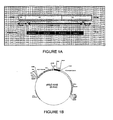
- the construct introduced in these mice carries the cDNA of human proinsulin protein controlled by light chain myosin muscular promoter, the expression of which is constitutive ( Figure 1B , SEQ ID NO 1).
- a variability in the expression is observed, which can be due to the different penetrance of the transgenic mice. This is correlated with the production of human proinsulin found in serum.
- the construct used to generate the transgenic mice consisted of a plasmid (pMLC-hIns) with a size of 6.4 kb.
- the expression is mediated by the myosin light chain constitutive muscular promoter (MLC).
- MLC myosin light chain constitutive muscular promoter
- the cDNA of the human proinsulin gene is cloned between the two EcoRI sites ( Figure 1B ).
- Genotyping The genomic DNA was obtained from the tissues according to the technique described by Miller et al., 1988 ( Miller, S.A., Dykes, D.D. and Polesky, H.F. (1988) A simple salting out procedure for extracting DNA from human nucleated cells. Nucleic Acids Res, 16, 1215 .).
- mice The tails of weaned mice were digested in 0.5 ml of lysis buffer (40 mM Tris-HC1, pH 8.0, 20 mM EDTA, 0.5% SDS and 200 mM NaCl) with 0.3 mg of Proteinase K (Boche Diagnostics, Mannheim, Germany). Once the DNA was precipitated, it was cleaved with the HindIII enzyme (Roche). 10 ⁇ g of genomic DNA were used which were digested with the HindIII enzyme in a final volume of 50 ⁇ l, overnight at 37°C. They were loaded into each individual well of a 12 cm long 1% agarose gel for a good size separation.
- lysis buffer 40 mM Tris-HC1, pH 8.0, 20 mM EDTA, 0.5% SDS and 200 mM NaCl
- the gel Prior to the transfer, the gel was prepared with the following solutions: first 15 minutes with depurination solution (0.5 M HCl), then 30 minutes with denaturing solution (0.5 N NaOH and 1.5 M NaCl), and finally 30 minutes with neutralizing solution (0.5 M Tris-HC1, pH 8). DNA fragmentation is achieved with this treatment, whereby its transfer is facilitated.
- Nylon membranes (Schleicher & Schuell BioScience, USA) were used and the DNA was fixed to the membrane by UV radiation in the Stratalinker oven (Stratagene, La Jolla, CA, USA). The wet transfer was carried out overnight at room temperature.
- a 32 P-radioactively labeled probe in the dCTP base against the human proinsulin cDNA sequence inserted in the construct was used.
- the template for making the probe was obtained from the plasmid itself, digesting with EcoRI (Roche).
- the insert released after digesting the construct with EcoRI was purified by the DNA extraction kit (Millipore).
- the probe labeling was performed using the Random primer Kit (Stratagene) in the presence of [ 32 P]dCTP.
- the probe was subsequently purified in Microspin G25 columns (Amersham Pharmacia Biotech).
- the membrane was prehybridized at 65°C with a solution containing 50% formamide, Denhardt 1x (0.02% Ficol, 0.02% polyvinylpyrrolodone and 0.02% BSA), 1% SDS, 5x SSC (0.15 M NaCl and 15 mM sodium citrate at pH 7.2) and 0.1 mg/ml of salmon sperm DNA for at least 2 hours; it was subsequently hybridized at 65°C overnight with the prehybridization solution, to which 1.5x10 6 cpm/ml of the probe were added. Two washes of 15 minutes with 2x SSC at room temperature, another wash of 30 minutes with 2x SSC 1% SDS and a final wash of 30 minutes with 2x SSC and 0.1% SDS at 62.5°C were carried out.
- the filters were washed, without allowing them to dry, they were wrapped in a GLAD type plastic and were exposed between two amplification screens (Genescreen plus, DuPont) to a Kodak Biomax MS type 18x24 cm photographic film (Eastman Kodak Company, Rochester, NY, USA). An exposure time of 3-4 days was required to obtain a sharp signal.
- the probe produced against human proinsulin cDNA detected a 1.5 Kb band in the genomic DNA gel.
- mice have a point mutation located in exon 13 of the rod-specific cyclic GMP phosphodiesterase 6 enzyme gene.
- wild-type mice there is a cleavage site with the CfoI enzyme in that location.
- the enzyme cleavage site disappears. This allowed an intrinsic genotyping technique control.
- Genomic PCR was carried out with the following primers: 3-CTTTCTATTCTCTGTCAGCAAAGC-5 (Oligo A, SEQ ID NO 3) and 3-CATGAGTAGGGTAAACATGGTCTG-5 (Oligo B, SEQ ID NO 4) which amplified a 97 bp fragment.
- the PCR product was then subjected to digestion with the CfoI enzyme (Roche) for two hours at 37°C. It was then fractioned in a 3% Metaphor agarose gel. Wild-type mice showed two 54 and 43 bp bands, after digestion.
- mice The blood sugar of all the mice was measured with test strips (Accu-Chek, Roche) after 12 hours of fasting.
- the normal levels of a mouse are usually between 100 and 200 mg/dl.
- a variation of between 80 and 150 mg/dl was found in Proins/rd10 -/- double mutants, which variation was not directly correlated with the proinsulinemia levels.
- a commercial ELISA assay (Linco Research, MO, USA) was used to detect the human proinsulin production levels by transgenic mice, which specifically detects human proinsulin.
- Muscle and serum of both transgenic and control mice were analyzed. In the case of serum, all the manufacturer's recommendations were followed but in the case of muscle, a prior protein extraction with a lysis buffer(50 mM Tris-HCl, pH 7, 0,100 mM NaCl and 0.1% Triton) and a quantification thereof with the BCS kit (Pierce, Rockford, IL, USA) were required.
- a lysis buffer 50 mM Tris-HCl, pH 7, 0,100 mM NaCl and 0.1% Triton
- Human proinsulin detected in muscle extracts was always very high and it had to be corrected by the amount of protein. Human proinsulin detected in serum ranged between 1 and 15 ⁇ M. This concentration was measured in a volume of 20 ⁇ l, according to the manufacturer's instructions. The measurements were made systematically at P30. This indicated that transgenic Proins/rd10 -/- mice produce human proinsulin in muscle and that it is poured into the blood circulation where it can reach the neural retina.
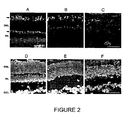
- the retinal histology was analyzed in P32 mice ( Figure 2 ), comparing wild-type mice which do not suffer from degeneration (A and D), Proins/rd10 -/- mice (B and E) and rd10 -/- mice (C and F), which do suffer from degeneration.
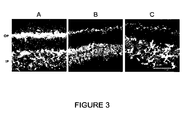
- P32 at which degeneration is very advanced in the retinas of rd10 -/- mice, the number of photoreceptive cells per column, the condition and abundance of cones and the condition of the synapses was analyzed ( Figure 3 ). It was thus intended to verify the condition of the retina in general and the progress of degeneration with different markers.
- the wild-type control mice without degeneration have between eight and twelve rows of nuclei in the ONL ( Figure 2D ).
- the number of cones, carrying the outer segments and also the synaptic buttons thereof in the OPL is quite representative by the agglutinin staining observed in the OPL ( Figure 2A ).
- the number of rows of rods in the ONL was quite small, between 1 and 2 rows, because the degeneration at this point was quite high ( Figure 2F ).
- Figure 2C What is most surprising is that the cones had already started to degenerate at this point, although they were not primarily affected by the mutation. It was observed that hardly any cone outer segments appeared and the number of synaptic buttons thereof was considerably reduced.
- Proins/rd10 -/- mice 5-6 rows of rod nuclei were observed in this case, which was one of the mice in which the greatest proinsulinemia was detected ( Figure 2E ).
- the condition of the cones was very good; in fact it was similar to wild-type mice.
- the outer segments thereof and the synaptic buttons in the OPL indicating the good cone conservation can be seen ( Figure 2B ).
- a variety in ONL conservation which was correlated with the blood proinsulin level was observed.
- the SV2 antibody at a 1:50 dilution, is bound to a protein of the synaptic vesicles, thus labeling the retinal plexiform layers (outer plexiform layer, OPL, and the inner plexiform layer, IPL). It was incubated at 4°C overnight in the blocking solution. The incubation with the Alexa 488-conjugated secondary antibody (1/200) was carried out for 1 hour at room temperature. After the corresponding PBS washes, the sections were mounted with mounting medium with DAPI, to counterstain the nuclei.
- the inner plexiform layer where the bipolar interneuron connections with the neurons projecting to the brain, the ganglion cells, occur, showed considerable staining and good condition in the three cases.
- the difference was in the outer plexiform layer, where the connections of the photoreceptive cells with the bipolar interneurons are mainly located.
- the OPL was quite defined and intense in the wild-type control mouse ( Figure 3A ) and in the transgenic Proins/rd10 -/- mouse ( Figure 3B ).
- the control rd10 mouse maintained the staining in the IPL, but the OPL conserved quite unorganized and little staining ( Figure 3C ). Even synapse projection attempts between the nuclear layers were found in this control rd10 -/- mouse due to the lack or organization and to the fact that the remaining neurons lose their synapses with the photoreceptors. This indicated that the functional condition of the retina in Proins/rd10 -/- mice is better than in rd10 -/- mice without treatment.
- Human proinsulin was also administered by subcutaneous and intravitreal injection as a treatment in these rd mice ( Figures 8 and 9 ), but the degeneration did not stop, although proinsulin injected subcutaneously was able to reach the neuroretina ( Figure 7 ). These results indicate that serum proinsulin can reach damaged areas of the central nervous system and exert neuroprotective actions only when sustained and extended levels are reached.
- Example 2.- Human proinsulin improves the visual function assessed by ERG in transgenic Proins/rdl0 -/- mice compared to control and ill mice.
- mice were always kept in 12-hour light-darkness cycles, for the electroretinographic study, the mice were adapted to darkness overnight. For informative purposes, the cones are responsible for photopic (daytime) vision and the rods for scotopic (night) vision.
- the mice were anesthetized under a weak red light with an intraperitoneal injection of a solution containing ketamine (at 95 mg/kg) and xylazine (at 5 mg/kg).
- the pupils were dilated with a drop of a solution containing 1% tropicamide (Colircusi Tropicamida, Alcon Cusi, SA, El Masnou, Barcelona, Spain).
- the recording electrode is a lens which was placed in the mouse eye.
- the reference electrode was placed in the mouth and the ground electrode was placed on the tail.
- the anesthetized animals were placed in a Faraday cage and all the scotopic experiments were carried out in complete darkness.
- the electroretinographic responses induced by flashes of low intensity light produced by a Ganzfeld stimulator were thus recorded, allowing to record the responses generated in rods only (rod response) or cones and rods (mixed response) in adaptation to darkness.
- the intensity of the light stimuli used were set to values comprised between -4 and 1.52 log cd.s.m -2 .
- the light intensity was determined by means of a photometer (Mavo Monitor USB) at the eye level. A maximum of 64 responses was averaged for each stimulus intensity.
- the interval between light stimuli changes depending on the intensity, thus, for low intensity stimuli (-4 log cd.s.m -2 ) the time between stimuli was set to 10 seconds and for high intensity stimuli (1.52 log cd.s.m -2 ) it was 60 seconds.
- the animal was adapted to photopic conditions for the purpose of recording cone isolated responses. Under these conditions, the interval between light flashes was set to 1 second.
- the electric signals from the retina were amplified and filtered between 0.3 and 1000 Hz with a Grass amplifier (CP511 AC amplifier, Grass Instruments, Quincy, MA).
- the signals were digitized (PC-card ADI instruments, CA).
- the recordings were stored in the computer for their subsequent analysis.
- the rod-mediated responses were recorded in darkness adaptation conditions, before the application of light flashes with intensities comprised between -4 and -1.52 log cd.s.m -2 .
- the mixed responses generated by the cones and rods were recorded before the application of light flashes with intensities comprised between -1.52 and 0.48 log cd.s.m -2 .
- the oscillating potentials were also isolated by means of applying electric filters comprised between 100 and 1000 Hz.
- the cone-mediated response was recorded in light adaptation conditions (recording background light of 30 cd.m -2 ), before the application of light flashes with intensities comprised between -0.52 and 2log cd.s.m -2 .
- the Flicker responses (30 Hz) were recorded in adaptation to light, before stimuli of 1.48 log cd.s.m -2 .
- Figure 4 shows the electroretinographic responses recorded both in adaptation to darkness (scotopic conditions) and in adaptation to light (photopic conditions) of wild-type (WT), control rd10 -/- and Proins/rd10 -/- mice obtained at P30, both from line 1 and from line 2.
- Figure 5 shows the result of analyzing the correlation between the electroretinographic responses between insulin and the proinsulin levels in a larger group or mice. This correlation suggests a dose-response relationship supporting the possible efficiency of a pharmacological approach with human proinsulin.
- Figure 6 shows the electroretinographic records corresponding to wild-type (wt), control rd10 and Proins/rd10 -/- mice from line 2 obtained at different times of postnatal development (P35, P45 and P55).
- the recordings obtained in scotopic (adaptation to darkness) and photopic (adaptation to light) conditions are shown separately. It was observed how wild-type mice generated scotopic (rods) and photopic (cones) electroretinographic responses with a wide range at P35. The responses were nil at P35 in control rd10 -/- mice, both the responses generated in rods and in cones.
- Proins/rd10 -/- mice maintained very significant photopic and scotopic electroretinographic responses at P35 and achieved maintaining a certain degree of response up to P55. It was thus observed that the visual response was better in transgenic Proins/rd10 -/- mice and is more extended over time.
- rd1 type mice sharing the same C57BL/6 genetic background with rd10 mice, as well as a different mutation but in the same rod-specific cyclic GMP phosphodiesterase gene, were used.
- the terminal transferase enzyme adds fluorescein-labeled nucleotides (dUTP) to the free 3'OH ends of the DNA, which allows detecting the DNA fragmentation occurring during programmed cell death.
- the Promega TUNEL kit was used. The technique was carried out on cells, sections or tissues. After a permeabilization step according to the nature of the tissue, it was washed with PBS and preincubated with the kit solution for 30 minutes at room temperature. The reaction mixture was prepared according to the manufacturer's instructions and the reaction was carried out for 1 hour at 37°C. The reaction was then stopped with 2x SSC solution for 15 minutes at room temperature. It was washed with PBS and mounted with Vectashield.
- the whole neural retina dissected from the remaining elements of the eye, was mounted under the microscope on a black nitrocellulose membrane (Sartorius, Goettingen, Germany), for better contrast during handling. It was generally placed with the photoreceptor layer placed upwards, being adhered to the nitrocellulose with the aid of fine dissecting forceps.
- the retinas mounted in a planar manner were fixed with 4% (w/v) PFA in 0.1 M phosphate buffer, pH 7.1, overnight at 4°C in 24-well plates. On the next day, they were washed with PBS and with BSA (30 mg/ml in PBS).
- the permeabilization was carried out with 1% (w/v) Triton X-100 in PBS (4 times, 30 minutes each time) and enzymatically, with collagenase and proteinase K, previously eliminating the Triton X-100 residues by washing well with PBS.
- the collagenase (20 U/ml) was allowed to act for 1 hour at 37°C and then proteinase K (20 ⁇ g/ml) for 15 minutes at 37°C. It was then necessary to refix the retinas for at least two hours. They were washed well with PBS and with BSA (30 mg/ml in PBS) and the TUNEL reaction was carried out as indicated above.
- the retinas mounted in a planar manner were analyzed by confocal microscopy (Leica TCS-SP2-AOBS).
- the TUNEL technique was carried out on retinal sections such as those described above, always fixed in 4& (w/v) PFA in 0.1 M phosphate buffer, pH 7.1 and cryoprotected with 30% (w/v) sucrose in 10 mM phosphate buffer, pH 7.1.
- For the TUNEL labeling in sections less permeation is required than of retinas mounted in a planar manner.
- two series of permeation with BGT [100 mM glycine, 3 mg/ml BSA, 0.25% (w/v) Triton X-100 in PBS] of 15 minutes each were carried out. They were washed with PBS and the TUNEL reaction was carried out as indicated.
- 50 ⁇ l of the corresponding reagents were added and they were covered with parafilm®.
- the number of animals relates to the total of siblings per litter and experiment, half of them normally being injected with PBS and the other half with human proinsulin.
- INTERVAL Injection Frequency Number of mice Rod maintenance Visual function Presence in retina P14 (5 ⁇ g) single 6 nd nd + ( Fig. 7 ) P11-P14 24h 6 nd nd + ( Fig. 7 ) P8-P15 24h 6 - nd nd P6-P14 24h 6 - nd nd P4-P14-P18 12h 7 - ( Fig. 8 ) -( Fig. 9 ) nd
- proinsulin reached the retina by means of subcutaneous injection. To that end, studies were conducted in mice injected subcutaneously with proinsulin by means of an ELISA that detected human proinsulin ( Figure 7 ) (Linco Research, MO, USA).
- This assay was designed to detect serum proinsulin, so it had to be adapted to muscle and retinal extracts.
- serum blood was drawn from the lacrimal sac area of mice eyes with a Pasteur pipette. It was transferred to an eppendorf tube where it was allowed to clot for 2 hours at room temperature and was centrifuged at 1,300 g for 15 minutes, to collect the serum, which was frozen until its use.
- a protein extraction was carried out with a lysis buffer [50 mM Tris-HCl, pH 7, 100 mM NaCl and 0.1% (w/v) Triton X-100] and a quantification of the extracted protein with the BCA kit (Pierce) were carried out.
- the neural retinas were extracted with a volume of 60 ⁇ l each.
- the muscles of the hind legs were extracted in a volume of between 200 and 300 ⁇ l, according to the piece of muscle obtained.
Landscapes
- Health & Medical Sciences (AREA)
- Life Sciences & Earth Sciences (AREA)
- Engineering & Computer Science (AREA)
- Bioinformatics & Cheminformatics (AREA)
- Chemical & Material Sciences (AREA)
- Veterinary Medicine (AREA)
- Public Health (AREA)
- Medicinal Chemistry (AREA)
- General Health & Medical Sciences (AREA)
- Animal Behavior & Ethology (AREA)
- Pharmacology & Pharmacy (AREA)
- Biomedical Technology (AREA)
- Neurosurgery (AREA)
- Nuclear Medicine, Radiotherapy & Molecular Imaging (AREA)
- General Chemical & Material Sciences (AREA)
- Chemical Kinetics & Catalysis (AREA)
- Organic Chemistry (AREA)
- Neurology (AREA)
- Endocrinology (AREA)
- Immunology (AREA)
- Epidemiology (AREA)
- Diabetes (AREA)
- Proteomics, Peptides & Aminoacids (AREA)
- Zoology (AREA)
- Gastroenterology & Hepatology (AREA)
- Ophthalmology & Optometry (AREA)
- Psychology (AREA)
- Hospice & Palliative Care (AREA)
- Psychiatry (AREA)
- Medicines That Contain Protein Lipid Enzymes And Other Medicines (AREA)
- Medicines Containing Material From Animals Or Micro-Organisms (AREA)
- Micro-Organisms Or Cultivation Processes Thereof (AREA)
Applications Claiming Priority (2)
| Application Number | Priority Date | Filing Date | Title |
|---|---|---|---|
| ES200601314A ES2331342B1 (es) | 2006-05-22 | 2006-05-22 | Uso de la proinsulina para la elaboracion de una composicion farmaceutica neuroprotectora, composicion terapeutica que la contiene y sus aplicaciones. |
| PCT/ES2007/070097 WO2007135220A1 (es) | 2006-05-22 | 2007-05-21 | Uso de la proinsulina para la elaboración de una composición farmacéutica neuroprotectora, composición terapéutica que la contiene y sus aplicaciones |
Publications (3)
| Publication Number | Publication Date |
|---|---|
| EP2042189A1 EP2042189A1 (en) | 2009-04-01 |
| EP2042189A4 EP2042189A4 (en) | 2010-02-17 |
| EP2042189B1 true EP2042189B1 (en) | 2013-06-26 |
Family
ID=38722988
Family Applications (1)
| Application Number | Title | Priority Date | Filing Date |
|---|---|---|---|
| EP07765882.1A Not-in-force EP2042189B1 (en) | 2006-05-22 | 2007-05-21 | Use of proinsulin for the preparation of a neuroprotective pharmaceutical composition, therapeutic composition containing it and applications thereof |
Country Status (7)
| Country | Link |
|---|---|
| US (1) | US20100330042A1 (enExample) |
| EP (1) | EP2042189B1 (enExample) |
| JP (1) | JP4727748B2 (enExample) |
| AU (1) | AU2007253212B2 (enExample) |
| CA (1) | CA2652983C (enExample) |
| ES (2) | ES2331342B1 (enExample) |
| WO (1) | WO2007135220A1 (enExample) |
Families Citing this family (2)
| Publication number | Priority date | Publication date | Assignee | Title |
|---|---|---|---|---|
| US20110021974A1 (en) * | 2010-10-05 | 2011-01-27 | Shantha Totada R | Retinitis pigmentosa treatment and prophalaxis |
| JP6199965B2 (ja) * | 2012-07-11 | 2017-09-20 | ザ・トラステイーズ・オブ・ザ・ユニバーシテイ・オブ・ペンシルベニア | Rpgrx連鎖性網膜変性のaav媒介型遺伝子治療 |
Family Cites Families (8)
| Publication number | Priority date | Publication date | Assignee | Title |
|---|---|---|---|---|
| CA1176160A (en) * | 1981-08-27 | 1984-10-16 | Ronald E. Chance | Human proinsulin pharmaceutical formulations |
| US5652214A (en) * | 1989-06-05 | 1997-07-29 | Cephalon, Inc. | Treating disorders by application of insulin-like growth factors and analogs |
| US5667968A (en) * | 1989-08-30 | 1997-09-16 | Regeneron Pharmaceuticals, Inc. | Prevention of retinal injury and degeneration by specific factors |
| DE69508605T2 (de) * | 1994-07-08 | 1999-07-22 | Trustees Of Dartmouth College, Hanover, N.H. | Proinsulin-peptid-verbindungen für den nachweis und die behandlung von typ-i-diabetes |
| AU8508398A (en) * | 1998-07-15 | 2000-02-07 | Wisconsin Alumni Research Foundation | Treatment of diabetes with synthetic beta cells |
| DE10055857A1 (de) * | 2000-11-10 | 2002-08-22 | Creative Peptides Sweden Ab Dj | Neue pharmazeutische Depotformulierung |
| US7312192B2 (en) * | 2001-09-07 | 2007-12-25 | Biocon Limited | Insulin polypeptide-oligomer conjugates, proinsulin polypeptide-oligomer conjugates and methods of synthesizing same |
| WO2003103608A2 (en) * | 2002-06-11 | 2003-12-18 | The Burnham Institute | Neuroprotective synergy of erythropoietin and insulin-like growth factor |
-
2006
- 2006-05-22 ES ES200601314A patent/ES2331342B1/es not_active Expired - Fee Related
-
2007
- 2007-05-21 AU AU2007253212A patent/AU2007253212B2/en not_active Ceased
- 2007-05-21 JP JP2009511534A patent/JP4727748B2/ja not_active Expired - Fee Related
- 2007-05-21 CA CA2652983A patent/CA2652983C/en not_active Expired - Fee Related
- 2007-05-21 US US12/227,554 patent/US20100330042A1/en not_active Abandoned
- 2007-05-21 ES ES07765882T patent/ES2433389T3/es active Active
- 2007-05-21 WO PCT/ES2007/070097 patent/WO2007135220A1/es not_active Ceased
- 2007-05-21 EP EP07765882.1A patent/EP2042189B1/en not_active Not-in-force
Non-Patent Citations (3)
| Title |
|---|
| BOWES C ET AL: "Retinal degeneration in the rd mouse is caused by a defect in the beta subunit of rod cGMP-phosphodiesterase.", NATURE 18 OCT 1990 LNKD- PUBMED:1977087, vol. 347, no. 6294, 18 October 1990 (1990-10-18), pages 677 - 680, ISSN: 0028-0836 * |
| OTANI ATSUSHI ET AL: "Rescue of retinal degeneration by intravitreally injected adult bone marrow-derived lineage-negative hematopoietic stem cells.", THE JOURNAL OF CLINICAL INVESTIGATION SEP 2004 LNKD- PUBMED:15372100, vol. 114, no. 6, September 2004 (2004-09-01), pages 765 - 774, ISSN: 0021-9738 * |
| SCHLICHTENBREDE F C ET AL: "Intraocular gene delivery of ciliary neurotrophic factor results in significant loss of retinal function in normal mice and in the Prph2Rd2/Rd2 model of retinal degeneration.", GENE THERAPY MAR 2003 LNKD- PUBMED:12621456, vol. 10, no. 6, March 2003 (2003-03-01), pages 523 - 527, ISSN: 0969-7128 * |
Also Published As
| Publication number | Publication date |
|---|---|
| ES2433389T3 (es) | 2013-12-10 |
| AU2007253212B2 (en) | 2012-09-27 |
| WO2007135220A1 (es) | 2007-11-29 |
| JP4727748B2 (ja) | 2011-07-20 |
| US20100330042A1 (en) | 2010-12-30 |
| CA2652983A1 (en) | 2007-11-29 |
| AU2007253212A1 (en) | 2007-11-29 |
| CA2652983C (en) | 2016-07-19 |
| ES2331342B1 (es) | 2010-10-13 |
| EP2042189A4 (en) | 2010-02-17 |
| JP2009537612A (ja) | 2009-10-29 |
| ES2331342A1 (es) | 2009-12-29 |
| EP2042189A1 (en) | 2009-04-01 |
Similar Documents
| Publication | Publication Date | Title |
|---|---|---|
| Kobayashi et al. | HRG4 (UNC119) mutation found in cone–rod dystrophy causes retinal degeneration in a transgenic model | |
| Petters et al. | Genetically engineered large animal model for studying cone photoreceptor survival and degeneration in retinitis pigmentosa | |
| Pang et al. | AAV-mediated gene therapy for retinal degeneration in the rd10 mouse containing a recessive PDEβ mutation | |
| Tucker et al. | The eyeless mouse mutation (ey1) removes an alternative start codon from the Rx/rax homeobox gene | |
| US7094948B2 (en) | Transgenic animals | |
| Shiels | TRPM3_miR-204: a complex locus for eye development and disease | |
| Jones et al. | Retinal expression of γ-crystallins in the mouse | |
| RU2251838C2 (ru) | Способ получения неприродной трансгенной мыши с дефицитом гена рецептора 2 кортиколиберина и ее использование | |
| Palmer et al. | Expression of Gtf2ird1, the Williams syndrome-associated gene, during mouse development | |
| US11351225B2 (en) | Methods for modulating development and function of photoreceptor cells | |
| EP2042189B1 (en) | Use of proinsulin for the preparation of a neuroprotective pharmaceutical composition, therapeutic composition containing it and applications thereof | |
| US20040055023A1 (en) | Joint utilization of the insulin gene and the glucokinase gene in the development of therapeutic approaches for diabetes mellitus | |
| Huang et al. | Intraocular gene transfer of ciliary neurotrophic factor rescues photoreceptor degeneration in RCS rats | |
| JP2002087983A (ja) | 筋萎縮性側索硬化症治療剤 | |
| Weigle et al. | Obesity genes and the regulation of body fat content | |
| JP2000516212A (ja) | ガラニン | |
| Ku et al. | Viral-mediated vision rescue of a novel AIPL1 cone-rod dystrophy model | |
| US20030167482A1 (en) | Novel semaphorin Z and gene encoding the same | |
| Shigesada et al. | Combination of blockade of endothelin signalling and compensation of IGF1 expression protects the retina from degeneration | |
| Yokoyama et al. | Genomic structure and functional characterization of NBPhox (PMX2B), a homeodomain protein specific to catecholaminergic cells that is involved in second messenger-mediated transcriptional activation | |
| JPWO1997020928A1 (ja) | 新規セマフォリンzおよびそれをコードする遺伝子 | |
| JP2001501469A (ja) | 腫瘍抑制タンパク質をコードする核酸分子およびその単離方法 | |
| WO1998015628A1 (fr) | Nouveau gene de semaphorine: la semaphorine w | |
| Archer et al. | Absence of phosphoglucose isomerase‐1 in retinal photoreceptor, pigment epithelium and Muller cells | |
| WO2005023311A2 (en) | Novel targets for the treatment of retina diseases |
Legal Events
| Date | Code | Title | Description |
|---|---|---|---|
| PUAI | Public reference made under article 153(3) epc to a published international application that has entered the european phase |
Free format text: ORIGINAL CODE: 0009012 |
|
| 17P | Request for examination filed |
Effective date: 20081219 |
|
| AK | Designated contracting states |
Kind code of ref document: A1 Designated state(s): AT BE BG CH CY CZ DE DK EE ES FI FR GB GR HU IE IS IT LI LT LU LV MC MT NL PL PT RO SE SI SK TR |
|
| AX | Request for extension of the european patent |
Extension state: AL BA HR MK RS |
|
| A4 | Supplementary search report drawn up and despatched |
Effective date: 20100118 |
|
| 17Q | First examination report despatched |
Effective date: 20100520 |
|
| GRAP | Despatch of communication of intention to grant a patent |
Free format text: ORIGINAL CODE: EPIDOSNIGR1 |
|
| DAX | Request for extension of the european patent (deleted) | ||
| GRAP | Despatch of communication of intention to grant a patent |
Free format text: ORIGINAL CODE: EPIDOSNIGR1 |
|
| GRAS | Grant fee paid |
Free format text: ORIGINAL CODE: EPIDOSNIGR3 |
|
| GRAA | (expected) grant |
Free format text: ORIGINAL CODE: 0009210 |
|
| AK | Designated contracting states |
Kind code of ref document: B1 Designated state(s): AT BE BG CH CY CZ DE DK EE ES FI FR GB GR HU IE IS IT LI LT LU LV MC MT NL PL PT RO SE SI SK TR |
|
| REG | Reference to a national code |
Ref country code: GB Ref legal event code: FG4D |
|
| REG | Reference to a national code |
Ref country code: CH Ref legal event code: EP |
|
| REG | Reference to a national code |
Ref country code: AT Ref legal event code: REF Ref document number: 618394 Country of ref document: AT Kind code of ref document: T Effective date: 20130715 |
|
| REG | Reference to a national code |
Ref country code: IE Ref legal event code: FG4D |
|
| REG | Reference to a national code |
Ref country code: DE Ref legal event code: R096 Ref document number: 602007031278 Country of ref document: DE Effective date: 20130822 |
|
| REG | Reference to a national code |
Ref country code: NL Ref legal event code: T3 |
|
| PG25 | Lapsed in a contracting state [announced via postgrant information from national office to epo] |
Ref country code: GR Free format text: LAPSE BECAUSE OF FAILURE TO SUBMIT A TRANSLATION OF THE DESCRIPTION OR TO PAY THE FEE WITHIN THE PRESCRIBED TIME-LIMIT Effective date: 20130927 Ref country code: FI Free format text: LAPSE BECAUSE OF FAILURE TO SUBMIT A TRANSLATION OF THE DESCRIPTION OR TO PAY THE FEE WITHIN THE PRESCRIBED TIME-LIMIT Effective date: 20130626 Ref country code: LT Free format text: LAPSE BECAUSE OF FAILURE TO SUBMIT A TRANSLATION OF THE DESCRIPTION OR TO PAY THE FEE WITHIN THE PRESCRIBED TIME-LIMIT Effective date: 20130626 Ref country code: SI Free format text: LAPSE BECAUSE OF FAILURE TO SUBMIT A TRANSLATION OF THE DESCRIPTION OR TO PAY THE FEE WITHIN THE PRESCRIBED TIME-LIMIT Effective date: 20130626 Ref country code: SE Free format text: LAPSE BECAUSE OF FAILURE TO SUBMIT A TRANSLATION OF THE DESCRIPTION OR TO PAY THE FEE WITHIN THE PRESCRIBED TIME-LIMIT Effective date: 20130626 |
|
| REG | Reference to a national code |
Ref country code: AT Ref legal event code: MK05 Ref document number: 618394 Country of ref document: AT Kind code of ref document: T Effective date: 20130626 |
|
| REG | Reference to a national code |
Ref country code: LT Ref legal event code: MG4D |
|
| PG25 | Lapsed in a contracting state [announced via postgrant information from national office to epo] |
Ref country code: BG Free format text: LAPSE BECAUSE OF FAILURE TO SUBMIT A TRANSLATION OF THE DESCRIPTION OR TO PAY THE FEE WITHIN THE PRESCRIBED TIME-LIMIT Effective date: 20130926 |
|
| REG | Reference to a national code |
Ref country code: ES Ref legal event code: FG2A Ref document number: 2433389 Country of ref document: ES Kind code of ref document: T3 Effective date: 20131210 |
|
| PG25 | Lapsed in a contracting state [announced via postgrant information from national office to epo] |
Ref country code: LV Free format text: LAPSE BECAUSE OF FAILURE TO SUBMIT A TRANSLATION OF THE DESCRIPTION OR TO PAY THE FEE WITHIN THE PRESCRIBED TIME-LIMIT Effective date: 20130626 |
|
| PG25 | Lapsed in a contracting state [announced via postgrant information from national office to epo] |
Ref country code: IS Free format text: LAPSE BECAUSE OF FAILURE TO SUBMIT A TRANSLATION OF THE DESCRIPTION OR TO PAY THE FEE WITHIN THE PRESCRIBED TIME-LIMIT Effective date: 20131026 Ref country code: AT Free format text: LAPSE BECAUSE OF FAILURE TO SUBMIT A TRANSLATION OF THE DESCRIPTION OR TO PAY THE FEE WITHIN THE PRESCRIBED TIME-LIMIT Effective date: 20130626 Ref country code: PT Free format text: LAPSE BECAUSE OF FAILURE TO SUBMIT A TRANSLATION OF THE DESCRIPTION OR TO PAY THE FEE WITHIN THE PRESCRIBED TIME-LIMIT Effective date: 20131028 Ref country code: EE Free format text: LAPSE BECAUSE OF FAILURE TO SUBMIT A TRANSLATION OF THE DESCRIPTION OR TO PAY THE FEE WITHIN THE PRESCRIBED TIME-LIMIT Effective date: 20130626 Ref country code: SK Free format text: LAPSE BECAUSE OF FAILURE TO SUBMIT A TRANSLATION OF THE DESCRIPTION OR TO PAY THE FEE WITHIN THE PRESCRIBED TIME-LIMIT Effective date: 20130626 Ref country code: BE Free format text: LAPSE BECAUSE OF FAILURE TO SUBMIT A TRANSLATION OF THE DESCRIPTION OR TO PAY THE FEE WITHIN THE PRESCRIBED TIME-LIMIT Effective date: 20130626 Ref country code: CZ Free format text: LAPSE BECAUSE OF FAILURE TO SUBMIT A TRANSLATION OF THE DESCRIPTION OR TO PAY THE FEE WITHIN THE PRESCRIBED TIME-LIMIT Effective date: 20130626 Ref country code: CY Free format text: LAPSE BECAUSE OF FAILURE TO SUBMIT A TRANSLATION OF THE DESCRIPTION OR TO PAY THE FEE WITHIN THE PRESCRIBED TIME-LIMIT Effective date: 20130731 |
|
| PG25 | Lapsed in a contracting state [announced via postgrant information from national office to epo] |
Ref country code: PL Free format text: LAPSE BECAUSE OF FAILURE TO SUBMIT A TRANSLATION OF THE DESCRIPTION OR TO PAY THE FEE WITHIN THE PRESCRIBED TIME-LIMIT Effective date: 20130626 Ref country code: RO Free format text: LAPSE BECAUSE OF FAILURE TO SUBMIT A TRANSLATION OF THE DESCRIPTION OR TO PAY THE FEE WITHIN THE PRESCRIBED TIME-LIMIT Effective date: 20130626 |
|
| PG25 | Lapsed in a contracting state [announced via postgrant information from national office to epo] |
Ref country code: CY Free format text: LAPSE BECAUSE OF FAILURE TO SUBMIT A TRANSLATION OF THE DESCRIPTION OR TO PAY THE FEE WITHIN THE PRESCRIBED TIME-LIMIT Effective date: 20130626 |
|
| PG25 | Lapsed in a contracting state [announced via postgrant information from national office to epo] |
Ref country code: DK Free format text: LAPSE BECAUSE OF FAILURE TO SUBMIT A TRANSLATION OF THE DESCRIPTION OR TO PAY THE FEE WITHIN THE PRESCRIBED TIME-LIMIT Effective date: 20130626 |
|
| PLBE | No opposition filed within time limit |
Free format text: ORIGINAL CODE: 0009261 |
|
| STAA | Information on the status of an ep patent application or granted ep patent |
Free format text: STATUS: NO OPPOSITION FILED WITHIN TIME LIMIT |
|
| 26N | No opposition filed |
Effective date: 20140327 |
|
| REG | Reference to a national code |
Ref country code: DE Ref legal event code: R097 Ref document number: 602007031278 Country of ref document: DE Effective date: 20140327 |
|
| PG25 | Lapsed in a contracting state [announced via postgrant information from national office to epo] |
Ref country code: LU Free format text: LAPSE BECAUSE OF FAILURE TO SUBMIT A TRANSLATION OF THE DESCRIPTION OR TO PAY THE FEE WITHIN THE PRESCRIBED TIME-LIMIT Effective date: 20140521 |
|
| PG25 | Lapsed in a contracting state [announced via postgrant information from national office to epo] |
Ref country code: MC Free format text: LAPSE BECAUSE OF FAILURE TO SUBMIT A TRANSLATION OF THE DESCRIPTION OR TO PAY THE FEE WITHIN THE PRESCRIBED TIME-LIMIT Effective date: 20130626 |
|
| REG | Reference to a national code |
Ref country code: IE Ref legal event code: MM4A |
|
| PG25 | Lapsed in a contracting state [announced via postgrant information from national office to epo] |
Ref country code: IE Free format text: LAPSE BECAUSE OF NON-PAYMENT OF DUE FEES Effective date: 20140521 |
|
| PG25 | Lapsed in a contracting state [announced via postgrant information from national office to epo] |
Ref country code: MT Free format text: LAPSE BECAUSE OF FAILURE TO SUBMIT A TRANSLATION OF THE DESCRIPTION OR TO PAY THE FEE WITHIN THE PRESCRIBED TIME-LIMIT Effective date: 20130626 |
|
| PG25 | Lapsed in a contracting state [announced via postgrant information from national office to epo] |
Ref country code: HU Free format text: LAPSE BECAUSE OF FAILURE TO SUBMIT A TRANSLATION OF THE DESCRIPTION OR TO PAY THE FEE WITHIN THE PRESCRIBED TIME-LIMIT; INVALID AB INITIO Effective date: 20070521 Ref country code: TR Free format text: LAPSE BECAUSE OF FAILURE TO SUBMIT A TRANSLATION OF THE DESCRIPTION OR TO PAY THE FEE WITHIN THE PRESCRIBED TIME-LIMIT Effective date: 20130626 |
|
| REG | Reference to a national code |
Ref country code: FR Ref legal event code: PLFP Year of fee payment: 10 |
|
| PGFP | Annual fee paid to national office [announced via postgrant information from national office to epo] |
Ref country code: ES Payment date: 20160915 Year of fee payment: 10 |
|
| PGFP | Annual fee paid to national office [announced via postgrant information from national office to epo] |
Ref country code: DE Payment date: 20161130 Year of fee payment: 10 Ref country code: GB Payment date: 20161125 Year of fee payment: 10 Ref country code: CH Payment date: 20161129 Year of fee payment: 10 Ref country code: NL Payment date: 20161128 Year of fee payment: 10 |
|
| PGFP | Annual fee paid to national office [announced via postgrant information from national office to epo] |
Ref country code: FR Payment date: 20161129 Year of fee payment: 10 Ref country code: IT Payment date: 20161128 Year of fee payment: 10 |
|
| REG | Reference to a national code |
Ref country code: DE Ref legal event code: R119 Ref document number: 602007031278 Country of ref document: DE |
|
| REG | Reference to a national code |
Ref country code: CH Ref legal event code: PL |
|
| REG | Reference to a national code |
Ref country code: NL Ref legal event code: MM Effective date: 20170601 |
|
| GBPC | Gb: european patent ceased through non-payment of renewal fee |
Effective date: 20170521 |
|
| PG25 | Lapsed in a contracting state [announced via postgrant information from national office to epo] |
Ref country code: CH Free format text: LAPSE BECAUSE OF NON-PAYMENT OF DUE FEES Effective date: 20170531 Ref country code: LI Free format text: LAPSE BECAUSE OF NON-PAYMENT OF DUE FEES Effective date: 20170531 |
|
| REG | Reference to a national code |
Ref country code: FR Ref legal event code: ST Effective date: 20180131 |
|
| PG25 | Lapsed in a contracting state [announced via postgrant information from national office to epo] |
Ref country code: NL Free format text: LAPSE BECAUSE OF NON-PAYMENT OF DUE FEES Effective date: 20170601 |
|
| PG25 | Lapsed in a contracting state [announced via postgrant information from national office to epo] |
Ref country code: DE Free format text: LAPSE BECAUSE OF NON-PAYMENT OF DUE FEES Effective date: 20171201 Ref country code: GB Free format text: LAPSE BECAUSE OF NON-PAYMENT OF DUE FEES Effective date: 20170521 |
|
| PG25 | Lapsed in a contracting state [announced via postgrant information from national office to epo] |
Ref country code: FR Free format text: LAPSE BECAUSE OF NON-PAYMENT OF DUE FEES Effective date: 20170531 Ref country code: IT Free format text: LAPSE BECAUSE OF NON-PAYMENT OF DUE FEES Effective date: 20170521 |
|
| REG | Reference to a national code |
Ref country code: ES Ref legal event code: FD2A Effective date: 20180705 |
|
| PG25 | Lapsed in a contracting state [announced via postgrant information from national office to epo] |
Ref country code: ES Free format text: LAPSE BECAUSE OF NON-PAYMENT OF DUE FEES Effective date: 20170522 |