EP2036910B1 - Benzoxazine-based monomer, polymer thereof, electrode for fuel cell including the same, electrolyte membrane for fuel cell includind the same, and fuel cell using the same - Google Patents
Benzoxazine-based monomer, polymer thereof, electrode for fuel cell including the same, electrolyte membrane for fuel cell includind the same, and fuel cell using the same Download PDFInfo
- Publication number
- EP2036910B1 EP2036910B1 EP08164095A EP08164095A EP2036910B1 EP 2036910 B1 EP2036910 B1 EP 2036910B1 EP 08164095 A EP08164095 A EP 08164095A EP 08164095 A EP08164095 A EP 08164095A EP 2036910 B1 EP2036910 B1 EP 2036910B1
- Authority
- EP
- European Patent Office
- Prior art keywords
- group
- benzoxazine
- fuel cell
- based monomer
- electrolyte membrane
- Prior art date
- Legal status (The legal status is an assumption and is not a legal conclusion. Google has not performed a legal analysis and makes no representation as to the accuracy of the status listed.)
- Ceased
Links
- 0 CC(*)C*(C)C(*C(C)C1O)*1(C)N Chemical compound CC(*)C*(C)C(*C(C)C1O)*1(C)N 0.000 description 6
Images


Classifications
-
- C—CHEMISTRY; METALLURGY
- C07—ORGANIC CHEMISTRY
- C07D—HETEROCYCLIC COMPOUNDS
- C07D498/00—Heterocyclic compounds containing in the condensed system at least one hetero ring having nitrogen and oxygen atoms as the only ring hetero atoms
- C07D498/02—Heterocyclic compounds containing in the condensed system at least one hetero ring having nitrogen and oxygen atoms as the only ring hetero atoms in which the condensed system contains two hetero rings
- C07D498/04—Ortho-condensed systems
-
- C—CHEMISTRY; METALLURGY
- C08—ORGANIC MACROMOLECULAR COMPOUNDS; THEIR PREPARATION OR CHEMICAL WORKING-UP; COMPOSITIONS BASED THEREON
- C08G—MACROMOLECULAR COMPOUNDS OBTAINED OTHERWISE THAN BY REACTIONS ONLY INVOLVING UNSATURATED CARBON-TO-CARBON BONDS
- C08G73/00—Macromolecular compounds obtained by reactions forming a linkage containing nitrogen with or without oxygen or carbon in the main chain of the macromolecule, not provided for in groups C08G12/00 - C08G71/00
- C08G73/06—Polycondensates having nitrogen-containing heterocyclic rings in the main chain of the macromolecule
-
- C—CHEMISTRY; METALLURGY
- C08—ORGANIC MACROMOLECULAR COMPOUNDS; THEIR PREPARATION OR CHEMICAL WORKING-UP; COMPOSITIONS BASED THEREON
- C08G—MACROMOLECULAR COMPOUNDS OBTAINED OTHERWISE THAN BY REACTIONS ONLY INVOLVING UNSATURATED CARBON-TO-CARBON BONDS
- C08G73/00—Macromolecular compounds obtained by reactions forming a linkage containing nitrogen with or without oxygen or carbon in the main chain of the macromolecule, not provided for in groups C08G12/00 - C08G71/00
- C08G73/06—Polycondensates having nitrogen-containing heterocyclic rings in the main chain of the macromolecule
- C08G73/10—Polyimides; Polyester-imides; Polyamide-imides; Polyamide acids or similar polyimide precursors
-
- C—CHEMISTRY; METALLURGY
- C08—ORGANIC MACROMOLECULAR COMPOUNDS; THEIR PREPARATION OR CHEMICAL WORKING-UP; COMPOSITIONS BASED THEREON
- C08G—MACROMOLECULAR COMPOUNDS OBTAINED OTHERWISE THAN BY REACTIONS ONLY INVOLVING UNSATURATED CARBON-TO-CARBON BONDS
- C08G73/00—Macromolecular compounds obtained by reactions forming a linkage containing nitrogen with or without oxygen or carbon in the main chain of the macromolecule, not provided for in groups C08G12/00 - C08G71/00
- C08G73/06—Polycondensates having nitrogen-containing heterocyclic rings in the main chain of the macromolecule
- C08G73/18—Polybenzimidazoles
-
- C—CHEMISTRY; METALLURGY
- C08—ORGANIC MACROMOLECULAR COMPOUNDS; THEIR PREPARATION OR CHEMICAL WORKING-UP; COMPOSITIONS BASED THEREON
- C08G—MACROMOLECULAR COMPOUNDS OBTAINED OTHERWISE THAN BY REACTIONS ONLY INVOLVING UNSATURATED CARBON-TO-CARBON BONDS
- C08G73/00—Macromolecular compounds obtained by reactions forming a linkage containing nitrogen with or without oxygen or carbon in the main chain of the macromolecule, not provided for in groups C08G12/00 - C08G71/00
- C08G73/06—Polycondensates having nitrogen-containing heterocyclic rings in the main chain of the macromolecule
- C08G73/22—Polybenzoxazoles
-
- C—CHEMISTRY; METALLURGY
- C08—ORGANIC MACROMOLECULAR COMPOUNDS; THEIR PREPARATION OR CHEMICAL WORKING-UP; COMPOSITIONS BASED THEREON
- C08J—WORKING-UP; GENERAL PROCESSES OF COMPOUNDING; AFTER-TREATMENT NOT COVERED BY SUBCLASSES C08B, C08C, C08F, C08G or C08H
- C08J5/00—Manufacture of articles or shaped materials containing macromolecular substances
- C08J5/20—Manufacture of shaped structures of ion-exchange resins
- C08J5/22—Films, membranes or diaphragms
- C08J5/2206—Films, membranes or diaphragms based on organic and/or inorganic macromolecular compounds
- C08J5/2218—Synthetic macromolecular compounds
- C08J5/2256—Synthetic macromolecular compounds based on macromolecular compounds obtained by reactions other than those involving carbon-to-carbon bonds, e.g. obtained by polycondensation
-
- H—ELECTRICITY
- H01—ELECTRIC ELEMENTS
- H01M—PROCESSES OR MEANS, e.g. BATTERIES, FOR THE DIRECT CONVERSION OF CHEMICAL ENERGY INTO ELECTRICAL ENERGY
- H01M4/00—Electrodes
- H01M4/86—Inert electrodes with catalytic activity, e.g. for fuel cells
-
- H—ELECTRICITY
- H01—ELECTRIC ELEMENTS
- H01M—PROCESSES OR MEANS, e.g. BATTERIES, FOR THE DIRECT CONVERSION OF CHEMICAL ENERGY INTO ELECTRICAL ENERGY
- H01M4/00—Electrodes
- H01M4/86—Inert electrodes with catalytic activity, e.g. for fuel cells
- H01M4/8605—Porous electrodes
- H01M4/8615—Bifunctional electrodes for rechargeable cells
-
- H—ELECTRICITY
- H01—ELECTRIC ELEMENTS
- H01M—PROCESSES OR MEANS, e.g. BATTERIES, FOR THE DIRECT CONVERSION OF CHEMICAL ENERGY INTO ELECTRICAL ENERGY
- H01M4/00—Electrodes
- H01M4/86—Inert electrodes with catalytic activity, e.g. for fuel cells
- H01M4/8647—Inert electrodes with catalytic activity, e.g. for fuel cells consisting of more than one material, e.g. consisting of composites
- H01M4/8652—Inert electrodes with catalytic activity, e.g. for fuel cells consisting of more than one material, e.g. consisting of composites as mixture
-
- H—ELECTRICITY
- H01—ELECTRIC ELEMENTS
- H01M—PROCESSES OR MEANS, e.g. BATTERIES, FOR THE DIRECT CONVERSION OF CHEMICAL ENERGY INTO ELECTRICAL ENERGY
- H01M4/00—Electrodes
- H01M4/86—Inert electrodes with catalytic activity, e.g. for fuel cells
- H01M4/90—Selection of catalytic material
- H01M4/92—Metals of platinum group
-
- H—ELECTRICITY
- H01—ELECTRIC ELEMENTS
- H01M—PROCESSES OR MEANS, e.g. BATTERIES, FOR THE DIRECT CONVERSION OF CHEMICAL ENERGY INTO ELECTRICAL ENERGY
- H01M8/00—Fuel cells; Manufacture thereof
- H01M8/02—Details
-
- H—ELECTRICITY
- H01—ELECTRIC ELEMENTS
- H01M—PROCESSES OR MEANS, e.g. BATTERIES, FOR THE DIRECT CONVERSION OF CHEMICAL ENERGY INTO ELECTRICAL ENERGY
- H01M8/00—Fuel cells; Manufacture thereof
- H01M8/10—Fuel cells with solid electrolytes
- H01M8/1016—Fuel cells with solid electrolytes characterised by the electrolyte material
- H01M8/1018—Polymeric electrolyte materials
- H01M8/102—Polymeric electrolyte materials characterised by the chemical structure of the main chain of the ion-conducting polymer
- H01M8/1027—Polymeric electrolyte materials characterised by the chemical structure of the main chain of the ion-conducting polymer having carbon, oxygen and other atoms, e.g. sulfonated polyethersulfones [S-PES]
-
- H—ELECTRICITY
- H01—ELECTRIC ELEMENTS
- H01M—PROCESSES OR MEANS, e.g. BATTERIES, FOR THE DIRECT CONVERSION OF CHEMICAL ENERGY INTO ELECTRICAL ENERGY
- H01M8/00—Fuel cells; Manufacture thereof
- H01M8/10—Fuel cells with solid electrolytes
- H01M8/1016—Fuel cells with solid electrolytes characterised by the electrolyte material
- H01M8/1018—Polymeric electrolyte materials
- H01M8/102—Polymeric electrolyte materials characterised by the chemical structure of the main chain of the ion-conducting polymer
- H01M8/103—Polymeric electrolyte materials characterised by the chemical structure of the main chain of the ion-conducting polymer having nitrogen, e.g. sulfonated polybenzimidazoles [S-PBI], polybenzimidazoles with phosphoric acid, sulfonated polyamides [S-PA] or sulfonated polyphosphazenes [S-PPh]
-
- H—ELECTRICITY
- H01—ELECTRIC ELEMENTS
- H01M—PROCESSES OR MEANS, e.g. BATTERIES, FOR THE DIRECT CONVERSION OF CHEMICAL ENERGY INTO ELECTRICAL ENERGY
- H01M8/00—Fuel cells; Manufacture thereof
- H01M8/10—Fuel cells with solid electrolytes
- H01M8/1016—Fuel cells with solid electrolytes characterised by the electrolyte material
- H01M8/1018—Polymeric electrolyte materials
- H01M8/1041—Polymer electrolyte composites, mixtures or blends
- H01M8/1046—Mixtures of at least one polymer and at least one additive
- H01M8/1048—Ion-conducting additives, e.g. ion-conducting particles, heteropolyacids, metal phosphate or polybenzimidazole with phosphoric acid
-
- H—ELECTRICITY
- H01—ELECTRIC ELEMENTS
- H01M—PROCESSES OR MEANS, e.g. BATTERIES, FOR THE DIRECT CONVERSION OF CHEMICAL ENERGY INTO ELECTRICAL ENERGY
- H01M8/00—Fuel cells; Manufacture thereof
- H01M8/10—Fuel cells with solid electrolytes
- H01M8/1016—Fuel cells with solid electrolytes characterised by the electrolyte material
- H01M8/1018—Polymeric electrolyte materials
- H01M8/1069—Polymeric electrolyte materials characterised by the manufacturing processes
- H01M8/1072—Polymeric electrolyte materials characterised by the manufacturing processes by chemical reactions, e.g. in situ polymerisation or in situ crosslinking
-
- C—CHEMISTRY; METALLURGY
- C08—ORGANIC MACROMOLECULAR COMPOUNDS; THEIR PREPARATION OR CHEMICAL WORKING-UP; COMPOSITIONS BASED THEREON
- C08J—WORKING-UP; GENERAL PROCESSES OF COMPOUNDING; AFTER-TREATMENT NOT COVERED BY SUBCLASSES C08B, C08C, C08F, C08G or C08H
- C08J2379/00—Characterised by the use of macromolecular compounds obtained by reactions forming in the main chain of the macromolecule a linkage containing nitrogen with or without oxygen, or carbon only, not provided for in groups C08J2361/00 - C08J2377/00
- C08J2379/04—Polycondensates having nitrogen-containing heterocyclic rings in the main chain; Polyhydrazides; Polyamide acids or similar polyimide precursors
-
- Y—GENERAL TAGGING OF NEW TECHNOLOGICAL DEVELOPMENTS; GENERAL TAGGING OF CROSS-SECTIONAL TECHNOLOGIES SPANNING OVER SEVERAL SECTIONS OF THE IPC; TECHNICAL SUBJECTS COVERED BY FORMER USPC CROSS-REFERENCE ART COLLECTIONS [XRACs] AND DIGESTS
- Y02—TECHNOLOGIES OR APPLICATIONS FOR MITIGATION OR ADAPTATION AGAINST CLIMATE CHANGE
- Y02E—REDUCTION OF GREENHOUSE GAS [GHG] EMISSIONS, RELATED TO ENERGY GENERATION, TRANSMISSION OR DISTRIBUTION
- Y02E60/00—Enabling technologies; Technologies with a potential or indirect contribution to GHG emissions mitigation
- Y02E60/30—Hydrogen technology
- Y02E60/50—Fuel cells
-
- Y—GENERAL TAGGING OF NEW TECHNOLOGICAL DEVELOPMENTS; GENERAL TAGGING OF CROSS-SECTIONAL TECHNOLOGIES SPANNING OVER SEVERAL SECTIONS OF THE IPC; TECHNICAL SUBJECTS COVERED BY FORMER USPC CROSS-REFERENCE ART COLLECTIONS [XRACs] AND DIGESTS
- Y02—TECHNOLOGIES OR APPLICATIONS FOR MITIGATION OR ADAPTATION AGAINST CLIMATE CHANGE
- Y02P—CLIMATE CHANGE MITIGATION TECHNOLOGIES IN THE PRODUCTION OR PROCESSING OF GOODS
- Y02P70/00—Climate change mitigation technologies in the production process for final industrial or consumer products
- Y02P70/50—Manufacturing or production processes characterised by the final manufactured product
Definitions
- the present invention relates to a benzoxazine-based monomer, a polymer thereof, an electrode for a fuel cell including the same, an electrolyte membrane for a fuel cell including the same, and a fuel cell using the same.
- Fuel cells using a polymer electrolyte membrane as an electrolyte which operate at a relatively low temperature and can be miniaturized are regarded as an alternative power source for automobiles and for residential distributed power generation systems.
- a known polymer electrolyte membrane used in polymer electrolyte membrane fuel cells is perfluorocarbonsulfonic acid polymer represented by Nafion TM .
- these polymer electrolyte membranes must be hydrated to retain proton conductivity.
- the fuel cell system needs to be operated at 100°C or higher in order to improve the system efficiency.
- the electrolyte membrane cannot function as a solid electrolyte at such a high temperature since moisture is evaporated from the electrolyte membrane.
- a non-hydrated electrolyte membrane which can be operated at 100°C or higher has been developed in order to overcome these problems.
- polybenzimidazole doped with phosphoric acid as a material used to form a non-hydrated electrolyte membrane is disclosed in US Patent No. 5,525,436 .
- an electrode having hydrophobicity by being mixed with water-repellent polytetrafluoroethylene (PTFE) is used in order to improve gas diffusion which is blocked by water generated in a cathode ( Japanese Patent Laid-Open Publication No. hei 05-283082 ).
- EP 1 760 110 A discloses a crosslinked object of a polybenzoxazine-based compound formed of a polymerized resultant of a first monofunctional benzoxazine-based monomer or a second multifunctional benzoxazine-based monomer with a crosslinkable compound, an electrolyte membrane including the crosslinked object, a method of preparing the electrolyte membrane, and a fuel cell employing the electrolyte membrane including the crosslinked object.
- aspects of the present invention may provide a benzoxazine-based monomer having improved wettability of phosphoric acid to an electrode, high thermal resistance, high phosphoric acid resistance, and excellent affinity for an acid, a polymer of the benzoxazine-based monomer, an electrode for a fuel cell including the same, an electrolyte membrane for a fuel cell including the same, and a fuel cell using the same.
- a polymer of a benzoxazine-based monomer which is a polymerization product of the benzoxazine-based monomer or a polymerization product of the benzoxazine-based monomer and a crosslinkable compound.
- an electrode for a fuel cell including the polymer of a benzoxazine-based monomer.
- the amount of the polymer may be in the range of 0.1 to 65 parts by weight based on 100 parts by weight of the catalyst.
- the catalyst may be a catalyst metal selected from: Pt; a metal-Pt alloy including Pt and at least one metal selected from the group consisting of Au, Pd, Rh, Ir, Ru, Sn, Mo, Co, and Cr; and a mixture including Pt and at least one metal selected from the group consisting of Au, Pd, Rh, Ir, Ru, Sn, Mo, Co, and Cr.
- the catalyst may be a support catalyst in which the catalyst metal is loaded on a carbonaceous support.
- the catalyst layer may further comprise at least one binder selected from the group consisting of poly(vinylidene fluoride), polytetrafluoroethylene (PTFE), a tetrafluoroethylene-hexafuoroethylene copolymer, fluorinated ethylene propylene (FEP), styrene butadiene rubber (SBR) and polyurethane, and the amount of the binder may be in the range of 0.1 to 50 parts by weight based on 100 parts by weight of the catalyst.
- PTFE polytetrafluoroethylene
- FEP fluorinated ethylene propylene
- SBR styrene butadiene rubber
- an electrolyte membrane for a fuel cell including the polymer of the benzoxazine-based monomer.
- the membrane may further comprise a proton conductive polymer, and the amount of the polymer of the benzoxazine-based monomer may be in the range of 5 to 95 parts by weight based on 100 parts by weight of the proton conductive polymer.
- a fuel cell including the electrode.
- a fuel cell including the electrolyte membrane.
- An embodiment of the present invention provides a benzoxazine-based monomer represented by Formula 1.
- A, B, C, D and E are carbon, or one or two of A, B, C, D and E is nitrogen and the others are carbon, and R 1 and R 2 are connected to each other to form a ring, wherein the ring is a C6-C10 cycloalkyl group, a C3-C10 heteroaryl group, a fused C3-C10 heteroaryl group, a C3-C10 heterocyclic group or a fused C3-C10 heterocyclic group.
- R 1 and R 2 in Formula 1 may be represented by the formulae below.
- R 3 to R 7 are each independently a hydrogen atom, a C1-C10 alkyl group, a C6-C10 aryl group, a halogen atom, a cyano group, a hydroxyl group, a C6-C10 cycloalkyl group, a C1-C10 heteroaryl group or a C1-C10 heterocyclic group, wherein the *a is connected to R 1 of Formula 1 and the *b is connected to R 2 of Formula 1.
- the benzoxazine-based monomer according to an embodiment of the present invention has a structure capable of improving affinity for an acid.
- the benzoxazine-based monomer represented by Formula 10 when added to an electrode for a fuel cell, the benzoxazine-based monomer of Formula 10 is transformed to a structure having a plurality of tertiary amines through ring opening polymerization while the fuel cell is operating and thus traps an acid as shown in Reaction Scheme 1.
- the benzoxazine-based monomer in an electrode for a fuel cell improves wettability of phosphoric acid (H 3 PO 4 ) to the electrode, thermal resistance and phosphoric acid resistance.
- phosphoric acid H 3 PO 4
- a problem caused by phosphoric acid infiltrating into macropores of the electrode, that is flooding, which inhibits gas diffusion by a large amount of liquid state phosphoric acid in the electrode can be efficiently prevented. Accordingly, comparability can be increased in interfaces of gaseous state (fuel gas or oxidizing gas) - liquid state (phosphoric acid) - solid state (catalyst).
- the benzoxazine-based monomer is self polymerized by heat generated at an operating temperature to form a thermosetting polymer which improves stability of interfaces of the electrode.
- the benzoxazine-based monomer may be one of the compounds represented by Formulae 1A to 1D.
- R is a hydrogen atom or a C1-C10 alkyl group.
- the benzoxazine-based monomer represented by Formula 1 can be synthesized using a phenol compound having a pyridine or pyridine derivative as a starting material, an amine compound and p-formaldehyde.
- the conditions for the reaction are not limited.
- the reaction can be performed by a melt process without a solvent at a temperature in the range of 80 to 100°C, and the temperature may vary according to the types of substituents.
- the benzoxazine-based monomers represented by Formulae 1A and Formula 1B can be prepared by heating a mixture of 8-hydroxyquinoline (A), p-formaldehyde (B) and an amine compound (C) without a solvent, or can be prepared by adding a solvent to the mixture, refluxing the mixture, and performing a work-up process of the resultant as shown in Reaction Scheme 2
- R is a hydrogen atom or a C1-C10 alkyl group
- -Q is which is one of the formulae below.
- 1,4-dioxane, chloroform, dichloromethane, THF, or the like can be used as the solvent.
- the heating temperature may be in the range of 50 to 90°C and preferably about 80°C, and can be adjusted to a temperature at which the solvent can be refluxed.
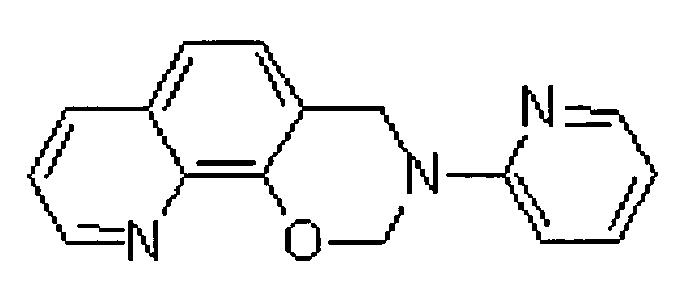
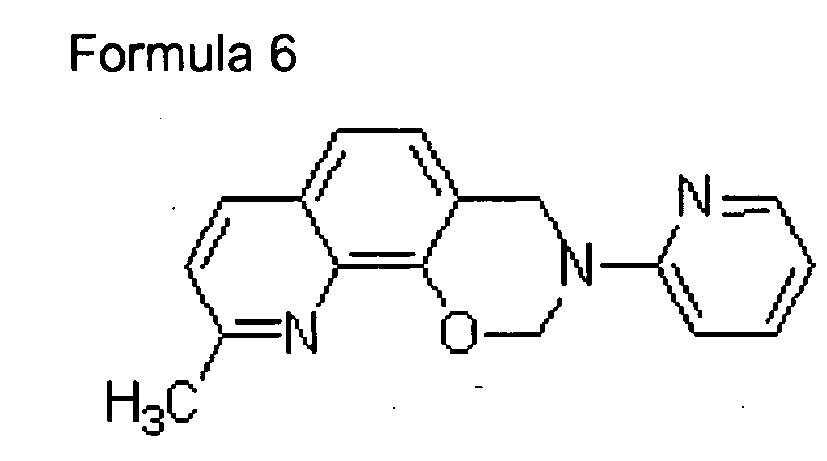
- the benzoxazine-based monomer represented by Formula 1 may be compounds represented by Formulae 2 to 21.
- a benzoxazine-based monomer according to an embodiment of the present invention has good affinity for an acid, high thermal resistance and high phosphoric acid resistance.
- the benzoxazine-based monomer can have a tertiary amine structure in which a backbone of a main chain has affinity to phosphoric acid through ring-opening polymerization.
- affinity for phosphoric acid is increased to maximize the capacity of phosphoric acid.
- wettability of phosphoric acid (H 3 PO 4 ) to three phase interface of the electrode can be improved and the amount of phosphoric acid flowing into the electrode can be increased.
- the fuel cells employing the electrode and the electrolyte membrane including the benzoxazine-based monomer can have excellent usability, high conductivity, and long lifetime, and can operate at a high temperature with no humidity, and can have excellent power generation efficiency.
- Examples of the C1-C20 alkyl group are a methyl group, an ethyl group, a propyl group, an isobutyl group, a sec-butyl group, a pentyl group, an iso-amyl group, and a hexyl group, and at least one of hydrogen atoms can be substituted with a halogen atom, a C1-C20 alkyl group substituted with a halogen atom (e.g.: CCF 3 , CHCF 2 , CH 2 F and CCl 3 ), a hydroxyl group, a nitro group, a cyano group, an amino group, an amidino group, a hydrazine, a hydrazone, a carboxyl group or a salt thereof, a sulfonic acid group or a salt thereof, a phosphoric acid or a salt thereof, a C1-C20 alkyl group, a C2-C20 alkenyl group
- the aryl group is used alone or in a combination, and is a carbocyclic aromatic system having 6 to 20 carbon atoms and one or more rings.
- the rings can be attached to each other or fused with each other using a pendent method.
- aryl includes an aromatic radical such as phenyl, naphtyl, and tetrahydronaphtyl.
- the aryl group may include a substituent of a haloalkylene group, a nitro group, a cyano group, an alkoxy group, and a short chain alkylamino group.
- at least one of hydrogen atoms can be substituted with the same functional group described above in the C1-C20 alkyl group.
- the heteroaryl group used herein indicates a monovalent monocyclic or bivalent bicyclic aromatic organic compound including C1-C20 carbon rings and including 1, 2, or 3 hetero atoms selected from the group consisting of nitrogen, oxygen, phosphor and sulfur.
- Examples of the heteroaryl group are pyrazinyl, furanyl, thienyl, pyridyl, pyrimidinyl, isothiazolyl, oxazolyl, thiazolyl, triazolyl and 1,2,4-thiadiazolyl.
- the fused heteroaryl group indicates a single-ring or double-ring system composed of about 8 to 11 rings in which at least one atom is an atom other than a carbon atom such as nitrogen, oxygen or surfur.
- At least one of hydrogen atoms of the heteroaryl group and the fused heteroaryl group can be substituted with the same functional group described above in the C1-C20 alkyl group.
- the heterocyclic group used herein indicates five-ten-membered ring including hetero atoms such as nitrogen, sulfur, phosphor and oxygen. At least one of hydrogen atoms of the heterocyclic group can be substituted with the same functional group described above in the C1-C20 alkyl group.
- the fused heterocyclic group is a single-ring or double-ring system of the heterocyclic group.
- the C6-C10 cycloalkyl group used herein indicates a carbocycle having 6 to 10 carbon atoms, and at least one of hydrogen atoms can be substituted with the same functional group described above in the C1-C20 alkyl group.
- the present invention also provides a polymer of the benzoxazine-based monomer which is a polymerization product of the benzoxazine-based monomer represented by Formula 1.
- the polymer can be prepared by dissolving the benzoxazine-based monomer in a solvent and polymerizing the solution through heat-treatment.
- the heat-treatment may be performed at a temperature in the range of 150 to 240°C. When the heat-treatment temperature is less than 150°C, reactivity of polymerization may be decreased. On the other hand, when the temperature is higher than 240°C, resultants generated from side reactions may decrease yields of products.
- a polymerization catalyst can be used, if required.
- the solvent may be N-methylpyrrolidone (NMP), dimethyl acetamide (DMAc), or the like, and the amount of the solvent may be in the range of 5 to 95 parts by weight based on 100 parts by weight of benzoxazine-based monomer.
- An embodiment of the present invention also provides a polymer of a benzoxazine-based monomer which is a polymerization product of the benzoxazine-based monomer represented by Formula 1 and the crosslinkable compound.
- the crosslinkable compound may be at least one of polybenzimidazole (PBI), a polybenzimidazole-base complex, polybenzthiazole, polybenzoxazole and polyimide, but is not limited thereto.
- PBI polybenzimidazole
- a polybenzimidazole-base complex polybenzthiazole
- polybenzoxazole polybenzoxazole
- polyimide polyimide
- the amount of the crosslinkable compound may be in the range of 5 to 95 parts by weight based on 100 parts by weight of the benzoxazine-based monomer represented by Formula 1.
- An electrode for a fuel cell according to an embodiment of the present invention includes a catalyst layer including a polymer which is a polymerization product of the benzoxazine-based monomer represented by Formula 1 or a polymerization product of the benzoxazine-based monomer represented by Formula 1 and a crosslinkable compound.
- the catalyst layer includes a catalyst.
- the polymer of the benzoxazine-based monomer represented by Formula 1 is used as a binder of the electrode, and thus a conventional binder is not necessary for the electrode.
- the polymer of the benzoxazine-based monomer represented by Formula 1 improves wettability of phosphoric acid, and the amount of the polymer may be in the range of 0.1 to 65 parts by weight based on 100 parts by weight of the catalyst.
- the catalyst may be Pt, a metal-Pt alloy including Pt and at least one metal selected from the group consisting of Au, Pd, Rh, Ir, Ru, Sn, Mo, Co, and Cr, or a mixture including Pt and at least one metal selected from the group consisting of Au, Pd, Rh, Ir, Ru, Sn, Mo, Co, and Cr.
- the catalyst may be a support catalyst in which the catalyst metal is loaded on a carbonaceous support.
- the catalyst may be a catalyst metal including at least one of Pt, PtCo, and PtRu, or a support catalyst in which the catalyst metal is loaded on a carbonaceous support
- the electrode according to an embodiment of the present invention may further include a binder that is commonly used in the preparation of an electrode for fuel cells.
- the binder may be at least one of poly(vinylidenefluoride), polytetrafluoroethylene, a tetrafluoroethylene-hexafluoroethylene copolymer, and perfluoroethylene, and the amount of the binder may be in the range of 0.1 to 50 parts by weight based on 100 parts by weight of the catalyst for improving wettability of the electrode.
- the crosslinkable compound may be at least one of polybenzimidazole (PBI), a polybenzimidazole-base complex, polybenzthiazole, polybenzoxazole and polyimide, but is not limited thereto.
- PBI polybenzimidazole
- a polybenzimidazole-base complex polybenzthiazole
- polybenzoxazole polybenzoxazole
- polyimide polyimide
- the amount of the crosslinkable compound may be in the range of 5 to 95 parts by weight based on 100 parts by weight of the benzoxazine-based monomer represented by Formula 1.
- a catalyst is dispersed in a solvent to prepare a dispersion.
- the solvent may be N-methylpyrrolidone (NMP), DMAc, or the like, and the amount of the solvent may be in the range of 100 to 1000 parts by weight based on 100 parts by weight of the catalyst.
- a mixture of a benzoxazine-based monomer represented by Formula 1, a solvent and a binder is added to the dispersion and mixed while stirring.
- the mixture may further include a crosslinkable compound.
- the solvent may be N-methylpyrrolidone (NMP), dimethyl acetamide (DMAc), or the like.
- An electrode is prepared by coating the mixture on the surface of a carbon support.
- the carbon support may be fixed on a glass substrate in order to facilitate coating.
- the coating can be performed using a doctorblade, a bar coating, a screen printing, or the like, but the coating method is not limited thereto.
- the coated mixture was dried at a temperature in the range of 20 to 150°C to remove the solvent.
- the drying may be performed for 10 to 60 minutes, but the drying time may vary according to the drying temperature.
- the electrode for a fuel cell does not include the benzoxazine-based monomer represented by Formula 1 but a polymer thereof since the benzoxazine-based monomer represented by Formula 1 is polymerized to form the polymer while the electrode is activated and/or while the fuel cell is operated.
- the prepared electrode includes a polymer of the benzoxazine-based monomer and a crosslinkable compound.
- an electrolyte membrane and a method of preparing the electrolyte membrane according to an embodiment of the present invention will be described.
- An electrolyte membrane formed using a crosslinkable compound is described herein.
- the preparation process is the same as those described herein, except that the crosslinkable compound was not used.
- a phosphorus-containing benzoxazine-based monomer represented by Formula 1 is blended with a crosslinkable compound, and the mixture is cured at a temperature in the range of 50 to 250°C, and preferably 80 to 220°C.
- the cured mixture is impregnated with a proton conductor such as an acid to prepare an electrolyte membrane.
- the crosslinkable compound may be at least one compound selected from the group consisting of polybenzimidazole (PBI), a polybenzimidazole-base complex, polybenzthiazole, polybenzoxazole, and polyimide.
- PBI polybenzimidazole
- the polybenzimidazole-base complex is disclosed in Korean Patent Application No. 2007-102579 filed by the inventors of the present invention.
- the amount of the crosslinkable compound may be in the range of 5 to 95 parts by weight based on 100 parts by weight of the benzoxazine-based monomer of Formula 1.
- the amount of the crosslinkable compound When the amount of the crosslinkable compound is less than 5 parts by weight, the proton conductivity may be decreased since phosphoric acid cannot be impregnated. On the other hand, when the amount of the crosslinkable compound is greater than 95 parts by weight, gas may be permeated since the crosslinked polybenzoxazines melt in a polyphosphoric acid in the presence of an excessive amount of phosphoric acid.
- an electrolyte membrane is formed using a mixture of the first benzoxazine-based monomer represented by Formula 1 and a crosslinkable compound.
- the membrane may be formed using a tape casting, or a conventionally used coating method.
- the coating method may be a method of casting the mixture on a support using a doctor blade.
- the doctor blade having a 250 - 500 ⁇ m gap may be used.
- a process of removing the support by exfoliating the electrolyte membrane from the support may further be included after the curing and before the impregnation.
- the resultant may be immersed in distilled water at a temperature in the range of 60 to 80°C.
- the support may be any material which can support the electrolyte membrane, for example, a galss substrate, polyimide film, and the like.
- the removing the support is not necessary in the tape casting method, since the tape cast membrane is separated from the support such as polyethylene terephthalate and placed in an oven for curing.
- filtering the mixture may further be included in the method.
- the prepared membrane is cured through heat treatment, and impregnated with a proton conductor such as an acid to form an electrolyte membrane.
- the proton conductor may be a phosphoric acid, a C1-C20 organic phosphonic acid, or the like, but is not limited thereto.
- the C1-C20 organic phosphonic acid may be methyl phosphonic acid, ethyl phosphonic acid, etc.
- the amount of the proton conductor may be 300 to 1000 parts by weight based on 100 parts by weight of the electrolyte membrane.
- 85% by weight of an aqueous phosphoric acid solution may be used at 80°C for 2.5 to 14 hours, but the concentration of the acid used in an embodiment of the present invention is not limited.
- electrolyte membrane that is commonly used in the preparation of fuel cells can be used herein.
- an electrolyte membrane including a crosslinked product of polybenzoxazine-based compounds that is prepared by polymerization of the benzoxazine-based monomer represented by Formula 1 and a crosslinkable compound.
- Performance of the fuel cell may be maximized by using the electrolyte membrane including the crosslinked product of polybenzoxazine-based compounds.
- the electrolyte membrane may be a polybenzimidazole electrolyte membrane, a polybenzoxazine-polybenzimidazole copolymer electrolyte membrane, a PTFE porous membrane, or the like.
- membrane and electrode assembly indicates a structure in which electrodes composed of a catalyst layer and a diffusion layer are laminated on both sides of an electrolyte membrane.
- the MEA according to an embodiment the present invention may be prepared by placing electrodes including the catalyst layer on both sides of the obtained electrolyte membrane and assembling them at a high temperature under a high pressure, and then assembling them with a fuel diffusion layer.
- the assembling may be performed at a temperature at which the electrolyte membrane softens under 0.1 to 3 ton/cm 2 , and preferably under about 1 ton/cm 2 .
- the bipolar plate has a fuel supply groove and current collecting property.
- the fuel cell may be used as a polymer electrolyte membrane fuel cell (PEMFC), but is not limited thereto.
- PEMFC polymer electrolyte membrane fuel cell
- 3HP-3AP was identified by a nuclear magnetic resonance (NMR) spectrum of FIG. 2 .
- the structure of 8HQD-3AP was identified by a nuclear magnetic resonance (NMR) spectrum of FIG. 3 .
- Thermal stability of 3HP-3AP represented by Formula 15 prepared in Synthesis Example 1 and the polymer of 3HP-3AP represented by Formula 15 and PBI prepared in Synthesis Example 4 were measured using thermogravimetric analysis, and the results are shown in FIG. 4 .
- the thermal weight loss was measured at 800°C in FIG. 4 .
- the polymer of 3HP-3AP and PBI had higher thermal stability compared to 3HP-3AP monomer.
- the structure of the solid-phase polymer of 3HP-3AP represented by Formula 15 and PBI prepared in Synthesis Example 4 was identified by a solid nuclear magnetic resonance (NMR) spectrum, and the results are shown in FIG. 9 .
- the NMR was performed using a Varian Unity INOVA600 at 600 MHz.
- Example 1 Preparation of an electrode for a fuel cell and a fuel cell using the electrode
- Carbon paper was cut into pieces of 4x7 cm 2 in size, and the pieces were fixed on a glass plate and coated using a doctor blade (Sheen instrument), wherein the gap interval of the doctor blade was 600 ⁇ m.
- the slurry for a cathode catalyst layer was coated on the carbon paper and dried at room temperature for 1 hour, at 80°C for 1 hour, at 120°C for 30 minutes and at 150°C for 15 minutes to prepare a cathode (a fuelelectrode).
- the amount of loaded Pt/Co in the prepared cathode was 3.0 mg/cm 2 .
- An electrode prepared according to the process as follows was used as an anode.
- the resultant was impregnated with 85% by weight of phosphoric acid at 80°C for longer than 4 hours to prepare an electrolyte membrane.
- the amount of phosphoric acid was about 450 parts by weight based on 100 parts by weight of electrolyte membrane.
- the amount of loaded Pt/Co in the prepared cathode was about 2.17 mg/cm 2 , and the amount of loaded Pt in the prepared anode was 1.5 mg/cm 2 .
- a membrane electrode assembly was prepared by interposing the electrolyte membrane between the cathode and the anode.
- the cathode and anode were not impregnated with phosphoric acid.
- a 200 ⁇ m teflon membrane for a main gasket and a 20 ⁇ m teflon membrane for a sub gasket were overlapped on an interface between the electrodes and electrolyte membrane in order to prevent gas permeation between the cathode and the anode.
- the pressure applied to the MEA was adjusted to 1, 2, 3 N-m Torque step by step using a wrench to assemble a cell.
- Characteristics of fuel cells were measured while operating by supplying hydrogen to the anode at 100 ccm and supplying air to the cathode at 250 ccm while the electrolyte membrane was not hydrated at 150°C. Since cell efficiency increases with time by using the electrolyte doped with phosphoric acid, the final efficiency was measured after the fuel cell is activated is performed until operational voltage was maximized.
- Example 2 Preparation of an electrode for a fuel cell and a fuel cell using the electrode
- a cathode and a fuel cell using the cathode were prepared in the same manner as in Example 1, except that 8HP-2AP represented by Formula 14 prepared according to Synthesis Example 2 was used instead of 3HP-3AP represented by Formula 15 in the preparation of the cathode.
- Example 3 Preparation of an electrode for a fuel cell and a fuel cell using the electrode
- a cathode and a fuel cell using the cathode were prepared in the same manner as in Example 1, except that 8HQD-3AP represented by Formula 7 prepared according to Synthesis Example 3 was used instead of 3HP-3AP represented by Formula 15 in the preparation of the cathode.
- Comparative Example 1 Preparation of an electrode for a fuel cell and a fuel cell using the electrode
- a cathode and a fuel cell using the cathode were prepared in the same manner as in Example 1, except that 3HP-3AP represented by Formula 15 was not added in the preparation of the cathode.
- FIG. 1 cell potential changes according to current density were measured in fuel cells prepared according to Example 1 and Comparative Example 1, and the results are shown in FIG. 1 .
- the d1, d3, d5 and d7 of FIG. 1 respectively indicate first day, third day, fifth day and seventh day.
- high potentials of fuel cells can be maintained with the passage of time.
- Example 4 Preparation of an electrolyte membrane for a fuel cell and a fuel cell using the electrolyte membrane
- Carbon paper was cut into pieces of 4x7 cm 2 in size, and the pieces were fixed on a glass plate and coated using a doctor blade (Sheen instrument), wherein the gap interval of the doctor blade was 600 ⁇ m.
- the slurry for a cathode catalyst layer was coated on the carbon paper and dried at room temperature for 1 hour, at 80°C for 1 hour, at 120°C for 30 minutes and at 150°C for 15 minutes to prepare a cathode (a fuelelectrode).
- the amount of loaded Pt/Co in the prepared cathode was 3.0 mg/cm 2 .
- An electrode prepared according to the process as follows was used as an anode.
- the resultant was impregnated with 85% by weight of phosphoric acid at 80°C for longer than 4 hours to prepare an electrolyte membrane.
- the amount of phosphoric acid was about 530 parts by weight based on 100 parts by weight of electrolyte membrane.
- a membrane electrode assembly was prepared by interposing the electrolyte membrane between the cathode and the anode.
- the cathode and anode were not impregnated with phosphoric acid.
- a 200 ⁇ m teflon membrane for a main gasket and a 20 ⁇ m teflon membrane for a sub gasket were overlapped on an interface between the electrodes and electrolyte membrane in order to prevent gas permeation between the cathode and the anode.
- the pressure applied to the MEA was adjusted to 1, 2, 3 N-m Torque step by step using a wrench to assemble a cell.
- Characteristics of fuel cells were measured while operating by supplying hydrogen to the anode at 100 ccm and supplying air to the cathode at 250 ccm while the electrolyte membrane was not hydrated at 150°C. Since cell efficiency increases with time by using the electrolyte doped with phosphoric acid, the final efficiency was measured after the fuel cell is aged until operational voltage was maximized.
- the fuel cell of Example 4 had an open circuit voltage (OCV) of 1.05 V and 0.684 V at 0.3 A/cm 2 .
- ⁇ OCV denotes an open circuit voltage (OCV)
- ⁇ 0.2 A/cm 2 denotes a cell voltage at a current density of 0.2 A/cm 2 .
- Example 4 has excellent cell voltage characteristics.
- Example 5 Preparation of an electrolyte membrane for a fuel cell and a fuel cell using the electrolyte membrane
- An electrolyte membrane and a fuel cell using the electrolyte membrane were prepared in the same manner as in Example 4, except that 8HQD3AP represented by Formula 7 was used instead of 3HP-3AP represented by Formula 15 in the formation of the electrolyte membrane.
- the electrolyte membrane of Examples 4 and 5 has higher conductivity compared with PBI electrolyte membrane.
- the doping level was shown in percentage based on the weight or the impregnated amount.
- a fuel cell was prepared in the same manner as in Example 4, except that 3HP-3AP represented by Formula 15 was used in the preparation of the cathode.
- a fuel cell was prepared in the same manner as in Example 6, except that PBI electrolyte membrane was used instead of 3HP-3AP represented by Formula 15 in the preparation of the cathode and 3HP-3AP represented by Formula was not added in the preparation of the cathode.
Landscapes
- Chemical & Material Sciences (AREA)
- Chemical Kinetics & Catalysis (AREA)
- Organic Chemistry (AREA)
- General Chemical & Material Sciences (AREA)
- Engineering & Computer Science (AREA)
- Electrochemistry (AREA)
- Manufacturing & Machinery (AREA)
- Health & Medical Sciences (AREA)
- Medicinal Chemistry (AREA)
- Polymers & Plastics (AREA)
- Sustainable Energy (AREA)
- Sustainable Development (AREA)
- Life Sciences & Earth Sciences (AREA)
- Materials Engineering (AREA)
- Crystallography & Structural Chemistry (AREA)
- Composite Materials (AREA)
- Inorganic Chemistry (AREA)
- Fuel Cell (AREA)
- Inert Electrodes (AREA)
- Conductive Materials (AREA)
- Nitrogen And Oxygen Or Sulfur-Condensed Heterocyclic Ring Systems (AREA)
- Phenolic Resins Or Amino Resins (AREA)
- Macromolecular Compounds Obtained By Forming Nitrogen-Containing Linkages In General (AREA)
Description
- The present invention relates to a benzoxazine-based monomer, a polymer thereof, an electrode for a fuel cell including the same, an electrolyte membrane for a fuel cell including the same, and a fuel cell using the same.
- Fuel cells using a polymer electrolyte membrane as an electrolyte which operate at a relatively low temperature and can be miniaturized are regarded as an alternative power source for automobiles and for residential distributed power generation systems. A known polymer electrolyte membrane used in polymer electrolyte membrane fuel cells is perfluorocarbonsulfonic acid polymer represented by Nafion™.
- However, these polymer electrolyte membranes must be hydrated to retain proton conductivity. In addition, the fuel cell system needs to be operated at 100°C or higher in order to improve the system efficiency. However, the electrolyte membrane cannot function as a solid electrolyte at such a high temperature since moisture is evaporated from the electrolyte membrane.
- A non-hydrated electrolyte membrane which can be operated at 100°C or higher has been developed in order to overcome these problems. For example, polybenzimidazole doped with phosphoric acid as a material used to form a non-hydrated electrolyte membrane is disclosed in
US Patent No. 5,525,436 . - In addition, in fuel cells using perfluorocarbonsulfonic acid polymer membrane which operate at a low-temperature, an electrode having hydrophobicity by being mixed with water-repellent polytetrafluoroethylene (PTFE) is used in order to improve gas diffusion which is blocked by water generated in a cathode (
Japanese Patent Laid-Open Publication No. hei 05-283082 - Meanwhile, in fuel cells applying polybenzimidazole (PBI) retaining phosphoric acid which is a high-temperature non-hydrated electrolyte to an electrolyte membrane, attempts to impregnate an electrode with a liquid state phosphoric acid have been made and attempts to increasing the loading amount of a metal catalyst have been made in order to facilitate interface contact between the electrode and the membrane. These attempts, however, did not sufficiently improve characteristics of the fuel cells.
- When air is supplied to a cathode, activation takes about a week even if an electrode composition is optimized in a solid polymer electrolyte membrane doped with phosphoric acid. Although fuel cell can have improved efficiency and activation time can be decreased by replacing air with oxygen, use of oxygen is not preferable for commercialization.
-
EP 1 760 110 A discloses a crosslinked object of a polybenzoxazine-based compound formed of a polymerized resultant of a first monofunctional benzoxazine-based monomer or a second multifunctional benzoxazine-based monomer with a crosslinkable compound, an electrolyte membrane including the crosslinked object, a method of preparing the electrolyte membrane, and a fuel cell employing the electrolyte membrane including the crosslinked object. - Aspects of the present invention may provide a benzoxazine-based monomer having improved wettability of phosphoric acid to an electrode, high thermal resistance, high phosphoric acid resistance, and excellent affinity for an acid, a polymer of the benzoxazine-based monomer, an electrode for a fuel cell including the same, an electrolyte membrane for a fuel cell including the same, and a fuel cell using the same.
- According to an embodiment of the present invention, there is provided a benzoxazine-based monomer according to claim 1.
- According to another embodiment of the present invention, there is provided a polymer of a benzoxazine-based monomer which is a polymerization product of the benzoxazine-based monomer or a polymerization product of the benzoxazine-based monomer and a crosslinkable compound.
- According to another embodiment of the present invention, there is provided an electrode for a fuel cell including the polymer of a benzoxazine-based monomer. The amount of the polymer may be in the range of 0.1 to 65 parts by weight based on 100 parts by weight of the catalyst. The catalyst may be a catalyst metal selected from: Pt; a metal-Pt alloy including Pt and at least one metal selected from the group consisting of Au, Pd, Rh, Ir, Ru, Sn, Mo, Co, and Cr; and a mixture including Pt and at least one metal selected from the group consisting of Au, Pd, Rh, Ir, Ru, Sn, Mo, Co, and Cr. The catalyst may be a support catalyst in which the catalyst metal is loaded on a carbonaceous support. The catalyst layer may further comprise at least one binder selected from the group consisting of poly(vinylidene fluoride), polytetrafluoroethylene (PTFE), a tetrafluoroethylene-hexafuoroethylene copolymer, fluorinated ethylene propylene (FEP), styrene butadiene rubber (SBR) and polyurethane, and the amount of the binder may be in the range of 0.1 to 50 parts by weight based on 100 parts by weight of the catalyst.
- According to another embodiment of the present invention, there is provided an electrolyte membrane for a fuel cell including the polymer of the benzoxazine-based monomer. The membrane may further comprise a proton conductive polymer, and the amount of the polymer of the benzoxazine-based monomer may be in the range of 5 to 95 parts by weight based on 100 parts by weight of the proton conductive polymer.
- According to another embodiment of the present invention, there is provided a fuel cell including the electrode.
- According to another embodiment of the present invention, there is provided a fuel cell including the electrolyte membrane.
- The above and other features and advantages of the present invention will become more apparent by describing in detail exemplary embodiments thereof with reference to the attached drawings in which:
-
FIG. 1 shows a graph illustrating current density-voltage characteristics of a fuel cell prepared according to Example 1; -
FIG. 2 shows a nuclear magnetic resonance (NMR) spectrum of 3HP-3AP represented by Formula 15 prepared according to Synthesis Example 1; -
FIG. 3 shows a nuclear magnetic resonance (NMR) spectrum of 8HQD-3AP represented by Formula 7 prepared according to Synthesis Example 2; -
FIG. 4 is a graph illustrating the results of thermogravimetric analysis of 3HP-3AP represented by Formula 15 prepared in Synthesis Example 1 and the polymer of 3HP-3AP represented by Formula 15 and PBI prepared in Synthesis Example 4; -
FIG. 5 is a graph illustrating voltage with respect to current density of a fuel cell prepared in Example 4 of the present invention; -
FIG. 6 is a graph illustrating cell voltage over time of a fuel cell prepared in Example 4 of the present invention; -
FIG. 7 is a graph illustrating conductivity with respect to temperature of electrolyte membranes prepared in Examples 4 and 5 of the present invention; -
FIG. 8 is a graph illustrating phosphoric acid doping level of electrolyte membranes prepared in Examples 4 and 5 of the present invention; -
FIG. 9 is a graph illustrating a solid nuclear magnetic resonance (NMR) spectrum of a solid-phase polymer of 3HP-3AP represented by Formula 15 and PBI prepared according to Synthesis Example 4 of the present invention; and -
FIG. 10 is a graph illustrating cell voltage with respect to current density of fuel cells prepared according to Example 6 and Comparative Example 2 of the present invention. - Hereinafter, the present invention will now be described more fully with reference to the accompanying drawings, in which exemplary embodiments of the invention are shown.
- An embodiment of the present invention provides a benzoxazine-based monomer represented by Formula 1.

- Here, A, B, C, D and E are carbon, or one or two of A, B, C, D and E is nitrogen and the others are carbon, and
R1 and R2 are connected to each other to form a ring,
wherein the ring is a C6-C10 cycloalkyl group, a C3-C10 heteroaryl group, a fused C3-C10 heteroaryl group, a C3-C10 heterocyclic group or a fused C3-C10 heterocyclic group. - The ring formed by R1 and R2 in Formula 1 may be represented by the formulae below.


- Here, R3 to R7 are each independently a hydrogen atom, a C1-C10 alkyl group, a C6-C10 aryl group, a halogen atom, a cyano group, a hydroxyl group, a C6-C10 cycloalkyl group, a C1-C10 heteroaryl group or a C1-C10 heterocyclic group, wherein the *a is connected to R1 of Formula 1 and the *b is connected to R2 of Formula 1.
- The


- The benzoxazine-based monomer according to an embodiment of the present invention has a structure capable of improving affinity for an acid. According to an embodiment of the present invention, when the benzoxazine-based monomer represented by Formula 10 is added to an electrode for a fuel cell, the benzoxazine-based monomer of Formula 10 is transformed to a structure having a plurality of tertiary amines through ring opening polymerization while the fuel cell is operating and thus traps an acid as shown in Reaction Scheme 1.

- Due to the acid-trapping function of the benzoxazine-based monomer, the benzoxazine-based monomer in an electrode for a fuel cell improves wettability of phosphoric acid (H3PO4) to the electrode, thermal resistance and phosphoric acid resistance. In addition, since phosphoric acid is retained in micropores of the electrode, a problem caused by phosphoric acid infiltrating into macropores of the electrode, that is flooding, which inhibits gas diffusion by a large amount of liquid state phosphoric acid in the electrode can be efficiently prevented. Accordingly, comparability can be increased in interfaces of gaseous state (fuel gas or oxidizing gas) - liquid state (phosphoric acid) - solid state (catalyst). In addition, the benzoxazine-based monomer is self polymerized by heat generated at an operating temperature to form a thermosetting polymer which improves stability of interfaces of the electrode.
- The benzoxazine-based monomer may be one of the compounds represented by Formulae 1A to 1D.

- Here, R is a hydrogen atom or a C1-C10 alkyl group.


- Here, the


- The benzoxazine-based monomer represented by Formula 1 can be synthesized using a phenol compound having a pyridine or pyridine derivative as a starting material, an amine compound and p-formaldehyde. The conditions for the reaction are not limited. For example, the reaction can be performed by a melt process without a solvent at a temperature in the range of 80 to 100°C, and the temperature may vary according to the types of substituents.
- Hereinafter, a method of preparing the benzoxazine-based monomer represented by Formula 1 according to the present invention will be described. For example, compounds represented by Formulae 1A and 1B are described, but other compounds can be synthesized in a similar manner.
- First, the benzoxazine-based monomers represented by Formulae 1A and Formula 1B can be prepared by heating a mixture of 8-hydroxyquinoline (A), p-formaldehyde (B) and an amine compound (C) without a solvent, or can be prepared by adding a solvent to the mixture, refluxing the mixture, and performing a work-up process of the resultant as shown in
Reaction Scheme 2

- Here, R is a hydrogen atom or a C1-C10 alkyl group, and -Q is


- When a solvent is used, 1,4-dioxane, chloroform, dichloromethane, THF, or the like can be used as the solvent. The heating temperature may be in the range of 50 to 90°C and preferably about 80°C, and can be adjusted to a temperature at which the solvent can be refluxed.
- The benzoxazine-based monomer represented by Formula 1 according to an embodiment of the present invention may be compounds represented by
Formulae 2 to 21.




- A benzoxazine-based monomer according to an embodiment of the present invention has good affinity for an acid, high thermal resistance and high phosphoric acid resistance. When used in the preparation of an electrode and an electrolyte membrane for a fuel cell, the benzoxazine-based monomer can have a tertiary amine structure in which a backbone of a main chain has affinity to phosphoric acid through ring-opening polymerization. Thus, affinity for phosphoric acid is increased to maximize the capacity of phosphoric acid. Thus, wettability of phosphoric acid (H3PO4) to three phase interface of the electrode can be improved and the amount of phosphoric acid flowing into the electrode can be increased. Particularly, oxygen permeation can be improved, and wettability of phosphoric acid (H3PO4) and thermal stability can be improved in the electrode even when air is used in a cathode. Therefore, the fuel cells employing the electrode and the electrolyte membrane including the benzoxazine-based monomer can have excellent usability, high conductivity, and long lifetime, and can operate at a high temperature with no humidity, and can have excellent power generation efficiency.
- Examples of the C1-C20 alkyl group are a methyl group, an ethyl group, a propyl group, an isobutyl group, a sec-butyl group, a pentyl group, an iso-amyl group, and a hexyl group, and at least one of hydrogen atoms can be substituted with a halogen atom, a C1-C20 alkyl group substituted with a halogen atom (e.g.: CCF3, CHCF2, CH2F and CCl3), a hydroxyl group, a nitro group, a cyano group, an amino group, an amidino group, a hydrazine, a hydrazone, a carboxyl group or a salt thereof, a sulfonic acid group or a salt thereof, a phosphoric acid or a salt thereof, a C1-C20 alkyl group, a C2-C20 alkenyl group, a C2-C20 alkynyl group, a C1-C20 heteroalkyl group, a C6-C20 aryl group, a C6-C20 arylalkyl group, a C6-C20 heteroaryl group or a C6-C20 heteroarylalkyl group.
- The aryl group is used alone or in a combination, and is a carbocyclic aromatic system having 6 to 20 carbon atoms and one or more rings. The rings can be attached to each other or fused with each other using a pendent method. The term "aryl" includes an aromatic radical such as phenyl, naphtyl, and tetrahydronaphtyl. The aryl group may include a substituent of a haloalkylene group, a nitro group, a cyano group, an alkoxy group, and a short chain alkylamino group. In addition, at least one of hydrogen atoms can be substituted with the same functional group described above in the C1-C20 alkyl group.
- The heteroaryl group used herein indicates a monovalent monocyclic or bivalent bicyclic aromatic organic compound including C1-C20 carbon rings and including 1, 2, or 3 hetero atoms selected from the group consisting of nitrogen, oxygen, phosphor and sulfur. Examples of the heteroaryl group are pyrazinyl, furanyl, thienyl, pyridyl, pyrimidinyl, isothiazolyl, oxazolyl, thiazolyl, triazolyl and 1,2,4-thiadiazolyl.
- The fused heteroaryl group indicates a single-ring or double-ring system composed of about 8 to 11 rings in which at least one atom is an atom other than a carbon atom such as nitrogen, oxygen or surfur.
- At least one of hydrogen atoms of the heteroaryl group and the fused heteroaryl group can be substituted with the same functional group described above in the C1-C20 alkyl group.
- The heterocyclic group used herein indicates five-ten-membered ring including hetero atoms such as nitrogen, sulfur, phosphor and oxygen. At least one of hydrogen atoms of the heterocyclic group can be substituted with the same functional group described above in the C1-C20 alkyl group.
- The fused heterocyclic group is a single-ring or double-ring system of the heterocyclic group.
- The C6-C10 cycloalkyl group used herein indicates a carbocycle having 6 to 10 carbon atoms, and at least one of hydrogen atoms can be substituted with the same functional group described above in the C1-C20 alkyl group.
- The present invention also provides a polymer of the benzoxazine-based monomer which is a polymerization product of the benzoxazine-based monomer represented by Formula 1.
- The polymer can be prepared by dissolving the benzoxazine-based monomer in a solvent and polymerizing the solution through heat-treatment. The heat-treatment may be performed at a temperature in the range of 150 to 240°C. When the heat-treatment temperature is less than 150°C, reactivity of polymerization may be decreased. On the other hand, when the temperature is higher than 240°C, resultants generated from side reactions may decrease yields of products.
- A polymerization catalyst can be used, if required.
- The solvent may be N-methylpyrrolidone (NMP), dimethyl acetamide (DMAc), or the like, and the amount of the solvent may be in the range of 5 to 95 parts by weight based on 100 parts by weight of benzoxazine-based monomer.
- An embodiment of the present invention also provides a polymer of a benzoxazine-based monomer which is a polymerization product of the benzoxazine-based monomer represented by Formula 1 and the crosslinkable compound.
- The crosslinkable compound may be at least one of polybenzimidazole (PBI), a polybenzimidazole-base complex, polybenzthiazole, polybenzoxazole and polyimide, but is not limited thereto.
- The amount of the crosslinkable compound may be in the range of 5 to 95 parts by weight based on 100 parts by weight of the benzoxazine-based monomer represented by Formula 1.
- An electrode for a fuel cell according to an embodiment of the present invention includes a catalyst layer including a polymer which is a polymerization product of the benzoxazine-based monomer represented by Formula 1 or a polymerization product of the benzoxazine-based monomer represented by Formula 1 and a crosslinkable compound.
- The catalyst layer includes a catalyst.
- The polymer of the benzoxazine-based monomer represented by Formula 1 is used as a binder of the electrode, and thus a conventional binder is not necessary for the electrode.
- The polymer of the benzoxazine-based monomer represented by Formula 1 improves wettability of phosphoric acid, and the amount of the polymer may be in the range of 0.1 to 65 parts by weight based on 100 parts by weight of the catalyst.
- When the amount of the polymer is less than 0.1 parts by weight, wet state of the electrode is not sufficiently improved. On the other hand, when the amount of the polymer is greater than 65 parts by weight, flooding may be increased.
- The catalyst may be Pt, a metal-Pt alloy including Pt and at least one metal selected from the group consisting of Au, Pd, Rh, Ir, Ru, Sn, Mo, Co, and Cr, or a mixture including Pt and at least one metal selected from the group consisting of Au, Pd, Rh, Ir, Ru, Sn, Mo, Co, and Cr. Alternatively, the catalyst may be a support catalyst in which the catalyst metal is loaded on a carbonaceous support.
- In particular, the catalyst may be a catalyst metal including at least one of Pt, PtCo, and PtRu, or a support catalyst in which the catalyst metal is loaded on a carbonaceous support
- The electrode according to an embodiment of the present invention may further include a binder that is commonly used in the preparation of an electrode for fuel cells.
- The binder may be at least one of poly(vinylidenefluoride), polytetrafluoroethylene, a tetrafluoroethylene-hexafluoroethylene copolymer, and perfluoroethylene, and the amount of the binder may be in the range of 0.1 to 50 parts by weight based on 100 parts by weight of the catalyst for improving wettability of the electrode.
- The crosslinkable compound may be at least one of polybenzimidazole (PBI), a polybenzimidazole-base complex, polybenzthiazole, polybenzoxazole and polyimide, but is not limited thereto.
- The amount of the crosslinkable compound may be in the range of 5 to 95 parts by weight based on 100 parts by weight of the benzoxazine-based monomer represented by Formula 1.
- A method of preparing the electrode for a fuel cell will be described.
- First, a catalyst is dispersed in a solvent to prepare a dispersion. The solvent may be N-methylpyrrolidone (NMP), DMAc, or the like, and the amount of the solvent may be in the range of 100 to 1000 parts by weight based on 100 parts by weight of the catalyst.
- A mixture of a benzoxazine-based monomer represented by Formula 1, a solvent and a binder is added to the dispersion and mixed while stirring. The mixture may further include a crosslinkable compound.
- The solvent may be N-methylpyrrolidone (NMP), dimethyl acetamide (DMAc), or the like.
- An electrode is prepared by coating the mixture on the surface of a carbon support. Here, the carbon support may be fixed on a glass substrate in order to facilitate coating. The coating can be performed using a doctorblade, a bar coating, a screen printing, or the like, but the coating method is not limited thereto.
- The coated mixture was dried at a temperature in the range of 20 to 150°C to remove the solvent. The drying may be performed for 10 to 60 minutes, but the drying time may vary according to the drying temperature.
- As described above, the electrode for a fuel cell does not include the benzoxazine-based monomer represented by Formula 1 but a polymer thereof since the benzoxazine-based monomer represented by Formula 1 is polymerized to form the polymer while the electrode is activated and/or while the fuel cell is operated.
- If a crosslinking agent is further added to the mixture of the benzoxazine-based monomer, the solvent, and the binder, the prepared electrode includes a polymer of the benzoxazine-based monomer and a crosslinkable compound.
- Hereinafter, an electrolyte membrane and a method of preparing the electrolyte membrane according to an embodiment of the present invention will be described. An electrolyte membrane formed using a crosslinkable compound is described herein. However, when an electrolyte membrane is prepared only using the benzoxazine-based monomer represented by Formula 1, the preparation process is the same as those described herein, except that the crosslinkable compound was not used.
- First, a phosphorus-containing benzoxazine-based monomer represented by Formula 1 is blended with a crosslinkable compound, and the mixture is cured at a temperature in the range of 50 to 250°C, and preferably 80 to 220°C. The cured mixture is impregnated with a proton conductor such as an acid to prepare an electrolyte membrane.
- The crosslinkable compound may be at least one compound selected from the group consisting of polybenzimidazole (PBI), a polybenzimidazole-base complex, polybenzthiazole, polybenzoxazole, and polyimide. The polybenzimidazole-base complex is disclosed in Korean Patent Application No.
2007-102579 - The amount of the crosslinkable compound may be in the range of 5 to 95 parts by weight based on 100 parts by weight of the benzoxazine-based monomer of Formula 1.
- When the amount of the crosslinkable compound is less than 5 parts by weight, the proton conductivity may be decreased since phosphoric acid cannot be impregnated. On the other hand, when the amount of the crosslinkable compound is greater than 95 parts by weight, gas may be permeated since the crosslinked polybenzoxazines melt in a polyphosphoric acid in the presence of an excessive amount of phosphoric acid.
- Second, an electrolyte membrane is formed using a mixture of the first benzoxazine-based monomer represented by Formula 1 and a crosslinkable compound.
- The membrane may be formed using a tape casting, or a conventionally used coating method. The coating method may be a method of casting the mixture on a support using a doctor blade. In this regard, the doctor blade having a 250 - 500 µm gap may be used.
- In the formation of the membrane using the doctor blade method, a process of removing the support by exfoliating the electrolyte membrane from the support may further be included after the curing and before the impregnation. In order to remove the support, the resultant may be immersed in distilled water at a temperature in the range of 60 to 80°C.
- The support may be any material which can support the electrolyte membrane, for example, a galss substrate, polyimide film, and the like. The removing the support is not necessary in the tape casting method, since the tape cast membrane is separated from the support such as polyethylene terephthalate and placed in an oven for curing.
- In addition, when the membrane is formed using a mixture of benzoxazine-based monomer and polybenzimidazole through a tape casting method, filtering the mixture may further be included in the method.
- The prepared membrane is cured through heat treatment, and impregnated with a proton conductor such as an acid to form an electrolyte membrane.
- The proton conductor may be a phosphoric acid, a C1-C20 organic phosphonic acid, or the like, but is not limited thereto. The C1-C20 organic phosphonic acid may be methyl phosphonic acid, ethyl phosphonic acid, etc.
- The amount of the proton conductor may be 300 to 1000 parts by weight based on 100 parts by weight of the electrolyte membrane. For example, 85% by weight of an aqueous phosphoric acid solution may be used at 80°C for 2.5 to 14 hours, but the concentration of the acid used in an embodiment of the present invention is not limited.
- A method of preparing a fuel cell using the electrode according to an embodiment of the present invention will be described.
- Any electrolyte membrane that is commonly used in the preparation of fuel cells can be used herein. Alternatively, an electrolyte membrane including a crosslinked product of polybenzoxazine-based compounds that is prepared by polymerization of the benzoxazine-based monomer represented by Formula 1 and a crosslinkable compound.
- Performance of the fuel cell may be maximized by using the electrolyte membrane including the crosslinked product of polybenzoxazine-based compounds.
- For example, the electrolyte membrane may be a polybenzimidazole electrolyte membrane, a polybenzoxazine-polybenzimidazole copolymer electrolyte membrane, a PTFE porous membrane, or the like.
- A process of preparing a membrane and electrode assembly for fuel cells according to an embodiment of the present invention will be described. Here, the "membrane and electrode assembly (MEA)" indicates a structure in which electrodes composed of a catalyst layer and a diffusion layer are laminated on both sides of an electrolyte membrane.
- The MEA according to an embodiment the present invention may be prepared by placing electrodes including the catalyst layer on both sides of the obtained electrolyte membrane and assembling them at a high temperature under a high pressure, and then assembling them with a fuel diffusion layer.
- The assembling may be performed at a temperature at which the electrolyte membrane softens under 0.1 to 3 ton/cm2, and preferably under about 1 ton/cm2.
- Then, a bipolar plate is respectively installed into each membrane-electrode assembly to complete a fuel cell. The bipolar plate has a fuel supply groove and current collecting property.
- The fuel cell may be used as a polymer electrolyte membrane fuel cell (PEMFC), but is not limited thereto.
- Hereinafter, aspects of the present invention will be described in greater detail with reference to the following examples. The following examples are for illustrative purposes only and are not intended to limit the scope of the invention.
- 5 g (0.053 mol) of 3-hydroxypyridine, 3.67 g (0.116 mol) of p-formaldehyde and 5.46 g (0.058 mol) of 3-aminopyridine were added to a 100 ml one-neck round-bottom flask and mixed in an oil bath at 90°C. When the initially opaque mixture became a yellow transparent gel type material after about 30 minutes, the reaction was quenched using chloroform, and then the mixture was cooled to room temperature. The cooled crude product was base-washed twice through a solvent extraction using 1 N NaOH aqueous solution, and washed once with deionized water.
- After washing, an organic layer was dried with MgSO4 and filtered. The residual solution was dried using a rotary evaporator to remove the solvent, and the purified product was dried in a vacuum oven at 40°C for 6 hours to obtain 3HP-3AP represented by Formula 15.
- The structure of 3HP-3AP was identified by a nuclear magnetic resonance (NMR) spectrum of
FIG. 2 . - 10 g (0.063 mol) of 8-hydroxyquinaldine having a structure below, 4.36 g (0.138 mol) of p-formaldehyde and 6.49 g (0.069 mol) of 3-aminopyridine were added to a 100 ml one-neck round-bottom flask and mixed in an oil bath at 90°C.

- When the initially opaque mixture became a yellow transparent gel type material after about 30 minutes, the reaction was quenched using chloroform, and then the mixture was cooled to room temperature. The cooled crude product was base-washed twice through a solvent extraction using 1N NaOH aqueous solution, and washed once with deionized water.
- After washing, an organic layer was dried with MgSO4 and filtered. The residual solution was dried using a rotary evaporator to remove the solvent, and the purified product was dried in a vacuum oven at 40°C for 6 hours to obtain 8HQD-3AP represented by Formula 7.
- The structure of 8HQD-3AP was identified by a nuclear magnetic resonance (NMR) spectrum of
FIG. 3 . - 10 g (0.069 mol) of 8-hydroxyquinoline, 4.81 g (0.152 mol) p-formaldehyde and 7.23 g (0.076 mol) of 2-aminopyridine were added to a 100 ml one-neck round-bottom flask and mixed in an oil bath at 90°C.
- When the initially opaque mixture became a yellow transparent gel type material after about 30 minutes, the reaction was quenched using chloroform, and then the mixture was cooled to room temperature. The cooled crude product was base-washed twice through a solvent extraction using 1N NaOH aqueous solution, and washed once with deionized water.
- After washing, an organic layer was dried with MgSO4 and filtered. The residual solution was dried using a rotary evaporator to remove the solvent, and the purified product was dried in a vacuum oven at 40°C for 6 hours to obtain 8HP-2AP represented by Formula 14.
- As a result of identifying the structure of the compound by an NMR spectrum, peaks illustrating characteristics of a benzoxazine ring were observed at chemical shits 5.6 ppm and 4.8 ppm as shown in
FIGS. 2 and3 . - 65 parts by weight of 3HP-3AP represented by Formula 15 and prepared in Synthesis Example 1 was blended with 35 parts by weight of polybenzimidazole, and the mixture was cured at a temperature in the range of about 180 to 240°C to obtain a polymer of 3HP-3AP represented by Formula 15 and PBI.
- Thermal stability of 3HP-3AP represented by Formula 15 prepared in Synthesis Example 1 and the polymer of 3HP-3AP represented by Formula 15 and PBI prepared in Synthesis Example 4 were measured using thermogravimetric analysis, and the results are shown in
FIG. 4 . The thermal weight loss was measured at 800°C inFIG. 4 . - Referring to
FIG. 4 , the polymer of 3HP-3AP and PBI had higher thermal stability compared to 3HP-3AP monomer. - The structure of the solid-phase polymer of 3HP-3AP represented by Formula 15 and PBI prepared in Synthesis Example 4 was identified by a solid nuclear magnetic resonance (NMR) spectrum, and the results are shown in
FIG. 9 . The NMR was performed using a Varian Unity INOVA600 at 600 MHz. - 1 g of a catalyst in which 50% by weight of PtCo is supported on carbon and 3 g of NMP as a solvent were added to a container, and the mixture was agitated using a mortar to prepare a slurry. A solution of 3% by weight of 3HP-3AP represented by Formula 15 prepared according to Synthesis Example 1 and NMP was added to the slurry and stirred to prepare 0.025 g of the compound represented by Formula 15.
- Then, a solution of 5% by weight of polyvinylidenefluoride and NMP was added to the mixture to set the amount of the polyvinylidenefluoride to 0.025 g, and the mixture was mixed for 10 minutes to prepare a slurry for a cathode catalyst layer.
- Carbon paper was cut into pieces of 4x7 cm2 in size, and the pieces were fixed on a glass plate and coated using a doctor blade (Sheen instrument), wherein the gap interval of the doctor blade was 600 µm.
- The slurry for a cathode catalyst layer was coated on the carbon paper and dried at room temperature for 1 hour, at 80°C for 1 hour, at 120°C for 30 minutes and at 150°C for 15 minutes to prepare a cathode (a fuelelectrode). The amount of loaded Pt/Co in the prepared cathode was 3.0 mg/cm2.
- An electrode prepared according to the process as follows was used as an anode.
- 2 g of a catalyst in which 50% by weight of Pt is supported on carbon and 9 g of NMP solvent were added to a container and the mixture was agitated in a high-speed agitator for 2 minutes.
- Then, a solution of 0.05 g of polyvinylidenefluoride dissolved in 1 g of NMP was added thereto and agitated for 2 minutes to prepare a slurry for an anode catalyst layer. The slurry was coated on carbon paper on which microporous layer is coated using a bar coater. The amount of loaded Pt in the prepared anode was 1.4 mg/cm2.
- 65 parts by weight of benzoxazine-based monomer represented by the formula below and 35 parts by weight of polybenzimidazole were blended, and cured at a temperature in the range of 180 to 240°C.

- Then, the resultant was impregnated with 85% by weight of phosphoric acid at 80°C for longer than 4 hours to prepare an electrolyte membrane. Here, the amount of phosphoric acid was about 450 parts by weight based on 100 parts by weight of electrolyte membrane.
- The amount of loaded Pt/Co in the prepared cathode was about 2.17 mg/cm2, and the amount of loaded Pt in the prepared anode was 1.5 mg/cm2.
- A membrane electrode assembly (MEA) was prepared by interposing the electrolyte membrane between the cathode and the anode. Here, the cathode and anode were not impregnated with phosphoric acid.
- A 200 µm teflon membrane for a main gasket and a 20 µm teflon membrane for a sub gasket were overlapped on an interface between the electrodes and electrolyte membrane in order to prevent gas permeation between the cathode and the anode. The pressure applied to the MEA was adjusted to 1, 2, 3 N-m Torque step by step using a wrench to assemble a cell.
- Characteristics of fuel cells were measured while operating by supplying hydrogen to the anode at 100 ccm and supplying air to the cathode at 250 ccm while the electrolyte membrane was not hydrated at 150°C. Since cell efficiency increases with time by using the electrolyte doped with phosphoric acid, the final efficiency was measured after the fuel cell is activated is performed until operational voltage was maximized. The area of the cathode and the anode is fixed to 2.8×2.8=7.84 cm2, and the thickness of the cathode was about 430 µm and the thickness of the anode was about 390 µm although the thicknesses of the cathode and the anode may vary according to distribution of carbon paper.
- A cathode and a fuel cell using the cathode were prepared in the same manner as in Example 1, except that 8HP-2AP represented by Formula 14 prepared according to Synthesis Example 2 was used instead of 3HP-3AP represented by Formula 15 in the preparation of the cathode.
- A cathode and a fuel cell using the cathode were prepared in the same manner as in Example 1, except that 8HQD-3AP represented by Formula 7 prepared according to Synthesis Example 3 was used instead of 3HP-3AP represented by Formula 15 in the preparation of the cathode.
- A cathode and a fuel cell using the cathode were prepared in the same manner as in Example 1, except that 3HP-3AP represented by Formula 15 was not added in the preparation of the cathode.
- In addition, cell potential changes according to current density were measured in fuel cells prepared according to Example 1 and Comparative Example 1, and the results are shown in
FIG. 1 . The d1, d3, d5 and d7 ofFIG. 1 respectively indicate first day, third day, fifth day and seventh day. - Referring to
FIG. 1 , high potentials of fuel cells can be maintained with the passage of time. - Performance of fuel cells prepared according to Examples 1 to 3 and Comparative Example 1 was tested and the results are shown in Table 1.
Table 1 Voltage at 0.3A/cm2 (V) Tafel's inclination (mV/sec) Time taken to reach 95% of the maximized voltage (hr) Compound of Formula 14
(Example 2)0.667 75 60 Compound of Formula 7
(Example 3)0.657 79 80 Compound of Formula 15
(Example 1)0.671 95 100 Comparative Example 1 0.678-0.692 97-100 100 - According to Table 1, voltage characteristic of fuel cells of Examples 1 to 3 which include an additive having high affinity to phosphoric acid was improved compared to that of Comparative Example 1 since reduction in reactivity of oxygen reduction reaction (ORR) due to phosphoric acid was inhibited.
- As shown in Table 1, Tafel's inclination of Examples 1 to 3 is lower than that of Comparative Example 1, and thus it can be seen that ORR mechanism was changed. In addition, the fuel cells of Examples 1 to 3 can reach the maximized voltage more quickly than the fuel cell of Comparative Example 1 since they have excellent affinity to phosphoric acid.
- 1 g of a catalyst in which 50% by weight of PtCo is loaded on carbon and 3 g of NMP as a solvent were added to a container, and the mixture was agitated using a mortar to prepare a slurry.
- Then, a solution of 5% by weight of polyvinylidenefluoride and NMP was added to the mixture to set the amount of the polyvinylidenefluoride to 0.025 g, and the mixture was mixed for 10 minutes to prepare a slurry for a cathode catalyst layer.
- Carbon paper was cut into pieces of 4x7 cm2 in size, and the pieces were fixed on a glass plate and coated using a doctor blade (Sheen instrument), wherein the gap interval of the doctor blade was 600 µm.
- The slurry for a cathode catalyst layer was coated on the carbon paper and dried at room temperature for 1 hour, at 80°C for 1 hour, at 120°C for 30 minutes and at 150°C for 15 minutes to prepare a cathode (a fuelelectrode). The amount of loaded Pt/Co in the prepared cathode was 3.0 mg/cm2.
- An electrode prepared according to the process as follows was used as an anode.
- 2 g of a catalyst in which 50% by weight of Pt is supported on carbon and 9 g of NMP solvent were added to a container and the mixture was agitated in a high-speed agitator for 2 minutes.
- Then, a solution of 0.05 g of polyvinylidenefluoride dissolved in 1 g of NMP was added thereto and agitated for 2 minutes to prepare a slurry for an anode catalyst layer. The slurry was coated on carbon paper on which microporous layer is coated using a bar coater. The amount of loaded Pt in the prepared anode was 1.4 mg/cm2.
- 65 parts by weight of 3HP-3AP represented by Formula 15 prepared in Synthesis Example 1 was blended with 35 parts by weight of PBI, and the mixture was cured at about 220°C.
- Then, the resultant was impregnated with 85% by weight of phosphoric acid at 80°C for longer than 4 hours to prepare an electrolyte membrane. Here, the amount of phosphoric acid was about 530 parts by weight based on 100 parts by weight of electrolyte membrane.
- A membrane electrode assembly (MEA) was prepared by interposing the electrolyte membrane between the cathode and the anode. Here, the cathode and anode were not impregnated with phosphoric acid.
- A 200 µm teflon membrane for a main gasket and a 20 µm teflon membrane for a sub gasket were overlapped on an interface between the electrodes and electrolyte membrane in order to prevent gas permeation between the cathode and the anode. The pressure applied to the MEA was adjusted to 1, 2, 3 N-m Torque step by step using a wrench to assemble a cell.
- Characteristics of fuel cells were measured while operating by supplying hydrogen to the anode at 100 ccm and supplying air to the cathode at 250 ccm while the electrolyte membrane was not hydrated at 150°C. Since cell efficiency increases with time by using the electrolyte doped with phosphoric acid, the final efficiency was measured after the fuel cell is aged until operational voltage was maximized. The area of the cathode and the anode is fixed to 2.8×2.8=7.84 cm2, and the thickness of the cathode was about 430 µm and the thickness of the anode was about 390 µm although the thicknesses of the cathode and the anode may vary according to distribution of carbon paper.
- Voltage with respect to current density of the fuel cell prepared according to Example 4 was measured, and the results are shown in
FIG. 5 . - Referring to
FIG. 5 , the fuel cell of Example 4 had an open circuit voltage (OCV) of 1.05 V and 0.684 V at 0.3 A/cm2. - Furthermore, cell voltage over time of the fuel cell of Example 4 was measured, and the results are shown in
FIG. 6 . InFIG. 6 , "◆ OCV" denotes an open circuit voltage (OCV), and "▲0.2 A/cm2" denotes a cell voltage at a current density of 0.2 A/cm2. - Referring to
FIG. 6 , it can be seen that the fuel cell of Example 4 has excellent cell voltage characteristics. - An electrolyte membrane and a fuel cell using the electrolyte membrane were prepared in the same manner as in Example 4, except that 8HQD3AP represented by Formula 7 was used instead of 3HP-3AP represented by Formula 15 in the formation of the electrolyte membrane.
- Conductivity according to temperature and phosphoric acid doping level of the electrolyte membrane prepared in Examples 4 and 5 were measured, and the results are shown in
FIGS. 7 and8 . - Referring to
FIGS. 7 and8 , the electrolyte membrane of Examples 4 and 5 has higher conductivity compared with PBI electrolyte membrane. - In
FIG. 8 , the doping level was shown in percentage based on the weight or the impregnated amount. - A fuel cell was prepared in the same manner as in Example 4, except that 3HP-3AP represented by Formula 15 was used in the preparation of the cathode.
- A fuel cell was prepared in the same manner as in Example 6, except that PBI electrolyte membrane was used instead of 3HP-3AP represented by Formula 15 in the preparation of the cathode and 3HP-3AP represented by Formula was not added in the preparation of the cathode.
- Cell voltage characteristics with respect to current density of fuel cells prepared in Example 6 and Comparative Example 2 were measured, and the results are shown in
FIG. 10 . - Referring to
FIG. 10 , performance of the MEA prepared in Example 6 had been improved compared with that of the MEA prepared in Comparative Example 2.
Claims (13)
- A benzoxazine-based monomer represented by Formula 1 below:

R1 and R2 are connected to each other to form a ring represented by the formulae below:

wherein the

- The benzoxazine-based monomer of claim 1, being one of the compounds represented by Formulae 1 A to 1 D below:


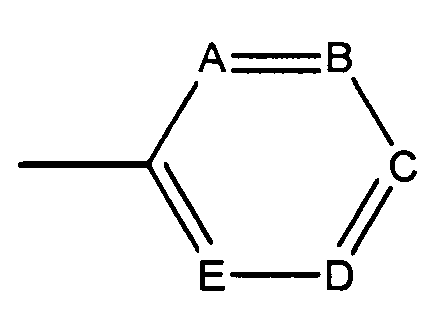

- The benzoxazine-based monomer of claim 1, selected from the group consisting of compounds represented by Formulae 2 to 21:


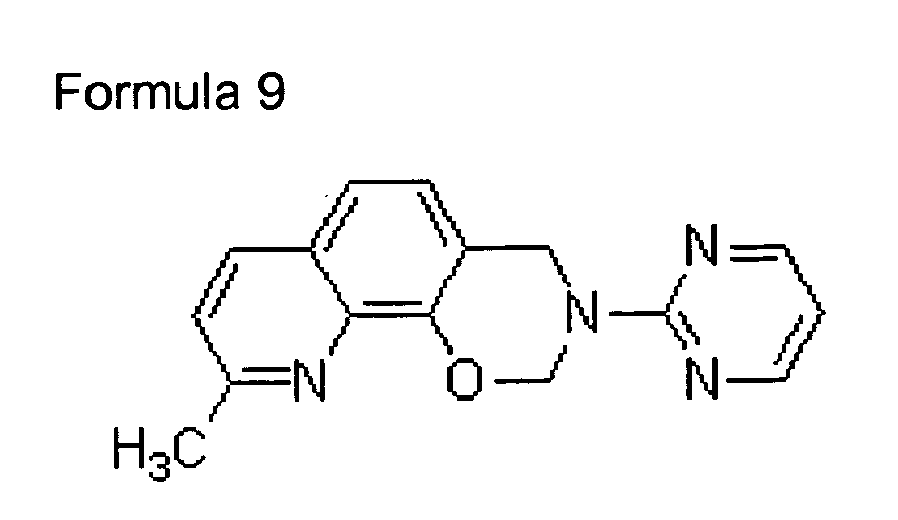


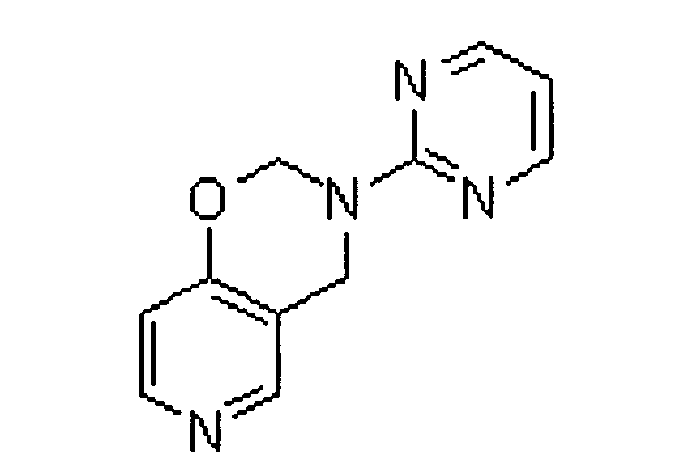


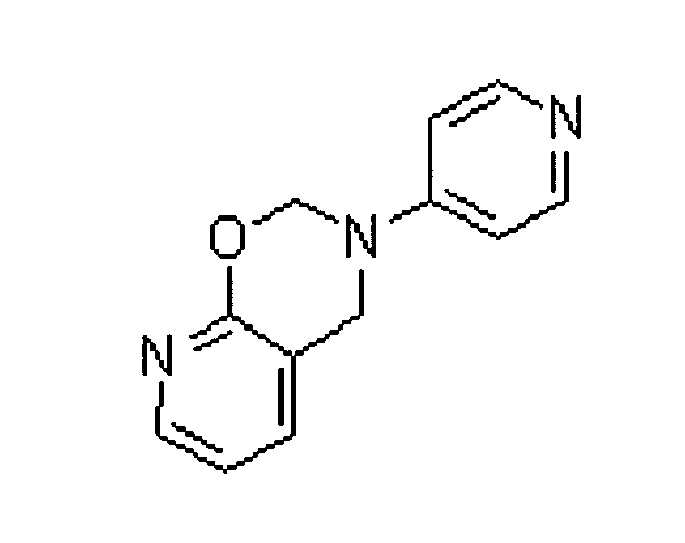


- A polymer of a benzoxazine-based monomer which is a polymerization product of the benzoxazine-based monomer of any one of claims 1 to 3 or a polymerization product of the benzoxazine-based monomer of any one of claims 1 to 3 and a crosslinkable compound.
- The polymer of claim 4, wherein the crosslinkable compound is at least one compound selected from the group consisting of polybenzimidazole (PBI), a polybenzimidazole-base complex, polybenzthiazole, polybenzoxazole, and polyimide.
- The polymer of claim 4 or 5, wherein the amount of the crosslinkable compound is in the range of 5 to 95 parts by weight based on 100 parts by weight of the benzoxazine-based monomer.
- An electrode for a fuel cell comprising a catalyst layer comprising the polymer of the benzoxazine-based monomer of any one of claims 4 to 6.
- The electrode of claim 7, wherein the catalyst layer comprises a catalyst, and the catalyst is:Pt;a metal-Pt alloy including Pt and at least one metal selected from the group consisting of Au, Pd, Rh, Ir, Ru, Sn, Mo, Co, and Cr; ora mixture including Pt and at least one metal selected from the group consisting of Au, Pd, Rh, Ir, Ru, Sn, Mo, Co, and Cr.
- The electrode of claim 7 or 8, wherein the catalyst layer further comprises at least proton conductor selected from the group consisting of a phosphoric acid and a C1-C20 organic phosphonic acid.
- The electrode of any one of claims 7 to 9, wherein the catalyst layer further comprises at least one binder selected from the group consisting of poly(vinylidene fluoride), polytetrafluoroethylene (PTFE), a tetrafluoroethylene-hexafuoroethylene copolymer, fluorinated ethylene propylene (FEP), styrene butadiene rubber (SBR) and polyurethane.
- An electrolyte membrane for a fuel cell comprising the polymer of the benzoxazine-based monomer of any one of claims 4 to 6.
- The electrolyte membrane of claim 11, further comprising at least one proton conductor selected from the group consisting of a phosphoric acid and a C1-C20 organic phosphonic acid.
- A fuel cell comprising: a cathode; an anode; and an electrolyte membrane interposed between the cathode and the anode,
wherein at least one of the cathode, the anode and the electrolyte membrane comprises the polymer of any one of claims 4 to 6.
Applications Claiming Priority (1)
| Application Number | Priority Date | Filing Date | Title |
|---|---|---|---|
| KR20070092146 | 2007-09-11 |
Publications (2)
| Publication Number | Publication Date |
|---|---|
| EP2036910A1 EP2036910A1 (en) | 2009-03-18 |
| EP2036910B1 true EP2036910B1 (en) | 2012-06-27 |
Family
ID=39967851
Family Applications (1)
| Application Number | Title | Priority Date | Filing Date |
|---|---|---|---|
| EP08164095A Ceased EP2036910B1 (en) | 2007-09-11 | 2008-09-10 | Benzoxazine-based monomer, polymer thereof, electrode for fuel cell including the same, electrolyte membrane for fuel cell includind the same, and fuel cell using the same |
Country Status (4)
| Country | Link |
|---|---|
| US (2) | US8252890B2 (en) |
| EP (1) | EP2036910B1 (en) |
| JP (1) | JP2009068010A (en) |
| KR (1) | KR101051705B1 (en) |
Families Citing this family (10)
| Publication number | Priority date | Publication date | Assignee | Title |
|---|---|---|---|---|
| EP2366729B1 (en) * | 2009-04-24 | 2015-01-07 | Samsung Electronics Co., Ltd. | Cross-linked polyazole, method of preparing the polyazole, electrode for fuel cell including the cross-linked polyazole, electrolyte membrane for fuel cell including the cross-linked polyazole, method of manufacturing the electrolyte membrane, and fuel cell including the cross-linked polyazole |
| US9006300B2 (en) | 2009-11-14 | 2015-04-14 | Samsung Electronics Co., Ltd. | Method for mechanically stabilizing nitrogen-containing polymers |
| US9051433B2 (en) | 2010-02-04 | 2015-06-09 | Samsung Electronics Co., Ltd. | Polymer and cross-linked polymer composition, electrode and electrolyte membrane including cross-linked polymer, and fuel cell including electrode and electrolyte membrane |
| US9112232B2 (en) | 2010-02-05 | 2015-08-18 | Samsung Electronics Co., Ltd. | Composition, polymer thereof, electrode and electrolyte membrane for fuel cell, and fuel cell including the same |
| KR101670966B1 (en) | 2010-02-09 | 2016-11-09 | 삼성전자주식회사 | Hyperbranched polymer, electrode for fuel cell comprising the hyperbranched polymer, electrolyte membrane for fuel cell comprising the hyperbranched polymer, and fuel cell using at least one of the electrode and the electrolyte membrane |
| JP5728252B2 (en) * | 2010-03-03 | 2015-06-03 | 三星電子株式会社Samsung Electronics Co.,Ltd. | Composition, method for producing the same, electrode using the composition, and fuel cell employing the electrode |
| EP3388419A1 (en) * | 2017-04-12 | 2018-10-17 | Leadiant Biosciences SA | Gli1 inhibitors and uses thereof |
| CN108912141A (en) * | 2018-07-19 | 2018-11-30 | 中国医学科学院医药生物技术研究所 | Gram-Negative bacillus inhibitor and its preparation and application |
| JP2022520945A (en) * | 2019-02-08 | 2022-04-04 | ザ トラスティーズ オブ コロンビア ユニヴァーシティ イン ザ シティ オブ ニューヨーク | Histone Acetyltransferase (HAT) Regulator and Its Use |
| CN113150229B (en) * | 2021-04-12 | 2022-07-05 | 中北大学 | High-carbon-residue fluorine-containing pyridine type benzoxazine resin and preparation method thereof |
Family Cites Families (79)
| Publication number | Priority date | Publication date | Assignee | Title |
|---|---|---|---|---|
| US4828699A (en) | 1987-08-20 | 1989-05-09 | Hoechst Celanese Corporation | Process for the production of microporous polybenzimidazole articles |
| US5098985A (en) | 1988-10-11 | 1992-03-24 | The Dow Chemical Company | Copolymers containing polybenzoxazole, polybenzothiazole and polybenzimidazole moieties |
| US5250633A (en) | 1991-01-29 | 1993-10-05 | Hoechst Celanese Corp. | Fibers and fibrets from blends of polybezimidazoles and aromatic polyamides, aromatic polyamide-hydrazides or aromatic polyamides containing heterocyclic linkages |
| JPH05283082A (en) | 1992-04-02 | 1993-10-29 | Mitsubishi Heavy Ind Ltd | Gas diffusion electrode and manufacturing method thereof |
| US5410012A (en) | 1993-03-05 | 1995-04-25 | The United States Of America As Represented By The Administrator Of The National Aeronautics And Space Administration | Poly(N-arylenebenzimidazoles) via aromatic nucleophilic displacement |
| US5412059A (en) | 1993-04-05 | 1995-05-02 | The United States Of America As Represented By The Administrator Of The National Aeronautics And Space Administration | Polybenzimidazoles via aromatic nucleophilic displacement |
| US5525436A (en) | 1994-11-01 | 1996-06-11 | Case Western Reserve University | Proton conducting polymers used as membranes |
| JPH1025343A (en) | 1996-07-10 | 1998-01-27 | Sumitomo Durez Co Ltd | Thermosetting resin composition |
| US6042968A (en) | 1997-07-16 | 2000-03-28 | Aventis Research & Technologies Gmbh & Co. Kg | Process for producing polybenzimidazole fabrics for use in fuel |
| US5945233A (en) | 1997-07-16 | 1999-08-31 | Avents Research & Technologies Gmbh & Co. Kg | Process for producing polybenzimidazole pastes and gels for use in fuel cells |
| JPH1197011A (en) | 1997-09-17 | 1999-04-09 | Unitika Ltd | Nonaqueous lithium secondary battery |
| AU3704400A (en) * | 1999-03-04 | 2000-09-21 | E.I. Du Pont De Nemours And Company | Fused bicyclic oxazinone and thiazinone fungicides |
| JP2001019844A (en) | 1999-07-09 | 2001-01-23 | Asahi Chem Ind Co Ltd | Curable polyphenylene ether resin composition |
| US6682842B1 (en) | 1999-07-31 | 2004-01-27 | The Regents Of The University Of California | Composite electrode/electrolyte structure |
| EP1230228A1 (en) | 1999-11-05 | 2002-08-14 | The Dow Chemical Company | High char yield benzoxazine compositions |
| WO2001043217A1 (en) | 1999-12-06 | 2001-06-14 | Hitachi Chemical Company, Ltd. | Fuel cell, fuel cell separator, and method of manufacture thereof |
| JP2001270891A (en) | 2000-03-24 | 2001-10-02 | Asahi Kasei Corp | Phosphate ester having a benzoxazine ring |
| JP2001271070A (en) | 2000-03-27 | 2001-10-02 | Asahi Kasei Corp | Flame retardants |
| JP2001345106A (en) | 2000-03-31 | 2001-12-14 | Japan Storage Battery Co Ltd | Fuel cell electrode and method of manufacturing the same |
| GB0016752D0 (en) | 2000-07-08 | 2000-08-30 | Johnson Matthey Plc | Electrochemical structure |
| WO2002014334A1 (en) | 2000-08-10 | 2002-02-21 | Nippon Kayaku Kabushiki Kaisha | Phenol compounds, resin compositions and products of curing thereof |
| US6855674B2 (en) | 2000-12-22 | 2005-02-15 | Infineum International Ltd. | Hydroxy aromatic Mannich base condensation products and the use thereof as soot dispersants in lubricating oil compositions |
| US20020127474A1 (en) | 2001-01-09 | 2002-09-12 | E.C.R.-Electro-Chemical Research Ltd. | Proton-selective conducting membranes |
| ES2233564T3 (en) | 2001-01-22 | 2005-06-16 | Huntsman Advanced Materials (Switzerland) Gmbh | INCOMBUSTIBLE AGENTS. |
| JPWO2002059996A1 (en) | 2001-01-26 | 2004-05-27 | 東レ株式会社 | Polymer electrolyte membrane, method for producing the same, and polymer electrolyte fuel cell using the same |
| JP2002260682A (en) | 2001-03-02 | 2002-09-13 | Nisshinbo Ind Inc | Composition for fuel cell separator, fuel cell separator, method for producing the same, and polymer electrolyte fuel cell |
| CA2379505A1 (en) | 2001-04-02 | 2002-10-02 | Hidenori Tanaka | Coating composition containing benzoxazine compound |
| JP2003012747A (en) | 2001-06-28 | 2003-01-15 | Nippon Steel Chem Co Ltd | Acetinyl group-containing curable resin |
| JP2003012924A (en) | 2001-07-02 | 2003-01-15 | Nippon Steel Chem Co Ltd | Curable resin composition |
| US6620905B1 (en) | 2002-02-23 | 2003-09-16 | National Starch And Chemical Investment Holding Corporation | Curable compositions containing benzoxazine |
| WO2003079475A1 (en) | 2002-03-20 | 2003-09-25 | Sansho Kakou Co., Ltd. | Separator for fuel cell, method for producing the same, and fuel cell using the same |
| JP2003286320A (en) | 2002-03-28 | 2003-10-10 | Nippon Steel Chem Co Ltd | Allyl group-containing thermosetting resin and cured product |
| US7125624B2 (en) | 2002-04-08 | 2006-10-24 | Nisshinbo Industries, Inc. | Fuel cell separator and method of manufacture |
| JP2003297386A (en) | 2002-04-08 | 2003-10-17 | Nisshinbo Ind Inc | Fuel cell separator and method of manufacturing the same |
| JP4228040B2 (en) | 2002-05-08 | 2009-02-25 | 東洋紡績株式会社 | POLYBENZAZOLE COMPOUND HAVING SULFONIC ACID GROUP AND / OR PHOSPHONIC GROUP, RESIN COMPOSITION CONTAINING THE SAME, RESIN MOLDED ARTICLE, SOLID POLYMER ELECTROLYTE MEMBRANE, SOLID ELECTROLYTE MEMBRANE / ELECTRODE CATALYST LAYER COMPLEX, AND METHOD FOR PRODUCING THE SAME |
| JP2006512428A (en) | 2002-05-13 | 2006-04-13 | ポリフューエル・インコーポレイテッド | Ion conductive block copolymer |
| JP2004043547A (en) | 2002-07-09 | 2004-02-12 | Nippon Steel Chem Co Ltd | Thermosetting resin having imide structure, cured product thereof and thermosetting resin composition |
| JPWO2004009708A1 (en) | 2002-07-19 | 2005-11-17 | 新日鐵化学株式会社 | Curable resin composition |
| US6987163B2 (en) | 2002-08-07 | 2006-01-17 | Research Foundation Of The State University Of New York | Modified polybenzimidazole (PBI) membranes for enhanced polymer electrochemical cells |
| DE10242017B4 (en) | 2002-09-11 | 2006-12-21 | Schill + Seilacher Aktiengesellschaft | Hardener for epoxy resins, its use and thus hardened epoxy resin |
| JP2004103494A (en) | 2002-09-12 | 2004-04-02 | Sansho Kako:Kk | Fuel cell separator, method for producing the same, and fuel cell using the fuel cell separator |
| DE10246461A1 (en) | 2002-10-04 | 2004-04-15 | Celanese Ventures Gmbh | Polymer electrolyte membrane containing a polyazole blend for use, e.g. in fuel cells, obtained by processing a mixture of polyphosphoric acid, polyazole and non-polyazole polymer to form a self-supporting membrane |
| JP3928611B2 (en) | 2002-10-08 | 2007-06-13 | 東洋紡績株式会社 | Polyarylene ether compounds, compositions containing them, and methods for producing them |
| US7649025B2 (en) | 2002-10-17 | 2010-01-19 | Toyo Boseki Kabushiki Kaisha | Composite ion-exchange membrane |
| JP4145640B2 (en) | 2002-11-28 | 2008-09-03 | 新日鐵化学株式会社 | Heat resistant adhesive film for printed circuit board and method for producing the same |
| JP4317005B2 (en) | 2003-03-25 | 2009-08-19 | 富士フイルム株式会社 | Silica gel composition, proton exchange membrane electrode membrane composite, and fuel cell |
| US20040206953A1 (en) | 2003-04-16 | 2004-10-21 | Robert Morena | Hermetically sealed glass package and method of fabrication |
| WO2004101509A2 (en) | 2003-05-06 | 2004-11-25 | Case Western Reserve University | Functionalized benzoxazines, polymers and copolymers thereof |
| US7157509B2 (en) | 2003-06-27 | 2007-01-02 | Henkel Corporation | Curable compositions |
| JP4834949B2 (en) | 2003-07-24 | 2011-12-14 | 東レ株式会社 | Thermosetting resin composition and electronic component using the same |
| US20050042961A1 (en) | 2003-08-18 | 2005-02-24 | Henkel Loctite Corporation | Curable compositions for advanced processes, and products made therefrom |
| KR100528345B1 (en) | 2003-08-29 | 2005-11-15 | 삼성에스디아이 주식회사 | Polymer Nano-Composite membrane and fuel cell adopting the same |
| JP4380272B2 (en) | 2003-09-08 | 2009-12-09 | 住友ベークライト株式会社 | Epoxy resin composition and semiconductor device using the same |
| JPWO2005029624A1 (en) | 2003-09-17 | 2007-11-15 | 旭化成株式会社 | Membrane-electrode assembly for polymer electrolyte fuel cell |
| KR100570640B1 (en) | 2003-10-22 | 2006-04-12 | 삼성에스디아이 주식회사 | Composite Materials for Bipolar Plates |
| KR100570745B1 (en) | 2003-10-30 | 2006-04-12 | 삼성에스디아이 주식회사 | Method for preparing poly (2,5-benzimidazole) |
| JP2005283082A (en) | 2004-03-29 | 2005-10-13 | Shigeyuki Nakamura | Combustion gas drying method |
| KR100542203B1 (en) | 2004-06-30 | 2006-01-10 | 삼성에스디아이 주식회사 | Binder composition for fuel cell, membrane-electrode assembly and method of manufacturing membrane-electrode assembly |
| US20070238723A1 (en) | 2004-10-15 | 2007-10-11 | Goble Stephen D | Benzoxazinyl-amidocyclopentyl-heterocyclic modulators of chemokine receptors |
| JP2006147165A (en) | 2004-11-16 | 2006-06-08 | Samsung Sdi Co Ltd | Solid polymer electrolyte membrane, manufacturing method thereof, and fuel cell using the same |
| JP5140907B2 (en) | 2005-06-03 | 2013-02-13 | 東洋紡株式会社 | PROTON CONDUCTIVE POLYMER MEMBRANE, MANUFACTURING METHOD THEREOF, AND FUEL CELL USING THE SAME |
| US8445141B2 (en) | 2005-06-09 | 2013-05-21 | Toyo Boseki Kabushiki Kaisha | Sulfonic acid group-containing polymer, method for producing the same, resin composition containing such sulfonic acid group-containing polymer, polymer electrolyte membrane, polymer electrolyte membrane/electrode assembly, and fuel cell |
| KR100818253B1 (en) | 2005-09-03 | 2008-04-01 | 삼성에스디아이 주식회사 | Polybenzoxazine Compounds, Electrolyte Membranes Containing the Same, and Fuel Cells Employing the Same |
| EP2218748B1 (en) | 2005-09-03 | 2012-10-10 | Samsung SDI Co., Ltd. | Polybenzoxazine-based compound, electrolyte membrane including the same, and fuel cell employing the electrolyte membrane |
| KR100818254B1 (en) | 2005-09-03 | 2008-03-31 | 삼성에스디아이 주식회사 | Polybenzoxazine Compounds, Electrolyte Membranes Containing the Same, and Fuel Cells Employing the Same |
| KR100754374B1 (en) | 2006-02-07 | 2007-08-31 | 삼성에스디아이 주식회사 | Electrolyte Membrane Using Polybenzoxazine Compound and Its Manufacturing Method |
| JP4839889B2 (en) | 2006-02-28 | 2011-12-21 | カシオ計算機株式会社 | Liquid crystal display |
| KR100818255B1 (en) | 2006-05-29 | 2008-04-02 | 삼성에스디아이 주식회사 | Polybenzoxazine Compounds, Electrolyte Membranes Containing the Same, and Fuel Cells Employing the Same |
| KR101386162B1 (en) | 2006-07-21 | 2014-04-18 | 삼성에스디아이 주식회사 | Electrode for fuel cell and fuel cell employing the same |
| TWI295288B (en) | 2006-08-17 | 2008-04-01 | Univ Nat Chunghsing | New route for the synthesis of benzoxazine |
| KR100745741B1 (en) | 2006-08-22 | 2007-08-02 | 삼성에스디아이 주식회사 | Membrane electrode assembly for fuel cell and fuel cell using same |
| KR100829552B1 (en) | 2006-11-22 | 2008-05-14 | 삼성에스디아이 주식회사 | Electrode additive for fuel cell, fuel cell electrode including same, manufacturing method thereof and fuel cell using same |
| KR100893523B1 (en) | 2006-12-15 | 2009-04-17 | 삼성에스디아이 주식회사 | Fuel cell electrode, manufacturing method thereof and fuel cell employing the same |
| KR100790854B1 (en) | 2006-12-29 | 2008-01-03 | 삼성에스디아이 주식회사 | Polymer electrolyte membrane and fuel cell having same |
| KR101537311B1 (en) | 2007-11-02 | 2015-07-17 | 삼성전자주식회사 | Electrolyte Membrane for fuel cell and fuel cell using the same |
| EP2062891B1 (en) | 2007-11-06 | 2012-08-08 | Samsung Electronics Co., Ltd. | Benzoxazine-based monomer, polymer thereof, electrode for fuel cell including the polymer, electrolyte membrane for fuel cell including the polymer, and fuel cell using the electrode |
| CN101220153B (en) | 2007-12-11 | 2010-04-07 | 山东大学 | Preparation method of dihydric phenol type phosphorus-containing high flame-retardant benzoxazine resin |
| EP2366729B1 (en) | 2009-04-24 | 2015-01-07 | Samsung Electronics Co., Ltd. | Cross-linked polyazole, method of preparing the polyazole, electrode for fuel cell including the cross-linked polyazole, electrolyte membrane for fuel cell including the cross-linked polyazole, method of manufacturing the electrolyte membrane, and fuel cell including the cross-linked polyazole |
| US20110189581A1 (en) | 2010-02-04 | 2011-08-04 | Samsung Electronics Co., Ltd. | Compound, cross-linked material thereof, double cross-linked polymer thereof, and electrolyte membrane, electrode for fuel cell and fuel cell including same |
-
2008
- 2008-09-10 EP EP08164095A patent/EP2036910B1/en not_active Ceased
- 2008-09-11 JP JP2008233674A patent/JP2009068010A/en not_active Withdrawn
- 2008-09-11 KR KR1020080090000A patent/KR101051705B1/en active Active
- 2008-09-11 US US12/208,664 patent/US8252890B2/en not_active Expired - Fee Related
-
2012
- 2012-07-27 US US13/560,321 patent/US8715881B2/en active Active
Also Published As
| Publication number | Publication date |
|---|---|
| JP2009068010A (en) | 2009-04-02 |
| EP2036910A1 (en) | 2009-03-18 |
| KR101051705B1 (en) | 2011-07-25 |
| KR20090027183A (en) | 2009-03-16 |
| US8252890B2 (en) | 2012-08-28 |
| US20120295181A1 (en) | 2012-11-22 |
| US20090075148A1 (en) | 2009-03-19 |
| US8715881B2 (en) | 2014-05-06 |
Similar Documents
| Publication | Publication Date | Title |
|---|---|---|
| EP2055706B1 (en) | Electrode and electrolyte membrane for fuel cell including a naphthoxazine based polymer and fuel cell using the electrode | |
| EP2433947B1 (en) | Phosphorous containing benzoxazine-based monomer | |
| EP2062891B1 (en) | Benzoxazine-based monomer, polymer thereof, electrode for fuel cell including the polymer, electrolyte membrane for fuel cell including the polymer, and fuel cell using the electrode | |
| EP2202261B1 (en) | Hyper-branched polymer, electrode for fuel cell including the hyper-branched polymer, electrolyte membrane for fuel cell including the hyper-branched polymer, and fuel cell including at least one of the electrode and the electrolyte membrane | |
| US8715881B2 (en) | Benzoxazine-based monomer, polymer thereof, electrode for fuel cell including the same, electrolyte membrane for fuel cell including the same, and fuel cell using the same | |
| EP2058321B1 (en) | Phosphorous containing monomer, polymer thereof, electrode for fuel cell including the polymer, electrolyte membrane for fuel cell including the polymer, and fuel cell using the electrode | |
| EP2221303B1 (en) | Benzoxazine-based monomer, polymer thereof, electrode for fuel cell including the polymer, electrolyte membrane for fuel cell including the polymer, and fuel cell using the electrode | |
| KR101138872B1 (en) | Naphthoxazine-based monomer, polymer thereof, electrode for fuel cell including the same, electrolyte membrane for fuel cell including the same, and fuel cell using the same | |
| KR101015504B1 (en) | Phosphorus-containing benzoxazine monomers, polymers thereof, and fuel cell electrodes comprising the same, electrolyte membranes for fuel cells comprising the same, and fuel cells employing the same |
Legal Events
| Date | Code | Title | Description |
|---|---|---|---|
| PUAI | Public reference made under article 153(3) epc to a published international application that has entered the european phase |
Free format text: ORIGINAL CODE: 0009012 |
|
| AK | Designated contracting states |
Kind code of ref document: A1 Designated state(s): AT BE BG CH CY CZ DE DK EE ES FI FR GB GR HR HU IE IS IT LI LT LU LV MC MT NL NO PL PT RO SE SI SK TR |
|
| AX | Request for extension of the european patent |
Extension state: AL BA MK RS |
|
| 17P | Request for examination filed |
Effective date: 20090812 |
|
| 17Q | First examination report despatched |
Effective date: 20091014 |
|
| AKX | Designation fees paid |
Designated state(s): DE FR GB IT |
|
| GRAP | Despatch of communication of intention to grant a patent |
Free format text: ORIGINAL CODE: EPIDOSNIGR1 |
|
| RIN1 | Information on inventor provided before grant (corrected) |
Inventor name: LEE, WONMOK Inventor name: PARK, JUNGOCK Inventor name: CHOI, SEONGWOO |
|
| GRAS | Grant fee paid |
Free format text: ORIGINAL CODE: EPIDOSNIGR3 |
|
| GRAA | (expected) grant |
Free format text: ORIGINAL CODE: 0009210 |
|
| AK | Designated contracting states |
Kind code of ref document: B1 Designated state(s): DE FR GB IT |
|
| REG | Reference to a national code |
Ref country code: GB Ref legal event code: FG4D |
|
| REG | Reference to a national code |
Ref country code: DE Ref legal event code: R096 Ref document number: 602008016693 Country of ref document: DE Effective date: 20120823 |
|
| RAP2 | Party data changed (patent owner data changed or rights of a patent transferred) |
Owner name: SAMSUNG ELECTRONICS CO., LTD. |
|
| PG25 | Lapsed in a contracting state [announced via postgrant information from national office to epo] |
Ref country code: IT Free format text: LAPSE BECAUSE OF FAILURE TO SUBMIT A TRANSLATION OF THE DESCRIPTION OR TO PAY THE FEE WITHIN THE PRESCRIBED TIME-LIMIT Effective date: 20120627 |
|
| PLBE | No opposition filed within time limit |
Free format text: ORIGINAL CODE: 0009261 |
|
| STAA | Information on the status of an ep patent application or granted ep patent |
Free format text: STATUS: NO OPPOSITION FILED WITHIN TIME LIMIT |
|
| 26N | No opposition filed |
Effective date: 20130328 |
|
| REG | Reference to a national code |
Ref country code: DE Ref legal event code: R097 Ref document number: 602008016693 Country of ref document: DE Effective date: 20130328 |
|
| REG | Reference to a national code |
Ref country code: FR Ref legal event code: PLFP Year of fee payment: 9 |
|
| REG | Reference to a national code |
Ref country code: FR Ref legal event code: PLFP Year of fee payment: 10 |
|
| REG | Reference to a national code |
Ref country code: FR Ref legal event code: PLFP Year of fee payment: 11 |
|
| PGFP | Annual fee paid to national office [announced via postgrant information from national office to epo] |
Ref country code: FR Payment date: 20210824 Year of fee payment: 14 |
|
| PGFP | Annual fee paid to national office [announced via postgrant information from national office to epo] |
Ref country code: GB Payment date: 20210824 Year of fee payment: 14 Ref country code: DE Payment date: 20210820 Year of fee payment: 14 |
|
| REG | Reference to a national code |
Ref country code: DE Ref legal event code: R119 Ref document number: 602008016693 Country of ref document: DE |
|
| GBPC | Gb: european patent ceased through non-payment of renewal fee |
Effective date: 20220910 |
|
| P01 | Opt-out of the competence of the unified patent court (upc) registered |
Effective date: 20230530 |
|
| PG25 | Lapsed in a contracting state [announced via postgrant information from national office to epo] |
Ref country code: FR Free format text: LAPSE BECAUSE OF NON-PAYMENT OF DUE FEES Effective date: 20220930 Ref country code: DE Free format text: LAPSE BECAUSE OF NON-PAYMENT OF DUE FEES Effective date: 20230401 |
|
| PG25 | Lapsed in a contracting state [announced via postgrant information from national office to epo] |
Ref country code: GB Free format text: LAPSE BECAUSE OF NON-PAYMENT OF DUE FEES Effective date: 20220910 |