EP2031135A1 - Working vehicle - Google Patents
Working vehicle Download PDFInfo
- Publication number
- EP2031135A1 EP2031135A1 EP07744444A EP07744444A EP2031135A1 EP 2031135 A1 EP2031135 A1 EP 2031135A1 EP 07744444 A EP07744444 A EP 07744444A EP 07744444 A EP07744444 A EP 07744444A EP 2031135 A1 EP2031135 A1 EP 2031135A1
- Authority
- EP
- European Patent Office
- Prior art keywords
- controller
- electric motor
- main battery
- inverter
- battery
- Prior art date
- Legal status (The legal status is an assumption and is not a legal conclusion. Google has not performed a legal analysis and makes no representation as to the accuracy of the status listed.)
- Granted
Links
Images





Classifications
-
- E—FIXED CONSTRUCTIONS
- E02—HYDRAULIC ENGINEERING; FOUNDATIONS; SOIL SHIFTING
- E02F—DREDGING; SOIL-SHIFTING
- E02F9/00—Component parts of dredgers or soil-shifting machines, not restricted to one of the kinds covered by groups E02F3/00 - E02F7/00
- E02F9/20—Drives; Control devices
- E02F9/2058—Electric or electro-mechanical or mechanical control devices of vehicle sub-units
- E02F9/2091—Control of energy storage means for electrical energy, e.g. battery or capacitors
-
- B—PERFORMING OPERATIONS; TRANSPORTING
- B60—VEHICLES IN GENERAL
- B60L—PROPULSION OF ELECTRICALLY-PROPELLED VEHICLES; SUPPLYING ELECTRIC POWER FOR AUXILIARY EQUIPMENT OF ELECTRICALLY-PROPELLED VEHICLES; ELECTRODYNAMIC BRAKE SYSTEMS FOR VEHICLES IN GENERAL; MAGNETIC SUSPENSION OR LEVITATION FOR VEHICLES; MONITORING OPERATING VARIABLES OF ELECTRICALLY-PROPELLED VEHICLES; ELECTRIC SAFETY DEVICES FOR ELECTRICALLY-PROPELLED VEHICLES
- B60L3/00—Electric devices on electrically-propelled vehicles for safety purposes; Monitoring operating variables, e.g. speed, deceleration or energy consumption
- B60L3/0023—Detecting, eliminating, remedying or compensating for drive train abnormalities, e.g. failures within the drive train
- B60L3/003—Detecting, eliminating, remedying or compensating for drive train abnormalities, e.g. failures within the drive train relating to inverters
-
- B—PERFORMING OPERATIONS; TRANSPORTING
- B60—VEHICLES IN GENERAL
- B60L—PROPULSION OF ELECTRICALLY-PROPELLED VEHICLES; SUPPLYING ELECTRIC POWER FOR AUXILIARY EQUIPMENT OF ELECTRICALLY-PROPELLED VEHICLES; ELECTRODYNAMIC BRAKE SYSTEMS FOR VEHICLES IN GENERAL; MAGNETIC SUSPENSION OR LEVITATION FOR VEHICLES; MONITORING OPERATING VARIABLES OF ELECTRICALLY-PROPELLED VEHICLES; ELECTRIC SAFETY DEVICES FOR ELECTRICALLY-PROPELLED VEHICLES
- B60L3/00—Electric devices on electrically-propelled vehicles for safety purposes; Monitoring operating variables, e.g. speed, deceleration or energy consumption
- B60L3/0023—Detecting, eliminating, remedying or compensating for drive train abnormalities, e.g. failures within the drive train
- B60L3/0046—Detecting, eliminating, remedying or compensating for drive train abnormalities, e.g. failures within the drive train relating to electric energy storage systems, e.g. batteries or capacitors
-
- B—PERFORMING OPERATIONS; TRANSPORTING
- B60—VEHICLES IN GENERAL
- B60L—PROPULSION OF ELECTRICALLY-PROPELLED VEHICLES; SUPPLYING ELECTRIC POWER FOR AUXILIARY EQUIPMENT OF ELECTRICALLY-PROPELLED VEHICLES; ELECTRODYNAMIC BRAKE SYSTEMS FOR VEHICLES IN GENERAL; MAGNETIC SUSPENSION OR LEVITATION FOR VEHICLES; MONITORING OPERATING VARIABLES OF ELECTRICALLY-PROPELLED VEHICLES; ELECTRIC SAFETY DEVICES FOR ELECTRICALLY-PROPELLED VEHICLES
- B60L3/00—Electric devices on electrically-propelled vehicles for safety purposes; Monitoring operating variables, e.g. speed, deceleration or energy consumption
- B60L3/04—Cutting off the power supply under fault conditions
-
- B—PERFORMING OPERATIONS; TRANSPORTING
- B60—VEHICLES IN GENERAL
- B60L—PROPULSION OF ELECTRICALLY-PROPELLED VEHICLES; SUPPLYING ELECTRIC POWER FOR AUXILIARY EQUIPMENT OF ELECTRICALLY-PROPELLED VEHICLES; ELECTRODYNAMIC BRAKE SYSTEMS FOR VEHICLES IN GENERAL; MAGNETIC SUSPENSION OR LEVITATION FOR VEHICLES; MONITORING OPERATING VARIABLES OF ELECTRICALLY-PROPELLED VEHICLES; ELECTRIC SAFETY DEVICES FOR ELECTRICALLY-PROPELLED VEHICLES
- B60L50/00—Electric propulsion with power supplied within the vehicle
- B60L50/10—Electric propulsion with power supplied within the vehicle using propulsion power supplied by engine-driven generators, e.g. generators driven by combustion engines
- B60L50/15—Electric propulsion with power supplied within the vehicle using propulsion power supplied by engine-driven generators, e.g. generators driven by combustion engines with additional electric power supply
-
- E—FIXED CONSTRUCTIONS
- E02—HYDRAULIC ENGINEERING; FOUNDATIONS; SOIL SHIFTING
- E02F—DREDGING; SOIL-SHIFTING
- E02F9/00—Component parts of dredgers or soil-shifting machines, not restricted to one of the kinds covered by groups E02F3/00 - E02F7/00
- E02F9/20—Drives; Control devices
- E02F9/2058—Electric or electro-mechanical or mechanical control devices of vehicle sub-units
- E02F9/2062—Control of propulsion units
- E02F9/207—Control of propulsion units of the type electric propulsion units, e.g. electric motors or generators
-
- E—FIXED CONSTRUCTIONS
- E02—HYDRAULIC ENGINEERING; FOUNDATIONS; SOIL SHIFTING
- E02F—DREDGING; SOIL-SHIFTING
- E02F9/00—Component parts of dredgers or soil-shifting machines, not restricted to one of the kinds covered by groups E02F3/00 - E02F7/00
- E02F9/20—Drives; Control devices
- E02F9/2058—Electric or electro-mechanical or mechanical control devices of vehicle sub-units
- E02F9/2095—Control of electric, electro-mechanical or mechanical equipment not otherwise provided for, e.g. ventilators, electro-driven fans
-
- E—FIXED CONSTRUCTIONS
- E02—HYDRAULIC ENGINEERING; FOUNDATIONS; SOIL SHIFTING
- E02F—DREDGING; SOIL-SHIFTING
- E02F9/00—Component parts of dredgers or soil-shifting machines, not restricted to one of the kinds covered by groups E02F3/00 - E02F7/00
- E02F9/20—Drives; Control devices
- E02F9/22—Hydraulic or pneumatic drives
- E02F9/2246—Control of prime movers, e.g. depending on the hydraulic load of work tools
-
- E—FIXED CONSTRUCTIONS
- E02—HYDRAULIC ENGINEERING; FOUNDATIONS; SOIL SHIFTING
- E02F—DREDGING; SOIL-SHIFTING
- E02F9/00—Component parts of dredgers or soil-shifting machines, not restricted to one of the kinds covered by groups E02F3/00 - E02F7/00
- E02F9/20—Drives; Control devices
- E02F9/22—Hydraulic or pneumatic drives
- E02F9/2278—Hydraulic circuits
- E02F9/2292—Systems with two or more pumps
-
- E—FIXED CONSTRUCTIONS
- E02—HYDRAULIC ENGINEERING; FOUNDATIONS; SOIL SHIFTING
- E02F—DREDGING; SOIL-SHIFTING
- E02F9/00—Component parts of dredgers or soil-shifting machines, not restricted to one of the kinds covered by groups E02F3/00 - E02F7/00
- E02F9/26—Indicating devices
- E02F9/267—Diagnosing or detecting failure of vehicles
-
- H—ELECTRICITY
- H02—GENERATION; CONVERSION OR DISTRIBUTION OF ELECTRIC POWER
- H02P—CONTROL OR REGULATION OF ELECTRIC MOTORS, ELECTRIC GENERATORS OR DYNAMO-ELECTRIC CONVERTERS; CONTROLLING TRANSFORMERS, REACTORS OR CHOKE COILS
- H02P27/00—Arrangements or methods for the control of AC motors characterised by the kind of supply voltage
- H02P27/04—Arrangements or methods for the control of AC motors characterised by the kind of supply voltage using variable-frequency supply voltage, e.g. inverter or converter supply voltage
- H02P27/06—Arrangements or methods for the control of AC motors characterised by the kind of supply voltage using variable-frequency supply voltage, e.g. inverter or converter supply voltage using DC to AC converters or inverters
-
- H—ELECTRICITY
- H02—GENERATION; CONVERSION OR DISTRIBUTION OF ELECTRIC POWER
- H02P—CONTROL OR REGULATION OF ELECTRIC MOTORS, ELECTRIC GENERATORS OR DYNAMO-ELECTRIC CONVERTERS; CONTROLLING TRANSFORMERS, REACTORS OR CHOKE COILS
- H02P29/00—Arrangements for regulating or controlling electric motors, appropriate for both AC and DC motors
- H02P29/02—Providing protection against overload without automatic interruption of supply
- H02P29/024—Detecting a fault condition, e.g. short circuit, locked rotor, open circuit or loss of load
- H02P29/0241—Detecting a fault condition, e.g. short circuit, locked rotor, open circuit or loss of load the fault being an overvoltage
-
- B—PERFORMING OPERATIONS; TRANSPORTING
- B60—VEHICLES IN GENERAL
- B60L—PROPULSION OF ELECTRICALLY-PROPELLED VEHICLES; SUPPLYING ELECTRIC POWER FOR AUXILIARY EQUIPMENT OF ELECTRICALLY-PROPELLED VEHICLES; ELECTRODYNAMIC BRAKE SYSTEMS FOR VEHICLES IN GENERAL; MAGNETIC SUSPENSION OR LEVITATION FOR VEHICLES; MONITORING OPERATING VARIABLES OF ELECTRICALLY-PROPELLED VEHICLES; ELECTRIC SAFETY DEVICES FOR ELECTRICALLY-PROPELLED VEHICLES
- B60L2200/00—Type of vehicles
- B60L2200/40—Working vehicles
-
- B—PERFORMING OPERATIONS; TRANSPORTING
- B60—VEHICLES IN GENERAL
- B60L—PROPULSION OF ELECTRICALLY-PROPELLED VEHICLES; SUPPLYING ELECTRIC POWER FOR AUXILIARY EQUIPMENT OF ELECTRICALLY-PROPELLED VEHICLES; ELECTRODYNAMIC BRAKE SYSTEMS FOR VEHICLES IN GENERAL; MAGNETIC SUSPENSION OR LEVITATION FOR VEHICLES; MONITORING OPERATING VARIABLES OF ELECTRICALLY-PROPELLED VEHICLES; ELECTRIC SAFETY DEVICES FOR ELECTRICALLY-PROPELLED VEHICLES
- B60L2240/00—Control parameters of input or output; Target parameters
- B60L2240/40—Drive Train control parameters
- B60L2240/52—Drive Train control parameters related to converters
- B60L2240/529—Current
-
- Y—GENERAL TAGGING OF NEW TECHNOLOGICAL DEVELOPMENTS; GENERAL TAGGING OF CROSS-SECTIONAL TECHNOLOGIES SPANNING OVER SEVERAL SECTIONS OF THE IPC; TECHNICAL SUBJECTS COVERED BY FORMER USPC CROSS-REFERENCE ART COLLECTIONS [XRACs] AND DIGESTS
- Y02—TECHNOLOGIES OR APPLICATIONS FOR MITIGATION OR ADAPTATION AGAINST CLIMATE CHANGE
- Y02T—CLIMATE CHANGE MITIGATION TECHNOLOGIES RELATED TO TRANSPORTATION
- Y02T10/00—Road transport of goods or passengers
- Y02T10/60—Other road transportation technologies with climate change mitigation effect
- Y02T10/64—Electric machine technologies in electromobility
-
- Y—GENERAL TAGGING OF NEW TECHNOLOGICAL DEVELOPMENTS; GENERAL TAGGING OF CROSS-SECTIONAL TECHNOLOGIES SPANNING OVER SEVERAL SECTIONS OF THE IPC; TECHNICAL SUBJECTS COVERED BY FORMER USPC CROSS-REFERENCE ART COLLECTIONS [XRACs] AND DIGESTS
- Y02—TECHNOLOGIES OR APPLICATIONS FOR MITIGATION OR ADAPTATION AGAINST CLIMATE CHANGE
- Y02T—CLIMATE CHANGE MITIGATION TECHNOLOGIES RELATED TO TRANSPORTATION
- Y02T10/00—Road transport of goods or passengers
- Y02T10/60—Other road transportation technologies with climate change mitigation effect
- Y02T10/70—Energy storage systems for electromobility, e.g. batteries
-
- Y—GENERAL TAGGING OF NEW TECHNOLOGICAL DEVELOPMENTS; GENERAL TAGGING OF CROSS-SECTIONAL TECHNOLOGIES SPANNING OVER SEVERAL SECTIONS OF THE IPC; TECHNICAL SUBJECTS COVERED BY FORMER USPC CROSS-REFERENCE ART COLLECTIONS [XRACs] AND DIGESTS
- Y02—TECHNOLOGIES OR APPLICATIONS FOR MITIGATION OR ADAPTATION AGAINST CLIMATE CHANGE
- Y02T—CLIMATE CHANGE MITIGATION TECHNOLOGIES RELATED TO TRANSPORTATION
- Y02T10/00—Road transport of goods or passengers
- Y02T10/60—Other road transportation technologies with climate change mitigation effect
- Y02T10/7072—Electromobility specific charging systems or methods for batteries, ultracapacitors, supercapacitors or double-layer capacitors
Definitions
- the present invention relates to a working vehicle having an electric motor driven by a battery as the drive power source, and more particularly relates to a working vehicle that operates by hydraulic oil supplied by a hydraulic pump driven by the electric motor.
- the drive power source is normally an engine.
- construction machinery with an electric motor as the power source is used (see for example Japanese Patent Application Laid-open No. 2004-225355 ).
- the power sources for these electric motors are a commercial power supply, or batteries on the construction machinery that are charged from a commercial power supply. Also, the operation of this type of electric motor is controlled using an inverter.
- the controller is also operated by electric power from the battery, so if a fault arises in the battery so that the battery cannot supply electric power, the whole working vehicle stops. Hence, the problem arises that it is not possible to warn the operator that there is a fault in the battery.
- the working vehicle according to the present invention is a working vehicle operated by a hydraulic actuator, comprising: a hydraulic pump that supplies hydraulic oil to a hydraulic actuator; an electric motor that drives the hydraulic pump; a battery that supplies direct current electric power; an inverter that drives the electric motor by converting the direct current electric power of the battery to alternating current electric power and supplies the alternating current electric power to the electric motor; a controller that controls the operation of the electric motor by the inverter; and a current sensor (for example, the voltage or current sensor 42 in the embodiments) that measures the magnitude of the load current flowing from the battery to the inverter, wherein the controller stops electric motor when the magnitude of the load current measured by the current sensor exceeds a predetermined threshold value for a predetermined continuous period of time.
- a hydraulic actuator comprising: a hydraulic pump that supplies hydraulic oil to a hydraulic actuator; an electric motor that drives the hydraulic pump; a battery that supplies direct current electric power; an inverter that drives the electric motor by converting the direct current electric power of the battery to alternating current electric
- the working vehicle according to the present invention is constituted as described above, even if a large load is applied to the electric motor and the inverter heats due to excess current, before the protective circuit of the inverter operates, in other words, before the inverter reaches a high temperature state and stops, the operation of the electric motor is stopped by the controller, so it is possible to immediately restart work using the working vehicle, and work efficiency is improved.
- the present invention further includes an electric motor relay (for example, the second relay 147 in the embodiments) that makes and breaks the connection between the battery (this is also called the main battery) and the inverter; a controller which is operated by direct current electric power from the main battery, and which controls the operation of the hydraulic actuator and the inverter, and makes and breaks the connection between the main battery and the inverter in use of the electric motor relay; a controller relay (for example, the first relay 146 in the embodiments) that makes and breaks the connection between the main battery and the controller; a power source monitoring controller that monitors the state of the main battery and that makes and breaks the connection between the main battery and the controller in use of the controller relay; a backup battery that supplies electric power to the power source monitoring controller; and a key switch that makes and breaks the connection between the power source monitoring controller and the backup battery.
- an electric motor relay for example, the second relay 147 in the embodiments
- the controller which is operated by direct current electric power from the main battery, and which controls the operation of the hydraulic actuator and the invert
- configuration is employed to execute: when the power source monitoring controller and the backup battery are connected by the key switch and the power source monitoring controller is operating, a first step in which the power source monitoring controller obtains the state of the main battery and determines whether the main battery can be used or not; a second step in which the power source monitoring controller connects the main battery and the controller in use of the controller relay and starts up the controller when judgment is made in the first step that the main battery can be used; and a third step in which the controller starts the electric motor by connecting the inverter and the main battery in use of the electric motor relay.
- this type of working vehicle has a protective circuit that obtains the status of the main battery, and in the first step, the power source monitoring controller supplies electric power to the protective circuit from the backup battery and starts up the protective circuit, and then obtains the status of the main battery from the protective circuit.
- this type of working vehicle has warning means (for example, the warning pilot lamp 152 in the embodiments) for warning that the main battery cannot be used, and in the first step, when determination is made that the main battery cannot be used, the power source monitoring controller issues a warning by the warning means.
- warning means for example, the warning pilot lamp 152 in the embodiments
- this type of working vehicle has a DC-DC converter for converting the direct current voltage of the main battery to the voltage for operating the power source monitoring controller, and the controller relay connects the main battery and the controller and Connects the output of the DC-DC converter to the backup battery and the power source monitoring controller.
- the working vehicle according to the present invention is constituted as described above, by providing the power source monitoring controller that controls the supply of electric power to the inverter separately from the controller, monitors the main battery, as well as controls the supply of electric power to the controller, and the backup battery that allows the power source monitoring controller to operate even when electric power is not supplied from the main battery in this way, even if a fault arises in the main battery, all processes are not stopped.
- the fault is detected by the power source monitoring controller and it is possible to provide a warning using the warning means, so it is possible to make the operator that is operating the power shovel immediately aware of the fault in the main battery.
- the process when electric power is turned on is capable of turning on the power supply in turn starting with the power source monitoring controller, so it is possible to simplify the process and constitution of the power source monitoring controller and the controller.
- the power source monitoring controller when electric power is supplied to the controller when the main battery is in the normal state, and at the same time the power source monitoring controller is operated by the main battery and the backup battery is charged, if a fault arises in the main battery, the power source monitoring controller can be operated by the backup battery.
- a crawler type power shovel 1 is explained as an example of a working vehicle according to the present invention, using Fig. 1 .
- This power shovel 1 is intended to be used in comparatively enclosed spaces such as underground and the like, and operates by using electrical power from a battery.
- the power shovel 1 includes a travel bogey 4 that forms a travel device 2, a blade 9 provided to the rear of the travel bogey 4 that is capable of swiveling vertically, a rotation platform 11 that is capable of rotating provided above the travel bogey 4, a power shovel mechanism 13 swivelably connected to the front of the rotation platform 11, and an operator's cabin 15 provided above the rotation platform 11.
- the travel device 2 includes the approximately H-shaped travel bogey 4, and a travel mechanism 3 provided on the left and right of the travel bogey 4.
- the travel mechanism 3 includes a drive sprocket wheel 5 provided to the front and an idler wheel 6 (on occasions the drive sprocket wheel 5 and the idler wheel 6 will be referred to collectively as the "crawler wheels") provided to the rear on the left and right of the travel bogey 4, and a pair of left and right crawler tracks 7 wound around the two wheels 5, 6.
- Each of the drive sprocket wheels 5 is driven by left and right drive motors (hydraulic motors), which are not shown on the drawings, so that the power shovel 1 can move.
- the rotation platform 11 can be rotated relative to the travel bogey 4 by a rotation motor (hydraulic motor), which is not shown on the drawings.
- the power shovel mechanism 13 includes a boom 16 swivelably connected to the front of the rotation platform 11 so that the boom 16 can be freely raised and lowered, an arm 17 swivelably connected to the top of the boom 16 so that the arm 17 can be freely swiveled vertically in the plane of vertical movement of the boom 16, and a bucket 18 connected to the top of the arm 17 so that the bucket 18 can be freely swiveled.
- the boom 16 is raised and lowered by a boom cylinder 21, the arm 17 is swiveled by an arm cylinder 22, and the bucket 18 is swiveled by a bucket cylinder 23.
- the cylinders and the drive motors referred to above and the rotation motor are driven by hydraulic oil supplied from a hydraulic unit 30, as shown in Fig. 2 , so in the following explanation, these are collectively referred to as the "hydraulic actuator 20". Also, operation of the power shovel mechanism 13 is carried out using an operating device 14 provided within the operator's cabin 15.
- the hydraulic unit 30 includes an electric motor 31, a hydraulic pump 32 that is driven by the electric motor 31 and that outputs hydraulic oil at a specific oil pressure and flow rate, a tank 33 in which hydraulic oil accumulates, a control valve (electromagnetic proportional valve) 34 that controls the supply of hydraulic oil output from the hydraulic pump 32 to the hydraulic actuator 20 in a supply direction and supply flow rate in accordance with the manipulation of the operating device 14, and an oil cooler 35 that cools the hydraulic oil whose temperature has risen.
- Operation signals output from the operating device 14 are input to a controller 40, which is described later, and the controller 40 outputs command signals to the control valve 34 in accordance with the operation signals so that the operation of control valve 34 is controlled.
- the hydraulic pump 32 includes three pumps 32a through 32c, and the three pumps 32a through 32c are driven simultaneously by the electric motor 31.
- the first pump 32a supplies hydraulic oil to the actuator that drives the sprocket wheel 5 for driving right and the boom cylinder 21 that drives the boom 16
- the second pump 32b supplies hydraulic oil to the actuator that drives the sprocket wheel 5 for driving left
- the arm cylinder 22 that drives the arm 17, and the bucket cylinder 23 that drives the bucket 18
- the third pump 32c supplies hydraulic oil to the rotation motor that rotates the rotation platform 11 and the actuator that drives the blade 9.
- direct current electric power supplied from a battery 50 is converted into alternating current electric power having a predetermined voltage and frequency by an inverter 41 and supplied to drive the electric motor 31.
- An interior permanent magnet (IPM) motor or the like, for example, may be used as the electric motor 31.
- the power shovel 1 is driven using hydraulic oil supplied by controlling the control valve 34 and the inverter 41, whose operation is controlled by the controller 40.
- the output hydraulic pressure of the pumps 32a through 32c that constitutes the hydraulic pump 32 is measured using hydraulic sensors 36 (36a through 36c), and the measurement values are input to the controller 40.
- a voltage and current sensor 42 is provided between the battery 50 and the inverter 41 to measure the output voltage Vo of the battery 50 and the load current Io flowing into the inverter 41, and the measurement values are input to the controller 40.
- an acceleration setting switch 24 is provided in the operator's cabin 15, in order that the operator can set the value of the voltage (hereinafter referred to as the "acceleration amount (power level)" applied to the electric motor 31 from the inverter 41, and the setting value is input to the controller 40.
- control of the electric motor 31 by the controller 40 is explained.
- operation signals are output from the operating device 14 in accordance with the amount of manipulation of the operating device 14, the controller 40 outputs command signals to the control valve 34 in accordance with the operation signals, and controls the operation of the hydraulic actuator 20. Therefore, when hydraulic oil is supplied to the hydraulic actuator 20 to drive the power shovel 1, the electric motor 31 is rotated at high speed to supply hydraulic oil from the hydraulic pump 32, and conversely, when the hydraulic actuator 20 is stopped, the electric motor 31 is rotated at low speed to reduce the electric power consumption of the battery 50.
- the relationship between the voltage Vi applied to the electric motor 31 and the motor efficiency varies in accordance with the size of the load applied to the electric motor 31, so in the present embodiment, the operator can select the acceleration amount (value of voltage applied to the electric motor 31) in three stages (L, M, H) using the acceleration setting switch 24, in accordance with the operating conditions of the power shovel 1.
- the electric motor 31 at the acceleration amount L near the applied voltage V 1 where the efficiency of the motor is best under light loads, operate the electric motor 31 at the acceleration amount M near the applied voltage V 2 where the efficiency of the motor is best under medium loads, and operate the electric motor 31 at the acceleration amount H near the applied voltage V 3 where the efficiency of the motor is best under heavy loads.
- the controller 40 sets the minimum rotation speed R L , R M , R H of the electric motor 31 in accordance with the acceleration amount (L, M, H) selected using the acceleration setting switch 24, to increase the rotation speed in accordance with the fluctuation in the load of the electric motor 31 (fluctuation in load current Io) (in the following explanation this increase in rotation speed is referred to as the "acceleration amount ⁇ R L , ⁇ R M , ⁇ R H ").
- the controller 40 determines that a state of no manipulation has continued for a predetermined period of time, the electric motor 31 is controlled (the inverter 41 is commanded to output the idling rotation speed R I ) to rotate at the idling rotation speed R I (where R I ⁇ R L ⁇ R M ⁇ R H ).
- the minimum rotation speeds R L , R M , R H and acceleration amounts ⁇ R L , ⁇ R M , ⁇ R H are specified to the inverter 41.
- R MAX of the electric motor 31 is 2400 rpm
- the minimum rotation speed R L in L mode is 1400 rpm
- the minimum rotation speed R M in M mode is 1700 rpm
- the minimum rotation speed R H in H mode is 2000 rpm
- the idling rotation speed R I is 500 rpm.
- the acceleration amount ⁇ R L is controlled so that the rotation speed of the electric motor 31 does not exceed the minimum rotation speed R M in M mode
- M mode the acceleration amount ⁇ R M is controlled so as not to exceed the minimum rotation speed R H when in H mode
- the acceleration amount ⁇ R H is controlled so that R MAX is not exceeded.
- Fig. 6 control of the operation of the electric motor 31 using the controller 40 is explained using Fig. 6 .
- the controller 40 issues commands specifying the rotation speed and the applied voltage of the electric motor and 31 to the inverter 41, and the inverter 41 controls the operation of supplying electric motor 31 with alternating current electric power based on the values of these commands.
- the symbol A enclosed within a circle appearing after steps S105, S106, and S107 means go to the symbol A enclosed in a circle immediately after the start.
- the controller 40 starts the motor control S 100.
- the controller 40 first monitors for operation signals output from the operating device 14, and determines whether there has been operation manipulation or not (S101).
- the controller 40 next monitors the load current Io, and determines whether there has been a load fluctuation or not (S102), when it is determined that there has been a load fluctuation, the acceleration amount is calculated in accordance with the selected acceleration amount and the result is set (S103), when it is determined that there has been no load fluctuation the acceleration amount is set to zero (S 104).
- the controller 40 instructs the inverter 41 to set the rotation speed of the electric motor 31 to the sum of the set acceleration amount ( ⁇ R L , ⁇ R M , or ⁇ R H ) and the minimum rotation speed (R L , R M , or R H ) in accordance with the acceleration amount, and the value of the voltage corresponding to the set acceleration amount as the value of voltage applied to the electric motor 31 (step S105), and the procedure returns to step S101.
- step S 101 determines whether there has been a predetermined continuous period of time with no operation.
- step S106 determines whether there has been a predetermined continuous period of time with no operation.
- the controller 40 sets the rotation speed of the electric motor 31 to the idling rotation speed R I , and instructs the inverter 41 to set the value of voltage applied to the electric motor 31 to the value of voltage in accordance with the set acceleration amount (step S 107), the procedure returns to step S101, and when it determined that the state of no operation manipulation has not continued for the predetermined period of time, the procedure returns as it is to step S101.
- the current set acceleration amount (L, M, H), the output oil pressure P1 through P3 from the first through third pumps 32a through 32c, the load current Io flowing in the inverter 41, and battery 50 output voltage Vo are used as parameters in the calculation.
- the calculated acceleration amount may be obtained in accordance with these parameters from a table set in advance in the controller 40, or by inserting these parameters into a predetermined calculation equation in the controller 40.
- the acceleration amount can be set using the acceleration setting switch 24 in accordance with the load applied to the electric motor 31, so it is possible to operate the electric motor 31 with good efficiency, and electric power of the battery 50 can be effectively used.
- the response speed of the electric motor 31 is very high compared with an engine, and it is possible to determine the load applied to the electric motor 31 from the load current and control the rotation speed to the optimum rotation speed by the controller 40. Therefore, even though in real time the rotation speed of the electric motor 31 fluctuates, the response speed is fast so the fluctuation of the hydraulic pressure of the hydraulic pump 32 is virtually unnoticed.
- the controller 40 controls the opening of the control valve 34 in accordance with the manipulation of the operating device 14, at the same time the rotation speed of the electric motor 31 is controlled to either accelerate or decelerate.
- the controller 40 controls both the control valve 34 (the control valve that supplies hydraulic oil to the travel motor) and the electric motor 31.
- hydraulic oil is applied to the hydraulic actuator 20 in accordance with the acceleration or deceleration manipulation of the power shovel 1, and in addition the hydraulic oil necessary for this operation is supplied from the hydraulic pump 32.
- the power shovel 1 may suddenly accelerate or decelerate, so the operability will be poor. Therefore, in the present embodiment, when the electric motor 31 is accelerated or decelerated and the degree of opening of the control valve 34 is varied simultaneously (for example, the time t 1 and t 2 in Fig. 7 ), the opening or closing operation of the control valve 34 is output as a ramp, and controlled by the controller 40 to open or close in a predetermined period of time. In this way the fluctuation in the hydraulic oil supply to the hydraulic actuator 20 is made gentle, and it is possible to prevent sudden fluctuations in operation.
- the degree of opening of the control valve 34 is not varied, but when the speed of the electric motor 31 is increased or decreased due to load fluctuations or the like, the output oil pressure increases or decreases in accordance with the increase or decrease in the speed of the electric motor 31, and the speed of the hydraulic actuator 20 may also increase or decrease.
- the controller 40 causes the rotation speed of the electric motor 31 to increase and increase the supply of hydraulic oil (the time t 3 in Fig.
- the controller 40 monitors the output voltage Vo of the battery 50, and when the output voltage Vo falls below a predetermined threshold, the load applied to the electric motor 31 is reduced to stabilize the output voltage Vo of the battery 50. For example, if the rotation speed being specified for a electric motor 31 is low, a command to increase the rotation speed is output to the inverter 41, and the rotation speed of the electric motor 31 is increased. In this way, the load current Io flowing in the inverter 41 is reduced, so the variation in the output voltage Vo can also be reduced. Also, when the rotation speed being specified for the electric motor 31 is high, the degree of opening of the control valve 34 is reduced, so the load on the hydraulic pump 32 is reduced. In this way, the load on the electric motor 31 is reduced, and as a result the load current Io is reduced, and the variation in the output voltage Vo can also be reduced.
- the operator sets the acceleration amount, in other words, sets the value of voltage applied to the electric motor 31 using the acceleration setting switch 24.
- the inverter 41 applies a voltage to the electric motor 31 in accordance with the voltage value commanded by the controller 40, and controls the electric motor 31 until the rotation speed is the rotation speed commanded by the controller 40. Therefore, when for example traveling with the acceleration amount L selected, if a spin turn or a pivot turn is carried out, the load applied to the electric motor 31 is increased, and an excess current flows in the inverter 41 in order to maintain the rotation speed of the electric motor 31.
- the load current Io is monitored by the controller 40, and controlled so that the temperature does not rise to the temperature at which the protective circuit of the inverter 41 operates.
- the control by the controller 40 monitors the output current Io and when it is detected that an excess current state has continued for a predetermined period of time (S200), the inverter 41 is controlled to stop the electric motor 31, and a warning pilot lamp 25 provided within the operator's cabin 15 is lit, to warn the operator that the electric motor 31 has been stopped because of an excess current (S201).
- a reset button 26 is provided within the operator's cabin 15, and when the electric motor 31 has been stopped, the controller 40 waits for the reset button 26 to be pressed (S202).
- the load current Io flowing in the inverter 41 is monitored by the controller 40, and when the state of excess current has continued for a predetermined period of time, the electric motor 31 is stopped, so stoppage caused by heating of the inverter 41 is prevented even when the acceleration setting switch 24 is incorrectly set, or excess current is flowing in the inverter 41, and by operating the reset button 26, it is possible to immediately continue (restart) operation of the power shovel 1.
- a second embodiment will be explained with reference to Figs. 10 through 12 .
- the present embodiment is also applied to the crawler type power shovel 1 shown in Fig. 1 , but to avoid duplication of explanation in the following, the same parts are given the same number and the same name, and their explanation has been omitted.
- the symbol A enclosed in a circle after step S240 means move to connect to the symbol A enclosed within a circle immediately following the start.
- the hydraulic unit 30 includes the electric motor 31, the hydraulic pump 32 that outputs hydraulic oil at a predetermined pressure and flow rate and that is driven by the electric motor 31, the tank 33 that stores hydraulic oil, the control valve (electromagnetic proportional valve) 34 that controls the supply of hydraulic oil output from the hydraulic pump 32 to the hydraulic actuator 20 in a supply direction and with a flow rate in accordance with its the manipulation of the operating device 14, an oil cooler 35 that cools the hydraulic oil whose temperature has risen, and so on.
- Operation signals output from the operating device 14 are input to a controller 142, which is explained later, and the controller 142 controls the control valve 34 by outputting command signals to the control valve 34 in accordance with the operation signals.
- Direct current electric power supplied from the main battery unit 150 is converted into alternating current electric power having a predetermined voltage and frequency by an inverter 143 and supplied to the electric motor 31.
- Amain battery unit 150 is constituted by a lithium ion battery, and includes a main battery 150a capable of outputting direct current high voltage (for example, direct current 336V), and a protective circuit 150b that obtains the status of and protects the main battery 150a.
- the power supply system 140 includes an power source monitoring controller 141 that monitors the output voltage and status of the main battery unit 150, and a controller 142 that controls the inverter 143 and the control valve 34 to operate electric motor 31 and hydraulic actuator 20, as well as connecting and disconnecting the electric power supplied to the inverter 143.
- the power supply system 140 includes a backup battery 144 that is constituted by a lithium ion battery that outputs a direct current voltage (for example, 12.6V direct current) for operating the power source monitoring controller 141, and the backup battery 144 and the power source monitoring controller 141 are connected and disconnected by a key switch (main power supply switch) 145 provided within the operator's cabin 15.
- the power source monitoring controller 141 supplies electric power from the backup battery 144 to the protective circuit 150b of the main battery unit 150, and obtains the status of the main battery 150a from the protective circuit 150b.
- the main battery 150a of the main battery unit 150 is connected to and supplies electric power to the controller 142 and the inverter 143.
- the main battery 150a and the controller 142 are connected by a first contact point 146a of a first relay 146, so the connection between the main battery 150a and the controller 142 is made and broken by the first relay 146.
- the main battery 150a and the inverter 143 are connected by a contact point 147a of a second relay 147, so the connection between the main battery 150a and the inverter 143 is made and broken by the second relay 147.
- the controller 142 includes a DC-DC converter 148 that converts high voltage direct current voltage supplied from the main battery 150a into a low voltage direct current voltage (the voltage for operating the power source monitoring controller 141), the output of the DC-DC converter 148 is connected between the backup battery 144 and the key switch 145 via a protective diode 151, in other words, connected to the power source monitoring controller 141 and the backup battery 144, and these connections are made and broken by a second contact point 146b of the first relay 146.
- the first and second contact points 146a, 146b of the first relay 146 are opened and closed by the control of the controller 141.
- the first and second contact points 146a, 146b are normally maintained disconnected (OFF state), and when a voltage is applied to the first relay 146 from the power source monitoring controller 141 the first and second contact points 146a, 146b are turned ON, and when the contact point 146a and the contact point 146b are connected, the main battery 150a and the controller 142, as well as the DC-DC converter 148 and the power source monitoring controller 141 and a backup battery 144 are connected.
- the contact point 147a of the second relay 147 is connected and disconnected by the control of the controller 142.
- the contact point 147a is normally in the disconnected state (OFF state), and when a voltage is applied to the second relay 147 from the controller 142 the contact point 147a is turned ON, the contact point 147a is connected, and the main battery 150a and the inverter 143 are connected.
- the output values of a hydraulic pressure sensor 36 that measures the output pressure of the hydraulic pump 32 provided in the hydraulic unit 30, and the measured values of a current sensor 149 that measures the load current supplied to the inverter 143 from the main battery 150a are input to the controller 142.
- the power source monitoring controller 141 includes a first pilot lamp 141a that indicates the ON state of the first relay 146, in other words, the state in which electric power is being supplied to the controller 142, and a power supply switch 141b that turns the first relay 146 ON when pressed while the first relay 146 is in the OFF state, and a warning pilot lamp 152 for notifying that a fault has arisen in the main battery unit 150.
- the controller 142 includes a second pilot lamp 142a that indicates the ON state of the second relay 147, in other words, indicates that electric power is being supplied to the inverter 143, and a motor start up switch 142b which when pressed while the second relay 147 is in the OFF state turns the second relay 147 ON.
- the first and second pilot lamps 141a, 142a, the warning pilot lamp 152, the electric power switch 141b, and the motor start up switch 142b are disposed within the operator's cabin 15.
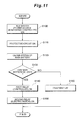
- step S 100 When the operator positioned in the operator's cabin 15 turns on the key switch 145, which is disposed within the operator's cabin 15, electric power is supplied from the backup battery 144 to the power source monitoring controller 141, and the power source monitoring controller 141 starts up (step S 100).
- the power source monitoring controller 141 first supplies electric power to the protective circuit 150b of the main battery unit 150 to start up the protective circuit 150b, and the protective circuit 150b starts to obtain the status of the main battery 150a (step S110).
- the power source monitoring controller 141 obtains the status of the main battery 150a from the protective circuit 150b (step S120), and determines whether the main battery 150a can be used or not (step S 130). For example, if the main battery 150a is excessively discharged or the like, it is determined that the main battery 150a cannot be used, so the power source monitoring controller 141 lights the warning pilot lamp 152, and the power supply start up process is terminated (step S160).
- the power source monitoring controller 141 turns the first relay 146 ON, and electric power is supplied from the main battery 150a to the controller 142, so the controller 142 is started, and the first pilot lamp 141a is lit (step S 140).
- the first relay 146 is in the ON state, electric power is supplied from the DC-DC converter 148 to the power source monitoring controller 141 and the backup battery 144, and subsequently the power source monitoring controller 141 operates with electric power supplied from the DC-DC converter 148, and charging of the backup battery 144 starts.
- the controller 142 turns the second relay 147 ON, electric power is supplied from the main battery 150a to the inverter 143, the inverter 143 is controlled to supply the electric motor 31 with alternating current electric power at a predetermined voltage and frequency, the electric motor 31 starts up, the second pilot lamp 142a is lit (step S 140), and the electric power startup process of the power supply system 140 is terminated.
- the electric power saving control is a control to prevent waste of electric power in the charged main battery 150a when it is not necessary to supply hydraulic oil to the hydraulic actuator 20, by stopping the electric motor 31, and stopping the controller 142.
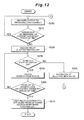
- Fig. 12 shows the control by the controller 142, and when the power supply start up process has terminated as described above, the electric power saving control is started.
- the controller 142 measures the output oil pressure and the load current using the hydraulic pressure sensor 36 and the current sensor 149 (step S200). Then, it is determined whether within a set period of time (for example, five seconds) the output pressure or the load current have varied (step S210), if there is a variation, the procedure returns to step S200 and repeats this process. On the other hand, when there is no variation in the output pressure and the load current within the set period of time, the controller 142 turns the second relay 147 off, so the power supply to the inverter 143 is disconnected, the electric motor 31 stops, and the second pilot lamp 142a is turned off (step S220).
- a set period of time for example, five seconds
- the controller 142 determines whether the motor start up switch 142b is turned ON or not (step S230). When it is determined that the motor start up switch 142b is ON, the second relay 147 is turned ON, the electric motor 31 is started by supplying electric power to the inverter 143, and the second pilot lamp 142a is lit (step S240). Then, the procedure returns to step S200, and the above process is repeated.
- step S230 when it is determined that the motor start up switch 142b is not on, the controller 142 obtains the state of manipulation of the operating device 14 or the like (step S250), determines whether within a set period of time there has been a state of no manipulation or control (step S260), and when there has not been a state of no manipulation or control the procedure returns to step S230 and this process is repeated.
- step S230 when it is determined that the state of no manipulation or control has continued during the set period of time, the controller 142 transmits a command signal to the power source monitoring controller 141 (step S270). Then, when the power source monitoring controller 141 receives the command signal from the controller 142, the first relay 146 is turned off, the electric power supply to the controller 142 is turned off and the controller 142 is stopped, first pilot lamp 141a is turned off, the electric power supply to the protective circuit 150b of the main battery unit 150 is stopped, and the sleep mode is activated.
- the power source monitoring controller 141 stops operation except for monitoring whether the power supply switch 141b has been pressed, so the electric power consumption of the backup battery 144 is minimized as much as possible. Then, when it is detected that the power supply switch 141b has been pressed, the power source monitoring controller 141 terminates the sleep mode, implements the process from step S110 in the power supply start up process shown in Fig. 11 , the first and second relays 146, 147 are turned on, electrical power is supplied to the controller 142 and the inverter 143, and the electric motor 31 is started.
- the power source monitoring controller 141 that controls the supply of electric power to the inverter 143 separately from the controller 142, monitors the main battery unit 150, as well as controls the supply of electric power to the controller 142, and the backup battery 144 that allows the power source monitoring controller 141 to operate even when electric power is not supplied from the main battery unit 150, even if a fault arises in the main battery 150a, this fault is detected by the power source monitoring controller 141 and it is possible to provide a warning using the warning pilot lamp 152 or the like, so it is possible to make the operator that is operating the power shovel 1 immediately aware of the fault in the main battery unit 150.
- the process when electric power is turned ON as described above is capable of turning on the power supply in turn starting with the power source monitoring controller 141, so it is possible to simplify the process and constitution of the power source monitoring controller 141 and the controller 142. Also, when electric power is supplied to the controller 142 when the main battery 150a is in a normal state, and at the same time the power source monitoring controller 141 is operated by the main battery 150a and the backup battery 144 is charged, if a fault arises in the main battery 150a, the power source monitoring controller 141 can be operated by the backup battery 144.
- the supply state of hydraulic oil to the hydraulic actuator 20 and the manipulation state of the operating device 14 are monitored by the controller 142, and when oil pressure is not necessary the electric power supply to the inverter 143 is stopped, and the electric power supply to the controller 142 is stopped, so unnecessary power consumption from the main battery 150a is minimized, and it is possible to lengthen the time that the power shovel 1 can carry out work without charging the main battery unit 150. Even when the power supply to the inverter 143 and the controller 142 is stopped in this way, by pressing the motor start up switch 142a or the power supply switch 141a, it is possible to supply electric power to the inverter 143 and the controller 142.
Landscapes
- Engineering & Computer Science (AREA)
- Power Engineering (AREA)
- Mining & Mineral Resources (AREA)
- Civil Engineering (AREA)
- General Engineering & Computer Science (AREA)
- Structural Engineering (AREA)
- Transportation (AREA)
- Mechanical Engineering (AREA)
- Life Sciences & Earth Sciences (AREA)
- Sustainable Development (AREA)
- Sustainable Energy (AREA)
- Operation Control Of Excavators (AREA)
Abstract
Description
- The present invention relates to a working vehicle having an electric motor driven by a battery as the drive power source, and more particularly relates to a working vehicle that operates by hydraulic oil supplied by a hydraulic pump driven by the electric motor.
- In conventional working vehicles the drive power source is normally an engine. However, in circumstances in which an engine cannot be used, such as in an underground construction site, construction machinery with an electric motor as the power source is used (see for example Japanese Patent Application Laid-open No.
2004-225355 - However, when a load is applied to the electric motor, the load current from the battery into the inverter increases, but if an overload situation is continuous, an excess current flows in the inverter, which causes heating, so the inverter protective circuit (protective means for preventing damage to the internal circuits due to heating) is activated and the motor stops. When the inverter is stopped due to heating, it is not possible to restart the inverter until the temperature has fallen below a predetermined threshold, and as a result there is the problem that there are times when the working vehicle cannot be used.
- Also, in this type of working vehicle, the controller is also operated by electric power from the battery, so if a fault arises in the battery so that the battery cannot supply electric power, the whole working vehicle stops. Hence, the problem arises that it is not possible to warn the operator that there is a fault in the battery.
- It is an object of the present invention to provide a working vehicle that stops the operation of the electric motor when it is detected that an excess current has continuously flowed in the inverter for a predetermined period of time.
- It is also an object of the present invention to provide a working vehicle in which even if a fault occurs in the battery, it is possible to provide a warning of the fault.
- To solve the above problems, the working vehicle according to the present invention (for example, the crawler
type power shovel 1 according to the embodiments) is a working vehicle operated by a hydraulic actuator, comprising: a hydraulic pump that supplies hydraulic oil to a hydraulic actuator; an electric motor that drives the hydraulic pump; a battery that supplies direct current electric power; an inverter that drives the electric motor by converting the direct current electric power of the battery to alternating current electric power and supplies the alternating current electric power to the electric motor; a controller that controls the operation of the electric motor by the inverter; and a current sensor (for example, the voltage orcurrent sensor 42 in the embodiments) that measures the magnitude of the load current flowing from the battery to the inverter, wherein the controller stops electric motor when the magnitude of the load current measured by the current sensor exceeds a predetermined threshold value for a predetermined continuous period of time. - When the working vehicle according to the present invention is constituted as described above, even if a large load is applied to the electric motor and the inverter heats due to excess current, before the protective circuit of the inverter operates, in other words, before the inverter reaches a high temperature state and stops, the operation of the electric motor is stopped by the controller, so it is possible to immediately restart work using the working vehicle, and work efficiency is improved.
- In addition to the above constitution, the present invention further includes an electric motor relay (for example, the
second relay 147 in the embodiments) that makes and breaks the connection between the battery (this is also called the main battery) and the inverter; a controller which is operated by direct current electric power from the main battery, and which controls the operation of the hydraulic actuator and the inverter, and makes and breaks the connection between the main battery and the inverter in use of the electric motor relay; a controller relay (for example, thefirst relay 146 in the embodiments) that makes and breaks the connection between the main battery and the controller; a power source monitoring controller that monitors the state of the main battery and that makes and breaks the connection between the main battery and the controller in use of the controller relay; a backup battery that supplies electric power to the power source monitoring controller; and a key switch that makes and breaks the connection between the power source monitoring controller and the backup battery. Then, in the working vehicle, configuration is employed to execute: when the power source monitoring controller and the backup battery are connected by the key switch and the power source monitoring controller is operating, a first step in which the power source monitoring controller obtains the state of the main battery and determines whether the main battery can be used or not; a second step in which the power source monitoring controller connects the main battery and the controller in use of the controller relay and starts up the controller when judgment is made in the first step that the main battery can be used; and a third step in which the controller starts the electric motor by connecting the inverter and the main battery in use of the electric motor relay. - Preferably this type of working vehicle according to the present invention has a protective circuit that obtains the status of the main battery, and in the first step, the power source monitoring controller supplies electric power to the protective circuit from the backup battery and starts up the protective circuit, and then obtains the status of the main battery from the protective circuit.
- Also preferably this type of working vehicle according to the present invention has warning means (for example, the
warning pilot lamp 152 in the embodiments) for warning that the main battery cannot be used, and in the first step, when determination is made that the main battery cannot be used, the power source monitoring controller issues a warning by the warning means. - Further, preferably this type of working vehicle according to the present invention has a DC-DC converter for converting the direct current voltage of the main battery to the voltage for operating the power source monitoring controller, and the controller relay connects the main battery and the controller and Connects the output of the DC-DC converter to the backup battery and the power source monitoring controller.
- When the working vehicle according to the present invention is constituted as described above, by providing the power source monitoring controller that controls the supply of electric power to the inverter separately from the controller, monitors the main battery, as well as controls the supply of electric power to the controller, and the backup battery that allows the power source monitoring controller to operate even when electric power is not supplied from the main battery in this way, even if a fault arises in the main battery, all processes are not stopped. For example, the fault is detected by the power source monitoring controller and it is possible to provide a warning using the warning means, so it is possible to make the operator that is operating the power shovel immediately aware of the fault in the main battery.
- Also, the process when electric power is turned on is capable of turning on the power supply in turn starting with the power source monitoring controller, so it is possible to simplify the process and constitution of the power source monitoring controller and the controller.
- Further, when electric power is supplied to the controller when the main battery is in the normal state, and at the same time the power source monitoring controller is operated by the main battery and the backup battery is charged, if a fault arises in the main battery, the power source monitoring controller can be operated by the backup battery.
-
-
Fig. 1 is a perspective diagram showing the constitution of a crawler type power shovel as an example of a working vehicle according to the present invention; -
Fig. 2 is a block diagram showing the constitution of the hydraulic unit and power supply unit in the power shovel; -
Fig. 3 is a graph showing the relationship between the voltage applied to the electric motor and the electric motor efficiency; -
Fig. 4 is a graph showing the motor rotation speed and the motor efficiency determined from the motor output torque; -
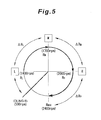
Fig. 5 is an explanatory diagram showing the relationship between the acceleration amount and the rotation speed of the electric motor; -
Fig. 6 is a flowchart showing the motor control process executed by the controller for saving electric power; -
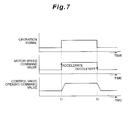
Fig. 7 is an explanatory diagram showing the control state of the electric motor speed and the degree of opening of the control valve when the operating device is manipulated; -
Fig. 8 is an explanatory diagram showing the control state of the degree of opening of the control valve when the electric motor speed is varied due to the load or the like; -
Fig. 9 is a flowchart showing the excess current prevention process executed by the controller; -
Fig. 10 is a block diagram showing the constitution of the hydraulic unit and power supply unit in a crawler type power shovel as an example of a working vehicle according to the second embodiment; -
Fig. 11 is a flowchart showing the electric power startup process of the electric power unit; and -
Fig. 12 is a flowchart showing the electric power saving control in the electric power unit. - The following is an explanation of the preferred embodiments of the present invention with reference to the drawings. First, a crawler
type power shovel 1 is explained as an example of a working vehicle according to the present invention, usingFig. 1 . Thispower shovel 1 is intended to be used in comparatively enclosed spaces such as underground and the like, and operates by using electrical power from a battery. Thepower shovel 1 includes atravel bogey 4 that forms atravel device 2, a blade 9 provided to the rear of thetravel bogey 4 that is capable of swiveling vertically, a rotation platform 11 that is capable of rotating provided above thetravel bogey 4, apower shovel mechanism 13 swivelably connected to the front of the rotation platform 11, and an operator'scabin 15 provided above the rotation platform 11. - The
travel device 2 includes the approximately H-shaped travel bogey 4, and atravel mechanism 3 provided on the left and right of thetravel bogey 4. Thetravel mechanism 3 includes adrive sprocket wheel 5 provided to the front and an idler wheel 6 (on occasions thedrive sprocket wheel 5 and the idler wheel 6 will be referred to collectively as the "crawler wheels") provided to the rear on the left and right of thetravel bogey 4, and a pair of left and right crawler tracks 7 wound around the twowheels 5, 6. Each of thedrive sprocket wheels 5 is driven by left and right drive motors (hydraulic motors), which are not shown on the drawings, so that thepower shovel 1 can move. Also, the rotation platform 11 can be rotated relative to thetravel bogey 4 by a rotation motor (hydraulic motor), which is not shown on the drawings. - The
power shovel mechanism 13 includes aboom 16 swivelably connected to the front of the rotation platform 11 so that theboom 16 can be freely raised and lowered, anarm 17 swivelably connected to the top of theboom 16 so that thearm 17 can be freely swiveled vertically in the plane of vertical movement of theboom 16, and abucket 18 connected to the top of thearm 17 so that thebucket 18 can be freely swiveled. Theboom 16 is raised and lowered by aboom cylinder 21, thearm 17 is swiveled by anarm cylinder 22, and thebucket 18 is swiveled by abucket cylinder 23. The cylinders and the drive motors referred to above and the rotation motor are driven by hydraulic oil supplied from ahydraulic unit 30, as shown inFig. 2 , so in the following explanation, these are collectively referred to as the "hydraulic actuator 20". Also, operation of thepower shovel mechanism 13 is carried out using anoperating device 14 provided within the operator'scabin 15. - The
hydraulic unit 30 includes anelectric motor 31, ahydraulic pump 32 that is driven by theelectric motor 31 and that outputs hydraulic oil at a specific oil pressure and flow rate, atank 33 in which hydraulic oil accumulates, a control valve (electromagnetic proportional valve) 34 that controls the supply of hydraulic oil output from thehydraulic pump 32 to thehydraulic actuator 20 in a supply direction and supply flow rate in accordance with the manipulation of theoperating device 14, and anoil cooler 35 that cools the hydraulic oil whose temperature has risen. Operation signals output from theoperating device 14 are input to acontroller 40, which is described later, and thecontroller 40 outputs command signals to thecontrol valve 34 in accordance with the operation signals so that the operation ofcontrol valve 34 is controlled. - In the present embodiment, the
hydraulic pump 32 includes threepumps 32a through 32c, and the threepumps 32a through 32c are driven simultaneously by theelectric motor 31. For example, thefirst pump 32a supplies hydraulic oil to the actuator that drives thesprocket wheel 5 for driving right and theboom cylinder 21 that drives theboom 16, thesecond pump 32b supplies hydraulic oil to the actuator that drives thesprocket wheel 5 for driving left, thearm cylinder 22 that drives thearm 17, and thebucket cylinder 23 that drives thebucket 18, and thethird pump 32c supplies hydraulic oil to the rotation motor that rotates the rotation platform 11 and the actuator that drives the blade 9. Also direct current electric power supplied from abattery 50 is converted into alternating current electric power having a predetermined voltage and frequency by aninverter 41 and supplied to drive theelectric motor 31. An interior permanent magnet (IPM) motor or the like, for example, may be used as theelectric motor 31. - In this way, the
power shovel 1 is driven using hydraulic oil supplied by controlling thecontrol valve 34 and theinverter 41, whose operation is controlled by thecontroller 40. In order to control thecontrol valve 34 and theinverter 41, the output hydraulic pressure of thepumps 32a through 32c that constitutes thehydraulic pump 32 is measured using hydraulic sensors 36 (36a through 36c), and the measurement values are input to thecontroller 40. Also, a voltage andcurrent sensor 42 is provided between thebattery 50 and theinverter 41 to measure the output voltage Vo of thebattery 50 and the load current Io flowing into theinverter 41, and the measurement values are input to thecontroller 40. Also, anacceleration setting switch 24 is provided in the operator'scabin 15, in order that the operator can set the value of the voltage (hereinafter referred to as the "acceleration amount (power level)" applied to theelectric motor 31 from theinverter 41, and the setting value is input to thecontroller 40. - Next, control of the
electric motor 31 by thecontroller 40 is explained. As described above, operation signals are output from theoperating device 14 in accordance with the amount of manipulation of theoperating device 14, thecontroller 40 outputs command signals to thecontrol valve 34 in accordance with the operation signals, and controls the operation of thehydraulic actuator 20. Therefore, when hydraulic oil is supplied to thehydraulic actuator 20 to drive thepower shovel 1, theelectric motor 31 is rotated at high speed to supply hydraulic oil from thehydraulic pump 32, and conversely, when thehydraulic actuator 20 is stopped, theelectric motor 31 is rotated at low speed to reduce the electric power consumption of thebattery 50. - As shown in
Fig. 3 , the relationship between the voltage Vi applied to theelectric motor 31 and the motor efficiency varies in accordance with the size of the load applied to theelectric motor 31, so in the present embodiment, the operator can select the acceleration amount (value of voltage applied to the electric motor 31) in three stages (L, M, H) using theacceleration setting switch 24, in accordance with the operating conditions of thepower shovel 1. In other words, it is possible to operate theelectric motor 31 at the acceleration amount L near the applied voltage V1 where the efficiency of the motor is best under light loads, operate theelectric motor 31 at the acceleration amount M near the applied voltage V2 where the efficiency of the motor is best under medium loads, and operate theelectric motor 31 at the acceleration amount H near the applied voltage V3 where the efficiency of the motor is best under heavy loads. - On the other hand, if the relationship between the rotation speed of the
electric motor 31 and load (output torque) is examined, as shown inFig. 4 , it can be seen that when the rotation speed is low the efficiency of theelectric motor 31 is poor, and when the rotation speed is high the efficiency is good. In particular, theelectric motor 31 has the characteristic that at the rated load (output torque 100%), the efficiency is best at the rated rotation speed. Therefore, as shown inFig. 5 , thecontroller 40 sets the minimum rotation speed RL, RM, RH of theelectric motor 31 in accordance with the acceleration amount (L, M, H) selected using theacceleration setting switch 24, to increase the rotation speed in accordance with the fluctuation in the load of the electric motor 31 (fluctuation in load current Io) (in the following explanation this increase in rotation speed is referred to as the "acceleration amount ΔRL, ΔRM, ΔRH"). - Also, when there is no load (when the operating
device 14 is not outputting an operation signal), even though theelectric motor 31 does not rotate at high speed where the efficiency is good, by operating at low rotation speed where the load current Io is reduced it is possible to reduce the electric power consumption of thebattery 50. Therefore regardless of the acceleration that has been selected using theacceleration setting switch 24, if thecontroller 40 determines that a state of no manipulation has continued for a predetermined period of time, theelectric motor 31 is controlled (theinverter 41 is commanded to output the idling rotation speed RI) to rotate at the idling rotation speed RI (where RI < RL < RM < RH). Of course, if the operatingdevice 14 is manipulated in this state, the minimum rotation speeds RL, RM, RH and acceleration amounts ΔRL, ΔRM, ΔRH are specified to theinverter 41. - For example, in the case of
Fig. 5 , RMAX of theelectric motor 31 is 2400 rpm, the minimum rotation speed RL in L mode is 1400 rpm, the minimum rotation speed RM in M mode is 1700 rpm, the minimum rotation speed RH in H mode is 2000 rpm, and the idling rotation speed RI is 500 rpm. When in L mode, the acceleration amount ΔRL is controlled so that the rotation speed of theelectric motor 31 does not exceed the minimum rotation speed RM in M mode, and when in M mode the acceleration amount ΔRM is controlled so as not to exceed the minimum rotation speed RH when in H mode, and when in H mode the acceleration amount ΔRH is controlled so that RMAX is not exceeded. - Next, control of the operation of the
electric motor 31 using thecontroller 40 is explained usingFig. 6 . Thecontroller 40 issues commands specifying the rotation speed and the applied voltage of the electric motor and 31 to theinverter 41, and theinverter 41 controls the operation of supplyingelectric motor 31 with alternating current electric power based on the values of these commands. Also, inFig. 6 , the symbol A enclosed within a circle appearing after steps S105, S106, and S107, means go to the symbol A enclosed in a circle immediately after the start. - When the main switch of the
power shovel 1 is turned on and thepower shovel 1 starts, thecontroller 40 starts themotor control S 100. In themotor control S 100, thecontroller 40 first monitors for operation signals output from the operatingdevice 14, and determines whether there has been operation manipulation or not (S101). When it is determined in step S101 that operation manipulation has been carried out, thecontroller 40 next monitors the load current Io, and determines whether there has been a load fluctuation or not (S102), when it is determined that there has been a load fluctuation, the acceleration amount is calculated in accordance with the selected acceleration amount and the result is set (S103), when it is determined that there has been no load fluctuation the acceleration amount is set to zero (S 104). Then thecontroller 40 instructs theinverter 41 to set the rotation speed of theelectric motor 31 to the sum of the set acceleration amount (ΔRL, ΔRM, or ΔRH) and the minimum rotation speed (RL, RM, or RH) in accordance with the acceleration amount, and the value of the voltage corresponding to the set acceleration amount as the value of voltage applied to the electric motor 31 (step S105), and the procedure returns to step S101. - On the other hand, when it is determined in step S 101 that operation manipulation has not been carried out, the
controller 40 determines whether there has been a predetermined continuous period of time with no operation (step S106). When it has been determined in step S 106 that there has been a predetermined continuous period of time with no operation manipulation, thecontroller 40 sets the rotation speed of theelectric motor 31 to the idling rotation speed RI, and instructs theinverter 41 to set the value of voltage applied to theelectric motor 31 to the value of voltage in accordance with the set acceleration amount (step S 107), the procedure returns to step S101, and when it determined that the state of no operation manipulation has not continued for the predetermined period of time, the procedure returns as it is to step S101. - Here, in the method of calculating the acceleration amounts ΔRL, ΔRM, ΔRH in step S 103, the current set acceleration amount (L, M, H), the output oil pressure P1 through P3 from the first through
third pumps 32a through 32c, the load current Io flowing in theinverter 41, andbattery 50 output voltage Vo are used as parameters in the calculation. The calculated acceleration amount may be obtained in accordance with these parameters from a table set in advance in thecontroller 40, or by inserting these parameters into a predetermined calculation equation in thecontroller 40. - In this way, when the state of no operation manipulation has continued for a predetermined period of time, it is not necessary to supply hydraulic oil from the
hydraulic pump 32 to thehydraulic actuator 20, so it is possible to reduce the consumption of electric power of thebattery 50 by running theelectric motor 31 at the idling rotation speed RI which is lower than during normal operation. Also, the acceleration amount can be set using theacceleration setting switch 24 in accordance with the load applied to theelectric motor 31, so it is possible to operate theelectric motor 31 with good efficiency, and electric power of thebattery 50 can be effectively used. The response speed of theelectric motor 31 is very high compared with an engine, and it is possible to determine the load applied to theelectric motor 31 from the load current and control the rotation speed to the optimum rotation speed by thecontroller 40. Therefore, even though in real time the rotation speed of theelectric motor 31 fluctuates, the response speed is fast so the fluctuation of the hydraulic pressure of thehydraulic pump 32 is virtually unnoticed. - When the
controller 40 controls the opening of thecontrol valve 34 in accordance with the manipulation of the operatingdevice 14, at the same time the rotation speed of theelectric motor 31 is controlled to either accelerate or decelerate. For example, as shown inFig. 7 , when thepower shovel 1 is traveling, if the operatingdevice 14 is operated at the time t1 to accelerate and that the time t2 to decelerate, thecontroller 40 controls both the control valve 34 (the control valve that supplies hydraulic oil to the travel motor) and theelectric motor 31. In other words, hydraulic oil is applied to thehydraulic actuator 20 in accordance with the acceleration or deceleration manipulation of thepower shovel 1, and in addition the hydraulic oil necessary for this operation is supplied from thehydraulic pump 32. In the case ofFig. 7 , when the operation signal from the operatingdevice 14 is increased in the acceleration side (time t1), thecontroller 40 increases the degree of opening of thecontrol valve 34, and at the same time the rotation speed of theelectric motor 31 is increased and the supply of hydraulic oil is increased. Also, when the operation signal from the operatingdevice 14 is reduced to the deceleration side (time t2), the degree of opening of thecontrol valve 34 is reduced, and at the same time the rotation speed of theelectric motor 31 is reduced and the supply of hydraulic oil is reduced. - When the
electric motor 31 and thecontrol valve 34 are operated at the same time in this way, if the degree of opening of thecontrol valve 34 is varied in a stepwise matter, thepower shovel 1 may suddenly accelerate or decelerate, so the operability will be poor. Therefore, in the present embodiment, when theelectric motor 31 is accelerated or decelerated and the degree of opening of thecontrol valve 34 is varied simultaneously (for example, the time t1 and t2 inFig. 7 ), the opening or closing operation of thecontrol valve 34 is output as a ramp, and controlled by thecontroller 40 to open or close in a predetermined period of time. In this way the fluctuation in the hydraulic oil supply to thehydraulic actuator 20 is made gentle, and it is possible to prevent sudden fluctuations in operation. - On the other hand, when there is no variation in the amount of manipulation of the operating
device 14, as shown inFig. 8 , the degree of opening of thecontrol valve 34 is not varied, but when the speed of theelectric motor 31 is increased or decreased due to load fluctuations or the like, the output oil pressure increases or decreases in accordance with the increase or decrease in the speed of theelectric motor 31, and the speed of thehydraulic actuator 20 may also increase or decrease. For example, when thepower shovel 1 is traveling at a fixed speed and enters a part where the road surface is bad, the load current Io flowing in theelectric motor 31 may increase. In this case thecontroller 40 causes the rotation speed of theelectric motor 31 to increase and increase the supply of hydraulic oil (the time t3 inFig. 8 ), but at the same time by reducing the degree of opening of thecontrol valve 34 by a specific amount, the increase in the output of hydraulic oil is controlled so that it does not affect the operation of thehydraulic actuator 20. In the same way, when a part where the road condition is good is entered, the rotation speed of theelectric motor 31 is reduced corresponding to the reduction in the load current Io, and the supply of hydraulic oil is reduced (time t4 inFig. 8 ), by increasing the degree of opening of thecontrol valve 34 by just a specific amount, thecontroller 40 controls the reduction in output flow rate of hydraulic oil so as to not affect the operation of thehydraulic actuator 20. In this way, the variation in the quantity of hydraulic oil output from thehydraulic pump 32 due to the variation in the rotation speed of theelectric motor 31 is prevented from affecting the operation of thehydraulic actuator 20, so it is possible to improve the operability of thepower shovel 1. - In the
power shovel 1, when a load is applied to theelectric motor 31 the load current Io flowing in theinverter 41 increases. When thebattery 50 is well charged the fluctuation in the output voltage Vo is small even if the load current Io is increased, but if thebattery 50 is not well charged when the load current Io increases the fluctuation (the amount of reduction of the output voltage Vo) in the output voltage Vo becomes larger. If a large variation in the voltage of thebattery 50 occurs, there is a danger that the torque of theelectric motor 31 would be reduced resulting in unevenness of rotation. Also, if there is a large reduction in the output voltage Vo of thebattery 50, there is a danger that it will be determined that theinverter 41 has stopped and the output to theelectric motor 31 will be cut off. - Therefore, the
controller 40 monitors the output voltage Vo of thebattery 50, and when the output voltage Vo falls below a predetermined threshold, the load applied to theelectric motor 31 is reduced to stabilize the output voltage Vo of thebattery 50. For example, if the rotation speed being specified for aelectric motor 31 is low, a command to increase the rotation speed is output to theinverter 41, and the rotation speed of theelectric motor 31 is increased. In this way, the load current Io flowing in theinverter 41 is reduced, so the variation in the output voltage Vo can also be reduced. Also, when the rotation speed being specified for theelectric motor 31 is high, the degree of opening of thecontrol valve 34 is reduced, so the load on thehydraulic pump 32 is reduced. In this way, the load on theelectric motor 31 is reduced, and as a result the load current Io is reduced, and the variation in the output voltage Vo can also be reduced. - As explained above, in the
power shovel 1 according to the present embodiment, the operator sets the acceleration amount, in other words, sets the value of voltage applied to theelectric motor 31 using theacceleration setting switch 24. Also, in thepower shovel 1, theinverter 41 applies a voltage to theelectric motor 31 in accordance with the voltage value commanded by thecontroller 40, and controls theelectric motor 31 until the rotation speed is the rotation speed commanded by thecontroller 40. Therefore, when for example traveling with the acceleration amount L selected, if a spin turn or a pivot turn is carried out, the load applied to theelectric motor 31 is increased, and an excess current flows in theinverter 41 in order to maintain the rotation speed of theelectric motor 31. When the state in which an excess current is flowing in theinverter 41 continues, theinverter 41 heats, and when the temperature of theinverter 41 exceeds a predetermined temperature a protective circuit operates and theinverter 41 is stopped, and as a result it is not possible to operate thepower shovel 1. - Therefore, in the
power shovel 1 according to the present embodiment, the load current Io is monitored by thecontroller 40, and controlled so that the temperature does not rise to the temperature at which the protective circuit of theinverter 41 operates. As shown inFig. 9 , the control by thecontroller 40 monitors the output current Io and when it is detected that an excess current state has continued for a predetermined period of time (S200), theinverter 41 is controlled to stop theelectric motor 31, and awarning pilot lamp 25 provided within the operator'scabin 15 is lit, to warn the operator that theelectric motor 31 has been stopped because of an excess current (S201). Areset button 26 is provided within the operator'scabin 15, and when theelectric motor 31 has been stopped, thecontroller 40 waits for thereset button 26 to be pressed (S202). Then, when it is detected that thereset button 26 has been pressed by the operator, theelectric motor 31 is restarted by theinverter 41 so it is possible to operate the power shovel 1 (S203). In this state, if the same operation (for example, spin turn or pivot turn) is carried out as that which was carried out when thepower shovel 1 was stopped as a result of the excess current, an excess current will flow in the same way and theelectric motor 31 with be stopped, so it is necessary for the operator to select an acceleration amount (M or H) greater than that currently set by using theacceleration setting switch 24. - In this way, the load current Io flowing in the
inverter 41 is monitored by thecontroller 40, and when the state of excess current has continued for a predetermined period of time, theelectric motor 31 is stopped, so stoppage caused by heating of theinverter 41 is prevented even when theacceleration setting switch 24 is incorrectly set, or excess current is flowing in theinverter 41, and by operating thereset button 26, it is possible to immediately continue (restart) operation of thepower shovel 1. - Next, a second embodiment will be explained with reference to
Figs. 10 through 12 . The present embodiment is also applied to the crawlertype power shovel 1 shown inFig. 1 , but to avoid duplication of explanation in the following, the same parts are given the same number and the same name, and their explanation has been omitted. Also, inFig. 12 , the symbol A enclosed in a circle after step S240 means move to connect to the symbol A enclosed within a circle immediately following the start. - The
hydraulic unit 30 includes theelectric motor 31, thehydraulic pump 32 that outputs hydraulic oil at a predetermined pressure and flow rate and that is driven by theelectric motor 31, thetank 33 that stores hydraulic oil, the control valve (electromagnetic proportional valve) 34 that controls the supply of hydraulic oil output from thehydraulic pump 32 to thehydraulic actuator 20 in a supply direction and with a flow rate in accordance with its the manipulation of the operatingdevice 14, an oil cooler 35 that cools the hydraulic oil whose temperature has risen, and so on. Operation signals output from the operatingdevice 14 are input to acontroller 142, which is explained later, and thecontroller 142 controls thecontrol valve 34 by outputting command signals to thecontrol valve 34 in accordance with the operation signals. - Direct current electric power supplied from the
main battery unit 150 is converted into alternating current electric power having a predetermined voltage and frequency by aninverter 143 and supplied to theelectric motor 31.Amain battery unit 150 is constituted by a lithium ion battery, and includes amain battery 150a capable of outputting direct current high voltage (for example, direct current 336V), and aprotective circuit 150b that obtains the status of and protects themain battery 150a. - Next, a
power supply system 140 that supplies electrical power to theelectric motor 31 using themain battery unit 150 is explained. Thepower supply system 140 includes an powersource monitoring controller 141 that monitors the output voltage and status of themain battery unit 150, and acontroller 142 that controls theinverter 143 and thecontrol valve 34 to operateelectric motor 31 andhydraulic actuator 20, as well as connecting and disconnecting the electric power supplied to theinverter 143. - In order to operate the power
source monitoring controller 141 when starting thepower shovel 1, thepower supply system 140 includes abackup battery 144 that is constituted by a lithium ion battery that outputs a direct current voltage (for example, 12.6V direct current) for operating the powersource monitoring controller 141, and thebackup battery 144 and the powersource monitoring controller 141 are connected and disconnected by a key switch (main power supply switch) 145 provided within the operator'scabin 15. The powersource monitoring controller 141 supplies electric power from thebackup battery 144 to theprotective circuit 150b of themain battery unit 150, and obtains the status of themain battery 150a from theprotective circuit 150b. - The
main battery 150a of themain battery unit 150 is connected to and supplies electric power to thecontroller 142 and theinverter 143. Themain battery 150a and thecontroller 142 are connected by afirst contact point 146a of afirst relay 146, so the connection between themain battery 150a and thecontroller 142 is made and broken by thefirst relay 146. Also, themain battery 150a and theinverter 143 are connected by acontact point 147a of asecond relay 147, so the connection between themain battery 150a and theinverter 143 is made and broken by thesecond relay 147. Thecontroller 142 includes a DC-DC converter 148 that converts high voltage direct current voltage supplied from themain battery 150a into a low voltage direct current voltage (the voltage for operating the power source monitoring controller 141), the output of the DC-DC converter 148 is connected between thebackup battery 144 and thekey switch 145 via aprotective diode 151, in other words, connected to the powersource monitoring controller 141 and thebackup battery 144, and these connections are made and broken by asecond contact point 146b of thefirst relay 146. - The first and
second contact points first relay 146 are opened and closed by the control of thecontroller 141. The first andsecond contact points first relay 146 from the powersource monitoring controller 141 the first andsecond contact points contact point 146a and thecontact point 146b are connected, themain battery 150a and thecontroller 142, as well as the DC-DC converter 148 and the powersource monitoring controller 141 and abackup battery 144 are connected. When thesecond contact point 146b of thefirst relay 146 is connected, electric power is supplied to the DC-DC converter 148 by the powersource monitoring controller 141, and thebackup battery 144 is charged. Also, thecontact point 147a of thesecond relay 147 is connected and disconnected by the control of thecontroller 142. Thecontact point 147a is normally in the disconnected state (OFF state), and when a voltage is applied to thesecond relay 147 from thecontroller 142 thecontact point 147a is turned ON, thecontact point 147a is connected, and themain battery 150a and theinverter 143 are connected. - The output values of a
hydraulic pressure sensor 36 that measures the output pressure of thehydraulic pump 32 provided in thehydraulic unit 30, and the measured values of acurrent sensor 149 that measures the load current supplied to theinverter 143 from themain battery 150a are input to thecontroller 142. Also, the powersource monitoring controller 141 includes afirst pilot lamp 141a that indicates the ON state of thefirst relay 146, in other words, the state in which electric power is being supplied to thecontroller 142, and apower supply switch 141b that turns thefirst relay 146 ON when pressed while thefirst relay 146 is in the OFF state, and awarning pilot lamp 152 for notifying that a fault has arisen in themain battery unit 150. Further, thecontroller 142 includes asecond pilot lamp 142a that indicates the ON state of thesecond relay 147, in other words, indicates that electric power is being supplied to theinverter 143, and a motor start upswitch 142b which when pressed while thesecond relay 147 is in the OFF state turns thesecond relay 147 ON. The first andsecond pilot lamps warning pilot lamp 152, theelectric power switch 141b, and the motor start upswitch 142b are disposed within the operator'scabin 15. - Next, control of the electric power supply by the
power supply system 140 is explained usingFig. 11 . First, the power supply start up process is explained. When the operator positioned in the operator'scabin 15 turns on thekey switch 145, which is disposed within the operator'scabin 15, electric power is supplied from thebackup battery 144 to the powersource monitoring controller 141, and the powersource monitoring controller 141 starts up (step S 100). The powersource monitoring controller 141 first supplies electric power to theprotective circuit 150b of themain battery unit 150 to start up theprotective circuit 150b, and theprotective circuit 150b starts to obtain the status of themain battery 150a (step S110). Then the powersource monitoring controller 141 obtains the status of themain battery 150a from theprotective circuit 150b (step S120), and determines whether themain battery 150a can be used or not (step S 130). For example, if themain battery 150a is excessively discharged or the like, it is determined that themain battery 150a cannot be used, so the powersource monitoring controller 141 lights thewarning pilot lamp 152, and the power supply start up process is terminated (step S160). - On the other hand, when it is determined that the
main battery 150a is in the normal state and can be used, the powersource monitoring controller 141 turns thefirst relay 146 ON, and electric power is supplied from themain battery 150a to thecontroller 142, so thecontroller 142 is started, and thefirst pilot lamp 141a is lit (step S 140). As stated above, when thefirst relay 146 is in the ON state, electric power is supplied from the DC-DC converter 148 to the powersource monitoring controller 141 and thebackup battery 144, and subsequently the powersource monitoring controller 141 operates with electric power supplied from the DC-DC converter 148, and charging of thebackup battery 144 starts. - Finally, when the
controller 142 has started, thecontroller 142 turns thesecond relay 147 ON, electric power is supplied from themain battery 150a to theinverter 143, theinverter 143 is controlled to supply theelectric motor 31 with alternating current electric power at a predetermined voltage and frequency, theelectric motor 31 starts up, thesecond pilot lamp 142a is lit (step S 140), and the electric power startup process of thepower supply system 140 is terminated. - Next, the electric power saving control by the
power supply system 140 is explained usingFig. 12 . The electric power saving control is a control to prevent waste of electric power in the chargedmain battery 150a when it is not necessary to supply hydraulic oil to thehydraulic actuator 20, by stopping theelectric motor 31, and stopping thecontroller 142.Fig. 12 shows the control by thecontroller 142, and when the power supply start up process has terminated as described above, the electric power saving control is started. - The
controller 142 measures the output oil pressure and the load current using thehydraulic pressure sensor 36 and the current sensor 149 (step S200). Then, it is determined whether within a set period of time (for example, five seconds) the output pressure or the load current have varied (step S210), if there is a variation, the procedure returns to step S200 and repeats this process. On the other hand, when there is no variation in the output pressure and the load current within the set period of time, thecontroller 142 turns thesecond relay 147 off, so the power supply to theinverter 143 is disconnected, theelectric motor 31 stops, and thesecond pilot lamp 142a is turned off (step S220). - Next, the
controller 142 determines whether the motor start upswitch 142b is turned ON or not (step S230). When it is determined that the motor start upswitch 142b is ON, thesecond relay 147 is turned ON, theelectric motor 31 is started by supplying electric power to theinverter 143, and thesecond pilot lamp 142a is lit (step S240). Then, the procedure returns to step S200, and the above process is repeated. At step S230, when it is determined that the motor start upswitch 142b is not on, thecontroller 142 obtains the state of manipulation of the operatingdevice 14 or the like (step S250), determines whether within a set period of time there has been a state of no manipulation or control (step S260), and when there has not been a state of no manipulation or control the procedure returns to step S230 and this process is repeated. - At step S230, when it is determined that the state of no manipulation or control has continued during the set period of time, the
controller 142 transmits a command signal to the power source monitoring controller 141 (step S270). Then, when the powersource monitoring controller 141 receives the command signal from thecontroller 142, thefirst relay 146 is turned off, the electric power supply to thecontroller 142 is turned off and thecontroller 142 is stopped,first pilot lamp 141a is turned off, the electric power supply to theprotective circuit 150b of themain battery unit 150 is stopped, and the sleep mode is activated. - When the sleep mode is activated, the power
source monitoring controller 141 stops operation except for monitoring whether thepower supply switch 141b has been pressed, so the electric power consumption of thebackup battery 144 is minimized as much as possible. Then, when it is detected that thepower supply switch 141b has been pressed, the powersource monitoring controller 141 terminates the sleep mode, implements the process from step S110 in the power supply start up process shown inFig. 11 , the first andsecond relays controller 142 and theinverter 143, and theelectric motor 31 is started. - In this way, by providing the power
source monitoring controller 141 that controls the supply of electric power to theinverter 143 separately from thecontroller 142, monitors themain battery unit 150, as well as controls the supply of electric power to thecontroller 142, and thebackup battery 144 that allows the powersource monitoring controller 141 to operate even when electric power is not supplied from themain battery unit 150, even if a fault arises in themain battery 150a, this fault is detected by the powersource monitoring controller 141 and it is possible to provide a warning using thewarning pilot lamp 152 or the like, so it is possible to make the operator that is operating thepower shovel 1 immediately aware of the fault in themain battery unit 150. - The process when electric power is turned ON as described above is capable of turning on the power supply in turn starting with the power
source monitoring controller 141, so it is possible to simplify the process and constitution of the powersource monitoring controller 141 and thecontroller 142. Also, when electric power is supplied to thecontroller 142 when themain battery 150a is in a normal state, and at the same time the powersource monitoring controller 141 is operated by themain battery 150a and thebackup battery 144 is charged, if a fault arises in themain battery 150a, the powersource monitoring controller 141 can be operated by thebackup battery 144. - Further, the supply state of hydraulic oil to the
hydraulic actuator 20 and the manipulation state of the operatingdevice 14 are monitored by thecontroller 142, and when oil pressure is not necessary the electric power supply to theinverter 143 is stopped, and the electric power supply to thecontroller 142 is stopped, so unnecessary power consumption from themain battery 150a is minimized, and it is possible to lengthen the time that thepower shovel 1 can carry out work without charging themain battery unit 150. Even when the power supply to theinverter 143 and thecontroller 142 is stopped in this way, by pressing the motor start upswitch 142a or thepower supply switch 141a, it is possible to supply electric power to theinverter 143 and thecontroller 142.
Claims (5)
- A working vehicle operated by a hydraulic actuator, comprising:an electric motor that drives a hydraulic pump that supplies hydraulic oil to the hydraulic actuator;a battery that supplies direct current electric power;an inverter that drives the electric motor by converting the direct current electric power of the battery to alternating current electric power and supplying the alternating current electric power to the electric motor;a controller that controls the operation of the electric motor by the inverter; anda current sensor that measures the magnitude of the load current flowing from the battery to the inverter, whereinthe controller stops the electric motor when the magnitude of the load current measured by the current sensor exceeds a predetermined threshold value for a predetermined continuous period of time.
- A working vehicle driven by a hydraulic actuator, comprising:a hydraulic pump that outputs hydraulic oil for operating the hydraulic actuator;an electric motor that drives the hydraulic pump;a main battery that supplies direct current electric power;an inverter that operates the electric motor by converting the direct current electric power from the main battery into alternating current electric power and supplying the alternating current electric power to the electric motor;an electric motor relay that makes and breaks the connection between the main battery and the inverter;a controller which is operated by direct current electric power from the main battery, and which controls the operation of the hydraulic actuator and the inverter, and makes and breaks the connection between the main battery and the inverter in use of the electric motor relay;a controller relay that makes and breaks the connection between the main battery and the controller;a power source monitoring controller that monitors the state of the main battery, and that makes and breaks the connection between the main battery and the controller in use of the controller relay;a backup battery that supplies electric power to the power source monitoring controller; anda key switch that makes and breaks the connection between the power source monitoring controller and the backup battery, whereinconfiguration is employed to execute:when the power source monitoring controller and the backup battery are connected by the key switch and the power source monitoring controller is operating,a first step in which the power source monitoring controller obtains the state of the main battery and determines whether the main battery can be used or not;a second step in which the power source monitoring controller connects the main battery and the controller in use of the controller relay and starts up the controller when judgment is made in the first step that the main battery can be used; anda third step in which the controller starts the electric motor by connecting the inverter and the main battery in use of the electric motor relay
- The working vehicle according to claim 2, comprising a protective circuit that collects the status of the main battery, wherein
in the first step, the power source monitoring controller supplies electric power to the protective circuit from the backup battery and starts up the protective circuit, and then obtains the status of the main battery from the protective circuit. - The working vehicle according to claim 2 or claim 3, comprising warning means for warning that the main battery cannot be used, wherein
in the first step, when determination is made that the main battery cannot be used, the power source monitoring controller issues a warning by the warning means. - The working vehicle according to any of claims 2 through 4, comprising a DC-DC converter for converting the direct current voltage of the main battery to the voltage for operating the power source monitoring controller, wherein
the controller relay connects the main battery and the controller and connects the output of the DC-DC converter to the backup battery and the power source monitoring controller.
Applications Claiming Priority (3)
| Application Number | Priority Date | Filing Date | Title |
|---|---|---|---|
| JP2006153694A JP4538427B2 (en) | 2006-06-01 | 2006-06-01 | Work vehicle |
| JP2006153695A JP4284334B2 (en) | 2006-06-01 | 2006-06-01 | Work vehicle |
| PCT/JP2007/061033 WO2007139169A1 (en) | 2006-06-01 | 2007-05-24 | Working vehicle |
Publications (3)
| Publication Number | Publication Date |
|---|---|
| EP2031135A1 true EP2031135A1 (en) | 2009-03-04 |
| EP2031135A4 EP2031135A4 (en) | 2014-10-29 |
| EP2031135B1 EP2031135B1 (en) | 2016-07-06 |
Family
ID=38778687
Family Applications (1)
| Application Number | Title | Priority Date | Filing Date |
|---|---|---|---|
| EP07744444.6A Active EP2031135B1 (en) | 2006-06-01 | 2007-05-24 | Working vehicle |
Country Status (3)
| Country | Link |
|---|---|
| US (1) | US7973499B2 (en) |
| EP (1) | EP2031135B1 (en) |
| WO (1) | WO2007139169A1 (en) |
Cited By (5)
| Publication number | Priority date | Publication date | Assignee | Title |
|---|---|---|---|---|
| EP2518219A4 (en) * | 2009-12-25 | 2016-10-26 | Takeuchi Mfg | ACTUATING DEVICE / CONTROL OF AC MOTOR |
| EP2541070A4 (en) * | 2010-02-23 | 2017-11-22 | Takeuchi Mfg. Co. Ltd. | Hydraulic pressure control device |
| WO2020040684A1 (en) * | 2018-08-24 | 2020-02-27 | Brokk Aktiebolag | Demolition robot and method for supplying hydraulic power to a hydraulically powered tool at a demolition robot |
| WO2020176915A1 (en) | 2019-03-01 | 2020-09-10 | Wacker Neuson Linz Gmbh | Accumulator system having a high-voltage accumulator for mobile work machines |
| WO2020249587A1 (en) * | 2019-06-10 | 2020-12-17 | Johnson Electric Asti S.R.L. | Electric motor system, fan module for a vehicle and electrical connector |
Families Citing this family (37)
| Publication number | Priority date | Publication date | Assignee | Title |
|---|---|---|---|---|
| JP5071879B2 (en) | 2005-12-07 | 2012-11-14 | トヨタ自動車株式会社 | Fuel cell system |
| US8100210B2 (en) * | 2006-02-07 | 2012-01-24 | Takeuchi Mfg. Co., Ltd | Electrically driven industrial vehicle |
| JP4284335B2 (en) * | 2006-06-01 | 2009-06-24 | 株式会社竹内製作所 | Work vehicle |
| JP5125048B2 (en) * | 2006-09-29 | 2013-01-23 | コベルコ建機株式会社 | Swing control device for work machine |
| EP2188145B1 (en) | 2007-09-11 | 2014-06-25 | Hydro-Gear Limited Partnership | Control systems and methods for electric drive utility vehicles |
| US8207693B2 (en) | 2007-09-11 | 2012-06-26 | Hydro-Gear Limited Partnership | Controller assemblies for electric drive utility vehicles |
| CN101911362B (en) * | 2007-12-28 | 2014-09-17 | 丰田自动车株式会社 | Fuel cell system |
| FR2933356B1 (en) * | 2008-07-04 | 2010-12-17 | Peugeot Citroen Automobiles Sa | ENERGY STORAGE DEVICE FOR MOTOR VEHICLES OF THE HYBRID OR ELECTRIC TYPE AND METHOD FOR MANAGING ELECTRICAL ENERGY THEREFOR |
| WO2010048561A2 (en) | 2008-10-23 | 2010-04-29 | Hydro-Gear Limited Partnership | Control systems and methods for electric motors of utility vehicles |
| US8339084B2 (en) * | 2010-03-12 | 2012-12-25 | GM Global Technology Operations LLC | Systems and methods for monitoring current in an electric motor |
| JP5270602B2 (en) * | 2010-03-23 | 2013-08-21 | 三菱電機株式会社 | Vehicle current limiting device |
| US8600595B2 (en) * | 2010-07-29 | 2013-12-03 | GM Global Technology Operations LLC | Power module active current management for efficiency improvement |
| WO2012053560A1 (en) * | 2010-10-22 | 2012-04-26 | 日立建機株式会社 | Electric construction machine |
| WO2012114794A1 (en) * | 2011-02-21 | 2012-08-30 | 日立建機株式会社 | Electric construction machine |
| US8558496B2 (en) | 2011-03-16 | 2013-10-15 | GM Global Technology Operations LLC | Systems and methods for monitoring current in an electric motor |
| US9216856B2 (en) * | 2012-03-23 | 2015-12-22 | Mcneilus Truck And Manufacturing, Inc. | Self-contained auxiliary collection system for a refuse truck |
| DE102013013623B4 (en) * | 2012-08-29 | 2022-06-30 | Kanzaki Kokyukoki Mfg. Co., Ltd. | Motor control system for an electric motor driven vehicle |
| BR112015004301A2 (en) * | 2012-08-29 | 2017-07-04 | Honda Access Kk | system to monitor a vehicle's battery |
| KR102067992B1 (en) | 2012-11-07 | 2020-02-11 | 파커-한니핀 코포레이션 | Electro-hydrostatic actuator deceleration rate control system |
| US10003293B2 (en) * | 2013-03-15 | 2018-06-19 | Andrew John Bartlik | Portable motor drive system |
| US9484602B1 (en) | 2013-08-22 | 2016-11-01 | OSC Manufacturing & Equipment Services, Inc. | Light tower having a battery housing |
| DE102013014427A1 (en) * | 2013-08-30 | 2015-03-05 | Liebherr-Elektronik Gmbh | Drive circuit for air bearing motor |
| NL2011596C2 (en) * | 2013-10-11 | 2015-04-14 | Hudson Bay Holding B V | ELECTRIC DRIVE OF MOBILE DEVICE. |
| JP6187416B2 (en) * | 2014-08-27 | 2017-08-30 | マツダ株式会社 | Engine oil supply device |
| US10749224B2 (en) | 2015-08-17 | 2020-08-18 | OSC Manufacturing & Equipment Services, Inc. | Rechargeable battery power system having a battery with multiple uses |
| JP6524019B2 (en) * | 2016-05-18 | 2019-06-05 | 日立建機株式会社 | Construction machinery |
| US10240322B2 (en) * | 2017-04-28 | 2019-03-26 | Caterpillar Global Mining Llc | Energy storage system |
| US11441551B2 (en) | 2017-04-28 | 2022-09-13 | Graco Minnesota Inc. | Portable hydraulic power unit |
| JP7267775B2 (en) * | 2019-02-28 | 2023-05-02 | 株式会社小松製作所 | work vehicle |
| EP3722893B1 (en) * | 2019-04-11 | 2022-07-06 | Makita Corporation | Electric working machine, and method for supplying electric power to controller of electric working machine |
| US11618324B2 (en) * | 2019-10-01 | 2023-04-04 | The Toro Company | Electric utility vehicle power control |
| USD977426S1 (en) | 2019-12-13 | 2023-02-07 | Graco Minnesota Inc. | Hydraulic power pack |
| CN115871462B (en) * | 2021-09-28 | 2025-03-14 | 宇通客车股份有限公司 | Excitation fusing protection method of battery system and vehicle |
| CN115923586A (en) * | 2021-09-28 | 2023-04-07 | 宇通客车股份有限公司 | A battery system overcurrent protection method and vehicle |
| CN117980564A (en) * | 2022-03-28 | 2024-05-03 | 株式会社日立建机Tierra | Drive systems for electric construction machinery |
| JP2024126050A (en) * | 2023-03-07 | 2024-09-20 | 株式会社小松製作所 | SYSTEM FOR CONTROLLING A WORK MACHINE, ... AND METHOD FOR CONTROLLING A WORK MACHINE |
| JP7591077B2 (en) * | 2023-03-08 | 2024-11-27 | 株式会社竹内製作所 | Work vehicles |
Family Cites Families (16)
| Publication number | Priority date | Publication date | Assignee | Title |
|---|---|---|---|---|
| JPH0739001A (en) | 1993-07-26 | 1995-02-07 | Toyota Autom Loom Works Ltd | Running controller |
| US5563479A (en) * | 1993-10-29 | 1996-10-08 | Aisin Seiki Kabushiki Kaisha | Power supply apparatus for electric vehicle |
| JPH07231511A (en) | 1994-02-18 | 1995-08-29 | Aisin Seiki Co Ltd | Electric vehicle power supply |
| JP3491714B2 (en) * | 1995-06-14 | 2004-01-26 | 本田技研工業株式会社 | Battery over-discharge prevention device for electric vehicles |
| JP3612572B2 (en) | 1996-09-10 | 2005-01-19 | 中国電力株式会社 | Motor drive power supply |
| JP3529673B2 (en) * | 1999-08-25 | 2004-05-24 | 本田技研工業株式会社 | Control device for hybrid vehicle |
| JP3381708B2 (en) | 2000-05-02 | 2003-03-04 | トヨタ自動車株式会社 | VEHICLE, POWER SUPPLY SYSTEM CONTROL DEVICE, POWER SUPPLY SYSTEM CONTROL METHOD, AND VEHICLE START-UP CONTROL METHOD |
| JP2002330554A (en) * | 2001-04-27 | 2002-11-15 | Kobelco Contstruction Machinery Ltd | Power control device for hybrid vehicle and hybrid construction machine equipped with the power control device |
| JP3859982B2 (en) * | 2001-04-27 | 2006-12-20 | 株式会社神戸製鋼所 | Power control device for hybrid construction machine |
| JP3867581B2 (en) * | 2002-01-17 | 2007-01-10 | 松下電器産業株式会社 | Assembled battery system |
| JP3833573B2 (en) * | 2002-06-06 | 2006-10-11 | 新キャタピラー三菱株式会社 | Hybrid construction machine |
| JP2004169464A (en) * | 2002-11-21 | 2004-06-17 | Komatsu Ltd | Construction machinery |
| JP2004225355A (en) | 2003-01-22 | 2004-08-12 | Hitachi Constr Mach Co Ltd | Electric motor-driven work machine |
| JP2005237178A (en) * | 2004-02-23 | 2005-09-02 | Kobelco Contstruction Machinery Ltd | Power source device for work machines |
| JP4543781B2 (en) * | 2004-06-25 | 2010-09-15 | トヨタ自動車株式会社 | Power supply |
| JP4284335B2 (en) * | 2006-06-01 | 2009-06-24 | 株式会社竹内製作所 | Work vehicle |
-
2007
- 2007-05-24 EP EP07744444.6A patent/EP2031135B1/en active Active
- 2007-05-24 US US12/301,545 patent/US7973499B2/en not_active Expired - Fee Related
- 2007-05-24 WO PCT/JP2007/061033 patent/WO2007139169A1/en not_active Ceased
Cited By (7)
| Publication number | Priority date | Publication date | Assignee | Title |
|---|---|---|---|---|
| EP2518219A4 (en) * | 2009-12-25 | 2016-10-26 | Takeuchi Mfg | ACTUATING DEVICE / CONTROL OF AC MOTOR |
| EP2541070A4 (en) * | 2010-02-23 | 2017-11-22 | Takeuchi Mfg. Co. Ltd. | Hydraulic pressure control device |
| WO2020040684A1 (en) * | 2018-08-24 | 2020-02-27 | Brokk Aktiebolag | Demolition robot and method for supplying hydraulic power to a hydraulically powered tool at a demolition robot |
| EP3841255A4 (en) * | 2018-08-24 | 2022-05-18 | Brokk Aktiebolag | DEMOLITION ROBOT AND METHOD FOR SUPPLYING HYDRAULIC ENERGY TO A HYDRAULIC TOOL AT A DEMOLITION ROBOT |
| WO2020176915A1 (en) | 2019-03-01 | 2020-09-10 | Wacker Neuson Linz Gmbh | Accumulator system having a high-voltage accumulator for mobile work machines |
| WO2020249587A1 (en) * | 2019-06-10 | 2020-12-17 | Johnson Electric Asti S.R.L. | Electric motor system, fan module for a vehicle and electrical connector |
| US12088153B2 (en) | 2019-06-10 | 2024-09-10 | Johnson Electric Asti S.R.L. | Electric motor system, fan module for a vehicle and electrical connector |
Also Published As
| Publication number | Publication date |
|---|---|
| EP2031135A4 (en) | 2014-10-29 |
| US7973499B2 (en) | 2011-07-05 |
| US20090261761A1 (en) | 2009-10-22 |
| WO2007139169A1 (en) | 2007-12-06 |
| EP2031135B1 (en) | 2016-07-06 |
Similar Documents
| Publication | Publication Date | Title |
|---|---|---|
| EP2031135B1 (en) | Working vehicle | |
| US8030860B2 (en) | Working vehicle | |
| US7728449B2 (en) | Hybrid working machine | |
| CN101454514A (en) | Work vehicle | |
| JP6773599B2 (en) | Power storage controller and electric system and construction machinery | |
| US7669413B2 (en) | Hybrid construction machine | |
| US6727676B2 (en) | Control device for hybrid vehicle | |
| CN103359098B (en) | The control method of electronlmobil | |
| JP6914902B2 (en) | Electric construction machinery | |
| US10060096B2 (en) | Shovel | |
| US10189471B2 (en) | Shovel and shovel control method | |
| CN114729525A (en) | Display control device for work vehicle and work vehicle | |
| JPH11107320A (en) | Battery powered hydraulic working machine | |
| CN113561795B (en) | Driving system and control method of single-motor driven loader | |
| JP7177967B2 (en) | construction machinery | |
| JP2007321463A (en) | Work vehicle | |
| WO2016158227A1 (en) | Starter device for hybrid construction machine | |
| JP4284334B2 (en) | Work vehicle | |
| US11220160B2 (en) | System and method for idle mitigation on a utility truck with an electrically isolated hydraulically controlled aerial work platform | |
| JP4580896B2 (en) | Work vehicle | |
| JP2013060776A (en) | Construction machine | |
| JP2007218165A (en) | Hydraulic device | |
| KR20230061760A (en) | Smart electric power take-off control system | |
| JP2007239676A (en) | Hydraulic device |
Legal Events
| Date | Code | Title | Description |
|---|---|---|---|
| PUAI | Public reference made under article 153(3) epc to a published international application that has entered the european phase |
Free format text: ORIGINAL CODE: 0009012 |
|
| 17P | Request for examination filed |
Effective date: 20090105 |
|
| AK | Designated contracting states |
Kind code of ref document: A1 Designated state(s): AT BE BG CH CY CZ DE DK EE ES FI FR GB GR HU IE IS IT LI LT LU LV MC MT NL PL PT RO SE SI SK TR |
|
| AX | Request for extension of the european patent |
Extension state: AL BA HR MK RS |
|
| DAX | Request for extension of the european patent (deleted) | ||
| A4 | Supplementary search report drawn up and despatched |
Effective date: 20140930 |
|
| RIC1 | Information provided on ipc code assigned before grant |
Ipc: E02F 9/20 20060101AFI20140924BHEP Ipc: H02H 7/18 20060101ALI20140924BHEP Ipc: H02P 27/06 20060101ALI20140924BHEP Ipc: B60L 9/18 20060101ALI20140924BHEP Ipc: B60L 11/18 20060101ALI20140924BHEP Ipc: H02J 7/00 20060101ALI20140924BHEP |
|
| GRAP | Despatch of communication of intention to grant a patent |
Free format text: ORIGINAL CODE: EPIDOSNIGR1 |
|
| INTG | Intention to grant announced |
Effective date: 20151209 |
|
| GRAS | Grant fee paid |
Free format text: ORIGINAL CODE: EPIDOSNIGR3 |
|
| GRAA | (expected) grant |
Free format text: ORIGINAL CODE: 0009210 |
|
| AK | Designated contracting states |
Kind code of ref document: B1 Designated state(s): AT BE BG CH CY CZ DE DK EE ES FI FR GB GR HU IE IS IT LI LT LU LV MC MT NL PL PT RO SE SI SK TR |
|
| REG | Reference to a national code |
Ref country code: GB Ref legal event code: FG4D |
|
| REG | Reference to a national code |
Ref country code: AT Ref legal event code: REF Ref document number: 810822 Country of ref document: AT Kind code of ref document: T Effective date: 20160715 Ref country code: CH Ref legal event code: EP |
|
| REG | Reference to a national code |
Ref country code: IE Ref legal event code: FG4D |
|
| REG | Reference to a national code |
Ref country code: NL Ref legal event code: FP |
|
| REG | Reference to a national code |
Ref country code: DE Ref legal event code: R096 Ref document number: 602007046884 Country of ref document: DE |
|
| REG | Reference to a national code |
Ref country code: LT Ref legal event code: MG4D |
|
| PG25 | Lapsed in a contracting state [announced via postgrant information from national office to epo] |
Ref country code: IS Free format text: LAPSE BECAUSE OF FAILURE TO SUBMIT A TRANSLATION OF THE DESCRIPTION OR TO PAY THE FEE WITHIN THE PRESCRIBED TIME-LIMIT Effective date: 20161106 Ref country code: LT Free format text: LAPSE BECAUSE OF FAILURE TO SUBMIT A TRANSLATION OF THE DESCRIPTION OR TO PAY THE FEE WITHIN THE PRESCRIBED TIME-LIMIT Effective date: 20160706 Ref country code: FI Free format text: LAPSE BECAUSE OF FAILURE TO SUBMIT A TRANSLATION OF THE DESCRIPTION OR TO PAY THE FEE WITHIN THE PRESCRIBED TIME-LIMIT Effective date: 20160706 Ref country code: IT Free format text: LAPSE BECAUSE OF FAILURE TO SUBMIT A TRANSLATION OF THE DESCRIPTION OR TO PAY THE FEE WITHIN THE PRESCRIBED TIME-LIMIT Effective date: 20160706 |
|
| PG25 | Lapsed in a contracting state [announced via postgrant information from national office to epo] |
Ref country code: SE Free format text: LAPSE BECAUSE OF FAILURE TO SUBMIT A TRANSLATION OF THE DESCRIPTION OR TO PAY THE FEE WITHIN THE PRESCRIBED TIME-LIMIT Effective date: 20160706 Ref country code: LV Free format text: LAPSE BECAUSE OF FAILURE TO SUBMIT A TRANSLATION OF THE DESCRIPTION OR TO PAY THE FEE WITHIN THE PRESCRIBED TIME-LIMIT Effective date: 20160706 Ref country code: ES Free format text: LAPSE BECAUSE OF FAILURE TO SUBMIT A TRANSLATION OF THE DESCRIPTION OR TO PAY THE FEE WITHIN THE PRESCRIBED TIME-LIMIT Effective date: 20160706 Ref country code: PT Free format text: LAPSE BECAUSE OF FAILURE TO SUBMIT A TRANSLATION OF THE DESCRIPTION OR TO PAY THE FEE WITHIN THE PRESCRIBED TIME-LIMIT Effective date: 20161107 Ref country code: PL Free format text: LAPSE BECAUSE OF FAILURE TO SUBMIT A TRANSLATION OF THE DESCRIPTION OR TO PAY THE FEE WITHIN THE PRESCRIBED TIME-LIMIT Effective date: 20160706 Ref country code: BE Free format text: LAPSE BECAUSE OF FAILURE TO SUBMIT A TRANSLATION OF THE DESCRIPTION OR TO PAY THE FEE WITHIN THE PRESCRIBED TIME-LIMIT Effective date: 20160706 Ref country code: GR Free format text: LAPSE BECAUSE OF FAILURE TO SUBMIT A TRANSLATION OF THE DESCRIPTION OR TO PAY THE FEE WITHIN THE PRESCRIBED TIME-LIMIT Effective date: 20161007 |
|
| REG | Reference to a national code |
Ref country code: DE Ref legal event code: R097 Ref document number: 602007046884 Country of ref document: DE |
|
| PG25 | Lapsed in a contracting state [announced via postgrant information from national office to epo] |
Ref country code: RO Free format text: LAPSE BECAUSE OF FAILURE TO SUBMIT A TRANSLATION OF THE DESCRIPTION OR TO PAY THE FEE WITHIN THE PRESCRIBED TIME-LIMIT Effective date: 20160706 Ref country code: EE Free format text: LAPSE BECAUSE OF FAILURE TO SUBMIT A TRANSLATION OF THE DESCRIPTION OR TO PAY THE FEE WITHIN THE PRESCRIBED TIME-LIMIT Effective date: 20160706 |
|
| PLBE | No opposition filed within time limit |
Free format text: ORIGINAL CODE: 0009261 |
|
| STAA | Information on the status of an ep patent application or granted ep patent |
Free format text: STATUS: NO OPPOSITION FILED WITHIN TIME LIMIT |
|
| REG | Reference to a national code |
Ref country code: FR Ref legal event code: PLFP Year of fee payment: 11 |
|
| PG25 | Lapsed in a contracting state [announced via postgrant information from national office to epo] |
Ref country code: SK Free format text: LAPSE BECAUSE OF FAILURE TO SUBMIT A TRANSLATION OF THE DESCRIPTION OR TO PAY THE FEE WITHIN THE PRESCRIBED TIME-LIMIT Effective date: 20160706 Ref country code: DK Free format text: LAPSE BECAUSE OF FAILURE TO SUBMIT A TRANSLATION OF THE DESCRIPTION OR TO PAY THE FEE WITHIN THE PRESCRIBED TIME-LIMIT Effective date: 20160706 Ref country code: BG Free format text: LAPSE BECAUSE OF FAILURE TO SUBMIT A TRANSLATION OF THE DESCRIPTION OR TO PAY THE FEE WITHIN THE PRESCRIBED TIME-LIMIT Effective date: 20161006 Ref country code: CZ Free format text: LAPSE BECAUSE OF FAILURE TO SUBMIT A TRANSLATION OF THE DESCRIPTION OR TO PAY THE FEE WITHIN THE PRESCRIBED TIME-LIMIT Effective date: 20160706 |
|
| 26N | No opposition filed |
Effective date: 20170407 |
|
| PG25 | Lapsed in a contracting state [announced via postgrant information from national office to epo] |
Ref country code: SI Free format text: LAPSE BECAUSE OF FAILURE TO SUBMIT A TRANSLATION OF THE DESCRIPTION OR TO PAY THE FEE WITHIN THE PRESCRIBED TIME-LIMIT Effective date: 20160706 Ref country code: LU Free format text: LAPSE BECAUSE OF NON-PAYMENT OF DUE FEES Effective date: 20170531 |
|
| REG | Reference to a national code |
Ref country code: CH Ref legal event code: PL |
|
| PG25 | Lapsed in a contracting state [announced via postgrant information from national office to epo] |
Ref country code: MC Free format text: LAPSE BECAUSE OF FAILURE TO SUBMIT A TRANSLATION OF THE DESCRIPTION OR TO PAY THE FEE WITHIN THE PRESCRIBED TIME-LIMIT Effective date: 20160706 |
|
| REG | Reference to a national code |
Ref country code: IE Ref legal event code: MM4A |
|
| PG25 | Lapsed in a contracting state [announced via postgrant information from national office to epo] |
Ref country code: CH Free format text: LAPSE BECAUSE OF NON-PAYMENT OF DUE FEES Effective date: 20170531 Ref country code: LI Free format text: LAPSE BECAUSE OF NON-PAYMENT OF DUE FEES Effective date: 20170531 |
|
| PG25 | Lapsed in a contracting state [announced via postgrant information from national office to epo] |
Ref country code: LU Free format text: LAPSE BECAUSE OF NON-PAYMENT OF DUE FEES Effective date: 20170524 |
|
| PG25 | Lapsed in a contracting state [announced via postgrant information from national office to epo] |
Ref country code: IE Free format text: LAPSE BECAUSE OF NON-PAYMENT OF DUE FEES Effective date: 20170524 |
|
| REG | Reference to a national code |
Ref country code: FR Ref legal event code: PLFP Year of fee payment: 12 |
|
| PG25 | Lapsed in a contracting state [announced via postgrant information from national office to epo] |
Ref country code: MT Free format text: LAPSE BECAUSE OF NON-PAYMENT OF DUE FEES Effective date: 20170524 |
|
| PG25 | Lapsed in a contracting state [announced via postgrant information from national office to epo] |
Ref country code: HU Free format text: LAPSE BECAUSE OF FAILURE TO SUBMIT A TRANSLATION OF THE DESCRIPTION OR TO PAY THE FEE WITHIN THE PRESCRIBED TIME-LIMIT; INVALID AB INITIO Effective date: 20070524 |
|
| REG | Reference to a national code |
Ref country code: AT Ref legal event code: UEP Ref document number: 810822 Country of ref document: AT Kind code of ref document: T Effective date: 20160706 |
|
| PG25 | Lapsed in a contracting state [announced via postgrant information from national office to epo] |
Ref country code: CY Free format text: LAPSE BECAUSE OF NON-PAYMENT OF DUE FEES Effective date: 20160706 |
|
| PG25 | Lapsed in a contracting state [announced via postgrant information from national office to epo] |
Ref country code: TR Free format text: LAPSE BECAUSE OF FAILURE TO SUBMIT A TRANSLATION OF THE DESCRIPTION OR TO PAY THE FEE WITHIN THE PRESCRIBED TIME-LIMIT Effective date: 20160706 |
|
| PGFP | Annual fee paid to national office [announced via postgrant information from national office to epo] |
Ref country code: NL Payment date: 20250526 Year of fee payment: 19 |
|
| PGFP | Annual fee paid to national office [announced via postgrant information from national office to epo] |
Ref country code: DE Payment date: 20250529 Year of fee payment: 19 |
|
| PGFP | Annual fee paid to national office [announced via postgrant information from national office to epo] |
Ref country code: GB Payment date: 20250527 Year of fee payment: 19 |
|
| PGFP | Annual fee paid to national office [announced via postgrant information from national office to epo] |
Ref country code: FR Payment date: 20250526 Year of fee payment: 19 |
|
| PGFP | Annual fee paid to national office [announced via postgrant information from national office to epo] |
Ref country code: AT Payment date: 20250521 Year of fee payment: 19 |