EP2026217A1 - Information processing apparatus, and method and system for searching for reputation of content - Google Patents
Information processing apparatus, and method and system for searching for reputation of content Download PDFInfo
- Publication number
- EP2026217A1 EP2026217A1 EP08158554A EP08158554A EP2026217A1 EP 2026217 A1 EP2026217 A1 EP 2026217A1 EP 08158554 A EP08158554 A EP 08158554A EP 08158554 A EP08158554 A EP 08158554A EP 2026217 A1 EP2026217 A1 EP 2026217A1
- Authority
- EP
- European Patent Office
- Prior art keywords
- reputation
- search
- websites
- content
- result
- Prior art date
- Legal status (The legal status is an assumption and is not a legal conclusion. Google has not performed a legal analysis and makes no representation as to the accuracy of the status listed.)
- Withdrawn
Links
Images





Classifications
-
- H—ELECTRICITY
- H04—ELECTRIC COMMUNICATION TECHNIQUE
- H04N—PICTORIAL COMMUNICATION, e.g. TELEVISION
- H04N21/00—Selective content distribution, e.g. interactive television or video on demand [VOD]
- H04N21/40—Client devices specifically adapted for the reception of or interaction with content, e.g. set-top-box [STB]; Operations thereof
- H04N21/45—Management operations performed by the client for facilitating the reception of or the interaction with the content or administrating data related to the end-user or to the client device itself, e.g. learning user preferences for recommending movies, resolving scheduling conflicts
- H04N21/462—Content or additional data management, e.g. creating a master electronic program guide from data received from the Internet and a Head-end, controlling the complexity of a video stream by scaling the resolution or bit-rate based on the client capabilities
- H04N21/4622—Retrieving content or additional data from different sources, e.g. from a broadcast channel and the Internet
-
- G—PHYSICS
- G06—COMPUTING OR CALCULATING; COUNTING
- G06F—ELECTRIC DIGITAL DATA PROCESSING
- G06F16/00—Information retrieval; Database structures therefor; File system structures therefor
- G06F16/90—Details of database functions independent of the retrieved data types
- G06F16/95—Retrieval from the web
- G06F16/951—Indexing; Web crawling techniques
-
- H—ELECTRICITY
- H04—ELECTRIC COMMUNICATION TECHNIQUE
- H04N—PICTORIAL COMMUNICATION, e.g. TELEVISION
- H04N21/00—Selective content distribution, e.g. interactive television or video on demand [VOD]
- H04N21/40—Client devices specifically adapted for the reception of or interaction with content, e.g. set-top-box [STB]; Operations thereof
- H04N21/45—Management operations performed by the client for facilitating the reception of or the interaction with the content or administrating data related to the end-user or to the client device itself, e.g. learning user preferences for recommending movies, resolving scheduling conflicts
- H04N21/466—Learning process for intelligent management, e.g. learning user preferences for recommending movies
-
- H—ELECTRICITY
- H04—ELECTRIC COMMUNICATION TECHNIQUE
- H04N—PICTORIAL COMMUNICATION, e.g. TELEVISION
- H04N21/00—Selective content distribution, e.g. interactive television or video on demand [VOD]
- H04N21/60—Network structure or processes for video distribution between server and client or between remote clients; Control signalling between clients, server and network components; Transmission of management data between server and client, e.g. sending from server to client commands for recording incoming content stream; Communication details between server and client
- H04N21/65—Transmission of management data between client and server
- H04N21/658—Transmission by the client directed to the server
- H04N21/6582—Data stored in the client, e.g. viewing habits, hardware capabilities, credit card number
-
- H—ELECTRICITY
- H04—ELECTRIC COMMUNICATION TECHNIQUE
- H04N—PICTORIAL COMMUNICATION, e.g. TELEVISION
- H04N21/00—Selective content distribution, e.g. interactive television or video on demand [VOD]
- H04N21/80—Generation or processing of content or additional data by content creator independently of the distribution process; Content per se
- H04N21/83—Generation or processing of protective or descriptive data associated with content; Content structuring
- H04N21/84—Generation or processing of descriptive data, e.g. content descriptors
- H04N21/8405—Generation or processing of descriptive data, e.g. content descriptors represented by keywords
-
- H—ELECTRICITY
- H04—ELECTRIC COMMUNICATION TECHNIQUE
- H04N—PICTORIAL COMMUNICATION, e.g. TELEVISION
- H04N7/00—Television systems
- H04N7/16—Analogue secrecy systems; Analogue subscription systems
- H04N7/173—Analogue secrecy systems; Analogue subscription systems with two-way working, e.g. subscriber sending a programme selection signal
-
- Y—GENERAL TAGGING OF NEW TECHNOLOGICAL DEVELOPMENTS; GENERAL TAGGING OF CROSS-SECTIONAL TECHNOLOGIES SPANNING OVER SEVERAL SECTIONS OF THE IPC; TECHNICAL SUBJECTS COVERED BY FORMER USPC CROSS-REFERENCE ART COLLECTIONS [XRACs] AND DIGESTS
- Y10—TECHNICAL SUBJECTS COVERED BY FORMER USPC
- Y10S—TECHNICAL SUBJECTS COVERED BY FORMER USPC CROSS-REFERENCE ART COLLECTIONS [XRACs] AND DIGESTS
- Y10S707/00—Data processing: database and file management or data structures
- Y10S707/912—Applications of a database
- Y10S707/913—Multimedia
Definitions
- the present invention addresses the above-identified, and other problems associated with existing methods and apparatuses, and provides an apparatus, method, and system for making it possible to obtain a reputation result of a content in a relatively short time and with a relatively small-scale structure.
- an information processing apparatus including: an acquisition section; a keyword extraction section; a site search section; a first site selection section; a second site selection section; and a reputation result acquisition section.
- the acquisition section is configured to acquire content-related information including a title of a content and information describing a content of the content.
- the keyword extraction section is configured to extract a search keyword from the content-related information acquired by the acquisition section.
- the site search section is configured to perform a search through the Internet for websites with a web page including the search keyword extracted by the keyword extraction section, and acquire information concerning a plurality of websites found as a result of the search.
- the first site selection section is configured to select top N websites from the plurality of websites found as a result of the search performed by the site search section, N being a predetermined integer greater than one.
- the second site selection section is configured to access each of the N websites selected by the first site selection section to extract a written text from a web page of each of the N websites, and select two or more of the N websites as seed sites, the written text extracted from each of the seed sites containing so many instances of the search keyword as to exceed a predetermined threshold.
- the reputation result acquisition section is configured to collect written texts from the two or more seed sites selected by the second site selection section and subordinate websites linked to the seed sites, and acquire a reputation result of the content from the collected written texts.
- the first site selection section selects the top N websites from those websites with the web page including the search keyword.
- N is a predetermined integer greater than one.
- the second site selection section accesses the N websites selected by the first site selection section to extract the written text from the web page of each of the N websites, and selects two or more of the N websites as the seed sites.
- the written text extracted from each of the seed sites contains so many instances of the search keyword as to exceed the predetermined threshold.
- the seed sites refer to websites from which crawling through websites on lower levels linked thereto is started.
- the reputation result acquisition section crawls through the seed sites selected by the second site selection section and the subordinate websites linked to the seed sites (i.e., accesses these websites one after another) to collect the written text from each web page. Then, the reputation result acquisition section subjects the collected written texts to morphological analysis and syntactic analysis, for example, to acquire the reputation result of the content.
- this information processing apparatus from the websites found as a result of the search, a smaller number of websites are selected in two steps by the first and second site selection sections, and the written texts used for acquiring the reputation result are collected from the web pages of the smaller number of websites, and the reputation result is obtained from these collected written texts.
- this information processing apparatus has a smaller-scale structure than those in related art, but is capable of obtaining the reputation result in a relatively short time.
- an information processing apparatus including: an acquisition section; a keyword extraction section; a site search requesting section; a first site selection section; a second site selection section; and a reputation result acquisition section.
- the acquisition section is configured to acquire content-related information including a title of a content and information describing a content of the content.
- the keyword extraction section is configured to extract a search keyword from the content-related information acquired by the acquisition section.
- the site search requesting section is configured to request a search site on the Internet to perform a search for websites with a web page including the search keyword extracted by the keyword extraction section, and acquire information concerning a plurality of websites found as a result of the search.
- the first site selection section is configured to select top N websites from the plurality of websites found as a result of the search performed by the search site, N being a predetermined integer greater than one.
- the second site selection section is configured to access each of the N websites selected by the first site selection section to extract a written text from a web page of each of the N websites, and select two or more of the N websites as seed sites, the written text extracted from each of the seed sites containing so many instances of the search keyword as to exceed a predetermined threshold.
- the reputation result acquisition section is configured to collect written texts from the two or more seed sites selected by the second site selection section and subordinate websites linked to the seed sites, and acquire a reputation result of the content from the collected written texts.
- this information processing apparatus does not have the site search section. Instead, this information processing apparatus has the site search requesting section.
- the site search requesting section requests the search site on the Internet to perform a search for websites with a web page including the search keyword extracted by the keyword extraction section, and acquires the information concerning the plurality of websites found as a result of the search.
- This information processing apparatus does not have the site search section, and instead requests the search site on the Internet to perform the search.
- this information processing apparatus has a smaller-scale structure than the previously described information processing apparatus. That is, the use of the search site on the Internet allows this information processing apparatus to have a reduced scale in structure, so that this information processing apparatus can be contained even in a device for personal use, such as a recording and reproducing apparatus, for example.
- a method for searching for a reputation of a content employed by an information processing apparatus including the steps of: acquiring; extracting; searching and acquiring; selecting; and accessing and selecting.
- the acquiring step acquires content-related information including a title of the content and information describing a content of the content.
- the extracting step extracts a search keyword from the content-related information acquired in the acquiring step.
- the searching and acquiring step searches through the Internet for websites with a web page including the search keyword extracted in the extracting step, and acquires information concerning a plurality of websites found as a result of the search.
- the selecting step selects top N websites from the plurality of websites found as a result of the search in the searching step, N being a predetermined integer greater than one.
- the accessing and selecting step accesses each of the N websites selected in the selecting step to extract a written text from a web page of each of the N websites, and selects two or more of the N websites as seed sites, the written text extracted from each of the seed sites containing so many instances of the search keyword as to exceed a predetermined threshold.
- a system for searching for a reputation of a content including a server apparatus, a network, and a client apparatus connected to the server apparatus via the network.
- the server apparatus includes: an acquisition section; a keyword extraction section; a site search section; a first site selection section; a second site selection section; a reputation result acquisition section; a storage section; and a reputation result sending section.
- the acquisition section is configured to acquire content-related information including a title of the content and information describing a content of the content.
- the keyword extraction section is configured to extract a search keyword from the content-related information acquired by the acquisition section.
- the site search section is configured to perform a search through the Internet for websites with a web page including the search keyword extracted by the keyword extraction section, and acquire information concerning a plurality of websites found as a result of the search.
- the first site selection section is configured to select top N websites from the plurality of websites found as a result of the search performed by the site search section, N being a predetermined integer greater than one.
- the second site selection section is configured to access each of the N websites selected by the first site selection section to extract a written text from a web page of each of the N websites, and select two or more of the N websites as seed sites, the written text extracted from each of the seed sites containing so many instances of the search keyword as to exceed a predetermined threshold.
- the reputation result acquisition section is configured to collect written texts from the two or more seed sites selected by the second site selection section and subordinate websites linked to the seed sites, and acquire a reputation result of the content from the collected written texts.
- the storage section is configured to store the reputation results of a plurality of contents as acquired by the reputation result acquisition section such that each of the reputation results is associated with information for identifying a corresponding one of the contents.
- a smaller number of websites are selected in two steps from the websites found as a result of the search, and the written texts used for acquiring the reputation result are collected from the web pages of the smaller number of websites, and the reputation result is obtained from these collected written texts.
- the reputation result of the content can be obtained in a relatively short time.
- An information processing apparatus is a recording and reproducing apparatus, such as a so-called hard disk recorder, that is capable of receiving a television broadcast and storing data of the received television broadcast in a "recording information storage section", such as a hard disk, and also of reading the data from the recording information storage section and reproducing the data.
- a recording and reproducing apparatus such as a so-called hard disk recorder
- FIG. 1 shows a hardware structure of a recording and reproducing apparatus 1, which is the information processing apparatus according to the first embodiment.
- FIG. 2 shows an outline of the configuration of a content reputation search system that includes the recording and reproducing apparatus 1 according to this embodiment.
- the recording and reproducing apparatus 1 is connected to a monitor apparatus 2 and the Internet 3.
- a search site 4 that has a search engine, a large number of bulletin board sites 5, a large number of blog sites 6, and so on are connected to the Internet 3.
- the monitor apparatus 2 has a display for displaying images, such as a liquid crystal display (LCD), and a loudspeaker for outputting reproduced sound.
- LCD liquid crystal display
- the search site 4 receives a search keyword from a search-requesting terminal, e.g., the recording and reproducing apparatus 1, through the Internet 3, the search site 4 uses the search engine to perform a search for websites with a web page including the search keyword, and sends a search result to the search-requesting terminal.
- the search result includes a uniform resource locator (URL) of the website found as a result of the search, and so on, for example.
- URL uniform resource locator
- Each of the bulletin board sites 5 is a website that offers an electronic bulletin board where Internet users who have accessed the website can post their opinions, impressions, and so on at will.
- the bulletin board sites 5 are managed by a business corporation or an individual. Opinions, impressions, and so on concerning contents or various other topics are posted on the electronic bulletin board at each of the bulletin board sites 5.
- Each of the blog sites 6 is a website where an individual or a business corporation posts diary entries, reviews of books or films, or various other types of information. Needless to say, the opinions, impressions, and so on concerning the contents are sometimes published on these blog sites as well. URLs of the blog sites generally contain a word "blog".
- the recording and reproducing apparatus 1 does not have a search engine that performs a search for the websites with a web page including the search keyword, and instead requests the search site 4 to perform a search for the websites with a web page including the search keyword.
- the recording and reproducing apparatus 1 includes a control section 10, a "television broadcast receiving and recording/reproducing section" 20, a reputation search section 30, a reputation search-use dictionaries 40, and a system bus 100.
- the control section 10, the "television broadcast receiving and recording/reproducing section" 20, the reputation search section 30, and the reputation search-use dictionaries 40 are connected to the system bus 100.
- control section 10 is formed by a microcomputer, and includes a central processing unit (CPU) 11, a read-only memory (ROM) 12 for programs, and a random-access memory (RAM) 13 for a work area.
- CPU central processing unit
- ROM read-only memory
- RAM random-access memory
- the ROM 12 stores a program for control concerning television broadcast program selection, a program for control concerning recording and reproducing of television broadcast program contents, a program for searching for the reputation of the content and acquiring the reputation result, and other programs.
- the CPU 11 executes the programs stored in the ROM 12 while using the RAM 13 as the work area, thereby controlling the various processes as described above.
- control section 10 determines that neither a recording start instruction nor a reproducing start instruction has been issued by the user by operating the operation section 25, the control section 10 allows the video and audio signals AV, which have been sent from the television broadcast wave receiving and decoding section 21 to the system bus 100, to be sent to the monitor apparatus 2 via the monitor output interface 24, so that video is displayed on the display of the monitor apparatus 2 and audio is outputted by the loudspeaker.
- control section 10 determines that the recording start instruction has been issued by the user by operating the operation section 25, the control section 10 allows the video and audio signals AV, which have been sent from the television broadcast wave receiving and decoding section 21 to the system bus 100, to be sent to the recording and reproducing section 22.
- the recording information storage section 23 is formed by a hard disk drive or a large-capacity semiconductor memory device, and thus is capable of storing a relatively large number of television broadcast program contents.
- the "television broadcast wave receiving and decoding section" 21 has a function of acquiring electronic programming guide (EPG) information from the television broadcast wave.
- EPG electronic programming guide
- the control section 10 temporarily stores the EPG information in the RAM 13, for example, and when storing recording information of a television broadcast program content, recording of which has been requested, in the recording information storage section 23, the control section 10 extracts content-related information from the temporarily-stored EPG information, and stores the extracted content-related information in the recording information storage section 23 so as to be associated with the recorded television broadcast program content.
- the content-related information includes a title of the recorded television broadcast program content, a name of a person who appears in the content, information concerning a content of the content, and so on.
- Information such as a recording date and time is also stored in the recording information storage section 23 so as to be associated with the content.
- the user is able to issue an instruction to display a list of recorded television broadcast program contents (hereinafter referred to as "recorded contents"), for example, using the operation section 25, before reproducing one of the recorded contents.
- recorded contents a list of recorded television broadcast program contents
- the control section 10 Upon receipt of the instruction to display the list of the recorded contents, the control section 10 according to this embodiment sends, to the monitor apparatus 2, information concerning the list of the recorded broadcast programs, so that the display of the monitor apparatus 2 displays the list.
- the list shows the title and recording date and time of each of the television broadcast program contents stored in the recording information storage section 23.
- control section 10 determines that the reproducing start instruction with respect to a recorded content selected from the list of the recorded contents has been issued by the user by operating the operation section 25, the control section 10 reads the recording information of the selected recorded content from the recording information storage section 23, and sends the recording information to the recording and reproducing section 22.
- the recording and reproducing section 22 allows the reproducing decoding section to operate to subject the recording information of the selected recorded content to a reproducing decoding process, including decompression/decoding, to reconstruct the video and audio signals AV.
- the reconstructed video and audio signals AV are sent to the monitor apparatus 2, and reproduced video is displayed on the display, whereas reproduced audio is outputted by the loudspeaker.
- the reputation search section 30 includes a communication interface 31 for connection to the Internet 3, an internet search section 32, a HyperText Markup Language (HTML) parsing section 33, an HTML crawling section 34, a morphological analysis engine 35, a syntactic analysis engine 36, and a reputation determination section 37.
- HTML HyperText Markup Language
- HTML crawling section 34 HTML crawling section 34
- morphological analysis engine 35 a syntactic analysis engine 36
- a reputation determination section 37 is connected to the system bus 100.
- Each component of the reputation search section 30 is activated by the control section 10 when the user has issued the instruction to search for the reputation of the selected recorded content.
- the internet search section 32 has stored therein a URL of the search site 4. As described below, the internet search section 32 generates a site search request including the search keyword extracted from the content-related information of the selected recorded content, of which the instruction to search for the reputation has been issued, and, under control of the control section 10, accesses the search site 4 via the communication interface 31.
- the HTML parsing section 33 has a processing capability to analyze documents written in HTML (hereinafter referred to as "HTML documents"; not only written texts composed of text characters but also images can be placed on the HTML documents), and eliminate tags and an image portion to extract only a written text portion composed of the text characters.
- HTML documents documents written in HTML
- to parse means to analyze the HTML document to extract only the written text portion.
- the morphological analysis engine 35 performs a process of dividing a phrase or passage into morphemes, i.e., the smallest units of meaning in a language, and identifying a part of speech (e.g., a noun, a verb, an adverb, a postpositional word functioning as an auxiliary to a main word, an adjective, etc.) of each of the morphemes, referring to the morphological analysis dictionary 41.
- Dictionary data for the morphological analysis dictionary 41 may be either obtained via the Internet 3 or generated specially for the recording and reproducing apparatus 1 beforehand. Because morphological analysis and the morphological analysis dictionary are well known, detailed descriptions thereof are omitted here.
- the syntactic analysis engine 36 performs a process of identifying a rule according to which the passage is constructed while referring to the syntactic analysis dictionary 42.
- Dictionary data for the syntactic analysis dictionary 42 may also be either obtained via the Internet 3 or generated specially for the recording and reproducing apparatus 1 beforehand. Because syntactic analysis and the syntactic analysis dictionary are well known, detailed descriptions thereof are omitted here.
- the reputation determination section 37 performs a process of calculating a reputation value (a reputation score) as the reputation result, referring to the reputation rule dictionary 44.
- dictionary data for the reputation rule dictionary 44 is generated specially for the recording and reproducing apparatus 1 beforehand.
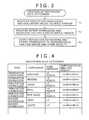
- FIG. 4 shows an example of the dictionary data for the reputation rule dictionary 44.
- reputation expressions and evaluation values (scores) thereof are registered in the reputation rule dictionary 44 (step T1).
- the term "reputation expression” as used herein refers to words or phrases that express positive or negative views, such as "amusing", “moving”, “good”, “dull”, “not amusing", and “not good”. Positive (+) evaluation values (scores) are assigned to positive reputation expressions, while negative (-) evaluation values (scores) are assigned to negative reputation expressions.
- an evaluation value of "+5 points” is assigned to “amusing” and “moving”, and an evaluation value of "+2 points” is assigned to “good”, for example.
- an evaluation value of "-5 points” is assigned to "dull” and “not amusing”, and an evaluation value of "-2 points” is assigned to "not good”, for example.
- extent expressions and weighting factors (coefficients) thereof are registered in the reputation rule dictionary 44 (step T2).
- the term "extent expression” as used herein refers to words or phrases that indicate the extent of a word or phrase they refer to, such as "very”, “quite”, “totally”, and “highly”.
- the weighting factor (coefficient) of the extent expression is used as a coefficient for the evaluation value of the reputation expression.
- a weighting factor (coefficient) of "x2" is assigned to the extent expression “very”
- a weighting factor (coefficient) of "x3” is assigned to the extent expression “quite”, for example.
- the thesaurus dictionary 43 is a dictionary in which expressions (hereinafter referred to as "semantically similar expressions") that are similar to entry expressions, such as synonyms, similar words, and abbreviations, are registered. Such semantically similar expressions are originally registered in the thesaurus dictionary 43, but the user is allowed to additionally register a synonym, a similar word, an abbreviation, and so on, as necessary.
- the users may use a synonym, an abbreviation, or the like of the search keyword.
- the thesaurus dictionary 43 is prepared in view of this fact. As described below, when the reputation of the content is searched for, the semantically similar expressions of the search keyword are also taken into account, with the use of the thesaurus dictionary 43.
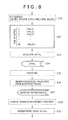
- the content-related information acquired at step S1 is information that includes the title of the recorded content "Flamboyance of Royal Family” and the program content information including words “Kimura Takuo”, “Minamioji Ginpachi”, and so on, which indicate people that appear in the recorded content (see step S21 in FIG. 7 ).
- the program content information including words “Kimura Takuo”, “Minamioji Ginpachi”, and so on, which indicate people that appear in the recorded content.
- “Flamboyance”, “Royal Family”, “Kimura Takuo”, “Minamioji Ginpachi”, and so on are extracted as the search keywords (see step S23 in FIG. 7 ).
- the search keywords used for the reputation search are not limited to those automatically extracted from the content-related information as described above, but the user is allowed to enter an additional search keyword to be used for the reputation search.
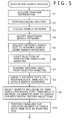
- the control section 10 allows a message that prompts the user to enter the additional search keyword to be displayed on the display of the monitor apparatus 2, for example, and waits for the user to enter the search keyword using the operation section 25. If the search keyword is entered by the user, the control section 10 supplies the entered search keyword to the internet search section 32 as the additional search keyword (step S4 at FIG. 5 ).
- step S4 for acceptance of the additional search keyword may be omitted.
- step S24 in FIG. 7 suppose that the user has entered the additional search keyword (see step S24 in FIG. 7 ), and that this additional search keyword is "blog".
- this additional search keyword is "blog".
- the additional search keyword "blog" is a keyword the user added with the intention to acquire reputation information from the blog sites.
- the additional search keyword is not limited to this example.
- the user may enter "bulletin board" as an additional search keyword. It is to be appreciated that the user may enter, as the additional search keyword, not expressions concerning the websites but expressions related to the selected recorded content (the reputation of which is to be searched for).
- control section 10 controls the internet search section 32 to send a search request to the search site. Accordingly, the internet search section 32 sends the search request, including the received search keywords, to the previously-registered search site 4 via the communication interface 31 and the Internet 3 (step S5 in FIG. 5 ).
- the search site 4 searches for websites with a web page including the received search keywords, and sends information of URLs of the websites found as a result of the search to the recording and reproducing apparatus 1.
- the control section 10 receives the information of the URLs via the communication interface 31, and temporarily stores information of the URLs of top N websites in the RAM 13 or free space in the recording information storage section 23, which is formed by the hard disk drive, for example.
- the search site performs a search using the search keywords "Flamboyance”, “Royal Family”, “Kimura Takuo”, “Minamioji Ginpachi”, and so on, and in addition "blog" (see step S25 in FIG. 7 ) (Web search; see step S26 in FIG. 7 ).
- Web search see step S26 in FIG. 7 .
- an enormous number of websites are found, but the URLs of the top N websites among them are stored (see step S27 in FIG. 7 ).
- the number of websites may be further reduced using a specific word, e.g., "blag", included in the URLs.
- URLs including such a specific word are very likely to be URLs of a specific type of websites, and therefore such a specific word can be used to select only the specific type of websites. For example, it is possible to extract only blog sites by using the specific word "blog", i.e., by selecting only websites whose URLs include the specific word "blog".
- websites whose URLs include the word "blog" are selected from the top N websites (see step S31 in FIG. 8 ). If the number of websites that have been selected from the top N websites is greater than a predetermined finite number M (M ⁇ N), top M websites are further selected from the selected websites in this example (see step S32 in FIG. 8 ).
- HTML parsing section 33 a written text "Yesterday's Flamboyance of Royal Family was quite amusing! is extracted from this HTML document.
- control section 10 supplies each of the extracted written texts to the morphological analysis engine 35, and controls the morphological analysis engine 35 to subject the extracted written text to the morphological analysis to extract only nouns therefrom for detecting the search keywords (step S8 in FIG. 5 , and steps S36 and S37 in FIG. 8 ).
- control section 10 identifies a website with an HTML document including so many of the search keywords that a "search keyword content" exceeds a predetermined threshold ⁇ th (%), and selects the identified website as a website that is used to search for the reputation (second site selection) (step S9 in FIG. 5 , and steps S38 and S39 in FIG. 8 ⁇ .
- the website selected in this second site selection will be hereinafter referred to as a "seed site”. This is because this website is a starting point of the crawling as described below.
- the search keyword content is calculated while a different weight is assigned to each of the search keywords depending on whether the search keyword has been extracted from the title of the broadcast program content, whether the search keyword has been extracted from the program content information, or whether the search keyword has been additionally entered by the user.
- a weight of 1.5 is assigned to the detected search keyword when that search keyword has been extracted from the title
- a weight of 1.0 is assigned to the detected search keyword when that search keyword has been extracted from the program content information
- a weight of 0.8 is assigned to the detected search keyword when that search keyword has been additionally entered by the user.
- the search keyword content of the above written text exceeds the threshold ⁇ th. Therefore, a website with a web page including the above written text is selected as the seed site at step S9.
- control section 10 instructs the HTML crawling section 34 to perform the crawling for a predetermined number of levels, with each of the seed sites (see step S40 in FIG. 9 ) selected in the above-described manner as a starting site (step S10 in FIG. 5 , and step S41 in FIG. 9 ).
- the HTML crawling section 34 first collects HTML documents on the seed site, and parses the collected HTML documents to identify a link, then collects HTML documents on a destination of the identified link, and parses the collected HTML documents to identify a link included in the HTML documents, then collects HTML documents on a destination of the identified link, and parses the collected HTML documents, and so on.
- the HTML crawling section 34 repeats the above operation for the predetermined number of levels.
- the number of levels for which the crawling is to be performed may be specified by the user before starting the reputation search process. Also note that the user may be allowed to specify whether the crawling should be performed within the range of link sites on the same domain, or within the range of all link sites, before starting the reputation search process.
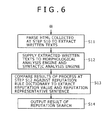
- control section 10 supplies the HTML documents collected at step S10 in FIG. 5 (see step S42 in FIG. 9 ) to the HTML parsing section 33, and controls the HTML parsing section 33 to parse the HTML documents to extract written texts therefrom (step S11 in FIG. 6 , and step S43 in FIG. 9 ).
- control section 10 controls the morphological analysis engine 35 and the syntactic analysis engine 36 to subject the written texts as extracted at step S11 to the morphological analysis and the syntactic analysis, respectively (step S12 in FIG. 6 , and step S44 in FIG. 9 ).
- the result of the morphological analysis at this time will be hereinafter referred to as a "crawl written text (morphological analysis result)"
- the result of the syntactic analysis at this time will be hereinafter referred to as a "crawl written text (syntactic analysis result)”.
- the reputation determination section 37 first searches through the crawl written texts (morphological analysis result) for a sentence that includes any reputation expression (morphological analysis result). Then, the reputation determination section 37 performs the following processes (1), (2), and (3) with respect to such sentences found.
- the reputation determination section 37 calculates a positive reputation value and a negative reputation value separately.
- the reputation determination section 37 referring to the reputation rule dictionary 44, adds the evaluation value (score) of the found reputation expression to the positive reputation value if the evaluation value is positive, and adds the evaluation value (score) of the found reputation expression to the negative reputation value if the evaluation value is negative.
- weighting coefficients are assigned to the types A, B, and C beforehand, and that the reputation determination section 37 adds, to the positive reputation value or the negative reputation value, the evaluation value (score) of the found reputation expression as multiplied by the weighting coefficient corresponding to the type of the sentence.
- these weighting coefficients are held in the reputation determination section 37, and the weighting coefficients satisfy the following inequality: the weighting coefficient for the type A > the weighting coefficient for the type B > the weighting coefficient for the type C.
- the reputation expression is reversed in meaning, and accordingly the reputation determination section 37 adds the evaluation value (score) of the reputation expression to the negative reputation value if the evaluation value (score) is positive, and adds the evaluation value (score) of the reputation expression to the positive reputation value if the evaluation value (score) is negative.
- the reputation determination section 37 recognizes the coefficient of this extent expression from the reputation rule dictionary 44, and adds the evaluation value (score) of the reputation expression as multiplied by that coefficient to the positive reputation value or the negative reputation value.
- FIG. 10 shows an example of the reputation result as displayed.
- This example of the reputation result shows the positive reputation value (Positive), the negative reputation value (Negative), several positive representative sentences, several negative representative sentences, the number of websites found as a result of the search, and the number of extracted sentences concerning the reputation.
- the recording and reproducing apparatus can be equipped with the reputation search section as one functional block as in the above-described embodiment.
- the recording and reproducing apparatus itself is capable of searching through the Internet for the reputation of each program, and displaying the reputation. This is very convenient for the user.
- the information processing apparatus is the recording and reproducing apparatus. It will be appreciated, however, that the information processing apparatus according to the present invention is not limited to the recording and reproducing apparatus. Also note that, in the above-described embodiment, the reputation of the broadcast program content is searched for, and accordingly the search keyword is extracted from the information obtained from the EPG information. It will be appreciated, however, that this is simply one example and is not essential to the present invention. For example, in the case where a content providing server has stored therein the content-related information, such as the titles of the contents and information describing the contents of the contents, the information processing apparatus may acquire the content-related information from the content providing server to extract the search keyword therefrom.
- the recording and reproducing apparatus itself forms one embodiment of the information processing apparatus according to the present invention.
- a server apparatus used for reputation search may be provided on the Internet or a LAN.
- Such a server apparatus used for reputation search may also form one embodiment of the information processing apparatus according to the present invention, for example.
- a second embodiment as described below is one example of that case.
- FIG. 11 is a diagram illustrating an outline of a system that includes an information processing apparatus according to the second embodiment.
- a "program reputation search storage server apparatus" 7 is provided on the Internet.
- the program reputation search storage server apparatus 7 includes components similar to the reputation search section 30 and the reputation search-use dictionaries 40 of the recording and reproducing apparatus 1 as described above.
- the program reputation search storage server apparatus 7 stores the reputation results of contents beforehand with respect to which a reputation search request is supposed to be made, and in response to the reputation search request from a client apparatus, such as the recording and reproducing apparatus 1, the program reputation search storage server apparatus 7 sends the corresponding reputation result stored therein to the client apparatus.
- the recording and reproducing apparatus 1 includes neither the reputation search section 30 nor the reputation search-use dictionaries 40, which have been described above with respect to the first embodiment, and instead includes a functional block as the client apparatus that makes the reputation search request, as described below.
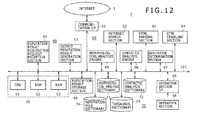
- FIG. 12 is a block diagram illustrating an exemplary hardware structure of the program reputation search storage server apparatus 7 according to the second embodiment.
- the program reputation search storage server apparatus 7 includes a control section 50, a reputation search section 60, reputation search-use dictionaries 70, a reputation search request section 80, and a system bus 101.
- the control section 50, the reputation search section 60, the reputation search-use dictionaries 70, and the reputation search request section 80 are connected to the system bus 101.
- the control section 50 is formed by a microcomputer, and includes a CPU 51, a ROM 52 for programs, and a RAM 53 for a work area.
- the ROM 52 stores the program for searching for the content reputation and acquiring the reputation result, a program for requesting the reputation search, and other programs.
- the CPU 51 executes the programs stored in the ROM 52 while using the RAM 53 as the work area, thereby controlling the various processes as described above.
- the reputation search section 60 has the same structure as the reputation search section 30 in the above-described first embodiment.
- the reputation search section 60 includes a communication interface 61 for connection to the Internet 3, an internet search section 62, an HTML parsing section 63, an HTML crawling section 64, a morphological analysis engine 65, a syntactic analysis engine 66, and a reputation determination section 67, each of which is connected to the system bus 101.
- an operation section 68 and an operation section interface 69 which are used to enter the additional search keyword, form part of the reputation search section 60.
- the internet search section 62, the HTML parsing section 63, the HTML crawling section 64, the morphological analysis engine 65, the syntactic analysis engine 66, and the reputation determination section 67 may be implemented either in hardware or by a software application. Note that in the case where they are implemented by the software application, the software application is stored in the ROM 52 beforehand.
- the reputation search process which involves the use of the reputation search section 60 and the reputation search-use dictionaries 70 is identical to the reputation search process in the above-described first embodiment.
- the server apparatus 7 performs a reputation search as described in the above-described first embodiment beforehand with respect to all broadcast program contents included in the EPG information sequentially.
- the server apparatus 7 further stores the reputation results (which include the reputation evaluation values, the reputation representative sentences, and so on) obtained as a result of this process in a reputation result storage section 81 in the reputation search request section 80 so as to be associated with the corresponding broadcast program contents.
- the reputation search request section 80 includes the reputation result storage section 81, a "reputation result acquisition request reception section” 82, and an “output reputation result generation section” 83.
- the "reputation result acquisition request reception section” 82 receives a reputation result acquisition request from the client apparatus via the Internet 3, and analyzes the reputation result acquisition request to determine which broadcast program content it refers to.
- the reputation result acquisition request from the client apparatus includes "broadcast program content identification information" for identifying the broadcast program content whose reputation is to be searched for, in order to notify the server apparatus 7 which broadcast program content the reputation result acquisition request refers to.
- Examples of the broadcast program content identification information include: identification information that is originally assigned uniquely to each of the broadcast program contents; the title of each of the broadcast program contents; and a Gemstar code (G-code) that is assigned to each of the broadcast program contents.
- G-code Gemstar code
- the reputation result of each of the broadcast program contents is stored so as to be associated with the corresponding broadcast program content identification information.
- the reputation result acquisition request reception section 82 Upon receipt of the reputation result acquisition request via the communication interface 61, the reputation result acquisition request reception section 82 extracts the identification information of the broadcast program content (the reputation of which is to be searched for) from the reputation result acquisition request, and transfers the extracted identification information of the broadcast program content to the output reputation result generation section 83.
- the output reputation result generation section 83 receives the identification information of the broadcast program content, and acquires, from the reputation result storage section 81, a reputation result stored in the reputation result storage section 81 so as to be associated with the received identification information of the broadcast program content. Then, the output reputation result generation section 83 generates "reputation result sending information" to be sent to the client apparatus that has made the reputation result acquisition request. Then, the output reputation result generation section 83 sends the generated reputation result sending information to the client apparatus via the communication interface 61 and the Internet 3.
- the server apparatus 7 performs the reputation search process with respect to this broadcast program content, and sends a reputation result obtained as a result of the reputation search process to the client apparatus.
- the reputation result obtained at this time is also stored in the reputation result storage section 81.
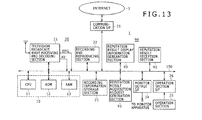
- FIG. 13 shows an exemplary hardware structure of the recording and reproducing apparatus 1, which is an example of the client apparatus according to the second embodiment.
- the recording and reproducing apparatus 1 includes neither the reputation search section 30 nor the reputation search-use dictionaries 40, which have been described above with respect to the first embodiment, and instead includes a reputation result acquisition request section 90, which is the functional block as the client apparatus that makes the reputation search request.
- the reputation result acquisition request section 90 includes a reputation result acquisition request generation section 91, a reputation result reception section 92, and a reputation result display information generation section 93.
- the control section 10 accepts the instruction to search for the reputation of the recorded content selected from the displayed list of the recorded contents, for example, the control section 10 activates the reputation result acquisition request section 90.
- the reputation result acquisition request generation section 91 sends the reputation search request with respect to the recorded content selected from the displayed list of the recorded contents to the program reputation search storage server apparatus 7 via the communication interface 31 and the Internet 3, after allowing the identification information (e.g., the title information) of the selected recorded content to be included in the reputation search request.
- the identification information e.g., the title information
- a URL of the program reputation search storage server apparatus 7 on the Internet 3 has previously been registered and stored in the recording and reproducing apparatus 1.
- the server apparatus 7 sends the reputation result of this recorded content to the recording and reproducing apparatus 1. Accordingly, the reputation result reception section 92 receives the reputation result via the communication interface 31, and transfers the received reputation result to the reputation result display information generation section 93.
- the reputation result display information generation section 93 receives the reputation result and generates therefrom the display information concerning the reputation result as described above, and supplies the generated display information to the monitor apparatus 2 via the monitor output interface 24.
- the reputation result of the recorded content as illustrated in FIG. 10 is displayed on the display of the monitor apparatus 2, whereby the reputation result is presented to the user.
- the server apparatus 7 searches for the reputation result of the broadcast program content and stores the reputation result in the reputation result storage section 81 beforehand. Therefore, upon receipt of the reputation result acquisition request from the client apparatus, the server apparatus 7 is capable of immediately sending the reputation result stored in the reputation result storage section 81 to the client apparatus as a response to the acquisition request. Therefore, the user is able to see the reputation result of the recorded content quickly.
- server apparatus 7 does not need to be connected to the client apparatus via the Internet.
- server apparatus 7 may be connected to the client apparatus via the LAN.
- the reputations of the recorded contents are searched for.
- a reputation of a broadcast program content that is currently being broadcast may also be searched for, for example. This is accomplished when a television broadcast program reception apparatus is configured to allow a user to specify a broadcast program from a program schedule based on the EPG, in order to search for the reputation thereof, for example.
- the television broadcast program reception apparatus is configured to extract, from EPG data, a title and related information of the broadcast program, the reputation of which is to be searched for, then extract the search keyword therefrom, and perform the above-described reputation search process using the extracted search keyword.
- the present invention can be applied not only when selecting and receiving a real-time broadcast program but also when receiving and reproducing a content provided via Video on Demand.
- the present invention can also be applied in the case where broadcast programs are first stored in a server and a user selects, from the broadcast programs stored in the server, a desired broadcast program to receive it, as is the case with server-type broadcast programs.
- the object of the reputation search is the broadcast program contents, but the object of the reputation search is not limited to the broadcast program contents.
- the present invention can also be applied to search for reputations of various other types of contents, such as music contents, electronic book contents, and video game contents.
Landscapes
- Engineering & Computer Science (AREA)
- Databases & Information Systems (AREA)
- Multimedia (AREA)
- Signal Processing (AREA)
- Theoretical Computer Science (AREA)
- Data Mining & Analysis (AREA)
- Physics & Mathematics (AREA)
- General Engineering & Computer Science (AREA)
- General Physics & Mathematics (AREA)
- Information Retrieval, Db Structures And Fs Structures Therefor (AREA)
- Information Transfer Between Computers (AREA)
Applications Claiming Priority (1)
| Application Number | Priority Date | Filing Date | Title |
|---|---|---|---|
| JP2007173637A JP4359787B2 (ja) | 2007-07-02 | 2007-07-02 | 情報処理装置、コンテンツの評判検索方法およびコンテンツの評判検索システム |
Publications (1)
| Publication Number | Publication Date |
|---|---|
| EP2026217A1 true EP2026217A1 (en) | 2009-02-18 |
Family
ID=40043092
Family Applications (1)
| Application Number | Title | Priority Date | Filing Date |
|---|---|---|---|
| EP08158554A Withdrawn EP2026217A1 (en) | 2007-07-02 | 2008-06-19 | Information processing apparatus, and method and system for searching for reputation of content |
Country Status (5)
| Country | Link |
|---|---|
| US (1) | US7979454B2 (enExample) |
| EP (1) | EP2026217A1 (enExample) |
| JP (1) | JP4359787B2 (enExample) |
| KR (1) | KR101462688B1 (enExample) |
| CN (1) | CN101339564B (enExample) |
Cited By (1)
| Publication number | Priority date | Publication date | Assignee | Title |
|---|---|---|---|---|
| WO2015096524A1 (zh) * | 2013-12-24 | 2015-07-02 | 北京奇虎科技有限公司 | 网页搜索方法及客户端 |
Families Citing this family (31)
| Publication number | Priority date | Publication date | Assignee | Title |
|---|---|---|---|---|
| GB2466453A (en) * | 2008-12-18 | 2010-06-23 | Clearswift Ltd | Monitoring the language content used in messages by comparison to other messages |
| WO2011052116A1 (ja) * | 2009-10-28 | 2011-05-05 | 日本電気株式会社 | ウェブクローリング初期点選択システム、方法及びプログラム |
| WO2011090036A1 (ja) * | 2010-01-19 | 2011-07-28 | 日本電気株式会社 | 動向情報検索装置、動向情報検索方法および記録媒体 |
| JP2011164779A (ja) * | 2010-02-05 | 2011-08-25 | Sony Corp | 情報処理装置、情報処理方法、及びプログラム |
| WO2011123981A1 (en) * | 2010-04-07 | 2011-10-13 | Google Inc. | Detection of boilerplate content |
| JP5554195B2 (ja) * | 2010-09-22 | 2014-07-23 | 株式会社東芝 | コンテンツ記録再生装置 |
| JP5541049B2 (ja) * | 2010-09-29 | 2014-07-09 | 大日本印刷株式会社 | データ生成装置、データの生成方法及びデータ生成プログラム |
| US9251185B2 (en) * | 2010-12-15 | 2016-02-02 | Girish Kumar | Classifying results of search queries |
| JP5768492B2 (ja) | 2011-05-18 | 2015-08-26 | ソニー株式会社 | 情報処理装置、情報処理方法、およびプログラム |
| US8856129B2 (en) | 2011-09-20 | 2014-10-07 | Microsoft Corporation | Flexible and scalable structured web data extraction |
| US9600587B2 (en) | 2011-10-19 | 2017-03-21 | Zalag Corporation | Methods and apparatuses for generating search expressions from content, for applying search expressions to content collections, and/or for analyzing corresponding search results |
| US9208218B2 (en) | 2011-10-19 | 2015-12-08 | Zalag Corporation | Methods and apparatuses for generating search expressions from content, for applying search expressions to content collections, and/or for analyzing corresponding search results |
| KR101494655B1 (ko) * | 2011-11-28 | 2015-02-25 | 세종대학교산학협력단 | 소셜 네트워크 서비스 데이터 기반 특정 기관의 순위 계산 방법 및 그 장치 |
| US8850301B1 (en) * | 2012-03-05 | 2014-09-30 | Google Inc. | Linking to relevant content from an ereader |
| JP5800391B2 (ja) * | 2012-03-09 | 2015-10-28 | Kddi株式会社 | 放送プログラム選別方法、装置およびシステム |
| JP5940955B2 (ja) * | 2012-10-18 | 2016-06-29 | 株式会社日立製作所 | トレンド分析装置、方法及びプログラム |
| US20150019565A1 (en) * | 2013-07-11 | 2015-01-15 | Outside Intelligence Inc. | Method And System For Scoring Credibility Of Information Sources |
| CN104009970A (zh) * | 2013-09-17 | 2014-08-27 | 宁波公众信息产业有限公司 | 一种网络信息采集方法 |
| CN103778235A (zh) * | 2014-01-26 | 2014-05-07 | 北京京东尚科信息技术有限公司 | 一种处理商品评价信息的方法和装置 |
| US10796383B2 (en) * | 2014-06-30 | 2020-10-06 | Ahmed Farouk Shaaban | System and method for allocating value to timekeeper work |
| CN104298754B (zh) * | 2014-10-17 | 2017-08-25 | 梁忠伟 | 以图片序列为主干的信息挖掘传递方法、社交网络装置和系统 |
| WO2016075834A1 (ja) * | 2014-11-14 | 2016-05-19 | 富士通株式会社 | サイト提示方法、サイト提示プログラムおよびサイト提示装置 |
| US10748143B2 (en) * | 2015-11-19 | 2020-08-18 | International Business Machines Corporation | Location aware trust-based peer-to-peer currency exchange |
| JP6510452B2 (ja) * | 2016-03-18 | 2019-05-08 | Jcc株式会社 | 検索サーバー、検索システム、検索情報配信システム、検索プログラム、検索情報配信プログラム |
| WO2017163346A1 (ja) * | 2016-03-23 | 2017-09-28 | 株式会社野村総合研究所 | 文章解析システム及びプログラム |
| CN107766229B (zh) * | 2016-08-19 | 2021-03-02 | 南京理工大学 | 一种利用蜕变测试评价商品搜索系统正确性的方法 |
| US10505981B2 (en) * | 2016-11-03 | 2019-12-10 | RiskIQ, Inc. | Techniques for detecting malicious behavior using an accomplice model |
| KR102197945B1 (ko) * | 2020-05-01 | 2021-01-05 | 호서대학교 산학협력단 | 윅수퍼비전 방법론에 기초하여 정보검색모델을 학습시키는 방법 및 이에 의하여 학습된 정보검색모델을 이용하여 검색결과를 제공하는 방법 |
| JP7380508B2 (ja) * | 2020-10-08 | 2023-11-15 | トヨタ自動車株式会社 | 情報処理装置、情報処理方法、及び端末装置 |
| JP2023016373A (ja) * | 2021-07-21 | 2023-02-02 | アストロラボ株式会社 | 文書管理サーバ、文書管理方法及びコンピュータプログラム |
| KR102436184B1 (ko) * | 2021-11-23 | 2022-08-25 | (주)붐코커뮤니케이션 | 콘텐츠 기반의 개인 맞춤형 한국어 교육서비스 서버 및 그 방법 |
Citations (9)
| Publication number | Priority date | Publication date | Assignee | Title |
|---|---|---|---|---|
| JP2001355278A (ja) * | 2001-06-01 | 2001-12-26 | Ayako Oide | 雨水用道路側溝及びその浸透手段 |
| US20030093790A1 (en) * | 2000-03-28 | 2003-05-15 | Logan James D. | Audio and video program recording, editing and playback systems using metadata |
| JP2003157254A (ja) | 2001-11-20 | 2003-05-30 | Just Syst Corp | 情報処理装置、情報処理方法、及び情報処理プログラム |
| JP2003157255A (ja) | 2001-11-20 | 2003-05-30 | Just Syst Corp | 情報処理装置、情報処理方法、及び情報処理プログラム |
| JP2003157253A (ja) | 2001-11-20 | 2003-05-30 | Just Syst Corp | 情報処理装置、情報処理方法、及び情報処理プログラム |
| JP2003248681A (ja) | 2001-11-20 | 2003-09-05 | Just Syst Corp | 情報処理装置、情報処理方法、及び情報処理プログラム |
| US20060129446A1 (en) * | 2004-12-14 | 2006-06-15 | Ruhl Jan M | Method and system for finding and aggregating reviews for a product |
| US20070143122A1 (en) * | 2005-12-06 | 2007-06-21 | Holloway Lane T | Business method for correlating product reviews published on the world wide Web to provide an overall value assessment of the product being reviewed |
| JP2007173637A (ja) | 2005-12-22 | 2007-07-05 | Matsushita Electric Works Ltd | センサモジュール |
Family Cites Families (9)
| Publication number | Priority date | Publication date | Assignee | Title |
|---|---|---|---|---|
| JP2940459B2 (ja) | 1996-02-08 | 1999-08-25 | 日本電気株式会社 | ノード・リンク探索装置 |
| JP3878694B2 (ja) | 1996-08-29 | 2007-02-07 | 松下電器産業株式会社 | テレビ受信装置 |
| KR100853917B1 (ko) * | 2000-12-06 | 2008-08-25 | 소니 가부시끼 가이샤 | 정보 처리 장치 및 방법, 정보 처리 시스템, 및 기록 매체 |
| JP3820878B2 (ja) | 2000-12-06 | 2006-09-13 | 日本電気株式会社 | 情報検索装置,スコア決定装置,情報検索方法,スコア決定方法及びプログラム記録媒体 |
| JP4150170B2 (ja) * | 2001-05-10 | 2008-09-17 | ソニー株式会社 | 放送プログラム処理装置、および放送プログラムの評価処理システム |
| JP4406815B2 (ja) * | 2002-06-26 | 2010-02-03 | ソニー株式会社 | 情報処理装置および方法、記録媒体、並びにプログラム |
| JP2004280569A (ja) | 2003-03-17 | 2004-10-07 | Mitsubishi Electric Corp | 情報監視装置 |
| JP4361299B2 (ja) | 2003-03-20 | 2009-11-11 | 株式会社リコー | 評価表現抽出装置、プログラム、及び記憶媒体 |
| US7461093B2 (en) * | 2005-09-12 | 2008-12-02 | Sharp Kabushiki Kaisha | Network connecting device, server device, terminal device, system, receiving method, character input method, transmission method, program, and computer-readable storage medium |
-
2007
- 2007-07-02 JP JP2007173637A patent/JP4359787B2/ja not_active Expired - Fee Related
-
2008
- 2008-06-19 EP EP08158554A patent/EP2026217A1/en not_active Withdrawn
- 2008-06-30 US US12/215,743 patent/US7979454B2/en not_active Expired - Fee Related
- 2008-07-01 KR KR1020080063487A patent/KR101462688B1/ko not_active Expired - Fee Related
- 2008-07-02 CN CN2008101281026A patent/CN101339564B/zh not_active Expired - Fee Related
Patent Citations (9)
| Publication number | Priority date | Publication date | Assignee | Title |
|---|---|---|---|---|
| US20030093790A1 (en) * | 2000-03-28 | 2003-05-15 | Logan James D. | Audio and video program recording, editing and playback systems using metadata |
| JP2001355278A (ja) * | 2001-06-01 | 2001-12-26 | Ayako Oide | 雨水用道路側溝及びその浸透手段 |
| JP2003157254A (ja) | 2001-11-20 | 2003-05-30 | Just Syst Corp | 情報処理装置、情報処理方法、及び情報処理プログラム |
| JP2003157255A (ja) | 2001-11-20 | 2003-05-30 | Just Syst Corp | 情報処理装置、情報処理方法、及び情報処理プログラム |
| JP2003157253A (ja) | 2001-11-20 | 2003-05-30 | Just Syst Corp | 情報処理装置、情報処理方法、及び情報処理プログラム |
| JP2003248681A (ja) | 2001-11-20 | 2003-09-05 | Just Syst Corp | 情報処理装置、情報処理方法、及び情報処理プログラム |
| US20060129446A1 (en) * | 2004-12-14 | 2006-06-15 | Ruhl Jan M | Method and system for finding and aggregating reviews for a product |
| US20070143122A1 (en) * | 2005-12-06 | 2007-06-21 | Holloway Lane T | Business method for correlating product reviews published on the world wide Web to provide an overall value assessment of the product being reviewed |
| JP2007173637A (ja) | 2005-12-22 | 2007-07-05 | Matsushita Electric Works Ltd | センサモジュール |
Non-Patent Citations (1)
| Title |
|---|
| CHAOVALIT P ET AL: "Movie Review Mining: a Comparison between Supervised and Unsupervised Classification Approaches", 20050103; 20050103 - 20050106, 3 January 2005 (2005-01-03), pages 112c - 112c, XP010762483 * |
Cited By (1)
| Publication number | Priority date | Publication date | Assignee | Title |
|---|---|---|---|---|
| WO2015096524A1 (zh) * | 2013-12-24 | 2015-07-02 | 北京奇虎科技有限公司 | 网页搜索方法及客户端 |
Also Published As
| Publication number | Publication date |
|---|---|
| KR101462688B1 (ko) | 2014-11-17 |
| JP2009015407A (ja) | 2009-01-22 |
| JP4359787B2 (ja) | 2009-11-04 |
| US20090012946A1 (en) | 2009-01-08 |
| CN101339564B (zh) | 2012-07-04 |
| KR20090004650A (ko) | 2009-01-12 |
| CN101339564A (zh) | 2009-01-07 |
| US7979454B2 (en) | 2011-07-12 |
Similar Documents
| Publication | Publication Date | Title |
|---|---|---|
| US7979454B2 (en) | Information processing apparatus, and method and system for searching for reputation of content | |
| US8788514B1 (en) | Triggering music answer boxes relevant to user search queries | |
| KR101498001B1 (ko) | 디스플레이를 위한 고품질 리뷰 선택 | |
| US7137067B2 (en) | Device and method for presenting news information | |
| US20030101415A1 (en) | Method of summarizing markup-type documents automatically | |
| US20070067294A1 (en) | Readability and context identification and exploitation | |
| KR101105173B1 (ko) | 카테고리화를 통해 호스트 투 게스트 콘텐츠를 자동으로 매칭하기 위한 메커니즘 | |
| US20050137996A1 (en) | Indexing for contextual revisitation and digest generation | |
| US20120278300A1 (en) | System, method, and user interface for a search engine based on multi-document summarization | |
| WO2009059297A1 (en) | Method and apparatus for automated tag generation for digital content | |
| JP2005182803A (ja) | 情報ダイジェストを生成する方法、システム、及びプログラム | |
| JPH10275157A (ja) | データ処理装置 | |
| JP6429382B2 (ja) | コンテンツ推薦装置、及びプログラム | |
| JP4068854B2 (ja) | ファイル管理方法とこの方法を利用可能なファイル管理装置 | |
| Maybury et al. | Personalcasting: Tailored broadcast news | |
| US20070005649A1 (en) | Contextual title extraction | |
| CN110166847B (zh) | 弹幕处理方法和装置 | |
| US12399944B2 (en) | Recommending domains from free text | |
| KR101928074B1 (ko) | 문맥 정보에 기반한 콘텐츠 제공 서버 및 방법 | |
| JP4883644B2 (ja) | リコメンド装置、リコメンドシステム、リコメンド装置の制御方法、およびリコメンドシステムの制御方法 | |
| CN113806491B (zh) | 一种信息处理的方法、装置、设备和介质 | |
| Baumann et al. | Enhancing music recommendation algorithms using cultural metadata | |
| JP5332128B2 (ja) | 情報検索装置、情報検索方法およびそのプログラム | |
| JP6188222B2 (ja) | トピック抽出装置、及びプログラム | |
| KR101308821B1 (ko) | 검색엔진용 키워드 추출 시스템 및 추출 방법 |
Legal Events
| Date | Code | Title | Description |
|---|---|---|---|
| PUAI | Public reference made under article 153(3) epc to a published international application that has entered the european phase |
Free format text: ORIGINAL CODE: 0009012 |
|
| AK | Designated contracting states |
Kind code of ref document: A1 Designated state(s): AT BE BG CH CY CZ DE DK EE ES FI FR GB GR HR HU IE IS IT LI LT LU LV MC MT NL NO PL PT RO SE SI SK TR |
|
| AX | Request for extension of the european patent |
Extension state: AL BA MK RS |
|
| 17P | Request for examination filed |
Effective date: 20090720 |
|
| 17Q | First examination report despatched |
Effective date: 20090907 |
|
| AKX | Designation fees paid |
Designated state(s): DE FR GB |
|
| STAA | Information on the status of an ep patent application or granted ep patent |
Free format text: STATUS: THE APPLICATION IS DEEMED TO BE WITHDRAWN |
|
| 18D | Application deemed to be withdrawn |
Effective date: 20160105 |