EP2018901B1 - Verfahren zur Entfernung von sauren Gasen aus Abgasen - Google Patents
Verfahren zur Entfernung von sauren Gasen aus Abgasen Download PDFInfo
- Publication number
- EP2018901B1 EP2018901B1 EP08290654A EP08290654A EP2018901B1 EP 2018901 B1 EP2018901 B1 EP 2018901B1 EP 08290654 A EP08290654 A EP 08290654A EP 08290654 A EP08290654 A EP 08290654A EP 2018901 B1 EP2018901 B1 EP 2018901B1
- Authority
- EP
- European Patent Office
- Prior art keywords
- ethoxy
- amino
- ethanol
- aminomethyl
- aqueous solution
- Prior art date
- Legal status (The legal status is an assumption and is not a legal conclusion. Google has not performed a legal analysis and makes no representation as to the accuracy of the status listed.)
- Not-in-force
Links
Images

Classifications
-
- B—PERFORMING OPERATIONS; TRANSPORTING
- B01—PHYSICAL OR CHEMICAL PROCESSES OR APPARATUS IN GENERAL
- B01D—SEPARATION
- B01D53/00—Separation of gases or vapours; Recovering vapours of volatile solvents from gases; Chemical or biological purification of waste gases, e.g. engine exhaust gases, smoke, fumes, flue gases, aerosols
- B01D53/14—Separation of gases or vapours; Recovering vapours of volatile solvents from gases; Chemical or biological purification of waste gases, e.g. engine exhaust gases, smoke, fumes, flue gases, aerosols by absorption
- B01D53/1456—Removing acid components
-
- B—PERFORMING OPERATIONS; TRANSPORTING
- B01—PHYSICAL OR CHEMICAL PROCESSES OR APPARATUS IN GENERAL
- B01D—SEPARATION
- B01D53/00—Separation of gases or vapours; Recovering vapours of volatile solvents from gases; Chemical or biological purification of waste gases, e.g. engine exhaust gases, smoke, fumes, flue gases, aerosols
- B01D53/14—Separation of gases or vapours; Recovering vapours of volatile solvents from gases; Chemical or biological purification of waste gases, e.g. engine exhaust gases, smoke, fumes, flue gases, aerosols by absorption
- B01D53/1493—Selection of liquid materials for use as absorbents
-
- C—CHEMISTRY; METALLURGY
- C10—PETROLEUM, GAS OR COKE INDUSTRIES; TECHNICAL GASES CONTAINING CARBON MONOXIDE; FUELS; LUBRICANTS; PEAT
- C10L—FUELS NOT OTHERWISE PROVIDED FOR; NATURAL GAS; SYNTHETIC NATURAL GAS OBTAINED BY PROCESSES NOT COVERED BY SUBCLASSES C10G OR C10K; LIQUIFIED PETROLEUM GAS; USE OF ADDITIVES TO FUELS OR FIRES; FIRE-LIGHTERS
- C10L3/00—Gaseous fuels; Natural gas; Synthetic natural gas obtained by processes not covered by subclass C10G, C10K; Liquefied petroleum gas
- C10L3/06—Natural gas; Synthetic natural gas obtained by processes not covered by C10G, C10K3/02 or C10K3/04
- C10L3/10—Working-up natural gas or synthetic natural gas
-
- B—PERFORMING OPERATIONS; TRANSPORTING
- B01—PHYSICAL OR CHEMICAL PROCESSES OR APPARATUS IN GENERAL
- B01D—SEPARATION
- B01D2257/00—Components to be removed
- B01D2257/30—Sulfur compounds
- B01D2257/308—Carbonoxysulfide COS
Definitions
- the present invention relates to the elimination of acidic compounds in gaseous effluents and in particular the elimination of carbon oxysulfide in natural gas.
- the first step which is deacidification, aims to eliminate acidic compounds such as carbon dioxide (CO 2 ), hydrogen sulphide (H 2 S), carbon oxysulfide (COS) and mercaptans. mainly methylmercaptan, ethylmercaptan and propylmercaptans.
- the generally accepted specifications for the deacidified gas are 2% CO2, 4 ppm H2S, and 20 to 50 ppm volume of total sulfur.
- the dehydration step then controls the water content of the deacidified gas against transport specifications.
- the degassing stage of natural gas makes it possible to guarantee the hydrocarbon dew point of the natural gas, again depending on transport specifications.
- Deacidification is therefore often done first, for various reasons. For safety reasons, it is best to remove toxic acid gases such as H 2 S in the first stage of the process chain.
- Another advantage of first of all achieving the deacidification is to avoid the pollution of the various unit operations by these acidic compounds, in particular the dehydration section and the condensation and separation section of the heavier hydrocarbons.
- the presence of compounds Acids in this last section may lead to the production of different hydrocarbon cuts, C 1 -C 2 , C 3 , C 4 , C 5 + which all need to be processed to meet the required specifications. Depending on the temperature and pressure conditions, some of these cuts are liquid, requiring the implementation of specific technologies for the removal of residual acid compounds.
- Acidic compounds such as CO 2 and H 2 S, are generally removed by washing the gas with a solvent allowing absorption of these compounds, preferably with hydrocarbons. This absorption is preferably promoted by a chemical reaction.
- aqueous alkanolamine solution is the most common solution.
- the patent FR 2 062 138 proposes a solution to the elimination of SOC in natural gas.
- the method consists in promoting the absorption of SOC by an aqueous alkanolamine solution by producing an absorption zone maintained at a temperature of between 60 and 90 ° C, preferably between 70 and 80 ° C.
- the aqueous alkanolamine solution then makes it possible to capture the CO 2 and H 2 S from the hydrolysis reaction in another zone operating under temperature conditions favorable to the elimination of these two compounds. It is however necessary, according to the patent FR 2 062 138 , to eliminate beforehand the CO 2 and H 2 S present in the gas to be treated so as to promote the hydrolysis phenomenon.
- the patent US 6,852,144 also describes a method for removing SOC from hydrocarbons.
- the method uses a water-methyldiethanolamine or water-triethanolamine solvent containing a high proportion of a compound belonging to the following group: piperazine and / or methylpiperazine and / or morpholine, making it possible to selectively absorb COS with respect to carbon dioxide.
- This reactivity can be related to the stability of the reaction products formed.
- the products resulting from the reaction of an acidic gas with a primary alkanolamine will be more stable than those resulting from a reaction with a tertiary alkanolamine. Regeneration of primary alkanolamines is therefore generally more difficult.
- primary alkanolamines present a significant risk of degradation in the presence of COS.
- MEA monoethanolamine
- Diethanolurea, 2-oxazolidone and (2-hydroxyethyl) imidazolidone are the main degradation products of MEA in the presence of COS. This process of degradation is closely related to the operating conditions of the solvent regeneration step. As a result, MEA, as well as most primary alkanolamines, is not contemplated as a regenerable solvent for COS removal.
- Diethanolamine a secondary alkanolamine
- DEA Diethanolamine
- Its basicity allows it to perform a total deacidification and a thorough elimination of COS.
- DEA degrades in the presence of COS to give water-soluble degradation products and an insoluble solid rich in sulfur.
- the DEA remains one of the most used alkanolamines for the deacidification of a gaseous effluent.
- Methyldiethanolamine is the most commonly used tertiary alkanolamine, generally for the selective removal of H 2 S from CO 2 .
- COS removal performance by MDEA is poor and it is necessary to add a kinetic activator, usually a primary or secondary alkanolamine, to optimize the efficiency of the process solvent.
- the present invention therefore aims to overcome one or more of the disadvantages of the prior art by proposing a method for eliminating acid gases, such as CO 2 , H 2 S and COS, from natural gas by the use of a primary alkanolamine having greater chemical stability with respect to COS than those of the prior art.
- acid gases such as CO 2 , H 2 S and COS
- the process is used in particular to remove carbon oxysulfide.
- the aqueous solution may comprise between 5% and 60% by weight of 2- [2-amino-1- (aminomethyl) ethoxy] ethanol, and preferably between 50% and 60% by weight of 2- [2-amino-1 - (aminomethyl) ethoxy] ethanol.
- 2- [2-amino-1- (aminomethyl) ethoxy] ethanol can be used as an activator of another alkanolamine, the total amount of alkanolamines being up to 60 % by weight, with up to 15% by weight of 2- [2-amino-1- (aminomethyl) ethoxy] ethanol.
- the other alkanolamine may be MDEA (methyldiethanolamine) or any other tertiary alkolamine.
- the aqueous solution may also comprise an organic compound, representing between 0% and 60% by weight of the aqueous solution.
- the total amount of alkanolamine is between 20% and 60% by weight.
- the absorption step of the acid gases is carried out at a pressure of between 50 bars and 80 bars, and a temperature of between 30 ° C. and 90 ° C.
- the method according to the invention may comprise a second regeneration step of the aqueous solution.
- the regeneration steps are carried out by expansion and / or thermal regeneration, at a pressure of between 1 bar and 5 bar and a temperature of between 100 ° C. and 180 ° C.
- the present invention proposes to use a molecule which makes it possible to combine the characteristics of a primary alkanolamine and chemical stability with respect to COS: 2- [2-amino-1- (aminomethyl) ethoxy] ethanol, of which formula (A) is shown below.
- This molecule of formula A has two primary amine functions, which gives it a high reactivity with acid gases such as CO 2 , H 2 S and COS.
- the presence of the ethanol group promotes its solubility in an aqueous solution, as for the alkanolamines conventionally used.
- the presence of the ethoxy group gives the molecule a stability vis-à-vis the COS, as has already been observed in the case of 2-aminoethoxyethanol.
- This molecule can be obtained by several synthetic routes. An already known path could be extrapolated to the molecule claimed here. It is described by the patent WO 9,321,254 .
- This route consists of a polyoxyalkylation of an aminoalcoholate obtained by reaction with an aminoalcohol of an anhydrous salt of sodium, potassium, cesium or rubidium.
- This patent proposes to be placed under conditions such that the amine function should not react with the epoxide because the favored reaction would be the reaction between the alkoxide and the epoxide.
- the alcoholate formed by reaction between the alcohol function and an anhydrous salt of sodium, potassium, cesium or rubidium is judged in this patent much more reactive than the amine.
- the starting material common to these two routes is 1,3-dichloro-2-propanol. It is a commercially available industrial product that is used in particular as a precursor of epichlorohydrin. This product is most often prepared industrially from propylene, in two stages which are first chlorination with chlorine leading to 3-chloropropene followed by the addition of hypochlorous acid leading on the one hand to 1,2-dichloro -1-propanol and on the other hand to 1,3-dichloro-2-propanol which interests us here.
- the molecule thus synthesized has a strong reactivity with the acid gases by the presence of the two primary functions, a solubility in water similar to that of the alkanolamines generally used because of the presence of the alcohol function, and a high stability vis-à-vis the COS. Its implementation for the treatment of natural gas thus makes it possible to aim at a total deacidification of the gas, with the elimination of CO 2 , H 2 S and COS.
- 2- [2-amino-1- (aminomethyl) ethoxy] ethanol may be used as the main reactant of the solvent, or as a kinetic activator of another alkanolamine, and preferably a tertiary alkanolamine.
- the first step of the process is a step of acid gas absorption by contact with the aqueous alkanolamine solution.
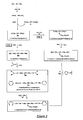
- the absorption column (10) is fed at the bottom by the gas to be treated (11), and at the top by the deacidification solvent (12).
- the liquid gas contact between the gas to be deacidified and the solvent containing 2- [2-amino-1- (aminomethyl) ethoxy] ethanol is at the gas availability pressure and at a temperature of between 30 ° C. and 90 ° C. preferably between 40 ° C and 60 ° C.
- the acid gas absorption step may be carried out at a pressure of between 20 and 120 bar absolute, generally between 50 and 80 bar absolute.
- the acid gases are transferred into the solvent in which they will react with 2- [2-amino-1- (aminomethyl) ethoxy] ethanol, alone or in admixture with another alkanolamine, according to acid-base reactions well known to those skilled in the art, and already described in the case of alkanolamines conventionally used for the deacidification of a gaseous effluent.
- the treated gas (13) and the solvent charged with acid gases (14) at the bottom of the column are recovered at the top of the column.
- a second step of the process consists in regenerating the solvent resulting from the absorption step and containing the products of the reactions between the acid gases and 2- [2-amino-1- (aminomethyl) ethoxy] ethanol, alone or as a mixture with another alkanolamine.
- Regeneration can be by expansion (30) and / or by thermal regeneration.
- This relaxation step (30) makes it possible to recover the coabsorbed hydrocarbons (31) in the solvent with the acid gases.
- the recovered solvent (32) is then reheated in the heat exchanger (33) and sent to the thermal regeneration column (20).
- the acid gases (22) and the hot regenerated solvent (21) at the bottom of the column are obtained at the top of the column.
- the hot solvent (21) obtained at the bottom of regeneration is used to heat the solvent to be regenerated and is sent to a storage tank (34) which serves to supply the absorption column.
- the absorption solvent (12) is temperature controlled by a control system (23) before being introduced into the absorption column (10).
- This thermal regeneration step will be carried out at pressures of between 1 and 5 bar absolute, generally between 1 and 2.5 bar absolute.
- the temperature at the bottom of the column is correlated with the regeneration pressure and the alkanolamine content of the solvent to be regenerated. This temperature will be between 100 and 150 ° C., generally between 110 and 130 ° C.
- An additional regeneration phase may be considered if necessary. It aims to treat a fraction of the solvent so as to obtain a level of regeneration compatible with the objectives of the process for the removal of acid gases. This is to minimize the acid gas content of the solvent returned to the regeneration section.
- this second regeneration phase is similar to those of the regeneration section described above.
- the thermal level of this second section may be higher.
- the steam flow generated in the thermal section may also be larger.
- the solvent used in the context of the invention for removing the acid gases from the gaseous effluents is thus composed of 2- [2-amino-1- (aminomethyl) ethoxy] ethanol, dissolved in water.
- the concentration of 2- [2-amino-1- (aminomethyl) ethoxy] ethanol in solution is between 5 and 60% by weight.
- 2- [2-Amino-1- (aminomethyl) ethoxy] ethanol may be the only reactive compound of the solvent, especially with respect to acid gases. In this case, the concentration of 2- [2-amino-1- (aminomethyl) ethoxy] ethanol will be between 30 and 60% by weight.
- 2- [2-amino-1- (aminomethyl) ethoxy] ethanol may also be mixed with another alkanolamine.
- the alkanolamines conventionally used can be used.
- 2- [2-amino-1- (aminomethyl) ethoxy] ethanol may especially be used in admixture with MDEA or any other tertiary alkanolamine known to those skilled in the art.
- the aqueous solution then contains up to 60% by weight of total alkanolamines.
- 2- [2-amino-1- (aminomethyl) ethoxy] ethanol represents up to 15% by weight of the solution.
- An alternative to aqueous solutions of 2- [2-amino-1- (aminomethyl) ethoxy] ethanol consists of using a solvent composed of 2- [2-amino-1- (aminomethyl) ethoxy] ethanol, alone or as a mixture with another alkanolamine, water and an organic compound.
- the organic compounds may preferably be water, glycols, polyethylene glycols, polypropylene glycols, ethylene glycol-propylene glycol copolymers, glycol ethers, alcohols, ureas, lactams, N-alkylated pyrrolidones, N-piperidones, and the like.
- alkyl cyclotetramethylenesulfones, N-alkylformamides, N-alkylacetamides, ether-ketones or alkyl phosphates and their derivatives.
- it may be water, tetraethyleneglycoldimethylether, sulfolane, N-methylpyrrolidone, propylene carbonate, dimethylpropyleneurea, N-methylcaprolactam, dimethylformamide, dimethylacetamide, formamide, acetamide, 2-methoxy-2-methyl-3-butanone, 2-methoxy-2-methyl-4-pentanone, or tributyl phosphate.
- the organic compound will represent from 0 to 60% by weight of the mixture, 2- [2-amino-1- (aminomethyl) ethoxy] ethanol, alone or mixed with another alkanolamine, will represent from 20 to 60% by weight, the balance being made by adding water.
- the aqueous solution used in the context of the invention is preferably used for the deacidification of a natural gas, in particular in the case of an elimination of the COS contained in the feedstock. It can also be envisaged for any deacidification application of a gaseous effluent, such as for example the decarbonation of fumes, such as combustion fumes, smokes from blast furnaces or cement factories.
- the process can also be used for the deacidification of a liquid effluent, in particular a condensed hydrocarbon cut.
- This cut can for example be derived from the fractionation of a natural gas, as described above.
Landscapes
- Chemical & Material Sciences (AREA)
- Oil, Petroleum & Natural Gas (AREA)
- Engineering & Computer Science (AREA)
- General Chemical & Material Sciences (AREA)
- Chemical Kinetics & Catalysis (AREA)
- Analytical Chemistry (AREA)
- Organic Chemistry (AREA)
- Organic Low-Molecular-Weight Compounds And Preparation Thereof (AREA)
- Treating Waste Gases (AREA)
- Separation Using Semi-Permeable Membranes (AREA)
- Physical Or Chemical Processes And Apparatus (AREA)
Claims (10)
- Verfahren zur Entfernung der sauren Gase, die in Abgasen enthalten sind, dadurch gekennzeichnet, dass es Folgendes umfasst:- einen Schritt der Absorption der sauren Gase, indem das Abgas mit einer wässrigen Lösung in Kontakt gebracht wird, die 2-[2-Amino-1-(aminomethyl)ethoxy]ethanol umfasst, und- mindestens einen Schritt der Regenerierung der wässrigen Lösung.
- Verfahren nach Anspruch 1, dadurch gekennzeichnet, dass es darin besteht, Carbonylsulfid zu entfernen.
- Verfahren nach einem der Ansprüche 1 oder 2, dadurch gekennzeichnet, dass die wässrige Lösung zwischen 5 Gew.-% und 60 Gew.-% an 2-[2-Amino-1-(aminomethyl)ethoxy]ethanol umfasst.
- Verfahren nach Anspruch 3, dadurch gekennzeichnet, dass die wässrige Lösung zwischen 50 Gew.-% und 60 Gew.-% an 2-[2- Amino-1-(aminomethyl)ethoxy]ethanol umfasst.
- Verfahren nach einem der Ansprüche 1 bis 4, dadurch gekennzeichnet, dass der 2-[2- Amino-1-(aminomethyl)ethoxy]ethanol als Aktivator eines weiteren Alkanolamins verwendet wird, wobei die Gesamtmenge an Alkanolaminen bis zu 60 Gew.-% erreichen kann, mit bis zu 15 Gew.-% an 2-[2- Amino-1-(aminomethyl)ethoxy]ethanol.
- Verfahren nach Anspruch 5, dadurch gekennzeichnet, dass die wässrige Lösung MDEA (Methyldiethanolamin) oder ein beliebigen anderes tertiäres Alkoholamin umfasst.
- Verfahren nach einem der Ansprüche 1 bis 6, dadurch gekennzeichnet, dass die wässrige Lösung eine organische Verbindung, die zwischen 0 Gew.-% und 60 Gew.-% der wässrigen Lösung ausmacht, und zwischen 20 % und 60 % an Alkanolaminen umfasst.
- Verfahren nach einem der Ansprüche 1 bis 7, dadurch gekennzeichnet, dass der Schritt der Absorption der sauren Gase bei einem Druck im Bereich von 50 bar bis 80 bar und einer Temperatur im Bereich von 30 °C bis 90 °C erfolgt.
- Verfahren nach einem der Ansprüche 1 bis 8, dadurch gekennzeichnet, dass die Schritte der Regenerierung durch Entspannung und/oder thermische Regenerierung erfolgen.
- Verfahren nach Anspruch 9, dadurch gekennzeichnet, dass der Schritt der thermischen Regenerierung bei einem Druck im Bereich von 1 bar bis 5 bar und einer Temperatur im Bereich von 100 °C bis 180 °C erfolgt.
Applications Claiming Priority (1)
| Application Number | Priority Date | Filing Date | Title |
|---|---|---|---|
| FR0705113A FR2918577B1 (fr) | 2007-07-12 | 2007-07-12 | Procede d'elimination de gaz contenus dans les effluents gazeux |
Publications (2)
| Publication Number | Publication Date |
|---|---|
| EP2018901A1 EP2018901A1 (de) | 2009-01-28 |
| EP2018901B1 true EP2018901B1 (de) | 2011-04-20 |
Family
ID=39133782
Family Applications (1)
| Application Number | Title | Priority Date | Filing Date |
|---|---|---|---|
| EP08290654A Not-in-force EP2018901B1 (de) | 2007-07-12 | 2008-07-03 | Verfahren zur Entfernung von sauren Gasen aus Abgasen |
Country Status (5)
| Country | Link |
|---|---|
| US (1) | US7909914B2 (de) |
| EP (1) | EP2018901B1 (de) |
| AT (1) | ATE506111T1 (de) |
| DE (1) | DE602008006304D1 (de) |
| FR (1) | FR2918577B1 (de) |
Families Citing this family (1)
| Publication number | Priority date | Publication date | Assignee | Title |
|---|---|---|---|---|
| CN103201014B (zh) * | 2010-10-29 | 2017-02-08 | 亨斯迈石油化学有限责任公司 | 2‑(3‑氨基丙氧基)乙‑1‑醇作为吸收剂以除去酸性气体的用途 |
Family Cites Families (7)
| Publication number | Priority date | Publication date | Assignee | Title |
|---|---|---|---|---|
| US4784796A (en) * | 1984-03-29 | 1988-11-15 | The Dow Chemical Company | Corrosion inhibitors |
| EP0216486B1 (de) * | 1985-09-12 | 1990-11-22 | British Gas Corporation | Verfahren zur Beseitigung eines sauren Gases |
| US5167941A (en) * | 1988-11-29 | 1992-12-01 | The Dow Chemical Company | Quaternary polyamines as sulfite oxidation inhibitors in amine scrubbing of SO2 |
| US5246619A (en) * | 1989-11-17 | 1993-09-21 | The Dow Chemical Company | Solvent composition for removing acid gases |
| FR2877858B1 (fr) * | 2004-11-12 | 2007-01-12 | Inst Francais Du Petrole | Procede de desacidification d'un gaz avec une solution absorbante a regeneration fractionnee |
| FR2888247B1 (fr) * | 2005-07-11 | 2009-11-20 | Inst Francais Du Petrole | Procede d'elimination de l'oxysulfure de carbone contenu dans une charge d'hydrocarbures liquides |
| FR2900841B1 (fr) * | 2006-05-10 | 2008-07-04 | Inst Francais Du Petrole | Procede de desacidification avec extraction des composes reactifs |
-
2007
- 2007-07-12 FR FR0705113A patent/FR2918577B1/fr not_active Expired - Fee Related
-
2008
- 2008-07-03 AT AT08290654T patent/ATE506111T1/de not_active IP Right Cessation
- 2008-07-03 EP EP08290654A patent/EP2018901B1/de not_active Not-in-force
- 2008-07-03 DE DE602008006304T patent/DE602008006304D1/de active Active
- 2008-07-11 US US12/171,379 patent/US7909914B2/en not_active Expired - Fee Related
Also Published As
| Publication number | Publication date |
|---|---|
| DE602008006304D1 (de) | 2011-06-01 |
| ATE506111T1 (de) | 2011-05-15 |
| EP2018901A1 (de) | 2009-01-28 |
| US20090013872A1 (en) | 2009-01-15 |
| US7909914B2 (en) | 2011-03-22 |
| FR2918577B1 (fr) | 2009-10-09 |
| FR2918577A1 (fr) | 2009-01-16 |
Similar Documents
| Publication | Publication Date | Title |
|---|---|---|
| EP2310110B1 (de) | Absorbierende lösung auf der basis von n,n,n',n'-tetramethylhexan-1,6-diamin und einem amin mit primären oder sekundären amingruppen und verfahren zur eliminierung von sauren komponenten aus einem gasstrom | |
| EP1656983B1 (de) | Verfahren zur Entsäuerung eines Gases mittels einer Absorptionslösung und fraktionierter Regenerierung | |
| EP1996313B1 (de) | Verfahren zur entsäuerung eines gases mit hilfe einer absorptionsmittellöung mit fraktionierter regeneration durch erhitzen | |
| EP2512630A1 (de) | Verfahren zur entfernung von säureverbindungen aus einem abgas anhand einer absorbierenden lösung auf diaminbasis | |
| EP2099551A2 (de) | Extraktionsmedium, das bei einem verfahren zum abfangen von in einem gasförmigen austragsstrom enthaltenem kohlendioxid verwendet wird | |
| WO2007077323A1 (fr) | Procede de de s acidific ation d'un gaz avec une solution absorbante à régénération fractionnée avec controle de la teneur en eau de la solution | |
| WO2011080406A1 (fr) | Procede d ' elimination de composes acides d ' un effluent gazeaux avec une solution absorbante a base de triamines | |
| EP2776141B1 (de) | Verfahren zur entfernung von säureverbindungen aus einem abgasstrom mithilfe einer absorptionslösung aus dihydroxyalkylaminen mit schwerer sterischer hinderung des stickstoffatoms | |
| EP2785435B1 (de) | Verfahren zur entfernung saurer verbindungen aus einem abgas mit einer absorptionslösung aus bis(amino-3-propyl)-ethern oder (amino-2-ethyl)-(amino-3-propyl)-ethern | |
| WO2016055258A1 (fr) | Procede d'élimination de composes acides d'un effluent gazeux avec une solution absorbante a base de diamines appartenant a la famille du 1,3-diamino-2-propanol | |
| EP1700631B1 (de) | Verbessertes Verfahren zur Behandlung von Schwefelwasserstoff und Schwefeldioxide enthaltenden Gasen | |
| WO2010010238A1 (fr) | Milieu d'extraction aqueux contenant un carbonate et un thiol utilisé dans un procédé de séparation du dioxyde de carbone contenu dans un effluent gazeux | |
| WO2013060944A1 (fr) | Solution absorbante a base de monoalcanolamines tertiaires appartenant a la famille des 3-alcoxypropylamines et procede d'élimination de composes acides contenus dans un effluent gazeux | |
| WO2014001669A1 (fr) | Solution absorbante a base d'amines appartenant a la famille des aminoalkylpiperazines et procede d'élimination de composes acides d'un effluent gazeux avec une telle solution | |
| EP3148674B1 (de) | Absorbierende lösung mit einer mischung aus 1,2-bis-(2-dimethylamino-ethoxy)-ethan und 2-[2-(2-dimethylaminoethoxy)]-ethoxy-ethanol und verfahren zur entfernung saurer verbindungen aus abgasen | |
| EP2018901B1 (de) | Verfahren zur Entfernung von sauren Gasen aus Abgasen | |
| WO2008068410A2 (fr) | Solution absorbante utilisee dans un procede de capture de dioxyde de carbone contenu dans un effluent gazeux | |
| WO2010010239A1 (fr) | Milieu d'extraction aqueux contenant un hydroxyde et un thiol utilisé dans un procédé de séparation du dioxyde de carbone contenu dans un effluent gazeux | |
| WO2013171386A1 (fr) | Procede de traitement d'un flux gazeux par absorption utilisant un compose de formule ch3 - (och2) n-0-ch3 | |
| FR2969504A1 (fr) | Procede d'elimination de composes acides d'un effluent gazeux avec regeneration de la solution absorbante par deplacement d'equilibre chimique | |
| WO2014114862A2 (fr) | Solution absorbante a base d'une amine tertiaire ou encombree et d'un activateur particulier et procédé d'elimination de composes acides d'un effluent gazeux | |
| FR2918386A1 (fr) | Procede d'elimination des mercaptans contenus dans les effluents liquides et gazeux. | |
| FR2933007A1 (fr) | Solution absorbante contenant un inhibiteur de degradation organique multisoufre et methode pour limiter la degradation d'une solution absorbante |
Legal Events
| Date | Code | Title | Description |
|---|---|---|---|
| PUAI | Public reference made under article 153(3) epc to a published international application that has entered the european phase |
Free format text: ORIGINAL CODE: 0009012 |
|
| AK | Designated contracting states |
Kind code of ref document: A1 Designated state(s): AT BE BG CH CY CZ DE DK EE ES FI FR GB GR HR HU IE IS IT LI LT LU LV MC MT NL NO PL PT RO SE SI SK TR |
|
| AX | Request for extension of the european patent |
Extension state: AL BA MK RS |
|
| 17P | Request for examination filed |
Effective date: 20090728 |
|
| AKX | Designation fees paid |
Designated state(s): AT BE BG CH CY CZ DE DK EE ES FI FR GB GR HR HU IE IS IT LI LT LU LV MC MT NL NO PL PT RO SE SI SK TR |
|
| RAP1 | Party data changed (applicant data changed or rights of an application transferred) |
Owner name: IFP ENERGIES NOUVELLES |
|
| GRAP | Despatch of communication of intention to grant a patent |
Free format text: ORIGINAL CODE: EPIDOSNIGR1 |
|
| GRAS | Grant fee paid |
Free format text: ORIGINAL CODE: EPIDOSNIGR3 |
|
| GRAA | (expected) grant |
Free format text: ORIGINAL CODE: 0009210 |
|
| AK | Designated contracting states |
Kind code of ref document: B1 Designated state(s): AT BE BG CH CY CZ DE DK EE ES FI FR GB GR HR HU IE IS IT LI LT LU LV MC MT NL NO PL PT RO SE SI SK TR |
|
| REG | Reference to a national code |
Ref country code: GB Ref legal event code: FG4D Free format text: NOT ENGLISH |
|
| REG | Reference to a national code |
Ref country code: CH Ref legal event code: EP |
|
| REG | Reference to a national code |
Ref country code: IE Ref legal event code: FG4D Free format text: LANGUAGE OF EP DOCUMENT: FRENCH |
|
| REF | Corresponds to: |
Ref document number: 602008006304 Country of ref document: DE Date of ref document: 20110601 Kind code of ref document: P |
|
| REG | Reference to a national code |
Ref country code: DE Ref legal event code: R096 Ref document number: 602008006304 Country of ref document: DE Effective date: 20110601 |
|
| REG | Reference to a national code |
Ref country code: NL Ref legal event code: VDEP Effective date: 20110420 |
|
| LTIE | Lt: invalidation of european patent or patent extension |
Effective date: 20110420 |
|
| PG25 | Lapsed in a contracting state [announced via postgrant information from national office to epo] |
Ref country code: NO Free format text: LAPSE BECAUSE OF FAILURE TO SUBMIT A TRANSLATION OF THE DESCRIPTION OR TO PAY THE FEE WITHIN THE PRESCRIBED TIME-LIMIT Effective date: 20110720 Ref country code: HR Free format text: LAPSE BECAUSE OF FAILURE TO SUBMIT A TRANSLATION OF THE DESCRIPTION OR TO PAY THE FEE WITHIN THE PRESCRIBED TIME-LIMIT Effective date: 20110420 Ref country code: SE Free format text: LAPSE BECAUSE OF FAILURE TO SUBMIT A TRANSLATION OF THE DESCRIPTION OR TO PAY THE FEE WITHIN THE PRESCRIBED TIME-LIMIT Effective date: 20110420 Ref country code: LT Free format text: LAPSE BECAUSE OF FAILURE TO SUBMIT A TRANSLATION OF THE DESCRIPTION OR TO PAY THE FEE WITHIN THE PRESCRIBED TIME-LIMIT Effective date: 20110420 Ref country code: PT Free format text: LAPSE BECAUSE OF FAILURE TO SUBMIT A TRANSLATION OF THE DESCRIPTION OR TO PAY THE FEE WITHIN THE PRESCRIBED TIME-LIMIT Effective date: 20110822 |
|
| REG | Reference to a national code |
Ref country code: IE Ref legal event code: FD4D |
|
| PG25 | Lapsed in a contracting state [announced via postgrant information from national office to epo] |
Ref country code: LV Free format text: LAPSE BECAUSE OF FAILURE TO SUBMIT A TRANSLATION OF THE DESCRIPTION OR TO PAY THE FEE WITHIN THE PRESCRIBED TIME-LIMIT Effective date: 20110420 Ref country code: SI Free format text: LAPSE BECAUSE OF FAILURE TO SUBMIT A TRANSLATION OF THE DESCRIPTION OR TO PAY THE FEE WITHIN THE PRESCRIBED TIME-LIMIT Effective date: 20110420 Ref country code: IS Free format text: LAPSE BECAUSE OF FAILURE TO SUBMIT A TRANSLATION OF THE DESCRIPTION OR TO PAY THE FEE WITHIN THE PRESCRIBED TIME-LIMIT Effective date: 20110820 Ref country code: CY Free format text: LAPSE BECAUSE OF FAILURE TO SUBMIT A TRANSLATION OF THE DESCRIPTION OR TO PAY THE FEE WITHIN THE PRESCRIBED TIME-LIMIT Effective date: 20110420 Ref country code: GR Free format text: LAPSE BECAUSE OF FAILURE TO SUBMIT A TRANSLATION OF THE DESCRIPTION OR TO PAY THE FEE WITHIN THE PRESCRIBED TIME-LIMIT Effective date: 20110721 Ref country code: FI Free format text: LAPSE BECAUSE OF FAILURE TO SUBMIT A TRANSLATION OF THE DESCRIPTION OR TO PAY THE FEE WITHIN THE PRESCRIBED TIME-LIMIT Effective date: 20110420 Ref country code: ES Free format text: LAPSE BECAUSE OF FAILURE TO SUBMIT A TRANSLATION OF THE DESCRIPTION OR TO PAY THE FEE WITHIN THE PRESCRIBED TIME-LIMIT Effective date: 20110731 Ref country code: AT Free format text: LAPSE BECAUSE OF FAILURE TO SUBMIT A TRANSLATION OF THE DESCRIPTION OR TO PAY THE FEE WITHIN THE PRESCRIBED TIME-LIMIT Effective date: 20110420 |
|
| PGFP | Annual fee paid to national office [announced via postgrant information from national office to epo] |
Ref country code: DE Payment date: 20110813 Year of fee payment: 4 |
|
| PG25 | Lapsed in a contracting state [announced via postgrant information from national office to epo] |
Ref country code: MT Free format text: LAPSE BECAUSE OF FAILURE TO SUBMIT A TRANSLATION OF THE DESCRIPTION OR TO PAY THE FEE WITHIN THE PRESCRIBED TIME-LIMIT Effective date: 20110420 Ref country code: NL Free format text: LAPSE BECAUSE OF FAILURE TO SUBMIT A TRANSLATION OF THE DESCRIPTION OR TO PAY THE FEE WITHIN THE PRESCRIBED TIME-LIMIT Effective date: 20110420 |
|
| BERE | Be: lapsed |
Owner name: IFP ENERGIES NOUVELLES Effective date: 20110731 |
|
| PG25 | Lapsed in a contracting state [announced via postgrant information from national office to epo] |
Ref country code: CZ Free format text: LAPSE BECAUSE OF FAILURE TO SUBMIT A TRANSLATION OF THE DESCRIPTION OR TO PAY THE FEE WITHIN THE PRESCRIBED TIME-LIMIT Effective date: 20110420 Ref country code: EE Free format text: LAPSE BECAUSE OF FAILURE TO SUBMIT A TRANSLATION OF THE DESCRIPTION OR TO PAY THE FEE WITHIN THE PRESCRIBED TIME-LIMIT Effective date: 20110420 Ref country code: IE Free format text: LAPSE BECAUSE OF FAILURE TO SUBMIT A TRANSLATION OF THE DESCRIPTION OR TO PAY THE FEE WITHIN THE PRESCRIBED TIME-LIMIT Effective date: 20110420 |
|
| PLBE | No opposition filed within time limit |
Free format text: ORIGINAL CODE: 0009261 |
|
| STAA | Information on the status of an ep patent application or granted ep patent |
Free format text: STATUS: NO OPPOSITION FILED WITHIN TIME LIMIT |
|
| PG25 | Lapsed in a contracting state [announced via postgrant information from national office to epo] |
Ref country code: PL Free format text: LAPSE BECAUSE OF FAILURE TO SUBMIT A TRANSLATION OF THE DESCRIPTION OR TO PAY THE FEE WITHIN THE PRESCRIBED TIME-LIMIT Effective date: 20110420 Ref country code: SK Free format text: LAPSE BECAUSE OF FAILURE TO SUBMIT A TRANSLATION OF THE DESCRIPTION OR TO PAY THE FEE WITHIN THE PRESCRIBED TIME-LIMIT Effective date: 20110420 Ref country code: DK Free format text: LAPSE BECAUSE OF FAILURE TO SUBMIT A TRANSLATION OF THE DESCRIPTION OR TO PAY THE FEE WITHIN THE PRESCRIBED TIME-LIMIT Effective date: 20110420 Ref country code: RO Free format text: LAPSE BECAUSE OF FAILURE TO SUBMIT A TRANSLATION OF THE DESCRIPTION OR TO PAY THE FEE WITHIN THE PRESCRIBED TIME-LIMIT Effective date: 20110420 Ref country code: MC Free format text: LAPSE BECAUSE OF NON-PAYMENT OF DUE FEES Effective date: 20110731 |
|
| 26N | No opposition filed |
Effective date: 20120123 |
|
| PG25 | Lapsed in a contracting state [announced via postgrant information from national office to epo] |
Ref country code: BE Free format text: LAPSE BECAUSE OF NON-PAYMENT OF DUE FEES Effective date: 20110731 |
|
| REG | Reference to a national code |
Ref country code: DE Ref legal event code: R097 Ref document number: 602008006304 Country of ref document: DE Effective date: 20120123 |
|
| PG25 | Lapsed in a contracting state [announced via postgrant information from national office to epo] |
Ref country code: IT Free format text: LAPSE BECAUSE OF FAILURE TO SUBMIT A TRANSLATION OF THE DESCRIPTION OR TO PAY THE FEE WITHIN THE PRESCRIBED TIME-LIMIT Effective date: 20110420 |
|
| REG | Reference to a national code |
Ref country code: CH Ref legal event code: PL |
|
| GBPC | Gb: european patent ceased through non-payment of renewal fee |
Effective date: 20120703 |
|
| PG25 | Lapsed in a contracting state [announced via postgrant information from national office to epo] |
Ref country code: LI Free format text: LAPSE BECAUSE OF NON-PAYMENT OF DUE FEES Effective date: 20120731 Ref country code: CH Free format text: LAPSE BECAUSE OF NON-PAYMENT OF DUE FEES Effective date: 20120731 Ref country code: DE Free format text: LAPSE BECAUSE OF NON-PAYMENT OF DUE FEES Effective date: 20130201 Ref country code: GB Free format text: LAPSE BECAUSE OF NON-PAYMENT OF DUE FEES Effective date: 20120703 |
|
| PG25 | Lapsed in a contracting state [announced via postgrant information from national office to epo] |
Ref country code: LU Free format text: LAPSE BECAUSE OF NON-PAYMENT OF DUE FEES Effective date: 20110703 |
|
| PG25 | Lapsed in a contracting state [announced via postgrant information from national office to epo] |
Ref country code: BG Free format text: LAPSE BECAUSE OF FAILURE TO SUBMIT A TRANSLATION OF THE DESCRIPTION OR TO PAY THE FEE WITHIN THE PRESCRIBED TIME-LIMIT Effective date: 20110720 |
|
| REG | Reference to a national code |
Ref country code: DE Ref legal event code: R119 Ref document number: 602008006304 Country of ref document: DE Effective date: 20130201 |
|
| PG25 | Lapsed in a contracting state [announced via postgrant information from national office to epo] |
Ref country code: TR Free format text: LAPSE BECAUSE OF FAILURE TO SUBMIT A TRANSLATION OF THE DESCRIPTION OR TO PAY THE FEE WITHIN THE PRESCRIBED TIME-LIMIT Effective date: 20110420 |
|
| PG25 | Lapsed in a contracting state [announced via postgrant information from national office to epo] |
Ref country code: HU Free format text: LAPSE BECAUSE OF FAILURE TO SUBMIT A TRANSLATION OF THE DESCRIPTION OR TO PAY THE FEE WITHIN THE PRESCRIBED TIME-LIMIT Effective date: 20110420 |
|
| PGFP | Annual fee paid to national office [announced via postgrant information from national office to epo] |
Ref country code: FR Payment date: 20130731 Year of fee payment: 6 |
|
| REG | Reference to a national code |
Ref country code: FR Ref legal event code: ST Effective date: 20150331 |
|
| PG25 | Lapsed in a contracting state [announced via postgrant information from national office to epo] |
Ref country code: FR Free format text: LAPSE BECAUSE OF NON-PAYMENT OF DUE FEES Effective date: 20140731 |