EP2015524A1 - Verfahren und gerät zur behandlung eines trägers für einen dienst mit garantierter bitrate in einem weiterentwickelten netz - Google Patents
Verfahren und gerät zur behandlung eines trägers für einen dienst mit garantierter bitrate in einem weiterentwickelten netz Download PDFInfo
- Publication number
- EP2015524A1 EP2015524A1 EP07720901A EP07720901A EP2015524A1 EP 2015524 A1 EP2015524 A1 EP 2015524A1 EP 07720901 A EP07720901 A EP 07720901A EP 07720901 A EP07720901 A EP 07720901A EP 2015524 A1 EP2015524 A1 EP 2015524A1
- Authority
- EP
- European Patent Office
- Prior art keywords
- bearer
- service
- evolving
- setup
- bit rate
- Prior art date
- Legal status (The legal status is an assumption and is not a legal conclusion. Google has not performed a legal analysis and makes no representation as to the accuracy of the status listed.)
- Withdrawn
Links
- 238000000034 method Methods 0.000 title claims abstract description 43
- 230000004048 modification Effects 0.000 claims abstract description 62
- 238000012986 modification Methods 0.000 claims abstract description 62
- 238000013507 mapping Methods 0.000 claims abstract description 36
- 238000012545 processing Methods 0.000 claims abstract description 10
- 230000004044 response Effects 0.000 claims description 33
- 230000008569 process Effects 0.000 abstract description 11
- 238000004891 communication Methods 0.000 abstract description 10
- 238000010586 diagram Methods 0.000 description 8
- 230000006870 function Effects 0.000 description 8
- 230000000875 corresponding effect Effects 0.000 description 7
- 238000010295 mobile communication Methods 0.000 description 3
- 230000011664 signaling Effects 0.000 description 3
- 230000008859 change Effects 0.000 description 2
- 238000005516 engineering process Methods 0.000 description 2
- 238000006243 chemical reaction Methods 0.000 description 1
- 230000002596 correlated effect Effects 0.000 description 1
- 238000001914 filtration Methods 0.000 description 1
- 230000006872 improvement Effects 0.000 description 1
- 230000007774 longterm Effects 0.000 description 1
- 230000008520 organization Effects 0.000 description 1
- 238000011160 research Methods 0.000 description 1
- 238000001228 spectrum Methods 0.000 description 1
- 230000007480 spreading Effects 0.000 description 1
- 238000006467 substitution reaction Methods 0.000 description 1
- 238000012546 transfer Methods 0.000 description 1
Images



Classifications
-
- H—ELECTRICITY
- H04—ELECTRIC COMMUNICATION TECHNIQUE
- H04W—WIRELESS COMMUNICATION NETWORKS
- H04W28/00—Network traffic management; Network resource management
- H04W28/16—Central resource management; Negotiation of resources or communication parameters, e.g. negotiating bandwidth or QoS [Quality of Service]
- H04W28/18—Negotiating wireless communication parameters
Definitions
- the present invention relates to the field of mobile communication evolving network technologies, and in particular to a method and an apparatus for processing Guaranteed Bit Rate (GBR) services in an evolving network.
- GBR Guaranteed Bit Rate
- a Universal Mobile Telecommunications System is a third generation (3G) mobile communication system which employs Wideband Code Division Multiple Access (WCDMA) air interface technology.
- WCDMA Wideband Code Division Multiple Access
- a UMTS is also referred to as a WCDMA communication system.
- a UMTS has a structure similar to that of a second generation (2G) mobile communication system, and includes a Radio Access Network (RAN) and a Core Network (CN).
- the RAN is adapted to handle all radio-related functions; and the CN is adapted to handle all voice calls and data connections in the UMTS and implement switching and routing with an external network.
- the CN is logically divided into a Circuit Switched (CS) domain and a Packet Switched (PS) domain.
- CS Circuit Switched
- PS Packet Switched
- a RAN, a CN and User Equipments (UE) make up a whole UMTS.
- FIG. 1 shows a schematic diagram of a framework of a UMTS Territorial Radio Access Network (UTRAN).
- the UTRAN includes one or more Radio Network Subsystems (RNSs) 22.
- the RNS 22 includes a Radio Network Controller (RNC) 24 and one or more base stations (NodeBs) 26.
- the RNC 24 is communicated with a CN 30 through an Iu interface; the NodeB 26 is connected to the RNC 24 through an Iub interface.
- the RNCs 24 are interconnected through an Iur interface.
- the Iur interface provides connection through a direct physical connection or a transport network between the RNCs 24.
- the RNC 24 is adapted to allocate and control radio resources of the NodeBs 26 connected or related to the RNC 24.
- the NodeB 26 converts data streams between an Iub interface and an Iu interface, and participates in radio resources management.
- the NodeB 26 is a base station of a WCDMA system, and includes of a radio transceiver and a baseband processing component.
- the NodeB 26 is connected to the RNC 24 through a standard Iub interface, and is adapted to perform physical layer protocol processing of the Iu interface.
- the functions of the NodeB 26 include: spectrum spreading, modulation, channel encoding and despreading, demodulation, channel decoding, and conversion between a baseband signal and a Radio Frequency signal etc.
- the RNC 24 is adapted to control radio resources of the UTRAN, and the functions of the RNC24 include: connection setup and disconnection, handover, macro diversity combining, and radio resource management etc.
- the previous network architecture is based on the versions earlier than 3 rd Generation Partnership Project (3GPP) R6.
- 3GPP 3 rd Generation Partnership Project
- the 3GPP organization is doing a research on a brand-new evolving network architecture which is all IP-based and provides low delay, high data rate, high system capacity and coverage, and low cost.
- all nodes, functions and processes of the existing architecture will change substantially.
- the 3GPP provides a Long Term Evolution (LTE) network.
- LTE Long Term Evolution
- the architecture of the access network part evolves from the two-node architecture of a 3G network which includes NodeBs and RNCs to the one-node (eNB) architecture which includes evolved NodeBs (eNB).
- An eNB is an evolution of a NodeB, and provides a majority of the functions of a RNC.
- An Access Gateway (AGW) provides most functions or function combinations of the nodes of a core network, for example, Serving GPRS Support Node (SGSN), or Gateway GPRS Support Node (GGSN).
- AGW Access Gateway
- the functions of an outer Automatic-Repeat Request (ARQ) are performed primarily by an eNB.
- the Quality of Service (QoS) architecture of an evolving network may perform end-to-end services from a UE to a peer entity.
- This end-to-end service includes two parts: System Architecture Evolution (SAE) bearer service from the UE to an evolving core network, and external bearer service from the evolving core network to the peer entity.
- SAE System Architecture Evolution
- the SAE bearer service implements service setup or data transfer from the UE to the evolving core network, including the corresponding SAE radio bearer service from the UE to the air interface radio bearer of an eNB, and the corresponding SAE access bearer service from the eNB to the evolving core network AGW.
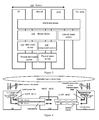
- FIG. 4 shows a schematic diagram of the SAE bearer service architecture.
- the SAE bearer is correlated with the QoS class.
- One SAE bearer may be mapped to SAE radio bearer and SAE access bearer.
- Uplink service data streams are connected from the application or service layer to the Up Link Packet Filters (ULPF) U1 and U2 at the UE side.
- ULPF Up Link Packet Filters
- a service data stream is an aggregate of packet streams, and several packet streams make up a service data stream.
- a packet filter performs filtering based on data packets, aggregates the packet streams of the same QoS class in the service data stream, and binds the uplink service of the service data stream to the SAE bearer.
- the packet filter splits a packet stream into two SAE radio bearers, and sets up a communication link with the eNB.
- the downlink service data streams are connected from the application or service layer to the Down Link Packet Filters (DLPF) D1 and D2 of the core network.
- the Down Link Packet Filters (DLPF) D1 and D2 aggregate the packet streams of the same QoS class in the downlink service data stream.
- the downlink packet filter splits a packet stream into two SAE access bearers according to the QoS class of the stream, and sets up a communication link with the eNB.
- the eNB sets up a mapping between the RB-ID and the AB-ID, and implements data switching between the radio bearer and the access bearer.
- FIG. 5 shows a schematic flow chart of the process of establishing an SAE bearer in the prior art.
- the evolving core network negotiates with the UE to establish a default IP bearer, namely, an SAE bearer of Non-Guaranteed Bit Rate (Non-GBR).
- the AB-ID of the SAE bearer of Non-GBR is A8.
- the upper-layer network sends a resource request to the evolving core network.
- the resource request carries the QoS information, the uplink binding type U1, and the downlink binding type D1.
- the evolving core network maps the received QoS information to the information such as Quality Classification Indicator (QCI) Q5 etc.
- QCI Quality Classification Indicator
- the QCI is an index directed to the parameter list stored in the upper-layer network.
- the resource request carries this index, and transmits the index to the eNB transparently. Therefore, the eNB can determine the current parameters according to the indexed parameter list, and establish a radio bearer.
- the uplink binding type and the downlink binding type correspond to different packet filters. A different packet filter can be determined by selecting a different binding type in order to filter out the corresponding packet streams from the service data streams.
- the evolving core network sends a request of establishing a radio bearer to the eNB.
- the request of establishing the radio bearer carries a QCI Q5 and an AB-ID A8.
- the eNB invokes the relevant parameters according to the QCI to determine the RB-ID R3, and establishes a mapping relation between the AB-ID and the RB-ID.
- step 54 the radio bearer is established between the eNB and the UE according to the RB-ID R3.
- step 5 is performed, and an acknowledgement message that carries the RB-ID of the radio bearer is returned to the core network.
- the UE, the eNB and the evolving core network confirm their respective parameters.
- the UE uses the radio bearer RB-ID R3 and the eNB to establish a mapping relation between the RB-ID R3, the QCI Q5 and the AB-ID A8.
- the evolving core network sets up a mapping relation between the RB-ID R3, the QCI Q5 and the AB-ID A8.
- step 56 the evolving core network sends an SAE bearer request to the UE through a Non Access Stratum (NAS).
- This SAE bearer request sets up a mapping relation between the uplink binding type U1 and the RB-ID R3.
- step 57 the UE returns an acknowledgement message to the evolving core network through a NAS.
- the UE has established a mapping relation between the uplink binding type and the RB-ID R3; and the evolving core network has established a mapping relation between the downlink binding type, the QCI Q5, and the AB-ID A8 successfully.
- FIG. 6 shows a schematic flow chart of the process of modifying an SAE bearer for non-GBR services in the prior art.
- step 61 After an SAE bearer is established, for example, if the SAE bearer needs to be modified due to change of the service, step 61 will be performed.
- the upper-layer network sends a command of updating resources to the core network.
- the command carries the QoS parameter information, the uplink binding type U2, and the downlink binding type D2.
- the evolving core network maps the received QoS information to the information of QCI etc.
- the QCI is the same as the QCI of the old service, but the uplink binding type and the downlink binding type is changed. Namely, a new packet filter is used to operate the service data stream.
- step 62 the core network modifies the SAE bearer through a NAS command, and requires to establish a mapping relation between the uplink binding type U2 and the radio bearer RB-ID R3 established previously.
- step 63 the UE returns an acknowledgement message.
- the prior art can be used for establishing and modifying an SAE bearer of non-GBR services.
- more GBR services such as voice communication and video services, are applied in the practice.
- the process of establishing an SAE bearer in the prior art is inapplicable to the process of establishing an SAE bearer of GBR services.
- An embodiment of the invention provides a method for establishing or modifying a GBR service bearer to overcome the weaknesses of the prior art.
- the embodiments of the invention add the information of the service bit rate parameter into the service setup or modification request, and invoke the bit rate parameter in the process of establishing or modifying a service bearer, thus realizing setup or modification of a bearer for the GBR services in an evolving network, such as voice communication and video communication.
- FIG. 1 is a schematic diagram of a framework of an UMTS Terrestrial Radio Access Network (UTRAN) in the prior art
- Figure 2 is a schematic diagram of the two-node architecture of an evolving network in the prior art
- FIG. 3 is a schematic diagram of the QoS architecture of an evolving network in the prior art
- FIG. 4 is a schematic diagram of the SAE bearer service architecture in the prior art
- Figure 5 is a schematic flow chart of a method for establishing an SAE bearer in the prior art
- Figure 6 is a schematic flow chart of a method for modifying an SAE bearer in the prior art
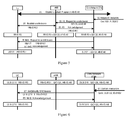
- Figure 7 is a schematic flow chart of a methodf for establishing or modifying a GBR service bearer in an embodiment of the invention
- Figure 8 is a schematic flow chart of a method for establishing or modifying a service through simplified signaling without QoS parameter negotiation according to an embodiment of the invention
- Figure 9 is a schematic flow chart of a method for modifying an existing QoS class in an embodiment of the invention.
- Figure 10 is a schematic diagram of the structure of a system for establishing or modifying a GBR service bearer according to the first embodiment of the invention.
- FIG 11 is a schematic diagram of the structure of a system for establishing or modifying a GBR service bearer according to the second embodiment of the invention. Detailed Description of the Embodiments
- a method for establishing or modifying a GBR service bearer in an evolving network includes: adding the information on the service bit rate parameter into the request of establishing or modifying a service; and requesting, by an AGW, radio resources from an eNB, with the information on the service bit rate parameter carried in the radio resource request; instructing, by the eNB a UE to configure or modify the service bearer; responding by the eNB, to the service bearer configuration or modification request, and returning an acknowledgement to an evolving core network; sending by the evolving core network, a NAS command to request the UE to establish or modify the SAE bearer; responding by the UE, to the NAS command to request the UE to establish or modify the SAE bearer, and returning an acknowledgement through a NAS command.
- FIG. 7 shows a schematic flow chart of a method for establishing or modifying a GBR service bearer in an evolving network according to an embodiment of the invention.
- the evolving core network AGW receives a QoS request of establishing a service bearer.
- the request carries the QoS parameters, the uplink binding type, and the downlink binding type.
- the AGW may map the QoS parameters to such parameters as QCI, Assorted Reservation Priority (ARP), Maximum Bit Rate (MBR), and Guaranteed Bit Rate (GBR), or a candidate list of MBR and GBR.
- the QCI is a QoS category indicator.
- the ARP is a parameter indicative of service priority to perform differentiated operations for the services of different priorities, and to handle the service of higher priority first.
- the MBR is the maximum possible bit rate of the service
- GBR is the minimum bit rate required for establishing thea service.
- the uplink binding type and the downlink binding type correspond to the uplink packet filter at the UE side and the downlink packet filter at the core network side respectively.
- the AGW sends a service bearer setup request to the eNB, and transparently transmits the parameters such as QCI, ARP, MBR and GBR through the service bearer setup trequest. If the current channel resources are not enough for fulfilling the parameters such as MBR and GBR required by the service bearer setup request, the eNB and the AGW negotiate the parameters; after the new parameters which are fulfilled by the current channel resources are determined by the negotiation, the procedure goes to step 73.
- step 73 the eNB instructs the UE to configure a radio bearer according to the parameters determined in step 72, and determine the RB-ID to be used by the radio bearer.
- step 74 the eNB sends a radio bearer setup response to the AGW, and returns to the core network the parameters, such as MBR and GBR applicable in configuring a radio bearer and the RB-ID.
- step 75 the evolving core network sends an SAE bearer setup request to the UE through a NAS command.
- the request carries the currently used parameters such as MBR and GBR, the RB-ID, and the uplink binding type. Therefore, a mapping relation is established between the uplink packet filter and the RB-ID.
- step 76 the UE returns an acknowledgement about successful setup of the SAE bearer through a NAS command.
- the evolving core network AGW receives the QoS request of modifying a service.
- this request also carries QoS parameters, the uplink binding type and the downlink binding type of the corresponding new packet filter.
- the AGW may map the QoS parameters to such parameters as existing QoS Classification Indicator (QCI), ARP, MBR and GBR, or to a candidate list of MBR and GBR.
- QCI QoS Classification Indicator
- ARP ARP
- MBR Mobility Management Function
- GBR Mobility Management Function
- the AGW sends a service bearer modification request to the eNB, and transparently transmits the parameters such as QCI, ARP, MBR and GBR through the service bearer modification request.
- the eNB and the AGW will negotiate the new parameters; after the new parameters which are fulfilled by the current channel resources are determined by the negotiation, the procedure goes to step 73. If the current channel resources are enough for fulfilling the parameters required by the service bearer modification request, the procedure goes to step 73 directly.
- the eNB instructs the UE to modify a radio bearer according to the parameters determined in step 72, and determine the RB-ID to be used by the modified radio bearer.
- step 74 the eNB sends a service bearer modification response to the AGW, and returns to the core network the parameters (such as MBR and GBR) applicable in configuring a radio bearer and the RB-ID.
- the evolving core network sends an SAE bearer modification request to the UE through a NAS command.
- the request carries the currently used parameters such as MBR and GBR, the RB-ID, and the uplink binding type of the corresponding new uplink packet filter. Therefore, a mapping relation is established between the new uplink packet filter and the RB-ID.
- step 76 the UE returns an acknowledgement about successful modification of the SAE bearer to the evolving core network.
- FIG 8 is a schematic flowchart of a method for establishing or modifying a service through simplified signaling without QoS parameter negotiation. This process is applied in a network where the eNB is incapable of parameter negotiation.
- the evolving core network receives the QoS request of establishing or modifying a service bearer. This request carries the QoS parameters, the uplink binding type and the downlink binding type.
- the evolving core network maps the QoS parameters to such parameters as QCI, ARP, MBR and GBR.
- the evolving core network indicates the parameters such as QCI, MBR and GBR, requests the access network to establish a radio bearer or modify the relevant bearer parameters.
- the evolving core network attaches the NAS-layer configuration parameters to the access-layer signaling sent to the eNB.
- the NAS-layer configuration parameters carry an uplink binding type.
- the eNB instructs the UE to create a bearer according to the radio bearer parameters and the NAS-layer configuration parameters, determines the uplink packet filter in the UE according to the uplink binding type in the NAS layer information, and establishes a mapping relation between the packet filter and the RB-ID.
- the eNB and the UE modify the current radio bearer, and establish a mapping relation between the new uplink filter and the RB-ID according to the uplink binding type in the NAS-layer information.
- the eNB sends a service bearer creation or modification acknowledgement to the evolving core network.
- Figure 9 shows a schematic flow chart of a method for modifying the QoS class of an existing service after the QoS bearer required by the service is established. Since the SAE bearer is interrelated with the QoS class, the modification of the QoS class of a service makes it necessary to adjust the corresponding SAE bearer.
- the evolving core network receives the request of modifying a QoS class. According the request of modifying a QoS class, the evolving core network determines the QoS Classification Indication (QCI) parameter. The QCI indicates the modified QoS class to the evolving core network.
- the evolving core network indicates the QCI parameter, and requests bearing from the eNB.
- QCI QoS Classification Indication
- the eNB and the evolving core network will negotiate the QCI parameter, and update the QCI parameter according to the negotiation result.
- the eNB instructs the UE to configure and modify the radio bearer.
- the eNB performs step 94, and returns a modification acknowledgment to the evolving core network, with the new QCI parameter carried in the acknowledgement.
- the programs may be stored in a computer readable storage medium.
- the storage medium mentioned above may be a Read-Only Memory (ROM), Random Access Memory (RAN), disk or CD.
- an AGW 100 includes a service bearer request unit 120, a service bearer response unit 130, and a bearer establishing or modifying unit 140, and optionally, an upper-layer service request unit 110; and an evolving NodeB 200 includes a service bearer request receiving unit 210, a resource allocating unit 220, and a service bearer unit 230; the system further includes a UE 300.
- the upper-layer service request unit 110 of the AGW 100 receives the QoS request of establishing or modifying a service, and this request carries the QoS parameters, uplink binding type and downlink binding type.
- the upper-layer service request unit 110 maps the QoS parameters to the service bit rate parameters and other parameters.
- the service bearer request unit 120 sends a service bearer setup or modification request to the service bearer request receiving unit 210 of the evolving NodeB 200, with the information on the service bit rate parameter carried in the request.
- the service bearer request receiving unit 210 of the evolving NodeB 200 outputs the information such as bit rate parameter to the resource allocating unit 220.
- the resource allocating unit 220 determines the radio resources according to the service bit rate parameter and the UE 300, and sends the determined radio resources to the service bearer response unit 130 of the AGW 100 through a service bearer setup or modification response.
- the resource allocating unit 220 may include a parameter negotiating module. When an evolving access network is unable to fulfill the requirements of the service bit rate parameter, the parameter negotiating module and the AGW 100 negotiate and determine the new service bit rate parameter.
- the resource allocating unit 220 sends the updated service bit rate parameter to the service bearer response unit 130 of the AGW 100 through a service bearer setup or modification response.
- the service bearer response unit 130 of the AGW 100 outputs the determined radio resources to the bearer establishing or modifying unit 140.
- the bearer establishing or modifying unit 140 creates or modifies the service bearer that is in a mapping relation with the radio resource.
- the bearer establishing or modifying unit 140 may include a bearer request module 141 and a bearer response module 142.
- the bearer request module 141 obtains the uplink binding type from the upper-layer service request unit 110; through an evolving NodeB 200, the bearer request module sends an SAE bearer setup or modification request to the UE 300, with the uplink binding information carried in the request; according to the uplink binding information, the bearer request module 141 establishes or modifies the service bearer that is in a mapping relation with the radio resources received from the service bearer response unit 130 .
- the bearer response module 142 receives the SAE bearer setup or modification response from the UE 300.
- an AGW 100 includes a service bearer request unit 120, a service bearer response unit 130, a bearer establishing or modifying unit 140, and a bearer information unit 150, and optionally, an upper-layer service request unit 110;
- an evolving NodeB 200 includes a service bearer request receiving unit 210, a resource allocating unit 220, and a service bearer unit 230; the system further includes a UE 300.
- the upper-layer service request unit 110 of the AGW 100 receives the QoS request of establishing or modifying a service, and this request carries the QoS parameters, uplink binding type and downlink binding type.
- the upper-layer service request unit 110 maps the QoS parameters to the service bit rate parameters and other parameters.
- the service bearer request unit 120 sends a service bearer setup or modification request to the service bearer request receiving unit 210 of the evolving NodeB 200. This service bearer setup or modification request carries the information on the service bit rate parameter, and optionally, the downlink binding type information.
- the bearer information unit 150 obtains the uplink binding type information from the upper-layer service request unit 110, puts the uplink binding type into the NAS-layer bearer information, and sends the information to service bearer unit 230 of the evolving NodeB 200.
- the service bearer request receiving unit 210 of the evolving NodeB 200 outputs the information such as bit rate parameter to the resource allocating unit 220.
- the resource allocating unit 220 determines the radio resources according to the service bit rate parameter and the UE 300, sends the determined radio resources to the service bearer response unit 130 of the AGW 100 through a service bearer setup or modification response, and outputs the determined radio resources to the service bearer unit 230.
- the service bearer unit 230 of the evolving NodeB 200 is responsible for establishing or modifying the service bearer that is in a mapping relation with the determined radio resources.
- the service bearer unit 230 in this embodiment may include a radio bearer module 231 and an access bearer module 232.
- the radio bearer module receives the uplink binding type information from the bearer information unit 150 in the AGW 100, and the radio resources determined by the resource allocating unit 220; according to the uplink binding type information, the radio bearer module negotiates with the UE 300 to establish or modify a radio bearer, wherein the radio bearer is in a mapping relation with the radio resources.
- the bearer establishing or modifying unit 140 of the AGW 100 obtains the downlink binding type information from the upper-layer service request unit 110; the access bearer module 232 of the evolving NodeB 200 may obtain the downlink binding type information from the service bearer request receiving unit 210.
- the bearer establishing or modifying unit 140 and the access bearer module 232 create or modify the access bearer according to the downlink binding type information.
- the resource allocating unit 220 of the evolving NodeB 200 sends a service bearer setup or modification response to the service bearer response unit 130 of the AGW 100, with the determined radio resources carried in the response.
- the service bearer response unit 130 outputs the determined radio resources to the bearer establishing or modifying unit 140, so as to establish a mapping relation between the radio resource, the service bit rate parameter, and the downlink binding type information.
- the embodiments of the invention adds the information on the service bit rate parameters (for example, MBR, GBR) into the service setup or modification request, and invokes the bit rate parameter in the process of establishing or modifying a service bearer to realize establishment or modification of a bearer for the GBR services (such as voice communication and video communication) in an evolving network.
- service bit rate parameters for example, MBR, GBR
Landscapes
- Engineering & Computer Science (AREA)
- Quality & Reliability (AREA)
- Computer Networks & Wireless Communication (AREA)
- Signal Processing (AREA)
- Mobile Radio Communication Systems (AREA)
Applications Claiming Priority (2)
| Application Number | Priority Date | Filing Date | Title |
|---|---|---|---|
| CNB2006100606464A CN100499927C (zh) | 2006-05-01 | 2006-05-01 | 演进网络中保证比特率业务承载的建立修改方法 |
| PCT/CN2007/001328 WO2007124682A1 (en) | 2006-05-01 | 2007-04-23 | Method and device for handling guaranteed bit rate service bearer in evolution network |
Publications (2)
| Publication Number | Publication Date |
|---|---|
| EP2015524A1 true EP2015524A1 (de) | 2009-01-14 |
| EP2015524A4 EP2015524A4 (de) | 2011-03-16 |
Family
ID=38655072
Family Applications (1)
| Application Number | Title | Priority Date | Filing Date |
|---|---|---|---|
| EP07720901A Withdrawn EP2015524A4 (de) | 2006-05-01 | 2007-04-23 | Verfahren und gerät zur behandlung eines trägers für einen dienst mit garantierter bitrate in einem weiterentwickelten netz |
Country Status (3)
| Country | Link |
|---|---|
| EP (1) | EP2015524A4 (de) |
| CN (1) | CN100499927C (de) |
| WO (1) | WO2007124682A1 (de) |
Cited By (7)
| Publication number | Priority date | Publication date | Assignee | Title |
|---|---|---|---|---|
| CN101572862A (zh) * | 2008-05-02 | 2009-11-04 | 三星电子株式会社 | 支持3g系统和lte系统间互通的方法和设备 |
| WO2012045352A1 (en) * | 2010-10-06 | 2012-04-12 | Telefonaktiebolaget L M Ericsson (Publ) | Uplink traffic separation in an edge node of a communication network |
| WO2012134364A1 (en) | 2011-03-31 | 2012-10-04 | Telefonaktiebolaget L M Ericsson (Publ) | Method and arrangement in a communications system for handling a gbr bearer |
| WO2012138714A1 (en) * | 2011-04-04 | 2012-10-11 | Qualcomm Incorporated | Method and apparatus for scheduling network traffic in the presence of relays |
| US9100983B2 (en) | 2009-11-27 | 2015-08-04 | Telefonaktiebolaget L M Ericsson (Publ) | Telecommunications method, protocol and apparatus for improved quality of service handling |
| US9414258B2 (en) | 2011-07-01 | 2016-08-09 | Huawei Technologies Co., Ltd. | Method and apparatus for processing bearer |
| CN110730481A (zh) * | 2019-10-30 | 2020-01-24 | 武汉虹信通信技术有限责任公司 | 集群承载服务质量参数的自适应方法及装置 |
Families Citing this family (11)
| Publication number | Priority date | Publication date | Assignee | Title |
|---|---|---|---|---|
| CN101562842B (zh) * | 2008-04-16 | 2011-05-04 | 大唐移动通信设备有限公司 | 一种资源分配方法、系统及装置 |
| CN101651894B (zh) * | 2008-08-15 | 2012-07-04 | 华为技术有限公司 | 承载服务质量的更新方法及装置 |
| CN105357774B (zh) * | 2009-11-27 | 2019-02-19 | 瑞典爱立信有限公司 | 针对改进服务质量处理的电信方法、协议和设备 |
| CN101789880B (zh) * | 2010-01-22 | 2012-09-05 | 中国电信股份有限公司 | 基于IP接入网实现上行QoS的方法和多业务接入网关 |
| US9119111B2 (en) * | 2011-08-12 | 2015-08-25 | Alcatel Lucent | Method and apparatus for controlling wireless uplink sessions |
| EP3029999B1 (de) * | 2013-08-30 | 2019-10-09 | Huawei Technologies Co., Ltd. | Nachrichtenverarbeitung in einer nicht-zugangsschicht |
| WO2015103780A1 (zh) * | 2014-01-10 | 2015-07-16 | 华为技术有限公司 | 一种承载电路语音业务的方法及装置 |
| US9787595B2 (en) * | 2014-03-24 | 2017-10-10 | Intel IP Corporation | Evolved node-B and mobility management entity and user equipment and methods for supporting attended and unattended services |
| WO2018094712A1 (zh) * | 2016-11-26 | 2018-05-31 | 华为技术有限公司 | 无线接入网络配置方法、装置和系统 |
| US11039369B2 (en) * | 2018-08-10 | 2021-06-15 | Mediatek Inc. | Handling 5G QoS rules on QoS operation errors |
| CN111436077B (zh) * | 2019-01-14 | 2023-05-12 | 大唐移动通信设备有限公司 | 一种业务建立方法、实体及装置、介质 |
Family Cites Families (3)
| Publication number | Priority date | Publication date | Assignee | Title |
|---|---|---|---|---|
| US6701151B2 (en) * | 2001-03-27 | 2004-03-02 | Ericsson Inc. | Short access for realizing a signaling radio bearer in geran |
| DE60218752T2 (de) * | 2002-05-21 | 2007-11-08 | Nokia Corp. | Verfahren zum umsortieren von paketstrom-diensten |
| GB0407140D0 (en) * | 2004-03-30 | 2004-05-05 | Nokia Corp | Delivering services in a wireless communications system |
-
2006
- 2006-05-01 CN CNB2006100606464A patent/CN100499927C/zh not_active Expired - Lifetime
-
2007
- 2007-04-23 WO PCT/CN2007/001328 patent/WO2007124682A1/zh not_active Ceased
- 2007-04-23 EP EP07720901A patent/EP2015524A4/de not_active Withdrawn
Non-Patent Citations (4)
| Title |
|---|
| ERICSSON: "Bearer Management Procedures", 3GPP DRAFT; S2H060352(BEARER-MGMT-PROCEDURES), 3RD GENERATION PARTNERSHIP PROJECT (3GPP), MOBILE COMPETENCE CENTRE ; 650, ROUTE DES LUCIOLES ; F-06921 SOPHIA-ANTIPOLIS CEDEX ; FRANCE, vol. SA WG2, no. Paris; 20060328, 28 March 2006 (2006-03-28), XP050229154, [retrieved on 2006-03-28] * |
| ERICSSON: "Bearer QoS Information Elements", 3GPP DRAFT; S2H060351(BEARER-QOS-IES), 3RD GENERATION PARTNERSHIP PROJECT (3GPP), MOBILE COMPETENCE CENTRE ; 650, ROUTE DES LUCIOLES ; F-06921 SOPHIA-ANTIPOLIS CEDEX ; FRANCE, vol. SA WG2, no. Paris; 20060328, 28 March 2006 (2006-03-28), XP050229153, [retrieved on 2006-03-28] * |
| See also references of WO2007124682A1 * |
| VODAFONE GROUP: 3GPP DRAFT; S2H060430, 3RD GENERATION PARTNERSHIP PROJECT (3GPP), MOBILE COMPETENCE CENTRE ; 650, ROUTE DES LUCIOLES ; F-06921 SOPHIA-ANTIPOLIS CEDEX ; FRANCE, vol. SA WG2, no. Paris; 20060328, 28 March 2006 (2006-03-28), XP050229224, [retrieved on 2006-03-28] * |
Cited By (12)
| Publication number | Priority date | Publication date | Assignee | Title |
|---|---|---|---|---|
| CN101572862A (zh) * | 2008-05-02 | 2009-11-04 | 三星电子株式会社 | 支持3g系统和lte系统间互通的方法和设备 |
| CN101572862B (zh) * | 2008-05-02 | 2013-11-06 | 三星电子株式会社 | 支持3g系统和lte系统间互通的方法和设备 |
| US9100983B2 (en) | 2009-11-27 | 2015-08-04 | Telefonaktiebolaget L M Ericsson (Publ) | Telecommunications method, protocol and apparatus for improved quality of service handling |
| US9191855B2 (en) | 2009-11-27 | 2015-11-17 | Telefonaktiebolaget L M Ecrisson (publ) | Telecommunications method, protocol and apparatus for improved quality of service handling |
| WO2012045352A1 (en) * | 2010-10-06 | 2012-04-12 | Telefonaktiebolaget L M Ericsson (Publ) | Uplink traffic separation in an edge node of a communication network |
| WO2012134364A1 (en) | 2011-03-31 | 2012-10-04 | Telefonaktiebolaget L M Ericsson (Publ) | Method and arrangement in a communications system for handling a gbr bearer |
| US8971909B2 (en) | 2011-03-31 | 2015-03-03 | Telefonaktiebolaget L M Ericsson (Publ) | Method and arrangement in a communications system for handling a GBR bearer |
| WO2012138714A1 (en) * | 2011-04-04 | 2012-10-11 | Qualcomm Incorporated | Method and apparatus for scheduling network traffic in the presence of relays |
| US8817690B2 (en) | 2011-04-04 | 2014-08-26 | Qualcomm Incorporated | Method and apparatus for scheduling network traffic in the presence of relays |
| US9414258B2 (en) | 2011-07-01 | 2016-08-09 | Huawei Technologies Co., Ltd. | Method and apparatus for processing bearer |
| CN110730481A (zh) * | 2019-10-30 | 2020-01-24 | 武汉虹信通信技术有限责任公司 | 集群承载服务质量参数的自适应方法及装置 |
| CN110730481B (zh) * | 2019-10-30 | 2022-05-20 | 武汉信科移动通信技术有限公司 | 集群承载服务质量参数的自适应方法及装置 |
Also Published As
| Publication number | Publication date |
|---|---|
| WO2007124682A1 (en) | 2007-11-08 |
| CN101043644A (zh) | 2007-09-26 |
| CN100499927C (zh) | 2009-06-10 |
| EP2015524A4 (de) | 2011-03-16 |
Similar Documents
| Publication | Publication Date | Title |
|---|---|---|
| US11153797B2 (en) | Quality of service rule management in 5G | |
| EP2052564B1 (de) | Inter-system wechsel unter beteiligung einer abbildung zwischen verschiedenen arten von funkträgern | |
| WO2007124682A1 (en) | Method and device for handling guaranteed bit rate service bearer in evolution network | |
| JP4733093B2 (ja) | 無線通信システム及び無線通信方法 | |
| US20090016344A1 (en) | Method and apparatus for controlling bearers of service data flows | |
| CN101594285B (zh) | 一种使用聚合最大比特率的方法、装置及系统 | |
| TWI710270B (zh) | 增強型QoS 操作處理方法及使用者設備 | |
| CN101291529B (zh) | 识别承载类型的方法和设备 | |
| JP7192896B2 (ja) | 通信システム | |
| JP2005521328A (ja) | GSM/EDGE無線アクセスネットワーク(GERAN)のA/Gbモードで動作する場合に上位層に対する複数のテンポラリ・ブロック・フロー(TBF)にマッピングを行う方法および装置 | |
| US8144650B2 (en) | Method and arrangement relating to communications network services request activation | |
| CN114071788A (zh) | Ue和网络之间的多接入pdu会话状态同步方法及相关用户设备 | |
| CN112106402B (zh) | QoS规则管理方法及用户设备 | |
| CN101647309A (zh) | 移动通信方法、无线基站及高层节点 | |
| US20190327658A1 (en) | Inter-system information exchange method, wireless communications system, and user equipment | |
| US8169965B2 (en) | Inter-mode/inter-rat handover | |
| CN101656997B (zh) | 一种服务质量重协商方法、装置和系统 | |
| EP1929716B1 (de) | Erhaltende träger | |
| JP7478749B2 (ja) | 無線ベアラ確立方法及び装置 | |
| CN106797595A (zh) | 用于3gpp系统改变的增强承载连续性的方法及装置 | |
| CN100579301C (zh) | 终端重定位方法、设备及系统 | |
| CN101527967B (zh) | 扁平umts中实现cs域业务的方法、系统和设备 | |
| JPWO2020026361A1 (ja) | 制御装置、通信装置及び通信システム | |
| CN101047957B (zh) | 一种快速激活移动台的方法 | |
| KR101406088B1 (ko) | 이동통신단말, 이동통신 제어장치, 이동통신시스템 및 이동통신방법 |
Legal Events
| Date | Code | Title | Description |
|---|---|---|---|
| PUAI | Public reference made under article 153(3) epc to a published international application that has entered the european phase |
Free format text: ORIGINAL CODE: 0009012 |
|
| 17P | Request for examination filed |
Effective date: 20081201 |
|
| AK | Designated contracting states |
Kind code of ref document: A1 Designated state(s): AT BE BG CH CY CZ DE DK EE ES FI FR GB GR HU IE IS IT LI LT LU LV MC MT NL PL PT RO SE SI SK TR |
|
| AX | Request for extension of the european patent |
Extension state: AL BA HR MK RS |
|
| A4 | Supplementary search report drawn up and despatched |
Effective date: 20110214 |
|
| 17Q | First examination report despatched |
Effective date: 20110919 |
|
| DAX | Request for extension of the european patent (deleted) | ||
| STAA | Information on the status of an ep patent application or granted ep patent |
Free format text: STATUS: THE APPLICATION IS DEEMED TO BE WITHDRAWN |
|
| 18D | Application deemed to be withdrawn |
Effective date: 20120330 |