EP2014765A2 - Neuartige Acrocarpospora-Spezies, Verfahren zur Herstellung von Iodinin und Verwendungen von Iodinin - Google Patents
Neuartige Acrocarpospora-Spezies, Verfahren zur Herstellung von Iodinin und Verwendungen von Iodinin Download PDFInfo
- Publication number
- EP2014765A2 EP2014765A2 EP08011623A EP08011623A EP2014765A2 EP 2014765 A2 EP2014765 A2 EP 2014765A2 EP 08011623 A EP08011623 A EP 08011623A EP 08011623 A EP08011623 A EP 08011623A EP 2014765 A2 EP2014765 A2 EP 2014765A2
- Authority
- EP
- European Patent Office
- Prior art keywords
- iodinin
- cancer
- animal
- cell
- strain
- Prior art date
- Legal status (The legal status is an assumption and is not a legal conclusion. Google has not performed a legal analysis and makes no representation as to the accuracy of the status listed.)
- Withdrawn
Links
Images


Classifications
-
- A—HUMAN NECESSITIES
- A61—MEDICAL OR VETERINARY SCIENCE; HYGIENE
- A61K—PREPARATIONS FOR MEDICAL, DENTAL OR TOILETRY PURPOSES
- A61K31/00—Medicinal preparations containing organic active ingredients
- A61K31/33—Heterocyclic compounds
- A61K31/395—Heterocyclic compounds having nitrogen as a ring hetero atom, e.g. guanethidine or rifamycins
- A61K31/495—Heterocyclic compounds having nitrogen as a ring hetero atom, e.g. guanethidine or rifamycins having six-membered rings with two or more nitrogen atoms as the only ring heteroatoms, e.g. piperazine or tetrazines
-
- A—HUMAN NECESSITIES
- A61—MEDICAL OR VETERINARY SCIENCE; HYGIENE
- A61P—SPECIFIC THERAPEUTIC ACTIVITY OF CHEMICAL COMPOUNDS OR MEDICINAL PREPARATIONS
- A61P35/00—Antineoplastic agents
-
- A—HUMAN NECESSITIES
- A61—MEDICAL OR VETERINARY SCIENCE; HYGIENE
- A61P—SPECIFIC THERAPEUTIC ACTIVITY OF CHEMICAL COMPOUNDS OR MEDICINAL PREPARATIONS
- A61P43/00—Drugs for specific purposes, not provided for in groups A61P1/00-A61P41/00
-
- C—CHEMISTRY; METALLURGY
- C12—BIOCHEMISTRY; BEER; SPIRITS; WINE; VINEGAR; MICROBIOLOGY; ENZYMOLOGY; MUTATION OR GENETIC ENGINEERING
- C12N—MICROORGANISMS OR ENZYMES; COMPOSITIONS THEREOF; PROPAGATING, PRESERVING, OR MAINTAINING MICROORGANISMS; MUTATION OR GENETIC ENGINEERING; CULTURE MEDIA
- C12N1/00—Microorganisms; Compositions thereof; Processes of propagating, maintaining or preserving microorganisms or compositions thereof; Processes of preparing or isolating a composition containing a microorganism; Culture media therefor
- C12N1/20—Bacteria; Culture media therefor
- C12N1/205—Bacterial isolates
-
- C—CHEMISTRY; METALLURGY
- C12—BIOCHEMISTRY; BEER; SPIRITS; WINE; VINEGAR; MICROBIOLOGY; ENZYMOLOGY; MUTATION OR GENETIC ENGINEERING
- C12P—FERMENTATION OR ENZYME-USING PROCESSES TO SYNTHESISE A DESIRED CHEMICAL COMPOUND OR COMPOSITION OR TO SEPARATE OPTICAL ISOMERS FROM A RACEMIC MIXTURE
- C12P17/00—Preparation of heterocyclic carbon compounds with only O, N, S, Se or Te as ring hetero atoms
- C12P17/10—Nitrogen as only ring hetero atom
- C12P17/12—Nitrogen as only ring hetero atom containing a six-membered hetero ring
-
- C—CHEMISTRY; METALLURGY
- C12—BIOCHEMISTRY; BEER; SPIRITS; WINE; VINEGAR; MICROBIOLOGY; ENZYMOLOGY; MUTATION OR GENETIC ENGINEERING
- C12R—INDEXING SCHEME ASSOCIATED WITH SUBCLASSES C12C - C12Q, RELATING TO MICROORGANISMS
- C12R2001/00—Microorganisms ; Processes using microorganisms
- C12R2001/01—Bacteria or Actinomycetales ; using bacteria or Actinomycetales
Definitions
- the present invention relates to a novel species of Acrocarpospora gen. that is capable of producing iodinin, a method of preparing iodinin, and uses of iodinin in inducing cytotoxicity in cells and treating cancers.
- Iodinin 1, 6-phenazinediol 5, 10-dioxide
- Iodinin is a purple, red-glinting pigment, originally found to cover the colonies of isolated Chromobacterium iodinum on suitable solid media. It has been found to be one of the phenazine compounds and is known to be produced by microorganisms. Iodinin has been of great interest in the antibiotic field since it can be converted to a pharmaceutically valuable antibiotic, myxin, and a lot of effort has been put into developing a suitable process for its manufacture, such as the one disclosed in U.S. Pat. No. 3,663,373 .
- the genus Acrocarpospora was first disclosed by Tamura et al. (2000), and said genus currently comprises the following three species: A. corrugatum, A. macrocephala and A. pleiomorpha .
- the members of the genus are aerobic, Gram-positive, no-acid-fast, non-motile organisms that form a branched substrate mycelium. Non-fragmentary substrate mycelia are present.
- Spherical and club-shaped structures, which contain coiled spore chains, are borne on the tips of the aerial mycelium.
- the spores are oval or short rod-like with a smooth surface and non-motile.
- the organism contains meso -diaminopimelic acid (A 2 pm), and madurose, glucose, arabinose and rhamnose are detected in whole-cell sugars (type B) (Lechevalier & Lechevalier, 1970).
- the major cellular fatty acids are iso-C 16:0 , C 16:0 , C 17:0 , and 10-methyl-C 17:0 , and phosphatidylethanolamine is present as a diagnostic phospholipid.
- the major menaquinones are MK-9(H 4 ) and MK-9(H 2 ), and mycolic acids are absent in the culture.
- the members of the genus have a DNA G+C content of 68-69 mol%.
- One object of the invention is to provide a novel isolated Acrocarpospora strain, which is capable of producing iodinin.
- the isolated Acrocarpospora strain is preferably strain 04107M-2, which was deposited with the ATCC under the accession number PTA-8410, or a variant or mutant thereof.
- Another object of the invention is to provide a method for the preparation of iodinin wherein the iodinin is produced by incubating the isolated Acrocarpospora strain of the invention.
- the iodinin produced may be further isolated or purified.
- Another object of the invention is to provide a composition for inducing cytotoxicity in a cell of an animal which comprises an effective amount of iodinin.
- the animal is a mammal, and preferably a human.
- the cell is a cancer cell or cell lines such as AGS, HeLa, HepG2, and MCF-7.
- a further object of the invention is to provide a use of iodinin in the manufacture of a medicament for inducing cytotoxicity in a cell of an animal.
- the animal is a mammal, and preferably a human.
- the cell is a cancer cell or cell lines such as AGS, HeLa, HepG2, and MCF-7.
- a further object of the invention is to provide a method for inducing cytotoxicity in a cell of an animal which comprises contacting the cell with iodinin.
- the animal is a mammal, and preferably a human.
- the cell is a cancer cell or cell lines such as AGS, HeLa, HepG2, and MCF-7.
- Another object of the invention is to provide a pharmaceutical composition for treating cancers in an animal which comprises an effective amount of iodinin.
- the animal is a mammal, and preferably is a human.
- Another object of the invention is to provide a use of iodinin in the manufacture of a medicament for treating cancers.
- Still another object of the invention is to provide a method for treating cancers in an animal which comprises administering an effective amount of iodinin to the animal in need of such treatment.
- the animal is a mammal, and preferably a human.
- Figure 1 shows the scanning electron micrograph of the novel strain of the invention, 04107M-2, grown on HV agar at 28°C for 14 days. (Bar represents 1.5) ⁇ m.)
- Figure 2 shows the growth of the strain of the invention, 04107M-2, on an oatmeal agar, on which reddish crystals with golden luster can be observed.
- Figure 3 shows the Neighbour-joining tree on the basis of an almost complete sequence of 16S rDNA.
- the tree shows the phylogenetic position of the strain 04107M-2 within the Acrocarpospora species.
- the numbers at nodes indicate the percentages of 1000 bootstrap resamplings. Only the values over 50% are given. (Bar represents 0.01 substitutions per nucleotide position.)
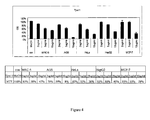
- Figure 4 shows the cytotoxic effect of iodinin on the growth of various tumor cells.
- Cell growth inhibitory effects were determined by an MTT assay after treating the cell lines with 2, 5, and 10 ⁇ g/ml of iodinin for 72 hours. Mean ⁇ SE of four independent experiments are shown.
- the cytotoxic activity of the compound iodinin was tested in vitro in MRC-5, AGS, HeLa, HepG2 and MCF-7 cell lines.
- the compound iodinin was found to exhibit a significant cytotoxic effect given that the percentages of cell survival for MRC-5, AGS, HeLa, HepG2 and MCF-7 at the iodinin concentration of 10 ⁇ g/ml are 47%, 8%, 26%, 40% and 29%, respectively.
- isolated or “isolation” means that the material is removed from its original environment (e.g., the natural environment if it is naturally existing).
- isolated does not necessarily reflect the extent to which the material has been purified.
- mutant or “variant” is meant to encompass any microorganism whose total cellular genetic composition has been altered, for example, by chemical mutagenesis, spontaneous mutation, genetic engineering, transformation, or transfection, such that its physical or biochemical properties are affected.
- said variant or mutant should have all the identifying characteristics of the strain 04107M-2 deposited with the ATCC under accession number PTA-8410.
- whole broth culture refers to a liquid culture containing both cells and media.
- treating means the prevention or reduction of severe symptoms or effect of a pathological condition, including prolonging life expectancy.
- treatment may include: prevention of tumor growth, reduction of tumor size, enhanced tumor cell death, or increased apoptosis in the tumor.
- an effective amount means an amount sufficient to effect beneficial or desired results.
- composition means a combination of an active agent and another compound, carrier or composition, inert (for example, a detectable agent or label or liquid carrier) or active, such as an adjuvant.
- cytotoxicity refers to both cell death and toxicity resulting in cell stasis, e.g., a loss of the ability to grow, as well as to apoptosis.
- mammals means any class of higher vertebrates that nourish their young with milk secreted by mammary glands, including, for example, humans, rabbits, and monkeys.
- the strain of the present invention can be isolated from a natural source, e.g., a soil sample collected from Taitung County, Taiwan.
- the isolated strain of the present invention is capable of producing iodinin and has the following characteristics.
- the isolate strain displays substrate mycelia, and sporangia are borne on the aerial mycelia.
- the isolate strain contains meso -diaminopimelic acid in its peptidoglycan. Glucose, madurose, and rhamnose are the whole-cell sugars of the strain.
- strain 04107M-2 should be classified as a novel species of the genus Acrocarpospora, namely Acrocarpospora punica sp. nov. It was also found that a major purple, red-glinting compound, iodinin, could be obtained from the EtOAc extract of the submerged whole broth culture, which provides a new method of preparing iodinin.
- Acrocarpospora punica 04107M-2 which was deposited with the American Type Culture Collection 10801 University Boulevard., Manassas, VA 20110-2209, U.S.A., on 3 May 2007 in accordance with the Budapest Treaty and assigned accession number PTA-8410. It was also deposited with the Bioresource Collection and Research Center, Taiwan, on 15 January 2007 (accession number BCRC 910341). Mutants or variants derived from the deposited strains (obtained by conventional or recombinant methods), as well as any Acrocarpospora punica strain which has characteristics that are identical to the deposited strain are also within the scope of this invention.
- All Acrocarpospora punica strains of the invention can be used to produce iodinin.
- the iodinin may be produced by incubating the Acrocarpospora punica strain of this invention in a suitable medium under a suitable condition to obtain a whole broth culture containing iodinin.
- the medium used in the present invention includes any media used to cultivate Acrocarpospora , such as HV medium, or any other media that can provide carbon and nitrogen sources and any components which are essential for synthesizing iodinin.
- the Acrocarpospora punica strain of the invention may be incubated at a temperature of about 20 to 30 °C, preferably about 28°C, for a period of about 1 to 3 weeks, preferably for about2 weeks.
- the iodinin in the whole broth culture may be further isolated or purified.
- the isolation or purification may be performed by any technologies known in the art.
- the iodinin can be extracted by a solvent, such as EtOAc, CH 2 Cl 2 , or a mixture thereof.
- iodinin obtained from the novel strain of the present invention was assessed in order to identify its properties. Surprisingly, upon conducting an MTT assay, it was found that iodinin exhibits cytotoxic effects against cell lines including tumor cell lines such as AGS, HeLa, HepG2, and MCF-7. In other words, iodinin is capable of inducing cytotoxicity in cells, and thus is capable of killing cells, including cancer cells. Since iodinin has only been reported for its anti-bacterial property and its use as an effective antihypertensive agent for lowering blood pressure in a hypersensitive patient, the invention provides a new use of iodinin in inducing cytotoxicity in animal cells.
- the invention further provides a method of treating cancer, comprising administering to an animal in need of such treatment an effective amount of iodinin in order to induce cytotoxicity in the cancer cells.
- the animal is preferably a mammal, and more preferably is a human.
- the cancers that can be treated in the present invention include, but are not limited to, cervical cancer, liver cancer, gastric cancer, and breast cancer.
- the iodinin used in the present invention can be obtained from any conventional sources.
- the conventional sources include, but are not limited to, Chromobacterium iodinum, Nocardiopsis rougei , and Acidithiobacillus ferrooxidans (Ceskova et al., 2002).
- the iodinin may also be obtained from the preparation process of the present invention as stated above.
- the compound iodinin can be formulated as pharmaceutical compositions and administered to an animal, including a human patient, in a variety of forms adapted to the chosen route of administration.
- the compound is preferably administered in combination with a pharmaceutically acceptable carrier, and can be combined with or conjugated to specific delivery agents.
- the compound can be administered by known techniques, e.g., oral, parental (including subcutaneous injection, intravenous, intramuscular, intrasternal or infusion techniques), by inhalation spray, topical, by absorption through a mucous membrane, or rectal, in dosage unit formulations containing one or more conventional non-toxic pharmaceutically acceptable carriers, adjuvants or vehicles.
- the pharmaceutical composition of the invention can be in the form of suspensions or tablets suitable for oral administration, nasal sprays, creams, and sterile injectable preparations, such as sterile injectable aqueous or oleagenous suspensions or suppositories.
- the composition can be prepared according to techniques well known in the art of pharmaceutical formulation.
- the composition may contain microcrystalline cellulose for imparting bulk, alginic acid or sodium alginate as a suspending agent, methylcellulose as a viscosity enhancer, and sweeteners or flavoring agents.
- the composition may contain microcrystalline cellulose, starch, magnesium stearate and lactose or other excipients, binders, extenders, disintegrants, diluents, and lubricants known in the art.
- the composition can be prepared according to techniques well known in the art of pharmaceutical formulation.
- the composition can be prepared as solutions in saline, using benzyl alcohol or other suitable preservatives, absorption promoters to enhance bioavailability, fluorocarbons, or other solubilizing or dispersing agents known in the art.
- the composition can be formulated according to techniques well known in the art, using suitable dispersing or wetting and suspending agents, such as sterile oils, including synthetic mono- or diglycerides, and fatty acids, including oleic acid.
- suitable dispersing or wetting and suspending agents such as sterile oils, including synthetic mono- or diglycerides, and fatty acids, including oleic acid.
- the composition can be prepared by mixing it with a suitable non-irritating excipient, such as cocoa butter, synthetic glyceride esters or polyethylene glycols, which are solid at ambient temperatures, but liquefy or dissolve in the rectal cavity to release the drug.
- a suitable non-irritating excipient such as cocoa butter, synthetic glyceride esters or polyethylene glycols, which are solid at ambient temperatures, but liquefy or dissolve in the rectal cavity to release the drug.
- Preferred administration routes include oral and parenteral, as well as intravenous, intramuscular or subcutaneous routes.
- the compound iodinin is administered parenterally, i.e., intravenously or intraperitoneally, by infusion or injection.
- the compound can be administered directly to a tumor by tumor injection.
- the compound can be administered using systemic delivery by intravenous injection.
- Solutions or suspensions of the compound can be prepared in water, or isotonic saline (PBS), and optionally mixed with a nontoxic surfactant.
- Dispe rsions can also be prepared in glycerol, liquid polyethylene, glycols, DNA, vegetable oils, triacetin and mixtures thereof. Und er ordinary conditions of storage and use, these preparations may contain a preservative to prevent the growth of microorganisms.
- the pharmaceutical dosage form suitable for injection or infusion use may include sterile, aqueous solutions, dispersions, or sterile powders comprising an active ingredient which are adapted for the extemporaneous preparation of sterile injectable or infusible solutions or dispersions.
- the final dosage form should be sterile, fluid and stable under the conditions of manufacture and storage.
- the liquid carrier or vehicle can be a solvent or liquid dispersion medium comprising, for example, water, ethanol, a polyol such as glycerol, propylene glycol, or liquid polyethylene glycols, and the like, vegetable oils, nontoxic glyceryl esters, and suitable mixtures thereof.
- the proper fluidity can be maintained, for example, by the formation of liposomes, by the maintenance of the required particle size, in the case of dispersion, or by the use of nontoxic surfactants.
- the prevention of the action of microorganisms can be accomplished by various antibacterial and antifungal agents, for example, parabens, chlorobutanol, phenol, sorbic acid, thimerosal, and the like.
- isotonic agents for example, sugars, buffers, or sodium chloride.
- Prolong ed absorption of the injectable compositions can be brought about by the inclusion in the composition of agents delaying absorption such as aluminum monosterate hydrogels and gelatin.
- Sterile injectable solutions are prepared by mixing the conjugates in the required amount in the appropriate solvent with various other ingredients as enumerated above, and filter sterilization is then conducted, as required.
- the preferred methods of preparation are vacuum-drying and freeze-drying techniques, which yield a powder of the active ingredient plus any additional desired ingredient present in the previously sterile-filtered solutions.
- the administered dose is the amount that can produce the desired effect, such as the amount sufficient to reduce or eliminate tumors.
- Appropriate amounts can be determined by those skilled in the art, using known methods and relationships, from the in vitro data provided in the following examples.
- the effective dose to be administered will vary with conditions specific to each patient. In general, factors such as the disease burden, tumor location (exposed or remote), host age, metabolism, sickness, prior exposure to drugs, and the like contribute to the expected effectiveness of a drug.
- factors such as the disease burden, tumor location (exposed or remote), host age, metabolism, sickness, prior exposure to drugs, and the like contribute to the expected effectiveness of a drug.
- One skilled in the art will use standard procedures and patient analysis to calculate the appropriate dose, extrapolating from the data provided in the following examples.
- composition of the invention can be administered in combination with other anti-tumor therapies.
- Strain 04107M-2 was isolated from a soil sample collected in Taitung County, Taiwan, by using HV agar (Hayakawa & Nonomura, 1987), and was then incubated at 28°C for 4 weeks. The strain was maintained on oatmeal agar and a suspension of spores or mycelia fragments of the strain in a broth containing 20% (vol/vol) glycerol was stored at -20°C.
- the morphological characteristics of the strain 04107M-2 were observed by scanning electron microscope (S-450, Hitachi, Tokyo) following an incubation of said strain on HV agar at 28°C for 14 days, a fixation by 4% osmium tetraoxide solution, and then serial dehydrations with ethanol and acetone,and a critical point drying.
- strain 04107M-2 produces branched and non-fragmented substrate mycelia, and club-shaped structures are borne on the tips of the aerial mycelium.
- the spores are non-motile, rod-like and smooth-surfaced, as shown in Figure 1 .
- Biomass for chemotaxonomic studies was prepared after growing the strain in shaking flasks (125 rpm/min) with YS broth (10.0g of yeast extract and 10.0g of starch in 1.0L of distilled water of pH 7.0) at 28°C for 14 days.
- the isomer of diaminopimelic acid and sugars in the whole-cell hydrolysates were determined by the method described by Hasegawa et al. (1983).
- the presence of mycolic acids was examined via Thin Layer Chromatography (TLC) by following the method disclosed in Minnikin et al. (1975), and phospholipids were extracted and identified by following the method disclosed in Minnikin et al. (1984).
- Men aquinones were extracted and purified by the method disclosed in Collins et al. (1977) and then analyzed by HPLC (Model 600, Waters) with a Nova-Pak C18 column.
- HPLC Model 600, Waters
- strain 04107M-2 was cultivated using TSB medium at 28°C in a shaking incubator at 125 r.p.m. for 7 days. Extracts of the methylated fatty acids were prepared according to the protocol provided by the manufacturer (Microbial ID Inc., U. S. A.).
- the strain 04107M-2 was grown in YS broth at 28°C for 14 days. Cells were removed from the broth using a pipette tip and the total DNA was extracted using the QIAGEN ® Genimic DNA Kit. The G+C content of the DNA was determined by the HPLC method disclosed in Tamaoka & Komagata (1984).
- the 16S rRNA gene was PCR-amplified using the methods provided by Nakajima et al. (1999) and directly sequenced on an ABI model 3730 automatic DNA sequencer of BigDye Terminator V3.1 Kit (Applied Biosystems).
- the almost-complete sequence (1511 nt) of the 16S rRNA gene of the strain 04107M-2 was determined.
- Prelimi nary comparison of the sequence against the GenBank database revealed high sequence similarity values with certain members of the genus Acrocarpospora .
- the phylogenetic tree obtained on the basis of the sequence of the 16S rRNA gene of the strain 04107M-2, other valid published Acrocarpospora species and related species is shown in Figure 3 .
- Binary similarity values range between 96.5% ( A. pleiomorph IFO 16266 T ) and 98.2% ( A. corrugata NBRC 13972 T ).
- DNA-DNA hybridization rates of the new isolate 04107M-2 to its closest type of strains, A. corrugata BCRC 16357 T , A. macrocephala , and A. pleiomorpha are 2.9%, 0.4%, and 1.0%, respectively (see Table 2).
- Table 2 DNA hybridization rates among species of Acrocarpospora Probe 04170M-2(%) A. corrugata T (%) 04107M-2 100.0 14.9 A. corrugata T 2.9 100.0 A. macrocephala T 0.4 4.5 A. pleiomorpha T 1.0 8.6
- the distinctiveness of the isolate also comes from the phenotypic evidence compared with the nearest phylogenetic neighbours (see Table 2). On the basis of the phenotypic and genotypic characteristics, it is evident that the isolate should be classified as a new species of the genus Acrocarpospora, Acrocarpospora punica sp. nov., with the type strain 04107M-2.
- MRC-5 embryonic lung, normal, human, BCRC60023
- AGS Human gastric adenocarcinoma, BCRC 60102
- HeLa Human cervical epithelioid carcinoma, BCRC 60005
- HepG2 Human hepatoblastoma, BCRC 60177
- MCF7 human breast adenocarcinoma, BCRC 60436
- MRC-5, HeLa and HepG2 cells were cultivated in Minimum essential medium (MEM, GIBCO) supplemented with 10% fetal bovine serum (FBS, GIBCO) and 1% penicillin/streptomycin (GIBCO).
- MEM Minimum essential medium
- FBS fetal bovine serum
- GIBCO penicillin/streptomycin
- AGS cells were cultivated in Ham's F-12 medium (F-12, GIBCO) supplemented with 10% FBS and 1% penicillin/streptomycin.
- MCF7 cells were cultivated in MEM supplemented with 10% FBS, 1% penicillin/streptomycin and 10ug/ml human recombinant insulin (GIBCO). All cell lines were maintained in an incubator at 37 °C with humidified air containing 5% CO 2 .
- cytotoxic activities of the compound, iodinin, against all cell lines were assayed by a modified MTT [3-(4,5-dimethylthiazole-2-yl)-2,5-diphenyltetrazolium bromide] (Merck) colorimetric method.
- MTT 3-(4,5-dimethylthiazole-2-yl)-2,5-diphenyltetrazolium bromide
- 180 ⁇ l of cell cultures were initiated at the concentrations of 5000, 3000, 1500, 3000, and 3000 cells/well in 96-well tissue culture plates (Falcon), respectively.
- Th e compound iodinin was dispensed to the established cultures at three concentrations (5 ⁇ M, 2 ⁇ M, and 1 ⁇ M) in quadruplicate.
- the cell numbers for each of the cell lines were determined by the following MTT assay: 20 ⁇ l of 1 mg/ml of MTT were added to each well of the plates, and the plates were then incubated at 37°C for 5 hours. Form azan crystals were redissolved in 100 ⁇ l of DMSO (Merck) for 10 minutes via shaking, and the plates were read immediately on an ELISA reader (Bio-Tek) at a wavelength of 540 nm (Mosmann, 1983).
Landscapes
- Health & Medical Sciences (AREA)
- Chemical & Material Sciences (AREA)
- Life Sciences & Earth Sciences (AREA)
- Organic Chemistry (AREA)
- Engineering & Computer Science (AREA)
- General Health & Medical Sciences (AREA)
- Bioinformatics & Cheminformatics (AREA)
- Zoology (AREA)
- Medicinal Chemistry (AREA)
- Wood Science & Technology (AREA)
- Genetics & Genomics (AREA)
- General Chemical & Material Sciences (AREA)
- Pharmacology & Pharmacy (AREA)
- Public Health (AREA)
- Veterinary Medicine (AREA)
- Biotechnology (AREA)
- Animal Behavior & Ethology (AREA)
- Chemical Kinetics & Catalysis (AREA)
- Microbiology (AREA)
- Biochemistry (AREA)
- General Engineering & Computer Science (AREA)
- Nuclear Medicine, Radiotherapy & Molecular Imaging (AREA)
- Epidemiology (AREA)
- Tropical Medicine & Parasitology (AREA)
- Virology (AREA)
- Biomedical Technology (AREA)
- Pharmaceuticals Containing Other Organic And Inorganic Compounds (AREA)
- Micro-Organisms Or Cultivation Processes Thereof (AREA)
- Medicines Containing Material From Animals Or Micro-Organisms (AREA)
- Preparation Of Compounds By Using Micro-Organisms (AREA)
- Medicines Containing Plant Substances (AREA)
Priority Applications (1)
| Application Number | Priority Date | Filing Date | Title |
|---|---|---|---|
| US12/165,782 US20090042894A1 (en) | 2007-07-13 | 2008-07-01 | Novel species of acrocarpospora, a method of preparing iodinin, and the uses of iodinin |
Applications Claiming Priority (1)
| Application Number | Priority Date | Filing Date | Title |
|---|---|---|---|
| US95955307P | 2007-07-13 | 2007-07-13 |
Publications (2)
| Publication Number | Publication Date |
|---|---|
| EP2014765A2 true EP2014765A2 (de) | 2009-01-14 |
| EP2014765A3 EP2014765A3 (de) | 2009-03-04 |
Family
ID=39830151
Family Applications (1)
| Application Number | Title | Priority Date | Filing Date |
|---|---|---|---|
| EP08011623A Withdrawn EP2014765A3 (de) | 2007-07-13 | 2008-06-26 | Neuartige Acrocarpospora-Spezies, Verfahren zur Herstellung von Iodinin und Verwendungen von Iodinin |
Country Status (4)
| Country | Link |
|---|---|
| EP (1) | EP2014765A3 (de) |
| JP (1) | JP2009017878A (de) |
| CN (1) | CN101343615A (de) |
| TW (1) | TW200902712A (de) |
Cited By (1)
| Publication number | Priority date | Publication date | Assignee | Title |
|---|---|---|---|---|
| CN112080535A (zh) * | 2020-09-26 | 2020-12-15 | 齐鲁工业大学 | 利用腐植酸钠促进灵菌红素合成与分泌的方法 |
-
2008
- 2008-06-26 JP JP2008167502A patent/JP2009017878A/ja not_active Withdrawn
- 2008-06-26 TW TW097124032A patent/TW200902712A/zh unknown
- 2008-06-26 EP EP08011623A patent/EP2014765A3/de not_active Withdrawn
- 2008-07-10 CN CNA2008101268657A patent/CN101343615A/zh active Pending
Non-Patent Citations (3)
| Title |
|---|
| GOODFELLOW; QUINTANA: "The family Streptosporangiaceae", PROKARYOTES, vol. 3, 2006, pages 725 - 753 |
| TANABE ET AL.: "Production of C2-Symmetrical Phenazines by Some Actinomycetes", J. OF FERMENTATION AND BIOENGINEERING, vol. 79, no. 4, 1995, pages 384 - 386 |
| ZHANG ET AL.: "Streptosporangium yunnanense sp. nov. and Streptosporangium purpuratum sp. nov., from soil in China", INT. J. OF SYSTEMATIC AND EVOL. MICROBIOL., vol. 55, 2005, pages 719 - 724 |
Cited By (1)
| Publication number | Priority date | Publication date | Assignee | Title |
|---|---|---|---|---|
| CN112080535A (zh) * | 2020-09-26 | 2020-12-15 | 齐鲁工业大学 | 利用腐植酸钠促进灵菌红素合成与分泌的方法 |
Also Published As
| Publication number | Publication date |
|---|---|
| CN101343615A (zh) | 2009-01-14 |
| TW200902712A (en) | 2009-01-16 |
| EP2014765A3 (de) | 2009-03-04 |
| JP2009017878A (ja) | 2009-01-29 |
Similar Documents
| Publication | Publication Date | Title |
|---|---|---|
| EP2578597B1 (de) | Neue zyklische peptidverbindungen, verfahren zu ihrer herstellung, entzündungshemmendes mittel, antibiotikumhaltige fraktion, antibiotikum, verfahren zur herstellung des antibiotikums, antibiotikumproduzierender mikroorganismus und von diesem produziertes antibiotikum | |
| KR20100132518A (ko) | 환형 화합물을 생산하는 미생물 | |
| JP5878302B2 (ja) | 新規環状ペプチド化合物とその製造方法及び感染症治療薬 | |
| US6780616B1 (en) | Antibiotic caprazamycins and process for producing the same | |
| US7271147B2 (en) | Antibiotics, tripropeptins and process for producing the same | |
| US20090042894A1 (en) | Novel species of acrocarpospora, a method of preparing iodinin, and the uses of iodinin | |
| EP1814902B1 (de) | Zyklosporinanalog | |
| KR20110005691A (ko) | 환형 화합물 및 그 염 | |
| CN101343615A (zh) | 顶果孢菌属的新颖菌种,制备碘色菌素的方法和碘色菌素的用途 | |
| EP2327789B1 (de) | Signamycin, verfahren zur herstellung und verwendung | |
| JP5115623B2 (ja) | アミノ糖化合物及びその生産方法 | |
| WO2010122669A1 (ja) | 新規化合物アミコラマイシン、その製造方法及びその用途 | |
| JP2011116662A (ja) | 新規抗生物質sf2876物質、その製造法および医薬組成物 | |
| JP2009203195A (ja) | 新規化合物アミコラマイシン、その製造方法及びその用途 | |
| Kim et al. | Novel α-Glucosidase Inhibitors, CKD-711 and CKD-711a Produced by Streptomyces sp. CK-4416 I. Taxonomy, Fermentation and Isolation | |
| HK1122065A (en) | A novel species of acrocarpospora, a method of preparing iodinin, and the uses of iodinin | |
| KR0173195B1 (ko) | It-62-b 물질 및 이를 함유하는 의약조성물 | |
| RU2444526C2 (ru) | Новые антибактериальные соединения | |
| EP0852232A1 (de) | Zyklische Peptideverbindungen zur Schmerzbehandlung und ihr Herstellungsverfahren | |
| US6245734B1 (en) | Physiologically active polyoxypeptin and deoxypolyoxypeptin and anticancer drugs containing the same | |
| WO2007007399A1 (ja) | チアゾール系化合物 | |
| KR100942368B1 (ko) | 신규한 스트렙토마이세스 속 ya1766 균주 | |
| WO2001046451A1 (en) | Migrastatin, process for producing the same and medicinal compositions | |
| US20040043472A1 (en) | Novel substances k97-0239 and process for producing the same | |
| WO2018056470A1 (ja) | 上皮間葉転換誘導細胞阻害剤 |
Legal Events
| Date | Code | Title | Description |
|---|---|---|---|
| PUAI | Public reference made under article 153(3) epc to a published international application that has entered the european phase |
Free format text: ORIGINAL CODE: 0009012 |
|
| 17P | Request for examination filed |
Effective date: 20080902 |
|
| AK | Designated contracting states |
Kind code of ref document: A2 Designated state(s): AT BE BG CH CY CZ DE DK EE ES FI FR GB GR HR HU IE IS IT LI LT LU LV MC MT NL NO PL PT RO SE SI SK TR |
|
| AX | Request for extension of the european patent |
Extension state: AL BA MK RS |
|
| PUAL | Search report despatched |
Free format text: ORIGINAL CODE: 0009013 |
|
| AK | Designated contracting states |
Kind code of ref document: A3 Designated state(s): AT BE BG CH CY CZ DE DK EE ES FI FR GB GR HR HU IE IS IT LI LT LU LV MC MT NL NO PL PT RO SE SI SK TR |
|
| AX | Request for extension of the european patent |
Extension state: AL BA MK RS |
|
| 17Q | First examination report despatched |
Effective date: 20090728 |
|
| AKX | Designation fees paid |
Designated state(s): AT BE BG CH CY CZ DE DK EE ES FI FR GB GR HR HU IE IS IT LI LT LU LV MC MT NL NO PL PT RO SE SI SK TR |
|
| STAA | Information on the status of an ep patent application or granted ep patent |
Free format text: STATUS: THE APPLICATION IS DEEMED TO BE WITHDRAWN |
|
| 18D | Application deemed to be withdrawn |
Effective date: 20110104 |