EP2007902B1 - Kombination von vogelzellmarkern - Google Patents
Kombination von vogelzellmarkern Download PDFInfo
- Publication number
- EP2007902B1 EP2007902B1 EP07727052A EP07727052A EP2007902B1 EP 2007902 B1 EP2007902 B1 EP 2007902B1 EP 07727052 A EP07727052 A EP 07727052A EP 07727052 A EP07727052 A EP 07727052A EP 2007902 B1 EP2007902 B1 EP 2007902B1
- Authority
- EP
- European Patent Office
- Prior art keywords
- cells
- dna
- artificial
- pcr primer
- genes
- Prior art date
- Legal status (The legal status is an assumption and is not a legal conclusion. Google has not performed a legal analysis and makes no representation as to the accuracy of the status listed.)
- Not-in-force
Links
Images








Classifications
-
- C—CHEMISTRY; METALLURGY
- C12—BIOCHEMISTRY; BEER; SPIRITS; WINE; VINEGAR; MICROBIOLOGY; ENZYMOLOGY; MUTATION OR GENETIC ENGINEERING
- C12Q—MEASURING OR TESTING PROCESSES INVOLVING ENZYMES, NUCLEIC ACIDS OR MICROORGANISMS; COMPOSITIONS OR TEST PAPERS THEREFOR; PROCESSES OF PREPARING SUCH COMPOSITIONS; CONDITION-RESPONSIVE CONTROL IN MICROBIOLOGICAL OR ENZYMOLOGICAL PROCESSES
- C12Q1/00—Measuring or testing processes involving enzymes, nucleic acids or microorganisms; Compositions therefor; Processes of preparing such compositions
- C12Q1/68—Measuring or testing processes involving enzymes, nucleic acids or microorganisms; Compositions therefor; Processes of preparing such compositions involving nucleic acids
- C12Q1/6876—Nucleic acid products used in the analysis of nucleic acids, e.g. primers or probes
- C12Q1/6881—Nucleic acid products used in the analysis of nucleic acids, e.g. primers or probes for tissue or cell typing, e.g. human leukocyte antigen [HLA] probes
-
- C—CHEMISTRY; METALLURGY
- C12—BIOCHEMISTRY; BEER; SPIRITS; WINE; VINEGAR; MICROBIOLOGY; ENZYMOLOGY; MUTATION OR GENETIC ENGINEERING
- C12Q—MEASURING OR TESTING PROCESSES INVOLVING ENZYMES, NUCLEIC ACIDS OR MICROORGANISMS; COMPOSITIONS OR TEST PAPERS THEREFOR; PROCESSES OF PREPARING SUCH COMPOSITIONS; CONDITION-RESPONSIVE CONTROL IN MICROBIOLOGICAL OR ENZYMOLOGICAL PROCESSES
- C12Q2600/00—Oligonucleotides characterized by their use
- C12Q2600/158—Expression markers
Definitions
- the object of the invention is to identify and use a unique combinatorial of genes that can be used as a marker to define, modify, control positively or negatively the germinal competence of an avian stem cell of any kind. embryonic, germinal or adult.
- the marker of a gene preferentially expressed in StX cells is chosen from the markers of the following genes: ATM, CXCR4, eome, FGF-4, GATA-5, NF2, SOCS13, SSB-1, TC87479, T -cell APP 2C, TGF-beta2, WD-RP3, ZPC. More preferably, the combination according to the invention comprises at least one marker of the ZPC gene.
- the marker combination may further comprise at least one marker of a gene which is expressed in two groups of cells, StX cells and stem cells.
- the cells are obtained under conditions similar to those previously described (Pain et al., 1996). Briefly, unincubated embryonated eggs are cleaned and broken. The yolk is separated from the white and the embryo is removed using a Pasteur pipette or a ring of paper as described by Carscience et al., 1993. The cells thus obtained are deposited on an inactivated feeder mat. in a proliferation medium containing the essential elements for the proliferation of cells such as fetal calf serum, amino acids and cytokines and growth factors.
- the embryonic stem cells After a few days, the embryonic stem cells form small, compact clusters that are dissociated with proteolytic enzymes and are seeded in new culture dishes for in vitro amplification.
- stage IX-XI The stage of development of the embryo at the time of egg-laying is stage IX-XI according to the development table proposed by Eyal Giladi & Kovak (1976).
- the embryo already comprises 40,000 to 60,000 cells according to estimates and consists of two layers, the epiblast and the hypoblast.
- the presence of cells positive for the vasa gene (Tsukenawa et al., 2000) indicate that germ cells are already determined.
- Various publications have reported the in vitro production of germinal stem cells (EG) from the culturing of the germinal ridge cells of the chicken embryo. These include the work of Ha et al., 2002; Park et al., 2003 from stage 28 embryo according to the development table proposed by Hamburger & Hamilton (1951) corresponding approximately to 5-6 days of development.
- stage IX-XIII blastoderm cells are seeded in a culture dish under culture conditions that promote multiplication of vasa-positive germ cells.
- the dishes were treated with serum to achieve a 'coating' equivalent to an extracellular matrix intended to promote the adhesion and non-differentiation of the cells but without the addition of feeder 'inactivated feeder.
- cell foci appear which show slow proliferation.
- This process continued and cells called GF58 continued to proliferate for at least 200 days.
- This proliferation, although particularly slow, is nevertheless continuous in the form of a few compact foci of cells.
- the passages are delicate because it is difficult to dissociate the cells.
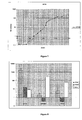
- a 'growth curve' has been realized ( Figure 7 ), based on the dilution coefficients during cell passage, as it appears impossible to count the cells individually at each (rare) passage.
- a FACS sorting approach is initiated.
- the approach relies on the presence of a membrane protein, the Bcrp1 / ABCG2 transporter ABC receptor, whose expression was initially identified in hematopoietic stem cells (Goodell et al., 1997).
- This molecule is described as a hematopoietic stem cell marker. This molecule seems to provide a physiological role of detoxification and is responsible for the active transport of Ho ⁇ chst out of the cell, when this drug is brought into the presence of the cell.
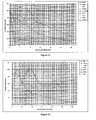
- the dissociation curve (melting curve) and the calculation of the PCR efficiency by the internal standard method. This last analysis makes it possible to evaluate whether each molecule of DNA is amplified specifically at each PCR cycle.
- the dissociation curve informs on the number of amplicons of different nature present in the tubes at the end of the amplification and makes it possible to test the specificity of the pair of primers used, for which only one amplicon must be formed. This curve also makes it possible to detect any contamination by genomic DNA provided that the primers are selected between two exons of a gene.
- This curve is carried out at the end of the 40 cycles of quantitative PCR by a last cycle which includes a denaturation for 1 min at 95 ° C, hybridization for 1 min at 55 ° C and then a temperature rise of 55 ° C to 95 ° C with a fluorescence reading every 0.2s.
- the amplified DNA fragments during the 40 cycles of PCR hybridize and the measured fluorescence will then be at its maximum.
- the temperature at which the two strands of DNA separate is measured very precisely which causes a fall in the fluorsecence, the fluorochrome being incorporated only in the double-stranded DNA. This temperature depends on the size and composition of the base of the amplicon.
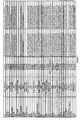
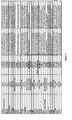
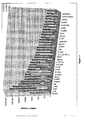
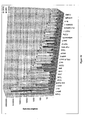
- the level of relative expression of genes relative to their level of expression in an embryonic fibroblast highlights 3 categories of genes according to the intensity of the expression. Overexpressed genes can be identified at very high levels and the relative level of expression relative to embryonic fibroblasts is greater than 100-fold. These genes could be considered as 'specific' to CESC cells.
- the class of genes whose Relative level of expression is between 10 and 100 currently comprises a dozen genes. Finally, we can distinguish the class of genes whose relative level of expression is between 2 and 10 times compared to that of embryonic fibroblasts.
- CESC cells Some of the genes identified during screening appear to have specific expression of CESC cells.
- the differential expression between embryonic fibroblasts, CESC cells and CEGC cells indicates that the level of gene expression varies with cell type. It also appears essential to characterize the variations of expression levels during the differentiation of CESC cells.
- the CESC cells thus express the nodal, FGF-8, wnt-3a, wnt-10a, BMP-8 and FGF-4 factors much more strongly than the CEGC cells.
- the latter are characterized by over-expression of the factors wnt-14, TGF-b2 and BMP-5.
- CEGC cells express FGF-R (U48395), TGF-RII (AF202991) and TGF-RIII (L01121) receptors in high proportions compared to CESC cells.
- FGF-R U48395
- TGF-RII AF202991
- TGF-RIII L01121
- the Smad-3 (TC187835), Smad-6 and smad-7 (TC194136) genes are also more expressed in CEGC cells than in CESC cells, even though found a strong expression in the CEF.
- the Smad-1 (Tremblay et al., 2001) and Smad-5 (TC209770) genes (Chang et al., 2001) known to be strongly implicated in germ cell determinism in mice are respectively more expressed in CESC cells. and in CEGC. Expression in the fibroblasts is also detected.
- the Smad-4 gene (TC207213) is preferentially expressed in the CEGCs and is not or hardly detectable in the CESCs and the CEFs.
- TGF / BMP family signaling agents may be valuable indicators of the 'stem cell' or 'germ cell' nature of the cells studied. Any variation in the levels of expression can be used to better understand the changes induced by the different manipulations of the candidate genes.
- Smad-4 are very important candidates in the control of the germinal potential of an CES cell. It will therefore be particularly judicious to test the effect or the destruction of these different genes both in vitro and in vivo.
- HNR nuclear hormone receptors
- dmrt-1 The expression of the dmrt-1 gene could be specific for Sertoli cells as in the murine model (Lei et al., 2004), but the detection of this gene in the germinal cell fractions modulates the comment. Other genes have interesting expression profiles but are also expressed in fibroblasts.
- sox-9 expression of the sox-9 gene (U12533) is more specific for CEGC cells, which seems consistent with the importance of this gene's role in mouse testicular formation (Chaboissier et al., 2004). , Vidal et al., 2001), but could be expressed preferentially in the support cells.
- the conservation of the role of this gene between mammals and birds is evoked (Morais da Silva et al., 1996) and this gene would be a direct target of the sf-1 nuclear receptor (Sekido et al., 2004) (NM 205077) , actor also found strongly expressed in the CEGC in the presence of Dax-1 (AF202991)
- the pleiotropic action of the gata genes is modulated and controlled by the association with different partners at the level of response elements that are close and / or common in the promoters of the target genes.
- response elements to the gata genes are identified with BMP response elements (BRE elements) in the promoter of the smad-7 gene (Benchabane et al., 2004). This smad-7 gene is also more expressed in embryonic gonad cells than in CESC cells.
- the genes of the Id family appear as key players in controlling the action of BMPs.
- the Id2 gene appears to be more expressed in embryonic gonad cells and especially in blastoderm cells than in CESC cells. This gene could be at the center of the regulation of the proliferation / differentiation of CESC cells, in a similar approach to the murine model (Ying et al., 2003, Kowanetz et al., 2004).
- the ENS-1 protein identified in the gene trapping approach also has a particularly interesting expression profile with a very strong over-expression in CESC cells and a rapid disappearance of its messenger. when cells are induced to differentiate (Acloque et al., 2001).
- the dax-1 gene appears to be very heavily overexpressed in blastoderm cells. This gene is known to have a negative role (Swain et al., 1998) but essential (Meeks et al., 2003) on the germinal differentiation, in particular by its antagonistic action on that of the sf-1 gene (Crawford et al., 1998). This dax-1 gene could itself be positively controlled by sf-1 and negatively by TF-COUP (Yu et al., 1998). The expression of dax-1 would also be dependent in some systems of wnt-4 activation (Mizusaki et al., 2003). Gold wnt-4 is one of the factors found more expressed in gonads than in CESC cells. The genes encoding the HNR-associated proteins are also shown and have particular differentials, such as the N-Cor1 gene (TC201157).
- proteins that bind the RNAs are proteins that bind the RNAs. These In particular, proteins have been identified in Drosophila and are involved in controlling the polarity of embryos (Huynh et al., 2004a) and germ cell determinism. In another model species, C. elegans, the hypothesis of germ cell pre-formation is also schematically based on the existence and role of these proteins. However, in these two models, the control of phosphorylation activation of RNA polymerase II, activation required for transcription, is not carried out by these 'RNA binding proteins' (Seydoux et al., 1997).
- mice In mammals, it has been shown that some of these genes are also essential for the maintenance of the germ line in mice (Wang et al., 2004, Tsuda et al., 2003, Tanaka et al., 2000). But the origin of murine germ cells seems more linked to an induction phenomenon by different actors related to the three-dimensional cellular environment and to the action of factors such as BMP-4 and BMP-8. All of these inductions ultimately control the expression levels of various major players such as Oct-3/4 (Saitou et al., 2003). This inductive origin seems to be enhanced by the in vitro production of germ cells from the differentiation of mouse MESC cells (Hubner et al., 2003, Geijsen, et al., 2004, Toyooka et al., 2003).
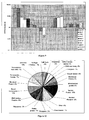
- the genes in this family whose level of expression was tested, the genes bruno (AB050497), tudor (TC213378), nanos (TC223629), vasa ( AB004836 ) were detected as much more strongly expressed in the CEGC cells. in CESC, but also in blastoderm cells, probably corresponding to the presence of germ-competent cells in these cells. CESC cells are positive for the vasa gene, but have a very small contribution to the germ line as long as they are maintained in culture. Also, the level of relative expression appears to be an essential element to this germinal competence. Some like the nanos gene has an almost exclusive expression specificity for CEGC cells. The mago gene exhibits greater expression in blastoderm cells compared to both CESC and CEGC cell types.
- RNA helicase proteins capable of binding RNAs
- the gene for ddx 28 (TC211748) is well expressed in CESC cells as well as the homologue of RNA cyclase (TC214888).
- New homologous molecules of Drosophila proteins and / or C. elegans have yet to be identified, especially the counterparts of oskar, pumilio, aubergine, maelstrom etc ....
- the piwi gene involved in asymmetric divisions and in the maintenance of the germ line of many species (Cox et al., 1998, Kuromochi et al., 2004) is more expressed in CEGC cells than in CESC. Blastoderm cells appear less expressed than both CESC and CEGS cells.
- This piwi gene belongs to the Argonaute family of proteins and is one of the essential components of the RISC complex. It contains a PAZ domain that could bind RNAs and act as an endonuclease at the mRNA level in the siRNA / mRNA degradation duplex (Song et al., 2004, Tahbaz et al., 2004).
- the expression level of the dicer gene which produces siRNAs and has also been identified in chicken (Fukagawa et al., 2004) appears to be equivalent in CESC and CEGC cells.
Landscapes
- Life Sciences & Earth Sciences (AREA)
- Chemical & Material Sciences (AREA)
- Health & Medical Sciences (AREA)
- Proteomics, Peptides & Aminoacids (AREA)
- Organic Chemistry (AREA)
- Zoology (AREA)
- Immunology (AREA)
- Analytical Chemistry (AREA)
- Wood Science & Technology (AREA)
- Engineering & Computer Science (AREA)
- Molecular Biology (AREA)
- Bioinformatics & Cheminformatics (AREA)
- Biotechnology (AREA)
- Biophysics (AREA)
- Physics & Mathematics (AREA)
- Cell Biology (AREA)
- Biochemistry (AREA)
- Microbiology (AREA)
- General Engineering & Computer Science (AREA)
- General Health & Medical Sciences (AREA)
- Genetics & Genomics (AREA)
- Measuring Or Testing Involving Enzymes Or Micro-Organisms (AREA)
- Micro-Organisms Or Cultivation Processes Thereof (AREA)
- Apparatus Associated With Microorganisms And Enzymes (AREA)
Claims (13)
- Kombination von Markern, welche erlaubt, Vogelzellen vom Typ StX (Blastoderm des Stadiums X) oder Vogelstammzellen zu charakterisieren, welche mindestens zwei Marker umfasst, dadurch gekennzeichnet, dass einer der Marker für das Gen 1p06 spezifisch ist und der andere Marker ausgewählt ist aus:a. einem Marker eines Zielgens, das bevorzugt in den StX-Zellen exprimiert wird, ausgewählt unter den folgenden Genen: 2contig58, 60S-L14, ATM, Bloom syndrome, Bteb4, CD9, CHD Helicase, Clock, Cwf16 (FLJ10374), CXCR4, Dnmt2, Enx1 (Ho-zeste 2), Eomes, EWS, Fgf4, Gata55, Hoj1, N-AGN6P deacetylase, N-Cor1, NF2, p53, Pml, Rbm6, Sa2, Sa3, Sara, Scye1, Sef, S1, SnoN, Socs13, Ssb1, TC87479, T-cell APP 2C, TGF-beta2, WD40/FYVE-D protein 2, IND-RP3, Zan75, Zpc, oderb. einem Marker eines Zielgens, das bevorzugt in den Stammzellen exprimiert wird, ausgewählt unter den folgenden Genen: 1P08-A09, Activin RIIB, Astacin, Claudin3, D apper1, Dorfin, FPP synthase (Fps), GalNAc-T3, Gcnf, Hspb7, Irx4, Lmx, Pax6, Slc38a2, Sox3, Ttra1 gp96, Wnt10a, Wwnt11.
- Kombination nach Anspruch 1, dadurch gekennzeichnet, dass der andere Marker eines Zielgens, das bevorzugt in den StX-Zellen (Blastoderm-Stadium X-Zellen) exprimiert wird, ausgewählt ist unter den Markern der folgenden Gene: Atm, CXCR4, Eomes, Fgf4, Gata5, N-AGN6P deacetylase, NF2, Socs13, Sssb1, TC87479, T-cell APP 2C, TGF-beta2, WD-RP3, ZPC und deren Kombinationen.
- Kombination nach einem der Ansprüche 1 oder 2, dadurch gekennzeichnet, dass sie mindestens einen Marker des Gens 1p06 und einen Marker des Gens ZPC umfasst.
- Kombination nach Anspruch 1, dadurch gekennzeichnet, dass der andere Marker eines Zielgens, das bevorzugt in den Stammzellen exprimiert wird, ausgewählt ist unter den Markern der folgenden Gene: Activin RIIB, Aastacin, Claudin3, Dapper1, FPP synthase (Fps), GalNAc-T3, Gcnf Lmx, Pax, Ttra1 gp96, Wnt10a und deren Kombinationen.
- Kombination nach Anspruch 4, dadurch gekennzeichnet, dass sie mindestens einen Marker des Gens 1P06 und einen Marker des Gens Tra1 umfasst.
- Kombination nach einem der Ansprüche 1 bis 5, dadurch gekennzeichnet, dass die Marker unter den Antikörpern, die sich auf spezifische Weise an die Expressionsprodukte eines Zielgens, einer mRNA, einer cDNA oder ein Polypeptid binden werden, oder einem Fragment von diesen Letzteren und den Nukleinsäurefragmenten, die in der Lage sind, auf spezifische Weise mit den durch die Zielgene exprimierten mRNAs oder mit den entsprechenden cDNAs zu hybridisieren, oder Fragmenten von diesen Letzteren ausgewählt sind.
- Kombination nach einem der Ansprüche 1 bis 6, dadurch gekennzeichnet, dass sie auf ein und demselben Träger, vorzugsweise einem normierten Träger zusammengestellt ist.
- Kombination nach Anspruch 7, dadurch gekennzeichnet, dass sie in Form einer DNA-Matrix vorliegt, welche einen Träger, auf welchem vorzugsweise auf normierte Weise die Nukleinsäurefragmente, die in der Lage sind, mit den Zielgenen zu hybridisieren, angeordnet sind, umfasst.
- Kombination nach Anspruch 8, dadurch gekennzeichnet, dass sie auf einem DNA-Chip angeordnet ist.
- DNA-Chip, dadurch gekennzeichnet, dass er eine Kombination von Markern nach einem der Ansprüche 1 bis 9 umfasst.
- Verfahren zur Charakterisierung einer Vogelzelle, welches die folgenden Schritte umfasst:- die Analyse der Expression der Gene, die in der Zelle exprimiert werden, indem man die relativen Expressionsniveaus von mindestens zwei Markern vergleicht, wobei der eine für das Gen 1 p06 spezifisch ist und der andere ausgewählt ist unter:a. einem Marker eines Zielgens, das bevorzugt in den StX-Zellen exprimiert wird, ausgewählt unter den folgenden Genen: 2contig58, 60S-L14, ATM, Bloom syndrome, Bteb4, CD9, CHD Helicase, Clock, Cwf16 (FLJ10374), CXCR4, Dnmt2, Enx1 (Ho-zeste 2), Eomes, EWS, Fgf4, Gata55, Hoj1, N-AGN6P deacetylase, N-Cor1, NF2, p53, Pml, Rbm6, Sa2, Sa3, Sara, Scye1, Sef, S1, SnoN, Socs13, Ssb1, TC87479, T-cell APP 2C, TGF-beta2, WD40/FYVE-D protein 2, WD-RP3, Zan75, Zpc, oderb. einem Marker eines Zielgens, das bevorzugt in den Stammzellen exprimiert wird, ausgewählt unter den folgenden Genen: 1P08-A09, Activin RIIB, Astacin, Claudin3, D apper1, Dorfin, FPP synthase (Fps), GalNAc-T3, Gcnf Hspb7, Irx4, Lmx, Pax6, Slc38a2, Sox3, Ttra1 gp96, Wnt10a, Wnt11,- die Charakterisierung des Phänotyps der analysierten Zellen zwischen den zwei folgenden Typen: Vogelzellen vom Typ StX oder Vogelstammzellen.
- Verfahren zum Kultivieren von Vogelzellen, welches die Kultivierung von StX-Zellen oder von Vogelstammzellen, die vorab mittels eines Verfahrens nach Anspruch 11 charakterisiert und isoliert worden sind, in einem geeigneten Kulturmedium umfasst.
- Verfahren zum Gewinnen von Vogelkeimzellen, dadurch gekennzeichnet, dass es einen Schritt einer Kultivierung von StX-Zellen, die gemäß Anspruch 12 erhalten worden sind, in einem geeigneten Kulturmedium ohne Hinzufügung einer inaktivierten "Feeder"-Nährschicht ("Feeder-Layer") umfasst.
Applications Claiming Priority (2)
| Application Number | Priority Date | Filing Date | Title |
|---|---|---|---|
| FR0602592A FR2898909A1 (fr) | 2006-03-24 | 2006-03-24 | Combinaison de marqueurs de cellules aviaires |
| PCT/EP2007/052574 WO2007110343A2 (fr) | 2006-03-24 | 2007-03-19 | Combinaison de marqueurs de cellules aviaires |
Publications (2)
| Publication Number | Publication Date |
|---|---|
| EP2007902A2 EP2007902A2 (de) | 2008-12-31 |
| EP2007902B1 true EP2007902B1 (de) | 2013-01-16 |
Family
ID=37207169
Family Applications (1)
| Application Number | Title | Priority Date | Filing Date |
|---|---|---|---|
| EP07727052A Not-in-force EP2007902B1 (de) | 2006-03-24 | 2007-03-19 | Kombination von vogelzellmarkern |
Country Status (8)
| Country | Link |
|---|---|
| US (1) | US20090311682A1 (de) |
| EP (1) | EP2007902B1 (de) |
| JP (1) | JP2009529900A (de) |
| AU (1) | AU2007229558A1 (de) |
| CA (1) | CA2647556A1 (de) |
| ES (1) | ES2402942T3 (de) |
| FR (1) | FR2898909A1 (de) |
| WO (1) | WO2007110343A2 (de) |
Families Citing this family (3)
| Publication number | Priority date | Publication date | Assignee | Title |
|---|---|---|---|---|
| FR3008992A1 (fr) | 2013-07-25 | 2015-01-30 | Agronomique Inst Nat Rech | Procede de selection d'une lignee cellulaire permissive pour la replication de virus aviaires |
| CN107236814B (zh) * | 2017-07-14 | 2020-02-28 | 集美大学 | 一种鉴别大黄鱼遗传性别的分子标记及其应用 |
| CN109868323A (zh) * | 2019-04-11 | 2019-06-11 | 贵州大学 | 一种番鸭产蛋性能关联基因smad3分子标记筛选方法 |
Family Cites Families (6)
| Publication number | Priority date | Publication date | Assignee | Title |
|---|---|---|---|---|
| FR2726003B1 (fr) | 1994-10-21 | 2002-10-18 | Agronomique Inst Nat Rech | Milieu de culture de cellules embryonnaires totipotentes aviaires, procede de culture de ces cellules, et cellules embryonnaires totipotentes aviaires |
| EP0973870A1 (de) * | 1997-02-28 | 2000-01-26 | University Of Guelph | Methoden zur selektion von keimbahn-kompeteten zellen in hühnerembryos und verwendung der zellen zur hertstellung von chimeren |
| FR2808803B1 (fr) * | 2000-05-11 | 2004-12-10 | Agronomique Inst Nat Rech | Cellules es modifiees et gene specifique de cellules es |
| FR2832423B1 (fr) | 2001-11-22 | 2004-10-08 | Vivalis | Systeme d'expression de proteines exogenes dans un systeme aviaire |
| FR2836924B1 (fr) | 2002-03-08 | 2005-01-14 | Vivalis | Lignees de cellules aviaires utiles pour la production de substances d'interet |
| DK1646715T3 (da) | 2003-07-22 | 2010-08-16 | Vivalis | Fremstilling af poxvirum med adhærente eller ikke-adhærente fuglecellelinjer |
-
2006
- 2006-03-24 FR FR0602592A patent/FR2898909A1/fr not_active Withdrawn
-
2007
- 2007-03-19 WO PCT/EP2007/052574 patent/WO2007110343A2/fr not_active Ceased
- 2007-03-19 CA CA002647556A patent/CA2647556A1/fr not_active Abandoned
- 2007-03-19 US US12/294,033 patent/US20090311682A1/en not_active Abandoned
- 2007-03-19 JP JP2009500840A patent/JP2009529900A/ja active Pending
- 2007-03-19 ES ES07727052T patent/ES2402942T3/es active Active
- 2007-03-19 EP EP07727052A patent/EP2007902B1/de not_active Not-in-force
- 2007-03-19 AU AU2007229558A patent/AU2007229558A1/en not_active Abandoned
Also Published As
| Publication number | Publication date |
|---|---|
| EP2007902A2 (de) | 2008-12-31 |
| CA2647556A1 (fr) | 2007-10-04 |
| ES2402942T3 (es) | 2013-05-10 |
| FR2898909A1 (fr) | 2007-09-28 |
| WO2007110343A3 (fr) | 2007-11-29 |
| WO2007110343A2 (fr) | 2007-10-04 |
| JP2009529900A (ja) | 2009-08-27 |
| US20090311682A1 (en) | 2009-12-17 |
| AU2007229558A1 (en) | 2007-10-04 |
Similar Documents
| Publication | Publication Date | Title |
|---|---|---|
| Thomas et al. | Human neural crest cells display molecular and phenotypic hallmarks of stem cells | |
| Boiani et al. | Regulatory networks in embryo-derived pluripotent stem cells | |
| Kokkinaki et al. | The molecular signature of spermatogonial stem/progenitor cells in the 6-day-old mouse testis | |
| Guo et al. | Stage‐specific and tissue‐specific expression characteristics of differentially expressed genes during mouse spermatogenesis | |
| Medrano et al. | Human somatic cells subjected to genetic induction with six germ line-related factors display meiotic germ cell-like features | |
| JP7173496B2 (ja) | 心筋細胞への分化指向性を有する多能性幹細胞を選抜するための方法 | |
| Cunningham et al. | Spatiotemporal development of the embryonic nervous system of Saccoglossus kowalevskii | |
| Schmidt et al. | In vivo and in vitro aging is detrimental to mouse spermatogonial stem cell function | |
| Muñoz-Sanjuán et al. | Gene profiling during neural induction in Xenopus laevis: regulation of BMP signaling by post-transcriptional mechanisms and TAB3, a novel TAK1-binding protein | |
| Naeemipour et al. | Expression dynamics of pluripotency genes in chicken primordial germ cells before and after colonization of the genital ridges | |
| EP2007902B1 (de) | Kombination von vogelzellmarkern | |
| Hisey et al. | A review of OCT4 functions and applications to equine embryos | |
| Sabour et al. | Germ cell nuclear factor regulates gametogenesis in developing gonads | |
| Kokkinaki et al. | Age affects gene expression in mouse spermatogonial stem/progenitor cells | |
| Tsai et al. | The molecular characterization of porcine egg precursor cells | |
| Caillier et al. | Role of the epigenetic regulator HP1γ in the control of embryonic stem cell properties | |
| Yano et al. | Identification of a molecular marker for type A spermatogonia by microarray analysis using gonadal cells from pvasa‐GFP transgenic rainbow trout (Oncorhynchus mykiss) | |
| de Lichtenberg et al. | Genome-wide identification of HES1 target genes uncover novel roles for HES1 in pancreatic development | |
| Wong et al. | Discovery of novel determinants of endothelial lineage using chimeric heterokaryons | |
| JP4926966B2 (ja) | ドーパミン産生ニューロン増殖前駆細胞マーカーMsx1/2 | |
| Cai et al. | Massively parallel signature sequencing profiling of fetal human neural precursor cells | |
| Arabpour et al. | TFAP2A+ embryonic progenitor cells undergo fate diversification to give rise to human amnion, germline, and mesoderm | |
| Sohn et al. | The CCAAT element in the CIWI promoter regulates transcriptional initiation in chicken primordial germ cells | |
| Henriquez et al. | Transcriptomic profiling of the adult reptilian dentition sheds light on the genes regulating indefinite tooth replacement | |
| Pegg | BMP signalling via Id proteins in mesoderm progenitor cell differentiation |
Legal Events
| Date | Code | Title | Description |
|---|---|---|---|
| PUAI | Public reference made under article 153(3) epc to a published international application that has entered the european phase |
Free format text: ORIGINAL CODE: 0009012 |
|
| 17P | Request for examination filed |
Effective date: 20081015 |
|
| AK | Designated contracting states |
Kind code of ref document: A2 Designated state(s): AT BE BG CH CY CZ DE DK EE ES FI FR GB GR HU IE IS IT LI LT LU LV MC MT NL PL PT RO SE SI SK TR |
|
| AX | Request for extension of the european patent |
Extension state: AL BA HR MK RS |
|
| RIN1 | Information on inventor provided before grant (corrected) |
Inventor name: SAMARUT, JACQUES Inventor name: MONTILLET, GUILLAUME Inventor name: PAIN, BERTRAND Inventor name: LAVIAL, FABRICE Inventor name: BACHELARD, ELODIE |
|
| 17Q | First examination report despatched |
Effective date: 20090223 |
|
| RAP1 | Party data changed (applicant data changed or rights of an application transferred) |
Owner name: INSTITUT NATIONAL DE LA RECHERCHE AGRONOMIQUE Owner name: ENS - ECOLE NORMALE SUPERIEURE DE LYON Owner name: CENTRE NATIONAL DE LA RECHERCHE SCIENTIFIQUE (CNRS |
|
| RAP1 | Party data changed (applicant data changed or rights of an application transferred) |
Owner name: CENTRE NATIONAL DE LA RECHERCHE SCIENTIFIQUE (CNRS Owner name: INSTITUT NATIONAL DE LA RECHERCHE AGRONOMIQUE Owner name: ECOLE NORMALE SUPERIEURE DE LYON |
|
| DAX | Request for extension of the european patent (deleted) | ||
| GRAP | Despatch of communication of intention to grant a patent |
Free format text: ORIGINAL CODE: EPIDOSNIGR1 |
|
| GRAS | Grant fee paid |
Free format text: ORIGINAL CODE: EPIDOSNIGR3 |
|
| GRAA | (expected) grant |
Free format text: ORIGINAL CODE: 0009210 |
|
| AK | Designated contracting states |
Kind code of ref document: B1 Designated state(s): AT BE BG CH CY CZ DE DK EE ES FI FR GB GR HU IE IS IT LI LT LU LV MC MT NL PL PT RO SE SI SK TR |
|
| REG | Reference to a national code |
Ref country code: GB Ref legal event code: FG4D Free format text: NOT ENGLISH |
|
| REG | Reference to a national code |
Ref country code: CH Ref legal event code: EP |
|
| REG | Reference to a national code |
Ref country code: IE Ref legal event code: FG4D Free format text: LANGUAGE OF EP DOCUMENT: FRENCH |
|
| REG | Reference to a national code |
Ref country code: AT Ref legal event code: REF Ref document number: 593956 Country of ref document: AT Kind code of ref document: T Effective date: 20130215 Ref country code: CH Ref legal event code: EP |
|
| REG | Reference to a national code |
Ref country code: DE Ref legal event code: R096 Ref document number: 602007028072 Country of ref document: DE Effective date: 20130314 |
|
| REG | Reference to a national code |
Ref country code: ES Ref legal event code: FG2A Ref document number: 2402942 Country of ref document: ES Kind code of ref document: T3 Effective date: 20130510 |
|
| REG | Reference to a national code |
Ref country code: AT Ref legal event code: MK05 Ref document number: 593956 Country of ref document: AT Kind code of ref document: T Effective date: 20130116 |
|
| REG | Reference to a national code |
Ref country code: NL Ref legal event code: VDEP Effective date: 20130116 |
|
| REG | Reference to a national code |
Ref country code: LT Ref legal event code: MG4D |
|
| PG25 | Lapsed in a contracting state [announced via postgrant information from national office to epo] |
Ref country code: SE Free format text: LAPSE BECAUSE OF FAILURE TO SUBMIT A TRANSLATION OF THE DESCRIPTION OR TO PAY THE FEE WITHIN THE PRESCRIBED TIME-LIMIT Effective date: 20130116 Ref country code: IS Free format text: LAPSE BECAUSE OF FAILURE TO SUBMIT A TRANSLATION OF THE DESCRIPTION OR TO PAY THE FEE WITHIN THE PRESCRIBED TIME-LIMIT Effective date: 20130516 Ref country code: LT Free format text: LAPSE BECAUSE OF FAILURE TO SUBMIT A TRANSLATION OF THE DESCRIPTION OR TO PAY THE FEE WITHIN THE PRESCRIBED TIME-LIMIT Effective date: 20130116 Ref country code: BG Free format text: LAPSE BECAUSE OF FAILURE TO SUBMIT A TRANSLATION OF THE DESCRIPTION OR TO PAY THE FEE WITHIN THE PRESCRIBED TIME-LIMIT Effective date: 20130416 Ref country code: AT Free format text: LAPSE BECAUSE OF FAILURE TO SUBMIT A TRANSLATION OF THE DESCRIPTION OR TO PAY THE FEE WITHIN THE PRESCRIBED TIME-LIMIT Effective date: 20130116 |
|
| PG25 | Lapsed in a contracting state [announced via postgrant information from national office to epo] |
Ref country code: FI Free format text: LAPSE BECAUSE OF FAILURE TO SUBMIT A TRANSLATION OF THE DESCRIPTION OR TO PAY THE FEE WITHIN THE PRESCRIBED TIME-LIMIT Effective date: 20130116 Ref country code: PT Free format text: LAPSE BECAUSE OF FAILURE TO SUBMIT A TRANSLATION OF THE DESCRIPTION OR TO PAY THE FEE WITHIN THE PRESCRIBED TIME-LIMIT Effective date: 20130516 Ref country code: NL Free format text: LAPSE BECAUSE OF FAILURE TO SUBMIT A TRANSLATION OF THE DESCRIPTION OR TO PAY THE FEE WITHIN THE PRESCRIBED TIME-LIMIT Effective date: 20130116 Ref country code: SI Free format text: LAPSE BECAUSE OF FAILURE TO SUBMIT A TRANSLATION OF THE DESCRIPTION OR TO PAY THE FEE WITHIN THE PRESCRIBED TIME-LIMIT Effective date: 20130116 Ref country code: GR Free format text: LAPSE BECAUSE OF FAILURE TO SUBMIT A TRANSLATION OF THE DESCRIPTION OR TO PAY THE FEE WITHIN THE PRESCRIBED TIME-LIMIT Effective date: 20130417 Ref country code: LV Free format text: LAPSE BECAUSE OF FAILURE TO SUBMIT A TRANSLATION OF THE DESCRIPTION OR TO PAY THE FEE WITHIN THE PRESCRIBED TIME-LIMIT Effective date: 20130116 Ref country code: PL Free format text: LAPSE BECAUSE OF FAILURE TO SUBMIT A TRANSLATION OF THE DESCRIPTION OR TO PAY THE FEE WITHIN THE PRESCRIBED TIME-LIMIT Effective date: 20130116 |
|
| PG25 | Lapsed in a contracting state [announced via postgrant information from national office to epo] |
Ref country code: SK Free format text: LAPSE BECAUSE OF FAILURE TO SUBMIT A TRANSLATION OF THE DESCRIPTION OR TO PAY THE FEE WITHIN THE PRESCRIBED TIME-LIMIT Effective date: 20130116 Ref country code: EE Free format text: LAPSE BECAUSE OF FAILURE TO SUBMIT A TRANSLATION OF THE DESCRIPTION OR TO PAY THE FEE WITHIN THE PRESCRIBED TIME-LIMIT Effective date: 20130116 Ref country code: CZ Free format text: LAPSE BECAUSE OF FAILURE TO SUBMIT A TRANSLATION OF THE DESCRIPTION OR TO PAY THE FEE WITHIN THE PRESCRIBED TIME-LIMIT Effective date: 20130116 Ref country code: RO Free format text: LAPSE BECAUSE OF FAILURE TO SUBMIT A TRANSLATION OF THE DESCRIPTION OR TO PAY THE FEE WITHIN THE PRESCRIBED TIME-LIMIT Effective date: 20130116 Ref country code: DK Free format text: LAPSE BECAUSE OF FAILURE TO SUBMIT A TRANSLATION OF THE DESCRIPTION OR TO PAY THE FEE WITHIN THE PRESCRIBED TIME-LIMIT Effective date: 20130116 Ref country code: MC Free format text: LAPSE BECAUSE OF NON-PAYMENT OF DUE FEES Effective date: 20130331 |
|
| REG | Reference to a national code |
Ref country code: CH Ref legal event code: PL |
|
| PLBE | No opposition filed within time limit |
Free format text: ORIGINAL CODE: 0009261 |
|
| STAA | Information on the status of an ep patent application or granted ep patent |
Free format text: STATUS: NO OPPOSITION FILED WITHIN TIME LIMIT |
|
| PG25 | Lapsed in a contracting state [announced via postgrant information from national office to epo] |
Ref country code: CY Free format text: LAPSE BECAUSE OF FAILURE TO SUBMIT A TRANSLATION OF THE DESCRIPTION OR TO PAY THE FEE WITHIN THE PRESCRIBED TIME-LIMIT Effective date: 20130116 |
|
| 26N | No opposition filed |
Effective date: 20131017 |
|
| REG | Reference to a national code |
Ref country code: IE Ref legal event code: MM4A |
|
| PG25 | Lapsed in a contracting state [announced via postgrant information from national office to epo] |
Ref country code: CH Free format text: LAPSE BECAUSE OF NON-PAYMENT OF DUE FEES Effective date: 20130331 Ref country code: IE Free format text: LAPSE BECAUSE OF NON-PAYMENT OF DUE FEES Effective date: 20130319 Ref country code: LI Free format text: LAPSE BECAUSE OF NON-PAYMENT OF DUE FEES Effective date: 20130331 |
|
| REG | Reference to a national code |
Ref country code: DE Ref legal event code: R097 Ref document number: 602007028072 Country of ref document: DE Effective date: 20131017 |
|
| PGFP | Annual fee paid to national office [announced via postgrant information from national office to epo] |
Ref country code: FR Payment date: 20140314 Year of fee payment: 8 |
|
| PG25 | Lapsed in a contracting state [announced via postgrant information from national office to epo] |
Ref country code: MT Free format text: LAPSE BECAUSE OF FAILURE TO SUBMIT A TRANSLATION OF THE DESCRIPTION OR TO PAY THE FEE WITHIN THE PRESCRIBED TIME-LIMIT Effective date: 20130116 |
|
| PGFP | Annual fee paid to national office [announced via postgrant information from national office to epo] |
Ref country code: ES Payment date: 20150324 Year of fee payment: 9 Ref country code: DE Payment date: 20150311 Year of fee payment: 9 |
|
| PGFP | Annual fee paid to national office [announced via postgrant information from national office to epo] |
Ref country code: GB Payment date: 20150316 Year of fee payment: 9 |
|
| PG25 | Lapsed in a contracting state [announced via postgrant information from national office to epo] |
Ref country code: TR Free format text: LAPSE BECAUSE OF FAILURE TO SUBMIT A TRANSLATION OF THE DESCRIPTION OR TO PAY THE FEE WITHIN THE PRESCRIBED TIME-LIMIT Effective date: 20130116 |
|
| PG25 | Lapsed in a contracting state [announced via postgrant information from national office to epo] |
Ref country code: HU Free format text: LAPSE BECAUSE OF FAILURE TO SUBMIT A TRANSLATION OF THE DESCRIPTION OR TO PAY THE FEE WITHIN THE PRESCRIBED TIME-LIMIT; INVALID AB INITIO Effective date: 20070319 Ref country code: LU Free format text: LAPSE BECAUSE OF NON-PAYMENT OF DUE FEES Effective date: 20130319 |
|
| PGFP | Annual fee paid to national office [announced via postgrant information from national office to epo] |
Ref country code: IT Payment date: 20150326 Year of fee payment: 9 Ref country code: BE Payment date: 20150330 Year of fee payment: 9 |
|
| REG | Reference to a national code |
Ref country code: FR Ref legal event code: ST Effective date: 20151130 |
|
| PG25 | Lapsed in a contracting state [announced via postgrant information from national office to epo] |
Ref country code: FR Free format text: LAPSE BECAUSE OF NON-PAYMENT OF DUE FEES Effective date: 20150331 |
|
| PG25 | Lapsed in a contracting state [announced via postgrant information from national office to epo] |
Ref country code: BE Free format text: LAPSE BECAUSE OF NON-PAYMENT OF DUE FEES Effective date: 20160331 |
|
| REG | Reference to a national code |
Ref country code: DE Ref legal event code: R119 Ref document number: 602007028072 Country of ref document: DE |
|
| GBPC | Gb: european patent ceased through non-payment of renewal fee |
Effective date: 20160319 |
|
| PG25 | Lapsed in a contracting state [announced via postgrant information from national office to epo] |
Ref country code: DE Free format text: LAPSE BECAUSE OF NON-PAYMENT OF DUE FEES Effective date: 20161001 Ref country code: GB Free format text: LAPSE BECAUSE OF NON-PAYMENT OF DUE FEES Effective date: 20160319 |
|
| PG25 | Lapsed in a contracting state [announced via postgrant information from national office to epo] |
Ref country code: IT Free format text: LAPSE BECAUSE OF NON-PAYMENT OF DUE FEES Effective date: 20160319 |
|
| PG25 | Lapsed in a contracting state [announced via postgrant information from national office to epo] |
Ref country code: ES Free format text: LAPSE BECAUSE OF NON-PAYMENT OF DUE FEES Effective date: 20160320 |
|
| REG | Reference to a national code |
Ref country code: ES Ref legal event code: FD2A Effective date: 20181205 |