EP2003453A2 - Verfahren zum nachweis, zur bestimmung oder vorhersage einer lebererkrankung - Google Patents
Verfahren zum nachweis, zur bestimmung oder vorhersage einer lebererkrankung Download PDFInfo
- Publication number
- EP2003453A2 EP2003453A2 EP07736980A EP07736980A EP2003453A2 EP 2003453 A2 EP2003453 A2 EP 2003453A2 EP 07736980 A EP07736980 A EP 07736980A EP 07736980 A EP07736980 A EP 07736980A EP 2003453 A2 EP2003453 A2 EP 2003453A2
- Authority
- EP
- European Patent Office
- Prior art keywords
- mitochondrion
- level
- derived protein
- hepatic
- hepatic disorder
- Prior art date
- Legal status (The legal status is an assumption and is not a legal conclusion. Google has not performed a legal analysis and makes no representation as to the accuracy of the status listed.)
- Granted
Links
Images
Classifications
-
- G—PHYSICS
- G01—MEASURING; TESTING
- G01N—INVESTIGATING OR ANALYSING MATERIALS BY DETERMINING THEIR CHEMICAL OR PHYSICAL PROPERTIES
- G01N33/00—Investigating or analysing materials by specific methods not covered by groups G01N1/00 - G01N31/00
- G01N33/48—Biological material, e.g. blood, urine; Haemocytometers
- G01N33/50—Chemical analysis of biological material, e.g. blood, urine; Testing involving biospecific ligand binding methods; Immunological testing
- G01N33/53—Immunoassay; Biospecific binding assay; Materials therefor
- G01N33/576—Immunoassay; Biospecific binding assay; Materials therefor for hepatitis
-
- G—PHYSICS
- G01—MEASURING; TESTING
- G01N—INVESTIGATING OR ANALYSING MATERIALS BY DETERMINING THEIR CHEMICAL OR PHYSICAL PROPERTIES
- G01N33/00—Investigating or analysing materials by specific methods not covered by groups G01N1/00 - G01N31/00
- G01N33/48—Biological material, e.g. blood, urine; Haemocytometers
- G01N33/50—Chemical analysis of biological material, e.g. blood, urine; Testing involving biospecific ligand binding methods; Immunological testing
- G01N33/53—Immunoassay; Biospecific binding assay; Materials therefor
- G01N33/573—Immunoassay; Biospecific binding assay; Materials therefor for enzymes or isoenzymes
-
- G01N33/57525—
-
- G—PHYSICS
- G01—MEASURING; TESTING
- G01N—INVESTIGATING OR ANALYSING MATERIALS BY DETERMINING THEIR CHEMICAL OR PHYSICAL PROPERTIES
- G01N2333/00—Assays involving biological materials from specific organisms or of a specific nature
- G01N2333/90—Enzymes; Proenzymes
- G01N2333/902—Oxidoreductases (1.)
- G01N2333/904—Oxidoreductases (1.) acting on CHOH groups as donors, e.g. glucose oxidase, lactate dehydrogenase (1.1)
-
- G—PHYSICS
- G01—MEASURING; TESTING
- G01N—INVESTIGATING OR ANALYSING MATERIALS BY DETERMINING THEIR CHEMICAL OR PHYSICAL PROPERTIES
- G01N2333/00—Assays involving biological materials from specific organisms or of a specific nature
- G01N2333/90—Enzymes; Proenzymes
- G01N2333/91—Transferases (2.)
- G01N2333/91005—Transferases (2.) transferring one-carbon groups (2.1)
- G01N2333/91034—Carboxyl- and carbamoyl transferases (2.1.3)
-
- G—PHYSICS
- G01—MEASURING; TESTING
- G01N—INVESTIGATING OR ANALYSING MATERIALS BY DETERMINING THEIR CHEMICAL OR PHYSICAL PROPERTIES
- G01N2800/00—Detection or diagnosis of diseases
- G01N2800/08—Hepato-biliairy disorders other than hepatitis
- G01N2800/085—Liver diseases, e.g. portal hypertension, fibrosis, cirrhosis, bilirubin
Definitions
- the present invention relates to a method for detecting a hepatic disorder of a subject, in which the amount of a mitochondrion-derived protein contained in a blood sample from the subject is measured, and a hepatic disorder of the subject is detected on the basis of the measurement thereof.
- the present invention relates to a method for detecting a hepatic disorder derived from metabolic syndrome and/or non-alcoholic fatty liver disease; in particular, for example, non-alcoholic steatohepatitis, hepatic fibrosis, cirrhosis, or liver cancer.
- the present invention also relates to, for example, a method for predicting progress from metabolic syndrome or non-alcoholic fatty liver disease to non-alcoholic steatohepatitis, hepatic fibrosis, cirrhosis, or liver cancer.
- NASH non-alcoholic fatty liver disease
- a pathological condition further involving inflammation of the liver is called “non-alcoholic steatohepatitis” (hereinafter may be abbreviated as “NASH”).
- NASH is a chronic liver disease which may gradually progress to hepatic fibrosis, cirrhosis, or liver cancer by any factor such as oxidative stress.
- Metabolic syndrome also referred to as abnormal metabolic regulation, which is a combination of visceral fat accumulation with two or more of hyperglycemia, hypertension, and hyperlipidemia, is generally considered a risk factor for inducing arteriosclerotic diseases or fatty liver diseases, and thus is required to be prevented or treated.
- NASH is considered the hepatic manifestation of metabolic syndrome. Patients having metabolic syndrome or diabetes are considered to have a high risk to develop NASH in combination with such a pathological condition.
- NASH is described above as a pathological condition further involving inflammation of the liver among NAFLD, NASH is not clearly defined at present.
- NASH may progress to hepatic fibrosis, cirrhosis, or liver cancer, although inflammatory cells do not infiltrate the liver.
- Some researchers have considered that hypertrophy of the hepatocyte (which is called "ballooning"), rather than inflammation of the liver, plays an important role in progress of NASH to hepatic fibrosis, cirrhosis, or liver cancer.
- NASH collectively refers to the state where the liver develops a hepatic disorder (e.g., inflammation, ballooning, fibrosis, cirrhosis, or cancer), or the state where the liver may induce such a pathological condition
- a hepatic disorder e.g., inflammation, ballooning, fibrosis, cirrhosis, or cancer
- “NASH” is distinguished from "simple steatosis”; i.e., a condition in which fat is simply accumulated in the liver, and which does not progress to another hepatic-disorder-developing condition.
- NASH is not caused by alcohol intake.
- NASH exhibits symptoms similar to those of alcoholic hepatitis.
- NASH is considered the most frequent liver disease and one of severe diseases. Therefore, patients with NASH are required to undergo vigorous treatment, and accurate discrimination between simple steatosis and NASH is very important in the diagnosis thereof.
- NASH has been diagnosed through diagnostic imaging (e.g., abdominal echography or computed tomography), or through a blood test for examining change in amount of a marker for diagnosis of hepatic disorders (hereinafter the marker may be referred to as a "hepatic injury marker”) (e.g., glutamic-oxaloacetic transaminase (GOT) or glutamic-pyruvic transaminase (GPT)).
- a hepatic injury marker e.g., glutamic-oxaloacetic transaminase (GOT) or glutamic-pyruvic transaminase (GPT)
- GAT glutamic-oxaloacetic transaminase
- GPT glutamic-pyruvic transaminase
- the level of the aforementioned hepatic injury marker does not necessarily fall within an abnormal range in all NASH patients, and thus the definite diagnosis of NASH must be established by liver biopsy.
- liver biopsy is not suitable as a general examination technique, since liver biopsy is highly invasive to patients and requires an intricate process, and the pathological results must be determined by skilled experts. Therefore, demand has arisen for development of a highly reliable examination method for diagnosis of NASH in place of the aforementioned examination methods.
- OCT ornithine carbamoyltransferase
- OCT Since OCT is localized in mitochondria, leakage of OCT into blood requires passing through the cell membrane and also the two mitochondrial membranes, and thus OCT leaks into blood slower than, for example, GPT, which is derived from cytoplasm. Therefore, OCT has not been considered a more effective marker than GPT, and no data have been reported on such applicability of OCT. As has been reported so far, OCT is used merely for the purpose of supporting occurrence of a disorder in the liver by utilizing high liver-specificity of OCT, or for the purpose of determining whether or not the disorder is so severe that it affects mitochondria. Thus, it has not hitherto been described that the mitochondrion-derived protein contained in blood is a highly detectable and excellent marker as compared with GPT. That is, GPT has been recognized as a marker for detecting hepatic disorders such as NASH at high sentitivity. Therefore, almost all of the related papers, etc. which have been reported hitherto disclose use of GPT as a hepatic injury marker.
- a blood test employing, as an index, the level of GOT or GPT, which is a hepatic injury marker is not satisfactory in that NASH may fail to be detected when the index represented by such a hepatic injury marker indicates negative or weakly positive.
- test method for the diagnosis of NASH employing a hepatic injury marker other than GOT or GPT.
- the test method requires an intricate measuring process and, in some cases, requires measurement of a plurality of markers. Thus, the test method is not necessarily convenient means.
- liver biopsy When the level of such a hepatic injury marker in a patient falls within an abnormal range, liver biopsy may be carried out.
- liver biopsy is highly invasive to patients and requires an intricate process, and the pathological results must be determined by skilled experts. Therefore, liver biopsy is not suitable as a general examination technique, and even when the patient is suspected of having NASH, liver biopsy is not carried out in some cases.
- an object of the present invention is to provide a method in which the mitochondrion-derived protein level of a blood sample from a subject is measured, and whether or not the subject has a hepatic disorder (in particular, NASH) is determined on the basis of the measured mitochondrion-derived protein level.
- a hepatic disorder in particular, NASH
- a hepatic disorder derived from NAFLD can be detected, and NASH can be accurately discriminated from simple steatosis.
- the present invention is useful as a definite diagnosis of NASH or as an auxiliary examination for determining whether a definite diagnosis (e.g., liver biopsy) is needed or not.
- progress of NASH to hepatic inflammation, hepatic fibrosis, cirrhosis, liver cancer, or the like can be predicted by tracing change over time in mitochondrion-derived protein level of a blood sample from an NAFLD patient.
- the present invention can be applied to determination of a therapeutic effect on a hepatic disorder.
- the present invention can detect not only a hepatic disorder derived from NAFLD, but also a hepatic disorder derived from metabolic syndrome. Therefore, the present invention can also be applied to detection of metabolic syndrome itself, or prediction of progress of a metabolic-syndrome-derived hepatic disorder such as NASH (i.e., hepatic inflammation, hepatic fibrosis, cirrhosis, or liver cancer).
- NASH i.e., hepatic inflammation, hepatic fibrosis, cirrhosis, or liver cancer.
- test sample for measurement is a blood-derived sample such as blood, serum, or plasma.
- a characteristic feature of the method of the present invention resides in that the mitochondrion-derived protein level is measured for detection of a hepatic disorder such as NASH.
- the mitochondrion-derived protein include OCT and/or GDH.
- the OCT or GDH level of a blood sample may be determined on the basis of the concentration or activity of the protein, which may be measured through a known method.
- a known method for example, when the level of OCT or GDH is measured through an immunological technique such as ELISA, there may be employed, for example, the highly sensitive OCT assay method developed by the present inventor (Patent Document 5: WO 2006/73073 ) or a known method ( Enzyme Protein (1994-95) 48: 10-17 ).
- OCT-Test Wako product of Wako Pure Chemical Industries, Ltd.
- a known method Clin. Chim. Acta (1976) 67: 145-152 , Anal. Lett. (1993) 26: 475-486 , or Eur. J. Clin. Chem. Clin. Biochem. (1992) 30: 493-502 ).
- the mitochondrion-derived protein level of a blood sample from a subject is measured through any of the aforementioned methods or by use of the aforementioned commercially available kit, and the thus-measured level is compared with an averaged value of mitochondrion-derived protein levels of blood samples from healthy volunteers.
- the mitochondrion-derived protein level of the subject is higher than the average of the an averaged value of mitochondrion-derived protein levels of the healthy volunteers, the subject is determined to be suspected of having a hepatic disorder; specifically, a hepatic disorder (e.g., NASH) derived from metabolic syndrome and/or NAFLD.
- a hepatic disorder e.g., NASH
- the subject is determined not to have a hepatic disorder (e.g., NASH).
- a hepatic disorder e.g., NASH
- an antibody to OCT or GDH is employed.
- the antibody may be prepared through a customary method (see, for example, Patent Document 5), and may be a monoclonal or polyclonal antibody.
- the antibody may be an antibody fragment having a binding ability to OCT or GDH (e.g., Fab or F(ab') 2 ).
- Example 1 Measurement of hepatic injury marker blood levels of SD rats fed with choline-deficient diet
- SD rats Sixteen male SD rats (8-week old) were divided into two groups. SD rats of one group were fed with a choline-deficient (CD) diet, and SD rats of the other group were fed with a choline-supplemented (CS) diet. Four weeks later, blood was collected from each SD rat under anesthesia. In addition, a portion of the liver of each SD rat was collected, and fixed in formalin, followed by hematoxylin-eosin staining. Thus, the degree of a hepatic disorder was histopathologically examined. SD rats fed with the CD diet for eight weeks were also examined in a manner similar to that described above.
- CD choline-deficient
- CS choline-supplemented
- Tables 1 and 2 show the results of measurement of the serum level and activity of mitochondrion-derived proteins (OCT and GDH) and cytoplasm-derived proteins (GPT, GOT, guanase (GU), isocyanate dehydrogenase (ICD), sorbitol dehydrogenase (SDH), and lactate dehydrogenase (LDH)).
- OCT and GDH mitochondrion-derived proteins
- GU cytoplasm-derived proteins
- ICD isocyanate dehydrogenase
- SDH sorbitol dehydrogenase
- LDH lactate dehydrogenase
- Example 2 Measurement of blood hepatic injury marker levels of tetracycline-administered rats
- Mitochondrial disorder or oxidative stress associated therewith is thought to be involved in the mechanism of development of NASH.
- a drug which induces mitochondrial disorder may cause a lesion similar to MASH. This lesion is also called “drug-induced NASH.”
- Example 2 there was performed measurement over time of the blood hepatic injury marker levels of rats with an acute hepatic disorder caused by administration of tetracycline, as well as the amount of thiobarbituric acid reactive substance (TBARS) (which is considered an index of oxidative stress) contained in liver tissue.
- TBARS thiobarbituric acid reactive substance
- tetracycline hydrochloride (192 mg/kg) was intraperitoneally administered to each rat. Subsequently, blood was collected from each rat under anesthesia, followed by removal of the liver. 20 mM Phosphate buffer (4 mL) was added to liver tissue (1 g), followed by homogenization, to thereby prepare a liver tissue sample. The thus-prepared sample was subjected to measurement of TBARS.
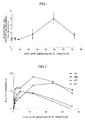
- Fig. 1 shows change in TBARS concentration of liver tissue
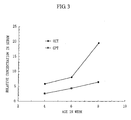
- Fig. 2 shows change in blood level of hepatic injury markers after administration of tetracycline. The value at each measurement point in time corresponds to the average of data obtained from six Wistar rats (8-week old).
- the TBARS concentration of liver tissue started to increase 24 hours after administration of tetracycline, and reached a peak 48 hours after administration of tetracycline.
- the blood GPT and GOT levels which are cytoplasm-derived proteins, reached a peak eight hours after administration of tetracycline, and then gradually decreased.
- the blood level of OCT which is a mitochondrion-derived protein, reached a peak four hours after administration of tetracycline, and reached another peak 24 hours after administration of tetracycline.
- the blood GDH level reached a peak 48 hours after administration of tetracycline.
- the second peak of the OCT level or the peak of the GDH level corresponds to the peak of the TBARS concentration, which elevates in accordance with an increase in oxidative stress in the liver.
- an increase in blood OCT or GDH level is thought to reflect oxidative stress associated with mitochondrial disorder.
- the peak of the GPT or GOT level does not correspond to the peak of the TBARS concentration.
- Example 3 Measurement of blood hepatic injury marker levels of KK-Ay mice fed with high-fat diet
- a KK-Ay mouse is an obese and diabetic mouse established by transduction of the obese gene Ay into KK mouse, which has a genetic background that makes it more likely to develop diabetes.
- the adiponectin i.e., good adipokine
- the TNF- ⁇ i.e., bad adipokine
- a KK-Ay mouse fed with a high-fat diet is considered an animal model of metabolic syndrome.
- the blood level of a mitochondrion-derived protein was measured in KK-Ay mice fed with a high-fat diet.
- mice Ten male KK-Ay mice were divided into two groups (five mice each). Mice of the two groups were respectively fed with a control diet and a high-fat diet for three weeks, followed by measurement of blood OCT and GPT levels. The results are shown in Table 3.
- a mitochondrion-derived protein e.g., OCT or GDH
- a cytoplasm-derived protein e.g., GPT or GOT
- Example 4 Measurement of blood hepatic injury marker levels of ob/ob mice
- NASH is considered to be the hepatic manifestation of metabolic syndrome, and 80 to 90% of NASH patients have visceral obesity. Most of diabetic patients have hepatic steatosis, and are considered to have a high risk to develop NASH, as compared with healthy people.
- Ob/ob mouse which is a mouse model of type 2 diabetes, has extreme obesity and hepatic steatosis, and exhibits sensitivity to hepatotoxicity such as lipopolysaccharide or alcohol intake. Therefore, ob/ob mice were employed as a model of NASH. In Example 4, the blood mitochondrion-derived protein level of ob/ob mice was evaluated.
- Fig. 3 Five male ob/ob mice and five male control mice were employed, and blood OCT and GPT levels were measured from 4-week old to 8-week old. The results are shown in Fig. 3 . As shown in Fig. 3 , at 4-week old, at which obesity became noticeable, the rate of increase in blood OCT level in the ob/ob mice was about six times that in the control mice, and the rate of increase in blood OCT level was twice or more the rate of increase in blood GPT level. At 6- and 8-week old, the rate of increase in blood OCT level was higher as obesity became more noticeable.
- ob/ob mice i.e., diabetic mouse model with high obesity
- An increase in blood glucose level of the ob/ob mice indicates that metabolic syndrome with obesity or hepatic steatosis may progress to a hepatic disorder, even in the case of mild diabetes.
- measurement of the blood mitochondrion-derived protein level of the ob/ob mice is effective for detecting not only NASH but also metabolic syndrome (including diabetes).
- OCT i.e., a mitochondrion-derived protein
- the present invention has first realized use of a mitochondrion-derived protein as a hepatic injury marker for predicting a hepatic disorder of a patient with metabolic syndrome and/or non-alcoholic fatty liver disease.
- progress of a hepatic disorder can be predicted by tracing change over time in mitochondrion-derived protein level of a blood sample from a patient with metabolic syndrome and/or non-alcoholic fatty liver disease.
- a therapeutic effect on a hepatic disorder can be determined on the basis of the mitochondrion-derived protein level of a blood sample from a patient with metabolic syndrome and/or non-alcoholic fatty liver disease.
Landscapes
- Health & Medical Sciences (AREA)
- Life Sciences & Earth Sciences (AREA)
- Immunology (AREA)
- Engineering & Computer Science (AREA)
- Molecular Biology (AREA)
- Biomedical Technology (AREA)
- Chemical & Material Sciences (AREA)
- Hematology (AREA)
- Urology & Nephrology (AREA)
- Biotechnology (AREA)
- Biochemistry (AREA)
- Cell Biology (AREA)
- Food Science & Technology (AREA)
- Medicinal Chemistry (AREA)
- Physics & Mathematics (AREA)
- Analytical Chemistry (AREA)
- Microbiology (AREA)
- General Health & Medical Sciences (AREA)
- General Physics & Mathematics (AREA)
- Pathology (AREA)
- Communicable Diseases (AREA)
- Measuring Or Testing Involving Enzymes Or Micro-Organisms (AREA)
- Investigating Or Analysing Biological Materials (AREA)
Applications Claiming Priority (2)
| Application Number | Priority Date | Filing Date | Title |
|---|---|---|---|
| JP2006092169 | 2006-03-29 | ||
| PCT/JP2007/000323 WO2007122799A1 (ja) | 2006-03-29 | 2007-03-29 | 肝障害の検出方法、判定方法及び予測方法 |
Publications (4)
| Publication Number | Publication Date |
|---|---|
| EP2003453A2 true EP2003453A2 (de) | 2008-12-17 |
| EP2003453A9 EP2003453A9 (de) | 2009-04-22 |
| EP2003453A4 EP2003453A4 (de) | 2009-04-22 |
| EP2003453B1 EP2003453B1 (de) | 2012-12-26 |
Family
ID=38624718
Family Applications (1)
| Application Number | Title | Priority Date | Filing Date |
|---|---|---|---|
| EP07736980A Not-in-force EP2003453B1 (de) | 2006-03-29 | 2007-03-29 | Verfahren zum nachweis, zur bestimmung oder vorhersage einer lebererkrankung |
Country Status (4)
| Country | Link |
|---|---|
| US (1) | US20090111136A1 (de) |
| EP (1) | EP2003453B1 (de) |
| JP (1) | JP5227168B2 (de) |
| WO (1) | WO2007122799A1 (de) |
Cited By (5)
| Publication number | Priority date | Publication date | Assignee | Title |
|---|---|---|---|---|
| WO2012100027A3 (en) * | 2011-01-19 | 2012-12-06 | University Of Florida Research Foundation, Inc. | Epigenetic biomarkers for liver disease |
| RU2517092C2 (ru) * | 2012-03-21 | 2014-05-27 | Александр Борисович Конради | Способ дифференциальной диагностики послеоперационного развития ишемических или некротических изменений печени при острой печеночной недостаточности |
| RU2609731C1 (ru) * | 2015-12-28 | 2017-02-02 | Федеральное государственное бюджетное учреждение "Институт хирургии имени А.В. Вишневского" Министерства здравоохранения Российской Федерации | Способ послеоперационного прогнозирования пострезекционной печеночной недостаточности |
| RU2609730C1 (ru) * | 2015-12-28 | 2017-02-02 | Федеральное государственное бюджетное учреждение "Институт хирургии имени А.В. Вишневского" Министерства здравоохранения Российской Федерации | Способ предоперационного прогнозирования пострезекционной печеночной недостаточности |
| RU2672371C1 (ru) * | 2018-01-12 | 2018-11-14 | Федеральное государственное бюджетное образовательное учреждение высшего образования "Рязанский государственный медицинский университет имени академика И.П. Павлова" Министерства здравоохранения Российской Федерации | Способ оценки биосинтетической функции остаточной паренхимы печени при выполнении обширной резекции печени |
Families Citing this family (8)
| Publication number | Priority date | Publication date | Assignee | Title |
|---|---|---|---|---|
| EP2546649B1 (de) | 2007-11-02 | 2015-02-25 | Metabolon Inc. | Biomarker für Fettleberkrankheit und Verfahren zur Verwendung davon |
| WO2009090882A1 (ja) * | 2008-01-18 | 2009-07-23 | The University Of Tokyo | 非アルコール性脂肪性肝疾患の診断方法 |
| EP2302359A1 (de) | 2009-09-24 | 2011-03-30 | Université De Reims Champagne-Ardenne | Serum-Infrarotspektroskopie zur nicht-invasiven Beurteilung von Leberfibrose in Patienten mit chronischer Lebererkrankung |
| JP5442584B2 (ja) * | 2010-02-03 | 2014-03-12 | ヤマサ醤油株式会社 | 抗甲状腺剤による肝障害の検出方法 |
| US20130089871A1 (en) * | 2010-06-17 | 2013-04-11 | National University Corporation Chiba University | Marker for detection and/or discrimination of non-alcoholic steatohepatitis, method for detection and/or discrimination of non-alcoholic steatohepatitis, and kit for use in the method |
| JP5468586B2 (ja) * | 2011-09-08 | 2014-04-09 | ヤマサ醤油株式会社 | 肝臓におけるハイポキシアの検出法 |
| CN107407682A (zh) * | 2015-04-10 | 2017-11-28 | 社会福祉法人恩赐财团济生会 | 判别肝疾病的病态的方法 |
| KR102344385B1 (ko) * | 2020-04-23 | 2021-12-29 | 서울대학교병원 | 간암 진단용 조성물 및 이를 포함하는 키트 |
Family Cites Families (6)
| Publication number | Priority date | Publication date | Assignee | Title |
|---|---|---|---|---|
| US6986995B2 (en) * | 2002-02-28 | 2006-01-17 | Prometheus Laboratories, Inc. | Methods of diagnosing liver fibrosis |
| ES2226549B1 (es) | 2002-12-18 | 2006-07-16 | One Way Liver Genomics, S.L. | Metodo para el diagnostico de esteatohepatitis no alcoholica (nash) mediante el empleo de marcadores moleculares. |
| WO2005109006A1 (ja) * | 2004-04-23 | 2005-11-17 | Ajinomoto Co., Inc. | 非アルコール性脂肪肝炎鑑別方法 |
| JP2006029919A (ja) * | 2004-07-14 | 2006-02-02 | Univ Kurume | Iii型プロコラーゲンのn末端のペプチド(piiip)の測定方法 |
| EP1619257A1 (de) * | 2004-07-23 | 2006-01-25 | One Way Liver Genomics, S.L. | Methode zur in vitro Diagnose von nichtalkoholischer Steatohepatitis |
| US20080118931A1 (en) | 2005-01-07 | 2008-05-22 | Yamasa Corporation | Stabilized Ornithine Transcarbamylase and Immunoassay Method for Ornithine Transcarbamylase Using the Same |
-
2007
- 2007-03-29 US US12/295,226 patent/US20090111136A1/en not_active Abandoned
- 2007-03-29 WO PCT/JP2007/000323 patent/WO2007122799A1/ja not_active Ceased
- 2007-03-29 JP JP2008511957A patent/JP5227168B2/ja not_active Expired - Fee Related
- 2007-03-29 EP EP07736980A patent/EP2003453B1/de not_active Not-in-force
Cited By (5)
| Publication number | Priority date | Publication date | Assignee | Title |
|---|---|---|---|---|
| WO2012100027A3 (en) * | 2011-01-19 | 2012-12-06 | University Of Florida Research Foundation, Inc. | Epigenetic biomarkers for liver disease |
| RU2517092C2 (ru) * | 2012-03-21 | 2014-05-27 | Александр Борисович Конради | Способ дифференциальной диагностики послеоперационного развития ишемических или некротических изменений печени при острой печеночной недостаточности |
| RU2609731C1 (ru) * | 2015-12-28 | 2017-02-02 | Федеральное государственное бюджетное учреждение "Институт хирургии имени А.В. Вишневского" Министерства здравоохранения Российской Федерации | Способ послеоперационного прогнозирования пострезекционной печеночной недостаточности |
| RU2609730C1 (ru) * | 2015-12-28 | 2017-02-02 | Федеральное государственное бюджетное учреждение "Институт хирургии имени А.В. Вишневского" Министерства здравоохранения Российской Федерации | Способ предоперационного прогнозирования пострезекционной печеночной недостаточности |
| RU2672371C1 (ru) * | 2018-01-12 | 2018-11-14 | Федеральное государственное бюджетное образовательное учреждение высшего образования "Рязанский государственный медицинский университет имени академика И.П. Павлова" Министерства здравоохранения Российской Федерации | Способ оценки биосинтетической функции остаточной паренхимы печени при выполнении обширной резекции печени |
Also Published As
| Publication number | Publication date |
|---|---|
| JP5227168B2 (ja) | 2013-07-03 |
| EP2003453B1 (de) | 2012-12-26 |
| US20090111136A1 (en) | 2009-04-30 |
| JPWO2007122799A1 (ja) | 2009-08-27 |
| EP2003453A9 (de) | 2009-04-22 |
| EP2003453A4 (de) | 2009-04-22 |
| WO2007122799A1 (ja) | 2007-11-01 |
Similar Documents
| Publication | Publication Date | Title |
|---|---|---|
| EP2003453B1 (de) | Verfahren zum nachweis, zur bestimmung oder vorhersage einer lebererkrankung | |
| Kimberly et al. | Metabolite profiling identifies anandamide as a biomarker of nonalcoholic steatohepatitis | |
| US7314720B2 (en) | Method of diagnosing non-alcoholic steatohepatitis (nash) using molecular markers | |
| EP2227689B1 (de) | Biomarker für fettleberkrankheit und verfahren zur verwendung davon | |
| Murri et al. | Proteomic analysis of visceral adipose tissue in pre-obese patients with type 2 diabetes | |
| EP3282256A1 (de) | Verfahren zur unterscheidung des symptoms einer lebererkrankung | |
| EP3674710B1 (de) | Lebererkrankungsvorhersage- oder -diagnoseverfahren für patienten mit nafld | |
| AU2007283312B2 (en) | Biomarkers for inflammation of the liver | |
| Petäjä et al. | Adipocyte size is associated with NAFLD independent of obesity, fat distribution, and PNPLA3 genotype | |
| JP5299960B2 (ja) | 脂肪性肝疾患の診断方法、診断装置、診断プログラム、診断薬及び脂肪性肝疾患用治療薬のスクリーニング方法 | |
| Takahashi et al. | Proteomic analysis of serum biomarkers for prediabetes using the Long‐Evans Agouti rat, a spontaneous animal model of type 2 diabetes mellitus | |
| Gao et al. | Urinary AQP5 is independently associated with eGFR decline in patients with type 2 diabetes and nephropathy | |
| Ali et al. | Potential role of N-Cadherin in diagnosis and prognosis of diabetic nephropathy | |
| Kamal et al. | New emerging roles of the novel hepatokine SERPINB1 in type 2 diabetes mellitus: Crosstalk with β-cell dysfunction and dyslipidemia | |
| Lorenzen et al. | Relative Exchangeable Copper, Exchangeable Copper and Total Copper in the Diagnosis of Wilson Disease | |
| WO2010000835A1 (en) | Proteomic fingerprint for the diagnosis of non-alcoholic steatohepatitis (nash) and/or steatosis | |
| Isabel Padrão et al. | Proteome‐base biomarkers in diabetes mellitus: Progress on biofluids' protein profiling using mass spectrometry | |
| Wu et al. | Aspartate aminotransferase to alanine aminotransferase ratio and the risk of diabetic nephropathy progression in patients with type 2 diabetes mellitus: a biopsy-based study | |
| Raimondo et al. | Urinary proteomics for the study of genetic kidney diseases | |
| Ganesh et al. | Adiponectin can be an early predictable marker for type 2 diabetes mellitus and nephropathy | |
| TWI839361B (zh) | 腎病變小分子生物標記及其應用 | |
| Bashir et al. | Impact of pro-and anti-inflammatory biomarkers on development and severity of type 2 diabetes mellitus–a case-control study | |
| Shi et al. | Clinical Implications of Vasoactive Intestinal Peptide and 5-Hydroxytryptamine in Diabetic Neurogenic Bladder and Their Relationship with Post-Void Residual Urine Volume | |
| KR102231928B1 (ko) | 비만대사수술 이후 당뇨병 예후 예측용 바이오마커 조성물 | |
| KR102232155B1 (ko) | Itih1을 표적으로 하는 고혈당 관련 질환 치료용 저분자 화합물 기재 물질의 스크리닝 방법 |
Legal Events
| Date | Code | Title | Description |
|---|---|---|---|
| PUAI | Public reference made under article 153(3) epc to a published international application that has entered the european phase |
Free format text: ORIGINAL CODE: 0009012 |
|
| 17P | Request for examination filed |
Effective date: 20081029 |
|
| AK | Designated contracting states |
Kind code of ref document: A2 Designated state(s): AT BE BG CH CY CZ DE DK EE ES FI FR GB GR HU IE IS IT LI LT LU LV MC MT NL PL PT RO SE SI SK TR |
|
| PUAB | Information related to the publication of an a document modified or deleted |
Free format text: ORIGINAL CODE: 0009199EPPU |
|
| A4 | Supplementary search report drawn up and despatched |
Effective date: 20090323 |
|
| 17Q | First examination report despatched |
Effective date: 20090622 |
|
| 17Q | First examination report despatched |
Effective date: 20100407 |
|
| GRAP | Despatch of communication of intention to grant a patent |
Free format text: ORIGINAL CODE: EPIDOSNIGR1 |
|
| DAX | Request for extension of the european patent (deleted) | ||
| GRAS | Grant fee paid |
Free format text: ORIGINAL CODE: EPIDOSNIGR3 |
|
| GRAA | (expected) grant |
Free format text: ORIGINAL CODE: 0009210 |
|
| AK | Designated contracting states |
Kind code of ref document: B1 Designated state(s): AT BE BG CH CY CZ DE DK EE ES FI FR GB GR HU IE IS IT LI LT LU LV MC MT NL PL PT RO SE SI SK TR |
|
| REG | Reference to a national code |
Ref country code: GB Ref legal event code: FG4D |
|
| REG | Reference to a national code |
Ref country code: CH Ref legal event code: EP |
|
| REG | Reference to a national code |
Ref country code: AT Ref legal event code: REF Ref document number: 590741 Country of ref document: AT Kind code of ref document: T Effective date: 20130115 |
|
| REG | Reference to a national code |
Ref country code: DE Ref legal event code: R096 Ref document number: 602007027628 Country of ref document: DE Effective date: 20130228 |
|
| PG25 | Lapsed in a contracting state [announced via postgrant information from national office to epo] |
Ref country code: FI Free format text: LAPSE BECAUSE OF FAILURE TO SUBMIT A TRANSLATION OF THE DESCRIPTION OR TO PAY THE FEE WITHIN THE PRESCRIBED TIME-LIMIT Effective date: 20121226 Ref country code: SE Free format text: LAPSE BECAUSE OF FAILURE TO SUBMIT A TRANSLATION OF THE DESCRIPTION OR TO PAY THE FEE WITHIN THE PRESCRIBED TIME-LIMIT Effective date: 20121226 Ref country code: LT Free format text: LAPSE BECAUSE OF FAILURE TO SUBMIT A TRANSLATION OF THE DESCRIPTION OR TO PAY THE FEE WITHIN THE PRESCRIBED TIME-LIMIT Effective date: 20121226 |
|
| REG | Reference to a national code |
Ref country code: AT Ref legal event code: MK05 Ref document number: 590741 Country of ref document: AT Kind code of ref document: T Effective date: 20121226 |
|
| REG | Reference to a national code |
Ref country code: LT Ref legal event code: MG4D |
|
| REG | Reference to a national code |
Ref country code: NL Ref legal event code: VDEP Effective date: 20121226 |
|
| PG25 | Lapsed in a contracting state [announced via postgrant information from national office to epo] |
Ref country code: SI Free format text: LAPSE BECAUSE OF FAILURE TO SUBMIT A TRANSLATION OF THE DESCRIPTION OR TO PAY THE FEE WITHIN THE PRESCRIBED TIME-LIMIT Effective date: 20121226 Ref country code: GR Free format text: LAPSE BECAUSE OF FAILURE TO SUBMIT A TRANSLATION OF THE DESCRIPTION OR TO PAY THE FEE WITHIN THE PRESCRIBED TIME-LIMIT Effective date: 20130327 Ref country code: LV Free format text: LAPSE BECAUSE OF FAILURE TO SUBMIT A TRANSLATION OF THE DESCRIPTION OR TO PAY THE FEE WITHIN THE PRESCRIBED TIME-LIMIT Effective date: 20121226 |
|
| PG25 | Lapsed in a contracting state [announced via postgrant information from national office to epo] |
Ref country code: AT Free format text: LAPSE BECAUSE OF FAILURE TO SUBMIT A TRANSLATION OF THE DESCRIPTION OR TO PAY THE FEE WITHIN THE PRESCRIBED TIME-LIMIT Effective date: 20121226 Ref country code: SK Free format text: LAPSE BECAUSE OF FAILURE TO SUBMIT A TRANSLATION OF THE DESCRIPTION OR TO PAY THE FEE WITHIN THE PRESCRIBED TIME-LIMIT Effective date: 20121226 Ref country code: CZ Free format text: LAPSE BECAUSE OF FAILURE TO SUBMIT A TRANSLATION OF THE DESCRIPTION OR TO PAY THE FEE WITHIN THE PRESCRIBED TIME-LIMIT Effective date: 20121226 Ref country code: EE Free format text: LAPSE BECAUSE OF FAILURE TO SUBMIT A TRANSLATION OF THE DESCRIPTION OR TO PAY THE FEE WITHIN THE PRESCRIBED TIME-LIMIT Effective date: 20121226 Ref country code: BE Free format text: LAPSE BECAUSE OF FAILURE TO SUBMIT A TRANSLATION OF THE DESCRIPTION OR TO PAY THE FEE WITHIN THE PRESCRIBED TIME-LIMIT Effective date: 20121226 Ref country code: IS Free format text: LAPSE BECAUSE OF FAILURE TO SUBMIT A TRANSLATION OF THE DESCRIPTION OR TO PAY THE FEE WITHIN THE PRESCRIBED TIME-LIMIT Effective date: 20130426 Ref country code: BG Free format text: LAPSE BECAUSE OF FAILURE TO SUBMIT A TRANSLATION OF THE DESCRIPTION OR TO PAY THE FEE WITHIN THE PRESCRIBED TIME-LIMIT Effective date: 20130326 Ref country code: ES Free format text: LAPSE BECAUSE OF FAILURE TO SUBMIT A TRANSLATION OF THE DESCRIPTION OR TO PAY THE FEE WITHIN THE PRESCRIBED TIME-LIMIT Effective date: 20130406 |
|
| PG25 | Lapsed in a contracting state [announced via postgrant information from national office to epo] |
Ref country code: RO Free format text: LAPSE BECAUSE OF FAILURE TO SUBMIT A TRANSLATION OF THE DESCRIPTION OR TO PAY THE FEE WITHIN THE PRESCRIBED TIME-LIMIT Effective date: 20121226 Ref country code: PL Free format text: LAPSE BECAUSE OF FAILURE TO SUBMIT A TRANSLATION OF THE DESCRIPTION OR TO PAY THE FEE WITHIN THE PRESCRIBED TIME-LIMIT Effective date: 20121226 Ref country code: NL Free format text: LAPSE BECAUSE OF FAILURE TO SUBMIT A TRANSLATION OF THE DESCRIPTION OR TO PAY THE FEE WITHIN THE PRESCRIBED TIME-LIMIT Effective date: 20121226 Ref country code: PT Free format text: LAPSE BECAUSE OF FAILURE TO SUBMIT A TRANSLATION OF THE DESCRIPTION OR TO PAY THE FEE WITHIN THE PRESCRIBED TIME-LIMIT Effective date: 20130426 |
|
| PG25 | Lapsed in a contracting state [announced via postgrant information from national office to epo] |
Ref country code: DK Free format text: LAPSE BECAUSE OF FAILURE TO SUBMIT A TRANSLATION OF THE DESCRIPTION OR TO PAY THE FEE WITHIN THE PRESCRIBED TIME-LIMIT Effective date: 20121226 Ref country code: MC Free format text: LAPSE BECAUSE OF NON-PAYMENT OF DUE FEES Effective date: 20130331 |
|
| REG | Reference to a national code |
Ref country code: CH Ref legal event code: PL |
|
| PLBE | No opposition filed within time limit |
Free format text: ORIGINAL CODE: 0009261 |
|
| STAA | Information on the status of an ep patent application or granted ep patent |
Free format text: STATUS: NO OPPOSITION FILED WITHIN TIME LIMIT |
|
| PG25 | Lapsed in a contracting state [announced via postgrant information from national office to epo] |
Ref country code: CY Free format text: LAPSE BECAUSE OF FAILURE TO SUBMIT A TRANSLATION OF THE DESCRIPTION OR TO PAY THE FEE WITHIN THE PRESCRIBED TIME-LIMIT Effective date: 20121226 |
|
| 26N | No opposition filed |
Effective date: 20130927 |
|
| PG25 | Lapsed in a contracting state [announced via postgrant information from national office to epo] |
Ref country code: IT Free format text: LAPSE BECAUSE OF FAILURE TO SUBMIT A TRANSLATION OF THE DESCRIPTION OR TO PAY THE FEE WITHIN THE PRESCRIBED TIME-LIMIT Effective date: 20121226 |
|
| REG | Reference to a national code |
Ref country code: IE Ref legal event code: MM4A |
|
| REG | Reference to a national code |
Ref country code: DE Ref legal event code: R097 Ref document number: 602007027628 Country of ref document: DE Effective date: 20130927 |
|
| PG25 | Lapsed in a contracting state [announced via postgrant information from national office to epo] |
Ref country code: CH Free format text: LAPSE BECAUSE OF NON-PAYMENT OF DUE FEES Effective date: 20130331 Ref country code: IE Free format text: LAPSE BECAUSE OF NON-PAYMENT OF DUE FEES Effective date: 20130329 Ref country code: LI Free format text: LAPSE BECAUSE OF NON-PAYMENT OF DUE FEES Effective date: 20130331 |
|
| PG25 | Lapsed in a contracting state [announced via postgrant information from national office to epo] |
Ref country code: MT Free format text: LAPSE BECAUSE OF FAILURE TO SUBMIT A TRANSLATION OF THE DESCRIPTION OR TO PAY THE FEE WITHIN THE PRESCRIBED TIME-LIMIT Effective date: 20121226 |
|
| PG25 | Lapsed in a contracting state [announced via postgrant information from national office to epo] |
Ref country code: TR Free format text: LAPSE BECAUSE OF FAILURE TO SUBMIT A TRANSLATION OF THE DESCRIPTION OR TO PAY THE FEE WITHIN THE PRESCRIBED TIME-LIMIT Effective date: 20121226 |
|
| PG25 | Lapsed in a contracting state [announced via postgrant information from national office to epo] |
Ref country code: HU Free format text: LAPSE BECAUSE OF FAILURE TO SUBMIT A TRANSLATION OF THE DESCRIPTION OR TO PAY THE FEE WITHIN THE PRESCRIBED TIME-LIMIT; INVALID AB INITIO Effective date: 20070329 Ref country code: LU Free format text: LAPSE BECAUSE OF NON-PAYMENT OF DUE FEES Effective date: 20130329 |
|
| REG | Reference to a national code |
Ref country code: FR Ref legal event code: PLFP Year of fee payment: 10 |
|
| REG | Reference to a national code |
Ref country code: FR Ref legal event code: PLFP Year of fee payment: 11 |
|
| PGFP | Annual fee paid to national office [announced via postgrant information from national office to epo] |
Ref country code: DE Payment date: 20170321 Year of fee payment: 11 Ref country code: FR Payment date: 20170213 Year of fee payment: 11 |
|
| PGFP | Annual fee paid to national office [announced via postgrant information from national office to epo] |
Ref country code: GB Payment date: 20170329 Year of fee payment: 11 |
|
| REG | Reference to a national code |
Ref country code: DE Ref legal event code: R119 Ref document number: 602007027628 Country of ref document: DE |
|
| GBPC | Gb: european patent ceased through non-payment of renewal fee |
Effective date: 20180329 |
|
| PG25 | Lapsed in a contracting state [announced via postgrant information from national office to epo] |
Ref country code: DE Free format text: LAPSE BECAUSE OF NON-PAYMENT OF DUE FEES Effective date: 20181002 |
|
| PG25 | Lapsed in a contracting state [announced via postgrant information from national office to epo] |
Ref country code: GB Free format text: LAPSE BECAUSE OF NON-PAYMENT OF DUE FEES Effective date: 20180329 |
|
| PG25 | Lapsed in a contracting state [announced via postgrant information from national office to epo] |
Ref country code: FR Free format text: LAPSE BECAUSE OF NON-PAYMENT OF DUE FEES Effective date: 20180331 |