EP1997698A2 - Ignition switch device - Google Patents
Ignition switch device Download PDFInfo
- Publication number
- EP1997698A2 EP1997698A2 EP20080009645 EP08009645A EP1997698A2 EP 1997698 A2 EP1997698 A2 EP 1997698A2 EP 20080009645 EP20080009645 EP 20080009645 EP 08009645 A EP08009645 A EP 08009645A EP 1997698 A2 EP1997698 A2 EP 1997698A2
- Authority
- EP
- European Patent Office
- Prior art keywords
- shutter
- case
- key
- switch device
- ignition switch
- Prior art date
- Legal status (The legal status is an assumption and is not a legal conclusion. Google has not performed a legal analysis and makes no representation as to the accuracy of the status listed.)
- Granted
Links
Images



Classifications
-
- F—MECHANICAL ENGINEERING; LIGHTING; HEATING; WEAPONS; BLASTING
- F02—COMBUSTION ENGINES; HOT-GAS OR COMBUSTION-PRODUCT ENGINE PLANTS
- F02N—STARTING OF COMBUSTION ENGINES; STARTING AIDS FOR SUCH ENGINES, NOT OTHERWISE PROVIDED FOR
- F02N11/00—Starting of engines by means of electric motors
-
- B—PERFORMING OPERATIONS; TRANSPORTING
- B60—VEHICLES IN GENERAL
- B60R—VEHICLES, VEHICLE FITTINGS, OR VEHICLE PARTS, NOT OTHERWISE PROVIDED FOR
- B60R25/00—Fittings or systems for preventing or indicating unauthorised use or theft of vehicles
- B60R25/01—Fittings or systems for preventing or indicating unauthorised use or theft of vehicles operating on vehicle systems or fittings, e.g. on doors, seats or windscreens
- B60R25/04—Fittings or systems for preventing or indicating unauthorised use or theft of vehicles operating on vehicle systems or fittings, e.g. on doors, seats or windscreens operating on the propulsion system, e.g. engine or drive motor
-
- B—PERFORMING OPERATIONS; TRANSPORTING
- B60—VEHICLES IN GENERAL
- B60R—VEHICLES, VEHICLE FITTINGS, OR VEHICLE PARTS, NOT OTHERWISE PROVIDED FOR
- B60R25/00—Fittings or systems for preventing or indicating unauthorised use or theft of vehicles
- B60R25/20—Means to switch the anti-theft system on or off
- B60R25/2063—Ignition switch geometry
-
- E—FIXED CONSTRUCTIONS
- E05—LOCKS; KEYS; WINDOW OR DOOR FITTINGS; SAFES
- E05B—LOCKS; ACCESSORIES THEREFOR; HANDCUFFS
- E05B17/00—Accessories in connection with locks
- E05B17/002—Weather or dirt protection
-
- E—FIXED CONSTRUCTIONS
- E05—LOCKS; KEYS; WINDOW OR DOOR FITTINGS; SAFES
- E05B—LOCKS; ACCESSORIES THEREFOR; HANDCUFFS
- E05B17/00—Accessories in connection with locks
- E05B17/14—Closures or guards for keyholes
- E05B17/18—Closures or guards for keyholes shaped as lids or slides
- E05B17/185—Closures or guards for keyholes shaped as lids or slides pivoting about an axis perpendicular to the lock face
-
- F—MECHANICAL ENGINEERING; LIGHTING; HEATING; WEAPONS; BLASTING
- F02—COMBUSTION ENGINES; HOT-GAS OR COMBUSTION-PRODUCT ENGINE PLANTS
- F02N—STARTING OF COMBUSTION ENGINES; STARTING AIDS FOR SUCH ENGINES, NOT OTHERWISE PROVIDED FOR
- F02N15/00—Other power-operated starting apparatus; Component parts, details, or accessories, not provided for in, or of interest apart from groups F02N5/00 - F02N13/00
-
- Y—GENERAL TAGGING OF NEW TECHNOLOGICAL DEVELOPMENTS; GENERAL TAGGING OF CROSS-SECTIONAL TECHNOLOGIES SPANNING OVER SEVERAL SECTIONS OF THE IPC; TECHNICAL SUBJECTS COVERED BY FORMER USPC CROSS-REFERENCE ART COLLECTIONS [XRACs] AND DIGESTS
- Y10—TECHNICAL SUBJECTS COVERED BY FORMER USPC
- Y10S—TECHNICAL SUBJECTS COVERED BY FORMER USPC CROSS-REFERENCE ART COLLECTIONS [XRACs] AND DIGESTS
- Y10S70/00—Locks
- Y10S70/30—Switch lock
-
- Y—GENERAL TAGGING OF NEW TECHNOLOGICAL DEVELOPMENTS; GENERAL TAGGING OF CROSS-SECTIONAL TECHNOLOGIES SPANNING OVER SEVERAL SECTIONS OF THE IPC; TECHNICAL SUBJECTS COVERED BY FORMER USPC CROSS-REFERENCE ART COLLECTIONS [XRACs] AND DIGESTS
- Y10—TECHNICAL SUBJECTS COVERED BY FORMER USPC
- Y10T—TECHNICAL SUBJECTS COVERED BY FORMER US CLASSIFICATION
- Y10T70/00—Locks
- Y10T70/50—Special application
- Y10T70/5889—For automotive vehicles
- Y10T70/5956—Steering mechanism with switch
-
- Y—GENERAL TAGGING OF NEW TECHNOLOGICAL DEVELOPMENTS; GENERAL TAGGING OF CROSS-SECTIONAL TECHNOLOGIES SPANNING OVER SEVERAL SECTIONS OF THE IPC; TECHNICAL SUBJECTS COVERED BY FORMER USPC CROSS-REFERENCE ART COLLECTIONS [XRACs] AND DIGESTS
- Y10—TECHNICAL SUBJECTS COVERED BY FORMER USPC
- Y10T—TECHNICAL SUBJECTS COVERED BY FORMER US CLASSIFICATION
- Y10T70/00—Locks
- Y10T70/70—Operating mechanism
- Y10T70/7441—Key
- Y10T70/7915—Tampering prevention or attack defeating
- Y10T70/7955—Keyhole guards
-
- Y—GENERAL TAGGING OF NEW TECHNOLOGICAL DEVELOPMENTS; GENERAL TAGGING OF CROSS-SECTIONAL TECHNOLOGIES SPANNING OVER SEVERAL SECTIONS OF THE IPC; TECHNICAL SUBJECTS COVERED BY FORMER USPC CROSS-REFERENCE ART COLLECTIONS [XRACs] AND DIGESTS
- Y10—TECHNICAL SUBJECTS COVERED BY FORMER USPC
- Y10T—TECHNICAL SUBJECTS COVERED BY FORMER US CLASSIFICATION
- Y10T70/00—Locks
- Y10T70/80—Parts, attachments, accessories and adjuncts
- Y10T70/8432—For key-operated mechanism
- Y10T70/8649—Keyhole covers
Definitions
- the present invention relates to an ignition switch device which is disposed in a driver's seat of an industrial machine to start and stop an engine of the industrial machine.
- An industrial machine for example, a construction machine is used in a worksite of engineering works and construction, and includes bulldozers, power shovels, and crane vehicles.
- An ignition switch device for starting and stopping an engine of the industrial machine is disposed in the driver's seat of such an industrial machine. By rotationally operating an ignition key while inserting the key into a key hole of such an ignition switch device, the engine is started and stopped.
- the industrial machine is typically used in the open air in a construction site.
- a shutter in order to prevent muddy water, dust, etc. from entering the key hole, it is desirable that the key hole is provided with a shutter.
- the shutter is brought into a closed state where it covers the key hole, for example, in the surface of the case. In this state, the shutter can prevent muddy water, dust, etc. from entering the keyhole.
- the shutter In the starting operation or stopping operation of the engine, the shutter is rotated about a rotary shaft on the surface of the case to allow the key hole to face the outside so that the ignition key can be inserted into the key hole.
- One or more embodiments of the invention provide an ignition switch device which allows smooth rotation of a shutter to be performed, and which can keep the surface of a case from being scratched, thereby maintaining design quality.
- an ignition switch device disposed in a driver's seat of an industrial machine to start and stop an engine of the industrial machine is provided with: a switching means having a key hole allowing a regular ignition key to be inserted thereinto, and capable of being rotationally operated in a predetermined direction with the ignition key inserted to start and stop the engine of the industrial machine; a case covering the switching means and formed with an insertion hole allowing the key hole to face the outside; a shutter disposed on the surface of the case, and rotatable between a closed position where the insertion hole of the case is closed, and an open position where the insertion hole is opened to allow the key hole to face outside; and a protruding portion formed within the range of rotation of the shutter while protruding from the surface of the case and whose protruding end contacts a rear surface of the shutter while the shutter rotates.
- the protruding portion in the ignition switch device of the first aspect, may be formed such that its protruding end is sharpened.
- a convex shape may be formed along a contour edge of the rear surface of the shutter.
- the protruding portion may be formed so as to extend in an arc along the locus of rotation of the shutter.
- the ignition switch device provided with the protruding portion which is formed within the range of rotation of the shutter while protruding from the surface of the case and whose protruding end contacts a rear surface of the shutter while the shutter rotates.
- smooth rotation of the shutter can be performed, and the surface of the case can be kept from being scratched, thereby maintaining design quality. That is, during the rotation of the shutter, the rear surface of the shutter will contact only the protruding end of the protruding portion. As a result, a place to which any scratches are given will be limited, and the scratches will not be conspicuous. Therefore, the design quality of the surface of the case can be maintained.
- the protruding portion is formed such that its protruding end is sharpened.
- the rear surface of the shutter will contact only the sharpened protruding end of the protruding portion.
- a place where any scratches are given will be limited, and will not be conspicuous. Therefore, the design quality of the surface of the case can be maintained more reliably.
- the convex shape is formed along the contour edge of the rear surface of the shutter.
- the contact area therebetween can be reduced to further keep the rear surface of the case from being scratched.
- the contact area therebetween is small and the frozen place is extremely limited.
- the shutter can be rotated with slight force.
- the protruding portion is formed so as to extend in an arc along the locus of rotation of the shutter.
- a three-dimensional design can be provided so as to indicate the rotation direction of the shutter 4, and the rotational operation of the shutter can be made smoother.
- An ignition switch device related to the present embodiment is disposed in driver' s seats of industrial machines (construction machines), such as bulldozers, power shovels, or crane vehicles to be used in worksites of engineering works or construction.
- the ignition switch device is mainly composed of a switching means 2, a case 3, a shutter 4, a main guide shape 5, an auxiliary guide shape 6, and a protruding portion 7.
- the switching means 2 includes a key hole 2a (refer to Fig. 3 ) which allows a regular ignition key K to be inserted thereinto, and can be operated to rotate in a predetermined direction with the ignition key K inserted thereinto to thereby start and stop the engine of an industrial machine.
- the switching means 2 constitutes a cylinder lock in which a plurality of tumblers are provided within the key hole 2a, or a versatile ignition switch including a switch board or the like which can be switched by forming or breaking a predetermined electric circuit by the rotation of the cylinder lock.
- the ignition key K is formed in the shape of a key while its tip (protruding end) Ka is formed in the shape of V, and is configured such that, if the ignition key is a regular one, the shape of the key matches the shape of the tumblers of the cylinder lock in the switching means 2 so that the cylinder lock can be rotated.
- reference numeral Kb denotes a gripping portion of the ignition key K, and a driver grips the gripping portion Kb to operate the ignition key K.
- the case 3 is formed with an insertion hole 3b which allows the key hole 2a to face outside while covering an upper portion of the switching means 2, and printed letters or the like which indicate the position of the ignition key K is given to a surface 3a of the case.
- the case 3 is a resin-molded product obtained by molding predetermined resin (PBT or the like), and various shapes, such as the main guide shape 5, the auxiliary guide shape 6, and the protruding portion 7, which will be explained in detail, are built in the surface of the case at the time of manufacture.
- the shutter 4 is made of metal or resin disposed on the surface 3a of the case 3. As shown in Figs. 2 and 3 , the shutter is adapted to be rotatable about a rotary shaft L between a closed position (position shown in Fig. 2 ) where the insertion hole 3b of the case 3 is closed, and an open position (position shown in Fig. 3 ) where the insertion hole 3b is opened to allow the key hole 2a to face the outside (the upside). Thereby, when such a shutter 4 is in the closed position, the shutter can cover the key hole 2a to prevent muddy water, dust, etc. from entering the key hole.
- the shutter 4 is biased in a direction in which the shutter is always in the closed position by a spring (torsion coil spring or the like biased toward the closed position) which is not shown.
- a spring tilt coil spring or the like biased toward the closed position
- the main guide shape 5 is composed of a groove having a V-shaped cross-section, which is formed in the surface 3a of the case 3, and extends toward the insertion hole 3b (strictly speaking, cutout 4a of the shutter 4 which covers the insertion hole 3b) so that it can guide the tip Ka of the ignition key K to the key hole 2a.
- the main guide shape 5 extends substantially linearly to the insertion hole 3b from the edge of the case 3, and is configured such that its width becomes narrow toward the insertion hole 3b from the edge.
- the auxiliary guide shape 6 is formed on the surface 3a of the case 3 along a contour edge of the shutter 4, and extends toward the main guide shape 5 so that it can guide the tip Ka of the ignition key K to the main guide shape 5. That is, an upper (the side where printed letters are given) contour edge in the shutter 4 is formed in a circular arc as shown in the drawing, and the tip of the auxiliary guide shape communicates with the main guide shape 5 while the auxiliary guide shape 6 is formed along such a circular are.
- the tip Ka of the ignition key K is moved along the auxiliary guide shape 6, it reaches the main guide shape 5 from which it can be guided to the insertion hole 3b as described above.
- a circular-arc cutout 4a which allows the tip Ka of the ignition key K guided by the main guide shape 5 to abut thereon is formed in a position on an extension of the main guide shape 5 of the shutter 4. Also, as shown in Fig. 5 , if the tip Ka of the ignition key K guided by the main guide shape 5 is made to abut on the cutout 4a, and thereafter further moved in this direction, the tip Ka presses the shutter 4 via the cutout 4a so that the shutter 4 can be rotated about the rotary shaft L.
- the cutout 4a and the key hole 2a are set so as to be parallel to each other, and the tip Ka of the ignition key K which is pressing the cutout 4a is configured so as to match the formation position of the key hole 2a.
- the tip Ka of the ignition key K will match the key hole 2a. If the ignition key K is pushed into the switching means 2 from this state, the key can be inserted into the key hole 2a.
- the switching means 2 can be operated to start the engine of the industrial machine. Further, if the ignition key K is rotated in an opposite direction (left direction in the present embodiment) in order to stop the engine of the industrial machine, the switching means 2 can be operated to stop the engine.
- the shutter 4 since the shutter 4 is biased toward the closed position at the time of the rotation of the ignition key K as described above, the cutout 4a and the ignition key K are in an abutting state. However, since the cutout 4a is formed in a circular arc, the rotational operation of the ignition key K can be smoothly performed. Also, if the ignition key K is pulled out of the key hole 2a, as already mentioned, the shutter 4 will be rotated to the closed position and naturally closed by the biasing force of the spring.
- the protruding portion 7 is formed within the range of rotation of the shutter 4 while protruding from the surface 3a of the case 3, and as shown in Fig. 7 , the protruding portion is set such that its protruding end contacts a rear surface 4b of the shutter 4 while the shutter 4 rotates. As shown in this drawing, the protruding portion 7 is formed such that its protruding end is sharpened, and is configured such that the contact surface thereof with the rear surface 4b of the shutter 4 becomes linear.
- a convex shape 4c is formed along the contour edge in the rear surface 4b of the shutter 4 related to the present embodiment.
- a convex shape 4c is a shape obtained by forming the shutter 4 such that portions other than the contour edge is thinned, and the protruding end of the convex shape is made flat while the height dimension of the convex shape is made uniform.
- the protruding end of the convex shape 4c will also constitute a portion of the rear surface 4b of the shutter 4.
- the shutter 4 will rotate while making the rear surface 4b (protruding end of the convex shape 4c) thereof contact the protruding end of the protruding portion 7.
- smooth rotation of the shutter 4 can be performed, and the surface 3a of the case 3 can be kept from being scratched, thereby maintaining design quality. That is, during the rotation of the shutter 4, the rear surface 4b of the shutter 4 will contact only the protruding end of the protruding portion 7. As a result, a place to which any scratches are given will be limited, and the scratches will not be conspicuous. Therefore, the design quality of the surface 3a of the case 3 can be maintained.
- the shutter 4 prevents a gutter or the like from being generated, and makes it possible to perform more smooth rotation over a prolonged period of time.
- the protruding portion 7 related to the present embodiment is formed such that its protruding end is sharpened.
- the rear surface 4b (protruding end of the convex shape 4c) of the shutter 4 will contact only the sharpened protruding end of the protruding portion 7. As a result, even if any scratches are given, they will not be conspicuous. Therefore, the design quality of the surface 3a of the case 3 can be maintained more reliably.
- the convex shape 4c is formed along the contour edge of the rear surface 4b of the shutter 4.
- the contact area therebetween can be reduced to further keep the surface 3a of the case 3 from being scratched.
- the contact area therebetween is small and the frozen place is extremely limited.
- the shutter 4 can be rotated with slight force.
- the protruding portion 7 is formed so as to extend in an arc along the locus of rotation of the shutter 4.
- a three-dimensional design can be provided so as to indicate the rotation direction of the shutter 4, and the rotational operation of the shutter can be made smoother.
- the protruding portion to be formed in the surface 3a of the case 3 has only to be formed within the range of rotation of the shutter 4, and may be formed so as to extend substantially linearly.
- a driver who is going to start the engine finds the key hole not with his/her eyes, but with his/her hand. If the tip Ka of the ignition key K abuts on the surface 3a of the case 3, is suitably moved along the surface 3a as it is, and thereby inserted into the main guide shape 5 or the auxiliary guide shape 6, the tip Ka is guided to the shutter 4 which covers the insertion hole 3b along the main guide shape 5 and the auxiliary guide shape 6. Then, if the tip is further moved in this direction from the state where it abuts on the cutout 4a of the shutter 4, the shutter 4 can be rotated and be guided to the key hole 2a.
- the invention is not limited thereto.
- the main guide shape 5 and the auxiliary guide 6 may not be formed, but only the protruding portion 7 may be formed with the range of rotationof the shutter 4.
- the convex shape 4c formed along the contour shape is formed in the rear surface 4b of the shutter 4.
- the rear surface 4b of the shutter 4 may be flat.
- the protruding portion 7 is formed such that its protruding end is sharpened, the protruding end may have a flat shape having a minute width. Even in this case, during the rotation of the shutter, the rear surface of the shutter will contact only the protruding end of the protruding portion. As a result, a place where any scratches are given will be limited to the minute width of the protruding end, and the scratches will not be conspicuous. Therefore, the design quality of the surface 3a of the case 3 can be maintained.
- industrial machines to which the invention can be applied include, for example, various machines, such as bulldozers, scrape dozers, hydraulic shovels (backhoes, power shovels, etc.), and tractors with a crane apparatus.
- the invention can also be applied to ones whose appearance shapes are different or to ones to which other functions are added so long as it is an ignition switch device provided with the protruding portion which is formed within the range of rotation of the shutter while protruding from the surface of the case and whose protruding end contacts a rear surface of the shutter while the shutter rotates.
Landscapes
- Engineering & Computer Science (AREA)
- Mechanical Engineering (AREA)
- Chemical & Material Sciences (AREA)
- Combustion & Propulsion (AREA)
- General Engineering & Computer Science (AREA)
- Rotary Switch, Piano Key Switch, And Lever Switch (AREA)
- Lock And Its Accessories (AREA)
- Ignition Installations For Internal Combustion Engines (AREA)
Abstract
Description
- This application claims foreign priority from Japanese Patent Application No.
2007-140471 filed on May 28, 2007 - The present invention relates to an ignition switch device which is disposed in a driver's seat of an industrial machine to start and stop an engine of the industrial machine.
- An industrial machine, for example, a construction machine is used in a worksite of engineering works and construction, and includes bulldozers, power shovels, and crane vehicles. An ignition switch device for starting and stopping an engine of the industrial machine is disposed in the driver's seat of such an industrial machine. By rotationally operating an ignition key while inserting the key into a key hole of such an ignition switch device, the engine is started and stopped.
- The industrial machine is typically used in the open air in a construction site. Thus, conventionally, in order to prevent muddy water, dust, etc. from entering the key hole, it is desirable that the key hole is provided with a shutter. The shutter is brought into a closed state where it covers the key hole, for example, in the surface of the case. In this state, the shutter can prevent muddy water, dust, etc. from entering the keyhole. In the starting operation or stopping operation of the engine, the shutter is rotated about a rotary shaft on the surface of the case to allow the key hole to face the outside so that the ignition key can be inserted into the key hole. In addition, since such prior art is not related to inventions well-known in literatures, there is no information on prior art documents to be described.
- However, in a case where the shutter is simply provided in the above conventional ignition switch device, there is a problem in that, when the shutter is rotated on the surface of the case, scratches are apt to be given to the surface, and the design quality of appearance is impaired. That is, since it is necessary to rotate the shutter while the rear surface of the shutter is made to contact the surface of the case, streaky scratches or the like are apt to be given along a locus of rotation.
- In addition, if the shutter is rotated while the rear surface of the shutter is spaced apart from the surface of the case, the scratches as described above will not be given. In this case, however, it is necessary to support the shutter rotatably in a state where the shutter is floated from the surface of the case, and there is a possibility that smooth rotation of the shutter may not be performed due to generation of a gutter or the like. Accordingly, it is necessary to make the rear surface of the shutter contact the surface of the case, and a problem that scratches are given to the surface of the case occurs.
- One or more embodiments of the invention provide an ignition switch device which allows smooth rotation of a shutter to be performed, and which can keep the surface of a case from being scratched, thereby maintaining design quality.
- In accordance with a first aspect of the invention, an ignition switch device disposed in a driver's seat of an industrial machine to start and stop an engine of the industrial machine is provided with: a switching means having a key hole allowing a regular ignition key to be inserted thereinto, and capable of being rotationally operated in a predetermined direction with the ignition key inserted to start and stop the engine of the industrial machine; a case covering the switching means and formed with an insertion hole allowing the key hole to face the outside; a shutter disposed on the surface of the case, and rotatable between a closed position where the insertion hole of the case is closed, and an open position where the insertion hole is opened to allow the key hole to face outside; and a protruding portion formed within the range of rotation of the shutter while protruding from the surface of the case and whose protruding end contacts a rear surface of the shutter while the shutter rotates.
- In accordance with a second aspect of the invention, in the ignition switch device of the first aspect, the protruding portion may be formed such that its protruding end is sharpened.
- In accordance with a third aspect of the invention, in the ignition switch device of the first or second aspect, a convex shape may be formed along a contour edge of the rear surface of the shutter.
- In accordance with a fourth aspect of the invention, in the ignition switch device of any one of first to third aspects, the protruding portion may be formed so as to extend in an arc along the locus of rotation of the shutter.
- According to the first aspect, the ignition switch device provided with the protruding portion which is formed within the range of rotation of the shutter while protruding from the surface of the case and whose protruding end contacts a rear surface of the shutter while the shutter rotates. Thus, smooth rotation of the shutter can be performed, and the surface of the case can be kept from being scratched, thereby maintaining design quality. That is, during the rotation of the shutter, the rear surface of the shutter will contact only the protruding end of the protruding portion. As a result, a place to which any scratches are given will be limited, and the scratches will not be conspicuous. Therefore, the design quality of the surface of the case can be maintained.
- Further, according to the second aspect, the protruding portion is formed such that its protruding end is sharpened. Thus, during the rotation of the shutter, the rear surface of the shutter will contact only the sharpened protruding end of the protruding portion. As a result, a place where any scratches are given will be limited, and will not be conspicuous. Therefore, the design quality of the surface of the case can be maintained more reliably.
- According to the third aspect, the convex shape is formed along the contour edge of the rear surface of the shutter. Thus, while the shutter rotates, only the convex shape of the shutter and the protruding end of the protruding portion will contact each other. As a result, the contact area therebetween can be reduced to further keep the rear surface of the case from being scratched. Further, when the rear surface of the shutter freezes during a winter season, only the convex shape of the shutter and the protruding end of the protruding portion contact each other, the contact area therebetween is small and the frozen place is extremely limited. Thus, the shutter can be rotated with slight force.
- According to the fourth aspect, the protruding portion is formed so as to extend in an arc along the locus of rotation of the shutter. Thus, a three-dimensional design can be provided so as to indicate the rotation direction of the
shutter 4, and the rotational operation of the shutter can be made smoother. - Other aspects and advantages of the invention will be apparent from the following description, the drawings and the claims.
-
- [
Fig. 1] Fig. 1 is a perspective view showing an ignition switch device of an embodiment of the invention. - [
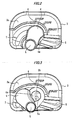
Fig. 2] Fig. 2 is a plan view showing the ignition switch device (a shutter is in a closed position). - [
Fig. 3] Fig. 3 is a plan view showing the ignition switch device (the shutter is in an open position). - [
Fig. 4] Fig. 4 is a view as seen from the upper surface in the ignition switch device, and is a view showing a process in which an ignition key is guided by a main guide shape. - [
Fig. 5] Fig. 5 is a view as seen from the upper surface in the ignition switch device, and is a view showing a state in which the ignition key guided by the main guide shape has abutted on a cutout of the shutter. - [
Fig. 6] Fig. 6 is a perspective view showing a state where the ignition key has matched a key hole in the ignition switch device. - [
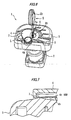
Fig. 7] Fig. 7 is a sectional schematic view showing a contact state between the rear surface of the shutter and a protruding portion in the ignition switch device. - [
Fig. 8] Fig. 8 is a plan view and a rear view of the shutter in the ignition switch device. -
- 1:
- IGNITION SWITCH DEVICE
- 2:
- SWITCHING MEANS
- 2a:
- KEY HOLE
- 3:
- CASE
- 3a:
- SURFACE
- 3b:
- INSERTION HOLE
- 4:
- SHUTTER
- 4a:
- CUTOUT
- 4b:
- REAR SURFACE
- 4c:
- CONVEX SHAPE
- 5:
- MAIN GUIDE SHAPE
- 6:
- AUXILIARY GUIDE SHAPE
- 7:
- PROTRUDING PORTION
- K:
- IGNITION KEY
- An exemplary embodiment of the invention will be specifically explained with reference to the drawings. An ignition switch device related to the present embodiment is disposed in driver' s seats of industrial machines (construction machines), such as bulldozers, power shovels, or crane vehicles to be used in worksites of engineering works or construction. As shown in
Fig. 1 , the ignition switch device is mainly composed of a switching means 2, acase 3, ashutter 4, amain guide shape 5, anauxiliary guide shape 6, and a protrudingportion 7. - The switching means 2 includes a
key hole 2a (refer toFig. 3 ) which allows a regular ignition key K to be inserted thereinto, and can be operated to rotate in a predetermined direction with the ignition key K inserted thereinto to thereby start and stop the engine of an industrial machine. Specifically, the switching means 2 constitutes a cylinder lock in which a plurality of tumblers are provided within thekey hole 2a, or a versatile ignition switch including a switch board or the like which can be switched by forming or breaking a predetermined electric circuit by the rotation of the cylinder lock. - The ignition key K, as shown in
Fig. 4 , is formed in the shape of a key while its tip (protruding end) Ka is formed in the shape of V, and is configured such that, if the ignition key is a regular one, the shape of the key matches the shape of the tumblers of the cylinder lock in the switching means 2 so that the cylinder lock can be rotated. In addition, reference numeral Kb denotes a gripping portion of the ignition key K, and a driver grips the gripping portion Kb to operate the ignition key K. - The
case 3 is formed with aninsertion hole 3b which allows thekey hole 2a to face outside while covering an upper portion of the switching means 2, and printed letters or the like which indicate the position of the ignition key K is given to asurface 3a of the case. Further, thecase 3 is a resin-molded product obtained by molding predetermined resin (PBT or the like), and various shapes, such as themain guide shape 5, theauxiliary guide shape 6, and the protrudingportion 7, which will be explained in detail, are built in the surface of the case at the time of manufacture. - The
shutter 4 is made of metal or resin disposed on thesurface 3a of thecase 3. As shown inFigs. 2 and 3 , the shutter is adapted to be rotatable about a rotary shaft L between a closed position (position shown inFig. 2 ) where theinsertion hole 3b of thecase 3 is closed, and an open position (position shown inFig. 3 ) where theinsertion hole 3b is opened to allow thekey hole 2a to face the outside (the upside). Thereby, when such ashutter 4 is in the closed position, the shutter can cover thekey hole 2a to prevent muddy water, dust, etc. from entering the key hole. - Further, the
shutter 4 is biased in a direction in which the shutter is always in the closed position by a spring (torsion coil spring or the like biased toward the closed position) which is not shown. When the ignition key K is pulled out, theshutter 4 in the open position is rotated to the closed position and is naturally closed by the biasing force of the spring. Thereby, after the ignition key K is pulled out of thekey hole 2a, the operation which closes theshutter 4 becomes unnecessary, and consequently, operability can be further improved. - As shown in
Figs. 1 and4 , themain guide shape 5 is composed of a groove having a V-shaped cross-section, which is formed in thesurface 3a of thecase 3, and extends toward theinsertion hole 3b (strictly speaking,cutout 4a of theshutter 4 which covers theinsertion hole 3b) so that it can guide the tip Ka of the ignition key K to thekey hole 2a. Themain guide shape 5 extends substantially linearly to theinsertion hole 3b from the edge of thecase 3, and is configured such that its width becomes narrow toward theinsertion hole 3b from the edge. - As shown in
Fig. 1 , theauxiliary guide shape 6 is formed on thesurface 3a of thecase 3 along a contour edge of theshutter 4, and extends toward themain guide shape 5 so that it can guide the tip Ka of the ignition key K to themain guide shape 5. That is, an upper (the side where printed letters are given) contour edge in theshutter 4 is formed in a circular arc as shown in the drawing, and the tip of the auxiliary guide shape communicates with themain guide shape 5 while theauxiliary guide shape 6 is formed along such a circular are. Thus, if the tip Ka of the ignition key K is moved along theauxiliary guide shape 6, it reaches themain guide shape 5 from which it can be guided to theinsertion hole 3b as described above. - Meanwhile, a circular-
arc cutout 4a which allows the tip Ka of the ignition key K guided by themain guide shape 5 to abut thereon is formed in a position on an extension of themain guide shape 5 of theshutter 4. Also, as shown inFig. 5 , if the tip Ka of the ignition key K guided by themain guide shape 5 is made to abut on thecutout 4a, and thereafter further moved in this direction, the tip Ka presses theshutter 4 via thecutout 4a so that theshutter 4 can be rotated about the rotary shaft L. - Here, in the present embodiment, during the rotation of the
shutter 4, thecutout 4a and thekey hole 2a are set so as to be parallel to each other, and the tip Ka of the ignition key K which is pressing thecutout 4a is configured so as to match the formation position of thekey hole 2a. Thus, while theshutter 4 is rotated to the open position by the tip Ka of the ignition key K, as shown inFig. 6 , the tip Ka of the ignition key K will match thekey hole 2a. If the ignition key K is pushed into the switching means 2 from this state, the key can be inserted into thekey hole 2a. - Thereafter, if the ignition key K inserted into the
key hole 2a is rotated in a predetermined direction (right direction in the present embodiment), the switching means 2 can be operated to start the engine of the industrial machine. Further, if the ignition key K is rotated in an opposite direction (left direction in the present embodiment) in order to stop the engine of the industrial machine, the switching means 2 can be operated to stop the engine. - In addition, since the
shutter 4 is biased toward the closed position at the time of the rotation of the ignition key K as described above, thecutout 4a and the ignition key K are in an abutting state. However, since thecutout 4a is formed in a circular arc, the rotational operation of the ignition key K can be smoothly performed. Also, if the ignition key K is pulled out of thekey hole 2a, as already mentioned, theshutter 4 will be rotated to the closed position and naturally closed by the biasing force of the spring. - The protruding
portion 7 is formed within the range of rotation of theshutter 4 while protruding from thesurface 3a of thecase 3, and as shown inFig. 7 , the protruding portion is set such that its protruding end contacts arear surface 4b of theshutter 4 while theshutter 4 rotates. As shown in this drawing, the protrudingportion 7 is formed such that its protruding end is sharpened, and is configured such that the contact surface thereof with therear surface 4b of theshutter 4 becomes linear. - As shown in
Fig. 8 , aconvex shape 4c is formed along the contour edge in therear surface 4b of theshutter 4 related to the present embodiment. Such aconvex shape 4c is a shape obtained by forming theshutter 4 such that portions other than the contour edge is thinned, and the protruding end of the convex shape is made flat while the height dimension of the convex shape is made uniform. In addition, the protruding end of theconvex shape 4c will also constitute a portion of therear surface 4b of theshutter 4. - [0031] Thereby, the
shutter 4 will rotate while making therear surface 4b (protruding end of theconvex shape 4c) thereof contact the protruding end of the protrudingportion 7. As a result, smooth rotation of theshutter 4 can be performed, and thesurface 3a of thecase 3 can be kept from being scratched, thereby maintaining design quality. That is, during the rotation of theshutter 4, therear surface 4b of theshutter 4 will contact only the protruding end of the protrudingportion 7. As a result, a place to which any scratches are given will be limited, and the scratches will not be conspicuous. Therefore, the design quality of thesurface 3a of thecase 3 can be maintained. - In addition, since the
rear surface 4b contacts and is supported by the protruding end of the protrudingportion 7 during the rotation, theshutter 4 prevents a gutter or the like from being generated, and makes it possible to perform more smooth rotation over a prolonged period of time. Further, the protrudingportion 7 related to the present embodiment is formed such that its protruding end is sharpened. Thus, during the rotation of theshutter 4, therear surface 4b (protruding end of theconvex shape 4c) of theshutter 4 will contact only the sharpened protruding end of the protrudingportion 7. As a result, even if any scratches are given, they will not be conspicuous. Therefore, the design quality of thesurface 3a of thecase 3 can be maintained more reliably. - Particularly, in the present embodiment, the
convex shape 4c is formed along the contour edge of therear surface 4b of theshutter 4. Thus, while theshutter 4 rotates, only theconvex shape 4c of theshutter 4 and the protruding end of the protrudingportion 7 will contact each other. As a result, the contact area therebetween can be reduced to further keep thesurface 3a of thecase 3 from being scratched. Further, when therear surface 4b of theshutter 4 freezes during a winter season, only theconvex shape 4c of theshutter 4 and the protruding end of the protrudingportion 7 contact each other, the contact area therebetween is small and the frozen place is extremely limited. Thus, theshutter 4 can be rotated with slight force. - The protruding
portion 7 is formed so as to extend in an arc along the locus of rotation of theshutter 4. Thus, a three-dimensional design can be provided so as to indicate the rotation direction of theshutter 4, and the rotational operation of the shutter can be made smoother. In addition, the protruding portion to be formed in thesurface 3a of thecase 3 has only to be formed within the range of rotation of theshutter 4, and may be formed so as to extend substantially linearly. - In addition, in the present embodiment, a driver who is going to start the engine finds the key hole not with his/her eyes, but with his/her hand. If the tip Ka of the ignition key K abuts on the
surface 3a of thecase 3, is suitably moved along thesurface 3a as it is, and thereby inserted into themain guide shape 5 or theauxiliary guide shape 6, the tip Ka is guided to theshutter 4 which covers theinsertion hole 3b along themain guide shape 5 and theauxiliary guide shape 6. Then, if the tip is further moved in this direction from the state where it abuts on thecutout 4a of theshutter 4, theshutter 4 can be rotated and be guided to thekey hole 2a. - Although the present embodiment has been describedhitherto, the invention is not limited thereto. For example, the
main guide shape 5 and theauxiliary guide 6 may not be formed, but only the protrudingportion 7 may be formed with the range of rotationof theshutter 4. Further, in the present embodiment, theconvex shape 4c formed along the contour shape is formed in therear surface 4b of theshutter 4. However, therear surface 4b of theshutter 4 may be flat. - Furthermore, although the protruding
portion 7 is formed such that its protruding end is sharpened, the protruding end may have a flat shape having a minute width. Even in this case, during the rotation of the shutter, the rear surface of the shutter will contact only the protruding end of the protruding portion. As a result, a place where any scratches are given will be limited to the minute width of the protruding end, and the scratches will not be conspicuous. Therefore, the design quality of thesurface 3a of thecase 3 can be maintained. - In addition, industrial machines to which the invention can be applied include, for example, various machines, such as bulldozers, scrape dozers, hydraulic shovels (backhoes, power shovels, etc.), and tractors with a crane apparatus.
- The invention can also be applied to ones whose appearance shapes are different or to ones to which other functions are added so long as it is an ignition switch device provided with the protruding portion which is formed within the range of rotation of the shutter while protruding from the surface of the case and whose protruding end contacts a rear surface of the shutter while the shutter rotates.
- While description has been made in connection with specific embodiments and modified examples of the present invention, it will be obvious to those skilled in the art that various changes and modification may be made therein without departing from the present invention. It is aimed, therefore, to cover in the appended claims all such changes and modifications falling within the true spirit and scope of the present invention.
Claims (4)
- An ignition switch device disposed in a driver's seat of an industrial machine to start and stop an engine of the industrial machine, the ignition switch device comprising:a switching means having a key hole allowing a regular ignition key to be inserted thereinto, and capable of being rotationally operated in a predetermined direction with the inserted ignition key to start and stop the engine of the industrial machine;a case covering the switching means and formed with an insertion hole allowing the key hole to face the outside;a shutter disposed on the surface of the case, and rotatable between a closed position where the insertion hole of the case is closed and an open position where the insertion hole is opened to allow the key hole to face outside; anda protruding portion formed within the range of rotation of the shutter and protruding from the surface of the case, whose protruding end being contact with a rear surface of the shutter while the shutter rotates.
- The ignition switch device according to Claim 1, wherein the protruding portion has a protruding end which is sharpened.
- The ignition switch device according to Claim 1, wherein a convex shape is formed along a contour edge of the rear surface of the shutter.
- The ignition switch device according to Claim 1, wherein the protruding portion extends in an arc along the locus of rotation of the shutter.
Applications Claiming Priority (1)
| Application Number | Priority Date | Filing Date | Title |
|---|---|---|---|
| JP2007140471A JP4994953B2 (en) | 2007-05-28 | 2007-05-28 | Ignition switch device |
Publications (3)
| Publication Number | Publication Date |
|---|---|
| EP1997698A2 true EP1997698A2 (en) | 2008-12-03 |
| EP1997698A3 EP1997698A3 (en) | 2011-06-01 |
| EP1997698B1 EP1997698B1 (en) | 2012-06-27 |
Family
ID=39743866
Family Applications (1)
| Application Number | Title | Priority Date | Filing Date |
|---|---|---|---|
| EP20080009645 Active EP1997698B1 (en) | 2007-05-28 | 2008-05-27 | Ignition switch device |
Country Status (5)
| Country | Link |
|---|---|
| US (1) | US7707863B2 (en) |
| EP (1) | EP1997698B1 (en) |
| JP (1) | JP4994953B2 (en) |
| KR (1) | KR101148629B1 (en) |
| CN (1) | CN101315845B (en) |
Cited By (2)
| Publication number | Priority date | Publication date | Assignee | Title |
|---|---|---|---|---|
| ES2377283A1 (en) * | 2010-06-01 | 2012-03-26 | Cofunco S.A. | Device of covering, closure and similar. (Machine-translation by Google Translate, not legally binding) |
| CN102393991A (en) * | 2011-08-26 | 2012-03-28 | 周琪 | Vehicle locking device |
Families Citing this family (7)
| Publication number | Priority date | Publication date | Assignee | Title |
|---|---|---|---|---|
| JP5460295B2 (en) * | 2009-12-21 | 2014-04-02 | 朝日電装株式会社 | Cylinder lock protector |
| JP6348824B2 (en) * | 2014-11-07 | 2018-06-27 | 株式会社ホンダロック | Cylinder lock protection device |
| CN105575714A (en) * | 2015-12-23 | 2016-05-11 | 瑞安市钢铭机车部件有限公司 | Multi-protection ignition lock |
| US9587416B1 (en) * | 2016-07-27 | 2017-03-07 | Federal Lock Co., Ltd. | Lock with a slide for covering lock core |
| US9631398B1 (en) * | 2016-07-27 | 2017-04-25 | Federal Lock Co., Ltd. | Lock with a slide for covering lock core and positioning device for the slide |
| US10738513B2 (en) * | 2016-12-09 | 2020-08-11 | Toyota Motor Engineering & Manufacturing North America, Inc. | Flush power slide door handle |
| US11927293B2 (en) | 2021-12-17 | 2024-03-12 | Cnh Industrial America Llc | Coupler door push button release for agricultural vehicle |
Citations (2)
| Publication number | Priority date | Publication date | Assignee | Title |
|---|---|---|---|---|
| DE102004053812A1 (en) | 2003-11-07 | 2005-07-21 | Hitachi Construction Machinery Co., Ltd. | A work vehicle in which the degree to which an operator is subjected to vibrations can be controlled, and methods of controlling the amount of vibration applied |
| JP2007140471A (en) | 2005-11-23 | 2007-06-07 | Samsung Sdi Co Ltd | Display element provided with window assembly and portable terminal including the same |
Family Cites Families (36)
| Publication number | Priority date | Publication date | Assignee | Title |
|---|---|---|---|---|
| US1088237A (en) * | 1913-03-01 | 1914-02-24 | Rufus K Mulford | Key-guide. |
| US1112485A (en) * | 1913-07-08 | 1914-10-06 | Charles R Snyder | Escutcheon-plate. |
| US1206611A (en) * | 1916-03-28 | 1916-11-28 | George H Strode | Switch-lock. |
| US1718723A (en) * | 1928-03-26 | 1929-06-25 | Williams Harry | Padlock |
| US1904882A (en) * | 1929-04-20 | 1933-04-18 | August F W Viehweger | Burglarproof lock |
| US2355300A (en) * | 1942-01-22 | 1944-08-08 | Yale & Towne Mfg Co | Keyhole cover and assembly |
| US2388228A (en) * | 1944-05-25 | 1945-10-30 | Yale & Towne Mfg Co | Keyhole cover |
| US2400229A (en) * | 1945-05-12 | 1946-05-14 | Henry D Freeman | Lock |
| US2439978A (en) * | 1945-11-21 | 1948-04-20 | Anton W Konchan | Keyhole cover |
| US2562038A (en) * | 1950-01-30 | 1951-07-24 | Briggs & Stratton Corp | Cover for door locks |
| US2602319A (en) * | 1950-07-31 | 1952-07-08 | Briggs & Stratton Corp | Dust cover mounting for cylinder locks |
| US2702468A (en) * | 1951-05-05 | 1955-02-22 | Yale & Towne Mfg Co | Dust cover for locks |
| US2660877A (en) * | 1951-07-30 | 1953-12-01 | Abraham M Malouf | Keyhole cover for lock caps |
| US2658151A (en) * | 1951-10-24 | 1953-11-03 | Heinz Bernard | Luminous lock attachment |
| US2993362A (en) * | 1958-12-29 | 1961-07-25 | Jack A Baccolla | Key guide for locks |
| US3564744A (en) * | 1969-02-20 | 1971-02-23 | Alvin L Shook | Automotive safety signal device |
| US3564880A (en) * | 1969-08-27 | 1971-02-23 | Gen Motors Corp | Door latch control mechanism |
| US3583185A (en) * | 1969-11-03 | 1971-06-08 | Briggs & Stratton Corp | Key-controlled lock switch with reliable weather protection cover |
| US3930391A (en) * | 1975-03-17 | 1976-01-06 | General Motors Corporation | Lock cylinder cover with key engagement release |
| US4231240A (en) * | 1978-07-28 | 1980-11-04 | Nissan Shatai Kabushiki Kaisha | Screw plug assembly |
| US4586355A (en) * | 1985-03-28 | 1986-05-06 | General Motors Corporation | Lock cylinder cover with key engagement release of hold-open detent |
| JPH0330532Y2 (en) * | 1985-06-24 | 1991-06-27 | ||
| US4773242A (en) * | 1988-02-17 | 1988-09-27 | General Motors Corporation | Lock cylinder cover with time delay closure |
| US5477713A (en) * | 1994-03-29 | 1995-12-26 | Edward Roddy, III | Key orientation system |
| US5680095A (en) * | 1994-12-08 | 1997-10-21 | Gordon Hartunian | Security apparatus |
| JPH09105252A (en) * | 1995-10-12 | 1997-04-22 | Central Motor Co Ltd | Draining structure around key cylinder |
| US5718137A (en) * | 1996-08-30 | 1998-02-17 | Huston; Fred Michael | Fork lock cover |
| DE19929243B4 (en) * | 1999-06-25 | 2014-11-06 | Volkswagen Ag | Arrangement with an emblem and a lock cylinder of a motor vehicle hood closure |
| US6272890B1 (en) * | 1999-08-27 | 2001-08-14 | Fred Michael Huston | Fork lock cover for motorcycle mounted with tape and method |
| DE20016845U1 (en) * | 2000-09-29 | 2000-11-30 | Kruse Sicherheitssysteme GmbH & Co. KG, 21435 Stelle | Cover for securing locking cylinders |
| JP2003104172A (en) * | 2001-09-28 | 2003-04-09 | Tetsuo Kuramochi | Vehicular anti-theft device |
| US20050193788A1 (en) * | 2004-03-03 | 2005-09-08 | Alan Weiner | Method and apparatus locating a keyhole and orienting a key to the keyhole |
| JP4271167B2 (en) * | 2005-06-24 | 2009-06-03 | 川崎重工業株式会社 | Fuel tank cap |
| US7401484B1 (en) * | 2005-11-22 | 2008-07-22 | The Eastern Company | Low profile, lockable handle, housing and cover assembly |
| CN2854004Y (en) | 2005-12-27 | 2007-01-03 | 重庆隆鑫工业(集团)有限公司 | Anti-theft engine with dust-proof hood and lock |
| CN2900303Y (en) | 2006-06-08 | 2007-05-16 | 浙江瑞泰动力有限公司 | Igniting switch for motorcycle |
-
2007
- 2007-05-28 JP JP2007140471A patent/JP4994953B2/en active Active
-
2008
- 2008-05-26 KR KR1020080048669A patent/KR101148629B1/en active Active
- 2008-05-27 EP EP20080009645 patent/EP1997698B1/en active Active
- 2008-05-28 CN CN2008101001788A patent/CN101315845B/en active Active
- 2008-05-28 US US12/128,205 patent/US7707863B2/en active Active
Patent Citations (2)
| Publication number | Priority date | Publication date | Assignee | Title |
|---|---|---|---|---|
| DE102004053812A1 (en) | 2003-11-07 | 2005-07-21 | Hitachi Construction Machinery Co., Ltd. | A work vehicle in which the degree to which an operator is subjected to vibrations can be controlled, and methods of controlling the amount of vibration applied |
| JP2007140471A (en) | 2005-11-23 | 2007-06-07 | Samsung Sdi Co Ltd | Display element provided with window assembly and portable terminal including the same |
Cited By (3)
| Publication number | Priority date | Publication date | Assignee | Title |
|---|---|---|---|---|
| ES2377283A1 (en) * | 2010-06-01 | 2012-03-26 | Cofunco S.A. | Device of covering, closure and similar. (Machine-translation by Google Translate, not legally binding) |
| CN102393991A (en) * | 2011-08-26 | 2012-03-28 | 周琪 | Vehicle locking device |
| CN102393991B (en) * | 2011-08-26 | 2013-06-05 | 周琪 | Vehicle locking device |
Also Published As
| Publication number | Publication date |
|---|---|
| JP2008291587A (en) | 2008-12-04 |
| US7707863B2 (en) | 2010-05-04 |
| CN101315845B (en) | 2011-09-28 |
| JP4994953B2 (en) | 2012-08-08 |
| EP1997698A3 (en) | 2011-06-01 |
| KR101148629B1 (en) | 2012-05-23 |
| US20080296468A1 (en) | 2008-12-04 |
| EP1997698B1 (en) | 2012-06-27 |
| CN101315845A (en) | 2008-12-03 |
| KR20080104975A (en) | 2008-12-03 |
Similar Documents
| Publication | Publication Date | Title |
|---|---|---|
| EP1997698B1 (en) | Ignition switch device | |
| EP1997987B1 (en) | Ignition switch device | |
| US7735347B2 (en) | Ignition switch device | |
| EP2047435B1 (en) | Mobile actuating device | |
| DE19509003A1 (en) | Removable electronic device | |
| JP6423504B1 (en) | Flat conductor connector | |
| EP1783015B1 (en) | Electric steering locking apparatus | |
| JP2009228283A (en) | Cylinder lock protection device | |
| EP1783016B1 (en) | Electric steering lock device | |
| JP2008503664A (en) | Locking device with separate latch bolt and cylinder | |
| JP4897571B2 (en) | Ignition switch device | |
| JP5460295B2 (en) | Cylinder lock protector | |
| JP4958285B2 (en) | Ignition switch device | |
| JP2002211256A (en) | Fuel filler lid | |
| JP2001342768A (en) | Ignition switch | |
| JP4306311B2 (en) | Vehicle door handle device | |
| JP4859586B2 (en) | Ignition switch device | |
| KR100392270B1 (en) | Structure for fuse box cover of an automobile | |
| JP6570171B2 (en) | Engine starter | |
| KR101088745B1 (en) | Engine power limit cover | |
| JP2001035325A (en) | Ignition switch | |
| JPH023561A (en) | Steering locking device | |
| JPH0544411U (en) | Cutting device with rotating cam blade | |
| JPH0858625A (en) | Hood operation confirmation and warning device for automobile | |
| JP2007100312A (en) | Mechanical key |
Legal Events
| Date | Code | Title | Description |
|---|---|---|---|
| PUAI | Public reference made under article 153(3) epc to a published international application that has entered the european phase |
Free format text: ORIGINAL CODE: 0009012 |
|
| AK | Designated contracting states |
Kind code of ref document: A2 Designated state(s): AT BE BG CH CY CZ DE DK EE ES FI FR GB GR HR HU IE IS IT LI LT LU LV MC MT NL NO PL PT RO SE SI SK TR |
|
| AX | Request for extension of the european patent |
Extension state: AL BA MK RS |
|
| PUAL | Search report despatched |
Free format text: ORIGINAL CODE: 0009013 |
|
| AK | Designated contracting states |
Kind code of ref document: A3 Designated state(s): AT BE BG CH CY CZ DE DK EE ES FI FR GB GR HR HU IE IS IT LI LT LU LV MC MT NL NO PL PT RO SE SI SK TR |
|
| AX | Request for extension of the european patent |
Extension state: AL BA MK RS |
|
| RIC1 | Information provided on ipc code assigned before grant |
Ipc: B60N 3/00 20060101ALI20110428BHEP Ipc: E05B 15/02 20060101ALI20110428BHEP Ipc: E05B 17/00 20060101ALI20110428BHEP Ipc: B60R 25/04 20060101AFI20080924BHEP Ipc: B60N 2/38 20060101ALI20110428BHEP Ipc: E05B 15/06 20060101ALI20110428BHEP Ipc: E05B 15/08 20060101ALI20110428BHEP |
|
| 17P | Request for examination filed |
Effective date: 20110913 |
|
| GRAP | Despatch of communication of intention to grant a patent |
Free format text: ORIGINAL CODE: EPIDOSNIGR1 |
|
| RIC1 | Information provided on ipc code assigned before grant |
Ipc: B60N 3/00 20060101ALI20111213BHEP Ipc: E05B 15/08 20060101ALI20111213BHEP Ipc: E05B 15/06 20060101ALI20111213BHEP Ipc: E05B 15/02 20060101ALI20111213BHEP Ipc: B60N 2/38 20060101ALI20111213BHEP Ipc: B60R 25/04 20060101AFI20111213BHEP Ipc: E05B 17/00 20060101ALI20111213BHEP |
|
| RIN1 | Information on inventor provided before grant (corrected) |
Inventor name: MIURA, KEISUKE C/O KUBOTA CORPORATION Inventor name: KAWANAMI, HIROSHI C/O KUBOTA CORPORATION Inventor name: UEDA, MASAAKI C/O KUBOTA CORPORATION Inventor name: SAKAI, TAKEHIRO C/O KUBOTA CORPORATION Inventor name: TSUCHIKIRI, AKIHIKOXC/O ASAHI DENSO CO.,LTD. |
|
| AKX | Designation fees paid |
Designated state(s): DE FR GB IT |
|
| GRAS | Grant fee paid |
Free format text: ORIGINAL CODE: EPIDOSNIGR3 |
|
| GRAA | (expected) grant |
Free format text: ORIGINAL CODE: 0009210 |
|
| AK | Designated contracting states |
Kind code of ref document: B1 Designated state(s): DE FR GB IT |
|
| REG | Reference to a national code |
Ref country code: GB Ref legal event code: FG4D |
|
| REG | Reference to a national code |
Ref country code: DE Ref legal event code: R096 Ref document number: 602008016638 Country of ref document: DE Effective date: 20120823 |
|
| PLBE | No opposition filed within time limit |
Free format text: ORIGINAL CODE: 0009261 |
|
| STAA | Information on the status of an ep patent application or granted ep patent |
Free format text: STATUS: NO OPPOSITION FILED WITHIN TIME LIMIT |
|
| 26N | No opposition filed |
Effective date: 20130328 |
|
| REG | Reference to a national code |
Ref country code: DE Ref legal event code: R097 Ref document number: 602008016638 Country of ref document: DE Effective date: 20130328 |
|
| REG | Reference to a national code |
Ref country code: FR Ref legal event code: PLFP Year of fee payment: 9 |
|
| REG | Reference to a national code |
Ref country code: FR Ref legal event code: PLFP Year of fee payment: 10 |
|
| REG | Reference to a national code |
Ref country code: FR Ref legal event code: PLFP Year of fee payment: 11 |
|
| REG | Reference to a national code |
Ref country code: FR Ref legal event code: PLFP Year of fee payment: 16 |
|
| PGFP | Annual fee paid to national office [announced via postgrant information from national office to epo] |
Ref country code: DE Payment date: 20250402 Year of fee payment: 18 |
|
| PGFP | Annual fee paid to national office [announced via postgrant information from national office to epo] |
Ref country code: GB Payment date: 20250401 Year of fee payment: 18 |
|
| PGFP | Annual fee paid to national office [announced via postgrant information from national office to epo] |
Ref country code: IT Payment date: 20250422 Year of fee payment: 18 |
|
| PGFP | Annual fee paid to national office [announced via postgrant information from national office to epo] |
Ref country code: FR Payment date: 20250401 Year of fee payment: 18 |