EP1986397B1 - Reduktion der Anzahl von Eintragsendungsnachrichten in einem Netzwerk für Zellgeräte - Google Patents
Reduktion der Anzahl von Eintragsendungsnachrichten in einem Netzwerk für Zellgeräte Download PDFInfo
- Publication number
- EP1986397B1 EP1986397B1 EP08103499A EP08103499A EP1986397B1 EP 1986397 B1 EP1986397 B1 EP 1986397B1 EP 08103499 A EP08103499 A EP 08103499A EP 08103499 A EP08103499 A EP 08103499A EP 1986397 B1 EP1986397 B1 EP 1986397B1
- Authority
- EP
- European Patent Office
- Prior art keywords
- control function
- session control
- server
- call session
- network
- Prior art date
- Legal status (The legal status is an assumption and is not a legal conclusion. Google has not performed a legal analysis and makes no representation as to the accuracy of the status listed.)
- Not-in-force
Links
Images

Classifications
-
- H—ELECTRICITY
- H04—ELECTRIC COMMUNICATION TECHNIQUE
- H04W—WIRELESS COMMUNICATION NETWORKS
- H04W28/00—Network traffic management; Network resource management
- H04W28/02—Traffic management, e.g. flow control or congestion control
- H04W28/06—Optimizing the usage of the radio link, e.g. header compression, information sizing, discarding information
-
- H—ELECTRICITY
- H04—ELECTRIC COMMUNICATION TECHNIQUE
- H04W—WIRELESS COMMUNICATION NETWORKS
- H04W60/00—Affiliation to network, e.g. registration; Terminating affiliation with the network, e.g. de-registration
- H04W60/06—De-registration or detaching
-
- H—ELECTRICITY
- H04—ELECTRIC COMMUNICATION TECHNIQUE
- H04W—WIRELESS COMMUNICATION NETWORKS
- H04W84/00—Network topologies
- H04W84/02—Hierarchically pre-organised networks, e.g. paging networks, cellular networks, WLAN [Wireless Local Area Network] or WLL [Wireless Local Loop]
- H04W84/04—Large scale networks; Deep hierarchical networks
- H04W84/042—Public Land Mobile systems, e.g. cellular systems
Definitions
- Embodiments of the present invention relate to cellular devices. More specifically, embodiments of the present invention relate to reducing a number of registration termination messages in a network for cellular devices.
- a network of cellular devices can include, among other things, a server and a plurality of Call Session Control Functions (CSCFs).
- CSCFs Call Session Control Functions
- the CSCF allocates resources in order to provide a service that the cellular device has requested.
- the server has information pertaining to which CSCF the cellular device is communicating with because,the CSCFs send messages to the server when the cellular device initiates communication with the CSCFs.
- HSS Home Subscriber Service
- CSCF Call Session Control Function
- the cellular device When, for example, a cellular device is turned on, the cellular device establishes communication with a CSCF that is in cellular device's home network that provides service based on the user's subscription.
- the CSCF allocates resources in order to provide a service that the cellular device has requested.
- the Third Generation Partnership Project Technical Specification 29.228 version 6.13.0 states in the second paragraph of section 8.1.1 that it is possible for a new CSCF to be selected to provide service for the cellular device.
- the server may initiate a termination request to the previous CSCF that was serving the cellular device.
- a new CSCF is selected due to a failure in re-registration if the previously assigned CSCF does not respond to other network elements after a timeout.
- the server encounters registration from a new CSCF, the cellular device is put into communication with the second CSCF.
- the second CSCF allocates resources in order to continue providing the service to the cellular device.
- the server has information pertaining to which CSCF the cellular device is communicating with because CSCFs exchange messages with the server.
- the prior art requires a server to send termination messages to either all of the CSCFs or none of the CSCFs that it communicates with when a cellular device is assigned a new CSCF. Some CSCFs may not release resources unless they receive a termination message. Other CSCFs may not require the termination message to be sent to them. However, sending termination messages to CSCFs that do not require the notification significantly reduces the bandwidth of the network and therefore significantly reduces the number of services that the network can provide, for example, during peak hours.
- a registration termination message can be sent to one CSCF that communicates with a server without requiring the server to send a registration termination message to another CSCF that communicates with the server.
- CSCF 122 requires a registration termination message
- CSCF 124 does not require a registration termination message. If the cellular device 140's assignment is switched for example from CSCF 122 to CSCF 124, according to one embodiment, then logic associated with the server 110 determines to send a registration termination message to CSCF 122.
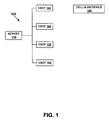
- FIG. 1 is a block diagram of a network 100 of cellular devices, according to one embodiment.
- the network 100 includes a server 110, a plurality of CSCFs 122-128, which may be made by various manufacturers, and a cellular device that can undergo CSCF reassignment.
- the network 100 can also include cellular towers.
- a cellular device communicates with the cellular towers wirelessly and the cellular towers communicate with the CSCFs 122-128 using wired communications and the CSCFs 122-128 communicate with the server 110 using wired communications.
- the cellular devices can be any type of electronic device that is capable of providing a service, for example, using a server and one or more CSCFs.
- a cellular device is any type of device capable of providing a service using cellular communications. Examples of cellular devices include but are not limited to cell phones, personal device assistants (PDAs), and computers.
- the CSCFs 122-128 may be provided by companies such as Cingular TM or Verizon TM and be made by various manufacturers such as Ericsson TM and Nokia TM .
- a CSCF is an example of a network entity.
- Some CSCFs such as newer types of CSCFs, may have logic that enables them to release resources in the event that a cellular device's assignment is switched to a different CSCF.
- Other types of CSCFs such as older CSCFs, may not release resources unless they receive a registration termination message.
- a conventional server would either always send out termination messages or never send out termination messages. Therefore, with a conventional server, CSCF that do not require a termination message would receive them anyway or CSCF that do require a termination message would not receive them.
- logic associated with the server 110 can determine to send a registration termination message to the CSCF that requires a registration termination message and determine to not send a registration termination message to the CSCF that does not require a registration termination message, as will become more evident.
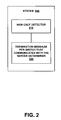
- Figure 2 is a block diagram of a system 200 for reducing a number of registration termination messages in a network of cellular devices, according to one embodiment.
- the blocks depicted in Figure 2 represent features of the system 200.
- the blocks that represent features in Figure 2 can be arranged differently than as illustrated, and can implement additional or fewer features than what are described herein. Further, the features represented by the blocks in Figure 2 can be combined in various ways.
- the system 200 can be implemented using software, hardware, firmware, or a combination thereof.
- the system 200 includes a new CSCF detector 210 (also referred to herein as a "detector”) and a termination message per CSCF that communicates with the server determiner 220 (also referred to herein as a "determiner").
- the system 200 resides at a server 110.
- the detector 210 is configured for determining at a server 110 that a new CSCF 124 associated with the network 100 is providing a service to a cellular device because, for example, the cellular device's assignment has been switched to a new CSCF.
- the determiner 220 is configured for determining whether to send a registration termination message to the previous CSCF 122.
- the determiner 220 enables the server 110 to send a registration termination message to one of a plurality of CSCFs 122-128 that communicate with the server 110 without requiring the server 110 to send a registration termination message to another of the plurality of CSCFs.
- a server 110 has access to a database that includes various types of information.
- the database may be local to the server 110 or remote with respect to the server 110.
- the database can include server records, for example, for each server associated with a network.
- a server record can include a server identifier, such as an information technology (IT) address or a universal resource locator (URL), which uniquely identifies the server 110.
- the database can include CSCF records, for example, for each of the CSCFs in a network. The CSCF records can be used to determine which entities the server 110 interacts with to provide services.
- a CSCF record can include an identifier, such as a URL or an equipment identifier (ID), which uniquely identifies a CSCF.
- ID equipment identifier
- the CSCF record may include information that identifies the company that manufactured the equipment.
- the record may also include information indicating where the CSCF is geographically located.
- the database can also include information about cellular devices.
- the records for cellular devices can be used for example to determine which cellular devices are allowed to receive a service.
- the determiner 220 uses one or more parameters as a part of determining whether to send a registration termination message.
- these parameters include, but are not limited to, a CSCF identifier, a geographical location of a CSCF, the type of CSCF, and various date attributes.
- Examples of a CSCF identifier include but are not limited to a URL or equipment ID.
- the type of CSCF can indicate the company that made, sold, or that owns the CSCF.
- the type of CSCF can indicate a make or model of the CSCF.
- the determiner can analyze the parameters based on rules.
- a rule can use any type of Boolean logic to analyze any one or more parameters. For example, assume that Cingular TM CSCFs made by company A after 2005 may be capable of releasing resources without receiving a termination message. In this case, an example of a rule is do not send termination messages to Cingular TM CSCFs that are made by company A after 2005.
- the database can be accessed to initialize one or more values of the parameters, for example, as a part of analyzing the parameters based on the rules. For example, one of the parameters may be a date which is set to the value of 2005. In another example, one of the parameters may be type of CSCF which is set to a value of Cingular TM . Another parameter may be the company that made the CSCF which can be set to the value company A.
- the rules can use wild carding (where for example one or more characters are replaced with a wild card character such as "*") to specify a set or a range of CSCFs.
- wild carding can be used to specify the CSCFs located in a particular geographical area.
- wild carding could be used to specify CSCFs associated with a particular company, such as Cingular TM .
- a range of CSCFs is considered to be one example of a set of CSCFs.
- Various methods can be used for installing, configuring, and modifying the system 200 depicted in Figure 2 on a server 110. For example, a technical person can physically go to where a server 110 is located and install or configure the system 200.
- a tape that includes the system 200 or a general user interface (GUI) can be used to install the system 200 on a server 110 or to configure the system 200 on a server 110.
- the server 110 may include a GUI that enables the server 110 to be accessed remotely, for example, over a network or the Internet. The GUI can be accessed remotely and used to install the system 200 on a server 110 or to configure the system 200 on a server 110.
- Examples of installing include but are not limited to installing the system 200, such as software instructions that provide the functionality of the detector 210 or the determiner 220, or a combination thereof. Installing may also include installing rules. Examples of configuring include but are not limited to initially installing rules or modifying rules that were already installed on a server 110.
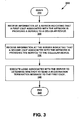
- FIG. 3 is a flowchart 300 for a method of reducing a number of registration termination messages in a network for cellular devices, according to one embodiment.
- flowchart 300 Although specific steps are disclosed in flowchart 300, such steps are exemplary. That is, embodiments of the present invention are well suited to performing various other steps or variations of the steps recited in flowchart 300. It is appreciated that the steps in flowchart 300 may be performed in an order different than presented, and that not all of the steps in flowchart 300 may be performed.
- flowchart 300 can be implemented using computer-readable and computer-executable instructions which reside, for example, in computer-usable media of a computer system or like device.
- certain processes and steps of the present invention are realized, in an embodiment, as a series of instructions (e.g., software program) that reside within computer readable memory of a computer system and are executed by the of the computer system. When executed, the instructions cause the computer system to implement the functionality of the present invention as described below.
- flowchart 300 shall refer to Figures 2 and 4 .
- the system 200 ( Figure 2 ) is installed on the server 110 ( Figure 4 ).
- CSCF 122 is an older type of CSCF that is not capable of releasing resources without receiving a registration termination message but that CSCF 128 is a newer type of CSCF that is capable of releasing resources without receiving a registration termination message.
- the rules the determiner 220 uses specify that a registration termination message will be sent to CSCF 122 when for example a cellular device A's assignment is switched from CSCF 122 to CSCF 124 but that a registration termination message will not be sent to CSCF 128 when for example a cellular device B's assignment is switched from CSCF 128 to CSCF 126.
- step 310 the method begins.
- step 320 information is received at a server indicating that a first CSCF associated with the network is providing a service to a cellular device.
- a server indicating that a first CSCF associated with the network is providing a service to a cellular device.
- cellular device A is served by CSCF 122 and that cellular device B is served by CSCF 128.
- Cellular device A is turned on and cellular device B is turned on.
- the cellular devices A and B send messages to their respective CSCFs 122 and 128 requesting a service.
- the CSCFs 122 and 128 perform validation and communicate information pertaining to the validation to the server 110.
- the server 110 may either grant or deny the services requested by the cellular devices A and B. Assume that the server 110 grants the cellular device's (A and B) requests for their respective services. Connections are made to the cellular devices A and B and information pertaining to the cellular devices A and B is tracked.
- step 330 information is received at the server indicating that a second CSCF associated with the network is providing the service to the cellular device.
- CSCF 128 and CSCF 122 may have failed for some reason.
- the new CSCF detector 210 ( Figure 2 ) associated with the server 110 will determine that the cellular device's assignment will be switched from the previous CSCF to a new CSCF.
- CSCFs 122 and 128 are examples of previous CSCFs with respect to cellular devices A and B
- CSCFs 124 and 126 are examples of new CSCFs with respect to cellular devices A and B.
- step 350 the method ends.
- flowchart 300 described various embodiments in the context of a network that included one server, various embodiments are just as well suited for a network that includes more than one server.
- the network 300 includes another server B that also includes a system 200.
- the server communicates with CSCFs E-G.
- the logic associated with server B can enable it to send a registration termination message for example to CSCF E while not requiring server B to send a registration termination message to CSCF F.
- a company such as HP TM
- the company frequently guarantees that the server is capable of handling a certain number of services, such as phone calls, during peak hours. If the server can not handle that number of transactions, typically the company gives the customer enough servers so that the customer can meet the promised number of transactions. However, even giving servers away may not satisfy the customer's requirements because the customer may not have enough physical space to put the servers. Therefore, the ability for a server to provide as many calls during peak hours as possible significantly increases the probability that the company that sold the server will experience commercial success. Reducing the number of messages that the server has to handle increases the number of transactions the server can provide. Further, reducing the messages that the server has to handle increases the scalability of a network since, for example, less space would be used for the servers.
- resources for providing services to a cellular device may be scarce. Therefore, releasing resources when a cellular device's assignment is switched from a first CSCF to a second CSCF enables the first CSCF to reallocate those resources to another cellular device as quickly as possible, thus, reducing the likelihood that a cellular phone will be prevented from obtaining a service.
Landscapes
- Engineering & Computer Science (AREA)
- Computer Networks & Wireless Communication (AREA)
- Signal Processing (AREA)
- Mobile Radio Communication Systems (AREA)
Claims (10)
- Verfahren zur Reduktion der Anzahl von Eintragsendungsnachrichten in einem Netzwerk (100) für Zellgeräte (140), wobei das Verfahren umfasst:Empfangen (320) von Information an einem Server (110), die anzeigt, dass eine erste Anruf-Sitzung-Kontrollfunktion (122), die dem Netzwerk (100) zugeordnet ist, einen Dienst an ein Zellgerät (140) bereitstellt; undEmpfangen (330) von Information an dem Server (110), die anzeigt, dass eine zweite Anruf-Sitzung-Kontrollfunktion (124), die dem Netzwerk (100) zugeordnet ist, den Dienst an das Zellgerät (140) bereitstellt;gekennzeichnet durch:Ausführen (340) von Logik (200), die dem Server (110) zugeordnet ist, um zu bestimmen, ob die erste Anruf-Sitzung-Kontrollfunktion (122) eine Eintragsendungsnachricht erfordert, um Ressourcen freizugeben, die von der ersten Anruf-Sitzung-Kontrollfunktion (122) zugeteilt werden, um den Dienst an das Zellgerät (140) bereitzustellen, wenn die zweite Anruf-Sitzung-Kontrollfunktion (124) den Dienst an das Zellgerät (140) bereitstellt, wobei es die Logik (200) dem Server (110) ermöglicht, die Eintragsendungsnachricht an die erste Anruf-Sitzung-Kontrollfunktion (122) zu senden, wenn die erste Anruf-Sitzung-Kontrollfunktion (122) die Eintragsendungsnachricht benötigt, um die Ressourcen freizugeben, und die Eintragsendungsnachricht nicht an die erste Anruf-Sitzung-Kontrollfunktion (122) zu senden, wenn die erste Anruf-Sitzung-Kontrollfunktion die Eintragsendungsnachricht nicht benötigt, um die Ressourcen freizugeben.
- Verfahren nach Anspruch 1, weiter umfassend:Empfangen einer Regel, die es, wenn sie ausgeführt wird, ermöglicht, zu bestimmen, ob die Eintragsendungsnachricht an die erste Anruf-Sitzung-Kontrollfunktion (122) gesendet wird.
- Verfahren nach Anspruch 2, wobei das Empfangen der Regel weiter umfasst:Empfangen einer Regel, die einen oder mehr Parameter spezifiziert, die es, wenn sie ausgeführt wird, ermöglicht, zu bestimmen, ob die Eintragsendungsnachricht an die erste Anruf-Sitzung-Kontrollfunktion (122) gesendet wird, basierend auf dem einen oder mehr Parameter.
- Verfahren nach Anspruch 3, wobei das Empfangen der Regel weiter umfasst:Empfangen einer Regel zur Spezifizierung des einen oder mehr Parameter, basierend auf Boole'scher Logik.
- Verfahren nach Anspruch 3, wobei der eine oder mehr Parameter aus einer Gruppe ausgewählt ist/sind, bestehend aus einem Netzwerkeinheit-Identifizierer, einer geografischen Stelle einer Netzwerkeinheit, einem Hersteller einer Netzwerkeinheit, einem Besitzer einer Netzwerkeinheit, einem Typ von Netzwerkeinheit-Identifizierer und einem Datum.
- Verfahren nach Anspruch 3, weiter umfassend: Zugreifen auf eine Datenbank, die dem Server (110) zugeordnet ist, um irgendeinen der einen oder mehr Parameter zu initialisieren.
- Verfahren nach Anspruch 3, wobei das Empfangen der Regel weiter umfasst:Empfangen einer Regel, die Platzhalter (Wildcards) verwendet, um einen Satz von Netzwerkeinheiten zu spezifizieren.
- System zur Reduktion der Anzahl von Eintragsendungsnachrichten in einem Netzwerk für Zellgeräte (140), wobei das System umfasst:einen zweiten Anruf-Sitzung-Kontrollfunktion-Detektor (210), der derart konfiguriert ist, dass er an einem Server (110) erkennt, dass eine zweite Anruf-Sitzung-Kontrollfunktion (124), die dem Netzwerk zugeordnet ist, einen Dienst an ein Zellgerät (140) bereitstellt; undeinen Bestimmer (220), der derart konfiguriert ist, dass er bestimmt, ob die erste Anruf-Sitzung-Kontrollfunktion (122) eine Eintragsendungsnachricht benötigt, um Ressourcen freizugeben, die durch eine erste Anruf-Sitzung-Kontrollfunktion (122) zugeteilt werden, um den Dienst an das Zellgerät (140) bereitzustellen, wenn die zweite Anruf-Sitzung-Kontrollfunktion (124) den Dienst an das Zellgerät (140) bereitstellt, wobei es die Logik (200) dem Server (110) ermöglicht, die Eintragsendungsnachricht an die erste Anruf-Sitzung-Kontrollfunktion (122) zu senden, wenn die erste Anruf-Sitzung-Kontrollfunktion (122) die Eintragsendungsnachricht benötigt, um die Ressourcen freizugeben, und die Eintragsendungsnachricht nicht an die erste Anruf-Sitzung-Kontrollfunktion (122) zu senden, wenn die erste Anruf-Sitzung-Kontrollfunktion (122) die Eintragsendungsnachricht nicht benötigt, um die Ressourcen freizugeben.
- System nach Anspruch 8, wobei der Server (110) ein Hewlett Packard™ Home Subscriber Server ist.
- System nach Anspruch 8, wobei das Zellgerät (110) aus einer Gruppe ausgewählt ist, bestehend aus einem Mobiltelefon, einem Personal Digital Assistant (PDA) und einem Computer.
Priority Applications (1)
| Application Number | Priority Date | Filing Date | Title |
|---|---|---|---|
| DE602008002011T DE602008002011D1 (de) | 2007-04-27 | 2008-04-11 | Reduktion der Anzahl von Eintragsendungsnachrichten in einem Netzwerk für Zellgeräte |
Applications Claiming Priority (1)
| Application Number | Priority Date | Filing Date | Title |
|---|---|---|---|
| US11/796,218 US20080268839A1 (en) | 2007-04-27 | 2007-04-27 | Reducing a number of registration termination massages in a network for cellular devices |
Publications (2)
| Publication Number | Publication Date |
|---|---|
| EP1986397A1 EP1986397A1 (de) | 2008-10-29 |
| EP1986397B1 true EP1986397B1 (de) | 2010-08-04 |
Family
ID=39735575
Family Applications (1)
| Application Number | Title | Priority Date | Filing Date |
|---|---|---|---|
| EP08103499A Not-in-force EP1986397B1 (de) | 2007-04-27 | 2008-04-11 | Reduktion der Anzahl von Eintragsendungsnachrichten in einem Netzwerk für Zellgeräte |
Country Status (3)
| Country | Link |
|---|---|
| US (1) | US20080268839A1 (de) |
| EP (1) | EP1986397B1 (de) |
| DE (1) | DE602008002011D1 (de) |
Families Citing this family (2)
| Publication number | Priority date | Publication date | Assignee | Title |
|---|---|---|---|---|
| US8249643B1 (en) * | 2009-04-14 | 2012-08-21 | Sprint Communications Company L.P. | Dual-mode capacity reallocation |
| US11838826B1 (en) | 2023-04-25 | 2023-12-05 | T-Mobile Usa, Inc. | Location clustering and routing for 5G drive testing |
Family Cites Families (97)
| Publication number | Priority date | Publication date | Assignee | Title |
|---|---|---|---|---|
| US109566A (en) * | 1870-11-22 | |||
| US168A (en) * | 1837-04-17 | Improvement in fire-arms | ||
| US785211A (en) * | 1903-11-23 | 1905-03-21 | Edward W Hartough | Draft-rigging. |
| US881619A (en) * | 1907-11-18 | 1908-03-10 | John B Bouchard | Horseshoer's clenching-pliers. |
| US924458A (en) * | 1908-04-25 | 1909-06-08 | Fred H Henry | Mechanism for turning car-seats. |
| US924459A (en) * | 1908-07-03 | 1909-06-08 | Max Herskovitz | Attachment for incandescent gas-mantles. |
| US953953A (en) * | 1909-02-10 | 1910-04-05 | Lewis Inglee | Car-ticket holder. |
| US933556A (en) * | 1909-03-27 | 1909-09-07 | Hans Hansen | Solar timepiece. |
| US999450A (en) * | 1911-03-17 | 1911-08-01 | Karl E O Hockinson | Means for operating car-platforms. |
| US4579446A (en) * | 1982-07-12 | 1986-04-01 | Canon Kabushiki Kaisha | Both-side recording system |
| US4587532A (en) * | 1983-05-02 | 1986-05-06 | Canon Kabushiki Kaisha | Recording apparatus producing multiple copies simultaneously |
| JP2590477B2 (ja) * | 1987-05-13 | 1997-03-12 | 富士ゼロックス株式会社 | 用紙搬送方向変換装置 |
| US4836119A (en) * | 1988-03-21 | 1989-06-06 | The Charles Stark Draper Laboratory, Inc. | Sperical ball positioning apparatus for seamed limp material article assembly system |
| JP2636441B2 (ja) * | 1989-11-09 | 1997-07-30 | 富士ゼロックス株式会社 | 画像記録装置 |
| US5095342A (en) * | 1990-09-28 | 1992-03-10 | Xerox Corporation | Methods for sheet scheduling in an imaging system having an endless duplex paper path loop |
| US5080340A (en) * | 1991-01-02 | 1992-01-14 | Eastman Kodak Company | Modular finisher for a reproduction apparatus |
| US5159395A (en) * | 1991-08-29 | 1992-10-27 | Xerox Corporation | Method of scheduling copy sheets in a dual mode duplex printing system |
| US5358238A (en) * | 1993-04-27 | 1994-10-25 | Xerox Corporation | Shared user printer output dynamic "mailbox" system |
| US5326093A (en) * | 1993-05-24 | 1994-07-05 | Xerox Corporation | Universal interface module interconnecting various copiers and printers with various sheet output processors |
| US5596416A (en) * | 1994-01-13 | 1997-01-21 | T/R Systems | Multiple printer module electrophotographic printing device |
| US5525031A (en) * | 1994-02-18 | 1996-06-11 | Xerox Corporation | Automated print jobs distribution system for shared user centralized printer |
| US5778377A (en) * | 1994-11-04 | 1998-07-07 | International Business Machines Corporation | Table driven graphical user interface |
| US5570172A (en) * | 1995-01-18 | 1996-10-29 | Xerox Corporation | Two up high speed printing system |
| US5557367A (en) * | 1995-03-27 | 1996-09-17 | Xerox Corporation | Method and apparatus for optimizing scheduling in imaging devices |
| US5489969A (en) * | 1995-03-27 | 1996-02-06 | Xerox Corporation | Apparatus and method of controlling interposition of sheet in a stream of imaged substrates |
| US5504568A (en) * | 1995-04-21 | 1996-04-02 | Xerox Corporation | Print sequence scheduling system for duplex printing apparatus |
| US5629762A (en) * | 1995-06-07 | 1997-05-13 | Eastman Kodak Company | Image forming apparatus having a duplex path and/or an inverter |
| US5710968A (en) * | 1995-08-28 | 1998-01-20 | Xerox Corporation | Bypass transport loop sheet insertion system |
| US5568246A (en) * | 1995-09-29 | 1996-10-22 | Xerox Corporation | High productivity dual engine simplex and duplex printing system using a reversible duplex path |
| US6297886B1 (en) * | 1996-06-05 | 2001-10-02 | John S. Cornell | Tandem printer printing apparatus |
| US5995721A (en) * | 1996-10-18 | 1999-11-30 | Xerox Corporation | Distributed printing system |
| US6059284A (en) * | 1997-01-21 | 2000-05-09 | Xerox Corporation | Process, lateral and skew sheet positioning apparatus and method |
| US5884910A (en) * | 1997-08-18 | 1999-03-23 | Xerox Corporation | Evenly retractable and self-leveling nips sheets ejection system |
| KR100489576B1 (ko) * | 1997-10-08 | 2005-12-21 | 신에쓰 가가꾸 고교 가부시끼가이샤 | 레지스트 재료 및 패턴 형성 방법 |
| US6210813B1 (en) * | 1998-09-02 | 2001-04-03 | Micron Technology, Inc. | Forming metal silicide resistant to subsequent thermal processing |
| US6125248A (en) * | 1998-11-30 | 2000-09-26 | Xerox Corporation | Electrostatographic reproduction machine including a plurality of selectable fusing assemblies |
| TWI226339B (en) * | 1999-03-26 | 2005-01-11 | Shinetsu Chemical Co | High molecular weight compound and the method to prepare the same |
| SG78412A1 (en) * | 1999-03-31 | 2001-02-20 | Ciba Sc Holding Ag | Oxime derivatives and the use thereof as latent acids |
| NL1014545C2 (nl) * | 1999-03-31 | 2002-02-26 | Ciba Sc Holding Ag | Oxim-derivaten en de toepassing daarvan als latente zuren. |
| IT1308720B1 (it) * | 1999-06-08 | 2002-01-10 | Tecnau Srl | Sequenziatore dinamico per fogli di carta stampati |
| KR100538501B1 (ko) * | 1999-08-16 | 2005-12-23 | 신에쓰 가가꾸 고교 가부시끼가이샤 | 신규한 오늄염, 레지스트 재료용 광산발생제, 레지스트재료 및 패턴 형성 방법 |
| US6241242B1 (en) * | 1999-10-12 | 2001-06-05 | Hewlett-Packard Company | Deskew of print media |
| US6384918B1 (en) * | 1999-11-24 | 2002-05-07 | Xerox Corporation | Spectrophotometer for color printer color control with displacement insensitive optics |
| US6577925B1 (en) * | 1999-11-24 | 2003-06-10 | Xerox Corporation | Apparatus and method of distributed object handling |
| US7864346B2 (en) * | 2000-05-16 | 2011-01-04 | Xerox Corporation | Apparatus and method for describing, planning and automatically programming complex finishing tasks |
| WO2002032170A1 (en) * | 2000-10-09 | 2002-04-18 | Nokia Corporation | Address de-registration in ip multimedia networks |
| US6550762B2 (en) * | 2000-12-05 | 2003-04-22 | Xerox Corporation | High speed printer with dual alternate sheet inverters |
| US6450711B1 (en) * | 2000-12-05 | 2002-09-17 | Xerox Corporation | High speed printer with dual alternate sheet inverters |
| US6633790B2 (en) * | 2001-01-29 | 2003-10-14 | Xerox Corporation | Systems and methods for optimizing a production facility |
| JP2002278053A (ja) * | 2001-03-16 | 2002-09-27 | Fuji Photo Film Co Ltd | ポジ型フォトレジスト組成物 |
| US6554276B2 (en) * | 2001-03-30 | 2003-04-29 | Xerox Corporation | Flexible sheet reversion using an omni-directional transport system |
| US6607320B2 (en) * | 2001-03-30 | 2003-08-19 | Xerox Corporation | Mobius combination of reversion and return path in a paper transport system |
| GB0110900D0 (en) * | 2001-05-03 | 2001-06-27 | Nokia Corp | Registrations in a communication system |
| US20030187992A1 (en) * | 2001-05-07 | 2003-10-02 | Steenfeldt Rico Werni | Service triggering framework |
| US6621576B2 (en) * | 2001-05-22 | 2003-09-16 | Xerox Corporation | Color imager bar based spectrophotometer for color printer color control system |
| US6633382B2 (en) * | 2001-05-22 | 2003-10-14 | Xerox Corporation | Angular, azimuthal and displacement insensitive spectrophotometer for color printer color control systems |
| US6639669B2 (en) * | 2001-09-10 | 2003-10-28 | Xerox Corporation | Diagnostics for color printer on-line spectrophotometer control system |
| US6608988B2 (en) * | 2001-10-18 | 2003-08-19 | Xerox Corporation | Constant inverter speed timing method and apparatus for duplex sheets in a tandem printer |
| US6612571B2 (en) * | 2001-12-06 | 2003-09-02 | Xerox Corporation | Sheet conveying device having multiple outputs |
| US6476376B1 (en) * | 2002-01-16 | 2002-11-05 | Xerox Corporation | Two dimensional object position sensor |
| US6916591B2 (en) * | 2002-03-22 | 2005-07-12 | Shin-Etsu Chemical Co., Ltd. | Photoacid generators, chemically amplified resist compositions, and patterning process |
| US7835317B2 (en) * | 2002-10-08 | 2010-11-16 | Nokia Corporation | Network selection in a WLAN |
| US7233405B2 (en) * | 2002-10-30 | 2007-06-19 | Palo Alto Research Center, Incorporated | Planning and scheduling reconfigurable systems with regular and diagnostic jobs |
| US7230736B2 (en) * | 2002-10-30 | 2007-06-12 | Palo Alto Research Center, Incorporated | Planning and scheduling reconfigurable systems with alternative capabilities |
| US8315898B2 (en) * | 2002-10-30 | 2012-11-20 | Palo Alto Research Center, Incorporated | Planning and scheduling reconfigurable systems around off-line resources |
| US6944838B2 (en) * | 2003-02-03 | 2005-09-13 | Cadence Design Systems, Inc. | Method and system for design verification using proof-partitioning |
| US20040150156A1 (en) * | 2003-02-04 | 2004-08-05 | Palo Alto Research Center, Incorporated. | Frameless media path modules |
| US7093831B2 (en) * | 2003-02-04 | 2006-08-22 | Palo Alto Research Center Inc. | Media path modules |
| US7139629B2 (en) * | 2003-04-28 | 2006-11-21 | Palo Alto Research Center Incorporated | Planning and scheduling for failure recovery system and method |
| GB0329857D0 (en) * | 2003-12-23 | 2004-01-28 | Nokia Corp | User registration in a communication system |
| US6973286B2 (en) * | 2004-01-21 | 2005-12-06 | Xerox Corporation | High print rate merging and finishing system for parallel printing |
| GB0417296D0 (en) * | 2004-08-03 | 2004-09-08 | Nokia Corp | User registration in a communication system |
| US7188929B2 (en) * | 2004-08-13 | 2007-03-13 | Xerox Corporation | Parallel printing architecture with containerized image marking engines |
| US7206532B2 (en) * | 2004-08-13 | 2007-04-17 | Xerox Corporation | Multiple object sources controlled and/or selected based on a common sensor |
| US7123873B2 (en) * | 2004-08-23 | 2006-10-17 | Xerox Corporation | Printing system with inverter disposed for media velocity buffering and registration |
| US7024152B2 (en) * | 2004-08-23 | 2006-04-04 | Xerox Corporation | Printing system with horizontal highway and single pass duplex |
| US7283762B2 (en) * | 2004-11-30 | 2007-10-16 | Xerox Corporation | Glossing system for use in a printing architecture |
| US7310108B2 (en) * | 2004-11-30 | 2007-12-18 | Xerox Corporation | Printing system |
| US7162172B2 (en) * | 2004-11-30 | 2007-01-09 | Xerox Corporation | Semi-automatic image quality adjustment for multiple marking engine systems |
| US7791751B2 (en) * | 2004-11-30 | 2010-09-07 | Palo Alto Research Corporation | Printing systems |
| US7245856B2 (en) * | 2004-11-30 | 2007-07-17 | Xerox Corporation | Systems and methods for reducing image registration errors |
| US7412180B2 (en) * | 2004-11-30 | 2008-08-12 | Xerox Corporation | Glossing system for use in a printing system |
| US7226158B2 (en) * | 2005-02-04 | 2007-06-05 | Xerox Corporation | Printing systems |
| US7873962B2 (en) * | 2005-04-08 | 2011-01-18 | Xerox Corporation | Distributed control systems and methods that selectively activate respective coordinators for respective tasks |
| US8819103B2 (en) * | 2005-04-08 | 2014-08-26 | Palo Alto Research Center, Incorporated | Communication in a distributed system |
| US8014024B2 (en) * | 2005-03-02 | 2011-09-06 | Xerox Corporation | Gray balance for a printing system of multiple marking engines |
| US7515305B2 (en) * | 2005-03-18 | 2009-04-07 | Xerox Corporation | Systems and methods for measuring uniformity in images |
| US7697151B2 (en) * | 2005-03-25 | 2010-04-13 | Xerox Corporation | Image quality control method and apparatus for multiple marking engine systems |
| US7416185B2 (en) * | 2005-03-25 | 2008-08-26 | Xerox Corporation | Inverter with return/bypass paper path |
| US7258340B2 (en) * | 2005-03-25 | 2007-08-21 | Xerox Corporation | Sheet registration within a media inverter |
| US7206536B2 (en) * | 2005-03-29 | 2007-04-17 | Xerox Corporation | Printing system with custom marking module and method of printing |
| US7245844B2 (en) * | 2005-03-31 | 2007-07-17 | Xerox Corporation | Printing system |
| US7272334B2 (en) * | 2005-03-31 | 2007-09-18 | Xerox Corporation | Image on paper registration alignment |
| US7444108B2 (en) * | 2005-03-31 | 2008-10-28 | Xerox Corporation | Parallel printing architecture with parallel horizontal printing modules |
| US7305198B2 (en) * | 2005-03-31 | 2007-12-04 | Xerox Corporation | Printing system |
| US7706007B2 (en) * | 2005-04-08 | 2010-04-27 | Palo Alto Research Center Incorporated | Synchronization in a distributed system |
| US7593130B2 (en) * | 2005-04-20 | 2009-09-22 | Xerox Corporation | Printing systems |
-
2007
- 2007-04-27 US US11/796,218 patent/US20080268839A1/en not_active Abandoned
-
2008
- 2008-04-11 DE DE602008002011T patent/DE602008002011D1/de active Active
- 2008-04-11 EP EP08103499A patent/EP1986397B1/de not_active Not-in-force
Also Published As
| Publication number | Publication date |
|---|---|
| US20080268839A1 (en) | 2008-10-30 |
| DE602008002011D1 (de) | 2010-09-16 |
| EP1986397A1 (de) | 2008-10-29 |
Similar Documents
| Publication | Publication Date | Title |
|---|---|---|
| JP7027431B2 (ja) | Pduセッション管理 | |
| US10659952B2 (en) | Network slice selection policy updating method and apparatus | |
| KR102738036B1 (ko) | 무선 통신 시스템에서 단말의 정책을 제공하는 방법 및 장치 | |
| CN115136731B (zh) | 边缘计算系统中根据无线通信网络类型提供服务的设备和方法 | |
| KR102224248B1 (ko) | 통신 시스템에서 PDU(Protocol Data Unit) 세션을 설립하는 방법 | |
| CN112910913B (zh) | 一种会话建立的方法和网络系统 | |
| CN112188444B (zh) | 一种订阅服务的方法及装置 | |
| KR102437811B1 (ko) | 세션 관리 기능 선택을 위한 방법 및 장치 | |
| CN115442423A (zh) | 发现由网络存储库功能提供的服务的方法 | |
| EP4142253B1 (de) | Ims-slicing auf basis von slice-identifikatoren von hss | |
| CN100420230C (zh) | 将关于分组数据的信息供给基站的方法 | |
| CN113841429B (zh) | 用于发起切片特定的认证和授权的通信网络组件和方法 | |
| CN117643042A (zh) | 关于5gc相关动作的结果的通知 | |
| CN116438824A (zh) | 用于无线网络中核心网装置重分配的方法、装置及系统 | |
| US9713176B2 (en) | Telecommunication method and telecommunication system | |
| WO2019024102A1 (zh) | 无线通信中的会话处理方法及终端设备 | |
| WO2018045983A1 (zh) | 信息处理方法、装置以及网络系统 | |
| JP7265640B2 (ja) | 通信ネットワークコンポーネント及びサービス要求を処理する方法 | |
| RU2515701C2 (ru) | Способ и система для доступа к услугам пользователя сетевого элемента, реализующего функцию управления шлюзом доступа | |
| KR20210104522A (ko) | 에지 컴퓨팅 시스템에서 무선 통신 네트워크 타입에 따른 서비스 제공 장치 및 방법 | |
| CN116097789A (zh) | 用于无线通信的方法、设备和计算机程序产品 | |
| JP2021508418A (ja) | ネットワークコンポーネント、通信端末、通信端末を接続する方法及び通信ネットワークを使用する方法 | |
| CN113228776B (zh) | 用于不受管理的通信链接的资源分配 | |
| US20250168747A1 (en) | Systems and methods for 5g core network access control | |
| EP1986397A1 (de) | Reduktion der Anzahl von Eintragsendungsnachrichten in einem Netzwerk für Zellgeräte |
Legal Events
| Date | Code | Title | Description |
|---|---|---|---|
| PUAI | Public reference made under article 153(3) epc to a published international application that has entered the european phase |
Free format text: ORIGINAL CODE: 0009012 |
|
| AK | Designated contracting states |
Kind code of ref document: A1 Designated state(s): AT BE BG CH CY CZ DE DK EE ES FI FR GB GR HR HU IE IS IT LI LT LU LV MC MT NL NO PL PT RO SE SI SK TR |
|
| AX | Request for extension of the european patent |
Extension state: AL BA MK RS |
|
| RIN1 | Information on inventor provided before grant (corrected) |
Inventor name: CAMERON, JEFFREY M. Inventor name: ASKERUP, ANDERS HANS Inventor name: CHILUKURI, SRINIVAS Inventor name: AYERS, JOHN I. |
|
| 17P | Request for examination filed |
Effective date: 20090409 |
|
| 17Q | First examination report despatched |
Effective date: 20090527 |
|
| AKX | Designation fees paid |
Designated state(s): DE FR GB |
|
| GRAP | Despatch of communication of intention to grant a patent |
Free format text: ORIGINAL CODE: EPIDOSNIGR1 |
|
| GRAS | Grant fee paid |
Free format text: ORIGINAL CODE: EPIDOSNIGR3 |
|
| GRAA | (expected) grant |
Free format text: ORIGINAL CODE: 0009210 |
|
| RIN1 | Information on inventor provided before grant (corrected) |
Inventor name: CAMERON, JEFFREY M. Inventor name: ASKERUP, ANDERS HANS Inventor name: CHILUKURI, SRINIVAS Inventor name: AYERS, JOHN I. |
|
| AK | Designated contracting states |
Kind code of ref document: B1 Designated state(s): DE FR GB |
|
| REG | Reference to a national code |
Ref country code: GB Ref legal event code: FG4D |
|
| REF | Corresponds to: |
Ref document number: 602008002011 Country of ref document: DE Date of ref document: 20100916 Kind code of ref document: P |
|
| PLBE | No opposition filed within time limit |
Free format text: ORIGINAL CODE: 0009261 |
|
| STAA | Information on the status of an ep patent application or granted ep patent |
Free format text: STATUS: NO OPPOSITION FILED WITHIN TIME LIMIT |
|
| 26N | No opposition filed |
Effective date: 20110506 |
|
| REG | Reference to a national code |
Ref country code: DE Ref legal event code: R097 Ref document number: 602008002011 Country of ref document: DE Effective date: 20110506 |
|
| REG | Reference to a national code |
Ref country code: FR Ref legal event code: PLFP Year of fee payment: 9 |
|
| PGFP | Annual fee paid to national office [announced via postgrant information from national office to epo] |
Ref country code: FR Payment date: 20160323 Year of fee payment: 9 Ref country code: GB Payment date: 20160324 Year of fee payment: 9 |
|
| REG | Reference to a national code |
Ref country code: DE Ref legal event code: R082 Ref document number: 602008002011 Country of ref document: DE Representative=s name: SCHOPPE, ZIMMERMANN, STOECKELER, ZINKLER, SCHE, DE Ref country code: DE Ref legal event code: R081 Ref document number: 602008002011 Country of ref document: DE Owner name: HEWLETT PACKARD ENTERPRISE DEVELOPMENT LP, HOU, US Free format text: FORMER OWNER: HEWLETT-PACKARD DEVELOPMENT COMPANY, L.P., HOUSTON, TEX., US |
|
| REG | Reference to a national code |
Ref country code: GB Ref legal event code: 732E Free format text: REGISTERED BETWEEN 20160701 AND 20160706 |
|
| PGFP | Annual fee paid to national office [announced via postgrant information from national office to epo] |
Ref country code: DE Payment date: 20160321 Year of fee payment: 9 |
|
| REG | Reference to a national code |
Ref country code: FR Ref legal event code: TP Owner name: HEWLETT PACKARD ENTREPRISE DEVELOPMENT LP, US Effective date: 20160819 |
|
| REG | Reference to a national code |
Ref country code: DE Ref legal event code: R119 Ref document number: 602008002011 Country of ref document: DE |
|
| GBPC | Gb: european patent ceased through non-payment of renewal fee |
Effective date: 20170411 |
|
| REG | Reference to a national code |
Ref country code: FR Ref legal event code: ST Effective date: 20171229 |
|
| PG25 | Lapsed in a contracting state [announced via postgrant information from national office to epo] |
Ref country code: DE Free format text: LAPSE BECAUSE OF NON-PAYMENT OF DUE FEES Effective date: 20171103 Ref country code: FR Free format text: LAPSE BECAUSE OF NON-PAYMENT OF DUE FEES Effective date: 20170502 |
|
| PG25 | Lapsed in a contracting state [announced via postgrant information from national office to epo] |
Ref country code: GB Free format text: LAPSE BECAUSE OF NON-PAYMENT OF DUE FEES Effective date: 20170411 |