EP1979397B1 - Formgedächtnis-cyanatestercopolymere - Google Patents
Formgedächtnis-cyanatestercopolymere Download PDFInfo
- Publication number
- EP1979397B1 EP1979397B1 EP06851766A EP06851766A EP1979397B1 EP 1979397 B1 EP1979397 B1 EP 1979397B1 EP 06851766 A EP06851766 A EP 06851766A EP 06851766 A EP06851766 A EP 06851766A EP 1979397 B1 EP1979397 B1 EP 1979397B1
- Authority
- EP
- European Patent Office
- Prior art keywords
- cyanate ester
- poly
- bis
- terminated
- cyanatophenyl
- Prior art date
- Legal status (The legal status is an assumption and is not a legal conclusion. Google has not performed a legal analysis and makes no representation as to the accuracy of the status listed.)
- Not-in-force
Links
- 239000004643 cyanate ester Substances 0.000 title claims abstract description 81
- 229920001577 copolymer Polymers 0.000 title claims description 9
- -1 dimethylsiloxane Chemical class 0.000 claims abstract description 74
- 150000001412 amines Chemical class 0.000 claims abstract description 39
- 229920005989 resin Polymers 0.000 claims abstract description 36
- 239000011347 resin Substances 0.000 claims abstract description 36
- 238000000034 method Methods 0.000 claims abstract description 21
- 229920000431 shape-memory polymer Polymers 0.000 claims description 81
- 239000000178 monomer Substances 0.000 claims description 32
- 229920000642 polymer Polymers 0.000 claims description 25
- 239000000203 mixture Substances 0.000 claims description 20
- 229920000435 poly(dimethylsiloxane) Polymers 0.000 claims description 13
- 229920003205 poly(diphenylsiloxane) Polymers 0.000 claims description 9
- 150000002148 esters Chemical group 0.000 claims description 8
- 239000011541 reaction mixture Substances 0.000 claims description 8
- SUXGZGQKIFLKOR-UHFFFAOYSA-N [4-(2-phenylpropan-2-yl)phenyl] cyanate Chemical compound C=1C=C(OC#N)C=CC=1C(C)(C)C1=CC=CC=C1 SUXGZGQKIFLKOR-UHFFFAOYSA-N 0.000 claims description 7
- 238000002156 mixing Methods 0.000 claims description 7
- 125000001931 aliphatic group Chemical group 0.000 claims description 5
- 125000003118 aryl group Chemical group 0.000 claims description 5
- RFXSQXFVJCZAMW-UHFFFAOYSA-N (4-methoxyphenyl) cyanate Chemical group COC1=CC=C(OC#N)C=C1 RFXSQXFVJCZAMW-UHFFFAOYSA-N 0.000 claims description 3
- YCMDCFVNVBKLAL-UHFFFAOYSA-N (4-nonylphenyl) cyanate Chemical compound CCCCCCCCCC1=CC=C(OC#N)C=C1 YCMDCFVNVBKLAL-UHFFFAOYSA-N 0.000 claims description 3
- SGACLTVKXIFYLM-UHFFFAOYSA-N (4-phenylphenyl) cyanate Chemical compound C1=CC(OC#N)=CC=C1C1=CC=CC=C1 SGACLTVKXIFYLM-UHFFFAOYSA-N 0.000 claims description 3
- KRPRVQWGKLEFKN-UHFFFAOYSA-N 3-(3-aminopropoxy)propan-1-amine Chemical compound NCCCOCCCN KRPRVQWGKLEFKN-UHFFFAOYSA-N 0.000 claims description 3
- OTMSDBZUPAUEDD-UHFFFAOYSA-N Ethane Chemical compound CC OTMSDBZUPAUEDD-UHFFFAOYSA-N 0.000 claims description 3
- JPRVQIIIENBRFS-UHFFFAOYSA-N OC#N.OC#N.OC1=CC=CC(O)=C1 Chemical compound OC#N.OC#N.OC1=CC=CC(O)=C1 JPRVQIIIENBRFS-UHFFFAOYSA-N 0.000 claims description 3
- SNYVZKMCGVGTKN-UHFFFAOYSA-N [4-(4-cyanatophenoxy)phenyl] cyanate Chemical compound C1=CC(OC#N)=CC=C1OC1=CC=C(OC#N)C=C1 SNYVZKMCGVGTKN-UHFFFAOYSA-N 0.000 claims description 3
- AUYQDAWLRQFANO-UHFFFAOYSA-N [4-[(4-cyanatophenyl)methyl]phenyl] cyanate Chemical compound C1=CC(OC#N)=CC=C1CC1=CC=C(OC#N)C=C1 AUYQDAWLRQFANO-UHFFFAOYSA-N 0.000 claims description 3
- NTXGQCSETZTARF-UHFFFAOYSA-N buta-1,3-diene;prop-2-enenitrile Polymers C=CC=C.C=CC#N NTXGQCSETZTARF-UHFFFAOYSA-N 0.000 claims description 3
- 125000000654 isopropylidene group Chemical group C(C)(C)=* 0.000 claims description 3
- CWHFDTWZHFRTAB-UHFFFAOYSA-N phenyl cyanate Chemical compound N#COC1=CC=CC=C1 CWHFDTWZHFRTAB-UHFFFAOYSA-N 0.000 claims description 3
- 229920003199 poly(diethylsiloxane) Polymers 0.000 claims description 3
- 229920001223 polyethylene glycol Polymers 0.000 claims description 3
- WPGRBJZJGYRGOD-UHFFFAOYSA-N O(C#N)C1=CC=C(C=C1)SC1=CC=C(C=C1)OC#N.C1=CC=CC=C1 Chemical compound O(C#N)C1=CC=C(C=C1)SC1=CC=C(C=C1)OC#N.C1=CC=CC=C1 WPGRBJZJGYRGOD-UHFFFAOYSA-N 0.000 claims 2
- 125000002924 primary amino group Chemical group [H]N([H])* 0.000 claims 1
- 238000006116 polymerization reaction Methods 0.000 abstract description 11
- 239000004634 thermosetting polymer Substances 0.000 abstract description 7
- 239000001257 hydrogen Substances 0.000 abstract description 6
- 229910052739 hydrogen Inorganic materials 0.000 abstract description 6
- 230000000704 physical effect Effects 0.000 abstract description 6
- UFHFLCQGNIYNRP-UHFFFAOYSA-N Hydrogen Chemical compound [H][H] UFHFLCQGNIYNRP-UHFFFAOYSA-N 0.000 abstract description 4
- 150000001875 compounds Chemical class 0.000 abstract description 4
- 230000007246 mechanism Effects 0.000 abstract description 3
- 239000003795 chemical substances by application Substances 0.000 abstract description 2
- 238000009833 condensation Methods 0.000 abstract description 2
- 230000005494 condensation Effects 0.000 abstract description 2
- 238000007363 ring formation reaction Methods 0.000 abstract description 2
- 239000000463 material Substances 0.000 description 37
- 230000009477 glass transition Effects 0.000 description 22
- 238000002844 melting Methods 0.000 description 15
- 230000008018 melting Effects 0.000 description 15
- 238000006243 chemical reaction Methods 0.000 description 13
- 239000003054 catalyst Substances 0.000 description 10
- 229920001296 polysiloxane Polymers 0.000 description 10
- 229920001187 thermosetting polymer Polymers 0.000 description 9
- 229920002449 FKM Polymers 0.000 description 8
- 238000004519 manufacturing process Methods 0.000 description 8
- 230000003446 memory effect Effects 0.000 description 8
- 230000007704 transition Effects 0.000 description 8
- 229920002635 polyurethane Polymers 0.000 description 7
- 239000004814 polyurethane Substances 0.000 description 7
- 230000008859 change Effects 0.000 description 6
- 150000001913 cyanates Chemical class 0.000 description 6
- 239000011521 glass Substances 0.000 description 6
- 230000008569 process Effects 0.000 description 6
- 229920000570 polyether Polymers 0.000 description 5
- 239000000243 solution Substances 0.000 description 5
- RTZKZFJDLAIYFH-UHFFFAOYSA-N Diethyl ether Chemical compound CCOCC RTZKZFJDLAIYFH-UHFFFAOYSA-N 0.000 description 4
- PPBRXRYQALVLMV-UHFFFAOYSA-N Styrene Chemical compound C=CC1=CC=CC=C1 PPBRXRYQALVLMV-UHFFFAOYSA-N 0.000 description 4
- OTBHHUPVCYLGQO-UHFFFAOYSA-N bis(3-aminopropyl)amine Chemical compound NCCCNCCCN OTBHHUPVCYLGQO-UHFFFAOYSA-N 0.000 description 4
- VHRGRCVQAFMJIZ-UHFFFAOYSA-N cadaverine Chemical compound NCCCCCN VHRGRCVQAFMJIZ-UHFFFAOYSA-N 0.000 description 4
- 235000013870 dimethyl polysiloxane Nutrition 0.000 description 4
- NAQMVNRVTILPCV-UHFFFAOYSA-N hexane-1,6-diamine Chemical compound NCCCCCCN NAQMVNRVTILPCV-UHFFFAOYSA-N 0.000 description 4
- KIDHWZJUCRJVML-UHFFFAOYSA-N putrescine Chemical compound NCCCCN KIDHWZJUCRJVML-UHFFFAOYSA-N 0.000 description 4
- XFNJVJPLKCPIBV-UHFFFAOYSA-N trimethylenediamine Chemical compound NCCCN XFNJVJPLKCPIBV-UHFFFAOYSA-N 0.000 description 4
- UHOVQNZJYSORNB-UHFFFAOYSA-N Benzene Chemical compound C1=CC=CC=C1 UHOVQNZJYSORNB-UHFFFAOYSA-N 0.000 description 3
- PEDCQBHIVMGVHV-UHFFFAOYSA-N Glycerine Chemical compound OCC(O)CO PEDCQBHIVMGVHV-UHFFFAOYSA-N 0.000 description 3
- DNIAPMSPPWPWGF-UHFFFAOYSA-N Propylene glycol Chemical compound CC(O)CO DNIAPMSPPWPWGF-UHFFFAOYSA-N 0.000 description 3
- ZMANZCXQSJIPKH-UHFFFAOYSA-N Triethylamine Chemical compound CCN(CC)CC ZMANZCXQSJIPKH-UHFFFAOYSA-N 0.000 description 3
- 230000004913 activation Effects 0.000 description 3
- 239000003426 co-catalyst Substances 0.000 description 3
- 238000004132 cross linking Methods 0.000 description 3
- 238000001723 curing Methods 0.000 description 3
- 239000004205 dimethyl polysiloxane Substances 0.000 description 3
- 239000012467 final product Substances 0.000 description 3
- 239000011159 matrix material Substances 0.000 description 3
- 239000003607 modifier Substances 0.000 description 3
- 238000011084 recovery Methods 0.000 description 3
- 239000000126 substance Substances 0.000 description 3
- OJZQOQNSUZLSMV-UHFFFAOYSA-N (3-aminophenyl)methanol Chemical compound NC1=CC=CC(CO)=C1 OJZQOQNSUZLSMV-UHFFFAOYSA-N 0.000 description 2
- PWGJDPKCLMLPJW-UHFFFAOYSA-N 1,8-diaminooctane Chemical compound NCCCCCCCCN PWGJDPKCLMLPJW-UHFFFAOYSA-N 0.000 description 2
- FIXBBOOKVFTUMJ-UHFFFAOYSA-N 1-(2-aminopropoxy)propan-2-amine Chemical compound CC(N)COCC(C)N FIXBBOOKVFTUMJ-UHFFFAOYSA-N 0.000 description 2
- DDHUNHGZUHZNKB-UHFFFAOYSA-N 2,2-dimethylpropane-1,3-diamine Chemical compound NCC(C)(C)CN DDHUNHGZUHZNKB-UHFFFAOYSA-N 0.000 description 2
- GIAFURWZWWWBQT-UHFFFAOYSA-N 2-(2-aminoethoxy)ethanol Chemical compound NCCOCCO GIAFURWZWWWBQT-UHFFFAOYSA-N 0.000 description 2
- MIJDSYMOBYNHOT-UHFFFAOYSA-N 2-(ethylamino)ethanol Chemical compound CCNCCO MIJDSYMOBYNHOT-UHFFFAOYSA-N 0.000 description 2
- BCLSJHWBDUYDTR-UHFFFAOYSA-N 2-(propylamino)ethanol Chemical compound CCCNCCO BCLSJHWBDUYDTR-UHFFFAOYSA-N 0.000 description 2
- IUXYVKZUDNLISR-UHFFFAOYSA-N 2-(tert-butylamino)ethanol Chemical compound CC(C)(C)NCCO IUXYVKZUDNLISR-UHFFFAOYSA-N 0.000 description 2
- GFIWSSUBVYLTRF-UHFFFAOYSA-N 2-[2-(2-hydroxyethylamino)ethylamino]ethanol Chemical compound OCCNCCNCCO GFIWSSUBVYLTRF-UHFFFAOYSA-N 0.000 description 2
- 229940058020 2-amino-2-methyl-1-propanol Drugs 0.000 description 2
- JCBPETKZIGVZRE-UHFFFAOYSA-N 2-aminobutan-1-ol Chemical compound CCC(N)CO JCBPETKZIGVZRE-UHFFFAOYSA-N 0.000 description 2
- DPEOTCPCYHSVTC-UHFFFAOYSA-N 2-aminohexan-1-ol Chemical compound CCCCC(N)CO DPEOTCPCYHSVTC-UHFFFAOYSA-N 0.000 description 2
- CDAWCLOXVUBKRW-UHFFFAOYSA-N 2-aminophenol Chemical compound NC1=CC=CC=C1O CDAWCLOXVUBKRW-UHFFFAOYSA-N 0.000 description 2
- NDXNCTAJOQSKIO-UHFFFAOYSA-N 2-butyl-2-ethylpentane-1,5-diamine Chemical compound CCCCC(CC)(CN)CCCN NDXNCTAJOQSKIO-UHFFFAOYSA-N 0.000 description 2
- KDRUIMNNZBMLJR-UHFFFAOYSA-N 2-isopropylaminoethylamine Chemical compound CC(C)NCCN KDRUIMNNZBMLJR-UHFFFAOYSA-N 0.000 description 2
- RNLHGQLZWXBQNY-UHFFFAOYSA-N 3-(aminomethyl)-3,5,5-trimethylcyclohexan-1-amine Chemical compound CC1(C)CC(N)CC(C)(CN)C1 RNLHGQLZWXBQNY-UHFFFAOYSA-N 0.000 description 2
- JCEZOHLWDIONSP-UHFFFAOYSA-N 3-[2-[2-(3-aminopropoxy)ethoxy]ethoxy]propan-1-amine Chemical compound NCCCOCCOCCOCCCN JCEZOHLWDIONSP-UHFFFAOYSA-N 0.000 description 2
- CWLKGDAVCFYWJK-UHFFFAOYSA-N 3-aminophenol Chemical compound NC1=CC=CC(O)=C1 CWLKGDAVCFYWJK-UHFFFAOYSA-N 0.000 description 2
- 229940018563 3-aminophenol Drugs 0.000 description 2
- KOGSPLLRMRSADR-UHFFFAOYSA-N 4-(2-aminopropan-2-yl)-1-methylcyclohexan-1-amine Chemical compound CC(C)(N)C1CCC(C)(N)CC1 KOGSPLLRMRSADR-UHFFFAOYSA-N 0.000 description 2
- 229940086681 4-aminobenzoate Drugs 0.000 description 2
- ALYNCZNDIQEVRV-UHFFFAOYSA-N 4-aminobenzoic acid Chemical compound NC1=CC=C(C(O)=O)C=C1 ALYNCZNDIQEVRV-UHFFFAOYSA-N 0.000 description 2
- BLFRQYKZFKYQLO-UHFFFAOYSA-N 4-aminobutan-1-ol Chemical compound NCCCCO BLFRQYKZFKYQLO-UHFFFAOYSA-N 0.000 description 2
- LQGKDMHENBFVRC-UHFFFAOYSA-N 5-aminopentan-1-ol Chemical compound NCCCCCO LQGKDMHENBFVRC-UHFFFAOYSA-N 0.000 description 2
- SUTWPJHCRAITLU-UHFFFAOYSA-N 6-aminohexan-1-ol Chemical compound NCCCCCCO SUTWPJHCRAITLU-UHFFFAOYSA-N 0.000 description 2
- IJGRMHOSHXDMSA-UHFFFAOYSA-N Atomic nitrogen Chemical compound N#N IJGRMHOSHXDMSA-UHFFFAOYSA-N 0.000 description 2
- LFQSCWFLJHTTHZ-UHFFFAOYSA-N EtOH Substances CCO LFQSCWFLJHTTHZ-UHFFFAOYSA-N 0.000 description 2
- JOYRKODLDBILNP-UHFFFAOYSA-N Ethyl urethane Chemical compound CCOC(N)=O JOYRKODLDBILNP-UHFFFAOYSA-N 0.000 description 2
- 239000004952 Polyamide Substances 0.000 description 2
- 229920002614 Polyether block amide Polymers 0.000 description 2
- 239000004721 Polyphenylene oxide Substances 0.000 description 2
- WUGQZFFCHPXWKQ-UHFFFAOYSA-N Propanolamine Chemical compound NCCCO WUGQZFFCHPXWKQ-UHFFFAOYSA-N 0.000 description 2
- 239000005700 Putrescine Substances 0.000 description 2
- WYURNTSHIVDZCO-UHFFFAOYSA-N Tetrahydrofuran Chemical compound C1CCOC1 WYURNTSHIVDZCO-UHFFFAOYSA-N 0.000 description 2
- 239000007983 Tris buffer Substances 0.000 description 2
- 229910045601 alloy Inorganic materials 0.000 description 2
- 239000000956 alloy Substances 0.000 description 2
- CBTVGIZVANVGBH-UHFFFAOYSA-N aminomethyl propanol Chemical compound CC(C)(N)CO CBTVGIZVANVGBH-UHFFFAOYSA-N 0.000 description 2
- 230000008901 benefit Effects 0.000 description 2
- 235000013877 carbamide Nutrition 0.000 description 2
- 239000007795 chemical reaction product Substances 0.000 description 2
- FJDJVBXSSLDNJB-LNTINUHCSA-N cobalt;(z)-4-hydroxypent-3-en-2-one Chemical compound [Co].C\C(O)=C\C(C)=O.C\C(O)=C\C(C)=O.C\C(O)=C\C(C)=O FJDJVBXSSLDNJB-LNTINUHCSA-N 0.000 description 2
- 239000000470 constituent Substances 0.000 description 2
- 230000008878 coupling Effects 0.000 description 2
- 238000010168 coupling process Methods 0.000 description 2
- 238000005859 coupling reaction Methods 0.000 description 2
- 239000003431 cross linking reagent Substances 0.000 description 2
- 125000004122 cyclic group Chemical group 0.000 description 2
- 238000013016 damping Methods 0.000 description 2
- YQLZOAVZWJBZSY-UHFFFAOYSA-N decane-1,10-diamine Chemical compound NCCCCCCCCCCN YQLZOAVZWJBZSY-UHFFFAOYSA-N 0.000 description 2
- ZBCBWPMODOFKDW-UHFFFAOYSA-N diethanolamine Chemical compound OCCNCCO ZBCBWPMODOFKDW-UHFFFAOYSA-N 0.000 description 2
- LVTYICIALWPMFW-UHFFFAOYSA-N diisopropanolamine Chemical compound CC(O)CNCC(C)O LVTYICIALWPMFW-UHFFFAOYSA-N 0.000 description 2
- 229940043276 diisopropanolamine Drugs 0.000 description 2
- QFTYSVGGYOXFRQ-UHFFFAOYSA-N dodecane-1,12-diamine Chemical compound NCCCCCCCCCCCCN QFTYSVGGYOXFRQ-UHFFFAOYSA-N 0.000 description 2
- 229920001971 elastomer Polymers 0.000 description 2
- 238000009472 formulation Methods 0.000 description 2
- 125000000524 functional group Chemical group 0.000 description 2
- PWSKHLMYTZNYKO-UHFFFAOYSA-N heptane-1,7-diamine Chemical compound NCCCCCCCN PWSKHLMYTZNYKO-UHFFFAOYSA-N 0.000 description 2
- 150000002431 hydrogen Chemical class 0.000 description 2
- 239000003999 initiator Substances 0.000 description 2
- VYFOAVADNIHPTR-UHFFFAOYSA-N isatoic anhydride Chemical compound NC1=CC=CC=C1CO VYFOAVADNIHPTR-UHFFFAOYSA-N 0.000 description 2
- 229910052751 metal Inorganic materials 0.000 description 2
- 239000002184 metal Substances 0.000 description 2
- SCZVXVGZMZRGRU-UHFFFAOYSA-N n'-ethylethane-1,2-diamine Chemical compound CCNCCN SCZVXVGZMZRGRU-UHFFFAOYSA-N 0.000 description 2
- KFIGICHILYTCJF-UHFFFAOYSA-N n'-methylethane-1,2-diamine Chemical compound CNCCN KFIGICHILYTCJF-UHFFFAOYSA-N 0.000 description 2
- KFDIDIIKNMZLRZ-UHFFFAOYSA-N n'-propan-2-ylpropane-1,3-diamine Chemical compound CC(C)NCCCN KFDIDIIKNMZLRZ-UHFFFAOYSA-N 0.000 description 2
- OWKYZAGJTTTXOK-UHFFFAOYSA-N n'-propylpropane-1,3-diamine Chemical compound CCCNCCCN OWKYZAGJTTTXOK-UHFFFAOYSA-N 0.000 description 2
- MFIGJRRHGZYPDD-UHFFFAOYSA-N n,n'-di(propan-2-yl)ethane-1,2-diamine Chemical compound CC(C)NCCNC(C)C MFIGJRRHGZYPDD-UHFFFAOYSA-N 0.000 description 2
- OAVPQXXPJZPXTA-UHFFFAOYSA-N n,n'-di(propan-2-yl)propane-1,3-diamine Chemical compound CC(C)NCCCNC(C)C OAVPQXXPJZPXTA-UHFFFAOYSA-N 0.000 description 2
- KVKFRMCSXWQSNT-UHFFFAOYSA-N n,n'-dimethylethane-1,2-diamine Chemical compound CNCCNC KVKFRMCSXWQSNT-UHFFFAOYSA-N 0.000 description 2
- MDKQJOKKKZNQDG-UHFFFAOYSA-N n,n'-dimethylhexane-1,6-diamine Chemical compound CNCCCCCCNC MDKQJOKKKZNQDG-UHFFFAOYSA-N 0.000 description 2
- BTWRPQHFJAFXJR-UHFFFAOYSA-N n-[2-(ethylaminooxy)ethoxy]ethanamine Chemical compound CCNOCCONCC BTWRPQHFJAFXJR-UHFFFAOYSA-N 0.000 description 2
- BXYVQNNEFZOBOZ-UHFFFAOYSA-N n-[3-(dimethylamino)propyl]-n',n'-dimethylpropane-1,3-diamine Chemical compound CN(C)CCCNCCCN(C)C BXYVQNNEFZOBOZ-UHFFFAOYSA-N 0.000 description 2
- OERPOZXBQMJPHK-UHFFFAOYSA-N n-ethyl-n'-propylethane-1,2-diamine Chemical compound CCCNCCNCC OERPOZXBQMJPHK-UHFFFAOYSA-N 0.000 description 2
- SXJVFQLYZSNZBT-UHFFFAOYSA-N nonane-1,9-diamine Chemical compound NCCCCCCCCCN SXJVFQLYZSNZBT-UHFFFAOYSA-N 0.000 description 2
- 229920000058 polyacrylate Polymers 0.000 description 2
- 229920002647 polyamide Polymers 0.000 description 2
- 229920001451 polypropylene glycol Polymers 0.000 description 2
- 229920003225 polyurethane elastomer Polymers 0.000 description 2
- AOHJOMMDDJHIJH-UHFFFAOYSA-N propylenediamine Chemical compound CC(N)CN AOHJOMMDDJHIJH-UHFFFAOYSA-N 0.000 description 2
- 230000005855 radiation Effects 0.000 description 2
- 239000005060 rubber Substances 0.000 description 2
- 239000000565 sealant Substances 0.000 description 2
- 239000012781 shape memory material Substances 0.000 description 2
- 125000006850 spacer group Chemical group 0.000 description 2
- 238000003756 stirring Methods 0.000 description 2
- 229910052723 transition metal Inorganic materials 0.000 description 2
- 238000005829 trimerization reaction Methods 0.000 description 2
- DZGWFCGJZKJUFP-UHFFFAOYSA-N tyramine Chemical compound NCCC1=CC=C(O)C=C1 DZGWFCGJZKJUFP-UHFFFAOYSA-N 0.000 description 2
- 150000003672 ureas Chemical class 0.000 description 2
- KAKZBPTYRLMSJV-UHFFFAOYSA-N vinyl-ethylene Natural products C=CC=C KAKZBPTYRLMSJV-UHFFFAOYSA-N 0.000 description 2
- FWTCWZZOKOBJIR-UHFFFAOYSA-N (2-amino-3-methylphenyl)methanol Chemical compound CC1=CC=CC(CO)=C1N FWTCWZZOKOBJIR-UHFFFAOYSA-N 0.000 description 1
- CWRORZJYSUFYHO-UHFFFAOYSA-N (3z)-3-diazobicyclo[2.2.2]octane Chemical compound C1CC2C(=[N+]=[N-])CC1CC2 CWRORZJYSUFYHO-UHFFFAOYSA-N 0.000 description 1
- JYEUMXHLPRZUAT-UHFFFAOYSA-N 1,2,3-triazine Chemical group C1=CN=NN=C1 JYEUMXHLPRZUAT-UHFFFAOYSA-N 0.000 description 1
- GEYOCULIXLDCMW-UHFFFAOYSA-N 1,2-phenylenediamine Chemical compound NC1=CC=CC=C1N GEYOCULIXLDCMW-UHFFFAOYSA-N 0.000 description 1
- WZCQRUWWHSTZEM-UHFFFAOYSA-N 1,3-phenylenediamine Chemical compound NC1=CC=CC(N)=C1 WZCQRUWWHSTZEM-UHFFFAOYSA-N 0.000 description 1
- STHIZMRUXPMSCW-UHFFFAOYSA-N 1,4,10-trioxa-7,13-diazacyclopentadecane Chemical compound C1COCCNCCOCCOCCN1 STHIZMRUXPMSCW-UHFFFAOYSA-N 0.000 description 1
- QPKNDHZQPGMLCJ-UHFFFAOYSA-N 1-(3-aminophenyl)ethanol Chemical compound CC(O)C1=CC=CC(N)=C1 QPKNDHZQPGMLCJ-UHFFFAOYSA-N 0.000 description 1
- ILDXSRFKXABMHH-UHFFFAOYSA-N 2-(2-aminophenyl)ethanol Chemical compound NC1=CC=CC=C1CCO ILDXSRFKXABMHH-UHFFFAOYSA-N 0.000 description 1
- FNUKLSVGSFFSLI-UHFFFAOYSA-N 2-(3-aminophenyl)ethanol Chemical compound NC1=CC=CC(CCO)=C1 FNUKLSVGSFFSLI-UHFFFAOYSA-N 0.000 description 1
- QXHDYMUPPXAMPQ-UHFFFAOYSA-N 2-(4-aminophenyl)ethanol Chemical compound NC1=CC=C(CCO)C=C1 QXHDYMUPPXAMPQ-UHFFFAOYSA-N 0.000 description 1
- GVOYKJPMUUJXBS-UHFFFAOYSA-N 2-(aminomethyl)aniline Chemical compound NCC1=CC=CC=C1N GVOYKJPMUUJXBS-UHFFFAOYSA-N 0.000 description 1
- OUMFAUYLXGTBCX-UHFFFAOYSA-N 2-(butylamino)ethanethiol Chemical compound CCCCNCCS OUMFAUYLXGTBCX-UHFFFAOYSA-N 0.000 description 1
- KZTWONRVIPPDKH-UHFFFAOYSA-N 2-(piperidin-1-yl)ethanol Chemical compound OCCN1CCCCC1 KZTWONRVIPPDKH-UHFFFAOYSA-N 0.000 description 1
- YYYOQURZQWIILK-UHFFFAOYSA-N 2-[(2-aminophenyl)disulfanyl]aniline Chemical compound NC1=CC=CC=C1SSC1=CC=CC=C1N YYYOQURZQWIILK-UHFFFAOYSA-N 0.000 description 1
- MMEDJBFVJUFIDD-UHFFFAOYSA-N 2-[2-(carboxymethyl)phenyl]acetic acid Chemical compound OC(=O)CC1=CC=CC=C1CC(O)=O MMEDJBFVJUFIDD-UHFFFAOYSA-N 0.000 description 1
- TWLNNLHYUBGLHG-UHFFFAOYSA-N 2-amino-9h-fluoren-9-ol Chemical compound C1=CC=C2C3=CC=C(N)C=C3C(O)C2=C1 TWLNNLHYUBGLHG-UHFFFAOYSA-N 0.000 description 1
- VRVRGVPWCUEOGV-UHFFFAOYSA-N 2-aminothiophenol Chemical compound NC1=CC=CC=C1S VRVRGVPWCUEOGV-UHFFFAOYSA-N 0.000 description 1
- RPKCLSMBVQLWIN-UHFFFAOYSA-N 2-n-methylbenzene-1,2-diamine Chemical compound CNC1=CC=CC=C1N RPKCLSMBVQLWIN-UHFFFAOYSA-N 0.000 description 1
- OMMMTTWYXWUMNJ-UHFFFAOYSA-N 2-piperidin-3-ylethanol Chemical compound OCCC1CCCNC1 OMMMTTWYXWUMNJ-UHFFFAOYSA-N 0.000 description 1
- UAIUNKRWKOVEES-UHFFFAOYSA-N 3,3',5,5'-tetramethylbenzidine Chemical compound CC1=C(N)C(C)=CC(C=2C=C(C)C(N)=C(C)C=2)=C1 UAIUNKRWKOVEES-UHFFFAOYSA-N 0.000 description 1
- JRBJSXQPQWSCCF-UHFFFAOYSA-N 3,3'-Dimethoxybenzidine Chemical compound C1=C(N)C(OC)=CC(C=2C=C(OC)C(N)=CC=2)=C1 JRBJSXQPQWSCCF-UHFFFAOYSA-N 0.000 description 1
- NUIURNJTPRWVAP-UHFFFAOYSA-N 3,3'-Dimethylbenzidine Chemical compound C1=C(N)C(C)=CC(C=2C=C(C)C(N)=CC=2)=C1 NUIURNJTPRWVAP-UHFFFAOYSA-N 0.000 description 1
- CKOFBUUFHALZGK-UHFFFAOYSA-N 3-[(3-aminophenyl)methyl]aniline Chemical compound NC1=CC=CC(CC=2C=C(N)C=CC=2)=C1 CKOFBUUFHALZGK-UHFFFAOYSA-N 0.000 description 1
- UVUCUHVQYAPMEU-UHFFFAOYSA-N 3-[2-(3-aminophenyl)-1,1,1,3,3,3-hexafluoropropan-2-yl]aniline Chemical compound NC1=CC=CC(C(C=2C=C(N)C=CC=2)(C(F)(F)F)C(F)(F)F)=C1 UVUCUHVQYAPMEU-UHFFFAOYSA-N 0.000 description 1
- KFFUEVDMVNIOHA-UHFFFAOYSA-N 3-aminobenzenethiol Chemical compound NC1=CC=CC(S)=C1 KFFUEVDMVNIOHA-UHFFFAOYSA-N 0.000 description 1
- NDACNGSDAFKTGE-UHFFFAOYSA-N 3-hydroxydiphenylamine Chemical compound OC1=CC=CC(NC=2C=CC=CC=2)=C1 NDACNGSDAFKTGE-UHFFFAOYSA-N 0.000 description 1
- AXNUJYHFQHQZBE-UHFFFAOYSA-N 3-methylbenzene-1,2-diamine Chemical compound CC1=CC=CC(N)=C1N AXNUJYHFQHQZBE-UHFFFAOYSA-N 0.000 description 1
- CHCGEJVYCWSXML-UHFFFAOYSA-N 3-piperidin-3-ylpropan-1-ol Chemical compound OCCCC1CCCNC1 CHCGEJVYCWSXML-UHFFFAOYSA-N 0.000 description 1
- ICNFHJVPAJKPHW-UHFFFAOYSA-N 4,4'-Thiodianiline Chemical compound C1=CC(N)=CC=C1SC1=CC=C(N)C=C1 ICNFHJVPAJKPHW-UHFFFAOYSA-N 0.000 description 1
- YBRVSVVVWCFQMG-UHFFFAOYSA-N 4,4'-diaminodiphenylmethane Chemical compound C1=CC(N)=CC=C1CC1=CC=C(N)C=C1 YBRVSVVVWCFQMG-UHFFFAOYSA-N 0.000 description 1
- VPWNQTHUCYMVMZ-UHFFFAOYSA-N 4,4'-sulfonyldiphenol Chemical class C1=CC(O)=CC=C1S(=O)(=O)C1=CC=C(O)C=C1 VPWNQTHUCYMVMZ-UHFFFAOYSA-N 0.000 description 1
- OXEZLYIDQPBCBB-UHFFFAOYSA-N 4-(3-piperidin-4-ylpropyl)piperidine Chemical compound C1CNCCC1CCCC1CCNCC1 OXEZLYIDQPBCBB-UHFFFAOYSA-N 0.000 description 1
- FTEGMIZQLGXBNA-UHFFFAOYSA-N 4-(4-amino-3-methylnaphthalen-1-yl)-2-methylnaphthalen-1-amine Chemical compound C1=CC=CC2=C(N)C(C)=CC(C=3C4=CC=CC=C4C(N)=C(C)C=3)=C21 FTEGMIZQLGXBNA-UHFFFAOYSA-N 0.000 description 1
- FDRNXKXKFNHNCA-UHFFFAOYSA-N 4-(4-anilinophenyl)-n-phenylaniline Chemical compound C=1C=C(C=2C=CC(NC=3C=CC=CC=3)=CC=2)C=CC=1NC1=CC=CC=C1 FDRNXKXKFNHNCA-UHFFFAOYSA-N 0.000 description 1
- BFWYZZPDZZGSLJ-UHFFFAOYSA-N 4-(aminomethyl)aniline Chemical compound NCC1=CC=C(N)C=C1 BFWYZZPDZZGSLJ-UHFFFAOYSA-N 0.000 description 1
- RACMGQBQYYWANW-UHFFFAOYSA-N 4-(naphthalen-2-ylamino)phenol Chemical compound C1=CC(O)=CC=C1NC1=CC=C(C=CC=C2)C2=C1 RACMGQBQYYWANW-UHFFFAOYSA-N 0.000 description 1
- HLBLWEWZXPIGSM-UHFFFAOYSA-N 4-Aminophenyl ether Chemical compound C1=CC(N)=CC=C1OC1=CC=C(N)C=C1 HLBLWEWZXPIGSM-UHFFFAOYSA-N 0.000 description 1
- NWIVYGKSHSJHEF-UHFFFAOYSA-N 4-[(4-amino-3,5-diethylphenyl)methyl]-2,6-diethylaniline Chemical compound CCC1=C(N)C(CC)=CC(CC=2C=C(CC)C(N)=C(CC)C=2)=C1 NWIVYGKSHSJHEF-UHFFFAOYSA-N 0.000 description 1
- OMHOXRVODFQGCA-UHFFFAOYSA-N 4-[(4-amino-3,5-dimethylphenyl)methyl]-2,6-dimethylaniline Chemical compound CC1=C(N)C(C)=CC(CC=2C=C(C)C(N)=C(C)C=2)=C1 OMHOXRVODFQGCA-UHFFFAOYSA-N 0.000 description 1
- ISESBQNCWCFFFR-UHFFFAOYSA-N 4-[2-(4-amino-2-methylphenyl)ethyl]-3-methylaniline Chemical compound CC1=CC(N)=CC=C1CCC1=CC=C(N)C=C1C ISESBQNCWCFFFR-UHFFFAOYSA-N 0.000 description 1
- UHNUHZHQLCGZDA-UHFFFAOYSA-N 4-[2-(4-aminophenyl)ethyl]aniline Chemical compound C1=CC(N)=CC=C1CCC1=CC=C(N)C=C1 UHNUHZHQLCGZDA-UHFFFAOYSA-N 0.000 description 1
- DEAOXXGXJLMFAS-UHFFFAOYSA-N 4-[[4-(methylamino)phenyl]methyl]aniline Chemical compound C1=CC(NC)=CC=C1CC1=CC=C(N)C=C1 DEAOXXGXJLMFAS-UHFFFAOYSA-N 0.000 description 1
- KZTROCYBPMKGAW-UHFFFAOYSA-N 4-[[4-amino-3,5-di(propan-2-yl)phenyl]methyl]-2,6-di(propan-2-yl)aniline Chemical compound CC(C)C1=C(N)C(C(C)C)=CC(CC=2C=C(C(N)=C(C(C)C)C=2)C(C)C)=C1 KZTROCYBPMKGAW-UHFFFAOYSA-N 0.000 description 1
- QGMGHALXLXKCBD-UHFFFAOYSA-N 4-amino-n-(2-aminophenyl)benzamide Chemical compound C1=CC(N)=CC=C1C(=O)NC1=CC=CC=C1N QGMGHALXLXKCBD-UHFFFAOYSA-N 0.000 description 1
- WCDSVWRUXWCYFN-UHFFFAOYSA-N 4-aminobenzenethiol Chemical compound NC1=CC=C(S)C=C1 WCDSVWRUXWCYFN-UHFFFAOYSA-N 0.000 description 1
- WOYZXEVUWXQVNV-UHFFFAOYSA-N 4-phenoxyaniline Chemical compound C1=CC(N)=CC=C1OC1=CC=CC=C1 WOYZXEVUWXQVNV-UHFFFAOYSA-N 0.000 description 1
- HVCYXOVITCKDCK-UHFFFAOYSA-N 4-piperidin-3-ylbutan-1-amine Chemical compound NCCCCC1CCCNC1 HVCYXOVITCKDCK-UHFFFAOYSA-N 0.000 description 1
- WBJCLHYKMKWCOQ-UHFFFAOYSA-N 4-piperidin-3-ylbutan-1-ol Chemical compound OCCCCC1CCCNC1 WBJCLHYKMKWCOQ-UHFFFAOYSA-N 0.000 description 1
- HJSYPLCSZPEDCQ-UHFFFAOYSA-N 5-[2-(3-amino-4-methylphenyl)-1,1,1,3,3,3-hexafluoropropan-2-yl]-2-methylaniline Chemical compound C1=C(N)C(C)=CC=C1C(C(F)(F)F)(C(F)(F)F)C1=CC=C(C)C(N)=C1 HJSYPLCSZPEDCQ-UHFFFAOYSA-N 0.000 description 1
- BLQFHJKRTDIZLX-UHFFFAOYSA-N 5-amino-2-methoxyphenol Chemical compound COC1=CC=C(N)C=C1O BLQFHJKRTDIZLX-UHFFFAOYSA-N 0.000 description 1
- NRNGVOUKSIZFDR-UHFFFAOYSA-N 7-methoxy-9h-fluorene-2,6-diamine Chemical compound C1C2=CC(N)=CC=C2C2=C1C=C(OC)C(N)=C2 NRNGVOUKSIZFDR-UHFFFAOYSA-N 0.000 description 1
- SNCJAJRILVFXAE-UHFFFAOYSA-N 9h-fluorene-2,7-diamine Chemical compound NC1=CC=C2C3=CC=C(N)C=C3CC2=C1 SNCJAJRILVFXAE-UHFFFAOYSA-N 0.000 description 1
- 229930185605 Bisphenol Natural products 0.000 description 1
- 239000004970 Chain extender Substances 0.000 description 1
- PWHULOQIROXLJO-UHFFFAOYSA-N Manganese Chemical compound [Mn] PWHULOQIROXLJO-UHFFFAOYSA-N 0.000 description 1
- CJKRXEBLWJVYJD-UHFFFAOYSA-N N,N'-diethylethylenediamine Chemical compound CCNCCNCC CJKRXEBLWJVYJD-UHFFFAOYSA-N 0.000 description 1
- UTGQNNCQYDRXCH-UHFFFAOYSA-N N,N'-diphenyl-1,4-phenylenediamine Chemical compound C=1C=C(NC=2C=CC=CC=2)C=CC=1NC1=CC=CC=C1 UTGQNNCQYDRXCH-UHFFFAOYSA-N 0.000 description 1
- IGFHQQFPSIBGKE-UHFFFAOYSA-N Nonylphenol Natural products CCCCCCCCCC1=CC=C(O)C=C1 IGFHQQFPSIBGKE-UHFFFAOYSA-N 0.000 description 1
- 229920002334 Spandex Polymers 0.000 description 1
- 229910010380 TiNi Inorganic materials 0.000 description 1
- ZJCCRDAZUWHFQH-UHFFFAOYSA-N Trimethylolpropane Chemical compound CCC(CO)(CO)CO ZJCCRDAZUWHFQH-UHFFFAOYSA-N 0.000 description 1
- HCHKCACWOHOZIP-UHFFFAOYSA-N Zinc Chemical compound [Zn] HCHKCACWOHOZIP-UHFFFAOYSA-N 0.000 description 1
- CNUHQZDDTLOZRY-UHFFFAOYSA-N [4-(4-cyanatophenyl)sulfanylphenyl] cyanate Chemical compound C1=CC(OC#N)=CC=C1SC1=CC=C(OC#N)C=C1 CNUHQZDDTLOZRY-UHFFFAOYSA-N 0.000 description 1
- 239000002253 acid Substances 0.000 description 1
- 150000007513 acids Chemical class 0.000 description 1
- 230000002411 adverse Effects 0.000 description 1
- 150000001298 alcohols Chemical class 0.000 description 1
- 150000004982 aromatic amines Chemical class 0.000 description 1
- QVGXLLKOCUKJST-UHFFFAOYSA-N atomic oxygen Chemical compound [O] QVGXLLKOCUKJST-UHFFFAOYSA-N 0.000 description 1
- 239000002585 base Substances 0.000 description 1
- 230000015572 biosynthetic process Effects 0.000 description 1
- ZLSMCQSGRWNEGX-UHFFFAOYSA-N bis(4-aminophenyl)methanone Chemical compound C1=CC(N)=CC=C1C(=O)C1=CC=C(N)C=C1 ZLSMCQSGRWNEGX-UHFFFAOYSA-N 0.000 description 1
- 229920001400 block copolymer Polymers 0.000 description 1
- 230000000903 blocking effect Effects 0.000 description 1
- 210000000988 bone and bone Anatomy 0.000 description 1
- 239000002131 composite material Substances 0.000 description 1
- 238000001816 cooling Methods 0.000 description 1
- 229920003020 cross-linked polyethylene Polymers 0.000 description 1
- 239000004703 cross-linked polyethylene Substances 0.000 description 1
- XLJMAIOERFSOGZ-UHFFFAOYSA-M cyanate group Chemical group [O-]C#N XLJMAIOERFSOGZ-UHFFFAOYSA-M 0.000 description 1
- 230000003247 decreasing effect Effects 0.000 description 1
- KPUWHANPEXNPJT-UHFFFAOYSA-N disiloxane Chemical class [SiH3]O[SiH3] KPUWHANPEXNPJT-UHFFFAOYSA-N 0.000 description 1
- 230000009977 dual effect Effects 0.000 description 1
- 238000010894 electron beam technology Methods 0.000 description 1
- 238000005516 engineering process Methods 0.000 description 1
- 230000002349 favourable effect Effects 0.000 description 1
- 238000010438 heat treatment Methods 0.000 description 1
- 125000004435 hydrogen atom Chemical group [H]* 0.000 description 1
- 125000002887 hydroxy group Chemical group [H]O* 0.000 description 1
- 150000002460 imidazoles Chemical class 0.000 description 1
- 150000003949 imides Chemical class 0.000 description 1
- 238000010348 incorporation Methods 0.000 description 1
- 238000010409 ironing Methods 0.000 description 1
- 238000002955 isolation Methods 0.000 description 1
- 239000007788 liquid Substances 0.000 description 1
- 229910052748 manganese Inorganic materials 0.000 description 1
- 239000011572 manganese Substances 0.000 description 1
- 229910001092 metal group alloy Inorganic materials 0.000 description 1
- 238000000465 moulding Methods 0.000 description 1
- UDGSVBYJWHOHNN-UHFFFAOYSA-N n',n'-diethylethane-1,2-diamine Chemical compound CCN(CC)CCN UDGSVBYJWHOHNN-UHFFFAOYSA-N 0.000 description 1
- UKJARPDLRWBRAX-UHFFFAOYSA-N n,n'-bis(2,2,6,6-tetramethylpiperidin-4-yl)hexane-1,6-diamine Chemical compound C1C(C)(C)NC(C)(C)CC1NCCCCCCNC1CC(C)(C)NC(C)(C)C1 UKJARPDLRWBRAX-UHFFFAOYSA-N 0.000 description 1
- GEMHFKXPOCTAIP-UHFFFAOYSA-N n,n-dimethyl-n'-phenylcarbamimidoyl chloride Chemical compound CN(C)C(Cl)=NC1=CC=CC=C1 GEMHFKXPOCTAIP-UHFFFAOYSA-N 0.000 description 1
- KQSABULTKYLFEV-UHFFFAOYSA-N naphthalene-1,5-diamine Chemical compound C1=CC=C2C(N)=CC=CC2=C1N KQSABULTKYLFEV-UHFFFAOYSA-N 0.000 description 1
- HLXZNVUGXRDIFK-UHFFFAOYSA-N nickel titanium Chemical compound [Ti].[Ti].[Ti].[Ti].[Ti].[Ti].[Ti].[Ti].[Ti].[Ti].[Ti].[Ni].[Ni].[Ni].[Ni].[Ni].[Ni].[Ni].[Ni].[Ni].[Ni].[Ni].[Ni].[Ni].[Ni] HLXZNVUGXRDIFK-UHFFFAOYSA-N 0.000 description 1
- 229910001000 nickel titanium Inorganic materials 0.000 description 1
- 229910052757 nitrogen Inorganic materials 0.000 description 1
- SNQQPOLDUKLAAF-UHFFFAOYSA-N nonylphenol Chemical compound CCCCCCCCCC1=CC=CC=C1O SNQQPOLDUKLAAF-UHFFFAOYSA-N 0.000 description 1
- 238000005935 nucleophilic addition reaction Methods 0.000 description 1
- 239000011368 organic material Substances 0.000 description 1
- 125000002524 organometallic group Chemical group 0.000 description 1
- 230000000399 orthopedic effect Effects 0.000 description 1
- 230000003647 oxidation Effects 0.000 description 1
- 238000007254 oxidation reaction Methods 0.000 description 1
- 238000004806 packaging method and process Methods 0.000 description 1
- 230000035699 permeability Effects 0.000 description 1
- 150000003018 phosphorus compounds Chemical class 0.000 description 1
- VUNPWIPIOOMCPT-UHFFFAOYSA-N piperidin-3-ylmethanol Chemical compound OCC1CCCNC1 VUNPWIPIOOMCPT-UHFFFAOYSA-N 0.000 description 1
- HDOWRFHMPULYOA-UHFFFAOYSA-N piperidin-4-ol Chemical compound OC1CCNCC1 HDOWRFHMPULYOA-UHFFFAOYSA-N 0.000 description 1
- LTEKQAPRXFBRNN-UHFFFAOYSA-N piperidin-4-ylmethanamine Chemical compound NCC1CCNCC1 LTEKQAPRXFBRNN-UHFFFAOYSA-N 0.000 description 1
- 229920005862 polyol Polymers 0.000 description 1
- 150000003077 polyols Chemical class 0.000 description 1
- 229920003226 polyurethane urea Polymers 0.000 description 1
- 238000002360 preparation method Methods 0.000 description 1
- 150000003141 primary amines Chemical class 0.000 description 1
- 238000007639 printing Methods 0.000 description 1
- 239000000047 product Substances 0.000 description 1
- WGYKZJWCGVVSQN-UHFFFAOYSA-N propylamine Chemical group CCCN WGYKZJWCGVVSQN-UHFFFAOYSA-N 0.000 description 1
- QQONPFPTGQHPMA-UHFFFAOYSA-N propylene Natural products CC=C QQONPFPTGQHPMA-UHFFFAOYSA-N 0.000 description 1
- 125000004805 propylene group Chemical group [H]C([H])([H])C([H])([*:1])C([H])([H])[*:2] 0.000 description 1
- JHHZLHWJQPUNKB-UHFFFAOYSA-N pyrrolidin-3-ol Chemical compound OC1CCNC1 JHHZLHWJQPUNKB-UHFFFAOYSA-N 0.000 description 1
- 230000009467 reduction Effects 0.000 description 1
- 230000004044 response Effects 0.000 description 1
- 238000006798 ring closing metathesis reaction Methods 0.000 description 1
- 150000003839 salts Chemical class 0.000 description 1
- WSFQLUVWDKCYSW-UHFFFAOYSA-M sodium;2-hydroxy-3-morpholin-4-ylpropane-1-sulfonate Chemical compound [Na+].[O-]S(=O)(=O)CC(O)CN1CCOCC1 WSFQLUVWDKCYSW-UHFFFAOYSA-M 0.000 description 1
- 239000007787 solid Substances 0.000 description 1
- 239000002904 solvent Substances 0.000 description 1
- 239000004759 spandex Substances 0.000 description 1
- 229920003048 styrene butadiene rubber Polymers 0.000 description 1
- 150000003512 tertiary amines Chemical class 0.000 description 1
- YLQBMQCUIZJEEH-UHFFFAOYSA-N tetrahydrofuran Natural products C=1C=COC=1 YLQBMQCUIZJEEH-UHFFFAOYSA-N 0.000 description 1
- KSBAEPSJVUENNK-UHFFFAOYSA-L tin(ii) 2-ethylhexanoate Chemical compound [Sn+2].CCCCC(CC)C([O-])=O.CCCCC(CC)C([O-])=O KSBAEPSJVUENNK-UHFFFAOYSA-L 0.000 description 1
- 150000003624 transition metals Chemical class 0.000 description 1
- 229960003732 tyramine Drugs 0.000 description 1
- 230000002792 vascular Effects 0.000 description 1
- 229920002554 vinyl polymer Polymers 0.000 description 1
- 239000011701 zinc Substances 0.000 description 1
- 229910052725 zinc Inorganic materials 0.000 description 1
- CHJMFFKHPHCQIJ-UHFFFAOYSA-L zinc;octanoate Chemical compound [Zn+2].CCCCCCCC([O-])=O.CCCCCCCC([O-])=O CHJMFFKHPHCQIJ-UHFFFAOYSA-L 0.000 description 1
Images


Classifications
-
- C—CHEMISTRY; METALLURGY
- C08—ORGANIC MACROMOLECULAR COMPOUNDS; THEIR PREPARATION OR CHEMICAL WORKING-UP; COMPOSITIONS BASED THEREON
- C08G—MACROMOLECULAR COMPOUNDS OBTAINED OTHERWISE THAN BY REACTIONS ONLY INVOLVING UNSATURATED CARBON-TO-CARBON BONDS
- C08G73/00—Macromolecular compounds obtained by reactions forming a linkage containing nitrogen with or without oxygen or carbon in the main chain of the macromolecule, not provided for in groups C08G12/00 - C08G71/00
- C08G73/06—Polycondensates having nitrogen-containing heterocyclic rings in the main chain of the macromolecule
- C08G73/0622—Polycondensates containing six-membered rings, not condensed with other rings, with nitrogen atoms as the only ring hetero atoms
- C08G73/0638—Polycondensates containing six-membered rings, not condensed with other rings, with nitrogen atoms as the only ring hetero atoms with at least three nitrogen atoms in the ring
- C08G73/065—Preparatory processes
- C08G73/0655—Preparatory processes from polycyanurates
Definitions
- the present invention is directed to shape memory polymers (SMPs), their production and use. More particularly, the current invention comprises a reaction product of a mono-functional cyanate ester with at least one amine terminated molecule; this mixture is then further mixed with a difunctional cyanate ester resulting in the SMP having a cross-linked thermoset network. Additionally the current invention incorporates the element Silicone into the cross-linked network to take advantage of the flexible bonds that Silicone creates to enhance the shape memory effect seen in the presented shape memory polymer.
- SMPs shape memory polymers
- the present invention is specifically drawn toward space applications as cyanate ester is already an approved compound for use in space applications.
- the need for an SMP that is approved for use in space is obvious to those that work in the space field.
- a material that can be compacted for launch and then unfolded in space while maintaining high toughness and being lightweight would significantly reduce the costs of sending objects into space.
- the present invention is also drawn to a shape memory polymer thermosetting resin having compatibility with polymers employed in high temperature, high strength and high tolerance processes in manufacturing.
- Shape memory materials are materials capable of distortion above their glass transition temperatures (T g s), storing such distortion at temperatures below their T g as potential mechanical energy in the material, and release this energy when heated again to above the T g , returning to their original "memory" shape.
- the first materials known to have these properties were shape memory metal alloys (SMAs), including TiNi (Nitinol), CuZnAl, and FeNiAl alloys. These materials have been proposed for various uses, including vascular stents, medical guide wires, orthodontic wires, vibration dampers, pipe couplings, electrical connectors, thermostats, actuators, eyeglass frames, and brassiere underwires. With a temperature change of as little as 10° C, these alloys can exert a stress as large as 415 MPa when applied against a resistance to changing its shape from its deformed shape. However, these materials have not yet been widely used, in part because they are relatively expensive.
- SMAs shape memory metal alloys
- SMPs Shape memory polymers
- T g glass transition temperature
- polystyrene-butadiene copolymers have been found to have particularly attractive shape memory effects, most notably the polyurethanes, polynorbomene, styrene-butadiene copolymers, and cross-linked polyethylene.
- SMPs are generally characterized as phase segregated linear block co-polymers having a hard segment and a soft segment, see for example, U.S. Pat. No. 6,720,402 issued to Langer and Lendlein on April 13, 2004 .
- the hard segment is typically crystalline, with a defined melting point
- the soft segment is typically amorphous, with a defined glass transition temperature.
- the hard segment is amorphous and has a glass transition temperature rather than a melting point.
- the soft segment is crystalline and has a melting point rather than a glass transition temperature.
- the melting point or glass transition temperature of the soft segment is substantially less than the melting point or glass transition temperature of the hard segment.
- polymers used to prepare hard and soft segments of known SMPs include various polyacrylates, polyamides, polysiloxanes, polyurethanes, polyethers, polyether amides, polyurethane/ureas, polyether esters, and urethane/butadiene copolymers.
- the T g of a material may be too low for the conditions in which the system will reside, leading to the material being incapable of activation.
- An example of such a situation is an environment with an ambient temperature exceeding the transition temperature of the SMP; such a climate would not allow the polymer to efficiently make use of its rigid phase.
- current organic systems from which SMPs are synthesized are not capable of operating in adverse environments that degrade polymeric materials.
- An example of such an environment is low earth orbit, where intense radiation and highly reactive atomic oxygen destroy most organic materials.
- SMP can be reshaped and reformed multiple times without losing its mechanical or chemical properties.
- the material can be shaped.
- This (original) shape can be memorized by cooling the SMP below the melting point or glass transition temperature of the hard segment.
- a new (temporary) shape is fixed.
- the original shape is recovered by heating the material above the melting point or glass transition temperature of the soft segment but below the melting point or glass transition temperature of the hard segment.
- the recovery of the original shape which is induced by an increase in temperature, is called the thermal shape memory effect.
- Properties that describe the shape memory capabilities of a material are the shape recovery of the original shape and the shape fixity of the temporary shape.
- shape memory polymers generally are segmented polyurethanes and have hard segments that include aromatic moieties.
- U.S. Pat. No. 5,145,935 to Hayashi discloses a shape memory polyurethane elastomer molded article formed from a polyurethane elastomer polymerized from of a difunctional diiiosicyanate, a difunctional polyol, and a difunctional chain extender.
- Examples of additional polymers used to prepare hard and soft segments of known SMPs include various polyethers, polyacrylates, polyamides, polysiloxanes, polyurethanes, polyether amides, polyurethane/ureas, polyether esters, and urethane/butadiene copolymers. See, for example, U. S. Pat. No. 5,506,300 to Ward et al. ; U.S. Pat. No. 5,145,935 to Hayashi ; and U.S. Pat. No. 5,665,822 to Bitler et al. Document US 2002/161114 describes instead polyurethane and polyurethane-urea polymers having shape memory characteristics.
- SMPs other than the ability to memorize shape are significantly altered in response to external changes in temperature and stress, particularly at the melting point or glass transition temperature of the soft segment.
- These properties include the elastic modulus, hardness, flexibility, vapor permeability, damping, index of refraction, and dielectric constant.
- the elastic modulus (the ratio of the stress in a body to the corresponding strain) of an SMP can change by a factor of up to 200 when heated above the melting point or glass transition temperature of the soft segment.
- the hardness of the material changes dramatically when the soft segment is at or above its melting point or glass transition temperature.
- Cyanate esters are a unique class of material which possesses attractive thermal and mechanical properties. In applications where high rigidity and high temperature resistant materials are needed, cyanate esters demonstrate compatibility by maintaining their rigid glassy modulus at high temperature as well as possessing a stable chemical structure resistant to conditions such as oxidation and radiation exposure. Cyanate esters polymerize thermally producing a highly dense crosslinked network. Typically these thermoset cyanate ester networks are rigid and have low strain capability. By altering this network system, it is possible to produce a lightly crosslinked network still possessing many of the original materials properties but with the functionality of a shape memory polymer.
- Cyanate Ester resins must be crosslinked in a manner different from normal Cyanate Ester Resins. It is this new method of crosslinking Cyanate Ester Resins that is highly sought after.
- the present invention relates to a shape memory polymer (SMP) prepared from a reaction mixture comprising a monofunctional cyanate ester monomer and at least one amine terminated molecule, according to the subject-matter of claim 1.
- Claim 7 provides a method of preparation of the same polymer.
- SMPs shape memory polymers
- T g high glass transition temperature
- SMPs are a unique class of polymers that can harden and soften quickly and repetitively on demand. This feature provides the ability to soften temporarily, change shape, and harden to a solid structural shape in various new highly detailed shapes and forms. SMPs have a very narrow temperature span in which they transition from hard to soft and back again. By using different combinations of mono-functional cyanate ester, one molecule terminated with a moiety containing an active hydrogen, and the difunctional cyanate ester resulting in the SMP having a cross-linked thermoset network in addition to structural modifiers and catalyst the T g of the final SMP can be tailored to any desired temperature.
- Tg glass transition temperature
- the SMPs are a reaction product of at least one monofunctional cyanate ester monomer, at least one amine terminated molecule, and at least one difunctional cyanate ester monomer.
- the polymerization of the reaction of these monomers forms a castable shape memory polymer with a glass transition temperature higher than 0°C.
- the reaction creates a crosslinking between the monomers such that during polymerization they form a crosslinked thermoset network.
- Figure 1 shows the reaction of a monofunctional cyanate ester resin with an amine terminated dimethylsiloxane.
- Figure 2 shows the scheme by which the reaction is most likely to achieve cyclic trimerization.
- shape memory polymers are comprised of two essential components; the back bone polymer, which is comprised of monomeric constituents that undergo polymerization to produce polymers possessing specific glass transition temperatures (T g s), and a crosslinking agent.
- the mixture of monomers can be formulated so that the glass transition temperatures can be tuned to meet different operational needs for specific applications.
- the monomer functional groups tri-polymerize, forming a highly crosslinked network synonymous with crosslinked thermosetting systems.
- Cyanate ester monomers possessing dual functionality are those most commonly used to produce such thermosetting resins. Different cyanate ester monomers can polymerize with one another, yielding a polymer with a blend of characteristics from the unique polymeric components. When a cyanate ester monomer possessing only one functional group is added to the resin, these monofunctional monomers react via the tri-polymerization with the multifunctional monomers, causing a reduction in the extent of crosslinking in the network by "capping" the polymerization sites. This will cause an increase in the length of the polymer chains between crosslink sites, modifying the material to one whose system more closely resembles a conventional SMP.
- This invention covers a new methodology to produce high performance, high temperature, thermoset resins having shape memory characteristics based on Cyanate Ester resins.
- This novel methodology eclipses current cyanate ester technology based on pericyclic polycyclotrimerizations by utilizing a heretofore unknown polymerization mechanism based on equilibrium controlled condensation and cyclization.
- a monofunctional cyanate ester resin is reacted with at least one amine terminated molecule.
- One example of such molecules are amine terminated dimethylsiloxane (ATS).
- ATS amine terminated dimethylsiloxane
- the resulting compound is heated and reacted with a difunctional cyanate ester resin and cured.
- the T g of the SMP can be matched to specific requirements by adjusting the ratio of the previous said elements and/or the addition of other agents to adjust the physical properties of the final cyanate ester based SMP.
- Making the disclosed SMP involves first reacting any monofunctional cyanate ester resin with at least one amine terminated molecule. These molecules have active hydrogen atoms which react with cyanate groups via nucleophilic addition to form a stable system of isourea ethers and its adduct imides.
- the preferred molecule to use is an ATS and a monofunctional cyanate ester resin as shown in Figure 1 which shows the reaction of a monofunctional cyanate ester resin with an amine terminated dimethylsiloxane.
- the preferred amine terminated molecules are ATS molecules.
- the incorporation of Silicone into the cyanate ester is particularly important to the shape memory effect seen in the present discovery.
- the chemical nature of Silicone allows for greater flexibility due to the length of the silicon oxygen bonds. Additionally the addition of elastomeric materials frequently results in a tougher material. Therefore the addition of ATS allows the final product to have more shape memory effects than traditional cyanate ester resins and, in addition, the Silicone adds to the toughness of the final resin.
- the most desired results of the reaction are the mono- and di- substituted amine-siloxane triazine rings seen in Fig. 2 .
- Silicone is the preferred material to incorporate into the cyanate ester resin matrix, it is possible to add any other material capable of forming organic bonds into the cyanate ester resin to vary the physical properties of the final product. Silicone is the preferred material in this application however any amine terminated material, capable of undergoing the reactions seen in Figure 2 may be able to be employed to vary the physical properties of the final product. Alternative materials may include functionalized rubbers such as poly(butadiene) or poly(ethers).
- amine terminated polydimethyl siloxanes are commercially available in different chain lengths, and any of these polymers can be used in the process mentioned above. Also, any amine terminated molecule can be substituted for the amine terminated siloxane.
- monofunctional cyanate ester resins are commercially available, and any of these may also be used in process mentioned above.
- difunctional cyanate ester resins are commercially available and any one of these can be used in the process mentioned above.
- the monofunctional cyanate ester monomer must have only one cyanate ester moiety per molecule.
- Some examples of monofunctional cyanate ester monomers include, but are not limited to, 4-methoxyphenyl cyanate ester, 4-nonylphenyl cyanate, 4-phenylphenyl cyanate, 4-cumylphenol cyanate ester, and phenyl cyanate.
- amine terminated molecules include but not limited to those listed below as well as their fluorinated derivatives: 1,2-diaminopropane; 1,3-diaminopropane; 1,4-diaminobutane; 1,5-diaminopentane; 2,2-dimethyl-1,3-propanediamine; hexamethylenediamine; dytek A amine; 1,7-diaminoheptane; 1,8-diaminooctane; 1,9-diaminononane; 1,10-diaminodecane; 1,12-diaminododecane; N- methylethylenediamine; N -ethylethylenediamine; N -propylethylethylened
- amine terminated molecules incorporating silicone into their matrix include, but are not limited to, poly[dimethylsiloxanes-co-methyl-(3-hydroxypropyl)siloxane-graft-poly(ethylene glycol) 3-aminopropyl ether; poly(acrylonitrile-co-butadiene) amine terminated; poly(dimethylsiloxane) amine terminated; poly(diphenylsiloxane) amine terminated; (aminopropylmethylsiloxane)-dimethylsiloxane copolymer; aminopropyl terminated poly(dimethylsiloxane); aminopropyl terminated poly(diphenylsiloxane); aminopropyl terminated poly(diethylsiloxane); N -ethylaminoisobutyl terminated poly(dimethylsiloxane); N- ethylaminoisobutyl terminated poly(diphenylsiloxan
- Any difunctional cyanate ester compound having an average of at least two cyanate ester moieties per molecule could be used as the difunctional monomer.
- Suitable monomers include but are not limited to: 2,2'-bis(4-cyanatophenyl)isopropylidene; 2,2'-bis(4-cyanatophenyl)-1,1,1,3,3,3-hexafluoroisopropylidene; 1,1'-bis(4-cyanatophenyl)ethane; 4,4'-Ethylidinediphenyl dicyanate; bis(4-cyanatophenyl)methane; 1,3-bis(4-cyanatophenyl)-1-(1-methylethylidene)) benzene; bis (4-cyanatophenyl)thioether; bis(4-cyanatophenyl)ether, resorcinol dicyanate, combinations thereof and the like.
- 4,4'-ethylidinediphenyl dicyanate is the primary difunctional component of the investigated SMP and the monofunctional component of the investigated polymer system is 4-cumylphenol cyanate ester which serves to control crosslink density.
- the preferred amine terminated molecule is amine terminated polydimethylsiloxane.
- the preferred embodiment may employ a catalyst to assist the polymerization of the two monomers. The amounts of each monomer added and the amount of the molecule terminated with a moiety containing an active hydrogen will vary depending on the physical properties desired. Additionally, a metal catalyst can be added to facilitate cure in the material. This catalyst is the same for all samples and exists in quantities of 81 parts per thousand of elemental zinc in the material.
- a polymeric reaction mixture was formulated by first mixing thoroughly 4-cumylphenyl cyanate ester (7.5% by weight of final mixture) with amine terminated polydimethylsiloxane (6.3% by weight of final mixture) to yield a pale yellow opaque solution after sufficient stirring, and then adding 4,4'-ethylidinediphenyl dicyanate (86.2% by weight of final mixture) and again mixing thoroughly to yield a clear, yellow liquid.
- the solution is subjected to low heat on a hot plate while stirring.
- a mold was fabricated consisting of a 3" by 3" glass plate with a Viton ring encompassing the mold area.
- the reaction mixture formulated above was poured into the area encircled by the Viton.
- the mold was sealed by placing a 3" by 3" glass plate on top of the Viton ring.
- the two sheets of glass were held together by clamps around the edges.
- the Viton spacer also acts as a sealant in the mold.
- the sample was heated at atmospheric pressure in an oven at 200 °C for 12 hours followed by a period at 250 °C for 3 hours. After the sample was cured for the specified period of time, it was removed from the oven and de-molded by applying a slight prying force at the edges of the mold.
- a polymeric reaction mixture was formulated by mixing 4,4'-ethylidinediphenyl dicyanate (44.2%), 4-cumylphenol cyanate ester (40.7%) and hydroxyl terminated poly(butadiene) (15.1%) in random order to yield a pale yellow opaque solution. To aid in mixing, the resulting solution was heated at 85 °C for 4 hours with intermittent mixing to yield a clear yellow solution.
- a mold was fabricated consisting of a 3" by 3" glass plate with a Viton ring encompassing the mold area. The reaction mixture formulated above was poured into the area encircled by the Viton. The mold was sealed by placing a 3" by 3" glass plate on top of the Viton ring.
- the two sheets of glass were held together by clamps around the edges.
- the Viton spacer also acts as a sealant in the mold.
- the sample was heated at atmospheric pressure in an oven at 165 °C for 12 hours followed by a period at 220 °C for 5 hours. After the sample was cured for the specified period of time, it was removed from the oven and demolded by applying a slight prying force at the edges of the mold.
- cyanate ester resin in space based applications do not have the ability to undergo shape change. This allows for both the part and deployment mechanism to be the same, reducing weight and space needed to send objects into space.
- a high toughness, high temperature, thermoset resin with shape memory characteristics can be applied to many shape memory applications that require a high temperature environment or high stress environment.
- thermoset resin with shape memory characteristics was created. These new resins can be made having T g s between 0 °C and more than 400 °C. They can be elongated as much as 60-100 % and exhibit a toughness above Tg approximately 40 times greater than that of conventional commercial cyanate ester resins such as 4, 4'-Ethylidinediphenyl dicyanate (LECy).
- the cyanate ester based shape memory polymers are crosslinked based on a mixture of monofunctional and difunctional cyanate ester monomer and a an amine terminated molecule. Additionally some embodiments use structural modifiers and catalysts either separately or together to create a SMP with a specific transition temperature (T g ).
- Types of catalyst that may be used include, but are not limited to, acids, bases, nitrogen or phosphorus compounds, transition metal salts or complexes, such as metal salts of aliphatic and aromatic carboxylic acids, tertiary amines, combinations thereof and the like.
- Particularly suitable catalysts include, for example, cobalt octoate, cobalt naphthenate, cobalt acetylacetonate (Co(AcAc) 3 ), zinc octoate, zinc naphthenate, tin octoate, diazobicyclo-(2,2,2)-octane, triethylamine, combinations thereof and the like, often in combination with active hydrogen containing co-catalysts.
- the co-catalyst both serves as a solvent for the transition metal catalyst and aids in the ring closure of the triazine ring via hydrogen transfer.
- Suitable co-catalysts include alkyl phenols such as nonylphenol, bisphenols, alcohols, imidazoles or aromatic amines.
- Special organometallic initiators such as tricarbonylcyclo-pentadienyl manganese (CpMn(CO) 3 ) can also be used to allow the cyanate ester SMP resins to be cured by irradiation of UV light or electron beam at a lower curing temperature.
- These catalysts are employed in amounts of from about 0.0001% to about 2.0%, and more preferably from about 0.01% to about 0.1% percent by weight based on total polycyanate resin.
- 4,4'-ethylidinediphenyl dicyanate is the primary difunctional component of the SMP and the monofunctional component of the polymer system is 4-cumylphenol cyanate ester which serves to control crosslink density.
- the preferred amine terminated molecule is amine terminated polydimethylsiloxane.
- the constituents of the SMP reaction mixture are present such that the monofunctional cyanate ester monomer represents between about 5% and 80%, more preferably from 6% to 50%, the difunctional cyanate ester monomer or monomers represent between 5% and 95%, more preferably from 40% to 65%, and the amine terminated molecule represents between 1 % and 40 %, more preferably from 5 % to 26 % where all of the above recited percentages being by weight based on the total weight of the SMP mixture (100 wt%)
- the SMP reaction mixture is polymerized by reacting the mixture at a temperature in the range of between 20°C and 300°C and a pressure in the range of between about 14.7 psi and about 50 psi over a time period in the range of between about 2 seconds and 4 days to produce a crosslinked SMP. Additionally other curing methods such as E-beam, radiation, light, and other processes could be used to cure the SMP mixture.
- the polymerization reaction, to produce the thermosetting shape memory polymer of the present invention occurs at a temperature in the range between approximately 150°C and 270°C, more preferably between 180 °C and 220 °C and a pressure in the range of about 14.7 psi over a period of between about 4 hours and about 2 days, more preferably from 18 to 25 hours.
- the resulting SMP has a Tg of between approximately 0°C and 400°C.
- the glass transition temperature of the shape memory polymer can be also be tailored by altering the mixture of monofunctional monomers, difunctional monomers and the amine terminated molecule.
- the transition temperature can also be tailored by the combination of different difunctional monomers such that more than one difunctional monomer is added to a single mixture.
- the resulting formulations all showed the ability to expand at least from 0-20% of their original size before critical deformation occurred. Additionally some formulations showed the ability to expand 0-100% of their original size before critical deformation occurred.
- the shape memory phenomenon in the vicinity of Tg and the ability to set the value of Tg by varying the composition over a very broad range of temperatures allows contemplation of numerous applications in varied uses including, but not limited to, molds for contact lenses manufacturing, molds for composite manufacturing, structural deployment devices for remote systems, games and toys, domestic articles, arts and ornamentation units, medical and paramedical instruments and devices, thermosensitive instruments and security devices, office equipment, garden equipment, educative articles, tricks, jokes and novelty items, building accessories, hygiene accessories, automotive accessories, films and sheets for retractable housings and packaging, coupling material for pipes of different diameters, building games accessories, folding games, scale model accessories, bath toys, boots and shoes inserts, skiing accessories, suction-devices for vacuum cleaners, pastry-making accessories, camping articles, adaptable coat hangers, retractable films and nets, sensitive window blinds, isolation and blocking joints, fuses, alarm devices, sculpture accessories, adaptable hairdressing accessories, plates for braille that can be erased, medical prosthesis, orthopedic devices, furniture, deformable rulers, recover
Landscapes
- Chemical & Material Sciences (AREA)
- Health & Medical Sciences (AREA)
- Chemical Kinetics & Catalysis (AREA)
- Medicinal Chemistry (AREA)
- Polymers & Plastics (AREA)
- Organic Chemistry (AREA)
- Macromolecular Compounds Obtained By Forming Nitrogen-Containing Linkages In General (AREA)
- Other Resins Obtained By Reactions Not Involving Carbon-To-Carbon Unsaturated Bonds (AREA)
Claims (12)
- Formgedächtnispolymer, hergestellt aus einer Reaktionsmischung, die ein monofunktionelles Cyanatestermonomer und mindestens ein Amin-terminiertes Molekül mit der folgenden Struktur umfasst:
R4HX - R8 - YHR7
in der X und Y identisch oder verschieden sein können und N, O oder S sein können, und R4 und R7 identisch oder verschieden sein können und nichts, H oder ein aliphatisches oder aromatisches CsHt-Polymer sein können, wobei s und t nicht Null und positive ganze Zahlen sind und R8 die folgende Struktur aufweist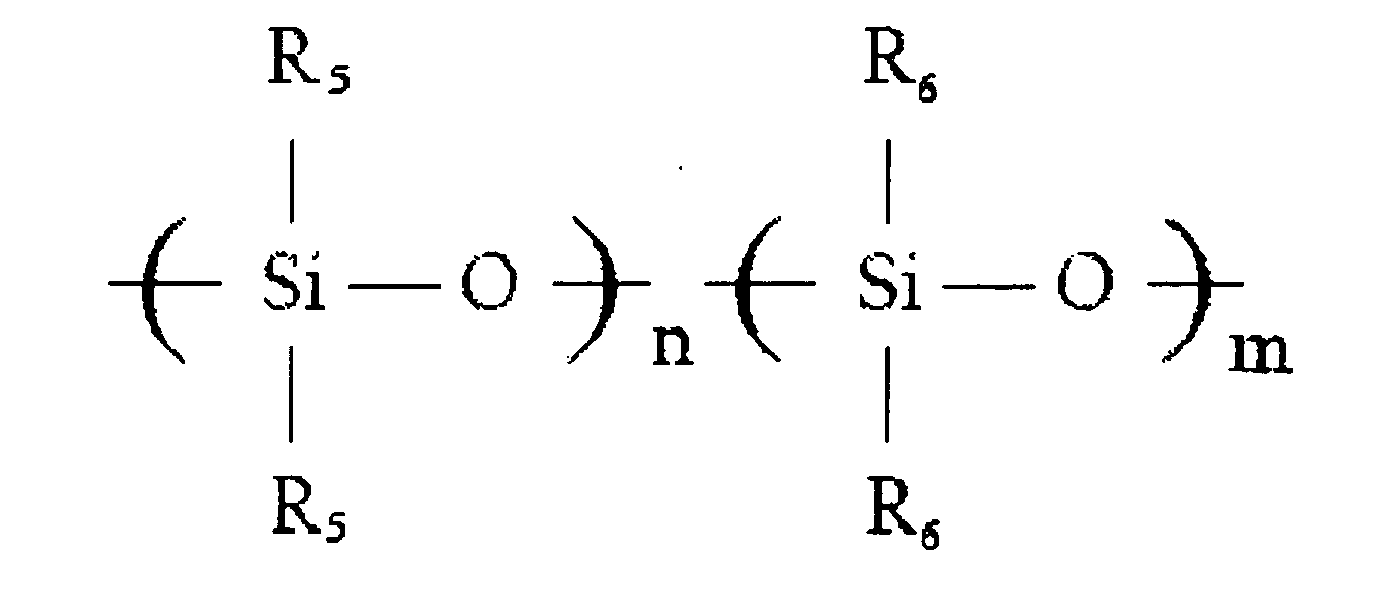
- Formgedächtnispolymer gemäß Anspruch 1, wobei genanntes monofunktionelles Cyanatestermonomer nur eine Cyanatestereinheit pro Molekül aufweist.
- Formgedächtnispolymer gemäß Anspruch 2, wobei genanntes monofunktionelles Cyanatestermonomer aus der Gruppe bestehend aus 4-Methoxyphenylcyanatester, 4-Nonylphenylcyanat, 4-Phenylphenylcyanate, 4-Cumylphenolcyanatester und Phenylcyanat ausgewählt wird.
- Formgedächtnispolymer gemäß Anspruch 1, wobei genanntes Amin-terminiertes Molekül aus der Gruppe bestehend aus Poly[dimethylsiloxan-co-methyl-(3-hydroxypropyl)siloxan-graft-poly(ethylenglykol)-3-amin opropylether; Amin-terminiertem Poly(acrylnitril-co-butadien); Amin-terminiertem Poly(dimethylsiloxan); Amin-terminiertem Poly(diphenylsiloxan); (Aminopropylmethylsiloxan)-dimethylsiloxan-Copolymer; Aminopropyl-terminiertem Poly(dimethylsiloxan); Aminopropyl-terminiertem Poly(diphenylsiloxan); Aminopropyl-terminiertem Poly(diethylsiloxan); N-Ethylaminoisobutyl-terminiertem Poly(dimethylsiloxan); N-Ethylaminoisobutyl-terminiertem Poly(diphenylsiloxan) und Aminopropyl-terminiertem Poly(dimethylsiloxan)-co-poly(diphenylsiloxan) ausgewählt wird.
- Formgedächtnispolymer gemäß Anspruch 1, wobei genanntes difunktionelles Cyanatesterharz im Mittel mindestens zwei Cyanatestereinheiten pro Molekül aufweist.
- Formgedächtnispolymer gemäß Anspruch 5, wobei genanntes difunktionelles Cyanatesterharz aus der Gruppe bestehend aus 2,2'-Bis(4-cyanatophenyl)isopropyliden, 2,2'-Bis(4-cyanatophenyl)-1,1,1,3,3,3-hexafluorisopropyliden, 1,1'-Bis(4-cyanatophenyl)ethan, 4,4'-Ethylidindiphenyldicyanat, Bis(4-cyanatophenyl)methan, 1,3-Bis(4-cyanatophenyl)-1-(1-methylethyliden))benzol, Bis(4-cyanatophenyl)thioether, Bis(4-cyanatophenyl)ether und Resorcinoldicyanat ausgewählt wird.
- Verfahren zur Herstellung eines Formgedächtnispolymers gemäß der Ansprüche 1 bis 6, umfassend das Mischen eines monofunktionellen Cyanatestermonomers mit mindestens einem Amin-terminierten Molekül mit der folgenden Struktur
R4HX - R8 - YHR7
in der X und Y identisch oder verschieden sein können und N, O oder S sein können, und R4 und R7 identisch oder verschieden sein können und nichts, H oder ein aliphatisches oder aromatisches CsHt-Polymer sein können, wobei s und t nicht Null und positive ganze Zahlen sind und R8 die folgende Struktur aufweist
- Verfahren gemäß Anspruch 7, wobei genanntes monofunktionelles Cyanatestermonomer nur eine Cyanatestereinheit pro Molekül aufweist.
- Verfahren gemäß Anspruch 8, wobei genanntes monofunktionelles Cyanatestermonomer aus der Gruppe bestehend aus 4-Methoxyphenylcyanatester, 4-Nonylphenylcyanat, 4-Phenylphenylcyanate, 4-Cumylphenolcyanatester und Phenylcyanat ausgewählt wird.
- Verfahren gemäß Anspruch 7, wobei genanntes Amin-terminiertes Molekül aus der Gruppe bestehend aus Poly[dimethylsiloxan-co-methyl-(3-hydroxypropyl)siloxan-graft-poly(ethylenglykol)-3-amin opropylether; Amin-terminiertem Poly(acrylnitril-co-butadien); Amin-terminiertem Poly(dimethylsiloxan); Amin-terminiertem Poly(diphenylsiloxan); (Aminopropylmethylsiloxan)-dimethylsiloxan-Copolymer; Aminopropyl-terminiertem Poly(dimethylsiloxan); Aminopropyl-terminiertem Poly(diphenylsiloxan); Aminopropyl-terminiertem Poly(diethylsiloxan); N-Ethylaminoisobutyl-terminiertem Poly(dimethylsiloxan); N-Ethylaminoisobutyl-terminiertem Poly(diphenylsiloxan) und Aminopropyl-terminiertem Poly(dimethylsiloxan)-co-poly(diphenylsiloxan) ausgewählt wird.
- Verfahren gemäß Anspruch 7, wobei genanntes difunktionelles Cyanatesterharz im Mittel mindestens zwei Cyanatestereinheiten pro Molekül aufweist.
- Verfahren gemäß Anspruch 11, wobei genanntes difunktionelles Cyanatesterharz aus der Gruppe bestehend aus 2,2'-Bis(4-cyanatophenyl)isopropyliden, 2,2'-Bis(4-cyanatophenyl)-1,1,1,3,3,3-hexafluorisopropyliden, 1,1'-Bis(4-cyanatophenyl)ethan, 4,4'-Ethylidindiphenyldicyanat, Bis(4-cyanatophenyl)methan, 1,3-Bis(4-cyanatophenyl)-1-(1-methylethyliden))benzol, Bis(4-cyanatophenyl)thioether, Bis(4-cyanatophenyl)ether und Resorcinoldicyanat ausgewählt wird.
Applications Claiming Priority (2)
| Application Number | Priority Date | Filing Date | Title |
|---|---|---|---|
| US73893805P | 2005-11-22 | 2005-11-22 | |
| PCT/US2006/045088 WO2008051241A2 (en) | 2005-11-22 | 2006-11-22 | Shape memory cyanate ester copolymers |
Publications (3)
| Publication Number | Publication Date |
|---|---|
| EP1979397A2 EP1979397A2 (de) | 2008-10-15 |
| EP1979397A4 EP1979397A4 (de) | 2009-04-08 |
| EP1979397B1 true EP1979397B1 (de) | 2011-09-07 |
Family
ID=39325060
Family Applications (1)
| Application Number | Title | Priority Date | Filing Date |
|---|---|---|---|
| EP06851766A Not-in-force EP1979397B1 (de) | 2005-11-22 | 2006-11-22 | Formgedächtnis-cyanatestercopolymere |
Country Status (4)
| Country | Link |
|---|---|
| US (1) | US20100137554A1 (de) |
| EP (1) | EP1979397B1 (de) |
| AT (1) | ATE523563T1 (de) |
| WO (1) | WO2008051241A2 (de) |
Cited By (1)
| Publication number | Priority date | Publication date | Assignee | Title |
|---|---|---|---|---|
| AT526075A4 (de) * | 2022-06-23 | 2023-11-15 | Univ Wien Tech | Cyanatester als Monomere in polymerisierbaren Zusammensetzungen |
Families Citing this family (5)
| Publication number | Priority date | Publication date | Assignee | Title |
|---|---|---|---|---|
| US8974217B2 (en) | 2010-11-11 | 2015-03-10 | Spirit Aerosystems, Inc. | Reconfigurable shape memory polymer tooling supports |
| US8877114B2 (en) | 2010-11-11 | 2014-11-04 | Spirit Aerosystems, Inc. | Method for removing a SMP apparatus from a cured composite part |
| UA70478U (uk) * | 2011-12-13 | 2012-06-11 | Інститут Хімії Високомолекулярних Сполук Нан України | Спосіб отримання поліціанурату |
| RU2738712C1 (ru) * | 2019-06-25 | 2020-12-15 | Общество с ограниченной ответственностью "Научно-исследовательский институт космических и авиационных материалов" | Цианат-эфирные полимерные смолы для изготовления высокопрочных композиционных изделий космического назначения с эффектом памяти формы |
| CN116589883B (zh) * | 2023-06-20 | 2024-01-30 | 中国科学院兰州化学物理研究所 | 一种氰酸酯墨水及其制备方法、氰酸酯形状记忆材料和应用 |
Family Cites Families (11)
| Publication number | Priority date | Publication date | Assignee | Title |
|---|---|---|---|---|
| US585602A (en) * | 1897-06-29 | Victor thijlin | ||
| US5506300A (en) * | 1985-01-04 | 1996-04-09 | Thoratec Laboratories Corporation | Compositions that soften at predetermined temperatures and the method of making same |
| US4847154A (en) * | 1987-05-29 | 1989-07-11 | Basf Corporation | Thermosetting resin systems containing secondary amine-terminated siloxane modifiers |
| JP2502132B2 (ja) * | 1988-09-30 | 1996-05-29 | 三菱重工業株式会社 | 形状記憶ポリウレタンエラストマ―成形体 |
| US5665822A (en) * | 1991-10-07 | 1997-09-09 | Landec Corporation | Thermoplastic Elastomers |
| US5856022A (en) * | 1994-06-15 | 1999-01-05 | Minnesota Mining And Manufacturing Company | Energy-curable cyanate/ethylenically unsaturated compositions |
| JP3732404B2 (ja) * | 1998-02-23 | 2006-01-05 | ニーモサイエンス ゲーエムベーハー | 形状記憶ポリマー組成物、形状記憶製品を形成する方法、および形状を記憶する組成物を形成する方法 |
| AUPQ170799A0 (en) | 1999-07-20 | 1999-08-12 | Cardiac Crc Nominees Pty Limited | Shape memory polyurethane or polyurethane-urea polymers |
| US6986855B1 (en) * | 2001-01-24 | 2006-01-17 | Cornerstone Research Group | Structural and optical applications for shape memory polymers (SMP) |
| CA2435808C (en) * | 2001-01-24 | 2011-01-04 | Johnson & Johnson Vision Care, Inc. | Shape memory polymer or alloy ophthalmic lens mold and methods of forming ophthalmic products |
| WO2005108448A1 (en) | 2004-05-06 | 2005-11-17 | Cornerstone Research Group, Inc. | Shape memory cyanate ester copolymers |
-
2006
- 2006-11-21 US US12/090,460 patent/US20100137554A1/en not_active Abandoned
- 2006-11-22 AT AT06851766T patent/ATE523563T1/de not_active IP Right Cessation
- 2006-11-22 WO PCT/US2006/045088 patent/WO2008051241A2/en not_active Ceased
- 2006-11-22 EP EP06851766A patent/EP1979397B1/de not_active Not-in-force
Cited By (2)
| Publication number | Priority date | Publication date | Assignee | Title |
|---|---|---|---|---|
| AT526075A4 (de) * | 2022-06-23 | 2023-11-15 | Univ Wien Tech | Cyanatester als Monomere in polymerisierbaren Zusammensetzungen |
| AT526075B1 (de) * | 2022-06-23 | 2023-11-15 | Univ Wien Tech | Cyanatester als Monomere in polymerisierbaren Zusammensetzungen |
Also Published As
| Publication number | Publication date |
|---|---|
| ATE523563T1 (de) | 2011-09-15 |
| WO2008051241A3 (en) | 2008-09-18 |
| US20100137554A1 (en) | 2010-06-03 |
| WO2008051241A2 (en) | 2008-05-02 |
| EP1979397A4 (de) | 2009-04-08 |
| EP1979397A2 (de) | 2008-10-15 |
Similar Documents
| Publication | Publication Date | Title |
|---|---|---|
| EP1920006B1 (de) | Formgedächtnis-epoxy-copolymere | |
| US8039572B2 (en) | Shape memory cyanate ester copolymers | |
| Yagci et al. | Recent advancement on polybenzoxazine—a newly developed high performance thermoset | |
| Agag | Preparation and properties of some thermosets derived from allyl‐functional naphthoxazines | |
| Agag et al. | High‐molecular‐weight AB‐type benzoxazines as new precursors for high‐performance thermosets | |
| Laskoski et al. | Synthesis and properties of a bisphenol A based phthalonitrile resin | |
| Tanpitaksit et al. | Effects of benzoxazine resin on property enhancement of shape memory epoxy: A dual function of benzoxazine resin as a curing agent and a stable network segment. | |
| US6403753B1 (en) | Method of making thermally removable polyurethanes | |
| CN111253572B (zh) | 基于双马来酰亚胺的热固性形状记忆树脂的制备方法 | |
| CA1052042A (fr) | Resines thermostables | |
| KR20190002820A (ko) | 디설파이드 결합을 포함하는 자가치유 탄성체 및 이의 제조 방법 | |
| CA1266742A (en) | Fluorinated polyurethanes containing polyoxyperfluoroalkylene blocks, endowed with improved mechanical characteristics | |
| Kiskan et al. | Benzoxazine resins as smart materials and future perspectives | |
| US10239254B1 (en) | Method of fabricating shape memory films | |
| Chen et al. | Poly (dl‐Lactic Acid)‐Based Linear Polyurethanes Capable of Forming Physical Crosslinking via UPy Quadruple Hydrogen Bonding Assembly | |
| WO2019063787A1 (en) | RETRACTICABLE RETICULATED POLYTHIOURETHANES WITH INTRINSIC INJECTION, REPAIR AND RECYCLING CAPABILITY | |
| US20100137554A1 (en) | Shape memory cyanate ester copolymers | |
| US9598608B2 (en) | Soluble, processable polyhemiaminals and polyhexahydrotriazines | |
| Ayala et al. | Synthesis, characterization, and properties of new sequenced poly (ether amide) s based on 2‐(4‐aminophenyl)‐5‐aminobenzimidazole and 2‐(3‐aminophenyl)‐5‐aminobenzimidazole | |
| Shibata et al. | Synthesis of tetraazacalix [2] arene [2] triazine-containing poly (dimethylsiloxane) with elastic property induced by pinning effect of the calixarene ring | |
| US9340635B2 (en) | Deoxybenzoin-derived anti-flammable polymers | |
| CA1333947C (en) | Thermosetting resin composition | |
| CN119350584A (zh) | 一种自修复可回收抗蠕变聚氨酯弹性体的制备方法 | |
| Pitchaimari et al. | Functionalized monomers based on N-(4-hydroxy phenyl) maleimide: thermal polymerization and degradation | |
| JP2695524B2 (ja) | 熱硬化性樹脂組成物 |
Legal Events
| Date | Code | Title | Description |
|---|---|---|---|
| PUAI | Public reference made under article 153(3) epc to a published international application that has entered the european phase |
Free format text: ORIGINAL CODE: 0009012 |
|
| 17P | Request for examination filed |
Effective date: 20080327 |
|
| AK | Designated contracting states |
Kind code of ref document: A2 Designated state(s): AT BE BG CH CY CZ DE DK EE ES FI FR GB GR HU IE IS IT LI LT LU LV MC NL PL PT RO SE SI SK TR |
|
| AX | Request for extension of the european patent |
Extension state: AL BA HR MK RS |
|
| R17D | Deferred search report published (corrected) |
Effective date: 20080918 |
|
| RIC1 | Information provided on ipc code assigned before grant |
Ipc: C08G 69/48 20060101ALI20081008BHEP Ipc: C08F 8/00 20060101AFI20081008BHEP |
|
| A4 | Supplementary search report drawn up and despatched |
Effective date: 20090310 |
|
| RIC1 | Information provided on ipc code assigned before grant |
Ipc: C08L 79/04 20060101AFI20090304BHEP Ipc: C08G 73/06 20060101ALI20090304BHEP |
|
| 17Q | First examination report despatched |
Effective date: 20090526 |
|
| GRAP | Despatch of communication of intention to grant a patent |
Free format text: ORIGINAL CODE: EPIDOSNIGR1 |
|
| DAX | Request for extension of the european patent (deleted) | ||
| GRAS | Grant fee paid |
Free format text: ORIGINAL CODE: EPIDOSNIGR3 |
|
| GRAA | (expected) grant |
Free format text: ORIGINAL CODE: 0009210 |
|
| REG | Reference to a national code |
Ref country code: GB Ref legal event code: FG4D |
|
| REG | Reference to a national code |
Ref country code: CH Ref legal event code: EP |
|
| REG | Reference to a national code |
Ref country code: IE Ref legal event code: FG4D |
|
| REG | Reference to a national code |
Ref country code: DE Ref legal event code: R096 Ref document number: 602006024302 Country of ref document: DE Effective date: 20111103 |
|
| REG | Reference to a national code |
Ref country code: NL Ref legal event code: VDEP Effective date: 20110907 |
|
| PG25 | Lapsed in a contracting state [announced via postgrant information from national office to epo] |
Ref country code: FI Free format text: LAPSE BECAUSE OF FAILURE TO SUBMIT A TRANSLATION OF THE DESCRIPTION OR TO PAY THE FEE WITHIN THE PRESCRIBED TIME-LIMIT Effective date: 20110907 Ref country code: LT Free format text: LAPSE BECAUSE OF FAILURE TO SUBMIT A TRANSLATION OF THE DESCRIPTION OR TO PAY THE FEE WITHIN THE PRESCRIBED TIME-LIMIT Effective date: 20110907 Ref country code: SE Free format text: LAPSE BECAUSE OF FAILURE TO SUBMIT A TRANSLATION OF THE DESCRIPTION OR TO PAY THE FEE WITHIN THE PRESCRIBED TIME-LIMIT Effective date: 20110907 |
|
| LTIE | Lt: invalidation of european patent or patent extension |
Effective date: 20110907 |
|
| PG25 | Lapsed in a contracting state [announced via postgrant information from national office to epo] |
Ref country code: AT Free format text: LAPSE BECAUSE OF FAILURE TO SUBMIT A TRANSLATION OF THE DESCRIPTION OR TO PAY THE FEE WITHIN THE PRESCRIBED TIME-LIMIT Effective date: 20110907 Ref country code: SI Free format text: LAPSE BECAUSE OF FAILURE TO SUBMIT A TRANSLATION OF THE DESCRIPTION OR TO PAY THE FEE WITHIN THE PRESCRIBED TIME-LIMIT Effective date: 20110907 Ref country code: LV Free format text: LAPSE BECAUSE OF FAILURE TO SUBMIT A TRANSLATION OF THE DESCRIPTION OR TO PAY THE FEE WITHIN THE PRESCRIBED TIME-LIMIT Effective date: 20110907 Ref country code: GR Free format text: LAPSE BECAUSE OF FAILURE TO SUBMIT A TRANSLATION OF THE DESCRIPTION OR TO PAY THE FEE WITHIN THE PRESCRIBED TIME-LIMIT Effective date: 20111208 Ref country code: CY Free format text: LAPSE BECAUSE OF FAILURE TO SUBMIT A TRANSLATION OF THE DESCRIPTION OR TO PAY THE FEE WITHIN THE PRESCRIBED TIME-LIMIT Effective date: 20110907 |
|
| REG | Reference to a national code |
Ref country code: AT Ref legal event code: MK05 Ref document number: 523563 Country of ref document: AT Kind code of ref document: T Effective date: 20110907 |
|
| PG25 | Lapsed in a contracting state [announced via postgrant information from national office to epo] |
Ref country code: BE Free format text: LAPSE BECAUSE OF FAILURE TO SUBMIT A TRANSLATION OF THE DESCRIPTION OR TO PAY THE FEE WITHIN THE PRESCRIBED TIME-LIMIT Effective date: 20110907 |
|
| PG25 | Lapsed in a contracting state [announced via postgrant information from national office to epo] |
Ref country code: SK Free format text: LAPSE BECAUSE OF FAILURE TO SUBMIT A TRANSLATION OF THE DESCRIPTION OR TO PAY THE FEE WITHIN THE PRESCRIBED TIME-LIMIT Effective date: 20110907 Ref country code: CZ Free format text: LAPSE BECAUSE OF FAILURE TO SUBMIT A TRANSLATION OF THE DESCRIPTION OR TO PAY THE FEE WITHIN THE PRESCRIBED TIME-LIMIT Effective date: 20110907 Ref country code: IS Free format text: LAPSE BECAUSE OF FAILURE TO SUBMIT A TRANSLATION OF THE DESCRIPTION OR TO PAY THE FEE WITHIN THE PRESCRIBED TIME-LIMIT Effective date: 20120107 |
|
| PG25 | Lapsed in a contracting state [announced via postgrant information from national office to epo] |
Ref country code: EE Free format text: LAPSE BECAUSE OF FAILURE TO SUBMIT A TRANSLATION OF THE DESCRIPTION OR TO PAY THE FEE WITHIN THE PRESCRIBED TIME-LIMIT Effective date: 20110907 Ref country code: RO Free format text: LAPSE BECAUSE OF FAILURE TO SUBMIT A TRANSLATION OF THE DESCRIPTION OR TO PAY THE FEE WITHIN THE PRESCRIBED TIME-LIMIT Effective date: 20110907 Ref country code: PL Free format text: LAPSE BECAUSE OF FAILURE TO SUBMIT A TRANSLATION OF THE DESCRIPTION OR TO PAY THE FEE WITHIN THE PRESCRIBED TIME-LIMIT Effective date: 20110907 Ref country code: NL Free format text: LAPSE BECAUSE OF FAILURE TO SUBMIT A TRANSLATION OF THE DESCRIPTION OR TO PAY THE FEE WITHIN THE PRESCRIBED TIME-LIMIT Effective date: 20110907 Ref country code: PT Free format text: LAPSE BECAUSE OF FAILURE TO SUBMIT A TRANSLATION OF THE DESCRIPTION OR TO PAY THE FEE WITHIN THE PRESCRIBED TIME-LIMIT Effective date: 20120109 Ref country code: IT Free format text: LAPSE BECAUSE OF FAILURE TO SUBMIT A TRANSLATION OF THE DESCRIPTION OR TO PAY THE FEE WITHIN THE PRESCRIBED TIME-LIMIT Effective date: 20110907 |
|
| PG25 | Lapsed in a contracting state [announced via postgrant information from national office to epo] |
Ref country code: MC Free format text: LAPSE BECAUSE OF NON-PAYMENT OF DUE FEES Effective date: 20111130 |
|
| REG | Reference to a national code |
Ref country code: CH Ref legal event code: PL |
|
| PLBE | No opposition filed within time limit |
Free format text: ORIGINAL CODE: 0009261 |
|
| STAA | Information on the status of an ep patent application or granted ep patent |
Free format text: STATUS: NO OPPOSITION FILED WITHIN TIME LIMIT |
|
| PG25 | Lapsed in a contracting state [announced via postgrant information from national office to epo] |
Ref country code: LI Free format text: LAPSE BECAUSE OF NON-PAYMENT OF DUE FEES Effective date: 20111130 Ref country code: CH Free format text: LAPSE BECAUSE OF NON-PAYMENT OF DUE FEES Effective date: 20111130 Ref country code: DK Free format text: LAPSE BECAUSE OF FAILURE TO SUBMIT A TRANSLATION OF THE DESCRIPTION OR TO PAY THE FEE WITHIN THE PRESCRIBED TIME-LIMIT Effective date: 20110907 |
|
| 26N | No opposition filed |
Effective date: 20120611 |
|
| REG | Reference to a national code |
Ref country code: IE Ref legal event code: MM4A |
|
| REG | Reference to a national code |
Ref country code: DE Ref legal event code: R097 Ref document number: 602006024302 Country of ref document: DE Effective date: 20120611 |
|
| PG25 | Lapsed in a contracting state [announced via postgrant information from national office to epo] |
Ref country code: IE Free format text: LAPSE BECAUSE OF NON-PAYMENT OF DUE FEES Effective date: 20111122 |
|
| PG25 | Lapsed in a contracting state [announced via postgrant information from national office to epo] |
Ref country code: ES Free format text: LAPSE BECAUSE OF FAILURE TO SUBMIT A TRANSLATION OF THE DESCRIPTION OR TO PAY THE FEE WITHIN THE PRESCRIBED TIME-LIMIT Effective date: 20111218 |
|
| PG25 | Lapsed in a contracting state [announced via postgrant information from national office to epo] |
Ref country code: LU Free format text: LAPSE BECAUSE OF NON-PAYMENT OF DUE FEES Effective date: 20111122 |
|
| PG25 | Lapsed in a contracting state [announced via postgrant information from national office to epo] |
Ref country code: BG Free format text: LAPSE BECAUSE OF FAILURE TO SUBMIT A TRANSLATION OF THE DESCRIPTION OR TO PAY THE FEE WITHIN THE PRESCRIBED TIME-LIMIT Effective date: 20111207 |
|
| PG25 | Lapsed in a contracting state [announced via postgrant information from national office to epo] |
Ref country code: TR Free format text: LAPSE BECAUSE OF FAILURE TO SUBMIT A TRANSLATION OF THE DESCRIPTION OR TO PAY THE FEE WITHIN THE PRESCRIBED TIME-LIMIT Effective date: 20110907 |
|
| PG25 | Lapsed in a contracting state [announced via postgrant information from national office to epo] |
Ref country code: HU Free format text: LAPSE BECAUSE OF FAILURE TO SUBMIT A TRANSLATION OF THE DESCRIPTION OR TO PAY THE FEE WITHIN THE PRESCRIBED TIME-LIMIT Effective date: 20110907 |
|
| REG | Reference to a national code |
Ref country code: FR Ref legal event code: PLFP Year of fee payment: 10 |
|
| PGFP | Annual fee paid to national office [announced via postgrant information from national office to epo] |
Ref country code: DE Payment date: 20151127 Year of fee payment: 10 Ref country code: GB Payment date: 20151127 Year of fee payment: 10 |
|
| PGFP | Annual fee paid to national office [announced via postgrant information from national office to epo] |
Ref country code: FR Payment date: 20151117 Year of fee payment: 10 |
|
| REG | Reference to a national code |
Ref country code: DE Ref legal event code: R119 Ref document number: 602006024302 Country of ref document: DE |
|
| GBPC | Gb: european patent ceased through non-payment of renewal fee |
Effective date: 20161122 |
|
| REG | Reference to a national code |
Ref country code: FR Ref legal event code: ST Effective date: 20170731 |
|
| PG25 | Lapsed in a contracting state [announced via postgrant information from national office to epo] |
Ref country code: FR Free format text: LAPSE BECAUSE OF NON-PAYMENT OF DUE FEES Effective date: 20161130 |
|
| PG25 | Lapsed in a contracting state [announced via postgrant information from national office to epo] |
Ref country code: DE Free format text: LAPSE BECAUSE OF NON-PAYMENT OF DUE FEES Effective date: 20170601 Ref country code: GB Free format text: LAPSE BECAUSE OF NON-PAYMENT OF DUE FEES Effective date: 20161122 |