EP1970742A2 - Nahaufnahmeobjektiv, Bildgebungsvorrichtung und Verfahren zum Fokussieren von Nahaufnahmeobjektiven - Google Patents
Nahaufnahmeobjektiv, Bildgebungsvorrichtung und Verfahren zum Fokussieren von Nahaufnahmeobjektiven Download PDFInfo
- Publication number
- EP1970742A2 EP1970742A2 EP08250834A EP08250834A EP1970742A2 EP 1970742 A2 EP1970742 A2 EP 1970742A2 EP 08250834 A EP08250834 A EP 08250834A EP 08250834 A EP08250834 A EP 08250834A EP 1970742 A2 EP1970742 A2 EP 1970742A2
- Authority
- EP
- European Patent Office
- Prior art keywords
- lens
- close
- lens group
- focusing
- infinity
- Prior art date
- Legal status (The legal status is an assumption and is not a legal conclusion. Google has not performed a legal analysis and makes no representation as to the accuracy of the status listed.)
- Granted
Links
Images






Classifications
-
- G—PHYSICS
- G02—OPTICS
- G02B—OPTICAL ELEMENTS, SYSTEMS OR APPARATUS
- G02B7/00—Mountings, adjusting means, or light-tight connections, for optical elements
- G02B7/02—Mountings, adjusting means, or light-tight connections, for optical elements for lenses
- G02B7/04—Mountings, adjusting means, or light-tight connections, for optical elements for lenses with mechanism for focusing or varying magnification
- G02B7/10—Mountings, adjusting means, or light-tight connections, for optical elements for lenses with mechanism for focusing or varying magnification by relative axial movement of several lenses, e.g. of varifocal objective lens
- G02B7/105—Mountings, adjusting means, or light-tight connections, for optical elements for lenses with mechanism for focusing or varying magnification by relative axial movement of several lenses, e.g. of varifocal objective lens with movable lens means specially adapted for focusing at close distances
-
- G—PHYSICS
- G02—OPTICS
- G02B—OPTICAL ELEMENTS, SYSTEMS OR APPARATUS
- G02B13/00—Optical objectives specially designed for the purposes specified below
- G02B13/24—Optical objectives specially designed for the purposes specified below for reproducing or copying at short object distances
- G02B13/26—Optical objectives specially designed for the purposes specified below for reproducing or copying at short object distances for reproducing with unit magnification
-
- G—PHYSICS
- G02—OPTICS
- G02B—OPTICAL ELEMENTS, SYSTEMS OR APPARATUS
- G02B15/00—Optical objectives with means for varying the magnification
- G02B15/14—Optical objectives with means for varying the magnification by axial movement of one or more lenses or groups of lenses relative to the image plane for continuously varying the equivalent focal length of the objective
- G02B15/22—Optical objectives with means for varying the magnification by axial movement of one or more lenses or groups of lenses relative to the image plane for continuously varying the equivalent focal length of the objective with movable lens means specially adapted for focusing at close distances
- G02B15/24—Optical objectives with means for varying the magnification by axial movement of one or more lenses or groups of lenses relative to the image plane for continuously varying the equivalent focal length of the objective with movable lens means specially adapted for focusing at close distances having a front fixed lens or lens group and two movable lenses or lens groups in front of a fixed lens or lens group
- G02B15/28—Optical objectives with means for varying the magnification by axial movement of one or more lenses or groups of lenses relative to the image plane for continuously varying the equivalent focal length of the objective with movable lens means specially adapted for focusing at close distances having a front fixed lens or lens group and two movable lenses or lens groups in front of a fixed lens or lens group arranged +-+
Definitions
- the present invention relates to a close-up lens, and in particular to a close-up lens with an internal focusing system having a constant total lens length, an imaging apparatus, and a method for focusing a close-up lens.
- a photo-taking lens for a close-up photograph has been proposed in, for example, Japanese Patent Application Laid-Open No. 2005-004041 .
- a close-up lens has to focus an object locating from infinity to a close distance allowing a life-size magnification or in the vicinity thereof, so that moving amounts of lens groups upon focusing necessarily become large. Accordingly, it is unsuitable for auto focus.
- you try to focus from infinity to a close distance providing a life-size magnification by extending the whole lens system in a body you have to move it a distance same as the focal length thereof.
- variations in spherical aberration and the image plane cannot be suppressed, a lot of lenses have adopted a floating system in which moving speed of a portion of lens group differs from that of the whole lens system.
- the present invention is made in view of the aforementioned problems and has an object to provide a close-up lens with superb optical performance capable of focusing from infinity to a close distance allowing a life-size magnification by an internal focusing system with small moving amounts of focusing lens groups, an imaging apparatus, and a method for focusing a close-up lens.
- a close-up lens according to the first aspect of the present invention, it is preferable that at least one aspherical surface is included in the close-up lens.
- the first lens group is composed of three lenses or less.
- the fourth lens group is composed of at least three lenses or more.
- the first lens group includes at least one aspherical surface.
- the second lens group includes at least one aspherical surface.
- a close-up lens according to the second aspect of the present invention, it is preferable that at least one aspherical surface is included in the close-up lens.
- the first lens group is composed of three lenses or less.
- the fourth lens group is composed of at least three lenses or more.
- the first lens group includes at least one aspherical surface.
- the second lens group includes at least one aspherical surface.
- an imaging apparatus equipped with the close-up lens according to the first aspect.
- an imaging apparatus equipped with the close-up lens according to the second aspect.
- ⁇ 0 denotes a lateral magnification of the second lens group upon focusing on infinity
- the present invention makes it possible to provide an internal focusing close-up lens having an angle of view from about 37 degrees to 45 degrees, and an f-number of about 2.8 suitable for an optical instrument such as a film camera, an electronic still camera, and the like, capable of focusing by auto focus from infinity to a close distance allowing a life-size magnification with high optical performance.
- a close-up lens according to the present embodiment is going to be explained below.
- Conditional expression (1) defines an appropriate range of the lateral magnification of the second lens group upon focusing on infinity.
- the focal length of the second lens group becomes short, so that spherical aberration and curvature of field are both overcorrected.
- a close-up lens according to the present embodiment preferably includes at least one aspherical surface.
- the first lens group is preferably composed of three lenses or less.
- the fourth lens group is preferably composed of at least three lenses or more.
- the first lens group includes at least one aspherical surface and the second lens group includes at least one aspherical surface.
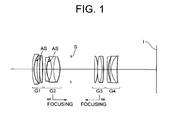
- Fig. 1 is a cross-sectional view showing a lens configuration of a close-up lens according to Example 1 upon focusing on infinity.
- the close-up lens according to Example 1 is composed of, in order from an object, a first lens group G1 having positive refractive power, a second lens group G2 having negative refractive power, an aperture stop S, a third lens group G3 having positive refractive power, and a fourth lens group G4 having negative refractive power.
- the first lens group G1, the fourth lens group G4, and the aperture stop S are fixed with respect to an image plane I
- the second lens group G2 is moved along an optical axis toward the image plane I
- the third lens group G3 is moved along the optical axis toward the object.
- the first lens group G1 is composed of, in order to the object, a negative meniscus lens having a convex surface facing the object and an aspherical surface on the image side surface, a positive meniscus lens having a convex surface facing the object, and a double convex positive lens.
- the second lens group G2 is composed of, in order from the object, a negative meniscus lens having a convex surface facing the object and an aspherical surface on the image side surface, and a cemented lens constructed by a double concave negative lens cemented with a double convex positive lens.
- the third lens group G3 is composed of, in order from the object, a double convex positive lens, and a cemented lens constructed by a double convex positive lens cemented with a negative meniscus lens having a concave surface facing the object.
- the fourth lens group G4 is composed of, in order from the object, a negative meniscus lens having a convex surface facing the object, and a cemented lens constructed by a negative meniscus lens having a convex surface facing the object cemented with a positive meniscus lens having a convex surface facing the object.
- f denotes a focal length
- FNO denotes an f-number
- Bf denotes a back focal length
- the first column “N” shows a lens surface number counted in order from the object side
- the second column “r” shows a radius of curvature of the lens surface
- the third column “d” shows a distance to the next lens surface along the optical axis
- h denotes a vertical height from the optical axis
- x denotes a sag amount which is a distance along the optical axis from the tangent surface at the vertex of the aspherical surface to the aspherical surface at the vertical height h from the optical axis
- r denotes a radius of curvature of a reference sphere (paraxial radius of curvature)
- K denotes a conical coefficient
- C4, C6, C8, C10 denote aspherical coefficients.
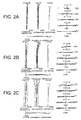
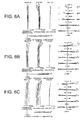
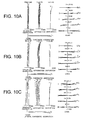
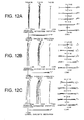
- ⁇ denotes a lateral magnification of the close-up lens in the entirety thereof.
- FNO denotes an f-number
- Y denotes an image height
- H denotes an object height
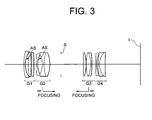
- Fig. 3 is a cross-sectional view showing a lens configuration of a close-up lens according to Example 2 upon focusing on infinity.
- a close-up lens according to Example 2 is composed of, in order from an object, a first lens group G1 having positive refractive power, a second lens group G2 having negative refractive power, an aperture stop S, a third lens group G3 having positive refractive power, and a fourth lens group G4 having negative refractive power.
- the first lens group G1, the fourth lens group G4, and the aperture stop S are fixed with respect to an image plane I
- the second lens group G2 is moved along an optical axis toward the image plane I
- the third lens group G3 is moved along the optical axis toward the object.
- the first lens group G1 is composed of, in order from the object, a negative meniscus lens having a convex surface facing the object and an aspherical surface on the image side surface, a positive meniscus lens having a convex surface facing the object, and a double convex positive lens.
- the second lens group G2 is composed of, in order from the object, a negative meniscus lens having a convex surface facing the object and an aspherical surface on the image side surface, and a cemented lens constructed by a double concave negative lens cemented with a double convex positive lens.
- the third lens group G3 is composed of, in order from the object, a double convex positive lens, and a cemented lens constructed by a double convex positive lens cemented with a negative meniscus lens having a concave surface facing the object.
- the fourth lens group G4 is composed of, in order from the object, a negative meniscus lens having a convex surface facing the object, and a cemented lens constructed by a negative meniscus lens having a convex surface facing the object cemented with a positive meniscus lens having a convex surface facing the object.
- Fig. 5 is a cross-sectional view showing a lens configuration of a close-up lens according to Example 3 upon focusing on infinity.
- a close-up lens according to Example 3 is composed of, in order from an object, a first lens group G1 having positive refractive power, a second lens group G2 having negative refractive power, an aperture stop S, a third lens group G3 having positive refractive power, and a fourth lens group G4 having negative refractive power.
- the first lens group G1, the fourth lens group G4, and the aperture stop S are fixed with respect to an image plane I
- the second lens group G2 is moved along an optical axis toward the image plane I
- the third lens group G3 is moved along the optical axis toward the object.
- the first lens group G1 is composed of, in order from the object, a negative meniscus lens having a convex surface facing the object and an aspherical surface on the image side surface, a double convex positive lens, and a positive meniscus lens having a convex surface facing the object.
- the second lens group G2 is composed of, in order from the object, a double concave negative lens, and a cemented lens constructed by a double concave negative lens cemented with a double convex positive lens.
- the third lens group G3 is composed of, in order from the object, a double convex positive lens, and a cemented lens constructed by a double convex positive lens cemented with a negative meniscus lens having a concave surface facing the object.
- the fourth lens group G4 is composed of, in order from the object, a cemented lens constructed by a positive meniscus lens having a concave surface facing the object cemented with a double concave negative lens, and a cemented lens constructed by a positive meniscus lens having a concave surface facing the object cemented with a negative meniscus lens having a concave surface facing the object.
- Fig. 7 is a cross-sectional view showing a lens configuration of a close-up lens according to Example 4 upon focusing on infinity.
- a close-up lens according to Example 4 is composed of, in order from an object, a first lens group G1 having positive refractive power, a second lens group G2 having negative refractive power, an aperture stop S, a third lens group G3 having positive refractive power, and a fourth lens group G4 having negative refractive power.
- the first lens group G1, the fourth lens group G4, and the aperture stop S are fixed with respect to an image plane I
- the second lens group G2 is moved along an optical axis toward the image plane I
- the third lens group G3 is moved along the optical axis toward the object.
- the first lens group G1 is composed of, in order from the object, a negative meniscus lens having a convex surface facing the object, a double convex positive lens, and a positive meniscus lens having a convex surface facing the object.
- the second lens group G2 is composed of, in order from the object, a double concave negative lens having an aspherical surface on the image side surface, and a cemented lens constructed by a negative meniscus lens having a concave surface facing the object cemented with a positive meniscus lens having a concave surface facing the object.
- the third lens group G3 is composed of, in order from the object, a double convex positive lens, and a cemented lens constructed by a double convex positive lens cemented with a double concave negative lens.
- the fourth lens group G4 is composed of, in order from the object, a cemented lens constructed by a positive meniscus lens having a concave surface facing the object cemented with a double concave negative lens, and a positive meniscus lens having a convex surface facing the object.
- Fig. 9 is a cross-sectional view showing a lens configuration of a close-up lens according to Example 5 upon focusing on infinity.
- a close-up lens according to Example 5 is composed of, in order from an object, a first lens group G1 having positive refractive power, a second lens group G2 having negative refractive power, an aperture stop S, a third lens group G3 having positive refractive power, and a fourth lens group G4 having negative refractive power.
- the first lens group G1, the fourth lens group G4, and the aperture stop S are fixed with respect to an image plane I
- the second lens group G2 is moved along an optical axis toward the image plane I
- the third lens group G3 is moved along the optical axis toward the object.
- the first lens group G1 is composed of, in order from the object, a negative meniscus lens having a convex surface facing the object, a positive meniscus lens having a convex surface facing the object, and a double convex positive lens.
- the most object side negative meniscus lens is an aspherical lens forming an aspherical surface on the image plane I side glass surface by applying a resin layer.
- the second lens group G2 is composed of, in order from the object, a negative meniscus lens having a convex surface facing the object and an aspherical surface on the image side surface, and a cemented lens constructed by a double concave negative lens cemented with a double convex positive lens.
- the third lens group G3 is composed of, in order from the object, a positive meniscus lens having a concave surface facing the object, and a cemented lens constructed by a double convex positive lens cemented with a negative meniscus lens having a concave surface facing the object.
- the fourth lens group G4 is composed of, in order from the object, a negative meniscus lens having a convex surface facing the object, and a cemented lens constructed by a negative meniscus lens having a convex surface facing the object cemented with a positive meniscus lens having a convex surface facing the object.
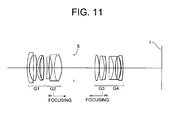
- Fig. 11 is a cross-sectional view showing a lens configuration of a close-up lens according to Example 6 upon focusing on infinity.
- a close-up lens according to Example 6 is composed of, in order from an object, a first lens group G1 having positive refractive power, a second lens group G2 having negative refractive power, an aperture stop S, a third lens group G3 having positive refractive power, and a fourth lens group G4 having negative refractive power.
- the first lens group G1, the fourth lens group G4, and the aperture stop S are fixed with respect to an image plane I
- the second lens group G2 is moved along an optical axis toward the image plane I
- the third lens group G3 is moved along the optical axis toward the object.
- the first lens group G1 is composed of, in order from the object, a negative meniscus lens having a convex surface facing the object, a double convex positive lens, a negative meniscus lens having a convex surface facing the object, and a double convex positive lens.
- the second lens group G2 is composed of, in order from the object, a double concave negative lens, and a cemented lens constructed by a double concave negative lens cemented with a double convex positive lens.
- the third lens group G3 is composed of, in order from the object, a double convex positive lens, and a cemented lens constructed by a double convex positive lens cemented with a negative meniscus lens having a concave surface facing the object.
- the fourth lens group G4 is composed of, in order from the object, a cemented lens constructed by a double convex positive lens cemented with a double concave negative lens, a positive meniscus lens having a concave surface facing the object, and a negative meniscus lens having a concave surface facing the object.
- Fig. 13 is a cross-sectional view showing a lens configuration of a close-up lens according to Example 7 upon focusing on infinity.
- a close-up lens according to Example 7 is composed of, in order from an object, a first lens group G1 having positive refractive power, a second lens group G2 having negative refractive power, an aperture stop S, a third lens group G3 having positive refractive power, and a fourth lens group G4 having negative refractive power.
- the first lens group G1, the fourth lens group G4, and the aperture stop S are fixed with respect to an image plane I
- the second lens group G2 is moved along an optical axis toward the image plane I
- the third lens group G3 is moved along the optical axis toward the object.
- the first lens group G1 is composed of, in order from the object, a negative meniscus lens having a convex surface facing the object and an aspherical surface on the image side surface, a double convex positive lens, and a cemented lens constructed by a negative meniscus lens having a convex surface facing the object cemented with a positive meniscus lens having a convex surface facing the object.
- the second lens group G2 is composed of, in order from the object, a double concave negative lens, and a cemented lens constructed by a double concave negative lens cemented with a double convex positive lens.
- the third lens group G3 is composed of, in order from the object, a double convex positive lens, and a cemented lens constructed by a double convex positive lens cemented with a negative meniscus lens having a concave surface facing the object.
- the fourth lens group G4 is composed of, in order from the object, a positive meniscus lens having a concave surface facing the object, a double concave negative lens, a positive meniscus lens having a concave surface facing the object, and a negative meniscus lens having a concave surface facing the object.
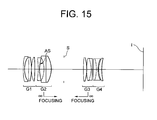
- Fig. 15 is a cross-sectional view showing a lens configuration of a close-up lens according to Example 8 upon focusing on infinity.
- a close-up lens according to Example 8 is composed of, in order from an object, a first lens group G1 having positive refractive power, a second lens group G2 having negative refractive power, an aperture stop S, a third lens group G3 having positive refractive power, and a fourth lens group G4 having negative refractive power.
- the first lens group G1, the fourth lens group G4, and the aperture stop S are fixed with respect to an image plane I
- the second lens group G2 is moved along an optical axis toward the image plane I
- the third lens group G3 is moved along the optical axis toward the object.
- the first lens group G1 is composed of, in order from the object, a negative meniscus lens having a convex surface facing the object, a double convex positive lens, and a double convex positive lens.
- the second lens group G2 is composed of, in order from the object, a double concave negative lens having an aspherical surface on the image side surface, and a cemented lens constructed by a double concave negative lens cemented with a double convex positive lens.
- the third lens group G3 is composed of, in order from the object, a double convex positive lens, and a cemented lens constructed by a double convex positive lens cemented with a double concave negative lens.
- the fourth lens group G4 is composed of, in order from the object, a cemented lens constructed by a double convex positive lens cemented with a double concave negative lens, and a positive meniscus lens having a convex surface facing the object.
- the present embodiment makes it possible to provide a close-up lens with superb optical performance capable of focusing from infinity to a close distance allowing a life-size magnification by an internal focusing system with small moving amounts of focusing lens groups, an imaging apparatus, and a method for focusing a close-up lens.
- the lens-group configuration according to the present embodiment is not limited to this, other lens-group configurations such as a five-lens-group configuration are possible.
- a portion of a lens group, or a single lens group may be moved as a vibration reduction lens group in a direction perpendicular to the optical axis.
- the fourth lens group or a portion thereof is used for the vibration reduction lens group.
- any lens surface may be formed as an aspherical surface.
- the aspherical surface may be fabricated by a fine grinding process, a glass molding process that a glass material is formed into an aspherical shape by a mold, or a compound type process that a resin material is formed into an aspherical shape on a glass lens surface.
- An antireflection coating having high transmittance over a broad wavelength range may be applied to each lens surface to reduce flare or ghost images, so that high optical performance with a high contrast can be attained.
- Fig. 17 is a diagram showing an imaging apparatus (camera) equipped with a close-up lens according to Example 1.
- the camera 1 is a single-lens reflex digital camera equipped with the close-up lens according to Example 1 as an image-taking lens 2.
- the camera 1 In the camera 1, light emitted from a subject (not shown) is converged by the image-taking lens 2, and focused on a focusing screen 4 through a quick return mirror 3.
- the subject image focused on the focusing screen 4 is reflected a plurality of times by a pentagonal roof prism 5, and led to an eyepiece 6. Therefore, a photographer can observe the subject image as an erected image through the eyepiece 6.
- the quick return mirror 3 is removed from an optical path, and the light from the subject (not shown) reaches an imaging device 7.
- Light from the subject is captured by the imaging device 7 and stored in a memory (not shown) as a subject image. In this manner, the photographer can take a picture of the subject by the camera 1.
- the close-up lens according to Example 1 of the embodiment attached to the camera 1 as an image-taking lens 2 makes it possible to realize a close-up lens with superb optical performance capable of focusing from infinity to a close distance allowing a life-size magnification by an internal focusing system with small moving amounts of focusing lens groups. Accordingly, the camera 1 makes it possible to realize an imaging apparatus capable of taking a close-up photograph by focusing from infinity to a close distance allowing a life-size magnification by an internal focusing system.
- Example 1 Although the above-described example is shown a case composing a camera 1 equipped with the close-up lens according to Example 1, it is needless to say that the similar effect can be obtained by a camera equipped with a close-up lens according to any one of Examples 2 through 8 of the present embodiment.
Landscapes
- Physics & Mathematics (AREA)
- General Physics & Mathematics (AREA)
- Optics & Photonics (AREA)
- Lenses (AREA)
Applications Claiming Priority (2)
| Application Number | Priority Date | Filing Date | Title |
|---|---|---|---|
| JP2007065400 | 2007-03-14 | ||
| JP2008034053A JP5151529B2 (ja) | 2007-03-14 | 2008-02-15 | 近接撮影レンズ、撮影装置、近接撮影レンズのフォーカシング方法 |
Publications (3)
| Publication Number | Publication Date |
|---|---|
| EP1970742A2 true EP1970742A2 (de) | 2008-09-17 |
| EP1970742A3 EP1970742A3 (de) | 2009-03-25 |
| EP1970742B1 EP1970742B1 (de) | 2013-03-06 |
Family
ID=39512142
Family Applications (1)
| Application Number | Title | Priority Date | Filing Date |
|---|---|---|---|
| EP08250834A Not-in-force EP1970742B1 (de) | 2007-03-14 | 2008-03-12 | Nahaufnahmeobjektiv, Bildgebungsvorrichtung und Verfahren zum Fokussieren von Nahaufnahmeobjektiven |
Country Status (2)
| Country | Link |
|---|---|
| US (2) | US7898744B2 (de) |
| EP (1) | EP1970742B1 (de) |
Cited By (1)
| Publication number | Priority date | Publication date | Assignee | Title |
|---|---|---|---|---|
| CN112612125A (zh) * | 2020-12-31 | 2021-04-06 | 江西晶超光学有限公司 | 变焦光学系统、变焦取像模组及电子设备 |
Families Citing this family (13)
| Publication number | Priority date | Publication date | Assignee | Title |
|---|---|---|---|---|
| EP2083303A1 (de) * | 2008-01-22 | 2009-07-29 | Nikon Corporation | Bildlinse, entsprechende optische Vorrichtung und optisches Verfahren zur Herstellung einer Bildlinse |
| US8238044B2 (en) * | 2009-11-07 | 2012-08-07 | Nikon Corporation | Imaging lens, imaging apparatus, and method for manufacturing imaging lens |
| US8836848B2 (en) * | 2010-01-26 | 2014-09-16 | Southwest Research Institute | Vision system |
| US8942964B2 (en) | 2010-06-08 | 2015-01-27 | Southwest Research Institute | Optical state estimation and simulation environment for unmanned aerial vehicles |
| JP5652057B2 (ja) | 2010-08-30 | 2015-01-14 | リコーイメージング株式会社 | マクロレンズ系 |
| US8466406B2 (en) | 2011-05-12 | 2013-06-18 | Southwest Research Institute | Wide-angle laser signal sensor having a 360 degree field of view in a horizontal plane and a positive 90 degree field of view in a vertical plane |
| JP6562692B2 (ja) * | 2015-04-24 | 2019-08-21 | キヤノン株式会社 | 光学系及びそれを有する撮像装置 |
| US10495860B2 (en) | 2015-06-17 | 2019-12-03 | Zhejiang Dahua Technology Co., Ltd. | Zoom lens system |
| US11899278B2 (en) * | 2018-03-30 | 2024-02-13 | Sony Group Corporation | Imaging lens and imaging apparatus |
| JP7166980B2 (ja) * | 2019-04-12 | 2022-11-08 | キヤノン株式会社 | 光学系およびそれを有する撮像装置 |
| CN113406778B (zh) * | 2020-03-16 | 2022-12-06 | 华为技术有限公司 | 变焦镜头、摄像头模组及移动终端 |
| RU2760643C1 (ru) * | 2021-02-05 | 2021-11-29 | Публичное акционерное общество "Красногорский завод им. С.А. Зверева" | Фотографический макрообъектив |
| CN113109925A (zh) * | 2021-04-21 | 2021-07-13 | 深圳市爵影科技有限公司 | 内合焦式大口径远摄镜头 |
Citations (1)
| Publication number | Priority date | Publication date | Assignee | Title |
|---|---|---|---|---|
| US20040017617A1 (en) | 2002-07-26 | 2004-01-29 | Yoshiyuki Taki | Image taking lens system |
Family Cites Families (12)
| Publication number | Priority date | Publication date | Assignee | Title |
|---|---|---|---|---|
| JPH033081A (ja) * | 1989-05-31 | 1991-01-09 | Nec Home Electron Ltd | 画像パターン変換方式 |
| JP3003081B2 (ja) * | 1990-08-31 | 2000-01-24 | 株式会社シグマ | インナーフォーカス式マクロレンズ |
| US5416639A (en) * | 1991-06-29 | 1995-05-16 | Olympus Optical Co., Ltd. | Zoom lens system |
| DE69409159T2 (de) * | 1993-06-07 | 1998-10-22 | Matsushita Electric Ind Co Ltd | Asphärisches Zoomobjektiv |
| JP3340609B2 (ja) * | 1996-01-29 | 2002-11-05 | 旭光学工業株式会社 | ズームレンズ系 |
| JP4235288B2 (ja) * | 1998-09-09 | 2009-03-11 | キヤノン株式会社 | リヤーフォーカス式のズームレンズ |
| JP2000292700A (ja) | 1999-04-02 | 2000-10-20 | Canon Inc | 撮影レンズ及び撮影装置 |
| JP2005004041A (ja) * | 2003-06-13 | 2005-01-06 | Canon Inc | 撮影レンズ |
| US7583441B2 (en) * | 2004-07-09 | 2009-09-01 | Canon Kabushiki Kaisha | Photographic lens system and image pickup apparatus |
| JP4717430B2 (ja) * | 2004-12-16 | 2011-07-06 | キヤノン株式会社 | 撮影レンズ及びそれを有する撮像装置 |
| JP4945890B2 (ja) | 2004-09-30 | 2012-06-06 | 株式会社ニコン | 交換レンズ |
| JP2006153942A (ja) * | 2004-11-25 | 2006-06-15 | Canon Inc | 撮影レンズ |
-
2008
- 2008-03-12 EP EP08250834A patent/EP1970742B1/de not_active Not-in-force
- 2008-03-13 US US12/048,198 patent/US7898744B2/en active Active
-
2011
- 2011-02-17 US US13/029,222 patent/US8493664B2/en active Active
Patent Citations (1)
| Publication number | Priority date | Publication date | Assignee | Title |
|---|---|---|---|---|
| US20040017617A1 (en) | 2002-07-26 | 2004-01-29 | Yoshiyuki Taki | Image taking lens system |
Cited By (1)
| Publication number | Priority date | Publication date | Assignee | Title |
|---|---|---|---|---|
| CN112612125A (zh) * | 2020-12-31 | 2021-04-06 | 江西晶超光学有限公司 | 变焦光学系统、变焦取像模组及电子设备 |
Also Published As
| Publication number | Publication date |
|---|---|
| EP1970742A3 (de) | 2009-03-25 |
| US8493664B2 (en) | 2013-07-23 |
| US7898744B2 (en) | 2011-03-01 |
| US20110134538A1 (en) | 2011-06-09 |
| US20080225406A1 (en) | 2008-09-18 |
| EP1970742B1 (de) | 2013-03-06 |
Similar Documents
| Publication | Publication Date | Title |
|---|---|---|
| EP1970742B1 (de) | Nahaufnahmeobjektiv, Bildgebungsvorrichtung und Verfahren zum Fokussieren von Nahaufnahmeobjektiven | |
| US7961409B2 (en) | Zoom lens system, optical apparatus, and method for zooming | |
| US10437026B2 (en) | Zoom lens system, imaging apparatus, and method for zooming the zoom lens system | |
| EP2620796B1 (de) | Optisches System und Bildgebungsvorrichtung | |
| US8144403B2 (en) | Zoom lens system, optical apparatus, and method for zooming | |
| US7551367B2 (en) | Wide-angle lens, optical apparatus and method for focusing | |
| EP2071379B1 (de) | Makro-Teleobjektiv mit drei Linsengruppen vom Frontfokus-Typ und Verfahren zu seiner Herstellung | |
| US7903348B2 (en) | Rear-focus optical system, imaging apparatus and method for focusing the same | |
| US7924511B2 (en) | Optical system, method for focusing, and imaging apparatus equipped therewith | |
| US7599123B2 (en) | Zoom lens system, imaging apparatus and method for varying focal length | |
| EP1837693B1 (de) | Retrofokus-Linsensystem und Bildaufnahmevorrichtung | |
| JP4632724B2 (ja) | ズームレンズ | |
| US7920341B2 (en) | Optical system, imaging apparatus, and method for forming image by the optical system | |
| JP6938845B2 (ja) | 光学系および光学機器 | |
| EP1921482A1 (de) | Compaktes Retrofokus Zoomobjektiv mit zwei Linsengruppen |
Legal Events
| Date | Code | Title | Description |
|---|---|---|---|
| PUAI | Public reference made under article 153(3) epc to a published international application that has entered the european phase |
Free format text: ORIGINAL CODE: 0009012 |
|
| AK | Designated contracting states |
Kind code of ref document: A2 Designated state(s): AT BE BG CH CY CZ DE DK EE ES FI FR GB GR HR HU IE IS IT LI LT LU LV MC MT NL NO PL PT RO SE SI SK TR |
|
| AX | Request for extension of the european patent |
Extension state: AL BA MK RS |
|
| PUAL | Search report despatched |
Free format text: ORIGINAL CODE: 0009013 |
|
| AK | Designated contracting states |
Kind code of ref document: A3 Designated state(s): AT BE BG CH CY CZ DE DK EE ES FI FR GB GR HR HU IE IS IT LI LT LU LV MC MT NL NO PL PT RO SE SI SK TR |
|
| AX | Request for extension of the european patent |
Extension state: AL BA MK RS |
|
| 17P | Request for examination filed |
Effective date: 20090924 |
|
| AKX | Designation fees paid |
Designated state(s): AT BE BG CH CY CZ DE DK EE ES FI FR GB GR HR HU IE IS IT LI LT LU LV MC MT NL NO PL PT RO SE SI SK TR |
|
| 17Q | First examination report despatched |
Effective date: 20100616 |
|
| RAP1 | Party data changed (applicant data changed or rights of an application transferred) |
Owner name: NIKON CORPORATION |
|
| REG | Reference to a national code |
Ref country code: DE Ref legal event code: R079 Ref document number: 602008022680 Country of ref document: DE Free format text: PREVIOUS MAIN CLASS: G02B0015240000 Ipc: G02B0013260000 |
|
| RIC1 | Information provided on ipc code assigned before grant |
Ipc: G02B 15/28 20060101ALI20120531BHEP Ipc: G02B 7/105 20060101ALN20120531BHEP Ipc: G02B 13/26 20060101AFI20120531BHEP |
|
| RIC1 | Information provided on ipc code assigned before grant |
Ipc: G02B 13/26 20060101AFI20120605BHEP Ipc: G02B 7/105 20060101ALN20120605BHEP Ipc: G02B 15/28 20060101ALI20120605BHEP |
|
| GRAP | Despatch of communication of intention to grant a patent |
Free format text: ORIGINAL CODE: EPIDOSNIGR1 |
|
| GRAS | Grant fee paid |
Free format text: ORIGINAL CODE: EPIDOSNIGR3 |
|
| GRAA | (expected) grant |
Free format text: ORIGINAL CODE: 0009210 |
|
| RIN1 | Information on inventor provided before grant (corrected) |
Inventor name: WADA, MITSUAKI |
|
| AK | Designated contracting states |
Kind code of ref document: B1 Designated state(s): AT BE BG CH CY CZ DE DK EE ES FI FR GB GR HR HU IE IS IT LI LT LU LV MC MT NL NO PL PT RO SE SI SK TR |
|
| REG | Reference to a national code |
Ref country code: GB Ref legal event code: FG4D |
|
| REG | Reference to a national code |
Ref country code: CH Ref legal event code: EP Ref country code: AT Ref legal event code: REF Ref document number: 599948 Country of ref document: AT Kind code of ref document: T Effective date: 20130315 |
|
| REG | Reference to a national code |
Ref country code: IE Ref legal event code: FG4D |
|
| REG | Reference to a national code |
Ref country code: DE Ref legal event code: R096 Ref document number: 602008022680 Country of ref document: DE Effective date: 20130502 |
|
| REG | Reference to a national code |
Ref country code: AT Ref legal event code: MK05 Ref document number: 599948 Country of ref document: AT Kind code of ref document: T Effective date: 20130306 |
|
| PG25 | Lapsed in a contracting state [announced via postgrant information from national office to epo] |
Ref country code: NO Free format text: LAPSE BECAUSE OF FAILURE TO SUBMIT A TRANSLATION OF THE DESCRIPTION OR TO PAY THE FEE WITHIN THE PRESCRIBED TIME-LIMIT Effective date: 20130606 Ref country code: BG Free format text: LAPSE BECAUSE OF FAILURE TO SUBMIT A TRANSLATION OF THE DESCRIPTION OR TO PAY THE FEE WITHIN THE PRESCRIBED TIME-LIMIT Effective date: 20130606 Ref country code: SE Free format text: LAPSE BECAUSE OF FAILURE TO SUBMIT A TRANSLATION OF THE DESCRIPTION OR TO PAY THE FEE WITHIN THE PRESCRIBED TIME-LIMIT Effective date: 20130306 Ref country code: LT Free format text: LAPSE BECAUSE OF FAILURE TO SUBMIT A TRANSLATION OF THE DESCRIPTION OR TO PAY THE FEE WITHIN THE PRESCRIBED TIME-LIMIT Effective date: 20130306 Ref country code: ES Free format text: LAPSE BECAUSE OF FAILURE TO SUBMIT A TRANSLATION OF THE DESCRIPTION OR TO PAY THE FEE WITHIN THE PRESCRIBED TIME-LIMIT Effective date: 20130617 Ref country code: AT Free format text: LAPSE BECAUSE OF FAILURE TO SUBMIT A TRANSLATION OF THE DESCRIPTION OR TO PAY THE FEE WITHIN THE PRESCRIBED TIME-LIMIT Effective date: 20130306 |
|
| REG | Reference to a national code |
Ref country code: NL Ref legal event code: VDEP Effective date: 20130306 |
|
| REG | Reference to a national code |
Ref country code: LT Ref legal event code: MG4D |
|
| PG25 | Lapsed in a contracting state [announced via postgrant information from national office to epo] |
Ref country code: FI Free format text: LAPSE BECAUSE OF FAILURE TO SUBMIT A TRANSLATION OF THE DESCRIPTION OR TO PAY THE FEE WITHIN THE PRESCRIBED TIME-LIMIT Effective date: 20130306 Ref country code: GR Free format text: LAPSE BECAUSE OF FAILURE TO SUBMIT A TRANSLATION OF THE DESCRIPTION OR TO PAY THE FEE WITHIN THE PRESCRIBED TIME-LIMIT Effective date: 20130607 Ref country code: SI Free format text: LAPSE BECAUSE OF FAILURE TO SUBMIT A TRANSLATION OF THE DESCRIPTION OR TO PAY THE FEE WITHIN THE PRESCRIBED TIME-LIMIT Effective date: 20130306 Ref country code: LV Free format text: LAPSE BECAUSE OF FAILURE TO SUBMIT A TRANSLATION OF THE DESCRIPTION OR TO PAY THE FEE WITHIN THE PRESCRIBED TIME-LIMIT Effective date: 20130306 |
|
| PG25 | Lapsed in a contracting state [announced via postgrant information from national office to epo] |
Ref country code: BE Free format text: LAPSE BECAUSE OF FAILURE TO SUBMIT A TRANSLATION OF THE DESCRIPTION OR TO PAY THE FEE WITHIN THE PRESCRIBED TIME-LIMIT Effective date: 20130306 Ref country code: HR Free format text: LAPSE BECAUSE OF FAILURE TO SUBMIT A TRANSLATION OF THE DESCRIPTION OR TO PAY THE FEE WITHIN THE PRESCRIBED TIME-LIMIT Effective date: 20130306 |
|
| PG25 | Lapsed in a contracting state [announced via postgrant information from national office to epo] |
Ref country code: EE Free format text: LAPSE BECAUSE OF FAILURE TO SUBMIT A TRANSLATION OF THE DESCRIPTION OR TO PAY THE FEE WITHIN THE PRESCRIBED TIME-LIMIT Effective date: 20130306 Ref country code: MC Free format text: LAPSE BECAUSE OF NON-PAYMENT OF DUE FEES Effective date: 20130331 Ref country code: RO Free format text: LAPSE BECAUSE OF FAILURE TO SUBMIT A TRANSLATION OF THE DESCRIPTION OR TO PAY THE FEE WITHIN THE PRESCRIBED TIME-LIMIT Effective date: 20130306 Ref country code: SK Free format text: LAPSE BECAUSE OF FAILURE TO SUBMIT A TRANSLATION OF THE DESCRIPTION OR TO PAY THE FEE WITHIN THE PRESCRIBED TIME-LIMIT Effective date: 20130306 Ref country code: CZ Free format text: LAPSE BECAUSE OF FAILURE TO SUBMIT A TRANSLATION OF THE DESCRIPTION OR TO PAY THE FEE WITHIN THE PRESCRIBED TIME-LIMIT Effective date: 20130306 Ref country code: PT Free format text: LAPSE BECAUSE OF FAILURE TO SUBMIT A TRANSLATION OF THE DESCRIPTION OR TO PAY THE FEE WITHIN THE PRESCRIBED TIME-LIMIT Effective date: 20130708 Ref country code: IS Free format text: LAPSE BECAUSE OF FAILURE TO SUBMIT A TRANSLATION OF THE DESCRIPTION OR TO PAY THE FEE WITHIN THE PRESCRIBED TIME-LIMIT Effective date: 20130706 Ref country code: NL Free format text: LAPSE BECAUSE OF FAILURE TO SUBMIT A TRANSLATION OF THE DESCRIPTION OR TO PAY THE FEE WITHIN THE PRESCRIBED TIME-LIMIT Effective date: 20130306 |
|
| REG | Reference to a national code |
Ref country code: CH Ref legal event code: PL |
|
| PG25 | Lapsed in a contracting state [announced via postgrant information from national office to epo] |
Ref country code: PL Free format text: LAPSE BECAUSE OF FAILURE TO SUBMIT A TRANSLATION OF THE DESCRIPTION OR TO PAY THE FEE WITHIN THE PRESCRIBED TIME-LIMIT Effective date: 20130306 Ref country code: CY Free format text: LAPSE BECAUSE OF FAILURE TO SUBMIT A TRANSLATION OF THE DESCRIPTION OR TO PAY THE FEE WITHIN THE PRESCRIBED TIME-LIMIT Effective date: 20130306 |
|
| REG | Reference to a national code |
Ref country code: IE Ref legal event code: MM4A |
|
| PLBE | No opposition filed within time limit |
Free format text: ORIGINAL CODE: 0009261 |
|
| STAA | Information on the status of an ep patent application or granted ep patent |
Free format text: STATUS: NO OPPOSITION FILED WITHIN TIME LIMIT |
|
| PG25 | Lapsed in a contracting state [announced via postgrant information from national office to epo] |
Ref country code: IE Free format text: LAPSE BECAUSE OF NON-PAYMENT OF DUE FEES Effective date: 20130312 Ref country code: LI Free format text: LAPSE BECAUSE OF NON-PAYMENT OF DUE FEES Effective date: 20130331 Ref country code: CH Free format text: LAPSE BECAUSE OF NON-PAYMENT OF DUE FEES Effective date: 20130331 Ref country code: DK Free format text: LAPSE BECAUSE OF FAILURE TO SUBMIT A TRANSLATION OF THE DESCRIPTION OR TO PAY THE FEE WITHIN THE PRESCRIBED TIME-LIMIT Effective date: 20130306 |
|
| 26N | No opposition filed |
Effective date: 20131209 |
|
| PG25 | Lapsed in a contracting state [announced via postgrant information from national office to epo] |
Ref country code: IT Free format text: LAPSE BECAUSE OF FAILURE TO SUBMIT A TRANSLATION OF THE DESCRIPTION OR TO PAY THE FEE WITHIN THE PRESCRIBED TIME-LIMIT Effective date: 20130306 |
|
| REG | Reference to a national code |
Ref country code: DE Ref legal event code: R097 Ref document number: 602008022680 Country of ref document: DE Effective date: 20131209 |
|
| PG25 | Lapsed in a contracting state [announced via postgrant information from national office to epo] |
Ref country code: MT Free format text: LAPSE BECAUSE OF FAILURE TO SUBMIT A TRANSLATION OF THE DESCRIPTION OR TO PAY THE FEE WITHIN THE PRESCRIBED TIME-LIMIT Effective date: 20130306 |
|
| PG25 | Lapsed in a contracting state [announced via postgrant information from national office to epo] |
Ref country code: TR Free format text: LAPSE BECAUSE OF FAILURE TO SUBMIT A TRANSLATION OF THE DESCRIPTION OR TO PAY THE FEE WITHIN THE PRESCRIBED TIME-LIMIT Effective date: 20130306 |
|
| PG25 | Lapsed in a contracting state [announced via postgrant information from national office to epo] |
Ref country code: LU Free format text: LAPSE BECAUSE OF NON-PAYMENT OF DUE FEES Effective date: 20130312 Ref country code: HU Free format text: LAPSE BECAUSE OF FAILURE TO SUBMIT A TRANSLATION OF THE DESCRIPTION OR TO PAY THE FEE WITHIN THE PRESCRIBED TIME-LIMIT; INVALID AB INITIO Effective date: 20080312 |
|
| REG | Reference to a national code |
Ref country code: FR Ref legal event code: PLFP Year of fee payment: 9 |
|
| REG | Reference to a national code |
Ref country code: FR Ref legal event code: PLFP Year of fee payment: 10 |
|
| REG | Reference to a national code |
Ref country code: FR Ref legal event code: PLFP Year of fee payment: 11 |
|
| PGFP | Annual fee paid to national office [announced via postgrant information from national office to epo] |
Ref country code: DE Payment date: 20200225 Year of fee payment: 13 Ref country code: GB Payment date: 20200304 Year of fee payment: 13 |
|
| PGFP | Annual fee paid to national office [announced via postgrant information from national office to epo] |
Ref country code: FR Payment date: 20200214 Year of fee payment: 13 |
|
| REG | Reference to a national code |
Ref country code: DE Ref legal event code: R119 Ref document number: 602008022680 Country of ref document: DE |
|
| GBPC | Gb: european patent ceased through non-payment of renewal fee |
Effective date: 20210312 |
|
| PG25 | Lapsed in a contracting state [announced via postgrant information from national office to epo] |
Ref country code: DE Free format text: LAPSE BECAUSE OF NON-PAYMENT OF DUE FEES Effective date: 20211001 Ref country code: GB Free format text: LAPSE BECAUSE OF NON-PAYMENT OF DUE FEES Effective date: 20210312 Ref country code: FR Free format text: LAPSE BECAUSE OF NON-PAYMENT OF DUE FEES Effective date: 20210331 |