EP1970446A1 - Nuclear reprogramming factor - Google Patents
Nuclear reprogramming factor Download PDFInfo
- Publication number
- EP1970446A1 EP1970446A1 EP06834636A EP06834636A EP1970446A1 EP 1970446 A1 EP1970446 A1 EP 1970446A1 EP 06834636 A EP06834636 A EP 06834636A EP 06834636 A EP06834636 A EP 06834636A EP 1970446 A1 EP1970446 A1 EP 1970446A1
- Authority
- EP
- European Patent Office
- Prior art keywords
- cells
- gene
- cell
- genes
- factor
- Prior art date
- Legal status (The legal status is an assumption and is not a legal conclusion. Google has not performed a legal analysis and makes no representation as to the accuracy of the status listed.)
- Granted
Links
Images










Classifications
-
- C—CHEMISTRY; METALLURGY
- C12—BIOCHEMISTRY; BEER; SPIRITS; WINE; VINEGAR; MICROBIOLOGY; ENZYMOLOGY; MUTATION OR GENETIC ENGINEERING
- C12N—MICROORGANISMS OR ENZYMES; COMPOSITIONS THEREOF; PROPAGATING, PRESERVING, OR MAINTAINING MICROORGANISMS; MUTATION OR GENETIC ENGINEERING; CULTURE MEDIA
- C12N15/00—Mutation or genetic engineering; DNA or RNA concerning genetic engineering, vectors, e.g. plasmids, or their isolation, preparation or purification; Use of hosts therefor
- C12N15/09—Recombinant DNA-technology
-
- C—CHEMISTRY; METALLURGY
- C07—ORGANIC CHEMISTRY
- C07K—PEPTIDES
- C07K14/00—Peptides having more than 20 amino acids; Gastrins; Somatostatins; Melanotropins; Derivatives thereof
- C07K14/435—Peptides having more than 20 amino acids; Gastrins; Somatostatins; Melanotropins; Derivatives thereof from animals; from humans
- C07K14/46—Peptides having more than 20 amino acids; Gastrins; Somatostatins; Melanotropins; Derivatives thereof from animals; from humans from vertebrates
- C07K14/47—Peptides having more than 20 amino acids; Gastrins; Somatostatins; Melanotropins; Derivatives thereof from animals; from humans from vertebrates from mammals
- C07K14/4701—Peptides having more than 20 amino acids; Gastrins; Somatostatins; Melanotropins; Derivatives thereof from animals; from humans from vertebrates from mammals not used
- C07K14/4702—Regulators; Modulating activity
-
- A—HUMAN NECESSITIES
- A61—MEDICAL OR VETERINARY SCIENCE; HYGIENE
- A61P—SPECIFIC THERAPEUTIC ACTIVITY OF CHEMICAL COMPOUNDS OR MEDICINAL PREPARATIONS
- A61P25/00—Drugs for disorders of the nervous system
-
- A—HUMAN NECESSITIES
- A61—MEDICAL OR VETERINARY SCIENCE; HYGIENE
- A61P—SPECIFIC THERAPEUTIC ACTIVITY OF CHEMICAL COMPOUNDS OR MEDICINAL PREPARATIONS
- A61P25/00—Drugs for disorders of the nervous system
- A61P25/14—Drugs for disorders of the nervous system for treating abnormal movements, e.g. chorea, dyskinesia
- A61P25/16—Anti-Parkinson drugs
-
- A—HUMAN NECESSITIES
- A61—MEDICAL OR VETERINARY SCIENCE; HYGIENE
- A61P—SPECIFIC THERAPEUTIC ACTIVITY OF CHEMICAL COMPOUNDS OR MEDICINAL PREPARATIONS
- A61P3/00—Drugs for disorders of the metabolism
- A61P3/08—Drugs for disorders of the metabolism for glucose homeostasis
- A61P3/10—Drugs for disorders of the metabolism for glucose homeostasis for hyperglycaemia, e.g. antidiabetics
-
- A—HUMAN NECESSITIES
- A61—MEDICAL OR VETERINARY SCIENCE; HYGIENE
- A61P—SPECIFIC THERAPEUTIC ACTIVITY OF CHEMICAL COMPOUNDS OR MEDICINAL PREPARATIONS
- A61P35/00—Antineoplastic agents
-
- A—HUMAN NECESSITIES
- A61—MEDICAL OR VETERINARY SCIENCE; HYGIENE
- A61P—SPECIFIC THERAPEUTIC ACTIVITY OF CHEMICAL COMPOUNDS OR MEDICINAL PREPARATIONS
- A61P9/00—Drugs for disorders of the cardiovascular system
- A61P9/04—Inotropic agents, i.e. stimulants of cardiac contraction; Drugs for heart failure
-
- A—HUMAN NECESSITIES
- A61—MEDICAL OR VETERINARY SCIENCE; HYGIENE
- A61P—SPECIFIC THERAPEUTIC ACTIVITY OF CHEMICAL COMPOUNDS OR MEDICINAL PREPARATIONS
- A61P9/00—Drugs for disorders of the cardiovascular system
- A61P9/10—Drugs for disorders of the cardiovascular system for treating ischaemic or atherosclerotic diseases, e.g. antianginal drugs, coronary vasodilators, drugs for myocardial infarction, retinopathy, cerebrovascula insufficiency, renal arteriosclerosis
-
- C—CHEMISTRY; METALLURGY
- C07—ORGANIC CHEMISTRY
- C07K—PEPTIDES
- C07K14/00—Peptides having more than 20 amino acids; Gastrins; Somatostatins; Melanotropins; Derivatives thereof
- C07K14/435—Peptides having more than 20 amino acids; Gastrins; Somatostatins; Melanotropins; Derivatives thereof from animals; from humans
- C07K14/46—Peptides having more than 20 amino acids; Gastrins; Somatostatins; Melanotropins; Derivatives thereof from animals; from humans from vertebrates
- C07K14/47—Peptides having more than 20 amino acids; Gastrins; Somatostatins; Melanotropins; Derivatives thereof from animals; from humans from vertebrates from mammals
-
- C—CHEMISTRY; METALLURGY
- C12—BIOCHEMISTRY; BEER; SPIRITS; WINE; VINEGAR; MICROBIOLOGY; ENZYMOLOGY; MUTATION OR GENETIC ENGINEERING
- C12N—MICROORGANISMS OR ENZYMES; COMPOSITIONS THEREOF; PROPAGATING, PRESERVING, OR MAINTAINING MICROORGANISMS; MUTATION OR GENETIC ENGINEERING; CULTURE MEDIA
- C12N5/00—Undifferentiated human, animal or plant cells, e.g. cell lines; Tissues; Cultivation or maintenance thereof; Culture media therefor
- C12N5/06—Animal cells or tissues; Human cells or tissues
-
- C—CHEMISTRY; METALLURGY
- C12—BIOCHEMISTRY; BEER; SPIRITS; WINE; VINEGAR; MICROBIOLOGY; ENZYMOLOGY; MUTATION OR GENETIC ENGINEERING
- C12N—MICROORGANISMS OR ENZYMES; COMPOSITIONS THEREOF; PROPAGATING, PRESERVING, OR MAINTAINING MICROORGANISMS; MUTATION OR GENETIC ENGINEERING; CULTURE MEDIA
- C12N5/00—Undifferentiated human, animal or plant cells, e.g. cell lines; Tissues; Cultivation or maintenance thereof; Culture media therefor
- C12N5/06—Animal cells or tissues; Human cells or tissues
- C12N5/0602—Vertebrate cells
- C12N5/0696—Artificially induced pluripotent stem cells, e.g. iPS
-
- C—CHEMISTRY; METALLURGY
- C12—BIOCHEMISTRY; BEER; SPIRITS; WINE; VINEGAR; MICROBIOLOGY; ENZYMOLOGY; MUTATION OR GENETIC ENGINEERING
- C12N—MICROORGANISMS OR ENZYMES; COMPOSITIONS THEREOF; PROPAGATING, PRESERVING, OR MAINTAINING MICROORGANISMS; MUTATION OR GENETIC ENGINEERING; CULTURE MEDIA
- C12N2501/00—Active agents used in cell culture processes, e.g. differentation
- C12N2501/60—Transcription factors
-
- C—CHEMISTRY; METALLURGY
- C12—BIOCHEMISTRY; BEER; SPIRITS; WINE; VINEGAR; MICROBIOLOGY; ENZYMOLOGY; MUTATION OR GENETIC ENGINEERING
- C12N—MICROORGANISMS OR ENZYMES; COMPOSITIONS THEREOF; PROPAGATING, PRESERVING, OR MAINTAINING MICROORGANISMS; MUTATION OR GENETIC ENGINEERING; CULTURE MEDIA
- C12N2501/00—Active agents used in cell culture processes, e.g. differentation
- C12N2501/60—Transcription factors
- C12N2501/602—Sox-2
-
- C—CHEMISTRY; METALLURGY
- C12—BIOCHEMISTRY; BEER; SPIRITS; WINE; VINEGAR; MICROBIOLOGY; ENZYMOLOGY; MUTATION OR GENETIC ENGINEERING
- C12N—MICROORGANISMS OR ENZYMES; COMPOSITIONS THEREOF; PROPAGATING, PRESERVING, OR MAINTAINING MICROORGANISMS; MUTATION OR GENETIC ENGINEERING; CULTURE MEDIA
- C12N2501/00—Active agents used in cell culture processes, e.g. differentation
- C12N2501/60—Transcription factors
- C12N2501/603—Oct-3/4
-
- C—CHEMISTRY; METALLURGY
- C12—BIOCHEMISTRY; BEER; SPIRITS; WINE; VINEGAR; MICROBIOLOGY; ENZYMOLOGY; MUTATION OR GENETIC ENGINEERING
- C12N—MICROORGANISMS OR ENZYMES; COMPOSITIONS THEREOF; PROPAGATING, PRESERVING, OR MAINTAINING MICROORGANISMS; MUTATION OR GENETIC ENGINEERING; CULTURE MEDIA
- C12N2501/00—Active agents used in cell culture processes, e.g. differentation
- C12N2501/60—Transcription factors
- C12N2501/604—Klf-4
-
- C—CHEMISTRY; METALLURGY
- C12—BIOCHEMISTRY; BEER; SPIRITS; WINE; VINEGAR; MICROBIOLOGY; ENZYMOLOGY; MUTATION OR GENETIC ENGINEERING
- C12N—MICROORGANISMS OR ENZYMES; COMPOSITIONS THEREOF; PROPAGATING, PRESERVING, OR MAINTAINING MICROORGANISMS; MUTATION OR GENETIC ENGINEERING; CULTURE MEDIA
- C12N2501/00—Active agents used in cell culture processes, e.g. differentation
- C12N2501/60—Transcription factors
- C12N2501/605—Nanog
-
- C—CHEMISTRY; METALLURGY
- C12—BIOCHEMISTRY; BEER; SPIRITS; WINE; VINEGAR; MICROBIOLOGY; ENZYMOLOGY; MUTATION OR GENETIC ENGINEERING
- C12N—MICROORGANISMS OR ENZYMES; COMPOSITIONS THEREOF; PROPAGATING, PRESERVING, OR MAINTAINING MICROORGANISMS; MUTATION OR GENETIC ENGINEERING; CULTURE MEDIA
- C12N2501/00—Active agents used in cell culture processes, e.g. differentation
- C12N2501/60—Transcription factors
- C12N2501/606—Transcription factors c-Myc
-
- C—CHEMISTRY; METALLURGY
- C12—BIOCHEMISTRY; BEER; SPIRITS; WINE; VINEGAR; MICROBIOLOGY; ENZYMOLOGY; MUTATION OR GENETIC ENGINEERING
- C12N—MICROORGANISMS OR ENZYMES; COMPOSITIONS THEREOF; PROPAGATING, PRESERVING, OR MAINTAINING MICROORGANISMS; MUTATION OR GENETIC ENGINEERING; CULTURE MEDIA
- C12N2510/00—Genetically modified cells
-
- C—CHEMISTRY; METALLURGY
- C12—BIOCHEMISTRY; BEER; SPIRITS; WINE; VINEGAR; MICROBIOLOGY; ENZYMOLOGY; MUTATION OR GENETIC ENGINEERING
- C12N—MICROORGANISMS OR ENZYMES; COMPOSITIONS THEREOF; PROPAGATING, PRESERVING, OR MAINTAINING MICROORGANISMS; MUTATION OR GENETIC ENGINEERING; CULTURE MEDIA
- C12N2799/00—Uses of viruses
- C12N2799/02—Uses of viruses as vector
- C12N2799/021—Uses of viruses as vector for the expression of a heterologous nucleic acid
- C12N2799/027—Uses of viruses as vector for the expression of a heterologous nucleic acid where the vector is derived from a retrovirus
Definitions
- the present invention relates to a nuclear reprogramming factor having an action of reprogramming a differentiated somatic cell to derive an induced pluripotent stem cell.
- Embryonic stem cells are stem cells established from human or mouse early embryos which have a characteristic feature that they can be cultured over a long period of time while maintaining pluripotent ability to differentiate into all kinds of cells existing in living bodies.
- Human embryonic stem cells are expected for use as resources for cell transplantation therapies for various diseases such as Parkinson's disease, juvenile diabetes, and leukemia, taking advantage of the aforementioned properties.
- transplantation of ES cells has a problem of causing rejection in the same manner as organ transplantation.
- iPS cells induced pluripotent stem cells
- a method for screening a nuclear reprogramming factor having an action of reprogramming differentiated somatic cells to derive induced pluripotent stems cell was proposed (International Publication WO2005/80598 ).
- This method comprises the steps of: contacting somatic cells containing a gene, in which a marker gene is positioned so as to receive expression control by an expression control region of the ECAT (ES cell associated transcript) genes (i.e., a class of genes specifically expressed in ES cells), with each test substance; examining presence or absence of the appearance of a cell that expresses the marker gene; and choosing a test substance inducing the appearance of said cell as a candidate of a nuclear reprogramming factor for somatic cells.
- ECAT ES cell associated transcript
- a method for reprogramming a somatic cell is disclosed in Example 6 and the like of the above publication. However, this publication fails to report an actual identification of a nuclear reprogramming factor.
- An object of the present invention is to provide a nuclear reprogramming factor. More specifically, it is an object of the present invention to provide a means for inducing reprogramming of a differentiated cell without using eggs, embryos, or ES cells, to conveniently and highly reproducibly establish an induced pluripotent stem cell having pluripotency and growth ability similar to those of ES cells.
- the inventors of the present invention conducted various research to achieve the aforementioned object and attempted to identify a nuclear reprogramming factor by using the screening method for a nuclear reprogramming factor disclosed in International Publication WO2005/8059 As a result, 24 kinds of candidate genes were found as genes relating to nuclear reprogramming, and among them, three kinds of the genes were found as essential genes for nuclear reprogramming. The present invention was achieved on the basis of the aforementioned findings.
- the present invention thus provides a nuclear reprogramming factor for a somatic cell, which comprises a gene product of each of the following three kinds of genes: an Oct family gene, a Klf family gene, and a Myc family gene.
- the aforementioned factor comprising a gene product of each of the following three kinds of genes: Out3/4, Klf4 and c-Myc.
- the aforementioned factor which further comprises a gene product of the following gene: a Sox family gene, and as a more preferred embodiment, there is provided the aforementioned factor, which comprises a gene product of Sox2.
- the aforementioned factor which comprises a cytokine together with the gene product of the Myc family gene, or alternatively, instead of the gene product of the Myc family gene.
- the cytokine is basic fibroblast growth factor (bFGF) and/or stem cell factor (SCF).
- a nuclear reprogramming factor for a somatic cell which comprises a gene product of the TERT gene in addition to a gene product of each of an Oct family gene, a Klf family gene, a Myc family gene, and a Sox family gene; and the aforementioned factor, which comprises a gene product or gene products of one or more kinds of genes selected from the group consisting of the following genes: SV40 Large T antigen, HPV16 E6, HPV16 E7, and Bmil, in addition to a gene product of each of the Oct family gene, the Klf family gene, the Myc family gene, the Sox family gene, and the TERT gene.
- the aforementioned factor which further comprises a gene product or gene products of one or more kinds of genes selected from the group consisting of the following: Fbx15, Nanog, ERas, ECAT15-2, Tcl1, and ⁇ -catenin.
- the aforementioned factor which comprises a gene product or gene products of one or more kinds of genes selected from the group consisting of the following: ECAT1, Esg1, Dnmt3L, ECAT8, Gdf3, Sox15, ECAT15-1, Fth117, Sa114, Rex1, UTF1, Stella, Stat3, and Grb2.
- the present invention provides a method for preparing an induced pluripotent stem cell by nuclear reprogramming of a somatic cell, which comprises the step of contacting the aforementioned nuclear reprogramming factor with the somatic cell.
- the aforementioned method which comprises the step of adding the aforementioned nuclear reprogramming factor to a culture of the somatic cell; the aforementioned method, which comprises the step of introducing a gene encoding the aforementioned nuclear reprogramming factor into the somatic cell; the aforementioned method, which comprises, the step of introducing said gene into the somatic cell by using a recombinant vector containing at least one kind of gene encoding the aforementioned nuclear reprogramming factor; and the aforementioned method, wherein a somatic cell isolated from a patient is used as the somatic cell.
- the present invention provides an induced pluripotent stem cell obtained by the aforementioned method.
- the present invention also provides a somatic cell derived by inducing differentiation of the aforementioned induced pluripotent stem cell.
- the present invention further provides a method for stem cell therapy, which comprises the step of transplanting a somatic cell, wherein said cell is obtained by inducing differentiation of an induced pluripotent stem cell obtained by the aforementioned method using a somatic cell isolated and collected from a patient, into said patient.
- the present invention further provides a method for evaluating a physiological function or toxicity of a compound, a medicament, a poison or the like by using various cells obtained by inducing differentiation of an induced pluripotent stem cell obtained by the aforementioned method.
- the present invention also provides a method for improving ability of differentiation and/or growth of a cell, which comprises the step of contacting the aforementioned nuclear reprogramming factor with the cell, and further provides a cell obtained by the aforementioned method, and a somatic cell derived by inducing differentiation of a cell obtained by the aforementioned method.
- reprogramming of a differentiated cell nucleus can be conveniently and highly reproducibly induced without using embryos or ES cells, and an induced pluripotent stem cell, as an undifferentiated cell having differentiation ability, pluripotency, and growth ability similar to those of ES cells, can be established.
- an induced pluripotent stem cell having high growth ability and differentiation pluripotency can be prepared from a patient's own somatic cell by using the nuclear reprogramming factor of the present invention.
- Cells obtainable by differentiating said cell are extremely useful, because they can be utilized for stem cell transplantation therapies for a variety of diseases such as cardiac insufficiency, insulin dependent diabetes mellitus, Parkinson's disease and spinal cord injury, thereby the ethical problem concerning the use of human embryo and rejection after transplantation can be avoided.
- various cells obtainable by differentiating the induced pluripotent stem cell are highly useful as systems for evaluating efficacy or toxicity of compounds, medicaments, poisons and the like.
- the nuclear reprogramming factor of the present invention is characterized in that it comprises a gene product of each of the following three kinds of genes: an Oct family gene, a Klf family gene, and a Myc family gene; and according to a preferred embodiment, it is characterized in that it comprises a gene product of a Sox family gene in addition to the aforementioned three kinds of genes.
- the screening method for nuclear reprogramming factors disclose in International Publication WO 2005/80598 can be used.
- the entire disclosure of the aforementioned publication is incorporated into the disclosure of the specification by reference.
- those skilled in the art can perform screening of nuclear reprogramming factors to confirm the existence and the action of the reprogramming factor of the present invention.
- a mouse can be used in which the ⁇ geo (a fusion gene of the ⁇ galactosidase gene and the neomycin resistance gene) is knocked into the Fbx15 locus.
- the details are described in the examples of the specification.
- the mouse Fbx15 gene is a gene specifically expressed in differentiation pluripotent cells such as ES cells and early embryos.
- ⁇ geo is knocked into the mouse Fbx15 gene so as to be deficient in the Fbx15 function, abnormal phenotypes including those relating to differentiation pluripotency or generation are not generally observed.
- the expression of the ⁇ geo is controller by the enhancer and promoter of the Fbx15 gene, and differentiated somatic cells in which ⁇ geo is not expressed have sensitivity to G418.
- ⁇ geo knockin homomutant ES cells have resistance against G418 at an extremely high concentration (equal to or higher than 12 mg/ml).
- fibroblasts (Fbx15 ⁇ eo/ ⁇ geo MEFs) can be first isolated from an embryo of the ⁇ geo knockin homomutant mouse (13.5 days after fertilization).
- the MEFs do not express the Fbx15 gene, and accordingly also do not express ⁇ geo to give sensitivity to G418.
- ⁇ geo is expressed and the cells become G418-resistant as a result of reprogramming of nuclei of MEFs. Therefore, by utilizing this experimental system, the reprogramming phenomenon can be visualized as G418 resistance.
- Nuclear reprogramming factors can be selected by using the aforementioned experimental system.
- genes relevant to nuclear reprogramming factors a plurality of genes can be selected which show specific expression in ES cells or of which important roles in the maintenance of differentiation pluripotency of ES cells are suggested, and it can be confirmed whether or not each candidate gene can induce nuclear reprogramming alone or in an appropriate combination thereof.
- a combination of all of the selected primary candidate genes is confirmed to be capable of inducing the reprogramming of differentiated cells into a state close to that of ES cells.
- Combinations are then prepared by withdrawing each individual gene from the aforementioned combination, and the same actions of the combinations are confirmed in order to select each secondary candidate gene whose absence causes a reduction of the reprogramming induction ability or loss of the reprogramming induction ability.
- an essential combination of nuclear reprogramming genes can be selected, and it can be confirmed that a combination of gene products of each of the three kinds of genes, an Oct family gene, a Klf family gene, and a Myc family gene, acts as a nuclear reprogramming factor.
- a combination of a gene product of a Sox family gene additionally with the gene products of the aforementioned three kinds of genes has extremely superior characteristics as a nuclear reprogramming factor.
- Specific examples of the selection method for the nuclear reprogramming factors are demonstrated in the examples of the specification. Therefore, by referring to the above general explanations and specific explanations of the examples, these skilled in the art can readily confirm that the combination of these three kinds of genes induces the reprogramming of somatic cells, and that the combination of these three kinds of gene products is essential for nuclear reprogramming.
- the nuclear reprogramming factor provided by the present invention comprises at least a combination of gene products of an Oct family gene, a Klf family gene, and a Myc family gene, for example, a combination of gene products of three kinds of genes Oct3/4, Klf4, and c-Myc- Examples of the Oct family gene include, for example, Oct3/4, Oct1A, Oct6, and the like.
- Oct3/4 is a transcription factor belonging to the POU family, and is reported as a marker of undifferentiated cells ( K. Okamoto et al., Cell, 60, pp461-72, 1990 ). Oct3/4 is also reported to participate in the maintenance of pluripotency ( J. Nichols et al., Cell, 95, pp379-91, 1998 ).
- Klf family gene examples include Klf1, Klf2, Klf4, Klf5 and the like.
- Klf4 (Kruppel like factor-4) is reported as a tumor repressing factor ( A.M. Ghaleb et al., Cell Res., 15, pip92-6, 2005 ).
- Myc family gene examples include c-Myc, N-Myc, L-Myc and the like.
- c-Myc is a transcription control factor involved in differentiation and proliferation of cells ( S. Adhikary, M. Eilers, Nat. Rev. Mol. Cell Biol., 6, pp.635-45, 2005 ), and is also reported to be involved in the maintenance of pluripotency ( P.
- genes derived from arbitrary mammals can be used.
- mutant gene products including substitution, insertion, and/or deletion of several (for example, 1 to 10, preferably 1 to 6, more preferably 1 to 4, still more preferably 1 to 3, and most preferably 1 or 2) amino acids and having similar function to that of the wild-type gene products can also be used.
- a gene product of c-Myc a stable type product (T58A) may be used as well as the wild-type product.
- T58A stable type product
- the nuclear reprogramming factor of the present invention may comprise a gene product other than the aforementioned three kinds of gene products.
- An example of such gene product includes a gene product of a Sox family gene.
- Examples of the Sox family gene include, for example, Sox1, Sox3, Sox7, Sox15 Sox17 and Sox18, and a preferred example includes Sox2.
- a nuclear reprogramming factor comprising at least a combination of the gene products of four kinds of genes, an Oct family gene (for example, Oct3/4), a Klf family gene (for example, Klf4), a Myc family gene (for example, c-Myc), and a Sox family gene (for example, Sox2) is a preferred embodiment of the present invention from a viewpoint of reprogramming efficiency, and in particular, a combination of a gene product of a Sox family gene is sometimes preferred to obtain pluripotency Sox2, expressed in an early development process, is a gene encoding a transcription factor (A.A. Avilion et al., Genes Dev., 17, pip.126-40, 2003).
- a gene product of a Myc family gene may be replaced with a cytokine.
- cytokine for example, SCF, bFGF or the like is preferred.
- cytokines are not limited to these examples.
- an example includes a factor which induces immortalization of cells, in addition to the aforementioned three kinds of gene products, preferably, the four kinds of gene products.
- a factor comprising a gene product of TERT gene
- a factor comprising a gene product or gene products of one or more kinds of genes selected from the group consisting of the following genes: SV40 Large T antigen, HPV16 E6, HPV16 E7, and Bmil.
- TERT is essential for the maintenance of the telomere structure at the end of chromosome at the time of DNA replication, and the gene is expressed in stem cells or tumor cells in humans, whilst it is not expressed in many somatic cells ( I.
- a gene product or gene products of one or more kinds of genes selected from the group consisting of the following Fbx15 Nanog, ERas, ECAT15-2, Tcl1, and B-catenin may be combined.
- an example includes a nuclear reprogramming factor comprising a total of ten kinds of gene products, wherein gene products of Fbx15, Nanog, ERas, ECAT15-2, Tc11, and ⁇ -catenin are combined with the aforementioned four kinds of gene products.
- Fbx15 Y Tokuzawa et al., Mol. Cell Biol., 23, pip.2699-708, 2003
- Nanog K.
- the nuclear reprogramming factor of the present invention may comprise, for example, a gene product or gene products of one or more kinds of genes selected from the group consisting of the following: ECAT1, Esg1, Dnmt3L, ECAT8, Gdf3, Sox15, ECAT15-1, Fthl17, Sal14 Rex1, UTF1, Stella, Stat3, and Grb2.
- ECAT1, Esg1, ECAT8, Gdf3, and ECAT15-1 are genes specifically expressed in ES cells ( K. Mitsui et al., Cell, 113, pp.631-42, 2003 ).
- Dnmt3L is a DNA methylating enzyme-related factor
- Sox15 is a class of genes expressed in an early development process and encoding transcription factors ( M.
- Fthl17 encodes ferritin heavy polypeptide-like 17 ( A. colLoriot, T. Boon, C. De Smet, Int. J. Cancer, 105, pp.371-6, 2003 ), Sall4 encodes a Zn finger protein abundantly expressed in embryonic stem cells ( J. Kohlhase et al., Cytogenet. Genome Res., 98, pp.274-7, 2002 ), and Rex1 encodes a transcription factor locating downstream from Oct3/4 ( E. Ben-Shushan, J.R. Thompson, L.J. Gudas, Y. Bergman, Mol.
- UTF1 is a transcription cofactor locating downstream from Oct3/4, and it is reported that the suppression of the proliferation of ES cells is induced when this factor is suppressed ( A, Okuda et al., EMBO J., 17, pp.2019-32, 1998 ).
- Stat3 is a signal factor for proliferation and differentiation of cells. The activation of Stat3 triggers the operation of LIF, and thereby the factor plays an important role for the maintenance of pluripotency ( H. Niwa, T. Burdon, I. Chambers, A. Smith, Genes Dev., 12, pp.2048-60, 1998 ).
- Grb2 encodes a protein mediating between various growth factor receptors existing in cell membranes and the Ras/MAPK cascade ( A.M. Cheng et al., Cell, 95, pip.793-803, 1998 ).
- the gene products which may be included in the nuclear reprogramming factor of the present invention are not limited to the gene products of the genes specifically explained above.
- the nuclear reprogramming factor of the present invention may contain one or more factors relating to differentiation, development, proliferation or the like and factors having other physiological activities, as well as other gene products which can function as a nuclear reprogramming factor. It is understood that such embodiments fall within the scope of the present invention.
- the other gene products which can function as a nuclear reprogramming factor can be identified by, for example, performing screening for a gene product which can induce nuclear reprogramming of said cells.
- the aforementioned screening method is also provided as a novel method for screening for a nuclear reprogramming factor.
- the gene products contained in the nuclear reprogramming factor of the present invention may be, for example, a protein, per se, produced from the aforementioned gene, or alternatively, in a form of a fusion gene product of said protein with another protein, peptide or the like.
- a fusion protein with green fluorescence protein (GFP) or a fusion gene product with a peptide such as a histidine tag can also be used.
- GFP green fluorescence protein
- a fusion gene product with a peptide such as a histidine tag
- intracellular uptake of the nuclear reprogramming factor through cell membranes can be promoted, thereby enabling induction of reprogramming only by adding the fusion protein to a medium thus avoiding complicated operations such as gene transduction. Since preparation methods of such fusion gene products are well known to those skilled in the art, skilled artisans can easily design and prepare an appropriate fusion gene product depending on the purpose.
- the nucleus of a somatic cell can be reprogrammed to obtain an induced pluripotent stem cell.
- induced pluripotent stem cells means cells having properties similar to those of ES cells, and more specifically, the term encompasses undifferentiated cells having pluripotency and growth ability. However, the term should not be construed narrowly in any sense, and should be construed in the broadest sense.
- the method for preparing induced pluripotent stem cells from somatic cells by using the nuclear reprogramming factor of the present invention is not particularly limited. Any method may be employed as long as the nuclear reprogramming factor can contact with somatic cells under an environment in which the somatic cells and induced pluripotent stem cells can proliferate.
- a gene product contained in the nuclear reprogramming factor of the present invention may be added to a medium.
- a means of transducing said gene into a somatic cell may be employed.
- each of the gene products may be simultaneously expressed in a somatic cell.
- said gene products may be excluded from the nuclear reprogramming factor of the present invention. It is understood that such embodiment falls within the scope of the present invention.
- types of somatic cells to be reprogrammed are not particularly limited, and any kinds of somatic cells may be used.
- matured somatic cells may be used, as well as somatic cells of an embryonic period.
- somatic cells isolated from patients it is desirable to use somatic cells isolated from patients.
- somatic cells involved in diseases, somatic cells participating in therapeutic treatment of diseases and the like can be used.
- a method for selecting induced pluripotent stem cells that appear in a medium according to the method of the present invention is not particularly limited, and a well-known means may be suitably employed, for example, a drug resistance gene or the like can be used as a marker gene to isolate induced pluripotent stem cells using drug resistance as an index.
- a drug resistance gene or the like can be used as a marker gene to isolate induced pluripotent stem cells using drug resistance as an index.
- Various media that can maintain undifferentiated state and pluripotency of ES cells and various media which cannot maintain such properties are known in this field, and induced pluripotent stem cells can be efficiently isolated by using a combination of appropriate media. Differentiation and proliferation abilities of isolated induced pluripotent stem cells can be easily confirmed by those skilled in the art by using confirmation means widely applied to ES cells.
- induced pluripotent stem cells prepared by the method of the present invention are not particularly limited.
- the cells can be used for any experiments and research conducted with ES cells, therapeutic treatments utilizing ES cells and the like.
- desired differentiated cells e.g., nerve cells, cardiac muscle cells, hemocyte cells and the like
- desired differentiated cells can be derived by treating induced pluripotent stem cells obtained by the method of the present invention with retinoic acid, growth factors such as EGF, glucocorticoid or the like, and stem cell therapy based on cellular auto-transplantation can be achieved by returning the differentiated cells obtained as described above to the patient.
- uses of the induced pluripotent stem cells of the present invention are not limited to the aforementioned specific embodiments.
- ⁇ geo a fusion gene of ⁇ -galactosidase gene and neomycin resistance gene
- the mouse Fbx15 gene is a gene specifically expressed in differentiation pluripotent cells such as ES cells and early embryos.
- ⁇ geo was knocked into the mouse Fbx15 gene so as to delete the function of Fbx15, no abnormal phenotypes including those concerning differentiation pluripotency or development were observed.
- fibroblasts (Fbx15 ⁇ geo/ ⁇ geo MEFs) were first isolated from an embryo of the ⁇ geo knockin homomutant mouse (13.5 days after fertilization). Since MEFs do not express the Fbx15 gene, the cells also do not express ⁇ geo and thus have sensitivity to G418. Whist, when the MEFs are fused with ES cells that have not been gene-manipulated (also having sensitivity to G418), the nuclei of MEFs are reprogrammed, and as a result, ⁇ geo is expressed to give G418-resistance. The reprogramming phenomenon can thus be visualized as G418 resistance by using this experimental system (International Publication WO2005/80598 ).
- ECAT1 ECAT1 developmental pluripotency associated transcript 1
- DPPA5 ECAT2 developmental pluripotency associated 5
- ESG1 ECAT3 F-box protein 15
- ECAT4 homeobox transcription factor Nanog 5 ECAT5 ES cell expressed Ras (ERas), 6 ECAT7 DNA (cytosine-5-)-mothyltransferase 3-like (Dnmt31), valiant 1 7 ECAT8 ES cell associated transcript 8 (ECAT8) 8 ECAT9 growth differentiation factor 3 (Gdf3)
- cDNAs of these genes were inserted into the retroviral vector pMX-gw by the Gateway technology.
- each of the 24 genes was infected into Fbx15 ⁇ geo/ ⁇ geo MEFs, and then G418 selection was performed under ES cell culture conditions. However, no G418-resistant colony was obtained.
- the retroviral vectors of all of the 24 genes were simultaneously infected into Fbx15 ⁇ geo/ ⁇ geo MEFs. When G418 selection was performed under ES cell culture conditions, a plurality of drug resistant colonies were obtained. These colonies were isolated, and cultivation was continued.
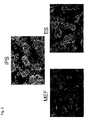
- iPS cells represent induced pluripotent stem cells (also called “ES like cells”, “ES-like cells”, or “ESL cells”)
- ES represents embryonic stem cells
- MEF represents differentiated cells (embryonic fibroblasts).
- Example 2 Induction of reprogramming with combination of 4 kinds of genes
- RNAs were purified, and treated with DNaseI to remove contamination of genomic DNA.
- First strand cDNAs were prepared by a reverse transcription reaction, and expression profiles of the ES cell marker genes were examined by PCR.
- PCR was performed by using primers which only amplified a transcript product from an endogenous gene, not from the transduced retrovirus. The primer sequences are shown in Table 6.
- Example 3 Analysis of pluripotency of reprogrammed cells
- the iPS cells established with 24 factors, 10 factors, and 4 factors were subcutaneously transplanted into nude mice.
- tumors having a size similar to that observed with ES cells were formed in all animals.
- the tumors consisted of a plurality of kinds of cells, and cartilaginous tissues, nervous tissues, muscular tissues, fat tissues, and intestinal tract-like tissues were observed ( Fig. 8 ), which verified pluripotency of the iPS cells.
- Fig. 8 cartilaginous tissues, nervous tissues, muscular tissues, fat tissues, and intestinal tract-like tissues
- the 4 factors identified in the mouse embryonic fibroblasts were transduced into fibroblasts derived from tails of ⁇ geo knockin Fbx15 adult mice systemically expressing green fluorescence protein (GFP). Then, the cells were cultured on feeder cells under the same conditions as ES cell culture conditions, and G418 selection was performed. In about two weeks after the start of the drug selection, a plurality of colonies of iPS cells were obtained. When these cells were subcutaneously transplanted to nude mice, teratomas consisting of a variety of all three germ layer tissues were formed.
- GFP green fluorescence protein
- cytokine on iPS cell establishment An effect of cytokine on iPS cell establishment was investigated.
- Expression vector pMX retroviral vector
- bFGF basic fibroblast growth factor
- SCF stem cell factor
- MEFs derived from the Fbx15 ⁇ geo/ ⁇ geo mouse 500,000 cells/100 mm dish were cultured on these STO cells and transduced with the 4 factors, and then subjected to G418 selection.
- the number of formed colonies increased 20 times or higher on the STO cells producing bFGF ( Fig. 11 ) or SCF (data not shown), as compared with the culture on normal STO cells.
- iPS cells were established with a reporter other than Fbx15- ⁇ geo.
- Escherichia, coli artificial chromosome (BAC) containing the Nanog gene in the center was isolated, and then the GFP gene and the puromycin resistance gene were knocked in by recombination in E. coli ( Fig. 12A ).
- the above modified BAC was introduced into ES cells to confirm that the cells became GFP-positive in an undifferentiated state specific manner (data not shown). Then, these ES cells were transplanted in mouse blastocysts to create transgenic mice via chimeric mice.
- GFP-positive cells were specifically observed in inner cell masses of the blastocysts or gonads of embryos at 13.5 days after fertilization ( Fig. 12B ).
- the gonads were removed from the embryos at 13.5 days after fertilization (hybrid of DBA, 129, and C57BL/6 mice), and MEFs were isolated.
- the isolated MEFs were confirmed to be GFP-negative ( Fig. 13 ) by flow cytometry.
- These MEFs were retrovirally transduced with the 4 factors and subjected to puromycin selection, and as a result, a plural number of resistant colonies were obtained. Only about 10 to 20% of the colonies were GFP-positive.
- iPS cells in 10 cm confluent were trypsinized and suspended in ES cell medium (the STO cells were removed by adhesion to a gelatin-coated dish for 10 to 20 minutes after the suspension).
- 2 x 10 6 cells were cultured for four days in a HEMA (2-hydroxyethyl methacrylate) coated E. coli culture dish as a suspension culture to form embryoid bodies (EBs) (day 1 to 4).
- HEMA -hydroxyethyl methacrylate coated E. coli culture dish
- EBs embryoid bodies
- day 4 On the 4th day of EB formation (day 4), all of the EBs were transferred to a 10-cm tissue culture dish, and cultured in ES cell medium for 24 hours to allow adhesion. After 24 hours (day 5), the medium was changed to an ITS/fibronectin -containing medium.
- the culture was performed for 7 days (medium was exchanged every 2 days), and nestin-positive cells were selected (cells of other pedigrees were dying to some extent in a culture under serum-free condition)(day 5 to 12). A2B5-positive cells were then induced. After 7 days (day 12), the cells were separated by trypsinization, and the remaining EBs were removed. 1 x 10 5 cells were seeded on a poly-L-ornithine/fibronectin-coated 24-well plate, and cultured for 4 days in an N2/bFGF-containing medium (medium was exchanged every 2 days)(day 12 to 16).
- the medium was changed to an N2/bFGF/EGF-containing medium, and the culture was continued for 4 days (medium was exchanged every 2 days)(day 16 to 20).
- the medium was changed to an N2/bFGF/PDGF-containing medium, and the culture was continued for 4 days (medium was exchanged every 2 days)(day 20 to 24).
- day 12 to 24 when the cells had increased excessively and reached confluent, they were passaged at appropriate times, and 1 to 2 x 10 5 cells were seeded (the number of the cells varied depending on the timing of the passage).
- the medium was changed to an N2/T3 medium, and the culture was continued for 7 days (day 24 to 31) with medium exchange every 2 days.
- the cells were fixed and subjected to immunostaining.
- differentiation of the iPS cells into ⁇ III tubulin-positive nerve cells, O4-positive oligodendrocytes, and GFAP-positive astrocytes was observed ( Fig. 20 ).
- Mouse embryo fibroblasts were cultured on a 10-cm dish (on STO feeder cells) in a number smaller than those used above (10,000, 50,000, or 100,000 cells), and a control DNA or the 4 factors were retrovirally transduced.
- ES cell medium without G418 selection
- no colony formation was observed in the dish in which the control DNA was transduced
- a plurality of compact colonies were formed as well as flat colonies considered to be transformed ( Fig. 21 ).
- hepatocytes and gastric mucous cells being cells other than fibroblasts were examined.
- Hepatocytes were isolated from the liver of the Fbx15 ⁇ geo/ ⁇ geo mice by perfusion. These hepatocytes were retrovirally introduced with the 4 factors, and then subjected to G418 selection to obtain plural iPS cell colonies.
- the iPS cells derived from the liver were found to be more similar to ES cells than the iPS cells derived from dermal fibroblasts or embryonic fibroblasts.
- iPS cells were obtained also from gastric mucous cells in the same manner as those from hepatocytes.
- PD98059 is an inhibitor of MAP kinase which suppresses proliferation of various differentiated cells. However, it is known to promote maintenance of undifferentiated status and proliferation of ES cells. Effects of PD98059 on iPS cell establishment were thus examined. MEFs established from a mouse having the selective markers of Nanog-EGFP-IRES-Puro were retrovirally introduced with the 4 factors and subjected to puromycin selection. When PD98059 was not added, the percentage of GFP-positive colonies was 8% of the iPS cell colonies obtained. However, in the group to which PD98059 (final concentration: 25 ⁇ M) was continuously added from the next day of the retroviral transfection, 45% of the colonies obtained were GFP-positive.
- PD98059 promoting the proliferation of the GFP-positive iPS cells, which are closer to ES cells, whilst PD98059 suppressing the proliferation of the GFP-negative iPS cells or differentiated cells. From these results, PD98059 was demonstrated to be able to be used for establishment of the iPS cells closer to ES cells or establishment of iPS cells without using drug selection.
- a plasmid containing the red fluorescence protein gene downstream from the mouse Oct3/4 gene promoter and the hygromycin resistance gene downstream from the PGK promoter, was introduced by nucleofection into embryonic human dermal fibroblasts (HDFs) in which solute carrier family 7 (Slc7al, NCBI accession number NM_007513) as a mouse ecotropic virus receptor was expressed by lentiviral transduction.
- Solute carrier family 7 Solute carrier family 7
- Hygromycin selection was performed to establish strains with stable expression. 800,000 cells were seeded on the STO cells treated with mitomycin, and on the next day, Oct3/4, Sox2, Klf4, and c-Myc (each derived from human) were retrovirally transduced into the cells.
- Human adult dermal fibroblasts (adult HDFs) were transduced with Slc7a1 (mouse retroviral receptor) by using lentivirus, and the resulting cells were seeded on 800,000 feeder cells (mitomycin-treated STO cells).
- Slc7a1 mouse retroviral receptor
- the genes were retrovirally transduced as the following combinations.
- reprogramming of differentiated cell nuclei can be conveniently and highly reproducibly induced without using embryos or ES cells, and induced pluripotent stem cells as undifferentiated cells having differentiation ability, pluripotency and growth ability similar to those of ES cells can be established.
Landscapes
- Health & Medical Sciences (AREA)
- Life Sciences & Earth Sciences (AREA)
- Engineering & Computer Science (AREA)
- Chemical & Material Sciences (AREA)
- Organic Chemistry (AREA)
- Bioinformatics & Cheminformatics (AREA)
- Biomedical Technology (AREA)
- General Health & Medical Sciences (AREA)
- Genetics & Genomics (AREA)
- Zoology (AREA)
- Medicinal Chemistry (AREA)
- Biotechnology (AREA)
- Wood Science & Technology (AREA)
- Biochemistry (AREA)
- Nuclear Medicine, Radiotherapy & Molecular Imaging (AREA)
- Chemical Kinetics & Catalysis (AREA)
- Pharmacology & Pharmacy (AREA)
- Public Health (AREA)
- Veterinary Medicine (AREA)
- General Chemical & Material Sciences (AREA)
- Animal Behavior & Ethology (AREA)
- General Engineering & Computer Science (AREA)
- Molecular Biology (AREA)
- Biophysics (AREA)
- Microbiology (AREA)
- Diabetes (AREA)
- Neurosurgery (AREA)
- Proteomics, Peptides & Aminoacids (AREA)
- Neurology (AREA)
- Gastroenterology & Hepatology (AREA)
- Toxicology (AREA)
- Cardiology (AREA)
- Cell Biology (AREA)
- Transplantation (AREA)
- Heart & Thoracic Surgery (AREA)
- Developmental Biology & Embryology (AREA)
- Obesity (AREA)
- Hematology (AREA)
- Endocrinology (AREA)
- Vascular Medicine (AREA)
Abstract
Description
- The present invention relates to a nuclear reprogramming factor having an action of reprogramming a differentiated somatic cell to derive an induced pluripotent stem cell.
- Embryonic stem cells (ES cells) are stem cells established from human or mouse early embryos which have a characteristic feature that they can be cultured over a long period of time while maintaining pluripotent ability to differentiate into all kinds of cells existing in living bodies. Human embryonic stem cells are expected for use as resources for cell transplantation therapies for various diseases such as Parkinson's disease, juvenile diabetes, and leukemia, taking advantage of the aforementioned properties. However, transplantation of ES cells has a problem of causing rejection in the same manner as organ transplantation. Moreover, from an ethical viewpoint, there are many dissenting opinions against the use of ES cells which are established by destroying human embryos. If dedifferentiation of patients' own differentiated somatic cells could be induced to establish cells having pluripotency and growth ability similar to those of ES cells (in this specification, these cells are referred to as "induced pluripotent stem cells (iPS cells)", though they are sometimes called "embryonic stem cell-like cells" or "ES-like cells"), it is anticipated that such cells could be used as ideal pluripotent cells, free from rejection or ethical difficulties.
- As a method for reprogramming a somatic nucleus, for example, a technique of establishing an embryonic stem cell from a cloned embryo, prepared by transplanting a nucleus of a somatic cell into an egg, was reported (W.S. Hwang et al., Science, 303, pap.1669-74, 2004; W.S. Hwang et al., Science, 308, pp.1777·83, 2005: these articles were, however, proved to be fabrications and later withdrawn). However, this technique of preparing the cloned embryo only for the purpose of establishing ES cells, has rather more serious ethical problems when compared with ordinary ES cells using surplus embryos produced in fertilization therapy. A technique of reprogramming a somatic cell nucleus by fusing a somatic cell and an ES cell was also reported (M. Tada et al., Curr. Biol., 11, pip.1553-1558, 2001; C.A. Cowan et al., Science, 309, pp.1369-73, 2005). However, this method results in the use of human ES cells, which fails to provide a solution to the ethical difficulties. Further, a technique of reprogramming a cell nucleus by reacting an extract of a cell strain, derived from a germ cell tumor generated in a human, with a differentiated cell was reported (C.K. Taranger et al., Mol. Biol. Cell, 16, pip.5719-35, 2005). However, it was completely unknown which component in the extract induced the reprogramming in this method, and therefore, this method has problems of technical reliability and safety.
- A method for screening a nuclear reprogramming factor having an action of reprogramming differentiated somatic cells to derive induced pluripotent stems cell was proposed (International Publication
WO2005/80598 - Patent document 1: International Publication
WO2005/8059 - An object of the present invention is to provide a nuclear reprogramming factor. More specifically, it is an object of the present invention to provide a means for inducing reprogramming of a differentiated cell without using eggs, embryos, or ES cells, to conveniently and highly reproducibly establish an induced pluripotent stem cell having pluripotency and growth ability similar to those of ES cells.
- The inventors of the present invention conducted various research to achieve the aforementioned object and attempted to identify a nuclear reprogramming factor by using the screening method for a nuclear reprogramming factor disclosed in International Publication
WO2005/8059 - The present invention thus provides a nuclear reprogramming factor for a somatic cell, which comprises a gene product of each of the following three kinds of genes: an Oct family gene, a Klf family gene, and a Myc family gene. According to a preferred embodiment of the invention, there is provided the aforementioned factor comprising a gene product of each of the following three kinds of genes: Out3/4, Klf4 and c-Myc.
- According to another preferred embodiment, there is provided the aforementioned factor, which further comprises a gene product of the following gene: a Sox family gene, and as a more preferred embodiment, there is provided the aforementioned factor, which comprises a gene product of Sox2.
- According to still another preferred embodiment, there is provided the aforementioned factor, which comprises a cytokine together with the gene product of the Myc family gene, or alternatively, instead of the gene product of the Myc family gene. As a more preferred embodiment, there is provided the aforementioned factor, wherein the cytokine is basic fibroblast growth factor (bFGF) and/or stem cell factor (SCF).
- According to particularly preferred embodiments, there are provided a nuclear reprogramming factor for a somatic cell, which comprises a gene product of the TERT gene in addition to a gene product of each of an Oct family gene, a Klf family gene, a Myc family gene, and a Sox family gene; and the aforementioned factor, which comprises a gene product or gene products of one or more kinds of genes selected from the group consisting of the following genes: SV40 Large T antigen, HPV16 E6, HPV16 E7, and Bmil, in addition to a gene product of each of the Oct family gene, the Klf family gene, the Myc family gene, the Sox family gene, and the TERT gene.
- In addition to these factors, there is provided the aforementioned factor, which further comprises a gene product or gene products of one or more kinds of genes selected from the group consisting of the following: Fbx15, Nanog, ERas, ECAT15-2, Tcl1, and β-catenin.
- According to another preferred embodiment of the aforementioned invention, there is also provided the aforementioned factor, which comprises a gene product or gene products of one or more kinds of genes selected from the group consisting of the following: ECAT1, Esg1, Dnmt3L, ECAT8, Gdf3, Sox15, ECAT15-1, Fth117, Sa114, Rex1, UTF1, Stella, Stat3, and Grb2.
- In another aspect, the present invention provides a method for preparing an induced pluripotent stem cell by nuclear reprogramming of a somatic cell, which comprises the step of contacting the aforementioned nuclear reprogramming factor with the somatic cell.
- According to a preferred embodiment of the invention, there are provided the aforementioned method, which comprises the step of adding the aforementioned nuclear reprogramming factor to a culture of the somatic cell; the aforementioned method, which comprises the step of introducing a gene encoding the aforementioned nuclear reprogramming factor into the somatic cell; the aforementioned method, which comprises, the step of introducing said gene into the somatic cell by using a recombinant vector containing at least one kind of gene encoding the aforementioned nuclear reprogramming factor; and the aforementioned method, wherein a somatic cell isolated from a patient is used as the somatic cell.
- In another aspect, the present invention provides an induced pluripotent stem cell obtained by the aforementioned method. The present invention also provides a somatic cell derived by inducing differentiation of the aforementioned induced pluripotent stem cell.
- The present invention further provides a method for stem cell therapy, which comprises the step of transplanting a somatic cell, wherein said cell is obtained by inducing differentiation of an induced pluripotent stem cell obtained by the aforementioned method using a somatic cell isolated and collected from a patient, into said patient.
- The present invention further provides a method for evaluating a physiological function or toxicity of a compound, a medicament, a poison or the like by using various cells obtained by inducing differentiation of an induced pluripotent stem cell obtained by the aforementioned method.
- The present invention also provides a method for improving ability of differentiation and/or growth of a cell, which comprises the step of contacting the aforementioned nuclear reprogramming factor with the cell, and further provides a cell obtained by the aforementioned method, and a somatic cell derived by inducing differentiation of a cell obtained by the aforementioned method.
- By using the nuclear reprogramming factor provided by the present invention, reprogramming of a differentiated cell nucleus can be conveniently and highly reproducibly induced without using embryos or ES cells, and an induced pluripotent stem cell, as an undifferentiated cell having differentiation ability, pluripotency, and growth ability similar to those of ES cells, can be established. For example, an induced pluripotent stem cell having high growth ability and differentiation pluripotency can be prepared from a patient's own somatic cell by using the nuclear reprogramming factor of the present invention. Cells obtainable by differentiating said cell (for example, cardiac muscle cells, insulin producing cells, nerve cells and the like) are extremely useful, because they can be utilized for stem cell transplantation therapies for a variety of diseases such as cardiac insufficiency, insulin dependent diabetes mellitus, Parkinson's disease and spinal cord injury, thereby the ethical problem concerning the use of human embryo and rejection after transplantation can be avoided. Further, various cells obtainable by differentiating the induced pluripotent stem cell (for example, cardiac muscle cells, hepatic cells and the like) are highly useful as systems for evaluating efficacy or toxicity of compounds, medicaments, poisons and the like.
-
-
Fig. 1 shows a screening method for reprogramming factors using embryonic fibroblasts (MEFs) of a mouse having βgeo knockin Fbx15 gene. -
Fig. 2 depicts photographs showing morphology of iPS cells obtained by introducing the 24 genes shown in Table 1. Morphologies of differentiated cells (MEF) and of normal embryonic stem cells (ES) are also shown as a reference. -
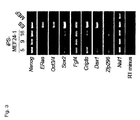
Fig. 3 shows expression profiles of marker genes in iPS cells. The results of RT-PCR using total RNAs extracted from iPS cells, ES cells and MEF cells as templates are shown. -
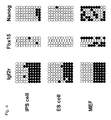
Fig. 4 shows methylation status of DNA in iPS cells. Genomic DNAs extracted from iPS cells, ES cells, and MEF cells were treated with bisulfite. The target DNAs were amplified by PCR and then inserted into plasmid. Ten clones of plasmid were isolated for each of the genes, and sequenced. Methylated CpGs are indicated with closed circles, and unmethylated CpGs with open circles. -
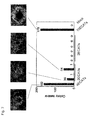
Fig. 5 shows colony numbers of G418 cells obtained by transduction of 24-gene group and 23-gene groups wherein each individual gene was withdrawn from the 24-gene group. The lower parts of the graph show colony numbers obtained in one week after the G418 selection, and the upper parts of the graph show numbers of clones obtained in three weeks. When each boxed gene (the reference number for each gene is the same as that indicated in Table 1) was withdrawn, no colonies were obtained at all, or only a few colonies were observed after 3 weeks. -
Fig. 6 shows colony numbers of G418 cells obtained by transduction of 10-gene group and 9-gene groups wherein each individual gene was withdrawn from the 10-gene group. When each ofgenes # 14, #15 or #20 was withdrawn, no colony was obtained. Whengene # 22 was withdrawn, a few G418-resistant colonies were obtained. However, the cells gave differentiated morphology which was apparently different from that of iPS cells. -
Fig. 7 shows numbers of G418-resistant emerged colonies (reprogrammed colony) with 10-gene group, 4-gene group, 3-gene groups, or 2-gene groups. Typical morphology and sizes of the colonies are shown. -
Fig. 8 depicts photographs showing results of hematoxylin-eosin (H & E) staining of tumors formed after subcutaneous transplantation of iPS cells derived from MEFs into nude mice. Differentiation into a variety of tissues in a triploblastic system was observed. -
Fig. 9 depicts photographs of embryos prepared by transplanting iPS cells derived from adult dermal fibroblasts into mouse blastocysts and transplanting the cells into the uteri of pseudopregnant mice. It can be observed that, in the upper left embryo, cells derived from the iPS cells (emitting green fluorescence) were systemically distributed. In the lower photographs, it can be observed that almost all cells of the heart, liver, and spinal cord of the embryo were GFP-positive and were derived from the iPS cells. -
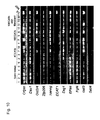
Fig. 10 depicts photographs showing results of RT-PCR confirming the expression of the ES cell marker genes. In the photographs, Sox2 minus indicates iPS cells established by the transduction of 3 genes into MEFs, 4ECATs indicates iPS cells established by the transduction of 4 genes into MEFs, 10ECATs indicates iPS cells established by the transduction of 10 genes into MEFs, 10ECATs Skin fibroblast indicates iPS cells established by the transduction of 10 genes into dermal fibroblasts, ES indicates mouse ES cells, and MEF indicates MEF cells without gene transduction. The numerical values under the symbols indicate clones numbers. -
Fig. 11 shows an effect of bFGF on the establishment of iPS cells from MEFs. Four factors (upper row) or three factors except for c-Myc (lower row) were retrovirally transduced into MEFs derived from Fbx15βgeo/βgeo mice, and cultured on ordinary feeder cells (STO cells) (left) and bFGF expression vector-introduced STO cells (right). G418 selection was performed for 2 weeks, and cells were stained with crystal blue and photographed. The numerical values indicate the number of colonies. -
Fig. 12 depicts explanations of the experiments using Nanog-EGFP-IRES-Puro mice. A: E. coli artificial chromosome (BAC) containing the mouse Nanog gene in the center was isolated, and the EGFP-IRES-Puro cassette was inserted upstream from the coding region of Nanog by recombineering. B: Transgenic mice were prepared with the modified BAC. GFP expression was observed limitedly in inner cell masses of blastocysts and gonads. -
Fig. 13 depicts explanations of the experiments using Nanog-EGFP-IRES-Puro mice. From embryos of Nanog-EGFP-IRES-Puro mice (13.5 days after fertilization), heads, viscera and gonads were removed to establish MEFs. As a result of analysis with a cell sorter, almost no GFP-positive cells existed in MEFs derived from the Nanog-EGFP-IRES-Puro mice (Nanog) in the same manner as the Fbx15Bgeo/Bgvo mouse-derived MEFs (Fbx15) or wild-type mouse-derived MEFs (Wild). -
Fig. 14 depicts photographs of iPS cells established from the Nanog-EGFP-IRES-Puro mouse MEFs (left) and the Fbx15Bgeo/Bgeo mouse MEFs (right). The cells were selected with puromycin and G418, respectively. -
Fig. 15 shows results of growth of iPS cells. 100,000 cells of each of ES cells, iPS cells derived from the Nanog-EGFP-IRES-Puro mouse MEFs (Nanog iPS, left), and iPS cells derived from the Fbx15Bgeo/Bgeo mouse MEFs (Fbx iPS) were seeded on 24· well plates, and passaged every 3 days. Cell count results are shown. The numerical values represent average doubling times. -
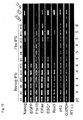
Fig. 16 shows gene expression profiles of iPS cells. Expression of the marker genes in MEFs, ES cells, iPS cells derived from Nanog-EGFP-IRES-Puro mouse MEFs (Nanog iPS, left), and iPS cells derived from Fbx15βgeo/βgeo mouse MEFs (Fbx iPS) were analyzed by RT-PCR. The numerical values at the bottom indicate the numbers of passages. -
Fig. 17 shows teratoma formation from the Nanog iPS cells. 1,000,000 cells of each of ES cells or Nanog iPS cells were subcutaneously injected into the backs of nude mice, and the appearance of tumors formed after 3 weeks (left) and tissue images (right, H & E stained) are shown. -
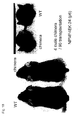
Fig. 18 shows preparation of chimeric mice with the Nanog iPS cells. The chimeric mice that were born after transplantation of the Nanog iPS cells (clone NPMF4EK-24, passaged 6 times) into the blastocysts. Four chimeric mice were born from 90 transplanted embryos. -
Fig. 19 shows germ-line transmission from the Nanog iPS cells. PCR analysis of genomic DNA of mice, born by mating of the chimeric mice shown inFig. 18 and C57BL/6 mice, revealed the existence of transgenes of Oct3/4 and Klf4 in all of the mice, thereby confirming germ-line transmission. -
Fig. 20 shows induction of differentiation into nerve cells from iPS cells. Nerve cells (top, BIII tubulin·positive), oligodendrocytes (left, O4-positive), and astrocytes (right, GFAP-positive) differentiated in vitro from dermal fibroblasts-derived iPS cells are shown. -
Fig. 21 depicts explanations of establishment of the iPS cells without using drug selection. MEFs at 10,000 to 100,000 cells per 10 cm dish were seeded, and the 4 factors were retrovirally transduced. No colony appeared in the control (Mock, left), whilst in the dish with the transduction by the 4 factors, swelling colonies similar to those of the iPS cells were obtained (center), as well as flat transformant colonies. When the cells were passaged, cells similar to the iPS cells were obtained (right). -
Fig. 22 shows gene expression profiles of cells established without using drug selection. RNA was extracted from the established cells shown inFig. 21 , and expression of the ES cell marker genes was analyzed by RT-PCR. -
Fig. 23 shows iPS cell-like cells derived from human fibroblasts. The colonies obtained by retroviral transduction with human homologous genes of the 4 factors into fibroblasts derived from human embryos (left), and the cells after two passages (right) are shown. -
Fig. 24 shows establishment of the iPS cells from human adult dermal fibroblasts. The factors mentioned in the left column were transduced retrovirally into human adult dermal fibroblasts infected with the mouse retroviral receptor with lentivirus. The photographs shows phase contrast images (object x 10) onday 8 after the viral infection. - The nuclear reprogramming factor of the present invention is characterized in that it comprises a gene product of each of the following three kinds of genes: an Oct family gene, a Klf family gene, and a Myc family gene; and according to a preferred embodiment, it is characterized in that it comprises a gene product of a Sox family gene in addition to the aforementioned three kinds of genes.
- As a means for confirming the nuclear reprogramming factor of the present invention, for example, the screening method for nuclear reprogramming factors disclose in International Publication
WO 2005/80598 - For example, as an experimental system enabling observation of the reprogramming phenomenon, a mouse can be used in which the βgeo (a fusion gene of the β galactosidase gene and the neomycin resistance gene) is knocked into the Fbx15 locus. The details are described in the examples of the specification. The mouse Fbx15 gene is a gene specifically expressed in differentiation pluripotent cells such as ES cells and early embryos. In a homomutant mouse in which βgeo is knocked into the mouse Fbx15 gene so as to be deficient in the Fbx15 function, abnormal phenotypes including those relating to differentiation pluripotency or generation are not generally observed. In this mouse, the expression of the βgeo is controller by the enhancer and promoter of the Fbx15 gene, and differentiated somatic cells in which βgeo is not expressed have sensitivity to G418. In contrast, βgeo knockin homomutant ES cells have resistance against G418 at an extremely high concentration (equal to or higher than 12 mg/ml). By utilizing this phenomenon, an experimental system can be constructed to visualize reprogramming of somatic cells.
- By applying the aforementioned experimental system, fibroblasts (Fbx15βeo/βgeo MEFs) can be first isolated from an embryo of the βgeo knockin homomutant mouse (13.5 days after fertilization). The MEFs do not express the Fbx15 gene, and accordingly also do not express βgeo to give sensitivity to G418. However, when the MEFs are fused with genetic manipulation-free ES cells (also have sensitivity to G418), βgeo is expressed and the cells become G418-resistant as a result of reprogramming of nuclei of MEFs. Therefore, by utilizing this experimental system, the reprogramming phenomenon can be visualized as G418 resistance.
- Nuclear reprogramming factors can be selected by using the aforementioned experimental system. As candidates of genes relevant to nuclear reprogramming factors, a plurality of genes can be selected which show specific expression in ES cells or of which important roles in the maintenance of differentiation pluripotency of ES cells are suggested, and it can be confirmed whether or not each candidate gene can induce nuclear reprogramming alone or in an appropriate combination thereof. For example, a combination of all of the selected primary candidate genes is confirmed to be capable of inducing the reprogramming of differentiated cells into a state close to that of ES cells. Combinations are then prepared by withdrawing each individual gene from the aforementioned combination, and the same actions of the combinations are confirmed in order to select each secondary candidate gene whose absence causes a reduction of the reprogramming induction ability or loss of the reprogramming induction ability. By repeating similar steps for the secondary candidate genes selected as described above, an essential combination of nuclear reprogramming genes can be selected, and it can be confirmed that a combination of gene products of each of the three kinds of genes, an Oct family gene, a Klf family gene, and a Myc family gene, acts as a nuclear reprogramming factor. It can be further confirmed that a combination of a gene product of a Sox family gene additionally with the gene products of the aforementioned three kinds of genes has extremely superior characteristics as a nuclear reprogramming factor. Specific examples of the selection method for the nuclear reprogramming factors are demonstrated in the examples of the specification. Therefore, by referring to the above general explanations and specific explanations of the examples, these skilled in the art can readily confirm that the combination of these three kinds of genes induces the reprogramming of somatic cells, and that the combination of these three kinds of gene products is essential for nuclear reprogramming.
- The nuclear reprogramming factor provided by the present invention comprises at least a combination of gene products of an Oct family gene, a Klf family gene, and a Myc family gene, for example, a combination of gene products of three kinds of genes Oct3/4, Klf4, and c-Myc- Examples of the Oct family gene include, for example, Oct3/4, Oct1A, Oct6, and the like. Oct3/4 is a transcription factor belonging to the POU family, and is reported as a marker of undifferentiated cells (K. Okamoto et al., Cell, 60, pp461-72, 1990). Oct3/4 is also reported to participate in the maintenance of pluripotency (J. Nichols et al., Cell, 95, pp379-91, 1998). Examples of the Klf family gene include Klf1, Klf2, Klf4, Klf5 and the like. Klf4 (Kruppel like factor-4) is reported as a tumor repressing factor (A.M. Ghaleb et al., Cell Res., 15, pip92-6, 2005). Examples of the Myc family gene include c-Myc, N-Myc, L-Myc and the like. c-Myc is a transcription control factor involved in differentiation and proliferation of cells (S. Adhikary, M. Eilers, Nat. Rev. Mol. Cell Biol., 6, pp.635-45, 2005), and is also reported to be involved in the maintenance of pluripotency (P. Cartwright et al., Development, 132, pp.885-96, 2005). The NCBI accession numbers of the genes of the families other than Oct3/4, Klf4 and c-Myc are as follows:
Table 1 Mouse Human Klf1 Kruppel-like factor 1 (erythroid) NM_010635 NM_006563 Klf2 Kruppel-like factor 2 (lung) NM_008452 NM_016270 Klf5 Kruppel- like factor 5NM_009769 NM_001730 c-Myc myelocytomatosis oncogene NM_010849 NM_002467 N-Myc v-Myc myelocytomatosis viral related oncogene, neuroblastoma derived (avian) NM_008709 NM_005378 L-Myc v-Myc myelocytomatosis viral oncogene homolog 1, lung carcinoma derived (avian)NM_008506 NM_005376 Oct1A POU domain, class 2,transcription factor 1NM_198934 NM_002697 Oct6 POU domain, class 3,transcription factor 1NM_011141 NM_002699 - All of these genes are those commonly existing in mammals including human, and for use of the aforementioned gene products in the present invention, genes derived from arbitrary mammals (those derived from mammals such as mouse, rat, bovine, ovine, horse, and ape and the like) can be used. In addition to wild-type gene products, mutant gene products including substitution, insertion, and/or deletion of several (for example, 1 to 10, preferably 1 to 6, more preferably 1 to 4, still more preferably 1 to 3, and most preferably 1 or 2) amino acids and having similar function to that of the wild-type gene products can also be used. For example, as a gene product of c-Myc, a stable type product (T58A) may be used as well as the wild-type product. The above explanation may be applied similarly to the other gene products.
- The nuclear reprogramming factor of the present invention may comprise a gene product other than the aforementioned three kinds of gene products. An example of such gene product includes a gene product of a Sox family gene. Examples of the Sox family gene include, for example, Sox1, Sox3, Sox7, Sox15 Sox17 and Sox18, and a preferred example includes Sox2. A nuclear reprogramming factor comprising at least a combination of the gene products of four kinds of genes, an Oct family gene (for example, Oct3/4), a Klf family gene (for example, Klf4), a Myc family gene (for example, c-Myc), and a Sox family gene (for example, Sox2) is a preferred embodiment of the present invention from a viewpoint of reprogramming efficiency, and in particular, a combination of a gene product of a Sox family gene is sometimes preferred to obtain pluripotency Sox2, expressed in an early development process, is a gene encoding a transcription factor (A.A. Avilion et al., Genes Dev., 17, pip.126-40, 2003). The NCBI accession numbers of Sox family genes other than Sox2 are as follows.
Table 2 Mouse Human Sox1 SRY- box containing gene 1NM_009233 NM_005986 Sox3 SRY- box containing gene 3NM_009237 NM_005634 Sox7 SRY- box containing gene 7NM_011446 NM_031439 Sox15 SRY- box containing gene 15NM_009235 NM_006942 Sox17 SRY- box containing gene 17NM_011441 NM_022454 Sox18 SRY- box containing gene 18NM_009236 NM_018419 - Further, a gene product of a Myc family gene may be replaced with a cytokine. As the cytokine, for example, SCF, bFGF or the like is preferred. However, cytokines are not limited to these examples.
- As a more preferred embodiment, an example includes a factor which induces immortalization of cells, in addition to the aforementioned three kinds of gene products, preferably, the four kinds of gene products. For example, an example includes a combination of a factor comprising a gene product of TERT gene with a factor comprising a gene product or gene products of one or more kinds of genes selected from the group consisting of the following genes: SV40 Large T antigen, HPV16 E6, HPV16 E7, and Bmil. TERT is essential for the maintenance of the telomere structure at the end of chromosome at the time of DNA replication, and the gene is expressed in stem cells or tumor cells in humans, whilst it is not expressed in many somatic cells (I. Horikawa, et al., Proc. Natl. Acad. Sci. USA, 102, pp. 18437-442, 2005). SV40 Large T antigen, HPV16 E6, HPV16 E7, or Bmil was reported to induce immortalization of human somatic cells in combination with Large T antigen (S. Akimov et al., Stem Cells, 23, pip.1423-1433, 2005; P. Salmon et al., Mol. Ther., 2, pip.404-414, 2000). These factors are extremely useful particularly when iPS cells are induced from human cells. The NCBI accession numbers of TERT and Bmil genes are as follows.
Table 3 Mouse Human TERT telomerase reverse transcriptase NM_009354 NM_198253 Bmil B lymphoma Mo- MLV insertion region 1NM_007552 NM_005180 - Furthermore, a gene product or gene products of one or more kinds of genes selected from the group consisting of the following Fbx15 Nanog, ERas, ECAT15-2, Tcl1, and B-catenin may be combined. As a particularly preferred embodiment from a viewpoint of reprogramming efficiency, an example includes a nuclear reprogramming factor comprising a total of ten kinds of gene products, wherein gene products of Fbx15, Nanog, ERas, ECAT15-2, Tc11, and β-catenin are combined with the aforementioned four kinds of gene products. Fbx15 (Y Tokuzawa et al., Mol. Cell Biol., 23, pip.2699-708, 2003), Nanog (K. Mitsui et al., Cell, 113, pp.631-42, 2003), ERas (K. Takahashi, K. Mitsui, S. Yamanaka, Nature, 423, pp.541-5, 2003), and ECAT15-2 (A. Bortvin et al., Development, 130, pip.1673-80, 2003) are genes specifically expressed in ES cells. Tcl1 is involved in the activation ofAkt (A. Bortvin et al., Development, 130, pp.1673-80, 2003), and β-catenin is an important factor constituting the Wnt signal transmission pathway, and also reported to be involved in the maintenance of pluripotency (N. Sato et al, Nat. Med., 10, pp.55-63, 2004).
- Further, the nuclear reprogramming factor of the present invention may comprise, for example, a gene product or gene products of one or more kinds of genes selected from the group consisting of the following: ECAT1, Esg1, Dnmt3L, ECAT8, Gdf3, Sox15, ECAT15-1, Fthl17, Sal14 Rex1, UTF1, Stella, Stat3, and Grb2. ECAT1, Esg1, ECAT8, Gdf3, and ECAT15-1 are genes specifically expressed in ES cells (K. Mitsui et al., Cell, 113, pp.631-42, 2003). Dnmt3L is a DNA methylating enzyme-related factor, and Sox15 is a class of genes expressed in an early development process and encoding transcription factors (M. Maruyama et al., J. Biol. Chem., 280, pp.24371-9, 2005). Fthl17 encodes ferritin heavy polypeptide-like 17 (A. colLoriot, T. Boon, C. De Smet, Int. J. Cancer, 105, pp.371-6, 2003), Sall4 encodes a Zn finger protein abundantly expressed in embryonic stem cells (J. Kohlhase et al., Cytogenet. Genome Res., 98, pp.274-7, 2002), and Rex1 encodes a transcription factor locating downstream from Oct3/4 (E. Ben-Shushan, J.R. Thompson, L.J. Gudas, Y. Bergman, Mol. Cell Biol., 18, pp.1866-78, 1998). UTF1 is a transcription cofactor locating downstream from Oct3/4, and it is reported that the suppression of the proliferation of ES cells is induced when this factor is suppressed (A, Okuda et al., EMBO J., 17, pp.2019-32, 1998). Stat3 is a signal factor for proliferation and differentiation of cells. The activation of Stat3 triggers the operation of LIF, and thereby the factor plays an important role for the maintenance of pluripotency (H. Niwa, T. Burdon, I. Chambers, A. Smith, Genes Dev., 12, pp.2048-60, 1998). Grb2 encodes a protein mediating between various growth factor receptors existing in cell membranes and the Ras/MAPK cascade (A.M. Cheng et al., Cell, 95, pip.793-803, 1998).
- However, the gene products which may be included in the nuclear reprogramming factor of the present invention are not limited to the gene products of the genes specifically explained above. The nuclear reprogramming factor of the present invention may contain one or more factors relating to differentiation, development, proliferation or the like and factors having other physiological activities, as well as other gene products which can function as a nuclear reprogramming factor. It is understood that such embodiments fall within the scope of the present invention. By using somatic cells in which only one or two genes among the three kinds of the gene Oct3/4, Klf4, and c-Myc are expressed, the other gene products which can function as a nuclear reprogramming factor can be identified by, for example, performing screening for a gene product which can induce nuclear reprogramming of said cells. According to the present invention, the aforementioned screening method is also provided as a novel method for screening for a nuclear reprogramming factor.
- The gene products contained in the nuclear reprogramming factor of the present invention may be, for example, a protein, per se, produced from the aforementioned gene, or alternatively, in a form of a fusion gene product of said protein with another protein, peptide or the like. For example, a fusion protein with green fluorescence protein (GFP) or a fusion gene product with a peptide such as a histidine tag can also be used. Further, by preparing and using a fusion protein with the TAT peptide derived form the virus HIV, intracellular uptake of the nuclear reprogramming factor through cell membranes can be promoted, thereby enabling induction of reprogramming only by adding the fusion protein to a medium thus avoiding complicated operations such as gene transduction. Since preparation methods of such fusion gene products are well known to those skilled in the art, skilled artisans can easily design and prepare an appropriate fusion gene product depending on the purpose.
- By using the nuclear reprogramming factor of the present invention, the nucleus of a somatic cell can be reprogrammed to obtain an induced pluripotent stem cell. In the specification, the term "induced pluripotent stem cells" means cells having properties similar to those of ES cells, and more specifically, the term encompasses undifferentiated cells having pluripotency and growth ability. However, the term should not be construed narrowly in any sense, and should be construed in the broadest sense. The method for preparing induced pluripotent stem cells by using a nuclear reprogramming factor is explained in International Publication
WO2005/80598 - The method for preparing induced pluripotent stem cells from somatic cells by using the nuclear reprogramming factor of the present invention is not particularly limited. Any method may be employed as long as the nuclear reprogramming factor can contact with somatic cells under an environment in which the somatic cells and induced pluripotent stem cells can proliferate. For example, a gene product contained in the nuclear reprogramming factor of the present invention may be added to a medium. Alternatively, by using a vector containing a gene that is capable of expressing the nuclear reprogramming factor of the present invention, a means of transducing said gene into a somatic cell may be employed. When such vector is used, two or more kinds of genes may be incorporated into the vector, and each of the gene products may be simultaneously expressed in a somatic cell. When one or more of the gene products contained in the nuclear reprogramming factor of the present invention are already expressed in a somatic cell to be reprogrammed, said gene products may be excluded from the nuclear reprogramming factor of the present invention. It is understood that such embodiment falls within the scope of the present invention.
- In the preparation of induced pluripotent stem cells by using the nuclear reprogramming factor of the present invention, types of somatic cells to be reprogrammed are not particularly limited, and any kinds of somatic cells may be used. For example, matured somatic cells may be used, as well as somatic cells of an embryonic period. When induced pluripotent stem cells are used for therapeutic treatment of diseases, it is desirable to use somatic cells isolated from patients. For example, somatic cells involved in diseases, somatic cells participating in therapeutic treatment of diseases and the like can be used. A method for selecting induced pluripotent stem cells that appear in a medium according to the method of the present invention is not particularly limited, and a well-known means may be suitably employed, for example, a drug resistance gene or the like can be used as a marker gene to isolate induced pluripotent stem cells using drug resistance as an index. Various media that can maintain undifferentiated state and pluripotency of ES cells and various media which cannot maintain such properties are known in this field, and induced pluripotent stem cells can be efficiently isolated by using a combination of appropriate media. Differentiation and proliferation abilities of isolated induced pluripotent stem cells can be easily confirmed by those skilled in the art by using confirmation means widely applied to ES cells.
- Uses of the induced pluripotent stem cells prepared by the method of the present invention are not particularly limited. The cells can be used for any experiments and research conducted with ES cells, therapeutic treatments utilizing ES cells and the like. For example, desired differentiated cells (e.g., nerve cells, cardiac muscle cells, hemocyte cells and the like) can be derived by treating induced pluripotent stem cells obtained by the method of the present invention with retinoic acid, growth factors such as EGF, glucocorticoid or the like, and stem cell therapy based on cellular auto-transplantation can be achieved by returning the differentiated cells obtained as described above to the patient. However, uses of the induced pluripotent stem cells of the present invention are not limited to the aforementioned specific embodiments.
- The present invention will be more specifically explained with reference to examples. However, the scope of the present invention is not limited to the following examples.
- In order to identify reprogramming factors, an experimental system for easy observation of the reprogramming phenomenon is required. As an experimental system, a mouse in which βgeo (a fusion gene of β-galactosidase gene and neomycin resistance gene) was knocked into the Fbx15 locus was used. The mouse Fbx15 gene is a gene specifically expressed in differentiation pluripotent cells such as ES cells and early embryos. However, in a homomutant mouse in which βgeo was knocked into the mouse Fbx15 gene so as to delete the function of Fbx15, no abnormal phenotypes including those concerning differentiation pluripotency or development were observed. In this mouse, expression control of βgeo is attained by the enhancer and promoter of the Fbx15 gene. Specifically, βgeo is not expressed in differentiated somatic cells, and they have sensitivity to G418. In contrast, the βgeo knockin homomutant ES cells have resistance against G418 at an extremely high concentration (equal to or higher than 12 mg/ml). By utilizing the above phenomenon, an experimental system for visualizing the reprogramming of somatic cells was constructed.
- In the aforementioned experimental system, fibroblasts (Fbx15βgeo/βgeo MEFs) were first isolated from an embryo of the βgeo knockin homomutant mouse (13.5 days after fertilization). Since MEFs do not express the Fbx15 gene, the cells also do not express βgeo and thus have sensitivity to G418. Whist, when the MEFs are fused with ES cells that have not been gene-manipulated (also having sensitivity to G418), the nuclei of MEFs are reprogrammed, and as a result, βgeo is expressed to give G418-resistance. The reprogramming phenomenon can thus be visualized as G418 resistance by using this experimental system (International Publication
WO2005/80598 Fig. 1 ), and total 24 kinds of genes were selected as candidate reprogramming factors, including genes showing specific expression in ES cells and genes suggested to have important roles in the maintenance of differentiation pluripotency of ES cells. These genes are shown in Tables 4 and 5 below. For β-catenin (#21) and c-Myc (#22), active type mutants (catenin: S33Y, c-Myc: T58A) were used.Table 4 Number Name of Gene Explanation of Gene 1 EAT1 ES cell associated transcript 1 (ECAT1) 2 ECAT2 developmental pluripotency associated 5 (DPPA5), ES cell specific gene 1 (ESG1) 3 ECAT3 F-box protein 15 (Fbx15), 4 ECAT4 homeobox transcription factor Nanog 5 ECAT5 ES cell expressed Ras (ERas), 6 ECAT7 DNA (cytosine-5-)-mothyltransferase 3-like (Dnmt31), valiant 1 7 ECAT8 ES cell associated transcript 8 (ECAT8) 8 ECAT9 growth differentiation factor 3 (Gdf3), 9 ECAT10 SRY-box containing gene 15 (Sox15), 10 ECAT15-1 developmental pluripotency associated 4 (Dppa4), variant 1 11 ECAT15-2 developmental pluripotency associated 2 (Dppa2), 12 Fthl17 ferritin, heavy polypeptide-like 17 (Fthl17), 13 Sall4 sal-like 4 (Drosophila) (Sall4), transcript variant a 14 Oct3/4 POU domain, class 5, transcription factor 1 (Pou5f1), 15 Sox2 SRY-box containing gene 2 (Sox2), 16 Rex1 zinc finger protein 42 (Zfp42), 17 Utf1 undifferentiated embryonic cell transcription factor 1 (Utf1) 18 Tcl1 T-cell lymphoma breakpoint 1 (Tcl1), 19 Stella developmental pluripotency-associated 3 (Dppa3), 20 Klf4 Kruppel-like factor 4 (gut) (Klf4), 21 β-catenin catenin (cadherin associated protein), beta 1, 88kDa (Ctnnb1) 22 c- Myc myelocytomatosis oncogene (Myc), 23 Stat3 signal transducer and activator of transcription 3 (Stat3), transcript variant 1 24 Grb2 growth factor receptor bound protein 2 (Grb2), Table 5 NCBI accession number Number Name of Gene Characteristic Feature Mouse Human 1 ECAT1 Gene specifically expressed in ES cell AB211060 AB211062 2 ECAT2 Gene specifically expressed in ES cell NM_025274 NM_0010252 90 3 ECAT3 Gene specifically expressed in ES cell NM_015798 NM_152676 4 ECAT4 Transcription factor having homeodomain, essential factor for differentiation pluripotency maintenance AB093574 NM_024865 5 ECAT5 Ras family protein, ES cell growth promoting factor DNA methylation enzyme-related NM_181548 NM_181532 6 EAT7 factor, essential for imprinting Gene specifically expressed in ES NM_019448 NM_013369 7 ECAT8 cell, having Tudor domain Gene specifically expressed in ES AB211061 AB211063 8 ECAT9 cell, belonging to TGFβ family Gene specifically expressed in ES NM_008108 NM_020634 9 ECAT10 cell, SRY family transcription factor Gene specifically expressed in ES NM_009235 NM_006942 10 ECAT15-1 cell Gene specifically expressed in ES NM_028610 NM_018189 11 ECAT15-2 cell Gene specifically expressed in ES NM_028615 NM_138815 12 Fahl17 cell, similar to ferritin heavy chain Gene specifically expressed in ES NM_031261 NM_031894 13 Sall4 cell, Zn finger protein POU family transcription factor, No_175303 NM_020436 14 Oct3/4 essential for pluxipotency maintenance SRY family transcription factor, NM_013633 NM_002701 15 Sox2 essential for pluripotency maintenance Gene specifically expressed in ES NM_011443 NM_003106 16 Rex1 cell, Zn finger protein Transcription regulation factor NM_009556 NM_174900 17 Utfl highly expressed in ES cell, promoting growth of ES NM_009482 NM_003577 18 Tcl1 Oncogene activating AKT, abundantly expressed in ES cell NM_009337 NM_021966 19 Stella Gene specifically expressed in ES cell NM_139218 NM_199286 20 Klf4 Abundantly expressed in ES cell, both actions as antioncogene and oncogene are reported NM_010637 NM_004235 21 β-catenin Transcription factor activated by Wnt signal, involvement in pluripotency maintenance is reported NM_007614 NM_001904 22 c-Myc Transcription control factor participating in cell proliferation and differentiation and oncogene, involvement in pluripotency maintenance is reported NM_010849 NM_002467 23 Stat3 Transcription factor activated by LIF signal, considered essential for pluripotency maintenance of mouse ES cells NM_213659 NM_139276 24 Grb2 Adapter protein mediating growth factor receptors and Ras/MAPK cascade No_008163 NM_002086 - cDNAs of these genes were inserted into the retroviral vector pMX-gw by the Gateway technology. First, each of the 24 genes was infected into Fbx15βgeo/βgeo MEFs, and then G418 selection was performed under ES cell culture conditions. However, no G418-resistant colony was obtained. Next, the retroviral vectors of all of the 24 genes were simultaneously infected into Fbx15βgeo/βgeo MEFs. When G418 selection was performed under ES cell culture conditions, a plurality of drug resistant colonies were obtained. These colonies were isolated, and cultivation was continued. It was found that cultivation of these cells over a long period of time could be performed, and that these cells had morphology similar to that of ES cells (
Fig. 2 ). In the figure, iPS cells represent induced pluripotent stem cells (also called "ES like cells", "ES-like cells", or "ESL cells"), ES represents embryonic stem cells, and MEF represents differentiated cells (embryonic fibroblasts). - When expression profiles of the marker genes were examined by RT-PCR, undifferentiation markers such as Nanog and Oct3/4 were found to be expressed (
Fig. 3 ). It was found that the expression of Nanog was close to that of ES cells, whereas the expression of Oct3/4 was lower than that of ES cells. When DNA methylation status was examined by the bisulfite sequencing method, it was found that the Nanog gene and Fbx15 gene were highly methylated in MEFs, whereas they were demethylated in the iPS cells (Fig. 4 ). About 50% of IGF2 gene, an imprinting gene, was methylated both in the MEF and iPS cells. Since it was known that the imprinting memory was deleted and the IGF2 gene was almost completely demethylated in the primordial germ cells at 13.5 days after fertilization, from which the Fbx15βgeo/βgeo MEFs were isolated, it was concluded that iPS cells were not derived from primordial germ cells contaminated in the Fbx15βgeo/βgeo MEFs. The above results demonstrated that reprogramming of the differentiated cells (MEFs) into a state close to that of ES cells was able to be induced with the combination of the 24 kinds of factors. - Then, studies were made as to whether or not all of the 24 kinds of genes were required for the reprogramming. With withdrawal of each individual gene, 23 genes were transected into the Fbx15βgeo/βgeo MEFs. As a result, for 10 genes, colony formation was found to be inhibited with each withdrawal thereof (
Fig. 5 , the gene numbers correspond to the gene numbers shown in Table 4, and the genes are the following 10 kinds of genes: #3, #4, #5, #11, #14, #15, #18, #20, #21, and #22). When these ten genes were simultaneously transfected into the Fbx15βgeo/βgeo MEFs, G418-resistant colonies were significantly more efficiently obtained as compared to simultaneous transfection with the 24 genes. - Furthermore, 9 genes, with withdrawal of each individual gene from the 10 genes, were transfected into Fbx15βgeo/βgeo MEFs. As a result, it was found that G418-resistant iPS cell colonies were not formed when each of 4 kinds of genes (#14, #15, #20, or #22) was withdrawn (
Fig. 6 ). Therefore, it was suggested that these four kinds of genes, among the ten genes, had particularly important roles in the induction of reprogramming. - It was examined whether or not induction of reprogramming of somatic cells was achievable with the four kinds of genes of which particular importance was suggested among the 10 genes. By using the combination of the aforementioned 10 kinds of genes, the combination of the aforementioned 4 kinds of genes, combinations of only 3 kinds of genes among the 4 kinds of genes, and combinations of only 2 kinds of genes among the 4 kinds of genes, these sets of genes were retrovirally transduced into the MEF cells as somatic cells in which βgeo was knocked into the Fbx15 gene. As a result, when the 4 kinds of genes were transduced, 160 G418-resistant colonies were obtained. Although this result was almost the same as that obtained by the transduction with the 10 kinds of genes (179 colonies), the colonies obtained by the 4-gene transduction were smaller than those by the 10-gene transduction. When these colonies were passaged, the numbers of colonies having iPS cell morphology was 9 clones among 12 clones in the case of the 10-gene transduction, whereas there was a somewhat lower tendency of 7 clones among 12 clones in the case of the 4-gene transduction. As for the 4 genes, almost the same numbers of iPS cells were obtained with either of those derived from mouse or those derived from human.
- When 3 genes selected from the aforementioned 4 genes were transduced, 36 flat colonies were obtained with one combination (#14, #15, and #20). However, iPS cells were not observed when they were passaged. With another combination (#14. #20, and #22), 54 small colonies were obtained. When 6 of the relatively large colonies from among those colonies were passaged, cells similar to ES cells were obtained for all these 6 clones. However, it seemed that adhesion of the cells between themselves and to the culture dish was weaker than that of ES cells. The proliferation rate of the cells was also slower than that observed in the case of the transduction with the 4 genes. Further, one colony each was formed with each of the other two kinds of combinations of 3 genes among the 4 genes. However, proliferation of the cells was not observed when the cells were passaged. With any of combinations of 2 genes selected from the 4 genes (6 combinations), no G418-resistant colonies were formed. The above results are shown in
Fig. 7 . - Further, the results of observation of expression profiles of the ES cell marker genes by RT-PCR are shown in
Fig. 10 . The details of the method are as follows. From iPS cells established by transducing 3 genes (octal4, Klf4, and c-Myc: represented as "Sox2 minus"), 4 genes (Sox2 was added to the three genes: represented as "4ECAT"), and 10 genes (#3, #4, #5, #1.1., #18, and #21 in Table 1 were added to the four genes: represented as "10ECAT") into Fbx15βgeo/βgeo MEFs, iPS cells established by transducing 10 genes into fibroblasts established from tail tip of an adult mouse in which Bgeo was knocked into the Fbx15 gene (represented as "10ECAT Skin fibroblast"), mouse ES cells, and MEF cells with no gene transduction, total RNAs were purified, and treated with DNaseI to remove contamination of genomic DNA. First strand cDNAs were prepared by a reverse transcription reaction, and expression profiles of the ES cell marker genes were examined by PCR. For Oct3/4, Nanog, and ERas, PCR was performed by using primers which only amplified a transcript product from an endogenous gene, not from the transduced retrovirus. The primer sequences are shown in Table 6.Table 6 ECAT1 ECAT1-RT-S TGT GGG GCC CTG AAA GGC GAG CTG AGA T ECAT1-RT-AS ATG GGC CGC CAT ACG ACG ACG CTC AAC T Esg1 pH34-U38 GAA GTC TGG TTC CTT GGC AGG ATG pH34-L394 ACT CGA TAC ACT GGC CTA GC Nanog 6047-S1 CAG GTG TTT GAG GGT AGC TC 6047-AS1 CGG TTC ATC ATG GTA CAG TC ERas 45328-S118 ACT GCC CCT CAT CAG ACT GCT ACT ERas-AS304 CAC TGC CTT GTA CTC GGG TAG CTG Gdf3 Gdf3-U253 GTT CCA ACC TGT GCC TCG CGT CTT GDF3 L16914 AGC GAG GCA TGG AGA GAG CGG AGC AG Fgf4 Fgf4-RT-S CGT GGT GAG CAT CTT CGG AGT GG Fgf4-RT-AS CCT TCT TGG TCC GCC CGT TCT TA Cripto Cripto-S ATG GAC GCA ACT GTG AAC ATG ATG TTC GCA Cripto-AS CTT TGA GGT CCT GGT CCA TCA CGT GAC CAT Zfp296 Zfp296-S67 CCA TTA GGG GCC ATC ATC GCT TTC Zfp296-AS350 CAC TGC TCA CTG GAG GGG GCT TGC Dax1 Dax1-S1096 TGC TGC GGT CCA GGC CAT CAA GAG Dax1-AS1305 GGG CAC TGT TCA GTT CAG CGG ATC Oct3/4 Oct3/4-S9 TCT TTC CAC CAG GCC CCC GGC TC Oct3/4-AS210 TGC GGG CGG ACA TGG GGA GAT CC NAT1 NAT1 U283 ATT CTT CGT TGT CAA GCC GCC AAA GTG GAG NAT1 L476 AGT TGT TTG CTG CGG AGT TGT CAT CTC GTC - The results shown in this figure revealed that, by transduction of the 3 genes, expression of each of ERas and Fgf4 was efficiently induced, but expression of each of Oct3/4 and Nanog, essential factors for the maintenance of pluripotency, was not induced, or was very weak even when induced. However, when the 4 genes were transduced, there was one clone (#7) in which Oct3/4 and Nanog were relatively strongly induced among 4 clones examined. Further, when the 10 genes were transduced, strong induction of each of Oct3/4 and Nanog was observed in 3 clones among 5 clones examined.
- These results revealed that a combination of at least 3 genes (#14, #20, and #22) was essential for reprogramming, and in the cases of the 4-gene group and 10-gene group including the 3 kinds of genes, the reprogramming efficiency was increased in proportion to the increasing number of genes.
- In order to evaluate the differentiation pluripotency of the established iPS cells, the iPS cells established with 24 factors, 10 factors, and 4 factors were subcutaneously transplanted into nude mice. As a result, tumors having a size similar to that observed with ES cells were formed in all animals. Histologically, the tumors consisted of a plurality of kinds of cells, and cartilaginous tissues, nervous tissues, muscular tissues, fat tissues, and intestinal tract-like tissues were observed (
Fig. 8 ), which verified pluripotency of the iPS cells. In contrast, although tumors were formed when the cells established with the 3 factors were transplanted into nude mice, they were formed histologically only from undifferentiated cells. Therefore, it was found that a Sox family gene was essential for the induction of differentiation pluripotency. - The 4 factors identified in the mouse embryonic fibroblasts (MEFs) were transduced into fibroblasts derived from tails of βgeo knockin Fbx15 adult mice systemically expressing green fluorescence protein (GFP). Then, the cells were cultured on feeder cells under the same conditions as ES cell culture conditions, and G418 selection was performed. In about two weeks after the start of the drug selection, a plurality of colonies of iPS cells were obtained. When these cells were subcutaneously transplanted to nude mice, teratomas consisting of a variety of all three germ layer tissues were formed. Further, when the iPS cells derived from adult dermal fibroblasts were transplanted to the blastocysts, and then transplanted into the uteri of pseudopregnant mice, embryos in which the GFP-positive cells were systemically distributed were observed among those at 13.5 days after fertilization (
Fig. 9 ), demonstrating that the iPS cells had pluripotency and were able to contribute to mouse embryogenesis. These results indicate that the identified class of factors had an ability to induce reprogramming of not only somatic cells in an embryonic period, but also somatic cells of mature mice. Practically, it is extremely important that the reprogramming can be induced in cells derived from adult skin. - An effect of cytokine on iPS cell establishment was investigated. Expression vector (pMX retroviral vector) for basic fibroblast growth factor (bFGF) or stem cell factor (SCF) was transduced into feeder cells (STO cells) to establish cells permanently expressing the cytokines. MEFs derived from the Fbx15βgeo/βgeo mouse (500,000 cells/100 mm dish) were cultured on these STO cells and transduced with the 4 factors, and then subjected to G418 selection. As a result, the number of formed colonies increased 20 times or higher on the STO cells producing bFGF (
Fig. 11 ) or SCF (data not shown), as compared with the culture on normal STO cells. Further, although no iPS cell colony was formed on the normal STO cells when the 3 factors other than c-Myc were transduced, colony formation was observed on the STO cells producing bFGF (Fig. 11 ) or SCF (data not shown). These results revealed that stimulation with the cytokine increased the efficiency of the establishment of iPS cells from MEFs, and the nuclear reprogramming was achievable by using a cytokine instead of c-Myc. - Family genes exist for all of the Owt3/4, Klf4, c-Myc, and Sox2 genes (Tables 1 and 2). Accordingly, studies were made as to whether iPS cells could be established with the family genes instead of the 4 genes. In Table 7, combined experimental results in duplicate are shown. With regard to the Sox family, Sox1 gave almost the same number of G418-resistant colonies formed and iPS cell establishment efficiency as those with Sox2. As for Sox3, the number of G418-resistant colonies formed was about 1/10 of that with Sox2, however, iPS cell establishment efficiency of the colonies picked up was in fact higher than that with Sox2. As for Sox15, both the number of G418-resistant colonies formed and iPS cell establishment efficiency were lower than those with Sox2. As for Sox17, the number of G418-resistant colonies formed was almost the same as that with Sox2, however, iPS cell establishment efficiency was low. With regard to the Klf family, Klf2 gave a smaller number of G418-resistant colonies than Klf4, however, they gave almost the same iPS cell establishment efficiency. With regard to the Myc family, it was found that wild-type c-Myc was almost the same as a T58A mutant both in the number of G418-resistant colonies formed and iPS cell establishment efficiency. Further, each of N-Myc and L-Myc (each wild type) was almost the same as c-Myc in both of the number of G418-resistant colonies formed and iPS cell establishment efficiency.
Table 7 Transduced gene Number of formed colonies Number of picked colonies Number of established iPS cell strain iPS cell establishment efficiency (%) 4 Factors (cMycT58A) 85 12 5 42 Sox1 84 12 7 58 Sox3 8 8 7 92 Sox15 11 11 1 8 Sox17 78 12 2 17 Klf2 11 10 5 50 c-MycWT 53 11 8 72 N- MycWT 40 12 7 58 L-MycWT 50 12 11 92 3 Factors (-Sox2) 6 6 2 17 - Studies were made as to whether iPS cells could be established with a reporter other than Fbx15-βgeo. Escherichia, coli artificial chromosome (BAC) containing the Nanog gene in the center was isolated, and then the GFP gene and the puromycin resistance gene were knocked in by recombination in E. coli (
Fig. 12A ). Subsequently, the above modified BAC was introduced into ES cells to confirm that the cells became GFP-positive in an undifferentiated state specific manner (data not shown). Then, these ES cells were transplanted in mouse blastocysts to create transgenic mice via chimeric mice. In these mice, GFP-positive cells were specifically observed in inner cell masses of the blastocysts or gonads of embryos at 13.5 days after fertilization (Fig. 12B ). The gonads were removed from the embryos at 13.5 days after fertilization (hybrid of DBA, 129, and C57BL/6 mice), and MEFs were isolated. The isolated MEFs were confirmed to be GFP-negative (Fig. 13 ) by flow cytometry. These MEFs were retrovirally transduced with the 4 factors and subjected to puromycin selection, and as a result, a plural number of resistant colonies were obtained. Only about 10 to 20% of the colonies were GFP-positive. When the GFP-positive colonies were passaged, they gave morphology (Fig. 14 ) and proliferation (Fig. 15 ) similar to those of ES cells. Examination of the gene expression pattern revealed that the expression pattern was closer to that of ES cells as compared to the iPS cells isolated from Fbx15βgeo/βgeo MEFs by G418 selection (Fig. 16 ). When these cells were transplanted to nude mice, teratoma formation was induced, thereby the cells were confirmed to be iPS cells (Fig. 17 ). Further, chimeric mice were born by transplanting the iPS cells obtained by Nanog-GFP selection to the blastocysts of C57BL/6 mice (Fig. 18 ). When these chimeric mice were mated, germ-line transmission was observed (Fig. 19 ). In these iPS cells established by Nanog-GFP selection, which were closer to ES cells, the expressions of the 4 factors from the retroviruses were almost completely silenced, suggesting that self-replication was maintained by endogenous Oct3/4 and Sox2. - iPS cells in 10 cm confluent were trypsinized and suspended in ES cell medium (the STO cells were removed by adhesion to a gelatin-coated dish for 10 to 20 minutes after the suspension). 2 x 10⁶ cells were cultured for four days in a HEMA (2-hydroxyethyl methacrylate) coated E. coli culture dish as a suspension culture to form embryoid bodies (EBs) (
day 1 to 4). On the 4th day of EB formation (day 4), all of the EBs were transferred to a 10-cm tissue culture dish, and cultured in ES cell medium for 24 hours to allow adhesion. After 24 hours (day 5), the medium was changed to an ITS/fibronectin -containing medium. The culture was performed for 7 days (medium was exchanged every 2 days), and nestin-positive cells were selected (cells of other pedigrees were dying to some extent in a culture under serum-free condition)(day 5 to 12). A2B5-positive cells were then induced. After 7 days (day 12), the cells were separated by trypsinization, and the remaining EBs were removed. 1 x 10⁵ cells were seeded on a poly-L-ornithine/fibronectin-coated 24-well plate, and cultured for 4 days in an N2/bFGF-containing medium (medium was exchanged every 2 days)(day 12 to 16). After 4 days (day 16), the medium was changed to an N2/bFGF/EGF-containing medium, and the culture was continued for 4 days (medium was exchanged every 2 days)(day 16 to 20). After 4 days (day 20), the medium was changed to an N2/bFGF/PDGF-containing medium, and the culture was continued for 4 days (medium was exchanged every 2 days)(day 20 to 24). During this period (day 12 to 24), when the cells had increased excessively and reached confluent, they were passaged at appropriate times, and 1 to 2 x 10⁵ cells were seeded (the number of the cells varied depending on the timing of the passage). After 4 days (day 24), the medium was changed to an N2/T3 medium, and the culture was continued for 7 days (day 24 to 31) with medium exchange every 2 days. On day 31, the cells were fixed and subjected to immunostaining. As a result, differentiation of the iPS cells into βIII tubulin-positive nerve cells, O4-positive oligodendrocytes, and GFAP-positive astrocytes was observed (Fig. 20 ). - In order to establish iPS cells from arbitrary mouse somatic cells other than those derived from the Fbx15-βgeo knockin mouse, a method for the establishment without using drug selection was developed. Mouse embryo fibroblasts (MEFs) were cultured on a 10-cm dish (on STO feeder cells) in a number smaller than those used above (10,000, 50,000, or 100,000 cells), and a control DNA or the 4 factors were retrovirally transduced. When culture was performed for 2 weeks in the ES cell medium (without G418 selection), no colony formation was observed in the dish in which the control DNA was transduced, whilst in the dish in which the 4 factors were transduced, a plurality of compact colonies were formed as well as flat colonies considered to be transformed (
Fig. 21 ). When 24 colonies were picked up from these colonies and culture was continued, ES cell-like morphology was observed. Gene expression profiles thereof were examined by RT-PCR, and as a result, the expression of Esg1, an ES cell marker, was observed in 7 clones. Induction of many ES cell markers such as Nanog, ERas, GDF3, Oct3/4, and Sox2 was observed inclone 4, and therefore the cells were considered to be iPS cells (Fig. 22 ). The above results demonstrated that drug selection using Fbx15-βgeo knockin or the like was not indispensable for iPS cell establishment, and iPS cells could be established from arbitrary mouse-derived somatic cells. This also suggested the possibility that iPS cells could be established from somatic cells of a disease model mouse by the aforementioned technique. - As cells from which iPS cells were induced, hepatocytes and gastric mucous cells being cells other than fibroblasts were examined. Hepatocytes were isolated from the liver of the Fbx15βgeo/βgeo mice by perfusion. These hepatocytes were retrovirally introduced with the 4 factors, and then subjected to G418 selection to obtain plural iPS cell colonies. As a result of gene expression pattern analysis using a DNA microarray, the iPS cells derived from the liver were found to be more similar to ES cells than the iPS cells derived from dermal fibroblasts or embryonic fibroblasts. iPS cells were obtained also from gastric mucous cells in the same manner as those from hepatocytes.
- PD98059 is an inhibitor of MAP kinase which suppresses proliferation of various differentiated cells. However, it is known to promote maintenance of undifferentiated status and proliferation of ES cells. Effects of PD98059 on iPS cell establishment were thus examined. MEFs established from a mouse having the selective markers of Nanog-EGFP-IRES-Puro were retrovirally introduced with the 4 factors and subjected to puromycin selection. When PD98059 was not added, the percentage of GFP-positive colonies was 8% of the iPS cell colonies obtained. However, in the group to which PD98059 (final concentration: 25 µM) was continuously added from the next day of the retroviral transfection, 45% of the colonies obtained were GFP-positive. The results were interpreted to be due to PD98059 promoting the proliferation of the GFP-positive iPS cells, which are closer to ES cells, whilst PD98059 suppressing the proliferation of the GFP-negative iPS cells or differentiated cells. From these results, PD98059 was demonstrated to be able to be used for establishment of the iPS cells closer to ES cells or establishment of iPS cells without using drug selection.
- A plasmid, containing the red fluorescence protein gene downstream from the mouse Oct3/4 gene promoter and the hygromycin resistance gene downstream from the PGK promoter, was introduced by nucleofection into embryonic human dermal fibroblasts (HDFs) in which solute carrier family 7 (Slc7al, NCBI accession number NM_007513) as a mouse ecotropic virus receptor was expressed by lentiviral transduction. Hygromycin selection was performed to establish strains with stable expression. 800,000 cells were seeded on the STO cells treated with mitomycin, and on the next day, Oct3/4, Sox2, Klf4, and c-Myc (each derived from human) were retrovirally transduced into the cells. 24 colonies were picked up from those obtained after 3 weeks (
Fig. 23 , left), and transferred on a 24-well plate on which the STO cells were seeded and then cultured. After 2 weeks, one grown clone was passaged on a 6-well plate on which the STO cells were seeded and cultured. As a result, cells morphologically similar to ES cells were obtained (Fig. 23 , right), suggesting that the cells were iPS cells. The mouse ES cell medium was used as every medium. - Human adult dermal fibroblasts (adult HDFs) were transduced with Slc7a1 (mouse retroviral receptor) by using lentivirus, and the resulting cells were seeded on 800,000 feeder cells (mitomycin-treated STO cells). The genes were retrovirally transduced as the following combinations.
- 1. Oct3/4, Sox2, Klf4, c-Myc, TERT, and SV40 Large T antigen
- 2. Oct3/4, Sox2, Klf4, c-Myc, TERT, HPV16 E6
- 3. Oct3/4, Sox2, Klf4, c-Myc, TERT, HPV16 E7
- 4. Oct3/4, Sox2, Klf4, c-Myc, TERT, HPV16 E6, HPV16 E7
- 5. Oct3/4, Sox2, Klf4, c-Myc, TERT, Bmil
- (Oct3/4, Sox2, Klf4, c-Myc and TERT were derived from human, and Bmil was derived from mouse)
- The culture was continued under the culture conditions for mouse ES cells without drug selection. As a result, colonies considered to be those of iPS cells emerged on the 8th day after the virus transfection on the dish in which the factors were introduced according to Combination 1 (
Fig. 24 ). iPS cell-like colonies also emerged with the other combinations (2 to 5), although they were not as apparent when compared toCombination 1. When only the 4 factors were transduced, no colonies emerged. - By using the nuclear reprogramming factor provided by the present invention, reprogramming of differentiated cell nuclei can be conveniently and highly reproducibly induced without using embryos or ES cells, and induced pluripotent stem cells as undifferentiated cells having differentiation ability, pluripotency and growth ability similar to those of ES cells can be established.


Claims (18)
- A nuclear reprogramming factor for a somatic cell, which comprises a gene product of each of the following three kinds of genes: an Oct family gene, a Klf family gene, and a Myc family gene.
- The factor according to claim 1, which comprises a gene product of each of the following three kinds of genes: Oct3/4, Klf4, and c-Myc.
- The factor according to claim 1 or 2, which further comprises a gene product of the following gene: a Sox family gene.
- The factor according to claim 3, which comprises a gene product of Sox2.
- The factor according to any one of claims 1 to 4, which comprises a cytokine together with the gene product of the Myc family gene or instead of the gene product of the Myc family gene.
- The factor according to claim 5, wherein the cytokine is bFGF and/or SCF.
- The factor according to any one of claims 1 to 6, which further comprises a gene product of the following gene: TERT gene.
- The factor according to any one of claims 1 to 7, which further comprises a gene product or gene products of one or more kinds of genes selected from the group consisting of the following genes: SV40 Large T antigen, HPV16 E6, HPV16 E7, and Bmil.
- The factor according to any one of claims 1 to 8, which further comprises a gene product or gene products of one or more kinds of genes selected from the group consisting of Fbx15, Nanog, ERas, ECAT15-2, Tcl1, and β-catenin.
- The factor according to any one of claims 1 to 9, which further comprises a gene product or gene products of one or more kinds of genes selected from the group consisting of ECAT1, Esg1, Dnmt3L, EAT8, Gdf3, Sox15, ECAT15-1, Fthl17, Sall4, Rex1, UTF1, Stella, Stat3, and Grb2.
- A method for preparing an induced pluripotent stem cell by nuclear reprogramming of a somatic cell, which comprises a step of contacting the nuclear reprogramming factor according to any one of claims 1 to 10 with the somatic cell.
- The method according to claim 11, wherein the somatic cell is a human cell.
- An induced pluripotent stem cell obtained by the method according to claim 11 or 12.
- A somatic cell derived by inducing differentiation of the induced pluripotent stem cell according to claim 13.
- A method for improving differentiation ability and/or growth ability of a cell, which comprises the step of contacting the nuclear reprogramming factor according to any one of claims 1 to 10 with the cell.
- The method according to claim 15, wherein the cell is a human cell.
- A cell obtained by the method according to claim 15 or 16.
- A somatic cell derived by inducing differentiation of the cell according to claim 17.
Priority Applications (5)
| Application Number | Priority Date | Filing Date | Title |
|---|---|---|---|
| EP18174008.5A EP3418297B1 (en) | 2005-12-13 | 2006-12-06 | Nuclear reprogramming factor |
| EP10154821.2A EP2206778B1 (en) | 2005-12-13 | 2006-12-06 | Nuclear reprogramming factor |
| EP23165497.1A EP4223769A3 (en) | 2005-12-13 | 2006-12-06 | Nuclear reprogramming factor |
| EP10154819A EP2206724A1 (en) | 2005-12-13 | 2006-12-06 | Nuclear reprogramming factor |
| EP10154817.0A EP2208786B1 (en) | 2005-12-13 | 2006-12-06 | Nuclear reprogramming factor |
Applications Claiming Priority (2)
| Application Number | Priority Date | Filing Date | Title |
|---|---|---|---|
| JP2005359537 | 2005-12-13 | ||
| PCT/JP2006/324881 WO2007069666A1 (en) | 2005-12-13 | 2006-12-06 | Nuclear reprogramming factor |
Related Child Applications (7)
| Application Number | Title | Priority Date | Filing Date |
|---|---|---|---|
| EP23165497.1A Division EP4223769A3 (en) | 2005-12-13 | 2006-12-06 | Nuclear reprogramming factor |
| EP18174008.5A Division EP3418297B1 (en) | 2005-12-13 | 2006-12-06 | Nuclear reprogramming factor |
| EP10154817.0A Division EP2208786B1 (en) | 2005-12-13 | 2006-12-06 | Nuclear reprogramming factor |
| EP10154821.2A Division EP2206778B1 (en) | 2005-12-13 | 2006-12-06 | Nuclear reprogramming factor |
| EP10154817.0 Division-Into | 2010-02-26 | ||
| EP10154821.2 Division-Into | 2010-02-26 | ||
| EP10154819.6 Division-Into | 2010-02-26 |
Publications (3)
| Publication Number | Publication Date |
|---|---|
| EP1970446A1 true EP1970446A1 (en) | 2008-09-17 |
| EP1970446A4 EP1970446A4 (en) | 2009-04-08 |
| EP1970446B1 EP1970446B1 (en) | 2011-08-03 |
Family
ID=38162968
Family Applications (6)
| Application Number | Title | Priority Date | Filing Date |
|---|---|---|---|
| EP10154819A Withdrawn EP2206724A1 (en) | 2005-12-13 | 2006-12-06 | Nuclear reprogramming factor |
| EP06834636A Active EP1970446B1 (en) | 2005-12-13 | 2006-12-06 | Nuclear reprogramming factor |
| EP10154817.0A Active EP2208786B1 (en) | 2005-12-13 | 2006-12-06 | Nuclear reprogramming factor |
| EP23165497.1A Pending EP4223769A3 (en) | 2005-12-13 | 2006-12-06 | Nuclear reprogramming factor |
| EP10154821.2A Active EP2206778B1 (en) | 2005-12-13 | 2006-12-06 | Nuclear reprogramming factor |
| EP18174008.5A Active EP3418297B1 (en) | 2005-12-13 | 2006-12-06 | Nuclear reprogramming factor |
Family Applications Before (1)
| Application Number | Title | Priority Date | Filing Date |
|---|---|---|---|
| EP10154819A Withdrawn EP2206724A1 (en) | 2005-12-13 | 2006-12-06 | Nuclear reprogramming factor |
Family Applications After (4)
| Application Number | Title | Priority Date | Filing Date |
|---|---|---|---|
| EP10154817.0A Active EP2208786B1 (en) | 2005-12-13 | 2006-12-06 | Nuclear reprogramming factor |
| EP23165497.1A Pending EP4223769A3 (en) | 2005-12-13 | 2006-12-06 | Nuclear reprogramming factor |
| EP10154821.2A Active EP2206778B1 (en) | 2005-12-13 | 2006-12-06 | Nuclear reprogramming factor |
| EP18174008.5A Active EP3418297B1 (en) | 2005-12-13 | 2006-12-06 | Nuclear reprogramming factor |
Country Status (17)
| Country | Link |
|---|---|
| US (1) | US8048999B2 (en) |
| EP (6) | EP2206724A1 (en) |
| JP (8) | JP5098028B2 (en) |
| KR (1) | KR101420740B1 (en) |
| CN (4) | CN101356270B (en) |
| AU (1) | AU2006325975B2 (en) |
| BR (1) | BRPI0619794B8 (en) |
| CA (1) | CA2632142C (en) |
| DK (1) | DK1970446T3 (en) |
| EA (2) | EA014166B1 (en) |
| ES (1) | ES2367525T3 (en) |
| IL (1) | IL191903A (en) |
| MX (2) | MX352337B (en) |
| NZ (1) | NZ569530A (en) |
| PT (1) | PT1970446E (en) |
| WO (1) | WO2007069666A1 (en) |
| ZA (1) | ZA200804673B (en) |
Cited By (71)
| Publication number | Priority date | Publication date | Assignee | Title |
|---|---|---|---|---|
| GB2450603A (en) * | 2007-06-15 | 2008-12-31 | Bayer Schering Pharma Ag | Human pluripotent stem cells produced by the introduction of Oct3/4, Sox2, and Klf4 genes, along with a c-Myc gene or histone deacetylase inhibitor, into post |
| WO2009114949A1 (en) * | 2008-03-20 | 2009-09-24 | UNIVERSITé LAVAL | Methods for deprogramming somatic cells and uses thereof |
| EP2137296A2 (en) * | 2007-03-23 | 2009-12-30 | Wisconsin Alumni Research Foundation | Somatic cell reprogramming |
| WO2010033084A1 (en) * | 2008-09-18 | 2010-03-25 | Agency For Science, Technology And Research | Markers of induced pluripotent stem cells |
| EP2145000A4 (en) * | 2007-04-07 | 2010-05-05 | Whitehead Biomedical Inst | REPROGRAMMING SOMATIC CELLS |
| WO2011027180A1 (en) | 2009-09-07 | 2011-03-10 | Genome Research Limited | Cells and methods for obtaining them |
| US20110223669A1 (en) * | 2008-06-27 | 2011-09-15 | Kyoto University | Method of efficiently establishing induced pluripotent stem cells |
| US8048999B2 (en) | 2005-12-13 | 2011-11-01 | Kyoto University | Nuclear reprogramming factor |
| EP2227540A4 (en) * | 2007-11-29 | 2011-11-02 | Children S Hospital Of Orange County | De-differentiation of human cells |
| US8058065B2 (en) | 2005-12-13 | 2011-11-15 | Kyoto University | Oct3/4, Klf4, c-Myc and Sox2 produce induced pluripotent stem cells |
| CN102257133A (en) * | 2008-12-18 | 2011-11-23 | 公益财团法人新产业创造研究机构 | Chondrocyte-like cell, and method for producing same |
| WO2012027358A1 (en) | 2010-08-23 | 2012-03-01 | President And Fellows Of Harvard College | Optogenetic probes for measuring membrane potential |
| US20120052583A1 (en) * | 2009-02-27 | 2012-03-01 | Kyoto University | Novel nuclear reprogramming substance |
| US8129187B2 (en) | 2005-12-13 | 2012-03-06 | Kyoto University | Somatic cell reprogramming by retroviral vectors encoding Oct3/4. Klf4, c-Myc and Sox2 |
| WO2012037456A1 (en) | 2010-09-17 | 2012-03-22 | President And Fellows Of Harvard College | Functional genomics assay for characterizing pluripotent stem cell utility and safety |
| EP2315829A4 (en) * | 2008-08-08 | 2012-07-25 | Mayo Foundation | INDUCED PLURIPOTENT STEM CELLS |
| US8318488B1 (en) | 2004-05-11 | 2012-11-27 | Axiogenesis Ag | Assay for drug discovery based on in vitro differentiated cells |
| WO2013014057A1 (en) | 2011-07-22 | 2013-01-31 | Centre National De La Recherche Scientifique | Use of cellular extracts for obtaining pluripotent stem cells |
| EP2500418A4 (en) * | 2009-09-15 | 2013-04-10 | Univ Tokyo | NEW PROCESS FOR PRODUCING DIFFERENTIATED CELLS |
| WO2013139429A1 (en) | 2012-03-21 | 2013-09-26 | Merck Patent Gmbh | Induced neural stem cells |
| US8609413B2 (en) | 2007-12-11 | 2013-12-17 | Research Development Foundation | Neurons, astrocytes and oligodendrocytes differentiated from a mammalian pluripotent or neural stem cells exposed to a pyridine deriviative |
| US8710190B2 (en) | 2006-03-06 | 2014-04-29 | Agency For Science, Technology And Research | Human embryonic stem cell methods and PODXL expression |
| US8815592B2 (en) | 2010-04-21 | 2014-08-26 | Research Development Foundation | Methods and compositions related to dopaminergic neuronal cells |
| WO2014200905A2 (en) | 2013-06-10 | 2014-12-18 | President And Fellows Of Harvard College | Early developmental genomic assay for characterizing pluripotent stem cell utility and safety |
| US8927277B2 (en) | 2010-02-16 | 2015-01-06 | Kyoto University | Method of efficiently establishing induced pluripotent stem cells |
| US8927279B2 (en) | 2003-11-26 | 2015-01-06 | Whitehead Institute For Biomedical Research | Methods for reprogramming somatic cells |
| EP2647699A4 (en) * | 2010-12-03 | 2015-01-21 | Univ Kyoto | EFFICIENT METHOD FOR ESTABLISHING ARTIFICIAL PLURIPOTENT STEM CELLS |
| US9005968B2 (en) | 2009-10-16 | 2015-04-14 | The Scripps Research Institute | Induction of pluripotent cells |
| US20150157662A1 (en) * | 2012-04-19 | 2015-06-11 | Board Of Regents, The University Of Texas System | Generation of induced pluripotent stem cells by modulation of delta-np63 or dcgr8 |
| US9068170B2 (en) | 2008-03-17 | 2015-06-30 | The Scripps Research Institute | Generation of pluripotent stem cells using recombinant proteins |
| EP2896688A1 (en) | 2014-01-20 | 2015-07-22 | Centre National de la Recherche Scientifique (CNRS) | A method of producing beta pancreatic cells from progenitor cells through the use of hydrogen peroxide |
| US9102919B2 (en) | 2007-08-31 | 2015-08-11 | Whitehead Institute For Biomedical Research | WNT pathway stimulation in reprogramming somatic cells with nuclear reprogramming factors |
| EP2096169A4 (en) * | 2007-10-31 | 2015-08-19 | Univ Kyoto | PROCESS FOR RE-PROGRAMMING NUCLEAR |
| US9127256B2 (en) | 2008-07-16 | 2015-09-08 | Dnavec Corporation | Method for production of reprogrammed cell using chromosomally unintegrated virus vector |
| EP2926821A1 (en) | 2010-03-05 | 2015-10-07 | Tissue Genesis, Inc. | Compositions to support tissue integration and inosculation of transplanted tissue and transplanted engineered penile tissue with adipose stromal cells |
| US9213999B2 (en) | 2007-06-15 | 2015-12-15 | Kyoto University | Providing iPSCs to a customer |
| US9315779B2 (en) | 2010-03-31 | 2016-04-19 | The Scripps Research Institute | Reprogramming cells |
| US9340772B2 (en) | 2009-10-29 | 2016-05-17 | Mcmaster University | Generating induced pluripotent stem cells and progenitor cells from fibroblasts |
| US9376664B2 (en) | 2010-06-14 | 2016-06-28 | The Scripps Research Institute | Reprogramming of cells to a new fate |
| US9499797B2 (en) | 2008-05-02 | 2016-11-22 | Kyoto University | Method of making induced pluripotent stem cells |
| US9497943B2 (en) | 2008-06-13 | 2016-11-22 | Whitehead Institute For Biomedical Research | Nucleic acid constructs encoding reprogramming factors linked by self-cleaving peptides |
| US9518103B2 (en) | 2014-06-18 | 2016-12-13 | President And Fellows Of Harvard College | Optogenetic probes for measuring membrane potential |
| WO2016198699A1 (en) | 2015-06-12 | 2016-12-15 | Universite De Montpellier | Method for grafting a heartcardiac cell onto the chorioallantoic membrane of a fertilized egg |
| US9695395B2 (en) | 2008-12-17 | 2017-07-04 | The Scripps Research Institute | Generation and maintenance of stem cells |
| US9732319B2 (en) | 2010-12-22 | 2017-08-15 | Fate Therapeutics, Inc. | Cell culture platform for single cell sorting and enhanced reprogramming of iPSCs |
| US9828603B2 (en) | 2012-08-13 | 2017-11-28 | Cedars Sinai Medical Center | Exosomes and micro-ribonucleic acids for tissue regeneration |
| US9845457B2 (en) | 2010-04-30 | 2017-12-19 | Cedars-Sinai Medical Center | Maintenance of genomic stability in cultured stem cells |
| US9884076B2 (en) | 2012-06-05 | 2018-02-06 | Capricor, Inc. | Optimized methods for generation of cardiac stem cells from cardiac tissue and their use in cardiac therapy |
| US9932561B2 (en) | 2011-07-22 | 2018-04-03 | Mayo Foundation For Medical Education And Research | Differentiating induced pluripotent stem cells into glucose-responsive, insulin-secreting progeny |
| US9945840B2 (en) | 2004-04-07 | 2018-04-17 | Axiogenesis Ag | Non-invasive, in vitro functional tissue assay systems |
| US10077463B2 (en) | 2015-01-15 | 2018-09-18 | President And Fellows Of Harvard College | Optical selection of cells |
| EP3406712A1 (en) | 2017-05-26 | 2018-11-28 | Fundación Centro Nacional De Investigaciones Oncológicas Carlos III | Method for expanding stemness and differentiation potential of pluripotent cells |
| US10501723B2 (en) | 2005-08-03 | 2019-12-10 | Astellas Institute For Regenerative Medicine | Methods of reprogramming animal somatic cells |
| EP3630953A1 (en) * | 2017-05-30 | 2020-04-08 | The Queen's University Of Belfast | A substrate and method for the generation of induced pluripotent stem cells |
| US10731133B2 (en) | 2015-09-11 | 2020-08-04 | Astellas Pharma Inc. | Method for producing renal progenitor cells |
| US10865383B2 (en) | 2011-07-12 | 2020-12-15 | Lineage Cell Therapeutics, Inc. | Methods and formulations for orthopedic cell therapy |
| WO2021123682A1 (en) | 2019-12-20 | 2021-06-24 | Centre National De La Recherche Scientifique (Cnrs) | Vascularised cardiac organoid model after incorporation of cardiomyocytes derived from human induced pluripotent stem cells |
| US11253551B2 (en) | 2016-01-11 | 2022-02-22 | Cedars-Sinai Medical Center | Cardiosphere-derived cells and exosomes secreted by such cells in the treatment of heart failure with preserved ejection fraction |
| US11268069B2 (en) | 2014-03-04 | 2022-03-08 | Fate Therapeutics, Inc. | Reprogramming methods and cell culture platforms |
| US11351200B2 (en) | 2016-06-03 | 2022-06-07 | Cedars-Sinai Medical Center | CDC-derived exosomes for treatment of ventricular tachyarrythmias |
| US11357799B2 (en) | 2014-10-03 | 2022-06-14 | Cedars-Sinai Medical Center | Cardiosphere-derived cells and exosomes secreted by such cells in the treatment of muscular dystrophy |
| US11441126B2 (en) | 2015-10-16 | 2022-09-13 | Fate Therapeutics, Inc. | Platform for the induction and maintenance of ground state pluripotency |
| US11541078B2 (en) | 2016-09-20 | 2023-01-03 | Cedars-Sinai Medical Center | Cardiosphere-derived cells and their extracellular vesicles to retard or reverse aging and age-related disorders |
| US11660317B2 (en) | 2004-11-08 | 2023-05-30 | The Johns Hopkins University | Compositions comprising cardiosphere-derived cells for use in cell therapy |
| US11660355B2 (en) | 2017-12-20 | 2023-05-30 | Cedars-Sinai Medical Center | Engineered extracellular vesicles for enhanced tissue delivery |
| US11759482B2 (en) | 2017-04-19 | 2023-09-19 | Cedars-Sinai Medical Center | Methods and compositions for treating skeletal muscular dystrophy |
| US11767507B2 (en) | 2013-11-08 | 2023-09-26 | The Mclean Hospital Corporation | Methods for efficient generation of GABAergic interneurons from pluripotent stem cells |
| US12146137B2 (en) | 2018-02-05 | 2024-11-19 | Cedars-Sinai Medical Center | Methods for therapeutic use of exosomes and Y-RNAS |
| US12275958B2 (en) | 2017-06-13 | 2025-04-15 | Dai Nippon Printing Co., Ltd. | Gut organoid and method for producing the same |
| US12466863B2 (en) | 2005-12-13 | 2025-11-11 | Kyoto University | Nuclear reprogramming factor and induced pluripotent stem cells |
| US12529073B2 (en) | 2016-09-30 | 2026-01-20 | Mayo Foundation For Medical Education And Research | Viral vectors for nuclear reprogramming |
Families Citing this family (586)
| Publication number | Priority date | Publication date | Assignee | Title |
|---|---|---|---|---|
| ITRM20030376A1 (en) | 2003-07-31 | 2005-02-01 | Univ Roma | PROCEDURE FOR THE ISOLATION AND EXPANSION OF CARDIOC STAMIN CELLS FROM BIOPSIA. |
| US9012219B2 (en) * | 2005-08-23 | 2015-04-21 | The Trustees Of The University Of Pennsylvania | RNA preparations comprising purified modified RNA for reprogramming cells |
| US9157066B2 (en) | 2005-12-13 | 2015-10-13 | The Trustees Of The University Of Pennsylvania | Transcriptome transfer produces cellular phenotype conversion |
| US10647960B2 (en) | 2005-12-13 | 2020-05-12 | The Trustees Of The University Of Pennsylvania | Transcriptome transfer produces cellular phenotype conversion |
| EP1963514B1 (en) | 2005-12-13 | 2013-08-14 | The Trustees of The University of Pennsylvania | Methods for phototransfecting nucleic acid into live cells |
| CN101679950A (en) * | 2007-02-22 | 2010-03-24 | 国立大学法人东京大学 | Organ regeneration method utilizing blastocyst complementation |
| AU2016216711B2 (en) * | 2007-04-07 | 2018-01-25 | Whitehead Institute For Biomedical Research | Reprogramming of somatic cells |
| US20110217274A1 (en) * | 2007-05-29 | 2011-09-08 | Reld Christopher B | Methods for production and uses of multipotent ,pluripotent, differentiated and disease-resistant cell populations |
| US9080145B2 (en) | 2007-07-01 | 2015-07-14 | Lifescan Corporation | Single pluripotent stem cell culture |
| RU2473685C2 (en) | 2007-07-31 | 2013-01-27 | Лайфскен, Инк. | Differentiation of human embryo stem cells |
| US20120282229A1 (en) * | 2007-08-01 | 2012-11-08 | Christian Kannemeier | Non-viral delivery of transcription factors that reprogram human somatic cells into a stem cell-like state |
| CN107574142B (en) | 2007-11-27 | 2021-07-06 | 生命扫描有限公司 | Differentiation of Human Embryonic Stem Cells |
| JP5626619B2 (en) * | 2008-12-08 | 2014-11-19 | 国立大学法人京都大学 | Efficient nuclear initialization method |
| US9683232B2 (en) * | 2007-12-10 | 2017-06-20 | Kyoto University | Efficient method for nuclear reprogramming |
| KR101532442B1 (en) * | 2007-12-10 | 2015-06-29 | 고쿠리츠 다이가쿠 호진 교토 다이가쿠 | Efficient method for nuclear reprogramming |
| EP2072618A1 (en) * | 2007-12-14 | 2009-06-24 | Johannes Gutenberg-Universität Mainz | Use of RNA for reprogramming somatic cells |
| KR101481164B1 (en) | 2008-01-30 | 2015-01-09 | 주식회사 미래셀바이오 | Method of manufacturing induced pluripotent stem cell originated from somatic cell |
| WO2009096049A1 (en) * | 2008-02-01 | 2009-08-06 | Kyoto University | Differentiated cells originating in artificial pluripotent stem cells |
| BRPI0908033A2 (en) | 2008-02-21 | 2015-08-04 | Centocor Ortho Biotech Inc | Surface modified plate method and compositions for cell adhesion, culture and detachment |
| JP5688788B2 (en) * | 2008-02-22 | 2015-03-25 | 国立大学法人 東京大学 | Production of founder animals for breeding animals with lethal phenotypes by genetic modification |
| JP2009215191A (en) | 2008-03-07 | 2009-09-24 | Keio Gijuku | Nerve damage-treating agent and nerve damage-treating method |
| EP2100954A1 (en) * | 2008-03-10 | 2009-09-16 | Assistance Publique - Hopitaux de Paris | Method for generating primate cardiac progenitor cells for clinical use from primate embryonic stem cells, and their applications |
| AU2015201026B2 (en) * | 2008-03-17 | 2017-03-16 | The Scripps Research Institute | Combined chemical and genetic approaches for generation of induced pluripotent stem cells |
| JP5611035B2 (en) * | 2008-03-26 | 2014-10-22 | 国立大学法人京都大学 | Efficient production and use of highly cardiogenic progenitor cells and cardiomyocytes from embryonic stem cells and induced pluripotent stem cells |
| WO2009119105A1 (en) * | 2008-03-28 | 2009-10-01 | 国立大学法人東京大学 | METHOD FOR IN VITRO PREPARATION OF GPIbα+GPV+GPVI+ PLATELET |
| CN102131919B (en) | 2008-03-31 | 2017-05-03 | 东方酵母工业株式会社 | Method for proliferation of pluripotent stem cell |
| US8546141B2 (en) | 2008-04-01 | 2013-10-01 | The University Of Tokyo | Method for preparation of platelet from iPS cell |
| WO2009146098A2 (en) * | 2008-04-02 | 2009-12-03 | President And Fellows Of Harvard College | Stem cells and uses thereof |
| US20100021437A1 (en) * | 2008-04-07 | 2010-01-28 | The McLean Hospital Corporation Whitehead Institute for Biomedical Research | Neural stem cells derived from induced pluripotent stem cells |
| CN102083982A (en) * | 2008-04-07 | 2011-06-01 | 纽珀滕索有限公司 | Reprogramming Cells by Introduction of Energizing Genes by RNA Interference |
| US8623648B2 (en) | 2008-04-24 | 2014-01-07 | Janssen Biotech, Inc. | Treatment of pluripotent cells |
| KR101481165B1 (en) * | 2008-04-25 | 2015-01-09 | 주식회사 미래셀바이오 | Method of manufacturing induced pluripotent stem cell originated from human somatic cell |
| US9102920B2 (en) * | 2008-05-06 | 2015-08-11 | Agency For Science, Technology And Research | Method of effecting de-differentiation of a cell |
| WO2009137844A2 (en) * | 2008-05-09 | 2009-11-12 | Vistagen Therapeutics, Inc. | Pancreatic endocrine progenitor cells derived from pluripotent stem cells |
| WO2009142717A2 (en) * | 2008-05-19 | 2009-11-26 | President And Fellows Of Harvard College | Methods and products for dedifferentiation of cells |
| EP2128245A1 (en) * | 2008-05-27 | 2009-12-02 | Max-Planck-Gesellschaft zur Förderung der Wissenschaften e.V. | Generation of induced pluripotent stem (iPS) cells |
| JP2011160661A (en) * | 2008-06-02 | 2011-08-25 | Kyowa Hakko Kirin Co Ltd | Reprogramming method of blood cell |
| ES2587395T3 (en) * | 2008-06-04 | 2016-10-24 | Cellular Dynamics International, Inc. | Procedures for the production of IPS cells using a non-viral approach |
| AU2015202237B2 (en) * | 2008-06-13 | 2017-09-28 | Whitehead Institute For Biomedical Research | Programming and reprogramming of cells |
| WO2010008486A2 (en) | 2008-06-24 | 2010-01-21 | Parkinsons Institute | Pluripotent cell lines and methods of use thereof |
| WO2009157610A1 (en) * | 2008-06-26 | 2009-12-30 | Pusan National University Industry-University Cooperation Foundation | Selenium dedifferentiated cell, preparation method and usage thereof |
| JP2011525794A (en) * | 2008-06-26 | 2011-09-29 | 国立大学法人大阪大学 | iPS cell production method and production kit |
| CA2729121C (en) | 2008-06-30 | 2019-04-09 | Centocor Ortho Biotech Inc. | Differentiation of pluripotent stem cells |
| KR101685209B1 (en) * | 2008-07-30 | 2016-12-09 | 고쿠리츠 다이가쿠 호진 교토 다이가쿠 | Method of efficiently establishing induced pluripotent stem cells |
| WO2010013359A1 (en) * | 2008-07-31 | 2010-02-04 | Gifu University | Efficient method for establishing induced pluripotent stem cells |
| EP2321406B1 (en) * | 2008-08-05 | 2014-12-10 | Keio University | Method for selecting secondary neurosphere derived from induced pluripotent stem cell |
| WO2010019569A1 (en) * | 2008-08-12 | 2010-02-18 | Cellular Dynamics International. Inc. | Methods for the production of ips cells |
| US20100048630A1 (en) * | 2008-08-21 | 2010-02-25 | Pradeep Banerjee | Methods for treating cns disorders |
| WO2010021390A1 (en) * | 2008-08-22 | 2010-02-25 | 国立大学法人 東京大学 | ORGAN REGENERATION METHOD UTILIZING iPS CELL AND BLASTOCYST COMPLEMENTATION |
| WO2010027062A1 (en) | 2008-09-04 | 2010-03-11 | 独立行政法人理化学研究所 | B cell-derived ips cells and application thereof |
| JP5709751B2 (en) * | 2008-09-04 | 2015-04-30 | エイビーティー ホールディング カンパニー | Use of stem cells to prevent axonal retraction of neurons |
| JP5652783B2 (en) * | 2008-09-08 | 2015-01-14 | 独立行政法人理化学研究所 | NKT cell-derived iPS cells and NKT cells derived therefrom |
| CA2736877A1 (en) * | 2008-09-12 | 2010-03-18 | Scarab Genomics, Llc | Clean genome bactofection |
| CN101492676B (en) * | 2008-09-16 | 2011-02-16 | 中国科学院广州生物医药与健康研究院 | Method for producing derivational pluripotent stem cell with meninges cell and uses thereof |
| WO2010033991A2 (en) | 2008-09-22 | 2010-03-25 | Children's Medical Center Corporation | Detection of human somatic cell reprogramming |
| US20110207215A1 (en) * | 2008-10-24 | 2011-08-25 | Kuraray Co., Ltd. | Cell storage method and cell transport method |
| EP2342333A4 (en) * | 2008-10-30 | 2013-05-08 | Univ Kyoto | PROCESS FOR PRODUCING INDUCED PLURIPOTENT STEM CELLS |
| JP2012507289A (en) | 2008-10-31 | 2012-03-29 | ヤンセン バイオテツク,インコーポレーテツド | Differentiation of human embryonic stem cells into the pancreatic endocrine system |
| EP2346988B1 (en) | 2008-10-31 | 2017-05-31 | Janssen Biotech, Inc. | Differentiation of human embryonic stem cells to the pancreatic endocrine lineage |
| EP2356223B1 (en) | 2008-11-05 | 2016-04-20 | Keio University | Method for producing neural stem cells |
| MX2011005288A (en) | 2008-11-20 | 2011-06-01 | Centocor Ortho Biotech Inc | Pluripotent stem cell culture on micro-carriers. |
| CA2744227C (en) | 2008-11-20 | 2018-10-02 | Centocor Ortho Biotech Inc. | Methods and compositions for cell attachment and cultivation on planar substrates |
| EP2881461A1 (en) * | 2008-11-21 | 2015-06-10 | Fraunhofer-Gesellschaft zur Förderung der angewandten Forschung e.V. | Reprogramming cells toward a pluripotent state |
| CA2688804A1 (en) | 2008-12-17 | 2010-06-17 | The Uab Research Foundation | Polycistronic vector for human induced pluripotent stem cell production |
| US8470308B2 (en) * | 2009-01-03 | 2013-06-25 | Ray C. Wasielewski | Enhanced medical implant comprising disrupted tooth pulp and tooth particles |
| US10328103B2 (en) | 2009-01-03 | 2019-06-25 | Ray C. Wasielewski | Medical treatment composition comprising mammalian dental pulp stem cells |
| US10041040B2 (en) | 2009-02-03 | 2018-08-07 | Keio University | Culture method of embryoid bodies and/or neural stem cells derived from human differentiated cell-derived pluripotent stem cells |
| US20100209404A1 (en) * | 2009-02-10 | 2010-08-19 | University Of Dayton | Enhanced method for producing stem-like cells from somatic cells |
| WO2010105311A1 (en) | 2009-03-20 | 2010-09-23 | Angioblast Systems, Inc. | Production of reprogrammed pluripotent cells |
| JP5637354B2 (en) * | 2009-03-30 | 2014-12-10 | 独立行政法人産業技術総合研究所 | Preparation of purified transcription factor and cell transfer technology |
| CN101613717B (en) * | 2009-04-17 | 2012-01-11 | 中国科学院广州生物医药与健康研究院 | Method for generating and inducing pluripotent stem cells by using pig fibroblasts |
| WO2010119819A1 (en) | 2009-04-17 | 2010-10-21 | 国立大学法人東北大学 | Method of preparing human lung tissue stem cells and method of inducing differentiation into human alveolar epithelial cells |
| CN101580816B (en) * | 2009-04-23 | 2012-02-29 | 中国科学院广州生物医药与健康研究院 | Novel serum-free culture medium for inducing fast and efficient production of pluripotent stem cells and use method thereof |
| JP2010268789A (en) | 2009-04-24 | 2010-12-02 | Kumamoto Univ | Method for producing cell medicine |
| EP2253700A1 (en) | 2009-05-13 | 2010-11-24 | Helmholtz-Zentrum für Infektionsforschung GmbH | A method for producing test systems from donors suffering from adverse effects of medicaments and /or medical treatments, and uses of said systems |
| DK2432881T3 (en) | 2009-05-18 | 2018-02-26 | Curna Inc | TREATMENT OF REPROGRAMMING FACTOR-RELATED DISEASES BY INHIBITING NATURAL ANTISENSE TRANSCRIPTS TO A REPROGRAMMING FACTOR |
| WO2010137746A1 (en) | 2009-05-29 | 2010-12-02 | Kyoto University | Method for producing induced pluripotent stem cells and method for culturing the same |
| JP5777113B2 (en) | 2009-05-29 | 2015-09-09 | 学校法人慶應義塾 | Method for selecting induced pluripotent stem cell clones |
| US9365866B2 (en) | 2009-06-03 | 2016-06-14 | National Institute Of Advanced Industrial Science And Technology | Vectors for generating pluripotent stem cells and methods of producing pluripotent stem cells using the same |
| US20110002897A1 (en) * | 2009-06-11 | 2011-01-06 | Burnham Institute For Medical Research | Directed differentiation of stem cells |
| US9399758B2 (en) | 2009-07-15 | 2016-07-26 | Mari Dezawa | SSEA3(+) pluripotent stem cell that can be isolated from body tissue |
| US9550975B2 (en) | 2009-07-15 | 2017-01-24 | Mari Dezawa | SSEA-3 pluripotent stem cell isolated from body tissue |
| EP2456862A4 (en) | 2009-07-20 | 2013-02-27 | Janssen Biotech Inc | DIFFERENTIATION OF HUMAN EMBRYONIC STEM CELLS |
| CN102471744B (en) * | 2009-07-21 | 2015-06-10 | 国立大学法人京都大学 | Image processing device, culture observation device and image processing method |
| US8900871B2 (en) | 2009-08-07 | 2014-12-02 | Kyoto University | Method of producing induced pluripotent stem cells using inhibitors of P53 |
| JP5751548B2 (en) | 2009-08-07 | 2015-07-22 | 国立大学法人京都大学 | Canine iPS cells and production method thereof |
| CN101993495B (en) * | 2009-08-12 | 2013-07-24 | 上海近岸科技有限公司 | Protein mixture and preparation method thereof |
| EP2464723B1 (en) | 2009-08-12 | 2016-06-22 | Kyoto University | Method for inducing differentiation of pluripotent stem cells into neural precursor cells |
| EP2468312A4 (en) | 2009-08-19 | 2014-05-14 | Univ Tohoku | SHEET FOR KERATOPLASTIES |
| KR101747983B1 (en) | 2009-08-22 | 2017-06-15 | 더 보드 어브 트러스티스 어브 더 리랜드 스탠포드 주니어 유니버시티 | Imaging and evaluating embryos, oocytes, and stem cells |
| US20110052549A1 (en) * | 2009-08-27 | 2011-03-03 | The Regents Of The University Of California | Cell culture device to differentiate stem cells in a specific orientation |
| WO2011024550A1 (en) | 2009-08-31 | 2011-03-03 | 国立大学法人大阪大学 | Method for efficient production of induced pluripotent stem cells utilizing cells derived from oral mucosa |
| CA2772619C (en) * | 2009-09-04 | 2019-07-09 | The United States Of America, As Represented By The Secretary, Department Of Health And Human Services | Methods for enhancing genome stability and telomere elongation in embryonic stem cells |
| US8741644B2 (en) | 2009-09-08 | 2014-06-03 | Kyoto University | Method for producing mast cells from pluripotent stem cells |
| US20120263689A1 (en) * | 2009-09-10 | 2012-10-18 | The Salk Institute For Biological Studies | Adipose-derived induced pluripotent stem cells |
| AU2014240253B2 (en) * | 2009-09-15 | 2017-08-03 | The University Of Tokyo | Novel Method for Producing Differentiated Cells |
| US8993329B2 (en) | 2009-09-24 | 2015-03-31 | Kyoto University | Method of efficiently establishing induced pluripotent stem cells |
| EP2483395B1 (en) | 2009-09-30 | 2016-12-07 | Agency For Science, Technology And Research | A nuclear receptor and mutant thereof and the use of the same in the reprogramming of cells |
| GB0919773D0 (en) | 2009-11-12 | 2009-12-30 | Univ Nottingham | Induced pluripotent stem cell |
| WO2011058558A2 (en) | 2009-11-12 | 2011-05-19 | Technion Research & Development Foundation Ltd. | Culture media, cell cultures and methods of culturing pluripotent stem cells in an undifferentiated state |
| EP2499237A1 (en) | 2009-11-13 | 2012-09-19 | INSERM (Institut National de la Santé et de la Recherche Médicale) | Reprogrammation of eukaryotic cells with engineered microvesicles |
| SG10201407645YA (en) | 2009-11-19 | 2015-01-29 | Agency Science Tech & Res | Methods of Enhancing Pluripotentcy |
| EP2511366A4 (en) | 2009-12-09 | 2014-04-30 | Univ Kyoto | AGENT FOR STIMULATING THE DIFFERENTIATION OF PLURIPOTENT STEM CELLS IN CARDIAC MUSCLE CELLS THAT INCLUDES NITROVIN |
| US20130115622A1 (en) | 2009-12-14 | 2013-05-09 | Kyoto University | Pharmaceutical composition for prevention and treatment of amyotrophic lateral sclerosis |
| DK2516625T3 (en) | 2009-12-23 | 2024-09-09 | Janssen Biotech Inc | DIFFERENTIATION OF HUMAN EMBRYONIC STEM CELLS |
| JP2011135864A (en) * | 2009-12-30 | 2011-07-14 | Korea Univ Research & Business Foundation | Composition for retrodifferentiating somatic cell to embryonic stem cell-like cell, by using oct4 in combination with bmi1 or upstream regulator thereof, and method for generating embryonic stem cell-like cell using the same |
| JP5557217B2 (en) | 2010-01-06 | 2014-07-23 | 国立大学法人鳥取大学 | Mouse artificial chromosome vector |
| US9005967B2 (en) | 2010-01-22 | 2015-04-14 | Kyoto University | Myc variants improve induced pluripotent stem cell generation efficiency |
| US20130023045A1 (en) | 2010-02-03 | 2013-01-24 | National Cancer Center | Induced hepatic stem cell and process for production thereof, and applications of the cell |
| CN102884188A (en) | 2010-02-18 | 2013-01-16 | 国立大学法人大阪大学 | Method for producing induced pluripotent stem cells |
| AU2011223900A1 (en) | 2010-03-01 | 2012-09-13 | Janssen Biotech, Inc. | Methods for purifying cells derived from pluripotent stem cells |
| WO2011111614A1 (en) * | 2010-03-10 | 2011-09-15 | Kyoto University | Method of selecting induced pluripotent stem cell |
| CN103097521A (en) | 2010-04-16 | 2013-05-08 | 学校法人庆应义塾 | Method for producing induced pluripotent stem cells |
| US9249392B2 (en) | 2010-04-30 | 2016-02-02 | Cedars-Sinai Medical Center | Methods and compositions for maintaining genomic stability in cultured stem cells |
| CN102242146B (en) * | 2010-05-10 | 2015-11-25 | 高丽大学校产学协力团 | Composition and the method with its generation generate induced pluripotent stem cells |
| AU2011250912A1 (en) | 2010-05-12 | 2012-11-22 | Janssen Biotech, Inc. | Differentiation of human embryonic stem cells |
| EP2599860A4 (en) | 2010-05-25 | 2013-11-20 | Nat Cancer Ct | INDUCED MALIGNANT STEM CELLS OR CANCER CURRENT STEM CELLS INDUCING SELF-REPLACING OUT OF AN ORGANISM, THEIR METHOD OF OBTAINING AND THEIR USEFUL PRACTICAL APPLICATIONS |
| WO2011158960A1 (en) | 2010-06-15 | 2011-12-22 | Kyoto University | Method for selecting human induced pluripotent stem cells |
| AU2011268056B2 (en) * | 2010-06-18 | 2014-04-24 | Cellular Dynamics International, Inc. | Cardiomyocyte medium with dialyzed serum |
| WO2012008302A1 (en) | 2010-07-12 | 2012-01-19 | 国立大学法人鳥取大学 | Method for preparing novel hipsc by means of mirna introduction |
| JP5896360B2 (en) | 2010-07-21 | 2016-04-13 | 国立大学法人京都大学 | Method for inducing differentiation from human pluripotent stem cells to intermediate mesoderm cells |
| CA2807552A1 (en) | 2010-08-06 | 2012-02-09 | Moderna Therapeutics, Inc. | Engineered nucleic acids and methods of use thereof |
| JP5892661B2 (en) | 2010-08-13 | 2016-03-23 | 国立大学法人京都大学 | Method for inducing differentiation from pluripotent stem cells to germ cells |
| US9499790B2 (en) | 2010-08-26 | 2016-11-22 | Kyoto University | Method for promoting differentiation of pluripotent stem cells into cardiac muscle cells |
| JP5930205B2 (en) | 2010-08-26 | 2016-06-08 | 国立大学法人京都大学 | Promoting myocardial differentiation of pluripotent stem cells |
| US9090909B2 (en) | 2010-08-30 | 2015-07-28 | Dnavec Corporation | Composition for inducing pluripotent stem cell, and use thereof |
| KR101836850B1 (en) | 2010-08-31 | 2018-03-09 | 얀센 바이오테크 인코포레이티드 | Differentiation of human embryonic stem cells |
| CN103221536B (en) | 2010-08-31 | 2016-08-31 | 詹森生物科技公司 | The differentiation of human embryo stem cell |
| WO2012030540A2 (en) | 2010-08-31 | 2012-03-08 | Janssen Biotech, Inc. | Differentiation of pluripotent stem cells |
| US9856210B2 (en) | 2010-09-02 | 2018-01-02 | Kyoto University | Pharmaceutical composition for prevention and treatment of amyotrophic lateral sclerosis |
| US9447408B2 (en) | 2010-09-14 | 2016-09-20 | Kyoto University | Method of efficiently establishing induced pluripotent stem cells |
| EP2857499A1 (en) | 2010-10-01 | 2015-04-08 | Moderna Therapeutics, Inc. | Engineered nucleic acids and methods of use thereof |
| US20130295064A1 (en) * | 2010-10-14 | 2013-11-07 | University Of Central Florida Research Foundation, Inc. | Cardiac induced pluripotent stem cells and methods of use in repair and regeneration of myocardium |
| WO2012054896A1 (en) | 2010-10-22 | 2012-04-26 | Biotime Inc. | Methods of modifying transcriptional regulatory networks in stem cells |
| WO2012057052A1 (en) * | 2010-10-25 | 2012-05-03 | 公立大学法人横浜市立大学 | Use of peptidyl-prolyl isomerase pin1 for controlling stable maintenance and renewal of stem cells |
| CN103459591B (en) | 2010-11-02 | 2016-05-04 | 国立大学法人熊本大学 | Enterocyte production method |
| WO2012060473A1 (en) * | 2010-11-04 | 2012-05-10 | Kyoto University | Method of efficiently establishing induced pluripotent stem cells |
| US20130225443A1 (en) | 2010-11-05 | 2013-08-29 | Kyoto University | Method of examining polycystic kidney disease and method of screening for therapeutic agent of the disease |
| JP5963309B2 (en) * | 2010-11-09 | 2016-08-03 | 国立研究開発法人産業技術総合研究所 | Peripheral blood monocyte-derived pluripotent stem cell production method |
| EP2640829A4 (en) | 2010-11-17 | 2014-06-11 | Univ Kyoto | AGENT AND METHOD FOR PROLIFERATING CARDIOMYOCYTES AND / OR CARDIAC PROGENITOR CELLS |
| US10813950B2 (en) | 2010-12-02 | 2020-10-27 | Riken | Immunotherapy using allo-NKT cells, cells for immunotherapy in which alpha chain of t-cell receptor (TCR) gene has been rearranged to uniform Vα-Jα, and banking of NKT cells derived from said cells |
| US9404082B2 (en) | 2010-12-03 | 2016-08-02 | Kyoto University | Method for production of eosinophil from pluripotent stem cell |
| JP5888852B2 (en) * | 2010-12-08 | 2016-03-22 | 学校法人近畿大学 | Cell production using immunodeficient animals |
| KR20140004724A (en) | 2011-01-19 | 2014-01-13 | 더 리젠츠 오브 더 유니버시티 오브 캘리포니아 | Somatic cells with innate potential for pluripotency |
| WO2012098260A1 (en) | 2011-01-21 | 2012-07-26 | Axiogenesis Ag | A non-viral system for the generation of induced pluripotent stem (ips) cells |
| WO2012112458A2 (en) * | 2011-02-14 | 2012-08-23 | The Regents Of The University Of California | Compositions and methods for increasing reprogramming efficiency |
| WO2012115276A1 (en) | 2011-02-23 | 2012-08-30 | Kyoto University | Method for producing dendritic cells from pluripotent stem cells |
| CN103460038A (en) | 2011-02-23 | 2013-12-18 | 里兰斯坦福初级大学理事会 | Methods of detecting aneuploidy in human embryos |
| GB201103600D0 (en) | 2011-03-01 | 2011-04-13 | Isis Innovation | Dendritic cells |
| WO2012133947A1 (en) | 2011-03-30 | 2012-10-04 | Riken | Functional nucleic acid molecule and use thereof |
| CA2831613A1 (en) | 2011-03-31 | 2012-10-04 | Moderna Therapeutics, Inc. | Delivery and formulation of engineered nucleic acids |
| EP2691513A4 (en) | 2011-03-31 | 2014-09-03 | Iheart Japan Corp | Novel cardiomyocyte marker |
| WO2012133811A1 (en) | 2011-03-31 | 2012-10-04 | 独立行政法人理化学研究所 | Regulator of anaplastic state and applications therefor |
| CN103649112B (en) | 2011-04-08 | 2017-07-18 | 国立大学法人大阪大学 | Modified Laminin and Its Utilization |
| WO2012136841A1 (en) | 2011-04-08 | 2012-10-11 | INSERM (Institut National de la Santé et de la Recherche Médicale) | Method for rejuvenating cells |
| WO2012141181A1 (en) * | 2011-04-11 | 2012-10-18 | 国立大学法人京都大学 | Nuclear reprogramming substance |
| EP2700709A4 (en) | 2011-04-20 | 2014-11-19 | Univ Osaka | IPS CELL HAVING PREDISPOSITION FOR CORNEAL EPITHELIUM DIFFERENTIATION |
| WO2012158561A1 (en) | 2011-05-13 | 2012-11-22 | The United States Of America As Represented By The Secretary, Dept. Of Health And Human Services | Use of zscan4 and zscan4-dependent genes for direct reprogramming of somatic cells |
| WO2012168434A1 (en) | 2011-06-08 | 2012-12-13 | INSERM (Institut National de la Santé et de la Recherche Médicale) | Partial reprogramming of somatic cells to induced tissue stem (its) cells |
| GB201110331D0 (en) | 2011-06-16 | 2011-08-03 | Isis Innovation | Method of cryopreserving pluripotent stem cells |
| JP6143265B2 (en) | 2011-07-25 | 2017-06-07 | 国立大学法人京都大学 | Method for selecting induced pluripotent stem cells |
| WO2013031826A1 (en) * | 2011-08-29 | 2013-03-07 | 国立大学法人京都大学 | Nuclear reprogramming substance |
| US9145547B2 (en) | 2011-08-30 | 2015-09-29 | Riken | Nuclear reprogrammed cells generated by introduction of a histone H2aa or TH2A gene, a histone H2ba or TH2B gene, or a phosphorylation-mimic of histone chaperon Npm2 gene, an Oct family gene and a klf family gene into a mammalian somatic cell |
| WO2013039087A1 (en) | 2011-09-12 | 2013-03-21 | 国立大学法人 熊本大学 | Method for screening for substance |
| US9464124B2 (en) | 2011-09-12 | 2016-10-11 | Moderna Therapeutics, Inc. | Engineered nucleic acids and methods of use thereof |
| WO2013047773A1 (en) | 2011-09-29 | 2013-04-04 | 国立大学法人 東京大学 | Method for inducing orexin neuron |
| US9480695B2 (en) | 2011-09-29 | 2016-11-01 | The University Of Tokyo | Methods for inducing orexin neurons and agent for treating narcolepsy or eating disorder |
| PT3682905T (en) | 2011-10-03 | 2022-04-07 | Modernatx Inc | Modified nucleosides, nucleotides, and nucleic acids, and uses thereof |
| US20140248698A1 (en) | 2011-10-21 | 2014-09-04 | Arkray, Inc. | Method for culturing pluripotency-maintained singly dispersed cells by means of laminar flow |
| GB2496375A (en) | 2011-10-28 | 2013-05-15 | Kymab Ltd | A non-human assay vertebrate comprising human antibody loci and human epitope knock-in, and uses thereof |
| WO2013078433A1 (en) | 2011-11-23 | 2013-05-30 | University Of Hawaii | Auto-processing domains for polypeptide expression |
| WO2013077423A1 (en) | 2011-11-25 | 2013-05-30 | 国立大学法人京都大学 | Method for culturing pluripotent stem cell |
| US20140137274A1 (en) | 2011-11-30 | 2014-05-15 | Lsip, Llc | Induced malignant stem cells |
| GB201122047D0 (en) | 2011-12-21 | 2012-02-01 | Kymab Ltd | Transgenic animals |
| US8497124B2 (en) | 2011-12-05 | 2013-07-30 | Factor Bioscience Inc. | Methods and products for reprogramming cells to a less differentiated state |
| EP3260140B1 (en) | 2011-12-05 | 2021-02-03 | Factor Bioscience Inc. | Methods and products for transfecting cells |
| ES2923757T3 (en) | 2011-12-16 | 2022-09-30 | Modernatx Inc | Modified mRNA compositions |
| WO2013094771A1 (en) | 2011-12-19 | 2013-06-27 | Kyoto University | Method for inducing differentiation of human pluripotent stem cells into intermediate mesoderm cells |
| RU2705001C2 (en) | 2011-12-22 | 2019-11-01 | Янссен Байотек, Инк. | Differentiation of human embryonic stem cells into single-hormonal insulin-positive cells |
| US9463204B2 (en) | 2011-12-27 | 2016-10-11 | Osaka University | Method for inducing differentiation enabling tumorigenesis of IPS cells to be suppressed |
| US20140377832A1 (en) | 2012-01-15 | 2014-12-25 | Yeda Research And Development Co. Ltd. | Induction of dedifferentiation of mesenchymal stromal cells |
| JP6274510B2 (en) | 2012-01-27 | 2018-02-07 | 国立大学法人京都大学 | Method for inducing myocardial differentiation of pluripotent stem cells |
| MX354775B (en) | 2012-03-07 | 2018-03-20 | Janssen Biotech Inc | Defined media for expansion and maintenance of pluripotent stem cells. |
| WO2013151664A1 (en) | 2012-04-02 | 2013-10-10 | modeRNA Therapeutics | Modified polynucleotides for the production of proteins |
| EP2826855B1 (en) | 2012-03-15 | 2018-08-29 | iHeart Japan Corporation | Myocardial sheet |
| WO2013140927A1 (en) | 2012-03-21 | 2013-09-26 | 国立大学法人京都大学 | Method for screening therapeutic and/or prophylactic agents for alzheimer's disease |
| US9283287B2 (en) | 2012-04-02 | 2016-03-15 | Moderna Therapeutics, Inc. | Modified polynucleotides for the production of nuclear proteins |
| US10501512B2 (en) | 2012-04-02 | 2019-12-10 | Modernatx, Inc. | Modified polynucleotides |
| US9572897B2 (en) | 2012-04-02 | 2017-02-21 | Modernatx, Inc. | Modified polynucleotides for the production of cytoplasmic and cytoskeletal proteins |
| US9334475B2 (en) | 2012-04-06 | 2016-05-10 | Kyoto University | Method for inducing erythropoietin-producing cell |
| CA2874259C (en) | 2012-05-23 | 2021-02-09 | Kyoto University | Highly efficient method for establishing induced pluripotent stem cell |
| ES2728782T3 (en) | 2012-05-25 | 2019-10-28 | Univ California | Methods and compositions for RNA-directed target DNA modification and for RNA-directed transcription modulation |
| EP2855694B1 (en) | 2012-05-31 | 2018-12-26 | Progyny, Inc. | In vitro embryo blastocyst prediction methods |
| CN104334719B (en) | 2012-06-08 | 2018-02-13 | 詹森生物科技公司 | Differentiation of human embryonic stem cells into pancreatic endocrine cells |
| ES2846789T3 (en) | 2012-07-11 | 2021-07-29 | Tissuetech Inc | Compositions containing HC-HA / PTX3 complexes and methods of using them |
| US20150184129A1 (en) | 2012-07-17 | 2015-07-02 | Kyoto University | Novel cardiomyocyte marker |
| SG11201500799YA (en) | 2012-07-31 | 2015-03-30 | Basil M Hantash | Hla g-modified cells and methods |
| WO2014027474A1 (en) | 2012-08-17 | 2014-02-20 | 株式会社Clio | Pluripotent stem cell that induces repair and regeneration after myocardial infarction |
| US20150267174A1 (en) | 2012-10-09 | 2015-09-24 | Nakanobu Hayashi | Reprogramming peptide and use thereof |
| JP2014082956A (en) | 2012-10-19 | 2014-05-12 | Somar Corp | Cell culture substrate, cell culture method using cell culture substrate, and pluripotent stem cell differentiation inducing method using cell culture substrate |
| WO2014065435A1 (en) * | 2012-10-23 | 2014-05-01 | Kyoto University | Method of efficiently establishing induced pluripotent stem cells |
| CA2889232C (en) | 2012-10-30 | 2018-05-15 | Daiichi Sankyo Company, Limited | Mait-like cells and their preparation method |
| CA2890110C (en) | 2012-11-01 | 2023-05-02 | Factor Bioscience Inc. | Methods and products for expressing proteins in cells |
| PT2922554T (en) | 2012-11-26 | 2022-06-28 | Modernatx Inc | Terminally modified rna |
| GB201222693D0 (en) * | 2012-12-17 | 2013-01-30 | Babraham Inst | Novel method |
| JP6308134B2 (en) | 2012-12-27 | 2018-04-11 | ソニー株式会社 | Cell analysis system, cell analysis program, and cell analysis method |
| WO2014104364A1 (en) | 2012-12-28 | 2014-07-03 | 国立大学法人京都大学 | Method for producing induced pluripotent stem cells, cardiomyocytes or precursor cells thereof |
| MX2015008578A (en) | 2012-12-31 | 2015-09-07 | Janssen Biotech Inc | Differentiation of human embryonic stem cells into pancreatic endocrine cells using hb9 regulators. |
| KR102084561B1 (en) | 2012-12-31 | 2020-03-04 | 얀센 바이오테크 인코포레이티드 | Culturing of human embryonic stem cells at the air-liquid interface for differentiation into pancreatic endocrine cells |
| US10370644B2 (en) | 2012-12-31 | 2019-08-06 | Janssen Biotech, Inc. | Method for making human pluripotent suspension cultures and cells derived therefrom |
| DK2938722T3 (en) | 2012-12-31 | 2022-02-14 | Janssen Biotech Inc | SUSPENSION AND CLUBING OF HUMAN PLURIPOTENT CELLS FOR DIFFERENTIATION TO ENDOCRINE PANCREAS CELLS |
| EP2947157B1 (en) | 2013-01-16 | 2017-09-13 | Universal Bio Research Co., Ltd. | Method for identifying cells |
| ES2755878T3 (en) | 2013-02-01 | 2020-04-24 | Ares Trading Sa | Abnormal phenotypes of singamia observed with imaging at pre-established time intervals for early identification of embryos with inferior development potential |
| DK2951290T3 (en) | 2013-02-01 | 2018-01-22 | Us Health | PROCEDURE FOR PREPARING RETINAL PIGMENTAL EPIT (RPE) CELLS FROM INDUCED PLURIPOTENT STEM CELLS (IPSCS) |
| EP3766962B1 (en) | 2013-02-06 | 2025-10-22 | University of Rochester | Induced pluripotent cell-derived oligodendrocyte progenitor cells for the treatment of myelin disorders |
| EP2955223B1 (en) | 2013-02-08 | 2019-12-18 | Kyoto University | Production methods for megakaryocytes and platelets |
| JP6494903B2 (en) | 2013-02-14 | 2019-04-03 | ソニー株式会社 | Analysis system, analysis program, and analysis method |
| SG10201710901RA (en) | 2013-03-01 | 2018-02-27 | Clio Inc | Pharmaceutical composition including migratory factor for guiding pluripotent stem cells to damage |
| US9738861B2 (en) | 2013-03-06 | 2017-08-22 | Kyoto University | Culture system for pluripotent stem cells and method for subculturing pluripotent stem cells |
| JP6351567B2 (en) | 2013-03-08 | 2018-07-04 | 国立大学法人京都大学 | Promoting myocardial differentiation of pluripotent stem cells containing an EGF receptor inhibitor |
| JP2016520291A (en) | 2013-03-14 | 2016-07-14 | ザ リージェンツ オブ ザ ユニバーシティ オブ カリフォルニア | Production of medial ganglion progenitor cells in vitro |
| US8980864B2 (en) | 2013-03-15 | 2015-03-17 | Moderna Therapeutics, Inc. | Compositions and methods of altering cholesterol levels |
| SG11201507829SA (en) | 2013-03-21 | 2015-12-30 | Univ Kyoto | Pluripotent stem cell for neuronal differentiation induction |
| JP6473686B2 (en) | 2013-03-25 | 2019-02-20 | 公益財団法人神戸医療産業都市推進機構 | Cell sorting method |
| GB201306589D0 (en) | 2013-04-11 | 2013-05-29 | Abeterno Ltd | Live cell imaging |
| JP6461787B2 (en) | 2013-04-12 | 2019-01-30 | 国立大学法人京都大学 | Method for inducing alveolar epithelial progenitor cells |
| WO2014185358A1 (en) | 2013-05-14 | 2014-11-20 | 国立大学法人京都大学 | Efficient myocardial cell induction method |
| KR101870174B1 (en) | 2013-05-31 | 2018-06-22 | 아이하트 재팬 가부시키가이샤 | Layered cell sheet incorporating hydrogel |
| MX2015017036A (en) | 2013-06-11 | 2016-07-21 | Univ Kyoto | Method for producing renal precursor cells, and drug containing renal precursor cells. |
| WO2014200030A1 (en) | 2013-06-12 | 2014-12-18 | 国立大学法人京都大学 | Induced pluripotent stem cell selection method and method for inducing differentiation to blood cells |
| JP6378183B2 (en) | 2013-08-07 | 2018-08-22 | 国立大学法人京都大学 | Method for producing pancreatic hormone-producing cells |
| EP3037534B1 (en) | 2013-08-23 | 2021-02-17 | Riken | Polypeptide exhibiting fluorescent properties, and utilization of same |
| US9890360B2 (en) | 2013-08-28 | 2018-02-13 | Gifu University | Method for producing induced pluripotent stem cells |
| US10265347B2 (en) | 2013-08-29 | 2019-04-23 | Norimasa Miura | Biomolecular group related to cell anti-aging |
| CN121136933A (en) | 2013-09-05 | 2025-12-16 | 国立大学法人京都大学 | Methods for producing dopamine-producing neural progenitor cells from pluripotent stem cells, dopamine-producing neural progenitor cells, Parkinson's disease treatment agents and kits |
| WO2015034710A2 (en) | 2013-09-05 | 2015-03-12 | Tempo Bioscience Inc. | Human cellular models with biosensors |
| JP6611170B2 (en) | 2013-09-12 | 2019-11-27 | 株式会社カネカ | Method for inducing differentiation and selection of induced pluripotent stem cells |
| EP3045451B1 (en) | 2013-09-13 | 2018-03-28 | Kyoto University | Compound promoting differentiation of pluripotent stem cells into cardiomyocytes |
| WO2015046229A1 (en) | 2013-09-24 | 2015-04-02 | ディナベック株式会社 | Method for improving efficiency of inducing pluripotent stem cell |
| US10023626B2 (en) | 2013-09-30 | 2018-07-17 | Modernatx, Inc. | Polynucleotides encoding immune modulating polypeptides |
| KR20160067219A (en) | 2013-10-03 | 2016-06-13 | 모더나 세라퓨틱스, 인코포레이티드 | Polynucleotides encoding low density lipoprotein receptor |
| EP3064577B1 (en) | 2013-11-01 | 2020-09-09 | Kyoto University | Novel chondrocyte induction method |
| WO2015066488A2 (en) | 2013-11-01 | 2015-05-07 | New England Biolabs, Inc. | Method for producing induced pluripotent stem cells |
| US10163203B2 (en) | 2013-11-08 | 2018-12-25 | Sony Corporation | Cell analysis system, cell analysis program and cell analysis method |
| US9932607B2 (en) | 2013-11-15 | 2018-04-03 | The Board Of Trustees Of The Leland Stanford Junior University | Site-specific integration of transgenes into human cells |
| CN104630136B (en) * | 2013-11-15 | 2019-10-01 | 中国科学院广州生物医药与健康研究院 | Composition and its application used in a kind of method and this method preparing inducing pluripotent stem cells |
| EP3760719A1 (en) | 2013-11-18 | 2021-01-06 | CRISPR Therapeutics AG | Crispr-cas system materials and methods |
| JP6536871B2 (en) | 2013-12-02 | 2019-07-03 | 国立大学法人京都大学 | Preventive and therapeutic agent for FGFR3 disease and method of screening the same |
| KR102070967B1 (en) * | 2013-12-10 | 2020-01-29 | 한국한의학연구원 | Composition for reprogramming cells into induced pluripotent stem cells comprising Sagunja-tang, and method to produce induced pluripotent stem cells using the same |
| AU2014363032A1 (en) | 2013-12-11 | 2016-06-09 | Pfizer Limited | Method for producing retinal pigment epithelial cells |
| EP3835419A1 (en) | 2013-12-12 | 2021-06-16 | The Regents of The University of California | Methods and compositions for modifying a single stranded target nucleic acid |
| US10100284B2 (en) | 2013-12-25 | 2018-10-16 | Toagosei Co. Ltd. | Method for inducing differentiation of pluripotent stem cells into endodermal cells |
| KR102415811B1 (en) | 2014-01-31 | 2022-07-04 | 팩터 바이오사이언스 인크. | Methods and products for nucleic acid production and delivery |
| US11066649B2 (en) | 2014-03-19 | 2021-07-20 | Institut National De La Sante Et De La Recherche Medicale (Inserm) | Method for inducing human cholangiocyte differentiation |
| US10538740B2 (en) | 2014-03-20 | 2020-01-21 | Kyoto University | Method for sorting cardiomyocytes |
| EP3120297B1 (en) | 2014-03-20 | 2020-12-02 | Ares Trading S.A. | Quantitative measurement of human blastocyst and morula morphology developmental kinetics |
| JP6197947B2 (en) * | 2014-03-31 | 2017-09-20 | 味の素株式会社 | Stem cell culture medium |
| SG11201609473XA (en) | 2014-05-16 | 2016-12-29 | Janssen Biotech Inc | Use of small molecules to enhance mafa expression in pancreatic endocrine cells |
| CN106536718B (en) | 2014-05-21 | 2021-04-27 | 国立大学法人京都大学 | Method for producing pancreatic bud cells and therapeutic agent for pancreatic diseases containing pancreatic bud cells |
| WO2015182765A1 (en) | 2014-05-30 | 2015-12-03 | 国立大学法人京都大学 | Method for inducing myocardial differentiation of pluripotent stem cells using low-molecular compound |
| US10138469B2 (en) | 2014-06-23 | 2018-11-27 | Toagosei Co., Ltd. | Synthetic peptide and use thereof |
| EP3929302A1 (en) | 2014-07-14 | 2021-12-29 | Chugai Seiyaku Kabushiki Kaisha | Method for identifying epitope on protein |
| AU2015290554A1 (en) | 2014-07-18 | 2017-03-09 | Kyoto University | Method for inducing T cells for cell-based immunotherapy from pluripotent stem cells |
| WO2016036754A1 (en) | 2014-09-02 | 2016-03-10 | The Regents Of The University Of California | Methods and compositions for rna-directed target dna modification |
| JP6452107B2 (en) | 2014-09-05 | 2019-01-16 | 国立大学法人 東京大学 | Pluripotent stem cells for the treatment of diabetic skin ulcers |
| JP6598185B2 (en) | 2014-11-07 | 2019-10-30 | 国立大学法人京都大学 | Prophylactic and therapeutic agent for cartilage hyperplasia disease and screening method thereof |
| GB2548740A (en) | 2014-11-25 | 2017-09-27 | Harvard College | Methods for generation of podocytes from pluripotent stem cells and cells produced by the same |
| US11118238B2 (en) | 2014-12-17 | 2021-09-14 | Fundación Para La Investigación Mèdica Aplicada | Nucleic acid constructs and gene therapy vectors for use in the treatment of Wilson's disease and other conditions |
| CN107208105A (en) | 2014-12-17 | 2017-09-26 | 基础应用医学研究基金会 | Nucleic acid construct and gene therapy vector for treating Wilson disease |
| US10711249B2 (en) | 2014-12-26 | 2020-07-14 | Kyoto University | Method for inducing hepatocytes |
| SG11201705820UA (en) | 2015-01-16 | 2017-08-30 | Nat Inst Advanced Ind Science & Tech | Gene expression system using stealthy rna, and gene introduction/expression vector including said rna |
| US11241505B2 (en) | 2015-02-13 | 2022-02-08 | Factor Bioscience Inc. | Nucleic acid products and methods of administration thereof |
| JP2018510649A (en) | 2015-02-17 | 2018-04-19 | ユニバーシティー ヘルス ネットワーク | Methods for making and using sinoatrial node-like pacemaker cardiomyocytes and ventricular cardiomyocytes |
| SMT201900005T1 (en) | 2015-02-20 | 2019-05-10 | Inst Nat Sante Rech Med | Use of a laminin for differentiating pluripotent cells into hepatocyte lineage cells |
| EP3266864A4 (en) | 2015-03-06 | 2018-08-29 | Kyoto University | Method for inducing differentiation of alveolar epithelial cells |
| US10738280B2 (en) | 2015-03-18 | 2020-08-11 | Ono Pharmaceutical Co., Ltd. | Method for producing naïve pluripotent stem cells |
| RU2730034C2 (en) * | 2015-04-14 | 2020-08-14 | Киото Юниверсити | Method of obtaining a stem cell clone suitable for inducing differentiation into somatic cells |
| EP3283510B1 (en) | 2015-04-14 | 2020-08-05 | UAB Ferentis | Collagen mimetic peptide |
| EP3081638A1 (en) | 2015-04-16 | 2016-10-19 | Kyoto University | Method for producing pseudo-islets |
| US11359180B2 (en) | 2015-04-28 | 2022-06-14 | Toagosei Co., Ltd. | Method for producing myocardial cells using synthetic peptide |
| US9724432B2 (en) | 2015-04-30 | 2017-08-08 | University Of Rochester | Non-human mammal model of human degenerative disorder, uses thereof, and method of treating human degenerative disorder |
| JP6746945B2 (en) | 2015-06-30 | 2020-08-26 | ソニー株式会社 | Information processing apparatus, information processing system, and information processing method |
| WO2017002300A1 (en) | 2015-06-30 | 2017-01-05 | Sony Corporation | Information processing apparatus, information processing system, and information processing method |
| AU2016293647B2 (en) | 2015-07-10 | 2019-07-11 | Heartseed Inc. | Method for producing high-quality iPS cells |
| CN108138129B (en) | 2015-07-17 | 2021-11-16 | 国立大学法人京都大学 | Method for inducing vascular endothelial cells |
| CA2996582A1 (en) | 2015-08-31 | 2017-03-09 | I Peace, Inc. | Pluripotent stem cell manufacturing system and method for producing induced pluripotent stem cells |
| PT3344758T (en) | 2015-09-01 | 2021-10-28 | Ncardia B V | AN IN VITRO METHOD FOR DIFFERENTIATION OF A POPULATION OF HUMAN PLURIPOTENTS STEM CELLS FROM A POPULATION OF CARDIOMYOCYTE CELLS |
| CN114807035B (en) | 2015-09-08 | 2024-02-02 | (由卫生与公众服务部部长代表的)美利坚合众国 | Reproducible differentiation method for clinical-grade retinal pigment epithelial cells |
| US11162070B2 (en) | 2015-09-08 | 2021-11-02 | FUJIFILM Cellular Dynamics, Inc. | MACS-based purification of stem cell-derived retinal pigment epithelium |
| WO2017064546A1 (en) | 2015-09-24 | 2017-04-20 | Crispr Therapeutics Ag | Novel family of rna-programmable endonucleases and their uses in genome editing and other applications |
| JP6691756B2 (en) | 2015-09-29 | 2020-05-13 | 東亞合成株式会社 | Method for producing neural stem cells using synthetic peptide |
| WO2017059241A1 (en) | 2015-10-02 | 2017-04-06 | The United States Of America, As Represented By The Secretary, Department Of Health And Human Services | Lentiviral protein delivery system for rna-guided genome editing |
| US10842822B2 (en) | 2015-10-05 | 2020-11-24 | Orig3N, Inc. | Diagnosis and treatment of parkinson's disease based on identification and amelioration of liver dysfunction |
| WO2017070333A1 (en) | 2015-10-20 | 2017-04-27 | Cellular Dynamics International, Inc. | Multi-lineage hematopoietic precursor cell production by genetic programming |
| JP2016011317A (en) * | 2015-10-21 | 2016-01-21 | 加治佐 功 | Aging gene cutting and rejuvenation oral immortal medicine 7 by Crisper Cass 9 for genome editing |
| SG11201804197RA (en) | 2015-11-18 | 2018-06-28 | Orbis Health Solutions Llc | T7 alpha viral vector system |
| GB201601503D0 (en) | 2016-01-27 | 2016-03-09 | Isis Innovation | Dendritic cells |
| WO2017143071A1 (en) | 2016-02-18 | 2017-08-24 | The Regents Of The University Of California | Methods and compositions for gene editing in stem cells |
| EP3431584B1 (en) | 2016-03-18 | 2023-06-28 | Kyoto University | Methods for freezing an aggregate of pluripotent stem cell-derived cardiomyocytes |
| US11773375B2 (en) | 2016-03-25 | 2023-10-03 | Ncardia B.V. | In vivo method for differentiating human pluripotent stem cells into atrial cardiomyocytes |
| WO2017180361A1 (en) | 2016-04-14 | 2017-10-19 | Janssen Biotech, Inc. | Differentiation of pluripotent stem cells to intestinal midgut endoderm cells |
| LT3444334T (en) | 2016-04-15 | 2021-12-10 | Kyoto University | METHOD OF INDICATING ANTIGEN-SPECIFIC CD8-POSITIVE T CELLS |
| EP3447130A4 (en) | 2016-04-22 | 2019-11-13 | Kyoto University | PROCESS FOR PRODUCTION OF NEURAL PRECURSOR CELLS PRODUCING DOPAMINE |
| SG11201810188VA (en) | 2016-05-16 | 2019-02-27 | Univ Nagoya Nat Univ Corp | Amelioration and treatment of perinatal brain damage with pluripotent stem cells |
| US20190330603A1 (en) | 2016-06-17 | 2019-10-31 | Genesis Technologies Limited | Crispr-cas system, materials and methods |
| AU2017290805B2 (en) | 2016-07-01 | 2023-11-16 | Research Development Foundation | Elimination of proliferating cells from stem cell-derived grafts |
| EP3491134B1 (en) | 2016-08-01 | 2023-10-11 | University of Pittsburgh - of The Commonwealth System of Higher Education | Human induced pluripotent stem cells for high efficiency genetic engineering |
| CA3032925A1 (en) | 2016-08-03 | 2018-02-08 | Life Science Institute, Inc. | Alleviation and treatment of ischemia reperfusion-induced lung injury using pluripotent stem cells |
| SG11201900983TA (en) | 2016-08-03 | 2019-03-28 | Univ Nagoya Nat Univ Corp | Amelioration and treatment of chronic lung disease using pluripotent stem cells |
| US10354218B2 (en) | 2016-08-04 | 2019-07-16 | Fanuc Corporation | System and method for iPS cell bank using internet technology |
| US10373109B2 (en) | 2016-08-04 | 2019-08-06 | Fanuc Corporation | System and method for iPS cell bank using media |
| US11259520B2 (en) | 2016-08-04 | 2022-03-01 | Fanuc Corporation | Stem cell manufacturing system, stem cell information management system, cell transport apparatus, and stem cell frozen storage apparatus |
| IL264439B2 (en) | 2016-08-17 | 2024-08-01 | Factor Bioscience Inc | A suitable viral preparation containing a synthetic messenger RNA encoding a gene editing protein for use in cancer treatment and a synthetic messenger RNA encoding a gene editing protein for use in therapy |
| CN109963940A (en) | 2016-09-02 | 2019-07-02 | 宝生物工程株式会社 | Methods of obtaining microglia from pluripotent stem cells |
| CA3038690A1 (en) | 2016-10-05 | 2018-04-12 | FUJIFILM Cellular Dynamics, Inc. | Generating mature lineages from induced pluripotent stem cells with mecp2 disruption |
| WO2018069927A1 (en) | 2016-10-10 | 2018-04-19 | The National Institute for Biotechnology in the Negev Ltd. | Non-cytotoxic modified cells and use thereof |
| EP3533867A4 (en) | 2016-10-31 | 2020-07-22 | National University Corporation Tottori University | NON-HUMAN ANIMAL PRODUCING HUMAN ANTIBODY AND METHOD FOR PRODUCING HUMAN ANTIBODY USING THEREOF |
| US11458225B2 (en) | 2016-11-09 | 2022-10-04 | The United States Of America, As Represented By The Secretary, Department Of Health And Human Services | 3D vascularized human ocular tissue for cell therapy and drug discovery |
| US20200141921A1 (en) | 2016-12-27 | 2020-05-07 | Sumitomo Chemical Company, Limited | Evaluation method and selection method for induced pluripotent stem cells, and production method for induced pluripotent stem cells |
| EP3572502B1 (en) | 2017-01-20 | 2023-01-11 | Kyoto University | Method for producing cd8alpha +beta + cytotoxic t cells |
| US20210130785A1 (en) | 2017-01-26 | 2021-05-06 | Osaka University | Medium for inducing differentiation of stem cells into mesodermal cells and method for producing mesodermal cells |
| KR102448428B1 (en) | 2017-01-27 | 2022-09-30 | 가부시키가이샤 가네카 | A method for preparing a population of cells of any one of the three germ layers from a population of endoderm cells, and pluripotent cells |
| US11603519B2 (en) | 2017-02-06 | 2023-03-14 | National Cancer Center Japan | T-cell receptor |
| AU2018220843B2 (en) | 2017-02-14 | 2023-09-21 | University Of Pittsburgh - Of The Commonwealth System Of Higher Education | Methods of engineering human induced pluripotent stem cells to produce liver tissue |
| US10828330B2 (en) | 2017-02-22 | 2020-11-10 | IO Bioscience, Inc. | Nucleic acid constructs comprising gene editing multi-sites and uses thereof |
| US12440578B2 (en) | 2017-02-22 | 2025-10-14 | Io Biosciences, Inc. | Nucleic acid constructs comprising gene editing multi-sites and uses thereof |
| EP3587556A4 (en) | 2017-02-24 | 2021-04-14 | Koji Tanabe | CELL TREATMENT DEVICE, SUSPENSION CULTURE CONTAINER AND STEM CELL INDUCTION PROCESS |
| EP3530727A4 (en) | 2017-02-27 | 2020-07-08 | Koji Tanabe | SYSTEM FOR THE PRODUCTION OF SOMATIC CELLS |
| JP6530876B2 (en) | 2017-02-27 | 2019-06-12 | 剛士 田邊 | Cell processing system and cell processing apparatus |
| EP3591040A4 (en) | 2017-03-03 | 2020-11-11 | Kyoto University | METHOD FOR PRODUCING PANCREATIC ANALYZER CELLS |
| JP7171055B2 (en) | 2017-03-14 | 2022-11-15 | 国立大学法人京都大学 | Method for producing helper T cells from pluripotent stem cells |
| EP3604503B1 (en) | 2017-03-28 | 2026-03-18 | Ajinomoto Co., Inc. | Additive for undifferentiation maintaining medium |
| CN117821509A (en) | 2017-04-03 | 2024-04-05 | 编码治疗公司 | Tissue-selective transgene expression |
| CN110891967B (en) | 2017-04-18 | 2025-03-14 | 富士胶片细胞动力公司 | Antigen-specific immune effector cells |
| JP2020517259A (en) | 2017-04-19 | 2020-06-18 | ボード・オブ・リージエンツ,ザ・ユニバーシテイ・オブ・テキサス・システム | Immune cells expressing engineered antigen receptors |
| US20200197442A1 (en) * | 2017-04-26 | 2020-06-25 | Nsage Corp. | Pharmaceutical composition for prevention or treatment of alzheimer's disease, comprising stem cell secreting srage |
| JP6647545B2 (en) | 2017-05-02 | 2020-02-14 | 剛士 田邊 | Pharmaceutical and cosmetic compositions |
| EP3621434B1 (en) | 2017-05-10 | 2026-07-15 | University of Rochester | Glial progenitor cells for use in treating schizophrenia |
| WO2018216743A1 (en) | 2017-05-25 | 2018-11-29 | 国立大学法人京都大学 | Method for inducing differentiation of intermediate mesodermal cell to renal progenitor cell, and method for inducing differentiation of pluripotent stem cell to renal progenitor cell |
| EP3640318A4 (en) | 2017-06-14 | 2021-03-17 | Takeda Pharmaceutical Company Limited | CELL ISOLATION DEVICE |
| WO2018235583A1 (en) | 2017-06-19 | 2018-12-27 | 公益財団法人神戸医療産業都市推進機構 | Method for predicting differentiation ability of pluripotent stem cell, and reagent for same |
| JP6758631B2 (en) | 2017-06-19 | 2020-09-23 | 国立大学法人大阪大学 | Corneal endothelial cell marker and its use |
| CN110869034A (en) | 2017-06-20 | 2020-03-06 | 国立大学法人名古屋大学 | Amelioration and treatment of brain damage with fetal growth retardation using pluripotent stem cells |
| US10660523B2 (en) | 2017-07-07 | 2020-05-26 | Hideo Ando | Light-source unit, measurement apparatus, near-infrared microscopic apparatus, optical detection method, imaging method, calculation method, functional bio-related substance, state management method, and manufacturing method |
| EP3699267A4 (en) | 2017-10-17 | 2021-10-27 | Kyoto University | PROCESS FOR OBTAINING AN ARTIFICIAL NEUROMUSCULAR JUNCTION FROM PLURIPOTENT STEM CELLS |
| WO2019078262A1 (en) | 2017-10-17 | 2019-04-25 | 国立大学法人広島大学 | Pluripotent stem cells inducing osteochondral repair |
| US20200332315A1 (en) | 2017-11-02 | 2020-10-22 | National University Corporation Tottori University | Method for high production of protein using mammalian artificial chromosome vector |
| MA50579A (en) | 2017-11-09 | 2020-09-16 | Crispr Therapeutics Ag | AUTO-INACTIVATION (INS) CRISPR / CAS OR CRISPR / CPF1 SYSTEMS AND THEIR USES |
| WO2019099725A1 (en) | 2017-11-15 | 2019-05-23 | Semma Therapeutics, Inc. | Islet cell manufacturing compositions and methods of use |
| KR20200091885A (en) | 2017-11-30 | 2020-07-31 | 고쿠리츠 다이가쿠 호진 교토 다이가쿠 | Cell culture method |
| CN118345115A (en) | 2017-12-01 | 2024-07-16 | 编码治疗公司 | Engineered DNA-binding proteins |
| CA3084825A1 (en) | 2017-12-14 | 2019-06-20 | Crispr Therapeutics Ag | Novel rna-programmable endonuclease systems and their use in genome editing and other applications |
| TWI821230B (en) | 2017-12-22 | 2023-11-11 | 日商千紙鶴治療公司 | Cell culture device, culture medium aspirator and cell culture method |
| WO2019169351A1 (en) | 2018-03-02 | 2019-09-06 | Semma Therapeutics, Inc. | Methods of enhancing stem cell differentiation into beta cells |
| US12428652B2 (en) | 2018-03-16 | 2025-09-30 | National University Corporation Tottori University | Mouse artificial chromosome vector and use thereof |
| JP7550648B2 (en) | 2018-03-19 | 2024-09-13 | クリスパー セラピューティクス アーゲー | Novel rna-programmable endonuclease system and uses thereof |
| TW201945536A (en) | 2018-03-19 | 2019-12-01 | 國立大學法人京都大學 | Hydrogel capsule |
| US20210010030A1 (en) | 2018-03-22 | 2021-01-14 | Nserm (Institut National De La Santé Et De La Recherche Médicale) | Method for reprogramming somatic cells |
| CN111971392A (en) | 2018-03-30 | 2020-11-20 | 国立大学法人京都大学 | Method for producing cell |
| JP7344486B2 (en) | 2018-03-30 | 2023-09-14 | 国立大学法人京都大学 | Cardiomyocyte maturation promoter |
| JP7257698B2 (en) | 2018-03-30 | 2023-04-14 | オリヅルセラピューティクス株式会社 | heterocyclic compound |
| EP3789488A4 (en) | 2018-03-30 | 2021-12-29 | Ajinomoto Co., Inc. | Composition that contains polylysine analog and promotes cell growth |
| US11268070B2 (en) | 2018-04-16 | 2022-03-08 | Cellular Engineering Technologies, Inc. | Methods for creating integration-free, virus-free, exogenous oncogene-free IPS cells and compositions for use in such methods |
| WO2019204817A1 (en) | 2018-04-20 | 2019-10-24 | FUJIFILM Cellular Dynamics, Inc. | Method for differentiation of ocular cells and use thereof |
| AU2019261083B2 (en) | 2018-04-23 | 2025-01-23 | Orizuru Therapeutics, Inc. | Growth inhibitor |
| WO2019208788A1 (en) | 2018-04-27 | 2019-10-31 | 株式会社カネカ | PRODUCTION METHOD FOR PANCREATIC β CELLS |
| US20210254006A1 (en) | 2018-06-06 | 2021-08-19 | Ideaya Biosciences, Inc. | Methods of culturing and/or expanding stem cells and/or lineage committed progenitor cells using lactam compounds |
| CN112566640A (en) | 2018-06-18 | 2021-03-26 | 罗切斯特大学 | Methods of treating schizophrenia and other neuropsychiatric disorders |
| US12303549B2 (en) | 2018-06-21 | 2025-05-20 | University Of Rochester | Methods of treating or inhibiting onset of Huntington's disease |
| EP3822342A4 (en) | 2018-07-13 | 2022-08-03 | Kyoto University | PROCESS FOR PRODUCTION OF GAMMA DELTA T LYMPHOCYTES |
| US20210299331A1 (en) | 2018-07-19 | 2021-09-30 | Kyoto University | Pluripotent stem cell-derived plate-shaped cartilage and method for producing the same |
| WO2020022261A1 (en) | 2018-07-23 | 2020-01-30 | 国立大学法人京都大学 | Novel renal progenitor cell marker and method for concentrating renal progenitor cells using same |
| CN112912490B (en) | 2018-08-03 | 2023-12-26 | 千纸鹤治疗公司 | Cell manufacturing method |
| JP7436990B2 (en) | 2018-08-10 | 2024-02-22 | 国立大学法人京都大学 | Transfection method for cardiomyocytes using cationic lipids |
| EP3833365A4 (en) | 2018-08-10 | 2022-05-11 | Vertex Pharmaceuticals Incorporated | ISLET DIFFERENTIATION DERIVED FROM STEM CELLS |
| JP7382603B2 (en) | 2018-08-10 | 2023-11-17 | 国立大学法人京都大学 | Method for producing CD3 positive cells |
| WO2020036184A1 (en) | 2018-08-14 | 2020-02-20 | 国立研究開発法人国立国際医療研究センター | Supernatant of brown adipocytes, method for preparing same and utilization thereof |
| US20210198635A1 (en) | 2018-08-20 | 2021-07-01 | I Peace, Inc. | Cell culture or induction method |
| JP7280574B2 (en) | 2018-08-20 | 2023-05-24 | アイ ピース,インコーポレイテッド | cell incubator |
| MX2021002018A (en) | 2018-08-22 | 2021-07-15 | Univ Kyoto | Method for producing intestinal tract nerve precursor cell. |
| EA202190624A1 (en) | 2018-08-31 | 2021-06-09 | Нойл-Иммьюн Байотек, Инк. | CAR-EXPRESSING T-CELLS AND CAR-EXPRESSING VECTOR |
| TWI862513B (en) | 2018-09-19 | 2024-11-21 | 日商千紙鶴治療公司 | Cell group containing insulin producing cells, medicines containing the producing cells, and uses and manufacturing methods thereof |
| JP7079946B2 (en) | 2018-10-10 | 2022-06-03 | 国立大学法人鳥取大学 | Method for producing human induced pluripotent stem cells containing foreign chromosomes |
| EP3800250A4 (en) | 2018-10-10 | 2022-03-30 | National University Corporation Tottori University | METHOD FOR PRODUCING AN ANIMAL CELL CONTAINING DNA OF INTEREST USING A METHOD FOR FUSION OF MICRONUCLATE CELLS |
| AU2019356165A1 (en) | 2018-10-12 | 2021-05-27 | Vivet Therapeutics | Codon-optimized transgene for the treatment of progressive familiar intrahepatic cholestasis type 3 (PFIC3) |
| JP7553918B2 (en) | 2018-10-15 | 2024-09-19 | 公立大学法人横浜市立大学 | Nutritional composition |
| WO2020090903A1 (en) | 2018-10-31 | 2020-05-07 | 国立大学法人京都大学 | Method for producing pluripotent stem cell having released differentiation resistance to mesendoderm |
| CN112996524B (en) | 2018-11-07 | 2024-10-22 | 爱平世股份有限公司 | Pharmaceutical composition and cosmetic composition |
| SG11202104634UA (en) | 2018-11-07 | 2021-06-29 | Vivet Therapeutics | Codon-optimized abcb11 transgene for the treatment of progressive familial intrahepatic cholestasis type 2 (pfic2) |
| CA3118936A1 (en) | 2018-11-16 | 2020-05-22 | Encoded Therapeutics, Inc. | Compositions and methods for treating wilson's disease |
| CA3119041A1 (en) | 2018-11-19 | 2020-05-28 | The United States Of America, As Represented By The Secretary, Department Of Health And Human Services | Biodegradable tissue replacement implant and its use |
| AU2019386140B2 (en) | 2018-11-28 | 2026-05-28 | Board Of Regents, The University Of Texas System | Multiplex genome editing of immune cells to enhance functionality and resistance to suppressive environment |
| CA3121191A1 (en) | 2018-11-28 | 2020-06-04 | Crispr Therapeutics Ag | Optimized mrna encoding cas9 for use in lnps |
| US12168781B2 (en) | 2018-12-06 | 2024-12-17 | Kirin Holdings Kabushiki Kaisha | Production method for T cells or NK cells, medium for culturing T cells or NK cells, method for culturing T cells or NK cells, method for maintaining undifferentiated state of undifferentiated T cells, and growth-accelerating agent for T cells or NK cells |
| AU2019396450B2 (en) | 2018-12-11 | 2025-08-28 | University Of Rochester | Methods of treating schizophrenia and other neuropsychiatric disorders |
| WO2020130147A1 (en) | 2018-12-21 | 2020-06-25 | 国立大学法人京都大学 | Lubricin-localized cartilage-like tissue, method for producing same and composition comprising same for treating articular cartilage damage |
| US20220062341A1 (en) | 2018-12-26 | 2022-03-03 | Kirin Holdings Kabushiki Kaisha | Modified tcr and production method therefor |
| JP7542822B2 (en) | 2018-12-27 | 2024-09-02 | 国立大学法人京都大学 | Modified T cell receptors |
| WO2020158914A1 (en) | 2019-02-01 | 2020-08-06 | 国立大学法人京都大学 | Method for detecting cells |
| EP3923962A2 (en) | 2019-02-13 | 2021-12-22 | University of Rochester | Gene networks that mediate remyelination of the human brain |
| JP7692610B2 (en) | 2019-02-26 | 2025-06-16 | 国立大学法人東北大学 | Method for producing osteoblastic mass using iPS cells |
| JP7531170B2 (en) | 2019-03-05 | 2024-08-09 | ファナック株式会社 | Cell Manufacturing System |
| EP4219700A1 (en) | 2019-03-07 | 2023-08-02 | The Regents of the University of California | Crispr-cas effector polypeptides and methods of use thereof |
| WO2020209959A1 (en) | 2019-03-08 | 2020-10-15 | Crispr Therapeutics Ag | Nucleobase-editing fusion protein systems, compositions, and uses thereof |
| US20220145274A1 (en) | 2019-03-12 | 2022-05-12 | Crispr Therapeutics Ag | Novel high fidelity rna-programmable endonuclease systems and uses thereof |
| JP7489377B2 (en) | 2019-03-29 | 2024-05-23 | 株式会社カネカ | Cell population containing pluripotent stem cells and method for producing same |
| JP7533896B2 (en) | 2019-03-29 | 2024-08-14 | 公立大学法人横浜市立大学 | Screening methods and toxicity evaluation methods |
| KR102939973B1 (en) | 2019-04-10 | 2026-03-16 | 오리즈루 세라퓨틱스 가부시키가이샤 | Method for manufacturing a biological tissue-type structure |
| US20220235331A1 (en) | 2019-04-17 | 2022-07-28 | Keio University | Production method and kit of induced pluripotent stem cells |
| EP3966327A1 (en) | 2019-05-08 | 2022-03-16 | Vertex Pharmaceuticals Incorporated | Crispr/cas all-in-two vector systems for treatment of dmd |
| EP3969571A4 (en) | 2019-05-14 | 2023-05-24 | Aleph Farms Ltd. | AGGREGATES OF PLURIPOTENT CELLS AND THEIR USE |
| WO2020230832A1 (en) | 2019-05-15 | 2020-11-19 | 味の素株式会社 | Method for purifying neural crest cells or corneal epithelial cells |
| JPWO2020235319A1 (en) | 2019-05-20 | 2020-11-26 | ||
| WO2020236696A1 (en) | 2019-05-23 | 2020-11-26 | Dignity Health | Inhibitory interneuron treatment methods, uses and compositions for diabetes |
| SG11202113048SA (en) | 2019-05-29 | 2021-12-30 | Encoded Therapeutics Inc | Compositions and methods for selective gene regulation |
| JP7133822B2 (en) | 2019-06-10 | 2022-09-09 | アイ ピース,インコーポレイテッド | Erythrocyte removal device, mononuclear cell collector, cell culture device, cell culture system, cell culture method, and mononuclear cell collection method |
| JP7343881B2 (en) | 2019-06-10 | 2023-09-13 | アイ ピース,インコーポレイテッド | Red blood cell removal device, mononuclear cell collection device, cell culture device, cell culture system, cell culture method, and mononuclear cell collection method |
| JP7541700B2 (en) | 2019-06-11 | 2024-08-29 | 国立大学法人京都大学 | Method for producing renal interstitial cells |
| WO2020264072A1 (en) | 2019-06-25 | 2020-12-30 | Semma Therapeutics, Inc. | Enhanced differentiation of beta cells |
| CN113811597B (en) | 2019-06-28 | 2024-06-18 | 爱平世股份有限公司 | Applications of cell culture devices |
| WO2020262351A1 (en) | 2019-06-28 | 2020-12-30 | アイ ピース, インコーポレイテッド | Cell cluster divider, cell cluster divider manufacturing method, and cell cluster dividing method |
| CA3145425A1 (en) | 2019-07-03 | 2021-01-07 | Factor Bioscience Inc. | Cationic lipids and uses thereof |
| JP7344421B2 (en) | 2019-07-19 | 2023-09-14 | 東京エレクトロン株式会社 | Method for evaluating cell differentiation status |
| US10501404B1 (en) | 2019-07-30 | 2019-12-10 | Factor Bioscience Inc. | Cationic lipids and transfection methods |
| WO2021030424A1 (en) | 2019-08-13 | 2021-02-18 | Semma Therapeutics, Inc. | Pancreatic differentiation |
| EP4019549B1 (en) | 2019-08-20 | 2025-06-04 | Orizuru Therapeutics, Inc. | Method for enriching cardiac myocytes |
| US20230038829A1 (en) | 2019-08-29 | 2023-02-09 | Fanuc Corporation | Cell production device and cell production method |
| JP7297272B2 (en) | 2019-08-29 | 2023-06-26 | ファナック株式会社 | cell manufacturing equipment |
| US20230037137A1 (en) | 2019-08-29 | 2023-02-02 | Fanuc Corporation | Cell production device and system therefor |
| US12577536B2 (en) | 2019-10-01 | 2026-03-17 | Kyoto University | Method for isolating ureteric bud tip cells |
| TW202130805A (en) | 2019-10-21 | 2021-08-16 | 日商武田藥品工業股份有限公司 | Inhibitor for proliferation |
| CA3156700A1 (en) | 2019-10-31 | 2021-05-06 | Life Science Institute, Inc. | Therapy for interstitial cystitis by pluripotent stem cells |
| AR120348A1 (en) | 2019-11-01 | 2022-02-09 | Univ Kyoto | METHOD FOR PRODUCING T CELLS |
| EP4056673A4 (en) | 2019-11-06 | 2024-04-03 | I Peace, Inc. | Cell culture device |
| WO2021095811A1 (en) | 2019-11-12 | 2021-05-20 | 学校法人順天堂 | Method for direct transdifferentiation of somatic cell |
| BR112022009181A2 (en) | 2019-11-25 | 2022-07-26 | Univ Kyoto | SYSTEM FOR PROVIDING A T-CELL PRODUCT, METHODS FOR PRODUCING A T-CELL PRODUCT, FOR BUILDING A CELL BANK AND A T-CELL PRODUCT COLLECTION, AND FOR PROVIDING A T-CELL PRODUCT, CELL BANK, CELL BANK AND CELL PRODUCT COLLECTIONS T, E CELL, T CELL PRODUCT |
| JP7058431B2 (en) | 2019-12-12 | 2022-04-22 | 国立大学法人千葉大学 | Freeze-dried preparation containing megakaryocytes and platelets |
| US12559730B2 (en) | 2020-01-16 | 2026-02-24 | Riken | Mutant KLF protein, and method for producing induced pluripotent stem cells |
| IL295964A (en) | 2020-02-28 | 2022-10-01 | Takeda Pharmaceuticals Co | Method for producing natural killer cells from pluripotent stem cells |
| KR20230010625A (en) | 2020-03-11 | 2023-01-19 | 비트 바이오 리미티드 | How liver cells are created |
| KR20220153078A (en) | 2020-03-13 | 2022-11-17 | 골리버 테라프틱스 | Liver stem-like cells for treatment and/or prevention of fulminant hepatic disorders |
| EP4123010A4 (en) | 2020-03-18 | 2024-03-27 | Fanuc Corporation | Microscope observation system |
| EP4123016A4 (en) | 2020-03-19 | 2024-06-19 | Orizuru Therapeutics, Inc. | METHOD FOR PURIFYING CARDIOMYOCYTES |
| WO2021187601A1 (en) | 2020-03-19 | 2021-09-23 | 国立大学法人京都大学 | Cardiomyocyte purification method |
| US20230174945A1 (en) | 2020-03-24 | 2023-06-08 | Kaneka Corporation | Method for inducing differentiation into pancreatic alpha cells |
| WO2021200901A1 (en) | 2020-03-31 | 2021-10-07 | 国立大学法人京都大学 | T cell progenitor production method |
| CA3178684A1 (en) | 2020-03-31 | 2021-10-07 | Sky Pharma Co., Ltd. | Method for screening for, method for producing, and method for designing drug active ingredients |
| US20230203445A1 (en) | 2020-05-26 | 2023-06-29 | Healios K.K. | Hypoimmunogenic cells |
| JPWO2021241668A1 (en) | 2020-05-28 | 2021-12-02 | ||
| IL298254A (en) | 2020-05-29 | 2023-01-01 | Fujifilm Cellular Dynamics Inc | Bilayer of retinal pigmented epithelium and photoreceptors and use thereof |
| KR20230019453A (en) | 2020-05-29 | 2023-02-08 | 후지필름 셀룰러 다이내믹스, 인코포레이티드 | Double cell aggregates of retinal pigment epithelial cells and photoreceptors and methods of use thereof |
| US20230235319A1 (en) | 2020-06-12 | 2023-07-27 | Bayer Aktiengesellschaft | Crispr-cas12a directed random mutagenesis agents and methods |
| CN115885038A (en) | 2020-06-17 | 2023-03-31 | 国立大学法人京都大学 | Immunocompetent cells expressing chimeric antigen receptors |
| US20230256024A1 (en) | 2020-07-13 | 2023-08-17 | Kyoto University | Skeletal muscle precursor cells and method for purifying same, composition for treating myogenic diseases, and method for producing cell group containing skeletal muscle precursor cells |
| WO2022019152A1 (en) | 2020-07-20 | 2022-01-27 | 学校法人 愛知医科大学 | Composition for undifferentiated maintenance culture of pluripotent cells, medium for undifferentiated maintenance culture of pluripotent cells, maintenance culture method in undifferentiated state of pluripotent cells, and method for producing pluripotent cells |
| JP7705448B2 (en) | 2020-07-31 | 2025-07-09 | バーテックス ファーマシューティカルズ インコーポレイテッド | Pancreatic endocrine cell differentiation |
| US20230265456A1 (en) | 2020-08-10 | 2023-08-24 | Fundacion Para La Investigacion Medica Aplicada | Gene therapy vector expressing cyp27a1 for the treatment of cerebrotendinous xanthomatosis |
| JPWO2022039279A1 (en) | 2020-08-18 | 2022-02-24 | ||
| US20230220025A1 (en) | 2020-09-04 | 2023-07-13 | Heartseed Inc. | Quality Improving Agent for IPS Cells, Method of Producing IPS Cells, IPS Cells, and Composition for Producing IPS Cells |
| EP4222263A1 (en) | 2020-09-29 | 2023-08-09 | Genethon | Enhancing utrophin expression in cell by inducing mutations within utrophin regulatory elements and therapeutic use thereof |
| EP4200404A4 (en) | 2020-10-22 | 2025-01-01 | The Regents of University of California | Devices and methods for evaluating the viability of embryos |
| CA3201499A1 (en) | 2020-11-13 | 2022-05-19 | Catamaran Bio, Inc. | Genetically modified natural killer cells and methods of use thereof |
| CN116391028A (en) | 2020-11-20 | 2023-07-04 | 千纸鹤治疗公司 | Ripening agent |
| EP4251645A1 (en) | 2020-11-25 | 2023-10-04 | Catamaran Bio, Inc. | Cellular therapeutics engineered with signal modulators and methods of use thereof |
| WO2022129430A1 (en) | 2020-12-16 | 2022-06-23 | Universitat Pompeu Fabra | Therapeutic lama2 payload for treatment of congenital muscular dystrophy |
| JP7900911B2 (en) | 2020-12-22 | 2026-08-05 | アイ ピース,インコーポレイテッド | Cell culture vessels and cell culture methods |
| CN116583595A (en) | 2020-12-23 | 2023-08-11 | 三井化学株式会社 | Culture Components and Their Uses |
| US20240091382A1 (en) | 2020-12-23 | 2024-03-21 | Vivet Therapeutics | Minimal bile acid inducible promoters for gene therapy |
| US20240060051A1 (en) | 2020-12-25 | 2024-02-22 | Kyoto University | Method for Producing Naive Human IPS Cells From Somatic Cells |
| WO2022163466A1 (en) * | 2021-01-26 | 2022-08-04 | アイ ピース, インコーポレイテッド | Method for producing oligodendrocytes |
| TW202246489A (en) | 2021-02-09 | 2022-12-01 | 日商千紙鶴治療公司 | Maturating agent |
| WO2022176208A1 (en) | 2021-02-22 | 2022-08-25 | 株式会社 ジャパンセル | Predetermined light generation method, predetermined light utilization method, service provision method using predetermined light, measurement/imaging method, optical characteristic conversion element, light source unit, measurement unit, observation device, predetermined light utilization device and service provision system |
| JPWO2022191171A1 (en) | 2021-03-09 | 2022-09-15 | ||
| EP4310176A4 (en) | 2021-03-17 | 2025-03-26 | Astellas Pharma Inc. | PERICYTE HAVING A BASIC FIBROBLAST GROWTH FACTOR (BFGF) GENE INTRODUCED INTO IT |
| EP4134086A1 (en) | 2021-08-12 | 2023-02-15 | Technische Universität Dresden | Human macrophages resistant to tumor-induced repolarization |
| EP4060026A1 (en) | 2021-03-19 | 2022-09-21 | Technische Universität Dresden | Ex-vivo proliferation of human phagocytic cells |
| WO2022194930A1 (en) | 2021-03-19 | 2022-09-22 | Technische Universität Dresden | Human macrophages resistant to tumor-induced repolarization |
| WO2022207889A1 (en) | 2021-04-01 | 2022-10-06 | INSERM (Institut National de la Santé et de la Recherche Médicale) | Liver organoid manufacturing methods, liver organoids obtained with the same, and uses thereof |
| TW202305121A (en) | 2021-04-08 | 2023-02-01 | 日商武田藥品工業股份有限公司 | Method for activating t cell |
| EP4332215A4 (en) | 2021-04-28 | 2025-05-14 | National University Corporation Tokyo Medical and Dental University | METHOD FOR PRODUCING CELLS |
| CA3218400A1 (en) | 2021-04-30 | 2022-11-03 | Riken | Cord-like aggregates of retinal pigment epithelial cells, device and production method for producing same, and therapeutic agent comprising said cord-like aggregates |
| WO2022236187A1 (en) | 2021-05-07 | 2022-11-10 | Children's Hospital Los Angeles | Methods for making stem cell-derived enteric neural crest cells and their use in enteric neuropathy treatment |
| WO2022251443A1 (en) | 2021-05-26 | 2022-12-01 | FUJIFILM Cellular Dynamics, Inc. | Methods to prevent rapid silencing of genes in pluripotent stem cells |
| JP2024520423A (en) | 2021-05-28 | 2024-05-24 | ザ ユナイテッド ステイツ オブ アメリカ, アズ リプレゼンテッド バイ ザ セクレタリー, デパートメント オブ ヘルス アンド ヒューマン サービシーズ | Biodegradable tissue scaffolds with secondary matrices to accommodate weakly adherent cells - Patent Application 20070123333 |
| WO2022251499A1 (en) | 2021-05-28 | 2022-12-01 | The United States Of America, As Represented By The Secretary, Department Of Health And Human Services | Methods to generate macular, central and peripheral retinal pigment epithelial cells |
| US20240271099A1 (en) | 2021-06-07 | 2024-08-15 | Institut National de la Santé et de la Recherche Médicale | Method for generating highly functional hepatocytes by differentiating hepatoblasts |
| WO2022259721A1 (en) | 2021-06-10 | 2022-12-15 | 味の素株式会社 | Method for producing mesenchymal stem cells |
| EP4101928A1 (en) | 2021-06-11 | 2022-12-14 | Bayer AG | Type v rna programmable endonuclease systems |
| MX2023014774A (en) | 2021-06-11 | 2024-01-15 | Bayer Ag | Type v rna programmable endonuclease systems. |
| CN117813374A (en) | 2021-06-15 | 2024-04-02 | 武田药品工业株式会社 | Methods to generate natural killer cells from pluripotent stem cells |
| WO2023277195A1 (en) | 2021-06-29 | 2023-01-05 | 国立大学法人佐賀大学 | Method for producing cartilage cell structure derived from ips cell |
| US20240335480A1 (en) | 2021-07-15 | 2024-10-10 | Astellas Pharma Inc. | Vascular endothelial growth factor (vegf)-highly expressing pericyte-like cell |
| EP4372079A4 (en) | 2021-07-15 | 2025-07-30 | Astellas Pharma Inc | Pericyte-like cells with high-level expression of vascular endothelial growth factor (VEGF) |
| JPWO2023003025A1 (en) | 2021-07-21 | 2023-01-26 | ||
| EP4386083A4 (en) | 2021-08-11 | 2025-11-12 | Univ Kyoto | Methods for producing interstitial kidney precursor cells, erythropoietin-producing cells and methods for producing renin-producing cells |
| EP4144841A1 (en) | 2021-09-07 | 2023-03-08 | Bayer AG | Novel small rna programmable endonuclease systems with impoved pam specificity and uses thereof |
| EP4402249A1 (en) | 2021-09-13 | 2024-07-24 | Fujifilm Cellular Dynamics, Inc. | Methods for the production of committed cardiac progenitor cells |
| EP4410965A4 (en) | 2021-09-27 | 2025-09-24 | Univ Kyoto | Method for producing t cell |
| WO2023053220A1 (en) | 2021-09-28 | 2023-04-06 | 公益財団法人京都大学iPS細胞研究財団 | Method for producing pluripotent stem cells |
| US20230241118A1 (en) | 2021-10-20 | 2023-08-03 | University Of Rochester | Rejuvenation treatment of age-related white matter loss |
| CA3235105A1 (en) | 2021-10-20 | 2023-04-27 | Steven A. Goldman | Humanized chimeras for the prospective assessment of glial cell addition or replacement therapy |
| US20230226116A1 (en) | 2021-10-20 | 2023-07-20 | University Of Rochester | Method for rejuvenating glial progenitor cells and rejuvenated glial progenitor cells per se |
| JP2024540987A (en) | 2021-10-21 | 2024-11-06 | バーテックス ファーマシューティカルズ インコーポレイテッド | Low immune cells |
| JP2024542041A (en) | 2021-11-01 | 2024-11-13 | バーテックス ファーマシューティカルズ インコーポレイテッド | Stem cell-derived pancreatic islet differentiation |
| CA3236365A1 (en) | 2021-11-02 | 2023-05-11 | University Of Rochester | Tcf7l2 mediated remyelination in the brain |
| CN118265792A (en) | 2021-11-11 | 2024-06-28 | 希里欧斯株式会社 | Genetically modified pluripotent stem cells, immunocompetent cells derived therefrom, methods for their production and uses thereof |
| WO2023085433A1 (en) | 2021-11-15 | 2023-05-19 | 国立大学法人鳥取大学 | Method for producing human artificial chromosome vector in human cells |
| JPWO2023090372A1 (en) | 2021-11-16 | 2023-05-25 | ||
| JP7748680B2 (en) | 2021-11-16 | 2025-10-03 | 国立大学法人鳥取大学 | Mammalian artificial chromosome vector having a human immunoglobulin heavy chain locus containing a modified D region, and cells or non-human animals harboring the vector |
| EP4453191A1 (en) | 2021-12-23 | 2024-10-30 | Bayer Aktiengesellschaft | Novel small type v rna programmable endonuclease systems |
| US20250161495A1 (en) | 2022-02-01 | 2025-05-22 | University Of Rochester | Methods of generating a population of neurons from human glial progenitor cells and genetic constructs for carrying out such methods |
| JPWO2023149555A1 (en) | 2022-02-04 | 2023-08-10 | ||
| JPWO2023153464A1 (en) | 2022-02-09 | 2023-08-17 | ||
| JPWO2023157727A1 (en) | 2022-02-15 | 2023-08-24 | ||
| JP7315184B2 (en) | 2022-02-16 | 2023-07-26 | 株式会社コーセー | Method for inducing differentiation from pluripotent stem cells to epidermal keratinocytes |
| EP4486358A1 (en) | 2022-03-02 | 2025-01-08 | Lineage Cell Therapeutics, Inc. | Methods and compositions for treating hearing loss |
| WO2023172514A1 (en) | 2022-03-07 | 2023-09-14 | Catamaran Bio, Inc. | Engineered immune cell therapeutics targeted to her2 and methods of use thereof |
| CN118871119A (en) | 2022-03-11 | 2024-10-29 | 学校法人庆应义塾 | Spinal cord injury treatment agent |
| EP4497822A4 (en) | 2022-03-23 | 2026-03-18 | Univ Kyoto | METHOD FOR PRODUCING REGULATORY T-CELLS |
| IL316305A (en) | 2022-04-25 | 2024-12-01 | Hadasit Med Res Service | Methods and compositions for treating vision loss |
| IL315122A (en) | 2022-04-25 | 2024-10-01 | Orizuru Therapeutics Inc | Maturation factor has ALK5 inhibition activity and also CDK18/19 inhibition activity |
| JPWO2023210713A1 (en) | 2022-04-27 | 2023-11-02 | ||
| WO2023215455A1 (en) | 2022-05-05 | 2023-11-09 | University Of Rochester | Dual macroglial-microglial approach towards therapeutic cell replacement in neurodegenerative and neuropsychiatric disease |
| EP4530344A1 (en) | 2022-05-23 | 2025-04-02 | Kyoto University | Production method for renal collecting duct cells and pelvic epithelial cells |
| WO2023237587A1 (en) | 2022-06-10 | 2023-12-14 | Bayer Aktiengesellschaft | Novel small type v rna programmable endonuclease systems |
| CN119365606A (en) | 2022-06-10 | 2025-01-24 | 国立大学法人京都大学 | Detection methods and reagents for undifferentiated pluripotent stem cells |
| EP4541882A4 (en) | 2022-06-17 | 2025-10-15 | Univ Kyoto | PROCESS FOR THE PRODUCTION OF THYMIC EPITHELIAL CELLS |
| EP4544025A1 (en) | 2022-06-21 | 2025-04-30 | Institut National de la Santé et de la Recherche Médicale | A method for producing a bioengineered mammal induced pluripotent stem cell-derived cardiac organoid |
| US20240003871A1 (en) | 2022-06-29 | 2024-01-04 | FUJIFILM Cellular Dynamics, Inc. | Ipsc-derived astrocytes and methods of use thereof |
| JPWO2024010085A1 (en) | 2022-07-07 | 2024-01-11 | ||
| CN119546748A (en) | 2022-07-14 | 2025-02-28 | 千纸鹤治疗公司 | Fibrin gel sheet for cell transplantation |
| WO2024024742A1 (en) | 2022-07-25 | 2024-02-01 | 国立大学法人京都大学 | In vitro culturing method for inducing ovarian follicles from fetal ovarian cells of primate |
| CN119744302A (en) | 2022-07-26 | 2025-04-01 | 国立大学法人京都大学 | Artificial receptor with shedding structure |
| CN120051562A (en) | 2022-08-05 | 2025-05-27 | 国立大学法人京都大学 | Method for producing cardiac muscle |
| CN119698463A (en) | 2022-08-08 | 2025-03-25 | 希里欧斯株式会社 | Method for producing cell aggregates |
| US20260085290A1 (en) | 2022-09-06 | 2026-03-26 | Dai Nippon Printing Co., Ltd. | Feeder cells, cell sheet, production method for feeder cells and cell sheet, and method of maintaining or proliferating cells using feeder cell |
| KR20250058766A (en) | 2022-09-08 | 2025-04-30 | 각고호우징 게이오기주크 | Treatment of spinal cord injury from acute to subacute stages |
| EP4589005A1 (en) | 2022-09-13 | 2025-07-23 | Cyto-Facto Inc. | T cells for transplantation and production method thereof |
| EP4338745A1 (en) | 2022-09-14 | 2024-03-20 | Technische Universität Dresden | Allogeneic human macrophages for cell therapy |
| EP4596675A4 (en) | 2022-09-26 | 2026-03-11 | Univ Kyoto | METHOD FOR PRODUCING PANCREATIC ENDODERM CELLS |
| CN120112629A (en) | 2022-09-26 | 2025-06-06 | 国立大学法人京都大学 | T cell generation method |
| EP4596672A4 (en) | 2022-09-28 | 2026-08-19 | Univ Saga | Three-dimensional tissue body and method for its production |
| WO2024071280A1 (en) | 2022-09-29 | 2024-04-04 | 国立大学法人京都大学 | Method for evaluating nephrotoxicity |
| WO2024073776A1 (en) | 2022-09-30 | 2024-04-04 | FUJIFILM Cellular Dynamics, Inc. | Methods for the production of cardiac fibroblasts |
| WO2024106444A1 (en) | 2022-11-16 | 2024-05-23 | 学校法人関西医科大学 | Implantation facilitator, and screening system therefor |
| US20260209732A1 (en) | 2022-12-13 | 2026-07-23 | Bayer Aktiengesellschaft | Engineered type v rna programmable endonucleases and their uses |
| JPWO2024157929A1 (en) | 2023-01-23 | 2024-08-02 | ||
| EP4658294A2 (en) | 2023-02-02 | 2025-12-10 | University of Rochester | Competitive replacement of glial cells |
| KR20250141243A (en) | 2023-02-06 | 2025-09-26 | 블루록 테라퓨틱스 엘피 | Degron fusion proteins and methods for producing and using the same |
| KR20250143855A (en) | 2023-02-20 | 2025-10-02 | 아이 피스, 인코포레이티드 | Composition |
| EP4678737A1 (en) | 2023-03-03 | 2026-01-14 | Kyoto University | Method for producing primed pluripotent stem cells |
| WO2024192329A1 (en) | 2023-03-16 | 2024-09-19 | The United States Of America, As Represented By The Secretary, Department Of Health And Human Services | Methods for producing stable human chondroctyes and their use for promoting cartillage growth and repair |
| CN121219404A (en) | 2023-04-03 | 2025-12-26 | 大塚制药株式会社 | Methods for manufacturing megakaryocytes |
| WO2024242069A1 (en) | 2023-05-19 | 2024-11-28 | 国立大学法人京都大学 | Method for producing neural crest cells |
| EP4722343A1 (en) | 2023-05-29 | 2026-04-08 | Kansai Medical University Educational Corporation | Method for producing suprachiasmatic nucleus organoid |
| WO2024248017A1 (en) | 2023-05-29 | 2024-12-05 | 国立研究開発法人理化学研究所 | Method for maturing cardiomyocytes, and method for producing matured cardiomyocytes |
| CN121195060A (en) | 2023-05-31 | 2025-12-23 | 学校法人顺天堂 | CD4-positive T cells derived from pluripotent stem cells, their manufacturing methods, and their uses |
| CN121646636A (en) | 2023-06-02 | 2026-03-10 | 国立大学法人京都大学 | T cell progenitor cell production method |
| WO2024256530A1 (en) | 2023-06-13 | 2024-12-19 | Universiteit Maastricht | Improved method for generating kidney organoids |
| WO2025008763A1 (en) | 2023-07-06 | 2025-01-09 | Astrazeneca Ab | Modified cell |
| WO2025038494A1 (en) | 2023-08-11 | 2025-02-20 | Tune Therapeutics, Inc. | Compositions, systems, and methods for lymphoid cell differentiation using targeted gene activation |
| EP4763975A1 (en) | 2023-08-15 | 2026-06-24 | Kyoto University | Method for producing small intestine tissue |
| CN121712884A (en) | 2023-08-21 | 2026-03-20 | 国立大学法人京都大学 | Method for producing oogonial or pro-spermatogonial cells |
| WO2025053290A1 (en) | 2023-09-07 | 2025-03-13 | 国立大学法人佐賀大学 | Method for strengthening strength of three-dimensional tissue body |
| WO2025059073A1 (en) | 2023-09-11 | 2025-03-20 | Tune Therapeutics, Inc. | Epigenetic editing methods and systems for differentiating stem cells |
| TW202521691A (en) | 2023-10-06 | 2025-06-01 | 美商藍岩醫療公司 | Engineered type v rna programmable endonucleases and their uses |
| JPWO2025094915A1 (en) | 2023-10-30 | 2025-05-08 | ||
| WO2025114599A1 (en) | 2023-12-01 | 2025-06-05 | Academisch Ziekenhuis Maastricht | Improved kidney organoid culture method by modulating pka |
| IL328729A (en) | 2023-12-01 | 2026-07-01 | Sigilon Therapeutics Inc | Methods of making stem cell-derived islet-like cells, as well as populations and compositions including the same |
| WO2025126208A1 (en) | 2023-12-12 | 2025-06-19 | Accellta Ltd. | Media for maintaining, differentiating, or both, pluripotent stem cells |
| CN122497745A (en) | 2023-12-20 | 2026-07-31 | 国立大学法人京都大学 | Culture method for promoting kidney organ formation while maintaining kidney formation region |
| WO2025135136A1 (en) | 2023-12-20 | 2025-06-26 | 学校法人関西医科大学 | Method for producing nail matrix cells |
| AU2025217196A1 (en) | 2024-01-31 | 2026-07-09 | Bluerock Therapeutics Lp | Igfbp2 in cell culture |
| WO2025168691A1 (en) | 2024-02-07 | 2025-08-14 | Astrazeneca Ab | Engineered cells expressing modified hla-e polypeptide |
| WO2025207481A1 (en) | 2024-03-25 | 2025-10-02 | Bluerock Therapeutics Lp | Measuring viability in cell aggregates |
| WO2025245202A1 (en) | 2024-05-21 | 2025-11-27 | FUJIFILM Cellular Dynamics, Inc. | Particle counting and biomass measurements of aggregated cell compositions |
| CN118497110A (en) * | 2024-06-11 | 2024-08-16 | 广东横琴联合生命科学有限责任公司 | Method for inducing aging skin fibroblasts to differentiate into embryonic stem cells and application thereof |
| WO2025260068A1 (en) | 2024-06-14 | 2025-12-18 | Tune Therapeutics, Inc. | Lipid nanoparticle formulation for delivery of nucleic acids to cells |
| WO2026015647A1 (en) | 2024-07-09 | 2026-01-15 | Tune Therapeutics, Inc. | Compositions, systems, and methods for cell differentiation using targeted gene activation of dll4 and/or vcam1 |
| WO2026069163A1 (en) | 2024-09-25 | 2026-04-02 | Crispr Therapeutics Ag | Differentiation method for producing immature beta cells |
| US20260146229A1 (en) | 2024-11-27 | 2026-05-28 | Bluerock Therapeutics Lp | Photoreceptor precursor cell (prp) compositions and uses thereof |
| WO2026117659A1 (en) | 2024-11-27 | 2026-06-04 | Bluerock Therapeutics Lp | Methods of treating inherited retinal diseases |
| WO2026123000A2 (en) | 2024-12-06 | 2026-06-11 | Umoja Biopharma, Inc. | Cytokine armored engineered innate lymphoid cells and related methods |
| EP4763210A1 (en) | 2024-12-23 | 2026-06-24 | Technische Universität Dresden | Immune cell therapy for fibrotic diseases |
| US20260226420A1 (en) | 2025-01-31 | 2026-08-06 | FUJIFILM Holdings America Corporation | Methods for the production of hepatic stellate cells from human pluripotent stem cells |
| CN119979610B (en) * | 2025-04-14 | 2026-02-06 | 细胞生态海河实验室 | Reprogramming carrier for blood cells and application thereof |
Family Cites Families (156)
| Publication number | Priority date | Publication date | Assignee | Title |
|---|---|---|---|---|
| US70292A (en) * | 1867-10-29 | Petess | ||
| US4650761A (en) * | 1981-11-27 | 1987-03-17 | Eli Lilly And Company | Method for stabilizing and selecting recombinant DNA containing host cell |
| US4650764A (en) | 1983-04-12 | 1987-03-17 | Wisconsin Alumni Research Foundation | Helper cell |
| US4861719A (en) | 1986-04-25 | 1989-08-29 | Fred Hutchinson Cancer Research Center | DNA constructs for retrovirus packaging cell lines |
| US4937190A (en) | 1987-10-15 | 1990-06-26 | Wisconsin Alumni Research Foundation | Translation enhancer |
| US5192553A (en) | 1987-11-12 | 1993-03-09 | Biocyte Corporation | Isolation and preservation of fetal and neonatal hematopoietic stem and progenitor cells of the blood and methods of therapeutic use |
| US6140111A (en) | 1987-12-11 | 2000-10-31 | Whitehead Institute For Biomedical Research | Retroviral gene therapy vectors and therapeutic methods based thereon |
| US7070994B2 (en) | 1988-03-21 | 2006-07-04 | Oxford Biomedica (Uk) Ltd. | Packaging cells |
| US5591624A (en) | 1988-03-21 | 1997-01-07 | Chiron Viagene, Inc. | Retroviral packaging cell lines |
| JP2886547B2 (en) | 1988-07-26 | 1999-04-26 | 協和醗酵工業株式会社 | Method for producing neuraminidase |
| WO1990002806A1 (en) | 1988-09-01 | 1990-03-22 | Whitehead Institute For Biomedical Research | Recombinant retroviruses with amphotropic and ecotropic host ranges |
| JP3051411B2 (en) | 1989-03-14 | 2000-06-12 | 持田製薬株式会社 | Novel DNA and expression plasmid containing it |
| US5266491A (en) | 1989-03-14 | 1993-11-30 | Mochida Pharmaceutical Co., Ltd. | DNA fragment and expression plasmid containing the DNA fragment |
| JP2897295B2 (en) | 1989-12-14 | 1999-05-31 | 味の素株式会社 | DNA construct for high production of retrovirus and cell line for high production of retrovirus |
| US5670617A (en) | 1989-12-21 | 1997-09-23 | Biogen Inc | Nucleic acid conjugates of tat-derived transport polypeptides |
| US5817491A (en) | 1990-09-21 | 1998-10-06 | The Regents Of The University Of California | VSV G pseusdotyped retroviral vectors |
| US5288514A (en) | 1992-09-14 | 1994-02-22 | The Regents Of The University Of California | Solid phase and combinatorial synthesis of benzodiazepine compounds on a solid support |
| US5834256A (en) | 1993-06-11 | 1998-11-10 | Cell Genesys, Inc. | Method for production of high titer virus and high efficiency retroviral mediated transduction of mammalian cells |
| FR2707091B1 (en) | 1993-06-30 | 1997-04-04 | Cohen Haguenauer Odile | Retroviral vector for gene transfer and expression in eukaryotic cells. |
| US5534423A (en) | 1993-10-08 | 1996-07-09 | Regents Of The University Of Michigan | Methods of increasing rates of infection by directing motion of vectors |
| US5519134A (en) | 1994-01-11 | 1996-05-21 | Isis Pharmaceuticals, Inc. | Pyrrolidine-containing monomers and oligomers |
| US6013517A (en) | 1994-05-09 | 2000-01-11 | Chiron Corporation | Crossless retroviral vectors |
| US5525735A (en) | 1994-06-22 | 1996-06-11 | Affymax Technologies Nv | Methods for synthesizing diverse collections of pyrrolidine compounds |
| US5549974A (en) | 1994-06-23 | 1996-08-27 | Affymax Technologies Nv | Methods for the solid phase synthesis of thiazolidinones, metathiazanones, and derivatives thereof |
| CA2203809C (en) | 1994-10-28 | 2008-06-03 | James M. Wilson | Recombinant adenovirus and methods of use thereof |
| US5843780A (en) | 1995-01-20 | 1998-12-01 | Wisconsin Alumni Research Foundation | Primate embryonic stem cells |
| US5637456A (en) | 1995-02-17 | 1997-06-10 | The University Of Texas, Board Of Regents | Rapid test for determining the amount of functionally inactive gene in a gene therapy vector preparation |
| US5707618A (en) | 1995-03-24 | 1998-01-13 | Genzyme Corporation | Adenovirus vectors for gene therapy |
| US5830725A (en) | 1995-04-28 | 1998-11-03 | The Board Of Trustees For The Leland Stanford Junior University | Rapid, stable high-titre production of recombing retrovirus |
| US5744320A (en) | 1995-06-07 | 1998-04-28 | Promega Corporation | Quenching reagents and assays for enzyme-mediated luminescence |
| AU705563B2 (en) | 1995-07-28 | 1999-05-27 | Marie Curie Cancer Care | Transport proteins and their uses |
| DE69611102T2 (en) | 1995-09-22 | 2001-06-21 | Amersham Pharmacia Biotech Uk Ltd., Little Chalfont | STRENGTHENING THE MUTAGENESIS OF NUCLEIC ACIDS |
| US5910434A (en) | 1995-12-15 | 1999-06-08 | Systemix, Inc. | Method for obtaining retroviral packaging cell lines producing high transducing efficiency retroviral supernatant |
| FR2751345B1 (en) | 1996-07-16 | 1998-09-18 | Univ Paris Curie | HIGHLY PRODUCING PACKAGING LINES |
| US6025192A (en) | 1996-09-20 | 2000-02-15 | Cold Spring Harbor Laboratory | Modified retroviral vectors |
| US6255071B1 (en) | 1996-09-20 | 2001-07-03 | Cold Spring Harbor Laboratory | Mammalian viral vectors and their uses |
| US6017735A (en) | 1997-01-23 | 2000-01-25 | Marie Curie Cancer Care | Materials and methods for intracellular transport and their uses |
| US6416959B1 (en) | 1997-02-27 | 2002-07-09 | Kenneth Giuliano | System for cell-based screening |
| WO1999010536A1 (en) | 1997-08-22 | 1999-03-04 | Yale University | A process to study changes in gene expression in granulocytic cells |
| JPH11115328A (en) * | 1997-10-16 | 1999-04-27 | Dainippon Printing Co Ltd | Thermal transfer image receiving sheet and method for manufacturing the same |
| US6835567B1 (en) * | 1998-04-14 | 2004-12-28 | Signal Pharmaceuticals, Inc. | PNS cell lines and methods of use therefor |
| US20020174013A1 (en) | 1998-04-17 | 2002-11-21 | Viztec Inc., A Florida Corporation | Chip card advertising method and system |
| US6146874A (en) | 1998-05-27 | 2000-11-14 | University Of Florida | Method of preparing recombinant adeno-associated virus compositions |
| KR20000006334A (en) | 1998-06-26 | 2000-01-25 | 이선경 | High efficiency retroviral vectors that contain none of viral coding sequences |
| US6485959B1 (en) | 1998-10-07 | 2002-11-26 | Cedars Sinai Medical Center | Cell preconditioning and cryopresevation medium |
| WO2000023567A2 (en) | 1998-10-16 | 2000-04-27 | Novartis Ag | Promotion of self-renewal and improved gene transduction of hematopoietic stem cells by histone deacetylase inhibitors |
| US6667176B1 (en) | 2000-01-11 | 2003-12-23 | Geron Corporation | cDNA libraries reflecting gene expression during growth and differentiation of human pluripotent stem cells |
| EP1129176A4 (en) | 1998-11-09 | 2002-10-30 | Es Cell Int Pte Ltd | Embryonic stem cells |
| US6376246B1 (en) | 1999-02-05 | 2002-04-23 | Maxygen, Inc. | Oligonucleotide mediated nucleic acid recombination |
| US6153432A (en) | 1999-01-29 | 2000-11-28 | Zen-Bio, Inc | Methods for the differentiation of human preadipocytes into adipocytes |
| US6312949B1 (en) | 1999-03-26 | 2001-11-06 | The Salk Institute For Biological Studies | Regulation of tyrosine hydroxylase expression |
| US6773920B1 (en) | 1999-03-31 | 2004-08-10 | Invitrogen Corporation | Delivery of functional protein sequences by translocating polypeptides |
| WO2000073423A1 (en) | 1999-06-01 | 2000-12-07 | Chugai Seiyaku Kabushiki Kaisha | Packaging cell |
| US7015037B1 (en) | 1999-08-05 | 2006-03-21 | Regents Of The University Of Minnesota | Multiponent adult stem cells and methods for isolation |
| AU7473500A (en) | 1999-09-01 | 2001-03-26 | University Of Pittsburgh | Identification of peptides that facilitate uptake and cytoplasmic and/or nucleartransport of proteins, dna and viruses |
| AU7611500A (en) | 1999-09-24 | 2001-04-24 | Abt Holding Company | Pluripotent embryonic-like stem cells, compositions, methods and uses thereof |
| US20030161817A1 (en) | 2001-03-28 | 2003-08-28 | Young Henry E. | Pluripotent embryonic-like stem cells, compositions, methods and uses thereof |
| US6280718B1 (en) | 1999-11-08 | 2001-08-28 | Wisconsin Alumni Reasearch Foundation | Hematopoietic differentiation of human pluripotent embryonic stem cells |
| US7544509B2 (en) | 2000-01-24 | 2009-06-09 | Mcgill University | Method for preparing stem cell preparations |
| US6395546B1 (en) | 2000-02-01 | 2002-05-28 | Neurogeneration, Inc. | Generation of dopaminergic neurons from human nervous system stem cells |
| US7439064B2 (en) | 2000-03-09 | 2008-10-21 | Wicell Research Institute, Inc. | Cultivation of human embryonic stem cells in the absence of feeder cells or without conditioned medium |
| US6458589B1 (en) | 2000-04-27 | 2002-10-01 | Geron Corporation | Hepatocyte lineage cells derived from pluripotent stem cells |
| EP1287116A2 (en) | 2000-05-17 | 2003-03-05 | Geron Corporation | Neural progenitor cell populations |
| US20020090722A1 (en) | 2000-06-15 | 2002-07-11 | Tanja Dominko | Pluripotent mammalian cells |
| DE10031179A1 (en) | 2000-06-27 | 2002-01-31 | Amaxa Gmbh | Introducing active molecules into the nucleus of eukaryotic cells, useful for transfection and gene therapy, by applying controlled electrical pulse |
| CA2417454A1 (en) | 2000-07-31 | 2002-02-07 | Active Motif | Peptide-mediated delivery of molecules into cells |
| JP2002065261A (en) | 2000-08-30 | 2002-03-05 | Mitsubishi Kasei Institute Of Life Sciences | How to get germ cells |
| ATE324321T1 (en) | 2000-08-31 | 2006-05-15 | Edwin Lundgren | CONTROL DEVICE FOR A KITE ON A BOAT |
| EP1379624A2 (en) | 2000-11-27 | 2004-01-14 | Yissum Research Development Company Of The Hebrew University Of Jerusalem | Transfection of human embryonic stem cells |
| US20080268054A1 (en) | 2000-12-04 | 2008-10-30 | Eugene Bell | Dermal derived human stem cells and compositions and methods thereof |
| KR20030088023A (en) | 2001-01-02 | 2003-11-15 | 스템론 인크. | A Method for Producing a Population of Homozygous Stem Cells Having a Pre-selected Immunotype and/or Genotype, Cells Suitable for Transplant Derived therefrom, and Materials and Methods Using Same |
| US20040077079A1 (en) * | 2001-01-31 | 2004-04-22 | Peter Storgaard | Improved in vitro method of culturing mammalian cells for autologous cell implantation/transplantation methods |
| JP2003009854A (en) | 2001-04-09 | 2003-01-14 | Kyowa Hakko Kogyo Co Ltd | Embrioid body forming method and use thereof |
| JP4070611B2 (en) | 2001-04-23 | 2008-04-02 | アマクサ アーゲー | Buffer solution for electroporation and method including its use |
| DE10119901A1 (en) | 2001-04-23 | 2002-10-24 | Amaxa Gmbh | Apparatus for electrophoretic transfer of biologically active molecules into cells comprises capacitors connected to high voltage sources, which discharge via power transistor into cuvette holding sample |
| JP4183614B2 (en) * | 2001-05-31 | 2008-11-19 | 伸弥 山中 | ES cell specific expression gene |
| US20030044976A1 (en) | 2001-08-27 | 2003-03-06 | Advanced Cell Technology | De-differentiation and re-differentiation of somatic cells and production of cells for cell therapies |
| JPWO2003027281A1 (en) | 2001-09-20 | 2005-01-06 | 協和醗酵工業株式会社 | Skeletal muscle stroma-derived multipotent stem cells |
| WO2003027277A1 (en) | 2001-09-21 | 2003-04-03 | Japan Science And Technology Corporation | Method of screening reporgramming factor, reprogramming factor screened by the method, method of using the reprogramming factor, method of differentiating undifferentiated fused cells and method of constructing cell, tissues and organs |
| JP2004248505A (en) | 2001-09-21 | 2004-09-09 | Norio Nakatsuji | Undifferentiated fusion cell of somatic cell derived from es cell deficient in part or all of transplantation antigen and method for producing the same |
| US7588937B2 (en) | 2001-10-03 | 2009-09-15 | Wisconsin Alumni Research Foundation | Method of in vitro differentiation of neural stem cells, motor neurons and dopamine neurons from primate embryonic stem cells |
| DE10162080A1 (en) | 2001-12-10 | 2003-06-26 | Albrecht Mueller | Process for the production of stem cells with increased development potential |
| AU2002350352A1 (en) * | 2001-12-21 | 2003-07-15 | Mount Sinai Hospital | Cellular compositions and methods of making and using them |
| JP4223961B2 (en) | 2002-01-31 | 2009-02-12 | Agcテクノグラス株式会社 | Method of cryopreserving primate embryonic stem cells |
| EP1482787A4 (en) * | 2002-02-13 | 2006-02-15 | Anthrogenesis Corp | Embryonic-like stem cells derived from post-partum mammalian placenta and uses and methods of treatment using said cells |
| ES2198216B1 (en) * | 2002-07-02 | 2005-04-16 | Juan Carlos Instituto Cientifico Y Tecnologico De Navarra, S.A.(67%). | MEANS OF CULTURE OF MOTHER-PROGENITORS CELLS HUMAN AND ITS APPLICATIONS. |
| US7422736B2 (en) | 2002-07-26 | 2008-09-09 | Food Industry Research And Development Institute | Somatic pluripotent cells |
| US20040048297A1 (en) | 2002-07-30 | 2004-03-11 | Gene Logic, Inc. | Nucleic acid detection assay control genes |
| JP3736517B2 (en) | 2002-11-13 | 2006-01-18 | 学校法人近畿大学 | Somatic cell nuclear reprogramming factor |
| AU2003901099A0 (en) | 2003-03-11 | 2003-03-27 | Es Cell International Pte Ltd. | Methods of inducing differentiation of stem cells |
| CA2520445A1 (en) * | 2003-03-25 | 2004-10-07 | Japan Science And Technology Agency | Induction of differentiation of stem cells, and control of differentiation potency of stem cells |
| US9567591B2 (en) | 2003-05-15 | 2017-02-14 | Mello Biotechnology, Inc. | Generation of human embryonic stem-like cells using intronic RNA |
| EP1637589A4 (en) | 2003-05-16 | 2007-01-10 | Kyowa Hakko Kogyo Kk | NOVEL STRAIN CELL DERIVED FROM AN ADULT TISSUE AND USE THEREOF |
| US20050019801A1 (en) | 2003-06-04 | 2005-01-27 | Curis, Inc. | Stem cell-based methods for identifying and characterizing agents |
| FR2859219B1 (en) * | 2003-09-02 | 2005-10-14 | Alain Privat | PROCESS FOR PRODUCING NEURONS FROM CELLS OF A CELL LINE |
| JP2005095027A (en) | 2003-09-22 | 2005-04-14 | Reprocell Inc | Cell undifferentiated state marker promoter and use thereof |
| JPWO2005035741A1 (en) | 2003-10-09 | 2006-12-21 | 協和醗酵工業株式会社 | Genome-modified cells |
| WO2005047524A2 (en) | 2003-11-10 | 2005-05-26 | The Scripps Research Institute | Compositions and methods for inducing cell dedifferentiation |
| US7682828B2 (en) | 2003-11-26 | 2010-03-23 | Whitehead Institute For Biomedical Research | Methods for reprogramming somatic cells |
| EP1694825A4 (en) | 2003-12-01 | 2008-06-18 | Technion Res & Dev Foundation | Methods of generating stem cells and embryonic bodies carrying disease-causing mutations and methods of using same for studying genetic disorders |
| US20050233446A1 (en) * | 2003-12-31 | 2005-10-20 | Parsons Xuejun H | Defined media for stem cell culture |
| WO2005080598A1 (en) | 2004-02-19 | 2005-09-01 | Dainippon Sumitomo Pharma Co., Ltd. | Method of screening somatic cell nucleus initializer |
| SG150567A1 (en) | 2004-03-23 | 2009-03-30 | Akaike Toshihiro | Pluripotent stem cell growing method |
| AU2004318461B9 (en) * | 2004-03-30 | 2009-02-26 | Kyoto University | Process for producing multipotential stem cell originating in testoid cell |
| CA2568772A1 (en) | 2004-06-01 | 2005-12-15 | San Diego State University Foundation | Expression system based on recombinant vesicular stomatitis virus synthesizing t7 rna polymerase |
| US20070202592A1 (en) | 2004-07-08 | 2007-08-30 | Yasuo Kitagawa | Pluripotent Cells Distributed Ubiquitously In Animal Tissue, Which Proliferate Selectively In Lower-Serum Culture |
| WO2006084229A2 (en) | 2004-07-15 | 2006-08-10 | Primegen Biotech, Llc | Use of nuclear material to therapeutically reprogram differentiated cells |
| US20060088599A1 (en) | 2004-08-02 | 2006-04-27 | Prasad Paras N | Amino functionalized ORMOSIL nanoparticles as delivery vehicles |
| EP1811023A4 (en) | 2004-09-29 | 2009-04-29 | Dainippon Sumitomo Pharma Co | GENE SPECIFICALLY EXPRESSED IN ES CELLS AND USE OF SAID GENE |
| US20060095319A1 (en) | 2004-10-29 | 2006-05-04 | Cardwell Carlzo B | Marketing and compensation method |
| US20060182724A1 (en) | 2005-02-15 | 2006-08-17 | Riordan Neil H | Method for expansion of stem cells |
| JPWO2006093172A1 (en) | 2005-02-28 | 2008-08-07 | 財団法人先端医療振興財団 | In vitro amplification of adult stem cells |
| US20070033061A1 (en) | 2005-04-05 | 2007-02-08 | Achaogen, Inc. | Business methods for commercializing antimicrobial and cytotoxic compounds |
| WO2007026255A2 (en) | 2005-06-22 | 2007-03-08 | Universitetet I Oslo | Dedifferentiated cells and methods of making and using dedifferentiated cells |
| KR101004634B1 (en) * | 2005-08-01 | 2011-01-04 | 뉴포텐셜, 인크. | Preparation of Reprogrammed Cells with Restored Potential |
| TW200730623A (en) | 2005-11-11 | 2007-08-16 | Univ Edinburgh | Reprogramming and genetic modification of cells |
| US8278104B2 (en) | 2005-12-13 | 2012-10-02 | Kyoto University | Induced pluripotent stem cells produced with Oct3/4, Klf4 and Sox2 |
| US8129187B2 (en) | 2005-12-13 | 2012-03-06 | Kyoto University | Somatic cell reprogramming by retroviral vectors encoding Oct3/4. Klf4, c-Myc and Sox2 |
| US20090227032A1 (en) | 2005-12-13 | 2009-09-10 | Kyoto University | Nuclear reprogramming factor and induced pluripotent stem cells |
| EP2206724A1 (en) | 2005-12-13 | 2010-07-14 | Kyoto University | Nuclear reprogramming factor |
| EP1987148A4 (en) | 2006-02-27 | 2009-08-05 | Imgen Co Ltd | De-differentiation of astrocytes into neural stem cell using bmi-1 |
| US20090252711A1 (en) | 2006-05-11 | 2009-10-08 | Andrew Craig Boquest | Stem Cells And Methods Of Making And Using Stem Cells |
| WO2008030610A2 (en) | 2006-09-08 | 2008-03-13 | Michigan State University | Human transcriptome corresponding to human oocytes and use of said genes or the corresponding polypeptides to trans-differentiate somatic cells |
| JP2008099662A (en) | 2006-09-22 | 2008-05-01 | Institute Of Physical & Chemical Research | Stem cell culture method |
| US20080132803A1 (en) | 2006-11-30 | 2008-06-05 | Hyman Friedlander | Method and system for doing business by mining the placental-chord complex |
| SE0950586L (en) | 2007-01-17 | 2009-08-13 | Wisconsin Alumni Res Found | Improved culture of stem cells |
| WO2008105630A1 (en) | 2007-02-27 | 2008-09-04 | Procell Therapeutics Inc. | Combined use of cell permeable nanog and oct4 for increasing self-renewal and suppressing differentiation of stem cells |
| WO2008105566A1 (en) | 2007-02-27 | 2008-09-04 | Korea Stem Cell Bank | System for providing stem cell services using internet and method thereof |
| DK3399025T3 (en) | 2007-03-23 | 2025-06-16 | Wisconsin Alumni Res Found | Reprogramming of somatic cells |
| MX348010B (en) | 2007-04-07 | 2017-05-23 | Whitehead Inst Biomedical Res | Reprogramming of somatic cells. |
| US20110217274A1 (en) | 2007-05-29 | 2011-09-08 | Reld Christopher B | Methods for production and uses of multipotent ,pluripotent, differentiated and disease-resistant cell populations |
| JP2010528622A (en) | 2007-05-30 | 2010-08-26 | ザ ジェネラル ホスピタル コーポレイション | Methods for generating pluripotent cells from somatic cells |
| US9213999B2 (en) | 2007-06-15 | 2015-12-15 | Kyoto University | Providing iPSCs to a customer |
| JP2008307007A (en) | 2007-06-15 | 2008-12-25 | Bayer Schering Pharma Ag | Human pluripotent stem cell induced from human tissue-originated undifferentiated stem cell after birth |
| US20120282229A1 (en) | 2007-08-01 | 2012-11-08 | Christian Kannemeier | Non-viral delivery of transcription factors that reprogram human somatic cells into a stem cell-like state |
| US20090191160A1 (en) | 2007-08-10 | 2009-07-30 | University Of Dayton | Methods of producing pluripotent stem-like cells |
| WO2009032194A1 (en) | 2007-08-31 | 2009-03-12 | Whitehead Institute For Biomedical Research | Wnt pathway stimulation in reprogramming somatic cells |
| AU2008297024B2 (en) | 2007-10-31 | 2014-08-28 | Kyoto University | Nuclear reprogramming method |
| US20110151447A1 (en) | 2007-11-06 | 2011-06-23 | Children's Medical Center Corporation | Method to produce induced pluripotent stem (ips) cells from non-embryonic human cells |
| US9005966B2 (en) | 2007-11-19 | 2015-04-14 | The Regents Of The University Of California | Generation of pluripotent cells from fibroblasts |
| KR101532442B1 (en) | 2007-12-10 | 2015-06-29 | 고쿠리츠 다이가쿠 호진 교토 다이가쿠 | Efficient method for nuclear reprogramming |
| US9683232B2 (en) | 2007-12-10 | 2017-06-20 | Kyoto University | Efficient method for nuclear reprogramming |
| US20090191171A1 (en) | 2008-01-18 | 2009-07-30 | Yupo Ma | Reprogramming of Differentiated Progenitor or Somatic Cells Using Homologous Recombination |
| KR101481164B1 (en) | 2008-01-30 | 2015-01-09 | 주식회사 미래셀바이오 | Method of manufacturing induced pluripotent stem cell originated from somatic cell |
| WO2009102983A2 (en) | 2008-02-15 | 2009-08-20 | President And Fellows Of Harvard College | Efficient induction of pluripotent stem cells using small molecule compounds |
| EP2268796A1 (en) | 2008-03-17 | 2011-01-05 | Helmholtz Zentrum München Deutsches Forschungszentrum für Gesundheit und Umwelt (GmbH) | Vectors and methods for generating vector-free induced pluripotent stem (ips) cells using site-specific recombination |
| JP5951254B2 (en) | 2008-03-17 | 2016-07-13 | ザ スクリプス リサーチ インスティテュート | A combination of chemical and genetic techniques to generate induced pluripotent stem cells |
| CN101250502A (en) | 2008-04-01 | 2008-08-27 | 中国科学院上海生命科学研究院 | A preparation method of induced pluripotent stem cells |
| CN101550406B (en) | 2008-04-03 | 2016-02-10 | 北京大学 | Prepare the method for pluripotent stem cell, test kit and purposes |
| US20100021437A1 (en) | 2008-04-07 | 2010-01-28 | The McLean Hospital Corporation Whitehead Institute for Biomedical Research | Neural stem cells derived from induced pluripotent stem cells |
| JP5346925B2 (en) | 2008-05-02 | 2013-11-20 | 国立大学法人京都大学 | Nuclear initialization method |
| EP2128245A1 (en) | 2008-05-27 | 2009-12-02 | Max-Planck-Gesellschaft zur Förderung der Wissenschaften e.V. | Generation of induced pluripotent stem (iPS) cells |
| ES2587395T3 (en) | 2008-06-04 | 2016-10-24 | Cellular Dynamics International, Inc. | Procedures for the production of IPS cells using a non-viral approach |
| WO2010013359A1 (en) | 2008-07-31 | 2010-02-04 | Gifu University | Efficient method for establishing induced pluripotent stem cells |
| US20100062534A1 (en) | 2008-09-09 | 2010-03-11 | The General Hospital Corporation | Inducible lentiviral vectors for reprogramming somatic cells |
| EP3450545B1 (en) | 2008-10-24 | 2023-08-23 | Wisconsin Alumni Research Foundation | Pluripotent stem cells obtained by non-viral reprogramming |
-
2006
- 2006-12-06 EP EP10154819A patent/EP2206724A1/en not_active Withdrawn
- 2006-12-06 WO PCT/JP2006/324881 patent/WO2007069666A1/en not_active Ceased
- 2006-12-06 KR KR1020087017015A patent/KR101420740B1/en active Active
- 2006-12-06 JP JP2007550210A patent/JP5098028B2/en active Active
- 2006-12-06 AU AU2006325975A patent/AU2006325975B2/en active Active
- 2006-12-06 ES ES06834636T patent/ES2367525T3/en active Active
- 2006-12-06 EP EP06834636A patent/EP1970446B1/en active Active
- 2006-12-06 CN CN200680048227.7A patent/CN101356270B/en active Active
- 2006-12-06 CA CA2632142A patent/CA2632142C/en active Active
- 2006-12-06 NZ NZ569530A patent/NZ569530A/en unknown
- 2006-12-06 MX MX2011013772A patent/MX352337B/en unknown
- 2006-12-06 DK DK06834636.0T patent/DK1970446T3/en active
- 2006-12-06 PT PT06834636T patent/PT1970446E/en unknown
- 2006-12-06 CN CN201010126185.2A patent/CN101864392B/en active Active
- 2006-12-06 EA EA200870046A patent/EA014166B1/en not_active IP Right Cessation
- 2006-12-06 BR BRPI0619794A patent/BRPI0619794B8/en active IP Right Grant
- 2006-12-06 CN CN201410006027.1A patent/CN103773804A/en active Pending
- 2006-12-06 EP EP10154817.0A patent/EP2208786B1/en active Active
- 2006-12-06 EP EP23165497.1A patent/EP4223769A3/en active Pending
- 2006-12-06 US US12/086,479 patent/US8048999B2/en active Active
- 2006-12-06 ZA ZA200804673A patent/ZA200804673B/en unknown
- 2006-12-06 EP EP10154821.2A patent/EP2206778B1/en active Active
- 2006-12-06 EA EA201000858A patent/EA018039B1/en not_active IP Right Cessation
- 2006-12-06 MX MX2008007654A patent/MX2008007654A/en active IP Right Grant
- 2006-12-06 EP EP18174008.5A patent/EP3418297B1/en active Active
- 2006-12-06 CN CN201310015158.1A patent/CN103113463B/en active Active
-
2008
- 2008-05-20 JP JP2008131577A patent/JP4183742B1/en active Active
- 2008-06-03 IL IL191903A patent/IL191903A/en active IP Right Grant
-
2009
- 2009-03-10 JP JP2009056748A patent/JP5248371B2/en active Active
- 2009-03-10 JP JP2009056747A patent/JP4411362B2/en active Active
- 2009-03-10 JP JP2009056749A patent/JP5467223B2/en active Active
- 2009-03-10 JP JP2009056750A patent/JP4411363B2/en active Active
-
2011
- 2011-04-12 JP JP2011088113A patent/JP5603282B2/en active Active
-
2013
- 2013-08-12 JP JP2013167725A patent/JP5943324B2/en active Active
Non-Patent Citations (2)
| Title |
|---|
| See also references of WO2007069666A1 * |
| TSUNODA Y. ET AL.: "The recent progress on nuclear transfer in mammals" ZOOLOGICAL SCIENCE, vol. 17, 2000, pages 1177-1184, XP002516932 * |
Cited By (145)
| Publication number | Priority date | Publication date | Assignee | Title |
|---|---|---|---|---|
| US8932856B2 (en) | 2003-11-26 | 2015-01-13 | Whitehead Institute For Biomedical Research | Methods for reprogramming somatic cells |
| US11987815B2 (en) | 2003-11-26 | 2024-05-21 | Whitehead Institute For Biomedical Research | Methods for reprogramming somatic cells |
| US10017744B2 (en) | 2003-11-26 | 2018-07-10 | Whitehead Institute For Biomedical Research | Methods for reprogramming somatic cells |
| US9670464B2 (en) | 2003-11-26 | 2017-06-06 | Whitehead Institute For Biomedical Research | Methods for reprogramming somatic cells |
| US8927279B2 (en) | 2003-11-26 | 2015-01-06 | Whitehead Institute For Biomedical Research | Methods for reprogramming somatic cells |
| US11655459B2 (en) | 2003-11-26 | 2023-05-23 | Whitehead Institute For Biomedical Research | Methods for reprogramming somatic cells |
| US8940536B2 (en) | 2003-11-26 | 2015-01-27 | Whitehead Institute For Biomedical Research | Methods for making somatic cells more susceptible to reprogramming |
| US10457917B2 (en) | 2003-11-26 | 2019-10-29 | Whitehead Institute For Biomedical Research | Methods for reprogramming somatic cells |
| US8951797B2 (en) | 2003-11-26 | 2015-02-10 | Whitehead Institute For Biomedical Research | Compositions for identifying reprogramming factors |
| US9945840B2 (en) | 2004-04-07 | 2018-04-17 | Axiogenesis Ag | Non-invasive, in vitro functional tissue assay systems |
| US11835433B2 (en) | 2004-04-07 | 2023-12-05 | Evotec International Gmbh | Non-invasive, in vitro functional tissue assay systems |
| US9726662B2 (en) | 2004-05-11 | 2017-08-08 | Axiogenesis Ag | Assay for drug discovery based on in vitro differentiated cells |
| US8318488B1 (en) | 2004-05-11 | 2012-11-27 | Axiogenesis Ag | Assay for drug discovery based on in vitro differentiated cells |
| US11660317B2 (en) | 2004-11-08 | 2023-05-30 | The Johns Hopkins University | Compositions comprising cardiosphere-derived cells for use in cell therapy |
| US10501723B2 (en) | 2005-08-03 | 2019-12-10 | Astellas Institute For Regenerative Medicine | Methods of reprogramming animal somatic cells |
| EP2302034B1 (en) * | 2005-08-03 | 2020-10-14 | Astellas Institute for Regenerative Medicine | Improved methods of reprogramming animal somatic cells |
| US8048999B2 (en) | 2005-12-13 | 2011-11-01 | Kyoto University | Nuclear reprogramming factor |
| US12466863B2 (en) | 2005-12-13 | 2025-11-11 | Kyoto University | Nuclear reprogramming factor and induced pluripotent stem cells |
| US8129187B2 (en) | 2005-12-13 | 2012-03-06 | Kyoto University | Somatic cell reprogramming by retroviral vectors encoding Oct3/4. Klf4, c-Myc and Sox2 |
| US8058065B2 (en) | 2005-12-13 | 2011-11-15 | Kyoto University | Oct3/4, Klf4, c-Myc and Sox2 produce induced pluripotent stem cells |
| US8278104B2 (en) | 2005-12-13 | 2012-10-02 | Kyoto University | Induced pluripotent stem cells produced with Oct3/4, Klf4 and Sox2 |
| US8710190B2 (en) | 2006-03-06 | 2014-04-29 | Agency For Science, Technology And Research | Human embryonic stem cell methods and PODXL expression |
| EP3399025A1 (en) * | 2007-03-23 | 2018-11-07 | Wisconsin Alumini Research Foundation | Somatic cell reprogramming |
| EP2137296A2 (en) * | 2007-03-23 | 2009-12-30 | Wisconsin Alumni Research Foundation | Somatic cell reprogramming |
| US9382515B2 (en) | 2007-04-07 | 2016-07-05 | Whitehead Institute For Biomedical Research | Reprogramming of somatic cells |
| US10093904B2 (en) | 2007-04-07 | 2018-10-09 | Whitehead Institute For Biomedical Research | Reprogramming of somatic cells |
| US9714414B2 (en) | 2007-04-07 | 2017-07-25 | Whitehead Institute For Biomedical Research | Reprogramming of somatic cells |
| EP2145000A4 (en) * | 2007-04-07 | 2010-05-05 | Whitehead Biomedical Inst | REPROGRAMMING SOMATIC CELLS |
| EP2476749A1 (en) * | 2007-06-15 | 2012-07-18 | Kyoto University | Human pluripotent stem cells induced from undifferentiated stem cells derived from a human postnatal tissue |
| US8211697B2 (en) | 2007-06-15 | 2012-07-03 | Kyoto University | Induced pluripotent stem cells produced using reprogramming factors and a rho kinase inhibitor or a histone deacetylase inhibitor |
| GB2465291A (en) * | 2007-06-15 | 2010-05-19 | Ipierian Inc | Use of FGF-2 and Rho Kinase inhibitors in methods of inducing human pluripotent stem cells |
| GB2465291B (en) * | 2007-06-15 | 2012-01-18 | Univ Kyoto | Human pluripotent stem cells and their medical use |
| US9714433B2 (en) | 2007-06-15 | 2017-07-25 | Kyoto University | Human pluripotent stem cells induced from undifferentiated stem cells derived from a human postnatal tissue |
| EP2213727A1 (en) * | 2007-06-15 | 2010-08-04 | Ipierian, Inc. | Human pluripotent stem cells induced from undifferentiated stem cells derived from a human postnatal tissue |
| GB2450603B (en) * | 2007-06-15 | 2010-02-10 | Bayer Schering Pharma Ag | Human pluripotent stem cells and their medical use |
| US9213999B2 (en) | 2007-06-15 | 2015-12-15 | Kyoto University | Providing iPSCs to a customer |
| GB2450603A (en) * | 2007-06-15 | 2008-12-31 | Bayer Schering Pharma Ag | Human pluripotent stem cells produced by the introduction of Oct3/4, Sox2, and Klf4 genes, along with a c-Myc gene or histone deacetylase inhibitor, into post |
| US8257941B2 (en) | 2007-06-15 | 2012-09-04 | Kyoto University | Methods and platforms for drug discovery using induced pluripotent stem cells |
| US9102919B2 (en) | 2007-08-31 | 2015-08-11 | Whitehead Institute For Biomedical Research | WNT pathway stimulation in reprogramming somatic cells with nuclear reprogramming factors |
| USRE49281E1 (en) | 2007-08-31 | 2022-11-08 | Whitehead Institute For Biomedical Research | Wnt pathway stimulation in reprogramming somatic cells with nuclear reprogramming factors |
| US9593311B2 (en) | 2007-08-31 | 2017-03-14 | Whitehead Institute For Biomedical Research | Wnt pathway stimulation in reprogramming somatic cells with nuclear reprogramming factors |
| EP2096169A4 (en) * | 2007-10-31 | 2015-08-19 | Univ Kyoto | PROCESS FOR RE-PROGRAMMING NUCLEAR |
| EP2227540A4 (en) * | 2007-11-29 | 2011-11-02 | Children S Hospital Of Orange County | De-differentiation of human cells |
| US8609413B2 (en) | 2007-12-11 | 2013-12-17 | Research Development Foundation | Neurons, astrocytes and oligodendrocytes differentiated from a mammalian pluripotent or neural stem cells exposed to a pyridine deriviative |
| US9068170B2 (en) | 2008-03-17 | 2015-06-30 | The Scripps Research Institute | Generation of pluripotent stem cells using recombinant proteins |
| US9926533B2 (en) | 2008-03-17 | 2018-03-27 | The Scripps Research Institute | Combined chemical and genetic approaches for generation of induced pluripotent stem cells |
| US9540615B2 (en) | 2008-03-17 | 2017-01-10 | The Scripps Research Institute | Combined chemical and genetic approaches for generation of induced pluripotent stem cells |
| US9534205B2 (en) | 2008-03-17 | 2017-01-03 | The Scripps Research Institute | Combined chemical and genetic approaches for generation of induced pluripotent stem cells |
| US9394524B2 (en) | 2008-03-17 | 2016-07-19 | The Scripps Research Institute | Chemical approaches for generation of induced pluripotent stem cells |
| US9771563B2 (en) | 2008-03-17 | 2017-09-26 | The Scripps Research Institute | Chemical approaches for generation of induced pluripotent stem cells |
| WO2009114949A1 (en) * | 2008-03-20 | 2009-09-24 | UNIVERSITé LAVAL | Methods for deprogramming somatic cells and uses thereof |
| US9499797B2 (en) | 2008-05-02 | 2016-11-22 | Kyoto University | Method of making induced pluripotent stem cells |
| US9497943B2 (en) | 2008-06-13 | 2016-11-22 | Whitehead Institute For Biomedical Research | Nucleic acid constructs encoding reprogramming factors linked by self-cleaving peptides |
| US8530238B2 (en) * | 2008-06-27 | 2013-09-10 | Kyoto University | Method of efficiently establishing induced pluripotent stem cells |
| US12012615B2 (en) * | 2008-06-27 | 2024-06-18 | Kyoto University | Method of making induced pluripotent stem cells using p53 inhibitors |
| US20110223669A1 (en) * | 2008-06-27 | 2011-09-15 | Kyoto University | Method of efficiently establishing induced pluripotent stem cells |
| US20140011279A1 (en) * | 2008-06-27 | 2014-01-09 | Kyoto University | Method of efficiently establishing induced pluripotent stem cells |
| US9695445B2 (en) | 2008-07-16 | 2017-07-04 | Id Pharma Co., Ltd. | Method for production of reprogrammed cell using chromosomally unintegrated virus vector |
| US11136594B2 (en) | 2008-07-16 | 2021-10-05 | Id Pharma Co., Ltd. | Method for production of reprogrammed cell using chromosomally unintegrated virus vector |
| US9127256B2 (en) | 2008-07-16 | 2015-09-08 | Dnavec Corporation | Method for production of reprogrammed cell using chromosomally unintegrated virus vector |
| US10047346B2 (en) | 2008-08-08 | 2018-08-14 | Mayo Foundation For Medical Education And Research | Method of treating heart tissue using induced pluripotent stem cells |
| EP2315829A4 (en) * | 2008-08-08 | 2012-07-25 | Mayo Foundation | INDUCED PLURIPOTENT STEM CELLS |
| WO2010033084A1 (en) * | 2008-09-18 | 2010-03-25 | Agency For Science, Technology And Research | Markers of induced pluripotent stem cells |
| US12054741B2 (en) | 2008-12-17 | 2024-08-06 | The Scripps Research Institute | Generation and maintenance of stem cells |
| US9695395B2 (en) | 2008-12-17 | 2017-07-04 | The Scripps Research Institute | Generation and maintenance of stem cells |
| CN102257133A (en) * | 2008-12-18 | 2011-11-23 | 公益财团法人新产业创造研究机构 | Chondrocyte-like cell, and method for producing same |
| EP2377926A4 (en) * | 2008-12-18 | 2011-12-14 | New Ind Res Organization | CHONDROCYTE TYPE CELL, AND PROCESS FOR PRODUCING THE SAME |
| US9725737B2 (en) | 2008-12-18 | 2017-08-08 | Ips Academia Japan, Inc. | Chondrocyte-like cell, and method for producing same |
| US20120052583A1 (en) * | 2009-02-27 | 2012-03-01 | Kyoto University | Novel nuclear reprogramming substance |
| US8951801B2 (en) * | 2009-02-27 | 2015-02-10 | Kyoto University | Method for making IPS cells |
| WO2011027180A1 (en) | 2009-09-07 | 2011-03-10 | Genome Research Limited | Cells and methods for obtaining them |
| US20120315703A1 (en) * | 2009-09-07 | 2012-12-13 | Pentao Liu | Cells and methods for obtaining them |
| US9512407B2 (en) * | 2009-09-07 | 2016-12-06 | Genome Research Limited | Cells and methods for obtaining them |
| EP3159001A1 (en) * | 2009-09-15 | 2017-04-26 | The University of Tokyo | Novel method for producing differentiated cells |
| CN105385659A (en) * | 2009-09-15 | 2016-03-09 | 国立大学法人东京大学 | Novel method for producing differentiated cells |
| EP2500418A4 (en) * | 2009-09-15 | 2013-04-10 | Univ Tokyo | NEW PROCESS FOR PRODUCING DIFFERENTIATED CELLS |
| US10087419B2 (en) | 2009-09-15 | 2018-10-02 | The University Of Tokyo | Method for producing differentiated cells |
| US9200254B2 (en) | 2009-09-15 | 2015-12-01 | The University Of Tokyo | Method for producing differentiated cells |
| US12195762B2 (en) | 2009-10-16 | 2025-01-14 | The Scripps Research Institute | Induction of pluripotent cells |
| US11046933B2 (en) | 2009-10-16 | 2021-06-29 | The Scripps Research Institute | Induction of pluripotent cells |
| US9005968B2 (en) | 2009-10-16 | 2015-04-14 | The Scripps Research Institute | Induction of pluripotent cells |
| US9909105B2 (en) | 2009-10-16 | 2018-03-06 | The Scripps Research Institute | Induction of pluripotent cells |
| US9340772B2 (en) | 2009-10-29 | 2016-05-17 | Mcmaster University | Generating induced pluripotent stem cells and progenitor cells from fibroblasts |
| US8927277B2 (en) | 2010-02-16 | 2015-01-06 | Kyoto University | Method of efficiently establishing induced pluripotent stem cells |
| EP2926821A1 (en) | 2010-03-05 | 2015-10-07 | Tissue Genesis, Inc. | Compositions to support tissue integration and inosculation of transplanted tissue and transplanted engineered penile tissue with adipose stromal cells |
| US9657274B2 (en) | 2010-03-31 | 2017-05-23 | The Scripps Research Institute | Reprogramming cells |
| US10214729B2 (en) | 2010-03-31 | 2019-02-26 | The Scripps Research Institute | Reprogramming cells |
| US9315779B2 (en) | 2010-03-31 | 2016-04-19 | The Scripps Research Institute | Reprogramming cells |
| US10738281B2 (en) | 2010-03-31 | 2020-08-11 | The Scripps Research Institute | Reprogramming cells |
| US8815592B2 (en) | 2010-04-21 | 2014-08-26 | Research Development Foundation | Methods and compositions related to dopaminergic neuronal cells |
| US9845457B2 (en) | 2010-04-30 | 2017-12-19 | Cedars-Sinai Medical Center | Maintenance of genomic stability in cultured stem cells |
| US10934528B2 (en) | 2010-06-14 | 2021-03-02 | The Scripps Research Institute | Reprogramming of cells to a new fate |
| US9556417B2 (en) | 2010-06-14 | 2017-01-31 | The Scripps Research Institute | Reprogramming of cells to a new fate |
| US9376664B2 (en) | 2010-06-14 | 2016-06-28 | The Scripps Research Institute | Reprogramming of cells to a new fate |
| US10308912B2 (en) | 2010-06-14 | 2019-06-04 | The Scripps Research Institute | Reprogramming of cells to a new fate |
| WO2012027358A1 (en) | 2010-08-23 | 2012-03-01 | President And Fellows Of Harvard College | Optogenetic probes for measuring membrane potential |
| WO2012037456A1 (en) | 2010-09-17 | 2012-03-22 | President And Fellows Of Harvard College | Functional genomics assay for characterizing pluripotent stem cell utility and safety |
| US9506039B2 (en) | 2010-12-03 | 2016-11-29 | Kyoto University | Efficient method for establishing induced pluripotent stem cells |
| EP2647699A4 (en) * | 2010-12-03 | 2015-01-21 | Univ Kyoto | EFFICIENT METHOD FOR ESTABLISHING ARTIFICIAL PLURIPOTENT STEM CELLS |
| US12415989B2 (en) | 2010-12-22 | 2025-09-16 | Fate Therapeutics, Inc. | Cell culture platform for single cell sorting and enhanced reprogramming of iPSCs |
| US9732319B2 (en) | 2010-12-22 | 2017-08-15 | Fate Therapeutics, Inc. | Cell culture platform for single cell sorting and enhanced reprogramming of iPSCs |
| US10844356B2 (en) | 2010-12-22 | 2020-11-24 | Fate Therapeutics, Inc. | Cell culture platform for single cell sorting and enhanced reprogramming of iPSCs |
| US10865383B2 (en) | 2011-07-12 | 2020-12-15 | Lineage Cell Therapeutics, Inc. | Methods and formulations for orthopedic cell therapy |
| WO2013014057A1 (en) | 2011-07-22 | 2013-01-31 | Centre National De La Recherche Scientifique | Use of cellular extracts for obtaining pluripotent stem cells |
| US9932561B2 (en) | 2011-07-22 | 2018-04-03 | Mayo Foundation For Medical Education And Research | Differentiating induced pluripotent stem cells into glucose-responsive, insulin-secreting progeny |
| US9856457B2 (en) | 2011-07-22 | 2018-01-02 | Centre National De La Recherche Scientifique | Use of cellular extracts for obtaining pluripotent stem cells |
| WO2013139429A1 (en) | 2012-03-21 | 2013-09-26 | Merck Patent Gmbh | Induced neural stem cells |
| US10195229B2 (en) * | 2012-04-19 | 2019-02-05 | Elsa R. Flores | Generation of human induced pluripotent stem cells using nucleic acid sequences that inhibit Δ-NP63 and DGCR8 |
| US20150157662A1 (en) * | 2012-04-19 | 2015-06-11 | Board Of Regents, The University Of Texas System | Generation of induced pluripotent stem cells by modulation of delta-np63 or dcgr8 |
| US9884076B2 (en) | 2012-06-05 | 2018-02-06 | Capricor, Inc. | Optimized methods for generation of cardiac stem cells from cardiac tissue and their use in cardiac therapy |
| US10457942B2 (en) | 2012-08-13 | 2019-10-29 | Cedars-Sinai Medical Center | Exosomes and micro-ribonucleic acids for tissue regeneration |
| US9828603B2 (en) | 2012-08-13 | 2017-11-28 | Cedars Sinai Medical Center | Exosomes and micro-ribonucleic acids for tissue regeneration |
| US12584127B2 (en) | 2012-08-13 | 2026-03-24 | Cedars-Sinai Medical Center | Exosomes and micro-ribonucleic acids for tissue regeneration |
| US11220687B2 (en) | 2012-08-13 | 2022-01-11 | Cedars-Sinai Medical Center | Exosomes and micro-ribonucleic acids for tissue regeneration |
| WO2014200905A2 (en) | 2013-06-10 | 2014-12-18 | President And Fellows Of Harvard College | Early developmental genomic assay for characterizing pluripotent stem cell utility and safety |
| US12241084B2 (en) | 2013-11-08 | 2025-03-04 | The Mclean Hospital Corporation | Methods for efficient generation of GABAergic interneurons from pluripotent stem cells |
| US11767507B2 (en) | 2013-11-08 | 2023-09-26 | The Mclean Hospital Corporation | Methods for efficient generation of GABAergic interneurons from pluripotent stem cells |
| EP2896688A1 (en) | 2014-01-20 | 2015-07-22 | Centre National de la Recherche Scientifique (CNRS) | A method of producing beta pancreatic cells from progenitor cells through the use of hydrogen peroxide |
| US11268069B2 (en) | 2014-03-04 | 2022-03-08 | Fate Therapeutics, Inc. | Reprogramming methods and cell culture platforms |
| US12618049B2 (en) | 2014-03-04 | 2026-05-05 | Fate Therapeutics, Inc. | Reprogramming methods and cell culture platforms |
| US10800829B2 (en) | 2014-06-18 | 2020-10-13 | President And Fellows Of Harvard College | Optogenetic probes for measuring membrane potential |
| US10457715B2 (en) | 2014-06-18 | 2019-10-29 | President And Fellows Of Harvard College | Optogenetic probes for measuring membrane potential |
| US9518103B2 (en) | 2014-06-18 | 2016-12-13 | President And Fellows Of Harvard College | Optogenetic probes for measuring membrane potential |
| US11357799B2 (en) | 2014-10-03 | 2022-06-14 | Cedars-Sinai Medical Center | Cardiosphere-derived cells and exosomes secreted by such cells in the treatment of muscular dystrophy |
| US12544409B2 (en) | 2014-10-03 | 2026-02-10 | Cedars-Sinai Medical Center | Cardiosphere-derived cells and exosomes secreted by such cells in the treatment of muscular dystrophy |
| US10077463B2 (en) | 2015-01-15 | 2018-09-18 | President And Fellows Of Harvard College | Optical selection of cells |
| WO2016198699A1 (en) | 2015-06-12 | 2016-12-15 | Universite De Montpellier | Method for grafting a heartcardiac cell onto the chorioallantoic membrane of a fertilized egg |
| US11746332B2 (en) | 2015-09-11 | 2023-09-05 | Astellas Pharma Inc. | Method for producing renal progenitor cells |
| US10731133B2 (en) | 2015-09-11 | 2020-08-04 | Astellas Pharma Inc. | Method for producing renal progenitor cells |
| US11441126B2 (en) | 2015-10-16 | 2022-09-13 | Fate Therapeutics, Inc. | Platform for the induction and maintenance of ground state pluripotency |
| US12351831B2 (en) | 2015-10-16 | 2025-07-08 | Fate Therapeutics, Inc. | Platform for the induction and maintenance of ground state pluripotency |
| US11872251B2 (en) | 2016-01-11 | 2024-01-16 | Cedars-Sinai Medical Center | Cardiosphere-derived cells and exosomes secreted by such cells in the treatment of heart failure with preserved ejection fraction |
| US11253551B2 (en) | 2016-01-11 | 2022-02-22 | Cedars-Sinai Medical Center | Cardiosphere-derived cells and exosomes secreted by such cells in the treatment of heart failure with preserved ejection fraction |
| US11351200B2 (en) | 2016-06-03 | 2022-06-07 | Cedars-Sinai Medical Center | CDC-derived exosomes for treatment of ventricular tachyarrythmias |
| US11541078B2 (en) | 2016-09-20 | 2023-01-03 | Cedars-Sinai Medical Center | Cardiosphere-derived cells and their extracellular vesicles to retard or reverse aging and age-related disorders |
| US12529073B2 (en) | 2016-09-30 | 2026-01-20 | Mayo Foundation For Medical Education And Research | Viral vectors for nuclear reprogramming |
| US11759482B2 (en) | 2017-04-19 | 2023-09-19 | Cedars-Sinai Medical Center | Methods and compositions for treating skeletal muscular dystrophy |
| WO2018215662A1 (en) | 2017-05-26 | 2018-11-29 | Fundación Centro Nacional De Investigaciones Oncológicas Carlos Iii | Method for expanding stemness and differentiation potential of pluripotent cells |
| EP3406712A1 (en) | 2017-05-26 | 2018-11-28 | Fundación Centro Nacional De Investigaciones Oncológicas Carlos III | Method for expanding stemness and differentiation potential of pluripotent cells |
| EP3630953A1 (en) * | 2017-05-30 | 2020-04-08 | The Queen's University Of Belfast | A substrate and method for the generation of induced pluripotent stem cells |
| US12275958B2 (en) | 2017-06-13 | 2025-04-15 | Dai Nippon Printing Co., Ltd. | Gut organoid and method for producing the same |
| US11660355B2 (en) | 2017-12-20 | 2023-05-30 | Cedars-Sinai Medical Center | Engineered extracellular vesicles for enhanced tissue delivery |
| US12146137B2 (en) | 2018-02-05 | 2024-11-19 | Cedars-Sinai Medical Center | Methods for therapeutic use of exosomes and Y-RNAS |
| WO2021123682A1 (en) | 2019-12-20 | 2021-06-24 | Centre National De La Recherche Scientifique (Cnrs) | Vascularised cardiac organoid model after incorporation of cardiomyocytes derived from human induced pluripotent stem cells |
| FR3105260A1 (en) | 2019-12-20 | 2021-06-25 | Centre National De La Recherche Scientifique (Cnrs) | VASCULARIZED CARDIAC ORGANOID MODEL AFTER INCORPORATION OF CARDIOMYOCYTES DERIVED FROM HUMAN INDUCED PLURIPOTENT STEM CELLS |
Also Published As
Similar Documents
| Publication | Publication Date | Title |
|---|---|---|
| EP3418297B1 (en) | Nuclear reprogramming factor | |
| US20220048963A1 (en) | Nuclear reprogramming factor and induced pluripotent stem cells | |
| US8058065B2 (en) | Oct3/4, Klf4, c-Myc and Sox2 produce induced pluripotent stem cells | |
| HK1125131B (en) | Nuclear reprogramming factor | |
| HK1125967B (en) | Nuclear reprogramming factor |
Legal Events
| Date | Code | Title | Description |
|---|---|---|---|
| PUAI | Public reference made under article 153(3) epc to a published international application that has entered the european phase |
Free format text: ORIGINAL CODE: 0009012 |
|
| 17P | Request for examination filed |
Effective date: 20080714 |
|
| AK | Designated contracting states |
Kind code of ref document: A1 Designated state(s): AT BE BG CH CY CZ DE DK EE ES FI FR GB GR HU IE IS IT LI LT LU LV MC NL PL PT RO SE SI SK TR |
|
| AX | Request for extension of the european patent |
Extension state: AL BA HR MK RS |
|
| A4 | Supplementary search report drawn up and despatched |
Effective date: 20090311 |
|
| REG | Reference to a national code |
Ref country code: HK Ref legal event code: DE Ref document number: 1125131 Country of ref document: HK |
|
| 17Q | First examination report despatched |
Effective date: 20090716 |
|
| GRAP | Despatch of communication of intention to grant a patent |
Free format text: ORIGINAL CODE: EPIDOSNIGR1 |
|
| REG | Reference to a national code |
Ref country code: DE Ref legal event code: R079 Ref document number: 602006023569 Country of ref document: DE Free format text: PREVIOUS MAIN CLASS: C12N0015090000 Ipc: C07K0014460000 |
|
| RIC1 | Information provided on ipc code assigned before grant |
Ipc: C12N 15/09 20060101ALI20110518BHEP Ipc: C07K 14/46 20060101AFI20110518BHEP |
|
| GRAS | Grant fee paid |
Free format text: ORIGINAL CODE: EPIDOSNIGR3 |
|
| GRAA | (expected) grant |
Free format text: ORIGINAL CODE: 0009210 |
|
| AK | Designated contracting states |
Kind code of ref document: B1 Designated state(s): AT BE BG CH CY CZ DE DK EE ES FI FR GB GR HU IE IS IT LI LT LU LV MC NL PL PT RO SE SI SK TR |
|
| AX | Request for extension of the european patent |
Extension state: AL BA HR MK RS |
|
| REG | Reference to a national code |
Ref country code: GB Ref legal event code: FG4D |
|
| REG | Reference to a national code |
Ref country code: CH Ref legal event code: EP |
|
| REG | Reference to a national code |
Ref country code: IE Ref legal event code: FG4D |
|
| REG | Reference to a national code |
Ref country code: PT Ref legal event code: SC4A Free format text: AVAILABILITY OF NATIONAL TRANSLATION Effective date: 20110819 |
|
| REG | Reference to a national code |
Ref country code: CH Ref legal event code: NV Representative=s name: BOHEST AG |
|
| REG | Reference to a national code |
Ref country code: DE Ref legal event code: R096 Ref document number: 602006023569 Country of ref document: DE Effective date: 20111006 |
|
| REG | Reference to a national code |
Ref country code: DK Ref legal event code: T3 |
|
| REG | Reference to a national code |
Ref country code: ES Ref legal event code: FG2A Ref document number: 2367525 Country of ref document: ES Kind code of ref document: T3 Effective date: 20111104 |
|
| REG | Reference to a national code |
Ref country code: SE Ref legal event code: TRGR |
|
| REG | Reference to a national code |
Ref country code: NL Ref legal event code: T3 |
|
| REG | Reference to a national code |
Ref country code: HK Ref legal event code: GR Ref document number: 1125131 Country of ref document: HK |
|
| LTIE | Lt: invalidation of european patent or patent extension |
Effective date: 20110803 |
|
| PG25 | Lapsed in a contracting state [announced via postgrant information from national office to epo] |
Ref country code: IS Free format text: LAPSE BECAUSE OF FAILURE TO SUBMIT A TRANSLATION OF THE DESCRIPTION OR TO PAY THE FEE WITHIN THE PRESCRIBED TIME-LIMIT Effective date: 20111203 Ref country code: LT Free format text: LAPSE BECAUSE OF FAILURE TO SUBMIT A TRANSLATION OF THE DESCRIPTION OR TO PAY THE FEE WITHIN THE PRESCRIBED TIME-LIMIT Effective date: 20110803 |
|
| PG25 | Lapsed in a contracting state [announced via postgrant information from national office to epo] |
Ref country code: LV Free format text: LAPSE BECAUSE OF FAILURE TO SUBMIT A TRANSLATION OF THE DESCRIPTION OR TO PAY THE FEE WITHIN THE PRESCRIBED TIME-LIMIT Effective date: 20110803 Ref country code: GR Free format text: LAPSE BECAUSE OF FAILURE TO SUBMIT A TRANSLATION OF THE DESCRIPTION OR TO PAY THE FEE WITHIN THE PRESCRIBED TIME-LIMIT Effective date: 20111104 Ref country code: CY Free format text: LAPSE BECAUSE OF FAILURE TO SUBMIT A TRANSLATION OF THE DESCRIPTION OR TO PAY THE FEE WITHIN THE PRESCRIBED TIME-LIMIT Effective date: 20110803 Ref country code: PL Free format text: LAPSE BECAUSE OF FAILURE TO SUBMIT A TRANSLATION OF THE DESCRIPTION OR TO PAY THE FEE WITHIN THE PRESCRIBED TIME-LIMIT Effective date: 20110803 Ref country code: SI Free format text: LAPSE BECAUSE OF FAILURE TO SUBMIT A TRANSLATION OF THE DESCRIPTION OR TO PAY THE FEE WITHIN THE PRESCRIBED TIME-LIMIT Effective date: 20110803 |
|
| PG25 | Lapsed in a contracting state [announced via postgrant information from national office to epo] |
Ref country code: CZ Free format text: LAPSE BECAUSE OF FAILURE TO SUBMIT A TRANSLATION OF THE DESCRIPTION OR TO PAY THE FEE WITHIN THE PRESCRIBED TIME-LIMIT Effective date: 20110803 Ref country code: SK Free format text: LAPSE BECAUSE OF FAILURE TO SUBMIT A TRANSLATION OF THE DESCRIPTION OR TO PAY THE FEE WITHIN THE PRESCRIBED TIME-LIMIT Effective date: 20110803 |
|
| PLBI | Opposition filed |
Free format text: ORIGINAL CODE: 0009260 |
|
| PG25 | Lapsed in a contracting state [announced via postgrant information from national office to epo] |
Ref country code: RO Free format text: LAPSE BECAUSE OF FAILURE TO SUBMIT A TRANSLATION OF THE DESCRIPTION OR TO PAY THE FEE WITHIN THE PRESCRIBED TIME-LIMIT Effective date: 20110803 Ref country code: EE Free format text: LAPSE BECAUSE OF FAILURE TO SUBMIT A TRANSLATION OF THE DESCRIPTION OR TO PAY THE FEE WITHIN THE PRESCRIBED TIME-LIMIT Effective date: 20110803 |
|
| 26 | Opposition filed |
Opponent name: OLSWANG LLP Effective date: 20120503 |
|
| PLAX | Notice of opposition and request to file observation + time limit sent |
Free format text: ORIGINAL CODE: EPIDOSNOBS2 |
|
| PG25 | Lapsed in a contracting state [announced via postgrant information from national office to epo] |
Ref country code: MC Free format text: LAPSE BECAUSE OF NON-PAYMENT OF DUE FEES Effective date: 20111231 |
|
| REG | Reference to a national code |
Ref country code: DE Ref legal event code: R026 Ref document number: 602006023569 Country of ref document: DE Effective date: 20120503 |
|
| PLAF | Information modified related to communication of a notice of opposition and request to file observations + time limit |
Free format text: ORIGINAL CODE: EPIDOSCOBS2 |
|
| PLBB | Reply of patent proprietor to notice(s) of opposition received |
Free format text: ORIGINAL CODE: EPIDOSNOBS3 |
|
| PG25 | Lapsed in a contracting state [announced via postgrant information from national office to epo] |
Ref country code: LU Free format text: LAPSE BECAUSE OF NON-PAYMENT OF DUE FEES Effective date: 20111206 |
|
| PLBP | Opposition withdrawn |
Free format text: ORIGINAL CODE: 0009264 |
|
| PLBD | Termination of opposition procedure: decision despatched |
Free format text: ORIGINAL CODE: EPIDOSNOPC1 |
|
| PLAU | Termination of opposition procedure: information related to despatch of decision deleted |
Free format text: ORIGINAL CODE: EPIDOSDOPC1 |
|
| PLBD | Termination of opposition procedure: decision despatched |
Free format text: ORIGINAL CODE: EPIDOSNOPC1 |
|
| PG25 | Lapsed in a contracting state [announced via postgrant information from national office to epo] |
Ref country code: HU Free format text: LAPSE BECAUSE OF FAILURE TO SUBMIT A TRANSLATION OF THE DESCRIPTION OR TO PAY THE FEE WITHIN THE PRESCRIBED TIME-LIMIT Effective date: 20110803 |
|
| PLBM | Termination of opposition procedure: date of legal effect published |
Free format text: ORIGINAL CODE: 0009276 |
|
| STAA | Information on the status of an ep patent application or granted ep patent |
Free format text: STATUS: OPPOSITION PROCEDURE CLOSED |
|
| 27C | Opposition proceedings terminated |
Effective date: 20131005 |
|
| REG | Reference to a national code |
Ref country code: CH Ref legal event code: PCAR Free format text: NEW ADDRESS: HOLBEINSTRASSE 36-38, 4051 BASEL (CH) |
|
| REG | Reference to a national code |
Ref country code: FR Ref legal event code: PLFP Year of fee payment: 10 |
|
| REG | Reference to a national code |
Ref country code: FR Ref legal event code: PLFP Year of fee payment: 11 |
|
| REG | Reference to a national code |
Ref country code: FR Ref legal event code: PLFP Year of fee payment: 12 |
|
| REG | Reference to a national code |
Ref country code: FR Ref legal event code: PLFP Year of fee payment: 13 |
|
| P01 | Opt-out of the competence of the unified patent court (upc) registered |
Effective date: 20230505 |
|
| PGFP | Annual fee paid to national office [announced via postgrant information from national office to epo] |
Ref country code: PT Payment date: 20251120 Year of fee payment: 20 |
|
| REG | Reference to a national code |
Ref country code: CH Ref legal event code: U11 Free format text: ST27 STATUS EVENT CODE: U-0-0-U10-U11 (AS PROVIDED BY THE NATIONAL OFFICE) Effective date: 20260101 |
|
| PGFP | Annual fee paid to national office [announced via postgrant information from national office to epo] |
Ref country code: GB Payment date: 20251218 Year of fee payment: 20 |
|
| PGFP | Annual fee paid to national office [announced via postgrant information from national office to epo] |
Ref country code: AT Payment date: 20251215 Year of fee payment: 20 |
|
| PGFP | Annual fee paid to national office [announced via postgrant information from national office to epo] |
Ref country code: FI Payment date: 20251216 Year of fee payment: 20 Ref country code: DK Payment date: 20251217 Year of fee payment: 20 |
|
| PGFP | Annual fee paid to national office [announced via postgrant information from national office to epo] |
Ref country code: NL Payment date: 20251217 Year of fee payment: 20 Ref country code: FR Payment date: 20251212 Year of fee payment: 20 |
|
| PGFP | Annual fee paid to national office [announced via postgrant information from national office to epo] |
Ref country code: TR Payment date: 20251201 Year of fee payment: 20 Ref country code: BE Payment date: 20251218 Year of fee payment: 20 |
|
| PGFP | Annual fee paid to national office [announced via postgrant information from national office to epo] |
Ref country code: SE Payment date: 20251217 Year of fee payment: 20 |
|
| PGFP | Annual fee paid to national office [announced via postgrant information from national office to epo] |
Ref country code: IE Payment date: 20251218 Year of fee payment: 20 |
|
| PGFP | Annual fee paid to national office [announced via postgrant information from national office to epo] |
Ref country code: BG Payment date: 20251212 Year of fee payment: 20 |
|
| PGFP | Annual fee paid to national office [announced via postgrant information from national office to epo] |
Ref country code: ES Payment date: 20260119 Year of fee payment: 20 |
|
| PGFP | Annual fee paid to national office [announced via postgrant information from national office to epo] |
Ref country code: DE Payment date: 20251222 Year of fee payment: 20 |
|
| PGFP | Annual fee paid to national office [announced via postgrant information from national office to epo] |
Ref country code: IT Payment date: 20251231 Year of fee payment: 20 |
|
| PGFP | Annual fee paid to national office [announced via postgrant information from national office to epo] |
Ref country code: CH Payment date: 20260101 Year of fee payment: 20 |