EP1959596A2 - Digitales Rundfunk-Playback-Verfahren für ein mobiles Endgerät - Google Patents
Digitales Rundfunk-Playback-Verfahren für ein mobiles Endgerät Download PDFInfo
- Publication number
- EP1959596A2 EP1959596A2 EP08002259A EP08002259A EP1959596A2 EP 1959596 A2 EP1959596 A2 EP 1959596A2 EP 08002259 A EP08002259 A EP 08002259A EP 08002259 A EP08002259 A EP 08002259A EP 1959596 A2 EP1959596 A2 EP 1959596A2
- Authority
- EP
- European Patent Office
- Prior art keywords
- auxiliary data
- data
- esg
- service channel
- digital broadcast
- Prior art date
- Legal status (The legal status is an assumption and is not a legal conclusion. Google has not performed a legal analysis and makes no representation as to the accuracy of the status listed.)
- Withdrawn
Links
Images






Classifications
-
- H—ELECTRICITY
- H04—ELECTRIC COMMUNICATION TECHNIQUE
- H04H—BROADCAST COMMUNICATION
- H04H60/00—Arrangements for broadcast applications with a direct linking to broadcast information or broadcast space-time; Broadcast-related systems
- H04H60/68—Systems specially adapted for using specific information, e.g. geographical or meteorological information
- H04H60/72—Systems specially adapted for using specific information, e.g. geographical or meteorological information using electronic programme guides [EPG]
-
- H—ELECTRICITY
- H04—ELECTRIC COMMUNICATION TECHNIQUE
- H04N—PICTORIAL COMMUNICATION, e.g. TELEVISION
- H04N21/00—Selective content distribution, e.g. interactive television or video on demand [VOD]
- H04N21/40—Client devices specifically adapted for the reception of or interaction with content, e.g. set-top-box [STB]; Operations thereof
- H04N21/43—Processing of content or additional data, e.g. demultiplexing additional data from a digital video stream; Elementary client operations, e.g. monitoring of home network or synchronising decoder's clock; Client middleware
- H04N21/431—Generation of visual interfaces for content selection or interaction; Content or additional data rendering
-
- H—ELECTRICITY
- H04—ELECTRIC COMMUNICATION TECHNIQUE
- H04H—BROADCAST COMMUNICATION
- H04H60/00—Arrangements for broadcast applications with a direct linking to broadcast information or broadcast space-time; Broadcast-related systems
- H04H60/76—Arrangements characterised by transmission systems other than for broadcast, e.g. the Internet
- H04H60/81—Arrangements characterised by transmission systems other than for broadcast, e.g. the Internet characterised by the transmission system itself
- H04H60/82—Arrangements characterised by transmission systems other than for broadcast, e.g. the Internet characterised by the transmission system itself the transmission system being the Internet
- H04H60/83—Arrangements characterised by transmission systems other than for broadcast, e.g. the Internet characterised by the transmission system itself the transmission system being the Internet accessed over telephonic networks
- H04H60/85—Arrangements characterised by transmission systems other than for broadcast, e.g. the Internet characterised by the transmission system itself the transmission system being the Internet accessed over telephonic networks which are mobile communication networks
-
- H—ELECTRICITY
- H04—ELECTRIC COMMUNICATION TECHNIQUE
- H04N—PICTORIAL COMMUNICATION, e.g. TELEVISION
- H04N21/00—Selective content distribution, e.g. interactive television or video on demand [VOD]
- H04N21/40—Client devices specifically adapted for the reception of or interaction with content, e.g. set-top-box [STB]; Operations thereof
- H04N21/45—Management operations performed by the client for facilitating the reception of or the interaction with the content or administrating data related to the end-user or to the client device itself, e.g. learning user preferences for recommending movies, resolving scheduling conflicts
- H04N21/462—Content or additional data management e.g. creating a master electronic programme guide from data received from the Internet and a Head-end or controlling the complexity of a video stream by scaling the resolution or bit-rate based on the client capabilities
- H04N21/4622—Retrieving content or additional data from different sources, e.g. from a broadcast channel and the Internet
-
- H—ELECTRICITY
- H04—ELECTRIC COMMUNICATION TECHNIQUE
- H04N—PICTORIAL COMMUNICATION, e.g. TELEVISION
- H04N21/00—Selective content distribution, e.g. interactive television or video on demand [VOD]
- H04N21/40—Client devices specifically adapted for the reception of or interaction with content, e.g. set-top-box [STB]; Operations thereof
- H04N21/47—End-user applications
-
- H—ELECTRICITY
- H04—ELECTRIC COMMUNICATION TECHNIQUE
- H04N—PICTORIAL COMMUNICATION, e.g. TELEVISION
- H04N21/00—Selective content distribution, e.g. interactive television or video on demand [VOD]
- H04N21/40—Client devices specifically adapted for the reception of or interaction with content, e.g. set-top-box [STB]; Operations thereof
- H04N21/47—End-user applications
- H04N21/482—End-user interface for programme selection
-
- H—ELECTRICITY
- H04—ELECTRIC COMMUNICATION TECHNIQUE
- H04N—PICTORIAL COMMUNICATION, e.g. TELEVISION
- H04N21/00—Selective content distribution, e.g. interactive television or video on demand [VOD]
- H04N21/40—Client devices specifically adapted for the reception of or interaction with content, e.g. set-top-box [STB]; Operations thereof
- H04N21/47—End-user applications
- H04N21/488—Data services, e.g. news ticker
- H04N21/4884—Data services, e.g. news ticker for displaying subtitles
Definitions
- the present invention relates to a digital broadcasting and, more particularly, to a mobile terminal capable of digital broadcast reception.
- a broadcasting station broadcasts a broadcast signal carrying digitally coded and modulated data.
- a digital broadcast receiver receives the broadcast signal, and reproduces the received signal through demodulation and decoding.
- the digital broadcast receiver includes a tuner, broadcast data demodulator, and broadcast data decoder.
- Digital multimedia broadcasting (DMB) and digital video broadcasting (DVB) are representative examples of current digital broadcasting.
- Digital broadcasting provides a plurality of service channels through a frequency channel. The service channels are used to transmit broadcast programs and information on the channels and programs.
- Such a mobile terminal may further include a wireless communication unit for radio frequency (RF) communication.
- RF radio frequency
- a digital broadcast receiver or mobile terminal capable of digital broadcast reception receives various broadcast-related information together with audio and video data, and processes the broadcast-related information using corresponding decoders.
- This broadcast-related information may be an electronic program guide (EPG) of DMB or an electronic service guide (ESG) of DVB-H (DVB-handheld).
- ESG electronic service guide
- the ESG provides a guide to scheduled broadcast programs and available services.
- broadcast content is provided in various languages.
- the present invention provides a digital broadcast playback method for a mobile terminal, wherein information on captions and audios in various languages is provided to the user so that the user can download a caption or audio in a desired language and playback a digital broadcast together with the downloaded caption or audio.
- a digital broadcast playback method for a mobile terminal including updating, upon transitioning to a broadcast reception mode, electronic service guide (ESG) data, displaying a service channel list using the ESG data, selecting a service channel in the service channel list, downloading at least one auxiliary data element from an auxiliary data page associated with the selected service channel and playing back a broadcast program of the selected service channel together with at least one of the downloaded auxiliary data elements.
- ESG electronic service guide
- a digital broadcast playback method for a mobile terminal including updating, in response to a broadcast reception request, electronic service guide (ESG) data, playing back a broadcast program of a selected service channel using the updated ESG data, checking whether information regarding auxiliary data associated with the broadcast program is present in the ESG data, displaying, if information regarding auxiliary data is present in the ESG data, the information on auxiliary data; downloading at least one auxiliary data element from an auxiliary data page associated with the selected service channel and playing back the broadcast program of the selected service channel together with at least one of the downloaded auxiliary data elements.
- ESG electronic service guide
- a mobile communication terminal is described as an example of a mobile terminal of the present invention.
- the mobile terminal of the present invention is a terminal that can receive and reproduce digital broadcasts, and may be any information and communication appliance or multimedia appliance, such as a mobile communication terminal, digital broadcast receiving terminal, personal digital assistant, smart phone, international mobile telecommunications 2000 (IMT 2000) terminal, wideband code division multiple access (WCDMA) terminal, or universal mobile telecommunications system (UMTS) terminal.
- IMT 2000 international mobile telecommunications 2000
- WCDMA wideband code division multiple access
- UMTS universal mobile telecommunications system
- FIG. 1 is a block diagram illustrating a mobile terminal in accordance with the principles of the present invention.
- the mobile terminal has a digital broadcast receiving capability.
- the mobile terminal includes a wireless communication unit 100, broadcast receiving unit 110, protocol handling unit 120, decoding unit 130, display unit 140, audio processing unit 150, memory unit 160, key input unit 170, and control unit 180.
- the wireless communication unit 100 performs wireless data transmission and reception operations.
- the wireless communication unit 100 may include a radio frequency (RF) transmitter for amplifying and upconverting the frequency of a signal to be transmitted, and an RF receiver for low-noise amplifying a received signal and downconverting the frequency of the received signal.
- RF radio frequency
- the wireless communication unit 100 sends and receives scripts and data according to the wireless application protocol (WAP).
- WAP wireless application protocol
- the control unit 180 controls the overall operation of the mobile terminal and signal exchange between internal elements thereof. That is, the control unit 180 controls signal exchange between the wireless communication unit 100, broadcast receiving unit 110, protocol handling unit 120, decoding unit 130, display unit 140, audio processing unit 150, and memory unit 160.
- the key input unit 170 sends a key signal generated by the user to the control unit 180.
- the key input unit 170 includes various keys including number keys.
- the memory unit 160 includes a program storage section for storing programs to control operations of the mobile terminal, and a data storage section for storing data generated from execution of the programs.
- the data storage section stores electronic service guide (ESG) data.
- ESG electronic service guide
- the broadcast receiving unit 110 receives data on a service channel of a physical channel selected by the user, under the control of the control unit 180.
- the protocol handling unit 120 separates service channel data from the broadcast receiving unit 110 into audio data, video data, and broadcast information data with reference to protocols in use.
- the broadcast information data may be ESG data.
- the decoding unit 130 decodes audio data and video data from the protocol handling unit 120.
- the decoding unit 130 includes an audio decoder for decoding coded audio data, and a video decoder for decoding coded video data. Decoded video data is output through the display unit 140, and decoded audio data is output through a speaker SPK of the audio processing unit 150.
- FIG. 2 is a block diagram illustrating the broadcast receiving unit 110 of the mobile terminal.
- FIG. 3 is a block diagram illustrating the protocol handling unit 120.
- FIGS. 4A to 4F illustrate protocol data structures for IP-based services in the DVB-H system.
- FIGS. 5A to 5C illustrate processing of time sliced burst data in selected service channels.
- DVB-H data is transmitted as packets in MPEG-2 transport streams (TS).
- TS MPEG-2 transport streams
- an MPEG-2 TS packet includes a header portion and payload portion.
- the header portion contains information for synchronization and packet identification (PID).
- the PID information can be used to identify a service channel and associated payload.
- FIG. 1 MPEG-2 transport streams
- FIG. 4B illustrates the format of a multiprotocol encapsulation (MPE) section, which can be inserted in payload portions of corresponding TS packets.
- An MPE section includes table identification information (table_ID), error-correction information (MPE-FEC) for correcting errors in received data, and information on time slicing of data.
- FIG. 4C illustrates the format of an Internet protocol (IP) datagram using IPv6.
- IP datagram includes the IP version in use (IPv6 or IPv4), a source IP address, and a destination IP address. The destination IP address can be used to send a digital broadcast to a particular user through IP-datacasting instead of broadcasting.
- FIG. 4D illustrates the format of a user datagram protocol (UDP) datagram.
- UDP user datagram protocol
- a UDP datagram includes a source port number (Scr Prt) and a destination port number (Dst Prt).
- FIG. 4E illustrates the format of a FLUTE or ALC packet (FLUTE for file delivery over unidirectional transport and ALC for asynchronous layered coding protocol). The FLUTE or ALC protocol can be used to transmit ESG data or a file.
- FIG. 4F illustrates the format of an RTP packet (RTP for real-time transport protocol). The RTP protocol is used to transmit audio data and video data.
- FIGS. 5A to 5C illustrate time slicing and decoding of video data.
- a physical channel of the DVB-H system can accommodate a plurality of service channels.
- a preset time duration is allocated to each service channel in a single period ⁇ t.
- a ⁇ t period is referred to as a burst time, and the ⁇ t period and "burst time" are used interchangeably, herein.
- Pieces of data of time-ordered service channels are multiplexed together for transmission.
- FIG. 5A it is assumed that a physical channel accommodates 10 service channels CH1 to CH10 and the service channel CH3 is selected by the user. Then, the service channel CH3 is burst-on, and the remaining service channels are burst-off.
- the power to the broadcast receiving unit 110 can be controlled so that the broadcast receiving unit 110 operates only during the burst-on time of the selected service channel CH3, as illustrated in FIG. 5B .
- Received data on the selected service channel CH3 is decoded in the ⁇ t period, as illustrated in FIG. 5B .
- the mobile terminal decodes data of a service channel in the ⁇ t period, and displays the decoded data through the display unit 140. Application of power and decoding of data according to burst-on times are referred to as time slicing.
- the broadcast receiving unit 110 includes a tuner 200 and a demodulation section.
- the demodulation section includes an analog-to-digital (A/D) converter 210, demodulator 220, PID filter 230, and demodulation controller 240.
- A/D analog-to-digital
- the tuner 200 tunes to a physical channel accommodating the selected service channel, and receives signals on service channels of the tuned physical channel.
- the tuner 200 includes a phase locked loop for synthesizing a desired physical channel frequency, a mixer for mixing a received broadcast signal of a tuned physical channel and the synthesized physical channel frequency together to produce an output broadcast signal, and a bandpass filter for passing frequency components of the output broadcast signal corresponding to the physical channel frequency.
- the demodulation controller 240 controls the tuner 200 to tune to a physical channel frequency according to a channel control signal from the control unit 180, and controls the PID filter 230 to set the PID corresponding to a selected service channel.
- the control unit 180 obtains information on the PID, IP address, and port number associated with a service channel selected by the user on the basis of program specific information (PSI)/service information (SI) from the broadcast receiving unit 110 and a service description table (SDT) of the ESG from the protocol handling unit 120. That is, the control unit 180 can identify PIDs associated with a physical channel and related service channels on the basis of a PID set by the PID filter 230 and PSI/SI tables including a network information table (NIT), SDT, and event information table (EIT).
- PSI program specific information
- SI service information
- SDT service description table
- control unit 180 can identify PID, IP, and port information corresponding to service channels, and to audio and video data of the service channels through analysis of the SDT in the ESG from the protocol handling unit 120. That is, the control unit 180 identifies PID, IP, and port information corresponding to service channels, and to audio and video data of the service channels through analysis of the PSI/SI and/or the SDT.
- the control unit 180 When the user selects a service channel, the control unit 180 outputs channel control data to the demodulation controller 240 for PID filtering with respect to a physical channel and related service channels. That is, the channel control data contains the PID of the selected service channel. Then, the demodulation controller 240 controls the tuner 200 to set a physical channel frequency associated with the selected service channel, and controls the PID filter 230 to set the PID of the selected service channel. The tuner 200 receives a broadcast signal having a frequency equal to the set physical channel frequency.
- the A/D converter 210 converts the broadcast signal from the tuner 200 into a digital signal, and the demodulator 220 demodulates the digital signal to recover the original broadcast data.
- the demodulator 220 may operate in accordance with orthogonal frequency division multiplexing (OFDM) or coded OFDM (COFDM).
- OFDM orthogonal frequency division multiplexing
- COFDM coded OFDM
- the broadcast data recovered by the demodulator 220 is in the form of MPEG2-TS packets as illustrated in FIG. 4A , and TS packets include PID information identifying service channels.
- the PID filter 230 extracts those TS packets having a PID equal to the PID of the selected service channel, and sends those TS packets having PSI/SI information to the control unit 180.
- TS packets extracted by the PID filter 230 can include information regarding MPE-FEC (multiprotocol encapsulation - forward error correction) and time slicing, as illustrated in FIG. 4B .
- MPE-FEC multiprotocol encapsulation - forward error correction
- the demodulation controller 240 controls a packet reception operation to receive TS packets within a time sliced burst. That is, the demodulation controller 240 controls application of power to the tuner 200 and demodulator 220 according to the time sliced burst.
- the time slicing information includes burst-on times of selected and buffered service channels.
- the demodulation controller 240 applies power to the tuner 200 and demodulator 220 during the burst-on time, and discontinues application of power during the time duration except for the burst-on time.
- the demodulation controller 240 can apply additional error correction to the data of selected and buffered service channels if MPE-FEC information is present.
- the demodulation controller 240 controls the tuner 200 to set a physical channel frequency associated with a selected service channel according to channel control data from the control unit 180, and controls the PID filter 230 to set the PID of the selected service channel.
- the demodulation controller 240 also controls time slicing to reduce power consumption according to MPE-section information illustrated in FIG. 4B , and applies additional error correction to received data if MPE-FEC information is present, increasing the data rate.
- the demodulation controller 240 can output data in the form of IP datagrams illustrated in FIG. 4C .
- the tuner 200 selects a broadcast signal having a frequency equal to a set physical channel frequency.
- the demodulator 220 converts the broadcast signal from the tuner 200 into a digital signal, and demodulates the digital signal to recover the original broadcast data in accordance with OFDM or COFDM.
- the broadcast data recovered by the demodulator 220 is in the form of MPEG2-TS packets as illustrated in FIG. 4A , and TS packets include PID information identifying service channels.
- the PID filter 230 extracts those TS packets having a PID equal to the PID of the selected service channel through PID filtering, and sends those TS packets having PSI/SI information to the demodulation controller 240.
- the demodulation controller 240 controls time slicing and corrects errors in the service channel data on the basis of MPE-section data.
- FIG. 3 is a block diagram illustrating the protocol handling unit 120.
- the protocol handling unit 120 processes data received on a selected service channel according to protocols in use, and separates the processed data into audio data and video data.
- a video decoder 500 of the decoding unit 130 decodes the video data from the protocol handling unit 120, and outputs the decoded video data to the display unit 140 (not shown).
- An audio decoder 590 of the decoding unit 130 decodes the audio data from the protocol handling unit 120, and outputs the decoded audio data to a speaker SPK through the audio processing unit 150 (not shown).
- the protocol handling unit 120 includes an IP decapsulation module 310, UDP decapsulation module 320, FLUTE transport module 330, and RTP transport module 340.
- the IP decapsulation module 310 accepts an IP datagram as illustrated in FIG. 4C .
- the IP datagram contains a piece of data received on a selected service channel, and includes IP information such as source and destination IP addresses.
- the IP decapsulation module 310 extracts the IP information from the IP datagram to decapsulate the IP datagram into a UDP datagram.
- the UDP decapsulation module 320 accepts a UDP datagram from the IP decapsulation module 310.
- the UDP datagram includes UDP information such as source and destination port addresses, as illustrated in FIG. 4D .
- the UDP decapsulation module 320 extracts the UDP information from the UDP datagram to decapsulate the UDP datagram. If the extracted UDP information is related to the FLUTE or ALC protocol, the decapsulated UDP datagram is sent to the FLUTE transport module 330. That is, file type data such as ESG, XML, SDP, HTML, JPG or POL data is sent to the FLUTE transport module 330. If the extracted UDP information is related to the RTP protocol, the decapsulated UDP datagram is sent to the RTP transport module 340.
- audio data and video data are sent to the RTP transport module 340.
- the RTP transport module 340 demultiplexes a UDP datagram into audio data and video data, and outputs the video data and audio data to the video decoder 500 and audio decoder 590, respectively.
- the control unit 180 controls protocol processing of the protocol handling unit 120.
- the control unit 180 can include an ESG engine (an XML engine and ESG decoder), session description protocol (SDP) parser, and PSI/SI decoder.
- the control unit 180 can further include a protocol controller and protocol manager for protocol processing and management.
- the control unit 180 processes protocol information and protocol data from the protocol handling unit 120.
- the control unit 180 collects overall PSI/SI according to the MPEG-2 and DVB-H standards using tables such as the NIT, SDT and EIT extracted by the broadcast receiving unit 110, and parses ESG data from the protocol handling unit 120 to control the overall operation of the mobile terminal.
- a service channel, and ESG, audio and video data of the service channel are identified by PID, IP and port information.
- the PSI/SI and SDP provides tables describing identification information regarding service channels, and audios, videos and ESG of the service channels.
- the control unit 180 can identify any of service channels, audio data, video data, and ESG data through decoding of the PSI/SI and SDT.
- the control unit 180 may include the protocol handling unit 120.
- control unit 180 controls a processing path in the broadcast receiving unit 110 and protocol handling unit 120.
- MPEG-TS packets and datagrams illustrated in FIGS. 4A to 4F are mainly used to deliver audio data and video data. That is, data received in a burst time is mainly composed of audio data and video data.
- the control unit 180 activates internal elements and controls formation of a processing path between the internal elements according to analysis results of data received on a service channel. That is, when MPEG-TS packets are received in a burst time, the control unit 180 controls the demodulation controller 240 to decapsulate the received TS packets into MPE sections, and MPE-FEC sections if necessary.
- the demodulation controller 240 controls demodulation on the basis of parameters present in the section headers for time slicing and additional error correction.
- the control unit 180 controls the IP decapsulation module 310 to decapsulate the MPE sections into IP datagrams.
- the control unit 180 controls the UDP decapsulation module 320 to decapsulate the IP datagrams into UDP datagrams in consideration of the IP version.
- the UDP decapsulation module 320 sends the UDP datagrams to the FLUTE transport module 330 or the RTP transport module 340, depending upon port information in the UDP datagram headers.
- the control unit 180 controls the FLUTE transport module 330 to decapsulate the UDP datagrams into FLUTE packets, which are sent to a corresponding application for ESG or file processing.
- control unit 180 controls the RTP transport module 340 to decapsulate the UDP datagrams into RTP packets.
- the RTP packets are divided into audio data and video data.
- the video data is sent to the video decoder 500, and the audio data is sent to the audio decoder 590.
- control unit 180 controls internal components of the protocol handling unit 120 according to the data processing path.
- the components 240, 310, 320, 330 and 340 can be implemented in software.
- the control unit 180 can activate software components as tasks corresponding to the data processing path.
- the video decoder 500 decodes the video data to display the decoded video data through the display unit 140, and the audio decoder 590 decodes the audio data to reproduce the decoded audio data through the speaker.
- the video decoder 500 can be an H264 or MPEG decoder, and the audio decoder 590 can be an advanced audio coding (AAC) decoder.
- the protocol handling unit 120 separates received broadcast data into audio data, video data, and broadcast information data and sends them to corresponding decoders.
- ESG data is sent through the FLUTE transport module 330 of the protocol handling unit 120 to the control unit 180, which then compresses the ESG data and stores the compressed ESG data in the memory unit 160.
- downloading of auxiliary data for digital broadcasts is described.
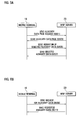
- FIGS. 6A and 6B are sequence diagrams illustrating a download procedure for auxiliary data.
- auxiliary data can be downloaded using the WAP protocol and provided to the user. That is, a mobile terminal can extract a link to a page having auxiliary data (auxiliary data page) from ESG data. Auxiliary data pages can be coded in XML, and saved in a WAP server. Auxiliary data of an auxiliary data page can be downloaded to the mobile terminal.
- a mobile terminal 10 sends an auxiliary data page request to a WAP server 20 using link information on auxiliary data pages (S601).
- the WAP server 20 sends a requested auxiliary data page to the mobile terminal 10 (S603).
- the mobile terminal 10 displays the received auxiliary data page on the display unit 140, and the user can select one or more auxiliary data elements in the page.
- the mobile terminal 10 sends a request script for the selected auxiliary data to the WAP server 20 (S605).
- the WAP server 20 sends the selected auxiliary data to the mobile terminal 10 (S607).
- auxiliary data page is presented to the user for selection.
- auxiliary data is downloaded without presenting an auxiliary data page to the user.
- the mobile terminal 10 can obtain link information on an auxiliary data page and on auxiliary data from ESG data.
- the mobile terminal 10 sends a request script for desired auxiliary data to the WAP server 20 (S609).
- the request script can contain link information on the desired auxiliary data page and auxiliary data.
- the WAP server 20 sends the requested auxiliary data to the mobile terminal 10 (S611).
- the mobile terminal 10 plays back received digital broadcasts with application of downloaded auxiliary data.
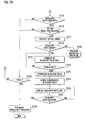
- FIGS. 7A and 7B are flowcharts illustrating a digital broadcast playback method according to another exemplary embodiment of the present invention.
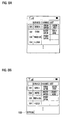
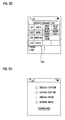
- FIGS. 8A and 8D are screen representations illustrating steps in the digital broadcast playback method.
- the control unit 180 of the mobile terminal in response to a broadcast reception request from the user during an idle mode, enters a broadcast reception mode (S701).
- the broadcast reception request can be issued using a business key ('TV key') of a digital broadcast provider, or through menu selection.
- the control unit 180 checks whether existing ESG data has expired (S703). If the existing ESG data has expired, the control unit 180 updates the ESG data by receiving new ESG data (S705). Digital broadcast providers can update ESG data at regular intervals or at particular times. Preferably, the mobile terminal checks the expiration of ESG data whenever it enters the broadcast reception mode.
- the ESG data includes information on broadcast programs of service channels and on auxiliary data for the broadcast programs.
- the auxiliary data includes caption data and audio data for a broadcast program.
- the caption data is an auxiliary data element to provide a caption for a related broadcast program.
- the audio data is an auxiliary data element to provide a related broadcast program with audio in a language different from that in the default audio native to the broadcast program.
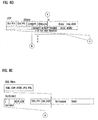
- Table 1 shows a segment of ESG data coded in XML for describing auxiliary data.
- the ESG data segment includes information regarding a caption and link (i.e., a URL) to the caption of a selected service channel.
- an identifier "Caption” indicates that a broadcast program "Matrix” has an associated caption
- a URL ''http://caption.tim.it/!Matrix_200612021230'' is a link to an auxiliary data page having the caption.
- Table 2 illustrates another segment of ESG data coded in XML.
- the ESG data segment includes information regarding an audio and link (URL) to the audio of a selected service channel.
- an identifier "Audio” indicates that a broadcast program "Matrix” has an associated audio other than the default audio
- a URL "ttp://Audio.tim.it//Matrix_200612021230” is a link to an auxiliary data page having the audio.
- Table 3 illustrates another segment of ESG data coded in XML.
- the ESG data segment includes information regarding a caption and audio, and a link (URL) to the caption and audio of a selected service channel.
- a link URL to the caption and audio of a selected service channel.
- an identifier "auxiliary data” indicates that a broadcast program "Matrix” has an associated caption and audio
- a URL "http://Auxiliary.tim.it//Matrix_200712021230” is a link to an auxiliary data page having the caption and audio.
- distinct links can be assigned to a caption and audio of a broadcast program for separate downloading, as described in connection with Table 1 and Table 2.
- a single link can be assigned to a caption and audio of a broadcast program, as described in connection with Table 3.
- a single link is used to connect to an auxiliary data page having a caption and audio.
- Multiple links may also be used to connect to multiple auxiliary data pages.
- the control unit 180 displays a list of available service channels on the display unit 140 (S707).
- the service channel list includes information regarding captions and supported languages, as illustrated in Table 4.
- Table 4 Service channel Program Caption Audio 1 CH1 Serie A Korean English 2 CH2 Matrix English/Korean English/Korean 3 CH3 Primera Liga Spanish Unavailable 4 CH4 K-LEAGUE Unavailable Unavailable
- the service channel list includes information regarding available service channels, titles of broadcast programs, captions, and audios.
- the contents of the service channel list are obtained by processing ESG data described in connection with Tables 1 to 3.
- the service channel list of Table 4 can be displayed as in FIG. 8A .
- the service channel CH1 is in an activated state.
- Information on captions and audios can be displayed using icons. Display of a service channel list enables the user to check what captions and audios are supported for particular service channels.
- the user can select a desired service channel in the service channel list through a key input.
- the control unit 180 activates the selected service channel (S711). It is assumed that the service channel CH2 is selected and activated as in FIG. 8B .
- the control unit 180 checks whether the newly activated service channel has related auxiliary data (S713, Figure 7B ). If the newly activated service channel does not have related auxiliary data, the control unit 180 proceeds to step S733. If the newly activated service channel has related auxiliary data, the control unit 180 checks whether an 'OPTION' menu item 700 ( Figure 8B ) is selected by the user (S715, Figure 7B ). If the 'OPTION' menu item 700 is not selected, the control unit 180 proceeds to step S733. If the 'OPTION' menu item 700 is selected, the control unit 180 expands the selected menu item into an 'OPTION' menu 700, as illustrated in FIG. 8C using processing described in step S717, Figure 7B .
- step S733 when the user issues a viewing request, the control unit 180 plays back a broadcast program of the selected service channel (S735).
- the user can connect to an auxiliary data page associated with the selected service channel by selecting a menu item "auxiliary data import" in the 'OPTION' menu 700.
- the menu item "auxiliary data import” may be not displayed in the 'OPTION' menu 700 if the selected service channel does not support a caption and audio or does not have link information thereof.
- the control unit 180 connects to the auxiliary data page associated with the selected service channel using link information (S721). That is, the auxiliary data page is displayed on the display unit 140. Preferably, the auxiliary data page is displayed via a WAP browser using the WAP protocol.
- the auxiliary data page may have a list of available auxiliary data elements, as illustrated in FIG. 8D .
- the user can select one or more auxiliary data elements using check boxes. In FIG. 8D , English and Korean captions and English and Korean audios are supported as auxiliary data elements. It is assumed that the Korean and English captions and the English audio are selected by the user.
- the control unit 180 downloads the selected auxiliary data (S725).
- control unit 180 After downloading, the control unit 180 stores the downloaded auxiliary data (S727), and displays a list of stored auxiliary data elements for selection by the user (S729).
- the control unit 180 plays back the broadcast program of the activated service channel (i.e. CH2) with application of the selected auxiliary data elements (S735).
- auxiliary data element that is stored but not selected for use can be applied later when the associated broadcast program is recorded and played back.
- the broadcast program of the activated service channel can be played back immediately.
- Table 5 illustrates a caption file downloaded as an auxiliary data element.
- the caption file contains timing information for synchronizing the caption with moving images of a broadcast program.
- the timing information in the caption file indicates a point in time at which caption data is displayed.
- the point in time at which caption data is displayed can be represented by an absolute time value (in units of seconds) in consideration of the running time of corresponding broadcast data.
- Both audio data downloaded from an auxiliary data page and video data of a broadcast program contain timestamps as timing information. Hence, data of an English audio file can be played back in synchronization with video data of a corresponding broadcast program according to timestamps.
- a caption or audio is set as auxiliary data before playback of a corresponding broadcast program.
- a caption or audio is set as auxiliary data during playback of a corresponding broadcast program.
- FIG. 9 is a flow chart illustrating a digital broadcast playback method according to another exemplary embodiment of the present invention.
- the control unit 180 of the mobile terminal in an idle mode checks whether a broadcast reception request is input from the user (S901).
- control unit 180 If a request other than the broadcast reception request is input, the control unit 180 performs the requested operation (S902). If a broadcast reception request is input, the control unit 180 enters a broadcast reception mode, and checks whether existing ESG data has expired (S903).
- the user can initiate digital broadcast reception by issuing a sequence of requests to transition to a broadcast reception mode, select a service channel, and play back a broadcast program of the selected service channel, as described in connection with FIGS. 7A and 7B .
- the user can use preset shortcut keys.
- the control unit 180 plays back broadcast data of a previously used service channel.
- the control unit 180 plays back broadcast data of a service channel corresponding to the numeric key.
- the control unit 180 plays back broadcast data of a preset service channel at a particular time.
- control unit 180 updates the ESG data (S905). If the existing ESG data is still valid, the control unit 180 proceeds to step S907 for playback of a digital broadcast.
- the control unit 180 plays back a broadcast program of a selected service channel (S907), and checks the availability of auxiliary data associated with the broadcast program (S909). If auxiliary data is available, the control unit 180 displays an auxiliary data list associated with the broadcast program (S911). If auxiliary data is unavailable, the control unit 180 proceeds to step S921.
- Auxiliary data elements in the list can be displayed as icons having key mappings.
- an English caption, Korean caption, English audio and Korean audio can be mapped to numeric keys '1', '2', '3' and '4', respectively, and displayed as icons.
- key mappings can be made with reference to ESG data.
- the control unit 180 sends a request script to the WAP server 20 ( Figure 6A/B ).
- the request script is preferably coded in XML, similarly to Tables 1 to 3.
- the request script contains a link to an auxiliary data page having the selected auxiliary data element, and type information (identifier) of the selected auxiliary data element.
- the WAP server 20 parses the request script from the mobile terminal, and sends requested auxiliary data to the mobile terminal.
- the control unit 180 downloads the auxiliary data from the WAP server 20 (S917), and stores the downloaded auxiliary data (S919).
- the control unit 180 displays a downloaded caption or plays back a downloaded audio during playback of the broadcast program (S907).
- a caption and audio can be simultaneously applied through steps S907 to S919. Synchronization between the caption or audio and the video of the broadcast program can be achieved in a manner described in connection with FIGS. 7A and 7B .
- the control unit 180 terminates broadcast reception.
- one auxiliary data element is selected and downloaded.
- One or more auxiliary data elements may also be selected, downloaded, and displayed through user selection, as described in connection with FIGS. 7A and 7B .
- auxiliary data selection the availability of auxiliary data is marked using icons, and the user can select a desired caption or audio by inputting one of numeric keys mapped to the icons.
- One or more auxiliary data elements may also be selected using a menu, similarly to the case of FIGS. 7A and 7B .
- the availability of auxiliary data can be marked using icons, and the user can select a desired caption or audio by inputting one of numeric keys mapped to the icons.
- the above-described methods according to the present invention can be realized in hardware or as software or computer code that can be stored in a recording medium such as a CD ROM, an RAM, a floppy disk, a hard disk, or a magneto-optical disk or downloaded over a network, so that the methods described herein can be rendered in such software using a general purpose computer, or a special processor or in programmable or dedicated hardware, such as an ASIC or FPGA.
- the computer, the processor or the programmable hardware include memory components, e.g., RAM, ROM, Flash, etc. that may store or receive software or computer code that when accessed and executed by the computer, processor or hardware implement the processing methods described herein.
- the present invention provides a digital broadcast playback method for a mobile terminal, wherein link information on auxiliary data is delivered to the user during digital broadcast reception and the user can select one or more of captions and audios in various languages. Thereby, the user can enjoy a digital broadcast using a mobile terminal in a more friendly environment.
Landscapes
- Engineering & Computer Science (AREA)
- Signal Processing (AREA)
- Multimedia (AREA)
- Databases & Information Systems (AREA)
- Human Computer Interaction (AREA)
- Computer Networks & Wireless Communication (AREA)
- Two-Way Televisions, Distribution Of Moving Picture Or The Like (AREA)
- Circuits Of Receivers In General (AREA)
Applications Claiming Priority (1)
| Application Number | Priority Date | Filing Date | Title |
|---|---|---|---|
| KR1020070016603A KR100824321B1 (ko) | 2007-02-16 | 2007-02-16 | 휴대 단말기의 디지털 방송 재생 방법 |
Publications (2)
| Publication Number | Publication Date |
|---|---|
| EP1959596A2 true EP1959596A2 (de) | 2008-08-20 |
| EP1959596A3 EP1959596A3 (de) | 2010-02-10 |
Family
ID=39272121
Family Applications (1)
| Application Number | Title | Priority Date | Filing Date |
|---|---|---|---|
| EP08002259A Withdrawn EP1959596A3 (de) | 2007-02-16 | 2008-02-07 | Digitales Rundfunk-Playback-Verfahren für ein mobiles Endgerät |
Country Status (3)
| Country | Link |
|---|---|
| US (1) | US20080201738A1 (de) |
| EP (1) | EP1959596A3 (de) |
| KR (1) | KR100824321B1 (de) |
Cited By (2)
| Publication number | Priority date | Publication date | Assignee | Title |
|---|---|---|---|---|
| EP2385699A1 (de) * | 2010-05-05 | 2011-11-09 | Fraunhofer-Gesellschaft zur Förderung der Angewandten Forschung e.V. | Vorrichtung und Verfahren zur Aufbereitung und Anzeige eines via digitalem Rundfunk übertragenen Fernsehprogramms |
| EP2160024B1 (de) * | 2008-09-01 | 2018-05-02 | LG Electronics Inc. | Endgerät, Steuerverfahren und aufzeichnungsfähiges Medium dafür |
Families Citing this family (5)
| Publication number | Priority date | Publication date | Assignee | Title |
|---|---|---|---|---|
| US20100063970A1 (en) * | 2006-05-19 | 2010-03-11 | Chang Hyun Kim | Method for managing and processing information of an object for presentation of multiple sources and apparatus for conducting said method |
| KR101622687B1 (ko) * | 2010-04-12 | 2016-05-31 | 엘지전자 주식회사 | 이동단말기 및 그의 방송 서비스 가이드 정보를 이용한 연관 컨텐츠 제공 방법 |
| US8930988B2 (en) * | 2011-12-21 | 2015-01-06 | Sony Corporation | Reception apparatus, reception method, program, and information processing system |
| KR102805955B1 (ko) * | 2014-05-16 | 2025-05-14 | 소니그룹주식회사 | 수신 장치, 수신 방법, 송신 장치 및 송신 방법 |
| WO2016111176A1 (ja) * | 2015-01-07 | 2016-07-14 | ソニー株式会社 | 受信装置、受信方法、送信装置、及び、送信方法 |
Citations (1)
| Publication number | Priority date | Publication date | Assignee | Title |
|---|---|---|---|---|
| EP1732326A1 (de) * | 2005-06-07 | 2006-12-13 | Samsung Electronics Co., Ltd. | Verfahren zur Bereitstellung von interaktivem digitalem Rundfunk Service in einem Mobilkommunikationsgerät |
Family Cites Families (14)
| Publication number | Priority date | Publication date | Assignee | Title |
|---|---|---|---|---|
| KR970000764B1 (ko) * | 1992-12-31 | 1997-01-18 | 대우전자 주식회사 | 텔레비젼방송의 언어선택방법 |
| US5805153A (en) * | 1995-11-28 | 1998-09-08 | Sun Microsystems, Inc. | Method and system for resizing the subtitles of a video |
| KR19990071261A (ko) * | 1998-02-28 | 1999-09-15 | 윤종용 | 디지털 텔레비젼의 방송언어 변환방법 및 그 장치 |
| US7051360B1 (en) * | 1998-11-30 | 2006-05-23 | United Video Properties, Inc. | Interactive television program guide with selectable languages |
| JP4250817B2 (ja) * | 1999-08-04 | 2009-04-08 | 三菱電機株式会社 | 番組案内提供装置 |
| KR100421360B1 (ko) * | 2001-11-03 | 2004-03-06 | 엘지전자 주식회사 | 디지털 방송 프로그램의 부가기능 표시 장치 및 그 방법 |
| GB2406754A (en) * | 2003-10-03 | 2005-04-06 | Nokia Corp | Same or similar service handover |
| US8145120B2 (en) * | 2003-10-27 | 2012-03-27 | Nokia Corporation | Apparatus, system, method and computer program product for service selection and sorting |
| US20050120391A1 (en) * | 2003-12-02 | 2005-06-02 | Quadrock Communications, Inc. | System and method for generation of interactive TV content |
| KR100575931B1 (ko) * | 2004-06-16 | 2006-05-02 | 삼성전자주식회사 | 디지털 방송 프로그램 정보를 안내하는 디지털 방송수신용 단말 및 그 방법 |
| GB0420531D0 (en) * | 2004-09-15 | 2004-10-20 | Nokia Corp | File delivery session handling |
| US20060090179A1 (en) * | 2004-10-26 | 2006-04-27 | Ya-Ling Hsu | System and method for embedding supplemental information into a digital stream of a work of content |
| KR100726439B1 (ko) * | 2005-10-14 | 2007-06-11 | 삼성전자주식회사 | 자막 서비스 방법 및 이를 수행하는 영상처리장치 |
| KR101253640B1 (ko) * | 2006-03-30 | 2013-04-10 | 엘지전자 주식회사 | 자막 제공 방법 및 그를 위한 장치 |
-
2007
- 2007-02-16 KR KR1020070016603A patent/KR100824321B1/ko not_active Expired - Fee Related
-
2008
- 2008-02-04 US US12/012,535 patent/US20080201738A1/en not_active Abandoned
- 2008-02-07 EP EP08002259A patent/EP1959596A3/de not_active Withdrawn
Patent Citations (1)
| Publication number | Priority date | Publication date | Assignee | Title |
|---|---|---|---|---|
| EP1732326A1 (de) * | 2005-06-07 | 2006-12-13 | Samsung Electronics Co., Ltd. | Verfahren zur Bereitstellung von interaktivem digitalem Rundfunk Service in einem Mobilkommunikationsgerät |
Cited By (2)
| Publication number | Priority date | Publication date | Assignee | Title |
|---|---|---|---|---|
| EP2160024B1 (de) * | 2008-09-01 | 2018-05-02 | LG Electronics Inc. | Endgerät, Steuerverfahren und aufzeichnungsfähiges Medium dafür |
| EP2385699A1 (de) * | 2010-05-05 | 2011-11-09 | Fraunhofer-Gesellschaft zur Förderung der Angewandten Forschung e.V. | Vorrichtung und Verfahren zur Aufbereitung und Anzeige eines via digitalem Rundfunk übertragenen Fernsehprogramms |
Also Published As
| Publication number | Publication date |
|---|---|
| US20080201738A1 (en) | 2008-08-21 |
| EP1959596A3 (de) | 2010-02-10 |
| KR100824321B1 (ko) | 2008-04-22 |
Similar Documents
| Publication | Publication Date | Title |
|---|---|---|
| KR101706956B1 (ko) | 비실시간 서비스 처리 방법 및 방송 수신기 | |
| US7801175B2 (en) | Method, system and network entity for providing digital broadband transmission | |
| KR100573787B1 (ko) | 패킷화된 프로그램 정보를 디코딩하기 위한 방법과 장치, 및 패킷화된 프로그램 정보를 처리하기 위한 방법 | |
| KR100923061B1 (ko) | Esg의 프래그먼트들을 전송하는 그리고 모바일 단말에서 esg를 구성하는 방법 및 컴퓨터 판독가능 매체, esg 데이터를 배포하기 위한 시스템 및 esg 데이터를 수신하는 모바일 장치 | |
| US20070240188A1 (en) | Datacasting | |
| EP3499898A1 (de) | Übertragungsvorrichtung und übertragungsverfahren dafür | |
| EP1959596A2 (de) | Digitales Rundfunk-Playback-Verfahren für ein mobiles Endgerät | |
| US9219951B2 (en) | Mobile TV system architecture for mobile terminals | |
| US20130223383A1 (en) | Mobile service reception method and mobile service receiver | |
| WO2015049900A1 (ja) | 送信装置及び送信方法、受信装置及び受信方法、並びにコンピューター・プログラム | |
| US20080092203A1 (en) | Approach for channel switch time reduction in IPDC over DVB-H | |
| US20080040332A1 (en) | Web service provision system and web service provision method for providing digital broadcast receiver terminal with web service | |
| US20080040762A1 (en) | System and method for transmitting/receiving ESG data update information in DVB-H system | |
| JP2009071745A (ja) | コンテンツ利用システム、コンテンツ利用方法、記録再生装置、コンテンツ提供方法およびコンテンツ提供プログラム | |
| KR20160092525A (ko) | 비실시간 서비스 처리 방법 및 방송 수신기 | |
| KR20050036526A (ko) | 채널 전환 대기 시간을 이용한 디지털 멀티미디어방송시스템의 부가서비스 제공을 위한 전송스트림, 장치,방법 및 그 방송 수신 단말기 | |
| KR20080038227A (ko) | 서비스 가이드를 위한 유니폼 자원 지시자 및 식별자 간의매핑 | |
| WO2009098775A1 (ja) | 受信装置、受信方法及び受信プログラム | |
| JP6864811B2 (ja) | 放送コンテンツ再生装置 | |
| WO2012157753A1 (ja) | 放送通信連携受信装置 | |
| US20070294727A1 (en) | Method and system for providing ESG in a digital video broadcasting system | |
| KR100787981B1 (ko) | 휴대 단말기의 디지털 방송 재생 방법 | |
| KR100800005B1 (ko) | 휴대 단말기의 디지털 방송 재생 방법 | |
| KR101304888B1 (ko) | 다중 주파수 채널을 사용하는 디지털 방송수신기의서비스채널 변경 장치 및 방법 | |
| KR101262949B1 (ko) | 디지털 방송수신기의 서비스채널 변경 장치 및 방법 |
Legal Events
| Date | Code | Title | Description |
|---|---|---|---|
| PUAI | Public reference made under article 153(3) epc to a published international application that has entered the european phase |
Free format text: ORIGINAL CODE: 0009012 |
|
| 17P | Request for examination filed |
Effective date: 20080207 |
|
| AK | Designated contracting states |
Kind code of ref document: A2 Designated state(s): AT BE BG CH CY CZ DE DK EE ES FI FR GB GR HR HU IE IS IT LI LT LU LV MC MT NL NO PL PT RO SE SI SK TR |
|
| AX | Request for extension of the european patent |
Extension state: AL BA MK RS |
|
| PUAL | Search report despatched |
Free format text: ORIGINAL CODE: 0009013 |
|
| AK | Designated contracting states |
Kind code of ref document: A3 Designated state(s): AT BE BG CH CY CZ DE DK EE ES FI FR GB GR HR HU IE IS IT LI LT LU LV MC MT NL NO PL PT RO SE SI SK TR |
|
| AX | Request for extension of the european patent |
Extension state: AL BA MK RS |
|
| 17Q | First examination report despatched |
Effective date: 20100510 |
|
| AKX | Designation fees paid |
Designated state(s): DE GB NL |
|
| RAP1 | Party data changed (applicant data changed or rights of an application transferred) |
Owner name: SAMSUNG ELECTRONICS CO., LTD. |
|
| STAA | Information on the status of an ep patent application or granted ep patent |
Free format text: STATUS: THE APPLICATION IS DEEMED TO BE WITHDRAWN |
|
| 18D | Application deemed to be withdrawn |
Effective date: 20150623 |