EP1956031B1 - Neuropeptides for the culture of aquatic organisms - Google Patents
Neuropeptides for the culture of aquatic organisms Download PDFInfo
- Publication number
- EP1956031B1 EP1956031B1 EP06817994A EP06817994A EP1956031B1 EP 1956031 B1 EP1956031 B1 EP 1956031B1 EP 06817994 A EP06817994 A EP 06817994A EP 06817994 A EP06817994 A EP 06817994A EP 1956031 B1 EP1956031 B1 EP 1956031B1
- Authority
- EP
- European Patent Office
- Prior art keywords
- pacap
- seq
- fish
- neuropeptide
- crustaceans
- Prior art date
- Legal status (The legal status is an assumption and is not a legal conclusion. Google has not performed a legal analysis and makes no representation as to the accuracy of the status listed.)
- Not-in-force
Links
Images



Classifications
-
- C—CHEMISTRY; METALLURGY
- C07—ORGANIC CHEMISTRY
- C07K—PEPTIDES
- C07K14/00—Peptides having more than 20 amino acids; Gastrins; Somatostatins; Melanotropins; Derivatives thereof
- C07K14/435—Peptides having more than 20 amino acids; Gastrins; Somatostatins; Melanotropins; Derivatives thereof from animals; from humans
- C07K14/575—Hormones
-
- A—HUMAN NECESSITIES
- A61—MEDICAL OR VETERINARY SCIENCE; HYGIENE
- A61K—PREPARATIONS FOR MEDICAL, DENTAL OR TOILETRY PURPOSES
- A61K38/00—Medicinal preparations containing peptides
- A61K38/16—Peptides having more than 20 amino acids; Gastrins; Somatostatins; Melanotropins; Derivatives thereof
- A61K38/17—Peptides having more than 20 amino acids; Gastrins; Somatostatins; Melanotropins; Derivatives thereof from animals; from humans
-
- A—HUMAN NECESSITIES
- A01—AGRICULTURE; FORESTRY; ANIMAL HUSBANDRY; HUNTING; TRAPPING; FISHING
- A01K—ANIMAL HUSBANDRY; AVICULTURE; APICULTURE; PISCICULTURE; FISHING; REARING OR BREEDING ANIMALS, NOT OTHERWISE PROVIDED FOR; NEW BREEDS OF ANIMALS
- A01K61/00—Culture of aquatic animals
- A01K61/80—Feeding devices
-
- A—HUMAN NECESSITIES
- A23—FOODS OR FOODSTUFFS; TREATMENT THEREOF, NOT COVERED BY OTHER CLASSES
- A23K—FODDER
- A23K20/00—Accessory food factors for animal feeding-stuffs
- A23K20/10—Organic substances
- A23K20/142—Amino acids; Derivatives thereof
- A23K20/147—Polymeric derivatives, e.g. peptides or proteins
-
- A—HUMAN NECESSITIES
- A23—FOODS OR FOODSTUFFS; TREATMENT THEREOF, NOT COVERED BY OTHER CLASSES
- A23K—FODDER
- A23K50/00—Feeding-stuffs specially adapted for particular animals
- A23K50/80—Feeding-stuffs specially adapted for particular animals for aquatic animals, e.g. fish, crustaceans or molluscs
-
- A—HUMAN NECESSITIES
- A61—MEDICAL OR VETERINARY SCIENCE; HYGIENE
- A61P—SPECIFIC THERAPEUTIC ACTIVITY OF CHEMICAL COMPOUNDS OR MEDICINAL PREPARATIONS
- A61P31/00—Antiinfectives, i.e. antibiotics, antiseptics, chemotherapeutics
-
- C—CHEMISTRY; METALLURGY
- C07—ORGANIC CHEMISTRY
- C07K—PEPTIDES
- C07K14/00—Peptides having more than 20 amino acids; Gastrins; Somatostatins; Melanotropins; Derivatives thereof
-
- C—CHEMISTRY; METALLURGY
- C07—ORGANIC CHEMISTRY
- C07K—PEPTIDES
- C07K14/00—Peptides having more than 20 amino acids; Gastrins; Somatostatins; Melanotropins; Derivatives thereof
- C07K14/435—Peptides having more than 20 amino acids; Gastrins; Somatostatins; Melanotropins; Derivatives thereof from animals; from humans
- C07K14/575—Hormones
- C07K14/57563—Vasoactive intestinal peptide [VIP]; Related peptides
-
- Y—GENERAL TAGGING OF NEW TECHNOLOGICAL DEVELOPMENTS; GENERAL TAGGING OF CROSS-SECTIONAL TECHNOLOGIES SPANNING OVER SEVERAL SECTIONS OF THE IPC; TECHNICAL SUBJECTS COVERED BY FORMER USPC CROSS-REFERENCE ART COLLECTIONS [XRACs] AND DIGESTS
- Y02—TECHNOLOGIES OR APPLICATIONS FOR MITIGATION OR ADAPTATION AGAINST CLIMATE CHANGE
- Y02A—TECHNOLOGIES FOR ADAPTATION TO CLIMATE CHANGE
- Y02A40/00—Adaptation technologies in agriculture, forestry, livestock or agroalimentary production
- Y02A40/80—Adaptation technologies in agriculture, forestry, livestock or agroalimentary production in fisheries management
- Y02A40/81—Aquaculture, e.g. of fish
Definitions
- the present invention is related to the field of the farming biotechnology, specifically with the use of the Pituitary Adenylate Cyclase-Activating Polypeptide in the aquatic organism culture.
- the peptide is applied to aquatic organisms by immersion, injection or as a feed additive, an increase in the appetite of these organisms, a greater rate of growth and survival, a superior immune activity and an increase of the prolactin release is obtained.
- PACAP Pituitary Adenylate Cyclase-Activating Polypeptide
- PACAP belongs to the peptide family that includes secretin, glucagon and intestinal vasoactive peptide ( Arimura and Shioda (1995) Pituitary adenylate cyclase-activating polypeptide (PACAP) and its receptors: Neuroendocrine and endocrine interaction. Front. Neuroendocrinol. 16:53-88 ).
- PACAP Pituitary adenylate cyclase-activating polypeptide
- GHRH Growth Hormone Releasing Hormone
- GHRH and PACAP peptides are codified by a same gene and are contained in a same precursor ( Montero et al. (2000) Molecular evolution of the growth hormone-releasing hormone/pituitary adenylate cyclase-activating polypeptide gene family. Functional implication in the regulation of growth hormone secretion. Journal of Molec. Endocrinol. 25:157-168 ).
- PACAP The PACAP gene is expressed fundamentally in the central and peripheral nervous system, in the nervous fibers innerving the eyes, in the respiratory tract, the salivary glands, in the gastrointestinal tract, in the reproductive system organs, in the pancreas and in the urinary tract. It is also synthesized in the adrenal glands, in the gonads and in immune cells ( Sherwood et al. (2000) The origin and function of the Pituitary Adenylate Cyclase-Activating Polypeptide (PACAP)/Glucagon Superfamily. Endocrine Review 21:619-670 ). PACAP displays different biological functions, which is consistent with its diverse distribution in different tissue and with its hypophysiotropic, neurotransmitter, neuromodulate and vasoregulate activity.
- PACAP Pituitary Adenylate Cyclase-Activating Polypeptide
- PACAP stimulates the growth hormone (GH) release.
- GH growth hormone
- amphibians Hu et al. (2000) Characterization and messenger ribonucleic acid distribution of a cloned pituitary adenylate cyclase-activating polypeptide type I receptor in the frog Xenopus laevis brain. Endocrinol. 141:657-665 ) and fish ( Anderson L. L. et al. (2004) Growth Hormone Secretion: Molecular and Cellular Mechanisms and In Vivo Approaches. Society for Experim. Biol. and Med. 229:291-302 ).
- PACAP stimulates in addition the prolactin release by the pituitary cells in mammals
- MSH melanotropin ⁇ -melanocyte-stimulating hormone
- PACAP PACAP from several vertebrates' species and from a protochordate (tunicate) has been cloned.
- fish In fish it has been isolated from some species of salmon and from catfish ( Sherwood et al. (2000) The Origin and Function of the Pituitary Adenylate Cyclase-Activating olypeptide (PACAP)/Glucagon Superfamily Endocrine Reviews 21(6):619-670 , goldfish ( Leung et al. (1999) Molecular cloning and tissue distribution of in pituitary adenylate cyclase-activating polypeptide (PACAP) the goldfish. Rec. Progr. Mol. Comp. Endocrino/.
- zebrafish Fradinger and Sherwood (2000) Characterization of the gene encoding both growth hormone-releasing hormone (GRF) and pituitary adenylate cyclase-activating polypeptide. Mol. and Cell. Endocrinol. 165:211-219 ), gagha (Krueckl and Sherwood. (2001) and trout ( Krueckl and Sherwood. (2001) Developmental expression, alternative splicing and gene copy number for the pituitary adenylate cyclase-activating polypeptide (PACAP) and growth hormone-releasing hormone (GRF) gene in raibow trout Molec. and Cell. Endocrinol. 182:99-108 ).
- PACAP pituitary adenylate cyclase-activating polypeptide
- GRF growth hormone-releasing hormone
- the patent US 5695954 protects the isolation and purification of the genes nucleotide sequences that codes for the fish GHRH-PACAP polypeptide, as well as, vectors and hosts that express these sequences with the objective of being used to increase the growth in fish, via transgenesis, introducing the mentioned genetic constructs in fertilized fish eggs. It also protects a method for detecting transgenic fish that contain these sequences.
- variants of the exact amino acid sequence of PACAP were used with N- terminal modifications, obtained in our laboratory for Clarias gariepinus and Oreochromis niloticus species. These variants were used as growth stimulators in a non-transgenic manner, by administration by immersion expressed in the supernatant of culture of E. coli and P. pastoris, without previous purification of them. Unexpectedly, we found that these variants are able, in these conditions, to promote a significant increase of the immunological activity in these organisms and to elevate the prolactin concentration in serum. These properties of the peptide have not been described thus far for aquatic organisms.
- the present invention describes a non transgenic methodology to increase growth and improve the immune system of aquatic organisms including invertebrates.
- aquatic organisms are an important source of proteins, but the capture in its natural form is exploited at the maximimum limit. For this reason, culturing is necessary to increase the production ( Pullin et al.; Conference Proceeding 7, 432 p. International Center for living Aquatic Resources Monagement. Manila, Philippines. 1982, ISSN 0115-4389 ).
- the present invention solves the above problem by providing variants of Pituitary Adenylate Cyclase-Activating Polypeptide with the amino acids sequences identified as SEQ ID No 12, 13 and 14, which increased the rate of growth of aquatic organisms, including invertebrate organisms, in a short period of time, which is of vital importance for aquaculture.
- These peptides also increase the survival of fish larvae and crustaceans of commercial interest when they are applied by immersion or as feed additive. They stimulate the immune activity in these organisms and the appetite, the development of the color of the skin and the prolactin release.
- the variants of the neuropeptide PACAP are applied to fish or crustaceans by periodic injections with intervals of 3 days in a concentration of 0.1 ⁇ g/g of animal weight, by immersion baths with intervals of 1 to 4 days in fresh water or sea water with a peptide concentration between 100 to 200 ⁇ g/per liter of water and as feed additive in a concentration of 5mg/Kg of formulated feed. In all cases a significant increase of growth and a superior immune activity is obtained.
- the use of the variants of the neuropeptide PACAP offers advantages because of its small size of approximately 5 KDa, which is better absorbed through the skin and mucous of these organisms when it is applied by immersion, which is a method of administration that present cost and manipulation advantages for the aquaculture and with a low index of contamination.
- its signals transduction mechanism begins with the activation of an enzyme (adenyl cyclase) and not through the activation of a hormone, and its growth hormone releasing activity is weak in mammals, including humans, Therefore, its use provides better public perception and less regulatory requirements.
- the variants of PACAP were provided to aquatic organisms, such as tilapia Orechromis sp, catfish Claria sp, salmon Salmon sp. and shrimps Penaus sp.
- the variants of the PACAP are provided to fish or crustaceans to prevent or to treat infections by pathogenic agents.
- an embodiment of the present invention describes a composition for the treatment of fish or crustaceans in culture to stimulate their growth and to increase their resistance against diseases, as well as for preventive or therapeutic treatment of an infection by pathogenic agents, all this with the objective to improve the productivity.
- Example 1 Construction of vectors for the expression of intracellular PACAP in E. coli and for the extracellular form in the supernatant of P. pastoris culture.
- the gene coding for PACAP of Claria gariepinus was isolated by Polymerase Chain Reaction using the sequence previously obtained by RT-PCR of the gene which encodes the neuropeptide GNRH-PACAP of this species.
- the tilapia PACAP gene was isolated similarly by using the specific oligonucleotides SEQ ID No 3 and SEQ ID No 4.
- the present invention constitutes the first report of the isolation of this gene in tilapia.
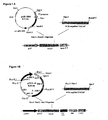
- the gene which codes for PACAP was cloned in the E. coli expression vector pAR 3040 using the restriction sites Ndel and BamHI ( Figure 1A ).
- the gene expression was carried out to 28°C during 5 hours.
- the expression of the recombinant PACAP and its integrity was checked by Mass Espectrometry.
- the plasmids were linearized before transforming the MP36 strain of P. pastoris.
- the transformation was carried out by electroporation.
- the MP36 strain is an auxotrophic mutant his3 which acquired a His + phenotype after transformation.
- the transformed clones were identified by Dot Blot. Using Southern Blot technique, it was determined in which transformants the integration had occurred by the replacement of the gene AOX 1 of P. pastoris by the expression cassette of the recombinant plasmid. This integration event produces a Mut s (low levels of methanol utilization) and His + phenotype.
- Pichia pastoris secretes low levels of proteins by itself and its culture medium does not need proteins as supplements, so you can expect a heterologous protein that is secreted to the extracellular medium, constituting a majority of the total protein in the medium (more than 80%) ( Tschopp et al.; Bio/Technology 1987, 5: 1305-1308 ; Barr et al.; Pharm. Eng. 1992, 12: 48-51 ).
- the expression of the PACAP in P. pastoris was carried out in bioreactors of 5L with the addition of methanol to the culture.
- Example 2 Growth stimulation experiment in juvenile Claria gariepinus, determination of the hepatosomatic index and fish muscle dry weight.
- Two experimental groups were conformed, each one consisting of nine individuals.
- the groups were acclimated in separated tanks, with constant water recirculation, at a temperature of 28°C and with a constant photoperiod of 14 hours light and 10 hours of darkness.
- the animals were fed 2 times per day, with rations equivalent to 5% of the total body weight in each tank.
- the animals were identified before the experiment.
- One of the groups was treated with semi-purified PACAP (70% of purity) SEQ ID No. 13, whereas the other group, used as a placebo, was treated with E.coli proteins contained in PBS 1X ( E. coli proteins were obtained by the same purification procedure as the peptide of interest, with equivalent amount of contaminants present in the purified PACAP sample).
- the PACAP treated fish were intraperitoneally injected with a dosis of 0.1 ⁇ g of the peptide per gram of the animal body weight, 2 times per week.
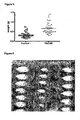
- the placebo group was injected similarly with a placebo sample. 22 days after the beginning of the experiment, the animals injected with PACAP in the peritoneal cavity, showed a significant increase (p ⁇ 0.05) of the body weight compared to the animals injected with a placebo ( Figure 2 ).
- the hepatosomatic index and the muscle dry weight were determined to demonstrate that the increase in the fish corporal body weight was not due to the increase of the size of the organs, or to the increase of the water content in the muscle.
- Example 3 Experiment of growth stimulation, of the resistance to pathogenic agents and of the prolactin release, in tilapia larvae by application through immersion baths with the supernatant of ruptured E. coli containing the recombinant PACAP.
- Two experimental groups were formed of 60 larvae in each group, one group was treated with the PACAP with the sequence SEQ ID No. 13 and one placebo group.
- the treatments were carried out by immersion in a volume of 2L, three times a week during 20 days, approximately 200 ⁇ g of PACAP was used for each immersion bath, for one hour.
- the fish were treated by immersion bath 45 days of the beginning of the experiment under the same conditions previously described and 24 hours after the treatment blood was extracted.
- the concentration of prolactin in the serum of each fish was measured by Western blot and ELISA.
- a polyclonal antibody anti tilapia prolactin was used for these assays.
- We observed in the fish of the group treated with the peptide statistically higher concentrations of serum prolactin compared with the placebo group p ⁇ 0.01 (Table 2).
- a group was treated with PACAP (previously obtained from our laboratory, with a purity of 87%) with SEQ ID No. 13, by intraperitoneal injection (0.5 ⁇ g/g of the animals body weight).
- the second group was treated with the GHRP-6 (Lipotec, S.A, Barcelona, Spain) using the same method of administration at a dose of 0.1 ⁇ g of the peptide per gram of the animal weight.
- the placebo group was treated with proteins from E.coli contained in PBS 1X ( E. coli proteins were obtained by the same procedure used for the purification of PACAP, with equivalent amount of contaminants present in the purified PACAP sample).
- the food collected from the bottom of each channel in each monitoring was oven-dried at 100 ° C for 20 hours and was weighed using an analytical balance. Food intake was calculated by determining the difference between the food added to the ponds (10 grams, with 20% humidity) and the food not eaten by the fish.
- Juvenile Claria gariepinus were employed. Two groups were formed, with 10 animals in each group. The groups were acclimated in separated tanks with constant water recirculation, at a temperature of 28°C and with the photoperiod of 14 hours of light and 10 hours of darkness. The animals were fed 2 times per day, with equivalent rations to 5% of the total body weight in each tank.
- the peptide with the sequence SEQ ID No. 13 was applied by intraperitoneal injection 2 times per week in a dose of 0,1 ⁇ g gram animal weight.
- lysozyme and lectin levels in blood serum were determined by a turbidimetric method based on lysis of lyophilized Micrococcus lysodeikticus. Egg white lysozyme of chicken was used as a positive control. Samples of lysozyme were prepared in concentrations of 0, 1, 2, 4 and 8 mg / mL in phosphate buffer (0,05 M NaHPO 4 12H 2 O, pH 6,2). The microorganism was prepared in a concentration of 3 mg / mL in phosphate buffer.
- 100 ⁇ l_positive control solutions were added in 96 well plates with a flat bottom and performed in duplo, and 100 ⁇ l_of serum was added in sixfold.
- 100 ⁇ l of suspension of the microorganism was added to a final volume of 200 ⁇ l in each well.
- the units of lysozyme of the controls and the samples were calculated as follows: dividing the slope of the curve ⁇ DO 450 nm vs t (min) (in its linear range) by 0,001. This results in a reference curve U lisozima vs mg /mL lysozyme from which the units of enzymatic activity of the samples are interpolated to derive their concentration.
- the results of the experiment showed that the fish treated with PACAP demonstrate a highly statistically significant (p ⁇ 0,01) increase in de level of lysozyme in serum compared to the placebo group (Table 3).
- Example 6 Experiment of growth stimulation in tilapia larvae by application of recombinant PACAP contained in the supernatant the culture of P. pastoris.
- the treatments were performed by immersion in an hour and a half in a volume of 20 liters of water, three times a week for 30 days, with approximately 100 mg of peptide / liter of water.
- Example 7 Experiment of growth stimulation and quality in larvae of the shrimp of the Litopenaeus schmitti species treated with recombinant PACAP contained in the supernatant of Pichia pastoris.
- the larvae were cultivated in fiber glass tanks with a capacity of 100 L.
- the feeding was based on dyatomeas ( Chaetoceros gracilis ), the flagellated algae ( Tetraselmis suecica ) and Artemia nauplius (Aquatic Eco-Systems Inc.).
- the abiotic growth factors were the following ones:
- Example 8 Growth stimulation in juveniles of Clarias gariepinus using the formulation of recombinant PACAP in the fish diet.
- the recombinant PACAP (SEQ ID No. 14) included in the diet at the dose of 5 mg/Kg of feed resulted in an increase in body weight of the fish of approximately 30% compared with the placebo group, with highly significant statistical differences between the groups (p ⁇ 0.01).
Landscapes
- Life Sciences & Earth Sciences (AREA)
- Health & Medical Sciences (AREA)
- Chemical & Material Sciences (AREA)
- Polymers & Plastics (AREA)
- Zoology (AREA)
- Proteomics, Peptides & Aminoacids (AREA)
- Engineering & Computer Science (AREA)
- Organic Chemistry (AREA)
- General Health & Medical Sciences (AREA)
- Animal Husbandry (AREA)
- Medicinal Chemistry (AREA)
- Gastroenterology & Hepatology (AREA)
- Food Science & Technology (AREA)
- Marine Sciences & Fisheries (AREA)
- Veterinary Medicine (AREA)
- Biophysics (AREA)
- Molecular Biology (AREA)
- Genetics & Genomics (AREA)
- Public Health (AREA)
- Environmental Sciences (AREA)
- Animal Behavior & Ethology (AREA)
- Pharmacology & Pharmacy (AREA)
- Biochemistry (AREA)
- Bioinformatics & Cheminformatics (AREA)
- Birds (AREA)
- Insects & Arthropods (AREA)
- Immunology (AREA)
- Epidemiology (AREA)
- Endocrinology (AREA)
- Toxicology (AREA)
- Vascular Medicine (AREA)
- Biodiversity & Conservation Biology (AREA)
- Communicable Diseases (AREA)
- Oncology (AREA)
- Chemical Kinetics & Catalysis (AREA)
- General Chemical & Material Sciences (AREA)
- Nuclear Medicine, Radiotherapy & Molecular Imaging (AREA)
- Feed For Specific Animals (AREA)
- Fodder In General (AREA)
- Peptides Or Proteins (AREA)
Applications Claiming Priority (2)
| Application Number | Priority Date | Filing Date | Title |
|---|---|---|---|
| CU20050231A CU23557A1 (es) | 2005-11-22 | 2005-11-22 | Neuropéptidos para el cultivo de organismos acuáticos |
| PCT/CU2006/000013 WO2007059714A1 (es) | 2005-11-22 | 2006-11-20 | Neuropéptidos para el cultivo de organismos acuáticos |
Publications (2)
| Publication Number | Publication Date |
|---|---|
| EP1956031A1 EP1956031A1 (en) | 2008-08-13 |
| EP1956031B1 true EP1956031B1 (en) | 2010-09-15 |
Family
ID=37758727
Family Applications (1)
| Application Number | Title | Priority Date | Filing Date |
|---|---|---|---|
| EP06817994A Not-in-force EP1956031B1 (en) | 2005-11-22 | 2006-11-20 | Neuropeptides for the culture of aquatic organisms |
Country Status (19)
| Country | Link |
|---|---|
| US (1) | US8833306B2 (https=) |
| EP (1) | EP1956031B1 (https=) |
| JP (1) | JP5275809B2 (https=) |
| KR (1) | KR101132185B1 (https=) |
| CN (1) | CN101356191B (https=) |
| AR (1) | AR058214A1 (https=) |
| AT (1) | ATE481421T1 (https=) |
| AU (1) | AU2006317349B2 (https=) |
| BR (1) | BRPI0618913B1 (https=) |
| CA (1) | CA2630495C (https=) |
| CU (1) | CU23557A1 (https=) |
| DE (1) | DE602006016981D1 (https=) |
| ES (1) | ES2352218T3 (https=) |
| MY (1) | MY143765A (https=) |
| NO (1) | NO344212B1 (https=) |
| PT (1) | PT1956031E (https=) |
| RU (1) | RU2409027C2 (https=) |
| WO (1) | WO2007059714A1 (https=) |
| ZA (1) | ZA200804397B (https=) |
Families Citing this family (6)
| Publication number | Priority date | Publication date | Assignee | Title |
|---|---|---|---|---|
| CU20100233A7 (es) * | 2010-12-01 | 2012-10-15 | Ct De Ingeniería Genética Y Biotecnología | Combinación veterinaria para el control de infecciones virales en la acuicultura |
| CU24075B1 (es) * | 2011-08-26 | 2015-01-29 | Ct De Ingeniería Genética Y Biotecnología | Composición vacunal que comprende el péptido activador de la adenilato ciclasa de pituitaria como adyuvante molecular. |
| CN104371007B (zh) * | 2014-11-14 | 2017-04-19 | 中山大学 | 一种能促进罗非鱼生长激素表达的多肽pp1及其应用 |
| CN105087583B (zh) * | 2015-08-07 | 2018-05-25 | 浙江大学 | 干扰猪PACAP基因表达的siRNA、载体及应用 |
| CN106719205A (zh) * | 2017-01-13 | 2017-05-31 | 厦门大学 | 一种红膏蟹养殖方法 |
| WO2022246187A1 (en) * | 2021-05-20 | 2022-11-24 | Orcester Polytechnic Institute | Non-transgenic functional rescue of neuropeptides |
Family Cites Families (6)
| Publication number | Priority date | Publication date | Assignee | Title |
|---|---|---|---|---|
| EP0387457A1 (en) | 1989-01-06 | 1990-09-19 | Eurogentec S.A. | Recombinant fish hormone proteins |
| US5695954A (en) * | 1993-05-14 | 1997-12-09 | University Of Victoria Innovation & Development Corporation | DNA encoding two fish neuropeptides |
| US6429305B1 (en) * | 2000-04-14 | 2002-08-06 | Academia Sinica | Fish growth hormones |
| CU23016A1 (es) * | 2002-01-24 | 2005-01-25 | Ct Ingenieria Genetica Biotech | Método para la estimulación del crecimiento y resimétodo para la estimulación del crecimiento y resistencia a enfermedades en organismos acuáticos y fstencia a enfermedades en organismos acuáticos y formulación veterinaria ormulación veterinaria |
| EP1447181A1 (en) | 2003-02-11 | 2004-08-18 | Alto Danmark A/S | Lateral handgrip |
| CN1240716C (zh) * | 2004-01-15 | 2006-02-08 | 暨南大学 | 一种垂体腺苷酸环化酶激活多肽衍生物及其制备方法 |
-
2005
- 2005-11-22 CU CU20050231A patent/CU23557A1/es active IP Right Grant
-
2006
- 2006-11-20 AU AU2006317349A patent/AU2006317349B2/en not_active Ceased
- 2006-11-20 MY MYPI20081709A patent/MY143765A/en unknown
- 2006-11-20 US US12/094,339 patent/US8833306B2/en active Active
- 2006-11-20 CN CN2006800507147A patent/CN101356191B/zh active Active
- 2006-11-20 KR KR1020087014946A patent/KR101132185B1/ko active Active
- 2006-11-20 EP EP06817994A patent/EP1956031B1/en not_active Not-in-force
- 2006-11-20 DE DE602006016981T patent/DE602006016981D1/de active Active
- 2006-11-20 RU RU2008125074/10A patent/RU2409027C2/ru active
- 2006-11-20 CA CA2630495A patent/CA2630495C/en active Active
- 2006-11-20 JP JP2008541573A patent/JP5275809B2/ja not_active Expired - Fee Related
- 2006-11-20 BR BRPI0618913-0A patent/BRPI0618913B1/pt not_active IP Right Cessation
- 2006-11-20 WO PCT/CU2006/000013 patent/WO2007059714A1/es not_active Ceased
- 2006-11-20 AT AT06817994T patent/ATE481421T1/de not_active IP Right Cessation
- 2006-11-20 ES ES06817994T patent/ES2352218T3/es active Active
- 2006-11-20 PT PT06817994T patent/PT1956031E/pt unknown
- 2006-11-21 AR ARP060105097A patent/AR058214A1/es not_active Application Discontinuation
-
2008
- 2008-05-21 ZA ZA200804397A patent/ZA200804397B/xx unknown
- 2008-06-20 NO NO20082800A patent/NO344212B1/no unknown
Also Published As
| Publication number | Publication date |
|---|---|
| CU23557A1 (es) | 2010-07-20 |
| MY143765A (en) | 2011-07-15 |
| US20090176703A1 (en) | 2009-07-09 |
| PT1956031E (pt) | 2010-12-20 |
| US8833306B2 (en) | 2014-09-16 |
| ES2352218T3 (es) | 2011-02-16 |
| CN101356191B (zh) | 2012-05-30 |
| RU2409027C2 (ru) | 2011-01-20 |
| BRPI0618913B1 (pt) | 2015-08-11 |
| DE602006016981D1 (de) | 2010-10-28 |
| ATE481421T1 (de) | 2010-10-15 |
| JP5275809B2 (ja) | 2013-08-28 |
| EP1956031A1 (en) | 2008-08-13 |
| JP2009516520A (ja) | 2009-04-23 |
| KR101132185B1 (ko) | 2012-04-05 |
| AU2006317349B2 (en) | 2011-02-03 |
| CA2630495C (en) | 2015-09-08 |
| KR20080080566A (ko) | 2008-09-04 |
| CA2630495A1 (en) | 2007-05-31 |
| NO344212B1 (no) | 2019-10-14 |
| ZA200804397B (en) | 2009-04-29 |
| AR058214A1 (es) | 2008-01-23 |
| AU2006317349A1 (en) | 2007-05-31 |
| NO20082800L (no) | 2008-08-05 |
| RU2008125074A (ru) | 2009-12-27 |
| CN101356191A (zh) | 2009-01-28 |
| BRPI0618913A2 (pt) | 2011-09-13 |
| WO2007059714A1 (es) | 2007-05-31 |
Similar Documents
| Publication | Publication Date | Title |
|---|---|---|
| Chen et al. | Expression of recombinant tilapia insulin-like growth factor-I and stimulation of juvenile tilapia growth by injection of recombinant IGFs polypeptides | |
| Shepherd et al. | Control of growth: Developments and Prospects | |
| NO344212B1 (no) | Nevropeptider for dyrkning av akvatiske organismer | |
| de la Fuente et al. | Growth regulation and enhancement in tilapia: basic research findings and their applications | |
| KR101190022B1 (ko) | 어류 및 갑각류용 성장-촉진 폴리펩티드 | |
| Muttray et al. | Effects of recombinant salmon type II growth hormone and bovine growth hormone on growth of coho salmon (Oncorhynchus kisutch) | |
| MX2008006702A (en) | Neuropeptides for the culture of aquatic organisms | |
| Moriyama et al. | Somatic growth acceleration of juvenile abalone, Haliotis discus hannai, by immersion in and intramuscular injection of recombinant salmon growth hormone | |
| WO2005115166A1 (en) | Method of enhancing growth and immunity of shrimp larvae using recombinant bovine growth hormone | |
| Peterson | Regulation of growth hormone and immunoneutralization of somatostatin in rainbow trout (Oncorhynchus mykiss) | |
| Roberts | Characterization of growth hormone in yellow perch and myostatin in several teleost species | |
| National Research Council et al. | Hormonal Regulation of Growth | |
| Biga | The effects of recombinant bovine somatotropin on growth-related genes in rainbow trout (Oncorhynchus mykiss) | |
| Riley | Brian S. Shepherd Gregory M. Weber Mathilakath M. Vijayan Andre Seale |
Legal Events
| Date | Code | Title | Description |
|---|---|---|---|
| PUAI | Public reference made under article 153(3) epc to a published international application that has entered the european phase |
Free format text: ORIGINAL CODE: 0009012 |
|
| 17P | Request for examination filed |
Effective date: 20080623 |
|
| AK | Designated contracting states |
Kind code of ref document: A1 Designated state(s): AT BE BG CH CY CZ DE DK EE ES FI FR GB GR HU IE IS IT LI LT LU LV MC NL PL PT RO SE SI SK TR |
|
| 17Q | First examination report despatched |
Effective date: 20090408 |
|
| GRAJ | Information related to disapproval of communication of intention to grant by the applicant or resumption of examination proceedings by the epo deleted |
Free format text: ORIGINAL CODE: EPIDOSDIGR1 |
|
| GRAP | Despatch of communication of intention to grant a patent |
Free format text: ORIGINAL CODE: EPIDOSNIGR1 |
|
| DAX | Request for extension of the european patent (deleted) | ||
| GRAS | Grant fee paid |
Free format text: ORIGINAL CODE: EPIDOSNIGR3 |
|
| GRAA | (expected) grant |
Free format text: ORIGINAL CODE: 0009210 |
|
| AK | Designated contracting states |
Kind code of ref document: B1 Designated state(s): AT BE BG CH CY CZ DE DK EE ES FI FR GB GR HU IE IS IT LI LT LU LV MC NL PL PT RO SE SI SK TR |
|
| REG | Reference to a national code |
Ref country code: CH Ref legal event code: EP Ref country code: GB Ref legal event code: FG4D |
|
| REG | Reference to a national code |
Ref country code: IE Ref legal event code: FG4D |
|
| REF | Corresponds to: |
Ref document number: 602006016981 Country of ref document: DE Date of ref document: 20101028 Kind code of ref document: P |
|
| REG | Reference to a national code |
Ref country code: PT Ref legal event code: SC4A Free format text: AVAILABILITY OF NATIONAL TRANSLATION Effective date: 20101213 |
|
| REG | Reference to a national code |
Ref country code: NL Ref legal event code: VDEP Effective date: 20100915 |
|
| PG25 | Lapsed in a contracting state [announced via postgrant information from national office to epo] |
Ref country code: LT Free format text: LAPSE BECAUSE OF FAILURE TO SUBMIT A TRANSLATION OF THE DESCRIPTION OR TO PAY THE FEE WITHIN THE PRESCRIBED TIME-LIMIT Effective date: 20100915 Ref country code: FI Free format text: LAPSE BECAUSE OF FAILURE TO SUBMIT A TRANSLATION OF THE DESCRIPTION OR TO PAY THE FEE WITHIN THE PRESCRIBED TIME-LIMIT Effective date: 20100915 Ref country code: AT Free format text: LAPSE BECAUSE OF FAILURE TO SUBMIT A TRANSLATION OF THE DESCRIPTION OR TO PAY THE FEE WITHIN THE PRESCRIBED TIME-LIMIT Effective date: 20100915 |
|
| REG | Reference to a national code |
Ref country code: ES Ref legal event code: FG2A Effective date: 20110204 |
|
| LTIE | Lt: invalidation of european patent or patent extension |
Effective date: 20100915 |
|
| PG25 | Lapsed in a contracting state [announced via postgrant information from national office to epo] |
Ref country code: PL Free format text: LAPSE BECAUSE OF FAILURE TO SUBMIT A TRANSLATION OF THE DESCRIPTION OR TO PAY THE FEE WITHIN THE PRESCRIBED TIME-LIMIT Effective date: 20100915 Ref country code: CY Free format text: LAPSE BECAUSE OF FAILURE TO SUBMIT A TRANSLATION OF THE DESCRIPTION OR TO PAY THE FEE WITHIN THE PRESCRIBED TIME-LIMIT Effective date: 20100915 Ref country code: SI Free format text: LAPSE BECAUSE OF FAILURE TO SUBMIT A TRANSLATION OF THE DESCRIPTION OR TO PAY THE FEE WITHIN THE PRESCRIBED TIME-LIMIT Effective date: 20100915 |
|
| PG25 | Lapsed in a contracting state [announced via postgrant information from national office to epo] |
Ref country code: GR Free format text: LAPSE BECAUSE OF FAILURE TO SUBMIT A TRANSLATION OF THE DESCRIPTION OR TO PAY THE FEE WITHIN THE PRESCRIBED TIME-LIMIT Effective date: 20101216 Ref country code: SE Free format text: LAPSE BECAUSE OF FAILURE TO SUBMIT A TRANSLATION OF THE DESCRIPTION OR TO PAY THE FEE WITHIN THE PRESCRIBED TIME-LIMIT Effective date: 20100915 Ref country code: LV Free format text: LAPSE BECAUSE OF FAILURE TO SUBMIT A TRANSLATION OF THE DESCRIPTION OR TO PAY THE FEE WITHIN THE PRESCRIBED TIME-LIMIT Effective date: 20100915 |
|
| PG25 | Lapsed in a contracting state [announced via postgrant information from national office to epo] |
Ref country code: SK Free format text: LAPSE BECAUSE OF FAILURE TO SUBMIT A TRANSLATION OF THE DESCRIPTION OR TO PAY THE FEE WITHIN THE PRESCRIBED TIME-LIMIT Effective date: 20100915 Ref country code: NL Free format text: LAPSE BECAUSE OF FAILURE TO SUBMIT A TRANSLATION OF THE DESCRIPTION OR TO PAY THE FEE WITHIN THE PRESCRIBED TIME-LIMIT Effective date: 20100915 Ref country code: CZ Free format text: LAPSE BECAUSE OF FAILURE TO SUBMIT A TRANSLATION OF THE DESCRIPTION OR TO PAY THE FEE WITHIN THE PRESCRIBED TIME-LIMIT Effective date: 20100915 Ref country code: IS Free format text: LAPSE BECAUSE OF FAILURE TO SUBMIT A TRANSLATION OF THE DESCRIPTION OR TO PAY THE FEE WITHIN THE PRESCRIBED TIME-LIMIT Effective date: 20110115 Ref country code: EE Free format text: LAPSE BECAUSE OF FAILURE TO SUBMIT A TRANSLATION OF THE DESCRIPTION OR TO PAY THE FEE WITHIN THE PRESCRIBED TIME-LIMIT Effective date: 20100915 Ref country code: RO Free format text: LAPSE BECAUSE OF FAILURE TO SUBMIT A TRANSLATION OF THE DESCRIPTION OR TO PAY THE FEE WITHIN THE PRESCRIBED TIME-LIMIT Effective date: 20100915 |
|
| PG25 | Lapsed in a contracting state [announced via postgrant information from national office to epo] |
Ref country code: MC Free format text: LAPSE BECAUSE OF NON-PAYMENT OF DUE FEES Effective date: 20101130 Ref country code: BE Free format text: LAPSE BECAUSE OF FAILURE TO SUBMIT A TRANSLATION OF THE DESCRIPTION OR TO PAY THE FEE WITHIN THE PRESCRIBED TIME-LIMIT Effective date: 20100915 |
|
| REG | Reference to a national code |
Ref country code: CH Ref legal event code: PL |
|
| PLBE | No opposition filed within time limit |
Free format text: ORIGINAL CODE: 0009261 |
|
| STAA | Information on the status of an ep patent application or granted ep patent |
Free format text: STATUS: NO OPPOSITION FILED WITHIN TIME LIMIT |
|
| PG25 | Lapsed in a contracting state [announced via postgrant information from national office to epo] |
Ref country code: LI Free format text: LAPSE BECAUSE OF NON-PAYMENT OF DUE FEES Effective date: 20101130 Ref country code: CH Free format text: LAPSE BECAUSE OF NON-PAYMENT OF DUE FEES Effective date: 20101130 |
|
| 26N | No opposition filed |
Effective date: 20110616 |
|
| PG25 | Lapsed in a contracting state [announced via postgrant information from national office to epo] |
Ref country code: DK Free format text: LAPSE BECAUSE OF FAILURE TO SUBMIT A TRANSLATION OF THE DESCRIPTION OR TO PAY THE FEE WITHIN THE PRESCRIBED TIME-LIMIT Effective date: 20100915 |
|
| REG | Reference to a national code |
Ref country code: DE Ref legal event code: R119 Ref document number: 602006016981 Country of ref document: DE Effective date: 20110601 Ref country code: DE Ref legal event code: R119 Ref document number: 602006016981 Country of ref document: DE Effective date: 20110531 |
|
| PG25 | Lapsed in a contracting state [announced via postgrant information from national office to epo] |
Ref country code: HU Free format text: LAPSE BECAUSE OF FAILURE TO SUBMIT A TRANSLATION OF THE DESCRIPTION OR TO PAY THE FEE WITHIN THE PRESCRIBED TIME-LIMIT Effective date: 20110316 Ref country code: BG Free format text: LAPSE BECAUSE OF FAILURE TO SUBMIT A TRANSLATION OF THE DESCRIPTION OR TO PAY THE FEE WITHIN THE PRESCRIBED TIME-LIMIT Effective date: 20100915 Ref country code: LU Free format text: LAPSE BECAUSE OF NON-PAYMENT OF DUE FEES Effective date: 20101120 |
|
| PG25 | Lapsed in a contracting state [announced via postgrant information from national office to epo] |
Ref country code: TR Free format text: LAPSE BECAUSE OF FAILURE TO SUBMIT A TRANSLATION OF THE DESCRIPTION OR TO PAY THE FEE WITHIN THE PRESCRIBED TIME-LIMIT Effective date: 20100915 |
|
| PG25 | Lapsed in a contracting state [announced via postgrant information from national office to epo] |
Ref country code: DE Free format text: LAPSE BECAUSE OF NON-PAYMENT OF DUE FEES Effective date: 20110531 |
|
| PG25 | Lapsed in a contracting state [announced via postgrant information from national office to epo] |
Ref country code: BG Free format text: LAPSE BECAUSE OF FAILURE TO SUBMIT A TRANSLATION OF THE DESCRIPTION OR TO PAY THE FEE WITHIN THE PRESCRIBED TIME-LIMIT Effective date: 20101215 |
|
| REG | Reference to a national code |
Ref country code: FR Ref legal event code: PLFP Year of fee payment: 10 |
|
| REG | Reference to a national code |
Ref country code: FR Ref legal event code: PLFP Year of fee payment: 11 |
|
| REG | Reference to a national code |
Ref country code: FR Ref legal event code: PLFP Year of fee payment: 12 |
|
| PGFP | Annual fee paid to national office [announced via postgrant information from national office to epo] |
Ref country code: PT Payment date: 20210422 Year of fee payment: 15 |
|
| PGFP | Annual fee paid to national office [announced via postgrant information from national office to epo] |
Ref country code: IE Payment date: 20210429 Year of fee payment: 15 |
|
| PG25 | Lapsed in a contracting state [announced via postgrant information from national office to epo] |
Ref country code: PT Free format text: LAPSE BECAUSE OF NON-PAYMENT OF DUE FEES Effective date: 20220520 |
|
| PG25 | Lapsed in a contracting state [announced via postgrant information from national office to epo] |
Ref country code: IE Free format text: LAPSE BECAUSE OF NON-PAYMENT OF DUE FEES Effective date: 20211120 |
|
| PGFP | Annual fee paid to national office [announced via postgrant information from national office to epo] |
Ref country code: GB Payment date: 20240521 Year of fee payment: 18 |
|
| PGFP | Annual fee paid to national office [announced via postgrant information from national office to epo] |
Ref country code: ES Payment date: 20240524 Year of fee payment: 18 |
|
| PGFP | Annual fee paid to national office [announced via postgrant information from national office to epo] |
Ref country code: FR Payment date: 20240527 Year of fee payment: 18 |
|
| PGFP | Annual fee paid to national office [announced via postgrant information from national office to epo] |
Ref country code: IT Payment date: 20240524 Year of fee payment: 18 |
|
| GBPC | Gb: european patent ceased through non-payment of renewal fee |
Effective date: 20241120 |
|
| PG25 | Lapsed in a contracting state [announced via postgrant information from national office to epo] |
Ref country code: IT Free format text: LAPSE BECAUSE OF NON-PAYMENT OF DUE FEES Effective date: 20241120 |
|
| PG25 | Lapsed in a contracting state [announced via postgrant information from national office to epo] |
Ref country code: GB Free format text: LAPSE BECAUSE OF NON-PAYMENT OF DUE FEES Effective date: 20241120 |
|
| PG25 | Lapsed in a contracting state [announced via postgrant information from national office to epo] |
Ref country code: FR Free format text: LAPSE BECAUSE OF NON-PAYMENT OF DUE FEES Effective date: 20241130 |
|
| REG | Reference to a national code |
Ref country code: ES Ref legal event code: FD2A Effective date: 20251230 |
|
| PG25 | Lapsed in a contracting state [announced via postgrant information from national office to epo] |
Ref country code: ES Free format text: LAPSE BECAUSE OF NON-PAYMENT OF DUE FEES Effective date: 20241121 |