EP1954869B1 - Preparation de substrats fibreux superhydrophobes - Google Patents
Preparation de substrats fibreux superhydrophobes Download PDFInfo
- Publication number
- EP1954869B1 EP1954869B1 EP20060841826 EP06841826A EP1954869B1 EP 1954869 B1 EP1954869 B1 EP 1954869B1 EP 20060841826 EP20060841826 EP 20060841826 EP 06841826 A EP06841826 A EP 06841826A EP 1954869 B1 EP1954869 B1 EP 1954869B1
- Authority
- EP
- European Patent Office
- Prior art keywords
- microparticles
- substrate
- fibrous substrate
- depositing
- fibrous
- Prior art date
- Legal status (The legal status is an assumption and is not a legal conclusion. Google has not performed a legal analysis and makes no representation as to the accuracy of the status listed.)
- Ceased
Links
- 239000000758 substrate Substances 0.000 title claims abstract description 49
- 230000003075 superhydrophobic effect Effects 0.000 title claims abstract description 19
- 238000004519 manufacturing process Methods 0.000 title claims abstract description 10
- 239000011859 microparticle Substances 0.000 claims abstract description 32
- 238000000034 method Methods 0.000 claims abstract description 31
- 238000000151 deposition Methods 0.000 claims abstract description 13
- 239000004205 dimethyl polysiloxane Substances 0.000 claims abstract description 13
- 229920000435 poly(dimethylsiloxane) Polymers 0.000 claims abstract description 13
- -1 polydimethylsiloxane Polymers 0.000 claims abstract description 12
- 239000005062 Polybutadiene Substances 0.000 claims abstract description 7
- 230000002209 hydrophobic effect Effects 0.000 claims abstract description 7
- 229920002857 polybutadiene Polymers 0.000 claims abstract description 7
- 229920002635 polyurethane Polymers 0.000 claims abstract description 7
- 239000004814 polyurethane Substances 0.000 claims abstract description 7
- 239000004753 textile Substances 0.000 claims abstract description 4
- 238000000576 coating method Methods 0.000 claims abstract description 3
- 239000006194 liquid suspension Substances 0.000 claims abstract description 3
- 239000004952 Polyamide Substances 0.000 claims description 20
- 229920002647 polyamide Polymers 0.000 claims description 20
- 239000004744 fabric Substances 0.000 claims description 15
- 239000000725 suspension Substances 0.000 claims description 9
- 239000000178 monomer Substances 0.000 claims description 8
- LYCAIKOWRPUZTN-UHFFFAOYSA-N Ethylene glycol Chemical group OCCO LYCAIKOWRPUZTN-UHFFFAOYSA-N 0.000 claims description 6
- 239000002904 solvent Substances 0.000 claims description 5
- CURLTUGMZLYLDI-UHFFFAOYSA-N Carbon dioxide Chemical compound O=C=O CURLTUGMZLYLDI-UHFFFAOYSA-N 0.000 claims description 4
- 238000001704 evaporation Methods 0.000 claims description 4
- 239000003960 organic solvent Substances 0.000 claims description 4
- 229920000742 Cotton Polymers 0.000 claims description 2
- 229910002092 carbon dioxide Inorganic materials 0.000 claims description 2
- 239000001569 carbon dioxide Substances 0.000 claims description 2
- 229920002678 cellulose Polymers 0.000 claims description 2
- 239000001913 cellulose Substances 0.000 claims description 2
- 150000002009 diols Chemical class 0.000 claims description 2
- 238000001914 filtration Methods 0.000 claims description 2
- 229920000728 polyester Polymers 0.000 claims description 2
- 229920002994 synthetic fiber Polymers 0.000 claims description 2
- 125000005628 tolylene group Chemical group 0.000 claims description 2
- 210000002268 wool Anatomy 0.000 claims description 2
- 125000000113 cyclohexyl group Chemical group [H]C1([H])C([H])([H])C([H])([H])C([H])(*)C([H])([H])C1([H])[H] 0.000 claims 1
- 125000005442 diisocyanate group Chemical group 0.000 claims 1
- 239000011258 core-shell material Substances 0.000 abstract description 5
- 239000002245 particle Substances 0.000 description 21
- 239000000463 material Substances 0.000 description 10
- XDTMQSROBMDMFD-UHFFFAOYSA-N Cyclohexane Chemical compound C1CCCCC1 XDTMQSROBMDMFD-UHFFFAOYSA-N 0.000 description 5
- 230000008021 deposition Effects 0.000 description 5
- 239000003381 stabilizer Substances 0.000 description 5
- XLYOFNOQVPJJNP-UHFFFAOYSA-N water Substances O XLYOFNOQVPJJNP-UHFFFAOYSA-N 0.000 description 5
- 238000002360 preparation method Methods 0.000 description 4
- 239000000835 fiber Substances 0.000 description 3
- 239000011521 glass Substances 0.000 description 3
- 238000004987 plasma desorption mass spectroscopy Methods 0.000 description 3
- 239000000126 substance Substances 0.000 description 3
- 239000000084 colloidal system Substances 0.000 description 2
- 150000001875 compounds Chemical class 0.000 description 2
- 230000008020 evaporation Effects 0.000 description 2
- 239000012948 isocyanate Substances 0.000 description 2
- 238000001878 scanning electron micrograph Methods 0.000 description 2
- 238000004626 scanning electron microscopy Methods 0.000 description 2
- 238000003756 stirring Methods 0.000 description 2
- 229920003171 Poly (ethylene oxide) Polymers 0.000 description 1
- 230000032683 aging Effects 0.000 description 1
- 230000015556 catabolic process Effects 0.000 description 1
- 238000006243 chemical reaction Methods 0.000 description 1
- 239000003795 chemical substances by application Substances 0.000 description 1
- 238000006731 degradation reaction Methods 0.000 description 1
- 239000006185 dispersion Substances 0.000 description 1
- 239000003344 environmental pollutant Substances 0.000 description 1
- 239000002657 fibrous material Substances 0.000 description 1
- 239000004816 latex Substances 0.000 description 1
- 229920000126 latex Polymers 0.000 description 1
- 238000000879 optical micrograph Methods 0.000 description 1
- 239000003973 paint Substances 0.000 description 1
- 231100000719 pollutant Toxicity 0.000 description 1
- 229920001485 poly(butyl acrylate) polymer Polymers 0.000 description 1
- 229920000642 polymer Polymers 0.000 description 1
- 238000006116 polymerization reaction Methods 0.000 description 1
- 239000011541 reaction mixture Substances 0.000 description 1
- 238000002791 soaking Methods 0.000 description 1
- 239000012209 synthetic fiber Substances 0.000 description 1
- DVKJHBMWWAPEIU-UHFFFAOYSA-N toluene 2,4-diisocyanate Chemical compound CC1=CC=C(N=C=O)C=C1N=C=O DVKJHBMWWAPEIU-UHFFFAOYSA-N 0.000 description 1
- 238000005406 washing Methods 0.000 description 1
Images


Classifications
-
- D—TEXTILES; PAPER
- D06—TREATMENT OF TEXTILES OR THE LIKE; LAUNDERING; FLEXIBLE MATERIALS NOT OTHERWISE PROVIDED FOR
- D06M—TREATMENT, NOT PROVIDED FOR ELSEWHERE IN CLASS D06, OF FIBRES, THREADS, YARNS, FABRICS, FEATHERS OR FIBROUS GOODS MADE FROM SUCH MATERIALS
- D06M23/00—Treatment of fibres, threads, yarns, fabrics or fibrous goods made from such materials, characterised by the process
- D06M23/12—Processes in which the treating agent is incorporated in microcapsules
-
- D—TEXTILES; PAPER
- D21—PAPER-MAKING; PRODUCTION OF CELLULOSE
- D21H—PULP COMPOSITIONS; PREPARATION THEREOF NOT COVERED BY SUBCLASSES D21C OR D21D; IMPREGNATING OR COATING OF PAPER; TREATMENT OF FINISHED PAPER NOT COVERED BY CLASS B31 OR SUBCLASS D21G; PAPER NOT OTHERWISE PROVIDED FOR
- D21H21/00—Non-fibrous material added to the pulp, characterised by its function, form or properties; Paper-impregnating or coating material, characterised by its function, form or properties
- D21H21/14—Non-fibrous material added to the pulp, characterised by its function, form or properties; Paper-impregnating or coating material, characterised by its function, form or properties characterised by function or properties in or on the paper
- D21H21/16—Sizing or water-repelling agents
-
- D—TEXTILES; PAPER
- D21—PAPER-MAKING; PRODUCTION OF CELLULOSE
- D21H—PULP COMPOSITIONS; PREPARATION THEREOF NOT COVERED BY SUBCLASSES D21C OR D21D; IMPREGNATING OR COATING OF PAPER; TREATMENT OF FINISHED PAPER NOT COVERED BY CLASS B31 OR SUBCLASS D21G; PAPER NOT OTHERWISE PROVIDED FOR
- D21H21/00—Non-fibrous material added to the pulp, characterised by its function, form or properties; Paper-impregnating or coating material, characterised by its function, form or properties
- D21H21/50—Non-fibrous material added to the pulp, characterised by its function, form or properties; Paper-impregnating or coating material, characterised by its function, form or properties characterised by form
- D21H21/52—Additives of definite length or shape
- D21H21/54—Additives of definite length or shape being spherical, e.g. microcapsules, beads
-
- D—TEXTILES; PAPER
- D06—TREATMENT OF TEXTILES OR THE LIKE; LAUNDERING; FLEXIBLE MATERIALS NOT OTHERWISE PROVIDED FOR
- D06M—TREATMENT, NOT PROVIDED FOR ELSEWHERE IN CLASS D06, OF FIBRES, THREADS, YARNS, FABRICS, FEATHERS OR FIBROUS GOODS MADE FROM SUCH MATERIALS
- D06M2200/00—Functionality of the treatment composition and/or properties imparted to the textile material
- D06M2200/10—Repellency against liquids
- D06M2200/12—Hydrophobic properties
-
- D—TEXTILES; PAPER
- D21—PAPER-MAKING; PRODUCTION OF CELLULOSE
- D21H—PULP COMPOSITIONS; PREPARATION THEREOF NOT COVERED BY SUBCLASSES D21C OR D21D; IMPREGNATING OR COATING OF PAPER; TREATMENT OF FINISHED PAPER NOT COVERED BY CLASS B31 OR SUBCLASS D21G; PAPER NOT OTHERWISE PROVIDED FOR
- D21H17/00—Non-fibrous material added to the pulp, characterised by its constitution; Paper-impregnating material characterised by its constitution
- D21H17/20—Macromolecular organic compounds
- D21H17/33—Synthetic macromolecular compounds
- D21H17/34—Synthetic macromolecular compounds obtained by reactions only involving carbon-to-carbon unsaturated bonds
- D21H17/35—Polyalkenes, e.g. polystyrene
-
- D—TEXTILES; PAPER
- D21—PAPER-MAKING; PRODUCTION OF CELLULOSE
- D21H—PULP COMPOSITIONS; PREPARATION THEREOF NOT COVERED BY SUBCLASSES D21C OR D21D; IMPREGNATING OR COATING OF PAPER; TREATMENT OF FINISHED PAPER NOT COVERED BY CLASS B31 OR SUBCLASS D21G; PAPER NOT OTHERWISE PROVIDED FOR
- D21H17/00—Non-fibrous material added to the pulp, characterised by its constitution; Paper-impregnating material characterised by its constitution
- D21H17/20—Macromolecular organic compounds
- D21H17/33—Synthetic macromolecular compounds
- D21H17/46—Synthetic macromolecular compounds obtained otherwise than by reactions only involving carbon-to-carbon unsaturated bonds
- D21H17/54—Synthetic macromolecular compounds obtained otherwise than by reactions only involving carbon-to-carbon unsaturated bonds obtained by reactions forming in the main chain of the macromolecule a linkage containing nitrogen
- D21H17/57—Polyureas; Polyurethanes
-
- D—TEXTILES; PAPER
- D21—PAPER-MAKING; PRODUCTION OF CELLULOSE
- D21H—PULP COMPOSITIONS; PREPARATION THEREOF NOT COVERED BY SUBCLASSES D21C OR D21D; IMPREGNATING OR COATING OF PAPER; TREATMENT OF FINISHED PAPER NOT COVERED BY CLASS B31 OR SUBCLASS D21G; PAPER NOT OTHERWISE PROVIDED FOR
- D21H17/00—Non-fibrous material added to the pulp, characterised by its constitution; Paper-impregnating material characterised by its constitution
- D21H17/20—Macromolecular organic compounds
- D21H17/33—Synthetic macromolecular compounds
- D21H17/46—Synthetic macromolecular compounds obtained otherwise than by reactions only involving carbon-to-carbon unsaturated bonds
- D21H17/59—Synthetic macromolecular compounds obtained otherwise than by reactions only involving carbon-to-carbon unsaturated bonds obtained by reactions forming in the main chain of the macromolecule a linkage containing silicon
-
- Y—GENERAL TAGGING OF NEW TECHNOLOGICAL DEVELOPMENTS; GENERAL TAGGING OF CROSS-SECTIONAL TECHNOLOGIES SPANNING OVER SEVERAL SECTIONS OF THE IPC; TECHNICAL SUBJECTS COVERED BY FORMER USPC CROSS-REFERENCE ART COLLECTIONS [XRACs] AND DIGESTS
- Y10—TECHNICAL SUBJECTS COVERED BY FORMER USPC
- Y10T—TECHNICAL SUBJECTS COVERED BY FORMER US CLASSIFICATION
- Y10T428/00—Stock material or miscellaneous articles
- Y10T428/249921—Web or sheet containing structurally defined element or component
- Y10T428/249953—Composite having voids in a component [e.g., porous, cellular, etc.]
- Y10T428/249978—Voids specified as micro
-
- Y—GENERAL TAGGING OF NEW TECHNOLOGICAL DEVELOPMENTS; GENERAL TAGGING OF CROSS-SECTIONAL TECHNOLOGIES SPANNING OVER SEVERAL SECTIONS OF THE IPC; TECHNICAL SUBJECTS COVERED BY FORMER USPC CROSS-REFERENCE ART COLLECTIONS [XRACs] AND DIGESTS
- Y10—TECHNICAL SUBJECTS COVERED BY FORMER USPC
- Y10T—TECHNICAL SUBJECTS COVERED BY FORMER US CLASSIFICATION
- Y10T428/00—Stock material or miscellaneous articles
- Y10T428/25—Web or sheet containing structurally defined element or component and including a second component containing structurally defined particles
- Y10T428/254—Polymeric or resinous material
Definitions
- the present invention relates to a process for the preparation of fibrous superhydrophobic substrates, superhydrophobic fibrous substrates and the use of such substrates.
- a material is considered superhydrophobic when the contact angle of a drop of water deposited on its surface is greater than 140 degrees.
- Such materials have interesting properties in a wide variety of fields, including clothing, stationery or paints.
- the inventors have found that, surprisingly, it is possible to obtain superhydrophobic materials by simply depositing on a fibrous substrate hydrophobic particles having a particular structure and chemical nature.
- the superhydrophobic nature of the materials obtained is not sensitive to aging, for several months, when they are left to rest.
- fibrous substrate any material consisting of synthetic or natural fibers.
- Microparticle means particles of micrometric size.
- hydrophobic core-shell microparticles having a polyurethane core and a bark formed of a polystyrene-poly (ethylene oxide) copolymer, a hydroxypolystyrene or poly (butyl acrylate) have been synthesized by the inventors, as described in the following publications: B. Radhakrishnan et al., Colloid Polym Sci (2002), 280, 1122-1130 , and B. Radhakrishnan et al., Colloid Polym Sci (2003), 281, 516-530 .
- these particles once deposited on fibrous substrates, did not give said substrates a superhydrophobic character.
- the particular choice of microparticles used in the process according to the invention is at the origin of the superhydrophobic properties imparted to the fibrous substrates.
- the first step of the process according to the invention preferably involves a stepwise polymerization method in a medium dispersed in an organic solvent, a first monomer consisting of a diol, for example ethane-1,2-diol, and a second di-isocyanate monomer, for example tolylene di-isocyanate, in the presence of polydimethylsiloxane (PDMS) or polybutadiene which acts as a reactive stabilizer.
- PDMS polydimethylsiloxane
- the organic solvent used for the preparation of the microparticles may be cyclohexane or supercritical carbon dioxide.
- the microparticles obtained have a diameter generally of between 0.5 and 5 microns.
- the size of the particles is adjusted by varying various parameters: the mass percentage of the reactive stabilizer, the stirring speed, the rate and order of addition of the monomers, the molar mass of the reactive stabilizer and the functionality of the reactive stabilizer.
- the fibrous substrate that is to be made superhydrophobic hereinafter referred to as the substrate to be treated, is made of natural fibers selected from the group comprising cellulose, wool, cotton, silk, and can be filter paper.
- the substrate to be treated consists of synthetic fibers selected from the group comprising polyamides and polyesters, and may have a porosity of between 1 and 10 microns.
- the substrate is a polyamide fabric.
- This deposition may be carried out, for example, by filtering the suspension of microparticles through the fibrous substrate, or by soaking the fibrous substrate in the microparticle suspension, then evaporation of the solvent, or by deposition of the suspension on the fibrous substrate and then evaporation of the solvent.
- the subject of the invention is a superhydrophobic fibrous substrate in which the fibers are impregnated with microparticles of the core-shell type, said microparticles having a polyurethane core and a polydimethylsiloxane or polybutadiene shell.
- the microparticles have a diameter generally of between 0.5 and 5 microns.
- the substrate is for example made of a polyamide fabric or filter paper. Depending on its nature, it can be used for the manufacture of textiles for clothing, or for the manufacture of coatings for printing.
- Example 1 relates to the preparation of hydrophobic microparticles, and the following examples relate to the deposition of microparticles on different substrates.
- Particles of polyurethane with a core-shell structure are prepared by a process in dispersion in cyclohexane, in the presence of polydimethylsiloxane.
- the PDMS-OH reactive stabilizer with a molar mass of 4670 g.mol -1 (0.5 g, ie 16.7% by weight), the monomer ethane-1,2-diol (0.6 g) and cyclohexane (20 g) are introduced into the reactor and then left at 60 ° C. with stirring for a few minutes.
- the tolylene diisocyanate comonomer (1.9 g) is then added and the reaction mixture is stirred for at least 6 hours.
- the latex obtained is recovered, centrifuged, and then the particles are dispersed again in cyclohexane. This operation is repeated twice.
- the particles obtained are characterized by scanning electron microscopy (SEM).
- SEM scanning electron microscopy
- the figure 1 presents a SEM image of these particles, whose diameter is equal to 2.2 microns.
- the process was repeated to obtain particles having a diameter of 3.5 and 4.2 ⁇ m respectively, using a weight percentage of polydimethylsiloxane equal to 9% and 4%, respectively.
- the test was reproduced successively with polyamide webs having a porosity of 1 .mu.m, 5 .mu.m and 10 .mu.m respectively, and with microparticles having a diameter of 2.2 .mu.m, 3.5 .mu.m and 4.2 .mu.m.
- the surface of the fabric is then characterized by scanning electron microscopy. It is found that a homogeneous deposit which respects the surface topology of the polyamide fabric is obtained.
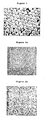
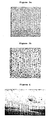
- FIGS. 2a and 2b show images obtained at two different scales, the side of the square formed by a plate representing respectively 147 microns and 37 microns, for the web having a porosity of 1 micron treated with a suspension of particles having a diameter of 2.2 microns.
- Example 2 A process analogous to that of Example 2 was carried out using a filter paper instead of a polyamide cloth. Tests were carried out with particles having a diameter of 2.2 ⁇ m, 3.5 ⁇ m and 4.2 ⁇ m. A homogeneous deposit that respects the surface topology of the filter paper is obtained, as illustrated on the Figures 3a and 3b , which exhibit scanning electron micrographs obtained at different scales, the side of the square formed by a plate representing respectively 147 microns and 37 microns, for the filter paper treated with a suspension of particles having a diameter of 3.5 ⁇ m .
- the fibrous substrates on which the process according to the invention is carried out acquire properties of superhydrophobicity (contact angle of a drop of water greater than 140 °), unlike a non-substrate. fibrous such as a glass plate.
Landscapes
- Engineering & Computer Science (AREA)
- Textile Engineering (AREA)
- Treatments For Attaching Organic Compounds To Fibrous Goods (AREA)
- Paper (AREA)
- Paints Or Removers (AREA)
- Synthetic Leather, Interior Materials Or Flexible Sheet Materials (AREA)
- Compositions Of Macromolecular Compounds (AREA)
Description
- La présente invention concerne un procédé de préparation de substrats superhydrophobes fibreux, des substrats fibreux superhydrophobes ainsi que l'utilisation de tels substrats.
- Un matériau est considéré comme superhydrophobe lorsque l'angle de contact d'une goutte d'eau déposée sur sa surface est supérieur à 140 degrés.
- De tels matériaux présentent des propriétés intéressantes dans des domaines très variés, notamment l'habillement, la papeterie ou les peintures.
- Dans le domaine de l'habillement ou de la papeterie, les matériau que l'on souhaite rendre superhydrophobes présentent généralement un caractère fibreux.
- Pour fabriquer des matériaux fibreux superhydrophobes, on connaît, notamment de
WO 04/058419 EP 0 985 740 etEP 0 985 741 , des procédés utilisant des composés fluorés greffés. Toutefois, les matériaux obtenus par ces procédés présentent plusieurs inconvénients. Tout d'abord, le greffage chimique des agents organiques fluorés est peu robuste vis-à-vis d'actions mécaniques répétées (essuyages, lavages) inhérentes à l'utilisation des matériaux, en particulier lorsqu'il s'agit de textiles. En outre, la dégradation des matériaux dans le temps provoque la libération d'agents polluants pour l'environnement. - On connaît également d'autres procédés de fabrication de matériaux superhydrophobes, notamment de
WO 04/090065 WO 04/033788 - Les inventeurs ont trouvé que, de manière surprenante, il est possible d'obtenir des matériaux superhydrophobes par simple dépôt sur un substrat fibreux de particules hydrophobes ayant une structure et une nature chimique particulières.
- En outre, le caractère superhydrophobe des matériaux obtenus n'est pas sensible au vieillissement, pendant plusieurs mois, lorsque ceux-ci sont laissés au repos.
- Ainsi, selon un premier aspect, l'invention propose un procédé de préparation d'un substrat superhydrophobe fibreux, comprenant les étapes successives suivantes :
- préparation de microparticules hydrophobes de type coeur-écorce, lesdites microparticules présentant un coeur en polyuréthane et une écorce en polydiméthylsiloxane ou en polybutadiène ;
- dépôt, sur le substrat fibreux, d'une suspension liquide desdites microparticules dans un solvant organique.
- Par substrat fibreux, on entend tout matériau constitué de fibres synthétiques ou naturelles.
- Par microparticule, on entend des particules de dimension micrométrique.
- D'autres microparticules hydrophobes de type coeur-écorce, présentant un coeur en polyuréthane et une écorce formée d'un copolymère polystyrène-poly(éthylène oxyde), d'un hydroxypolystyrène, ou de poly(butylacrylate) ont été synthétisées par les inventeurs, tel que décrit dans les publications suivantes : B. Radhakrishnan et al., Colloid Polym Sci (2002), 280, 1122-1130, et B. Radhakrishnan et al.,Colloid Polym Sci (2003), 281, 516-530. Toutefois, ces particules, une fois déposées sur des substrats fibreux, n'ont pas conféré auxdits substrats un caractère superhydrophobe. Ainsi, le choix particulier des microparticules utilisées dans le procédé selon l'invention est à l'origine des propriétés superhydrophobes conférées aux substrats fibreux.
- La première étape du procédé selon l'invention fait de préférence intervenir une méthode de polymérisation par étapes en milieu dispersé dans un solvant organique, d'un premier monomère constitué d'un diol, par exemple d'éthane-1,2-diol, et d'un deuxième monomère de type di-isocyanate, par exemple le tolylène di-isocyanate, en présence de polydiméthylsiloxane (PDMS) ou de polybutadiène qui joue un rôle de stabilisant réactif. Cette méthode est décrite de façon détaillée par P. Chambon et al., Polymer (2005), 46, 1057-1066 .
- Le solvant organique utilisé pour la préparation des microparticules peut être le cyclohexane ou le dioxyde de carbone supercritique.
- Les microparticules obtenues présentent un diamètre généralement compris entre 0,5 et 5 microns.
- La taille des particules est ajustée en faisant varier différents paramètres : le pourcentage massique du stabilisant réactif, la vitesse d'agitation, la vitesse et l'ordre d'addition des monomères, la masse molaire du stabilisant réactif et la fonctionnalité du stabilisant réactif.
- Selon un premier mode de réalisation, le substrat fibreux que l'on souhaite rendre superhydrophobe, dénommé ci-après substrat à traiter, est constitué de fibres naturelles choisies dans le groupe comprenant la cellulose, la laine, le coton, la soie, et peut être du papier filtre.
- Selon une autre réalisation, le substrat à traiter est constitué de fibres synthétiques choisies dans le groupe comprenant les polyamides et les polyesters, et il peut présenter une porosité comprise entre 1 et 10 microns. Selon une réalisation préférentielle, le substrat est une toile de polyamide.
- De nombreux modes de dépôt des microparticules sur le substrat fibreux conduisent à l'obtention d'un substrat superhydrophobe. Ce dépôt peut être réalisé par exemple par filtration de la suspension de microparticules à travers le substrat fibreux, ou par trempage du substrat fibreux dans la suspension de microparticules, puis évaporation du solvant, ou par déposition de la suspension sur le substrat fibreux puis évaporation du solvant.
- Selon un deuxième aspect, l'invention a pour objet un substrat fibreux superhydrophobe dans lequel les fibres sont imprégnées par des microparticules de type coeur-écorce, lesdites microparticules présentant un coeur en polyuréthane et une écorce en polydiméthylsiloxane ou en polybutadiène.
- Les microparticules présentent un diamètre généralement compris entre 0,5 et 5 microns.
- Le substrat est par exemple constitué d'une toile polyamide ou de papier filtre. Selon sa nature, il peut être utilisé pour la fabrication de textiles destinés à l'habillement, où bien pour la fabrication de revêtements pour l'imprimerie.
- La présente invention est illustrée ci-après par des exemples concrets de réalisation, auxquels elle n'est cependant pas limitée. L'exemple 1 porte sur la préparation de microparticules hydrophobes, et les exemples suivants portent sur le dépôt de microparticules sur différents substrats.
- Des particules de polyuréthane à structure coeur-écorce sont préparées par un procédé en dispersion dans le cyclohexane, en présence de polydiméthylsiloxane.
- A cet effet, le stabilisant réactif PDMS-OH, de masse molaire 4670 g.mol-1 (0,5 g, soit 16,7% massique), le monomère éthane-1,2-diol (0,6 g) et le cyclohexane (20 g) sont introduits dans le réacteur puis laissés à 60°C sous agitation pendant quelques minutes. Le co-monomère tolylène di-isocyanate (1,9 g) est ensuite ajouté et le milieu réactionnel est laissé sous agitation pendant au moins 6 heures.
- En fin de réaction, le latex obtenu est récupéré, centrifugé, puis les particules sont dispersées à nouveau dans du cyclohexane. Cette opération est répétée deux fois.
- Les particules obtenues sont caractérisées par microscopie électronique à balayage (MEB). La
figure 1 présente un cliché MEB de ces particules, dont le diamètre est égal à 2,2 µm. - Le procédé a été reproduit pour obtenir respectivement des particules ayant un diamètre de 3,5 et 4,2 µm, en utilisant un pourcentage massique de polydiméthylsiloxane respectivement égal à 9% et 4%.
- Une solution contenant 1% en masse de microparticules dans le cyclohexane, préparée selon le mode opératoire de l'exemple 1, est filtrée à l'aide d'une trompe à eau, sur une toile de polyamide de 10 cm2. L'essai a été reproduit successivement avec des toiles de polyamide ayant une porosité respective de 1 µm, 5 µm et 10 µm, et avec des microparticules ayant un diamètre de 2,2 µm, 3,5 µm et 4,2 µm.
- Dans chacun des essais, la surface de la toile est ensuite caractérisée par microscopie électronique à balayage. On constate qu'un dépôt homogène qui respecte la topologie de surface de la toile de polyamide est obtenu.
- Les
figures 2a et 2b , présentent des clichés obtenus à deux échelles différentes, le côté du carré formé par un cliché représentant respectivement 147 microns et 37 microns, pour la toile ayant une porosité de 1 µm traitée par une suspension de particules ayant un diamètre de 2,2 µm. - Un procédé analogue à celui de l'exemple 2 a été mis en oeuvre en utilisant un papier filtre à la place d'une toile de polyamide. Des essais ont été effectués avec des particules ayant un diamètre de 2,2 µm, 3,5 µm et 4,2 µm. Un dépôt homogène qui respecte la topologie de surface du papier filtre est obtenu, comme cela est illustré sur les
figures 3a et 3b , qui présentent des clichés de microscopie électronique à balayage obtenus à des échelles différentes, le côté du carré formé par un cliché représentant respectivement 147 microns et 37 microns, pour le papier filtre traité par une suspension de particules ayant un diamètre de 3,5 µm. - L'angle de contact d'une goutte d'eau déposée à la surface des substrats traités obtenus dans les exemples 2 et 3 a été mesuré à l'aide d'un goniomètre. Les résultats sont rassemblés dans le tableau 1 ci-après.
- A titre comparatif, le dépôt de différents types de particules a également été réalisé sur une plaque de verre.
Tableau 1 Plaque de verre Toile polyamide (porosité 1 µm) Toile polyamide (porosité 5 µm) Toile polyamide (porosité 10 µm) Papier filtre Particules PU-PDMS (diamètre 2, 2 µm) 133° 141° 149° 153° 143° Particules PU-PDMS (diamètre 3,5 µm) 125° 150° 159° 160° 150° Particules PU-PDMS (diamètre 4,2 µm) - 146° 150° 160° 143° - Les
figures 4 à 8 sont des clichés de microscopie optique montrant une goutte d'eau déposée respectivement sur les substrats suivants : -
figure 4 : toile de polyamide de porosité 5 µm et particules de diamètre 2,2 µm ; -
figure 5 : toile de polyamide de porosité 1 µm et particules de diamètre 2,2 µm ; -
figure 6 : toile de polyamide de porosité 1 µm et particules de diamètre 4,2 µm; -
figure 7 : papier filtre et particules de diamètre 2,2 µm ; -
figure 8 : papier filtre et particules de diamètre 3, 5 µm. - Il apparaît d'après ces résultats que les substrats fibreux sur lesquels est mis en oeuvre le procédé selon l'invention acquièrent des propriétés de superhydrophobie (angle de contact d'une goutte d'eau supérieur à 140°), contrairement à un substrat non fibreux tel qu'une plaque de verre.
Claims (19)
- Procédé de préparation d'un substrat superhydrophobe fibreux, caractérisé en ce qu'il comprend les étapes successives suivantes :- préparation de microparticules hydrophobes de type coeur-écorce, lesdites microparticules présentant un coeur en polyuréthane et une écorce en polydiméthylsiloxane ou en polybutadiène ;- dépôt d'une suspension liquide desdites microparticules sur le substrat fibreux.
- Procédé selon la revendication 1, caractérisé en ce que la préparation des microparticules hydrophobes est réalisée par polymérisation par étapes en milieu dispersé dans un solvant organique, d'un premier monomère constitué d'un diol et d'un deuxième monomère de type di-isocyanate, en présence de polydiméthylsiloxane ou de polybutadiène.
- Procédé selon la revendication 2, caractérisé en ce que le premier monomère est l'éthane-1,2-diol et le deuxième monomère est le tolylène di-isocyanate.
- Procédé selon la revendication 2 ou 3, caractérisé en ce que le solvant organique est choisi parmi le cyclohexane et le dioxyde de carbone supercritique.
- Procédé selon l'une quelconque des revendications 1 à 4, caractérisé en ce que les microparticules ont un diamètre compris entre 0,5 et 5 microns.
- Procédé selon l'une quelconque des revendications 1 à 5, caractérisé en ce que le substrat fibreux est constitué de fibres naturelles choisies dans le groupe comprenant la cellulose, la laine, le coton, la soie.
- Procédé selon la revendication 6, caractérisé en ce que le substrat fibreux est du papier filtre.
- Procédé selon l'une quelconque des revendications 1 à 5, caractérisé en ce que le substrat fibreux est constitué de fibres synthétiques choisies dans le groupe comprenant les polyamides et les polyesters.
- Procédé selon la revendication 8, caractérisé en ce que le substrat fibreux présente une porosité comprise entre 1 et 10 microns.
- Procédé selon la revendication 8 ou 9, caractérisé en ce que le substrat fibreux est une toile de polyamide.
- Procédé selon l'une quelconque des revendications 1 à 10, caractérisé en ce que le dépôt est réalisé par filtration de la suspension de microparticules à travers le substrat fibreux.
- Procédé selon l'une quelconque des revendications 1 à 10, caractérisé, en ce que le dépôt est réalisé par trempage du substrat fibreux dans la suspension de microparticules, puis évaporation du solvant.
- Procédé selon l'une quelconque des revendications 1 à 10, caractérisé en ce que le dépôt est réalisé par déposition de la suspension de microparticules sur le substrat fibreux puis évaporation du solvant.
- Substrat fibreux superhydrophobe, caractérisé en ce que les fibres dudit substrat sont imprégnées par des microparticules de type coeur-écorce, lesdites microparticules présentant un coeur en polyuréthane et une écorce en polydiméthylsiloxane ou en polybutadiène.
- Substrat selon la revendication 14, caractérisé en ce que les microparticules ont un diamètre compris entre 0,5 et 5 microns.
- Substrat selon la revendication 14 ou 15, caractérisé en ce qu'il est constitué d'une toile de polyamide.
- Substrat selon la revendication 14 ou 15, caractérisé en ce qu'il est constitué de papier filtre.
- Utilisation d'un substrat selon la revendication 14, pour la fabrication de textiles destinés à l'habillement.
- Utilisation d'un substrat selon la revendication 14, pour la fabrication de revêtements pour l'imprimerie.
Applications Claiming Priority (2)
| Application Number | Priority Date | Filing Date | Title |
|---|---|---|---|
| FR0512199A FR2894164B1 (fr) | 2005-12-01 | 2005-12-01 | Preparation de substrats fibreux superhydrophobes |
| PCT/FR2006/002615 WO2007063217A1 (fr) | 2005-12-01 | 2006-11-29 | Preparation de substrats fibreux superhydrophobes |
Publications (2)
| Publication Number | Publication Date |
|---|---|
| EP1954869A1 EP1954869A1 (fr) | 2008-08-13 |
| EP1954869B1 true EP1954869B1 (fr) | 2012-01-11 |
Family
ID=37181906
Family Applications (1)
| Application Number | Title | Priority Date | Filing Date |
|---|---|---|---|
| EP20060841826 Ceased EP1954869B1 (fr) | 2005-12-01 | 2006-11-29 | Preparation de substrats fibreux superhydrophobes |
Country Status (6)
| Country | Link |
|---|---|
| US (1) | US20090197071A1 (fr) |
| EP (1) | EP1954869B1 (fr) |
| CN (1) | CN101405454A (fr) |
| AT (1) | ATE541083T1 (fr) |
| FR (1) | FR2894164B1 (fr) |
| WO (1) | WO2007063217A1 (fr) |
Families Citing this family (10)
| Publication number | Priority date | Publication date | Assignee | Title |
|---|---|---|---|---|
| CN102091583B (zh) * | 2010-12-17 | 2014-05-07 | 湖南大学 | 菜花状超疏水活性颗粒的制备方法 |
| US9237973B2 (en) | 2012-01-31 | 2016-01-19 | Kimberly-Clark Worldwide, Inc. | Treated apertures |
| CN102702948B (zh) * | 2012-05-29 | 2014-08-20 | 绍兴金隆机械制造有限公司 | 一种超疏水手套涂料制备方法及制作该手套的方法 |
| US10066123B2 (en) | 2013-12-09 | 2018-09-04 | 3M Innovative Properties Company | Curable silsesquioxane polymers, compositions, articles, and methods |
| FR3015988B1 (fr) * | 2013-12-27 | 2022-11-11 | Arjo Wiggins Fine Papers Ltd | Impregnation d'un papier a l'aide d'un fluide supercritique |
| US10392538B2 (en) | 2014-06-20 | 2019-08-27 | 3M Innovative Properties Company | Adhesive compositions comprising a silsesquioxane polymer crosslinker, articles and methods |
| WO2015195391A1 (fr) | 2014-06-20 | 2015-12-23 | 3M Innovative Properties Company | Compositions adhésives comprenant un agent de réticulation de polymère de silsesquioxane, articles et procédés |
| US9957416B2 (en) | 2014-09-22 | 2018-05-01 | 3M Innovative Properties Company | Curable end-capped silsesquioxane polymer comprising reactive groups |
| WO2016048736A1 (fr) | 2014-09-22 | 2016-03-31 | 3M Innovative Properties Company | Polymères durcissables comprenant un noyau renfermant un polymère de silsesquioxane et une couche extérieure renfermant un polymère de silsesquioxane, et groupes réactifs |
| CN106377948A (zh) * | 2016-08-30 | 2017-02-08 | 康俊平 | 一种纳米纤维涂层超疏水自清洁空气过滤器滤芯及制造方法 |
Family Cites Families (4)
| Publication number | Priority date | Publication date | Assignee | Title |
|---|---|---|---|---|
| CA1137364A (fr) * | 1979-07-20 | 1982-12-14 | Yoshiji Hiraoka | Materiau en feuille impermeable a l'eau |
| DE10321851A1 (de) * | 2003-05-15 | 2004-12-02 | Creavis Gesellschaft Für Technologie Und Innovation Mbh | Verwendung von mit Fluorsilanen hydrophobierten Partikeln zur Herstellung von selbstreinigenden Oberflächen mit lipophoben, oleophoben, laktophoben und hydrophoben Eigenschaften |
| DE102004062740A1 (de) * | 2004-12-27 | 2006-07-13 | Degussa Ag | Verfahren zur Erhöhung der Wasserdichtigkeit von textilen Flächengebilden, so ausgerüstete textile Flächengebilde sowie deren Verwendung |
| DE102005049167A1 (de) * | 2005-10-14 | 2007-04-19 | Merck Patent Gmbh | Sicherheitspapier |
-
2005
- 2005-12-01 FR FR0512199A patent/FR2894164B1/fr not_active Expired - Fee Related
-
2006
- 2006-11-29 US US12/095,743 patent/US20090197071A1/en not_active Abandoned
- 2006-11-29 WO PCT/FR2006/002615 patent/WO2007063217A1/fr not_active Ceased
- 2006-11-29 EP EP20060841826 patent/EP1954869B1/fr not_active Ceased
- 2006-11-29 CN CNA200680051494XA patent/CN101405454A/zh active Pending
- 2006-11-29 AT AT06841826T patent/ATE541083T1/de active
Also Published As
| Publication number | Publication date |
|---|---|
| FR2894164A1 (fr) | 2007-06-08 |
| EP1954869A1 (fr) | 2008-08-13 |
| CN101405454A (zh) | 2009-04-08 |
| FR2894164B1 (fr) | 2008-02-29 |
| WO2007063217A1 (fr) | 2007-06-07 |
| US20090197071A1 (en) | 2009-08-06 |
| ATE541083T1 (de) | 2012-01-15 |
Similar Documents
| Publication | Publication Date | Title |
|---|---|---|
| Zandén et al. | Surface characterisation of oxygen plasma treated electrospun polyurethane fibres and their interaction with red blood cells | |
| CN115380098B (zh) | 亲水拒油性膜形成用液体组合物及其制造方法、亲水拒油性膜以及亲水拒油性无纺布 | |
| CN105829406A (zh) | 木质素纳米颗粒分散体及制备和使用其的方法 | |
| WO2012152997A1 (fr) | Revêtement hydrophobe et procédé de production d'une surface hydrophobe | |
| US20110263011A1 (en) | Antifouling coating composition comprising functionalized nanoparticles | |
| FR2894164A1 (fr) | Preparation de substrats fibreux superhydrophobes | |
| Tighzert et al. | Fabrication and characterization of nanofibers based on poly (lactic acid)/chitosan blends by electrospinning and their functionalization with phospholipase A1 | |
| LU86466A1 (fr) | Melanges-maitres pour la matification de polyamides | |
| FR3048700B1 (fr) | Films poreux obtenus a partir de latex de polymeres | |
| EP0783015A1 (fr) | Microfibrilles de cellulose conductrices et composites les incorporant | |
| EP1670985A2 (fr) | Produit comprenant un support fibreux et un revetement hydrophile et/ou permeabilisant, son procede de preparation et son utilisation | |
| BE897475A (fr) | Procede de preparation d'un materiau en feuilles poreux | |
| EP0860454B1 (fr) | Dispersions de latex à fonction hydroxyle et à fonction carboxylique | |
| EP3326466B1 (fr) | Materiau cellulosique antimicrobien | |
| Liu et al. | Cotton fiber modified via N-phenyl anhydride in situ ring-opening polymerization with controllable surface morphology and its wettability | |
| Tong et al. | Polyphenol zwitterionic nanohydrogel modified polyvinylidene difluoride membrane for separating oil-in-water emulsions with superior cycle stability | |
| US12509819B2 (en) | Micro-nano structure-based super-hydrophobic fabric and preparation method therefor | |
| JP7551102B2 (ja) | セルロース繊維複合物及びセルロース繊維複合組成物の製造方法 | |
| EP2576140A1 (fr) | Composition adhesive renfermant un polyester insature hydrosoluble ou dispersable dans l'eau et un monomere ethyleniquement insature, et utilisations. | |
| EP3172375B1 (fr) | Support fibreux comportant des particules contenant un agent actif partiellement soluble dans l'eau, particules et méthodes de fabrication des particules | |
| FR2588263A1 (fr) | Procede pour la fabrication de particules de polymeres semi-cristallins de granulometrie controlee, produits obtenus et application de ces produits | |
| EP1883655B1 (fr) | Dispersion de polymere dans un milieu organique reactif, procede de preparation et utilisations | |
| Wang et al. | Electrospun Mats of Fluorosiloxane Copolymers with Antifouling and Antibacterial Performances | |
| Sutisna et al. | Evaluation of bioplastic membranes based on corn prolamins for protein purification | |
| CN121593335A (zh) | 一种超疏水聚酯织物及其制备方法 |
Legal Events
| Date | Code | Title | Description |
|---|---|---|---|
| PUAI | Public reference made under article 153(3) epc to a published international application that has entered the european phase |
Free format text: ORIGINAL CODE: 0009012 |
|
| 17P | Request for examination filed |
Effective date: 20080529 |
|
| AK | Designated contracting states |
Kind code of ref document: A1 Designated state(s): AT BE BG CH CY CZ DE DK EE ES FI FR GB GR HU IE IS IT LI LT LU LV MC NL PL PT RO SE SI SK TR |
|
| GRAP | Despatch of communication of intention to grant a patent |
Free format text: ORIGINAL CODE: EPIDOSNIGR1 |
|
| DAX | Request for extension of the european patent (deleted) | ||
| GRAS | Grant fee paid |
Free format text: ORIGINAL CODE: EPIDOSNIGR3 |
|
| GRAA | (expected) grant |
Free format text: ORIGINAL CODE: 0009210 |
|
| AK | Designated contracting states |
Kind code of ref document: B1 Designated state(s): AT BE BG CH CY CZ DE DK EE ES FI FR GB GR HU IE IS IT LI LT LU LV MC NL PL PT RO SE SI SK TR |
|
| REG | Reference to a national code |
Ref country code: GB Ref legal event code: FG4D Free format text: NOT ENGLISH |
|
| REG | Reference to a national code |
Ref country code: CH Ref legal event code: EP |
|
| REG | Reference to a national code |
Ref country code: AT Ref legal event code: REF Ref document number: 541083 Country of ref document: AT Kind code of ref document: T Effective date: 20120115 |
|
| REG | Reference to a national code |
Ref country code: IE Ref legal event code: FG4D |
|
| REG | Reference to a national code |
Ref country code: DE Ref legal event code: R096 Ref document number: 602006027103 Country of ref document: DE Effective date: 20120308 |
|
| REG | Reference to a national code |
Ref country code: NL Ref legal event code: VDEP Effective date: 20120111 |
|
| PG25 | Lapsed in a contracting state [announced via postgrant information from national office to epo] |
Ref country code: SI Free format text: LAPSE BECAUSE OF FAILURE TO SUBMIT A TRANSLATION OF THE DESCRIPTION OR TO PAY THE FEE WITHIN THE PRESCRIBED TIME-LIMIT Effective date: 20120111 |
|
| LTIE | Lt: invalidation of european patent or patent extension |
Effective date: 20120111 |
|
| PG25 | Lapsed in a contracting state [announced via postgrant information from national office to epo] |
Ref country code: LT Free format text: LAPSE BECAUSE OF FAILURE TO SUBMIT A TRANSLATION OF THE DESCRIPTION OR TO PAY THE FEE WITHIN THE PRESCRIBED TIME-LIMIT Effective date: 20120111 Ref country code: NL Free format text: LAPSE BECAUSE OF FAILURE TO SUBMIT A TRANSLATION OF THE DESCRIPTION OR TO PAY THE FEE WITHIN THE PRESCRIBED TIME-LIMIT Effective date: 20120111 Ref country code: BG Free format text: LAPSE BECAUSE OF FAILURE TO SUBMIT A TRANSLATION OF THE DESCRIPTION OR TO PAY THE FEE WITHIN THE PRESCRIBED TIME-LIMIT Effective date: 20120411 Ref country code: IS Free format text: LAPSE BECAUSE OF FAILURE TO SUBMIT A TRANSLATION OF THE DESCRIPTION OR TO PAY THE FEE WITHIN THE PRESCRIBED TIME-LIMIT Effective date: 20120511 |
|
| REG | Reference to a national code |
Ref country code: IE Ref legal event code: FD4D |
|
| PG25 | Lapsed in a contracting state [announced via postgrant information from national office to epo] |
Ref country code: GR Free format text: LAPSE BECAUSE OF FAILURE TO SUBMIT A TRANSLATION OF THE DESCRIPTION OR TO PAY THE FEE WITHIN THE PRESCRIBED TIME-LIMIT Effective date: 20120412 Ref country code: LV Free format text: LAPSE BECAUSE OF FAILURE TO SUBMIT A TRANSLATION OF THE DESCRIPTION OR TO PAY THE FEE WITHIN THE PRESCRIBED TIME-LIMIT Effective date: 20120111 Ref country code: PT Free format text: LAPSE BECAUSE OF FAILURE TO SUBMIT A TRANSLATION OF THE DESCRIPTION OR TO PAY THE FEE WITHIN THE PRESCRIBED TIME-LIMIT Effective date: 20120511 Ref country code: PL Free format text: LAPSE BECAUSE OF FAILURE TO SUBMIT A TRANSLATION OF THE DESCRIPTION OR TO PAY THE FEE WITHIN THE PRESCRIBED TIME-LIMIT Effective date: 20120111 Ref country code: FI Free format text: LAPSE BECAUSE OF FAILURE TO SUBMIT A TRANSLATION OF THE DESCRIPTION OR TO PAY THE FEE WITHIN THE PRESCRIBED TIME-LIMIT Effective date: 20120111 |
|
| REG | Reference to a national code |
Ref country code: AT Ref legal event code: MK05 Ref document number: 541083 Country of ref document: AT Kind code of ref document: T Effective date: 20120111 |
|
| PG25 | Lapsed in a contracting state [announced via postgrant information from national office to epo] |
Ref country code: CY Free format text: LAPSE BECAUSE OF FAILURE TO SUBMIT A TRANSLATION OF THE DESCRIPTION OR TO PAY THE FEE WITHIN THE PRESCRIBED TIME-LIMIT Effective date: 20120111 |
|
| PG25 | Lapsed in a contracting state [announced via postgrant information from national office to epo] |
Ref country code: IE Free format text: LAPSE BECAUSE OF FAILURE TO SUBMIT A TRANSLATION OF THE DESCRIPTION OR TO PAY THE FEE WITHIN THE PRESCRIBED TIME-LIMIT Effective date: 20120111 Ref country code: EE Free format text: LAPSE BECAUSE OF FAILURE TO SUBMIT A TRANSLATION OF THE DESCRIPTION OR TO PAY THE FEE WITHIN THE PRESCRIBED TIME-LIMIT Effective date: 20120111 Ref country code: CZ Free format text: LAPSE BECAUSE OF FAILURE TO SUBMIT A TRANSLATION OF THE DESCRIPTION OR TO PAY THE FEE WITHIN THE PRESCRIBED TIME-LIMIT Effective date: 20120111 Ref country code: SE Free format text: LAPSE BECAUSE OF FAILURE TO SUBMIT A TRANSLATION OF THE DESCRIPTION OR TO PAY THE FEE WITHIN THE PRESCRIBED TIME-LIMIT Effective date: 20120111 Ref country code: DK Free format text: LAPSE BECAUSE OF FAILURE TO SUBMIT A TRANSLATION OF THE DESCRIPTION OR TO PAY THE FEE WITHIN THE PRESCRIBED TIME-LIMIT Effective date: 20120111 Ref country code: RO Free format text: LAPSE BECAUSE OF FAILURE TO SUBMIT A TRANSLATION OF THE DESCRIPTION OR TO PAY THE FEE WITHIN THE PRESCRIBED TIME-LIMIT Effective date: 20120111 |
|
| PLBE | No opposition filed within time limit |
Free format text: ORIGINAL CODE: 0009261 |
|
| STAA | Information on the status of an ep patent application or granted ep patent |
Free format text: STATUS: NO OPPOSITION FILED WITHIN TIME LIMIT |
|
| PG25 | Lapsed in a contracting state [announced via postgrant information from national office to epo] |
Ref country code: SK Free format text: LAPSE BECAUSE OF FAILURE TO SUBMIT A TRANSLATION OF THE DESCRIPTION OR TO PAY THE FEE WITHIN THE PRESCRIBED TIME-LIMIT Effective date: 20120111 Ref country code: IT Free format text: LAPSE BECAUSE OF FAILURE TO SUBMIT A TRANSLATION OF THE DESCRIPTION OR TO PAY THE FEE WITHIN THE PRESCRIBED TIME-LIMIT Effective date: 20120111 |
|
| 26N | No opposition filed |
Effective date: 20121012 |
|
| PG25 | Lapsed in a contracting state [announced via postgrant information from national office to epo] |
Ref country code: AT Free format text: LAPSE BECAUSE OF FAILURE TO SUBMIT A TRANSLATION OF THE DESCRIPTION OR TO PAY THE FEE WITHIN THE PRESCRIBED TIME-LIMIT Effective date: 20120111 |
|
| REG | Reference to a national code |
Ref country code: DE Ref legal event code: R097 Ref document number: 602006027103 Country of ref document: DE Effective date: 20121012 |
|
| PG25 | Lapsed in a contracting state [announced via postgrant information from national office to epo] |
Ref country code: ES Free format text: LAPSE BECAUSE OF FAILURE TO SUBMIT A TRANSLATION OF THE DESCRIPTION OR TO PAY THE FEE WITHIN THE PRESCRIBED TIME-LIMIT Effective date: 20120422 |
|
| BERE | Be: lapsed |
Owner name: CENTRE NATIONAL DE LA RECHERCHE SCIENTIFIQUE Effective date: 20121130 |
|
| REG | Reference to a national code |
Ref country code: CH Ref legal event code: PL |
|
| PG25 | Lapsed in a contracting state [announced via postgrant information from national office to epo] |
Ref country code: LI Free format text: LAPSE BECAUSE OF NON-PAYMENT OF DUE FEES Effective date: 20121130 Ref country code: CH Free format text: LAPSE BECAUSE OF NON-PAYMENT OF DUE FEES Effective date: 20121130 |
|
| PG25 | Lapsed in a contracting state [announced via postgrant information from national office to epo] |
Ref country code: BE Free format text: LAPSE BECAUSE OF NON-PAYMENT OF DUE FEES Effective date: 20121130 |
|
| PG25 | Lapsed in a contracting state [announced via postgrant information from national office to epo] |
Ref country code: MC Free format text: LAPSE BECAUSE OF NON-PAYMENT OF DUE FEES Effective date: 20121130 Ref country code: TR Free format text: LAPSE BECAUSE OF FAILURE TO SUBMIT A TRANSLATION OF THE DESCRIPTION OR TO PAY THE FEE WITHIN THE PRESCRIBED TIME-LIMIT Effective date: 20120111 |
|
| PG25 | Lapsed in a contracting state [announced via postgrant information from national office to epo] |
Ref country code: LU Free format text: LAPSE BECAUSE OF NON-PAYMENT OF DUE FEES Effective date: 20121129 |
|
| PG25 | Lapsed in a contracting state [announced via postgrant information from national office to epo] |
Ref country code: HU Free format text: LAPSE BECAUSE OF FAILURE TO SUBMIT A TRANSLATION OF THE DESCRIPTION OR TO PAY THE FEE WITHIN THE PRESCRIBED TIME-LIMIT Effective date: 20061129 |
|
| REG | Reference to a national code |
Ref country code: FR Ref legal event code: PLFP Year of fee payment: 10 |
|
| REG | Reference to a national code |
Ref country code: FR Ref legal event code: PLFP Year of fee payment: 11 |
|
| REG | Reference to a national code |
Ref country code: FR Ref legal event code: PLFP Year of fee payment: 12 |
|
| REG | Reference to a national code |
Ref country code: DE Ref legal event code: R082 Ref document number: 602006027103 Country of ref document: DE Representative=s name: LAVOIX MUNICH, DE |
|
| PGFP | Annual fee paid to national office [announced via postgrant information from national office to epo] |
Ref country code: GB Payment date: 20201118 Year of fee payment: 15 Ref country code: FR Payment date: 20201130 Year of fee payment: 15 Ref country code: DE Payment date: 20201109 Year of fee payment: 15 |
|
| REG | Reference to a national code |
Ref country code: DE Ref legal event code: R119 Ref document number: 602006027103 Country of ref document: DE |
|
| GBPC | Gb: european patent ceased through non-payment of renewal fee |
Effective date: 20211129 |
|
| PG25 | Lapsed in a contracting state [announced via postgrant information from national office to epo] |
Ref country code: GB Free format text: LAPSE BECAUSE OF NON-PAYMENT OF DUE FEES Effective date: 20211129 Ref country code: DE Free format text: LAPSE BECAUSE OF NON-PAYMENT OF DUE FEES Effective date: 20220601 |
|
| PG25 | Lapsed in a contracting state [announced via postgrant information from national office to epo] |
Ref country code: FR Free format text: LAPSE BECAUSE OF NON-PAYMENT OF DUE FEES Effective date: 20211130 |