EP1949914A1 - Prevention and treatment of autoimmune disease with luminally administered polyclonal antibodies - Google Patents
Prevention and treatment of autoimmune disease with luminally administered polyclonal antibodies Download PDFInfo
- Publication number
- EP1949914A1 EP1949914A1 EP08002131A EP08002131A EP1949914A1 EP 1949914 A1 EP1949914 A1 EP 1949914A1 EP 08002131 A EP08002131 A EP 08002131A EP 08002131 A EP08002131 A EP 08002131A EP 1949914 A1 EP1949914 A1 EP 1949914A1
- Authority
- EP
- European Patent Office
- Prior art keywords
- igy
- mice
- treatment
- disease
- cells
- Prior art date
- Legal status (The legal status is an assumption and is not a legal conclusion. Google has not performed a legal analysis and makes no representation as to the accuracy of the status listed.)
- Withdrawn
Links
Images



Classifications
-
- C—CHEMISTRY; METALLURGY
- C07—ORGANIC CHEMISTRY
- C07K—PEPTIDES
- C07K16/00—Immunoglobulins [IG], e.g. monoclonal or polyclonal antibodies
- C07K16/18—Immunoglobulins [IG], e.g. monoclonal or polyclonal antibodies against material from animals or humans
- C07K16/24—Immunoglobulins [IG], e.g. monoclonal or polyclonal antibodies against material from animals or humans against cytokines, lymphokines or interferons
- C07K16/244—Interleukins [IL]
- C07K16/245—IL-1
-
- A—HUMAN NECESSITIES
- A61—MEDICAL OR VETERINARY SCIENCE; HYGIENE
- A61P—SPECIFIC THERAPEUTIC ACTIVITY OF CHEMICAL COMPOUNDS OR MEDICINAL PREPARATIONS
- A61P1/00—Drugs for disorders of the alimentary tract or the digestive system
- A61P1/18—Drugs for disorders of the alimentary tract or the digestive system for pancreatic disorders, e.g. pancreatic enzymes
-
- A—HUMAN NECESSITIES
- A61—MEDICAL OR VETERINARY SCIENCE; HYGIENE
- A61P—SPECIFIC THERAPEUTIC ACTIVITY OF CHEMICAL COMPOUNDS OR MEDICINAL PREPARATIONS
- A61P13/00—Drugs for disorders of the urinary system
- A61P13/12—Drugs for disorders of the urinary system of the kidneys
-
- A—HUMAN NECESSITIES
- A61—MEDICAL OR VETERINARY SCIENCE; HYGIENE
- A61P—SPECIFIC THERAPEUTIC ACTIVITY OF CHEMICAL COMPOUNDS OR MEDICINAL PREPARATIONS
- A61P15/00—Drugs for genital or sexual disorders; Contraceptives
- A61P15/08—Drugs for genital or sexual disorders; Contraceptives for gonadal disorders or for enhancing fertility, e.g. inducers of ovulation or of spermatogenesis
-
- A—HUMAN NECESSITIES
- A61—MEDICAL OR VETERINARY SCIENCE; HYGIENE
- A61P—SPECIFIC THERAPEUTIC ACTIVITY OF CHEMICAL COMPOUNDS OR MEDICINAL PREPARATIONS
- A61P17/00—Drugs for dermatological disorders
-
- A—HUMAN NECESSITIES
- A61—MEDICAL OR VETERINARY SCIENCE; HYGIENE
- A61P—SPECIFIC THERAPEUTIC ACTIVITY OF CHEMICAL COMPOUNDS OR MEDICINAL PREPARATIONS
- A61P19/00—Drugs for skeletal disorders
- A61P19/02—Drugs for skeletal disorders for joint disorders, e.g. arthritis, arthrosis
-
- A—HUMAN NECESSITIES
- A61—MEDICAL OR VETERINARY SCIENCE; HYGIENE
- A61P—SPECIFIC THERAPEUTIC ACTIVITY OF CHEMICAL COMPOUNDS OR MEDICINAL PREPARATIONS
- A61P19/00—Drugs for skeletal disorders
- A61P19/08—Drugs for skeletal disorders for bone diseases, e.g. rachitism, Paget's disease
-
- A—HUMAN NECESSITIES
- A61—MEDICAL OR VETERINARY SCIENCE; HYGIENE
- A61P—SPECIFIC THERAPEUTIC ACTIVITY OF CHEMICAL COMPOUNDS OR MEDICINAL PREPARATIONS
- A61P21/00—Drugs for disorders of the muscular or neuromuscular system
- A61P21/04—Drugs for disorders of the muscular or neuromuscular system for myasthenia gravis
-
- A—HUMAN NECESSITIES
- A61—MEDICAL OR VETERINARY SCIENCE; HYGIENE
- A61P—SPECIFIC THERAPEUTIC ACTIVITY OF CHEMICAL COMPOUNDS OR MEDICINAL PREPARATIONS
- A61P29/00—Non-central analgesic, antipyretic or antiinflammatory agents, e.g. antirheumatic agents; Non-steroidal antiinflammatory drugs [NSAID]
-
- A—HUMAN NECESSITIES
- A61—MEDICAL OR VETERINARY SCIENCE; HYGIENE
- A61P—SPECIFIC THERAPEUTIC ACTIVITY OF CHEMICAL COMPOUNDS OR MEDICINAL PREPARATIONS
- A61P31/00—Antiinfectives, i.e. antibiotics, antiseptics, chemotherapeutics
- A61P31/04—Antibacterial agents
-
- A—HUMAN NECESSITIES
- A61—MEDICAL OR VETERINARY SCIENCE; HYGIENE
- A61P—SPECIFIC THERAPEUTIC ACTIVITY OF CHEMICAL COMPOUNDS OR MEDICINAL PREPARATIONS
- A61P37/00—Drugs for immunological or allergic disorders
-
- A—HUMAN NECESSITIES
- A61—MEDICAL OR VETERINARY SCIENCE; HYGIENE
- A61P—SPECIFIC THERAPEUTIC ACTIVITY OF CHEMICAL COMPOUNDS OR MEDICINAL PREPARATIONS
- A61P37/00—Drugs for immunological or allergic disorders
- A61P37/02—Immunomodulators
- A61P37/06—Immunosuppressants, e.g. drugs for graft rejection
-
- A—HUMAN NECESSITIES
- A61—MEDICAL OR VETERINARY SCIENCE; HYGIENE
- A61P—SPECIFIC THERAPEUTIC ACTIVITY OF CHEMICAL COMPOUNDS OR MEDICINAL PREPARATIONS
- A61P5/00—Drugs for disorders of the endocrine system
- A61P5/10—Drugs for disorders of the endocrine system of the posterior pituitary hormones, e.g. oxytocin, ADH
-
- A—HUMAN NECESSITIES
- A61—MEDICAL OR VETERINARY SCIENCE; HYGIENE
- A61P—SPECIFIC THERAPEUTIC ACTIVITY OF CHEMICAL COMPOUNDS OR MEDICINAL PREPARATIONS
- A61P7/00—Drugs for disorders of the blood or the extracellular fluid
- A61P7/04—Antihaemorrhagics; Procoagulants; Haemostatic agents; Antifibrinolytic agents
-
- A—HUMAN NECESSITIES
- A61—MEDICAL OR VETERINARY SCIENCE; HYGIENE
- A61P—SPECIFIC THERAPEUTIC ACTIVITY OF CHEMICAL COMPOUNDS OR MEDICINAL PREPARATIONS
- A61P7/00—Drugs for disorders of the blood or the extracellular fluid
- A61P7/06—Antianaemics
-
- A—HUMAN NECESSITIES
- A61—MEDICAL OR VETERINARY SCIENCE; HYGIENE
- A61P—SPECIFIC THERAPEUTIC ACTIVITY OF CHEMICAL COMPOUNDS OR MEDICINAL PREPARATIONS
- A61P9/00—Drugs for disorders of the cardiovascular system
- A61P9/10—Drugs for disorders of the cardiovascular system for treating ischaemic or atherosclerotic diseases, e.g. antianginal drugs, coronary vasodilators, drugs for myocardial infarction, retinopathy, cerebrovascula insufficiency, renal arteriosclerosis
-
- C—CHEMISTRY; METALLURGY
- C07—ORGANIC CHEMISTRY
- C07K—PEPTIDES
- C07K16/00—Immunoglobulins [IG], e.g. monoclonal or polyclonal antibodies
- C07K16/18—Immunoglobulins [IG], e.g. monoclonal or polyclonal antibodies against material from animals or humans
- C07K16/24—Immunoglobulins [IG], e.g. monoclonal or polyclonal antibodies against material from animals or humans against cytokines, lymphokines or interferons
- C07K16/241—Tumor Necrosis Factors
-
- C—CHEMISTRY; METALLURGY
- C07—ORGANIC CHEMISTRY
- C07K—PEPTIDES
- C07K16/00—Immunoglobulins [IG], e.g. monoclonal or polyclonal antibodies
- C07K16/18—Immunoglobulins [IG], e.g. monoclonal or polyclonal antibodies against material from animals or humans
- C07K16/24—Immunoglobulins [IG], e.g. monoclonal or polyclonal antibodies against material from animals or humans against cytokines, lymphokines or interferons
- C07K16/244—Interleukins [IL]
- C07K16/246—IL-2
-
- C—CHEMISTRY; METALLURGY
- C07—ORGANIC CHEMISTRY
- C07K—PEPTIDES
- C07K16/00—Immunoglobulins [IG], e.g. monoclonal or polyclonal antibodies
- C07K16/18—Immunoglobulins [IG], e.g. monoclonal or polyclonal antibodies against material from animals or humans
- C07K16/24—Immunoglobulins [IG], e.g. monoclonal or polyclonal antibodies against material from animals or humans against cytokines, lymphokines or interferons
- C07K16/244—Interleukins [IL]
- C07K16/248—IL-6
-
- C—CHEMISTRY; METALLURGY
- C07—ORGANIC CHEMISTRY
- C07K—PEPTIDES
- C07K16/00—Immunoglobulins [IG], e.g. monoclonal or polyclonal antibodies
- C07K16/18—Immunoglobulins [IG], e.g. monoclonal or polyclonal antibodies against material from animals or humans
- C07K16/24—Immunoglobulins [IG], e.g. monoclonal or polyclonal antibodies against material from animals or humans against cytokines, lymphokines or interferons
- C07K16/249—Interferons
-
- A—HUMAN NECESSITIES
- A61—MEDICAL OR VETERINARY SCIENCE; HYGIENE
- A61K—PREPARATIONS FOR MEDICAL, DENTAL OR TOILETRY PURPOSES
- A61K39/00—Medicinal preparations containing antigens or antibodies
- A61K2039/505—Medicinal preparations containing antigens or antibodies comprising antibodies
-
- C—CHEMISTRY; METALLURGY
- C07—ORGANIC CHEMISTRY
- C07K—PEPTIDES
- C07K2317/00—Immunoglobulins specific features
- C07K2317/10—Immunoglobulins specific features characterized by their source of isolation or production
- C07K2317/11—Immunoglobulins specific features characterized by their source of isolation or production isolated from eggs
-
- C—CHEMISTRY; METALLURGY
- C07—ORGANIC CHEMISTRY
- C07K—PEPTIDES
- C07K2317/00—Immunoglobulins specific features
- C07K2317/20—Immunoglobulins specific features characterized by taxonomic origin
- C07K2317/23—Immunoglobulins specific features characterized by taxonomic origin from birds
-
- Y—GENERAL TAGGING OF NEW TECHNOLOGICAL DEVELOPMENTS; GENERAL TAGGING OF CROSS-SECTIONAL TECHNOLOGIES SPANNING OVER SEVERAL SECTIONS OF THE IPC; TECHNICAL SUBJECTS COVERED BY FORMER USPC CROSS-REFERENCE ART COLLECTIONS [XRACs] AND DIGESTS
- Y10—TECHNICAL SUBJECTS COVERED BY FORMER USPC
- Y10S—TECHNICAL SUBJECTS COVERED BY FORMER USPC CROSS-REFERENCE ART COLLECTIONS [XRACs] AND DIGESTS
- Y10S424/00—Drug, bio-affecting and body treating compositions
- Y10S424/804—Drug, bio-affecting and body treating compositions involving IgG3, IgG4, IgA, or IgY
-
- Y—GENERAL TAGGING OF NEW TECHNOLOGICAL DEVELOPMENTS; GENERAL TAGGING OF CROSS-SECTIONAL TECHNOLOGIES SPANNING OVER SEVERAL SECTIONS OF THE IPC; TECHNICAL SUBJECTS COVERED BY FORMER USPC CROSS-REFERENCE ART COLLECTIONS [XRACs] AND DIGESTS
- Y10—TECHNICAL SUBJECTS COVERED BY FORMER USPC
- Y10S—TECHNICAL SUBJECTS COVERED BY FORMER USPC CROSS-REFERENCE ART COLLECTIONS [XRACs] AND DIGESTS
- Y10S424/00—Drug, bio-affecting and body treating compositions
- Y10S424/81—Drug, bio-affecting and body treating compositions involving autoimmunity, allergy, immediate hypersensitivity, delayed hypersensitivity, immunosuppression, immunotolerance, or anergy
-
- Y—GENERAL TAGGING OF NEW TECHNOLOGICAL DEVELOPMENTS; GENERAL TAGGING OF CROSS-SECTIONAL TECHNOLOGIES SPANNING OVER SEVERAL SECTIONS OF THE IPC; TECHNICAL SUBJECTS COVERED BY FORMER USPC CROSS-REFERENCE ART COLLECTIONS [XRACs] AND DIGESTS
- Y10—TECHNICAL SUBJECTS COVERED BY FORMER USPC
- Y10S—TECHNICAL SUBJECTS COVERED BY FORMER USPC CROSS-REFERENCE ART COLLECTIONS [XRACs] AND DIGESTS
- Y10S530/00—Chemistry: natural resins or derivatives; peptides or proteins; lignins or reaction products thereof
- Y10S530/861—Chemistry: natural resins or derivatives; peptides or proteins; lignins or reaction products thereof involving IgG3, IgG4, IgA, or IgY
-
- Y—GENERAL TAGGING OF NEW TECHNOLOGICAL DEVELOPMENTS; GENERAL TAGGING OF CROSS-SECTIONAL TECHNOLOGIES SPANNING OVER SEVERAL SECTIONS OF THE IPC; TECHNICAL SUBJECTS COVERED BY FORMER USPC CROSS-REFERENCE ART COLLECTIONS [XRACs] AND DIGESTS
- Y10—TECHNICAL SUBJECTS COVERED BY FORMER USPC
- Y10S—TECHNICAL SUBJECTS COVERED BY FORMER USPC CROSS-REFERENCE ART COLLECTIONS [XRACs] AND DIGESTS
- Y10S530/00—Chemistry: natural resins or derivatives; peptides or proteins; lignins or reaction products thereof
- Y10S530/868—Chemistry: natural resins or derivatives; peptides or proteins; lignins or reaction products thereof involving autoimmunity, allergy, immediate hypersensitivity, delayed hypersensitivity, immunosuppression, or immunotolerance
Definitions
- the present invention relates to therapeutics for the prevention and treatment of autoimmune disease, and in particular the prevention and treatment of autoimmune disease in humans through the use of luminally administered polyclonal antibody.
- autoimmunity A progressive and maintained response by the immune system against self-components is termed autoimmunity. Normally self-tolerance mechanisms prevent the immune response from acting on self-components. However, all mechanisms have a risk of breakdown and occasionally the immune system turns on its host environment in an aggressive manner as to cause disease. This breakdown leads to the copious production of autoreactive B cells producing autoantibodies and/or autoreactive T cells leading to destructive autoimmune disease.
- the cellular mechanisms of autoimunity are the same as those involved in beneficial immune responses to foreign components which include antibody-dependent cell cytotoxicity, delayed-type hypersensitivity (DTH), and T-cell lympholysis.
- Organ-specific autoimmune disease autoreactivity is directed to antigens unique to a single organ.
- systemic autoimmune disease autoreactivity is largely directed toward a broad range of antigens and involves a number of tissues.
- Disease in either type results from the generation of one or both autoreactive cell types (B or T cells).
- autoreactive B cells leads to the generation of autoantibodies or immune complexes.
- autoreactive T cells leads to the cellular DTH responses from T DTH cells or cytotoxic responses from T C cells.
- the current view of the etiology of autoimmune diseases posulates that both autoreactive T and B cells exist normally in the body. Control of these cells involves immune surveillance mechanisms which can induce tolerance to these cells and/or the selective elimination of these cells. Factors which overcome immune surveillance are thought to be responsible for the proliferation of these autoreactive cells leading to autoimmune disease.
- autoimmune diseases are not cures, but are aimed at reducing symptoms to provide the patient with a acceptable quality of life.
- the symptoms can be corrected by the removal of the organ if possible.
- some autoimmune diseases such as myasthenia gravis some success have been achieved by removing the thymus.
- symptoms can be corrected by metabolic control with biologically active compounds.
- hypothroidism can be controlled by the administration of thryroxine or perrrnicious anemia can be treated with injections of vitamin B 12 .
- Drugs used in most cases of autoimmune disease, especially systemic autoimmune disease provide general nonspecific suppression of the immune system.
- Immunosuppressive drugs e.g., corticosteroids, azathioprine, cyclophoshamide and cyclosporin
- Anti-inflammatory drugs also are prescribed to patients with rheumatoid arthritis. Unfortunately these drugs, besides not working in many patients, have very serious side-effects. The general suppression of the immune response puts the patient at greater risk to infection and cancer.
- the present invention relates to therapeutics for the prevention and treatment of autoimmune disease (including but not limited to those diseases listed in Table 1). Specifically, the present invention contemplates the prevention and treatment of autoimmune disease in humans as well as other animals through the use of ligands directed to cytokines.
- the examples of the present invention demonstrate the production of antibodies to the proinflammatory cytokines IL-1, -2, -6, -8, -12, and - 15, as well as TNF and IFN-gamma (although other ligands to such cytokines are also contemplated).
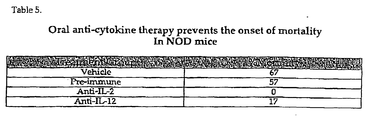
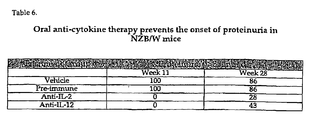
- the examples of the present invention demonstrate a novel finding that ligands (such as antibodies) against pro-inflammatory cytokines such IL-2 or IL-12 administered luminally are effective (as demonstrated in experimental models of both T cell-mediated and B cell-mediated autoimmune disease) at delaying the onset and reducing the severity of autoimune disease.
- ligands such as antibodies
- pro-inflammatory cytokines such as IL-2 or IL-12 administered luminally
- the present invention contemplates a method of treatment, comprising: a) providing: i) a human patient who is either at risk for autoimmune disease or who has symptoms of autoimmune disease, ii) a therapeutic formulation comprising one or more ligands directed to a proinflammatory cytokine, and; b) administering said formulation to said patient. It is not intended that the present invention be limited to the type of patient. In one embodiment, the patient is a child.
- the present invention is also not limited by the degree of benefit achieved by the administration of the anti-cytokine ligands.
- the present invention is not limited to circumstances where all symptoms are eliminated.
- said administering reduces said symptoms (e.g ., the amount of autoantibody is reduced and/or the amount of pain is reduced).
- said administering delays the onset of symptoms.
- the formulation is administered to the lumen of the intestine.
- said administering is performed orally.
- said administering can also be performed parenterally.
- antibodies are the ligand employed, the present invention is not limited to the source of the anti-cytokine antibodies.
- said antibodies are avian polyclonal antibodies (including but not limited to chicken antibodies).
- said antibodies are purified antibodies. In the case of chicken antibodies, it is convenient that said chicken antibodies are purified from chicken eggs.
- one or more members from the class of IL receptors or IL receptor analogues are selectively employed in soluble form to treat autoimmune patients.
- the present invention also contemplates using soluble tumor necrosis factor (TNF) receptors, or TNF receptor analogues, to treat autoimmune patients.
- the method comprises treating with a therapeutic preparation comprising, in combination, both soluble TNF and soluble IL receptors.
- the present invention contemplates the use of ligands (e.g ., receptors, receptor fragments, antibodies and antibody fragments) directed to proinflammatory cytokines and inflammatory mediators administered to or at the lumen to treat autoimmune diseases.
- ligands e.g ., receptors, receptor fragments, antibodies and antibody fragments
- antibodies against the offending inflammatory mediators are contemplated and these antibodies can be administered systemically, orally or mucosally either prophylatically or therapeutically to the patient.
- a variety of classes of inflammatory mediators are contemplated to be important to generate antibodies useful in the prevention and treatment of inflammatory diseases. Illustrative cytokines and inflammatory mediators are shown in Table 2. It is envisioned that ligands against these mediators would be used either singly or in combination to treat a specific disease. Combination therapies would consist of ligands to several mediators within a given pathway.
- cytokines play a major role in the initiation and regulation in immune responses and that the dysregulation of the cytokine network may also lead to the activation of autoreactive T cells leading to autoimmune.
- Preferential activation of a specific set of T cells, T H 1, is thought to play a central role in the pathogenesis of a number of autoimmune diseases.
- T H 1 and T H 2 T cells with the CD4 phenotype are divided into subsets referred as T H 1 and T H 2 based on the nature of their immune reactivity and their cytokine secretion profile.
- T H 1 cells are associated cell-mediated inflammatory reactions and act as effector cells in infectious disease.
- Secreted cytokines that set the T H 1 subset apart are interferon gamma, tumor necrosis factor (TNF) interleukin-2 (IL-2) and upon activation interleukin-12 (IL-12).
- T H 1 cytokines are referred to as proinflammatory cytokines because they activate cytotoxic, inflammatory and delayed hypersensitiviy reactions.
- T H 2 cells are associated with helper cell function and antibody production.
- T H 2 cells upon activation secrete interleukins 4 (IL-4), 5 (IL-5), and 10 (IL-10).
- Cytokines from a T H 1 cells tend to inhibit the actions of the T H 2 cell and vice versa. Whether the characterization of such cells is correct or not, the data shows that the therapeutic methods (described in more detail below) result in a dramatic delay and/or reduction in autoimmune symptoms and disease.
- CSF Colony Stimulating Factors
- Mp-CSF Macrophage Growth Factor
- TGF Erythropoietin Transforming Growth Factor
- IFN Interferons
- IFN Interferons
- IL gamma Interleukins
- IL-2 IL-2
- IL-3 IL-6
- IL-7 IL-9
- IL-11 IL-12
- IFN Interferons
- TNF Tumor Necrosis Factor
- IAM Tumor Necrosis Factor
- selections L, E, and P Vascular Cell Adhesion Molecule (VCAM) Growth Factors Leukemia Inhibitory Factor (LIF), Macrophage Migration-Inhibiting Factor (MIF), Epidermal Growth Factor (EGF), Platelet-derived Growth Factor
- Ligand directed to a cytokine is herein defined as meaning any molecule having affinity for a cytokine.
- Ligands can be chemically synthesized or designed by molecular evolution. Alternatively, such ligands can be known biomolecules or portions thereof (e.g., receptors, antibodies). It is not intended that the present invention be limited to the mechanism by which ligands achieve a therapeutic benefit.
- Ligands may be "antagonists" in that they neutralize the biological impact of a secreted cytokine. On the other hand, ligands may simply block recognition of cytokines or interfere with cell function. For example, ligands may interact with a cell-surface cytokine so as to result in immune cells not participating in autoimmune phenomenon (e.g., the cells are caused to enter apoptosis, etc.).
- administered to or at the lumen is herein defined as administration that preferentially delivers compound(s) to the space in the interior of the intestines at a concentration in excess of what is found in circulation.
- Such delivery can be achieved by a variety of routes (e.g., oral, rectal, etc.) in a variety of vehicles (e.g ., tablet, suppository, etc.).
- a parenteral administeration is not designed to preferentially deliver compounds to the lumen (although some incidental delivery can take place through normal biodistribution).
- symptoms of autoimmune disease is herein defined as any abnormal symptoms than can be attributed to the generation of autoreactive B and/or T cells.
- autoantibodies are a common symptom associated with autoimmune disease. Symptoms are "reduced” when the severity [as measured by frequency (e.g. the number of episodes over time), amount (e.g. the amount of autoantibody or other indicator) or other parameter] of one or more symptoms are reduced. All symptoms need not be reduced for symptoms to be “reduced.” Moreover, symptoms need not be eliminated for symptoms to be “reduced.”
- autoimmune disease is herein defined as individuals with familial incidence of autoimmunity. For example, many autoimmune diseases are associated with genetic factors such as certain HLA specificities.
- a "proinflammatory cytokine” is any cytokine that can activate cytotoxic, inflammatory or delayed hypersensitivity reactions. Examples of such cytokines are IL-2, TNF and INF-gamma. Examples of inflammatory mediators are found in
- This example involved (a) preparation of the immunogen and immunization, (b) purification of anti- IL-1, IL-2, IL-6, IL-8, IL-12, IL-15, TNF, and IFN chicken antibodies from egg yolk (IgY), and (c) detection of specific antibodies in the purified IgY preparations.
- BSA bovine serum albumin
- Recombinant human IL-15 expressed in E.coli was purchased from PeproTech, Inc., Rocky Hill, NJ.
- the lyophilized cytokines were reconstituted in phosphate-buffered saline pH 7.2-7.5 (PBS) at least 50 ug/ml. From approximately 2 to 50 ug of each cytokine was used to immunize groups of hens. Each hen received one 0.5 ml sub-cutaneous injection containing the individual cytokine with 75 ug Quil A adjuvant (Superfos Biosector, Denmark, distributed by Accurate Chem., Westbury, N.Y.) in PBS. The hens were immunized every 2 weeks for at least 3 times then placed on a maintenance immunization schedule where the hens were immunized every 4-6 weeks.
- PBS phosphate-buffered saline pH 7.2-7.5
- the chicken yolk immunoglobulin (IgY) was extracted by a two-step polyethylene glycol (PEG) 8000 method performed according to a modification of the procedure of Polson et al., Immunol. Comm., 9:495 (1980 ).
- the yolks were separated from the whites and the yolks were placed in a graduated cylinder.
- the pooled yolks were blended with 4 volumes of PBS and PEG was added to a concentration of 3.5%.
- PEG polyethylene glycol
- the supernatants were decanted and filtered through 4 layers of gauze to remove the floating particulates and a second PEG step was performed by adding PEG to a final concentration of 12% (the supernatants were assumed to contain 3.5% PEG). After a second centrifugation, the supernatants were discarded and the IgY pellets were typically resuspended in PBS or 0.1 M carbonate buffer pH 9.5 at approximately 1/6 -1/8 the original yolk volume. The concentration of the fractionated IgY's were estimated by measuring the absorbance at 280nm (an optical density at 280 run of 1.1 tol.3 equals 1 mg of IgY/ml. The antibody concentrations were about 20-40 mg/ml.
- IgY's used for oral administration in the animal models were resuspended in high pH-carbonate buffer. This was done to to help increase the pH in the stomach and minimize the acid hydrolysis of the IgY.
- IgYs extracted from the eggs of immunized hens are designated as “immune IgY,” while IgYs extracted from the eggs of unimmunized hens is designated “preimmune IgY.”
- EIA enzyme-linked immunosorbent assays
- the blocking solution was removed and the immune or preimmune IgY was diluted antibody diluent (1% BSA with 0.05% tween 20 in PBS).
- the samples at a beginning concentration of 20-40 mg/ml were diluted 1:30 to 1:100 in antibody diluent then added in duplicate wells of the microtiter plate. Typically the samples were then serially diluted 5-fold within the plate and incubated for about 1 hour at 37°C.
- the plates were then washed 3 times with PBS containing 0.05% Tween 20 then three times with PBS alone.
- Alkaline phosphatase-conjugated anti-chicken IgG (Kirkegaard and Perry Labs (KPL), Gaithersburg, MD), generally diluted 1:1000 in antibody diluent, was added to the plates and incubated about 1 hour at 37°C. The plates were washed again as above and substrate was added. Substrate was prepared either using p-nitrophenyl phosphate (104 phosphatase, Sigma Chemicals, St. Louis, MO) at 1 mg/ml in 0.05 M Na 2 CO 3 , pH 9.5, 10 mM MgCl 2 or using the Phosphatase Substrate System from KPL. The plates were read in a Dynatech plate reader at 410 nm from 10-30 minutes after substrate addition.
- This example involved the testing of the anti-TNF IgY neutralizing ability in a cell-based neutralization assay. Bioactivity of the anti-TNF IgY antibody was evaluated in the murine L929 cell based neutralization assay as previously described ( N. Mathews et al., 1987, Lymphokines and Interferons ).
- murine L929 cells (ATCC, Rockville, Maryland), sensitive to the cytotoxic effects of recombinant human TNF (rhTNF), were grown in sterile conditions with Ham's F12 and Dulbecco's Modified Eagles media (1:1 vol:vol ratio), containing 1.2g/L sodium bicarbonate and 15mM Hepes (Life Technologies,Gaithersburg, Maryland) and supplemented with 10% fetal bovine serum (Life Technologies). Cells were harvested using trypsin:EDTA (Life Technologies), and 2X10 4 cells were dispensed into each well of a 96-well flat-bottomed plate (Costar) and incubated for 20 hours in a humidified chamber at 37°C and 5% CO 2 .
- a commercial anti-TNF antibody, Remicade a humanized mouse monoclonal antibody to human TNF, Centocor, Malvern, PA
- a preimmune antibody served as a negative control.
- the IgY's were serially diluted in PBS (Life Technologies) supplemented with 1% BSA (wt:vol)(Life Technologies) and 10 ug/ml actinomycin D (ICN, Costa Mesa, CA).
- BSA wt:vol
- actinomycin D ICN, Costa Mesa, CA.
- the plate was then incubated for 1 hour at 37°C.
- the antigen-antibody mixture was added to the cells and incubated for 20 hours at 37°C, 5% CO 2 in a humidified chamber.
- ND50 and ND90 neutralization dose 50 and 90
- This example involved the testing of the anti-IL-2 IgY neutralizing ability in a cell-based neutralization assay.
- the ability of anti-IL-2 IgY to neutralize the bioactivity of IL-2 was determined in a cell-based assay based on a protocol described in Current Protocols in Immunology, Vol. 1, Section 6.3.4, 1994 .
- CTLL-2 cell line (ATCC) requiring rhIL-2 (R&D systems) as a growth factor at 4 ng/ml was grown in RPMI 1640 with 10 % fetal calf serum at 37°C at 5% CO 2 .
- Avian anti-IL-2 IgY was diluted serially two-fold with culture media in a 96 well microtiter plate.
- Goat anti-rh IL-2 IgG (R&D Systems) and preimmune IgY at the same concentrations were also serial diluted and served as positive and negative controls, respectively.
- Recombinant human IL-2 at 0.2 ng/well was added and pre-incubated with antibody for 1 hour at 37°C.
- CTLL-2 cells at 10 4 /well was then added and incubated for 20 hours at 37°C, 5% CO 2 in a humidified chamber.
- Cell viability was measured using the chromogenic Cell Titre 96 Proliferation Assay (Promega Corporation, Madison, WI) recording the optical density at 490 nm.
- the ND 90 of anti-IL-2 IgY was approximately 500 ug/ml.
- This example involved the testing of the anti-IL-12 IgY neutralizing ability in a cell-based neutralization assay.
- PBMC's peripheral blood mononuclear cells
- a commercially available anti-IL-12 R&D Systems
- preimmune IgY antibodies were used.
- the PBMC's were added to the antigen-antibody mixture at a final concentration of 2x10 5 cells/ml and incubated for 48 hours at 37°C with 5% CO 2 .
- Cell Titre 96 Proliferation Assay Promega Corporation was added, and the optical density was read at 490 nm. The assay indicated that anti-IL-12 IgY could neutralize rh IL-12 compared to preimmune IgY with an ND 50 estimated at 0.47 mg/ml. (Data not shown).
- This example involved the testing of the anti-IFN-gamma IgY neutralizing ability in a mouse endotoxin shock model.
- a bacterial lipopolysaccaride (LPS) model of endotixin shock described by J. Roth et al., Nature, 364:798-802, 1993 was used to determine if anti-IFN-gamma IgY possessed neutralizing antibodies to IFN-gamma.
- Antibodies neutralizing to proinflammatory cytokines such as TNF and IFN-gamma have been reported to be effective in this model (Roth et al. ) .
- IDDM insulin-dependant diabetes mellitis
- Diabetes in the NOD mouse is similar to human IDDM in both genetics and autoimmune pathogenesis ( C.J. Boitard et al.. Autoimmunity 15 (Suppl):12-13, 1993 and A.A. Rossini et al., Annu. Rev. Immunol., 3:289-320, 1995 ).
- This mouse strain has provided an important model for dissecting the pathogenesis of autoimmune diabetes in humans.
- NOD mice spontaneously develop insulitis between 2-4 weeks of age and progresses to diabetes 10-20 weeks later in about 80% of the female mice and 20% of the male mice. Severe IDDM ensues that results in excessive urine production containing high levels of glucose. With time, severe IDDM eventually results in a death in a most of the NOD mice.
- This example involves: a) description of establishment of the NOD model and treatment, b) Methods and results to determine oral anti-cytokine efficacy on the delay of onset of glycosuria (high levels of glucose in the urine and c) prevention of mortality from disease.
- SLE Systemic Lupus Erythematosus
- SLE is a systemic autoimmune disease that usually appears in women from 20 and 40 years of age and is characterized by fever, weakness, joint pain, erythematous lesions, pleurisy and kidney disfunction. Affected individuals may produce autoantibodies to a vast array of self-components such as DNA, red blood cells, and platelets. Immune complexes of autoantibodies are formed which are deposited on blood vessels resulting in vasulitis and glomerulonephritis in the kidney.
- NZB/W' mice develop immune complex-mediated glomerulonephritis, resulting in the excretion of high levels of protein in the urine and an anti-DNA IgG serum response.
- SLE the incidence of autoimmunity in NZB/W' female mice is much higher than males. Mice eventually develop a fatal disease around 6-9 months in female animals.
- This example involves a description of: a) the NZB model and treatment, b) methods and results to determine oral anti-cytokine efficacy on the delay of onset of proteinuria (high levels of protein in the urine, c) Reduction of an anti-double stranded (ds) DNA serum response and d) Prevention of mortality from disease.
- This example involved the testing of the anti-IL-6 IgY neutralizing ability in a cell-based neutralization assay.
- the ND50 of anti-IL-6 IgY in the B9 cell assay was determined to be 10 ug/ml (data not shown).
- Preimmune IgY was unable to neutralize the effects of IL-6.
- This example involved the testing of the anti-IL-8 IgY neutralizing ability in a cell-based neutralization assay.
- IL-8 can induce myeloperoxidase activity measured from human neutrophils, as previously described ( Schroder, J., et al, J. Immunol., 139:3474-3483,1987 ).
- Anti-IL-8 IgY activity was determined indirectly by measuring the inhibition of myeloperoxidase activity. Briefly, human neutrophils were isolated from whole blood and treated with 5 ug/ml of cytochalasin B (Sigma)as described by Schroder et al.
- Recombinant human IL-8 (R&D Systems) at 1 ug/ml was added to various concentrations (from 7.6 mg/ml-0.95 mg/ml) of anti-IL-8 IgY antibody in Gey's buffer (Sigma) containing 1 mg/ml BSA (Sigma). This mixture was incubated for 30 minutes at room temperature in a 96 well plate. As a positive control and negative control in this assay a commercially available anti-IL-8 antibody (R&D Systems) and preimmune IgY antibodies were also tested. To each microtiter plate well, 7x10 6 cells/ml containing the IL-8/antibody mixture was added at a final volume of 100 ul and incubated for one hour at room temperature.
- EAE murine experimental allergic encephalomyelitis
- EAE is a T cell-mediated autoimmune disease of the central nervous system (CNS), which has a number of characteristics to the human neurological disorder multiple sclerosis.
- CNS central nervous system
- the disease can be initiated in rodents by immunization with CNS tissue or neuroantigens, such as myelin basic protein or proteolipid protein (PLP).
- PLP myelin basic protein or proteolipid protein
- the activated T-cells release potent pro-inflammatory mediators which result in the recruitment of additional inflammatory cells to the CNS. Consequently, an increase in vascular permeability occurs with fibrin depostion leading to damage of normal nerve conduction and results in the clinical signs of EAE.
- This animal model is also characterized by the multiple episodes of reoccurring disease (relapse). This chronic relapses-remitting course of disease is typically found in many MS patients.
- This example involves: a) description of the murine EAE model and treatment, b) treatment results using oral anti-TNF, anti-IL-2 or anti- IL-6 IgY, c) treatment results using higher dosages of oral anti-TNF or anti-IL-12 IgY.
- mice were evaulated daily and scored for the severity of clinical disease on a scale from 0-5 as previously reported by Godiska R. et al., J. Neuroimmunology 58:167-176 (1995) .
- a clinical score for each examination was assigned as follows: 0, normal; 1, loss of motor control in the tail; 2, hindquarter weakness or the inability to turn over when placed on back; 3, total hindquarter paralysis; 4, total hindquarter paralysis with incontinence and/or forearm involvement; 5, death due to EAE.
- a spontaneous clinical relapse was defined as an increase in clinical score of 1 or more, developing after a period of stabilization or improvement lasting for at least 24 hours.
- the average clinical score with the standard error of the mean (SEM) was determined at different time points throughout the course of disease.
- Data analysis was performed using the Mann Whitney test for statistical significance. A p value of 0.1 or less was considered significant.
- SJL/J mice (7/group) were treated orally with either anti-TNF IgY, anti-IL-2 IgY, anti-IL-6 IgY or anti-IL-12 IgY diluted in 0.1 M carbonate buffer.
- Treatment control mice were treated either orally with carbonate buffer (untreated) or preimmune IgY.
- Approximately 0.2 mls of a 40-50 mg/ml IgY solution was administered using a 20 G., 3.5 cm feeding needle (Popper & Sons, New Hyde, NY). Treatments were administered once or twice per day, five days (week days) a week.
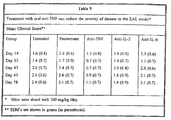
- mice were pretreated with IgY for 1 week, once per day prior to the induction of disease. Mice were treated with approximately 500 mg/kg/day. Test mice were pretreated with either anti-TNF, anti-IL-2 or anti-IL-6 IgY. After induction the mice were treated for an additional two weeks before the termination of treatment. The results are shown in Table 9. Individual mice began to show signs of disease 9 to 10 days after the induction of disease. By day 12 , most of the mice (4 to 6) in each group displayed various clinical stages of disease. Most mice experienced multiple bouts of remission followed by relapse. Remission in a few mice never occurred and the mice with high clinical scores eventually died. These events were generally asynchronous in the mice, although by day 32, many mice in all groups were in remission. This is reflected in the lower clinical scores at that time.
- mice treated with anti-TNF IgY had a reduced clinical score compared to the preimmune control (p ⁇ 0.1).
- An increased improvement of clinical score was noted in the anti-TNF IgY treated group compared to the preimmune control.
- the p values at days 45, 63, and 78 were significant at 0.01, ⁇ 0.05 and ⁇ 0.05, respectively.
- the clinical scores on average were lower in the untreated mice compared to the preimmune treated group although the values were not statistically different.
- the clinical scores of the anti-TNF IgY treated mice was statistically lower than the untreated mice at days 45, 63 and 78 with p-values of ⁇ 0.1, ⁇ 0.05 and 0.1, respectively.
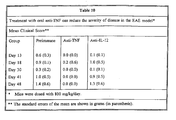
- anti-IL-12 IgY was ineffective at reducing the clinical disease score in the EAE model.
- the average scores were very similar to those in the mice treated with preimmune IgY.
- oral anti-TNF treatment in the murine EAE model was very effective at treating the clinical symptoms of disease. Results indicated that anti-TNF treatment could significantly reduce the severity of disease and extend the length of remission. In addition, oral anti-IL-2 treatment was also found to be effective at ameliorating the clinical indications of EAE.
Landscapes
- Health & Medical Sciences (AREA)
- Chemical & Material Sciences (AREA)
- Organic Chemistry (AREA)
- General Health & Medical Sciences (AREA)
- Medicinal Chemistry (AREA)
- Life Sciences & Earth Sciences (AREA)
- Immunology (AREA)
- Chemical Kinetics & Catalysis (AREA)
- General Chemical & Material Sciences (AREA)
- Nuclear Medicine, Radiotherapy & Molecular Imaging (AREA)
- Pharmacology & Pharmacy (AREA)
- Animal Behavior & Ethology (AREA)
- Bioinformatics & Cheminformatics (AREA)
- Public Health (AREA)
- Veterinary Medicine (AREA)
- Engineering & Computer Science (AREA)
- Genetics & Genomics (AREA)
- Biophysics (AREA)
- Proteomics, Peptides & Aminoacids (AREA)
- Molecular Biology (AREA)
- Biochemistry (AREA)
- Physical Education & Sports Medicine (AREA)
- Diabetes (AREA)
- Orthopedic Medicine & Surgery (AREA)
- Rheumatology (AREA)
- Hematology (AREA)
- Endocrinology (AREA)
- Urology & Nephrology (AREA)
- Reproductive Health (AREA)
- Cardiology (AREA)
- Pregnancy & Childbirth (AREA)
- Pain & Pain Management (AREA)
- Transplantation (AREA)
- Heart & Thoracic Surgery (AREA)
- Oncology (AREA)
- Gynecology & Obstetrics (AREA)
- Communicable Diseases (AREA)
- Vascular Medicine (AREA)
- Neurology (AREA)
- Dermatology (AREA)
Applications Claiming Priority (2)
| Application Number | Priority Date | Filing Date | Title |
|---|---|---|---|
| US09/429,511 US6346247B1 (en) | 1999-10-28 | 1999-10-28 | Prevention and treatment of autoimmune disease with luminally administered polyclonal antibodies |
| EP00991711A EP1225915B1 (en) | 1999-10-28 | 2000-10-27 | Use of anti-il-2 polyclonal antibodies for the treatment of insulin-dependent diabetes mellitus and lupus erythematosus |
Related Parent Applications (1)
| Application Number | Title | Priority Date | Filing Date |
|---|---|---|---|
| EP00991711A Division EP1225915B1 (en) | 1999-10-28 | 2000-10-27 | Use of anti-il-2 polyclonal antibodies for the treatment of insulin-dependent diabetes mellitus and lupus erythematosus |
Publications (1)
| Publication Number | Publication Date |
|---|---|
| EP1949914A1 true EP1949914A1 (en) | 2008-07-30 |
Family
ID=23703574
Family Applications (2)
| Application Number | Title | Priority Date | Filing Date |
|---|---|---|---|
| EP08002131A Withdrawn EP1949914A1 (en) | 1999-10-28 | 2000-10-27 | Prevention and treatment of autoimmune disease with luminally administered polyclonal antibodies |
| EP00991711A Expired - Lifetime EP1225915B1 (en) | 1999-10-28 | 2000-10-27 | Use of anti-il-2 polyclonal antibodies for the treatment of insulin-dependent diabetes mellitus and lupus erythematosus |
Family Applications After (1)
| Application Number | Title | Priority Date | Filing Date |
|---|---|---|---|
| EP00991711A Expired - Lifetime EP1225915B1 (en) | 1999-10-28 | 2000-10-27 | Use of anti-il-2 polyclonal antibodies for the treatment of insulin-dependent diabetes mellitus and lupus erythematosus |
Country Status (8)
| Country | Link |
|---|---|
| US (1) | US6346247B1 (enExample) |
| EP (2) | EP1949914A1 (enExample) |
| JP (1) | JP2003535033A (enExample) |
| AT (1) | ATE386543T1 (enExample) |
| AU (1) | AU3436901A (enExample) |
| CA (1) | CA2388338A1 (enExample) |
| DE (1) | DE60038122T2 (enExample) |
| WO (1) | WO2001030300A2 (enExample) |
Families Citing this family (11)
| Publication number | Priority date | Publication date | Assignee | Title |
|---|---|---|---|---|
| US5530101A (en) | 1988-12-28 | 1996-06-25 | Protein Design Labs, Inc. | Humanized immunoglobulins |
| CA2490804C (en) * | 2002-06-28 | 2016-12-06 | The Government Of The United States Of America As Represented By The Secretary Of The Department Of Health And Human Services | Method of treating autoimmune diseases with interferon-beta and il-2r antagonist |
| WO2004034988A2 (en) * | 2002-10-16 | 2004-04-29 | Amgen Inc. | Human anti-ifn-ϝ neutralizing antibodies as selective ifn-ϝ pathway inhibitors |
| WO2005014653A2 (en) * | 2003-02-28 | 2005-02-17 | Protein Design Labs, Inc. | Humanized chicken antibodies |
| US7883703B2 (en) * | 2003-11-14 | 2011-02-08 | The Brigham And Women's Hospital, Inc. | Methods of modulating immunity |
| CN1291231C (zh) * | 2003-12-08 | 2006-12-20 | 胡军 | 活化淋巴细胞特异性的检测方法 |
| US20070237717A1 (en) * | 2004-04-05 | 2007-10-11 | Roland Martin | Methods for Selection of Subjects for Multiple Sclerosis Therapy |
| CA2667613A1 (en) * | 2006-10-26 | 2008-06-05 | Wisconsin Alumni Research Foundation | Methods for reducing phosphate absorption |
| BRPI0918842A2 (pt) * | 2008-08-28 | 2015-12-08 | Abbott Biotherapeutics Corp | método para tratar pacientes com esclerose múltipla com anticorpos anti-il2r |
| JP2011026252A (ja) * | 2009-07-27 | 2011-02-10 | Kitasato Institute | 上皮成長因子受容体に対する卵黄抗体およびその用途 |
| DE102011006809A1 (de) | 2011-04-05 | 2012-10-11 | Freistaat Bayern vertreten durch die Julius-Maximilians-Universität Würzburg | Verwendung eines Mittels aus Antikörpern und/oder Insulin-like growth factor-Antagonisten |
Citations (9)
| Publication number | Priority date | Publication date | Assignee | Title |
|---|---|---|---|---|
| US4968607A (en) | 1987-11-25 | 1990-11-06 | Immunex Corporation | Interleukin-1 receptors |
| WO1998014209A1 (en) * | 1996-10-02 | 1998-04-09 | Ovimmune, Inc. | Oral administration of chicken yolk antibodies to treat disease |
| US5919903A (en) | 1995-08-01 | 1999-07-06 | Hoffmann-La Roche Inc. | Low affinity human IL-12 beta2 receptor |
| US5919456A (en) | 1995-03-15 | 1999-07-06 | The United States Of America As Represented By The Secretary Of The Department Of Health And Human Services | IL-13 receptor specific chimeric proteins |
| US5925735A (en) | 1996-05-23 | 1999-07-20 | Zymogenetics, Inc. | Hematopoietic cytokine receptor |
| US5925351A (en) | 1995-07-21 | 1999-07-20 | Biogen, Inc. | Soluble lymphotoxin-β receptors and anti-lymphotoxin receptor and ligand antibodies as therapeutic agents for the treatment of immunological disease |
| US5945397A (en) | 1989-09-05 | 1999-08-31 | Immunex Corporation | Purified p75 (type II) tumor necrosis factor receptor polypeptides |
| US5945511A (en) | 1997-02-20 | 1999-08-31 | Zymogenetics, Inc. | Class II cytokine receptor |
| US5965704A (en) | 1997-08-05 | 1999-10-12 | Zymogenetics, Inc. | Class two cytokine receptor-11 |
Family Cites Families (25)
| Publication number | Priority date | Publication date | Assignee | Title |
|---|---|---|---|---|
| JPH0753669B2 (ja) * | 1985-11-25 | 1995-06-07 | 株式会社ゲン・コーポレーション | 鶏卵からの特異的抗体含有材料およびその製造方法と用途 |
| CN1061623A (zh) | 1990-06-01 | 1992-06-03 | 里珍纳龙药品有限公司 | 睫状神经营养性因子受体 |
| JP3195631B2 (ja) * | 1991-02-16 | 2001-08-06 | 太陽化学株式会社 | 特異的鶏卵抗体の製造方法 |
| US5919452A (en) * | 1991-03-18 | 1999-07-06 | New York University | Methods of treating TNFα-mediated disease using chimeric anti-TNF antibodies |
| US5955290A (en) | 1991-12-02 | 1999-09-21 | Regeneron Pharmaceuticals, Inc. | Assay systems using the CNTF signal transduction pathway |
| US5955291A (en) | 1992-01-09 | 1999-09-21 | Alitalo; Kari | Antibodies recognizing tie receptor tyrosine kinase and uses thereof |
| US5965132A (en) | 1992-03-05 | 1999-10-12 | Board Of Regents, The University Of Texas System | Methods and compositions for targeting the vasculature of solid tumors |
| US6469017B1 (en) * | 1998-01-16 | 2002-10-22 | Cell Therapeutics, Inc. | Method of inhibiting interleukin-12 signaling |
| EP0673389A1 (en) | 1992-11-19 | 1995-09-27 | Dana Farber Cancer Institute | Antibodies for gm-csf receptor and uses thereof |
| CA2148907C (en) * | 1992-12-29 | 2008-07-08 | Rebecca H. R. Ward | Treatment of inflammatory bowel disease with ifn-gamma inhibitors |
| US5891679A (en) | 1993-02-03 | 1999-04-06 | N.V. Innogenetics S.A. | TNF-alpha muteins and a process for preparing them |
| WO1995004075A1 (en) | 1993-07-28 | 1995-02-09 | Medvet Science Pty. Ltd. | Haemopoietic growth factor antagonists |
| US5959085A (en) | 1993-11-23 | 1999-09-28 | Schering Corporation | Human monoclonal antibodies against human cytokines and methods of making and using such antibodies |
| US5902584A (en) | 1994-02-08 | 1999-05-11 | Ludwig Institute For Cancer Research | Antibodies which bind the G-CSF receptor extracelluar domain and methods of treatment |
| ZA95960B (en) * | 1994-03-14 | 1995-10-10 | Genetics Inst | Use of interleukin-12 antagonists in the treatment of autoimmune diseases |
| IT1269989B (it) | 1994-09-21 | 1997-04-16 | Dompe Spa | Antagonisti recettoriali di il-1 ad aumentata attivita' inibitoria |
| US6599719B2 (en) * | 1994-11-07 | 2003-07-29 | Human Genome Sciences, Inc. | Nucleic acid molecules encoding tumor necrosis factor-gamma-alpha |
| WO1998013495A1 (en) | 1996-09-25 | 1998-04-02 | British Biotech Pharmaceuticals Limited | Human rantes mutants incapable of aggregate formation |
| US5969105A (en) | 1996-10-25 | 1999-10-19 | Feng; Yiqing | Stem cell factor receptor agonists |
| US5955303A (en) | 1997-03-06 | 1999-09-21 | Incyte Pharmaceuticals, Inc. | Human chemokine receptor-like protein |
| US5945310A (en) | 1997-05-19 | 1999-08-31 | Smithkline Beecham Corporation | DNA encoding members of the IL-1 family, IL-1 delta |
| US5891432A (en) | 1997-07-29 | 1999-04-06 | The Immune Response Corporation | Membrane-bound cytokine compositions comprising GM=CSF and methods of modulating an immune response using same |
| US6350860B1 (en) * | 1997-08-18 | 2002-02-26 | Innogenetics N.V. | Interferon-gamma-binding molecules for treating septic shock, cachexia, immune diseases and skin disorders |
| US5958442A (en) | 1997-10-24 | 1999-09-28 | Bristol-Myers Squibb Company | Oncostatin M for treating inflammation |
| US5968524A (en) | 1997-12-23 | 1999-10-19 | Genesis Research & Development Corp. | Methods and compounds for the treatment of immunologically-mediated psoriasis |
-
1999
- 1999-10-28 US US09/429,511 patent/US6346247B1/en not_active Expired - Fee Related
-
2000
- 2000-10-27 JP JP2001532720A patent/JP2003535033A/ja active Pending
- 2000-10-27 DE DE60038122T patent/DE60038122T2/de not_active Expired - Fee Related
- 2000-10-27 AU AU34369/01A patent/AU3436901A/en not_active Abandoned
- 2000-10-27 AT AT00991711T patent/ATE386543T1/de not_active IP Right Cessation
- 2000-10-27 WO PCT/US2000/041688 patent/WO2001030300A2/en not_active Ceased
- 2000-10-27 CA CA002388338A patent/CA2388338A1/en not_active Abandoned
- 2000-10-27 EP EP08002131A patent/EP1949914A1/en not_active Withdrawn
- 2000-10-27 EP EP00991711A patent/EP1225915B1/en not_active Expired - Lifetime
Patent Citations (9)
| Publication number | Priority date | Publication date | Assignee | Title |
|---|---|---|---|---|
| US4968607A (en) | 1987-11-25 | 1990-11-06 | Immunex Corporation | Interleukin-1 receptors |
| US5945397A (en) | 1989-09-05 | 1999-08-31 | Immunex Corporation | Purified p75 (type II) tumor necrosis factor receptor polypeptides |
| US5919456A (en) | 1995-03-15 | 1999-07-06 | The United States Of America As Represented By The Secretary Of The Department Of Health And Human Services | IL-13 receptor specific chimeric proteins |
| US5925351A (en) | 1995-07-21 | 1999-07-20 | Biogen, Inc. | Soluble lymphotoxin-β receptors and anti-lymphotoxin receptor and ligand antibodies as therapeutic agents for the treatment of immunological disease |
| US5919903A (en) | 1995-08-01 | 1999-07-06 | Hoffmann-La Roche Inc. | Low affinity human IL-12 beta2 receptor |
| US5925735A (en) | 1996-05-23 | 1999-07-20 | Zymogenetics, Inc. | Hematopoietic cytokine receptor |
| WO1998014209A1 (en) * | 1996-10-02 | 1998-04-09 | Ovimmune, Inc. | Oral administration of chicken yolk antibodies to treat disease |
| US5945511A (en) | 1997-02-20 | 1999-08-31 | Zymogenetics, Inc. | Class II cytokine receptor |
| US5965704A (en) | 1997-08-05 | 1999-10-12 | Zymogenetics, Inc. | Class two cytokine receptor-11 |
Non-Patent Citations (18)
| Title |
|---|
| A.A. ROSSINI ET AL., ANNU. REV. IMMUNOL., vol. 3, 1995, pages 289 - 320 |
| A.N. THEOFILOPOULOS; F.J. DIXON, ADV. IMMUNOL., vol. 37, 1985, pages 269 |
| C.J. BOITARD ET AL., AUTOIMMUNITY, vol. 15, 1993, pages 12 - 13 |
| CURRENT PROTOCOLS IN IMMUNOLOGY, vol. 1, 1994, pages 616 |
| CURRENT PROTOCOLS IN IMMUNOLOGY, vol. 1, 1994, pages 634 |
| EDWARD H. LEITER: "Current Protocols in Immunology", 1997, JOHN WILEY & SONS, pages: L5.9.L - L5.9.23 |
| FERTEL R ET AL: "FORMATION OF ANTIBODIES TO PROSTAGLANDINS IN THE YOLK OF CHICKEN EGGS", BIOCHEMICAL AND BIOPHYSICAL RESEARCH COMMUNICATIONS, ACADEMIC PRESS INC. ORLANDO, FL, US, vol. 102, no. 3, 15 October 1981 (1981-10-15), pages 1028 - 1033, XP000984898, ISSN: 0006-291X * |
| GODISKA R. ET AL., J. NEUROIMMUNOLOGY, vol. 58, 1995, pages 167 - 176 |
| HUNTER C A ET AL: "Interleukin-12-mediated resistance to Trypanosoma cruzi is dependent on tumor necrosis factor alpha and gamma interferon", INFECTION AND IMMUNITY, vol. 64, no. 7, 1996, pages 2381 - 2386, XP002480462, ISSN: 0019-9567 * |
| J. ROTH ET AL., NATURE, vol. 364, 1993, pages 798 - 802 |
| JACOB C O ET AL: "IN VIVO TREATMENT OF (NZB X NZW)F1 LUPUS-LIKE NEPHRITIS WITH MONOCLONAL ANTIBODY TO GAMMA INTERFERON", JOURNAL OF EXPERIMENTAL MEDICINE, TOKYO, JP, vol. 166, 1 September 1987 (1987-09-01), pages 798 - 803, XP002940329, ISSN: 0022-1007 * |
| N. MATHEWS ET AL., LYMPHOKINES AND INTERFERONS, 1987 |
| NAKAJIMA A ET AL: "Roles of IL-4 and IL-12 in the development of lupus in NZB/W F1 mice.", JOURNAL OF IMMUNOLOGY (BALTIMORE, MD. : 1950) 1 FEB 1997, vol. 158, no. 3, 1 February 1997 (1997-02-01), pages 1466 - 1472, XP002480463, ISSN: 0022-1767 * |
| POLSON ET AL., IMMUNOL. COMM., vol. 9, 1980, pages 495 |
| SCHRODER, J. ET AL., J. INUNUNOL., vol. 139, 1987, pages 3474 - 3483 |
| TOKANO Y ET AL: "Levels of IL-12 in the sera of patients with systemic lupus erythematosus (SLE)--relation to Th1- and Th2-derived cytokines.", CLINICAL AND EXPERIMENTAL IMMUNOLOGY APR 1999, vol. 116, no. 1, April 1999 (1999-04-01), pages 169 - 173, XP002480464, ISSN: 0009-9104 * |
| VIA C S ET AL: "IL12 PREVENTS AUTOIMMUNITY IN A MURINE MODEL OF SLE", ARTHRITIS AND RHEUMATISM, LIPPINCOTT, PHILADELPHIA, US, vol. 36, no. 9, 1 January 1993 (1993-01-01), pages S63, XP002004462, ISSN: 0004-3591 * |
| WONG C K ET AL: "Elevation of plasma interleukin-18 concentration is correlated with disease activity in systemic lupus erythematosus.", RHEUMATOLOGY (OXFORD, ENGLAND) OCT 2000, vol. 39, no. 10, 1 October 2000 (2000-10-01), pages 1078 - 1081, XP002236732, ISSN: 1462-0324 * |
Also Published As
| Publication number | Publication date |
|---|---|
| WO2001030300A3 (en) | 2002-02-21 |
| CA2388338A1 (en) | 2001-05-03 |
| EP1225915B1 (en) | 2008-02-20 |
| US6346247B1 (en) | 2002-02-12 |
| EP1225915A2 (en) | 2002-07-31 |
| EP1225915A4 (en) | 2004-06-16 |
| JP2003535033A (ja) | 2003-11-25 |
| AU3436901A (en) | 2001-05-08 |
| DE60038122T2 (de) | 2009-03-05 |
| DE60038122D1 (de) | 2008-04-03 |
| WO2001030300A2 (en) | 2001-05-03 |
| ATE386543T1 (de) | 2008-03-15 |
Similar Documents
| Publication | Publication Date | Title |
|---|---|---|
| US6663864B1 (en) | Antibodies to cytokines in the prevention and treatment of inflammatory bowel disease | |
| US8784822B2 (en) | Method and composition for treatment of renal failure with antibodies and their equivalents as partial or complete replacement for dialysis | |
| Joosten et al. | Dual role of IL-12 in early and late stages of murine collagen type II arthritis | |
| Karpus et al. | Monocyte chemotactic protein 1 regulates oral tolerance induction by inhibition of T helper cell 1–related cytokines | |
| US6346247B1 (en) | Prevention and treatment of autoimmune disease with luminally administered polyclonal antibodies | |
| EP0744957B1 (en) | Composition and method for preventing and treating inflammation with immunoglobulin a | |
| Ichikawa et al. | Anti-IL-12 antibody prevents the development and progression of multiple sclerosis-like relapsing–remitting demyelinating disease in NOD mice induced with myelin oligodendrocyte glycoprotein peptide | |
| JPH03501330A (ja) | カケクチンと反応するモノクロナール抗体 | |
| AU775483B2 (en) | Antibodies to cytokines in the prevention and treatment of inflammatory bowel disease | |
| Germann et al. | Administration of IL-12 during ongoing immune responses fails to permanently suppress and can even enhance the synthesis of antigen-specific IgE | |
| Lochner et al. | Anti-interleukin-18 therapy in murine models of inflammatory bowel disease | |
| JP2000510492A (ja) | 慢性関節リウマチ治療用のヒストン含有組成物 | |
| Hamelmann et al. | From IgE to anti-IgE: where do we stand? | |
| WO1998016248A1 (en) | Methods for enhancing oral tolerance and treating autoimmune disease using inhibitors of interleukin-12 | |
| Ito | Novel therapy for Crohn’s disease targeting IL-6 signalling | |
| US7943130B2 (en) | Methods and compositions relating to CCR5 antagonist, IFN-γ and IL-13 induced inflammation | |
| Herlin | Tocilizumab: the evidence for its place in the treatment of juvenile idiopathic arthritis | |
| Keren et al. | Depletion of B lymphocytes in rheumatoid arthritis patients modifies IL-8-anti-IL-8 autoantibody network | |
| Sorensen et al. | Ten-year course of early-onset Weber-Christian syndrome with recurrent pneumonia: a suggestion for pathogenesis | |
| US20080206259A1 (en) | Prevention and treatment of sepsis | |
| Knulst et al. | Cytokine detection and modulation in acute graft vs. host disease in mice | |
| Romball et al. | Cytokines in the induction and circumvention of peripheral tolerance | |
| Leung | Role of interleukin-15 and nitric oxide expression in chronic inflammatory disease | |
| Lee | Mechanisms of oral tolerance |
Legal Events
| Date | Code | Title | Description |
|---|---|---|---|
| PUAI | Public reference made under article 153(3) epc to a published international application that has entered the european phase |
Free format text: ORIGINAL CODE: 0009012 |
|
| 17P | Request for examination filed |
Effective date: 20080205 |
|
| AC | Divisional application: reference to earlier application |
Ref document number: 1225915 Country of ref document: EP Kind code of ref document: P |
|
| AK | Designated contracting states |
Kind code of ref document: A1 Designated state(s): AT BE CH CY DE DK ES FI FR GB GR IE IT LI LU MC NL PT SE |
|
| AKX | Designation fees paid |
Designated state(s): CH DE FR GB LI |
|
| 17Q | First examination report despatched |
Effective date: 20090313 |
|
| STAA | Information on the status of an ep patent application or granted ep patent |
Free format text: STATUS: THE APPLICATION IS DEEMED TO BE WITHDRAWN |
|
| 18D | Application deemed to be withdrawn |
Effective date: 20090924 |