EP1939298A1 - A process to produce a plant which has petals comprising non-acylated anthocyanins and acylyted anthocyanins - Google Patents
A process to produce a plant which has petals comprising non-acylated anthocyanins and acylyted anthocyanins Download PDFInfo
- Publication number
- EP1939298A1 EP1939298A1 EP07025182A EP07025182A EP1939298A1 EP 1939298 A1 EP1939298 A1 EP 1939298A1 EP 07025182 A EP07025182 A EP 07025182A EP 07025182 A EP07025182 A EP 07025182A EP 1939298 A1 EP1939298 A1 EP 1939298A1
- Authority
- EP
- European Patent Office
- Prior art keywords
- plant
- anthocyanins
- gene
- mfa1
- acylated anthocyanins
- Prior art date
- Legal status (The legal status is an assumption and is not a legal conclusion. Google has not performed a legal analysis and makes no representation as to the accuracy of the status listed.)
- Withdrawn
Links
Images


Classifications
-
- C—CHEMISTRY; METALLURGY
- C12—BIOCHEMISTRY; BEER; SPIRITS; WINE; VINEGAR; MICROBIOLOGY; ENZYMOLOGY; MUTATION OR GENETIC ENGINEERING
- C12N—MICROORGANISMS OR ENZYMES; COMPOSITIONS THEREOF; PROPAGATING, PRESERVING, OR MAINTAINING MICROORGANISMS; MUTATION OR GENETIC ENGINEERING; CULTURE MEDIA
- C12N15/00—Mutation or genetic engineering; DNA or RNA concerning genetic engineering, vectors, e.g. plasmids, or their isolation, preparation or purification; Use of hosts therefor
- C12N15/09—Recombinant DNA-technology
- C12N15/63—Introduction of foreign genetic material using vectors; Vectors; Use of hosts therefor; Regulation of expression
- C12N15/79—Vectors or expression systems specially adapted for eukaryotic hosts
- C12N15/82—Vectors or expression systems specially adapted for eukaryotic hosts for plant cells, e.g. plant artificial chromosomes (PACs)
- C12N15/8241—Phenotypically and genetically modified plants via recombinant DNA technology
- C12N15/8242—Phenotypically and genetically modified plants via recombinant DNA technology with non-agronomic quality (output) traits, e.g. for industrial processing; Value added, non-agronomic traits
- C12N15/8243—Phenotypically and genetically modified plants via recombinant DNA technology with non-agronomic quality (output) traits, e.g. for industrial processing; Value added, non-agronomic traits involving biosynthetic or metabolic pathways, i.e. metabolic engineering, e.g. nicotine, caffeine
- C12N15/825—Phenotypically and genetically modified plants via recombinant DNA technology with non-agronomic quality (output) traits, e.g. for industrial processing; Value added, non-agronomic traits involving biosynthetic or metabolic pathways, i.e. metabolic engineering, e.g. nicotine, caffeine involving pigment biosynthesis
-
- C—CHEMISTRY; METALLURGY
- C12—BIOCHEMISTRY; BEER; SPIRITS; WINE; VINEGAR; MICROBIOLOGY; ENZYMOLOGY; MUTATION OR GENETIC ENGINEERING
- C12N—MICROORGANISMS OR ENZYMES; COMPOSITIONS THEREOF; PROPAGATING, PRESERVING, OR MAINTAINING MICROORGANISMS; MUTATION OR GENETIC ENGINEERING; CULTURE MEDIA
- C12N9/00—Enzymes; Proenzymes; Compositions thereof; Processes for preparing, activating, inhibiting, separating or purifying enzymes
- C12N9/10—Transferases (2.)
- C12N9/1025—Acyltransferases (2.3)
- C12N9/1029—Acyltransferases (2.3) transferring groups other than amino-acyl groups (2.3.1)
Definitions
- the present invention relates to a transposon inserted in a gene encoding a novel acyltransferase protein and to a process to produce, by use of the same, a plant which has petals comprising non-acylated anthocyanins which are anthocyanins free of acyl groups and acylated anthocyanins which are anthocyanins having acyl groups.
- the present invention relates to a process to produce a plant which has petals comprising non-acylated anthocyanins and acylated anthocyanins, comprising introducing a mutant gene of a gene encoding a novel acyltransferase protein, which comprises the transposon inserted at an arbitrary position, into a plant free of the mutant gene, or deleting a whole or partial gene function in a plant having a gene encoding a novel acyltransferase protein, and to a process to detect the presence or absence of a mutation attributed to the transposon associated with the deletion or the like.
- the most important property of flowering plants is a flower color.
- anthocyanins are deeply involved in pink, red, blue, and purple flower colors and are important.
- breeding has been performed so far by crossing, mutations, or genetic recombination.
- bicolor varieties which have two flower colors in one petal, have highly been prized.
- genes or genetic backgrounds thereof have not been elucidated at the genetic level.
- Anthocyanins have been known to become molecules having various color tones as a result of modifications with various acyl groups. As their molecular mechanisms have been elucidated in recent years, the presence of plant BAHD acyltransferases having common sequences and a group of genes encoding them has been revealed ( D'Auria, Curr. Opin. Plant Biol., 9, 331-340 (2006 )).
- Pigments in the petals of carnations are usually anthocyanins having acyl groups ( M. Nakayama et al., Phytochemistry, 55, 937-939 (2000 )).
- This acyl group in carnations is characterized by being modified with malic acid, unlike those in other plants.
- Varieties free of acyl groups e.g., 'Nazareno', Kirin Agribio Co., Ltd.
- molecular mechanisms to produce such unique flower colors of carnations have not been elucidated yet.
- An object of the present invention is to provide a flowering plant having a novel variegated flower color by expressing or repressing a novel acyltransferase protein in petals by use of a mutant gene of a gene encoding the novel acyltransferase protein, which comprises a transposon, and to provide a process to detect the presence or absence of a mutation attributed to the transposon in a plant.
- the present inventors have conducted diligent studies on molecular mechanisms to produce the unique flower colors of carnations. As a result, the present inventors have newly found a gene encoding a novel acyltransferase protein from carnations and have confirmed that this gene functions in carnations. Specifically, it has been revealed that a gene encoding a protein having the activity of transferring acyl groups in carnations does not belong to a group of plant BAHD acyltransferase genes known in the art.
- the present invention encompasses the following inventions:
- the present invention provides a plant which has petals comprising non-acylated anthocyanins and acylated anthocyanins by use of a mutant gene of a gene encoding a novel acyltransferase protein, which comprises a transposon inserted in the novel acyltransferase protein-encoding gene.
- a plant having the mutant gene can be bred by crossing to thereby cultivate varieties comprising non-acylated anthocyanins and acylated anthocyanins in petals and having a revolutionary variegated flower color such as a bicolor.
- the present invention can also detect the presence or absence of a mutation attributed to the transposon.
- FIG. 5 is a figure showing a footprint confirmed in the variegated spot of a bicolor line after the excision of the transposon. Two footprints could be confirmed for an MFA1-3 line.
- FIG. 6 is a photograph of a flower of a line having petals where a base color comprises cyanidin-3,5-diglucosides, non-acylated anthocyanins, as a main pigment and is rough purple, and a variegated spot color comprises cyclic 5-3-malyl cyanidins, acylated anthocyanins, as a main pigment and is red purple.
- FIG. 7 is a photograph of the petals of a flower of a line having petals where a base color comprises cyanidin-3,5-diglucosides, non-acylated anthocyanins, as a main pigment and is rough purple, and a variegated spot color comprises cyclic 5-3-malyl cyanidins, acylated anthocyanins, as a main pigment and is red purple.
- the base and fan-shape variegated spot of the petal can be observed.
- FIG. 8 is a photograph of a flower of an HA21 line.
- a gene of the present invention is a mutant gene of a gene encoding a novel acyltransferase protein, which comprises any of the following DNAs a) to d) inserted as a transposon at an arbitrary position of SEQ ID NO: 2:
- a gene comprising the nucleotide sequence represented by SEQ ID NO: 2 is a gene encoding a novel acyltransferase protein.
- the amino acid sequence of the novel acyltransferase protein encoded by the gene is shown in SEQ ID NO: 1.
- the novel acyltransferase protein encompasses a protein which comprises an amino acid sequence derived from the amino acid sequence represented by SEQ ID NO: 1 by the deletion, substitution, insertion, or addition of one to several amino acids and has the activity of transferring malic acids as acyl groups to anthocyanins.
- the novel acyltransferase protein having the amino acid sequence represented by SEQ ID NO: 1 has the activity of adding malic acids as acyl groups to anthocyanins having glucose at the position 3 and the activity of converting anthocyanins having glucose at the positions 3 and 5 to cyclic malyl anthocyanins.
- FIG 1A shows a reaction through which malic acids are added to anthocyanins having glucose at the position 3
- FIG. 1B shows a reaction through which anthocyanins having glucose at the positions 3 and 5 are converted to cyclic malyl anthocyanins.
- transfer activity refers to the activity capable of being transferred on the plant genome in such a way that a fragment inserted in a gene is excised therefrom and further inserted into another gene.
- mutant gene of a gene comprising the nucleotide sequence represented by SEQ ID NO: 2 of the present invention encompasses, for example, DNA which comprises the nucleotide sequence represented by SEQ ID NO: 3 within an intron between bases at the positions 732 and 733 of the nucleotide sequence represented by SEQ ID NO: 2.
- the range of the phrase “one to several” in the "amino acid sequence derived from the amino acid sequence represented by SEQ ID NO: 1 by the deletion, substitution, insertion, or addition of one to several amino acids” is not particularly limited and means, for example, approximately 1 to 20, preferably, approximately 1 to 10, more preferably, approximately 1 to 7, even more preferably, approximately 1 to 5, particularly preferably, approximately 1 to 3.
- the deletion, substitution, insertion, or addition of amino acid(s) can be performed by modifying a gene encoding the protein by an approach known in the art.
- the modification can be introduced into the gene by an approach known in the art such as a Kunkel or Gapped duplex method or by a method equivalent thereto.
- the modification is introduced thereinto by use of a modification introduction kit using a site-specific mutagenesis method (e.g., Mutant-K (manufactured by TAKARA BIO Inc.) or Mutant-G (manufactured by TAKARA BIO Inc.)) or by use of an LA PCR in vitro Mutagenesis series kit manufactured by TAKARA BIO Inc.
- a site-specific mutagenesis method e.g., Mutant-K (manufactured by TAKARA BIO Inc.) or Mutant-G (manufactured by TAKARA BIO Inc.
- novel acyltransferase protein activity refers to the activity of adding malic acids as acyl groups to anthocyanins having glucose at the position 3 and the activity capable of converting anthocyanins having glucose at the positions 3 and 5 to cyclic malyl anthocyanins.
- activity substantially equivalent means that the specific activity of the enzyme is determined to be an activity with 80% or higher, preferably 90% or higher identity to the activity of the protein comprising the amino acid sequence represented by SEQ ID NO: 1.
- Whether or not such a modified protein actually has the novel acyltransferase protein activity can be confirmed by: preparing a vector comprising a promoter (e.g., a cauliflower mosaic virus 35S RNA promoter) ligated downstream of the gene encoding the protein; introducing the vector into a plant accumulating therein non-acylated anthocyanins (e.g., Nazareno (Kirin Agribio Co., Ltd.) by various transformation methods (described later) that are conventionally well known and commonly used; and then measuring pigments in petals.
- a promoter e.g., a cauliflower mosaic virus 35S RNA promoter
- non-acylated anthocyanins e.g., Nazareno (Kirin Agribio Co., Ltd.
- the mutant gene of a gene comprising the nucleotide sequence represented by SEQ ID NO: 2 encompasses, for example, DNA which hybridizes under stringent conditions to DNA complementary to DNA comprising a nucleotide sequence comprising the nucleotide sequence represented by SEQ ID NO: 3 within an intron between bases at the positions of 732 and 733 of the nucleotide sequence represented by SEQ ID NO: 2 and has the activity capable of transferring the transposon.
- the stringent conditions refer to conditions under which so-called specific hybrids are formed while non-specific hybrids are not formed, and refer to, for example, conditions involving a sodium concentration of 10 mM to 300 mM, preferably 20 to 100 mM, and a temperature of 25°C to 70°C, preferably 42°C to 55°C.
- the mutant gene of the present invention also encompasses DNA which comprises a nucleotide sequence with 80% or higher, more preferably 90% or higher, most preferably 95% or higher homology to a nucleotide sequence comprising the nucleotide sequence of SEQ ID NO: 3 within an intron sequence ( FIG. 3 ) between bases at the positions of 732 and 733 of the nucleotide sequence represented by SEQ ID NO: 2 and has the activity of transferring the transposon.
- the homology percentage is calculated from default (initial setting) parameters by use of a nucleotide sequence comparison program (e.g., DNASIS-Mac v. 3.7 (Hitachi Software Engineering Co., Ltd.) or GENETYX ver. 4.0 (Genetyx Corp.).
- the mutant gene of the present invention further encompasses a degenerate isomer thereof.
- the degenerate isomer means DNA that is different therefrom in degenerate codon and can encode the same protein.
- DNA having the nucleotide sequence of SEQ ID NO: 2 but having the substitution of a codon corresponding to a certain amino acid by a codon having a degenerate relationship therewith is referred to as a degenerate isomer in the present invention.
- DNA having the nucleotide sequence of SEQ ID NO: 2 but having the substitution of a codon (AAC) corresponding to Asn by a codon having a degenerate relationship therewith, for example, AAT, is referred to as a degenerate isomer in the present invention.
- the modified gene can be prepared by an approach known in the art such as a Kunkel or Gapped duplex method or by a method equivalent thereto, for example, by use of a modification introduction kit using a site-specific mutagenesis method (e.g., Mutant-K (manufactured by TAKARA BIO Inc.) or Mutant-G (manufactured by TAKARA BIO Inc.)) or by use of an LA PCR in vitro Mutagenesis series kit manufactured by TAKARA BIO Inc.
- the mutagenesis method can be selected and practiced by those skilled in the art without particular difficulties with reference to the nucleotide sequence of the gene according to the descriptions of a document such as Molecular Cloning [Sambrook et al.
- the mutant gene of a gene encoding a novel acyltransferase protein of the present invention has a gene function inhibited so as not to be expressed in stems or leaves. On the other hand, its partial function can be recovered in petals by virtue of the transfer of the transposon in the mutant gene.
- the mutant gene of the present invention structurally comprises a transposon by which the gene encoding a novel acyltransferase protein is interrupted.
- the transposon is, for example, dTdic1 or Tdic101 capable of being transferred at a high frequency in petals.
- Examples of the most preferable transposon include a transposon comprising the nucleotide sequence represented by SEQ ID NO: 3.
- transposon examples include: DNA which hybridizes under stringent conditions to DNA complementary to DNA comprising the nucleotide sequence represented by SEQ ID NO: 3 and has a transfer activity; DNA which comprises a nucleotide sequence with 80% or higher homology to the nucleotide sequence represented by SEQ ID NO: 3 and has a transfer activity; and DNA which comprises a degenerate isomer of the nucleotide sequence represented by SEQ ID NO: 3.
- a position at which the transposon interrupts the gene encoding a novel acyltransferase protein may be any of promoter, exon, intron, and noncoding regions as long as this interruption of the gene inhibits the gene function. Among them, the interruption of the intron region is preferable.
- the position of the intron region in the gene encoding a novel acyltransferase protein can be identified by preparing PCR primers on the basis of the nucleotide sequence of DNA encoding the novel acyltransferase protein represented by SEQ ID NO: 1, and comparing cDNA synthesized from mRNA (serving as a template) extracted from carnation petals, with the genomic DNA of carnations.
- a nonfunctioning gene encoding a novel acyltransferase protein may be a gene that does not function due to, for example, deletion or insertion in the gene of SEQ ID NO: 2 or a promoter thereof.
- Such a nonfunctioning gene can be tested easily by RT-PCR or PCR using primers prepared on the basis of SEQ ID NO: 2.
- a nonfunctioning gene possessed as homozygous alleles by the variety 'Nazareno' can be utilized.
- the plant having non-acylated anthocyanins and acylated anthocyanins has an unprecedented variegated flower color such as a bicolor. Furthermore, the crossing of progeny such as F1 hybrids can further be repeated to thereby obtain plants having a variegated flower color such as not only a bicolor but also a tricolor or tetracolor.
- gene symbols of carnations are annotated as R for flavonoid-3'-hydroxylase, r for a mutation thereof, M for flavonoid-5-glucosyltransferase, and m for a mutation thereof.
- R flavonoid-3'-hydroxylase
- M flavonoid-5-glucosyltransferase
- m flavonoid-5-glucosyltransferase
- the gene encoding a novel acyltransferase protein is represented by Ac
- a mutant gene thereof is represented by ac
- a mutant gene that displays the bicolor of a flower comprising a transposon is represented by ac-m.
- the genotype of a plant having the mutant gene of a gene encoding a novel acyltransferase protein of the present invention, which comprises an inserted transposon is represented by r/r M/M ac/ac-m.
- the genotype of a plant free of the mutant gene of a gene encoding a novel acyltransferase protein of the present invention, which comprises an inserted transposon is represented by r/r M/M ac/ac.
- the genotypes of progeny lines obtained by the crossing between both of the plants are represented by r/r M/M ac/ac-m and r/r M/M ac/ac. Of them, the progeny line represented by r/r M/M ac/ac-m is a plant which has petals having a bicolor flower color.
- Examples of carnation lines having the genotype represented by r/r M/M ac/ac-m and having the mutant gene of a gene encoding a novel acyltransferase protein of the present invention, which comprises an inserted transposon include MFA1 and MFA2 lines.
- examples of carnation lines free of the mutant gene of a gene encoding a novel acyltransferase protein of the present invention, which comprises an inserted transposon include Nazareno.
- the flower color can be determined by visual observation or can be determined by a colorimetric measurement test.
- the colorimetric measurement test the chromaticity of the petals of three individuals from each line is measured three times with a simple spectroscopic colorimeter (NF333 type) manufactured by Nippon Denshoku Industries Co., Ltd. in the fully opened state of the petals of plants that have bloomed. The average value thereof can be calculated to thereby evaluate flower colors.
- the colorimetric measurement is alternative means for describing the phenotypes of observed colors. It should be regarded as an index for recognized colors and does not limit obtainable potential colors.
- the nucleotide sequence of the transposon of the present invention can be utilized to thereby detect a mutant by examining a difference from the original individual by use of an approach such as southern hybridization or PCR.
- the transposon in the gene encoding a novel acyltransferase protein can be detected by use of primers or probes specific to the transposon.
- the primers used for detecting the presence or absence of the transposon can be designed by arbitrarily selecting two portions having consecutive 8 or more bases, preferably 16 or more bases, more preferably 20 or more bases, even more preferably 20 to 30 bases, from the nucleotide sequence of the transposon.
- the probe that can be used for detecting the presence or absence of the transposon contains at least consecutive 20 to 100 bases selected from the nucleotide sequence of the transposon or 20 to 100 bases having a complementary sequence thereof.
- the probe can be labeled by means usually used, for example, radiolabeling (Amersham Megaprime) or DIG labeling (which adheres to the Roche method).
- the excision of the transposon can be confirmed as follows: for example, a portion (fragment) of the mutant gene (gene comprising the inserted transposon) can be isolated by detecting the difference between the mutant and the individual serving as the origin of the mutant by Southern hybridization using the transposon obtained according to the present invention as a probe or by PCR using primers prepared on the basis of the nucleotide sequence of the transposon.
- the DNA fragment thus obtained can be used to easily isolate the whole mutant gene.
- the primers used for detecting the presence or absence of the transposon excision can be designed by arbitrarily selecting two portions having consecutive 8 or more bases, preferably 16 or more bases, more preferably 20 or more bases, even more preferably 20 to 30 bases, from each of the nucleotide sequences of the transposon and the gene encoding a novel acyltransferase protein.
- Carnation lines or varieties used in Examples below other than lines or varieties provided by distributors other than Kirin Agribio Co., Ltd. have been stored in Kirin Agribio Co., Ltd. and can be purchased or requested for transfer as experimental materials.
- the carnation variety Lucia (pink carnation as a breeding line of Kirin Agribio Co., Ltd., which comprises pelargonidin-3-malyl glucosides, acylated anthocyanins, as a main pigment) was cultivated and caused to bloom in a greenhouse according to a standard method.
- mRNA was prepared from petals by use of RNeasy (Qiagen).
- Total cDNA was synthesized by use of SuperScript First-Strand System (Invitrogen Corporation).
- This cDNA was subjected to PCR (conditions: 95°C for 5 min., 30 cycles of (95°C for 30 sec., 55°C for 30 sec., and 72°C for 1 min.), and 72° for 10 min.) using primers [U592: ATGATTTGGCTTACAGGNGGNCCNGGNTG (SEQ ID NO: 4) and U593: GCTGTRTGNCCNGCNCCYTT (SEQ ID NO: 5)] prepared on the basis of the gene information of a glucose/isobutyric acid transfer protein [ Li et al., PNAS, 97, 6902-6907 (2000 )] synthesizing tomato acyl acetals (substances resistant to insects), a serine carboxypeptidase [Genbank ACCESSION XP_474646] having homology to the sequence thereof, which is predicted from rice genomic sequence, a barley serine carboxypeptidase [Genbank ACCESSION CAA70816] also having homology to the sequence
- a PCR enzyme used in this PCR and in subsequent experiments was ExTaq manufactured by Takara Shuzo Co., Ltd.
- the amplification products were separated by electrophoresis at 100 V for 20 minutes using a 1% agarose gel and visualized by ethidium bromide staining.
- the DNA fragments were confirmed to be amplified with predicted molecular weights of approximately 1 kb.
- the obtained amplification products were cloned by use of TOPO TA Cloning Kit for Sequencing (manufactured by Invitrogen Corporation) and sequenced for determining the nucleotide sequences by use of ABI310 (Applied Biosystems).
- MFA1 and MFA2 lines are breeding lines of Kirin Agribio Co., Ltd.
- the MFA1 line ( FIG. 2 ), its 4 progeny lines (MFA1-1 to MFA1-4, all from Kirin Agribio Co., Ltd.), the MFA2 line, and its 2 progeny lines (MFA2-1 and MFA2-2, all from Kirin Agribio Co., Ltd.) are revolutionary bicolor lines, all of which have petals where a base color is pale purple and comprises pelargonidin-3,5-diglucosides, non-acylated anthocyanins, as a main pigment, and a variegated spot color is pink and comprises cyclic 5-3-malyl pelargonidins, acylated anthocyanins, as a main pigment.
- Genomic DNA was extracted from leaves by use of DNeasy (Qiagen). Genomic DNA was also extracted as a control from the leaves of the carnation variety Lucia. The genomic DNAs from the leaves of the MFA1 and MFA2 lines and Lucia were subjected to genome comparison analysis using the primers synthesized in Example 1. The use of the AT3-1-specific primers (SEQ ID NOs: 6 and 7) showed that a specific insertion sequence was observed in the MFA1 line but was not inherited to the 4 progeny lines (MFA1-1 to MFA1-4).
- AT3-2- and AT3-4-specific primers SEQ ID NOs: 8 and 9 and SEQ ID NOs: 12 and 13, respectively
- the use of the AT3-3-specific primers SEQ ID NOs: 10 and 11
- an insertion fragment of approximately 4 kb was observed to be present in both of the MFA1 and MFA2 lines.
- Analysis using the same primer (AT3-3-specific primer (SEQ ID NO: 10)) showed that the insertion fragment was inherited to their respective progeny lines (MFA1-1 to MFA1-4 and MFA2-1 and MFA2-2, respectively).
- FIG. 3 shows the amino acid homology between a novel acyltransferase protein (SEQ ID NO: 1) encoded by the gene and a glucose/isobutyric acid transfer protein, which synthesizes tomato acyl acetals (substances resistant to insects) and was used to isolate the novel acyltransferase protein-encoding gene.
- SEQ ID NO: 1 novel acyltransferase protein encoded by the gene
- a glucose/isobutyric acid transfer protein which synthesizes tomato acyl acetals (substances resistant to insects) and was used to isolate the novel acyltransferase protein-encoding gene.
- MFA1 line- and MFA2 line-specific insertion fragments located in the gene encoding a novel acyltransferase protein
- Genomic fragments from the leaves of the MFA1 and MFA2 lines were amplified by use of primers [U627: GAATATGAACGTCGCGTATCAC (SEQ ID NO: 14) and U628: CATTGCAACTGATCTTGGCCG (SEQ ID NO: 15)] prepared on the basis of the full-length cDNA sequence (SEQ ID NO: 2) of Lucia.
- the amplification products were cloned by use of TOPO TA Cloning Kit for Sequencing and sequenced for determining the nucleotide sequences.
- the insertion fragment was located within a 148-bp intron ( FIG.
- the insertion fragment of approximately 3.6 kb was inserted therein in the form exhibiting Target site duplication (TSD) of the AGT sequence.
- TSD Target site duplication
- the nucleotide sequence of the insertion fragment is shown in SEQ ID NO: 3.
- the same insertions were observed at the same positions of the MFA1 and MFA2 lines.
- the affinity between the MFA1 and MFA2 lines in terms of breeding is unknown. However, it was expected that these lines were bred from those having the same insertion fragments.
- Genomic DNA was extracted from pink variegated spot portions in the petals of two progeny lines (MFA1-2 and MFA1-3) of the MFA1 line and the MFA2 line by use of DNeasy.
- the Genomic fragments were amplified by use of the primers (U627 and U628) used in Example 3.
- the amplification products were cloned by use of TOPO TA Cloning Kit for Sequencing and were determined the nucleotide sequences.
- the insertion fragment of Example 3 was excised from all of the petals, and the foot prints were observed ( FIG. 5 ).
- Example 3 results demonstrated that the specific insertion fragment found in Example 3 was transposon.
- the inserted transposon remains in leaves or in petals accumulating therein non-acylated anthocyanins. Therefore, the gene encoding a novel acyltransferase protein does not function therein, resulting in the accumulation of non-acylated anthocyanins.
- the transposon has been excised in variegated spots accumulating therein acylated anthocyanins. As a result, it was demonstrated that the gene encoding an acyltransferase protein functions therein, resulting in conversion to acylated anthocyanins. As a result, plants having a bicolor flower color can be obtained.
- a 03-28-2 line (Kirin Agribio Co., Ltd.) is pot-type carnations having pale purple petals comprising pelargonidin-3,5-diglucosides, non-acylated anthocyanins, as a main pigment. Plants having pale purple petals comprising pelargonidin-3,5-diglucosides, non-acylated anthocyanins, as a main pigment, as with the 03-28-2 line as well as plants having bicolor petals, as with the MFA1 line were obtained from seeds of the MFA1 line crossed with the 03-28-2 line.
- plants having pale purple petals comprising pelargonidin-3,5-diglucosides, non-acylated anthocyanins, as a main pigment, as with the 03-28-2 line as well as plants having bicolor petals, as with the MFA1 line were obtained from seeds of the MFA2 line crossed with the 03-28-2 line.
- DNA was extracted from 20 plants in total (5 plants each) of these 4 types of plants or lines and examined for the inheritance of the insertion sequence by use of the primers U627 and U628 shown in Example 3.
- the gene having the insertion sequence that is, the recessive mutant gene
- a mutant gene thereof is represented by ac
- a mutant gene that displays the bicolor of a flower comprising a transposon is represented by ac-m.
- the genotypes of the MFA1 and MFA2 lines are r/r M/M ac/ac-m.
- the genotype of the pot-type carnation 03-28-2 line is r/r M/M ac/ac. Accordingly, their progeny appears at an r/r M/M ac/ac-m-to-r/r M/M ac/ac ratio of approximately 1:1.
- bicolor progeny lines All the genotypes of the bicolor progeny lines (MFA1-1 to MFA1-4, MFA2-1, MFA2-2, etc.) were r/r M/M ac/ac-m.
- bicolor lines can be produced which have petals where a base color is pale purple and comprises pelargonidin-3,5-diglucosides, non-acylated anthocyanins, as main pigments, and a variegated spot color is pink and comprises cyclic 5-3-malyl pelargonidins, acylated anthocyanins, as a main pigment.
- Lines having the mutant gene ac-m of the present invention derived from the MFA1 or MFA2 line can be crossed as one parent to thereby produce bicolor lines.
- the other parent does not have to be limited to the 03-28-2 line.
- the variety 'Nazareno' can be utilized which has pale purple petals comprising pelargonidin-3,5-diglucosides, non-acylated anthocyanins, as a main pigment.
- the chromaticity of the petals of three individuals from each line is measured three times with a simple spectroscopic colorimeter (NF333 type) manufactured by Nippon Denshoku Industries Co., Ltd. in the fully opened state of the petals of the carnations that have bloomed.
- the average value thereof can be calculated to thereby evaluate flower colors.
- the colorimetric measurement is alternative means for describing the phenotypes of observed colors. It should be regarded as an index for recognized colors and does not limit obtainable potential colors.
- the genotypes of lines obtained by the crossing between the HA2 and MFA2 lines are R/r M/M ac/ac-m.
- the variety 'Ribe' H. Yoshida, Journal of Horticulture (Engeigaku Zasshi in Japanese), 72 suppl. 1, 130 (2003 )
- the variety 'Ribe' H. Yoshida, Journal of Horticulture (Engeigaku Zasshi in Japanese), 72 suppl. 1, 130 (2003 )
- the variety 'Ribe' H. Yoshida, Journal of Horticulture (Engeigaku Zasshi in Japanese), 72 suppl. 1, 130 (2003 )
- the variety 'Ribe' H. Yoshida, Journal of Horticulture (Engeiga
- While plants are selected in the F2 generation after the crossing between the MFA1 or MFA2 line and a different line, the crossing of the MFA1 or MFA2 line with a carnation having petals comprising pelargonidin-3-glucosides, non-acylated anthocyanins, as a main pigment, can produce lines having petals where a base portion comprises pelargonidin-3-glucosides, non-acylated anthocyanins, as main pigments, and a variegated spot portion comprises pelargonidin-3-malyl glucosides, acylated anthocyanins, as a main pigment.
- the variety 'Cassis' (Daiichi Engei Co., Ltd.) ( H. Yoshida, Journal of Horticulture (Engeigaku Zasshi in Japanese), 72 suppl. 1, 130 (2003 )) can be used as one parent in this crossing.
- the genotypes of bicolor lines obtained by the crossing between the MFA1 or MFA2 line and 'Cassis' are r/r m/m ac/ac-m and r/r m/m ac-m/ac-m.
- the crossing of the MFA1 or MFA2 line with a carnation having petals comprising cyanidin-3-glucosides, non-acylated anthocyanins, as a main pigment can produce lines having petals where a base portion comprises cyanidin-3-glucosides, non-acylated anthocyanins, as a main pigment, and a variegated spot portion comprises cyanidin-3-malyl glucosides, acylated anthocyanins, as a main pigment.
- the variety 'Brick' H.
- Yoshida Journal of Horticulture (Engeigaku Zasshi in Japanese), 72 suppl. 1, 130 (2003 )) can be used as one parent in this crossing.
- the genotypes of bicolor lines obtained by the crossing between the MFA1 or MFA2 line and 'Brick' are R/r m/m ac/ac-m, R/R m/m ac/ac-m, R/r m/m ac-m/ac-m, and R/R m/m ac-m/ac-m.
- a combination with an inheritance mode of a known bicolor can produce tricolor or tetracolor varieties that have been unknown as carnations and are exceedingly rare in terms of the horticulture of flowering plants.
- the genotype of an HA21 line shown in FIG. 8 is r/r M/M ac/ac i/i-m.
- the symbols I and i denote a chalcone isomerase and a mutant gene, respectively.
- the symbol i-m denotes a gene that displays streaks seen in FIG. 8 . This gene is different from genes represented by ac or ac-m and is independently inherited.
- a combination with the mutant gene ac-m of the MFA1 or MFA2 line can produce tetracolor lines (genotype: r/r M/M ac/ac-m i/i-m, base color: pale vermilion including chalcone and pelargonidin-3,5-diglucosides, color of variegated spots formed therein: yellowish pink including cyclic 5-3 malyl pelargonidins; streaks are pale purple and comprises pelargonidin-3,5-diglucosides, non-acylated anthocyanins, as main pigments, and the portion where the streak and the variegated spot overlap with each other has a pink color including cyclic 5-3 malyl pelargonidin).
- lines having red streaks on a base yellow color such as the variety 'Kirikaoren' (Kirin Agribio Co., Ltd., genotype: r/r m/m Ac/Ac i-m/i-m) can be utilized as parents for these lines.
- a gene (mutant gene) of the present invention which comprises an inserted transposon and a process to produce a plant by use of the same can expand the flower color range of flowering plants and are useful in the development of ornamental plants. Moreover, the detection of the transposon can determine a mutation in flower colors.
Landscapes
- Health & Medical Sciences (AREA)
- Life Sciences & Earth Sciences (AREA)
- Genetics & Genomics (AREA)
- Engineering & Computer Science (AREA)
- Chemical & Material Sciences (AREA)
- Zoology (AREA)
- Biotechnology (AREA)
- Organic Chemistry (AREA)
- Bioinformatics & Cheminformatics (AREA)
- Wood Science & Technology (AREA)
- Molecular Biology (AREA)
- General Engineering & Computer Science (AREA)
- Biomedical Technology (AREA)
- Biochemistry (AREA)
- Microbiology (AREA)
- General Health & Medical Sciences (AREA)
- Plant Pathology (AREA)
- Biophysics (AREA)
- Physics & Mathematics (AREA)
- Cell Biology (AREA)
- Nutrition Science (AREA)
- Medicinal Chemistry (AREA)
- Breeding Of Plants And Reproduction By Means Of Culturing (AREA)
- Enzymes And Modification Thereof (AREA)
Abstract
Description
- The present invention relates to a transposon inserted in a gene encoding a novel acyltransferase protein and to a process to produce, by use of the same, a plant which has petals comprising non-acylated anthocyanins which are anthocyanins free of acyl groups and acylated anthocyanins which are anthocyanins having acyl groups. Specifically, the present invention relates to a process to produce a plant which has petals comprising non-acylated anthocyanins and acylated anthocyanins, comprising introducing a mutant gene of a gene encoding a novel acyltransferase protein, which comprises the transposon inserted at an arbitrary position, into a plant free of the mutant gene, or deleting a whole or partial gene function in a plant having a gene encoding a novel acyltransferase protein, and to a process to detect the presence or absence of a mutation attributed to the transposon associated with the deletion or the like.
- The most important property of flowering plants is a flower color. Among the flower colors, anthocyanins are deeply involved in pink, red, blue, and purple flower colors and are important. To obtain various flower colors, breeding has been performed so far by crossing, mutations, or genetic recombination. Particularly, bicolor varieties, which have two flower colors in one petal, have highly been prized. However, genes or genetic backgrounds thereof have not been elucidated at the genetic level.
- Anthocyanins have been known to become molecules having various color tones as a result of modifications with various acyl groups. As their molecular mechanisms have been elucidated in recent years, the presence of plant BAHD acyltransferases having common sequences and a group of genes encoding them has been revealed (D'Auria, Curr. Opin. Plant Biol., 9, 331-340 (2006)).
- Pigments in the petals of carnations, one of three major horticultural flowering plants, are usually anthocyanins having acyl groups (M. Nakayama et al., Phytochemistry, 55, 937-939 (2000)). This acyl group in carnations is characterized by being modified with malic acid, unlike those in other plants. Varieties free of acyl groups (e.g., 'Nazareno', Kirin Agribio Co., Ltd.) have been bred in recent years, and a group of carnations having obviously different flower colors from ordinary carnation colors have been produced (M. Yamaguchi, Report of Research of Faculty of Horticulture, Minami Kyushu University, 19, 1-78 (1989); H. Yoshida, Journal of Horticulture (Engeigaku Zasshi in Japanese), 72 suppl. 1, 130 (2003)). However, molecular mechanisms to produce such unique flower colors of carnations have not been elucidated yet.
- An object of the present invention is to provide a flowering plant having a novel variegated flower color by expressing or repressing a novel acyltransferase protein in petals by use of a mutant gene of a gene encoding the novel acyltransferase protein, which comprises a transposon, and to provide a process to detect the presence or absence of a mutation attributed to the transposon in a plant.
- The present inventors have conducted diligent studies on molecular mechanisms to produce the unique flower colors of carnations. As a result, the present inventors have newly found a gene encoding a novel acyltransferase protein from carnations and have confirmed that this gene functions in carnations. Specifically, it has been revealed that a gene encoding a protein having the activity of transferring acyl groups in carnations does not belong to a group of plant BAHD acyltransferase genes known in the art. From bicolor breeding lines having both of non-acylated anthocyanins free of acyl groups and acylated anthocyanins having acyl groups, it has been confirmed that the gene is interrupted by a transposon, and that the transposon has been excised in petals comprising acylated anthocyanins. The present inventors have further shown that the mutant gene interrupted by this transposon displays simple inheritance. The present inventors have completed the present invention by finding that a plant which has petals having a novel flower color can be produced by expressing or repressing a novel acyltransferase protein in the plant petals by use of a mutant gene of a gene encoding the novel acyltransferase protein, which comprises the transposon.
- Specifically, the present invention encompasses the following inventions:
- [1] A mutant gene of a gene encoding a novel acyltransferase protein, which comprises any of the following DNAs a) to d) inserted as a transposon in the nucleotide sequence of the novel acyltransferase protein-encoding gene represented by SEQ ID NO: 2:
- a) DNA comprising the nucleotide sequence represented by SEQ ID NO: 3;
- b) DNA which hybridizes under stringent conditions to DNA complementary to DNA comprising the nucleotide sequence represented by SEQ ID NO: 3 and has a transfer activity as a transposon;
- c) DNA which comprises a nucleotide sequence with 80% or higher homology to the nucleotide sequence represented by SEQ ID NO: 3 and has a transfer activity as a transposon; and
- d) DNA which comprises a degenerate isomer of the nucleotide sequence represented by SEQ ID NO: 3.
- [2] The mutant gene according to [1], wherein the transposon is located within an intron between bases at the positions 732 and 733 of SEQ ID NO: 2.
- [3] A plant comprising a mutant gene according to [1] or [2].
- [4] A plant having a mutant gene according to [1] or [2], which has petals comprising non-acylated anthocyanins and acylated anthocyanins.
- [5] The plant according to [4], wherein the plant is a progeny plant of MFA1 or MFA2 line.
- [6] A process to produce a plant according to [4], comprising the following steps:
- (1) crossing a plant having a mutant gene according to [1] or [2] with a different plant comprising non-acylated anthocyanins; and
- (2) selecting an individual which has petals comprising non-acylated anthocyanins and acylated anthocyanins, from among F1 hybrids.
- [7] A process to produce a progeny plant of an MFA1 or MFA2 line according to [5], comprising the following steps:
- (1) crossing an MFA1 or MFA2 line with a different plant comprising non-acylated anthocyanins; and
- (2) selecting an individual which has petals comprising non-acylated anthocyanins and acylated anthocyanins, from among F1 hybrids.
- [8] The process to produce a progeny plant of an MFA1 or MFA2 line according to [7], wherein in the step (1), progeny obtained by the crossing of an MFA1 or MFA2 line is crossed with a different plant comprising non-acylated anthocyanins.
- [9] A process to produce a plant according to [4], comprising the following steps:
- (1) crossing a plant having a mutant gene according to [1] or [2] with a different plant comprising acylated anthocyanins and having a gene encoding a novel acyltransferase protein or gene, one allele of which has one copy of a normal gene encoding a novel acyltransferase protein but the other allele of which has a gene encoding a novel acyltransferase protein or a mutant gene thereof which does not function; and
- (2) selecting an individual which has petals comprising non-acylated anthocyanins and acylated anthocyanins, from among F1 hybrids.
- [10] A process to produce a progeny plant of an MFA1 or MFA2 line according to [5], comprising the following steps:
- (1) crossing an MFA1 or MFA2 line or progeny thereof with a different plant comprising acylated anthocyanins and having a gene encoding a novel acyltransferase protein or a mutant gene thereof, one allele of which has one copy of a normal gene encoding a novel acyltransferase protein but the other allele of which does not function; and
- (2) selecting an individual which has petals comprising non-acylated anthocyanins and acylated anthocyanins, from among F1 hybrids.
- [11] The process to produce a progeny plant of an MFA1 or MFA2 line according to [10], wherein in the step (1), progeny obtained by the crossing of an MFA1 or MFA2 line is crossed with a different plant comprising non-acylated anthocyanins.
- The present invention provides a plant which has petals comprising non-acylated anthocyanins and acylated anthocyanins by use of a mutant gene of a gene encoding a novel acyltransferase protein, which comprises a transposon inserted in the novel acyltransferase protein-encoding gene. A plant having the mutant gene can be bred by crossing to thereby cultivate varieties comprising non-acylated anthocyanins and acylated anthocyanins in petals and having a revolutionary variegated flower color such as a bicolor. The present invention can also detect the presence or absence of a mutation attributed to the transposon.
-
-
FIG. 1 is a scheme showing a reaction catalyzed by a novel acyltransferase protein.FIG 1A shows a reaction through which malic acids are added to anthocyanins having glucose at the position 3, andFIG. 1B shows a reaction through which anthocyanins having glucose at the positions 3 and 5 are converted to cyclic malyl anthocyanins. -
FIG. 2 is a photograph of a flower of an MFA1 line. -
FIG. 3 is a figure showing the results of analyzing, with DNA analysis software GENETYX (ver. 4.0, Genetyx Corp.), the amino acid sequences of a protein (upper row) predicted from a cDNA sequence encoding a protein having a novel acyltransferase protein activity and a glucose/isobutyric acid transfer protein (lower row) known in the art, which synthesizes tomato acyl acetals (substances resistant to insects) and was used to isolate the novel acyltransferase protein-encoding gene. These amino acid sequences exhibit 44.6% homology as a whole, though partial more homology is observed. In the figure, the marks * and denote identical amino acids and homologous amino acids, respectively. -
FIG. 4 is a figure showing an intron sequence in which a transposon has been inserted. In the figure, TSD is underlined. -
FIG. 5 is a figure showing a footprint confirmed in the variegated spot of a bicolor line after the excision of the transposon. Two footprints could be confirmed for an MFA1-3 line. -
FIG. 6 is a photograph of a flower of a line having petals where a base color comprises cyanidin-3,5-diglucosides, non-acylated anthocyanins, as a main pigment and is rough purple, and a variegated spot color comprises cyclic 5-3-malyl cyanidins, acylated anthocyanins, as a main pigment and is red purple. -
FIG. 7 is a photograph of the petals of a flower of a line having petals where a base color comprises cyanidin-3,5-diglucosides, non-acylated anthocyanins, as a main pigment and is rough purple, and a variegated spot color comprises cyclic 5-3-malyl cyanidins, acylated anthocyanins, as a main pigment and is red purple. The base and fan-shape variegated spot of the petal can be observed. -
FIG. 8 is a photograph of a flower of an HA21 line. - Hereinafter, the present invention will be described in detail.
- A gene of the present invention is a mutant gene of a gene encoding a novel acyltransferase protein, which comprises any of the following DNAs a) to d) inserted as a transposon at an arbitrary position of SEQ ID NO: 2:
- a) DNA comprising the nucleotide sequence represented by SEQ ID NO: 3;
- b) DNA which hybridizes under stringent conditions to DNA complementary to DNA comprising the nucleotide sequence represented by SEQ ID NO: 3 and has a transfer activity;
- c) DNA which comprises a nucleotide sequence with 80% or higher homology to the nucleotide sequence represented by SEQ ID NO: 3 and has a transfer activity; and
- d) DNA which comprises a degenerate isomer of the nucleotide sequence represented by SEQ ID NO: 3.
- A gene comprising the nucleotide sequence represented by SEQ ID NO: 2 is a gene encoding a novel acyltransferase protein. The amino acid sequence of the novel acyltransferase protein encoded by the gene is shown in SEQ ID NO: 1. The novel acyltransferase protein encompasses a protein which comprises an amino acid sequence derived from the amino acid sequence represented by SEQ ID NO: 1 by the deletion, substitution, insertion, or addition of one to several amino acids and has the activity of transferring malic acids as acyl groups to anthocyanins.
- The novel acyltransferase protein having the amino acid sequence represented by SEQ ID NO: 1 has the activity of adding malic acids as acyl groups to anthocyanins having glucose at the position 3 and the activity of converting anthocyanins having glucose at the positions 3 and 5 to cyclic malyl anthocyanins.
FIG 1A shows a reaction through which malic acids are added to anthocyanins having glucose at the position 3, andFIG. 1B shows a reaction through which anthocyanins having glucose at the positions 3 and 5 are converted to cyclic malyl anthocyanins. - The term "transfer activity" refers to the activity capable of being transferred on the plant genome in such a way that a fragment inserted in a gene is excised therefrom and further inserted into another gene.
- Furthermore, the mutant gene of a gene comprising the nucleotide sequence represented by SEQ ID NO: 2 of the present invention encompasses, for example, DNA which comprises the nucleotide sequence represented by SEQ ID NO: 3 within an intron between bases at the positions 732 and 733 of the nucleotide sequence represented by SEQ ID NO: 2.
- The range of the phrase "one to several" in the "amino acid sequence derived from the amino acid sequence represented by SEQ ID NO: 1 by the deletion, substitution, insertion, or addition of one to several amino acids" is not particularly limited and means, for example, approximately 1 to 20, preferably, approximately 1 to 10, more preferably, approximately 1 to 7, even more preferably, approximately 1 to 5, particularly preferably, approximately 1 to 3.
- The deletion, substitution, insertion, or addition of amino acid(s) can be performed by modifying a gene encoding the protein by an approach known in the art. The modification can be introduced into the gene by an approach known in the art such as a Kunkel or Gapped duplex method or by a method equivalent thereto. For example, the modification is introduced thereinto by use of a modification introduction kit using a site-specific mutagenesis method (e.g., Mutant-K (manufactured by TAKARA BIO Inc.) or Mutant-G (manufactured by TAKARA BIO Inc.)) or by use of an LA PCR in vitro Mutagenesis series kit manufactured by TAKARA BIO Inc.
- The term "novel acyltransferase protein activity" refers to the activity of adding malic acids as acyl groups to anthocyanins having glucose at the position 3 and the activity capable of converting anthocyanins having glucose at the positions 3 and 5 to cyclic malyl anthocyanins. When a certain protein has an activity substantially equivalent to the activity of the protein comprising the amino acid sequence represented by SEQ ID NO: 1, it can be said that the protein has the novel acyltransferase protein activity. In this context, the phrase "activity substantially equivalent" means that the specific activity of the enzyme is determined to be an activity with 80% or higher, preferably 90% or higher identity to the activity of the protein comprising the amino acid sequence represented by SEQ ID NO: 1.
- Whether or not such a modified protein actually has the novel acyltransferase protein activity can be confirmed by: preparing a vector comprising a promoter (e.g., a cauliflower mosaic virus 35S RNA promoter) ligated downstream of the gene encoding the protein; introducing the vector into a plant accumulating therein non-acylated anthocyanins (e.g., Nazareno (Kirin Agribio Co., Ltd.) by various transformation methods (described later) that are conventionally well known and commonly used; and then measuring pigments in petals.
- The mutant gene of a gene comprising the nucleotide sequence represented by SEQ ID NO: 2 encompasses, for example, DNA which hybridizes under stringent conditions to DNA complementary to DNA comprising a nucleotide sequence comprising the nucleotide sequence represented by SEQ ID NO: 3 within an intron between bases at the positions of 732 and 733 of the nucleotide sequence represented by SEQ ID NO: 2 and has the activity capable of transferring the transposon.
- In this context, the stringent conditions refer to conditions under which so-called specific hybrids are formed while non-specific hybrids are not formed, and refer to, for example, conditions involving a sodium concentration of 10 mM to 300 mM, preferably 20 to 100 mM, and a temperature of 25°C to 70°C, preferably 42°C to 55°C.
- The mutant gene of the present invention also encompasses DNA which comprises a nucleotide sequence with 80% or higher, more preferably 90% or higher, most preferably 95% or higher homology to a nucleotide sequence comprising the nucleotide sequence of SEQ ID NO: 3 within an intron sequence (
FIG. 3 ) between bases at the positions of 732 and 733 of the nucleotide sequence represented by SEQ ID NO: 2 and has the activity of transferring the transposon. In this context, the homology percentage is calculated from default (initial setting) parameters by use of a nucleotide sequence comparison program (e.g., DNASIS-Mac v. 3.7 (Hitachi Software Engineering Co., Ltd.) or GENETYX ver. 4.0 (Genetyx Corp.). - The mutant gene of the present invention further encompasses a degenerate isomer thereof. In this context, the degenerate isomer means DNA that is different therefrom in degenerate codon and can encode the same protein. For example, DNA having the nucleotide sequence of SEQ ID NO: 2 but having the substitution of a codon corresponding to a certain amino acid by a codon having a degenerate relationship therewith is referred to as a degenerate isomer in the present invention. For example, DNA having the nucleotide sequence of SEQ ID NO: 2 but having the substitution of a codon (AAC) corresponding to Asn by a codon having a degenerate relationship therewith, for example, AAT, is referred to as a degenerate isomer in the present invention.
- The modified gene (modified DNA) can be prepared by an approach known in the art such as a Kunkel or Gapped duplex method or by a method equivalent thereto, for example, by use of a modification introduction kit using a site-specific mutagenesis method (e.g., Mutant-K (manufactured by TAKARA BIO Inc.) or Mutant-G (manufactured by TAKARA BIO Inc.)) or by use of an LA PCR in vitro Mutagenesis series kit manufactured by TAKARA BIO Inc. The mutagenesis method can be selected and practiced by those skilled in the art without particular difficulties with reference to the nucleotide sequence of the gene according to the descriptions of a document such as Molecular Cloning [Sambrook et al. ed., 15, Site-directed Mutagenesis of Cloned DNA, 15.3 to 15.113, Cold Spring Harbor Lab. Press, New York (1989)]. Alternatively, techniques for artificially performing the substitution, deletion, insertion, or addition of one or more (1 or several or more) bases from the nucleotide sequence (site-specific mutagenesis) can be practiced by those skilled in the art on the basis of the nucleotide sequence of the gene according to techniques described in, for example, Proc. Natl. Acad. Sci. USA, 81, 5662-5666 (1984);
WO85/00817 - The mutant gene of a gene encoding a novel acyltransferase protein of the present invention has a gene function inhibited so as not to be expressed in stems or leaves. On the other hand, its partial function can be recovered in petals by virtue of the transfer of the transposon in the mutant gene.
- The mutant gene of the present invention structurally comprises a transposon by which the gene encoding a novel acyltransferase protein is interrupted. Preferably, the transposon is, for example, dTdic1 or Tdic101 capable of being transferred at a high frequency in petals. Examples of the most preferable transposon include a transposon comprising the nucleotide sequence represented by SEQ ID NO: 3. Further examples of the transposon include: DNA which hybridizes under stringent conditions to DNA complementary to DNA comprising the nucleotide sequence represented by SEQ ID NO: 3 and has a transfer activity; DNA which comprises a nucleotide sequence with 80% or higher homology to the nucleotide sequence represented by SEQ ID NO: 3 and has a transfer activity; and DNA which comprises a degenerate isomer of the nucleotide sequence represented by SEQ ID NO: 3.
- A position at which the transposon interrupts the gene encoding a novel acyltransferase protein may be any of promoter, exon, intron, and noncoding regions as long as this interruption of the gene inhibits the gene function. Among them, the interruption of the intron region is preferable. The position of the intron region in the gene encoding a novel acyltransferase protein can be identified by preparing PCR primers on the basis of the nucleotide sequence of DNA encoding the novel acyltransferase protein represented by SEQ ID NO: 1, and comparing cDNA synthesized from mRNA (serving as a template) extracted from carnation petals, with the genomic DNA of carnations.
- A nonfunctioning gene encoding a novel acyltransferase protein may be a gene that does not function due to, for example, deletion or insertion in the gene of SEQ ID NO: 2 or a promoter thereof. Such a nonfunctioning gene can be tested easily by RT-PCR or PCR using primers prepared on the basis of SEQ ID NO: 2. Preferably, a nonfunctioning gene possessed as homozygous alleles by the variety 'Nazareno' (Kirin Agribio Co., Ltd.) can be utilized.
- As a plant having the mutant gene of a gene encoding a novel acyltransferase protein of the present invention, which comprises an inserted transposon, is crossed with a plant free of the gene encoding a novel acyltransferase protein or having the nonfunctioning gene encoding a novel acyltransferase protein to thereby obtain, in progeny a new plant can be obtained to have the mutant gene of a gene encoding a novel acyltransferase protein of the present invention, which comprises an inserted transposon, and to have non-acylated anthocyanins and acylated anthocyanins. The plant having non-acylated anthocyanins and acylated anthocyanins has an unprecedented variegated flower color such as a bicolor. Furthermore, the crossing of progeny such as F1 hybrids can further be repeated to thereby obtain plants having a variegated flower color such as not only a bicolor but also a tricolor or tetracolor.
- For example, when carnations are used as plants, gene symbols of carnations are annotated as R for flavonoid-3'-hydroxylase, r for a mutation thereof, M for flavonoid-5-glucosyltransferase, and m for a mutation thereof. Furthermore, when the gene encoding a novel acyltransferase protein is represented by Ac, a mutant gene thereof is represented by ac, and a mutant gene that displays the bicolor of a flower comprising a transposon is represented by ac-m.
- For example, the genotype of a plant having the mutant gene of a gene encoding a novel acyltransferase protein of the present invention, which comprises an inserted transposon, is represented by r/r M/M ac/ac-m. The genotype of a plant free of the mutant gene of a gene encoding a novel acyltransferase protein of the present invention, which comprises an inserted transposon, is represented by r/r M/M ac/ac. The genotypes of progeny lines obtained by the crossing between both of the plants are represented by r/r M/M ac/ac-m and r/r M/M ac/ac. Of them, the progeny line represented by r/r M/M ac/ac-m is a plant which has petals having a bicolor flower color.
- Examples of carnation lines having the genotype represented by r/r M/M ac/ac-m and having the mutant gene of a gene encoding a novel acyltransferase protein of the present invention, which comprises an inserted transposon, include MFA1 and MFA2 lines. Alternatively, examples of carnation lines free of the mutant gene of a gene encoding a novel acyltransferase protein of the present invention, which comprises an inserted transposon, include Nazareno.
- The flower color can be determined by visual observation or can be determined by a colorimetric measurement test. In the colorimetric measurement test, the chromaticity of the petals of three individuals from each line is measured three times with a simple spectroscopic colorimeter (NF333 type) manufactured by Nippon Denshoku Industries Co., Ltd. in the fully opened state of the petals of plants that have bloomed. The average value thereof can be calculated to thereby evaluate flower colors. In this context, the colorimetric measurement is alternative means for describing the phenotypes of observed colors. It should be regarded as an index for recognized colors and does not limit obtainable potential colors.
- The nucleotide sequence of the transposon of the present invention can be utilized to thereby detect a mutant by examining a difference from the original individual by use of an approach such as southern hybridization or PCR. Specifically, the transposon in the gene encoding a novel acyltransferase protein can be detected by use of primers or probes specific to the transposon. The primers used for detecting the presence or absence of the transposon can be designed by arbitrarily selecting two portions having consecutive 8 or more bases, preferably 16 or more bases, more preferably 20 or more bases, even more preferably 20 to 30 bases, from the nucleotide sequence of the transposon. The probe that can be used for detecting the presence or absence of the transposon contains at least consecutive 20 to 100 bases selected from the nucleotide sequence of the transposon or 20 to 100 bases having a complementary sequence thereof. The probe can be labeled by means usually used, for example, radiolabeling (Amersham Megaprime) or DIG labeling (which adheres to the Roche method).
- The excision of the transposon can be confirmed as follows: for example, a portion (fragment) of the mutant gene (gene comprising the inserted transposon) can be isolated by detecting the difference between the mutant and the individual serving as the origin of the mutant by Southern hybridization using the transposon obtained according to the present invention as a probe or by PCR using primers prepared on the basis of the nucleotide sequence of the transposon. The DNA fragment thus obtained can be used to easily isolate the whole mutant gene. The primers used for detecting the presence or absence of the transposon excision can be designed by arbitrarily selecting two portions having consecutive 8 or more bases, preferably 16 or more bases, more preferably 20 or more bases, even more preferably 20 to 30 bases, from each of the nucleotide sequences of the transposon and the gene encoding a novel acyltransferase protein.
- Hereinafter, the present invention will be described specifically with reference to Examples. However, the present invention is not intended to be limited to these Examples.
- Carnation lines or varieties used in Examples below other than lines or varieties provided by distributors other than Kirin Agribio Co., Ltd. have been stored in Kirin Agribio Co., Ltd. and can be purchased or requested for transfer as experimental materials. Contact information: Nichibei Bldg. 8F, 2-24-2 Hacchobori, Chuo-ku, Tokyo, 104-0032, Japan, Phone: 03-5541-5875, Fax: 03-5541-5879.
- Acquirement of candidate cDNA fragments encoding a novel acyltransferase protein expressed in carnation petals
- The carnation variety Lucia (pink carnation as a breeding line of Kirin Agribio Co., Ltd., which comprises pelargonidin-3-malyl glucosides, acylated anthocyanins, as a main pigment) was cultivated and caused to bloom in a greenhouse according to a standard method. mRNA was prepared from petals by use of RNeasy (Qiagen). Total cDNA was synthesized by use of SuperScript First-Strand System (Invitrogen Corporation).
- This cDNA was subjected to PCR (conditions: 95°C for 5 min., 30 cycles of (95°C for 30 sec., 55°C for 30 sec., and 72°C for 1 min.), and 72° for 10 min.) using primers [U592: ATGATTTGGCTTACAGGNGGNCCNGGNTG (SEQ ID NO: 4) and U593: GCTGTRTGNCCNGCNCCYTT (SEQ ID NO: 5)] prepared on the basis of the gene information of a glucose/isobutyric acid transfer protein [Li et al., PNAS, 97, 6902-6907 (2000)] synthesizing tomato acyl acetals (substances resistant to insects), a serine carboxypeptidase [Genbank ACCESSION XP_474646] having homology to the sequence thereof, which is predicted from rice genomic sequence, a barley serine carboxypeptidase [Genbank ACCESSION CAA70816] also having homology to the sequence thereof, and an Arabidopsis serine carboxypeptidase SNG2 [Genbank ACCESSION NP_568215] also having homology to the sequence thereof. A PCR enzyme used in this PCR and in subsequent experiments was ExTaq manufactured by Takara Shuzo Co., Ltd. The amplification products were separated by electrophoresis at 100 V for 20 minutes using a 1% agarose gel and visualized by ethidium bromide staining. The DNA fragments were confirmed to be amplified with predicted molecular weights of approximately 1 kb. The obtained amplification products were cloned by use of TOPO TA Cloning Kit for Sequencing (manufactured by Invitrogen Corporation) and sequenced for determining the nucleotide sequences by use of ABI310 (Applied Biosystems). Twenty-four nucleotide sequences were thus determined to obtain 4 types of clones, AT3-1 (13 clones), AT3-2 (9 clones), AT3-3 (1 clone), and AT3-4 (1 clone). Primers specific to each of these four types of clones were synthesized. [AT3-1: U609: GGTTGCTCTGCTTTCTCTGGCCTC (SEQ ID NO: 6) and U610: TTAACTGTAGCATAAACTAAGCGG (SEQ ID NO: 7), AT3-2: U611: GGGTGCTCTTCTTGGAACGGTCTCG (SEQ ID NO: 8) and U612: CCCTTGACTGTCGCGTACGTCAAAG (SEQ ID NO: 9), AT3-3: U622: CTGCTTTTTCTGGTTTAGCC (SEQ ID NO: 10) and U623: CAGTAGTATAGGTTAACCGG (SEQ ID NO: 11), and AT3-4: U624: GCTCTGCTTTGTCGGGCCTC (SEQ ID NO: 12) and U625: ACCGTAGCATAGACTAATCG (SEQ ID NO: 13)]
- MFA1 and MFA2 lines are breeding lines of Kirin Agribio Co., Ltd. The MFA1 line (
FIG. 2 ), its 4 progeny lines (MFA1-1 to MFA1-4, all from Kirin Agribio Co., Ltd.), the MFA2 line, and its 2 progeny lines (MFA2-1 and MFA2-2, all from Kirin Agribio Co., Ltd.) are revolutionary bicolor lines, all of which have petals where a base color is pale purple and comprises pelargonidin-3,5-diglucosides, non-acylated anthocyanins, as a main pigment, and a variegated spot color is pink and comprises cyclic 5-3-malyl pelargonidins, acylated anthocyanins, as a main pigment. Genomic DNA was extracted from leaves by use of DNeasy (Qiagen). Genomic DNA was also extracted as a control from the leaves of the carnation variety Lucia. The genomic DNAs from the leaves of the MFA1 and MFA2 lines and Lucia were subjected to genome comparison analysis using the primers synthesized in Example 1. The use of the AT3-1-specific primers (SEQ ID NOs: 6 and 7) showed that a specific insertion sequence was observed in the MFA1 line but was not inherited to the 4 progeny lines (MFA1-1 to MFA1-4). The use of the AT3-2- and AT3-4-specific primers (SEQ ID NOs: 8 and 9 and SEQ ID NOs: 12 and 13, respectively) showed that a specific insertion was not observed in the MFA1 and MFA2 lines. The use of the AT3-3-specific primers (SEQ ID NOs: 10 and 11) showed that an insertion fragment of approximately 4 kb was observed to be present in both of the MFA1 and MFA2 lines. Analysis using the same primer (AT3-3-specific primer (SEQ ID NO: 10)) showed that the insertion fragment was inherited to their respective progeny lines (MFA1-1 to MFA1-4 and MFA2-1 and MFA2-2, respectively). - To determine the full-length sequence of the AT3-3 gene, the mRNA obtained from Lucia in Example 1 was sequenced for determining the full-length cDNA sequence (SEQ ID NO: 2) by use of GeneRacer Kit (Invitrogen Corporation).
FIG. 3 shows the amino acid homology between a novel acyltransferase protein (SEQ ID NO: 1) encoded by the gene and a glucose/isobutyric acid transfer protein, which synthesizes tomato acyl acetals (substances resistant to insects) and was used to isolate the novel acyltransferase protein-encoding gene. These amino acid sequences exhibit 44.6% homology as a whole, though partial more homology is observed. Most of plant acyltransferases are encoded by a group of plant BAHD acyltransferase genes described in D'Auria, Curr. Opin. Plant Biol., 9, 331-340 (2006). Surprisingly, any homology of the present gene to the group of plant BAHD acyltransferase genes was not observed. - MFA1 line- and MFA2 line-specific insertion fragments located in the gene encoding a novel acyltransferase protein
- Genomic fragments from the leaves of the MFA1 and MFA2 lines were amplified by use of primers [U627: GAATATGAACGTCGCGTATCAC (SEQ ID NO: 14) and U628: CATTGCAACTGATCTTGGCCG (SEQ ID NO: 15)] prepared on the basis of the full-length cDNA sequence (SEQ ID NO: 2) of Lucia. The amplification products were cloned by use of TOPO TA Cloning Kit for Sequencing and sequenced for determining the nucleotide sequences. The insertion fragment was located within a 148-bp intron (
FIG. 4 ) between bases at the positions 732 and 733 of the nucleotide sequence represented by SEQ ID NO: 2 and caused the duplication of AGT at the positions 117 to 119 of the sequence shown inFIG. 4 . Specifically, the insertion fragment of approximately 3.6 kb was inserted therein in the form exhibiting Target site duplication (TSD) of the AGT sequence. The nucleotide sequence of the insertion fragment is shown in SEQ ID NO: 3. The same insertions were observed at the same positions of the MFA1 and MFA2 lines. The affinity between the MFA1 and MFA2 lines in terms of breeding is unknown. However, it was expected that these lines were bred from those having the same insertion fragments. - Genomic DNA was extracted from pink variegated spot portions in the petals of two progeny lines (MFA1-2 and MFA1-3) of the MFA1 line and the MFA2 line by use of DNeasy. The Genomic fragments were amplified by use of the primers (U627 and U628) used in Example 3. The amplification products were cloned by use of TOPO TA Cloning Kit for Sequencing and were determined the nucleotide sequences. As a result, the insertion fragment of Example 3 was excised from all of the petals, and the foot prints were observed (
FIG. 5 ). - These results demonstrated that the specific insertion fragment found in Example 3 was transposon. The inserted transposon remains in leaves or in petals accumulating therein non-acylated anthocyanins. Therefore, the gene encoding a novel acyltransferase protein does not function therein, resulting in the accumulation of non-acylated anthocyanins. On the other hand, the transposon has been excised in variegated spots accumulating therein acylated anthocyanins. As a result, it was demonstrated that the gene encoding an acyltransferase protein functions therein, resulting in conversion to acylated anthocyanins. As a result, plants having a bicolor flower color can be obtained.
- A 03-28-2 line (Kirin Agribio Co., Ltd.) is pot-type carnations having pale purple petals comprising pelargonidin-3,5-diglucosides, non-acylated anthocyanins, as a main pigment. Plants having pale purple petals comprising pelargonidin-3,5-diglucosides, non-acylated anthocyanins, as a main pigment, as with the 03-28-2 line as well as plants having bicolor petals, as with the MFA1 line were obtained from seeds of the MFA1 line crossed with the 03-28-2 line. Likewise, plants having pale purple petals comprising pelargonidin-3,5-diglucosides, non-acylated anthocyanins, as a main pigment, as with the 03-28-2 line as well as plants having bicolor petals, as with the MFA1 line were obtained from seeds of the MFA2 line crossed with the 03-28-2 line. DNA was extracted from 20 plants in total (5 plants each) of these 4 types of plants or lines and examined for the inheritance of the insertion sequence by use of the primers U627 and U628 shown in Example 3. As a result, it was shown that the gene having the insertion sequence, that is, the recessive mutant gene, was inherited to the individuals or line having a bicolor flower color. These results demonstrated that the mutant gene that displays the bicolor property displays a simple recessive inheritance property.
- Hereinafter, principles thereof and a process to produce a bicolor variety will be shown in detail by use of gene symbols. Gene symbols of carnations are annotated as R for flavonoid-3'-hydroxylase, r for a mutation thereof, M for flavonoid-5-glucosyltransferase, and m for a mutation thereof [Mehlquist (1939) Proc. Am. Soc. Hort. Sci 37, 1019-1021 (1939)]. Moreover, the symbol Ac is used for representing the gene encoding a novel acyltransferase protein according to the prediction of Yamaguchi et al. [Journal of Horticulture (Engeigaku Zasshi in Japanese), 69 suppl. 1, 352 (2000)]. A mutant gene thereof is represented by ac, and a mutant gene that displays the bicolor of a flower comprising a transposon is represented by ac-m. The genotypes of the MFA1 and MFA2 lines are r/r M/M ac/ac-m. On the other hand, the genotype of the pot-type carnation 03-28-2 line is r/r M/M ac/ac. Accordingly, their progeny appears at an r/r M/M ac/ac-m-to-r/r M/M ac/ac ratio of approximately 1:1. All the genotypes of the bicolor progeny lines (MFA1-1 to MFA1-4, MFA2-1, MFA2-2, etc.) were r/r M/M ac/ac-m. In this way, bicolor lines can be produced which have petals where a base color is pale purple and comprises pelargonidin-3,5-diglucosides, non-acylated anthocyanins, as main pigments, and a variegated spot color is pink and comprises cyclic 5-3-malyl pelargonidins, acylated anthocyanins, as a main pigment. Lines having the mutant gene ac-m of the present invention derived from the MFA1 or MFA2 line can be crossed as one parent to thereby produce bicolor lines. In this case, the other parent does not have to be limited to the 03-28-2 line. For example, the variety 'Nazareno' can be utilized which has pale purple petals comprising pelargonidin-3,5-diglucosides, non-acylated anthocyanins, as a main pigment. When the variety 'Mystic Barbara' (Hilverda) is utilized which has pale purple petals comprising non-acylated anthocyanins as a main pigment but is a peripheral chimera having Ac/ac as the genotype of the inner layer, the expected individuals having a bicolor flower color appear, albeit at a low frequency, in progeny and can be obtained. Even carnations that do not have any ac mutation can be used as the other parent to obtain, in progeny, lines having a bicolor flower color as long as the lines are selected from the generation after the next.
- Breeding of a further new line which has petals comprising non-acylated anthocyanins and acylated anthocyanins
- To obtain a new flower color, an HA2 line (Kirin Agribio Co., Ltd.; genotype: R/r M/M ac/ac, L*a*b* colorimetric system (Japan Industrial Standard JIS Z 8729): L* = 28.81, a* = 18.72, and b* = -8.75)) having petals where a base color is rough purple and comprises cyanidin-3,5-diglucosides, non-acylated anthocyanins, as a main pigment was crossed with the MFA2 line. As a result, lines were successfully produced which had petals where a base color is rough purple and comprises cyanidin-3,5-diglucosides, non-acylated anthocyanins, as a main pigment, and a variegated spot color is red purple and comprises cyclic 5-3-malyl cyanidins, acylated anthocyanins, as a main pigment (
FIGS. 6 and7 ; L*a*b* colorimetric system of the non-acylated anthocyanin portion in the base: L* = 38.22, a* = 21.33, and b* = -9.99, L*a*b* colorimetric system of the acylated anthocyanin portion in the variegated spot: L* = 32.22, a* = 53.16, and b* = -9.01). In the colorimetric measurement test, the chromaticity of the petals of three individuals from each line is measured three times with a simple spectroscopic colorimeter (NF333 type) manufactured by Nippon Denshoku Industries Co., Ltd. in the fully opened state of the petals of the carnations that have bloomed. The average value thereof can be calculated to thereby evaluate flower colors. In this context, the colorimetric measurement is alternative means for describing the phenotypes of observed colors. It should be regarded as an index for recognized colors and does not limit obtainable potential colors. The genotypes of lines obtained by the crossing between the HA2 and MFA2 lines are R/r M/M ac/ac-m. For example, the variety 'Ribe' (H. Yoshida, Journal of Horticulture (Engeigaku Zasshi in Japanese), 72 suppl. 1, 130 (2003)) can be used as one parent instead of the HA2 line. - While plants are selected in the F2 generation after the crossing between the MFA1 or MFA2 line and a different line, the crossing of the MFA1 or MFA2 line with a carnation having petals comprising pelargonidin-3-glucosides, non-acylated anthocyanins, as a main pigment, can produce lines having petals where a base portion comprises pelargonidin-3-glucosides, non-acylated anthocyanins, as main pigments, and a variegated spot portion comprises pelargonidin-3-malyl glucosides, acylated anthocyanins, as a main pigment. For example, the variety 'Cassis' (Daiichi Engei Co., Ltd.) (H. Yoshida, Journal of Horticulture (Engeigaku Zasshi in Japanese), 72 suppl. 1, 130 (2003)) can be used as one parent in this crossing. The genotypes of bicolor lines obtained by the crossing between the MFA1 or MFA2 line and 'Cassis' are r/r m/m ac/ac-m and r/r m/m ac-m/ac-m.
- Alternatively, while plants are selected in the F2 generation after the crossing between the MFA1 or MFA2 line and a different line, the crossing of the MFA1 or MFA2 line with a carnation having petals comprising cyanidin-3-glucosides, non-acylated anthocyanins, as a main pigment, can produce lines having petals where a base portion comprises cyanidin-3-glucosides, non-acylated anthocyanins, as a main pigment, and a variegated spot portion comprises cyanidin-3-malyl glucosides, acylated anthocyanins, as a main pigment. For example, the variety 'Brick' (H. Yoshida, Journal of Horticulture (Engeigaku Zasshi in Japanese), 72 suppl. 1, 130 (2003)) can be used as one parent in this crossing. The genotypes of bicolor lines obtained by the crossing between the MFA1 or MFA2 line and 'Brick' are R/r m/m ac/ac-m, R/R m/m ac/ac-m, R/r m/m ac-m/ac-m, and R/R m/m ac-m/ac-m.
- Furthermore, a combination with an inheritance mode of a known bicolor can produce tricolor or tetracolor varieties that have been unknown as carnations and are exceedingly rare in terms of the horticulture of flowering plants. The genotype of an HA21 line shown in
FIG. 8 is r/r M/M ac/ac i/i-m. In this context, the symbols I and i denote a chalcone isomerase and a mutant gene, respectively. The symbol i-m denotes a gene that displays streaks seen inFIG. 8 . This gene is different from genes represented by ac or ac-m and is independently inherited. A combination with the mutant gene ac-m of the MFA1 or MFA2 line (r/r M/M ac/ac-m I/I) can produce tetracolor lines (genotype: r/r M/M ac/ac-m i/i-m, base color: pale vermilion including chalcone and pelargonidin-3,5-diglucosides, color of variegated spots formed therein: yellowish pink including cyclic 5-3 malyl pelargonidins; streaks are pale purple and comprises pelargonidin-3,5-diglucosides, non-acylated anthocyanins, as main pigments, and the portion where the streak and the variegated spot overlap with each other has a pink color including cyclic 5-3 malyl pelargonidin). In addition to the HA21 line, lines having red streaks on a base yellow color such as the variety 'Kirikaoren' (Kirin Agribio Co., Ltd., genotype: r/r m/m Ac/Ac i-m/i-m) can be utilized as parents for these lines. - A gene (mutant gene) of the present invention, which comprises an inserted transposon and a process to produce a plant by use of the same can expand the flower color range of flowering plants and are useful in the development of ornamental plants. Moreover, the detection of the transposon can determine a mutation in flower colors.

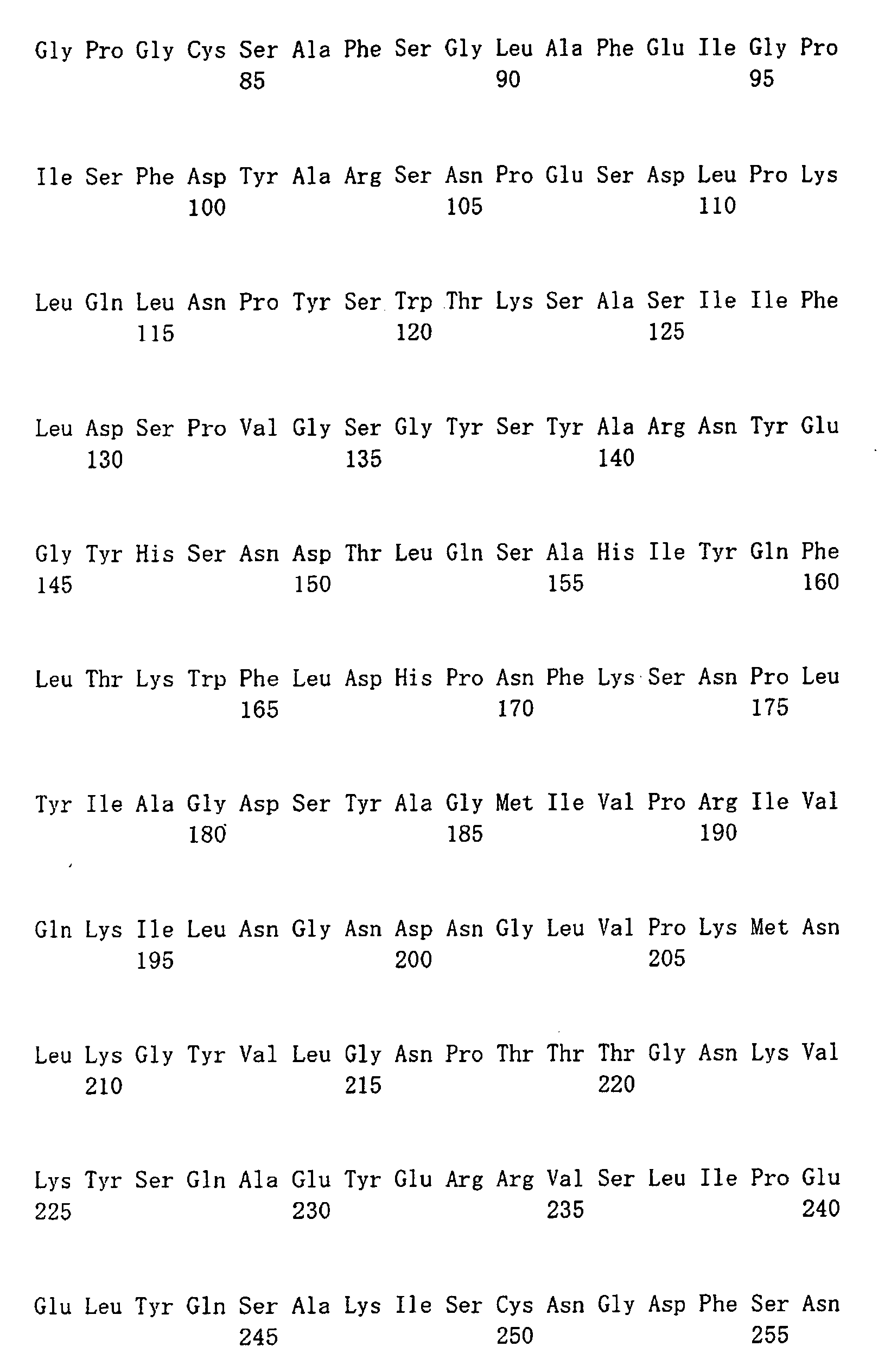


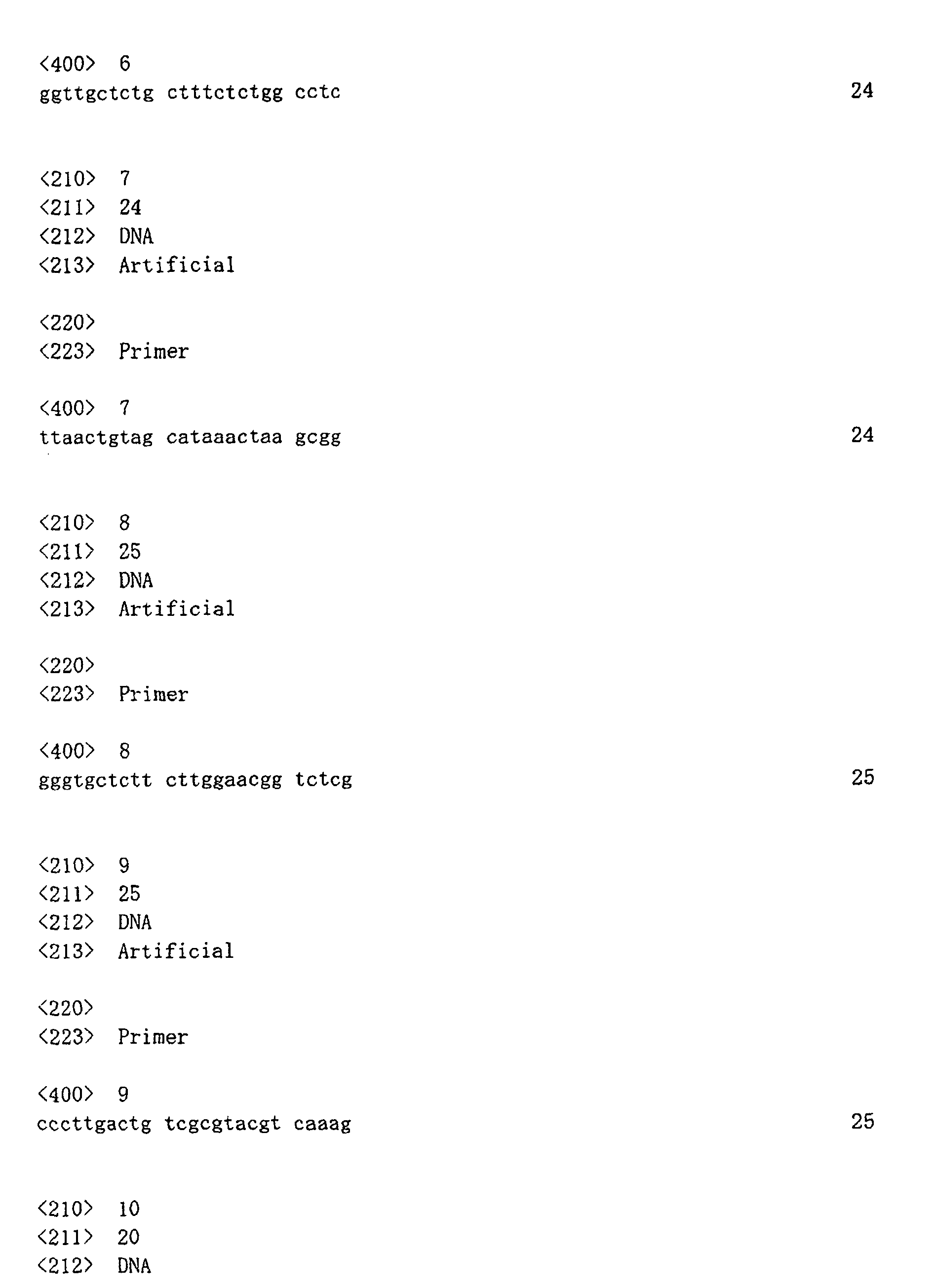


Claims (11)
- A mutant gene of a gene encoding a novel acyltransferase protein, which comprises any of the following DNAs a) to d) inserted as a transposon in the nucleotide sequence of the novel acyltransferase-encoding gene represented by SEQ ID NO: 2:a) DNA comprising the nucleotide sequence represented by SEQ ID NO: 3;b) DNA which hybridizes under stringent conditions to DNA complementary to DNA comprising the nucleotide sequence represented by SEQ ID NO: 3 and has a transfer activity as a transposon;c) DNA which comprises a nucleotide sequence with 80% or higher homology to the nucleotide sequence represented by SEQ ID NO: 3 and has a transfer activity as a transposon; andd) DNA which comprises a degenerate isomer of the nucleotide sequence represented by SEQ ID NO: 3.
- The mutant gene according to claim 1, wherein the transposon is located within an intron between bases at the positions 732 and 733 of SEQ ID NO: 2.
- A plant comprising a mutant gene according to claim 1 or 2.
- A plant having a mutant gene according to claim 1 or 2, which has petals comprising non-acylated anthocyanins and acylated anthocyanins.
- The plant according to claim 4, wherein the plant is a progeny plant of an MFA1 or MFA2 line.
- A process to produce a plant according to claim 4, comprising the following steps:(1) crossing a plant having a mutant gene according to claim 1 or 2 with a different plant comprising non-acylated anthocyanins; and(2) selecting an individual which has petals comprising non-acylated anthocyanins and acylated anthocyanins, from among F1 hybrids.
- A process to produce a progeny plant of an MFA1 or MFA2 line according to claim 5, comprising the following steps:(1) crossing an MFA1 or MFA2 line with a different plant comprising non-acylated anthocyanins; and(2) selecting an individual which has petals comprising non-acylated anthocyanins and acylated anthocyanins, from among F1 hybrids.
- The process to produce a progeny plant of an MFA1 or MFA2 line according to claim 7, wherein in the step (1), progeny obtained by the crossing of an MFA1 or MFA2 line is crossed with a different plant comprising non-acylated anthocyanins.
- A process to produce a plant according to claim 4, comprising the following steps:(1) crossing a plant having a mutant gene according to claim 1 or 2 with a different plant comprising acylated anthocyanins and having a gene encoding a novel acyltransferase protein gene, one allele of which has one copy of a normal gene encoding a novel acyltransferase protein but the other allele of which has a gene encoding a novel acyltransferase protein or a mutant gene thereof which does not function; and(2) selecting an individual which has petals comprising non-acylated anthocyanins and acylated anthocyanins, from among F1 hybrids.
- A process to produce a progeny plant of an MFA1 or MFA2 line according to claim 5, comprising the following steps:(1) crossing an MFA1 or MFA2 line or progeny thereof with a different plant comprising acylated anthocyanins and having a gene encoding a novel acyltransferase protein or a mutant gene thereof, one allele of which has one copy of a normal gene encoding a novel acyltransferase protein but the other allele of which does not function; and(2) selecting an individual which has petals comprising non-acylated anthocyanins and acylated anthocyanins, from among F1 hybrids.
- The process to produce a progeny plant of an MFA1 or MFA2 line according to claim 10, wherein in the step (1), progeny obtained by the crossing of an MFA1 or MFA2 line is crossed with a different plant comprising non-acylated anthocyanins.
Applications Claiming Priority (1)
| Application Number | Priority Date | Filing Date | Title |
|---|---|---|---|
| JP2006356440A JP2008161147A (en) | 2006-12-28 | 2006-12-28 | Method for producing plants having petals containing non-acyl anthocyanins and acyl anthocyanins |
Publications (1)
| Publication Number | Publication Date |
|---|---|
| EP1939298A1 true EP1939298A1 (en) | 2008-07-02 |
Family
ID=39316359
Family Applications (1)
| Application Number | Title | Priority Date | Filing Date |
|---|---|---|---|
| EP07025182A Withdrawn EP1939298A1 (en) | 2006-12-28 | 2007-12-28 | A process to produce a plant which has petals comprising non-acylated anthocyanins and acylyted anthocyanins |
Country Status (2)
| Country | Link |
|---|---|
| EP (1) | EP1939298A1 (en) |
| JP (1) | JP2008161147A (en) |
Cited By (1)
| Publication number | Priority date | Publication date | Assignee | Title |
|---|---|---|---|---|
| CN114790460A (en) * | 2021-12-09 | 2022-07-26 | 西藏自治区农牧科学院农业研究所 | Highland barley cyanidin malonyl transferase gene and application thereof |
Families Citing this family (1)
| Publication number | Priority date | Publication date | Assignee | Title |
|---|---|---|---|---|
| CN111893134B (en) * | 2020-07-30 | 2022-07-19 | 中国科学院华南植物园 | Application of OXS2 gene and its encoded protein in improving plant salt stress resistance |
Citations (2)
| Publication number | Priority date | Publication date | Assignee | Title |
|---|---|---|---|---|
| WO1985000817A1 (en) | 1983-08-10 | 1985-02-28 | Amgen | Microbial expression of interleukin ii |
| EP1672071A1 (en) * | 2003-09-16 | 2006-06-21 | Kirin Beer Kabushiki Kaisha | Method of detecting mutation and method of inducing the same |
-
2006
- 2006-12-28 JP JP2006356440A patent/JP2008161147A/en not_active Withdrawn
-
2007
- 2007-12-28 EP EP07025182A patent/EP1939298A1/en not_active Withdrawn
Patent Citations (2)
| Publication number | Priority date | Publication date | Assignee | Title |
|---|---|---|---|---|
| WO1985000817A1 (en) | 1983-08-10 | 1985-02-28 | Amgen | Microbial expression of interleukin ii |
| EP1672071A1 (en) * | 2003-09-16 | 2006-06-21 | Kirin Beer Kabushiki Kaisha | Method of detecting mutation and method of inducing the same |
Non-Patent Citations (21)
| Title |
|---|
| "Site-directed Mutagenesis of Cloned DNA", 1989, COLD SPRING HARBOR LAB. PRESS |
| DATABASE EMBL [online] 18 April 2000 (2000-04-18), "EST0045 carnation flower specific cDNA library Dianthus caryophyllus cDNA clone HM045 5' similar to glucose acyltransferase, mRNA sequence.", XP002479040, retrieved from EBI accession no. EMBL:AW697862 Database accession no. AW697862 * |
| D'AURIA, CURR. OPIN. PLANT BIOL., vol. 9, 2006, pages 331 - 340 |
| GENE, vol. 34, 1985, pages 315 - 323 |
| H. YOSHIDA, JOURNAL OF HORTICULTURE, vol. 72, no. 1, 2003, pages 130 |
| IIDA S ET AL: "Genetics and epigenetics in flower pigmentation associated with transposable elements in morning glories", ADVANCES IN BIOPHYSICS, UNIVERSITY OF TOKYO PRESS, TOKYO, JP, vol. 38, 1 January 2004 (2004-01-01), pages 141 - 159, XP004598128, ISSN: 0065-227X * |
| ITOH YOSHIO ET AL: "Excision of transposable elements from the chalcone isomerase and dihydroflavonol 4-reductase genes may contribute to the variegation of the yellow-flowered carnation (Dianthus caryophyllus)", PLANT AND CELL PHYSIOLOGY, vol. 43, no. 5, May 2002 (2002-05-01), pages 578 - 585, XP002479037, ISSN: 0032-0781 * |
| LI ET AL., PNAS, vol. 97, 2000, pages 6902 - 6907 |
| M. NAKAYAMA ET AL., PHYTOCHEMISTRY, vol. 55, 2000, pages 937 - 939 |
| M. YAMAGUCHI, REPORT OF RESEARCH OF FACULTY OF HORTICULTURE, vol. 19, 1989, pages 1 - 78 |
| MEHLQUIST, PROC. AM. SOC. HORT. SCI, vol. 37, 1939, pages 1019 - 1021 |
| MORITA YASUMASA ET AL: "Japanese morning glory dusky mutants displaying reddish-brown or purplish-gray flowers are deficient in a novel glycosylation enzyme for anthocyanin biosynthesis, UDP-glucose : anthocyanidin 3-O-glucoside-2 ''-O-glucosyltransferase, due to 4-bp insertions in the gene", PLANT JOURNAL, vol. 42, no. 3, May 2005 (2005-05-01), pages 353 - 363, XP002479039, ISSN: 0960-7412 * |
| NAKAYAMA M ET AL: "Cyclic malyl anthocyanins in Dianthus caryophyllus", PHYTOCHEMISTRY, PERGAMON PRESS, GB, vol. 55, no. 8, 1 December 2000 (2000-12-01), pages 937 - 939, XP004291739, ISSN: 0031-9422 * |
| NATURE, vol. 316, 1985, pages 601 - 605 |
| NUCLEIC ACIDS RES., vol. 13, 1985, pages 4431 - 4442 |
| OKAMURA M: "Flower breeding by quantum beam technology, and its commercialization", GAMMA FIELD SYMPOSIA, vol. 45, June 2006 (2006-06-01), pages 77 - 87, XP002479036, ISSN: 0435-1096, Retrieved from the Internet <URL:http://www.nias.affrc.go.jp/newsletter/gfs/pdf/045.pdf> [retrieved on 20080502] * |
| PROC. NATL. ACAD. SCI., vol. 79, 1982, pages 6409 - 6413 |
| PROC. NATL. ACAD. SCI., vol. 81, 1984, pages 5662 - 5666 |
| SCIENCE, vol. 224, 1984, pages 1431 - 1433 |
| SUZUKI HIROKAZU ET AL: "Identification and characterization of a novel anthocyanin malonyltransferase from scarlet sage (Salvia splendens) flowers: an enzyme that is phylogenetically separated from other anthocyanin acyltransferases", PLANT JOURNAL, vol. 38, no. 6, June 2004 (2004-06-01), pages 994 - 1003, XP002479038, ISSN: 0960-7412 * |
| YAMAGUCHI ET AL., JOURNAL OF HORTICULTURE, vol. 69, no. 1, 2000, pages 352 |
Cited By (2)
| Publication number | Priority date | Publication date | Assignee | Title |
|---|---|---|---|---|
| CN114790460A (en) * | 2021-12-09 | 2022-07-26 | 西藏自治区农牧科学院农业研究所 | Highland barley cyanidin malonyl transferase gene and application thereof |
| CN114790460B (en) * | 2021-12-09 | 2023-09-15 | 西藏自治区农牧科学院农业研究所 | Highland barley cyanidin malonyl transferase gene and application thereof |
Also Published As
| Publication number | Publication date |
|---|---|
| JP2008161147A (en) | 2008-07-17 |
Similar Documents
| Publication | Publication Date | Title |
|---|---|---|
| Quattrocchio et al. | Molecular analysis of the anthocyanin2 gene of petunia and its role in the evolution of flower color | |
| US10117411B2 (en) | Maize cytoplasmic male sterility (CMS) C-type restorer RF4 gene, molecular markers and their use | |
| CN108165554B (en) | Controlling maize leaf width gene ZmNL4 and its application | |
| CN112521471B (en) | A Gene and Molecular Marker Controlling Water Content in Maize Grain and Its Application | |
| CN114071993B (en) | Self-compatibility of cultivated potatoes | |
| CN115807011B (en) | A ROPGEF gene for simultaneously improving cotton fiber length, strength and elongation and its application | |
| CN115011728A (en) | Molecular marker and application of the function of AhLAC regulating gene in peanut inner seed coat | |
| Ni et al. | Mutations in PmUFGT3 contribute to color variation of fruit skin in Japanese apricot (Prunus mume Sieb. et Zucc.) | |
| Chen et al. | A telomere‐to‐telomere gap‐free assembly integrating multi‐omics uncovers the genetic mechanism of fruit quality and important agronomic trait associations in pomegranate | |
| KR20220141844A (en) | How to Select Seed Size in Watermelon and Create Variants in Tomato-seed Size Gene | |
| CN111593059A (en) | A gene, SNP, molecular marker and application for regulating tomato fruit color | |
| CN111218457A (en) | A rice MIT2 gene and its encoded protein and application | |
| KR101814173B1 (en) | Method for determining green color of tomato fruit | |
| CN120099043A (en) | Gene GhUCE regulating crop growth period and drought resistance and its application | |
| US20250194482A1 (en) | Quantitative trait loci associated with purple color in cannabis | |
| CN118006667A (en) | Application of Rice Gene GWY10 in Breeding for Grain Shape, Yield and Quality | |
| JP2008161147A (en) | Method for producing plants having petals containing non-acyl anthocyanins and acyl anthocyanins | |
| CN114107324A (en) | Rice low temperature resistance related gene and application thereof | |
| US20100031393A1 (en) | Novel protein having acyltransferase activity and gene encoding the same | |
| US20260055474A1 (en) | Quantitative trait locus associated with a flower density trait in cannabis | |
| CN113999855B (en) | Rice leaf tone control gene mOsFC2 and application thereof | |
| CN121344079B (en) | A maize pollen fertility regulating gene ZmPUB33 and its encoded protein | |
| WO2006062698A2 (en) | Genes that determine plant color and uses thereof | |
| Ming-Li et al. | Cloning and SNP analysis of TT1 gene in Brassica juncea | |
| Yan et al. | Natural Variation of Chalk9 Regulates Grain Chalkiness in Rice |
Legal Events
| Date | Code | Title | Description |
|---|---|---|---|
| PUAI | Public reference made under article 153(3) epc to a published international application that has entered the european phase |
Free format text: ORIGINAL CODE: 0009012 |
|
| AK | Designated contracting states |
Kind code of ref document: A1 Designated state(s): AT BE BG CH CY CZ DE DK EE ES FI FR GB GR HU IE IS IT LI LT LU LV MC MT NL PL PT RO SE SI SK TR |
|
| AX | Request for extension of the european patent |
Extension state: AL BA HR MK RS |
|
| 17P | Request for examination filed |
Effective date: 20081020 |
|
| 17Q | First examination report despatched |
Effective date: 20081120 |
|
| AKX | Designation fees paid |
Designated state(s): AT BE BG CH CY CZ DE DK EE ES FI FR GB GR HU IE IS IT LI LT LU LV MC MT NL PL PT RO SE SI SK TR |
|
| STAA | Information on the status of an ep patent application or granted ep patent |
Free format text: STATUS: THE APPLICATION IS DEEMED TO BE WITHDRAWN |
|
| 18D | Application deemed to be withdrawn |
Effective date: 20101022 |