EP1929894B1 - Überzug für Einlegesohlen in Schuhen - Google Patents
Überzug für Einlegesohlen in Schuhen Download PDFInfo
- Publication number
- EP1929894B1 EP1929894B1 EP07022718A EP07022718A EP1929894B1 EP 1929894 B1 EP1929894 B1 EP 1929894B1 EP 07022718 A EP07022718 A EP 07022718A EP 07022718 A EP07022718 A EP 07022718A EP 1929894 B1 EP1929894 B1 EP 1929894B1
- Authority
- EP
- European Patent Office
- Prior art keywords
- shoe
- insoles
- threads
- fabric
- insole
- Prior art date
- Legal status (The legal status is an assumption and is not a legal conclusion. Google has not performed a legal analysis and makes no representation as to the accuracy of the status listed.)
- Active
Links
Images
Classifications
-
- A—HUMAN NECESSITIES
- A43—FOOTWEAR
- A43B—CHARACTERISTIC FEATURES OF FOOTWEAR; PARTS OF FOOTWEAR
- A43B17/00—Insoles for insertion, e.g. footbeds or inlays, for attachment to the shoe after the upper has been joined
- A43B17/10—Insoles for insertion, e.g. footbeds or inlays, for attachment to the shoe after the upper has been joined specially adapted for sweaty feet; waterproof
- A43B17/102—Moisture absorbing socks; Moisture dissipating socks
-
- A—HUMAN NECESSITIES
- A43—FOOTWEAR
- A43B—CHARACTERISTIC FEATURES OF FOOTWEAR; PARTS OF FOOTWEAR
- A43B1/00—Footwear characterised by the material
- A43B1/0045—Footwear characterised by the material made at least partially of deodorant means
-
- A—HUMAN NECESSITIES
- A43—FOOTWEAR
- A43B—CHARACTERISTIC FEATURES OF FOOTWEAR; PARTS OF FOOTWEAR
- A43B1/00—Footwear characterised by the material
- A43B1/009—Footwear characterised by the material made at least partially of washable material
Definitions
- insoles are used to keep cold acting from the floor to the shoe sole cold off the foot.
- the known insoles are made of various materials, such as leather, plastic, cork o. The like ..
- the insoles can also be made of combinations of different materials. It is also known to provide insoles on one or both sides with layers of different materials. For example, it is known to ward off cold, apply an aluminum layer on the underside of the insole, on the other hand, a layer of textiles on the top of the insole.
- insoles which are provided for example with a perforation, to evoke improved ventilation within the shoe.
- charcoal insoles to improve shoe hygiene.
- insoles made of composite materials which contain, for example, surface-active or odor-absorbing agents or consist of bactericides or PH buffers, which bring about an improvement in shoe hygiene.
- the use of the insoles leads to satisfactory results.
- weak points in the use of the known insoles is that they are not universally applicable due to their shape and size.
- the insoles lose their effectiveness over their useful life, so that the climatic and hygienic conditions in the shoe deteriorate despite the use of insoles.
- the aforementioned problems occur in all application areas of shoes. However, they are particularly in applications of shoes in the foreground, in which different users use the same shoes, as is the case for example when renting ski boots, ice skates or bowling shoes. Here is not to ensure with the known insoles that at any time a perfect shoe hygiene in passing the shoes to a new user is present.
- the hygienic problems In addition, especially in sports in which the shoes are used without wearing socks, as is the case for example with athletes.
- the object of the invention is to produce a simple and at the same time very effective improvement of the climatic properties in the shoe. According to the invention, this object is solved by the features of patent claim 1.
- the invention provides a cover for insoles in shoes, which contributes to a significant improvement of the climate in shoes. Due to the tubular and elastic design of the coating, this adapts optimally to the shape of the insole. It is therefore possible to use the coating even with shoes that require an extremely high accuracy of fit, such as athletics sports shoes.
- the air duct used contributes to improving the climate in the shoe. It allows air to circulate in the shoe, allowing air to flow through the climate channels under the sole of the foot.
- the coating also has the advantage that it is easy to pull over the respective insole. After use of the shoe, the cover can be removed from the insole and washed in a conventional manner. As a result, the hygiene in the shoe is significantly increased. In addition, due to the material in relation to washable insoles, the drying time is significantly reduced, so that, for example, a washed in the evening coat the next morning is available again. As a result, there is a significant improvement in terms of ease of use relative to insoles having climate-improving or hygiene-improving properties in terms of their washability.
- the cover 1 chosen as an embodiment serves for slipping over an insole 2 of a shoe, not shown.
- the cover 1 consists of an elastic fabric 11 and has the shape of a closed-end hose. As a result, an opening 3 is formed.
- the opening 3 is surrounded by a band 4, which is also elastic in the embodiment.
- the selection of the materials used for the coating 1 can be essentially arbitrary.
- the most important requirement for the material of the fabric 11 or the yarn from which the fabric 11 is formed is its ability to stretch. This ensures that the cover 1 snuggles well on the insole 2 and wrinkling when wearing shoes with insole and cover is avoided.
- a friction reducing yarn such as Dynema or PTFE, can be used to make the fabric 11.
- the risk of skin irritation and blistering is significantly reduced.
- the fabric 11 of the coating 1 consists of a microfiber yarn, which is preferably a polymer fiber.
- the use of polyamide, aramid or acrylic fibers is possible.
- the risk of foot diseases, such as fungal infections, can be reduced by using antibacterial or antifungicidal yarns.
- Yarns made of silver or copper or yarns coated with silver or copper are particularly suitable for this purpose.
- the opening 3 has a diameter which is smaller than the narrowest point of the insole 2. This has the effect that the opening 3 exerts a pulling force on the fabric 11, regardless of their arrangement in the slipped-over state, so that the tension of the coating 1, which is already present due to its elastic formation, is reinforced.
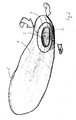
- the opening 3 in the state in which it is slipped over in the region of the heel is arranged on the side facing the bottom - underside - of the insole 1. This position is particularly advantageous, since there is an impairment of the comfort is excluded in any case. It is also possible to design the cover 1 differently, so that the opening 3 is arranged in other areas of the insole 2. However, it is important to ensure that, for example, the rolling over the ball of the foot is not affected.
- the surrounding the opening 3 band 4 is formed in the embodiment in the manner of a cuff. It is relatively wide and therefore has a high clamping force. At the same time, the band 4 is made very thin in order to avoid impairment of wearing comfort.
- a functional surface 5 is provided on the upper side of the coating 1.
- the functional surface 5 can be designed differently and serves to improve the wearing comfort or the properties of the coating 1.
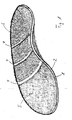
- the functional surface 5 has loop-shaped arranged threads 6, which extend over the entire upper side.
- the functional surface 5 also only partially be provided with the threads 6. For example, the area of the toes can be left out.
- the threads 6 form a "crimped" surface.
- This training can also be referred to as "loops”.
- the processing takes place, for example, by edges, as a result of which the threads 6 curl.
- the crimped shape of the threads 6 produces a relatively dense surface when woven with the tissue on the side facing the skin. This has the consequence that about 80% of the sole of the foot is in contact with the threads 6.
- the multitude of small loops work like microscopic rasps and can thus remove dead skin cells without attacking the living skin cells. In this way the bacteria on the foot is deprived of the breeding ground. The removed dead skin cells fall between the loops and therefore no longer come into contact with the foot. When washing the coating 1, they are removed without residue from the functional surface.
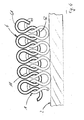
- the threads 6 in the exemplary embodiment are silver threads which have a core 61 made of polyamide surrounded by a layer 62 of silver ( FIG. 4 ).
- the core 61 is substantially inelastic and interwoven with the yarn from which the fabric is made.
- the coating of the threads 6 is preferably carried out galvanically.
- the layer 62 may also consist of copper, gold, polytetrafluoroethylene or the like in a modification of the embodiment. With the help of the different design of the layer 62 different effects can be achieved. For example, an antifungal effect can also be achieved with the aid of copper.
- a layer of polytetrafluoroethylene causes a reduction in the friction of the coating.
- the layer 62 is completely closed, which is why the threads 6 can not absorb moisture, for example in the form of sweat. Rather, the sweat is forwarded in the direction of the tissue.
- the fabric or yarn from which the fabric is made, therefore, has climatic properties. Therefore, it is able to absorb moisture and dirt. As a result, an almost closed, dry surface is created on the top of the cover 1, which gives an extremely comfortable wearing. At the same time, the fabric prevents penetration of the sweat up to the insole. As a result, on the one hand a protection of the insole caused; On the other hand, the insole is prevented by moisture absorbed contributes to a deterioration of the climate and hygiene in the shoe.
- At least one air conditioning duct 7 is provided in the functional surface 5 of the cover 1.
- the climate channel 7 contributes to an improvement of the climate in the shoe. It allows air to circulate in the shoe, allowing air to flow through the climate channels under the sole of the foot. As a result, a very good ventilation of the sole of the foot is achieved. Due to the movement of the foot movements in the shoe itself, which cause a pumping effect, with the help of air duct 7 spent or moist air can also be sucked under the foot.
- three air conditioning channels 7 are provided. Through the air ducts 7, the loop-shaped design of the functional surface 5 is interrupted.
- the air ducts 7 can be formed on the one hand by a simple interruption of the (high-pile) loops; but they can also be formed from climate-regulating net knit fabric. Corresponds to the thickness of the net knit fabric substantially the thickness of the functional surface 5, resulting in a continuous surface. As a result, the wearing comfort is positively influenced.
- the air conditioning ducts 7 may also be arranged radially. By this arrangement, wide area of the functional surface 5 are achieved by the air conditioning ducts 7, so that a removal of moisture from the entire performance area is possible.
- the width and the length of the air ducts 7 are usually freely selectable.
- the location and number of air conditioning channels 7 is variable. By increasing the lengths or widths of the air conditioning ducts 7 or increasing the number of air conditioning ducts 7, an increase in the conveyable air is possible.
- slip-resistant surfaces On the underside can be provided in a modification of the embodiment slip-resistant surfaces. These come in slipped-over state of the cover 1 with the shoe into contact and thus prevent slippage of the insole 2 with cover 1 in the shoe.
Landscapes
- Footwear And Its Accessory, Manufacturing Method And Apparatuses (AREA)
Description
- Zur Erhöhung des Komforts sowie zur Verbesserung der hygienischen Bedingungen in Schuhen ist es bekannt, Einlegesohlen zu verwenden. Auch finden Einlegesohlen Anwendung, um vom Fußboden auf die Schuhsohle wirkende Kälte vom Fuß fernzuhalten. Die bekannten Einlegesohlen sind aus verschiedensten Materialien hergestellt, beispielsweise aus Leder, Kunststoff, Kork o. dgl.. Zudem können die Einlegesohlen auch aus Kombinationen verschiedener Materialien hergestellt sein. Es ist zudem bekannt, Einlegesohlen ein- oder beidseitig mit Schichten aus verschiedenen Materialien zu versehen. So ist es beispielsweise zur Abwehr von Kälte bekannt, auf der Unterseite der Einlegesohle eine Aluminiumschicht aufzubringen, auf der Oberseite der Einlegesohle dagegen eine Schicht aus Textilien.
- Insbesondere zur Verbesserung der klimatischen Verhältnisse im Schuh sind Einlegesohlen bekannt, die beispielsweise mit einer Lochung versehen sind, um eine verbesserte Belüftung innerhalb des Schuhs hervorzurufen. Auch ist die Verwendung von mit Aktivkohle versehenen Einlegesohlen zur Verbesserung der Schuhhygiene bekannt. Zudem ist die Herstellung von Einlegesohlen aus Verbundmaterialien bekannt, die beispielsweise oberflächenaktive oder geruchsabsorbierende Mittel beinhalten oder aus Bakteriziden oder PH-Puffern bestehen, die eine Verbesserung der Schuhhygiene herbeiführen.
- Hinsichtlich ihrer vorbestimmten Eigenschaften führt die Verwendung der Einlegesohlen zu befriedigenden Ergebnissen. Schwachpunkte bei der Verwendung der bekannten Einlegesohlen besteht jedoch darin, dass diese aufgrund ihrer Form und Größe nicht universell einsetzbar sind. Zudem verlieren die Einlegesohlen aufgrund natürlicher Alterungsprozesse über ihre Nutzungsdauer an Wirkung, sodass sich trotz der Verwendung von Einlegesohlen die klimatischen und hygienischen Verhältnisse im Schuh verschlechtern.
- Zur Verbesserung der Wirkung der bekannten Einlegesohlen ist es je nach Material, aus dem die Einlegesohlen hergestellt sind, möglich, die Einlegesohlen waschbar zu gestalten, um aufgenommene Bakterien oder dergleichen aus der jeweiligen Sohle herauszuspülen. Dies bewirkt jedoch eine erhebliche Beschlenigung des Alterungsprozesses. Außerdem ist die Handhabung umständlich, da beispielsweise der Trockenvorgang der Sohlen zuweilen langwierig ist.
- Die vorgenannten Probleme treten in allen Anwendungsgebieten von Schuhen auf. Sie stehen jedoch insbesondere bei Anwendungen von Schuhen im Vordergrund, bei denen verschiedene Benutzer dieselben Schuhe verwenden, wie dies beispielsweise beim Verleih von Skischuhen, Schlittschuhen oder Bowlingschuhen der Fall ist. Hier ist mit den bekannten Einlegesohlen nicht zu gewährleisten, dass jederzeit eine einwandfreie Schuhhygiene bei der Weitergabe der Schuhe an einen neuen Benutzer vorhanden ist. Die hygienischen Probleme treten darüber hinaus insbesondere bei Sportarten auf, bei denen die Schuhe ohne Tragen von Socken benutzt werden, wie dies beispielsweise bei Leichtathleten der Fall ist.
- Zur Verbesserung der Hygiene ist es aus der
US 2006/0059712 A1 bekannt, eine Sohle mit einer flexiblen, abnehmbaren Socke zu umgeben. Die Socke hat eine Öffnung, die auf der Unterseite einer Sohle anordnenbar ist. Ein ähnlicher Überzug ist aus derWO 03/037126 A1 - Vor dem Hintergrund dieses Standes der Technik liegt der Erfindung die Aufgabe zugrunde, eine einfache und zugleich sehr effektive Verbesserung der klimatischen Eigenschaften im Schuh hervorzurufen. Gemäß der Erfindung wird diese Aufgabe durch die Merkmale des Schutzanspruchs 1 gelöst.
- Mit der Erfindung ist ein Überzug für Einlegesohlen in Schuhen geschaffen, der zu einer deutlichen Verbesserung des Klimas in Schuhen beiträgt. Durch die schlauchförmige und elastische Ausbildung des Überzugs passt sich dieser der Form der Einlegesohle optimal an. Es besteht daher die Möglichkeit, den Überzug auch bei Schuhen zu verwenden, die eine außerordentlich hohe Passgenauigkeit erfordern, beispielsweise bei Leichtathletik-Sportschuhen. Der verwendete Klimakanal trägt zu einer Verbesserung des Klimas im Schuh bei. Er ermöglicht eine Luftzirkulation im Schuh, bei der Luft durch die Klimakanäle unter der Fußsohle durchströmen kann.
- Der Überzug bietet zudem den Vorteil, dass er einfach über die jeweilige Einlegesohle zu ziehen ist. Nach Benutzung des Schuhs kann der Überzug von der Einlegesohle abgezogen werden und in herkömmlicher Weise gewaschen werden. Hierdurch ist die Hygiene im Schuh deutlich erhöht. Zudem ist aufgrund des Materials im Verhältnis zu waschbaren Einlegesohlen die Trocknungszeit deutlich reduziert, sodass beispielsweise ein am Abend gewaschener Überzug am nächsten Morgen wieder zur Verfügung steht. Hierdurch ist eine erhebliche Verbesserung hinsichtlich des Benutzungskomforts im Verhältnis zu Einlegesohlen mit klimaverbessernden oder hygieneverbessernden Eigenschaften in Bezug auf deren Waschbarkeit hervorgerufen.
- Andere Weiterbildungen und Ausgestaltungen der Erfindung sind in den übrigen Unteransprüchen angegeben. Ein Aüsführungsbeispiel der Erfindung ist in der Zeichnung dargestellt und wird nachfolgend im Einzelnen beschrieben. Es zeigen:
- Fig. 1
- die perspektivische Darstellung der Oberseite eines über eine Einlegesohle gestülpten Überzugs;
- Fig. 2
- die perspektivische Darstellung der Unterseite des über die Einlegesohle gestülpten Überzugs nach
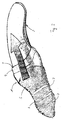
Figur 1 ; - Fig. 3
- die Darstellung eines Überzugs mit Einlegesohle während des Überziehvorgangs;
- Fig. 4
- eine schematische Darstellung der auf der Funktionsseite des Überzugs miteinander verwobenen Garne und Fäden.
- Der als Ausführungsbeispiel gewählte Überzug 1 dient zum Überstülpen über eine Einlegesohle 2 eines nicht dargestellten Schuhs. Der Überzug 1 besteht aus einem elastischen Gewebe 11 und hat die Form eines einseitig geschlossenen Schlauchs. Dadurch ist eine Öffnung 3 ausgebildet. Die Öffnung 3 ist von einem Band 4 umgeben, das im Ausführungsbeispiel ebenfalls elastisch ausgebildet ist.
- Die Auswahl der für den Überzug 1 verwendeten Materialien kann im Wesentlichen beliebig erfolgen. Wichtigste Anforderung an das Material des Gewebes 11 bzw. an das Garn, aus dem das Gewebe 11 gebildet ist, ist seine Fähigkeit, sich zu dehnen. Hierdurch ist gewährleistet, dass sich der Überzug 1 gut an die Einlegesohle 2 anschmiegt und eine Faltenbildung beim Tragen der Schuhe mit Einlegesohle und Überzug vermieden ist. Zudem kann ein reibungsverringerndes Garn, wie beispielsweise Dynema oder PTFE, zur Erstellung des Gewebes 11 verwendet werden. Das Risiko von Hautreizungen und Blasenbildung wird dadurch erheblich gemindert. Außerdem hat es sich als vorteilhaft erwiesen, wenn das Gewebe 11 des Überzugs 1 aus einem Microfasergarn, welches bevorzugt eine Polymerfaser ist, besteht. Auch die Verwendung von Polyamid-, Aramid- oder Acryl-Fasern ist möglich.
- Die Gefahr von Fußerkrankungen, wie beispielsweise Pilzinfektionen, kann dadurch verringert werden, dass antibakterielle bzw. antifungizide Garne Anwendung finden. Hierzu eignen sich insbesondere Garne aus Silber oder Kupfer bzw. mit Silber oder Kupfer beschichtete Garne.
- Die Öffnung 3 hat einen Durchmesser, der geringer als die schmalste Stelle der Einlegesohle 2 ist. Hierdurch ist bewirkt, dass die Öffnung 3 unabhängig von ihrer Anordnung in übergestülpten Zustand eine Zugkraft auf das Gewebe 11 ausübt, sodass die aufgrund seiner elastischen Ausbildung ohnehin vorhandene Spannung des Überzugs 1 verstärkt ist. Im Ausführungsbeispiel ist die Öffnung 3 in übergestülptem Zustand im Bereich der Ferse auf der dem Boden zugewandten Seite - Unterseite - der Einlegesohle 1 angeordnet. Diese Position ist besonders vorteilhaft, da dort eine Beeinträchtigung des Komforts in jedem Falle ausgeschlossen ist. Es ist auch möglich, den Überzug 1 anders auszugestalten, sodass die Öffnung 3 in anderen Bereichen der Einlegesohle 2 angeordnet ist. Dabei ist jedoch darauf zu achten, dass bspw. das Abrollen über die Fußballen nicht beeinträchtigt wird.
- Das die Öffnung 3 umgebende Band 4 ist im Ausführungsbeispiel nach Art eines Bündchens ausgebildet. Es ist relativ breit und verfügt somit über eine hohe Spannkraft. Gleichzeitig ist das Band 4 sehr dünn ausgebildet, um eine Beeinträchtigung des Tragekomforts zu vermeiden.
- Auf der Oberseite ist an dem Überzug 1 eine Funktionsfläche 5 vorgesehen. Die Funktionsfläche 5 kann verschieden ausgebildet sein und dient der Verbesserung des Tragekomforts bzw. der Eigenschaften des Überzugs 1.
- Im Ausführungsbeispiel weist die Funktionsfläche 5 schlingenförmig angeordnete Fäden 6 auf, die sich über die gesamte Oberseite erstrecken. In Abwandlung des Ausführungsbeispiels kann die Funktionsfläche 5 auch nur abschnittsweise mit den Fäden 6 versehen sein. Beispielsweise kann der Bereich der Zehen ausgespart sein.
- Die Fäden 6 bilden eine "gekräuselte" Oberfläche. Diese Ausbildung kann auch als "loops" bezeichnet werden. Die Verarbeitung erfolgt beispielsweise durch Kanten, wodurch sich die Fäden 6 kräuseln. Durch die gekräuselte Form der Fäden 6 entsteht beim Verweben mit dem Gewebe auf der der Haut zugewandten Seite eine relativ dichte Oberfläche. Dies hat zur Folge, dass ca. 80 % der Fußsohle mit den Fäden 6 in Kontakt steht. Die Vielzahl kleiner Schlaufen arbeiten im Prinzip wie mikroskopisch kleine Raspeln und können so tote Hautzellen abtragen, ohne die lebenden Hautzellen anzugreifen. Auf diese Weise wird den Bakterien am Fuß der Nährboden entzogen. Die abgetragenen toten Hautzellen fallen zwischen die Schlaufen und treten daher nicht mehr in Kontakt mit dem Fuß. Beim Waschen des Überzugs 1 werden sie rückstandsfrei von der Funktionsfläche entfernt.
- Die Fäden 6 sind im Ausführungsbeispiel Silberfäden, die einen Kern 61 aus Polyamid aufweisen, der von einer Schicht 62 aus Silber umgeben ist (
Figur 4 ). Der Kern 61 ist im Wesentlichen unelastisch und mit dem Garn, aus dem das Gewebe hergestellt ist, verwoben. Die Beschichtung der Fäden 6 erfolgt vorzugsweise galvanisch. Die Schicht 62 kann in Abwandlung des Ausführungsbeispiels auch aus Kupfer, Gold, Polytetrafluorethylen oder dergleichen bestehen. Mit Hilfe der unterschiedlichen Ausgestaltung der Schicht 62 sind unterschiedliche Wirkungen erzielbar. Beispielsweise kann auch mit Hilfe von Kupfer eine antifungizide Wirkung erzielt werden. Eine Schicht aus Polytetrafluorethylen bewirkt dagegen eine Reduzierung der Reibung des Überzugs. - Die Schicht 62 ist vollständig geschlossen, weshalb die Fäden 6 keine Feuchtigkeit, beispielsweise in Form von Schweiß, aufnehmen können. Vielmehr wird der Schweiß in Richtung des Gewebes weitergeleitet. Das Gewebe bzw. das Garn, aus dem das Gewebe hergestellt ist, hat deshalb klimaaktive Eigenschaften. Daher ist es in der Lage, Feuchtigkeit und Schmutz aufzunehmen. Dadurch ist auf der Oberseite des Überzugs 1 eine nahezu geschlossene, trockene Oberfläche geschaffen, die ein außerordentlich angenehmes Tragegefühl vermittelt. Gleichzeitig verhindert das Gewebe ein Durchdringen des Schweißes bis zur Einlegesohle. Dadurch ist einerseits eine Schonung der Einlegesohle hervorgerufen; andererseits ist verhindert, dass die Einlegesohle durch aufgenommene Feuchtigkeit zu einer Verschlechterung des Klimas und der Hygiene im Schuh beiträgt.
- In der Funktionsfläche 5 des Überzugs 1 ist darüber hinaus mindestens ein Klimakanal 7 vorgesehen. Der Klimakanal 7 trägt zu einer Verbesserung der Klimas im Schuh bei. Er ermöglicht eine Luftzirkulation im Schuh, bei der Luft durch die Klimakanäle unter der Fußsohle durchströmen kann. Hierdurch ist eine sehr gute Belüftung der Fußsohle erzielt. Durch die bei Bewegung erfolgenden Bewegungen des Fußes im Schuh selbst, die einen Pumpeffekt hervorrufen, kann mit Hilfe de Klimakanals 7 verbrauchte bzw. feuchte Luft auch unter dem Fuß abgesaugt werden.
- Im Ausführungsbeispiel sind drei Klimakanäle 7 vorgesehen. Durch die Klimakanäle 7 ist die schlaufenförmige Ausbildung der Funktionsfläche 5 unterbrochen. Die Klimakanäle 7 können einerseits durch eine einfache Unterbrechung der (hochflorigen) Schlaufen gebildet sein; sie können aber auch aus klimaregulierendem Netzstrickgewebe gebildet sein. Entspricht die Dicke des Netzstrickgewebes im Wesentlichen der Dicke der Funktionsfläche 5, ergibt sich eine durchgehende Oberfläche. Dadurch ist der Tragekomfort positiv beeinflusst.
- In Abwandlung des Ausführungsbeispiels können die Klimakanäle 7 auch strahlenförmig angeordnet sein. Durch diese Anordnung werden weite Bereich der Funktionsfläche 5 durch die Klimakanäle 7 erreicht, sodass ein Abtransport von Feuchtigkeit aus dem gesamten Auftrittsbereich möglich ist. Die Breite und die Länge der Klimakanäle 7 sind dabei in der Regel frei wählbar. Auch die Lage und Anzahl der Klimakanäle 7 ist variabel. Durch Vergrößerung der Längen bzw. Breiten der Klimakanäle 7 oder Erhöhung der Anzahl der Klimakanäle 7 ist eine Steigerung der förderbaren Luft möglich.
- Auf der Unterseite können in Abwandlung des Ausführungsbeispiels rutschhemmende Flächen vorgesehen sein. Diese kommen in übergestülptem Zustand des Überzugs 1 mit dem Schuh in Berührung und verhindern so ein Verrutschen der Einlegesohle 2 mit Überzug 1 im Schuh.
Claims (8)
- Überzug (1) für Einlegesohlen (2) in Schuhen bestehend aus einem einseitig geschlossenen Schlauch aus elastischem Gewebe (11), der mit einer Öffnung (3) versehen ist, wobei die Öffnung (3) von einem elastischen Band (4) umgeben ist, dadurch gekennzeichnet, dass auf der dem Fuß zugewandten Seite eine Funktionsfläche (5) vorgesehen ist, in der mindestens ein Klimakanal (7) vorgesehen ist.
- Überzug nach Anspruch 1, dadurch gekennzeichnet, dass das Gewebe (11) aus Garn hergestellt ist.
- Überzug nach Anspruch 3, dadurch gekennzeichnet, dass das Garn reibungsverringernde Eigenschaften hat.
- Überzug nach Anspruch 3, dadurch gekennzeichnet, dass das Garn antifungizide Wirkung hat.
- Überzug nach Anspruch 3, dadurch gekennzeichnet, dass das Garn antibakterielle Wirkung hat.
- Überzug nach Anspruch 1, dadurch gekennzeichnet, dass die Funktionsfläche (5) schlingenförmig angeordnete Fäden (6) aufweist.
- Überzug nach Anspruch 6, dadurch gekennzeichnet, dass die Fäden (6) Silberfäden sind.
- Überzug nach Anspruch 6, dadurch gekennzeichnet, dass die Fäden (6) einen Kern (61) aus Polyamid aufweisen, der von einer Schicht (62) aus Silber umgeben ist.
Priority Applications (2)
| Application Number | Priority Date | Filing Date | Title |
|---|---|---|---|
| SI200730689T SI1929894T1 (sl) | 2006-12-05 | 2007-11-23 | Prevleka za vloĺ˝ke v äśevljih |
| PL07022718T PL1929894T3 (pl) | 2006-12-05 | 2007-11-23 | Osłona dla wkładek do butów |
Applications Claiming Priority (1)
| Application Number | Priority Date | Filing Date | Title |
|---|---|---|---|
| DE202006018486U DE202006018486U1 (de) | 2006-12-05 | 2006-12-05 | Überzug für Einlegesohlen in Schuhen |
Publications (2)
| Publication Number | Publication Date |
|---|---|
| EP1929894A1 EP1929894A1 (de) | 2008-06-11 |
| EP1929894B1 true EP1929894B1 (de) | 2011-05-18 |
Family
ID=37853275
Family Applications (1)
| Application Number | Title | Priority Date | Filing Date |
|---|---|---|---|
| EP07022718A Active EP1929894B1 (de) | 2006-12-05 | 2007-11-23 | Überzug für Einlegesohlen in Schuhen |
Country Status (8)
| Country | Link |
|---|---|
| EP (1) | EP1929894B1 (de) |
| JP (1) | JP3139574U (de) |
| AT (1) | ATE509540T1 (de) |
| DE (1) | DE202006018486U1 (de) |
| DK (1) | DK1929894T3 (de) |
| ES (1) | ES2366401T3 (de) |
| PL (1) | PL1929894T3 (de) |
| SI (1) | SI1929894T1 (de) |
Families Citing this family (4)
| Publication number | Priority date | Publication date | Assignee | Title |
|---|---|---|---|---|
| DE202007005259U1 (de) | 2007-04-10 | 2007-06-28 | X-Technology Swiss Gmbh | Bekleidungsstück |
| EP2342984A1 (de) * | 2010-01-11 | 2011-07-13 | Masai Marketing & Trading AG | Sohleneinsatz für Gehgerät |
| PE20210015A1 (es) * | 2020-10-26 | 2021-01-05 | Armofa S A C | Dispositivo antimicrobiano y desinfectante de calzado |
| CN119977174B (zh) * | 2025-04-11 | 2025-07-22 | 鄂尔多斯市农牧技术推广中心 | 一种盐碱地水产养殖尾水循环处理系统和方法 |
Family Cites Families (4)
| Publication number | Priority date | Publication date | Assignee | Title |
|---|---|---|---|---|
| WO2003037126A1 (en) | 2001-10-31 | 2003-05-08 | Saikyosya Co., Ltd. | Shoe insole |
| US20040261290A1 (en) * | 2003-06-27 | 2004-12-30 | Sasos, Ltd. | Sandal socks |
| US20060059712A1 (en) | 2004-08-13 | 2006-03-23 | Arnold Asham | Hygienic sandal |
| BE1016243A6 (fr) * | 2004-10-18 | 2006-06-06 | Bodart Luc | Dispositif hygienique pour sandales et son mode de fixation. |
-
2006
- 2006-12-05 DE DE202006018486U patent/DE202006018486U1/de not_active Expired - Lifetime
-
2007
- 2007-11-23 ES ES07022718T patent/ES2366401T3/es active Active
- 2007-11-23 AT AT07022718T patent/ATE509540T1/de active
- 2007-11-23 EP EP07022718A patent/EP1929894B1/de active Active
- 2007-11-23 SI SI200730689T patent/SI1929894T1/sl unknown
- 2007-11-23 DK DK07022718.6T patent/DK1929894T3/da active
- 2007-11-23 PL PL07022718T patent/PL1929894T3/pl unknown
- 2007-12-05 JP JP2007009359U patent/JP3139574U/ja not_active Expired - Lifetime
Also Published As
| Publication number | Publication date |
|---|---|
| ES2366401T3 (es) | 2011-10-19 |
| EP1929894A1 (de) | 2008-06-11 |
| ATE509540T1 (de) | 2011-06-15 |
| DE202006018486U1 (de) | 2007-03-01 |
| DK1929894T3 (da) | 2011-09-12 |
| SI1929894T1 (sl) | 2011-09-30 |
| JP3139574U (ja) | 2008-02-21 |
| PL1929894T3 (pl) | 2012-01-31 |
Similar Documents
| Publication | Publication Date | Title |
|---|---|---|
| EP1476033B1 (de) | Element für Bekleidungsstücke sowie Verfahren zur Entfeuchtung von Hautbereichen | |
| EP1585397B1 (de) | Socke | |
| DE102016207387B4 (de) | Socke | |
| DE69302191T2 (de) | Schuheinlegsohlen | |
| WO2004068976A2 (de) | Socke | |
| EP1701626B1 (de) | Socke | |
| EP1364088B1 (de) | Textile fläche | |
| DE202009005651U1 (de) | Bekleidungsstück | |
| EP1929894B1 (de) | Überzug für Einlegesohlen in Schuhen | |
| EP1414318B1 (de) | Bekleidungsstück | |
| WO2012065929A1 (de) | Kleidungsstück | |
| EP3697246A1 (de) | Tanzschuh, sohle-kappe-einheit, oberschuh und set bestehend aus einer sohle oder einer sohle-kappe-einheit und einem oberschuh | |
| DE2255628A1 (de) | Schuhueberzug | |
| EP1796490B1 (de) | Socke | |
| EP1893044B1 (de) | Socke | |
| DE202006001380U1 (de) | Kombinationsbekleidung zur Klimaregulierung | |
| EP3620562A1 (de) | Gestrick | |
| WO2007065727A2 (de) | Strumpf aus gestricktem garn zur fussbekleidung | |
| DE3737302A1 (de) | Einlegesohle mit einem gehalt an germanium | |
| EP3932236B1 (de) | Skispringer-handschuh | |
| DE102005027100A1 (de) | Socke | |
| DE102005016659A1 (de) | Flexiformfüssling | |
| DE10328607A1 (de) | Socke oder Strumpf mit Reliefstruktur im Auftrittsbereich | |
| DE942207C (de) | Schutzkleidung mit einem UEberzug aus plastischem Material | |
| DE102004025648B4 (de) | Gymnastikartikel und Halterung hierfür |
Legal Events
| Date | Code | Title | Description |
|---|---|---|---|
| PUAI | Public reference made under article 153(3) epc to a published international application that has entered the european phase |
Free format text: ORIGINAL CODE: 0009012 |
|
| AK | Designated contracting states |
Kind code of ref document: A1 Designated state(s): AT BE BG CH CY CZ DE DK EE ES FI FR GB GR HU IE IS IT LI LT LU LV MC MT NL PL PT RO SE SI SK TR |
|
| AX | Request for extension of the european patent |
Extension state: AL BA HR MK RS |
|
| 17P | Request for examination filed |
Effective date: 20081111 |
|
| AKX | Designation fees paid |
Designated state(s): AT BE BG CH CY CZ DE DK EE ES FI FR GB GR HU IE IS IT LI LT LU LV MC MT NL PL PT RO SE SI SK TR |
|
| AXX | Extension fees paid |
Extension state: HR Payment date: 20081111 Extension state: BA Payment date: 20081111 Extension state: AL Payment date: 20081111 Extension state: MK Payment date: 20081111 Extension state: RS Payment date: 20081111 |
|
| GRAP | Despatch of communication of intention to grant a patent |
Free format text: ORIGINAL CODE: EPIDOSNIGR1 |
|
| GRAS | Grant fee paid |
Free format text: ORIGINAL CODE: EPIDOSNIGR3 |
|
| GRAA | (expected) grant |
Free format text: ORIGINAL CODE: 0009210 |
|
| REG | Reference to a national code |
Ref country code: GB Ref legal event code: FG4D Free format text: NOT ENGLISH |
|
| REG | Reference to a national code |
Ref country code: CH Ref legal event code: EP |
|
| REG | Reference to a national code |
Ref country code: IE Ref legal event code: FG4D Free format text: LANGUAGE OF EP DOCUMENT: GERMAN |
|
| REG | Reference to a national code |
Ref country code: DE Ref legal event code: R096 Ref document number: 502007007234 Country of ref document: DE Effective date: 20110630 |
|
| REG | Reference to a national code |
Ref country code: CH Ref legal event code: NV Representative=s name: RIEDERER HASLER & PARTNER PATENTANWAELTE AG |
|
| REG | Reference to a national code |
Ref country code: NL Ref legal event code: T3 |
|
| REG | Reference to a national code |
Ref country code: SE Ref legal event code: TRGR |
|
| REG | Reference to a national code |
Ref country code: DK Ref legal event code: T3 |
|
| REG | Reference to a national code |
Ref country code: ES Ref legal event code: FG2A Ref document number: 2366401 Country of ref document: ES Kind code of ref document: T3 Effective date: 20111019 |
|
| PG25 | Lapsed in a contracting state [announced via postgrant information from national office to epo] |
Ref country code: PT Free format text: LAPSE BECAUSE OF FAILURE TO SUBMIT A TRANSLATION OF THE DESCRIPTION OR TO PAY THE FEE WITHIN THE PRESCRIBED TIME-LIMIT Effective date: 20110919 |
|
| PG25 | Lapsed in a contracting state [announced via postgrant information from national office to epo] |
Ref country code: FI Free format text: LAPSE BECAUSE OF FAILURE TO SUBMIT A TRANSLATION OF THE DESCRIPTION OR TO PAY THE FEE WITHIN THE PRESCRIBED TIME-LIMIT Effective date: 20110518 Ref country code: GR Free format text: LAPSE BECAUSE OF FAILURE TO SUBMIT A TRANSLATION OF THE DESCRIPTION OR TO PAY THE FEE WITHIN THE PRESCRIBED TIME-LIMIT Effective date: 20110819 Ref country code: CY Free format text: LAPSE BECAUSE OF FAILURE TO SUBMIT A TRANSLATION OF THE DESCRIPTION OR TO PAY THE FEE WITHIN THE PRESCRIBED TIME-LIMIT Effective date: 20110518 |
|
| PG25 | Lapsed in a contracting state [announced via postgrant information from national office to epo] |
Ref country code: EE Free format text: LAPSE BECAUSE OF FAILURE TO SUBMIT A TRANSLATION OF THE DESCRIPTION OR TO PAY THE FEE WITHIN THE PRESCRIBED TIME-LIMIT Effective date: 20110518 Ref country code: CZ Free format text: LAPSE BECAUSE OF FAILURE TO SUBMIT A TRANSLATION OF THE DESCRIPTION OR TO PAY THE FEE WITHIN THE PRESCRIBED TIME-LIMIT Effective date: 20110518 |
|
| REG | Reference to a national code |
Ref country code: PL Ref legal event code: T3 |
|
| PG25 | Lapsed in a contracting state [announced via postgrant information from national office to epo] |
Ref country code: RO Free format text: LAPSE BECAUSE OF FAILURE TO SUBMIT A TRANSLATION OF THE DESCRIPTION OR TO PAY THE FEE WITHIN THE PRESCRIBED TIME-LIMIT Effective date: 20110518 Ref country code: SK Free format text: LAPSE BECAUSE OF FAILURE TO SUBMIT A TRANSLATION OF THE DESCRIPTION OR TO PAY THE FEE WITHIN THE PRESCRIBED TIME-LIMIT Effective date: 20110518 |
|
| PLBE | No opposition filed within time limit |
Free format text: ORIGINAL CODE: 0009261 |
|
| STAA | Information on the status of an ep patent application or granted ep patent |
Free format text: STATUS: NO OPPOSITION FILED WITHIN TIME LIMIT |
|
| 26N | No opposition filed |
Effective date: 20120221 |
|
| REG | Reference to a national code |
Ref country code: DE Ref legal event code: R097 Ref document number: 502007007234 Country of ref document: DE Effective date: 20120221 |
|
| PG25 | Lapsed in a contracting state [announced via postgrant information from national office to epo] |
Ref country code: MT Free format text: LAPSE BECAUSE OF FAILURE TO SUBMIT A TRANSLATION OF THE DESCRIPTION OR TO PAY THE FEE WITHIN THE PRESCRIBED TIME-LIMIT Effective date: 20110518 |
|
| PG25 | Lapsed in a contracting state [announced via postgrant information from national office to epo] |
Ref country code: BG Free format text: LAPSE BECAUSE OF FAILURE TO SUBMIT A TRANSLATION OF THE DESCRIPTION OR TO PAY THE FEE WITHIN THE PRESCRIBED TIME-LIMIT Effective date: 20110818 |
|
| PG25 | Lapsed in a contracting state [announced via postgrant information from national office to epo] |
Ref country code: HU Free format text: LAPSE BECAUSE OF FAILURE TO SUBMIT A TRANSLATION OF THE DESCRIPTION OR TO PAY THE FEE WITHIN THE PRESCRIBED TIME-LIMIT Effective date: 20110518 |
|
| REG | Reference to a national code |
Ref country code: DE Ref legal event code: R082 Ref document number: 502007007234 Country of ref document: DE Representative=s name: TARVENKORN & WICKORD PATENTANWAELTE PARTG MBB, DE |
|
| REG | Reference to a national code |
Ref country code: FR Ref legal event code: PLFP Year of fee payment: 9 |
|
| REG | Reference to a national code |
Ref country code: FR Ref legal event code: PLFP Year of fee payment: 10 |
|
| REG | Reference to a national code |
Ref country code: DE Ref legal event code: R082 Ref document number: 502007007234 Country of ref document: DE Ref country code: FR Ref legal event code: PLFP Year of fee payment: 11 |
|
| PGFP | Annual fee paid to national office [announced via postgrant information from national office to epo] |
Ref country code: MC Payment date: 20171114 Year of fee payment: 11 |
|
| PGFP | Annual fee paid to national office [announced via postgrant information from national office to epo] |
Ref country code: IS Payment date: 20171019 Year of fee payment: 11 |
|
| PG25 | Lapsed in a contracting state [announced via postgrant information from national office to epo] |
Ref country code: MC Free format text: LAPSE BECAUSE OF NON-PAYMENT OF DUE FEES Effective date: 20181130 |
|
| PG25 | Lapsed in a contracting state [announced via postgrant information from national office to epo] |
Ref country code: IS Free format text: LAPSE BECAUSE OF FAILURE TO SUBMIT A TRANSLATION OF THE DESCRIPTION OR TO PAY THE FEE WITHIN THE PRESCRIBED TIME-LIMIT Effective date: 20190531 |
|
| REG | Reference to a national code |
Ref country code: LT Ref legal event code: MM4D Effective date: 20191123 |
|
| PG25 | Lapsed in a contracting state [announced via postgrant information from national office to epo] |
Ref country code: LV Free format text: LAPSE BECAUSE OF NON-PAYMENT OF DUE FEES Effective date: 20191123 |
|
| PG25 | Lapsed in a contracting state [announced via postgrant information from national office to epo] |
Ref country code: IE Free format text: LAPSE BECAUSE OF NON-PAYMENT OF DUE FEES Effective date: 20191123 Ref country code: LT Free format text: LAPSE BECAUSE OF NON-PAYMENT OF DUE FEES Effective date: 20191123 |
|
| PGFP | Annual fee paid to national office [announced via postgrant information from national office to epo] |
Ref country code: LU Payment date: 20211119 Year of fee payment: 15 |
|
| PGFP | Annual fee paid to national office [announced via postgrant information from national office to epo] |
Ref country code: SE Payment date: 20211118 Year of fee payment: 15 Ref country code: DK Payment date: 20211122 Year of fee payment: 15 Ref country code: GB Payment date: 20211119 Year of fee payment: 15 |
|
| PGFP | Annual fee paid to national office [announced via postgrant information from national office to epo] |
Ref country code: SI Payment date: 20211111 Year of fee payment: 15 Ref country code: BE Payment date: 20211118 Year of fee payment: 15 |
|
| PGFP | Annual fee paid to national office [announced via postgrant information from national office to epo] |
Ref country code: PL Payment date: 20211119 Year of fee payment: 15 |
|
| PGFP | Annual fee paid to national office [announced via postgrant information from national office to epo] |
Ref country code: ES Payment date: 20220121 Year of fee payment: 15 |
|
| REG | Reference to a national code |
Ref country code: DK Ref legal event code: EBP Effective date: 20221130 |
|
| REG | Reference to a national code |
Ref country code: SE Ref legal event code: EUG |
|
| GBPC | Gb: european patent ceased through non-payment of renewal fee |
Effective date: 20221123 |
|
| REG | Reference to a national code |
Ref country code: BE Ref legal event code: MM Effective date: 20221130 |
|
| PG25 | Lapsed in a contracting state [announced via postgrant information from national office to epo] |
Ref country code: SI Free format text: LAPSE BECAUSE OF NON-PAYMENT OF DUE FEES Effective date: 20221124 Ref country code: SE Free format text: LAPSE BECAUSE OF NON-PAYMENT OF DUE FEES Effective date: 20221124 Ref country code: LU Free format text: LAPSE BECAUSE OF NON-PAYMENT OF DUE FEES Effective date: 20221123 |
|
| REG | Reference to a national code |
Ref country code: SI Ref legal event code: KO00 Effective date: 20230712 |
|
| PG25 | Lapsed in a contracting state [announced via postgrant information from national office to epo] |
Ref country code: GB Free format text: LAPSE BECAUSE OF NON-PAYMENT OF DUE FEES Effective date: 20221123 Ref country code: DK Free format text: LAPSE BECAUSE OF NON-PAYMENT OF DUE FEES Effective date: 20221130 |
|
| PG25 | Lapsed in a contracting state [announced via postgrant information from national office to epo] |
Ref country code: BE Free format text: LAPSE BECAUSE OF NON-PAYMENT OF DUE FEES Effective date: 20221130 |
|
| PGFP | Annual fee paid to national office [announced via postgrant information from national office to epo] |
Ref country code: NL Payment date: 20231120 Year of fee payment: 17 |
|
| REG | Reference to a national code |
Ref country code: ES Ref legal event code: FD2A Effective date: 20240102 |
|
| PG25 | Lapsed in a contracting state [announced via postgrant information from national office to epo] |
Ref country code: ES Free format text: LAPSE BECAUSE OF NON-PAYMENT OF DUE FEES Effective date: 20221124 |
|
| PG25 | Lapsed in a contracting state [announced via postgrant information from national office to epo] |
Ref country code: ES Free format text: LAPSE BECAUSE OF NON-PAYMENT OF DUE FEES Effective date: 20221124 |
|
| PGFP | Annual fee paid to national office [announced via postgrant information from national office to epo] |
Ref country code: TR Payment date: 20231120 Year of fee payment: 17 Ref country code: IT Payment date: 20231124 Year of fee payment: 17 Ref country code: FR Payment date: 20231120 Year of fee payment: 17 Ref country code: DE Payment date: 20231121 Year of fee payment: 17 Ref country code: CH Payment date: 20231201 Year of fee payment: 17 Ref country code: AT Payment date: 20231121 Year of fee payment: 17 |
|
| REG | Reference to a national code |
Ref country code: DE Ref legal event code: R119 Ref document number: 502007007234 Country of ref document: DE |
|
| REG | Reference to a national code |
Ref country code: CH Ref legal event code: PL |
|
| PG25 | Lapsed in a contracting state [announced via postgrant information from national office to epo] |
Ref country code: PL Free format text: LAPSE BECAUSE OF NON-PAYMENT OF DUE FEES Effective date: 20231123 |
|
| REG | Reference to a national code |
Ref country code: NL Ref legal event code: MM Effective date: 20241201 |
|
| REG | Reference to a national code |
Ref country code: AT Ref legal event code: MM01 Ref document number: 509540 Country of ref document: AT Kind code of ref document: T Effective date: 20241123 Ref country code: CH Ref legal event code: PL |
|
| PG25 | Lapsed in a contracting state [announced via postgrant information from national office to epo] |
Ref country code: CH Free format text: LAPSE BECAUSE OF NON-PAYMENT OF DUE FEES Effective date: 20241130 |
|
| PG25 | Lapsed in a contracting state [announced via postgrant information from national office to epo] |
Ref country code: AT Free format text: LAPSE BECAUSE OF NON-PAYMENT OF DUE FEES Effective date: 20241123 |
|
| PG25 | Lapsed in a contracting state [announced via postgrant information from national office to epo] |
Ref country code: PL Free format text: LAPSE BECAUSE OF NON-PAYMENT OF DUE FEES Effective date: 20221109 |
|
| PG25 | Lapsed in a contracting state [announced via postgrant information from national office to epo] |
Ref country code: NL Free format text: LAPSE BECAUSE OF NON-PAYMENT OF DUE FEES Effective date: 20241201 |
|
| PG25 | Lapsed in a contracting state [announced via postgrant information from national office to epo] |
Ref country code: DE Free format text: LAPSE BECAUSE OF NON-PAYMENT OF DUE FEES Effective date: 20250603 |
|
| PG25 | Lapsed in a contracting state [announced via postgrant information from national office to epo] |
Ref country code: IT Free format text: LAPSE BECAUSE OF NON-PAYMENT OF DUE FEES Effective date: 20241123 |
|
| PG25 | Lapsed in a contracting state [announced via postgrant information from national office to epo] |
Ref country code: FR Free format text: LAPSE BECAUSE OF NON-PAYMENT OF DUE FEES Effective date: 20241130 |