EP1900682A2 - Kohlenmonoxidreduktionseinheit eines Reformers für eine Brennstoffzelle - Google Patents
Kohlenmonoxidreduktionseinheit eines Reformers für eine Brennstoffzelle Download PDFInfo
- Publication number
- EP1900682A2 EP1900682A2 EP07115262A EP07115262A EP1900682A2 EP 1900682 A2 EP1900682 A2 EP 1900682A2 EP 07115262 A EP07115262 A EP 07115262A EP 07115262 A EP07115262 A EP 07115262A EP 1900682 A2 EP1900682 A2 EP 1900682A2
- Authority
- EP
- European Patent Office
- Prior art keywords
- carbon monoxide
- reducing unit
- catalyst
- oxidizing catalyst
- reformer
- Prior art date
- Legal status (The legal status is an assumption and is not a legal conclusion. Google has not performed a legal analysis and makes no representation as to the accuracy of the status listed.)
- Granted
Links
Images


Classifications
-
- H—ELECTRICITY
- H01—ELECTRIC ELEMENTS
- H01M—PROCESSES OR MEANS, e.g. BATTERIES, FOR THE DIRECT CONVERSION OF CHEMICAL ENERGY INTO ELECTRICAL ENERGY
- H01M8/00—Fuel cells; Manufacture thereof
- H01M8/06—Combination of fuel cells with means for production of reactants or for treatment of residues
-
- C—CHEMISTRY; METALLURGY
- C01—INORGANIC CHEMISTRY
- C01B—NON-METALLIC ELEMENTS; COMPOUNDS THEREOF; METALLOIDS OR COMPOUNDS THEREOF NOT COVERED BY SUBCLASS C01C
- C01B3/00—Hydrogen; Gaseous mixtures containing hydrogen; Separation of hydrogen from mixtures containing it; Purification of hydrogen; Reversible storage of hydrogen
- C01B3/50—Separation of hydrogen or hydrogen-containing gases from gaseous mixtures, e.g. purification
- C01B3/56—Separation of hydrogen or hydrogen-containing gases from gaseous mixtures, e.g. purification by contacting with solids; Regeneration of used solids
- C01B3/58—Separation of hydrogen or hydrogen-containing gases from gaseous mixtures, e.g. purification by contacting with solids; Regeneration of used solids including a catalytic reaction
- C01B3/583—Separation of hydrogen or hydrogen-containing gases from gaseous mixtures, e.g. purification by contacting with solids; Regeneration of used solids including a catalytic reaction the reaction being the selective oxidation of carbon monoxide
-
- B—PERFORMING OPERATIONS; TRANSPORTING
- B01—PHYSICAL OR CHEMICAL PROCESSES OR APPARATUS IN GENERAL
- B01J—CHEMICAL OR PHYSICAL PROCESSES, e.g. CATALYSIS OR COLLOID CHEMISTRY; THEIR RELEVANT APPARATUS
- B01J23/00—Catalysts comprising metals or metal oxides or hydroxides, not provided for in group B01J21/00
- B01J23/38—Catalysts comprising metals or metal oxides or hydroxides, not provided for in group B01J21/00 of noble metals
- B01J23/40—Catalysts comprising metals or metal oxides or hydroxides, not provided for in group B01J21/00 of noble metals of the platinum group metals
-
- B—PERFORMING OPERATIONS; TRANSPORTING
- B01—PHYSICAL OR CHEMICAL PROCESSES OR APPARATUS IN GENERAL
- B01J—CHEMICAL OR PHYSICAL PROCESSES, e.g. CATALYSIS OR COLLOID CHEMISTRY; THEIR RELEVANT APPARATUS
- B01J23/00—Catalysts comprising metals or metal oxides or hydroxides, not provided for in group B01J21/00
- B01J23/70—Catalysts comprising metals or metal oxides or hydroxides, not provided for in group B01J21/00 of the iron group metals or copper
- B01J23/76—Catalysts comprising metals or metal oxides or hydroxides, not provided for in group B01J21/00 of the iron group metals or copper combined with metals, oxides or hydroxides provided for in groups B01J23/02 - B01J23/36
- B01J23/83—Catalysts comprising metals or metal oxides or hydroxides, not provided for in group B01J21/00 of the iron group metals or copper combined with metals, oxides or hydroxides provided for in groups B01J23/02 - B01J23/36 with rare earths or actinides
-
- B—PERFORMING OPERATIONS; TRANSPORTING
- B01—PHYSICAL OR CHEMICAL PROCESSES OR APPARATUS IN GENERAL
- B01J—CHEMICAL OR PHYSICAL PROCESSES, e.g. CATALYSIS OR COLLOID CHEMISTRY; THEIR RELEVANT APPARATUS
- B01J35/00—Catalysts, in general, characterised by their form or physical properties
- B01J35/19—Catalysts containing parts with different compositions
-
- B—PERFORMING OPERATIONS; TRANSPORTING
- B01—PHYSICAL OR CHEMICAL PROCESSES OR APPARATUS IN GENERAL
- B01J—CHEMICAL OR PHYSICAL PROCESSES, e.g. CATALYSIS OR COLLOID CHEMISTRY; THEIR RELEVANT APPARATUS
- B01J8/00—Chemical or physical processes in general, conducted in the presence of fluids and solid particles; Apparatus for such processes
- B01J8/005—Separating solid material from the gas/liquid stream
- B01J8/006—Separating solid material from the gas/liquid stream by filtration
-
- B—PERFORMING OPERATIONS; TRANSPORTING
- B01—PHYSICAL OR CHEMICAL PROCESSES OR APPARATUS IN GENERAL
- B01J—CHEMICAL OR PHYSICAL PROCESSES, e.g. CATALYSIS OR COLLOID CHEMISTRY; THEIR RELEVANT APPARATUS
- B01J8/00—Chemical or physical processes in general, conducted in the presence of fluids and solid particles; Apparatus for such processes
- B01J8/02—Chemical or physical processes in general, conducted in the presence of fluids and solid particles; Apparatus for such processes with stationary particles, e.g. in fixed beds
- B01J8/04—Chemical or physical processes in general, conducted in the presence of fluids and solid particles; Apparatus for such processes with stationary particles, e.g. in fixed beds the fluid passing successively through two or more beds
- B01J8/0403—Chemical or physical processes in general, conducted in the presence of fluids and solid particles; Apparatus for such processes with stationary particles, e.g. in fixed beds the fluid passing successively through two or more beds the fluid flow within the beds being predominantly horizontal
- B01J8/0423—Chemical or physical processes in general, conducted in the presence of fluids and solid particles; Apparatus for such processes with stationary particles, e.g. in fixed beds the fluid passing successively through two or more beds the fluid flow within the beds being predominantly horizontal through two or more otherwise shaped beds
- B01J8/0438—Chemical or physical processes in general, conducted in the presence of fluids and solid particles; Apparatus for such processes with stationary particles, e.g. in fixed beds the fluid passing successively through two or more beds the fluid flow within the beds being predominantly horizontal through two or more otherwise shaped beds the beds being placed next to each other
-
- C—CHEMISTRY; METALLURGY
- C10—PETROLEUM, GAS OR COKE INDUSTRIES; TECHNICAL GASES CONTAINING CARBON MONOXIDE; FUELS; LUBRICANTS; PEAT
- C10K—PURIFYING OR MODIFYING THE CHEMICAL COMPOSITION OF COMBUSTIBLE GASES CONTAINING CARBON MONOXIDE
- C10K3/00—Modifying the chemical composition of combustible gases containing carbon monoxide to produce an improved fuel, e.g. one of different calorific value, which may be free from carbon monoxide
- C10K3/02—Modifying the chemical composition of combustible gases containing carbon monoxide to produce an improved fuel, e.g. one of different calorific value, which may be free from carbon monoxide by catalytic treatment
- C10K3/04—Modifying the chemical composition of combustible gases containing carbon monoxide to produce an improved fuel, e.g. one of different calorific value, which may be free from carbon monoxide by catalytic treatment reducing the carbon monoxide content, e.g. water-gas shift [WGS]
-
- B—PERFORMING OPERATIONS; TRANSPORTING
- B01—PHYSICAL OR CHEMICAL PROCESSES OR APPARATUS IN GENERAL
- B01J—CHEMICAL OR PHYSICAL PROCESSES, e.g. CATALYSIS OR COLLOID CHEMISTRY; THEIR RELEVANT APPARATUS
- B01J2208/00—Processes carried out in the presence of solid particles; Reactors therefor
- B01J2208/02—Processes carried out in the presence of solid particles; Reactors therefor with stationary particles
- B01J2208/023—Details
- B01J2208/024—Particulate material
- B01J2208/025—Two or more types of catalyst
-
- B—PERFORMING OPERATIONS; TRANSPORTING
- B82—NANOTECHNOLOGY
- B82Y—SPECIFIC USES OR APPLICATIONS OF NANOSTRUCTURES; MEASUREMENT OR ANALYSIS OF NANOSTRUCTURES; MANUFACTURE OR TREATMENT OF NANOSTRUCTURES
- B82Y30/00—Nanotechnology for materials or surface science, e.g. nanocomposites
-
- C—CHEMISTRY; METALLURGY
- C01—INORGANIC CHEMISTRY
- C01B—NON-METALLIC ELEMENTS; COMPOUNDS THEREOF; METALLOIDS OR COMPOUNDS THEREOF NOT COVERED BY SUBCLASS C01C
- C01B2203/00—Integrated processes for the production of hydrogen or synthesis gas
- C01B2203/04—Integrated processes for the production of hydrogen or synthesis gas containing a purification step for the hydrogen or the synthesis gas
- C01B2203/0435—Catalytic purification
- C01B2203/044—Selective oxidation of carbon monoxide
-
- C—CHEMISTRY; METALLURGY
- C01—INORGANIC CHEMISTRY
- C01B—NON-METALLIC ELEMENTS; COMPOUNDS THEREOF; METALLOIDS OR COMPOUNDS THEREOF NOT COVERED BY SUBCLASS C01C
- C01B2203/00—Integrated processes for the production of hydrogen or synthesis gas
- C01B2203/04—Integrated processes for the production of hydrogen or synthesis gas containing a purification step for the hydrogen or the synthesis gas
- C01B2203/0465—Composition of the impurity
- C01B2203/047—Composition of the impurity the impurity being carbon monoxide
-
- Y—GENERAL TAGGING OF NEW TECHNOLOGICAL DEVELOPMENTS; GENERAL TAGGING OF CROSS-SECTIONAL TECHNOLOGIES SPANNING OVER SEVERAL SECTIONS OF THE IPC; TECHNICAL SUBJECTS COVERED BY FORMER USPC CROSS-REFERENCE ART COLLECTIONS [XRACs] AND DIGESTS
- Y02—TECHNOLOGIES OR APPLICATIONS FOR MITIGATION OR ADAPTATION AGAINST CLIMATE CHANGE
- Y02E—REDUCTION OF GREENHOUSE GAS [GHG] EMISSIONS, RELATED TO ENERGY GENERATION, TRANSMISSION OR DISTRIBUTION
- Y02E60/00—Enabling technologies; Technologies with a potential or indirect contribution to GHG emissions mitigation
- Y02E60/30—Hydrogen technology
- Y02E60/50—Fuel cells
Definitions
- aspects of the present invention relate to carbon monoxide reducing unit of a reformer for a fuel cell, the reformer including the carbon monoxide reducing unit and a fuel cell system including the reformer. More particularly, aspects of the present invention relate to a reformer having a simplified structure, excellent oxidation activity, and excellent oxidative selectivity.
- a fuel cell can be used in a power generation system to produce electrical energy through an electrochemical redox reaction of an oxidant and a fuel.
- a suitable fuel can be hydrogen, or a hydrocarbon-based material, such as methanol, ethanol, natural gas, and the like.
- Such a fuel cell is a clean energy source that can reduce the demand for fossil fuels. It includes a stack composed of unit cells, and produces various ranges of power output. Since it has a four to ten times higher energy density than a small lithium battery, it has been highlighted as a small portable power source.
- Representative exemplary fuel cells include polymer electrolyte membrane fuel cells (PEMFC) and direct oxidation fuel cells (DOFC).
- the direct oxidation fuel cells include direct methanol fuel cells that use methanol as a fuel.
- the polymer electrolyte fuel cells have a high energy density and a high power output, but also have problems in that they use hydrogen gas as a fuel, which must be carefully handled. In addition, producing hydrogen gas often requires accessory facilities, such as fuel reforming processors for reforming methane, methanol, natural gas, and the like.
- a direct oxidation fuel cell has lower energy density than that of a polymer electrolyte fuel cell, but is easier to handle, can operate at a lower operation temperature, and producing its fuel does not require additional fuel reforming processors.
- a stack that includes several to scores of unit cells stacked adjacent to one another, generates electricity.
- Each unit cell is formed of a membrane-electrode assembly (MEA) and a separator (also referred to as a bipolar plate).
- MEA membrane-electrode assembly
- the membrane-electrode assembly is composed of an anode (also referred to as a "fuel electrode” or an “oxidation electrode”) and a cathode (also referred to as an "air electrode” or a “reduction electrode”) that are separated by a polymer electrolyte membrane.
- a fuel is supplied to the anode and is adsorbed on catalysts of the anode, and the fuel is oxidized to produce protons and electrons.
- the electrons are transferred to the cathode via an external circuit, and the protons are transferred to the cathode through the polymer electrolyte membrane.
- an oxidant is supplied to the cathode, and then the oxidant, the protons, and the electrons are reacted on catalysts of the cathode, to produce electricity along with water.
- a fuel cell system is composed of a stack, a reformer, a fuel tank, and a fuel pump.
- the stack forms a body of the fuel cell system, and the fuel pump moves the fuel from the fuel tank to the reformer.
- the reformer reforms the fuel to generate hydrogen gas, and supplies the hydrogen gas to the stack.
- a reformer generally includes a reforming reaction part that generates hydrogen gas from a fuel, through a catalyst reforming reaction, using heat energy.
- a fuel cell system generally includes a carbon monoxide reducing part that removes carbon monoxide from the hydrogen gas, through oxidizing reaction that promotes the oxidation of the carbon monoxide over the oxidation of the hydrogen gas. Such a reforming reaction is performed by a reforming catalyst, and therefore, there is currently much research into reforming catalysts.
- One embodiment of the present invention provides a reformer for a fuel cell having a simplified structure and an excellent oxidation activity and selectivity.
- Another embodiment of the present invention provides a fuel cell system including the reformer.
- a carbon monoxide reducing unit for a reformer of a fuel cell system.
- the carbon monoxide reducing unit comprises a first carbon monoxide oxidizing catalyst and a second carbon monoxide oxidizing catalyst.
- the first carbon monoxide oxidizing catalyst has a higher selectivity for oxidizing carbon monoxide than the second carbon monoxide oxidizing catalyst.
- the second carbon monoxide oxidizing catalyst has a higher carbon monoxide oxidizing activity than the first carbon monoxide oxidizing catalyst.
- the first carbon monoxide catalyst is disposed upstream from the second carbon monoxide reducing catalyst, relative to the flow of hydrogen containing gas through the carbon monoxide reducing unit.
- a reformer including the above mentioned carbon monoxide reducing unit.
- a fuel cell system including the above mentioned reformer.
- a reformer for a fuel cell system includes a reforming reaction part that generates hydrogen gas from a fuel, through a catalyst reforming reaction using heat energy; and a carbon monoxide reducing unit that reduces a carbon monoxide concentration in the hydrogen gas, through a oxidizing reaction of the carbon monoxide with the oxidant.
- the carbon monoxide reducing unit includes a first reducing part including a first carbon monoxide oxidizing catalyst, and a second reducing part including a second carbon monoxide oxidizing catalyst.
- a fuel cell system includes the reformer; at least one electricity generating element to generate electrical energy by electrochemical reactions of the hydrogen gas and the oxidant; a fuel supplier to supplying the fuel to the reforming reaction part; and an oxidant supplier to supply the oxidant to the carbon monoxide reducing unit, and the electricity generating element, respectively.
- the reformer comprises a reforming reaction unit that generates hydrogen containing gas (further referred to as hydrogen gas) from a fuel, through a catalyst reforming reaction using heat energy.
- the hydrogen gas produced in the reformer also contains a carbon monoxide.
- the carbon monoxide can result from impurities in the fuel, or it can be a byproduct of the hydrogen producing reaction.
- the reformer also comprises a carbon monoxide reducing unit that reduces the concentration of the carbon monoxide in the hydrogen gas, through an oxidizing reaction of the carbon monoxide with an oxidant.
- the carbon monoxide reducing unit comprising a first reducing part comprises a first carbon monoxide oxidizing catalyst, and a second reducing part comprising a second carbon monoxide oxidizing catalyst.
- a preferential oxidation (PROX) of carbon monoxide occurs in the carbon monoxide reducing unit.
- the preferential oxidation the carbon monoxide in the hydrogen gas is reduced to a ppm level. It is necessary to reduce the carbon monoxide content since it poisons fuel cell catalysts, thereby deteriorating electrode performance.
- the PROX reaction is facilitated using catalysts. These catalysts selectively oxidize residual carbon monoxide with oxygen in hydrogen gas streams according to the following reaction: CO+1/2O 2 ⁇ CO 2 wherein hydrogen may comprise greater than 60% by volume of the gas stream composition.
- An undesirable side reaction in this method is therefore the oxidation of hydrogen according to the following reaction: H 2 +1/2O 2 ⁇ H 2 O.
- the oxidation process is preferably as selective as possible for the oxidation of carbon monoxide.
- Some of the factors that influence the selectivity of the oxidation process include the composition of the input gas stream used in the process, the reaction temperature, the space velocity of the input gas stream and the composition of the preferential oxidation catalyst.
- Platinum-group metals such as Pt, Rh, Ru, and the like, are used for a conventional preferential oxidation process.
- these metals have a low selectivity for carbon monoxide. This low selectivity can lead to the undesirable oxidation of hydrogen into water. That is to say, the platinum-grouped metals have high activity for the oxidation of carbon monoxide, but cause side-reactions that produce water, by reacting hydrogen and an oxidant.
- the carbon monoxide reducing unit is divided into a first reducing part and a second reducing part.
- the first and second reducing parts include different carbon monoxide oxidizing catalysts. Including different carbon monoxide catalysts improves selectivity at high temperatures.
- the first reducing part includes a first carbon monoxide oxidizing catalyst having a high selectivity for a carbon monoxide oxidizing reaction
- the second reducing part includes a second carbon monoxide oxidizing catalyst having a high activity for a carbon monoxide oxidizing reaction.
- the carbon monoxide containing hydrogen gas is supplied to the first carbon monoxide reducing part, to react with the first carbon monoxide oxidizing catalyst, and is then supplied to the second carbon monoxide reducing part, to react with the second carbon monoxide oxidizing catalyst.
- a conventional reformer of a fuel cell system includes a carbon monoxide reducing unit having a complicated structure to improve selectivity.
- a conventional carbon monoxide reducing unit requires the oxidant to be supplied multiple times, or requires multiple catalytic reactors, or requires the precise control of the speed at which the oxidant is supplied.
- the carbon monoxide reducing unit according to embodiments of the present invention does not require multiple oxidant supplies, or multiple catalytic reactors.
- the carbon monoxide reducing unit can improve selectivity of the carbon monoxide oxidizing reaction.
- a carbon monoxide oxidizing reaction occurs as shown in the below Reaction Scheme 1.
- the gas that passes through the first carbon monoxide reducing part has a higher oxygen/carbon monoxide ratio.
- the gas, which has a higher oxygen/carbon monoxide ratio can improve the activity of the second carbon monoxide oxidizing catalyst.
- the first carbon monoxide oxidizing catalyst includes any catalyst having excellent selectivity for a carbon monoxide oxidizing reaction.
- the first carbon monoxide oxidizing catalyst includes CeO 2 and CuO.
- first carbon monoxide oxidizing catalyst may include CeO 2 , MO (MO is an inorganic oxide, more precisely an oxide of a transition metal M other than Ce and Cu), and CuO.
- MO is an inorganic oxide, more precisely an oxide of a transition metal M other than Ce and Cu
- CuO CuO
- M is preferably selected from the group consisting of Ni, Co, Fe, Sn, Pb, Se, and combinations thereof. According to one embodiment, M is Ni.
- the first carbon monoxide oxidizing catalyst may include CeO 2 and CuO, in a weight ratio of 15-25 : 1-10.
- the intended catalyst activity may not be obtained, and when the weight ratios are over the upper limit, catalytic activity may be reduced.
- the first carbon monoxide oxidizing catalyst includes the CeO 2 , MO, and CuO, in a weight ratio of 15-25 : 0.1-0.4 : 1-10.
- the weight ratios of the CeO 2 , MO, and CuO are under the lower limit, the intended catalytic activity may not be obtained, and when the weight ratios are over the upper limit, catalytic activity may be reduced.
- the first carbon monoxide oxidizing catalyst includes an active material supported on a carrier selected from the group consisting of Al 2 O 3 , TiO 2 , SiO 2 , and combinations thereof. According to one embodiment, the active material may be supported on Al 2 O 3 .
- the first carbon monoxide oxidizing catalyst including the active material of CeO 2 and CuO, or the active material of CeO 2 , MO, and CuO, can be prepared using the following method.
- a Ce precursor is dissolved in a Cu-containing aqueous solution to prepare a mixed solution.
- the first carbon monoxide oxidizing catalyst comprises the active material of CeO 2 , MO, and CuO
- a cerium precursor, and an M precursor are dissolved in a Cu-containing aqueous solution, to prepare a mixed solution.
- the carrier is added to the mixed solution.
- the mixed solution is heated at varying temperatures, and dried, to thereby produce a compound.
- the compound is then calcinated, resulting in a finished carbon monoxide oxidizing catalyst.
- the temperature of the heating may be varied between 200 to 500°C.
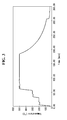
- An example of the temperature variance is illustrated in FIG. 3. Referring to FIG. 3, the heating is performed in three operations. The first operation is performed at 200°C, the second operation is performed at 300°C, and the third operation is performed at 550°C, for two hours.
- the cerium precursor may comprise cerium nitrate, ammonium cerium nitrate, cerium acetate, cerium chloride, or mixtures thereof. According to one embodiment, Ce(NO 3 ) 3 , (NH 4 ) 2 Ce(NO 3 ) 6 , or mixtures thereof may be used.
- the cerium precursor may include hydrates of the above compounds.
- the M precursor may comprise M nitrate, M acetate, or M chloride, for example, nickel nitrate, cobalt nitrate, iron nitrate, Ni(NO 3 ) 2 , Ni(OCOCH 3 ) 2 , NiCl 2 , Co(NO 3 ) 2 , Fe(NO 3 ) 3 , or mixtures thereof.
- the M precursor may comprise hydrates of the above compounds.
- the Cu-comprising aqueous solution may be prepared by dissolving a copper precursor in water.
- the copper precursor may include copper nitrate, cooper acetate, and the like.
- Representative examples of the copper precursor include Cu(NO 3 ) 2 , Cu(NO 3 ) 2 , Cu(NO 3 ) 2 , and Cu(OCOCH 3 ).
- the copper precursor may include hydrates of the above compounds.
- the copper precursor may be dissolved in water according to a suitable concentration to form an aqueous copper-containing solution.
- the carrier is selected from the group consisting of Al 2 O 3 , TiO 2 , SiO 2 , and combinations thereof. According to one embodiment, an Al 2 O 3 carrier may be suitable.
- the calcination is carried out by heating the compound to a temperature ranging from 450 to 550°C.
- the temperature is lower than 450°C, the calcination is not performed completely.
- the temperature exceeds 550°C, the porous structure of the first carbon monoxide oxidizing catalyst may be damaged.
- the calcination is carried out for 1 to 2 hours. When the heating is performed for less than 1 hour, the calcination is not performed completely. When it is performed more than 2 hours, the long processing is a waste of time and costs, which is undesirable.
- the second carbon monoxide oxidizing catalyst may include any catalyst having an excellent activity for a carbon monoxide oxidizing reaction.
- the second carbon monoxide oxidizing catalyst may include a Pt-group metal-based catalyst as an active material.
- the Pt-group metal consists of elements selected from the group consisting of Pt, Rh, Ru.
- the second carbon monoxide oxidizing catalyst includes one or more of these elements as an active material. According to one embodiment, Pt alone is suitable.
- the second carbon monoxide oxidizing catalyst may be an active material supported on at least one carrier.
- the carrier can be selected from the group consisting of graphite, denka black, ketjen black, acetylene black, carbon nanotubes, carbon nanofiber, carbon nanowire, carbon nanoballs, activated carbon, alumina, silica, zirconia, titania, and combinations thereof.
- the first and second carbon monoxide oxidizing catalysts may be used in a volume ratio of 25 : 75 to a volume ratio of 75 : 25. According to one embodiment, the first and second carbon monoxide oxidizing catalysts may be used in a volume ratio of 50: 50.
- the volume ratio of the first carbon monoxide oxidizing catalyst is less than 25, desirable selectivity may not be obtained, and a high concentration of an oxidant should be used.
- the volume ratio of the second carbon monoxide oxidizing catalyst is less than 25, desirable activity may not be obtained, and thereby the carbon monoxide concentration cannot be reduced to an intended level.
- the carbon monoxide reducing unit may include an inlet at one end, and an outlet at the other end.
- the first reducing part, including the first carbon monoxide oxidizing catalyst, is disposed at the inlet, and the second reducing part, including the second carbon monoxide oxidizing catalyst, is disposed at the outlet.
- the supplied fuel reacts with the first carbon monoxide oxidizing catalyst, and then reacts with the second carbon monoxide oxidizing catalyst.
- Platinum-group catalysts have an increased activity for promoting a carbon monoxide oxidizing reaction as the ratio of an oxidant to carbon monoxide is increased.
- the first carbon monoxide oxidizing catalyst selectively promotes the oxidation of carbon monoxide over the oxidation of hydrogen. This reaction will increase the concentration of oxidant relative to carbon monoxide, because each molecule of oxidant (O 2 ) can oxidize two molecules of carbon monoxide.
- the ratio of the oxidant relative to the carbon monoxide of the inflow gas increases at the second carbon monoxide oxidizing catalyst. This higher ratio causes an increase in the catalytic activity of the second carbon monoxide oxidizing catalyst.
- a fuel cell system comprises: a reformer; at least one electricity generating element, for generating electrical energy by electrochemical reactions of the hydrogen gas and oxidant; a fuel supplier for supplying fuel to the reformer; and an oxidant supplier for supplying the oxidant to a carbon monoxide reducing unit and the electricity generating element, respectively.
- FIG. 1 is a schematic diagram showing the structure of a fuel cell system.
- the fuel cell system 100 comprises: a stack 10, comprising an electricity generating element 11 that generates electrical energy through electrochemical reactions; a reformer 30 that generates hydrogen gas from a raw fuel; a fuel supplier 50 that supplies the raw fuel to the reformer 30; and an oxidant supplier 70 that supplies an oxidant to the reformer 30, and the electricity generating element 11.
- the electricity generating element 11 is formed as a minimum unit for generating electricity.
- the minimum unit comprises a membrane-electrode assembly (MEA) 12 disposed between two separators 16.
- the stack 10 comprises a plurality of minimum units disposed in a stacked arrangement.
- the membrane-electrode assembly 12 includes an anode and a cathode, and performs hydrogen gas oxidation and oxidant reduction reactions.
- the separators 16 supply hydrogen gas and the oxidant through gas passage paths formed at both sides of the membrane-electrode assembly 12, and also function as conductors connecting the anode and the cathode, in series.
- the stack 10 can additionally comprise pressing plates 13, to position a plurality of the electricity generating elements 11 closely adjacent to each other, at the outermost ends of the stack 10.
- the stack 10 of a fuel cell according to the present embodiment can be formed by positioning separators 16 at the outermost ends of the electricity generating elements 11, to press the electricity generating elements 11, instead of using the separate pressing plates 13.
- the pressing plates 13 can be formed to intrinsically function as the separators 16, in addition to closely arranging the plurality of electricity generating elements 11.
- the pressing plates 13 comprise a first inlet 13a to supply hydrogen gas to the electricity generating elements 11, a second inlet 13b to supply an oxidant to the electricity generating elements 11 from the oxidant supplier 40, a first outlet 13c to release hydrogen gas remaining after a reaction at the anodes of the membrane-electrode assemblies 12, and a second outlet 13d to release non-reacted air, including moisture generated through a reduction reaction of the oxidant at the cathodes of the membrane-electrode assemblies 12.
- the oxidant may be air. When the oxidant is air, the air may be supplied through the oxidant supplier 70.
- the reformer 30 has a structure for generating hydrogen gas from a fuel by chemical catalytic reactions using heat energy and for reducing carbon monoxide concentration in the hydrogen gas.
- the reformer 30 comprises: a heating source 31 to generating heat energy through a catalytic oxidizing reaction of the fuel and the oxidant; a reforming reaction part 32 to generate hydrogen gas from the fuel, through a steam reforming (SR) catalyst reaction, by the heat energy; and a carbon monoxide reducing part 200 to reduce the concentration of carbon monoxide included in the hydrogen gas.
- a heating source 31 to generating heat energy through a catalytic oxidizing reaction of the fuel and the oxidant
- a reforming reaction part 32 to generate hydrogen gas from the fuel, through a steam reforming (SR) catalyst reaction, by the heat energy
- SR steam reforming
- the reaction of the reformer 30 is not limited to the steam reforming catalyst reaction, and may comprise an auto-thermal reforming (ATR) reaction or a partial oxidation reaction (POX) performed without the use of the heating source 31.
- ATR auto-thermal reforming
- POX partial oxidation reaction
- the heating source 31 is connected to a fuel pump 55, through a first supply line 91 and is connected to an oxidant pump 71, through a second supply line 92.
- Supply lines as described herein, can be conduits having structures suitable for directing fluids, for example, a channel, a pipe, or a tube structure.
- the liquid fuel and oxidant pass through the heating source 31.
- the heating source 31 comprises a catalyst layer (not shown) to accelerate the oxidizing reaction of the fuel with the oxidant, to generate the heat energy.
- the heating source 31 is formed as a plate that provides a channel (not shown), capable of channeling the liquid fuel and the oxidant. The surface of the channel is coated with the catalyst layer.
- the heating source 31 is shaped as a cylinder that has a defined internal space. The internal space may be filled with a catalyst layer such as a pellet-type catalyst module, or a honeycomb-type catalyst module.
- the reforming reaction part 32 absorbs the heat energy generated from the heating source 31 to generate the hydrogen gas through the steam-reforming catalyst reforming reaction of the fuel supplied from the fuel tank 51.
- the reforming reaction part 32 is directly connected to the heating source 31 via a third supply line 93.
- the reforming reaction part 32 comprises a catalyst layer (not shown) to accelerate the steam reforming reaction of the fuel into hydrogen.
- the carbon monoxide reducing unit 200 reduces the carbon monoxide concentration in the hydrogen gas through a preferential CO oxidation catalyzed reaction of the CO with air.
- the hydrogen gas is generated from the reformer reaction part 32 and the air is supplied from the oxidant pump 71.
- the carbon monoxide reducing unit 200 is connected to the reformer reaction part 32 via a fourth supply line 94, and to the oxidant pump 71 via a fifth supply line 95.
- the hydrogen gas and the oxidant pass through the carbon monoxide reducing unit 200.
- the carbon monoxide reducing unit 200 includes the first reducing part comprising the first carbon monoxide oxidizing catalyst and the second reducing part comprising the second carbon monoxide oxidizing catalyst.
- the first and second carbon monoxide oxidizing catalysts reduce the carbon monoxide concentration in the hydrogen gas by promoting a preferential oxidizing reaction of carbon monoxide with an oxidant.
- the carbon monoxide reducing unit 200 comprises a plate-shaped channel (not shown) capable of inflowing the hydrogen gas and the oxidant. The surface of the channel is coated with the catalyst layer.
- the first carbon monoxide reducing catalyst can be located upstream from the second carbon monoxide reducing catalyst, relative to the flow of the hydrogen gas.
- the carbon monoxide reducing unit 200 is shaped as a cylinder that has a defined internal space. The internal space may be filled with a catalyst layer such as a pellet-type catalyst module or a honeycomb-type catalyst module.
- the carbon monoxide reducing unit 200 is connected to the first inlet 13a of the stack 10, via a sixth supply line 96.
- the carbon monoxide reducing unit 200 provides the electricity generating elements 11, of the stack 10, with the hydrogen gas having a reduced carbon monoxide concentration.
- the carbon monoxide reducing unit 200 may comprise thermally conductive stainless steel, aluminum, copper, iron, and the like.
- FIG. 2 is a cross sectional view showing structure of a carbon monoxide reducing unit 200.
- the carbon monoxide reducing unit 200 can be fabricated as a pipe-shaped reactor 210 with a predetermined gas inlet 220 and gas outlet 230.
- the carbon monoxide reducing unit 200 includes a first carbon monoxide reducing part 240 including a first carbon monoxide oxidizing catalyst 241 preferentially oxidizing a carbon monoxide included in a gas and a second carbon monoxide reducing part 250 including a second carbon monoxide oxidizing catalyst 251 preferentially oxidizing a carbon monoxide included in the gas.
- the carbon monoxide reducing unit 200 can further include filters 260 positioned at the gas inlet 220 or the gas outlet 230.
- the filters 260 can be mesh in order to completely catch the first carbon monoxide oxidizing catalyst 241 or the second carbon monoxide oxidizing catalyst 251.
- the first carbon monoxide reducing part 240 may partially take an internal space of the pipe-shaped reactor 210 from the gas inlet 220.
- the second carbon monoxide reducing part 250 may also partially take an internal space of the pipe-shaped reactor 210 from the first reducing part 240 to the gas outlet 230.
- the gas including carbon monoxide and oxygen is injected through a gas inlet 220 to the pipe-shaped reactor 210, passes the first carbon monoxide reducing part 240 and thereafter the second carbon monoxide reducing part 250, and is released through a gas outlet 230 out of the pipe-shaped reactor 210.
- the first carbon monoxide oxidizing catalyst 241 has higher selectivity for a carbon monoxide oxidizing reaction than the second carbon monoxide oxidizing catalyst 251, and the second carbon monoxide oxidizing catalyst 251 has higher activity for a carbon monoxide oxidizing reaction than the first carbon monoxide oxidizing catalyst 241.
- a reactor comprising a carbon monoxide reducing unit having an inlet, an outlet, and an interior channel connecting the inlet and the outlet, was provided.
- 10ml of the first carbon monoxide oxidizing catalyst was coated on the surface of the channel adjacent to the inlet, to form a first carbon monoxide reducing part.
- 10ml of the second carbon monoxide oxidizing catalyst was coated on the surface of the channel adjacent to the outlet, to form a second carbon monoxide reducing part.
- the first and second carbon monoxide oxidizing catalysts had a volume ratio of 50 : 50.
- a carbon monoxide reducing unit was fabricated according to the same method as in Example 1, except that 5.2981 g of Ce(NO 3 ) 2 ⁇ 6H 2 O and 0.0386g of Ni(NO 3 ) 2 ⁇ 6H 2 O were dissolved in 10ml of a Cu(NO 3 ) 2 ⁇ 3H 2 O aqueous solution, to form the first carbon monoxide oxidizing catalyst.
- the first carbon monoxide oxidizing catalyst comprised NiO, CuO, CeO 2 , and Al 2 O 3 , in a weight ratio of 0.1 : 4 : 21 : 74.9.
- a reactor comprising a carbon monoxide reducing unit having an inlet, an outlet, and an interior channel connecting the inlet and the outlet, was provided. 0.12wt% of Pt/Al 2 O 3 (trade name: NEP-TM752) was coated on the surface of the channel. 20 ml of the Pt/ Al 2 O 3 catalyst was also loaded into the channel.
- Pt/Al 2 O 3 trade name: NEP-TM752
- a gas comprising 14.66% CO 2 , 39.97% H 2 , 12.29% N 2 , 0.33% CH 4 , 0.31% CO, 0.25% O 2 , and 32.19% H 2 O, was flowed through the carbon monoxide reducing units according to Examples 1, 2, and Comparative Example 1, at a flux of 1658.6667ml/min, and a space velocity of 4976h -1 .
- the carbon monoxide reducing unit according to Example 1 showed a carbon monoxide conversion rate of 98%
- Example 2 showed a carbon monoxide conversion rate of 99%
- Comparative Example 1 showed a carbon monoxide conversion rate of 78%.
- the carbon monoxide reducing units according to Examples 1 and 2 therefore, had higher carbon monoxide conversion rates than that of Comparative Example 1.
- the oxidant ratio relative to carbon monoxide (O 2 /CO) was about 0.8 for Comparative Example 1.
- the O 2 /CO ratio was about 1.0, after reacting with the first carbon monoxide oxidizing catalyst, of Examples 1 and 2.
- the reformer for a fuel cell has a simplified structure and excellent activity and selectivity for carbon monoxide oxidation.
- the reformer also has high selectivity at high temperatures even though a platinum-group catalyst is used.
- the reformer can reduce the carbon monoxide content to a ppm level.
Landscapes
- Chemical & Material Sciences (AREA)
- Organic Chemistry (AREA)
- Chemical Kinetics & Catalysis (AREA)
- Engineering & Computer Science (AREA)
- Materials Engineering (AREA)
- Combustion & Propulsion (AREA)
- General Chemical & Material Sciences (AREA)
- Inorganic Chemistry (AREA)
- Physics & Mathematics (AREA)
- Fluid Mechanics (AREA)
- Oil, Petroleum & Natural Gas (AREA)
- Life Sciences & Earth Sciences (AREA)
- Manufacturing & Machinery (AREA)
- Sustainable Development (AREA)
- Sustainable Energy (AREA)
- Electrochemistry (AREA)
- Fuel Cell (AREA)
- Hydrogen, Water And Hydrids (AREA)
- Catalysts (AREA)
- Carbon And Carbon Compounds (AREA)
Applications Claiming Priority (1)
| Application Number | Priority Date | Filing Date | Title |
|---|---|---|---|
| KR1020060087313A KR100823477B1 (ko) | 2006-09-11 | 2006-09-11 | 연료 전지 시스템의 개질기 및 그를 포함하는 연료 전지시스템 |
Publications (3)
| Publication Number | Publication Date |
|---|---|
| EP1900682A2 true EP1900682A2 (de) | 2008-03-19 |
| EP1900682A3 EP1900682A3 (de) | 2008-05-28 |
| EP1900682B1 EP1900682B1 (de) | 2011-03-23 |
Family
ID=38997725
Family Applications (1)
| Application Number | Title | Priority Date | Filing Date |
|---|---|---|---|
| EP07115262A Not-in-force EP1900682B1 (de) | 2006-09-11 | 2007-08-30 | Kohlenmonoxidreduktionseinheit eines Reformers für eine Brennstoffzelle |
Country Status (6)
| Country | Link |
|---|---|
| US (1) | US7838159B2 (de) |
| EP (1) | EP1900682B1 (de) |
| JP (1) | JP5154867B2 (de) |
| KR (1) | KR100823477B1 (de) |
| CN (1) | CN101145617A (de) |
| DE (1) | DE602007013328D1 (de) |
Cited By (1)
| Publication number | Priority date | Publication date | Assignee | Title |
|---|---|---|---|---|
| US20110116980A1 (en) * | 2009-11-17 | 2011-05-19 | Samsung Sdi Co., Ltd. | Preferential oxidation reactor |
Families Citing this family (10)
| Publication number | Priority date | Publication date | Assignee | Title |
|---|---|---|---|---|
| JP2008222501A (ja) * | 2007-03-13 | 2008-09-25 | Ihi Corp | Co選択酸化方法及びco選択酸化反応器 |
| JP5037214B2 (ja) | 2007-05-01 | 2012-09-26 | Jx日鉱日石エネルギー株式会社 | 改質器システム、燃料電池システム、及びその運転方法 |
| EP2103348A1 (de) * | 2008-03-19 | 2009-09-23 | Ford Global Technologies, LLC, A subsidary of Ford Motor Company | Katalysatorsystem zur Entfernung von CO aus Wasserstoffreichem Arbeitsgas für Brennstoffzellen |
| US8697301B2 (en) * | 2010-01-29 | 2014-04-15 | Formfactor, Inc. | Fuel cell using carbon nanotubes |
| EP2779291A4 (de) * | 2011-11-09 | 2015-07-29 | Jx Nippon Oil & Energy Corp | Festoxidbrennstoffzellensystem und startverfahren dafür |
| US8912525B2 (en) | 2011-12-16 | 2014-12-16 | International Business Machines Corporation | Chemical oxidation of graphene and carbon nanotubes using Cerium (IV) ammonium nitrate |
| US9663369B2 (en) | 2011-12-16 | 2017-05-30 | International Business Machines Corporation | Cerium (IV) salts as effective dopant for carbon nanotubes and graphene |
| CN108736024B (zh) * | 2018-06-05 | 2019-08-09 | 德州新动能铁塔发电有限公司 | 一种燃料电池系统用重整室及燃料电池系统 |
| JP7222023B2 (ja) * | 2020-05-26 | 2023-02-14 | インディアン オイル コーポレイション リミテッド | Co汚染された水素ガスでpem燃料電池を動作させるための方法及び装置 |
| CN114628749B (zh) * | 2020-12-10 | 2024-03-19 | 中国科学院大连化学物理研究所 | 一种利用重整气尾气废热的反应器以及应用 |
Family Cites Families (11)
| Publication number | Priority date | Publication date | Assignee | Title |
|---|---|---|---|---|
| JP3545254B2 (ja) | 1999-03-31 | 2004-07-21 | 三洋電機株式会社 | 燃料電池の一酸化炭素除去器 |
| US20020131925A1 (en) * | 2000-09-25 | 2002-09-19 | Engelhard Corporation | Ruthenium oxidation catalyst |
| US20020061277A1 (en) * | 2000-09-25 | 2002-05-23 | Engelhard Corporation | Non-pyrophoric water-gas shift reaction catalysts |
| JP4463437B2 (ja) * | 2001-01-31 | 2010-05-19 | 本田技研工業株式会社 | 一酸化炭素選択酸化除去装置および一酸化炭素選択酸化除去方法 |
| US20040037757A1 (en) * | 2001-05-07 | 2004-02-26 | Kiyoshi Taguchi | Hydrogen purification apparatus |
| US6982128B2 (en) | 2002-01-28 | 2006-01-03 | Hewlett-Packard Development Company, L.P. | Co-catalyst proton exchange membrane fuel cell utilizing borohydride fuels |
| US7118717B2 (en) * | 2002-09-06 | 2006-10-10 | Engelhard Corporation | Simplified article for carbon monoxide removal |
| CN1551397A (zh) | 2003-05-19 | 2004-12-01 | ���µ�����ҵ��ʽ���� | 氢生成装置及燃料电池系统 |
| US20050268553A1 (en) * | 2004-06-04 | 2005-12-08 | Ke Liu | Hybrid water gas shift system |
| KR100599808B1 (ko) | 2004-11-09 | 2006-07-12 | 삼성에스디아이 주식회사 | 연료 전지용 전극 및 이를 포함하는 연료 전지 시스템 |
| KR100782125B1 (ko) * | 2005-09-29 | 2007-12-05 | 한국에너지기술연구원 | 개질가스 정제용 촉매 및 이의 제조방법 |
-
2006
- 2006-09-11 KR KR1020060087313A patent/KR100823477B1/ko not_active Expired - Fee Related
-
2007
- 2007-08-30 CN CNA2007101479704A patent/CN101145617A/zh active Pending
- 2007-08-30 EP EP07115262A patent/EP1900682B1/de not_active Not-in-force
- 2007-08-30 DE DE602007013328T patent/DE602007013328D1/de active Active
- 2007-09-10 JP JP2007234562A patent/JP5154867B2/ja not_active Expired - Fee Related
- 2007-09-10 US US11/852,631 patent/US7838159B2/en not_active Expired - Fee Related
Non-Patent Citations (1)
| Title |
|---|
| None |
Cited By (1)
| Publication number | Priority date | Publication date | Assignee | Title |
|---|---|---|---|---|
| US20110116980A1 (en) * | 2009-11-17 | 2011-05-19 | Samsung Sdi Co., Ltd. | Preferential oxidation reactor |
Also Published As
| Publication number | Publication date |
|---|---|
| EP1900682A3 (de) | 2008-05-28 |
| JP2008071756A (ja) | 2008-03-27 |
| US20080063911A1 (en) | 2008-03-13 |
| KR100823477B1 (ko) | 2008-04-21 |
| EP1900682B1 (de) | 2011-03-23 |
| US7838159B2 (en) | 2010-11-23 |
| KR20080023423A (ko) | 2008-03-14 |
| DE602007013328D1 (de) | 2011-05-05 |
| JP5154867B2 (ja) | 2013-02-27 |
| CN101145617A (zh) | 2008-03-19 |
Similar Documents
| Publication | Publication Date | Title |
|---|---|---|
| EP1900682B1 (de) | Kohlenmonoxidreduktionseinheit eines Reformers für eine Brennstoffzelle | |
| KR101426110B1 (ko) | 등유용 탈황제, 탈황법 및 등유용 탈황제를 이용한 연료 전지 시스템 | |
| EP1818096B1 (de) | Katalysator zum Oxidieren von Kohlenmonoxid in einem Reformer und eine Brennstoffzellenanlage whelche diesen Reformer enthält | |
| WO1999016706A1 (en) | Apparatus and method for reducing carbon monoxide concentration and catalyst for selectively oxidizing carbon monoxide | |
| US8067332B2 (en) | Methanation catalyst, and carbon monoxide removing system, fuel processor, and fuel cell including the same | |
| KR101077929B1 (ko) | 고체산화물 연료전지 시스템의 연료 개질 방법 | |
| US20200087801A1 (en) | Hydrogen processing device | |
| EP1818095B1 (de) | Wassergas-Konvertierungskatalysator und Brennstoffzellensystem enthaltend denselben | |
| US7833934B2 (en) | Hydrocarbon reforming catalyst, method of preparing the same and fuel processor including the same | |
| JP3943902B2 (ja) | 炭化水素用脱硫触媒、脱硫方法および燃料電池システム | |
| CN114976155A (zh) | 一种甲醇重整及固体氧化物结合的氢燃料电池系统 | |
| CN101157444B (zh) | 金属负载的铜催化剂用于重整醇的用途 | |
| JP2004230317A (ja) | 炭化水素の脱硫触媒、脱硫方法及び燃料電池システム | |
| CN217881590U (zh) | 一种甲醇重整及固体氧化物结合的氢燃料电池系统 | |
| EP1923939A2 (de) | Brennstoffoxidationskatalysator, Herstellungsverfahren dafür sowie Reformer und Brennstoffzellensystem damit | |
| GB2402890A (en) | Systems and methods for carbon monoxide clean-up | |
| JP4127685B2 (ja) | 一酸化炭素選択メタン化器、一酸化炭素シフト反応器及び燃料電池システム | |
| US20080050617A1 (en) | Catalyst for oxidizing carbon monoxide for reformer of fuel cell, method for preparing the same, and fuel cell system including the same | |
| KR100804693B1 (ko) | 연료 전지용 개질기의 일산화탄소 저감 장치 및 이를포함하는 연료 전지 시스템 | |
| US8173309B2 (en) | Reformer for fuel cell, and fuel cell system comprising the same | |
| KR100745743B1 (ko) | 일산화탄소 제거 촉매 시스템 및 이를 포함하는연료처리장치 및 연료전지 | |
| JP2006346535A (ja) | Co除去触媒及び燃料電池システム | |
| CN112313007B (zh) | 水蒸气改性催化剂、以及使用该水蒸气改性催化剂的燃料电池系统 | |
| KR100740131B1 (ko) | 연료 전지 시스템의 개질기용 일산화탄소 산화 촉매, 이의제조 방법, 및 이를 포함하는 연료 전지 시스템 | |
| CN1778667A (zh) | 借助甲醇自热式重组反应生产富氢重组气的方法 |
Legal Events
| Date | Code | Title | Description |
|---|---|---|---|
| PUAI | Public reference made under article 153(3) epc to a published international application that has entered the european phase |
Free format text: ORIGINAL CODE: 0009012 |
|
| 17P | Request for examination filed |
Effective date: 20070830 |
|
| AK | Designated contracting states |
Kind code of ref document: A2 Designated state(s): AT BE BG CH CY CZ DE DK EE ES FI FR GB GR HU IE IS IT LI LT LU LV MC MT NL PL PT RO SE SI SK TR |
|
| AX | Request for extension of the european patent |
Extension state: AL BA HR MK YU |
|
| PUAL | Search report despatched |
Free format text: ORIGINAL CODE: 0009013 |
|
| RIN1 | Information on inventor provided before grant (corrected) |
Inventor name: GOROBINSKIY, LEONIDLEGAL & IP TEAM, SAMSUNG SDI CO Inventor name: KIM, JU-YONGLEGAL & IP TEAM, SAMSUNG SDI CO., LTD Inventor name: SUH, DONG-MYUNGLEGAL & IP TEAM, SAMSUNG SDI CO., L Inventor name: LEE, SUNG-CHULLEGAL & IP TEAM, SAMSUNG SDI CO., LT Inventor name: KIM, JIN-KWANGL Inventor name: AHN, JIN-GOOL Inventor name: LEE, CHAN-HOL Inventor name: HAN, MAN-SEOKLEGAL & IP TEAM, SAMSUNG SDI CO., LTD Inventor name: LEE, YONG-KUL Inventor name: LEE, DONG-UKL |
|
| AK | Designated contracting states |
Kind code of ref document: A3 Designated state(s): AT BE BG CH CY CZ DE DK EE ES FI FR GB GR HU IE IS IT LI LT LU LV MC MT NL PL PT RO SE SI SK TR |
|
| AX | Request for extension of the european patent |
Extension state: AL BA HR MK RS |
|
| AKX | Designation fees paid |
Designated state(s): DE FR GB |
|
| 17Q | First examination report despatched |
Effective date: 20090428 |
|
| GRAP | Despatch of communication of intention to grant a patent |
Free format text: ORIGINAL CODE: EPIDOSNIGR1 |
|
| GRAS | Grant fee paid |
Free format text: ORIGINAL CODE: EPIDOSNIGR3 |
|
| GRAA | (expected) grant |
Free format text: ORIGINAL CODE: 0009210 |
|
| RIN1 | Information on inventor provided before grant (corrected) |
Inventor name: LEE, CHAN-HOL Inventor name: KIM, JIN-KWANGL Inventor name: LEE, YONG-KULLEGAL & IP TEAM, SAMSUNG SDI CO., LTD Inventor name: SUH, DONG-MYUNGLEGAL & IP TEAM, SAMSUNG SDI CO., L Inventor name: AHN, JIN-GOOL Inventor name: KIM, JU-YONGLEGAL & IP TEAM, SAMSUNG SDI CO., LTD. Inventor name: HAN, MAN-SEOKLEGAL & IP TEAM, SAMSUNG SDI CO., LTD Inventor name: LEE, SUNG-CHULLEGAL & IP TEAM, SAMSUNG SDI CO., LT Inventor name: GOROBINSKIY, LEONIDLEGAL & IP TEAM, SAMSUNG SDI CO Inventor name: LEE, DONG-UKL |
|
| AK | Designated contracting states |
Kind code of ref document: B1 Designated state(s): DE FR GB |
|
| REG | Reference to a national code |
Ref country code: GB Ref legal event code: FG4D |
|
| REF | Corresponds to: |
Ref document number: 602007013328 Country of ref document: DE Date of ref document: 20110505 Kind code of ref document: P |
|
| REG | Reference to a national code |
Ref country code: DE Ref legal event code: R096 Ref document number: 602007013328 Country of ref document: DE Effective date: 20110505 |
|
| PLBE | No opposition filed within time limit |
Free format text: ORIGINAL CODE: 0009261 |
|
| STAA | Information on the status of an ep patent application or granted ep patent |
Free format text: STATUS: NO OPPOSITION FILED WITHIN TIME LIMIT |
|
| 26N | No opposition filed |
Effective date: 20111227 |
|
| REG | Reference to a national code |
Ref country code: DE Ref legal event code: R097 Ref document number: 602007013328 Country of ref document: DE Effective date: 20111227 |
|
| REG | Reference to a national code |
Ref country code: FR Ref legal event code: PLFP Year of fee payment: 9 |
|
| PGFP | Annual fee paid to national office [announced via postgrant information from national office to epo] |
Ref country code: DE Payment date: 20150825 Year of fee payment: 9 Ref country code: GB Payment date: 20150826 Year of fee payment: 9 |
|
| PGFP | Annual fee paid to national office [announced via postgrant information from national office to epo] |
Ref country code: FR Payment date: 20150723 Year of fee payment: 9 |
|
| REG | Reference to a national code |
Ref country code: DE Ref legal event code: R119 Ref document number: 602007013328 Country of ref document: DE |
|
| GBPC | Gb: european patent ceased through non-payment of renewal fee |
Effective date: 20160830 |
|
| REG | Reference to a national code |
Ref country code: FR Ref legal event code: ST Effective date: 20170428 |
|
| PG25 | Lapsed in a contracting state [announced via postgrant information from national office to epo] |
Ref country code: DE Free format text: LAPSE BECAUSE OF NON-PAYMENT OF DUE FEES Effective date: 20170301 Ref country code: FR Free format text: LAPSE BECAUSE OF NON-PAYMENT OF DUE FEES Effective date: 20160831 Ref country code: GB Free format text: LAPSE BECAUSE OF NON-PAYMENT OF DUE FEES Effective date: 20160830 |