EP1893649B1 - Method for the potentiation of opioid analgesics effects on pain - Google Patents
Method for the potentiation of opioid analgesics effects on pain Download PDFInfo
- Publication number
- EP1893649B1 EP1893649B1 EP06766357A EP06766357A EP1893649B1 EP 1893649 B1 EP1893649 B1 EP 1893649B1 EP 06766357 A EP06766357 A EP 06766357A EP 06766357 A EP06766357 A EP 06766357A EP 1893649 B1 EP1893649 B1 EP 1893649B1
- Authority
- EP
- European Patent Office
- Prior art keywords
- pain
- antibody
- trka
- treating
- analgesic
- Prior art date
- Legal status (The legal status is an assumption and is not a legal conclusion. Google has not performed a legal analysis and makes no representation as to the accuracy of the status listed.)
- Active
Links
Images




Classifications
-
- A—HUMAN NECESSITIES
- A61—MEDICAL OR VETERINARY SCIENCE; HYGIENE
- A61K—PREPARATIONS FOR MEDICAL, DENTAL OR TOILETRY PURPOSES
- A61K45/00—Medicinal preparations containing active ingredients not provided for in groups A61K31/00 - A61K41/00
- A61K45/06—Mixtures of active ingredients without chemical characterisation, e.g. antiphlogistics and cardiaca
-
- A—HUMAN NECESSITIES
- A61—MEDICAL OR VETERINARY SCIENCE; HYGIENE
- A61K—PREPARATIONS FOR MEDICAL, DENTAL OR TOILETRY PURPOSES
- A61K39/00—Medicinal preparations containing antigens or antibodies
- A61K39/395—Antibodies; Immunoglobulins; Immune serum, e.g. antilymphocytic serum
- A61K39/39533—Antibodies; Immunoglobulins; Immune serum, e.g. antilymphocytic serum against materials from animals
- A61K39/3955—Antibodies; Immunoglobulins; Immune serum, e.g. antilymphocytic serum against materials from animals against proteinaceous materials, e.g. enzymes, hormones, lymphokines
-
- A—HUMAN NECESSITIES
- A61—MEDICAL OR VETERINARY SCIENCE; HYGIENE
- A61P—SPECIFIC THERAPEUTIC ACTIVITY OF CHEMICAL COMPOUNDS OR MEDICINAL PREPARATIONS
- A61P1/00—Drugs for disorders of the alimentary tract or the digestive system
- A61P1/06—Anti-spasmodics, e.g. drugs for colics, esophagic dyskinesia
-
- A—HUMAN NECESSITIES
- A61—MEDICAL OR VETERINARY SCIENCE; HYGIENE
- A61P—SPECIFIC THERAPEUTIC ACTIVITY OF CHEMICAL COMPOUNDS OR MEDICINAL PREPARATIONS
- A61P1/00—Drugs for disorders of the alimentary tract or the digestive system
- A61P1/18—Drugs for disorders of the alimentary tract or the digestive system for pancreatic disorders, e.g. pancreatic enzymes
-
- A—HUMAN NECESSITIES
- A61—MEDICAL OR VETERINARY SCIENCE; HYGIENE
- A61P—SPECIFIC THERAPEUTIC ACTIVITY OF CHEMICAL COMPOUNDS OR MEDICINAL PREPARATIONS
- A61P13/00—Drugs for disorders of the urinary system
- A61P13/08—Drugs for disorders of the urinary system of the prostate
-
- A—HUMAN NECESSITIES
- A61—MEDICAL OR VETERINARY SCIENCE; HYGIENE
- A61P—SPECIFIC THERAPEUTIC ACTIVITY OF CHEMICAL COMPOUNDS OR MEDICINAL PREPARATIONS
- A61P13/00—Drugs for disorders of the urinary system
- A61P13/10—Drugs for disorders of the urinary system of the bladder
-
- A—HUMAN NECESSITIES
- A61—MEDICAL OR VETERINARY SCIENCE; HYGIENE
- A61P—SPECIFIC THERAPEUTIC ACTIVITY OF CHEMICAL COMPOUNDS OR MEDICINAL PREPARATIONS
- A61P13/00—Drugs for disorders of the urinary system
- A61P13/12—Drugs for disorders of the urinary system of the kidneys
-
- A—HUMAN NECESSITIES
- A61—MEDICAL OR VETERINARY SCIENCE; HYGIENE
- A61P—SPECIFIC THERAPEUTIC ACTIVITY OF CHEMICAL COMPOUNDS OR MEDICINAL PREPARATIONS
- A61P15/00—Drugs for genital or sexual disorders; Contraceptives
-
- A—HUMAN NECESSITIES
- A61—MEDICAL OR VETERINARY SCIENCE; HYGIENE
- A61P—SPECIFIC THERAPEUTIC ACTIVITY OF CHEMICAL COMPOUNDS OR MEDICINAL PREPARATIONS
- A61P17/00—Drugs for dermatological disorders
- A61P17/02—Drugs for dermatological disorders for treating wounds, ulcers, burns, scars, keloids, or the like
-
- A—HUMAN NECESSITIES
- A61—MEDICAL OR VETERINARY SCIENCE; HYGIENE
- A61P—SPECIFIC THERAPEUTIC ACTIVITY OF CHEMICAL COMPOUNDS OR MEDICINAL PREPARATIONS
- A61P19/00—Drugs for skeletal disorders
-
- A—HUMAN NECESSITIES
- A61—MEDICAL OR VETERINARY SCIENCE; HYGIENE
- A61P—SPECIFIC THERAPEUTIC ACTIVITY OF CHEMICAL COMPOUNDS OR MEDICINAL PREPARATIONS
- A61P19/00—Drugs for skeletal disorders
- A61P19/02—Drugs for skeletal disorders for joint disorders, e.g. arthritis, arthrosis
-
- A—HUMAN NECESSITIES
- A61—MEDICAL OR VETERINARY SCIENCE; HYGIENE
- A61P—SPECIFIC THERAPEUTIC ACTIVITY OF CHEMICAL COMPOUNDS OR MEDICINAL PREPARATIONS
- A61P21/00—Drugs for disorders of the muscular or neuromuscular system
-
- A—HUMAN NECESSITIES
- A61—MEDICAL OR VETERINARY SCIENCE; HYGIENE
- A61P—SPECIFIC THERAPEUTIC ACTIVITY OF CHEMICAL COMPOUNDS OR MEDICINAL PREPARATIONS
- A61P25/00—Drugs for disorders of the nervous system
-
- A—HUMAN NECESSITIES
- A61—MEDICAL OR VETERINARY SCIENCE; HYGIENE
- A61P—SPECIFIC THERAPEUTIC ACTIVITY OF CHEMICAL COMPOUNDS OR MEDICINAL PREPARATIONS
- A61P25/00—Drugs for disorders of the nervous system
- A61P25/04—Centrally acting analgesics, e.g. opioids
-
- A—HUMAN NECESSITIES
- A61—MEDICAL OR VETERINARY SCIENCE; HYGIENE
- A61P—SPECIFIC THERAPEUTIC ACTIVITY OF CHEMICAL COMPOUNDS OR MEDICINAL PREPARATIONS
- A61P25/00—Drugs for disorders of the nervous system
- A61P25/06—Antimigraine agents
-
- A—HUMAN NECESSITIES
- A61—MEDICAL OR VETERINARY SCIENCE; HYGIENE
- A61P—SPECIFIC THERAPEUTIC ACTIVITY OF CHEMICAL COMPOUNDS OR MEDICINAL PREPARATIONS
- A61P29/00—Non-central analgesic, antipyretic or antiinflammatory agents, e.g. antirheumatic agents; Non-steroidal antiinflammatory drugs [NSAID]
-
- A—HUMAN NECESSITIES
- A61—MEDICAL OR VETERINARY SCIENCE; HYGIENE
- A61P—SPECIFIC THERAPEUTIC ACTIVITY OF CHEMICAL COMPOUNDS OR MEDICINAL PREPARATIONS
- A61P35/00—Antineoplastic agents
-
- A—HUMAN NECESSITIES
- A61—MEDICAL OR VETERINARY SCIENCE; HYGIENE
- A61P—SPECIFIC THERAPEUTIC ACTIVITY OF CHEMICAL COMPOUNDS OR MEDICINAL PREPARATIONS
- A61P43/00—Drugs for specific purposes, not provided for in groups A61P1/00-A61P41/00
-
- C—CHEMISTRY; METALLURGY
- C07—ORGANIC CHEMISTRY
- C07K—PEPTIDES
- C07K16/00—Immunoglobulins [IG], e.g. monoclonal or polyclonal antibodies
- C07K16/18—Immunoglobulins [IG], e.g. monoclonal or polyclonal antibodies against material from animals or humans
- C07K16/28—Immunoglobulins [IG], e.g. monoclonal or polyclonal antibodies against material from animals or humans against receptors, cell surface antigens or cell surface determinants
- C07K16/2878—Immunoglobulins [IG], e.g. monoclonal or polyclonal antibodies against material from animals or humans against receptors, cell surface antigens or cell surface determinants against the NGF-receptor/TNF-receptor superfamily, e.g. CD27, CD30, CD40, CD95
-
- A—HUMAN NECESSITIES
- A61—MEDICAL OR VETERINARY SCIENCE; HYGIENE
- A61K—PREPARATIONS FOR MEDICAL, DENTAL OR TOILETRY PURPOSES
- A61K39/00—Medicinal preparations containing antigens or antibodies
- A61K2039/505—Medicinal preparations containing antigens or antibodies comprising antibodies
-
- C—CHEMISTRY; METALLURGY
- C07—ORGANIC CHEMISTRY
- C07K—PEPTIDES
- C07K2317/00—Immunoglobulins specific features
- C07K2317/70—Immunoglobulins specific features characterized by effect upon binding to a cell or to an antigen
Definitions
- the present invention relates to molecules that are able to block TrkA activity for the potentiation of opioid analgesics effects on pain.
- the molecules are anti-TrkA antibodies showing a potentiation of the analgesic effect of opioids such as morphine.
- the nociceptive signals afferent to the spinal cord are carried by the fibres A ⁇ and C, the cell bodies of which (primary sensitive neurons) are located in the spinal dorsal ganglia (DRG).
- the primary sensitive neurons release glutamate together with ATP as an excitatory neurotransmitter, and various other substances such as substance P and CGRP (calcitonin-gene-related-peptide), (Hunt and Mantyh, 2001).
- excitatory neurotransmitters are controlled by various classes of receptors present on the afferent terminals including those sensitive to capsaicin (vanilloid receptors, VR1), those activated by GABA, those activated by ATP itself and those activated by cannabinoids (CB1) (Sivilotti and Nistri, 1991; Hunt and Mantyh, 2001; Khakh, 2001; Morisset et al., 2001).
- VIP1 vanilloid receptors
- CB1 cannabinoids
- One of the physiopathological whereby chronic pain occurs is allodynia, i.e. the transformation of stimuli that are not normally painful into painful sensations.
- This phenomenon involves various ionic currents and therefore different channel of the "ligand-gated" type, including the receptor for the capsaicin, VR1, and the ionotropic receptors for ATP (Khakh, 2001).
- the simultaneous activation of the receptors for VR1 and of those for ATP on spinal nociceptive interneurons generates a considerable accumulation of the excitatory synaptic signals with reinforcement of the painful stimulus transmission (Nakatsuka et al., 2002). From these observations it is therefore clear that the ATP receptors (especially those belonging to the P2X3 class) play a fundamental role in the pain pathways (Burnstock, 2001).
- nociceptive neurons The development of sensitive nociceptive neurons depends greatly on NGF, and the responses of the adult nociceptors are modulated by the same factor (Julius and Basbaum, 2001). In particular, NGF exerts acute sensitisation to the capsaicin algogenic stimulus (Shu and Mendell, 1999). From a functional standpoint, nociceptive neurons, following chronic inflammation, develop alterations in the frequency and duration of their action potential. These phenomena regress by blocking endogenous NGF, leading to a significant attenuation of the hyperexcitability typical of states of chronic pain (Djouhri et al., 2001).
- NGF action in defining the pain threshold in adult nociceptors is mediated by the TrkA receptor, also through modulation of the response mediated by the VR1 receptor present on the nociceptive terminals.
- the TrkA dependent potentiation of the VR1 response is thought to occur through the intracellular transduction pathway of the phospholipase C gamma (PLCgamma, Chuang et al., 2001).
- PLCgamma phospholipase C gamma
- This rapid TrkA mediated potentiation of nociceptor signalling and function could have an algogenic effect in acute and chronic pain settings.
- the peripheral NGF levels are increased in inflammatory processes, while the administration of exogenous NGF has a hyperalgesic effect on rats and produces muscular pain in humans.
- NGF produces hypersensitisation to heat stimulation in humans and mammals in general.
- NGF is released by mast cells, fibroblasts and other cell types in the peripheral sites where inflammatory processes occur.
- mast cells appear to play a fundamental role (Woolf et al., 1996).
- TrkA receptors on their surface (Nilsson et al., 1997), they are able to respond to NGF itself, in the presence of lysophosphatidylserine (Horigome et al., 1993; Kawamoto et al., 2002).
- the NGF/TrkA system appears to mediate mastocyte activation through an autocrine positive feedback mechanism which allows local amplification of the algogenic inflammatory signal.
- TrkA hereditary recessive autosomic syndrome
- CIPA congenital insensitivity to pain with anhydrosis
- the authors of the present invention make use of antibodies (directed against the TrkA receptor) which are able to block the biological effects of NGF mediated by TrkA.
- the reagent MNAC13 is of particular interest.
- the MNAC13 antibody is a mouse monoclonal antibody directed against the human TrkA receptor (Cattaneo et al., 1999; Pesavento et al., 2000); particularly in the inhibition of TrkA activation by NGF and the downstream biological functions, both in vitro and in vivo (Cattaneo et al., 1999; Pesavento et al., 2000).
- Anti-TrkA antibodies, including the MNAC13 antibody, having an antagonist activity preventing the functional activation of TrkA by NGF” are disclosed in EP 1.181.318 . Derivatives of such antibody are also disclosed in WO2005/061540 . However, the potentiation of the analgesic effect of opioids by such molecules is not disclosed.
- the antibodies were characterised in detail from the point of view of the structure (Covaceuszach et al., 2001) and as for the molecular interaction with the TrkA receptor (Covaceuszach et al., 2005).
- a humanised version of MNAC13 was generated (Hu-MNAC13), with the same antigen binding features as the parental antibody (patent application WO2005/061540 ).
- MNAC13 antibodies The action of the MNAC13 antibodies was compared to that of morphine, a traditional strong analgesic belonging to the opioid class, largely used to treat mild to severe pain (Przewlocki and Przewlocka, 2001), and the anti-NGF antibody ⁇ D11.
- Opioid analgesics include all active principles, natural or synthetic, whose action is similar to that of morphine. Synthetic or semi-synthetic principles are derivatives of five chemical classes (phenanthrenes, phenylethylamine, phenylpiperidines, morphinans, and benzomorphinans).
- the patent application WO2004/096122 describes a method for the treatment or the prevention of pain including the administration of an NGF antagonist and an opioid analgesic.
- the application refers, in particular, to an anti-NGF antibody and not to an antagonist of its receptor, TrkA.
- the object of the present invention is the use of an anti-TrkA antibody that is able to inhibit the binding between NGF and TrkA combined with at least one opioid analgesic for the preparation of a medicament for the treatment and/or the prevention of pain.
- the antibody blocks the biological activity of TrkA i.e. is an antagonistic antibody.
- a molecule that blocks the biological activity of TrkA refers to a molecule that acts as an antagonist in terms of the NGF binding to the TrkA receptor, and which can be defined as a synthetic molecule or a monoclonal antibody or a biological/synthetic derivative thereof which:
- blocking the biological activity does not simply mean blocking activation of the receptor, defined as blocking the conversion process of the receptor itself into an “active” state, but also the functional neutralisation of biological consequences downstream of the activation process: second messengers, new gene expression, phenotypic and functional modifications both at cell and system level.
- the molecule of the invention is not only able to block TrkA in a classic in vitro test (test of neuritic growth in PC12 cells), but also in vivo (functional block of the cholinergic neurons of the basal forebrain and block of the nociception in a classic "hot plate” test).
- TrkA antibodies are disclosed in EP 1181318 and in WO2005/061540 .
- the antibody may be in single chain form and comprises a light chain variable region and a heavy chain variable region joined by a linker.
- the antibody may comprise two light chains and two heavy chains.
- the antibody may be a Fab (monovalent fragment antigen binding) fragment.
- Fab fragments may be prepared by recombinant means ab initio or may be prepared by enzymatic (e.g. papain) proteolysis of a whole antibody.
- the antibody may be a Fab2 fragment.
- Fab2 fragments may be prepared by recombinant means ab initio or may be prepared by enzymatic (e.g. pepsin) proteolysis of a whole antibody.
- the anti-TrkA antibody is a human or humanised antibody.
- the skilled in the art shall select the proper humanisation method to design the antibody, a preferred method is the method as disclosed in W0 2005/061540 .
- variable region of the humanised antibody light chain comprises essentially the sequence from aa. 1 to aa. 106 of SEQ ID No. 3.
- the humanised antibody light chain has the sequence of SEQ ID No. 3.
- variable region of the humanised antibody heavy chain comprises the sequence from aa. I to aa. 123 of SEQ ID No. 4.
- humanised antibody heavy chain has a sequence selected from SEQ ID No. 4, SEQ ID No. 5, SEQ ID No. 6.
- a still further object of the present invention is the use of an anti-TrkA antibody that is able to inhibit the binding between NGF and TrkA combined with at least one opioid analgesic to prepare a remedy for treatment of pain of any etiology, including but not limited to acute and chronic pain, any pain with an inflammatory component, and any pain in which an opioid analgesic is usually prescribed.
- the pain is caused by pancreatitis, kidney stones, headaches, dysmenorrhoea, musculoskeletal pain, sprains, visceral pain, ovarian cysts, prostatitis, cystitis, interstitial cystitis, inflammatory bowel disease, post-operative pain (including dental pain), post-surgical pain, migraine, trigeminal neuralgia, pain from bums and/or wounds, pain associated with trauma (including traumatic head injury), neuropathic pain, post-herpetic neuralgia, pain associated with musculoskeletal diseases, rheumatoid arthritis, osteoarthritis, ankylosing spondilitis, periarticular pathologies, oncological pain (including "break-through pain” and pain associated with terminal cancer), pain from bone metastases, pain from HIV, pain from myocardial infarction.
- post-operative pain including dental pain
- post-surgical pain migraine
- trigeminal neuralgia pain from bums and/or wounds
- pain is generally defined as "An unpleasant sensory and emotional experience associated with actual or potential tissue damage, or described in terms of such damage or both".
- the essential element in all forms of pain is the activation of specialized high-threshold receptors and nerve fibers to warn the organism of potential tissue damage.
- the involvement of inflammatory cells and processes is a common element in many pain states.
- acute pain means immediate, generally high threshold, pain brought about by injury such as a cut, crush, burn, or by chemical stimulation.
- chronic pain as used herein, means pain other than acute pain. It is understood that chronic pain often is of relatively long duration, for example, months or years and can be continuous or intermittent.
- the pain to be treated is a persistent form of pain, e.g. oncological, neuropathic or rheumatic pain.
- the anti-TrkA antibody of the invention is suitably administered systemically.
- Systemic administration can be performed by injection, e.g. continous intravenous infusion, bolus intravenous infusion, subcutaneous or intramuscular injection.
- other forms of administration e.g. oral, mucosal, via inhalation, sublingually, etc.
- Local delivery of the antibody can be performed by local administration eg intra-articular injection or subcutaneous, intramuscular injection in the affected tissue area.
- the anti-TrkA antibody will suitably be formulated in a pharmaceutical composition appropriate for the intended route of administration.
- Solutions for injection will suitably contain the antibody dissolved or dispersed in an aqueous medium (eg water for injection) as appropriate containing appropriate buffers and molarity modifiers eg phosphate, salt and/or dextrose.
- Treatment regimen i.e. dose, timing and repetition, can be represented by single or repeated administrations (eg injections) of the product by the chosen administration route.
- the interval of dose administration can be subject to modifications depending on the extent and duration of the clinical response, as well as the particular individual and the individual clinical history.
- TrkA antagonist and the opioid analgesic may be administered with different frequencies and doses, i.e. a TrkA antibody may be administered 1 to 3 times a week or maybe 1 to 3 times a month in single doses in the 0,01-500 mg/kg range (eg 0.1-50 mg/kg), whilst the opioid analgesic may be administered with greater frequency, with a lower or equal dose to that normally used for this category of analgesics.
- a suitable dose of morphine (as morphine hydrochloride) would be in the 0,05-5mg/kg range.
- TrkA antibody and the opioid analgesic may be administered in different ways and the doses may vary during the administration according to patient's response to the treatment.
- Adequate administration pathways possible are the following: oral, intravenous, sublingual, subcutaneous, intraarterial, intramuscular, rectal, intraspinal, intrathorax, intraperitoneal, intraventricular, transdermic, by inhalation.
- the administration pathway may be systemic (as in the case of intravenous administration) or localized.
- a preventive administration, before the onset of pain, may also be considered.
- the anti-TrkA antibody has a long duration of action.
- the clinical effect of the antibody extends following administration may be as long as 21days as determined from animal studies.
- anti-TrkA antibodies may manifest clinical benefit for a longer period than that in which its presence can be detected in a relevant biological matrix such as serum or plasma following its administrations.
- the opioid analgesic is a compound or a combination of one or more compounds selected from the following list: morphine, codeine, dihydrocodeine, diacetylmorphine, hydrocodone, hydromorphone, levorphanol, oxymorphone, alfentanil, buprenorphine, butorphanol, fentanyl, sufentanyl, meperidine, methadone, nabulfina, propoxyphene, pentazocine; and their pharmaceutically acceptable salt derivatives,
- the opioid analgesic is morphine or a pharmaceutically acceptable salt thereof.
- the opioid analgesic is fentanyl or a pharmaceutically acceptable salt thereof.
- the quantity of anti-TrkA antibody is such that the opioid dose is reduced by at least 5% eg at least 20% for example at least 50% of that necessary to produce the same analgesic effect by itself.
- the quantity of opioid analgesic is such that the TrkA antibody dose is reduced by at least 5% eg at least 20% for example at least 50% of that necessary to produce the same analgesic effect by itself.
- Another object of the invention is a pharmaceutical formulation comprising in pharmaceutically acceptable and effective doses, at least one anti- TrkA antibody and at least one analgesic opioid.
- the formulation is contained in a single pharmaceutical composition. More preferably, the formulation is constituted by two pharmaceutical compositions, the first one comprising the molecule able to block the biological activity of TrkA receptor, and the second one including the analgesic opioid.
- a further object of the invention is an anti-TrkA antibody of the invention for use in combination with an analgesic opioid for the treatment of pain.
- Another object is a method of treatment and/or prevention of pain in a subject comprising administering to the subject an effective amount of an anti-TrkA antibody and an effective amount of an analgesic opioid to treat and/or prevent pain in said subject.
- kits comprising a composition containing an anti-TrkA antibody and an analgesic opioid together with instructions directing administration of said composition to a subject in need of treatment and/or prevention of pain thereby to treat and/or prevent pain in said subject.
- the monoclonal antibodies MNAC13 and ⁇ D11 were produced from a hybridoma supernatant, according to standard methods, disclosed above (Galfre and Milstein, 1981; Cattaneo et al., 1988; Cattaneo et al., 1999).
- the supernatant containing each antibody was subjected to precipitation (29% ammonium sulphate), followed by dialysis against PBS IX (Spectra-Por 12/14K membrane, Spectrum) and affinity chromatography on sepharose protein G column (4-Fast Flow, Amersham Biosciences). Elution was performed by means of a low pH (HCl 5 mM) solution that was neutralised upon collection.
- the final eluate was concentrated (Amicon Ultra-15, 50K, Millipore) to obtain preparations of purified antibody with concentrations between 1 and 5mg/ml.
- the Fab (Monovalent Fragment Antigen binding) version of the ⁇ D11 and MNAC 13 antibodies were produced as previously described (patent application WO 05/061540, Covaceuszach et al., 2004 ).
- Fab fragments were obtained from the correspondent whole monoclonal antibodies (IgG format) by papain proteolysis, followed by a ion exchange chromatography purification step and concentration of the Fab fragments collected in the flow-through.
- size exclusion chromatography on a Superdex G75 column was performed using an FPLC system (Pharmacia), followed by a final concentration step.
- humanised versions of the 2 antibodies (Hu- ⁇ D11 and Hu-MNAC13) are concerned, they were also purified as disclosed above, starting from the supernatants of stably transfected cell lines, which were stable cotransfectants for the heavy chain (pVH/CMVexpress) and the light chain (pVL/CMVexpress) of each antibody.
- the vectors used were previously disclosed (patent application WO 05/061540 ).
- the stable co-transfected clones were obtained through double selection with G418 and mycophenolic acid.
- the IgG4 variant of Hu- ⁇ D11 since the pVH/CMVexpress vector comprises the constant part of human IgG1, this was replaced by the corresponding Fc region of IgG4 (cloned by RT-PCR from human lymphocyte RNA).
- mice Male CD1 mouse (Charles River Labs, Como, Italia) weighing approximately 35g were used. On their arrival to the laboratory (at least 2 weeks before the experiment), they were housed in standard transparent plastic cages (4 per cage), at a constant temperature (22 ⁇ 1°C) and relative humidity (60%), with a light/dark cycle rule (light 07:00-19:00) and with no water or food limitation. The experiments took place between 09:00 and 14:00. The animals were treated and handled in compliance with the IASP Ethical Committee ("International Association for the Study of Pain") guidelines and with the Italian national law (DL116/92, application of the European directive 86/609/EEC) on the use of animals for research purposes. All the necessary efforts were made to minimize animal suffering and to use the lowest possible number of animals, sufficient to produce reliable scientific data.
- IASP Ethical Committee International Association for the Study of Pain
- mice nociceptive response to formalin was tested. Each experimental group included 10 animals (unless stated otherwise). Mice were randomly assigned to experimental groups. 30 minutes prior to the test, the animal to be tested was placed in a transparent plastic cage (30 x 12 x 13 cm), where it was free to move in all directions. A mirror placed underneath the cage and a video camera placed opposite allowed a complete view of the hind legs during the observation period. Each mouse was treated with antibodies blocking NGF ( ⁇ D11) or TrkA (MNAC13 or huMNAC13), e.g.
- Fentanyl citrate (Hameln pharmaceuticals GmbH), doses employed: 0.01 or 0.005 mg/kg) was administered subcutaneously (dorsal injection) to animals 20 min before testing.
- the choice of fentanyl doses to be tested was based on published protocols (Seguin et al., 1995; Meert and Vermeirsch, 2005).
- the “Licking” activity that is the total time spent by the animal licking and/or biting the injected paw, was recorded continuously for 40 minutes (divided into observation time intervals of 5 min). During each session of the test, as well as the "Licking”, general activities and “self-grooming” activities (intended as grooming of the face) were also recorded. General activity is conventionally intended as the time the animal spends in horizontal locomotory activities and in exploring activities, including moments when the animal is in a vertical position or leans out.
- Antibody Format Used doses ( ⁇ g/20 ⁇ l) MNAC13 Whole monoclonal (Mab) 60 ⁇ g; 30 ⁇ g; 15 ⁇ g; 7.5 ⁇ g; 3.75 ⁇ g; 1.875 ⁇ g; 0.9 ⁇ g MNAC13 Monovalent fragment (Fab) 60 ⁇ g MNAC13 Humanized antibody (huMNAC13) in Mab format 15 ⁇ g; 7.5 ⁇ g; 3.75 ⁇ g; 1.875 ⁇ g; 0.9 ⁇ g ⁇ D11 Whole monoclonal (Mab) 12.5 ⁇ g ⁇ D11 Monovalent fragment (Fab) 12.5 ⁇ g Mouse IgG Whole monoclonal (Mab) 60 ⁇ g Mouse IgG Monovalent fragment (Fab) 60 ⁇ g
- MNAC13 (15 ⁇ g, roughly equivalent to 0.4 mg/Kg), Hu-MNAC13 (15 ⁇ g, roughly equivalent to 0.4 mg/Kg) and mouse/human control Immunoglobulins (15 ⁇ g, roughly equivalent to 0.4 mg/Kg) were also given through the ip administration route.
- the formalin test was performed in a double-blinded manner. Formalin pain responses were separated into an early phase (from 0 to 15 min) and a late phase (from 15 to 40 min). The 2 phases were analyzed separately using one factor variance analysis test (ANOVA), except for experiments summarized in Fig. 5A , were a two way ANOVA (treatment and administration route factors) was performed. The same type of statistical analysis was performed on the general and "self-grooming" activities. When appropriate, "post-hoc" comparisons were drawn using either Fisher PLSD or Tukey/Kramer tests, as indicated.
- ANOVA factor variance analysis test
- Formalin produced the typical two-phase response, with a first phase of "Licking” activity, and a second phase of intense response to pain, starting 15 minutes after formalin injection.
- Subcutaneous administration of irrelevant mouse immunoglobulins (IgG) or of their monovalent version (Fab) had no effect on the response to pain.
- the response of the animals treated with IgG matched with that of the animals treated with Saline.
- general activity and "grooming" were indistinguishable amongst both the treated group and the control group, proving the specific feature of the pharmacological effect of the treatment.
- the first series of experiments evaluated the analgesic effect of 3 different doses of morphine (1 mg/kg; 2.5 mg/kg; 5 mg/kg) on the response to pain induced by formalin injection.
- the graphics ( Fig. 1 ) relate to a period of observation of 60 minutes (divided into 5 min intervals), including the time of the actual test (first 40 minutes) and the following 20 minutes.
- the MNAC13 and ⁇ D11 antibodies were administered one hour prior to the test in Mab format ( Fig. 2A ) or in Fab format ( Fig. 2B ).
- a dose-response study (formalin test in mouse) was performed with the MNAC13 anti-TrkA antibody, based on the significant results obtained in the single dose studies (administration 18 hours prior to the test).
- the analysis of the response to pain (“Licking" time) showed ( Fig. 4 ) a significant analgesic effect for all tested doses for the late phase of the test (F7,71: 4,134; p ⁇ 0.001), with the exception of the lowest (0.9 ⁇ g/20 ⁇ l volume of injection, equal to approx. 25 ⁇ g/kg).
- MNAC13 doses higher than 15 ⁇ g did not show any increase in the average analgesic efficacy in the late phase of the test:
- the maximum effect of reduction of pain response (about 52% of the control) could be already obtained with 15 ⁇ g. This is also the only dose for which a small but statistically significant effect was observed in the early phase of the formalin test ( Fig. 4 ).
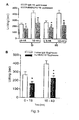
- Fig. 5A shows that the analgesic properties of the 15 ⁇ g dose are independent of the administration route. Indeed, the same effect on licking behaviour was observed when the antibody was injected s.c. or i.p.
- the licking time was reduced by 40% compared to the respective IgG+Sal control group.
- the combined administration of two sub-threshold doses of MNAC13 (25 ⁇ g/kg) and morphine (1 mg/kg) produced an analgesic effect that was comparable to the (per se effective) 2.5 mg/kg dose of morphine.
- the potentiation of opioid-induced analgesia by antibodies blocking the TrkA receptor presents remarkable consequences from a therapeutic point of view.
- the joint administration of MNAC13 (or of its humanised version, as well as of any other derivative that maintains the blocking properties of the parental antibody) allows the use of lower doses of morphine (or other opioids); normally ineffective, consequently reducing the incidence of the side effects and the probability of developing drug tolerance or addiction.
Landscapes
- Health & Medical Sciences (AREA)
- Chemical & Material Sciences (AREA)
- Life Sciences & Earth Sciences (AREA)
- Medicinal Chemistry (AREA)
- General Health & Medical Sciences (AREA)
- Animal Behavior & Ethology (AREA)
- Organic Chemistry (AREA)
- Pharmacology & Pharmacy (AREA)
- Public Health (AREA)
- Veterinary Medicine (AREA)
- Chemical Kinetics & Catalysis (AREA)
- General Chemical & Material Sciences (AREA)
- Nuclear Medicine, Radiotherapy & Molecular Imaging (AREA)
- Engineering & Computer Science (AREA)
- Bioinformatics & Cheminformatics (AREA)
- Immunology (AREA)
- Epidemiology (AREA)
- Neurology (AREA)
- Neurosurgery (AREA)
- Urology & Nephrology (AREA)
- Biomedical Technology (AREA)
- Pain & Pain Management (AREA)
- Physical Education & Sports Medicine (AREA)
- Endocrinology (AREA)
- Orthopedic Medicine & Surgery (AREA)
- Microbiology (AREA)
- Molecular Biology (AREA)
- Genetics & Genomics (AREA)
- Proteomics, Peptides & Aminoacids (AREA)
- Rheumatology (AREA)
- Biophysics (AREA)
- Mycology (AREA)
- Biochemistry (AREA)
- Reproductive Health (AREA)
- Dermatology (AREA)
- Medicines Containing Antibodies Or Antigens For Use As Internal Diagnostic Agents (AREA)
- Pharmaceuticals Containing Other Organic And Inorganic Compounds (AREA)
- Peptides Or Proteins (AREA)
- Medicines That Contain Protein Lipid Enzymes And Other Medicines (AREA)
Applications Claiming Priority (2)
| Application Number | Priority Date | Filing Date | Title |
|---|---|---|---|
| IT000332A ITRM20050332A1 (it) | 2005-06-24 | 2005-06-24 | Uso di molecole in grado di bloccare l'attivita' di trka per potenziare gli effetti di analgesici oppiacei sul dolore. |
| PCT/IT2006/000488 WO2006137106A2 (en) | 2005-06-24 | 2006-06-23 | Method for the potentiation of opioid analgesics effects on pain |
Publications (2)
| Publication Number | Publication Date |
|---|---|
| EP1893649A2 EP1893649A2 (en) | 2008-03-05 |
| EP1893649B1 true EP1893649B1 (en) | 2012-07-18 |
Family
ID=37514252
Family Applications (1)
| Application Number | Title | Priority Date | Filing Date |
|---|---|---|---|
| EP06766357A Active EP1893649B1 (en) | 2005-06-24 | 2006-06-23 | Method for the potentiation of opioid analgesics effects on pain |
Country Status (10)
| Country | Link |
|---|---|
| US (2) | US7988966B2 (cg-RX-API-DMAC7.html) |
| EP (1) | EP1893649B1 (cg-RX-API-DMAC7.html) |
| JP (1) | JP5419448B2 (cg-RX-API-DMAC7.html) |
| AU (1) | AU2006260490B2 (cg-RX-API-DMAC7.html) |
| CA (1) | CA2612941C (cg-RX-API-DMAC7.html) |
| DK (1) | DK1893649T3 (cg-RX-API-DMAC7.html) |
| IL (1) | IL188252A (cg-RX-API-DMAC7.html) |
| IT (1) | ITRM20050332A1 (cg-RX-API-DMAC7.html) |
| WO (1) | WO2006137106A2 (cg-RX-API-DMAC7.html) |
| ZA (1) | ZA200709949B (cg-RX-API-DMAC7.html) |
Families Citing this family (32)
| Publication number | Priority date | Publication date | Assignee | Title |
|---|---|---|---|---|
| ITRM20030601A1 (it) | 2003-12-24 | 2005-06-25 | Lay Line Genomics Spa | Metodo per l'umanizzazione di anticorpi e anticorpi umanizzati con esso ottenuti. |
| ITRM20050290A1 (it) | 2005-06-07 | 2006-12-08 | Lay Line Genomics Spa | Uso di molecole in grado di inibire il legame tra ngf e il suo recettore trka come analgesici ad effetto prolungato. |
| BRPI0822049B1 (pt) * | 2007-12-17 | 2021-11-16 | Pfizer Limited | Composiqao farmaceutica compreendendo anticorpo antagonista anti-ngf, kit e uso de um anticorpo antingf |
| EP2252633B9 (en) * | 2008-02-04 | 2014-02-19 | Lay Line Genomics S.P.A. | Anti-trka antibodies and derivatives thereof |
| EP2116539A1 (en) * | 2008-04-25 | 2009-11-11 | Laboratorios Del. Dr. Esteve, S.A. | 1-aryl-3-aminoalkoxy-pyrazoles as sigma ligands enhancing analgesic effects of opioids and attenuating the dependency thereof |
| JP5752601B2 (ja) | 2008-12-08 | 2015-07-22 | ブイエム ファーマ エルエルシー | タンパク質受容体チロシンキナーゼ阻害薬の組成物 |
| SG175436A1 (en) | 2009-05-04 | 2011-12-29 | Abbott Res Bv | Antibodies against nerve growth factor (ngf) with enhanced in vivo stability |
| EP2353591A1 (en) | 2010-02-04 | 2011-08-10 | Laboratorios Del. Dr. Esteve, S.A. | Sigma ligands for potentiating the analgesic effect of opioids and opiates in post-operative pain and attenuating the dependency thereof |
| EP2388005A1 (en) | 2010-05-21 | 2011-11-23 | Laboratorios Del. Dr. Esteve, S.A. | Sigma ligands for the prevention and/or treatment of emesis induced by chemotherapy or radiotherapy |
| EP2415471A1 (en) | 2010-08-03 | 2012-02-08 | Laboratorios Del. Dr. Esteve, S.A. | Use of sigma ligands in opioid-induced hyperalgesia |
| US9067988B2 (en) | 2010-12-01 | 2015-06-30 | Alderbio Holdings Llc | Methods of preventing or treating pain using anti-NGF antibodies |
| US11214610B2 (en) | 2010-12-01 | 2022-01-04 | H. Lundbeck A/S | High-purity production of multi-subunit proteins such as antibodies in transformed microbes such as Pichia pastoris |
| US9884909B2 (en) | 2010-12-01 | 2018-02-06 | Alderbio Holdings Llc | Anti-NGF compositions and use thereof |
| US9539324B2 (en) | 2010-12-01 | 2017-01-10 | Alderbio Holdings, Llc | Methods of preventing inflammation and treating pain using anti-NGF compositions |
| US9078878B2 (en) | 2010-12-01 | 2015-07-14 | Alderbio Holdings Llc | Anti-NGF antibodies that selectively inhibit the association of NGF with TrkA, without affecting the association of NGF with p75 |
| EP2646468B1 (en) | 2010-12-01 | 2018-07-25 | AlderBio Holdings LLC | Anti-ngf compositions and use thereof |
| EP2524694A1 (en) | 2011-05-19 | 2012-11-21 | Laboratorios Del. Dr. Esteve, S.A. | Use of sigma ligands in diabetes type-2 associated pain |
| EP2731439A4 (en) | 2011-07-12 | 2014-12-03 | Merck Sharp & Dohme | TRKA KINASE INHIBITORS, COMPOSITIONS AND METHOD THEREFOR |
| US8926978B2 (en) | 2011-10-25 | 2015-01-06 | Anaptysbio, Inc. | Antibodies directed against nerve growth factor (NGF) |
| WO2013176970A1 (en) | 2012-05-22 | 2013-11-28 | Merck Sharp & Dohme Corp. | TrkA KINASE INHIBITORS, COMPOSITIONS AND METHODS THEREOF |
| ES2666126T3 (es) * | 2012-06-08 | 2018-05-03 | Glenmark Pharmaceuticals S.A. | Anticuerpos anti-TrkA humanizados con sustituciones de aminoácidos |
| EP2674439B1 (en) * | 2012-06-13 | 2017-02-01 | Rottapharm Biotech S.r.l. | Anti-TrkA antibodies, derivatives and uses thereof |
| WO2015039333A1 (en) | 2013-09-22 | 2015-03-26 | Merck Sharp & Dohme Corp. | TrkA KINASE INHIBITORS, COMPOSITIONS AND METHODS THEREOF |
| WO2015039334A1 (en) | 2013-09-22 | 2015-03-26 | Merck Sharp & Dohme Corp. | TrkA KINASE INHIBITORS, COMPOSITIONS AND METHODS THEREOF |
| TN2016000228A1 (en) | 2013-12-17 | 2017-10-06 | Esteve Labor Dr | SEROTONIN-NOREPINEPHRINE REUPTAKE INHIBITORS (SNRIs) AND SIGMA RECEPTOR LIGANDS COMBINATIONS. |
| KR101723997B1 (ko) * | 2014-02-05 | 2017-04-06 | 브이엠 온콜로지 엘엘씨 | 화합물의 조성물 및 이의 용도 |
| WO2015143654A1 (en) | 2014-03-26 | 2015-10-01 | Merck Sharp & Dohme Corp. | TrkA KINASE INHIBITORS,COMPOSITIONS AND METHODS THEREOF |
| WO2015143653A1 (en) | 2014-03-26 | 2015-10-01 | Merck Sharp & Dohme Corp. | TrkA KINASE INHIBITORS,COMPOSITIONS AND METHODS THEREOF |
| WO2015143652A1 (en) | 2014-03-26 | 2015-10-01 | Merck Sharp & Dohme Corp. | TrkA KINASE INHIBITORS,COMPOSITIONS AND METHODS THEREOF |
| MA41097A (fr) * | 2014-12-05 | 2017-10-10 | Glenmark Pharmaceuticals Sa | Anticorps anti-trka à propriétés inhibitrices améliorées et dérivés desdits anticorps destinés à être utilisés pour traiter les douleurs osseuses |
| WO2016161572A1 (en) | 2015-04-08 | 2016-10-13 | Merck Sharp & Dohme Corp. | TrkA KINASE INHIBITORS, COMPOSITIONS AND METHODS THEREOF |
| AR114110A1 (es) | 2018-02-28 | 2020-07-22 | Lilly Co Eli | Anticuerpo anti-trka |
Family Cites Families (6)
| Publication number | Priority date | Publication date | Assignee | Title |
|---|---|---|---|---|
| GB9525180D0 (en) * | 1995-12-08 | 1996-02-07 | Univ Mcgill | Design of hormone-like antibodies with agonistic and antagonistic fuctions |
| IT1306704B1 (it) * | 1999-05-26 | 2001-10-02 | Sirs Societa Italiana Per La R | Anticorpi monoclonali e suoi derivati sintetici o biotecnologici ingrado di agire come molecole antagoniste per il ngf. |
| UA80447C2 (en) * | 2002-10-08 | 2007-09-25 | Methods for treating pain by administering nerve growth factor antagonist and opioid analgesic | |
| BRPI0407375A (pt) | 2003-02-19 | 2006-02-07 | Rinat Neuroscience Corp | Métodos para tratar dor por meio da administração de um antagonista do fator de crescimento neural e u nsaid e composições contendo os mesmos |
| ITRM20030601A1 (it) * | 2003-12-24 | 2005-06-25 | Lay Line Genomics Spa | Metodo per l'umanizzazione di anticorpi e anticorpi umanizzati con esso ottenuti. |
| EP2252633B9 (en) | 2008-02-04 | 2014-02-19 | Lay Line Genomics S.P.A. | Anti-trka antibodies and derivatives thereof |
-
2005
- 2005-06-24 IT IT000332A patent/ITRM20050332A1/it unknown
-
2006
- 2006-06-23 WO PCT/IT2006/000488 patent/WO2006137106A2/en not_active Ceased
- 2006-06-23 JP JP2008517706A patent/JP5419448B2/ja not_active Expired - Fee Related
- 2006-06-23 US US11/921,266 patent/US7988966B2/en not_active Expired - Fee Related
- 2006-06-23 EP EP06766357A patent/EP1893649B1/en active Active
- 2006-06-23 DK DK06766357.5T patent/DK1893649T3/da active
- 2006-06-23 AU AU2006260490A patent/AU2006260490B2/en not_active Ceased
- 2006-06-23 CA CA2612941A patent/CA2612941C/en active Active
-
2007
- 2007-11-19 ZA ZA200709949A patent/ZA200709949B/en unknown
- 2007-12-19 IL IL188252A patent/IL188252A/en active IP Right Grant
-
2011
- 2011-06-23 US US13/166,974 patent/US8715666B2/en active Active
Also Published As
| Publication number | Publication date |
|---|---|
| CA2612941A1 (en) | 2006-12-28 |
| ITRM20050332A1 (it) | 2006-12-25 |
| AU2006260490A1 (en) | 2006-12-28 |
| CA2612941C (en) | 2015-12-29 |
| IL188252A0 (en) | 2008-04-13 |
| AU2006260490B2 (en) | 2011-09-22 |
| WO2006137106A3 (en) | 2007-06-07 |
| US7988966B2 (en) | 2011-08-02 |
| JP5419448B2 (ja) | 2014-02-19 |
| WO2006137106A2 (en) | 2006-12-28 |
| US20120213784A1 (en) | 2012-08-23 |
| IL188252A (en) | 2015-06-30 |
| ZA200709949B (en) | 2008-07-30 |
| US8715666B2 (en) | 2014-05-06 |
| JP2008546760A (ja) | 2008-12-25 |
| EP1893649A2 (en) | 2008-03-05 |
| DK1893649T3 (da) | 2012-10-22 |
| US20090123464A1 (en) | 2009-05-14 |
Similar Documents
| Publication | Publication Date | Title |
|---|---|---|
| EP1893649B1 (en) | Method for the potentiation of opioid analgesics effects on pain | |
| CN101277718B (zh) | 作为长效止痛剂的能抑制NGF与TrkA受体的结合的分子 | |
| EP1575522B1 (en) | Methods for treating pain by administering an antagonist antibody against the nerve growth factor and an opioid analgesic and compositions containing the same | |
| EP1594441B1 (en) | Method for treating pain by administering a nerve growth factor antagonist and an nsaid and composition containing the same | |
| JP2006517524A5 (cg-RX-API-DMAC7.html) | ||
| US20180155415A1 (en) | Molecules that are able to inhibit the binding between ngf and the trka receptor as analgesics with prolonged effect | |
| AU2014277649A1 (en) | Molecules that are able to inhibit the binding between NGF and the TrkA receptor as analgesics with prolonged effect | |
| AU2012201465A1 (en) | Molecules that are able to inhibit the binding between NGF and the TrkA receptor as analgesics with prolonged effect | |
| HK1173087A (en) | Molecules that are able to inhibit the binding between ngf and the trka receptor as analgesics with prolonged effect | |
| HK1121403B (en) | Molecules that are able to inhibit the binding between ngf and the trka receptor as analgesics with prolonged effect |
Legal Events
| Date | Code | Title | Description |
|---|---|---|---|
| PUAI | Public reference made under article 153(3) epc to a published international application that has entered the european phase |
Free format text: ORIGINAL CODE: 0009012 |
|
| 17P | Request for examination filed |
Effective date: 20071204 |
|
| AK | Designated contracting states |
Kind code of ref document: A2 Designated state(s): AT BE BG CH CY CZ DE DK EE ES FI FR GB GR HU IE IS IT LI LT LU LV MC NL PL PT RO SE SI SK TR |
|
| DAX | Request for extension of the european patent (deleted) | ||
| 17Q | First examination report despatched |
Effective date: 20080604 |
|
| DAX | Request for extension of the european patent (deleted) | ||
| GRAP | Despatch of communication of intention to grant a patent |
Free format text: ORIGINAL CODE: EPIDOSNIGR1 |
|
| GRAS | Grant fee paid |
Free format text: ORIGINAL CODE: EPIDOSNIGR3 |
|
| GRAA | (expected) grant |
Free format text: ORIGINAL CODE: 0009210 |
|
| RAP1 | Party data changed (applicant data changed or rights of an application transferred) |
Owner name: LAY LINE GENOMICS SPA |
|
| RIN1 | Information on inventor provided before grant (corrected) |
Inventor name: UGOLINI. GABRIELE Inventor name: CATTANEO, ANTONIO Inventor name: MARINELLI, SARA Inventor name: PAVONE, FLAMINIA |
|
| AK | Designated contracting states |
Kind code of ref document: B1 Designated state(s): AT BE BG CH CY CZ DE DK EE ES FI FR GB GR HU IE IS IT LI LT LU LV MC NL PL PT RO SE SI SK TR |
|
| REG | Reference to a national code |
Ref country code: GB Ref legal event code: FG4D |
|
| REG | Reference to a national code |
Ref country code: CH Ref legal event code: EP |
|
| PUAC | Information related to the publication of a b1 document modified or deleted |
Free format text: ORIGINAL CODE: 0009299EPPU |
|
| GRAA | (expected) grant |
Free format text: ORIGINAL CODE: 0009210 |
|
| REG | Reference to a national code |
Ref country code: CH Ref legal event code: PK Free format text: BERICHTIGUNG (ENGL.) Ref country code: AT Ref legal event code: REF Ref document number: 558058 Country of ref document: AT Kind code of ref document: T Effective date: 20120615 |
|
| REG | Reference to a national code |
Ref country code: IE Ref legal event code: FG4D |
|
| DB1 | Publication of patent cancelled | ||
| REG | Reference to a national code |
Ref country code: DE Ref legal event code: R096 Ref document number: 602006029518 Country of ref document: DE Effective date: 20120712 |
|
| AK | Designated contracting states |
Kind code of ref document: B1 Designated state(s): AT BE BG CH CY CZ DE DK EE ES FI FR GB GR HU IE IS IT LI LT LU LV MC NL PL PT RO SE SI SK TR |
|
| REG | Reference to a national code |
Ref country code: NL Ref legal event code: GRER Effective date: 20120711 |
|
| REG | Reference to a national code |
Ref country code: CH Ref legal event code: PK Free format text: DIE ERTEILUNG VOM 16.05.2012 WURDE VOM EPA WIDERRUFEN Ref country code: CH Ref legal event code: EP |
|
| REG | Reference to a national code |
Ref country code: DK Ref legal event code: T3 |
|
| PG25 | Lapsed in a contracting state [announced via postgrant information from national office to epo] |
Ref country code: CY Free format text: LAPSE BECAUSE OF FAILURE TO SUBMIT A TRANSLATION OF THE DESCRIPTION OR TO PAY THE FEE WITHIN THE PRESCRIBED TIME-LIMIT Effective date: 20120718 Ref country code: IS Free format text: LAPSE BECAUSE OF FAILURE TO SUBMIT A TRANSLATION OF THE DESCRIPTION OR TO PAY THE FEE WITHIN THE PRESCRIBED TIME-LIMIT Effective date: 20120916 |
|
| REG | Reference to a national code |
Ref country code: CH Ref legal event code: NV Representative=s name: LATSCHA SCHOELLHORN PARTNER AG |
|
| PG25 | Lapsed in a contracting state [announced via postgrant information from national office to epo] |
Ref country code: PT Free format text: LAPSE BECAUSE OF FAILURE TO SUBMIT A TRANSLATION OF THE DESCRIPTION OR TO PAY THE FEE WITHIN THE PRESCRIBED TIME-LIMIT Effective date: 20120917 Ref country code: GR Free format text: LAPSE BECAUSE OF FAILURE TO SUBMIT A TRANSLATION OF THE DESCRIPTION OR TO PAY THE FEE WITHIN THE PRESCRIBED TIME-LIMIT Effective date: 20120817 |
|
| REG | Reference to a national code |
Ref country code: NL Ref legal event code: VDEP Effective date: 20120718 |
|
| PG25 | Lapsed in a contracting state [announced via postgrant information from national office to epo] |
Ref country code: PL Free format text: LAPSE BECAUSE OF FAILURE TO SUBMIT A TRANSLATION OF THE DESCRIPTION OR TO PAY THE FEE WITHIN THE PRESCRIBED TIME-LIMIT Effective date: 20120718 Ref country code: LV Free format text: LAPSE BECAUSE OF FAILURE TO SUBMIT A TRANSLATION OF THE DESCRIPTION OR TO PAY THE FEE WITHIN THE PRESCRIBED TIME-LIMIT Effective date: 20120718 Ref country code: SI Free format text: LAPSE BECAUSE OF FAILURE TO SUBMIT A TRANSLATION OF THE DESCRIPTION OR TO PAY THE FEE WITHIN THE PRESCRIBED TIME-LIMIT Effective date: 20120718 |
|
| PG25 | Lapsed in a contracting state [announced via postgrant information from national office to epo] |
Ref country code: NL Free format text: LAPSE BECAUSE OF FAILURE TO SUBMIT A TRANSLATION OF THE DESCRIPTION OR TO PAY THE FEE WITHIN THE PRESCRIBED TIME-LIMIT Effective date: 20120718 |
|
| PG25 | Lapsed in a contracting state [announced via postgrant information from national office to epo] |
Ref country code: CZ Free format text: LAPSE BECAUSE OF FAILURE TO SUBMIT A TRANSLATION OF THE DESCRIPTION OR TO PAY THE FEE WITHIN THE PRESCRIBED TIME-LIMIT Effective date: 20120718 Ref country code: EE Free format text: LAPSE BECAUSE OF FAILURE TO SUBMIT A TRANSLATION OF THE DESCRIPTION OR TO PAY THE FEE WITHIN THE PRESCRIBED TIME-LIMIT Effective date: 20120718 Ref country code: ES Free format text: LAPSE BECAUSE OF FAILURE TO SUBMIT A TRANSLATION OF THE DESCRIPTION OR TO PAY THE FEE WITHIN THE PRESCRIBED TIME-LIMIT Effective date: 20121029 |
|
| PLBE | No opposition filed within time limit |
Free format text: ORIGINAL CODE: 0009261 |
|
| STAA | Information on the status of an ep patent application or granted ep patent |
Free format text: STATUS: NO OPPOSITION FILED WITHIN TIME LIMIT |
|
| PG25 | Lapsed in a contracting state [announced via postgrant information from national office to epo] |
Ref country code: SK Free format text: LAPSE BECAUSE OF FAILURE TO SUBMIT A TRANSLATION OF THE DESCRIPTION OR TO PAY THE FEE WITHIN THE PRESCRIBED TIME-LIMIT Effective date: 20120718 |
|
| 26N | No opposition filed |
Effective date: 20130419 |
|
| PG25 | Lapsed in a contracting state [announced via postgrant information from national office to epo] |
Ref country code: BG Free format text: LAPSE BECAUSE OF FAILURE TO SUBMIT A TRANSLATION OF THE DESCRIPTION OR TO PAY THE FEE WITHIN THE PRESCRIBED TIME-LIMIT Effective date: 20120816 |
|
| REG | Reference to a national code |
Ref country code: DE Ref legal event code: R097 Ref document number: 602006029518 Country of ref document: DE Effective date: 20130419 |
|
| REG | Reference to a national code |
Ref country code: IE Ref legal event code: MM4A |
|
| PG25 | Lapsed in a contracting state [announced via postgrant information from national office to epo] |
Ref country code: IE Free format text: LAPSE BECAUSE OF NON-PAYMENT OF DUE FEES Effective date: 20130623 |
|
| REG | Reference to a national code |
Ref country code: CH Ref legal event code: PCAR Free format text: NEW ADDRESS: AUSTRASSE 24, 4051 BASEL (CH) |
|
| PG25 | Lapsed in a contracting state [announced via postgrant information from national office to epo] |
Ref country code: LT Free format text: LAPSE BECAUSE OF NON-PAYMENT OF DUE FEES Effective date: 20120718 Ref country code: RO Free format text: LAPSE BECAUSE OF FAILURE TO SUBMIT A TRANSLATION OF THE DESCRIPTION OR TO PAY THE FEE WITHIN THE PRESCRIBED TIME-LIMIT Effective date: 20120718 |
|
| REG | Reference to a national code |
Ref country code: DE Ref legal event code: R082 Ref document number: 602006029518 Country of ref document: DE Representative=s name: STAUDT IP LAW, DE |
|
| PG25 | Lapsed in a contracting state [announced via postgrant information from national office to epo] |
Ref country code: TR Free format text: LAPSE BECAUSE OF FAILURE TO SUBMIT A TRANSLATION OF THE DESCRIPTION OR TO PAY THE FEE WITHIN THE PRESCRIBED TIME-LIMIT Effective date: 20120718 |
|
| PG25 | Lapsed in a contracting state [announced via postgrant information from national office to epo] |
Ref country code: LU Free format text: LAPSE BECAUSE OF NON-PAYMENT OF DUE FEES Effective date: 20120718 Ref country code: BE Free format text: LAPSE BECAUSE OF FAILURE TO SUBMIT A TRANSLATION OF THE DESCRIPTION OR TO PAY THE FEE WITHIN THE PRESCRIBED TIME-LIMIT Effective date: 20120718 Ref country code: MC Free format text: LAPSE BECAUSE OF FAILURE TO SUBMIT A TRANSLATION OF THE DESCRIPTION OR TO PAY THE FEE WITHIN THE PRESCRIBED TIME-LIMIT Effective date: 20120718 Ref country code: AT Free format text: LAPSE BECAUSE OF NON-PAYMENT OF DUE FEES Effective date: 20120718 Ref country code: HU Free format text: LAPSE BECAUSE OF FAILURE TO SUBMIT A TRANSLATION OF THE DESCRIPTION OR TO PAY THE FEE WITHIN THE PRESCRIBED TIME-LIMIT; INVALID AB INITIO Effective date: 20060623 Ref country code: FI Free format text: LAPSE BECAUSE OF FAILURE TO SUBMIT A TRANSLATION OF THE DESCRIPTION OR TO PAY THE FEE WITHIN THE PRESCRIBED TIME-LIMIT Effective date: 20120718 |
|
| PG25 | Lapsed in a contracting state [announced via postgrant information from national office to epo] |
Ref country code: SE Free format text: LAPSE BECAUSE OF NON-PAYMENT OF DUE FEES Effective date: 20120718 |
|
| REG | Reference to a national code |
Ref country code: FR Ref legal event code: PLFP Year of fee payment: 11 |
|
| PG25 | Lapsed in a contracting state [announced via postgrant information from national office to epo] |
Ref country code: IT Free format text: LAPSE BECAUSE OF NON-PAYMENT OF DUE FEES Effective date: 20150623 |
|
| PG25 | Lapsed in a contracting state [announced via postgrant information from national office to epo] |
Ref country code: IT Free format text: LAPSE BECAUSE OF NON-PAYMENT OF DUE FEES Effective date: 20150623 |
|
| PGRI | Patent reinstated in contracting state [announced from national office to epo] |
Ref country code: IT Effective date: 20161125 |
|
| REG | Reference to a national code |
Ref country code: FR Ref legal event code: PLFP Year of fee payment: 12 |
|
| REG | Reference to a national code |
Ref country code: FR Ref legal event code: PLFP Year of fee payment: 13 |
|
| REG | Reference to a national code |
Ref country code: CH Ref legal event code: PCAR Free format text: NEW ADDRESS: GRELLINGERSTRASSE 60, 4052 BASEL (CH) |
|
| PGFP | Annual fee paid to national office [announced via postgrant information from national office to epo] |
Ref country code: IT Payment date: 20220627 Year of fee payment: 17 Ref country code: GB Payment date: 20220622 Year of fee payment: 17 Ref country code: DK Payment date: 20220622 Year of fee payment: 17 |
|
| PGFP | Annual fee paid to national office [announced via postgrant information from national office to epo] |
Ref country code: FR Payment date: 20220628 Year of fee payment: 17 |
|
| PGFP | Annual fee paid to national office [announced via postgrant information from national office to epo] |
Ref country code: DE Payment date: 20220620 Year of fee payment: 17 |
|
| PGFP | Annual fee paid to national office [announced via postgrant information from national office to epo] |
Ref country code: CH Payment date: 20220701 Year of fee payment: 17 |
|
| REG | Reference to a national code |
Ref country code: DE Ref legal event code: R119 Ref document number: 602006029518 Country of ref document: DE |
|
| REG | Reference to a national code |
Ref country code: DE Ref legal event code: R082 Ref document number: 602006029518 Country of ref document: DE Representative=s name: SONNENBERG HARRISON PARTNERSCHAFT MBB PATENT- , DE |
|
| REG | Reference to a national code |
Ref country code: DK Ref legal event code: EBP Effective date: 20230630 |
|
| REG | Reference to a national code |
Ref country code: CH Ref legal event code: PL |
|
| GBPC | Gb: european patent ceased through non-payment of renewal fee |
Effective date: 20230623 |
|
| PG25 | Lapsed in a contracting state [announced via postgrant information from national office to epo] |
Ref country code: DE Free format text: LAPSE BECAUSE OF NON-PAYMENT OF DUE FEES Effective date: 20240103 Ref country code: CH Free format text: LAPSE BECAUSE OF NON-PAYMENT OF DUE FEES Effective date: 20230630 Ref country code: GB Free format text: LAPSE BECAUSE OF NON-PAYMENT OF DUE FEES Effective date: 20230623 |
|
| PG25 | Lapsed in a contracting state [announced via postgrant information from national office to epo] |
Ref country code: FR Free format text: LAPSE BECAUSE OF NON-PAYMENT OF DUE FEES Effective date: 20230630 |
|
| PG25 | Lapsed in a contracting state [announced via postgrant information from national office to epo] |
Ref country code: DK Free format text: LAPSE BECAUSE OF NON-PAYMENT OF DUE FEES Effective date: 20230630 |
|
| PG25 | Lapsed in a contracting state [announced via postgrant information from national office to epo] |
Ref country code: DK Free format text: LAPSE BECAUSE OF NON-PAYMENT OF DUE FEES Effective date: 20230630 |
|
| PG25 | Lapsed in a contracting state [announced via postgrant information from national office to epo] |
Ref country code: IT Free format text: LAPSE BECAUSE OF NON-PAYMENT OF DUE FEES Effective date: 20230623 |