EP1889206B1 - Improved method for preservation of motion picture film - Google Patents
Improved method for preservation of motion picture film Download PDFInfo
- Publication number
- EP1889206B1 EP1889206B1 EP06770557A EP06770557A EP1889206B1 EP 1889206 B1 EP1889206 B1 EP 1889206B1 EP 06770557 A EP06770557 A EP 06770557A EP 06770557 A EP06770557 A EP 06770557A EP 1889206 B1 EP1889206 B1 EP 1889206B1
- Authority
- EP
- European Patent Office
- Prior art keywords
- motion picture
- film
- reference image
- image
- scenes
- Prior art date
- Legal status (The legal status is an assumption and is not a legal conclusion. Google has not performed a legal analysis and makes no representation as to the accuracy of the status listed.)
- Expired - Lifetime
Links
Images
Classifications
-
- H—ELECTRICITY
- H04—ELECTRIC COMMUNICATION TECHNIQUE
- H04N—PICTORIAL COMMUNICATION, e.g. TELEVISION
- H04N5/00—Details of television systems
- H04N5/222—Studio circuitry; Studio devices; Studio equipment
- H04N5/253—Picture signal generating by scanning motion picture films or slide opaques, e.g. for telecine
-
- H—ELECTRICITY
- H04—ELECTRIC COMMUNICATION TECHNIQUE
- H04N—PICTORIAL COMMUNICATION, e.g. TELEVISION
- H04N7/00—Television systems
- H04N7/01—Conversion of standards, e.g. involving analogue television standards or digital television standards processed at pixel level
- H04N7/0112—Conversion of standards, e.g. involving analogue television standards or digital television standards processed at pixel level one of the standards corresponding to a cinematograph film standard
-
- H—ELECTRICITY
- H04—ELECTRIC COMMUNICATION TECHNIQUE
- H04N—PICTORIAL COMMUNICATION, e.g. TELEVISION
- H04N9/00—Details of colour television systems
- H04N9/79—Processing of colour television signals in connection with recording
- H04N9/7921—Processing of colour television signals in connection with recording for more than one processing mode
Definitions
- the present invention generally relates to motion picture film, and more particularly to methods for preserving the artistic intent, as embodied in the production process, and the full quality of the original recorded image material
- DI process The process for creating motion pictures is continually evolving.
- One of the more recent developments involves what is commonly referred to as a digital intermediate process (“DI process").
- DI process involves the temporary conversion of film to a digital format for the production and editing process.
- the motion picture is recorded from the digital format back to film again.
- the process for converting the original film to digital format can vary.
- current technology will typically scan film at a resolution of 2K (2048 x 1556) and 10 bits per color channel. Although this level of resolution is currently deemed acceptable for release, it does not capture all of the information on the film negative. With the improvement in technology, the scanning resolution and color bit depth is expected to improve.
- the DI process does not take advantage of the full image quality of the original camera negative (OCN) or other image acquisition medium. Therefore, archiving the post production film created after the DI process is complete does not preserve the full image quality that is available. In contrast, archiving the OCN or other image acquisition medium can preserve the original image quality. However, archiving the original OCN material does not preserve the artistic intent as embodied in the production process and release.
- One solution might be to archive both the post production film created after DI and the OCN. However, archiving both sets of materials is expensive
- Film material is best archived by making three monochrome separations that capture the content of the Yellow, Cyan and Magenta (YCM) layers of the OCN.
- YCM Yellow, Cyan and Magenta
- Such archives are believed to have a viable life of around 500 years. Separations are usually made from "timed” intermediates, with some image quality loss. Alternatively, the separations can be made using the timing information to create separations from the OCN, in which case artistic intent is preserved.
- the creation of separations using this technique does not convey any information about how the negative was timed and printed. The result is a loss of information regarding color correction and so on. Accordingly, this information regarding the original release is not preserved. Consequently, the artistic intent of the director may be lost.
- the key frame reel normally contains three frames (first, middle, last) for each scene, to provide a color correction reference for making the full-length timed print.
- the longevity of the InterPostive (IP) obtained using this process is estimated at about 150 years.
- the IP is known to degrade continuously. Consequently, the key frame reel does not provide a reference for preserving artistic intent that has the longevity of OCN monochrome separations.
- the present invention concerns a method for archiving a motion picture film as defined by claim 1.
- the method is designed to preserve the highest image quality available, while also capturing the artistic intent of the director or other creative entity involved with the film.
- the method for archiving motion pictures can include several steps.
- a first step in the process includes creating a plurality of monochrome separations that capture the content of the Yellow, Cyan, arid Magenta layers of the original camera negatives from which the motion picture has been created.
- a second step in the method includes creating a key frame film reel from the digital intermediate process.
- the creation of the key frame film reel includes (i) capturing in a digital format a plurality of reference image sets corresponding to a plurality of images from a beginning portion, middle portion and end portion of each scene of the motion picture film; (ii) selecting the reference image sets to each include an unprocessed image captured in the digital format from an original camera negative, and a processed image that is a modified version of the unprocessed image; and (iii) recording the reference image sets on a film medium.
- the processed images can include images that have been modified with color correction, pan and scan moves, and effects shots inserted.
- Metadata can also be recorded in the reference film media.
- the metadata can include information useful for recreating the artistic intent of the film such as frame counts, original camera negative keycodes, information concerning the resizing and positioning data, and special effects data.
- monochrome separations can be made from the key frame film reel.
- the monochrome separations separately capture the content of one or more of the yellow, cyan and magenta layers for the reference image sets.
- the method can include a further step of recording narrative information concerning the artistic intentions of at least one creative entity associated with the creation of the motion picture.
- the creative entity can be a person such as a director or a director of photography of the motion picture.
- the artistic - intentions can include a variety of factors such as desired color correction and lighting preferences for particular scenes.
- the narrative can be created and/or recorded in an unstructured conversational format.
- the narrative can be created while the artistic entity views each of the identified scenes of the motion picture.
- the narrative can be recorded as text, audio format or any other convenient method.
- the invention also concerns a motion picture archive product.
- the product includes a plurality of monochrome separations that capture the content of the yellow, cyan, and magenta layers of the original camera negatives from which a motion picture has been created. It also contains a key frame film reel comprising a plurality of reference image sets.
- the reference image sets include at least one unprocessed image from each of a plurality of scenes of the motion picture film and captured on film from a digital intermediate data format.
- the reference image sets also include a processed image that is a version of the unprocessed image that has been modified in the digital intermediate process before being captured on film.
- the product also includes a plurality of monochrome separations produced from the key frame film reel that separately capture the content of one or more of a yellow, cyan and magenta layer for the reference image sets.
- the motion picture archive product can also include metadata recorded in the key frame film reel.
- the metadata can include frame counts, original camera negative keycodes, resizing and positioning data, and/or special effects data.
- At least three reference image sets can be provided on the key frame reel for each of the plurality of scenes of the motion picture. Further, the three or more reference image sets can be respectively from a beginning portion, an end portion and a middle portion of each of the scenes.
- narrative information can be recorded on a recording medium. The narrative information can contain information concerning the artistic intentions of one or more creative entity associated with the creation of the motion picture.
- the simplest way to archive the result of a digital intermediate (DI) process would be to store the Yellow, Cyan and Magenta (YCM) layers from the film-out from the DI process.
- Film is and should remain, until proven obsolete, the preferred archival medium.
- the film-out from the DI process is by definition highly dependent on the limitations of the technologies currently employed in that process. Presently, 2k resolution is available today. However, much higher resolutions are anticipated for the future. Today's technology will always be trailing tomorrow's technology and from this standpoint, any element archived today out of the DI process, will lack significant resolution when compared to the technologies available in a few years. Even a 4k-based archive today may not be relevant in the eyes of content owners 50 years from now, when 12k-res-holographic representation is the norm.
- the need for archiving arises both from the necessity to preserve the assets created today in their current format but also from the need to be able to repurpose/reformat those assets when new distribution formats are prevalent. It is possible to re-master content in high definition (HD) format today because (i) the current archival format (film) has more intrinsic resolution than HD and (ii) some transfer technologies (telecine) exist that can take advantage of the higher resolution. Still, it is a highly risky exercise to try to predict today what will be the distribution formats of the years to come. In that context, the best archival strategy is the one that stores the original elements in their highest resolution available to allow for future reformatting.
- the present invention provides a method for archiving a motion picture film.
- the process described herein is designed to preserve the highest image quality available, while also capturing the artistic intent of the director or other creative entity involved with the film.
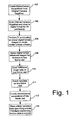
- Fig. 1 is a flowchart that is useful for understanding the method for archiving motion pictures according to an embodiment of the invention.
- a plurality of monochrome separations can be made that capture the content of the yellow, cyan, and magenta layers of the original camera negatives from which the motion picture has been created.
- a variety of techniques are available for creating monochrome separations, as is well known in the art.
- the separations can be formed on modem silver image material which is independent of the any dye images. This is an important feature of color separations because dyes can often be subject to fading and distortion.
- polyester base materials are used for producing the monochrome separations. More often however, modern acetate based film stocks are used for this purpose.
- These monochrome separation images permit long term accurate preservation of color images as they were created on the original camera negative. However, they do not provide an archive of color correction or modifications to the images that are performed after the original camera negative has been recorded.
- the original camera negatives can be scanned and stored in a conventional digital format used for DI processing.
- the digital intermediate (DI) process is commonly used in the motion picture industry to convert original camera negatives to a finished motion picture film.
- the DI process involves temporary conversion of film to a digital format for production and editing.
- the original camera negative is scanned to create an electronic file of unprocessed digital format images.
- a variety of digital formats are used for this purpose. However, the particular format used is not crucial to the present invention, provided that the selected format faithfully creates a digital representation of the original image.
- the digital format images can be manipulated and/or modified by technical specialists based on artisitic input by a motion picture director or director of photography. Such manipulations or modification can include color correction, resizing, framing, addition of special effects and so on.
- the modified images are edited to form a completed film.
- DI processing can be performed in the conventional manner on the stored digital format images using conventional techniques to create a motion picture that is ready for release.
- a key frame reel can be created beginning in step 108.
- a plurality of digital format reference pictures from the motion picture can be selected for inclusion in the key frame reel.
- a key frame film reel can be created as part of the digital intermediate process.
- the key frame reel can include one or more reference image sets. Each reference image set can be based on an image from the motion picture film.
- the reference image set can advantageously include at least two images.
- a first image of the reference image set can be an unprocessed version of an image captured in the digital format from the original camera negative.
- a second image of the reference image set can be a processed image in the digital format that is a version of the first image that has been modified in the course of the DI processing.
- the reference image set can be converted from digital format to a film medium to create the key frame reel.
- the film recording step can be performed using conventional techniques for printing a motion picture from a digital intermediate.
- a single reference image set based on a single image from the motion picture can provide some information regarding the original DI. However, the pertinent information thus captured can be incomplete relative to the overall motion picture.
- the DI processing, lighting, and a variety of other factors can vary from scene to scene, and even within a particular scene. Consequently, in accordance with a preferred embodiment of the invention, a plurality of reference image sets can be created.
- the plurality of reference image sets can correspond to a plurality of images from a plurality of scenes in a movie.
- the plurality of reference image sets can be based on images selected from a beginning portion, middle portion and end portion of each scene of the motion picture film.
- the invention is not limited to any particular selection of images for the purpose of creating the reference image set. All that is necessary is that the selection of images be chosen to provide a colorist in the future with sufficient information from each scene to recreate a DI for substantially the entire motion picture. Significantly, the digital intermediate thus created can be faithful to the original digital intermediate.
- one image of the reference image set can be an unprocessed image captured in the digital format from the original camera negative whereas the second image of the reference image set can be a processed image.
- the processed image is advantageously selected to be a version of the unprocessed image that has been modified in the course of the DI processing.
- the processed images can include digital format images that have been modified in any way as part of the DI process. Examples of such modification can include color correction, pan and scan moves, and effects shots.
- the invention is not limited in this regard. Instead, those skilled in the art will readily appreciate that the processed images for the reference image set can contain other modifications as well.
- Metadata can be recorded in the reference film media as part of the key frame reel.
- Metadata refers to any useful information that relates directly or indirectly to the manner in which an original scanned image has been modified in the course of the DI process.
- Metadata can include any information useful for recreating the artistic intent of the film such as timing, lighting, frame counts, original camera negative keycodes, information concerning the panning, scanning, resizing and positioning of images, and special effects data. Still, the invention is not limited in this regard and any other metadata can be recorded as part of the key frame reel. Metadata can be recorded at any convenient location on the key frame reel. For example, the data can be recorded on the edge of the film, between frames, or on additional frames.
- monochrome separations can be made from the key frame reel film media in step 112.
- the monochrome separations separately capture the content of one or more of the yellow, cyan and magenta layers for the reference image sets recorded on the key frame reel.
- the monochrome separation process is well known in the art and therefore shall not be discussed here in detail. It is sufficient to note that the monochrome separations using conventional techniques permit the original color images recorded on the key frame reel to be accurately archived for future use.
- the method shown in Fig. 1 can include a further step 114 which includes recording narrative information concerning the artistic intentions of at least one creative entity associated with the creation of the motion picture.
- the creative entity can be a person such as a director or a director of photography of the motion picture.
- the invention is not limited in this regard and any other artistic entity can record such narrative information to archive their artistic intent associated with the original motion picture release.
- artistic intentions can include a variety of factors that affect the look and feel of a motion picture.
- artistic intention can include desired color correction and lighting preferences for particular scenes.
- the invention is not limited in this regard and any other aspects of the creative process can be recorded as part of the narrative.
- the narrative can be created and/or recorded in an unstructured conversational format.
- the narrative can be created while the artistic entity views each of the identified scenes of the motion picture.
- a more structured format can be used, provided that it accurately conveys the intent of the artistic entity in relation to one or more scenes of the motion picture.
- the narrative can be recorded as text, audio format or any other convenient method. If recorded as audio, it can be useful for the narrative to include some means to correspond the information conveyed with particular scenes of the motion picture.
- the audio information can include specific references to the scene being discussed.
- video images or text information can be used to identify the particular scene which is the subject of the artistic entity's comments.
Landscapes
- Engineering & Computer Science (AREA)
- Multimedia (AREA)
- Signal Processing (AREA)
- Television Signal Processing For Recording (AREA)
- Studio Devices (AREA)
Applications Claiming Priority (2)
| Application Number | Priority Date | Filing Date | Title |
|---|---|---|---|
| US11/150,630 US7298451B2 (en) | 2005-06-10 | 2005-06-10 | Method for preservation of motion picture film |
| PCT/US2006/019211 WO2006135532A2 (en) | 2005-06-10 | 2006-05-18 | Improved method for preservation of motion picture film |
Publications (3)
| Publication Number | Publication Date |
|---|---|
| EP1889206A2 EP1889206A2 (en) | 2008-02-20 |
| EP1889206A4 EP1889206A4 (en) | 2010-07-21 |
| EP1889206B1 true EP1889206B1 (en) | 2011-10-19 |
Family
ID=37524156
Family Applications (1)
| Application Number | Title | Priority Date | Filing Date |
|---|---|---|---|
| EP06770557A Expired - Lifetime EP1889206B1 (en) | 2005-06-10 | 2006-05-18 | Improved method for preservation of motion picture film |
Country Status (6)
| Country | Link |
|---|---|
| US (1) | US7298451B2 (enExample) |
| EP (1) | EP1889206B1 (enExample) |
| JP (1) | JP4971313B2 (enExample) |
| CN (1) | CN101305317B (enExample) |
| CA (1) | CA2610258C (enExample) |
| WO (1) | WO2006135532A2 (enExample) |
Families Citing this family (8)
| Publication number | Priority date | Publication date | Assignee | Title |
|---|---|---|---|---|
| US20080068458A1 (en) * | 2004-10-04 | 2008-03-20 | Cine-Tal Systems, Inc. | Video Monitoring System |
| US8401257B2 (en) * | 2007-01-19 | 2013-03-19 | Bioptigen, Inc. | Methods, systems and computer program products for processing images generated using Fourier domain optical coherence tomography (FDOCT) |
| US20080195977A1 (en) * | 2007-02-12 | 2008-08-14 | Carroll Robert C | Color management system |
| US8180131B2 (en) * | 2007-05-04 | 2012-05-15 | Bioptigen, Inc. | Methods, systems and computer program products for mixed-density optical coherence tomography (OCT) imaging |
| EP2628295A2 (en) * | 2010-10-15 | 2013-08-21 | Thomson Licensing | Method and system of archiving video to film |
| CN102157175B (zh) * | 2011-04-09 | 2013-07-10 | 成都索贝数码科技股份有限公司 | 一种音视频数据的数字化转储方法及系统 |
| GB201118012D0 (en) * | 2011-10-19 | 2011-11-30 | Windense Ltd | Motion picture scanning system |
| US8370341B1 (en) * | 2012-01-06 | 2013-02-05 | Inkling Systems, Inc. | Systems and methods for determining and facilitating content updates for a user device |
Family Cites Families (8)
| Publication number | Priority date | Publication date | Assignee | Title |
|---|---|---|---|---|
| US5461420A (en) * | 1992-09-18 | 1995-10-24 | Sony Corporation | Apparatus for coding and decoding a digital video signal derived from a motion picture film source |
| US5329383A (en) * | 1993-04-06 | 1994-07-12 | Eastman Kodak Company | Method and apparatus for producing color internegatives with a digital printer |
| US5499044A (en) * | 1993-09-07 | 1996-03-12 | Eastman Kodak Company | Method of producing positive prints from digital image signal data using a film recorder |
| US7092016B2 (en) * | 2001-02-09 | 2006-08-15 | Eastman Kodak Company | Method and system for motion image digital processing |
| US7053927B2 (en) * | 2001-03-02 | 2006-05-30 | Eastman Kodak Company | System for optimizing the display and rendering of digital images for digital mastering |
| US6890690B2 (en) * | 2003-02-17 | 2005-05-10 | Eastman Kodak Company | Photographic article |
| CA2578358A1 (en) * | 2004-07-30 | 2006-02-09 | Pacific Title & Arts Studio, Inc. | Method for conversion and reproduction of film images through a digital process |
| US7110605B2 (en) * | 2005-02-04 | 2006-09-19 | Dts Az Research, Llc | Digital intermediate (DI) processing and distribution with scalable compression in the post-production of motion pictures |
-
2005
- 2005-06-10 US US11/150,630 patent/US7298451B2/en not_active Expired - Fee Related
-
2006
- 2006-05-18 JP JP2008515722A patent/JP4971313B2/ja not_active Expired - Fee Related
- 2006-05-18 EP EP06770557A patent/EP1889206B1/en not_active Expired - Lifetime
- 2006-05-18 CA CA2610258A patent/CA2610258C/en not_active Expired - Fee Related
- 2006-05-18 WO PCT/US2006/019211 patent/WO2006135532A2/en not_active Ceased
- 2006-05-18 CN CN2006800203851A patent/CN101305317B/zh not_active Expired - Fee Related
Also Published As
| Publication number | Publication date |
|---|---|
| CN101305317A (zh) | 2008-11-12 |
| JP2008544607A (ja) | 2008-12-04 |
| US20060280379A1 (en) | 2006-12-14 |
| CN101305317B (zh) | 2012-03-14 |
| EP1889206A4 (en) | 2010-07-21 |
| US7298451B2 (en) | 2007-11-20 |
| WO2006135532A3 (en) | 2008-05-02 |
| JP4971313B2 (ja) | 2012-07-11 |
| EP1889206A2 (en) | 2008-02-20 |
| CA2610258A1 (en) | 2006-12-21 |
| CA2610258C (en) | 2016-01-19 |
| WO2006135532A2 (en) | 2006-12-21 |
Similar Documents
| Publication | Publication Date | Title |
|---|---|---|
| US7170552B2 (en) | Digital imaging system and file format for storage and selective transmission of processed and unprocessed image data | |
| JP4576427B2 (ja) | 注釈付画像生成方法及びカメラ | |
| US6285784B1 (en) | Method of applying manipulations to an extended color gamut digital image | |
| KR101007508B1 (ko) | 비디오 신호 처리 장치, 비디오 신호 기록 장치, 비디오신호 재생 장치, 비디오 신호 처리 장치의 처리 방법,비디오 신호 기록 장치의 처리 방법, 비디오 신호 재생장치의 처리 방법, 기록 매체 | |
| JP4881210B2 (ja) | 撮像装置、画像処理装置及びそれらの制御方法 | |
| JP3926947B2 (ja) | 画像データ形成装置および画像データ処理方法 | |
| US7298451B2 (en) | Method for preservation of motion picture film | |
| US20090154551A1 (en) | Apparatus for recording/reproducing moving picture, and recording medium thereof | |
| CN105187714A (zh) | 图像处理设备及其控制方法 | |
| EP0991019B1 (en) | Method of applying manipulations to a color digital image | |
| EP1396995A2 (en) | Image processing method, image processing apparatus, image recording apparatus, program and recording medium | |
| JP2008544607A5 (enExample) | ||
| JP5043004B2 (ja) | フィルムに関するアナログ/デジタルハイブリッドデータのためのアーカイブエレメントの編制 | |
| JP2009038485A (ja) | 画像編集装置、画像編集方法及び画像編集プログラム | |
| JP2004242232A (ja) | 記録媒体及び画像記録装置並びに画像記録方法 | |
| Okun et al. | Post-Production/Image Manipulation | |
| JP2987695B2 (ja) | 写真フィルムからの最適画像の取り出し方法 | |
| JP2004192401A (ja) | 画像処理装置、画像処理方法及び画像処理プログラム | |
| JP3268773B2 (ja) | ハイビジヨン静止画ソフト製作方法 | |
| Swinbanks | INS AND OUTS OF SCANNING & recording. | |
| JP2004165835A (ja) | 画像処理装置 | |
| Harrison | The Evolving Digital Workflow in Cinema | |
| JPS61261970A (ja) | 色補正方法 | |
| TH52592B (th) | วิธีการที่ปรับปรุงขึ้นใหม่สำหรับการเก็บรักษาฟิล์มภาพเคลื่อนไหว | |
| JPH09326918A (ja) | 画像読み取り装置 |
Legal Events
| Date | Code | Title | Description |
|---|---|---|---|
| PUAI | Public reference made under article 153(3) epc to a published international application that has entered the european phase |
Free format text: ORIGINAL CODE: 0009012 |
|
| 17P | Request for examination filed |
Effective date: 20071212 |
|
| AK | Designated contracting states |
Kind code of ref document: A2 Designated state(s): AT BE BG CH CY CZ DE DK EE ES FI FR GB GR HU IE IS IT LI LT LU LV MC NL PL PT RO SE SI SK TR |
|
| AX | Request for extension of the european patent |
Extension state: AL BA HR MK YU |
|
| R17D | Deferred search report published (corrected) |
Effective date: 20080502 |
|
| DAX | Request for extension of the european patent (deleted) | ||
| RBV | Designated contracting states (corrected) |
Designated state(s): DE ES FR GB IT |
|
| RIC1 | Information provided on ipc code assigned before grant |
Ipc: G03B 19/18 20060101AFI20081103BHEP Ipc: G03B 21/32 20060101ALI20081103BHEP |
|
| RAP1 | Party data changed (applicant data changed or rights of an application transferred) |
Owner name: THOMSON LICENSING |
|
| A4 | Supplementary search report drawn up and despatched |
Effective date: 20100621 |
|
| REG | Reference to a national code |
Ref country code: DE Ref legal event code: R079 Ref document number: 602006025256 Country of ref document: DE Free format text: PREVIOUS MAIN CLASS: G06K0009320000 Ipc: G03B0019180000 |
|
| GRAP | Despatch of communication of intention to grant a patent |
Free format text: ORIGINAL CODE: EPIDOSNIGR1 |
|
| RIC1 | Information provided on ipc code assigned before grant |
Ipc: G03B 21/32 20060101ALI20110407BHEP Ipc: G03B 19/18 20060101AFI20110407BHEP |
|
| GRAS | Grant fee paid |
Free format text: ORIGINAL CODE: EPIDOSNIGR3 |
|
| GRAA | (expected) grant |
Free format text: ORIGINAL CODE: 0009210 |
|
| AK | Designated contracting states |
Kind code of ref document: B1 Designated state(s): DE ES FR GB IT |
|
| REG | Reference to a national code |
Ref country code: GB Ref legal event code: FG4D |
|
| REG | Reference to a national code |
Ref country code: DE Ref legal event code: R096 Ref document number: 602006025256 Country of ref document: DE Effective date: 20111215 |
|
| PLBE | No opposition filed within time limit |
Free format text: ORIGINAL CODE: 0009261 |
|
| STAA | Information on the status of an ep patent application or granted ep patent |
Free format text: STATUS: NO OPPOSITION FILED WITHIN TIME LIMIT |
|
| PG25 | Lapsed in a contracting state [announced via postgrant information from national office to epo] |
Ref country code: IT Free format text: LAPSE BECAUSE OF FAILURE TO SUBMIT A TRANSLATION OF THE DESCRIPTION OR TO PAY THE FEE WITHIN THE PRESCRIBED TIME-LIMIT Effective date: 20111019 |
|
| 26N | No opposition filed |
Effective date: 20120720 |
|
| REG | Reference to a national code |
Ref country code: DE Ref legal event code: R097 Ref document number: 602006025256 Country of ref document: DE Effective date: 20120720 |
|
| PGFP | Annual fee paid to national office [announced via postgrant information from national office to epo] |
Ref country code: ES Payment date: 20120607 Year of fee payment: 7 |
|
| PG25 | Lapsed in a contracting state [announced via postgrant information from national office to epo] |
Ref country code: ES Free format text: LAPSE BECAUSE OF FAILURE TO SUBMIT A TRANSLATION OF THE DESCRIPTION OR TO PAY THE FEE WITHIN THE PRESCRIBED TIME-LIMIT Effective date: 20120130 |
|
| REG | Reference to a national code |
Ref country code: FR Ref legal event code: PLFP Year of fee payment: 10 |
|
| PGFP | Annual fee paid to national office [announced via postgrant information from national office to epo] |
Ref country code: GB Payment date: 20150529 Year of fee payment: 10 Ref country code: DE Payment date: 20150528 Year of fee payment: 10 |
|
| PGFP | Annual fee paid to national office [announced via postgrant information from national office to epo] |
Ref country code: FR Payment date: 20150513 Year of fee payment: 10 |
|
| REG | Reference to a national code |
Ref country code: DE Ref legal event code: R119 Ref document number: 602006025256 Country of ref document: DE |
|
| GBPC | Gb: european patent ceased through non-payment of renewal fee |
Effective date: 20160518 |
|
| REG | Reference to a national code |
Ref country code: FR Ref legal event code: ST Effective date: 20170131 |
|
| PG25 | Lapsed in a contracting state [announced via postgrant information from national office to epo] |
Ref country code: DE Free format text: LAPSE BECAUSE OF NON-PAYMENT OF DUE FEES Effective date: 20161201 Ref country code: FR Free format text: LAPSE BECAUSE OF NON-PAYMENT OF DUE FEES Effective date: 20160531 |
|
| PG25 | Lapsed in a contracting state [announced via postgrant information from national office to epo] |
Ref country code: GB Free format text: LAPSE BECAUSE OF NON-PAYMENT OF DUE FEES Effective date: 20160518 |