EP1868397B1 - Kommunikationssystem, Verfahren dafür und dabei verwendete Mobilstation und Basisstation - Google Patents
Kommunikationssystem, Verfahren dafür und dabei verwendete Mobilstation und Basisstation Download PDFInfo
- Publication number
- EP1868397B1 EP1868397B1 EP07106793.8A EP07106793A EP1868397B1 EP 1868397 B1 EP1868397 B1 EP 1868397B1 EP 07106793 A EP07106793 A EP 07106793A EP 1868397 B1 EP1868397 B1 EP 1868397B1
- Authority
- EP
- European Patent Office
- Prior art keywords
- level
- current set
- mobile station
- wireless band
- wireless
- Prior art date
- Legal status (The legal status is an assumption and is not a legal conclusion. Google has not performed a legal analysis and makes no representation as to the accuracy of the status listed.)
- Active
Links
Images






Classifications
-
- H—ELECTRICITY
- H04—ELECTRIC COMMUNICATION TECHNIQUE
- H04W—WIRELESS COMMUNICATION NETWORKS
- H04W72/00—Local resource management
- H04W72/50—Allocation or scheduling criteria for wireless resources
- H04W72/54—Allocation or scheduling criteria for wireless resources based on quality criteria
- H04W72/542—Allocation or scheduling criteria for wireless resources based on quality criteria using measured or perceived quality
-
- H—ELECTRICITY
- H04—ELECTRIC COMMUNICATION TECHNIQUE
- H04W—WIRELESS COMMUNICATION NETWORKS
- H04W24/00—Supervisory, monitoring or testing arrangements
- H04W24/10—Scheduling measurement reports ; Arrangements for measurement reports
-
- H—ELECTRICITY
- H04—ELECTRIC COMMUNICATION TECHNIQUE
- H04W—WIRELESS COMMUNICATION NETWORKS
- H04W72/00—Local resource management
- H04W72/04—Wireless resource allocation
- H04W72/044—Wireless resource allocation based on the type of the allocated resource
- H04W72/0453—Resources in frequency domain, e.g. a carrier in FDMA
-
- H—ELECTRICITY
- H04—ELECTRIC COMMUNICATION TECHNIQUE
- H04W—WIRELESS COMMUNICATION NETWORKS
- H04W72/00—Local resource management
- H04W72/20—Control channels or signalling for resource management
- H04W72/21—Control channels or signalling for resource management in the uplink direction of a wireless link, i.e. towards the network
-
- H—ELECTRICITY
- H04—ELECTRIC COMMUNICATION TECHNIQUE
- H04W—WIRELESS COMMUNICATION NETWORKS
- H04W72/00—Local resource management
- H04W72/50—Allocation or scheduling criteria for wireless resources
- H04W72/54—Allocation or scheduling criteria for wireless resources based on quality criteria
- H04W72/541—Allocation or scheduling criteria for wireless resources based on quality criteria using the level of interference
Definitions
- the present invention relates to a communication system and a communication method for the same and a mobile station and a base station used for the same, and more specifically, to a communication channel quality informing system for informing a downlink communication channel quality of a plurality of different bands in downlink packet communication using a shared channel in a mobile communication system.
- a HSDPA High Speed Downlink Packet Access
- LTE Long Term Evolution
- 3GPP 3 rd Generation Partnership
- the mobile station measures the receiving quality of a common pilot channel transmitted in a downlink (CPICH) and informs a base station of the measurement via an uplink as a communication channel quality (CQI: Channel Quality Indicator).
- CPICH downlink
- CQI Channel Quality Indicator
- the base station uses the CQI informed from the mobile station for packet scheduling for performing allocation of occasion of transmitting packets and adaptive modulation for changing a modulating method and a coding rate for the communication channel coding.
- the base station uses the CQI informed from the mobile station for packet scheduling for performing allocation of occasion of transmitting packets and adaptive modulation for changing a modulating method and a coding rate for the communication channel coding.
- the OFDM (Orthogonal Frequency Division Multiplexing) method is examined.
- a scheduler in the base station performs scheduling for allocating frequencies and time resources to mobile stations that are users in a cell to make the most of wireless capacity of the cell of the base station.
- a frequency division multiplex is realized as a wireless communication band allocated to the system is divided into a plurality of small wireless bands (PRB: Physical Resource Block) and mobile stations are allocated to the PRBs. It is assumed that relationship between the communication band of the system and the PRB is such as shown in FIG. 13 . It is also assumed that the communication band of the system is divided into PRBs by the number of 24 in total of 0L to 11L and 0R to 11R.
- PRB Physical Resource Block
- a mobile station (UE: User Equipment) 1 is allocated to PRBs 5L to 11L
- a mobile station 2 is allocated to PRBs 0L to 4L, 0R and 1R
- a mobile station 3 is allocated to PRBs 2R to 5R
- a mobile station 4 is allocated to PRBs 6R to 11R, respectively, as shown in FIG. 13 .
- the base station needs to know a channel state, i.e., a communication channel quality (CQI) of each PRB in order to select and allocate the PRB suitable for a mobile station.
- CQI communication channel quality
- the mobile station needs to measure the CQIs relating to all the PRBs as frequently as possible and inform the measurements to the base station.
- each mobile station When each mobile station informs a base station of a CQI, it needs to receive a pilot signal of each PRB, perform channel estimation on each PRB and calculate the CQI from each of the estimated channel. Thus, there is a problem in that the mobile station is required high throughput resulting in a high-loaded state.
- EP 1575234 A1 discloses a mobile subscriber station that measures CQI across the full frequency band. Furthermore, a "differential CQI" for selected bands is determined with the final rejection calling attention to. The bands selected for calculation of the differential CQI are selected by the mobile station, not by the base station. Therefore, the requirement that the selected set of bands whose CQI is to be measured by the mobile station is allocated to the mobile station by the base station is not met.
- An object of the present invention is to provide a communication system, a communication method for the same and a mobile station and a base station used for the same, that can reduce a load on a mobile station or uplink overhead in informing the measurement of CQI of PRB required for scheduling or adaptive modulation.
- a communication system as described is a communication system in which a mobile station measures a communication channel quality of a band obtained by dividing a downlink communication band into a plurality of bands and informs a base station of the measurement via an uplink, wherein said base station comprises set managing means for allocating a set of bands for requiring information on the communication channel quality to said mobile station.
- a communication method as described is a communication method in which a mobile station measures a communication channel quality of a band obtained by dividing a downlink communication band into a plurality of bands and informs a base station of the measurement via an uplink, comprising in said base station, a set managing step of allocating a set of bands for requiring information on the communication channel quality to said mobile station.
- a base station as described is a base station which is used in a mobile communication system in which a mobile station measures a communication channel quality of a band obtained by dividing a downlink communication band into a plurality of bands and informs said base station of the measurement via an uplink, comprising receiving means for receiving said measurement, and set managing means for allocating a set of bands for requiring information on the communication channel quality to the mobile station.
- a mobile station as described is a mobile station for measuring a communication channel quality of a band obtained by dividing a downlink communication band into a plurality of bands and informing a base station of the measurement via an uplink, comprising means for measuring the communication channel quality of each band that forms a set of bands which is allocated by said base station and required to inform on the communication channel quality and informing said base station of the measurement.
- a program as described is a program for causing a computer to execute operations of a base station which is used in a mobile communication system in which a mobile station measures a communication channel quality of a band obtained by dividing a downlink communication band into a plurality of bands informs said base station of the measurement via an uplink, comprising process of receiving said measurement, and process of allocating a set of bands for requiring information on the communication channel quality to said mobile station.
- Another program as described is a program for causing a computer to execute mobile station's operations of measuring a communication channel quality of a band obtained by dividing a downlink communication band into a plurality of bands and informing a base station on the measurement via an uplink, comprising process of measuring the communication channel quality of each band that forms a set of the bands which is allocated by the base station and is required to be informed on the communication channel quality and informing said base station of the measurement.
- an active set of PRBs (a set consisting of PRBs which are selected by a base station and whose CQIs are requested to be informed of by the base station) is allocated to each of the mobile stations (UE) 1 to 4 as shown in FIG. 1 .
- PRBs 0L to 5L and 0R to 5R are allocated to a mobile station 1 as the active set
- PRBs 0L to 11L and 0R to 11R are allocated to a mobile station 2 as the active set
- PRBs 3L to 4L are allocated to a mobile station 3 as the active set
- PRBs 0L and 0R to 2R are allocated to a mobile station 4 as the active set
- PRBs 3R to 4R are allocated to a mobile station 5 as the active set.
- a base station decides the active set of PRBs and informs it to the mobile station, for example, at the beginning of establishing a call with a mobile station.
- the term "establishing a call” means that the base station detects entering of a mobile station in the cell of the base station and connects the wireless channel with the mobile station.
- the mobile station receives the active set of PRBs from the base station, it measures only the CQI of each PRB that forms the active set and transmits the CQI of each PRB in the active set. Therefore, the mobile station only needs to measure only the CQIs of the PRBs forming the active set and inform the measurements to the base station, so that a load on the mobile station is reduced, which can also reduce the uplink overhead.
- FIG. 1 shows an active set of PRBs at a certain time.
- the active set of PRBs differs at a different time.
- the active set is not limited to be informed from the base station to the mobile station at the beginning of establishing a call, and it may be done at a predetermined time regularly or irregularly.
- FIGS. 2A and 2B are diagrams for illustrating an embodiment of the present invention, showing a case where a frequency planning (plan for allocating frequency) between adjacent base stations (between cells) is used as an example of a configuration of the active set. It is assumed that cells 1 to 7 are arranged as shown in FIG. 2A . That is to say, the cell 1 is placed at the center, surrounded by the other cells 2 to 7 with adjacent cells contacting with each other.
- a frequency planning plane for allocating frequency
- a communication band is divided into three bands by 1/3 for each as shown in FIG. 2B , and the low band of them (shown by horizontal lines) is allocated at the edge of the cell 1 in the center, the central band of them (shown by downward-slanting lines) is allocated at each edge of the cells 2, 4, and 6, and the high band of them (shown by upward-slanting lines) is allocated at each edge of the cells 3, 5 and 7. Further, in the center part of each cell, all the communication bands are allocated.
- FIG. 3 shows allocation of a specific active set that is based on the frequency planning.
- PRBs 6L to 11L, 0L and 0R are allocated to the mobile station placed at the edge of the cell 1
- PRBs 0L to 3L and 0R to 3R are allocated to the mobile station placed at the edge of the cell 2
- PRBs 6R to 11R, 0L and 0R are allocated to the mobile station placed at the edge of the cell 3. All the PRBs are allocated to the mobile stations placed at the center of each cell.
- the central PRBs 0L and 0R of the communication band are included in the active set of PRBs for all the mobile stations whatever the center or edge is, as the central PRBs 0L and 0R are used as a shared control channel. That is based on restriction according to the specification of 3GPP.
- the active set of the PRB is configured based on the frequency planning like this, interference between adjacent cells can be prevented, improving a scheduler.
- FIG. 4 is a block diagram showing outlined functions of the base station of the embodiment.
- the base station includes a receiving section 11, a scheduler 12, an active set managing section 13 and a transmitting section 14.
- FIG. 5 is a flowchart showing operations of the base station. The operations of the base station in FIG. 4 will be described with reference to FIG. 5 .
- step S1 When the base station established a call with a mobile station (step S1), an uplink signal from the mobile station is received by the receiving section 11, the CQI of the active set of the PRB which is informed of from the mobile station is extracted and supplied to the scheduler 12.
- scheduling is performed to allocate frequency and time resources to mobile stations that are users in the cell with reference to the CQI of each PRB (step S2).
- determination on the position of a mobile station in the cell i.e., whether the mobile station is placed at the cell center or at the cell edge is done (step S3).
- an active set of PRBs for each mobile station is decided at the active set managing section 13 and it is transmitted from the transmitting section 14 to each mobile station as a downlink signal (step S4).
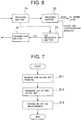
- FIG. 6 is a block diagram showing outlined functions of the mobile station of the embodiment, including a receiving section 21, a decoding section 22, a CQI measuring section 23 and a transmitting section 24.
- FIG. 7 is a flowchart showing operations of the mobile station. The operations of the base station in FIG. 6 will be described with reference to FIG. 7 .
- a downlink signal from the base station is received at the receiving section 21, input in the decoding section 22 and decoded.
- the active set of PRBs from the base station is decoded at the decoding section 22 (step S11) and supplied to the CQI measuring section 23 as an active set configuration message.
- CQIs are measured only for the PRBs forming the active set of PRBs included in the message (step S12).
- the measurements are informed to the base station as an uplink signal via the transmitting section 24 (step S13).
- an active set of PRBs decided in the abovementioned embodiment is not maintained during a call.
- the embodiment is adapted to change the active set, i.e., change (add/delete) PRBs forming the active set according to a request from the mobile station. Therefore, this embodiment is called as a mobile station supporting active set management.
- FIG. 8 is a diagram showing a general concept of changing an active set based on the mobile station supporting active set management.
- the current active set of the PRBs for the mobile station placed at the edge of the cell 2 is 0L to 1L and 0R to 1R, which is in the range of the active set allocated to the edge of the cell 2 shown in FIG. 3 .
- the mobile station measures an interference level of the PRB forming the current active set and an interference level of the PRB that falls in the active set of the edge of the cell 2 and forms an active set other than the current active set in this state.
- the interference level of PRB 1L is higher than the interference level of those other than the current active set and the interference level of PRB 3L is lower than the average interference level in the current active set.
- the mobile station requests (recommends) the base station to add the PRB 3L to the current active set and delete the PRB 1L from the current active set.
- the base station adds the PRB 3L and deletes the PRB 1L based on the requirement.
- the base station examines the recommendation from the mobile station with reference to the rule of the abovementioned frequency planning.
- the recommendation from the mobile station is accepted. If the recommendation from the mobile station does not meet the rule of the frequency planning, the base station rejects the recommendation from the mobile station.
- an active set of the new PRB for the mobile station is 0L, 3L and 0R to 1R.
- the base station can recognize that the interference of the PRB 1L increases from the CQI information on the active set from the mobile station.
- the base station can delete the PRB 1L from the active set even without a request for deleting the PRB 1L from the mobile station.
- the mobile station may define a "monitoring set" that can recommend an additional PRB, i.e., a set consisting of PRBs in a predetermined range. That is to say, it may be adapted such that the mobile station can request to add a PRB in the monitoring set to the active set, but cannot request to add a PRB in other than the monitoring set to the active set.
- a monitoring set i.e., a set consisting of PRBs in a predetermined range. That is to say, it may be adapted such that the mobile station can request to add a PRB in the monitoring set to the active set, but cannot request to add a PRB in other than the monitoring set to the active set.
- the base station rejects the request for adding the PRB. If the mobile station keeps on requesting for adding the PRBs that are forbidden to be used for the mobile station, the base station keeps rejecting the request for adding the PRBs from the mobile station. In this case, since the PRBs between the PRB 3L and 3R are defined as the monitoring set for the mobile station, the abovementioned state in which endless requests and rejections are kept can be eliminated.
- FIG. 8 is merely an example of a criterion (changing rule) for determining a request for adding PRB and a request for deleting PRB, and other changing rules for an active set to be exemplified below may be used.
- the number of the PRBs for forming the active set of PRBs is to be adjusted by deletion/addition in the range between the minimum value and the maximum value that are defined in advance at the base station.
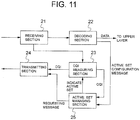
- FIG. 11 is a block diagram of outlined functions of the mobile station for performing the mobile station supporting active set management, in which the parts same as those in FIG. 6 are denoted by the same reference numerals.
- an active set managing section 25 is added to the blocks of FIG. 6 .
- the active set configuration message from the decoding section 22 is supplied to the CQI measuring section 23 via the active set managing section 25, and the CQI by the CQI measuring section 23 is supplied to the active set managing section 25.
- the active set managing section 25 outputs a message for requesting to change the PRB to the transmitting section 24.
- FIG. 12 is a flowchart showing operations of the mobile station of FIG. 11 , in which the same steps as those in FIG. 7 are denoted by the same reference numerals.
- determination on changing conditions of the active set of the PRB is performed (step S14). The determination on the changing conditions is performed based on the abovementioned changing (adding) rules (1) to (6). If the changing conditions are met, a message for requesting to change the active set is created and transmitted to the base station (step S15). The steps 14 and 15 are performed at the active set managing section 25.
- a SNR Signal to Noise Ratio
- a SNIR Signal to Noise & Interference Ratio
- an interference level a pass-loss, etc.
- the interference level and the SIR level are used as an indicator to be used as a criteria (changing rule) for determining the adding request/deleting request of the abovementioned active set
- the interference level and the SIR level are indicators which are reverse to each other. That is to say, if the interference level is low, the CQI is good, and if the SIR level is high, the CQI is good. Therefore, the indicators can be substituted by each other as high and low of the abovementioned changing rules are reversed.
- the present invention is applied to the mobile communication system in the OFDM method, though, it is not limited to the OFDM method.
- the present invention can be applied to the FDM (Frequency Division Multiplexing) method, a method combining the FDM and TDM (Time Division Multiplexing) or a method combining the FDM, TDM and CDM (Code Division Multiplexing).
- FDM Frequency Division Multiplexing
- TDM Time Division Multiplexing
- CDM Code Division Multiplexing
- the mobile station only needs to inform on a CQI for each PRB forming the active set of PRBs (the set consisting of PRBs which are selected by a base station and whose CQIs are requested to be informed of by the base station) and needs not to inform CQIs for all the PRBs. Therefore, the present invention has an advantage in reducing a load on the mobile station which also enables uplink overhead to be reduced. Further, the present invention can improve efficiency of a scheduler by changing a PRB that forms an active set at a base station based on a request from a mobile station for changing the PRB that forms the active set.
Landscapes
- Engineering & Computer Science (AREA)
- Quality & Reliability (AREA)
- Computer Networks & Wireless Communication (AREA)
- Signal Processing (AREA)
- Mobile Radio Communication Systems (AREA)
Claims (37)
- Kommunikationssystem, in dem eine Mobilstation eine Kommunikationskanalqualität eines Funkbands misst, das durch Unterteilen eines Abwärtsstrecken-Kommunikationsbands in mehrere Funkbänder erhalten wird, und eine Basisstation von der Messung über eine Aufwärtsstrecke informiert, wobei die Basisstation aufweist:eine Satzverwaltungseinheit (13), die einen Satz zuweist, der mindestens ein Funkband PRB aufweist, dessen Qualität durch die Mobilstation gemessen werden soll, und an die die Mobilstation eine Nachricht sendet, die das mindestens eine Funkband enthält;wobei die Satzverwaltungseinheit (13) eingerichtet ist, der Mobilstation einen anderen Satz von einem oder mehreren Funkbändem zuzuweisen, die durch die Mobilstation gemessen werden sollen, beruhend auf einer Anforderung von der Mobilstation, ein oder mehrere Funkbänder PRB zum Satz hinzuzufügen oder aus dem Satz zu löschen;undwobei die Mobilstation aufweist:
eine Anforderungseinheit, die anfordert, ein Funkband PRB, das nicht im gegenwärtigen Satz enthalten ist, zum gegenwärtigen Satz hinzuzufügen, wenn ein Interferenzpegel des Funkbands um einen vorgegebenen Pegel niedriger als ein maximaler Interferenzpegel oder ein durchschnittlicher Interferenzpegel im gegenwärtigen Satz ist. - Kommunikationssystem nach Anspruch 1, wobei die Mobilstation aufweist:
eine Messeinheit (23), die eine Kommunikationskanalqualität jedes Funkbands misst, das den Satz bildet, und die Basisstation von der Messung informiert. - Kommunikationssystem nach Anspruch 1, wobei die Satzverwaltungseinheit ein Funkband, das den Satz bildet, beruhend auf einer vorgegebenen Frequenzplanung zwischen benachbarten Basisstationen verwaltet.
- Kommunikationssystem nach Anspruch 1, wobei die Mobilstation aufweist:
eine Anforderungseinheit, die anfordert, ein Funkband, das nicht im gegenwärtigen Satz enthalten ist, zum gegenwärtigen Satz hinzuzufügen, wenn ein Interferenzpegel des Funkbands niedriger als ein durchschnittlicher Interferenzpegel im gegenwärtigen Satz ist. - Kommunikationssystem nach Anspruch 1, wobei die Mobilstation aufweist:
eine Anforderungseinheit, die anfordert, ein Funkband, das nicht im gegenwärtigen Satz enthalten ist, zum gegenwärtigen Satz hinzuzufügen, wenn ein SIR-Pegel des Funkbands um einen vorgegebenen Pegel höher als ein Pegel ist, der niedriger als ein maximaler SIR-Pegel oder ein durchschnittlicher SIR-Pegel im gegenwärtigen Satz ist. - Kommunikationssystem nach Anspruch 1, wobei die Mobilstation aufweist:
eine Anforderungseinheit, die anfordert, ein Funkband, das nicht im gegenwärtigen Satz enthalten ist, zum gegenwärtigen Satz hinzuzufügen, wenn ein Interferenzpegel (oder ein SIR-Pegel) des Funkbands niedriger (oder höher) als ein vorgegebener Interferenzpegel (oder ein vorgegebener SIR-Pegel) ist. - Kommunikationssystem nach Anspruch 4, wobei ein Funkband, dessen Hinzufügung zum Satz angefordert werden kann, ein Funkband innerhalb eines vorgegebenen Bereichs ist.
- Kommunikationssystem nach Anspruch 1, wobei die Mobilstation aufweist:
eine Anforderungseinheit, die anfordert, ein Funkband im gegenwärtigen Satz aus dem gegenwärtigen Satz zu löschen, wenn ein Interferenzpegel des Funkbands höher als der Interferenzpegel in einem anderen als dem gegenwärtigen Satz ist. - Kommunikationssystem nach Anspruch 1, wobei die Mobilstation aufweist:
eine Anforderungseinheit, die anfordert, ein Funkband im gegenwärtigen Satz aus dem gegenwärtigen Satz zu löschen, wenn ein Interferenzpegel des Funkbands um einen vorgegebenen Pegel höher als ein Pegel ist, der niedriger als ein maximaler Interferenzpegel oder ein durchschnittlicher Interferenzpegel im gegenwärtigen Satz ist. - Kommunikationssystem nach Anspruch 1, wobei die Mobilstation aufweist:
eine Anforderungseinheit, die anfordert, ein Funkband im gegenwärtigen Satz aus dem gegenwärtigen Satz zu löschen, wenn ein SIR-Pegel des Funkbands um einen vorgegebenen Pegel niedriger als ein Pegel ist, der niedriger als ein maximaler SIR-Pegel oder ein durchschnittlicher SIR-Pegel im gegenwärtigen Satz ist. - Kommunikationssystem nach Anspruch 1, wobei die Mobilstation aufweist:
eine Anforderungseinheit, die anfordert, ein Funkband im gegenwärtigen Satz aus dem gegenwärtigen Satz zu löschen, wenn ein Interferenzpegel (oder ein SIR-Pegel) des Funkbands höher (oder niedriger) als ein vorgegebener Interferenzpegel (oder ein vorgegebener SIR-Pegel) ist. - Kommunikationssystem nach Anspruch 1, wobei die Satzverwaltungseinheit ein Funkband im gegenwärtigen Satz aus dem gegenwärtigen Satz löscht, wenn ein Pilotsignal des Funkbands um einen vorgegebenen Pegel niedriger als das maximale Pilotsignal im gegenwärtigen Satz ist.
- Kommunikationsverfahren, in dem eine Mobilstation eine Kommunikationskanalqualität eines Funkbands misst, das durch Unterteilen eines Abwärtsstrecken-Kommunikationsbands in mehrere Funkbänder erhalten wird, und eine Basisstation von der Messung über eine Aufwärtsstrecke informiert, das aufweist:in der Basisstation,Zuweisen eines Satzes, der mindestens ein Funkband aufweist, dessen Qualität durch die Mobilstation gemessen werden soll;Senden an die Mobilstation einer Nachricht, die das mindestens eine Funkband enthält; undZuweisen zur Mobilstation eines anderen Satzes von einem oder mehreren Funkbändern, die durch die Mobilstation gemessen werden sollen, beruhend auf einer Anforderung von der Mobilstation, ein oder mehrere Funkbänder zum Satz hinzuzufügen oder aus dem Satz zu löschen; undin der Mobilstation,Anfordern, ein anderes Funkband als die mehreren Funkbänder, die den gegenwärtigen Satz bilden, zum gegenwärtigen Satz hinzuzufügen, wenn ein Interferenzpegel des Funkbands um einen vorgegebenen Pegel niedriger als ein Pegel ist, der niedriger als ein maximaler Interferenzpegel oder ein durchschnittlicher Interferenzpegel im gegenwärtigen Satz ist.
- Kommunikationsverfahren nach Anspruch 13, das ferner aufweist:in der Mobilstation,Messen einer Kommunikationskanalqualität jedes Funkbands, das den Satz bildet, und Informieren der Basisstation von der Messung.
- Kommunikationsverfahren nach Anspruch 13, wobei der Satzverwaltungsschritt ein Funkband, das den Satz bildet, beruhend auf einer vorgegebenen Frequenzplanung zwischen benachbarten Basisstationen verwaltet.
- Kommunikationsverfahren nach Anspruch 13, das ferner aufweist:in der Mobilstation,Anfordern, ein Funkband, das nicht im gegenwärtigen Satz enthalten ist, zum gegenwärtigen Satz hinzuzufügen, wenn ein Interferenzpegel des Funkbands niedriger als ein durchschnittlicher Interferenzpegel im gegenwärtigen Satz ist.
- Kommunikationsverfahren nach Anspruch 13, das ferner aufweist:in der Mobilstation,Anfordern, ein Funkband, das nicht im gegenwärtigen Satz enthalten ist, zum gegenwärtigen Satz hinzuzufügen, wenn ein SIR-Pegel des Funkbands um einen vorgegebenen Pegel höher als ein Pegel ist, der niedriger als ein maximaler SIR-Pegel oder ein durchschnittlicher SIR-Pegel im gegenwärtigen Satz ist.
- Kommunikationsverfahren nach Anspruch 13, das ferner aufweist:in der Mobilstation,Anfordern, ein Funkband, das nicht im gegenwärtigen Satz enthalten ist, zum gegenwärtigen Satz hinzuzufügen, wenn ein Interferenzpegel (oder ein SIR-Pegel) des Funkbands niedriger (oder höher) als ein vorgegebener Interferenzpegel (oder ein vorgegebener SIR-Pegel) ist.
- Kommunikationsverfahren nach Anspruch 13, wobei ein Funkband, dessen Hinzufügung zum Satz angefordert werden kann, ein Funkband innerhalb eines vorgegebenen Bereichs ist.
- Kommunikationsverfahren nach Anspruch 13, das ferner aufweist:in der Mobilstation,Anfordern, ein Funkband im gegenwärtigen Satz aus dem gegenwärtigen Satz zu löschen, wenn ein Interferenzpegel des Funkbands höher als der Interferenzpegel in einem anderen als dem gegenwärtigen Satz ist.
- Kommunikationsverfahren nach Anspruch 13, das ferner aufweist:in der Mobilstation,Anfordern, ein Funkband im gegenwärtigen Satz aus dem gegenwärtigen Satz zu löschen, wenn ein Interferenzpegel des Funkbands um einen vorgegebenen Pegel höher als ein Pegel ist, der niedriger als ein maximaler Interferenzpegel oder ein durchschnittlicher Interferenzpegel im gegenwärtigen Satz ist.
- Kommunikationsverfahren nach Anspruch 13, das ferner aufweist:in der Mobilstation,Anfordern, ein Funkband im gegenwärtigen Satz aus dem gegenwärtigen Satz zu löschen, wenn ein SIR-Pegel des Funkbands um einen vorgegebenen Pegel niedriger als ein Pegel ist, der niedriger als ein maximaler SIR-Pegel oder ein durchschnittlicher SIR-Pegel im gegenwärtigen Satz ist.
- Kommunikationsverfahren nach Anspruch 13, das ferner aufweist:in der Mobilstation,Anfordern, ein Funkband im gegenwärtigen Satz aus dem gegenwärtigen Satz zu löschen, wenn ein Interferenzpegel (oder ein SIR-Pegel) des Funkbands höher (oder niedriger) als ein vorgegebener Interferenzpegel (oder ein vorgegebener SIR-Pegel) ist.
- Kommunikationsverfahren nach Anspruch 13,
wobei der Satzverwaltungsschritt ein Funkband im gegenwärtigen Satz aus dem gegenwärtigen Satz löscht, wenn sich ein Pilotsignal des Funkbands auf einem niedrigeren Pegel als der Pegel befindet, der um einen vorgegebenen Pegel niedriger als das maximale Pilotsignal im gegenwärtigen Satz ist. - Basisstation, die in einem Mobilkommunikationssystem verwendet wird, in dem eine Mobilstation eine Kommunikationskanalqualität eines Funkbands misst, das durch Unterteilen eines Abwärtsstrecken-Kommunikationsbands in mehrere Funkbänder erhalten wird, und die Basisstation von der Messung über eine Aufwärtsstrecke informiert, die aufweist:eine Empfangseinheit (11), die eine Anzeige der Messung empfängt, undeine Satzverwaltungseinheit (13), die einen Satz zuweist, der mindestens ein Funkband aufweist, dessen Qualität durch die Mobilstation gemessen werden soll, und an die die Mobilstation eine Nachricht sendet, die das mindestens eine Funkband anzeigt;wobei die Satzverwaltungseinheit (13) eingerichtet ist, der Mobilstation einen anderen Satz von einem oder mehreren Funkbändern zuzuweisen, die durch die Mobilstation gemessen werden sollen, beruhend auf einer Anforderung von der Mobilstation, ein oder mehrere Funkbänder aus dem Satz hinzuzufügen oder zu löschen; undwobei die Verwaltungseinheit eingerichtet ist, ein Funkband, das sich nicht im gegenwärtigen Satz befindet, dem gegenwärtigen Satz hinzuzufügen, wenn ein Pilotsignal des gegenwärtigen Funkbands um einen vorgegebenen Pegel niedriger als ein Pegel ist, der niedriger als das maximale Pilotsignal im gegenwärtigen Satz ist.
- Basisstation nach Anspruch 25, wobei die Satzverwaltungseinheit ein Funkband, das den Satz bildet, beruhend auf einer vorgegebenen Frequenzplanung zwischen benachbarten Basisstationen verwaltet.
- Basisstation nach Anspruch 25, wobei die Satzverwaltungseinheit ein Funkband im gegenwärtigen Satz aus dem gegenwärtigen Satz löscht, wenn ein Pilotsignal des gegenwärtigen Funkbands um einen vorgegebenen Pegel niedriger als ein Pegel ist, der niedriger als das maximale Pilotsignal im gegenwärtigen Satz ist.
- Mobilstation zum Messen einer Kommunikationskanalqualität eines Funkbands, das durch Unterteilen eines Abwärtsstrecken-Kommunikationsbands in mehrere Funkbänder erhalten wird, und Informieren einer Basisstation von der Messung über eine Aufwärtsstrecke, die aufweist:eine Messeinheit (23), die die Kommunikationskanalqualität von mindestens einem der Funkbänder misst, deren Kanalqualität durch die Mobilstation an die Basisstation mitgeteilt werden soll, und der Basisstation eine Anforderung sendet, ein oder mehrere Funkbänder zu einem Satz von Funkbändern, deren Kanalqualität gemessen werden soll, beruhend auf einer Kanalqualität für das mindestens eine der Funkbänder, hinzuzufügen oder daraus zu löschen;eine Verwaltungseinheit (21), die eingerichtet ist, einen anderen Satz von einem oder mehreren Funkbändern zuzuweisen, die gemessen werden sollen; undeine Anforderungseinheit, die die Basisstation auffordert, ein Funkband, das nicht im gegenwärtigen Satz enthalten ist, zum gegenwärtigen Satz hinzuzufügen, wenn ein Interferenzpegel des Funkbands um einen vorgegebenen Pegel niedriger als ein maximaler Interferenzpegel oder ein durchschnittlicher Interferenzpegel im gegenwärtigen Satz ist.
- Mobilstation nach Anspruch 28, die aufweist:
eine Anforderungseinheit, die die Basisstation auffordert, ein Funkband, das nicht im gegenwärtigen Satz enthalten ist, zum gegenwärtigen Satz hinzuzufügen, wenn ein Interferenzpegel des Funkbands einen niedrigeren Interferenzpegel als ein durchschnittlicher Interferenzpegel im gegenwärtigen Satz aufweist. - Mobilstation nach Anspruch 28, die aufweist:
eine Anforderungseinheit, die die Basisstation auffordert, ein Funkband, das nicht im gegenwärtigen Satz enthalten ist, zum gegenwärtigen Satz hinzuzufügen, wenn ein SIR-Pegel des Funkbands um einen vorgegebenen Pegel höher als ein Pegel ist, der niedriger als ein maximaler SIR-Pegel oder ein durchschnittlicher SIR-Pegel im gegenwärtigen Satz ist. - Mobilstation nach Anspruch 28, die aufweist:
eine Anforderungseinheit, die die Basisstation auffordert, ein Funkband, das nicht im gegenwärtigen Satz enthalten ist, zum gegenwärtigen Satz hinzuzufügen, wenn ein Interferenzpegel (oder ein SIR-Pegel) des Funkbands niedriger (oder höher) als ein vorgegebener Interferenzpegel (oder ein vorgegebener SIR-Pegel) ist. - Mobilstation nach Anspruch 29, wobei ein Funkband, dessen Hinzufügung zum gegenwärtigen Satz angefordert werden kann, ein Funkband innerhalb eines vorgegebenen Bereichs ist.
- Mobilstation nach Anspruch 28, die aufweist:
eine Anforderungseinheit, die die Basisstation auffordert, ein Funkband im gegenwärtigen Satz aus dem gegenwärtigen Satz zu löschen, wenn ein Interferenzpegel des Funkbands höher als der Interferenzpegel in einem anderen als dem gegenwärtigen Satz ist. - Mobilstation nach Anspruch 28, die aufweist:
eine Anforderungseinheit, die die Basisstation auffordert, ein Funkband im gegenwärtigen Satz aus dem gegenwärtigen Satz zu löschen, wenn ein Interferenzpegel des Funkbands um einen vorgegebenen Pegel höher als ein Pegel ist, der niedriger als ein maximaler Interferenzpegel oder ein durchschnittlicher Interferenzpegel im gegenwärtigen Satz ist. - Mobilstation nach Anspruch 28, die aufweist:
eine Anforderungseinheit, die die Basisstation auffordert, ein Funkband im gegenwärtigen Satz aus dem gegenwärtigen Satz zu löschen, wenn ein SIR-Pegel des Funkbands um einen vorgegebenen Pegel niedriger als ein Pegel ist, der niedriger als ein maximaler SIR-Pegel oder ein durchschnittlicher SIR-Pegel im gegenwärtigen Satz ist. - Mobilstation nach Anspruch 28, die aufweist:
eine Anforderungseinheit, die anfordert, ein Funkband im gegenwärtigen Satz aus dem gegenwärtigen Satz zu löschen, wenn ein Interferenzpegel (oder ein SIR-Pegel) des Funkbands höher (oder niedriger) als ein vorgegebener Interferenzpegel (oder ein vorgegebener SIR-Pegel) ist. - Programm, das auf einem nichtflüchtigen computerlesbaren Medium ausgeführt ist, um einen Computer zu veranlassen, Operationen einer Basisstation auszuführen, die in einem Mobilkommunikationssystem verwendet wird, in dem eine Mobilstation eine Kommunikationskanalqualität eines Funkbands misst, das durch Unterteilen eines Abwärtsstrecken-Kommunikationsbands in mehrere Funkbänder erhalten wird, und die Basisstation von der Messung über eine Aufwärtsstrecke informiert, wobei die Operationen aufweisen:Empfangen der Messung,Zuweisen eines Satzes, der mindestens ein Funkband aufweist, dessen Qualität durch die Mobilstation gemessen werden soll;Senden an die Mobilstation einer Nachricht, die das mindestens ein Funkband enthält;Zuweisen zur Mobilstation eines anderen Satzes von einem oder mehreren Funkbändern, die durch die Mobilstation gemessen werden sollen, beruhend auf einer Anforderung von der Mobilstation, ein oder mehrere Funkbänder zum Satz hinzuzufügen oder daraus zu löschen; undHinzufügen eines Funkbands, das sich nicht im gegenwärtigen Satz befindet, zu dem gegenwärtigen Satz, wenn ein Pilotsignal des gegenwärtigen Funkbands um einen vorgegebenen Pegel niedriger als ein Pegel ist, der niedriger als das maximale Pilotsignal im gegenwärtigen Satz ist.
Applications Claiming Priority (1)
| Application Number | Priority Date | Filing Date | Title |
|---|---|---|---|
| JP2006164791A JP5260842B2 (ja) | 2006-06-14 | 2006-06-14 | 通信システム及びその方法並びにそれに用いる移動局及び基地局 |
Publications (3)
| Publication Number | Publication Date |
|---|---|
| EP1868397A2 EP1868397A2 (de) | 2007-12-19 |
| EP1868397A3 EP1868397A3 (de) | 2009-08-05 |
| EP1868397B1 true EP1868397B1 (de) | 2019-10-02 |
Family
ID=38565871
Family Applications (1)
| Application Number | Title | Priority Date | Filing Date |
|---|---|---|---|
| EP07106793.8A Active EP1868397B1 (de) | 2006-06-14 | 2007-04-24 | Kommunikationssystem, Verfahren dafür und dabei verwendete Mobilstation und Basisstation |
Country Status (5)
| Country | Link |
|---|---|
| US (1) | US9008679B2 (de) |
| EP (1) | EP1868397B1 (de) |
| JP (1) | JP5260842B2 (de) |
| KR (1) | KR100914227B1 (de) |
| CN (2) | CN101090552B (de) |
Families Citing this family (22)
| Publication number | Priority date | Publication date | Assignee | Title |
|---|---|---|---|---|
| US20100110986A1 (en) * | 2007-04-20 | 2010-05-06 | Toshizo Nogami | Base station device, terminal device, communication system and communication method |
| GB2458258A (en) | 2008-02-04 | 2009-09-16 | Nec Corp | Method of controlling base station loading in a mobile communication system |
| US8144797B2 (en) | 2008-03-25 | 2012-03-27 | Intel Mobile Communications GmbH | CQI table for wireless MIMO networks |
| US7986673B2 (en) * | 2008-05-30 | 2011-07-26 | Sharp Laboratories Of America, Inc. | Systems and methods for reducing feedback overhead in wireless networks using channel characteristics |
| JP2010016674A (ja) * | 2008-07-04 | 2010-01-21 | Fujitsu Ltd | 無線通信装置、無線通信システム、及び無線通信方法 |
| US8630252B2 (en) * | 2008-07-08 | 2014-01-14 | Lg Electronics Inc. | Terminal apparatus and a method for transmitting feedback information in a wireless communication system |
| JP5106300B2 (ja) * | 2008-07-31 | 2012-12-26 | キヤノン株式会社 | 管理装置、通信装置、制御方法およびプログラム |
| KR101611290B1 (ko) * | 2008-12-29 | 2016-04-11 | 엘지전자 주식회사 | 복수의 전송 대역을 지원하는 무선 통신 시스템에 있어서, cqi를 요청하기 위한 제어정보를 전송하는 방법 |
| JP5073687B2 (ja) * | 2009-01-07 | 2012-11-14 | 株式会社エヌ・ティ・ティ・ドコモ | 基地局装置及び情報送信方法 |
| JP5422211B2 (ja) * | 2009-01-21 | 2014-02-19 | 株式会社日立製作所 | 無線通信システム、端末及び基地局 |
| WO2010086975A1 (ja) * | 2009-01-29 | 2010-08-05 | 三菱電機株式会社 | 無線通信方法 |
| US8649456B2 (en) | 2009-03-12 | 2014-02-11 | Futurewei Technologies, Inc. | System and method for channel information feedback in a wireless communications system |
| US8675627B2 (en) * | 2009-03-23 | 2014-03-18 | Futurewei Technologies, Inc. | Adaptive precoding codebooks for wireless communications |
| CN102036394B (zh) * | 2009-09-29 | 2013-11-20 | 电信科学技术研究院 | 一种传输信道质量信息的方法及系统 |
| WO2012015154A1 (ko) | 2010-07-26 | 2012-02-02 | 엘지전자 주식회사 | 다중 반송파 정합을 지원하는 무선 접속 시스템에서 비주기적 채널상태정보 피드백 방법 |
| CN102404055B (zh) * | 2010-09-10 | 2014-06-18 | 电信科学技术研究院 | 一种测量干扰的方法、系统和设备 |
| US9173121B2 (en) | 2010-11-01 | 2015-10-27 | Qualcomm Incorporated | Method and apparatus for restricted measuring in a wireless network |
| CN102480792B (zh) * | 2010-11-22 | 2014-12-17 | 大唐移动通信设备有限公司 | 一种prb的处理方法和设备 |
| WO2012074113A1 (ja) * | 2010-12-03 | 2012-06-07 | シャープ株式会社 | 通信端末、基地局、無線通信システム、これらの制御方法および制御プログラム、並びに、該制御プログラムを記録した記録媒体 |
| WO2012096049A1 (ja) * | 2011-01-14 | 2012-07-19 | 住友電気工業株式会社 | 基地局装置、端末装置、無線通信システム、及び方法 |
| JP5717673B2 (ja) * | 2012-03-01 | 2015-05-13 | 株式会社Nttドコモ | 無線通信システム、基地局、ユーザ端末、および通信制御方法 |
| WO2014127539A1 (en) * | 2013-02-25 | 2014-08-28 | Empire Technology Development Llc | Scheduling communication resources |
Family Cites Families (21)
| Publication number | Priority date | Publication date | Assignee | Title |
|---|---|---|---|---|
| CA2032325C (en) * | 1990-12-14 | 1998-07-07 | Leo Strawczynski | Intra-cell call hand-over in radio communication systems with dynamic channel allocation |
| US5987326A (en) * | 1997-02-11 | 1999-11-16 | Qualcomm Incorporated | Transmit power reduction for a high speed CDMA link in soft handoff |
| EP1111947A1 (de) * | 1999-12-22 | 2001-06-27 | Telefonaktiebolaget L M Ericsson (Publ) | Schnurloses Telefonsystem |
| KR100321975B1 (ko) * | 2000-01-25 | 2004-09-07 | 삼성전자 주식회사 | 다중반송파를 사용하는 이동통신 시스템에서 전력 제어를위한 신호대간섭비 측정 장치 및 방법 |
| US7046644B1 (en) * | 2000-11-27 | 2006-05-16 | Nokia Mobile Phones Ltd. | Adaptive transmission channel allocation method and system for ISM and unlicensed frequency bands |
| WO2002049306A2 (en) * | 2000-12-15 | 2002-06-20 | Broadstorm Telecommunications, Inc. | Multi-carrier communications with group-based subcarrier allocation |
| US6873831B2 (en) * | 2002-04-01 | 2005-03-29 | Qualcomm Incorporated | Method and apparatus for transmit power modulation in a wireless communications system |
| JP4256158B2 (ja) * | 2002-12-26 | 2009-04-22 | パナソニック株式会社 | 無線通信装置及び無線通信方法 |
| JP3860556B2 (ja) * | 2003-04-04 | 2006-12-20 | 松下電器産業株式会社 | 基地局装置及び通信方法 |
| CN100492946C (zh) * | 2003-06-27 | 2009-05-27 | 上海贝尔阿尔卡特股份有限公司 | 一种自适应正交频分复用(ofdm)系统中的反馈信息传输方法 |
| JP2005086408A (ja) * | 2003-09-08 | 2005-03-31 | Sony Corp | 無線通信システム、無線通信装置及び無線通信方法、並びにコンピュータ・プログラム |
| KR100929094B1 (ko) * | 2003-09-20 | 2009-11-30 | 삼성전자주식회사 | 직교 주파수 분할 다중 접속 방식을 사용하는 이동 통신시스템에서 동적 자원 할당 시스템 및 방법 |
| KR100566274B1 (ko) * | 2003-11-20 | 2006-03-30 | 삼성전자주식회사 | 직교주파수분할다중 시스템에서 부반송파 할당 장치 및방법 |
| KR20050078635A (ko) * | 2004-02-02 | 2005-08-05 | 한국전자통신연구원 | 이동 통신 시스템에서의 채널 품질 정보 요청 및 보고방법, 그리고 그 장치 |
| KR100946923B1 (ko) * | 2004-03-12 | 2010-03-09 | 삼성전자주식회사 | 직교 주파수 분할 다중 방식을 사용하는 통신 시스템에서 채널 품질 정보의 송수신 장치 및 방법, 그리고 그에 따른 시스템 |
| JP2005341432A (ja) * | 2004-05-28 | 2005-12-08 | Ntt Docomo Inc | 周波数選択装置、移動通信システムおよびマルチバンド制御方法 |
| JP4640787B2 (ja) * | 2004-06-28 | 2011-03-02 | 株式会社エヌ・ティ・ティ・ドコモ | 送信局及び移動通信システム、並びに無線リソース割当方法 |
| KR100689364B1 (ko) * | 2004-11-15 | 2007-03-02 | 삼성전자주식회사 | 채널 품질 정보를 통신하는 시스템 |
| US7936720B2 (en) * | 2005-04-29 | 2011-05-03 | Nortel Networks Limited | Active set management enhancement for reliable soft handoff in 1xEV-DO system |
| KR101085648B1 (ko) * | 2005-06-09 | 2011-11-22 | 삼성전자주식회사 | 무선 통신 시스템에서 채널 품질 정보를 전송하기 위한방법 |
| US7457588B2 (en) * | 2005-08-01 | 2008-11-25 | Motorola, Inc. | Channel quality indicator for time, frequency and spatial channel in terrestrial radio access network |
-
2006
- 2006-06-14 JP JP2006164791A patent/JP5260842B2/ja not_active Expired - Fee Related
-
2007
- 2007-04-24 EP EP07106793.8A patent/EP1868397B1/de active Active
- 2007-05-25 US US11/753,772 patent/US9008679B2/en active Active
- 2007-05-30 CN CN2007101081646A patent/CN101090552B/zh active Active
- 2007-05-30 CN CN201310172655.2A patent/CN103327632B/zh active Active
- 2007-06-04 KR KR1020070054257A patent/KR100914227B1/ko not_active Expired - Fee Related
Non-Patent Citations (1)
| Title |
|---|
| None * |
Also Published As
| Publication number | Publication date |
|---|---|
| KR20070119499A (ko) | 2007-12-20 |
| KR100914227B1 (ko) | 2009-08-27 |
| US9008679B2 (en) | 2015-04-14 |
| CN101090552B (zh) | 2013-11-06 |
| JP5260842B2 (ja) | 2013-08-14 |
| CN103327632B (zh) | 2016-06-22 |
| US20070293230A1 (en) | 2007-12-20 |
| EP1868397A3 (de) | 2009-08-05 |
| JP2007336176A (ja) | 2007-12-27 |
| EP1868397A2 (de) | 2007-12-19 |
| CN103327632A (zh) | 2013-09-25 |
| CN101090552A (zh) | 2007-12-19 |
Similar Documents
| Publication | Publication Date | Title |
|---|---|---|
| US9008679B2 (en) | Communication system, method for the same and mobile station and base station used for the same | |
| KR101164744B1 (ko) | 버퍼 상태 보고(bsr) 정보의 전송을 트리거링하는 방법 | |
| KR101221255B1 (ko) | 무선 통신 시스템에서의 채널 품질 리포팅 | |
| CN1732642B (zh) | 无线通信装置和无线通信方法 | |
| EP2180748B1 (de) | Interzellinterferenzminderungssignalisierungsverfahren | |
| JP5054186B2 (ja) | 通信ネットワークにおいてセル間干渉を管理するための方法及び装置 | |
| US8130812B2 (en) | Base station, user device, and communication control method | |
| CN101536570B (zh) | 在无线通信系统中调度远程单元 | |
| KR20110020228A (ko) | 무선기지국 및 통신제어방법 | |
| KR100833524B1 (ko) | 무선통신 시스템에서 채널품질정보 채널 할당 방법 및 장치 | |
| EP2015492A1 (de) | Verfahren zur Berichterstattung über die Kanalqualität sowie drahtlose Kommunikationsvorrichtung mit Struktur zur Berichterstattung über die Kanalqualität | |
| KR102050926B1 (ko) | 가입자 분포에 따른 스케쥴링 방법 및 장치와 그를 위한 이동통신 시스템 | |
| HK40018199A (en) | Radio communication apparatus and radio communication method | |
| HK40018199B (en) | Radio communication apparatus and radio communication method | |
| HK1237137B (en) | Radio communication apparatus and radio communication method | |
| KR20100076755A (ko) | 802.16/WiBro 시스템에서 셀간 간섭 최소화를 위한 서비스 존 스위칭 방법 |
Legal Events
| Date | Code | Title | Description |
|---|---|---|---|
| PUAI | Public reference made under article 153(3) epc to a published international application that has entered the european phase |
Free format text: ORIGINAL CODE: 0009012 |
|
| AK | Designated contracting states |
Kind code of ref document: A2 Designated state(s): AT BE BG CH CY CZ DE DK EE ES FI FR GB GR HU IE IS IT LI LT LU LV MC MT NL PL PT RO SE SI SK TR |
|
| AX | Request for extension of the european patent |
Extension state: AL BA HR MK YU |
|
| PUAL | Search report despatched |
Free format text: ORIGINAL CODE: 0009013 |
|
| AK | Designated contracting states |
Kind code of ref document: A3 Designated state(s): AT BE BG CH CY CZ DE DK EE ES FI FR GB GR HU IE IS IT LI LT LU LV MC MT NL PL PT RO SE SI SK TR |
|
| AX | Request for extension of the european patent |
Extension state: AL BA HR MK RS |
|
| 17P | Request for examination filed |
Effective date: 20100114 |
|
| 17Q | First examination report despatched |
Effective date: 20100208 |
|
| AKX | Designation fees paid |
Designated state(s): DE FR GB IT |
|
| REG | Reference to a national code |
Ref country code: DE Ref legal event code: R079 Ref document number: 602007059280 Country of ref document: DE Free format text: PREVIOUS MAIN CLASS: H04Q0007320000 Ipc: H04W0072040000 |
|
| RIC1 | Information provided on ipc code assigned before grant |
Ipc: H04W 72/04 20090101AFI20190307BHEP Ipc: H04W 72/08 20090101ALI20190307BHEP |
|
| GRAP | Despatch of communication of intention to grant a patent |
Free format text: ORIGINAL CODE: EPIDOSNIGR1 |
|
| INTG | Intention to grant announced |
Effective date: 20190423 |
|
| GRAS | Grant fee paid |
Free format text: ORIGINAL CODE: EPIDOSNIGR3 |
|
| GRAA | (expected) grant |
Free format text: ORIGINAL CODE: 0009210 |
|
| RIN1 | Information on inventor provided before grant (corrected) |
Inventor name: LEE, JINSOCK |
|
| AK | Designated contracting states |
Kind code of ref document: B1 Designated state(s): DE FR GB IT |
|
| REG | Reference to a national code |
Ref country code: GB Ref legal event code: FG4D |
|
| REG | Reference to a national code |
Ref country code: DE Ref legal event code: R096 Ref document number: 602007059280 Country of ref document: DE |
|
| REG | Reference to a national code |
Ref country code: DE Ref legal event code: R097 Ref document number: 602007059280 Country of ref document: DE |
|
| PGFP | Annual fee paid to national office [announced via postgrant information from national office to epo] |
Ref country code: DE Payment date: 20200430 Year of fee payment: 14 |
|
| PLBE | No opposition filed within time limit |
Free format text: ORIGINAL CODE: 0009261 |
|
| STAA | Information on the status of an ep patent application or granted ep patent |
Free format text: STATUS: NO OPPOSITION FILED WITHIN TIME LIMIT |
|
| PG25 | Lapsed in a contracting state [announced via postgrant information from national office to epo] |
Ref country code: IT Free format text: LAPSE BECAUSE OF FAILURE TO SUBMIT A TRANSLATION OF THE DESCRIPTION OR TO PAY THE FEE WITHIN THE PRESCRIBED TIME-LIMIT Effective date: 20191002 |
|
| 26N | No opposition filed |
Effective date: 20200703 |
|
| PG25 | Lapsed in a contracting state [announced via postgrant information from national office to epo] |
Ref country code: FR Free format text: LAPSE BECAUSE OF NON-PAYMENT OF DUE FEES Effective date: 20200430 |
|
| REG | Reference to a national code |
Ref country code: DE Ref legal event code: R119 Ref document number: 602007059280 Country of ref document: DE |
|
| PG25 | Lapsed in a contracting state [announced via postgrant information from national office to epo] |
Ref country code: DE Free format text: LAPSE BECAUSE OF NON-PAYMENT OF DUE FEES Effective date: 20211103 |
|
| P01 | Opt-out of the competence of the unified patent court (upc) registered |
Effective date: 20230627 |
|
| REG | Reference to a national code |
Ref country code: GB Ref legal event code: 732E Free format text: REGISTERED BETWEEN 20240620 AND 20240627 |
|
| PGFP | Annual fee paid to national office [announced via postgrant information from national office to epo] |
Ref country code: GB Payment date: 20250422 Year of fee payment: 19 |