EP1853227B1 - Pharmaceutical composition - Google Patents
Pharmaceutical composition Download PDFInfo
- Publication number
- EP1853227B1 EP1853227B1 EP06709975A EP06709975A EP1853227B1 EP 1853227 B1 EP1853227 B1 EP 1853227B1 EP 06709975 A EP06709975 A EP 06709975A EP 06709975 A EP06709975 A EP 06709975A EP 1853227 B1 EP1853227 B1 EP 1853227B1
- Authority
- EP
- European Patent Office
- Prior art keywords
- composition according
- rna
- microparticle composition
- microparticle
- microparticles
- Prior art date
- Legal status (The legal status is an assumption and is not a legal conclusion. Google has not performed a legal analysis and makes no representation as to the accuracy of the status listed.)
- Expired - Lifetime
Links
Images



Classifications
-
- A—HUMAN NECESSITIES
- A61—MEDICAL OR VETERINARY SCIENCE; HYGIENE
- A61K—PREPARATIONS FOR MEDICAL, DENTAL OR TOILETRY PURPOSES
- A61K39/00—Medicinal preparations containing antigens or antibodies
- A61K39/0005—Vertebrate antigens
- A61K39/0011—Cancer antigens
-
- A—HUMAN NECESSITIES
- A61—MEDICAL OR VETERINARY SCIENCE; HYGIENE
- A61K—PREPARATIONS FOR MEDICAL, DENTAL OR TOILETRY PURPOSES
- A61K39/00—Medicinal preparations containing antigens or antibodies
- A61K39/02—Bacterial antigens
- A61K39/07—Bacillus
-
- A—HUMAN NECESSITIES
- A61—MEDICAL OR VETERINARY SCIENCE; HYGIENE
- A61K—PREPARATIONS FOR MEDICAL, DENTAL OR TOILETRY PURPOSES
- A61K39/00—Medicinal preparations containing antigens or antibodies
- A61K39/39—Medicinal preparations containing antigens or antibodies characterised by the immunostimulating additives, e.g. chemical adjuvants
-
- A—HUMAN NECESSITIES
- A61—MEDICAL OR VETERINARY SCIENCE; HYGIENE
- A61P—SPECIFIC THERAPEUTIC ACTIVITY OF CHEMICAL COMPOUNDS OR MEDICINAL PREPARATIONS
- A61P31/00—Antiinfectives, i.e. antibiotics, antiseptics, chemotherapeutics
-
- A—HUMAN NECESSITIES
- A61—MEDICAL OR VETERINARY SCIENCE; HYGIENE
- A61P—SPECIFIC THERAPEUTIC ACTIVITY OF CHEMICAL COMPOUNDS OR MEDICINAL PREPARATIONS
- A61P35/00—Antineoplastic agents
-
- A—HUMAN NECESSITIES
- A61—MEDICAL OR VETERINARY SCIENCE; HYGIENE
- A61P—SPECIFIC THERAPEUTIC ACTIVITY OF CHEMICAL COMPOUNDS OR MEDICINAL PREPARATIONS
- A61P37/00—Drugs for immunological or allergic disorders
- A61P37/02—Immunomodulators
- A61P37/04—Immunostimulants
-
- A—HUMAN NECESSITIES
- A61—MEDICAL OR VETERINARY SCIENCE; HYGIENE
- A61P—SPECIFIC THERAPEUTIC ACTIVITY OF CHEMICAL COMPOUNDS OR MEDICINAL PREPARATIONS
- A61P43/00—Drugs for specific purposes, not provided for in groups A61P1/00-A61P41/00
-
- A—HUMAN NECESSITIES
- A61—MEDICAL OR VETERINARY SCIENCE; HYGIENE
- A61K—PREPARATIONS FOR MEDICAL, DENTAL OR TOILETRY PURPOSES
- A61K39/00—Medicinal preparations containing antigens or antibodies
- A61K2039/555—Medicinal preparations containing antigens or antibodies characterised by a specific combination antigen/adjuvant
- A61K2039/55511—Organic adjuvants
- A61K2039/55555—Liposomes; Vesicles, e.g. nanoparticles; Spheres, e.g. nanospheres; Polymers
Definitions
- the present invention relates to microparticle and pharmaceutical compositions comprising stable, Immunogenic, microencapsulated single-stranded ribonucleic acid (RNA), which stimulates an immune response in mammalian cells.
- RNA ribonucleic acid
- the mammalian immune system possesses a specialised 'early warning system' in the form of a panel of detectors to rapidly sense and trigger responses to the presence of microbial invaders.
- the various 'toll-like receptors' (TLRs) recognise diverse structures and chemicals that are conserved in pathogens but are not found in multicellular organisms. Stimulation of a TLR with its appropriate agonist results in the activation of signalling pathways leading to the production of specific proinflammatory and / or anti-viral cytokine(s).
- TLR agonists such as CpG oligodeoxynucleotides, as immunotherapeutics and vaccine adjuvants (see for example Nature Reviews Immunology 2004, Vol. 4 pages 248-257 and pages 512-520 ).
- Type I interferons are notable for their importance in antiviral responses.
- Type I interferons are Involved very early on in the innate immune response and are critical to rapidly establishing an antiviral state following infection.
- Type I interferons also modulate any subsequent adaptive response to virus; encouraging dendritic cell cross priming and the induction of cytotoxic T-lymphocyte (CTL) responses.
- CTL cytotoxic T-lymphocyte
- Plasmacytoid dendritic cells can produce extremely high levels of type I interferon (up-to 1000 times more than conventional cells). It is thought that plasmacytoid dendritic cells are responsible for systemic interferon responses to many viral infections. Stimulation of plasmacytoid dendritic cells with certain CpG oligonucleotides results in the production of high levels of interferon-a. It is thought that CpG DNA interacts with TLR9 in the endosomal compartment Recently, it has been demonstrated that murine plasmacytoid dendritic cells can produce high levels of IFN- ⁇ following stimulation with guanine and Uracil-rich sequences of single stranded (ss) RNA ( Diebold et al Science 2004, 303, 1529 ).
- ss single stranded
- TLR7 in mice. Like TLR9, it is thought that TLR7 interacts with pathogen associated molecular patterns in endosomal compartments. The cellular location of TLR7, i.e. in the endosomal compartment, prevents activation by 'self' ssRNA In the cytosol. However, it is generally accepted that ssRNA alone is unable to effectively stimulate IFN- ⁇ production from plasmacytoid dendritic cells. This is because ssRNA is particularly susceptible to nuclease attack, and also because uptake of ss-RNA's across plasma membranes is particularly poor.
- Such a means for stabilising the ss-RNA should protect the RNA from nuclease attack whilst maintaining its immunostimulatory properties.
- the means for stabilising the ss-RNA should Ideally be in a form that is complementary with existing means for delivering immunogenic compounds, such that the generic immune response elicited by ss-RNA does not interfere with any specific therapies that may be administered or co-administered.
- compositions comprising ss-RNA which has been microencapsulated in the presence of a stabilising agent successfully stabilises and protects ss-RNA and also stimulates an increased cytokine response over other generic therapeutic agents.
- the composition of the present invention stimulates levels of IFN- ⁇ and IL-12. which are at least equivalent, if not superior, to those stimulated by ss-RNA condensed with commonly utilised in vitro transfection reagents (such as poly ethylene imine, hereinafter "PEI").
- PEI poly ethylene imine
- the particle size of the microparticulate formulation can be optimised depending on the required route of administration.
- the microparticles of the present invention may be formed so as to provide an average particle size within the range perceived to be optimal for delivery to the lower respiratory tract, i.e. 1-10 ⁇ m.
- the microparticle and pharmaceutical compositions of the present invention stimulate production of cytokines in a host cell and, as such, may be used as a generic immunotherapy for a wide range of conditions and infections. This is particularly advantageous when a specific therapy is not known or is unavailable.
- a further advantage of the invention is that the composition optionally comprises specific therapeutic agents such that a generic and a specific immune response may be elicited in a compromised individual to whom the composition is administered.
- the microparticle composition of the present invention has the added advantage in that it may be stored as a dry powder for extended periods of time (at least several months)without loss of biological potency. After storage, the composition may be administered directly as a dry powder, for example by inhalation, or re-hydrated in a pharmaceutical acceptable solvent or buffer, as are known in the art, and administered parenterally, as required.
- compositions of the present invention may also be useful in eliciting a cytotoxic T-lymphocyte (CTL) response, which is particularly important for the clearance of intracellular pathogens and cancerous cells.
- CTL cytotoxic T-lymphocyte
- This feature of the composition highlights a particular advantage of the invention because, in light of the importance of IFN- ⁇ in the induction of CTL responses, it can provide a vaccine delivery system capable of Inducing a CTL response. Such a vaccine delivery system is particularly suitable for tumour immunotherapy.
- a microparticle composition comprising a biodegradable polymer, an immunogenic single-stranded ribonucleic acid (hereinafter "ss-RNA”) material, a biologically active macromolecule and a stabilising agent wherein the biologically active macromolecule, the single-stranded ribonucleic acid (ss-RNA) and the stabilising agent are encapsulated inside and/or within the biodegradable polymer to provide a free outer surface of the microparticle.
- ss-RNA immunogenic single-stranded ribonucleic acid
- the outer surface of the microparticle is essentially free of the entrapped components, it is inevitable that a small proportion of each of the ss-RNA, the biologically active macromolecule and the stabilising agent may be present of the surface of the microparticle.
- the outer surface of the microparticles are substantially free of the entrapped components. Therefore, as used herein, "free outer surface” relates to the outer surface of microparticles which comprise no adsorbed components directly after formation.
- microparticles with such free outer surfaces may be subjected to processes which result in other materials, e.g. pharmaceutical compounds, macromolecules and nucleic acids, becoming adsorbed thereto.
- absorbed components'' relates to entrapped materials which may be partially present at the microparticle surface, as a result of the microparticle formation process and "adsorbed components” relates to materials which are adsorbed on to the outer surface of the microparticle, after it has been formed.
- microparticle refers to a particle of from about 10 nm to about 100 ⁇ m in diameter, preferably in the range of from 200 nm to 30 ⁇ m and more preferably in the range of from 500 nm to 10 ⁇ m in diameter. Microparticle size is readily determined by techniques well known in the art, such as laser diffractometry or scanning electron microscopy, and is commonly quoted as an average diameter.
- the terms particle, particulate, microparticles, microparticulate and microsphere may be used interchangeably and all fall within the above definition of microparticle.
- biodegradable polymer which is blocompatible may be used to form the microparticles of the present invention but it is preferred that a polymer which is known to degrade in mammalian tissue and which is suitable for pharmaceutical administration is used.
- biodegradable polymers include, but are not limited to, aliphatic polyesters, polymers derived from a poly(a-hydroxy acid) such as poly(lactide) ("PLA”), or a copolymer of D, L-lactide and glycolide or glycolic acid, such as poly(D,L-lactide-co-glycolide (“PLG” or "PLGA”) or a polyglycolide, a polycaprolactone and copolymers thereof. It is preferred that the biodegradable polymer is a poly(lactide).
- the ss-RNA material encapsulated within the microparticles can be any single stranded sequence of RNA which is capable of stimulating or enhancing an immune response, particularly by stimulating production of proinflammatory cytokines, such as Tumour Necrosis Factor (TNF- ⁇ ) and /or anti-viral cytokines, such as INF- ⁇ , INF- ⁇ , or IL-12. It is preferred that ss-RNA stimulates the production and secretion of INF- ⁇ .
- proinflammatory cytokines such as Tumour Necrosis Factor (TNF- ⁇ ) and /or anti-viral cytokines, such as INF- ⁇ , INF- ⁇ , or IL-12.
- TNF- ⁇ Tumour Necrosis Factor
- anti-viral cytokines such as INF- ⁇ , INF- ⁇ , or IL-12. It is preferred that ss-RNA stimulates the production and secretion of INF- ⁇ .
- INF- ⁇ may be produced by many mechanisms, but it is preferred that the ss-RNA is chosen such that it stimulates production of the cytokine by interacting with and stimulating Toll-Like Receptors (TLR) of dendritic cells in a mammalian host. It will also be understood by those skilled in the art that different TLRs may facilitate the secretion of INF- ⁇ , but it is preferred that the ss-RNA stimulates TLR-7 and/or TLR-8, which are likely to be involved in cytokine expression in humans.
- TLR Toll-Like Receptors
- Suitable ss-RNA sequences are those which have a high proportion of a single base, that is, sequences which contain regions which are rich in either A, U, C or G. It is preferred that the ss-RNA has a G-rich or a U-rich sequence.
- Preferred examples of ss-RNA include polyuridylic acid and polyguanylic acid. It is more preferred that the ss-RNA is polyuridylic acid.
- Microencapsulation of the ss-RNA is preferably performed in the presence of a biologically active macromolecule.
- macromolecules include therapeutic agents known to elicit generic immune responses, such as a oligodeoxynucleotides, CpG oligonucleotides, polypeptides and proteins and also substances capable of providing a specific therapeutic effect, such as agents which elicit a specific immune effect against a known pathogen, such as a pathogen-specific antigen or, in the alternative, substances which elicit a specific immune effect against an antigen expressed on a tumour or cancerous cell.
- therapeutic agents known to elicit generic immune responses such as a oligodeoxynucleotides, CpG oligonucleotides, polypeptides and proteins
- substances capable of providing a specific therapeutic effect such as agents which elicit a specific immune effect against a known pathogen, such as a pathogen-specific antigen or, in the alternative, substances which elicit a specific immune effect against an anti
- antigen means a molecule which contains one or more epitopes capable of stimulating a host's immune system to make an antigen-specific immune response when the antigen is present or to elicit a humoral antibody response.
- antigen denotes both sub-unit antigens and killed, attenuated or inactivated bacteria, viruses and other microbes.
- Antibodies and fragments of antibodies which can mimic an antigen or an antigenic determinant are also include in the definition of antigen.
- the microparticle composition comprises an antigen specific to a bacterial pathogen, for example recombinant Protective Antigen (rPA) of Bacillus anthracis or F1 and or V antigens from Yersinia pestis but it will be understood by those skilled in the art that any known antigen may be formulated into the microparticle composition.
- rPA recombinant Protective Antigen
- This embodiment is particularly useful for the treatment of bacterial infections, such as anthrax, plague, melioidosis, glanders, chlamydia and the like but also for the treatment of viral, fungal and parasitic infections, provided a suitable antigen or antigen-mimic is available.
- the stabilising agent of the microparticle formulation can be anyone selected from the wide range of stabilising agents known in the technical field.
- Stabilising agents include but are not limited to detergents, surfactants, dispersing agents, suspending agents and emulsion stabilisers.
- Preferred examples of stabilising agents include lipids and surfactants.
- the stabilising agent selected is a pharmaceutically acceptable agent, such that stabilising agents which may be toxic when administered in-vivo can be avoided. It is further preferred that the stabilising agent is capable of forming a complex with the ss-RNA.
- Such complexes may be formed by direct covalent attachment of the stabilising agent to the ss-RNA, for example as a result of a condensation reaction or alternatively the complexes may be formed by electrostatic, ionic or hydrophobic interactions. It is more preferred that the stabilising agent is positively charged, so as to effect an electrostatic interaction with the ss-RNA. Suitable examples of such stabilising agents are cationic polymers and/or cationic lipids.
- cationic lipids such as cetyl trimethyl ammonium bromide (hereinafter “CTAB”), dimethyl dioctodecyl ammonium bromide (“DOA”) and N-[1-(2,3-dioleoyloxy)propyl]-N,N,N-trimethylammonium chloride (“DOTAP”) and the like.
- CTAB cetyl trimethyl ammonium bromide
- DOA dimethyl dioctodecyl ammonium bromide
- DOTAP N-[1-(2,3-dioleoyloxy)propyl]-N,N,N-trimethylammonium chloride
- Suitable amounts of stabilising agent can be routinely determined by those skilled in the art, but it is preferred that the mass ratio of ss-RNA to biodegradable polymer to stabilising agent is in the range of from about 1:8:6 to about 1:15:12 and more preferably the mass ratio of components is approximately 2:25:18.
- the selection and amount of stabilising agent may affect the overall charge of the microparticles formed in the presence of said stabilising agents such that the pharmaceutical composition may have a net negative or positive charge. It is preferred that the composition has a net positive charge, as measured by a suitable charge-measuring devices such as a ZetasizerTM, which measures zeta potential, the electrical potential that exists across the interface of all solids and liquids. It is further preferred that the measured zeta potential of the resulting composition is in the range of from about 0 to 100 mV, more preferably in the range of 20 to 80 mV and even more preferably in the range of 30 to 60 mV. The inventors have found that pharmaceutical compositions with zeta potential of around 50 mV are particularly effective in stimulating production of INF- ⁇ .
- the microparticle composition ideally comprises microparticles that are of a size which enables efficient administration and transport into the immune system, and which are particularly suitable for inhalational administration. It is preferred that the microparticles have a mean diameter in the range of 0.1 to 5 ⁇ m, more preferably 0.2 to 4 ⁇ m. It is most preferred that the microparticles have a mean diameter of approximately 1 ⁇ m.
- Such microparticles are suitably formulated into a pharmaceutical composition by combining the microparticles with pharmaceutically acceptable adjuvants and/or excipients, such as binders, fillers, diluents, lubricants, colours, sweeteners, dispersing agents and the like.
- compositions may be formulated to provide a means of co-administering the microparticles with another therapeutic agent or adjuvant.
- the free outer surface of the microparticles provide a convenient location for the adsorption of further therapeutic agents, such as additional antigens, immunogenic proteins and polypeptides, nucleic acids such as CpG oligonucleotides and DNA vectors.
- additional therapeutic agents can be used to decorate the free outer surface of the microparticles to provide an enhanced immune response.
- the ss-RNA for use in the method is selected from the list already described herein and is conveniently dissolved in an aqueous solution, for example distilled water or aqueous buffer, and the biodegradable polymer dissolved in a water immiscible solvent, such as an organic solvent, e.g. dichloromethane, but it will be understood by those skilled In the art that any combination of solvents may be used provided that they are capable of forming an emulsion when mixed.
- aqueous solution for example distilled water or aqueous buffer
- a water immiscible solvent such as an organic solvent, e.g. dichloromethane
- the stabilising agent may be selected from those stabilising agents already described above may be dissolved in any solvent such that a double-emulsion is formed when the solution of the stabilising agent is added to the first emulsion, that is, the emulsion created in step (b).
- an aqueous or water-miscible solvent is used to dissolve the stabilising agent, in step (c).
- the first emulsion that is, the emulsion created by step (b) is added to the solution of the stabilising agent in step (c).
- the first emulsion that is, the emulsion created by step (b) is added to the solution of the stabilising agent in step (c).
- the emulsion created by step (b) is added to the solution of the stabilising agent in step (c).
- the emulsion from step (b) is added to the solution of the stabilising agent with mixing since the inventors have found that this provides better resulting microparticles.
- the emulsion from step (b) is added drop-wise to the solution of the stabilising agent with vigorous mixing.
- the solvent removal step (d) may be effected by any conventional means, such as constant stirring, vacuum or heat evaporation and the resulting microparticles collected by, for example, filtration or centrifugation. It is more preferred that the microparticles are collected by ultracentrifugation.
- the microparticles may then be collected and used directly or subjected to further treatments, processing or formulation, such as combining with pharmaceutically acceptable compounds to form a pharmaceutical composition. Although further processing may be desirable for some applications, it may, inmost cases, be unnecessary as the resulting microparticles are of a size which are efficacious when used without further processing.
- Microparticle compositions prepared according to the method of the present invention may be further subjected to a lypophilisation step, such that they can be stored for extended periods as a dry powder.
- a lypophilisation step such that they can be stored for extended periods as a dry powder.
- the inventors have found that such lyophilised compositions are stable for several months and have the advantage that they can be used directly as dry powder, for mucosal administration via, for example, a conventional inhaler device.
- the dry powders may be rehydrated as and when required, which is particularly advantageous for the preparation of compositions which are suitable for parenteral administration.
- Polyuridylic acid (poly-U) (Sigma, Dorset UK) was encapsulated in poly-lactide microparticles. Briefly, 10 mg of poly-U was suspended in 0.5 ml of an aqueous solution of polyvinyl alcohol (PVA) 13-23kDa (1.5 % w/v) (Sigma, Dorset UK) and vigorously mixed with 125 mg of polylactide (PLA) dissolved in 9 ml of dlcholoromethane (DCM) (Sigma, Dorset UK) using a Silverson homogeniser (Silverson, Bucks. UK).
- PVA polyvinyl alcohol
- DCM dlcholoromethane
- the resultant emulsion was added, drop-wise, into a vigorously stirred secondary aqueous phase (90 ml) containing 3.0 % w/v PVA 13-23kDa. Following solvent evaporation, hardened polymeric microparticles were harvested by ultracentrifugation prior to lyophilisation (Edwards, Crawley UK).
- poly-U 10 mg was dissolved in a 0.5ml volume of distilled water. This was vigorously mixed with 125 mg of PLA dissolved in 9 ml of DCM (Sigma, Dorset UK) using a Silverson homogeniser (Silverson, Bucks. UK). The resultant emulsion was added, drop-wise, into a vigorously stirred secondary aqueous phase (90 ml) containing 0.1% w/v DOTAP. Following solvent evaporation, hardened polymeric microparticles were harvested by ultracentrifugation prior to lyophilisation (Edwards, Crawley UK) in 1% w/v trehalose (Sigma, Dorset UK).
- Ovalbumin (OVA) (Sigma, Dorset, UK) was encapsulated in polylactide microparticles as described In example 2, by co-addition of 5 mg OVA and 10 mg Pofy-U in 0.5 ml of distilled water.
- RNA was successfully extracted from both PVA- and DOTAP-stabilised microparticles, as confirmed by NanoDrop technology (results not shown).
- Ovalbumin Ovalbumin
- Microencapsulated OVA was prepared as described in example 3 in the absence of poly-U.
- Cationic microparticles were prepared using a modified single emulsion solvent evaporation method. 125 mg of PLA dissolved in 9 ml of DCM (Sigma, Dorset UK) was vigorously mixed with a 90 ml volume of 0.1% w/v DOTAP using a Sliverson homogeniser (Silverson, Bucks. UK). Following solvent evaporation, hardened polymeric microparticles were harvested by ultracentrifugation prior to lyophilisation (Edwards, Crawley UK). Poly-U was subsequently adsorbed to the microparticles at a w/w loading of 5% just prior to use.
- Ovalbumin loaded microparticles prepared as described in example 3, were 'decorated' with CpG (MWG-BIOTECH Ltd, Bucks, UK) by adsorbing CpG to the surface of the microparticles. 7 mg of OVA loaded microparticles were suspended in 0.7 ml of a 800 ⁇ g ml-1 solution of CpG DNA (ggTGCATCGATGCAgggggG) in sterile saline. Particles were incubated in this solution for 20 minutes at room temperature.
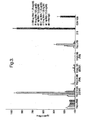
- Microparticles prepared as described above in Examples 1, 2, 3 and 4 were sized using a Mastersizer 2000 (Malvem Instruments, Malvern, UK). Laser diffraction measurements revealed that loaded polylactide microparticles had a size distribution of around 1 ⁇ m, as shown in Figure 1 . Both PVA stabilised ( Fig. 1A ) and DOTAP stabilised ( Fig. 1B ) formulations had similar size distributions.
- PVA polyvinyl alcohol
- DOTAP N-[1-(2,3-Dioleoyloxy)propyl]-N,N,N-trimethylammonium chloride
- poly-U 20 ⁇ g poly-U was admixed with 30 ⁇ l 20mM Polyethylenimine (2 kD PEI) (Aldrich) in 150mM NaCl Immediately prior to use in comparison studies with microencapsulated poly-U, prepared as described above In Examples 1, 2 and 5.
- 2 kD PEI Polyethylenimine
- BMDCs bone marrow derived plasmacytoid and myeloid dendritic cells
- Tibiae and fibulas were removed from the rear legs and then placed in sterile culture media (RPMI-1640) (Sigma, UK) supplemented with 10% heat inactivated foetal bovine serum (FBS) (Sigma, UK); 1% penicillin / streptomycin / glutamine (Sigma, UK) and 50 ⁇ M 2-Mercaptoethanol (2-ME) (Sigma, UK) for transport to a class II microbiological safety cabinet.
- FBS foetal bovine serum
- 2-ME 2-Mercaptoethanol
- Cell concentration was adjusted to 2 x 10 6 .mL -1 and the media further supplemented with 100ng.mL -1 murine Fms-like tyrosine kinase receptor-3 ligand factor (Flt3L) (R&D Systems, Oxford, UK).
- Flt3L murine Fms-like tyrosine kinase receptor-3 ligand factor
- the cells were plated out using 6-well tissue culture plates (Sterilin, Stone, UK) and incubated at 37°C in a fully humidified environment in the presence of 5% CO 2 . After 5 days, half of the medium was removed and replaced with fresh Flt3L supplemented media. After 10 days, cells were washed and re-seeded at 2x 10 6 .mL -1 in sterile flat-bottomed 96-well tissue culture plates (Sterilin, Stone, UK).
- Dendritic cell activation assays Poly-U loaded microspheres
- DCs were also cocultured with escalating doses of PEI condensed ssRNA, prepared as described in Example 10.
- a positive control 1nmol of a K- type (conventional) CpG (ODN1668: tccatgacgttcctgatgct) and a A/D-type CpG (D19: ggTGCATCGATGCAgggggG) were used.
- Cells were cocultured with the various stimulents for 18 hours. Culture supernatants were obtained by centrifugation of the cells and formulations for 10 minutes at 10000 rpm.
- DC cultures stimulated with poly U and CpG were quantified using commercially available ELISA kits (R&D systems, Oxford UK).
- poly-U loaded polylactide microparticles prepared using DOTAP as a stabilising agent, were potent stimulators of IFN- ⁇ production.
- the levels of IFN- ⁇ stimulated by the poly-U loaded DOTAP stabilised microparticles was significantly (P ⁇ 0.001) higher as compared with DC exposed to un-formulated (free) poly U and comparable with that engendered by stimulation with PEI-condensed poly-U.
- coculture of DC with poly-U loaded polylactide microparticles, prepared using PVA as a stabilising agent resulted in low levels of IFN- ⁇ production.
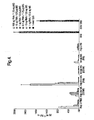
- Free poly-U and polylactide microparticle encapsulated poly-U stimulated TNF- ⁇ production by bulk cultures of FIt3L expanded bone marrow derived dendritic cells as shown in Figure 4 .
- Highest levels of TNF- ⁇ were induced by stimulation with poly-U loaded polylactide microparticles, prepared using PVA as a stabilising agent.
- poly-U loaded polylactide microparticles, prepared using DOTAP as a stabilising agent were less efficient stimulators of TNF- ⁇ production.
- Poly-U condensed with PEI failed to elicit the production of significant levels of TNF- ⁇ .
- Dendritic Cell Activation Assays OVA-loaded microparticles.
- BMDC bone marrow-derived dendritic cells
- FIt3L expanded BMDC Bulk cultures of FIt3L expanded BMDC contained both CD11b Hi B220 Low (myeloid) and CD11b Low B220 Hi (plasmacytoid) type DC, as established using flow cytometry (not shown).
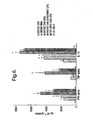
- Figure 6 shows that OVA admixed with CpG DNA stimulated the production of high levels of Interferon-alpha IFN- ⁇ . However, IFN- ⁇ secretion was greater still when cells were stimulated with OVA loaded microparticles decorated with CpG (P ⁇ 0.05).
- Microparticles containing poly-U or poly-U and OVA stimulated higher levels of IFN- ⁇ . as compared with empty microparticles or microparticles loaded with OVA alone (P ⁇ 0.05).
- TNF- ⁇ levels of TNF- ⁇ in supernatants was highest when cells were stimulated with OVA loaded CpG decorated microparticles (P ⁇ 0.05). Stimulation of cells with soluble antigen and CpG also resulted in significant TNF- ⁇ production relative to other treatments (P ⁇ 0.05).
- IL-12p40 concentration in culture supernatants was greatest when BMDC were stimulated with OVA loaded microparticles surface decorated with CpG, or CpG and OVA in solution.
- stimulation with microparticles containing poly-U caused enhanced levels of IL-12 p40 secretion (P ⁇ 0.05).
- mice were immunised by subcutaneous injection into the flank region on days 0, 14 and 28 of the experiment. Microparticle loading values were assumed to be 100 % that of the maximum theoretical value. Hence, mice dosed with soluble antigen / TLR agonist received either the same, or higher, doses as compared with mice immunised with microparticulate material.
- a sixth group acted as naive controls.
- mice immunised according to example 14 were bled on day 32 to obtain serum. Serum was analyzed for anti-OVA antibodies using standard EUSA methodology. Briefly, individual serum samples were aliqoted to microtitre plates pre-coated with OVA (5 ⁇ g ml -1 in PBS). Binding of serum antibody was detected with peroxidase-labelled secondary antibody to mouse IgG1 and IgG2a (Harlan-SeraLab; Crawley Down, UK).
- each subclass specific conjugate may not be equally reactive with its subclass molecule, to facilitate a comparison of one subclass titer with another, standard solutions (Harlan-SeraLab, Crawley Down, UK) of each subclass antibody in the range of 0.2-50.0 ng ml -1 were assayed.
- the standard curves generated enabled determination of the mean concentration of each IgG subclass in serum derived from the various treatment groups.
- a statistical test (Dunnett) was used to establish if any of the immunisation treatments had stimulated higher levels of specific antibody as compared with control (naive) animals.
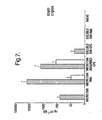
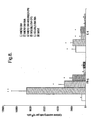
- mice injected with OVA loaded microparticles decorated with CpG had significant anti-OVA antibody titres but mice injected with microparticles containing OVA and poly U showed an amplified antibody response, as shown in Figure 7 .
- IgG1 was the dominant anti-0VA antibody detected.
- Injection of mice with OVA loaded microparticles or soluble OVA admixed with CpG served to elicit a specific serum anti-OVA igG1 response in some mice, although within group variation entailed that the effect was not statistically significant as compared with naive animals.
- mice immunised according to example 14 were killed and individual (not pooled) spleens removed. Single cell suspensions were prepared in supplemented RPMI-1640.
- IFN- ⁇ and IL-4 ELISPOT kits (BD Biosciences, Oxford UK) were used according to the manufacturer's guidelines. In brief, 96-well nitrocellulose bottomed-plates were coated with 100 ⁇ l of 5 ⁇ g ml -1 capture antibody in PBS and incubated overnight at 4°C. Free binding sites were blocked with 200 ⁇ l of supplemented RPMI for 2 hours. Spleen cell concentrations were adjusted to 2.5 x10 6 cells ml -1 and added to the appropriated well. Analyses were always conducted on cells from individual mice in each treatment group.
- Cells were stimulated in triplicate with either 5 ⁇ g ml -1 OVA in supplemented RPMI 1640, supplemented RPMI 1640 alone as a negative control or 2.5 ⁇ g ml -1 Concanavalin A (Sigma, Dorset, UK) as a positive control overnight.
- the cells were removed by washing initially with dH 2 O and then with PBS containing 0.05% Tween-20. The site of cytokine secretion was detected with a blotin-labeled anti-mouse cytokine antibody and horseradish peroxidase-conjugated streptavidin.
- the enzyme reaction was developed using 3-amino-9-ethylcarbazole (AEC) substrate reagent set (Sigma, Dorset, UK). Spot forming cell numbers were determined using a dissecting light microscope (Zeiss Stemi 2000) and expressed relative to 1x10 6 cells plated. Statistical differences were established using ANOVA and Student-Newman-Keuls tests.
- AEC 3-amino-9-ethylcarbazole
- mice immunised according to example 14 were killed and Inguinal lymph nodes draining the site of injection were removed and pooled for tetramer analysis.
- Single cell suspensions were prepared in supplemented RPMI-1640.
- Single cell suspensions of lymph node cells were stimulated with OVA (50 ⁇ g ml-1) for 72 hours at 37°C in a humidified 5% CO 2 environment.
- OVA 50 ⁇ g ml-1
- cells were Isolated from the culture plates and stained using the iTAg TM MHC Class I Murine Tetramer - SA - PE kit (Beckman Coulter, Immunomics, France).
- FITC coupled CD 3 (Pharmingen, BD Biosciences, UK) and Cy 5.5 coupled CD 8 (Pharmingen, BD Biosciences, UK) antibodies were also used to stain the cells. All staining and fixation procedures were carried out in accordance with the manufacturer's instructions. After fixing, cells were analysed on a BD FACScan flow cytometer. Corresponding isotype controls were used to establish quadrants and / or regions for analysis. Analyses were performed using Cell Quest Pro flow cytometry analysis software.
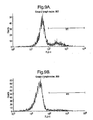
- Tetramer staining of lymph node cells from immunised mice revealed that injection of comicroencapsulated OVA and poly U can engender antigen specific CD8 + T-cells, as shown in Figure 9 .
- Mice immunised with co-micorencapsulated OVA and Poly-U ( Fig. 9A ) had a greater number of CD8 cells with bound tetramer, as evidenced by the increased FL2 signal.
- Figure 9B shows a profile obtained from naive mice.
Landscapes
- Health & Medical Sciences (AREA)
- Life Sciences & Earth Sciences (AREA)
- Chemical & Material Sciences (AREA)
- General Health & Medical Sciences (AREA)
- Veterinary Medicine (AREA)
- Public Health (AREA)
- Medicinal Chemistry (AREA)
- Animal Behavior & Ethology (AREA)
- Pharmacology & Pharmacy (AREA)
- Immunology (AREA)
- Mycology (AREA)
- Epidemiology (AREA)
- Microbiology (AREA)
- Chemical Kinetics & Catalysis (AREA)
- General Chemical & Material Sciences (AREA)
- Nuclear Medicine, Radiotherapy & Molecular Imaging (AREA)
- Organic Chemistry (AREA)
- Oncology (AREA)
- Bioinformatics & Cheminformatics (AREA)
- Engineering & Computer Science (AREA)
- Communicable Diseases (AREA)
- Pharmaceuticals Containing Other Organic And Inorganic Compounds (AREA)
- Medicines Containing Antibodies Or Antigens For Use As Internal Diagnostic Agents (AREA)
- Medicines That Contain Protein Lipid Enzymes And Other Medicines (AREA)
- Medicinal Preparation (AREA)
- Acyclic And Carbocyclic Compounds In Medicinal Compositions (AREA)
Applications Claiming Priority (3)
| Application Number | Priority Date | Filing Date | Title |
|---|---|---|---|
| GB0504276A GB0504276D0 (en) | 2005-03-02 | 2005-03-02 | Pharmaceutical composition |
| GB0511801A GB0511801D0 (en) | 2005-06-10 | 2005-06-10 | Pharmaceutical composition |
| PCT/GB2006/000751 WO2006092607A1 (en) | 2005-03-02 | 2006-03-02 | Pharmaceutical composition |
Publications (2)
| Publication Number | Publication Date |
|---|---|
| EP1853227A1 EP1853227A1 (en) | 2007-11-14 |
| EP1853227B1 true EP1853227B1 (en) | 2009-08-05 |
Family
ID=36353665
Family Applications (1)
| Application Number | Title | Priority Date | Filing Date |
|---|---|---|---|
| EP06709975A Expired - Lifetime EP1853227B1 (en) | 2005-03-02 | 2006-03-02 | Pharmaceutical composition |
Country Status (8)
| Country | Link |
|---|---|
| US (1) | US20080138431A1 (https=) |
| EP (1) | EP1853227B1 (https=) |
| JP (1) | JP2008531672A (https=) |
| AT (1) | ATE438385T1 (https=) |
| AU (1) | AU2006219717B2 (https=) |
| CA (1) | CA2599329A1 (https=) |
| DE (1) | DE602006008278D1 (https=) |
| WO (1) | WO2006092607A1 (https=) |
Families Citing this family (11)
| Publication number | Priority date | Publication date | Assignee | Title |
|---|---|---|---|---|
| EP3006043B1 (en) | 2002-04-04 | 2019-05-29 | Zoetis Belgium S.A. | Immunostimulatory g,u-containing oligoribonucleotides |
| JP4538522B2 (ja) | 2005-11-25 | 2010-09-08 | コーリー ファーマシューティカル ゲーエムベーハー | 免疫刺激性オリゴリボヌクレオチド |
| EP2711021B1 (en) * | 2008-05-02 | 2016-03-09 | BliNK Therapeutics Limited | Products and methods for stimulating an immune response |
| ES2557382T3 (es) | 2010-07-06 | 2016-01-25 | Glaxosmithkline Biologicals Sa | Liposomas con lípidos que tienen un valor de pKa ventajoso para el suministro de ARN |
| EP2591114B1 (en) | 2010-07-06 | 2016-06-08 | GlaxoSmithKline Biologicals SA | Immunisation of large mammals with low doses of rna |
| US9770463B2 (en) * | 2010-07-06 | 2017-09-26 | Glaxosmithkline Biologicals Sa | Delivery of RNA to different cell types |
| ES2646669T3 (es) | 2010-07-06 | 2017-12-14 | Glaxosmithkline Biologicals Sa | Procedimientos de aumento de una respuesta inmunitaria mediante el suministro de ARN |
| MX342608B (es) | 2010-07-06 | 2016-10-06 | Novartis Ag * | Particulas de suministro similares a viriones para moleculas de arn de autorreplicacion. |
| LT4226941T (lt) | 2010-08-31 | 2025-01-10 | Glaxosmithkline Biologicals Sa | Pegilintos liposomos, skirtos imunogeną koduojančios rnr pristatymui |
| WO2012051211A2 (en) | 2010-10-11 | 2012-04-19 | Novartis Ag | Antigen delivery platforms |
| EP2729165B1 (en) | 2011-07-06 | 2017-11-08 | GlaxoSmithKline Biologicals SA | Immunogenic combination compositions and uses thereof |
Family Cites Families (4)
| Publication number | Priority date | Publication date | Assignee | Title |
|---|---|---|---|---|
| MY118835A (en) * | 1997-04-18 | 2005-01-31 | Ipsen Pharma Biotech | Sustained release compositions and the process for their preparation |
| EP1438323A4 (en) * | 2001-10-03 | 2007-08-01 | Novartis Vaccines & Diagnostic | ADJUVOUS MENINGOCOCCUS COMPOSITIONS |
| CN101863930A (zh) * | 2003-01-06 | 2010-10-20 | 科里克萨有限公司 | 一些氨烷基氨基葡糖苷磷酸酯化合物和它们的用途 |
| WO2004087877A2 (en) * | 2003-03-26 | 2004-10-14 | Astral Inc. | Selected rna motifs to include cell death and/or apoptosis |
-
2006
- 2006-03-02 US US11/885,538 patent/US20080138431A1/en not_active Abandoned
- 2006-03-02 AU AU2006219717A patent/AU2006219717B2/en not_active Ceased
- 2006-03-02 AT AT06709975T patent/ATE438385T1/de not_active IP Right Cessation
- 2006-03-02 CA CA002599329A patent/CA2599329A1/en not_active Abandoned
- 2006-03-02 JP JP2007557589A patent/JP2008531672A/ja active Pending
- 2006-03-02 DE DE602006008278T patent/DE602006008278D1/de not_active Expired - Lifetime
- 2006-03-02 WO PCT/GB2006/000751 patent/WO2006092607A1/en not_active Ceased
- 2006-03-02 EP EP06709975A patent/EP1853227B1/en not_active Expired - Lifetime
Also Published As
| Publication number | Publication date |
|---|---|
| US20080138431A1 (en) | 2008-06-12 |
| EP1853227A1 (en) | 2007-11-14 |
| WO2006092607A1 (en) | 2006-09-08 |
| AU2006219717B2 (en) | 2009-05-21 |
| JP2008531672A (ja) | 2008-08-14 |
| DE602006008278D1 (de) | 2009-09-17 |
| CA2599329A1 (en) | 2006-09-08 |
| ATE438385T1 (de) | 2009-08-15 |
| AU2006219717A1 (en) | 2006-09-08 |
Similar Documents
| Publication | Publication Date | Title |
|---|---|---|
| Schlosser et al. | TLR ligands and antigen need to be coencapsulated into the same biodegradable microsphere for the generation of potent cytotoxic T lymphocyte responses | |
| Joshi et al. | Biodegradable particles as vaccine antigen delivery systems for stimulating cellular immune responses | |
| JP6320912B2 (ja) | 浸透圧媒介性放出合成ナノ担体 | |
| Joshi et al. | Biodegradable particles as vaccine delivery systems: size matters | |
| CN101001646B (zh) | 稳定化的合成免疫原投递系统 | |
| Zhang et al. | Potent antigen-specific immune responses stimulated by codelivery of CpG ODN and antigens in degradable microparticles | |
| EA030863B1 (ru) | Композиции для усиления иммунного ответа на антиген, содержащие синтетические наноносители, и их применения | |
| Goforth et al. | Immune stimulatory antigen loaded particles combined with depletion of regulatory T-cells induce potent tumor specific immunity in a mouse model of melanoma | |
| JP7311560B2 (ja) | 酵母細胞壁粒子を用いたワクチン送達系 | |
| WO2007041190A2 (en) | Polymer-based delivery system for immunotherapy of cancer | |
| Liu et al. | Encapsulation of Poly I: C and the natural phosphodiester CpG ODN enhanced the efficacy of a hyaluronic acid-modified cationic lipid-PLGA hybrid nanoparticle vaccine in TC-1-grafted tumors | |
| CN108324938B (zh) | 一种颗粒型佐剂及其制备方法和应用 | |
| EP1853227B1 (en) | Pharmaceutical composition | |
| Joshi et al. | Characterizing the antitumor response in mice treated with antigen-loaded polyanhydride microparticles | |
| WO2023115676A1 (zh) | 一种树突状细胞癌症疫苗及其应用 | |
| JP2002540076A (ja) | ワクチン組成物 | |
| San Román et al. | Co-encapsulation of an antigen and CpG oligonucleotides into PLGA microparticles by TROMS technology | |
| AU2003219805B2 (en) | Electroporation methods for introducing bioactive agents into cells | |
| WO2023201786A1 (zh) | 一种免疫佐剂组合物和基于该组合物的癌症疫苗及其应用 | |
| CN1549728A (zh) | 在可生物降解的微球体中含有抗原、基因载体和佐剂的免疫组合物 | |
| Perrie et al. | Recent developments in particulate-based vaccines | |
| JP2008531672A5 (https=) | ||
| WO2023201787A1 (zh) | 一种基于癌症特异性t细胞的细胞系统、淋巴细胞药物及其应用 | |
| Thiele et al. | Phagocytosis of synthetic particulate vaccine delivery systems to program dendritic cells | |
| Little et al. | Nonviral delivery of cancer genetic vaccines |
Legal Events
| Date | Code | Title | Description |
|---|---|---|---|
| PUAI | Public reference made under article 153(3) epc to a published international application that has entered the european phase |
Free format text: ORIGINAL CODE: 0009012 |
|
| 17P | Request for examination filed |
Effective date: 20070907 |
|
| AK | Designated contracting states |
Kind code of ref document: A1 Designated state(s): AT BE BG CH CY CZ DE DK EE ES FI FR GB GR HU IE IS IT LI LT LU LV MC NL PL PT RO SE SI SK TR |
|
| RIN1 | Information on inventor provided before grant (corrected) |
Inventor name: ELVIN, STEPHEN, J. Inventor name: HEALEY, GARETH DAVID Inventor name: WESTWOOD, ANGELA Inventor name: EYLES, JAMES EDWARD |
|
| RIN1 | Information on inventor provided before grant (corrected) |
Inventor name: ELVIN, STEPHEN, J. Inventor name: WESTWOOD, ANGELA Inventor name: HEALEY, GARETH DAVID Inventor name: EYLES, JAMES EDWARD |
|
| DAX | Request for extension of the european patent (deleted) | ||
| GRAP | Despatch of communication of intention to grant a patent |
Free format text: ORIGINAL CODE: EPIDOSNIGR1 |
|
| GRAS | Grant fee paid |
Free format text: ORIGINAL CODE: EPIDOSNIGR3 |
|
| GRAA | (expected) grant |
Free format text: ORIGINAL CODE: 0009210 |
|
| AK | Designated contracting states |
Kind code of ref document: B1 Designated state(s): AT BE BG CH CY CZ DE DK EE ES FI FR GB GR HU IE IS IT LI LT LU LV MC NL PL PT RO SE SI SK TR |
|
| REG | Reference to a national code |
Ref country code: GB Ref legal event code: FG4D |
|
| REG | Reference to a national code |
Ref country code: CH Ref legal event code: EP Ref country code: CH Ref legal event code: NV Representative=s name: E. BLUM & CO. AG PATENT- UND MARKENANWAELTE VSP |
|
| REG | Reference to a national code |
Ref country code: IE Ref legal event code: FG4D |
|
| REF | Corresponds to: |
Ref document number: 602006008278 Country of ref document: DE Date of ref document: 20090917 Kind code of ref document: P |
|
| LTIE | Lt: invalidation of european patent or patent extension |
Effective date: 20090805 |
|
| PG25 | Lapsed in a contracting state [announced via postgrant information from national office to epo] |
Ref country code: IS Free format text: LAPSE BECAUSE OF FAILURE TO SUBMIT A TRANSLATION OF THE DESCRIPTION OR TO PAY THE FEE WITHIN THE PRESCRIBED TIME-LIMIT Effective date: 20091205 Ref country code: LT Free format text: LAPSE BECAUSE OF FAILURE TO SUBMIT A TRANSLATION OF THE DESCRIPTION OR TO PAY THE FEE WITHIN THE PRESCRIBED TIME-LIMIT Effective date: 20090805 Ref country code: SE Free format text: LAPSE BECAUSE OF FAILURE TO SUBMIT A TRANSLATION OF THE DESCRIPTION OR TO PAY THE FEE WITHIN THE PRESCRIBED TIME-LIMIT Effective date: 20090805 Ref country code: ES Free format text: LAPSE BECAUSE OF FAILURE TO SUBMIT A TRANSLATION OF THE DESCRIPTION OR TO PAY THE FEE WITHIN THE PRESCRIBED TIME-LIMIT Effective date: 20091116 Ref country code: FI Free format text: LAPSE BECAUSE OF FAILURE TO SUBMIT A TRANSLATION OF THE DESCRIPTION OR TO PAY THE FEE WITHIN THE PRESCRIBED TIME-LIMIT Effective date: 20090805 Ref country code: AT Free format text: LAPSE BECAUSE OF FAILURE TO SUBMIT A TRANSLATION OF THE DESCRIPTION OR TO PAY THE FEE WITHIN THE PRESCRIBED TIME-LIMIT Effective date: 20090805 |
|
| PG25 | Lapsed in a contracting state [announced via postgrant information from national office to epo] |
Ref country code: SI Free format text: LAPSE BECAUSE OF FAILURE TO SUBMIT A TRANSLATION OF THE DESCRIPTION OR TO PAY THE FEE WITHIN THE PRESCRIBED TIME-LIMIT Effective date: 20090805 Ref country code: LV Free format text: LAPSE BECAUSE OF FAILURE TO SUBMIT A TRANSLATION OF THE DESCRIPTION OR TO PAY THE FEE WITHIN THE PRESCRIBED TIME-LIMIT Effective date: 20090805 Ref country code: PL Free format text: LAPSE BECAUSE OF FAILURE TO SUBMIT A TRANSLATION OF THE DESCRIPTION OR TO PAY THE FEE WITHIN THE PRESCRIBED TIME-LIMIT Effective date: 20090805 |
|
| PG25 | Lapsed in a contracting state [announced via postgrant information from national office to epo] |
Ref country code: PT Free format text: LAPSE BECAUSE OF FAILURE TO SUBMIT A TRANSLATION OF THE DESCRIPTION OR TO PAY THE FEE WITHIN THE PRESCRIBED TIME-LIMIT Effective date: 20091205 Ref country code: BG Free format text: LAPSE BECAUSE OF FAILURE TO SUBMIT A TRANSLATION OF THE DESCRIPTION OR TO PAY THE FEE WITHIN THE PRESCRIBED TIME-LIMIT Effective date: 20091105 |
|
| PG25 | Lapsed in a contracting state [announced via postgrant information from national office to epo] |
Ref country code: RO Free format text: LAPSE BECAUSE OF FAILURE TO SUBMIT A TRANSLATION OF THE DESCRIPTION OR TO PAY THE FEE WITHIN THE PRESCRIBED TIME-LIMIT Effective date: 20090805 Ref country code: DK Free format text: LAPSE BECAUSE OF FAILURE TO SUBMIT A TRANSLATION OF THE DESCRIPTION OR TO PAY THE FEE WITHIN THE PRESCRIBED TIME-LIMIT Effective date: 20090805 Ref country code: CZ Free format text: LAPSE BECAUSE OF FAILURE TO SUBMIT A TRANSLATION OF THE DESCRIPTION OR TO PAY THE FEE WITHIN THE PRESCRIBED TIME-LIMIT Effective date: 20090805 Ref country code: EE Free format text: LAPSE BECAUSE OF FAILURE TO SUBMIT A TRANSLATION OF THE DESCRIPTION OR TO PAY THE FEE WITHIN THE PRESCRIBED TIME-LIMIT Effective date: 20090805 |
|
| PG25 | Lapsed in a contracting state [announced via postgrant information from national office to epo] |
Ref country code: SK Free format text: LAPSE BECAUSE OF FAILURE TO SUBMIT A TRANSLATION OF THE DESCRIPTION OR TO PAY THE FEE WITHIN THE PRESCRIBED TIME-LIMIT Effective date: 20090805 |
|
| PLBE | No opposition filed within time limit |
Free format text: ORIGINAL CODE: 0009261 |
|
| STAA | Information on the status of an ep patent application or granted ep patent |
Free format text: STATUS: NO OPPOSITION FILED WITHIN TIME LIMIT |
|
| 26N | No opposition filed |
Effective date: 20100507 |
|
| PG25 | Lapsed in a contracting state [announced via postgrant information from national office to epo] |
Ref country code: GR Free format text: LAPSE BECAUSE OF FAILURE TO SUBMIT A TRANSLATION OF THE DESCRIPTION OR TO PAY THE FEE WITHIN THE PRESCRIBED TIME-LIMIT Effective date: 20091106 Ref country code: MC Free format text: LAPSE BECAUSE OF NON-PAYMENT OF DUE FEES Effective date: 20100331 |
|
| PGFP | Annual fee paid to national office [announced via postgrant information from national office to epo] |
Ref country code: FR Payment date: 20120403 Year of fee payment: 7 Ref country code: CH Payment date: 20120326 Year of fee payment: 7 Ref country code: IE Payment date: 20120322 Year of fee payment: 7 |
|
| PGFP | Annual fee paid to national office [announced via postgrant information from national office to epo] |
Ref country code: DE Payment date: 20120323 Year of fee payment: 7 |
|
| PGFP | Annual fee paid to national office [announced via postgrant information from national office to epo] |
Ref country code: BE Payment date: 20120329 Year of fee payment: 7 Ref country code: GB Payment date: 20120322 Year of fee payment: 7 |
|
| PGFP | Annual fee paid to national office [announced via postgrant information from national office to epo] |
Ref country code: NL Payment date: 20120327 Year of fee payment: 7 |
|
| PG25 | Lapsed in a contracting state [announced via postgrant information from national office to epo] |
Ref country code: CY Free format text: LAPSE BECAUSE OF FAILURE TO SUBMIT A TRANSLATION OF THE DESCRIPTION OR TO PAY THE FEE WITHIN THE PRESCRIBED TIME-LIMIT Effective date: 20090805 |
|
| PG25 | Lapsed in a contracting state [announced via postgrant information from national office to epo] |
Ref country code: LU Free format text: LAPSE BECAUSE OF NON-PAYMENT OF DUE FEES Effective date: 20100302 Ref country code: HU Free format text: LAPSE BECAUSE OF FAILURE TO SUBMIT A TRANSLATION OF THE DESCRIPTION OR TO PAY THE FEE WITHIN THE PRESCRIBED TIME-LIMIT Effective date: 20100206 |
|
| PGFP | Annual fee paid to national office [announced via postgrant information from national office to epo] |
Ref country code: IT Payment date: 20120330 Year of fee payment: 7 |
|
| PG25 | Lapsed in a contracting state [announced via postgrant information from national office to epo] |
Ref country code: TR Free format text: LAPSE BECAUSE OF FAILURE TO SUBMIT A TRANSLATION OF THE DESCRIPTION OR TO PAY THE FEE WITHIN THE PRESCRIBED TIME-LIMIT Effective date: 20090805 |
|
| BERE | Be: lapsed |
Owner name: THE SECRETARY OF STATE FOR DEFENCE Effective date: 20130331 |
|
| REG | Reference to a national code |
Ref country code: NL Ref legal event code: V1 Effective date: 20131001 |
|
| REG | Reference to a national code |
Ref country code: CH Ref legal event code: PL |
|
| GBPC | Gb: european patent ceased through non-payment of renewal fee |
Effective date: 20130302 |
|
| REG | Reference to a national code |
Ref country code: FR Ref legal event code: ST Effective date: 20131129 |
|
| REG | Reference to a national code |
Ref country code: IE Ref legal event code: MM4A |
|
| REG | Reference to a national code |
Ref country code: DE Ref legal event code: R119 Ref document number: 602006008278 Country of ref document: DE Effective date: 20131001 |
|
| PG25 | Lapsed in a contracting state [announced via postgrant information from national office to epo] |
Ref country code: DE Free format text: LAPSE BECAUSE OF NON-PAYMENT OF DUE FEES Effective date: 20131001 Ref country code: LI Free format text: LAPSE BECAUSE OF NON-PAYMENT OF DUE FEES Effective date: 20130331 Ref country code: FR Free format text: LAPSE BECAUSE OF NON-PAYMENT OF DUE FEES Effective date: 20130402 Ref country code: BE Free format text: LAPSE BECAUSE OF NON-PAYMENT OF DUE FEES Effective date: 20130331 Ref country code: IE Free format text: LAPSE BECAUSE OF NON-PAYMENT OF DUE FEES Effective date: 20130302 Ref country code: CH Free format text: LAPSE BECAUSE OF NON-PAYMENT OF DUE FEES Effective date: 20130331 Ref country code: GB Free format text: LAPSE BECAUSE OF NON-PAYMENT OF DUE FEES Effective date: 20130302 |
|
| PG25 | Lapsed in a contracting state [announced via postgrant information from national office to epo] |
Ref country code: IT Free format text: LAPSE BECAUSE OF NON-PAYMENT OF DUE FEES Effective date: 20130302 Ref country code: NL Free format text: LAPSE BECAUSE OF NON-PAYMENT OF DUE FEES Effective date: 20131001 |